
Ruffles give a cake the one thing flat frosting can’t: movement. Done in pink, they can read as a vintage ballgown, a peony in full bloom or something crisp and fashion-led, depending on the shade, the direction of the frills and what they’re made from. Textured buttercream, old-style piping and hand-finished sugar work are all popular right now, and ruffles sit right in the middle of that. They’re also some of the most time-consuming decoration I do, so it helps to know what you’re asking for. These are twenty versions I’d make, with the practical side of each.
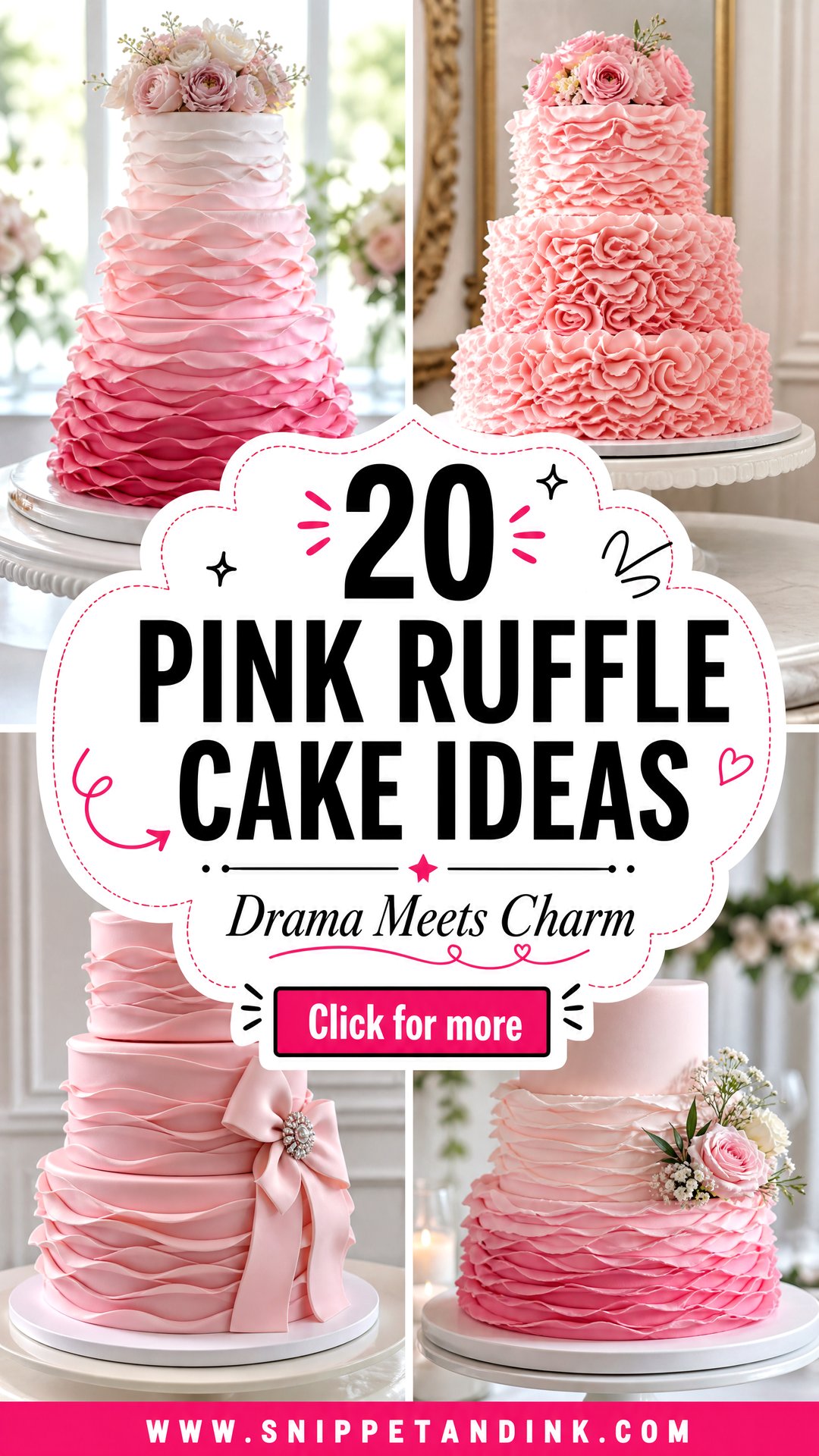
Horizontal, Vertical or Petal? Describe the Ruffle Precisely
“Ruffles” covers several quite different techniques, and couples often show me one photo while picturing another. A clear brief saves a lot of back and forth.
- Direction. Horizontal rows wrap round the tier and look calm; vertical frills run top to bottom and look taller; petal ruffles are short scallops that read like a flower.
- Material. Buttercream ruffles are piped and soft; fondant ruffles are hand-folded and crisp; wafer paper ruffles are very fine and light but dislike humidity.
- Coverage. One ruffled tier between smooth ones costs noticeably less than ruffles on every tier, because the piping or folding is where the hours go.
- Color. Bring a fabric swatch, not a screenshot. Screens shift pink a lot, and I’d rather match your actual bridesmaid dress or napkin.
I also ask where the cake will stand. A ruffled buttercream cake near a sunny window or in a summer tent is a very different job from one in an air-conditioned ballroom.
Lead time matters too. Fondant and wafer paper frills can be shaped a few days ahead and kept dry, but buttercream ruffles are piped onto the finished, chilled tiers in the last day or two, so a fully ruffled cake books out a big part of my week. That is why I like to confirm the design at least a couple of months before the date.
1. Pink Ombre Ruffle Wedding Cake
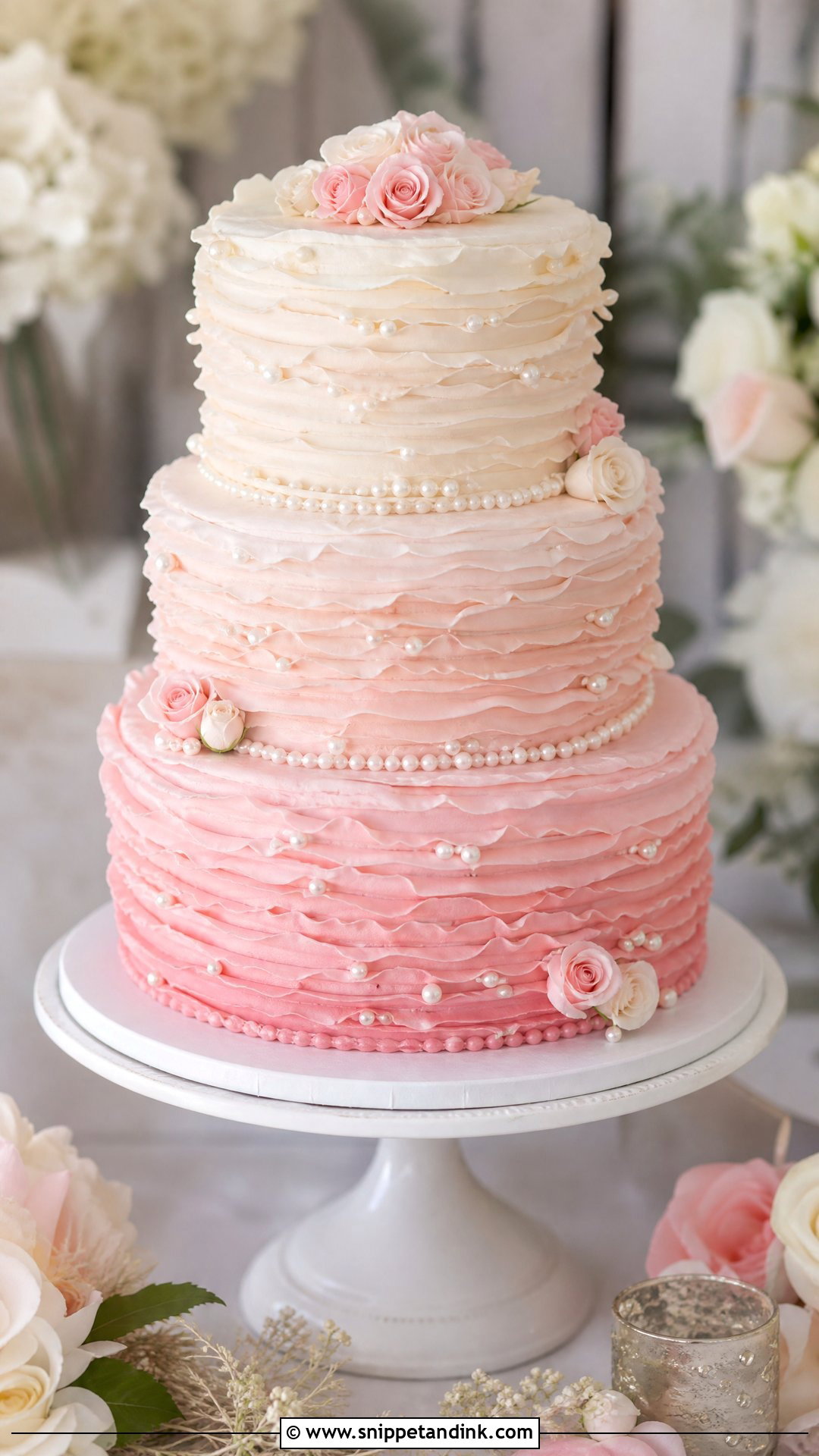
A pink ombre ruffle wedding cake gets its depth from color as well as texture. I usually run it ivory at the top, blush in the middle and rose at the base, mixing each shade fresh so the steps look even. Three tiers suit it because each one gets its own tone. In buttercream the frills look soft and slightly loose; in fondant they look sculpted. Because the color already does a lot, I’d add only a few pearls, small sugar flowers or a couple of fresh roses.
2. Blush Pink Ruffle Wedding Cake
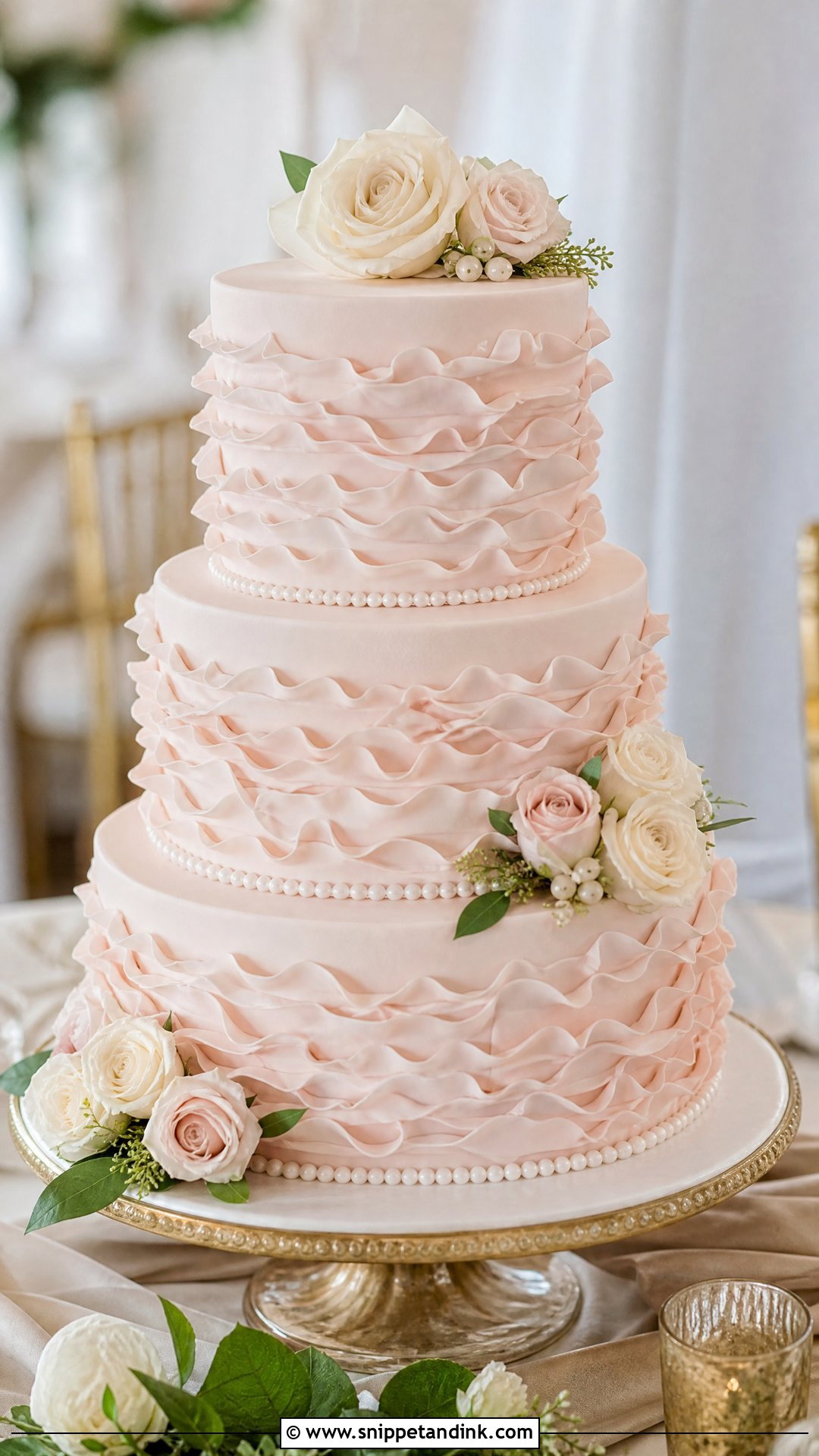
Blush is the shade that works with nearly every palette: ivory flowers, champagne linens, gold cutlery, pale greenery. You can ruffle every tier or keep the frills to a single tier between smooth ones, which costs less and looks more modern. Blush also holds its color better under daylight than deeper pinks, which can fade toward peach. If you want it a little more finished, a thin gold line or a band of sugar pearls between tiers is enough.
3. Pink Buttercream Ruffle Wedding Cake
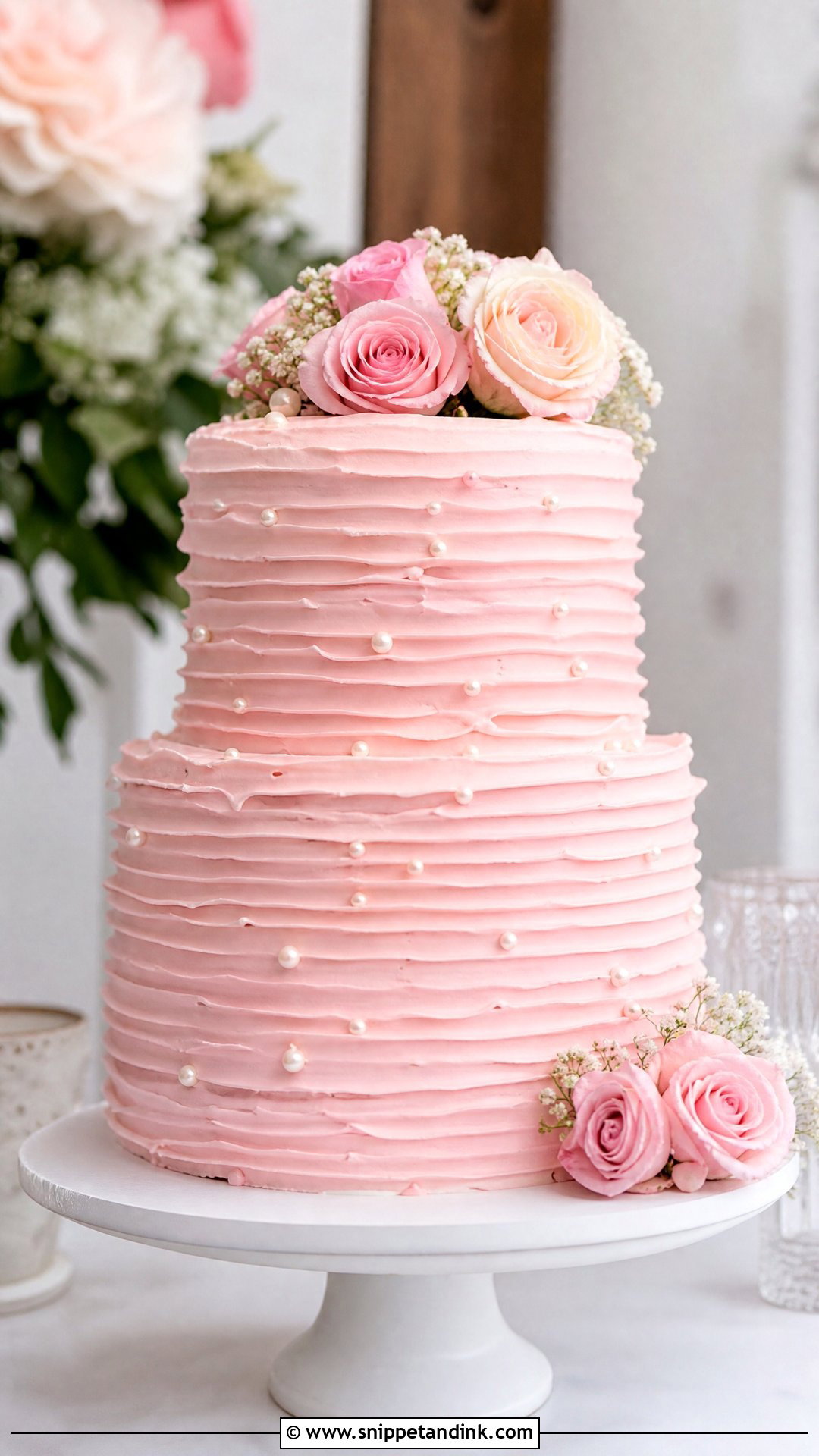
Buttercream ruffles are piped with a petal tip, row by row, so they have a slight handmade wobble that I think is part of their charm. Thin horizontal rows give a gentle wave; wider vertical frills are more dramatic. The honest catch is that ruffles add a lot of frosting to each slice, so I’d pair them with a lighter sponge such as vanilla, lemon or strawberry, and a not-too-sweet buttercream like Swiss meringue. They also soften faster than a smooth finish in a warm room, so plan an indoor or shaded cake table.
4. Pink Fondant Ruffle Wedding Cake
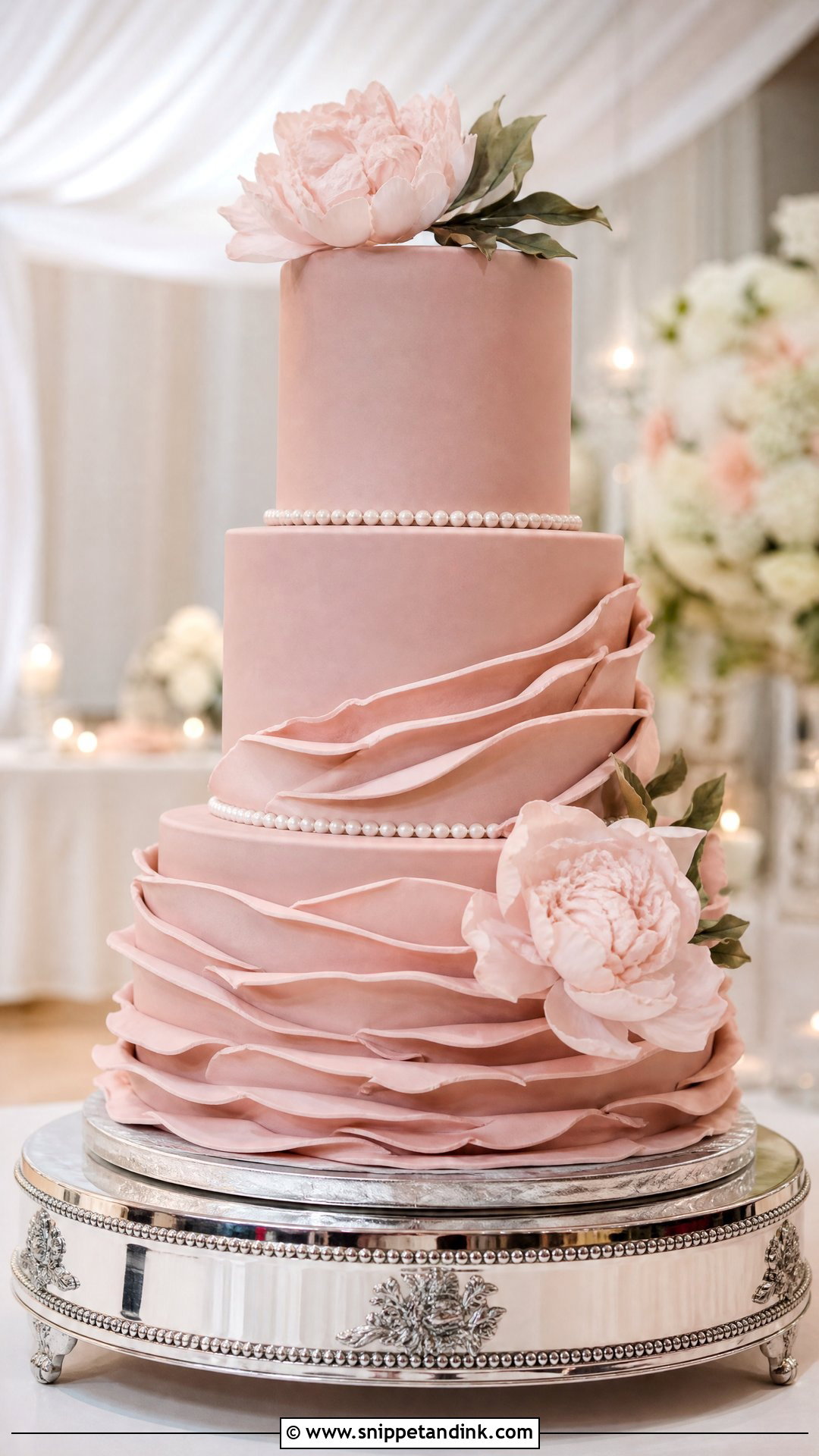
Fondant ruffles are cut, thinned at one edge and folded by hand, which gives a sculpted, fabric-like drape that stays crisp all evening. That makes them the safer choice in a warm venue or for a long display on the dessert table. Dusty rose, petal pink and soft blush all look refined. A smooth top tier with a monogram or a few sugar flowers balances the texture below. Most guests peel fondant off, so I keep the frills thin; it suits ballrooms and hotel receptions.
5. Pink Ruffle Wedding Cake With Roses
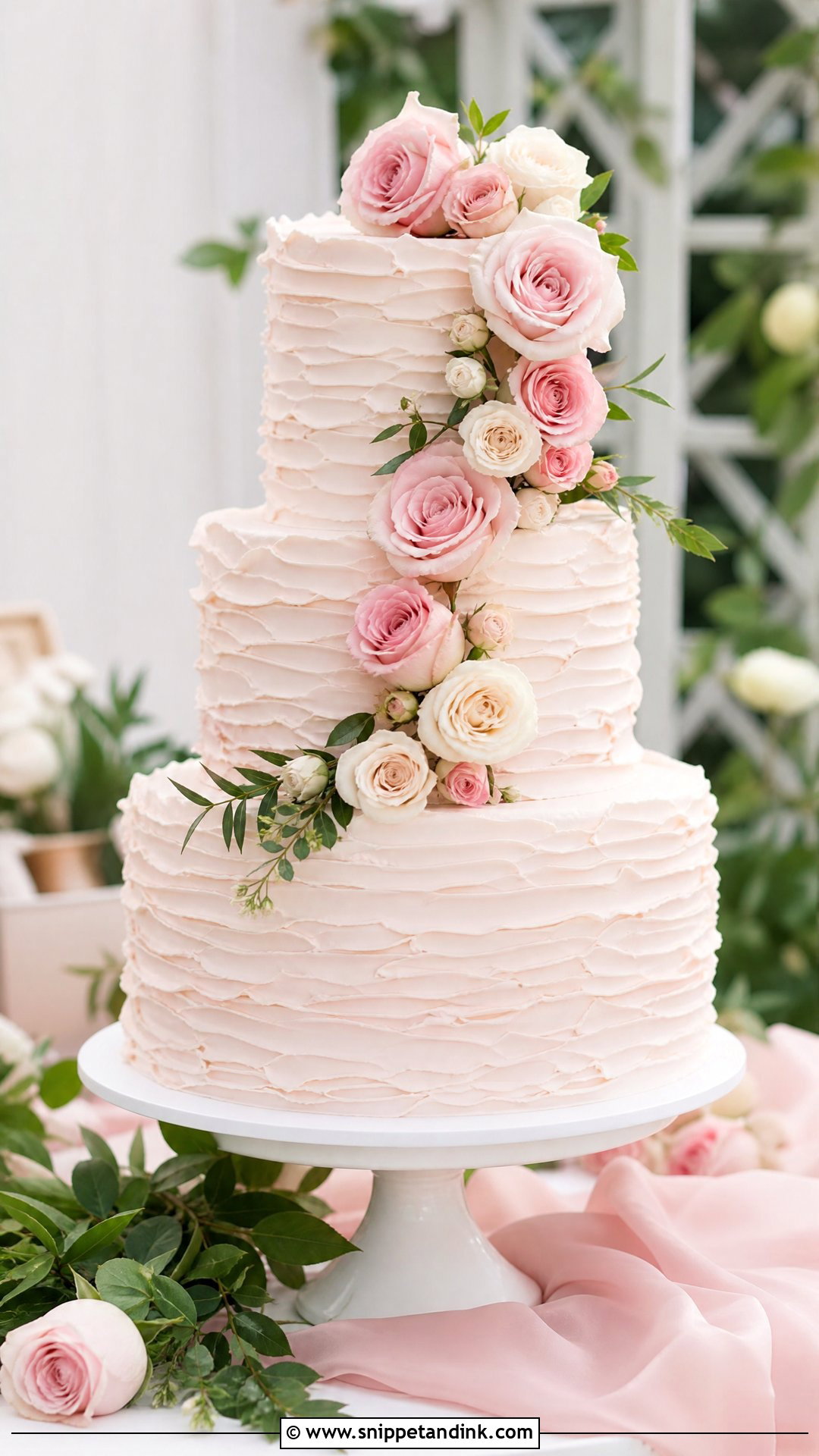
Roses and ruffles share the same language of layered petals, which is why they suit each other so well. I use fresh garden roses, sugar roses or wafer paper ones depending on the season and what the venue allows. Blush frills with deeper pink roses give depth. For a cleaner line, run one cascade from top to bottom; for a fuller look, cluster roses between tiers. Fresh roses need wrapped stems and food-safe picks before they go anywhere near the frosting.
6. Pink Ruffle Wedding Cake With Gold
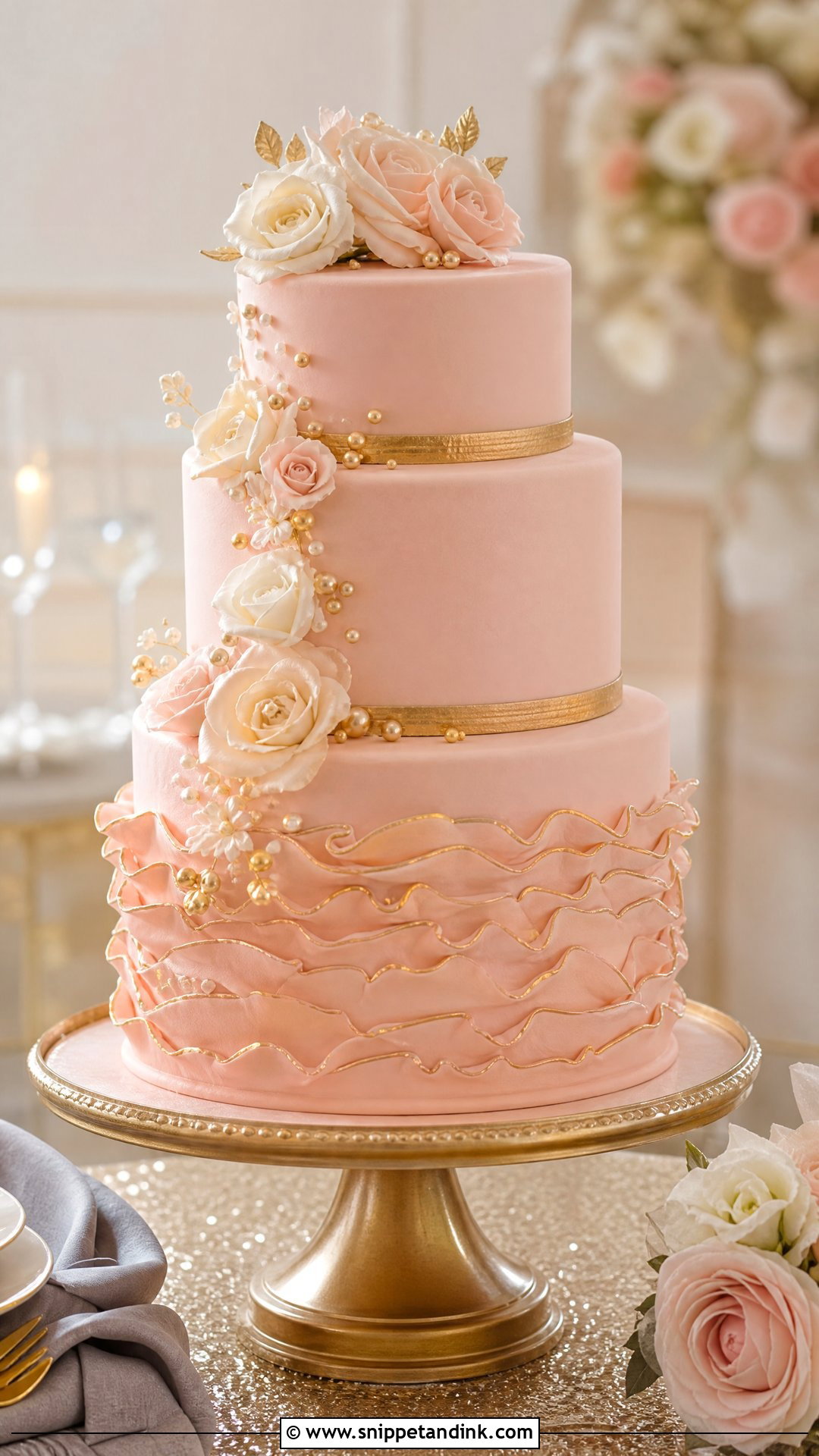
Gold warms pink and gives the cake an evening feel. My preference is to brush edible gold onto just the tips of the ruffles, which catches the light as guests walk past, or to add a thin band between tiers. Gold pearls work too. The temptation is to gild everything, and that’s when it looks flashy rather than bridal, so I limit it to one technique. A few ivory or pale pink sugar blooms soften it; it suits ballrooms and candlelit rooms best.
7. Pink Ruffle Wedding Cake With Pearls
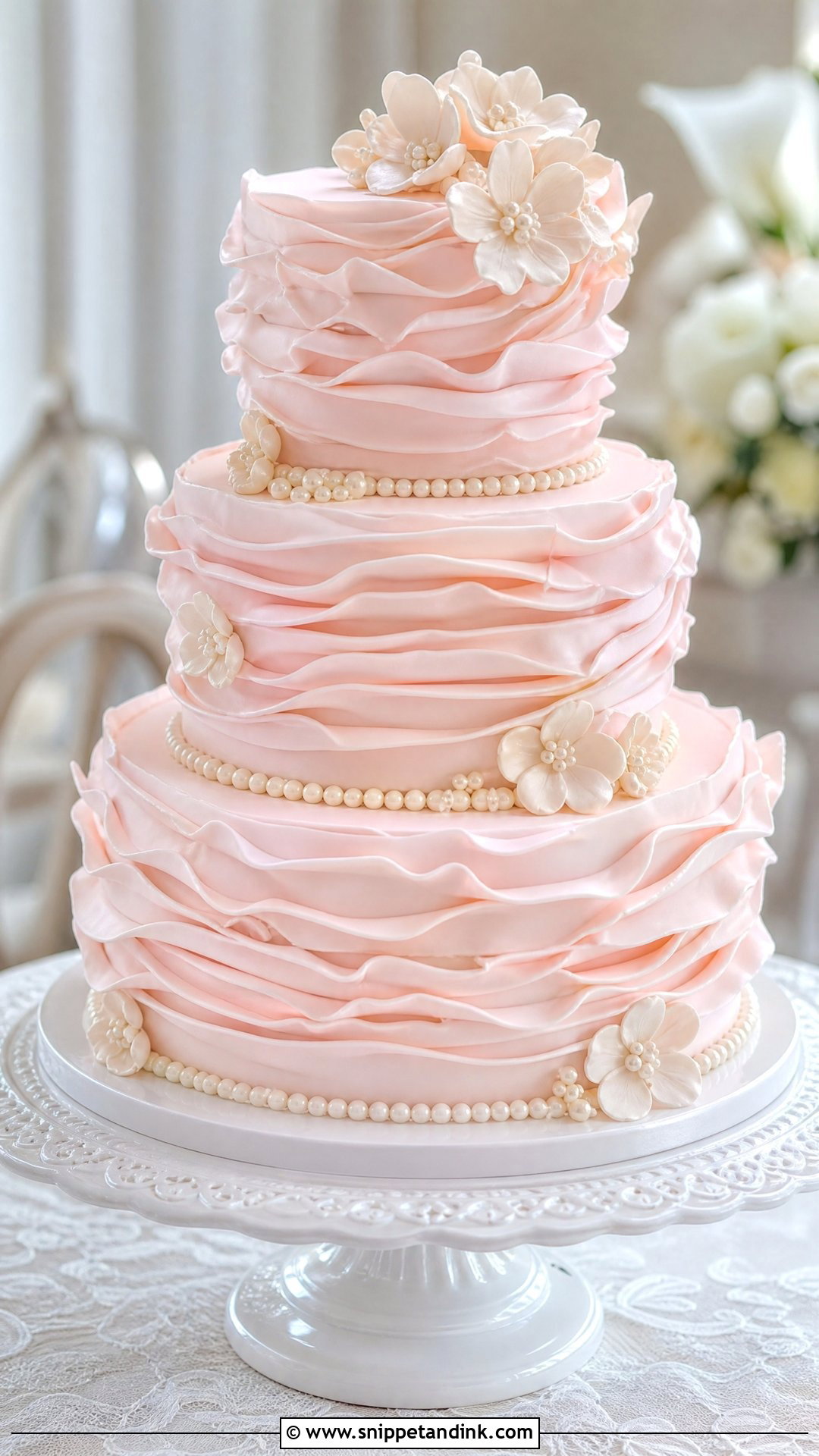
Pearls give ruffles small points of shine without competing with the texture. I set edible pearls along each tier’s edge, scatter a few across the frills, or run neat rows where a smooth section meets a ruffled one. A pale pink buttercream or fondant base keeps it soft. To keep it modern, use fewer pearls than you think you need. Hard sugar pearls are also not much fun to bite, which is another reason to place them sparingly.
8. Pink Ruffle Wedding Cake With Sugar Flowers
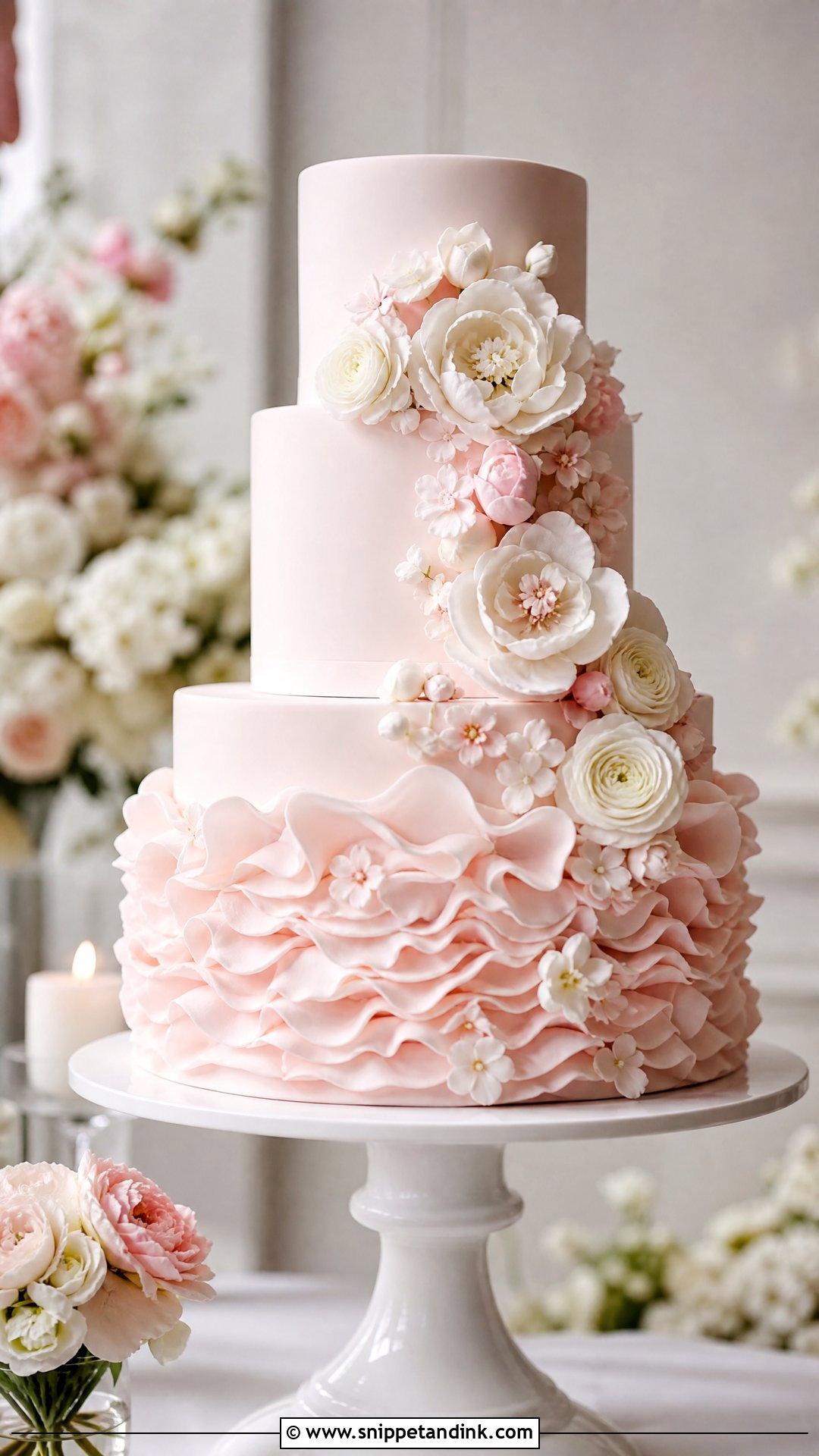
Sugar flowers are the answer if you want florals that won’t wilt or drop petals during a long reception. They can match the cake’s pink exactly or contrast in ivory, peach or deeper rose. Peonies, roses, ranunculus and small blossoms all sit well against ruffles. I like one ruffled tier with smooth tiers above, which gives the flowers somewhere clean to sit. For more drama, a full cascade of sugar flowers over soft frills works. Order early; sugar flowers take days to make and dry.
9. Pink Ruffle Wedding Cake With Fresh Flowers
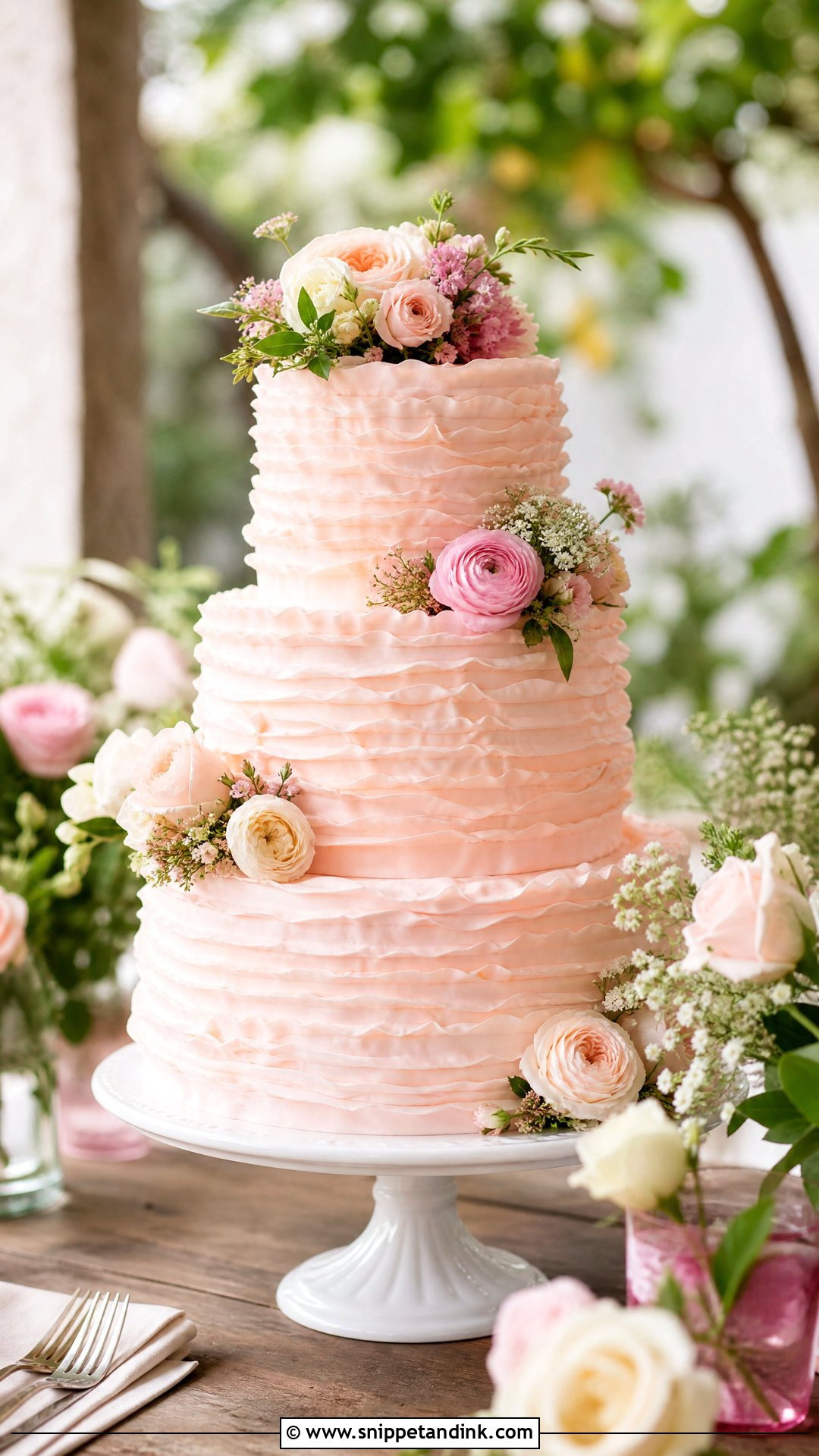
Fresh flowers link the cake to the bouquet and the arrangements around the room. Soft pink roses, white ranunculus, spray roses and a little greenery all work. Every stem needs to be wrapped and inserted in a pick, and the flowers should ideally be unsprayed. Ruffles are fragile, so I add flowers into gaps rather than pushing through the frills, which crushes them. A loose cascade or a cluster near the base looks best, and it suits spring and summer weddings.
10. Pink Ruffle Wedding Cake With Lace
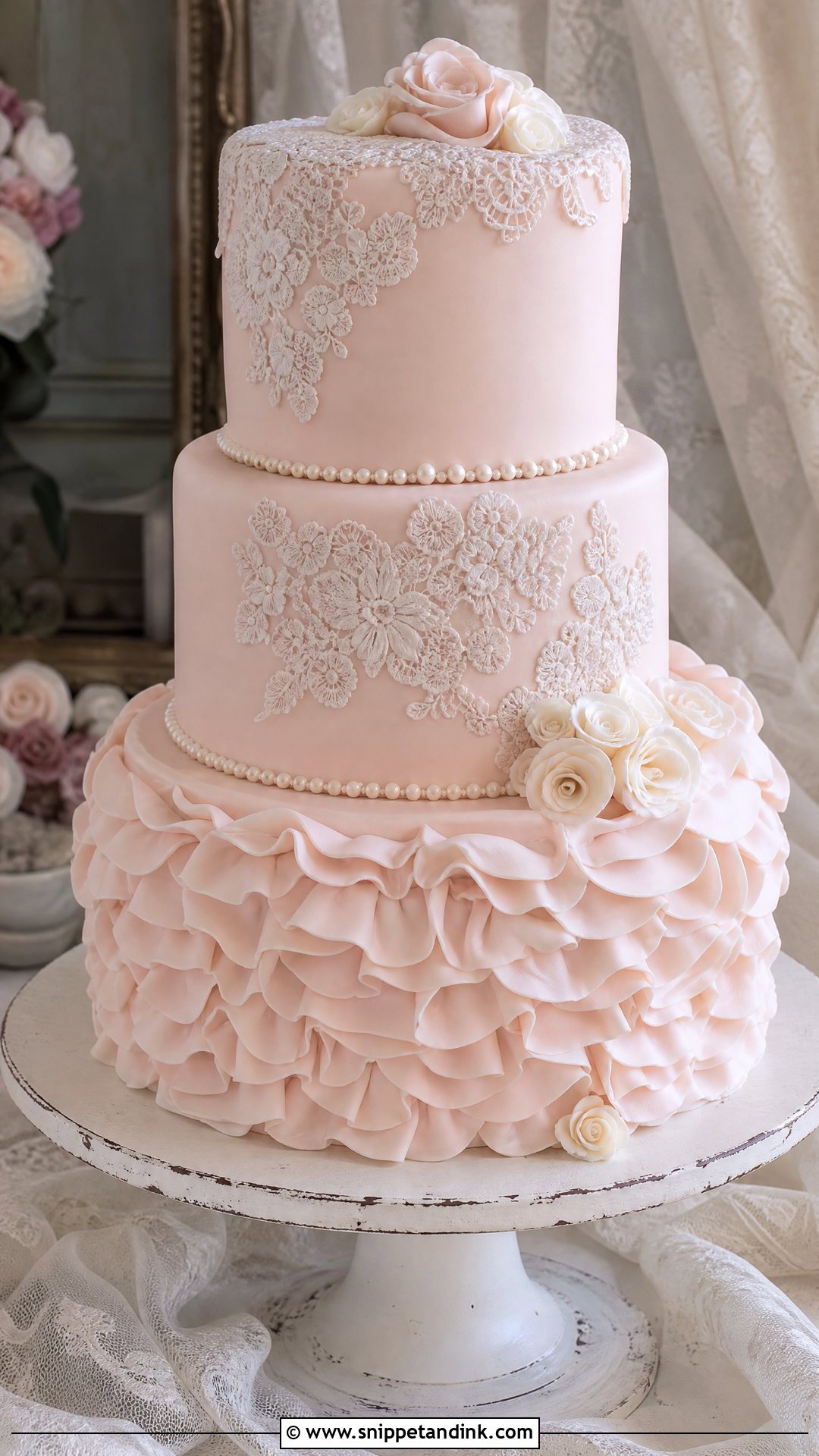
Lace and ruffles together look like a wedding dress in cake form. The lace can be fondant, a sugar appliqué cut from a mold, or royal icing piped by hand. I’d split them across tiers so neither gets lost, for example ruffles on the bottom, lace in the middle and a smooth blush top tier. Ivory lace over pale pink looks particularly refined. If you can bring a photo or a scrap of your gown lace, I can often echo its pattern.
11. Pink Ruffle Wedding Cake With Bow
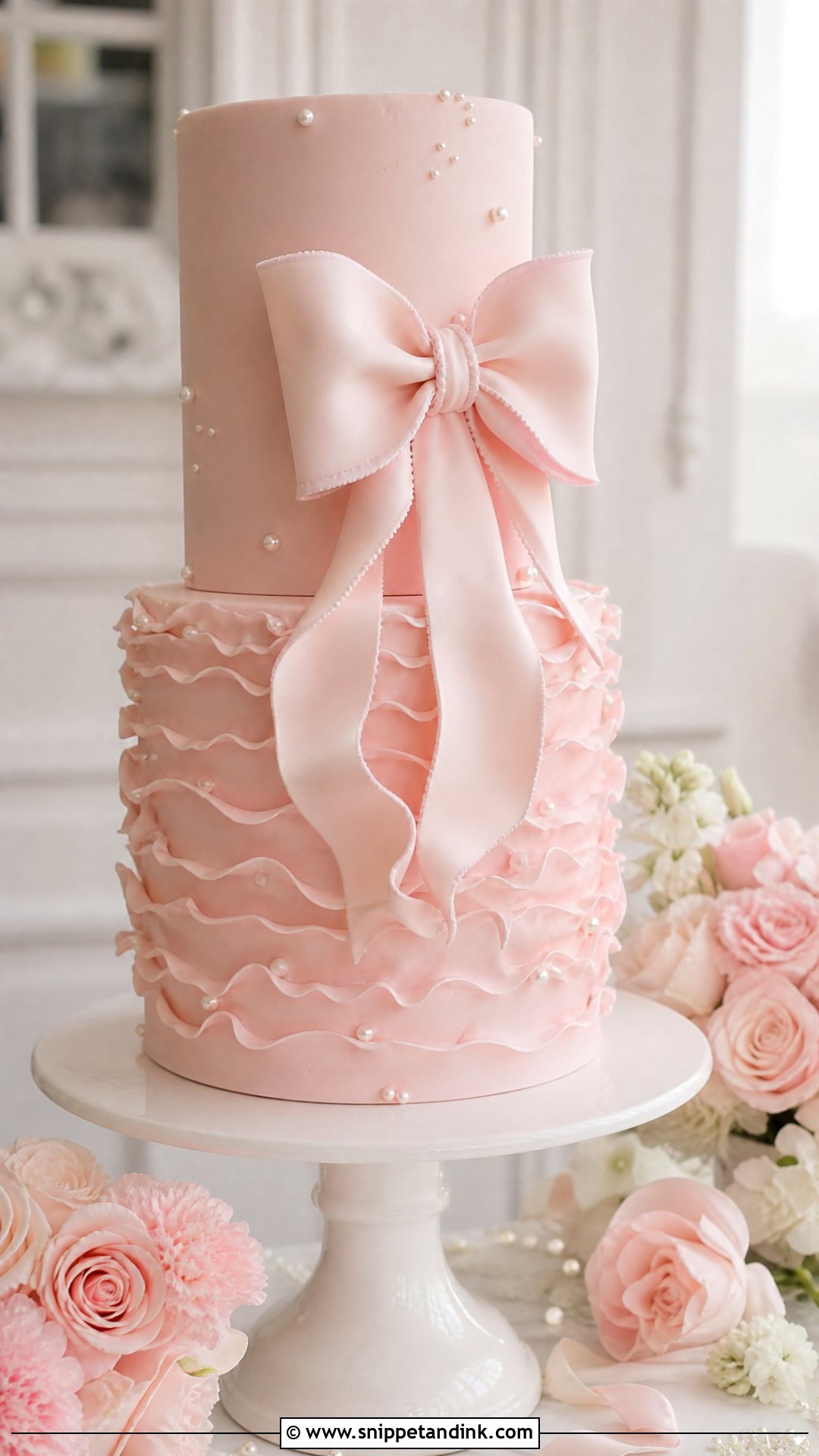
A bow can be fondant, sugar paste, silk ribbon or wafer paper. A large bow on a smooth top tier above ruffled tiers is the classic placement; a small one at the base is quieter. Blush keeps it bridal, a deeper rose adds contrast. Real silk ribbon looks lovely, but it needs a strip of acetate or parchment behind it so the butter in the frosting doesn’t stain it. Keep everything else clean so the bow reads as the one feature.
12. Pink Ruffle Wedding Cake With Drip
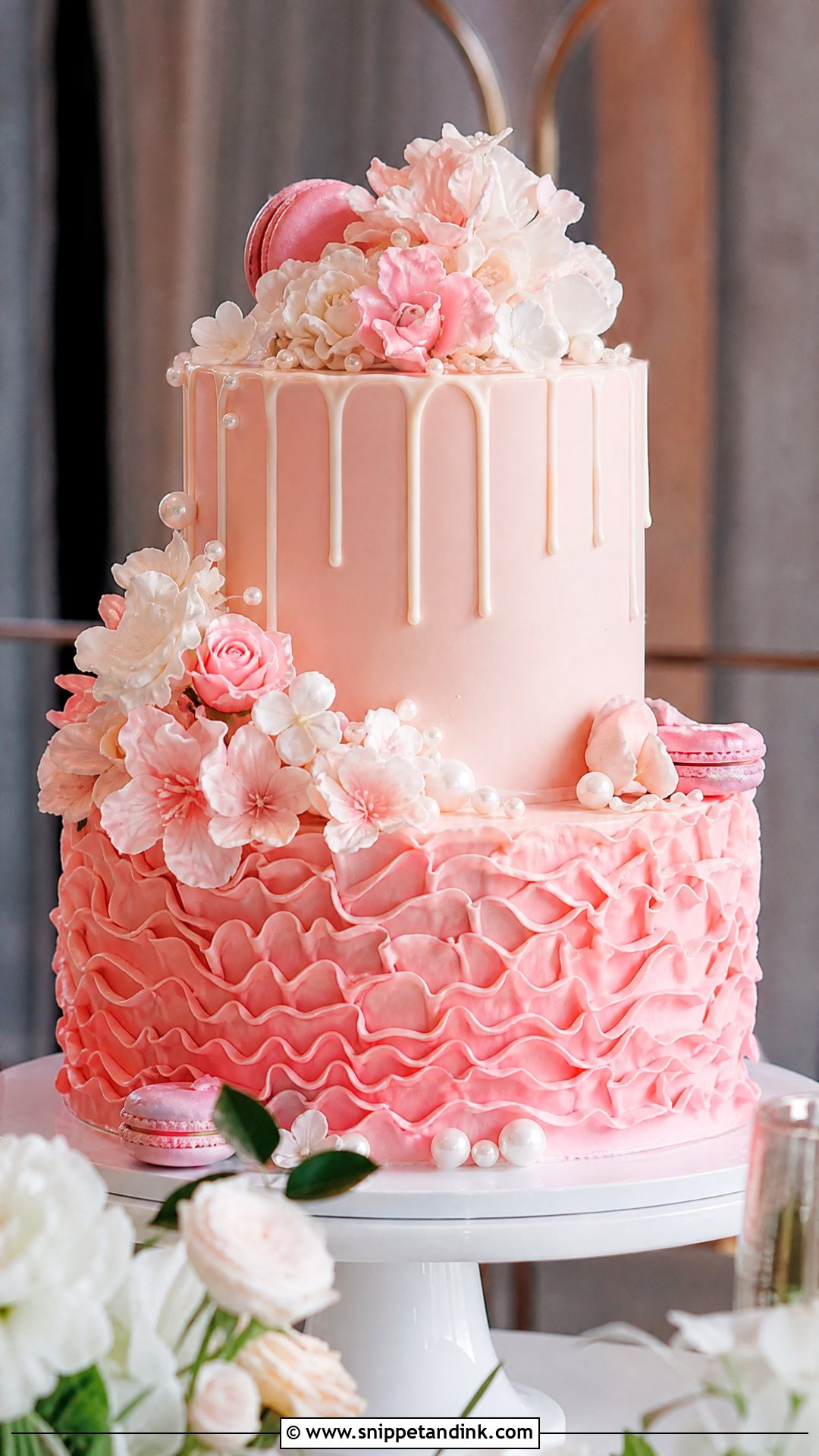
A drip and ruffles on the same tier fight each other, so I separate them: a smooth top tier with a gentle white chocolate or rose-tinted drip, ruffled tiers below. The drip should be short and controlled, which comes down to getting the ganache temperature right. Macarons, sugar flowers or a few pearls finish it. Strawberry, vanilla, raspberry and almond flavors suit it. It’s one of the more relaxed designs here, good for couples who don’t want anything too formal.
13. Pink Ruffle Wedding Cake With Macarons
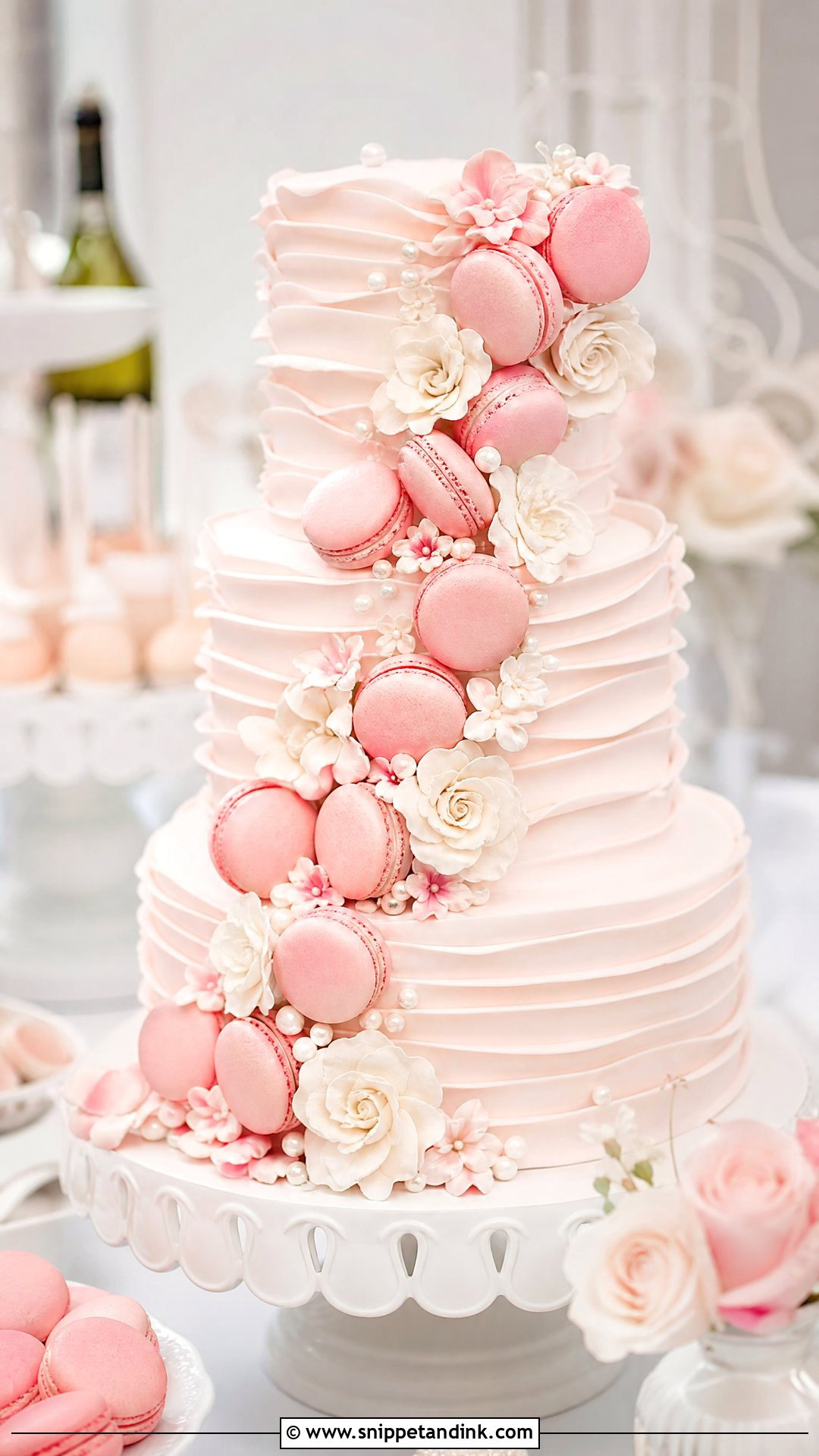
Macarons add a little height and connect the cake to the rest of the dessert table. Pale pink, ivory, raspberry or champagne shells work with blush frills. I attach them with a dab of buttercream or ganache, and only on a smooth area, because ruffles won’t hold their weight. A soft cascade, a ring at the base or small groups with sugar flowers all work. Macarons soften in humidity, so they go on close to setup time. It suits French-inspired receptions and dessert-table weddings.
14. Pink Ruffle Wedding Cake With Edible Glitter
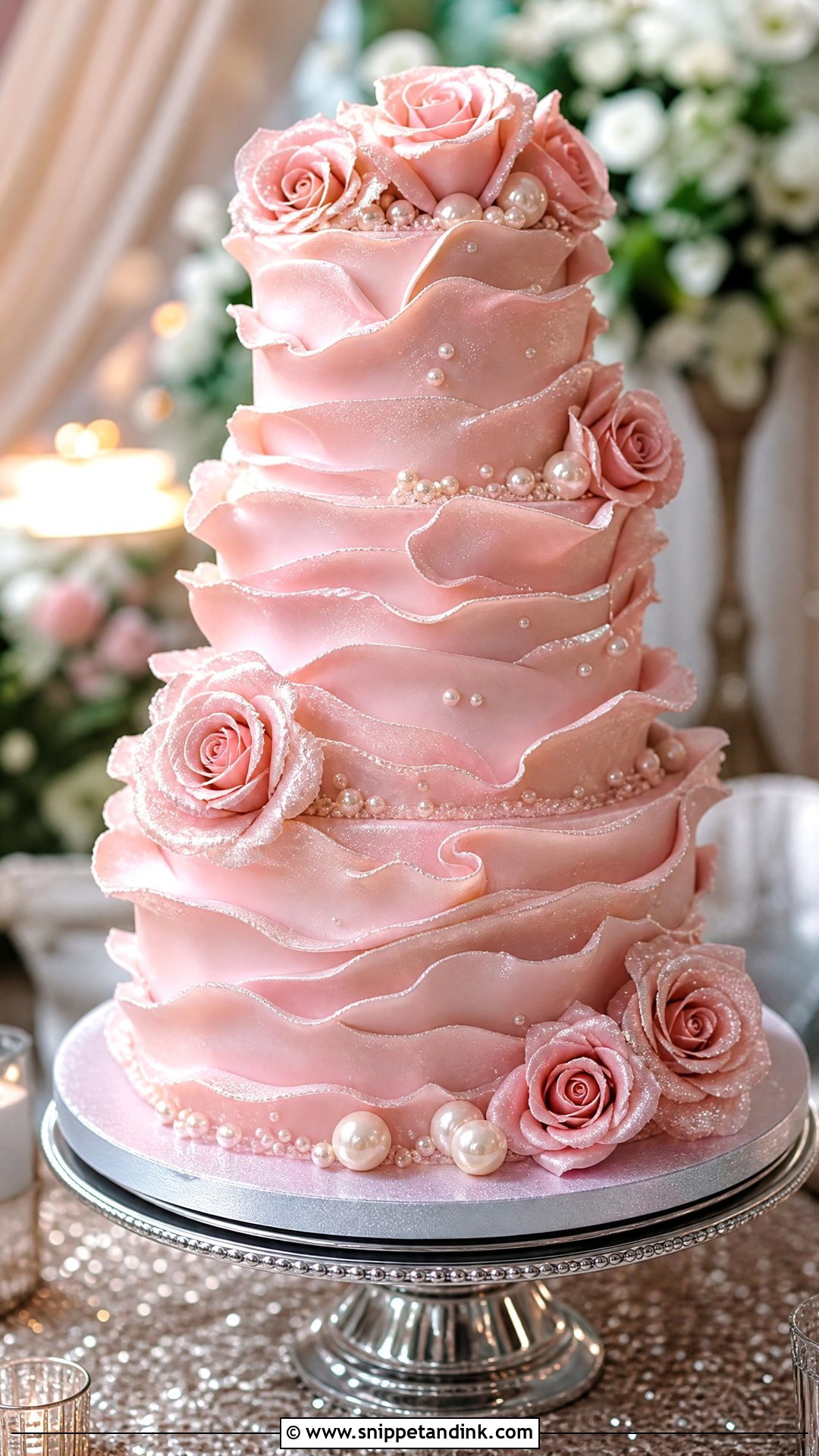
Edible glitter needs a light hand. I brush a fine pearl shimmer onto ruffle edges or dust it over sugar flowers, or keep it to one feature tier. Rose gold suits warmer pinks; pearl shimmer suits pale blush. Check the label: some cake glitters are sold as non-toxic decoration rather than edible, and those shouldn’t go on anything guests will eat. Under evening lighting a little shimmer goes a long way, which makes this a good fit for ballroom receptions.



15. Pink Ruffle Wedding Cake With Watercolor
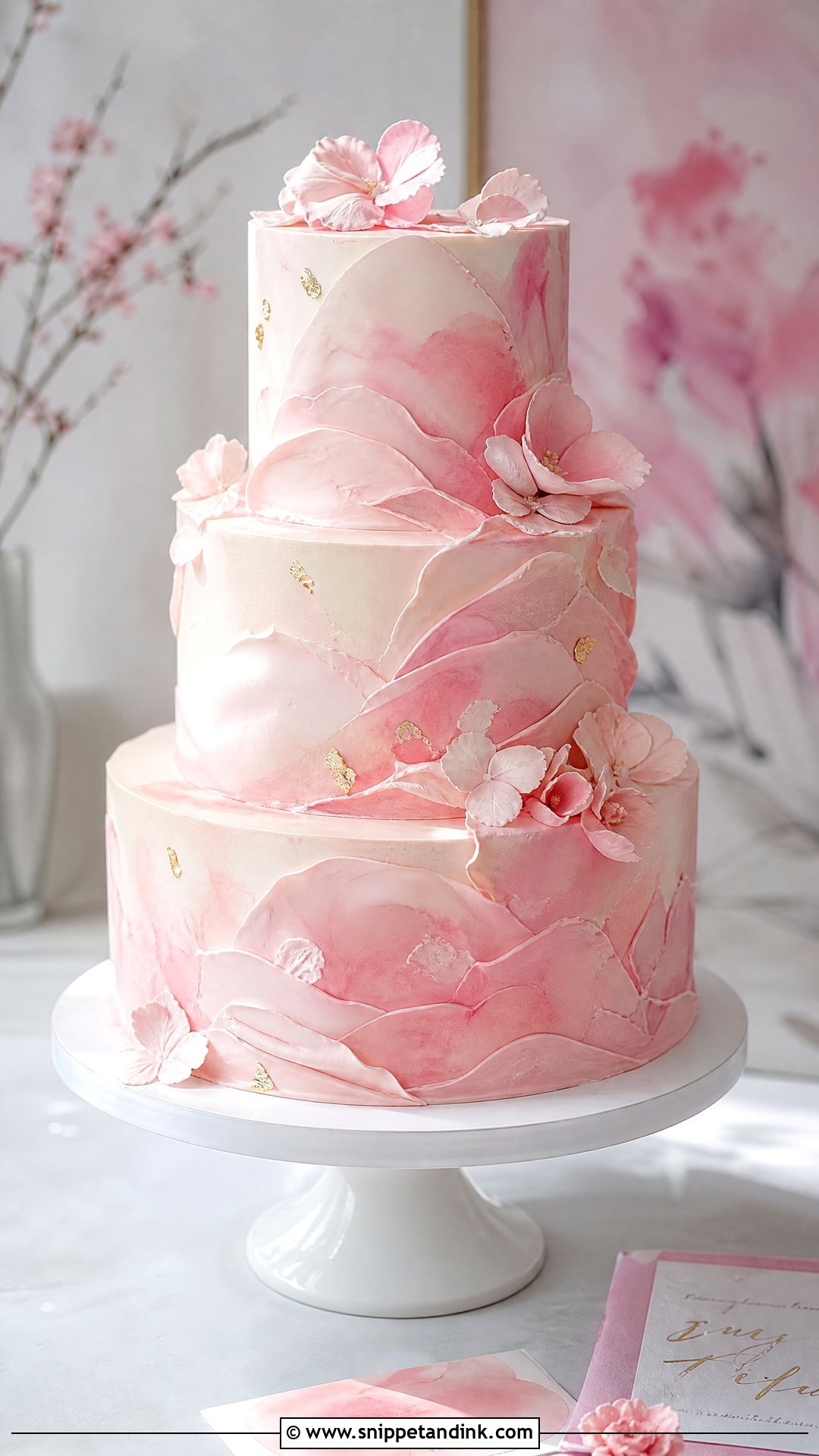
A pink watercolor ruffle wedding cake layers painted color over texture, so the washes of blush and rose catch differently on each frill. I paint with thinned gel color or blend soft buttercream, keeping the edges loose rather than precise. Simple sugar flowers, a few gold flecks or a clean white top tier keep it balanced. It’s a good match for couples with painted stationery or floral artwork at the reception, and each one comes out slightly different by nature.
16. Pink Ruffle Wedding Cake With Vintage Piping
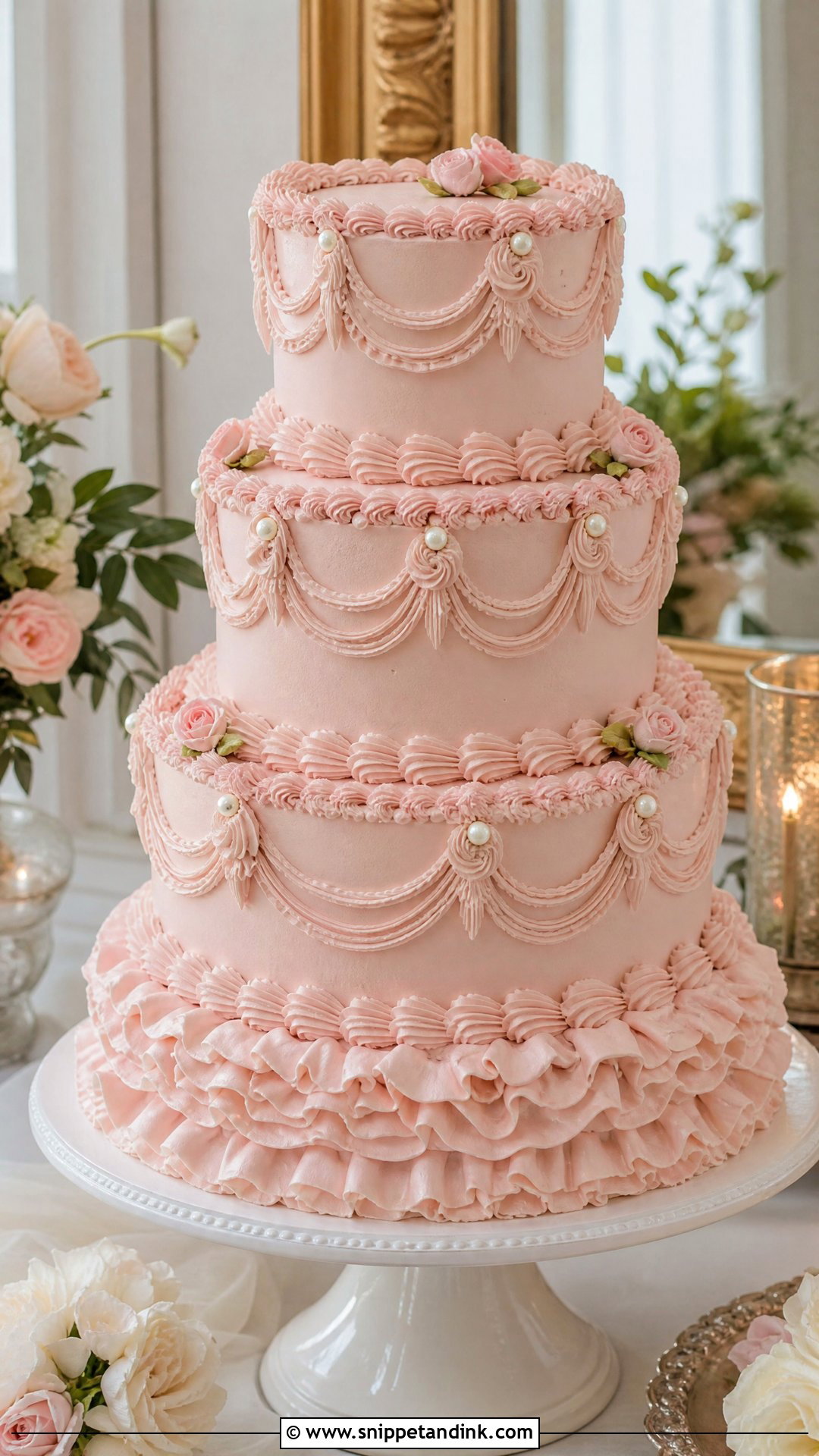
Vintage piping and ruffles are both labor-heavy, so I usually give them separate tiers: a soft pink ruffle tier below a tier of shell borders, swags and rosettes. Cherries push it retro; pearls, roses and ivory piping keep it bridal. A raised stand with a few flowers around the base shows off all that detail. Fine piping holds better in a crusting buttercream, which is worth asking about for a warm summer venue.
17. Pink Ruffle Wedding Cake With Garden Style
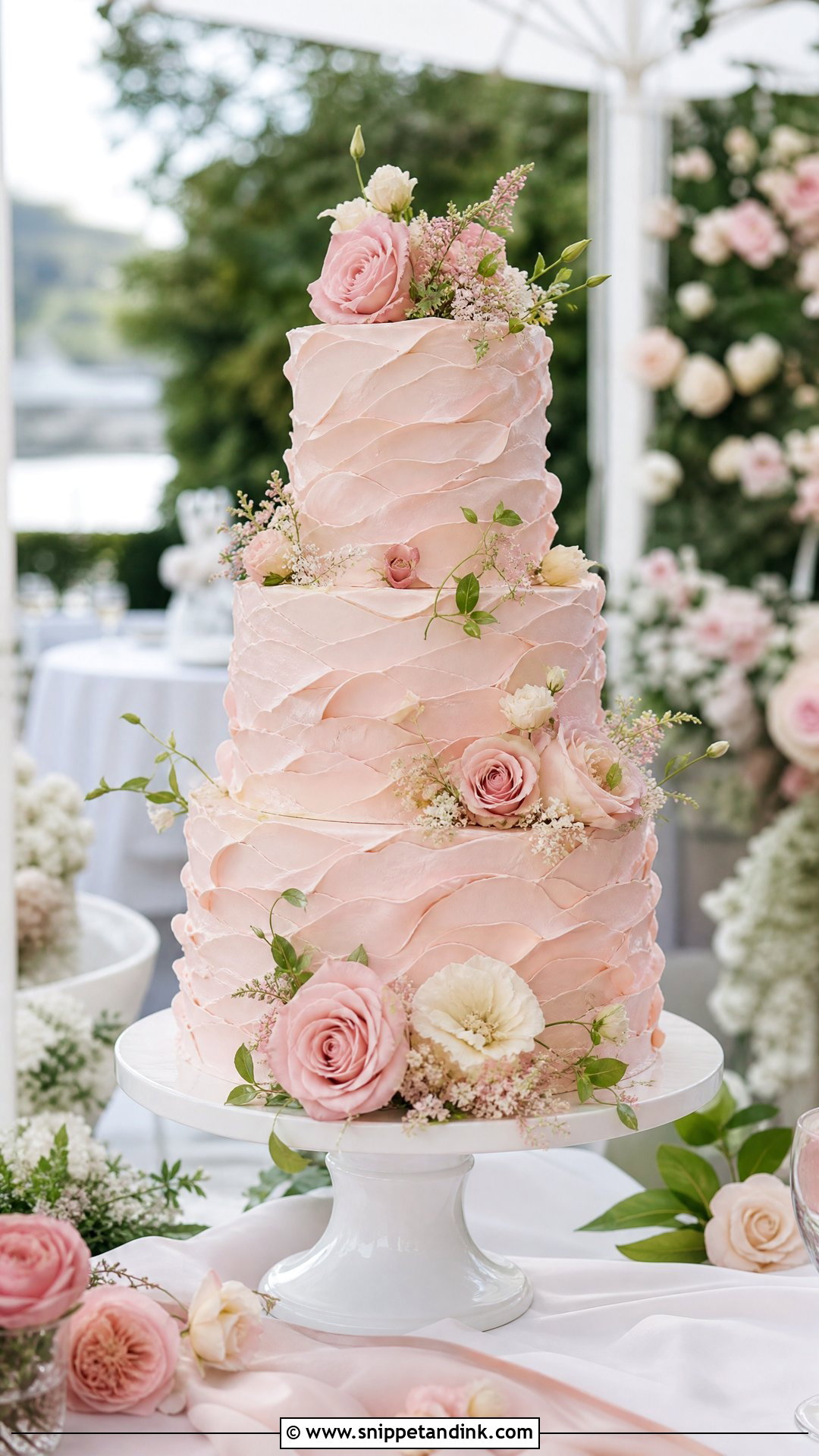
Garden-style ruffles should look loose and flowing, almost like petals, rather than tight and regimented. I pair them with fresh or sugar flowers in pink, ivory, peach and pale green, and often combine a semi-naked section or textured buttercream with a smooth top tier. The cake should echo the flowers around the venue, which works especially well outdoors or in a greenhouse. Add greenery sparingly and only food-safe varieties; it’s a good choice from spring into early fall.
18. Pink Ruffle Wedding Cake With Tall Tiers
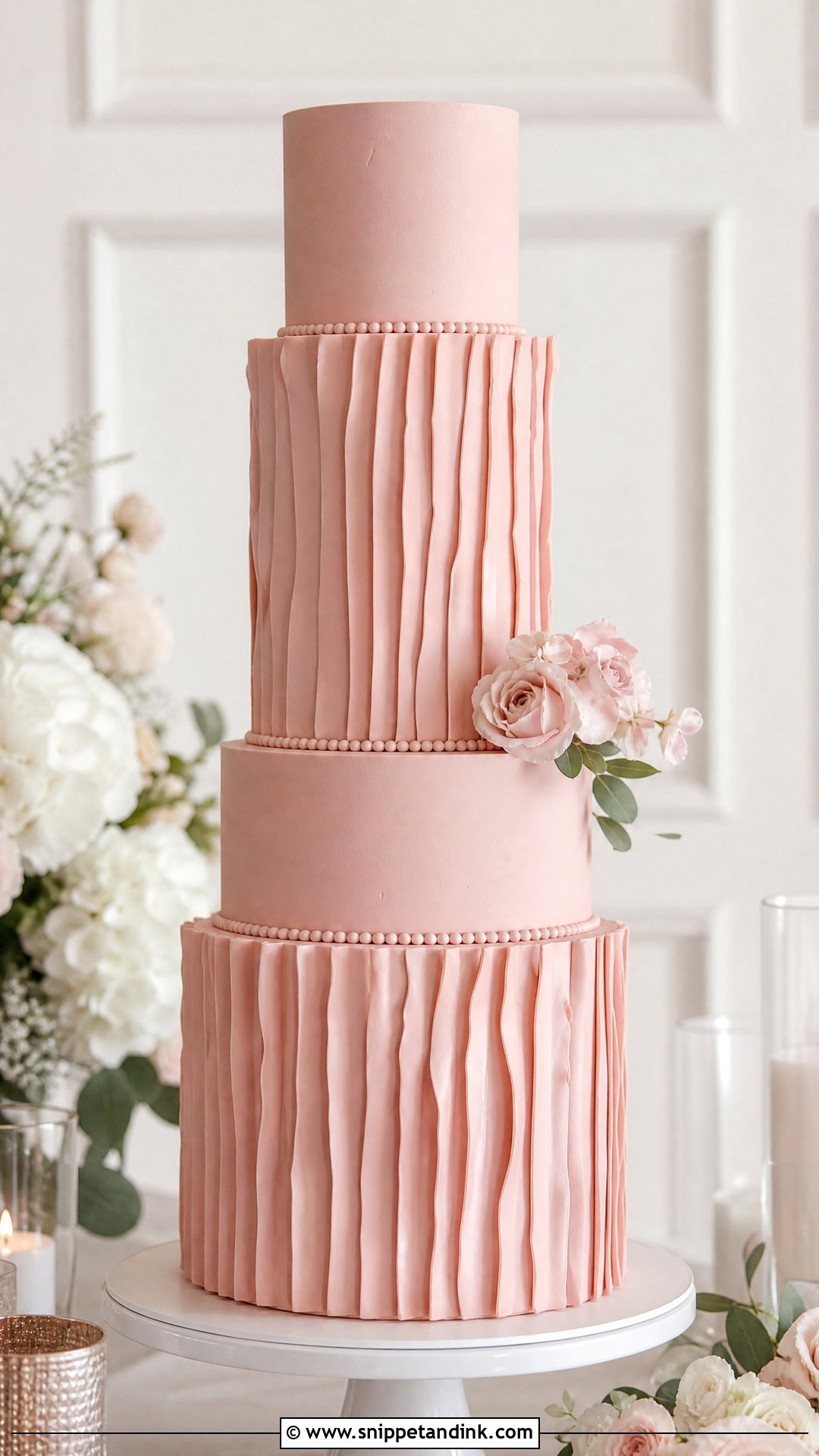
Tall tiers make vertical ruffles look dramatic, and a two-tier tall cake can stand as high as a short three-tier one with fewer servings to pay for, which makes it useful for smaller weddings. Structurally each tall tier is really two stacked cakes with a board and dowels in between, so it needs care in transport. Soft blush or dusty pink keeps the height from feeling heavy. Minimal flowers, a thin pearl band or a smooth top tier is plenty.
19. Pink Ruffle Wedding Cake With Cascading Flowers
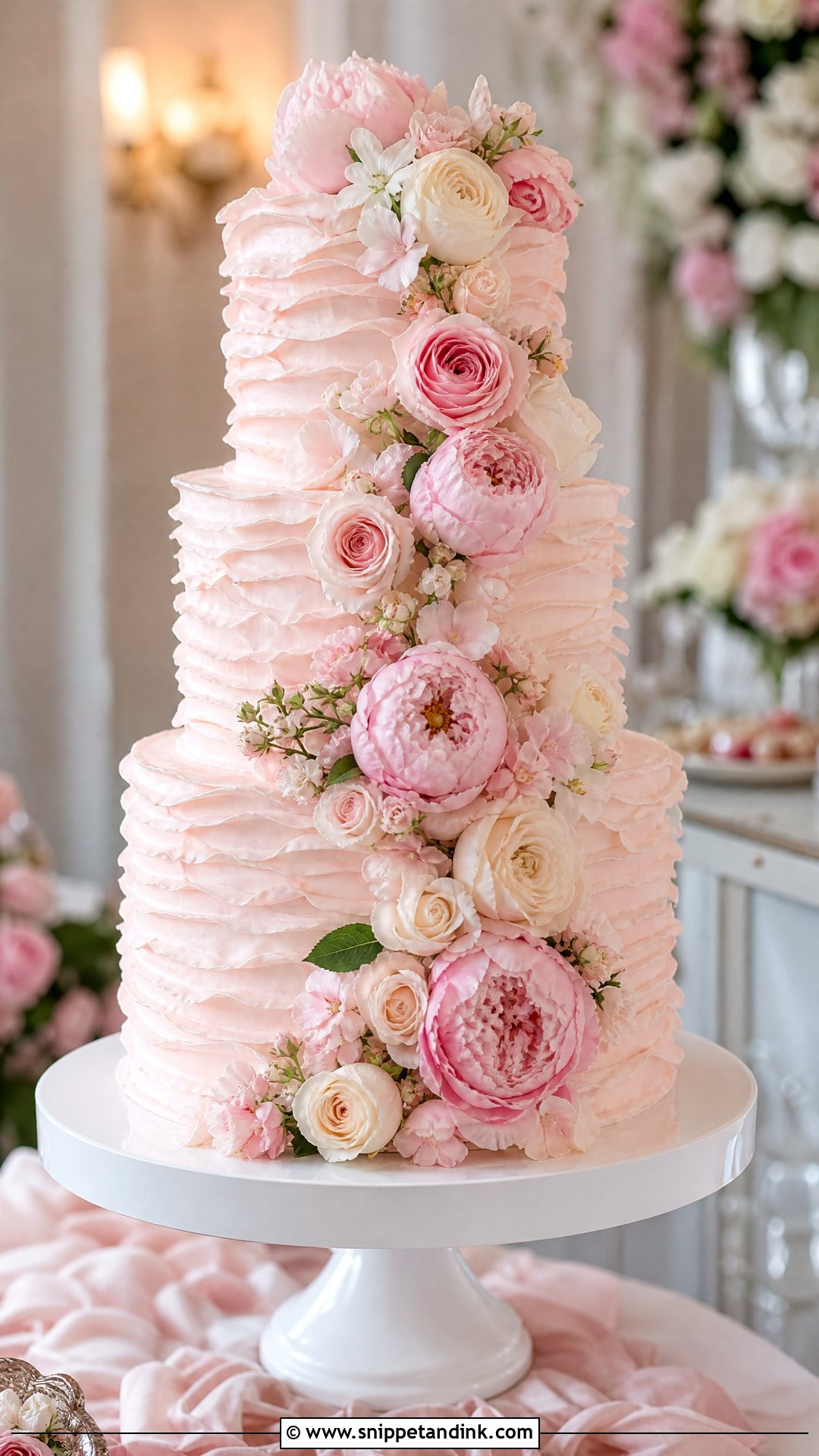
A cascade turns a ruffled cake into the centerpiece, with flowers following the line of the frills down the tiers. Roses, peonies, orchids, ranunculus and small blossoms all work. Ivory and pale pink keep it soft; a few deeper rose or burgundy accents add contrast if they match your palette. My rule is that some ruffles must stay visible; if the flowers cover everything, you’ve paid for texture nobody sees. It suits floral-heavy weddings and large dessert displays.



20. Pink Ruffle Wedding Cake With Minimal Flowers
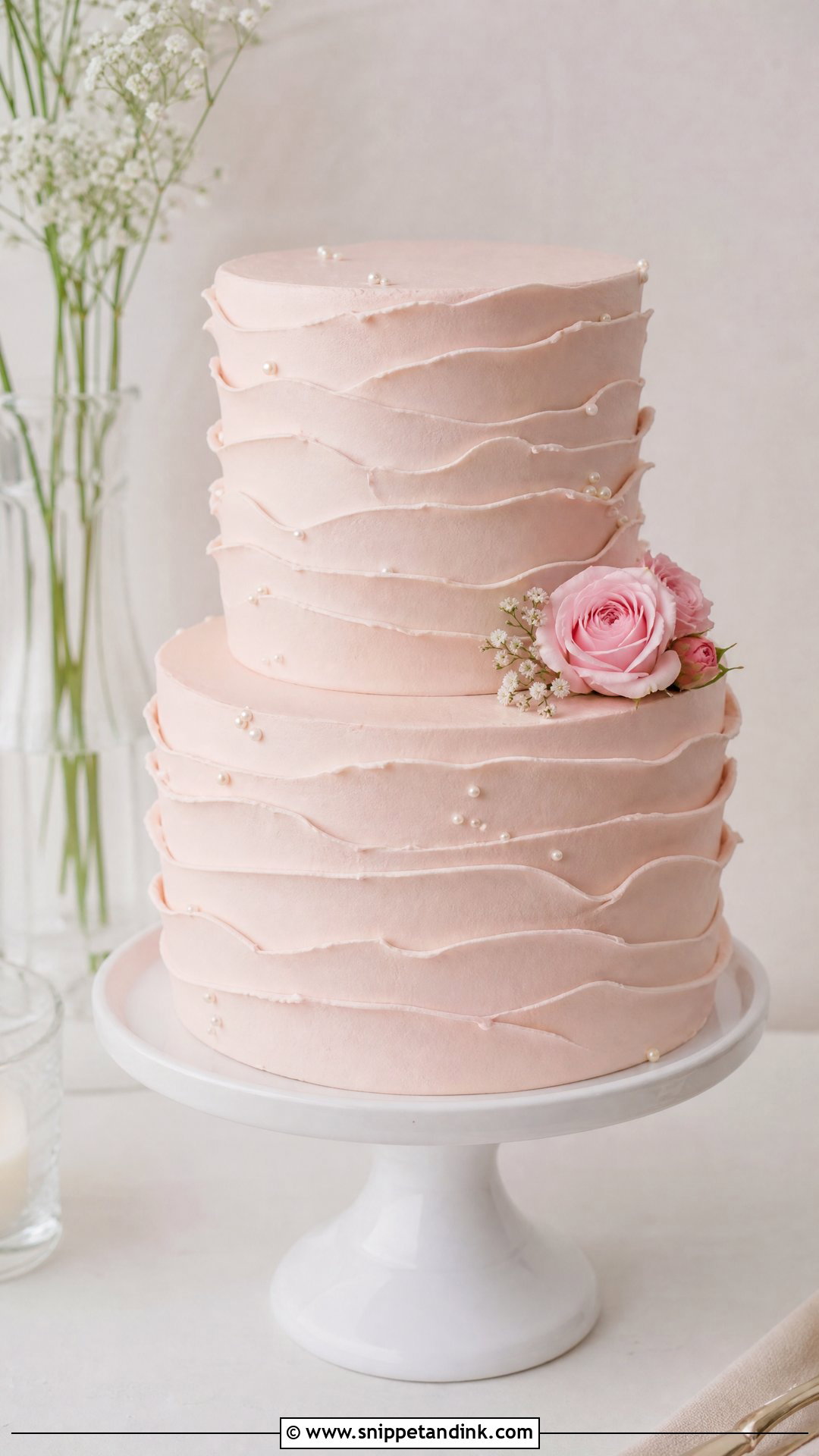
Here the ruffles are the whole point, so the flowers have to be placed carefully. A single rose cluster, a few sugar blossoms or one small topper is enough. Clean tiers, soft blush and a plain stand complete it. Leaving space lets the photographer pick up the texture, which disappears under heavy decoration. It’s the version I’d suggest for minimalist, classic or small weddings, and it’s often a little kinder on the budget.
What Happens When a Ruffled Tier Meets the Cake Knife?
Ruffles look wonderful whole, but they change how the cake serves. Each slice carries far more frosting than a smooth finish, and the frills can tear and smear if the cut is rushed.
For buttercream ruffles, I suggest the serving staff chill the cut tiers briefly if the kitchen allows it, and use a long, hot knife wiped clean between slices. Fondant frills can be lifted off in sections before cutting, which most guests won’t miss. Flowers, picks and any non-edible supports come out first.
It’s also worth thinking about sweetness. A heavy American buttercream piped into deep ruffles can feel like a lot on the plate, so I often suggest a lighter meringue-based frosting, a tart fruit filling or a lemon sponge to balance it. If you’d like to keep the top tier, wrap it well and freeze it once the ruffles are firm; they flatten if wrapped while soft.
Let the Venue Decide How Many Frills the Cake Can Carry
Pink ruffles adapt to almost any wedding style; the shade, the tier shape and the decoration decide whether the cake reads vintage, modern or garden. Blush ruffles with pearls or roses are the classic route. Watercolor, macarons, tall tiers or vintage piping feel more current. A formal or warm venue suits fondant frills and gold; a relaxed garden wedding suits buttercream and fresh flowers. Start with where the cake will stand and how long it must look good, then choose the details and flavors around that.
You'll Like These Ideas:


Leave a Reply