
A haldi is the messiest function of the whole wedding, and the sister usually ends up closest to the mess. You’re holding the bowl, steadying the bride on the stool, and getting pulled in for the group smear at the end. So when I dress a sister for this morning, I plan for turmeric paste, a floor seat and three hours of standing before I think about the photos. The looks below run from shararas and sarees to Indo-western sets, mostly in yellow, marigold, green, peach and ivory. You can go a step dressier than the cousins, as long as nothing you wear competes with the bride for attention.

How Close to the Turmeric Bowl Will You Be?
The first question I ask a sister is not her favorite color. It’s where she’ll be standing. A sister who applies the paste, steadies the bride and gets smeared in the group finale needs very different clothes from one who poses for portraits and hands out sweets. Settle your role with the bride a week or two ahead, and dress for that role.
Fabric is the next decision, because turmeric was used as a dye for cotton long before anyone made a haldi outfit. Its pigment soaks into natural fibers fast, and most haldi pastes also contain oil or milk, which carries the color deeper. Here’s how I sort fabrics for a sister in the thick of it:
- Easiest to rescue: polyester georgette, crepe and other synthetic blends. Paste tends to sit on the surface and rinses out better.
- Washable but stains readily: cotton, mulmul and linen. Fine if you treat the outfit as a ceremony set and accept a faint mark.
- Keep away from the paste: pure silk, organza, tissue and anything with real zari. These usually need a dry cleaner, and oil rings may never fully lift.
- Embroidery traps paste: mirror work, gota and dense thread work hold turmeric in the gaps, so dab marks off early.
Finally, think about the floor. Many haldis seat the family on gaddas or durries around a low stool, so test every outfit by sitting cross-legged and getting up again without your hands. If that’s awkward in the fitting room, it will be worse after two hours.
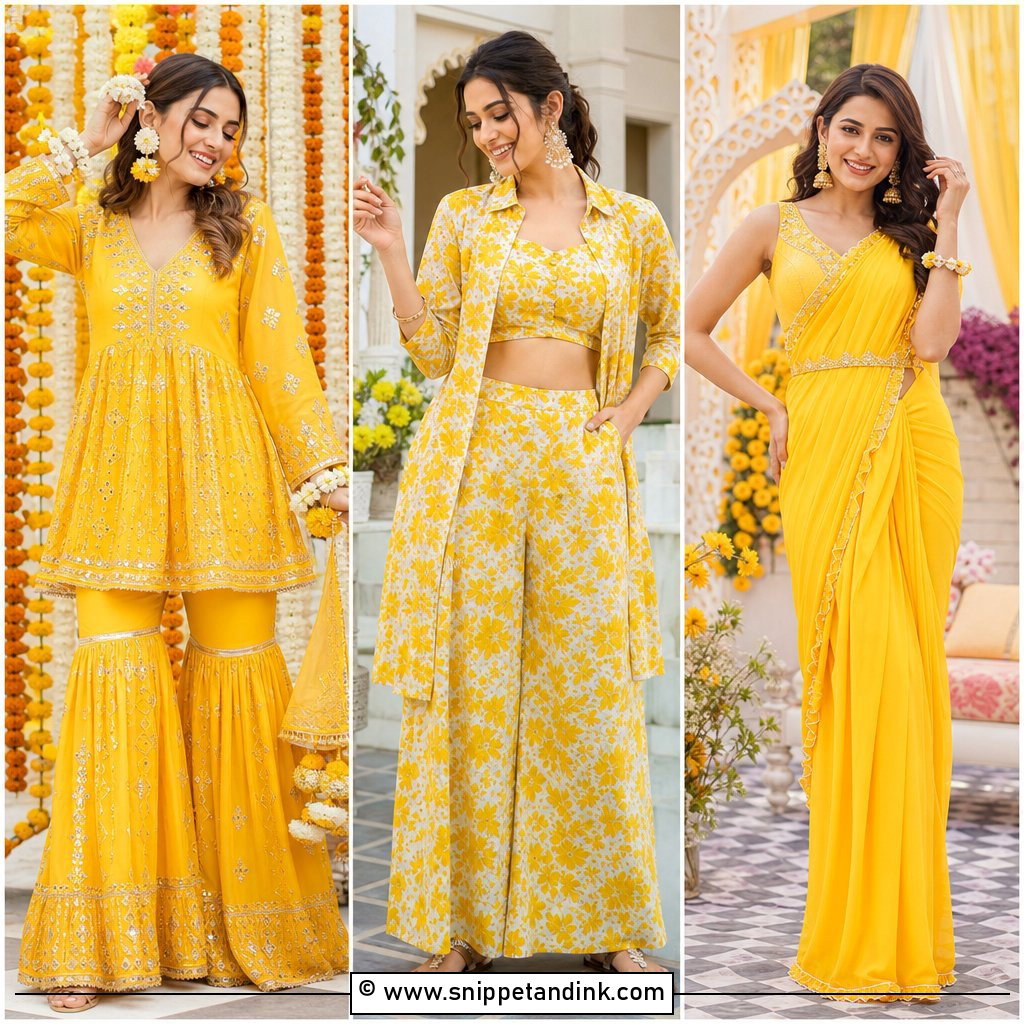
1. Yellow Sharara Set For Haldi
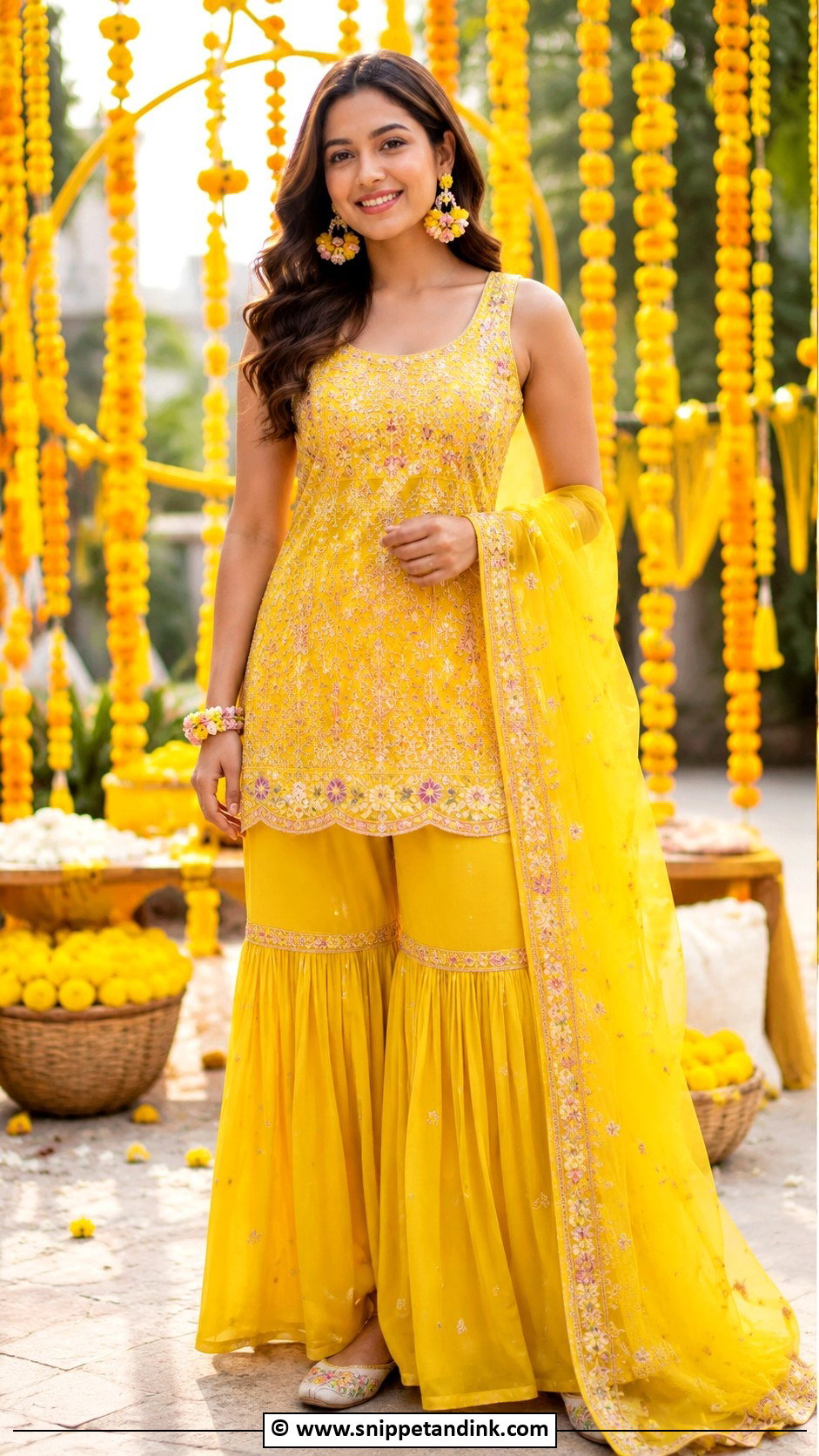
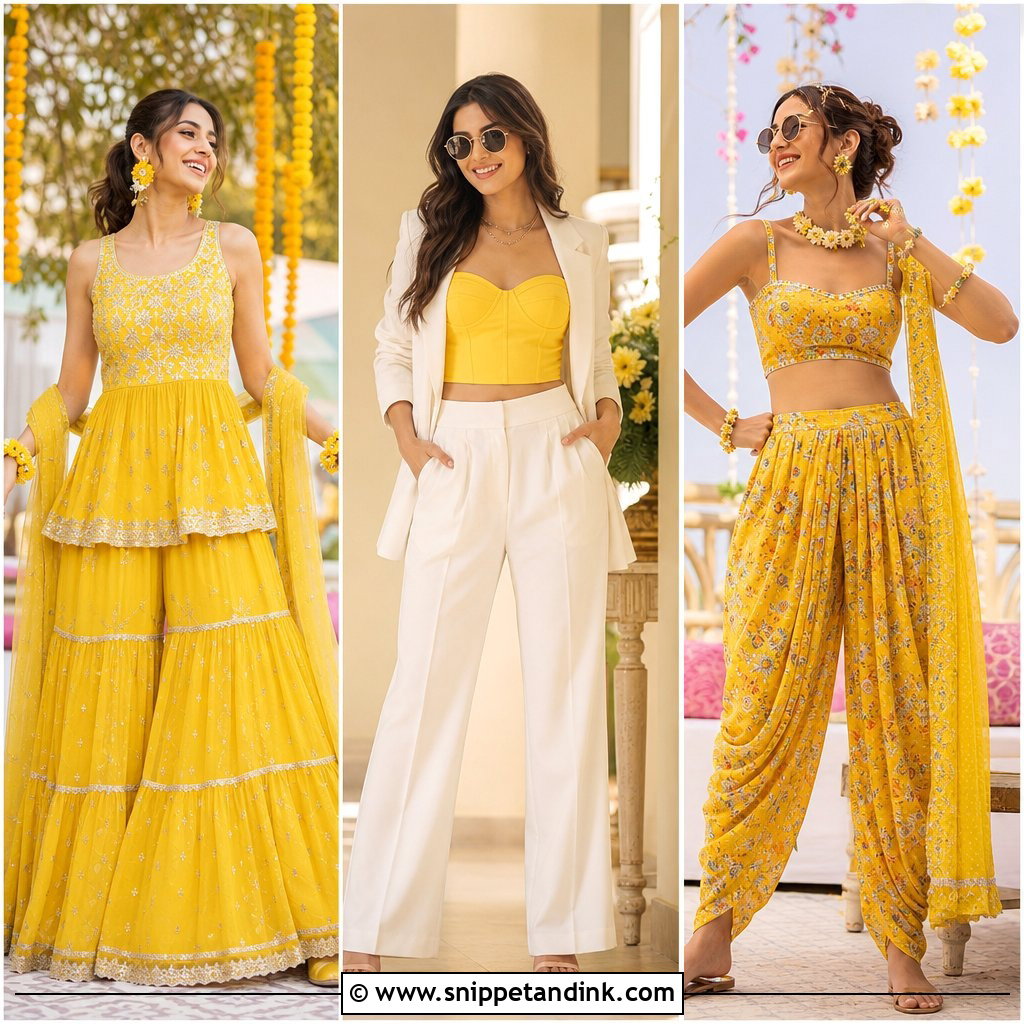
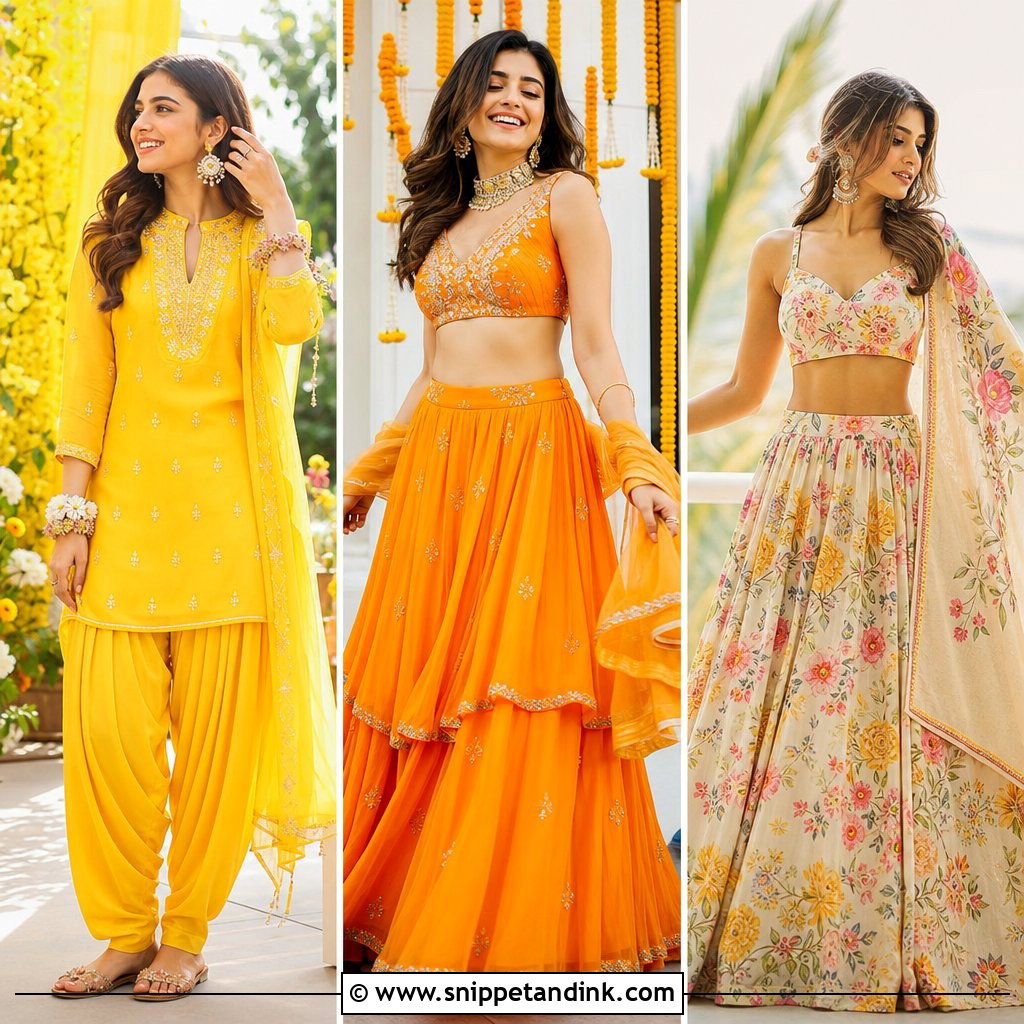
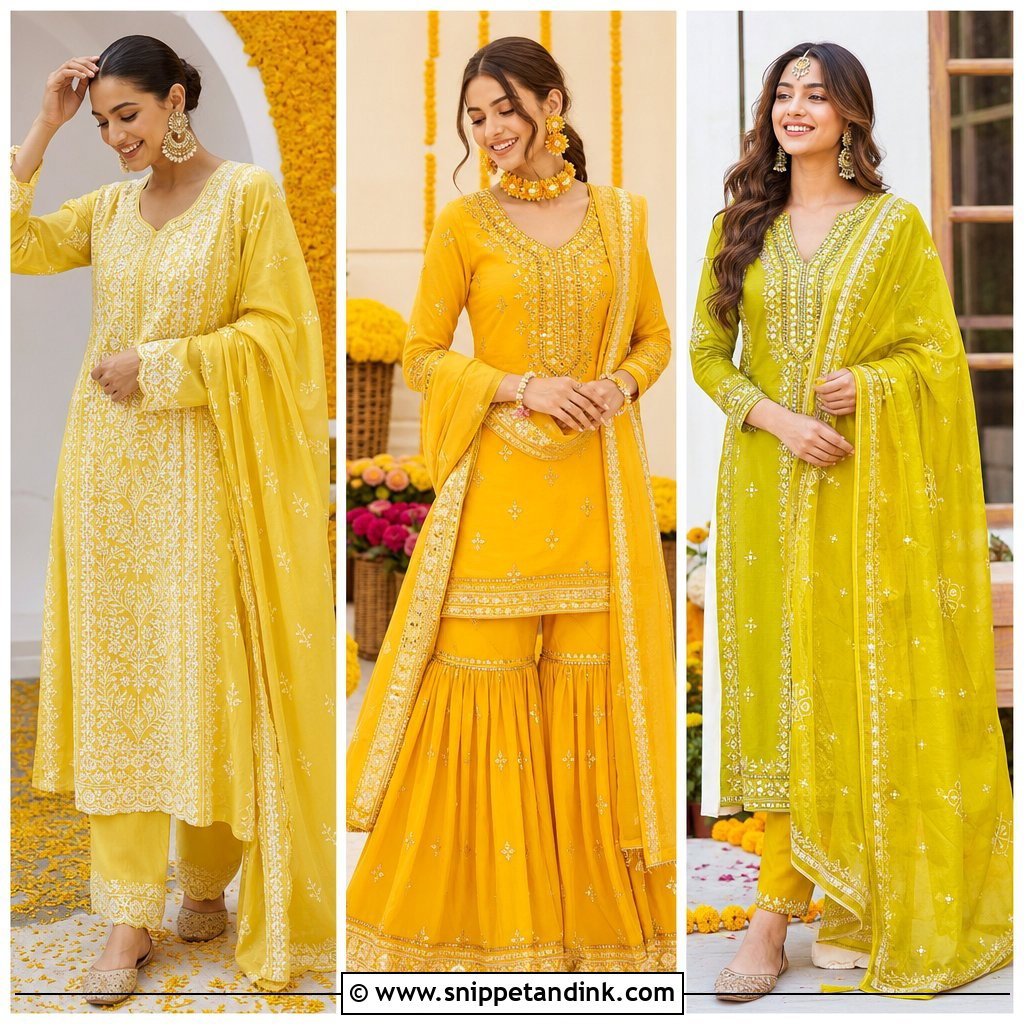
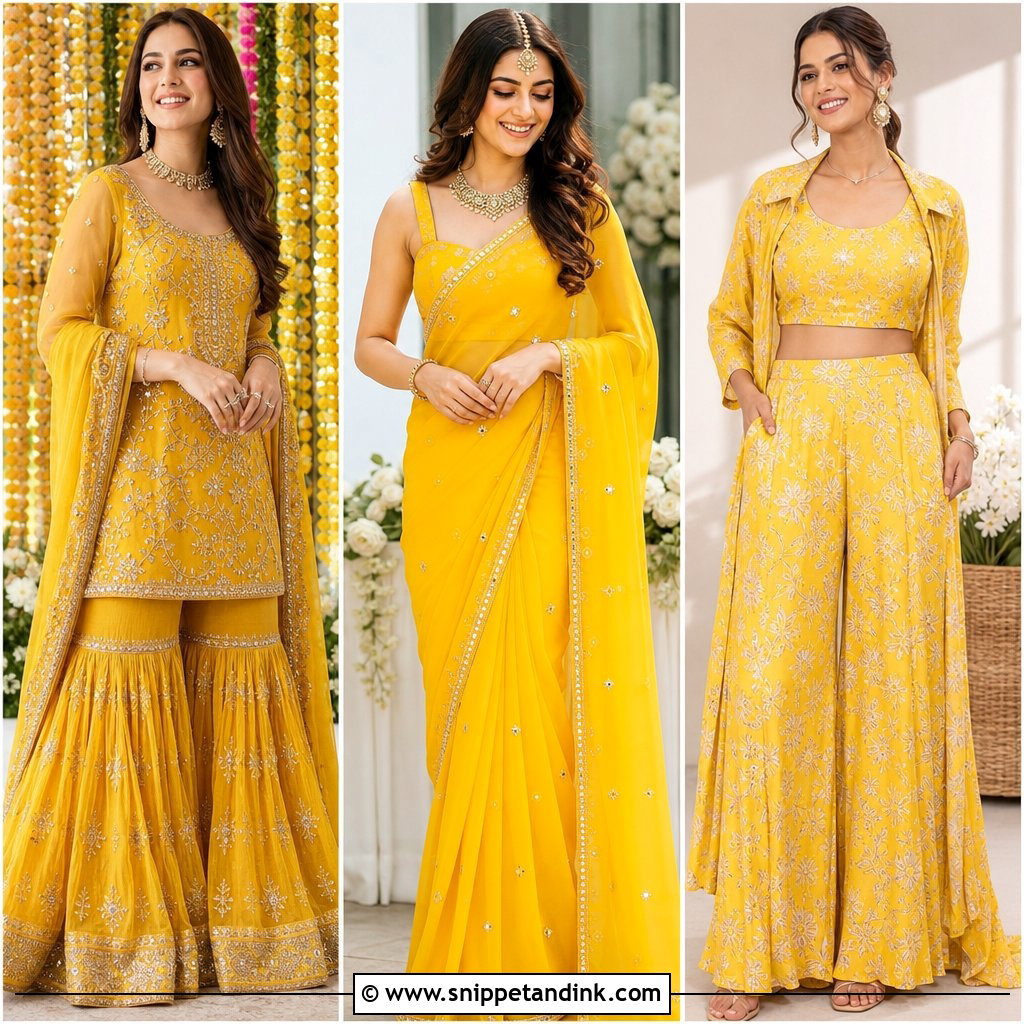
A sharara is the set I reach for first when a sister tells me she’ll be on her feet all morning. Pair a short kurti with gota patti, mirror work or light thread embroidery with a flared sharara and matching dupatta. The split legs let you sit cross-legged on a low platform without hitching anything up, which a lehenga can’t promise. Keep the jewelry playful: floral earrings, bangles, a small maang tikka. Juttis over heels, every time, if the ceremony is on grass.
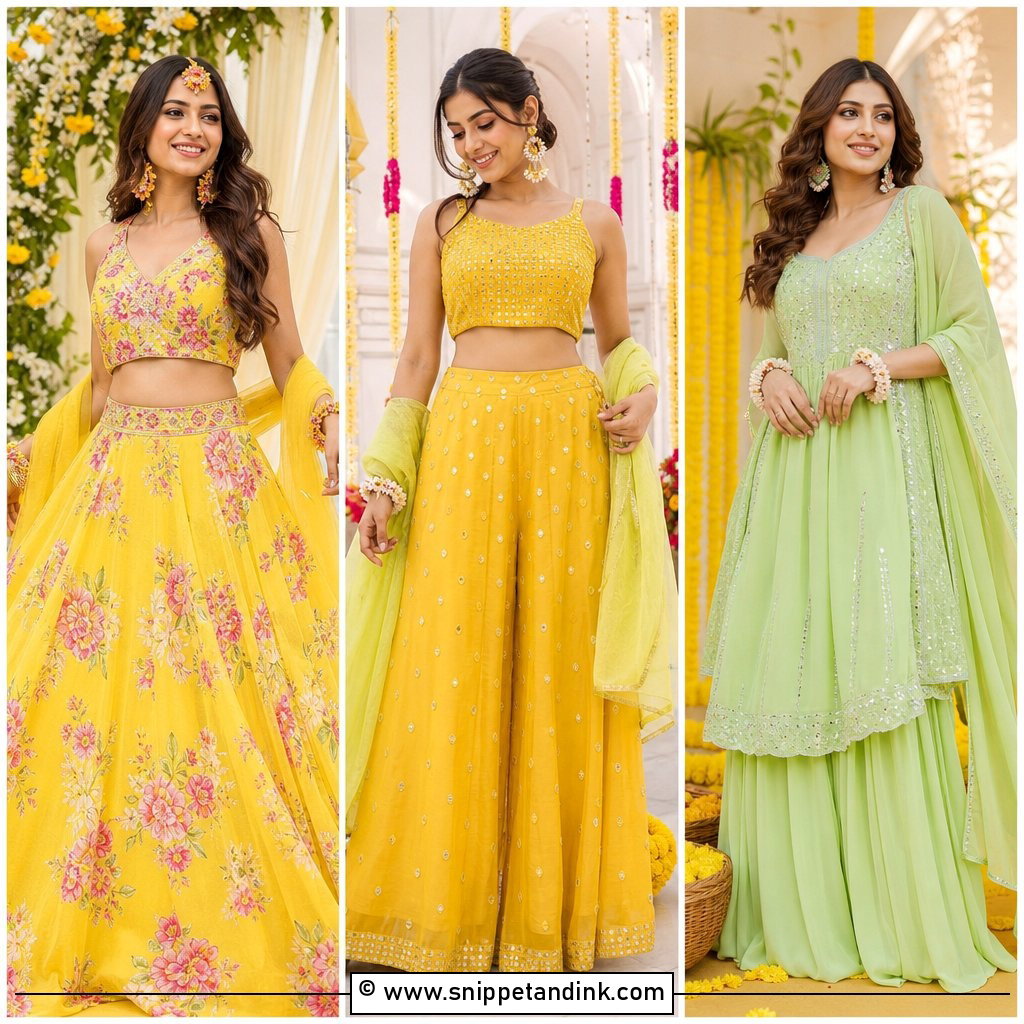
2. Mustard Lehenga Choli For Haldi
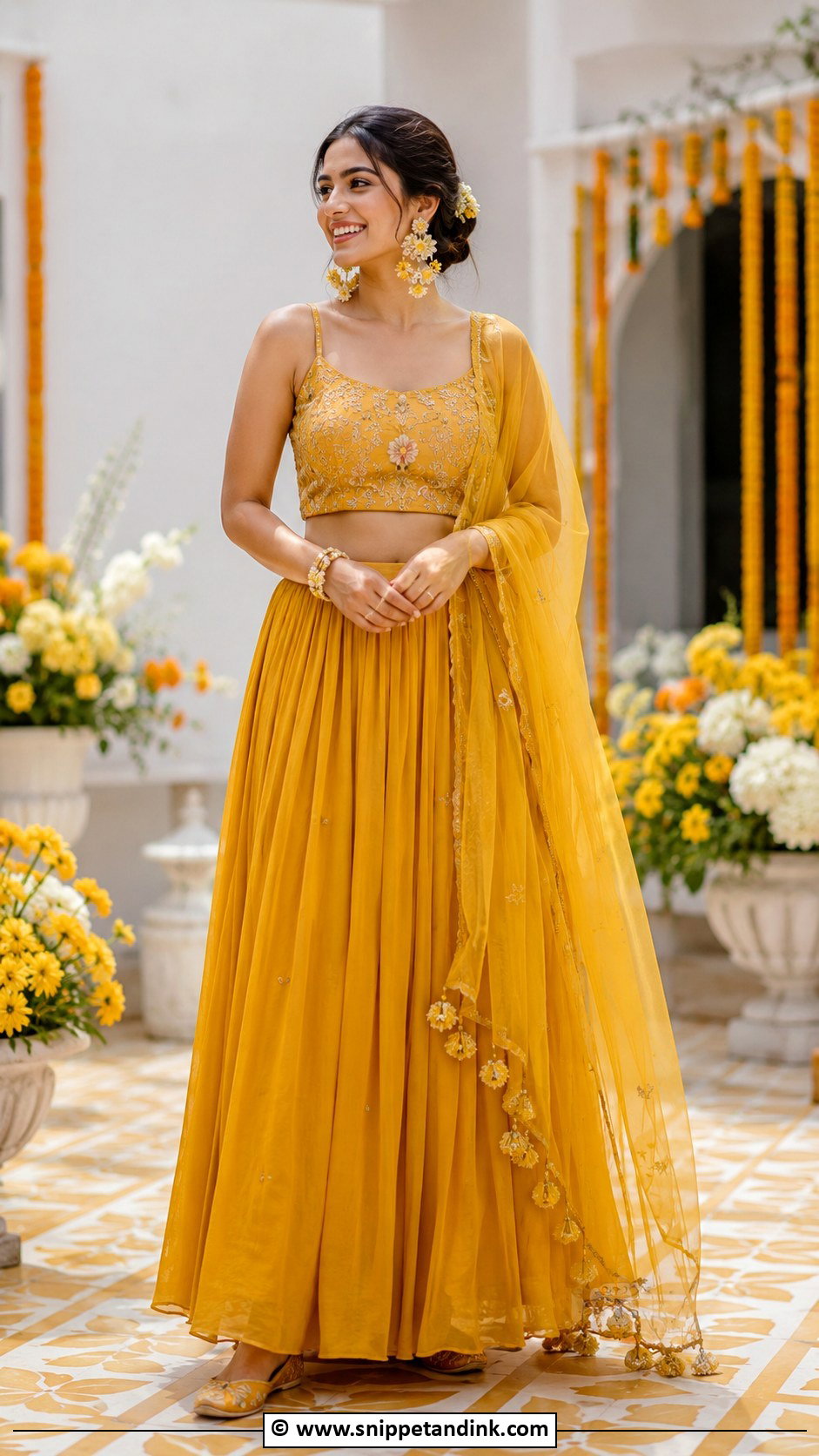
A mustard lehenga choli keeps you inside the yellow family but reads deeper and richer than the bride’s bright turmeric shade, which is exactly the separation you want in group photos. I’d pick cotton silk, chanderi or georgette rather than heavy raw silk, because the weight is what makes a lehenga start to look bridal. A short-sleeve blouse keeps cuffs out of the paste bowl. Mirror work and zari borders sit well on mustard. Save this one for the bigger haldi with a photographer and a styled backdrop.
3. Floral Printed Saree For Haldi
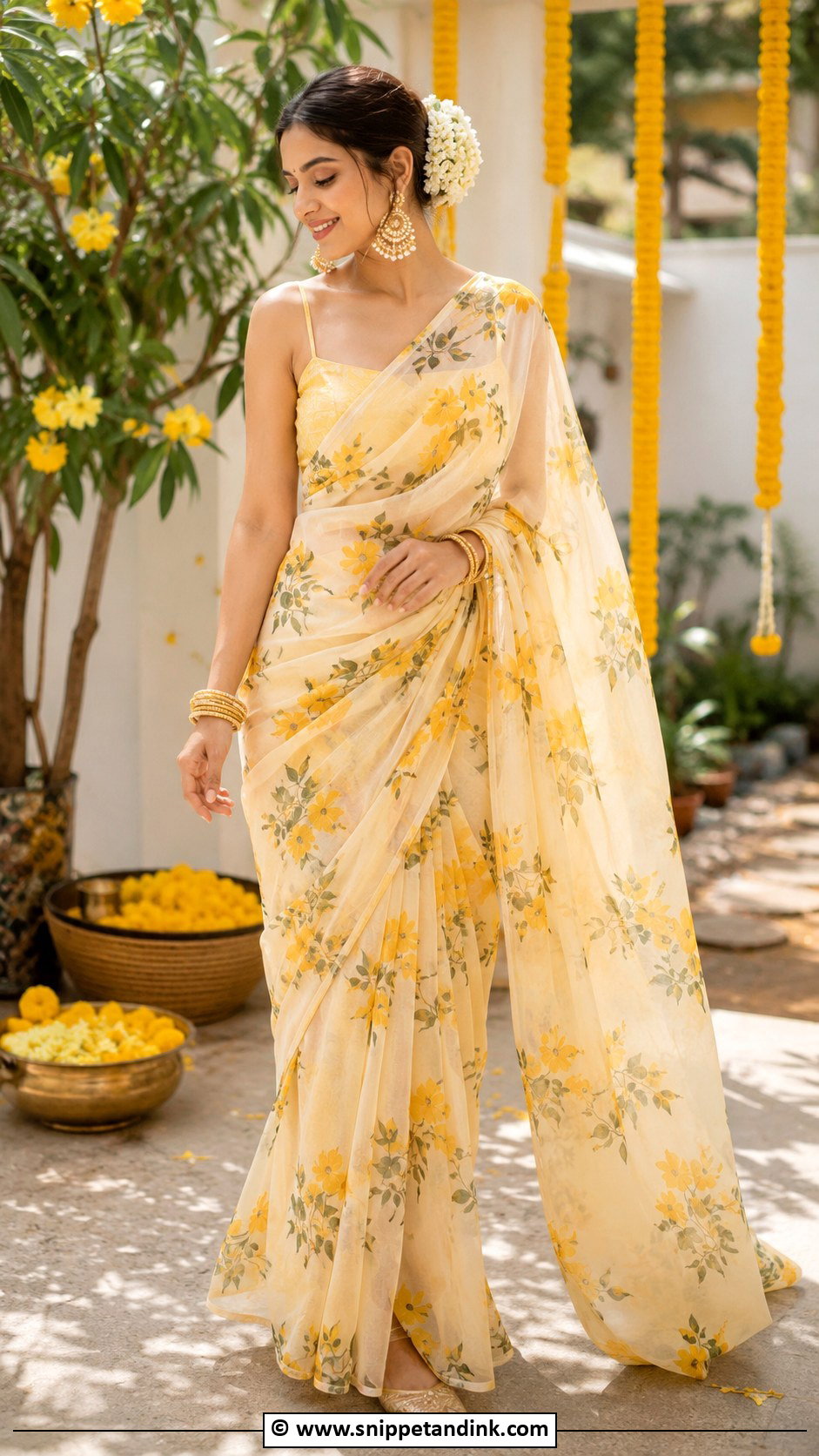
Prints are forgiving at a haldi. A stray yellow fingerprint on a marigold or jasmine print simply disappears into the pattern, while the same mark on plain ivory is the first thing anyone sees. Go for chiffon, georgette or mul cotton on a yellow, green or peach base; they pleat easily and don’t fight you when you kneel. One thing I always check is the pallu length: tuck it in or pin it short, because a long loose pallu will drag straight through the paste. A low bun with fresh flowers finishes the drape, and daylight does the rest for a printed saree.
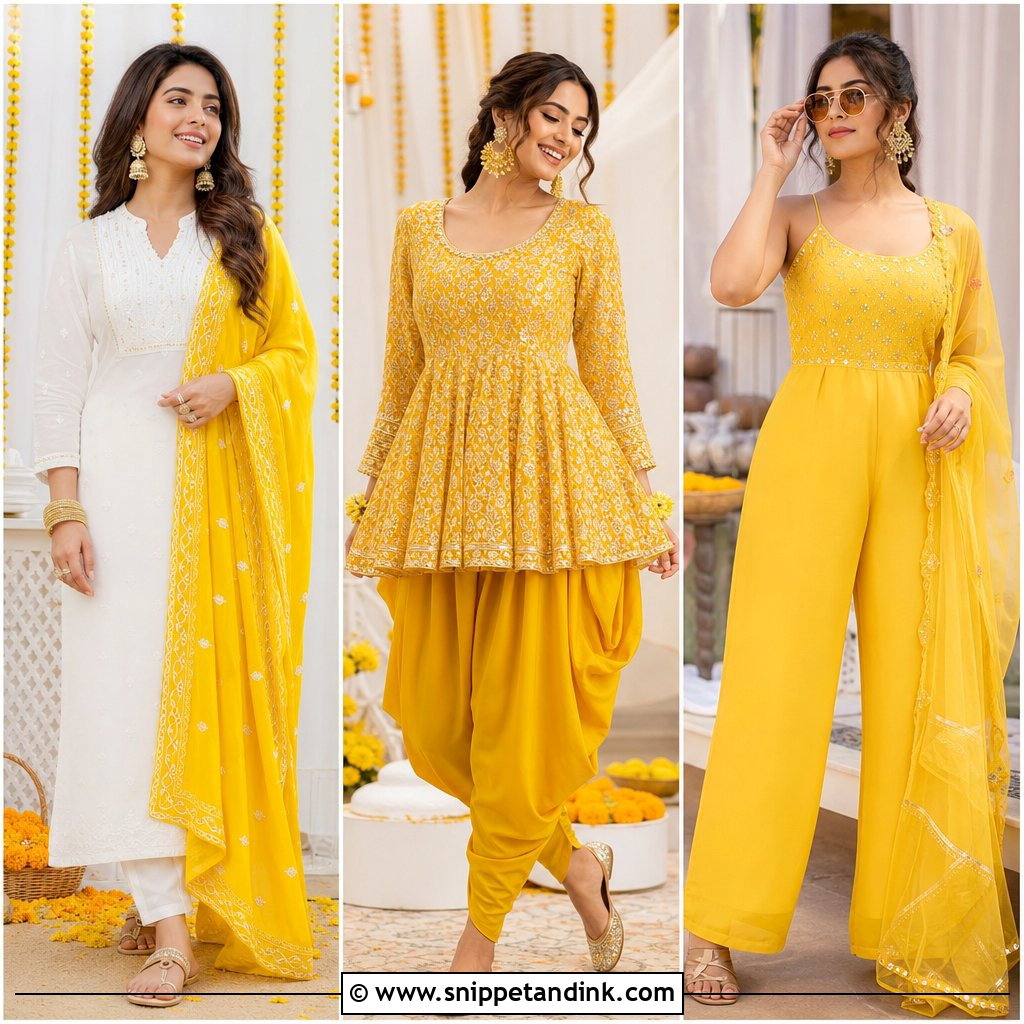
4. White And Yellow Kurta Palazzo Set For Haldi
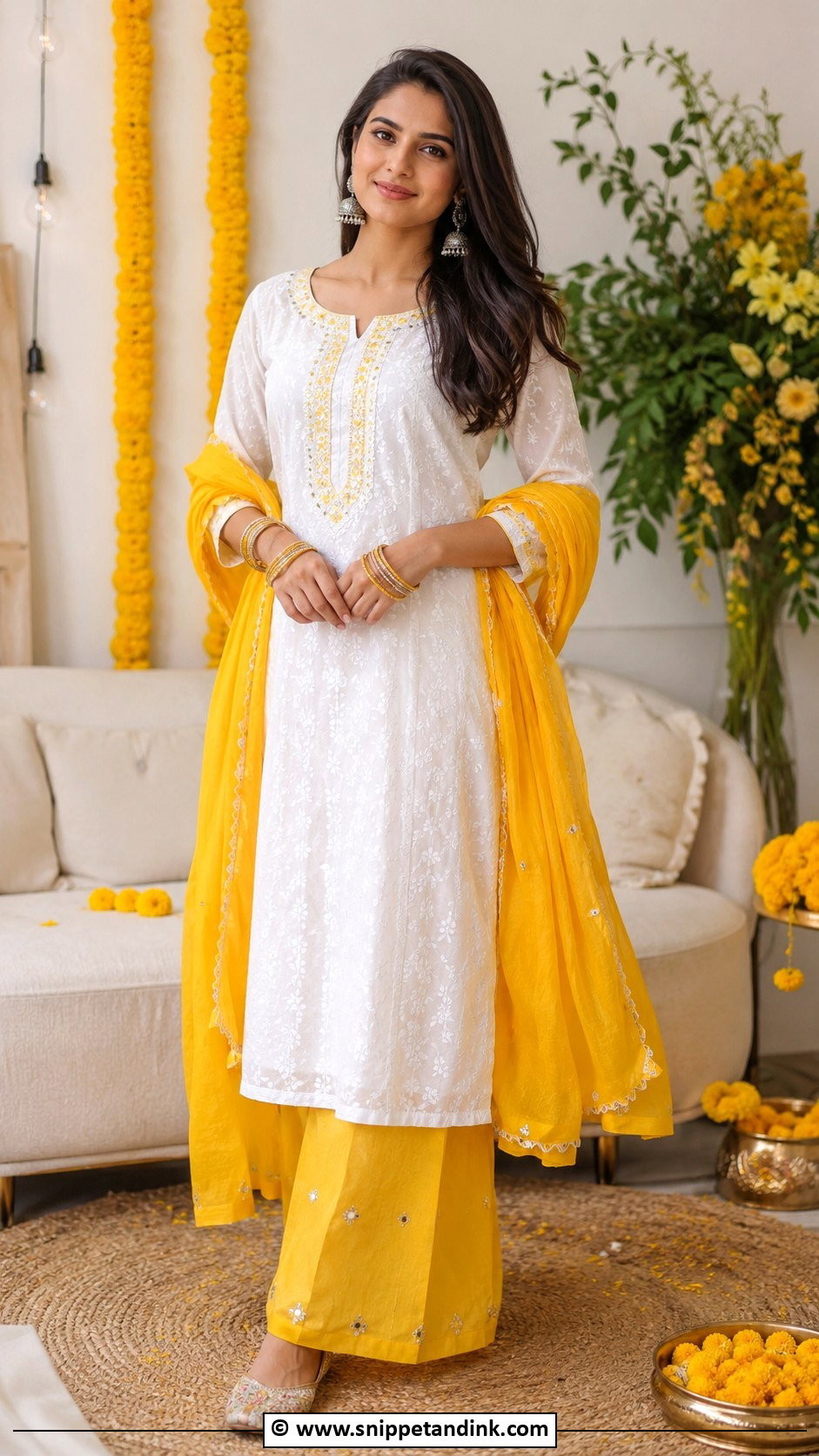
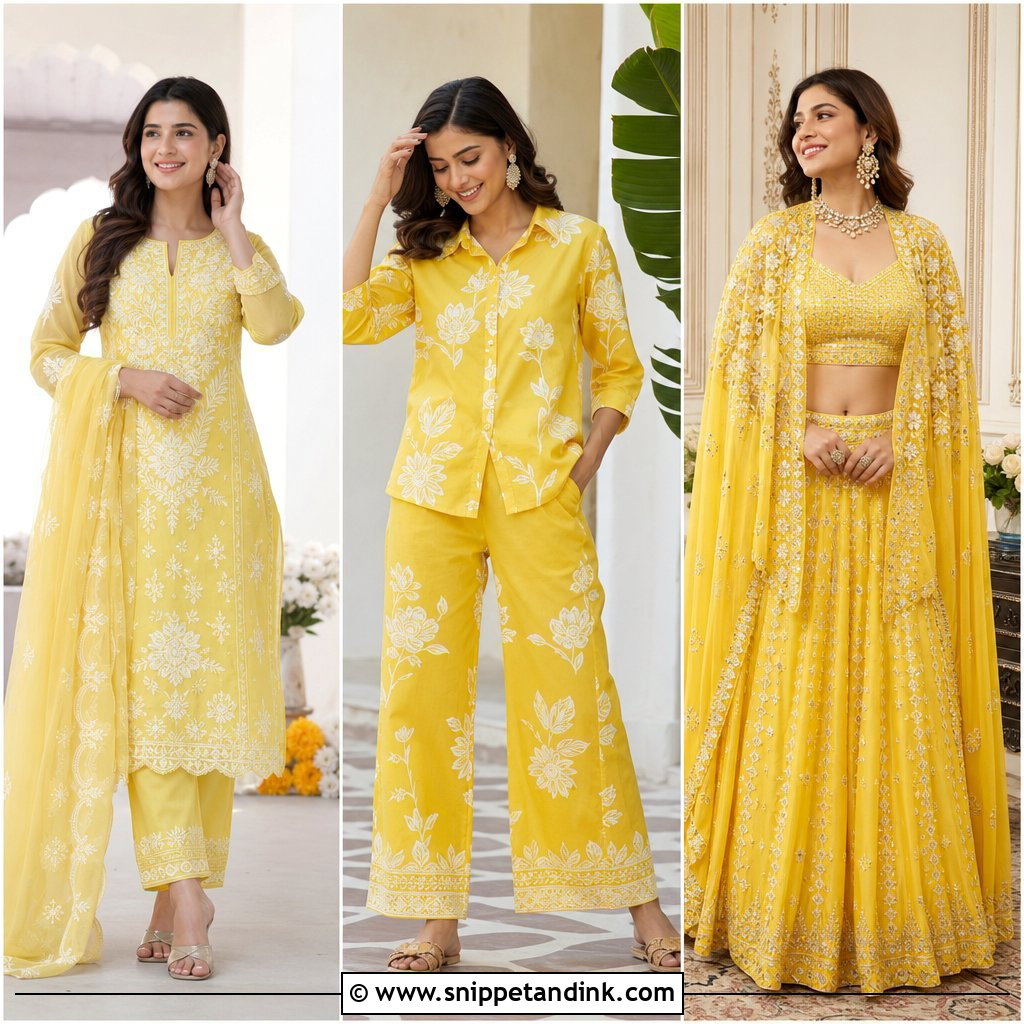
This is the honest workhorse of the list. A white kurta with yellow embroidery or block print over yellow palazzos is cheap enough that you won’t panic when someone flicks turmeric at you, and cotton or mulmul breathes through a hot morning. Be aware that white cotton grabs turmeric harder than almost any other fabric, so treat this as a set you’re happy to see stained, or plan to hang it in the sun the same afternoon. Oxidized earrings, yellow bangles and embroidered juttis are all it needs. I like it most for a small home haldi held in the family courtyard.
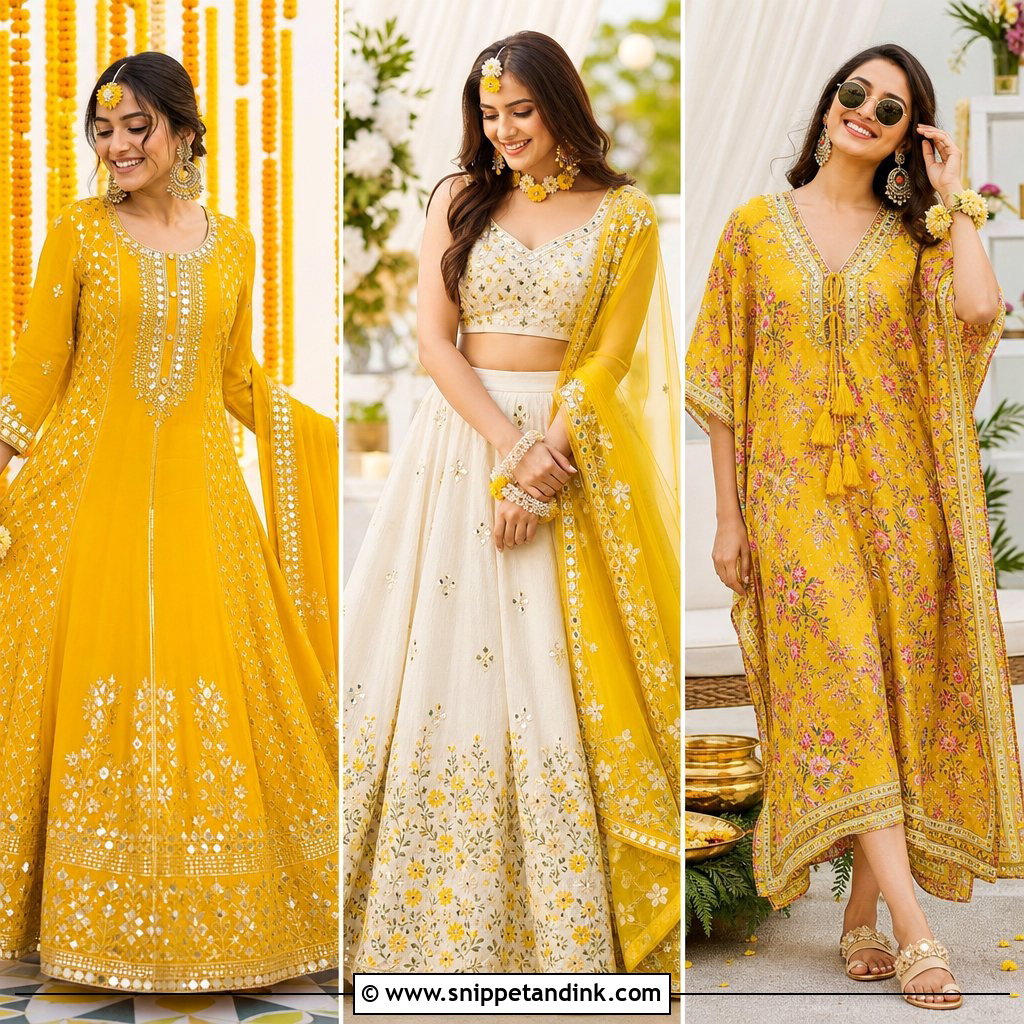
5. Yellow Anarkali Suit For Haldi
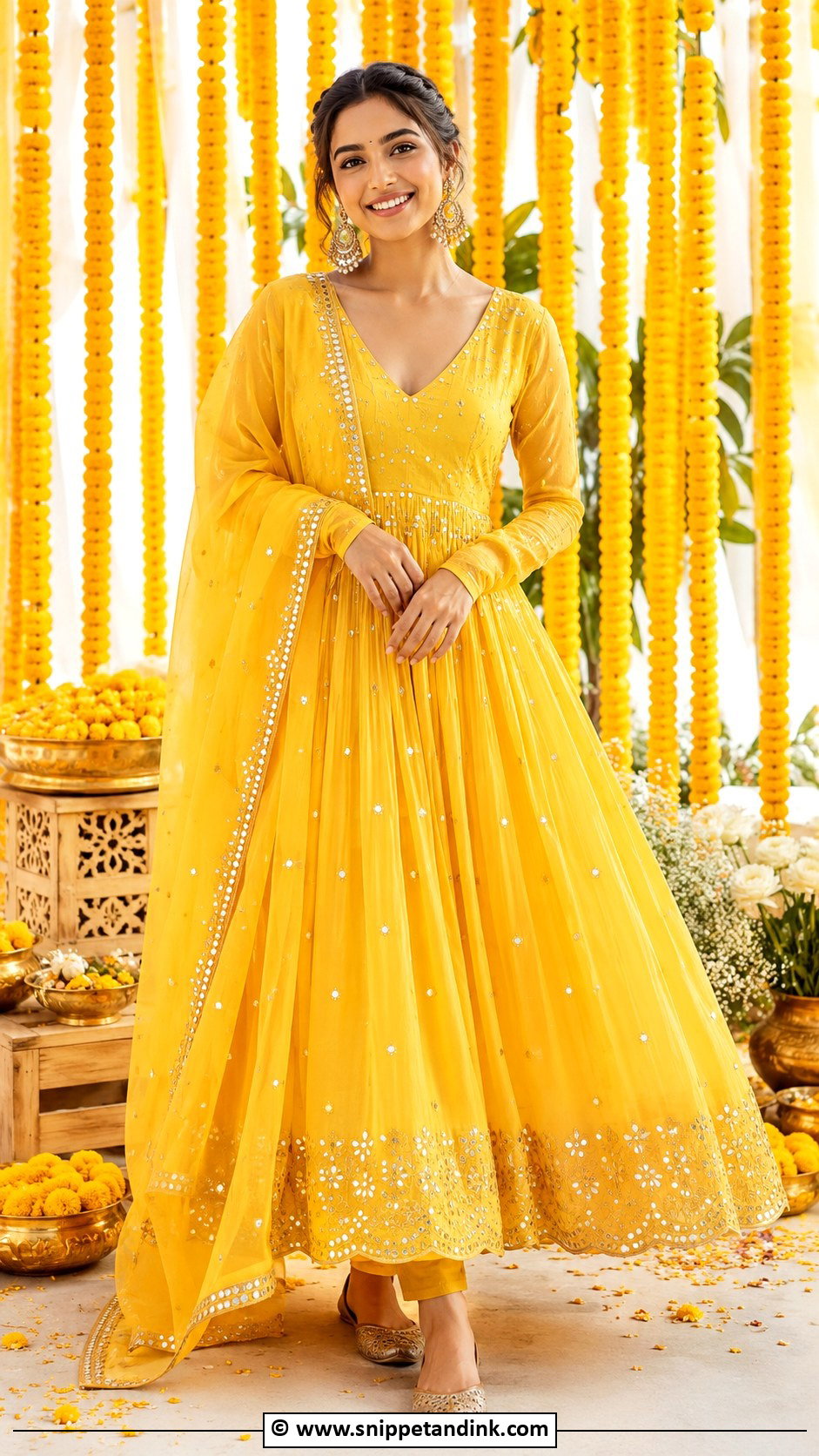
Anarkalis move well in photos because the flare swings when you walk, and they need almost no styling to look finished. The catch is volume: a full-length kali skirt collects paste at the hem when you sit on the floor near the bride. I’d go ankle length rather than floor-sweeping, with mirror accents or lace borders instead of dense zardozi. Choose sleeveless or three-quarter sleeves if you’ll be applying haldi yourself. Chandbalis, a small bindi and metallic flats keep it light.
6. Green Lehenga With Yellow Dupatta For Haldi
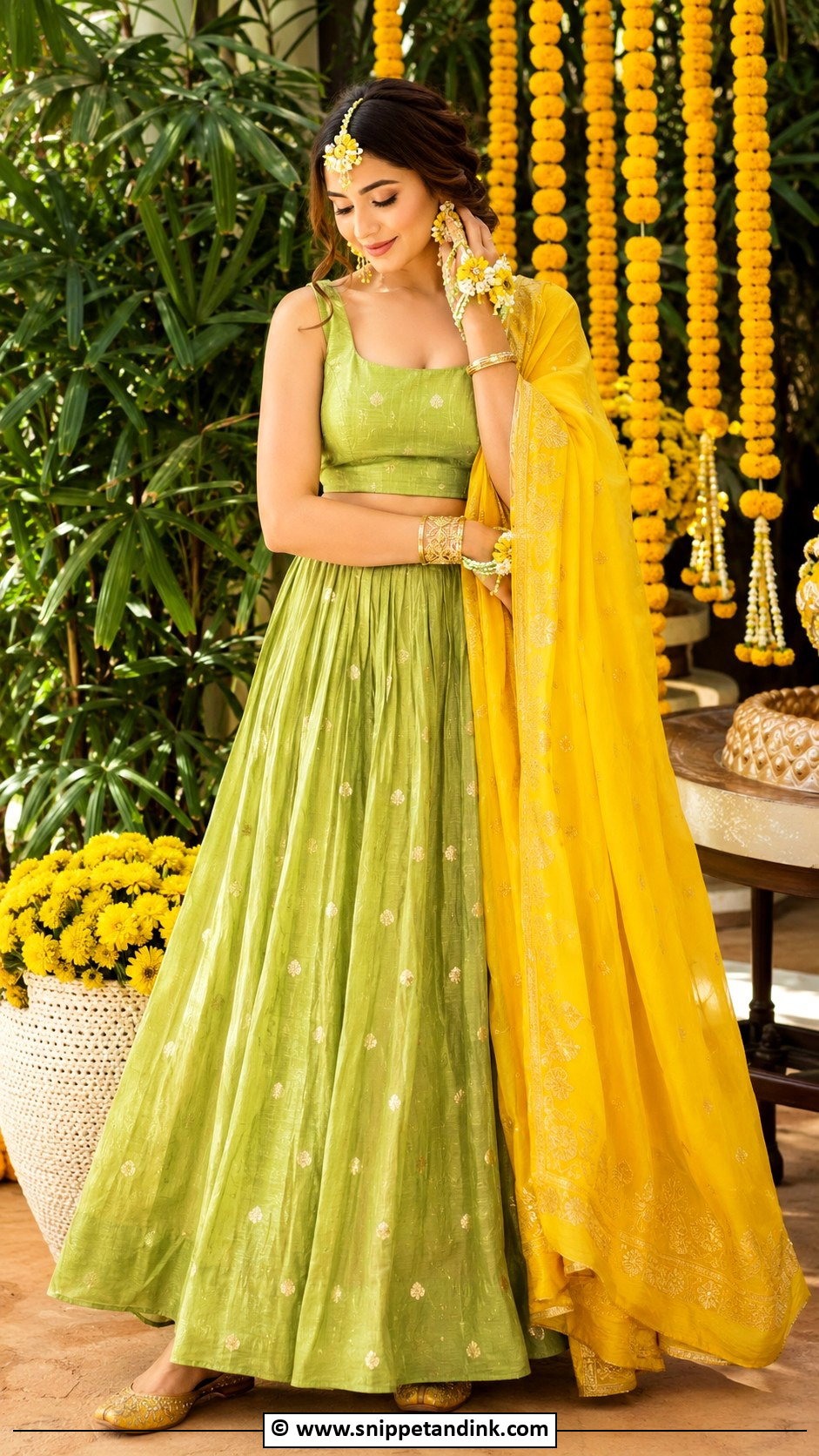
Green is my favorite answer when the bride has already claimed bright yellow. Parrot, pista or mehendi green sits next to her without matching, and a yellow dupatta ties you back into the ceremony palette. Keep the lehenga itself plain so the dupatta reads as the accent. A dewy base and floral jewelry suit it, and green holds its own against a marigold backdrop instead of disappearing into it. Ask the bride what she’s wearing before you buy; two greens that clash in person look even worse on camera.
7. Yellow Crop Top And Palazzo Set For Haldi
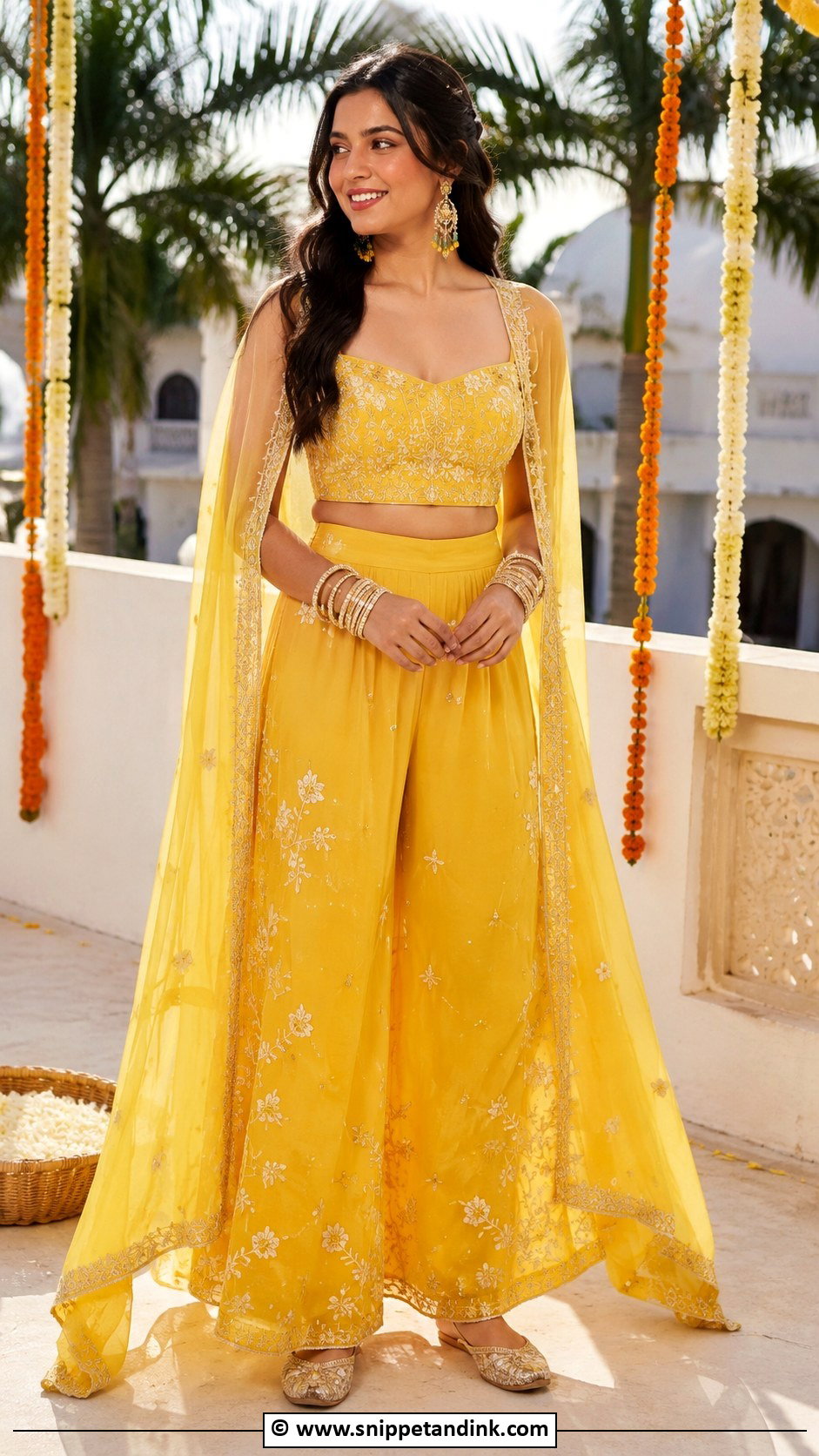
A yellow crop top and palazzo set suits a younger sister, and the high-waisted palazzo makes the cropped top feel festive rather than casual. I always ask about the family first, because a bare midriff that’s fine at a resort party can feel wrong at a grandmother’s home ritual. A cape or light dupatta solves that in seconds. Structured crop tops with mirror work hold their shape better through dancing than soft knit ones. Poolside and terrace haldis in warm weather suit this set best.
8. Orange Saree With Floral Jewelry For Haldi
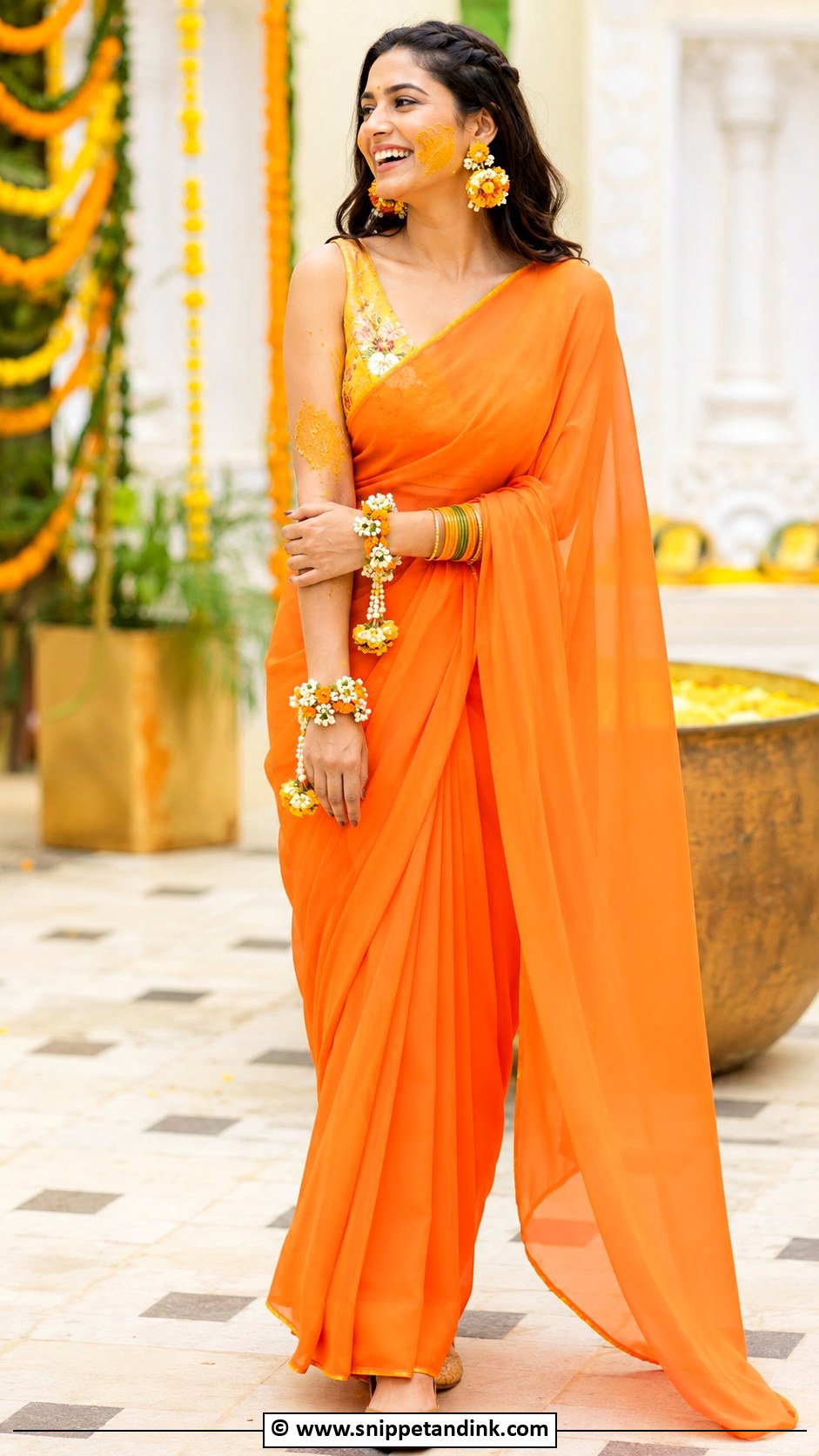
Orange is closer to real turmeric paste than lemon yellow is, so it hides splashes well. Tangerine, marigold or saffron with a thin border keeps the drape light, and a yellow or pink blouse gives contrast at the shoulder. Fresh marigold earrings or a flower bracelet soften the strong color. Real flowers wilt in about two to three hours of heat, though, so have them strung the same morning, not the night before. Keep the pleats neat and pinned if you’ll be near the ritual stool.
9. Yellow Dhoti Kurta Set For Haldi
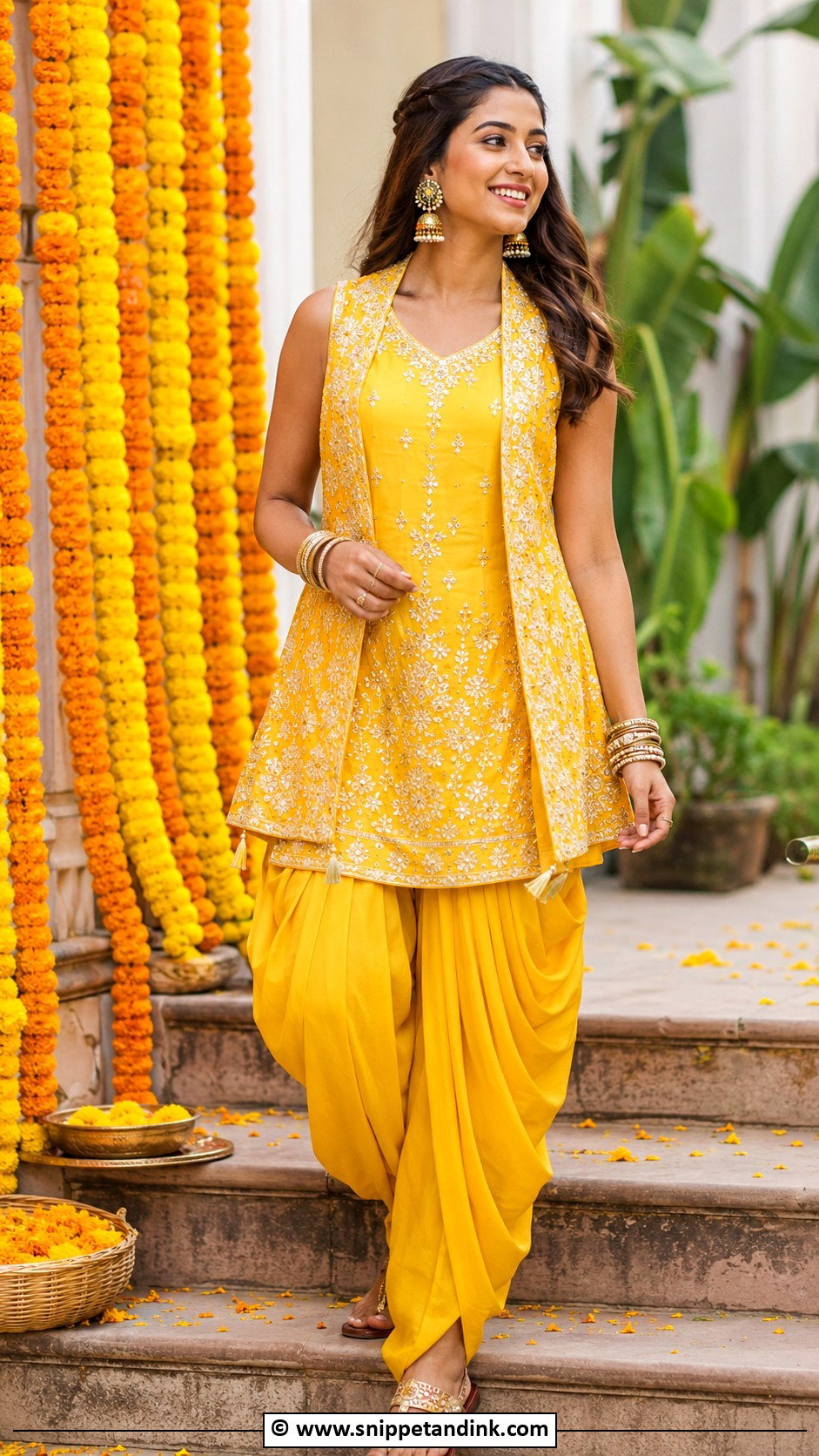
When the sister is also the unofficial event manager, I steer her toward a dhoti set. The draped bottom gives a festive shape, the short kurta stays out of the way, and there’s nothing to step on when you’re running between the kitchen and the stage. Cowrie or mirror details add personality, and a sleeveless jacket gives structure if you want more. Kolhapuris, jhumkas and a sleek ponytail finish it. Try squatting in the fitting room; a dhoti cut too low in the crotch rides up badly when you sit on the floor.
10. Pastel Yellow Organza Saree For Haldi
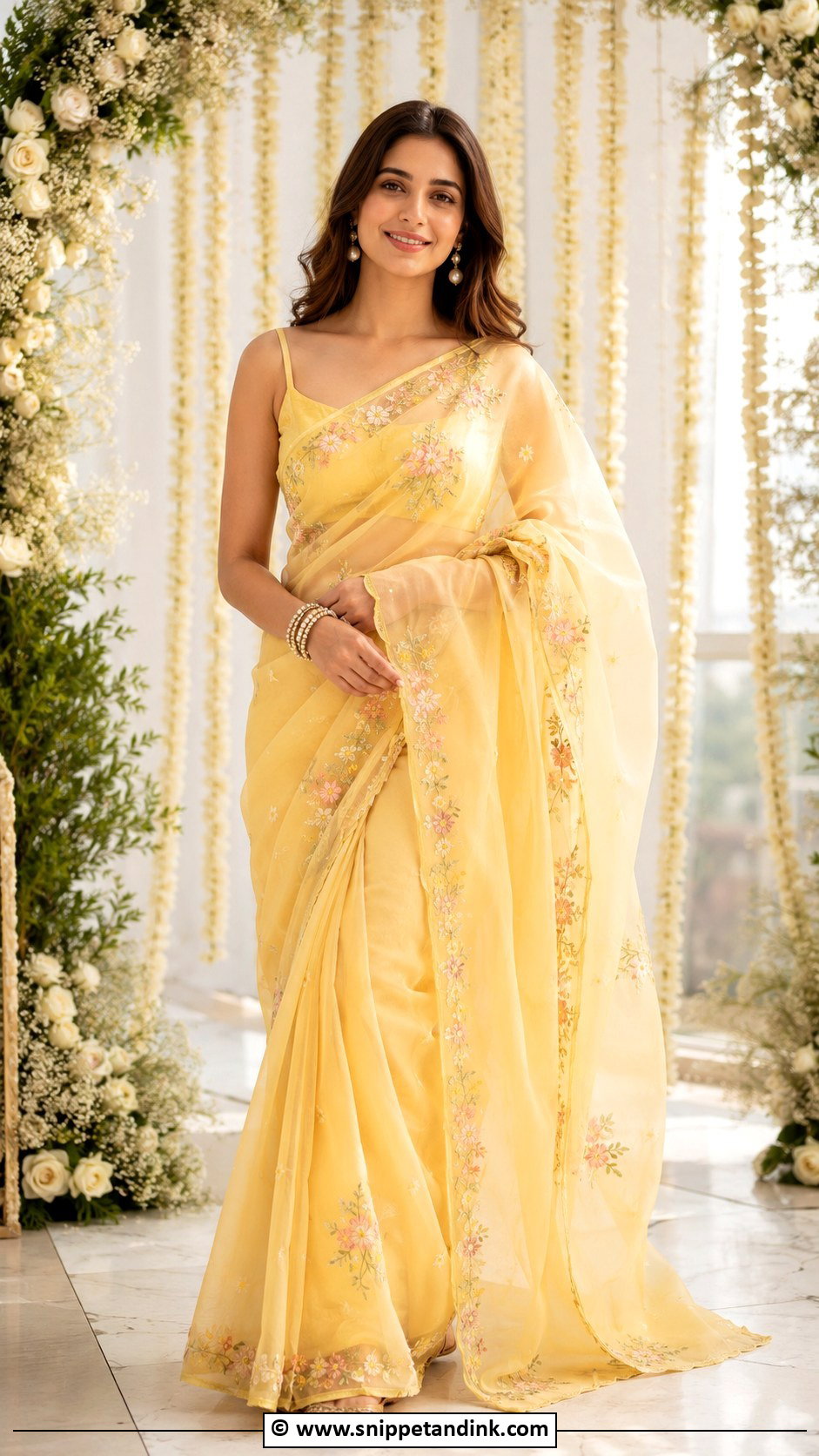
Organza looks airy in daylight photos, but it’s the fabric I’d keep furthest from the paste. It’s sheer and slightly stiff, so oil-based haldi mixtures show through and leave a ring that’s hard to lift. Pastel yellow organza with floral embroidery or scalloped edges is right for the sister who’ll pose for family portraits and hand around sweets rather than apply turmeric. Keep the blouse simple, add pearl earrings, soft curls and gold flats. Plan to change if the cousins start a turmeric fight.
11. Yellow Gharara Set For Haldi
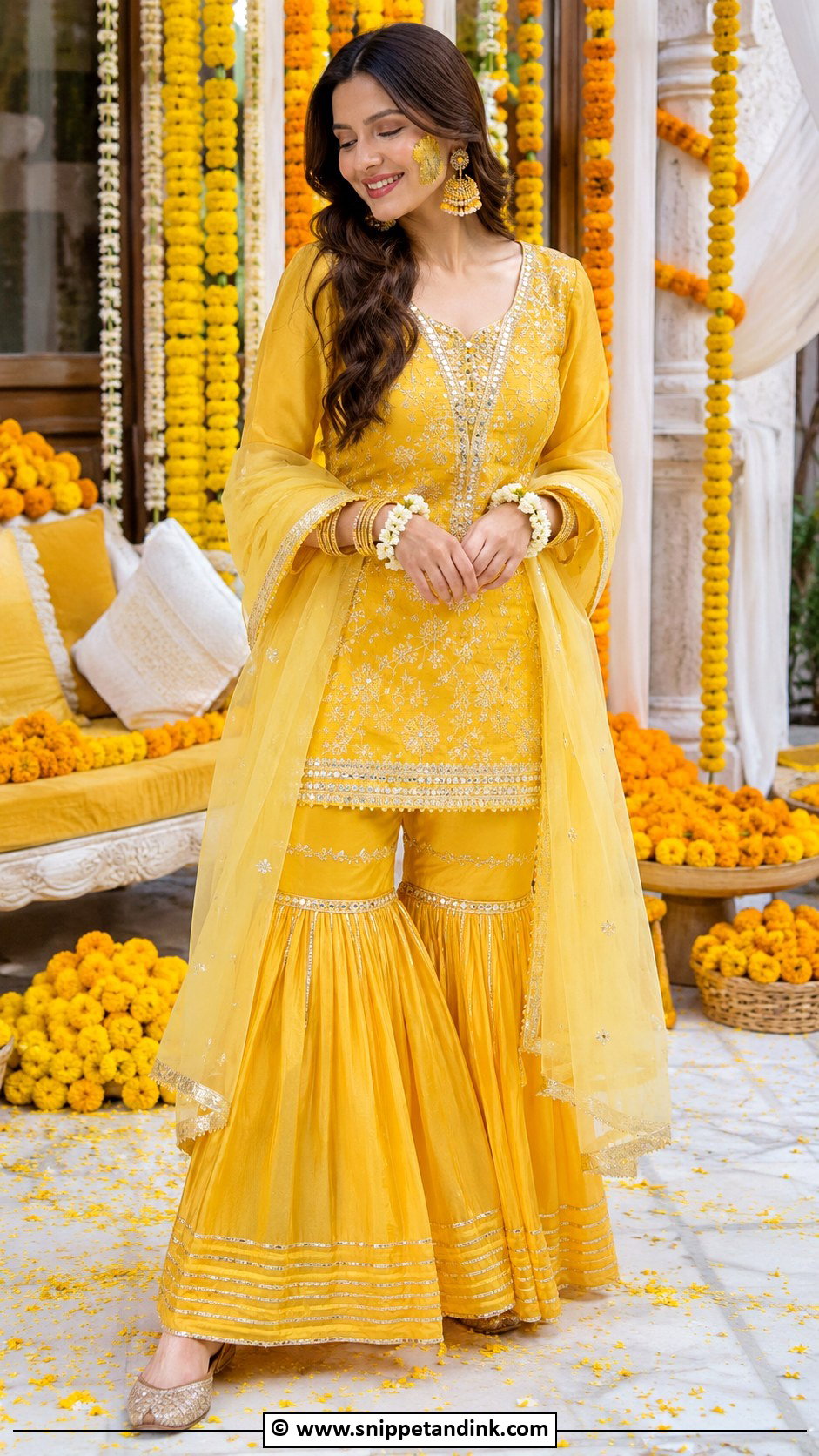
A yellow gharara set gives you a traditional silhouette with less weight than a lehenga. The fitted upper leg and the gathered flare at the knee, usually joined with a gota band, look rich even when the kurti is fairly simple. Pair it with a short kurti in gota, zari or mirror detailing, jhumkas, embroidered juttis and a passa if you want the older North Indian and Hyderabadi feel. Practice sitting in it: the knee joint can pull if the gharara is cut tight, so ask your tailor for a little ease there.
12. Printed Co Ord Set For Haldi
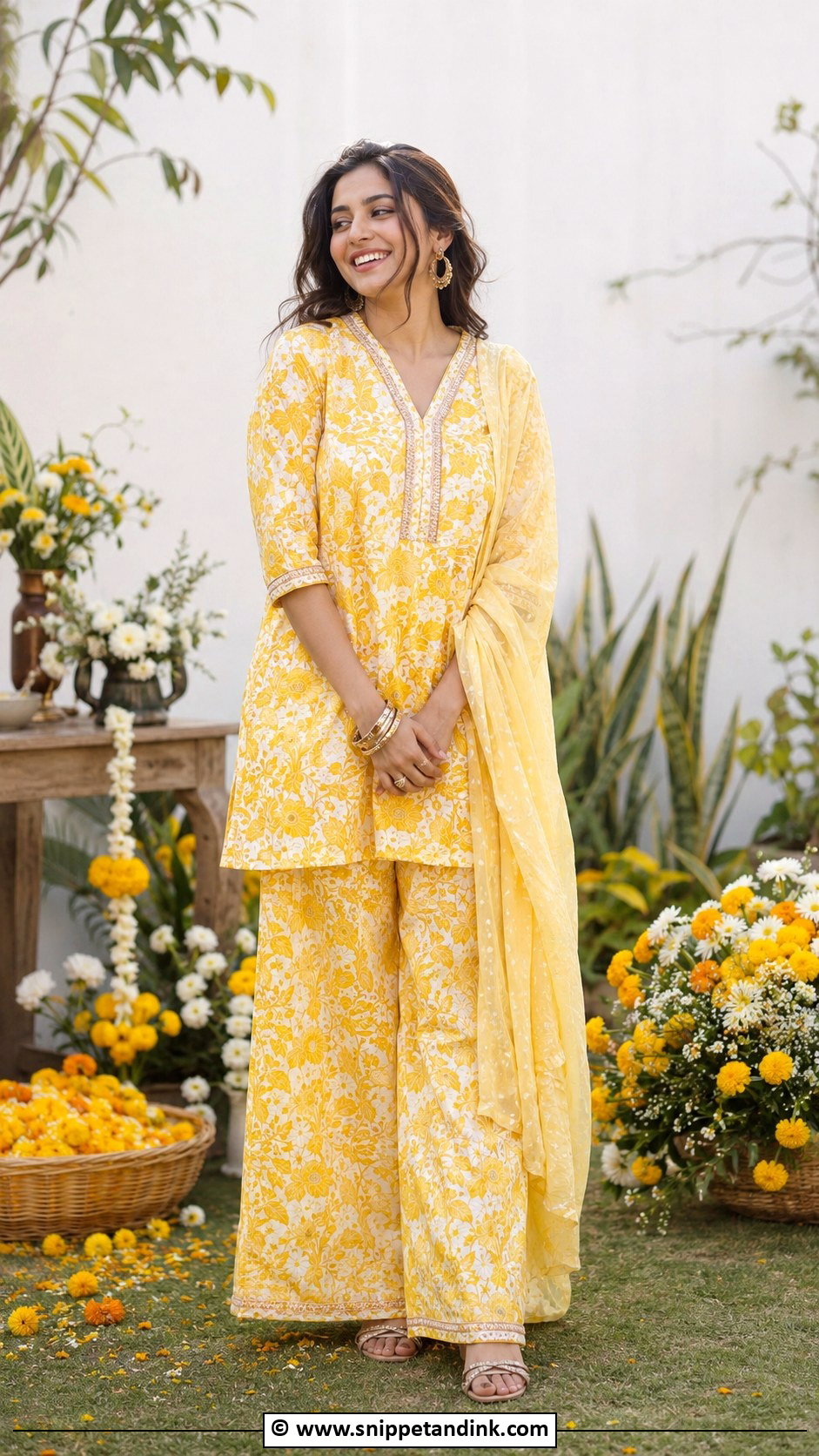
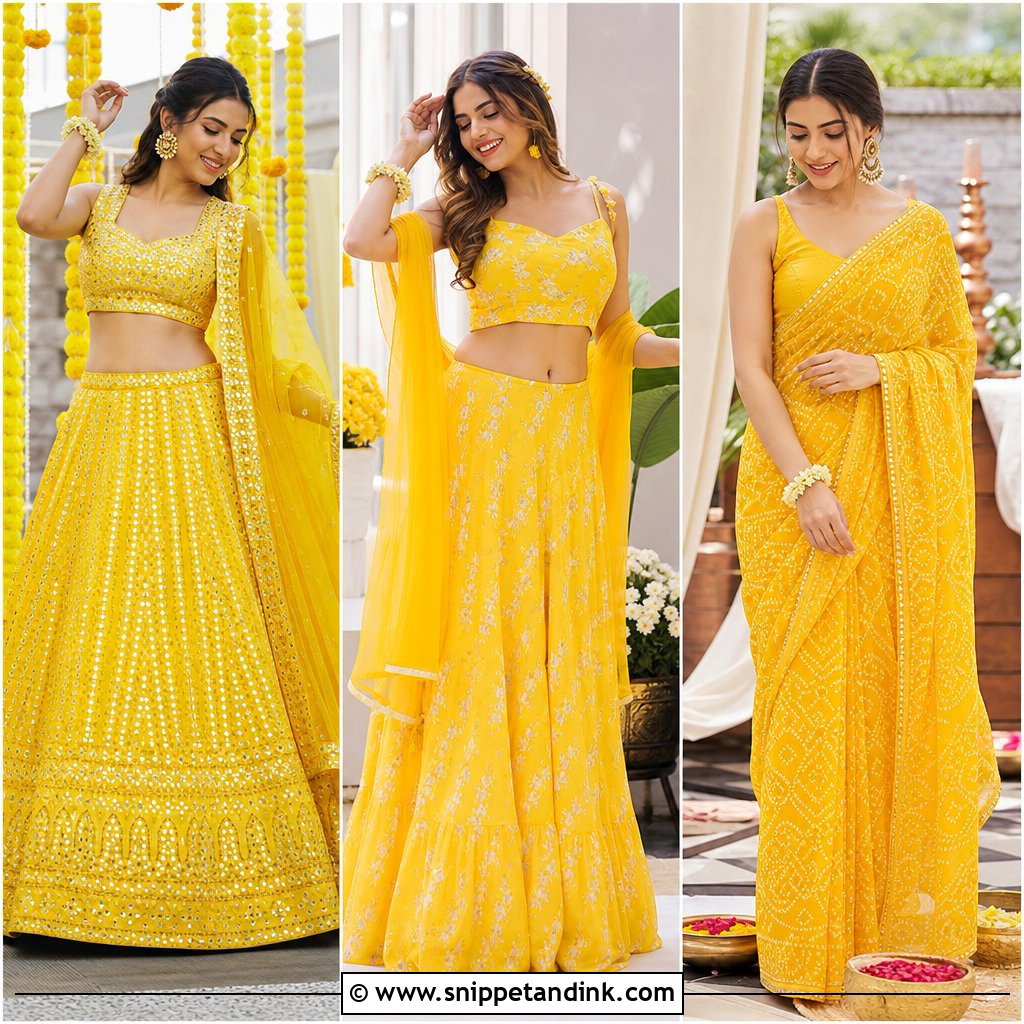
A printed co ord set makes sense for a relaxed haldi with a loose dress code, and it’s the outfit sisters actually wear again afterwards. Block prints, bandhani, leheriya and paisley all read as Indian rather than resort wear. A short kurta with wide-leg pants is the easiest cut to move in. Stick to yellow, green, peach or ivory tones so you still belong in the ceremony photos. Gold hoops, bangles and flats are enough jewelry.
13. Yellow Skirt And Dupatta Set For Haldi
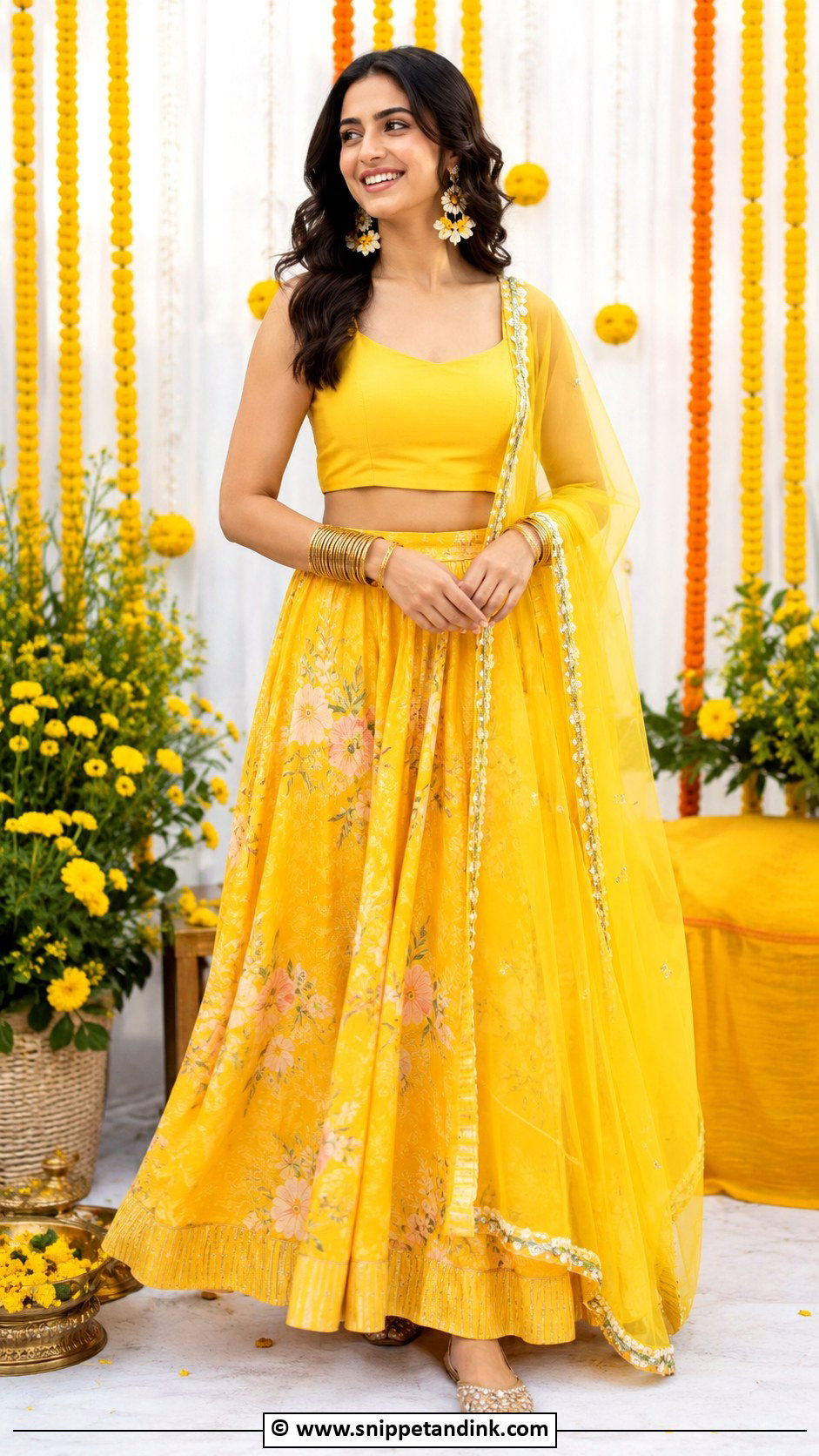
A yellow skirt and dupatta set gives the twirl of a lehenga without the can-can and the weight. Pair a flowy printed or embroidered skirt with a plain blouse or short kurti, then add an organza or chiffon dupatta. My rule here is one loud piece only: a heavily printed skirt gets small studs, a plain skirt gets bigger earrings. Pin the dupatta at the shoulder, because loose dupattas end up in the haldi bowl more often than you’d think.
14. Lime Green Sharara Set For Haldi
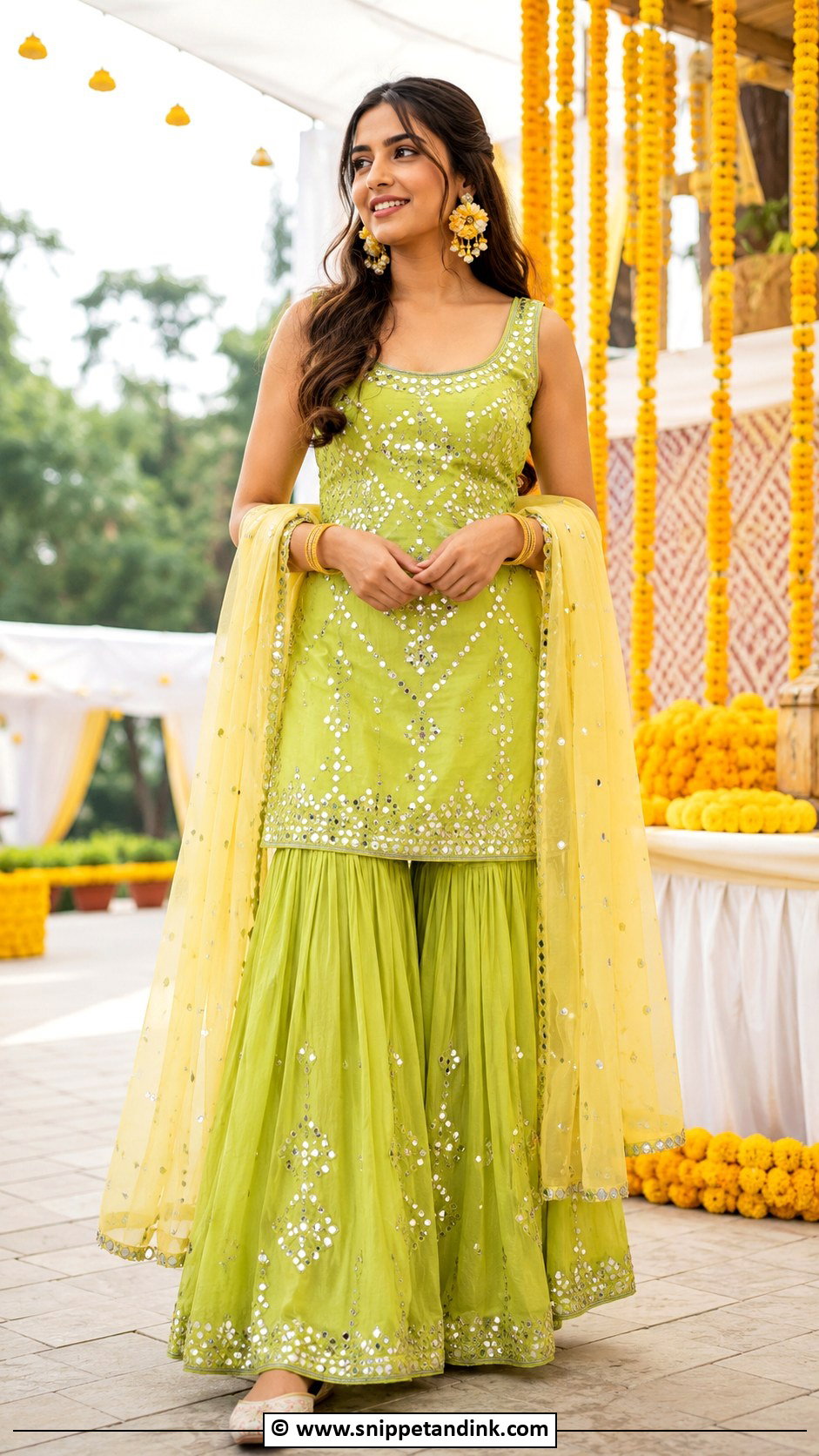
Lime green is a clever way to step out of the all-yellow crowd while staying obviously in the haldi mood. It’s bright enough to read festive in daylight, and it separates you from the bride in photos instead of merging with her. A short mirror-work kurti, matching sharara and a yellow or ivory dupatta make the full set. Lime can wash out very fair skin in harsh noon sun, so I’d test it near a window before buying and add a little warmth to the cheeks if needed.
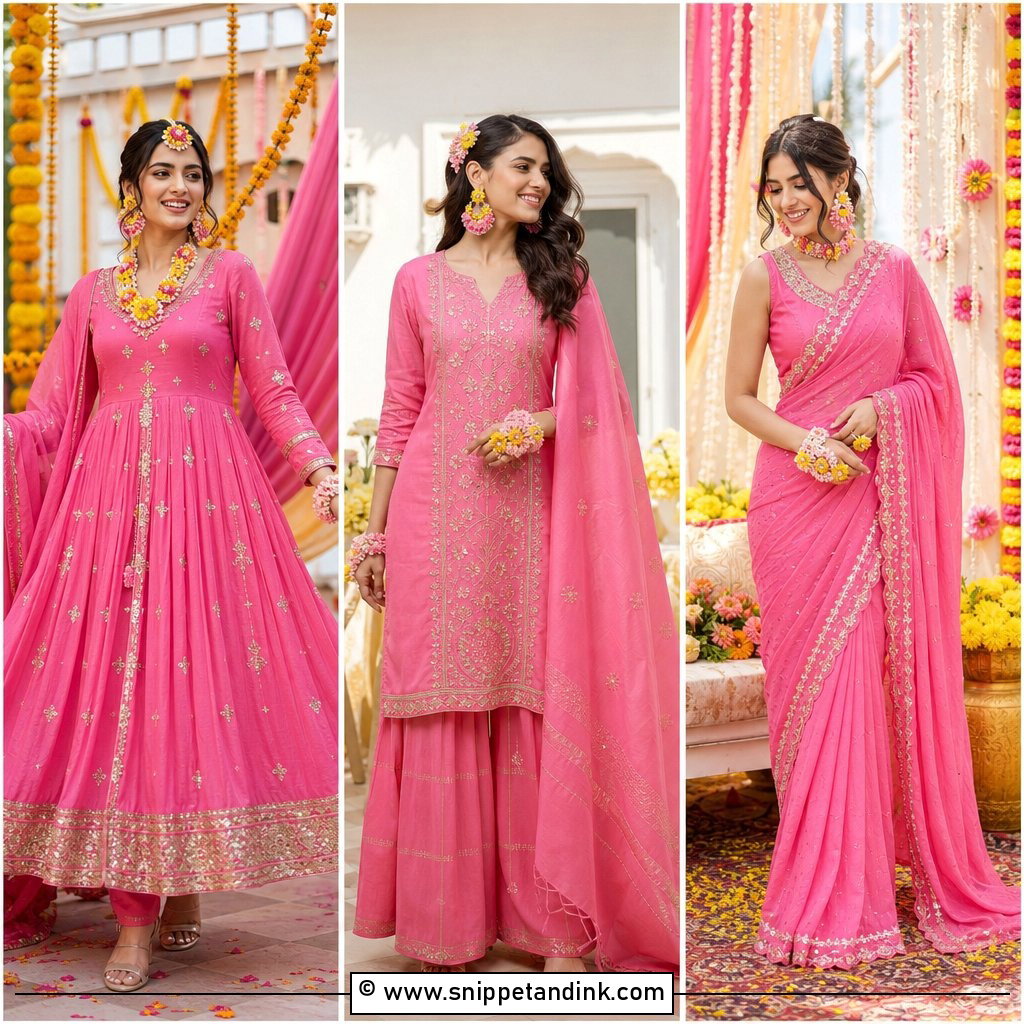
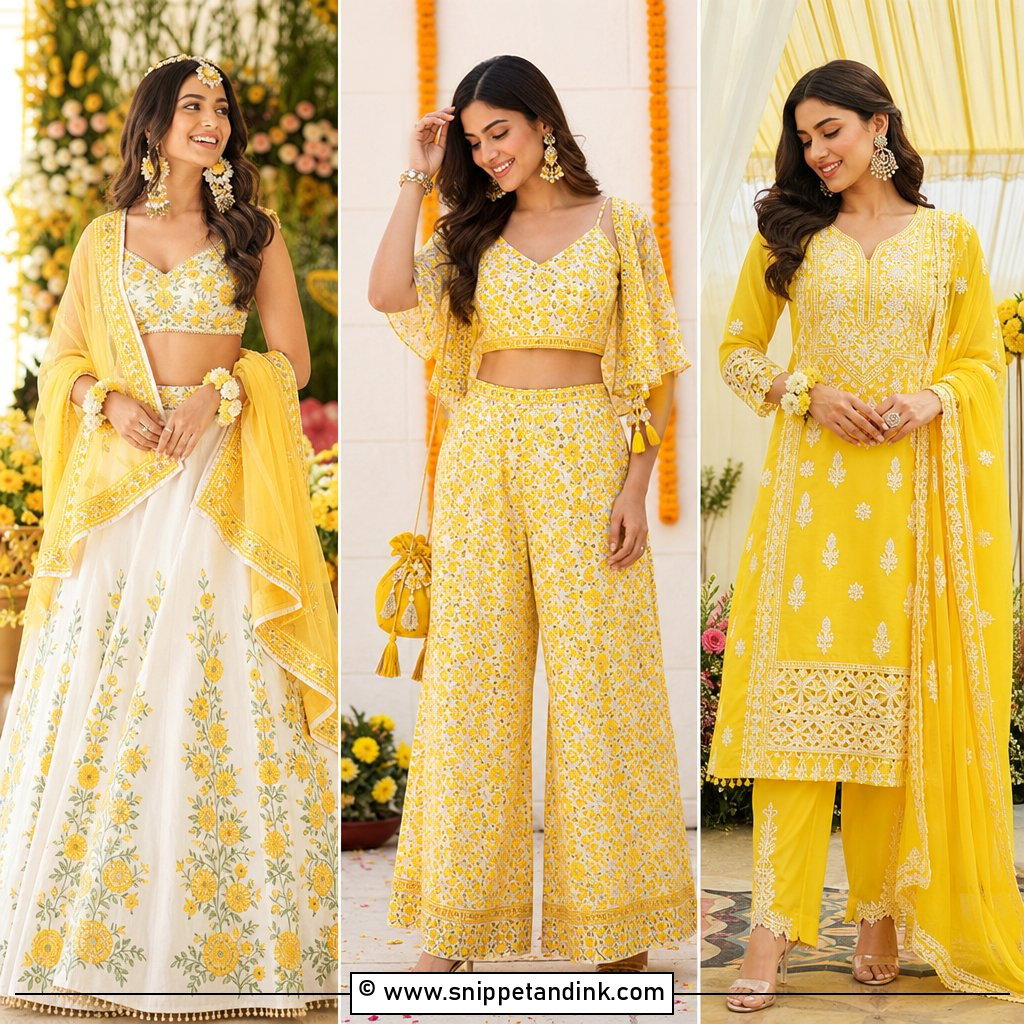
15. Yellow Cape Lehenga For Haldi
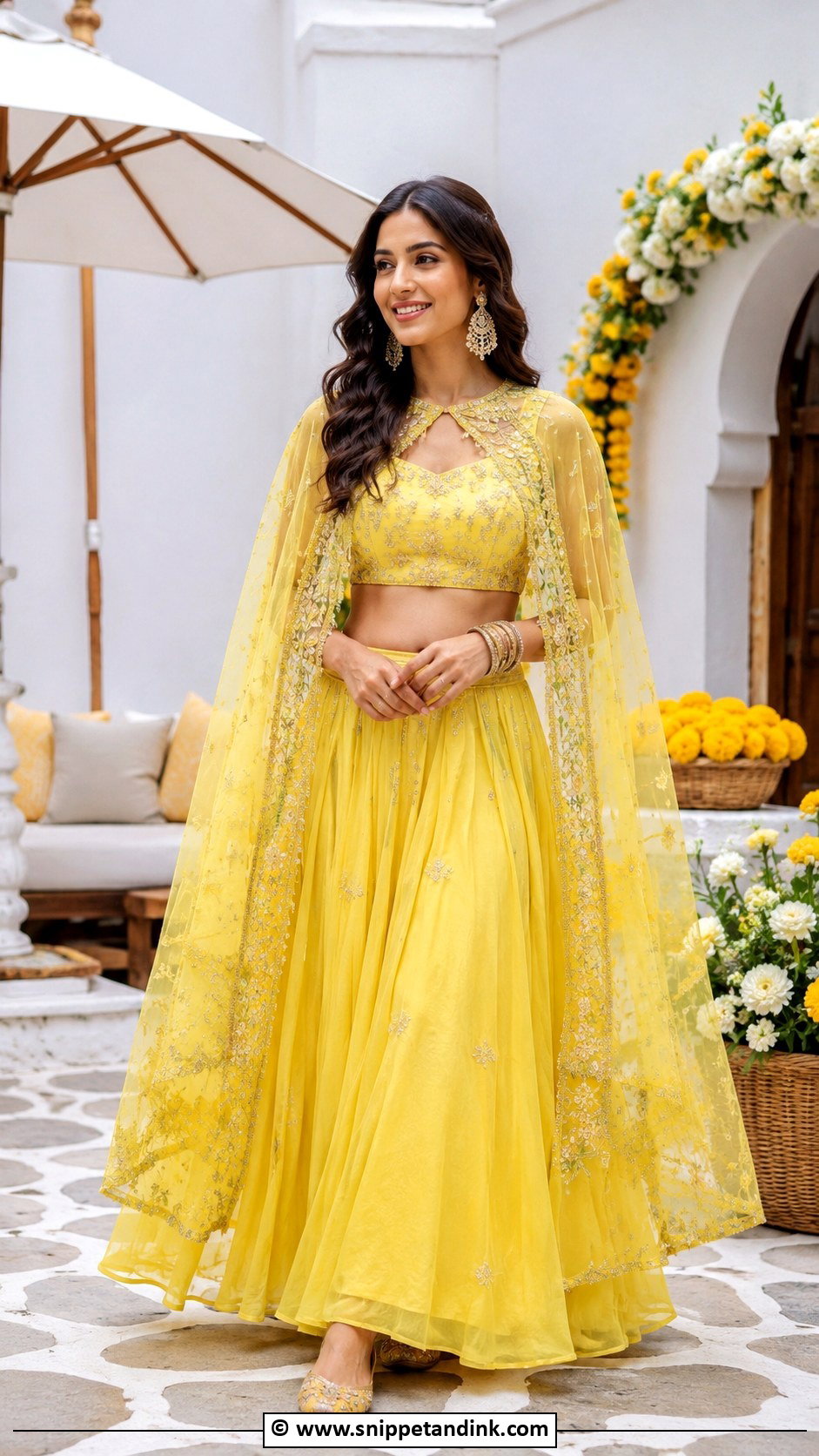
A cape replaces the dupatta, and for a sister that’s a practical win: your hands stay free for the bowl, the camera and the bride’s jewelry. Pair a lightweight skirt and matching blouse with a sheer or embroidered cape, and let mirror work or tassels carry the sparkle. Check where the cape attaches. Capes stitched at the shoulder seam stay put, while ones that just sit on the shoulders slide every time you bend forward. Statement earrings and simple bangles finish it for a destination or resort haldi.
16. Peach Anarkali With Yellow Dupatta For Haldi
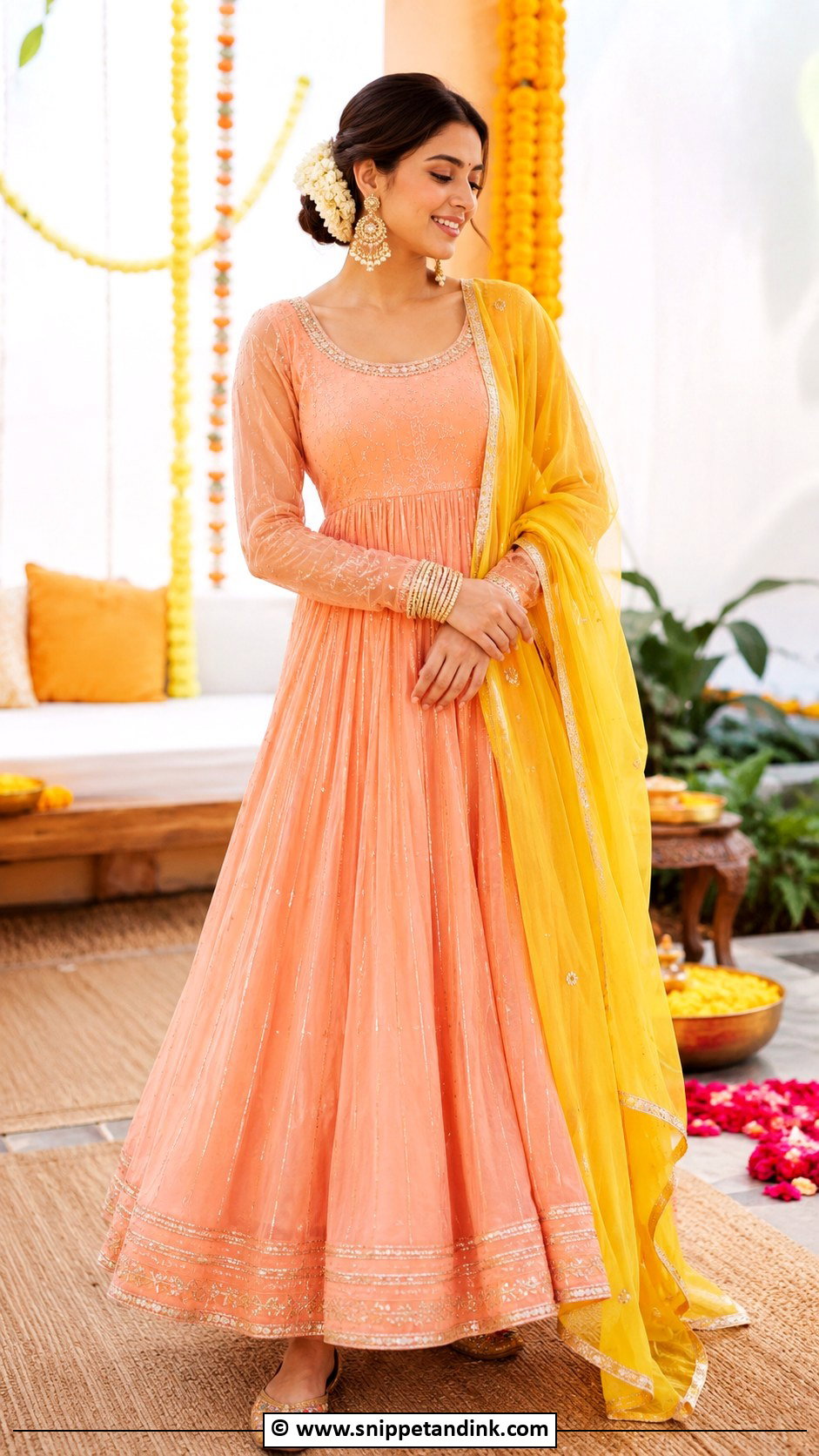
Peach flatters a wide range of skin tones because it’s warm without being as sharp as yellow, and it sits quietly next to a bride in full turmeric shade. The yellow dupatta keeps you connected to the ceremony palette. Gota borders or small floral motifs are enough decoration. I like this for the sister who wants to be coordinated in family photos without wearing the ceremony color head to toe. A flower bun, gold earrings and pastel bangles round it out.
17. Bandhani Saree For Haldi
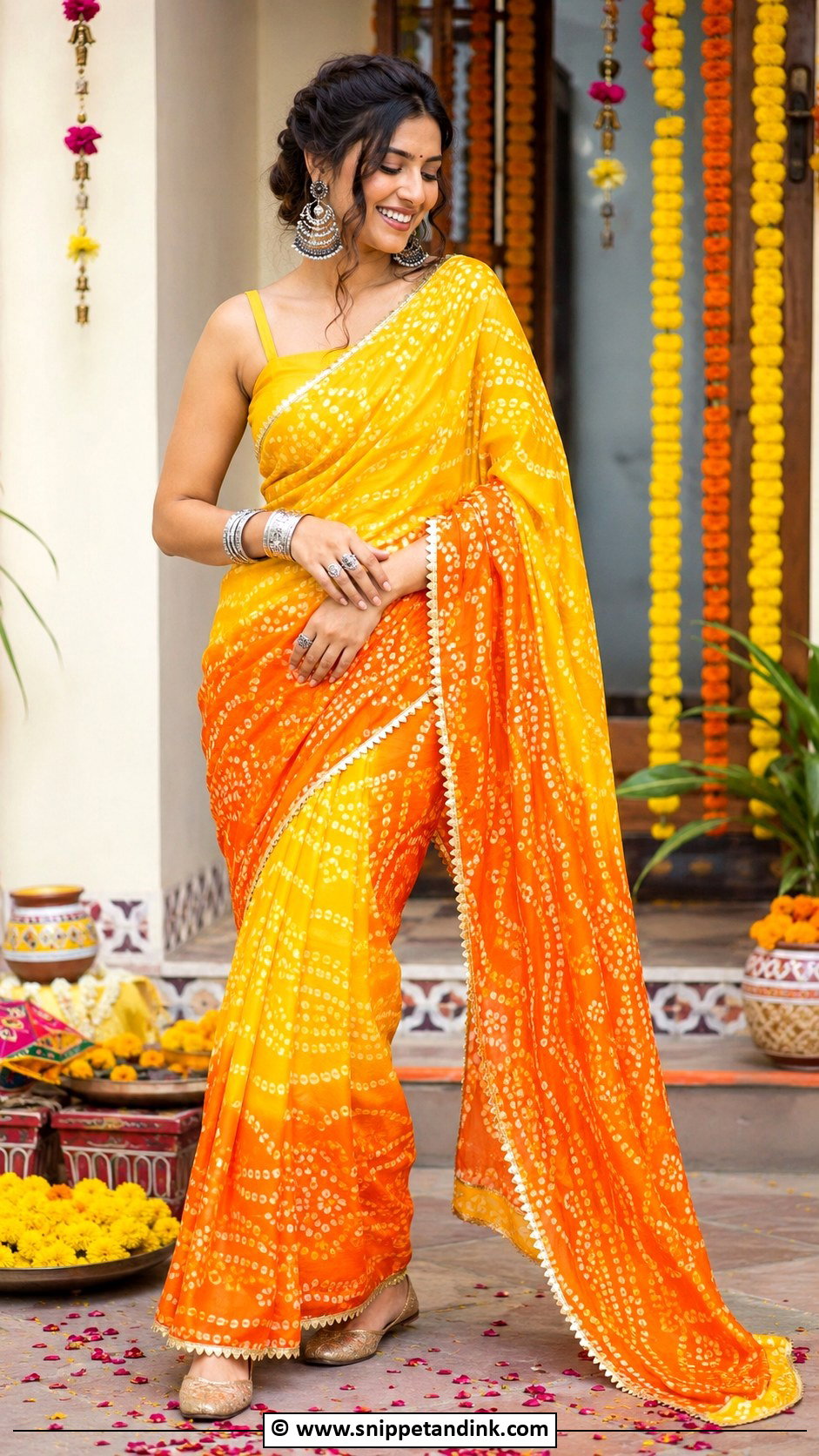
Bandhani carries a real craft story, especially for families from Gujarat or Rajasthan, and the dotted tie-dye already does the festive work for you. Yellow, orange, green or pink all suit a daytime haldi. Because the pattern is busy, keep the blouse plain and the jewelry oxidized or simple gold. Genuine hand-tied bandhani can bleed in its first wash, so never soak it with a turmeric-stained blouse; wash it alone in cold water. Georgette or cotton silk bandhani drapes easier than stiff cotton.
18. Yellow Kurta With Cigarette Pants For Haldi
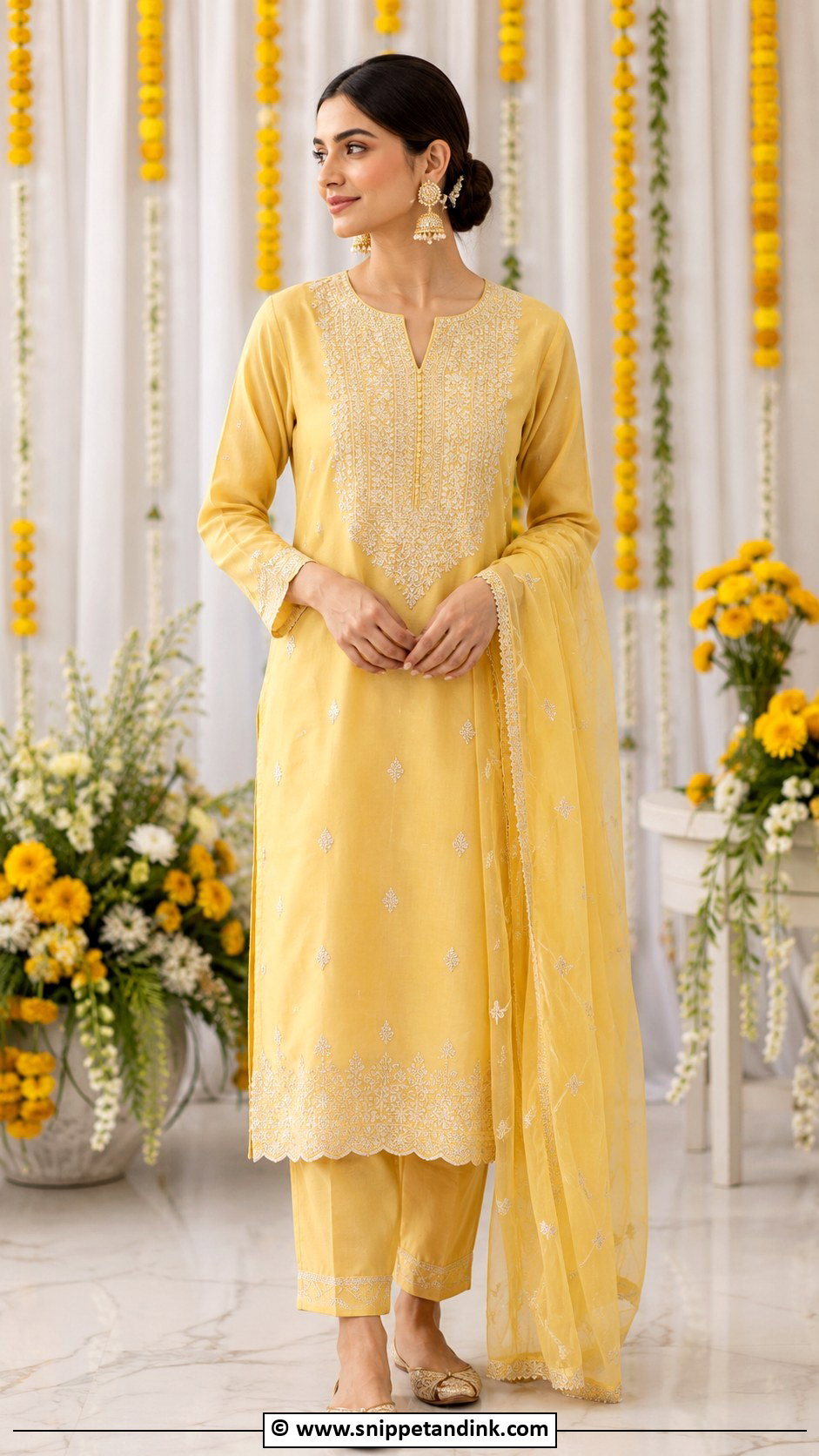
For a sister who dislikes volume, a straight yellow kurta over cigarette pants is the cleanest option on the list. Look for embroidery at the neckline, sleeves or hem and add a soft dupatta. The narrow line photographs neatly because there’s nothing flaring out of the frame. Check that the side slits are high enough to sit on the floor comfortably; short slits on a straight kurta pull tight across the thighs. Jhumkas, a sleek bun and embroidered flats are all it needs for a small family ritual.
19. Mirror Work Lehenga For Haldi
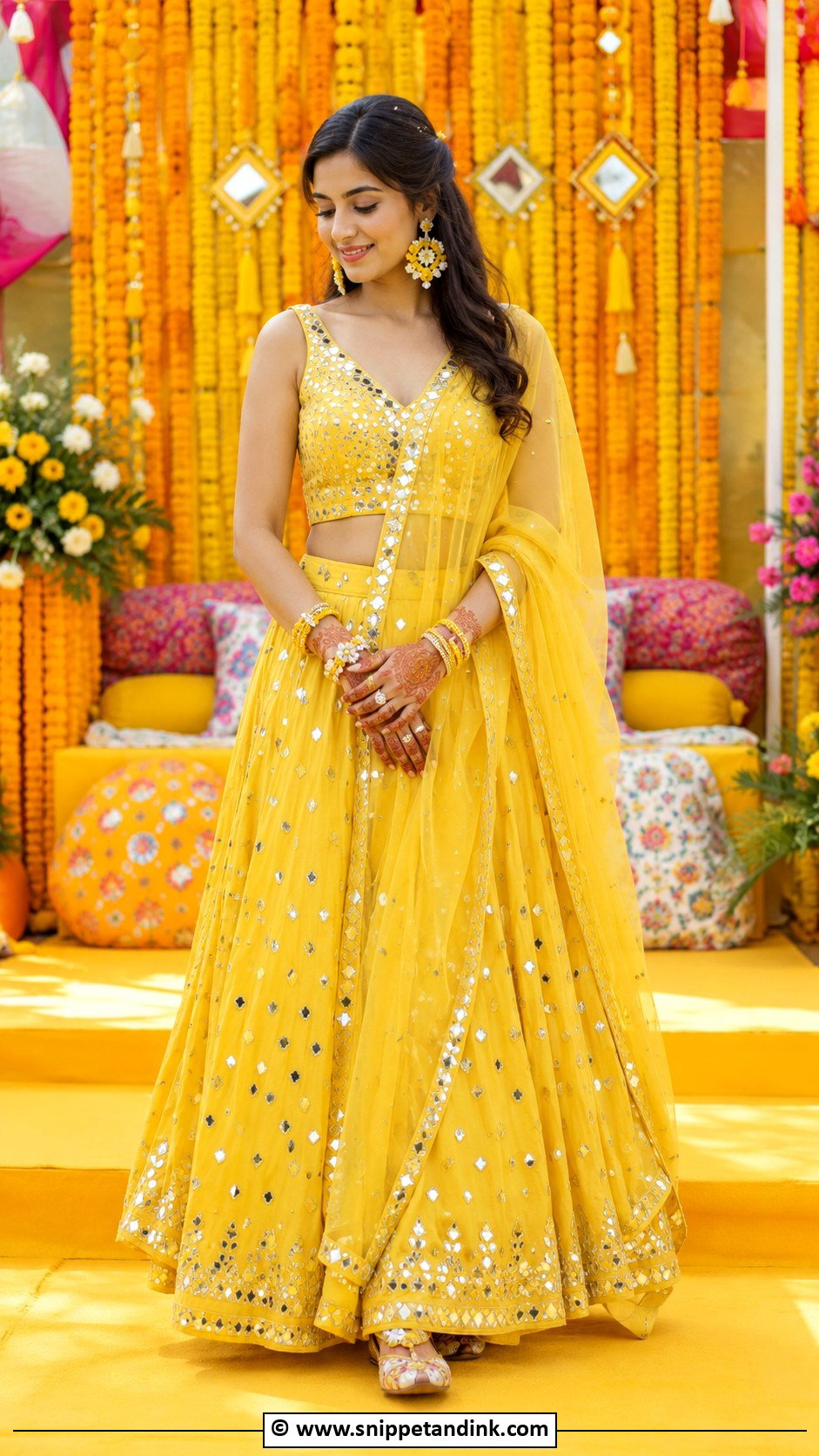
Mirrors catch morning light and bounce it back into the camera, so a mirror-work lehenga makes a sister easy to spot in dance videos. Pick scattered mirror detailing on a yellow, green, ivory or orange base rather than solid bridal-weight work. Turmeric paste does creep under the thread that holds each mirror, so dab rather than rub if you get marked. Pin the dupatta securely and keep jewelry small, since the mirrors already supply the shine.
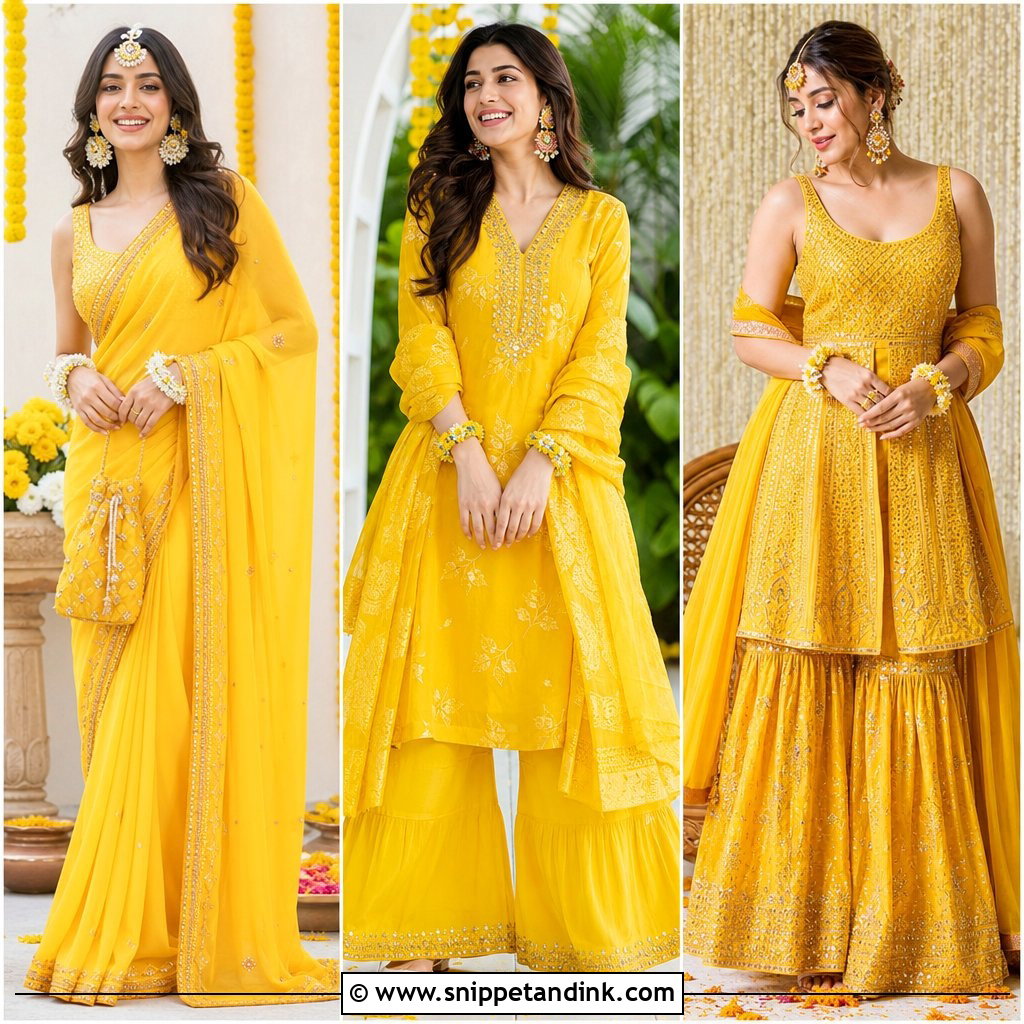
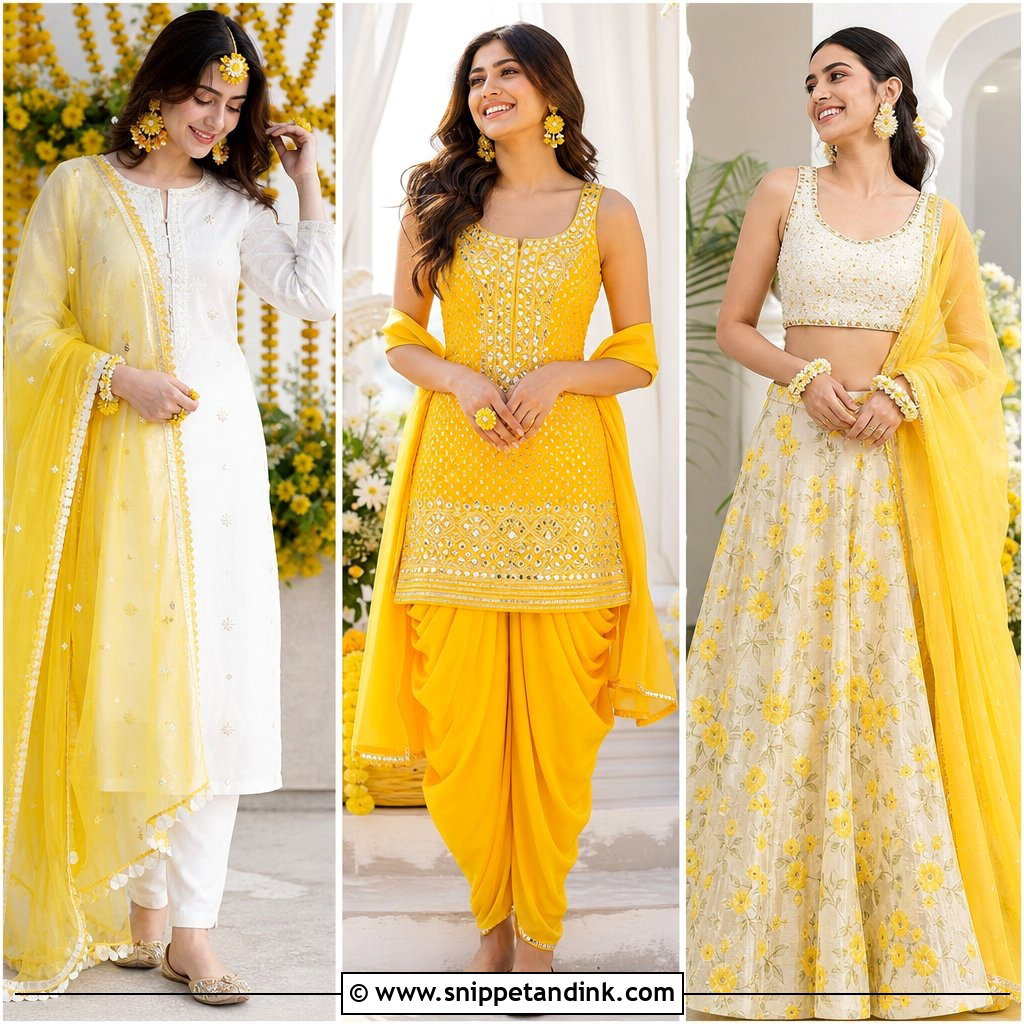
20. Yellow Saree With Sleeveless Blouse For Haldi
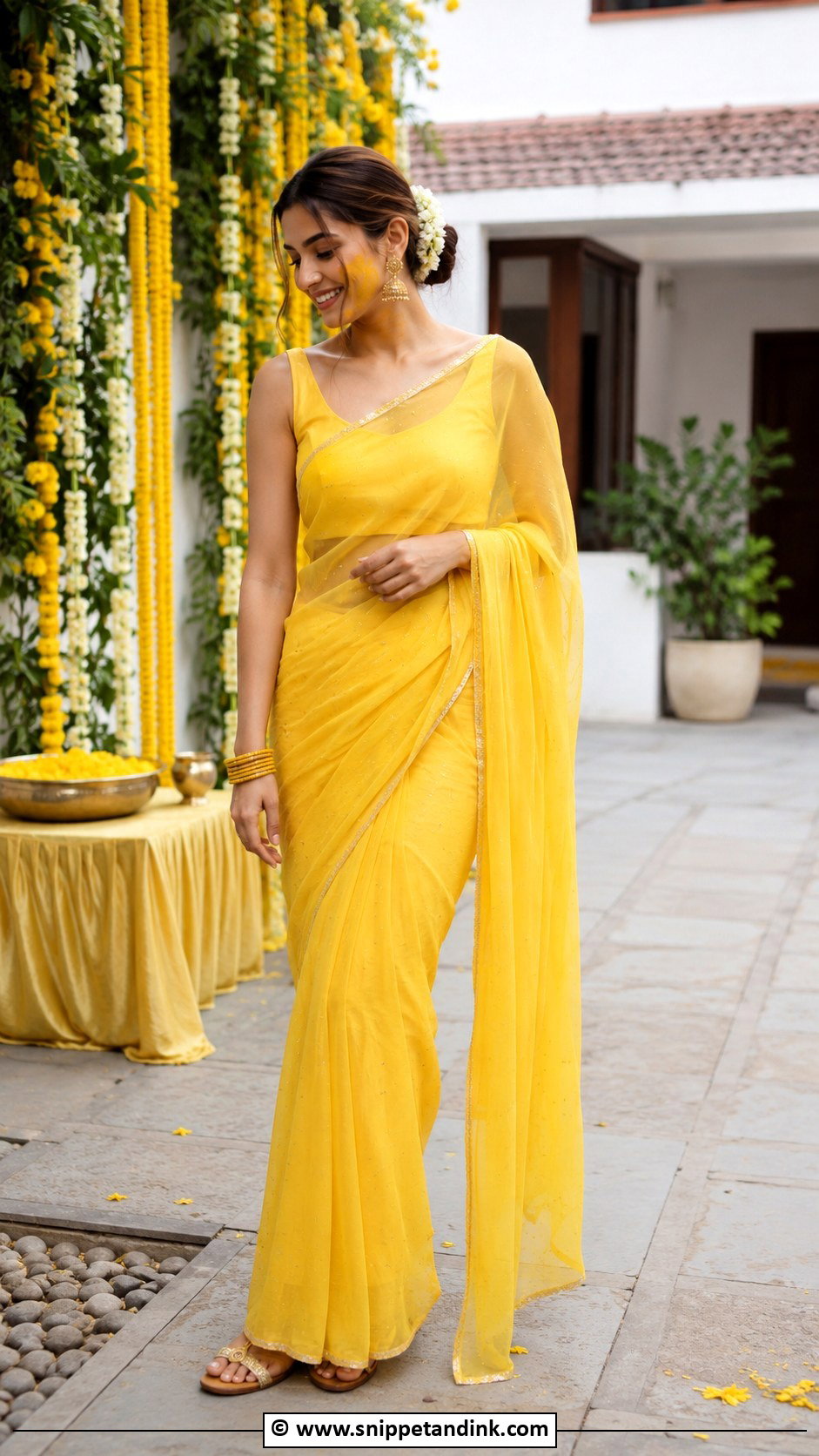
A sleeveless blouse is the most practical saree choice I can suggest for a sister who’ll be applying haldi. There’s no sleeve to dip into the bowl, and turmeric on bare arms washes off far more easily than it lifts out of silk. Pick cotton, chiffon, georgette or linen with a simple border and a neat, well-pinned drape. A fresh gajra, bangles and gold earrings give it a traditional finish. It’s an easy saree to wear again at festivals.
21. Ivory Lehenga With Marigold Dupatta For Haldi
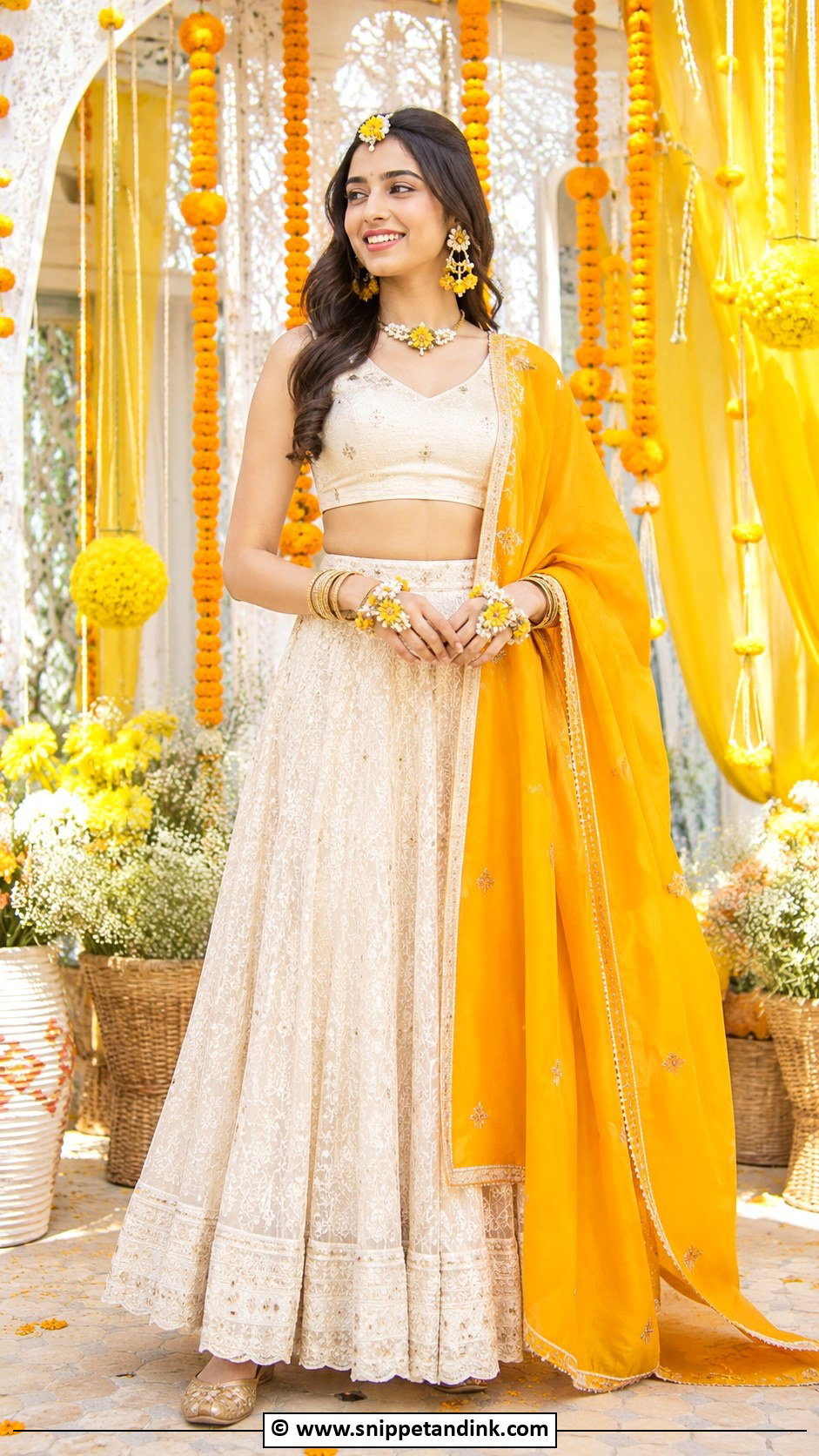
Ivory with a marigold dupatta looks refined in portraits, but I’ll be blunt: ivory is the shade most likely to come home stained. If you love this pairing, choose a washable cotton or poly-blend lehenga, not ivory silk, and stay on the photo side of the ceremony rather than the paste side. Light embroidery, mirror details or block print suits the skirt. Marigold floral jewelry and gold bangles tie it to the dupatta. Bring a dark shawl for the moment the cousins start smearing everyone.
22. Yellow Jacket Kurta Set For Haldi
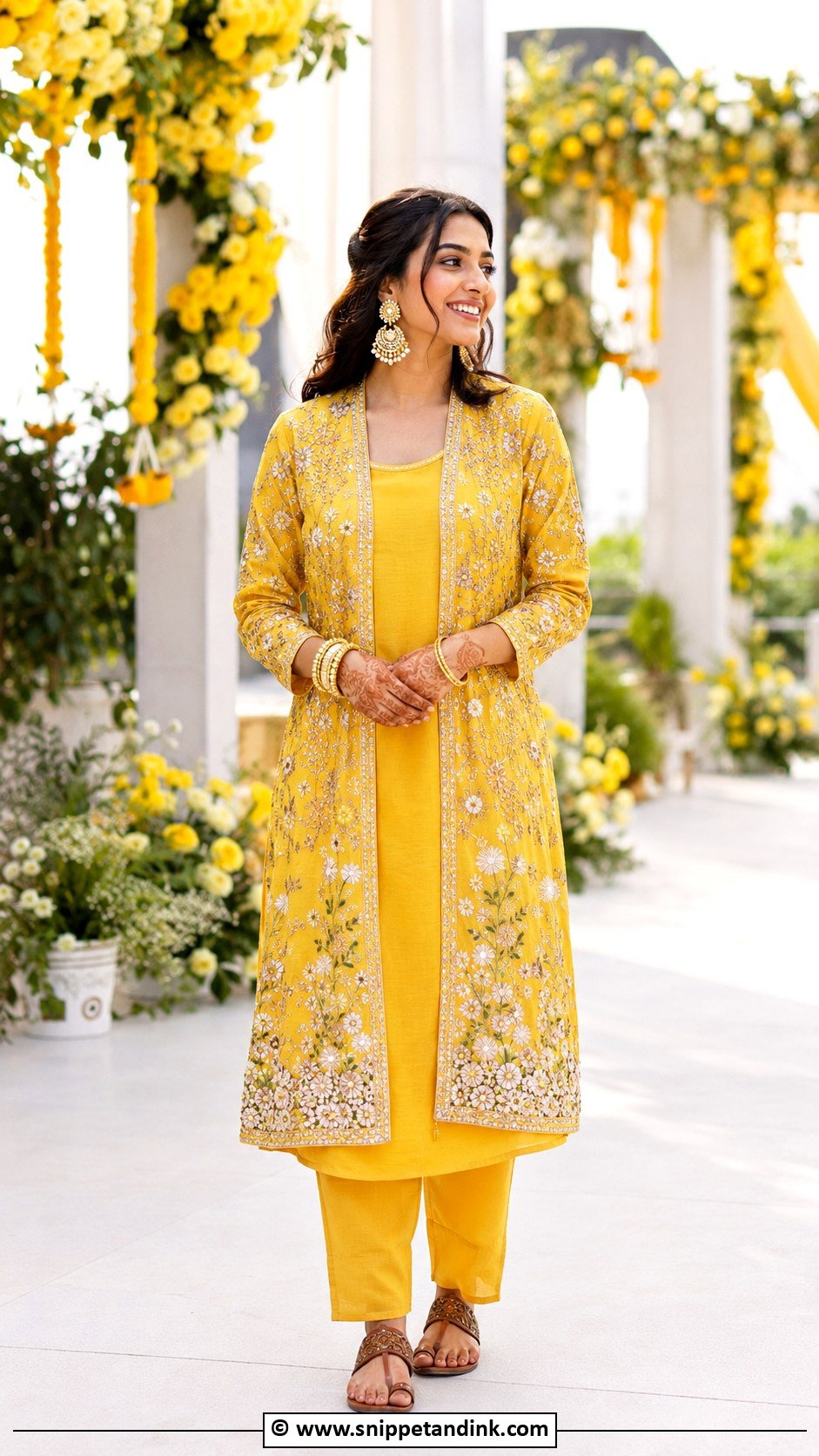
A jacket set is the tidiest way to look dressed without a dupatta to manage. Wear a plain kurta and pants under a printed, embroidered or mirror-work jacket, in cotton silk, chanderi or a rayon blend. The jacket comes off in seconds if it gets marked, and the kurta underneath still looks complete, which a dupatta look can’t do. Try a yellow jacket over an ivory or green base for contrast. Statement earrings, bangles and kolhapuris keep it practical for a long ceremony.
23. Leheriya Lehenga For Haldi
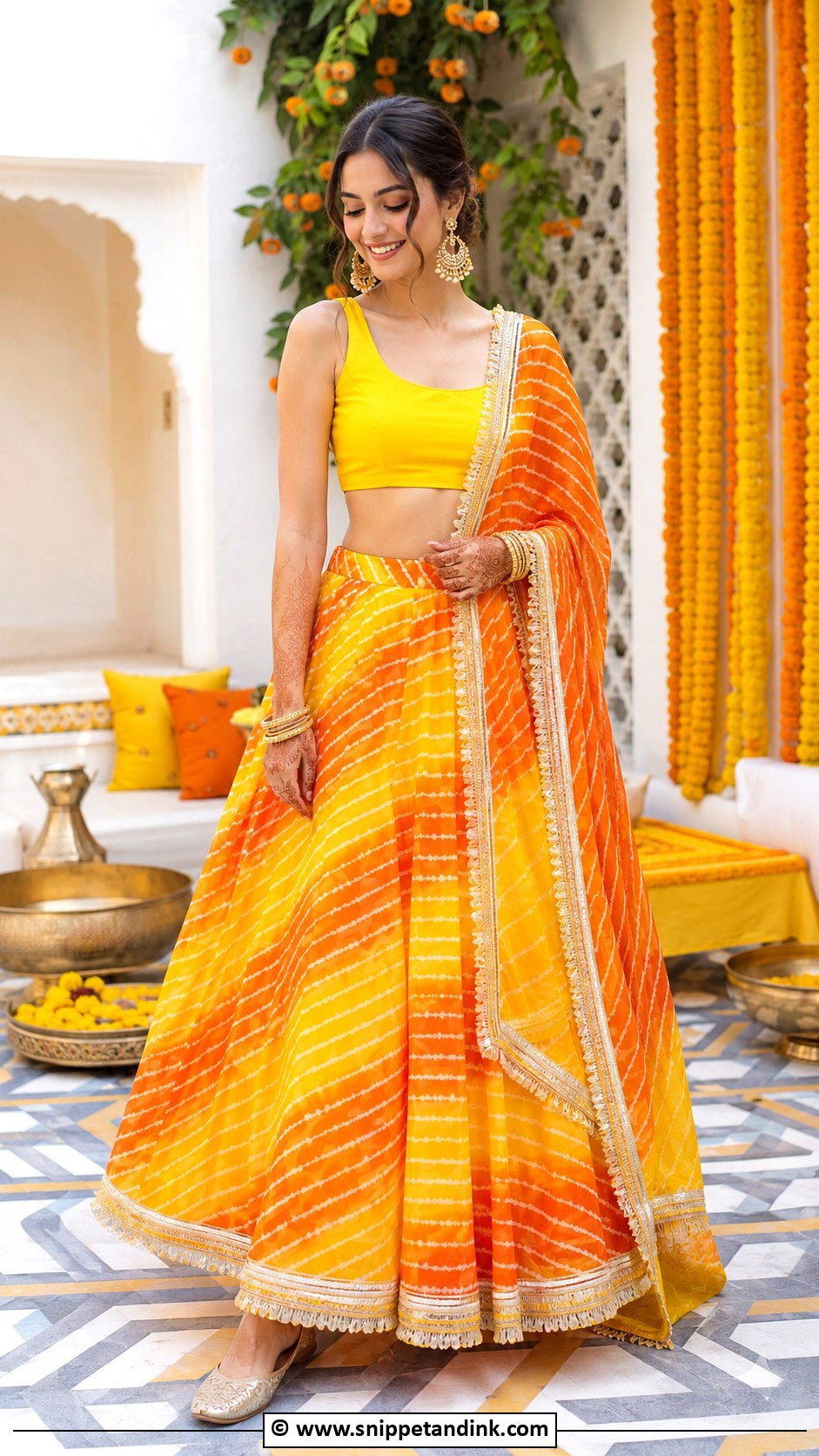
Leheriya, the wave-dyed pattern from Rajasthan, gives a lehenga movement and color without heavy embroidery, which keeps it cool for a summer haldi outdoors. It looks especially good in yellow and orange or pink and green combinations, with a gota-edged dupatta. Because the pattern is bold, keep accessories clean: gold earrings and a few bangles. The skirt twirls well on camera. Juttis or low block heels are safer than stilettos on lawns and mandap platforms.
24. Yellow Palazzo Suit For Haldi
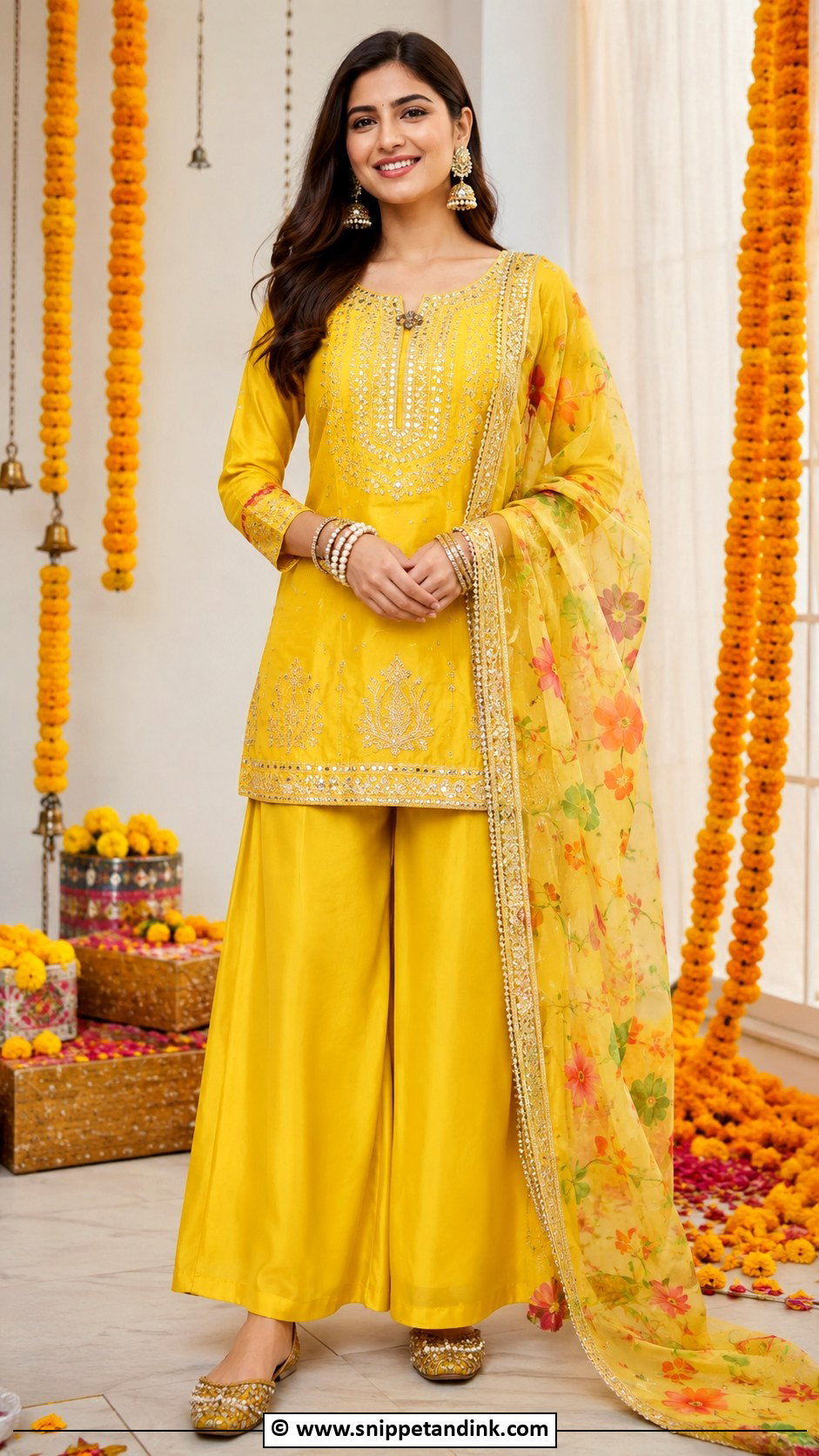
If comfort is the whole brief, a yellow palazzo suit is the answer. The wide pants let you crouch beside the bride, carry trays and climb onto a stage without thinking about your clothes. A short or straight kurta with light embroidery, lace or mirror work keeps it festive, and a printed dupatta adds detail when the suit is plain. It flatters most body shapes because nothing clings. Jhumkas, bangles and embroidered flats finish it.
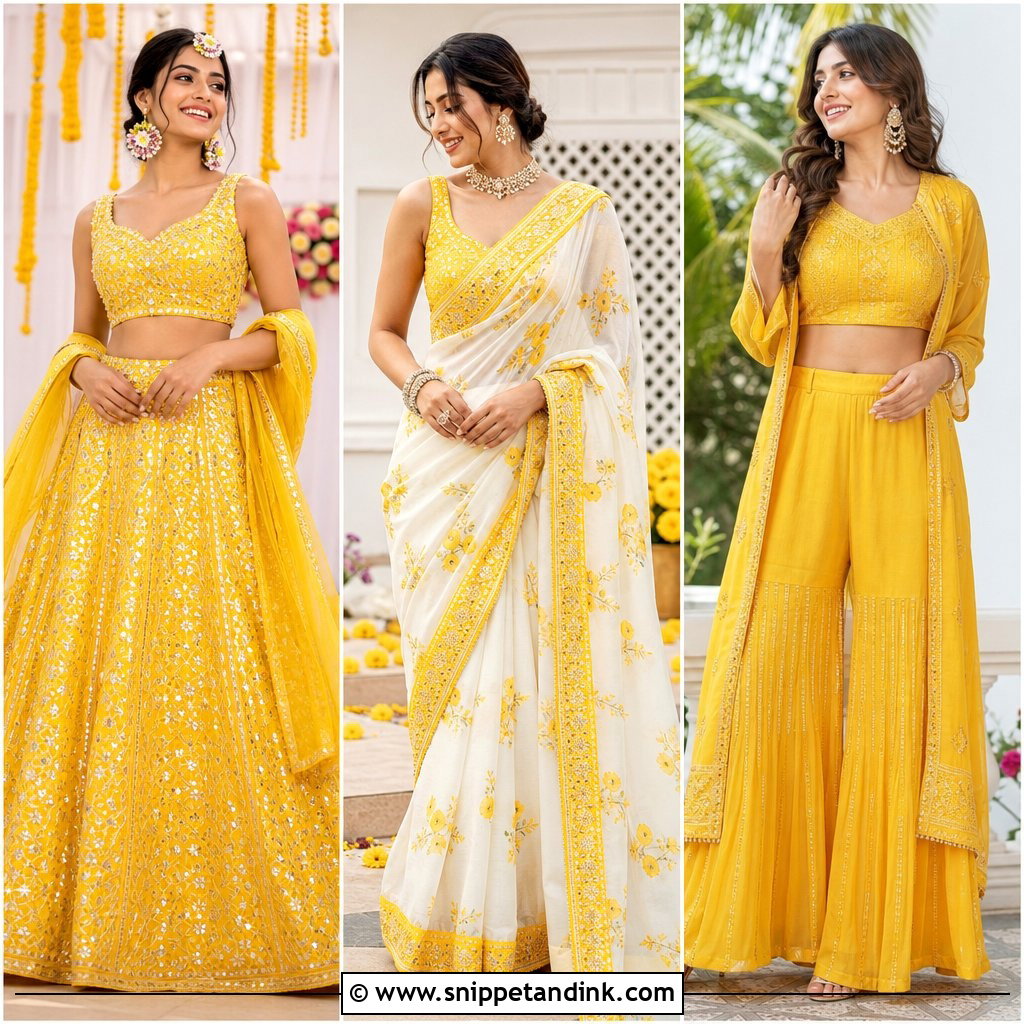



25. Floral Lehenga For Haldi
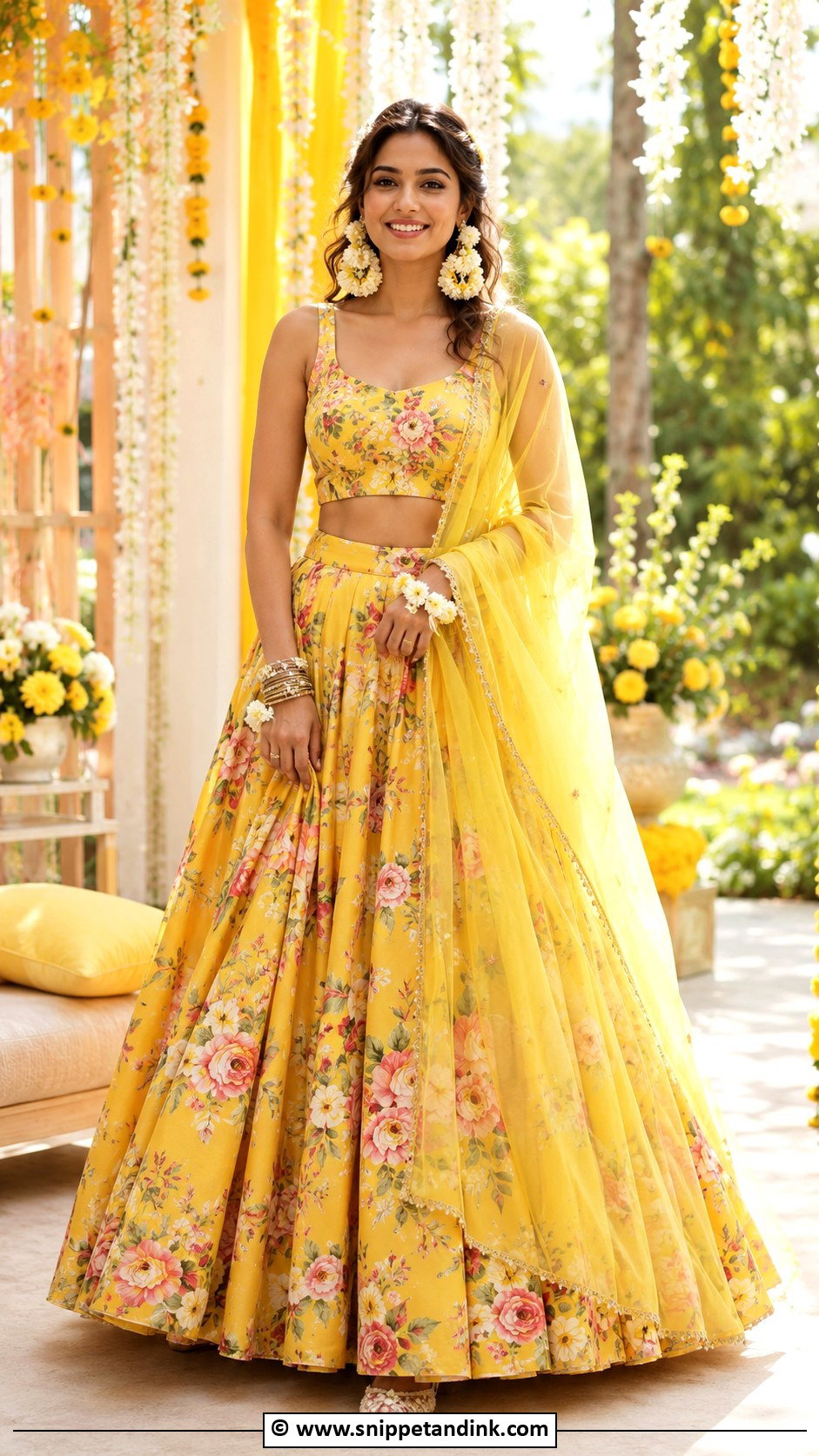
A floral lehenga suits a younger sister at a garden or terrace haldi. Choose a yellow, ivory, peach or mint base with printed or embroidered florals, keep the blouse comfortable and the dupatta light. The thing I check is the inner layer: skip stiff can-can and heavy lining, because you’ll be sitting, kneeling and dancing, and a stiff skirt fights you every time. Fresh flower earrings or delicate gold pieces suit the print. Floral lehengas also sit well beside the bride in close portraits because the print softens the frame.
26. Yellow Indo Western Dhoti Set For Haldi
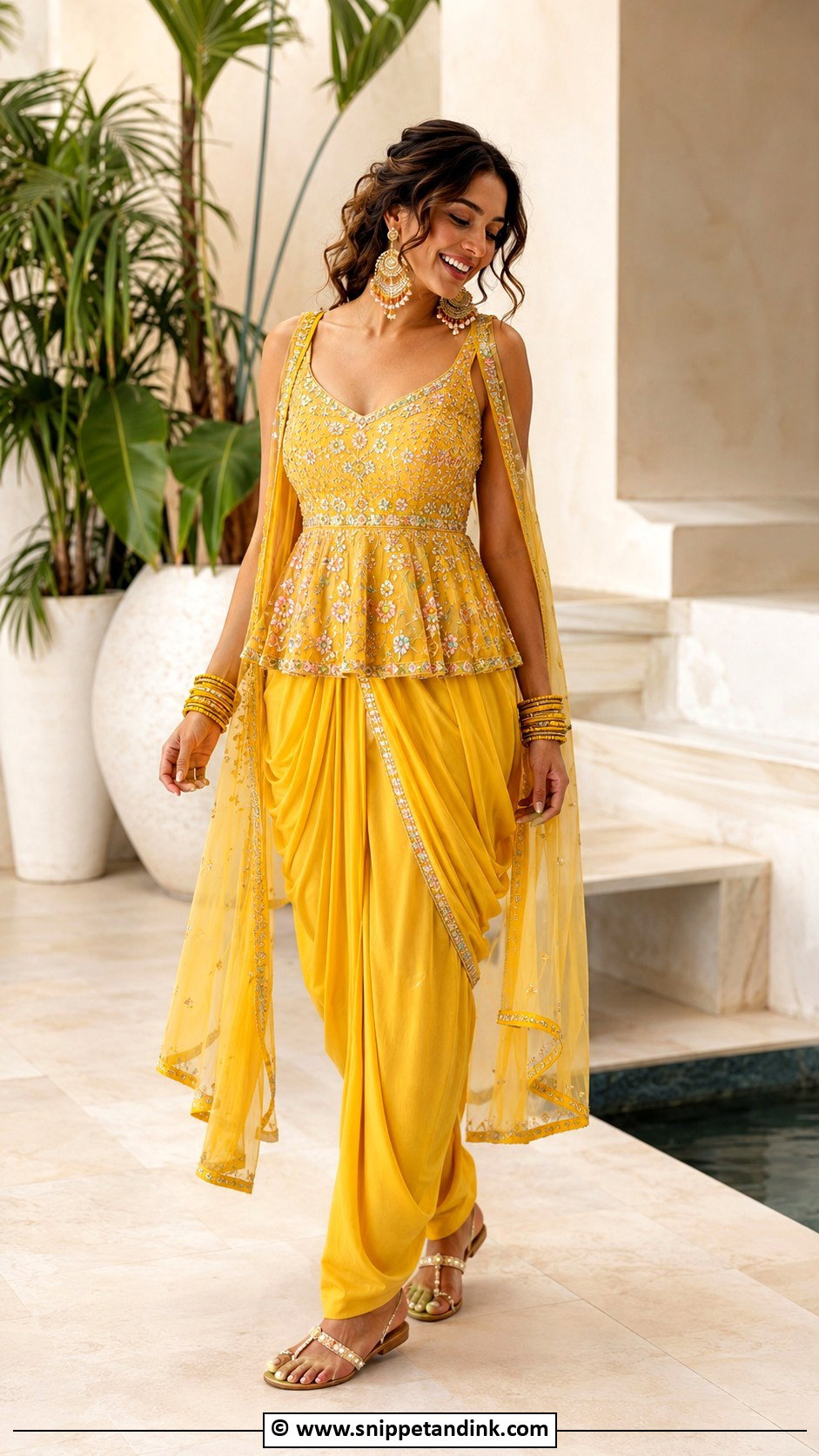
An Indo-western dhoti set is the sister look for anyone who loves experimental Indian wear. A draped dhoti bottom with an embroidered crop top, peplum or short kurti looks current, and an attached drape or cape finishes it for the ceremony. It packs flat, which matters at destination weddings with three outfits per day. Kolhapuri sandals, bold earrings and stacked bangles suit it. Do a dance-floor test at home, since pre-stitched drapes sometimes come loose at the waist hook when you move a lot.
27. Pink And Yellow Suit For Haldi
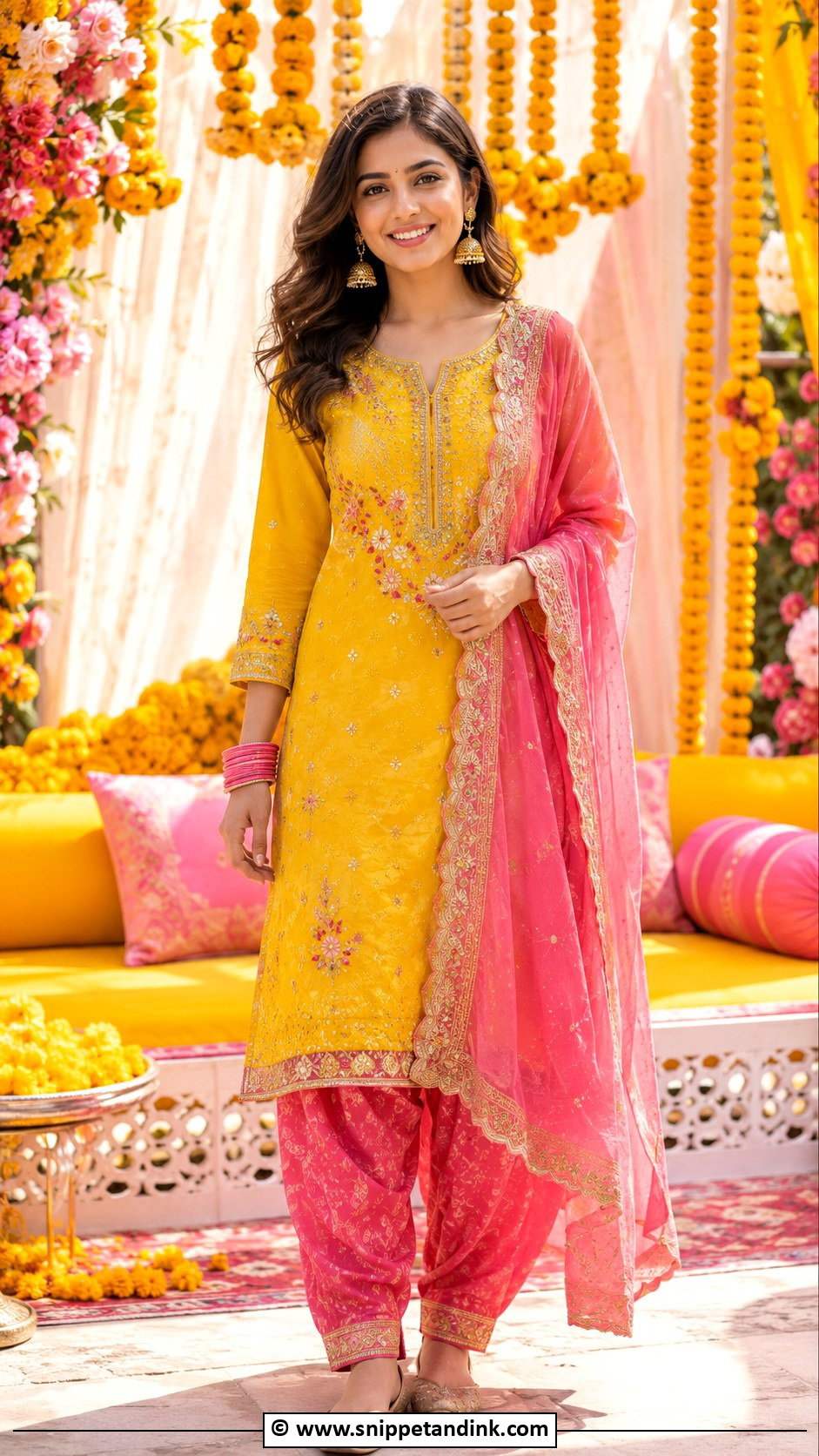
Pink and yellow is one of the happiest pairings in Indian wear, and it keeps a sister cheerful without going loud. Wear a yellow kurta with a pink dupatta, or flip it with a pink kurta and yellow pants. Gota patti, thread work or block print keeps it festive. One caution from fittings: hot pink and lemon yellow fight each other, so pair a soft rose with a warm yellow, or a fuchsia with mustard. Gold jhumkas and pink bangles complete it, and the pairing is easy to coordinate with other family members.
28. Yellow Ruffle Saree For Haldi
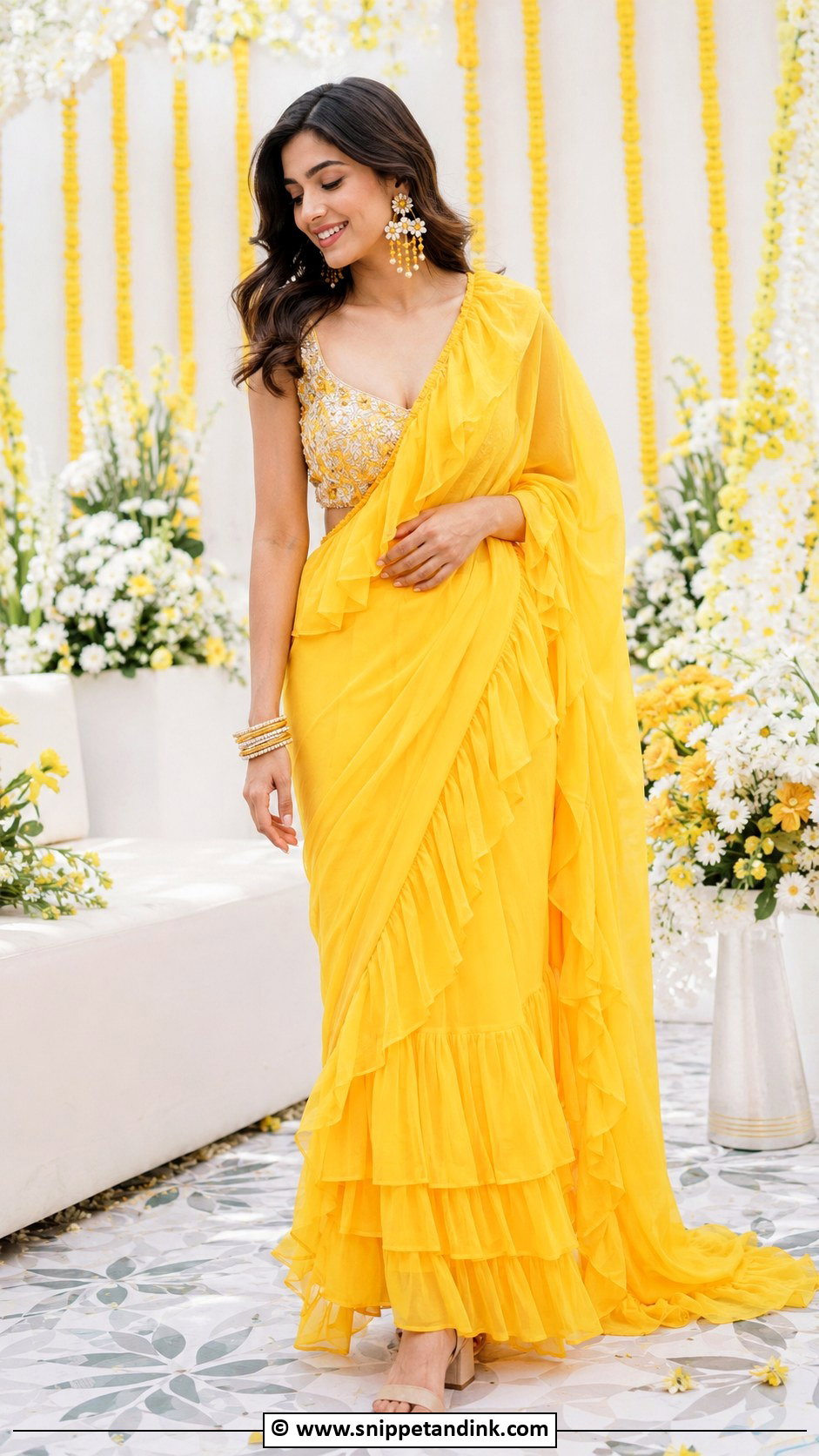
A ruffle saree reads modern and youthful, and the ruffled edge adds movement without any embroidery at all. Pair it with a simple, cropped or embroidered sleeveless blouse and keep jewelry to earrings and bangles. Ruffles add bulk at the hem, so choose a lightweight georgette and avoid layered net, which balloons when you sit. Low wedges help the ruffles fall properly. It suits a cocktail-style haldi or a resort celebration more than a traditional home ritual.
29. Chikankari Kurta Set For Haldi
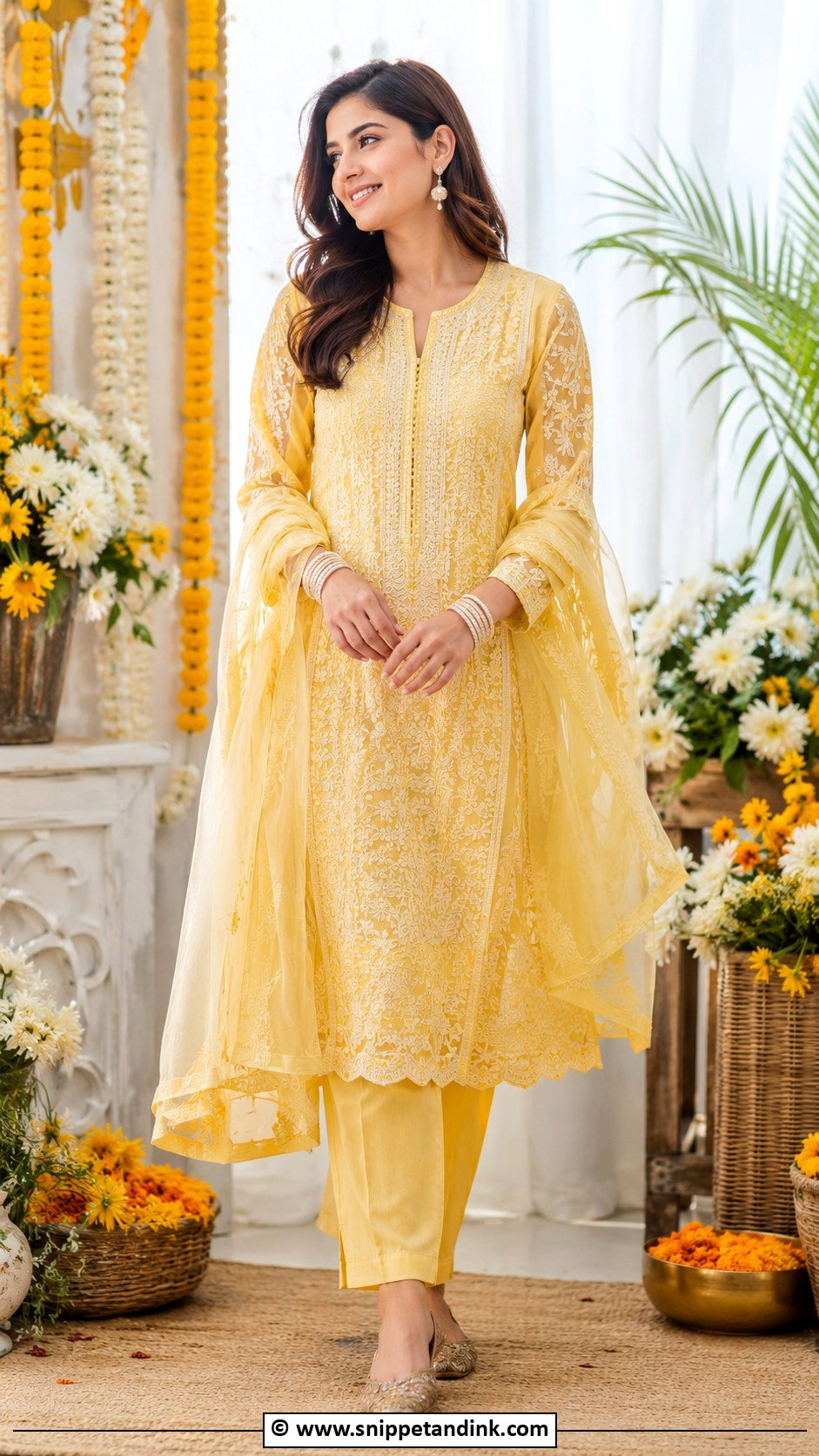
Chikankari is Lucknow’s white-thread shadow work, and it’s my pick for an understated sister at an intimate, warm-weather haldi. Choose a yellow set for tradition, or ivory chikankari with yellow pants and dupatta for contrast. It breathes well because it’s usually done on cotton or georgette. The fine stitching does hold turmeric, though, so rinse marks in cold water quickly rather than leaving them overnight. Pearl earrings, glass bangles and a loose braid suit the delicate embroidery, and you’ll wear the set for years.
30. Yellow Jumpsuit With Dupatta For Haldi
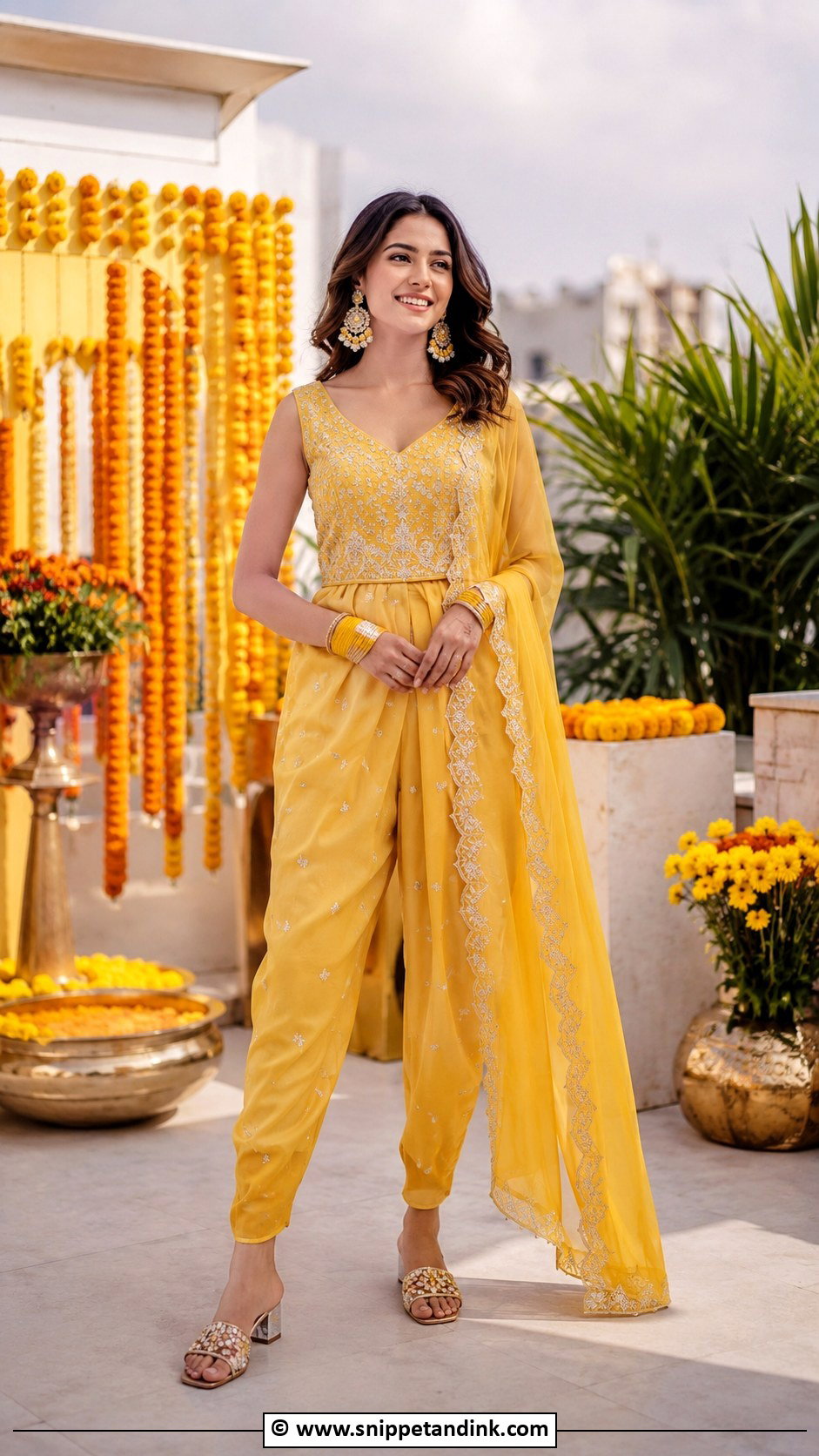
A jumpsuit with a dupatta is the most comfortable Indo-western option here for hosting, dancing and running errands between rituals. Choose a well-fitted cut with Indian details like mirror work, pleats or a draped waist, then add a light dupatta or cape to make it ceremony-ready. Fit through the torso matters more than anything else; a short rise will pull every time you bend. Block heels or embellished flats and statement earrings finish it. It’s a sensible pick for a destination or contemporary haldi.
Getting Turmeric Out Once the Ceremony Ends
Most sisters wait until after the wedding to deal with a stained outfit, and by then the color has set. If you can, treat it the same afternoon. This is the routine I give clients:
- Let wet paste dry, then scrape it off gently with a blunt knife or the edge of a card. Rubbing wet paste pushes it into the weave.
- Rinse from the back of the fabric under cold running water. Hot water sets turmeric, so keep it cold.
- Work a little liquid dish soap into the mark to break down the oil in the paste, then rinse again.
- Dry washable cottons and synthetics in direct sunlight. Sunlight fades the yellow pigment remarkably well, often over a single afternoon.
- Never use chlorine bleach on silk, organza or embroidered pieces. Take those to a dry cleaner and tell them it’s turmeric with oil.
Turmeric on skin and nails is a separate problem. It fades on its own in a day or two, but a scrub of gram flour and yogurt or a little coconut oil helps before the evening function. If you’ve got a manicure planned for the sangeet, book it for after the haldi rather than before.
What I Pack in a Sister’s Haldi Bag
A small bag saves the morning. Mine holds safety pins in two sizes, wet wipes, a dark dupatta or old shawl to throw over a light outfit during the smearing, a hand towel, a spare pair of flat chappals for slippery floors, and a plastic bag for the stained clothes. If the evening function starts within a few hours, keep your next outfit hanging in a separate room, well away from the paste.
Yellow Is Optional, Comfort Is Not
The sister’s job at a haldi is to look festive, stay useful and leave the spotlight on the bride. Yellow is the obvious choice, but green, orange, pink, ivory, peach and printed florals all sit comfortably in the photos. What matters more is the practical part: fabric you can kneel in, sleeves that stay out of the bowl, a dupatta that’s pinned, and shoes that grip wet ground. Sort those out first, then choose the silhouette you love from the list above.
You'll Like These Ideas:







Leave a Reply