
A haldi or mehendi outfit has a harder job than the wedding look. It has to survive turmeric paste, wet henna, hours on a floor cushion and a lot of dancing, and it still has to read as the bride in a crowd of relatives wearing the same yellows and greens. Yellow is still my first suggestion for haldi because the paste disappears into it, while mehendi gives you room for green, pink, ivory and orange. I lean toward lehengas with light skirts, shararas, draped saris and relaxed kurta sets, because each lets you sit cross-legged without a fight. Printed fabrics, lighter embroidery and floral jewelry have taken over a lot of these functions, and I think that is a good change. Every look below comes with shoes, jewelry and hair worked out, so you can see the whole outfit rather than just the garment.
Planning Your Outfit Around the Henna Clock
A bridal mehendi is slow. The artist usually works for several hours on full hands and feet, and the paste then needs to stay on and dry for hours more if you want a deep stain. That means you’ll be sitting still in whatever you wear for most of the day, so I plan the outfit backwards from that timeline instead of from the colour.
- Get fully dressed before the artist starts. Hooks, back zips and dori ties are impossible to fasten once your palms are covered.
- Ask for a blouse that closes at the front or side if you can, so someone else does not have to dress you between sessions.
- Choose sleeves that end above the elbow. Anything longer needs pushing up and will smudge the inner arm design.
- Keep the dupatta pinned behind you, or use a cape. A loose dupatta sliding forward is the most common cause of a smudged palm.
- Plan bathroom trips. A sharara or palazzo is much easier to manage with drying hands than a heavy lehenga with cancan.
When the paste dries and cracks, some artists dab a lemon and sugar mix on top to keep it on the skin. It is sticky and it drips. Lay an old cotton dupatta or towel across your lap so the syrup lands there and not on the silk.
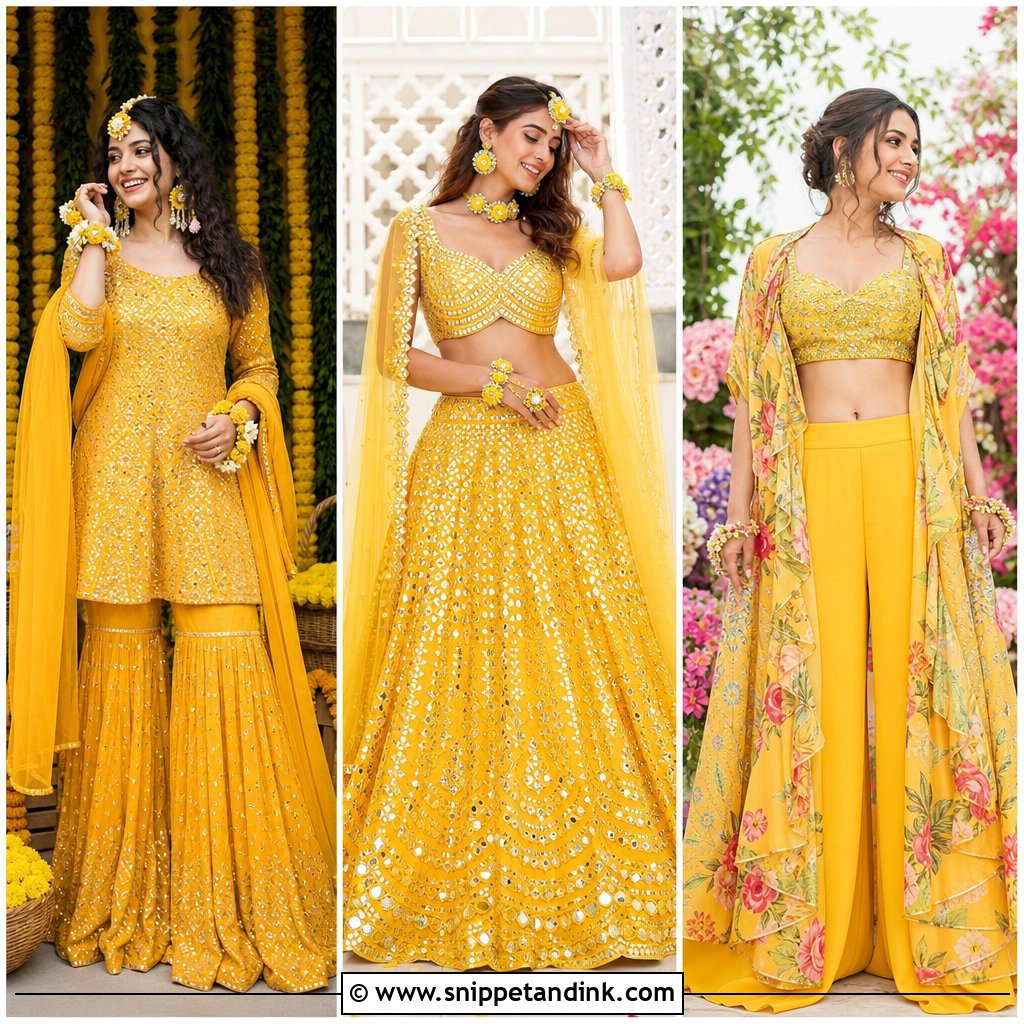
1. Yellow Floral Lehenga for Haldi Mehendi
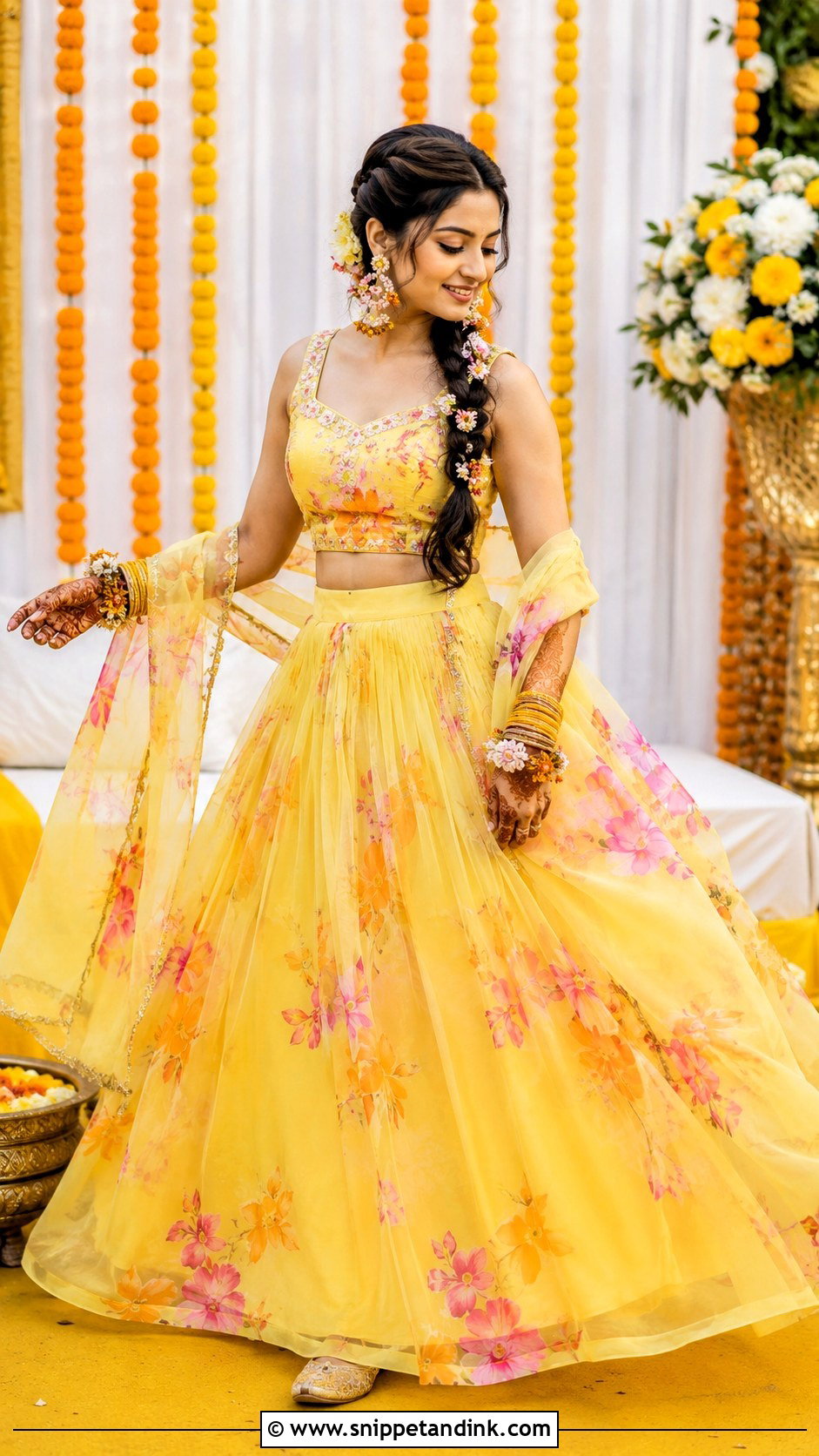
Organza and cotton-silk are the two skirt fabrics I’d shortlist here, and they behave very differently. Organza holds the floral print crisp and gives the skirt lift, but it creases hard when you sit for rituals; cotton-silk softens and forgives turmeric splashes better. Pair the skirt with a short-sleeved or square-neck blouse and a sheer dupatta that you can drop entirely once the paste comes out. Fresh flower earrings, a floral maang tikka, yellow bangles and gold juttis finish it. A loose braid threaded with tiny flowers stays put, and peach makeup with waterproof mascara copes with the inevitable tears and laughter. Marigold decor makes the yellow glow on camera instead of washing it out.
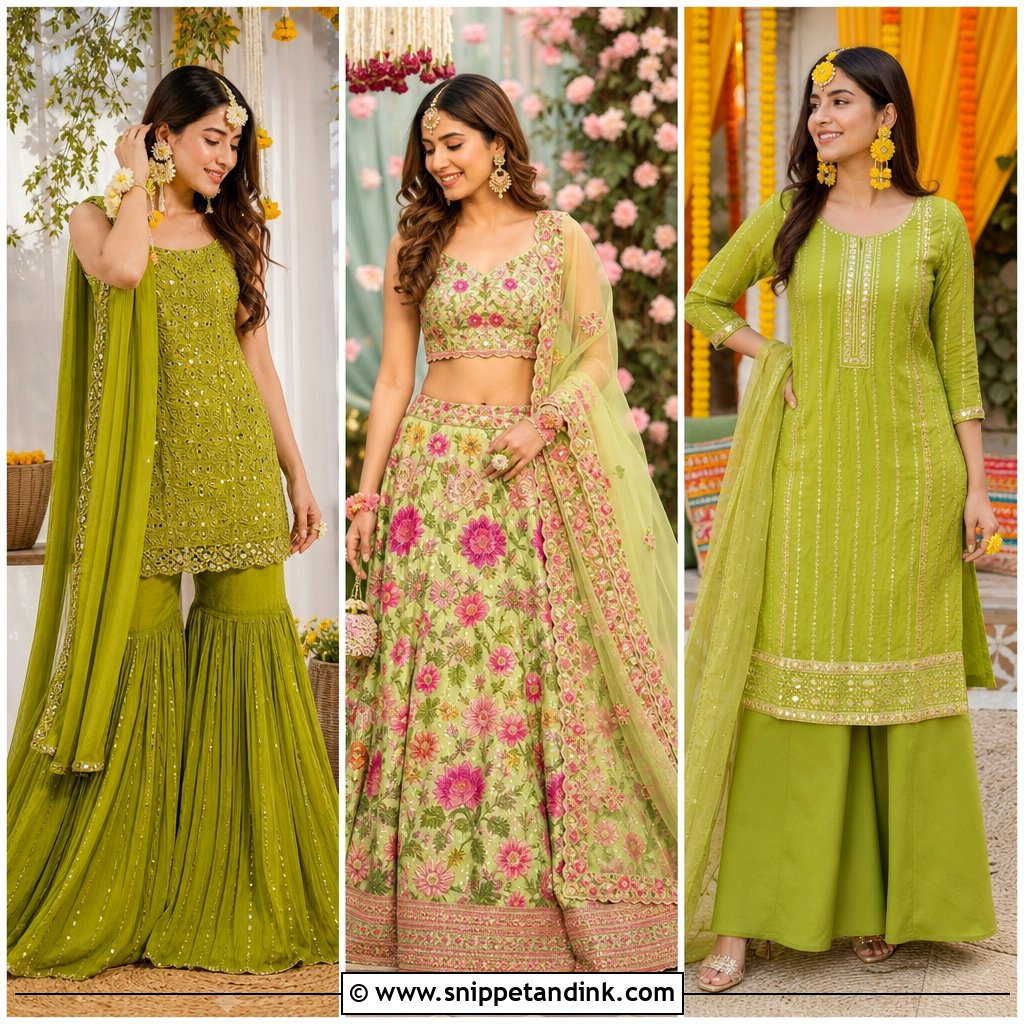
2. Green Sharara Suit for Mehendi
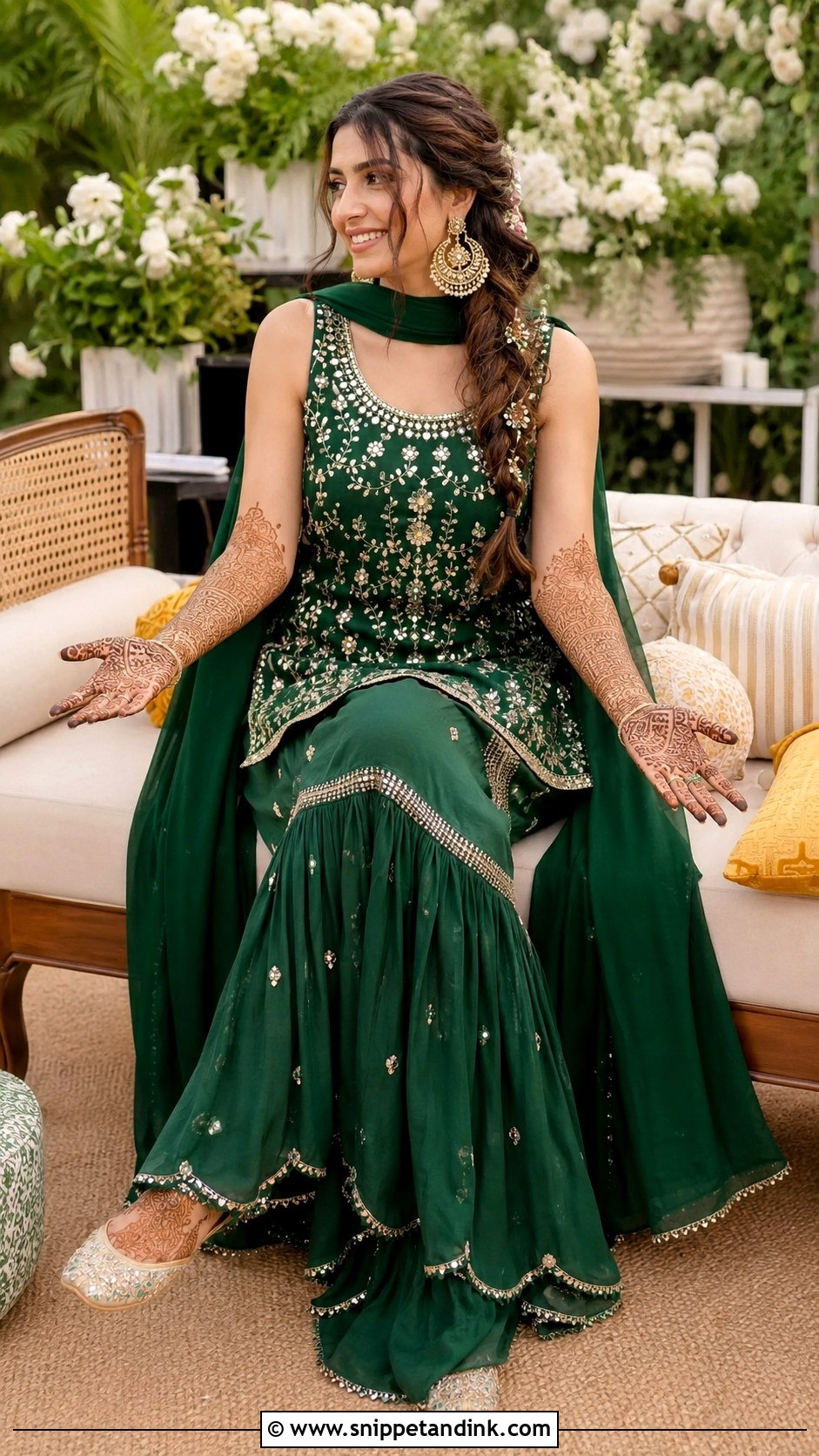
Deep green is the traditional mehendi colour, and it is dark enough that your guests in lime and mint won’t blend into you. A short embroidered kurti with a flared sharara and a dupatta over one shoulder gives you shape without weight. Gota patti or mirror work is plenty of detail. The sleeve decision matters more than the embroidery: sleeveless or elbow-length only, because a full sleeve has to be pushed up and it smears the paste on the inner arm. Chandbalis, a small tikka and embroidered juttis are all you need. If your decor is heavy on greenery, add magenta or gold near your face so you don’t disappear into the backdrop.
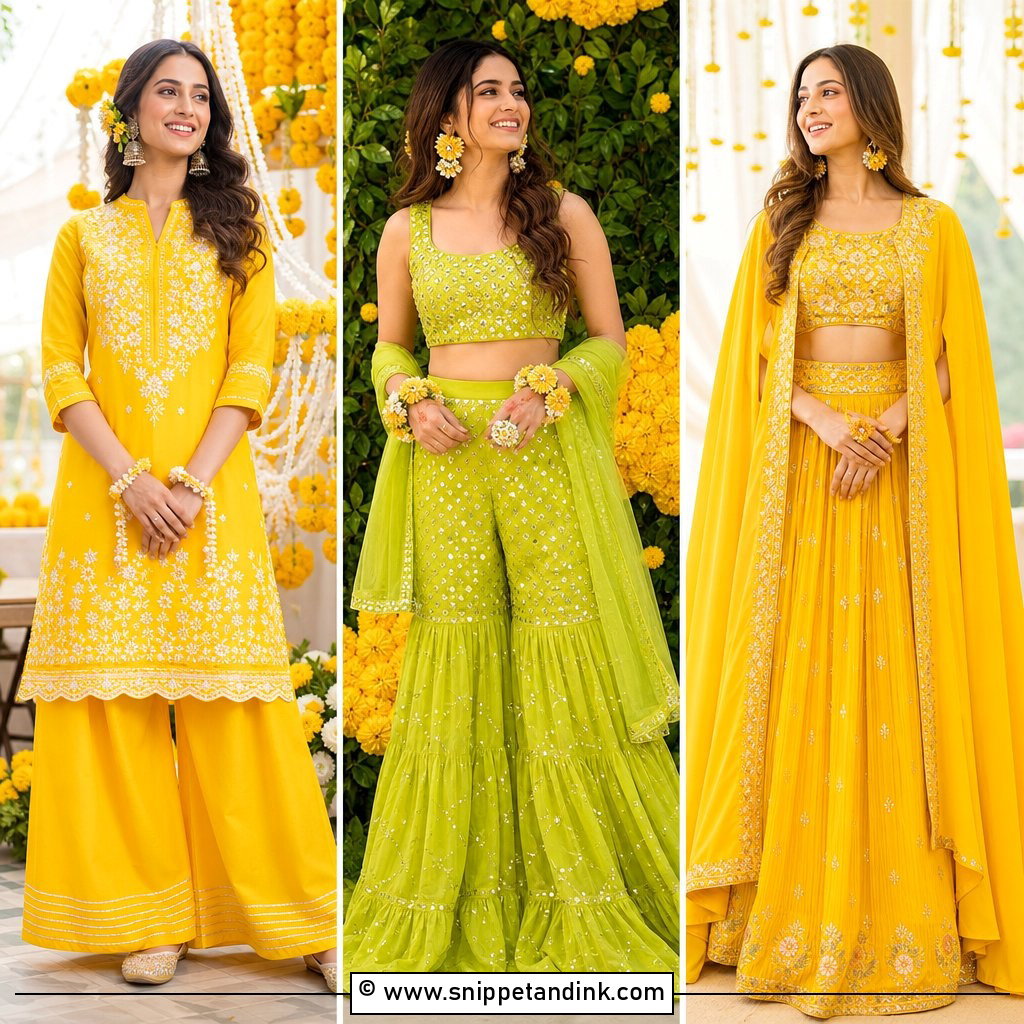
3. Yellow Chikankari Kurta Set for Haldi
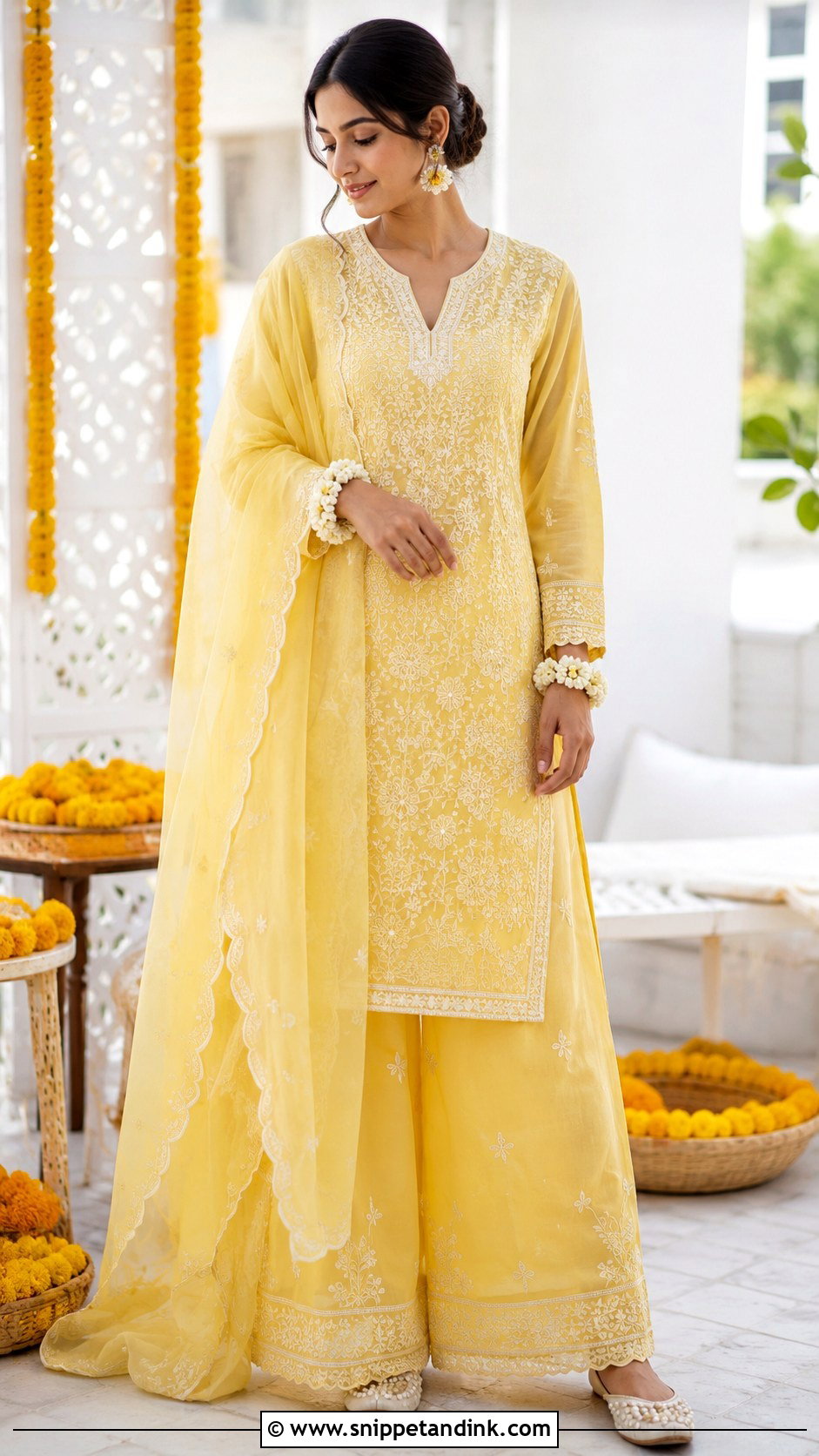
Chikankari is the outfit I suggest for a small haldi at home where the family will get messy. The white threadwork on yellow cotton is light, it breathes in a warm courtyard, and good cotton chikan survives a careful hand wash, which a silk lehenga will not. A straight or gently flared kurta over palazzos lets you sit on the floor comfortably. Wear flat juttis with some grip, since haldi paste mixed with water turns tiles slippery. Floral earrings and jasmine bracelets are enough jewelry. Put your hair up in a bun or braid so the paste doesn’t end up in it, and keep makeup to blush and tinted balm.
4. Pink and Yellow Lehenga for Haldi Mehendi
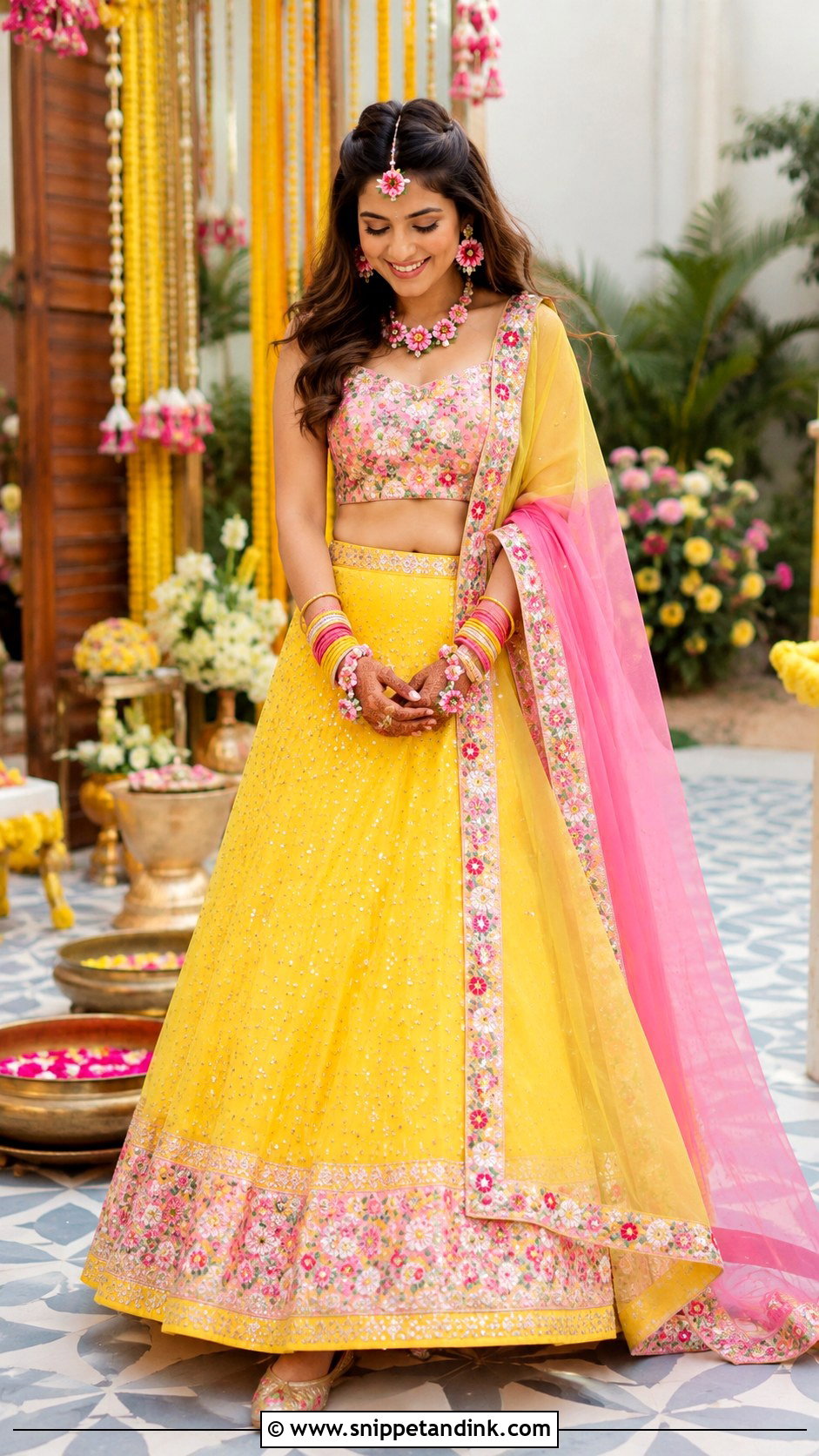
Can’t decide between yellow and pink? You don’t have to. A yellow skirt with a pink border, a pink blouse with floral or mirror detail and a dual-tone dupatta ties both ceremonies together, which is why I reach for this pairing when haldi and mehendi happen on the same afternoon. Pink floral jewelry and metallic juttis keep it playful. If you want more coverage, ask your tailor for elbow sleeves with a slightly wider opening so henna can still reach the wrist. A half-up style with loose waves works, but have the front pinned well, because relatives tend to reach for your cheeks with paste. Peach-pink makeup sits between both colours without fighting either.
5. Mustard Anarkali for Haldi
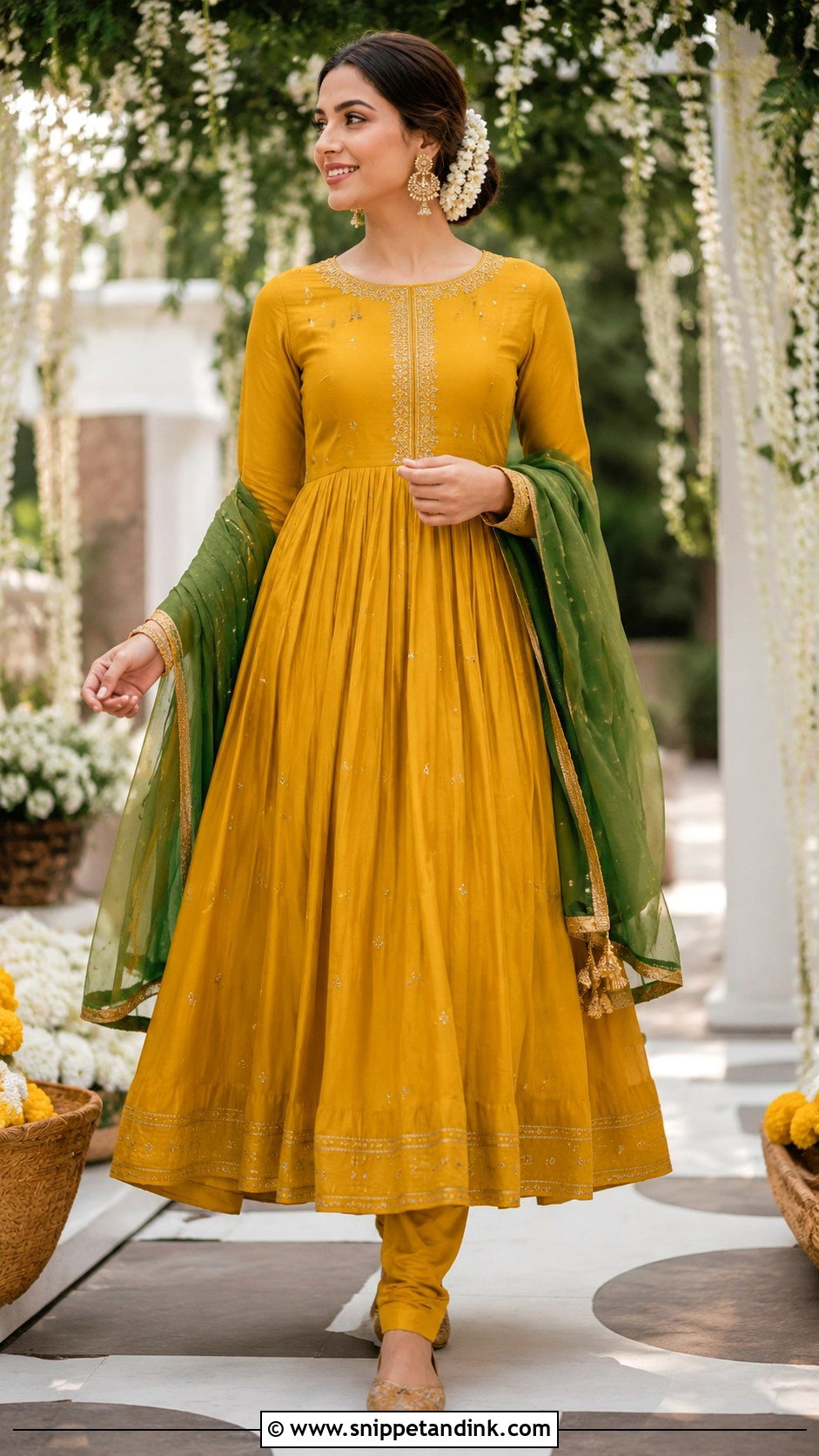
Mustard reads more grown-up than lemon yellow, and it flatters deeper and olive skin tones that bright yellow can make look sallow. Calf or ankle length is the practical choice; a floor-length Anarkali drags through paste and mud in a garden. Cotton-silk or chanderi keeps the flare without the heat of heavy georgette layers. A green, pink or rust dupatta gives contrast, and antique gold earrings with slim bangles suit the warmer tone. Mogra around a low bun smells wonderful in a crowded room. Because the skirt already moves so much, I’d keep the neck bare or very light.
6. Green Floral Lehenga for Mehendi
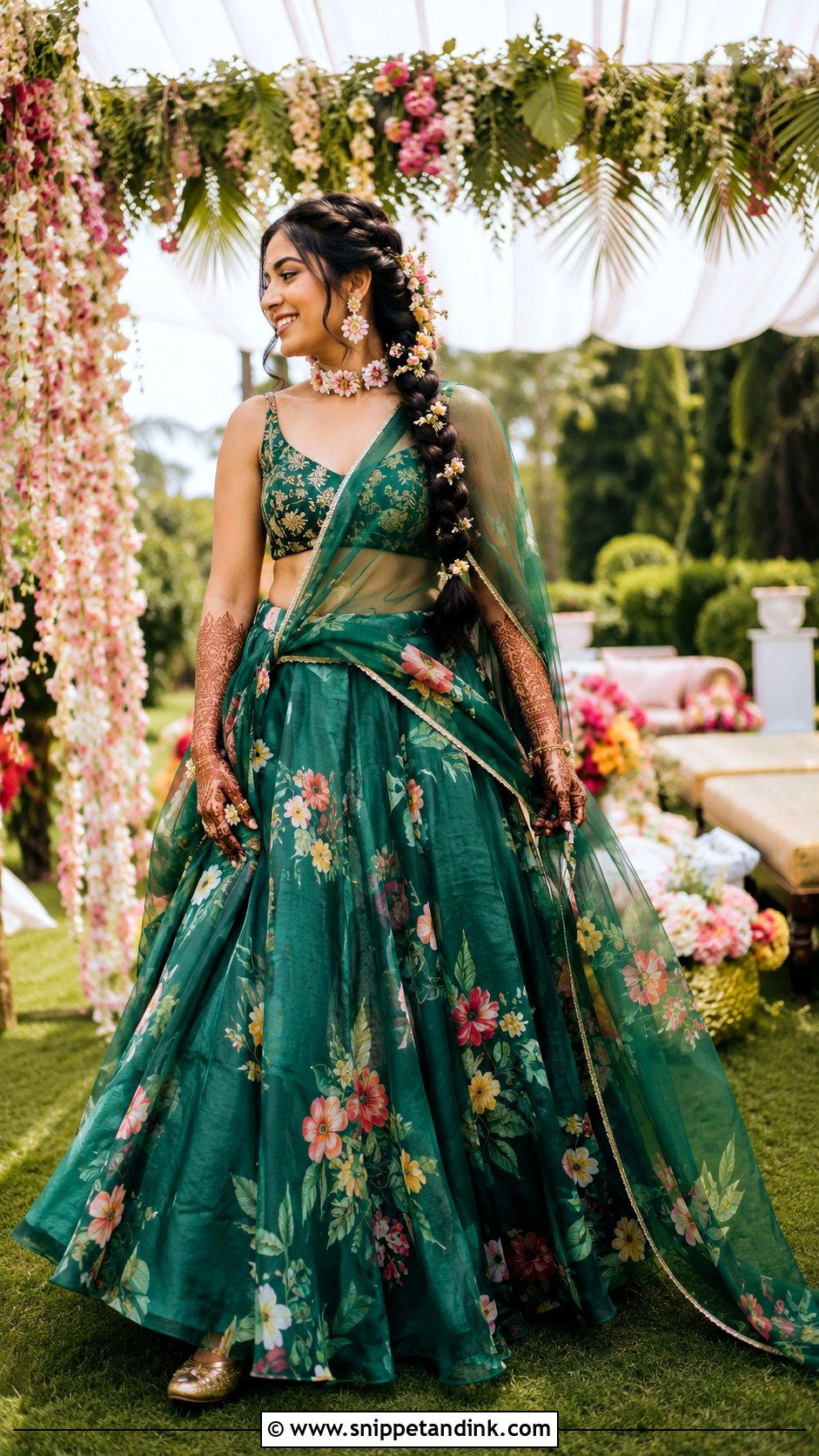
Prints do the work here, so the lehenga can be light. Sage, mint or emerald all suit a botanical print in pink and yellow, and the busier the print, the more forgiving it is when a smudge of henna lands on the skirt. Pin the dupatta before the artist sits down, not after. The neckline is a comfort decision: halter and sweetheart look current, but a square neck is easier if you’ll be leaning forward over your hands for two hours. Put your bangles on before application starts, or leave them off until the paste is gone. A long braid with fresh blossoms and a brighter lip finish it for a lawn or courtyard.
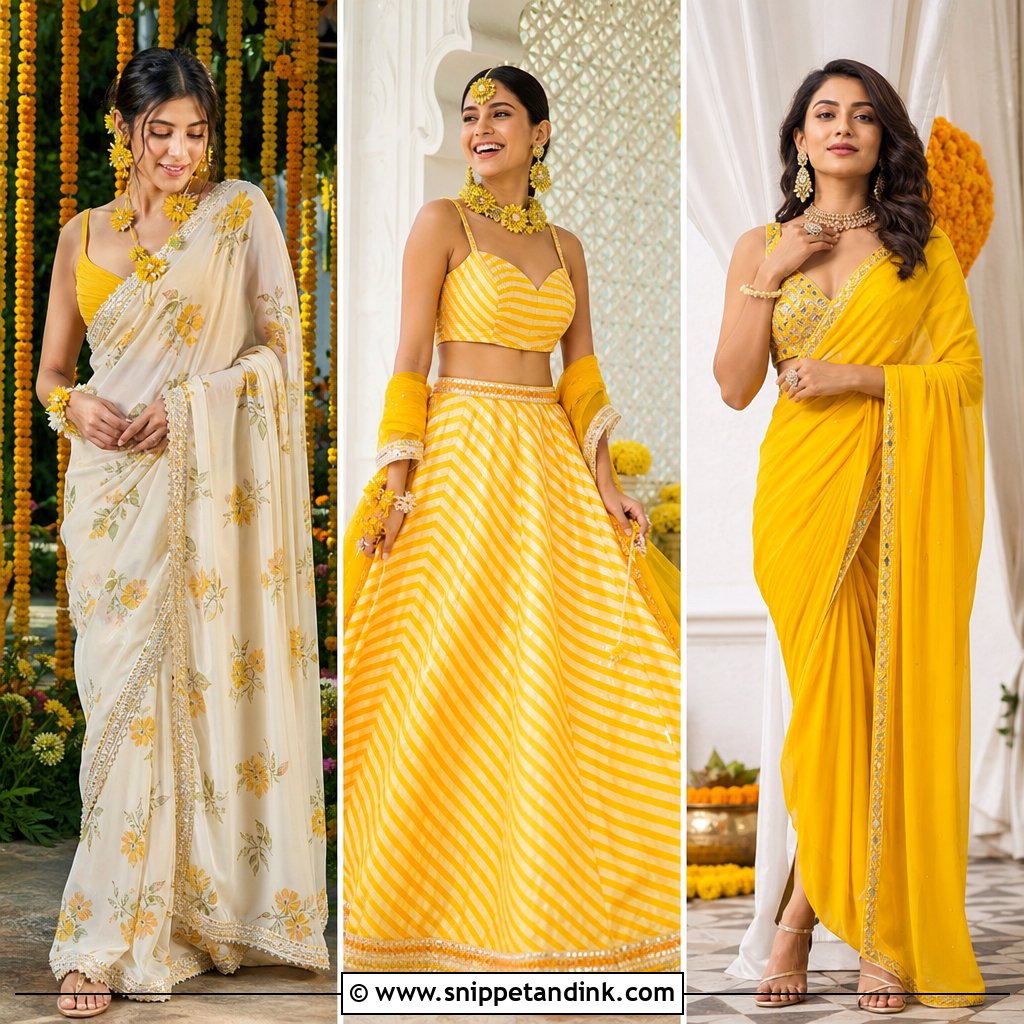
7. Yellow Pre-Draped Sari for Haldi
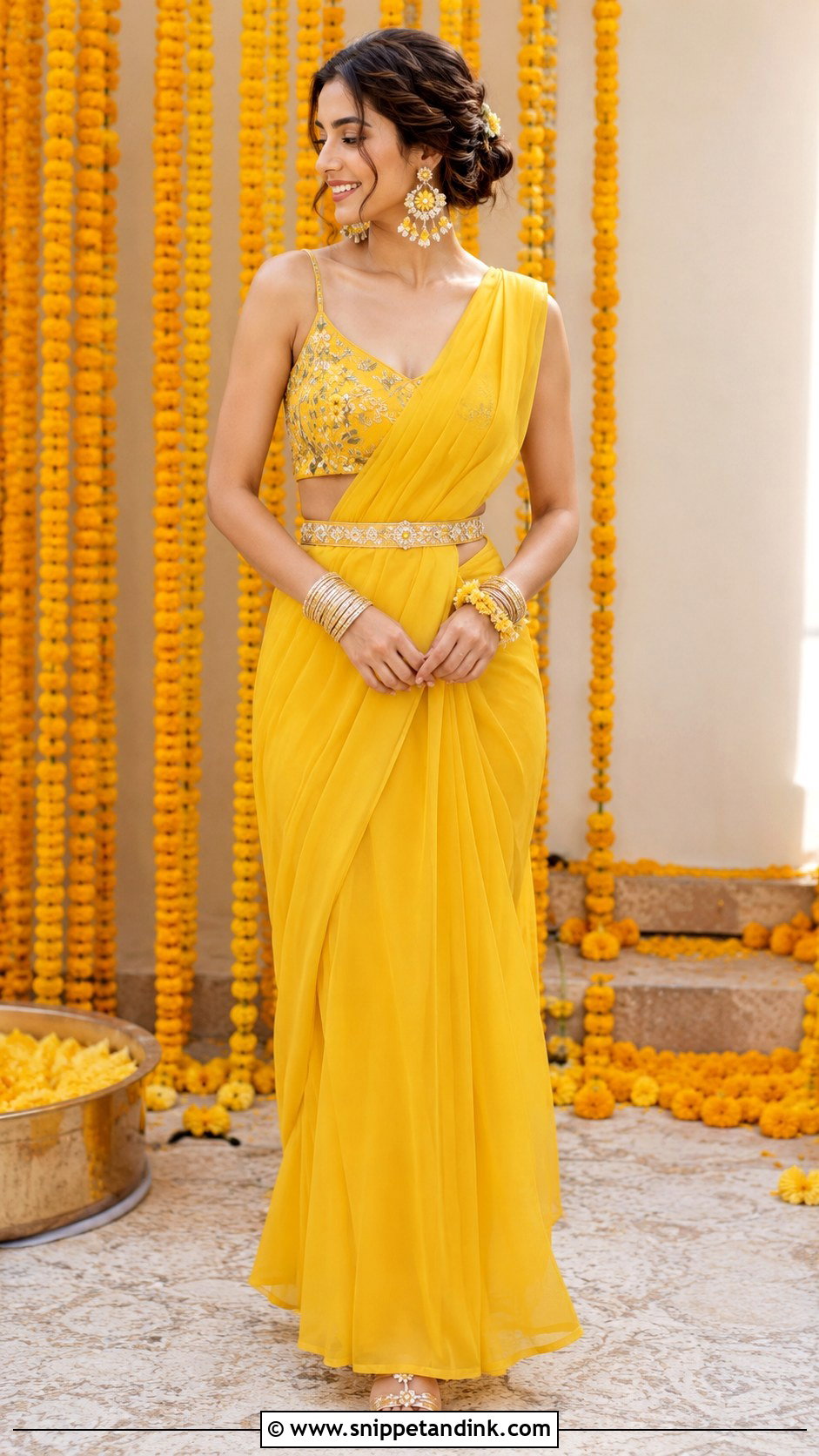
Pre-draped saris have solved the biggest sari problem at a haldi, which is pleats coming loose while relatives pull you in five directions. Georgette, crepe and chiffon all drape well when the waist is stitched and the pallu is fixed. Pair it with a floral blouse or a mirror-work crop top, and add a slim belt so the drape stays where the draper set it. Floral chandbalis, stacked bangles and flat metallic sandals are enough. Keep hair in a sleek braid or textured bun. Skip heavy contour: once paste is rubbed onto your cheeks and wiped off, sculpted makeup goes patchy while a light base just looks fresh.
8. Mirror Work Lehenga for Mehendi
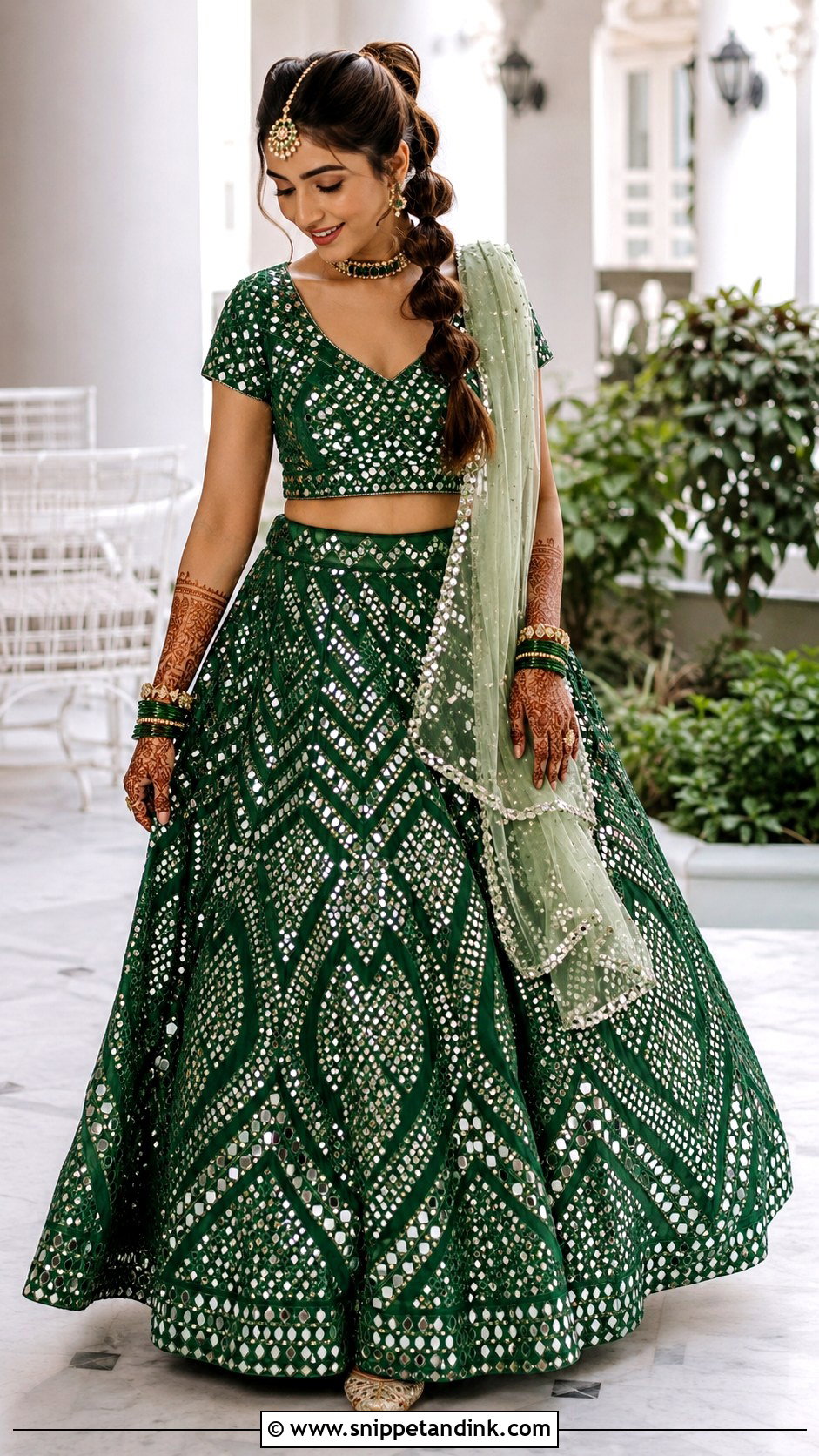
Mirror work looks brilliant in daylight, but it is the most uncomfortable embellishment to sit in for hours. Each mirror is held by a ring of stitching, and on a cheap blouse the edges scratch the inner arm and catch on the dupatta. At fittings, I run my fingers around the armholes and the waistband before anything else. Choose a green, teal or lime skirt with mirrors spread evenly instead of heavy solid panels, a sleeveless or short-sleeved blouse and a net dupatta pinned well away from your hands. Keep the jewelry to a simple choker, medium earrings and one tikka, because the skirt already sparkles.
9. Orange Gharara Set for Haldi Mehendi
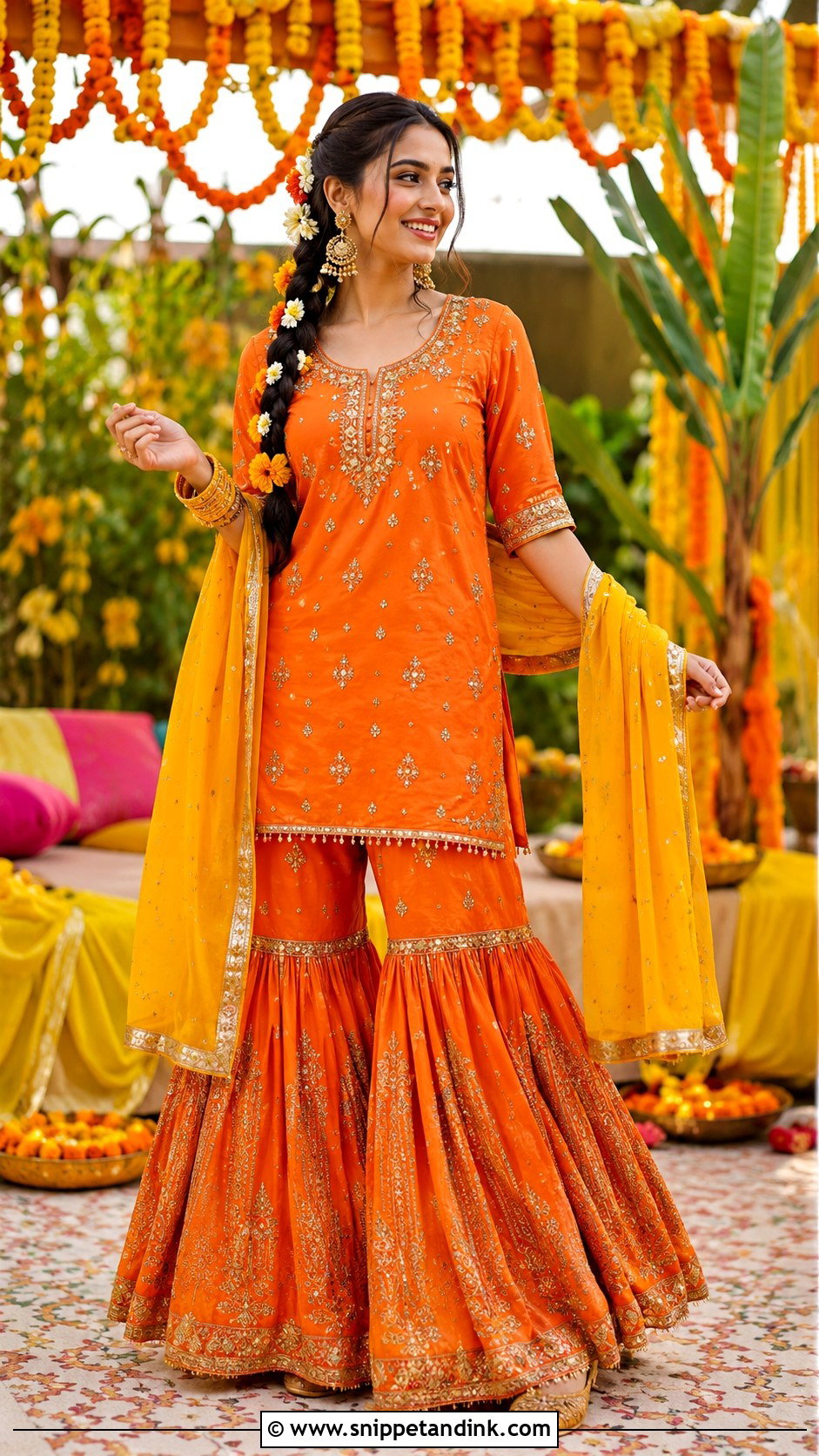
Orange is my answer when a bride is tired of yellow and still wants warmth. A gharara is fitted to the knee and then flares, so it dances well and holds its shape in photos without the weight of a full lehenga skirt. The knee joint is where you’ll sit, so make sure the tailor leaves enough ease there. Gota borders or light threadwork are enough decoration. A yellow, pink or green dupatta connects it back to the ceremony colours, and gold jhumkas with cushioned juttis complete it. A braided ponytail with small flowers stays tidy through the dancing.
10. Ivory Lehenga With Yellow Embroidery for Haldi
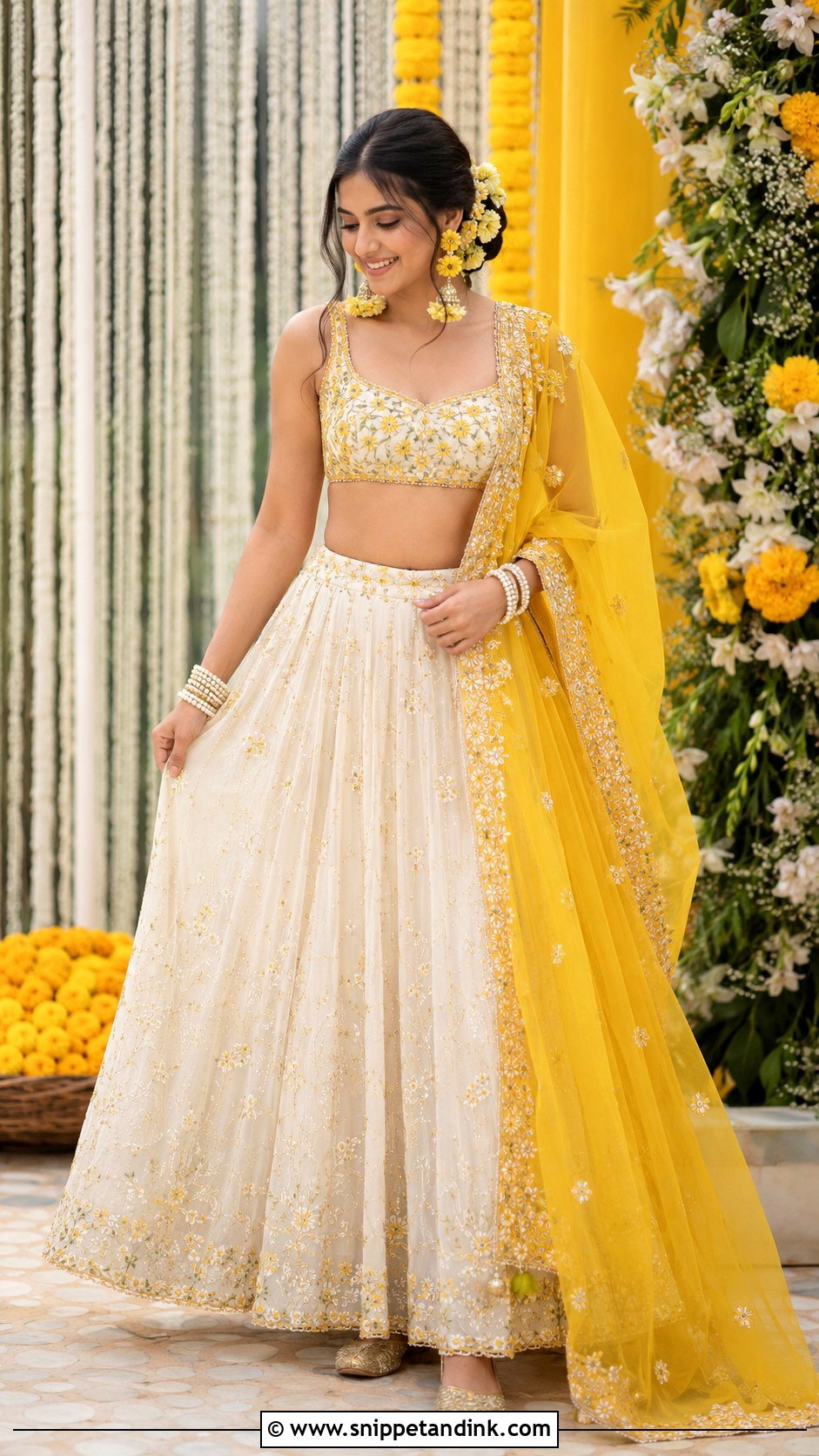
Ivory with yellow embroidery is the riskiest outfit on this list, and I say that as someone who loves it. Turmeric on ivory silk is very hard to remove, so I only suggest it when the haldi is calm, or when you plan to take portraits first and change before the paste comes out. A washable cotton or georgette base helps. The ivory lehenga with yellow embroidery pairs well with a sheer yellow dupatta, floral earrings, pearl bangles and gold juttis. A low floral bun keeps the clean look intact. Keep a small ivory potli nearby rather than carrying it, and you’ll stand out clearly against bright decor in group shots.
11. Bandhani Lehenga for Haldi Mehendi
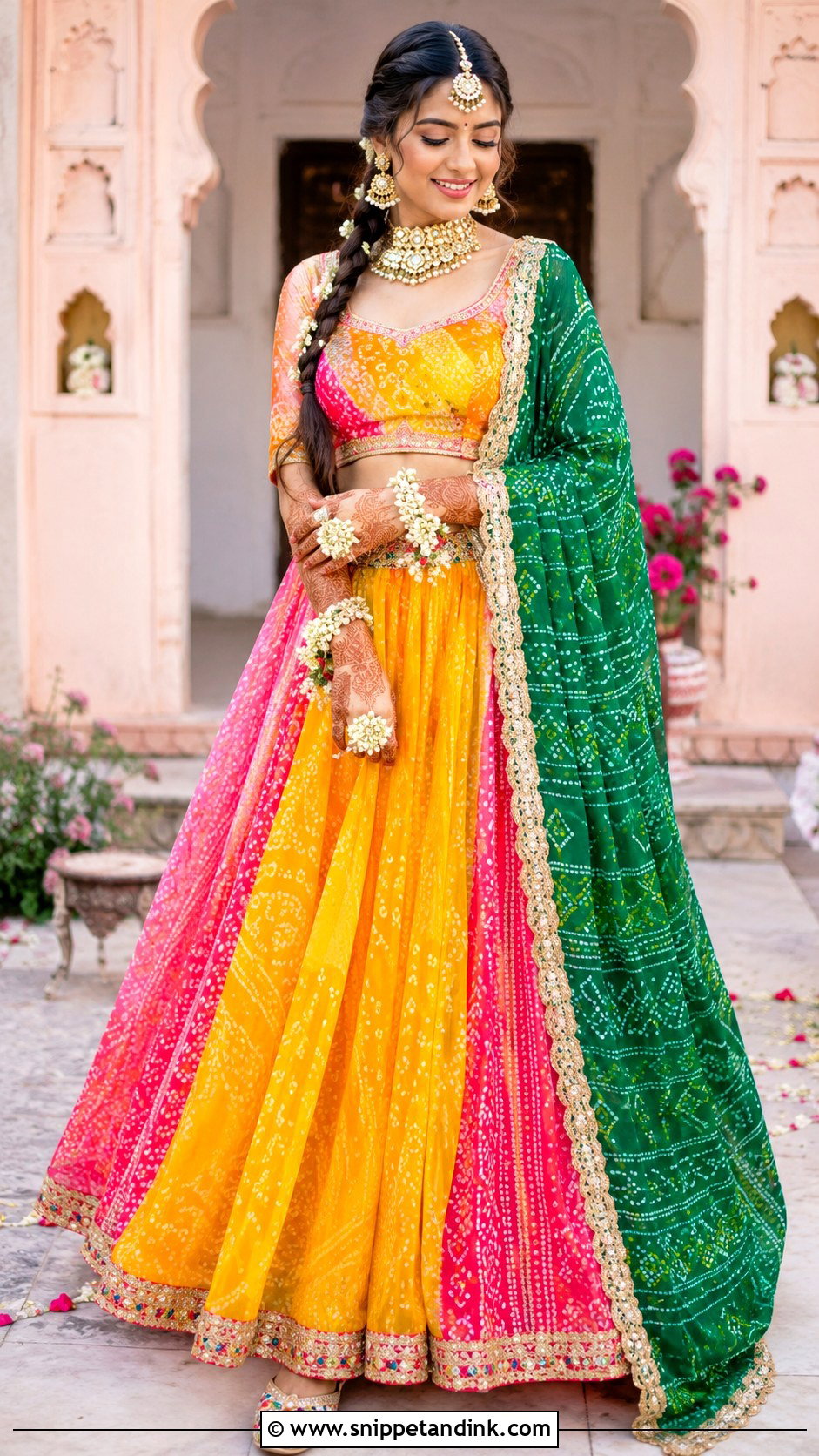
Real bandhani is tie-dyed by hand, and you can feel the tiny raised dots when you run a hand over it. That texture is part of the charm, and it also means the fabric has some give, which makes a Bandhani lehenga comfortable to sit in. Yellow, green, pink and orange all work, especially with a contrasting bandhani dupatta and gota along the borders. Natural dyes can bleed on first contact with water, so keep it away from wet haldi play. A kundan choker, jhumkas and kolhapuris ground the look. Waterproof liner and a berry or coral lip give your face definition against all that pattern.
12. Mint Green Cape Lehenga for Mehendi
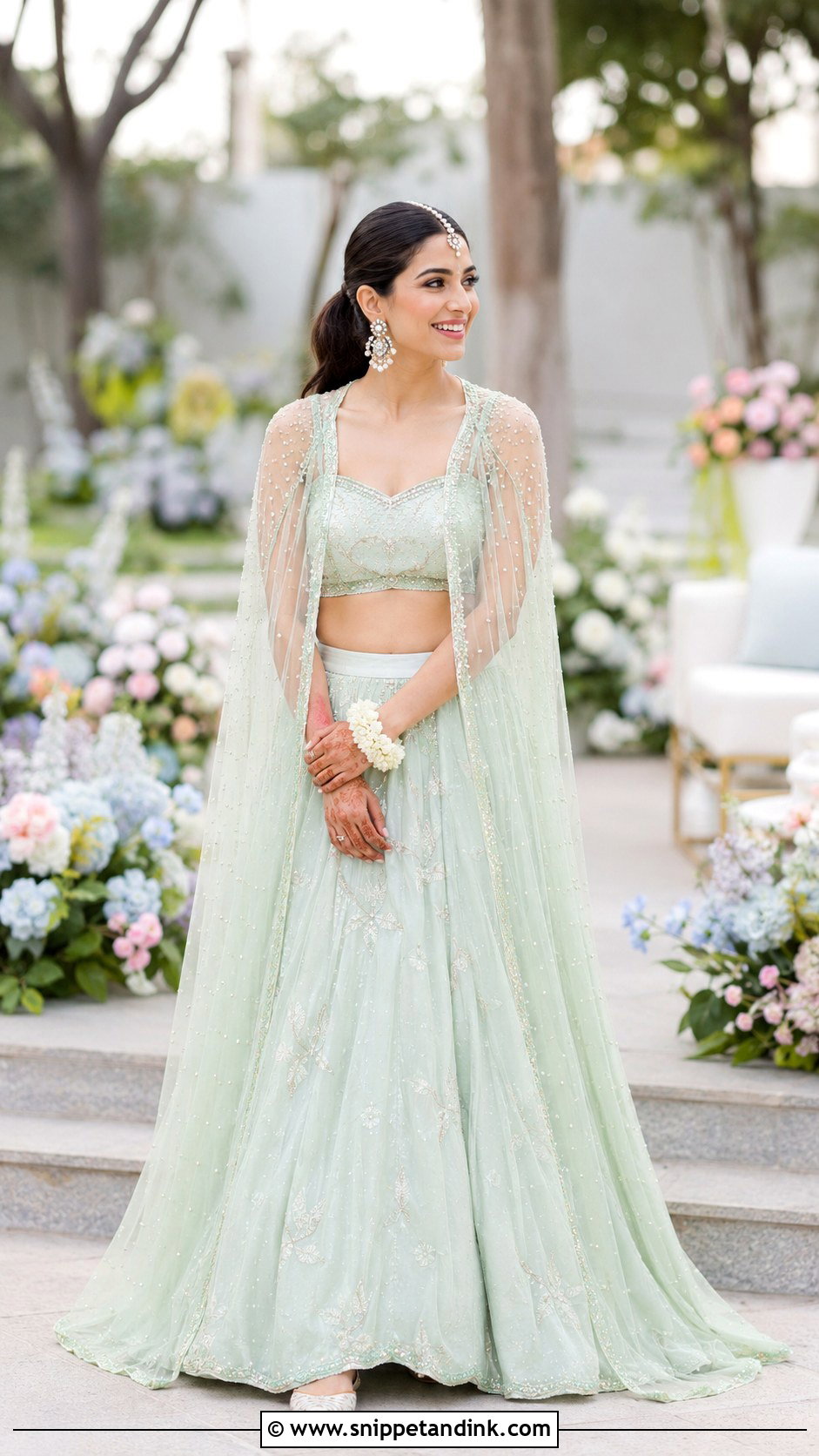
A cape is the best fix I know for the dupatta problem at a mehendi. It covers the shoulders, falls behind the arms and never needs adjusting while your hands are drying. Mint with light pearl or silver embroidery suits a daytime garden, and the paler colour suits a bride who finds dark green heavy. Check the cape’s attachment point at the fitting: if it hooks at the wrist or upper arm, it will interfere with the design. Keep bangles minimal if the henna runs above the wrist. Pearl earrings and a sleek low ponytail match the modern shape.
13. Yellow Peplum Sharara for Haldi
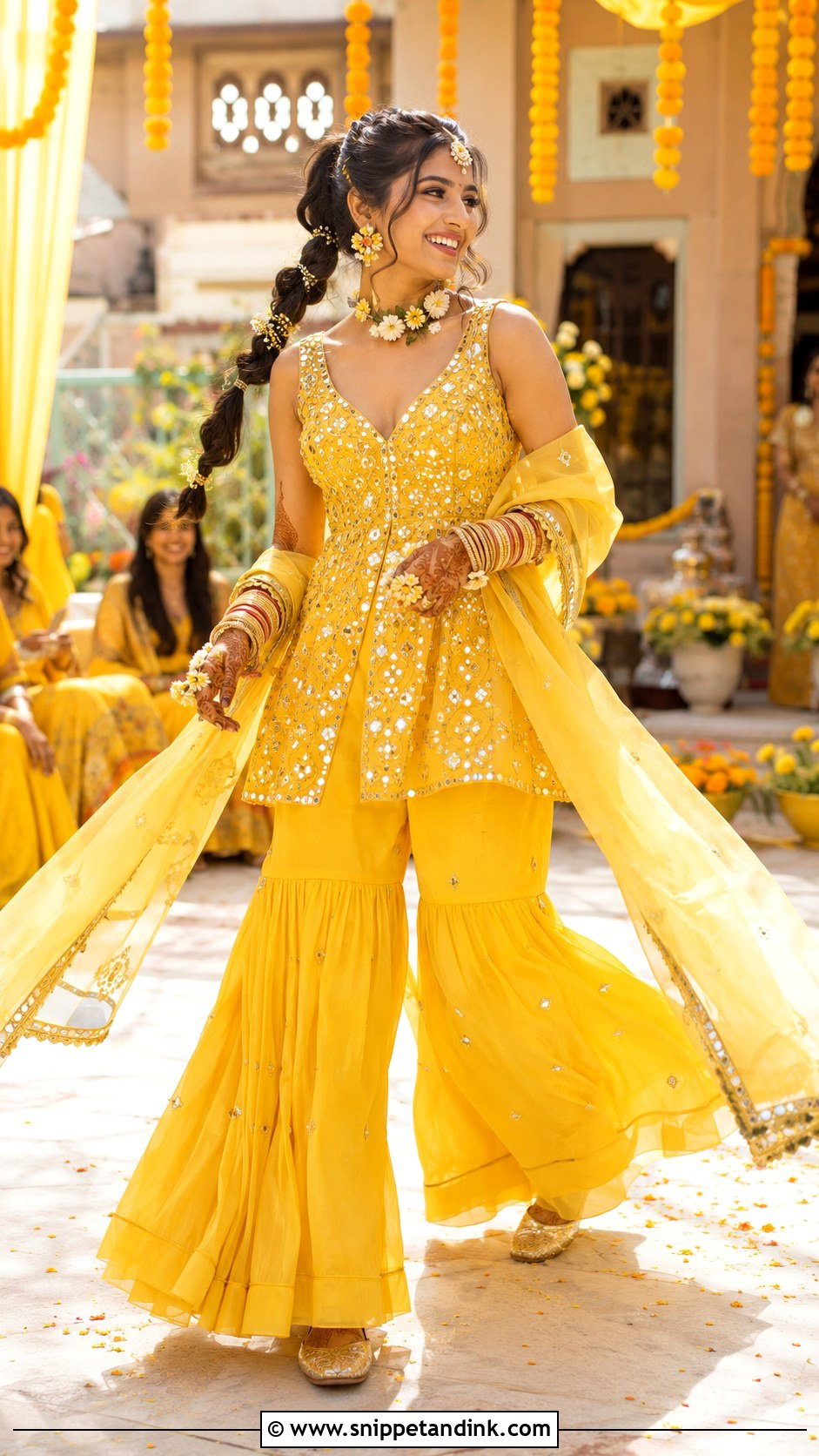
The peplum does the defining at the waist, and the sharara gives you all the movement, so you get a bridal silhouette without a skirt you have to manage. Make sure the peplum ends just below the natural waist; longer, and it bunches when you sit on the floor for rituals. Mirror embroidery or gota trim on the top keeps it festive. An organza dupatta fastened at one shoulder leaves both hands free. Flower jewelry and flat gold juttis finish it, and a high braided ponytail keeps hair off your neck when it gets hot. The two pieces separate easily for later wear.
14. Multicolor Patchwork Lehenga for Mehendi
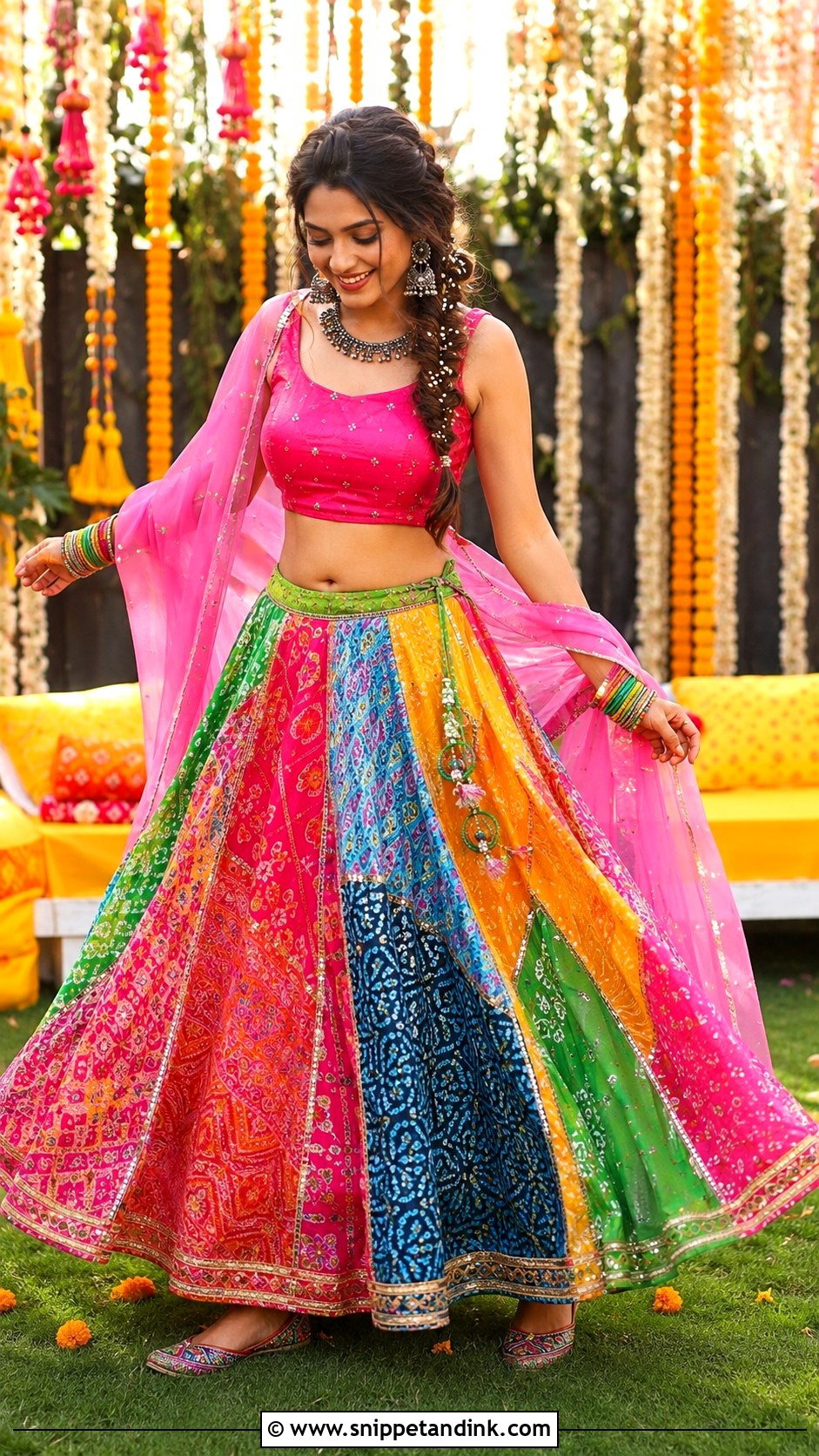
Patchwork is busy by design, so the styling has to calm it down. Let the skirt carry the greens, pinks, oranges, blues and yellows, then pick the quietest colour in it for a plain blouse and choose a sheer dupatta with only a border. Oxidized silver jewelry suits the handmade feel better than polished gold. This is also the most forgiving outfit on the list for henna smudges, because a mark disappears into the pattern. A boho braid with thread or tiny pearls finishes it. It is a good home for heirloom fabric pieces from a mother or grandmother, if your tailor can piece them into a panel.


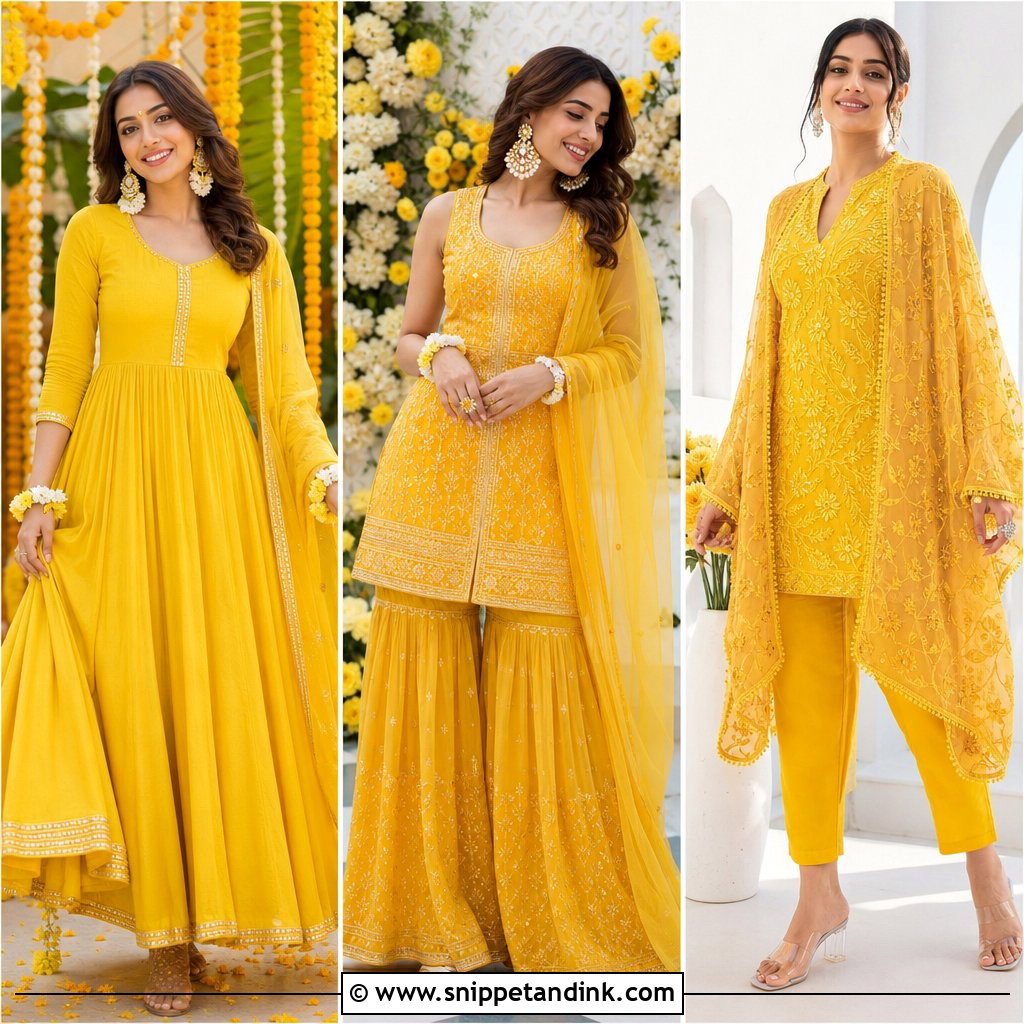
15. Yellow Dhoti Pant Set for Haldi
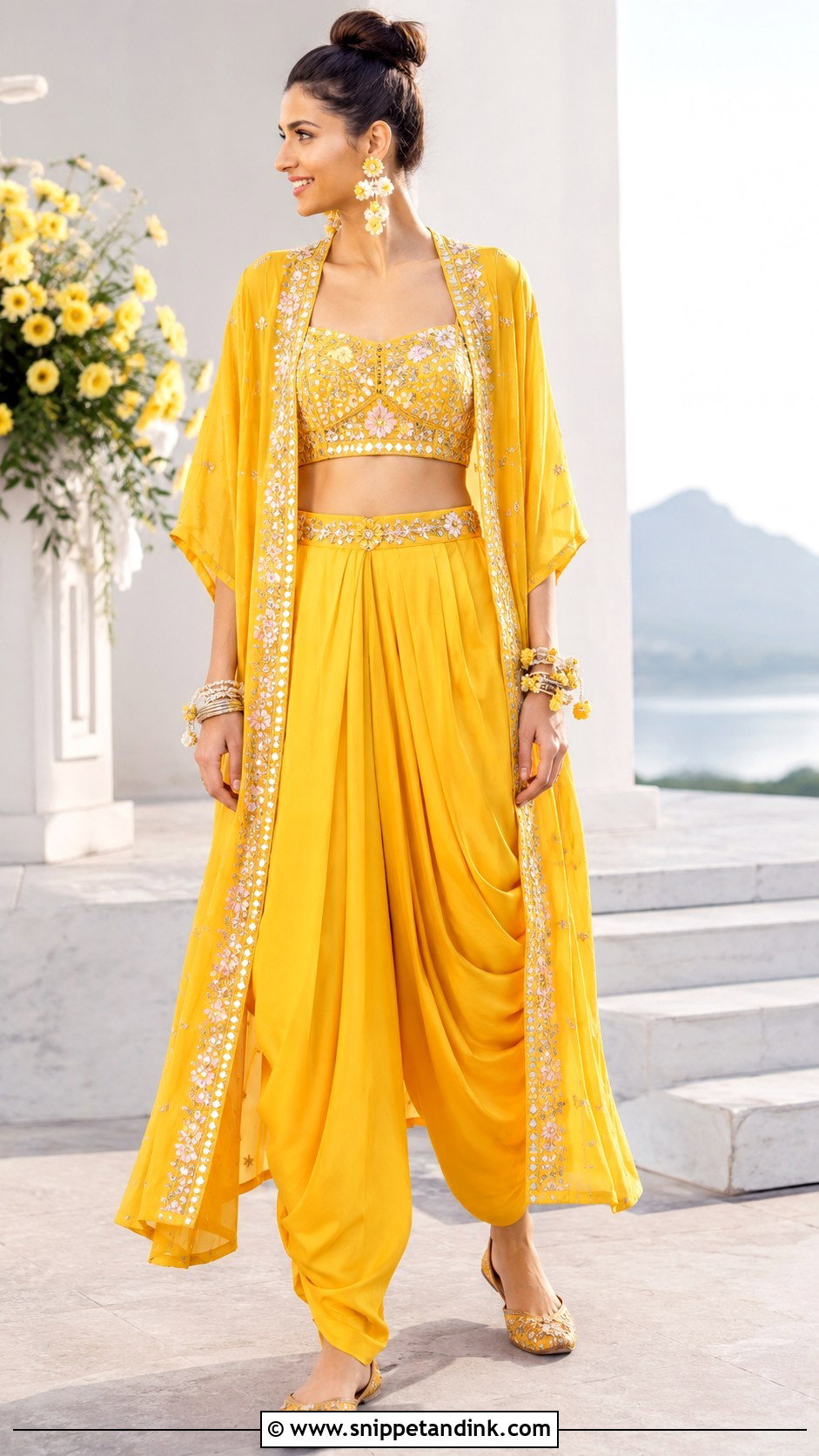
Dhoti pants give the most freedom of anything here, and a yellow dhoti pant set is the one I suggest to brides who know their haldi will turn into a water fight. Pick cotton-silk or crepe that drapes without clinging when it gets wet. A fitted crop top or short kurti, plus a cape or pinned dupatta, completes the silhouette, and a slim belt keeps the drape secure. Floral earrings and comfortable flats are enough. Use minimal waterproof makeup and a high bun or braid. It also packs flat, which matters for a destination celebration.
16. Rani Pink Lehenga for Mehendi
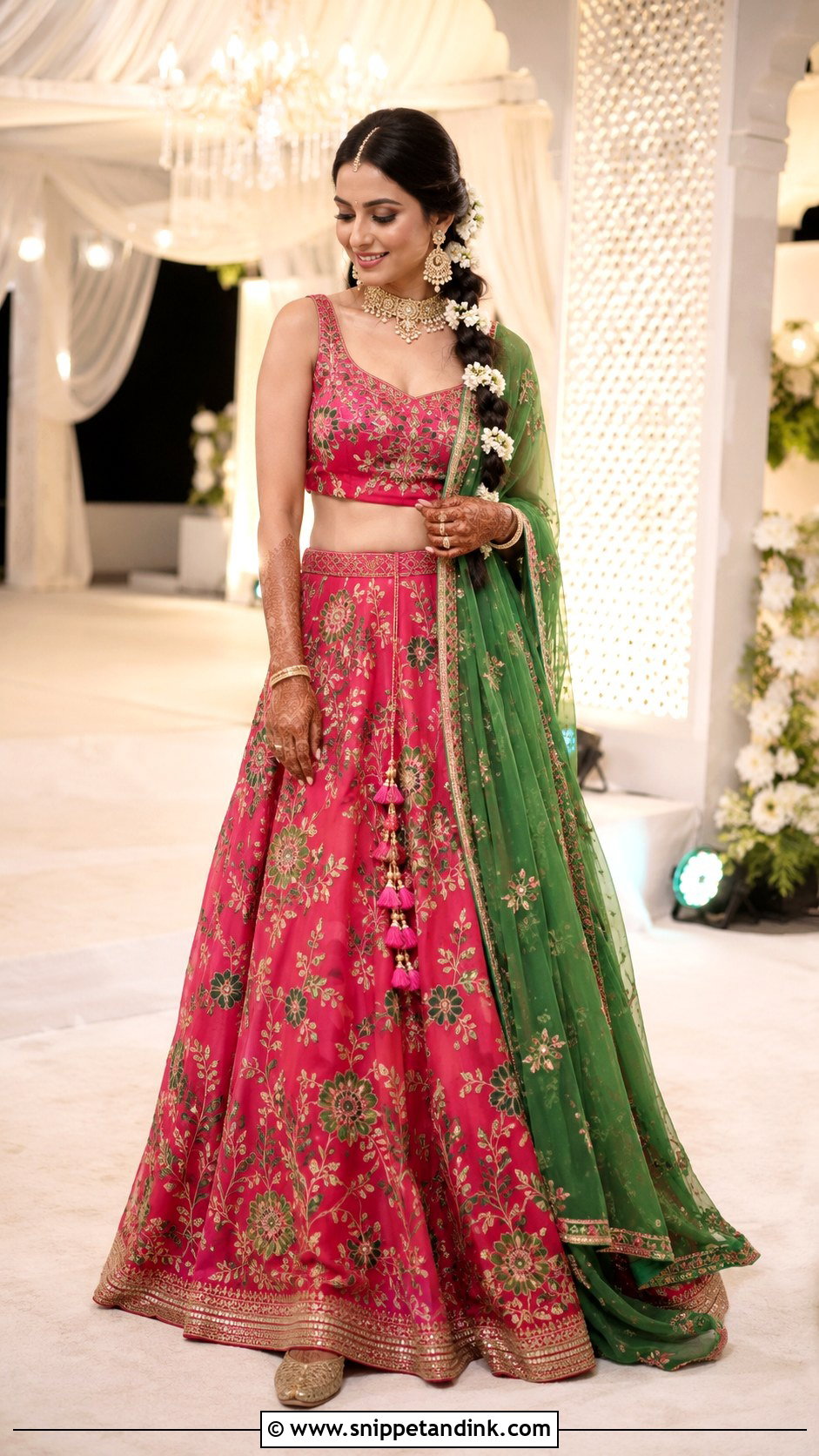
Rani pink is the colour I suggest for an evening mehendi because it holds its saturation under warm artificial light, where pastels go muddy. A flowing skirt with green floral embroidery or small mirror details, a matching blouse and a green dupatta bring it back to the traditional palette. Leave your wrists bare until the artist finishes, then add bangles for portraits. A centre-parted braid with jasmine or small roses suits it. Kohl, rosy cheeks and a nude-pink lip keep the makeup from competing with the fabric.
17. Floral Printed Sari for Haldi Mehendi
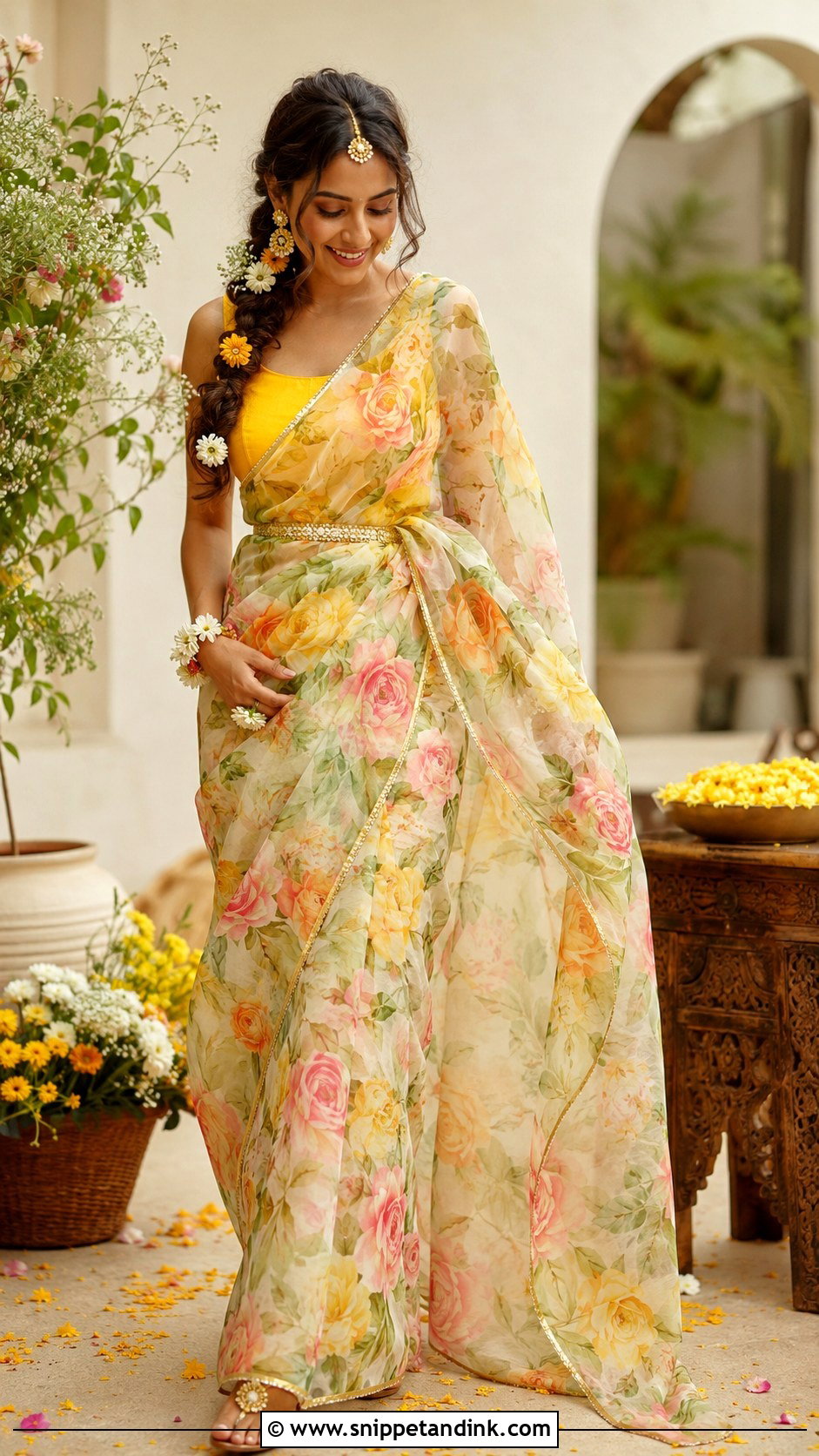
A floral printed sari in organza, chiffon or light crepe is the easiest outfit here to rewear, which is why I like it for smaller functions. Pick a solid blouse in one colour lifted from the print; matching the dominant colour looks flat, while matching a minor colour makes the print stand out. A square neck and short sleeves keep it bridal. Use a fabric or metallic belt to anchor the pleats and pallu, because chiffon slips. Floral earrings, a small tikka and flat sandals or juttis are enough. Natural makeup with waterproof liner and a coral lip finish it.
18. Green Palazzo Kurta Set for Mehendi
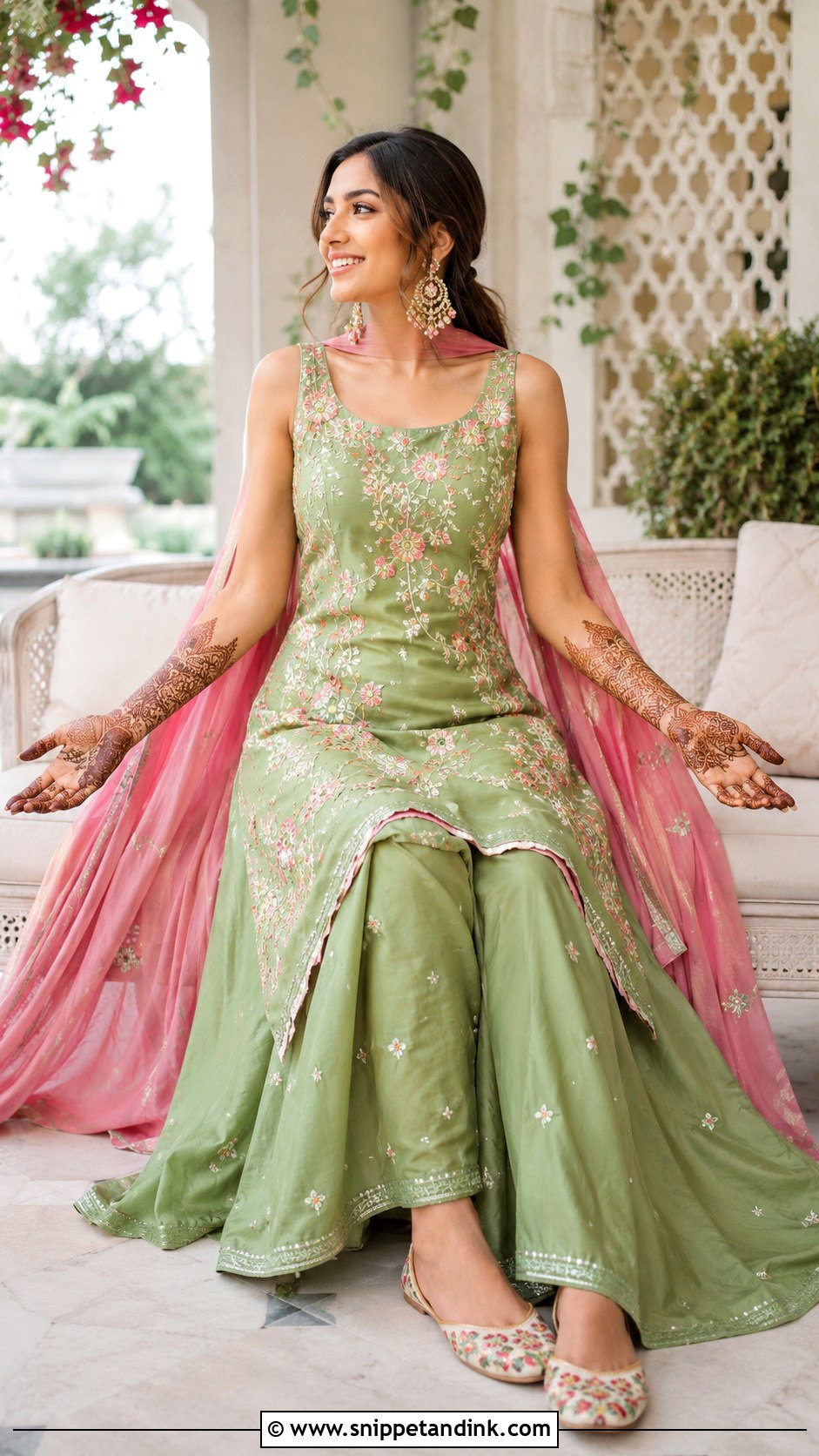
If the session will run long, comfort beats drama. A green palazzo kurta set with side slits lets you sit cross-legged without the kurta riding up, and breathable cotton-silk or georgette keeps you from overheating while the paste dries. Floral embroidery around the neck and hem is enough to mark you as the bride. Pin a pink or yellow dupatta behind the shoulders so both arms stay clear. Statement earrings and a small floral headpiece carry the jewelry, and bracelets wait until the henna is scraped off. Swap the dupatta and jewelry later and it becomes a separate outfit.
19. Ombre Lehenga for Haldi Mehendi
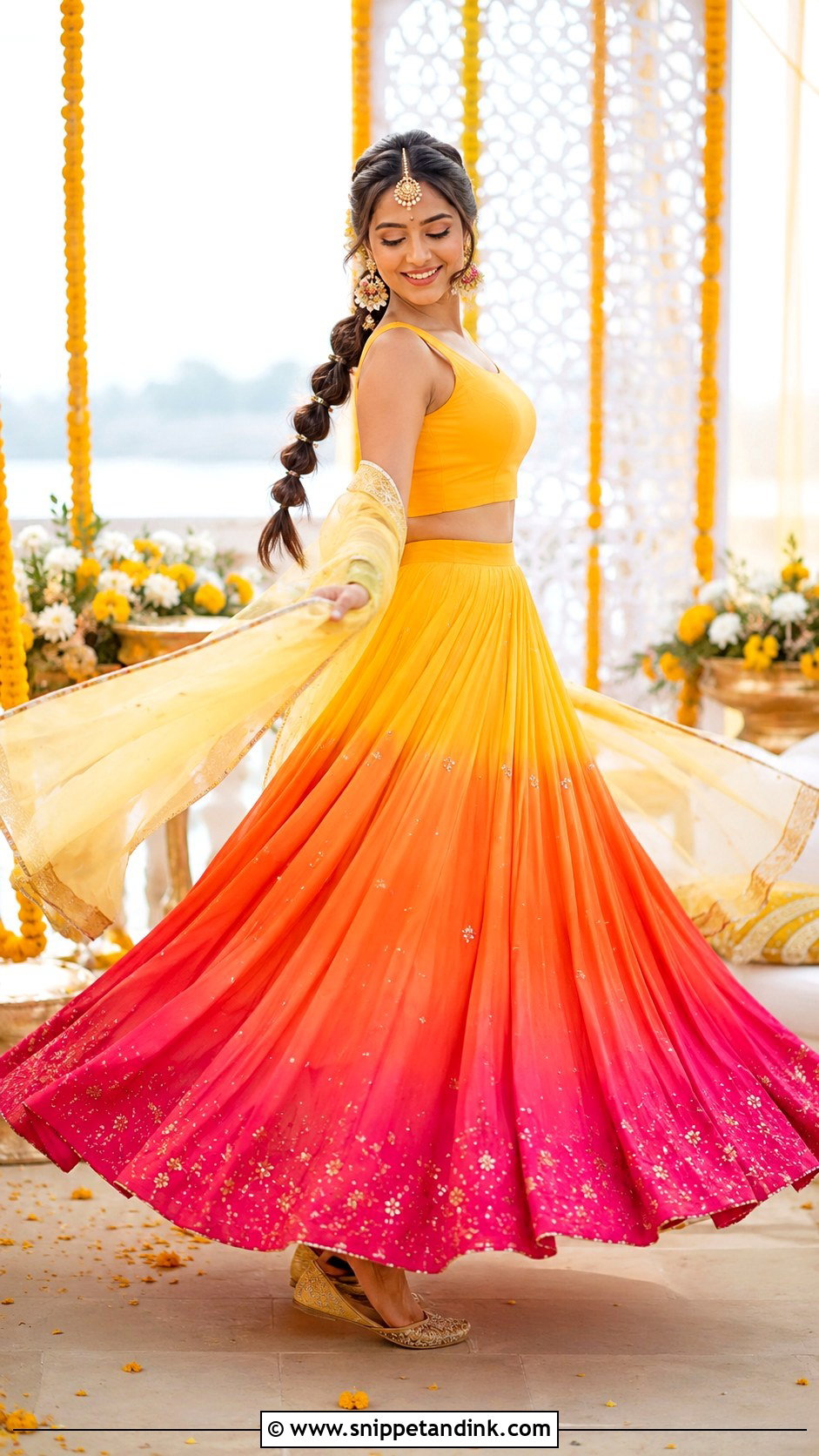
Ombre only works if the dye transition is long and gradual, so look at the skirt in daylight before you commit; a sharp band where two colours meet looks like a dyeing error on camera. Yellow into orange suits haldi, and green into blue or pink suits mehendi. Keep embroidery to the waistband or hem so it doesn’t interrupt the gradient. A solid blouse and a sheer dupatta in the lightest shade let the colour move. A fishtail braid or half-up style works with it, and peach blush or a rosy lip echoes the softer end of the fade. Twirling shots in natural daylight show it best.
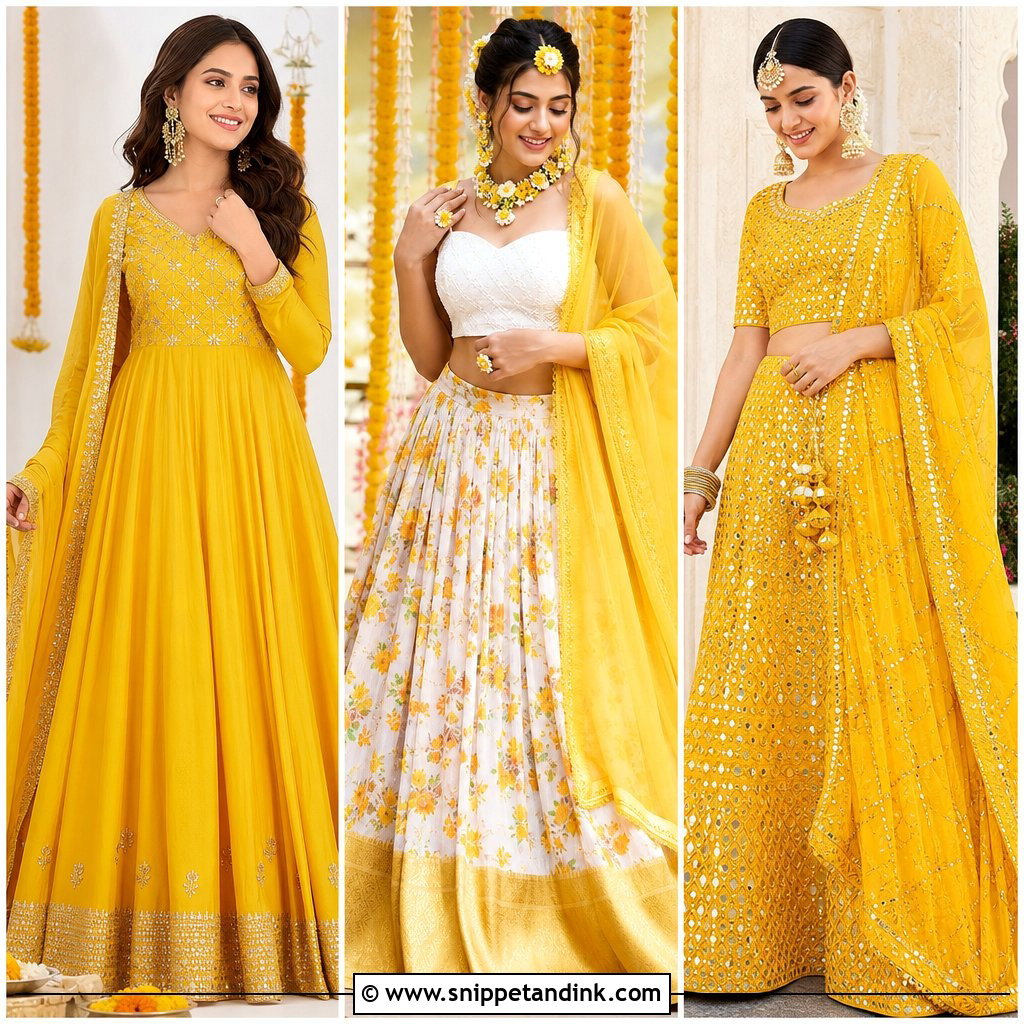



20. Yellow and Green Skirt Kurta for Haldi Mehendi
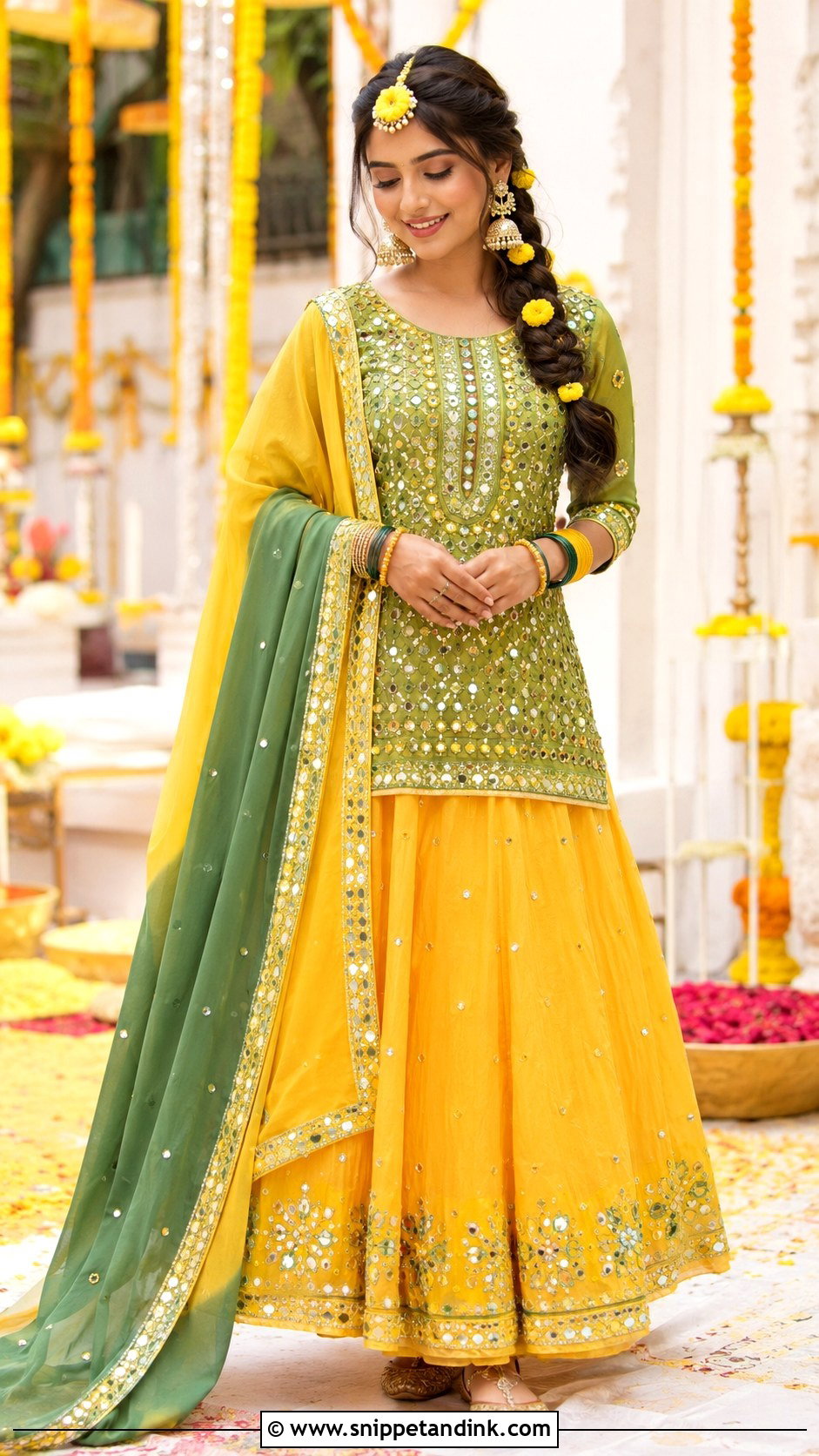
Yellow and green separates are the most literal way to dress for both ceremonies at once, and they work for a combined event for that reason. A flared yellow skirt with a short green kurta in floral, mirror or gota detail and a dupatta in both colours, secured at shoulder and waist, holds up to dancing. Gold jhumkas, a floral tikka and mixed green and yellow bangles keep the palette consistent. Cushioned juttis matter more than people expect at a long combined function. A side braid with small yellow flowers finishes it, and both pieces mix with other clothes afterwards.
Turmeric on Silk and Henna on Net: Getting Your Outfit Back
Haldi paste is turmeric mixed with gram flour and usually some oil, milk or rosewater. The oil carries the colour deep into the fibre, and the yellow sets faster than most people expect. The outfit you wear for haldi should be one you are prepared to lose, or one you treat quickly.
Within the first hour
Scrape off any thick paste with a blunt knife or card, without rubbing it in. On cotton or chikankari, rinse the back of the fabric under cold water so the stain pushes out the way it came in. Never use hot water, which sets turmeric. Skip chlorine bleach on anything with silk, zari or embroidery thread.
Silk, organza and zari
Don’t wash these at home. Let the paste dry, brush away what you can, and take the outfit to a dry cleaner who handles bridal wear. Tell them it is turmeric with oil, because the treatment is different from a food stain. Gota and zari tarnish if they stay damp, so let the piece air out flat before you bag it.
Cotton that still looks yellow
After washing, drying a white or pale cotton kurta in direct sun helps fade what is left of a turmeric mark, because the pigment breaks down in light. It won’t help henna, though. Henna stains fabric permanently once it oxidises, so lift any wet paste off cloth at once and accept that a faint orange speck may stay. That is one more reason I steer brides toward printed or patterned fabric for mehendi.
Dressing for Paste, Henna and a Very Long Afternoon
The right pre-wedding outfit is the one that lets you forget about it once the rituals start. Across this list, you’ll find yellow for haldi, deep and pastel greens for mehendi, colourful lehengas, easy shararas and draped saris. Before you decide, think about the venue, the weather, how messy your family plays and how long the henna will take. Light fabrics, a secure dupatta, flat shoes and arms you can reach make a bigger difference over five hours than the embroidery does. Floral jewelry feels playful and kundan feels richer. Choose colours and shapes you’d want to see in photos twenty years from now.
You'll Like These Ideas:






Leave a Reply