
The bride’s sister has a different job at the Haldi from every other guest. You’re applying paste, carrying trays, herding cousins into photos and dancing afterwards, and you need to look festive in the pictures without pulling focus from the bride. When I dress a sister for this morning, comfort and practicality come before sparkle. Light kurtas, easy shararas, simple lehengas and Indo-Western sets all work because you can sit cross-legged, bend and dance in them. Yellow is the classic, but mustard, orange, green, ivory, peach and floral mixes sit just as happily in the frame. Breathable fabric, a dupatta that’s pinned down, flat shoes and modest jewelry make the ceremony far easier, especially once the turmeric starts flying. Here are twenty head-to-toe looks to work from.
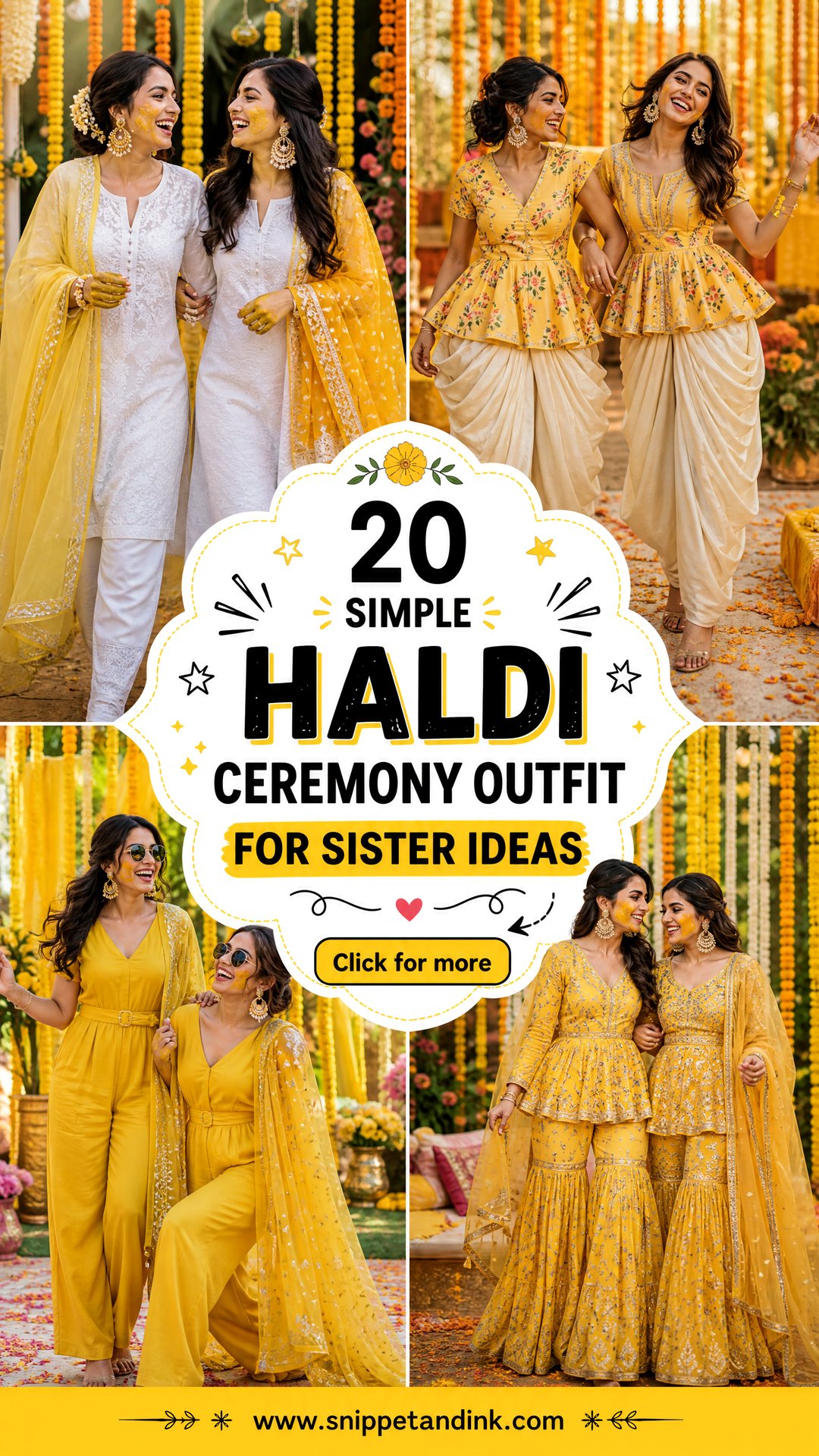
Coordinating With the Bride’s Haldi Colour Without Copying It
Ask your sister what she’s wearing before you buy anything. That one conversation prevents the most common Haldi photo problem I see: two women in the same shade of yellow, side by side, so the bride disappears into her sibling.
- If she’s in bright yellow, go a step away: mustard, marigold, peach, green or a floral with yellow in it.
- If she’s in white or pastel, a richer yellow on you frames her nicely, as long as your embellishment stays lighter than hers.
- If the family has a colour theme for the morning, match the theme and change the texture instead, such as cotton print against her gota or chikankari.
- Keep your silhouette simpler than hers. A sharara or suit next to her lehenga reads right; two equally full lehengas compete.
Then think about your jobs for the morning. If you’re applying paste, handing out flowers and wrangling children, I’d choose separates with pockets or a crossbody, short sleeves and flat shoes over anything that needs both hands to hold up.
1. Yellow Cotton Kurta Palazzo Haldi Outfit
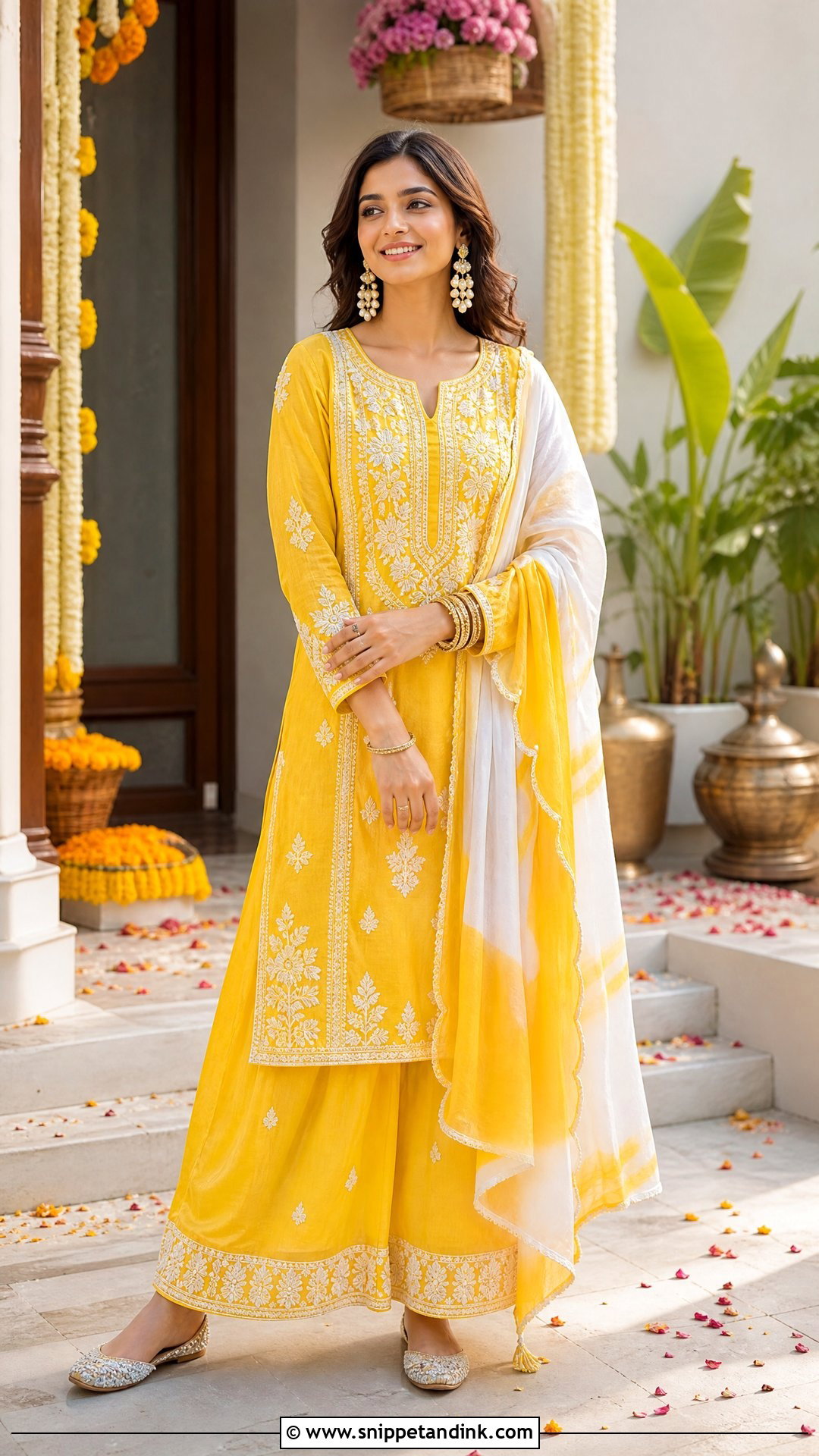
Cotton kurta and palazzos is the outfit I’d hand a sister for a relaxed home Haldi, because cotton breathes in a warm room and survives a hot-water-free wash afterwards. Go straight or slightly flared, with white embroidery, block printing or a narrow gota border. Wide palazzos let you sit on the floor next to the bride without tugging at anything. Pin a light white-and-yellow dupatta at one shoulder with a small safety pin hidden under the fold. Embroidered flat juttis, pearl drops and slim gold bangles finish it, with a low ponytail or loose braid. It’s bright, traditional and easy to manage around turmeric, flowers and a crowded floor.
2. Mustard Sharara Set Haldi Outfit
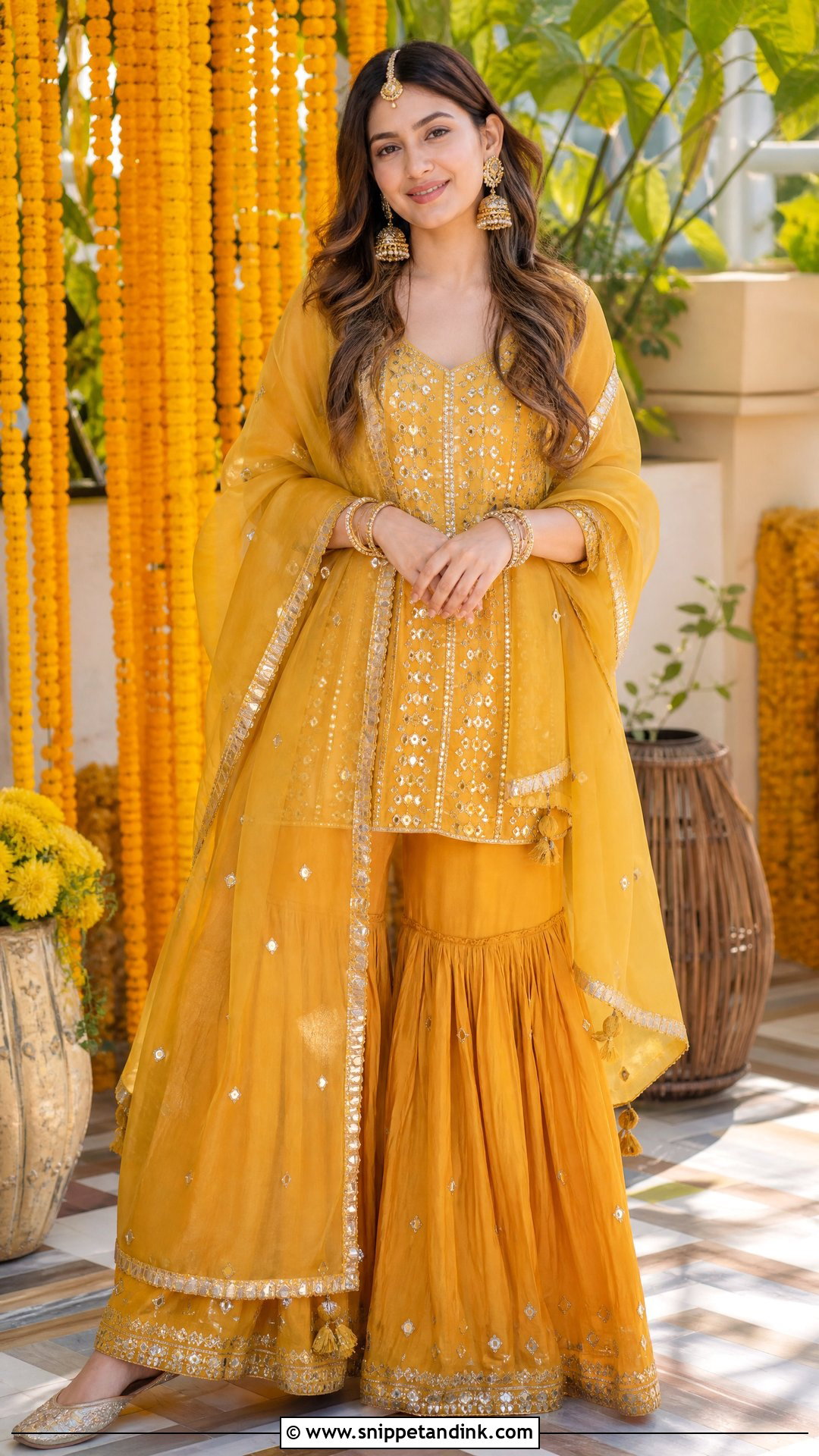
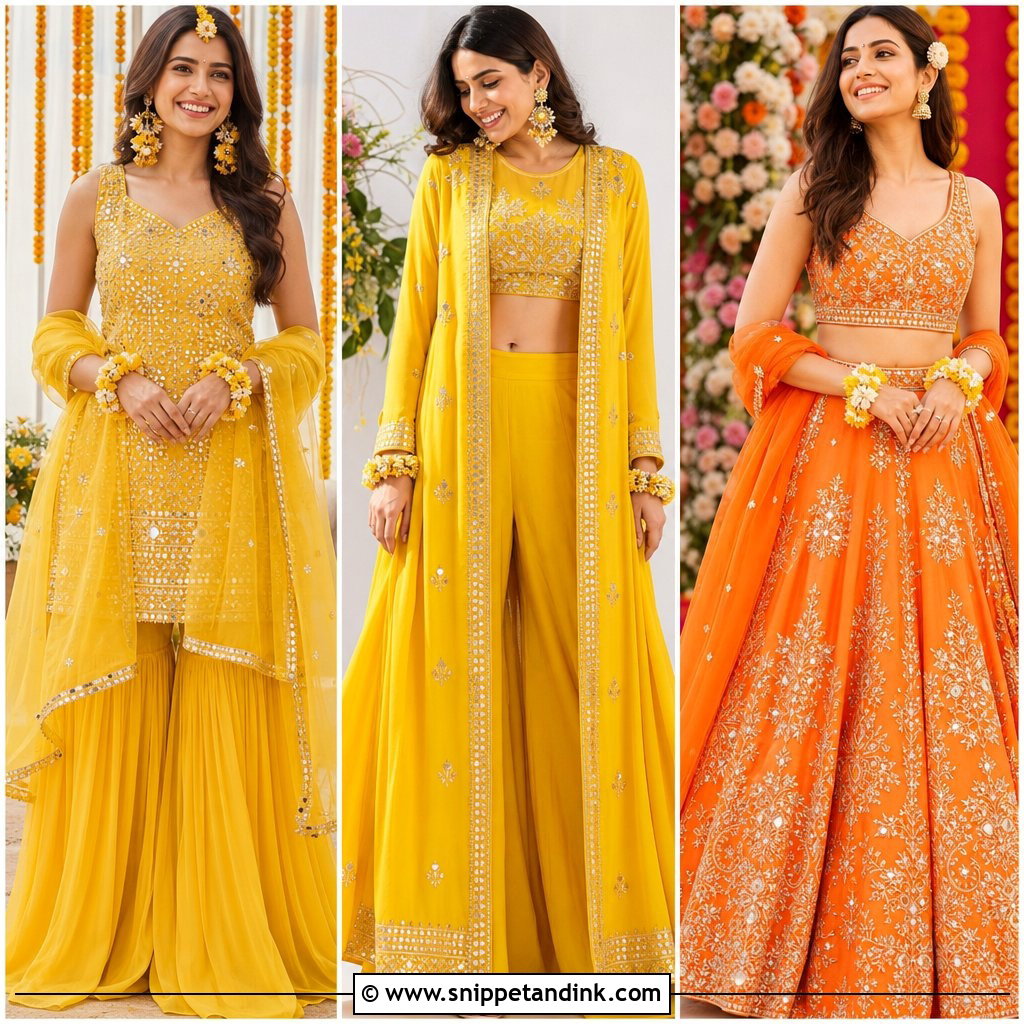
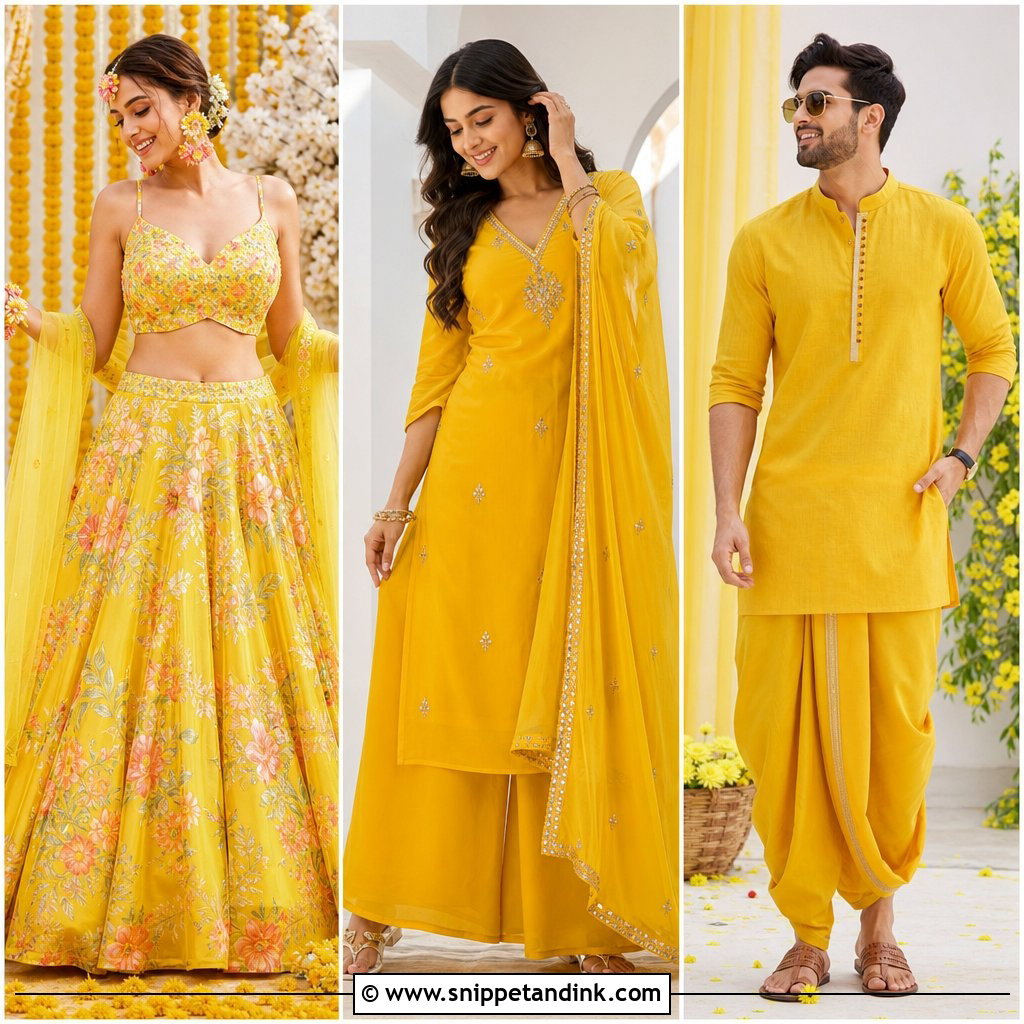
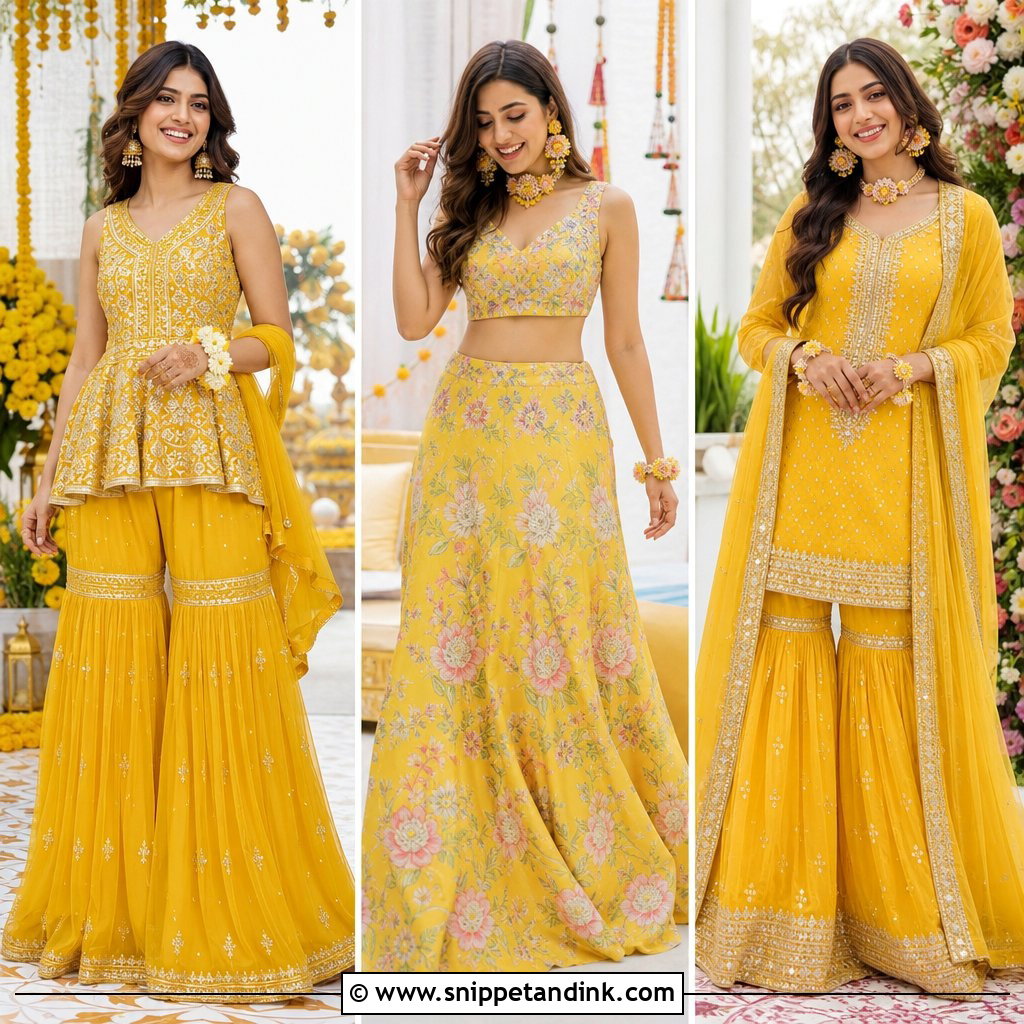
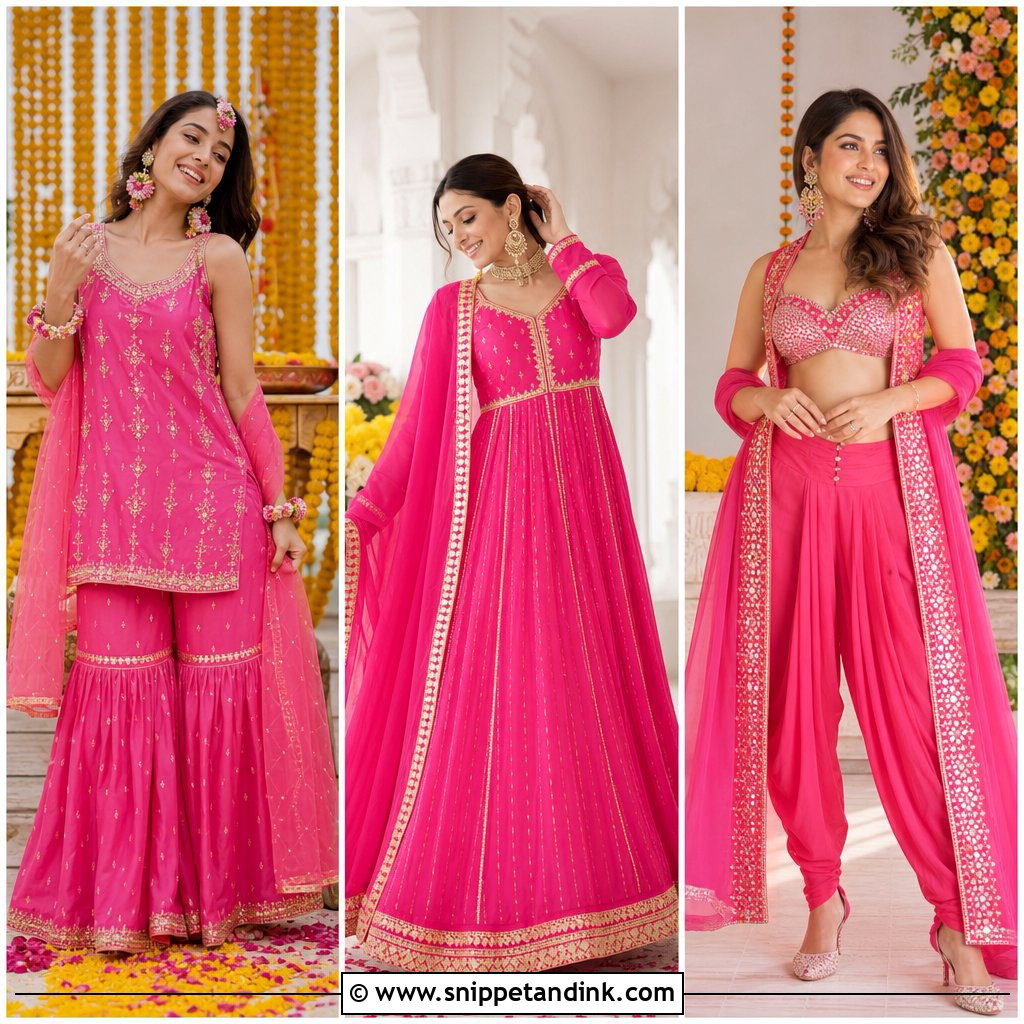
Deep mustard is often kinder than lemon yellow, both on deeper skin tones and on camera, where lemon can wash out in strong morning light. Wear a short embroidered kurti with flowing sharara pants and a light organza dupatta. Small mirror accents, threadwork or a touch of gota are plenty. The sharara flare moves when you dance but doesn’t get in the way while you sit for the ritual. Antique gold jhumkas, a fine maang tikka and mustard or metallic juttis complete it, with defined eyes and a soft peach lip. Tuck tiny yellow flowers into a half-up style. It’s a complete Haldi outfit that feels special for the bride’s sister while staying practical for a busy morning.
3. White Kurta With Yellow Dupatta Haldi Outfit
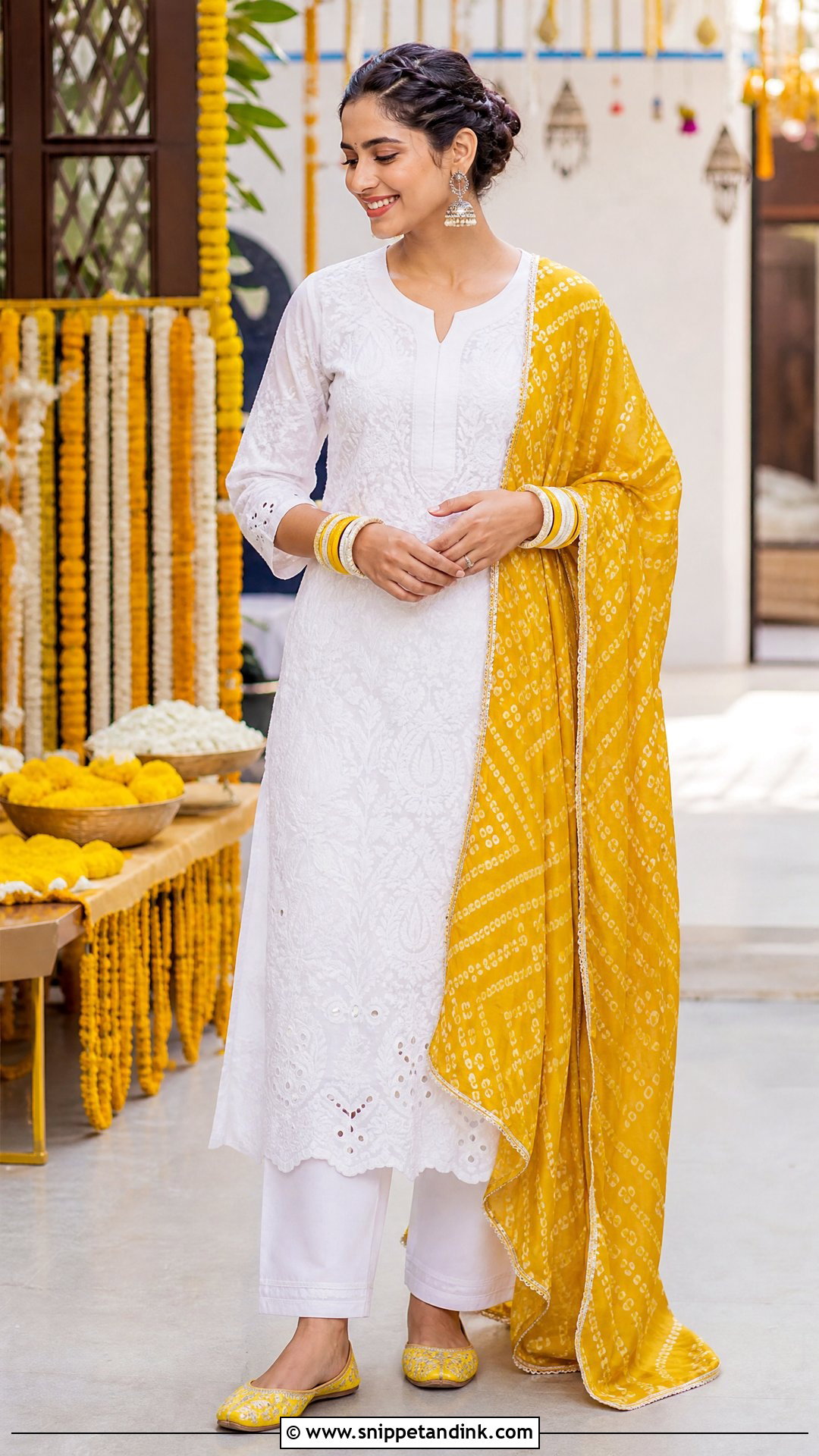
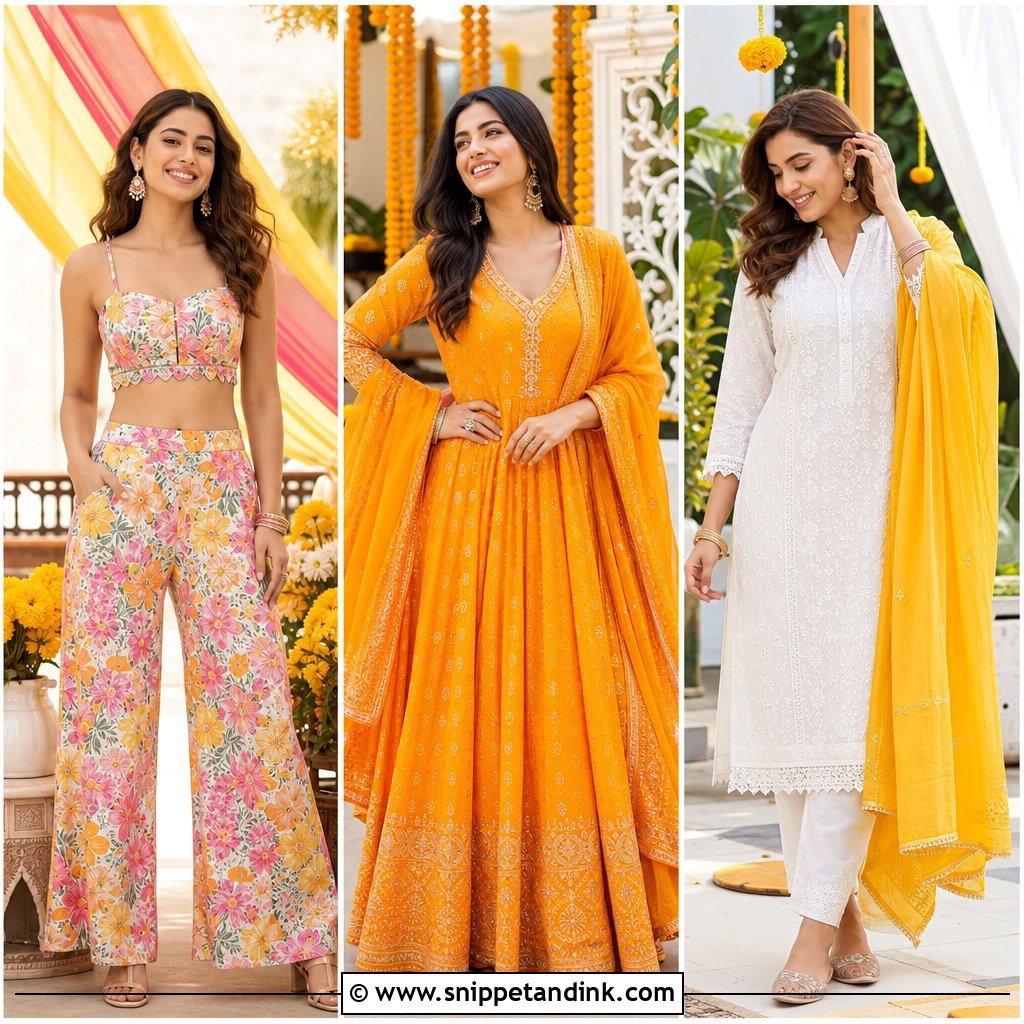
White and yellow look crisp in daylight, but white is the colour turmeric loves most. My honest advice: only wear this if the set is washable cotton or inexpensive chikankari you won’t mourn. Pair a white kurta and straight pants with a yellow bandhani, phulkari or block-printed dupatta for colour. Add yellow juttis, oxidized silver earrings and a stack of mixed white and yellow bangles, and tie your hair into a braided bun or ponytail so it stays out of the paste. It works especially well next to a bride in an elaborate yellow lehenga or florals, because the plain white sets her off rather than competing.
4. Floral Lehenga Crop Top Haldi Outfit
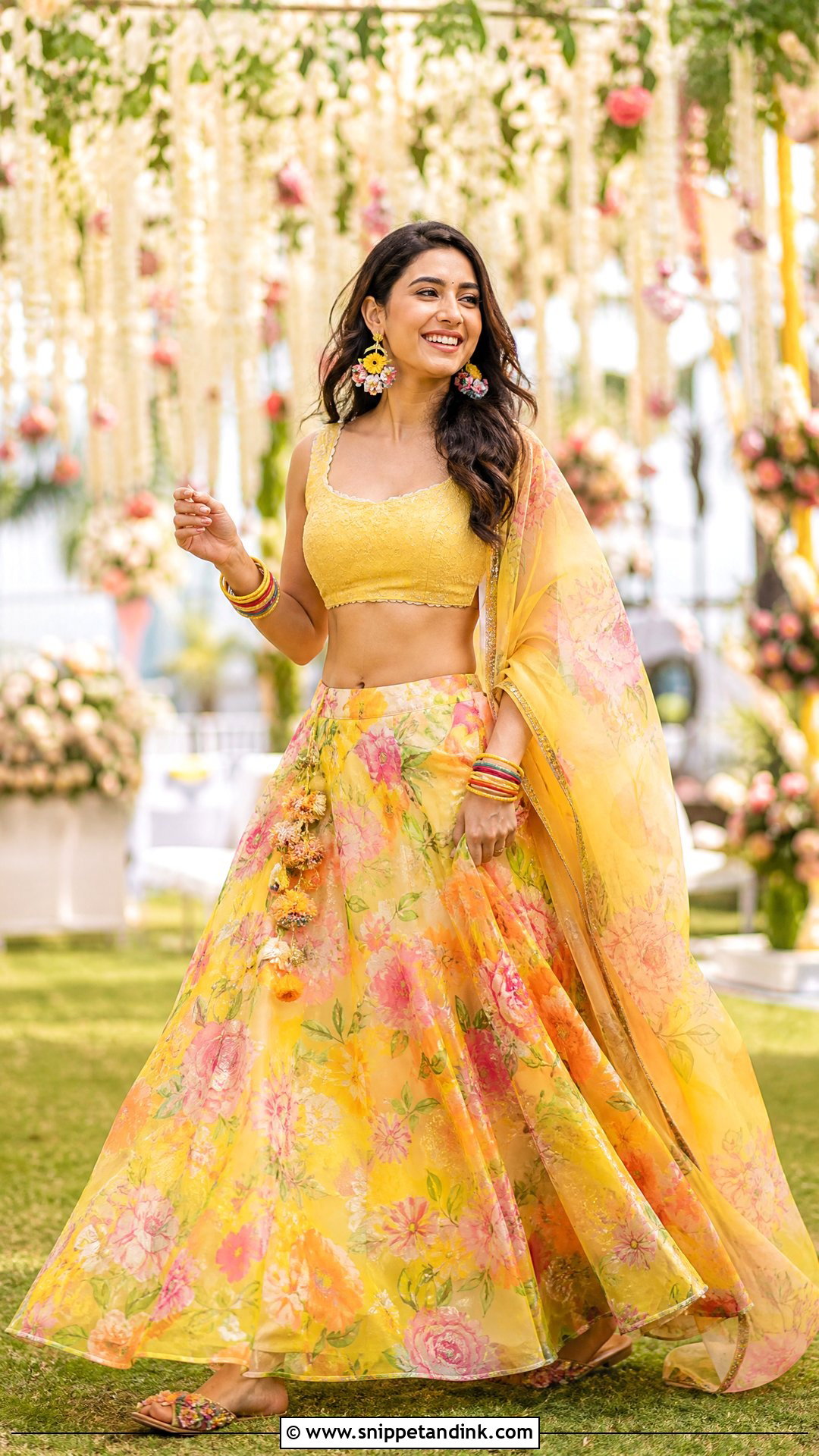
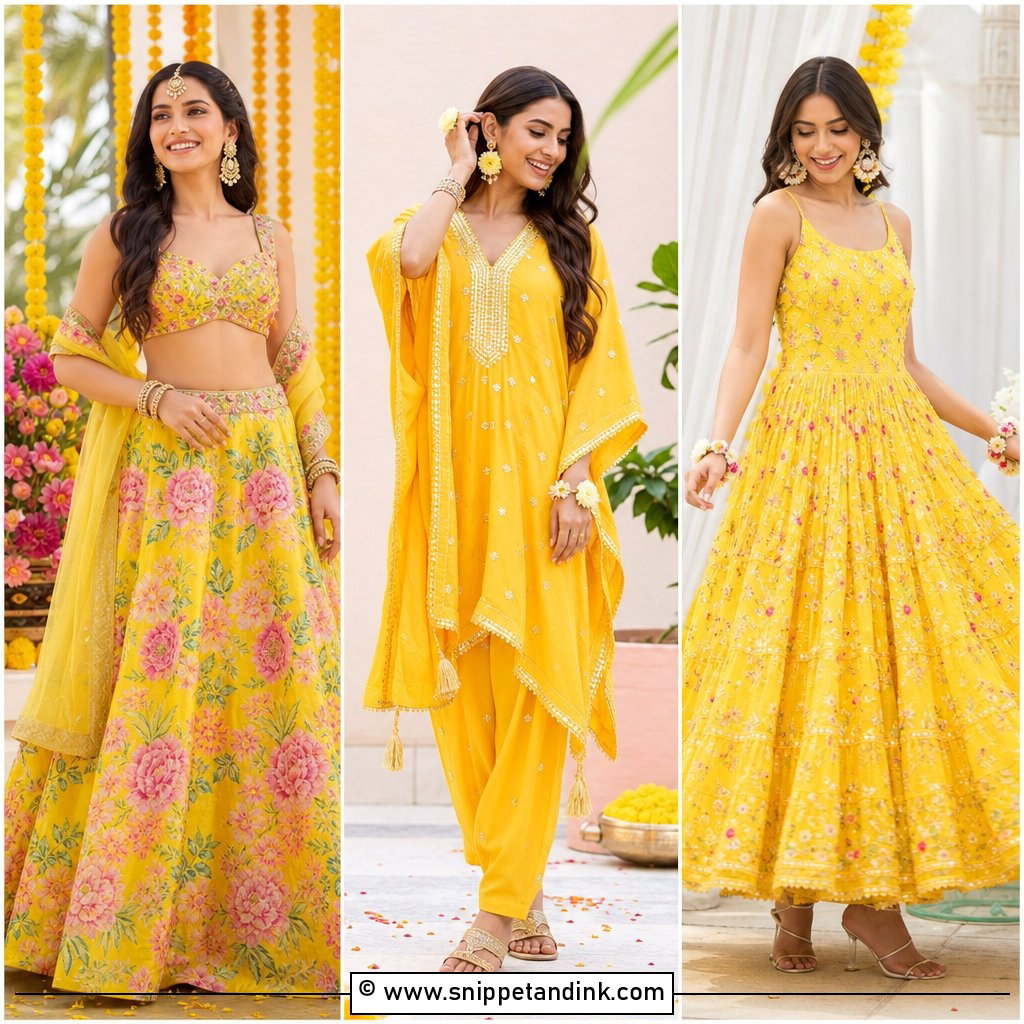
Printed florals in yellow, pink, green and orange suit a garden or terrace Haldi, where they blend with the marigolds instead of fighting them. Pair a light printed lehenga with a fitted solid crop top, and drape a net or organza dupatta over one shoulder or skip it for a casual event. Keep the flare moderate; a huge can-can skirt is a nuisance when you’re kneeling beside the bride. Floral earrings, slim bangles and wedges or embroidered flats are enough. Wedges beat stilettos on lawns because the heel won’t sink. Leave out heavy sequins, which look like evening wear in daylight. Loose waves or a half-up braid finish it.
5. Yellow Chikankari Anarkali Haldi Outfit
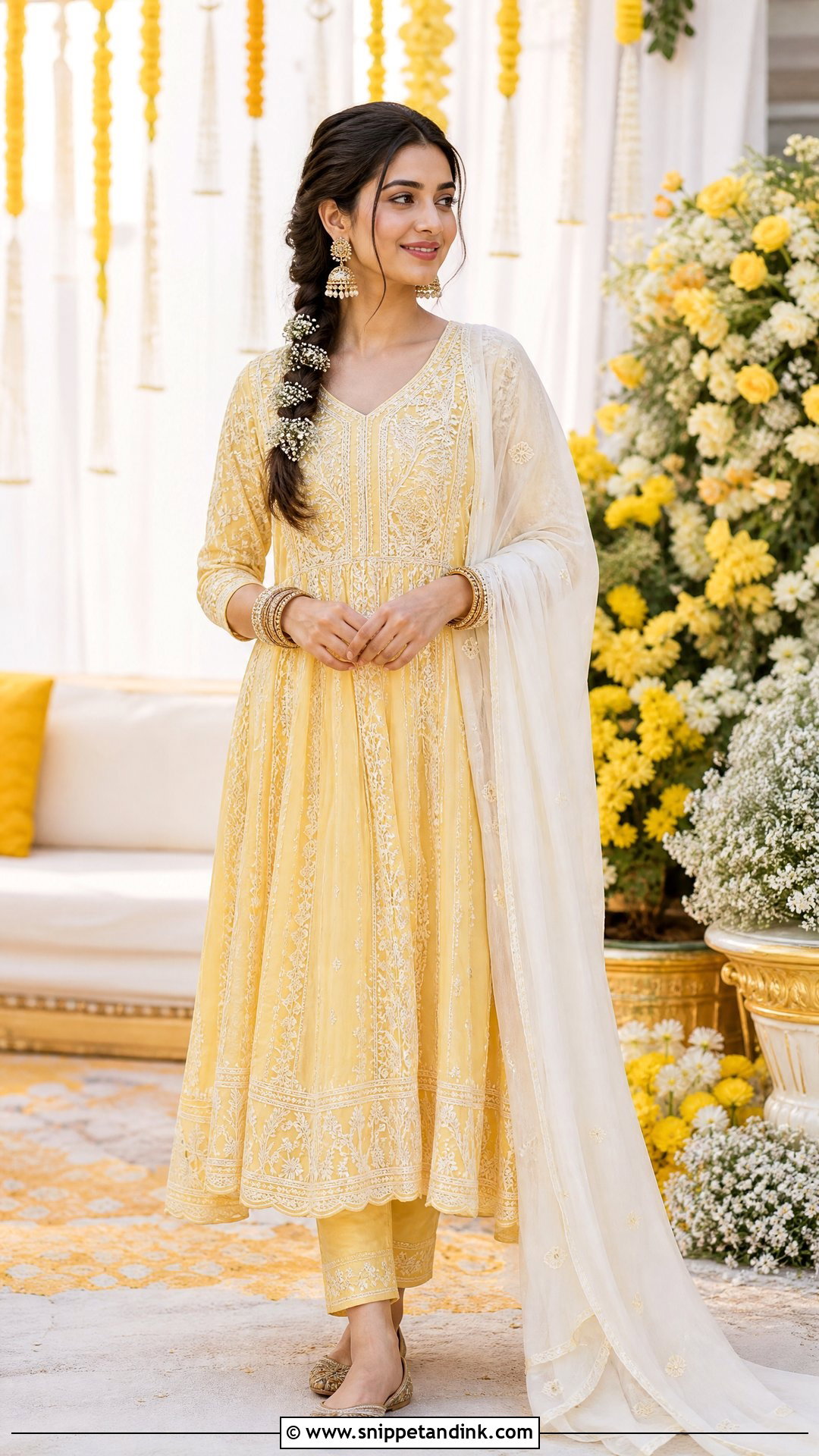
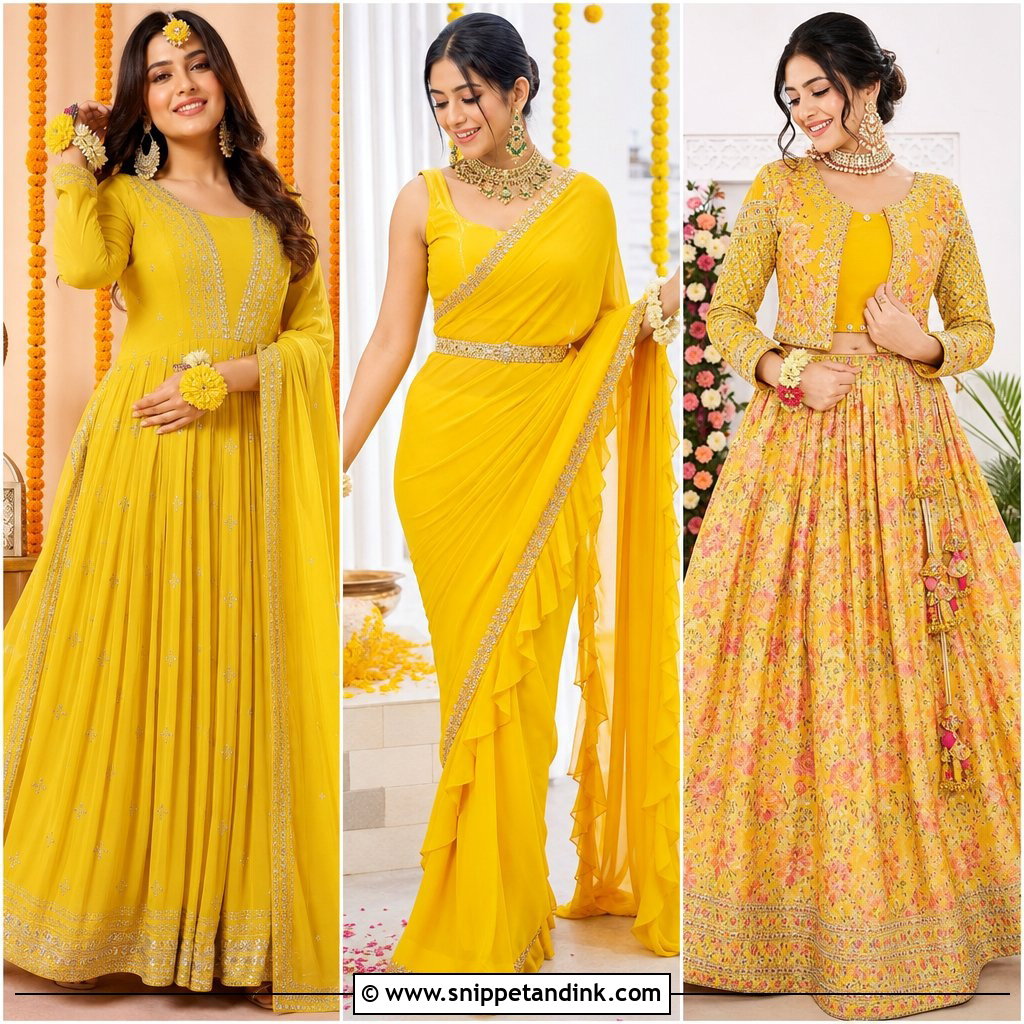
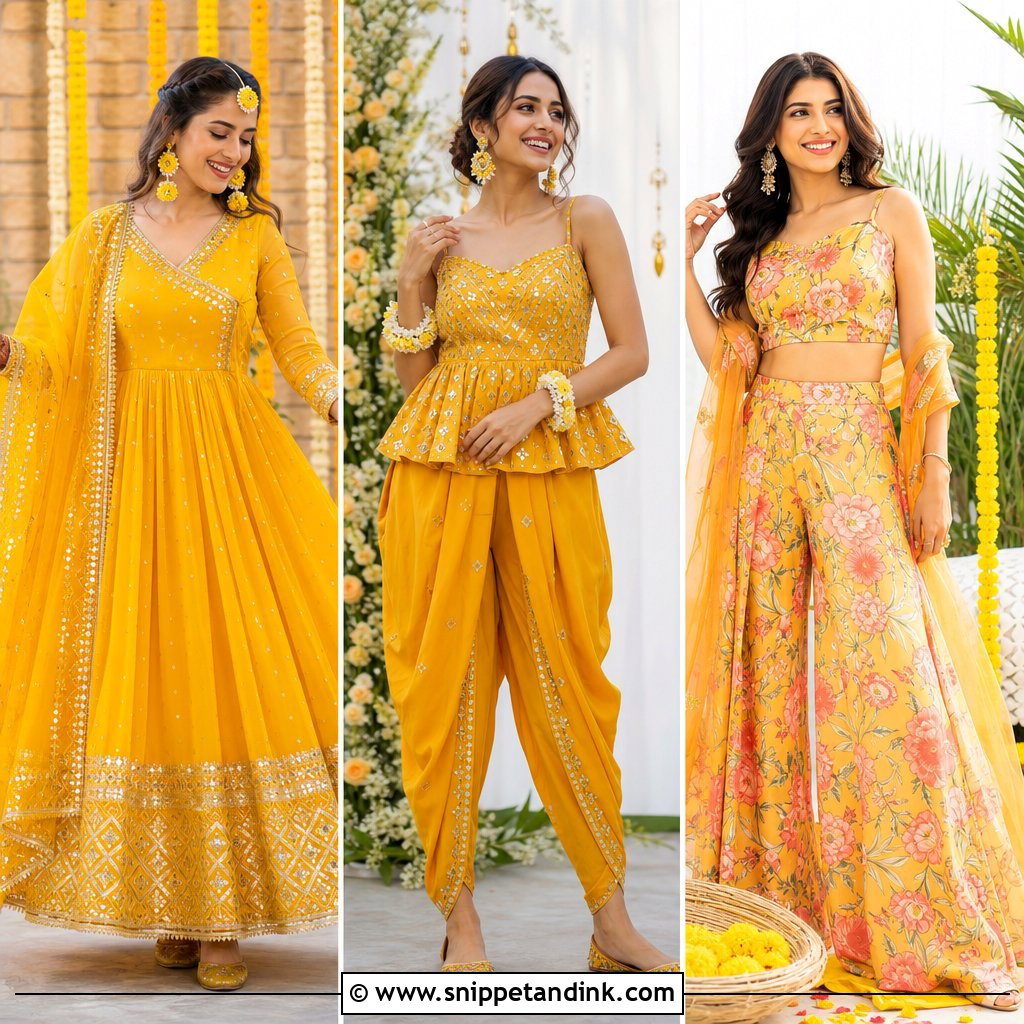
Chikankari gives texture without any shine, so it reads festive but never bridal. Choose a breathable cotton or georgette Anarkali with a lining, and make sure the hem clears the floor; a long Anarkali that drags will pick up yellow paste within minutes. Fitted pants and a white or matching yellow dupatta, plus tonal embroidery and a narrow lace or gota edge, give just enough shine. Pearl jhumkas, a small bindi, gold bangles and neutral juttis finish it, with a loose braid and a few flowers. The fitted bodice and flared skirt give soft waist definition, and the outfit carries you from the ritual to lunch and dancing with no changes.
6. Yellow Bandhani Suit Haldi Outfit
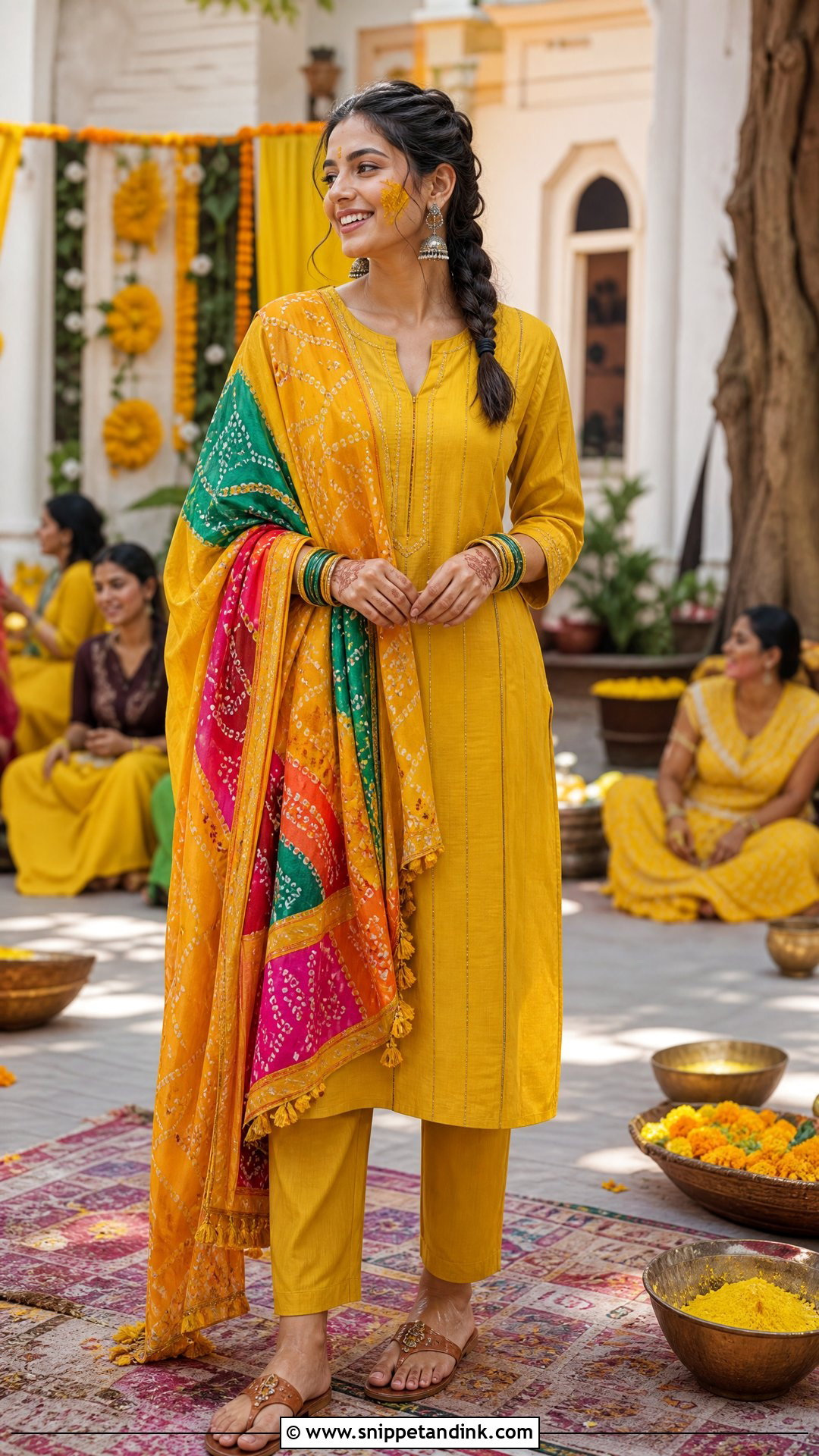
A yellow bandhani suit brings strong pattern and a craft tradition with it. Either wear a plain mustard or marigold kurta with a multicoloured bandhani dupatta, or put the print on the kurta and keep the bottoms solid. Never both, which turns into noise in photos. Keep the cut straight. Oxidized jhumkas, coloured glass bangles and flat leather kolhapuris suit it, with a braided ponytail or low bun. A slim fabric belt over the dupatta holds it in place, as long as it doesn’t restrict you. One warning I give every client: new bandhani can bleed, so don’t let a damp dupatta rest on a white blouse.
7. Yellow Saree With Sleeveless Blouse Haldi Outfit
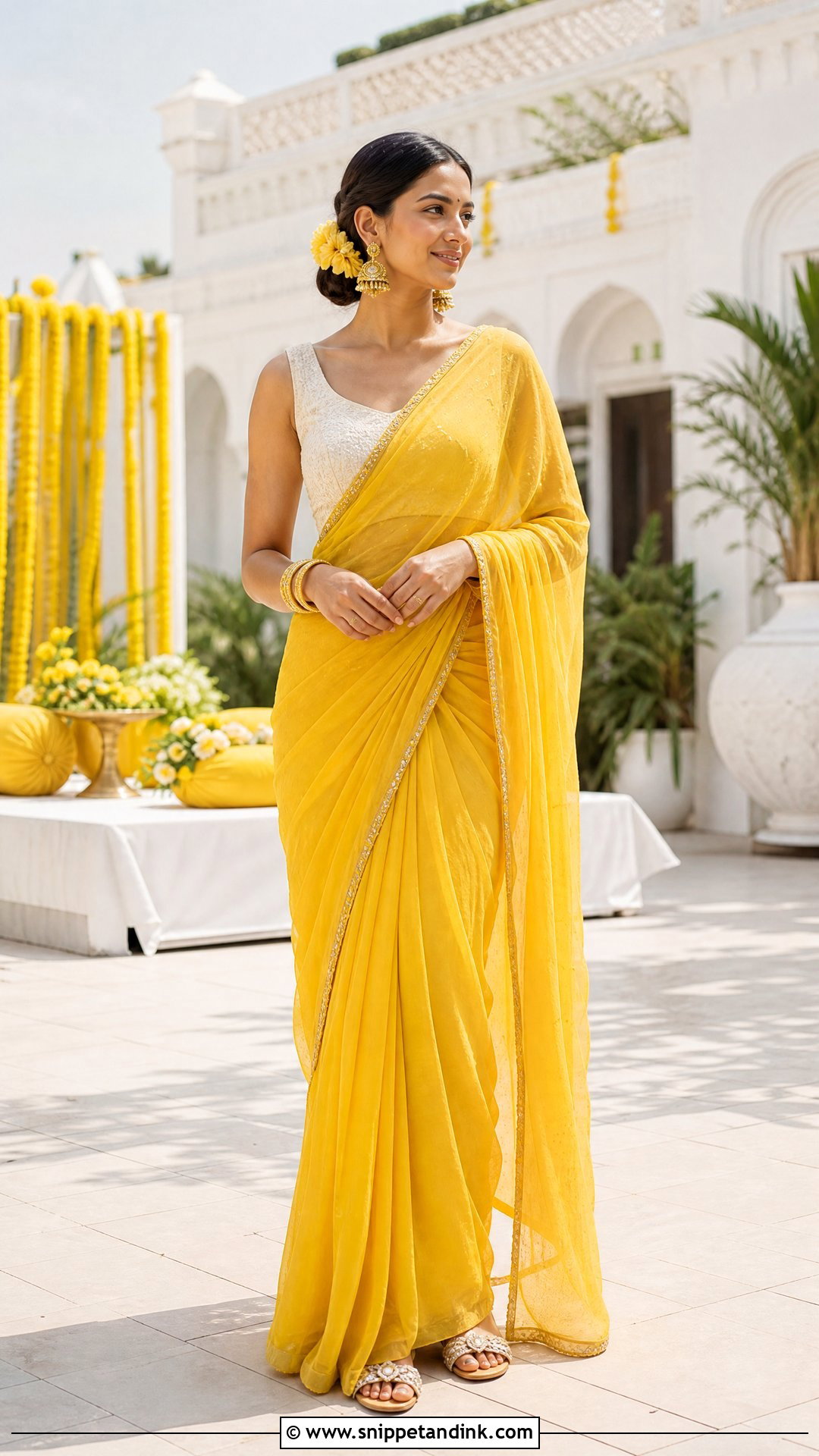
A lightweight yellow saree can look graceful at the Haldi as long as the drape is secure, because you’ll be bending and reaching all morning. Cotton, chiffon, georgette or soft handloom all drape well. Choose a sleeveless or short-sleeved blouse in yellow, ivory, pink or green; sleeveless also keeps the cuffs out of the paste. I pin at the shoulder, at the pleats and once more at the waist. Keep the pallu short and the border light, since a long pallu trails straight into the turmeric bowl. Gold jhumkas, a few bangles, a small bindi and block heels or embellished flats finish it, with a sleek low bun and yellow flowers.
8. Pre-Draped Saree Haldi Outfit
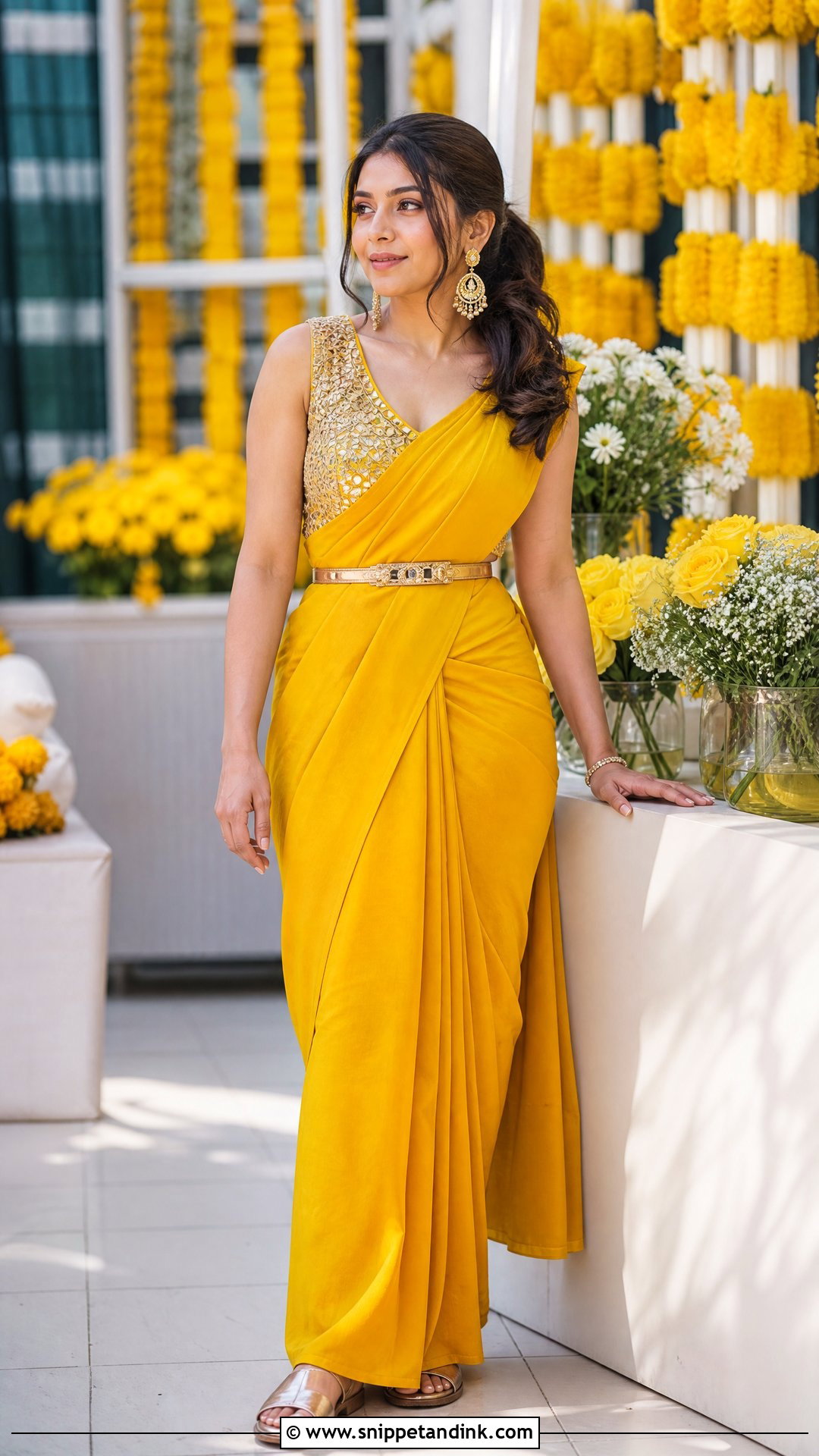
Pre-draped sarees solve the biggest saree problem at a Haldi: re-tucking pleats every time you stand up. Look for stitched pleats and a pallu that’s attached securely at the shoulder. A fitted blouse with modest mirror work, ruffled sleeves or light floral embroidery is enough, and a thin waist belt keeps the drape where it belongs. Statement earrings, a simple bracelet and flat metallic sandals finish it, with soft side-swept waves or a low ponytail. Keep embellishment light so the bride stays the focus. If you’re helping with arrangements as well as dancing, this is the saree I’d choose.
9. Peplum Kurti With Dhoti Pants Haldi Outfit
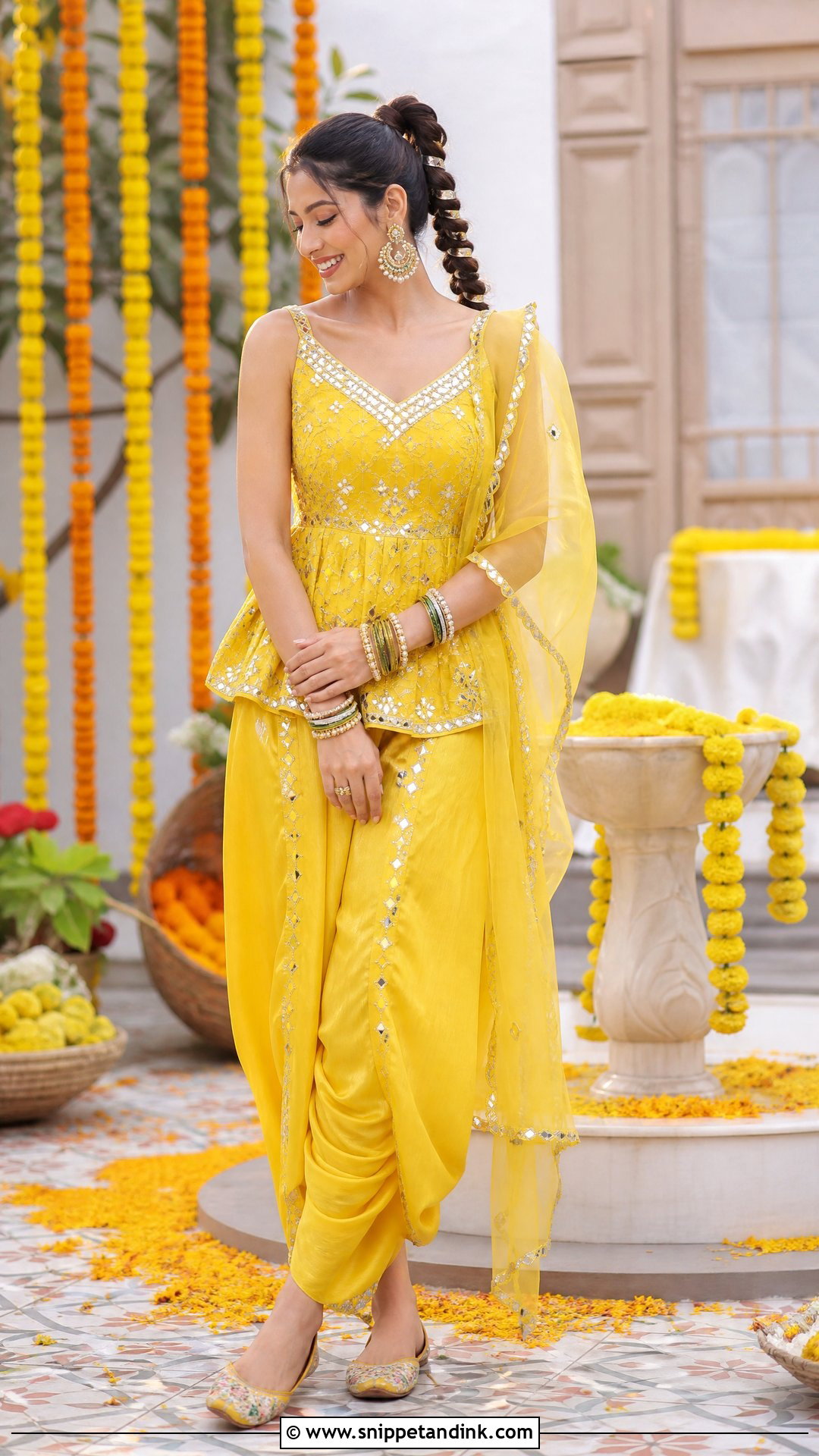
Peplum kurtis and dhoti pants suit a younger sister who wants energy without a full lehenga. Mustard, marigold or lime-yellow on top, with light mirror work at the neckline, and solid dhoti pants in a matching or contrasting colour below. The fitted waist and relaxed bottoms balance each other, and dhoti pants let you squat, kneel and dance freely. Drape a short organza dupatta over one shoulder for a more traditional touch. Chandbalis, stacked bangles and embroidered juttis complete it. A high ponytail or braided bun shows off the neckline and keeps hair away from wet hands. The dhoti drape uses a lot of fabric at the hip, so try it seated before you buy.
10. Crop Top Palazzo Jacket Haldi Outfit
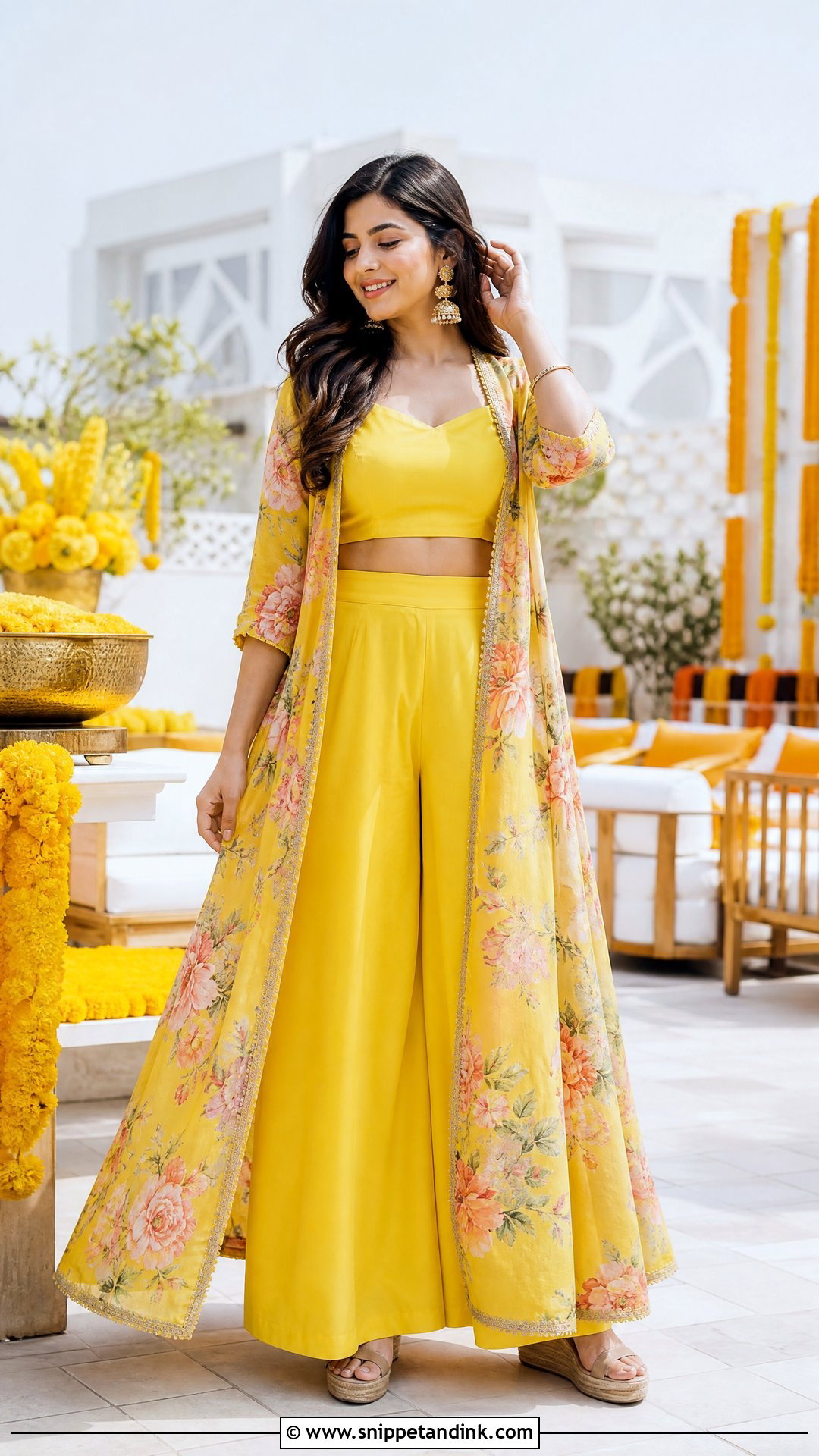
A crop top, palazzos and long jacket make a coordinated Indo-Western look that needs no dupatta at all. Start with a plain yellow crop top and high-waisted palazzos, then layer a floral or lightly embroidered jacket that falls between knee and ankle. The jacket gives coverage and a longer line, and the wide pants keep you comfortable. Medium hoops or jhumkas, a slim bracelet and neutral wedges finish it, with loose waves or a sleek ponytail. The catch with jackets is heat, so I look for an unlined cotton or georgette one if the Haldi is outdoors in summer. It suits hotel, resort and rooftop ceremonies.
11. Printed Kaftan Haldi Outfit
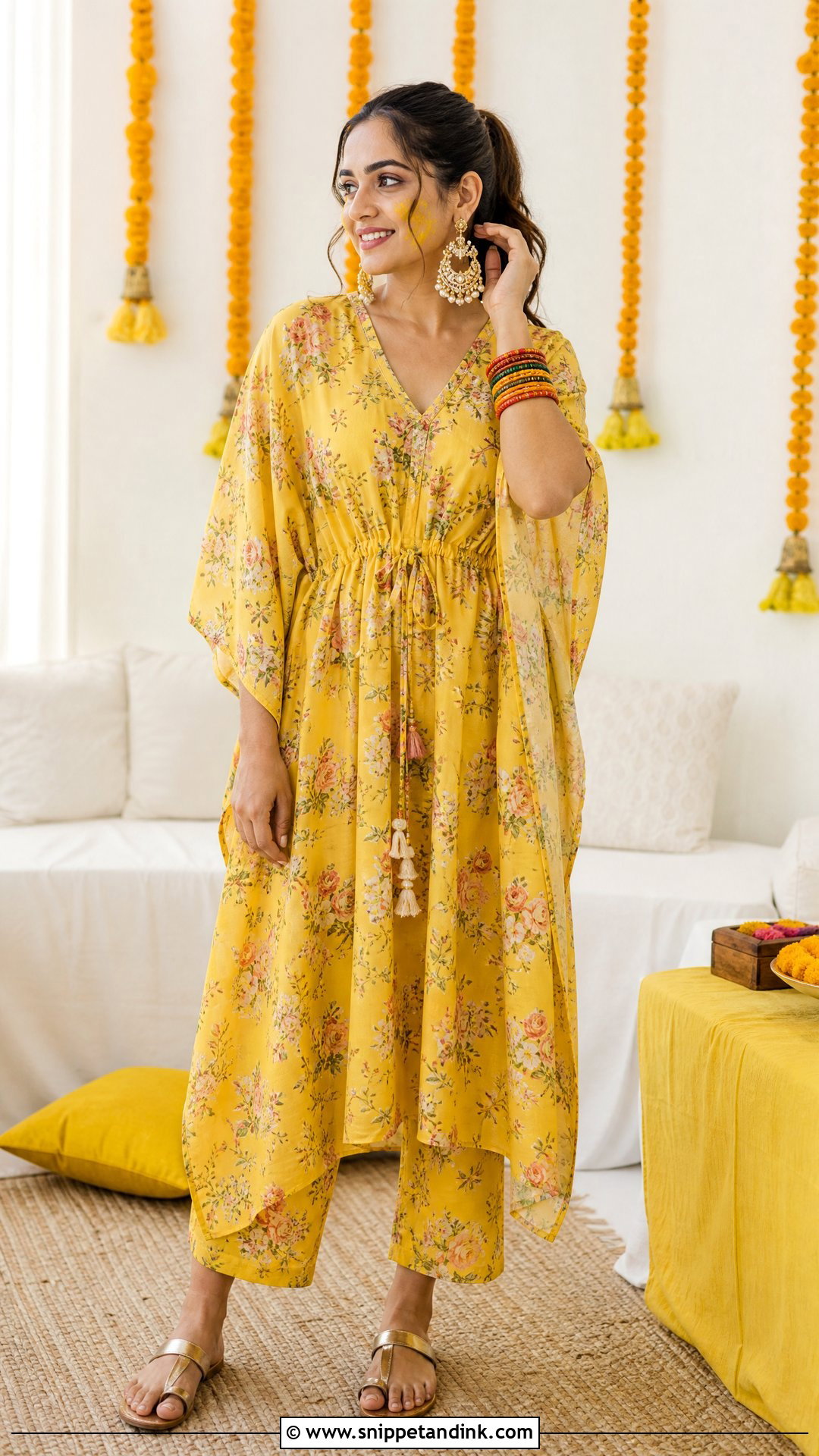
If the Haldi is small and you’re the one running it, a printed kaftan keeps you comfortable while you move between guests and supplies. Look for yellow with floral, paisley or block-printed accents in pink, green or orange, and an adjustable waist or drawstring so it doesn’t look like loungewear. A shorter kaftan sits well over cropped straight pants; a full-length one wears as a flowing dress. Big earrings, coloured bangles and metallic flats complete it, with a neat ponytail or soft bun. Avoid very wide sleeves, which drag across turmeric trays and diya plates. This is the least fussy look on the list.
12. Straight Suit With Phulkari Dupatta Haldi Outfit
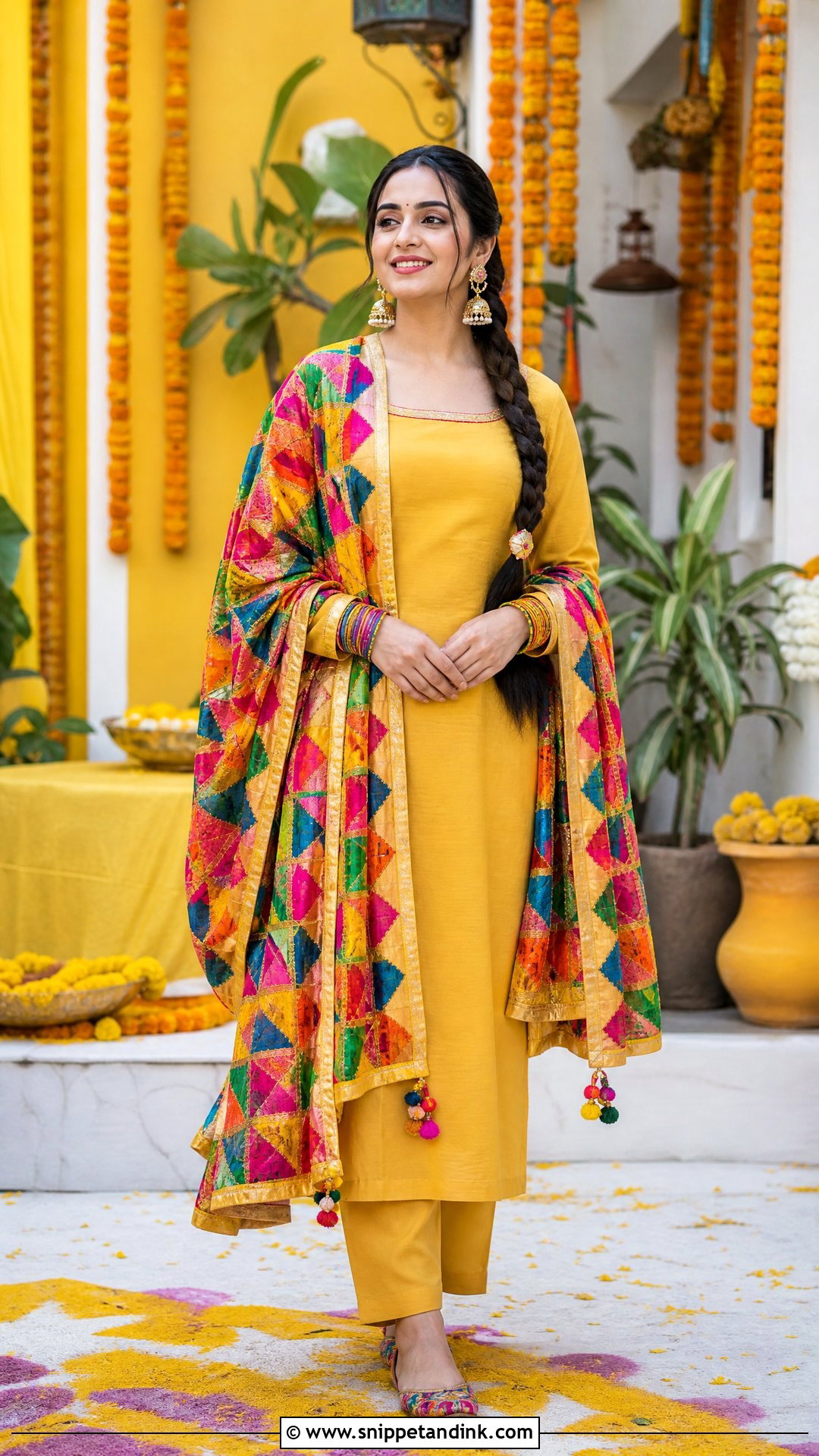
A plain straight suit turns festive the moment you add a phulkari dupatta. Pick a solid yellow, cream, peach or green kurta with straight pants and minimal embroidery, and let the dupatta’s dense threadwork carry the colour. I drape it across both shoulders for photos, then pin it to one side once the ritual starts. Punjabi juttis, traditional jhumkas and matching glass bangles suit it, and a long braid with a coloured paranda adds a regional detail without weight. It fits a Punjabi wedding especially well. Real phulkari is hand-embroidered and should be dry-cleaned, so keep it well away from the paste or swap in a printed version for the ritual itself.
13. Mirror Work Lehenga Haldi Outfit
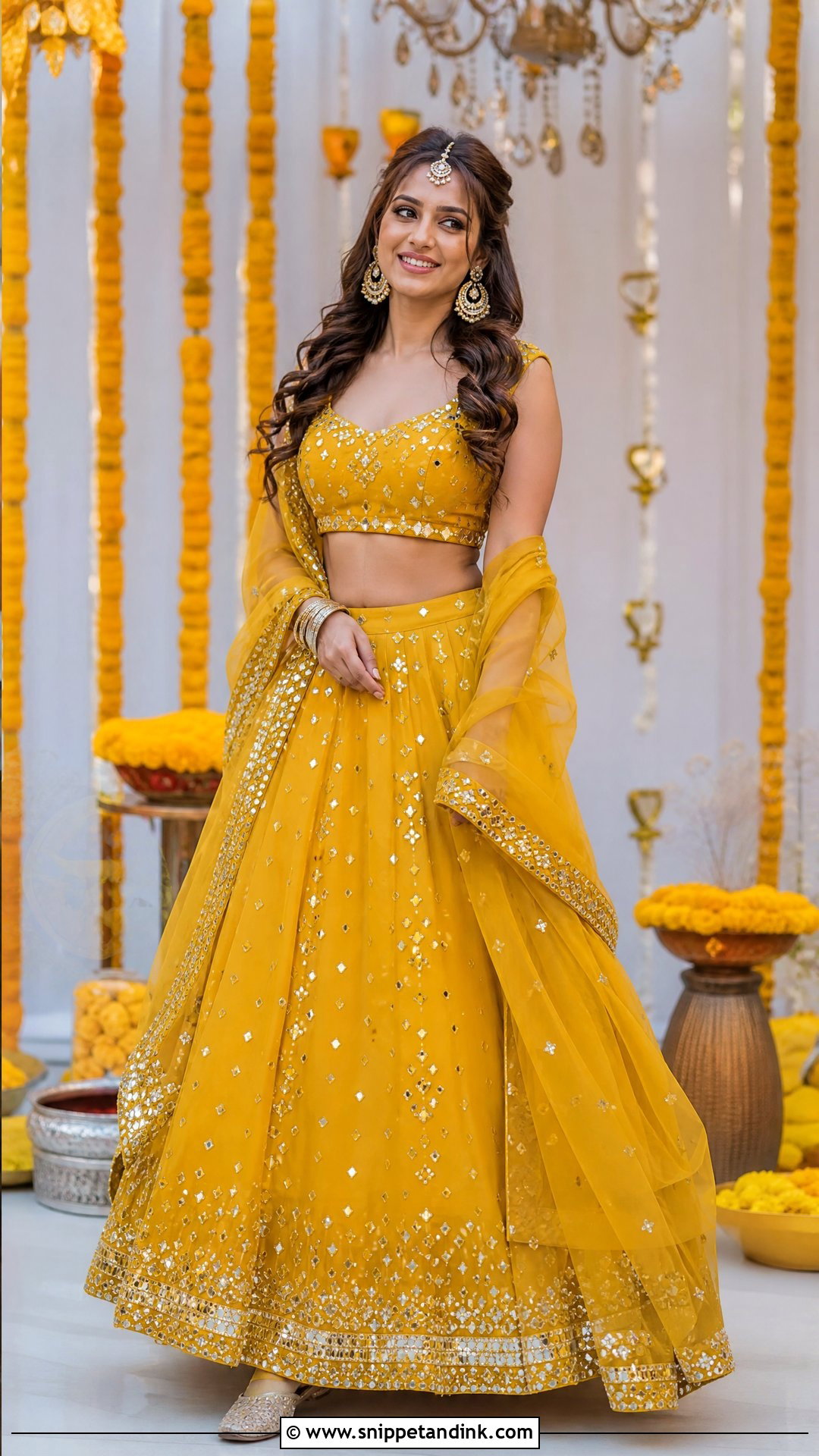
Scattered mirrors give a lehenga sparkle without bridal weight; dense mirror work starts to compete with the bride. Choose a yellow or mustard skirt with light mirror detail, a simple fitted blouse and a chiffon dupatta. Keep the flare manageable, particularly in a home or small venue where you’ll be squeezing between relatives. Small chandbalis, a fine maang tikka, metallic bangles and comfortable juttis are enough, and a half-up style with soft curls keeps it young. Skip the heavy necklace; the mirrors already catch the light. Mirror work also snags fine dupattas, so I pair it with smooth chiffon rather than net. It suits a larger, professionally decorated Haldi with choreographed entrances.
14. Yellow Kurta With Printed Skirt Haldi Outfit
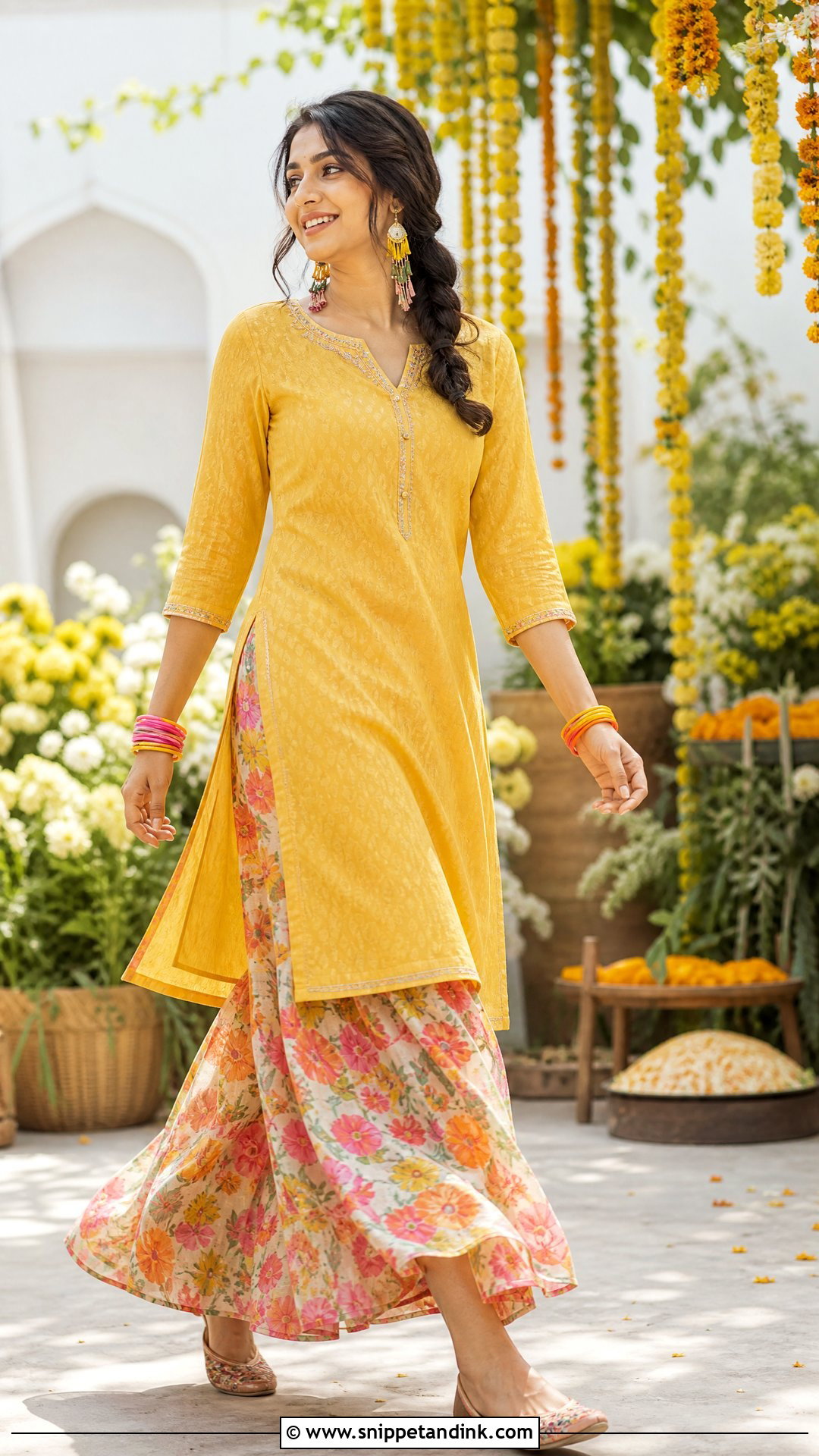
Mixing a short yellow kurta with a printed skirt is the easiest look to assemble from your own wardrobe, which makes it useful on a tight budget. Choose a fitted or straight kurta ending near the hips and a flared floral or bandhani skirt in pink, orange, green and white, keeping yellow central. Add a light dupatta only if the family expects one. Tassel earrings, coloured bangles and embroidered flats complete it, with a side braid or half-up style. Check the hem before the day: a skirt that brushes the floor will soak up paste and water from the ritual.
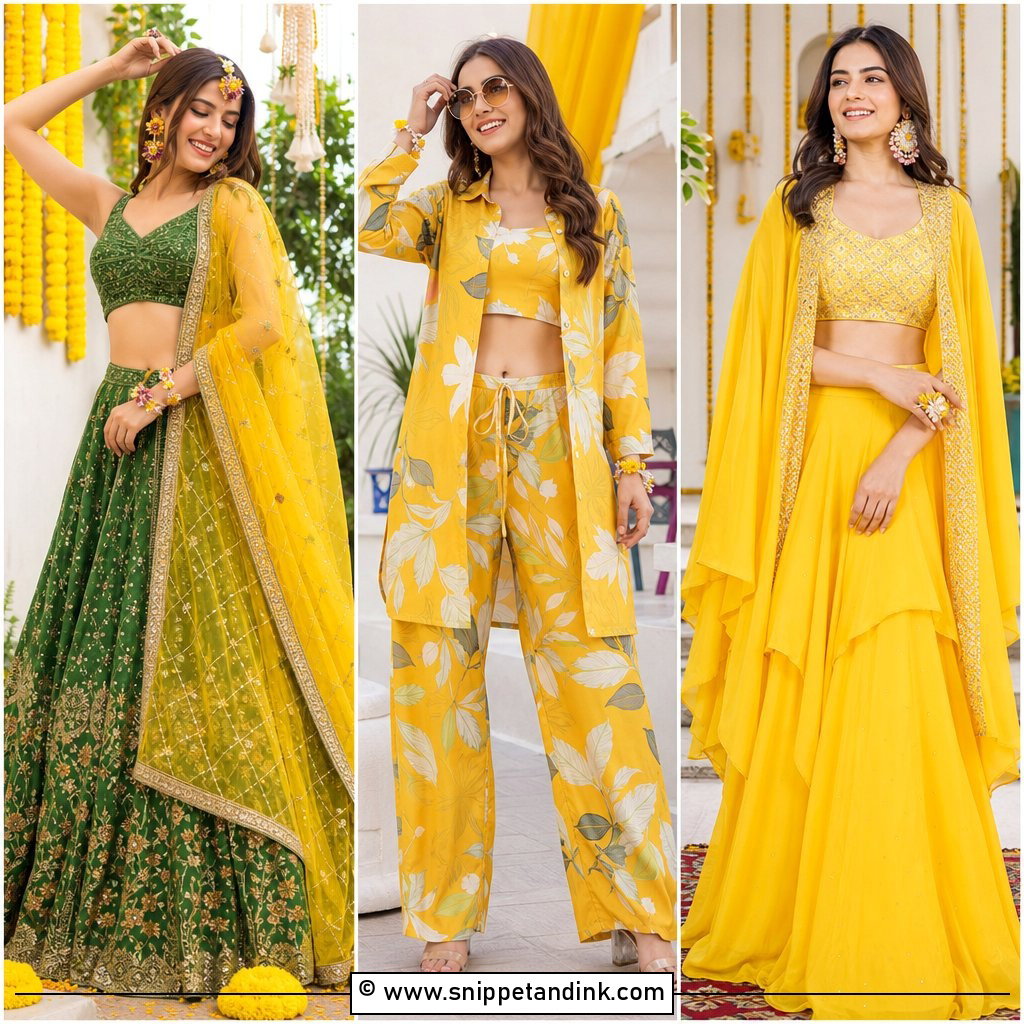


15. Yellow Jumpsuit With Dupatta Haldi Outfit
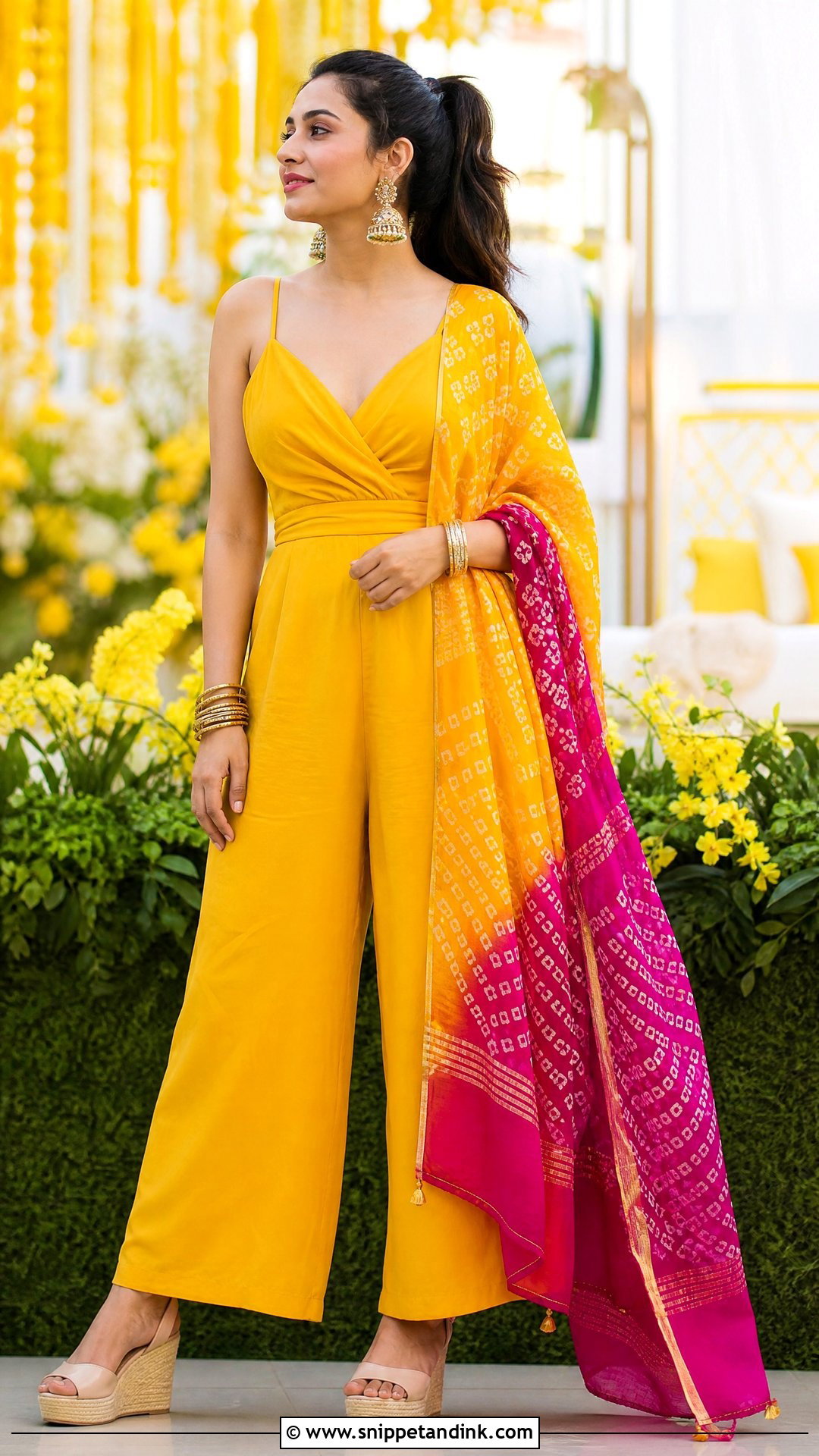
A jumpsuit gives you one piece to manage instead of three, which is a relief on a long morning. Choose a wide-leg yellow jumpsuit with a defined waist, a modest neck and a secure back closure. Then think about the bathroom, because a back zip means finding a helper every time you need the loo; I steer sisters toward side zips or front buttons. A floral, bandhani or organza dupatta pinned on one shoulder keeps it Indian. Statement jhumkas, slim bangles and wedges complete it, with a high ponytail or sleek bun. Keep the hem above the floor if the venue has grass, steps or water features.
16. Peplum Sharara Haldi Outfit
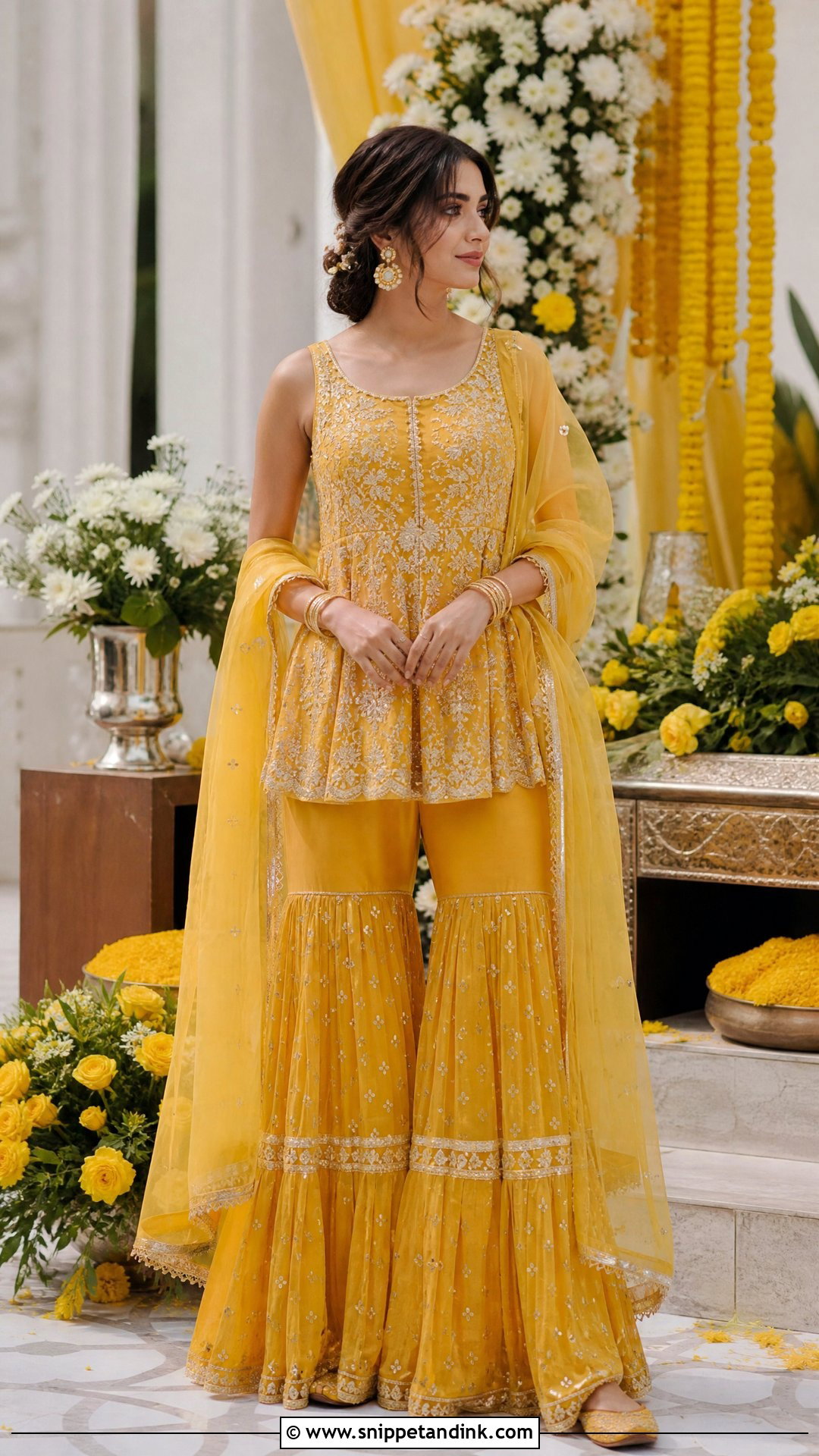
A peplum sharara set combines a defined top with dramatic flowing pants. Pick a yellow peplum with light thread embroidery, gota trim or small mirror accents, and a matching sharara that flares from the knee. Drape a sheer dupatta over one arm for photographs and pin it behind the shoulder during the ritual. Pearl or kundan earrings, a few fine bangles and flat juttis finish it, with a soft bun and loose strands at the face. The peplum marks the waist and the sharara balances the lower half, so it flatters most figures. Sharara hems sweep the floor more than you’d think, so have them taken up to clear your flat juttis.
17. Peach Gharara Haldi Outfit
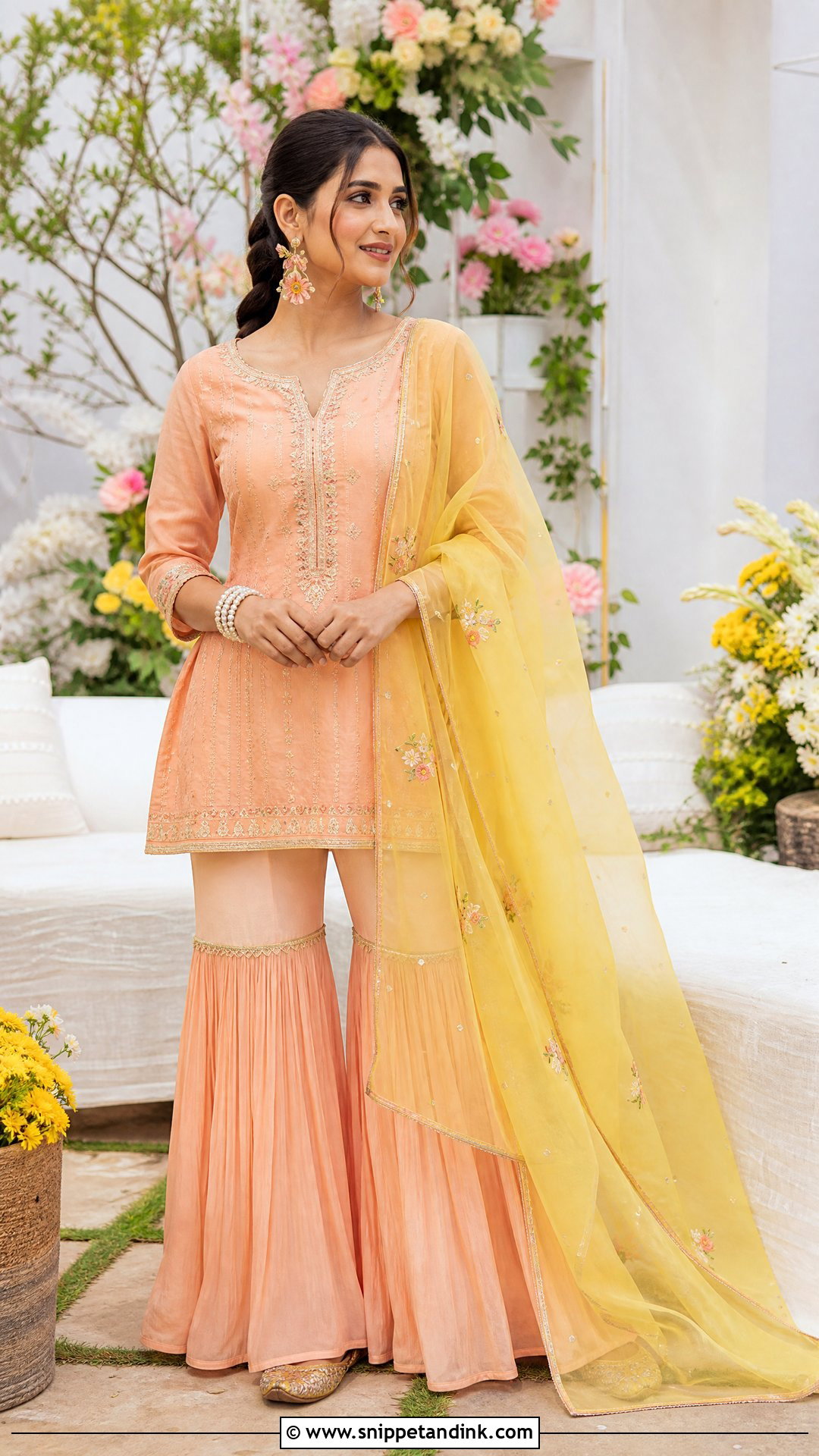
You don’t have to wear head-to-toe yellow. Peach with yellow accents reads soft and cheerful, and in a family where everyone is in yellow, it helps the sister stand apart in group photos without clashing. Wear a short peach kurti with matching gharara pants and a yellow organza dupatta with a fine border. Floral earrings, pearl bangles and gold or nude juttis complete it, with fresh makeup and a low braided ponytail. Keep the fabric light and the embellishment restrained. Peach turns slightly orange once turmeric gets on it, which is one more reason it forgives the ritual better than white. It suits spring and summer ceremonies in gardens, courtyards or bright rooms.
18. Green Kurta With Yellow Dupatta Haldi Outfit
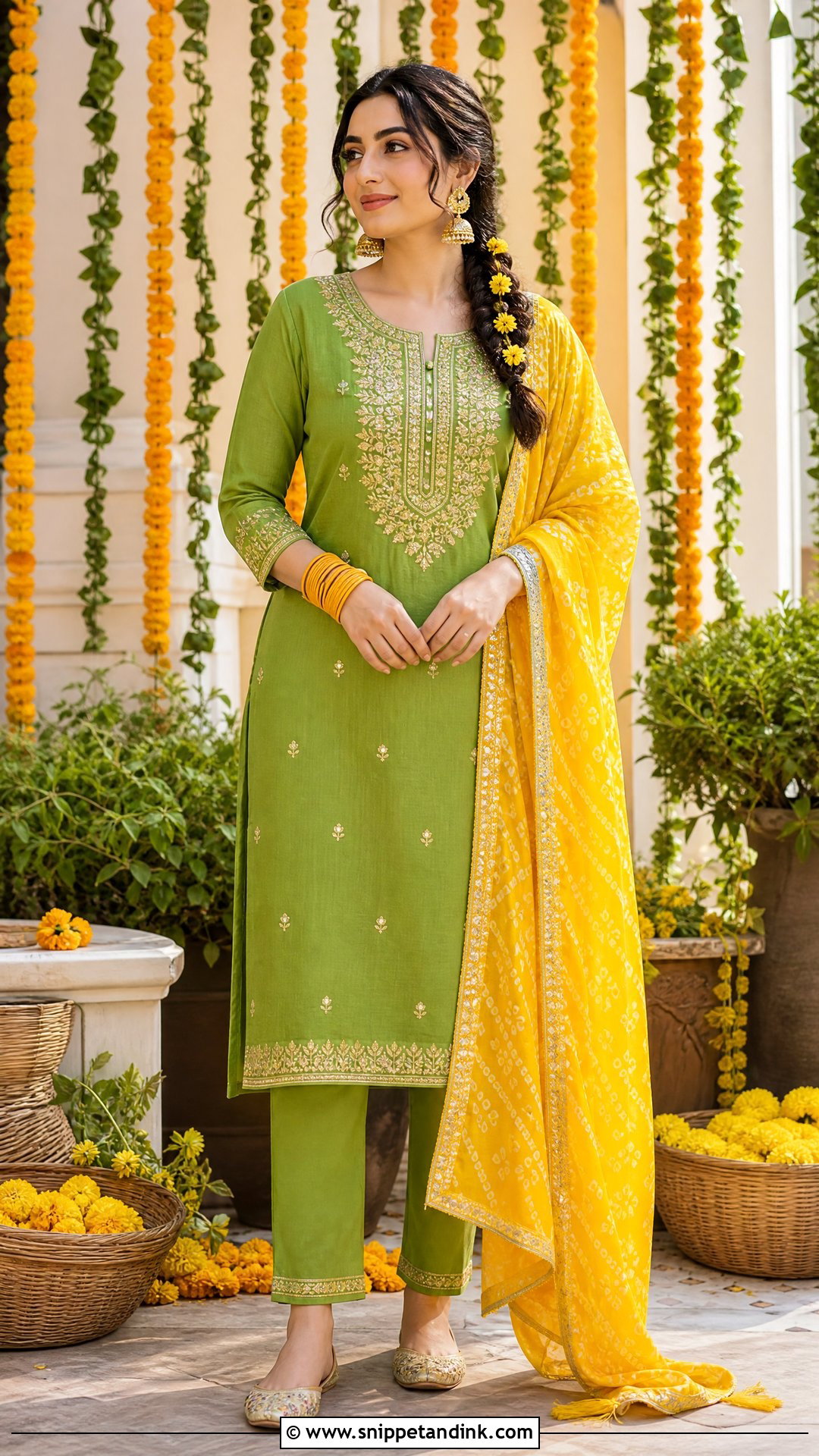
Green and yellow is my go-to when the bride is in yellow and her sister wants to coordinate without matching. Wear a straight mint, lime or leaf-green kurta with matching pants and a bold yellow dupatta, linked by small floral embroidery, gota borders or bandhani. Gold jhumkas, yellow bangles and green embroidered juttis or neutral sandals complete it, with a sleek braid and a few yellow flowers. A lighter green suits a morning ceremony; a deeper leaf shade holds up better in late-afternoon light. The contrast stands out clearly in family photos.
19. Orange Anarkali Haldi Outfit
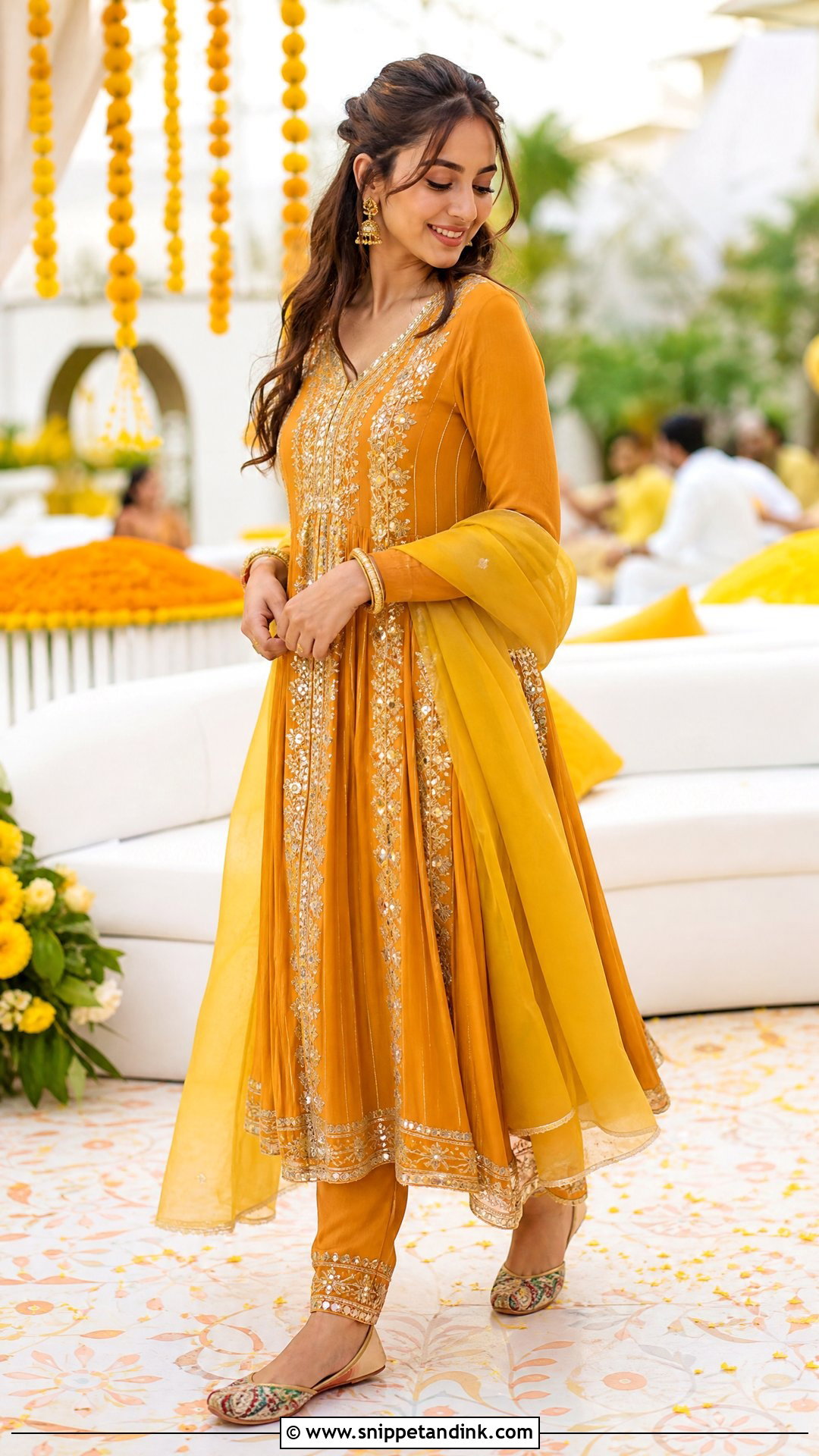
A marigold-orange Anarkali warms up a Haldi and matches the flowers that usually decorate it. Choose a calf or ankle-length design with a comfortable flare and subtle gold detail, worn with fitted pants and a yellow or multicoloured dupatta. Gold jhumkas, slim bangles and embroidered juttis tie it together. Let the neckline decide the hair: a low bun for a high neck, a loose braid or half-up style for a deeper one. Keep the hem short enough to stay clear of wet floors, petals and paste. Orange glows in outdoor daylight and gives you enough movement for dancing while still looking composed.


20. Yellow Co-Ord Set With Cape Haldi Outfit
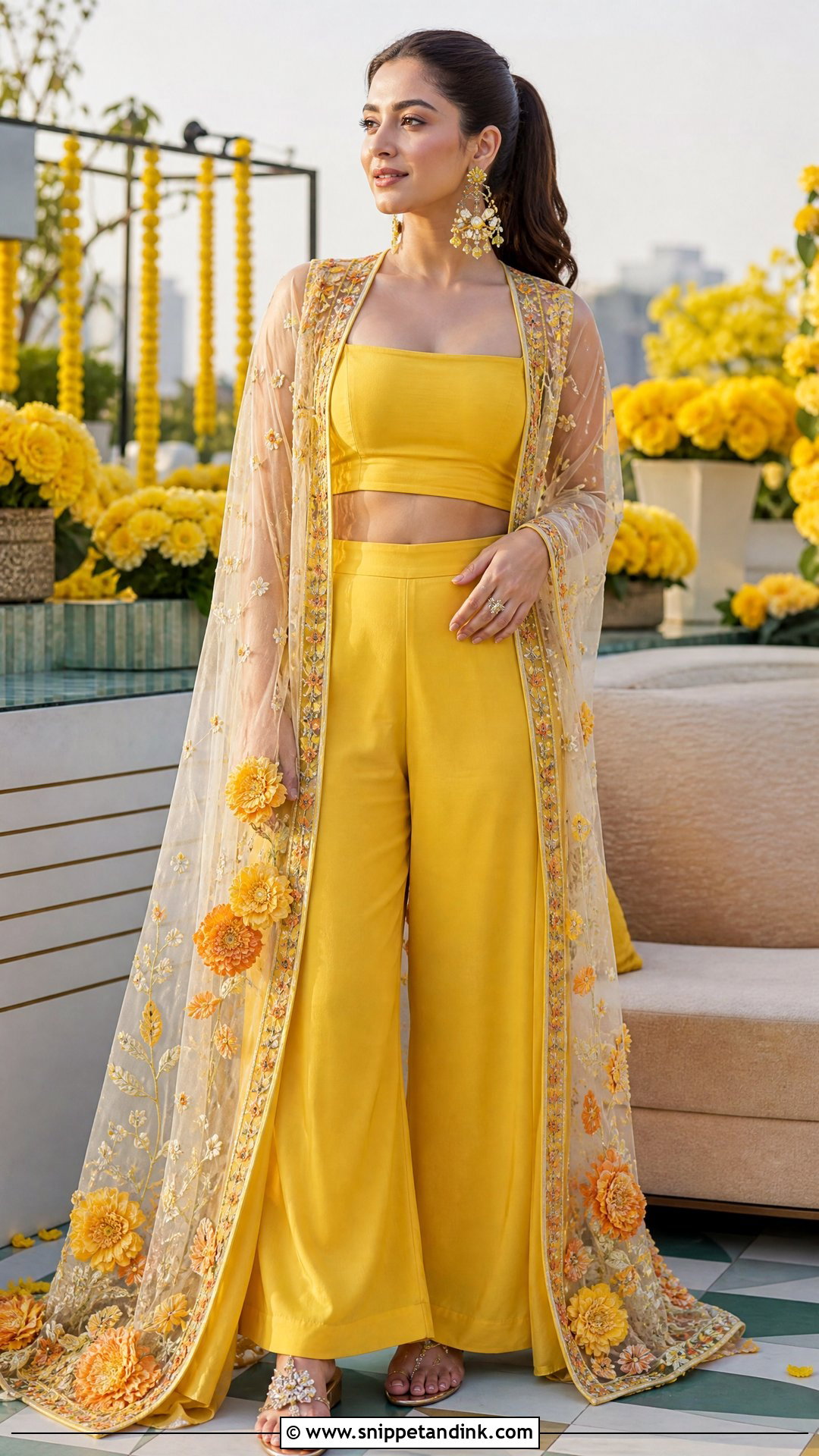
A yellow co-ord set with a cape suits the sister who wants a clean, modern line. Choose a sleeveless or short-sleeved top with high-waisted palazzos and add a sheer floral or lightly embroidered cape. The cape replaces the dupatta, so you get coverage without constant adjusting, and it can’t slide off into the paste bowl. Statement earrings, one minimal ring and block heels or decorated flats finish it, with a sleek ponytail so the cape and neckline stay visible. Avoid long cape sleeves and floor-sweeping hems for the ritual. It works at a resort, banquet hall or rooftop, and the separates rewear easily.
Turmeric on Your Outfit: What Works and What Sets the Stain
Turmeric stains fast and deep, so assume your outfit will be marked and plan around it. A few habits make the difference between a faint yellow tint and a ruined kurta.
On the day
Scrape off wet paste with a blunt edge rather than rubbing, which pushes the colour into the fibres. Then rinse the back of the fabric with cold water. Hot water and soap left sitting on the stain both tend to set it, and many alkaline soaps can turn turmeric reddish-brown for a while, which panics people but usually fades. I tuck a small bag with safety pins, wipes and a spare dupatta into the sister’s handbag for exactly this reason.
Afterwards
- Cotton and linen: work in a little dish soap with cold water, wash as normal, then dry in direct sun. Sunlight breaks down the yellow pigment, and a few hours outdoors often fades what washing leaves behind.
- Georgette, chiffon and synthetic blends: rinse cold and wash gently, but don’t scrub or use bleach. Dry in the shade if the dye is bright.
- Silk, embroidered pieces, gota and phulkari: blot only and take them to a dry cleaner quickly. Tell them it’s turmeric so they treat it properly.
- Bandhani and block prints: wash separately the first time, since the dye may run along with the turmeric.
Treat anything that can’t be washed as for display rather than for the ritual. If you love a silk outfit, wear it to the lunch afterwards and do the paste in a cotton set.
Dress for the Paste, the Dancing and the Group Photo
A good Haldi outfit for the bride’s sister keeps you comfortable from the first family photo to the last dance. Traditional suits, sarees, light lehengas and modern co-ords all work at different venues and suit different personalities. Whichever you wear, put breathable fabric, a secure fit, a hem that clears the floor and shoes you can stand in for hours ahead of embellishment. Pin your dupatta and keep jewelry light so you can join in fully. Yellow is the classic, but peach, orange, green, white and florals belong in the frame too. Above all, wear something that suits your role and lets your sister be the centre of the morning.
You'll Like These Ideas:






Leave a Reply