
Dressing the sister for a Haldi is a different job from dressing a guest. You’ll be carrying bowls of paste, kneeling beside the bride, greeting aunties at the gate and getting pulled into the dancing once the dhol starts, all in daylight and usually in heat. So when I style a sister, the first question is never colour. It’s how much she’ll move and how much turmeric she’s willing to wear home. Yellow is the obvious answer, but mustard, orange, pink, green, ivory and mixed florals all sit happily in the same frame. Below are twenty outfits, from lehengas and shararas to sarees, Anarkalis and modern separates, with notes on what each one asks of you once the rituals begin.
What a Sister’s Haldi Outfit Has to Survive
Before I look at colour with a sister, I walk her through the ceremony itself. She’ll sit on the floor or a low stool beside the bride, lean over a bowl of turmeric paste, get splashed when the cousins start playing, and stand for photos in strong daylight. An outfit that looks right on a hanger can fail at any of those moments.
- Sit cross-legged in the trial room. If the blouse cuts in or the kurta rides up, it will be worse after three hours.
- Reach both arms forward as if applying paste. A tight armhole or a dupatta that slips is easy to spot this way.
- Check the fabric in daylight by a window. Some yellows look golden under shop lights and turn greenish in sun.
- Choose breathable fabric for an outdoor afternoon. Cotton, cotton silk, chiffon and georgette stay cooler than heavy silk or velvet.
Ask the family early how wild the Haldi gets. Some households dab paste on the bride’s cheeks and stop there; others end with everyone drenched and yellow. That one answer decides whether your outfit should be something precious or something you’re happy to sacrifice.
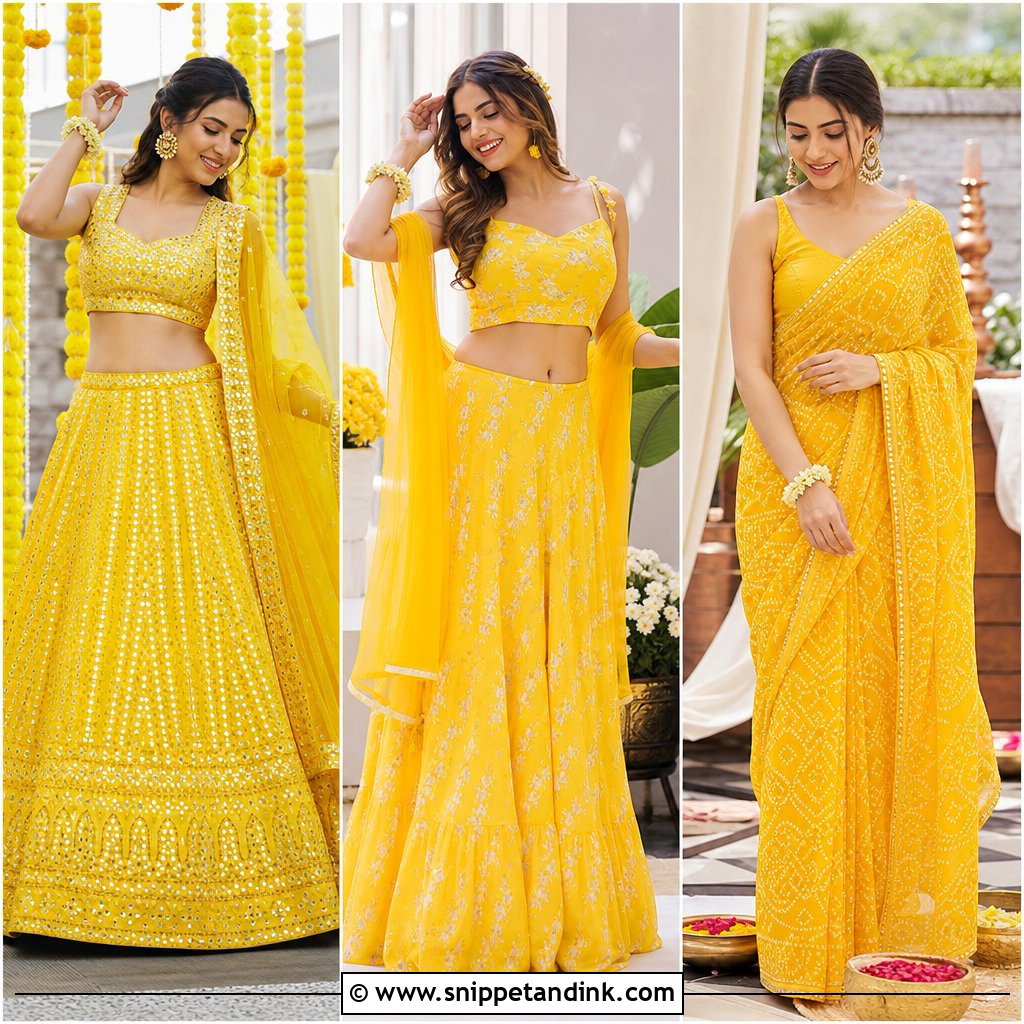
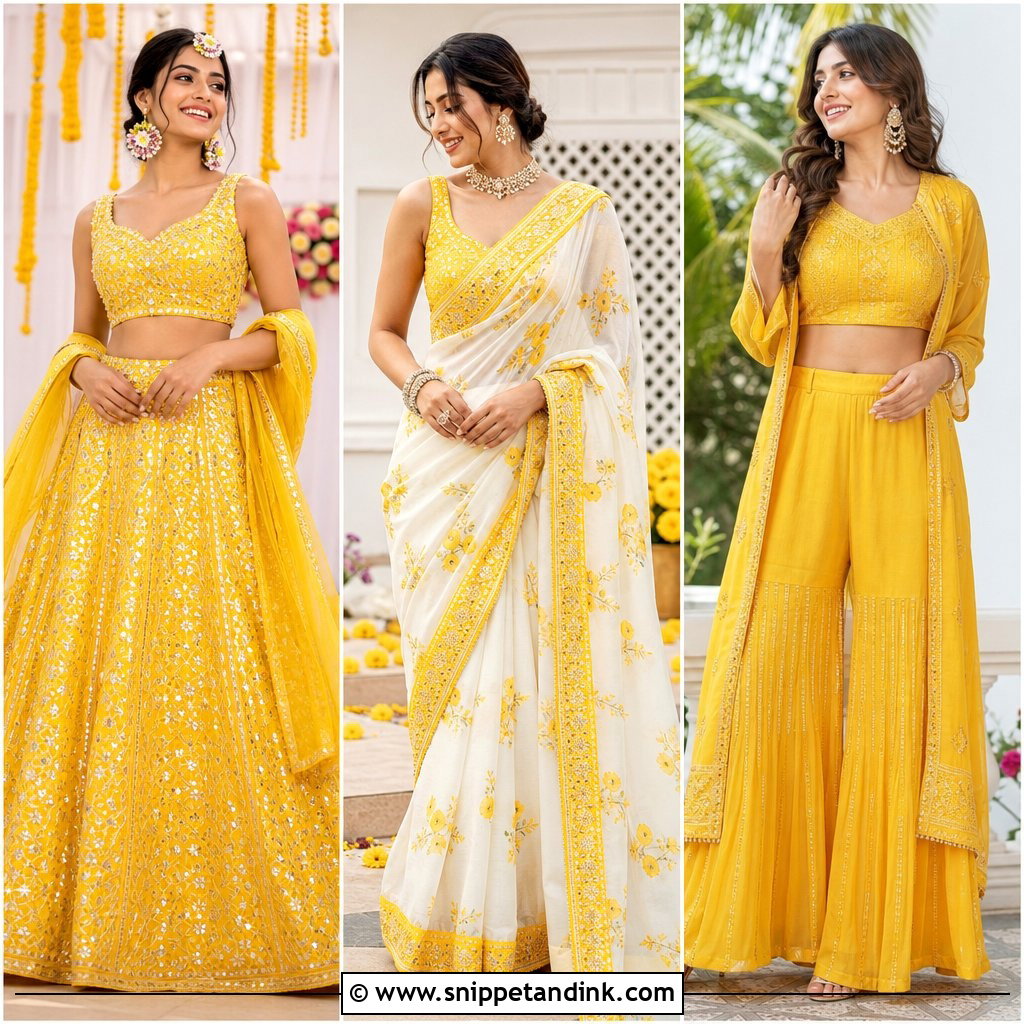
1. Yellow Floral Lehenga for Haldi
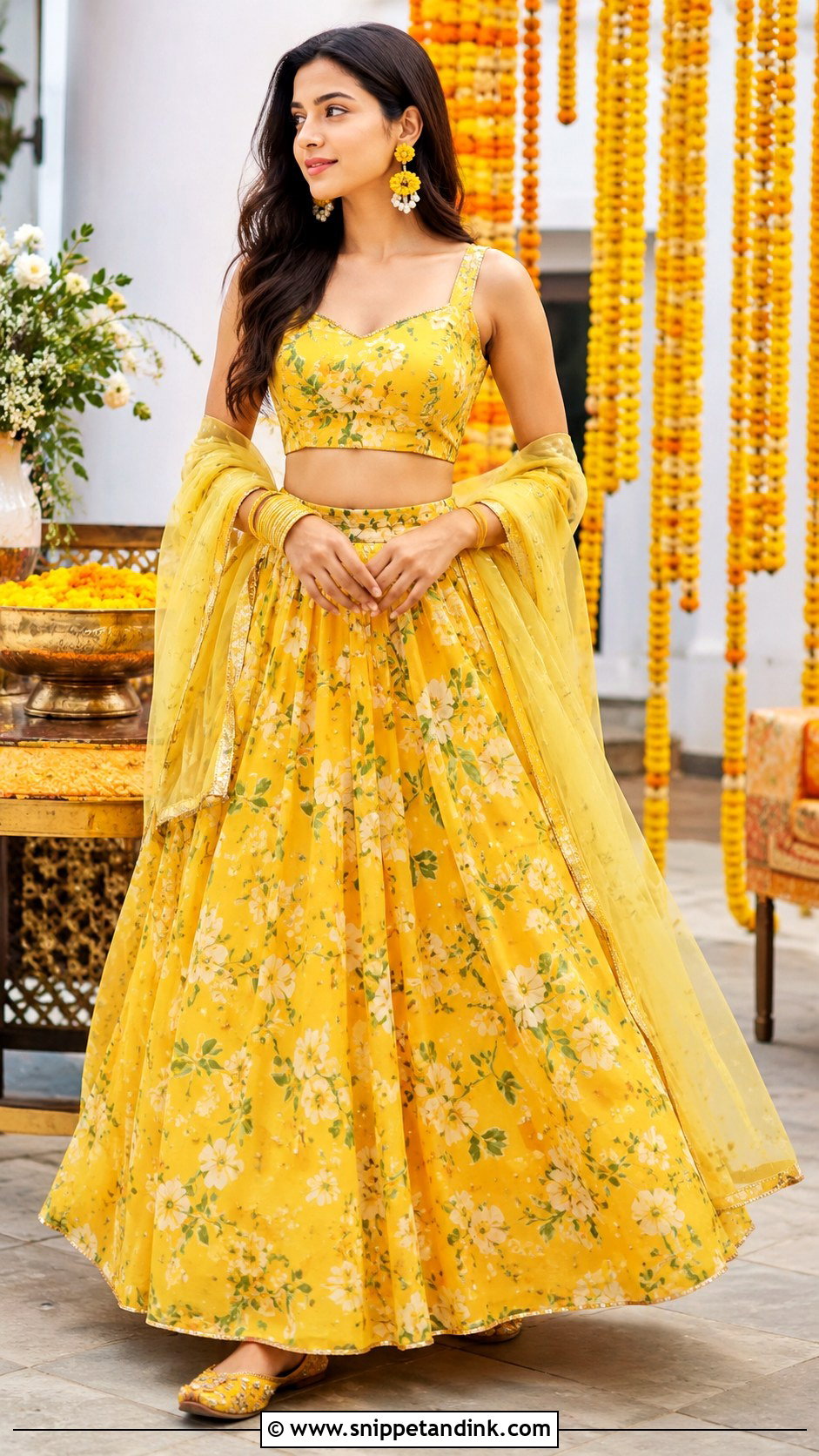
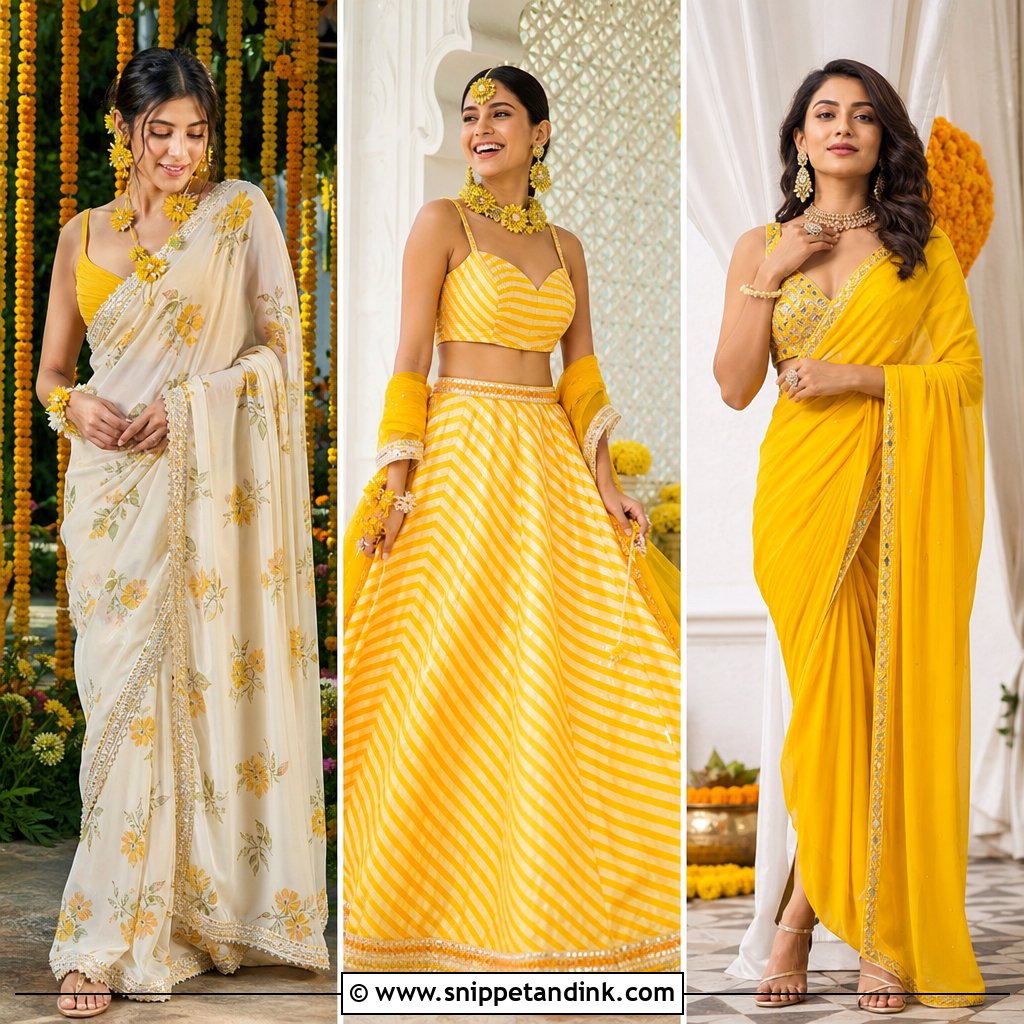
A yellow floral lehenga is the easiest place to start because printed flowers do the festive work that heavy embroidery would otherwise do, at a fraction of the weight. I push sisters toward print over zardozi for outdoor or summer Haldis; a dense embroidered can-can skirt traps heat against the legs within the first hour. Pair it with a fitted sleeveless blouse and a chiffon dupatta pinned on one shoulder, and let pink, green or orange flowers in the print carry the contrast. Embroidered juttis, stacked bangles and a neat braid keep you mobile. Keep the overall effect one notch quieter than the bride’s outfit, which a print does without any effort on your part.
2. Mustard Sharara Set for Haldi
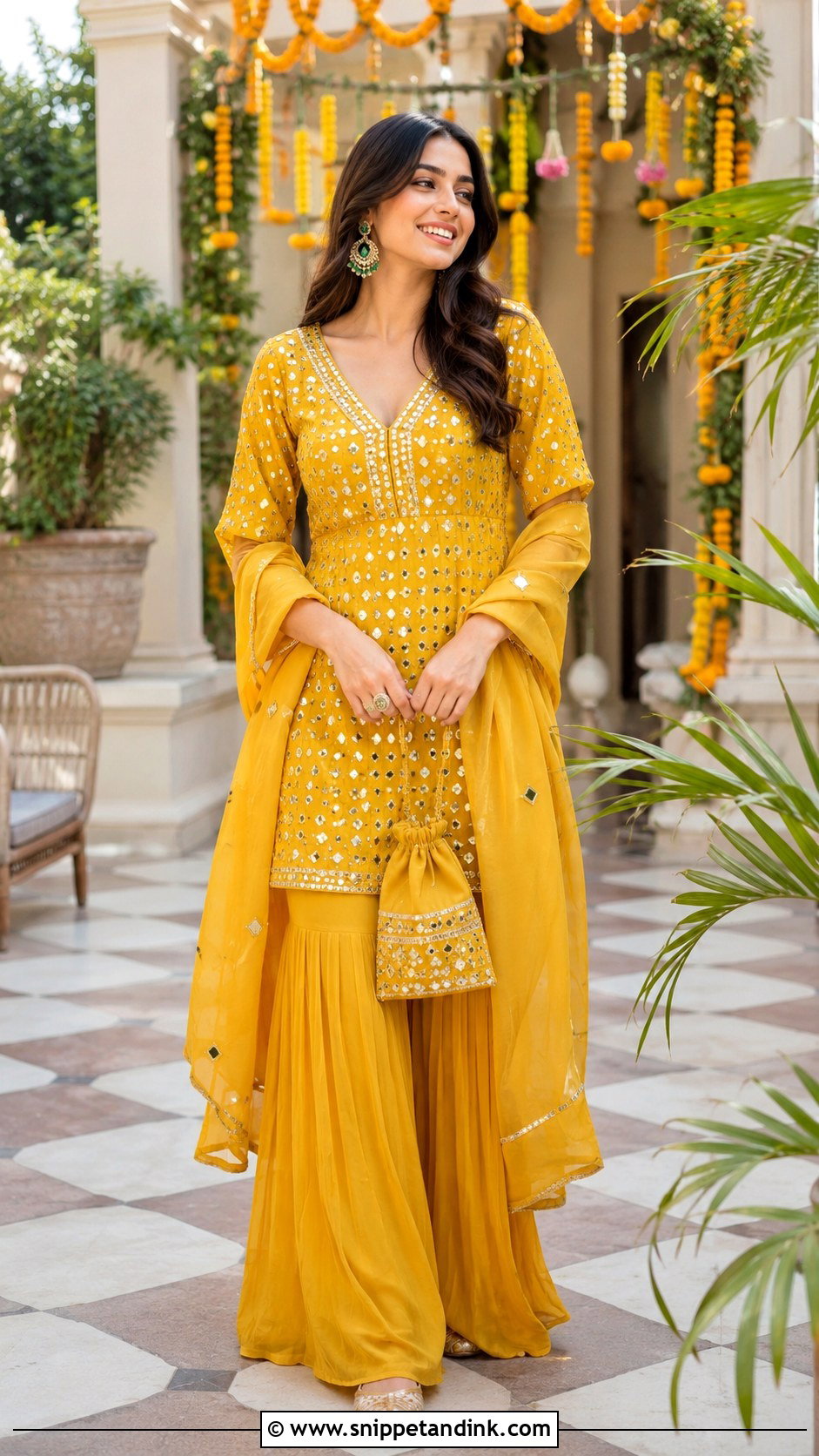
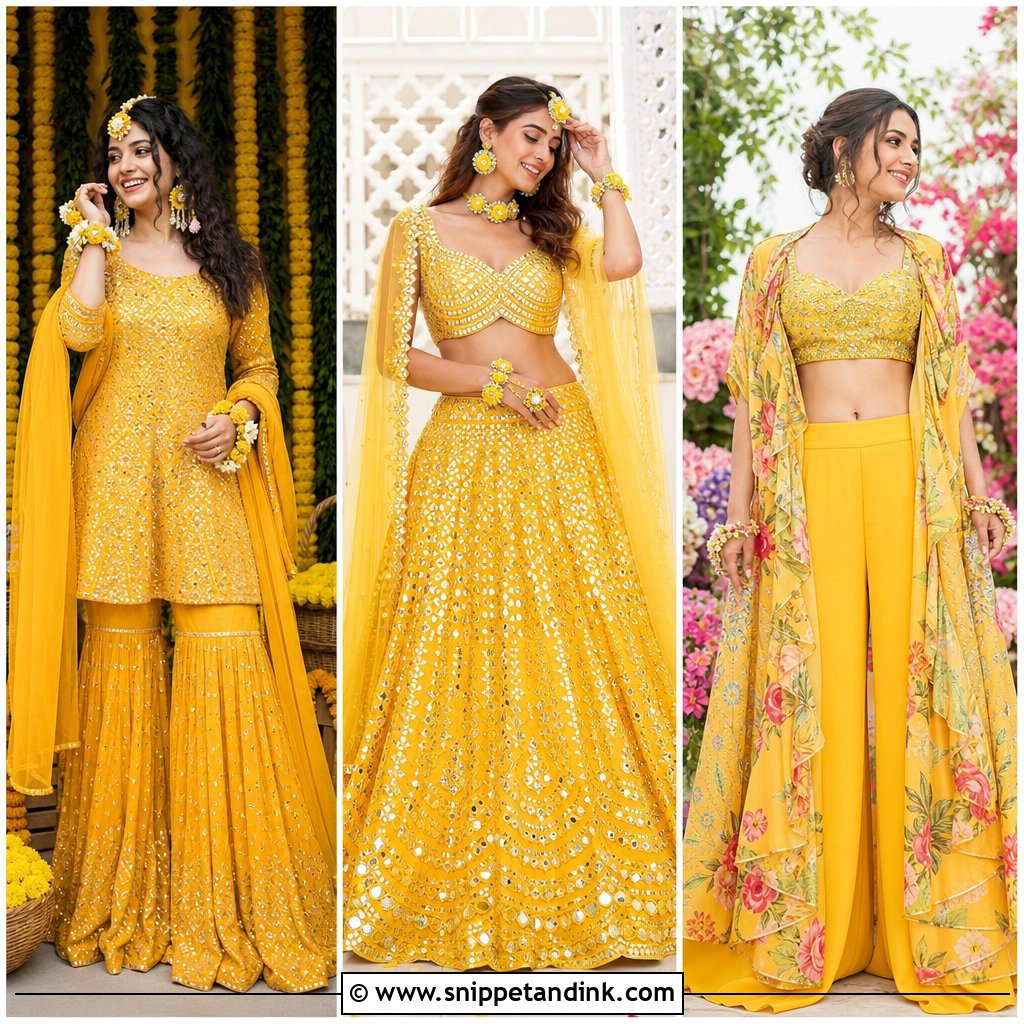
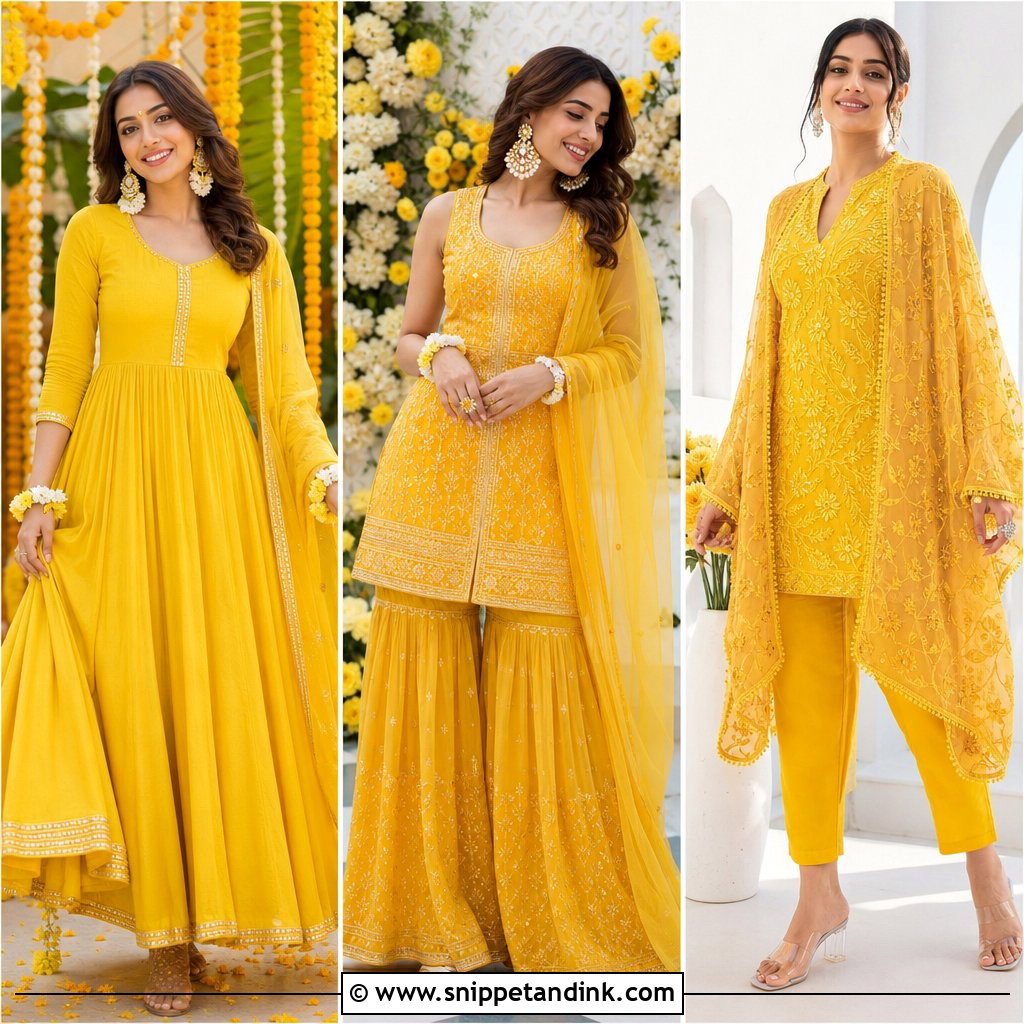
Sharara pants are my default for the sister who will be on her feet the whole time. They give you the swing of a skirt, but you can climb onto a stage, sit cross-legged by the bride and dance without gathering fabric in your fist. A short mustard kurta with light mirror or gota work, sharara in the same shade and a dupatta with a narrow border is enough. Break the single colour with green stone earrings or multicoloured jhumkas. One fitting note: get the sharara hem taken to just clear your juttis, because a flare that drags will collect paste and petals from the floor.
3. Yellow Organza Saree for Haldi
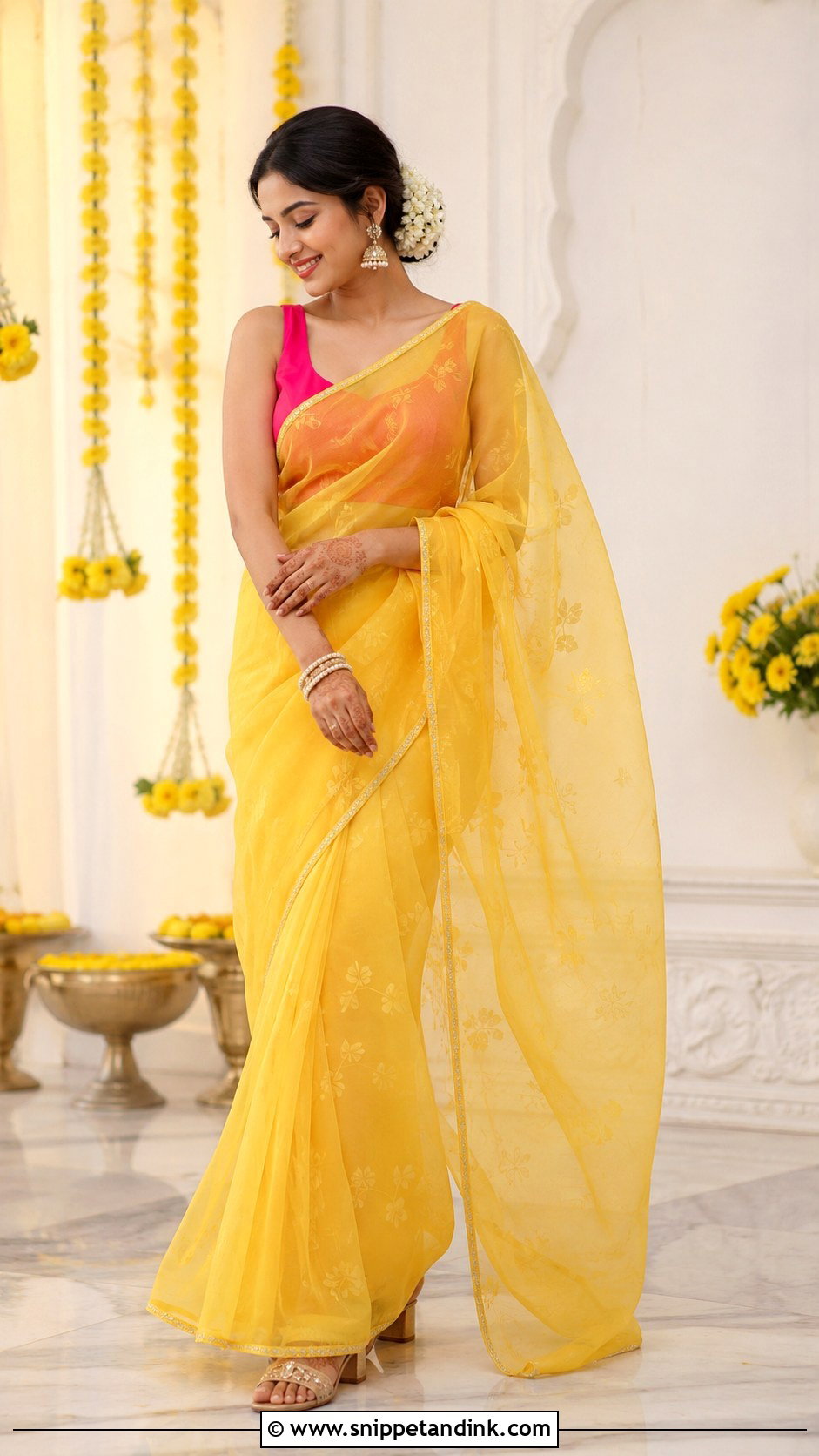
Organza sits between a suit and a lehenga in formality, and it’s lighter than either. The catch is that organza is crisp, so it holds a pleat well but shows every crease after you’ve sat on the floor. I’d choose a print or a scalloped border over heavy sequins, then pair it with a contrasting pink, green or ivory blouse so the saree doesn’t read as one flat yellow block in photos. Pin the pleats at the waist and the pallu at the shoulder with two safety pins each, hidden on the inside. Pearl jhumkas and low block heels finish it. I keep this one for indoor, more formal Haldis where the playing with paste tends to be gentler.
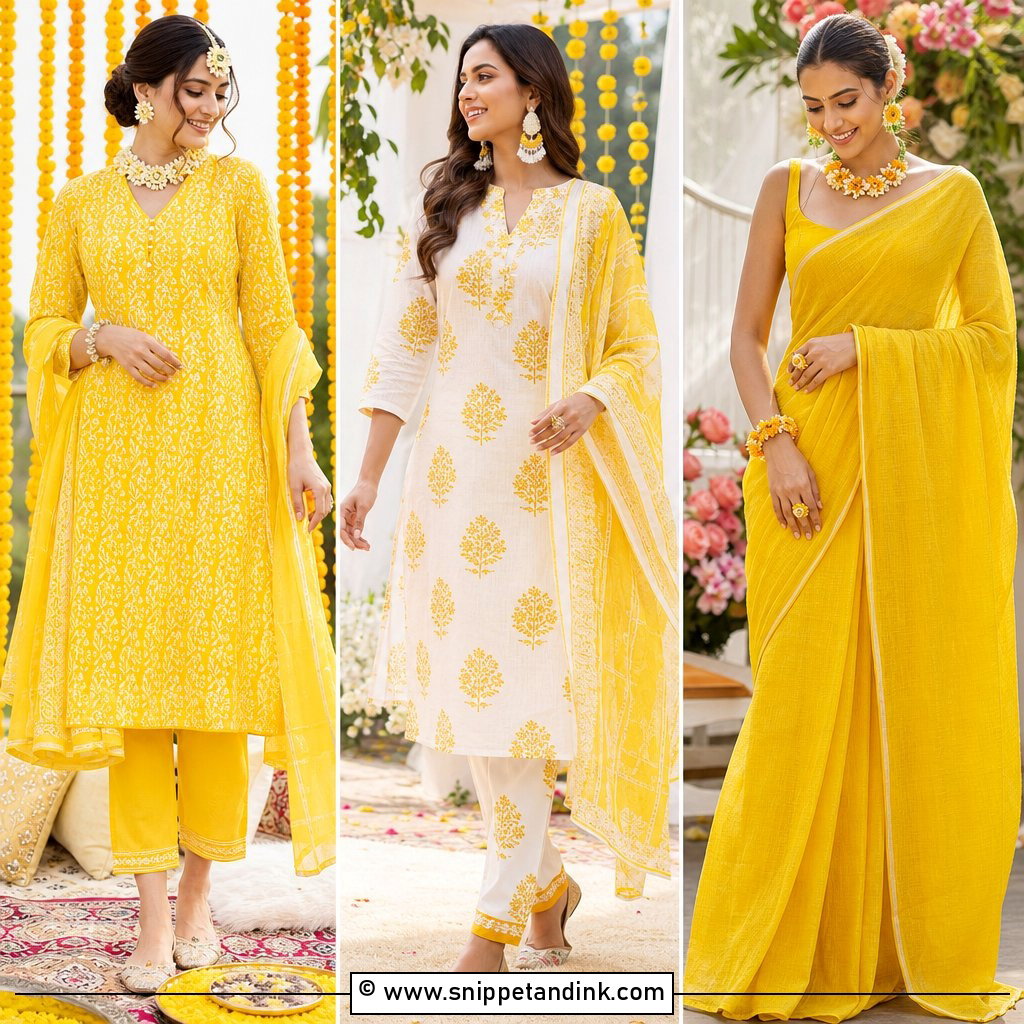
4. White Kurta With Yellow Dupatta for Haldi
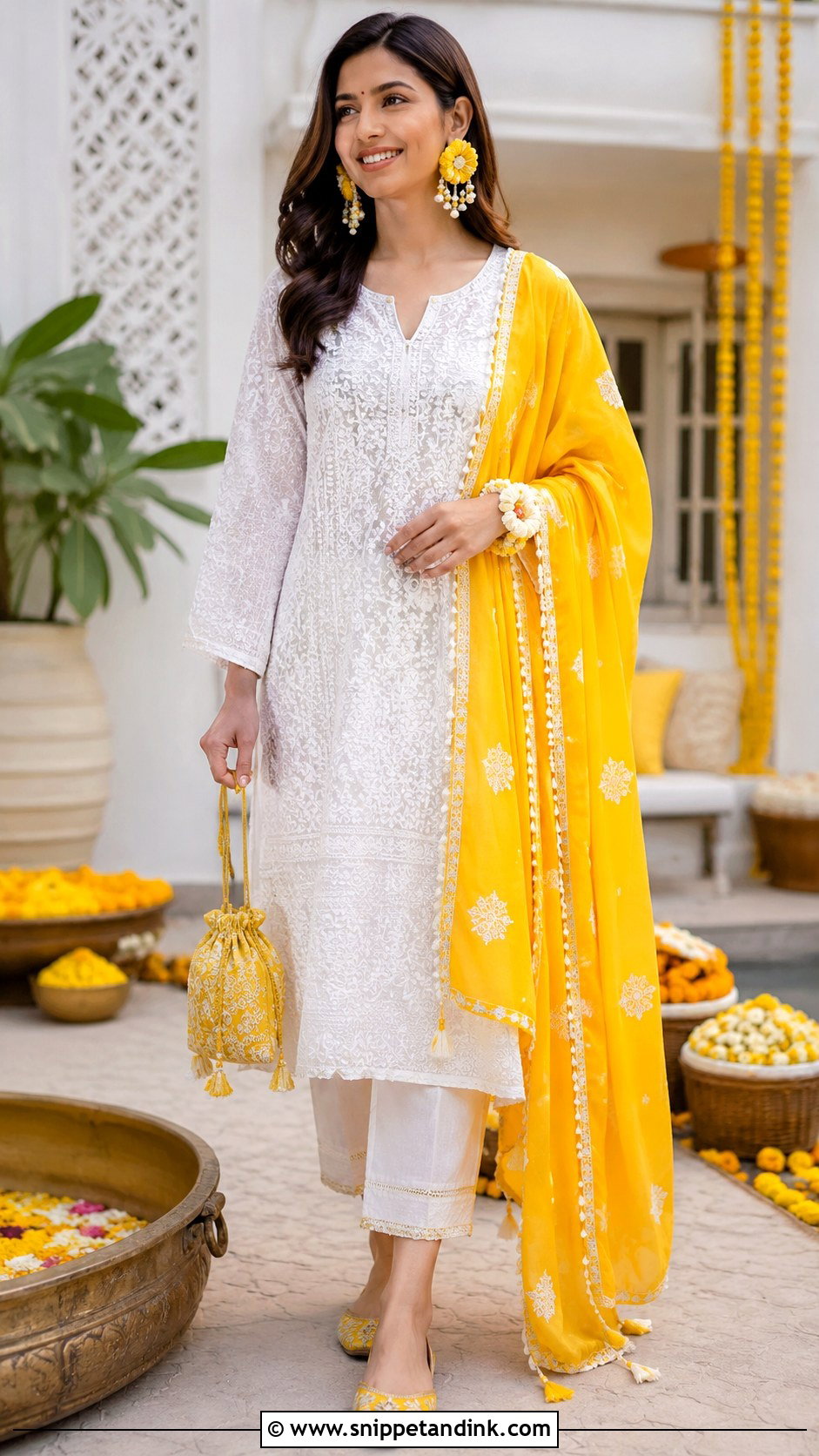
White with a yellow dupatta photographs crisply against marigold, and a cotton or Chanderi kurta is about the coolest thing you can wear in the afternoon sun. Be honest with yourself about the paste, though. Turmeric on white cotton is the hardest stain of all to lift, and the sister is usually right in the splash zone. If your family plays rough at the Haldi, save this for the morning puja or a relaxed gathering where you’re hosting rather than applying. Yellow juttis and a yellow potli tie the pieces together, and a low bun keeps hair out of the bowl.
5. Yellow Peplum Sharara for Haldi
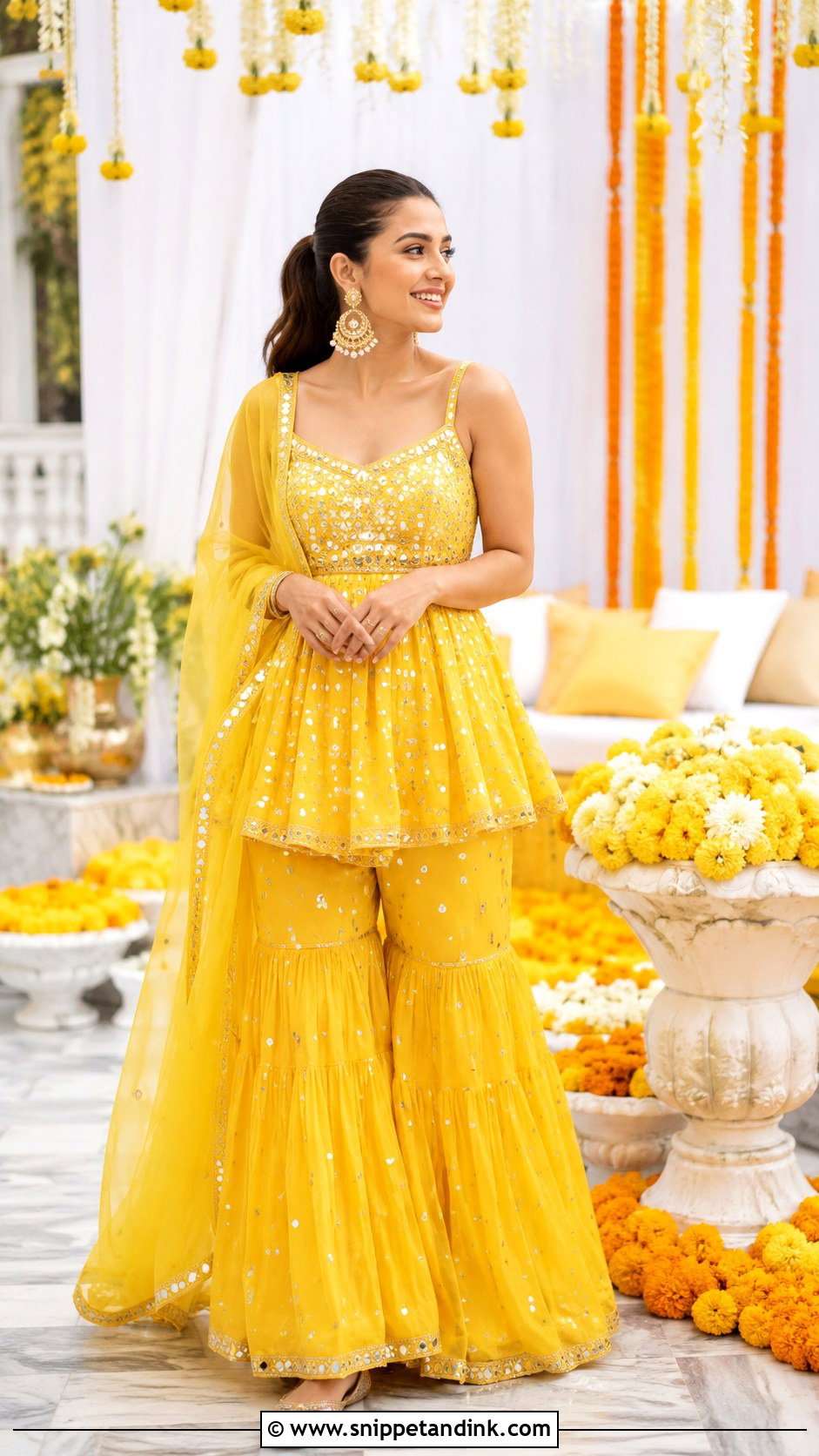
A peplum suits anyone who wants waist definition with more coverage than a crop blouse. In georgette or crepe the flare stays soft; in stiffer fabrics it can stick out over the sharara and add width at the hip, so I ask clients to sit down in the fitting room before buying. Light mirror work or small floral motifs keep it daytime appropriate. Skip the heavy necklace and let statement earrings frame the peplum neckline instead. Metallic juttis and a sleek ponytail complete it, and a sheer dupatta is optional rather than essential here.
6. Pink and Yellow Lehenga for Haldi
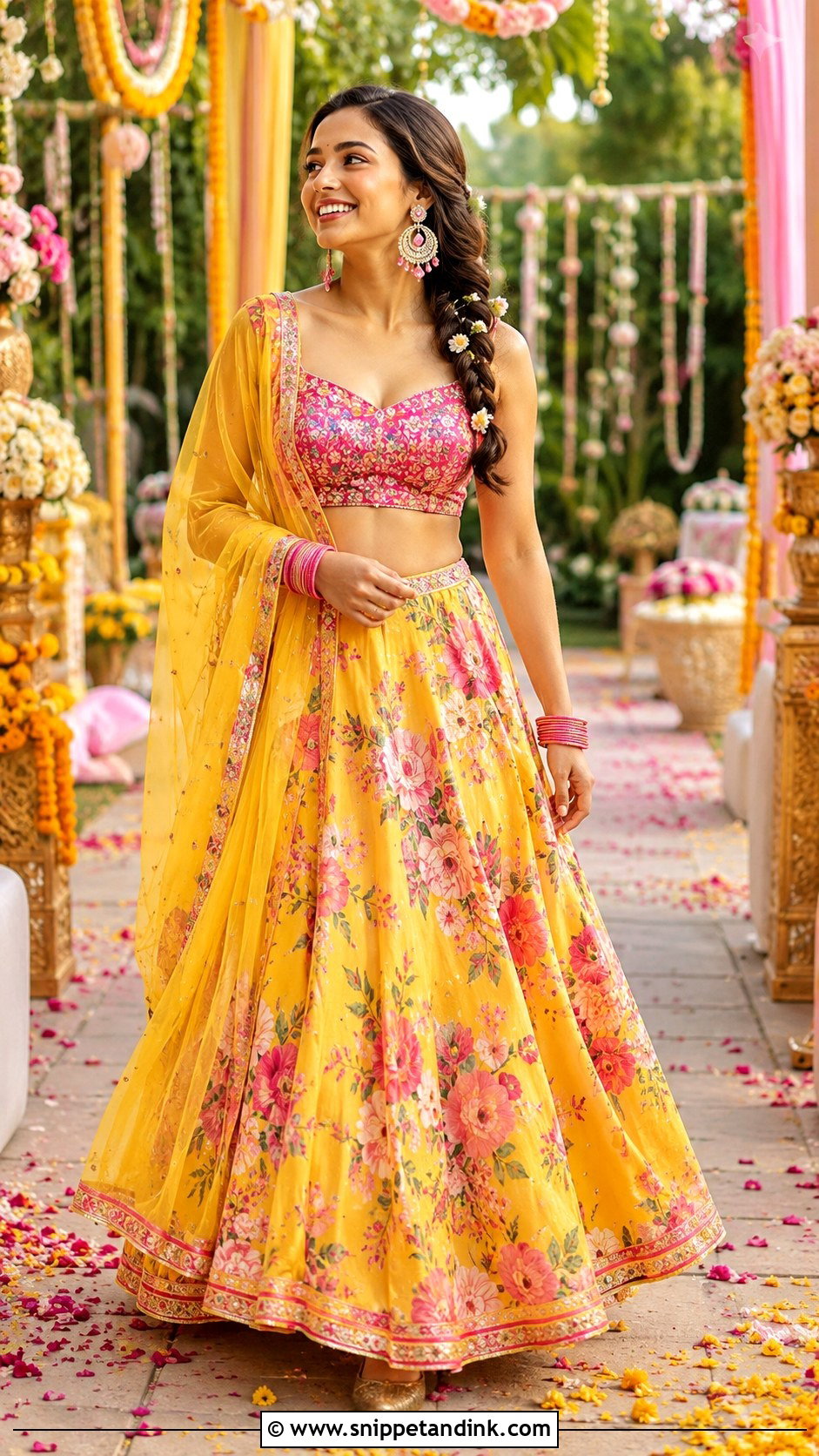
Pink against marigold decor is one of the happiest pairings you can put in a Haldi photo. Start with a yellow skirt that has a pink border or scattered pink embroidery, add a solid pink blouse and a light yellow dupatta. Check with the bride first. If she has claimed yellow for herself, simply flip the ratio so pink leads and yellow becomes the accent. Meenakari earrings and gold juttis suit the palette, and a side braid with a few small flowers keeps the mood playful. Hold the makeup back to a pink lip and soft blush so the clothes do the talking.
7. Yellow Anarkali Dress for Haldi
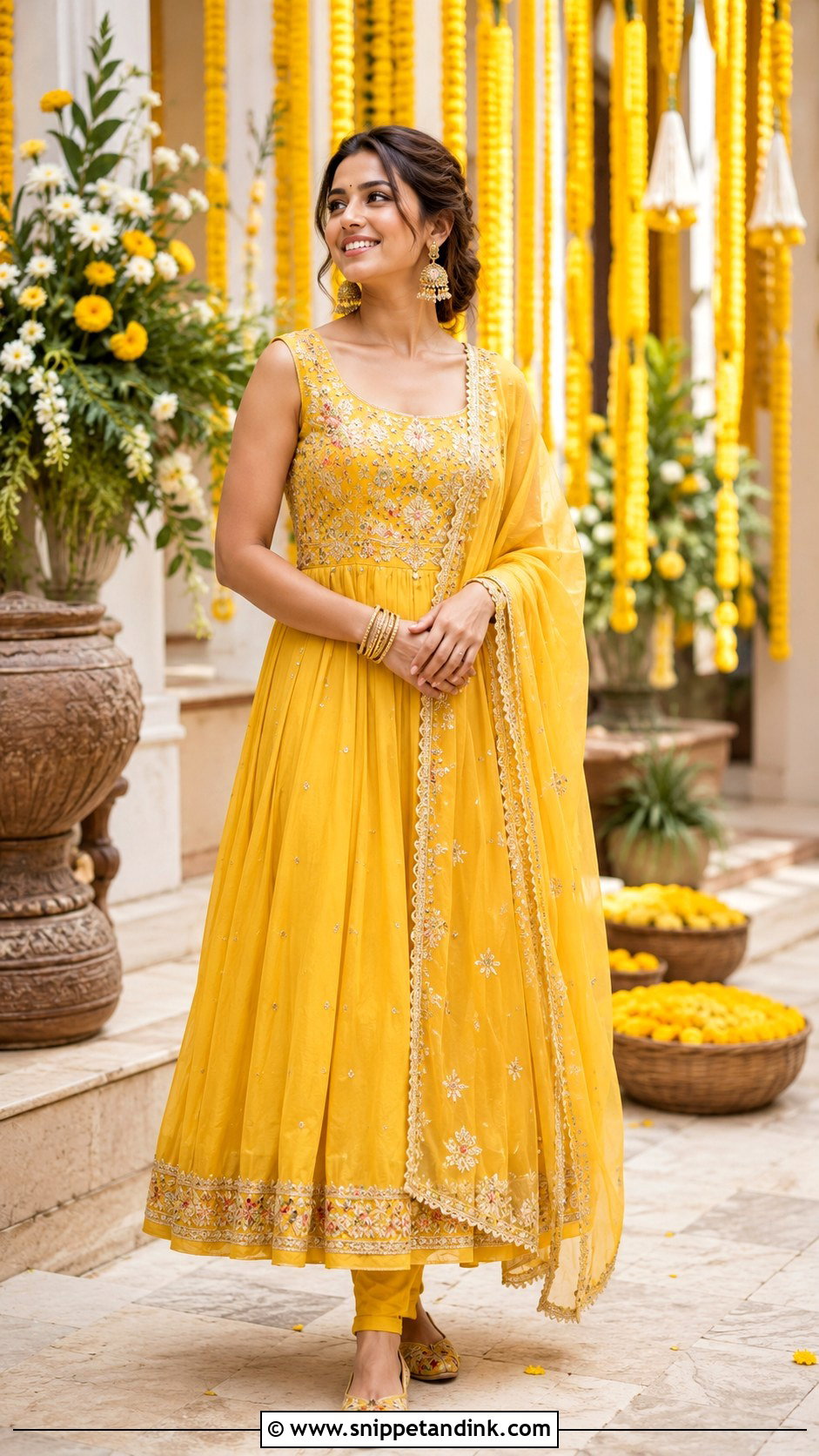
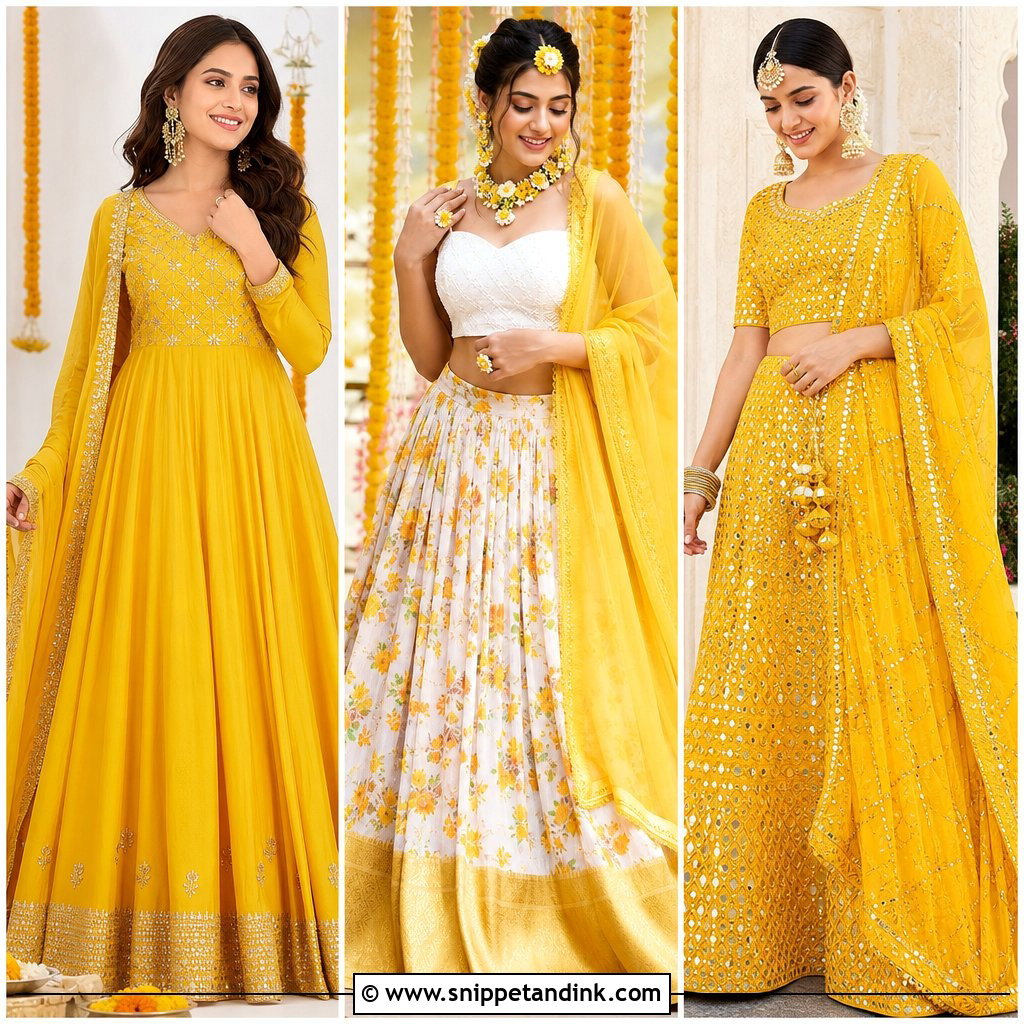
Anarkalis are forgiving in a way that matters at a Haldi: the flare hides paste marks better than a fitted silhouette, and you can sit on the floor without the outfit riding up. Look for a calf or ankle length yellow Anarkali in cotton silk, chiffon or georgette, with a fitted bodice and a moderate flare rather than a full ball-gown circle, which gets heavy and hot. Pin the dupatta to one shoulder, wear slim pants underneath and stop at jhumkas and a few bangles. A half-up style or a polished braid keeps your face clear for the camera.
8. Yellow Palazzo Suit for Haldi
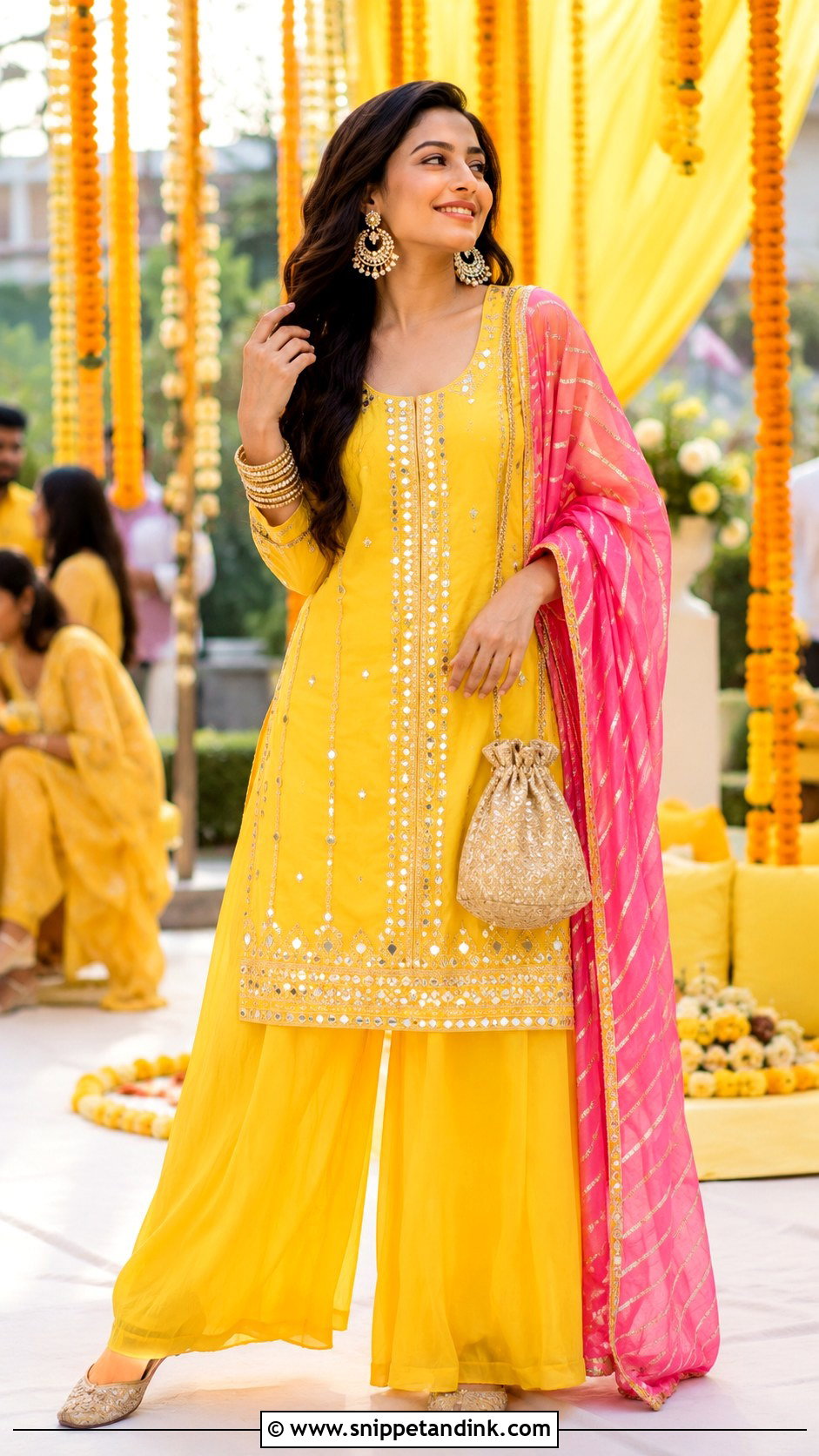
Of everything here, the palazzo suit is the one I’d put on a sister who’s running logistics. A straight or slightly flared kurta with wide palazzos lets you lift trays and kneel without thinking about drape at all. Small mirror details or a printed hem are enough decoration. If group photos are planned, a contrasting pink, green or orange dupatta adds colour where the suit alone might look plain. A crossbody potli frees both hands, and a high ponytail or braided bun stays put through the whole ceremony.
9. Orange Saree With Yellow Blouse for Haldi
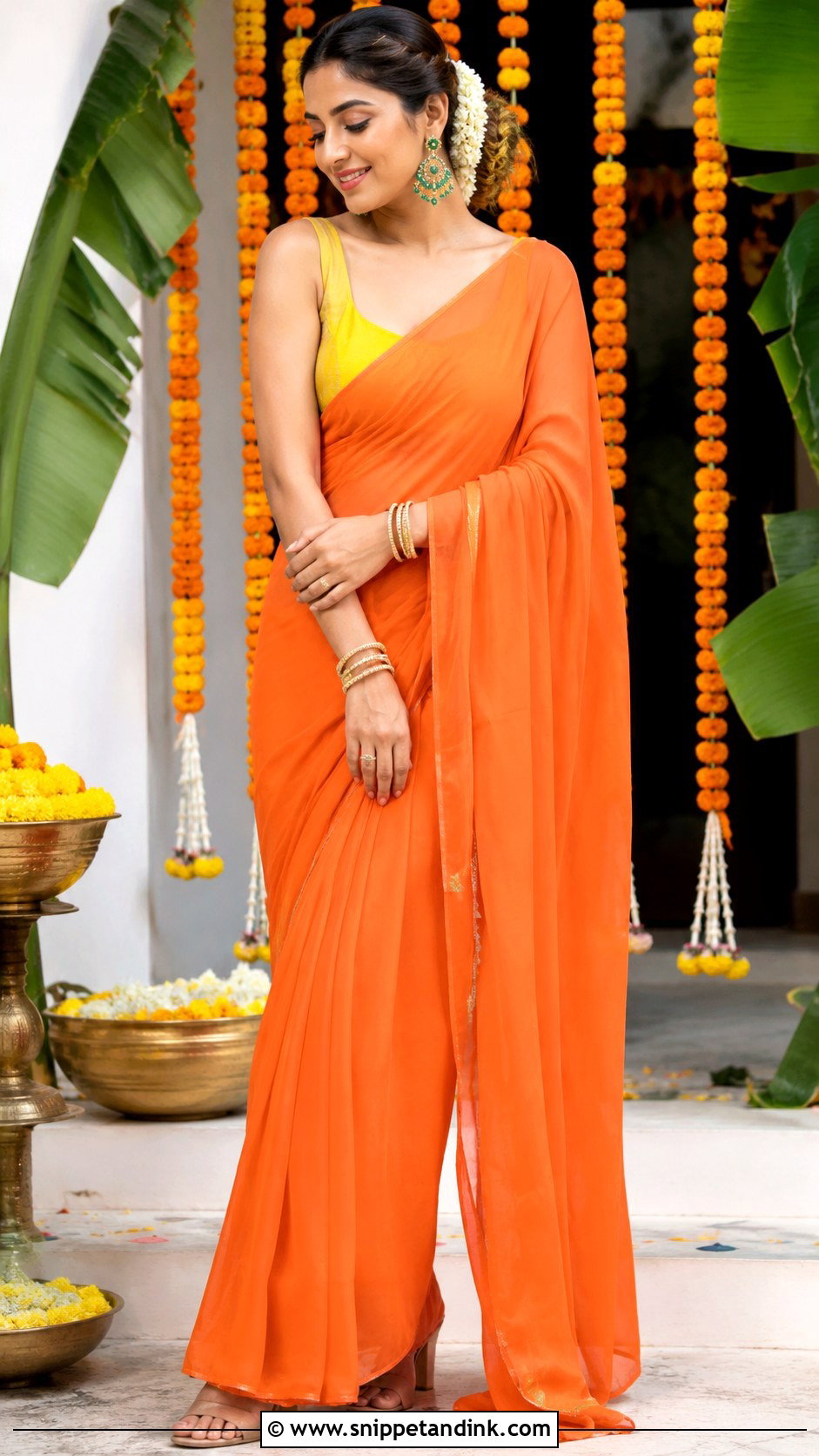
Orange lets you stay inside the warm Haldi palette without matching the bride head to toe. Marigold or tangerine chiffon, georgette or cotton silk all drape easily, and a yellow blouse with a square or round neck ties it back to the theme. Chiffon is slippery, so a pinned pallu matters even more here than on organza. Green earrings give a sharp contrast; gold bangles and tan block heels balance it. Flowers in a bun or a side-parted ponytail suit the traditional, floral setting this saree belongs in.
10. Yellow Crop Top and Skirt for Haldi
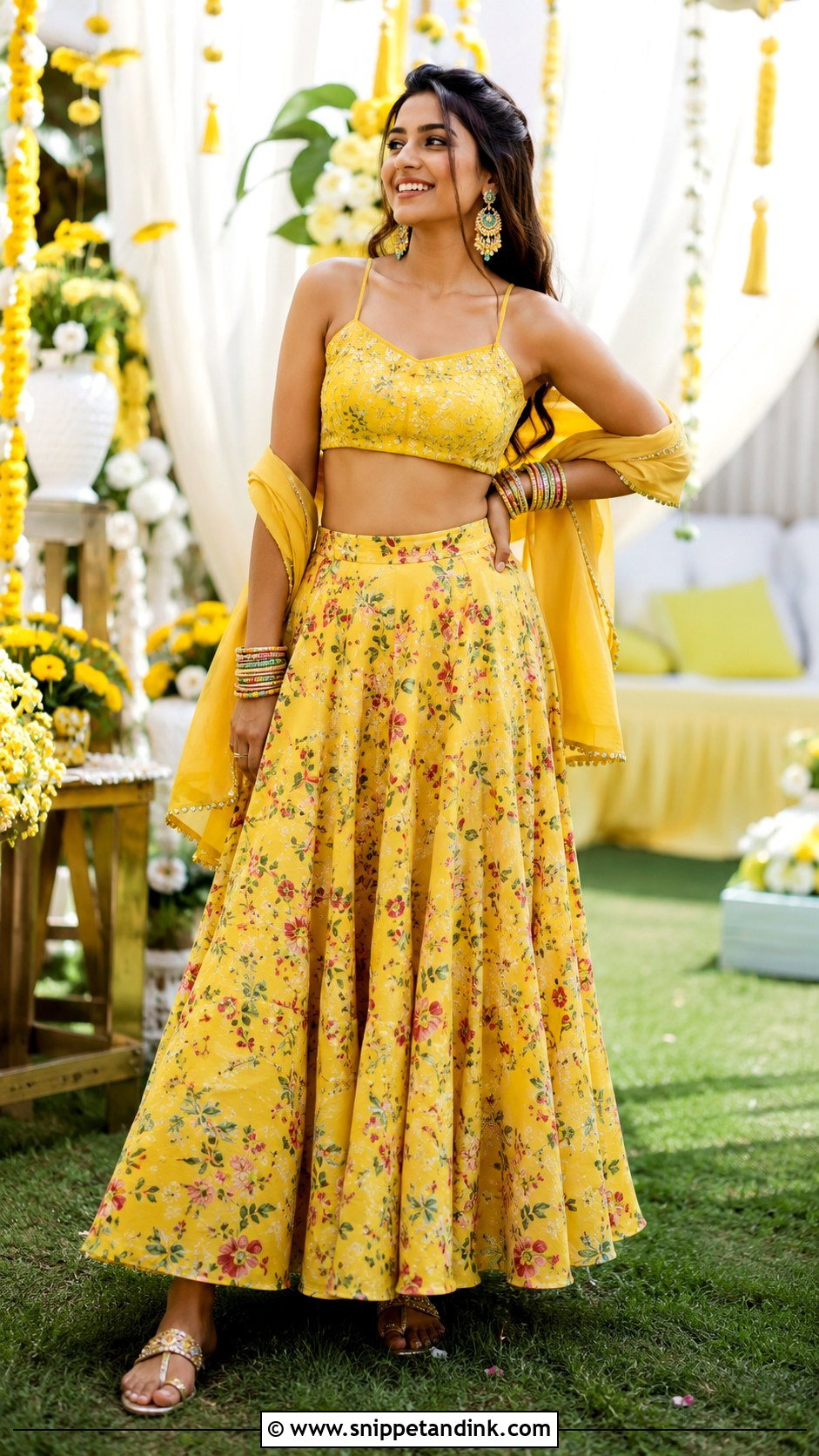
A crop top and skirt gives you the outline of a lehenga with half the weight and none of the stiff can-can. Choose a high-waisted skirt with enough flare to dance in and a crop top cut to meet it, so you aren’t tugging at the gap all afternoon. Prints and small mirror accents keep it casual. Drop the dupatta for an informal Haldi, or add a short pinned drape if the elders expect one. Flat embellished sandals and a loose braid suit younger sisters who plan to be first on the dance floor.
11. Green Lehenga With Yellow Dupatta for Haldi
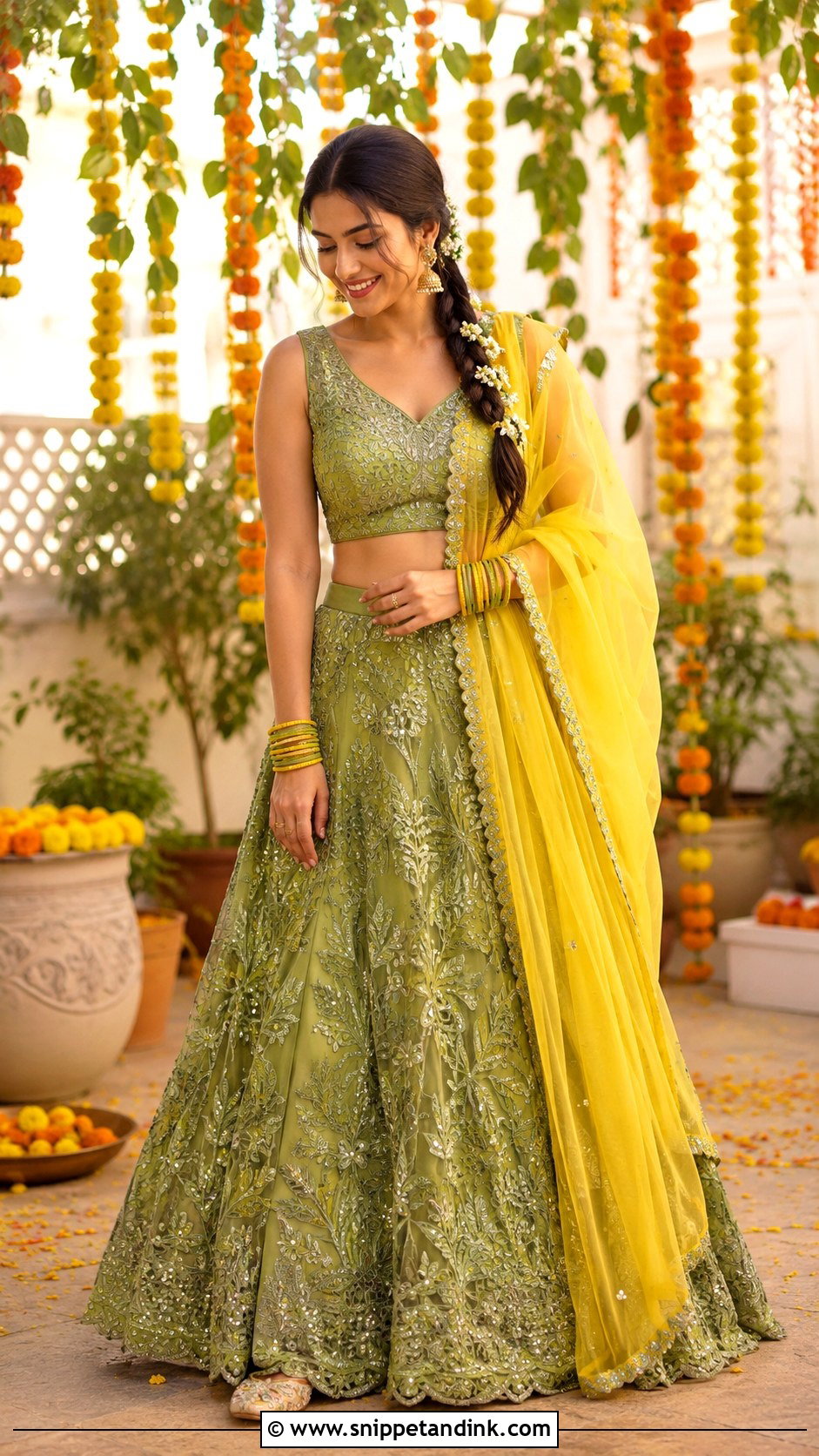
Green with yellow reads like leaves around marigolds, and it’s the outfit I suggest when half the family has already bought yellow. Begin with a lime, leaf or emerald lehenga with light embroidery, then use a bright yellow dupatta to connect you to the ceremony. In a crowd of yellow, the green lets people find the sister in photos instantly. Gold jhumkas and yellow bangles keep the jewellery warm, neutral juttis stop the palette getting busy, and a centre-parted braid with yellow flowers finishes it.
12. Yellow Cape and Skirt for Haldi
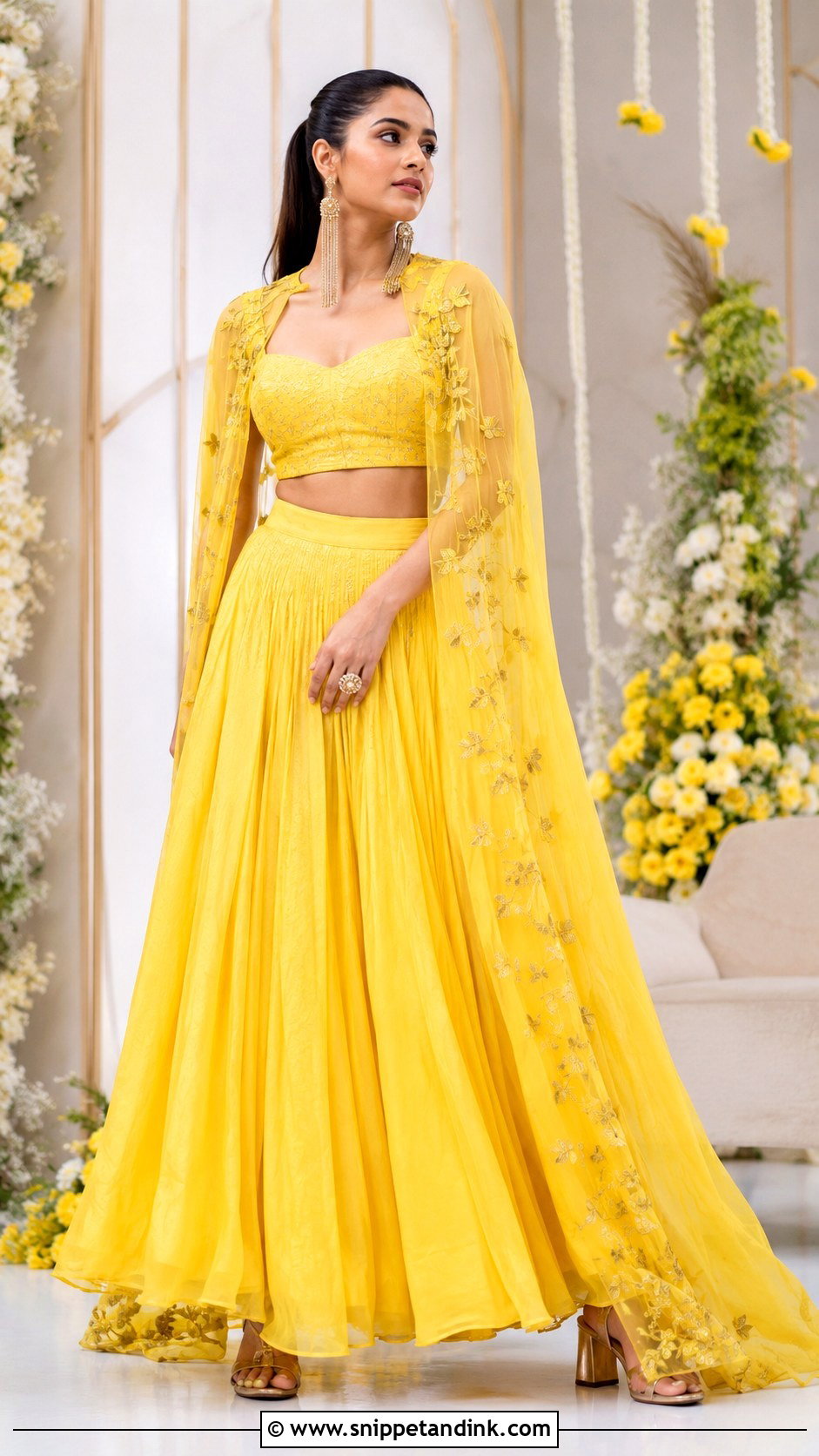
The cape replaces the dupatta, and for a sister that’s a practical win: nothing slides off your shoulder when you bend to apply paste. Pair a fitted blouse or crop top with a high-waisted skirt and let a sheer cape fall over both shoulders. Put the decoration on the cape’s border and keep the skirt plain, or the set gets heavy fast. Long earrings, metallic block heels and a sleek ponytail that shows off the neckline suit a modern venue, especially one where the Haldi rolls straight into music.
13. Yellow Dhoti Pant Set for Haldi
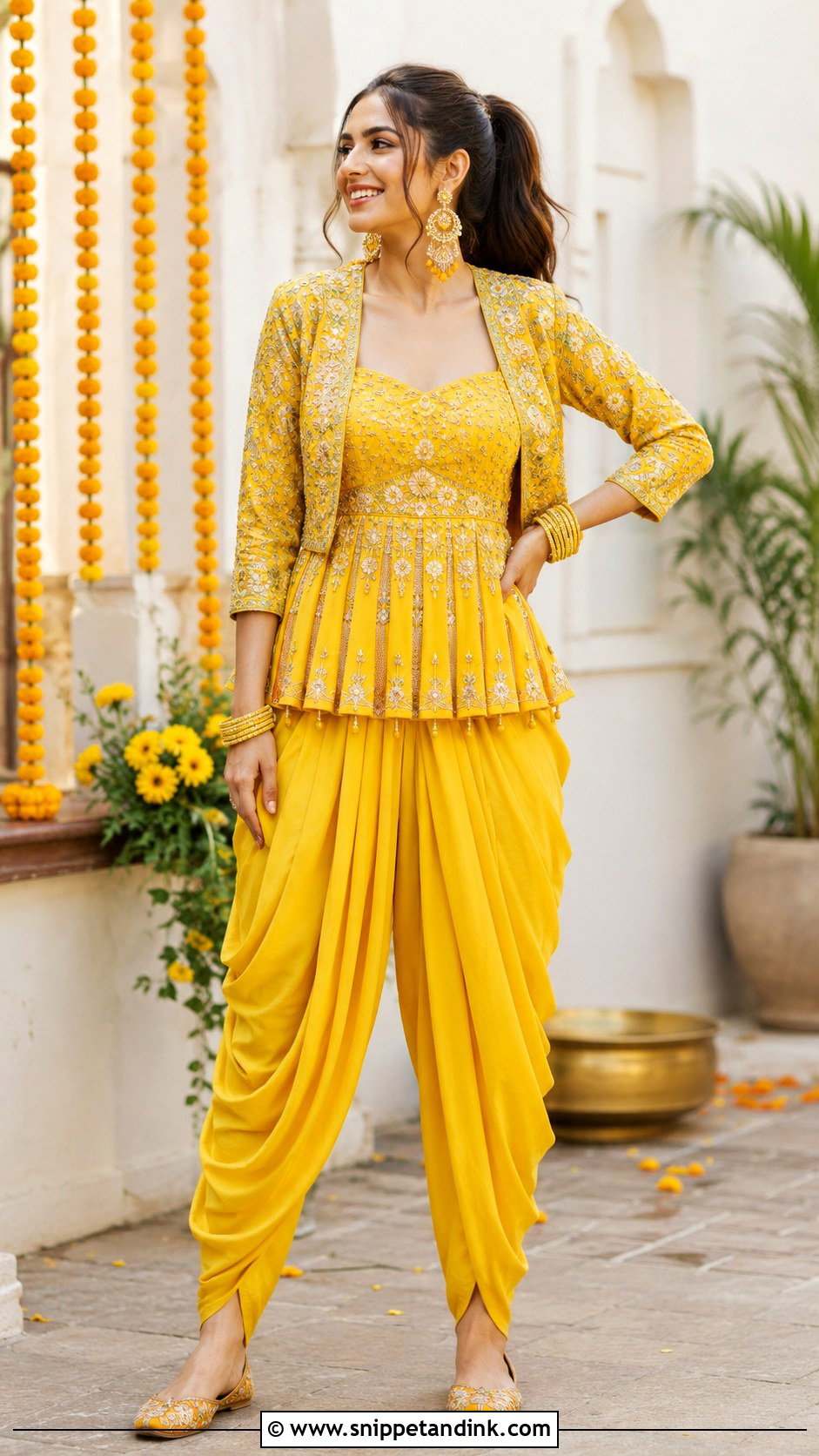
A yellow dhoti pant set moves better than anything else on this list, and it’s the outfit I’d hand to the sister who’ll be choreographing the dancing. The drape needs a fabric with some body, such as crepe, cotton silk or georgette; very thin rayon collapses and looks like pyjamas by mid-afternoon. Top it with a short embroidered kurta, a structured peplum or an asymmetric tunic, and add a cropped jacket if you want a layer. Supportive juttis and a high ponytail suit the sharp lines.
14. Floral Print Saree for Haldi
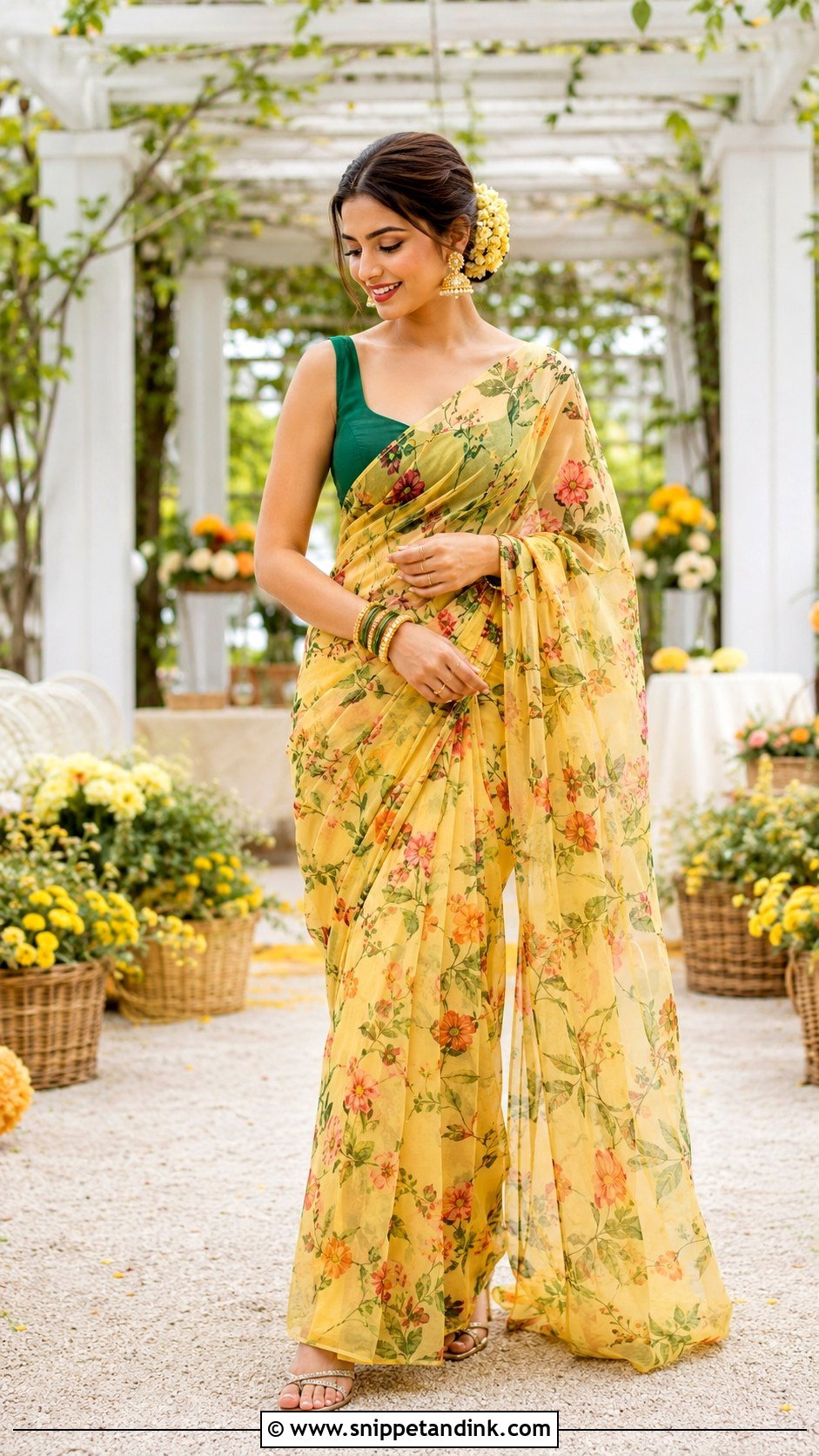
Florals free you from strict yellow, because the print itself carries the festive colour. Pick a yellow, ivory, peach or light green ground with small botanical motifs and match the blouse to one shade inside the print. Fabric changes the mood: chiffon and georgette fall softly, organza stands away from the body and feels dressier. Pin the waist pleats and pallu if you’ll be helping the bride, since you’ll be reaching across her repeatedly. A low bun with fresh flowers suits garden and home ceremonies best.


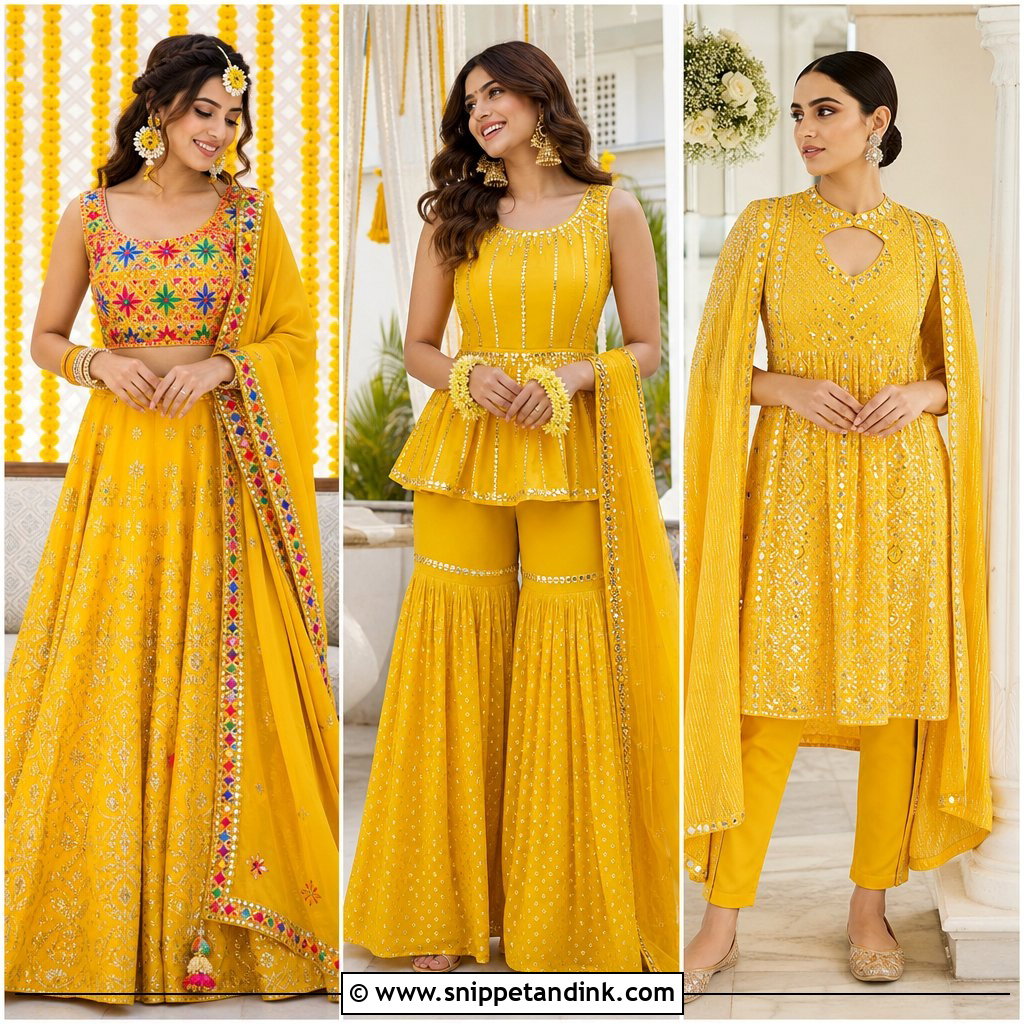
15. Yellow Jacket Lehenga for Haldi
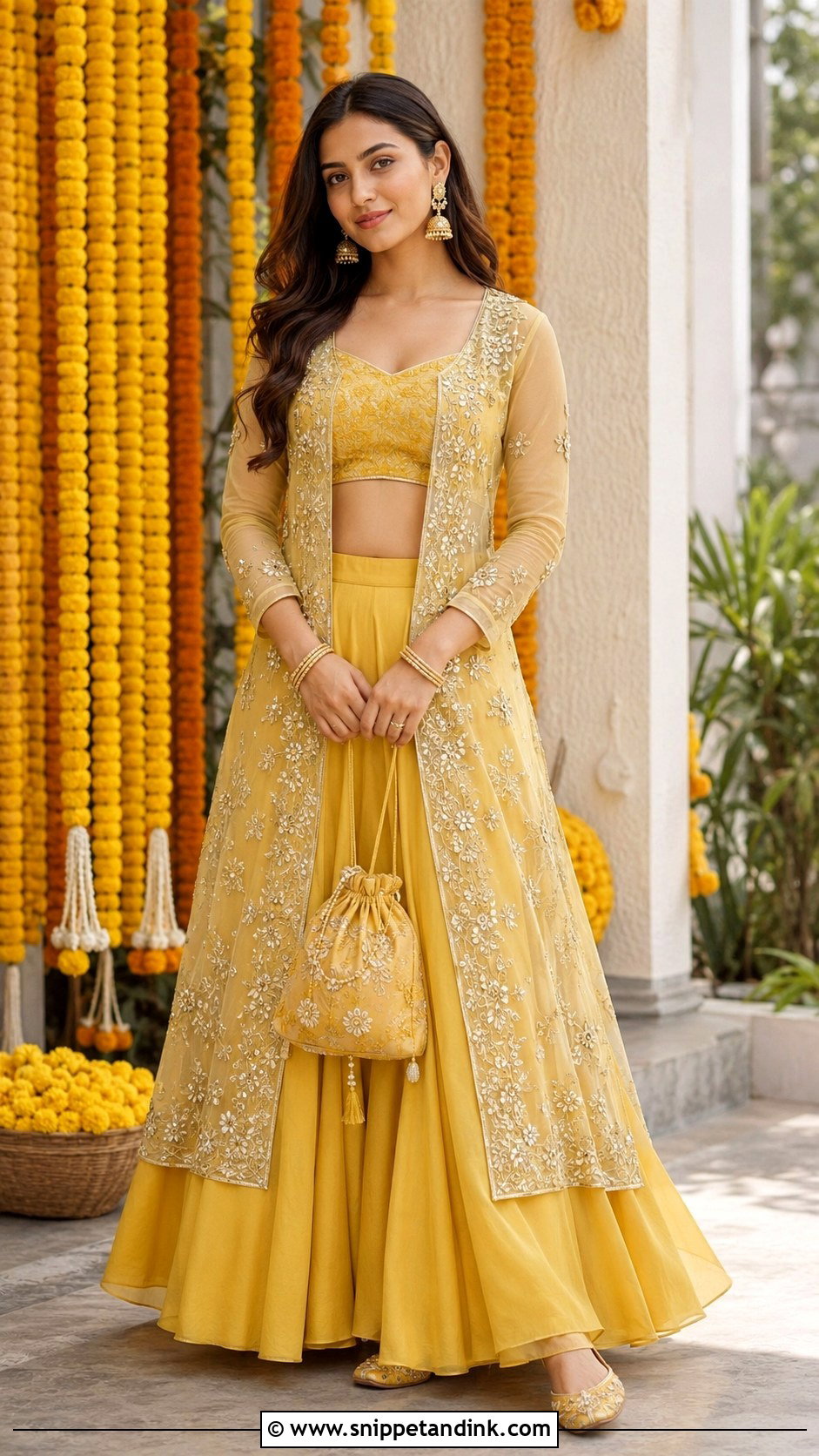
Jacket lehengas add coverage at the shoulders and torso, which some families prefer and some sisters simply feel better in. A sheer, front-open jacket keeps the look airy; a structured waist-length one is sharper but warmer, so I’d only choose it for an indoor or cooler Haldi. Mirror work, floral threadwork or a pink border on the jacket is plenty. Because the jacket already carries the detail, stop at medium earrings, a few bangles and a small potli. Hair in a sleek braid keeps the jacket’s back visible in photographs.
16. Ivory Lehenga With Yellow Flowers for Haldi
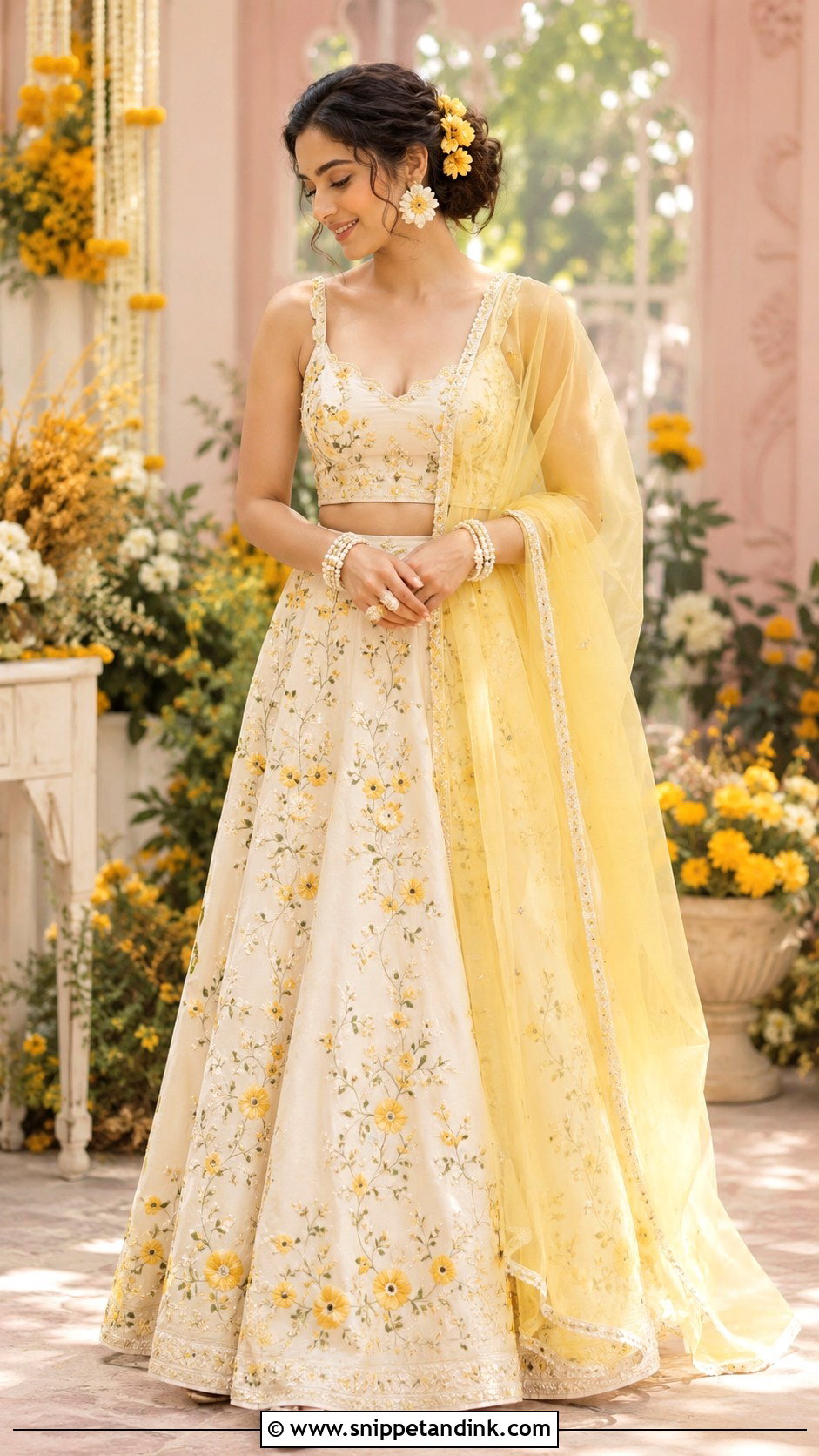
Ivory with yellow florals is the softest option here and works well for a pastel or garden setup. Choose an ivory skirt with yellow embroidery or a marigold border and add a yellow organza or chiffon dupatta. Like the white kurta, ivory shows turmeric, so it suits a sister who’ll be greeting rather than smearing paste. Keep beadwork light; heavy work on pale fabric weighs the skirt down and fights the colours. Pearl bangles, neutral juttis and a low textured bun with a few yellow flowers complete it.
17. Yellow Ruffle Saree for Haldi
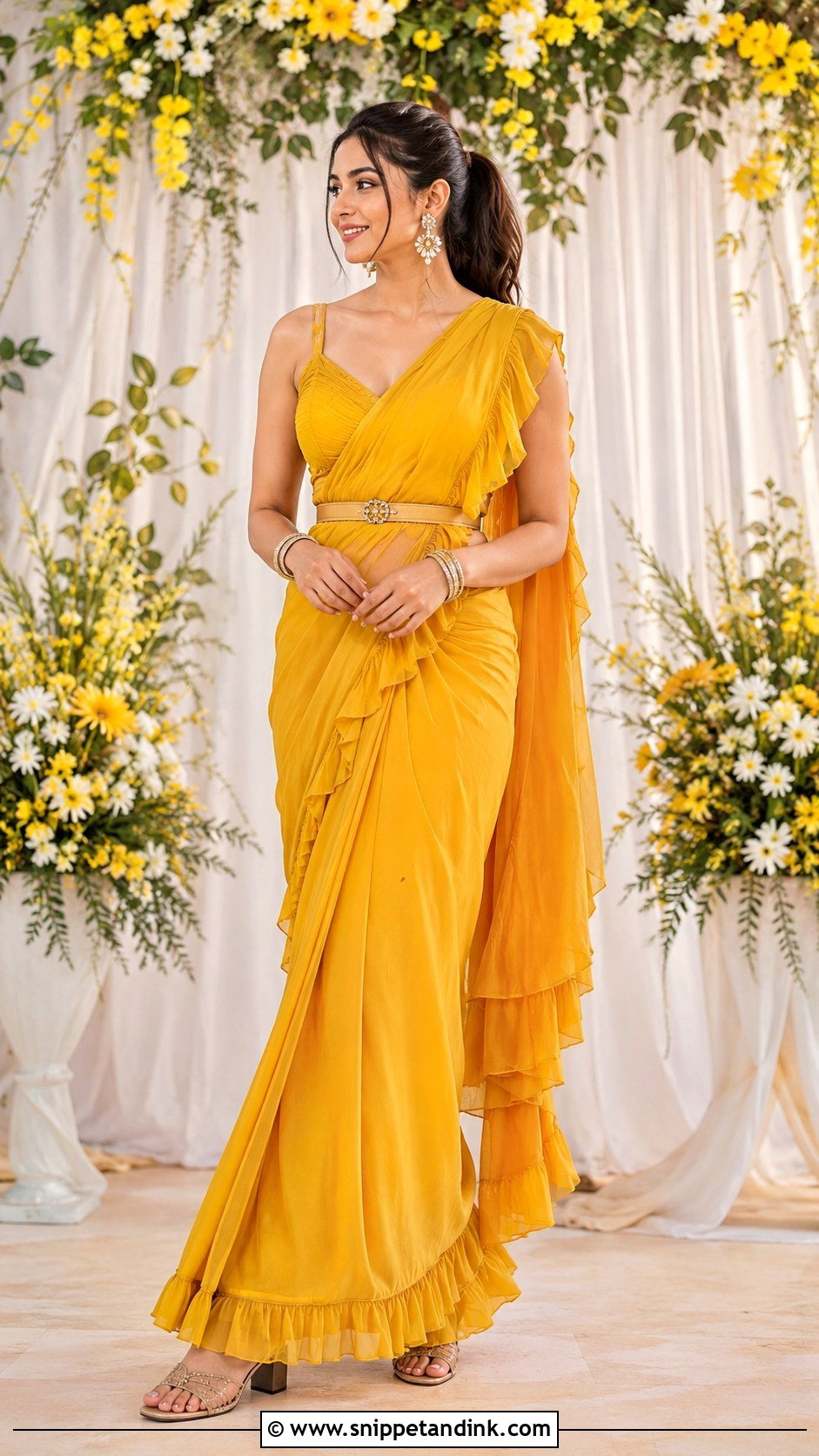
Ruffles bring movement without embroidery, which keeps the saree light. I look for ruffles controlled along the border in georgette, because tiered ruffles all over add bulk at the hip and catch on chair edges. A belt at the waist anchors the drape so you aren’t re-tucking all afternoon. Choose your blouse sleeve by how much coverage you want. Statement earrings, slim bangles and block heels suit a modern Haldi with music and a planned family shoot. Keep the bag small and structured so it doesn’t crush the frills.
18. Yellow Kurta and Skirt Set for Haldi
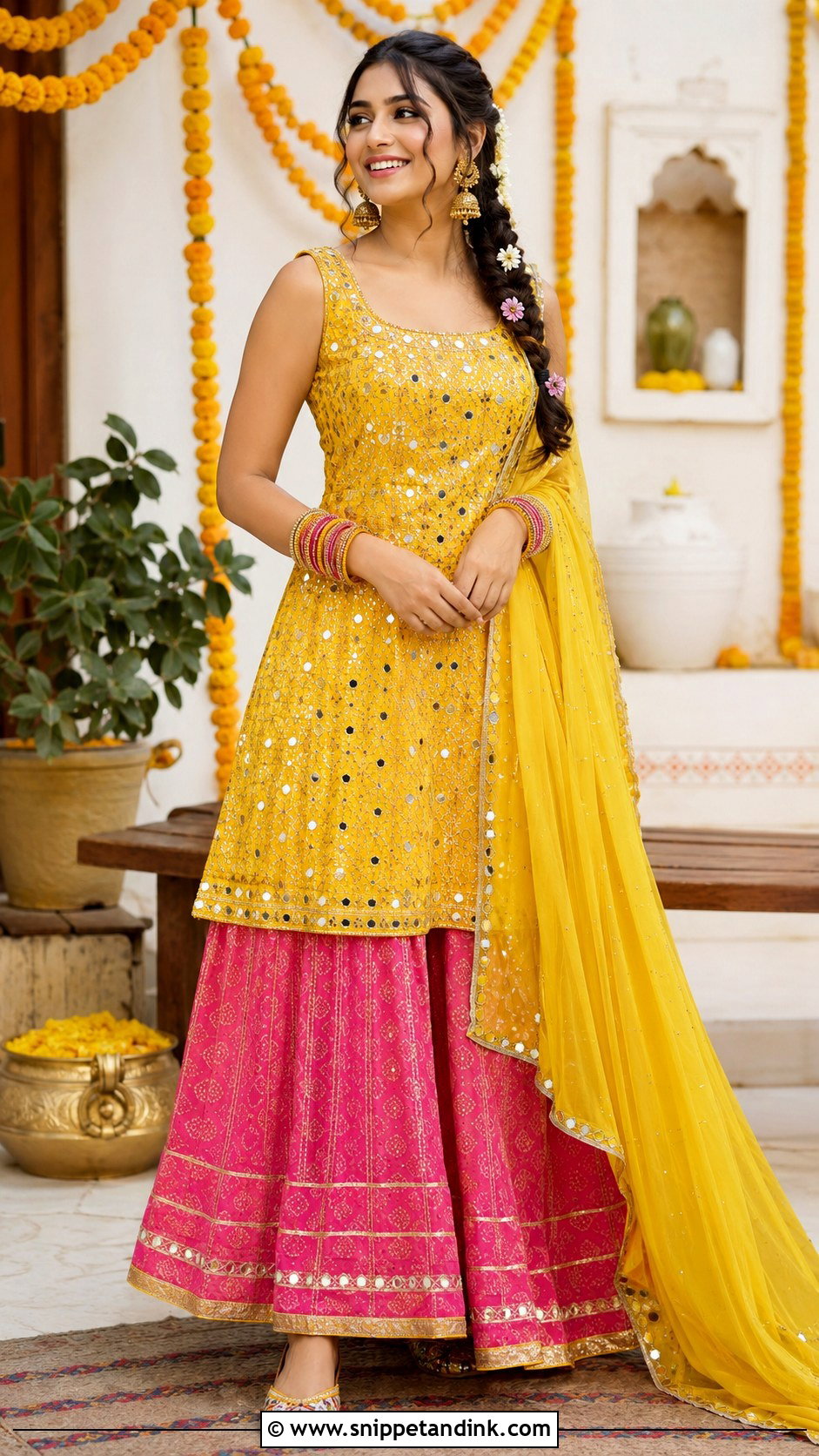
A kurta over a flared skirt is the outfit I recommend most often for mixed ages, because you can adjust kurta length and skirt volume until the proportions sit right on your frame. Choose a short or knee-length yellow kurta with mirror accents or coloured borders, then a matching or contrasting skirt in pink, green, ivory or printed yellow. Pin a light dupatta on one shoulder for hands-free movement. Jhumkas, coordinated bangles, comfortable juttis and a braid with floral pins keep it traditional without feeling formal.
19. Yellow Jumpsuit With Dupatta for Haldi
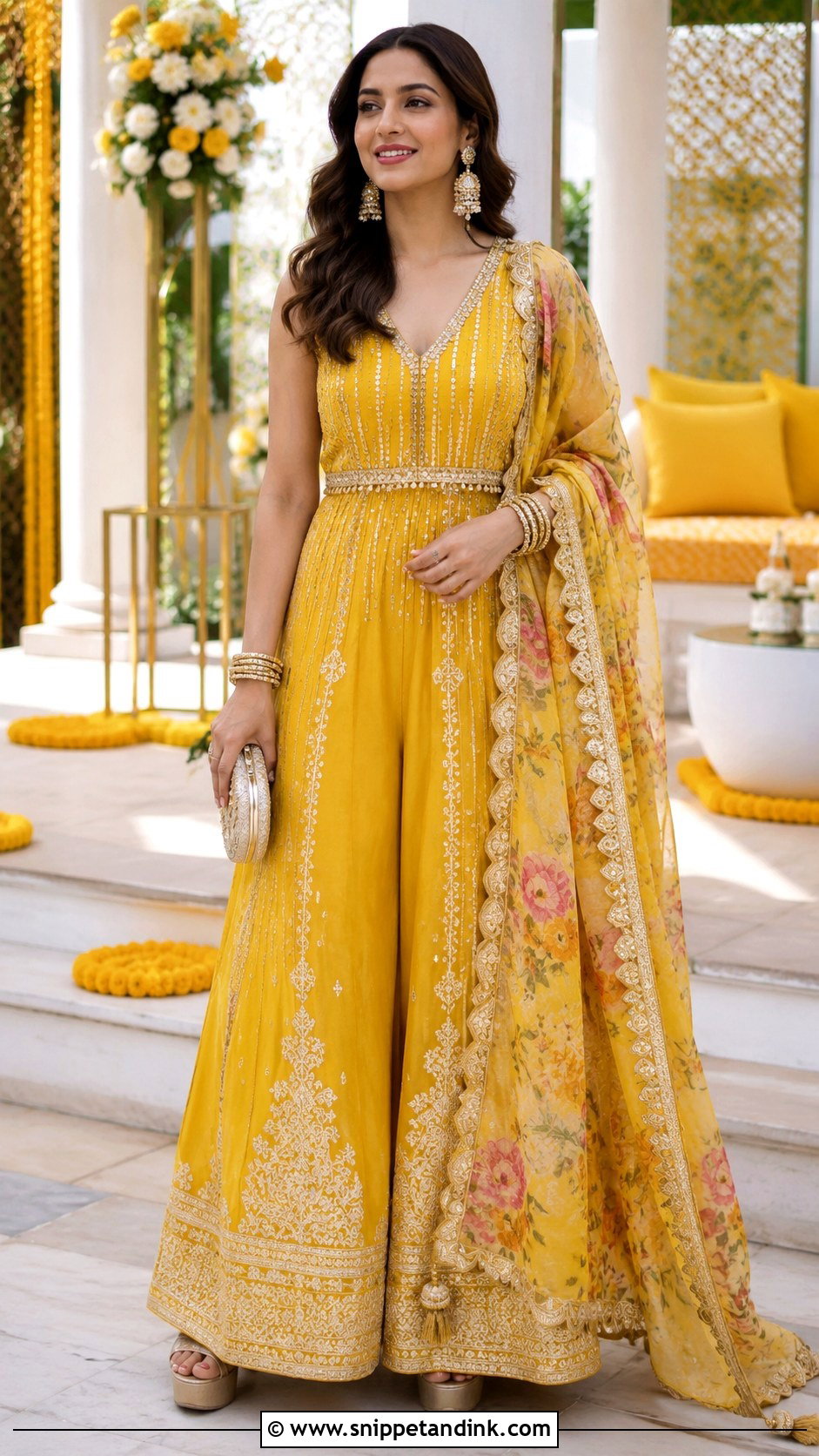
A jumpsuit is for the sister who doesn’t want to adjust a single pleat all day. Look for a wide leg, a defined waist and a secure neckline, then add a printed dupatta over one shoulder to give it festive Indian styling, or buy one with an attached drape. Try the bathroom test before you commit: a one-piece means undressing completely, which is a real nuisance when the paste is wet and the venue has one small restroom. Big jhumkas, platforms or embroidered flats and a sleek ponytail suit a contemporary venue.

20. Multicolor Bandhani Lehenga for Haldi
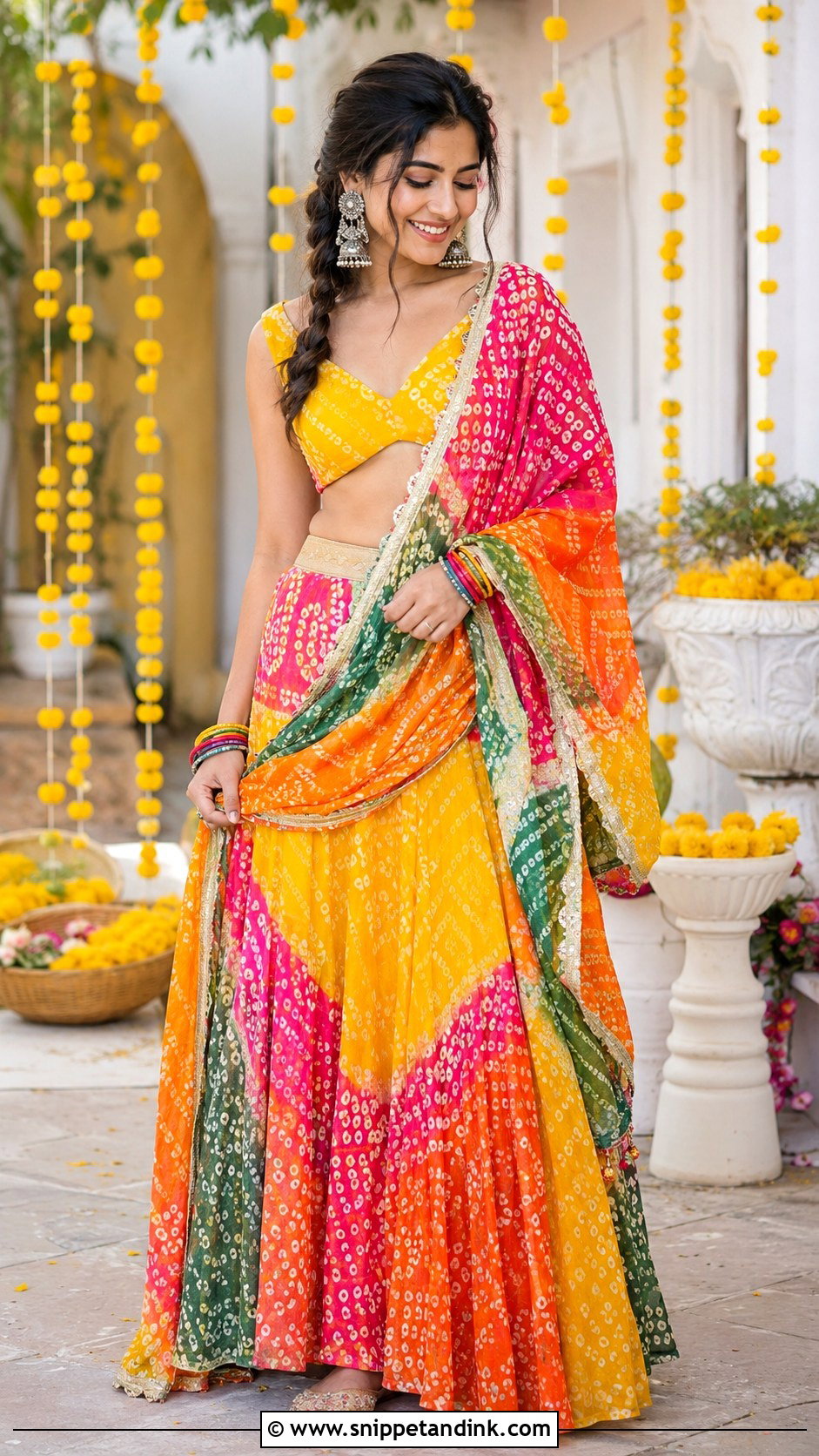
Bandhani is tie-dye, so the pattern comes from the cloth itself rather than from embellishment, and it stays light and breathable for that reason. A multicolor Bandhani lehenga mixing yellow with pink, orange, green or red needs a solid yellow blouse to calm it down. A matching Bandhani dupatta works if you drape it simply so the dots stay readable. Oxidised silver earrings and neutral juttis avoid adding a fifth colour. One warning: bandhani dyes can bleed when wet, so wash it separately and cold after the ceremony.
Getting Turmeric Out Once the Ceremony Ends
Turmeric is a dye, and it sets fast in heat. Treat stained clothes the same evening rather than leaving them in a bag overnight.
- Scrape off dried paste gently with a blunt edge before anything touches water. Rubbing pushes the pigment deeper.
- Rinse from the back of the fabric under cold water. Hot water sets the stain.
- Haldi paste is often mixed with oil or cream, so work a little dish soap into washable fabrics to lift the grease first.
- Dry washable cotton in direct sun. Sunlight fades turmeric noticeably over a day or two.
- For silk, organza, embroidery and anything with zari, skip home treatment and take it to a dry cleaner, telling them it’s turmeric.
Never put bleach on a stained lehenga or saree. It won’t lift the yellow evenly and it can strip the dye from bandhani or printed fabric around the mark. If an outfit matters to you, wear a cheaper layer over it for the messy part of the ceremony and change for photos afterwards.
Comfort Wins the Haldi, Then the Photos Follow
Every outfit above can work, but only one will suit your particular afternoon. Start with the bride’s colour and the family’s expectations, then think about the weather and how close you’ll be to the paste. Light fabrics, drapes you can pin and shoes you can kneel in will matter more by the end of the day than any embroidery. Once that’s settled, pick the colour you feel happiest in and spend the day with your sibling instead of fixing your dupatta.
You'll Like These Ideas:







Leave a Reply