
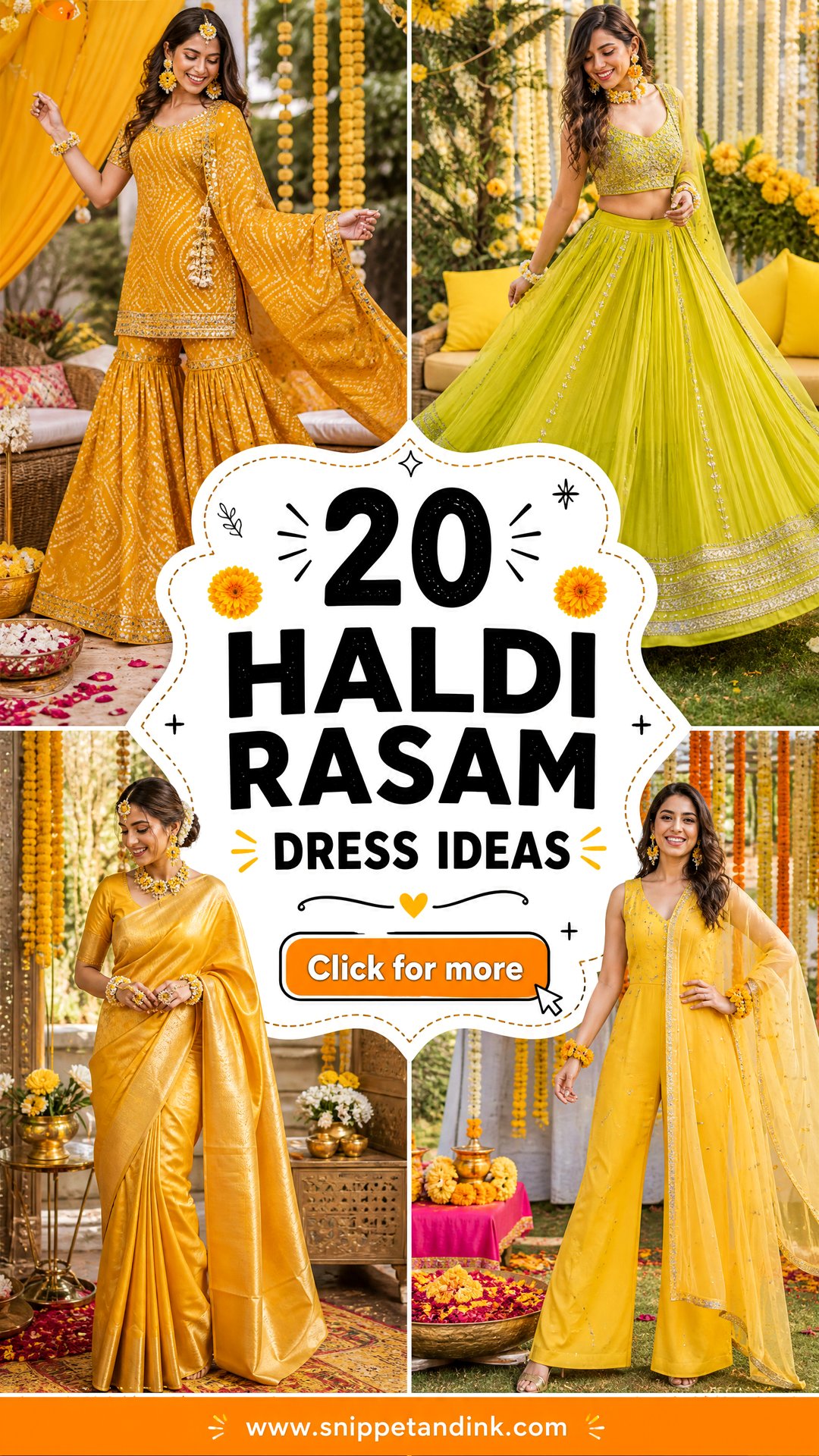
The haldi rasam is the messiest ritual of the wedding week, and the outfit has to accept that. You’ll sit low, lean forward, get paste on your arms and dance once the music starts. I plan haldi looks around those movements, then bring in color. Traditional sarees and lehengas sit next to shararas, kurta sets, jumpsuits and pre-draped styles in the twenty ideas below. Yellow is the expected shade, but mustard, lime, ivory, pink and florals all belong. Lighter, reusable pieces like organza sarees, printed ghararas and co-ord sets have largely replaced heavy embroidery at this function, and I think that’s the right instinct. Each look notes who it suits: bride, sister, bridesmaid or guest.
Bride, Sister or Guest? How Close You Sit to the Paste
The same yellow lehenga can be right for one person and wrong for another, depending on where she stands during the ritual. Before we look at a single outfit, I ask clients which group they fall into.
The bride
You’ll be pasted from head to toe, often by dozens of hands. Choose fabric you’re at peace with staining and sleeves that let paste reach your arms. Skip heirloom silk unless you plan to change before the ritual. Floral jewelry works better than gold here, since paste gets into settings and chains.
Sisters and close cousins
You’ll apply paste, hold the bowl, help the bride up and down and probably get pasted yourself. Shararas, kurta sets and pre-draped sarees give you the freedom to move. Keep your dupatta pinned, not loose.
Guests
You’ll apply a little paste and mostly watch, eat and dance. This is where pale colors, chikankari and nicer fabrics are safe, as long as you stay clear when the playful smearing starts.
1. Yellow Lehenga Haldi Outfit
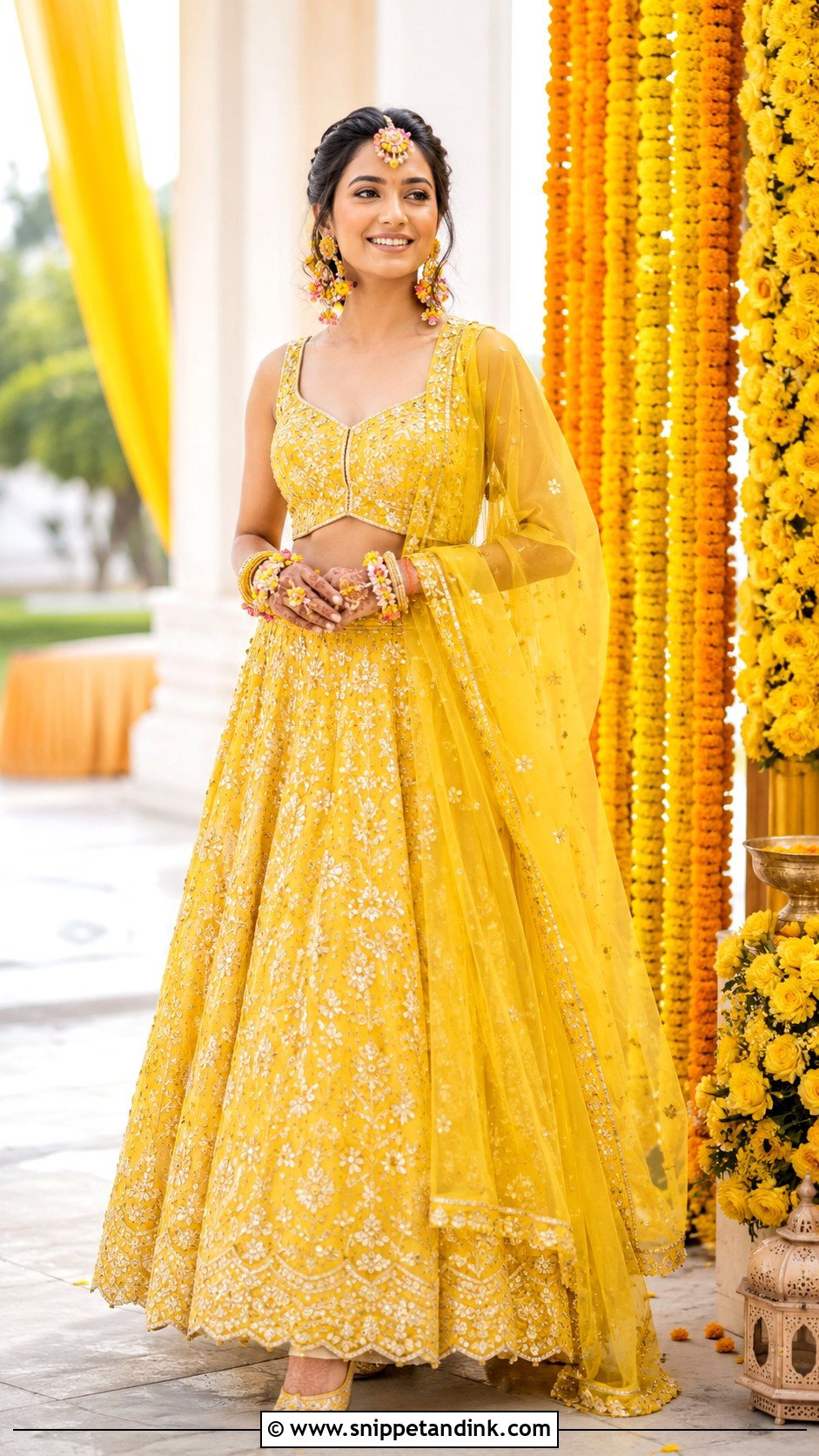
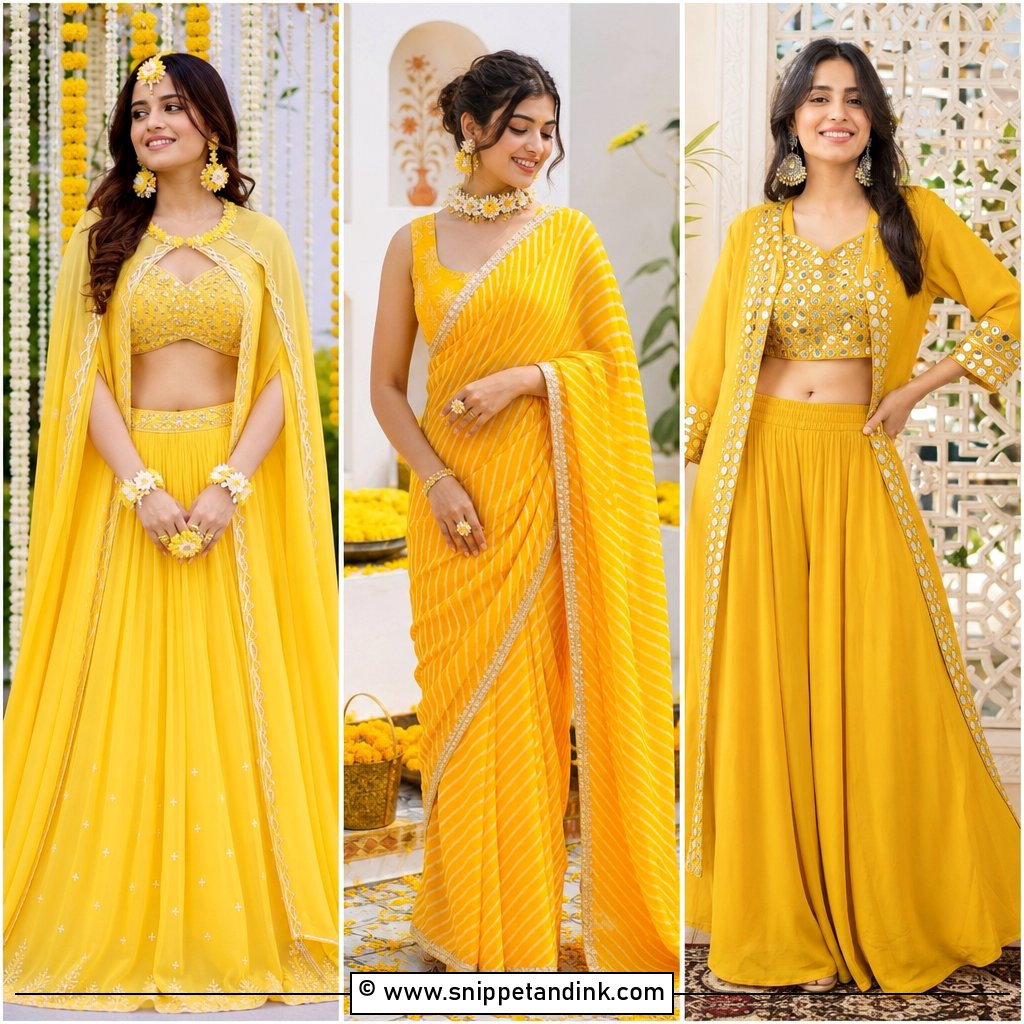
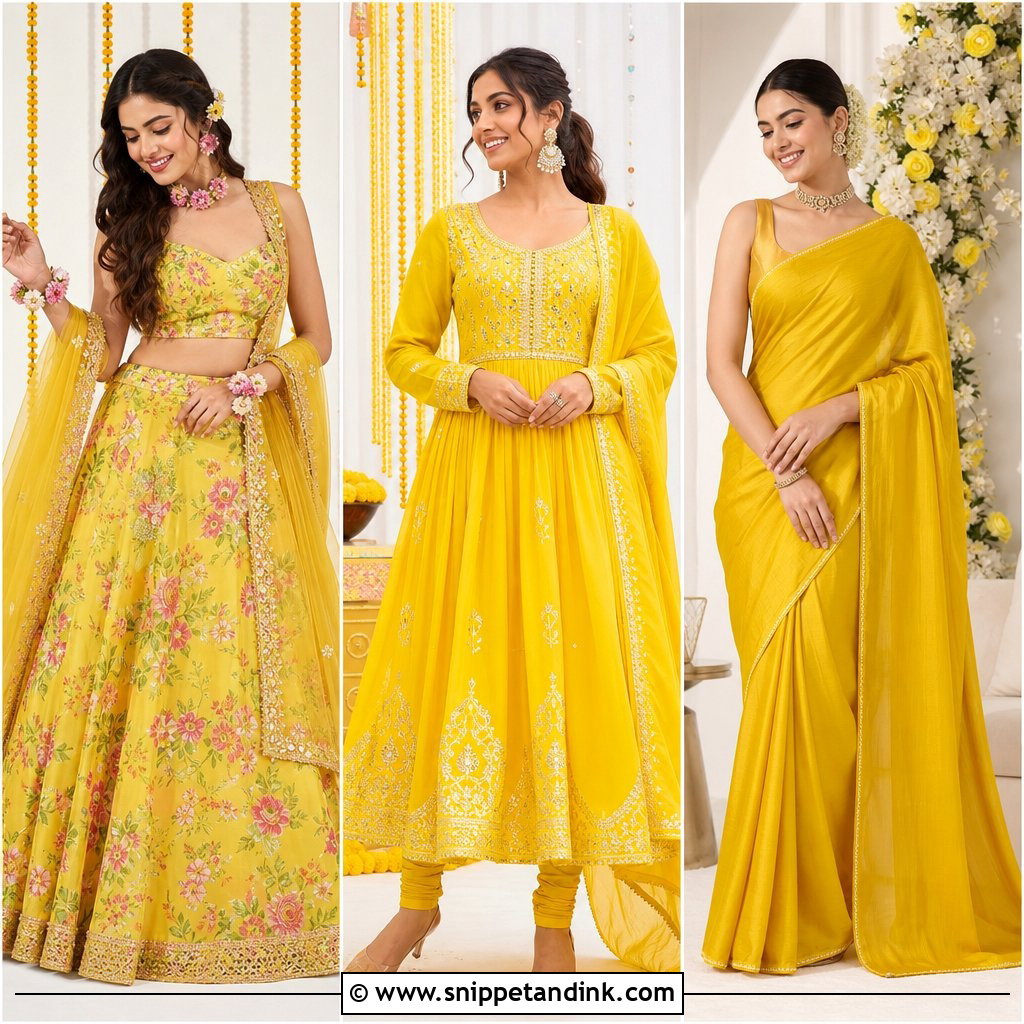
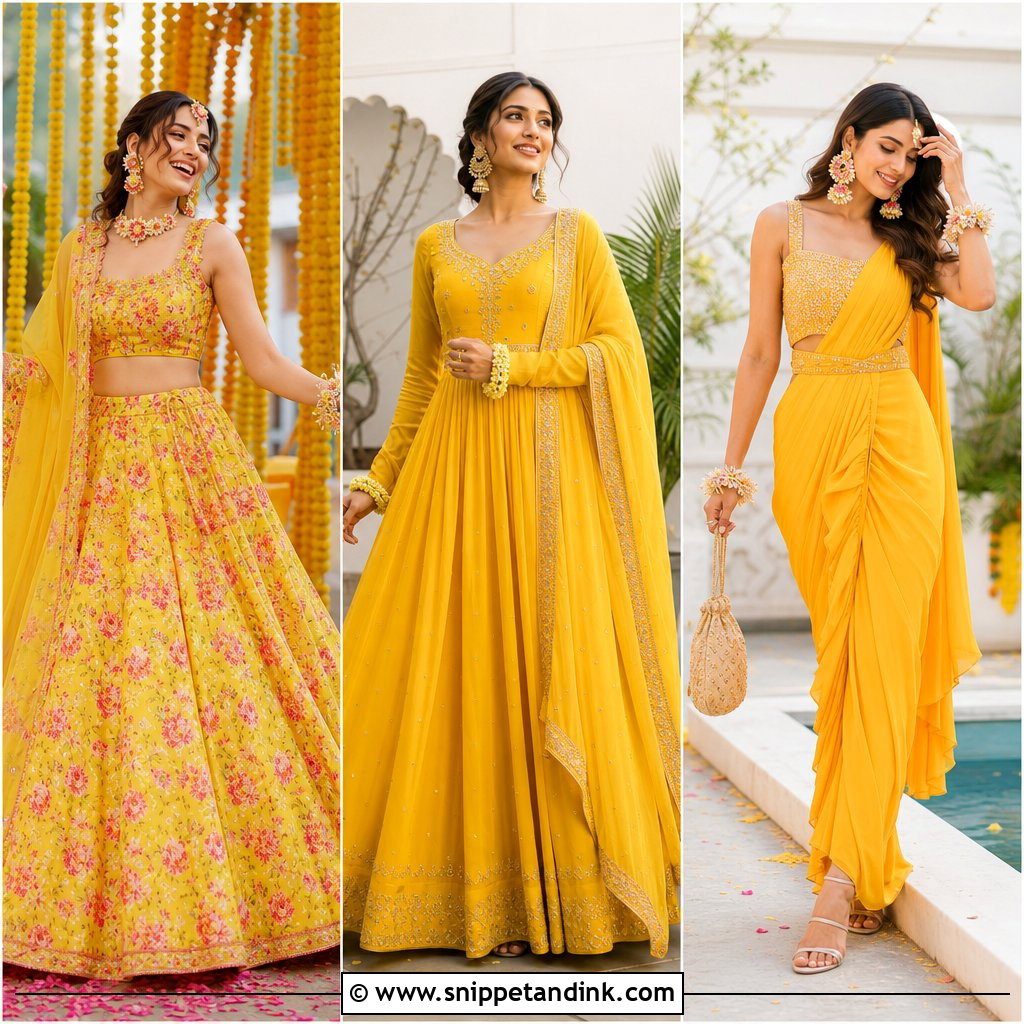
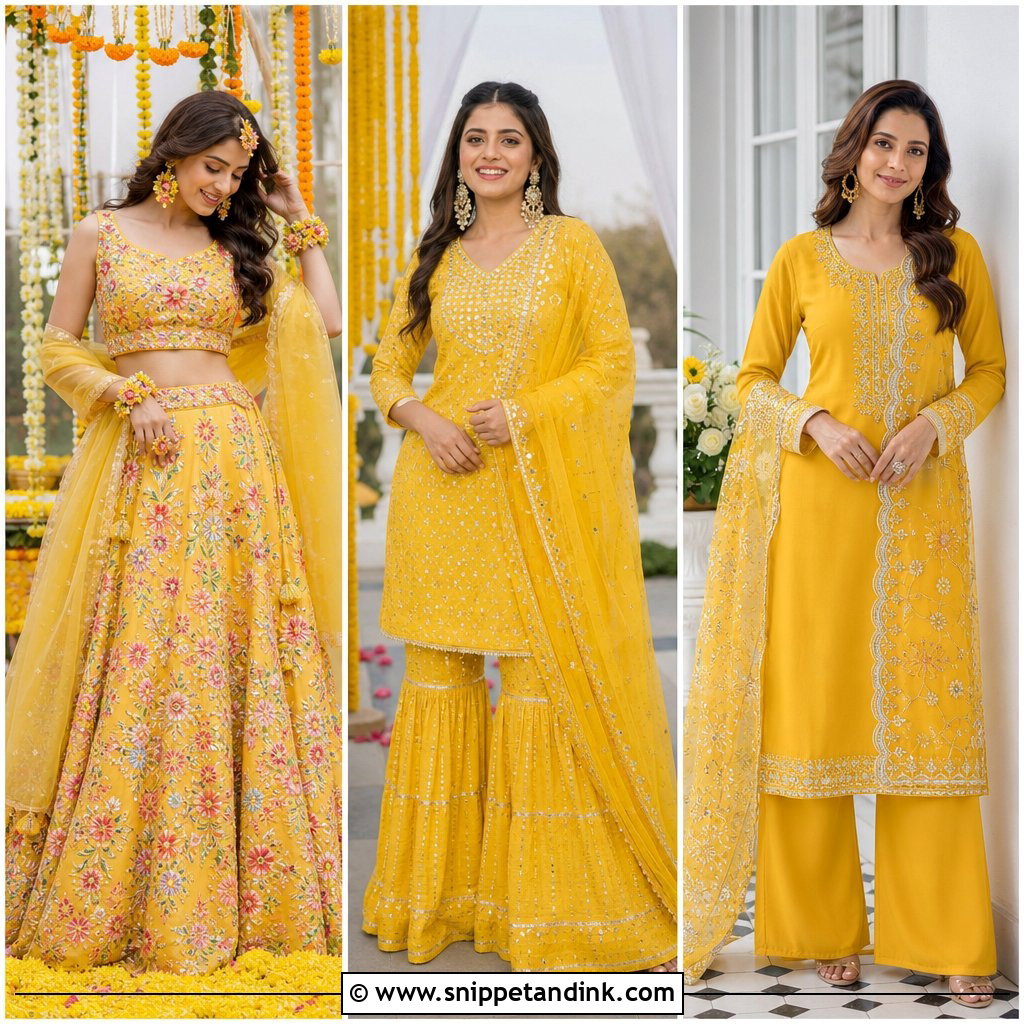
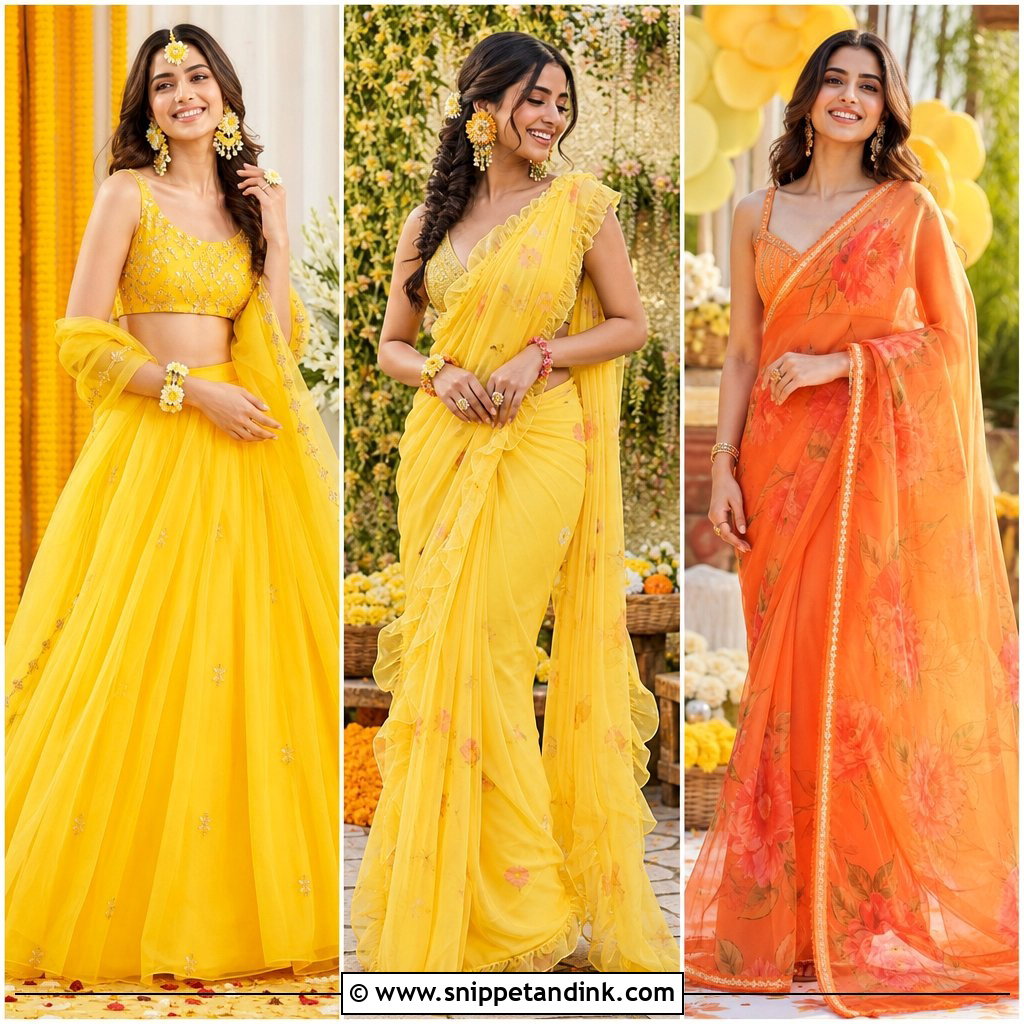
A classic yellow lehenga is what most brides picture, and it works best when it’s lighter than you think it should be. Georgette, chiffon or cotton silk move with you; a heavy silk skirt fights you every time you sit down on a low stool. I pair it with a fitted embroidered blouse and a net dupatta pinned over one shoulder. Floral threadwork, small mirrors or gota borders are enough detail in daylight. Floral earrings, a matching maang tikka, stacked bangles and embroidered juttis finish it, with flowers in a braid. Check the blouse straps and neckline by raising both arms. If anything shifts, fix it before the day.
2. Mustard Saree Haldi Outfit
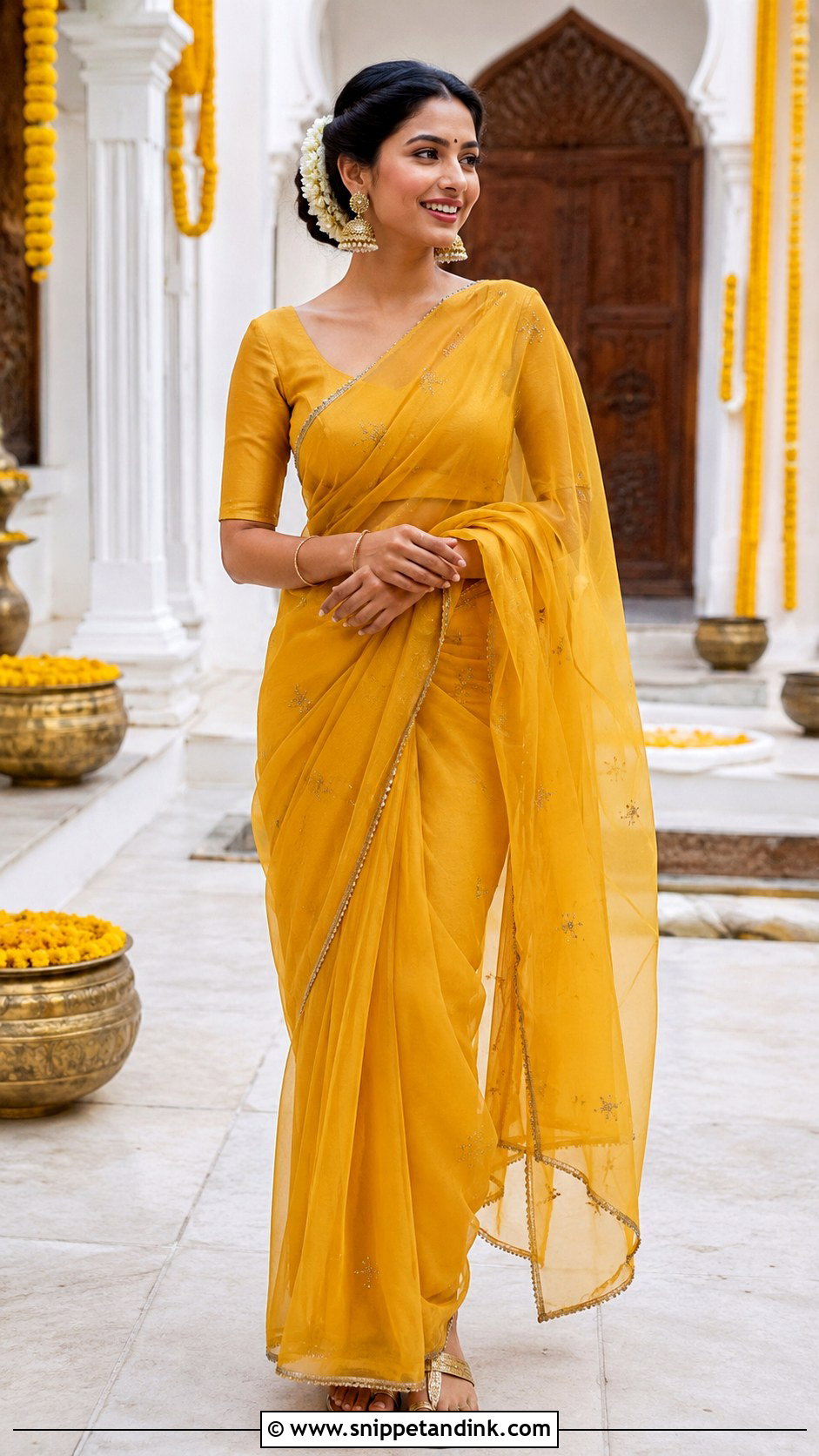
Mustard is the grown-up version of haldi yellow. It’s warmer, it suits deeper skin tones particularly well, and it hides paste marks. A chiffon or georgette saree drapes easily and is comfortable to sit in. An elbow-sleeve blouse with subtle embroidery or a square neckline keeps it traditional. I pin the pleats with two pins on the inside and anchor the pallu at the shoulder, because a loose pallu is the first thing to land in the paste bowl. Gold jhumkas, slim bangles and a small bindi are enough. Wear embellished flats outdoors, and a low bun with jasmine.
3. Floral Organza Saree Haldi Outfit
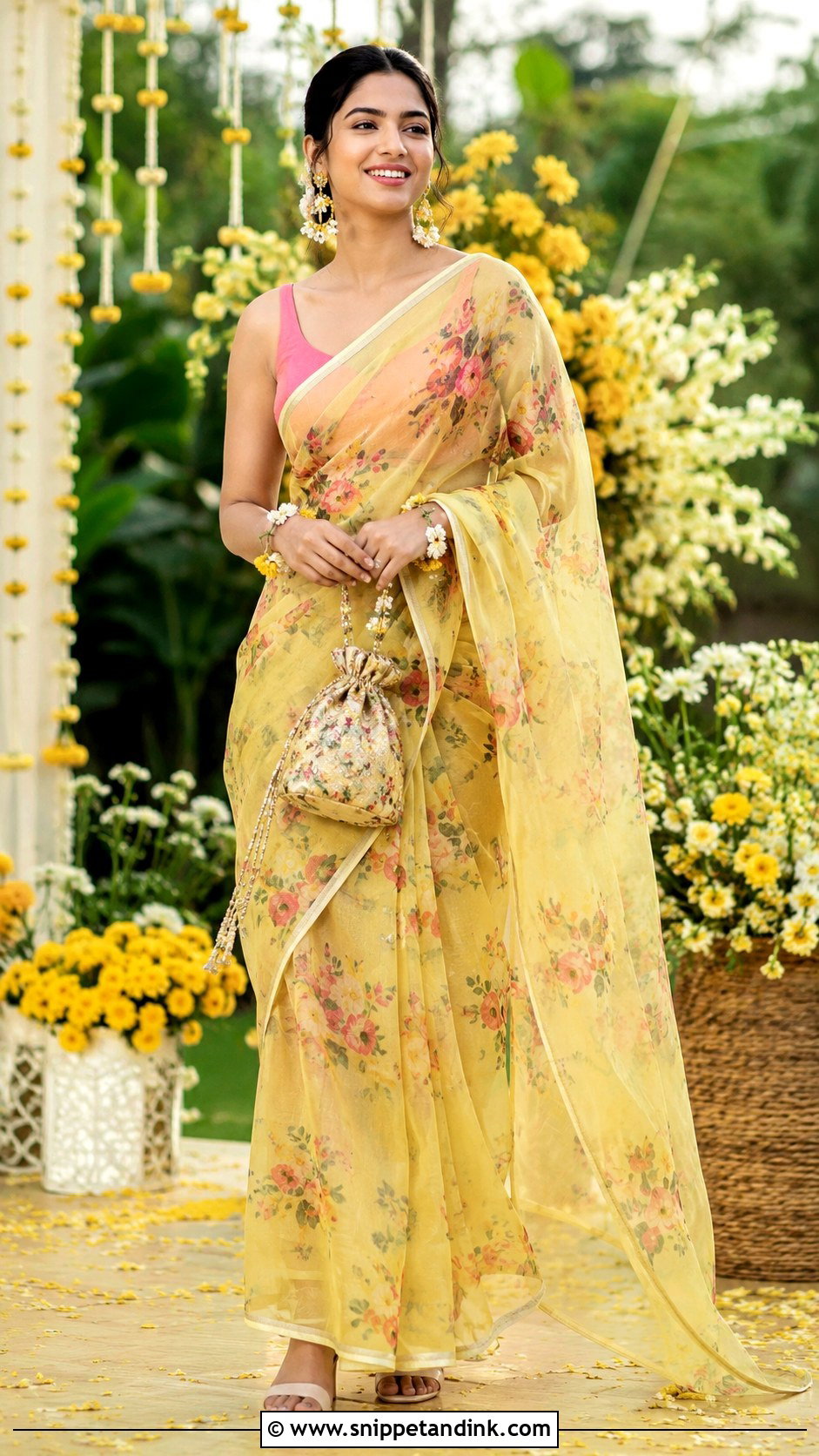
Floral organza looks fresh against marigold decor, but it behaves differently from soft silk. Organza is crisp and holds its shape, so loose pleats puff outward and add width at the hips. I keep pleats narrow and pin discreetly at the shoulder and waist. Choose yellow with white, pink or green flowers, and a plain blouse in one color from the print. Pearl earrings, floral bangles and a small potli suit the airy fabric. Neutral juttis or low block heels and loose waves or a textured ponytail finish it. It suits an outdoor daytime haldi with floral decor, for a bride, sister or guest.
4. Yellow Sharara Haldi Outfit
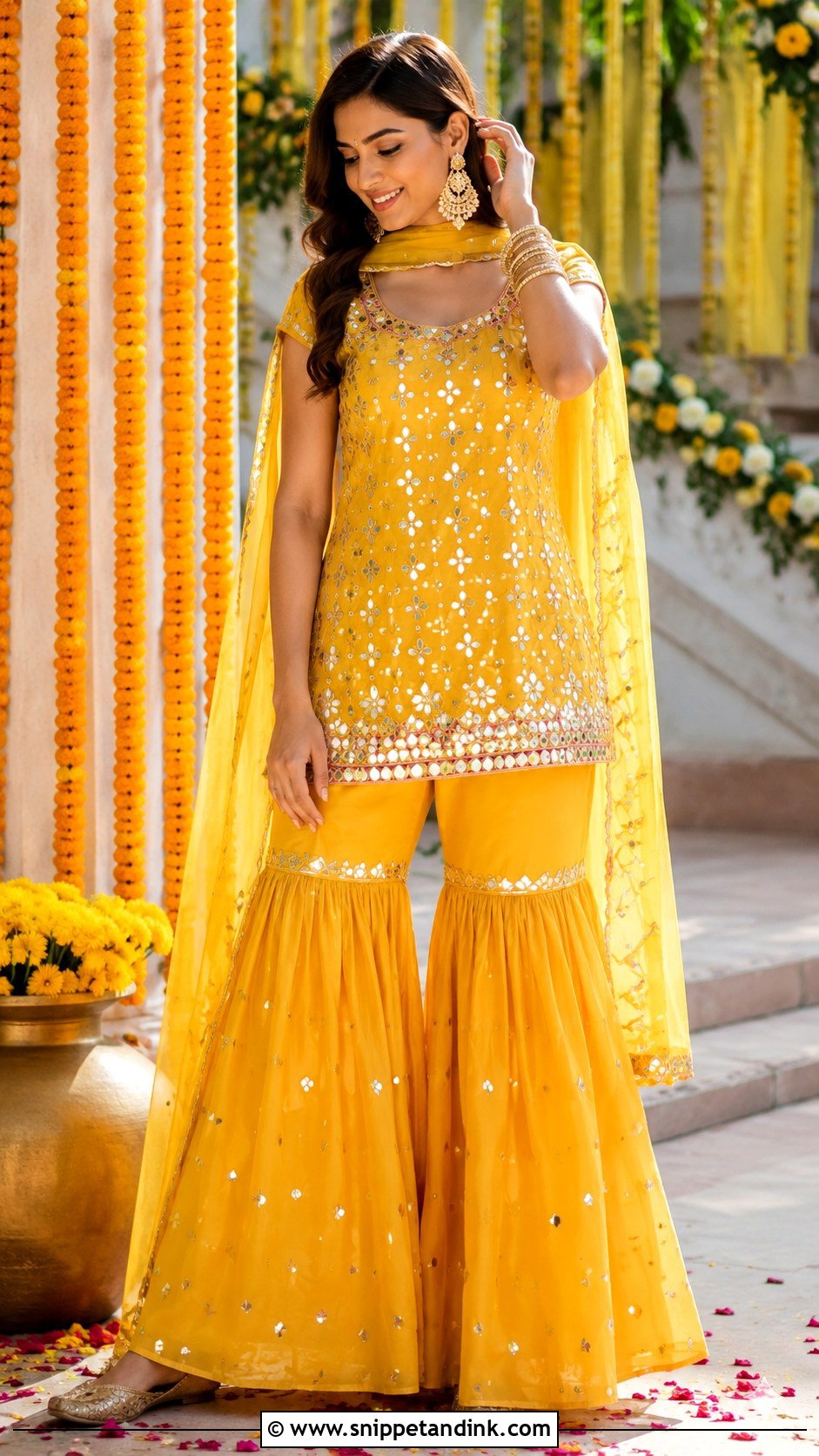
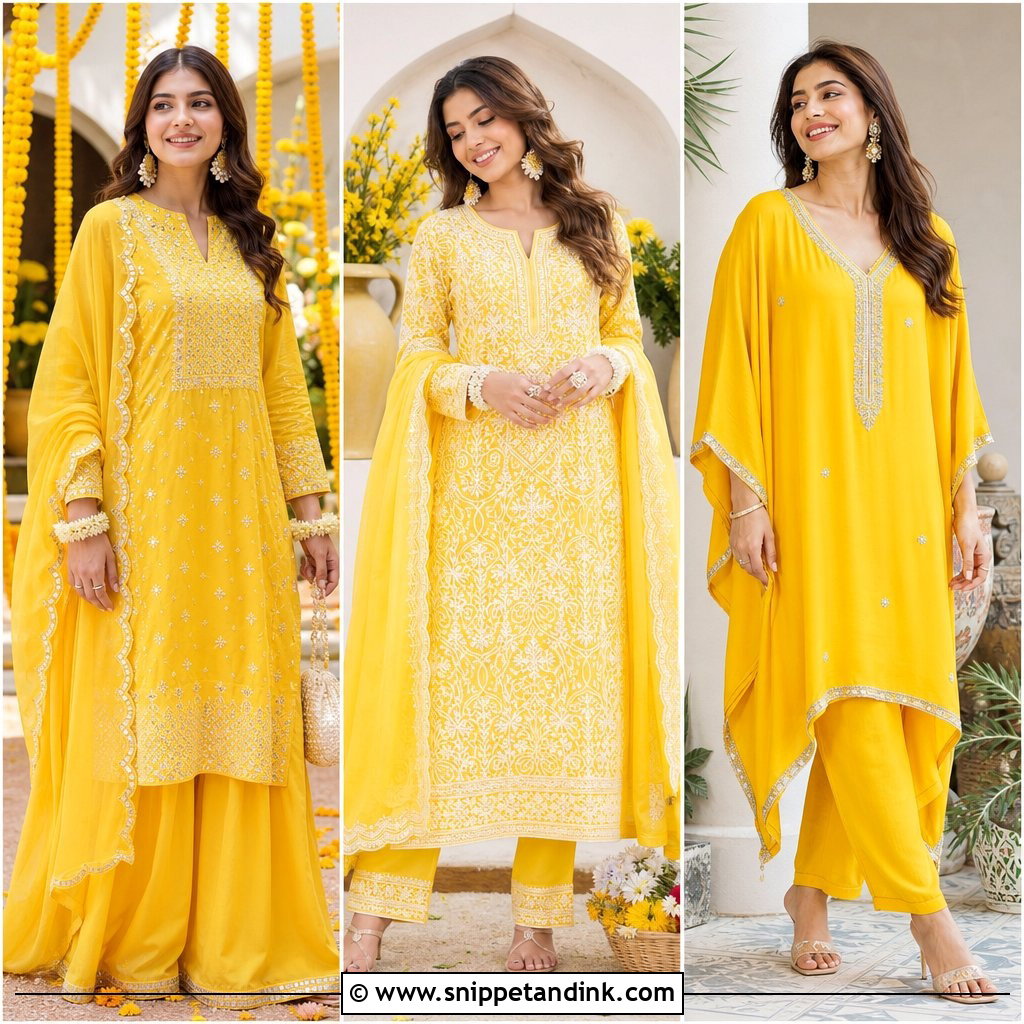
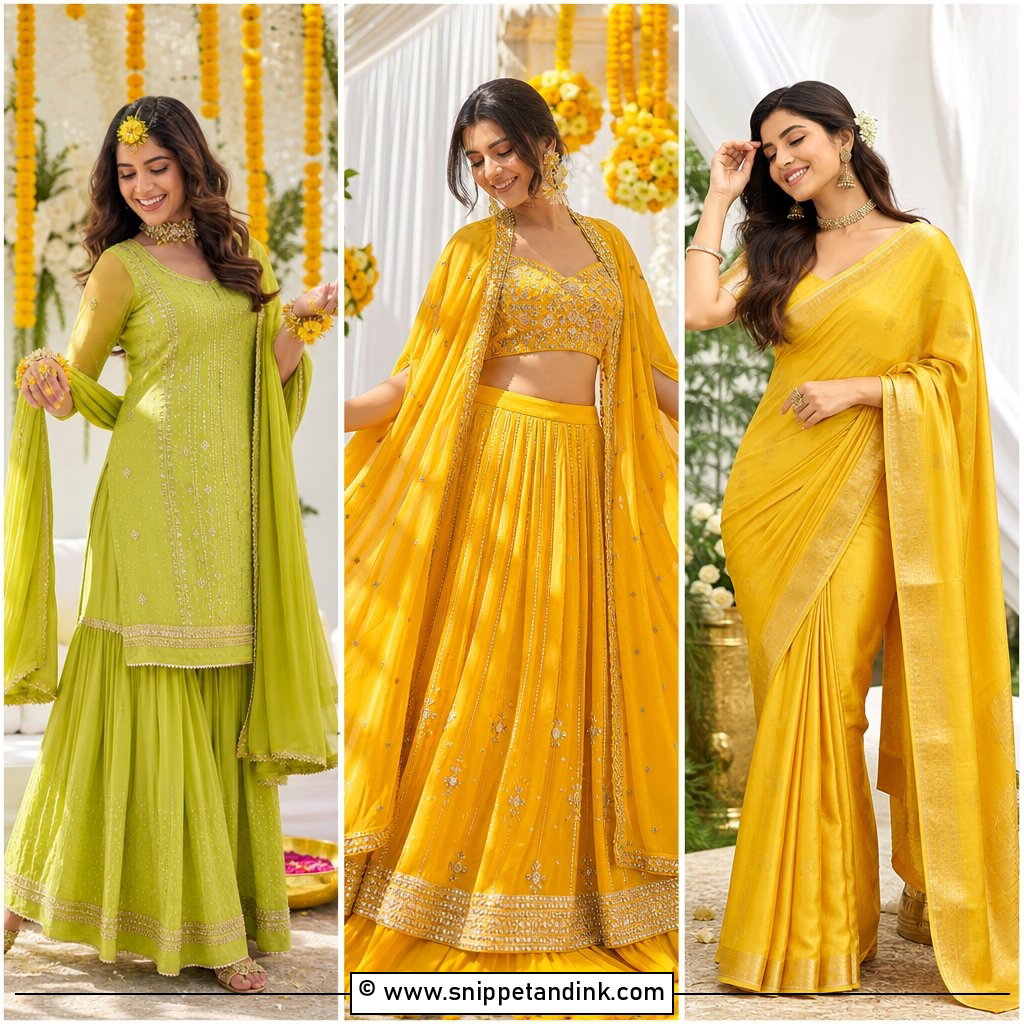
For a sister who’s going to be running around, a yellow sharara set is my first suggestion. A short kurti, very flared sharara pants and a light chiffon dupatta give lots of movement, and small mirror accents, gota trim or tonal embroidery keep it festive without weight. Wear the dupatta across both arms for photos and pin it to one shoulder once you start helping. Chandbali earrings, bangles and metallic juttis finish it. A sleek ponytail or loose braid keeps hair out of your face when you lean in to apply paste. It’s practical for bridesmaids and sisters who will dance and help with arrangements.
5. Chikankari Kurta Palazzo Haldi Outfit
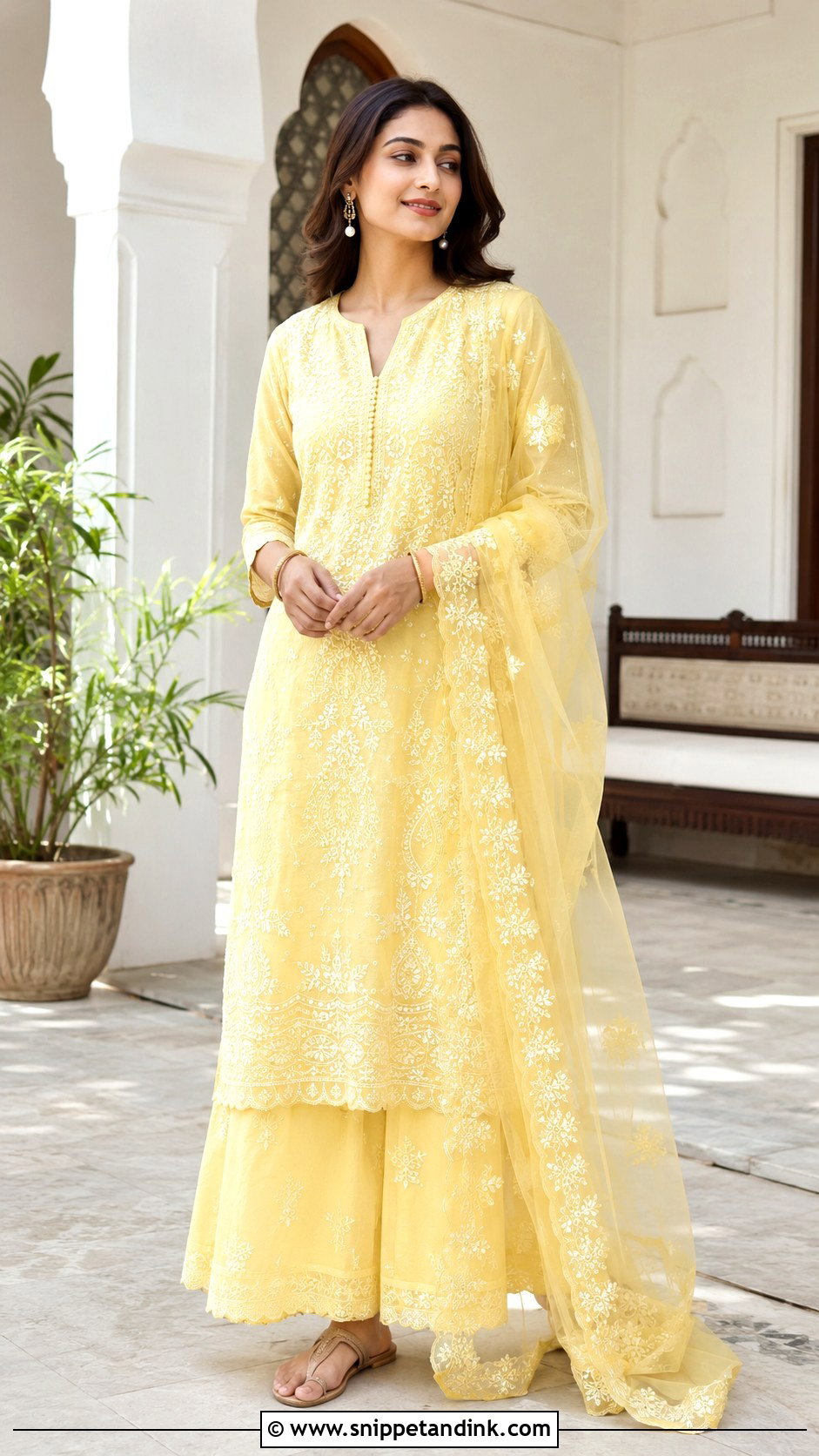
Chikankari is hand embroidery, traditionally white thread on fine cotton, and on a yellow kurta and palazzo set it looks refined without shine. I always check whether the kurta is lined. Unlined chikankari is see-through in bright sun, and a lining fixes it completely. A straight or gently flared kurta with side slits, wide palazzos and an organza dupatta with a lace edge make it ceremony-ready. Pearl drops, thin gold bangles and a small ring are enough. Nude or gold flats and a low ponytail or half-up waves with tiny flowers suit it. It’s modest, simple and very wearable again.
6. Bandhani Gharara Haldi Outfit
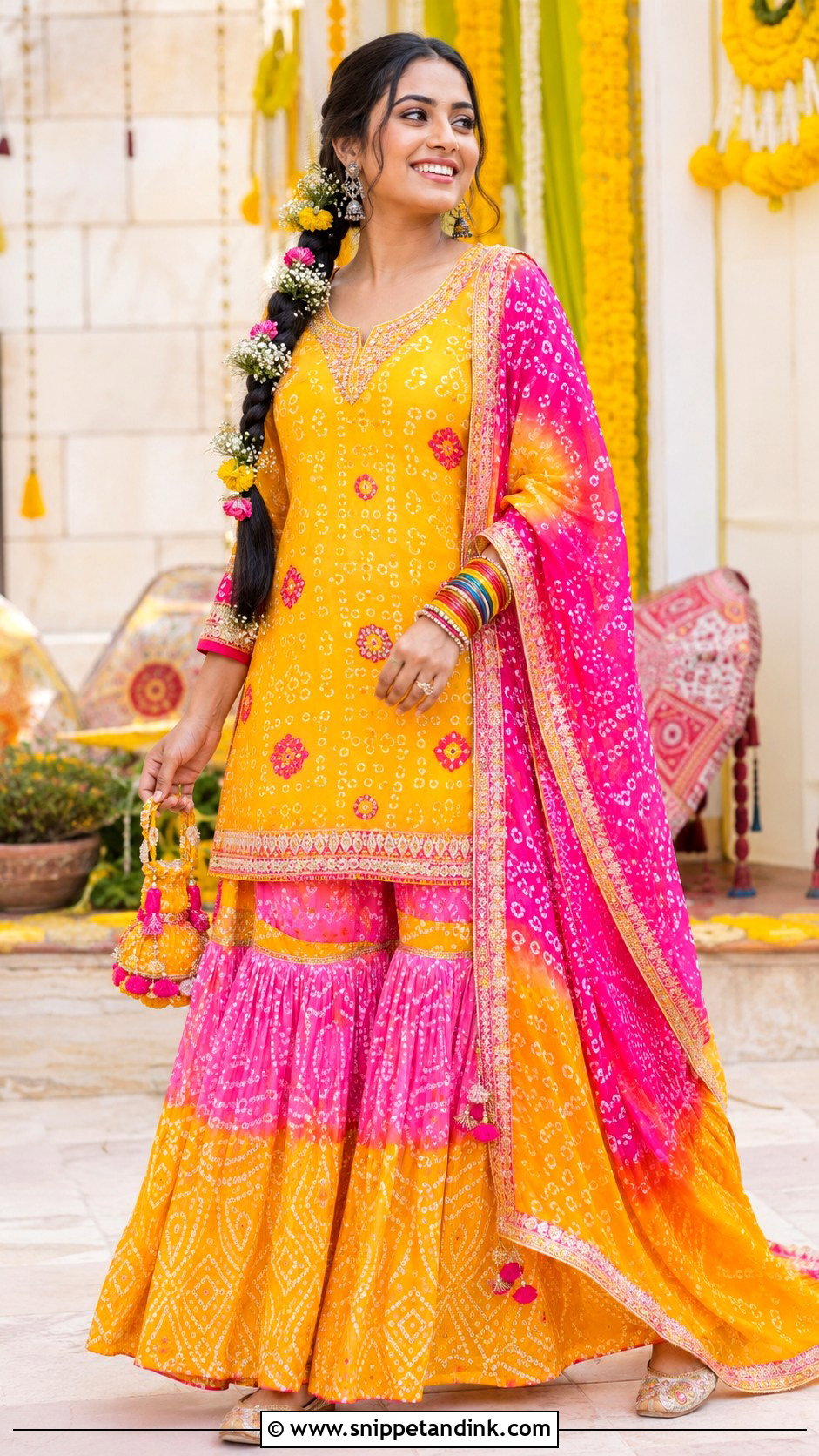
Bandhani carries regional character, especially for Gujarati and Rajasthani families. Build the look around a yellow and pink Bandhani kurti with a flared gharara and a matching dupatta. The gharara is fitted to the knee and flares below, which gives definition and freedom at once. Since the print is busy, I choose a kurti with a simple neckline and almost no embellishment. Oxidized silver earrings, colorful bangles and embroidered juttis suit it, with a small fabric potli. A center-parted braid with flowers finishes it. For bridesmaids, it coordinates with the bride without copying her.
7. Yellow Anarkali Haldi Outfit
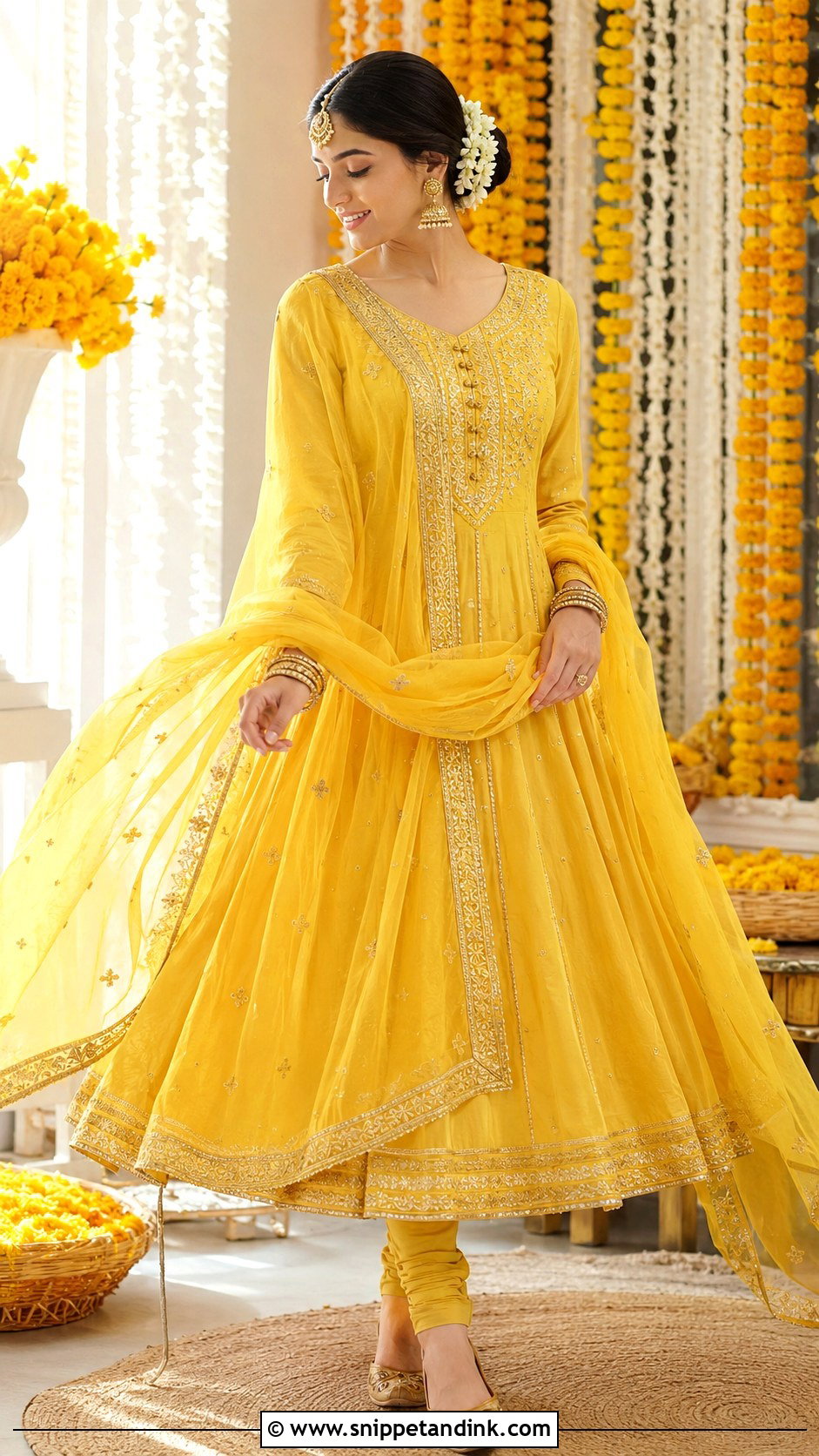
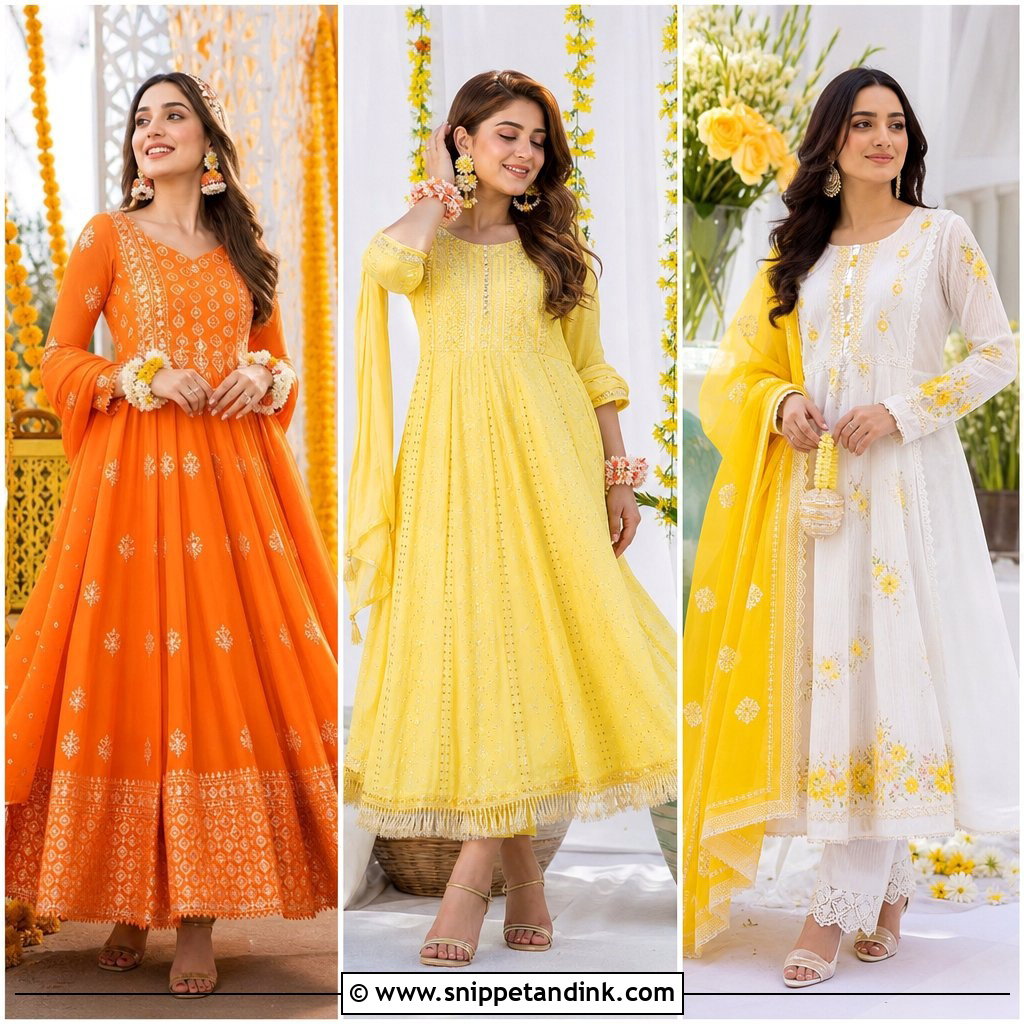
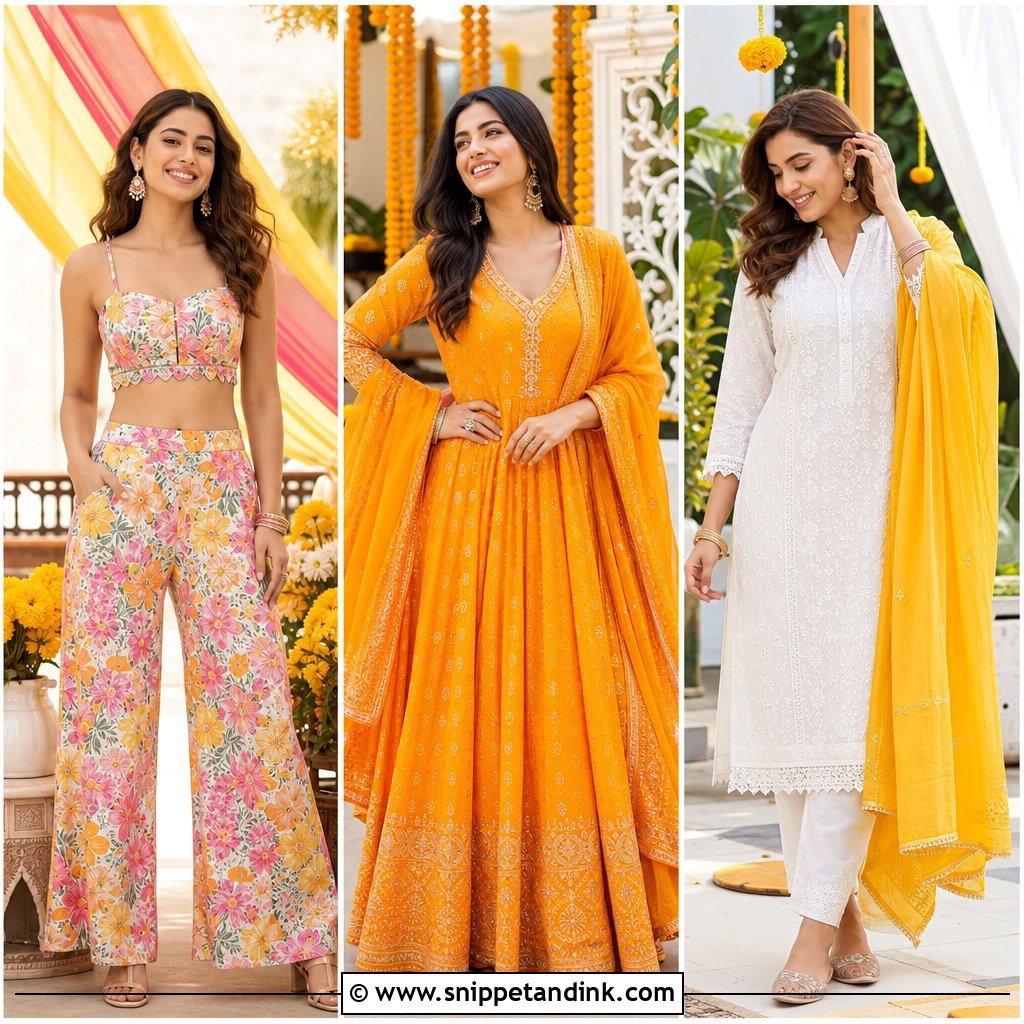
Anarkalis give the flow of a lehenga without any draping. I choose calf or ankle length in cotton silk, georgette or light Chanderi, with fitted churidar pants and a sheer dupatta across the arms or pinned at one shoulder. A delicately embroidered neckline and a narrow gold border are festive enough. Jhumkas, a small maang tikka, bangles and flat mojaris finish it, with a low bun or side braid. The fit point is the waist seam. When it sits at your natural waist or slightly above, the skirt falls smoothly; when it’s too low, the flare starts in the wrong place and adds bulk.
8. Pre-Draped Saree Haldi Outfit
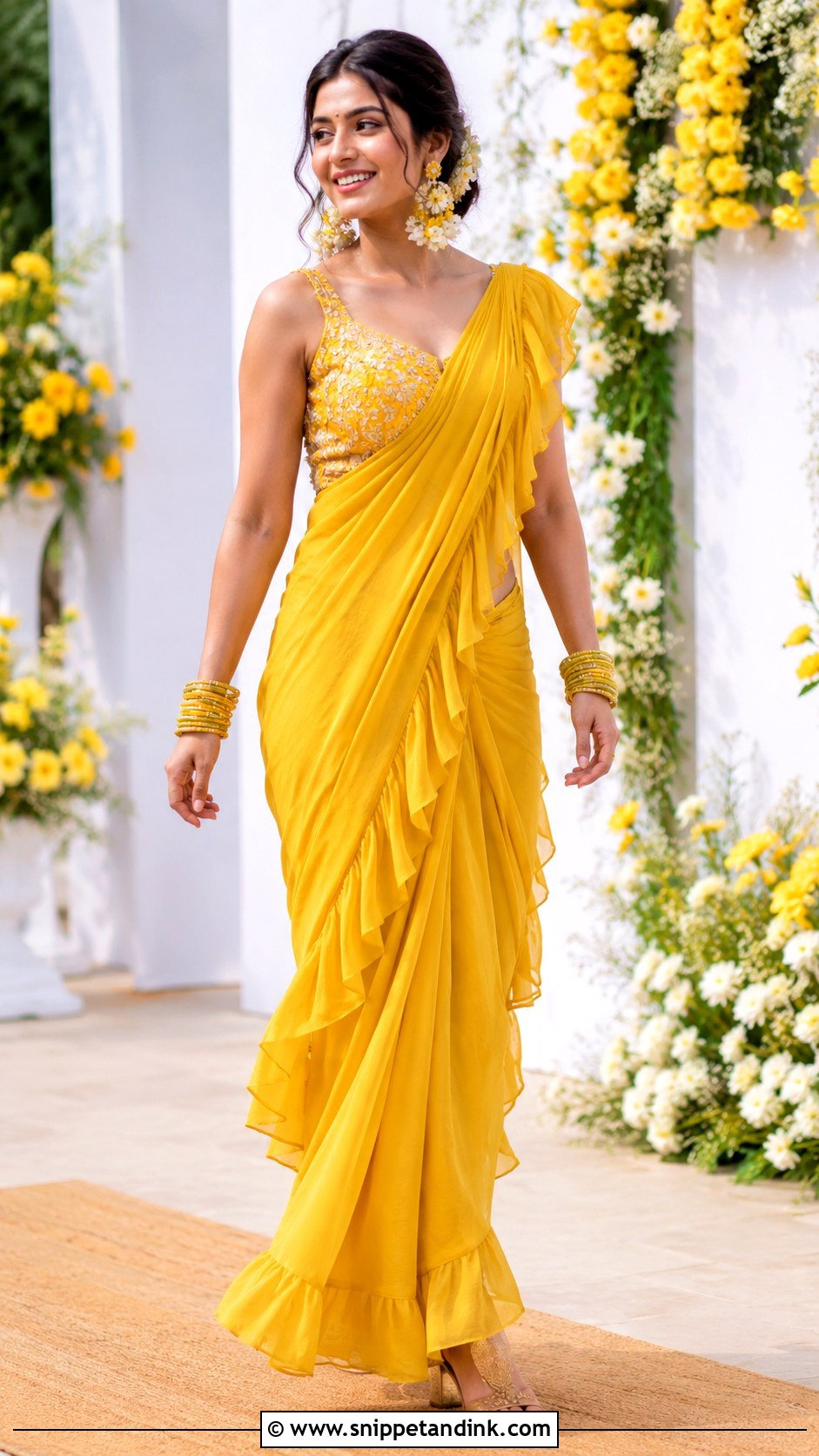
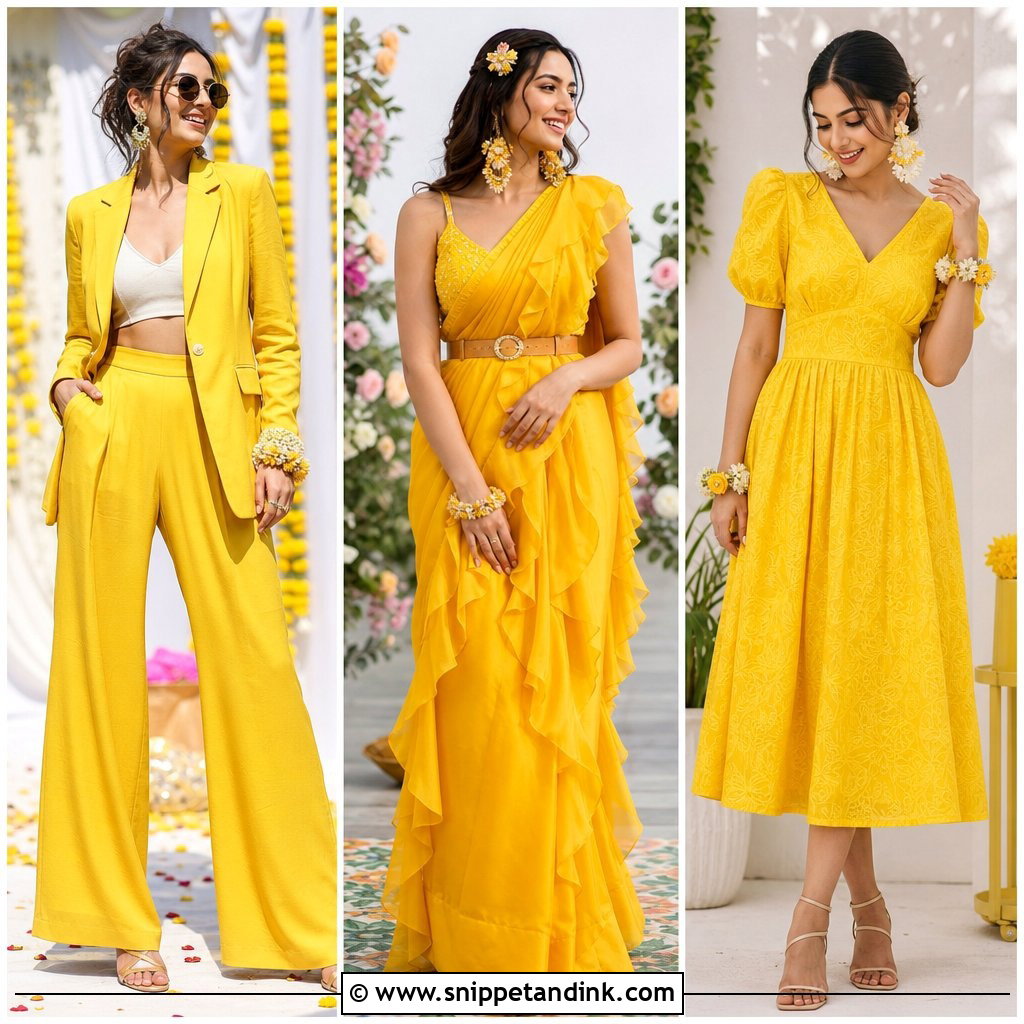
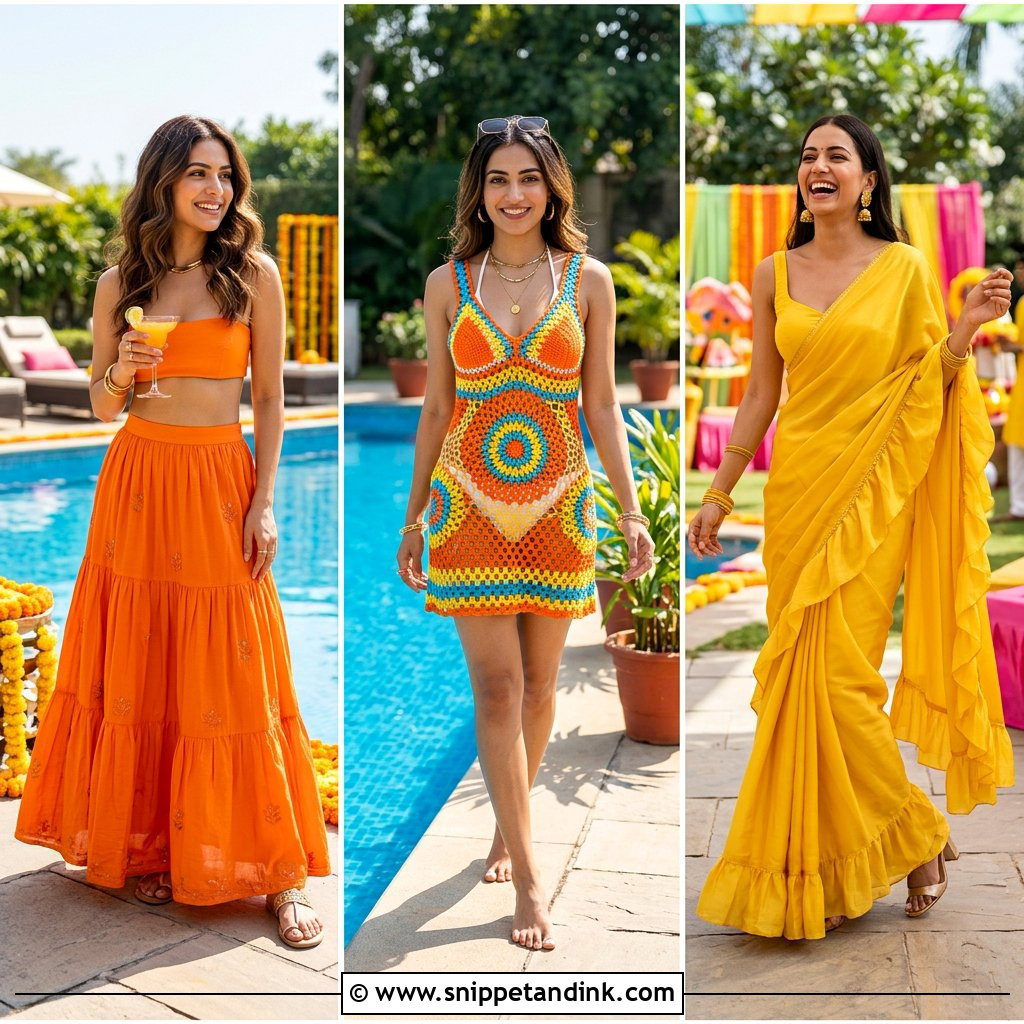
If you love the look of a saree but dread re-pinning pleats between rituals, a pre-draped yellow saree solves it. Stitched pleats, a secure waistband and a light ruffled or embroidered pallu mean nothing comes loose when you sit or dance. Pair it with a fitted blouse, short-sleeved or a supportive sleeveless cut. Floral statement earrings, coordinated bangles and low block heels finish it. A high ponytail or polished braid keeps it youthful. My only advice is to sit cross-legged in it at the fitting, because some ready-stitched pleats pull tight at the hip once you’re on the floor.
9. Peplum Dhoti Pants Haldi Outfit
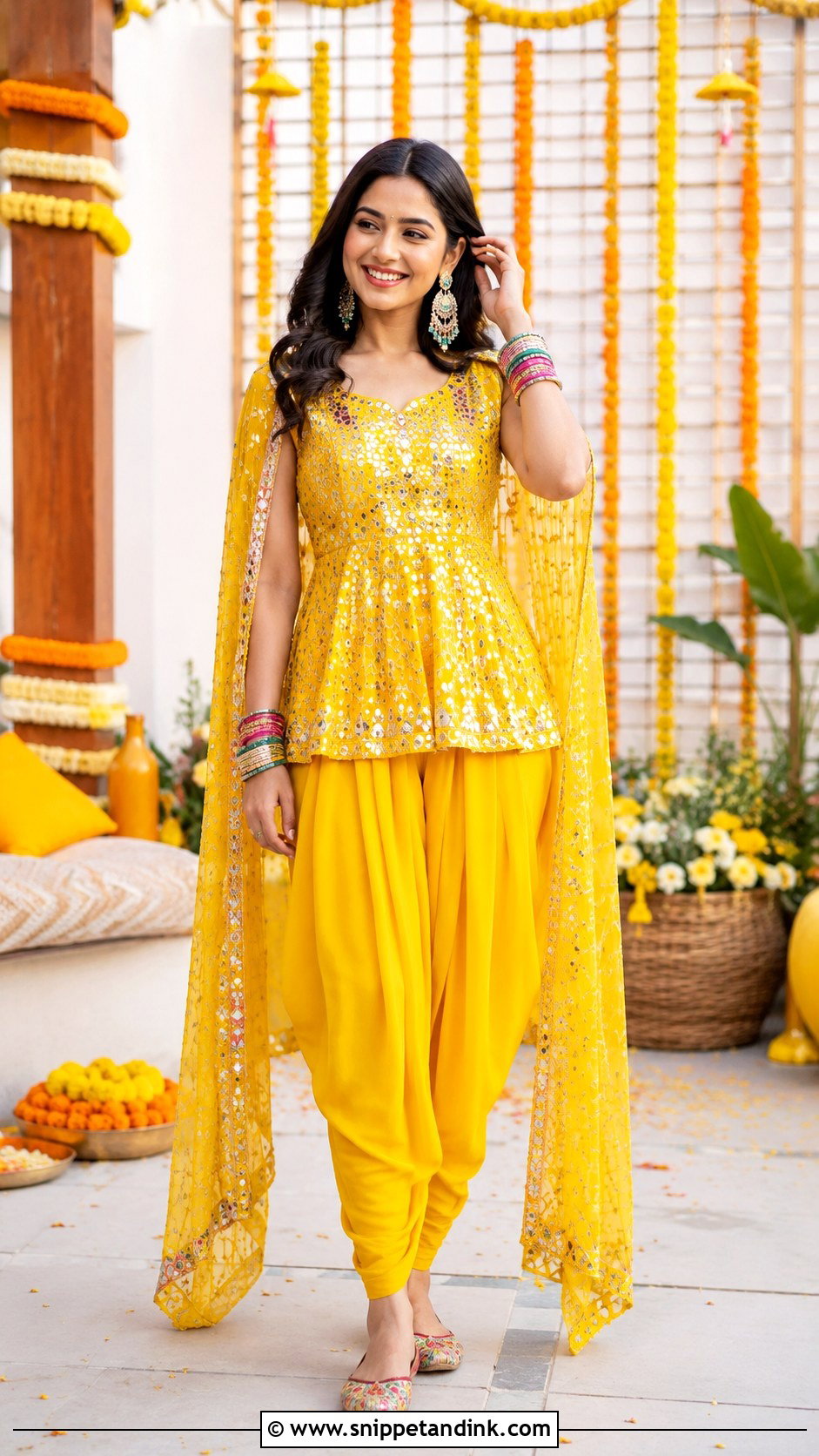
Peplum and dhoti pants is a fusion combination that dances well. A bright yellow peplum blouse with mirror work, gota or floral embroidery over matching pre-stitched dhoti pants gives a structured top with loose, easy legs. I check that the dhoti waistband sits securely, since a loose dhoti slides down when you’re jumping around on the dance floor. A short cape or light dupatta adds coverage if you want it. Statement earrings, a stack of colorful bangles and embellished juttis finish it. A braided ponytail or soft half-up style keeps it clean. It’s a strong outdoor choice.
10. Yellow Skirt And Cape Haldi Outfit
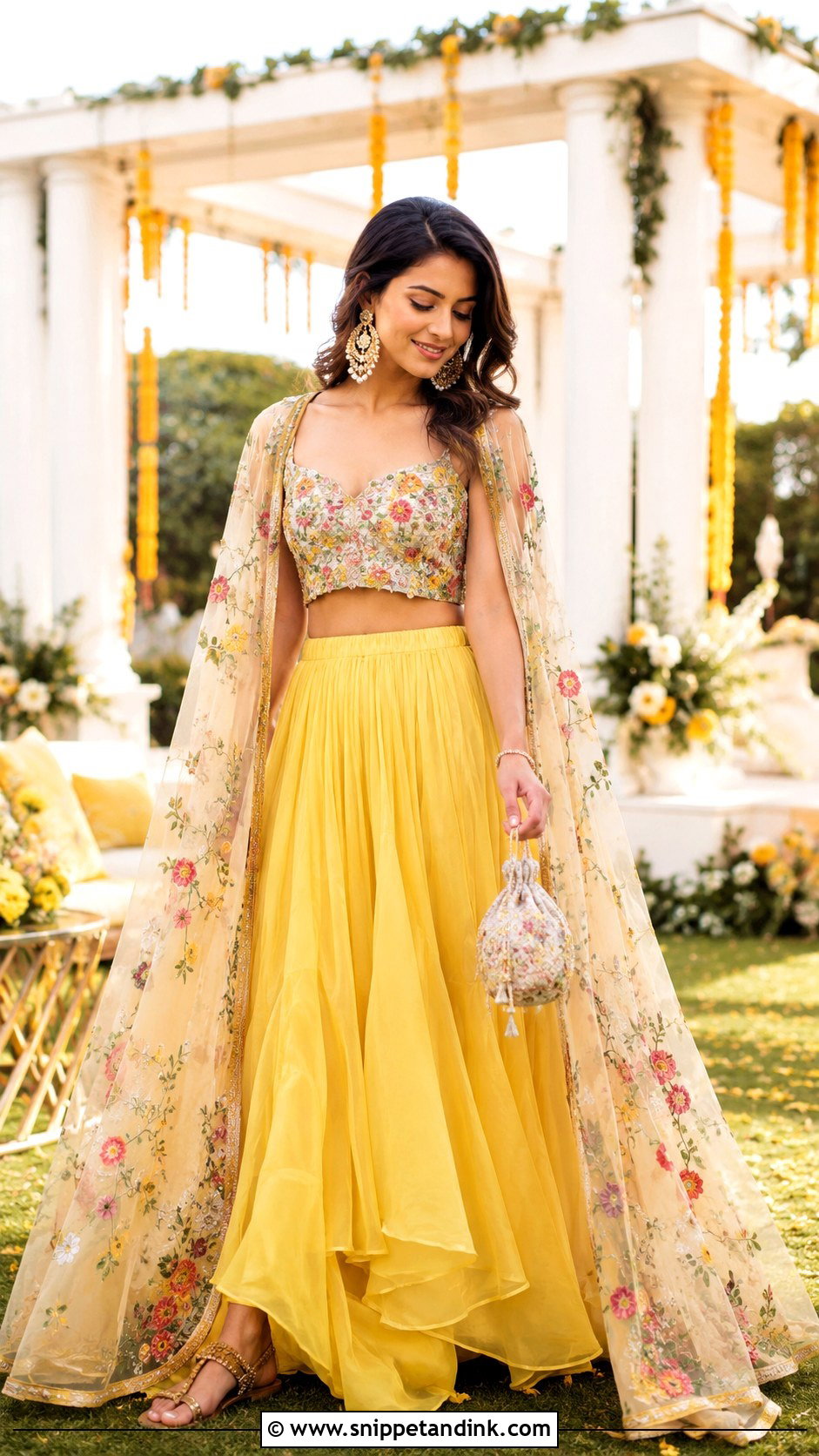
A plain yellow skirt with an elastic or drawstring waist, an embroidered crop top and a sheer floral cape makes a modern haldi look with plenty of movement. The cape replaces the dupatta and gives coverage over the shoulders. Because three layers are already in play, I keep accessories to large earrings, one bracelet and a small potli. Flat metallic sandals or juttis let the skirt fall naturally and keep you from tripping on the hem. Loose waves, a low ponytail or a flower braid suit it. Bridesmaids, cousins and younger guests tend to love this one.
11. Yellow Kaftan Haldi Outfit
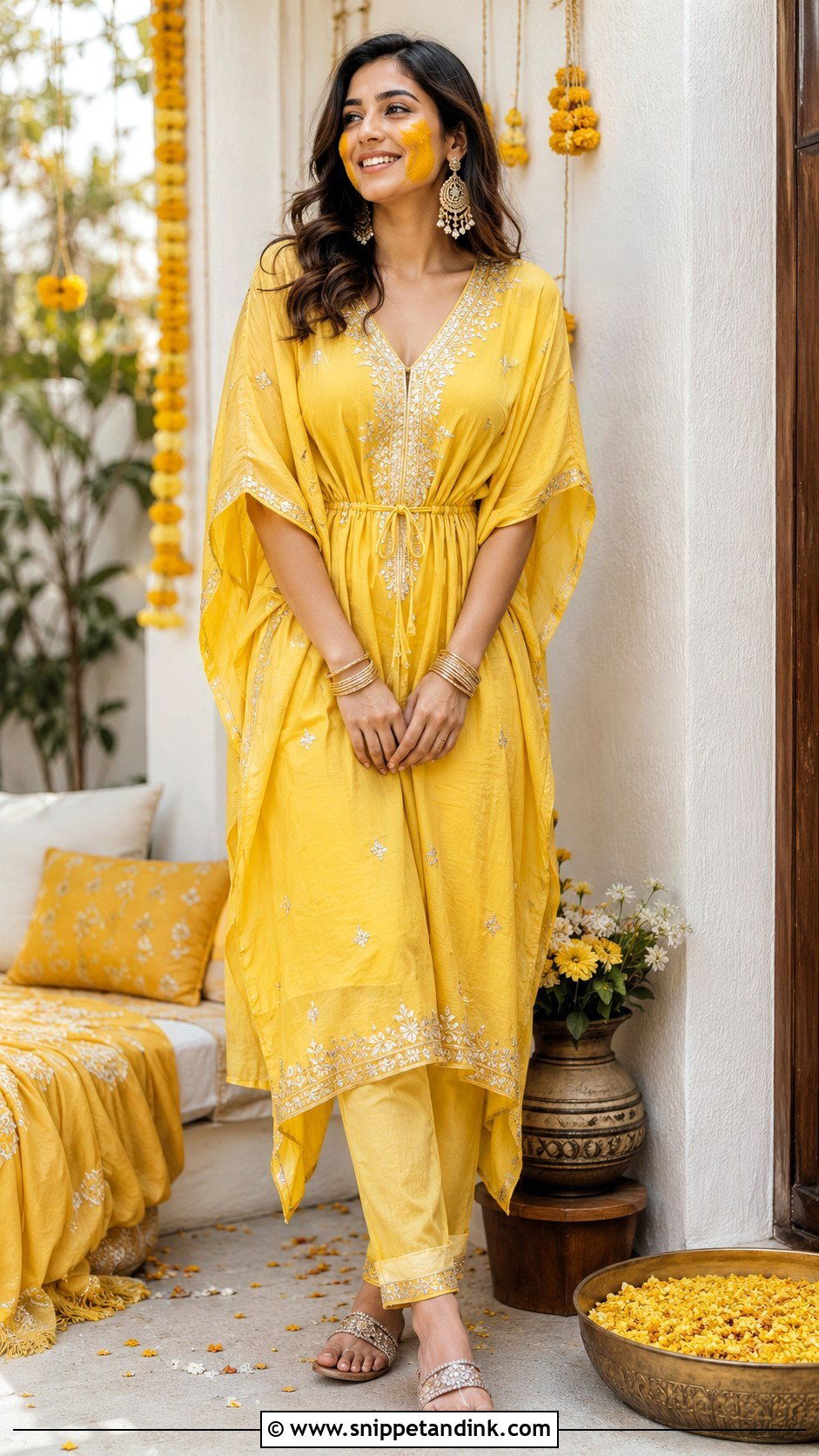
When comfort matters more than anything, I suggest a yellow kaftan, but only one with a defined waist. A tie belt or elastic waist keeps it from looking shapeless while still letting you sit easily. Knee or ankle length, flowing sleeves and light embroidery at the neckline are what to look for. Narrow pants underneath add coverage. Statement earrings, slip-on sandals and a few slim bangles finish it, with a sleek bun or curled ponytail. Avoid very wide sleeves. They drag through the paste and the food, and you’ll spend the ritual holding them back.
12. Phulkari Salwar Suit Haldi Outfit
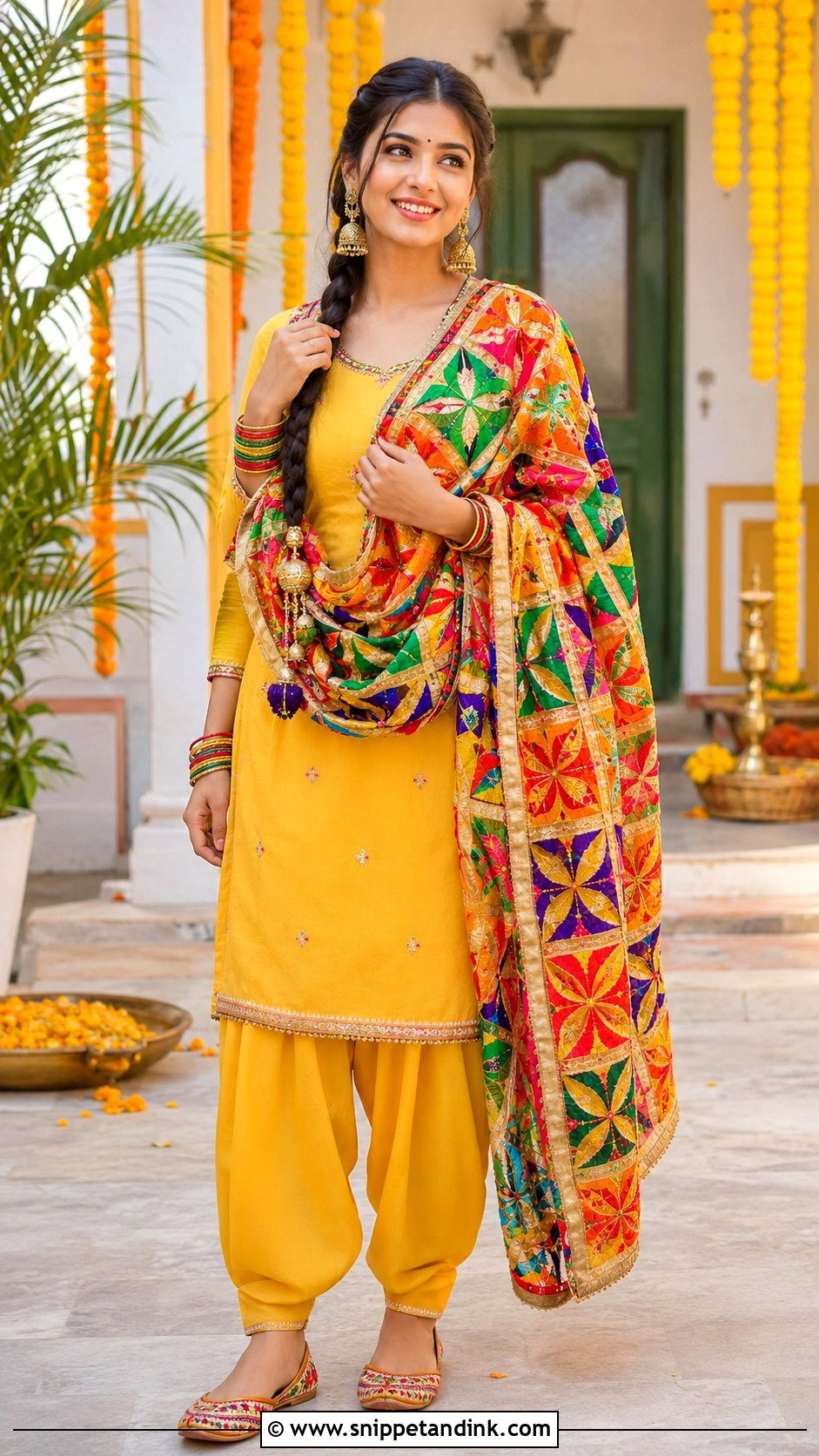
A yellow salwar suit with a colorful Phulkari dupatta is bold and unmistakably Punjabi. A straight kurta and salwar in cotton silk or Chanderi keep the base simple, since the dupatta is the star. Phulkari is dense thread embroidery, so the dupatta is heavier than it looks. I pin it securely at one shoulder so it doesn’t slip and so the embroidery stays visible. Jhumkas, glass bangles, a small bindi and Punjabi juttis suit it. A long braid with a paranda leans into the regional feel; a low bun is quieter. It gives full coverage and lets you move freely.
13. White Kurta Yellow Dupatta Haldi Outfit
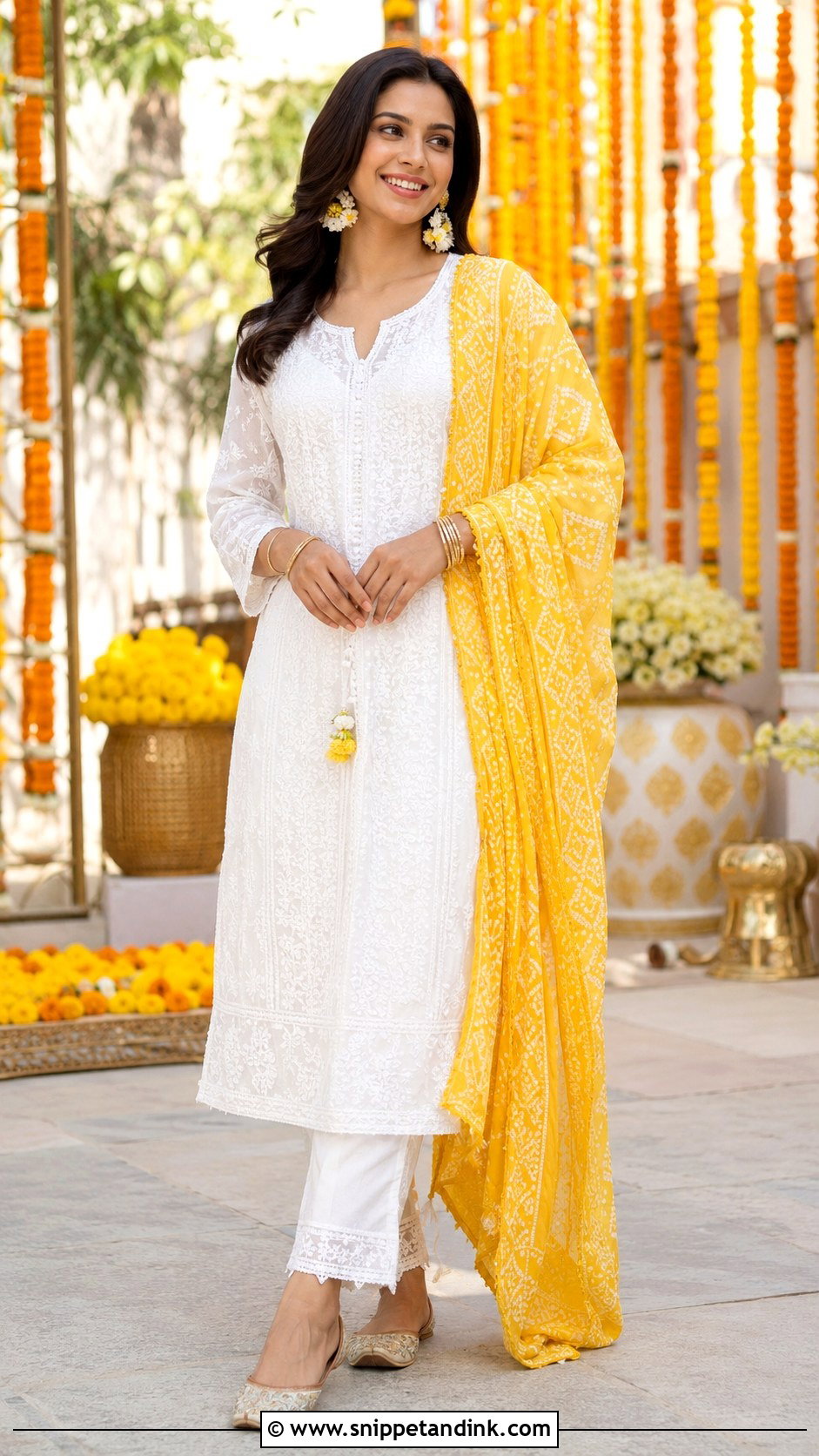
White with a yellow dupatta is fresh for a morning haldi, and the dupatta carries all the color. A white chikankari or cotton kurta with straight pants, plus a bright Bandhani, organza or phulkari dupatta, keeps the base light. Yellow floral earrings, slim gold bangles and neutral juttis suit it, with a flower braid or soft low bun. My honest warning: turmeric on white cotton doesn’t always come out. This is a guest or relative outfit, not one for someone sitting at the center of the ritual. It looks very good against marigold decor.
14. Lime Green Lehenga Haldi Outfit
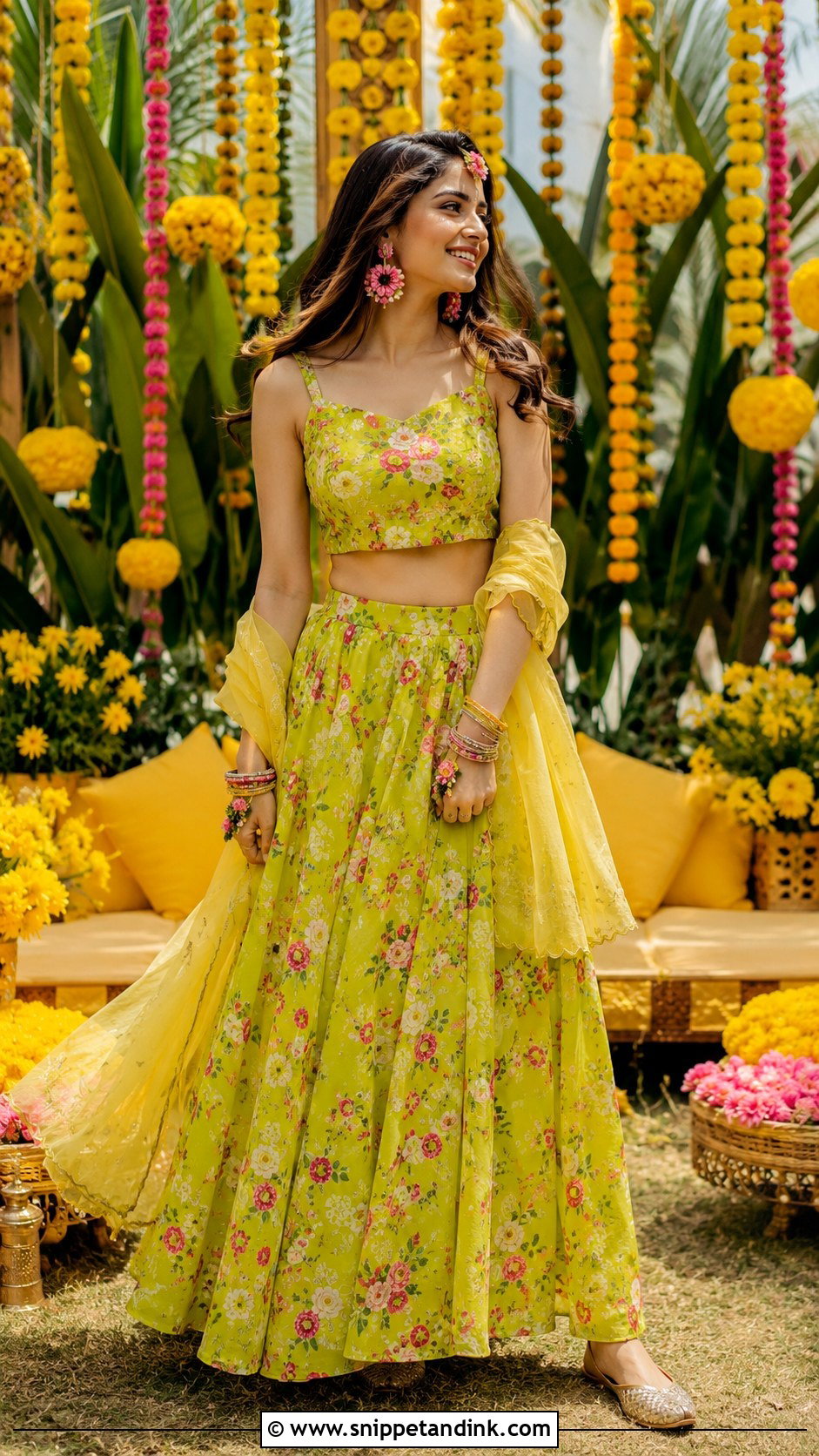
Lime green is my favorite answer for bridesmaids when the bride is in yellow. It coordinates without matching, and it glows in outdoor light against greenery. Choose a lightweight lehenga with floral prints, mirror details or subtle thread embroidery, with a matching blouse and a yellow or multicolor dupatta to tie it to the occasion. Pink floral earrings, colorful bangles and metallic juttis give contrast. Keep makeup fresh: soft eye definition and a natural lip. A loose braid with pink flowers finishes it.
15. Pink Floral Lehenga Haldi Outfit
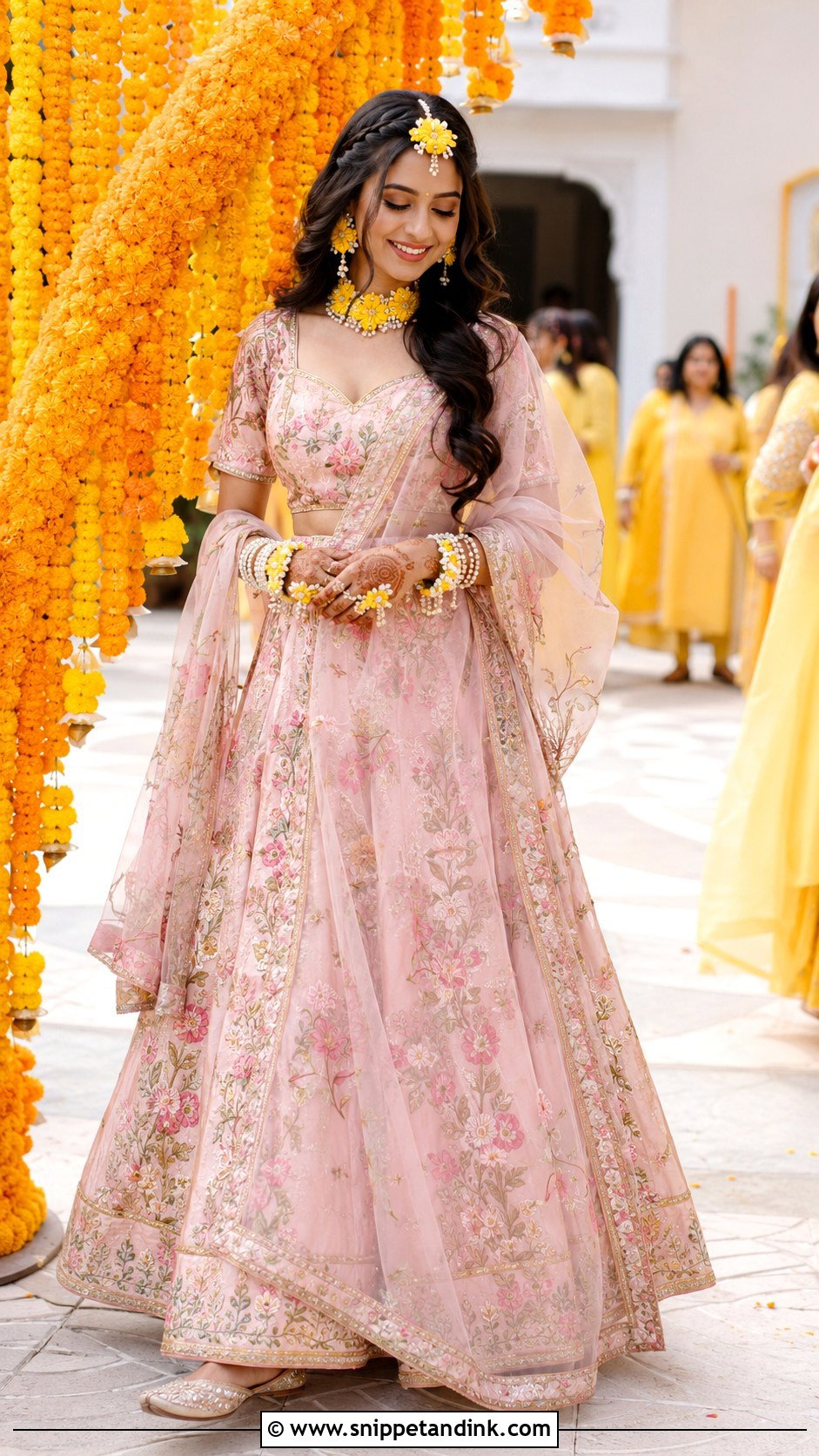
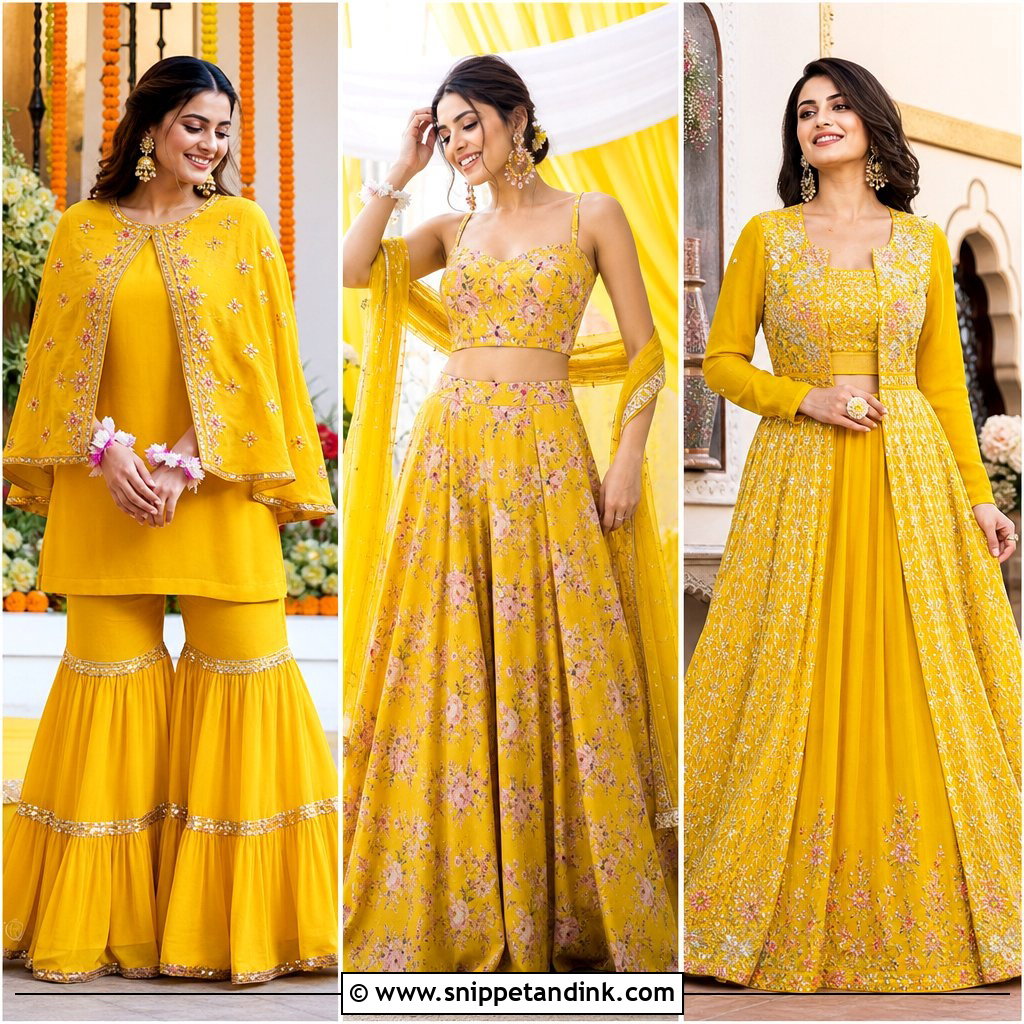
Not every haldi outfit needs to be yellow. When guests follow a yellow dress code, a soft pink floral lehenga separates the bride from the crowd straight away. A light printed skirt, coordinated blouse and a sheer dupatta with a small embroidered border are enough. Yellow, orange or green flowers in the print link it back to the ceremony. Floral jewelry, pearl bangles and neutral embroidered flats suit it, with a low ponytail and loose face-framing pieces. I keep embellishment minimal because turmeric and water are coming. Printed lehengas like this are easy to rewear at daytime parties.
16. Yellow Silk Saree Haldi Outfit
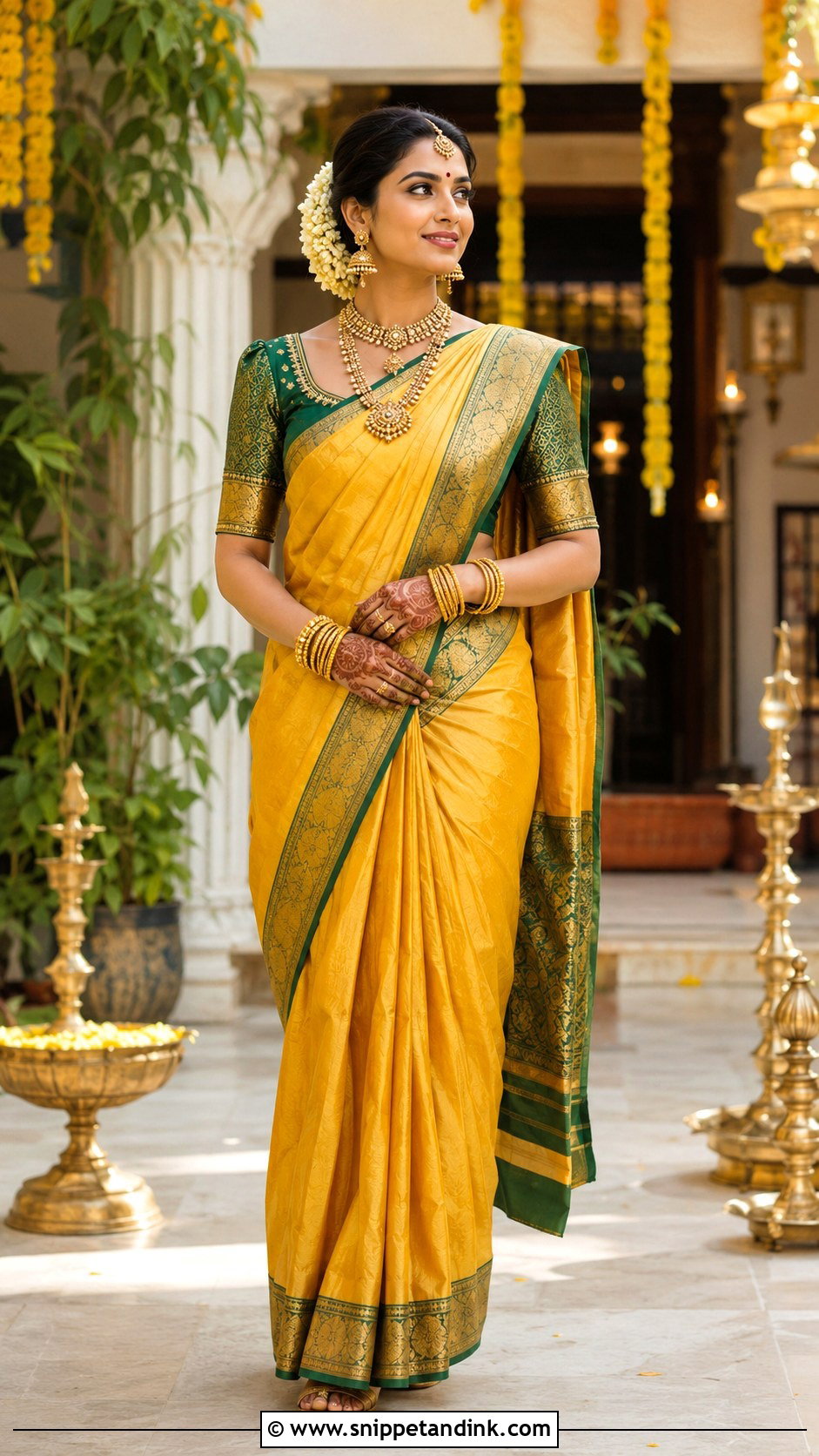
A yellow silk saree is for the bride who wants her haldi to feel properly ceremonial. Light silk, raw silk or a silk blend with a contrasting gold, pink or green border keeps it wearable for several hours. A structured blouse that fits securely and lets you lift your arms is essential. Gold earrings, bangles, a short necklace and a small bindi finish it, with a bun ringed in jasmine. Flats beat heels on floor seating. Silk marks easily, so I tuck a cotton cloth over the lower pleats when the paste is applied. It suits a traditional ceremony with heirloom jewelry and regional draping.
17. Yellow Palazzo Cape Set Haldi Outfit
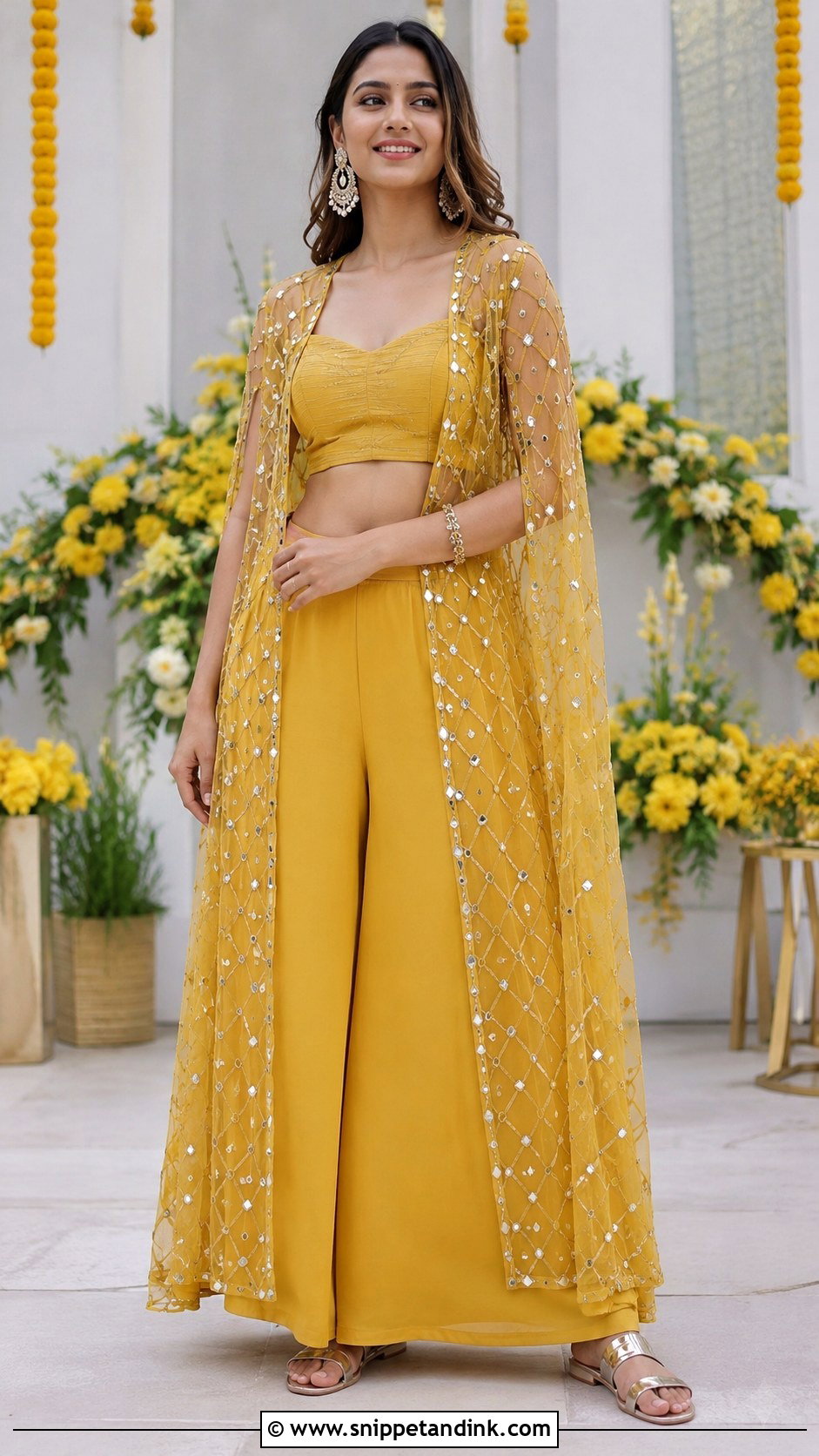
A palazzo set with a long cape brings structure to haldi dressing. Wide-leg yellow pants, a fitted crop top and a sheer embroidered cape to the knee or ankle work well together. Floral appliqué, mirror work or a narrow embellished border makes the cape feel occasion-ready. With the cape carrying the detail, I keep the rest streamlined: statement earrings, one bracelet, metallic flat sandals. A sleek ponytail or center-parted low bun suits the line. Have the palazzos hemmed to clear the ground, especially outdoors. It’s easier to rewear than an embellished lehenga.
18. Simple Cotton Suit Haldi Outfit
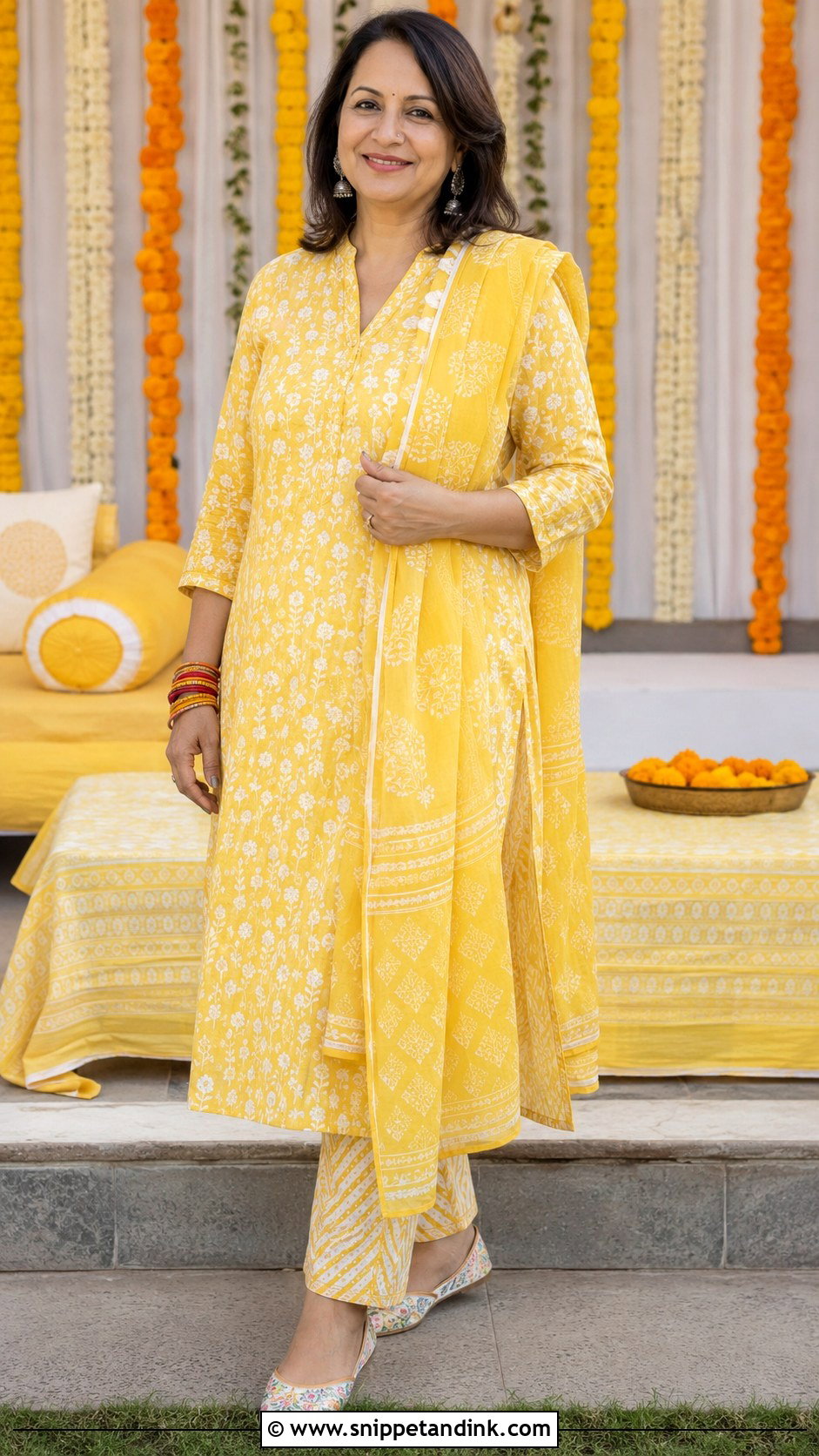
A simple yellow cotton suit is the most practical outfit on this list for a relaxed family haldi. A printed or solid straight kurta, comfortable pants and a cotton dupatta keep it breathable. Small block prints, delicate lace or a narrow gota border make it festive while keeping it wearable afterward. Oxidized earrings, colorful bangles and leather or embroidered juttis suit it, with a neat braid or low ponytail. I recommend washable cotton for anyone who’ll be helping the bride, because cotton can go in a cold wash the same day while silk needs a dry cleaner.
19. Plus Size Empire Anarkali Haldi Outfit
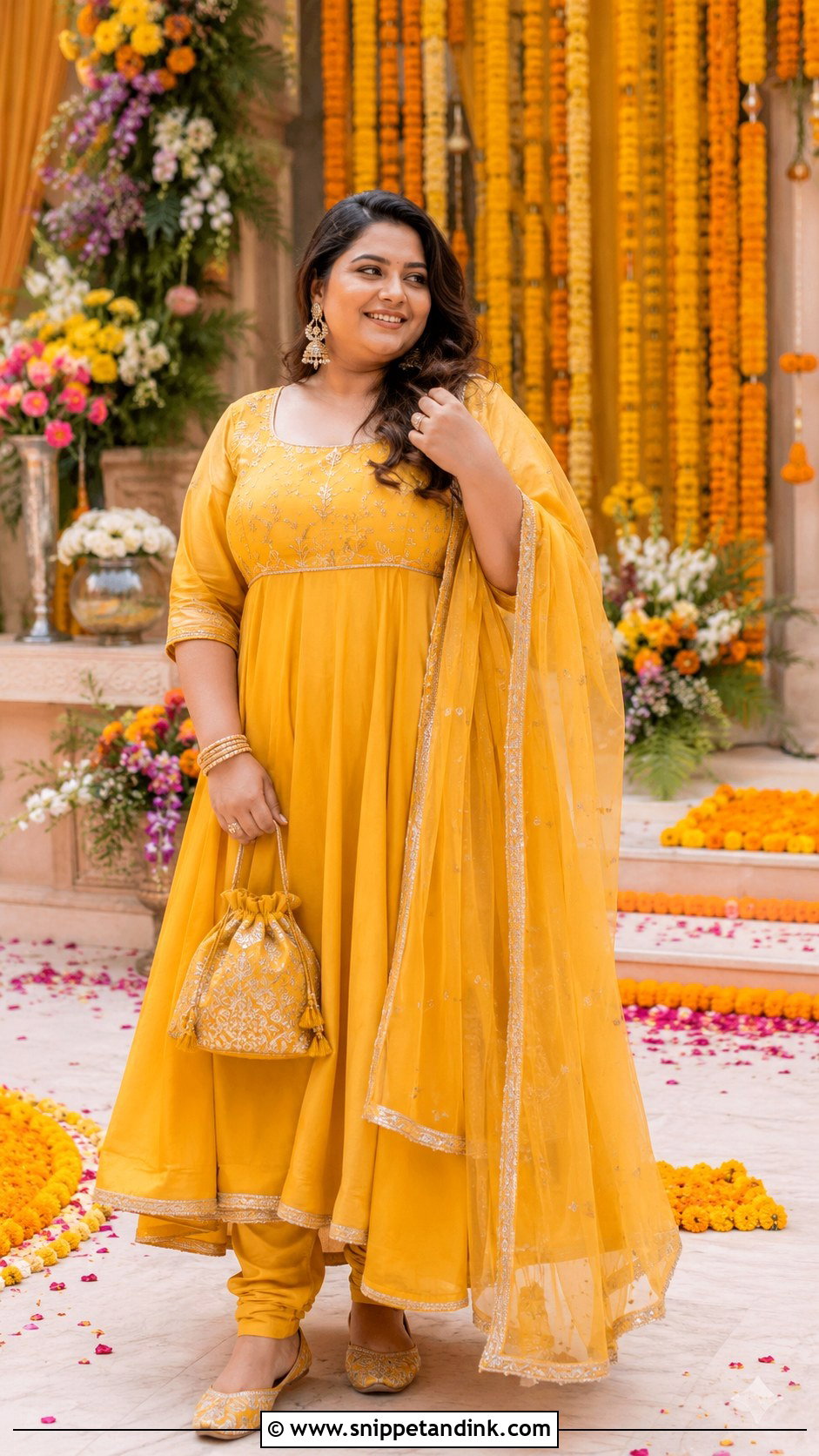
An empire-waist Anarkali is the shape I reach for most often with plus-size clients at a haldi. The seam sits just under the bust, the skirt falls straight from there, and nothing clings at the waist when you sit. Look for a design that fits securely at the bust without heavy gathering below it. An open neckline, three-quarter sleeves and vertical embroidery keep the line clean. A soft dupatta draped lengthwise over one shoulder adds length. Medium jhumkas, bangles, a structured potli and cushioned juttis finish it, with a side-parted low bun. Accurate measurements and a breathable lining matter more than any embellishment.


20. Yellow Jumpsuit Dupatta Haldi Outfit
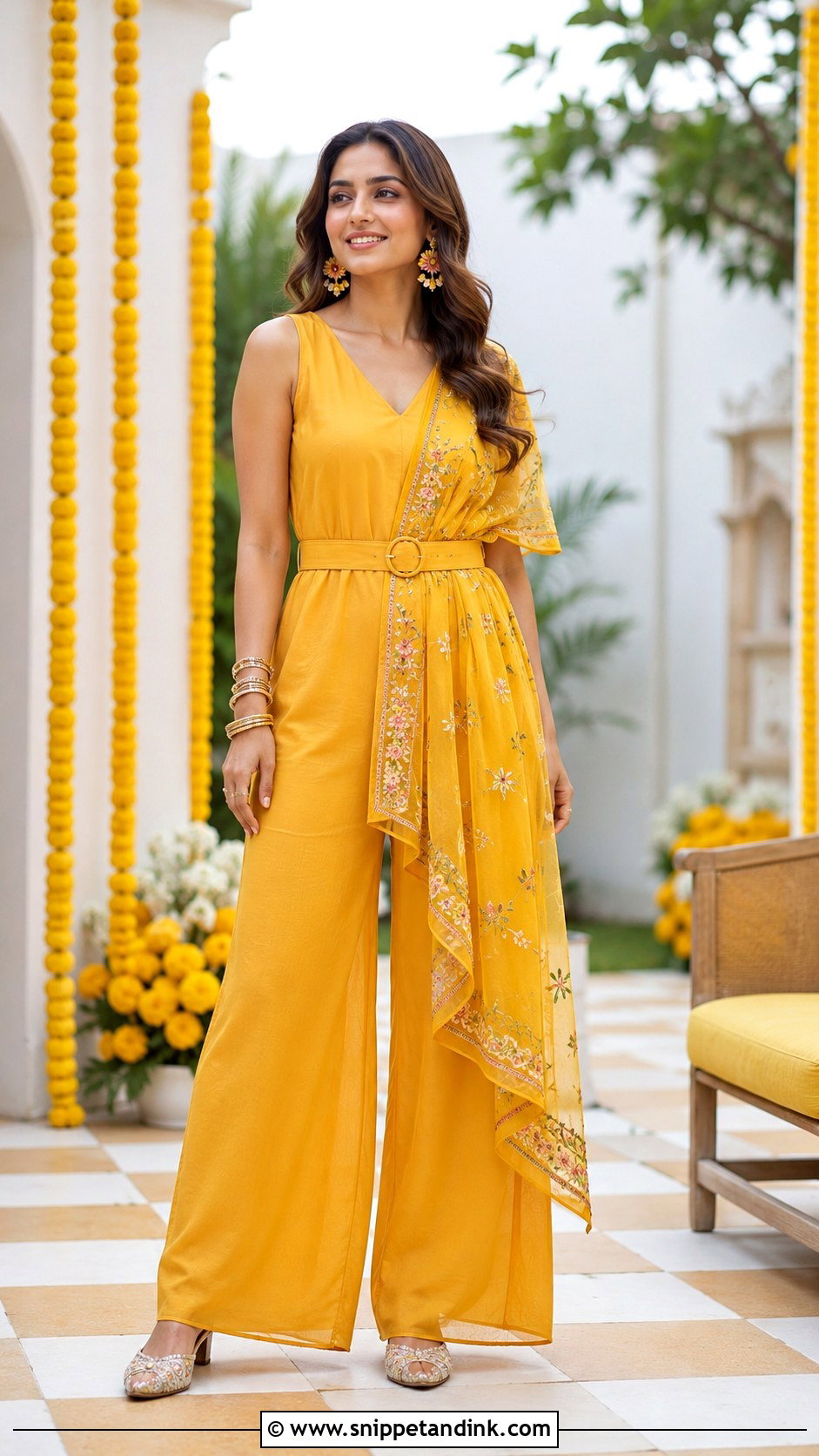
Jumpsuits suit women who like the ease of one piece. A wide-leg or gently flared yellow jumpsuit with a defined waist and supportive bodice, an embroidered dupatta over one shoulder and a matching belt to hold the dupatta in place make it read as Indian. Floral earrings, stacked bangles and low block heels or embellished flats finish it, with a polished ponytail or soft waves. The practical test: can you get in and out of it alone in a small washroom? If the zip sits at the back, ask a friend to stay nearby, since the haldi tends to run for hours.
Fresh Flower Jewelry Wilts by Noon Unless You Plan for It
Floral jewelry is almost standard at haldi now, and it’s the accessory I see fail most often. Fresh blooms are threaded the night before or early that morning, then left in a hot car or a sunny room, and by the time photos start the petals are limp and brown at the edges.
- Keep fresh pieces wrapped in a damp cotton cloth in a cool place, and put them on last, just before you walk out.
- Sturdy flowers hold up best. Marigold, small orchids and baby’s breath outlast roses and jasmine in heat.
- Ask your florist to wire heavier pieces like a haathphool or a large maang tikka, so they don’t droop or pull on your hair.
- If the ceremony is long or outdoors in full sun, consider gota, fabric or good artificial floral jewelry. It photographs well, weighs less, and you can keep it.
Six Weeks Out Is Not Too Early for a Fitting
Haldi outfits tend to get booked last, after the wedding and reception looks, and that’s when things go wrong. A custom-stitched lehenga or Anarkali can take several weeks from order to delivery, and even ready-made pieces usually need a blouse fitting and hem adjustment. I’d aim to have the outfit in hand at least six weeks before the date. That leaves time for one proper fitting, a second if the blouse is off, and a trial in your actual shoes.
At that fitting, do more than stand in front of a mirror. Sit cross-legged on the floor, raise your arms as if applying paste, and dance for a minute. Any strap that slips, pleat that splits or hem that catches will show itself, and your tailor can fix it while there’s still time.
Your Role at the Haldi Decides More Than the Color
A good haldi outfit lets you forget about it from the first ritual to the last photo. Lehengas, sarees, suits, shararas and fusion sets all work when they let you sit low and move freely, especially if you’re close to the ceremony. Light fabric, secure draping, comfortable shoes and sensible accessories make more difference than any trend. Yellow is the classic, though florals, lime, pink, ivory and mustard are equally at home. I’d start with your role and the venue, then let your own taste make the final call.
You'll Like These Ideas:






Leave a Reply