
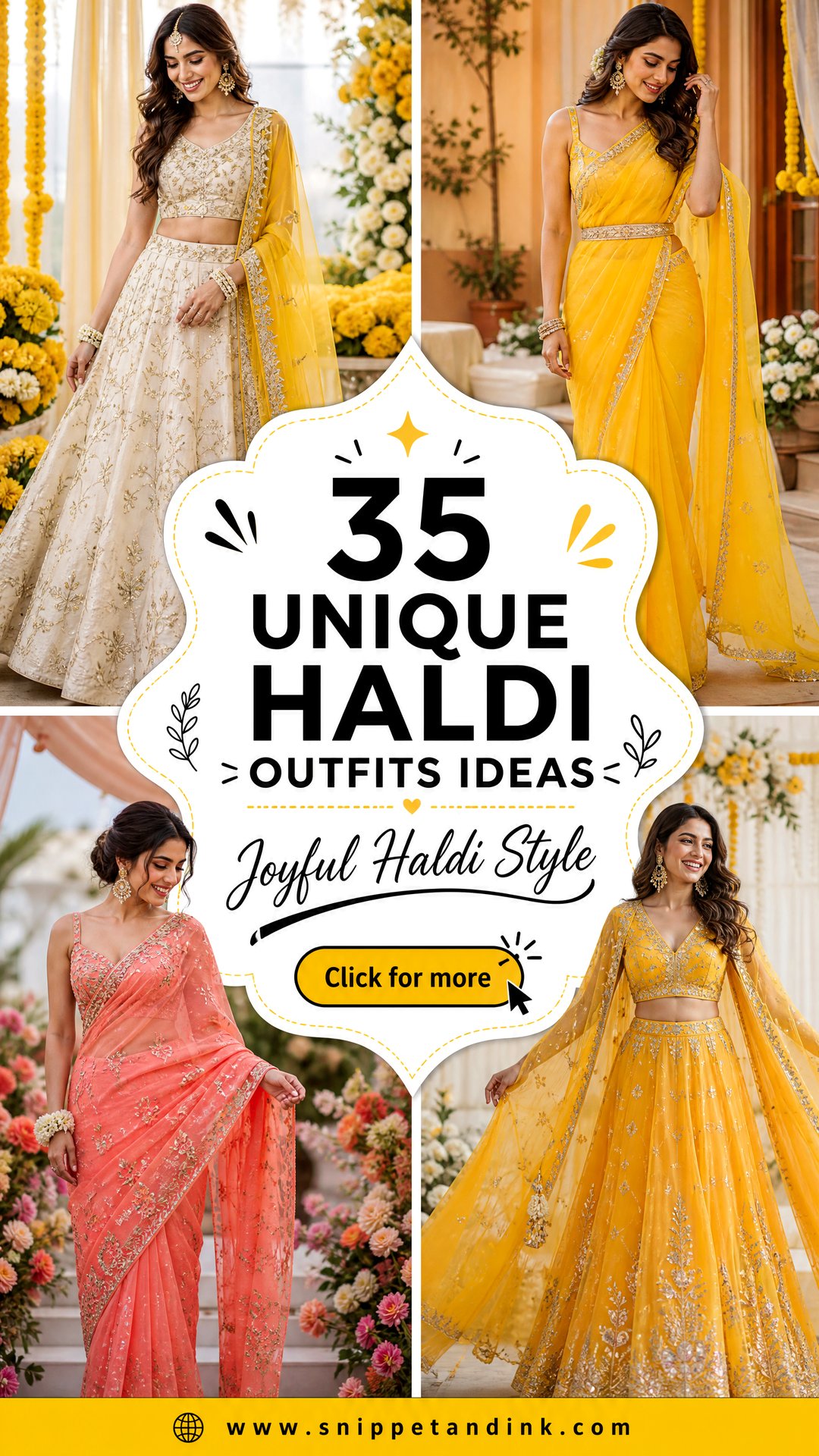
Haldi is the one wedding function where I tell brides to assume the outfit will get messy. Turmeric paste goes on face, arms and feet, people sit on the floor or low stools, and the dancing starts before anyone has washed. So my styling starts with fabric and fit, then color. Yellow is still the classic, but I now dress plenty of brides and families in ivory shararas, floral sarees, cotton Anarkalis, mirror-work sets, jumpsuits and co-ords, and in white, mint, peach, coral and orange alongside the marigolds. Below are thirty-five haldi looks for brides, bridesmaids, sisters and guests, with what I would watch for in each.
Turmeric on Fabric: What Washes Out and What Stays
Every haldi outfit should be chosen with stains in mind. Turmeric’s color comes from curcumin, a pigment that binds quickly to natural fibers. Cotton, linen and silk absorb it fast; smooth polyester georgette and crepe usually let more of it go. White and pastel shades show every mark, while mustard, orange and printed fabrics hide them.
If paste lands on your outfit, here is what I do:
- Scrape off the paste with a blunt edge; don’t rub it in.
- Rinse from the back of the fabric with cold water. Hot water sets the stain.
- Work in a little liquid dish soap. Don’t panic if the spot turns reddish; curcumin changes color with soap and returns to yellow after rinsing.
- Dry it in direct sunlight if the fabric can take it, since curcumin fades in light.
- Send silk, embroidered or zari pieces to a dry cleaner and point out the stain.
For anything heavily embroidered or heirloom, I’d simply not wear it to the haldi. Save it for the mehndi or sangeet.
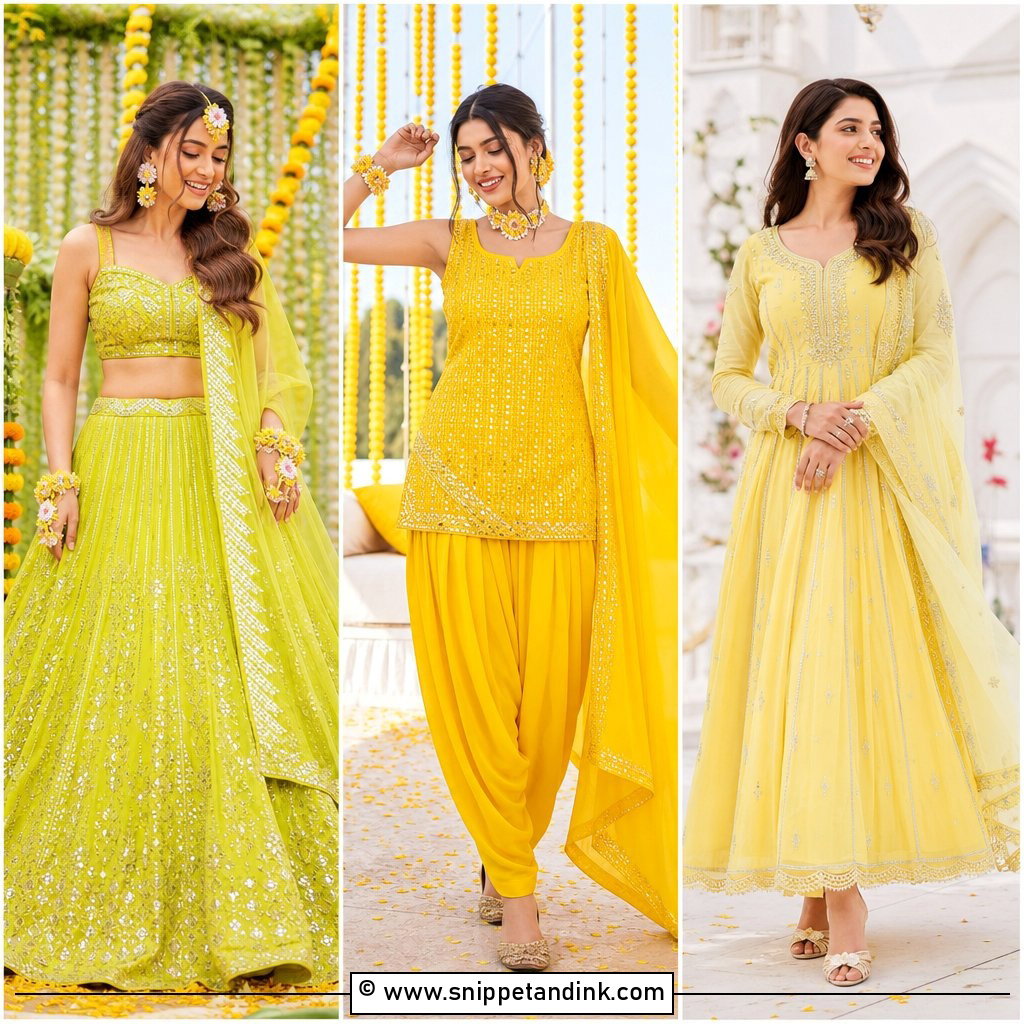
1. Yellow Haldi Lehenga With Floral Jewelry
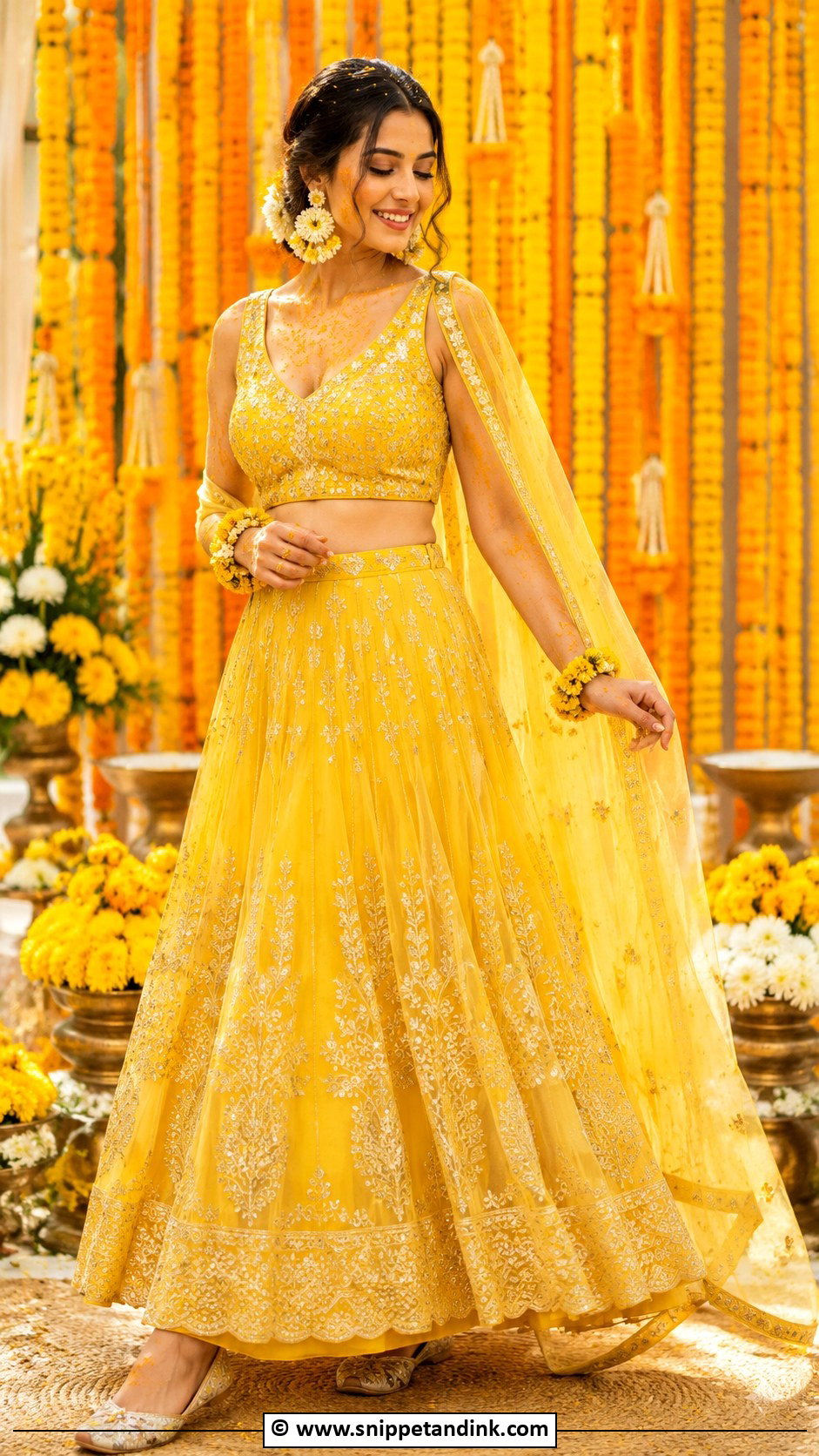
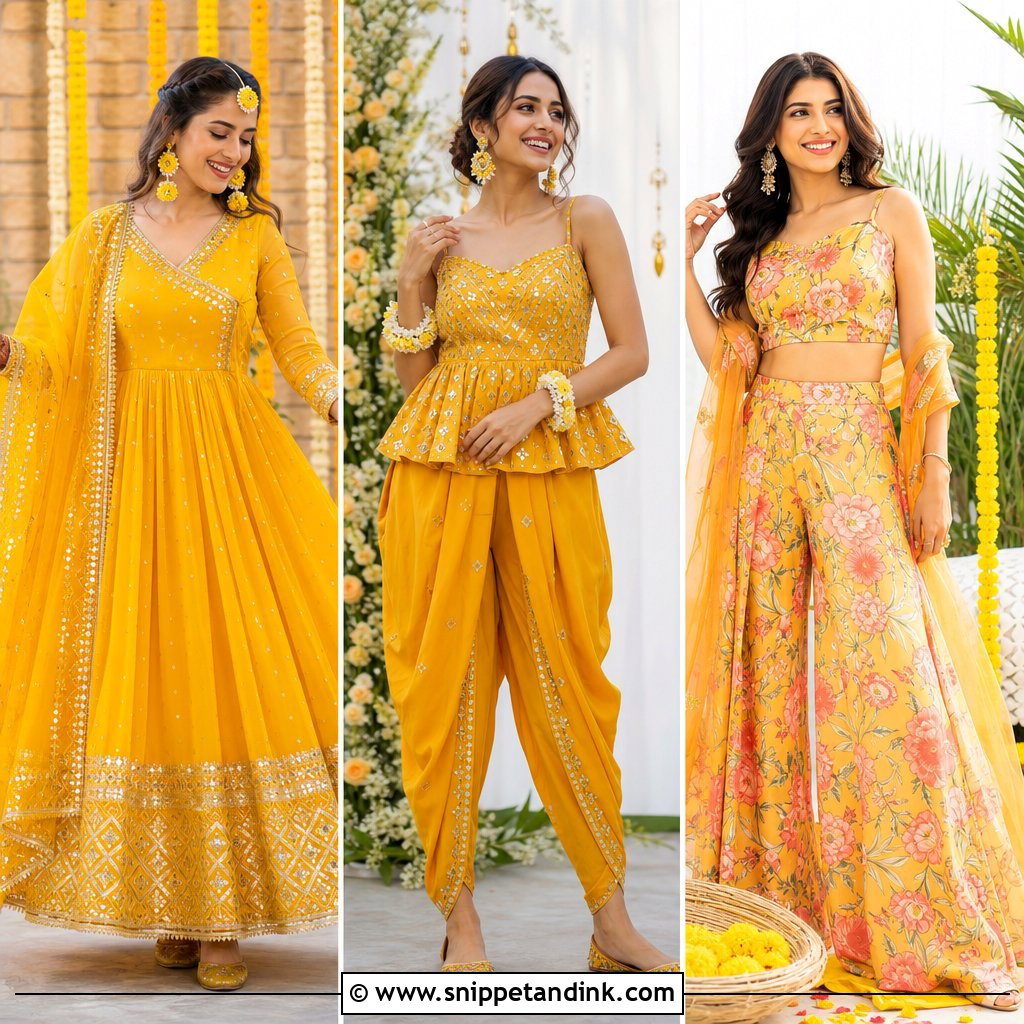
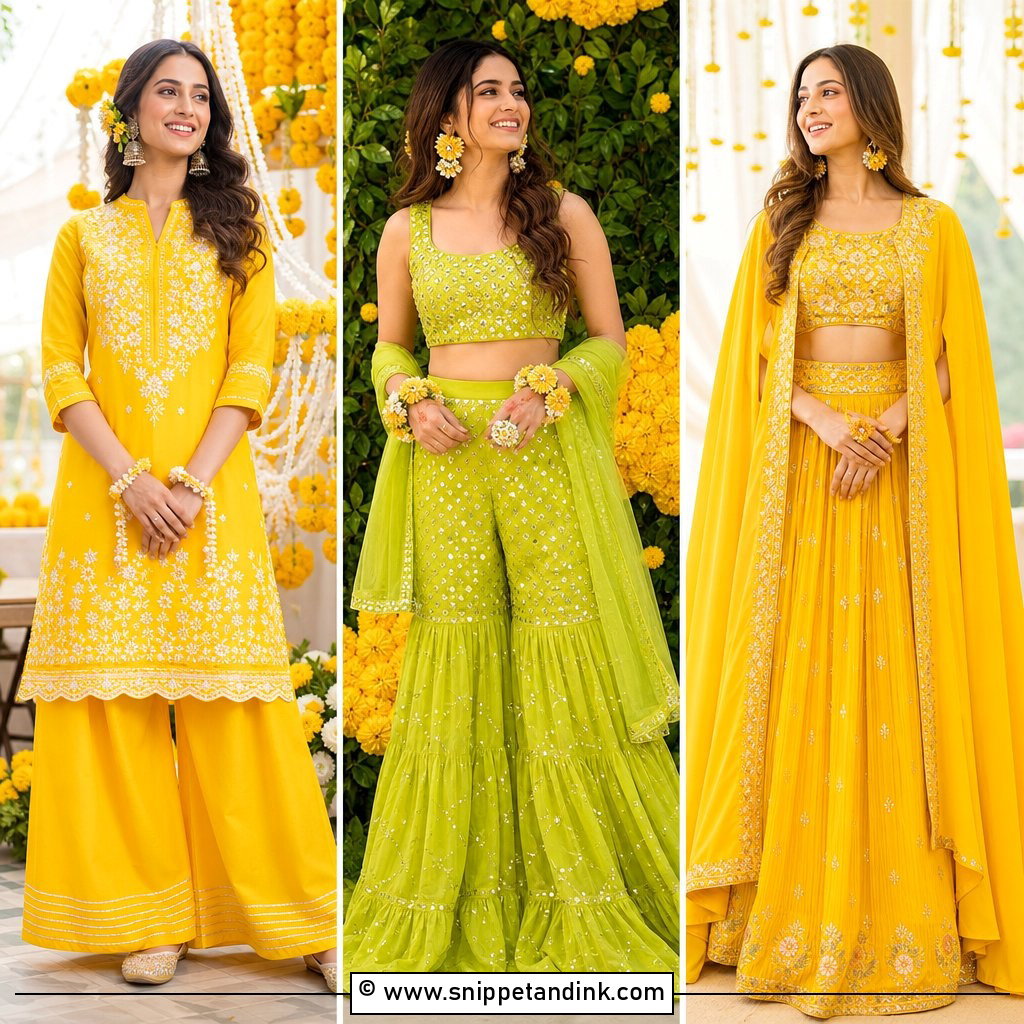
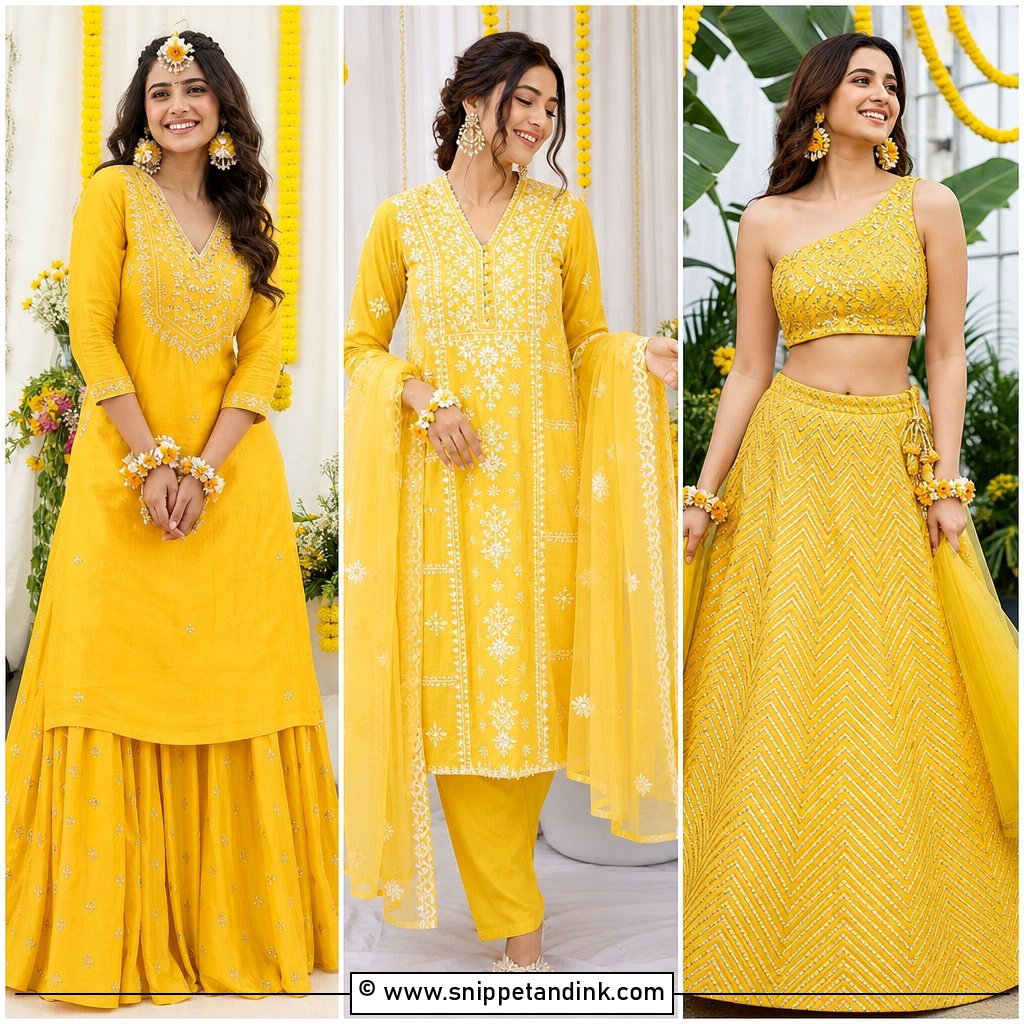
The yellow lehenga is the traditional pick, and it stays fresh when the fabric is light. Georgette, organza or cotton silk lets you sit cross-legged without wrestling the skirt. I keep the dupatta short or pinned at one shoulder, since a long dupatta trailing into a bowl of haldi paste is a very common sight. Marigold earrings, jasmine bangles and a floral maang tikka look right for daylight. Glowy, simple makeup lasts better than full coverage once the paste is wiped off, and flat juttis keep you steady on wet floors.
2. White Haldi Sharara Set
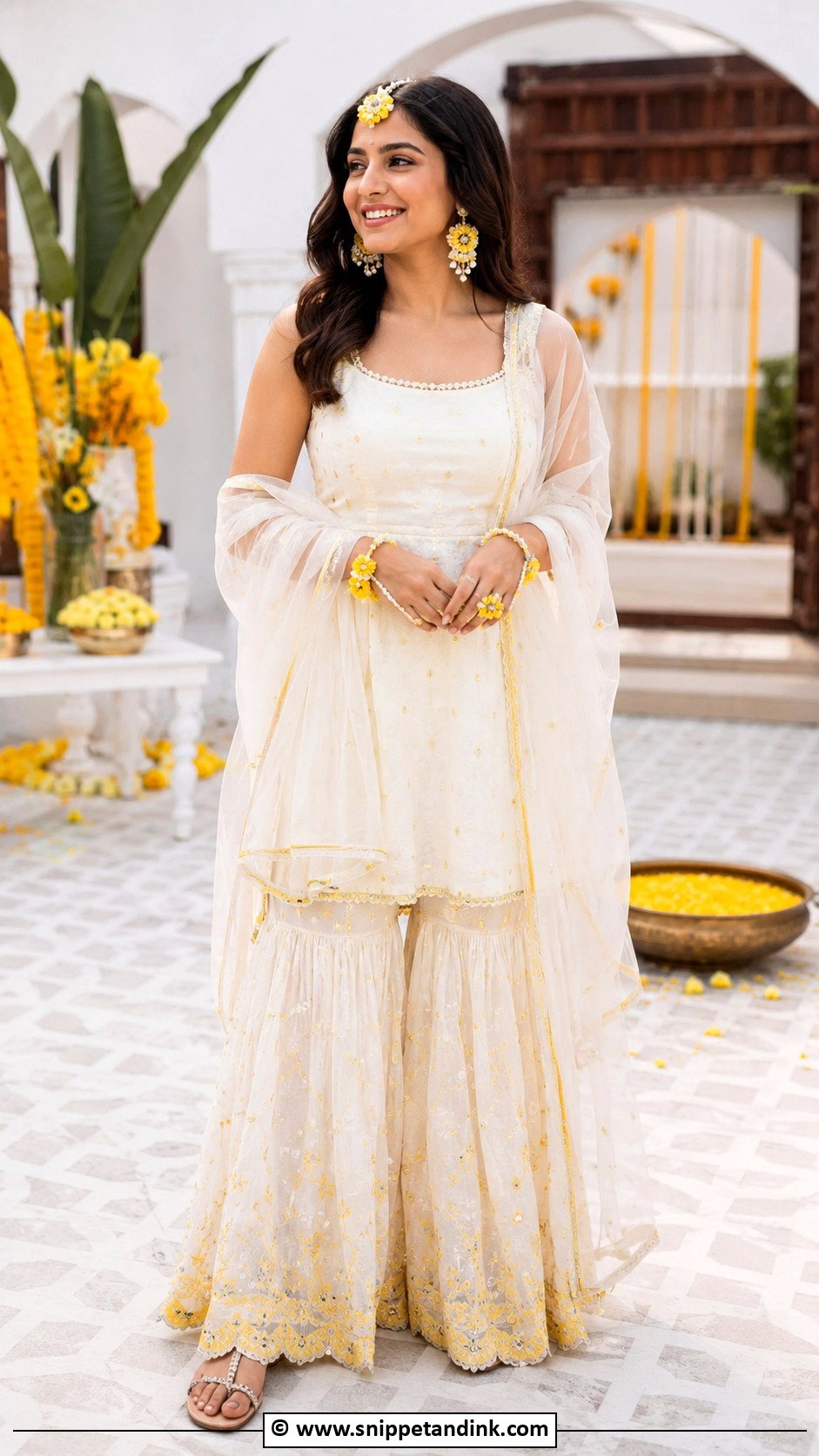
A white haldi sharara set gives the strongest contrast in photos: bright yellow paste against a clean white kurti. Honest warning, though. Turmeric on white cotton rarely comes out fully, so treat this as a one-time outfit or choose a polyester georgette, which releases the dye far more easily than cotton or silk. Small mirror details or gota edging add texture without catching paste in heavy embroidery. Pearl studs and fresh yellow flowers keep the accessories simple.
3. Mustard Haldi Anarkali Suit
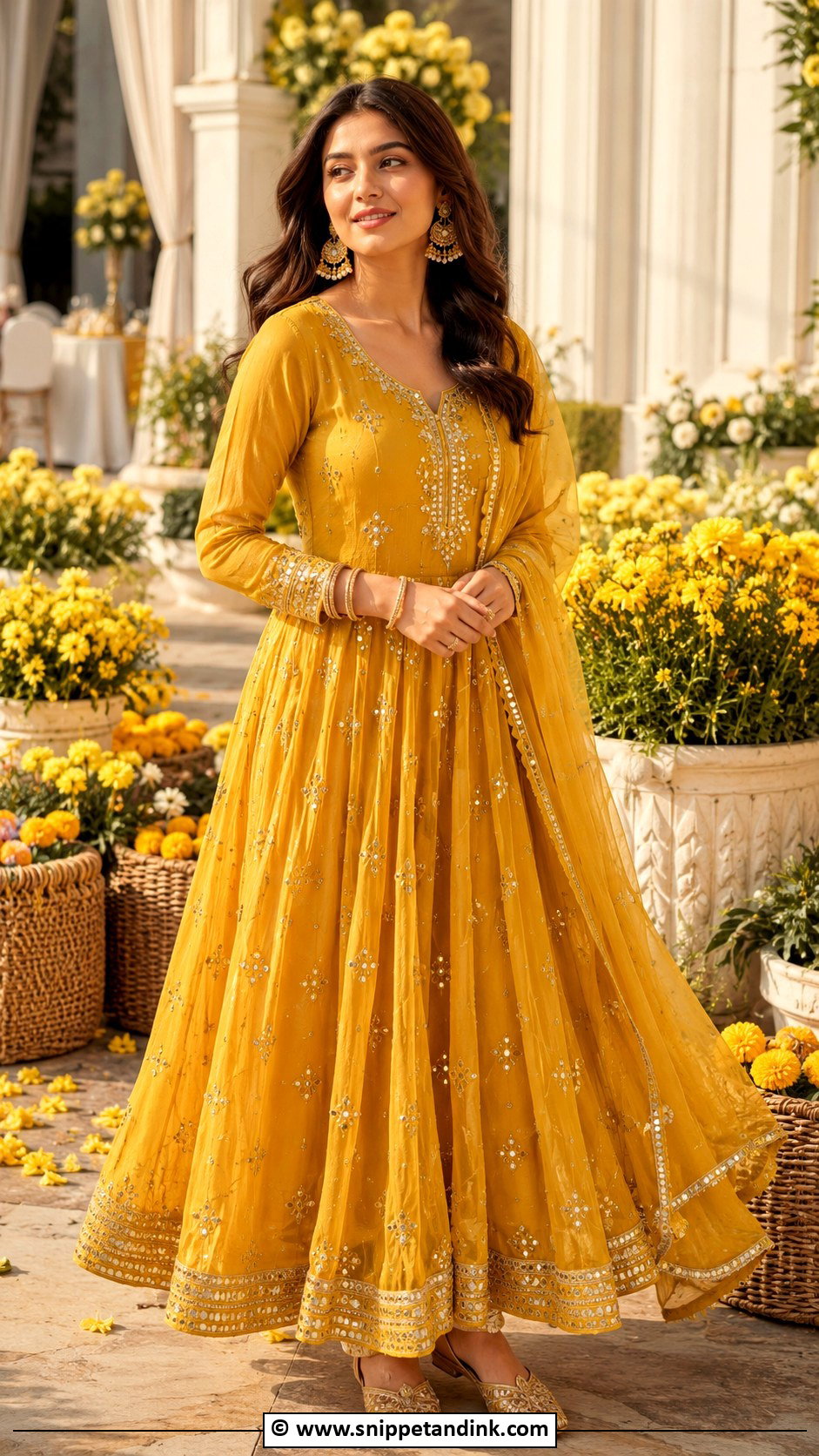
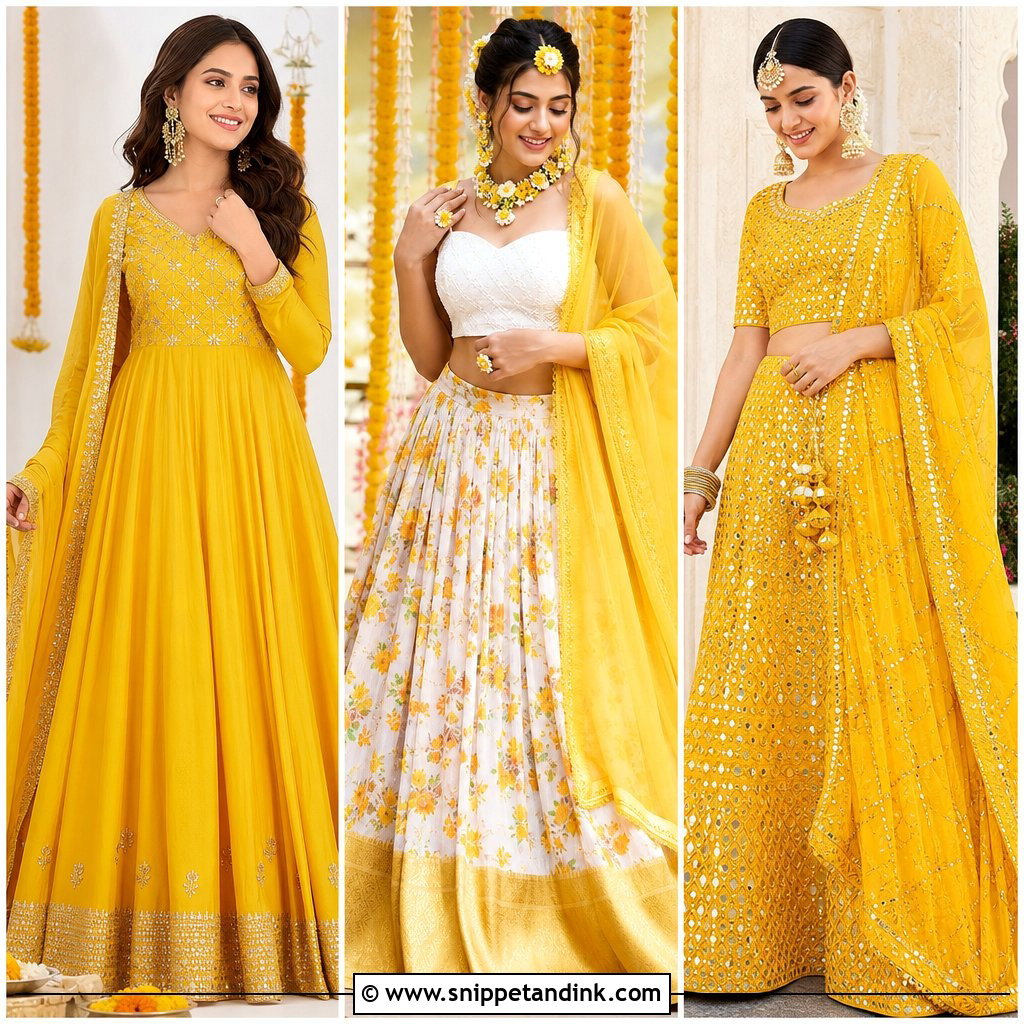
Mustard is deeper than bright yellow, so it stands apart from marigold backdrops instead of disappearing into them. A mustard haldi Anarkali suit in cotton, chanderi or crepe with light gota patti is comfortable through long rituals, and the flared skirt lets you sit on the floor without pulling at the seams. I often put sisters and mothers in this shape for that reason. Gold jhumkas and embroidered flats complete it. Check that the churidar or pants are a soft fabric too, since stiff linings get hot.
4. Yellow Saree Haldi Look
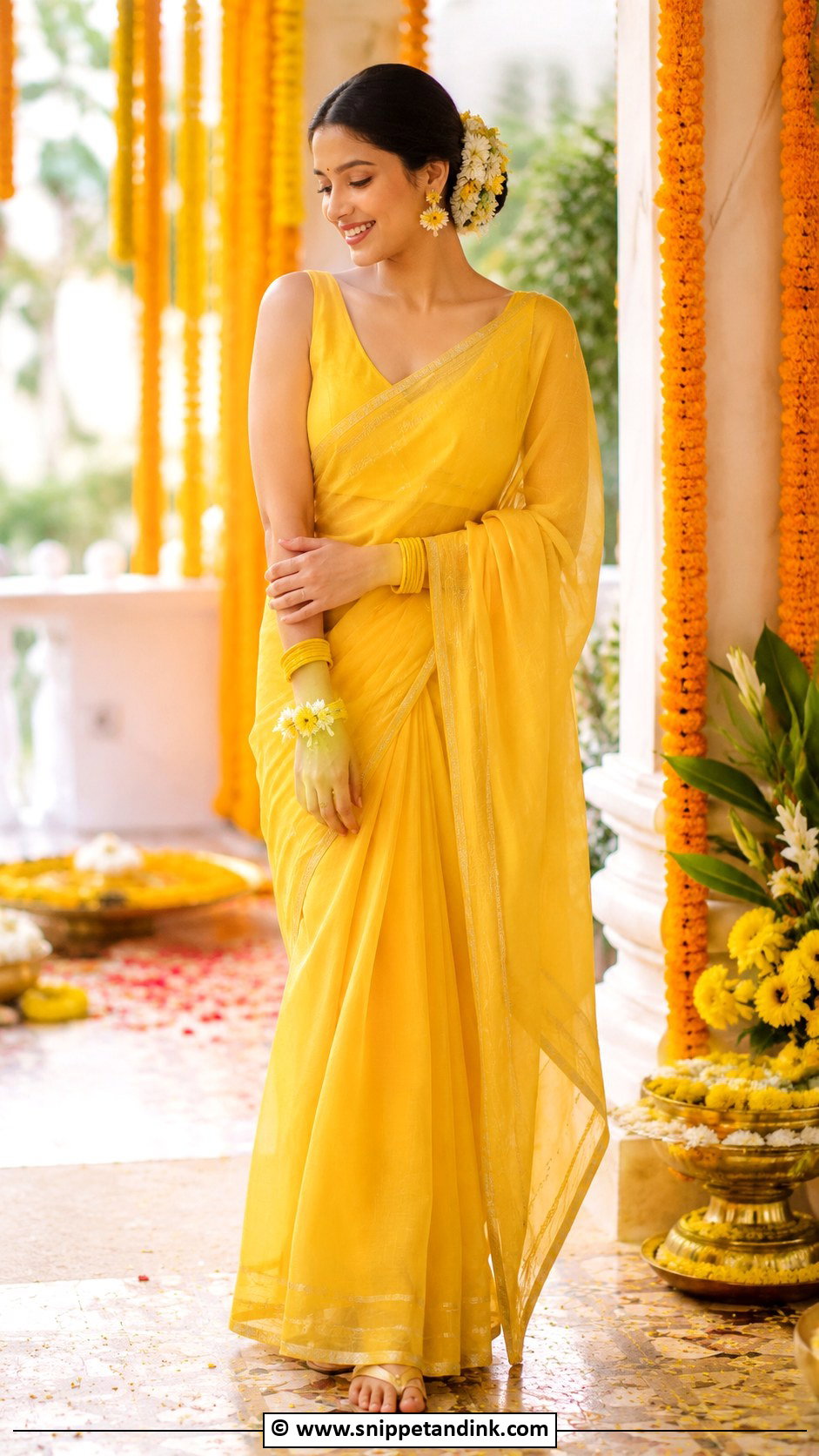
For a saree at haldi, drape matters more than fabric. Chiffon, georgette, linen and cotton silk are light enough, but the pleats need to be firmly pinned, because squatting and getting up repeatedly is exactly what makes a saree drape loosen. A sleeveless or elbow-sleeve blouse keeps your arms free for the paste. Brides can choose a soft embroidered border; guests are better in a printed saree that doesn’t read bridal. A gajra, a small bindi, glass bangles and juttis finish it.
5. Floral Haldi Lehenga Set
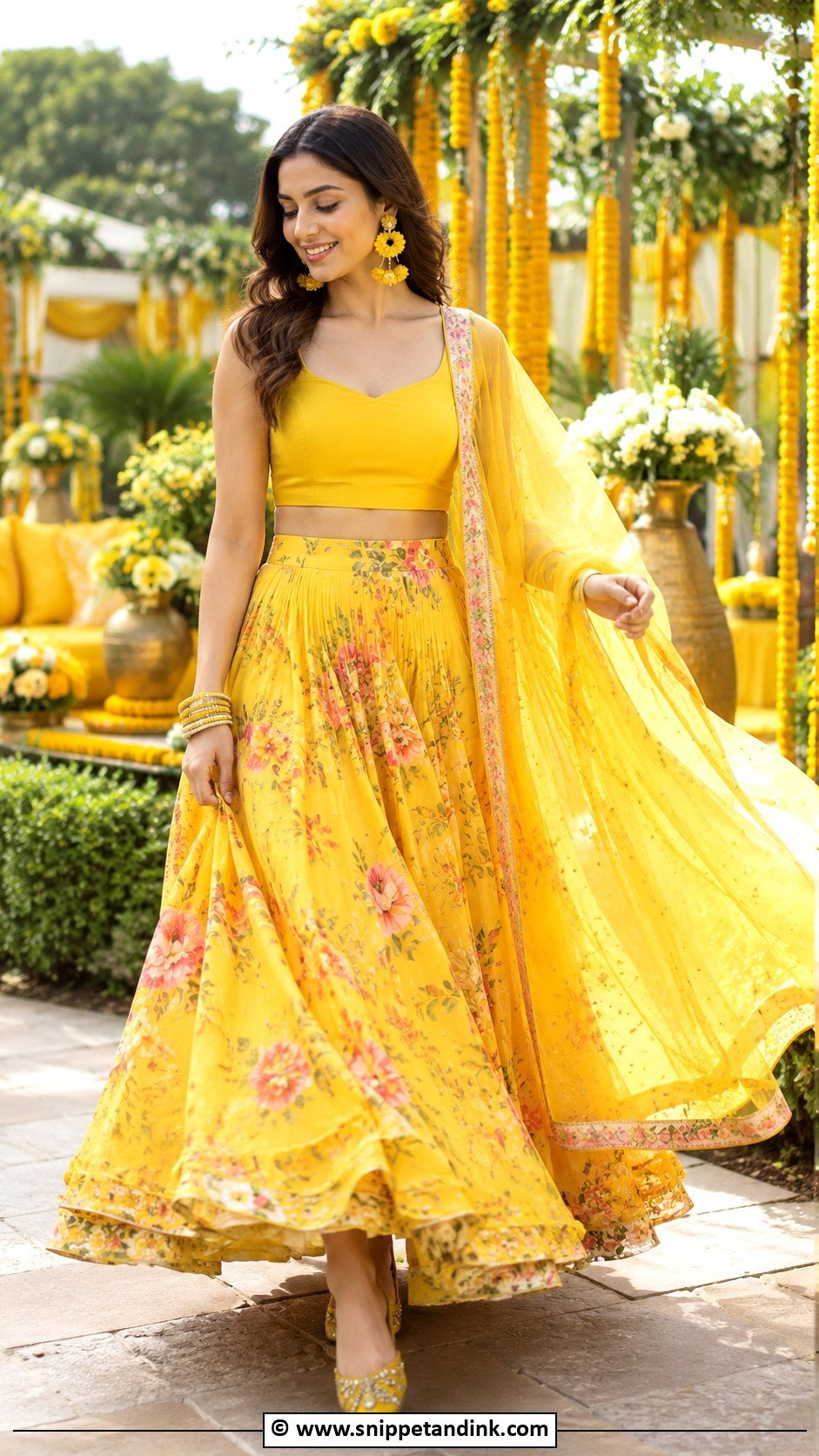
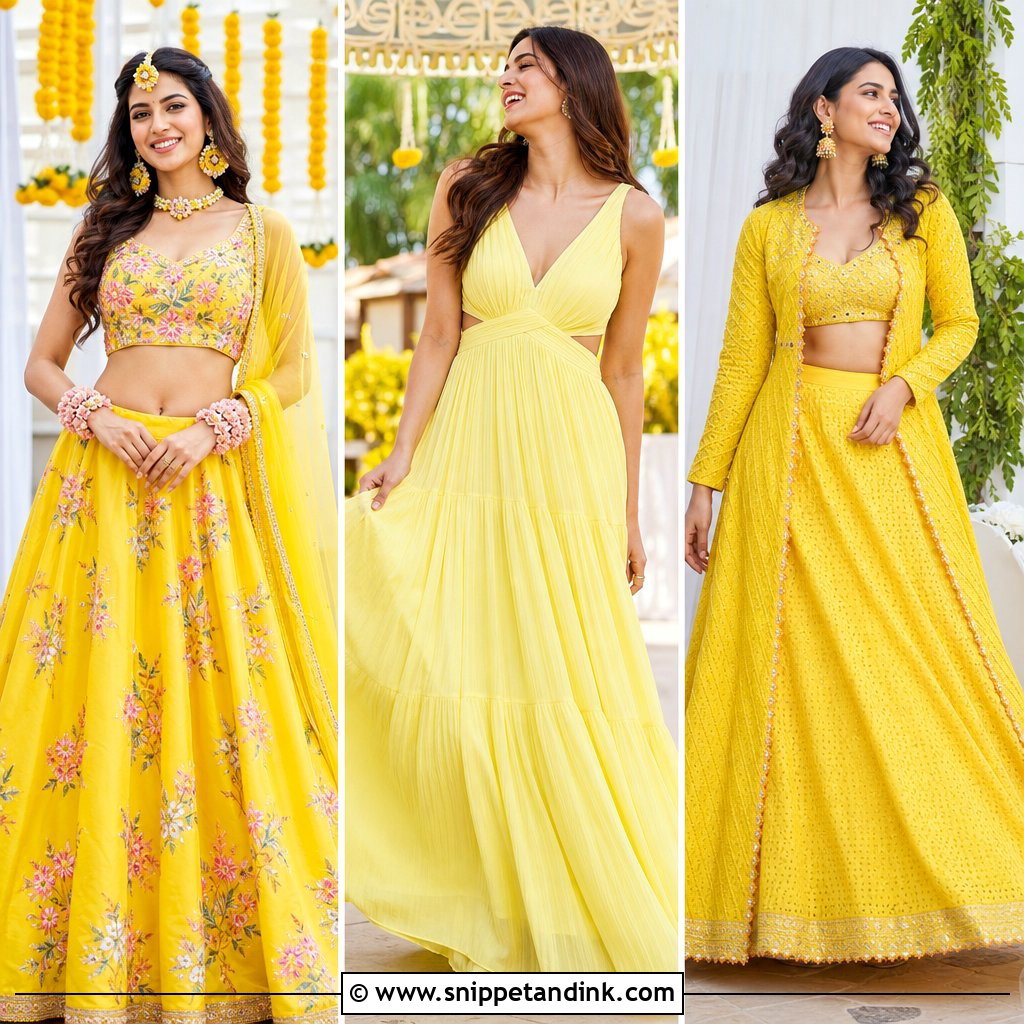
Floral lehengas let the bridesmaids look festive without matching the bride. Yellow, orange, peach and green prints sit well with haldi decor, and a printed skirt with a plain blouse keeps the pattern from taking over. A sheer dupatta adds softness. Outdoors, heels sink into grass and wobble on garden paths, so I steer everyone toward wedges or embellished flats. Fresh flower earrings and soft waves or a low bun suit the mood.
6. Haldi Gharara With Short Kurti
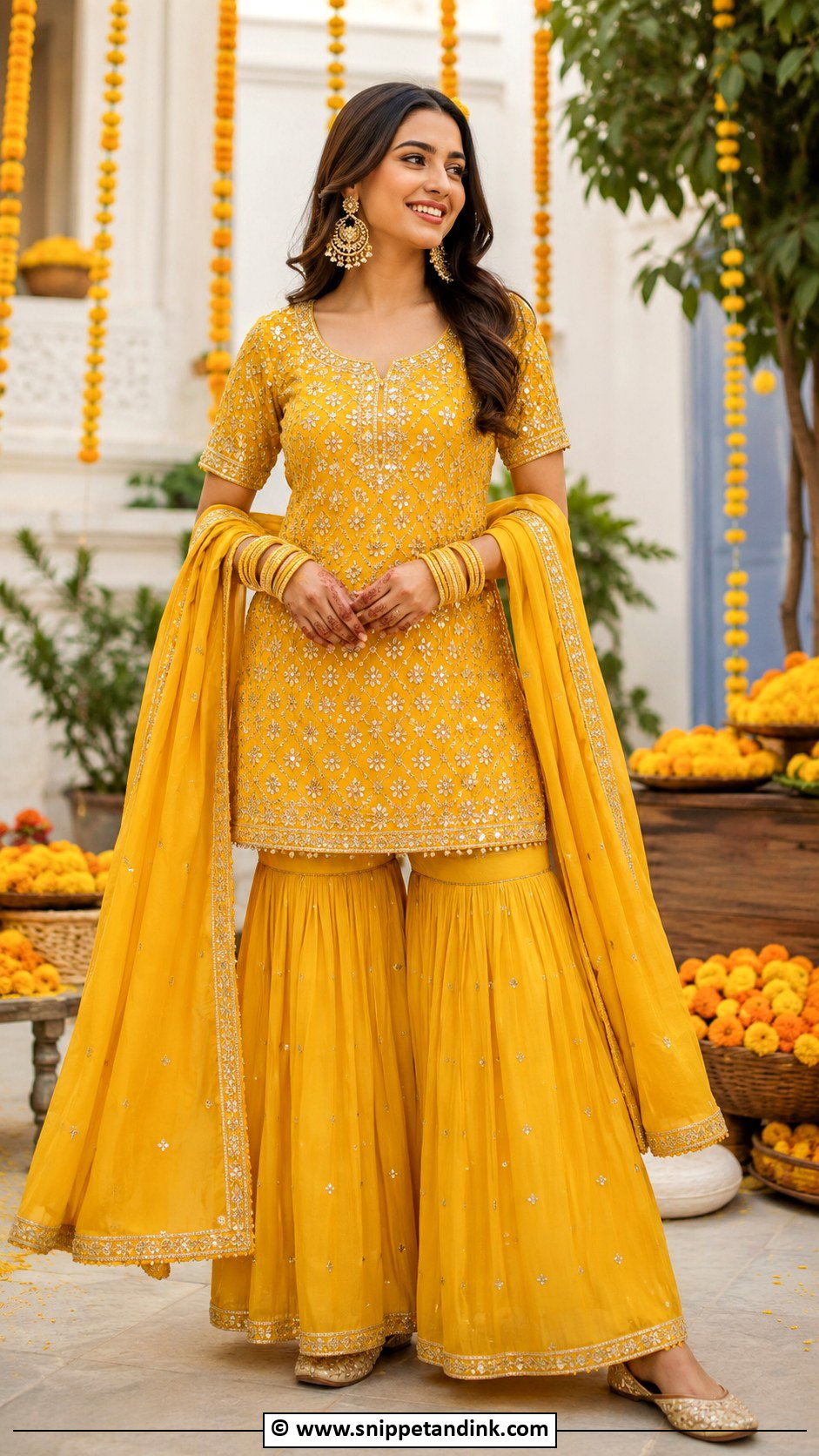
The gharara is fitted to the knee, then flares out from a gathered band. That knee joint is worth testing: sit cross-legged in the trial and see whether the fitted section pulls. Yellow, ivory, peach and lime green all work. Gota work or mirror detail on a short kurti adds festive shine. Ghararas are rooted in North Indian and Pakistani tradition and suit haldi well because they allow full movement for dancing afterward. Chandbalis, stacked bangles and juttis complete it.
7. Lime Green Haldi Co Ord Set
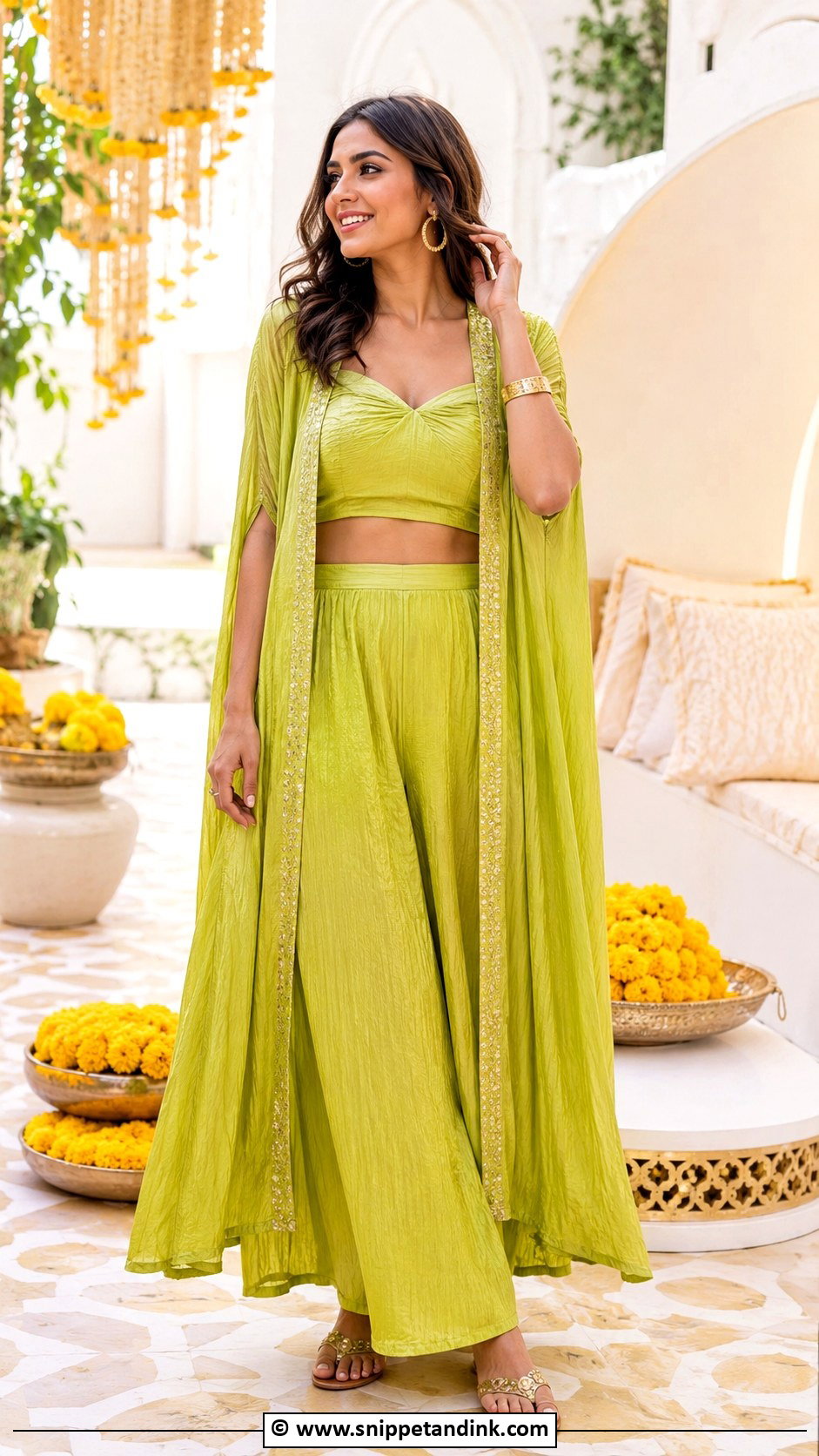
A lime green haldi co ord set stands out against yellow decor while staying in the cheerful daytime palette. A crop top with palazzos, a cape shrug or a long jacket gives you options. Lime green is bold, so I keep jewelry minimal: gold hoops and a slim bracelet. Cotton silk or crepe breathes best. One thing to know: bright greens can cast a slight color onto skin in close-up photos taken in strong sun, so shade helps.
8. Peach Haldi Kurta Palazzo Set
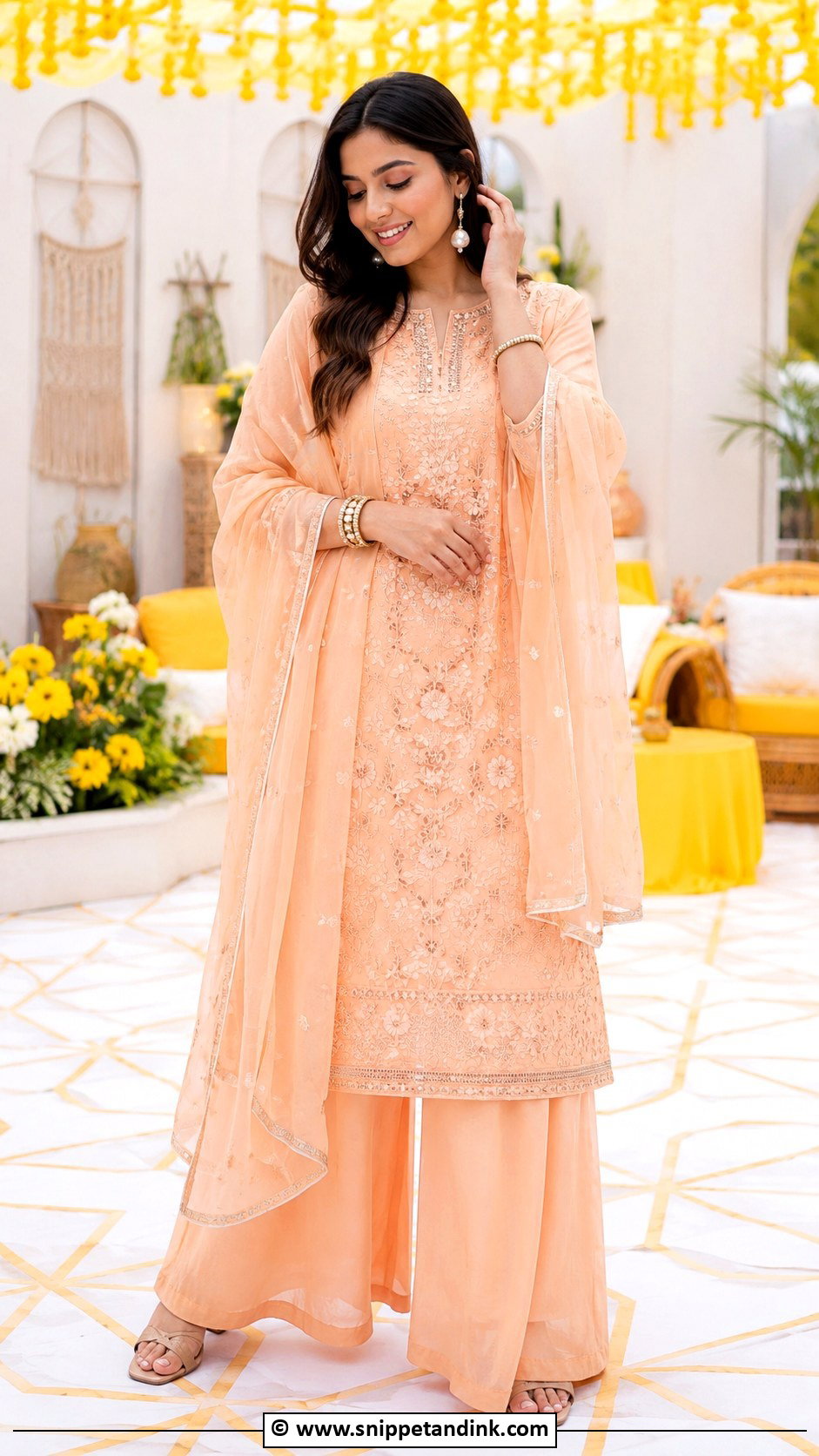
Peach is my go-to for guests who want to stand out from a sea of yellow. A straight or lightly flared kurta with wide palazzos and a light dupatta stays cool in heat. Block prints, mirror accents or soft embroidery add interest without weight. Peach flatters most skin tones and pairs well with gold, pearl and floral accessories. Covered, breathable and easy to wash, it is one of the more practical choices here.
9. Orange Haldi Lehenga Choli
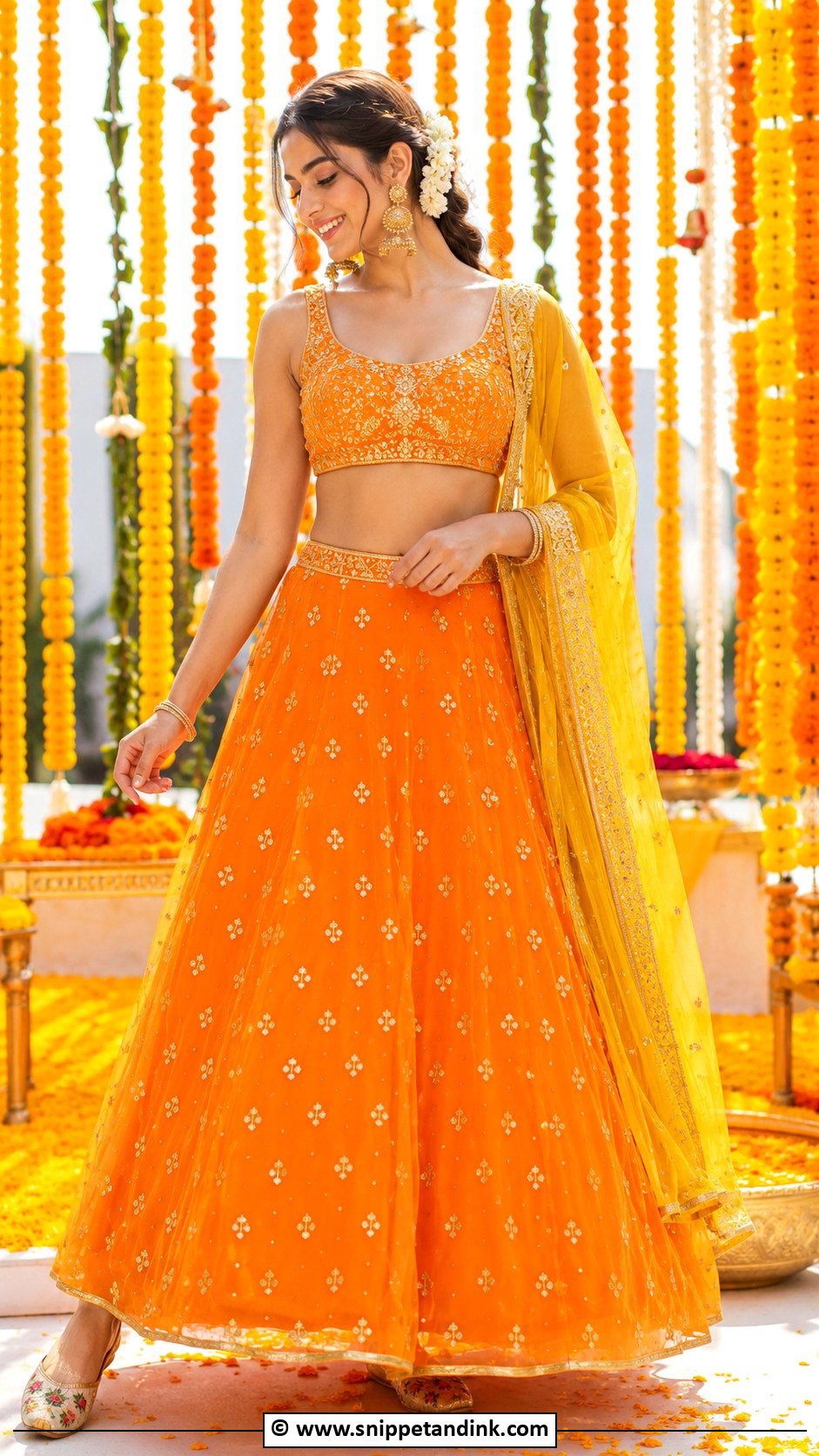
An orange haldi lehenga choli keeps the turmeric and marigold connection while giving the bride a deeper color than the guests. A lightweight skirt with gota borders, bandhani or subtle mirror work is enough. A contrasting blouse in yellow, ivory or pink adds life. I always pin the dupatta at two points, shoulder and waist, so it doesn’t slide during the rituals. Fresh flowers, gold jhumkas and stacked bangles finish a traditional look.
10. Bandhani Haldi Anarkali
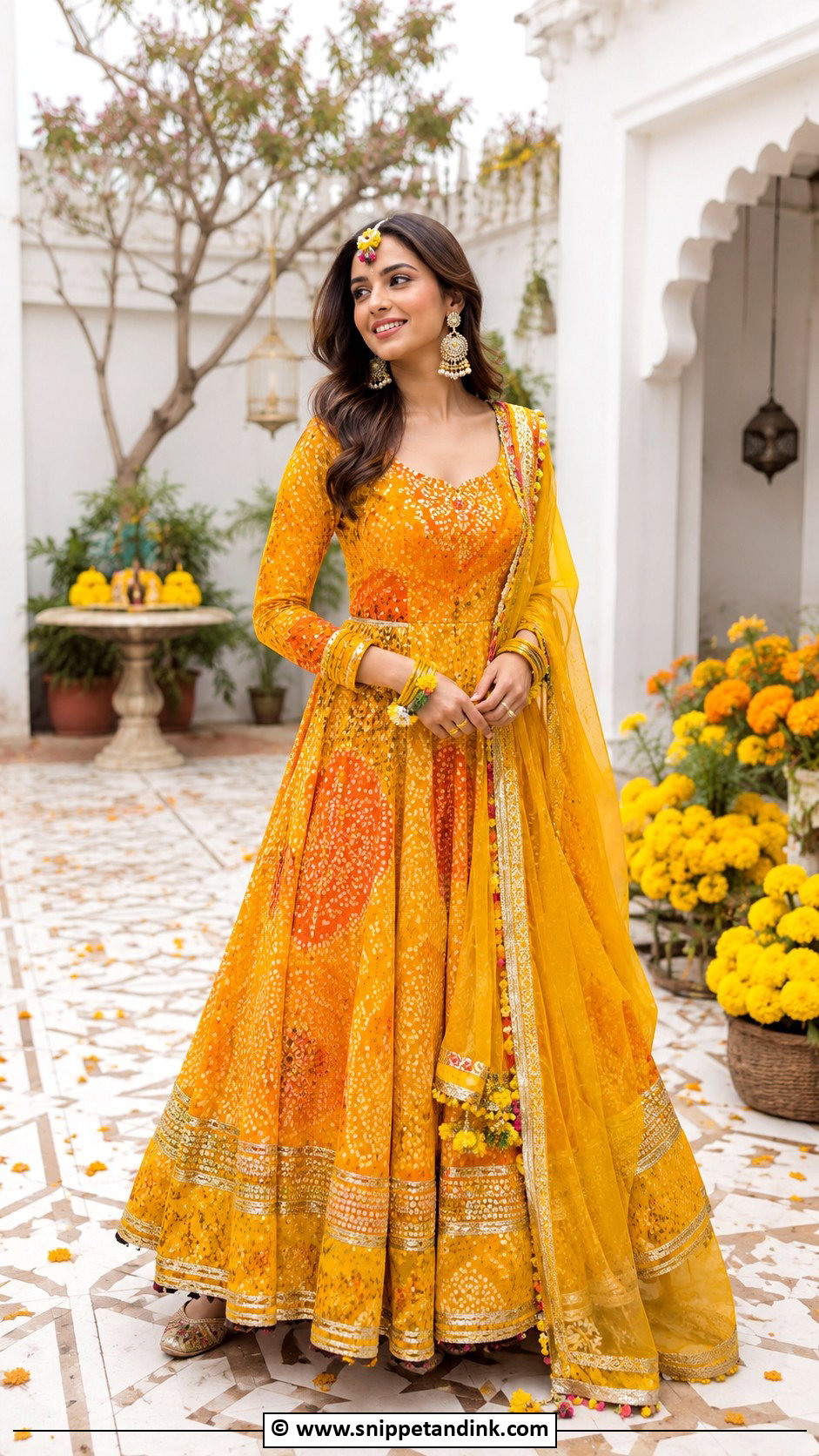
Bandhani is tie-dye made by hand-pinching and binding tiny points of fabric before dyeing, and those little dots look cheerful in yellow, orange or red. In an Anarkali shape, it is easy to wear and quick to dress in. Genuine bandhani is usually cotton or silk, so remember the dyes may bleed if splashed with water and paste; a cold rinse soon afterward helps. A gota-edged dupatta, jhumkas and a small maang tikka look right, and flats keep it practical.
11. Ivory Haldi Lehenga With Yellow Dupatta
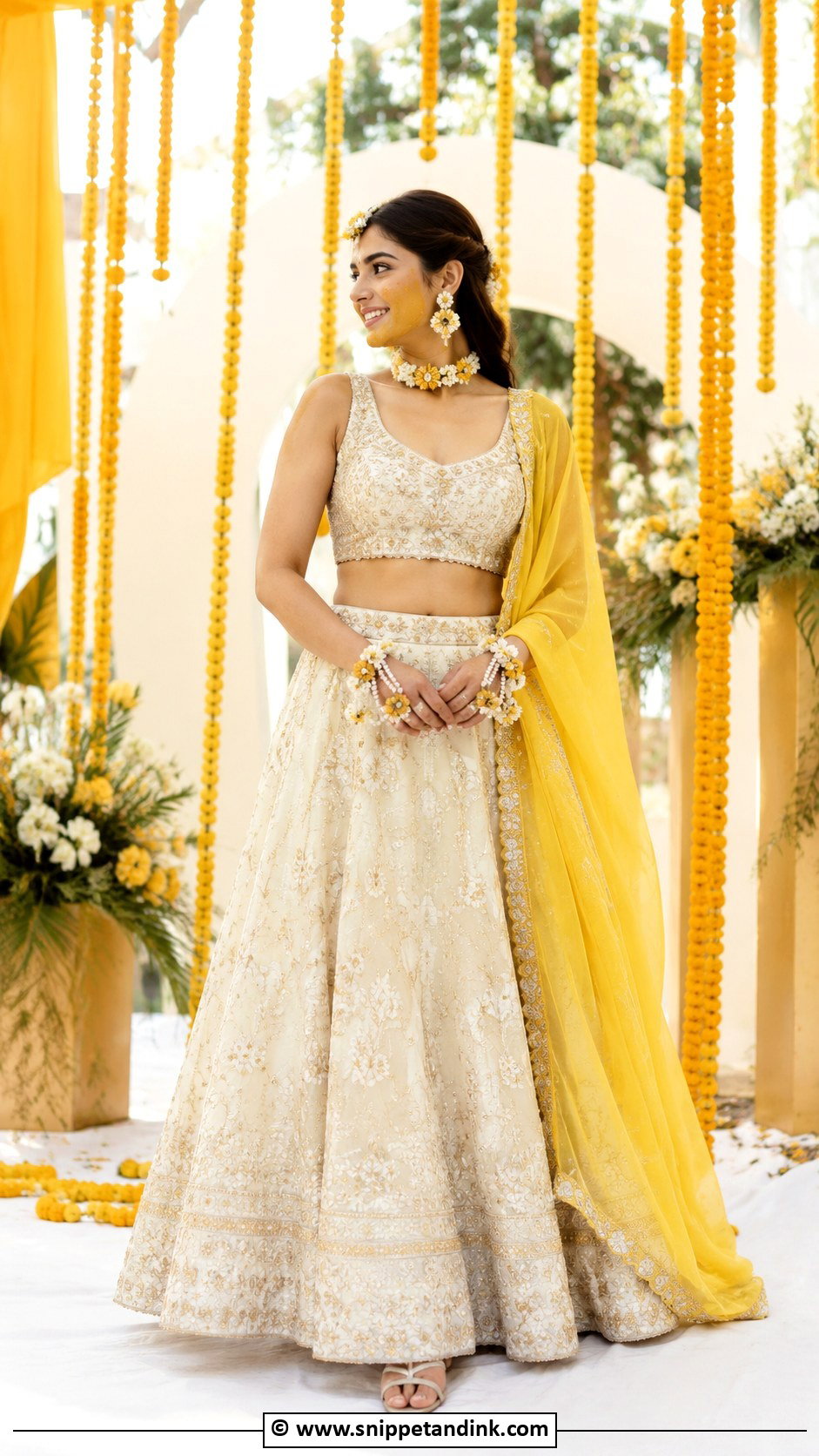
Ivory with a yellow dupatta is my favorite compromise when a bride wants something bridal but not fully yellow. The ivory base stays soft, and the dupatta connects it to the theme. Choose tone-on-tone threadwork or small mirrors rather than heavy embellishment, which traps paste in its crevices. Floral jewelry, pearls and dewy makeup suit it. A sleek bun or braid with fresh flowers keeps hair away from the paste as well as finishing the look.
12. Yellow Haldi Saree With Belt
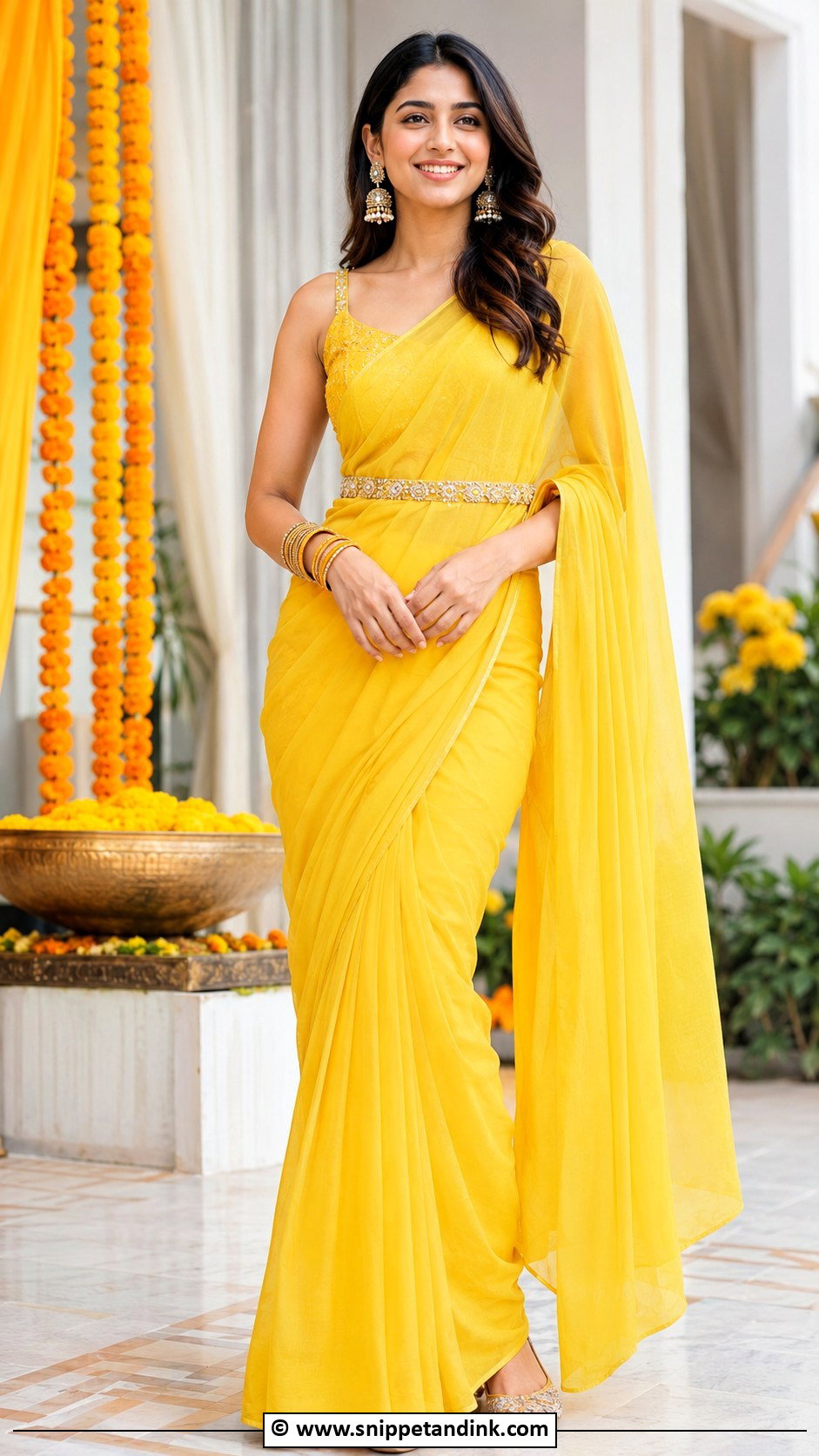
The belted saree solves the drape problem. A slim embroidered or fabric belt holds the pallu and pleats in place, which means you can move between rituals, photos and dancing without readjusting every few minutes. Chiffon, georgette and organza sarees all take a belt well. A printed blouse brings interest to a plain saree. Add statement earrings and bangles, and choose flats or low heels. It suits bridesmaids and guests who love sarees but want fewer pins.
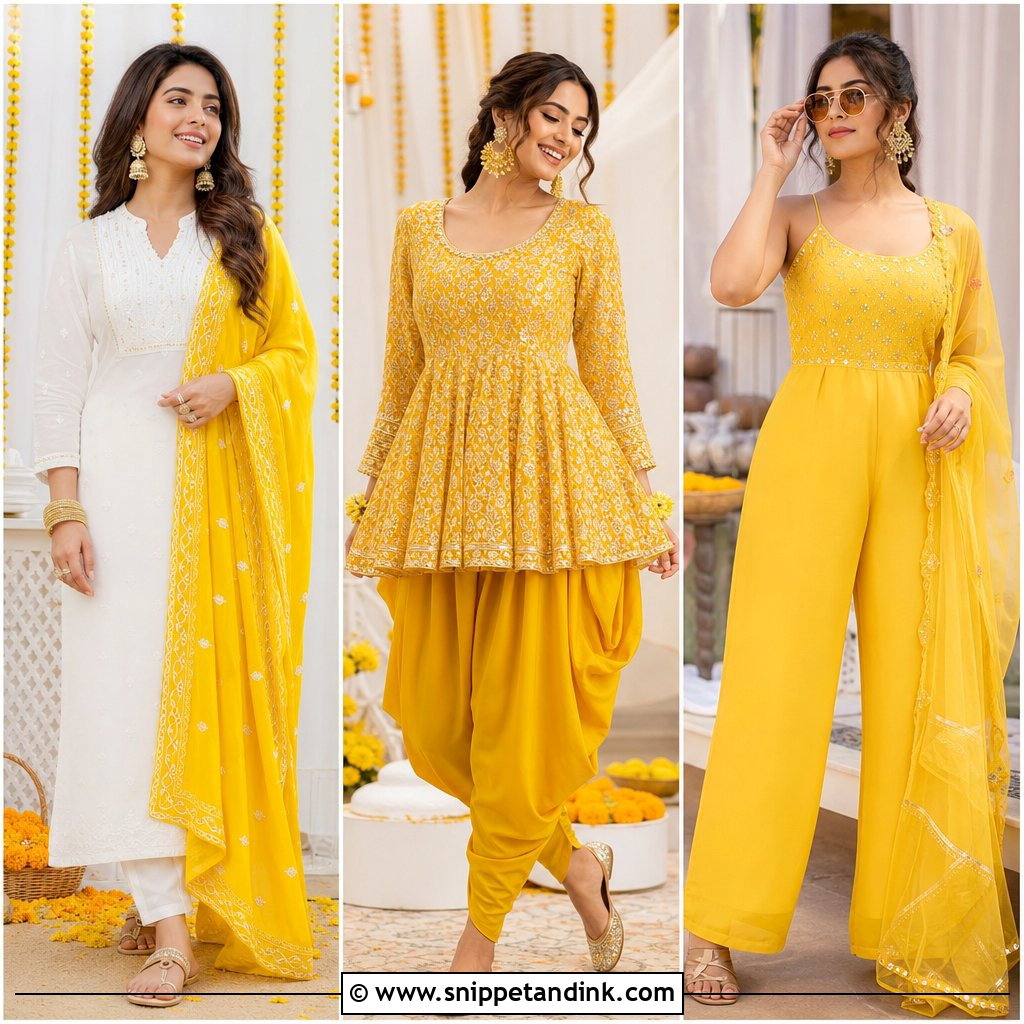
13. Haldi Jumpsuit With Dupatta
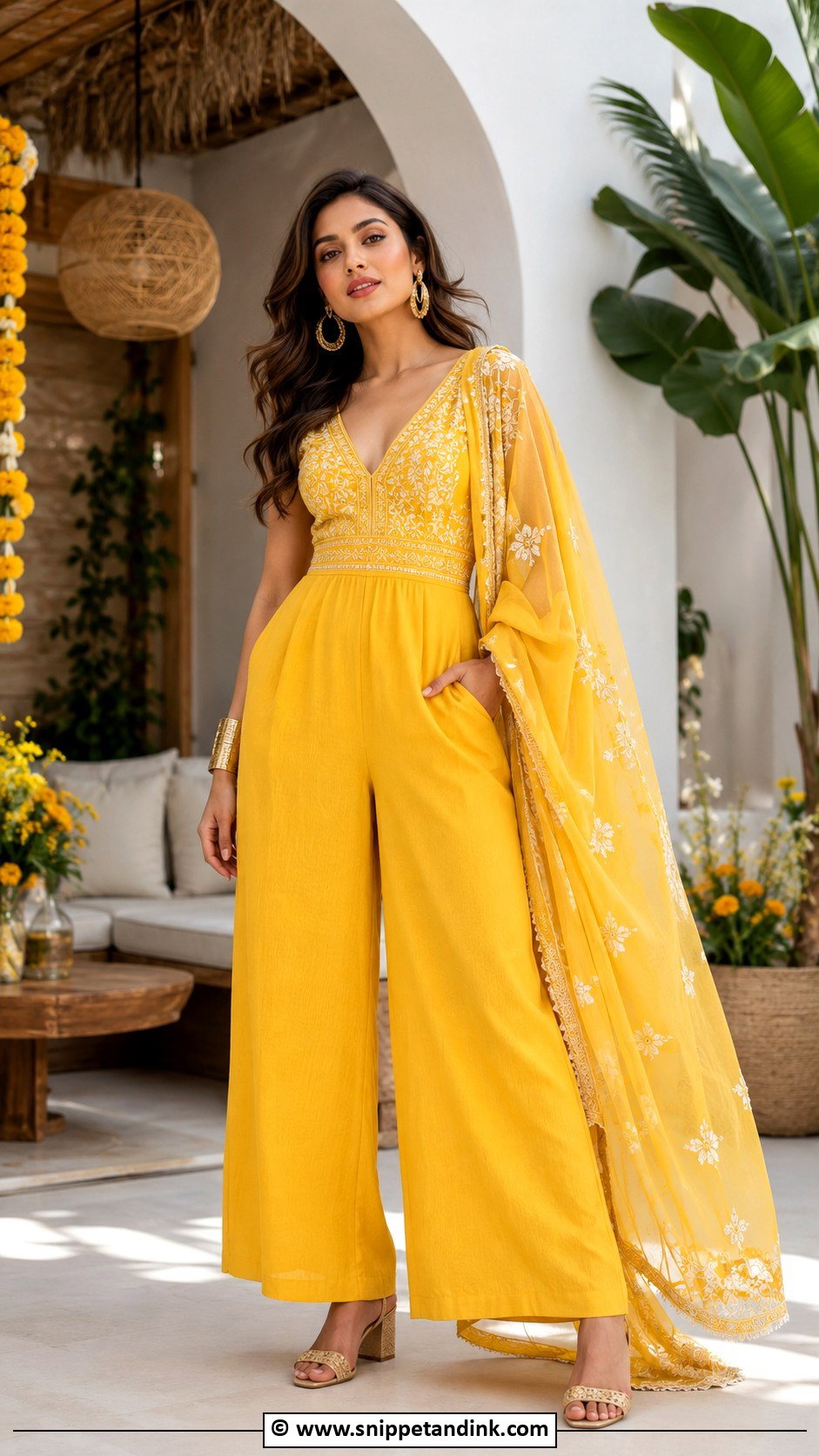
Jumpsuits are the easiest outfit to move in at a haldi, and they suit destination, poolside and smaller home ceremonies. Yellow, ivory, coral and mint with wide legs and a fitted waist look festive once you add a light dupatta, cape or embroidered jacket. The one drawback: you will need help with bathroom trips, so pick a jumpsuit with a side zip rather than a long back zip. Keep jewelry sleek, like hoops, a cuff or a delicate tikka.
14. Yellow Haldi Skirt With Crop Top
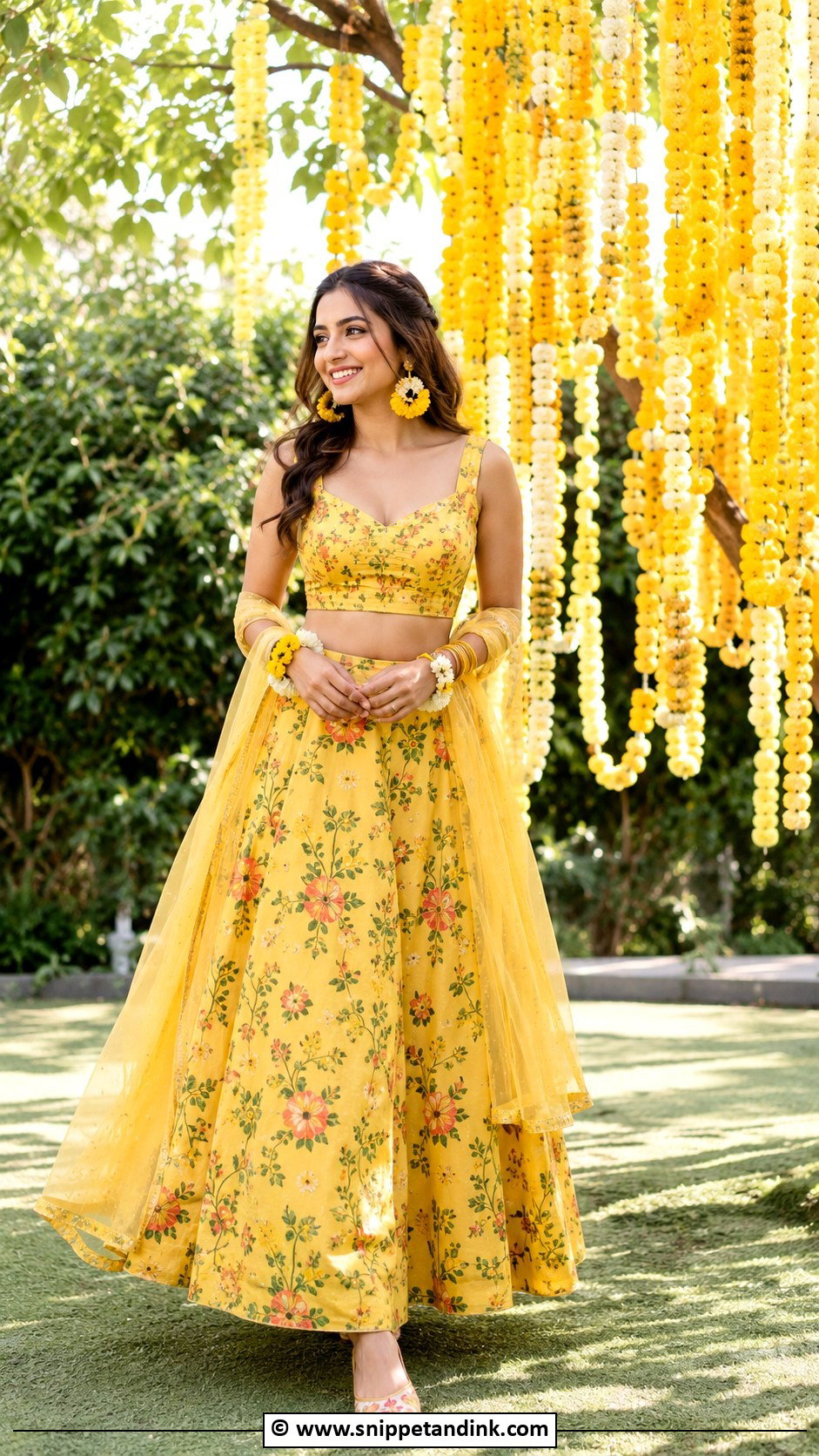
A yellow skirt with a crop top is a lighter, cheaper alternative to a lehenga. Pick a printed or embroidered skirt and a plain top for balance. A dupatta makes it more traditional; a cape or jacket more modern. For more coverage, raise the skirt waist and lengthen the blouse. Floral earrings, stacked bangles and juttis complete it. I like this for younger cousins and friends because the pieces can be reworn separately afterward.
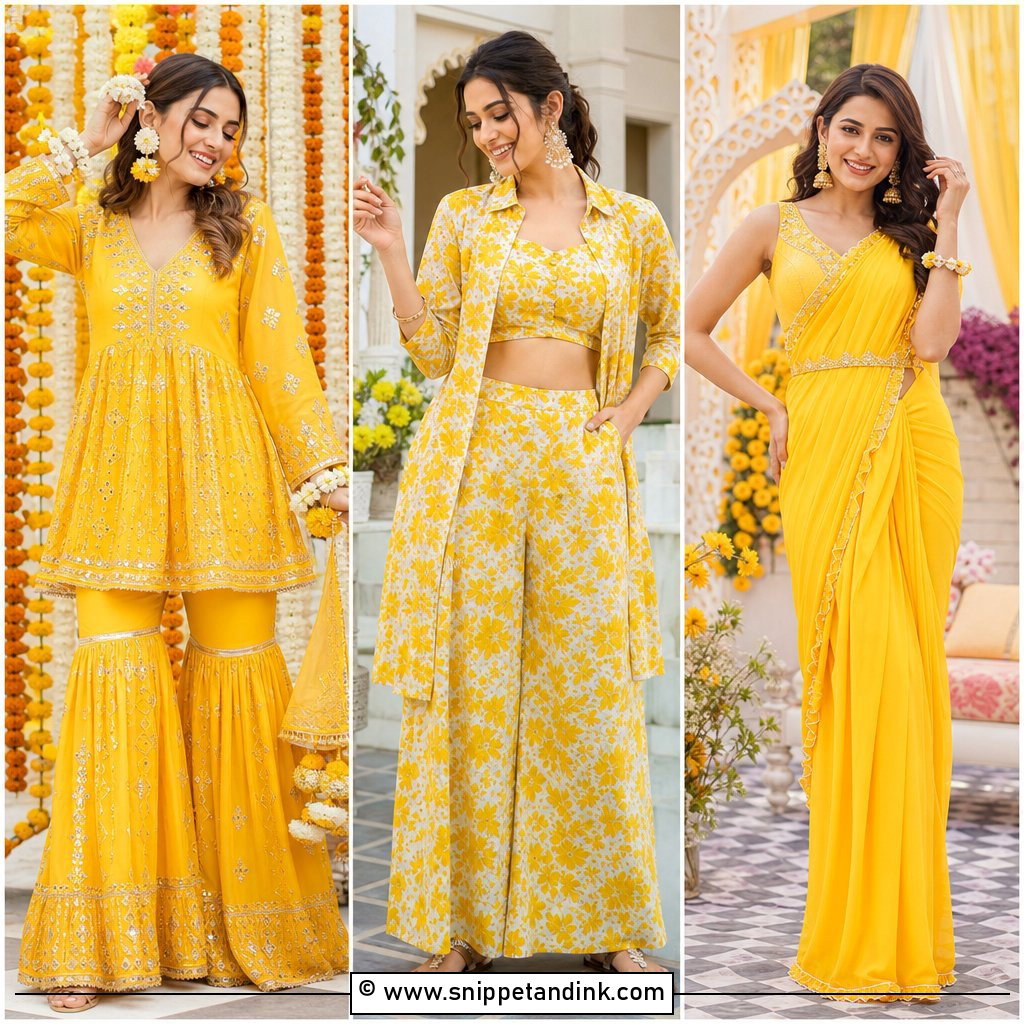

15. Mint Green Haldi Sharara
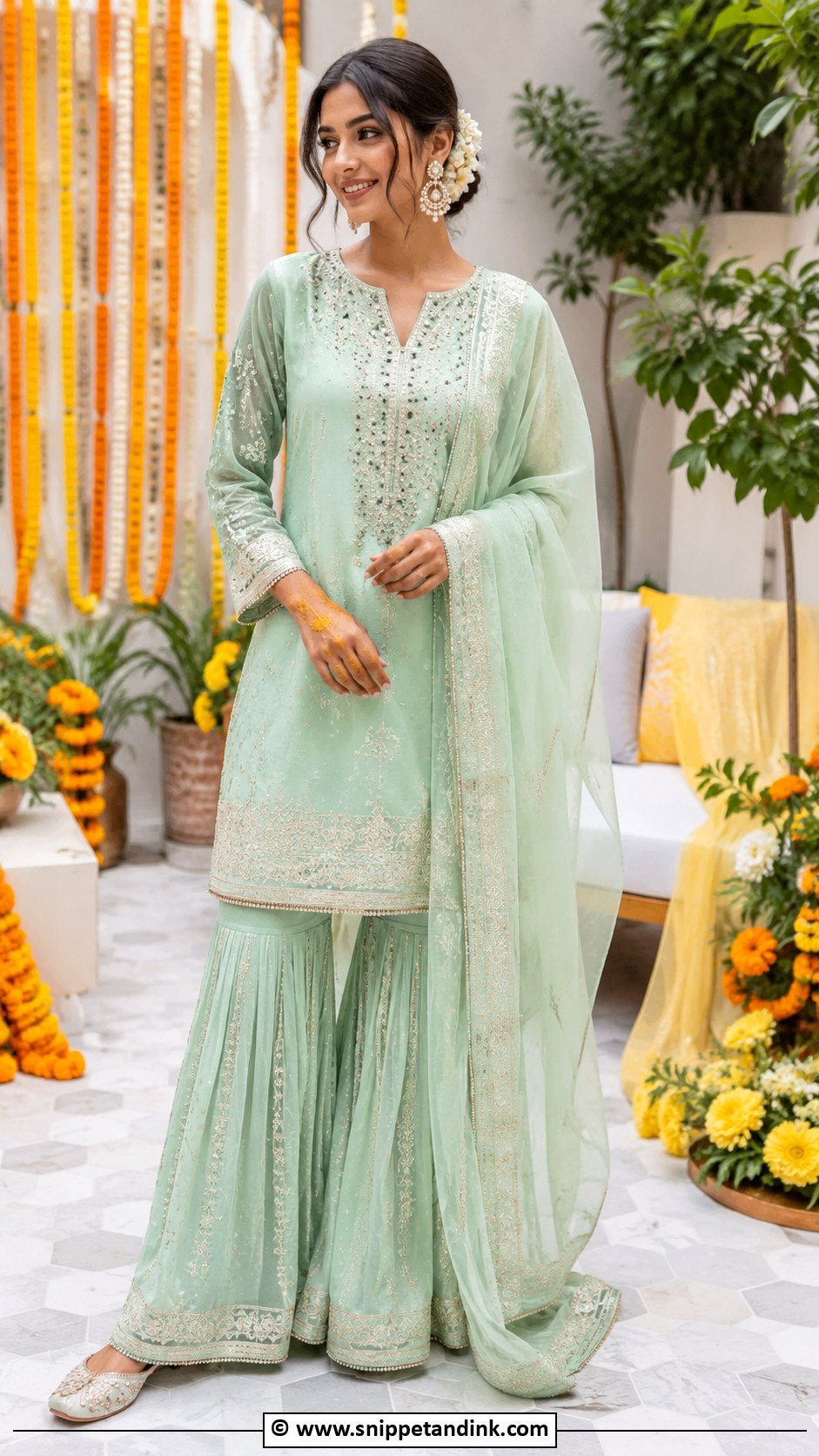
Mint gives a cool contrast against yellow decor and looks especially fresh in outdoor daylight. A short kurti with fine embroidery or mirror work, flowy sharara pants and a sheer dupatta keeps it airy. Pearls, white flowers and soft gold suit the color. Pale greens show turmeric stains clearly, so mint is better for guests who won’t be applying paste than for the bride’s immediate family. Peachy, natural makeup works best with it.
16. Yellow Haldi Dhoti Set
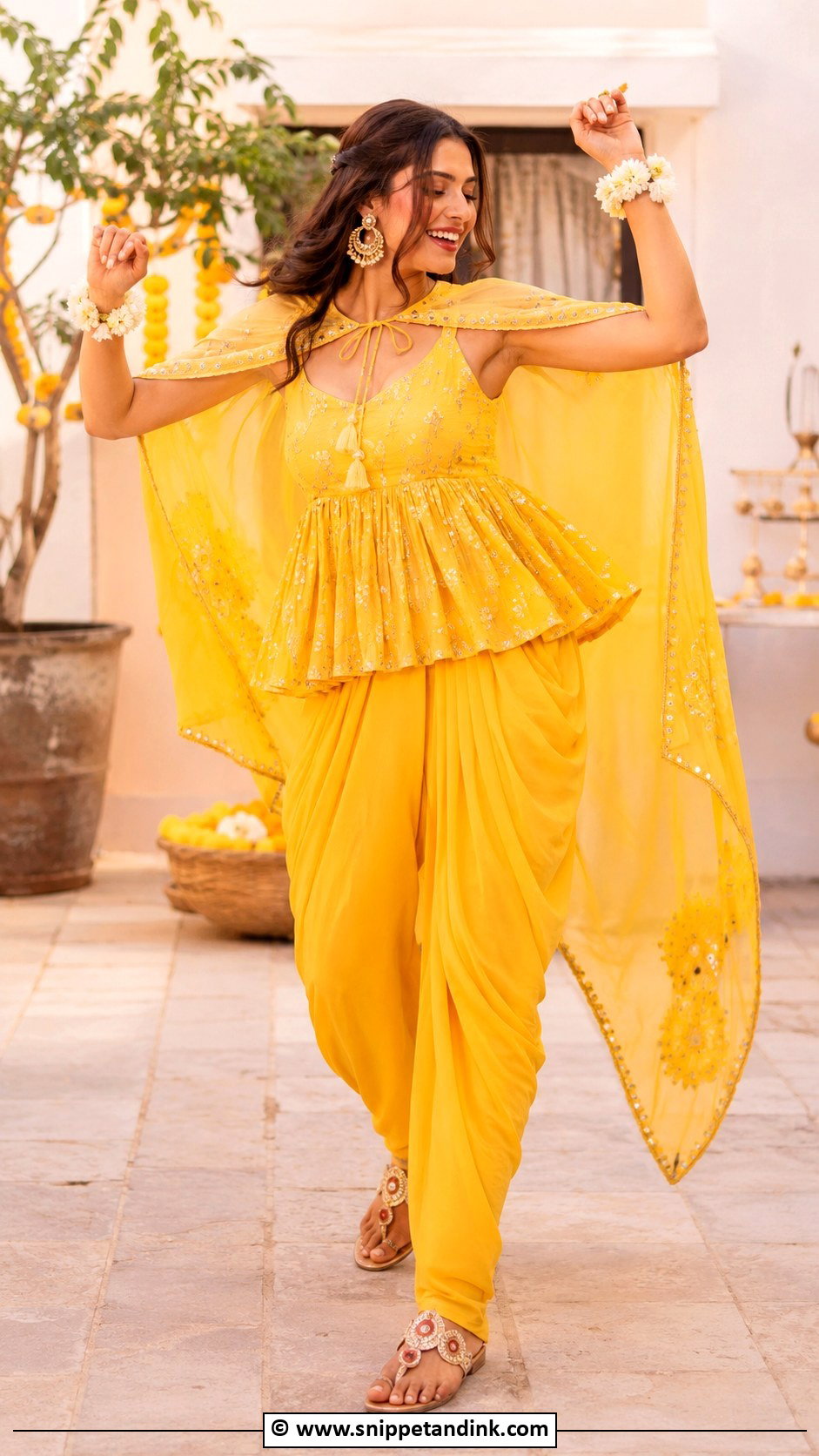
A yellow haldi dhoti set pairs draped dhoti pants with a kurti, crop top or peplum. The drape is sewn in, so there’s no wrapping on the day, and the full seat gives space for squatting and dancing. Cotton silk, crepe or georgette falls best. A dupatta or cape adds ceremony detail. Oxidized earrings, gold hoops or floral jewelry all suit it, with juttis or kolhapuri sandals.
17. Coral Haldi Saree Look
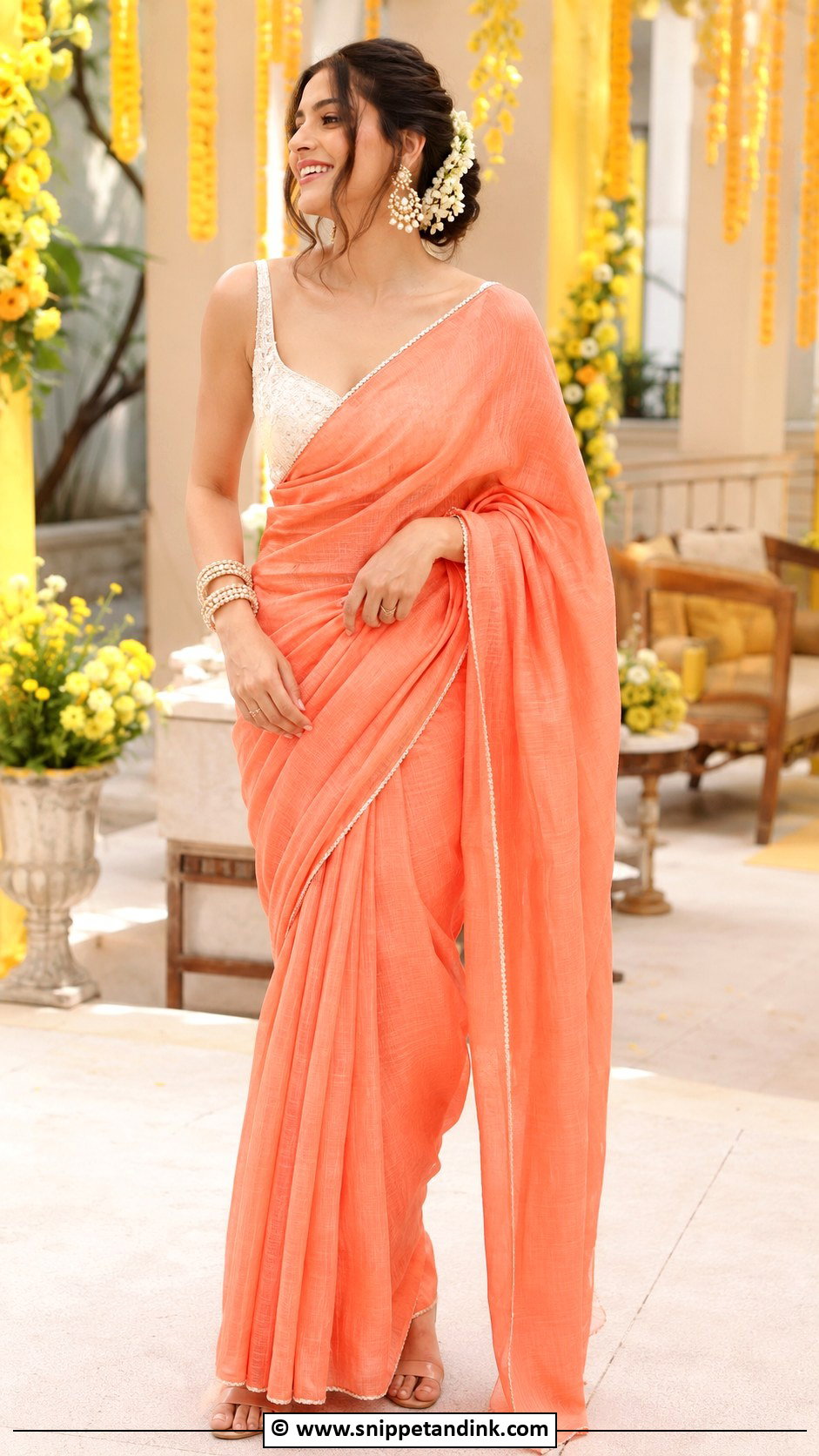
Coral sits between peach and orange, festive without being loud. In a lightweight saree with a simple border or floral print, it flatters most skin tones and looks good in natural light against yellow flowers and green lawns. A gold, ivory or matching blouse balances it. Pearl earrings, bangles and fresh flowers in the hair are enough. I suggest it for close family who want to be distinct from the bridesmaids.
18. White Kurta Haldi Look
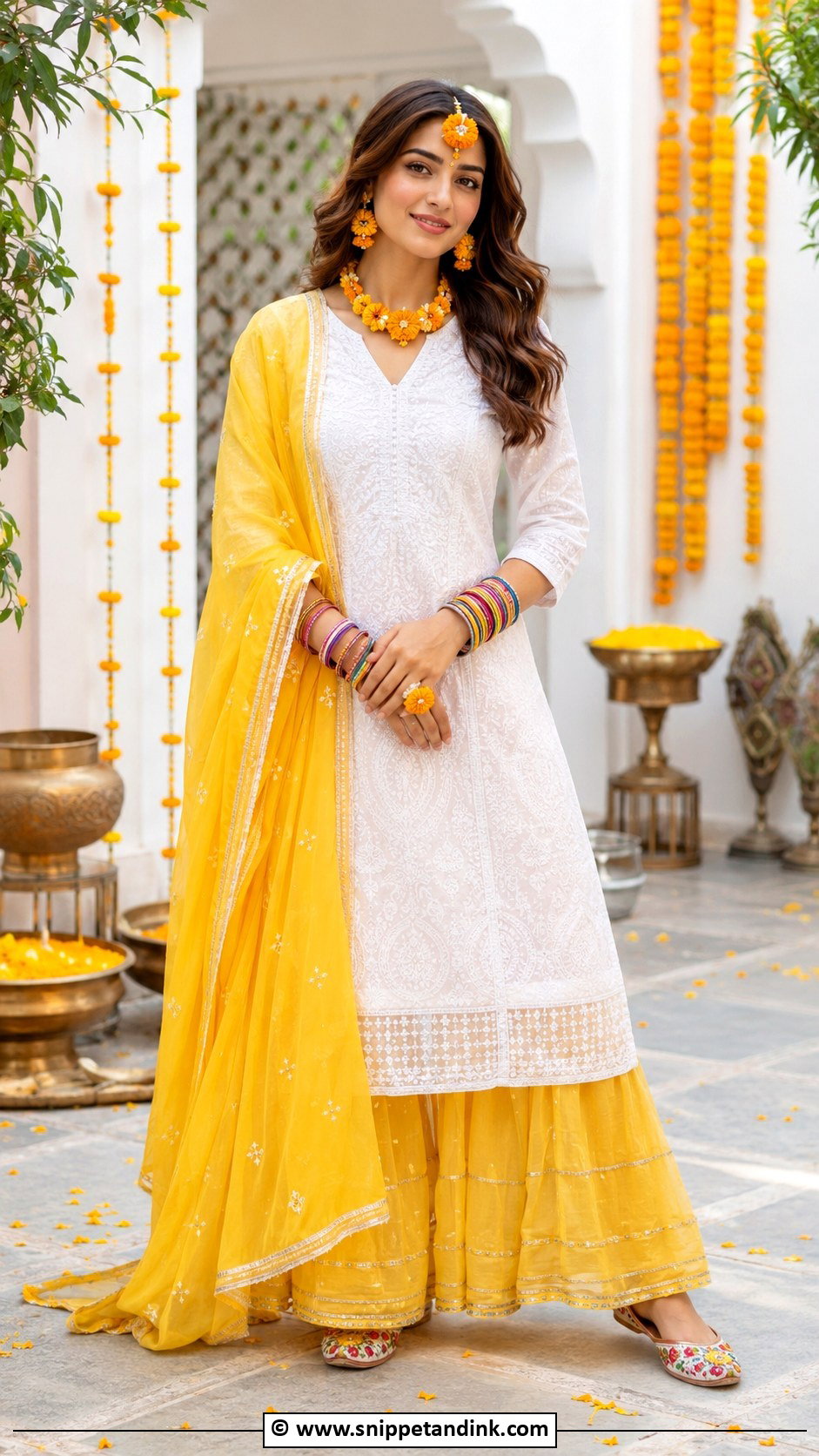
A white kurta with yellow palazzos or a yellow dupatta is simple and surprisingly striking. Cotton, linen or chikankari keep it cool. Color comes in through floral jewelry, bright bangles or embroidered juttis. It suits guests wanting comfort and brides who plan to change after the ritual. But plan for stains: white cotton plus turmeric is a stain you should expect to keep, so wear this only if you don’t mind.
19. Haldi Lehenga With Mirror Work
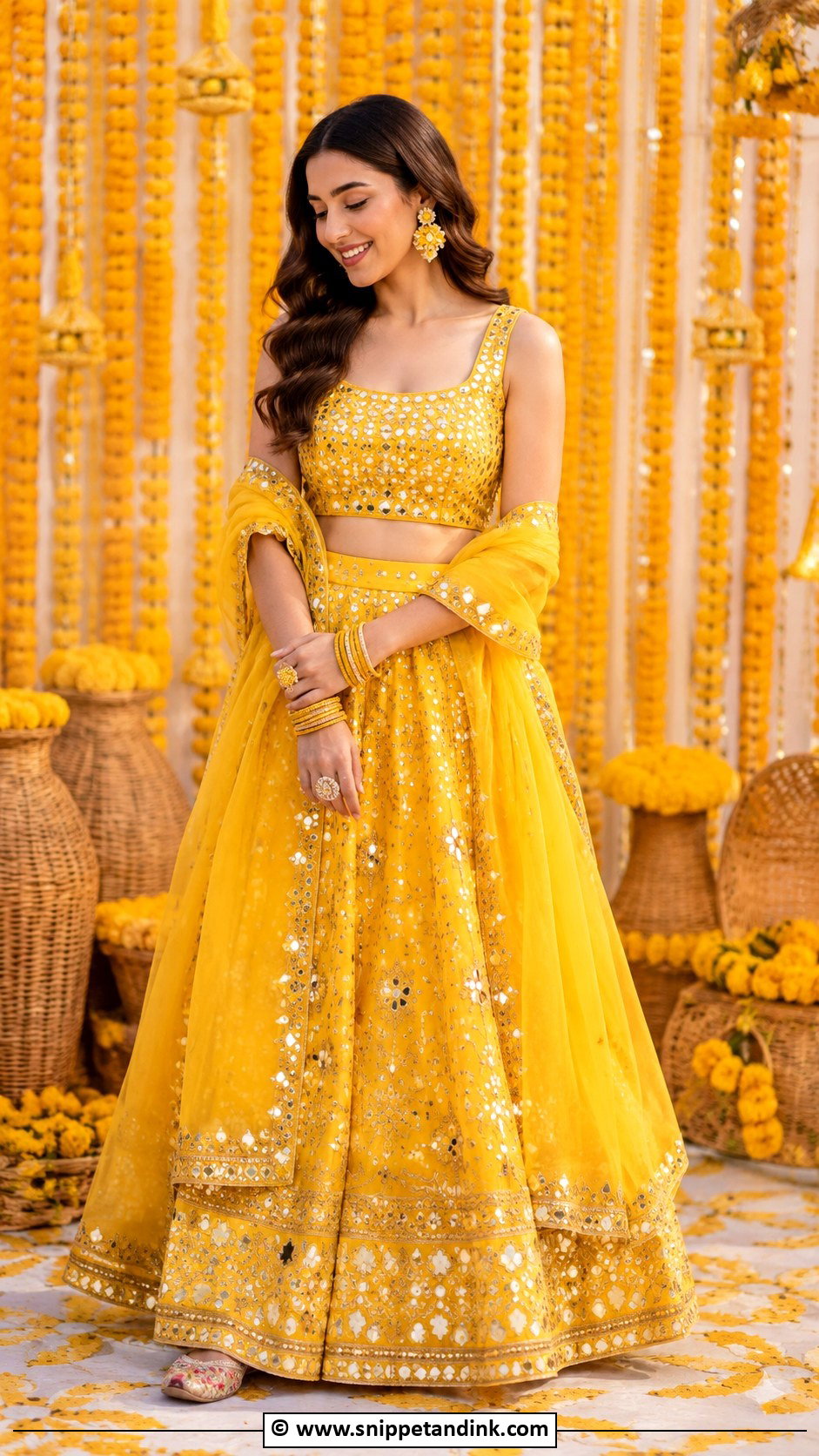
Mirror work catches daylight in small flashes, which reads festive without the weight of zardozi. Even a simple yellow, ivory or orange lehenga looks dressed up with it. Mirror pieces are stitched on with thread loops, and turmeric paste dries hard in those loops, so dab off splashes quickly. Minimal jewelry, floral earrings and small bangles keep the balance. It suits brides who want a statement and bridesmaids who like a bit of sparkle.

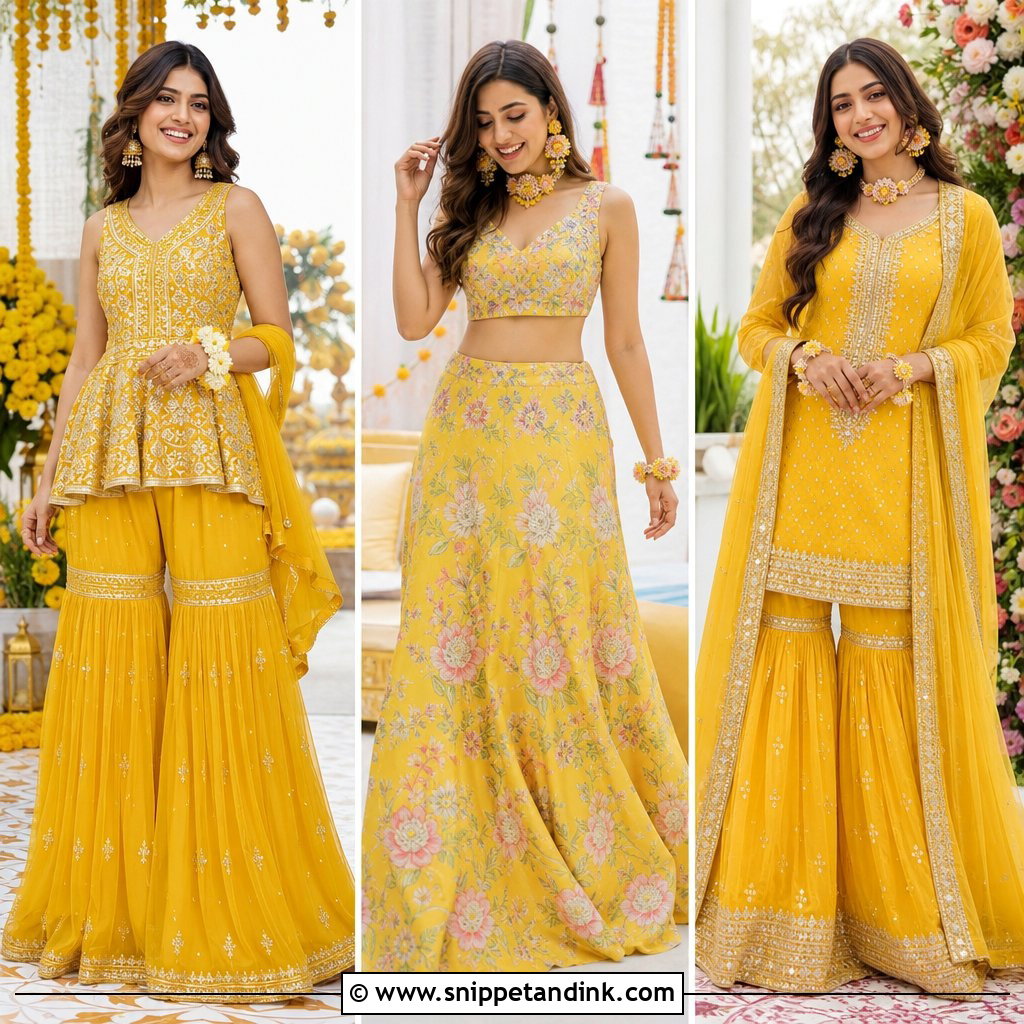
20. Yellow Haldi Kaftan Set
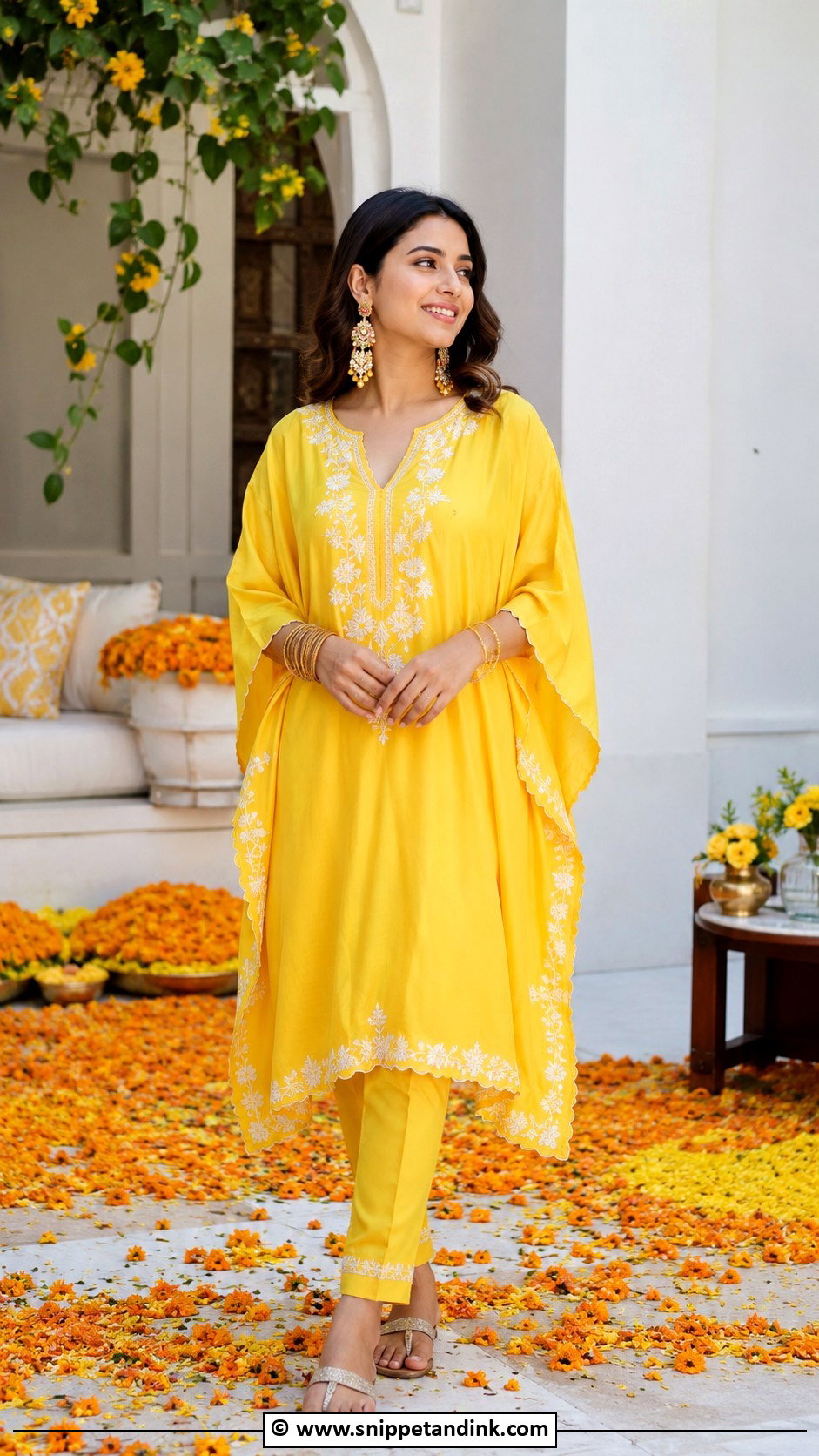
Kaftans are loose and cool, which makes them ideal for home or resort haldis in hot weather. Look for one with embroidery, mirror trim or tassels, plus a waist tie to give it some shape in photos. Slim pants or palazzos underneath. Sleeves on kaftans are wide, so roll or pin them back before the paste comes out, or they’ll dip into the bowl. Statement earrings, bangles and embellished flats finish it.
21. Haldi Maxi Dress With Indian Jewelry
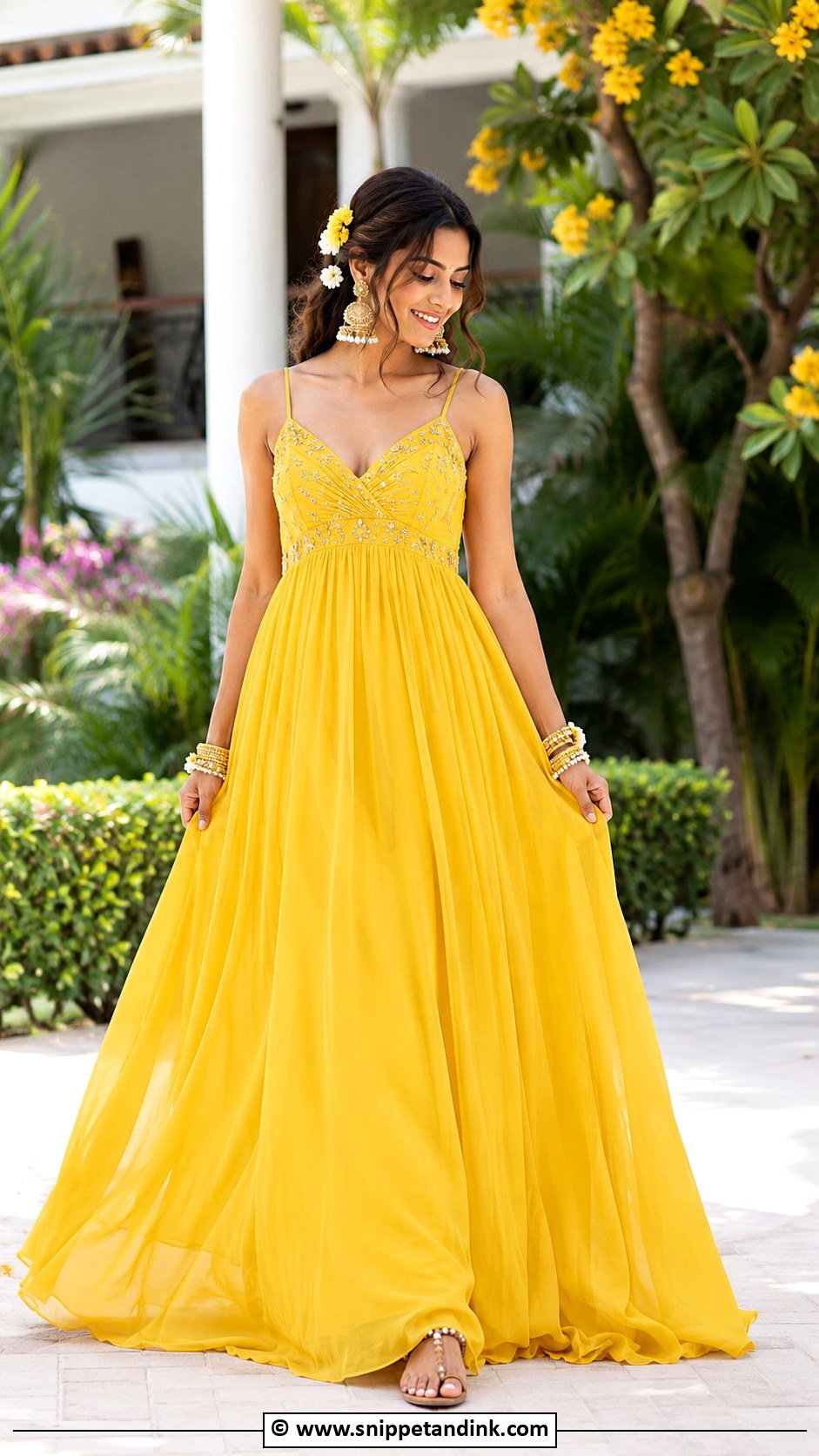
A maxi dress with Indian jewelry is the simplest fusion idea here. Yellow, ivory, peach or floral prints work. Add jhumkas, bangles, a bindi or floral hair pieces to tie it to the event. It suits destination and small ceremonies where a heavy outfit is unnecessary, and it’s budget-friendly because the dress can be worn again for summer parties. Flat sandals, wedges or juttis depending on the floor.
22. Yellow Haldi Suit With Gota Patti
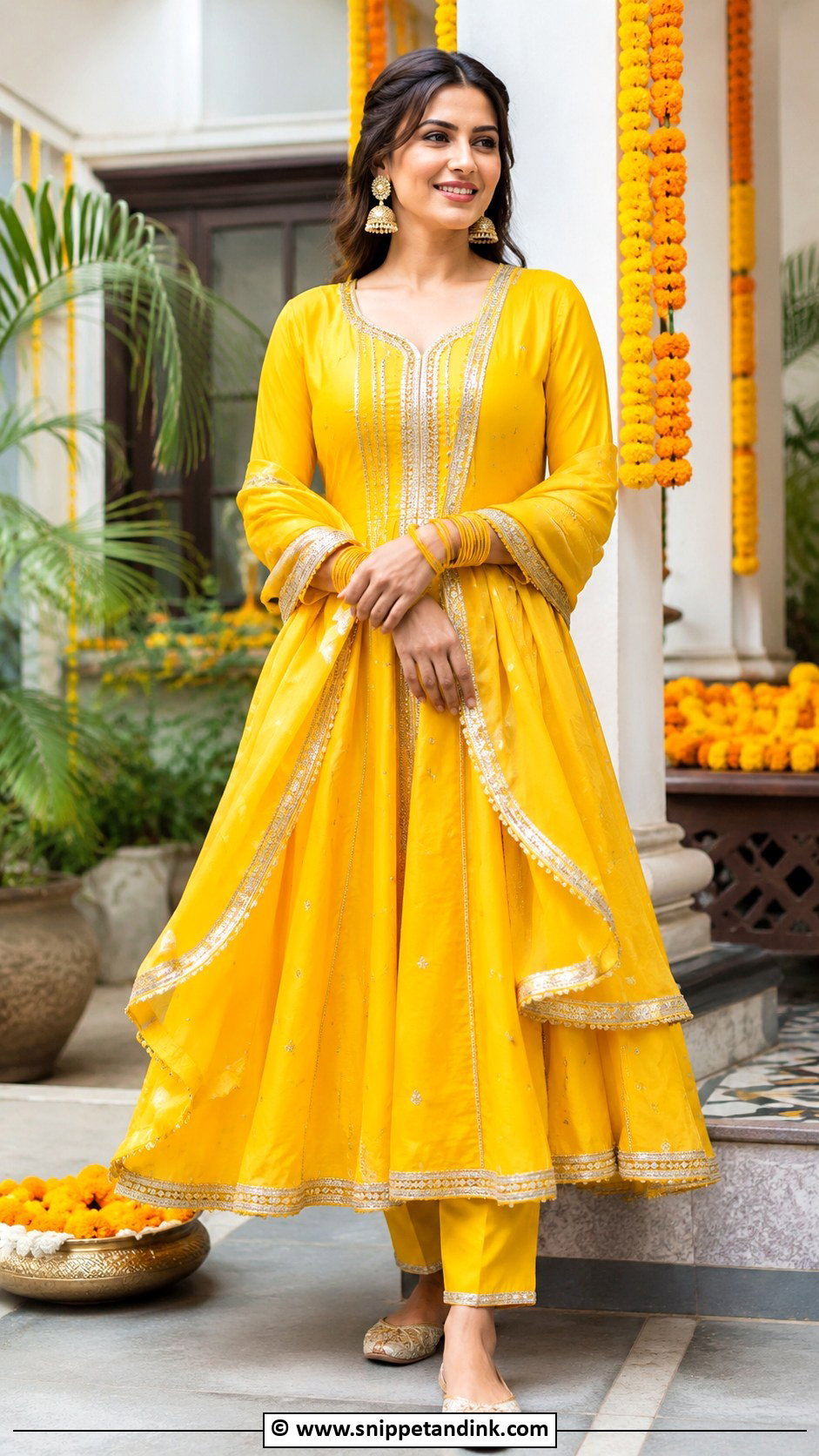
Gota patti is metallic ribbon cut and stitched into patterns, an old Rajasthani technique that gives shine without the weight of embroidery. On a straight, flared or Anarkali kurta with matching pants and a dupatta, it’s dependable and festive. Gota borders on the sleeves, hem and dupatta are enough. Brides can pick a richer yellow and add floral jewelry. Gota can tarnish if left damp, so air the outfit fully before packing it away.
23. Printed Haldi Palazzo Set
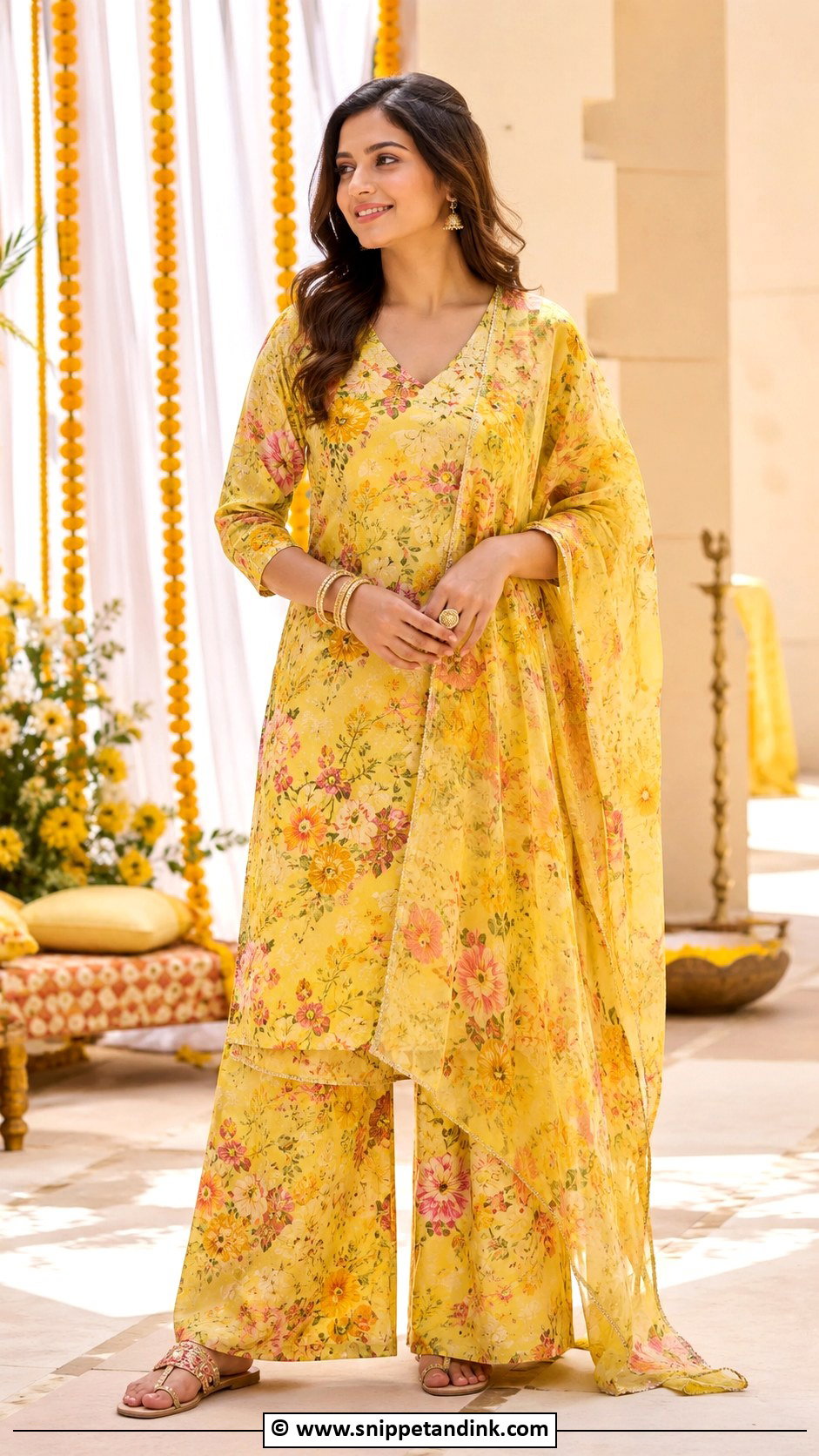
Printed palazzo sets are for comfort first. Yellow florals, block prints, leheriya or abstracts on a kurta with wide palazzos keep you cool and mobile, which matters for family members helping with the rituals. A dupatta makes it more festive, or skip it for a cleaner line. Small earrings, bangles and flat sandals. The wide leg doesn’t cling when splashed, and the set is easy to wear again.
24. Haldi Lehenga With Shirt Blouse
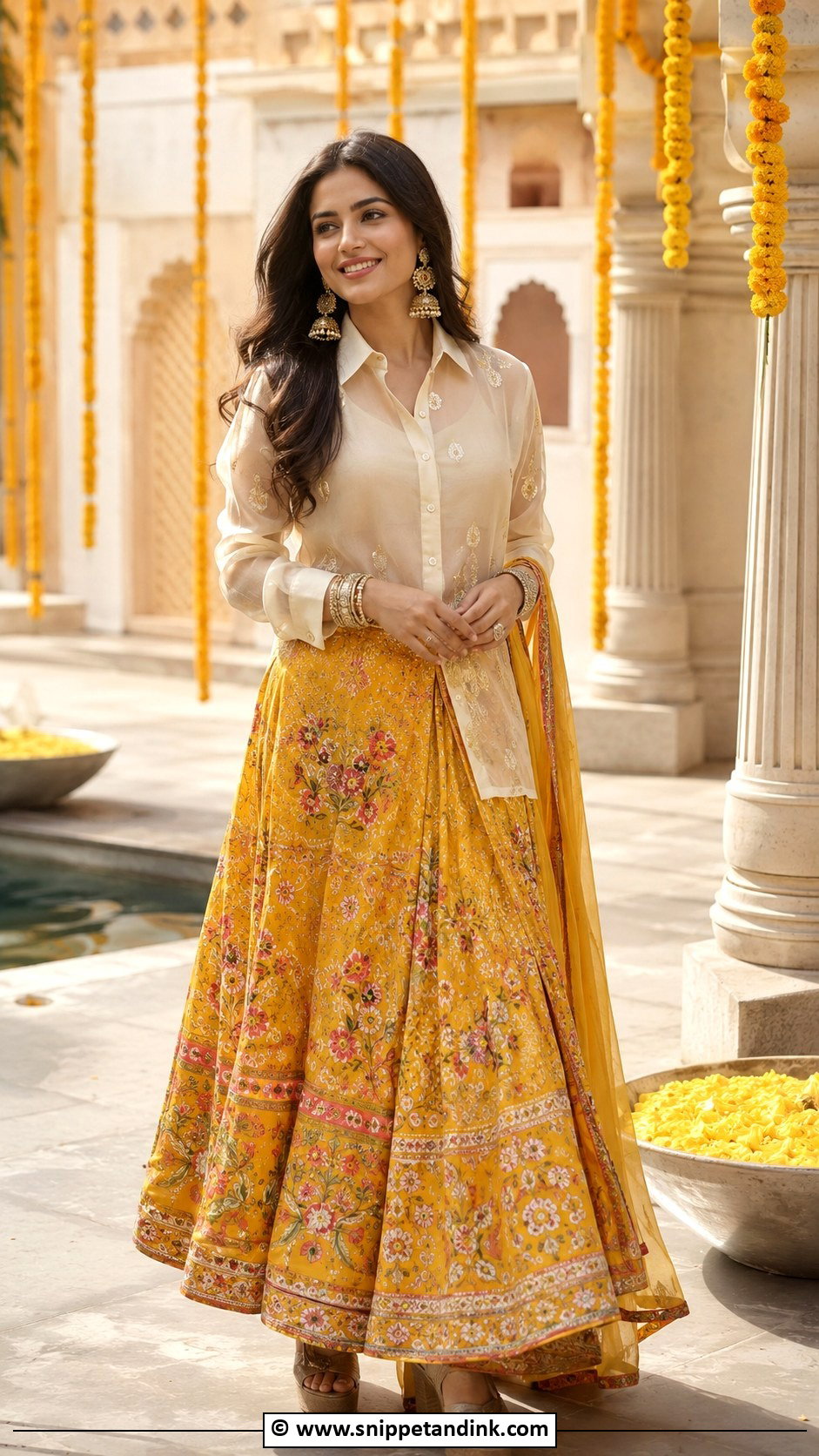
A collared shirt blouse instead of a regular choli makes a lehenga feel modern. In organza with puff sleeves or tie details, it stays special without being too formal. Pair it with a yellow, ivory or printed skirt. The collar sits close to the neck, so ask your makeup artist to set foundation along the jaw, or the collar will pick it up. Statement earrings or layered bangles, a low bun or braid, and flats or wedges.
25. Lavender Haldi Sharara Set
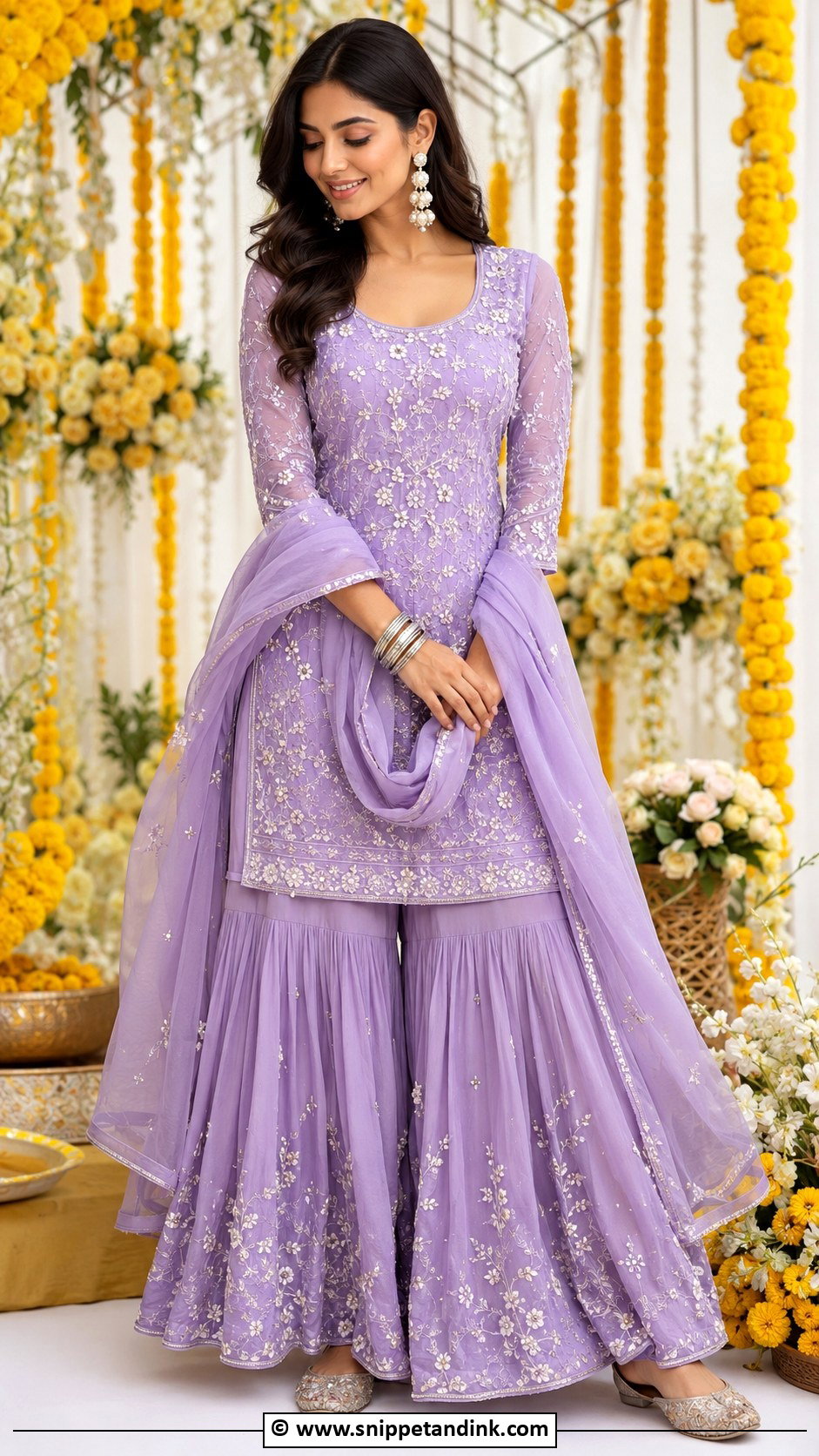
Lavender gives a soft contrast to marigolds and is one of the more unexpected colors I’ve seen work at haldi. A pastel kurti with mirror work, sequins or fine embroidery and wide sharara pants with a matching dupatta. Pearls, silver-toned bangles or white florals keep it light. Lavender fades in harsh midday sun, so it photographs best in shade or morning light. Nude sandals or embellished flats complete it.
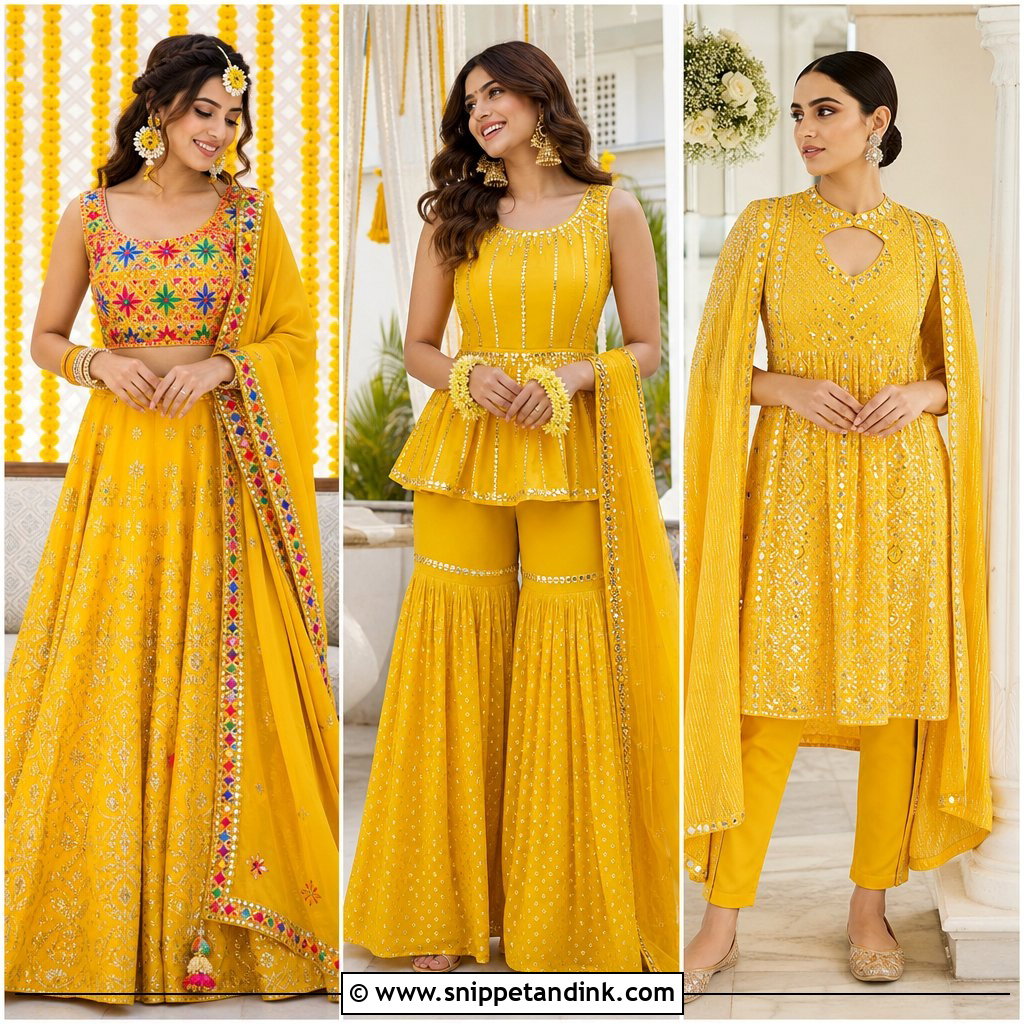
26. Yellow Haldi Peplum Sharara
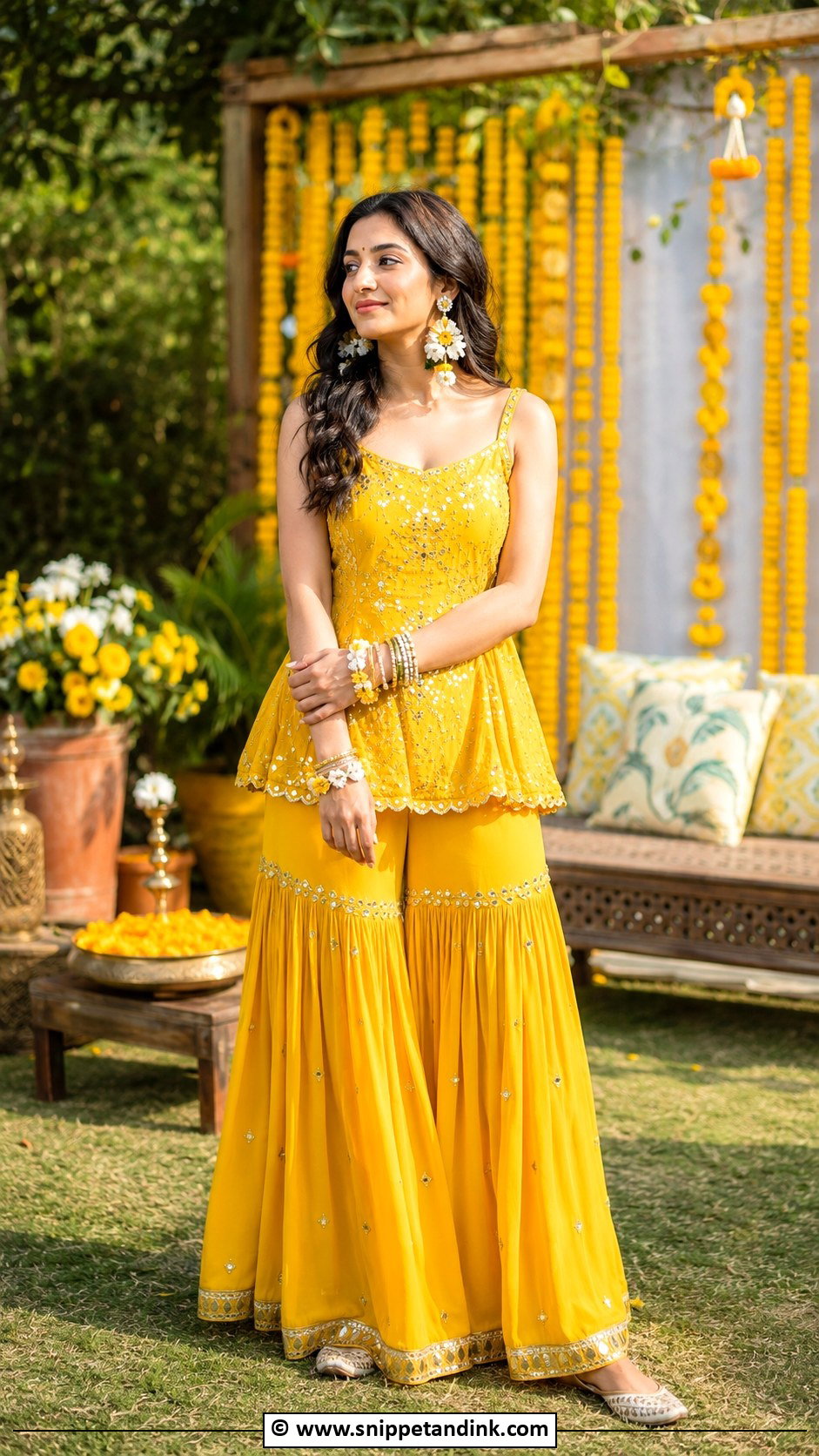
The peplum top defines the waist while the sharara adds volume below, and the combination is easy to sit and dance in. Light embroidery, mirror work or print keeps it daytime. A dupatta over one shoulder is optional if the top is detailed. Peplums flare from the waist, which flatters straighter figures. Floral earrings, bangles and juttis finish it; a fun, practical pick for bridesmaids and sisters.
27. Haldi Saree With Floral Blouse
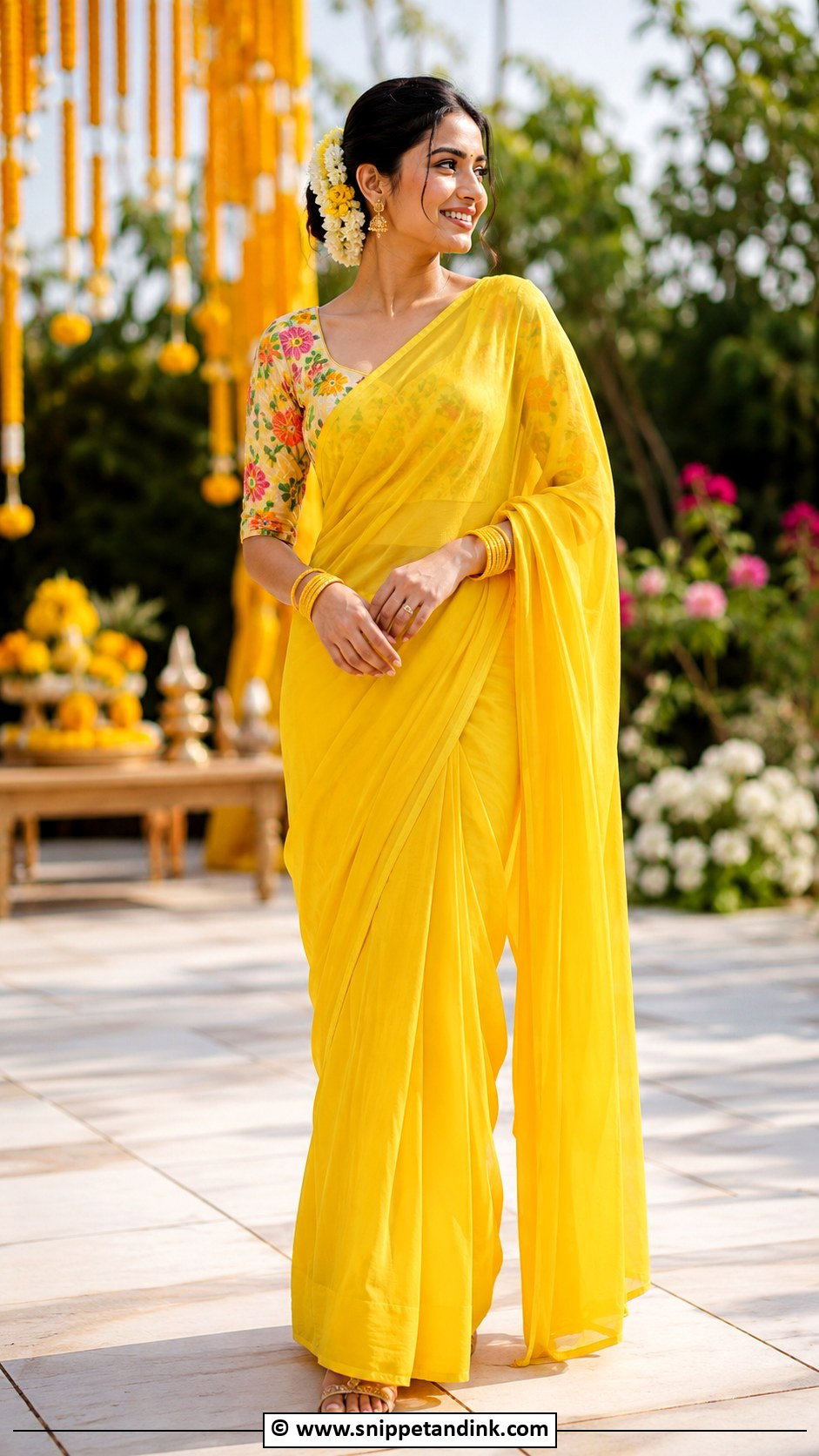
A plain saree with a printed floral blouse is the cheapest way to look fresh. Pick a yellow, ivory, peach or orange saree in chiffon, georgette or organza, then let the blouse be the statement. The blouse can be worn later with other sarees. Fresh flowers in the hair, small earrings and colorful bangles. I suggest it for mothers and aunts who want elegance without effort or expense.
28. Ruffle Haldi Saree Look
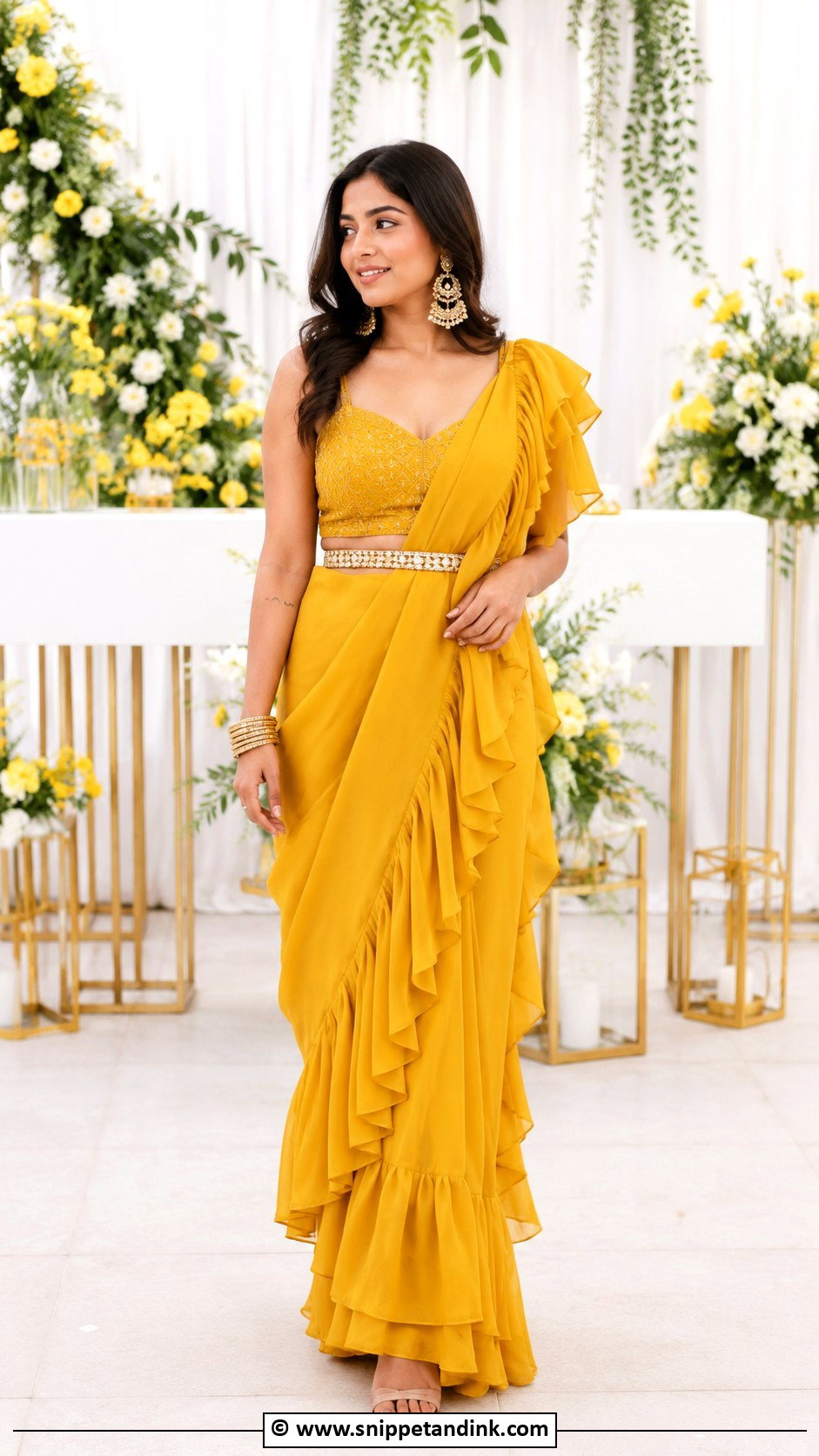
Ruffle sarees have pre-stitched frills along the border that add movement without heavy embroidery. Yellow, mustard, peach or ivory with a fitted blouse works well, and a belt secures the drape. Ruffles in georgette move nicely when walking; stiffer organza ruffles can look bulky when sitting on the floor. Keep jewelry minimal, with statement earrings and sleek bangles. A fashion-forward choice for bridesmaids or modern brides.
29. Haldi Kurta With Skirt
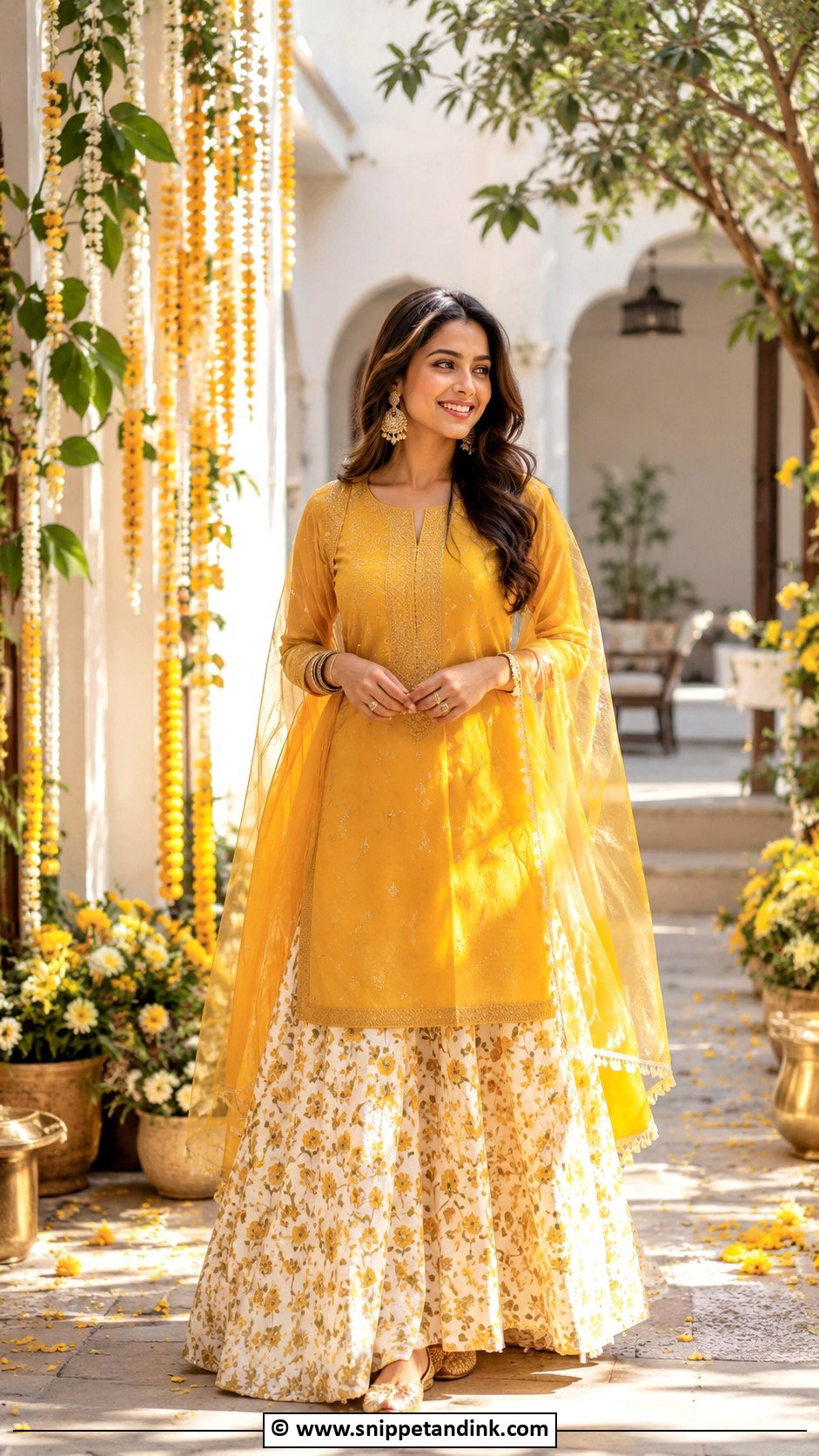
A kurta with a flared skirt gives the feel of a lehenga but is far easier to dress in, especially if you’re helping the bride. Yellow, orange, ivory or printed combinations work. A dupatta adds ceremony polish; a jacket makes it more individual. Cotton, chanderi or georgette breathe through long events. Jhumkas, bangles and flat juttis. It’s also a good way to mix pieces you already own.
30. Yellow Haldi Jacket Set
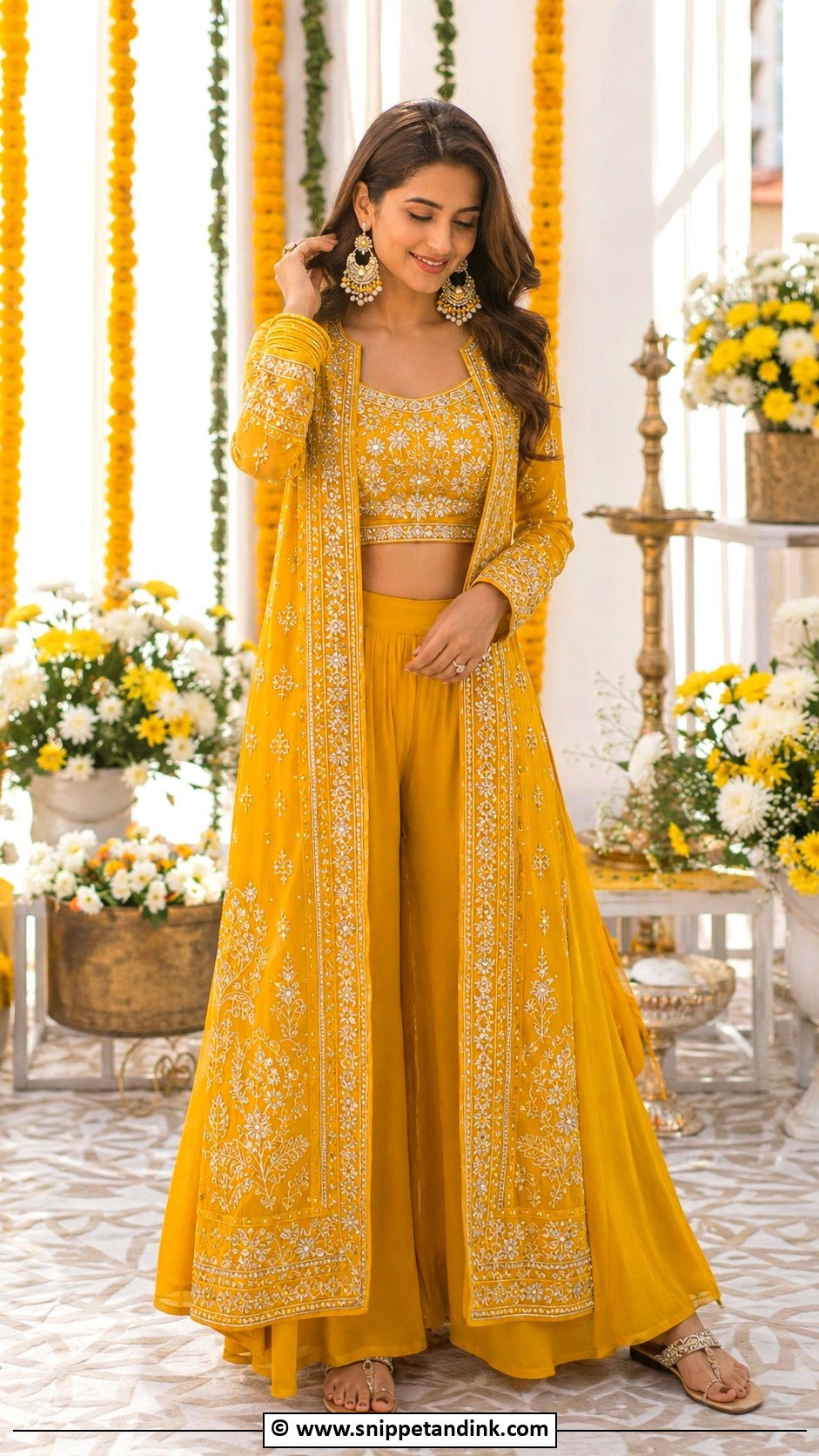
A long embroidered jacket over a crop top and palazzos, a kurta set or a plain dress adds structure and vertical lines, which lengthen the body. Mirror work, gota, block print or light thread embroidery all work. The jacket can come off when the paste starts, which saves it from stains. Keep the rest clean, and add earrings, bangles and comfortable sandals. A coordinated option for bridesmaids.
31. Haldi Cape Lehenga Set
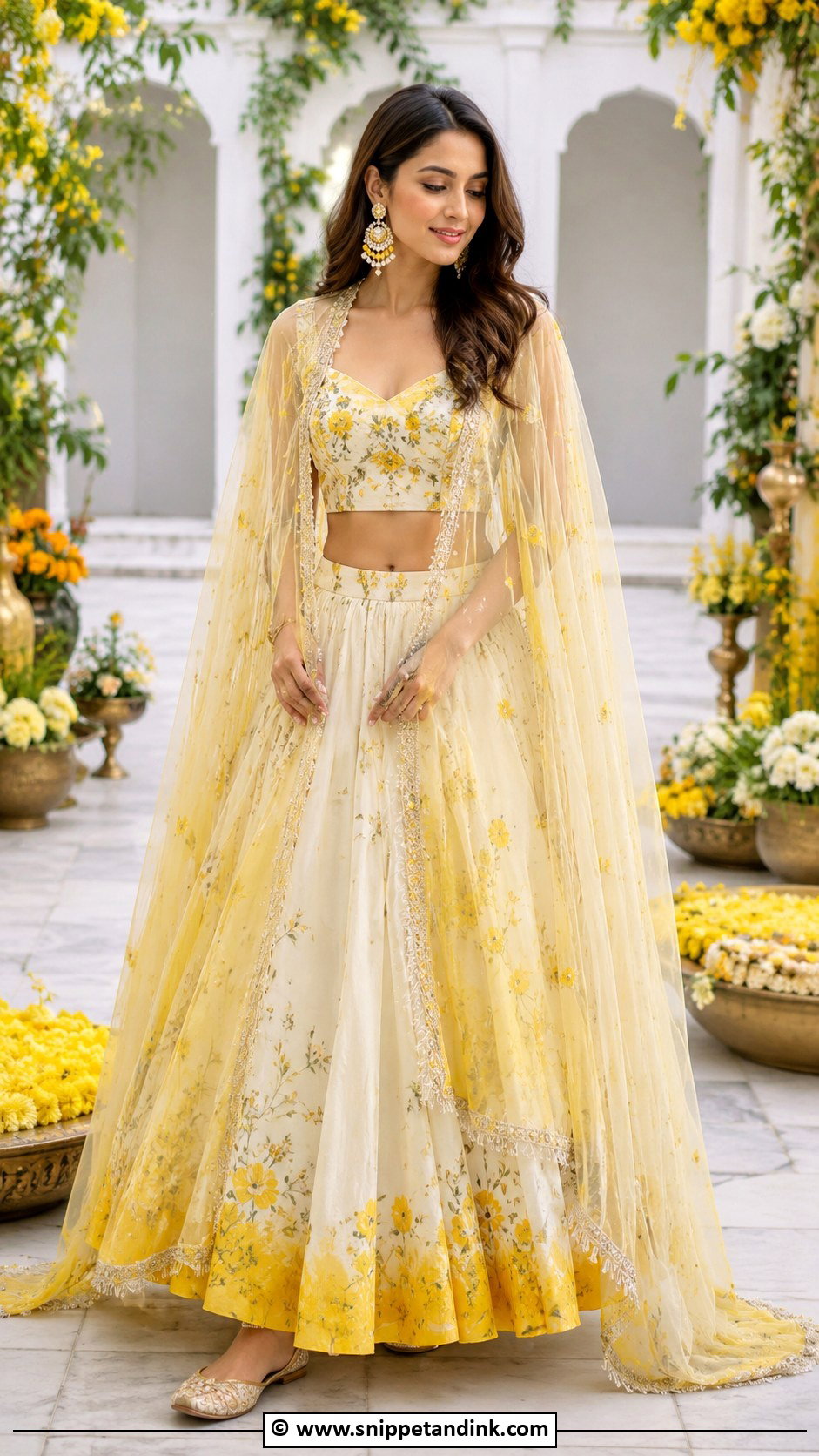
A haldi cape lehenga set replaces the dupatta with a sheer cape attached at the shoulders, so your hands stay free during the rituals and nothing slides off. Yellow or ivory with a matching cape, or peach, mint or orange for a twist. A crop blouse and light skirt keep it comfortable. Capes catch breeze outdoors, so ask for a hidden snap at the wrist. Statement earrings and soft makeup.
32. Haldi Chikankari Kurta Set
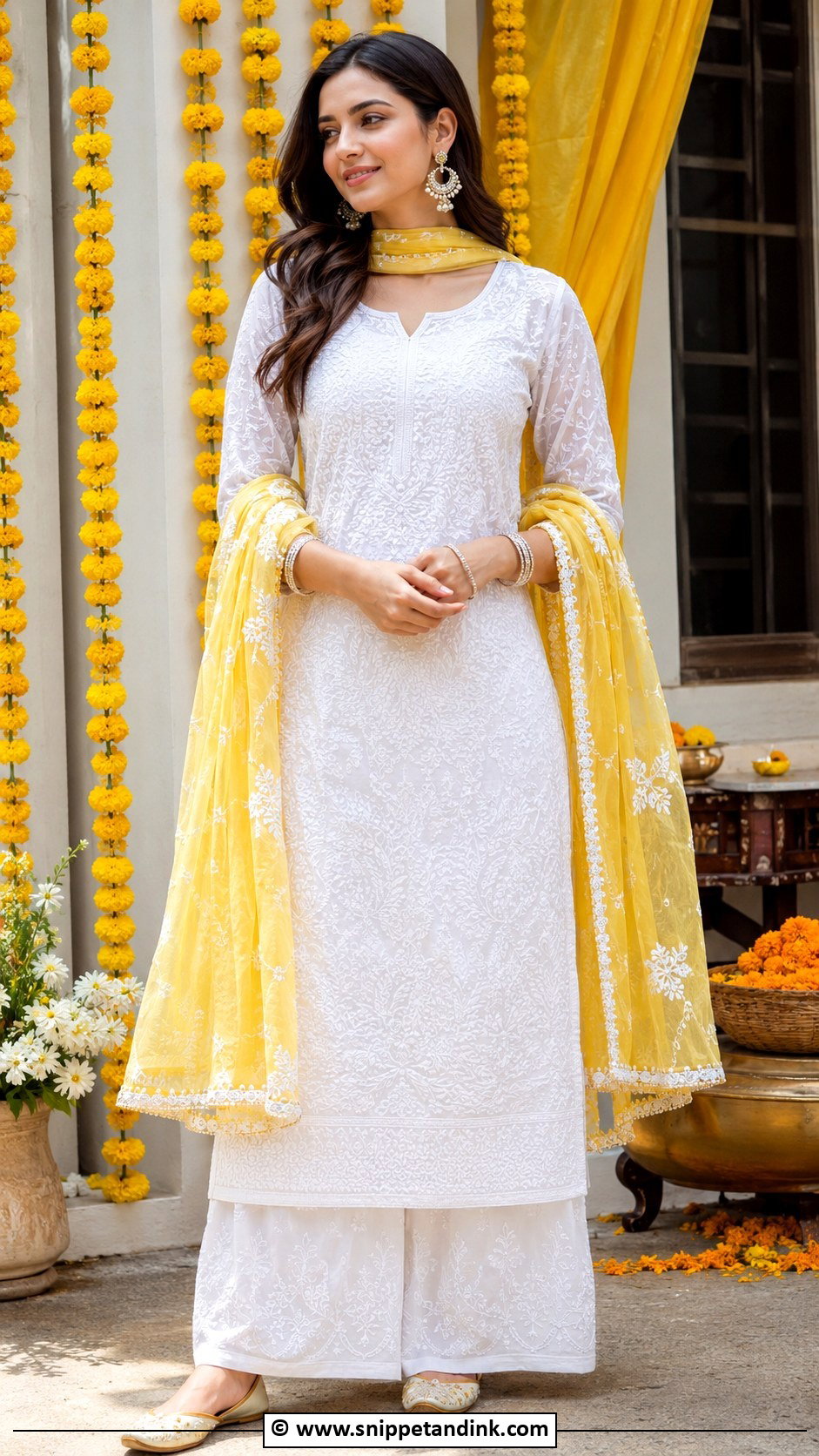
Chikankari is fine hand embroidery from Lucknow, usually white thread on light cotton or georgette, and it looks soft and airy in daylight. White or yellow chikankari kurtas with straight pants, palazzos or a sharara are cool to wear. A yellow dupatta brightens a white set; pearls suit a yellow one. Delicate threadwork snags easily, so skip rough bangles. Simple hair, a bun, braid or loose waves, completes it.
33. Yellow Haldi Lehenga With Sneakers
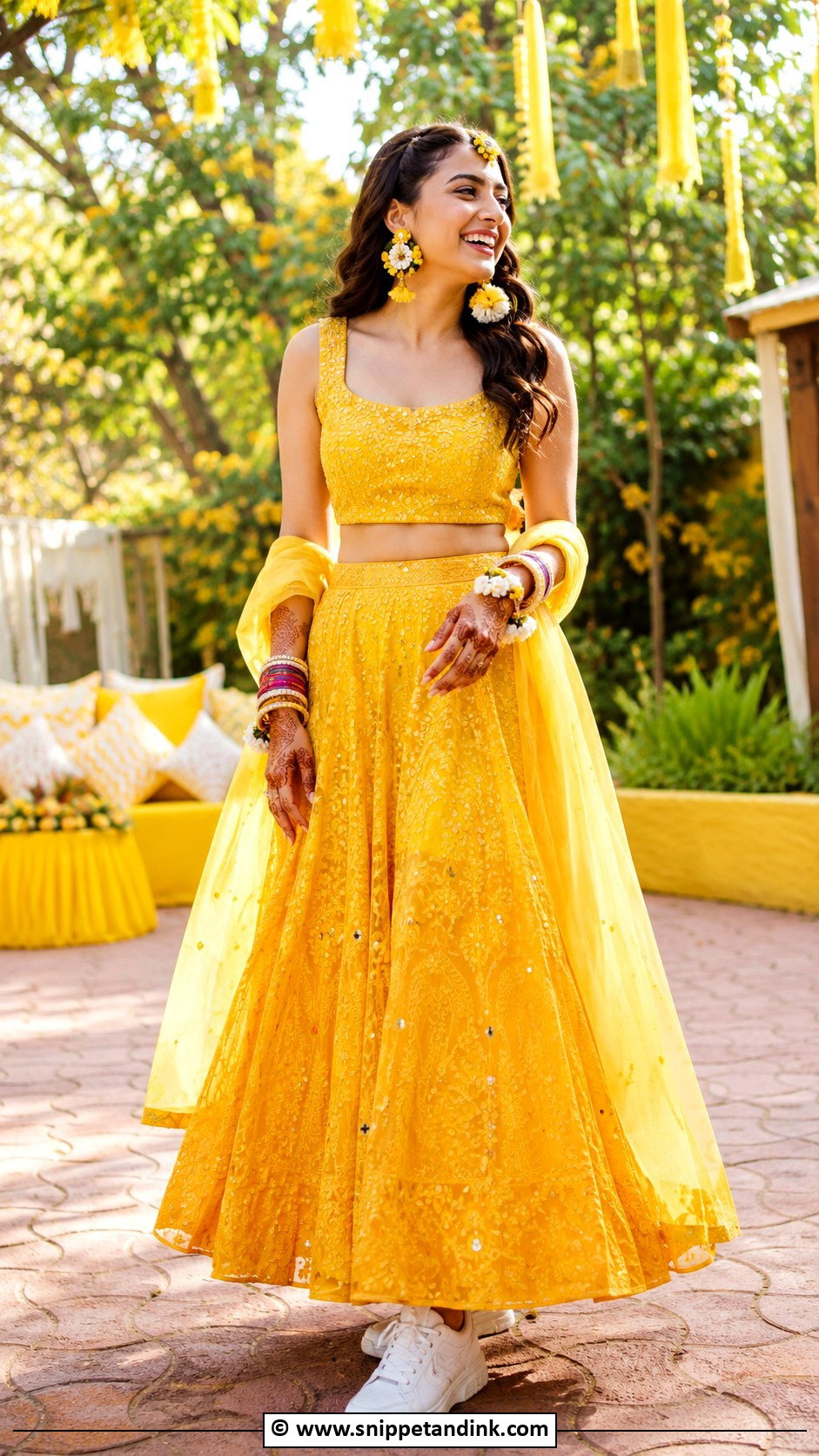
A lehenga with sneakers is the most practical styling on this list. Pick a lightweight lehenga with a crop blouse and minimal dupatta, then add clean white or embroidered sneakers. Shorten the hem by an inch or so to account for flat shoes, or it’ll drag. Prints, mirror work or bright borders keep it playful. Floral jewelry, hoops or colorful bangles. Good for outdoor venues, gardens and long, energetic celebrations.
34. Haldi Two Piece Set With Dupatta
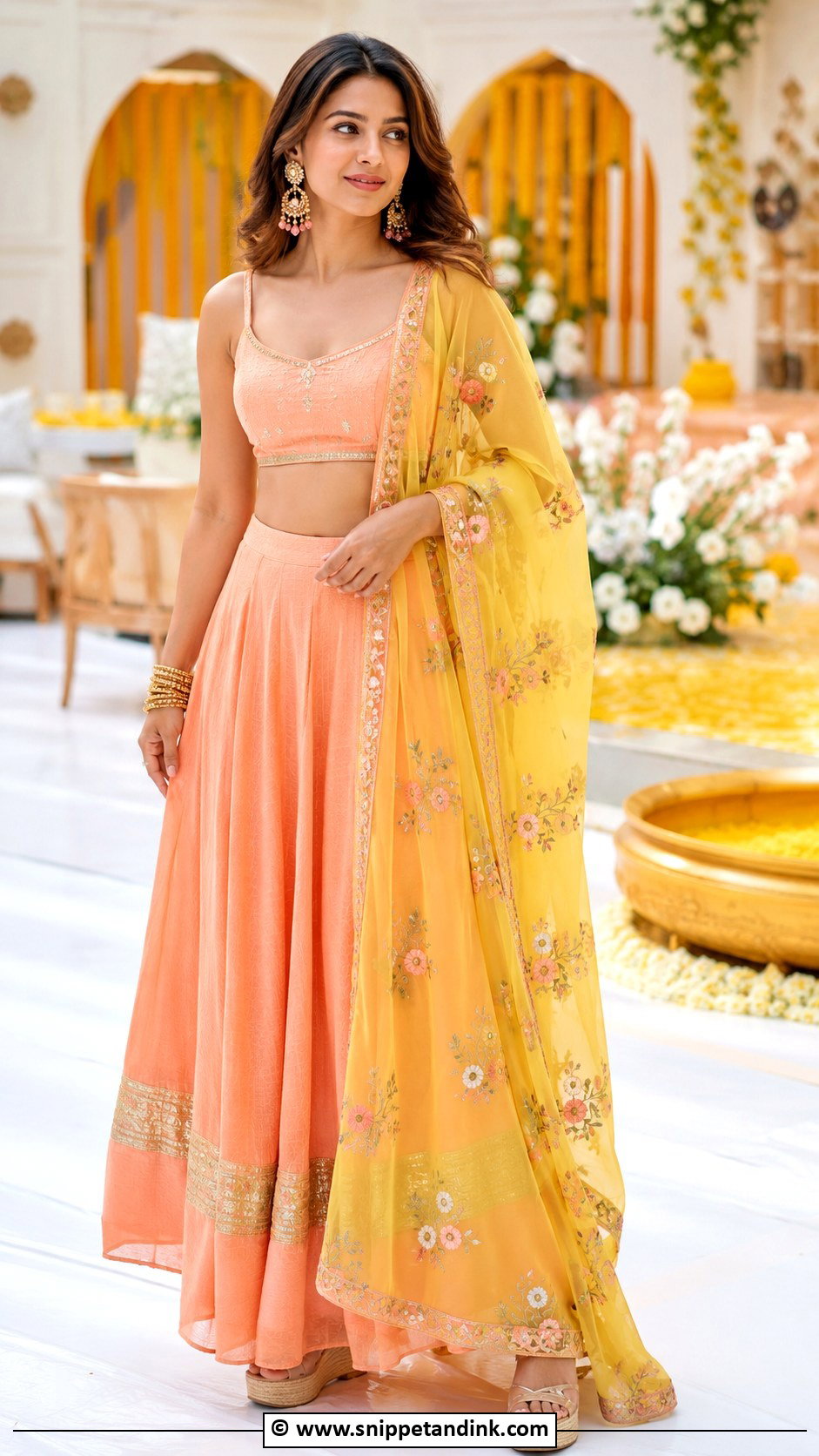
Matching two-piece sets, crop top and skirt, kurta and pants, or blouse and palazzos, plus a dupatta, are simple and coordinated. Yellow, peach, ivory and mint work. Light embroidery, print or border work keeps them from looking plain. The pieces can be restyled separately afterward. Earrings, bangles and flats or wedges. A sensible, low-stress choice for guests and bridesmaids.
35. Pastel Haldi Lehenga With Marigold Accessories
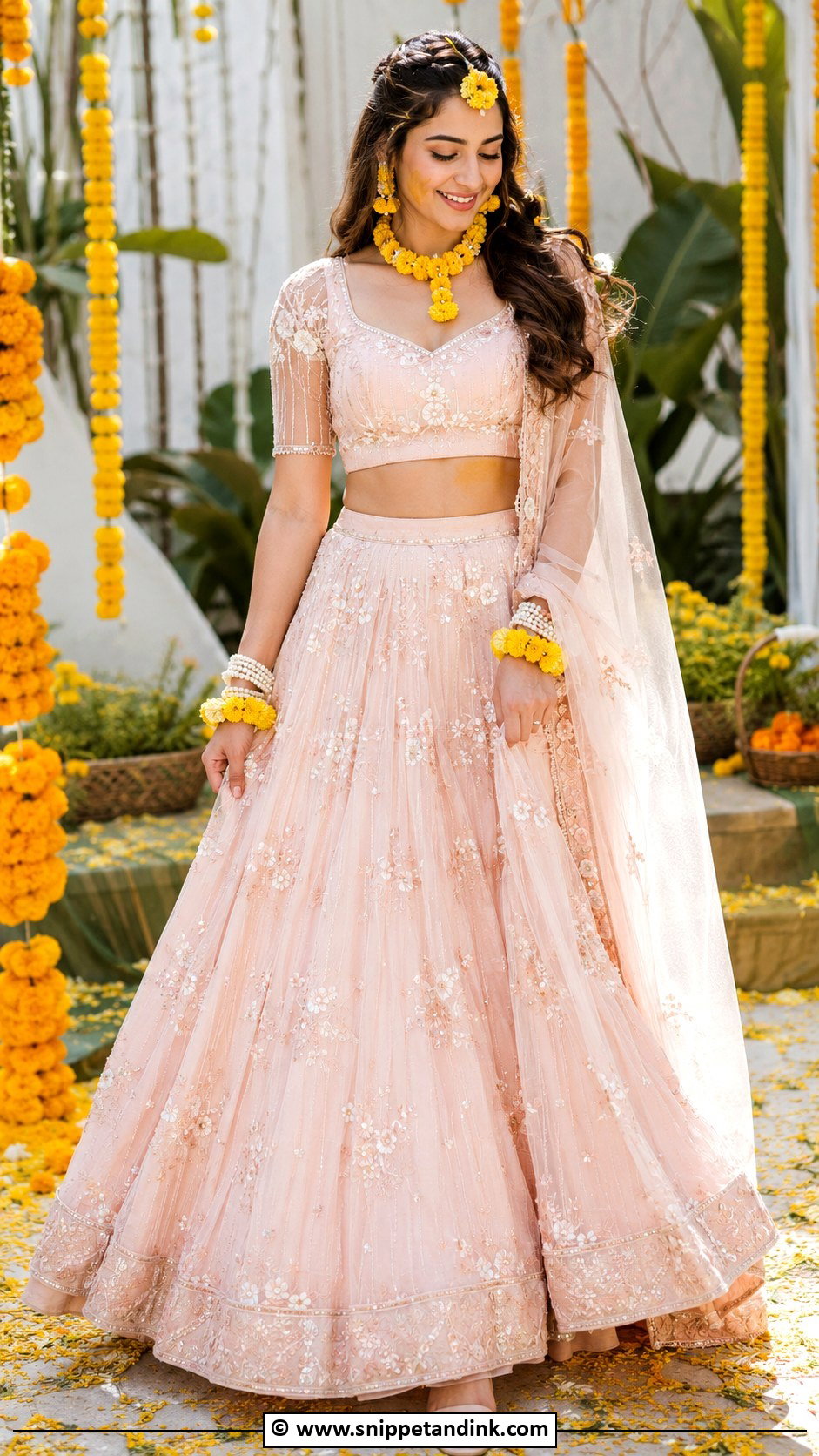
A pastel lehenga in blush, mint, ivory, peach or lavender with marigold accessories looks soft while still matching the ceremony. Yellow marigold jewelry, a floral hairpiece or a bright dupatta brings in the theme. Fresh marigolds wilt in heat within a few hours, so I ask the florist to make floral jewelry the morning of and keep it chilled until dressing. Keep the fabric light and embroidery subtle. Nude sandals and pearl accents finish it.
Coordinating Family Colors Without a Wall of Identical Yellow
When every relative wears the same bright yellow, the bride disappears in group photos. I usually give the bride the most saturated or most contrasting color and assign close family a range around it, such as mustard for sisters, peach or coral for mothers, and prints for cousins. Guests can be told simply “yellow, orange or pastels” so the palette stays cohesive.
A few things to agree on with family in advance:
- Whether white is welcome. Some families love it at haldi; others reserve it.
- Whether the event is seated on the floor, which rules out tight or stiff outfits.
- Whether there will be water play or a splash after the paste, which affects shoes and fabrics.
- Who brings spare towels, safety pins and wet wipes for the bride’s family.
Customs vary a lot between regions and families, so the elders’ preferences should win over any trend.
Fresh Flower Jewelry in Midday Heat
Marigold, jasmine and rose jewelry is part of the charm of a haldi, but real petals start to brown and droop after a few hours in sun. I ask the florist to deliver it the morning of the ceremony, wrapped in damp tissue and kept somewhere cool until the bride is dressed. Jasmine bruises easily, so it goes on last. Pieces strung on thread sit lighter than those built on wire, and a pair of spare earrings in the bag costs very little. If the event runs into the afternoon, silk or paper flowers mixed in with the real ones will still look full in the later photos.
Dress for the Paste, Then for the Photos
The right haldi outfit depends on your role. Brides can wear a yellow lehenga, white sharara, cape set or pastel with marigolds. Bridesmaids and guests do well in lighter sarees, printed palazzo sets, jumpsuits or soft shararas. Whatever you pick, prioritize breathable fabric, secure drapes, flat shoes and jewelry that can handle being splashed. Accept that turmeric will land somewhere, and you’ll be free to enjoy the ritual with everyone else.
You'll Like These Ideas:







Leave a Reply