
A hijabi bride is dressing two things at once: the gown and the frame around her face. When I style a bride who covers, I start with the hijab fabric and how it will be pinned, because it touches every other decision, from neckline to veil to earrings. The ideas below are complete head-to-toe looks, from classic white gowns to cultural bridal outfits, pastel walima sets, pearl-detailed dresses and regal reception styles. A good hijabi bridal outfit begins with coverage you never have to adjust and fabric that moves through the nikah, the photos and the celebration. After that come the details: veil placement, jewelry, shoes and the bouquet.
Pins, Undercaps and a Hijab That Stays Put
Most hijab trouble on a wedding day comes from the foundation, not the outer fabric. A bridal hijab carries a veil, sometimes a tiara or dupatta, and the bride hugs dozens of people. Here is how I build it so nothing shifts.
- Start with a snug undercap in a grippy fabric like cotton or jersey. It holds every pin and keeps slippery satin and chiffon from sliding.
- Pin the hijab to the undercap, not to itself, at the crown, temples and under the chin. Small, fine pins mark chiffon less than thick ones.
- Use magnets or pins with soft heads under the chin; they’re kinder through a long day and don’t scratch the neck.
- Add the veil or dupatta last, anchored through the hijab into the undercap at the crown.
- Do a full trial with everything at once, then wear it for an hour. Loose spots show up by then.
Hijab Fabric Changes the Whole Silhouette
Chiffon drapes softly and suits most gowns, but it’s sheer, so it needs an opaque undercap in a matching tone. Crepe holds shape and gives a crisp wrap. Silk satin looks luxurious and slides constantly. Jersey grips well and is the most comfortable for a long day, though it can look casual next to heavy embroidery. I choose the fabric by asking where the bride wants the eye to land: a matte hijab pushes attention to the dress, and a shiny one draws it to the face.
1. White Muslim Wedding Dress With Matching Hijab
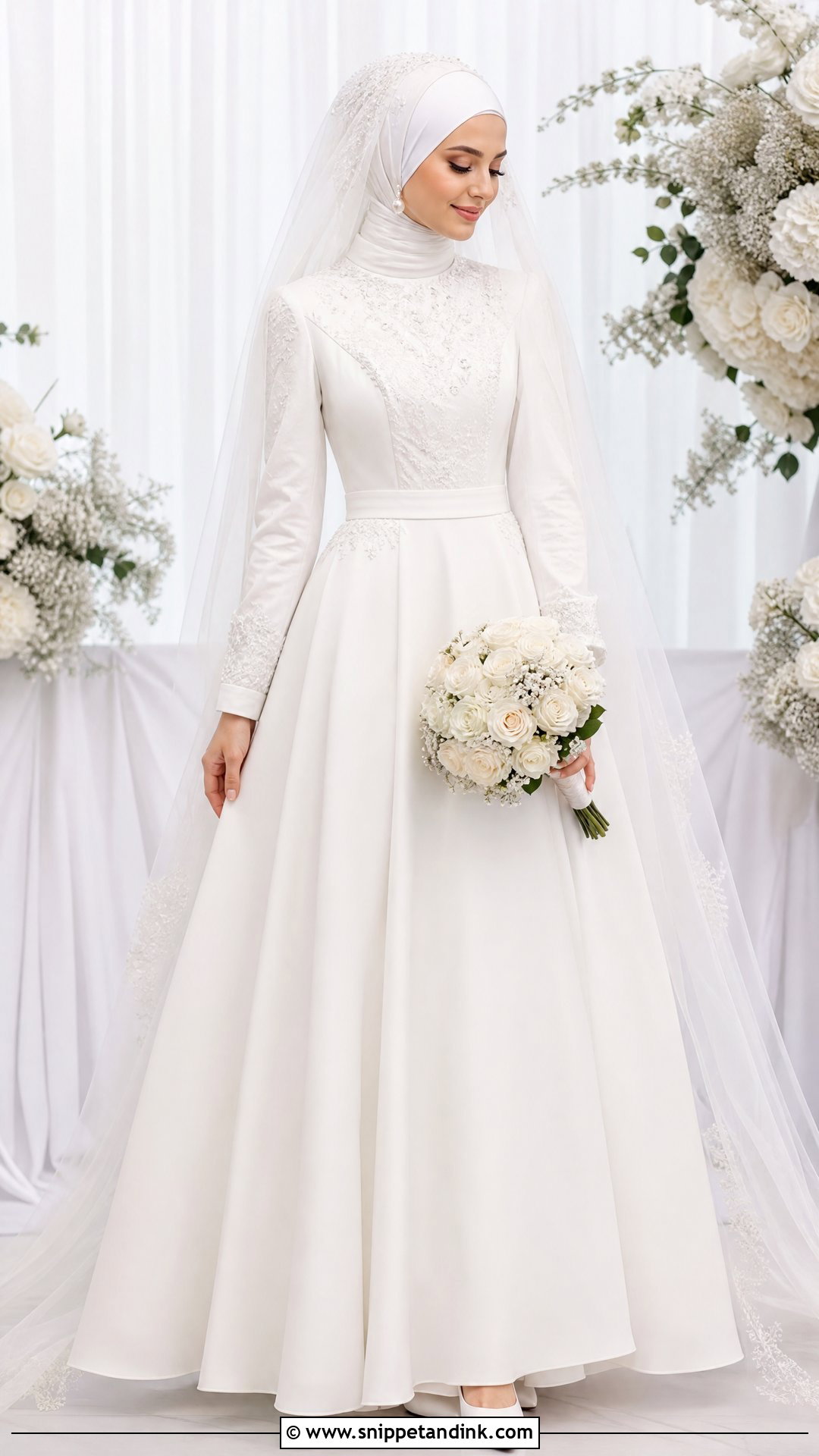
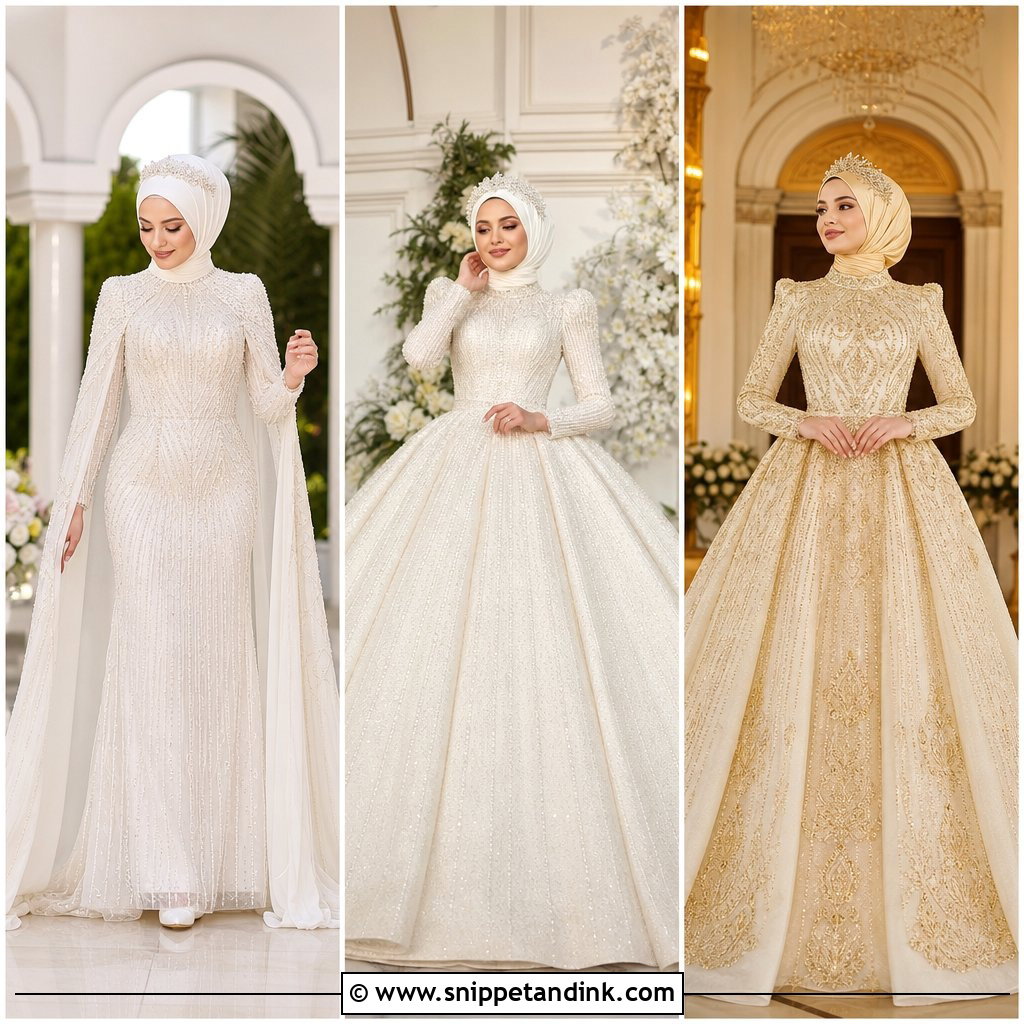
White on white is the classic for a reason: a high neckline, long sleeves and a flowing A-line or ball gown skirt, with the hijab in the exact same shade. Satin looks polished, chiffon soft and lace romantic. Matching whites is harder than it sounds, since a bright white chiffon hijab next to a soft white satin gown can make the dress look yellow, so I always hold the hijab against the bodice in daylight before buying. A sheer veil pinned behind the hijab adds drama. Pearl earrings, a fine bracelet, a slim tiara if you like sparkle, and white pointed heels or embellished flats complete it.
2. Ivory Muslim Wedding Dress With Pearl Hijab
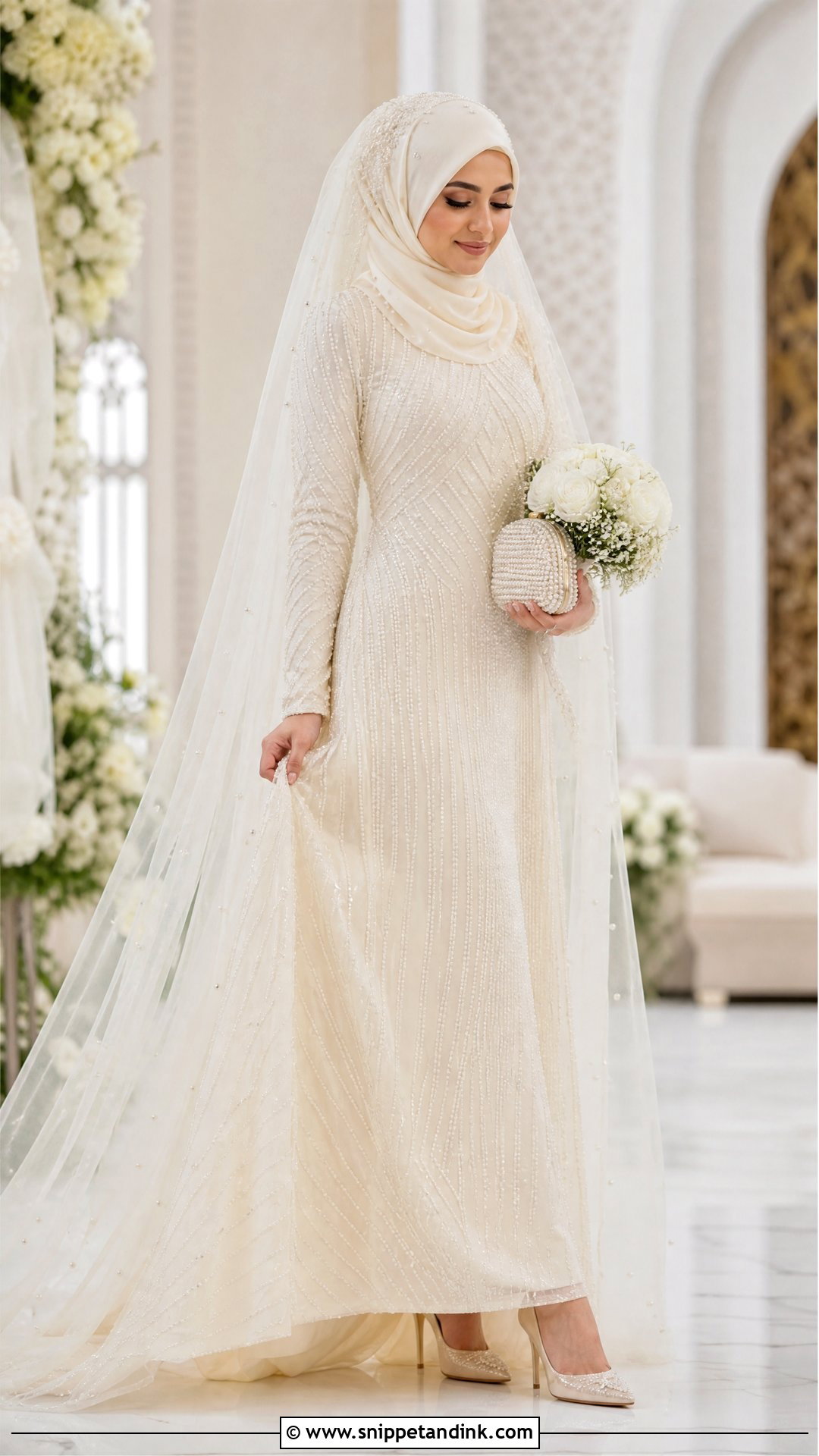
Ivory is slightly warmer than bright white and kinder to most complexions, especially next to the face where the hijab sits. A long-sleeve ivory gown with pearl beading on the bodice, cuffs or hem adds texture without weight. A chiffon or silk hijab with scattered pearls ties it together, with a plain veil over the back for movement. Pearls sewn onto a hijab add weight at the edges, so I keep them sparse near the face and pin the hijab a little more firmly. Nude, ivory or champagne heels, a pearl clutch and a soft bouquet finish it.
3. Lace Muslim Wedding Dress With Hijab
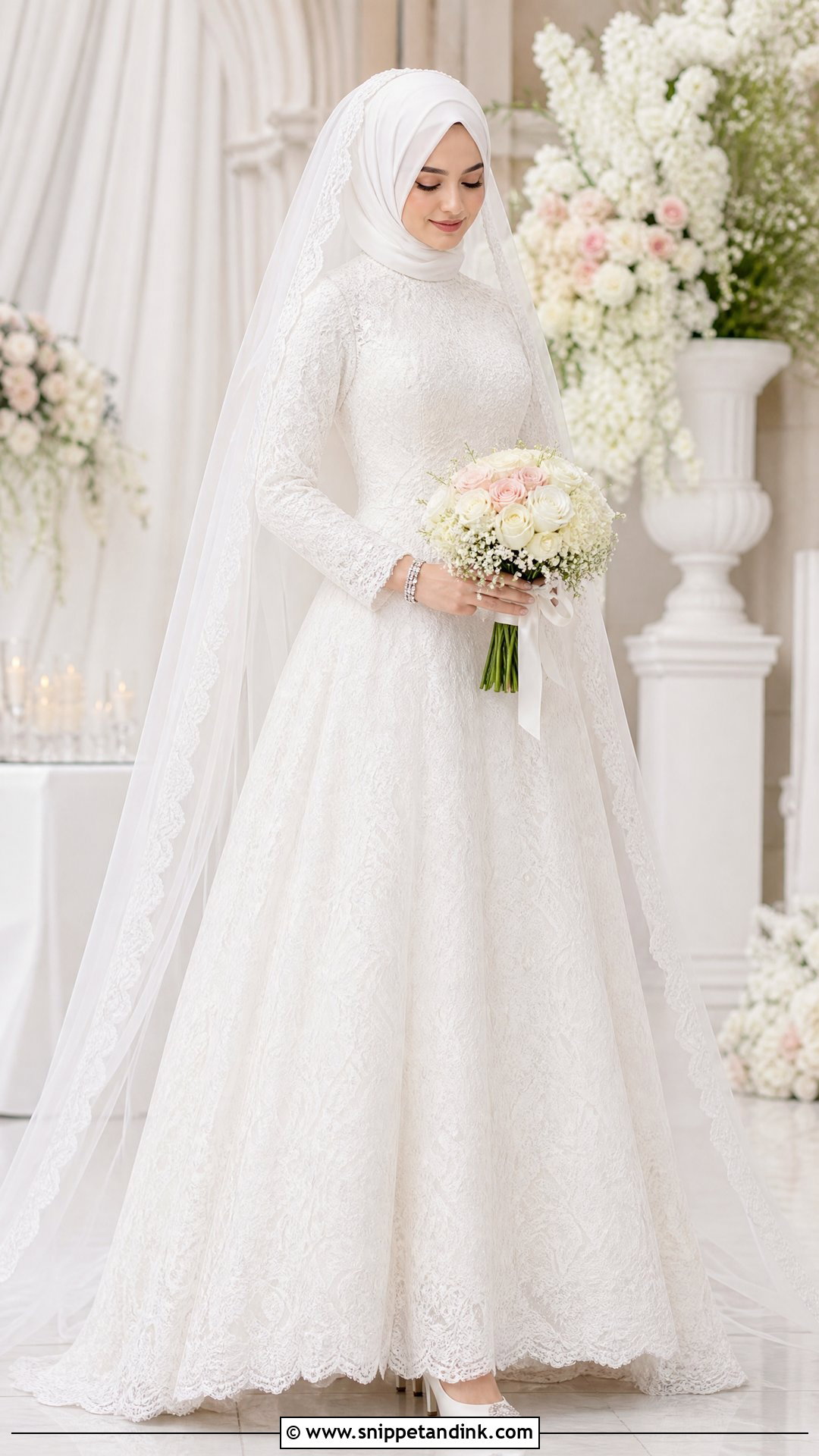
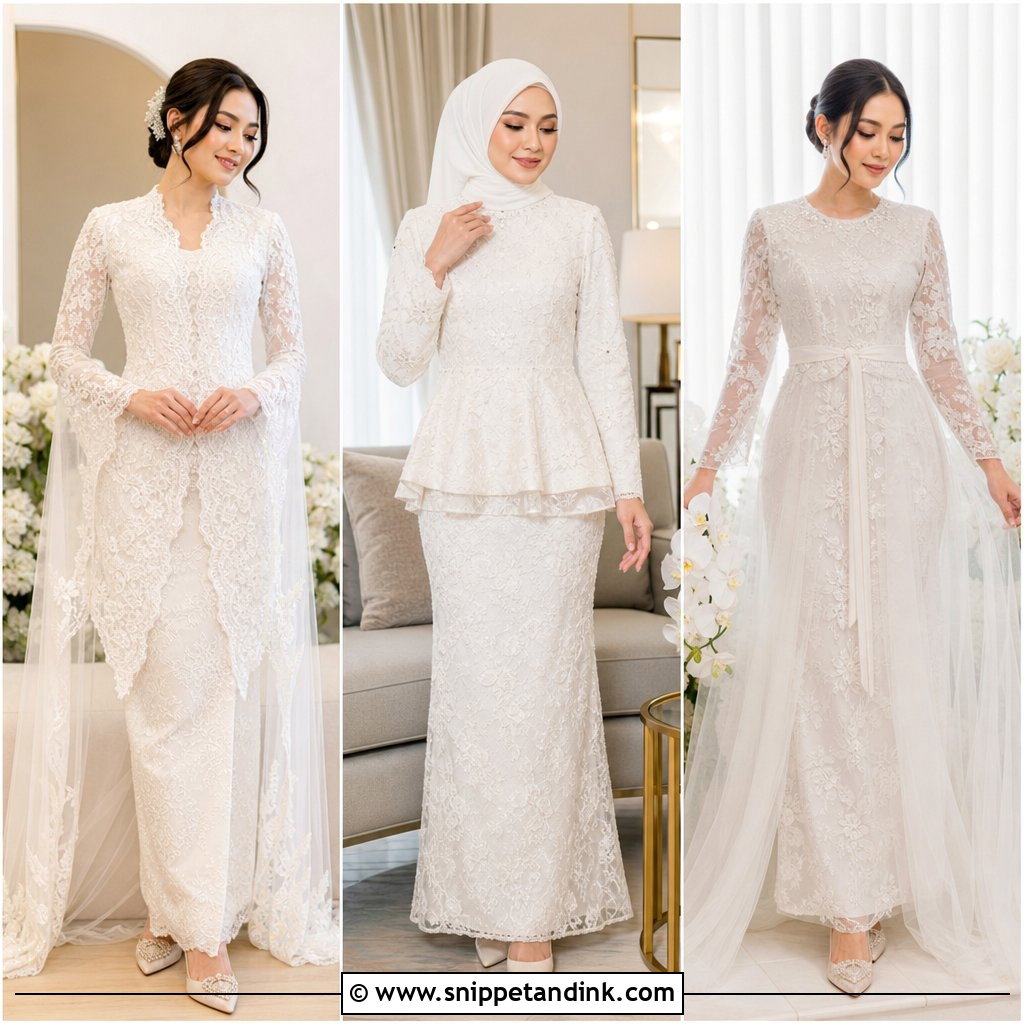
Lace brings texture and romance, and a fully lined gown with long lace sleeves, a high neckline and an easy skirt keeps it modest. Floral lace reads classic; geometric lace feels modern. Patterned lace and a patterned hijab fight each other, so I pair heavy lace with a plain chiffon hijab every time. For drama, a cathedral veil with lace trim that matches the gown’s motif ties it together. Closed-toe heels, a small bouquet and simple crystal jewelry keep it from crowding.
4. Satin Muslim Wedding Dress With Hijab
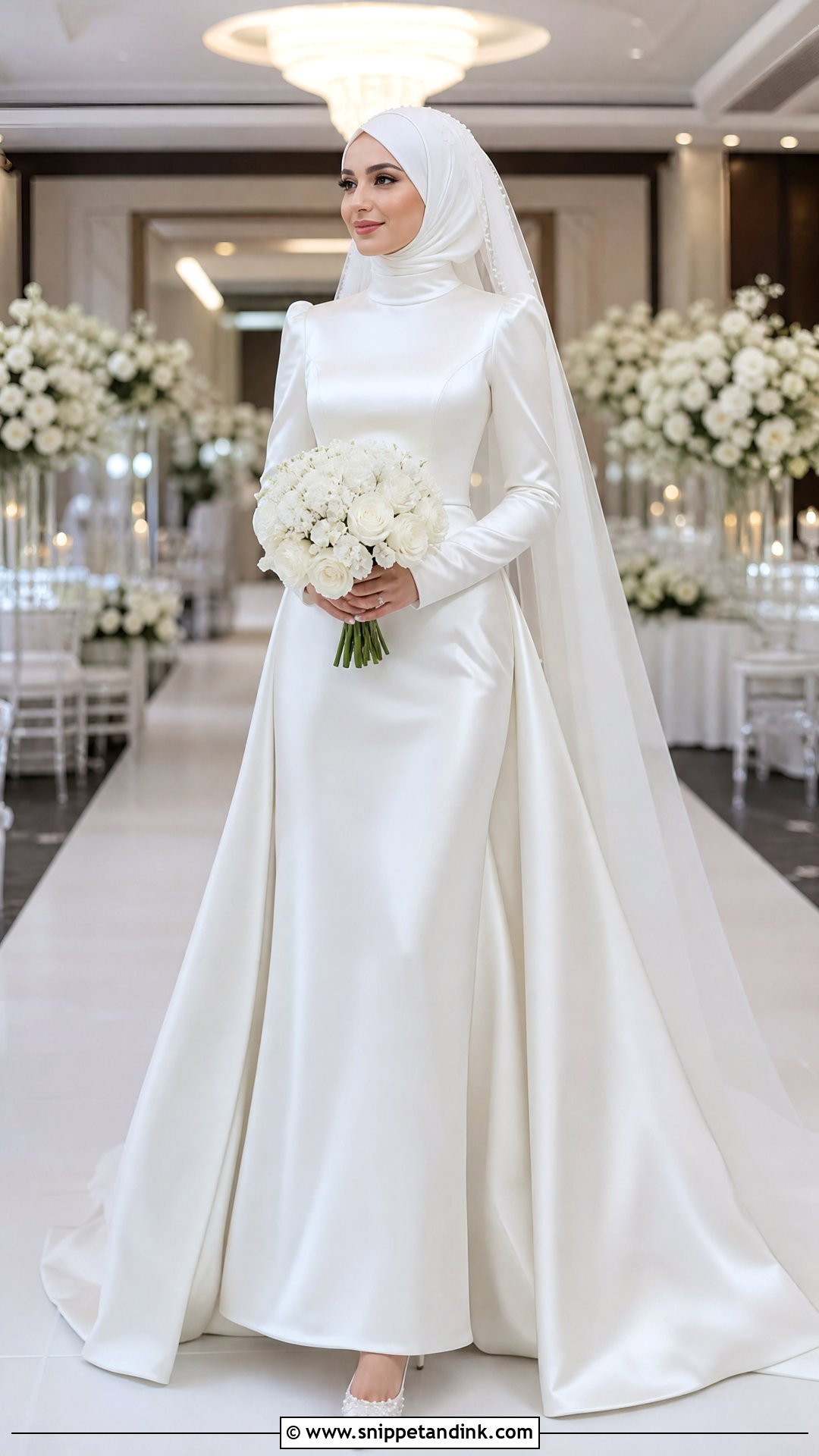
Satin catches light well in halls, hotels and evening receptions, and a long-sleeve satin gown with a high neck, fitted waist and full skirt gives a clean outline. A matching satin hijab looks continuous with the dress, but satin is slippery and slides off the head within an hour without grip. A non-slip undercap underneath is essential, and I pin satin at more points than chiffon. Since the fabric already looks rich, keep accessories plain: pearl studs, a structured bouquet and pointed satin heels.
5. A-Line Muslim Wedding Dress With Hijab
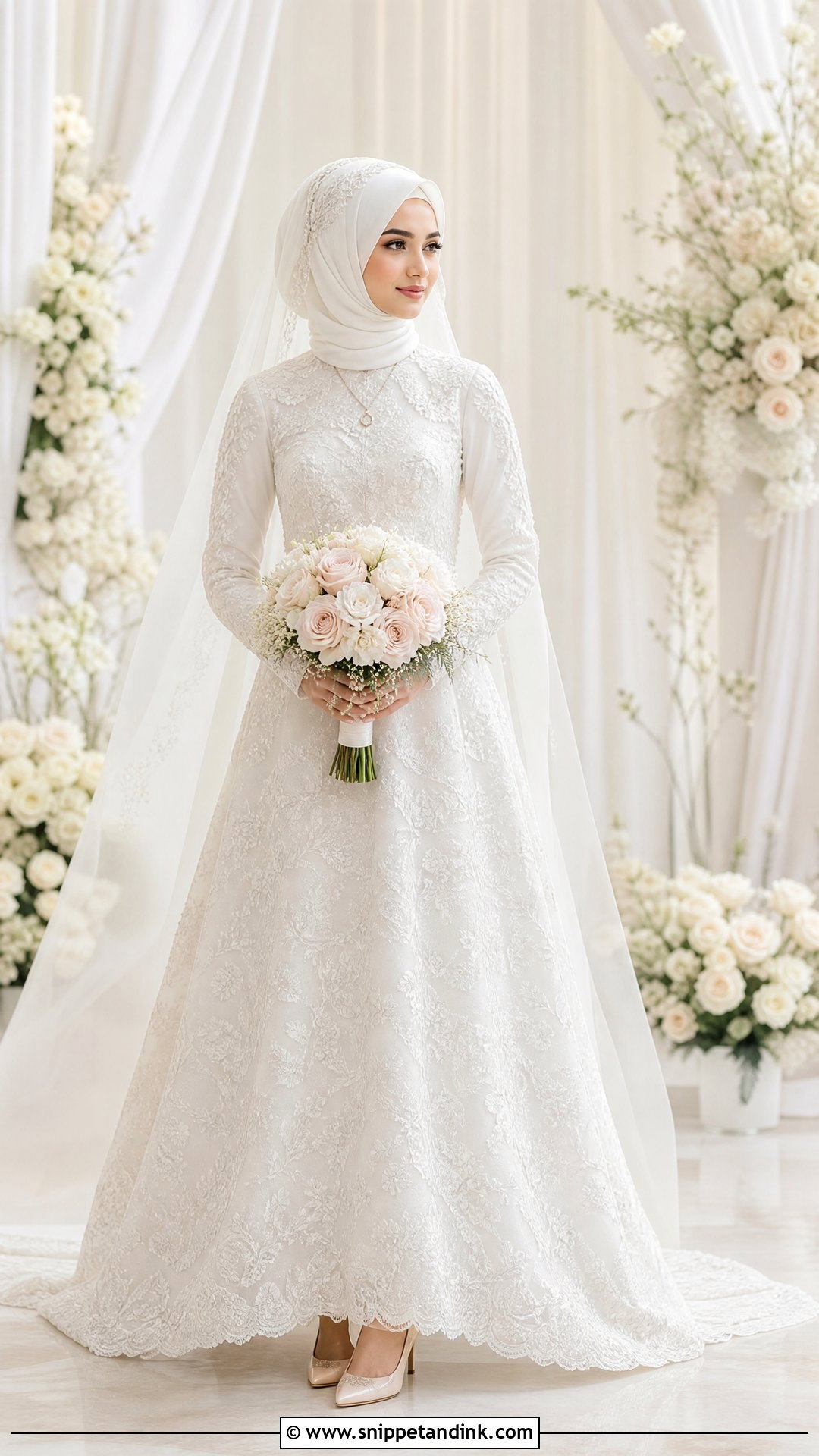
Gently fitted through the bodice and flowing away from the waist, the A-line is comfortable for walking, sitting on a stage and taking photos. Choose a high-neck bodice with long sleeves, then add embroidery, lace or beadwork to taste. Chiffon drapes naturally around the face without bulk, which is why I reach for it with this shape. Mid-height heels, a simple veil and a bouquet in white, blush or greenery complete it, and it adapts to almost any venue.
6. Ball Gown Muslim Wedding Dress With Hijab
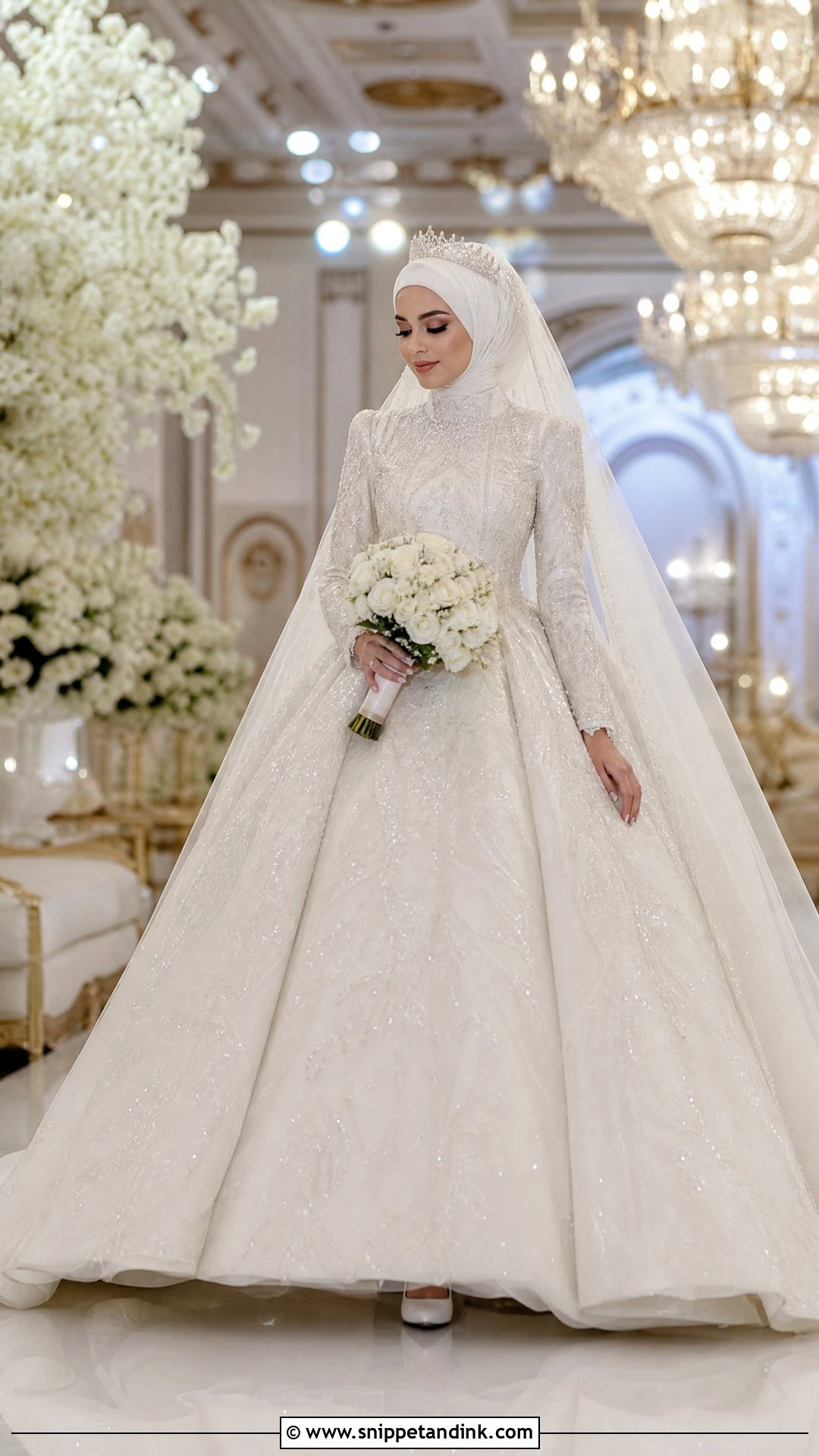
A full skirt makes the entrance, while a modest bodice keeps it covered and elegant. Look for long sleeves, a structured waist and a high neck with lace, crystals or embroidery. A neatly fitted hijab balances all that volume and frames the face. A tiara or embellished headband over the hijab gives a royal finish; anchor it with pins through the hijab into the undercap so it doesn’t slide forward when you bow your head. Comfortable heels and a modest-sized bouquet keep the proportions right.
7. Mermaid Muslim Wedding Dress With Hijab
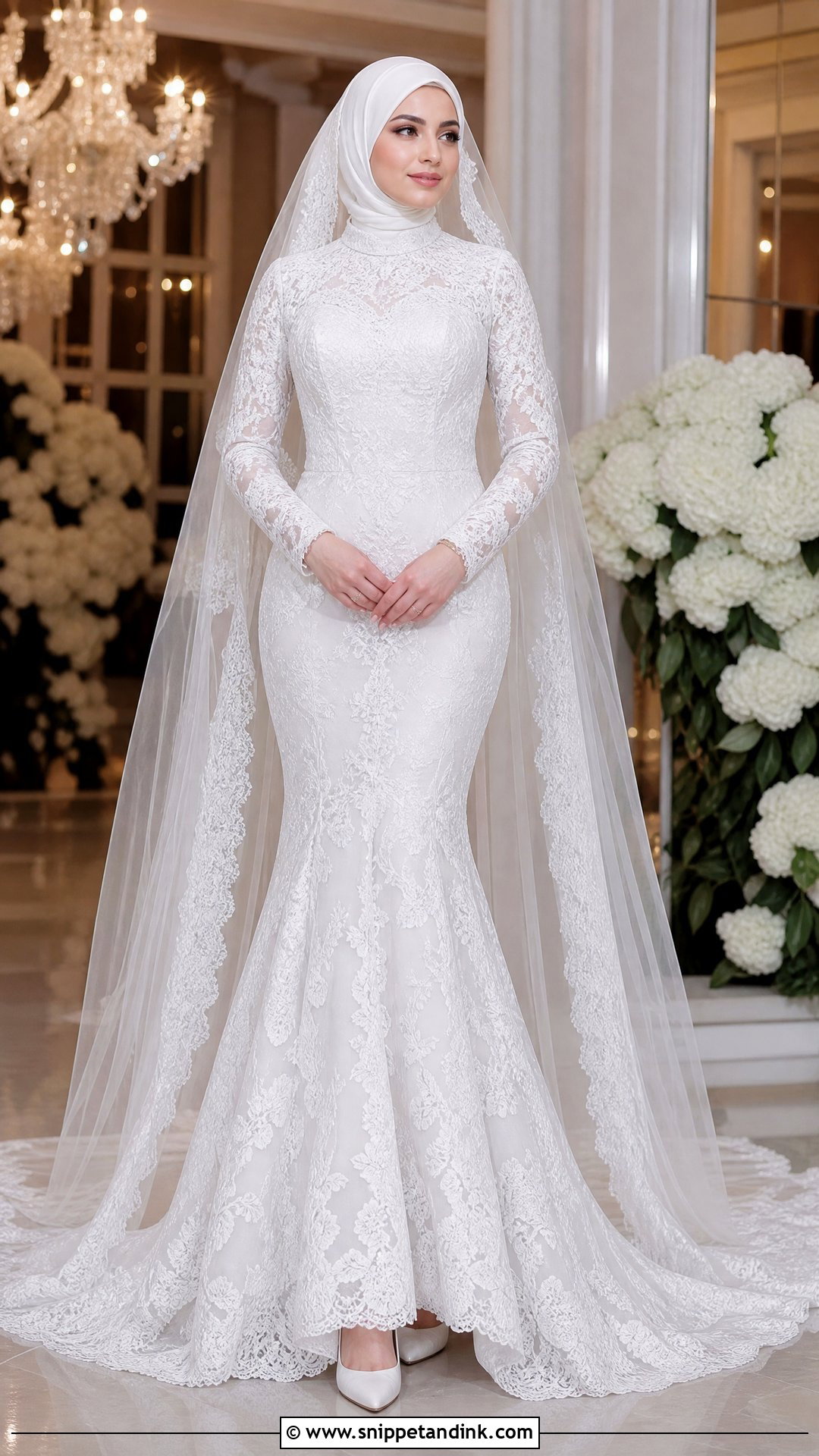
A modest mermaid shapes the body without revealing it, but only if it isn’t too tight. Choose a lined lace or crepe gown with long sleeves, a high neck and a flared hem, and make sure you can walk and sit comfortably. Because the outline is so close-fitting, I usually suggest a slightly longer hijab that falls past the bust to soften the line. A plain hijab in the dress color keeps it sleek, with a long veil, pointed heels and minimal jewelry. Formal and evening receptions suit it best.
8. Modest Muslim Wedding Dress With Cape Hijab
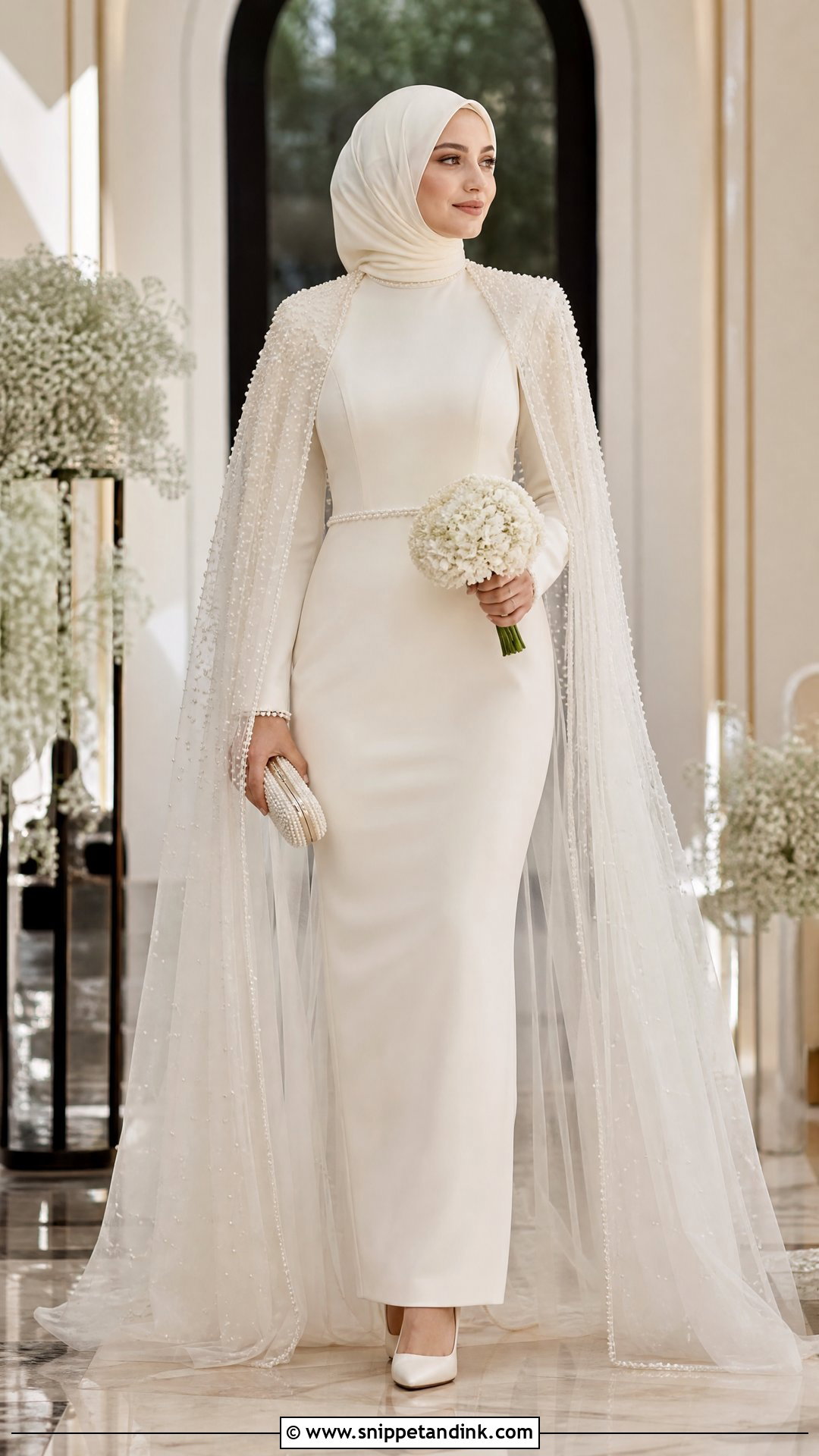
The cape replaces a veil or sits over one, adding coverage and movement without a big skirt. Underneath, a simple column, A-line or sheath gown lets the cape lead. Pearl trim, lace edges or soft embroidery give it detail without heavy jewelry. Pin the hijab first and drape the cape over it, in matching or closely toned fabric. A cape attached at the shoulders sits more securely than one tied at the neck, which pulls the hijab back over a long day. Closed-toe heels, a sleek clutch and a small bouquet are enough.
9. Muslim Nikah Dress With Hijab
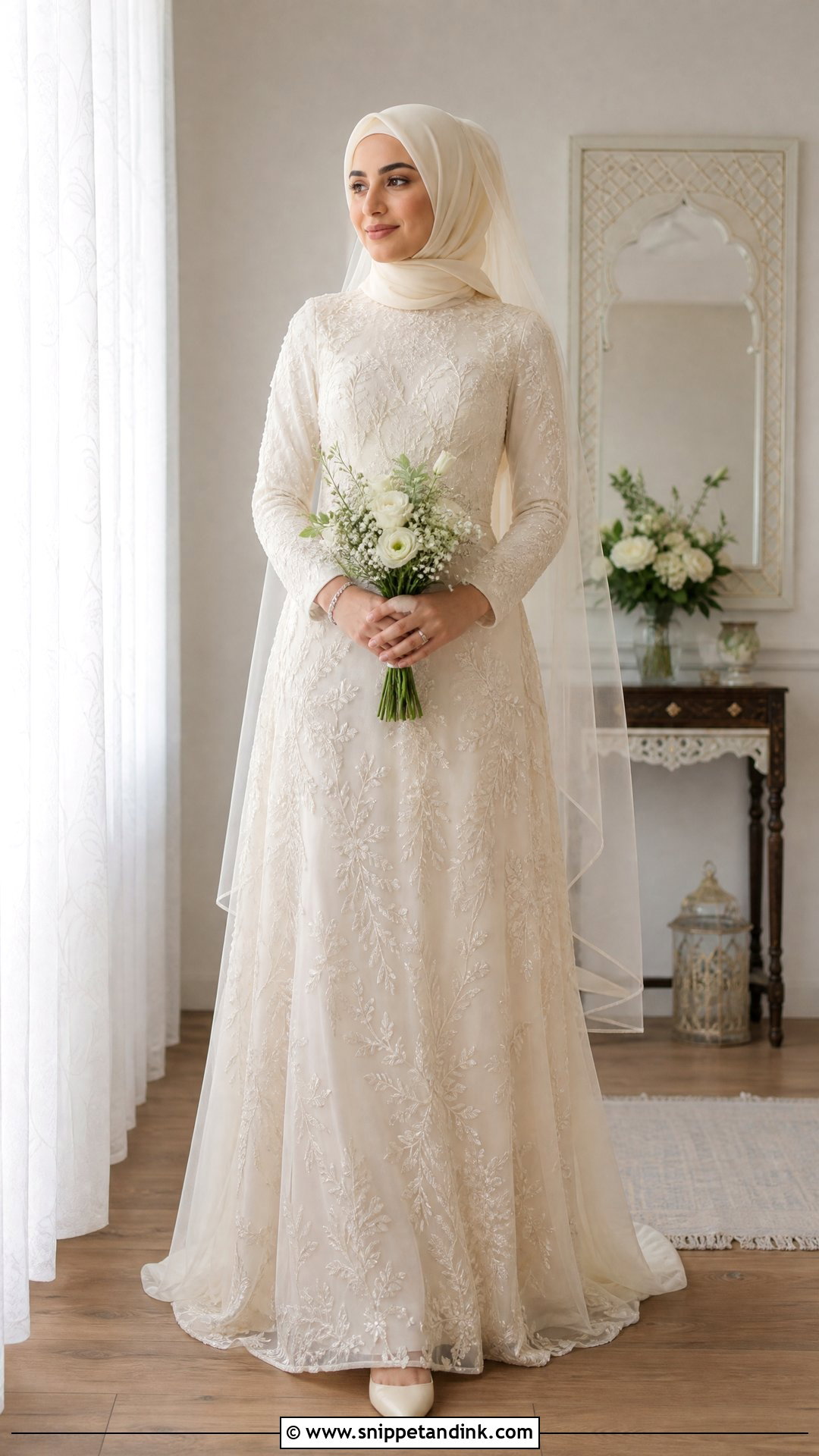
A Muslim nikah dress with hijab is often simpler than a reception gown and still feels special. White, ivory, blush, champagne or soft sage all suit an intimate ceremony. A modest maxi, embroidered abaya-style dress or long-sleeve gown works with a clean hijab wrap. If the nikah is at home or in a small room, chiffon, crepe or georgette keeps you cool, since many families sit close together on the floor or in small spaces. Choose a skirt you can sit in comfortably and get up from gracefully. Delicate jewelry, flats or low heels and a small bouquet finish it.
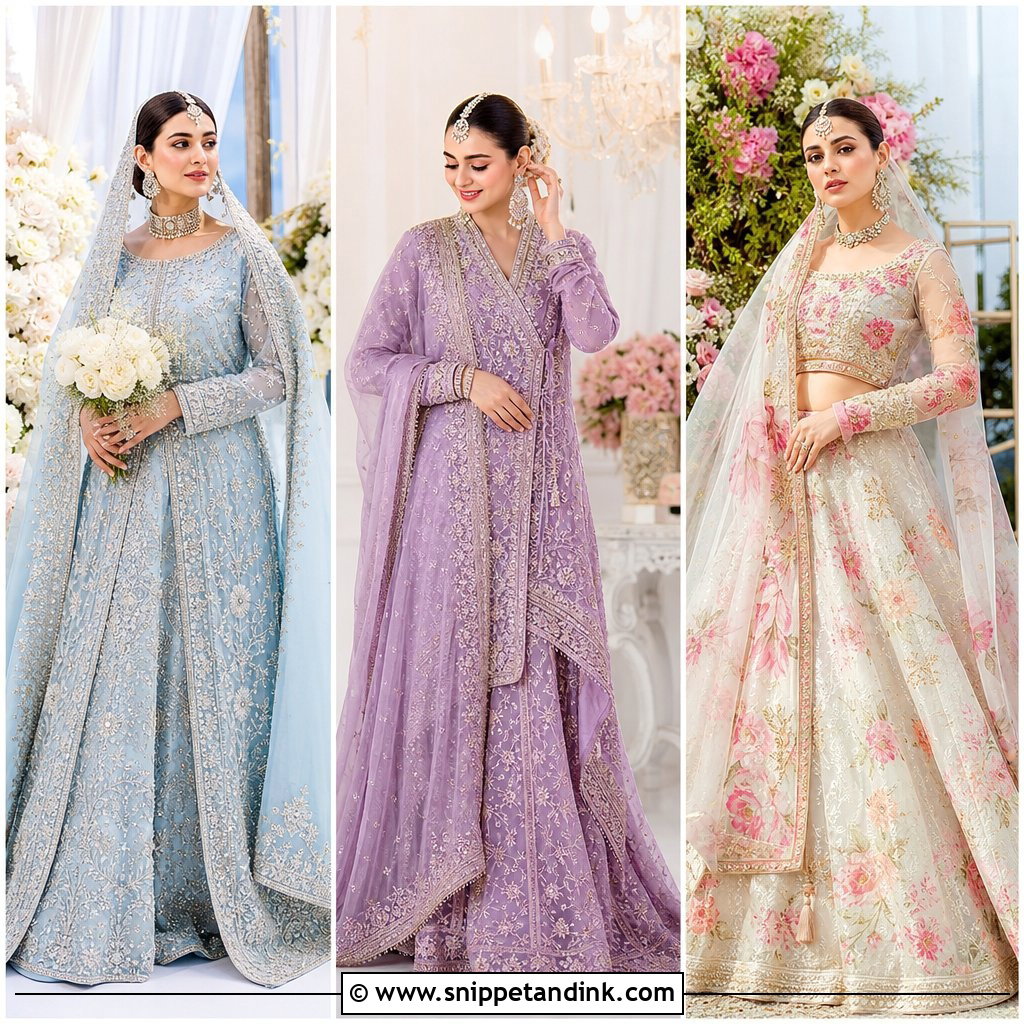
10. Muslim Walima Dress With Hijab
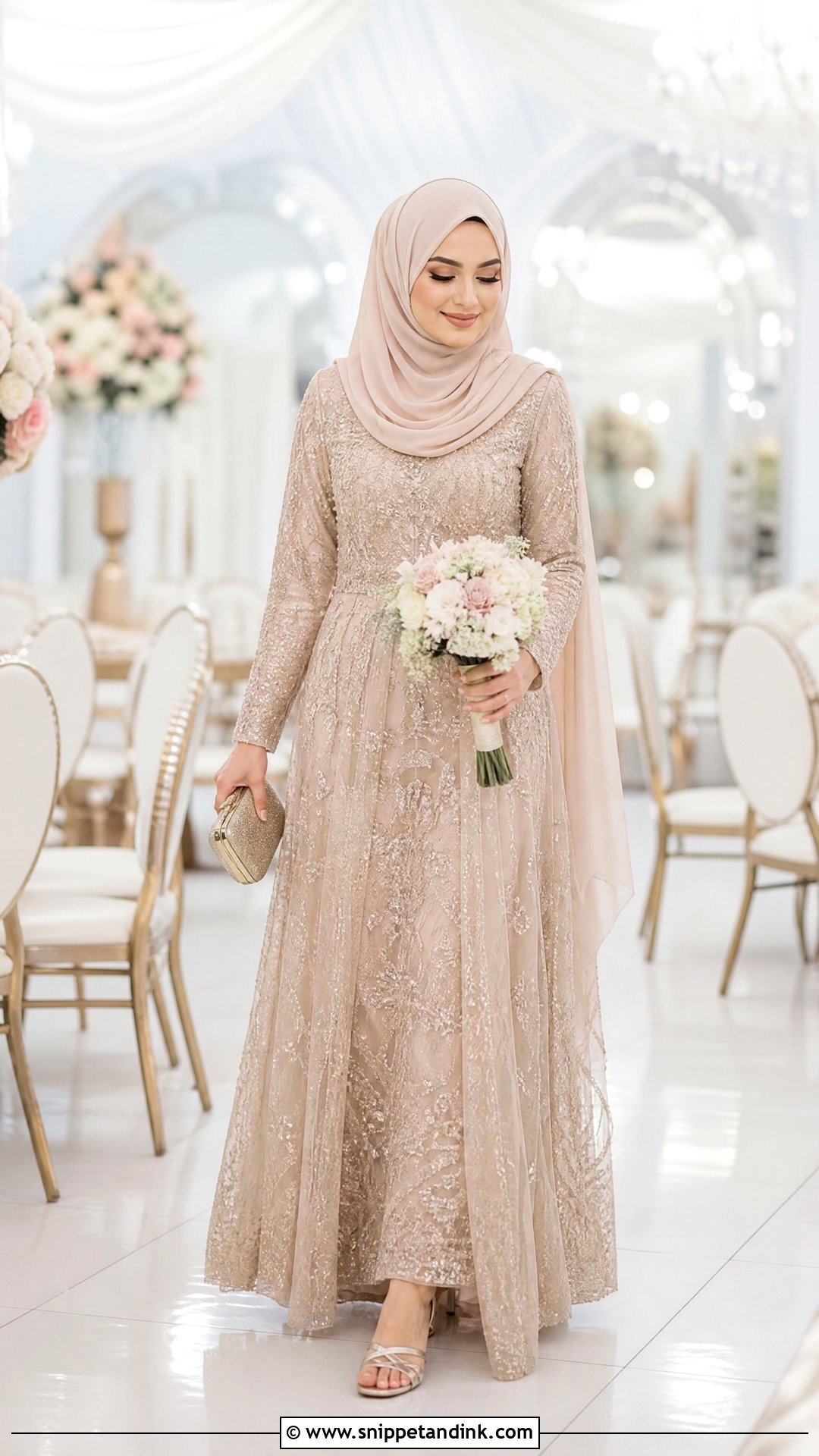
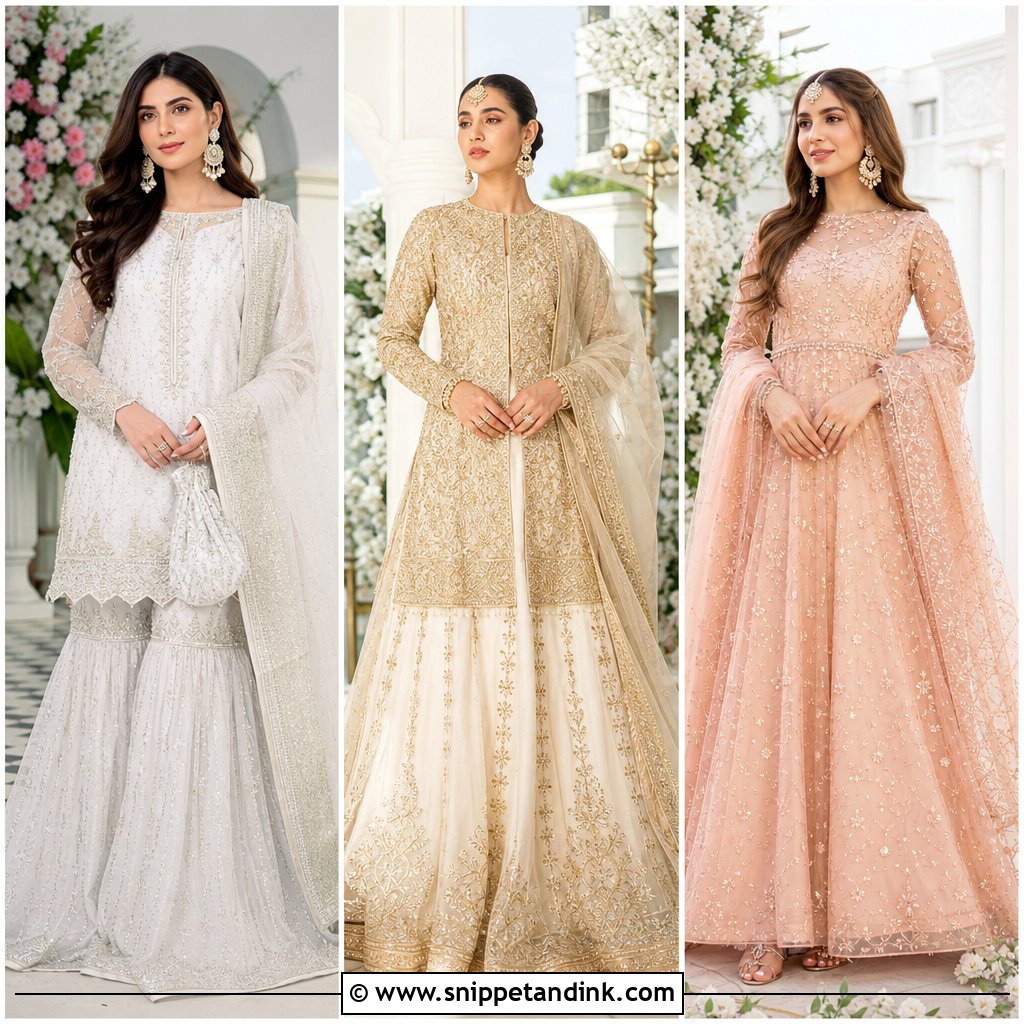
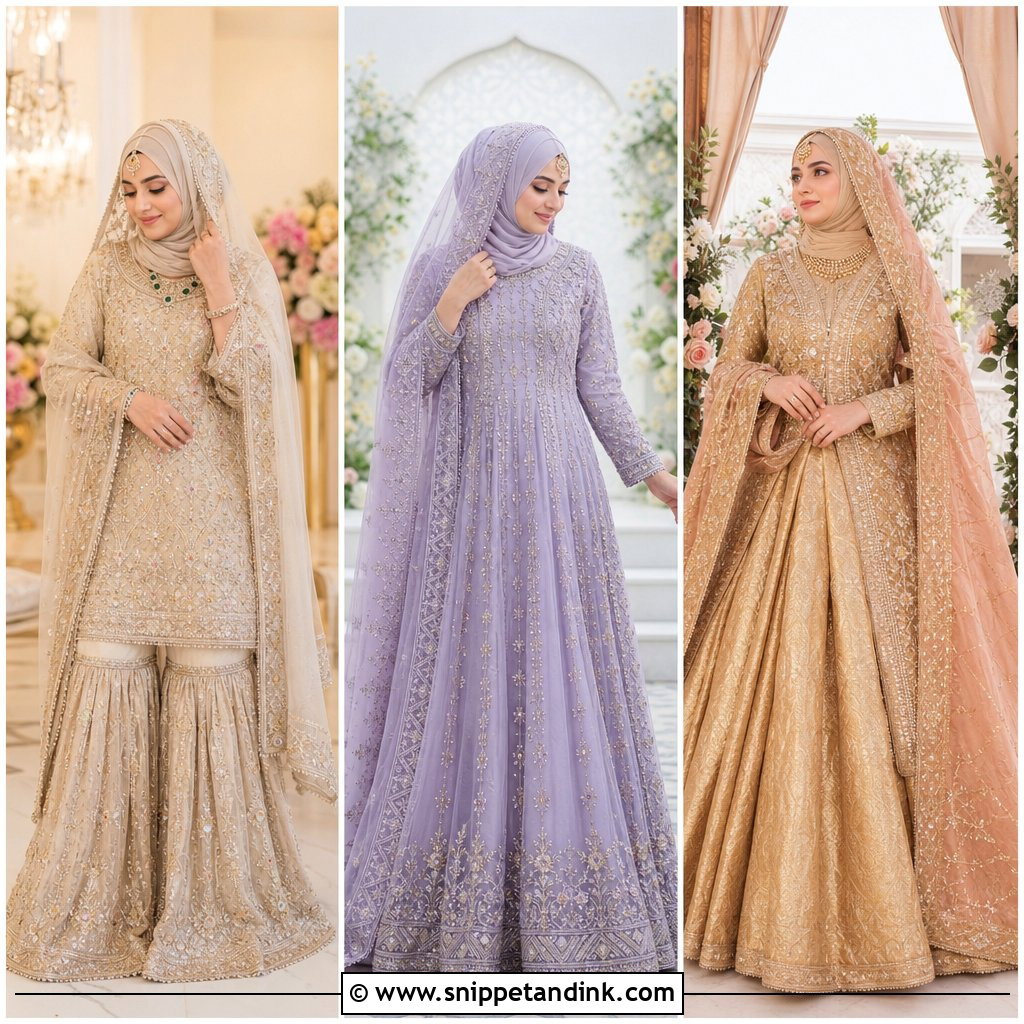
Walima outfits tend to be softer and lighter than the main bridal look: pastel shades, ivory, silver, blush, mint or champagne. A long embellished gown, modest lehenga or flowing maxi pairs with a matching hijab. Beading at the sleeves, neckline and hem feels festive without heavy weight. The walima is often the longest event of greeting guests, so I prioritize light fabric and shoes you can stand in for hours. Metallic heels, a small clutch and soft makeup keep the look fresh.
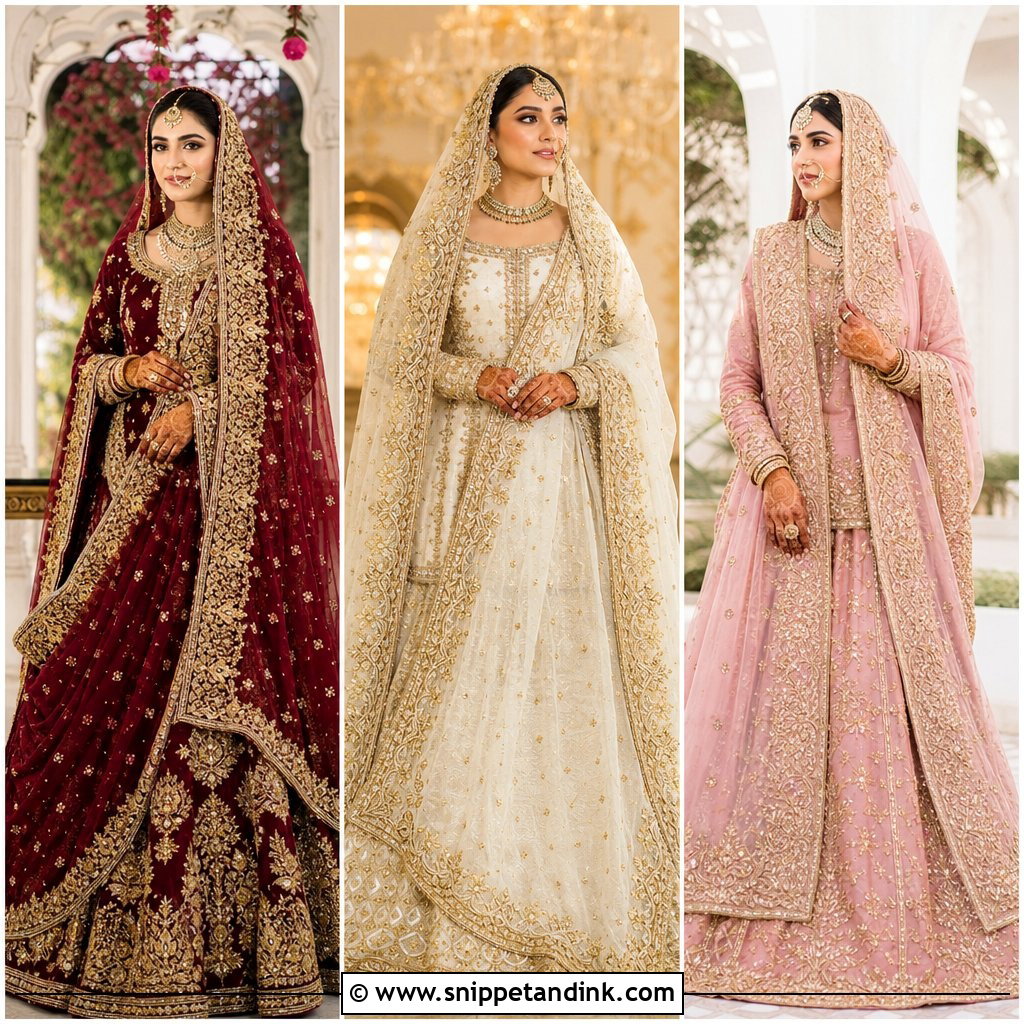
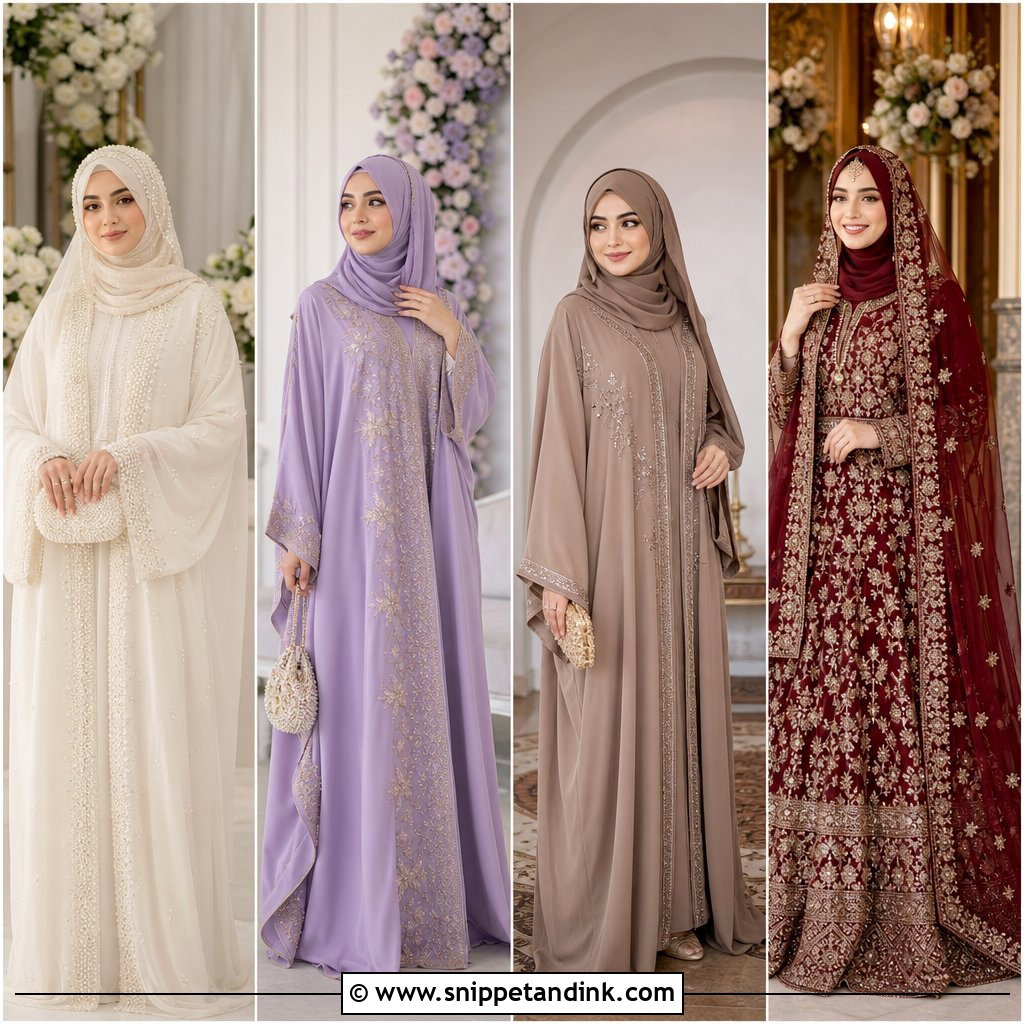
11. Red Muslim Bridal Dress With Hijab
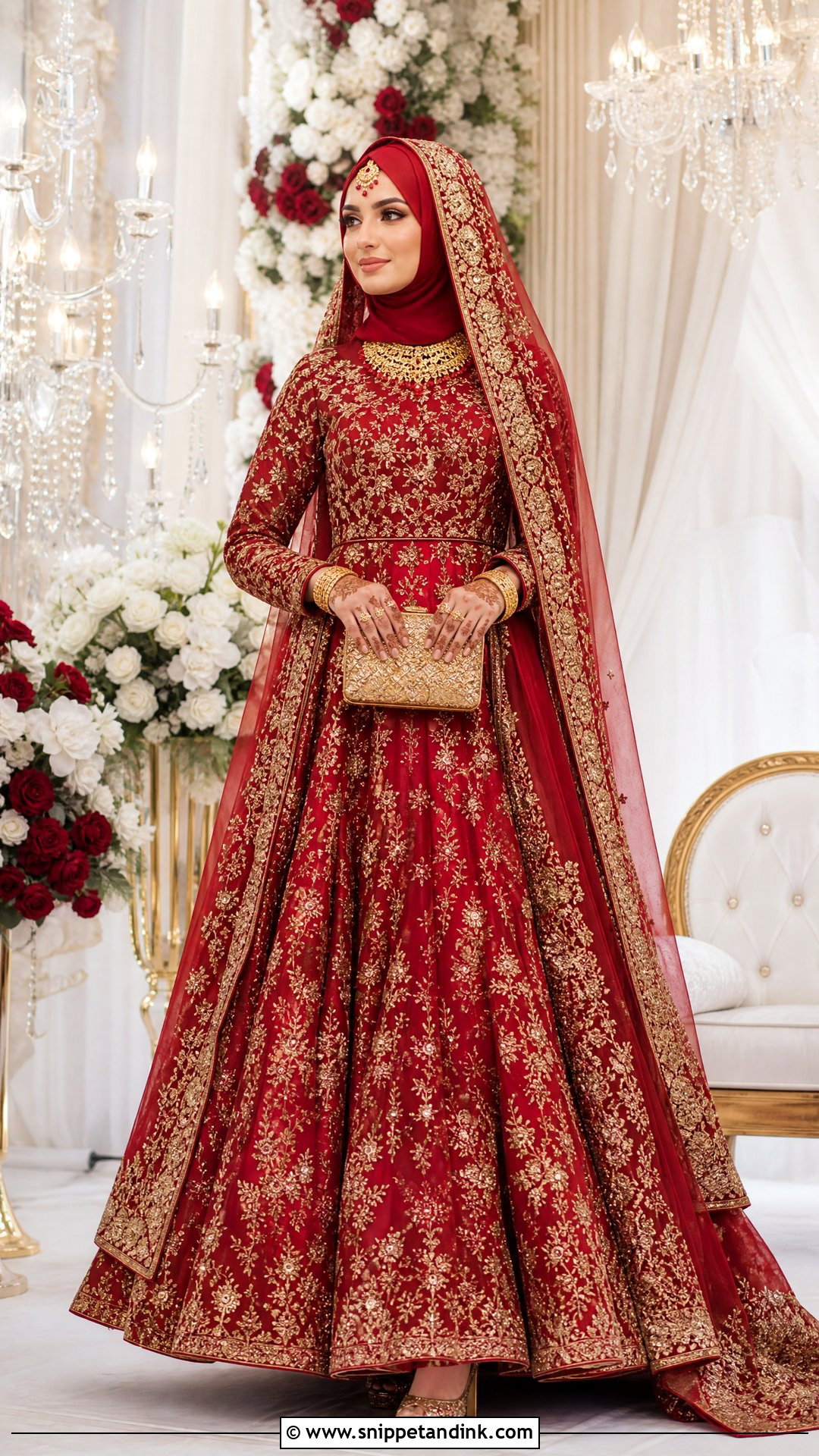
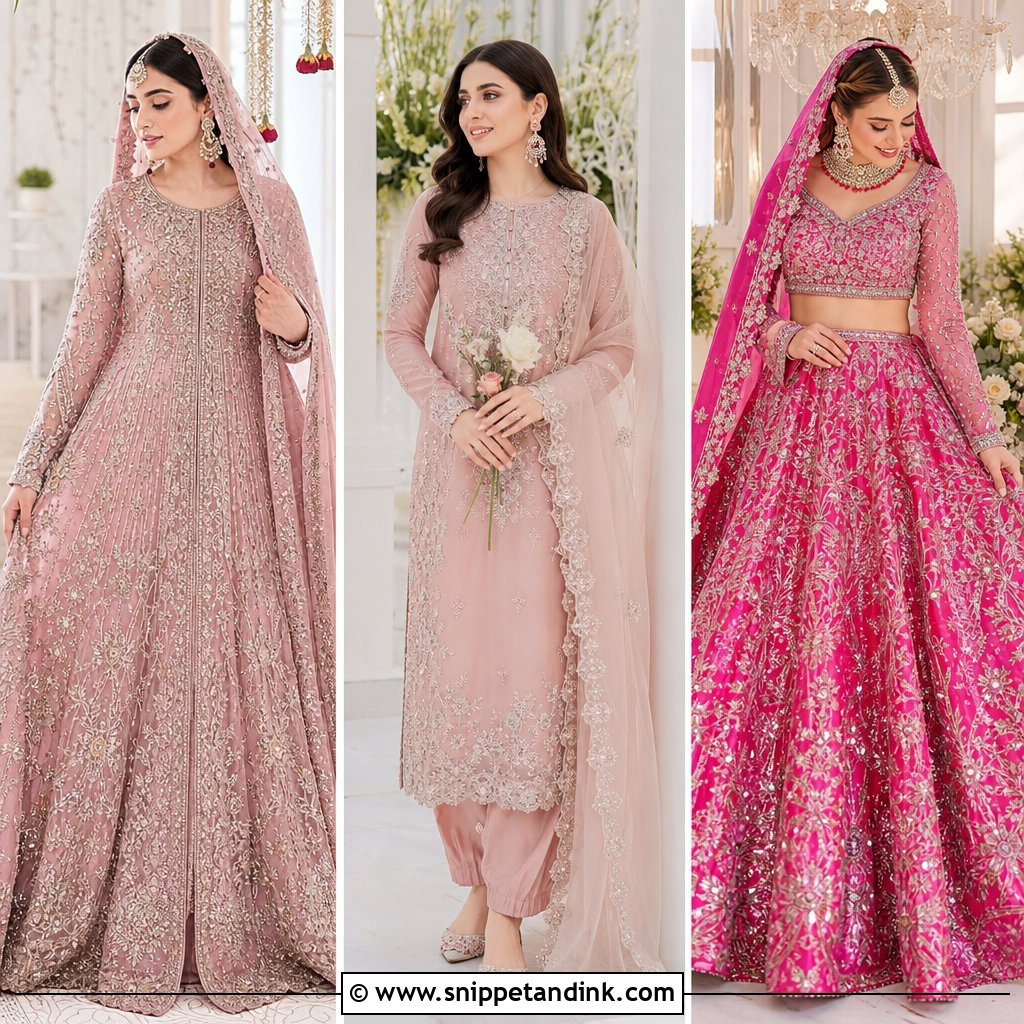
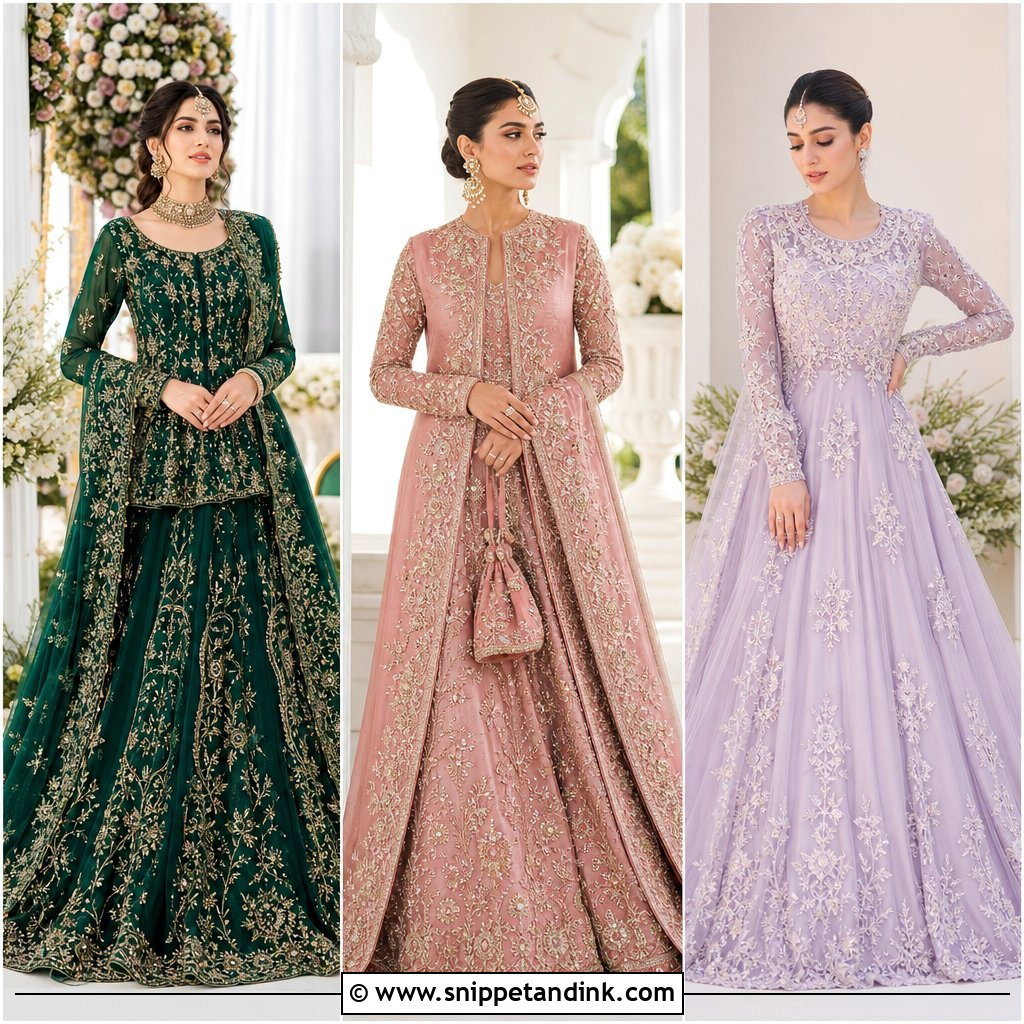
Red is bold and traditional, especially in South Asian bridal fashion, and it adapts many ways. Choose a red lehenga, anarkali, or gown with gold embroidery, long sleeves and a modest neckline. A red or gold hijab styled under a dupatta gives the layered bridal effect. Heavy zari dupattas are weighty, so I pin them to the undercap at the crown and shoulders rather than relying on the hijab alone to hold them. If the outfit is heavily embellished, keep the hijab fabric smooth. Gold jewelry, embroidered heels and a detailed clutch complete it.
12. Gold Muslim Wedding Dress With Hijab
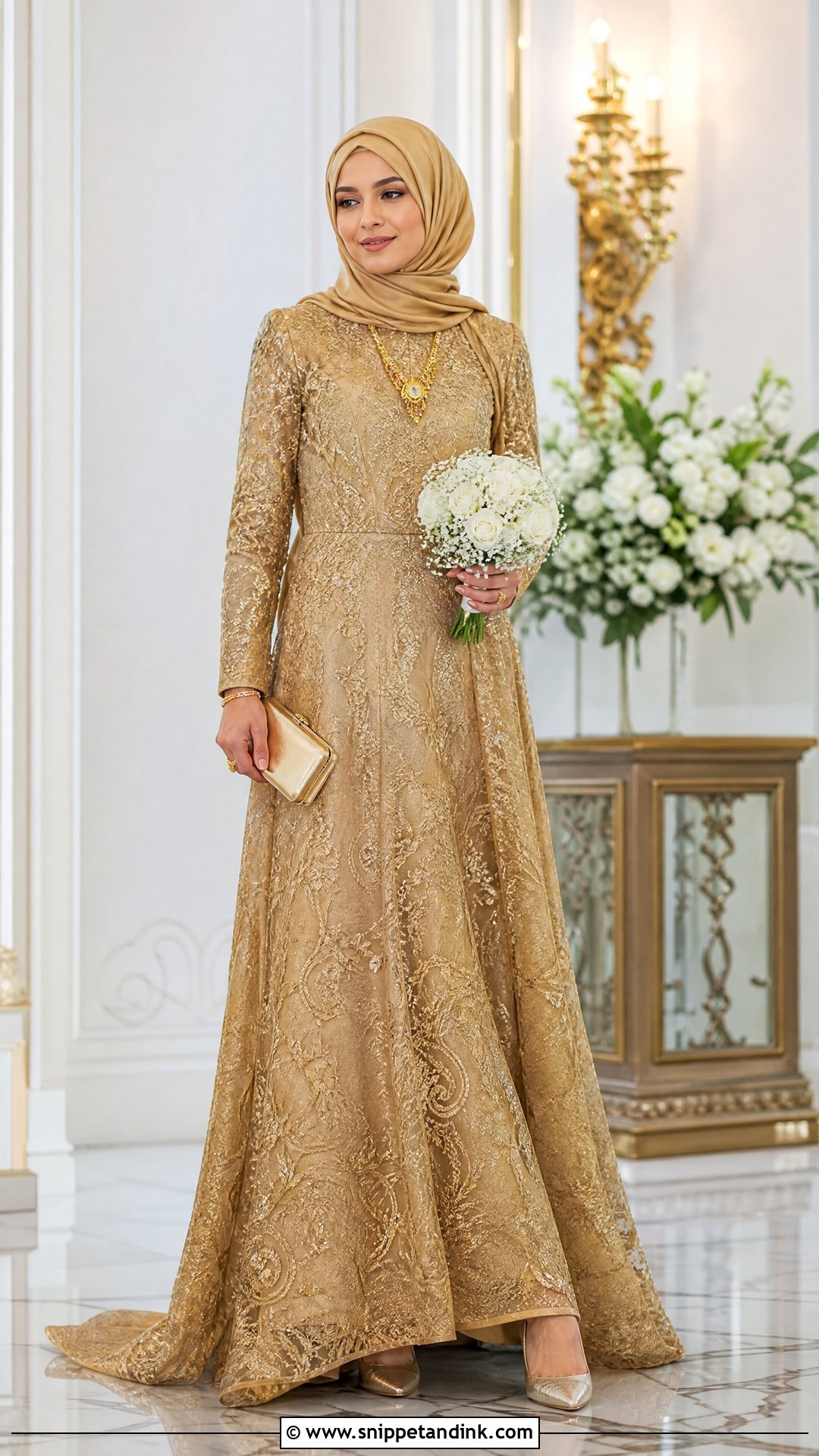
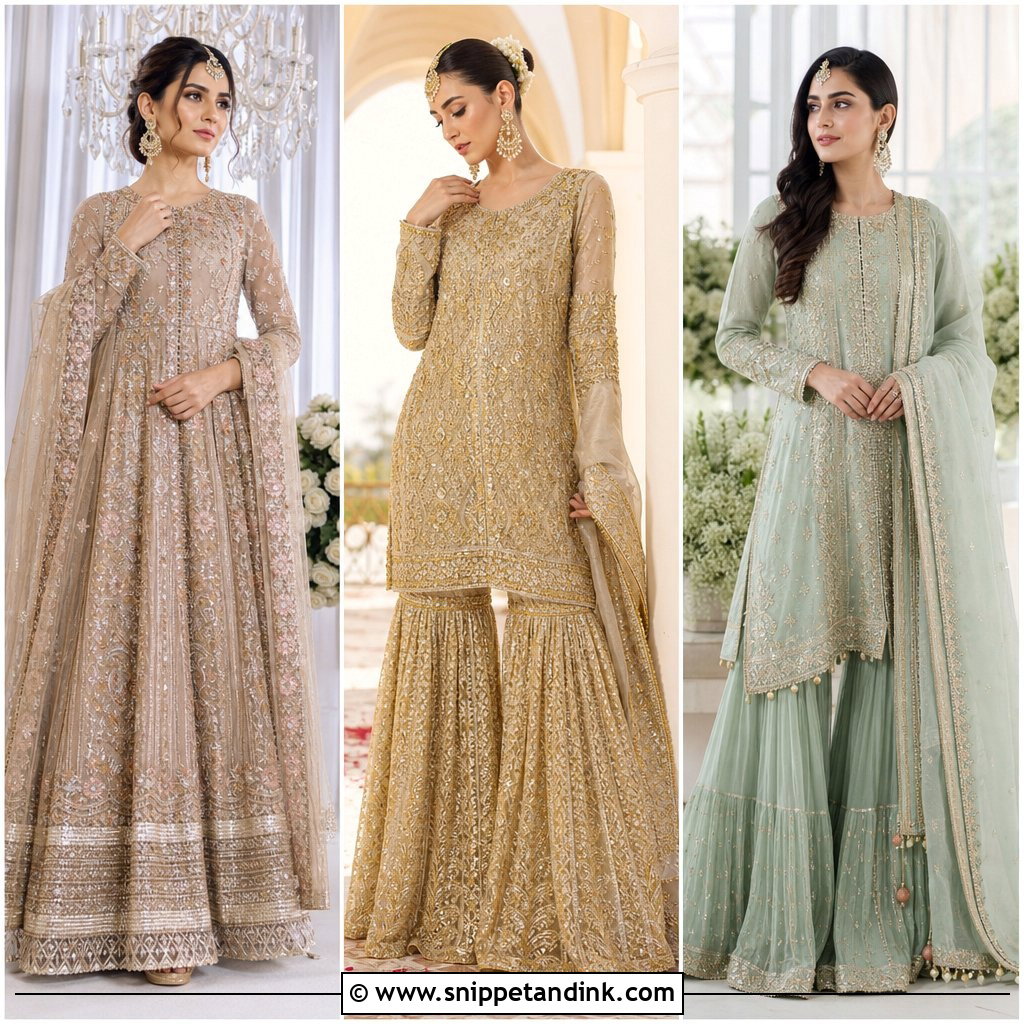
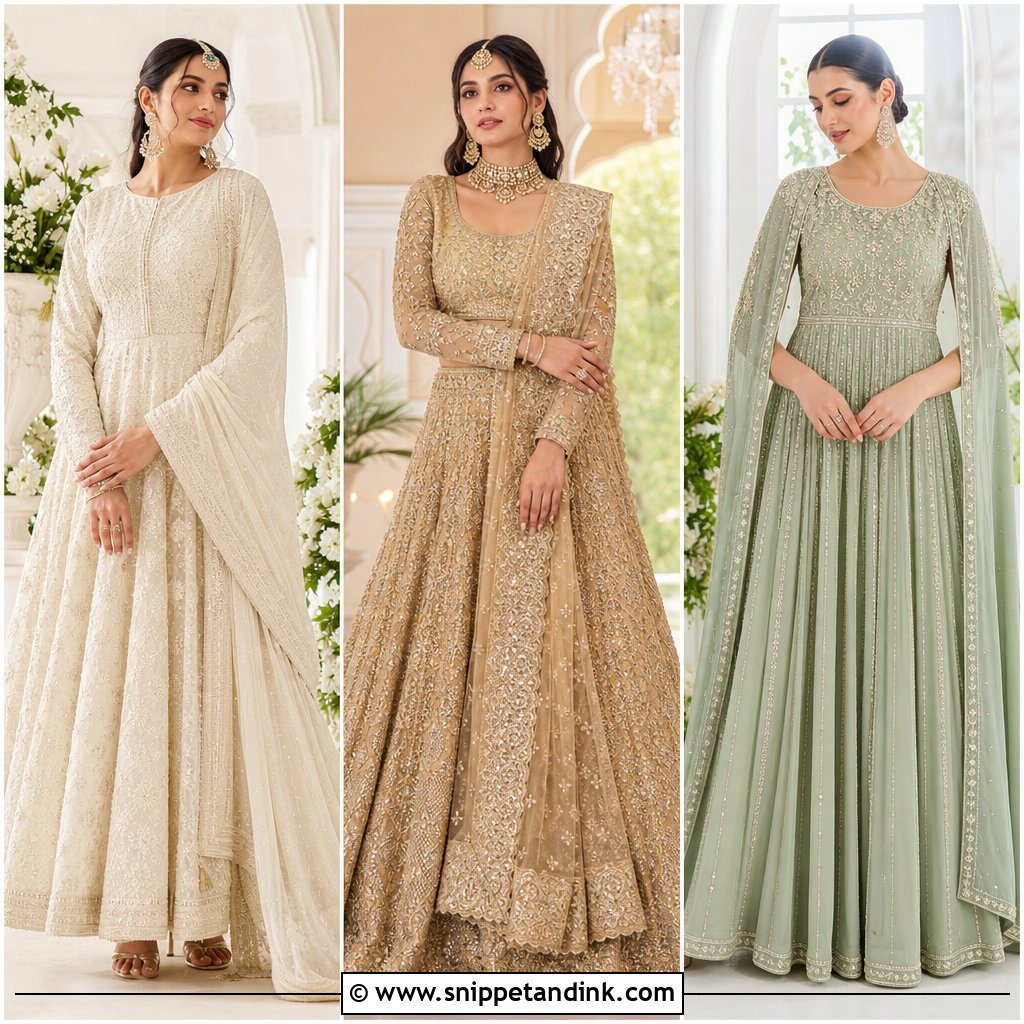
Champagne gold, antique gold and soft metallic beige all give warmth and glow. A long-sleeve gown with beadwork or embroidery looks regal without glaring. Next to the face, a full gold hijab can cast a yellow tint in photos, so a soft ivory hijab is often more flattering, with gold kept to the dress and jewelry. Gold heels, a metallic clutch and warm-toned jewelry finish it. Evening and ballroom receptions suit it, with a plain bouquet that doesn’t compete.
13. Champagne Muslim Wedding Dress With Hijab
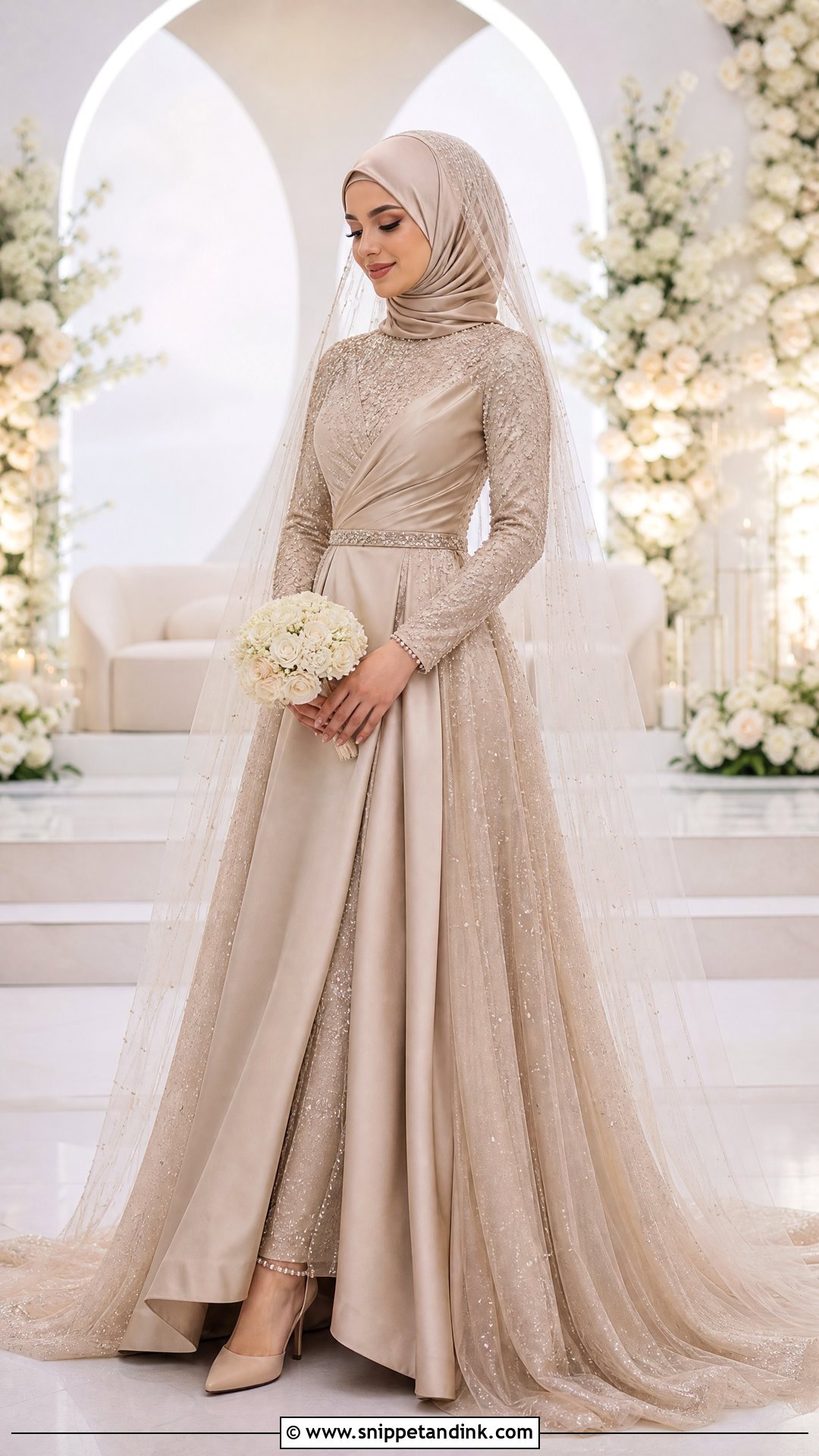
Champagne looks expensive without flashing, and it’s more unusual than white while still clearly bridal. A champagne satin or tulle gown with long sleeves and subtle sparkle glows in photos. A matching hijab, nude heels and gold or pearl accessories suit it, with a long sheer veil in champagne or ivory. Champagne varies a lot between dye lots, so I order the hijab and veil from the same fabric as the dress when the designer allows it. Warm indoor lighting flatters it most.
14. Blush Pink Muslim Wedding Dress With Hijab
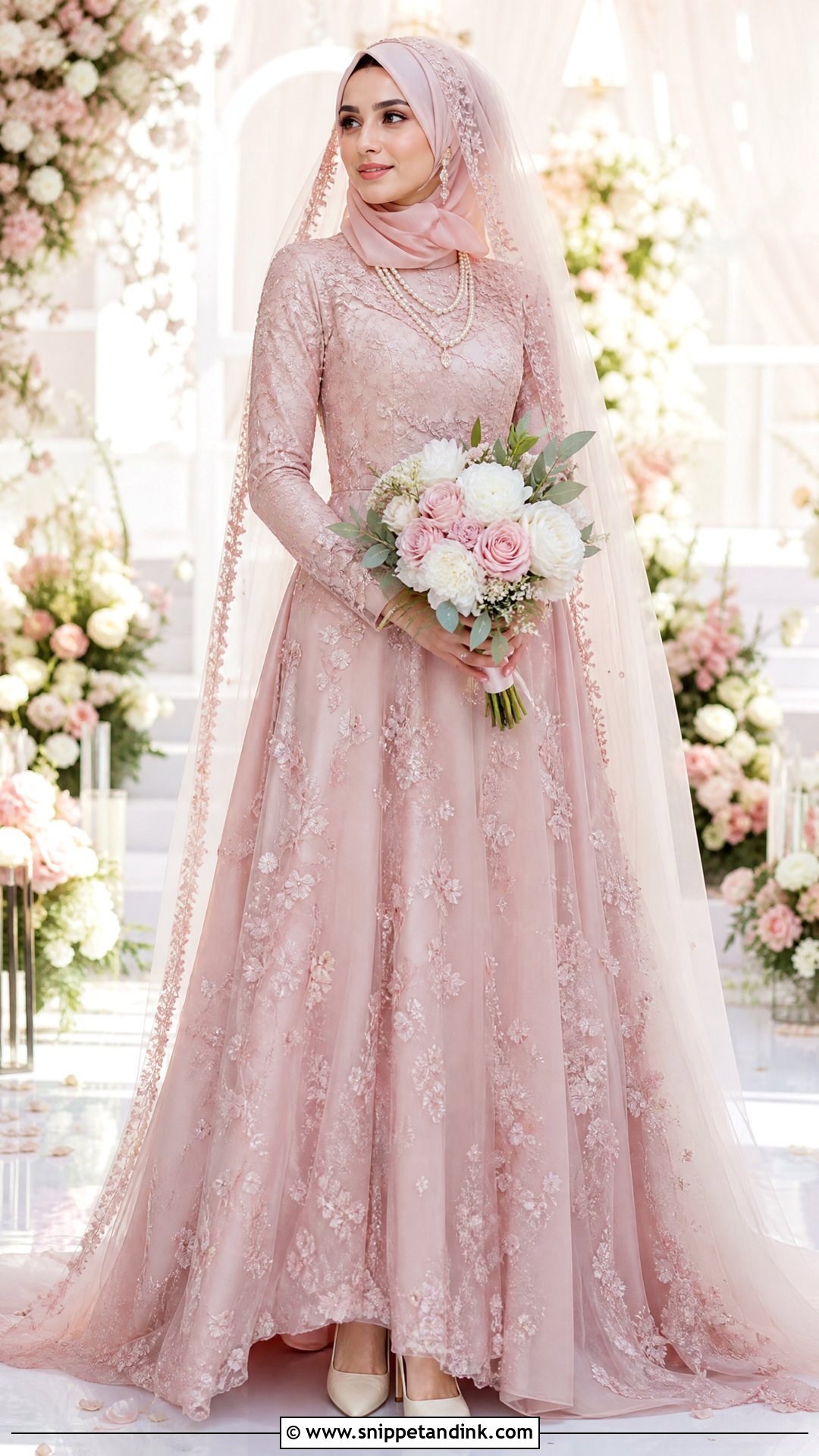
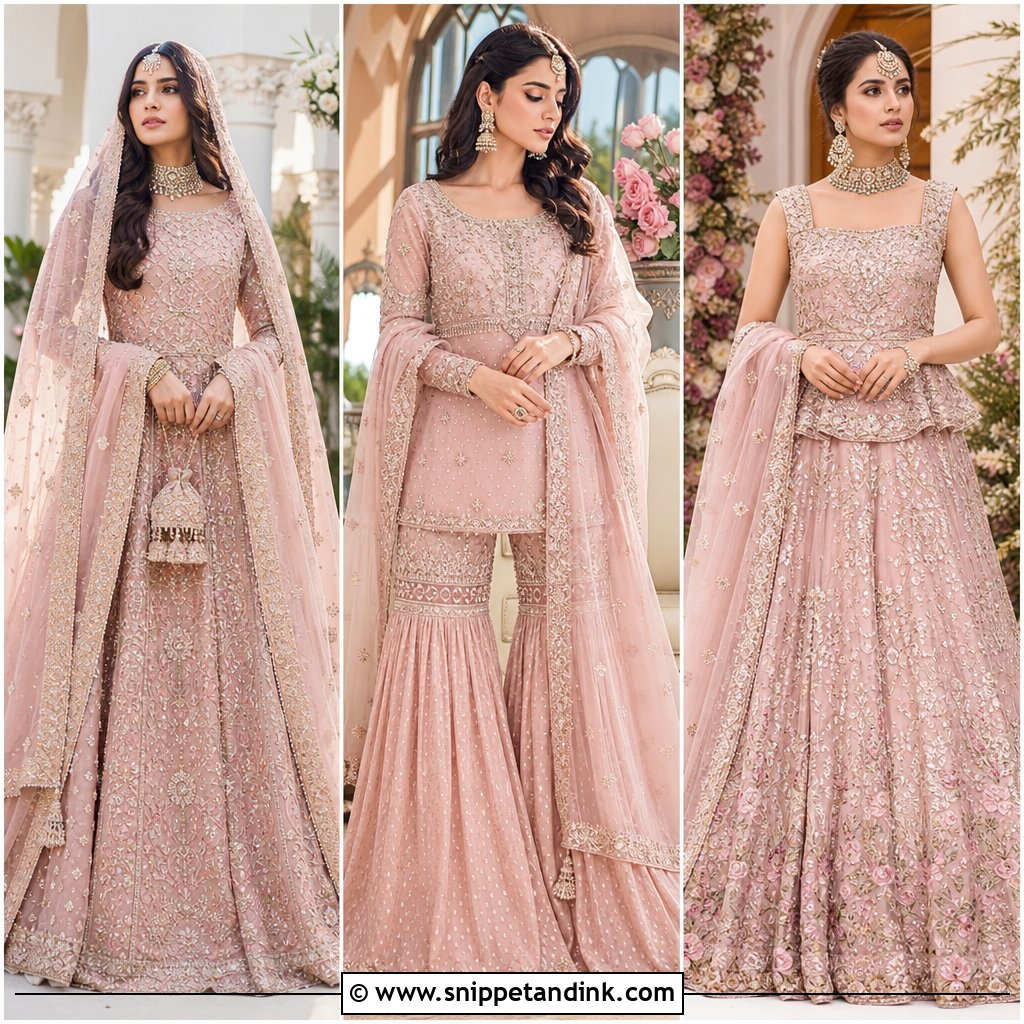
Blush pink is soft enough for a bride and still different from white. Choose a long-sleeve gown with floral embroidery, lace appliqué or fine beadwork. A matching blush hijab keeps it dreamy; ivory shoes and pearls add a classic note. Pink close to the face can wash out fair skin or brighten deeper skin tones, so I test the hijab shade under natural light first. A blush veil layered over the hijab and a bouquet of white roses, pink blooms and soft greenery suit spring gardens.
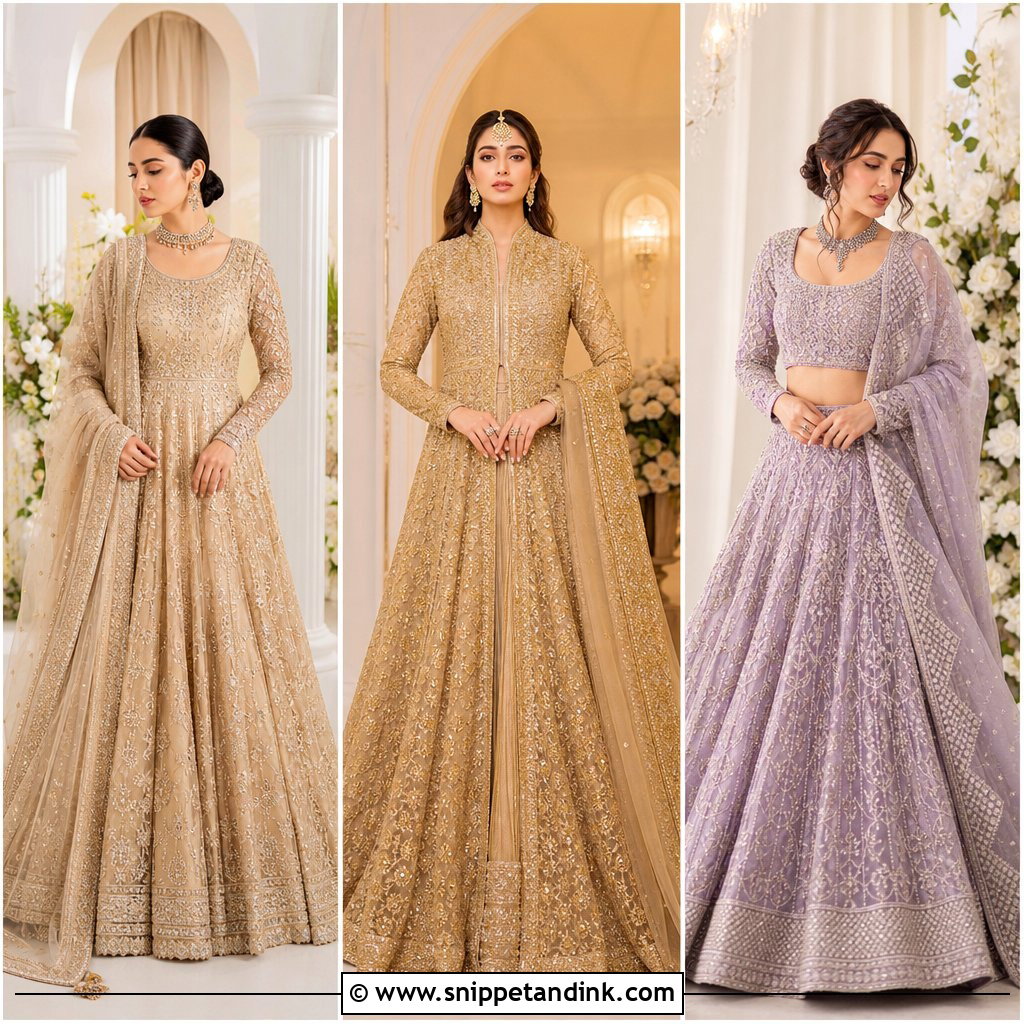
15. Pastel Muslim Wedding Dress With Hijab
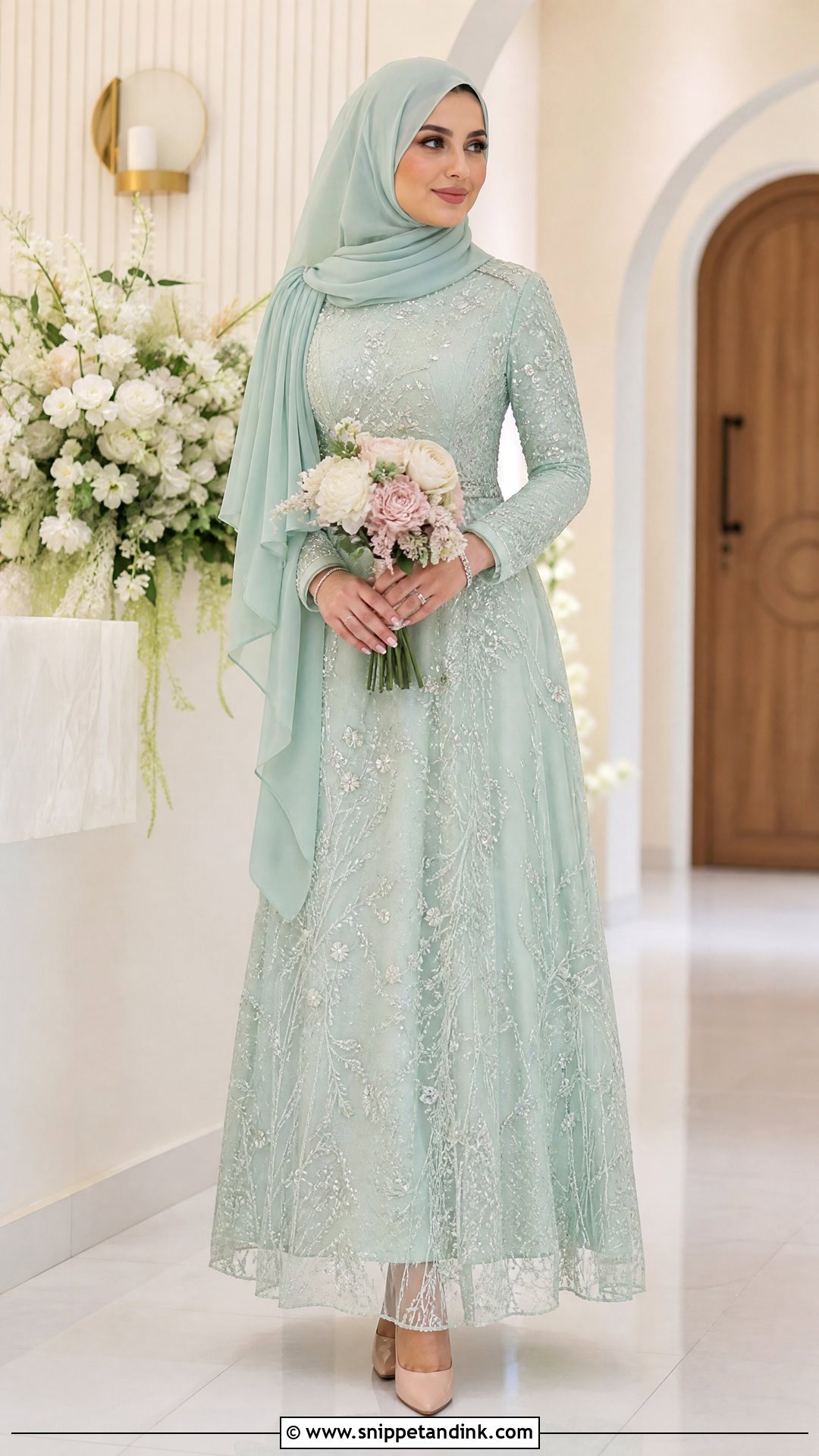
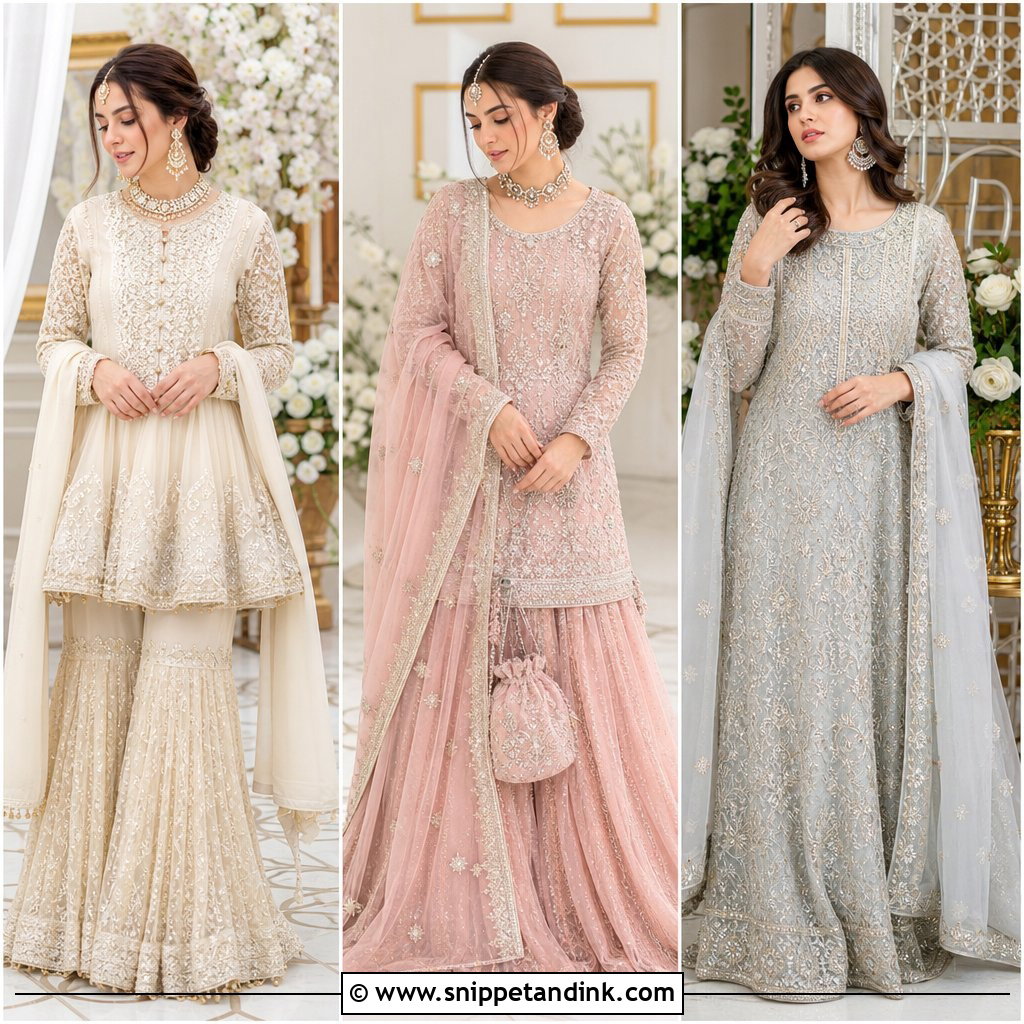
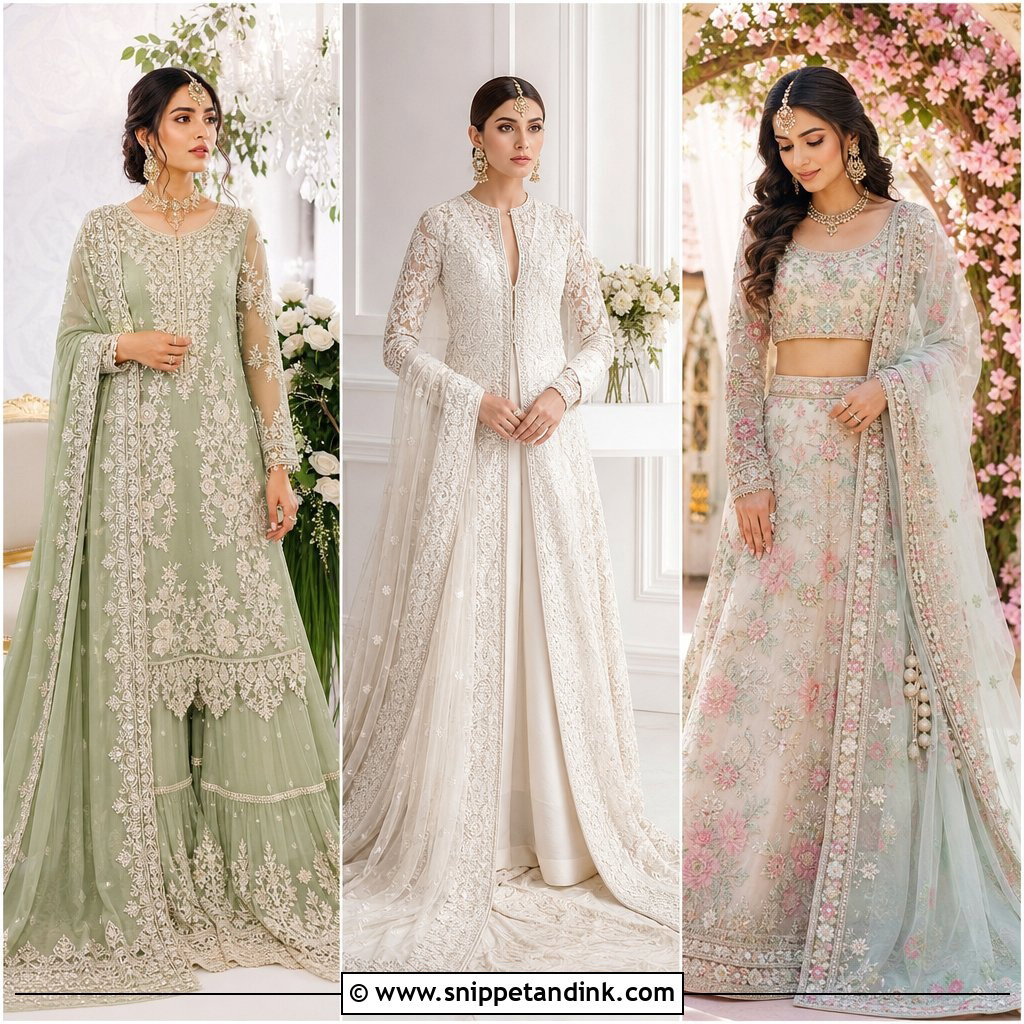
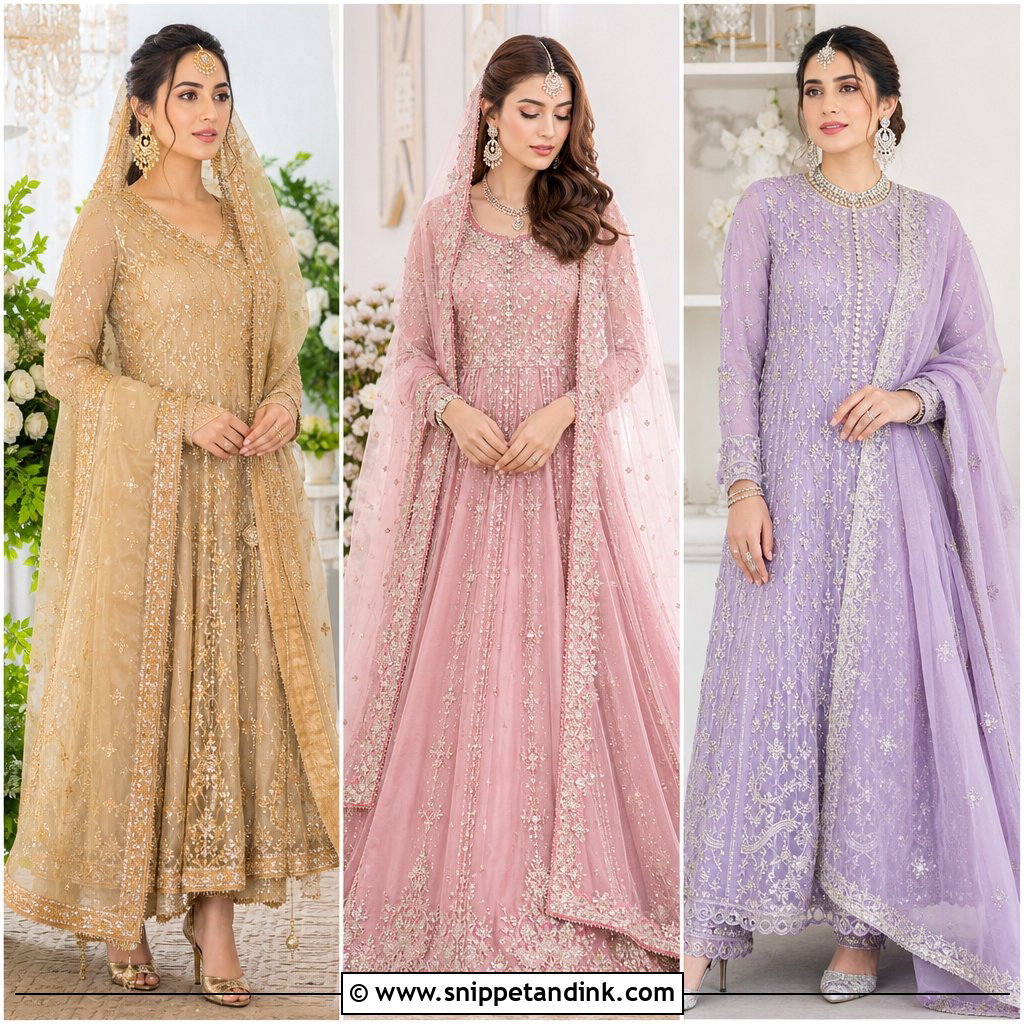
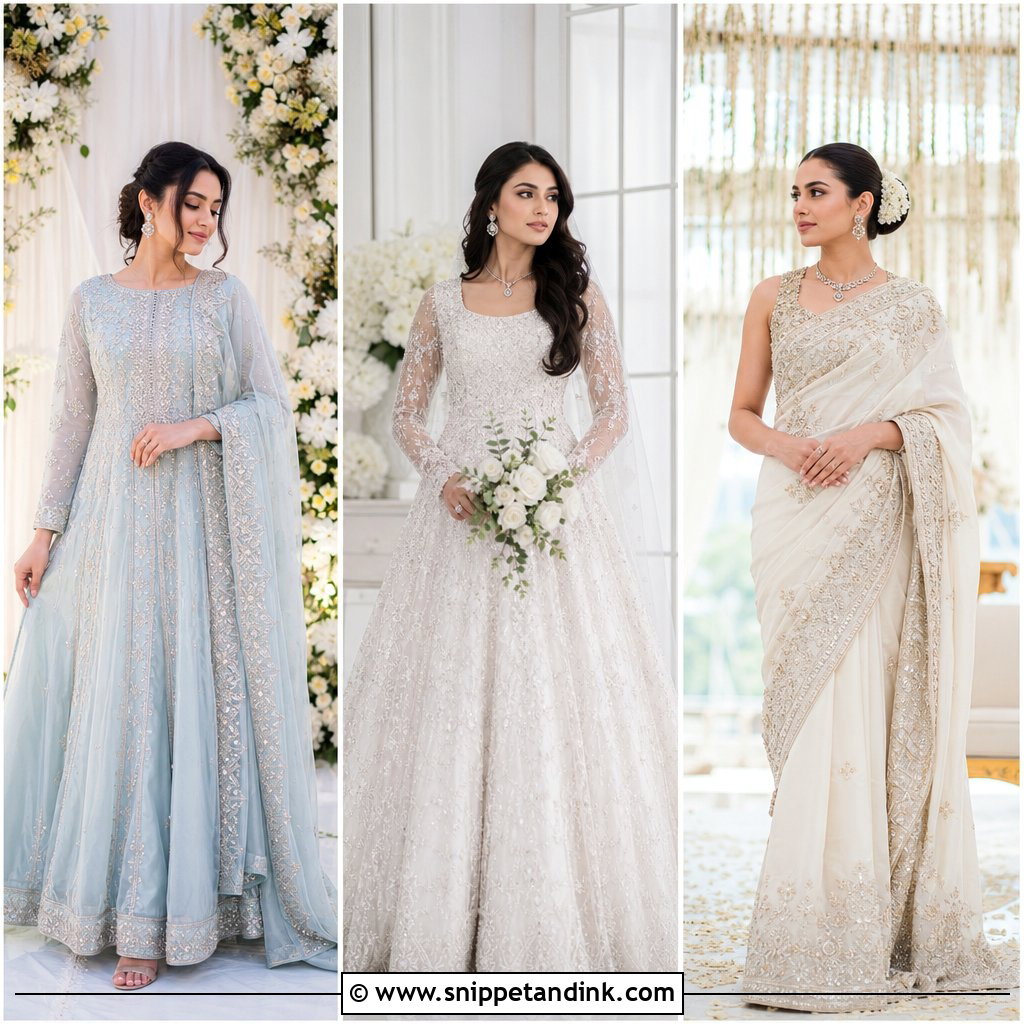
Soft blue, mint, lavender, peach and powder pink all work for nikah, walima or reception wear. Choose a modest gown or embroidered dress with long sleeves and a flowing skirt. A hijab in the same pastel creates a clean finish, and silver or pearl accessories keep it delicate. Pastels can look flat under a camera flash, so a little sheen or embroidery in the fabric helps hold the color in photos. Nude heels let the dress stand out. Daytime weddings and bright indoor venues suit it.
16. Embroidered Muslim Wedding Dress With Hijab
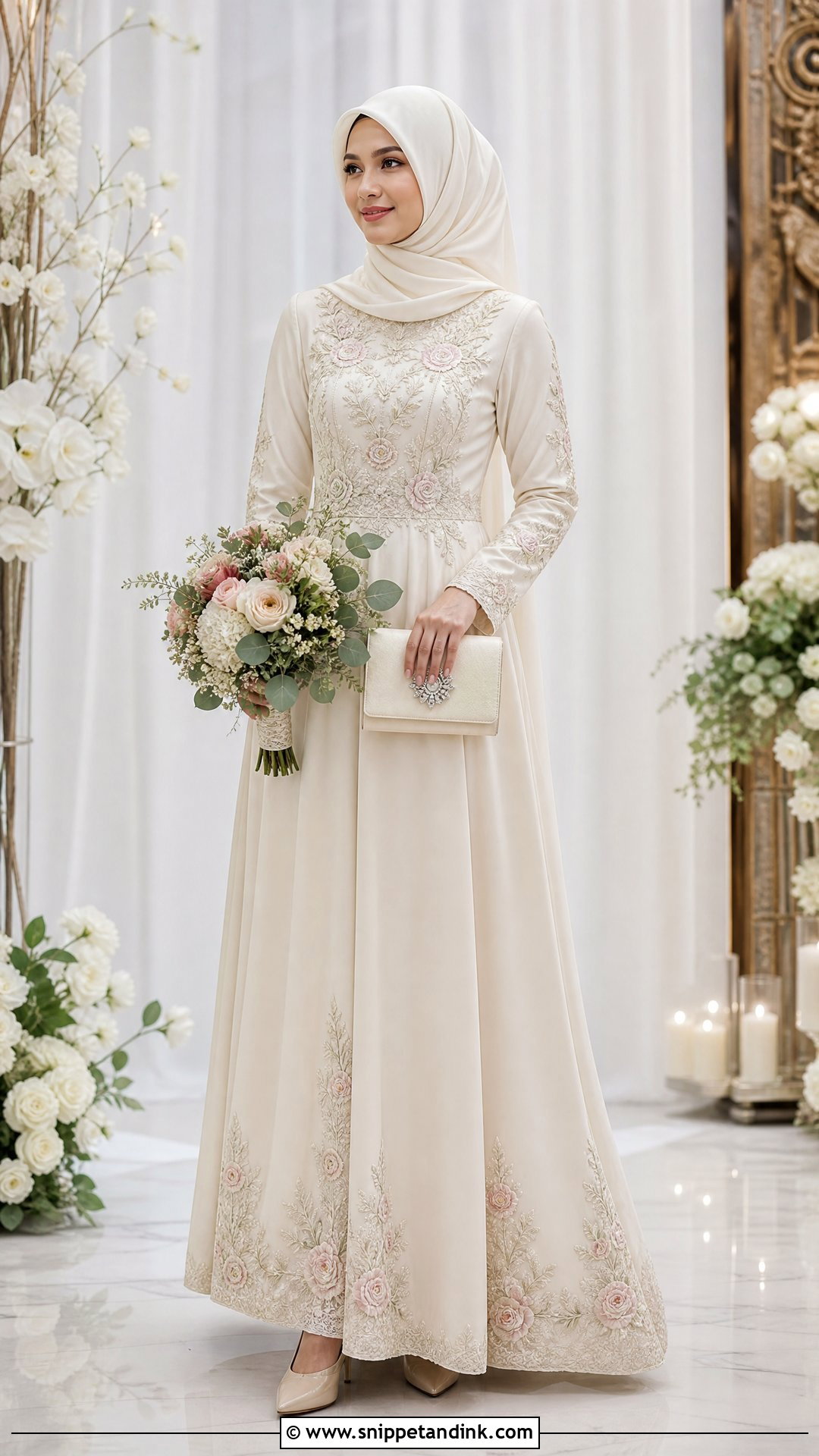
Embroidery can be floral, vine-like, geometric or cultural. Place it across the bodice, sleeves, waist and hem for balance on a fully covered gown. My rule with colorful embroidery is to match the hijab to the base color of the gown, never the thread. That keeps the face calm and lets the work on the dress show. Simple heels, a small clutch and jewelry that picks up one tone from the embroidery complete a look with real personal meaning.
17. Beaded Muslim Wedding Dress With Hijab
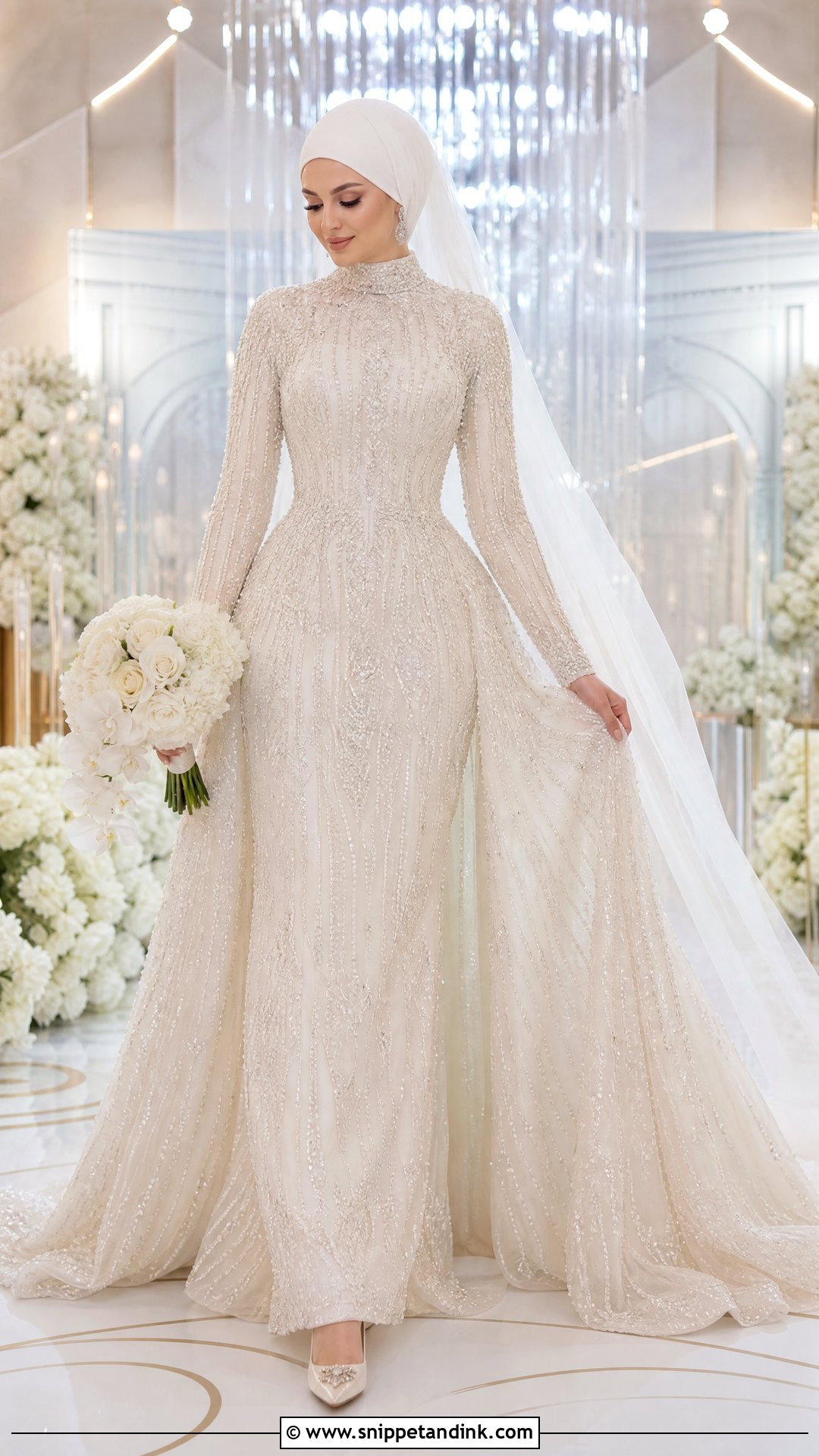
Beading suits long sleeves, high necklines, cuffs and the upper bodice. Choose a soft lining and avoid beading that scratches at the neck or wrists, because the hijab rubs against the neckline all day and any rough bead will snag the chiffon. A plain chiffon hijab balances the shine and keeps your face the focus. Silver, crystal or pearl accessories follow the bead color. Simple heels and a smooth veil finish it, and evening receptions and formal portraits suit it best.
18. Sequin Muslim Wedding Dress With Hijab
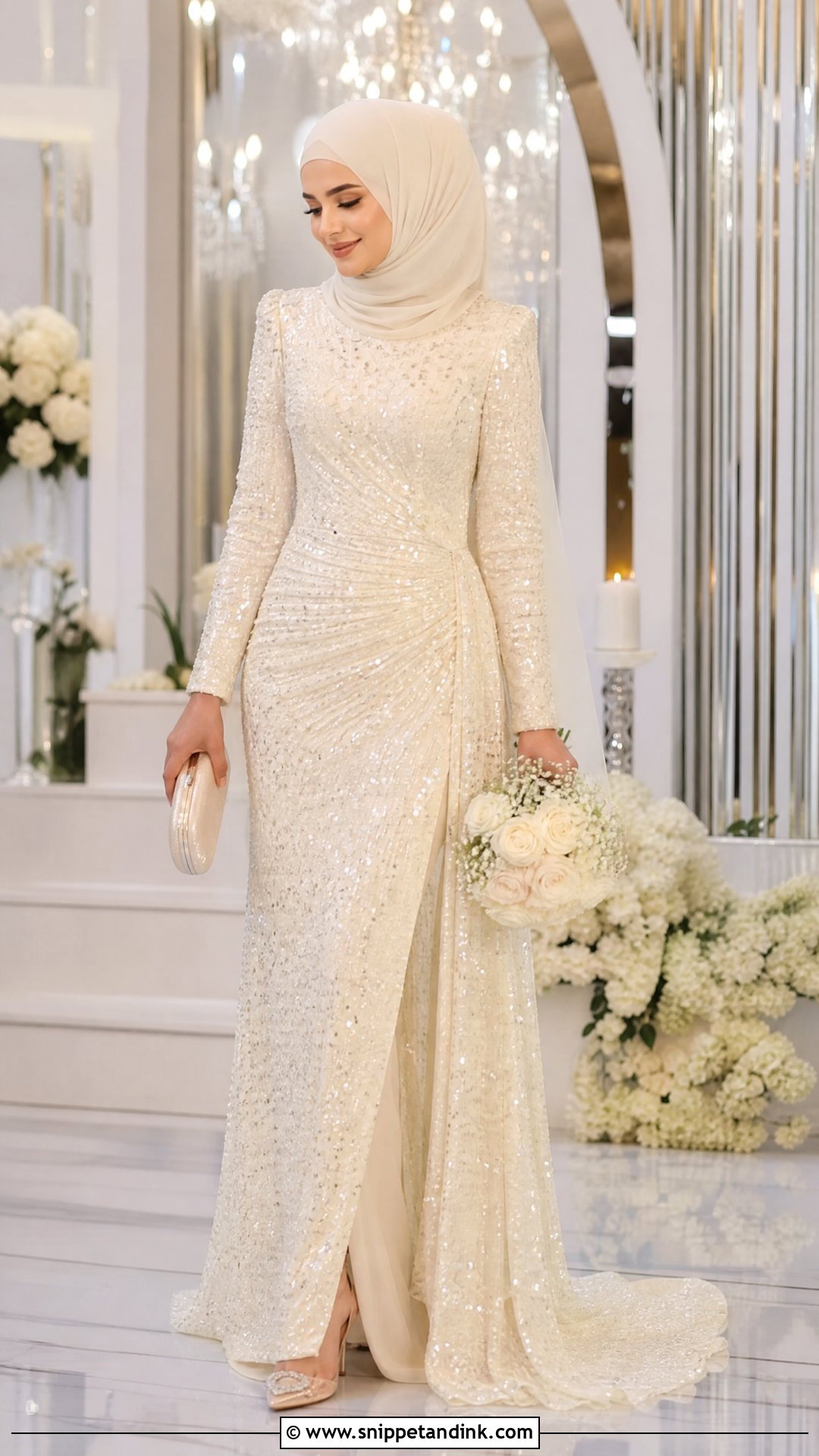
Sequins need a modest silhouette that feels elegant rather than overwhelming. A long-sleeve sequin gown in ivory, champagne, silver or soft blush looks dazzling under reception lighting. Use a matte chiffon or crepe hijab to soften the sparkle near the face, and keep jewelry minimal since the dress supplies the shine. Sequins can scratch the inner arm and snag a hijab where they meet, so a lined sleeve and a hijab tucked neatly at the neckline matter. A simple clutch, sleek heels and a soft bouquet are enough.
19. Turkish Muslim Wedding Dress With Hijab
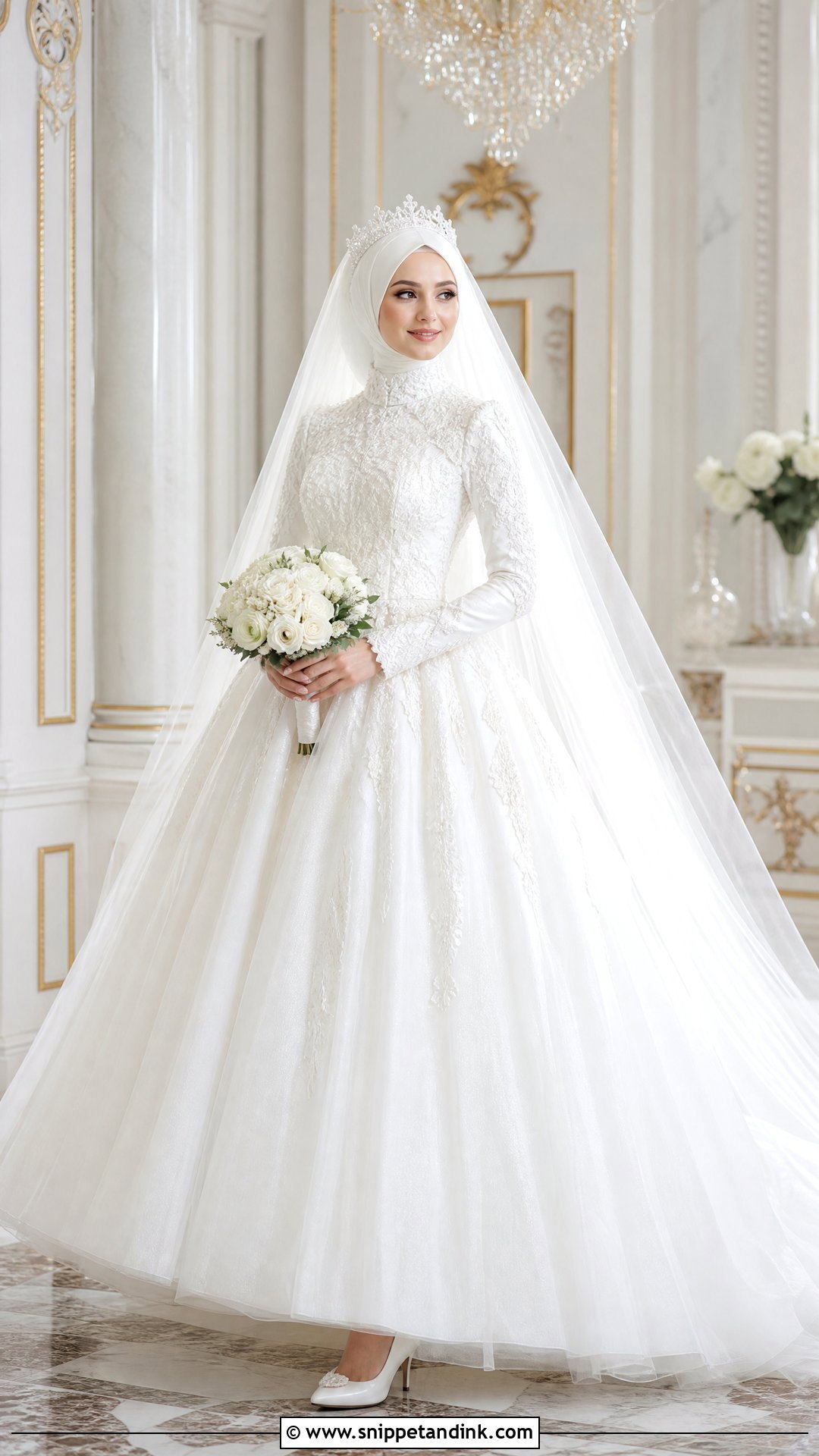
A Turkish Muslim wedding dress with hijab often has a regal, classic feel: high necklines, long sleeves, fitted bodices and dramatic skirts in lace, satin and tulle. The hijab is usually wrapped neatly with a veil flowing from the crown or back, and a tiara, jeweled headpiece or delicate crown gives a traditional finish. This style relies on a very smooth, wrinkle-free wrap, so I steam the hijab right before styling. White or ivory heels and a bouquet that doesn’t hide the gown’s detail complete it.
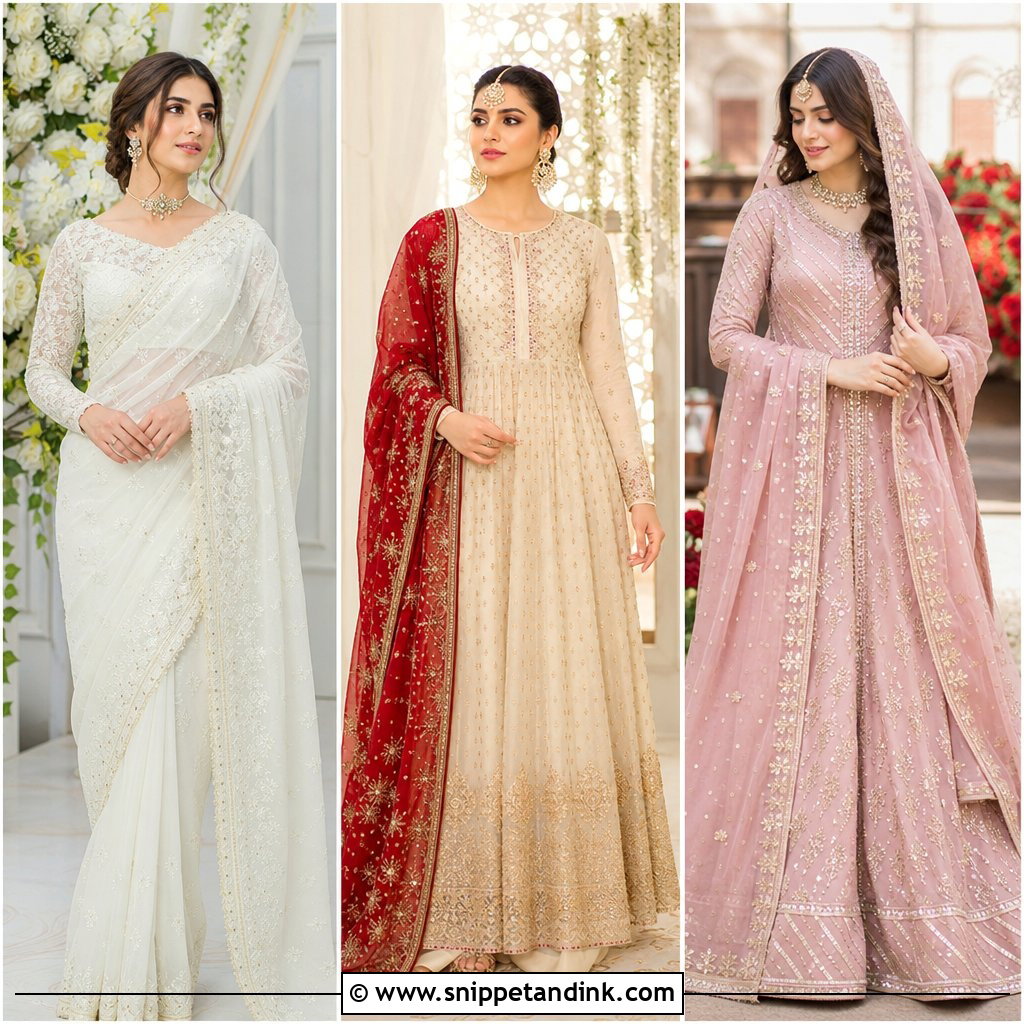
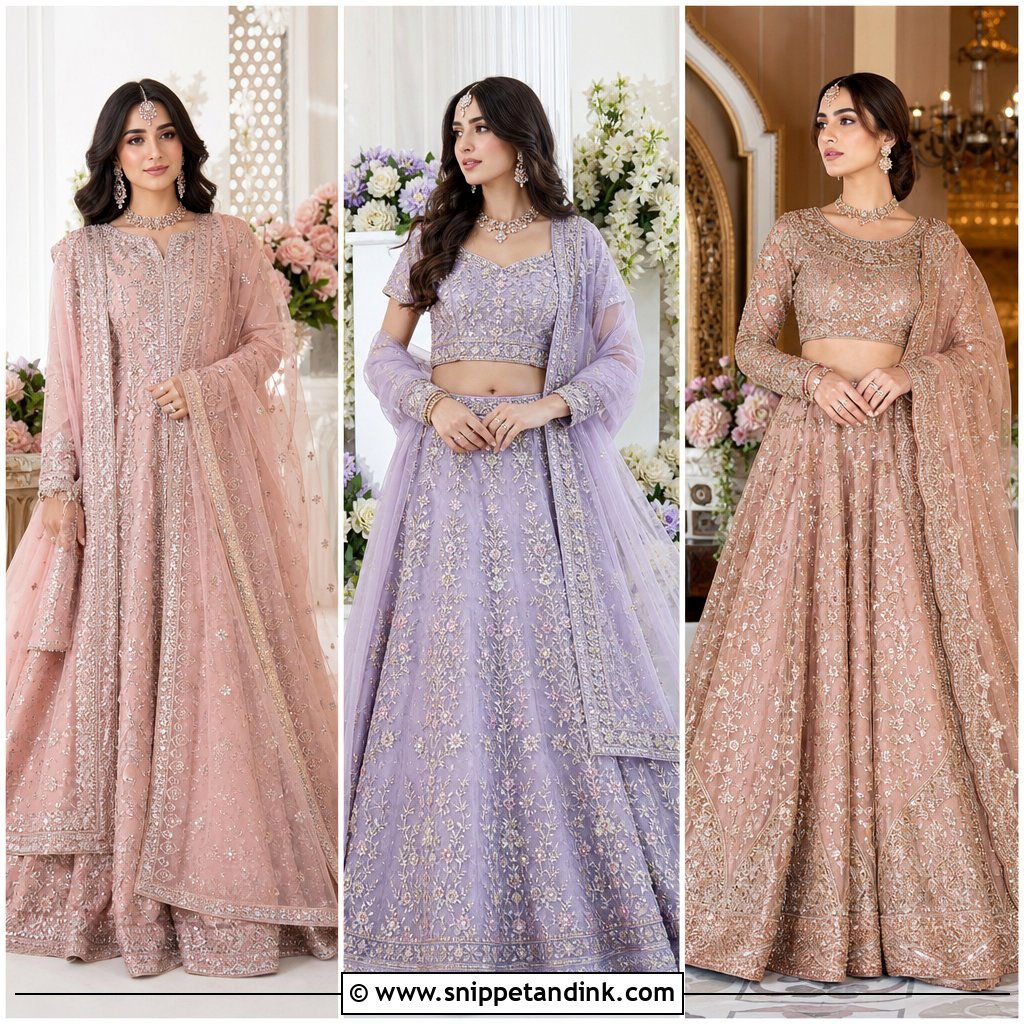
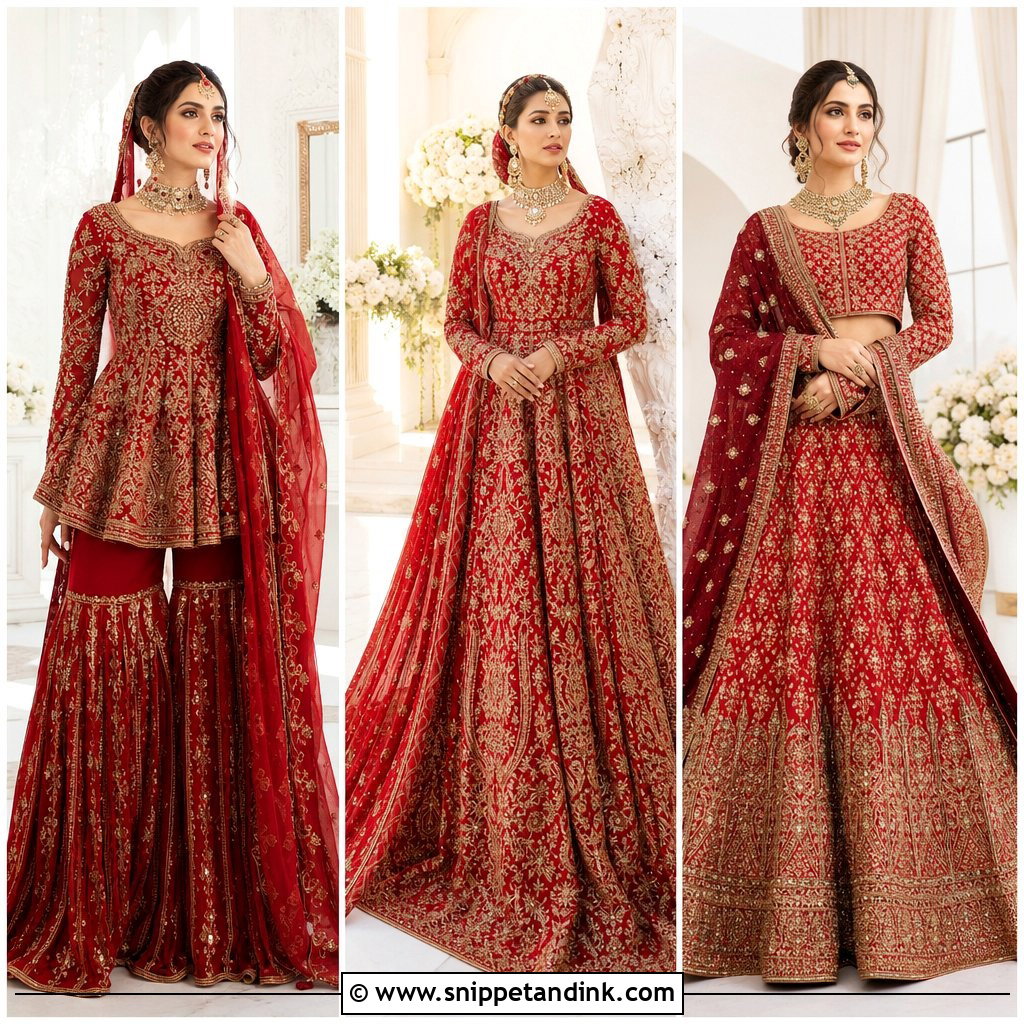
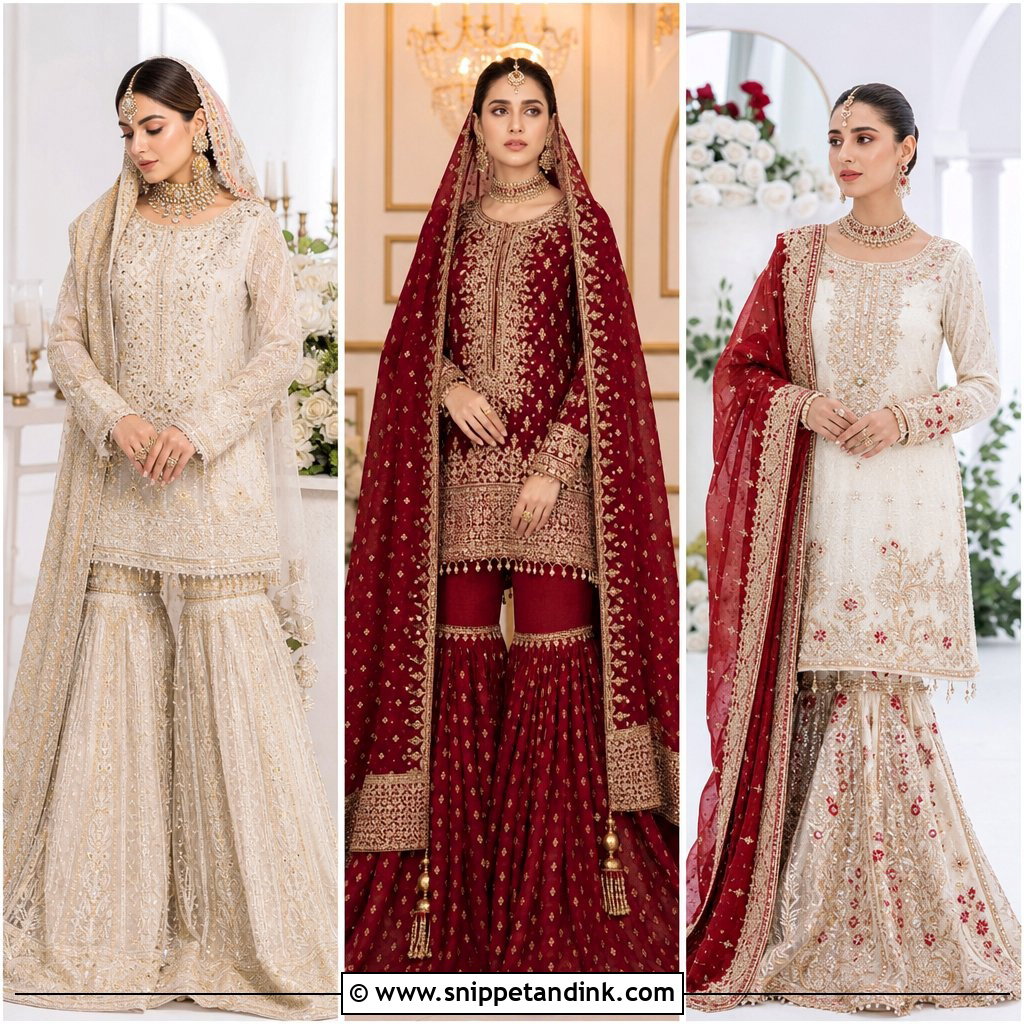
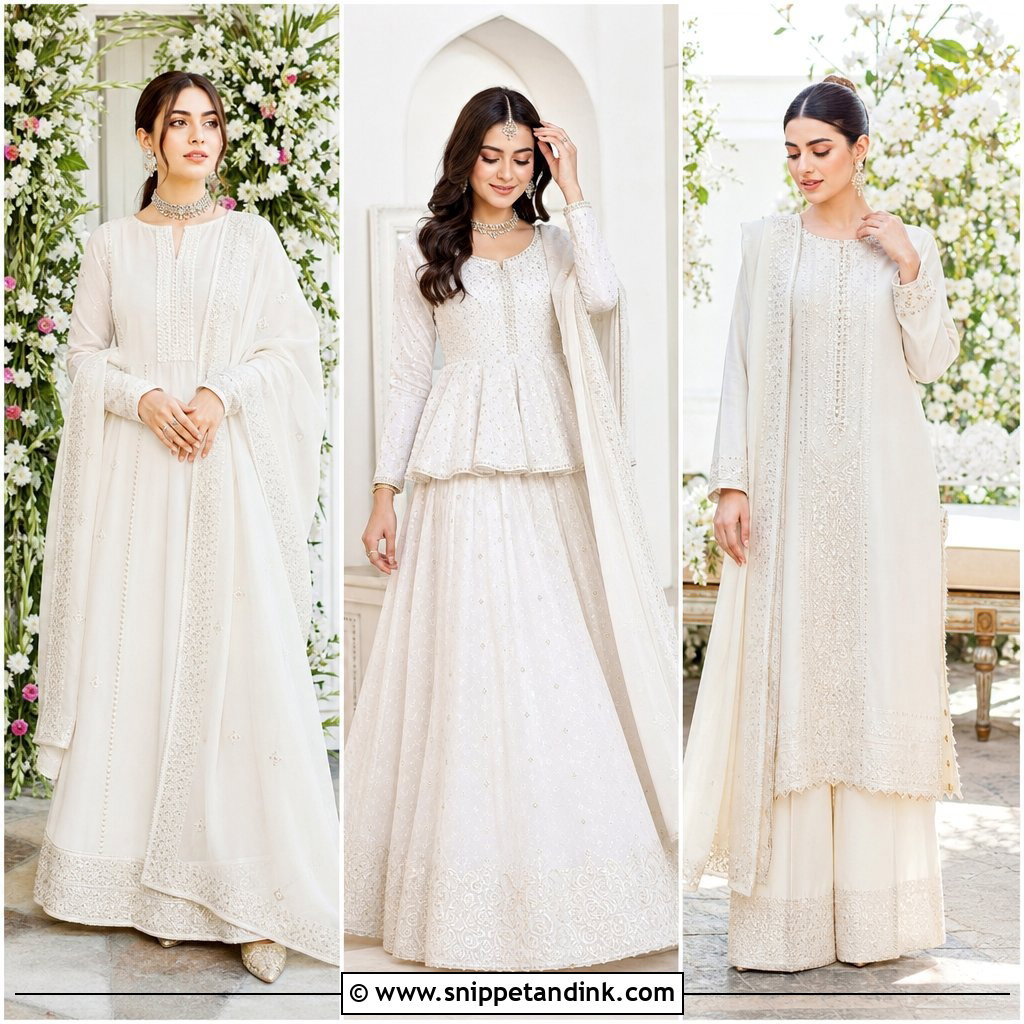
20. Pakistani Muslim Bridal Dress With Hijab
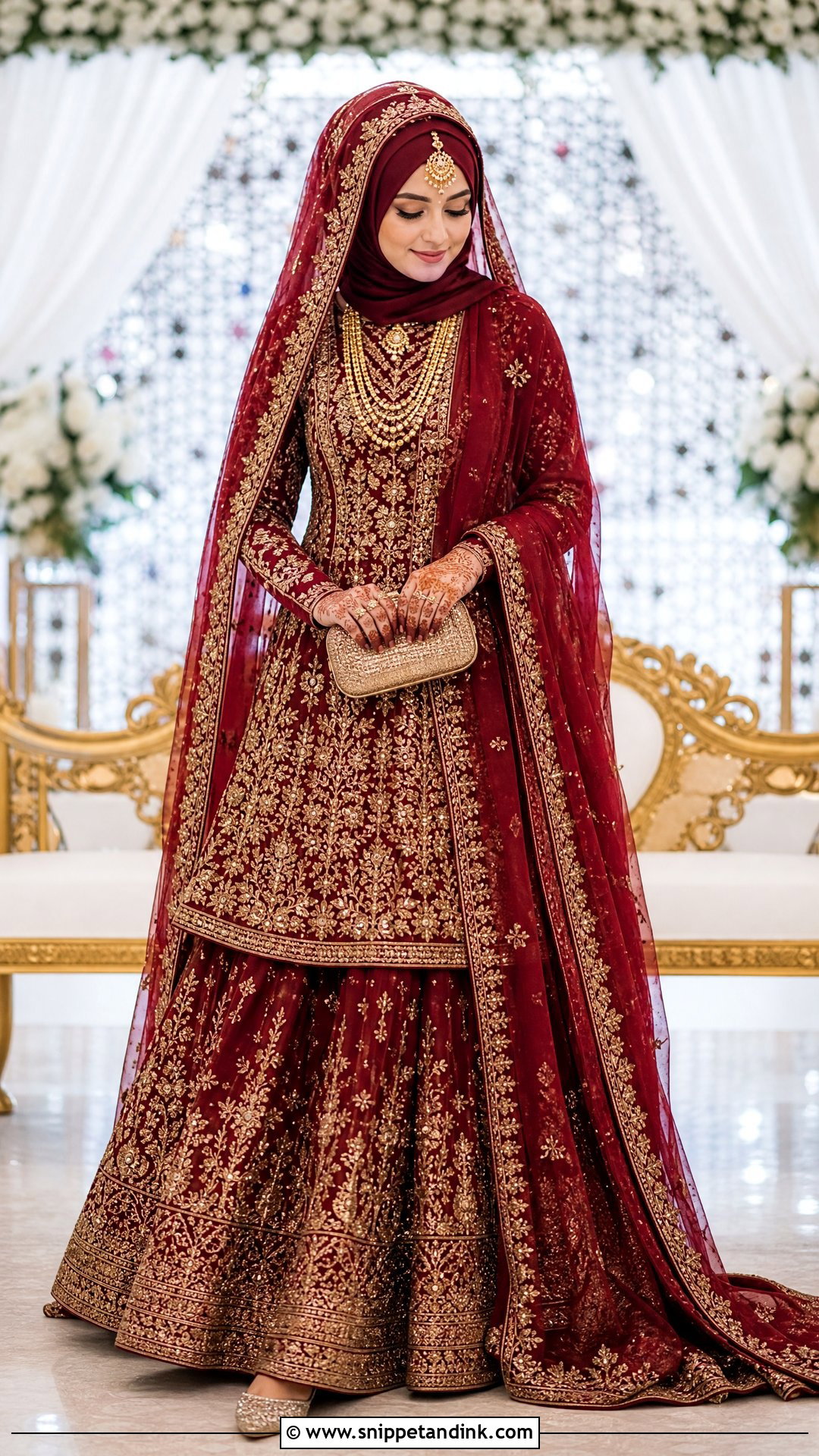
Lehengas, ghararas, shararas and long frock-style dresses with heavy embroidery are the main choices, in red, maroon, rust, gold, ivory or pastels depending on the event. Style the hijab under a dupatta so the outfit keeps its traditional layering while staying modest. These outfits are heavy and the events are long, so a breathable cotton or jersey undercap under the hijab makes a big difference. Coordinated jewelry, embellished shoes and a potli bag or clutch complete it. Make sure every layer is pinned securely before you go on stage.
21. Arab Muslim Wedding Dress With Hijab
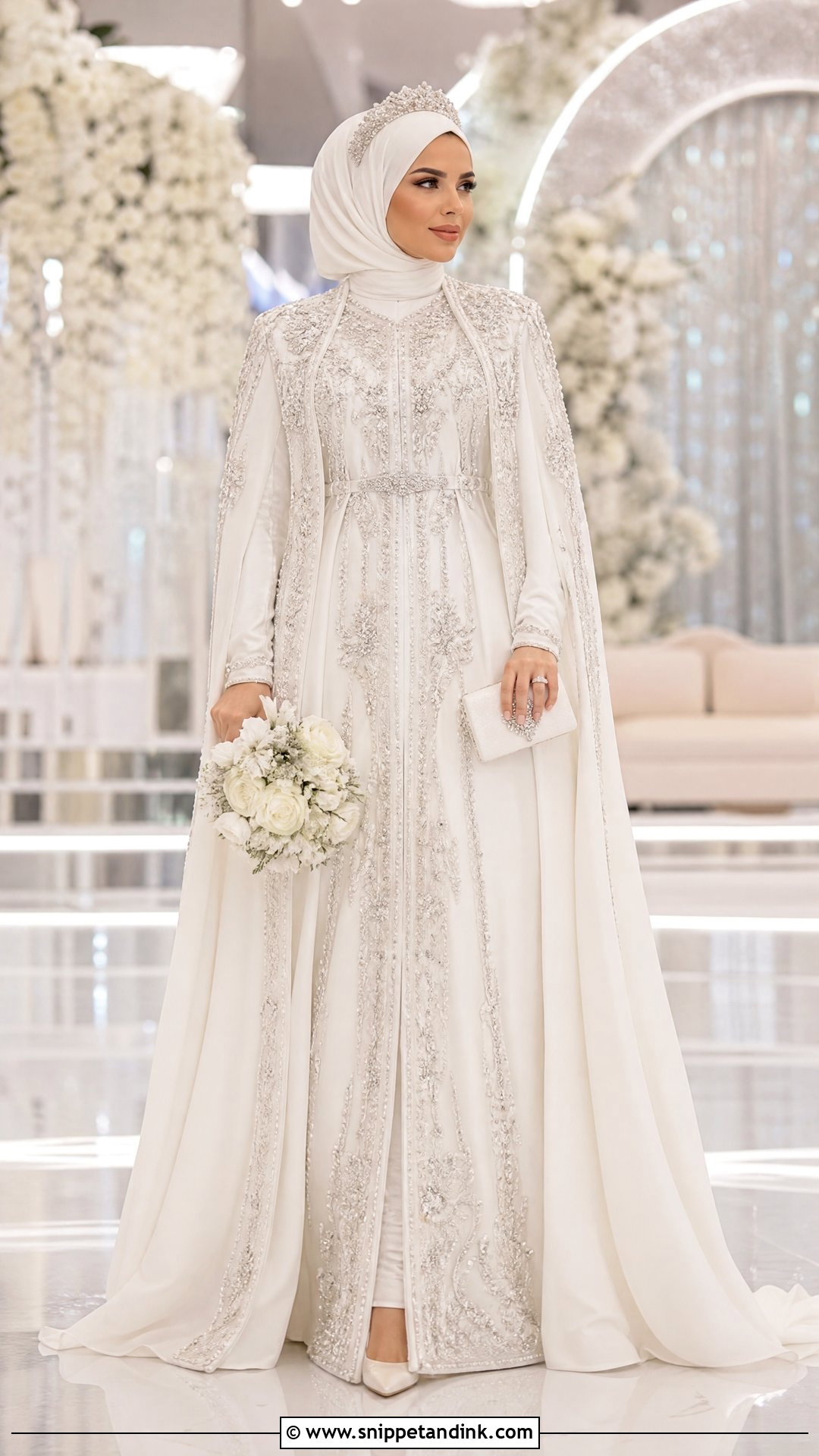
Grand and graceful, this look may be a long-sleeve gown, an embellished kaftan dress or a structured bridal abaya with crystals, pearls or embroidery. White, ivory, champagne and gold suit it. Style the hijab smoothly with a veil or jeweled headpiece. Heavily crystallized kaftans are weighty at the shoulders, so I check that the seams sit right and nothing drags the hijab back. Pointed heels, a statement ring and a sleek clutch finish a covered, ceremonial look for grand venues.
22. Moroccan Muslim Wedding Dress With Hijab
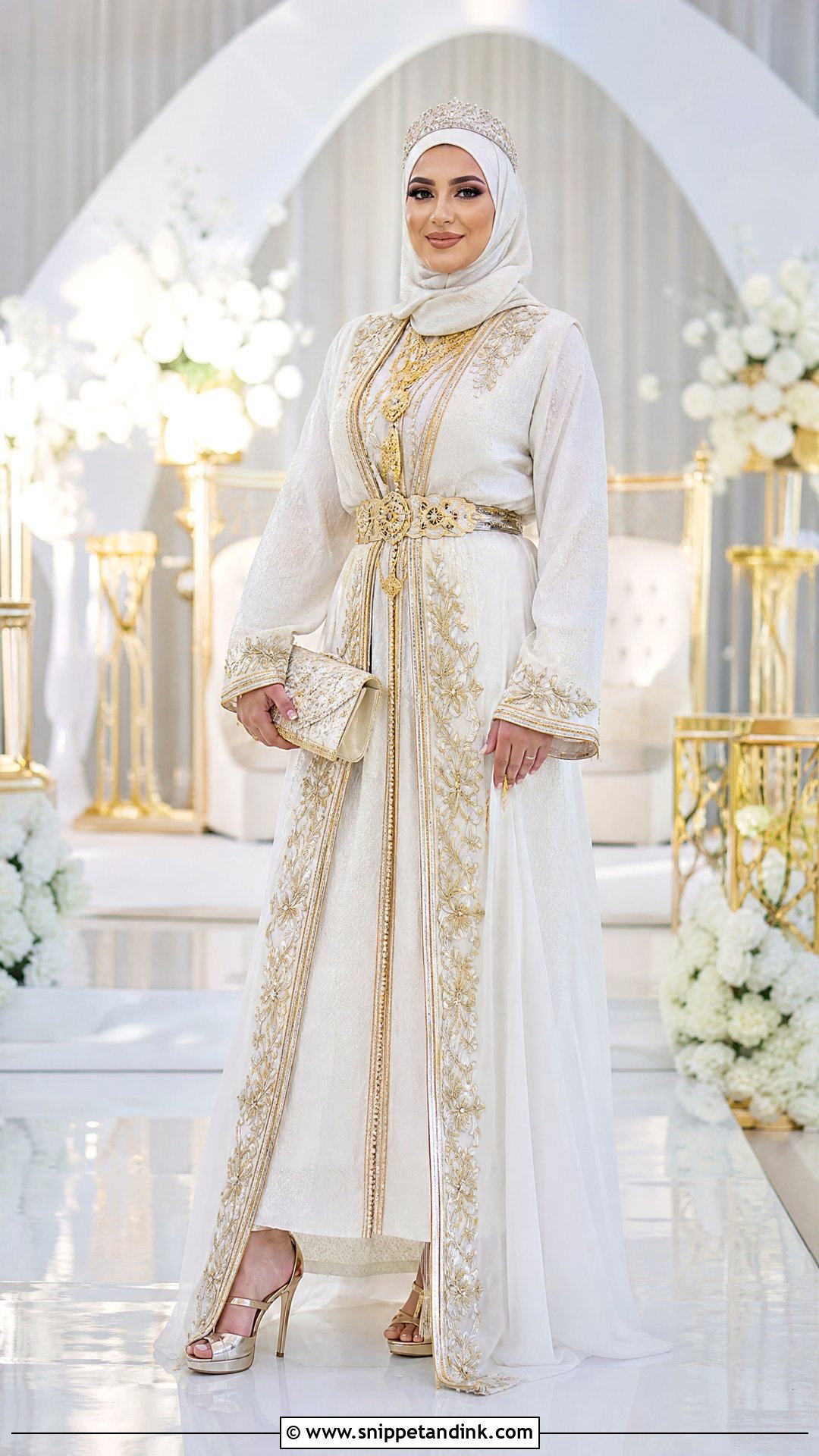
Heritage, color and ornate detail define it. A bridal kaftan or takchita with long sleeves, layered fabric and a decorative belt creates a striking outline. White and gold feel elegant; emerald, burgundy, blue or blush feel bold and traditional. Match the hijab to the outfit and let the belt define the waist. Brides often change into several takchitas over one celebration, so I suggest a simple hijab style that can be re-pinned quickly between outfits. Metallic heels and statement jewelry complete it, and the bouquet can be skipped entirely.
23. Modern Muslim Wedding Dress With Hijab
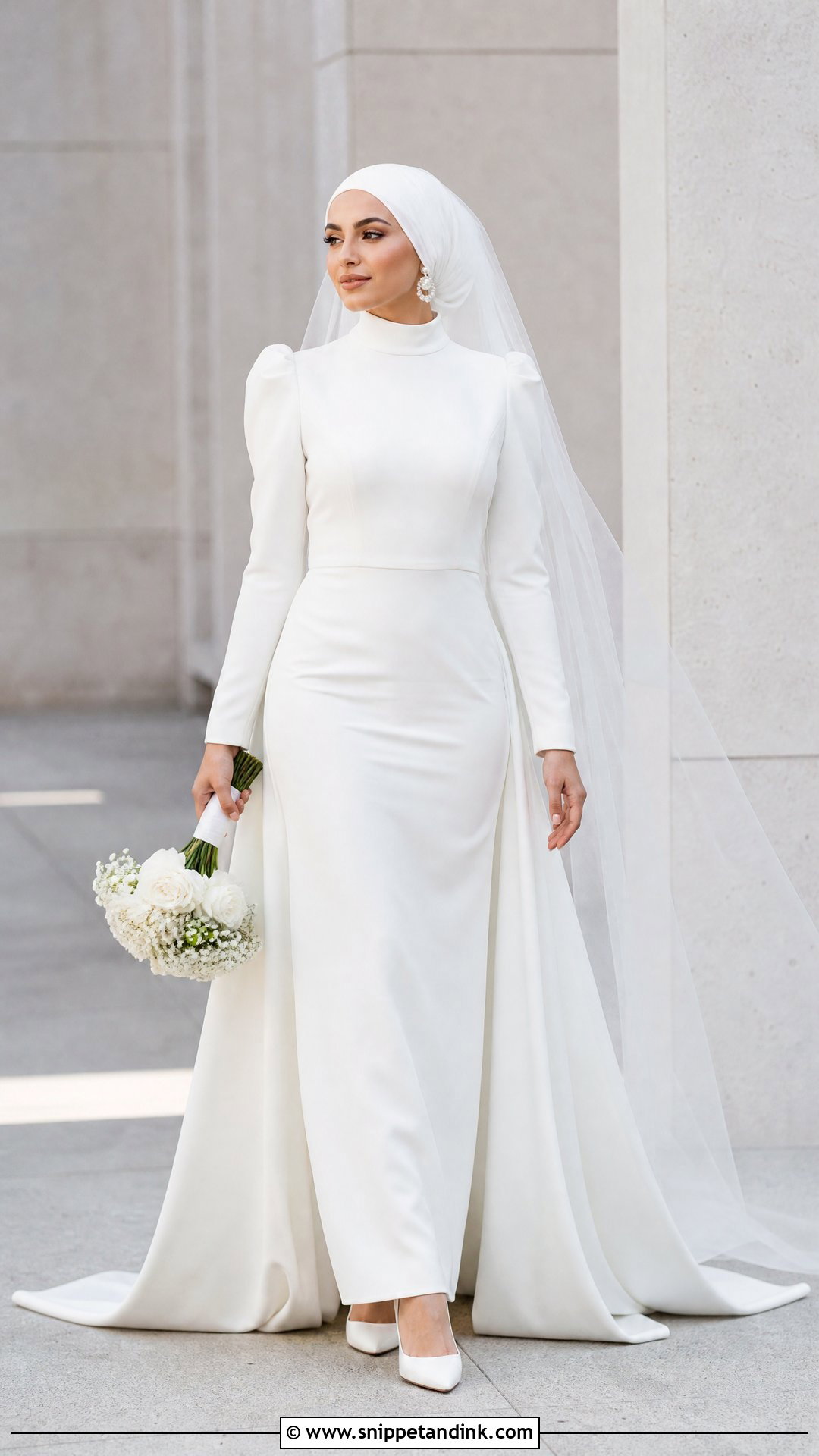
Clean, sleek and focused on shape: high-neck crepe gowns, smooth satin, structured sleeves or a minimal A-line. A matching hijab in satin, chiffon or crepe keeps it cohesive. On minimal gowns, the hijab’s drape becomes the main detail, so I spend more time on a crisp, symmetrical wrap than on any accessory. Sculptural pearl earrings, white heels and a small bouquet with clean lines suit it, and a plain veil adds softness without changing the mood.
24. Simple Muslim Wedding Dress With Hijab
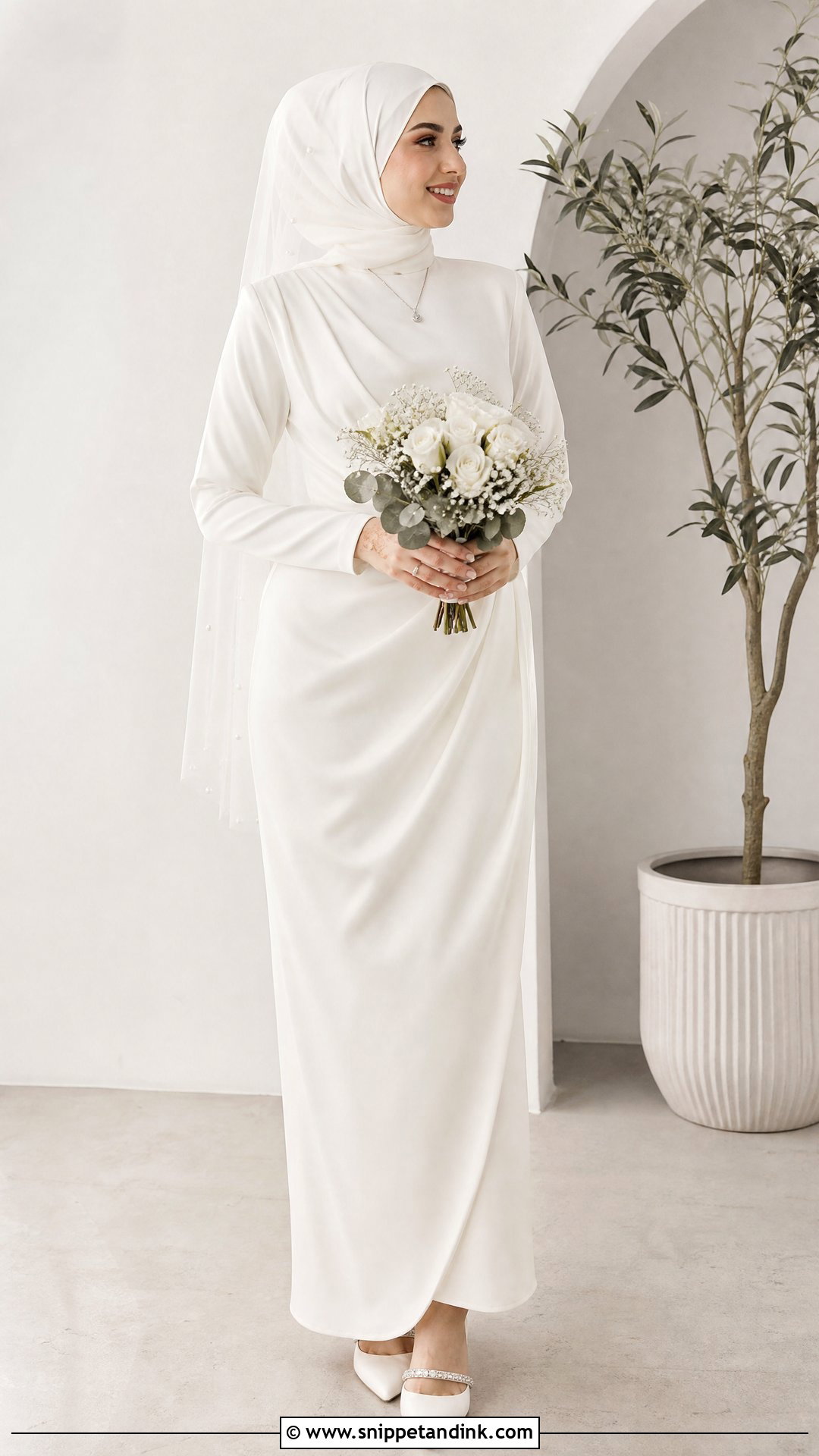
Every detail counts when there’s so little of it. A plain long-sleeve gown in crepe, satin or chiffon looks elegant only if it fits well, so focus on tailoring, a comfortable neckline and sleeves you can move in. A matching hijab, a minimal veil and delicate jewelry create a calm look. Low heels or embellished flats help if comfort matters most. Intimate weddings, civil ceremonies and nikah gatherings suit it, and it quietly shows that modesty and simplicity can carry a lot of presence.
25. Plus Size Muslim Wedding Dress With Hijab
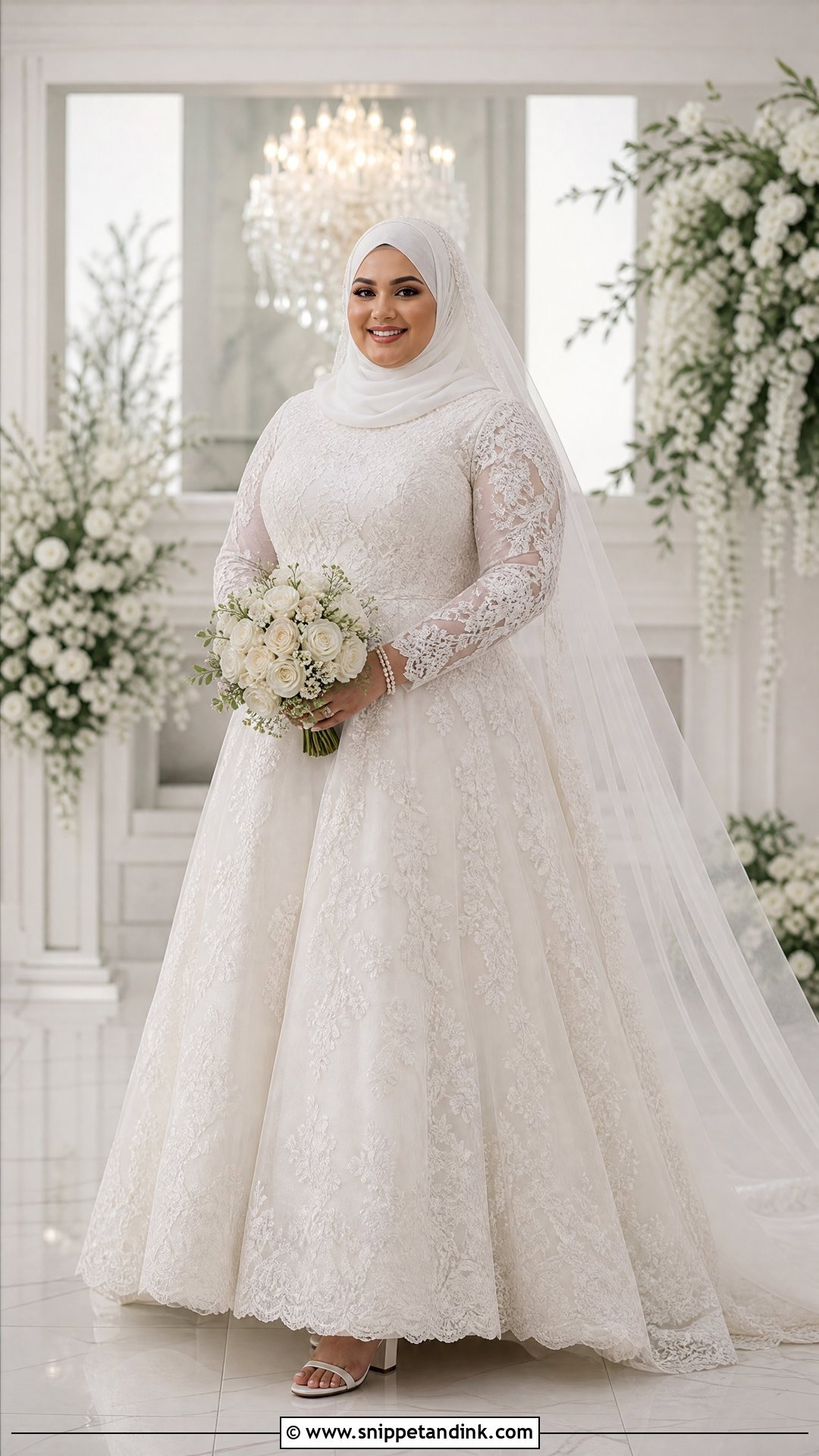
Support and comfort come first. A-line gowns, empire waists, soft ball gowns and structured modest dresses all suit fuller figures. Look for breathable lining, sleeves that don’t pull and a neckline that sits comfortably under the hijab. Lace panels, vertical embroidery and gentle waist definition balance the shape. I usually recommend a longer, wider chiffon hijab, which drapes softly over the bust and shoulders and photographs well. Supportive shoes, a comfortable underlayer and jewelry suited to your face shape round it out, so you move freely all day.
Planning a Long Day Across Several Events
Many brides wear two or three outfits across a nikah, a reception and a walima, sometimes over several days. That means multiple hijab styles, and each change takes longer than people expect.
- Allow real time for every outfit change, including re-pinning the hijab and resetting jewelry.
- Keep a small kit with spare pins, magnets, a second undercap, blotting papers and a mini steamer.
- If you’ll pray during the day, choose sleeves that roll or push up cleanly, and plan a private room and a few quiet minutes in the schedule.
- In hot venues, breathable layers matter more than any detail; a cotton undercap and chiffon outer hijab stay cooler than satin.
- Assign one trusted person to help with your hijab and veil all day, so you’re never adjusting alone in a mirror.
Modesty, Comfort and Your Own Taste
Modest bridal fashion can be classic, cultural, modern, simple or richly detailed, and the right outfit respects your comfort, faith, personality and setting. Start with the silhouette you feel best in, then choose fabric, hijab style, veil placement, shoes and accessories to support it. White satin, red embroidery, champagne beading, a pastel walima dress or a traditional kaftan all work when the look is balanced from head to toe. The dress is only half of it; the rest is feeling covered, comfortable and fully yourself.
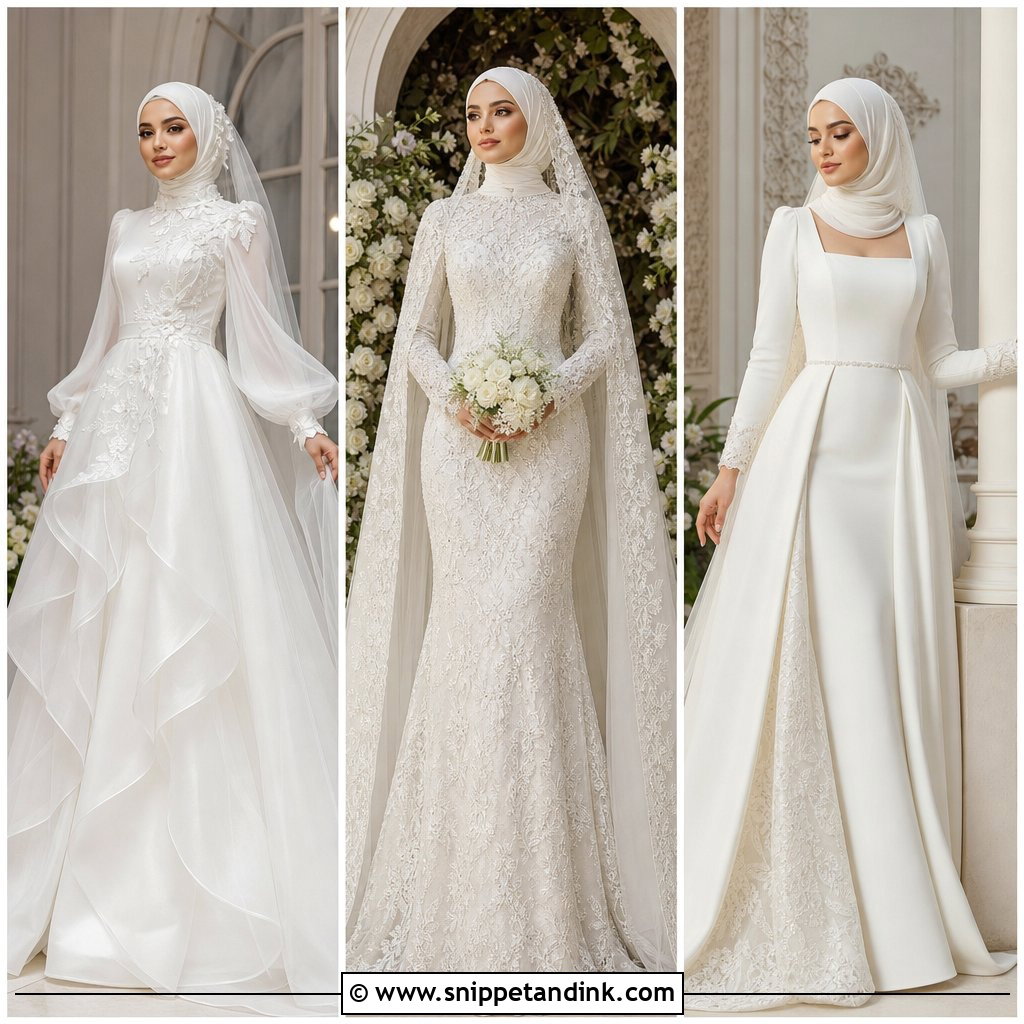
You'll Like These Ideas:



Leave a Reply