
A modest bridal look doesn’t need heavy embellishment or a complicated shape to feel special. Each outfit here is styled as a whole: gown, hijab, veil, shoes and accessories chosen together. Your own standard of modesty comes first, then the ceremony, venue, weather and family traditions. Satin, crepe, lace, chiffon and mikado all suit simple bridal dressing, and in my experience the tailoring matters as much as the fabric: lining, sleeve length and neckline coverage are what make a plain gown look finished. The ideas below cover everything from an intimate nikah to a formal reception.
Pinning the Hijab So It Holds Through Prayer, Photos and Hugs
The gown gets most of the attention, but the hijab is what you’ll be adjusting all day if it isn’t set up properly. I treat it as part of the dress fitting, not something to sort out on the morning.
- Start with a non-slip base. A cotton or jersey undercap grips the hair and gives pins something to hold. Satin hijabs slide on bare hair and on silky caps.
- Use the right pins. Fine bridal pins with small heads won’t snag chiffon; magnetic pins work well at the shoulders where you don’t want holes in the fabric.
- Anchor the veil to the base, not the hijab alone. The veil comb or pins should catch the undercap or a bun, otherwise the weight pulls the hijab back off the forehead.
- Match the hijab fabric to the dress finish. Matte with crepe and mikado, a soft sheen with satin. Mixing them makes one look slightly off-color in photos.
Do a full trial
Book a trial with whoever will style your hijab, and bring the veil, the jewelry and a top with a neckline similar to the gown’s. Wear it for an hour, sit, bend and raise your arms. If you’ll be praying during the day, practice wudu and prayer in the setup so you know which pins need to come out and go back.
1. Satin A-Line Hijab Wedding Dress
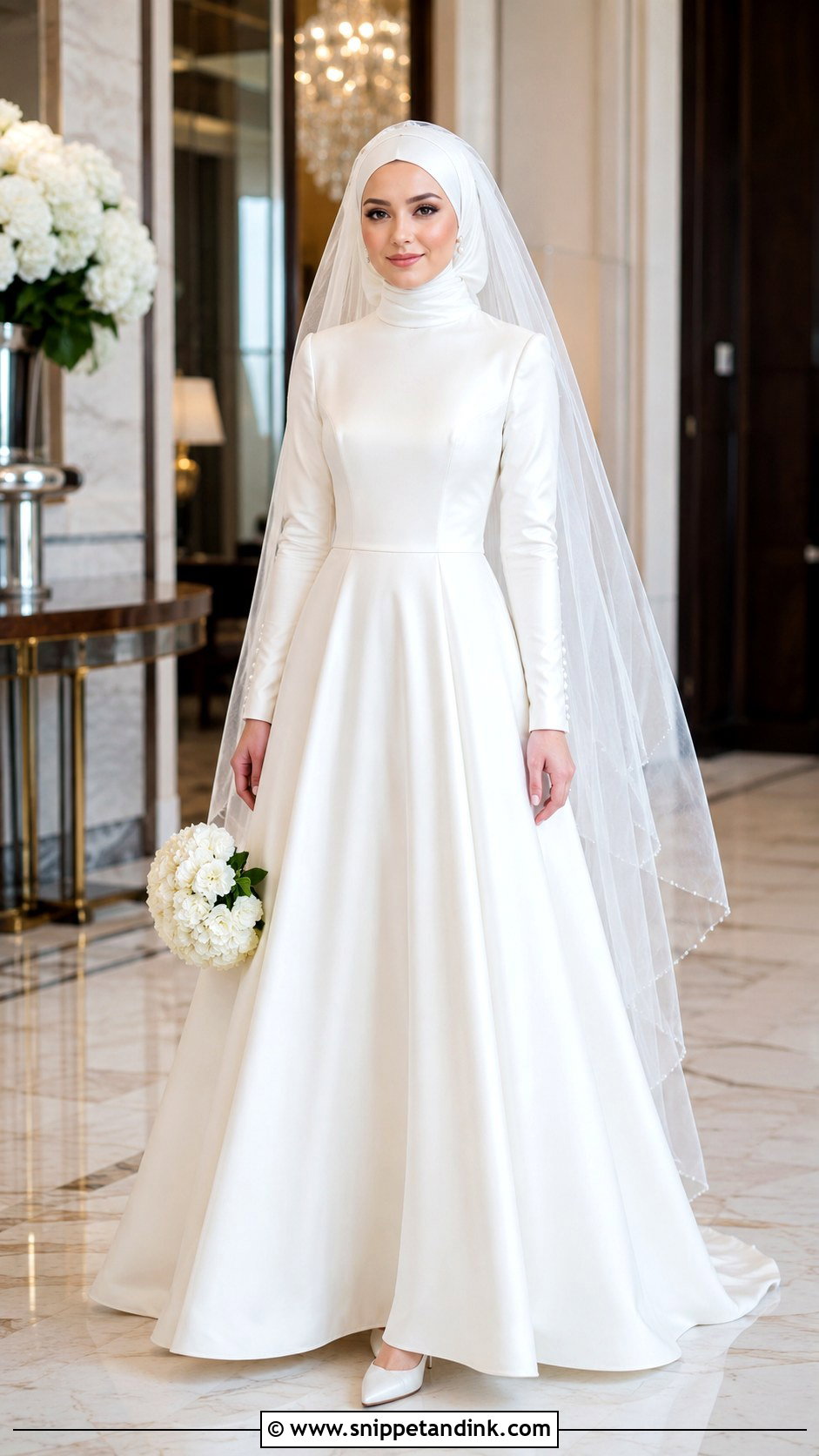
Satin A-line is the most classic starting point, and it needs very little added to it. Choose an opaque satin with a soft sheen, a high neck, full sleeves and a skirt that falls smoothly from the waist. A matching satin or chiffon hijab keeps the color unbroken, and a light fingertip veil adds movement. Pointed ivory pumps, pearl studs and a small white bouquet complete it. Satin creases at the lap and inner elbow, so I’d have it steamed on the morning, not days ahead. This simple Muslim wedding dress suits a hotel ballroom, a mosque nikah or any indoor celebration.
2. Crepe Column Hijab Wedding Dress
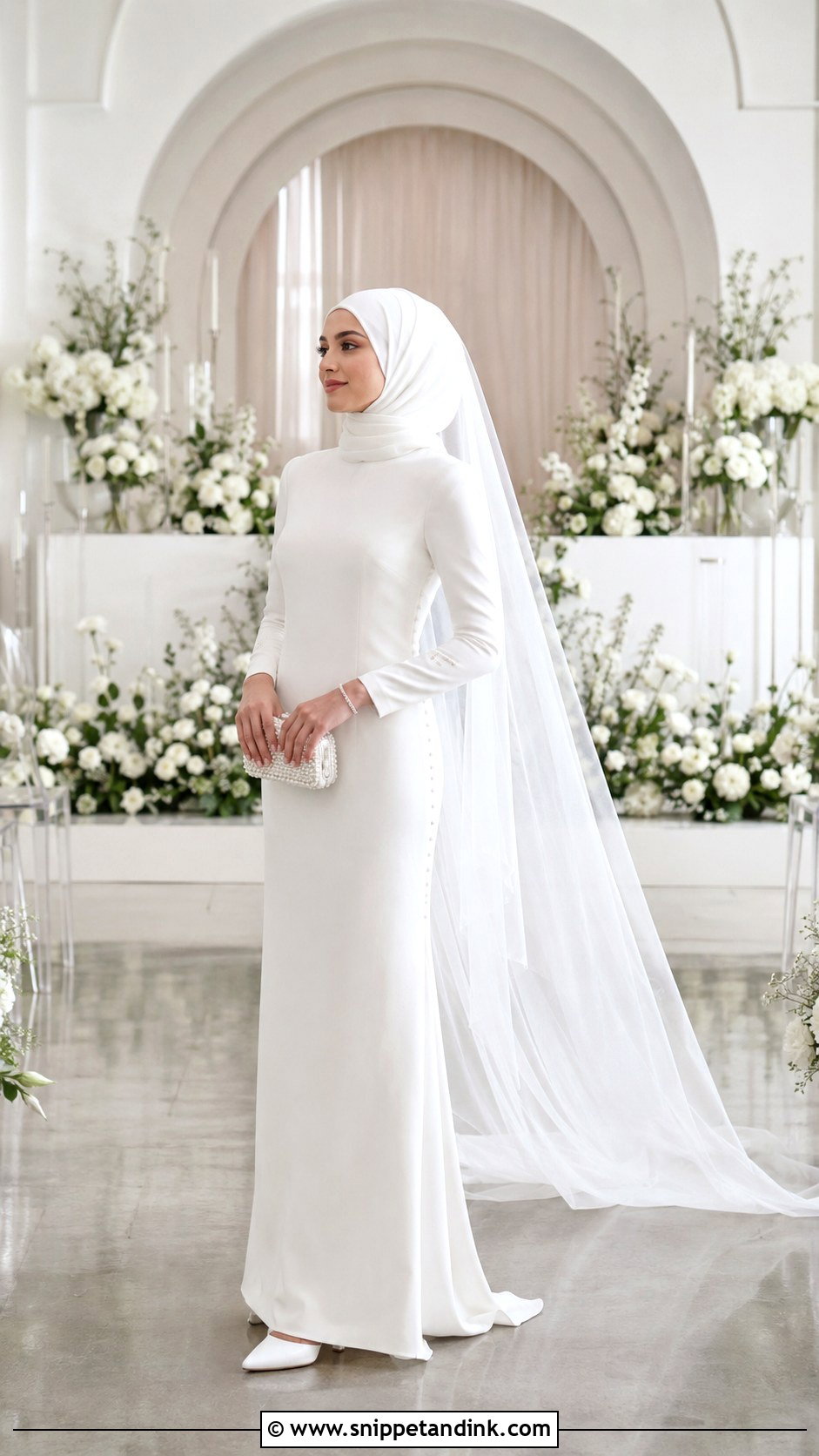
Crepe column gowns are for the bride who likes clean lines and room to move. The crepe has to be heavy enough to stay opaque and skim the body rather than cling, which is the first thing I check by stretching it gently over a hand. Look for a raised neckline, smooth cuffs and covered buttons down the back. A matte chiffon hijab in the same white or ivory, a plain cathedral veil, closed block heels, a pearl clutch and a fine bracelet over the cuff are all it needs. It’s understated, easy to wear and looks good from every side.
3. Chiffon Empire Waist Hijab Wedding Dress
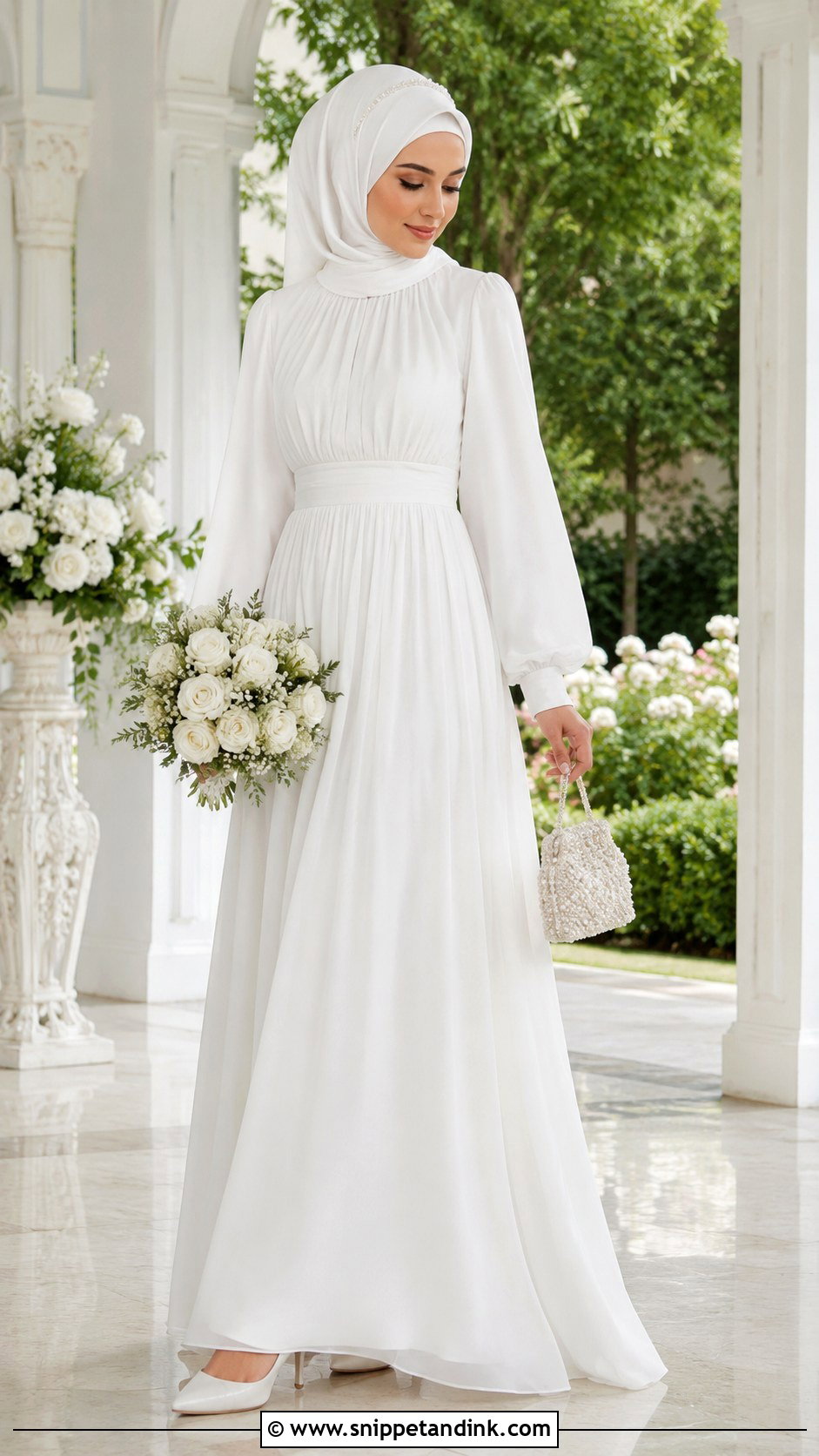
Chiffon is the coolest fabric here, which makes it the natural choice for a summer wedding. Pick a fully lined empire-waist gown with gathering under the bust, loose sleeves and an airy floor-length skirt; the relaxed shape lets you sit, walk and greet guests without adjusting anything. A smooth chiffon hijab secured around the face and shoulders, a narrow pearl headband over it, low ivory heels, a small beaded bag and white roses finish it. Chiffon turns sheer in strong light. Stand outside and take a photo with flash before the wedding; if you can see the lining edge or your arms, add another layer to the sleeves.
4. Lace A-Line Hijab Wedding Dress
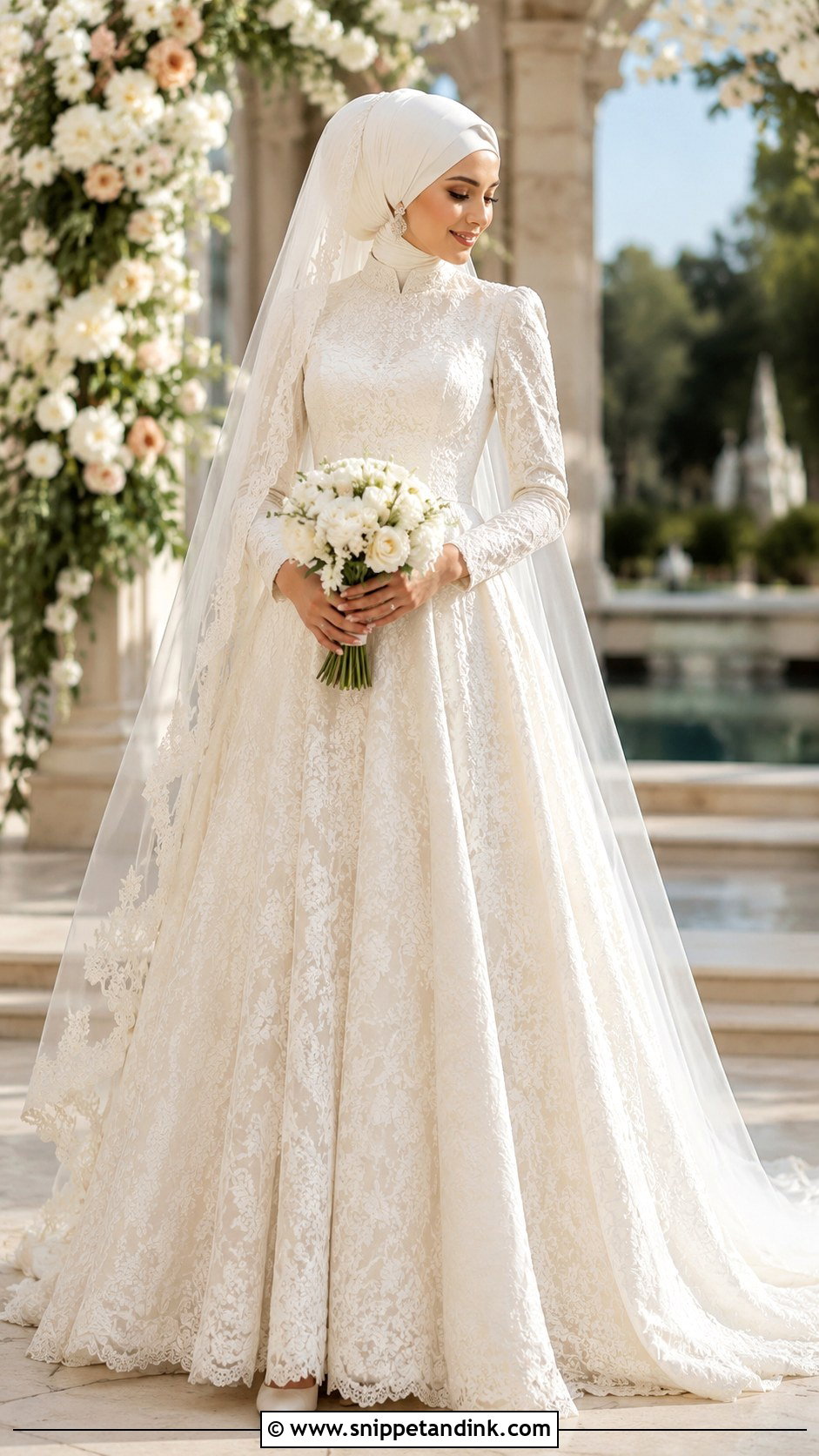
Lace makes a plain gown romantic without making it ornate. Choose an A-line with opaque lining, a high round neck, fitted long sleeves and lace spread evenly over bodice and skirt, with little or no sparkle. A plain chiffon hijab frames the face and lets the lace speak, and a tulle veil with a narrow lace edge ties them together. Closed ivory heels, small crystal earrings and a structured bouquet complete it. I always ask for soft lining inside lace sleeves; raw lace against the wrist itches after a few hours. It’s a good fit for gardens, traditional halls and daytime ceremonies.
5. Simple Ball Gown With Bridal Hijab
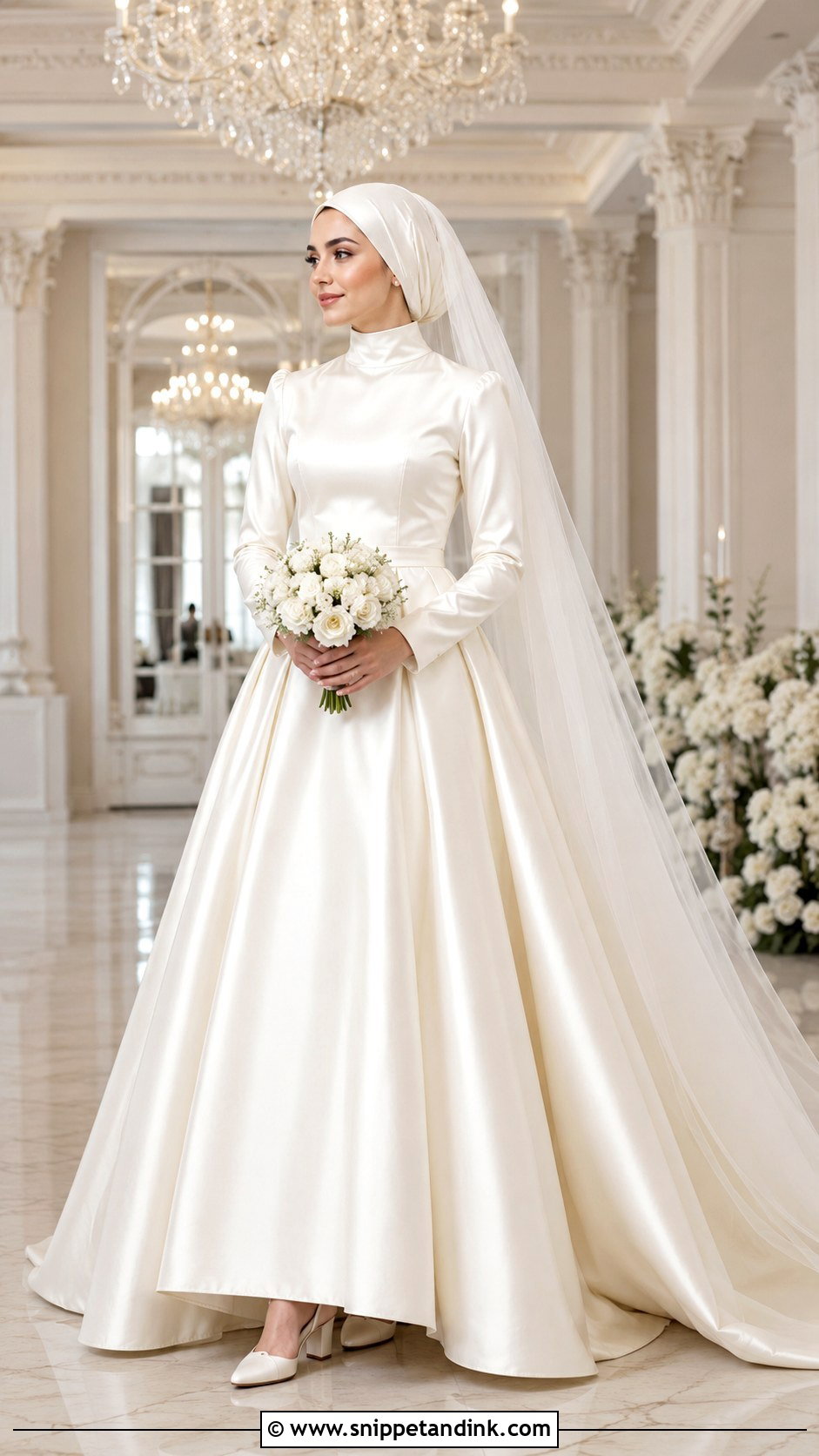
A ball gown can still be simple when the shape provides the drama. A high neck, long sleeves, a fitted waist and a moderately full skirt in matte satin or mikado hold their structure without beadwork. Wrap the ivory hijab neatly and anchor a long plain veil securely at the back. With that much skirt, keep the extras small: pearl studs, a slim bracelet, a compact bouquet. Block heels carry the weight more comfortably than stilettos. In a large hall, a fuller skirt keeps you visible where a narrow gown can get lost; ask for a bustle so you can move freely after photos.
6. White Bridal Abaya With Hijab
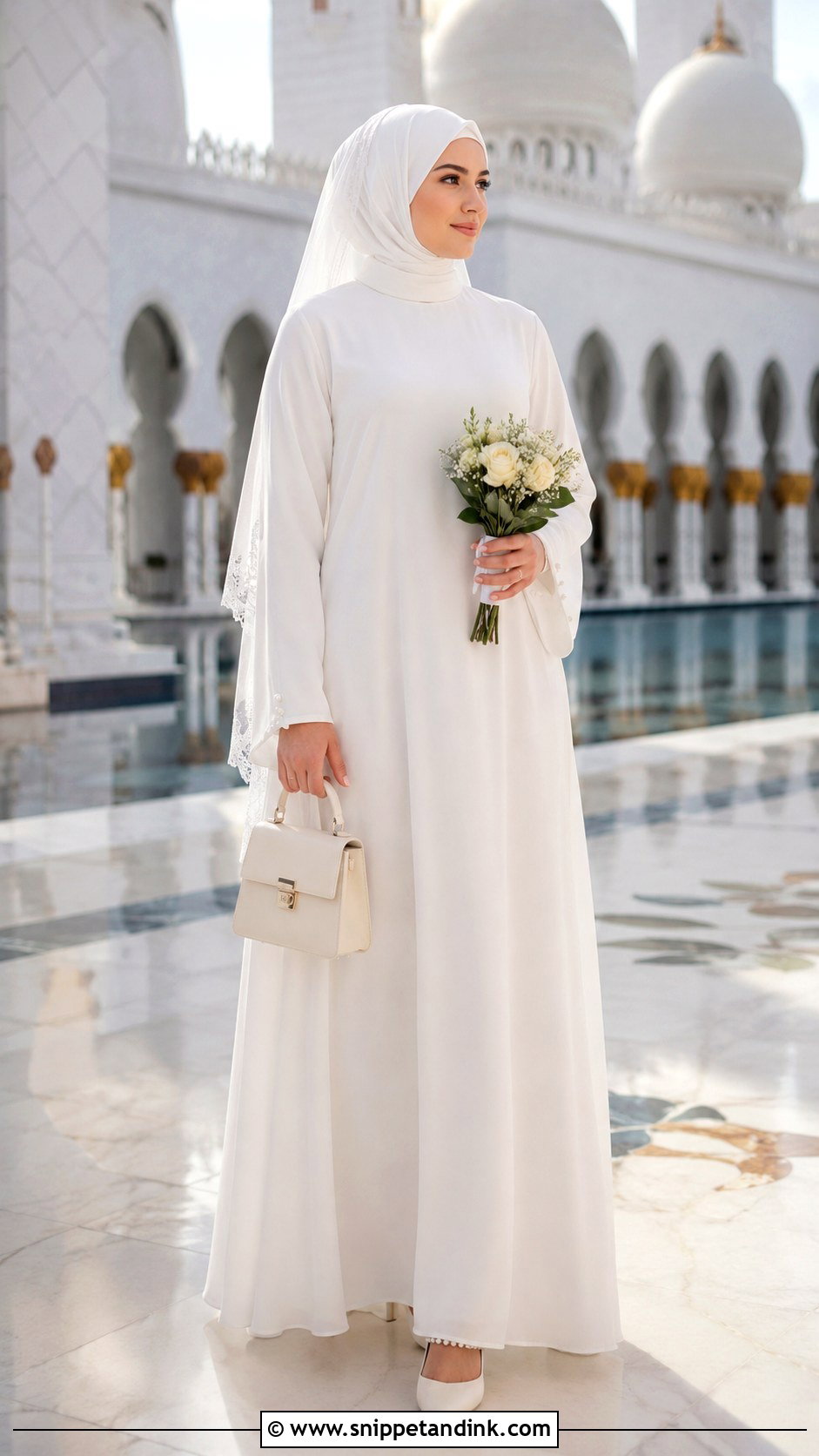
For a mosque nikah or a small family ceremony, a white bridal abaya is often the most comfortable choice. Look for floor-length opaque crepe or nida, loose sleeves, a high neck and a straight or gently flared line, with a little pearl trim at the cuffs. Wear it with a matching chiffon hijab, a simple undercap and a light shoulder-length veil, plus white flats or low block heels. A small bouquet and a structured ivory bag for essentials finish it. Nida is light and drapes well, but it can show water marks from wudu, so keep a small towel handy if you’ll be praying in it.
7. Cape Hijab Wedding Dress
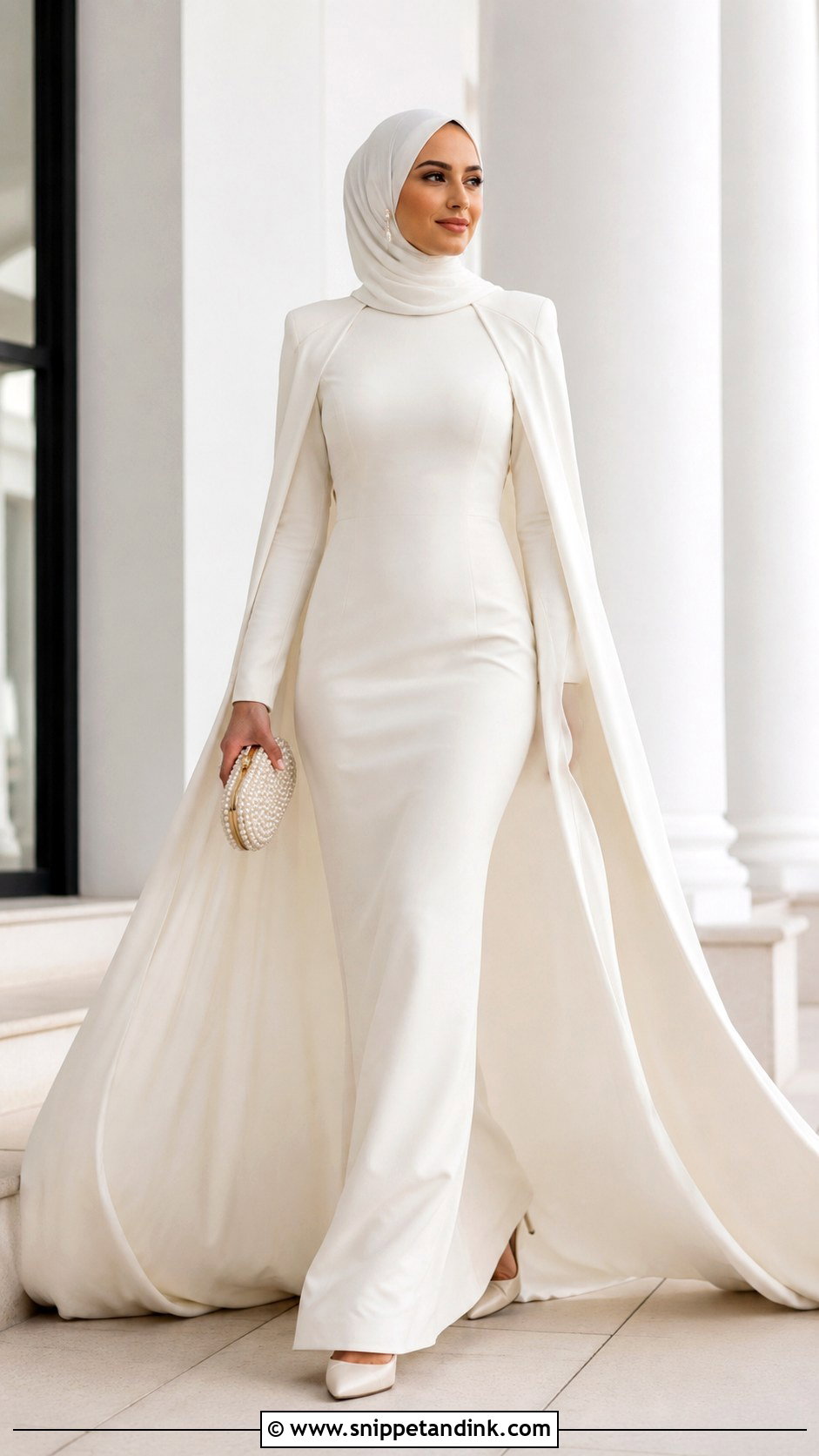
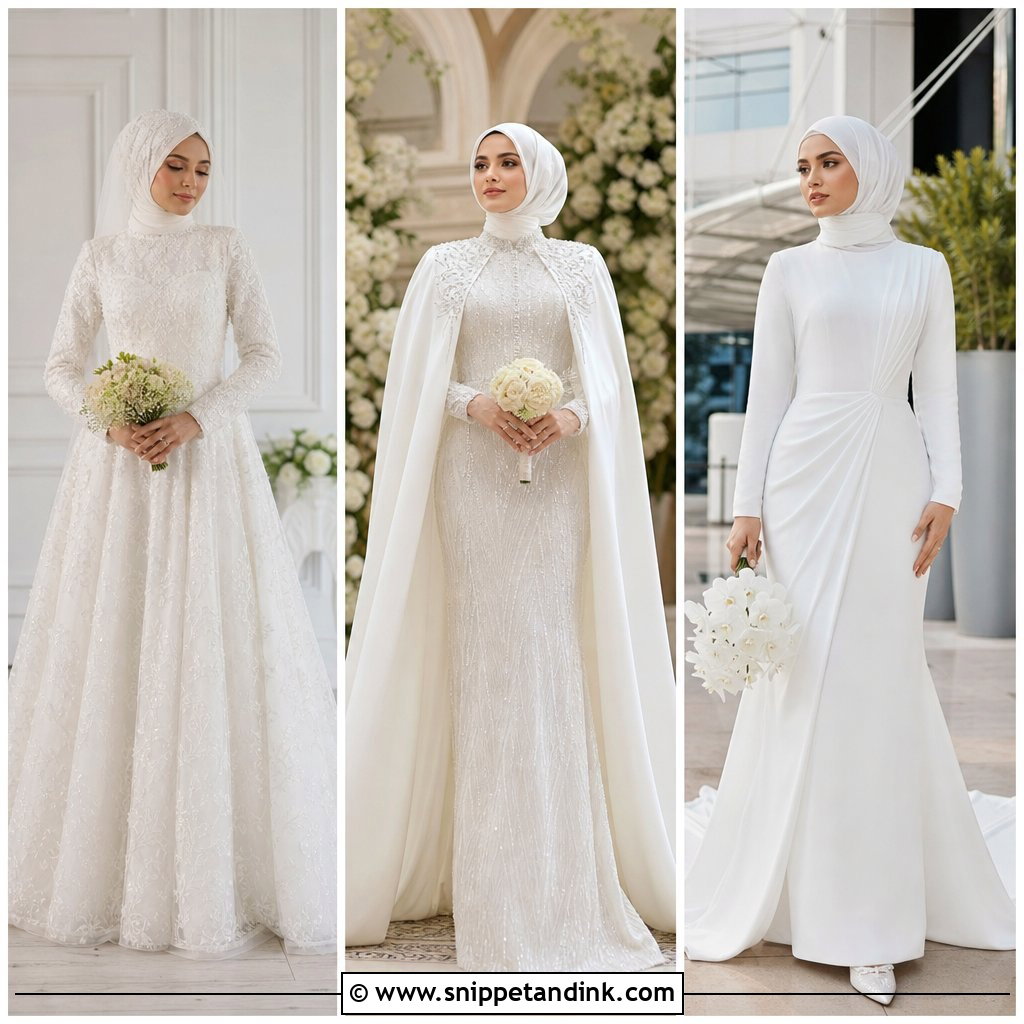
A cape gives coverage and movement at the same time, and it turns a plain gown into something memorable. Start with a simple long-sleeve A-line or column in crepe, satin or matte jersey, then add a detachable floor-length cape that fastens near the shoulders and flows behind you. Keep the hijab smooth and close in color so the cape leads. Pointed pumps and a small pearl clutch are enough, and you can skip a separate veil. I test cape fastenings by having the bride walk briskly and turn; hooks that hold standing still often slip once the cape catches air.
8. Pleated Chiffon Hijab Wedding Dress
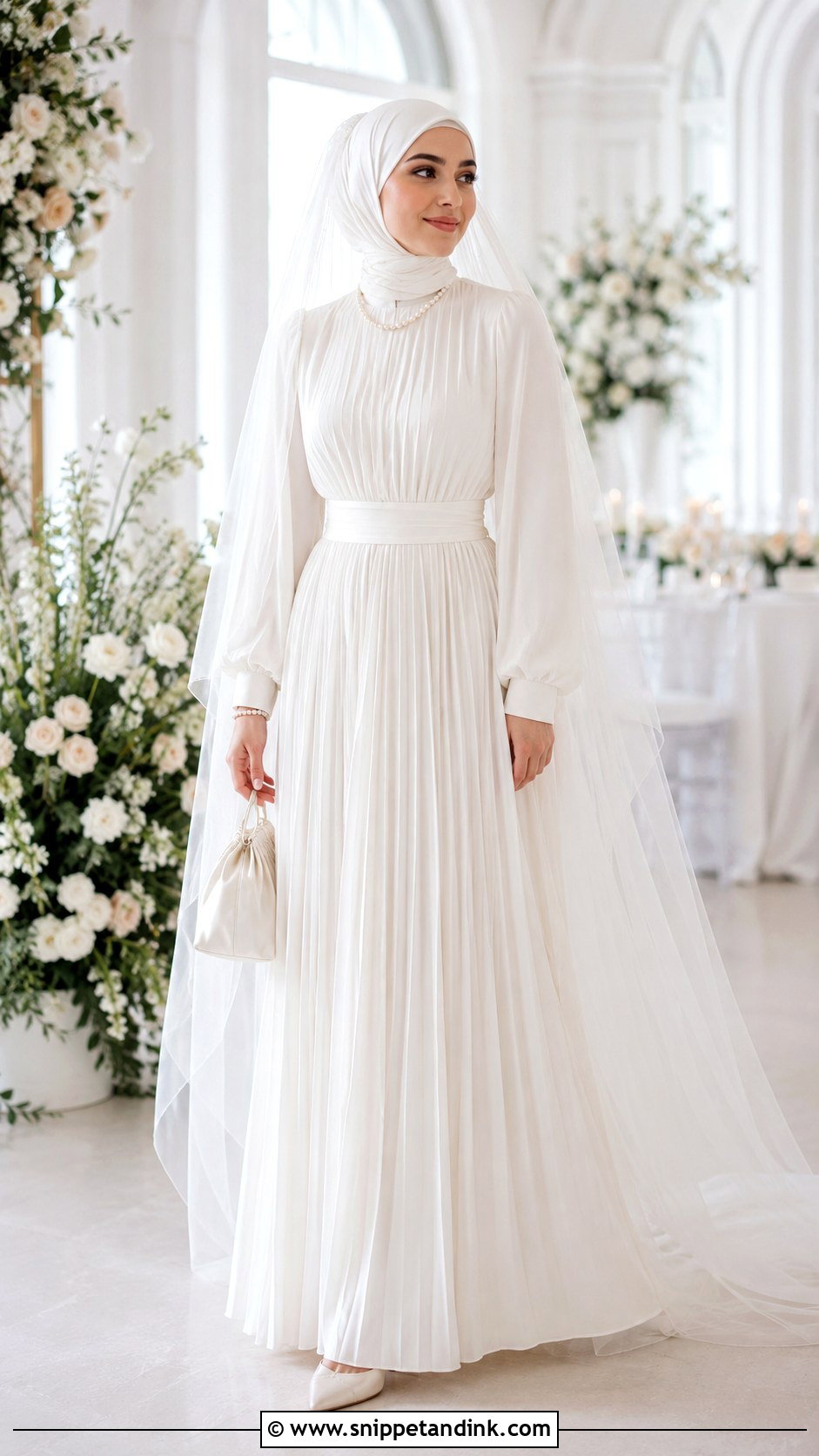
Fine pleats add texture while keeping everything soft and light. Choose a fully lined chiffon gown with a high neck, loose long sleeves, a defined waistband and narrow pleats through the skirt. A matching matte hijab carries one color from head to toe, and a waist-length veil with a clean edge keeps it calm. Low pointed heels, a small satin bag and minimal pearls finish it. Pleated skirts are hard to shorten evenly, so have the hem checked while you’re wearing your wedding shoes. It suits spring and summer, especially in bright rooms.
9. Organza Sleeve Hijab Wedding Dress
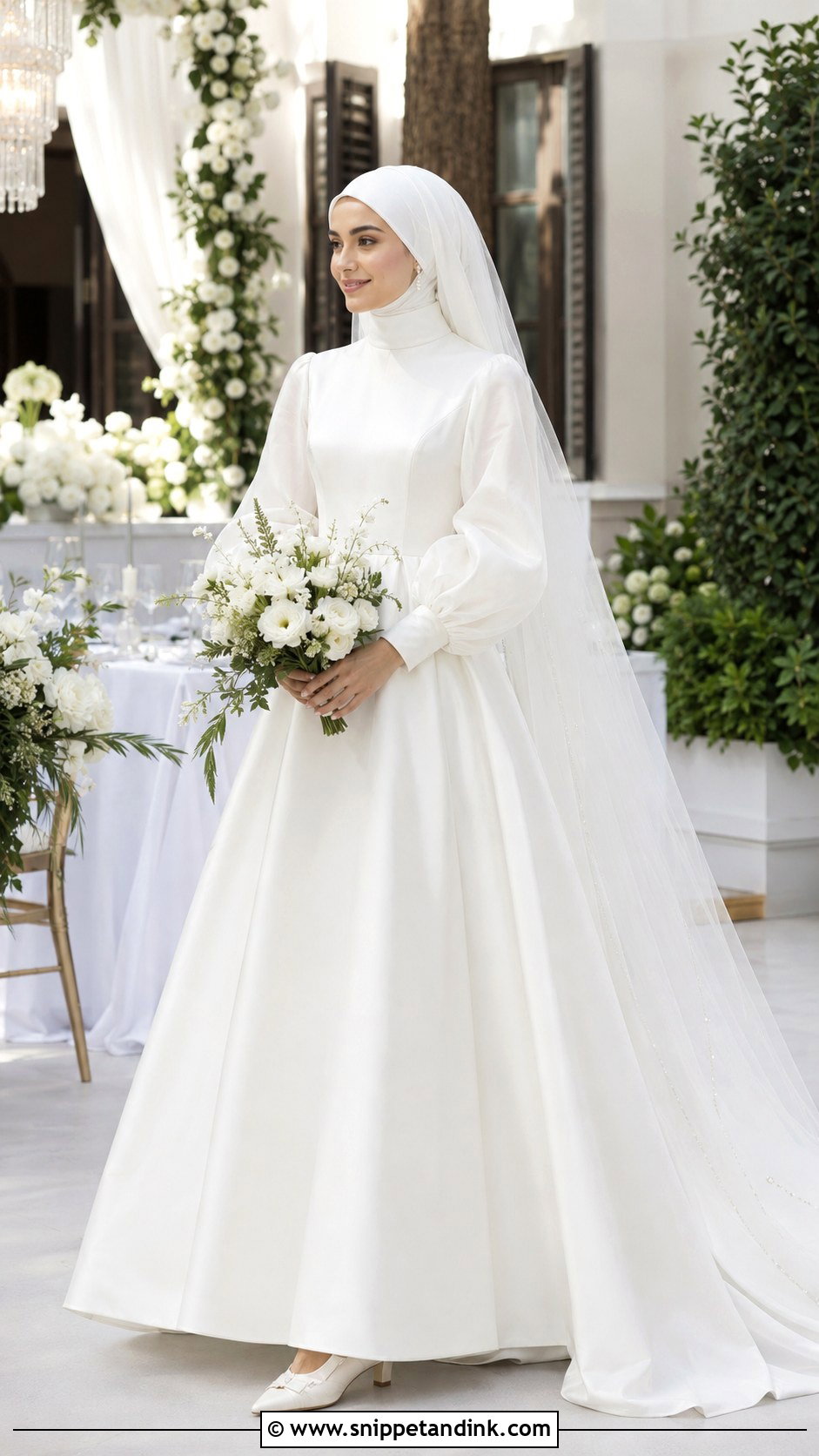
Organza sleeves give a modest dress a contemporary, romantic shape. Start with an opaque A-line in crepe or satin with a high neck, and add full-length organza sleeves with gentle volume and fitted cuffs. Single-layer organza is see-through, so decide early whether you want it lined or double-layered for the coverage you need. A plain chiffon hijab, a tulle veil behind the shoulders, closed kitten heels, pearl drops and a small bouquet with greenery complete it. Keep the skirt plain so the sleeves stand out. Daylight shows organza at its best, in a garden, a bright ballroom or a mosque courtyard.
10. Pearl Sleeve Hijab Wedding Dress
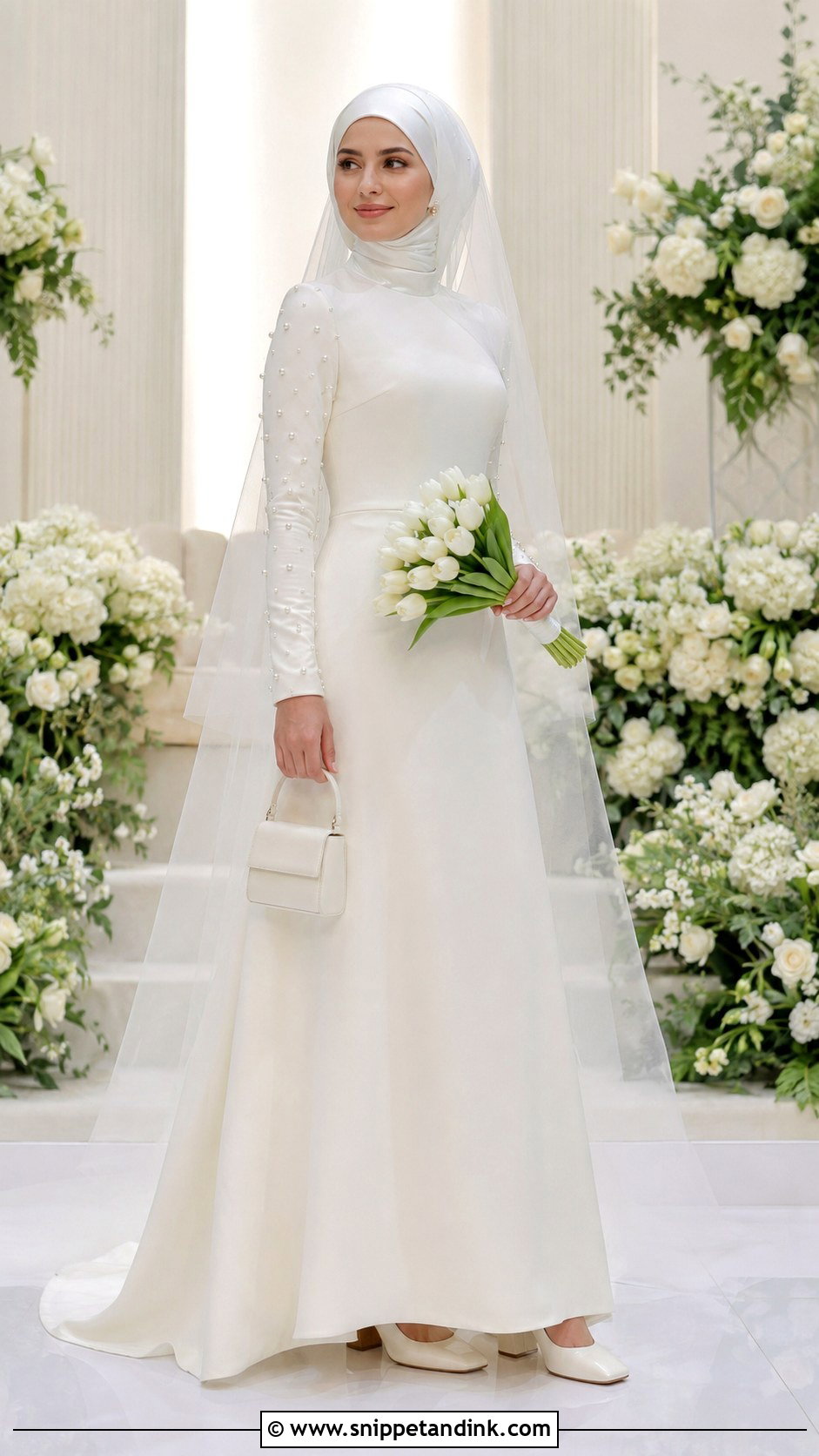
Pearls look most refined when they stay in one place. A plain crepe gown with a high neck, flowing A-line skirt and long sleeves scattered with ivory pearls is enough detail. A smooth satin hijab picks up the soft shine; choose a veil without pearls so nothing feels overmatched. Pearl studs, ivory block heels, a structured mini bag and white tulips or roses finish it. Before you buy, run your hand along the sleeves. Every pearl should be sewn, not glued, and none should snag the hijab fabric when you raise your hands.
11. Mikado High Neck Hijab Wedding Dress
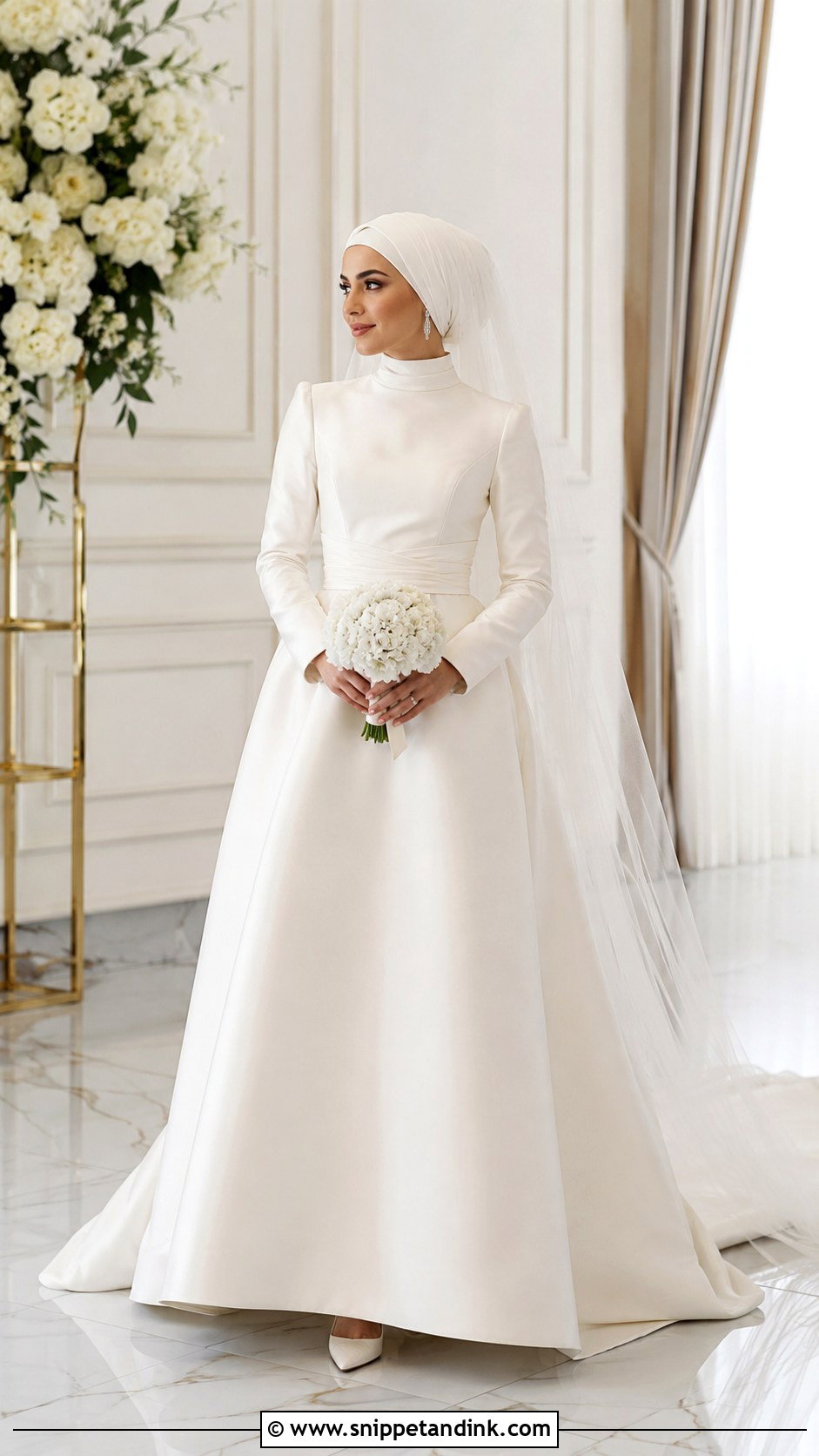
Mikado is crisp and holds its shape on its own, so it needs no lace or sequins. Choose a high-neck gown with fitted sleeves, a natural waist and a softly flared skirt. A matching matte hijab with a neatly tucked front and a plain chapel veil suit it, with pointed ivory shoes and small crystal earrings. Keep the bouquet compact so it doesn’t hide the clean lines. Mikado is warm and fairly stiff, which makes it lovely for formal venues and cooler months but heavy in a summer garden. Make sure the skirt leaves you room to walk and sit.
12. Beaded Waist Hijab Wedding Dress
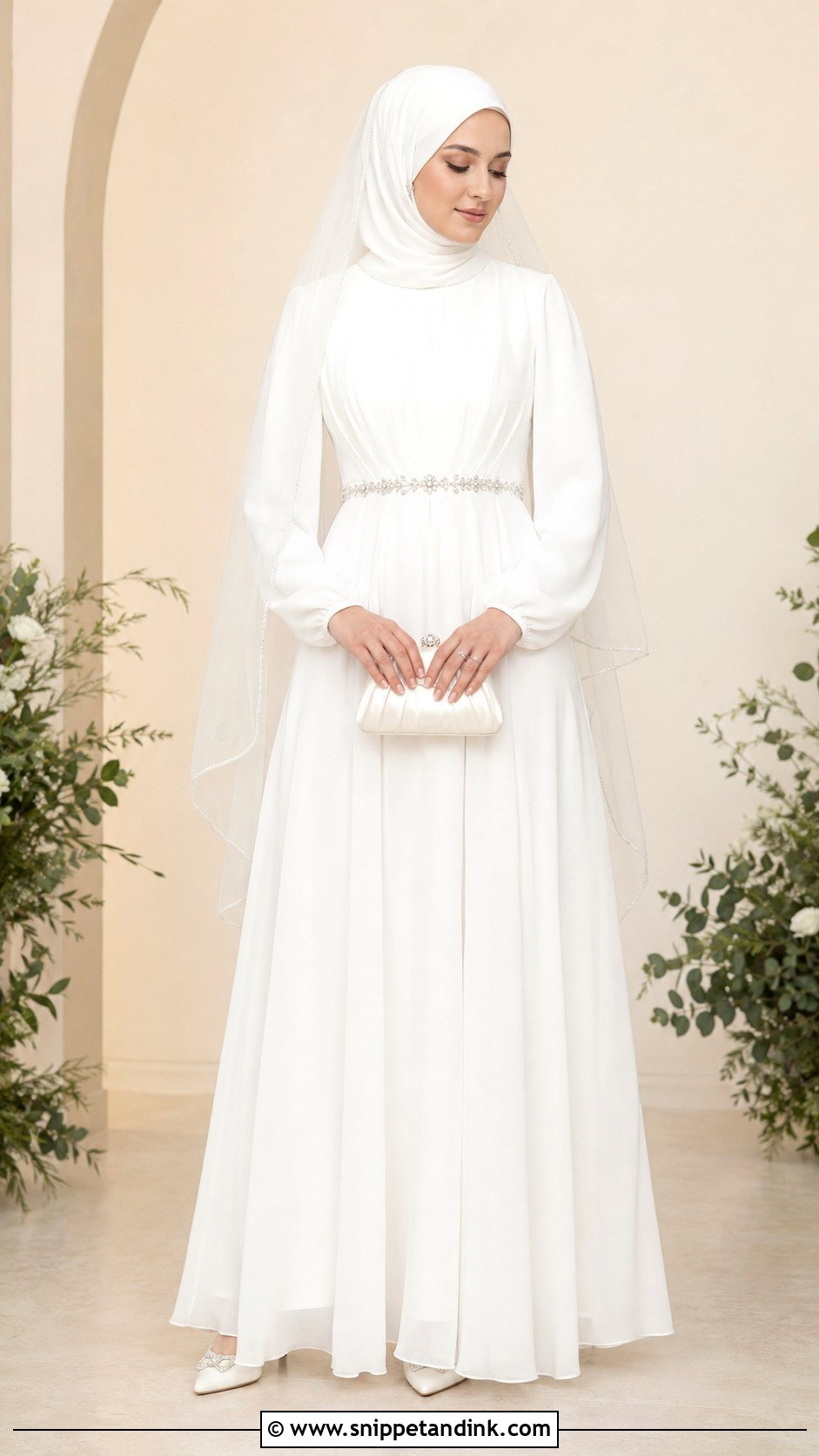
A narrow beaded waistband defines a plain gown and keeps everything modest. Choose a long-sleeve chiffon or crepe A-line with an opaque high neck and little detail elsewhere; the belt should sit at your natural waist without pulling the fabric. A plain chiffon hijab, fingertip veil, subtle crystal earrings, closed ivory heels and a small satin clutch complete it. Detachable belts love to drift sideways as you sit and stand, so I have them tacked with small snaps at the side seams. It gives a little sparkle and moves easily from a small nikah to an evening reception.
13. Detachable Overskirt Hijab Wedding Dress
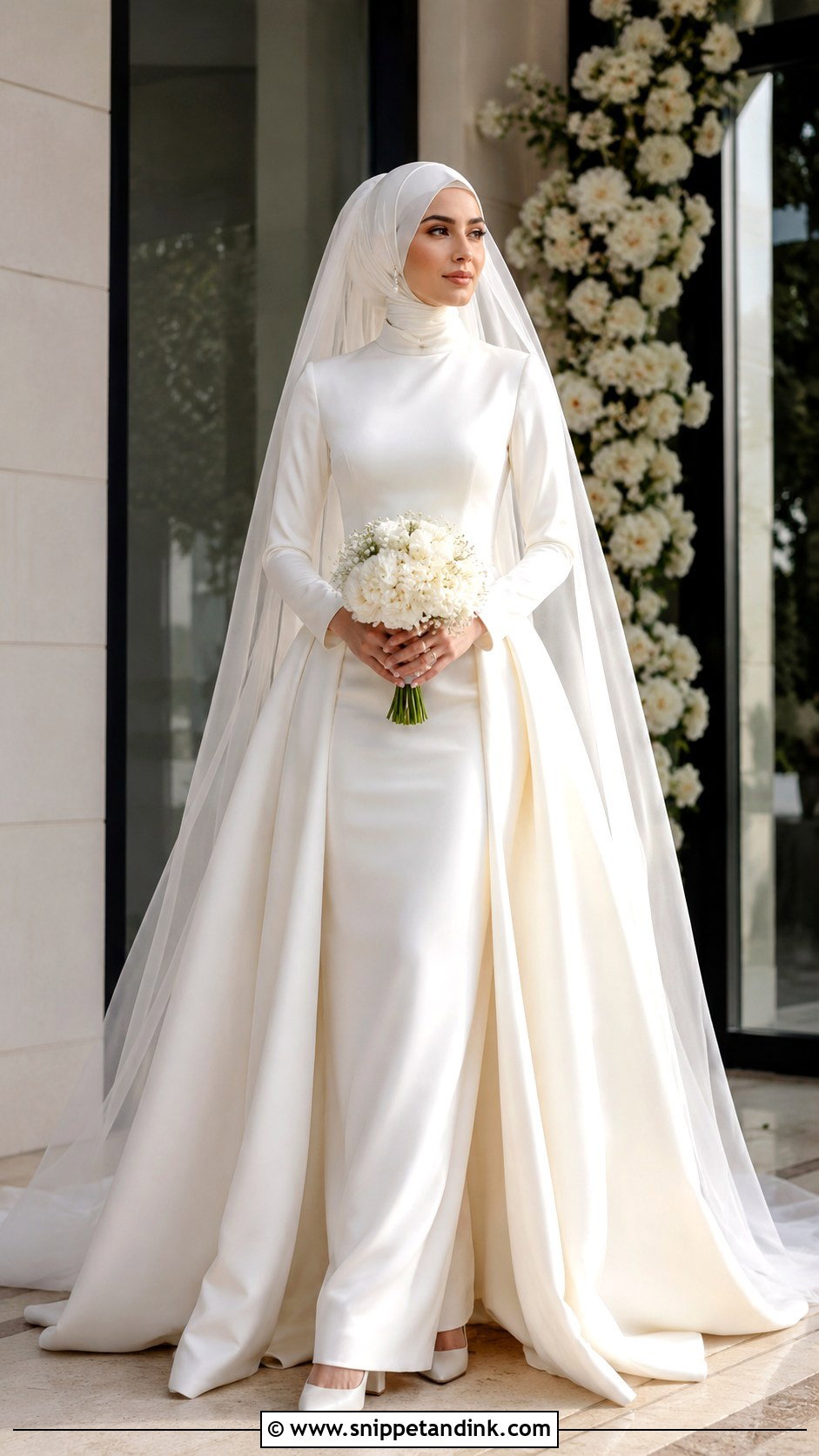
A detachable overskirt gives a Muslim bride two looks without a second dress. Start with a modest crepe or satin column with long sleeves, a high neck and a comfortable straight skirt, then add a light A-line overskirt for a formal entrance. A matching hijab, a plain cathedral veil, pointed block heels, pearl earrings and a compact bouquet suit both versions. The overskirt should fasten flat at the waist with no bulky band. Practice taking it off at home with whoever will help you, so the change after photos is quick and nobody tugs on your hijab.
14. Button Back Hijab Wedding Dress
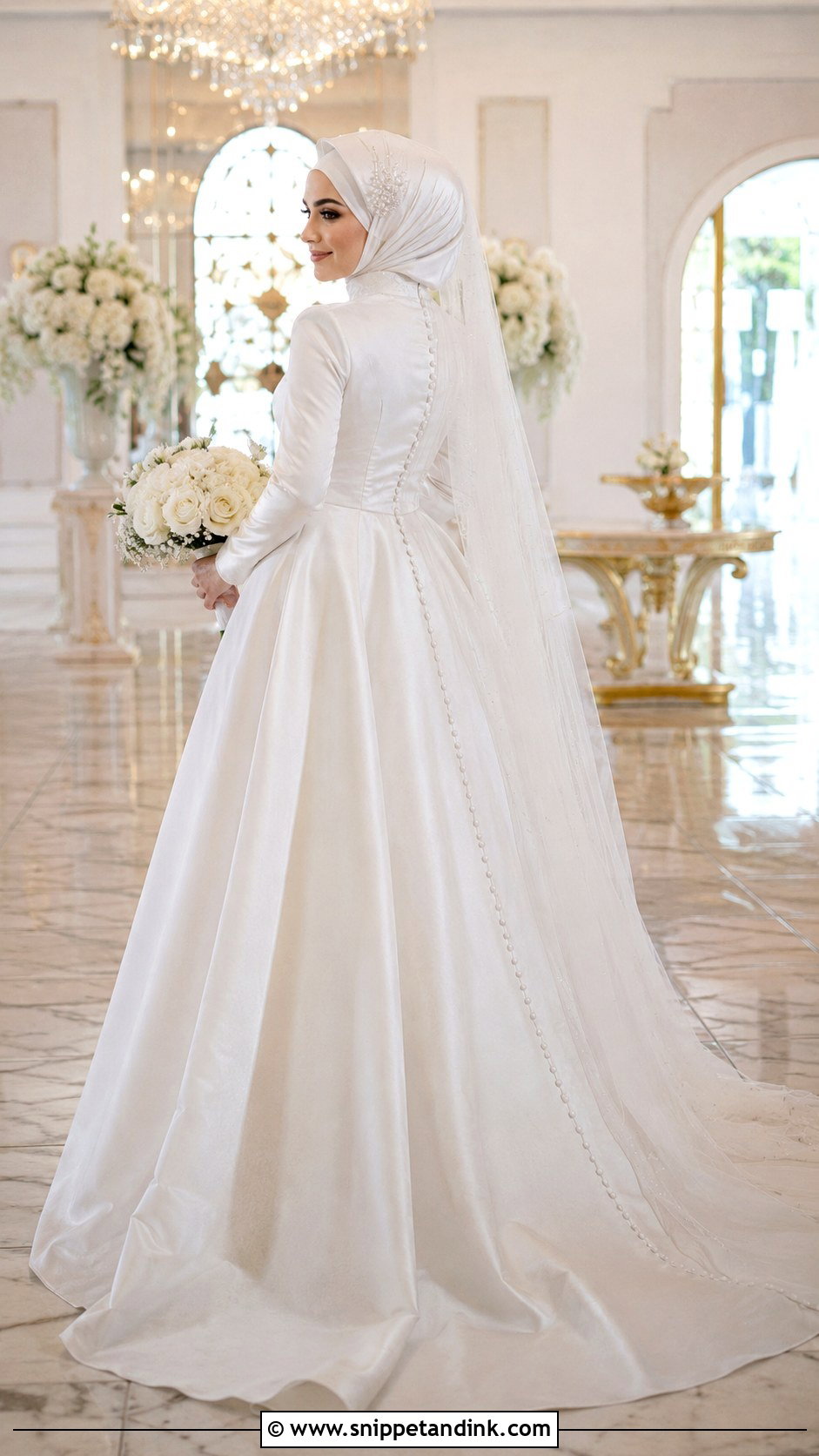
Covered buttons give the back a traditional detail and leave the front clean. Look for an opaque satin or crepe A-line with a high neck, full sleeves and a row of fabric buttons from the upper back down toward the waist or hem. A simple chiffon hijab and a clear tulle veil let the buttons show; low ivory pumps, a small white bouquet and pearl studs or a fine brooch placed on the hijab finish it. Forty covered buttons take a long time to do up. I always ask the tailor to put a hidden zip beneath them, so the buttons are for show.
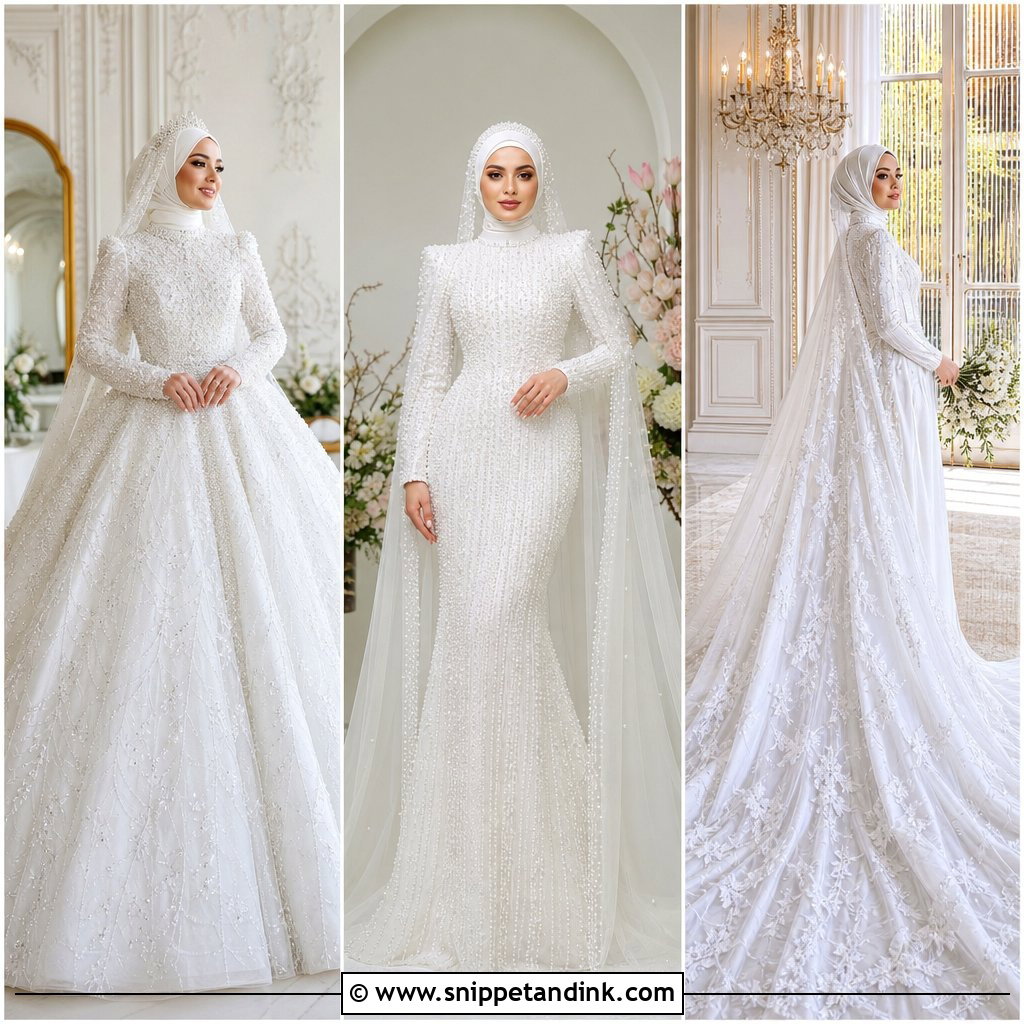
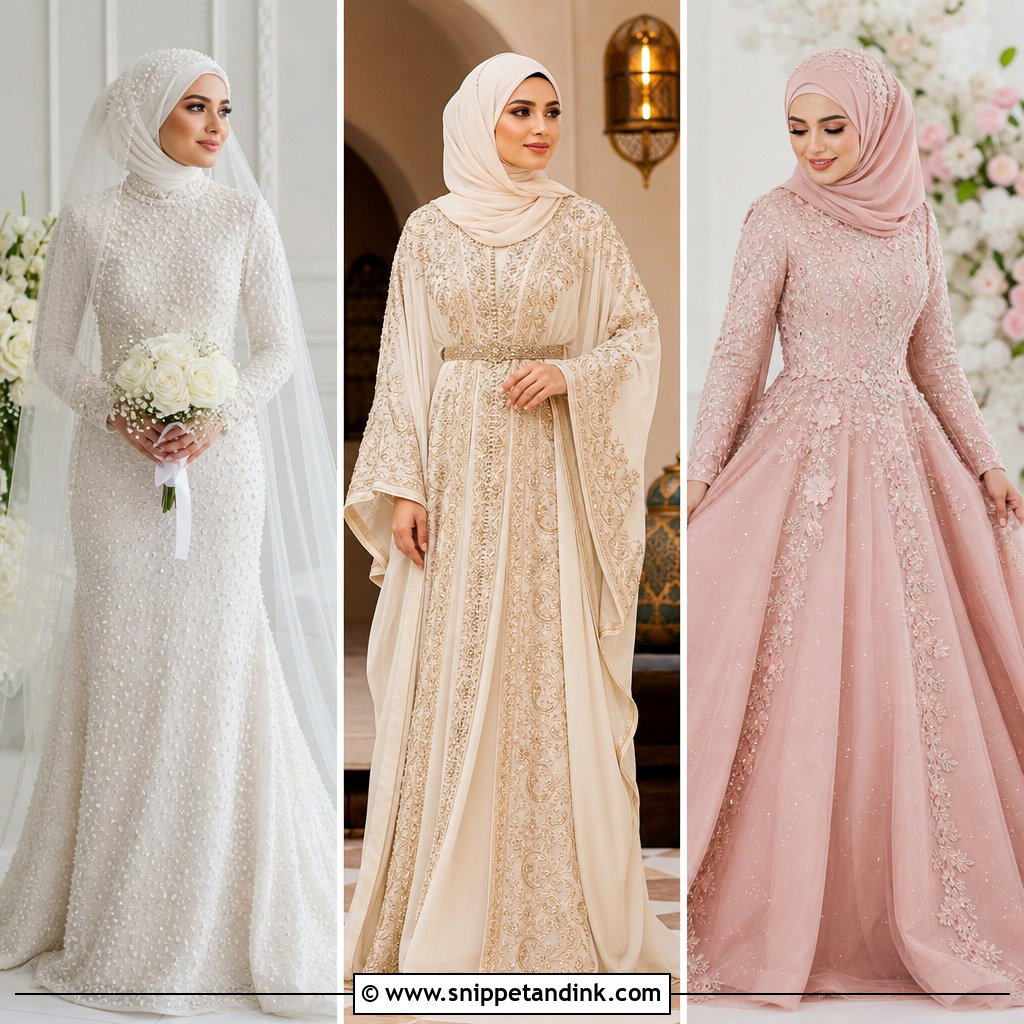
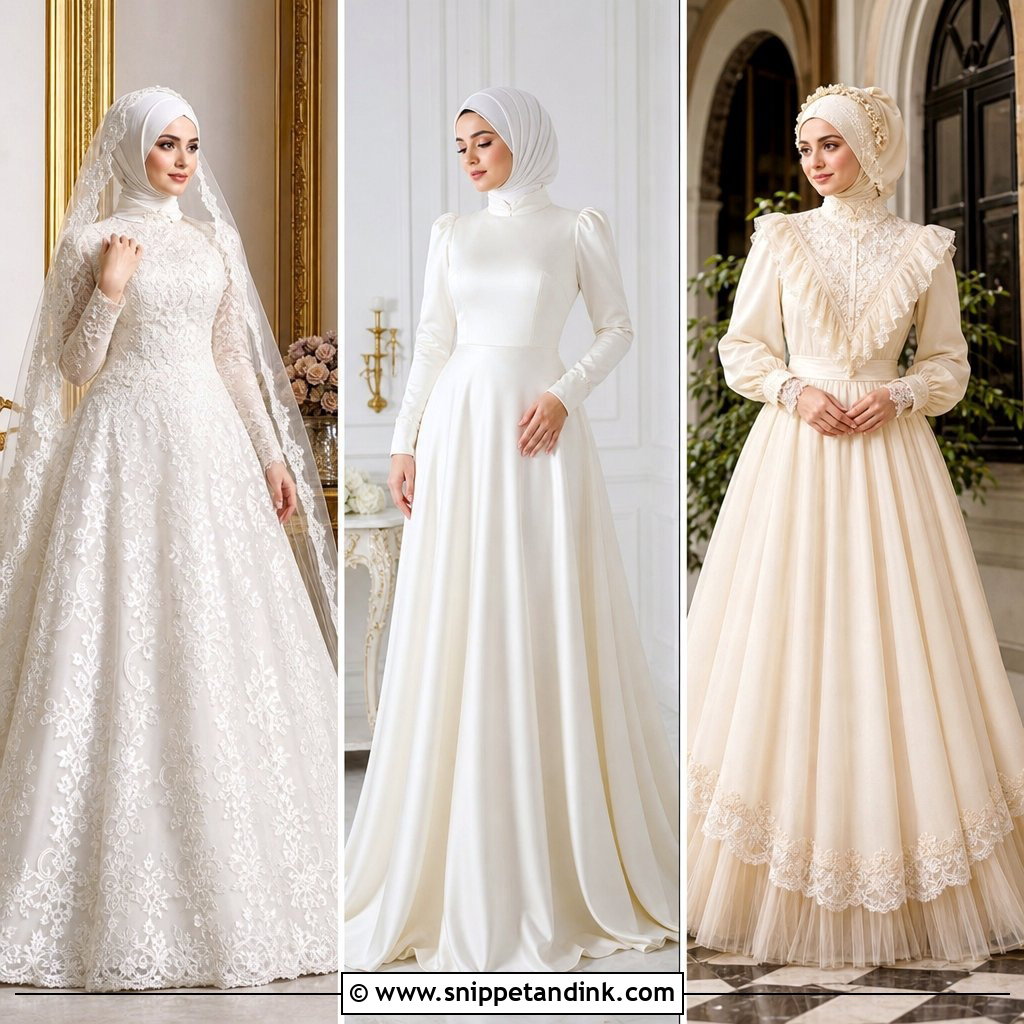
15. Bow Back Hijab Wedding Dress
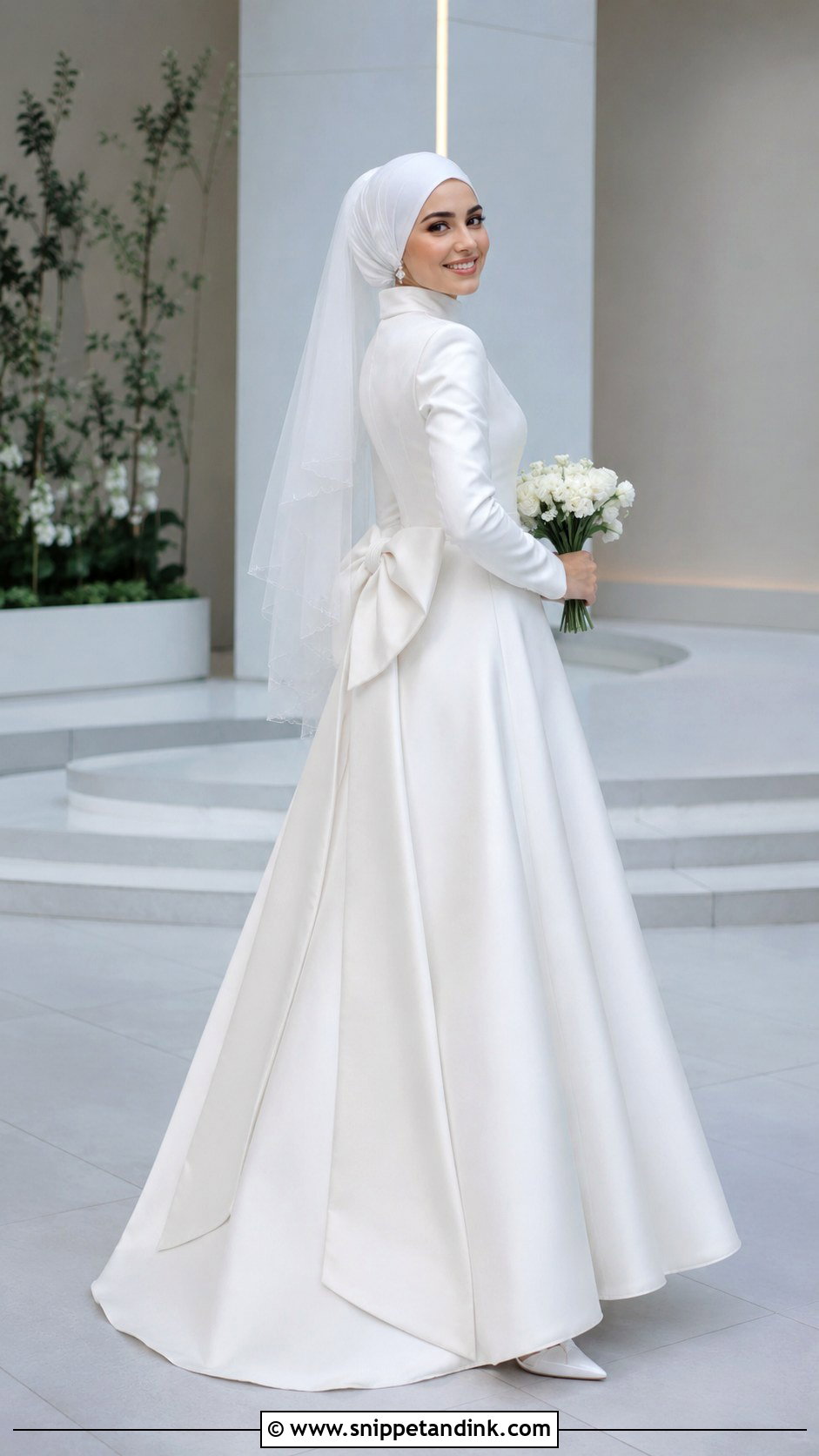
A small bow at the back gives a minimalist gown a soft accent. Choose a long-sleeve mikado or satin A-line with a high neck and a detachable flat bow at the back of the waist; skip an oversized bow if you’ll wear a long veil, because the two fight for space. A neatly wrapped matte hijab keeps the front clean, with a shoulder-length veil, pointed pumps and pearl earrings. A compact bouquet keeps the dress visible. Secure the bow with hidden snaps and sit down in it at the fitting. A bow that sits flat standing can crush or tilt in a chair.
16. White Anarkali Nikah Dress With Hijab
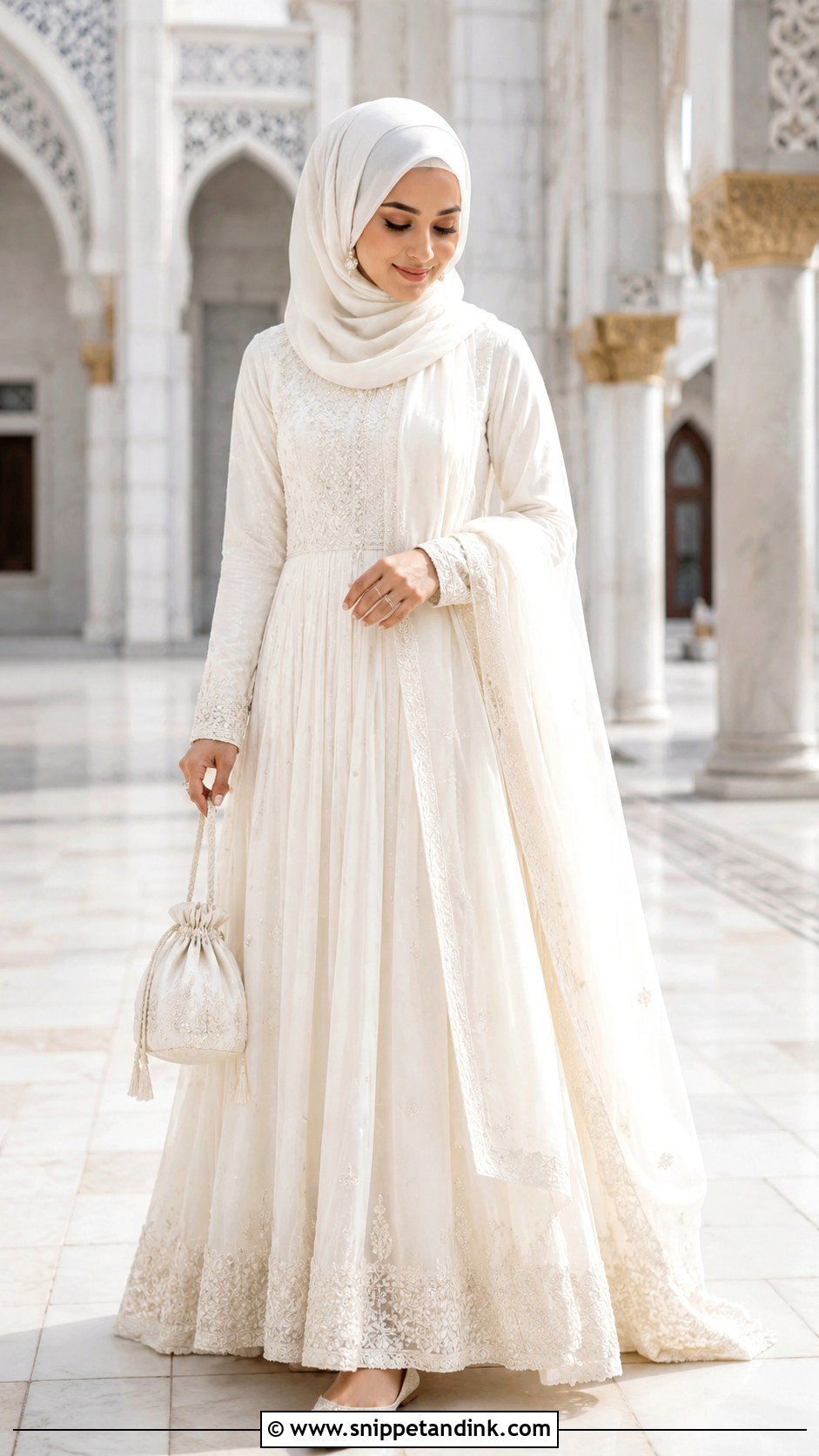
A white or ivory Anarkali gives a nikah a clear South Asian feel. Choose a floor-length, fully lined design with a high neck, long sleeves and a gently fitted bodice that opens into a wide skirt; fine embroidery at cuffs and hem adds tradition. A matching chiffon hijab and a light dupatta draped from one shoulder or over the head, embellished flats, pearl drops and a small potli bag complete it. Keep every fabric in close shades. A dupatta over a hijab needs its own pins, separate from the hijab’s, or it drags the hijab back when it slips. It moves and sits easily, which makes it practical for a mosque ceremony.
17. Bridal Kaftan With Simple Hijab
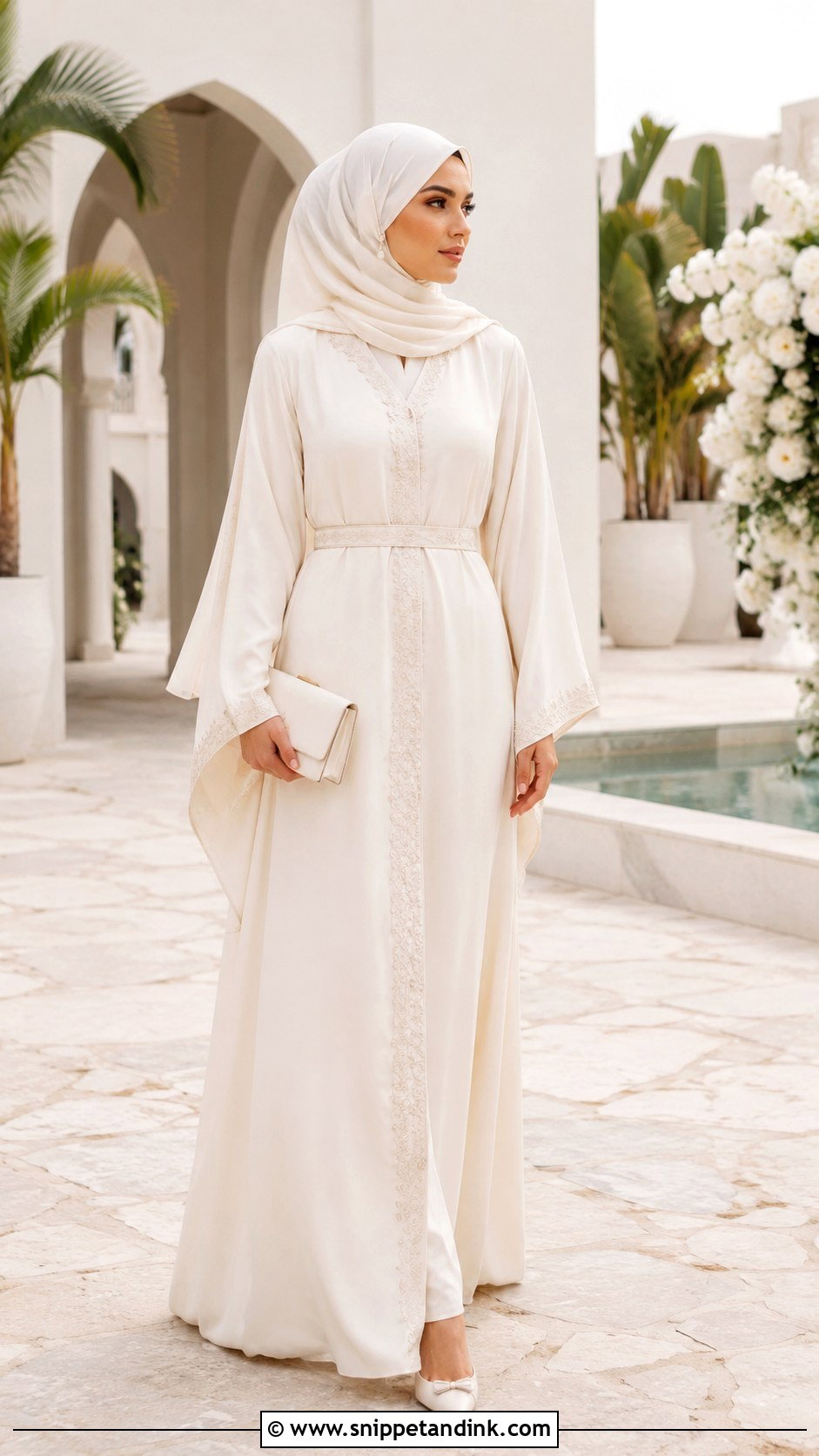
A bridal kaftan gives generous coverage with an easy, flowing shape. Choose ivory or soft white crepe, silk blend or light satin with full sleeves, an opaque high neck and draping that doesn’t swamp your frame; a slim embroidered border or tonal waist detail adds definition. Wear a smooth chiffon hijab and skip the long veil if the kaftan has a dramatic back panel, with pointed flats or low heels, a structured clutch and small pearls. Raise your arms and walk in it before buying. Wide kaftan sleeves fall back toward the elbow when you lift your hands, so check the coverage you get.
18. Modest Bridal Suit With Hijab
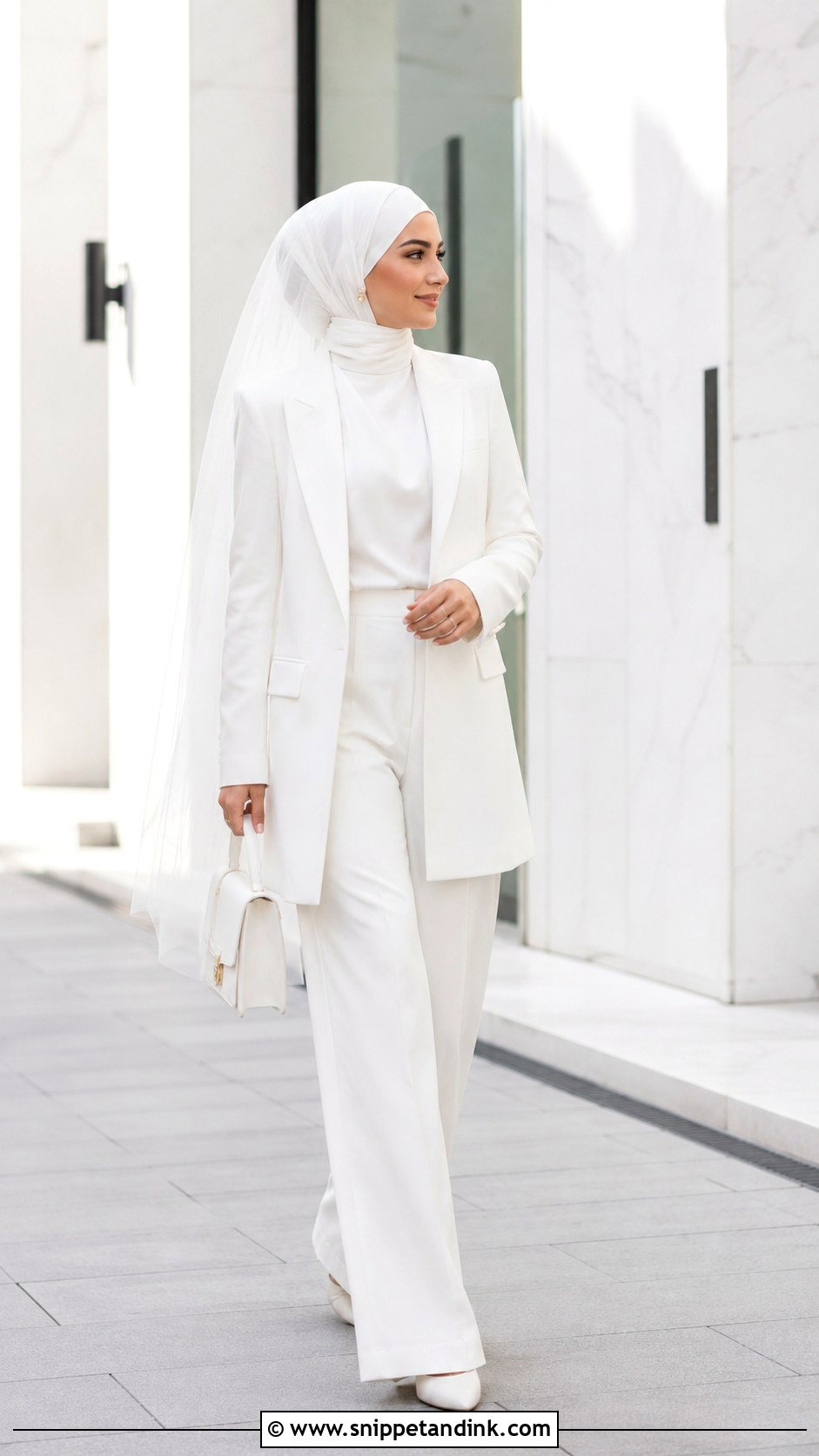
A tailored white suit is a confident alternative to a gown. Choose a longline blazer with full sleeves and a higher button stance over an opaque high-neck blouse, with wide floor-skimming trousers. A matte chiffon hijab keeps it sleek, and a short tulle veil at the back marks you as the bride. Pointed pumps, pearl earrings and a structured white bag finish it. I’d keep the tailoring relaxed rather than tight, and choose a bodysuit-style blouse so it stays tucked when you sit or lift your arms. It suits a civil ceremony, a small nikah or a modern city reception.
19. Blush Hijab Wedding Dress
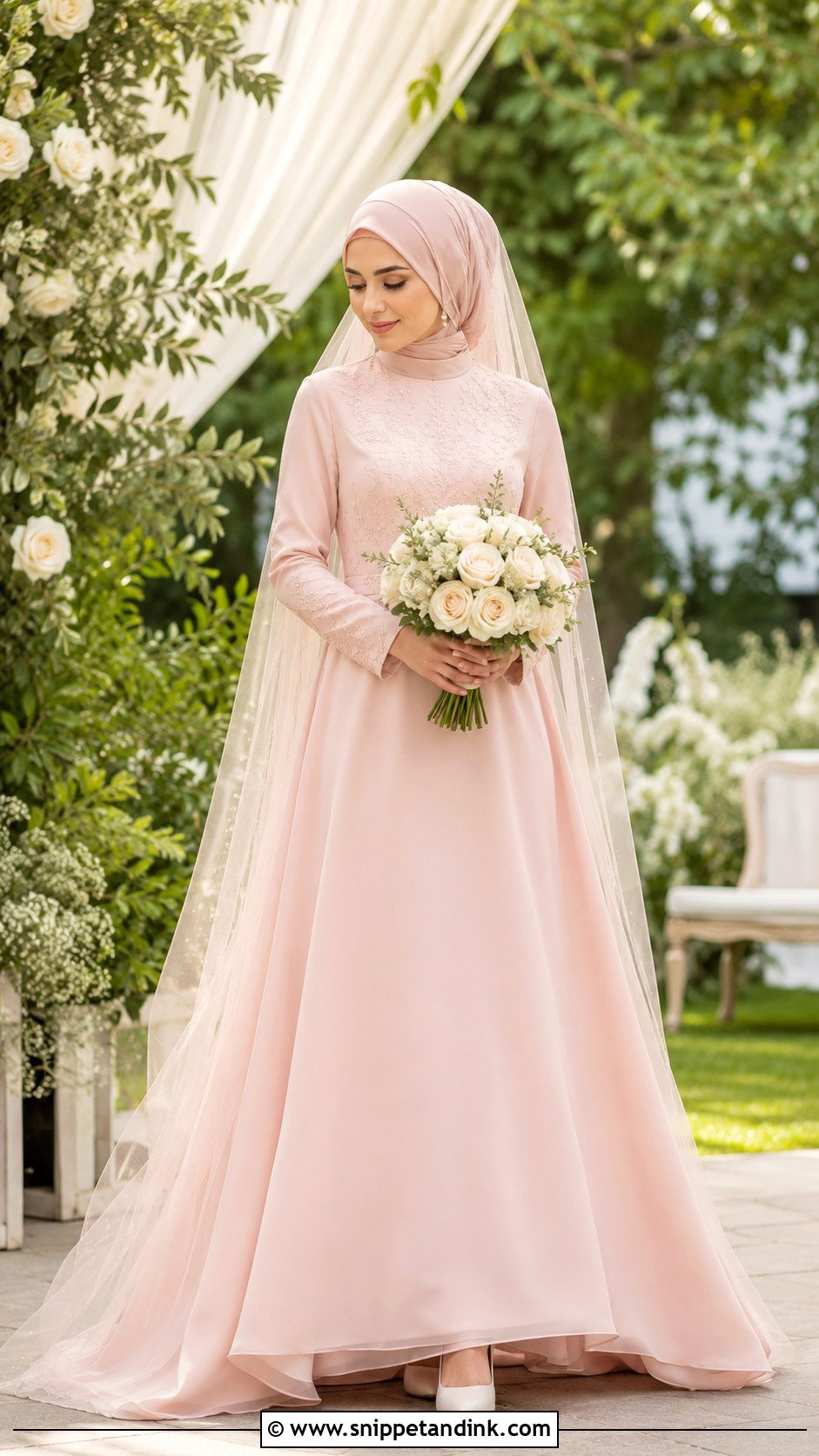
White isn’t the only bridal option. A blush A-line in opaque chiffon, crepe or satin with a high neck, full sleeves and minimal tonal embroidery feels warm and still subtle. Match the hijab closely to the dress instead of contrasting it, and keep the bridal note with ivory shoes, pearl earrings and a cream bouquet; a sheer blush or ivory veil is optional. Blush changes a lot with its surroundings. Look at it in daylight and indoors, and hold it next to your skin, because some blushes wash out warm complexions while others glow.
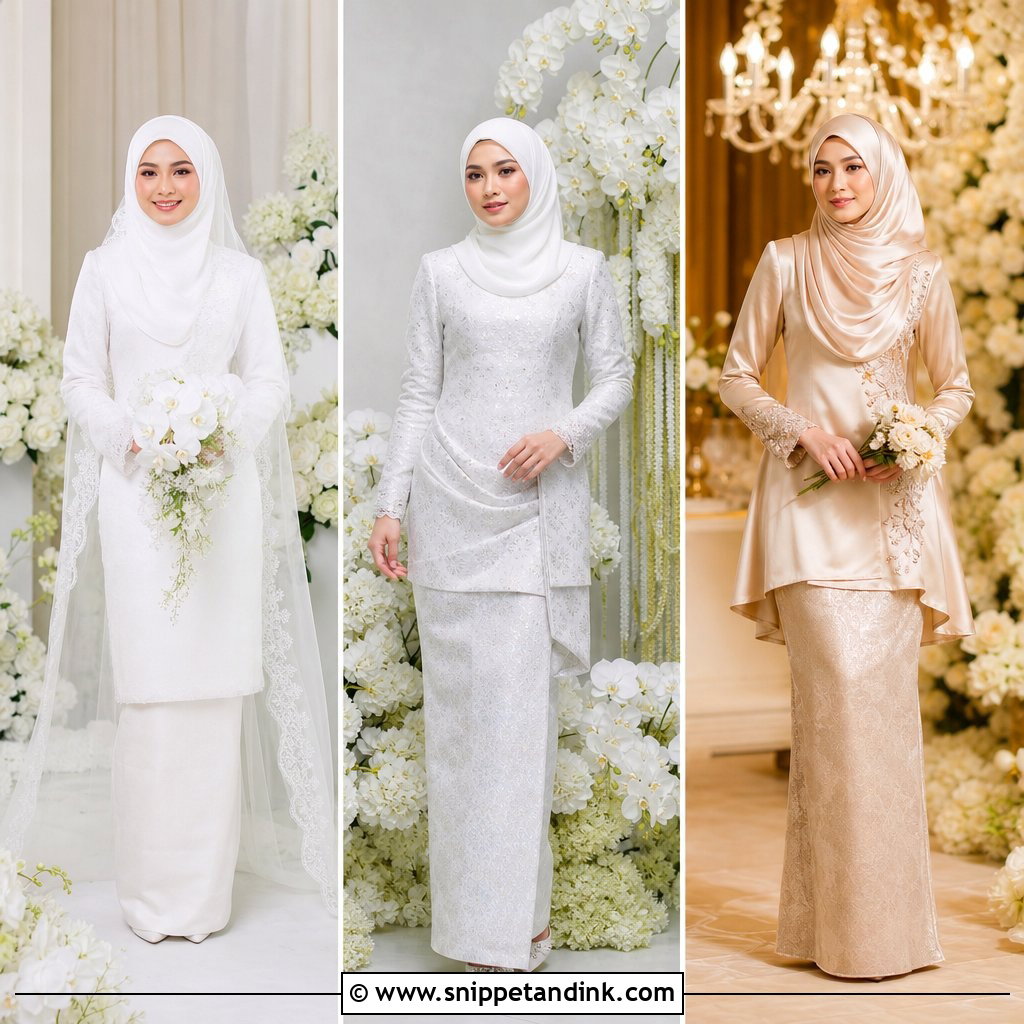

20. Ivory Wedding Dress With Long Hijab Veil
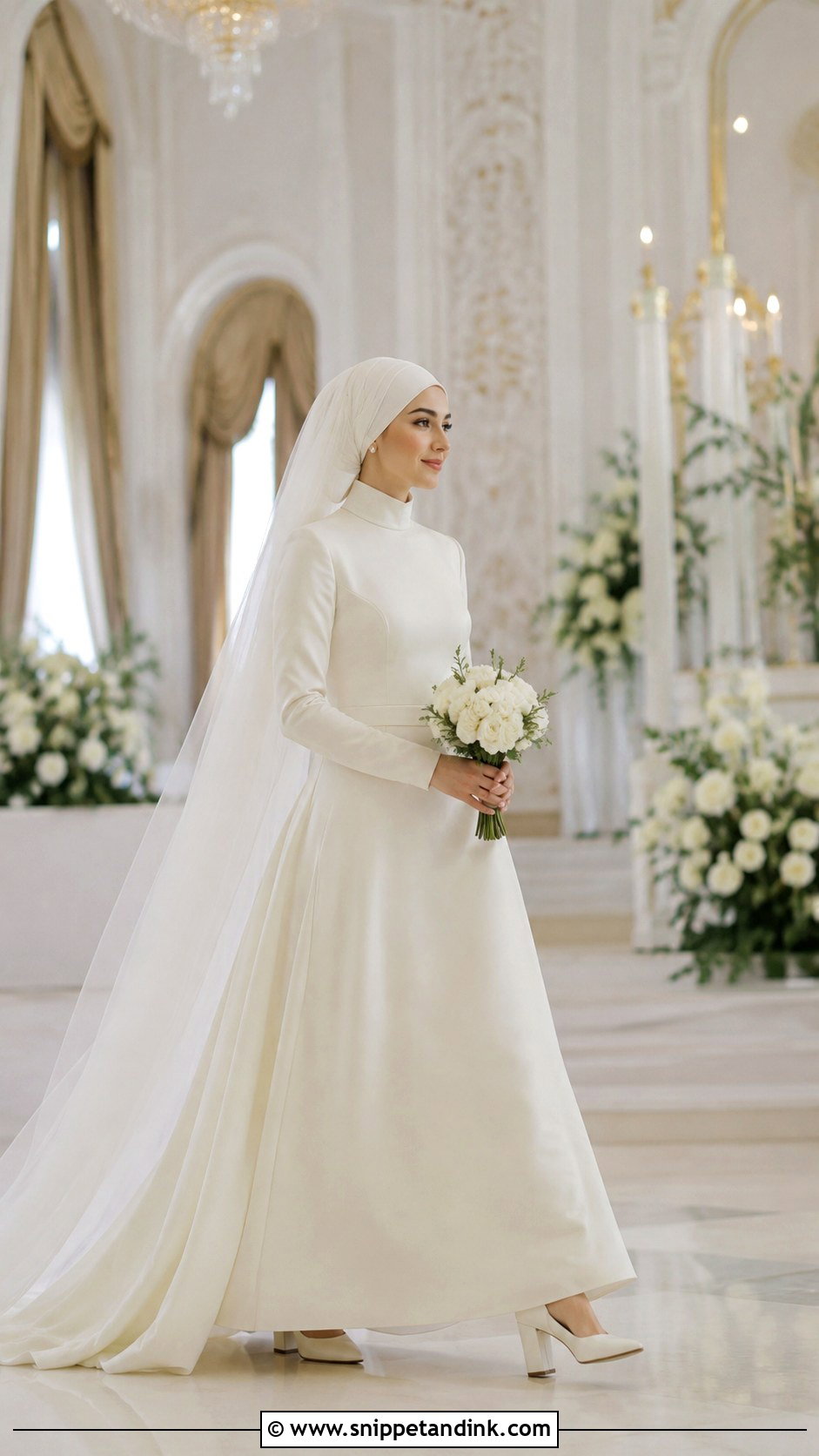
A long veil over a plain ivory gown makes an entrance without any decoration on the dress. Start with an opaque crepe A-line with long sleeves, a raised neck and an unembellished skirt. Wrap an ivory chiffon hijab smoothly, then anchor a light cathedral veil behind the head. A plain veil or one with a narrow finished edge keeps it calm, with closed block heels, pearl studs and a small white bouquet. Ivory looks softer than bright white and sits well with gold. A cathedral veil is heavy at the anchor point, so practice walking with it; ask someone to straighten it before each set of photos.
Adding Coverage to a Gown That Wasn’t Designed With It
Many brides fall in love with a dress that has short sleeves, a low neck or sheer lace. A good bridal seamstress can often add the coverage you need, so don’t rule out a gown too quickly. Here is what is usually possible.
- Sleeves can be added in matching lace, chiffon or crepe. Ask the shop whether extra fabric from the same bolt is available, because a near match looks obvious next to the original.
- Necklines can be raised with a modesty panel, either lined lace or a solid insert in the dress fabric.
- Sheer lace bodices and skirts can be lined fully with an opaque layer in a shade close to the dress.
- Open or low backs can be closed with a panel, often keeping the buttons in place over it.
These changes take more time than a hem. I’d tell the salon what you need at the first appointment and plan for extra fittings, usually starting a few months before the wedding. Some designers can make modest changes during production for a fee, which often looks cleaner than altering afterward, so ask before the order is placed.
Modesty, Comfort and a Look That Feels Like Yours
Your bridal outfit should feel comfortable, personal and right for your level of modesty. Simple gowns become memorable when the fabric, shape, hijab, veil, shoes and accessories work together, and satin A-lines, crepe columns, abayas, Anarkalis, kaftans and suits all get you there in different ways. Check opacity in more than one light, and test the whole outfit walking, sitting and raising your arms. Start alterations early so sleeves, neckline, lining and movement can be adjusted, and you’ll arrive at a look that honors your values and still feels like you.
You'll Like These Ideas:










Leave a Reply