
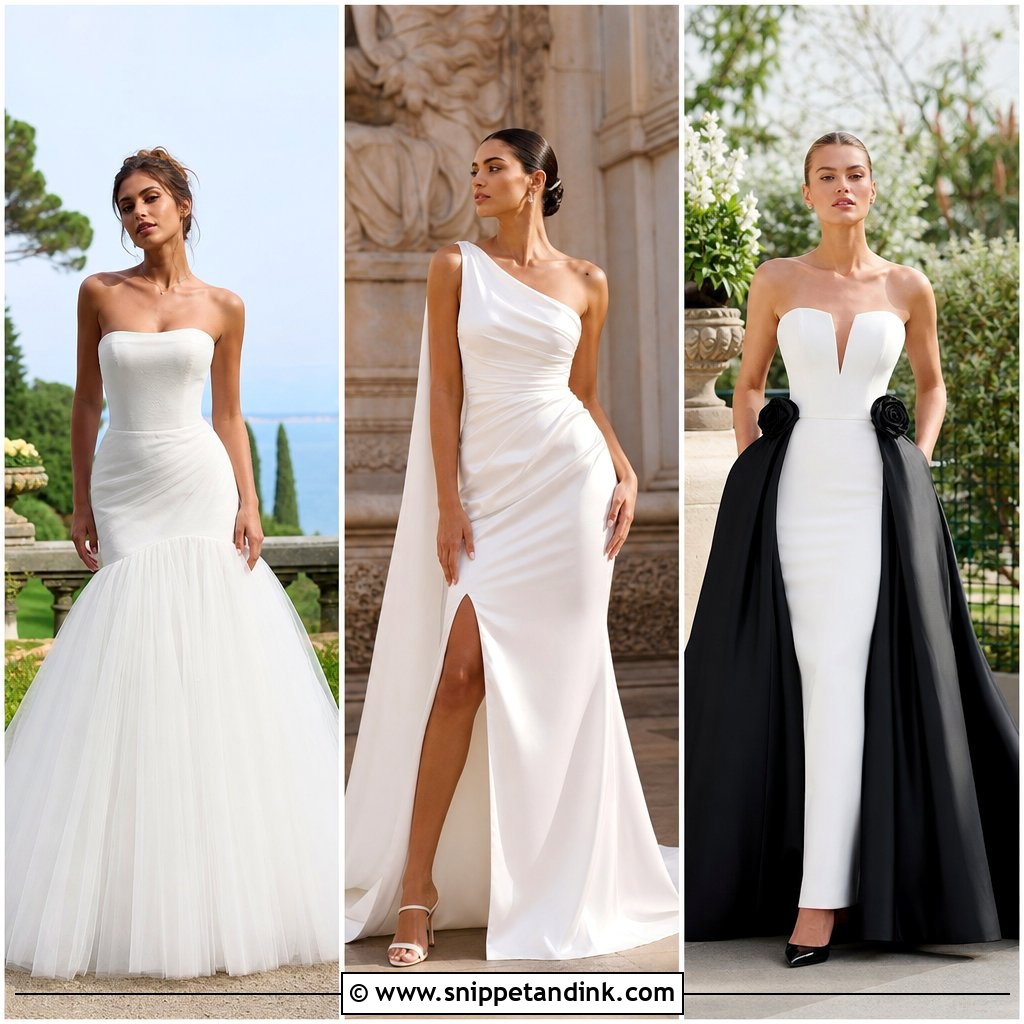
A plain gown is harder to get right than a beaded one, and that is exactly why I love styling them. With no lace to distract the eye, the cut, the weight of the fabric and the fit at the bust and waist do all the talking. Below are twenty simple dresses I’d happily put a bride in, from crisp A-lines and bias-cut slips to midis, sleeves and a few unexpected bridal separates. For each one I’ve noted what I check at a fitting, who it suits and how I’d finish it with a veil, shoes and hair. Read them with your venue and the season in mind, and with an honest idea of how much structure you want to feel in the dress all day.
What a Plain Gown Shows That a Lace One Hides
When I pull simple dresses for a bride, I turn them inside out before she ever tries one on. On a beaded gown, embellishment can disguise a wobbly seam or a lining that pulls. On a plain one there is nowhere to hide, so the quality of the construction is the quality of the dress.
- Seams should lie flat on the outside with no puckering, especially across the bust and down the side of the hips.
- The lining should be cut a touch looser than the outer fabric. If it is tighter, it drags the shell and creates diagonal pulls.
- Hold heavier crepe and satin up to the light. Thin fabric shows the outline of boning, cups and underwear once you are in daylight.
- Zips should be concealed and lie straight. A wavy zip on a sleek back is the first thing a photographer catches from behind.
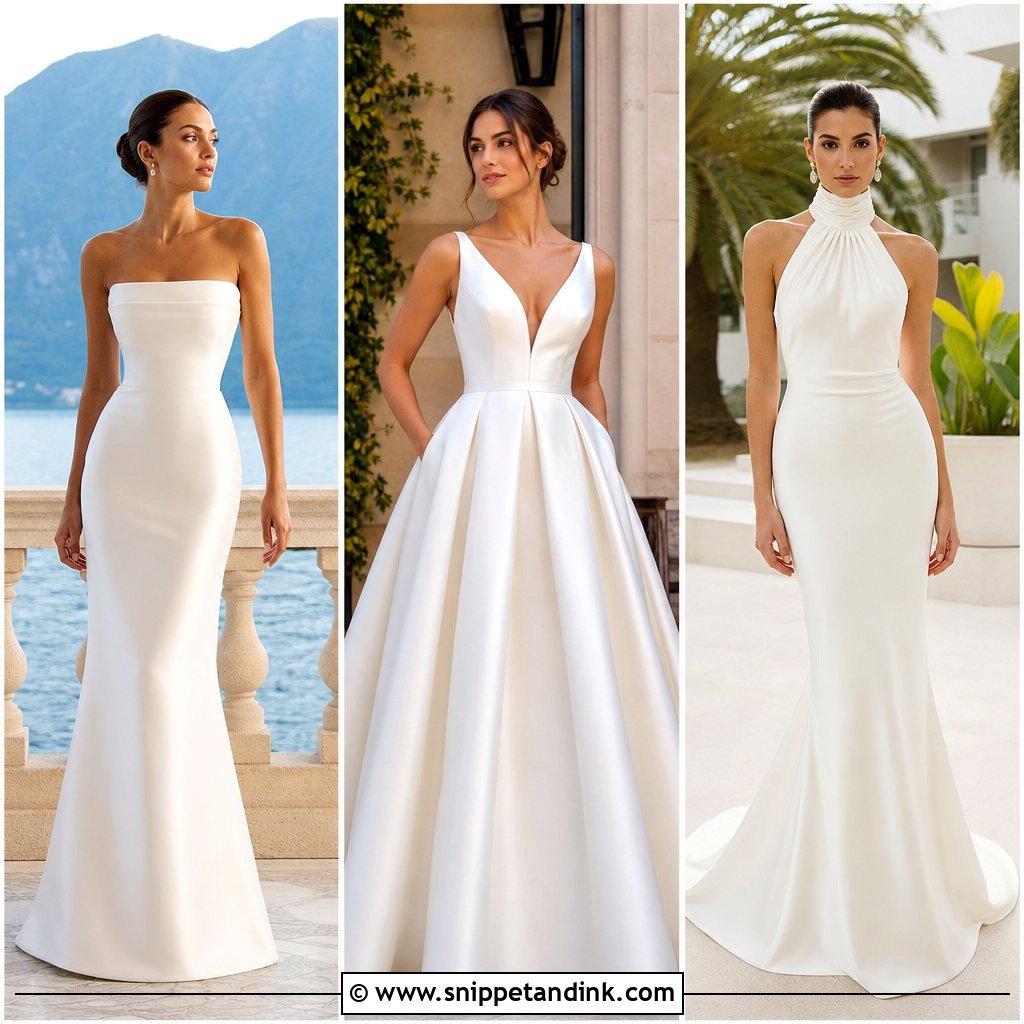
Fabric weight matters more than people expect. A heavier crepe or a duchess satin skims over the body and holds its shape after hours of sitting, while a lightweight polyester satin creases at the hips within the first hour. I’d rather a bride buy a simpler cut in better fabric than an interesting cut in thin cloth.
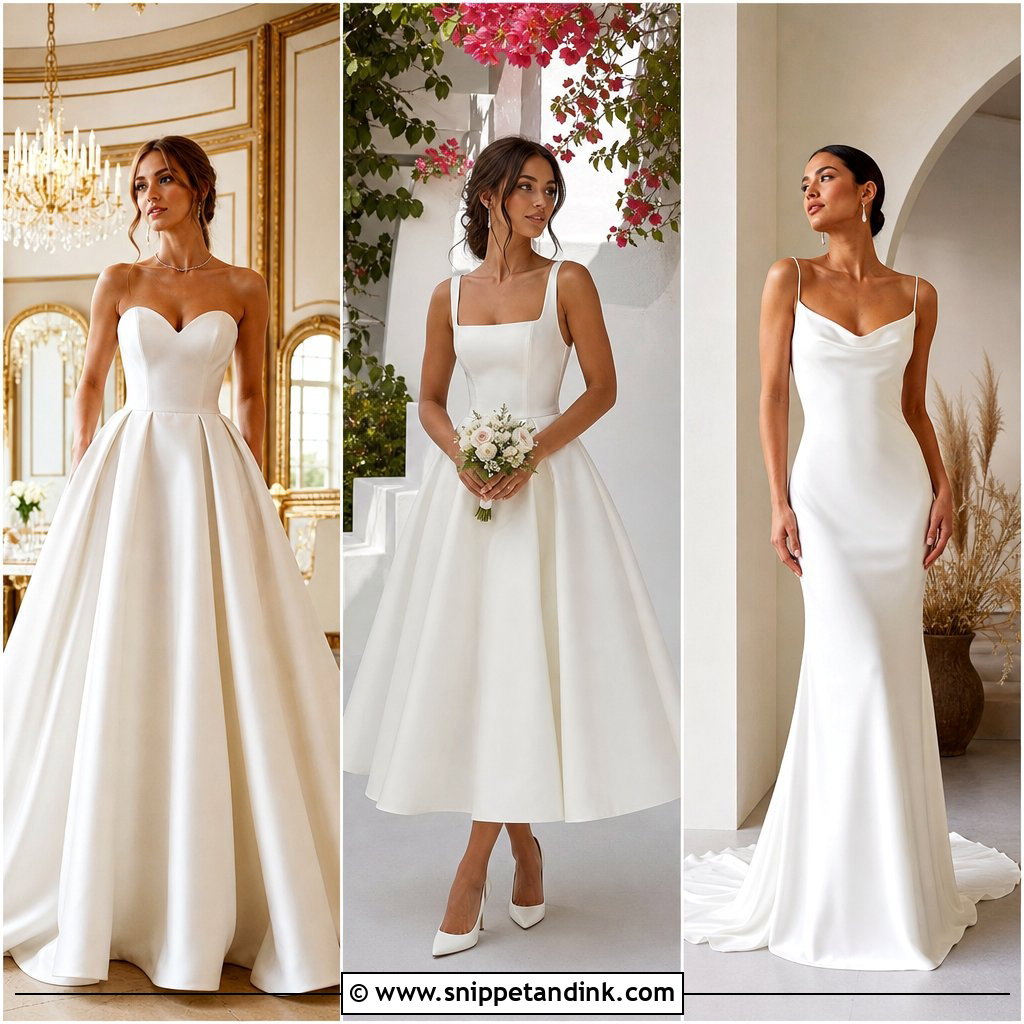
1. Square Neck A-Line Wedding Dress
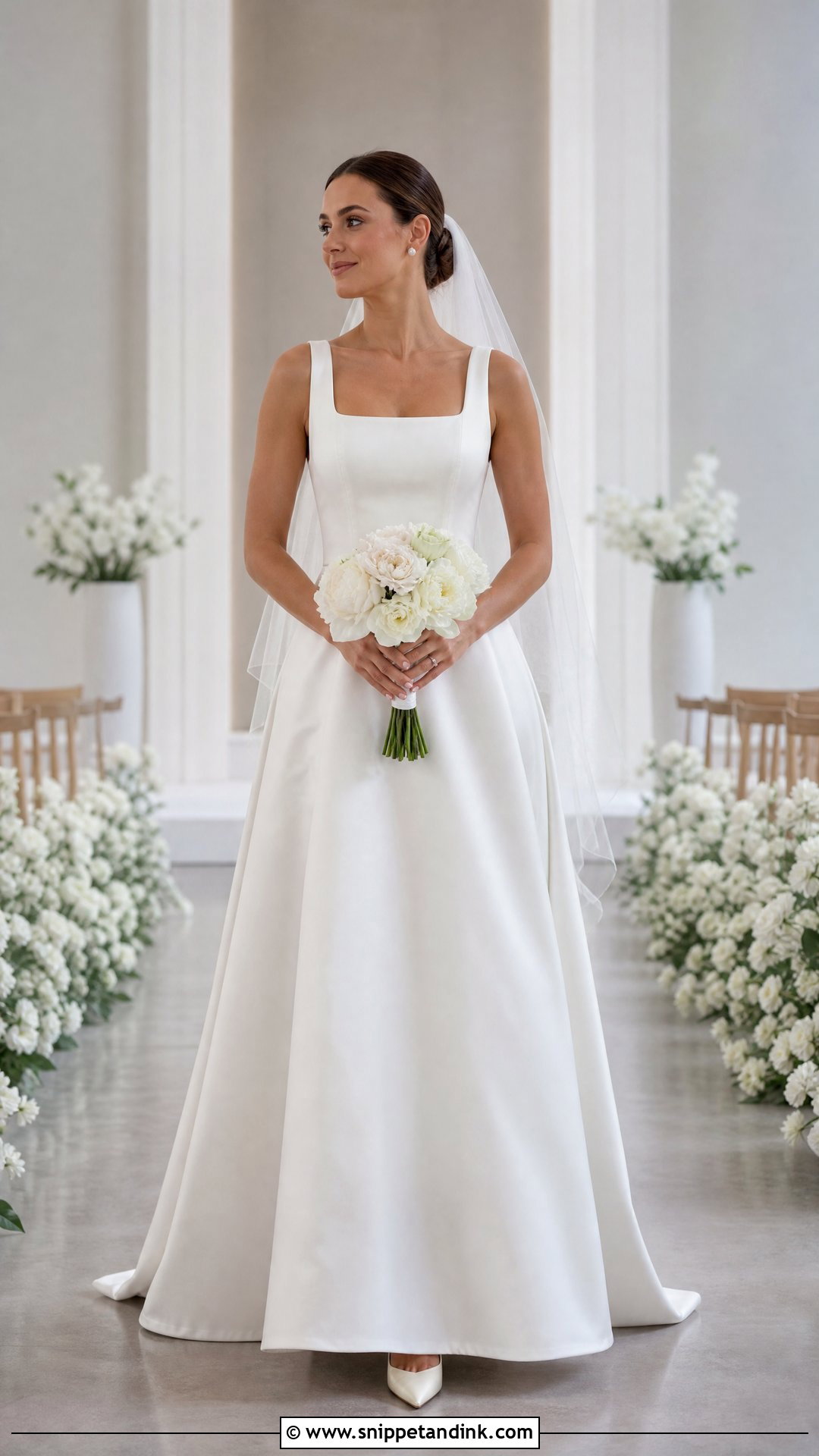
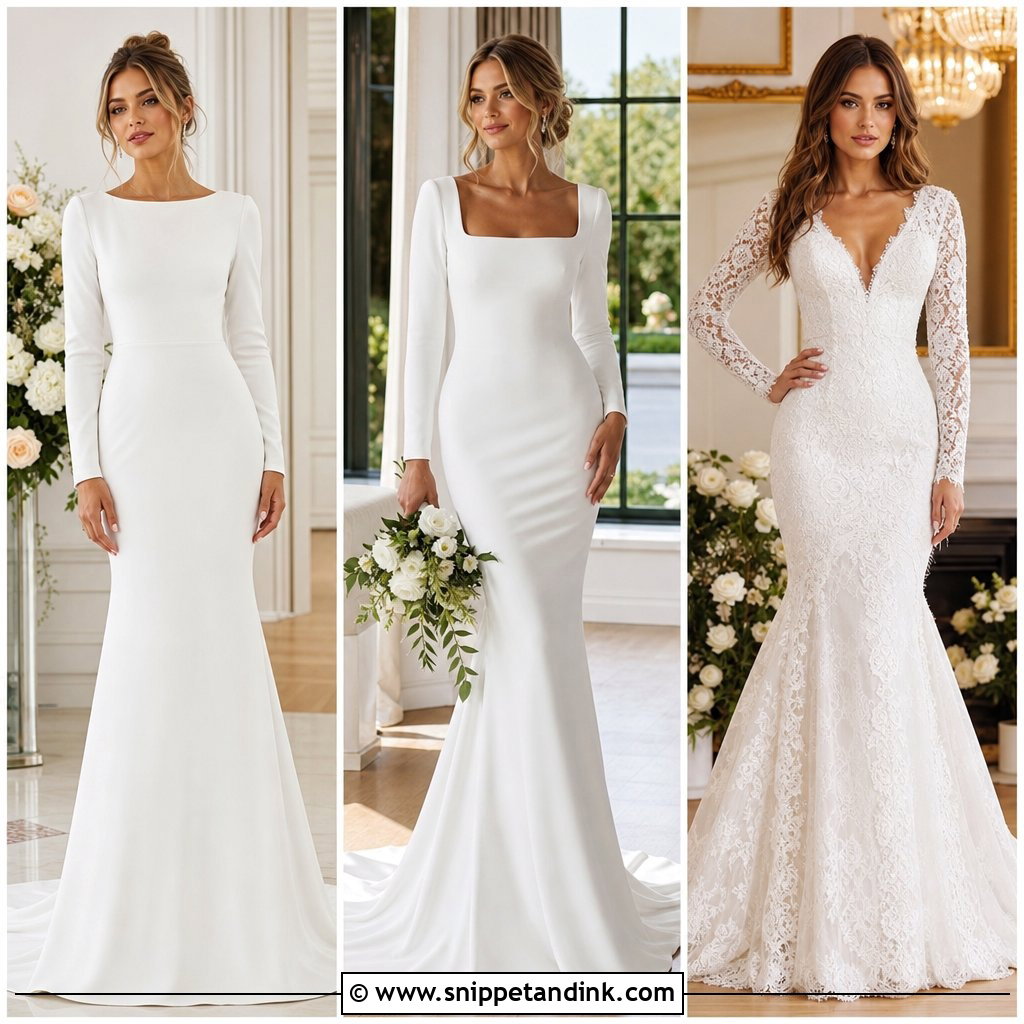
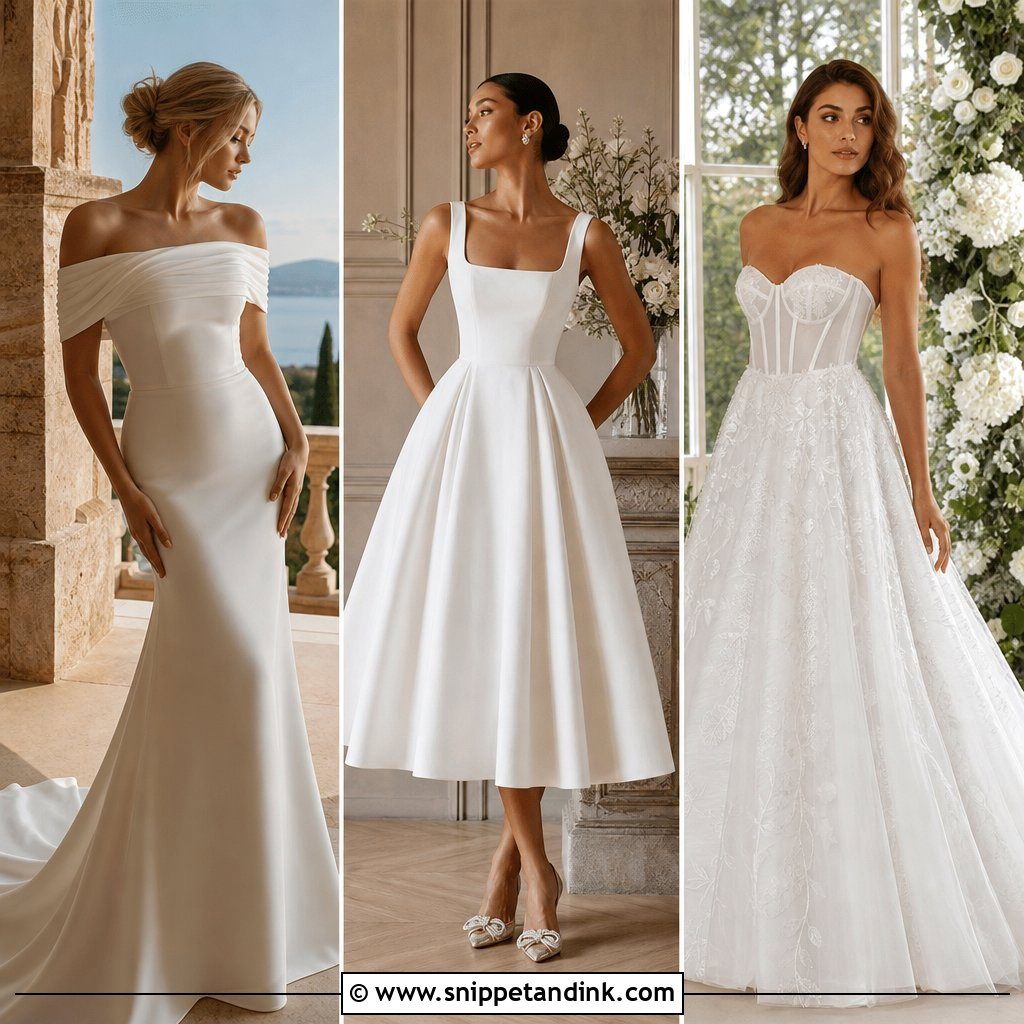
A square neckline is unforgiving if the corners don’t sit flat, so that’s the first thing I look at in the mirror. When the bodice is cut well, the straight edge frames the collarbone and the A-line skirt does the rest without any help from beading. Smooth satin or matte crepe keeps the lines clean. If you need more support, ask for wider straps and internal boning rather than a strapless version that you’ll be hitching up by the speeches. I’d finish it with pearl studs, a low bun, pointed ivory pumps and a fingertip veil that falls behind the shoulders so the neckline stays visible. Keep the bouquet compact so it doesn’t hide that square edge.
2. Bias-Cut Silk Slip Wedding Dress
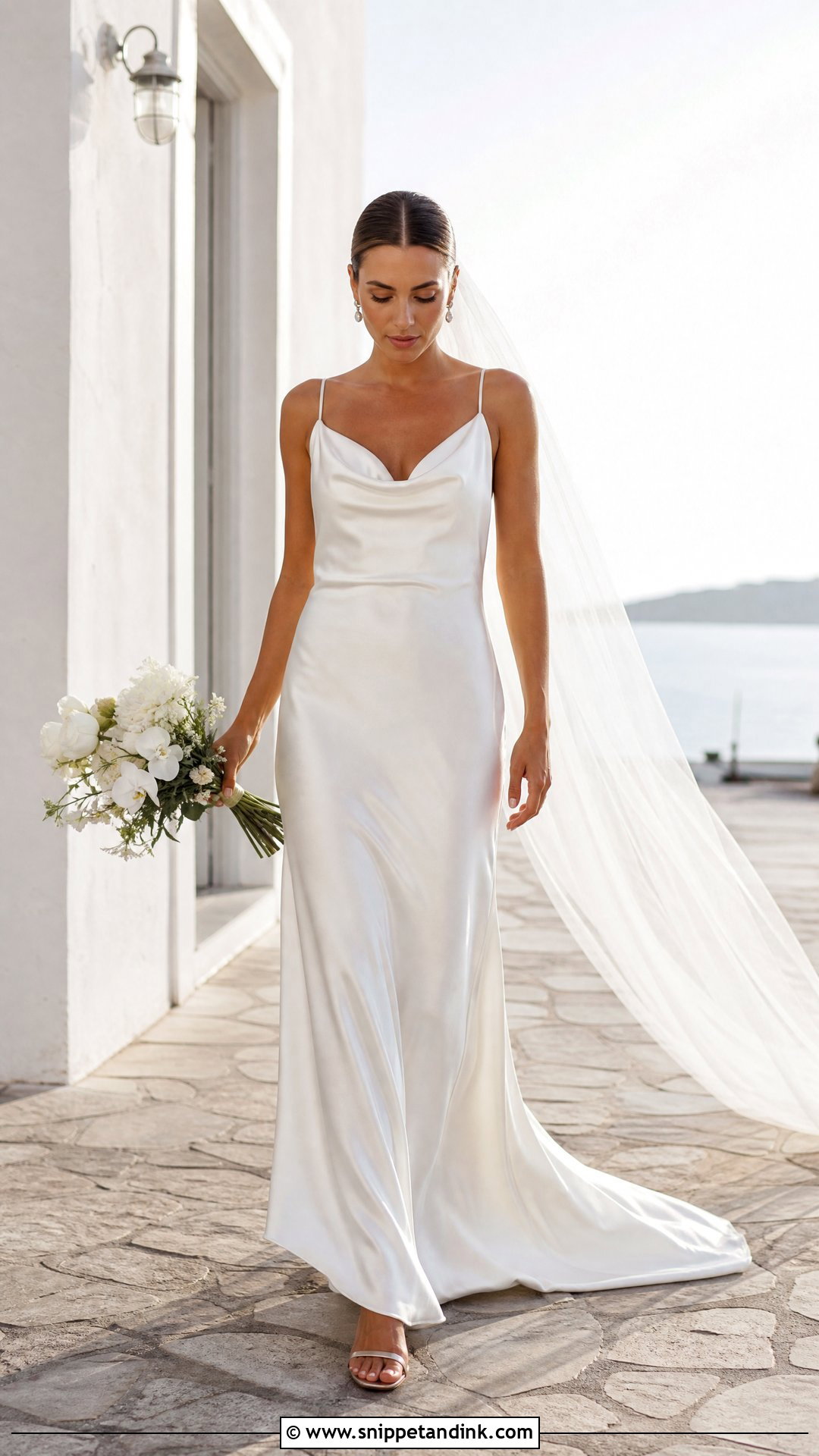
Cut on the bias, silk stretches slightly and falls against the body instead of standing away from it, which is why a slip dress moves the way it does. That same quality means it shows everything underneath, so I always ask brides to bring their actual underwear to the fitting and to talk through support with the seamstress early. A soft cowl at the neck adds a little depth without breaking the clean line. I’d style it with slim metallic sandals, small drops and a sleek chignon for a ’90s-inspired bridal look, then add a long plain veil for contrast against the narrow shape. Have the hem just kiss the floor; any longer and bias silk catches under your toes.
3. Off-Shoulder Satin Column Wedding Dress
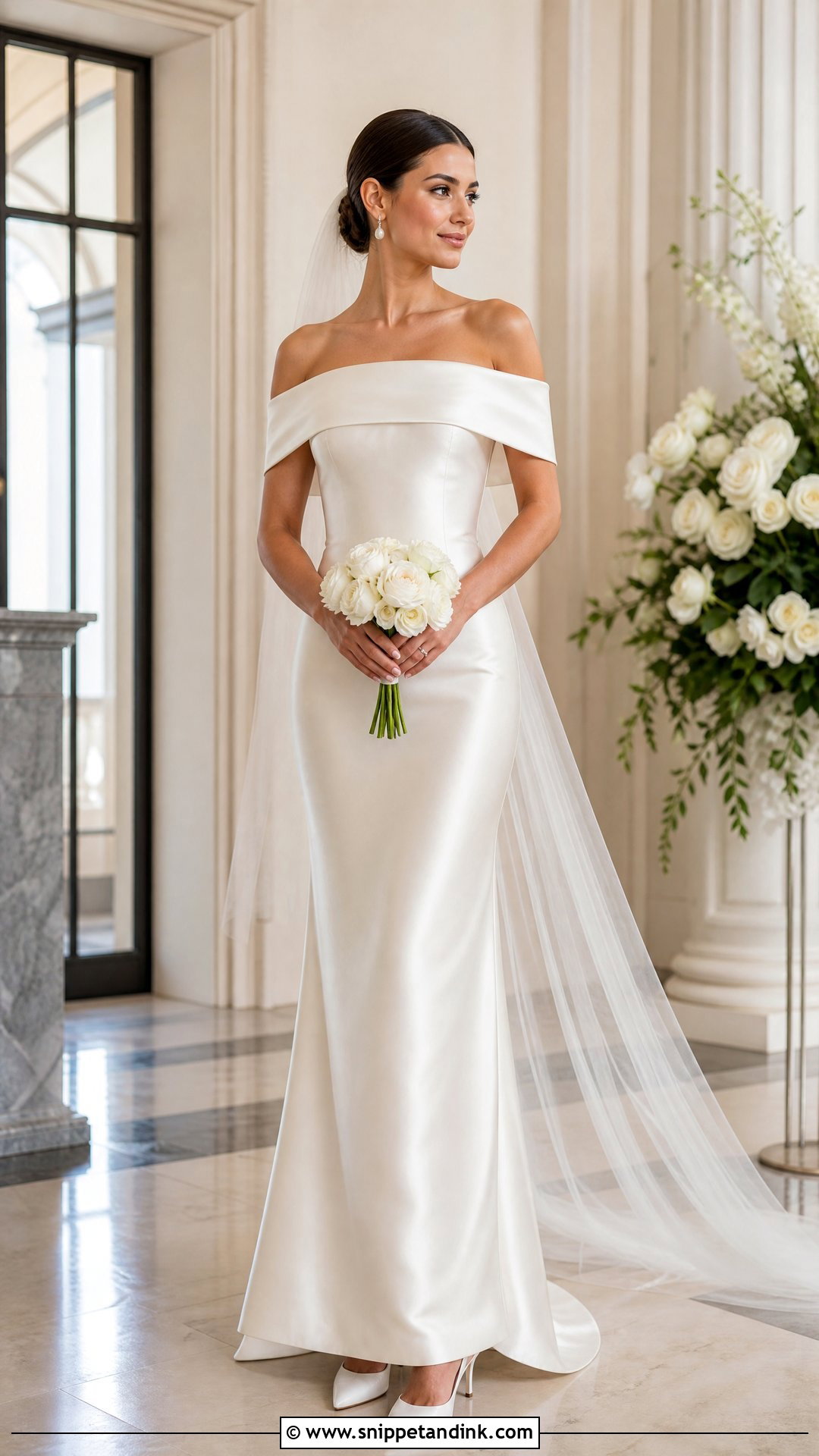
Off-shoulder satin gets its drama from the shoulders and a long straight skirt, nothing else. My concern with this neckline is always movement: the folded cuff or draped band has to stay put when you raise your arms to hug people, and plenty of them don’t. I have brides lift both arms and sit down at the fitting before I sign off on it. Satin catches light well, so leave the neck bare and let it shine. A center-parted bun, pearl earrings and closed-toe slingbacks finish it, with either a chapel-length veil or a sculptural comb. A small all-white bouquet keeps the outfit tonal.
4. Long-Sleeve Crepe Wedding Dress
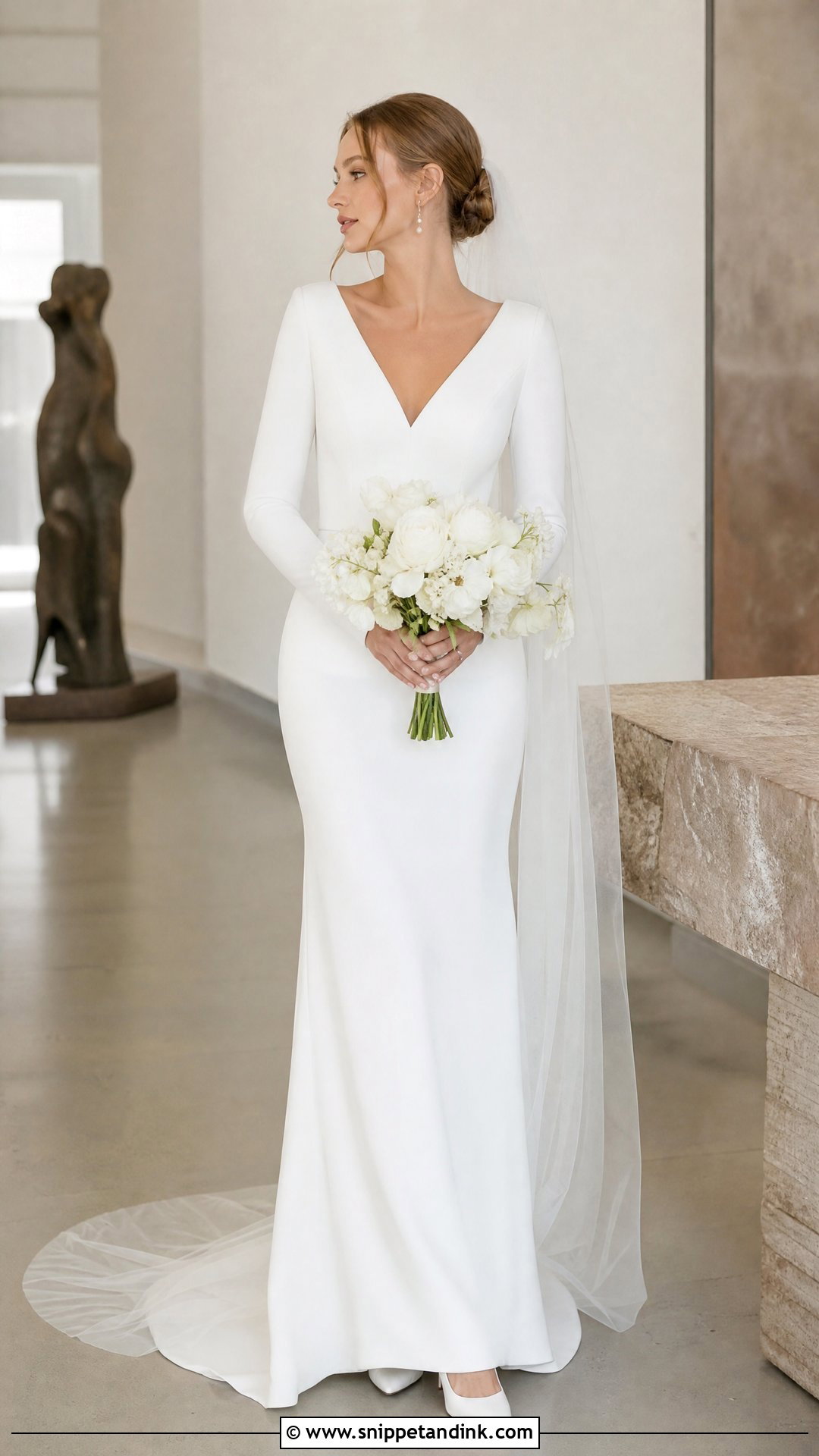
For a winter wedding or a bride who simply prefers to be covered, a long-sleeve crepe gown is the one I reach for most. Matte crepe has enough body to hold a clean line, and fitted sleeves give shape without lace. The sleeve is where fittings go wrong: if the armhole is cut low, you can’t lift your arms, so test that before anything else. A shallow V or a boat neck keeps it easy to accessorize with pointed pumps, delicate earrings and a low twisted bun. If you want a belt, have it cut from matching crepe. A low back or a row of covered buttons gives interest from behind, and a light veil stops all that coverage from feeling heavy.
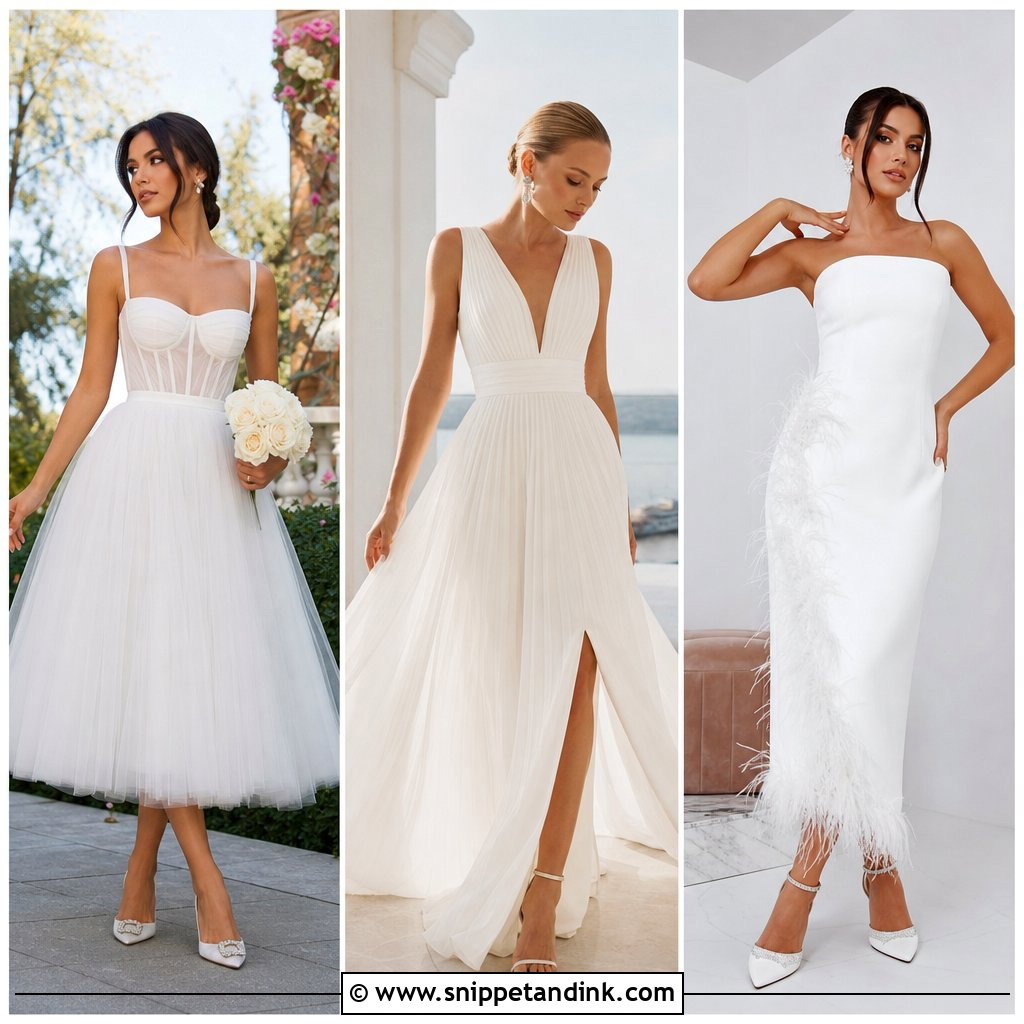
5. Tea-Length Wedding Dress With Pockets
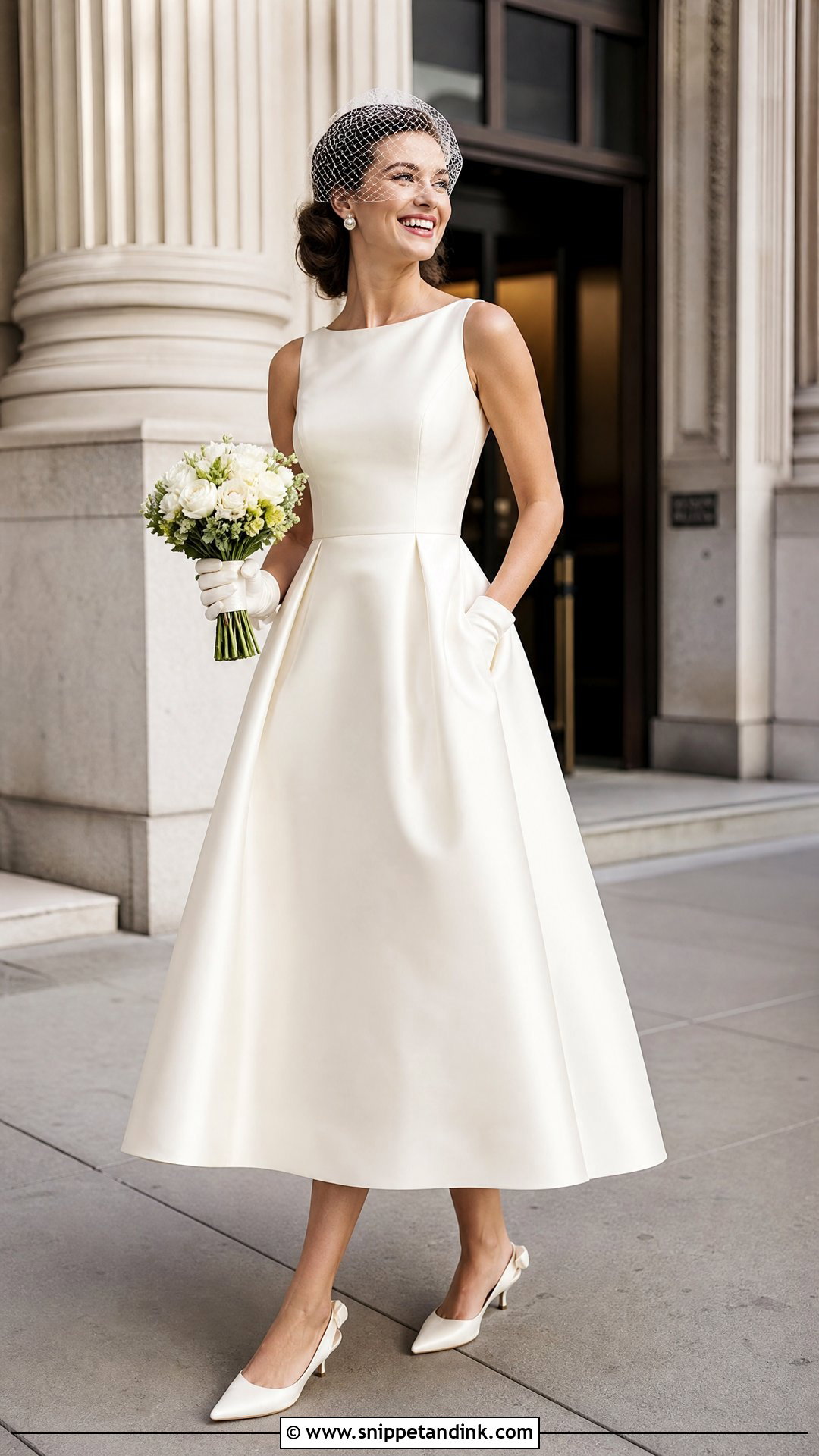
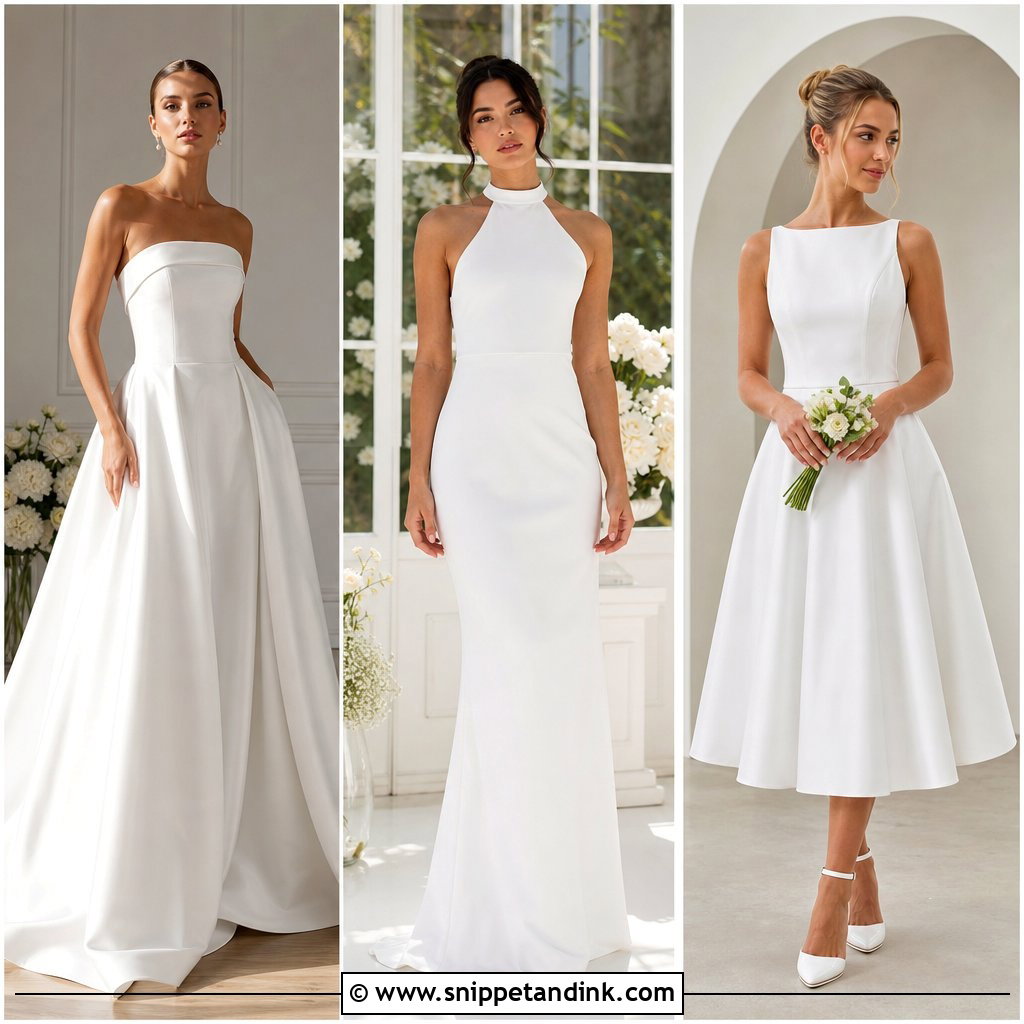
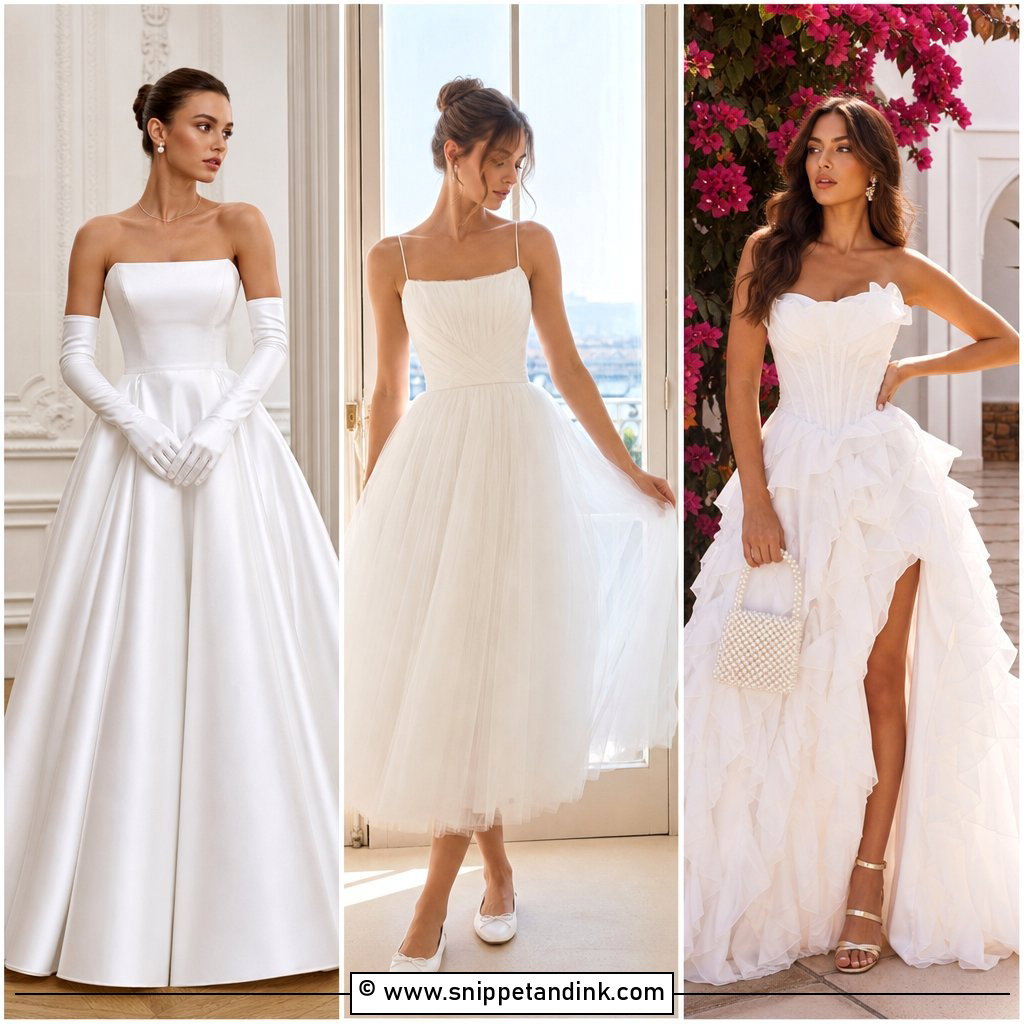
Tea length lands somewhere between knee and ankle, and getting that exact point right matters more than the fabric. I hem these to finish at the slimmest part of the calf, never at the widest, because a few centimetres changes the whole proportion. Mikado or a stiffer satin holds the A-line crisply, and pockets in a skirt this full sit almost invisibly. Kitten heels, short gloves and a birdcage veil or a simple bow suit the shape. It’s a dress I like for courthouse ceremonies, brunch receptions and older venues with a bit of character. Keep the bouquet small; a big round one swallows a short skirt.
6. One-Shoulder Draped Wedding Dress
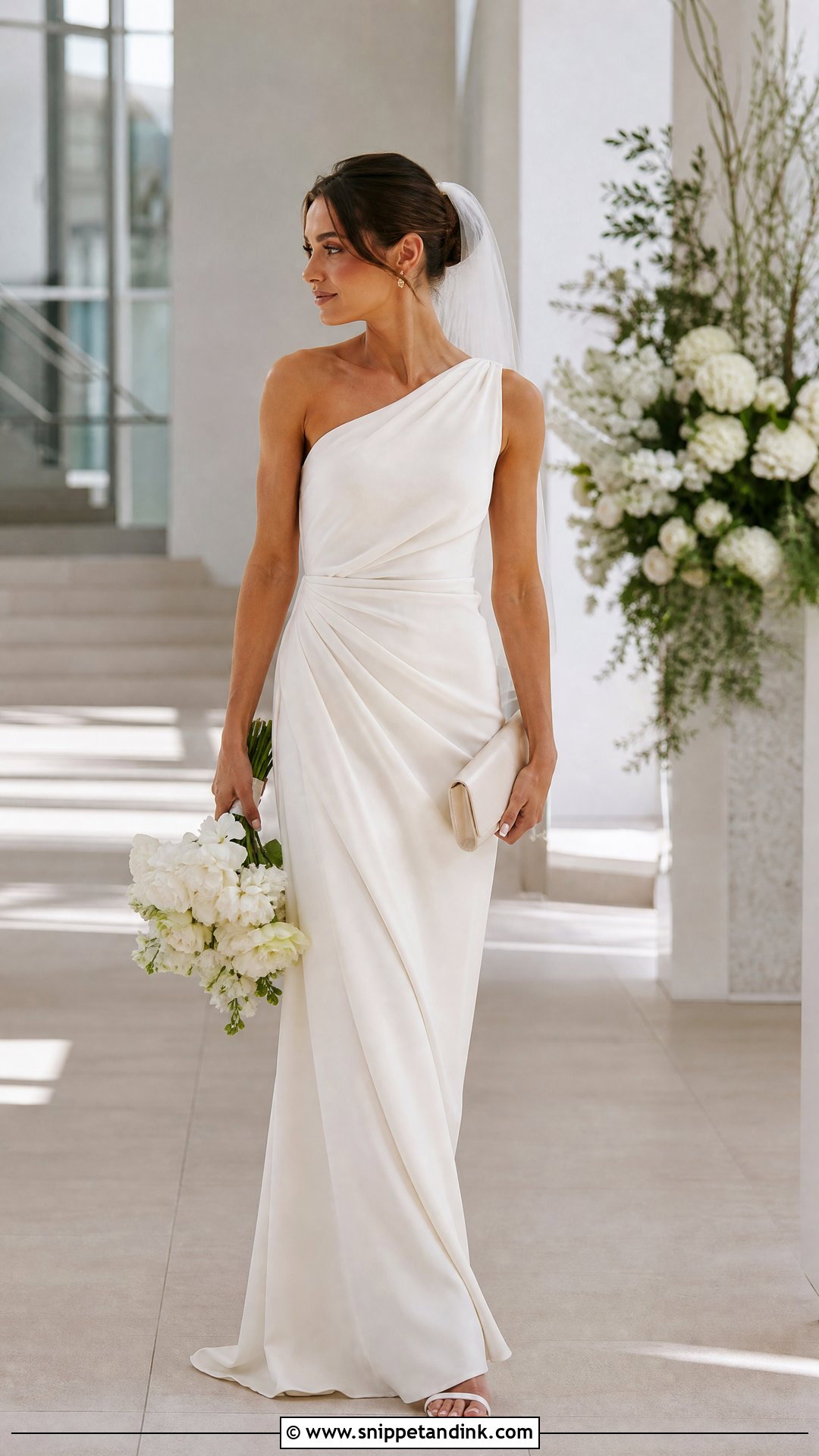
A single shoulder pulls the eye up and across, giving a plain gown a sculptural line. The fabric choice makes or breaks it. Fluid crepe, satin or a good stretch jersey falls smoothly from the shoulder, while anything stiff stands away and looks boxy. I check that the strap doesn’t slide toward the arm when you walk, because a draped shoulder that shifts all day is miserable. Keep the skirt to a column or a restrained A-line, wear your hair up, and choose one statement earring or a small pair of studs. Skip the necklace entirely. A shoulder-length tulle veil tucked under the updo works better here than a long one.
7. High-Neck Halter Wedding Dress
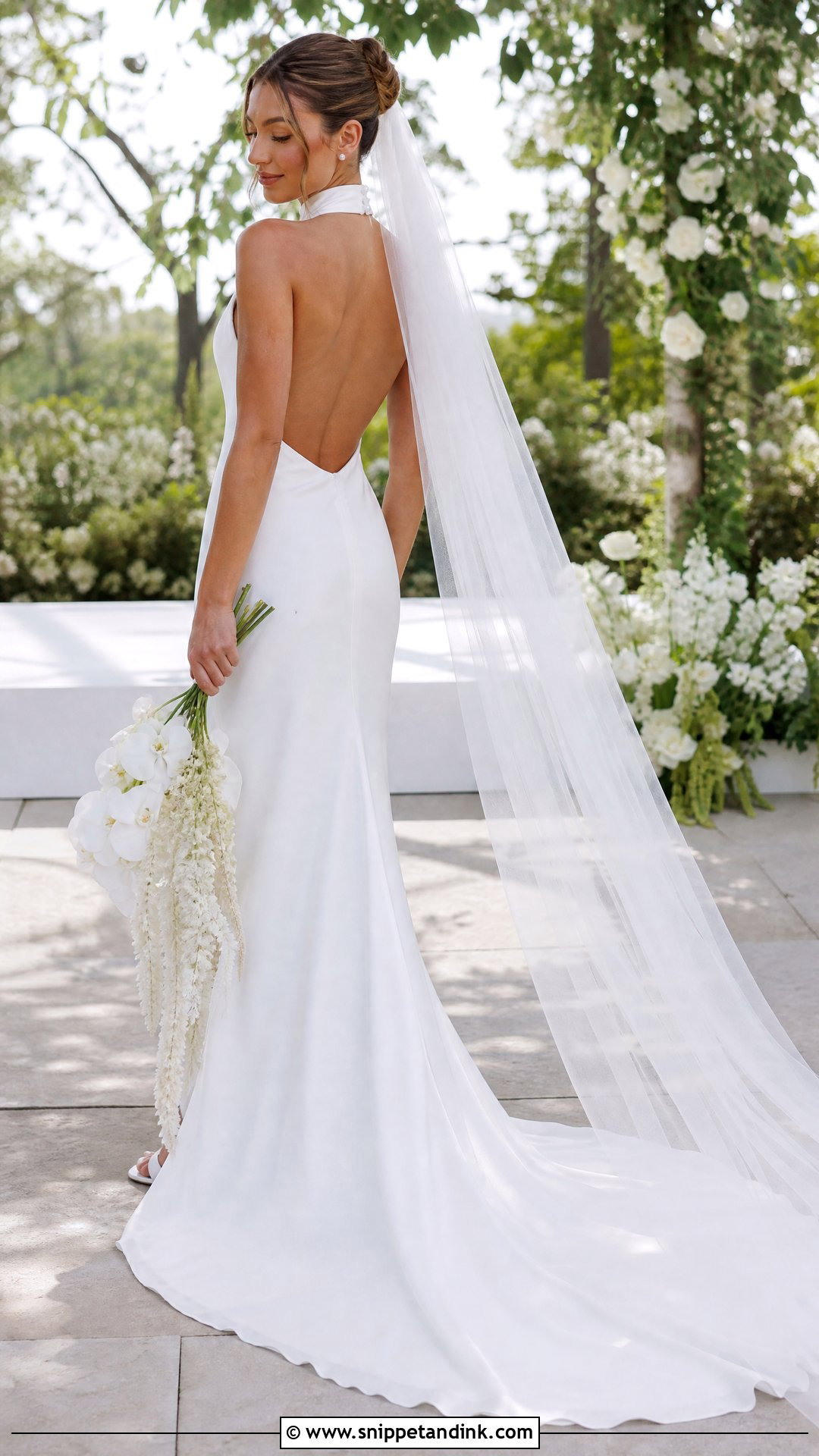
High-neck halters lengthen the upper body and show off the shoulders, but they live or die by the armhole. If it gapes, the side of the bust shows every time you turn, so I pin that area closely at fittings and check it again with arms raised. The neckline can be gathered for softness or cut sharp and architectural; both pair well with an open back that keeps the covered front from looking stern. Silk crepe or satin gives a smooth surface. I’d wear a polished bun, small hoops or pearl studs and barely-there sandals, with a long veil fixed below the bun so it frames the back. Long-stemmed flowers echo the vertical line.
8. Minimalist Ball Gown Wedding Dress
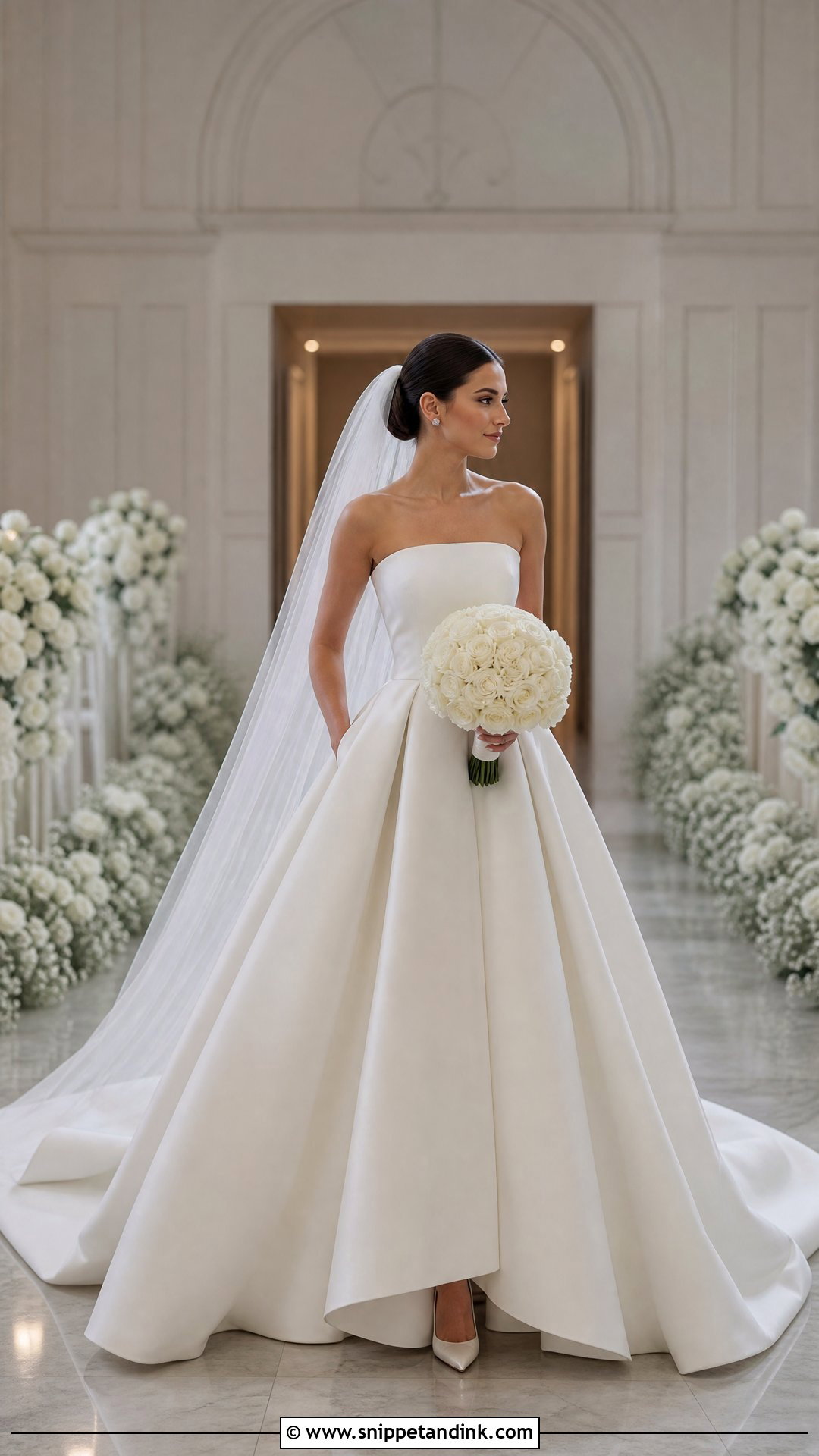
Simple does not have to mean slim. A plain ball gown makes its entrance through proportion, and the fabric has to be substantial enough to hold the skirt without a mountain of petticoat. Satin or mikado over a strapless or scoop-neck bodice is my usual starting point, and box pleats give volume while keeping the surface clean. Every seam on the bodice shows on a gown like this, so budget for proper tailoring. Classic pumps, crystal or diamond studs and a smooth low bun keep the styling quiet. A cathedral veil with a plain edge adds ceremony drama, hidden pockets make the skirt practical, and a rounded bouquet matches its scale.
9. Cap-Sleeve Bateau Wedding Dress
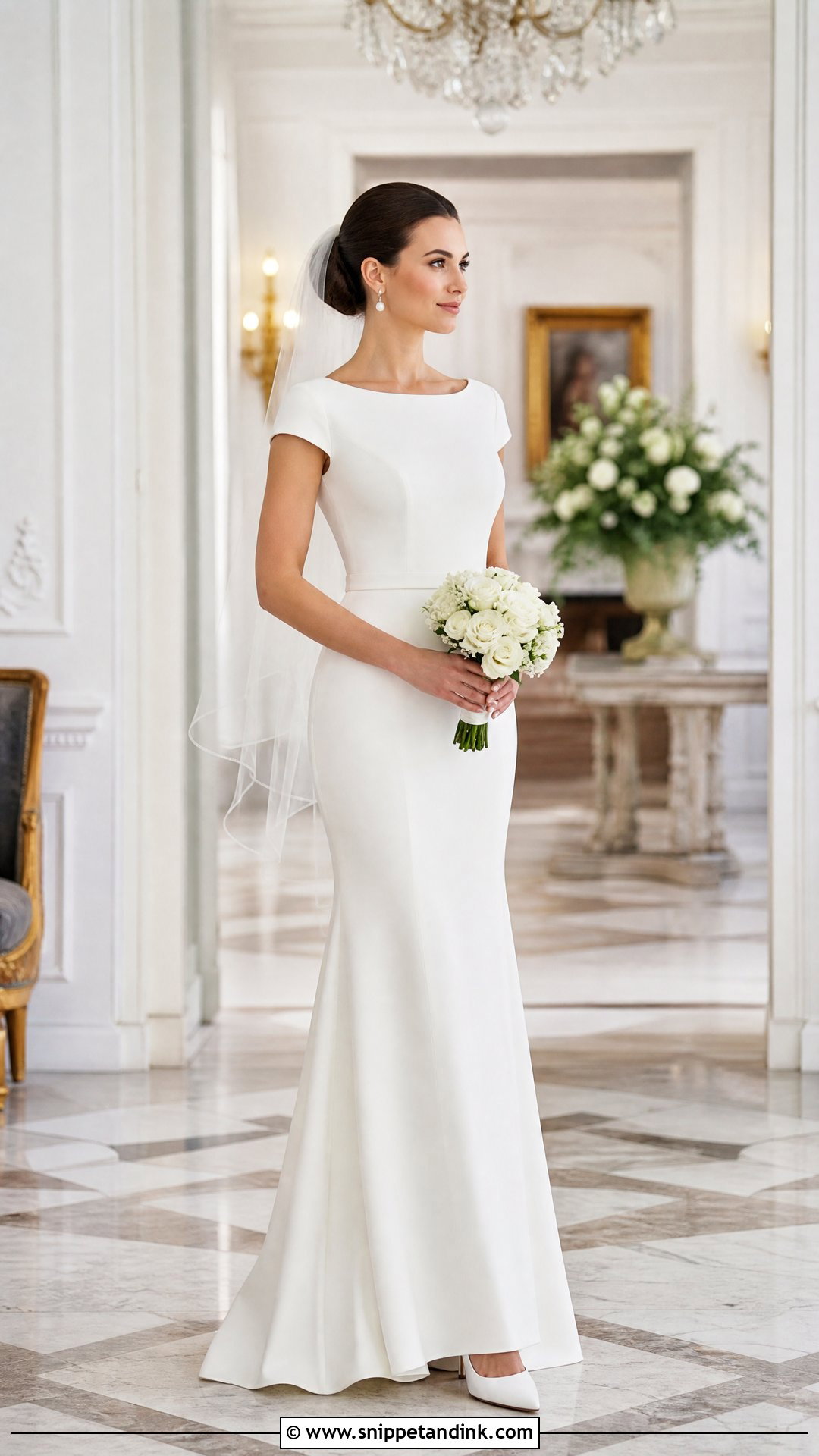
A cap-sleeve bateau wedding dress is the neckline I recommend to brides who want a little shoulder coverage without full sleeves. The wide neck follows the collarbone and the tiny sleeves sit just over the shoulder point. That shoulder seam is my priority at fittings: if it sits even slightly forward or back, the sleeves pull and the neckline twists. Choose matte crepe for a modern finish or satin for formality. Pearl earrings, a smooth chignon and pointed closed-toe heels suit it, and a waist-length or fingertip veil frames the neck without swamping the sleeves. Covered buttons down the back are enough detail.
10. Cowl-Back Wedding Dress
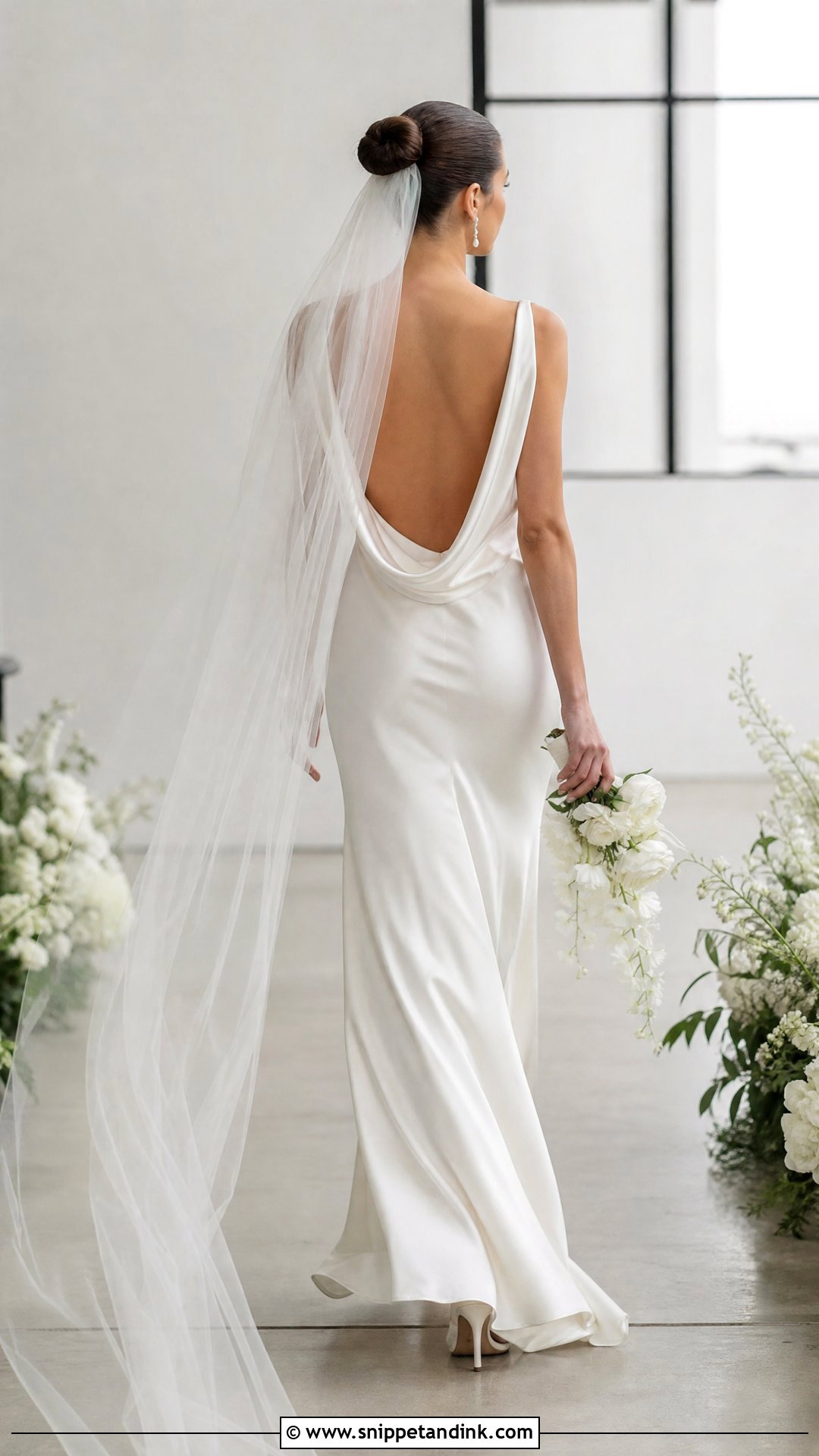
Front on, a cowl-back dress looks almost severe; then you turn and the back falls in soft folds. Silk satin is the fabric I’d choose, because its weight lets the cowl drop naturally and catch light. The risk is the drape opening too far when you bend or sit, so I have brides do both at the fitting, and sometimes a small hidden tack or a clear elastic keeps it in place. A high front or narrow straps balance the low back. Wear your hair up so the drape is on show, add delicate earrings and slim heels, and fix a sheer veil above the bun. Built-in support helps keep the line smooth.
11. Simple Lace-Trim Wedding Dress
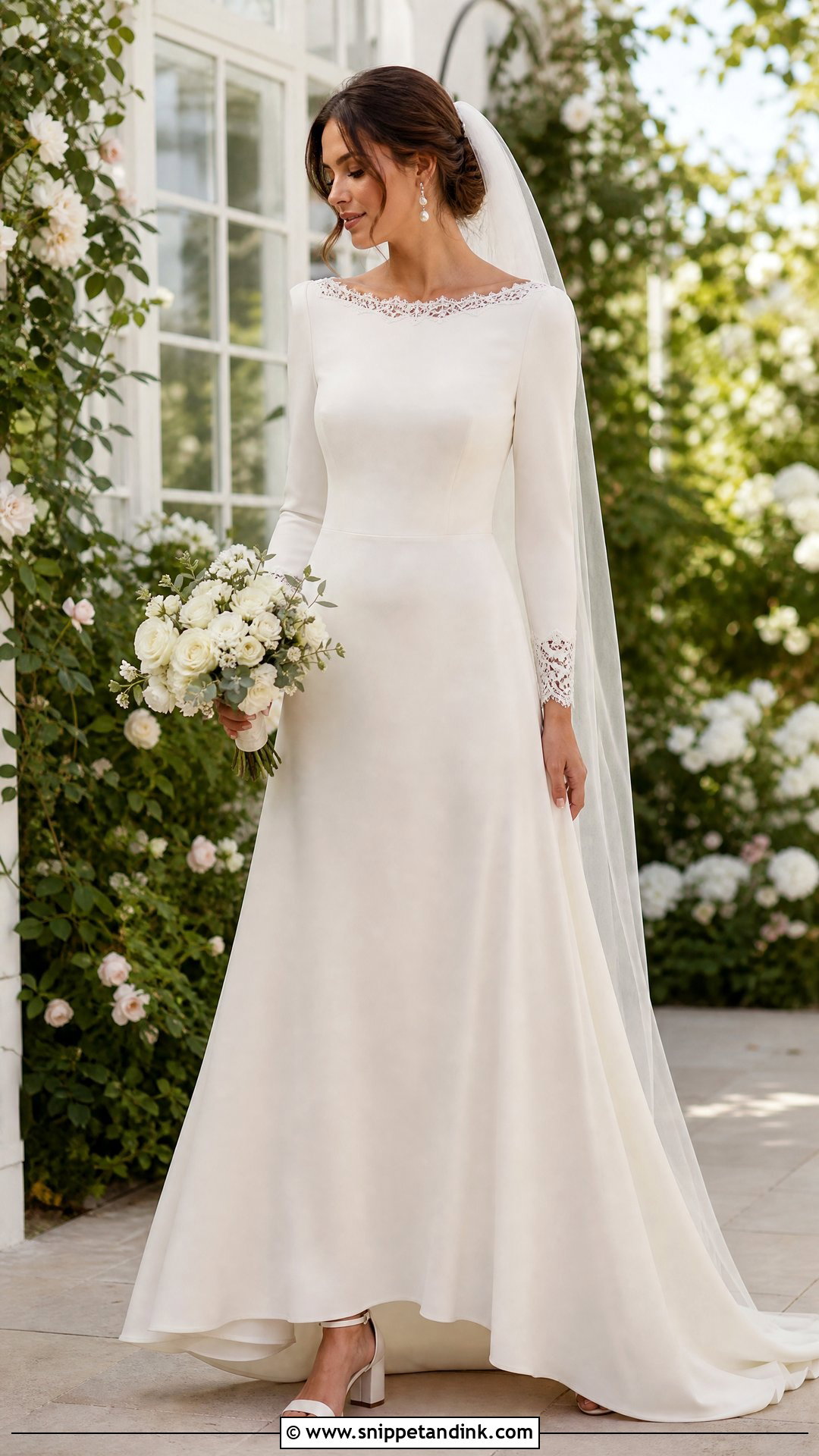
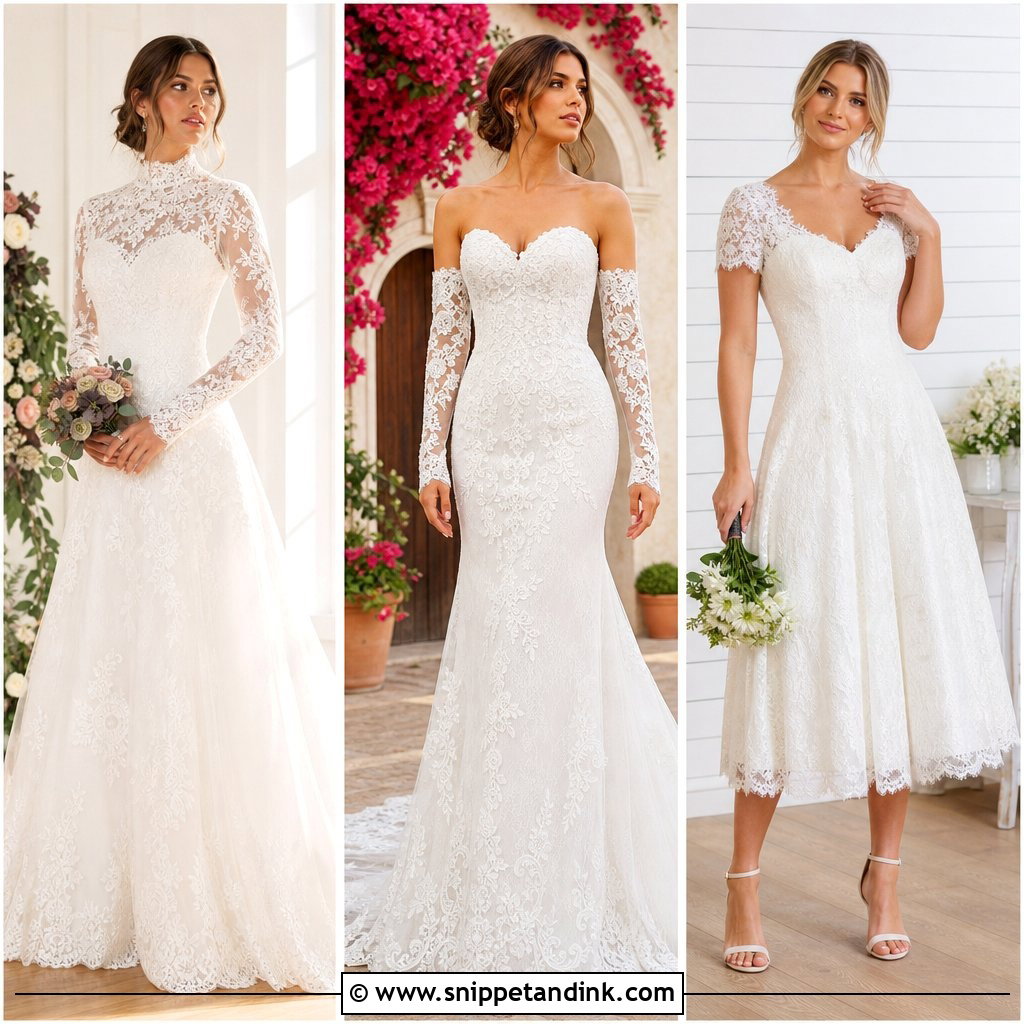
If you like lace but don’t want to be covered in it, put it in one or two places only. I’d start with a smooth crepe or chiffon dress and add a fine lace edge at the neckline, sleeves, waist or along an open back. Small, even patterns stay understated; large florals start to take over again. A soft A-line skirt moves easily and suits most settings. Ivory block heels, pearl drops and a loose low bun go well with it, and a plain tulle veil stops the trim from competing with a busy edge. White seasonal flowers in the bouquet carry the softness through.
12. Corset Bodice A-Line Wedding Dress
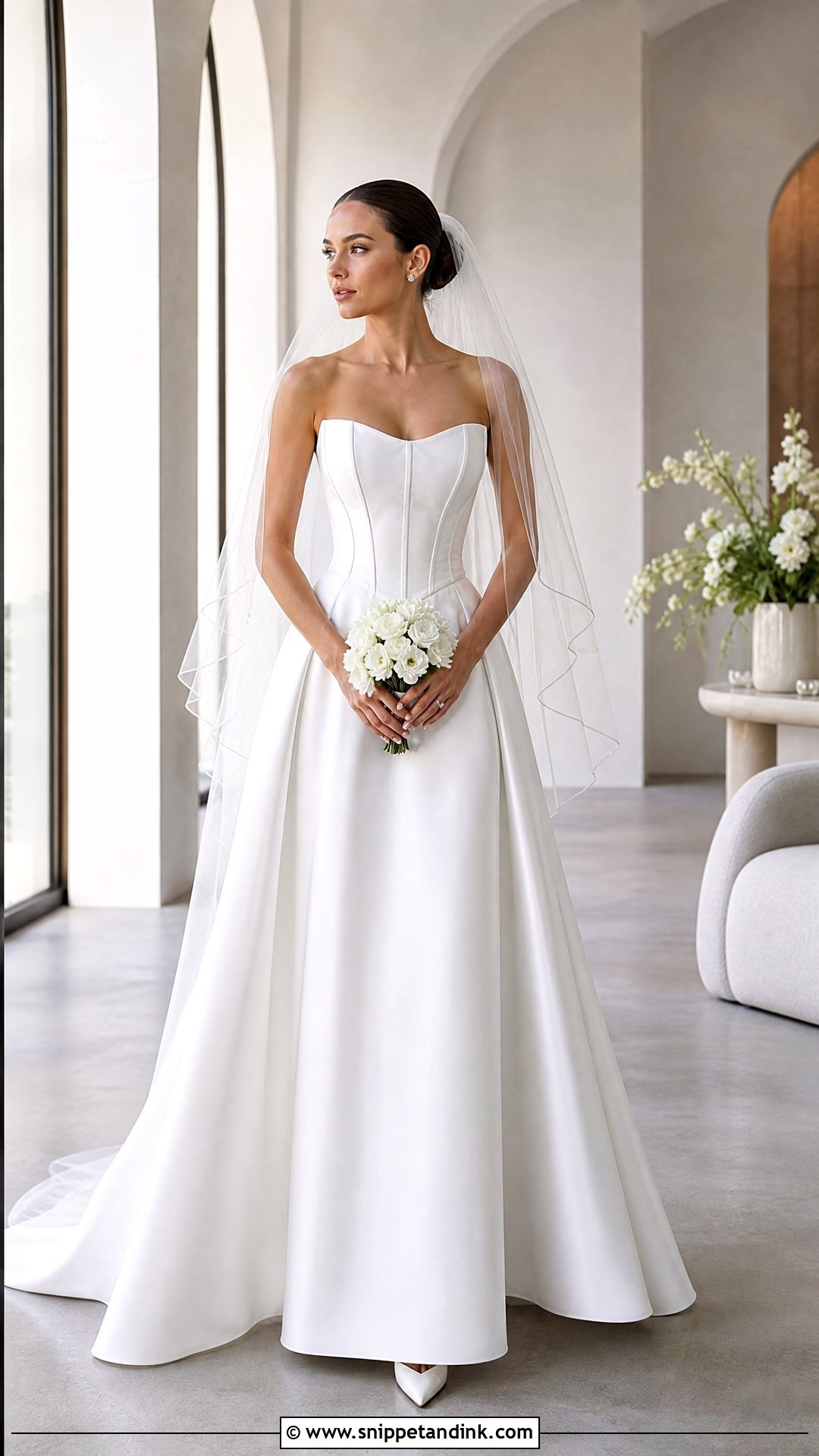
A corset bodice gives real support, which is why so many brides with a fuller bust end up loving this one. The structure holds the waist while the A-line skirt flows away from the hips, so you can still move and dance. For a minimal look I’d choose clean panel seams over embroidery or sparkle. Before you buy undergarments, ask exactly what’s built in: cups, boning and how the back closes. Lacing gives more adjustment than a zip if your size changes before the wedding. A straight or gently curved neckline, a sheer fingertip veil, crystal studs and pointed satin pumps finish it, with a low bun or smooth waves.
13. Scoop-Neck Sheath Wedding Dress
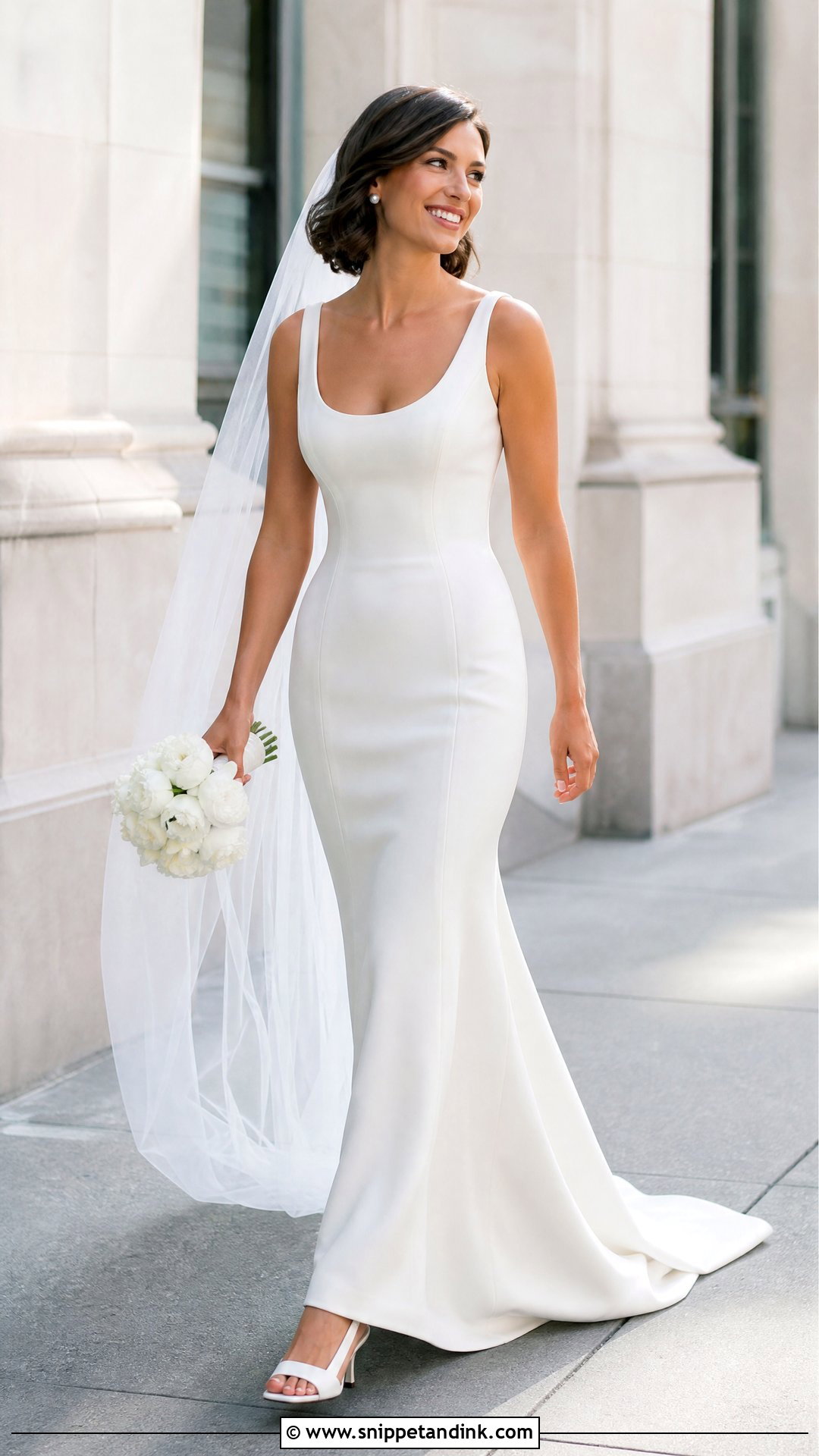
A scoop-neck sheath is the dress I’d point to for a bride who wants to feel comfortable for fourteen hours. The rounded neckline softens the face, and the skirt follows the body without the hard flare of a mermaid. Substantial crepe is the fabric to look for; thin crepe clings and shows every line. Wide straps add support, and princess seams shape the bodice if you want more definition. Slingback heels, pearl studs and a softly waved bob or a low ponytail keep it relaxed. A long, narrow veil adds movement without changing the silhouette.
14. Puff-Sleeve Chiffon Wedding Dress
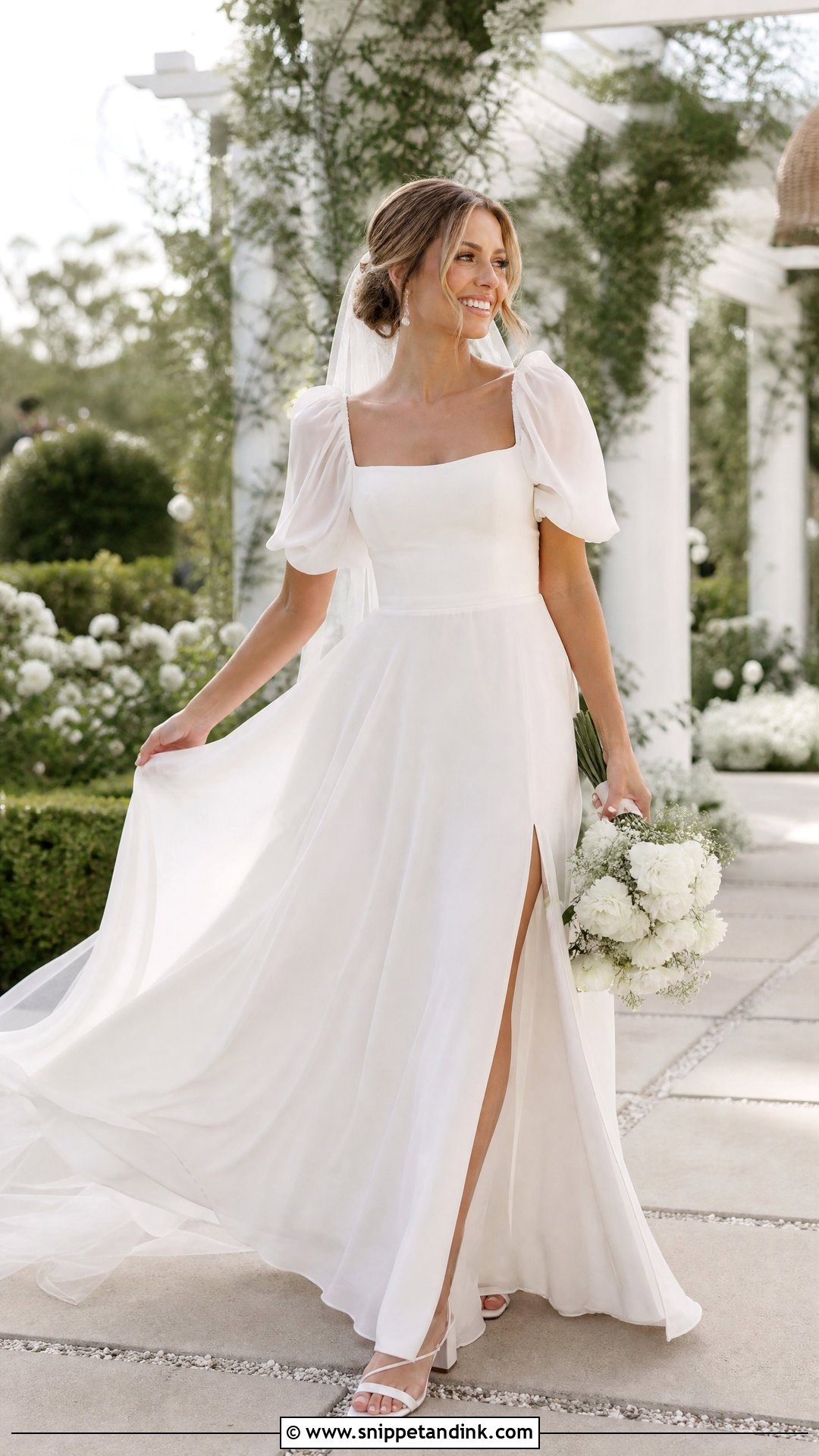
Puff sleeves can tip into costume fast, so I keep them small or medium and make sure the rest of the dress is fitted. Light chiffon over a structured bodice with a square or V-neck keeps the shape from going loose and floaty. At the fitting, lift your arms: if the sleeve elastic digs in, have it eased now, because it only gets tighter as the day warms up. It suits spring, gardens and outdoor ceremonies. Low block heels, fine drop earrings and a relaxed updo work with it, and a floral hairpin is a nice swap for a veil. A loosely arranged bouquet echoes the chiffon.

15. Drop-Waist Wedding Dress
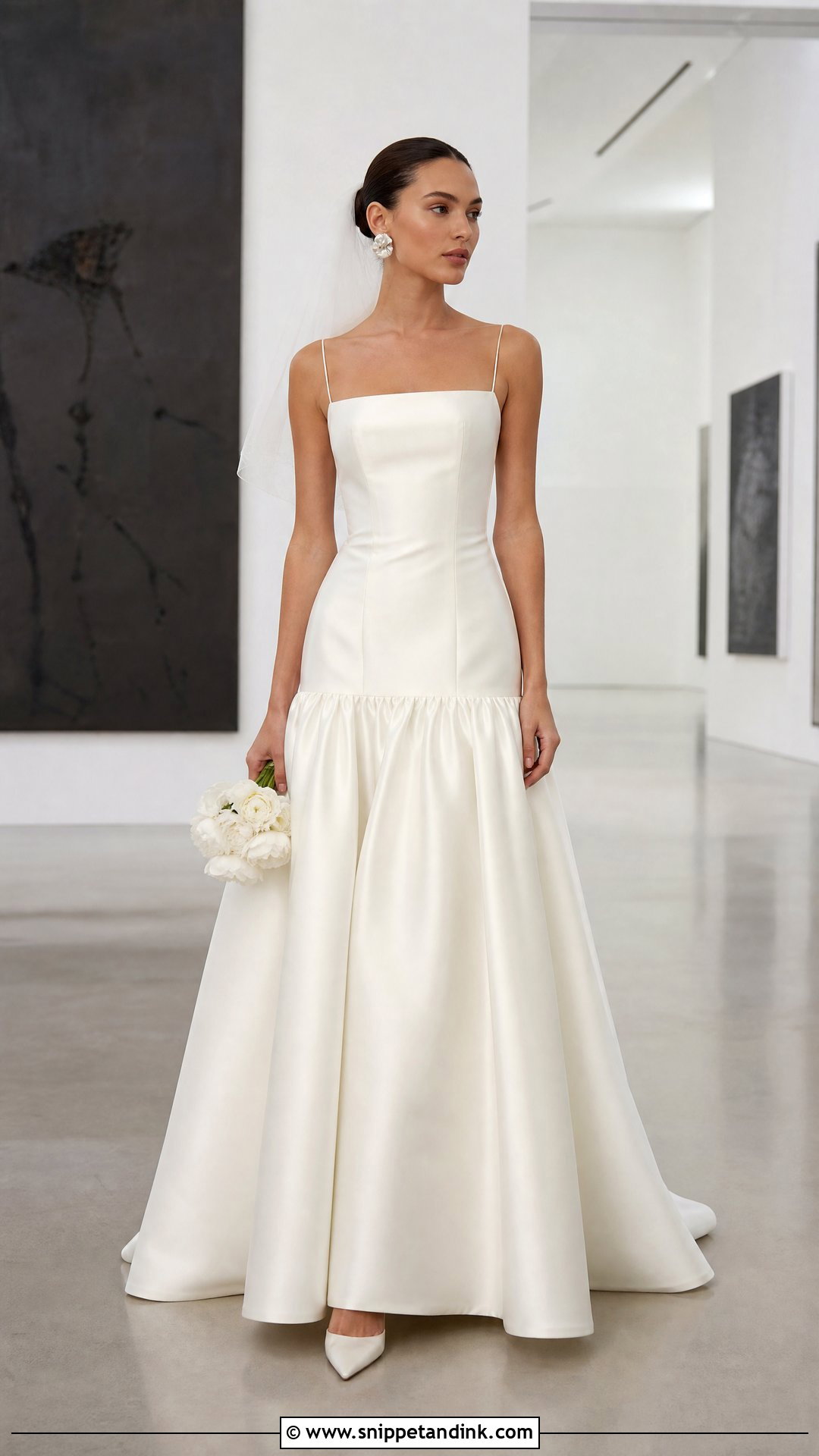
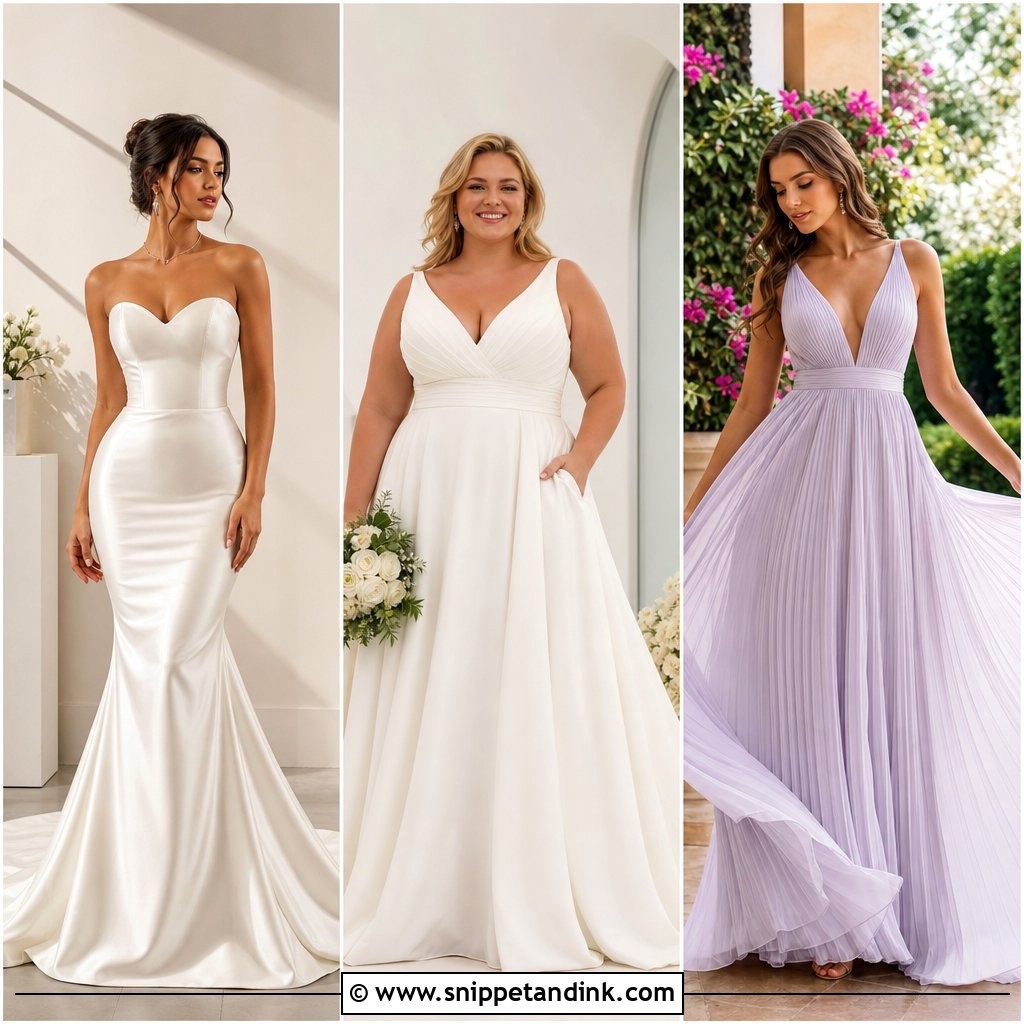
A dropped waist is a fashion choice, and it isn’t for everyone. Because the seam sits below the natural waist, it lengthens the torso, which flatters brides with a long body and can shorten the legs on petite frames. I’d always try two or three skirt volumes before deciding, since the balance changes a lot. Smooth satin or mikado keeps the construction sharp. A straight neckline and narrow straps suit it best. Pair it with pointed pumps, sculptural earrings and a sleek updo, and choose a short veil or a small hair bow. Hold the bouquet higher than usual so it doesn’t hide the waist seam.
16. Short City Hall Wedding Dress
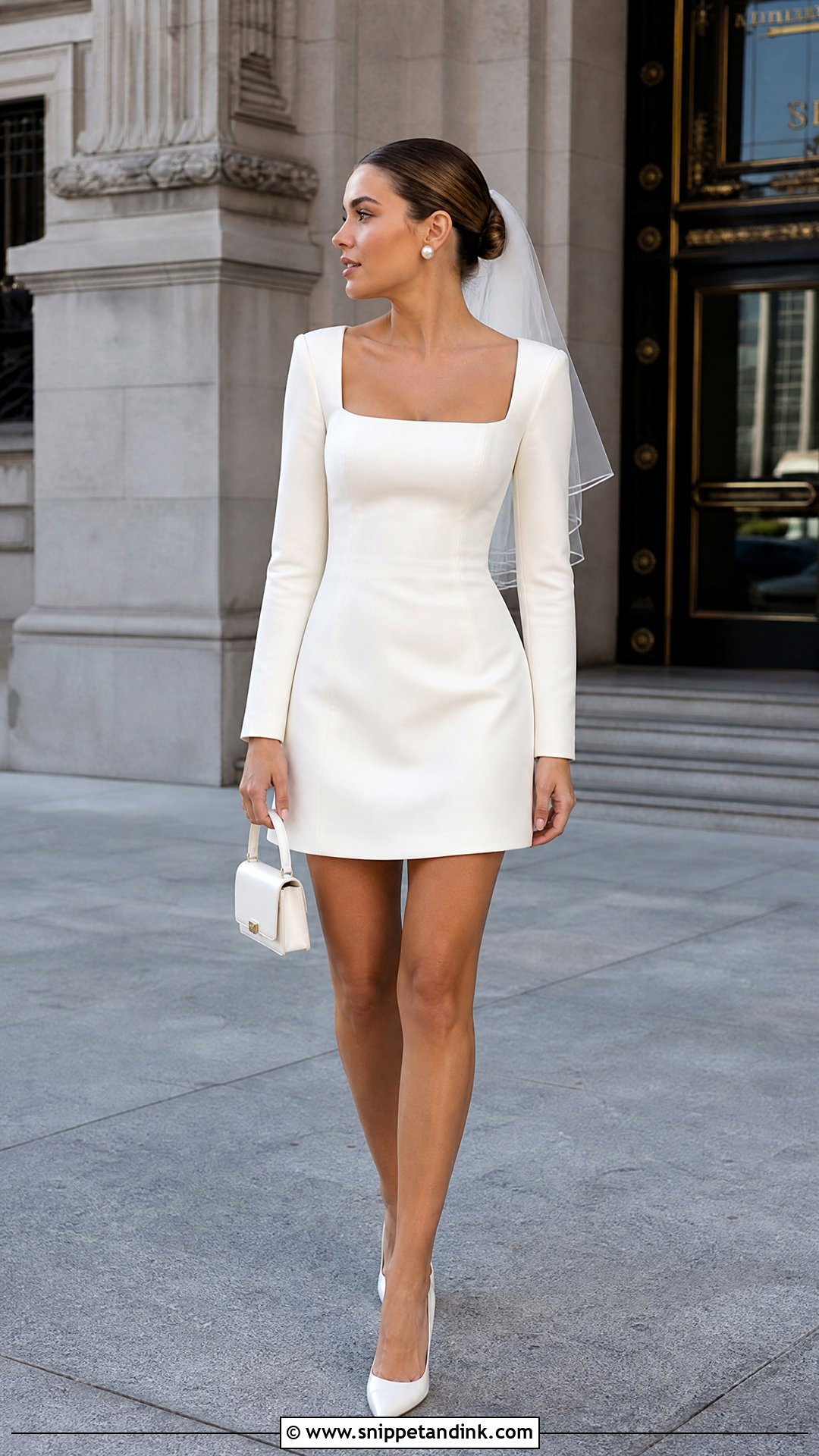
A short city hall wedding dress needs a fabric with some body to look bridal rather than like a party dress. Satin, crepe or a textured jacquard in a structured mini or knee-length sheath does that, with a square neckline, tailored sleeves or a slight flare. Sit down in it before you commit: short hems ride up more than you expect on a registry office chair. Pointed pumps, a small top-handle bag, pearl earrings and a short veil keep it clearly bridal. A long white coat over the top adds coverage and looks sharp in photos on the steps. It goes straight on to a restaurant dinner.
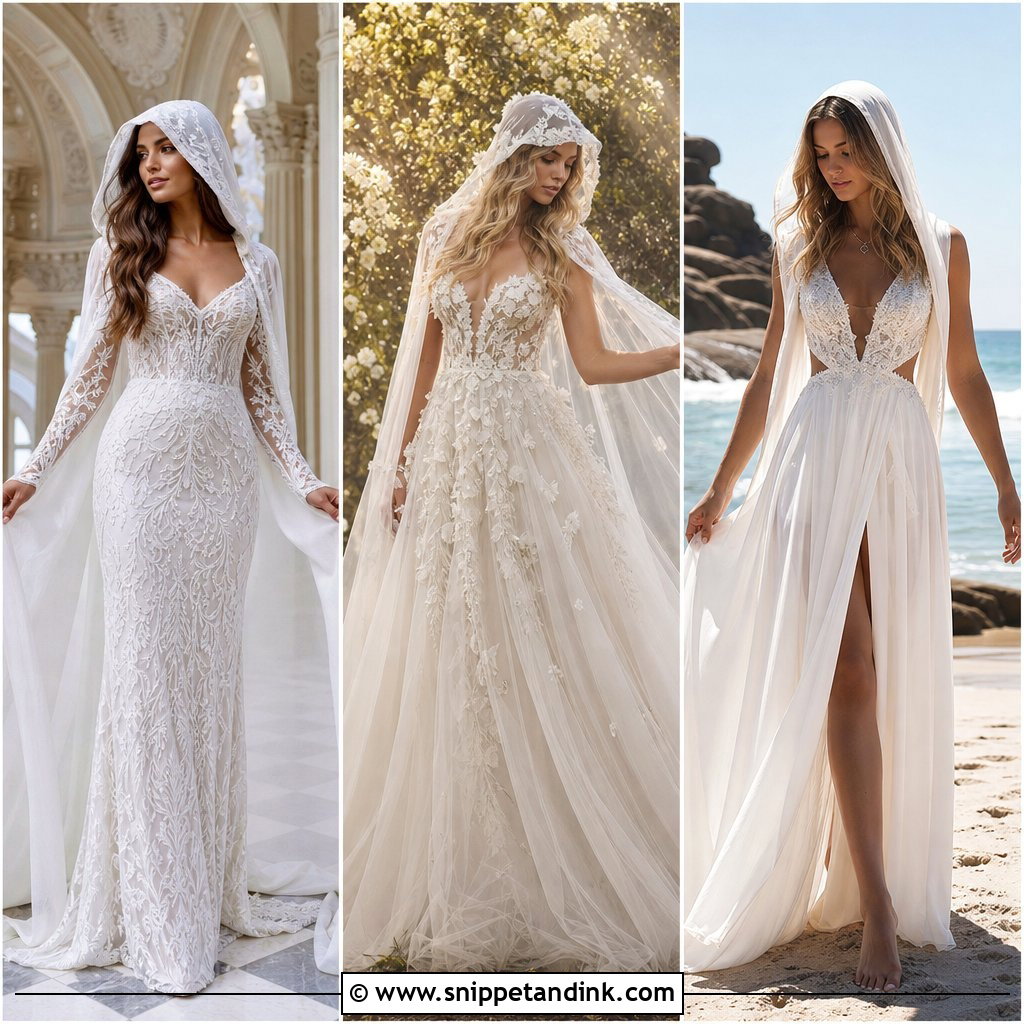
17. Simple Wedding Dress With Cape
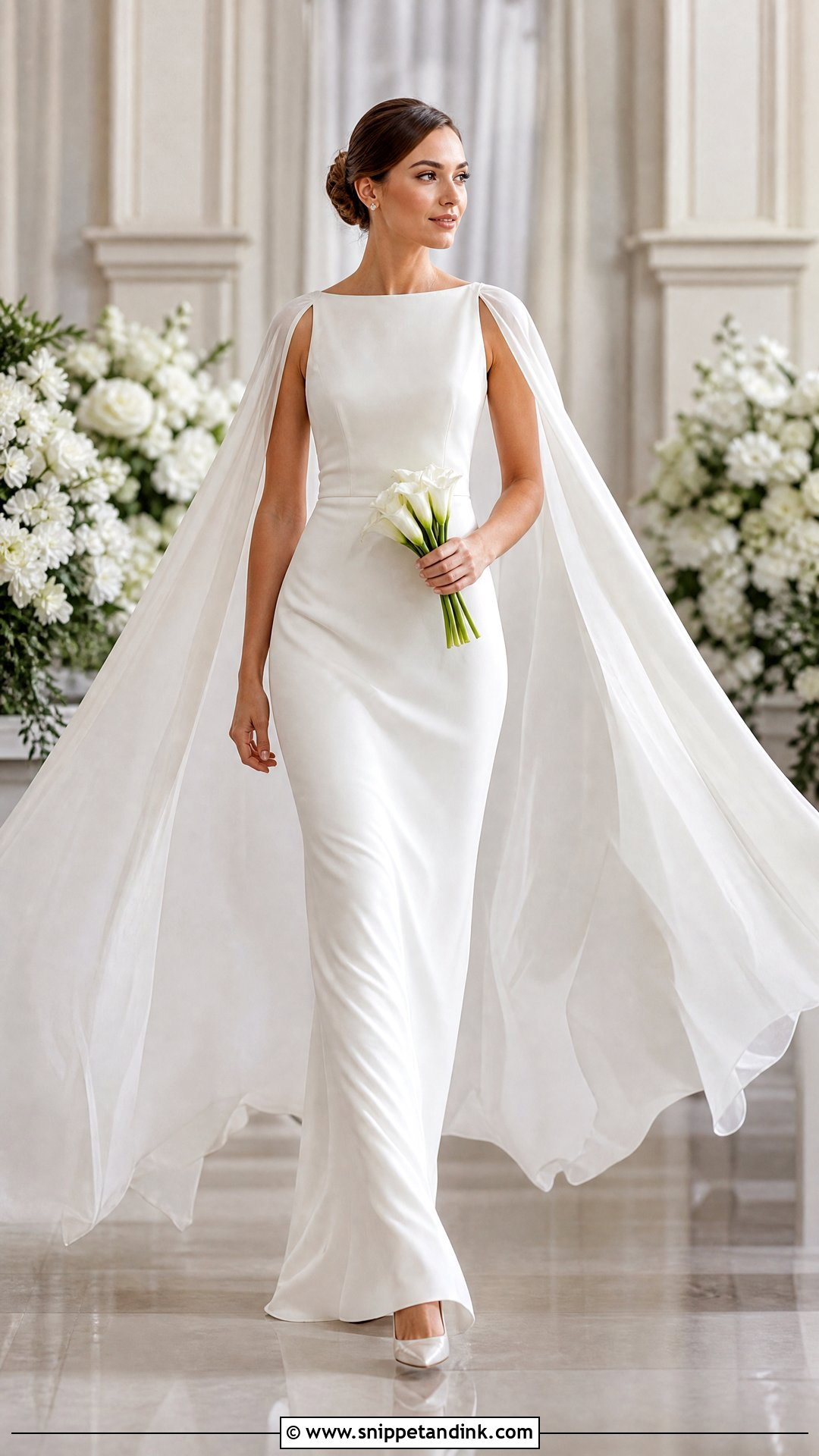
A cape gives a plain dress movement and can stand in for a veil. I’d start with a sleeveless column or A-line in smooth crepe and attach the cape at the shoulders or neckline; sheer tulle feels airy, matching crepe feels more formal and holds its shape. Ask your seamstress to fit it with snaps or hooks so it can come off for the reception, because a cape on the dance floor gets stepped on. With the cape already framing the upper body, skip necklaces and large hair pieces. Pointed heels, small studs and an updo that keeps the attachment points clear finish it. A slim bouquet leaves the back on show.
18. Two-Piece Wedding Dress
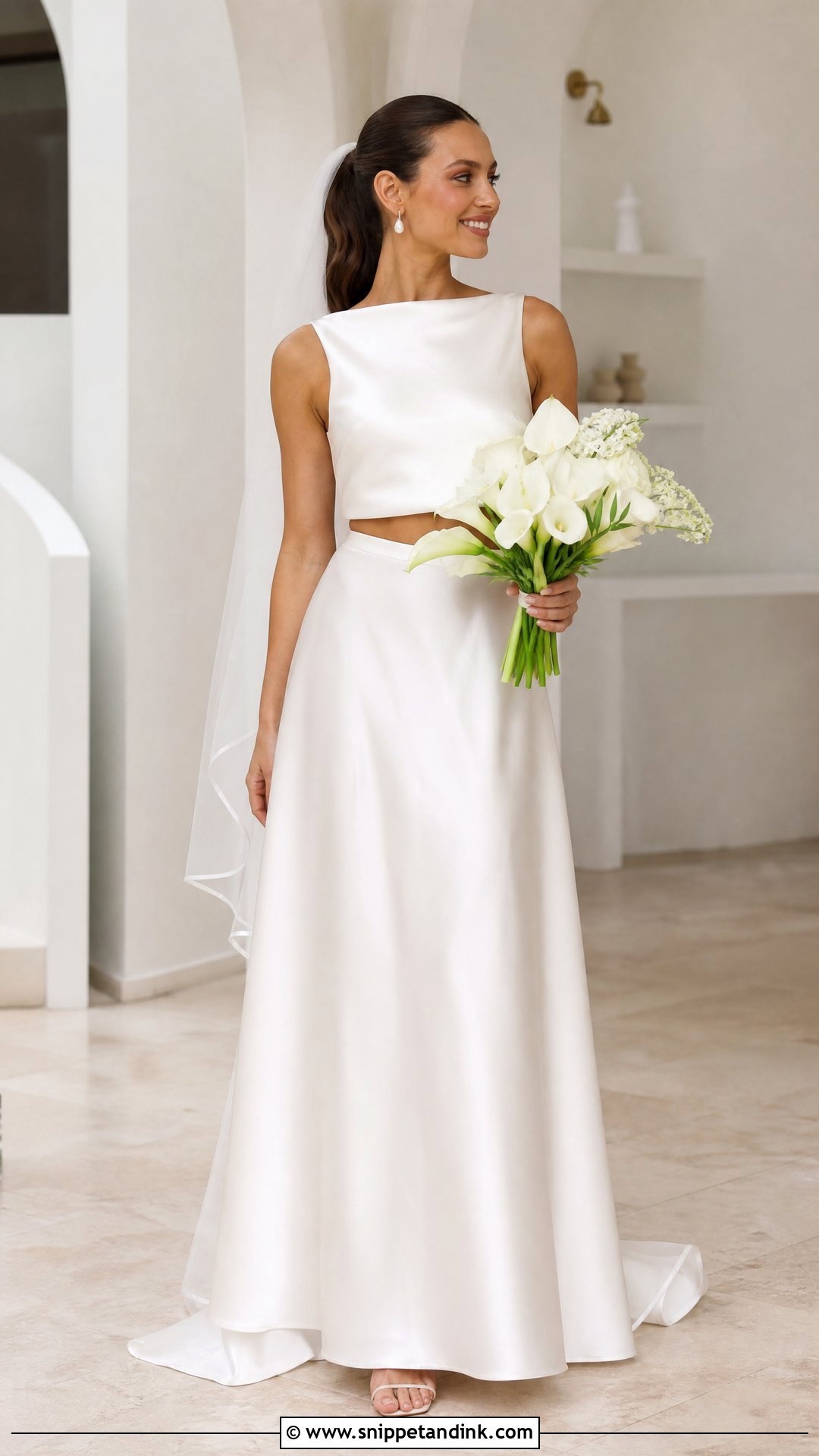
Separates give you options a gown can’t: a fitted satin or crepe top over a high-waisted, floor-length skirt in the same shade. A small gap at the waist reads modern, while an overlap gives more coverage. My main warning is about colour. Two pieces from different fabric lots, or different fabrics entirely, can show as two whites in photos, so I compare them in daylight before buying. Make sure the top doesn’t ride up when you move and the waistband sits flat without twisting. Minimal sandals, pearl earrings and a sleek ponytail or bun suit it, and a plain veil ties the two pieces together.
19. Backless Crepe Wedding Dress
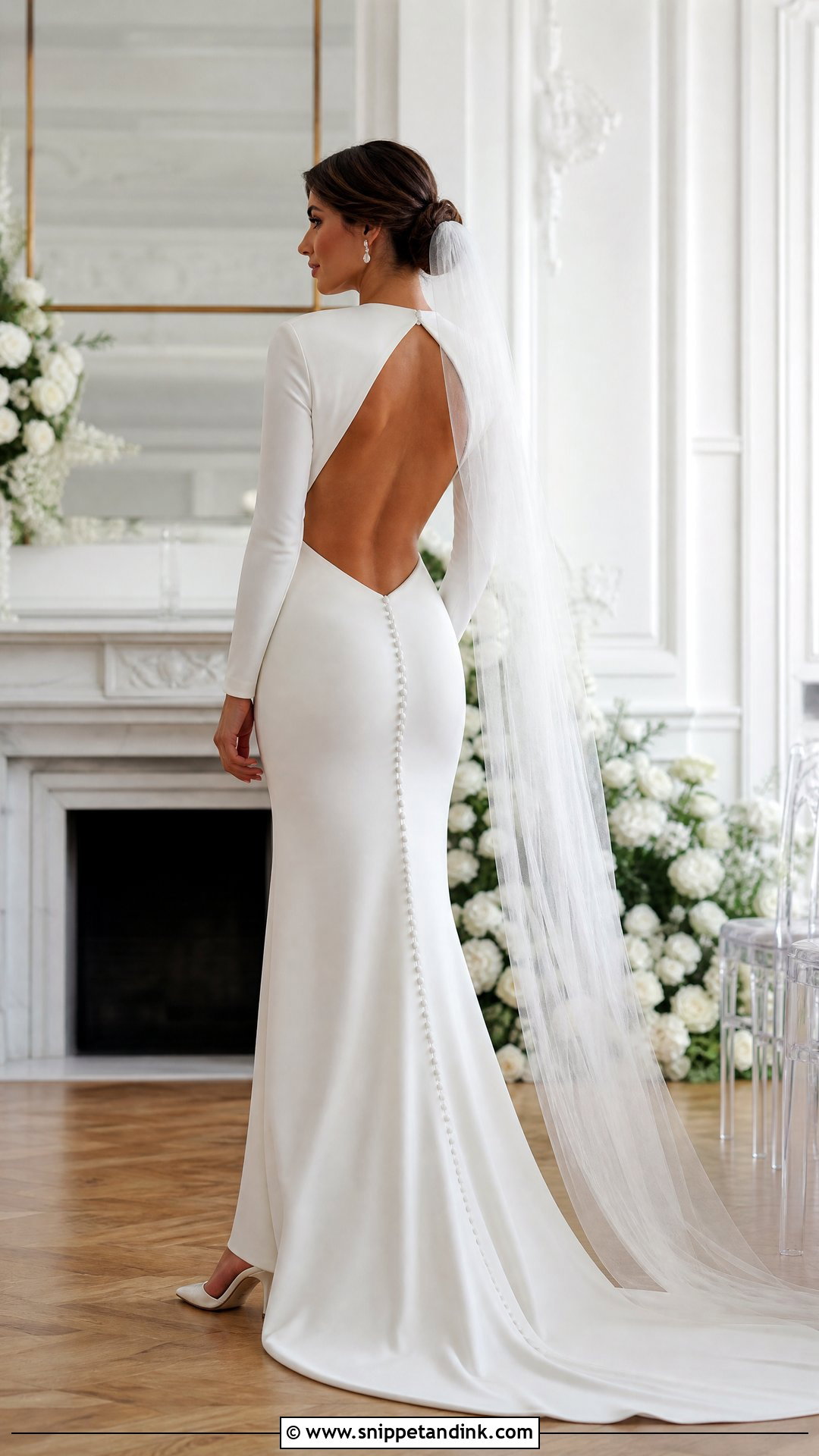
Open backs are where a simple dress gets its surprise. From the front it can have a high neck, long sleeves or a plain fitted bodice, and the back does the rest. Thicker crepe holds a smooth line here and supports better than thin fabric. Built-in cups are close to essential, since a standard bra simply won’t work, and a narrow strap or covered buttons add security. Wear your hair up so the back is visible, with delicate drops and pointed heels, and set the veil beneath the bun rather than on top. A long plain train extends that back line.
20. Asymmetrical Midi Wedding Dress
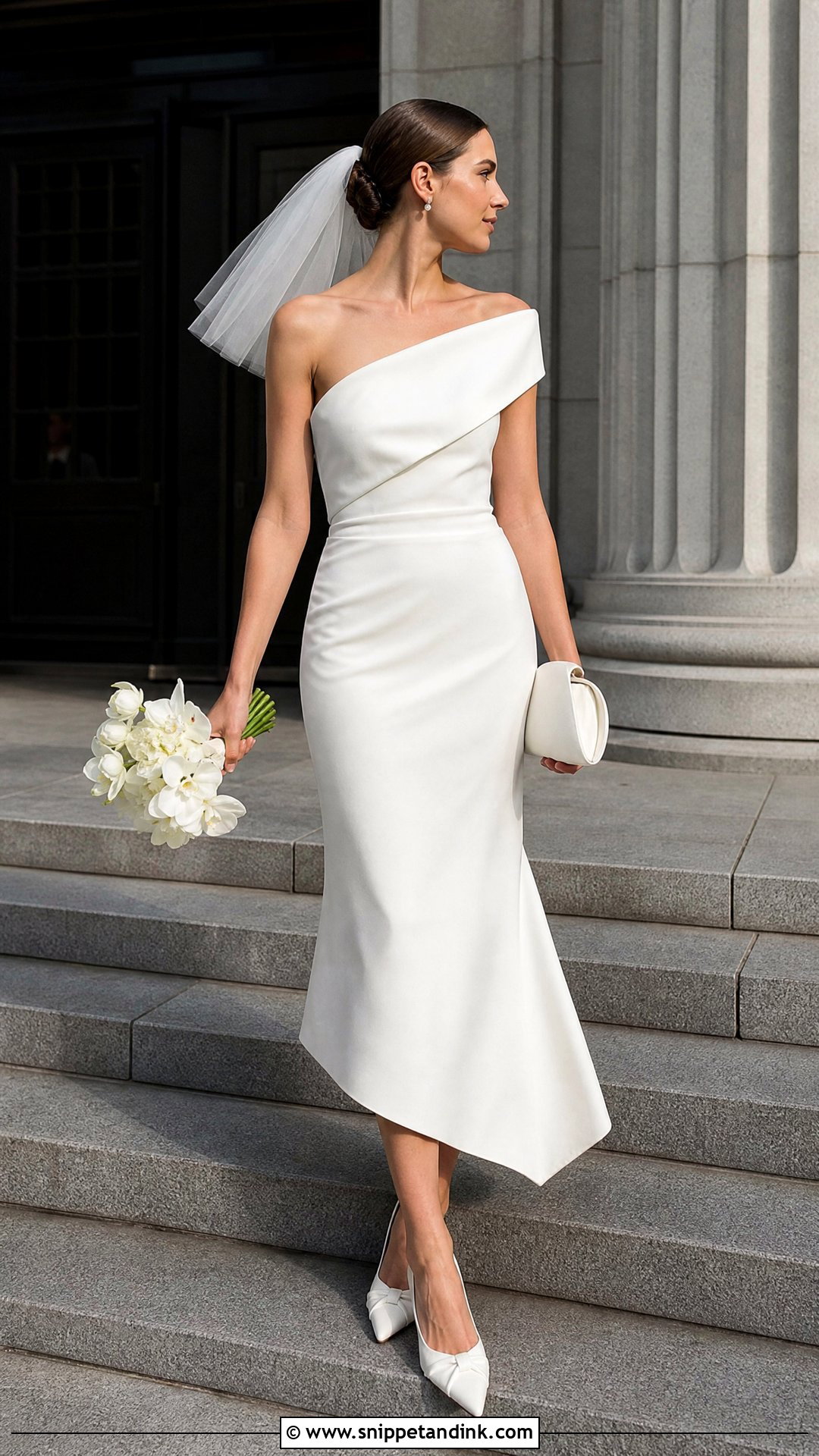
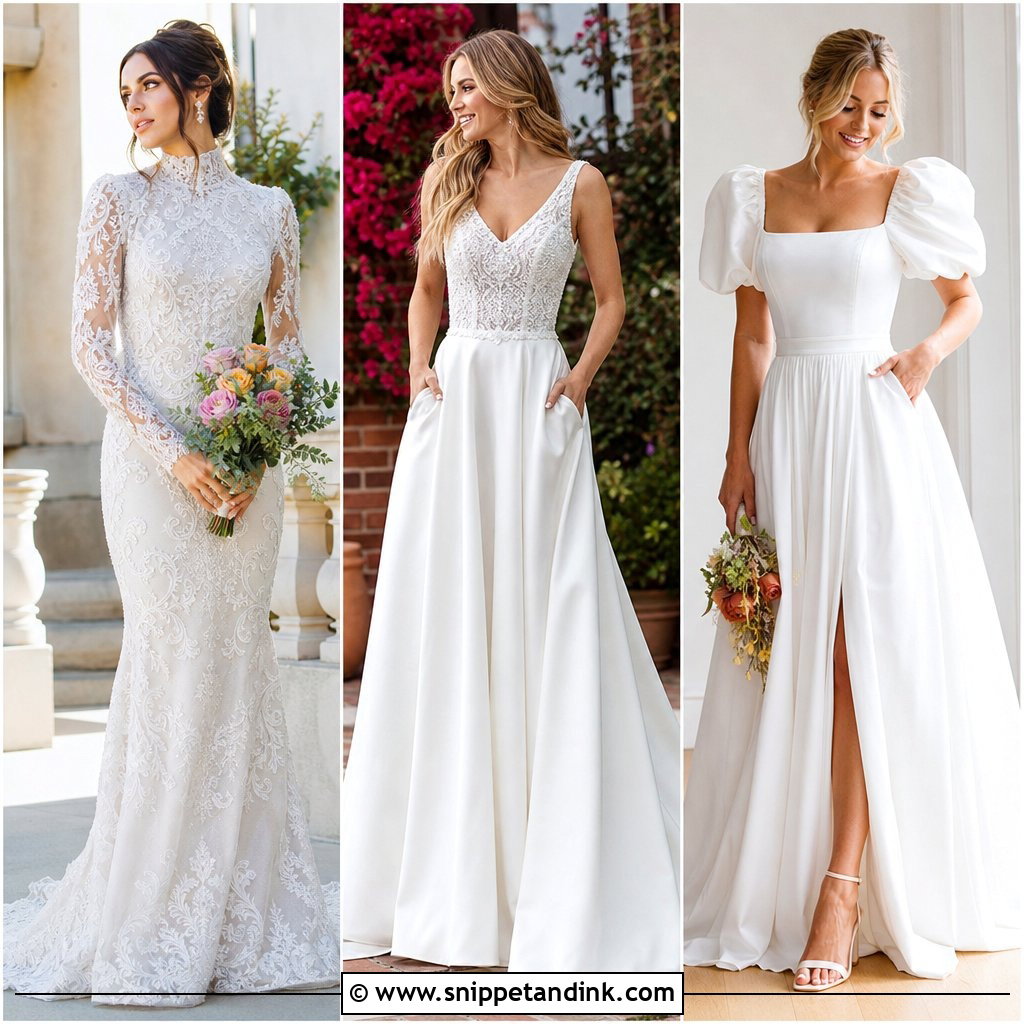
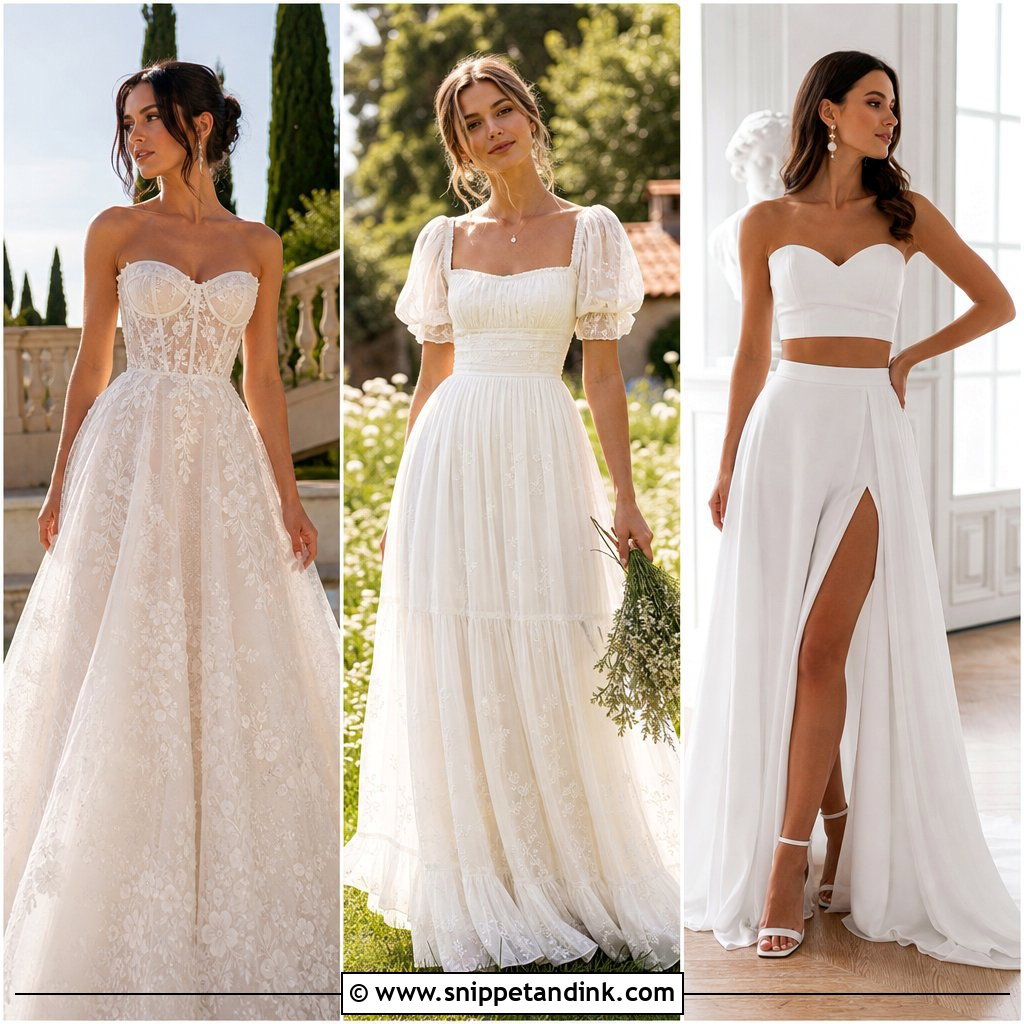
An asymmetrical midi wedding dress gets its interest from a diagonal neckline, an angled hem or a soft drape, not decoration. Structured crepe keeps the lines sharp; satin makes it more fluid. With an angled hem, check where the shortest point lands, because it should hit a flattering part of the leg and still let you walk freely. A midi puts your shoes on show, so slingbacks or ankle-strap heels are worth spending on. Add small earrings, a sculptural clutch and a low bun, with a short veil or a sleek headband. I like it best for courthouse ceremonies and smaller, relaxed receptions.
Underwear, Fittings and the Timeline for a Minimal Dress
Minimal dresses need more fitting time, not less. I tell brides to order around eight to ten months ahead if the dress is made to order and to plan for two or three alteration appointments, with the last one roughly two weeks before the wedding. Turnaround varies a lot between bridal shops and seamstresses, so ask for their schedule when you order.
Bring the real foundations to every appointment
Buy your bra, shapewear and shoes before the first fitting and wear the same ones every time. A hem pinned for a flat shoe will drag if you switch to heels, and a slip dress fitted over one pair of knickers can show a line over another. Nude to your own skin tone disappears better under white than a white set does.
Steaming and travelling with satin and crepe
Plain fabrics show creases far more than lace. I hang the dress the night before so it can drop, then steam from the inside on low heat with the nozzle moving, never pressing a hot iron straight onto satin, which leaves a shine. For travel, lay it flat across a back seat in its breathable bag rather than folding it in a suitcase. A small kit of a handheld steamer, clear nail polish for snags and white chalk for marks has saved more than one simple gown on the morning.
Let the Cut Lead and Stop Adding
When you’re down to a few of these, put silhouette, comfort and setting ahead of any small detail. The same clean gown can look romantic or modern depending on the neckline, fabric, length and what you put with it. Try each one with the shoes and underwear you’ll actually wear, then walk, sit and lift your arms. Spend on alterations, because fit shows more on a plain dress than on anything else. Let one feature lead, whether it’s an open back, a sharp neckline, a cape or a short hem, and stop adding once it does.
You'll Like These Ideas:



Leave a Reply