
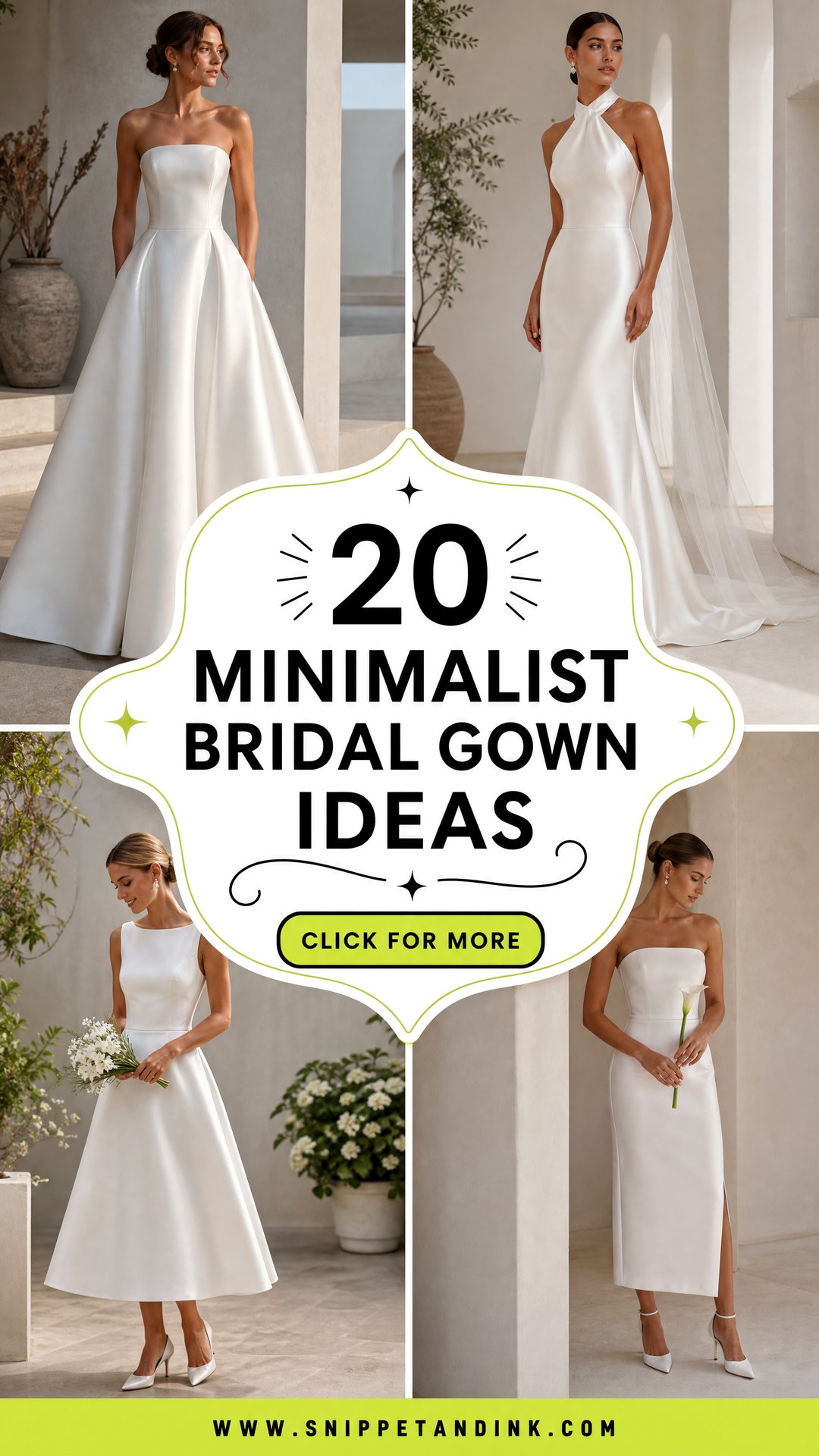
Take away the lace and crystals and a gown has three things left to work with: its fabric, its cut and how well it’s been altered to you. That’s why I find plain gowns the most demanding to style. Satin, Mikado, silk and matte crepe each set a different mood, and the interest moves to the neckline, the waist placement, the sleeves or a single fold of drape. Accessories follow the same discipline; each one has a job, or it goes. Here are twenty clean gown shapes, from ball gowns to sleek columns and midis, with notes on what I watch for when a bride tries each one on.
Which White Holds Up on Plain Satin and Crepe
Colour does more work on an unembellished gown than on a beaded one, because there’s nothing else to look at. The same shade can read quite differently depending on the fabric.
- Bright white suits matte crepe and cool or deep skin tones, but on shiny satin it can look harsh and blue in flash photographs.
- Ivory, the most common bridal shade, softens satin’s sheen and is kinder to most complexions.
- Soft ivory, champagne or blush-tinted shades add warmth, which can be lovely on fair skin that turns pale against white.
- Mikado and faille have a slight texture that catches light, so they tend to look a touch deeper than a smooth satin of the same name.
Shade names vary between designers, so don’t rely on the label. Ask for a fabric swatch, hold it under your chin by a window and then under indoor light, and look at it with no makeup on and again with makeup on. If you plan to wear the gown in a candlelit venue, a warmer ivory usually holds its colour better than a cool one.
1. Strapless Satin A-Line Bridal Gown
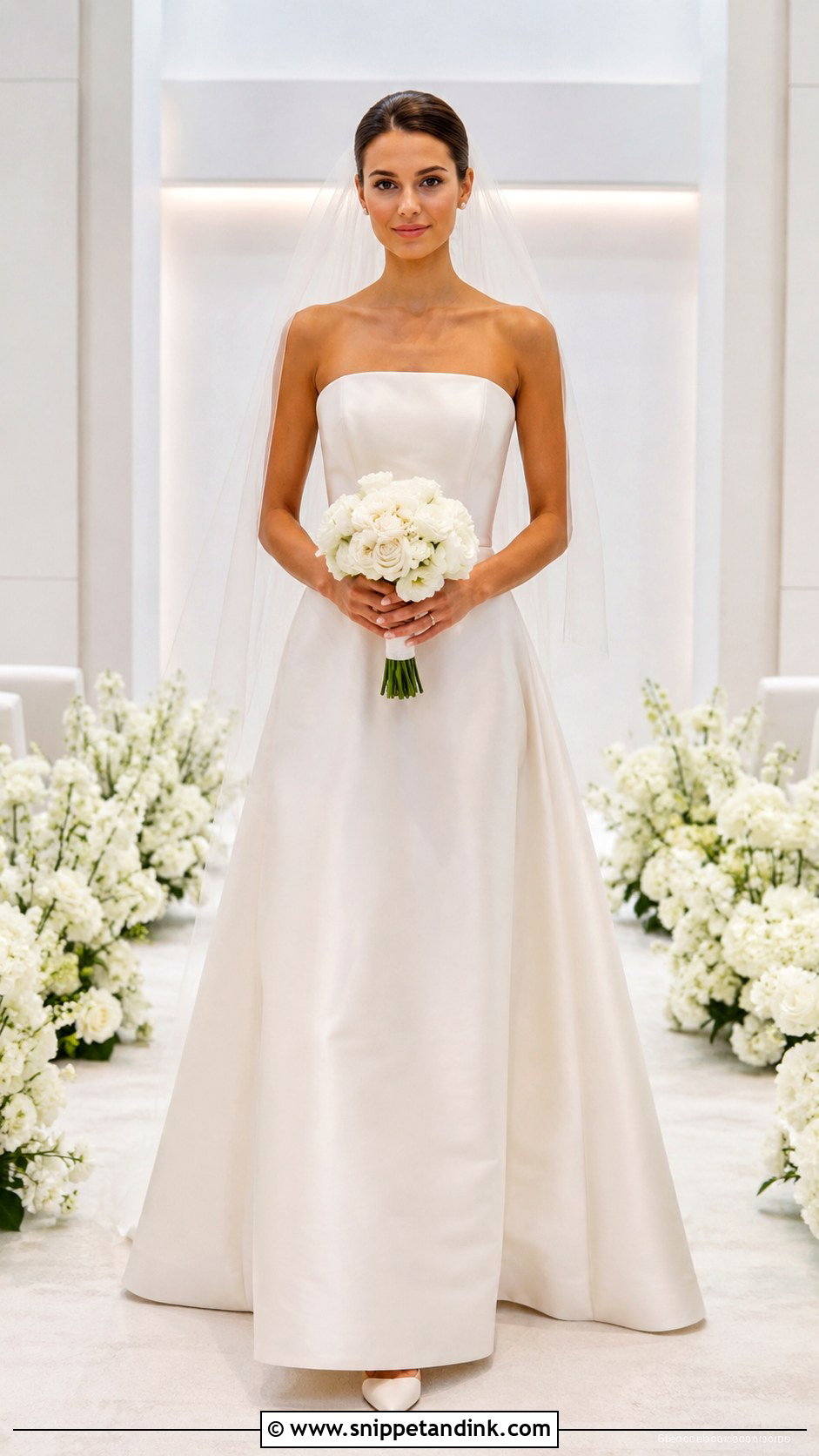
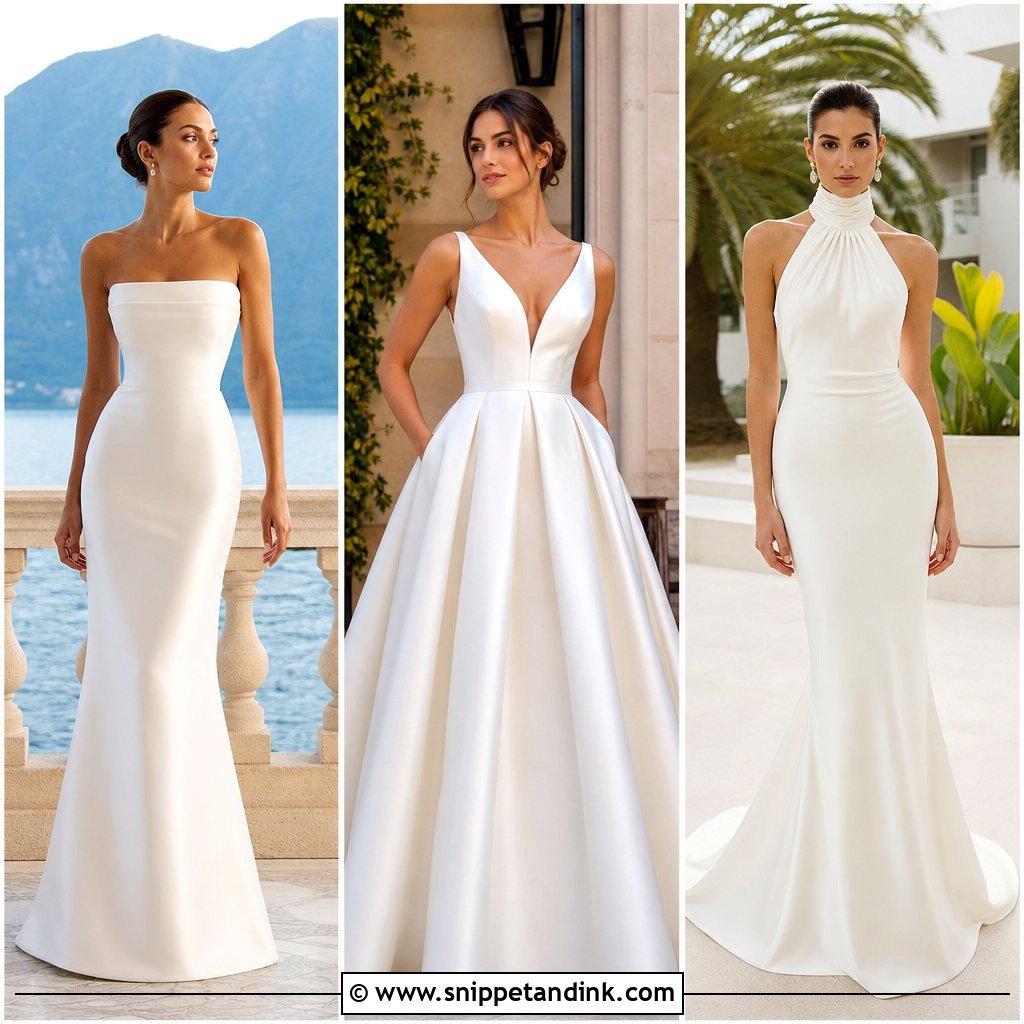
If a bride walks in unsure, the strapless satin A-line is usually what I pull first, because the shape flatters most figures and still feels traditional. Everything rests on the inner bodice. It should hold you up without you tugging at the neckline between photographs, so ask how it’s boned and whether there’s a waist stay. Ivory satin is softer on most skin than bright white. A low bun keeps the neckline in view, pointed pumps and pearl studs finish it, and a compact bouquet of white flowers keeps the lines uncluttered.
2. Silk Slip Minimalist Bridal Gown
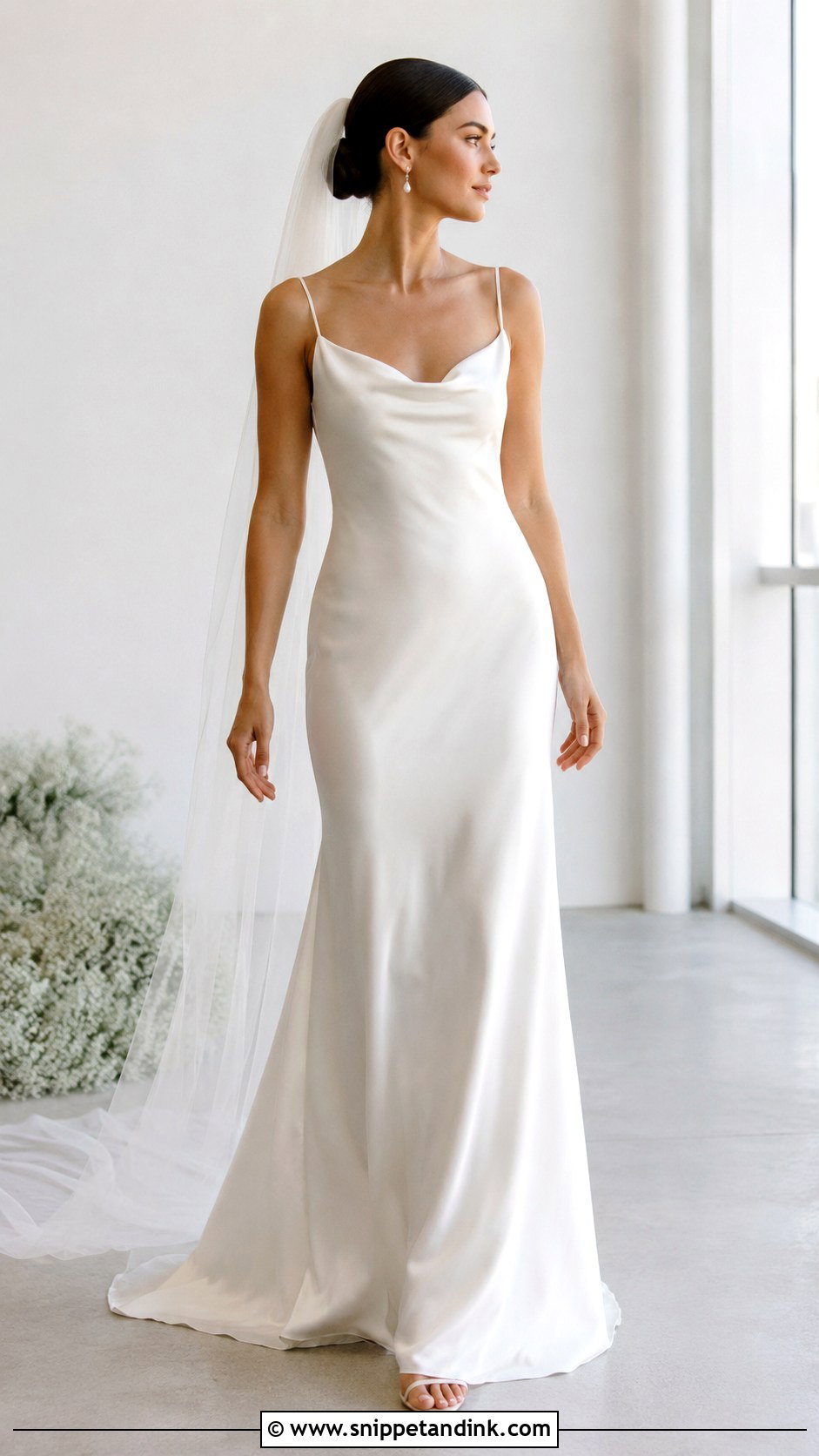
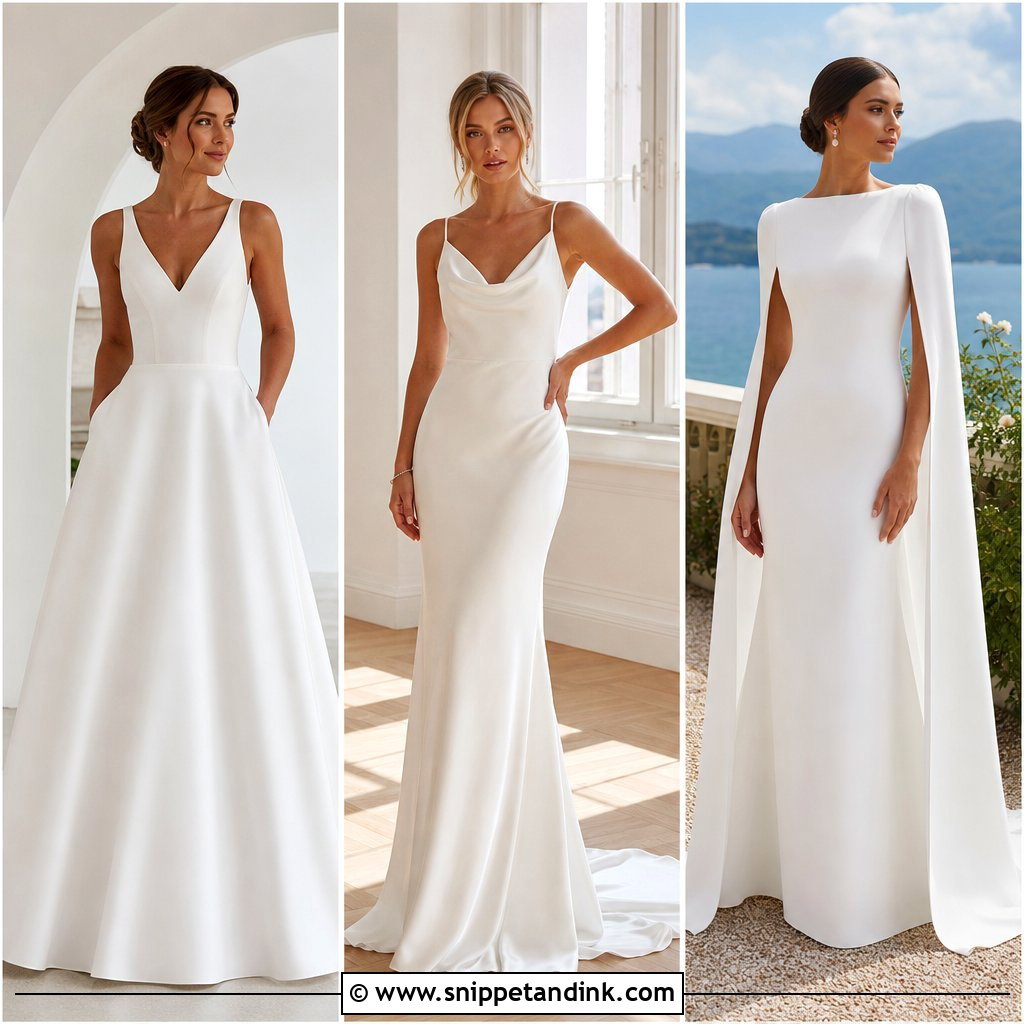
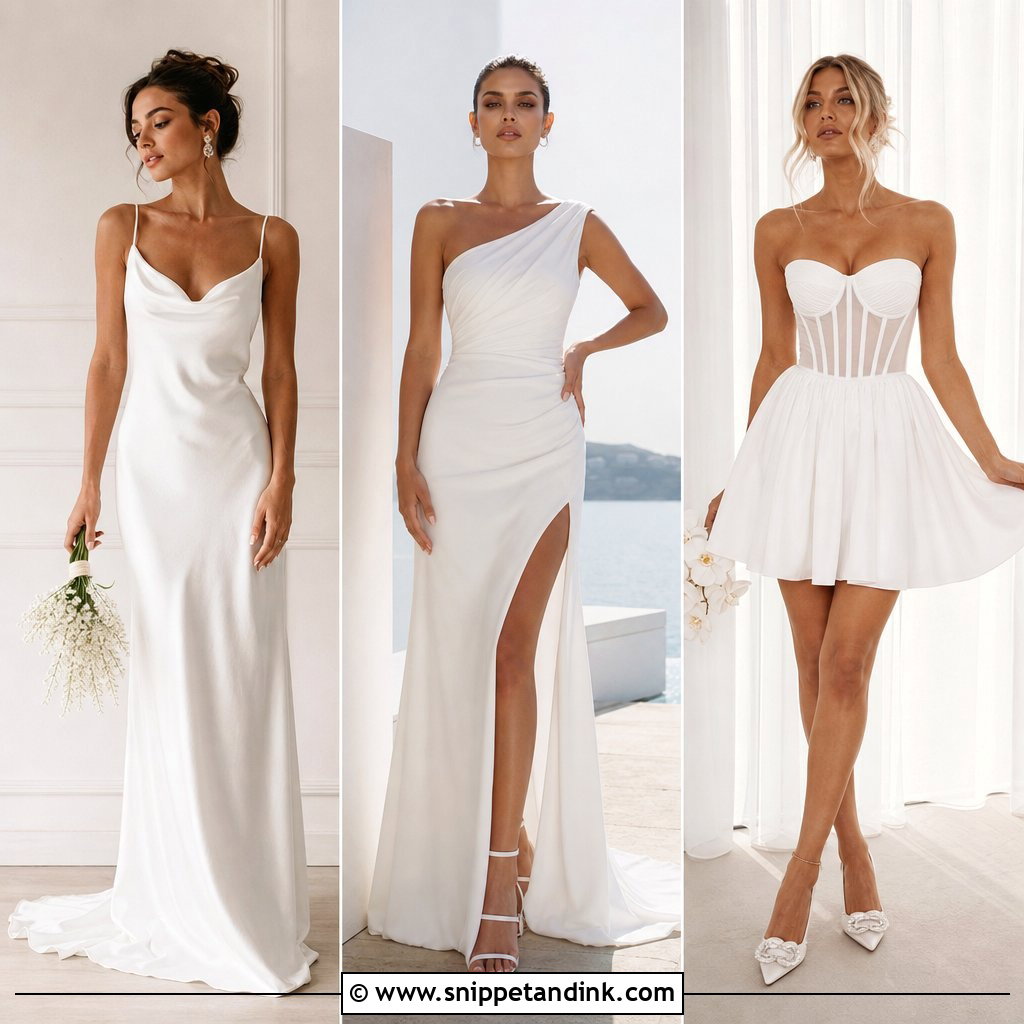
Silk moves with every step, which is the whole appeal of a slip and also its risk. A bias-cut silhouette should graze the body rather than grip it; if it’s tight across the hips, it will show every line beneath. Smooth, edge-free underwear and a seamstress used to silk are non-negotiable. Delicate straps with a soft V or a draped cowl keep it simple. Brushed-out waves or a sleek chignon both suit it. For a church ceremony, a sheer silk organza wrap gives coverage and comes off afterwards.
3. Square Neck Crepe Column Bridal Gown
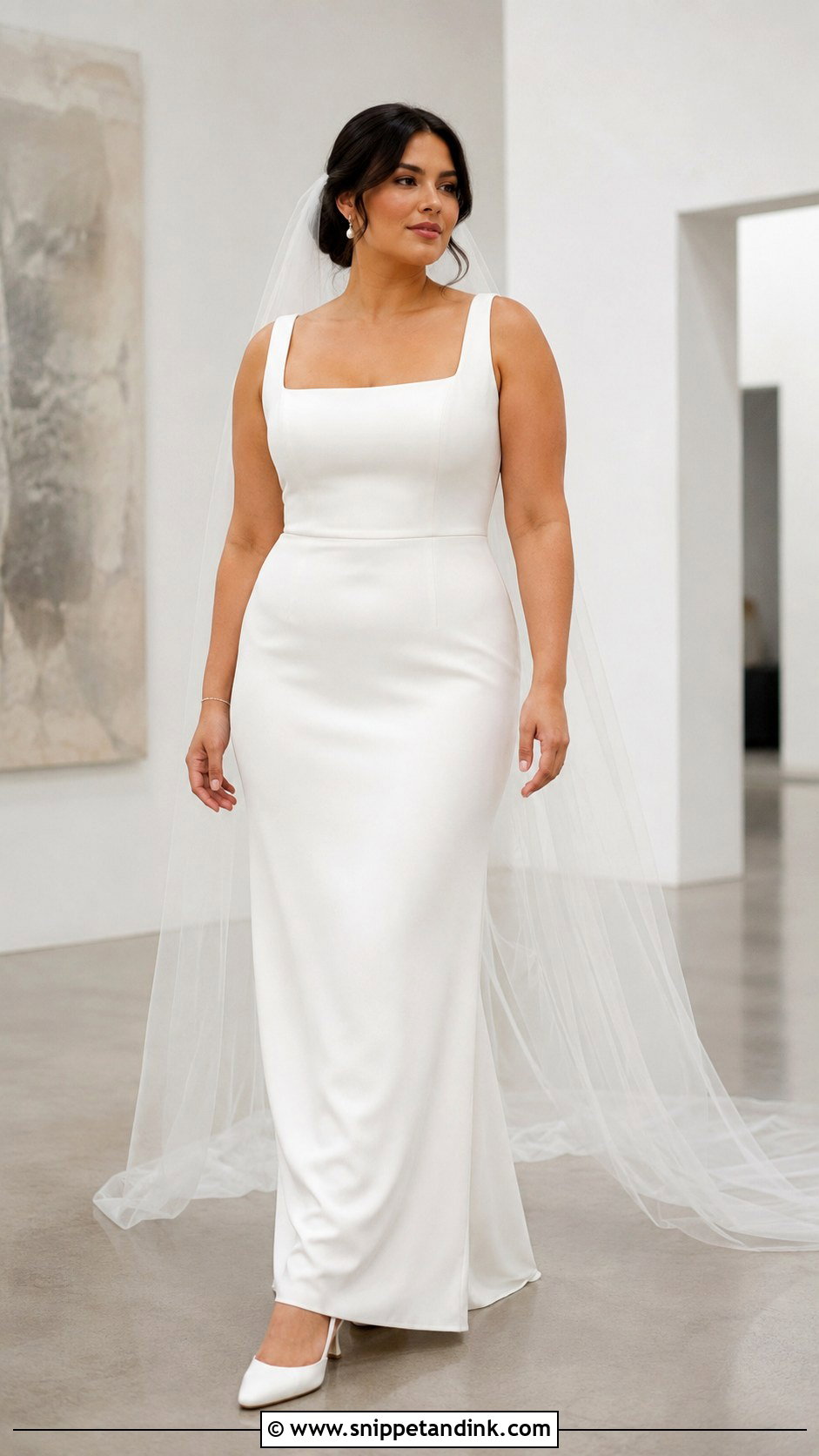
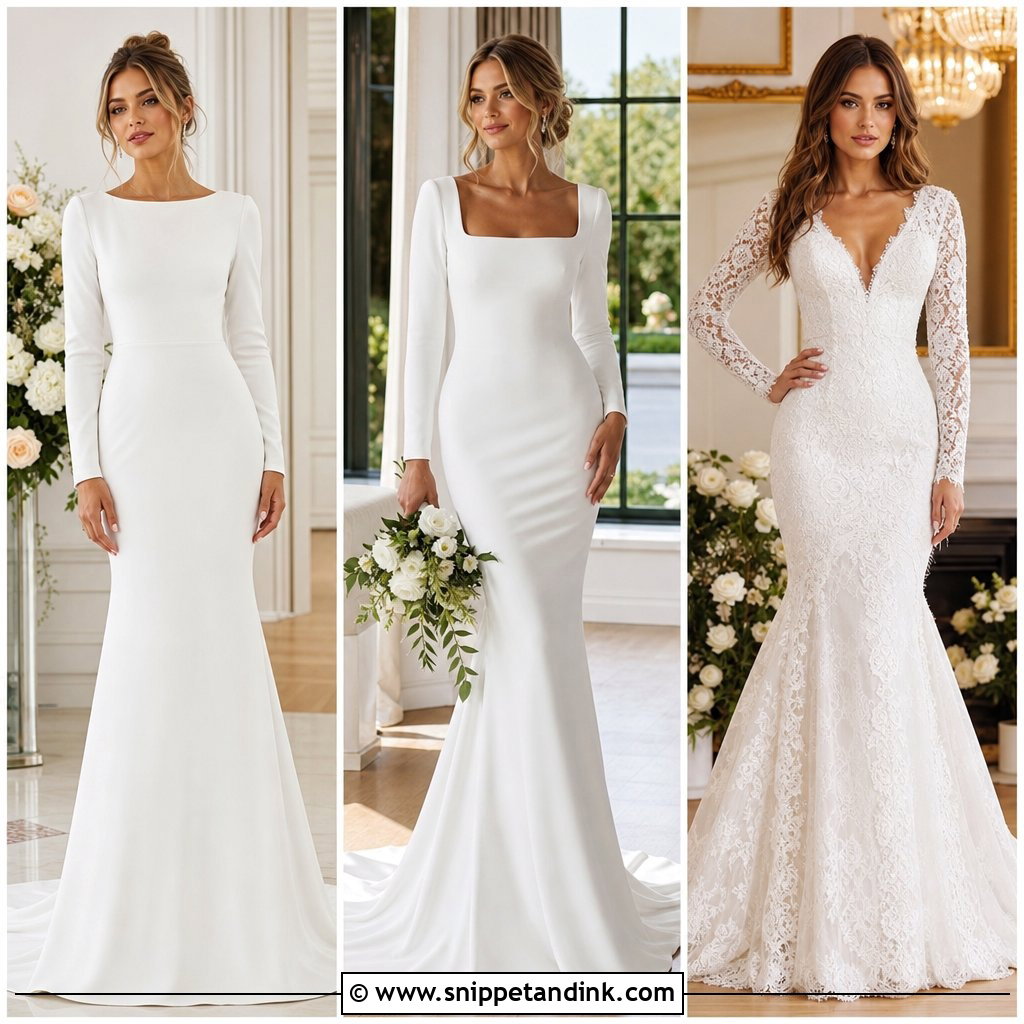
Crepe has to have weight for a column to work. Too light and the skirt clings at the thighs instead of falling straight. A square neckline gives the soft fabric a crisp edge, and I prefer wide straps here because thin ones tend to cut into the shoulder and spoil the square. Shaping should come from seams at the back and waist, not decoration. A centre-parted bun echoes the geometry of the neckline. Slingbacks and slim earrings are enough, with a single-layer cathedral veil if you want length for the ceremony.
4. Long Sleeve High Neck Bridal Gown
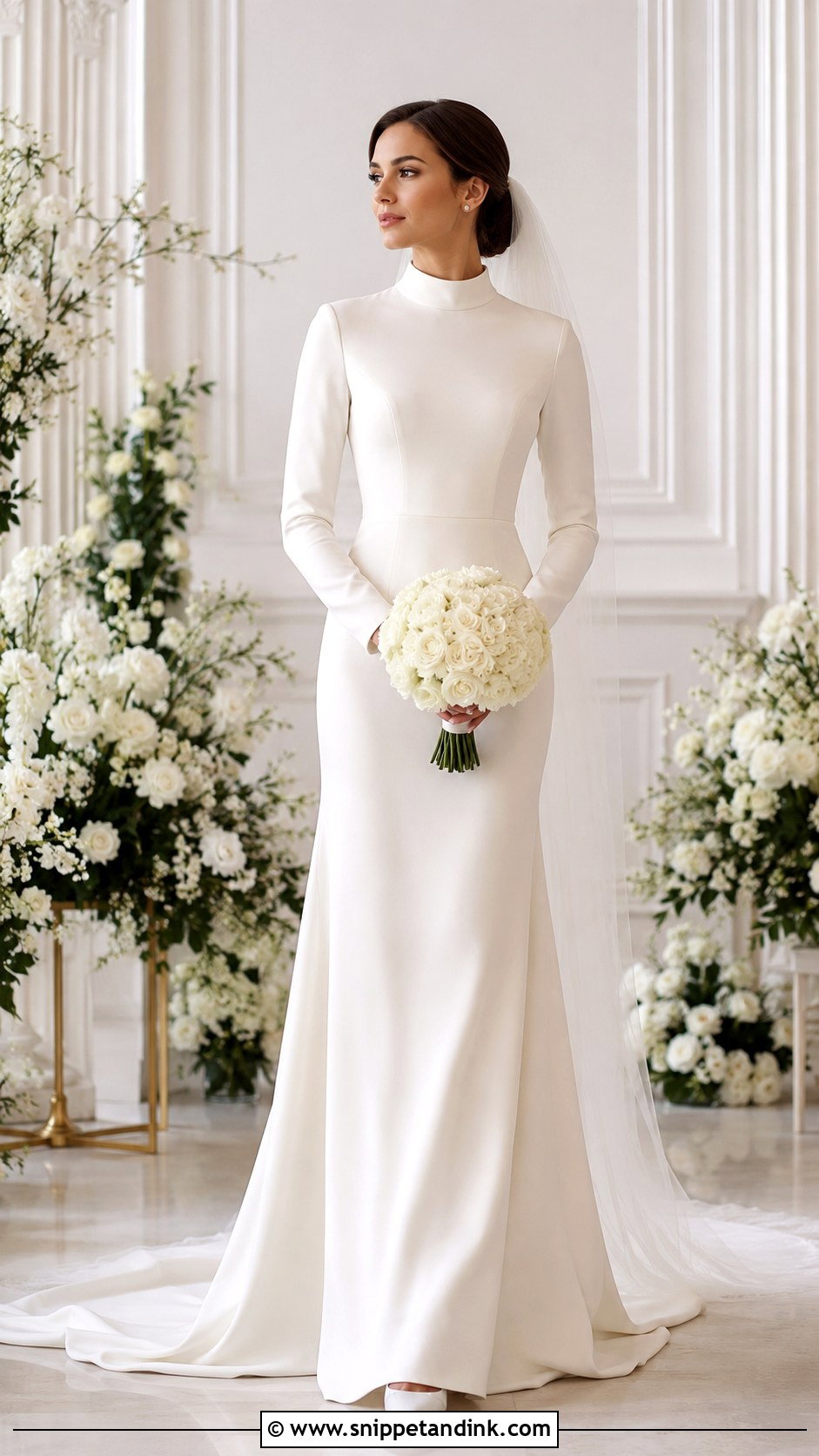
Long sleeves and a high neck read modest and modern at once in matte crepe, which keeps the look from tipping into stiff formality. The fitted sleeve runs one clean line from shoulder to wrist, so the fit there decides the whole dress. I ask brides to cross their arms and reach forward; a sleeve cut too narrow at the bicep will drag the neckline back. Covered buttons down the back are all the detail it needs. Leave the necklace in the box and tuck the veil under a smooth low knot. It’s a natural pick for cold months and indoor ceremonies.
5. Off Shoulder Mikado Bridal Gown
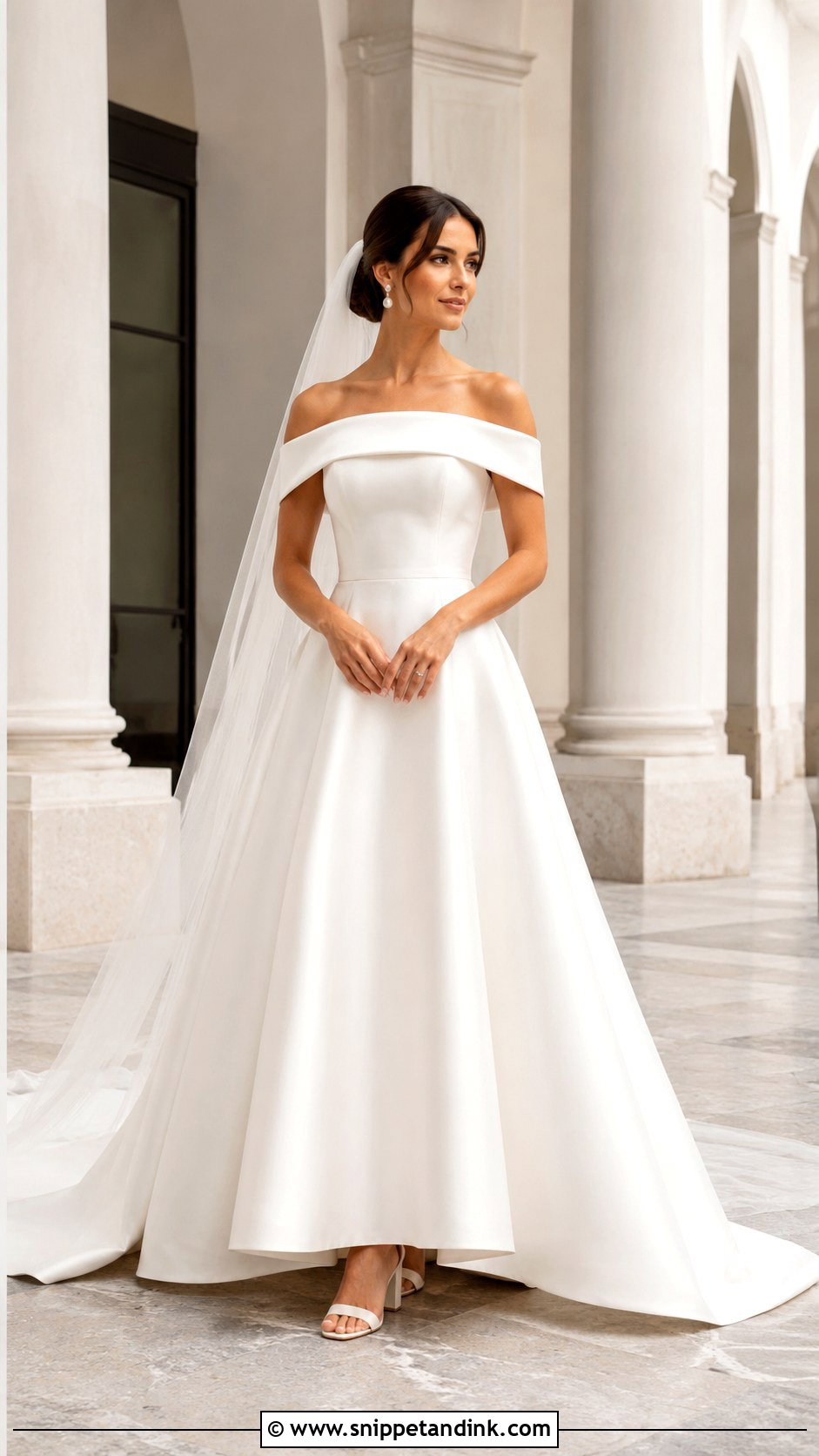
Mikado’s firm hand is what lets an off-shoulder cuff stand crisply instead of collapsing. That same stiffness is the catch: a folded band of Mikado across the upper arms doesn’t give much, so I’d have you lift your arms, sit and attempt a few dance steps before you commit. A fitted waist keeps the skirt’s volume in proportion. Pearl drops and a plain cathedral veil suit it, and a soft updo leaves the shoulders free. If you love the shape but need more movement, ask whether the cuff can be cut in crepe instead.
6. Cowl Neck Satin Bridal Gown
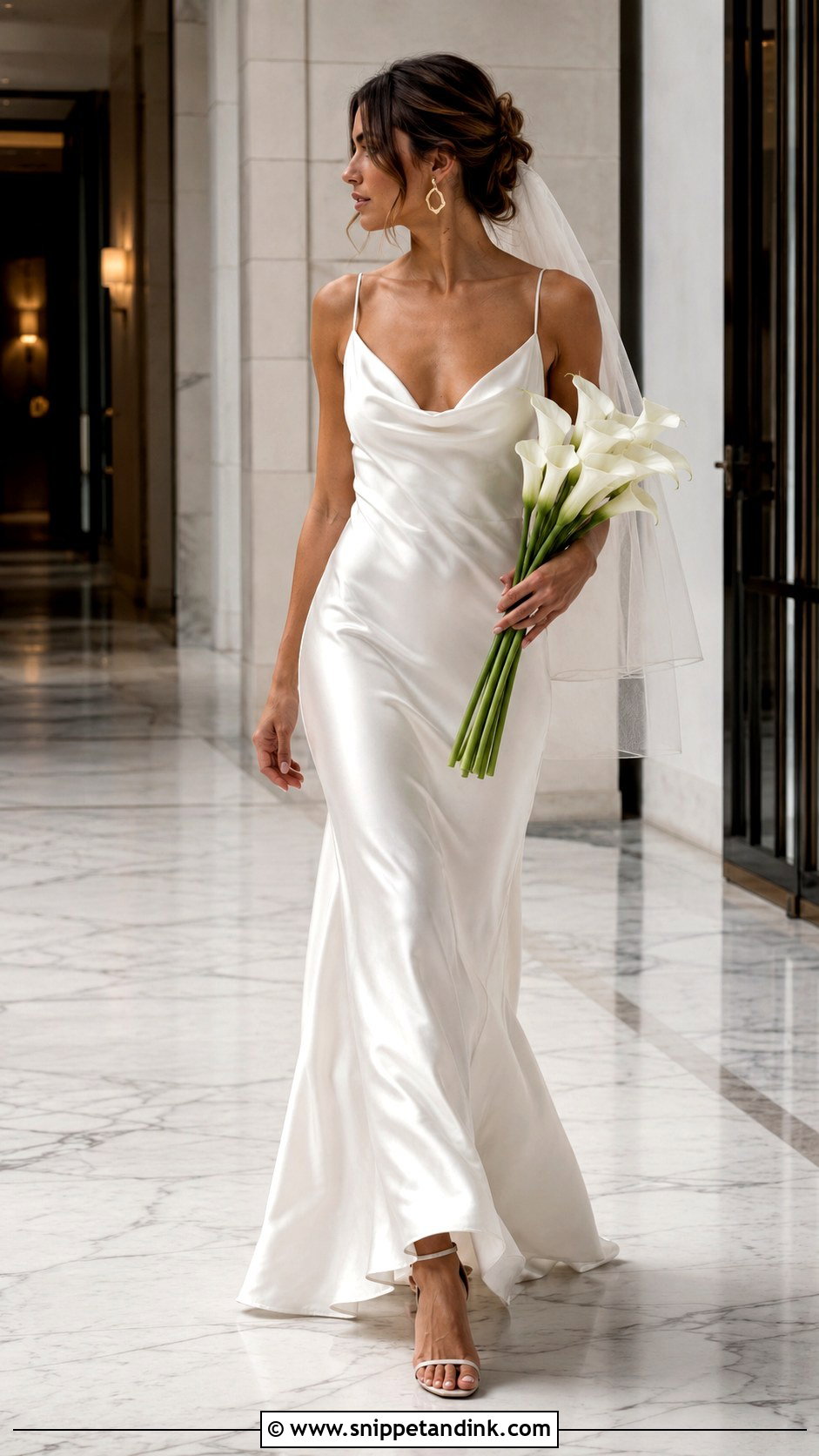
A cowl falls into folds on its own weight, so it needs a fluid satin and a skirt cut on the bias to match. The folds shift as you move. I always check the straps first: if they’re too long, the cowl drops lower than you intended by the end of the night. A low back gives a second point of interest, balanced by a floor-length hem and a short train. Skip a necklace, since it breaks the drape. Ankle-strap heels, sculptural earrings and a few white calla lilies in hand match its fluid lines.
7. Halter Neck Minimalist Bridal Gown
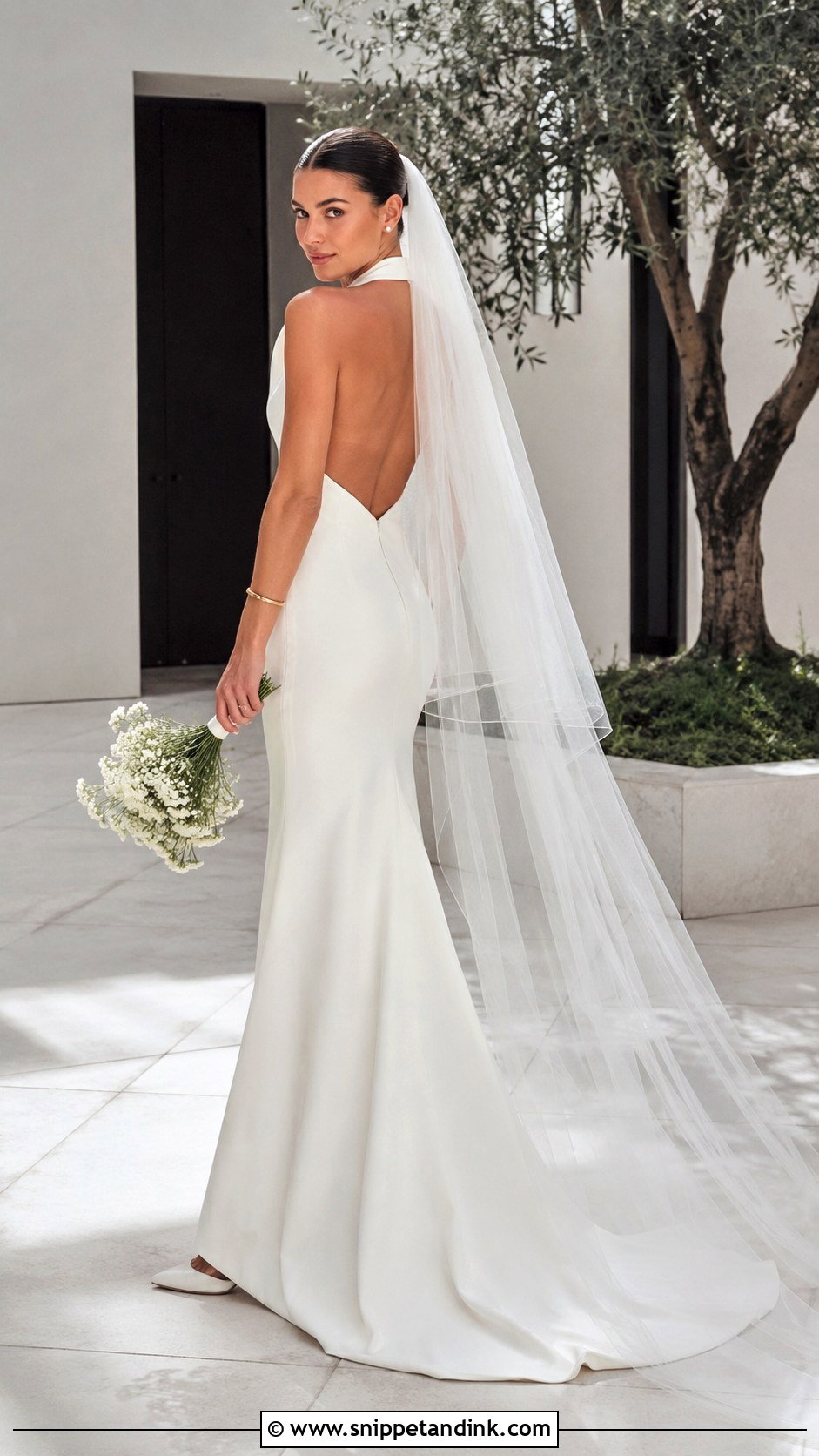
Halters pull the eye to the shoulders and lengthen the whole frame. A narrow strap looks delicate; a wider one gives more coverage and genuine support, which I’d recommend for a fuller bust. Smooth crepe or satin over a softly fitted bodice works best, with a column or gentle A-line skirt. Covered buttons at the nape are a neat way to finish it. Wear your hair up, in a high bun or a sleek ponytail, so it doesn’t sit on the strap. A short veil or slim chapel veil adds length without crowding the shoulders.
8. One Shoulder Draped Bridal Gown
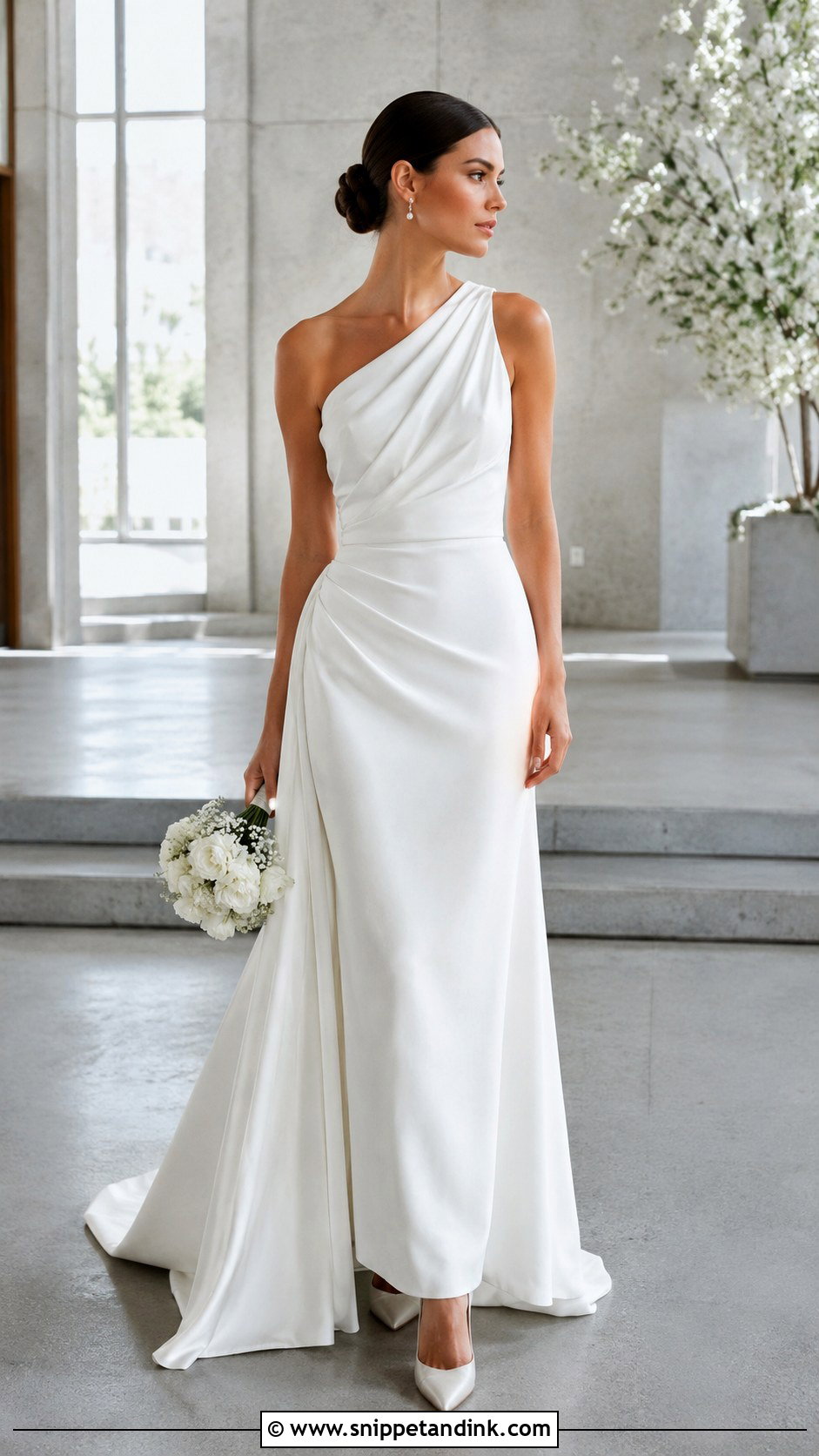
Can a plain gown still feel like fashion? A one-shoulder cut manages it with asymmetry alone. Heavy crepe, silk faille or matte satin hold the angled neckline without going rigid. Keep the skirt straight or barely flared so the shoulder stays the focus. One statement earring on the bare side is a confident choice; matching small studs are quieter. A clean low bun keeps the line visible from every side. Many brides skip the traditional veil with this one and wear a shoulder-length blusher, or nothing at all, for a sharper result.
9. Boat Neck Sheath Bridal Gown
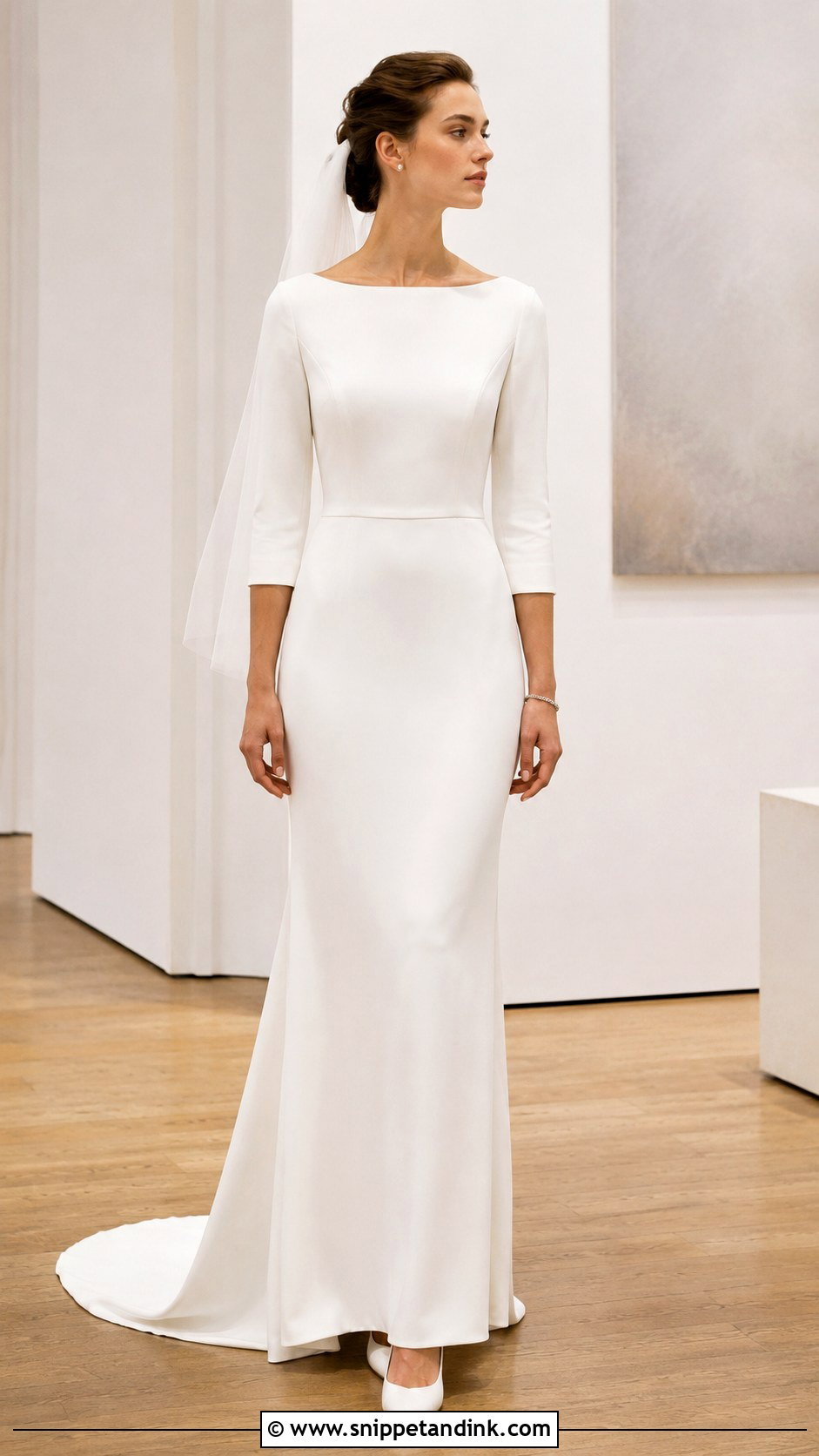
A boat neck sheath gown follows the collarbone across in one wide line, so it covers without closing in the upper body. I’d choose a substantial crepe with a little stretch, which sits smooth on a sheath and lets you sit through a long dinner. Three-quarter sleeves add polish; sleeveless keeps it lighter. A French twist suits the neckline’s classic shape. Wear a plain chapel veil for the ceremony and take it off for the reception, when the clean back gets its moment.
10. Scoop Neck Empire Waist Bridal Gown
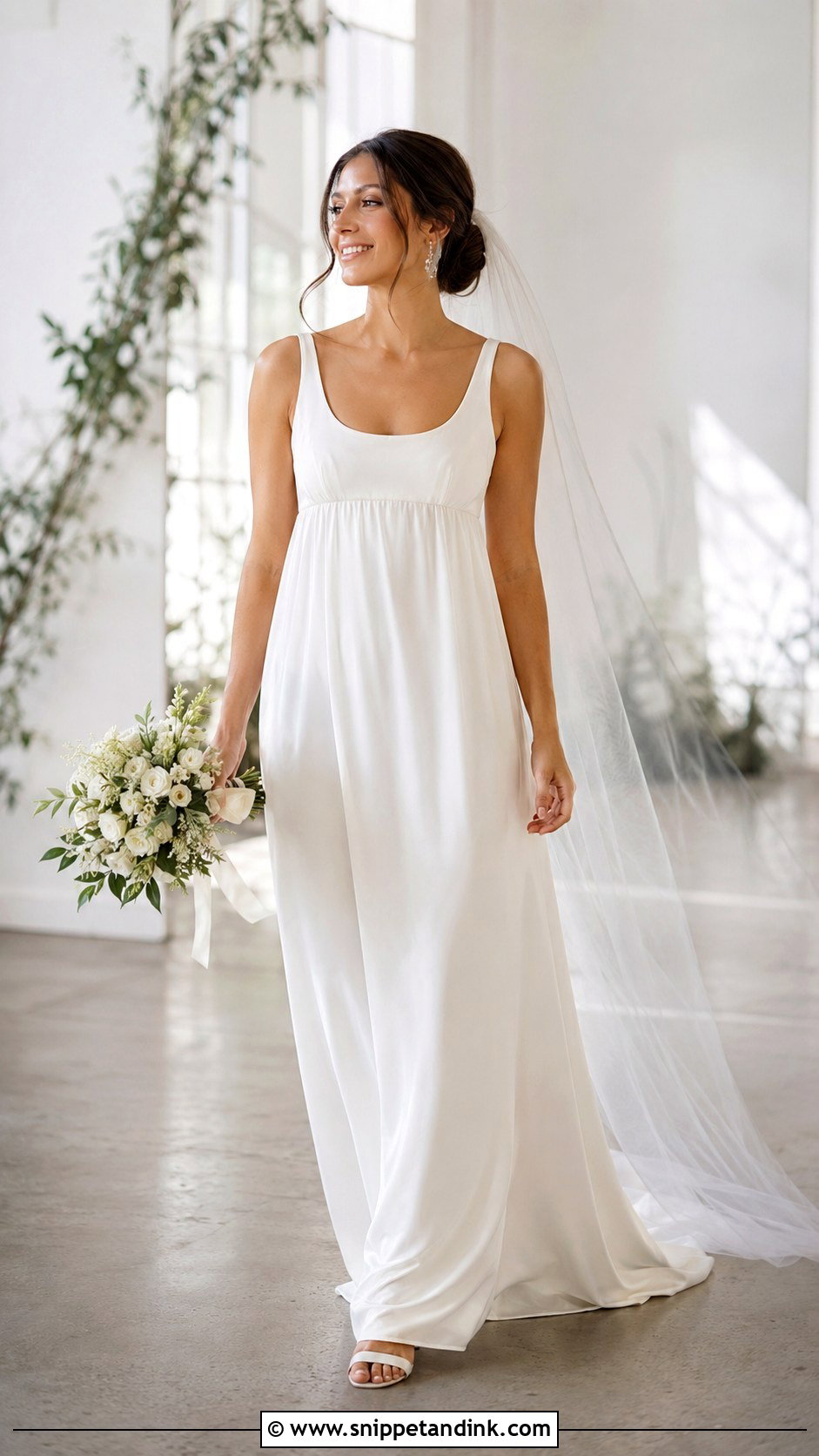
Empire waists are about comfort, and they’re one of the few shapes I’d happily put a bride in for a long outdoor ceremony in heat. The seam sits high under the bust, so nothing presses on the waist, and the skirt falls free. A scoop neckline frames the face. Watch the gathering at the bust: too much and the dress looks busy, which defeats the point. Silk crepe or chiffon over an opaque lining keeps it graceful. Low block-heel sandals and soft waves complete the mood.
11. Basque Waist Minimalist Bridal Gown
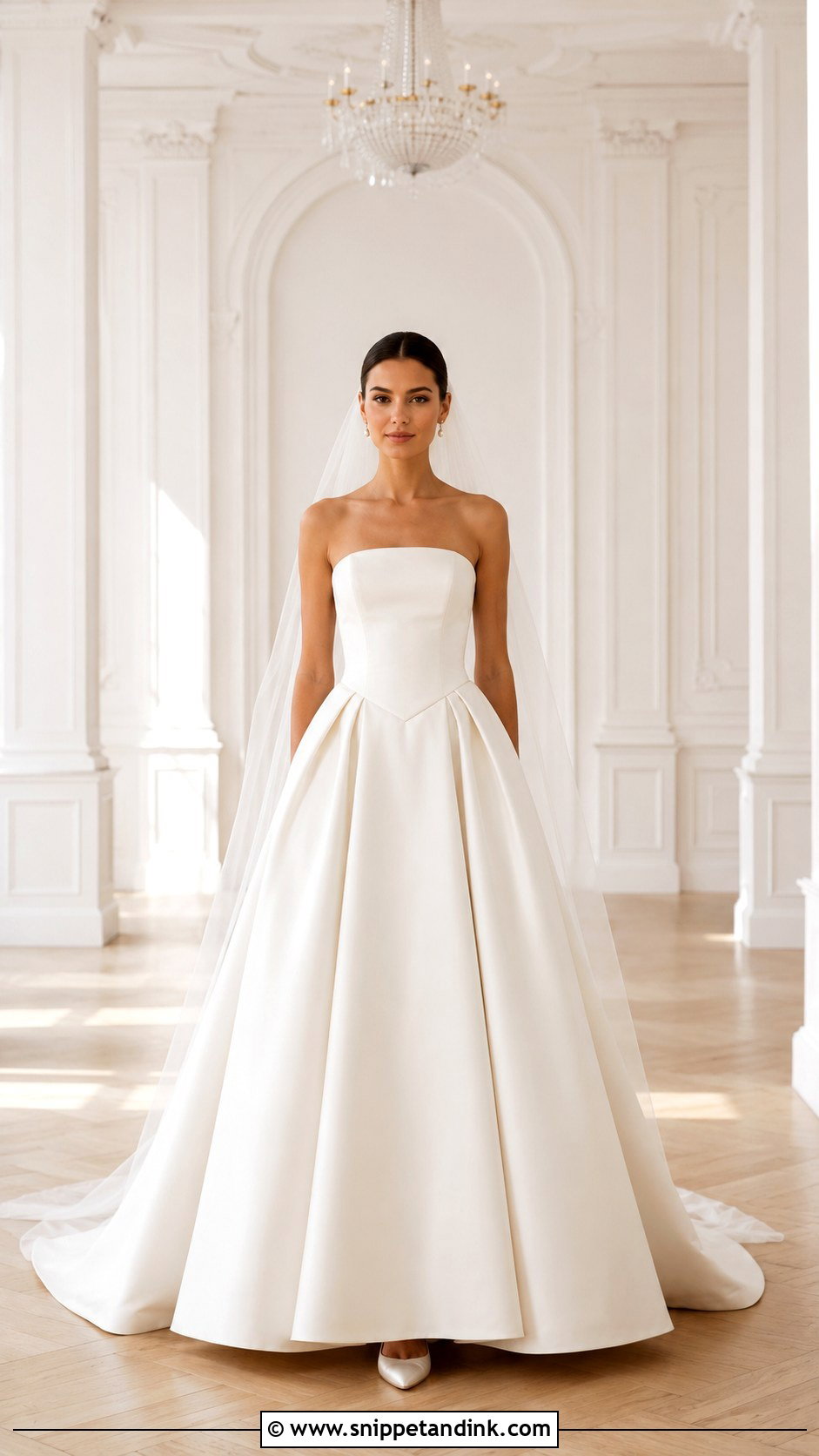
The basque waist runs the bodice down into a shallow V below the natural waist, which lengthens the torso. To keep it plain, I look for satin or Mikado with no visible boning channels or appliqué on the outside. A strapless neckline pairs well with it, and a full skirt balances the long bodice. The point of that V has to land in exactly the right spot on your body, which takes careful fittings; sit down at each one, since a point placed too low digs in. Satin heels, pearl earrings and a long plain veil are all the accessories it asks for.
12. Drop Waist Satin Bridal Gown
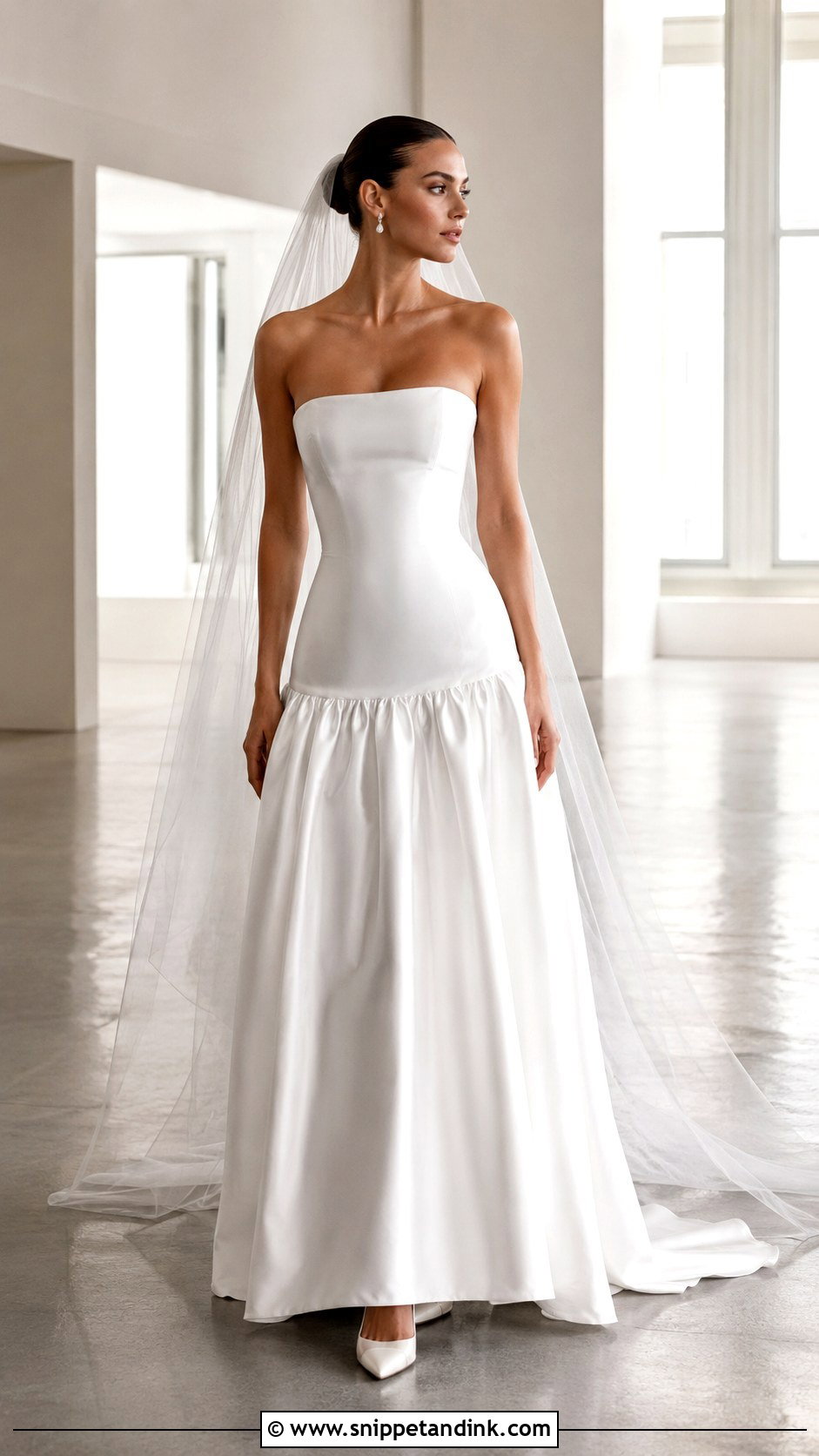
A drop waist moves the seam down to the upper hips, so the bodice reads long and the skirt starts lower. It looks modern with a straight strapless neckline and unadorned satin. Keep the skirt’s volume controlled, or the hip seam ends up looking like a ledge. Fit is unforgiving here: a seam half an inch too high or low changes the whole proportion, so I check it from the front, side and back at every fitting. A slicked-back bun and a sheer cathedral veil finish it simply.
13. Minimalist Mermaid Bridal Gown
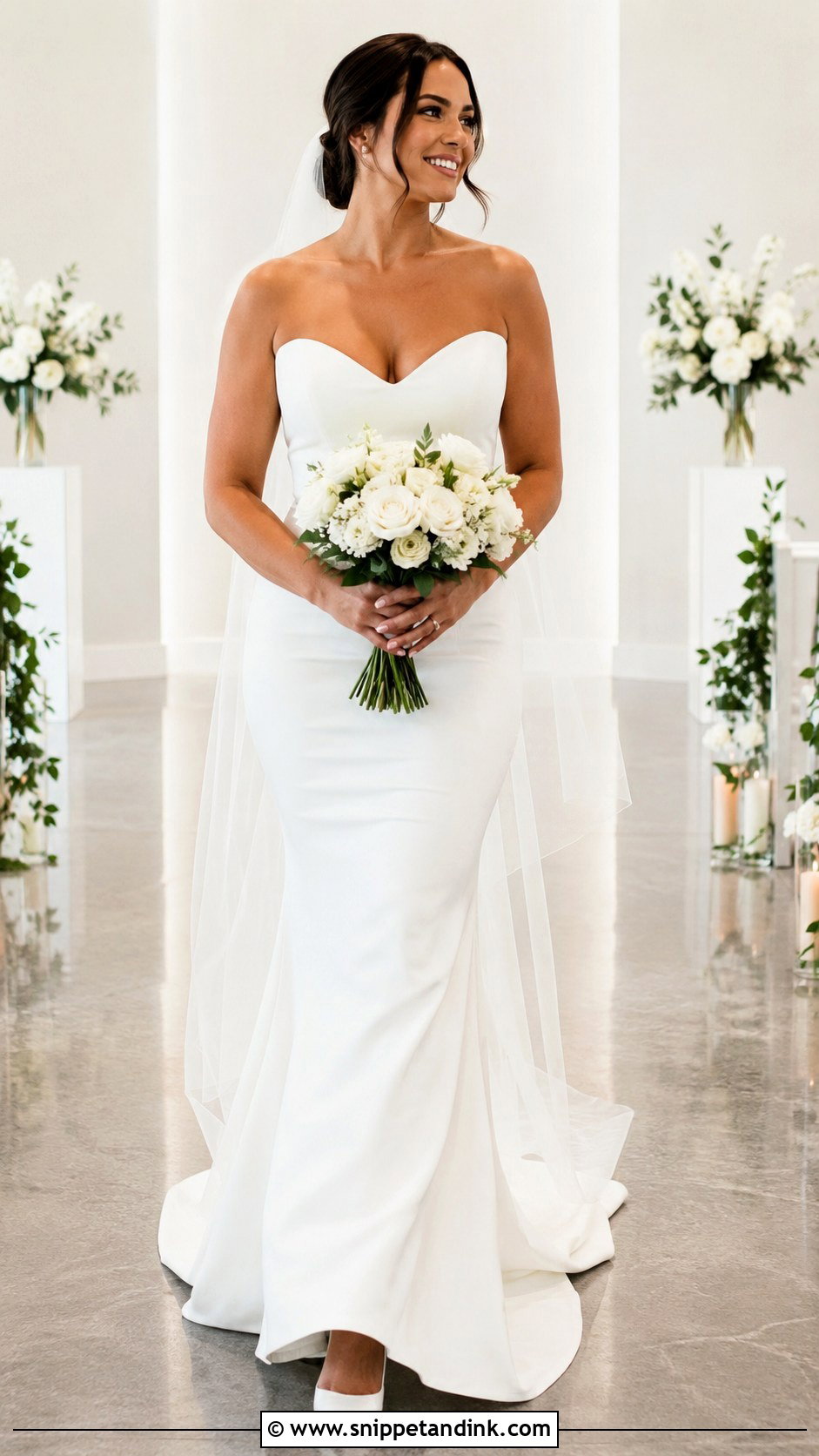
Mermaid shapes can look restrained when the flare is the only flourish. Stretch crepe is my preference because it hugs without fighting you. Where the flare begins matters: at the lower thigh it’s dramatic, at the knee it’s easier to walk in. A straight strapless or soft sweetheart neckline balances the fitted hips. The honest test is stairs. Climb a few, then sit, then try to dance. If you can’t do all three, the skirt is too tight above the flare, and no amount of steaming will fix that on the day.
14. Cape Sleeve Column Bridal Gown
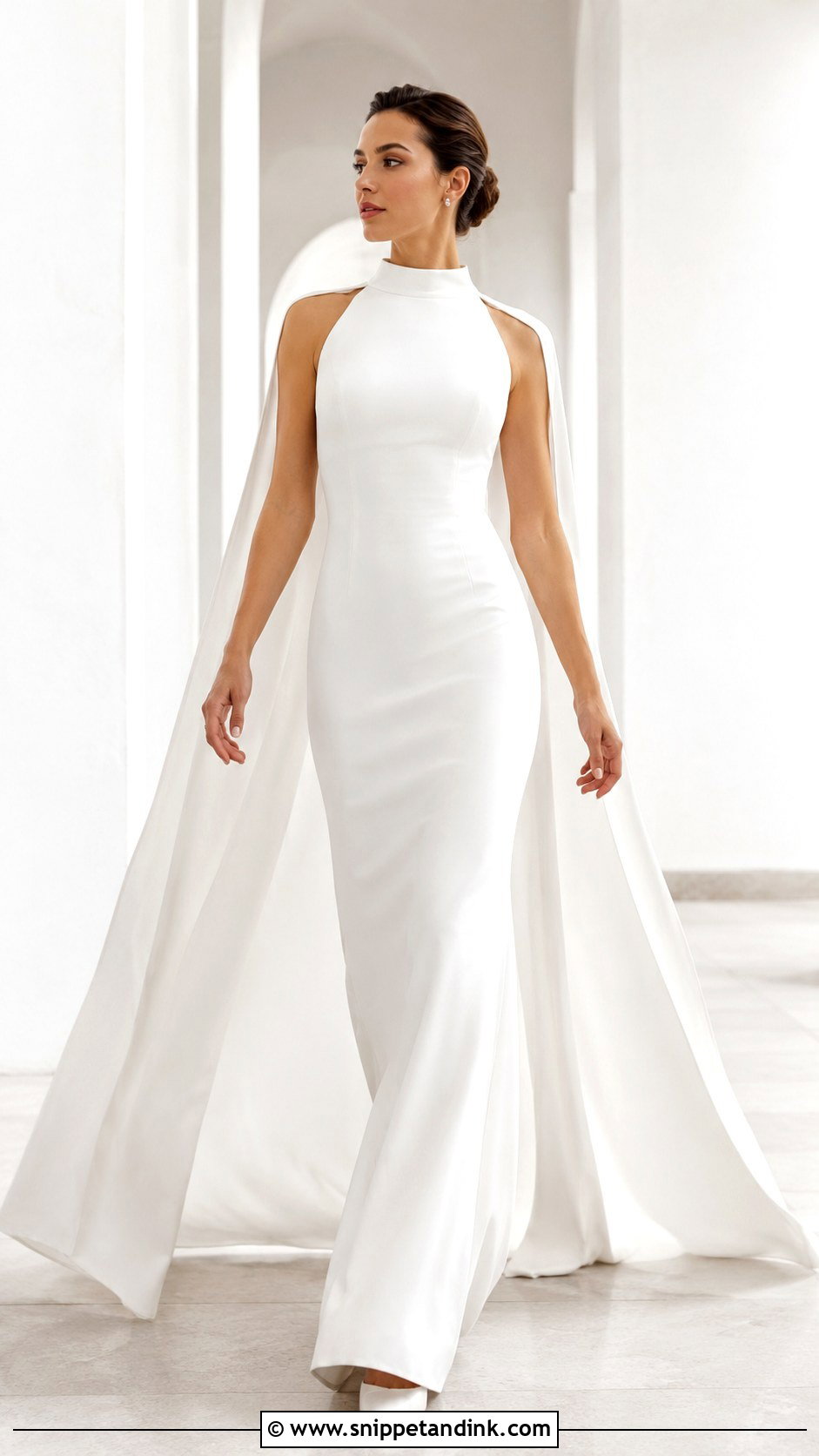
A floor-length cape from the shoulders can do the job of both sleeves and veil, giving a plain sleeveless column a ceremonial feel. Start with a crepe dress with a high or rounded neck and add plain panels with no trim. I generally advise against also wearing a veil, since the two compete for the same space behind you. A polished updo keeps hair off the cape. Ask whether it can be detachable; capes get trodden on during dancing, and a lighter reception look is a relief by then.
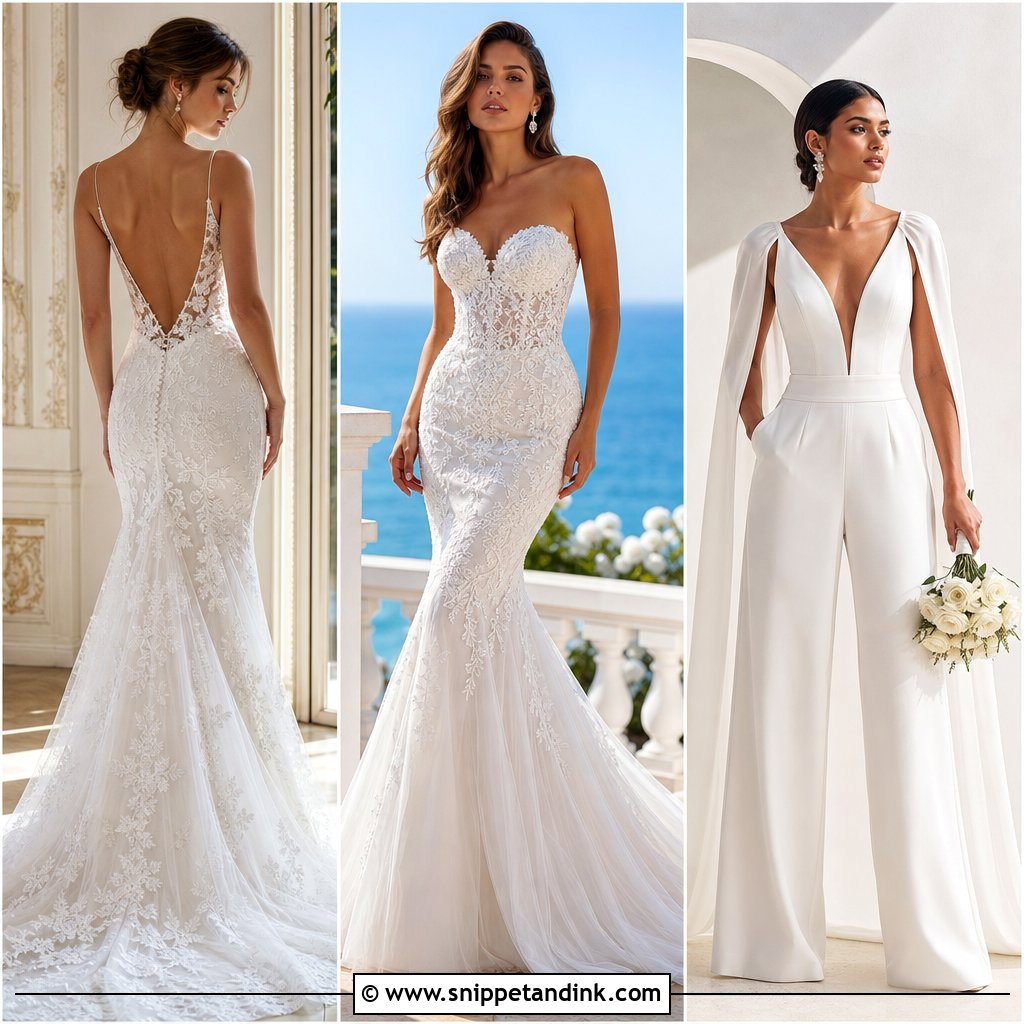

15. Backless Crepe Minimalist Bridal Gown
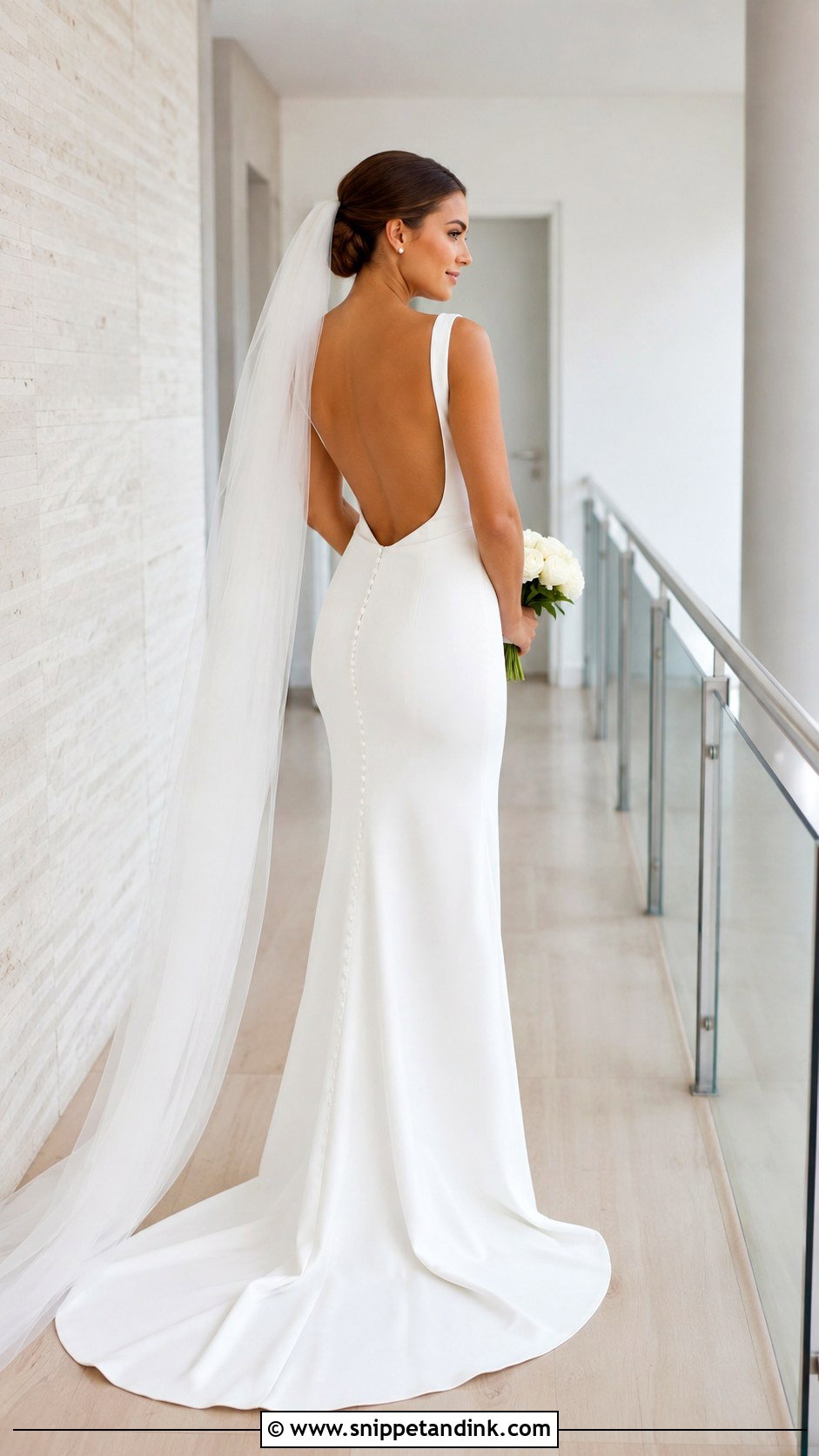
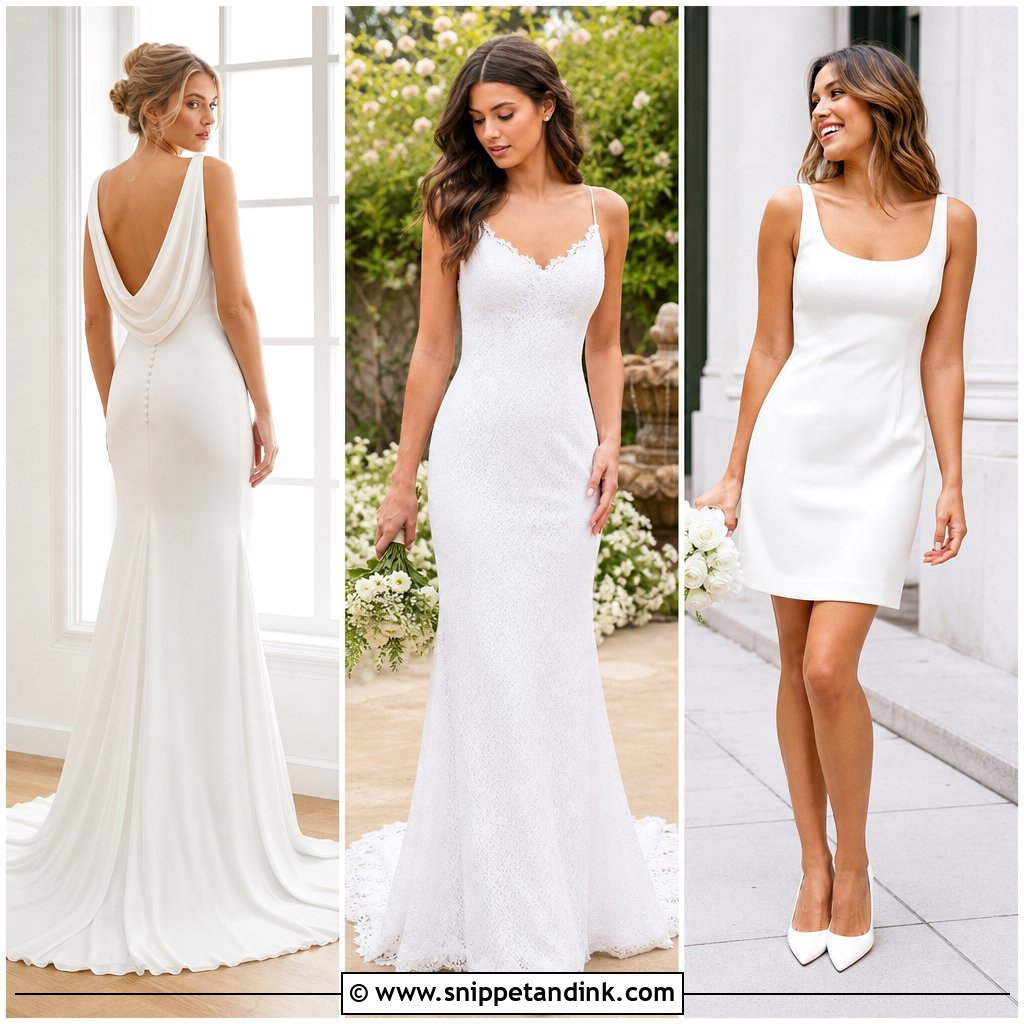
From the front, a backless crepe gown looks reserved; from behind, it’s the moment everyone remembers. A high bateau or scoop at the front balances the opening. Where the back ends depends on how much support you need: at the waist for most brides, slightly higher if you want cups built in. A standard bra won’t work, so sort out the foundation before alterations, not after. A row of covered buttons or a narrow bow can finish the opening. Wear the veil below a structured bun so it doesn’t cover the back.
16. Tea Length Minimalist Bridal Gown
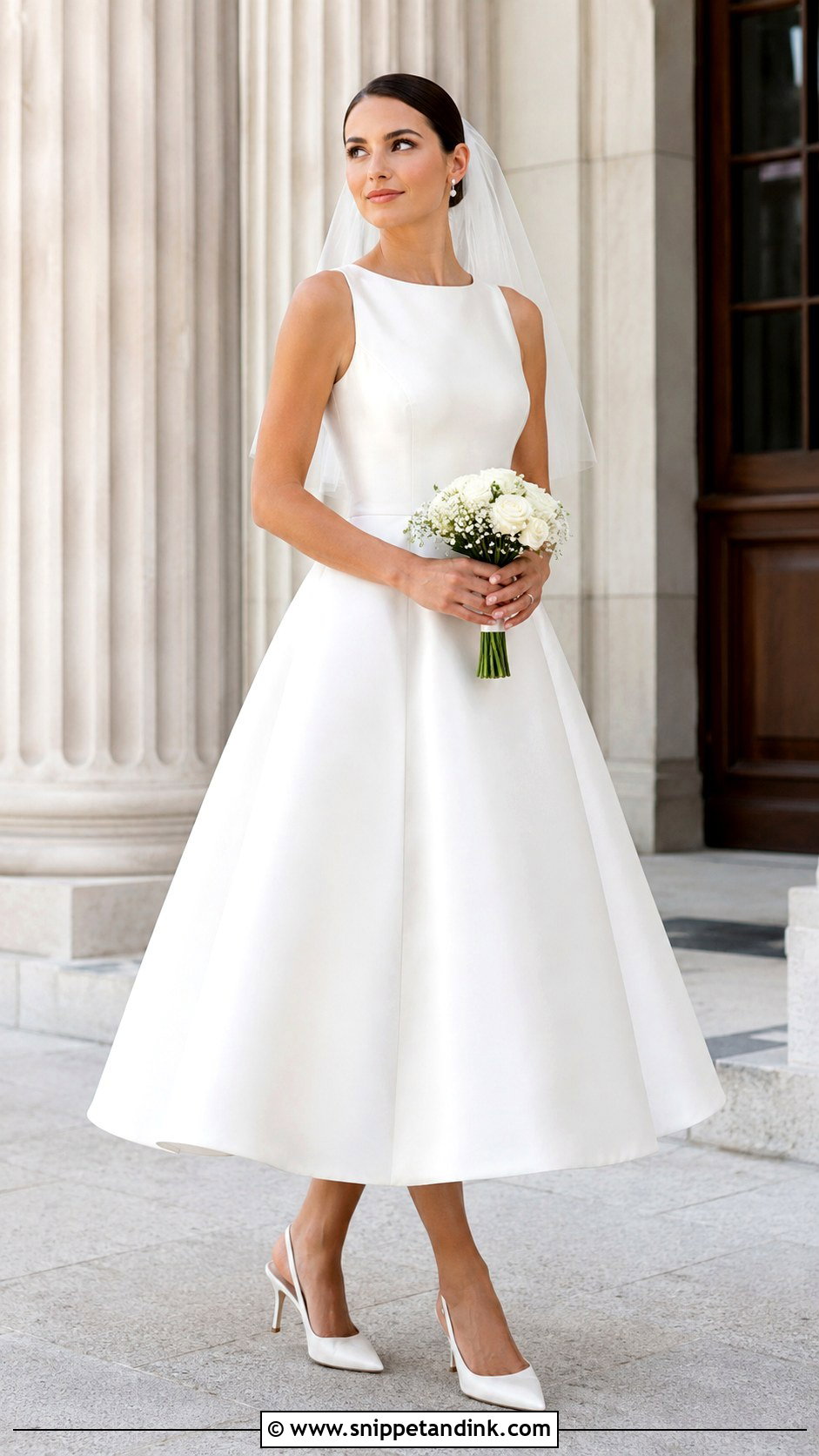
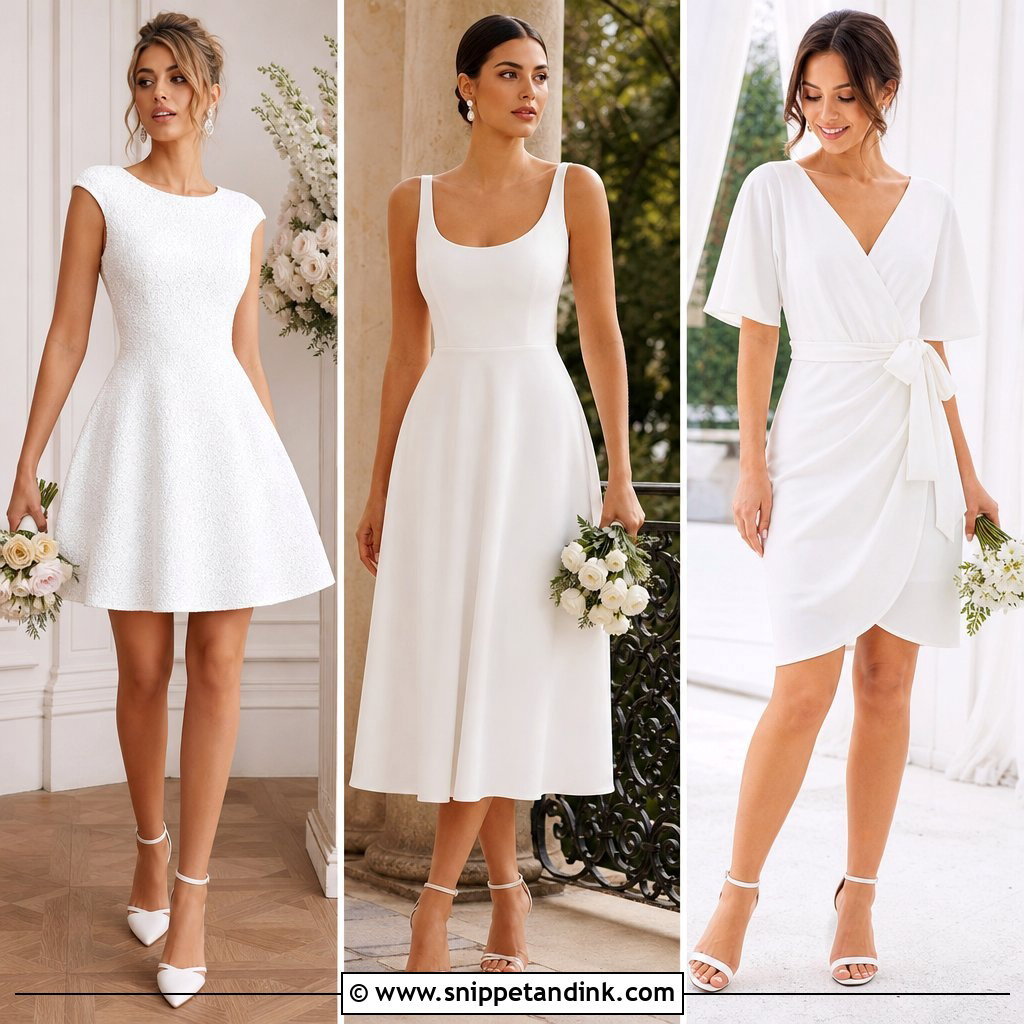
Tea length sits between knee and ankle and shows your shoes, so choose them as carefully as the gown. A structured A-line in Mikado, satin or faille holds the shorter skirt’s shape; anything softer can look like a cocktail dress. Ivory pointed pumps or slingbacks work well. Long veils overwhelm this length, so I’d suggest a short or birdcage veil or a simple hair bow instead. It’s easy to move in, which is why I often suggest it for courthouse and daytime weddings.
17. Minimalist Bridal Midi Gown
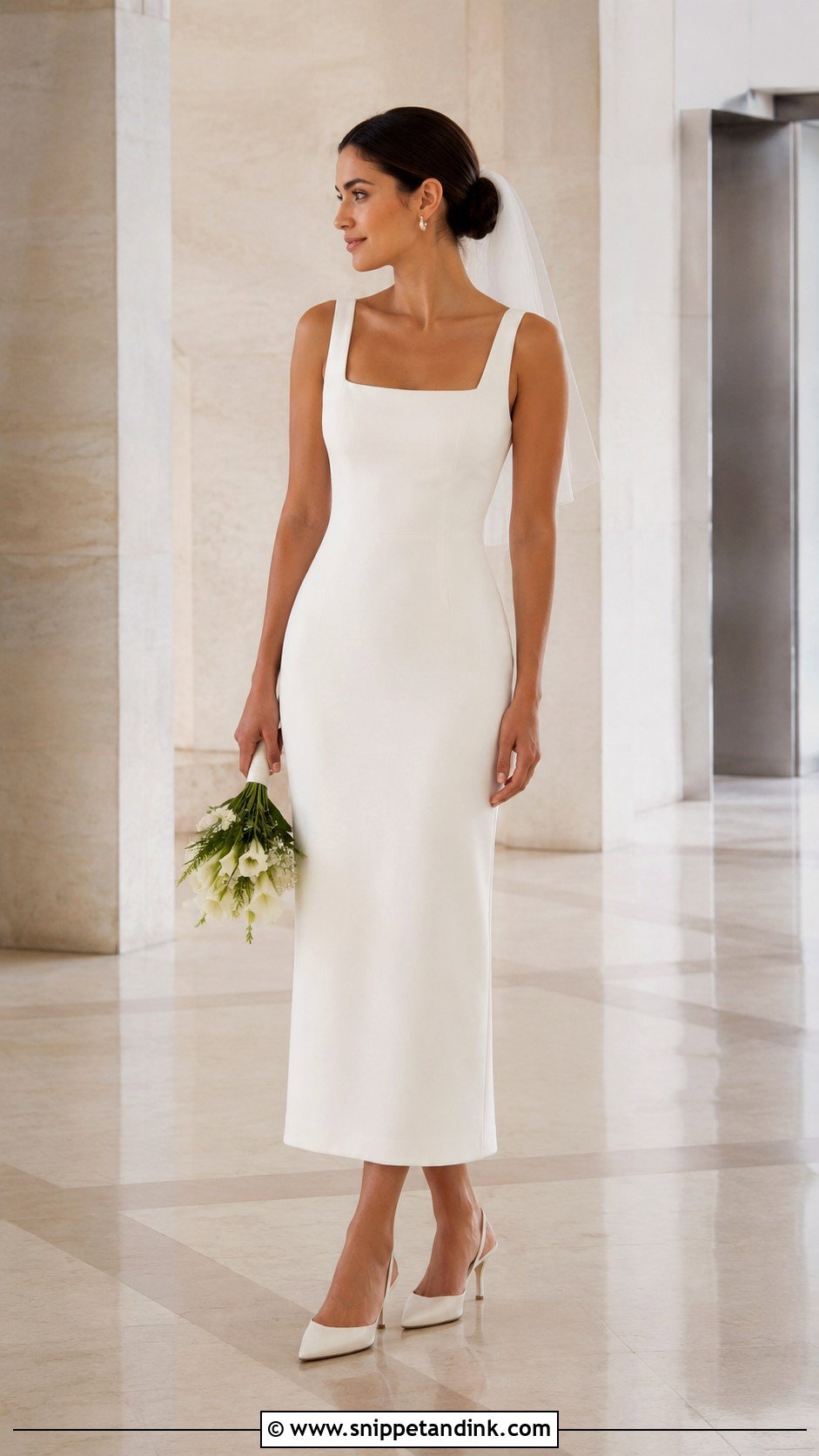
A midi ending around the lower calf is what I suggest when a bride wants something modern and unfussy without going short. A clean column or fitted sheath in smooth crepe, with a square neck and wide straps, gives it structure. The shoes become a feature, so elegant slingbacks, low mules or pointed pumps in a matching tone are worth the search. A midi looks less deliberate the more you add to it, so keep accessories few. Hem it so your stride isn’t restricted; a tight midi hem makes you take small steps that look awkward on video.
18. Minimalist Bridal Gown With Overskirt
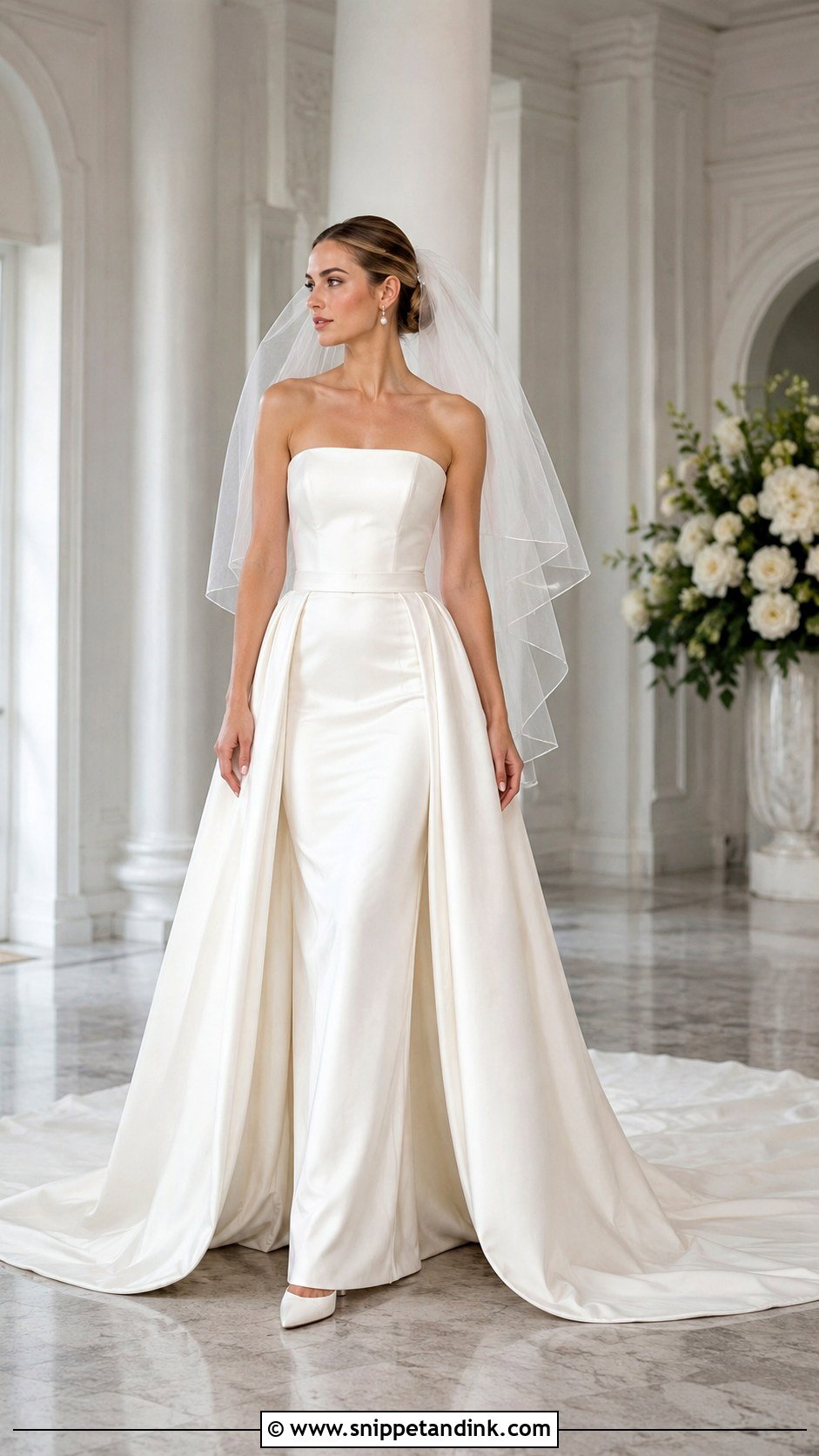
A removable overskirt gives you two looks from one plain gown. The base is a fitted crepe or satin column; the overskirt fastens at the natural waist and adds volume and a train for the ceremony. The waistband join is what I scrutinise, because on plain fabric a bulky hook line shows in every photograph. Practise taking it off with whoever will help you on the day, and time it. A polished bun works for both looks, so you’re only changing the skirt and removing the veil.
19. Asymmetrical Pleated Bridal Gown
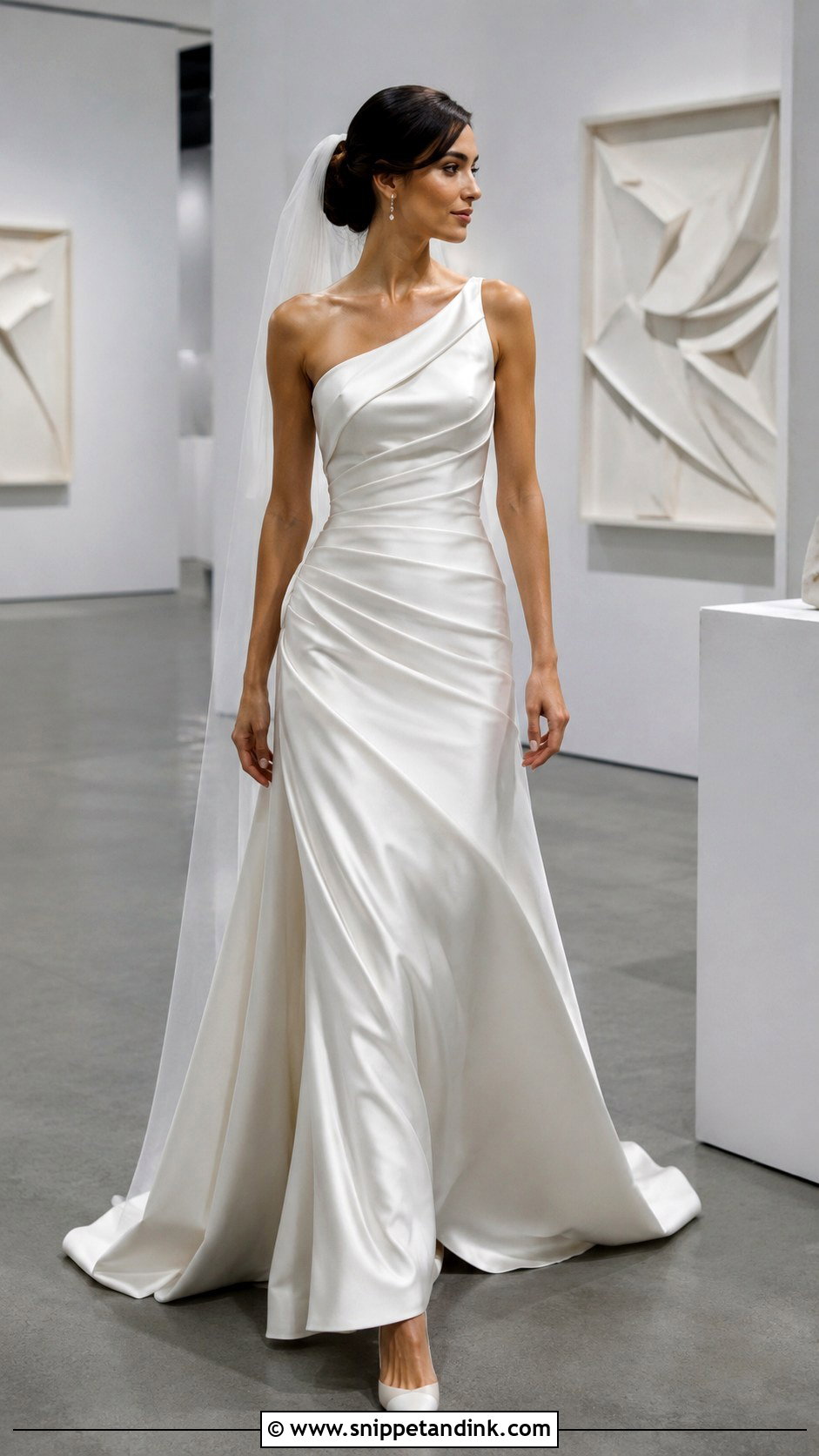
Pleats give a plain gown depth without adding anything to its surface. Diagonal pleating across the bodice or waist, paired with an asymmetrical neckline, reads sculptural. Matte satin, silk faille and structured crepe hold sharp folds; soft fabrics let them collapse. Keep the skirt straight or barely flared. A side-parted bun mirrors the angle of the neckline. At fittings, check the pleats seated. If they pull open or bunch at the waist when you sit, they need resetting.

20. Modest A-Line Minimalist Bridal Gown
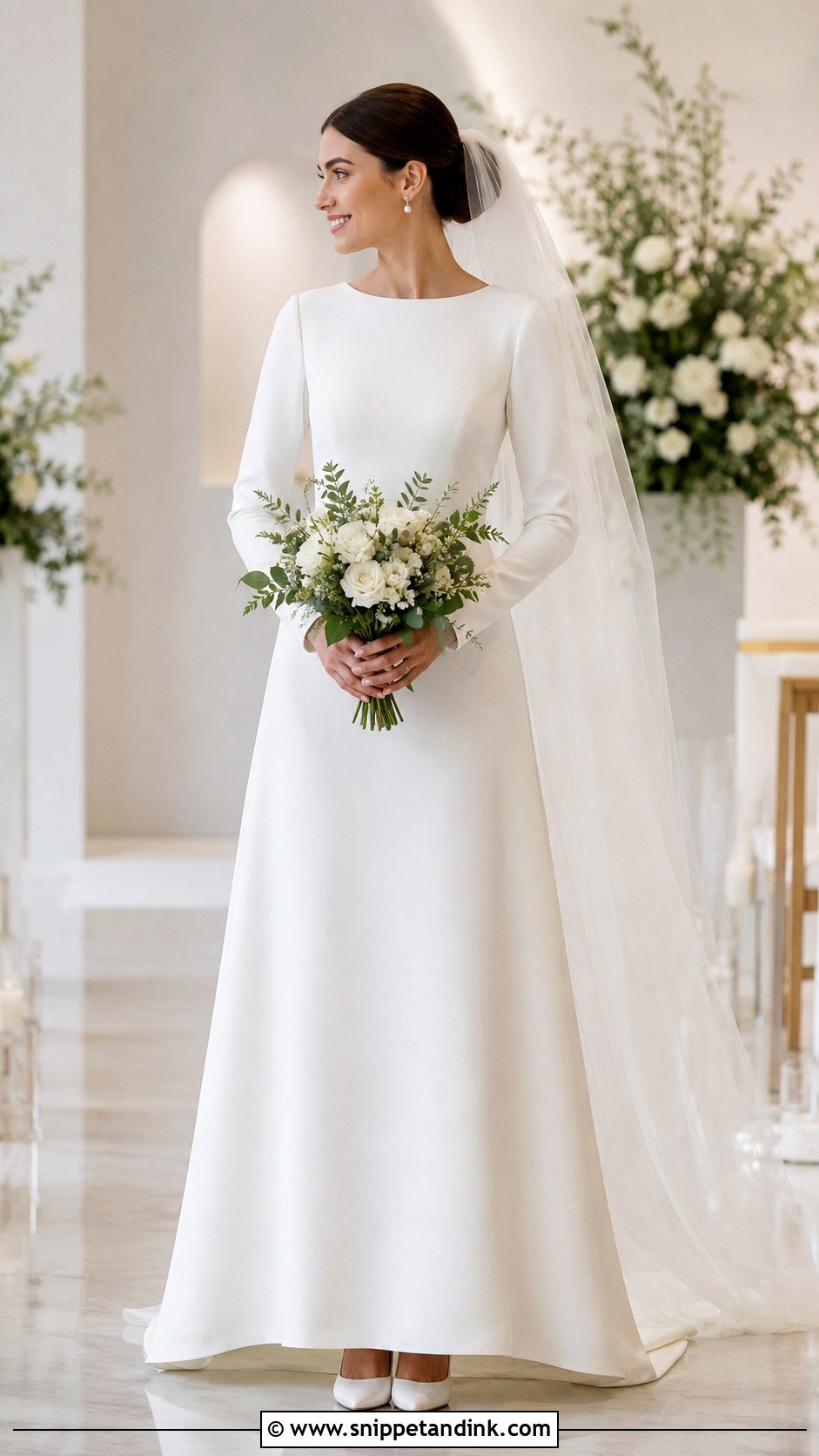
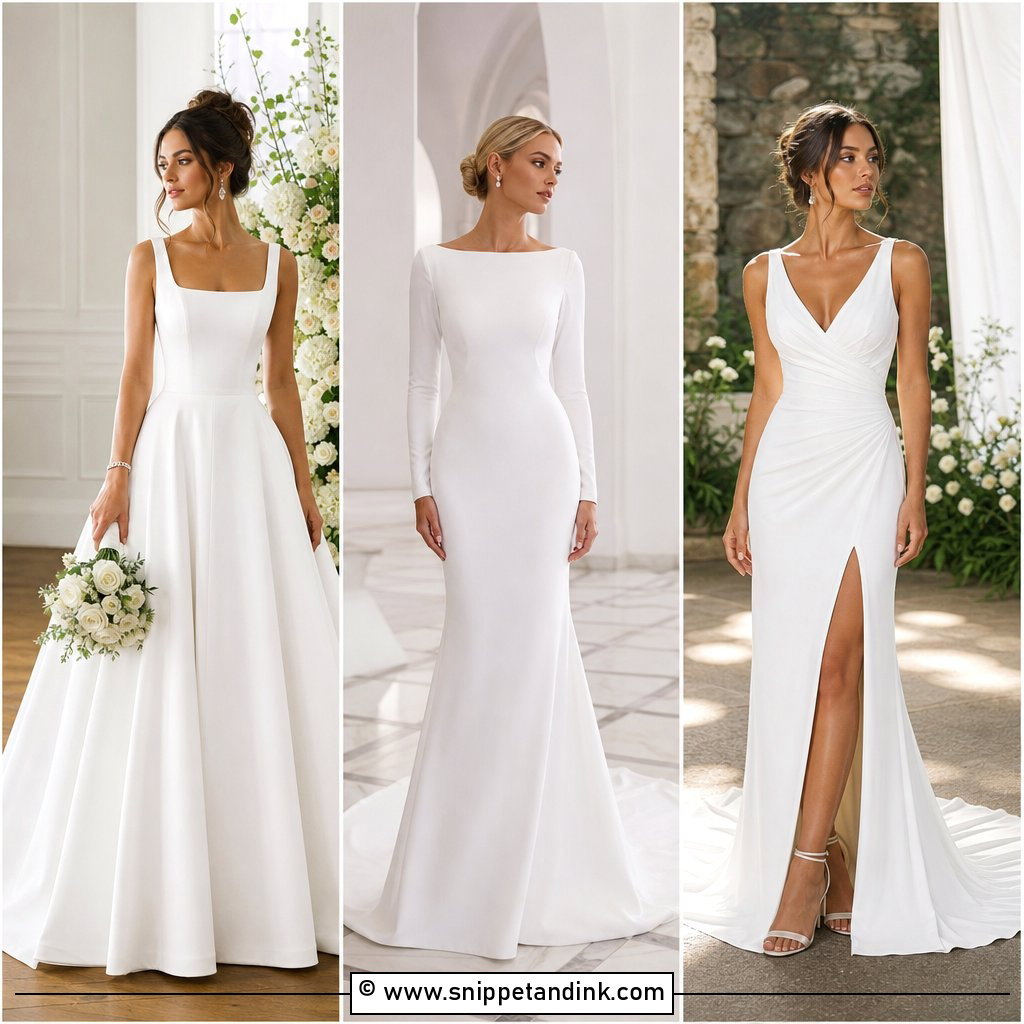
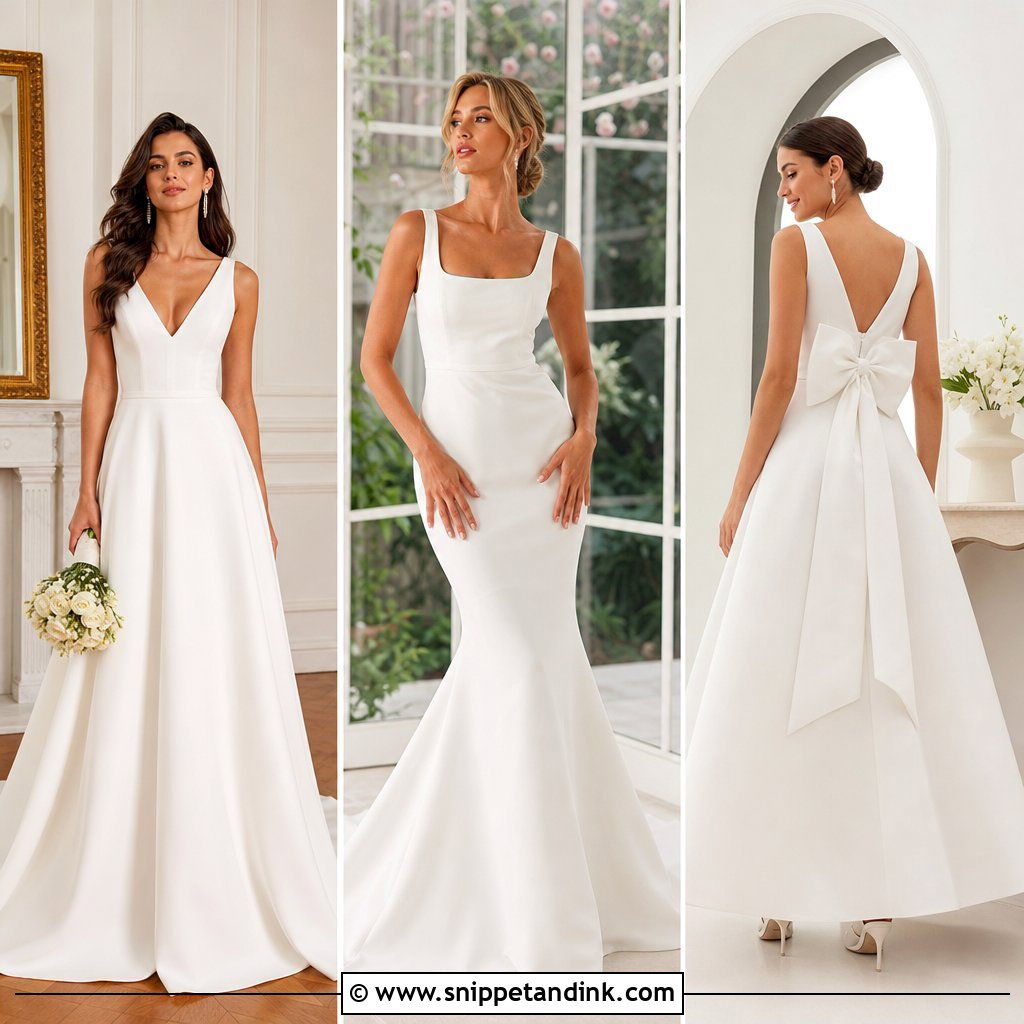
A modest A-line in opaque crepe or Mikado, with a high neck, full sleeves and a fitted waist, can still feel light. Soft shaping at the shoulder keeps the bodice from looking boxy. Covered buttons at the cuffs and down the back add detail without sparkle. Full sleeves restrict movement more than brides expect, so I ask the seamstress to check elbow and shoulder ease specifically. You need to be able to hug, eat and dance. A plain chapel veil worn under a low bun suits it.
A Train With No Lace to Hide the Bustle Points
On a lace gown, the hooks and loops of a bustle disappear into the pattern. On plain satin or crepe, every lift point shows, and a badly placed one creates a pucker you’ll see in every reception photo. It’s worth planning the bustle as carefully as the gown itself.
The styles that suit a clean skirt
An over bustle hooks the train up onto the back of the skirt, usually at one to three points. It’s quick and works well with stiffer fabrics like Mikado. An under or French bustle tucks the train underneath with ribbon ties, giving a smooth, rounded back that suits satin. For a slim column with a short train, a simple wrist loop may be all you need, though it does mean holding fabric all evening.
What to sort out at the fittings
- Ask for the bustle to be fitted with your shoes on, so the bustled hem clears the floor.
- Request colour-coded or numbered ribbons for an under bustle; under pressure, a helper will match them faster.
- Bring the person who’ll do it on the day to the final fitting and have them practise twice.
- Walk and turn once it’s up. If the hem dips anywhere, another point is needed.
If the bustle still looks bulky after alterations, a detachable train or an overskirt can be a cleaner option for a plain gown.
Which Plain Gown Still Feels Like You by the Last Dance?
Restraint only works when the construction underneath is right. Satin gives a soft glow, crepe gives smooth structure and silk gives movement, but none of them can stand in for a precise fit. Test every gown walking, sitting and with your arms raised, and look at it from the side and back before alterations are finished. Let your shoes, jewellery, veil and hair support the shape rather than add to it. Then go with the one that feels most natural on your body and suits the kind of wedding you’re actually having.
You'll Like These Ideas:





Leave a Reply