
More of the brides I dress want something other than a classic lehenga or saree for at least one function. Fusion bridalwear takes Indian craft, meaning zardozi, gota, Banarasi weaves and hand beading, and builds it onto Western construction such as corsets, tailored jackets, capes and jumpsuits. Pre-draped sarees are often the starting point. The challenge is keeping it unmistakably bridal: the fabric, the depth of embroidery and the jewellery have to carry that weight once the silhouette gets simpler. Below are twenty outfits, from engagement to reception, with the fitting and construction details I’d check on each.
Commissioning a Fusion Piece From a Designer
Most fusion bridal outfits are custom or made to measure, and hand embroidery is slow work. Heavily embroidered bridal pieces commonly need several months from order to delivery, and wedding season stretches that further. I advise brides to place orders as early as they comfortably can and to treat the designer’s quoted date as the latest, not the earliest.
What I ask the designer before ordering
- How many fittings are included, and when the final one falls relative to the wedding.
- What the corset or bodice is boned with, and whether it has a waist stay to stop it riding up.
- Whether the cape, jacket, overskirt or dupatta is detachable, and how it fastens.
- How heavy the finished outfit will be; ask to hold a similar sample before committing.
- Whether alterations after delivery are covered, since weight often changes before a wedding.
Bring your actual wedding shoes and the undergarments you plan to wear to every fitting. Fusion cuts are closer to the body than a lehenga, so a change in bra or heel height alters the fit more than you’d think.
1. Bridal Pre-Draped Saree Gown
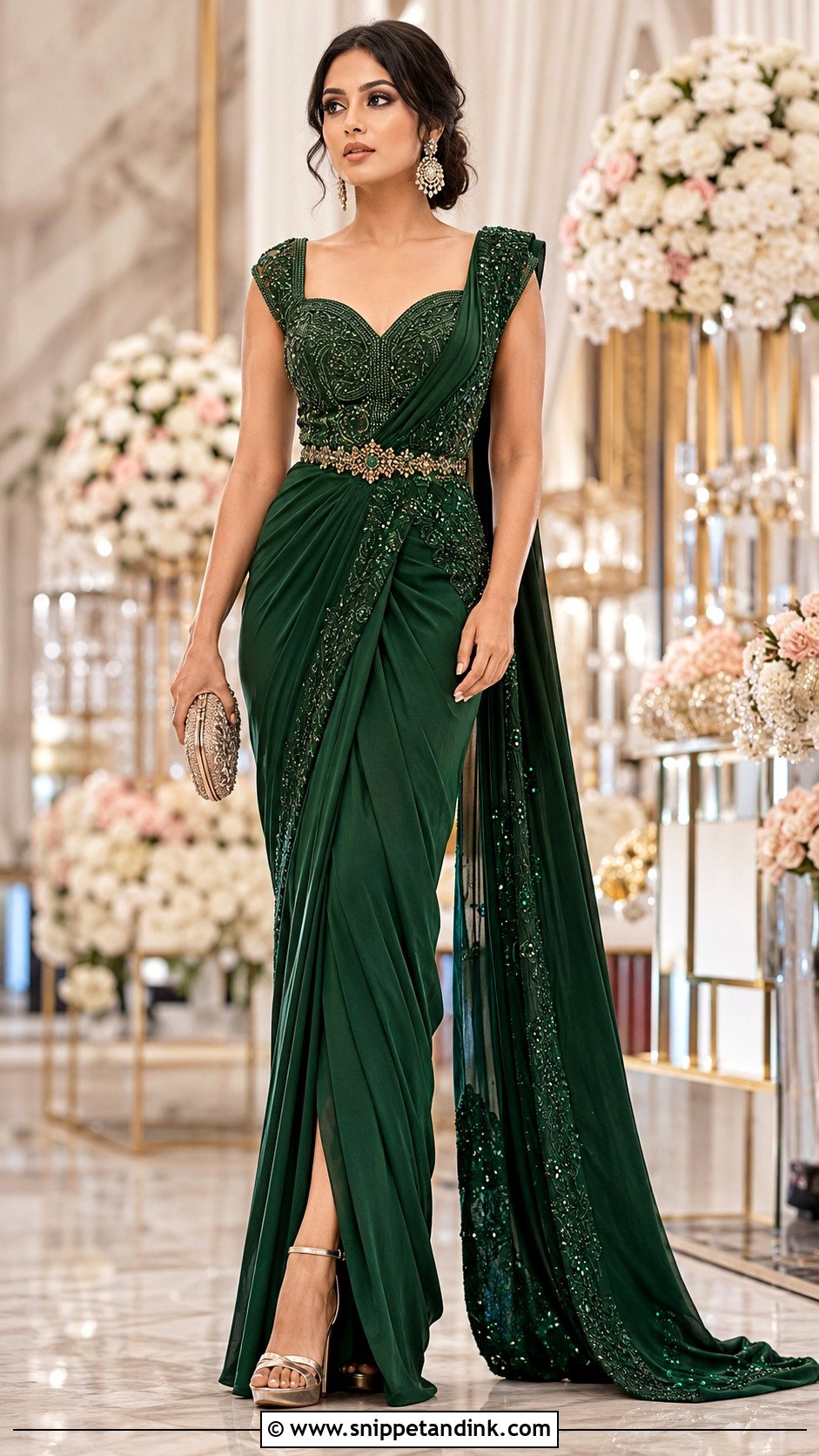
The saree gown is where most brides begin with fusion. The pallu is attached and the drape is sewn into a sculpted bodice, so nothing shifts as you greet guests. Crepe in ruby, emerald or champagne with crystal work or fine zardozi has enough body to hold the drape. A jewelled belt is more than decoration; it anchors the pallu at the waist. I’d put this at a reception or cocktail evening, where you’ll be on your feet for hours.
2. Bridal Corset Blouse Lehenga
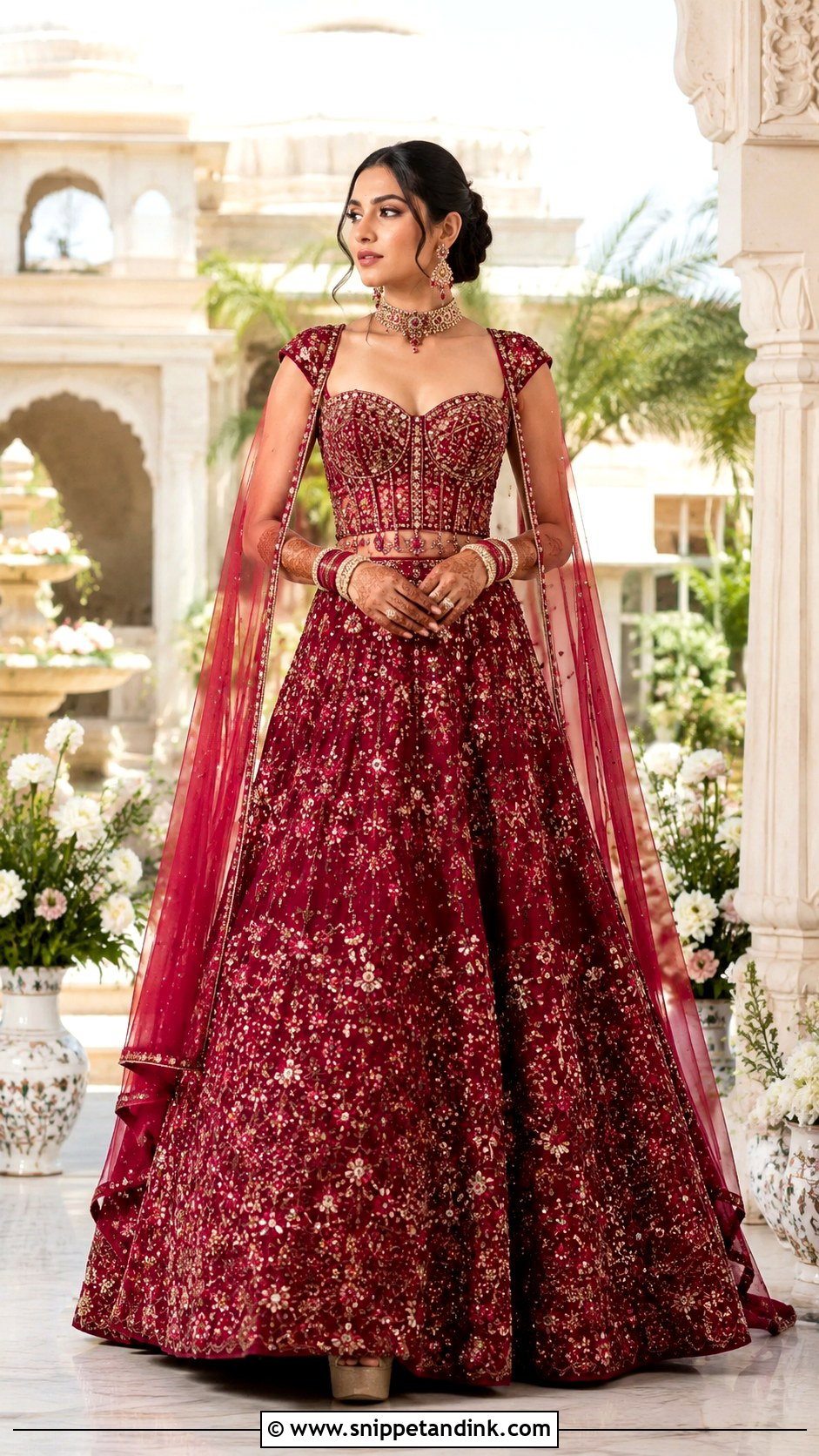
Corset blouses need real boning and a proper fit, or they gape at the top edge the first time you sit. Ask your designer whether the bones are spiral steel or plastic; steel holds its shape over a long evening far better. Velvet or raw silk suits winter, organza or georgette suits warmer venues. A high-waisted lehenga balances the fitted bodice. I like the dupatta pinned at the back like a soft cape, which keeps the neckline and choker visible. Coordinate the embroidery across pieces without copying it exactly.
3. Bridal Cape Lehenga
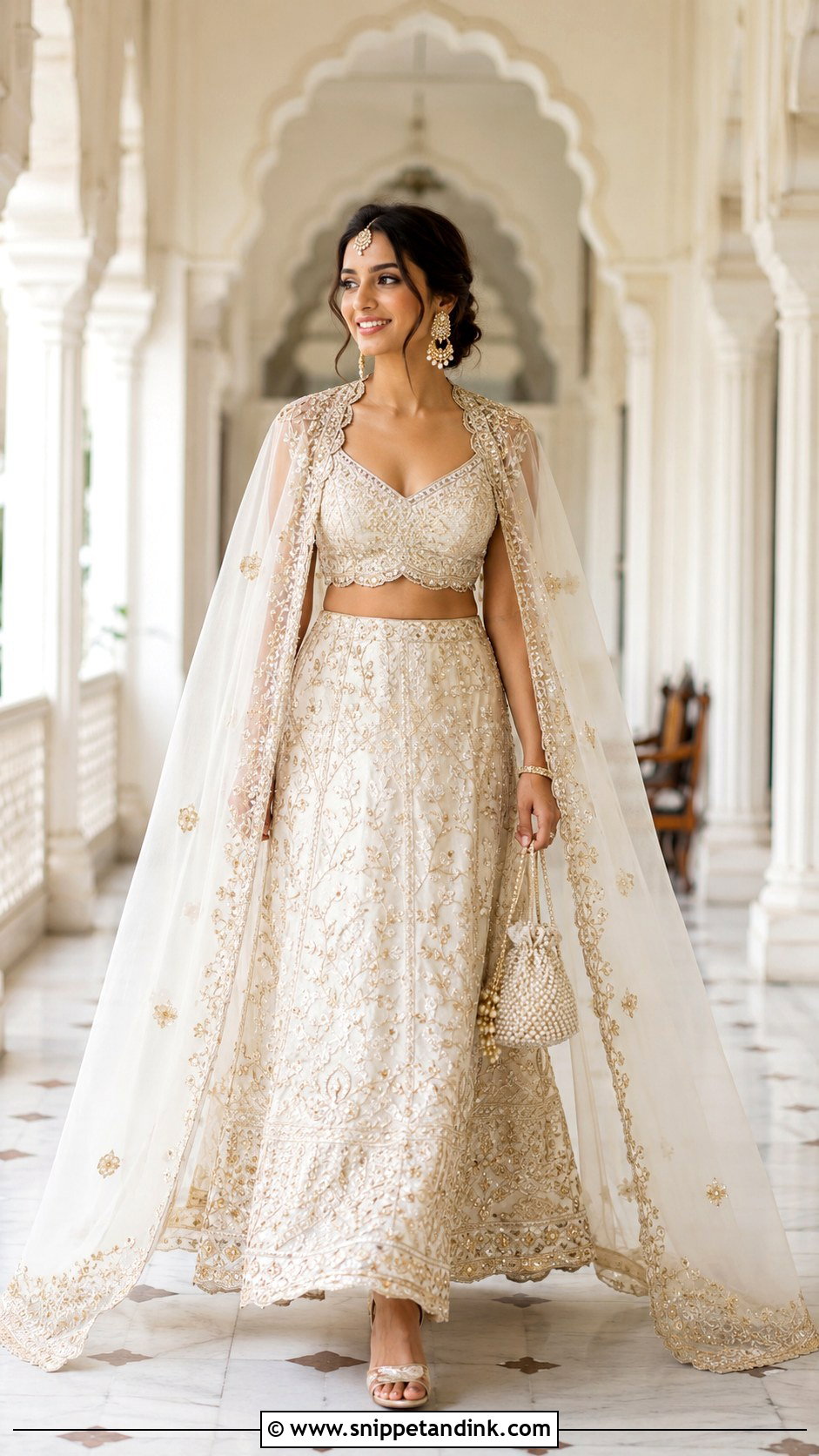
Here the dupatta is replaced by a sheer cape, which gives a lighter, more modern line at the shoulders. Tulle, organza and georgette all float; anything heavier drags the blouse backwards. Keep the skirt’s flare moderate so the cape stays the feature. Because the cape adds volume near your face, the necklace should be delicate, and a maang tikka does more than a heavy choker would. I’d suggest it for an engagement or sangeet.
4. Bridal Jumpsuit With Overskirt
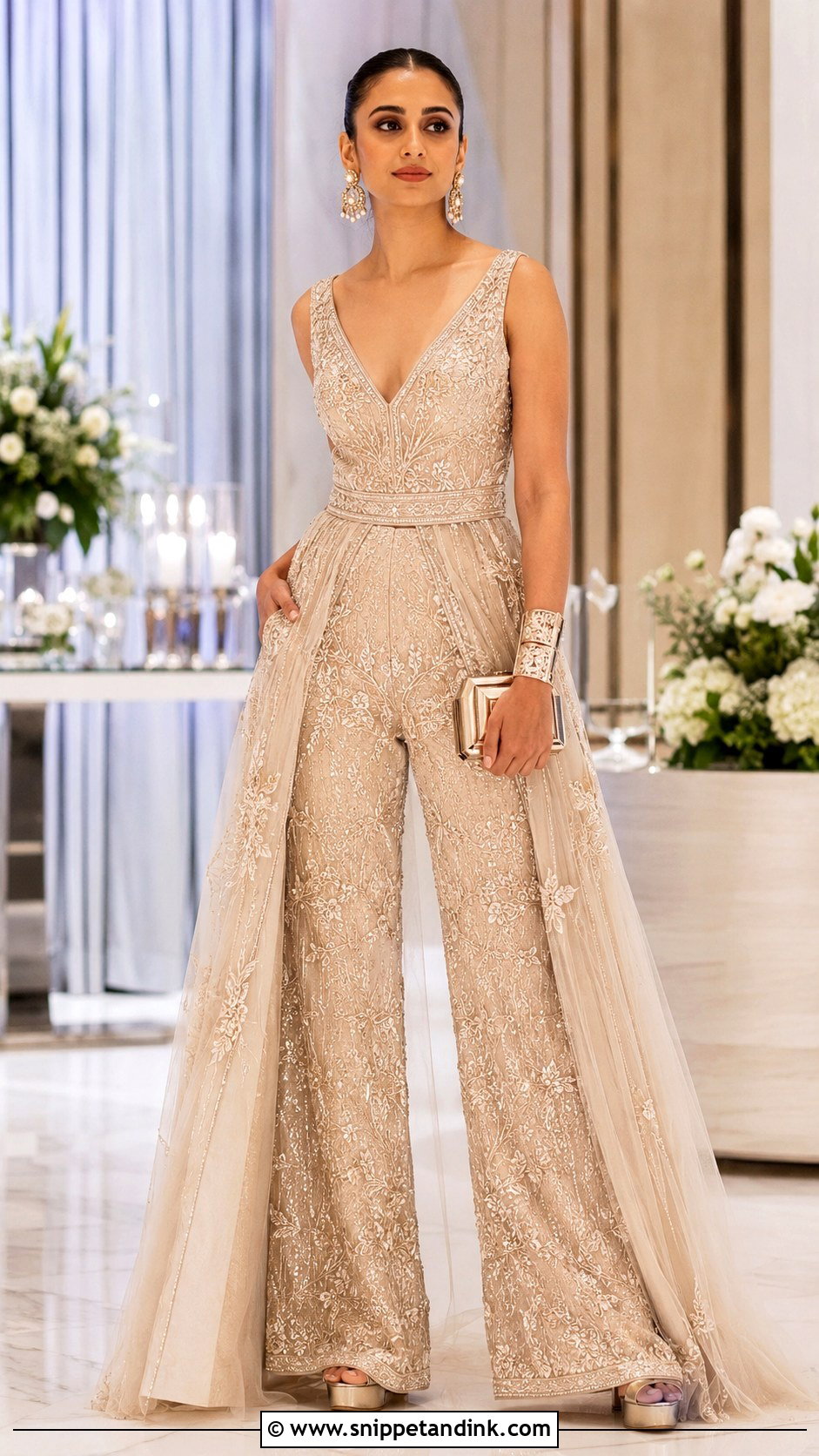
Two outfits in one is the whole point. You enter in a full organza or tulle overskirt, then unhook it to dance in a tailored wide-leg jumpsuit. The fastening matters most: hooks under a waistband or a concealed button tab lie flatter than snaps, which can show as bumps through thin fabric. Ivory and gold read classic; jewel tones richer. Do a practice removal with whoever will help you on the day, because fiddling with a stuck hook during your reception wastes precious minutes.
5. Bridal Dhoti Pant Crop Top
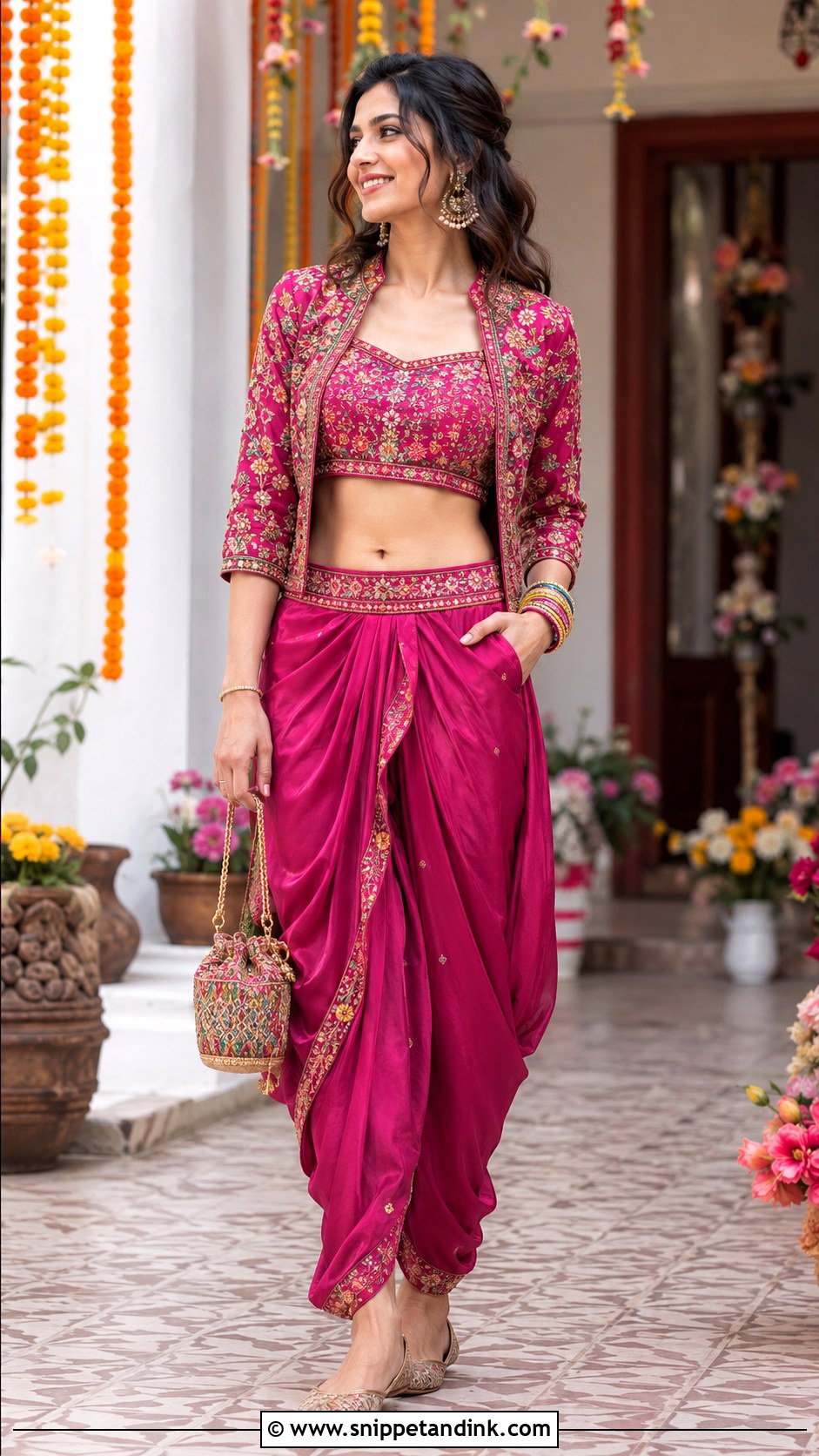
A bride who wants to dance freely at her sangeet will be happy in an embroidered crop top with draped dhoti pants. The pleats should be controlled at the waist so they don’t add bulk. Silk blend and crepe fall better than stiff fabrics. A short embellished jacket gives coverage for the more formal moments. Coral, mustard and fuchsia feel festive at a mehndi, while ivory with antique gold is quieter and more refined.
6. Bridal Long Jacket Lehenga
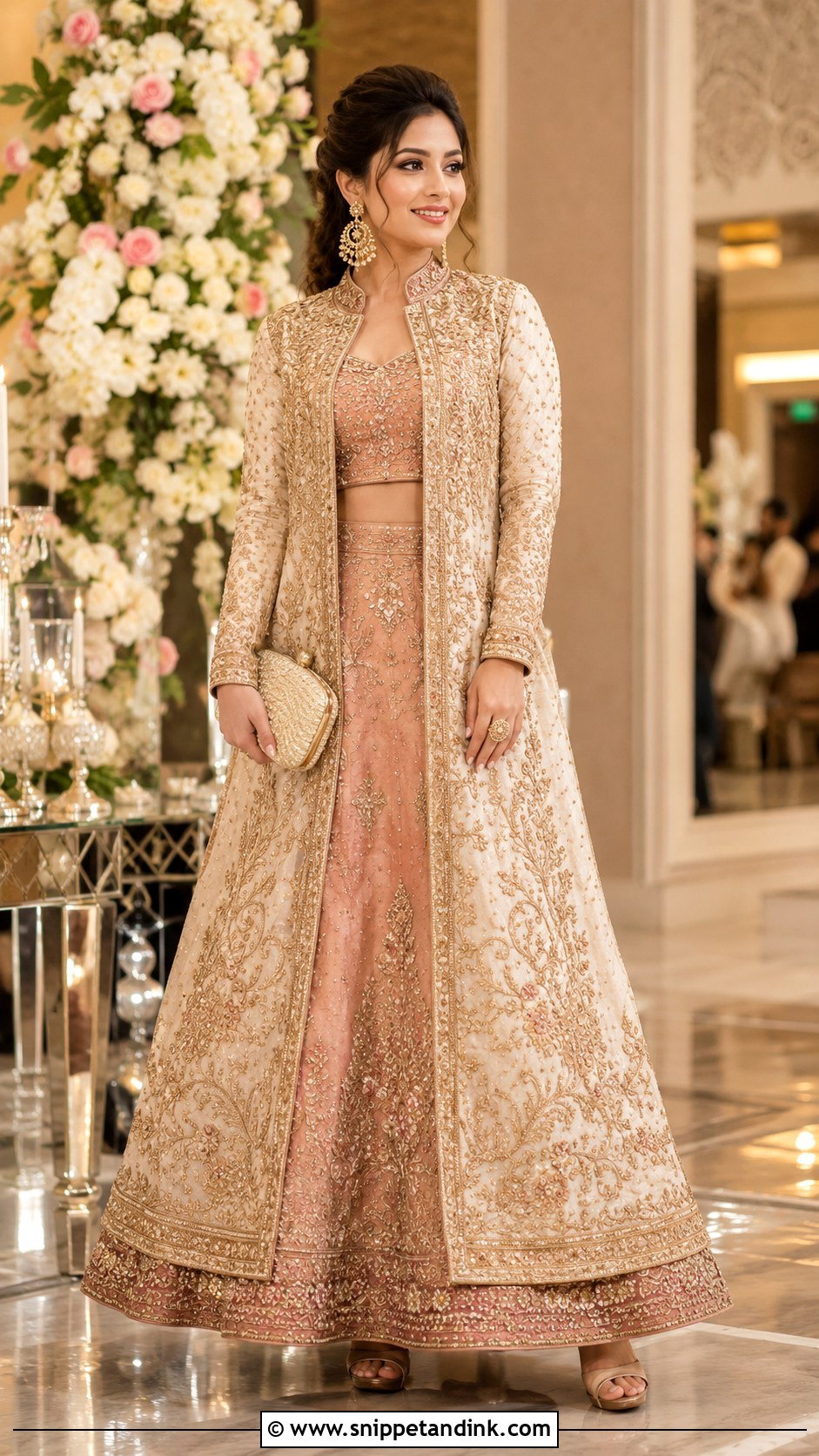
Is a long jacket enough to replace the dupatta? For most receptions, yes. A floor-length open-front jacket over a fitted blouse and lightly flared skirt gives structure and real presence. Embroidery running down the front edges lengthens the body; concentrated work at cuffs and hem adds richness without weight. An ivory jacket over a rose lehenga is a subtle contrast I like. In velvet or brocade it is a winter outfit, as it is warm to wear for a whole evening.
7. Bridal Peplum Sharara
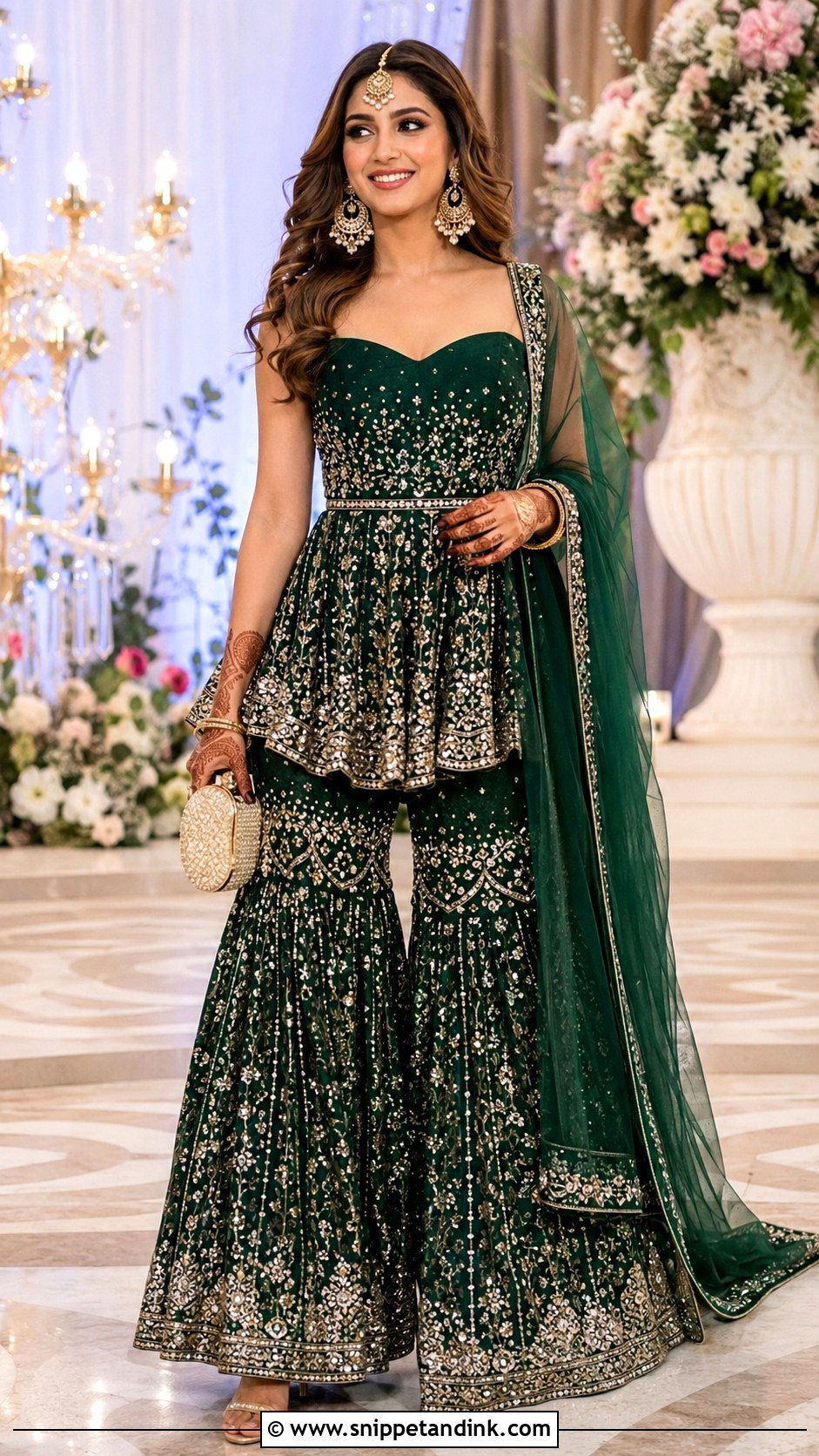
The peplum does the shaping in this outfit, nipping the waist and flaring into wide sharara pants. It needs to end above the fullest part of the sharara, or the proportions look heavy. Mirror work suits a sangeet; pearls suit an engagement. A sweetheart or square neckline frames bridal jewellery well. Block heels under the long pants give stability that a stiletto won’t, especially on a stage floor.
8. Bridal Pant Saree
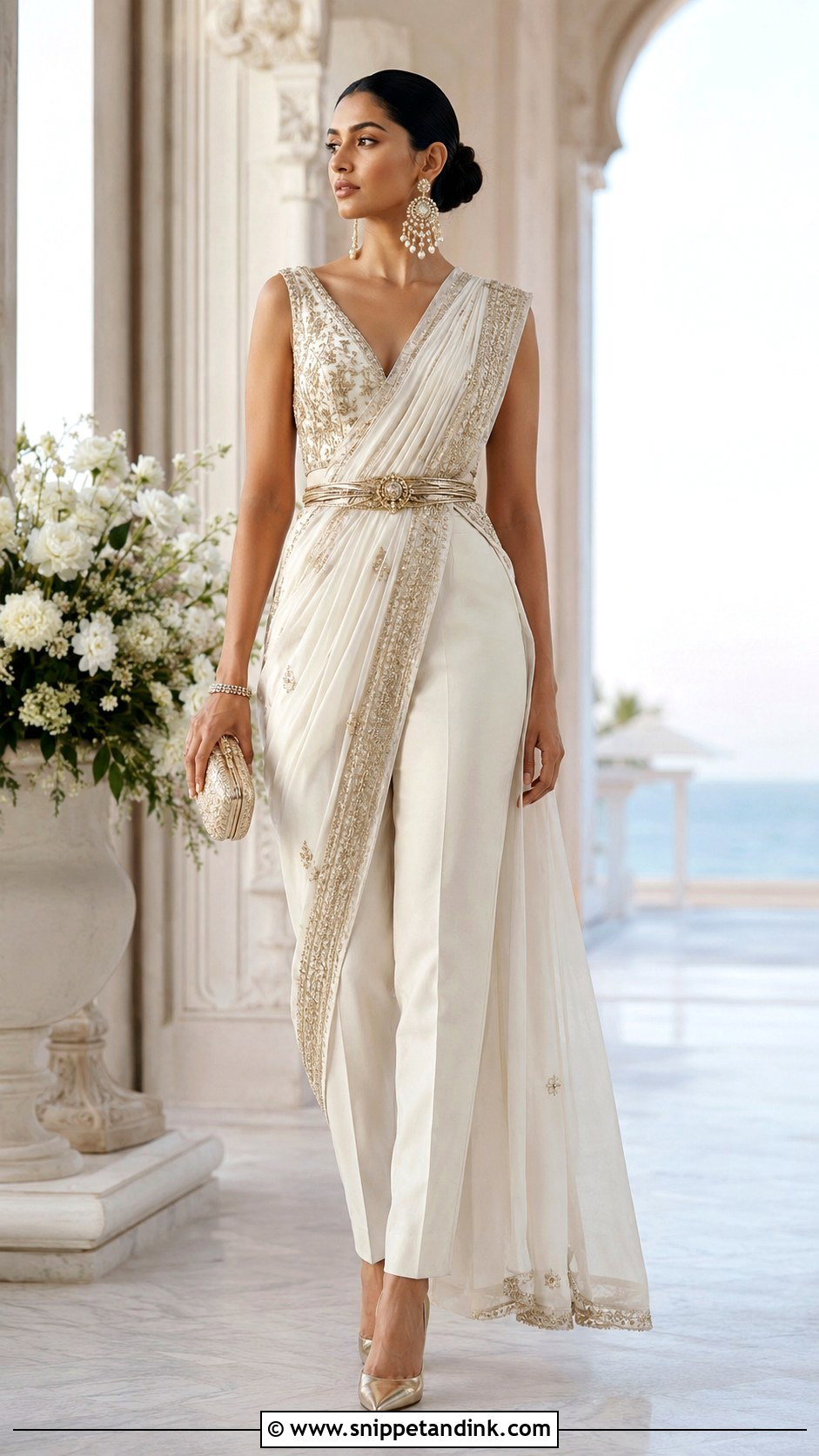
A pant saree keeps the drape and swaps the skirt for tailored trousers. Slim or straight legs give a sharper silhouette; palazzos move more softly. The drape crosses the bodice and falls from the shoulder, and a narrow belt holds it in place. For a bridal effect, I’d push the embellishment: hand-beaded borders or dimensional floral work on the pallu. This suits a destination wedding or cocktail evening where you need to move freely.
9. Bridal Blazer Lehenga
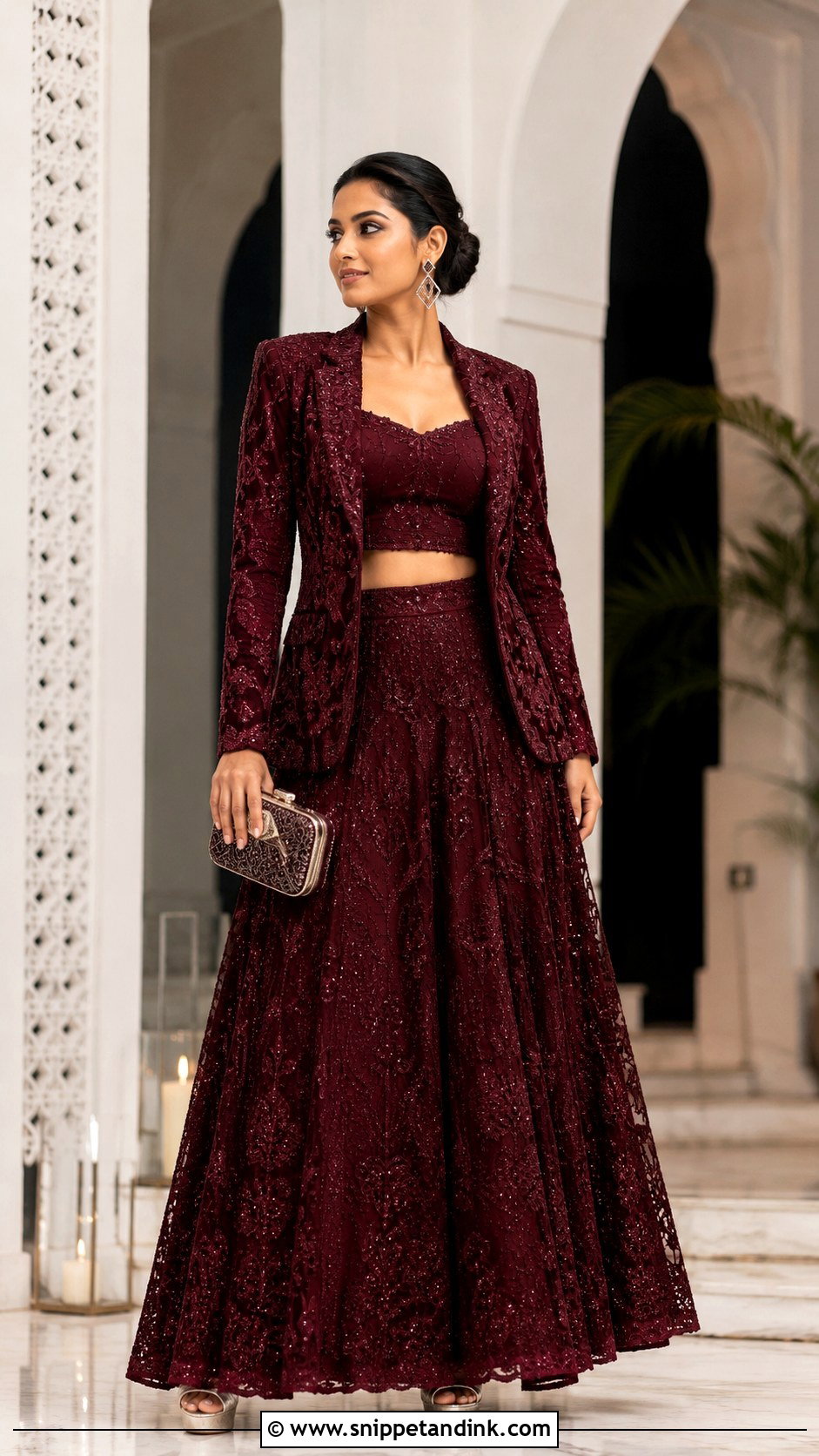
A tailored blazer in place of a choli is the most confident option on this list. Pair a cropped or waist-length embroidered blazer with a high-waisted lehenga in the same fabric. Satin lapels, zardozi or beaded shoulders make tailoring feel festive. Keep the skirt fluid rather than full. The fit point I watch is the shoulder; a blazer that is even slightly wide there looks borrowed. Brides wanting coverage can choose a double-breasted design worn fully fastened.
10. Bridal Draped Skirt With Bustier
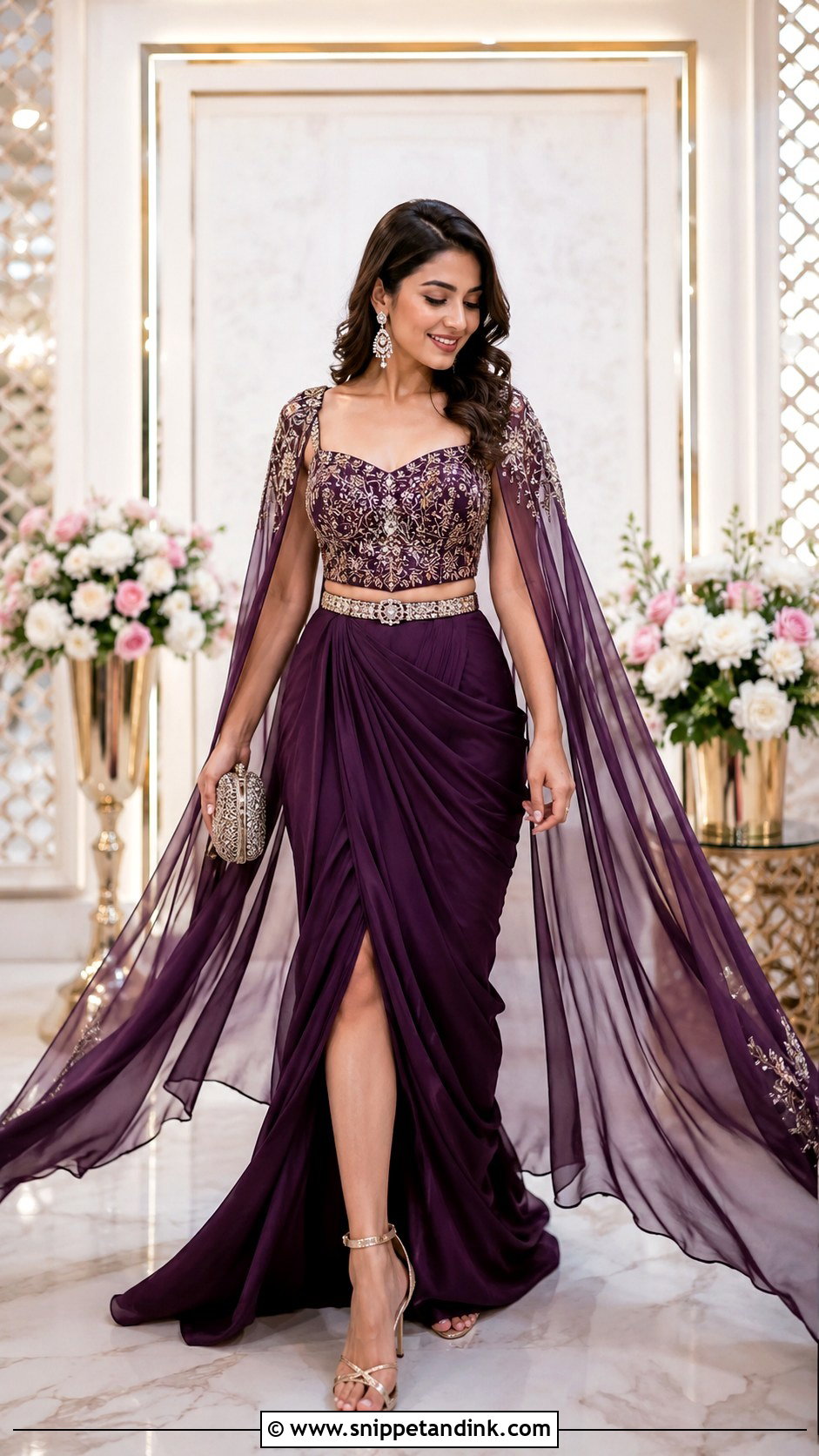
A draped skirt with an embroidered bustier gives you the line of a saree in two simple pieces. The skirt needs diagonal pleats and enough ease to walk; a too-narrow drape means short shuffling steps all night. A bustier with wider straps or detachable sleeves holds more securely than a strapless one under heavy bridal jewellery. Add a sheer shoulder cape or an attached pallu to soften it. Jewel-toned satin or silk with hand embroidery suits a sangeet or reception.
11. Bridal High-Low Anarkali Gown
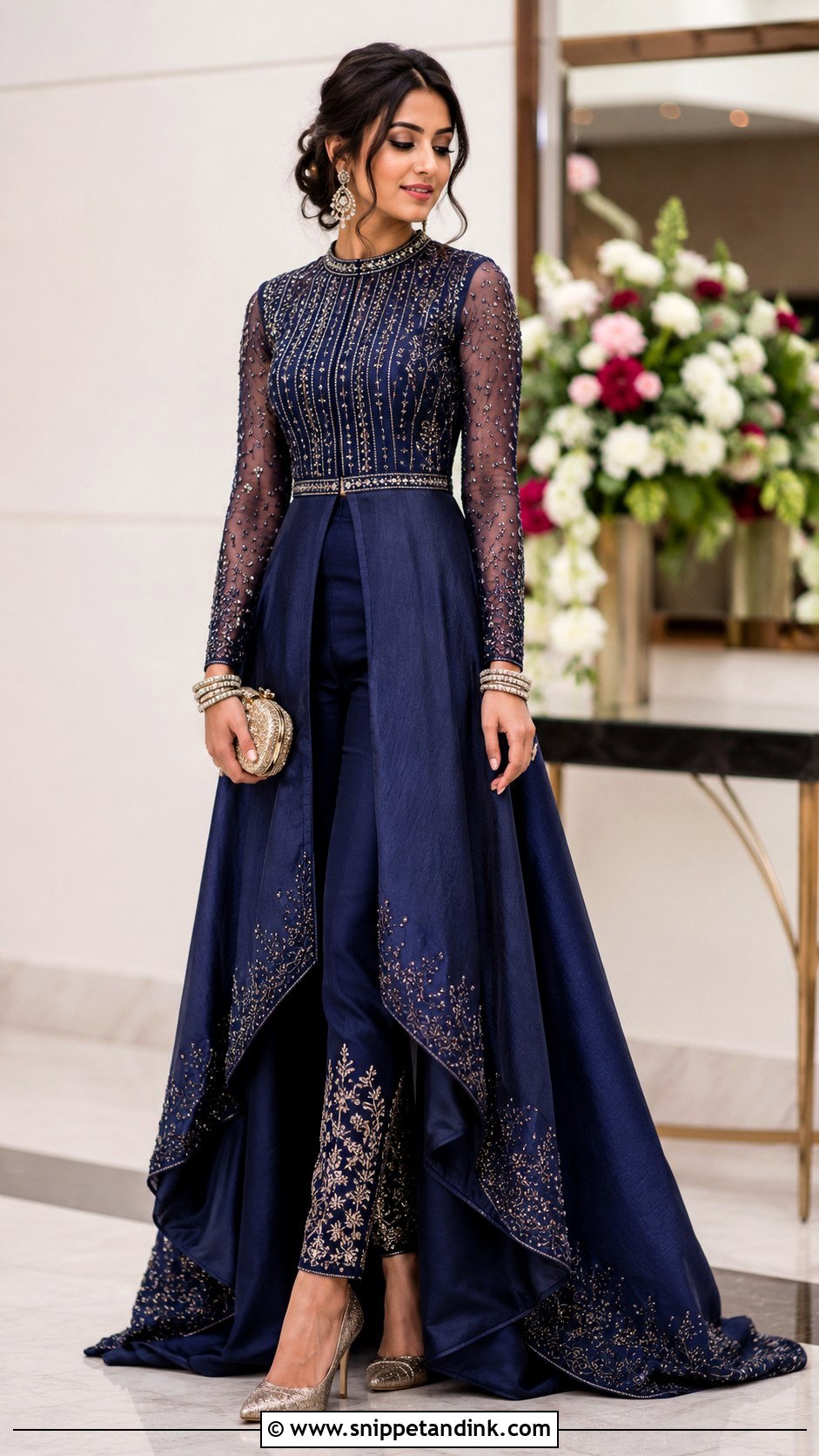
With a high-low Anarkali gown, the shorter front shows off embroidered cigarette pants and jewelled shoes, while the longer back trails behind. That makes it practical: no fabric gathering around your feet as you walk or dance. The bodice should be smooth through bust and waist before the flare opens. Traditional borders and beadwork link the Western cut to Indian design. A centre-parted bun keeps it composed for an engagement.
12. Bridal Palazzo Saree
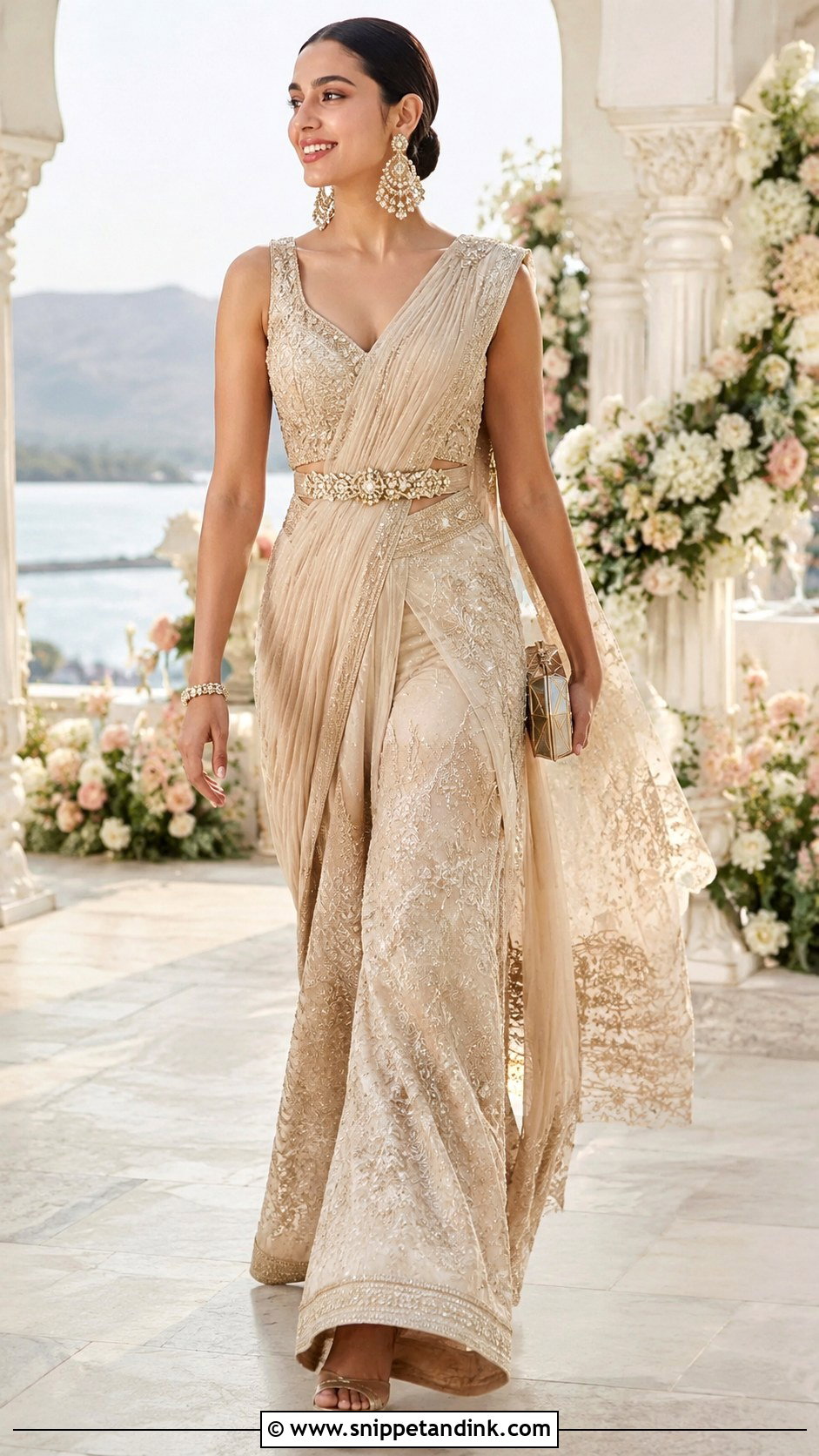
Palazzos under a pre-pleated drape are airy, which is why I suggest this for destination weddings in warm climates. Georgette, chiffon or crepe keep it graceful rather than bulky. The trouser length should skim the top of your shoes. A jewelled belt controls the drape. Keep everything in one colour for height, or contrast the blouse for interest.
13. Bridal Tuxedo Saree
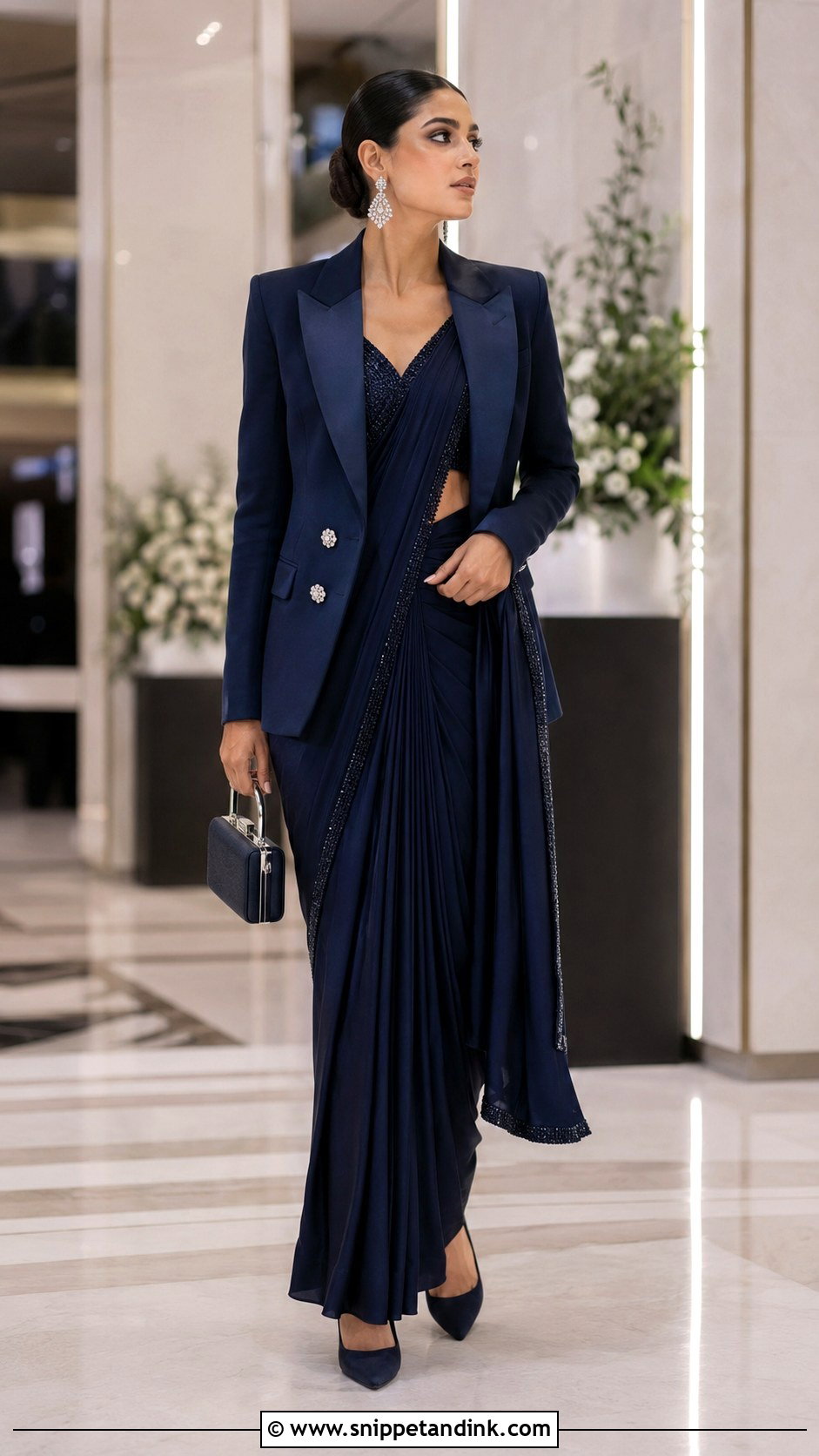
A tuxedo saree pairs a pre-draped saree skirt with a fitted blouse and a sharply cut jacket. Satin lapels or crystal buttons make the jacket bridal. Ivory, black and gold, or midnight blue are strong evening choices. Tuck the pallu under the jacket for a sleek line, or over one shoulder for movement. One brooch or necklace is plenty. I’d point fashion-led brides toward this for a reception or a stylish civil ceremony.
14. Bridal Embroidered Trail Gown
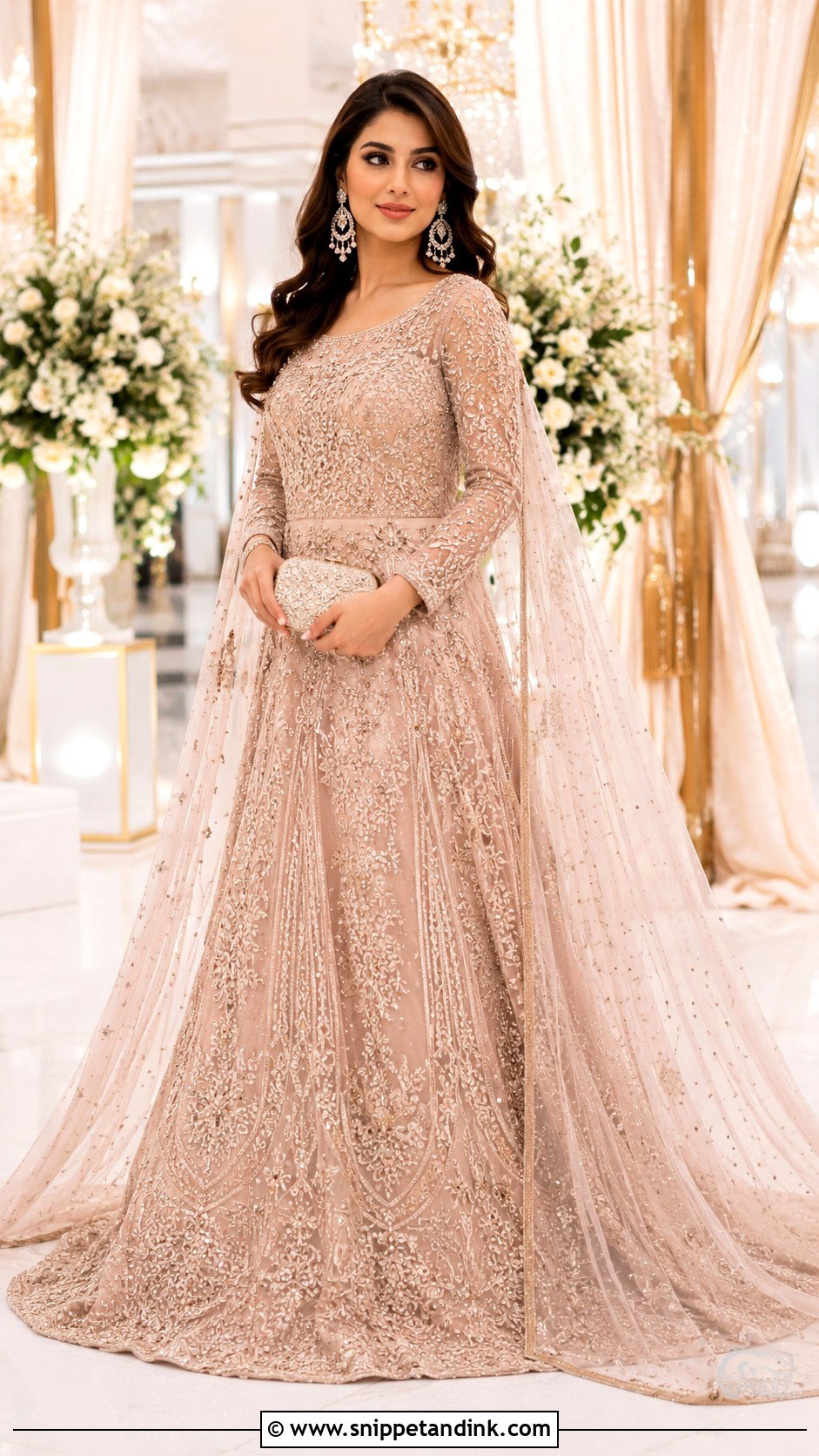
An embroidered gown with a train is where Western bridal and Indian craft meet most directly. I’d ask the embroiderer to grade the work: dense zardozi or resham on the bodice, lightening toward the hem, so the skirt isn’t too heavy to move. Blush, champagne, emerald and deep red can all feel bridal. Plan a bustle for the train; after the entrance, hooking it up stops guests treading on it. A dupatta attached at the shoulders adds a veil-like finish for a grand reception.

15. Bridal Asymmetrical Kurta Lehenga
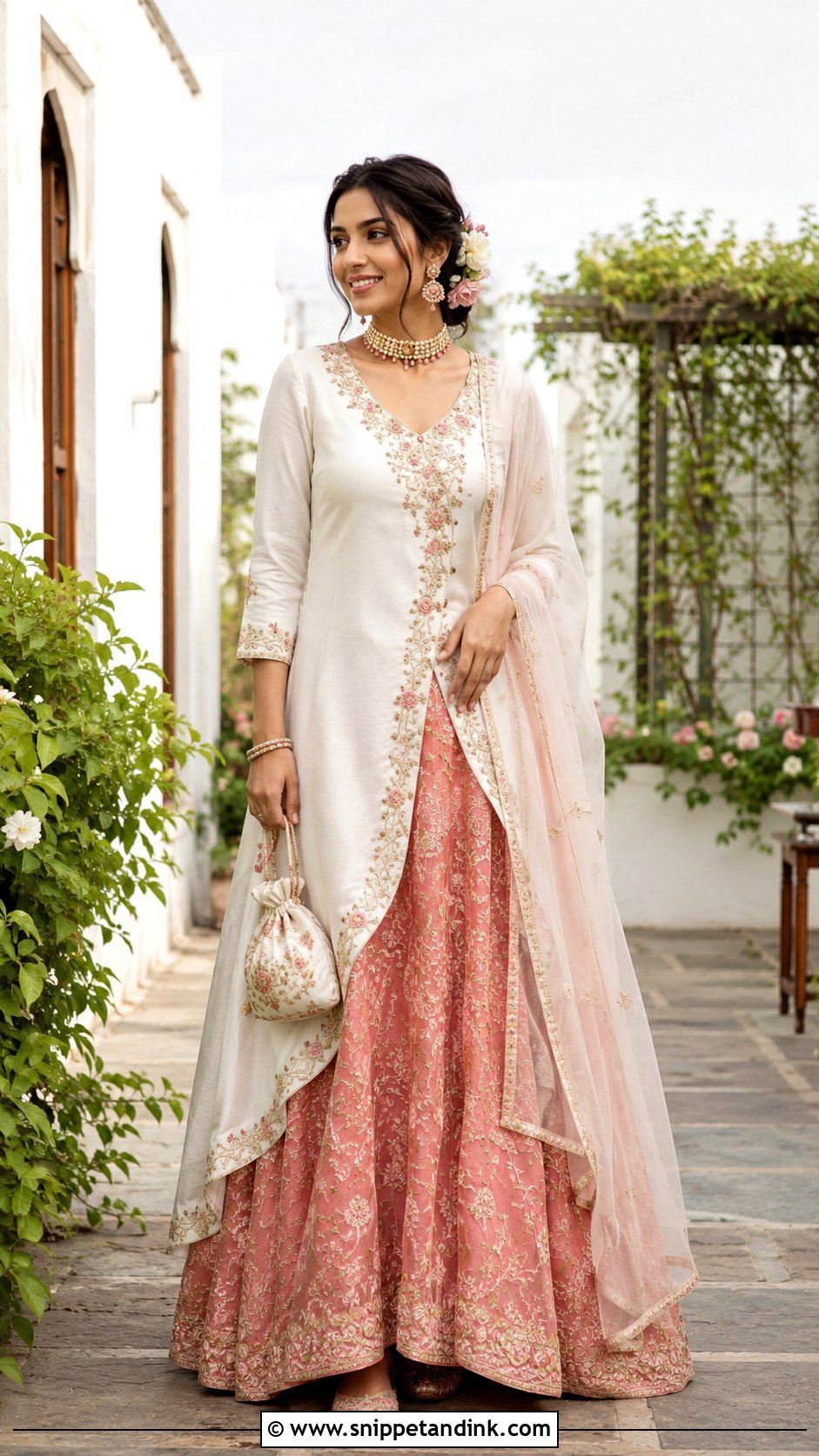
An asymmetrical kurta over a lehenga gives comfortable coverage and unusual proportions. Choose a diagonal, curved or high-low hem that shows the skirt beneath. Keep the lehenga moderately flared, or the two layers blur together. Repeat the same embroidery motifs on both pieces but at different scales for depth. A choker suits a plain kurta neckline. It works well for a mehndi or intimate ceremony.
16. Bridal Co-Ord Set With Long Cape
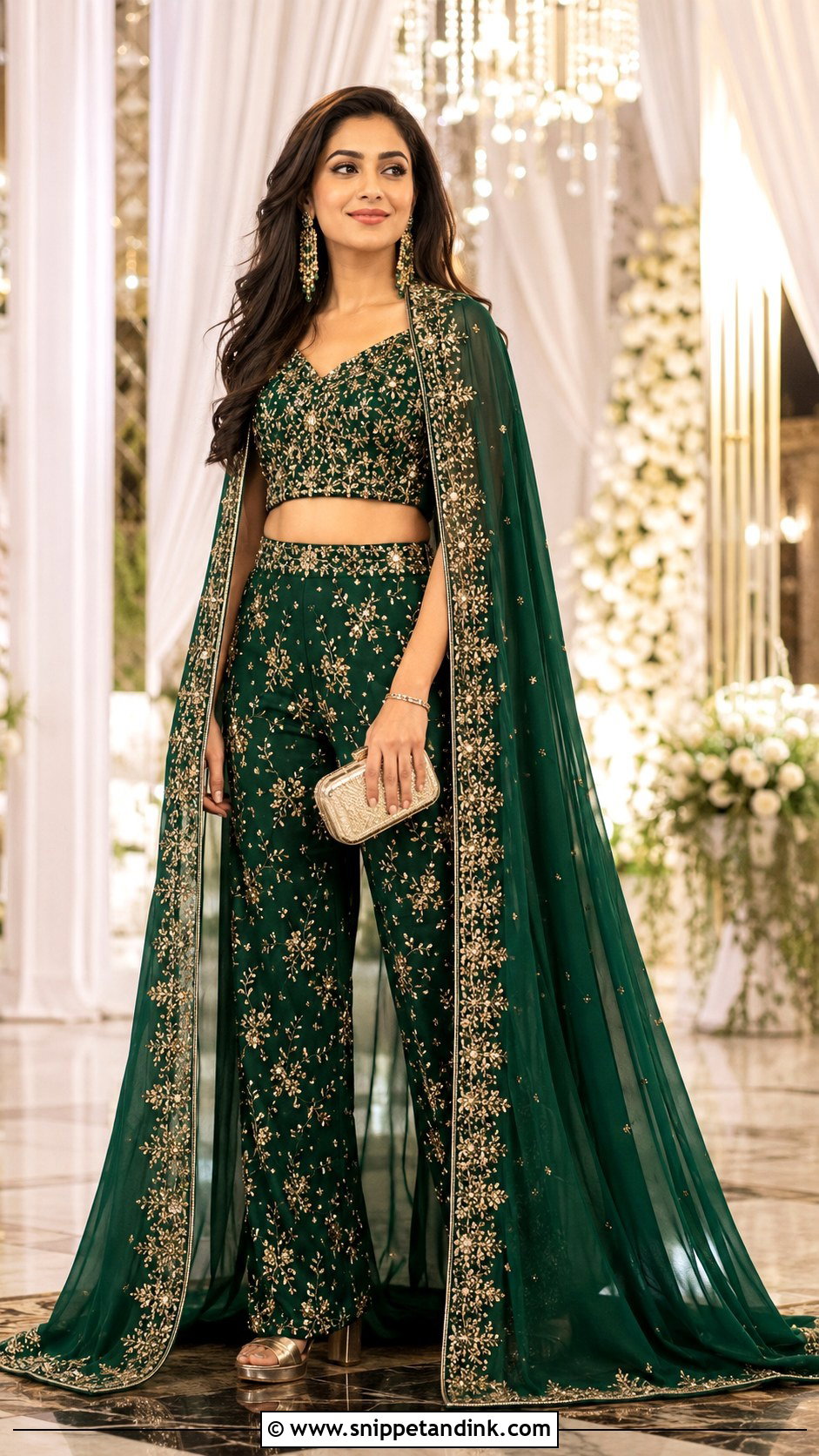
A crop top and wide trousers become bridal the moment a floor-length cape goes over them. Put the richest embroidery on the cape’s shoulders and back, since that’s what guests see as you walk in. Matching fabrics make the three pieces read as one outfit. The cape must clear the floor; an inch too long and you’ll trip on the stairs. The separates can be worn again later, which brides often appreciate.
17. Bridal Ruffle Saree With Belt
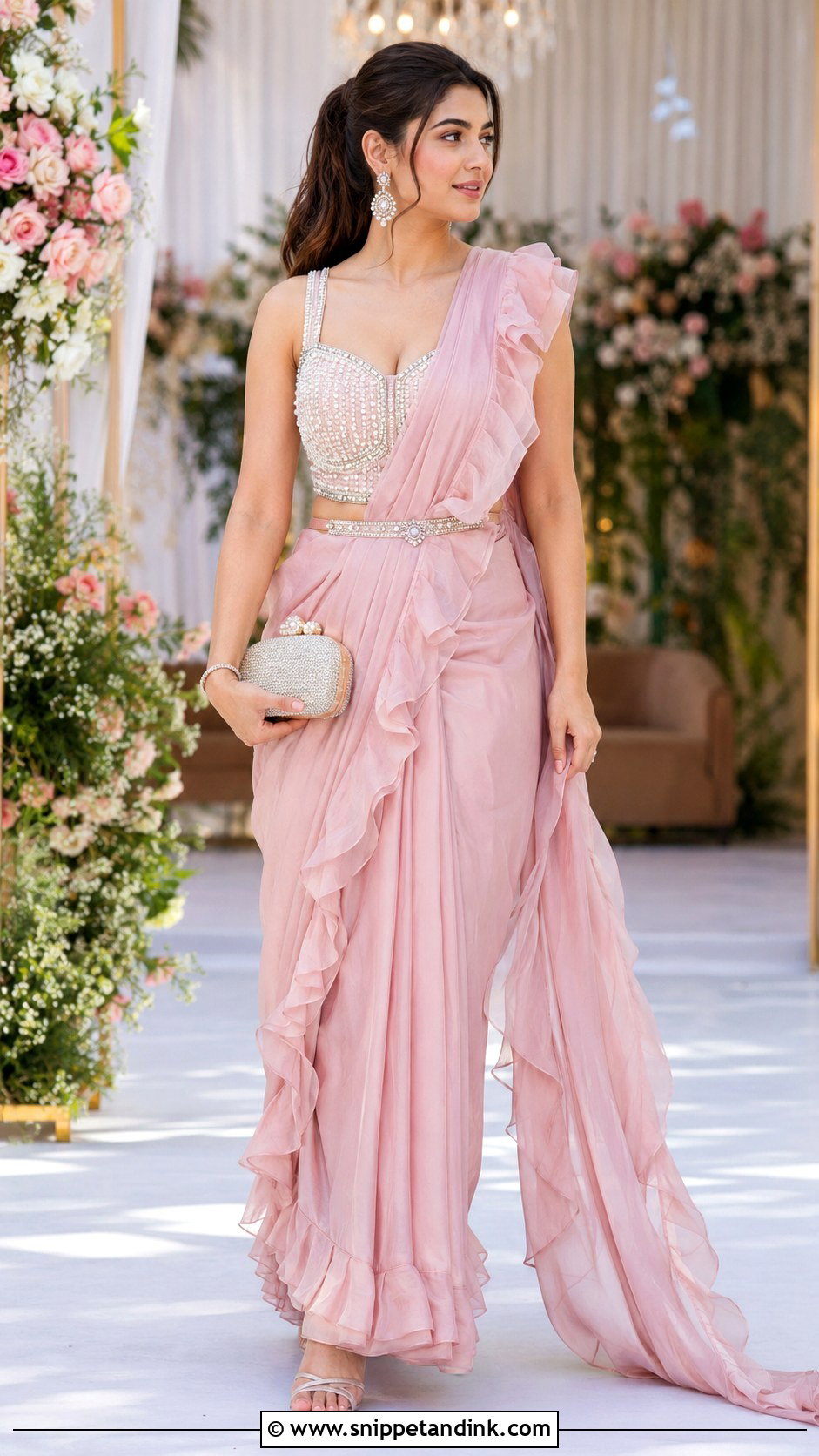
Ruffles add volume that photographs well, but restraint keeps a ruffle saree bridal rather than costume. I prefer them on the hem or pallu only. Pair with a structured embroidered blouse and a slim jewelled belt that echoes the blouse work. Pastels suit daytime; wine, navy and metallics suit evening. Keep other jewellery controlled because the ruffles already create plenty of movement.
18. Bridal Banarasi Skirt With Structured Top
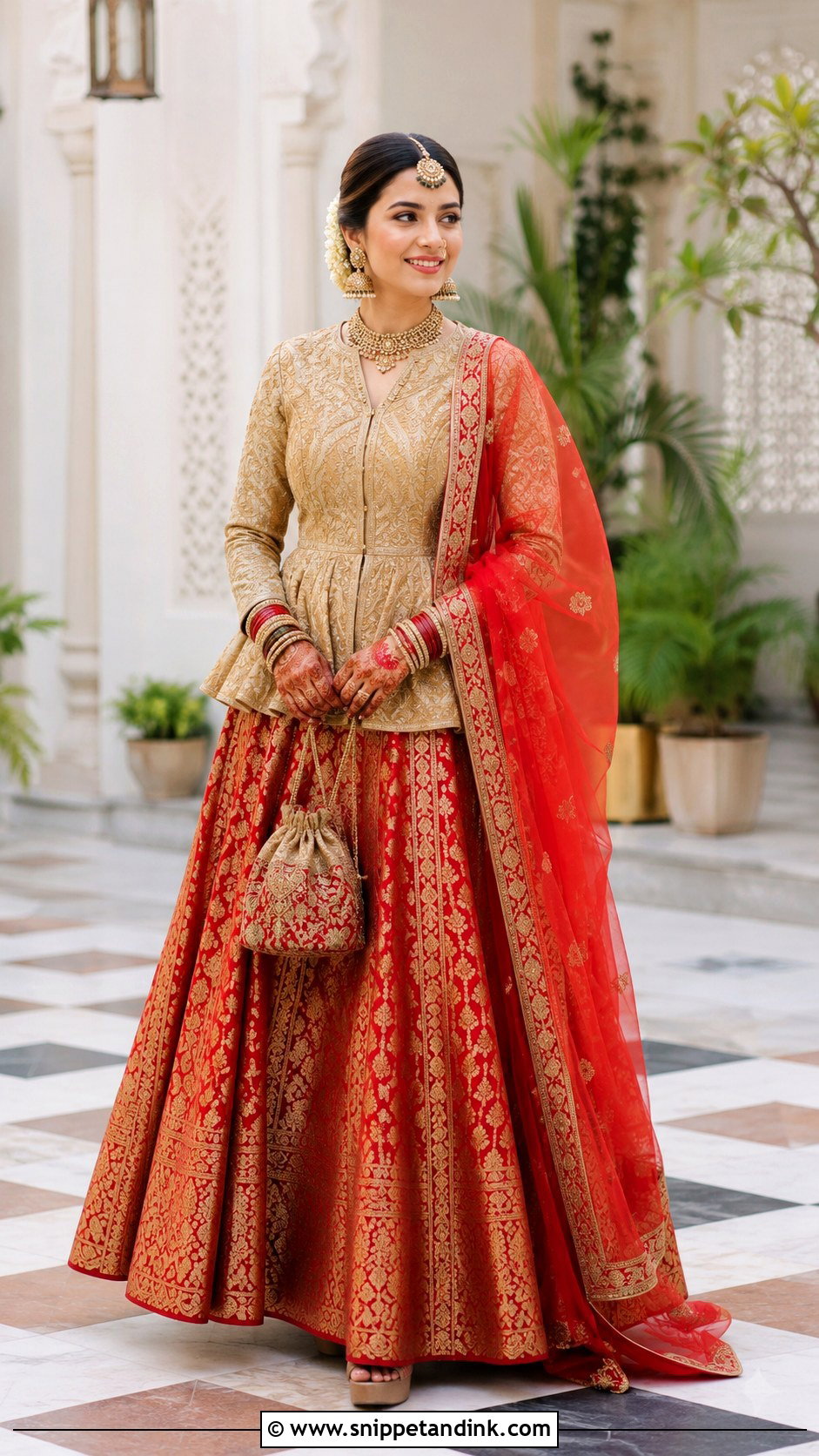
Rich Banarasi fabric made into a high-waisted skirt looks surprisingly modern with a structured corset, peplum or jacket. Pull one colour from the zari and repeat it through the top, shoes and accessories. Keep the skirt’s volume controlled, as too much gathering crumples the woven motifs. A light organza dupatta lets the textile show through. It’s a heritage piece in a new shape, ideal for an engagement or daytime ceremony.
19. Bridal Sharara Jumpsuit With Dupatta
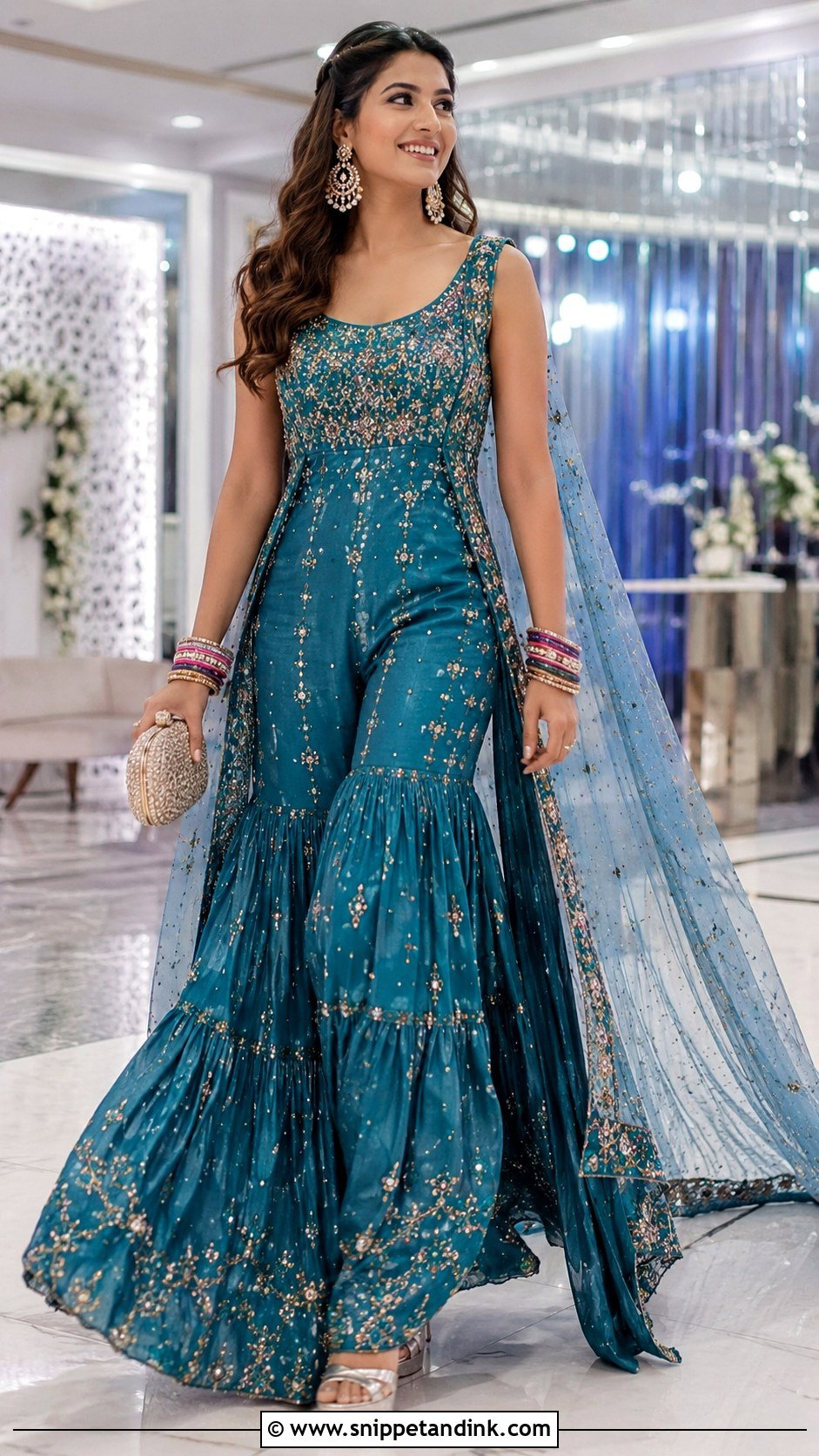
A sharara jumpsuit joins the bodice to wide, tiered legs, so there is no waistband to slip or tuck to adjust. Embroidery at the neckline, waist and lower flare is enough. A contrasting dupatta pinned at the back leaves your hands free for the dance floor. Before you commit, try going to the bathroom in it with a friend; one-piece bridal outfits nearly always need a helper.
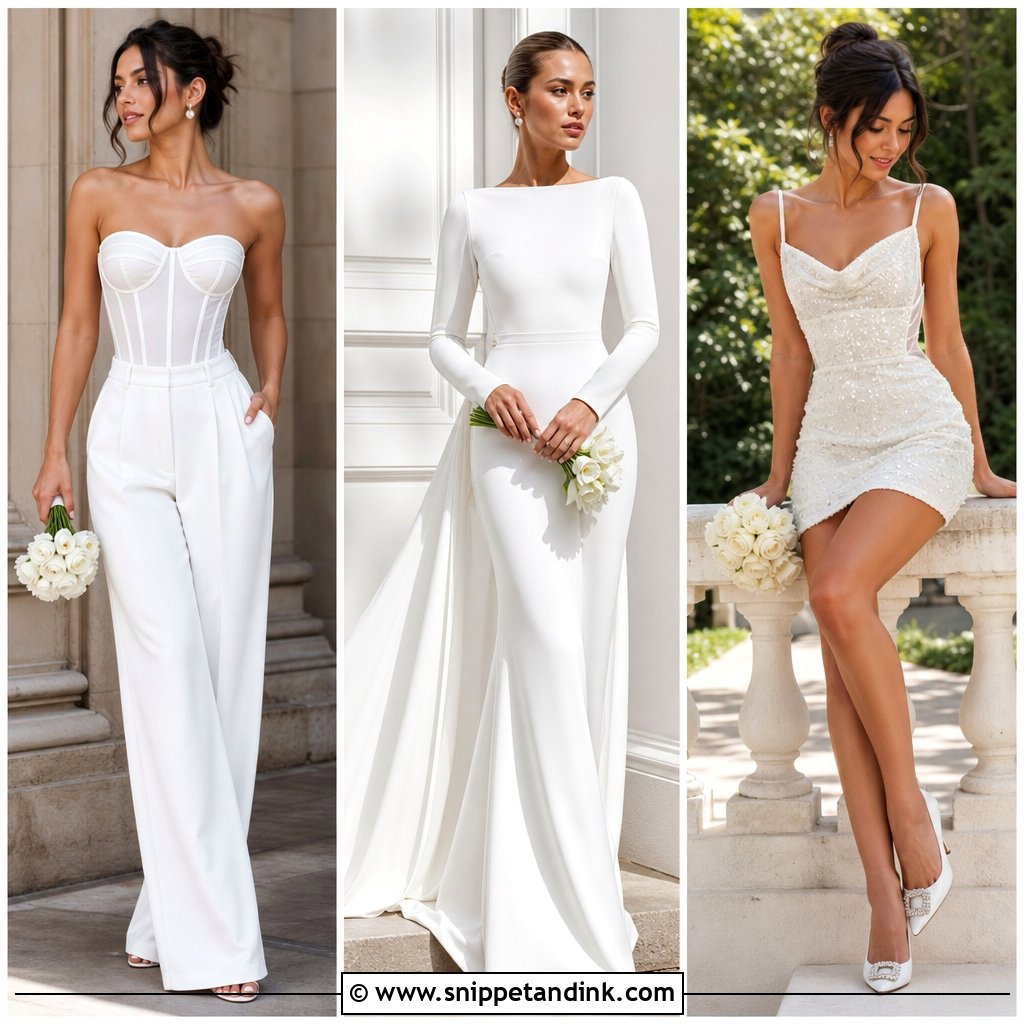

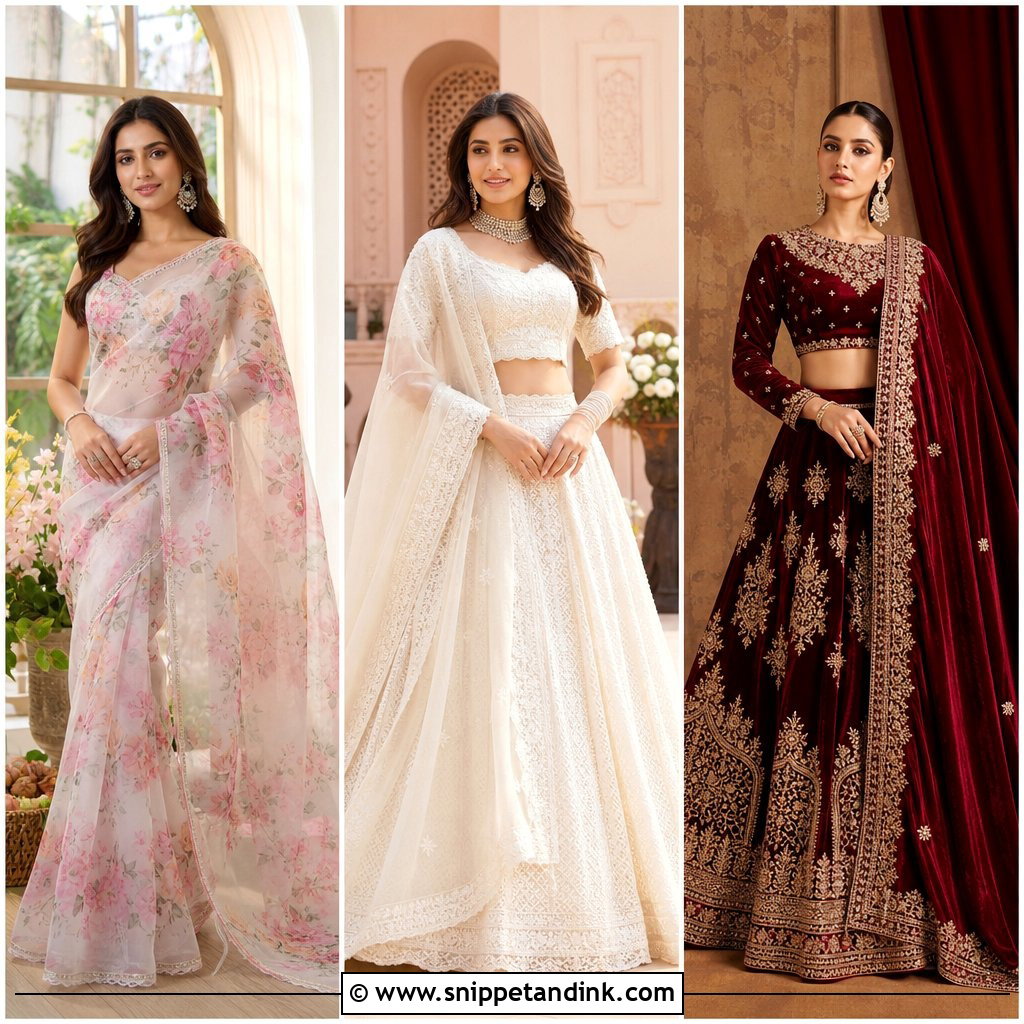
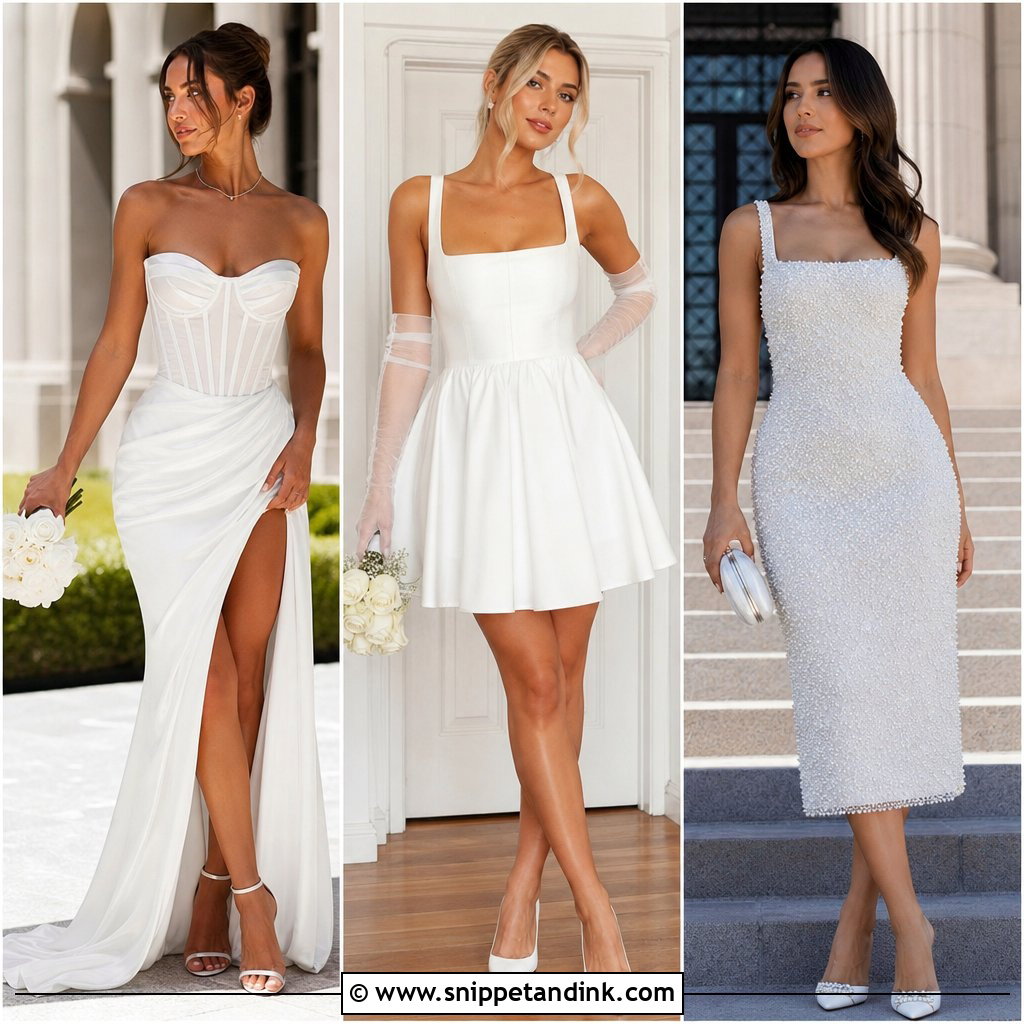

20. Bridal Gown With Dupatta Train
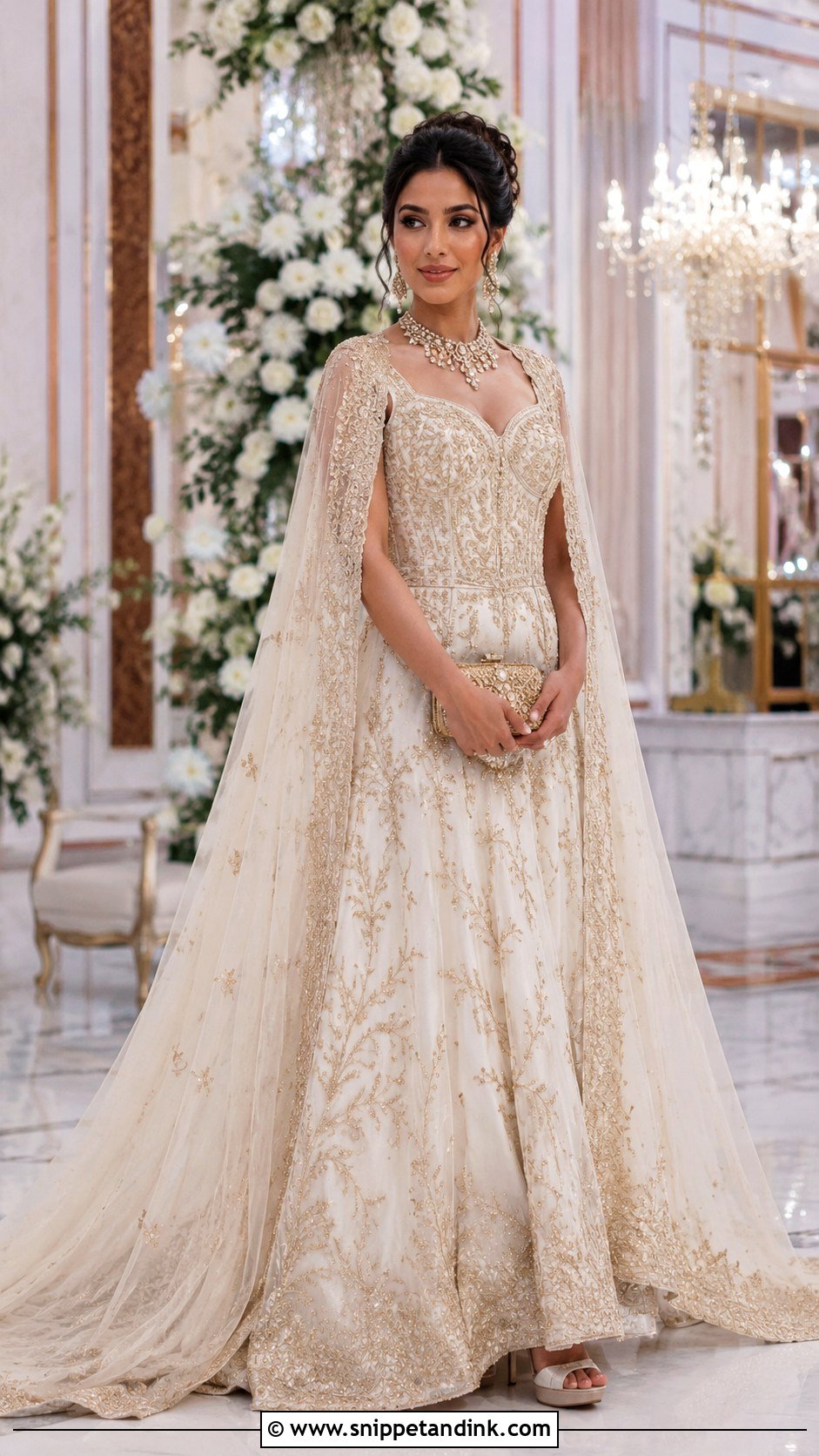
For a regal entrance, a structured gown with a long dupatta train is hard to beat. Attach the dupatta at both shoulders or the back neckline so it falls evenly. Embroidered borders keep the Indian connection without hiding the gown. Add a discreet wrist loop if the train is long, so you can lift it on stairs. This is a reception outfit, best saved for when you have room to walk.
When the Family Expects a Lehenga for the Pheras
Fusion is widely accepted for the engagement, sangeet and reception. The ritual ceremony is where expectations are firmer, and it’s worth talking to parents and grandparents early rather than surprising them. Many brides I dress solve this by wearing a traditional outfit for the rituals and changing into fusion afterwards.
- Head covering: some ceremonies expect the bride’s head to be covered, so a jumpsuit or blazer look needs a dupatta that can be draped over the hair.
- Sitting on the floor or a low seat: tight corsets and slim trousers are uncomfortable for a long ritual.
- Colour: red and its family remain the traditional bridal colours for many communities, though plenty of families welcome pastels now.
- Jewellery weight: heavy bridal sets need a neckline built to carry them, so share your jewellery with the designer before the bodice is cut.
If you’re changing outfits, schedule at least thirty to forty minutes for it, with your stylist or a trusted friend on hand. Re-pinning jewellery and adjusting hair for a new neckline takes longer than the outfit change itself.
Which Fusion Look Belongs at Which Function?
Fusion works best when each outfit matches the function it’s worn to. Blazer lehengas and pant sarees suit a cocktail evening; capes and sharara jumpsuits suit the sangeet; gowns with dupatta trains suit the reception. Think about weather, movement and the weight of every layer. Choose one strong silhouette, then build the jewellery, shoes and bag around it. And practise walking, sitting and dancing in the full outfit at your last fitting.
You'll Like These Ideas:




Leave a Reply