
Most brides come to me with a color in mind. By the final fitting, the decisions that mattered more turned out to be weight, drape, climate and how long the rituals run. A red lehenga, a Kanjeevaram silk, a pastel set or a regional drape can each be right, but only if you can sit through the pheras, walk the mandap steps and still smile in the last family portrait. Fabric, embroidery, jewelry, dupatta styling, venue and family custom all feed into the choice. Below are 25 Indian bridal outfits for the wedding day, from North Indian lehengas to South Indian silks and modern fusion drapes, with the practical notes I give brides at fittings.
Weight, Climate and Ritual Length Should Pick the Fabric
A bridal outfit that looks right on a hanger can be wrong for your actual ceremony. Before I show a bride embroidery samples, I ask how long her rituals run, what the weather will be, and whether she’ll be sitting on the floor, on a chair or standing for most of it.
- Long ceremonies with floor seating: lighter silk, a saree or a sharara will treat you better than a heavily worked net lehenga.
- Summer or humid venues: raw silk, organza and georgette breathe; velvet and dense brocade trap heat.
- Winter evenings: velvet and heavy silk come into their own, and a jacket or cape adds warmth without a shawl.
- Grand evening receptions: this is where heavy sequins and embroidery look their best under bright light.
Then there’s timing. Made-to-order bridal outfits often take several months, and the blouse usually needs two or three fittings. I’d start the search well ahead and plan the final fitting a couple of weeks before the wedding, wearing your actual shoes and as much of the jewelry as you can borrow.
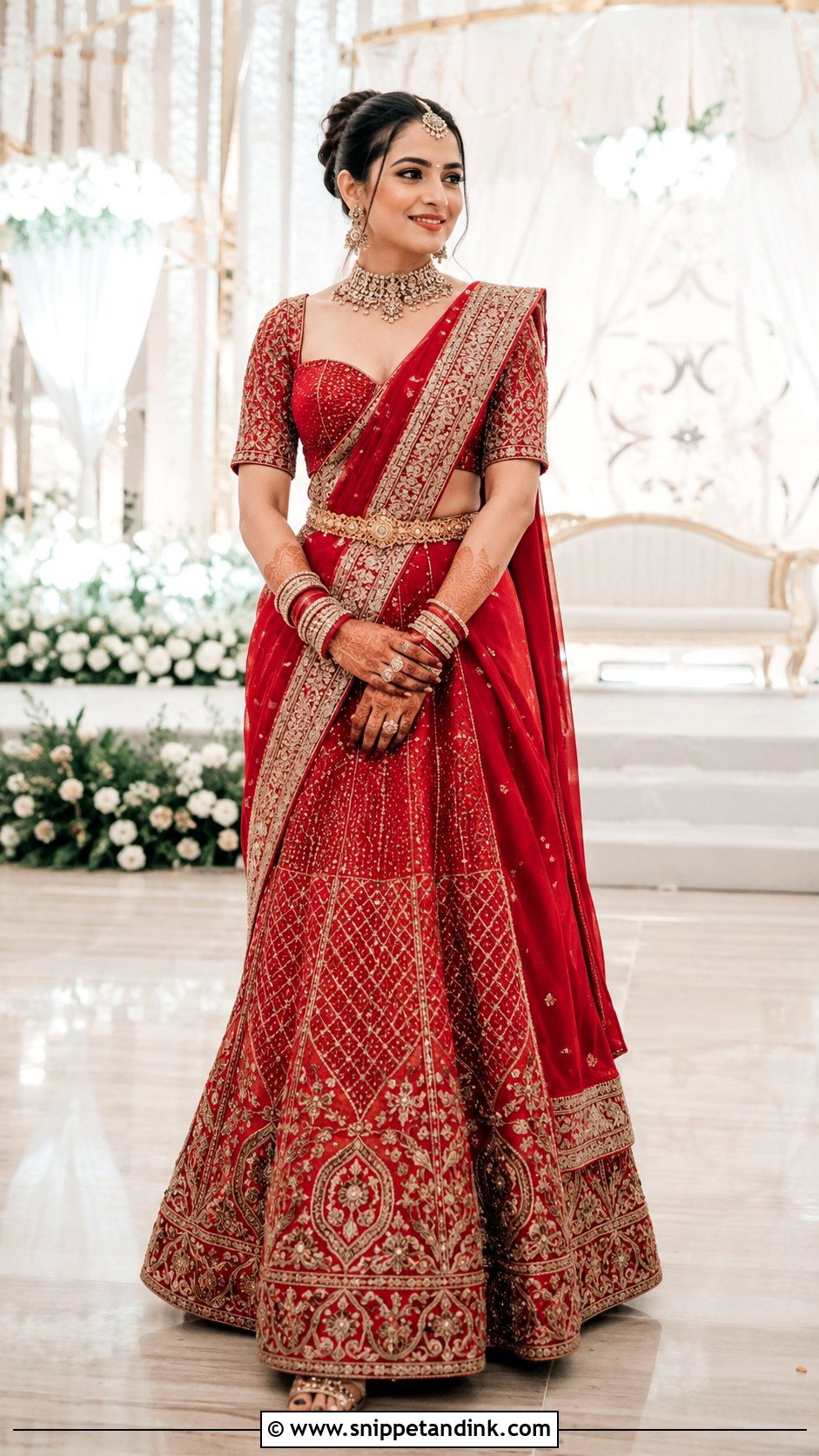
1. Red Bridal Lehenga For Wedding Day
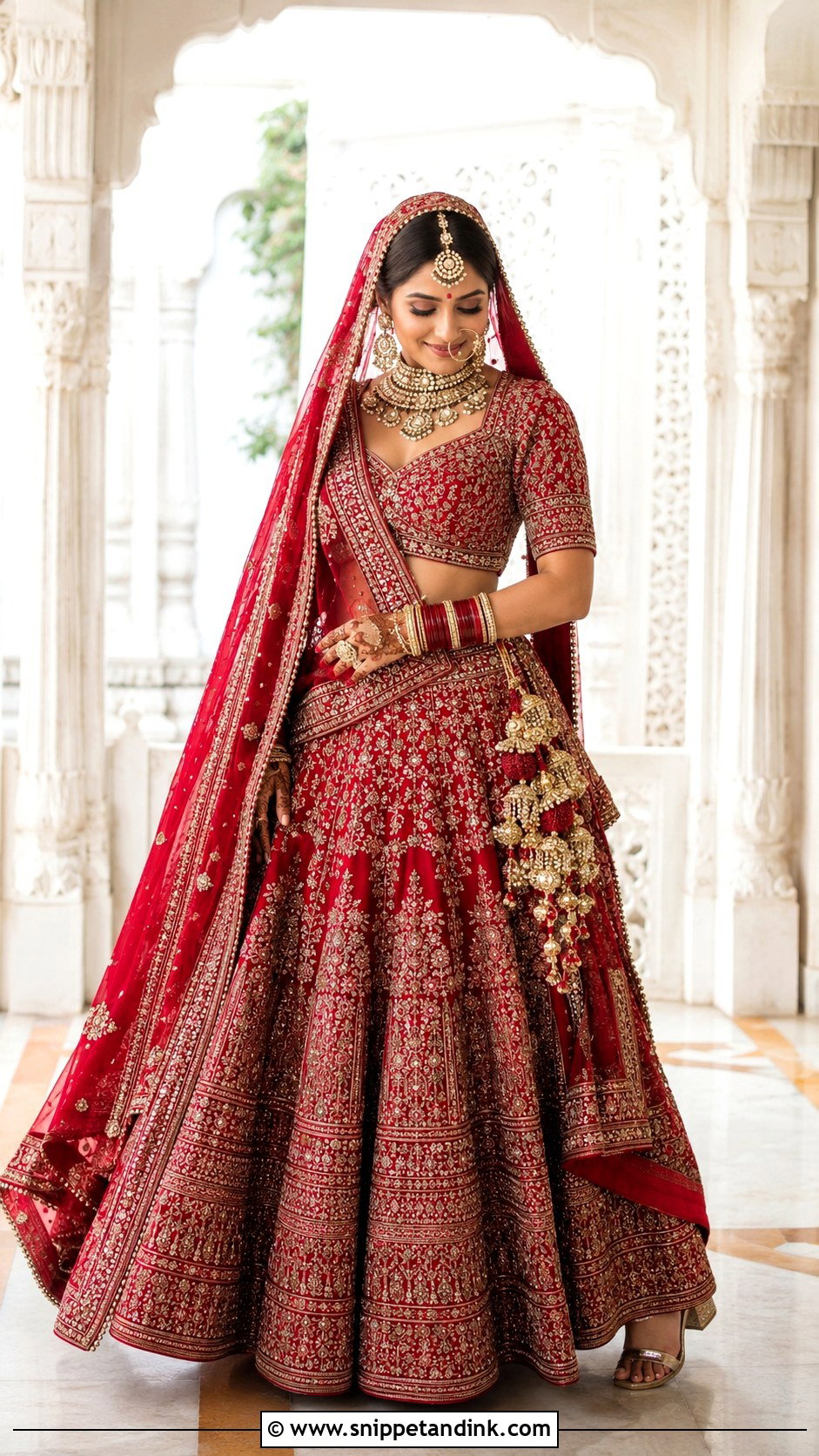
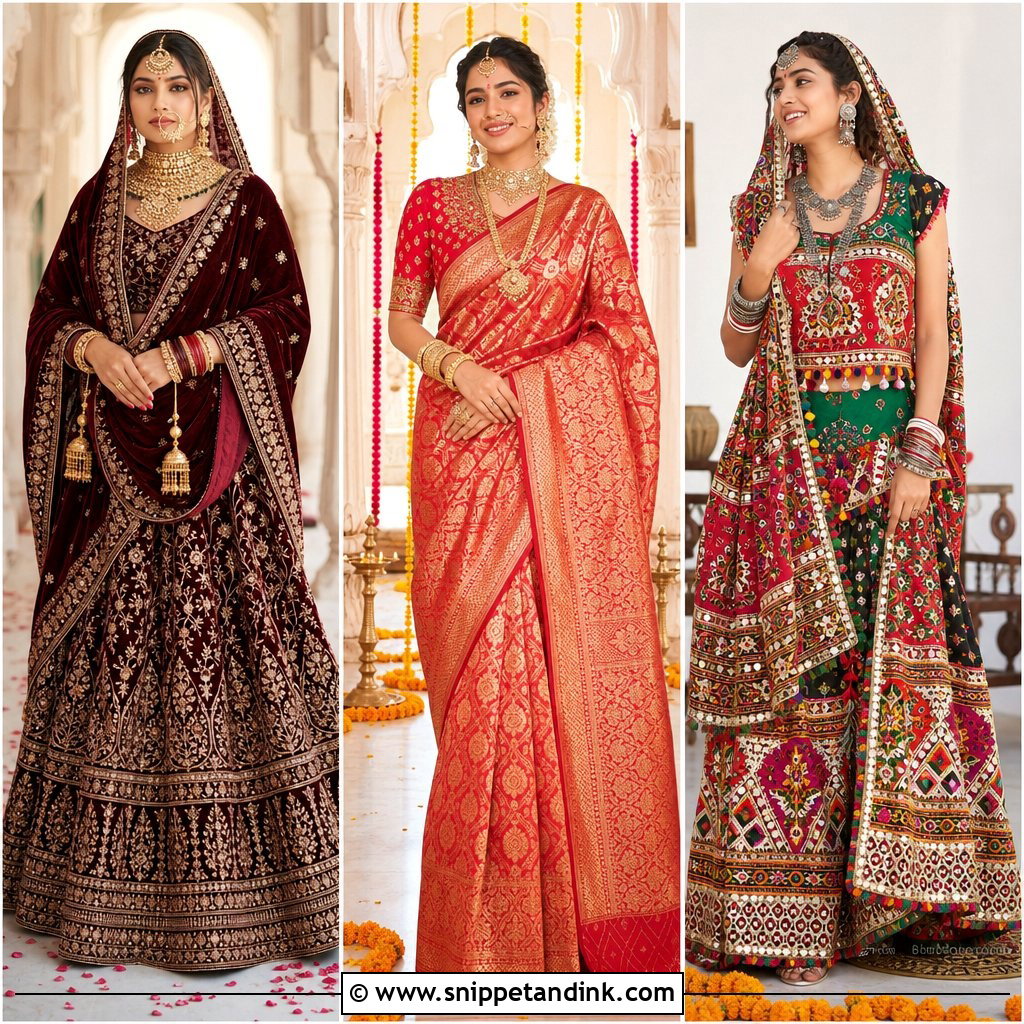
Red is still the color most families picture, and on camera it holds its strength in any light. Silk, velvet and raw silk all take heavy zardozi, gota patti, resham and dabka well. The thing I watch with a fully embroidered red lehenga is weight: some easily pass several kilos, and that’s before the jewelry. Wear it for a full hour at your final fitting. A fitted blouse balances the skirt, and a double dupatta gives the royal finish. Choker, rani haar, maang tikka, nath, bangles, defined eyes and a soft red lip complete it.
2. Maroon Bridal Lehenga For Wedding Day
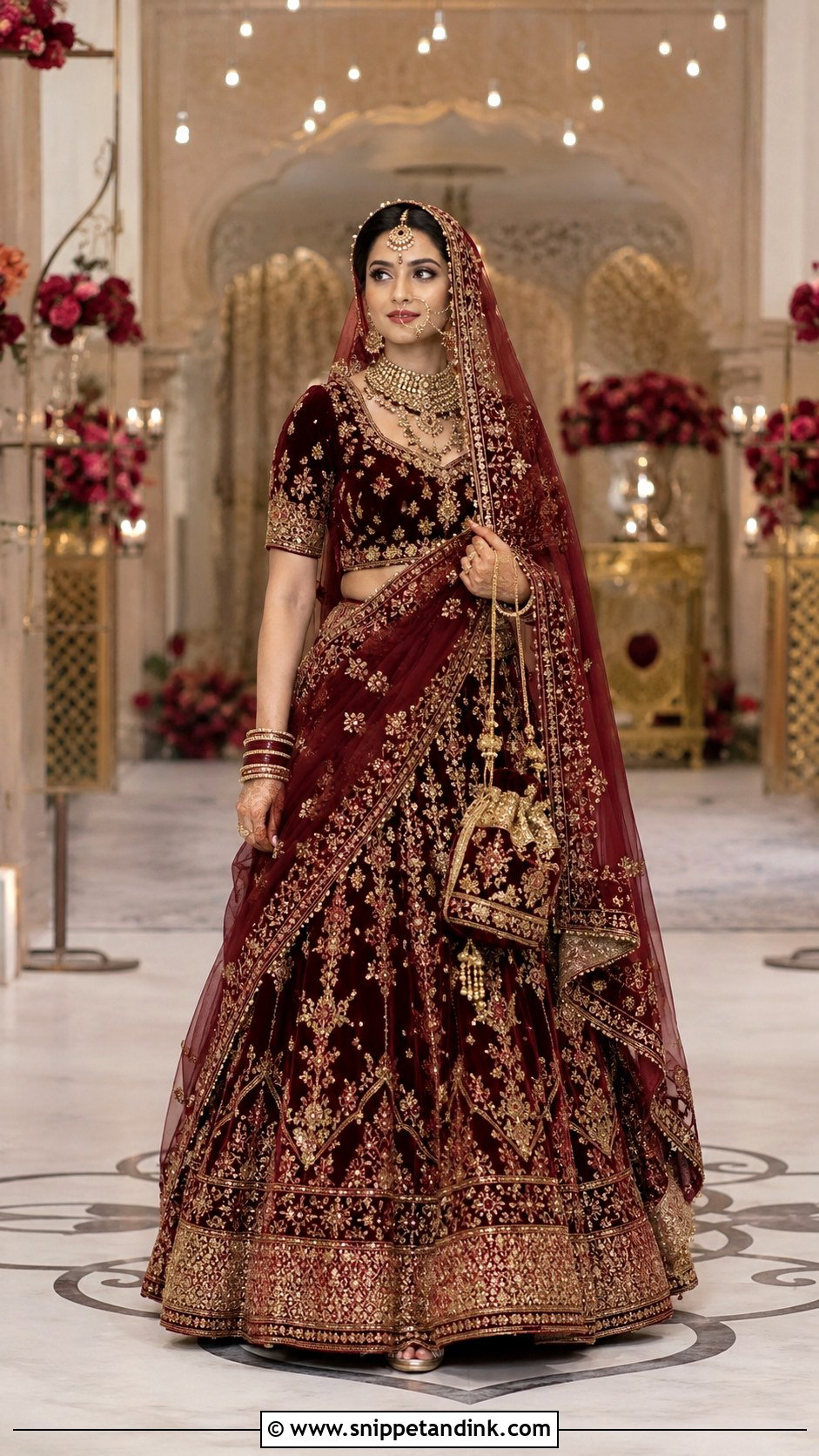
Maroon reads deeper and more formal than red, and it suits evening pheras and winter ceremonies indoors. A maroon velvet lehenga with antique gold embroidery looks royal; a lighter silk moves more easily if your ceremony is long. Under warm mandap lighting, maroon can look almost brown in photos, so I always suggest a photo test under similar light before the final choice. A sweetheart or square neck frames heavy kundan or polki. Sheer dupatta over the head, a second drape across the shoulder, gold heels and a potli finish it.
3. Pink Bridal Lehenga For Wedding Day
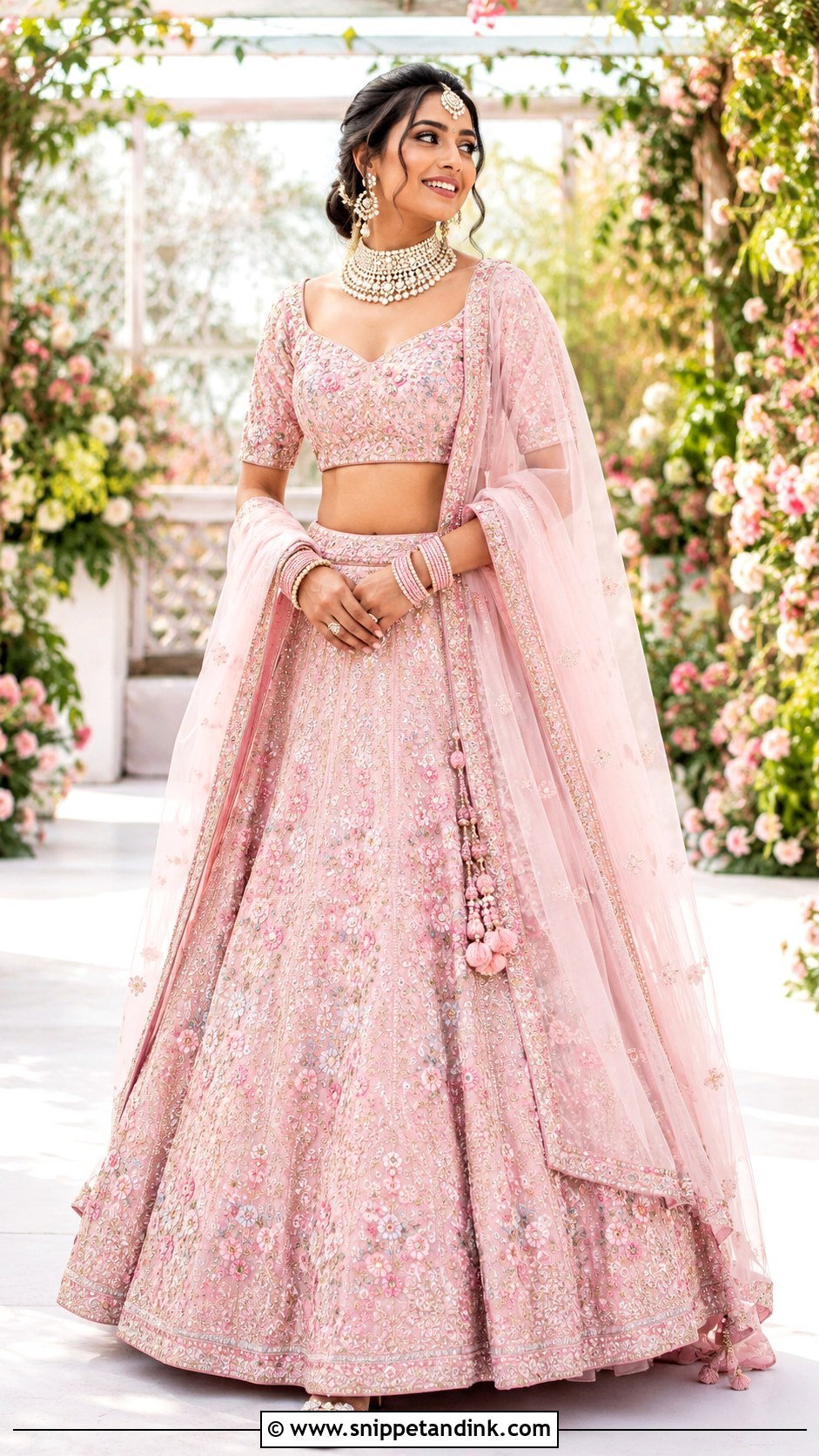
Pink keeps the traditional bridal effect with a younger, softer feel. Blush suits daytime ceremonies; rani pink is brighter and more festive. Thread embroidery, sequins or tone-on-tone work all suit it, and pink takes diamond, polki, pearl or rose-gold jewelry equally well. An emerald choker or green bangles add contrast if you want it. Keep the head dupatta light. A heavy net dupatta on the head pulls at the pins through a long ritual, and I often swap it for a lighter fabric with the same border.
4. Pastel Bridal Lehenga For Wedding Day
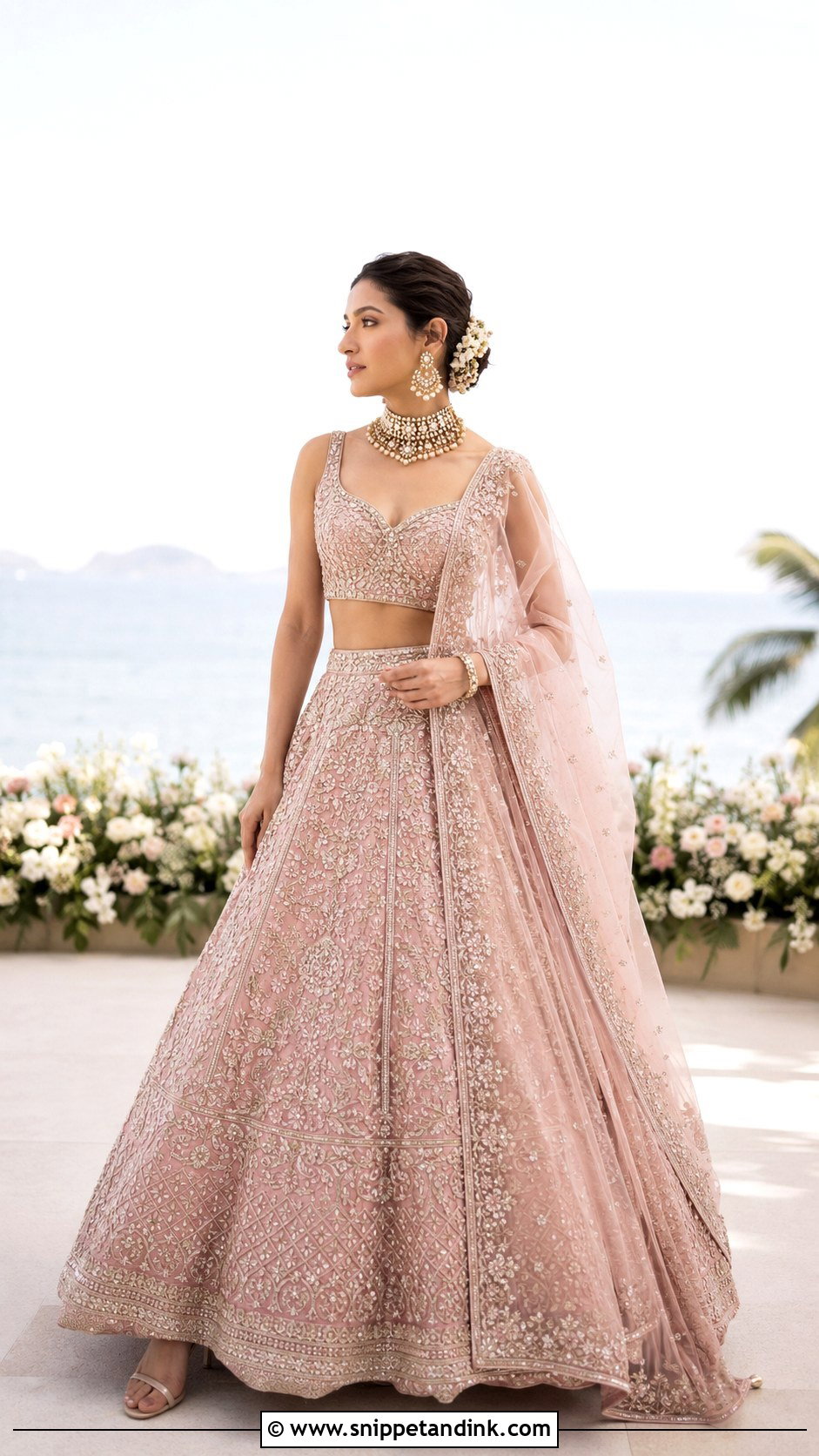
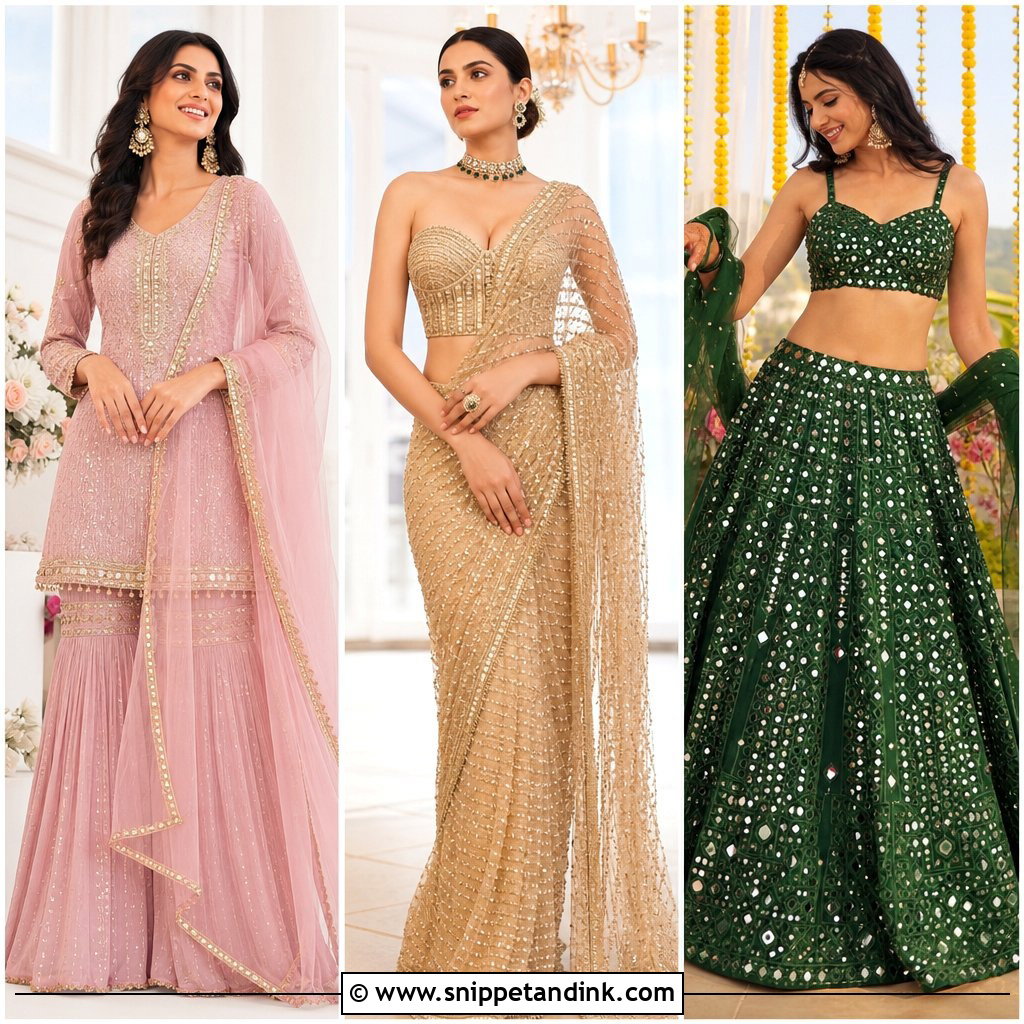
Pastels have become a strong daytime choice, especially for garden, beach and destination weddings. Powder pink, ivory peach, mint, lavender and champagne look soft in natural light. Hand embroidery, pearls, zari or crystal work keep them bridal rather than guest-like. The risk with pastels is under harsh midday sun, where pale fabric can lose detail and look flat; I’d schedule photos in softer morning or late-afternoon light. Diamond-polki jewelry and a sleek bun with fresh flowers suit the palette.
5. Ivory Bridal Lehenga For Wedding Day
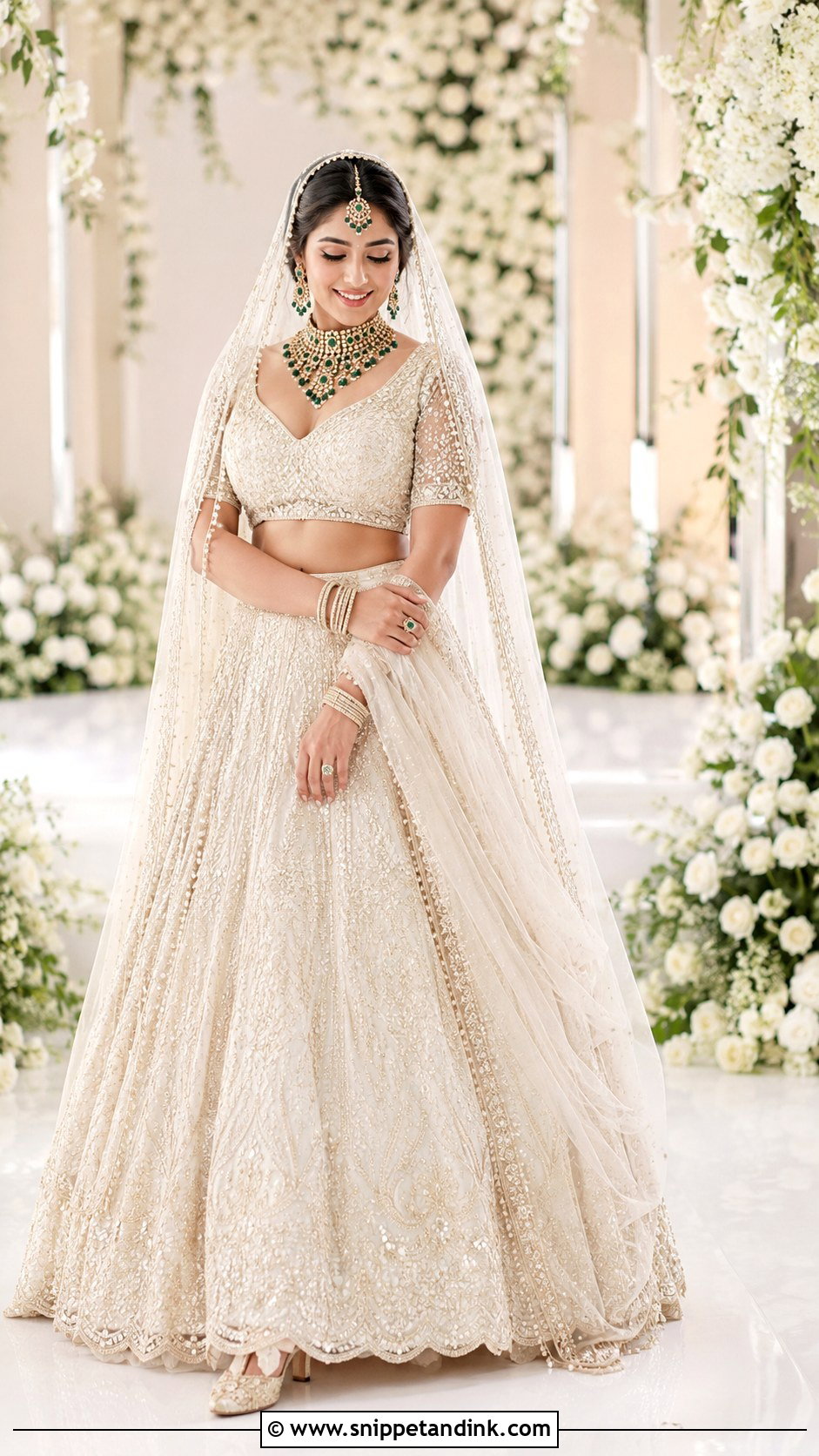
Ivory suits brides who prefer understated glamour, and gold, silver, champagne or pearl embroidery keeps it ceremonial. A full skirt with a fitted blouse and a sheer dupatta gives classic proportion. Some families still expect a touch of red or green, and emerald jewelry, ruby accents or red bangles add that without changing the outfit. Ivory shows every mark, so I tell brides to guard the hem from the havan and from kumkum during rituals. A center-part bun and juttis or heels complete it.
6. Gold Bridal Lehenga For Wedding Day
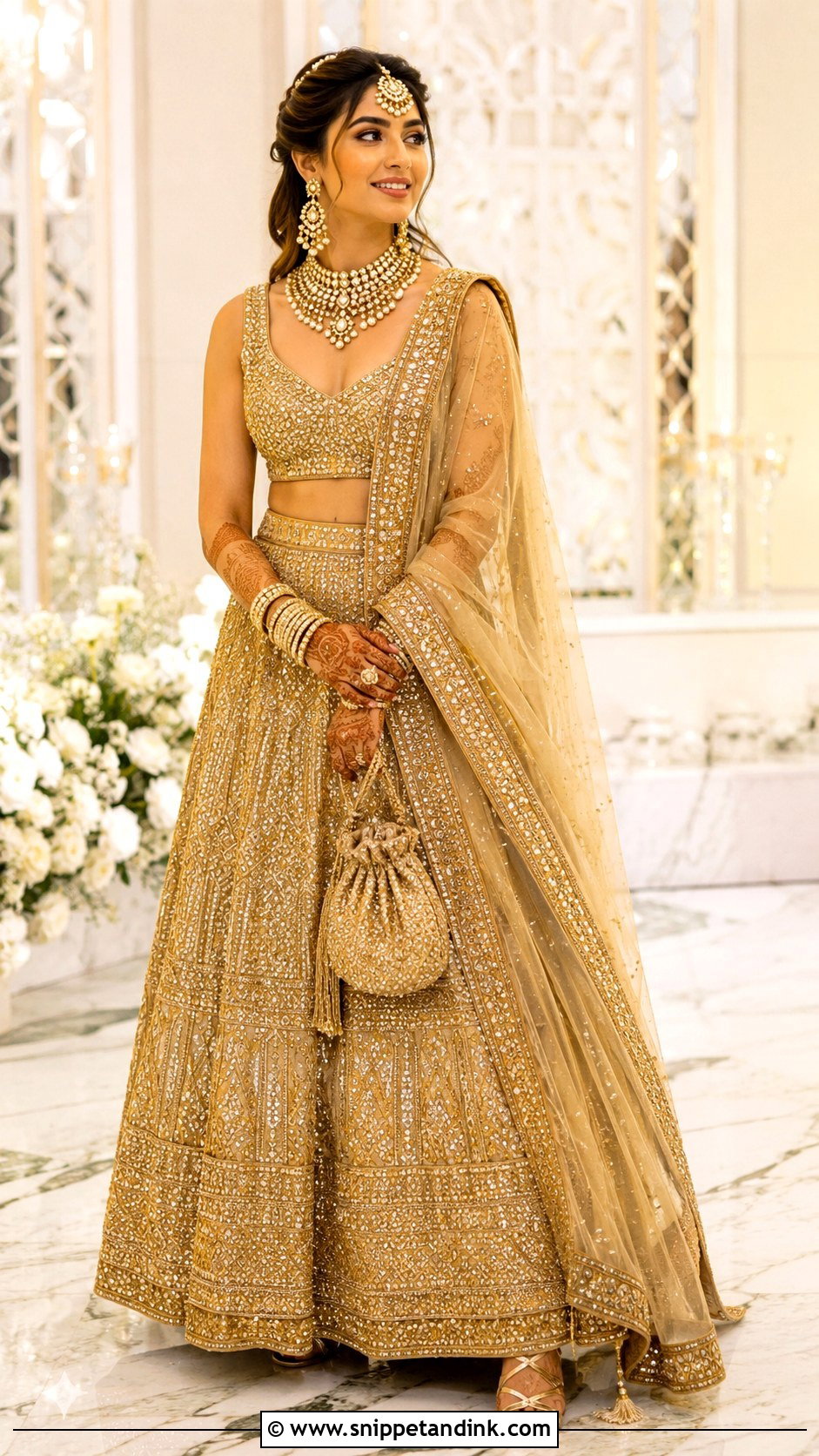
Gold gives grandeur without red. Antique gold looks traditional; champagne gold is softer; bright metallic gold is the most dramatic. Zardozi, cutdana and beadwork add dimension. A matching gold dupatta keeps it unified, while a red or maroon dupatta brings a traditional contrast many families appreciate. All-gold outfits with all-gold jewelry can blur together in photos, so I add one contrasting stone, such as emerald or ruby, to give the eye somewhere to land.
7. Banarasi Silk Saree Bridal Look
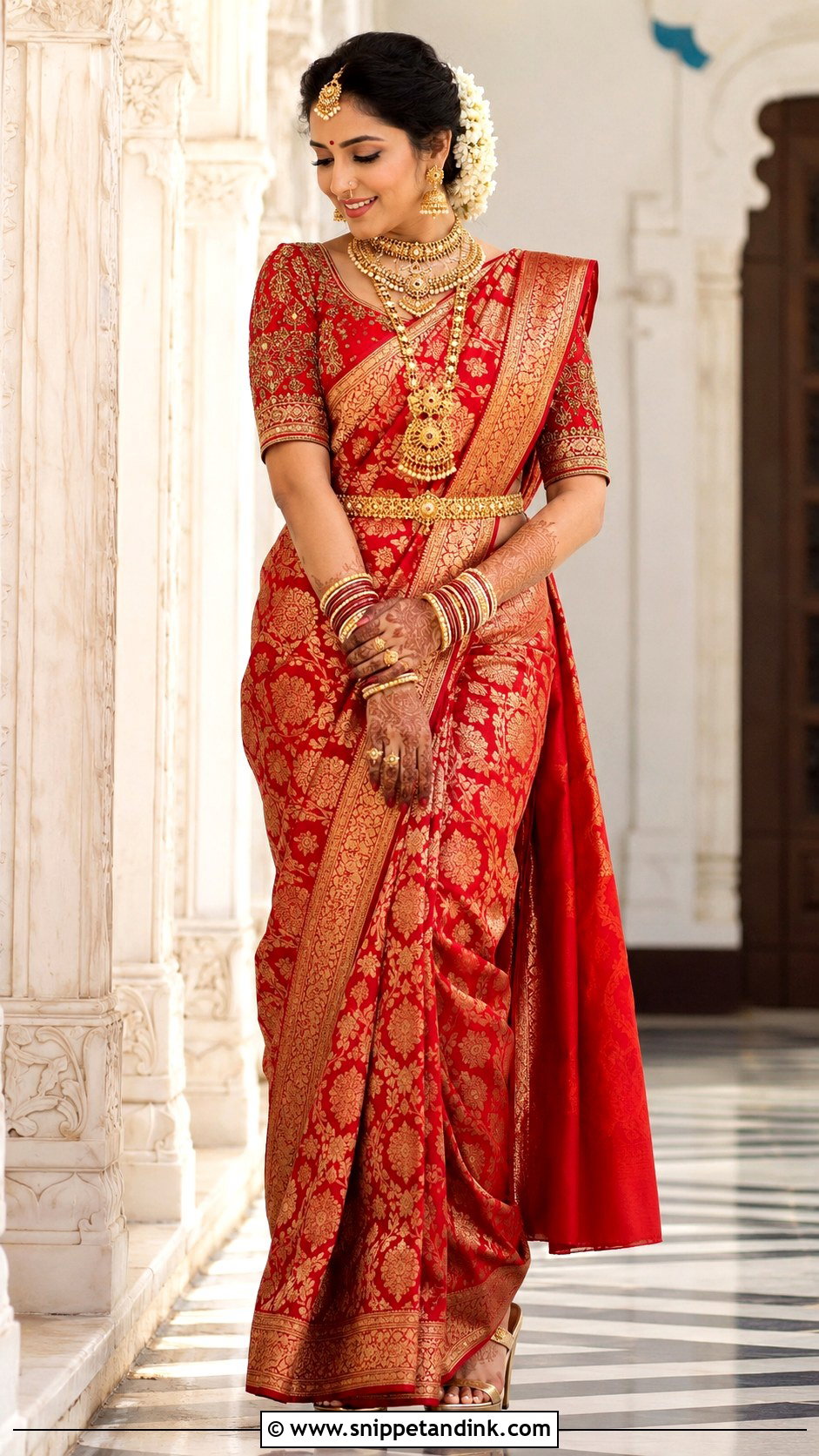
Banarasi silk carries heritage, and its zari border and woven motifs read as bridal across many traditions. Red, maroon, pink, green and gold are the classic bridal shades. A pure Banarasi is heavy and slippery, so I drape it with extra pins at the pleats and pallu and add a waist belt to hold it through the ceremony. Layered gold or kundan jewelry, a head veil for ritual moments, a sleek bun with gajra and a bindi complete the look.
8. Kanjeevaram Saree Bridal Look
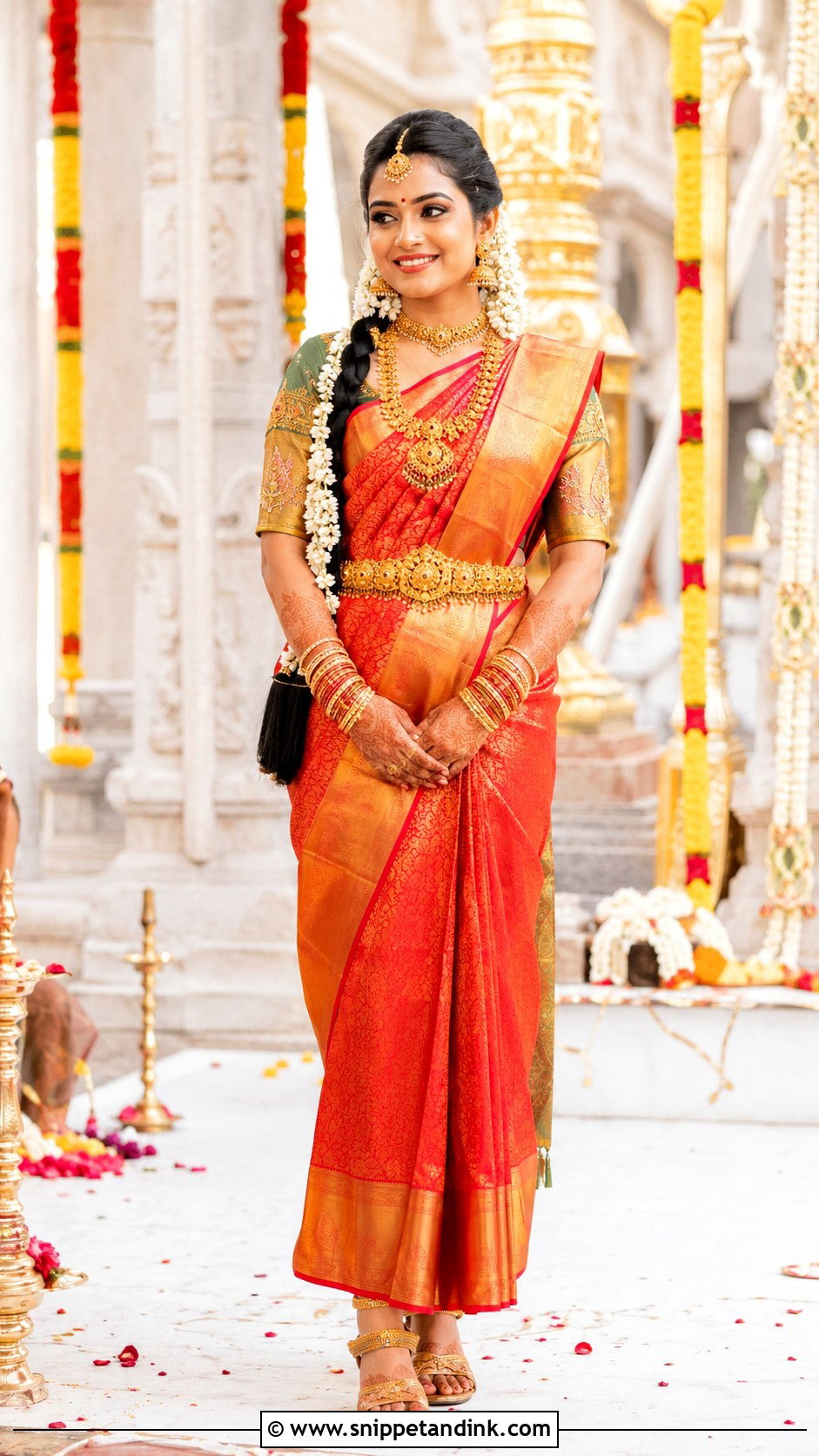
For South Indian brides, a Kanjeevaram often carries family meaning beyond fashion. Red, gold, mustard, green, purple and pink in heavy silk with temple borders look ceremonial. A gold waist belt, temple jewelry, layered necklaces, jhumkas, bangles and anklets complete it. Kanjeevaram silk is thick and holds pleats well, but the weight sits on the waist, so I secure the pleats in more places than usual for long rituals. A long braid with jasmine, a bindi and kohl-lined eyes give it its classic finish.
9. Red Saree Bridal Look
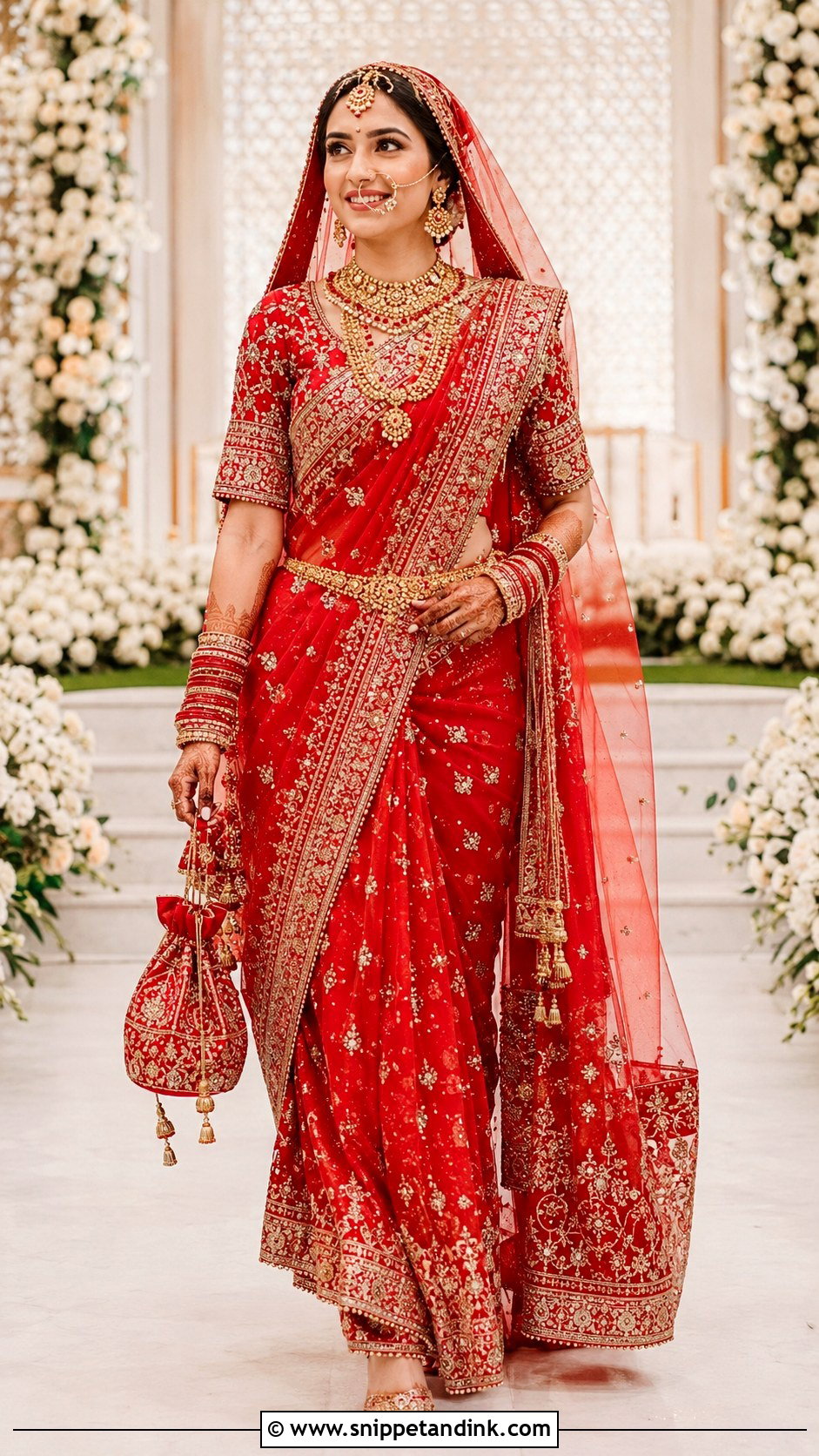
A red saree gives tradition in a simpler silhouette than a lehenga, and it’s easier to sit in through a long ceremony. Banarasi silk, georgette, organza, tissue or heavily embroidered fabric all work. The blouse can carry interest through detailed sleeves, zari work or a deep back. A waist belt holds the drape and defines the waist. Georgette sarees drape softly but need more pins than silk, since the fabric slides. A sheer veil, bangles and a classic bun make it bridal.
10. Bengali Bridal Saree Look
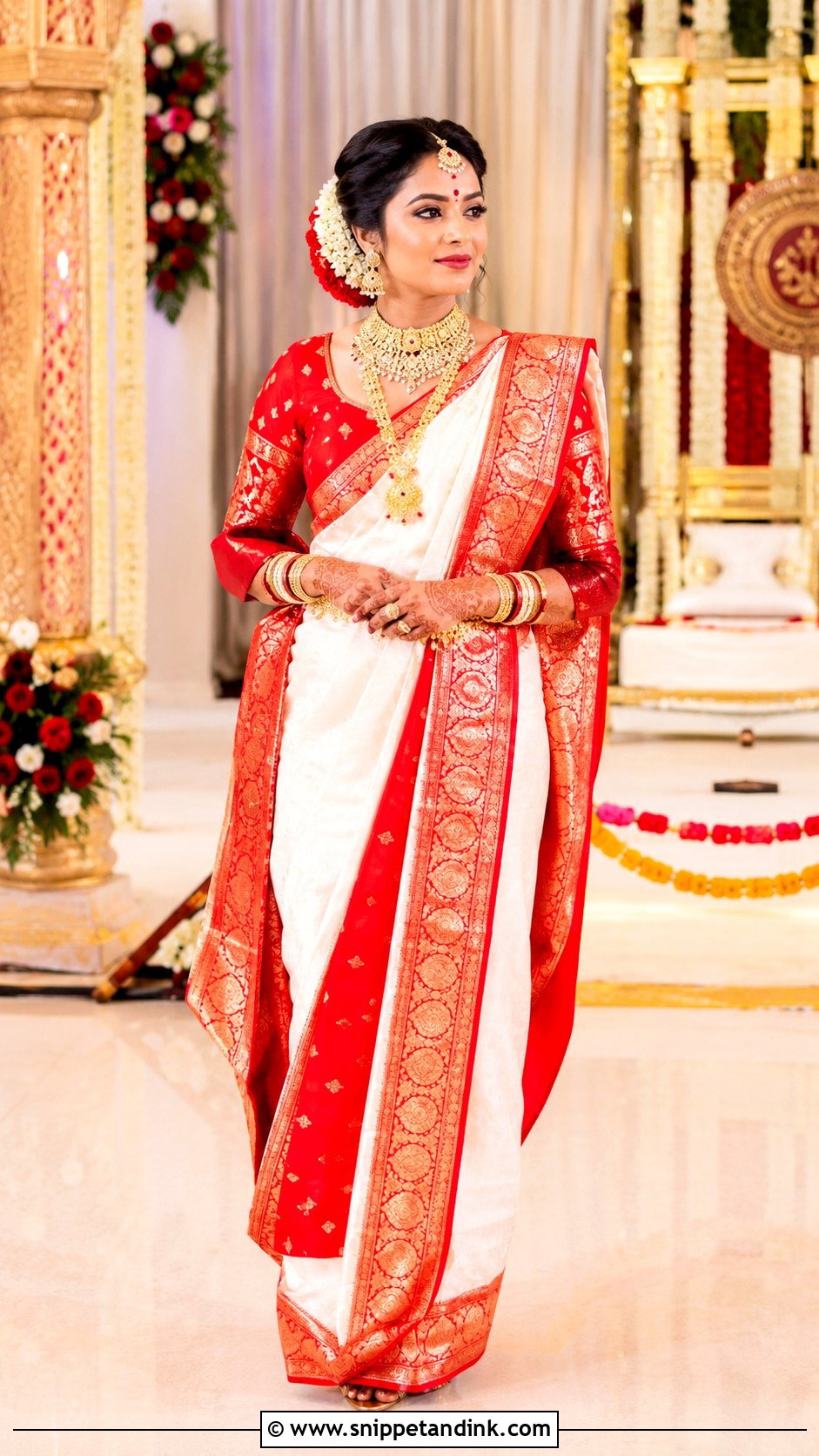
Bengali bridal dressing is instantly recognizable: a red Banarasi or a white-and-red saree with a bold border, gold jewelry layered generously, and alta on hands and feet. A red bindi and a statement tikka or matha patti complete the cultural picture. The drape is structured, with the pallu placed carefully for ceremony photos. Choose silk that holds pleats crisply. Gold jewelry is heavy in this tradition, so I make sure the blouse is cut firmly enough at the shoulders to support it.
11. Maharashtrian Bridal Saree Look
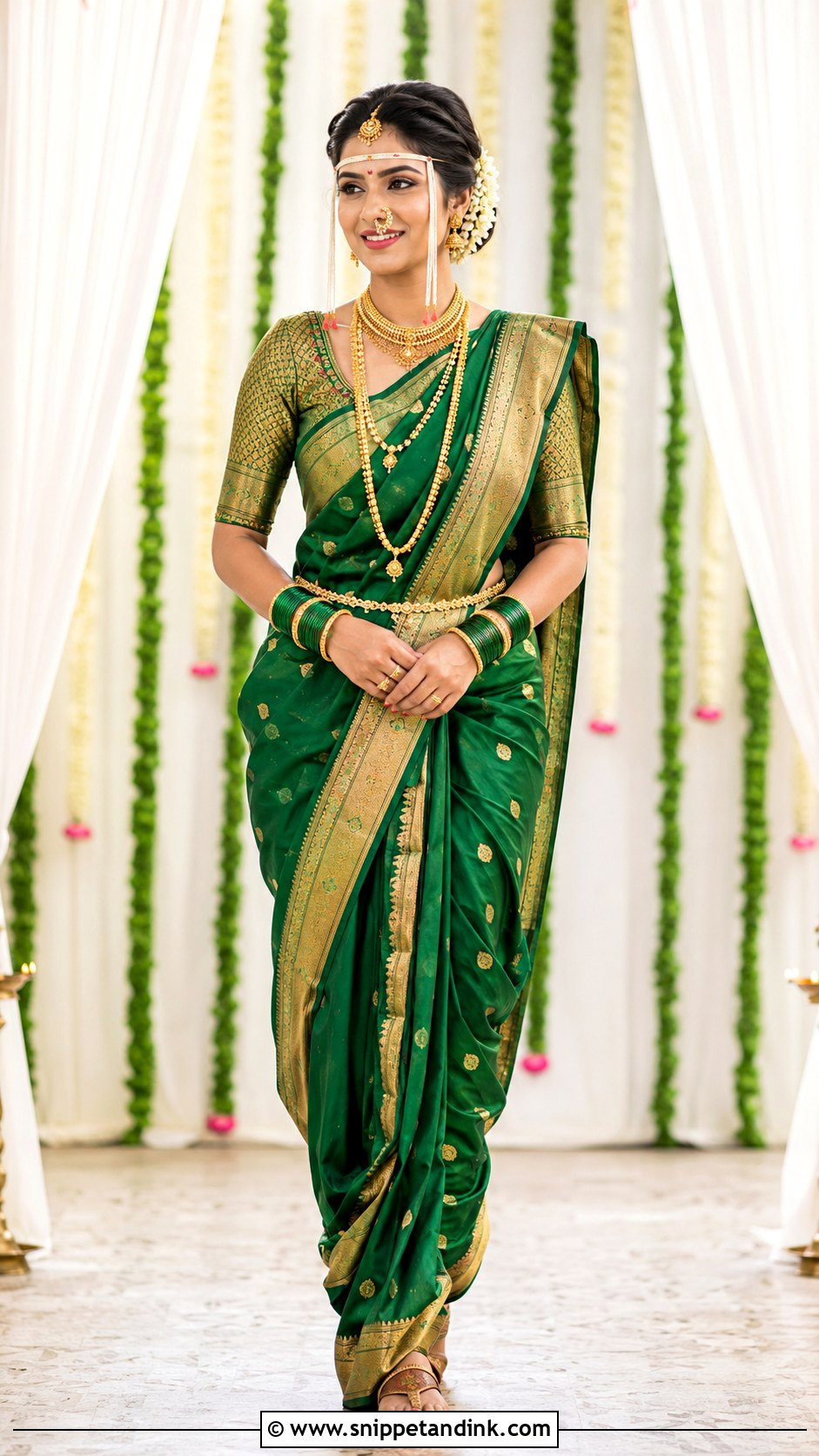
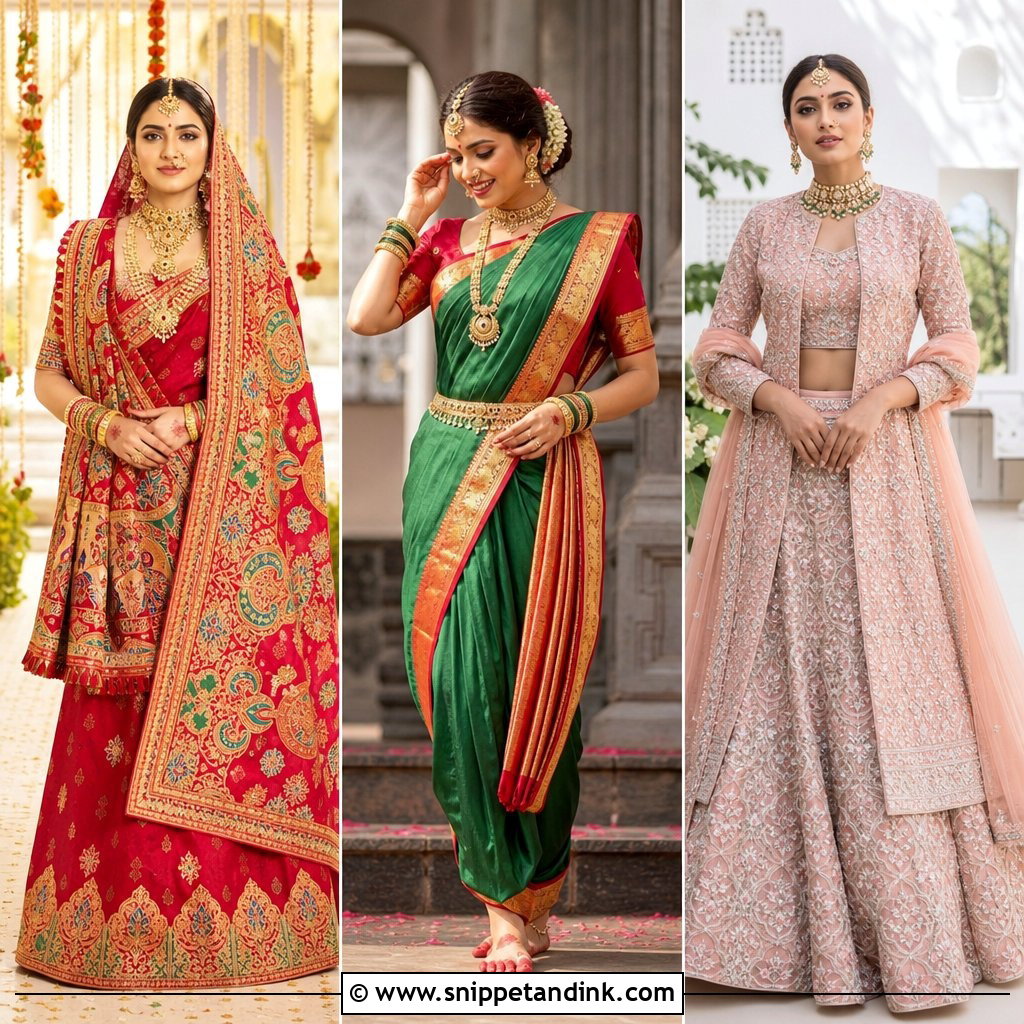
The nauvari drape, a nine-yard saree worn dhoti-style, defines the Maharashtrian bridal saree look and is surprisingly practical for rituals, since the legs move freely. Yellow, green, red, purple and gold are popular. Traditional gold jewelry, a nath, green glass bangles and mundavalya across the forehead complete it. Many brides now wear a pre-stitched nauvari, which saves time on the wedding morning; if you choose a traditional drape, book someone experienced with nauvari specifically.
12. Gujarati Panetar Bridal Saree Look
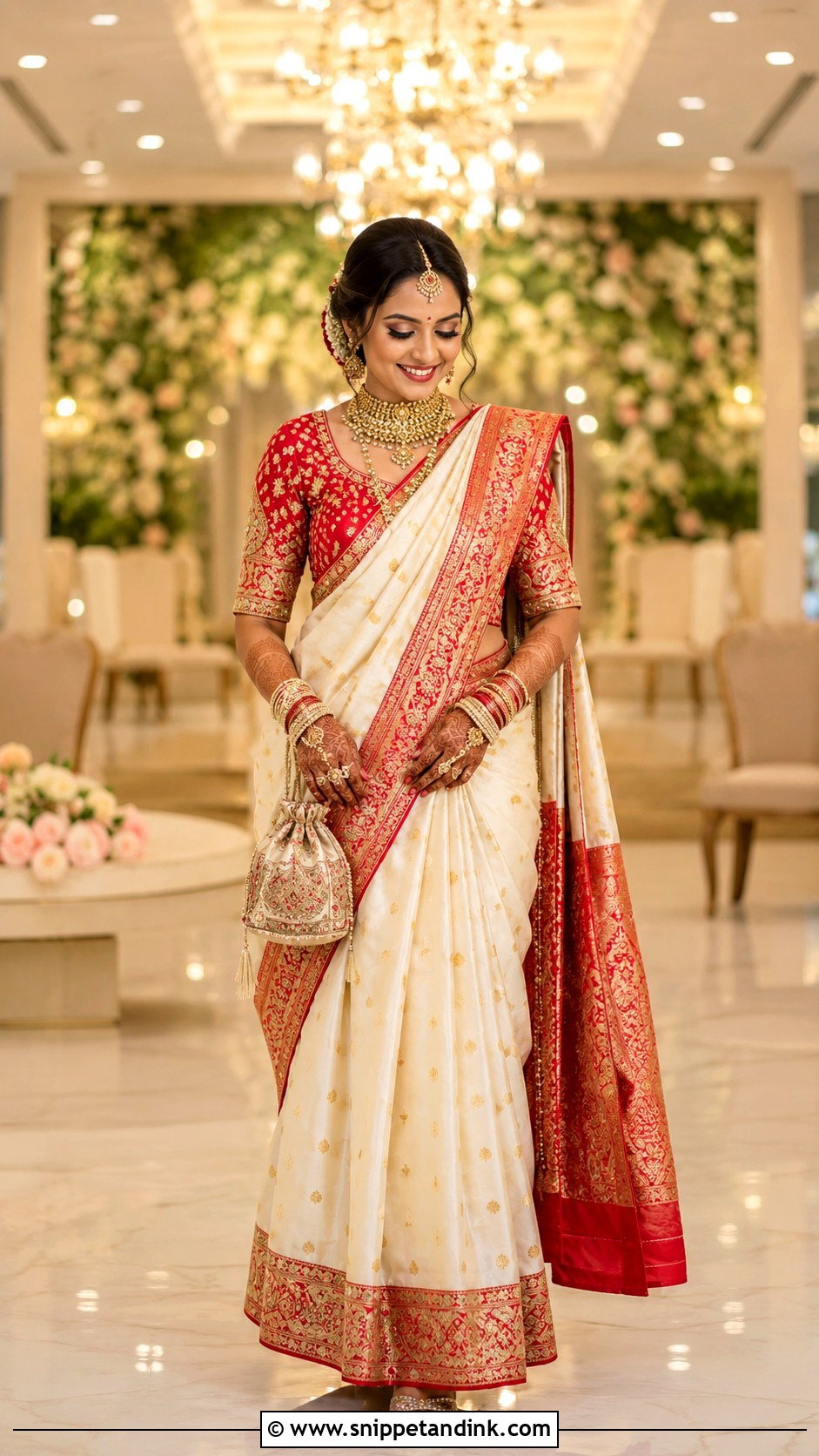
In Gujarati weddings, the panetar is often a gift from the bride’s family and worn for the ceremony. Its white or ivory base with red border is auspicious and traditional. Silk panetars with zari, bandhani detail or embroidered accents look most elegant. A red blouse adds contrast. Gold or kundan jewelry, bangles, a maang tikka and a nose ring if you wear one complete it. Drape it so the red border falls cleanly across the front, because that border is what the photos will show.
13. Punjabi Bridal Lehenga Look
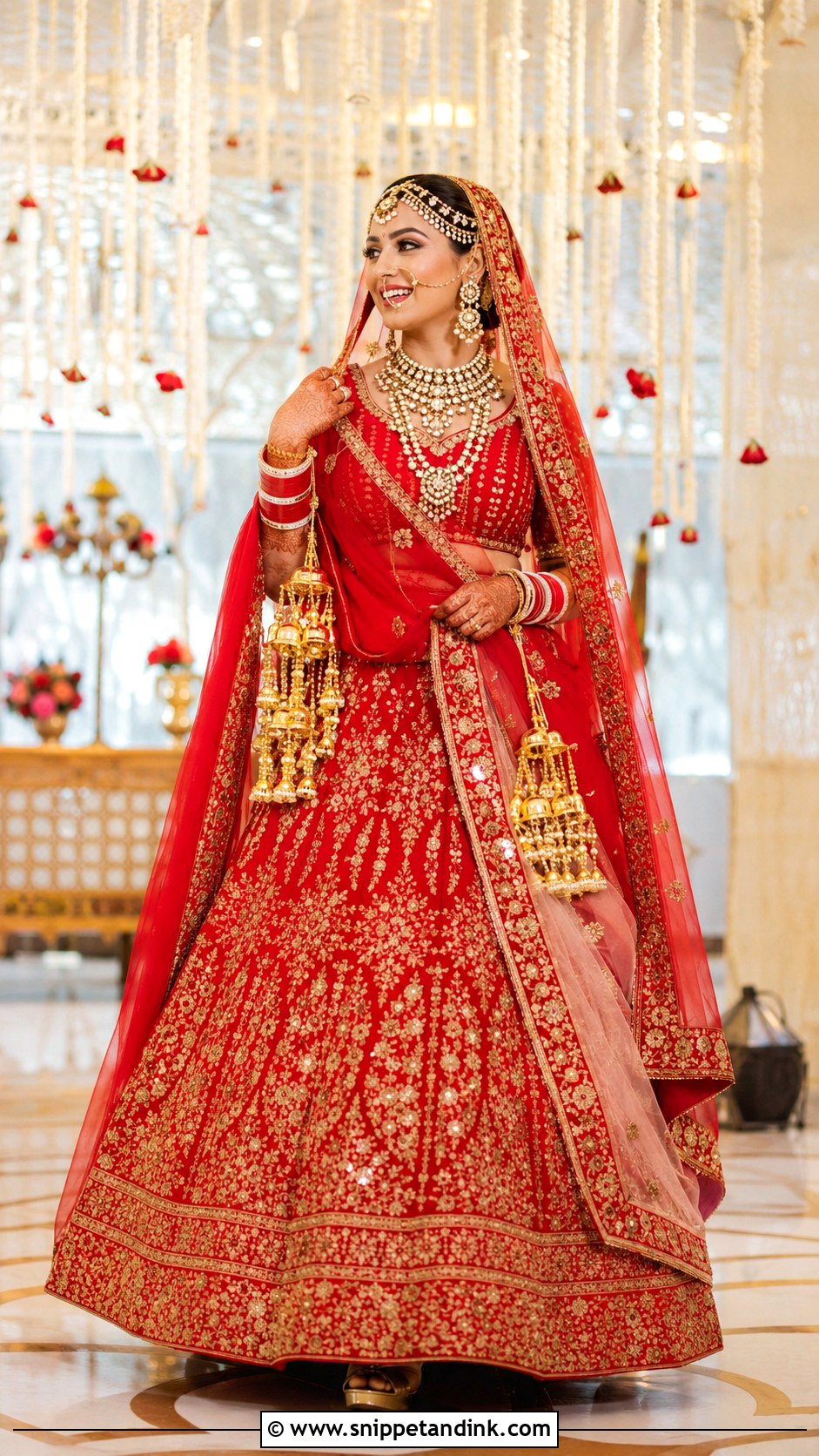
Punjabi bridal looks are bold. Red, maroon, hot pink and deep wine are traditional, though peach, gold and pastels appear more now. Chooda, kaleere, a maang tikka, nath and layered necklaces are part of the outfit, so the blouse needs to support heavy jewelry without slipping. A second dupatta over the shoulder adds volume. Kaleere swing and catch on dupatta net, so I keep the dupatta edge away from the wrists. Comfortable heels matter through a long day of rituals.
14. Rajasthani Bridal Lehenga Look
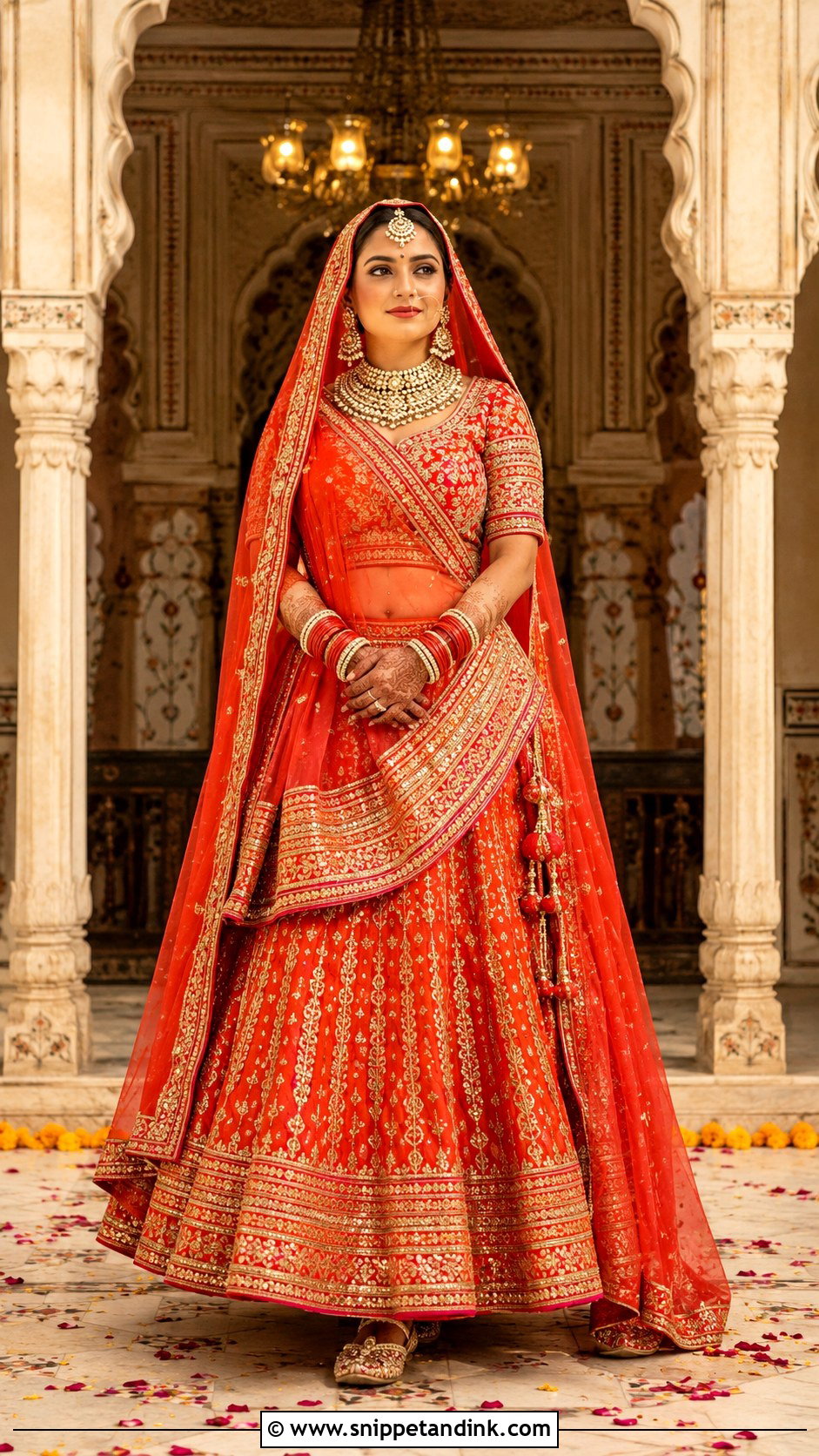
Rajasthani bridal dressing is royal and colorful: red, orange, maroon, magenta or mustard with gota patti, mirror work, zari or bandhani. The skirt can be full, with the blouse and odhani carrying enough detail to balance it. A borla maang tikka, aad necklace, bangles and nath complete the traditional set. The borla sits heavily at the hairline, so I anchor it with pins into a firm base before the odhani goes on. Palace venues and havelis suit this look best.
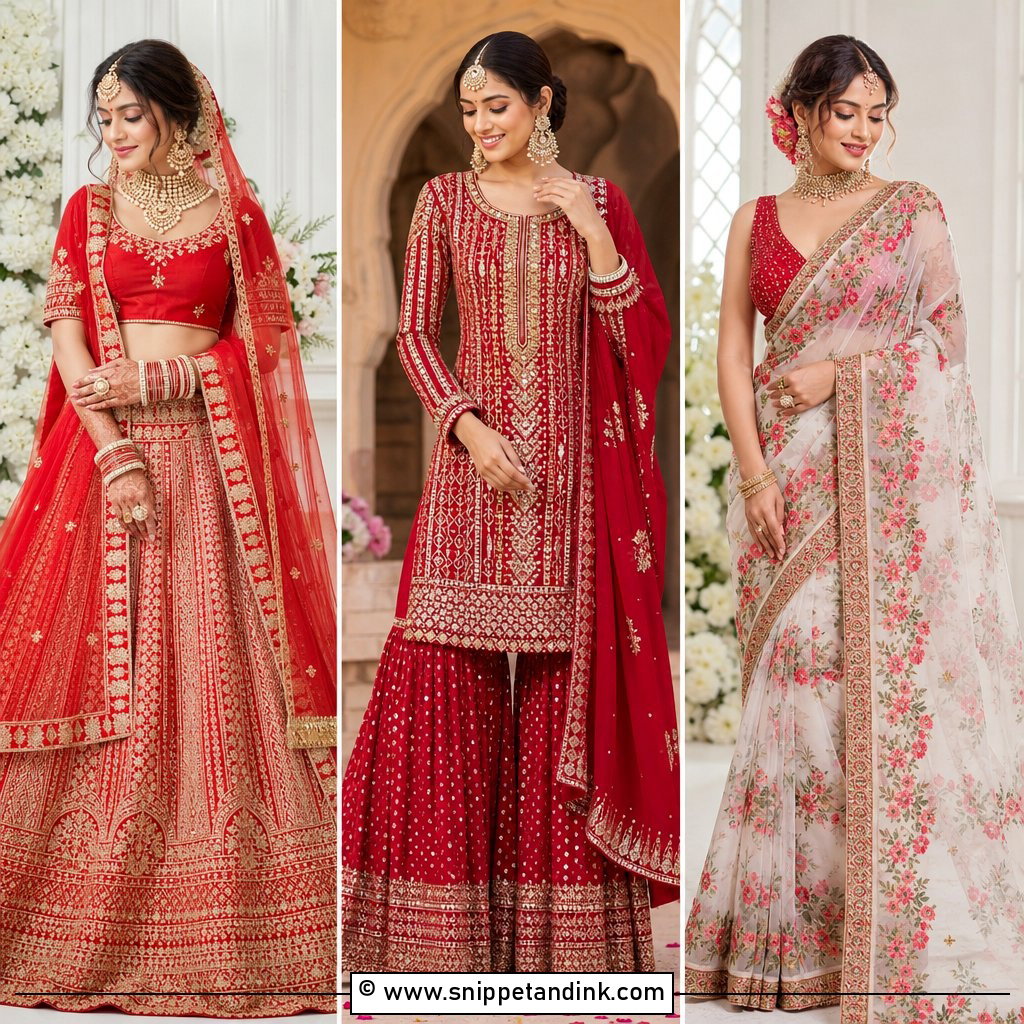

15. Muslim Bridal Sharara Look
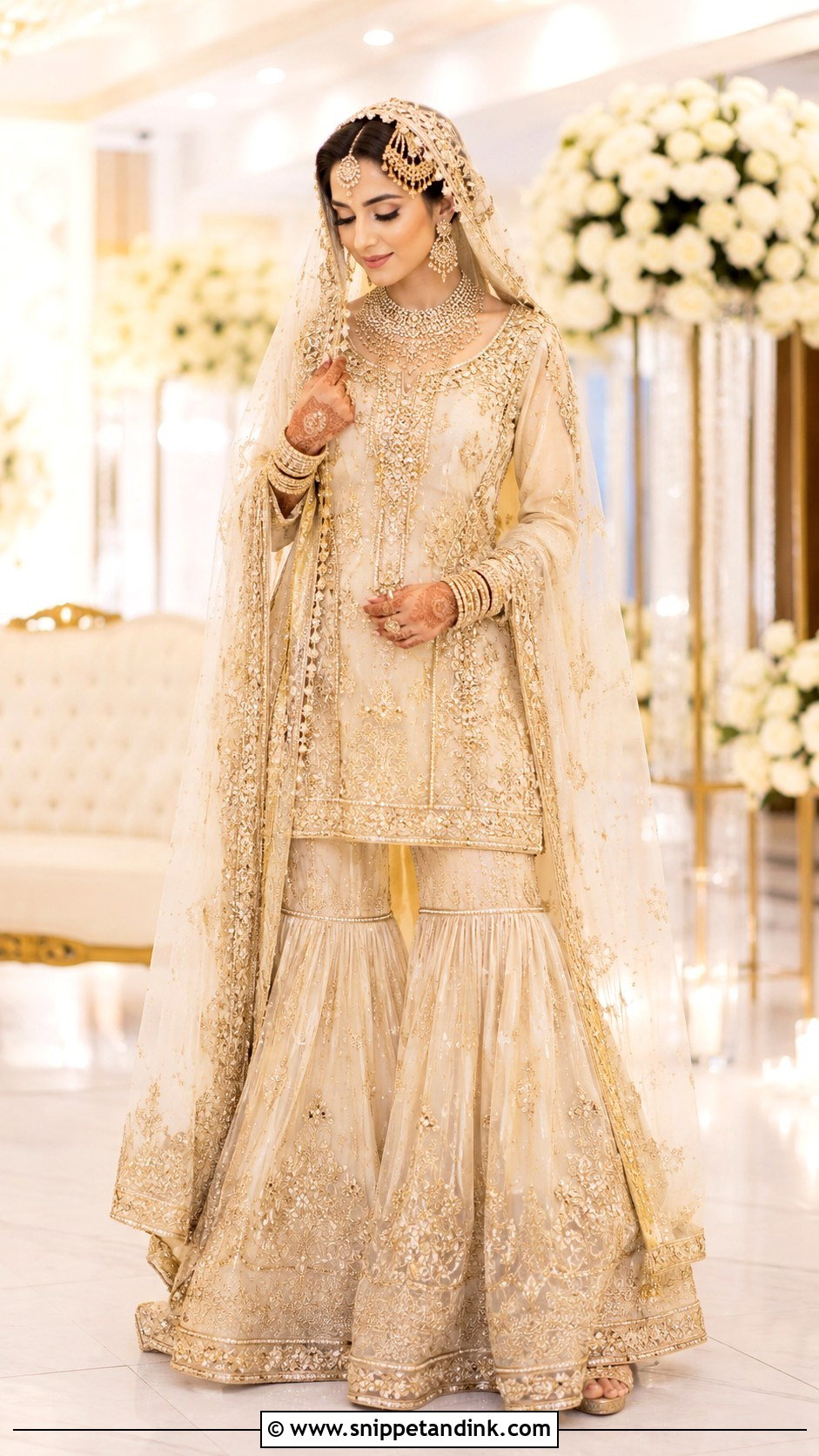
For a nikah, a long embroidered kurta with a flared sharara and a matching dupatta is graceful and modest. Red, maroon, gold, emerald, ivory and blush all work. Zardozi, dabka, pearls and resham make it formal. A passa, jhumar, maang tikka and layered necklaces complete it, with the dupatta draped over the head. The passa sits on one side, so I part and pin the hair to balance it before the dupatta goes on. The sharara gives easy movement through the ceremony.
16. Gharara Bridal Outfit For Wedding Day
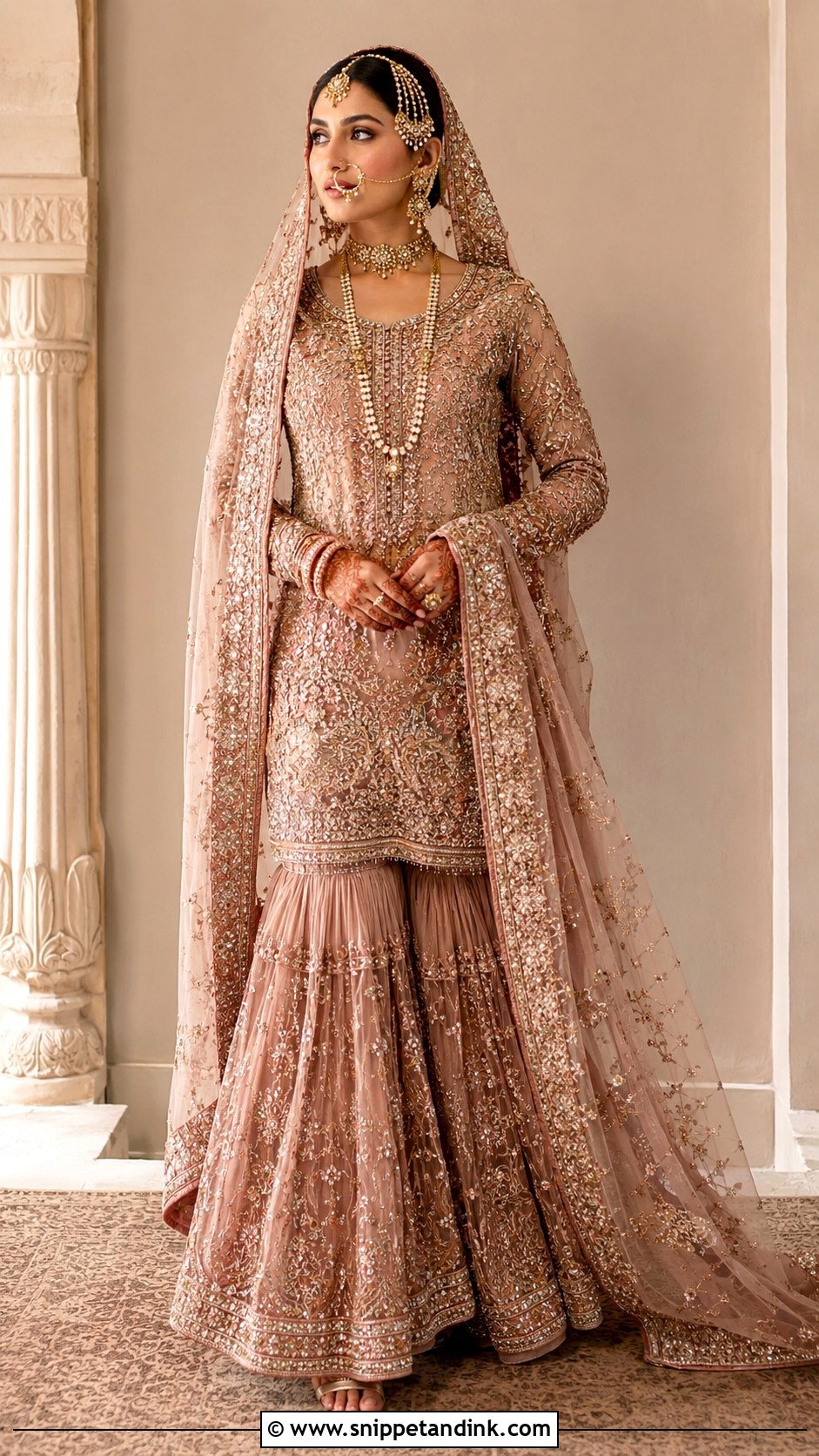
The gharara fits close to the knee and flares below it, a vintage silhouette that suits traditional weddings. Silk, brocade, tissue and organza in ivory, gold, deep red, rose pink or emerald look rich. Pair it with a short or long kurti and a heavily bordered dupatta over the head. The knee joint is often heavily worked, so walk stairs in it at a fitting, since a stiff knee band shortens your stride. A passa, choker, long necklace and heels finish it.
17. Anarkali Bridal Outfit For Wedding Day
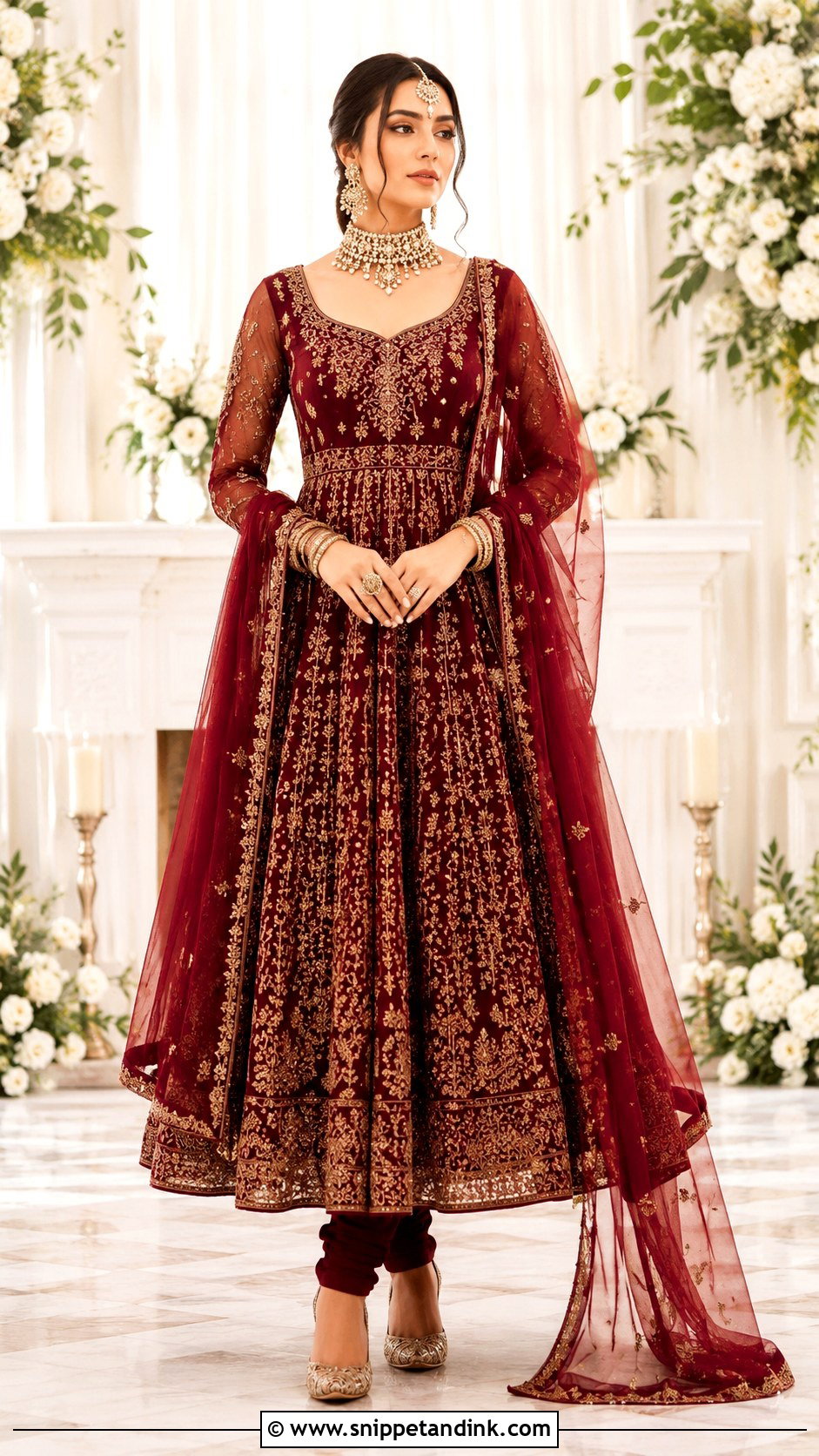
An anarkali gives coverage and a flowing line, and a heavily embroidered floor-length one can look as grand as a lehenga. Silk, net, velvet, brocade or georgette with work at the bodice, hem and sleeves suits a bride. Churidar, a dupatta, statement earrings and a choker complete it. A very full anarkali can weigh as much as a lehenga, because the embroidery is spread across many kalis, so check weight before assuming it’s lighter. A belt defines the waist if the flare is wide.
18. Jacket Lehenga Bridal Look
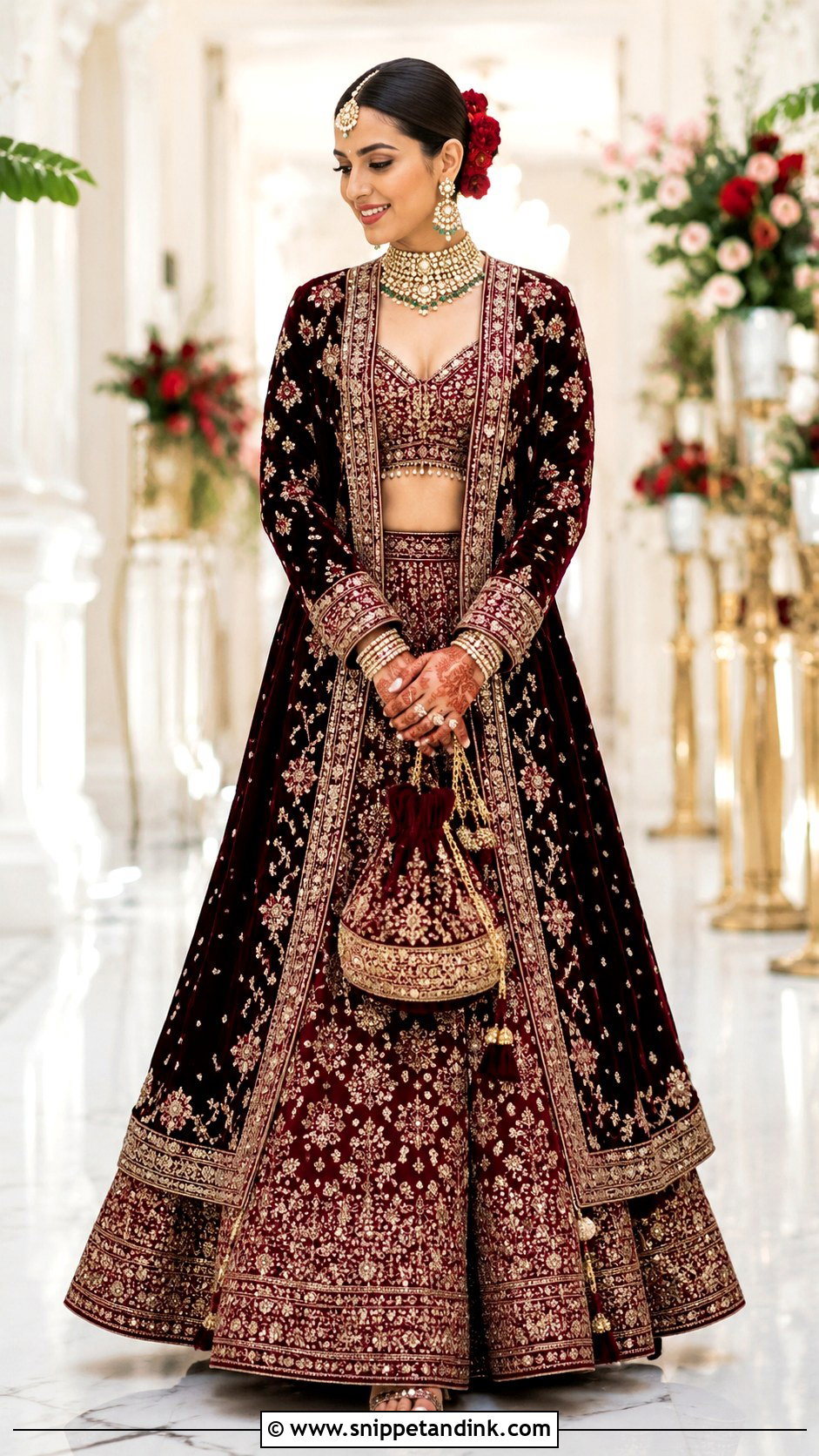
Jacket lehengas suit winter and evening ceremonies, and brides who like structure. A lehenga skirt, blouse and long embroidered or cape-style jacket in velvet, silk, organza or brocade looks contemporary and rich. Match jewelry to the neckline: a choker for open jackets, statement earrings for high necks. Make sure the jacket armholes allow you to raise your hands for rituals like the varmala. Heels, a potli and sleek hair finish the look.
19. Cape Lehenga Bridal Look
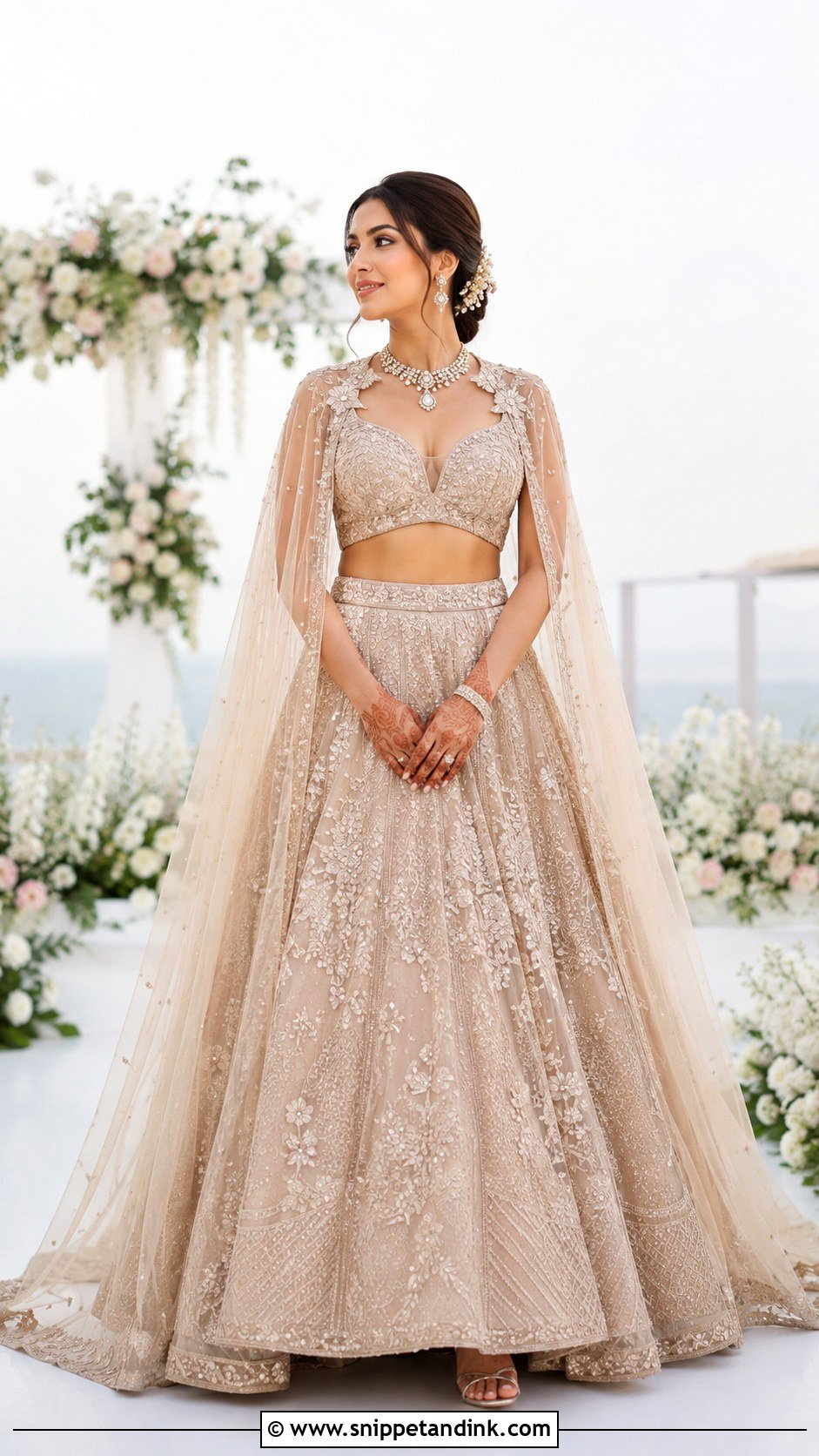
A cape gives a dramatic entrance without a heavy dupatta, and it moves well in photos. Sheer, embroidered, pearl-detailed or sequined capes over a full skirt and structured blouse work in pastel, ivory, champagne, gold or rose. Keep jewelry clean: diamond-polki earrings, a delicate necklace and a bracelet. Families who expect a head covering for the ceremony may still want a dupatta, so I suggest a light one for the pheras and the cape for the entrance and reception.
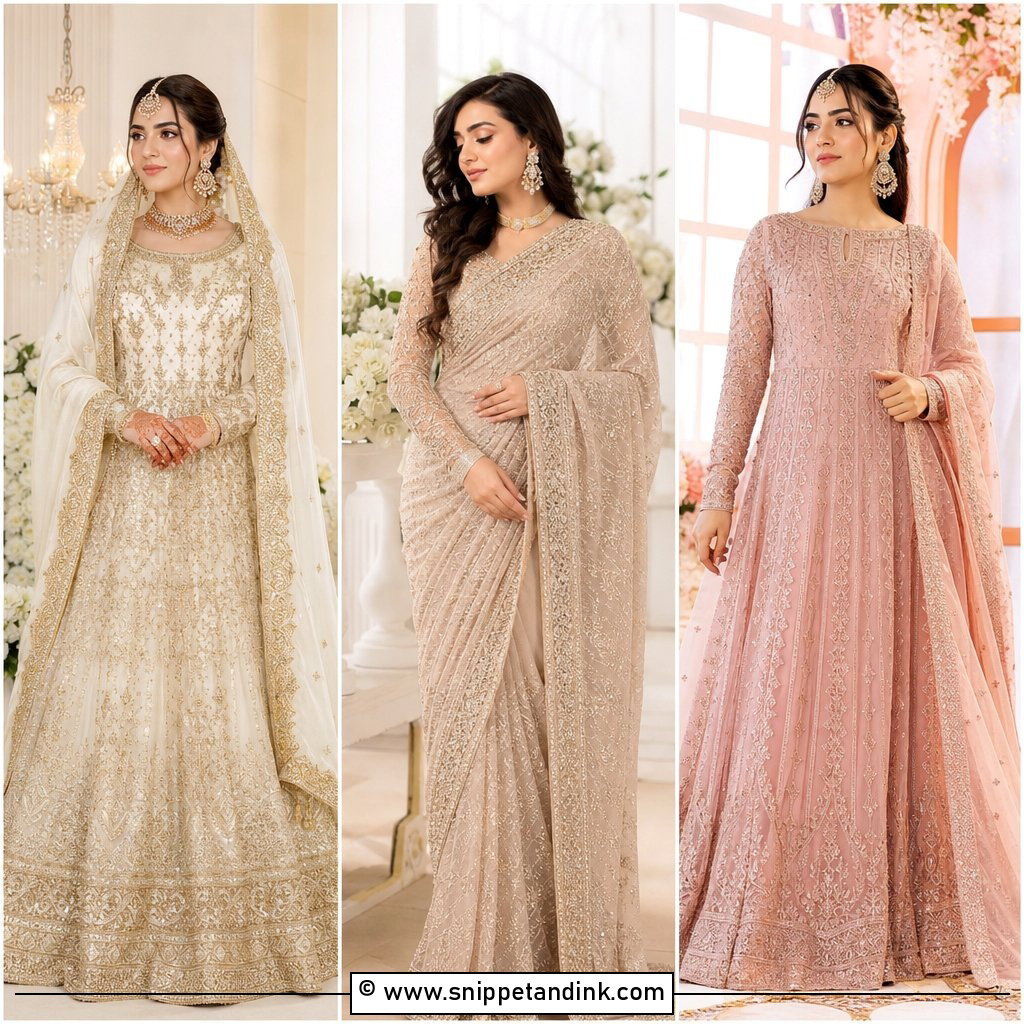
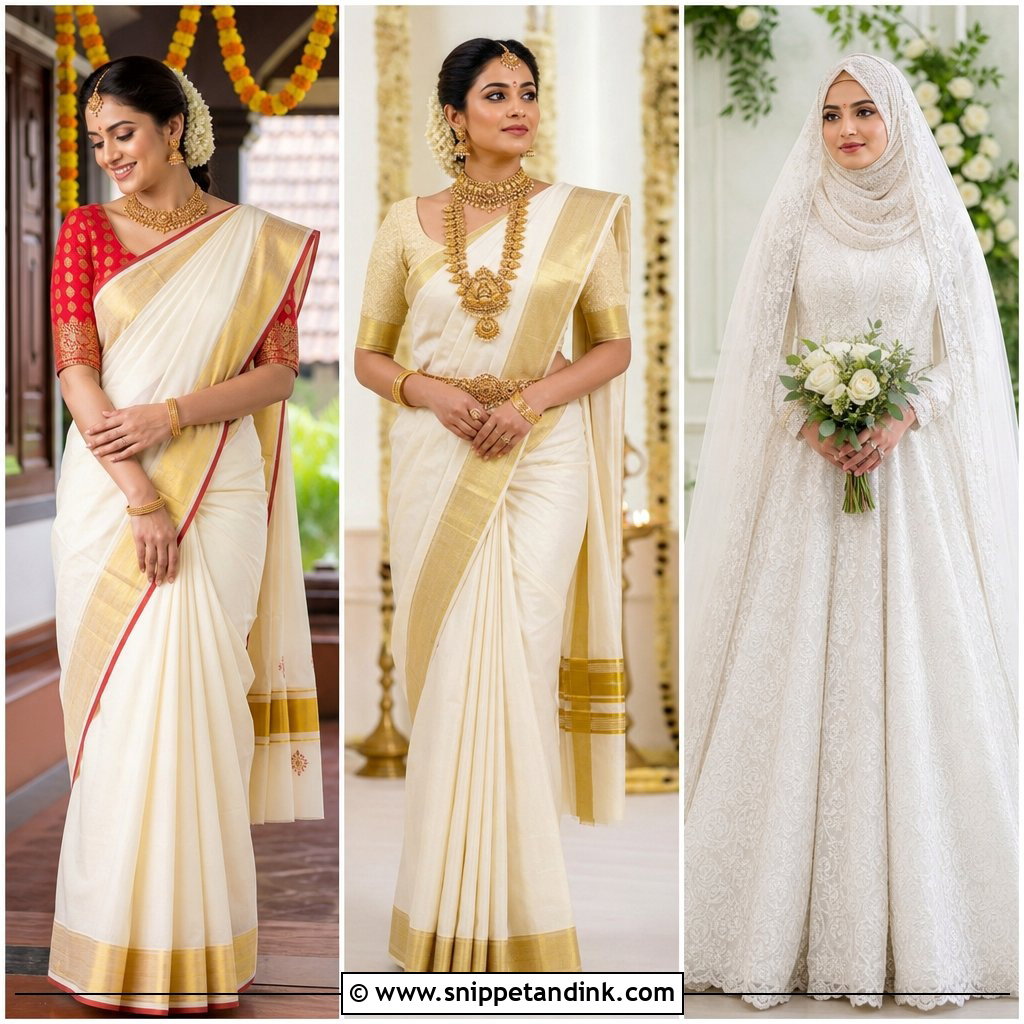


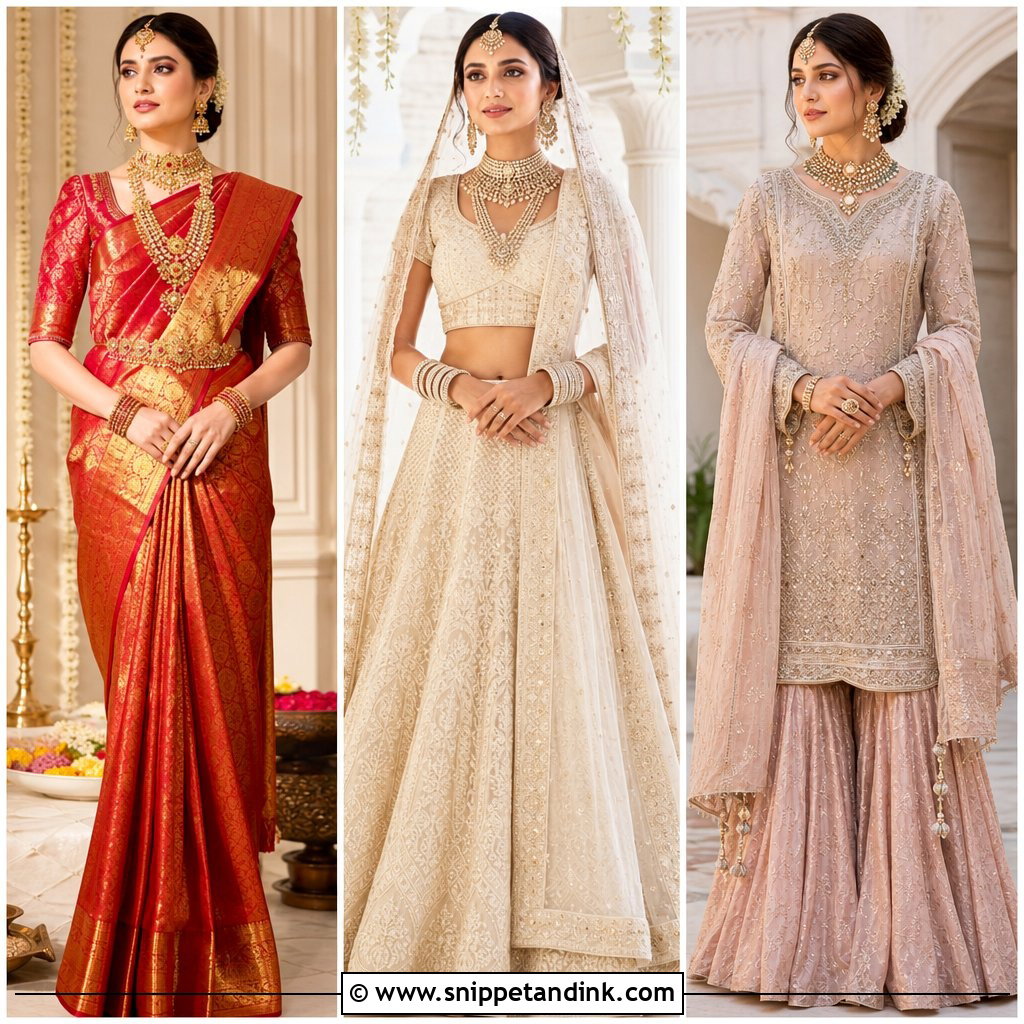
20. Velvet Bridal Lehenga For Wedding Day
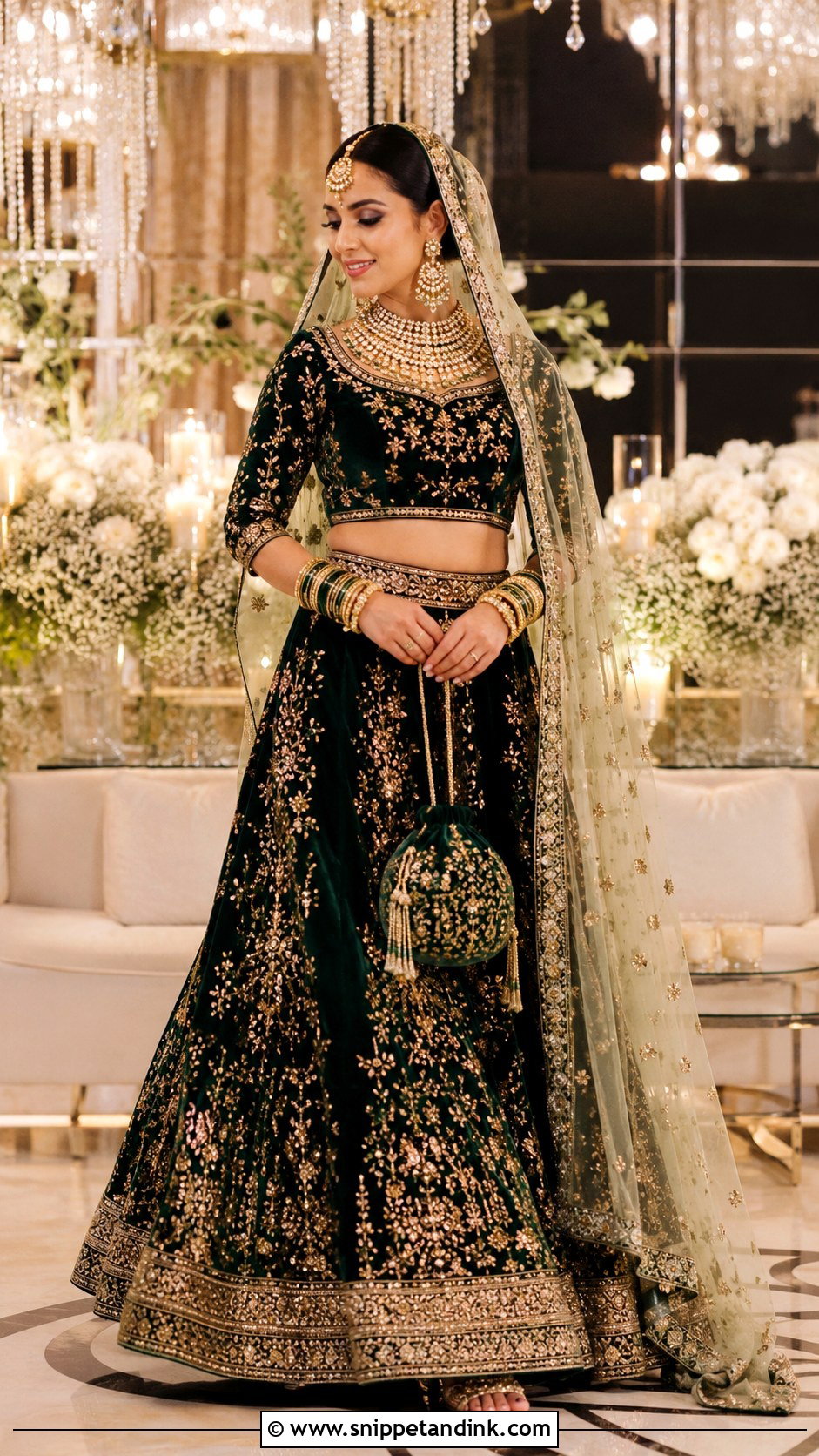
Velvet is warm and rich, which makes it right for winter and evening ceremonies and wrong for a summer afternoon. Maroon, wine, emerald, navy and royal purple look luxurious in it. Antique gold zardozi or cutdana on velvet catches light against the dark pile. Pair a supportive blouse with a lighter dupatta so the outfit doesn’t overheat you. Polki, kundan or uncut diamonds, a sleek bun and a defined lip balance the texture.
21. Mirror Work Bridal Lehenga Look
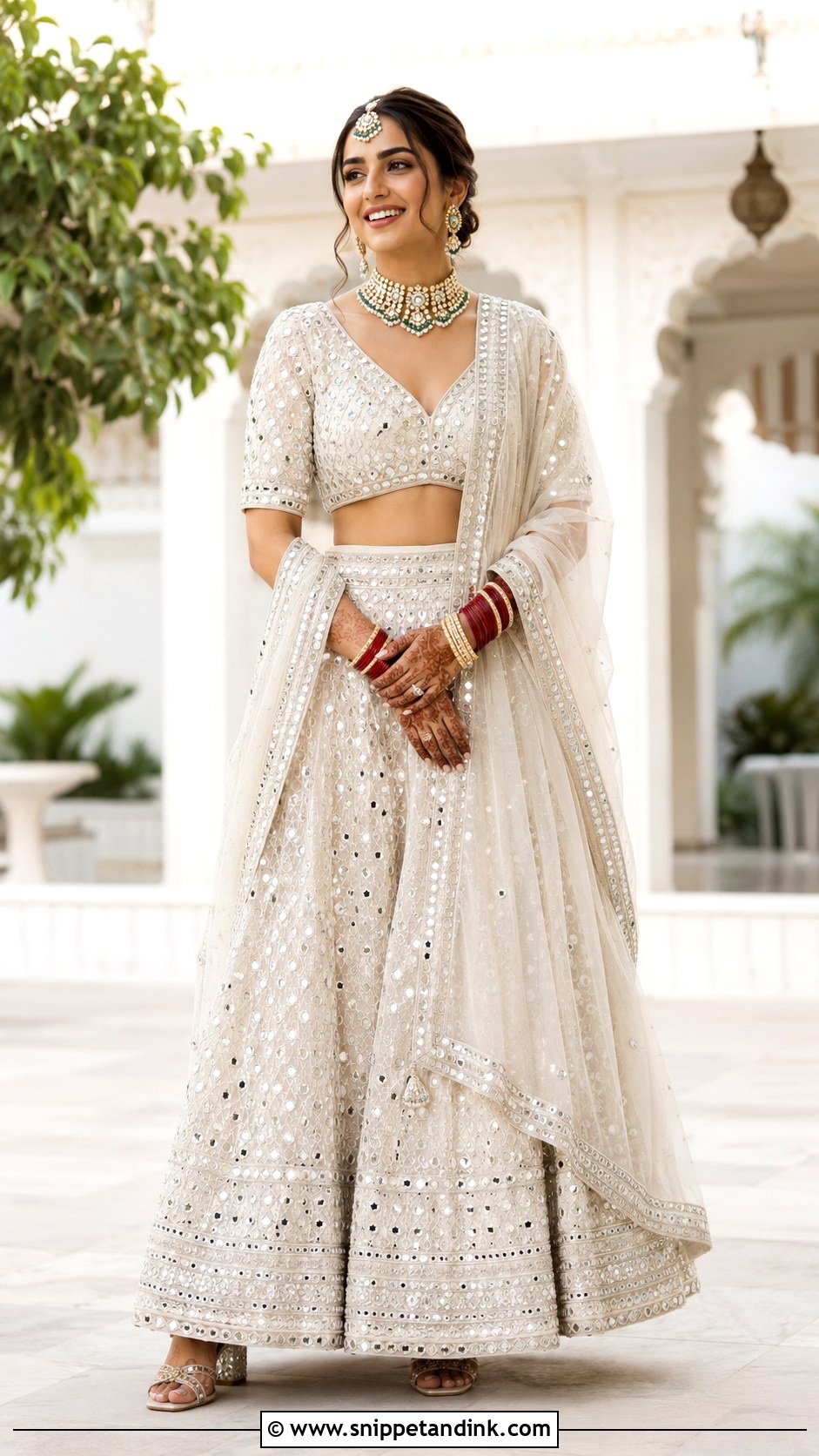
Mirror work brings sparkle and a festive mood, and it suits Rajasthani, Gujarati and boho-inspired bridal styles. Balanced placement matters: scattered or bordered mirrors look elegant, while dense all-over mirrors can look costume-like. Red, coral, ivory, peach, green and yellow can all work. Choose oxidized silver, kundan or gold jewelry to match the embroidery thread tone. Mirrors bounce flash back into the lens, so keep makeup fresh and avoid heavy highlighter.
22. Sequin Bridal Lehenga For Wedding Day
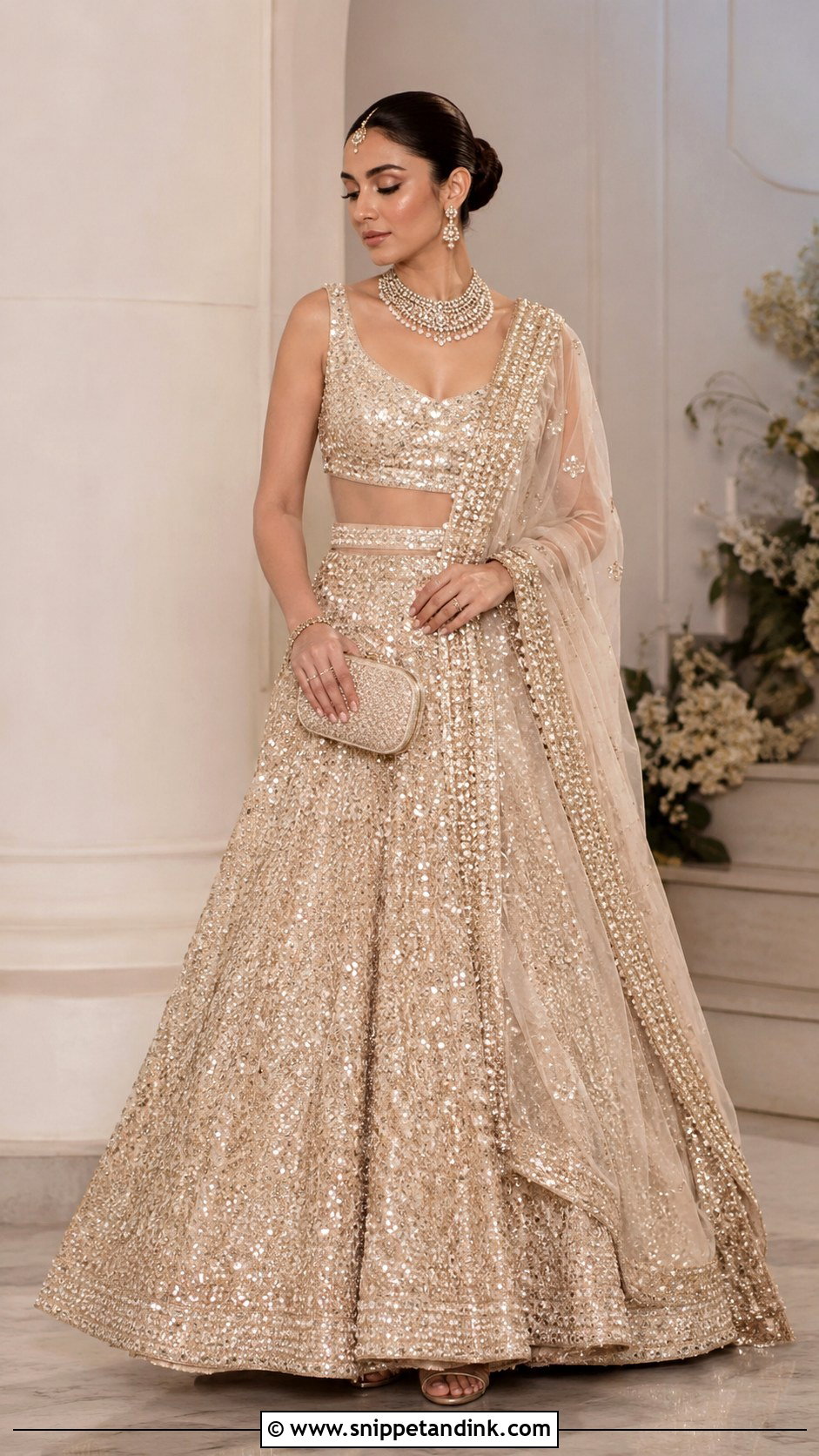
Sequins suit evening weddings in hotels and ballrooms where bright lighting makes them glow. Champagne, rose gold, silver, ivory, blush and deep wine are strong choices. A full skirt, detailed blouse and dupatta with a finished border keep it bridal. Balance the shine with refined diamond, pearl or polki jewelry. Sequins catch on necklaces and scratch the inner arm, so I line the blouse sleeves and check the underarm seams at fitting.
23. Green Bridal Lehenga For Wedding Day
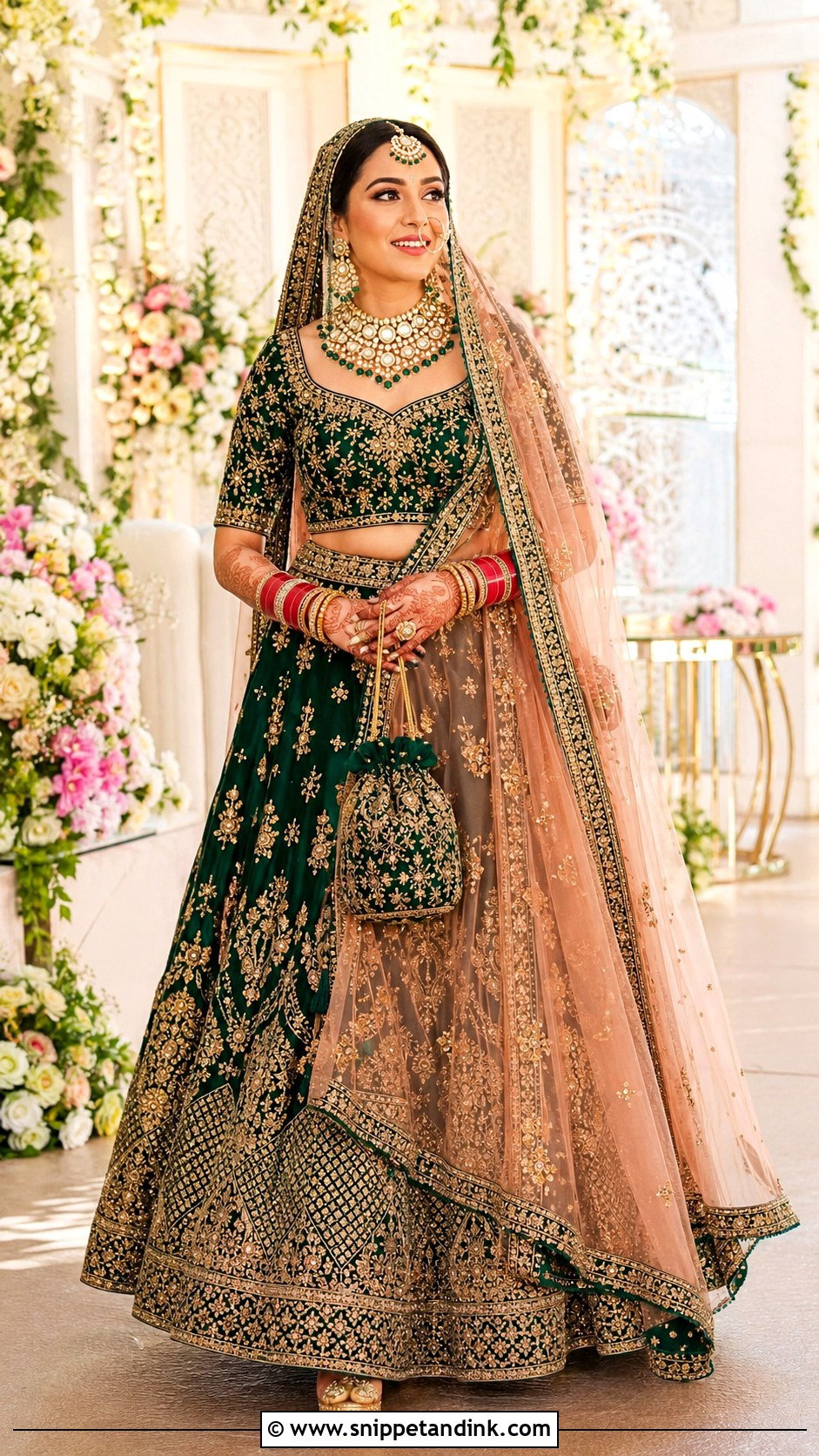
Green offers richness beyond red. Emerald and bottle green feel royal; sage and mehendi green are softer and earthier. Gold embroidery is classic on green, while silver or pearl detailing looks more modern. Kundan, polki or temple jewelry, plus red bangles or ruby accents, add a traditional contrast. A matching green dupatta keeps it unified, and a peach, ivory or red dupatta adds depth. Sage can look grey in shade, so check it in daylight before committing.
24. Orange Bridal Lehenga For Wedding Day
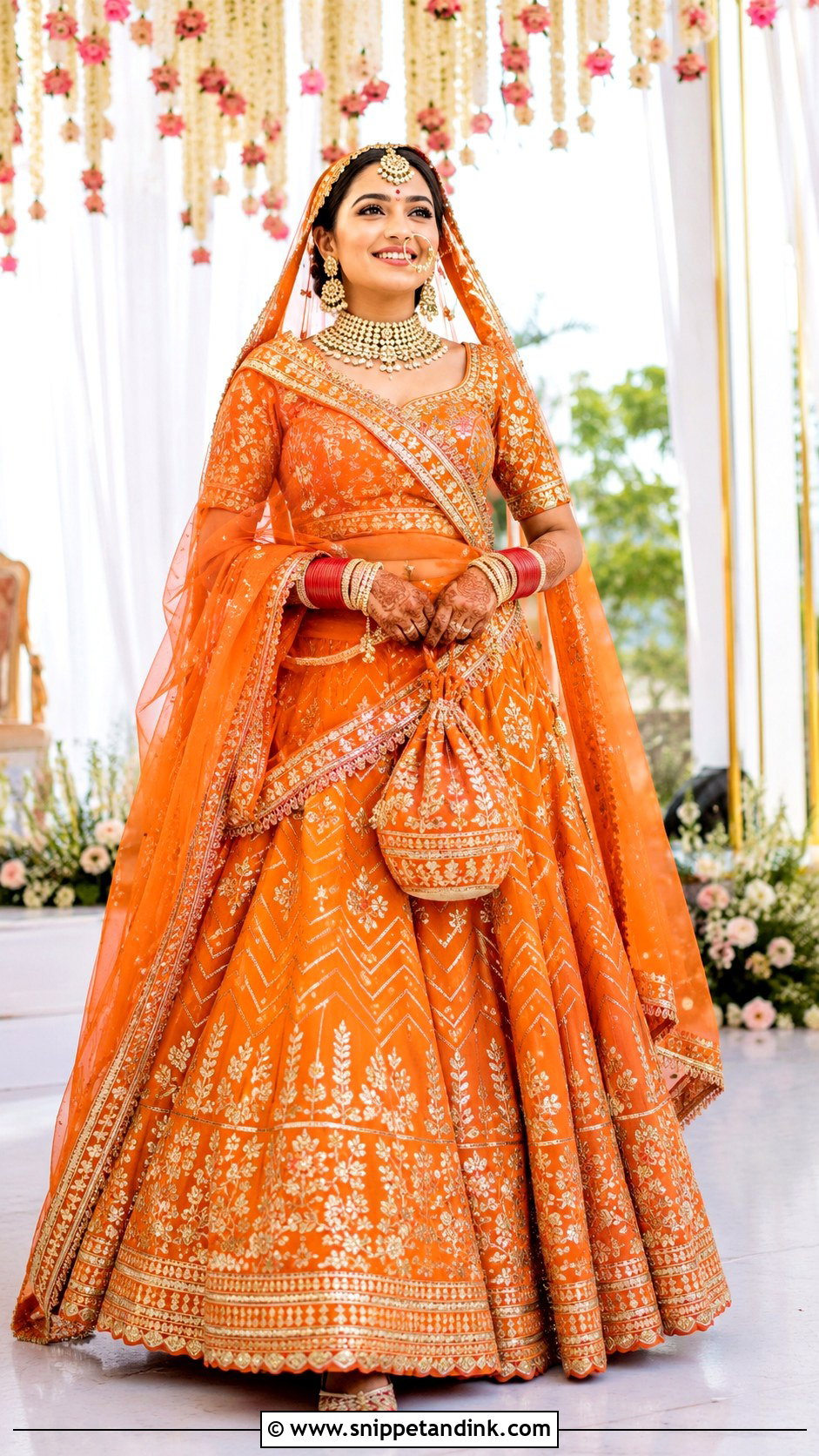
An orange bridal lehenga feels warm and celebratory, especially at daytime outdoor weddings. Burnt orange, saffron, coral-orange and rust suit different skin tones; I find deeper rust and burnt orange work for more complexions than bright saffron. Gold embroidery, gota patti, mirror work and zari borders keep it festive. Gold or kundan jewelry, red bangles, a brown smoky eye and a peachy lip balance the color.
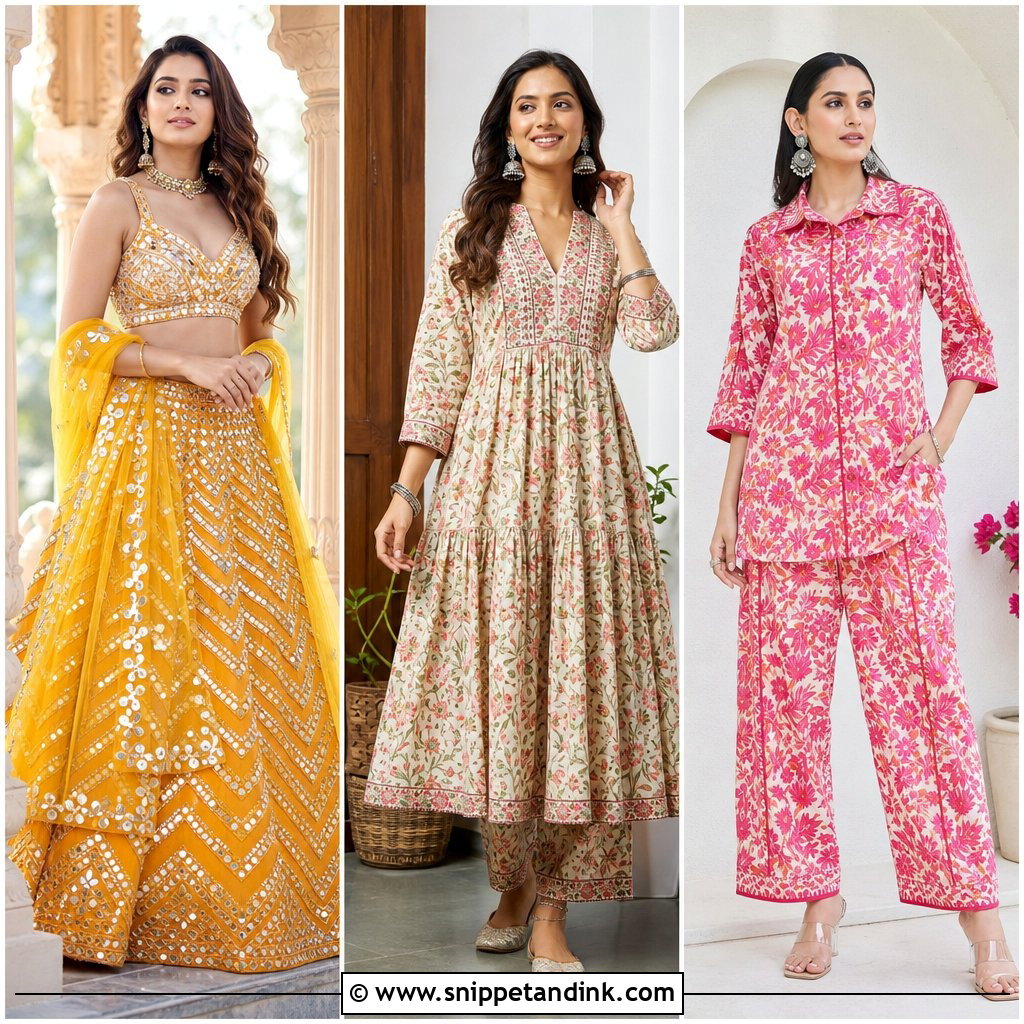
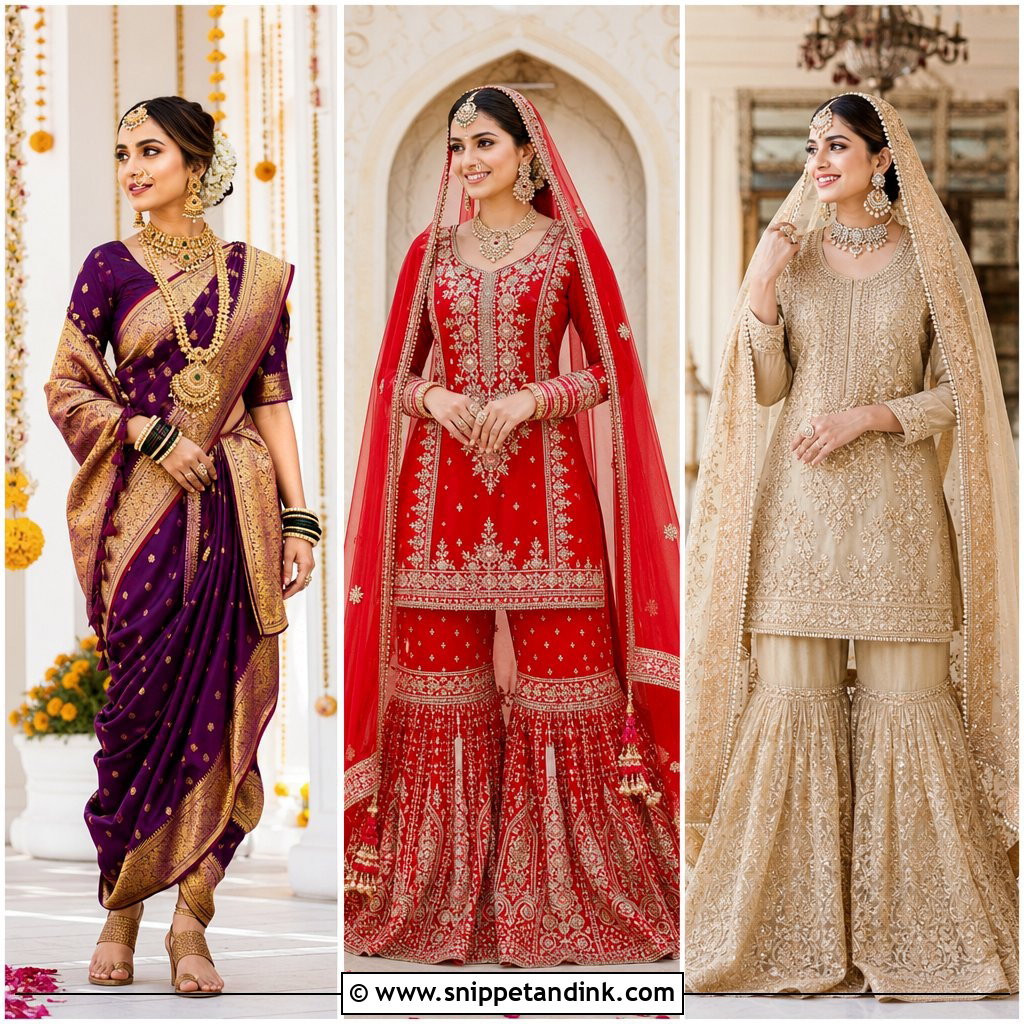

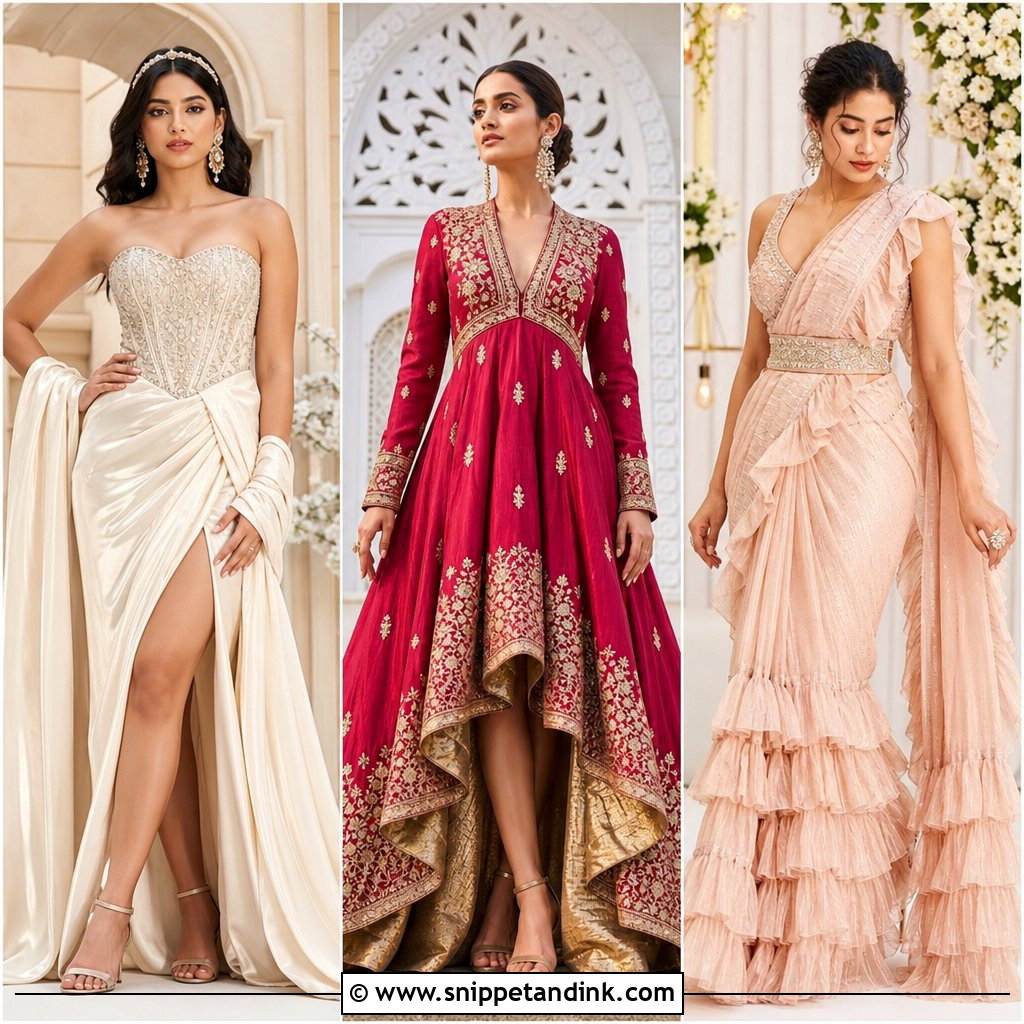
25. Fusion Bridal Lehenga Saree Look
A lehenga saree gives the look of a saree with the ease of a lehenga: clean stitched pleats, a defined waist and a pallu that doesn’t need constant adjusting. Embroidered silk, organza, georgette or tissue keeps it refined. Ivory, red, blush, gold and jewel tones all work. Practice once with the pallu, since it still needs pinning at the shoulder. A structured blouse, waist belt and statement jewelry make it ceremony-ready.
The Double Dupatta Is Where Wedding Mornings Run Late
In my experience, the dress itself goes on quickly. The dupatta setting, especially a double drape over the head and shoulder, is what overruns the schedule. A little planning saves a lot of stress.
Do a pinning rehearsal
At your last fitting, have the person who will drape you on the day practice the full setting, including head dupatta, shoulder drape and jewelry. Take photos from the front and back so they can repeat it exactly.
Build the hair for the dupatta
A heavy head dupatta needs a firm base to pin into. Tell your hairstylist which dupatta you’re wearing so the bun is placed and secured with that weight in mind. Soft, loose styles rarely hold a heavy net drape for hours.
Pack the right pins
Bring plenty of U-pins, bobby pins and small safety pins in colors that match the fabric, plus a few brooch pins for the shoulder drape. Allow at least half an hour in the schedule just for dupatta setting, and longer for a double drape.
Your Traditions First, Then the Trends
The right wedding-day outfit sits where your traditions, venue, comfort and personal style overlap. A red lehenga feels right to one bride; another is most herself in a Kanjeevaram, a pastel set, a sharara or a fusion drape. Whatever you choose, you should be able to sit, walk and get through every ritual comfortably. Settle fabric, fit, jewelry balance and dupatta styling before the final call, and pick the outfit that means something to you and your family.
You'll Like These Ideas:








Leave a Reply