
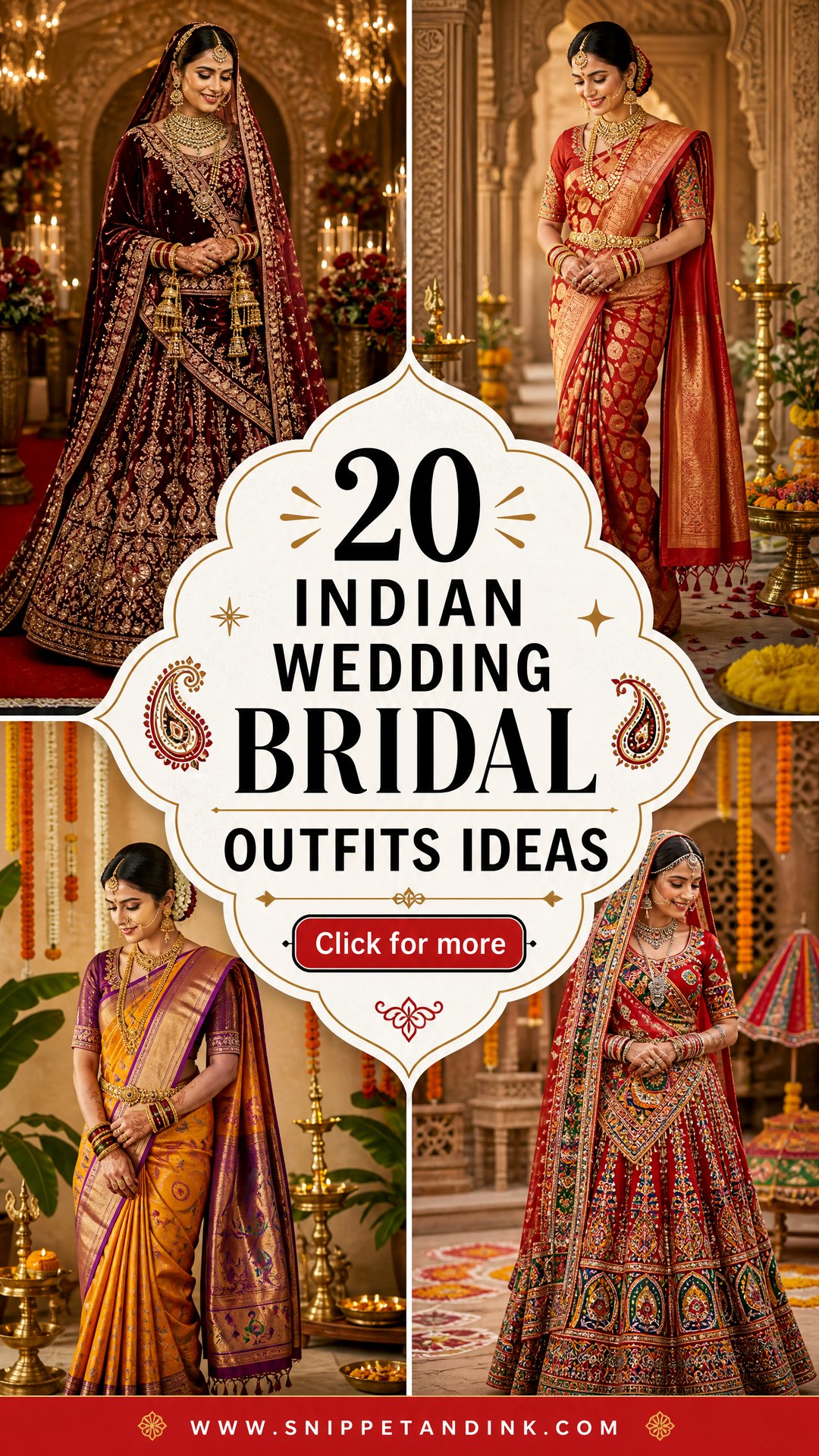
Indian bridal dress covers an enormous range: red lehengas, regional silk sarees, sharara and gharara sets, Anarkalis and newer fusion shapes. Which one is right for you depends on the ceremony, the season, the venue, your family’s customs and, more than most brides expect, how comfortably you can move and sit in it. I start every bridal consultation with the rituals rather than the color, because a three-hour ceremony on the floor and a short registry signing ask completely different things of a garment. Fabric and embroidery bring the grandeur; jewelry, shoes, hair and the way the dupatta is draped finish it. Below are twenty complete bridal looks, traditional and modern, with the fitting and draping details I’d want you to know about each.
Where the Weight of a Bridal Lehenga Actually Sits
The question I wish more brides asked in the shop is how much the outfit weighs. Heavily embroidered bridal lehengas commonly run to several kilos, and the most worked designer pieces go well beyond that. You’ll wear it through the ceremony, the photos and the reception, often for ten hours or more.
Weight sitting on the hips is manageable; weight pulling on the shoulders or dragging from the hem is what exhausts people. So when I assess a lehenga, I look at where the work sits, not just how much there is.
- Ask the boutique to weigh the skirt, or at least hold it up by the waistband for a minute before you try it on.
- Check the waistband. A wide, well-finished band spreads the weight; a thin drawstring cuts in by the afternoon.
- Ask what’s under the skirt. Several layers of can-can add volume and weight. A good tailor can often get the same shape with fewer layers or a lighter lining.
- Sit on the floor in it for ten minutes if your ceremony is on the floor. Heavy skirts fold awkwardly and press into the legs.
If you’ve fallen for something very heavy, consider wearing it for the ceremony and portraits only and changing into a lighter outfit for the reception. Plenty of brides do, and nobody notices anything except how much happier they look.
1. Red Bridal Lehenga
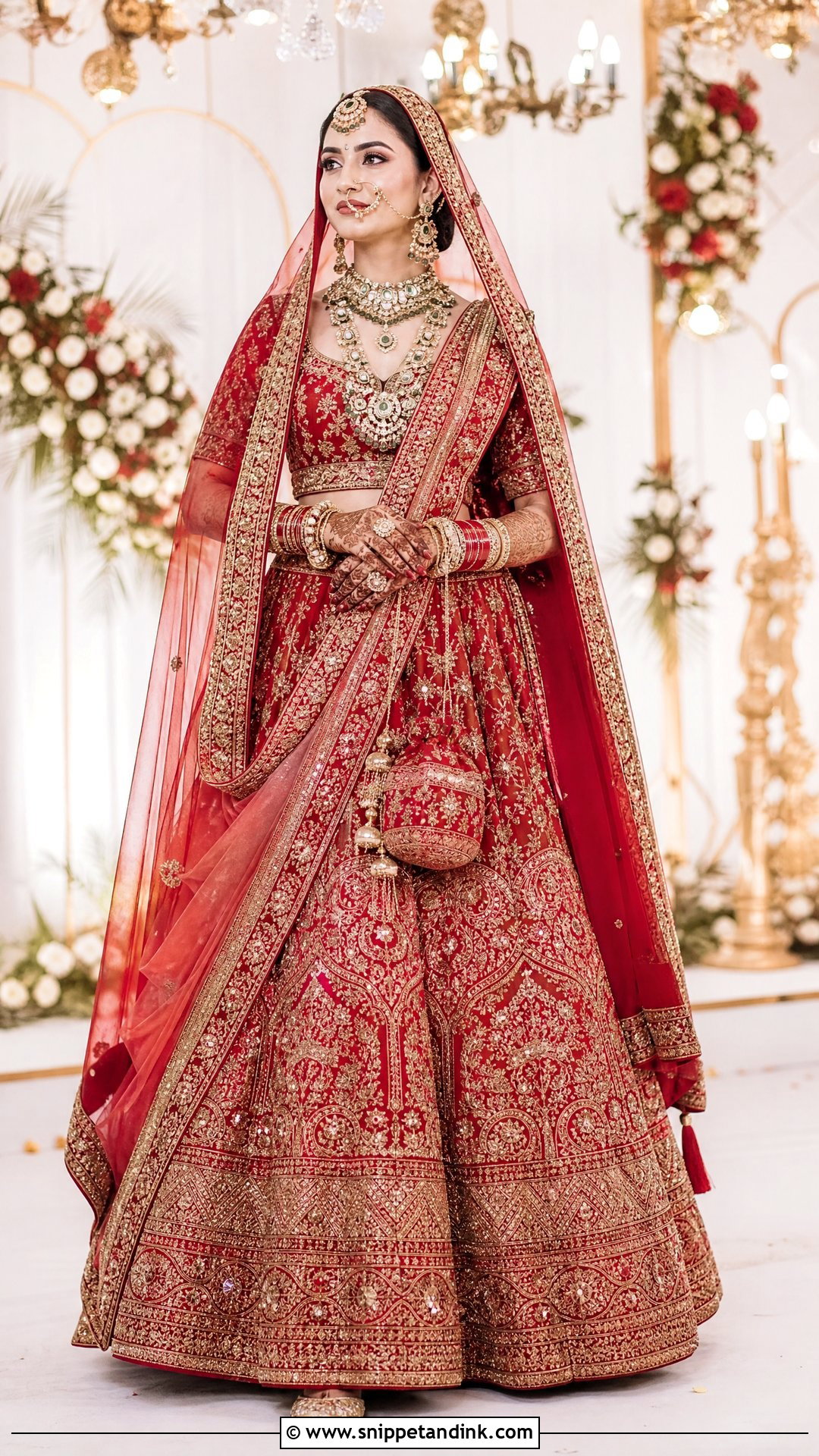
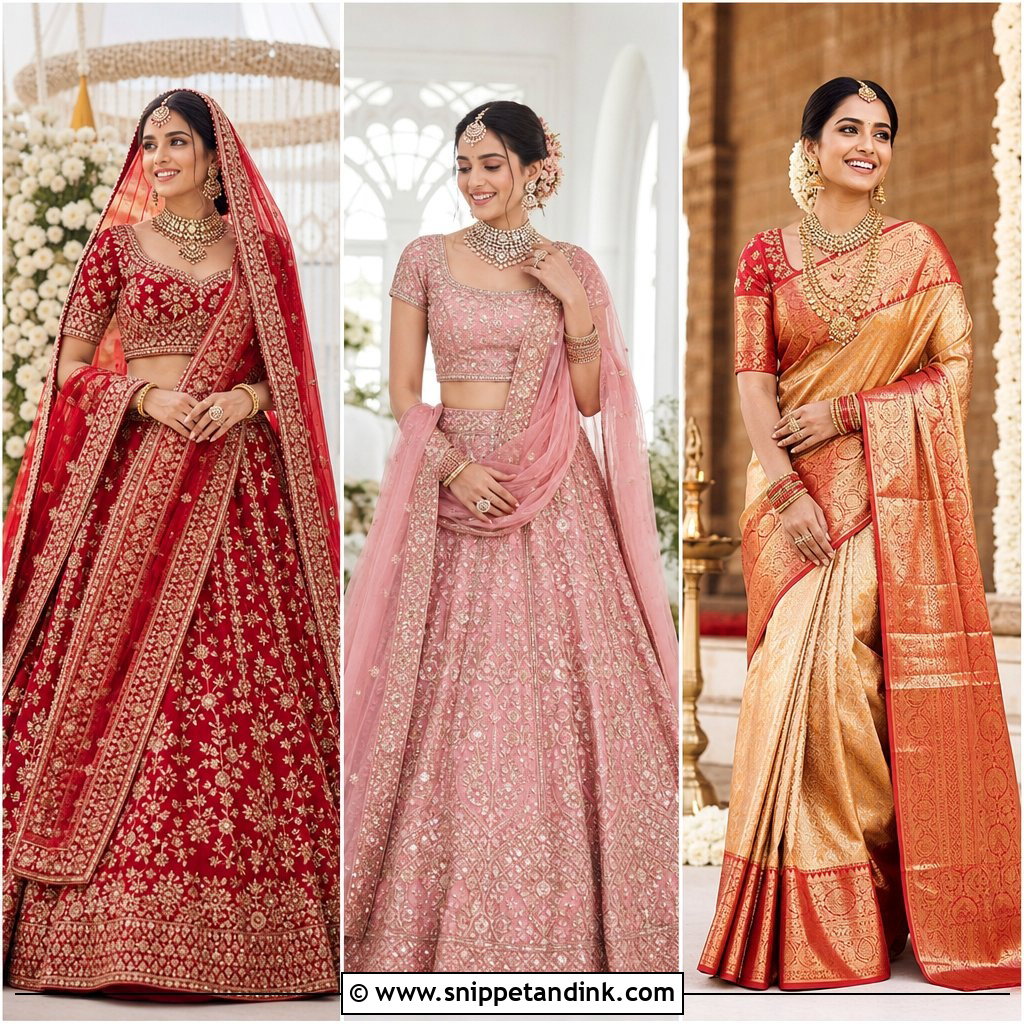
Red is still the color most families picture, and a classic red bridal lehenga carries that weight of meaning. Choose a full skirt in raw silk, velvet or brocade with zardozi, dabka, sequin or thread embroidery, and a fitted blouse to balance the volume. One dupatta goes over the shoulder; a lighter net veil can go over the head if you want the traditional double-dupatta arrangement. Gold kundan jewelry, stacked bangles, a statement nath and embroidered juttis complete it. Scale matters: petite brides look best with smaller motifs and a controlled flare, while taller brides can carry wide borders and a long veil. Before I sign off the fit, I have the bride walk in circles as she would around the fire, since a skirt that’s a touch long becomes a hazard there.
2. Maroon Velvet Bridal Lehenga
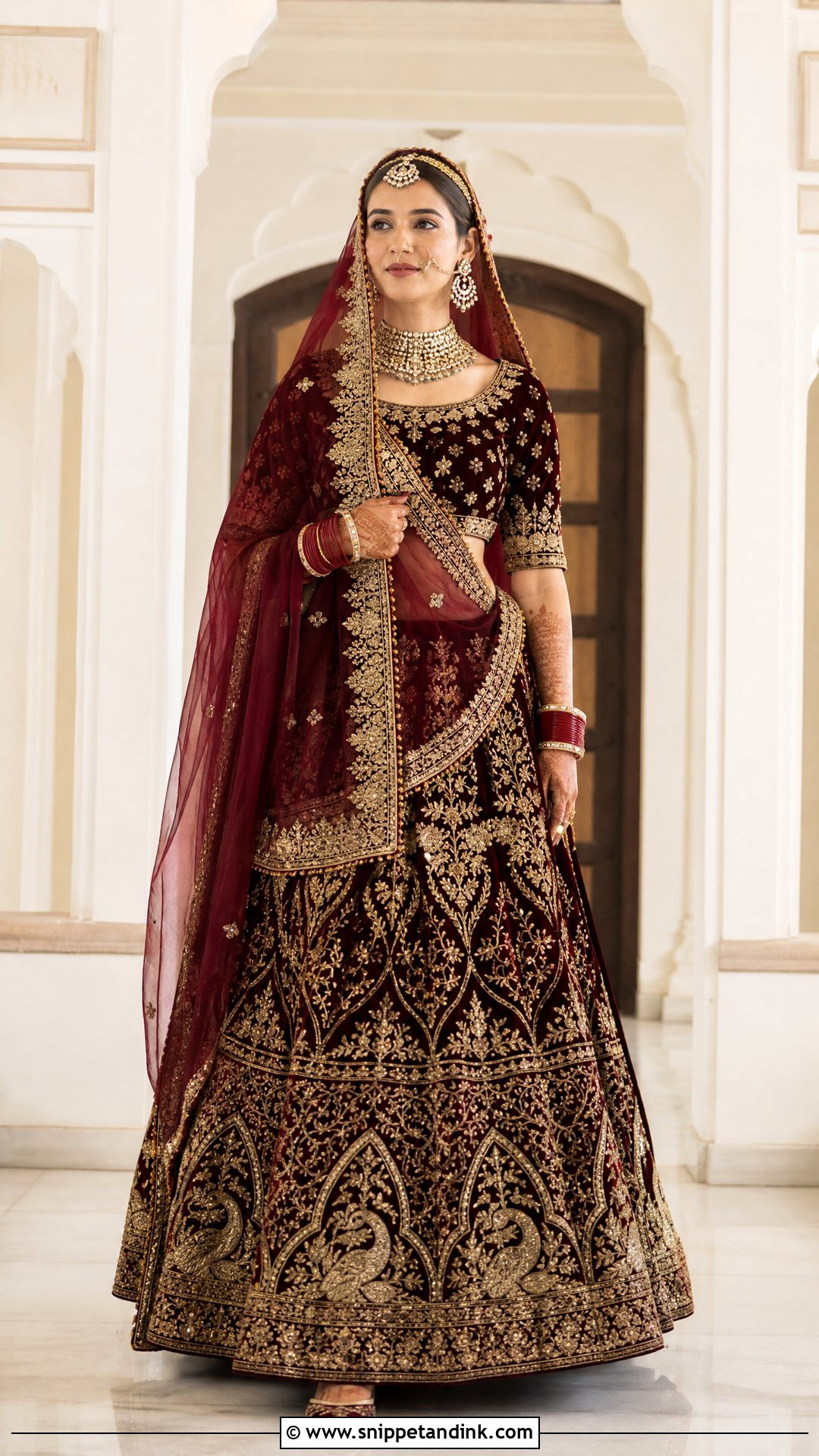
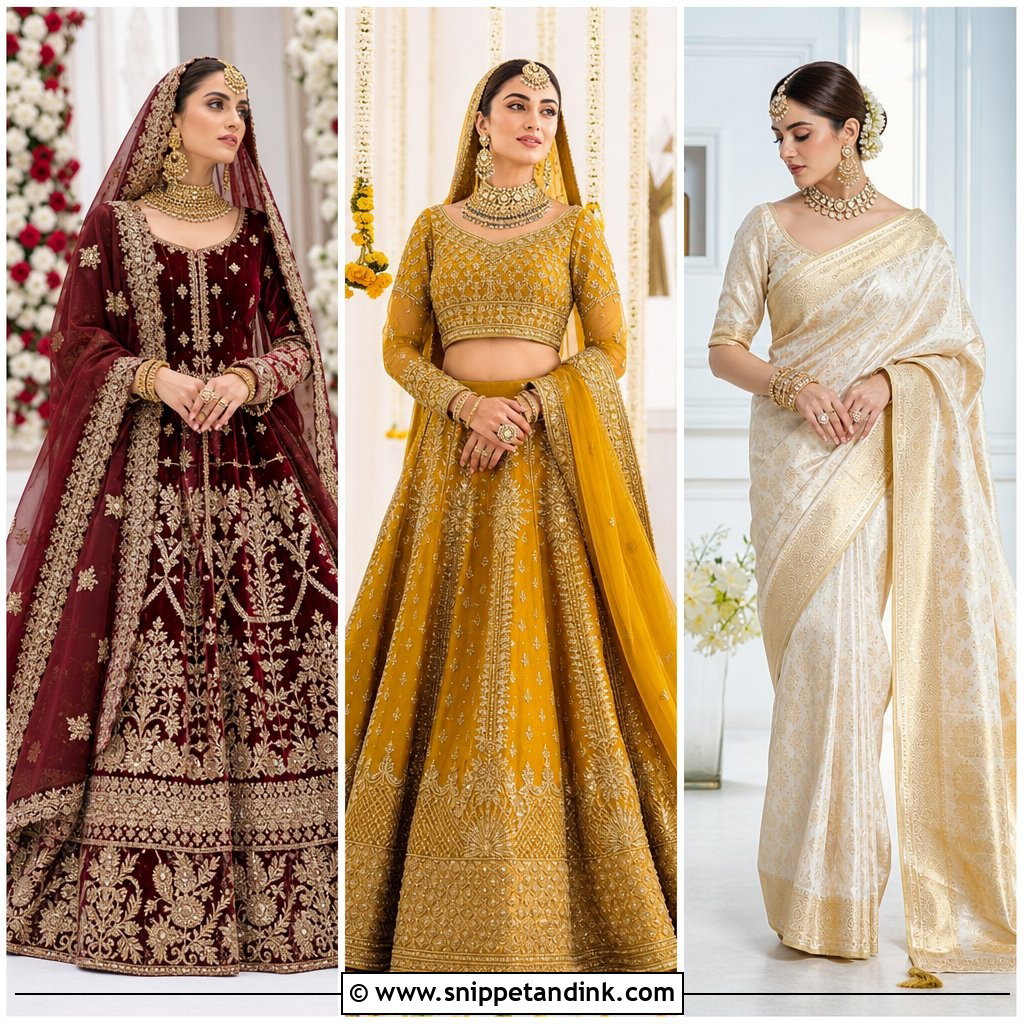
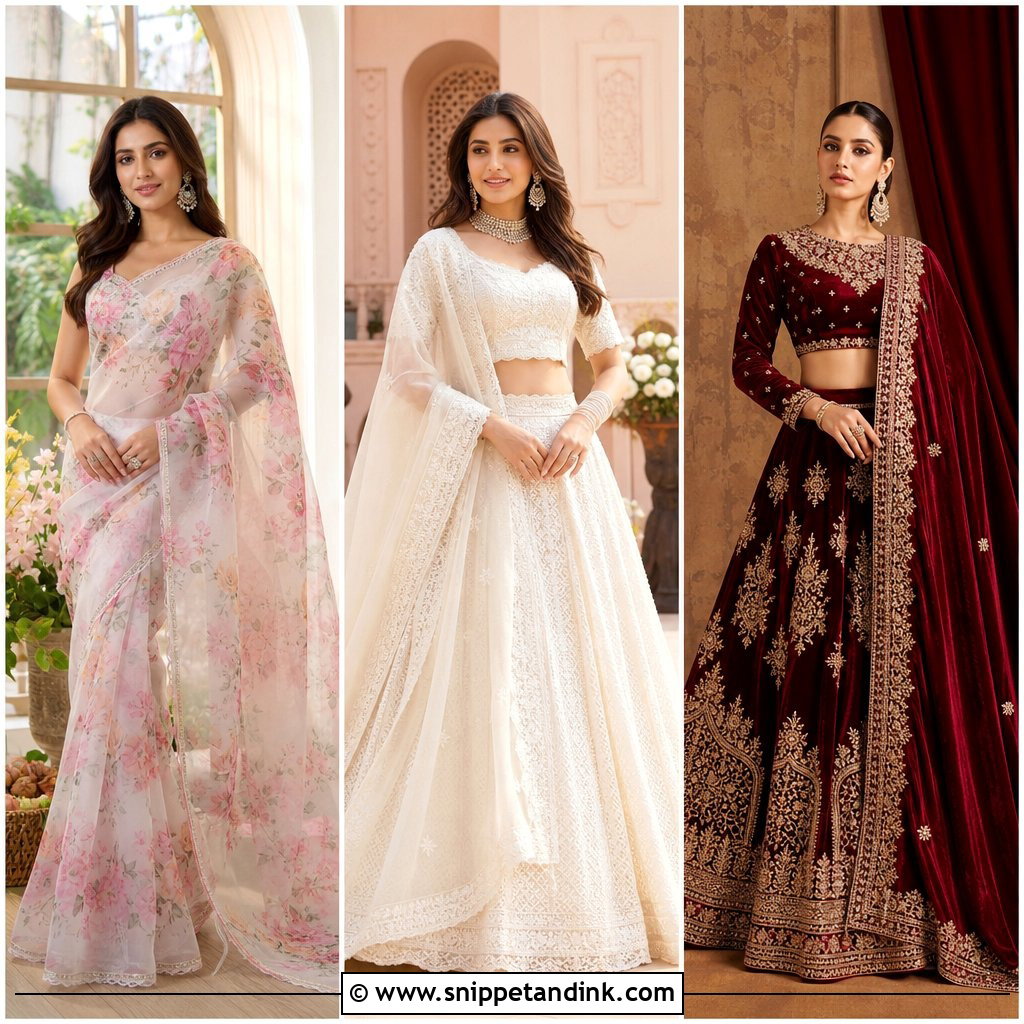
Maroon velvet is for winter and air-conditioned halls. In a warm outdoor mandap it gets hot quickly, so I’d only recommend it where the temperature is under control. Build the outfit on a structured velvet skirt with antique gold embroidery that leaves some of the pile showing; velvet looks richest when it isn’t buried. Pair it with a supportive blouse in full sleeves, elbow sleeves or a modest square neck, and keep the dupatta to sheer organza or net. Antique gold jewelry, a matha patti, deep red bangles and velvet juttis continue the color. Put the heaviest work at the hem and neckline, have the waist and lining fitted closely, and finish with a low bun, soft makeup and a light head veil.
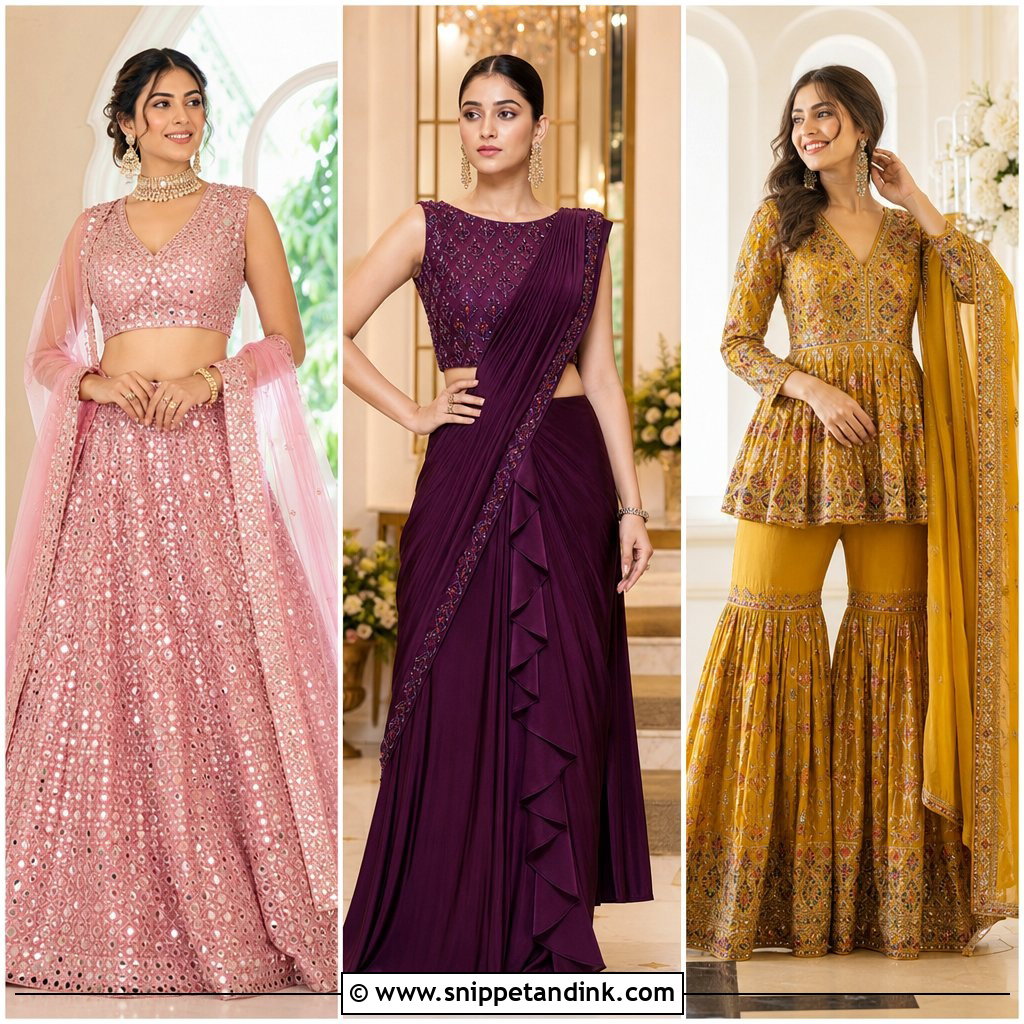
3. Pink Bridal Lehenga
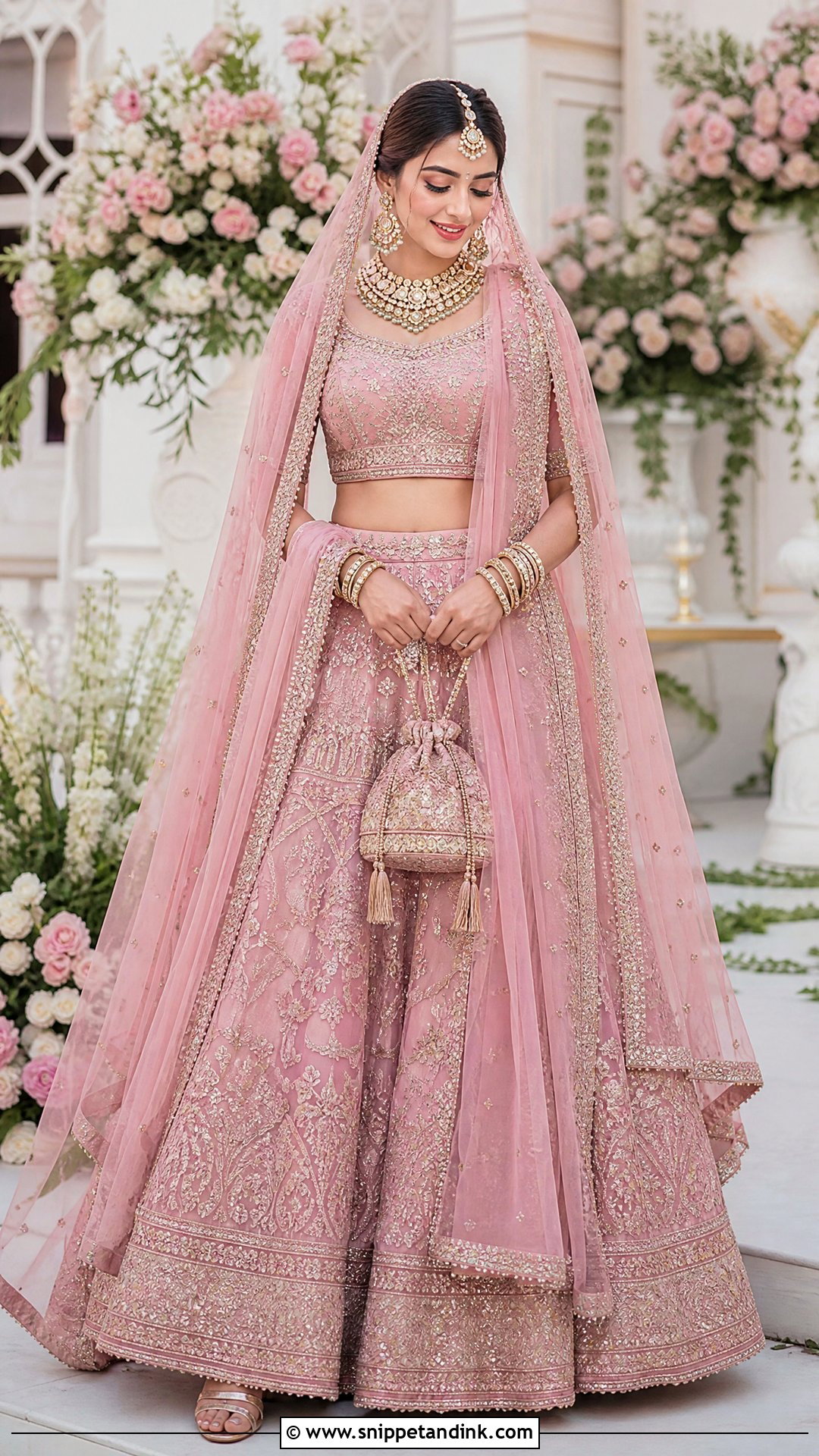
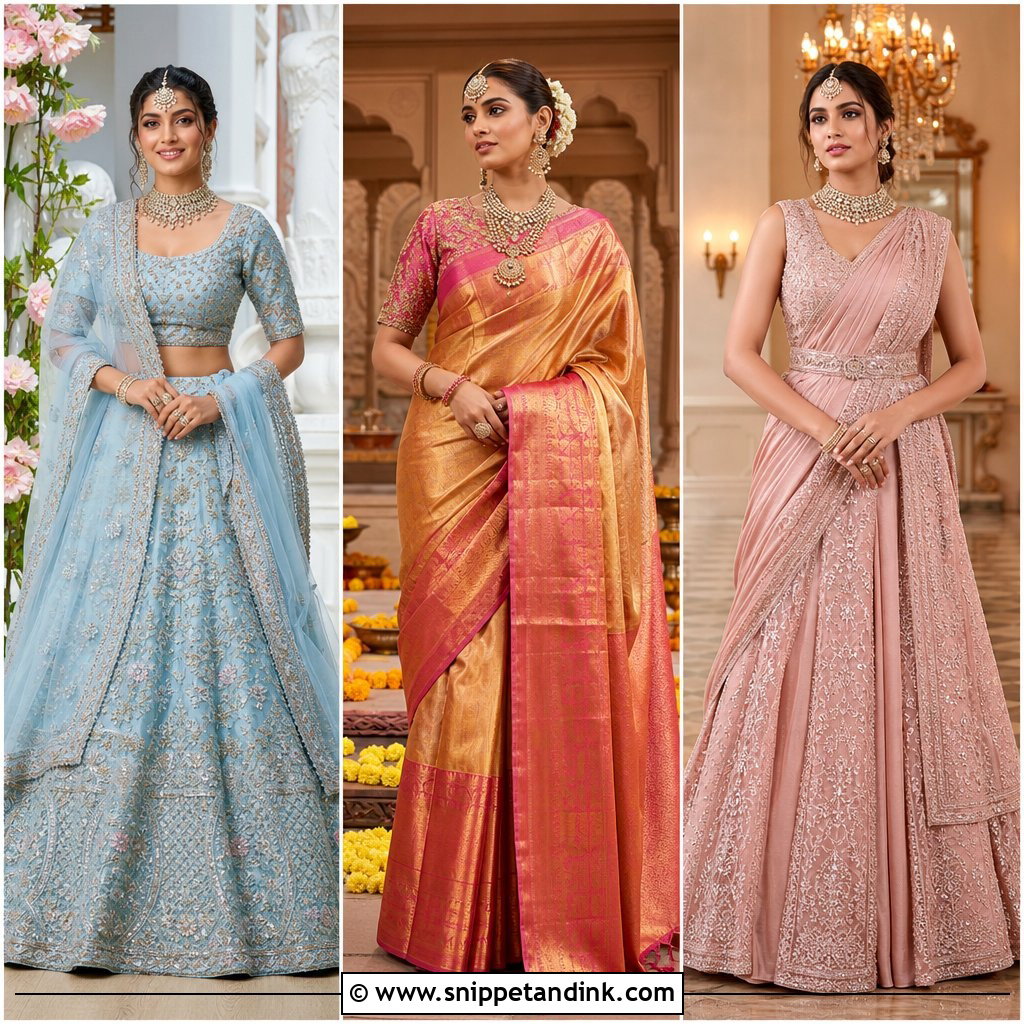
Pink is the color I suggest most often to brides who want something bridal but not red. Rani pink has real impact; blush, rose and dusty pink are softer. Undertone decides the shade more than anything: warm skin usually suits coral pinks, cooler skin tends to suit mauve and raspberry. Choose a silk or organza skirt with gold embroidery, floral threadwork or mirror accents, a coordinated blouse, and two dupattas in slightly different shades for depth. Polki jewelry, pearl details, pink bangles, metallic sandals and a potli complete it. Keep the head veil sheer enough that the blouse embroidery reads through it. A braided bun with fresh or realistic flowers finishes it neatly.
4. Ivory Bridal Lehenga
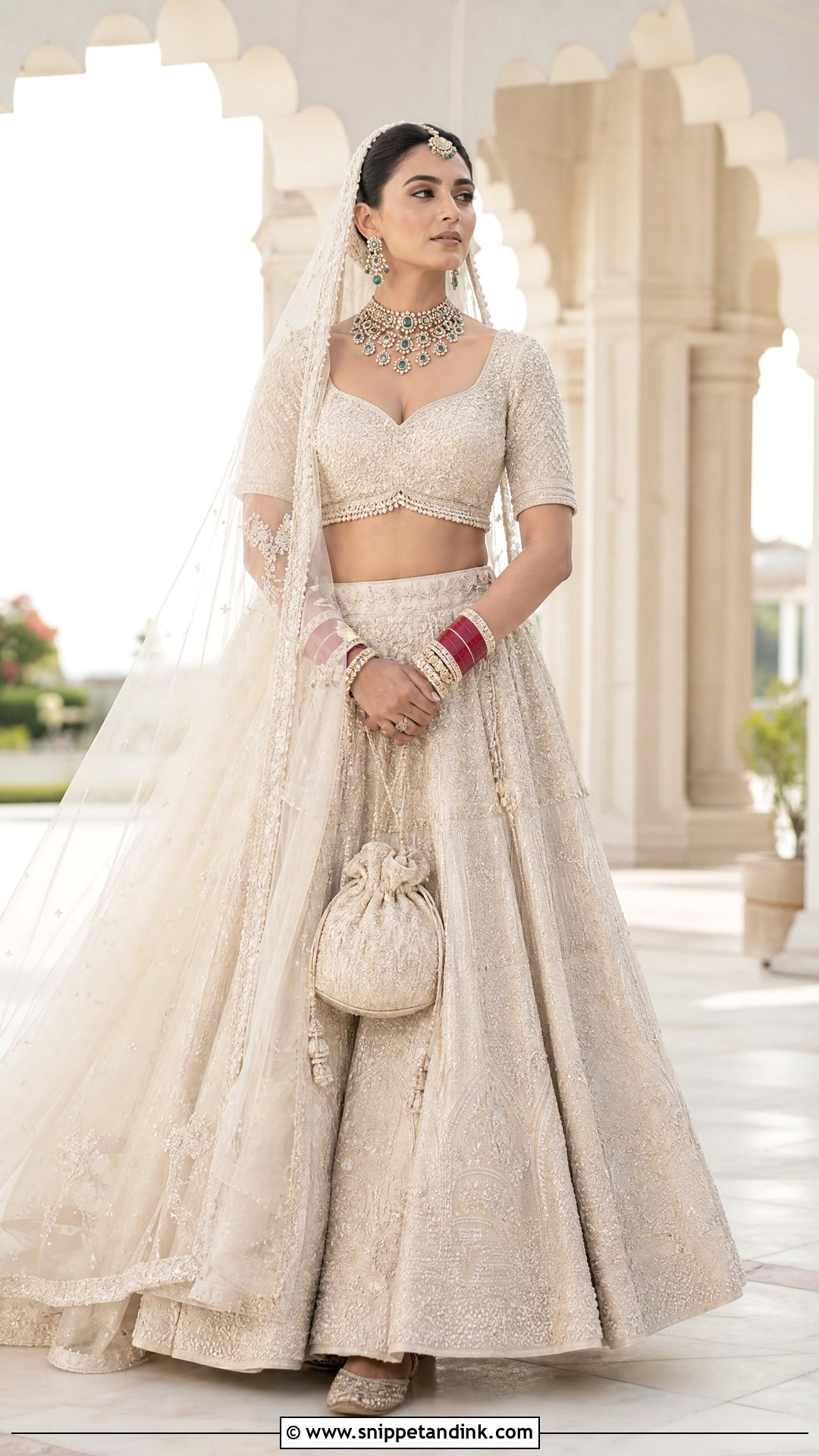
Ivory comes alive outdoors, which is why it’s so popular for destination weddings. Choose a cream, ecru or soft pearl base with tonal embroidery, gold zardozi, sequins or fine pearl work, a structured blouse and an ivory veil. If your family wants color in the ceremony, emerald or ruby jewelry, or a red dupatta, adds it without changing the base. Metallic juttis and a beaded potli keep the accessories in the same family. The risk with ivory is that it looks flat on camera when it’s all one surface, so I layer textures: matte silk, raised embroidery and a little shine. Check the fabric in daylight and indoor light before you commit, because some ivories turn yellow under warm bulbs. Defined eyeliner and a sleek bun give the face some edge against all that pale fabric.
5. Gold Bridal Lehenga
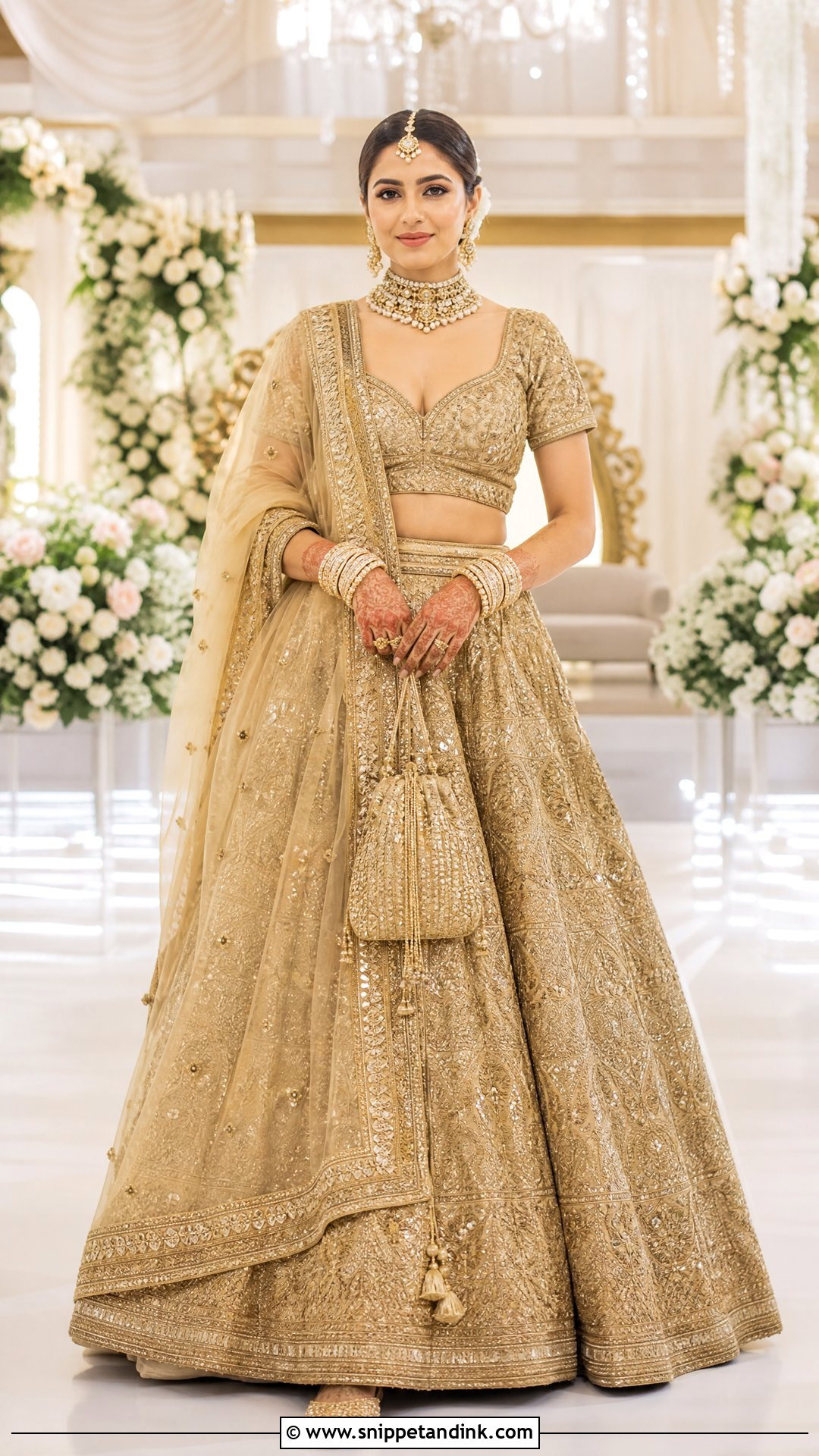
A single flat, mirror-bright gold reads cheap on camera, so with gold I always look for depth. Champagne, antique gold, bronze or muted metallic silk with layered embroidery and woven pattern looks far richer. Pair the skirt with a fitted blouse and a sheer dupatta finished with an embroidered border. Diamond, kundan or polki all work, but keep the metal tones consistent from earrings to bangles. Neutral juttis and a lightly embellished potli are enough. If you want more definition, bring in maroon, emerald or rust through the veil and bangles. Ask your makeup artist to go easy on highlighter, because shiny skin next to shiny fabric washes the face out.
6. Pastel Floral Bridal Lehenga
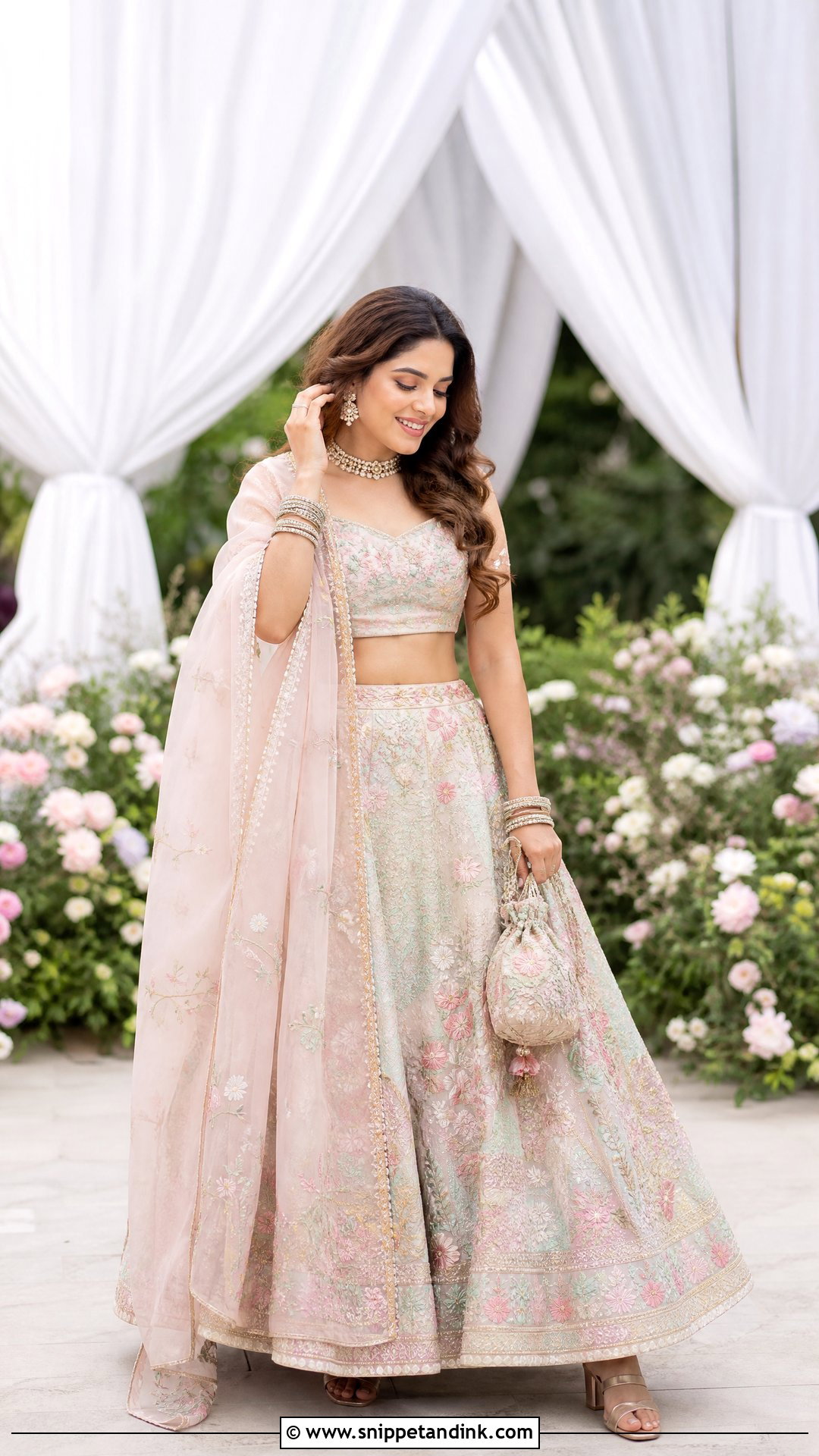
Pastel florals belong in daylight, at a garden or spring ceremony. Start with a mint, powder blue, peach, lilac or blush skirt with dimensional flowers, fine threadwork or scattered sequins, and a fitted blouse with comfortable straps or sleeves. In warm weather an airy organza dupatta is far kinder than a heavily bordered veil. Pearl jewelry, floral earrings, pastel bangles, metallic block heels and a small potli support the palette. Proportion is my main concern with floral work: oversized blooms on a petite frame look like upholstery, so the motif size should suit your height. A softly curled bun or braid suits it. Look at the skirt outdoors before buying, since direct sun can bleach very pale pastels to almost white in photos.
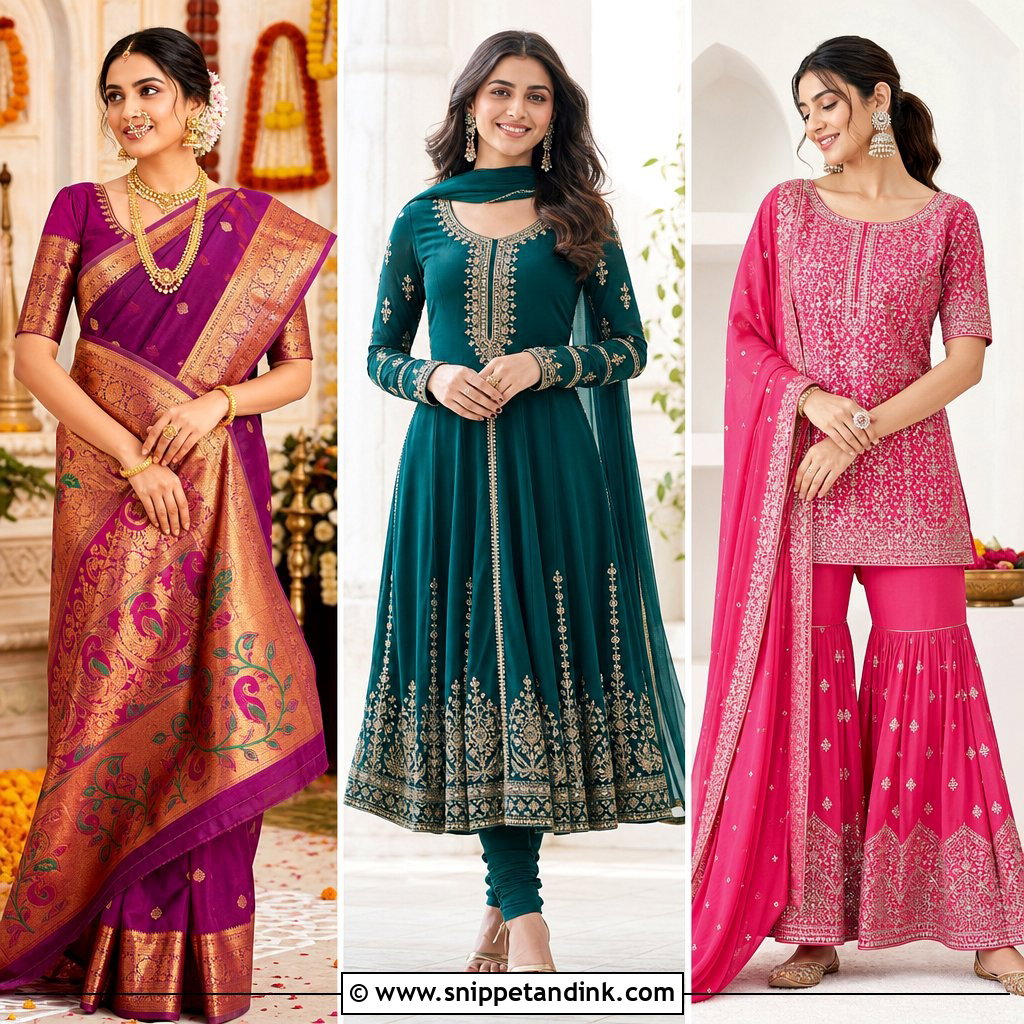
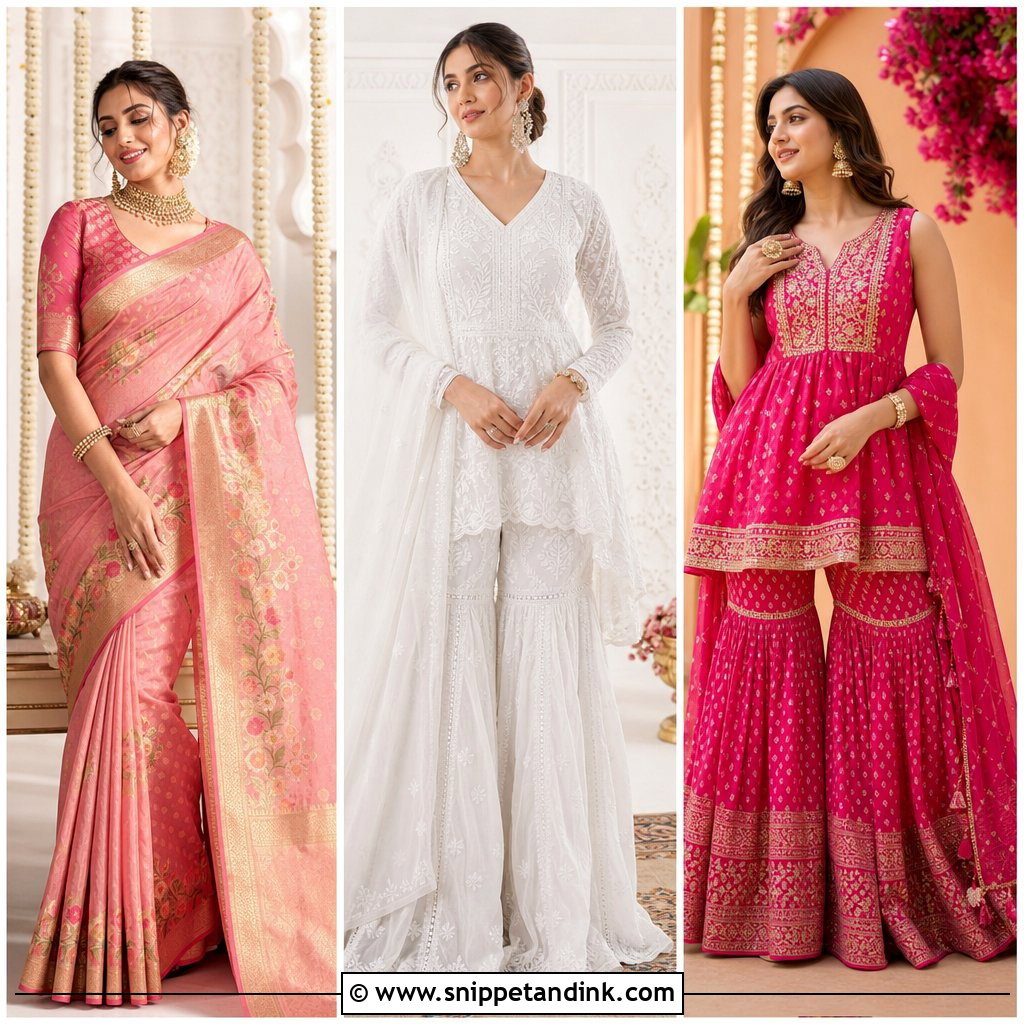
7. Banarasi Silk Bridal Saree
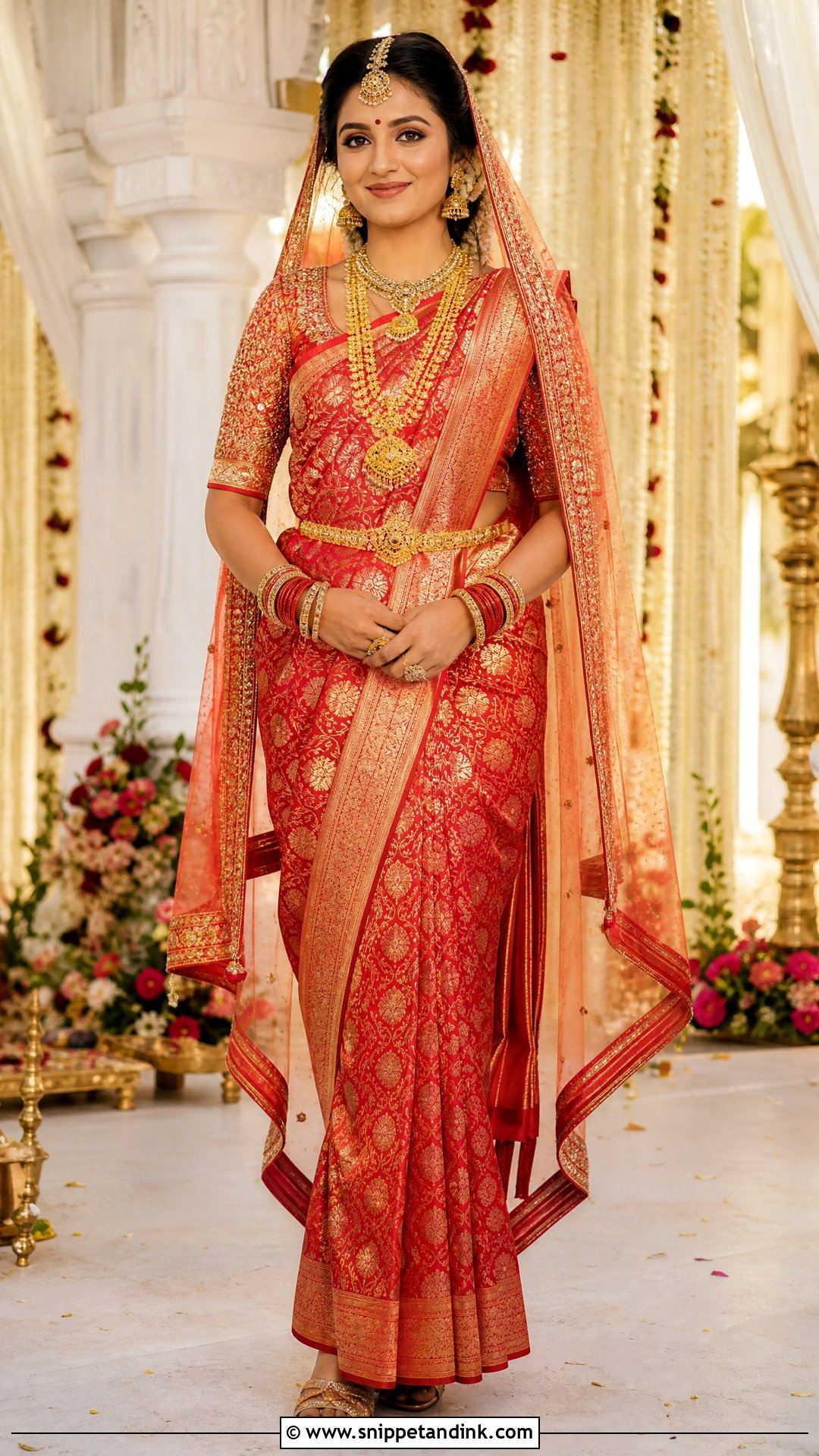
Woven silk has a glow that embroidery can’t copy, and a Banarasi bridal saree shows it off. Red, magenta, green, maroon or antique gold with a deep zari border and traditional motifs all feel ceremonial. Pair it with a brocade blouse that supports the drape without adding bulk. Brocade is stiff, so when I pleat it I leave a little ease around the knees; pleats pinned too tight make you take tiny steps all evening. A light veil can sit over the head without disturbing the pallu. Layered gold jewelry, jhumkas, bangles, a waist belt and embroidered sandals finish it, with a sleek bun and flowers. Brides who want less volume can choose smaller motifs and a narrower border. Rehearse sitting, walking and any ceremonial steps in it beforehand.
8. Kanjivaram Bridal Saree
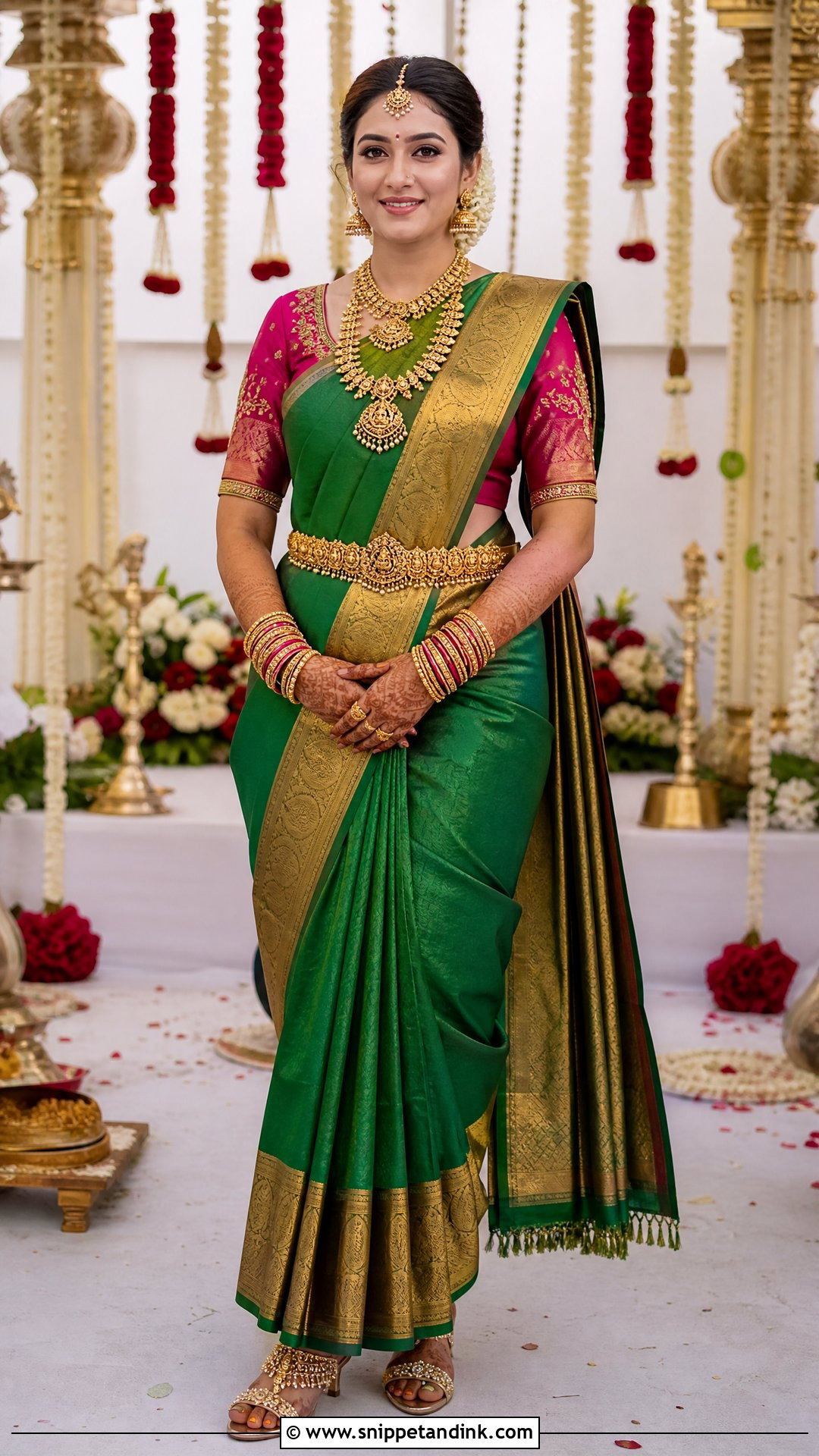
Kanjivaram silk is heavy and holds its shape, and that body is what gives a temple-border saree its crisp, majestic line. Emerald, crimson, mustard, purple and deep pink with a contrasting gold border are classic combinations. A structured silk blouse in a matching or contrasting color sits under it, with the pleats set firmly. Traditional gold necklaces, temple earrings, a waist belt, bangles and anklets complete the look, and stable metallic sandals carry you through long rituals. A center-parted bun with jasmine finishes it. Because the silk is already thick, I avoid extra layers at the waist, such as a heavy petticoat, that make the pleats bulge. Personalize it through the blouse sleeves, border placement and jewelry scale while keeping to your family’s traditions.
9. Paithani Bridal Saree
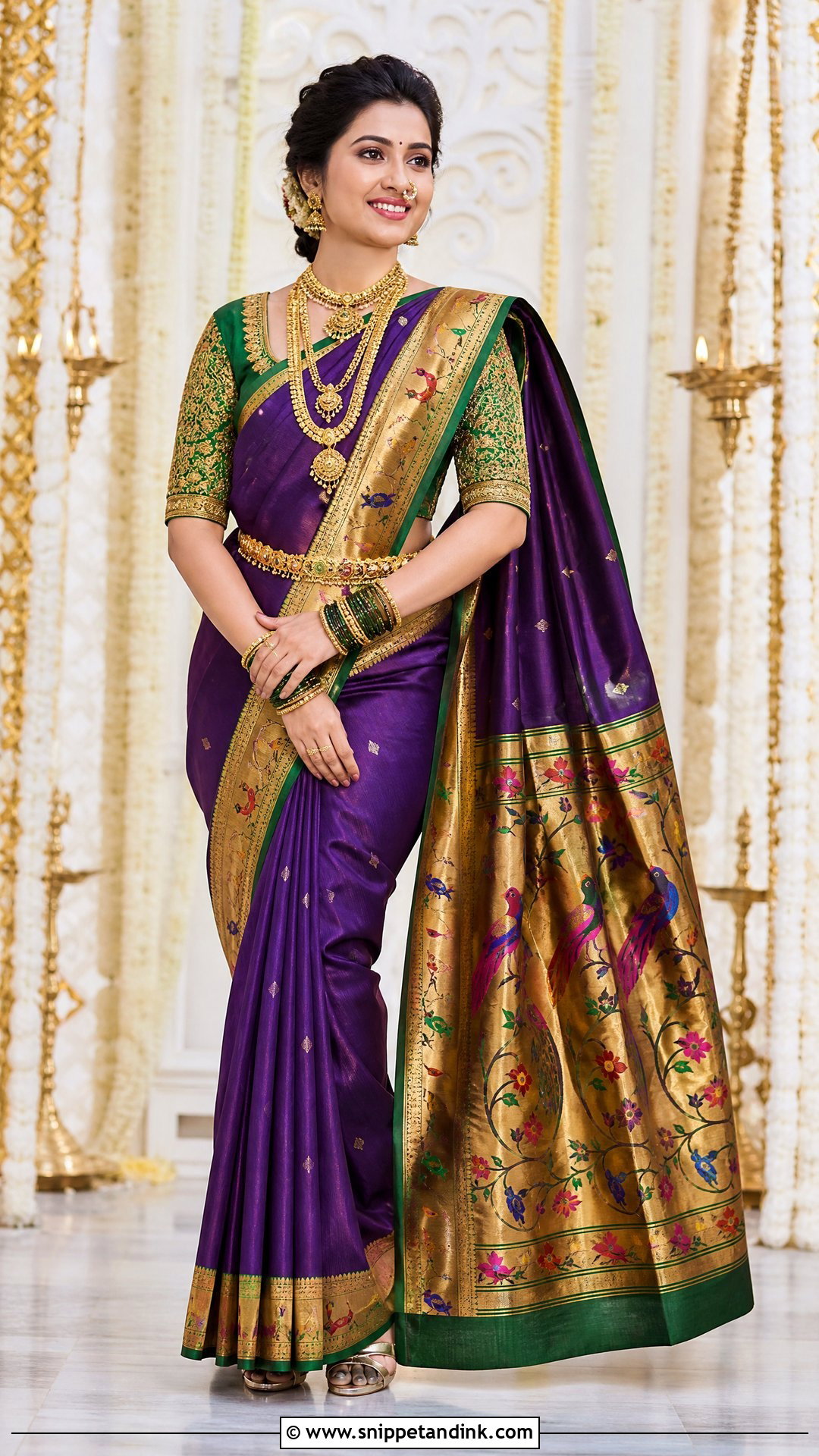
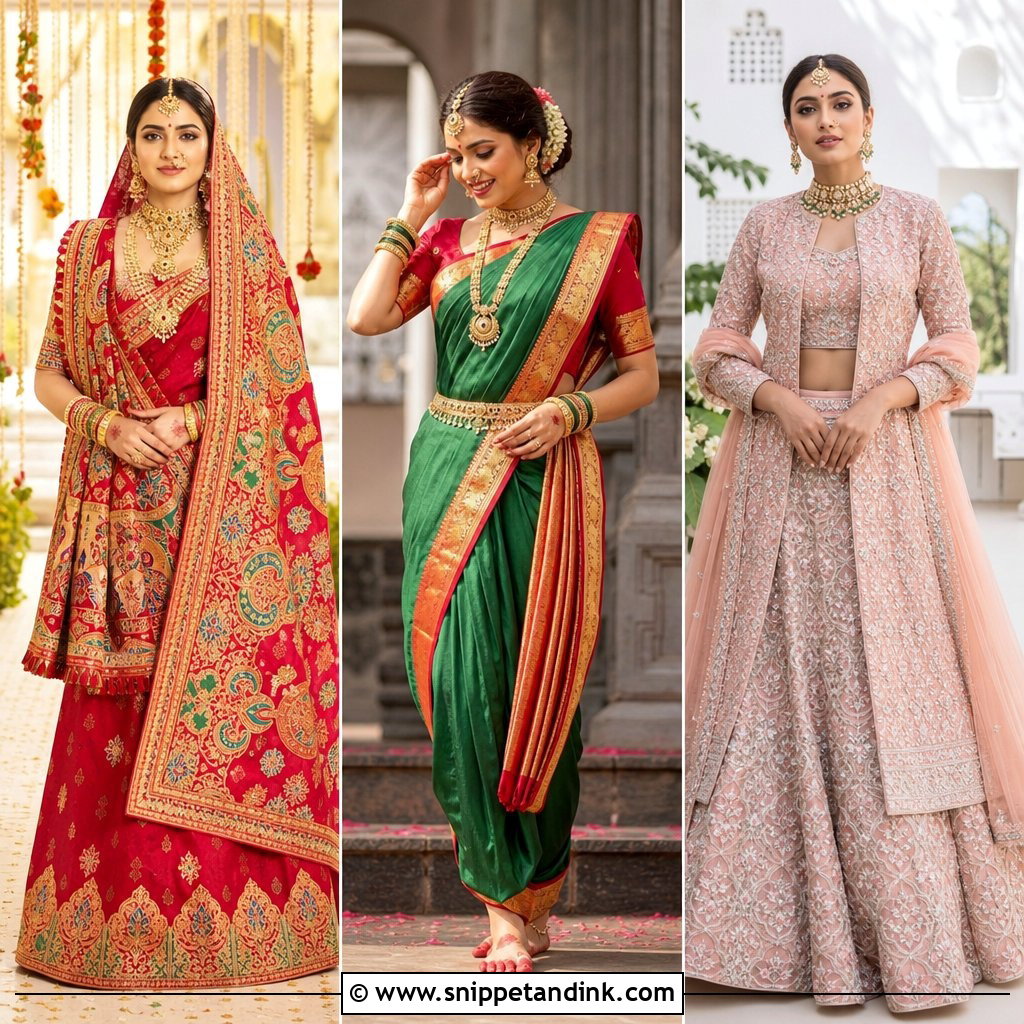
Everything about a Paithani leads to the pallu, with its woven peacocks and lotus motifs, so the styling should keep it visible. Purple, green, fuchsia and red look vivid beside gold zari. Choose a contrasting silk blouse that repeats a border color, in a fitted elbow-sleeve cut for coverage. Traditional gold necklaces, statement earrings, green or coordinated bangles, a nath and a gold waist belt complete the look, with metallic sandals underneath. A neat bun with flowers keeps attention on the pallu and jewelry, and I arrange the pleats so the border shows at the front. If you’re wearing an heirloom Paithani, have it inspected early. Old silk can split along fold lines, and weak spots should be reinforced before any blouse fitting begins.
10. Bengali Red And White Bridal Saree
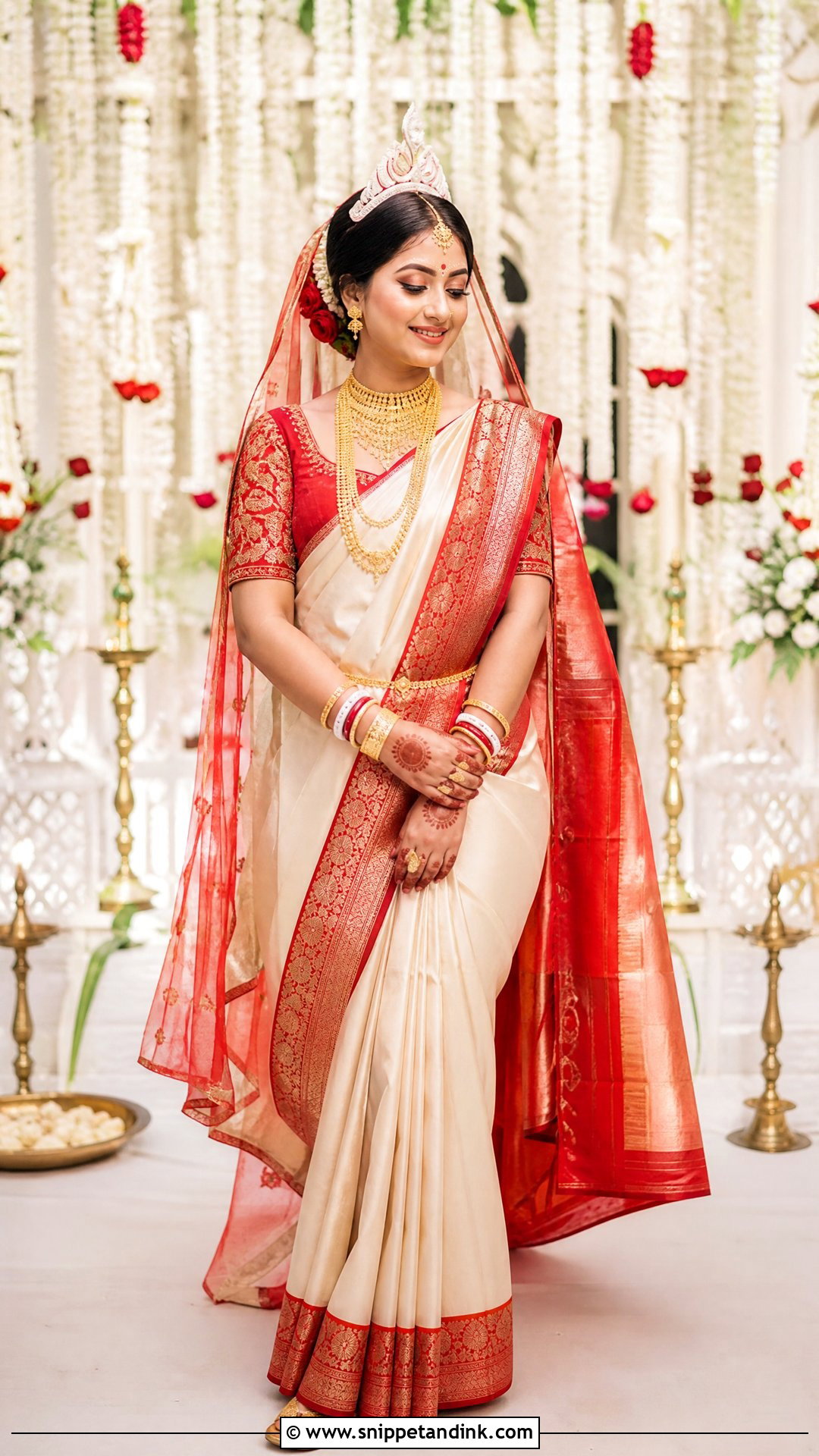
Red against white is one of the most recognizable bridal palettes in India. A Bengali-inspired outfit starts with a silk saree carrying a substantial red border, paired with a fitted red blouse in gold embroidery or woven detail. The red and white shakha pola bangles, layered gold necklaces, statement earrings, a decorative headpiece and a carefully placed veil give it its ceremonial character. Facial decoration such as sandalwood dots and red accents can be included according to your own and your family’s customs. Stable gold sandals go under the saree, and every pleat should be pinned before the veil goes on. A low bun leaves the neckline open for jewelry. The palette is already strong, so I’d resist adding other colors.
11. Maharashtrian Nauvari Bridal Saree
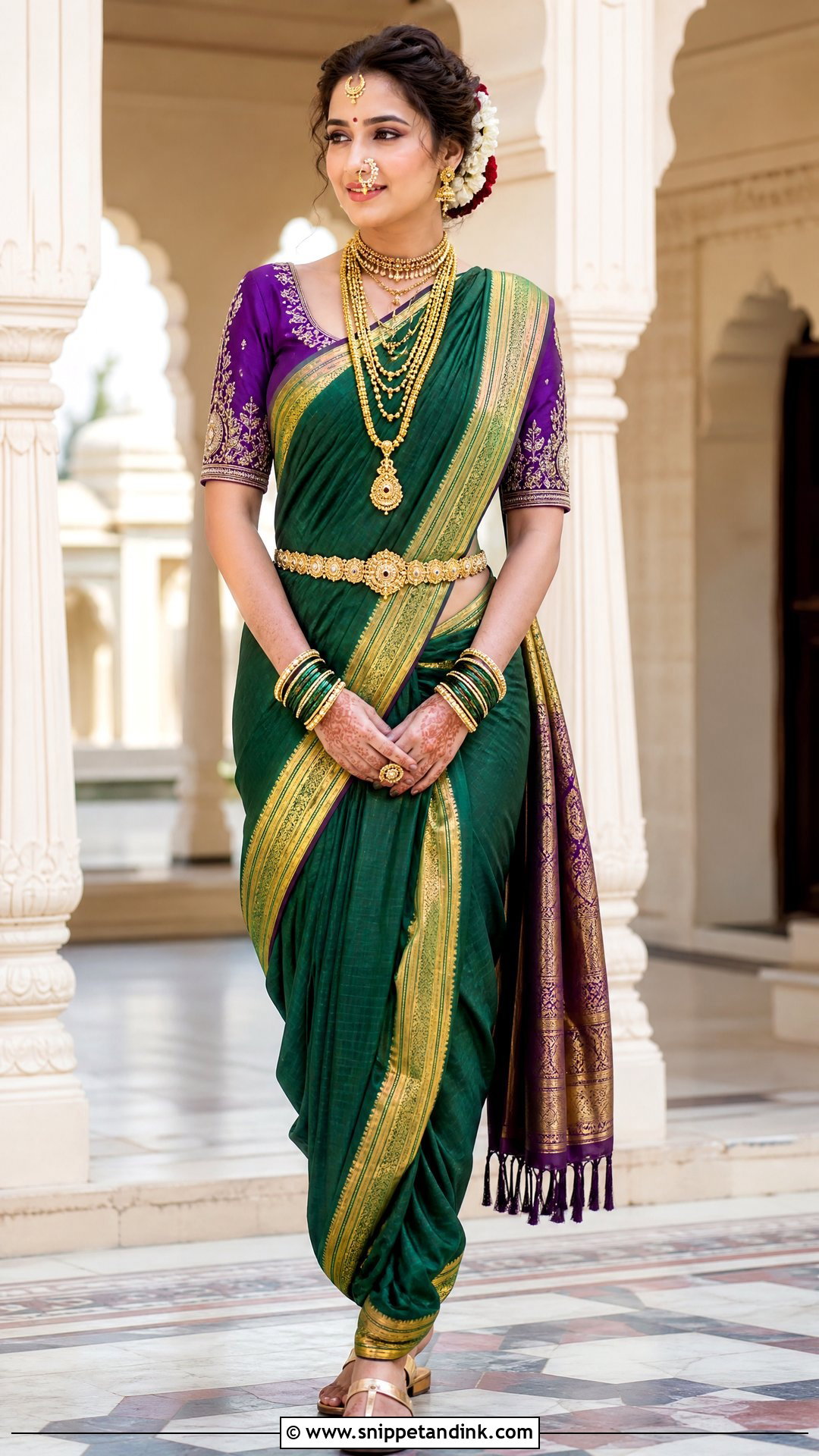
A Nauvari is draped from a nine-yard saree with the fabric passed between the legs, so it gives you trouser-like freedom inside a structured silhouette. Rich green, yellow, purple or red silk with gold borders makes a strong base. Pair it with a fitted short-sleeve blouse that lets your arms move. Traditional gold jewelry, layered necklaces, green bangles, a nath and a crescent-shaped chandrakor can complete it where they match the bride’s customs. Footwear shows more than with other drapes, so choose flat or low-heeled sandals that look finished. I’d always book an experienced Nauvari draper rather than relying on a relative on the morning, and rehearse the whole look beforehand. Sitting, walking and climbing steps should feel natural, not restricted.
12. Gujarati Panetar Bridal Outfit
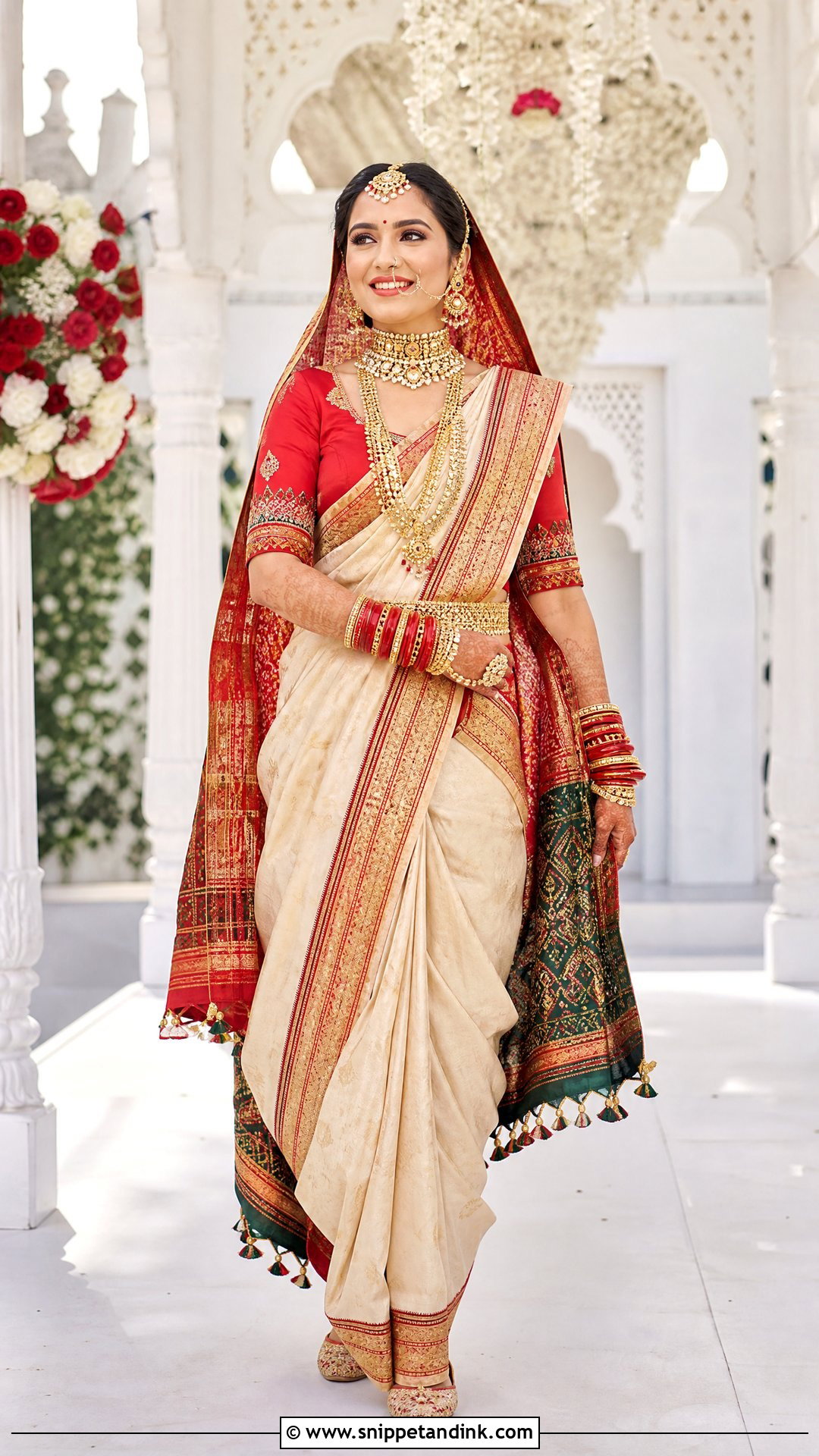
Panetar’s ivory base with red detailing is traditionally given by the bride’s maternal family, which is part of why it carries so much feeling. Style it with a red or ivory blouse in gold embroidery, and where the ceremony calls for it, add the red-and-green Gharchola drape. Two textiles on one body is a lot, so I control the fabric at the waist and shoulders and make sure the layering is secure without hiding every detail of the blouse and saree. Gold jewelry, kundan accents, red bangles, a waist belt, a bridal nath and embroidered juttis bring it together, with a center-parted bun and a carefully placed veil. Talk to both families about draping before the fittings, so the final arrangement honors tradition and is still comfortable to wear.
13. Assamese Mekhela Sador Bridal Outfit
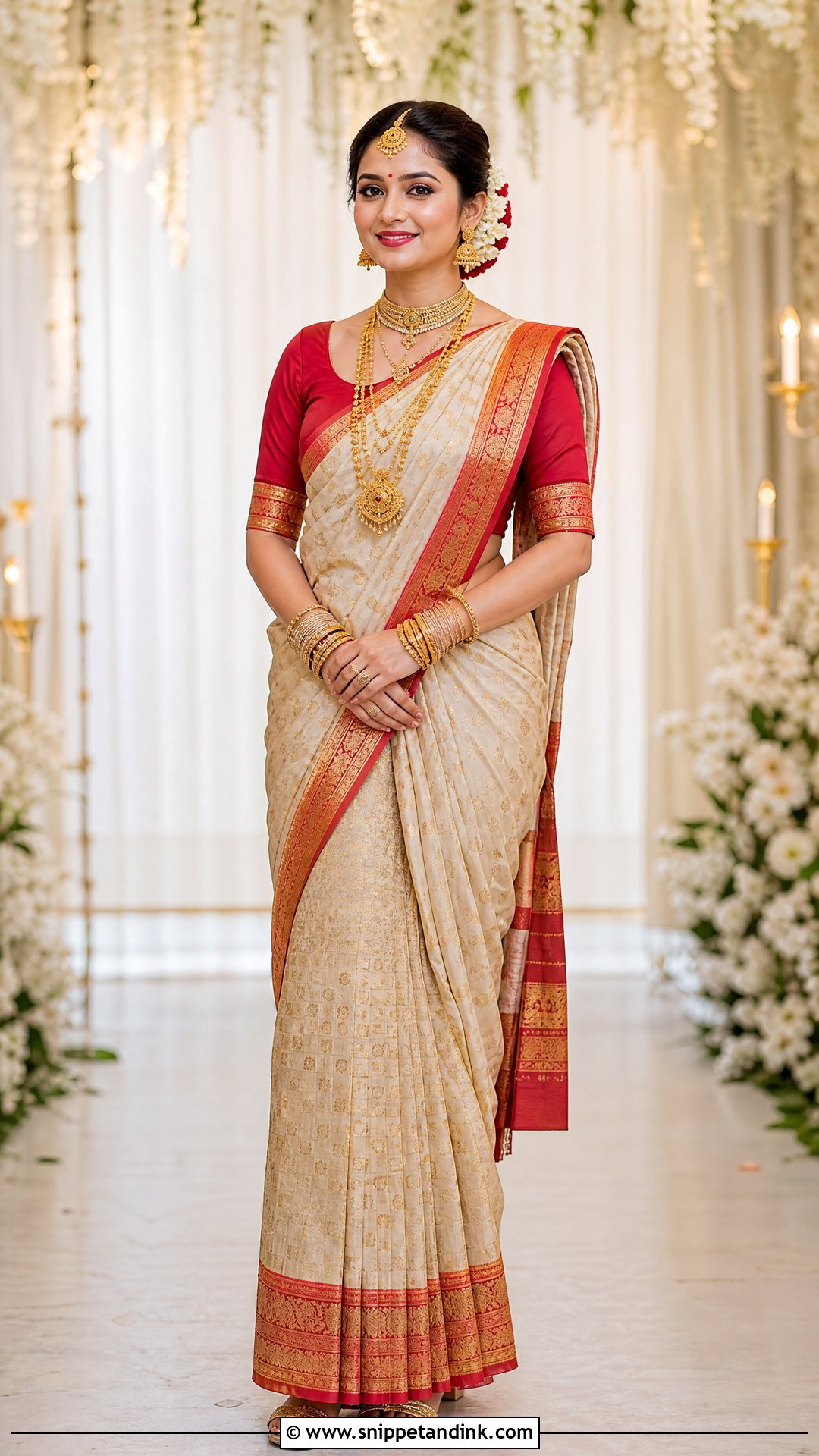
The mekhela sador is two pieces, and each does a different job. For an Assamese bridal mekhela sador in cream, gold, red or a rich jewel tone, the lower mekhela forms a clean column while the sador drapes across the upper body. Choose a fitted blouse that complements the woven border without fighting it. Gold jewelry, layered necklaces, traditional earrings, bangles, a forehead ornament and comfortable metallic sandals complete it, with a smooth bun and flowers. The sador is the piece that slips, so I pin it at the shoulder and tuck it securely at the waist before the greetings start. Brides who want a lighter outfit can choose fine woven patterns over dense surface work. Here the craftsmanship of the weave, rather than embellishment, makes it bridal.
14. Kashmiri Embroidered Bridal Pheran
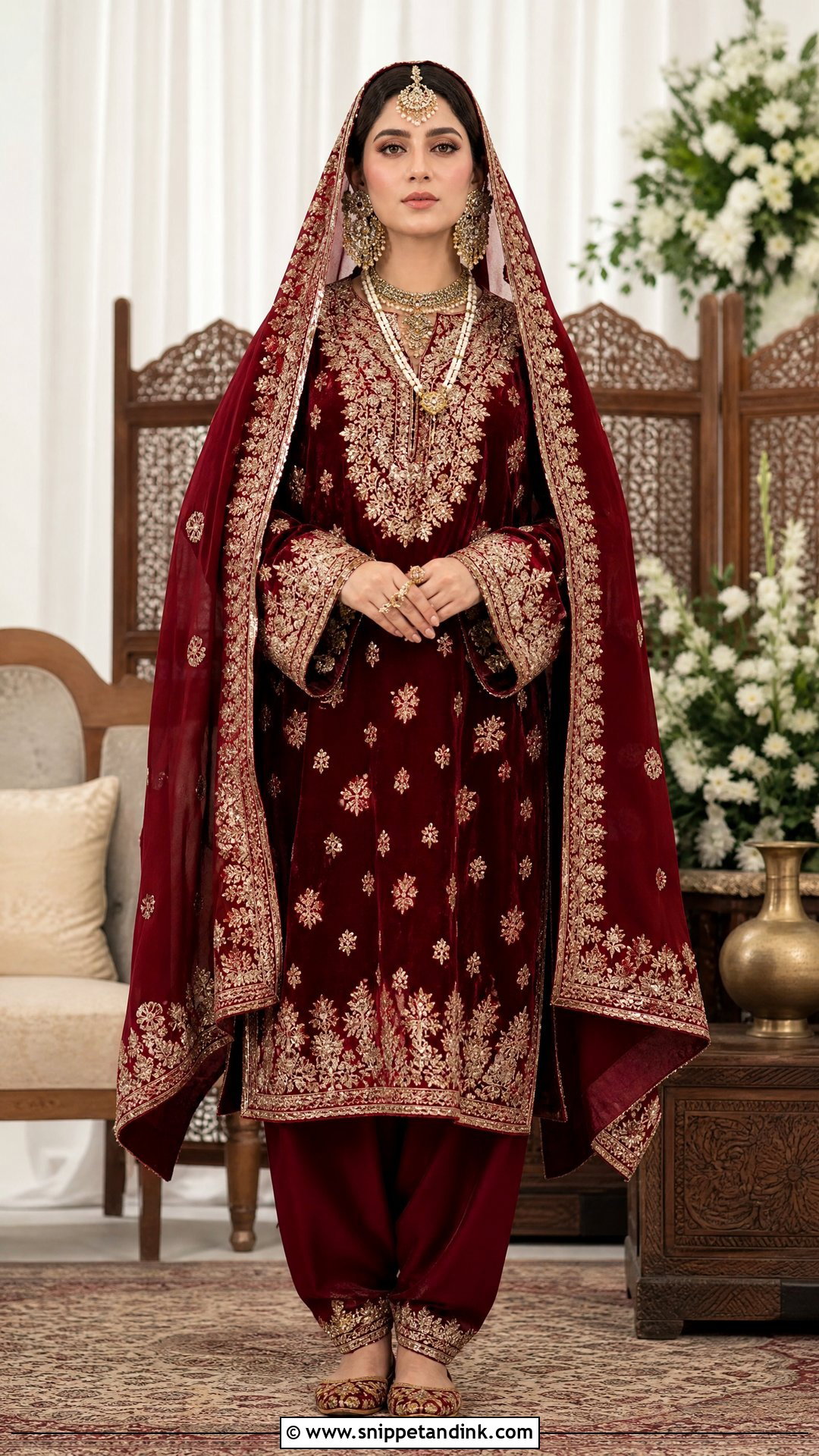
A Kashmiri bridal pheran outfit gets its depth from embroidery rather than flare. Choose a pheran in red, maroon, rust or jewel green with detailed work at the neckline, sleeves and hem, worn over coordinated trousers or a flowing lower layer according to family and regional practice. A matching veil, embroidered flats, ornate earrings, layered necklaces and a traditional or contemporary headpiece complete it. The relaxed shape is what makes fit tricky: without careful tailoring at the shoulders, a pheran can look borrowed. Keep the hem clear of your shoes so it doesn’t catch. A defined eye and soft lip suit the detailed textile. The headdress and jewelry carry specific meaning in many Kashmiri families, so I’d always confirm those with the elders.
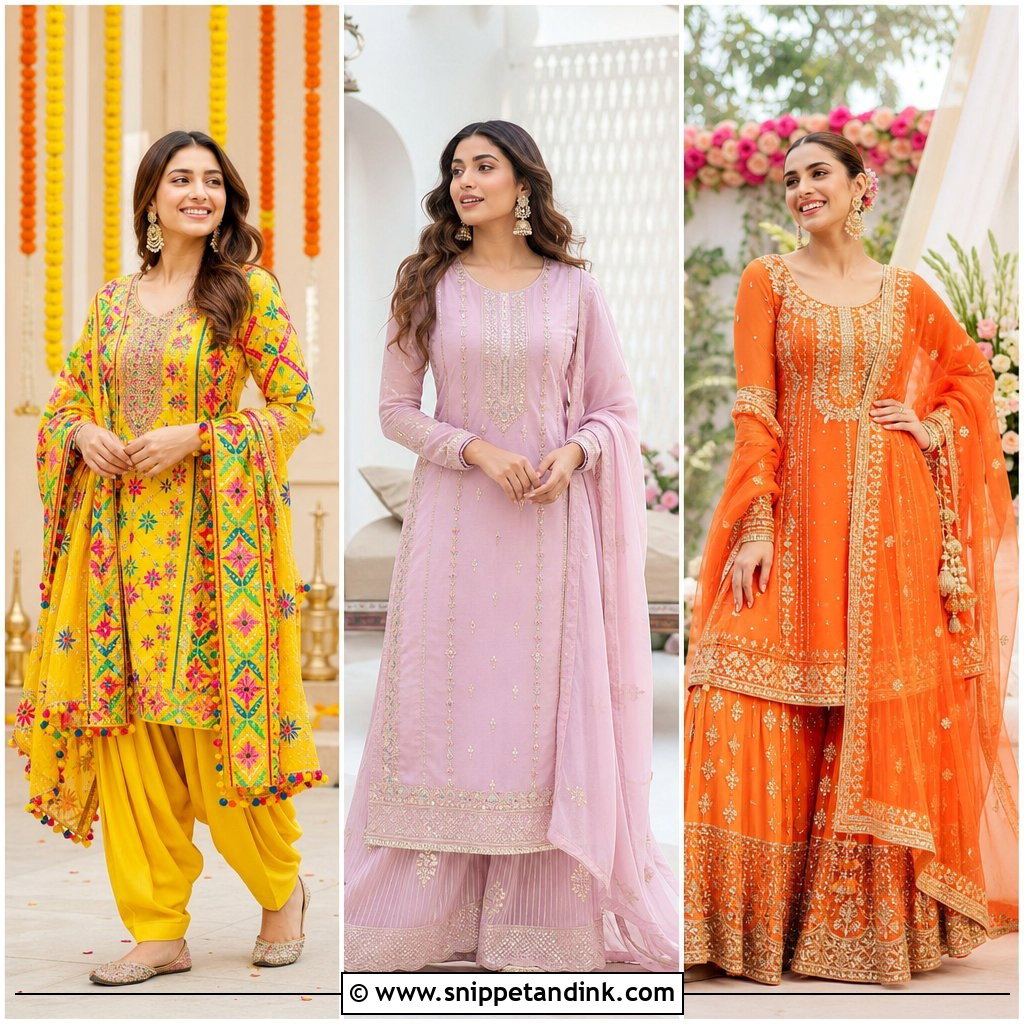
15. Punjabi Bridal Salwar Suit
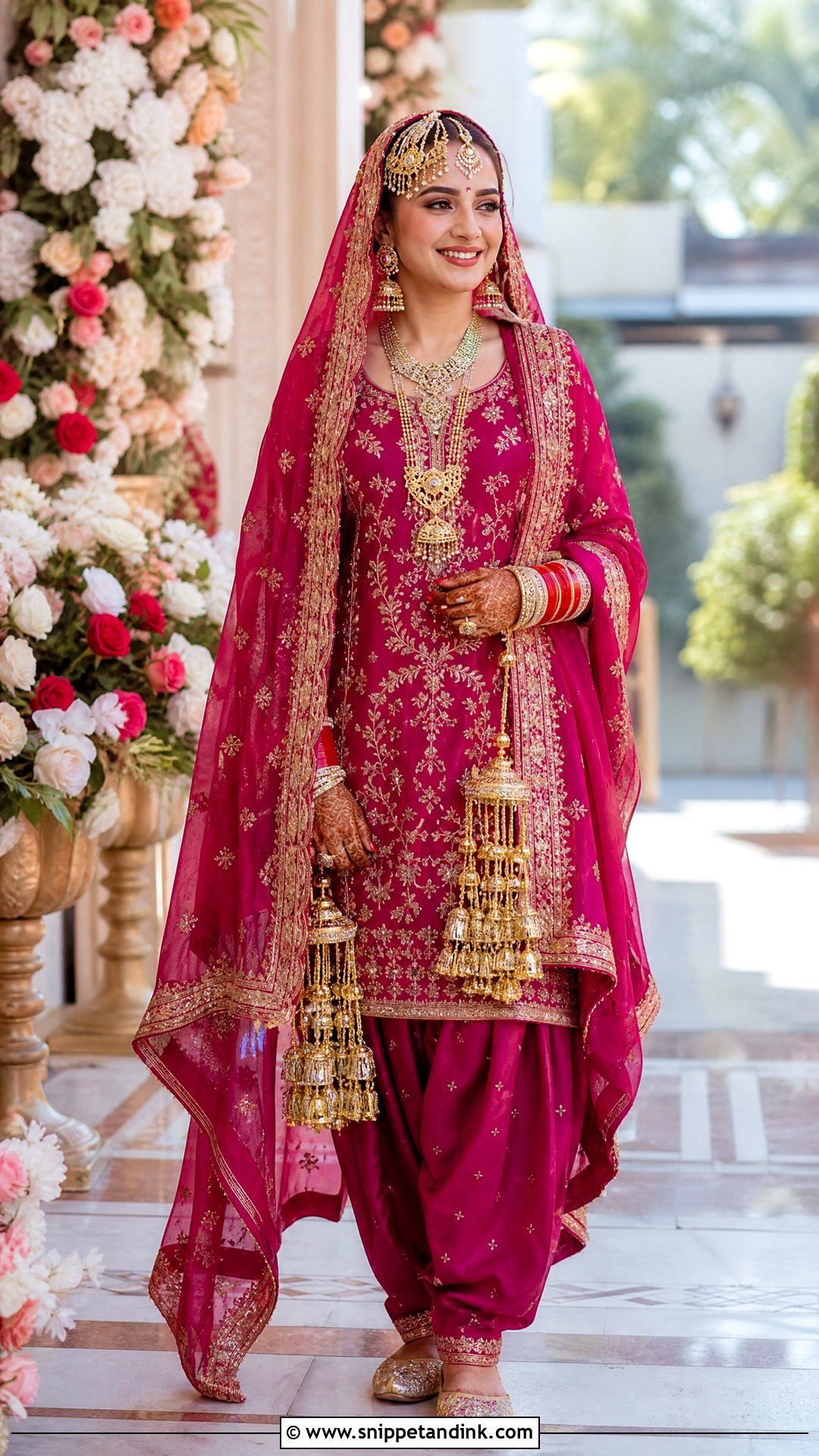
Comfort is the strength of a Punjabi bridal salwar suit, and plenty of brides choose it for exactly that. Build it on a heavily embroidered kameez in red, magenta, orange or deep pink, with a coordinated salwar and a richly finished dupatta. A longer kameez gives a streamlined shape; a shorter one shows more of the salwar. A matha patti, jhumkas, layered necklaces, chooda with kaleere and embroidered juttis complete it. The dupatta over the head is where things go wrong: heavy borders pull backward all day. I anchor it with pins into the hair at the crown so the border frames the face and stays put. Balance the embroidery across neckline, cuffs and hem, and finish with a braid or low bun.
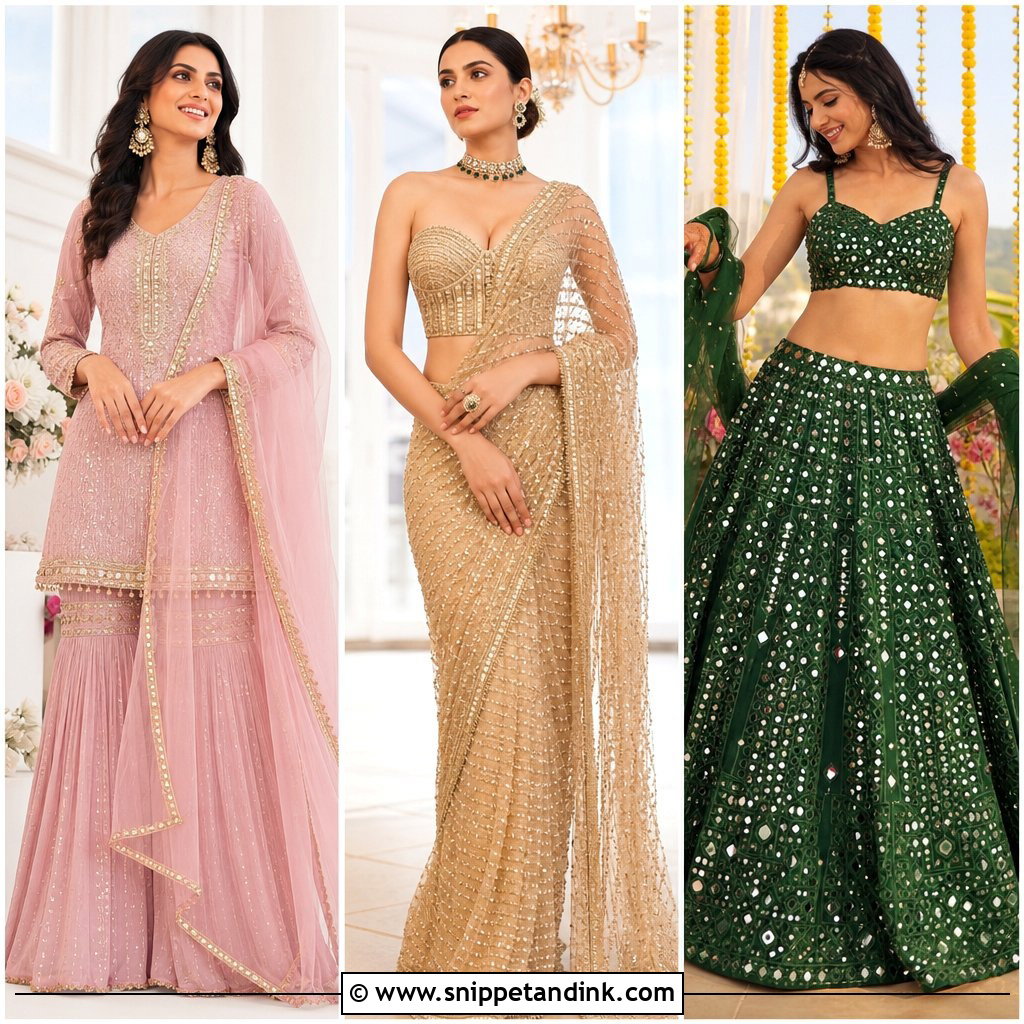
16. Bridal Sharara Set
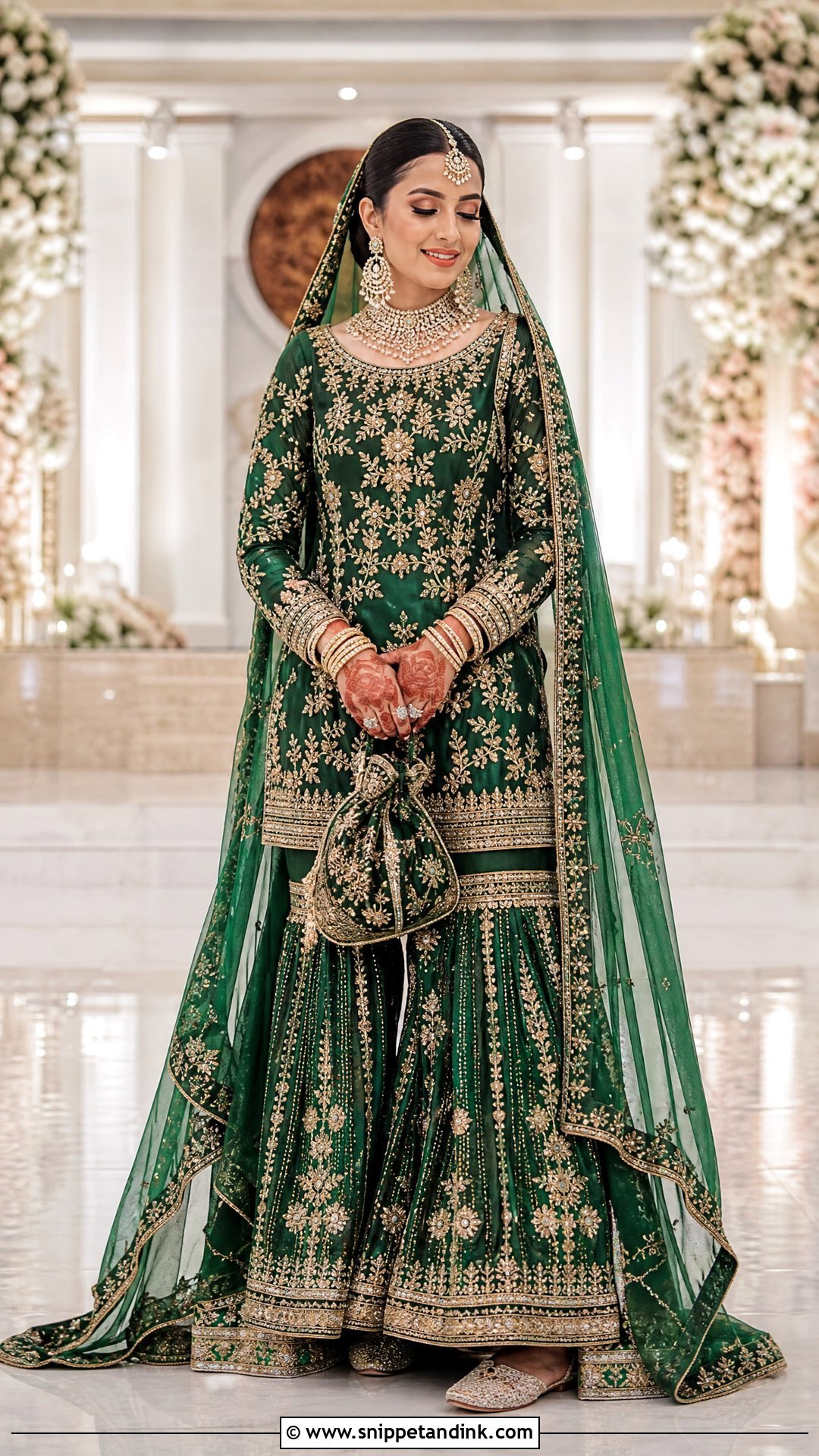
A bridal sharara gives you drama and leg room at once. Choose heavily flared pants with a short or mid-length kurta in maroon, red, emerald, ivory or gold, and let the embroidery tie all three pieces together, with the kurta slightly plainer if the sharara is busy. A sheer dupatta over the head and across one shoulder gives the bridal finish. Chandelier earrings, a statement necklace, bangles, a forehead ornament and block-heeled juttis complete it. The flare line is the detail I fuss over. It should start at a flattering point and fall cleanly, and petite brides usually look better with a higher flare and a shorter kurta. Try stairs in it at the fitting, because wide legs move very differently from a lehenga when you step up.
17. Bridal Gharara Set
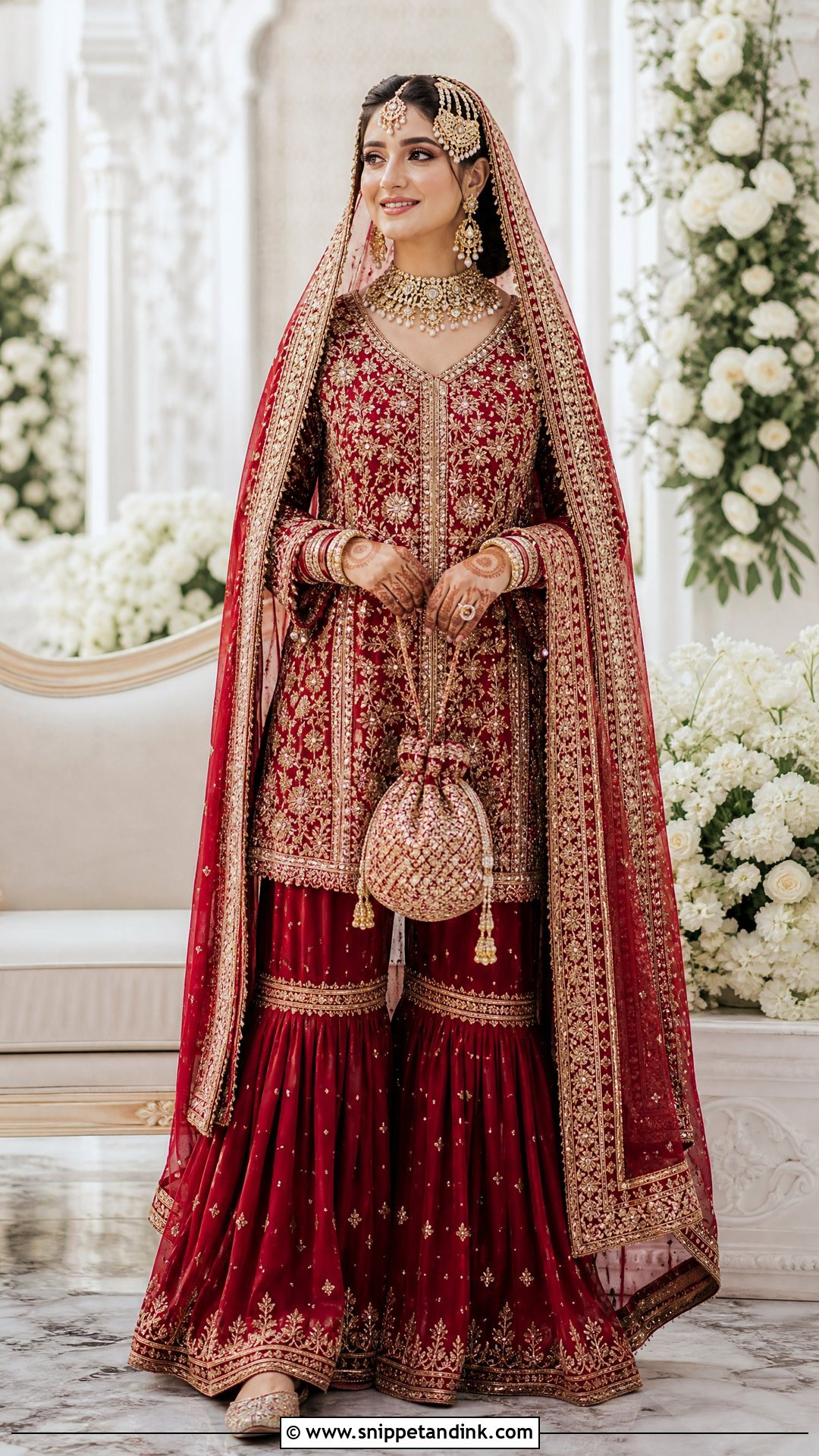
The knee seam is everything on a gharara. It should sit right at the knee when you stand and stay there when you walk; even a few inches low makes the whole outfit look sloppy. Pair richly embellished gharara pants with a structured short kurta so the shape stays visible. Deep green, ruby, plum, ivory and antique gold all suit a formal wedding. A bordered dupatta goes over the head or diagonally across the torso. Kundan jewelry, a passa, statement earrings, bangles, a potli and embroidered juttis finish it, with a sleek bun or side part. Heavy embroidery deserves a light lining for comfort, and the hem should sit just above the floor so you don’t trip.
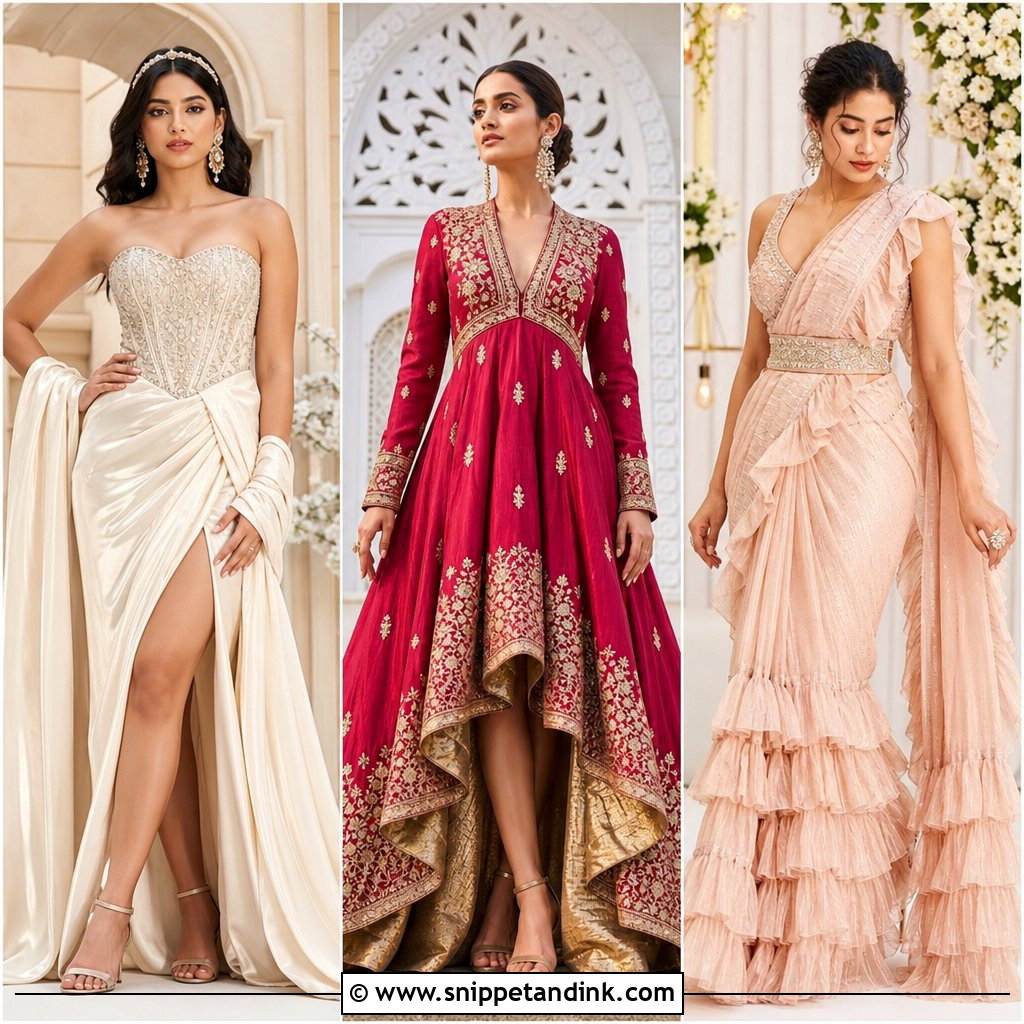
18. Bridal Anarkali Suit
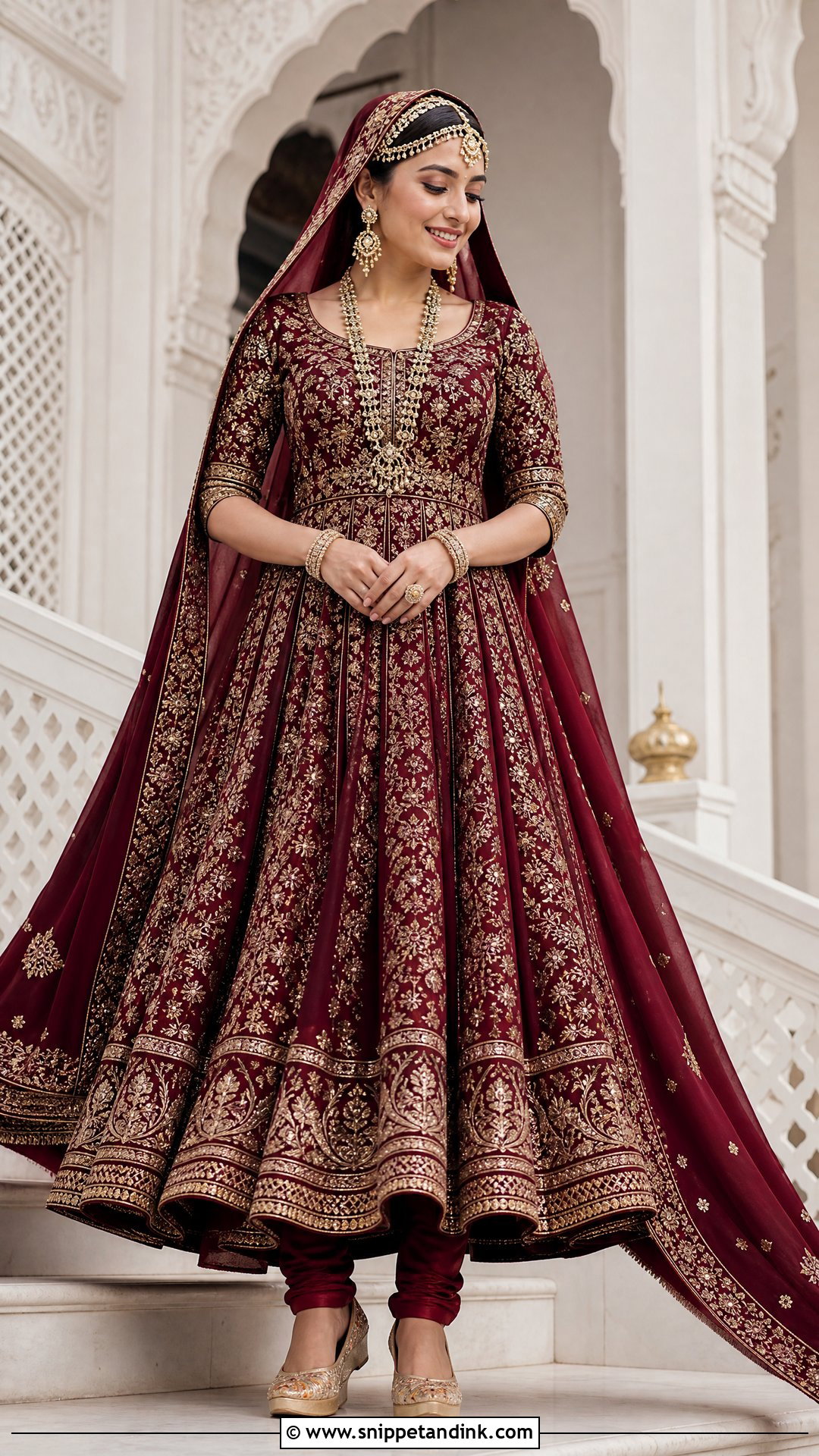
For a bride who wants an entrance, a floor-length Anarkali suit sweeps in better than almost anything. Choose silk, brocade, velvet or layered net in red, wine, emerald, ivory or rose, with a fitted bodice that supports the flare and full or elbow-length sleeves for structure. Narrow churidar and a matching embroidered dupatta over the head complete the outfit. A long necklace, earrings, bangles, a matha patti and platform juttis or low block heels finish it. Put the heaviest embroidery at the neckline and lower border. For fuller busts I prefer a slightly open neckline with balanced embellishment, since a high, heavily worked neckline adds visual bulk. Check that the hem clears the floor in your final shoes, and finish with a softly textured bun.
19. Bridal Saree Gown
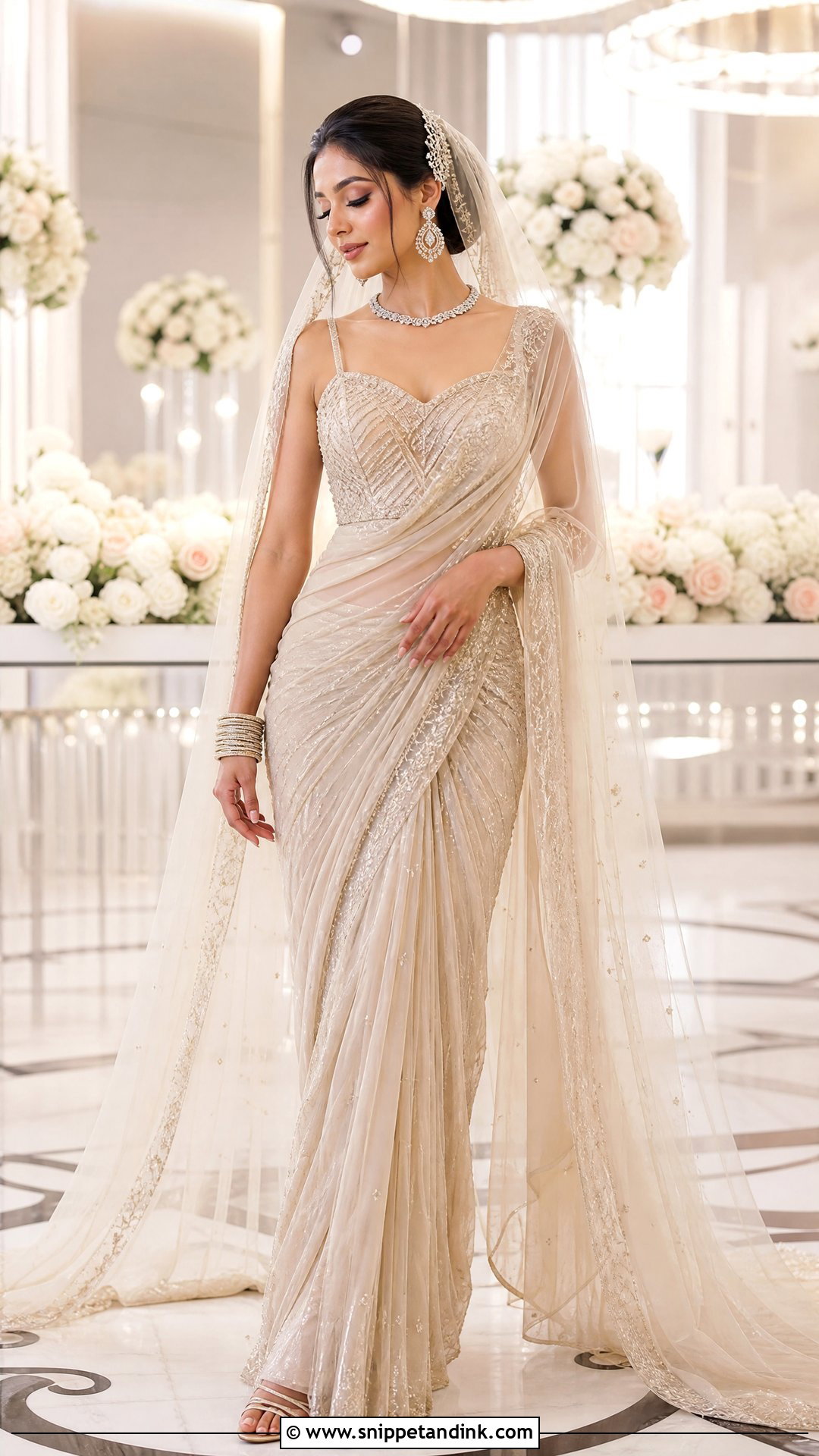
A saree gown looks like a draped saree but is built like a dress, so nothing comes loose. Choose red, gold, champagne, emerald or blush with a defined waist and a flowing attached pallu, and a structured bodice carrying embroidery, pearls, sequins or dimensional flowers. Statement earrings, a sleek necklace, bangles, a hair accessory and metallic heels finish it, with a separate veil if the ceremony needs head coverage. It suits brides who want to move freely without minding pleats. The weak point I check for is the pallu: on cheaper constructions it’s stitched too stiffly and sticks out instead of falling. A smooth low bun and clean makeup suit the modern shape. Do every fitting in the exact undergarments and shoes you’ll wear.
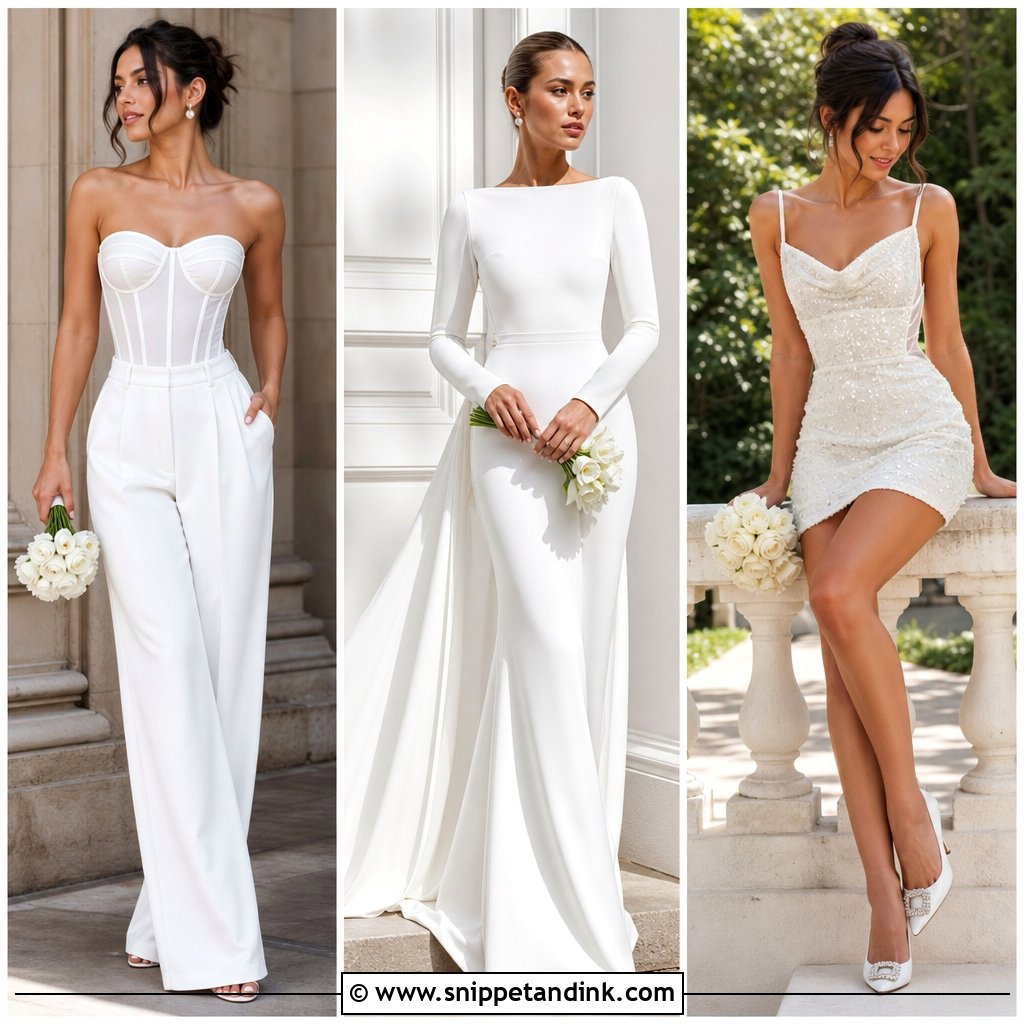
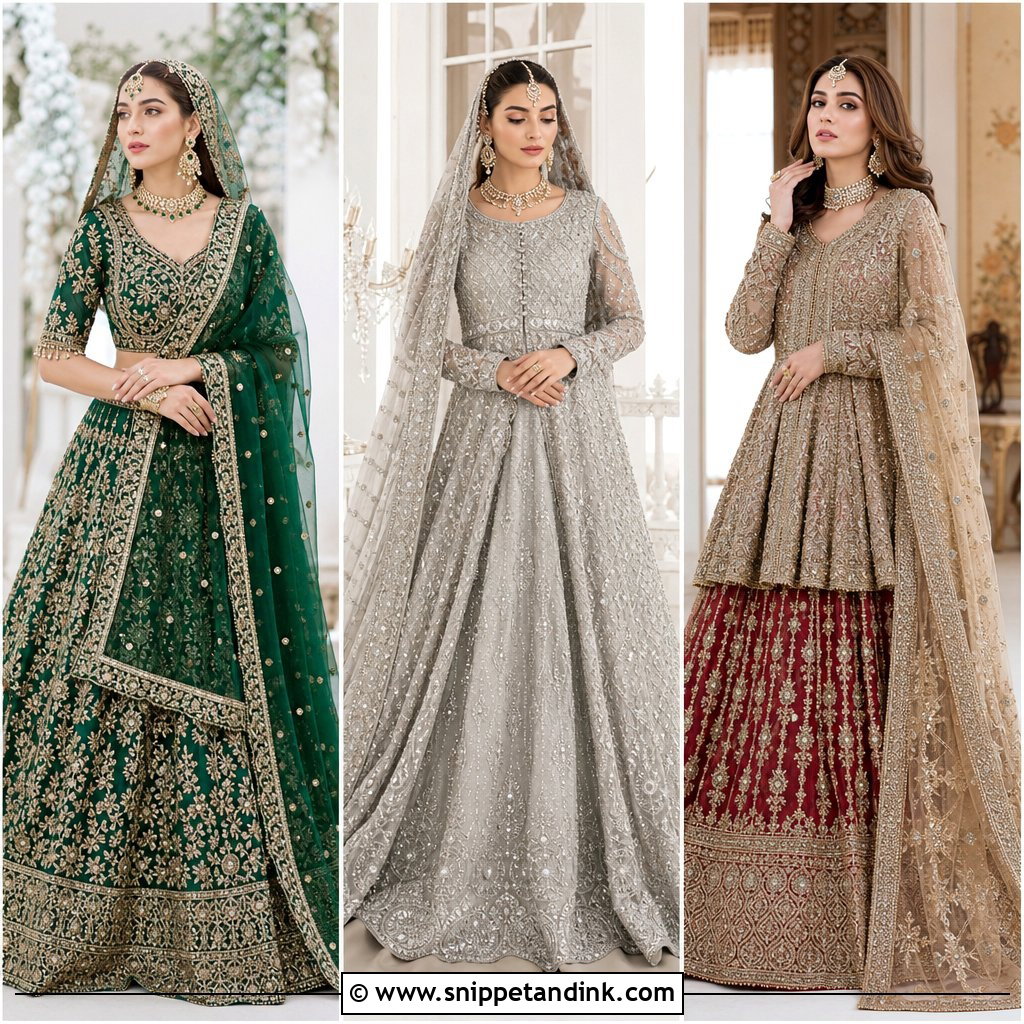
20. Bridal Lehenga With Cape
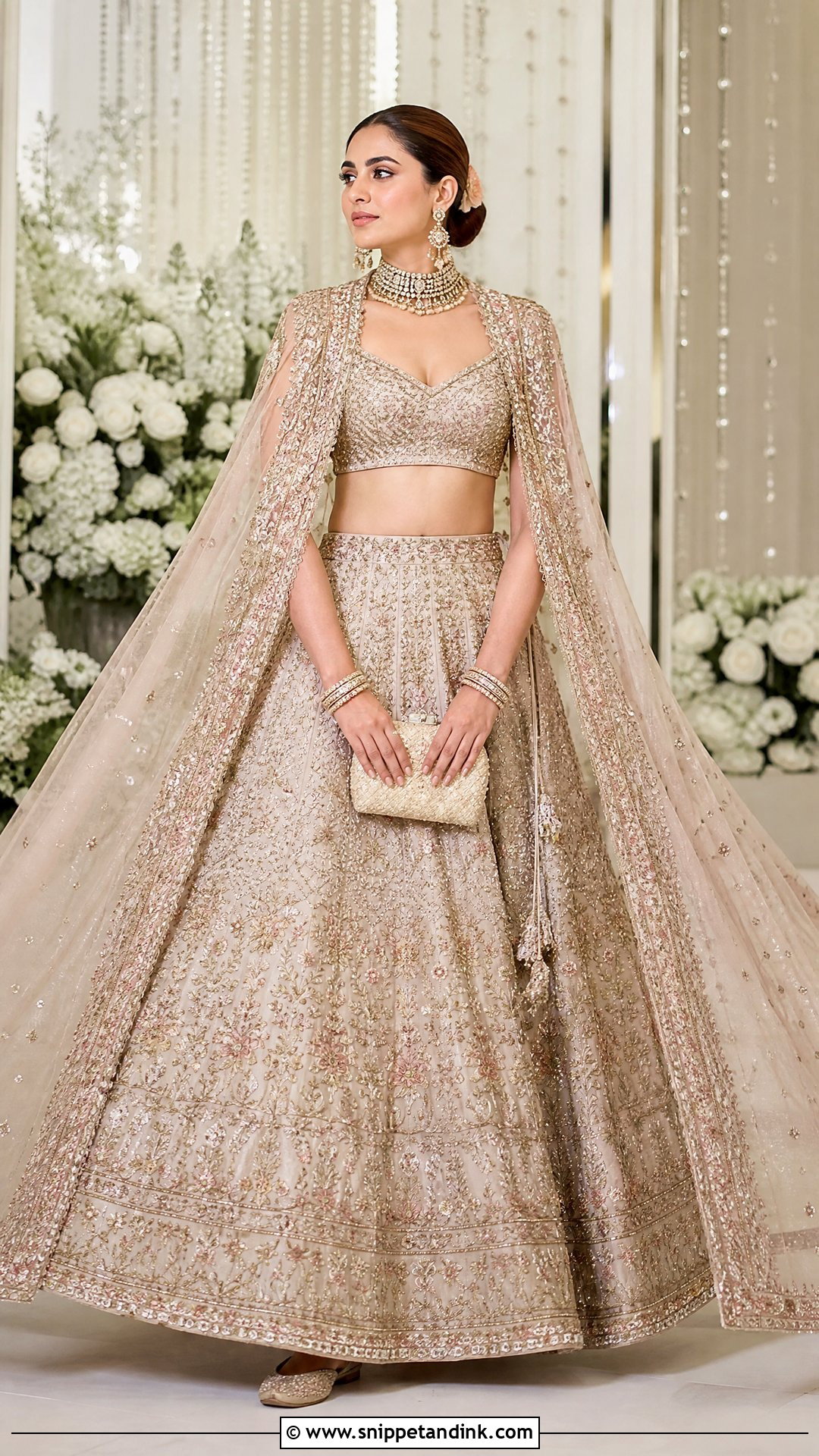
Swap the shoulder dupatta for a cape and a lehenga suddenly looks modern. Start with an embroidered skirt and fitted blouse, then add a sheer floor-length cape with matching borders, pearls or scattered work. Ivory, rose gold, burgundy, emerald and muted pink all suit a reception. Statement earrings, a choker, bangles, a structured clutch and embellished heels or juttis complete it. Keep the cape light, and make sure it ends at or above the skirt hem; if it’s longer, guests will step on it in the receiving line. For a ceremony that needs head coverage, add a separate veil and remove it for the party. A sleek ponytail or low bun keeps the neckline uncluttered.
The Wedding Morning, in the Order I Dress a Bride
Getting into a bridal outfit takes far longer than people budget for, especially with a saree drape or a pinned double dupatta. This is the sequence I follow, and I’d plan your timeline around it.
- Front-opening top during hair and makeup. Anything pulled over the head after makeup ruins it, so wear a button-down shirt from the start.
- Blouse and skirt or saree next. Have the blouse hooks checked and the skirt drawstring knotted firmly. Sarees are pleated and pinned at this stage, and a regional drape like a Nauvari needs its own unhurried slot with the draper.
- Jewelry before the dupatta. Necklaces, earrings and the matha patti go on before any head drape, because pinning a dupatta first means unpinning it again.
- Dupatta or veil last. This is pinned into the hair and blouse, and a double-dupatta arrangement can take a while to sit correctly. Don’t let anyone rush it.
- Shoes and a walk around the room. A final lap shows up any loose pins or a hem catching before you’re in front of guests.
I’d allow at least an hour for the outfit alone after makeup is done, more for a complex drape. Keep a pouch with safety pins, U-pins, a needle and matching thread, spare blouse hooks and fashion tape with whoever is looking after you all day.
An Outfit You Can Kneel, Walk and Sit In
Start from what makes you feel confident and comfortable, and what connects you to the rituals. A red lehenga brings classic grandeur; regional silk sarees carry generations of weaving. Shararas, ghararas and Anarkalis give you graceful alternatives, and saree gowns or caped lehengas add a modern finish. Whichever you lean toward, the practical rules stay the same: secure tailoring, a fabric weight you can manage, shoes you can stand in and jewelry that supports the clothes. Book fittings early, and test the finished outfit walking, sitting and moving before the wedding morning.
You'll Like These Ideas:


Leave a Reply