
An Indian wedding is rarely one outfit. Between the mehndi, sangeet, ceremony and reception, most brides I dress wear three to five looks, and each one has a different job to do. The twenty below run from a classic red lehenga and handwoven silk sarees to a sculpted reception gown and a pre-draped saree for the bride who doesn’t want to fuss with pleats. Heritage weaves, lighter construction and less predictable colours are all showing up more often. What I look at first is the function, the season and how much she’ll be moving, because a skirt that’s fine for a two-hour reception can be exhausting through a long ceremony. Fit counts as much as embroidery, and jewelry should finish an outfit rather than fight it.
Mapping Outfits to the Mehndi, Sangeet, Pheras and Reception
Before shortlisting anything, I list the events in order and write beside each one how long it lasts, whether she’ll sit on the floor or a chair, and whether she’ll dance. That list decides the silhouettes far better than a mood board does.
- Mehndi or haldi: light cotton, georgette or chiffon with short sleeves, nothing precious, since turmeric and henna both stain.
- Sangeet: the lightest dressy piece, such as a sharara, cape lehenga or mirror-work skirt she can spin in.
- Ceremony: the heaviest and most traditional outfit, tested for sitting through the full ritual.
- Reception: a change into something structured for standing and greeting, like a gown, saree gown or corset lehenga.
How far ahead designer pieces need ordering
Made-to-order bridal lehengas from designer studios often take three to six months, and a handwoven Banarasi or Kanjeevaram commissioned in a specific colour can take longer. I plan at least two fittings, the last about three to four weeks before the first function, worn with the real blouse padding, jewelry and shoes. Order the ceremony outfit first, since it leaves the least room for compromise.
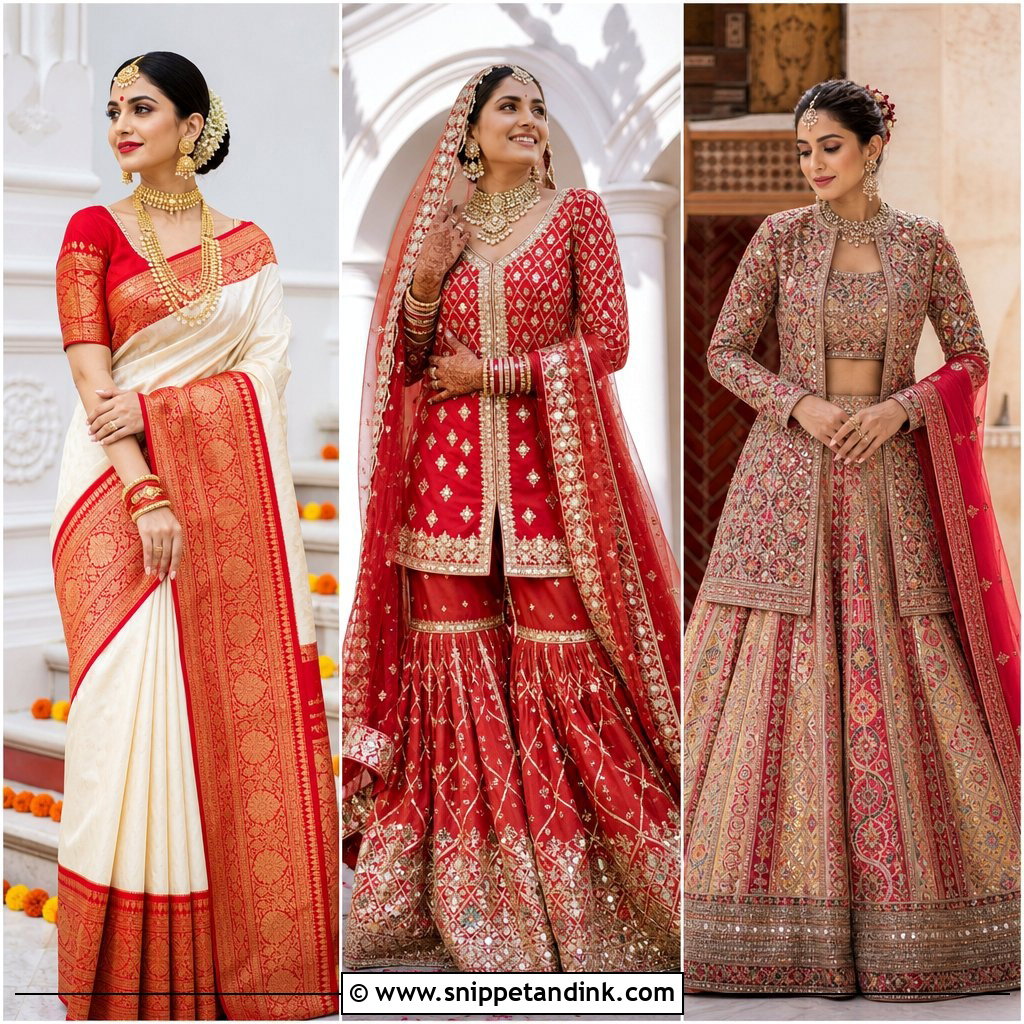
1. Red Zardozi Bridal Lehenga
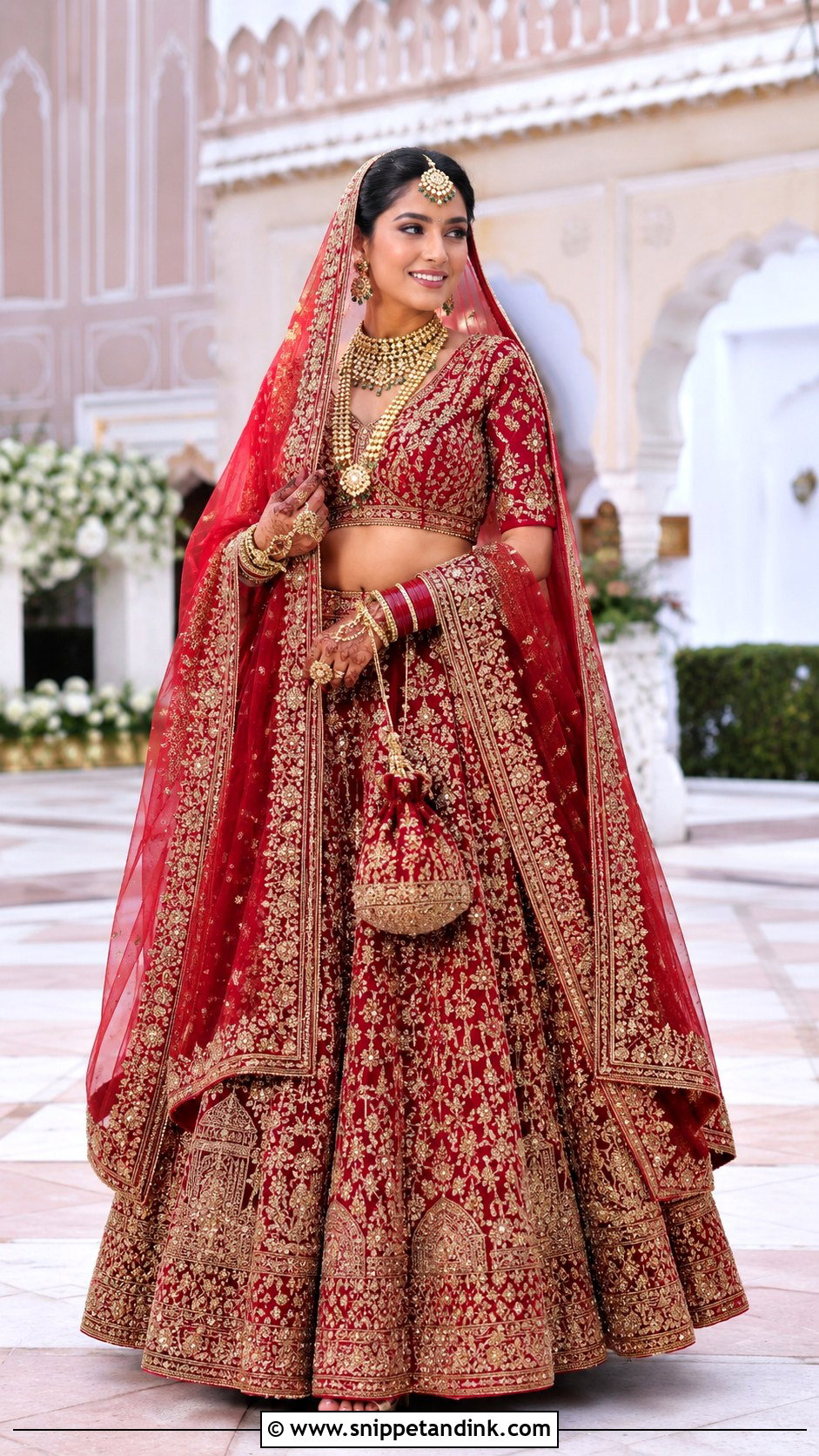
Zardozi is metal-thread embroidery, and it’s heavy. A fully worked velvet skirt can weigh far more than brides expect, so I usually steer toward silk or velvet with the gold concentrated at the hem and in bands, leaving some of the ground cloth plain. The waistband is where all that weight lands, so a broad, structured band with a proper hook and drawstring matters more than any motif. Two dupattas work well: one across the torso, one lightly over the head, each pinned so it doesn’t drag the blouse sideways. Gold jhumkas, a choker, stacked bangles and an embroidered potli finish it, with cushioned platform sandals hidden underneath. Have the shoulders, bust, waist and hem fitted with those exact sandals on.
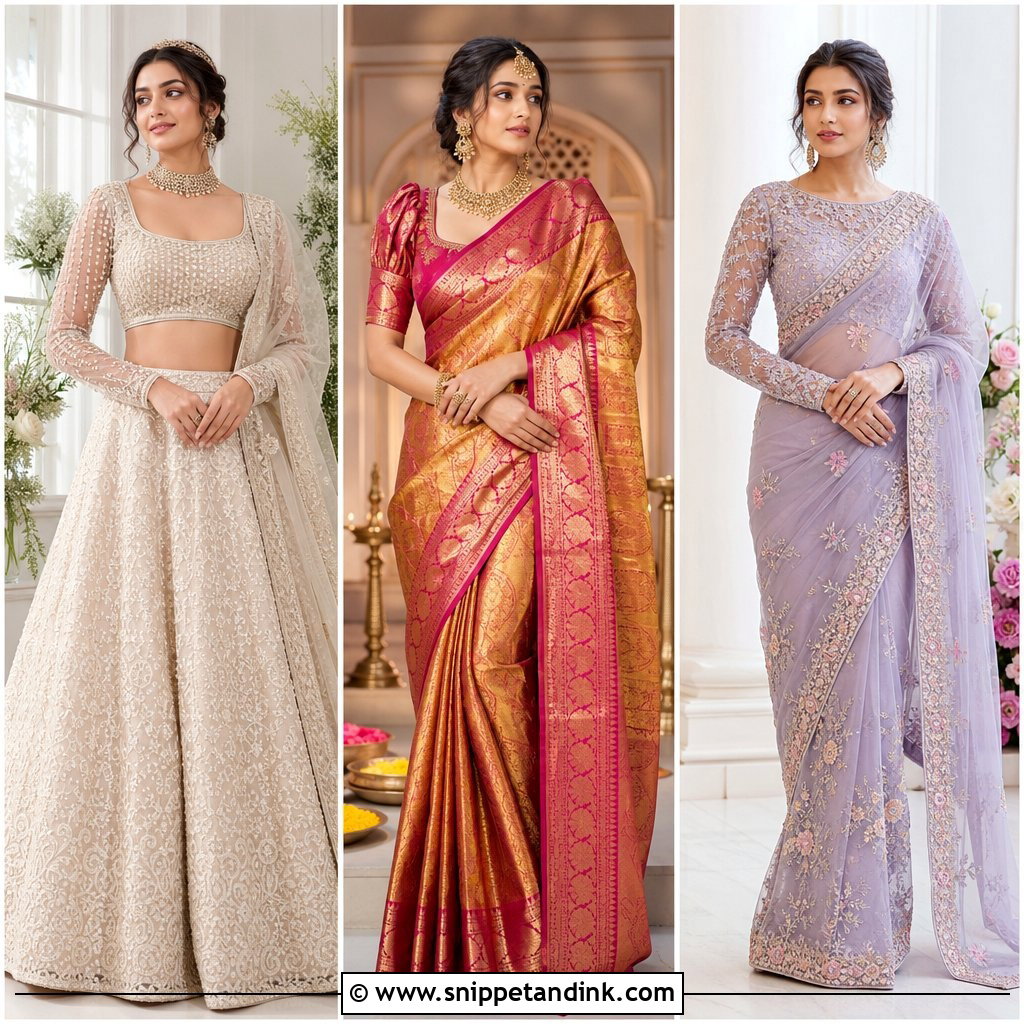
2. Ivory Pearl Bridal Lehenga
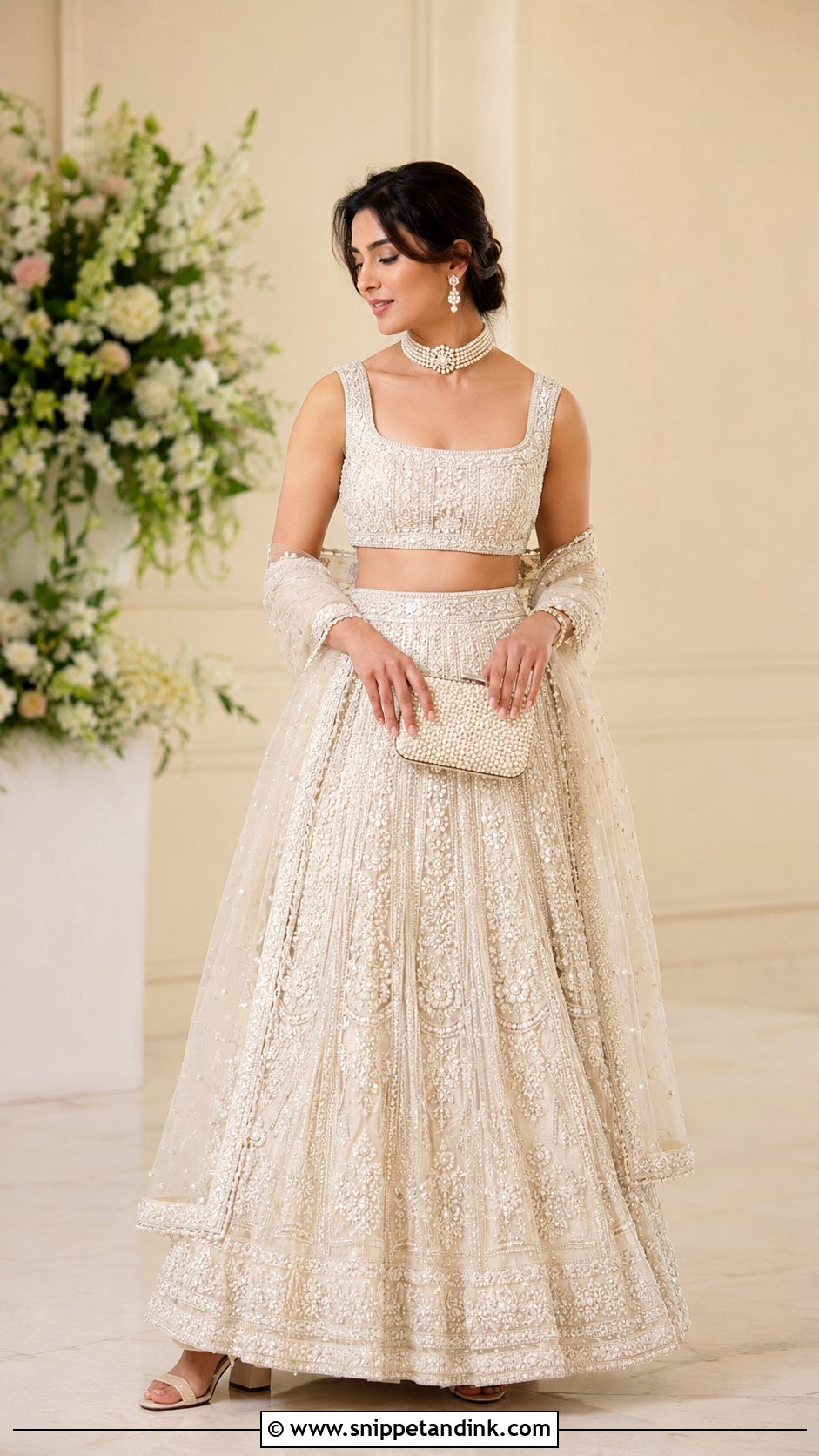
Ivory is lovely in daylight and trickier under warm indoor bulbs, where it can turn yellow beside cooler pearls. That’s what I watch most closely: pearls, crystals, tonal thread or silver embroidery all need to share one undertone with the base fabric, so I hold the jewelry against the lehenga by a window before anything is bought. A structured blouse with full sleeves, a square neck or a modest sweetheart balances the skirt. A sheer embroidered dupatta over the shoulders keeps the waistband visible. Pearl earrings, a diamond-style choker, an ivory clutch and champagne block heels follow. Ivory shows every mark, so keep turmeric and mehndi well away from it.
3. Pastel Floral Wedding Lehenga
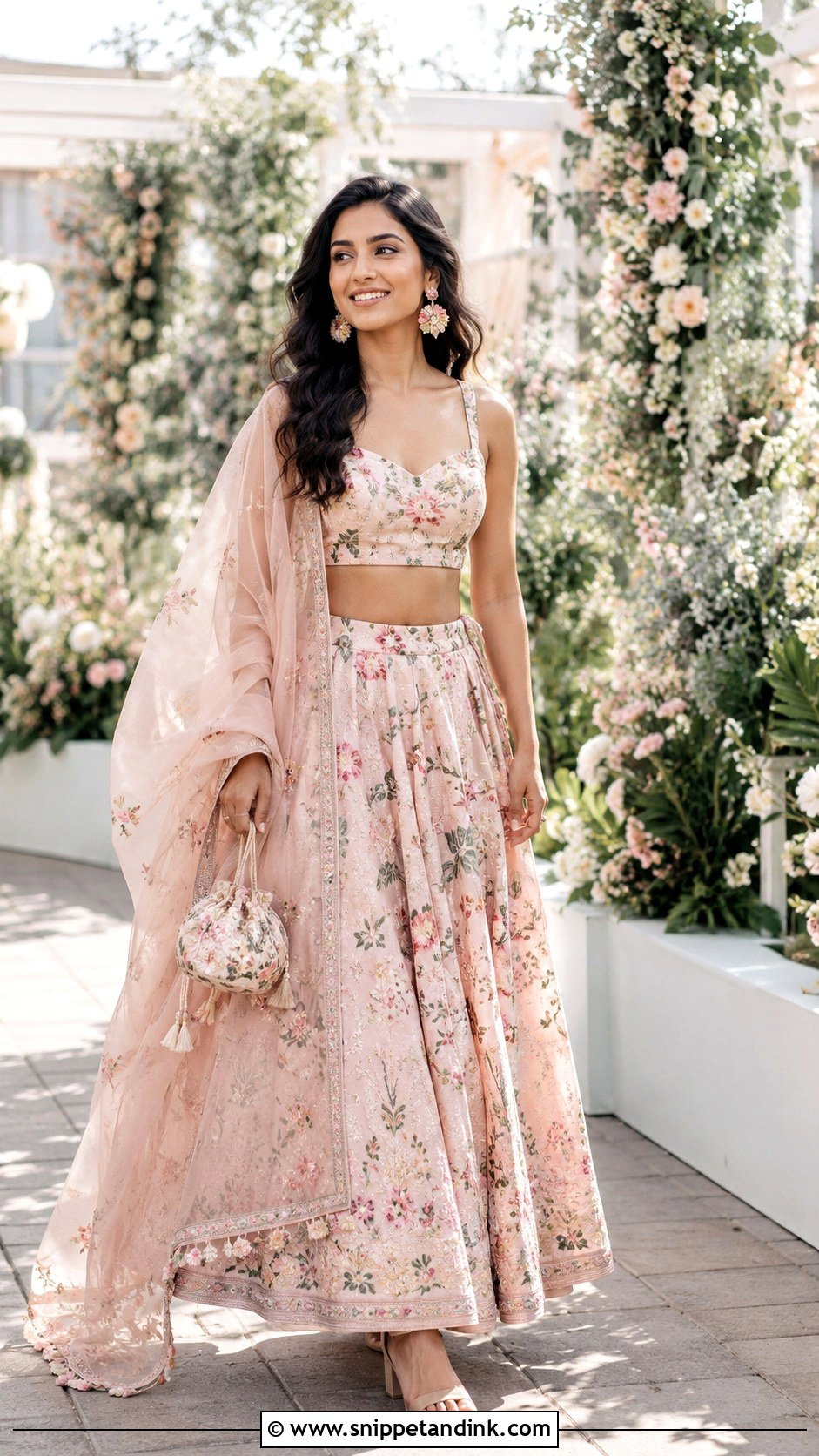
Pastels are what I put brides in for a daytime garden function, where heavy gold looks out of place in full sun. Look for blush, mint, peach, lavender or powder blue with thread-embroidered flowers spaced across an airy base, a coordinating blouse and a light organza dupatta with a narrow border. Floral earrings, a fine necklace and a small potli are plenty. Heels sink into lawns, so I switch brides into block heels or juttis for this one. A word of caution: pale silk shows sweat at the underarm, so ask the tailor to sew dress shields into the blouse.
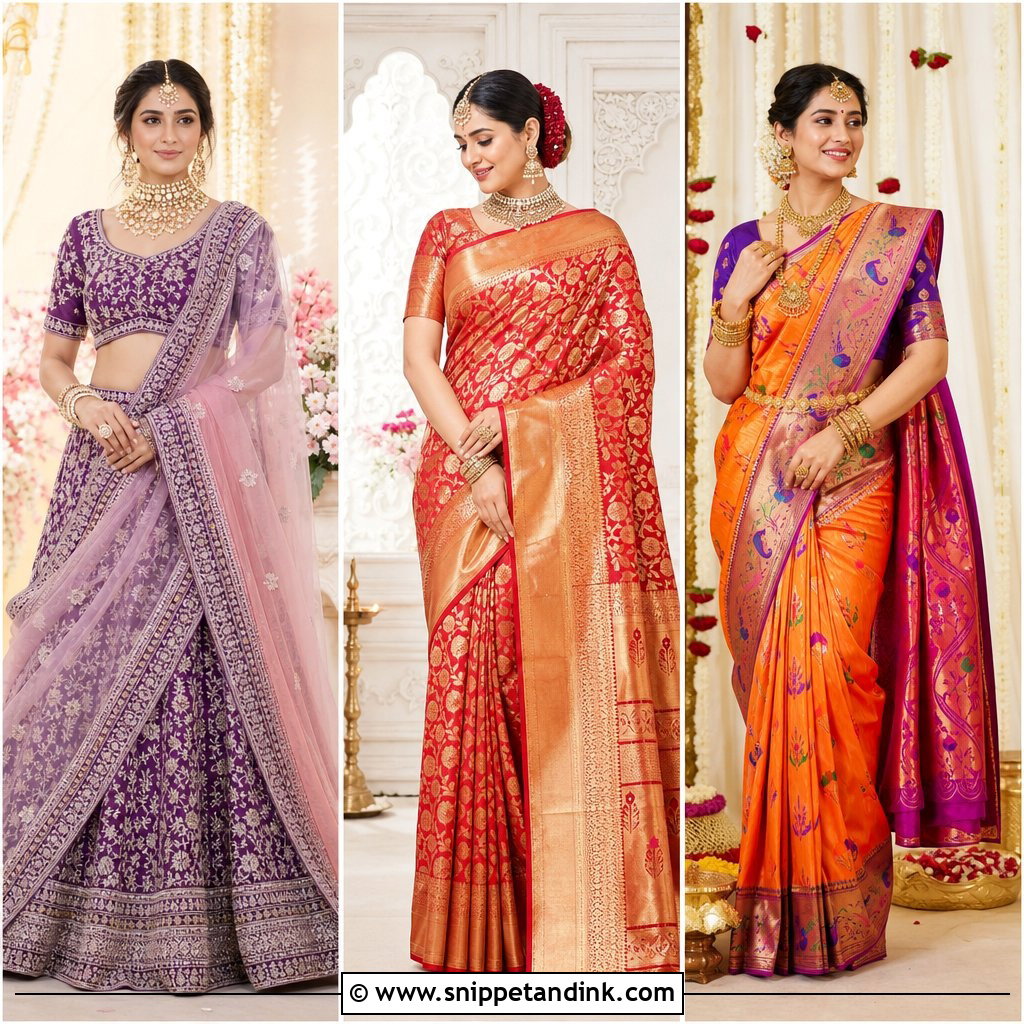
4. Velvet Winter Bridal Lehenga
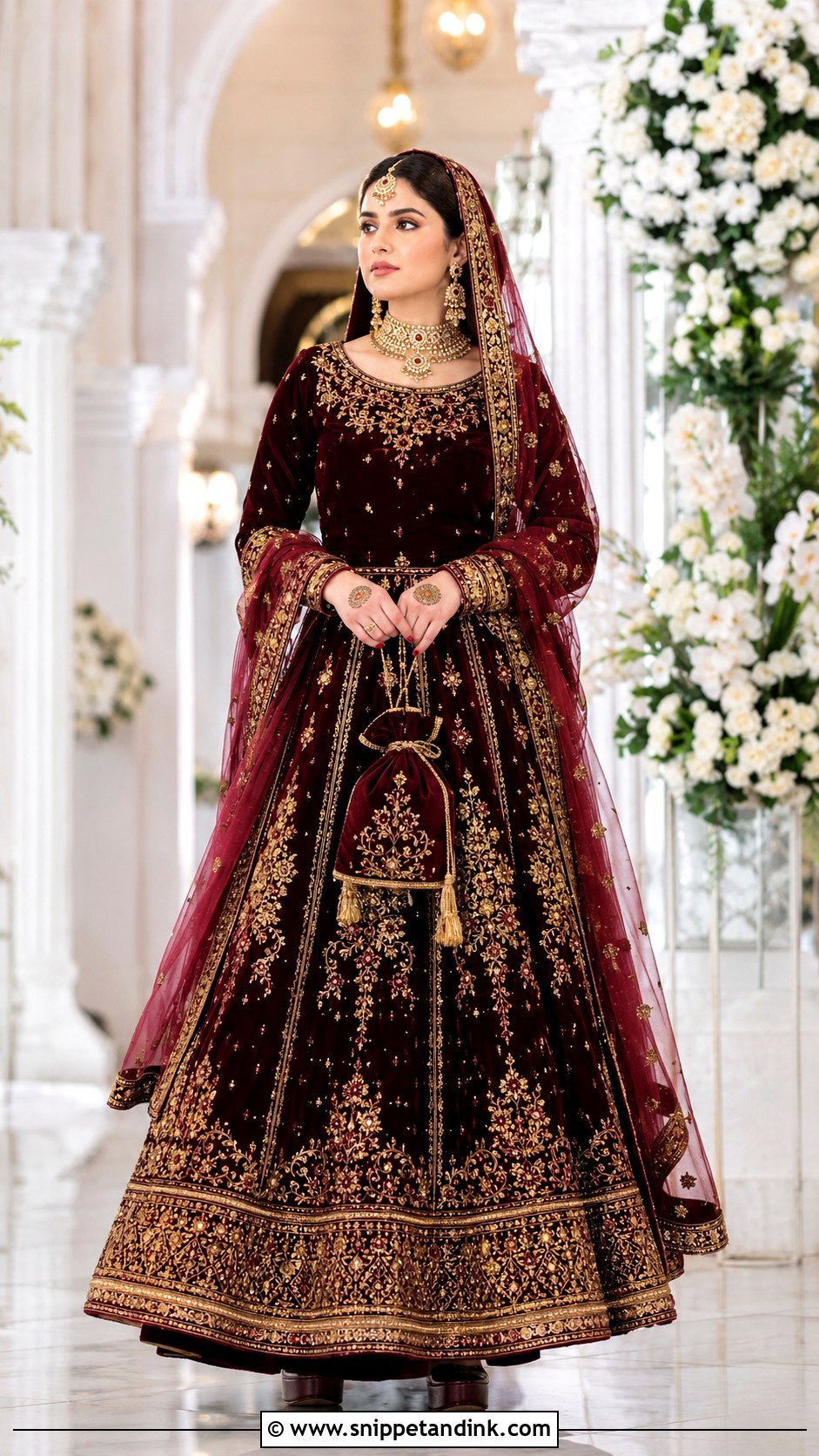
Velvet is warm and rich and completely unforgiving about weight, so I treat it as a winter-only fabric. Burgundy, emerald, navy, plum or maroon carry antique-gold zardozi or restrained crystal well. Because the skirt is dense, the dupatta should be light net or organza, or the whole look goes heavy. A fitted long-sleeve blouse, a traditional choker, matching earrings, bangles, a velvet potli and closed-toe platforms complete it. I ask the tailor to remove any unnecessary can-can or lining layers, since velvet already has body of its own. The pile also crushes wherever you sit, so steam it from the reverse and never press the face.
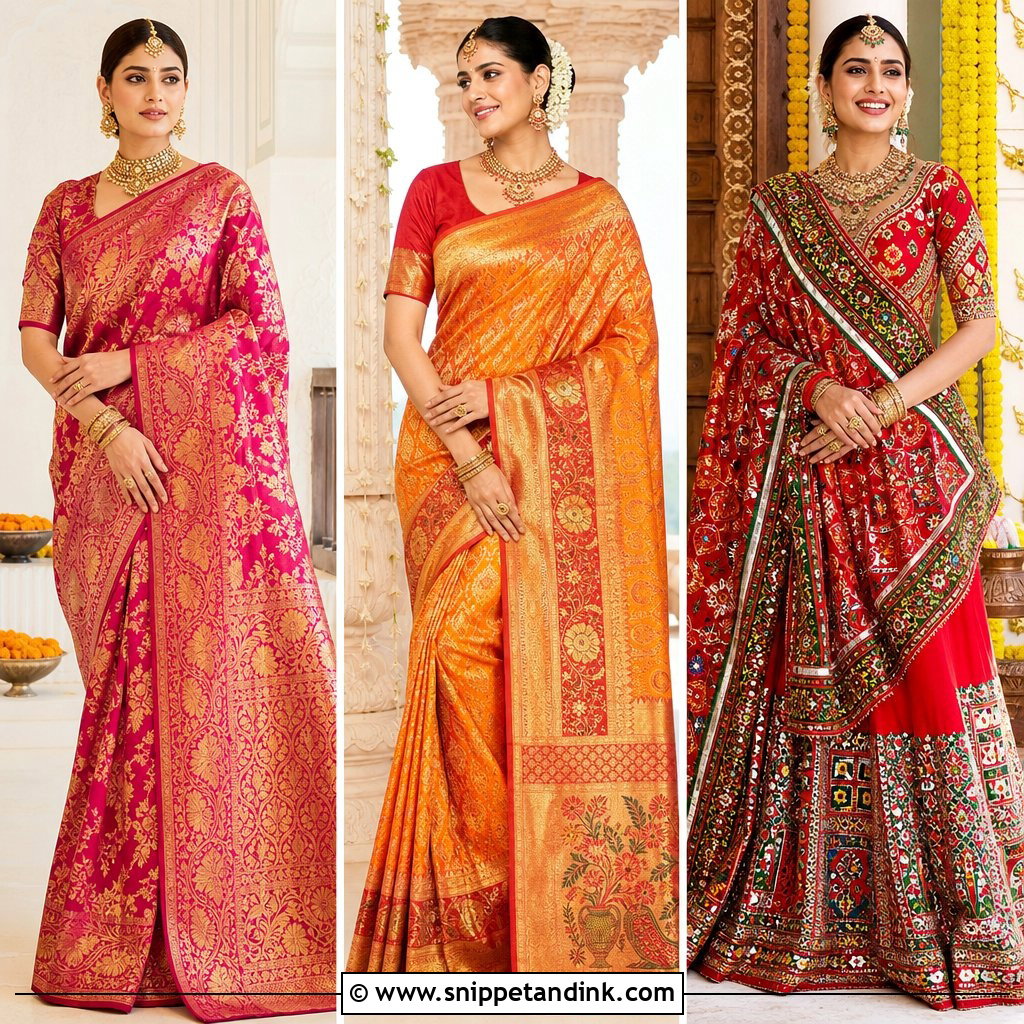
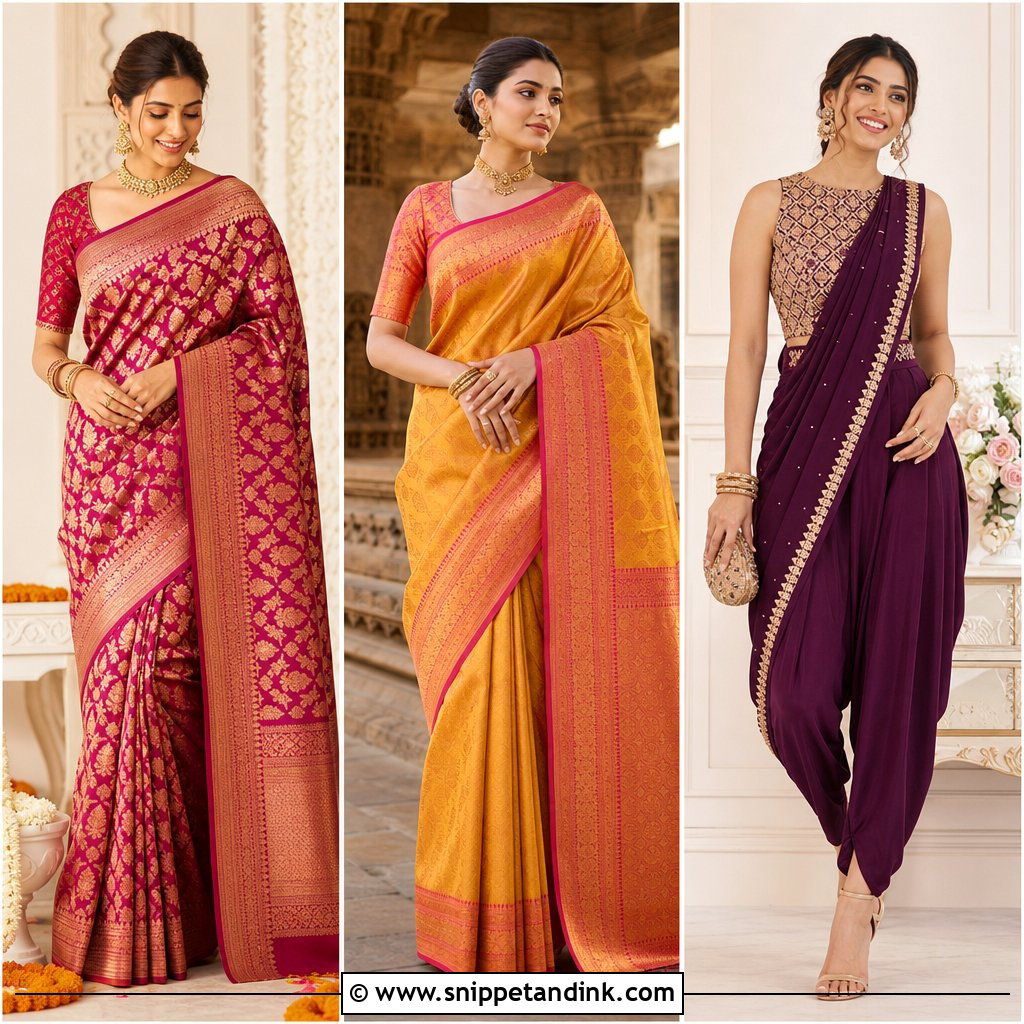
5. Banarasi Silk Bridal Saree
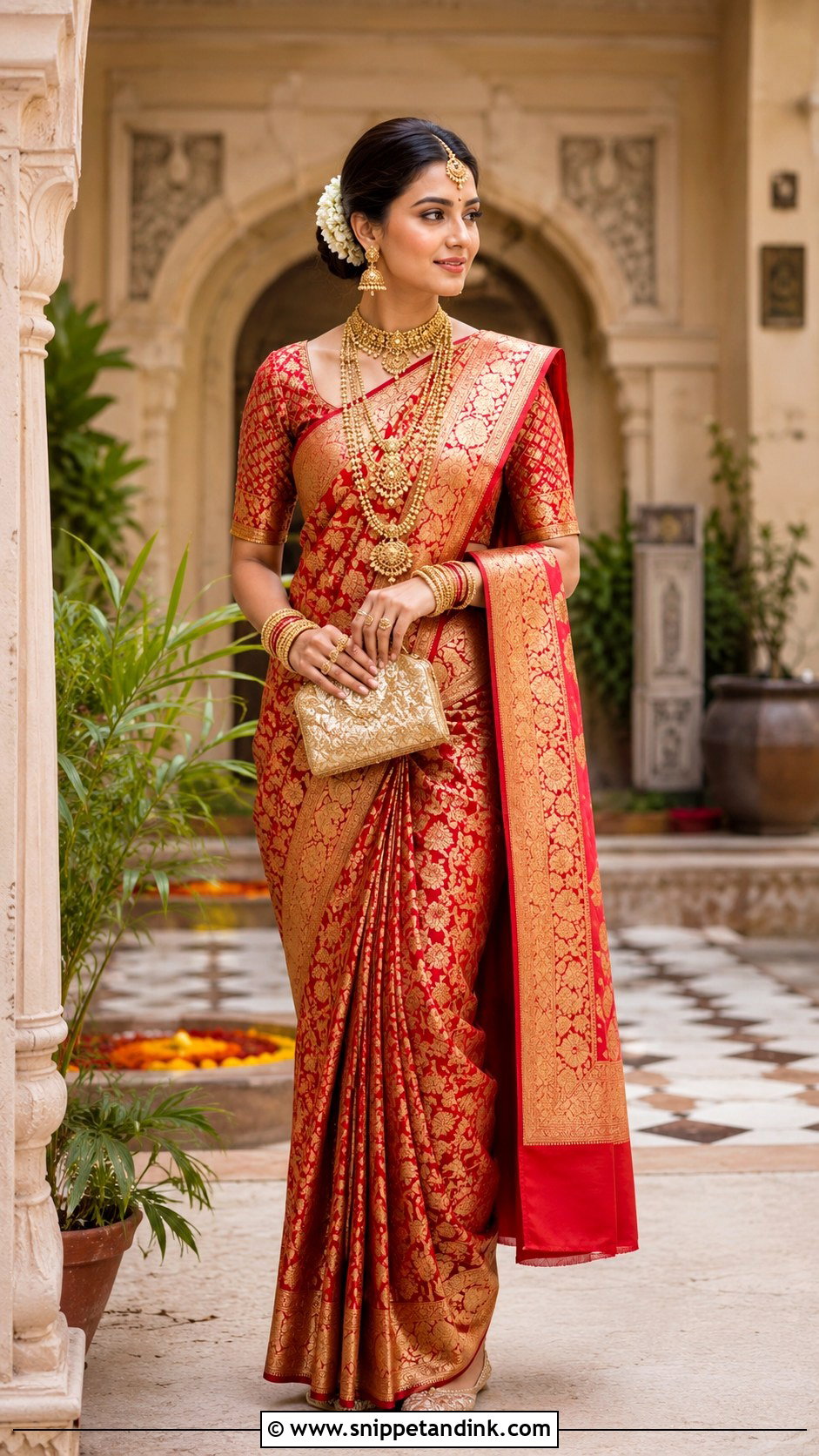
A Banarasi has its pattern woven in with zari, which is why it looks ceremonial without any surface embroidery. Red, magenta, rust, green and royal blue all carry the gold well along the border and pallu. A tailored brocade blouse with elbow-length sleeves gives the drape structure, and the pallu can sit neatly on one shoulder or come over the head for the ceremony. A gold choker, a long necklace, statement earrings, bangles and a small brocade clutch suit it. Silk is slippery against a cotton petticoat, so I pin the pleats at the waist and have the bride do a sitting test, cross-legged if the ceremony is on the floor, a week before. A centre-parted bun with flowers keeps the focus on the weave.
6. Kanjeevaram Silk Wedding Saree
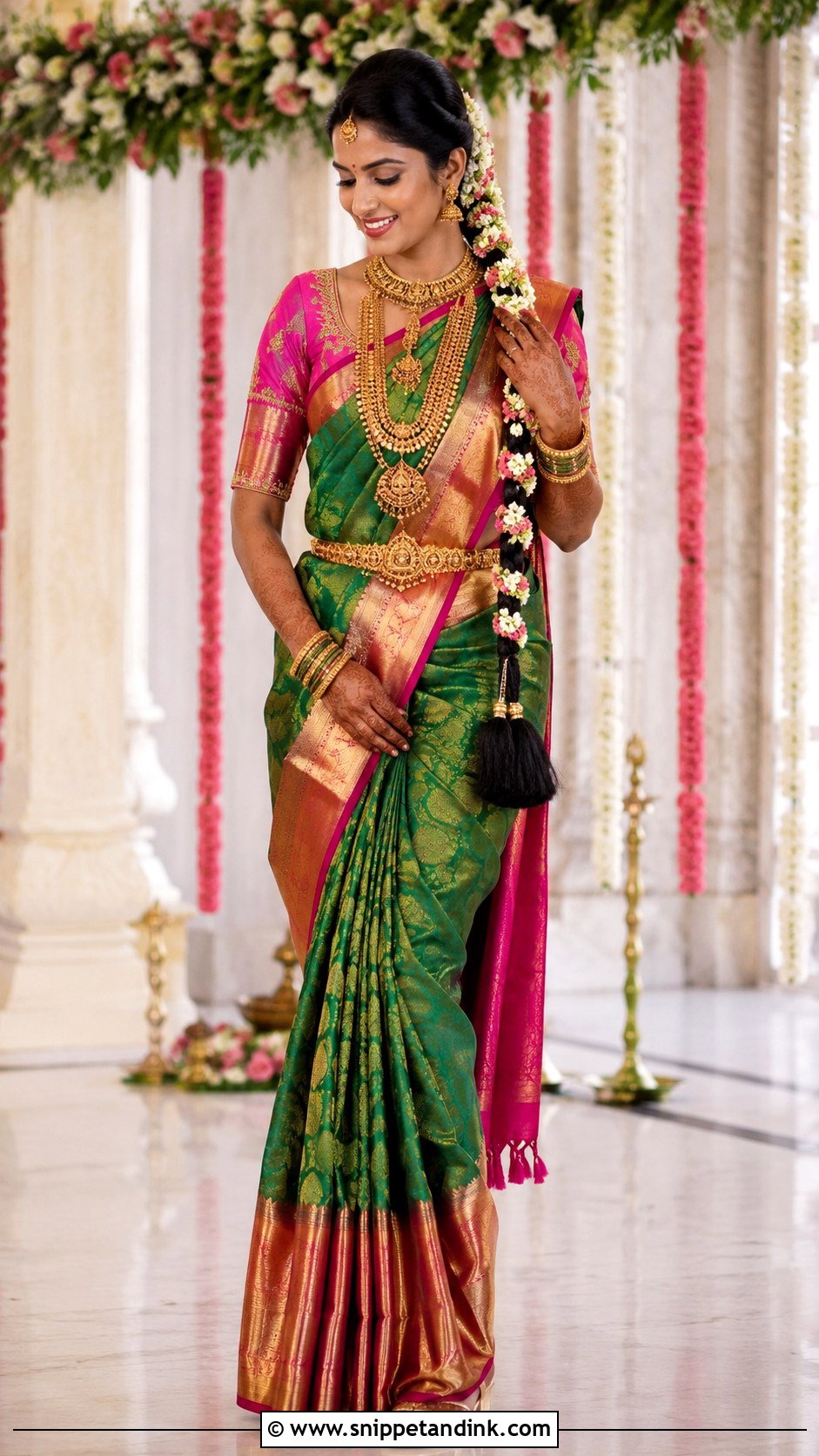
Kanjeevaram silk is thick, and the pleats almost stand up on their own, which is both its charm and its challenge. For a South Indian wedding look, a contrasting border in red, mustard, green, violet or turquoise against traditional gold weaving is hard to beat. Pair it with a fitted silk blouse in a complementary shade. Temple jewelry, layered gold necklaces, jhumkas, bangles and a waist belt give it ceremonial weight, and a long braid with fresh jasmine finishes the hair. I always fit the blouse, petticoat and saree together, because the thickness of the silk changes how the pleats sit at the waist.
7. Embroidered Organza Wedding Saree
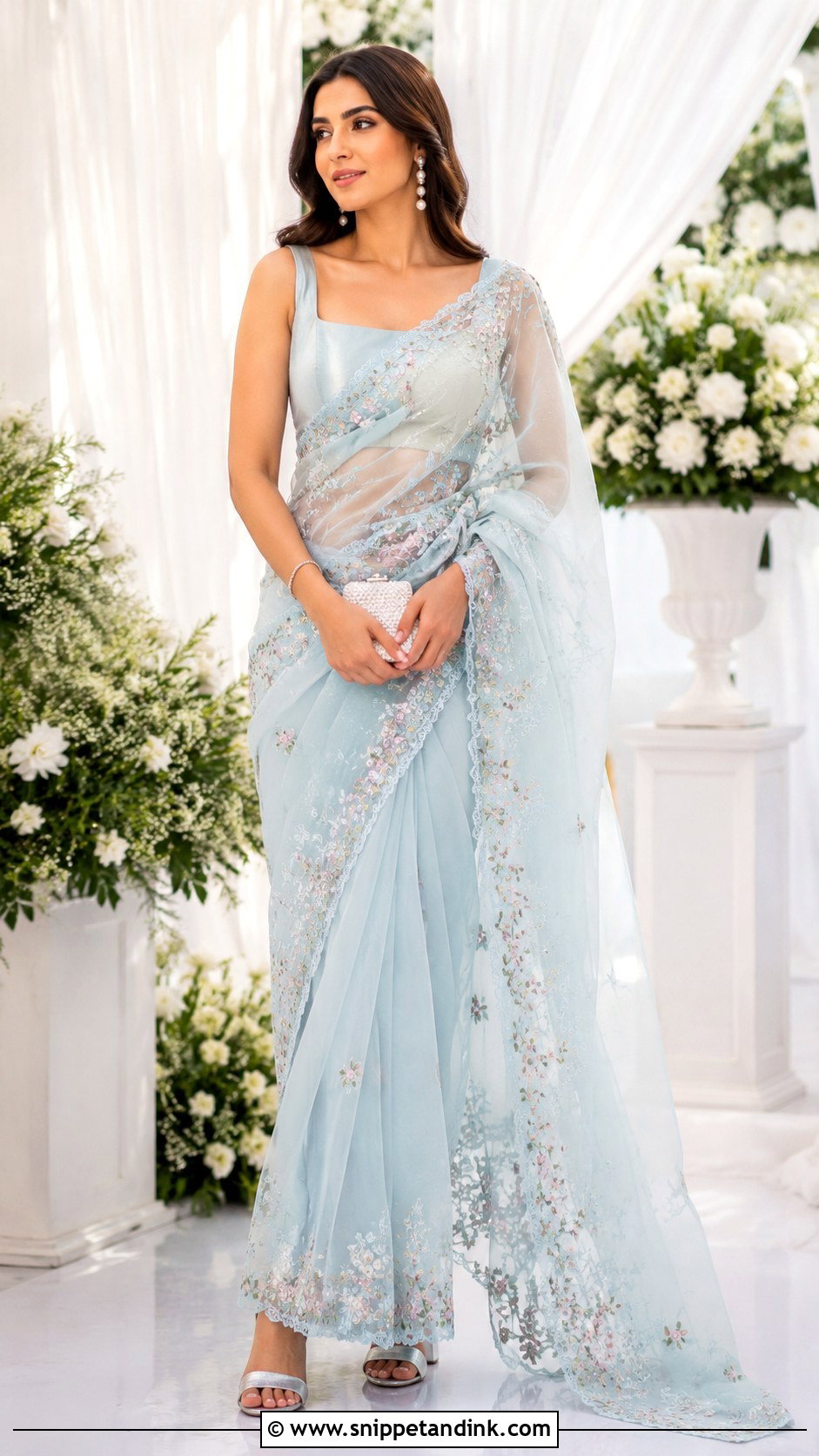
Organza holds its shape, so an embroidered organza saree looks airy at a daytime ceremony or engagement. It also stands away from the body, which means the blouse has to do the defining: a square neck, fitted elbow sleeves or light corset structure pulls the silhouette back in. Soft pastels, ivory or muted jewel tones with floral threadwork or a scalloped border suit it. Add pearl drops, a slim bracelet, a beaded clutch and metallic heels, and keep the hair smooth. With organza I use fewer, flatter pleats and hide the pins, because a bulky petticoat makes the whole drape balloon.
8. Pre-Draped Saree Gown
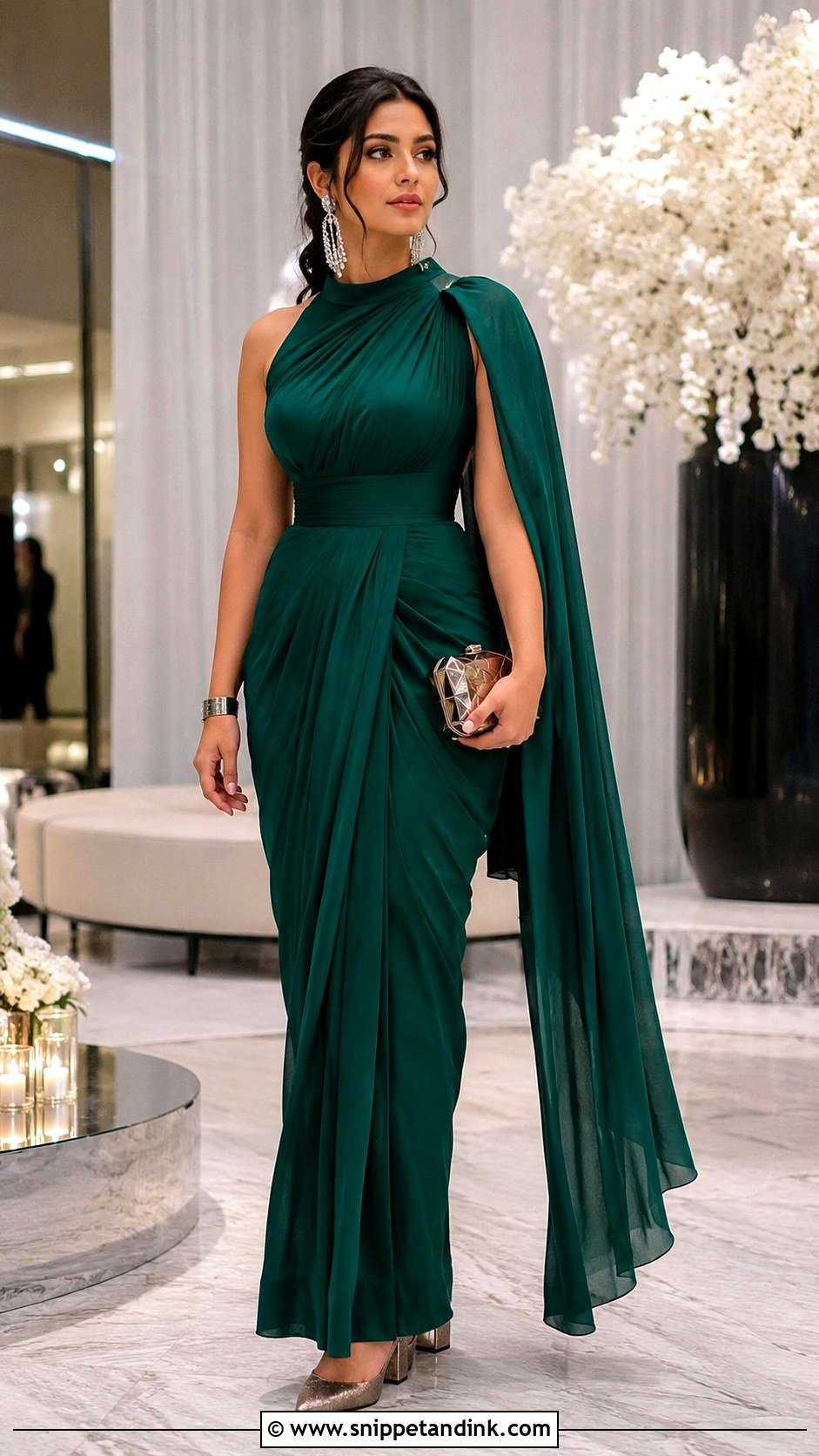
This is the one I recommend to brides who have never worn a saree and don’t want to learn on the day. In a pre-draped saree gown the pleats and pallu are stitched in place, so nothing unravels mid-dance. Look for a defined waist, fluid pleats and a pallu panel falling from the shoulder, in jewel tones, metallics or one solid colour for evening. Statement earrings, a cuff, a structured clutch and pointed block heels suit the clean line. The attached pallu can restrict the arm on that side, so lift, reach and wave in it before you buy.
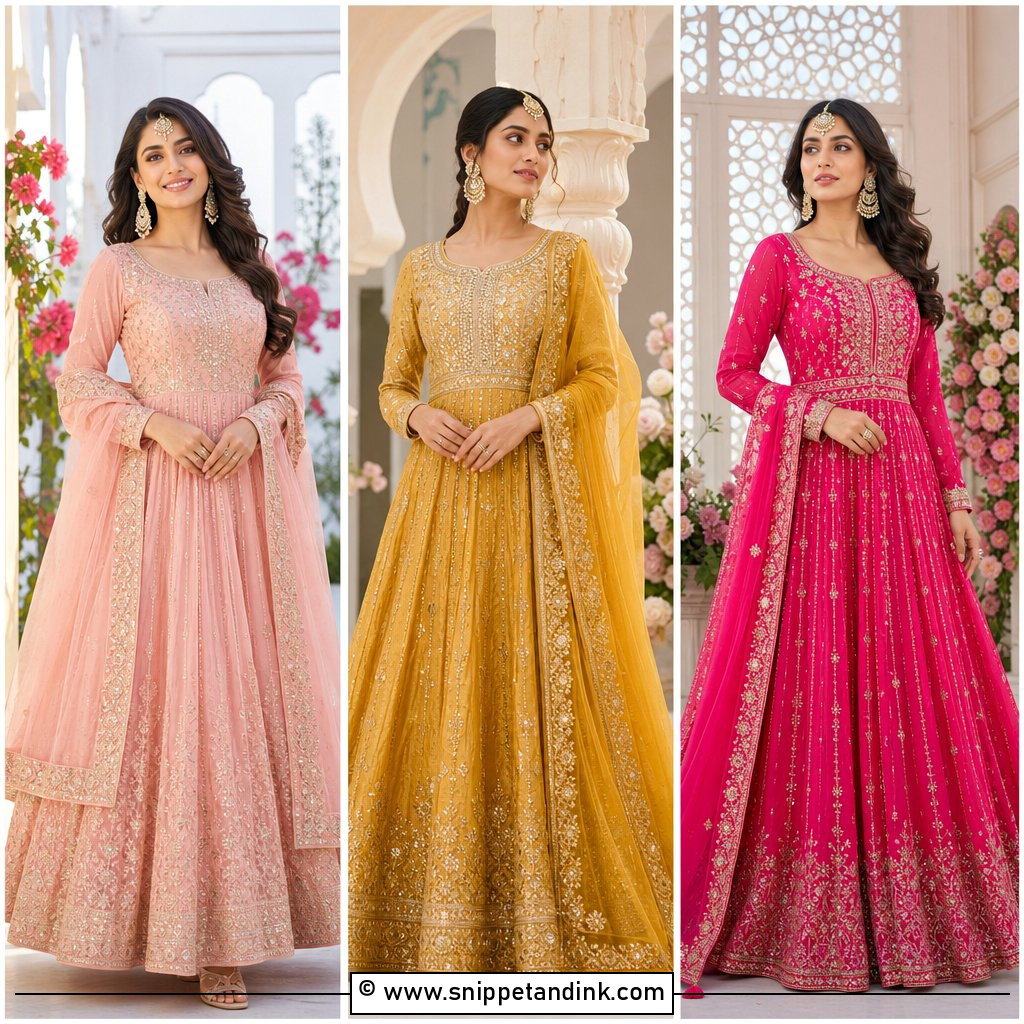
9. Floor-Length Anarkali Wedding Dress
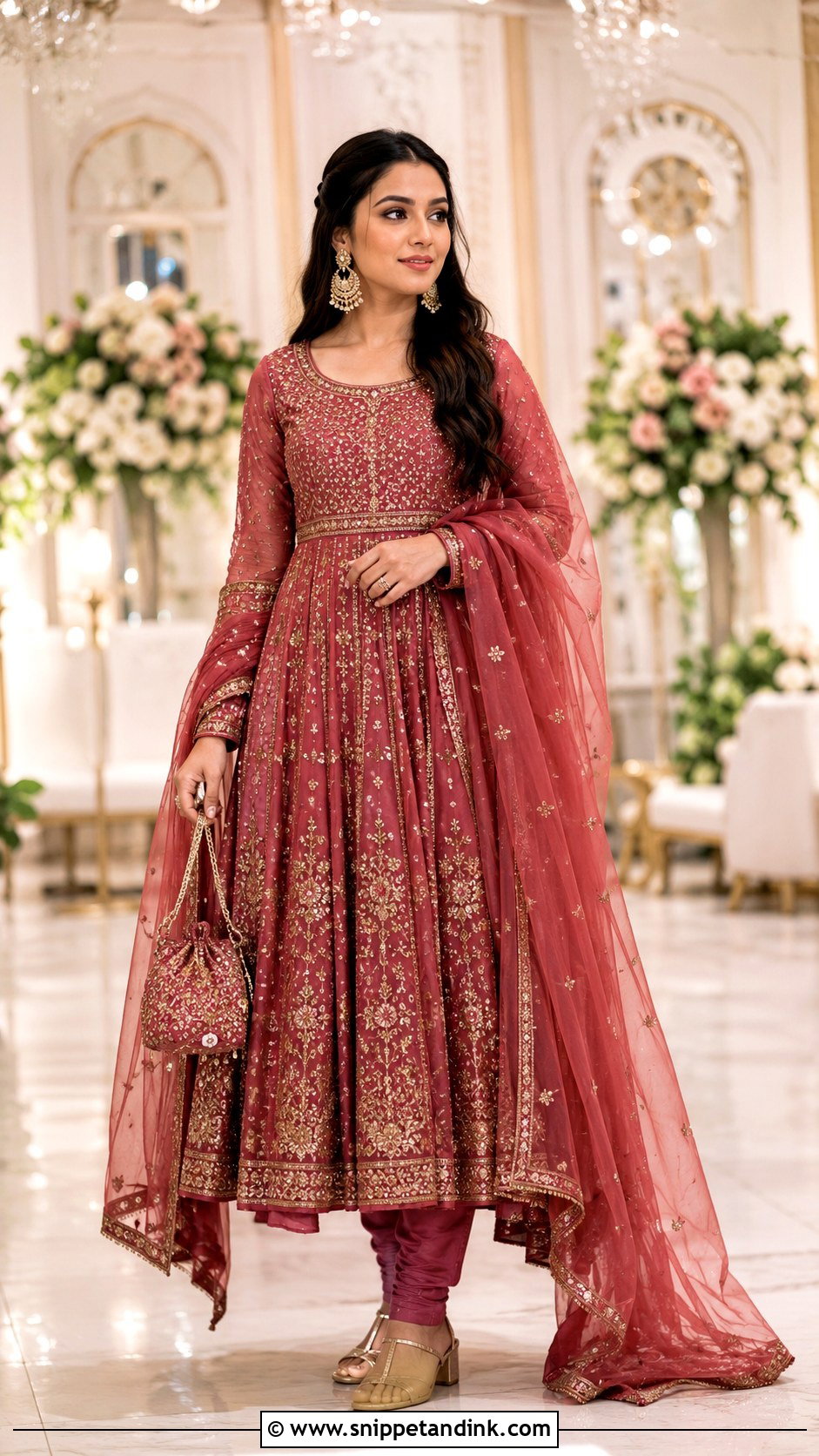
An Anarkali covers everything and moves well, but the flare depends entirely on where the panels open. They should break just below the natural waist; any lower and the shape starts to look like a tent. Silk, chiffon, georgette and net all work, with embroidery at the neckline, sleeves and hem to keep weight off the middle. Slim churidar, a light dupatta over one shoulder, chandelier earrings, a small embroidered bag and low block heels or juttis complete it. I hem it in the actual shoes so it just clears the floor. A flared hem that’s slightly too long gets trodden on by the second dance.
10. Jacket Anarkali Wedding Dress
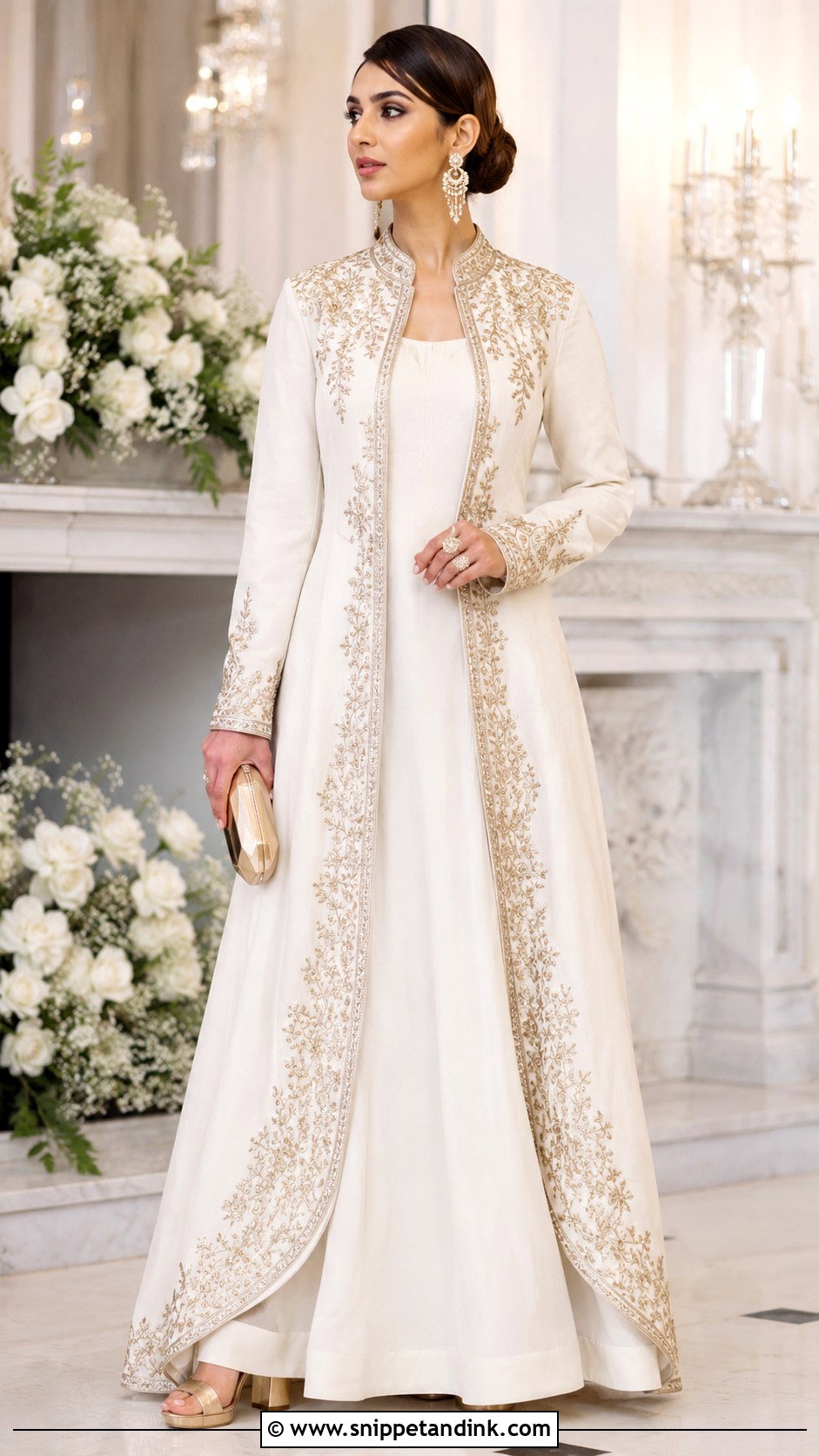
The jacket adds coverage and a second surface for craftsmanship, which is why I suggest it for cooler venues. Start with a slim floor-length Anarkali in silk, georgette or crepe, then layer a long embroidered jacket left open or fastened at the waist. Tonal pairings look quieter, while a contrast jacket says more. Drop earrings, a cocktail ring, a metallic clutch and plain block heels are enough, and I’d skip a heavy necklace if the jacket neckline is worked. The weak point is the jacket armhole: a tight one pins the arms down, so I check she can hug someone and lift a plate without strain.
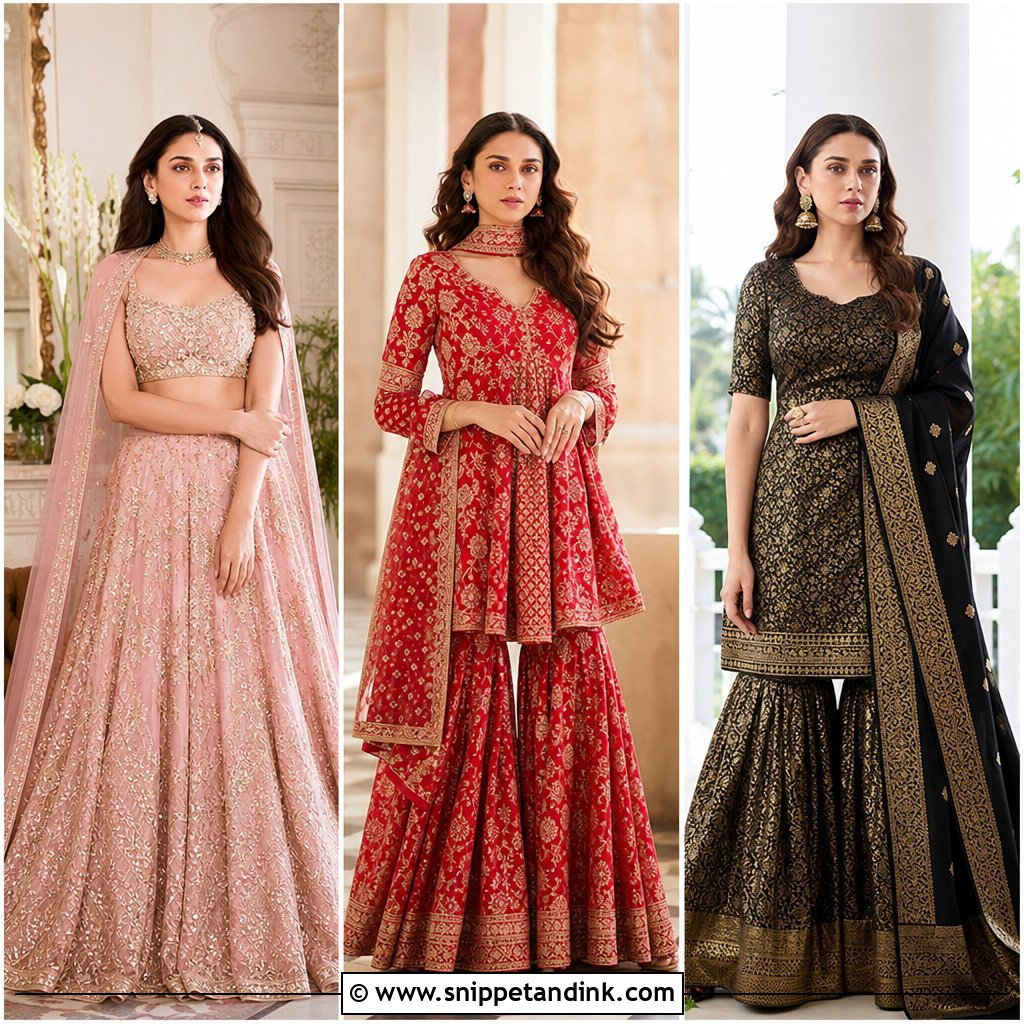
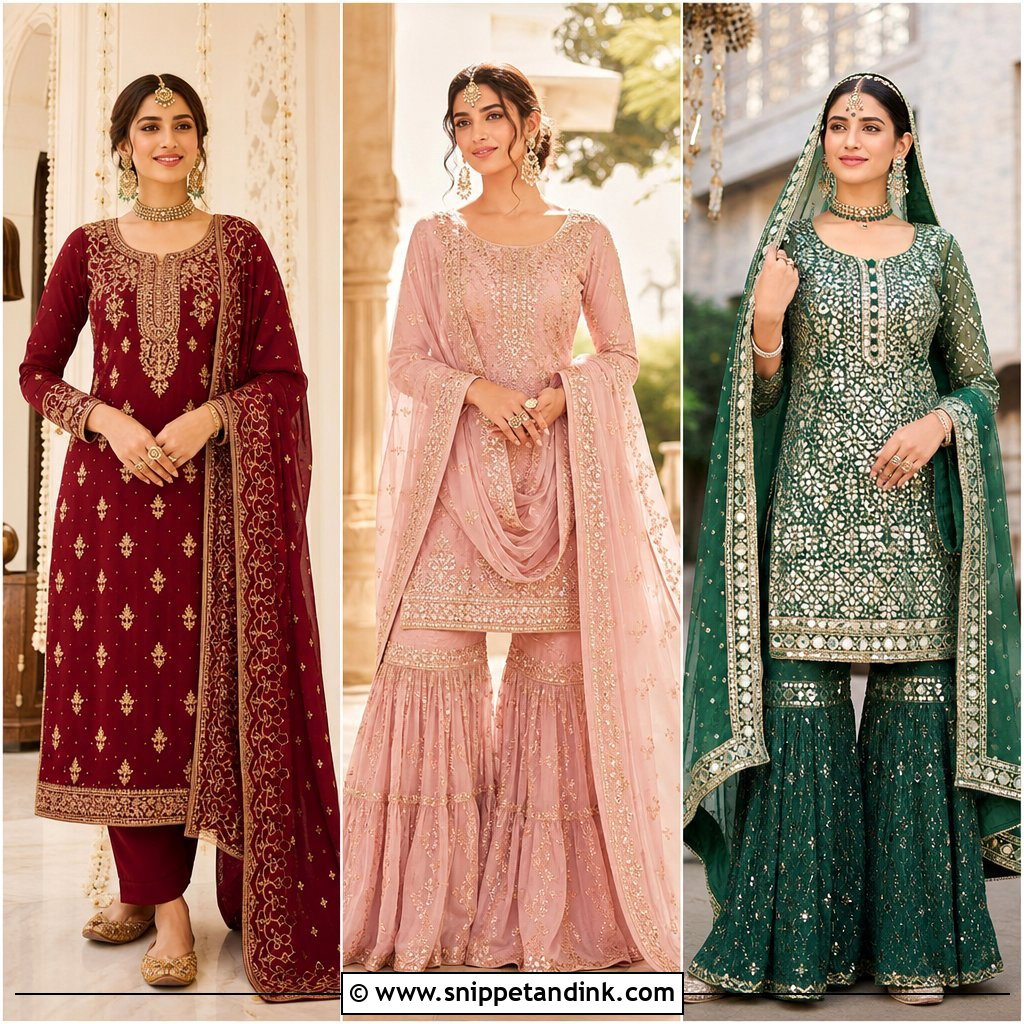
11. Embroidered Sharara Wedding Set
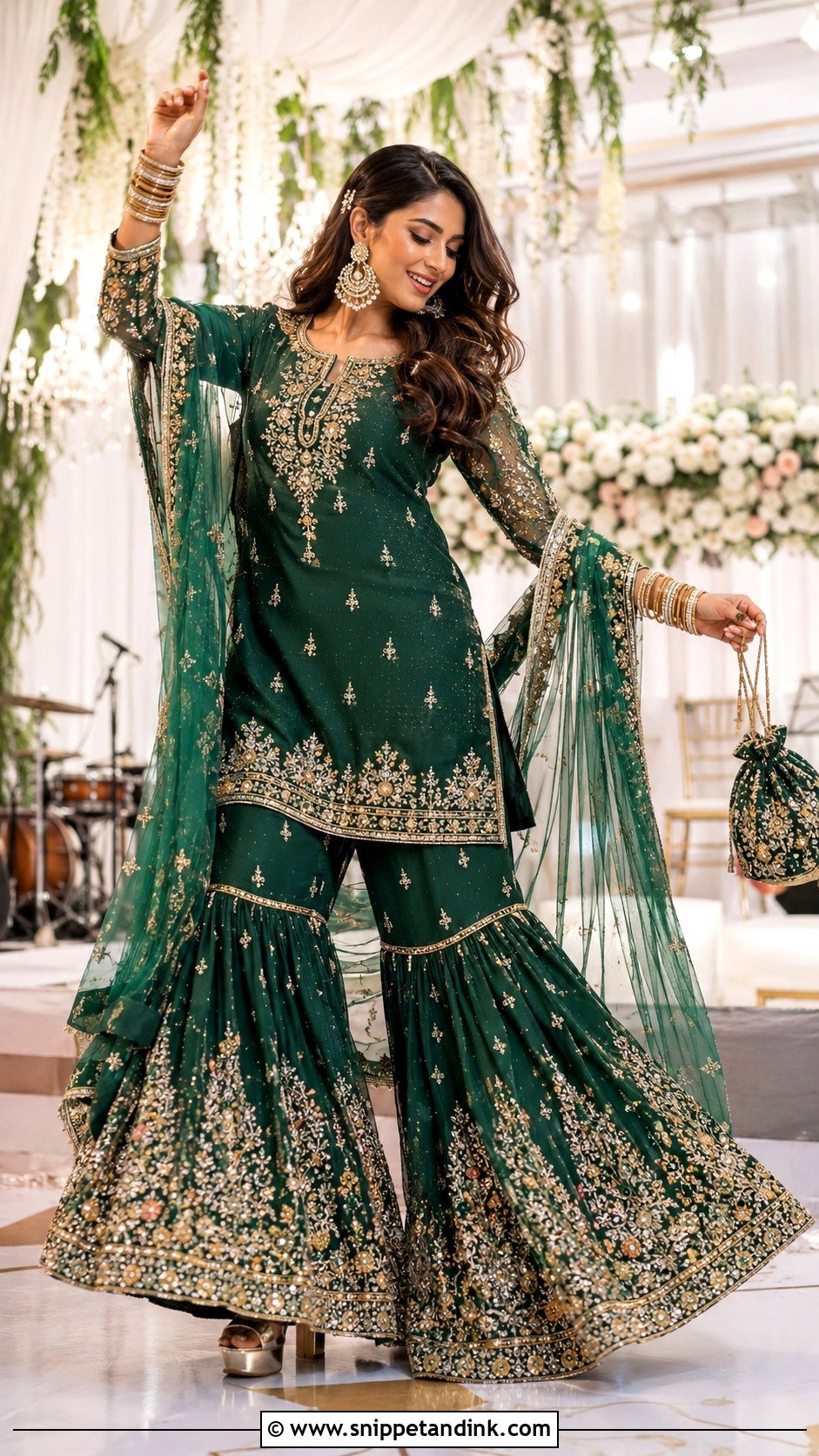
A sharara set is my first suggestion for a bride who wants to dance at her sangeet without carrying a lehenga. Wide flared pants with the embroidery kept low pair with a short fitted kurta or a peplum top, plus a sheer dupatta or a small cape. Emerald, coral, fuchsia, ivory and powder blue all suit it. Chandbali earrings, stacked bangles, a potli and stable platforms finish the look. Fit the length with the platforms on. Sharara legs are cut generously, and if they drag even slightly she’ll step on them on the stairs.
12. Peplum Gharara Wedding Set
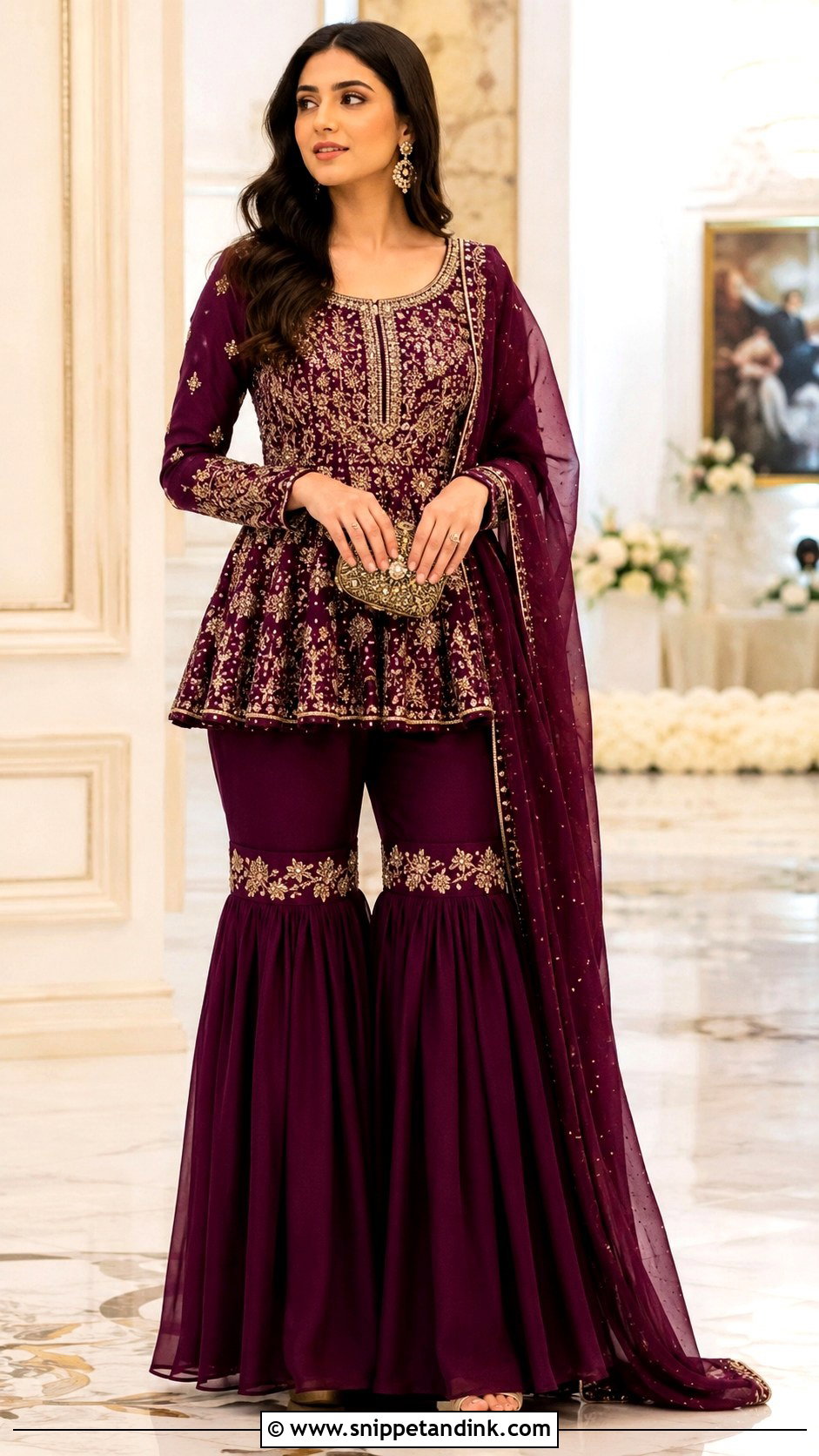
A peplum gharara lives or dies by one seam. The gharara is fitted to the knee and flares from a joint there, often covered with a gota band, and if that seam sits too high or too low the whole proportion goes off. I mark it on the bride while she’s standing, never from a size chart. A peplum top ending near the upper hip defines the waist. Ruby, teal, plum, black or champagne suit an evening event, and a dupatta on one shoulder, statement earrings, a jeweled clutch and platform sandals complete it. Skip a large necklace if the peplum neckline is heavily worked.
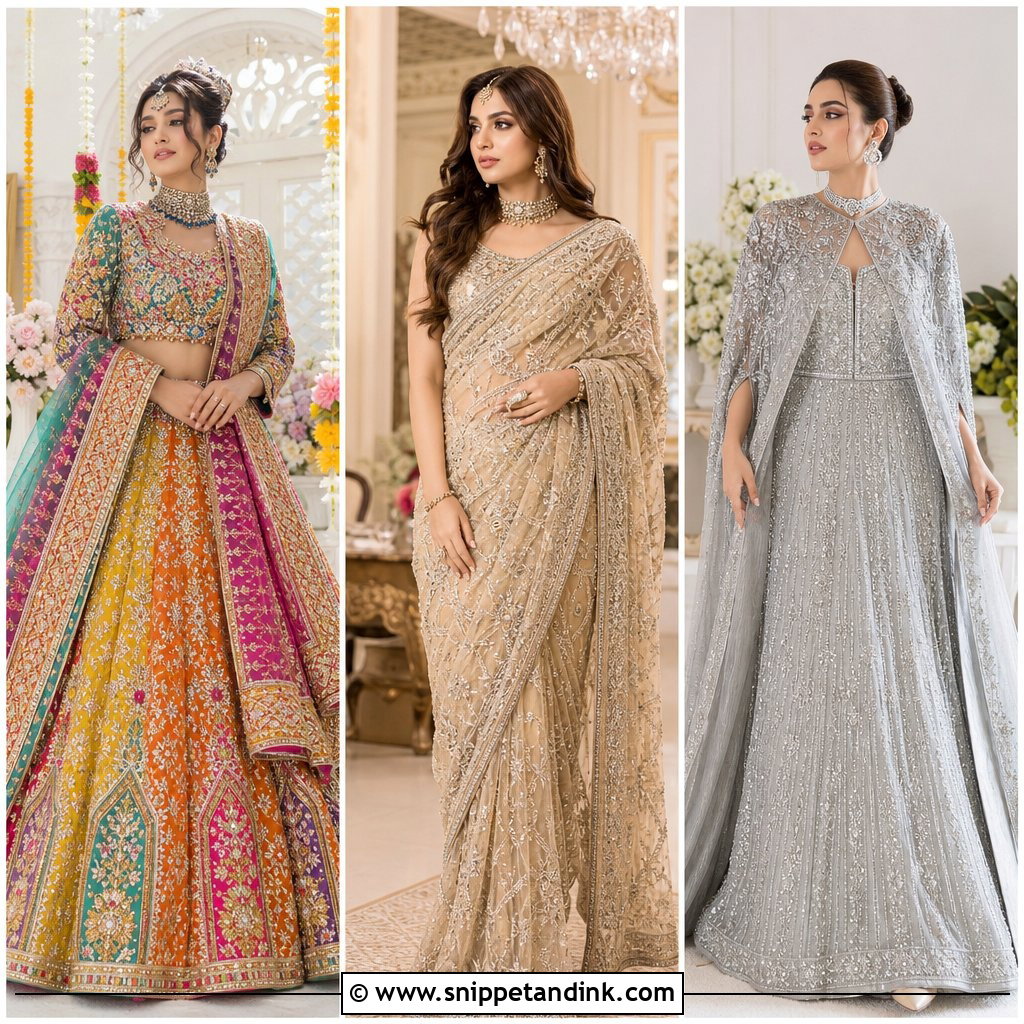
13. Cape Lehenga Wedding Dress
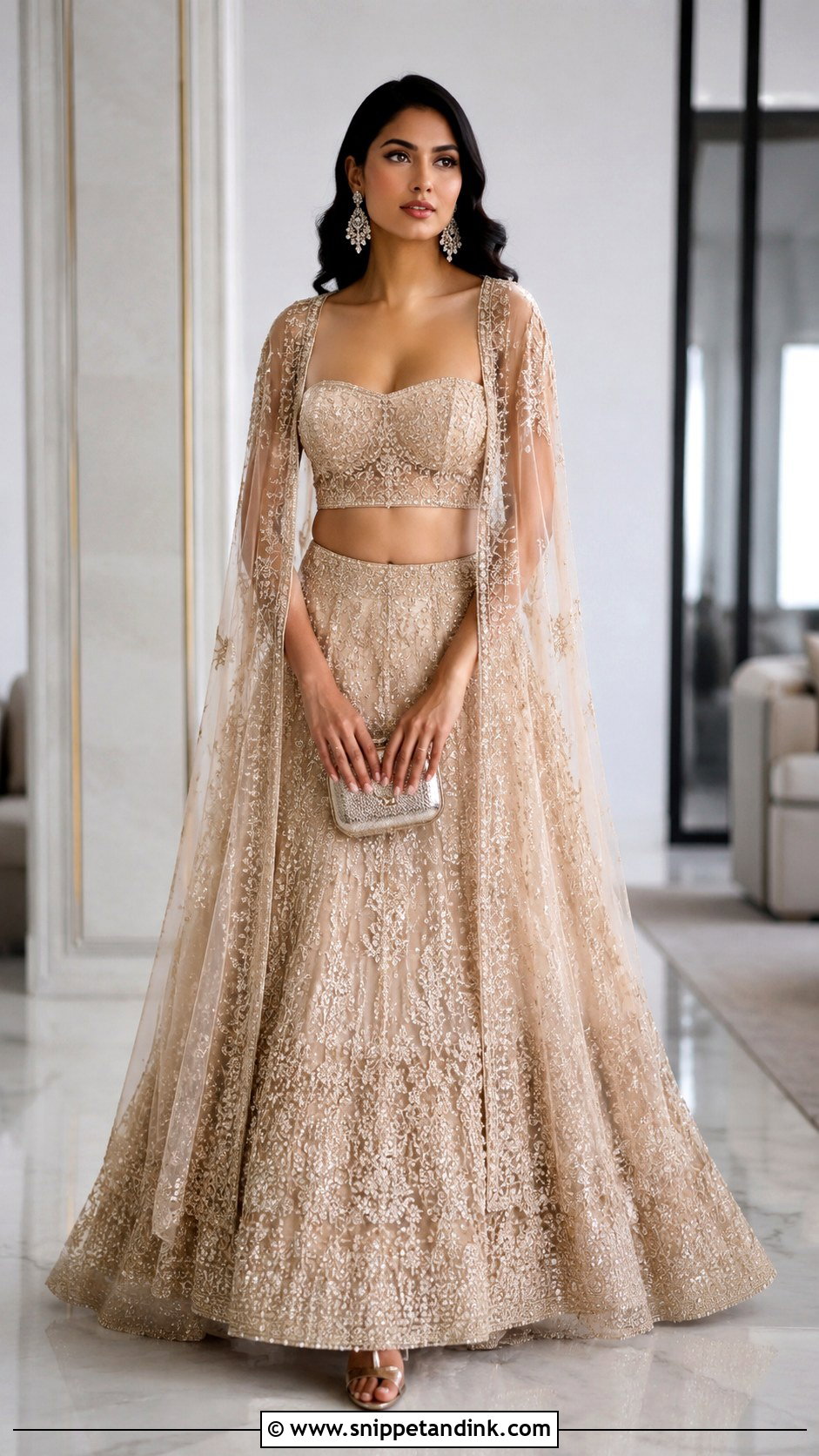
A cape replaces the dupatta entirely, which means no pinning, no slipping and free hands, and that’s why I like it for a sangeet or reception. Keep the skirt’s embroidery moderate and wear a fitted blouse under a sheer, embellished cape that stops at the waist, the hip or near the floor. Skirt and cape in one colour family give a long, unbroken line. Crystal earrings, a metallic clutch and sleek heels are enough, with hair kept off the shoulders so the cape can be seen. Long capes pool under the bride when she sits, so practise lifting the back before settling into a chair.
14. Corset Lehenga Bridal Dress
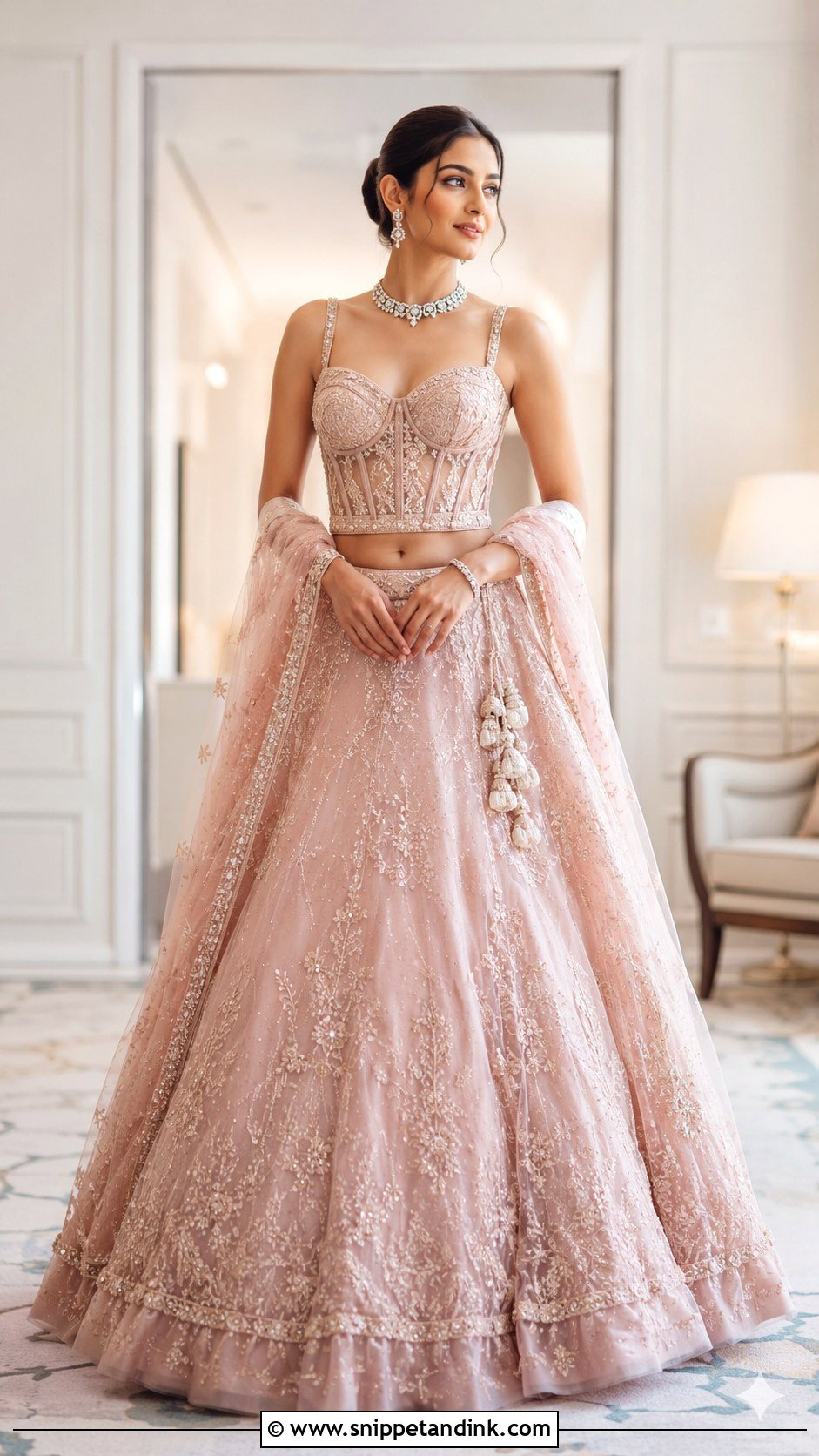
A corset blouse only works if it’s built like one. I look for boning or proper internal structure, a secure back closure and enough height at the top edge that she isn’t hitching it up all evening. Pair it with silk, tulle or organza starting at the natural waist, and add a light dupatta over both arms, pinned at one shoulder or across the torso when more coverage is wanted. A short necklace, earrings, a bracelet and hidden platforms finish it, with soft waves or a clean bun. At the fitting, have her sit, bend to touch the floor and raise both arms. A corset that gapes or digs in during the fitting will feel far worse by dinner.

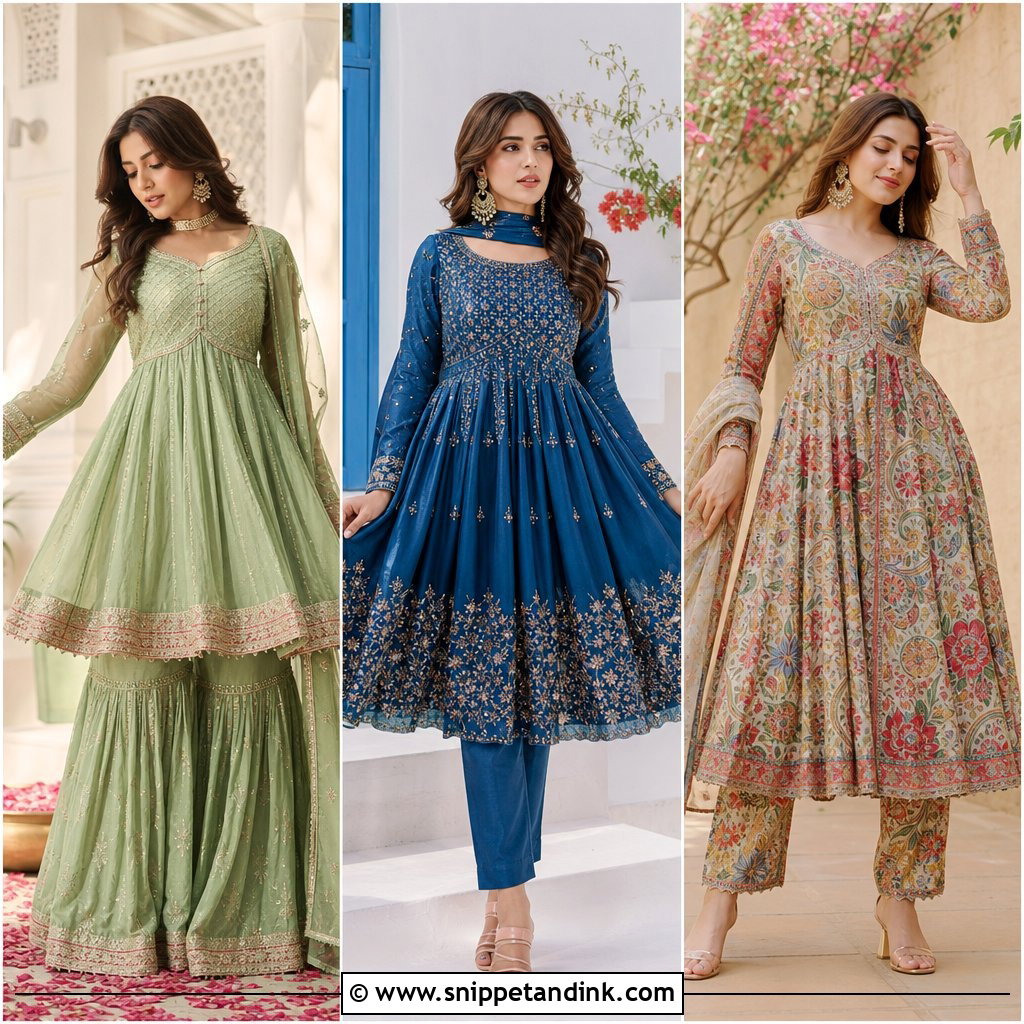
15. Mirror Work Sangeet Lehenga
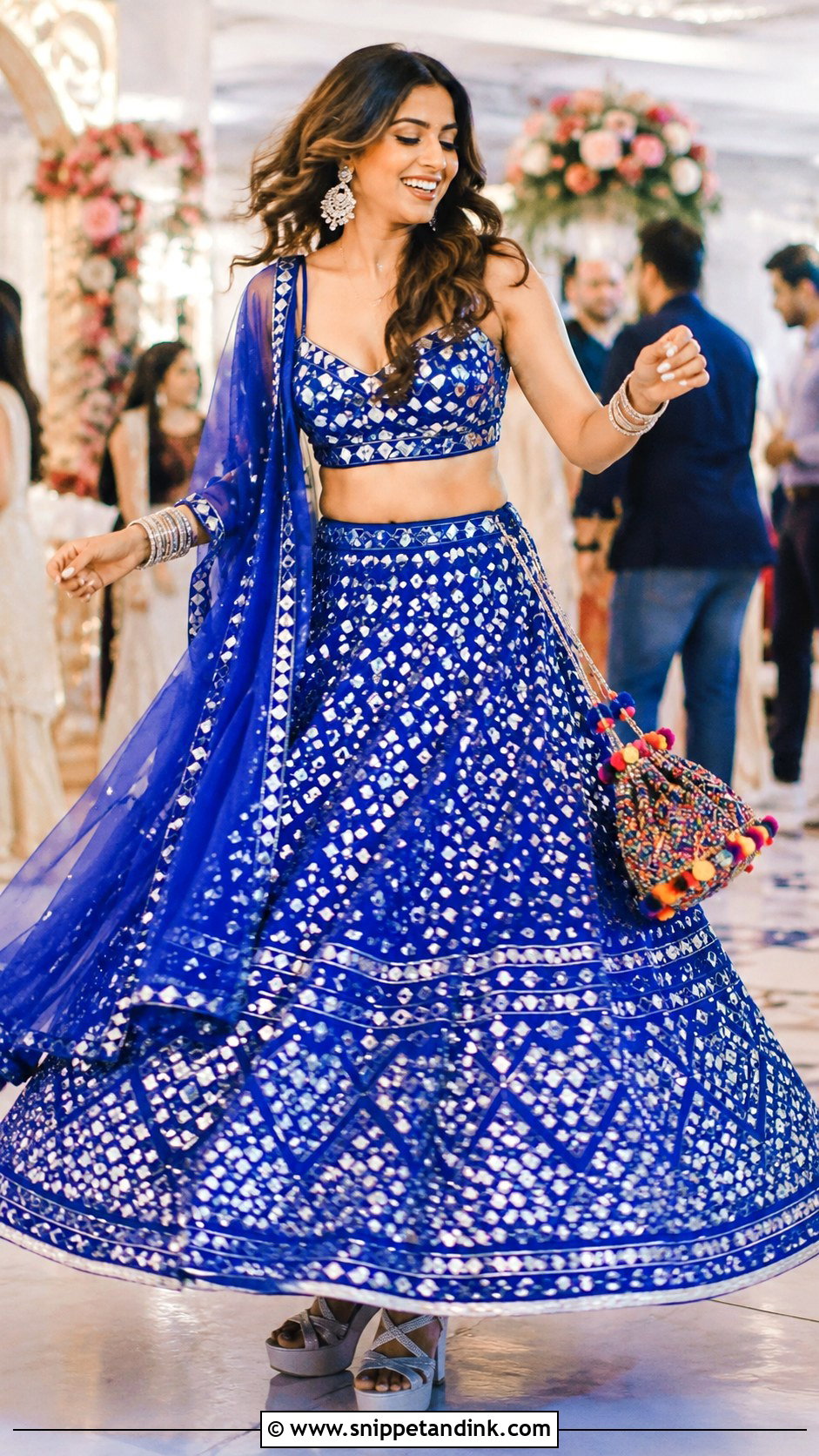
Mirror work throws light in every direction, which is exactly why it belongs at a sangeet. Cobalt, pink, orange, green or purple skirts with mirrors stitched across embroidered panels pair with a fitted blouse and a light dupatta pinned at the shoulder. Silver earrings, stacked bangles, a compact potli and cushioned platforms suit it. Mirrors snag fine fabrics, so I keep sheer dupattas and delicate accessories away from the skirt. Before buying, turn the skirt inside out. The stitched edges of mirror embroidery can be sharp on the reverse, and an unlined skirt will scratch her legs through a night of dancing. A high ponytail or braid stays put.
16. Yellow Floral Mehndi Dress
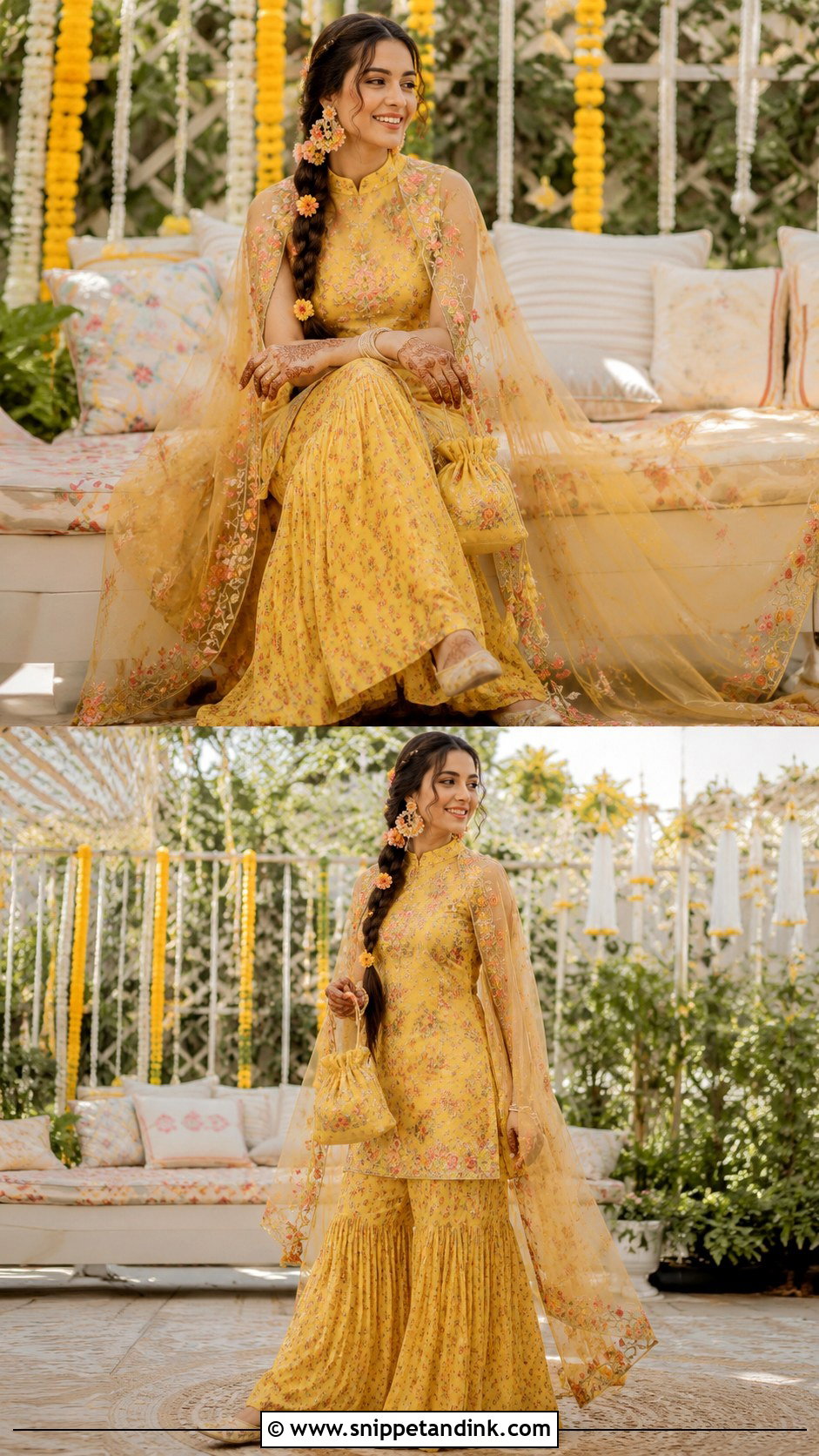
Mehndi outfits follow one rule that shapes everything else: the bride can’t use her hands for hours. A yellow floral mehndi dress in marigold, lemon, mustard or soft gold, cut as a flowing lehenga, sharara or short Anarkali, handles that well. Short sleeves or a sleeveless cut keep fabric off wet henna above the wrist, and a sheer cape is easier than a dupatta she can’t adjust. Floral earrings, slim bangles, a small potli and juttis complete it. Braid the hair with small flowers before application starts, not after. Henna paste stains pale fabric, so I lay a dark scarf over the bride’s lap while the artist works.
17. Sequin Reception Gown
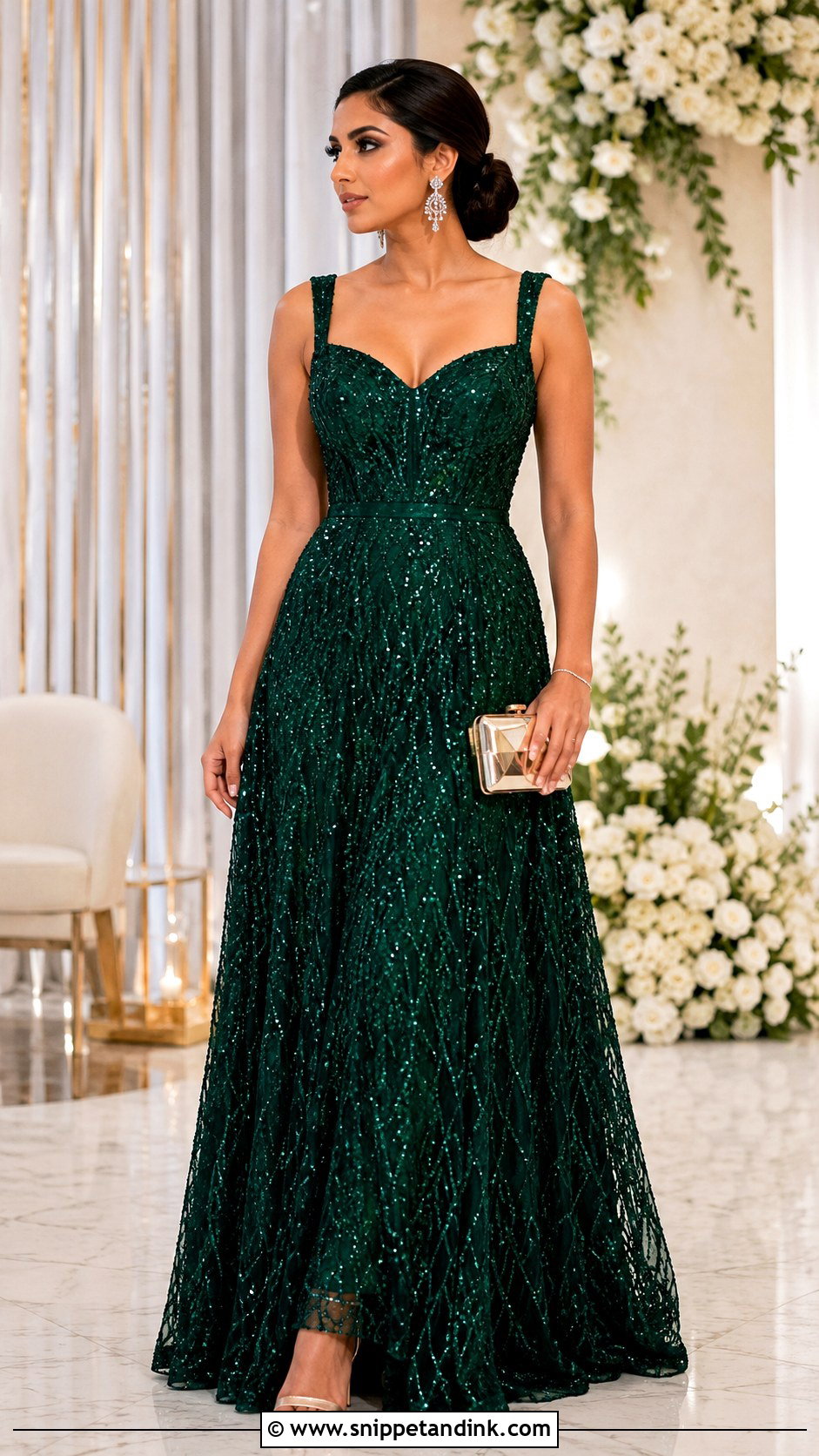
Sequins catch every light at a reception, and they also scratch. Before anything else, I run my fingers along the armholes and side seams, where the arm rubs all night; if the sequins sit directly against skin there, it’s a no. Next I look for a supportive bodice, a defined waist and a skirt that allows a full walking stride. Midnight blue, emerald, burgundy, rose gold and silver read well under venue lighting. Drop earrings, a slim bracelet, a structured clutch and comfortable heels balance it, while an elaborate necklace is too much over a dense bodice. A full lining stops transparency and lets the gown move.
18. Indo-Western Draped Wedding Gown
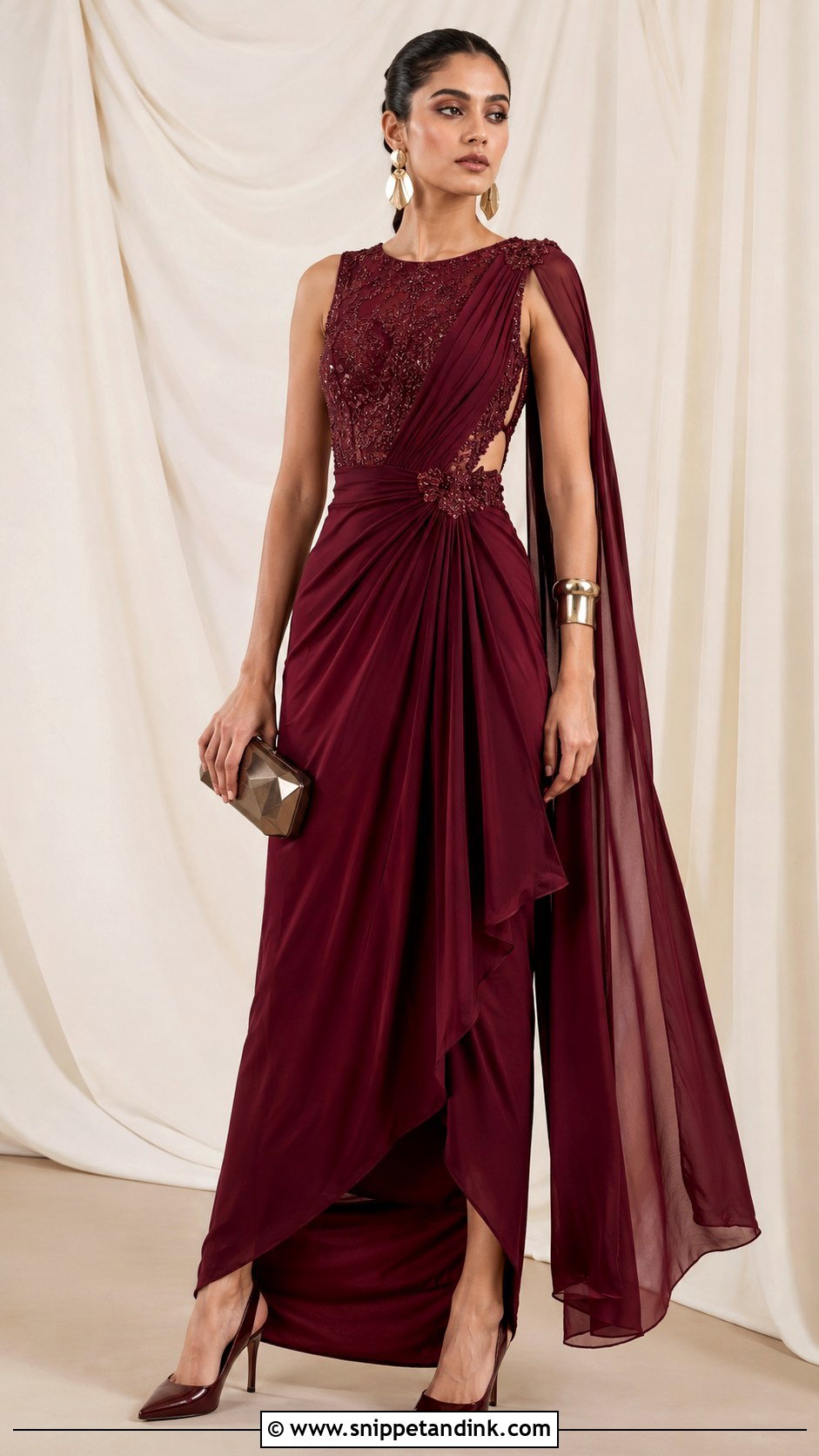
This one sits between a saree and a gown: an asymmetric skirt, a gathered waist and an attached shoulder drape that nods to a pallu. Embroidery placed on the bodice, waist or border keeps it light. Deep green, wine, navy, ivory and metallic grey suit evening. Sculptural earrings, a cuff, a hard-case clutch and pointed heels match its tailored mood, with a low bun or a smooth side part. I test the drape walking and sitting, because attached fabric tugs on the shoulder seam every time she sits down. It also works for sisters and mothers who want Indian detailing without a full saree.
19. Bridal Pantsuit With Dupatta
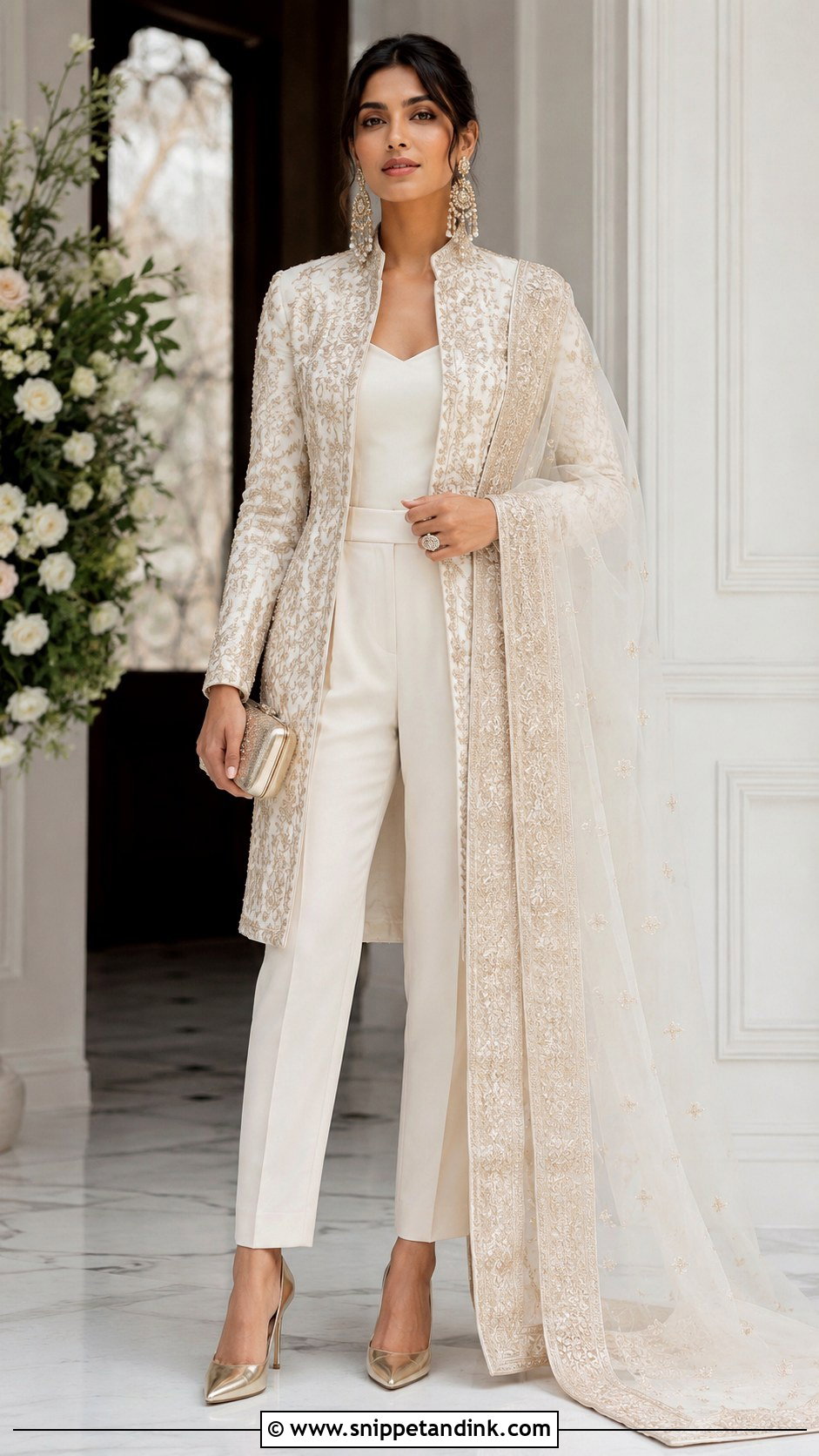
A bridal pantsuit with a dupatta is what I’d suggest for a civil ceremony, a welcome dinner or a reception entrance with some attitude. Think high-waisted trousers with a longline blazer or a structured embroidered top in ivory, red, fuchsia, emerald or champagne, lifted with tonal threadwork or a few crystals. The dupatta goes over one shoulder and needs pinning, because it slides off a tailored jacket far more easily than off a blouse. Statement earrings, pointed heels, a compact clutch and one bold ring are enough. The trousers should skim the floor in the shoes. Of everything here, these pieces are also the easiest to rewear afterward.
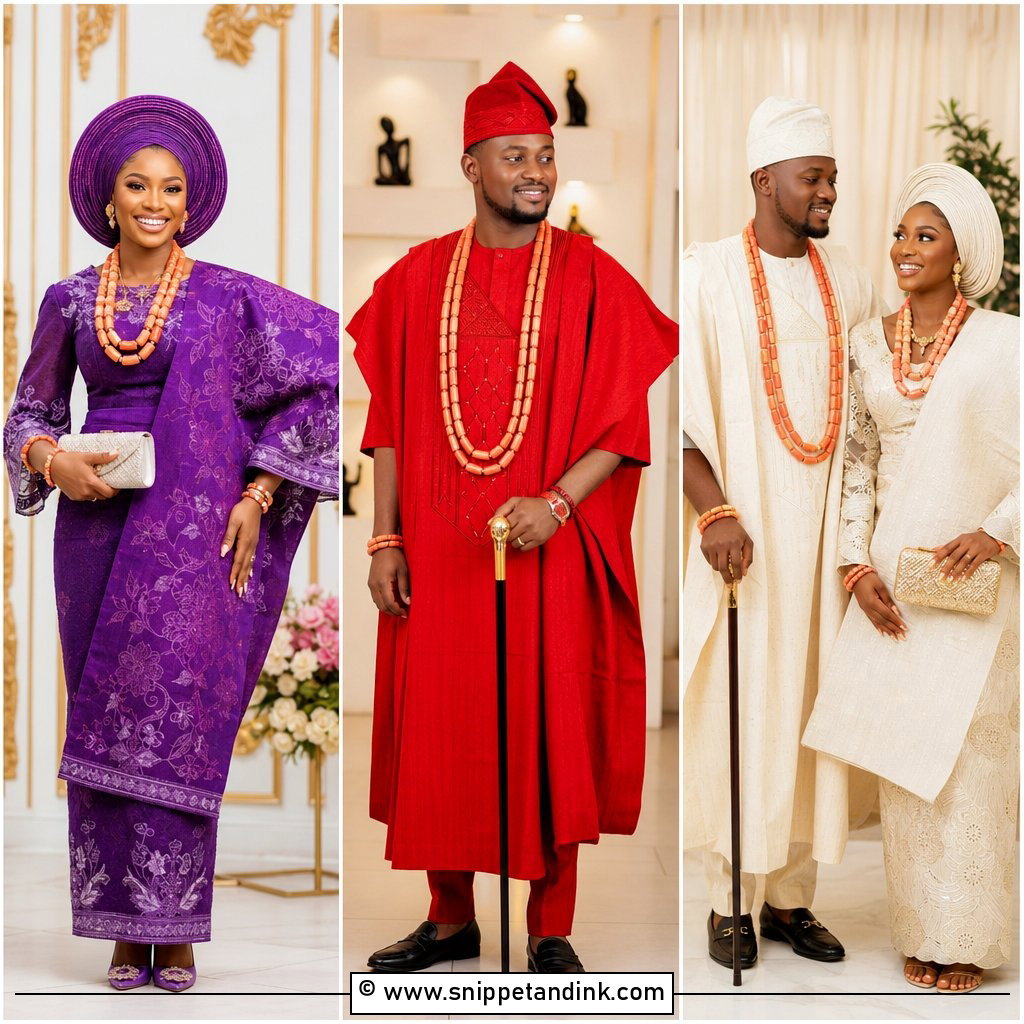

20. Heirloom Textile Wedding Dress
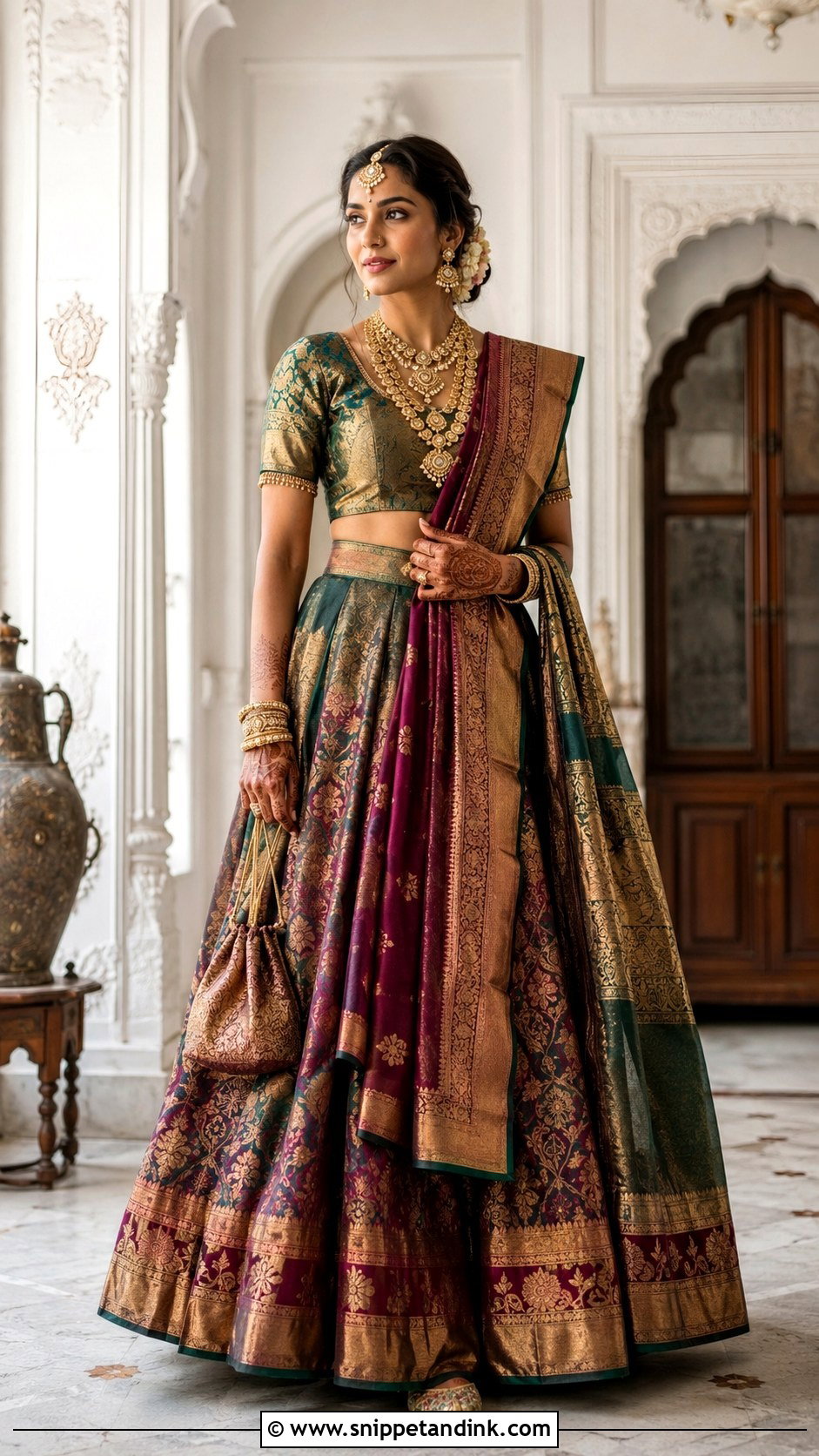
Wearing a mother’s or grandmother’s saree is the most personal choice in this list, and the one I handle most carefully. A family saree can be restored and draped as it is, or cut into a lehenga, Anarkali, jacket or gown. Old silk and zari can be weaker than they look, so I ask the designer for a placement sketch before anything is cut, showing exactly where the border and pallu motifs will land. A custom blouse in a complementary fabric works better than forcing an exact match. Family jewelry, embroidered juttis and a small vintage-style bag suit it, and lining plus reinforced seams protect the fragile cloth.
Carrying a Heavy Lehenga Through a Long Ceremony
Once zardozi, can-can and two dupattas are added up, a bridal lehenga can be genuinely heavy. The weight should rest on the hips rather than hang from the drawstring, so a broad waistband, and a few hooks joining blouse to skirt if needed, make a real difference. I ask every bride to wear the full outfit at home for an hour before the wedding, sitting on the floor if the ceremony requires it.
- Pin dupattas through the blouse lining, not the outer fabric, so nothing tears when someone steps on a trailing edge.
- Keep the can-can short; a long one makes a floor-seated ceremony much harder.
- Pack safety pins, double-sided tape, a needle threaded in the skirt colour and blotting papers.
- Plan bathroom trips with a sister or friend who knows how the dupattas come off and go back on.
Muslin, Not Plastic, Once the Wedding Is Over
Silk and metallic zari both suffer in plastic and in damp. I fold the outfit in clean muslin or soft cotton with tissue in the folds, and refold it along different lines every few months so the creases don’t crack the zari. Keep it out of direct sunlight and away from bare wooden shelves, and don’t put mothballs against the fabric; cloves or dried neem leaves tied in a cloth nearby are the traditional alternative. When it needs cleaning, use a dry cleaner who regularly handles bridal embroidery.
Which Outfit Belongs at Which Function
Every look here suits a particular event, and that’s the thing to plan around. Match the silhouette to the function, the venue, the weather and how much moving you’ll do, then think about fabric weight, where the embroidery sits, blouse support and the hem in your real shoes. Let the accessories support the garment. A red zardozi lehenga, a heritage silk saree, a sharara, a pantsuit or a sequin gown can each be the right answer. Do one full fitting with jewelry and shoes, sit in it, dance in it, and you’ll know which one is yours.
You'll Like These Ideas:





Leave a Reply