
A wedding dress doesn’t have to cost thousands to look like it did. What makes a gown read as expensive is mostly fit, fabric weight and restraint, and all three are available at a modest price if you know where to look. Affordable gowns can suit a ballroom as easily as a beach or a courthouse. My one firm rule: set aside part of the budget for alterations, undergarments and shoes before you buy, because a cheaper dress that fits perfectly beats an elaborate one that doesn’t. Here are twenty budget-friendly styles and what I check on each.
Reading a Cheap Dress Listing Before You Click Buy
Many budget gowns are bought online, and the product page tells you more than the photos do if you know where to look. Here’s what I read before I let a client order.
- Fabric content. “Satin” can mean silk, heavy polyester or a thin shiny polyester. A listing that gives a weight or calls it duchess or crepe-back satin usually means a heavier, more forgiving fabric.
- Lining. “Fully lined” is what you want. “Partially lined” often means the bodice only, and light skirts will show your legs in sunlight.
- Made to order versus in stock. Made-to-order gowns can take weeks or months to arrive, and many can’t be returned. In-stock gowns usually can.
- Customer photos. Studio photos are pinned and lit. Real photos show how the fabric actually falls and what the color really is.
- Return window and condition. Some retailers only accept returns with the tags still attached, so try the gown on carefully before cutting anything.
If a deal looks too good, it usually is. A very low price on a dress that looks like a well-known designer’s is a common sign of a copy that won’t match the photos.
1. Inexpensive A-Line Wedding Dress
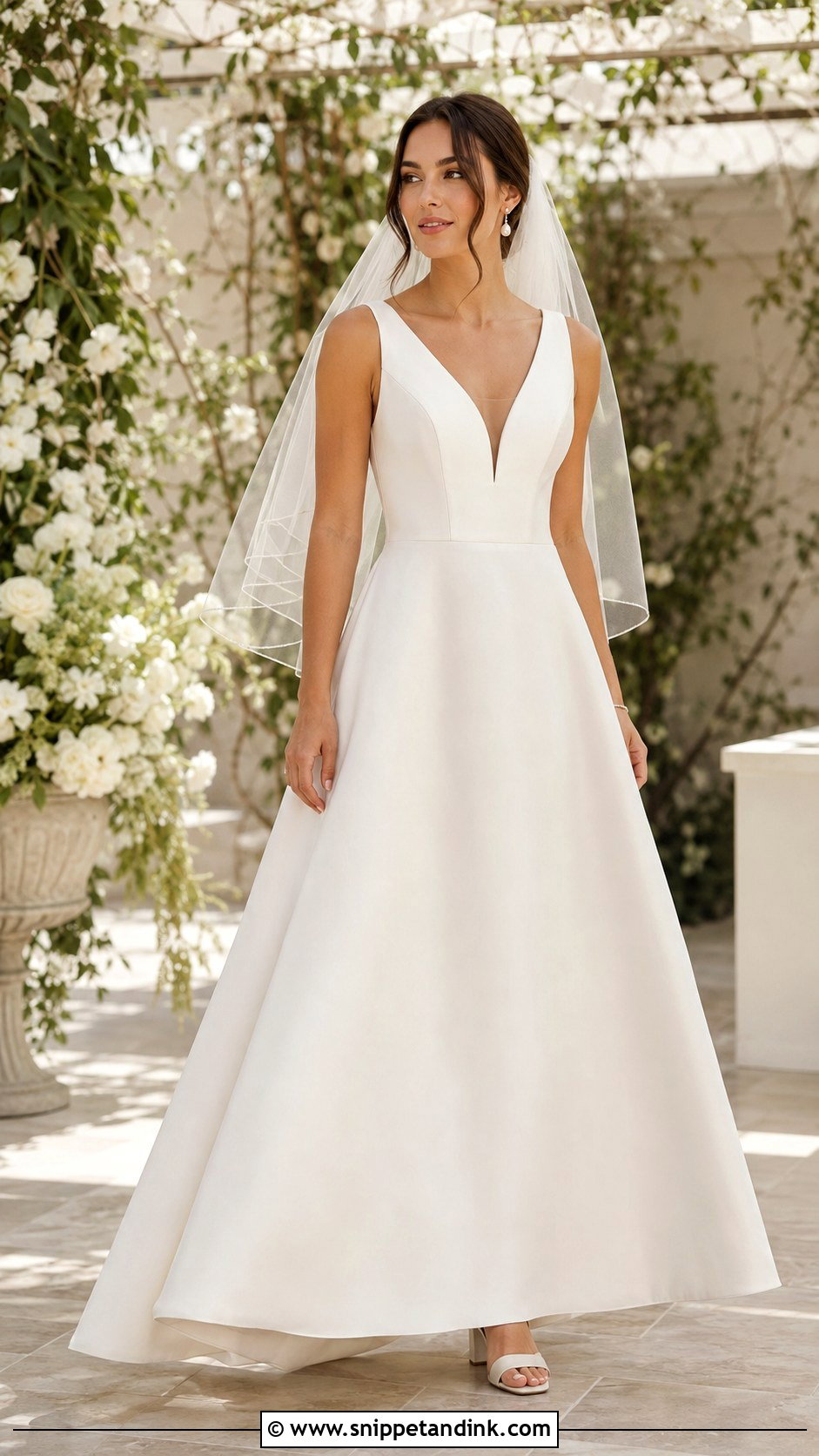
The A-line is the easiest shape to buy on a budget because nearly every retailer makes one and it forgives a lot of fit issues through the hip. A fitted bodice, natural waist and gently flared skirt in matte satin or lined chiffon looks polished with no handwork at all. A V-neck lengthens the torso, and wider straps are kinder if you’re bigger busted. The money is in the tailoring: taking in the waist by even a little and hemming to your exact shoes is what makes it look custom. Keep the veil fingertip length and the jewelry simple.
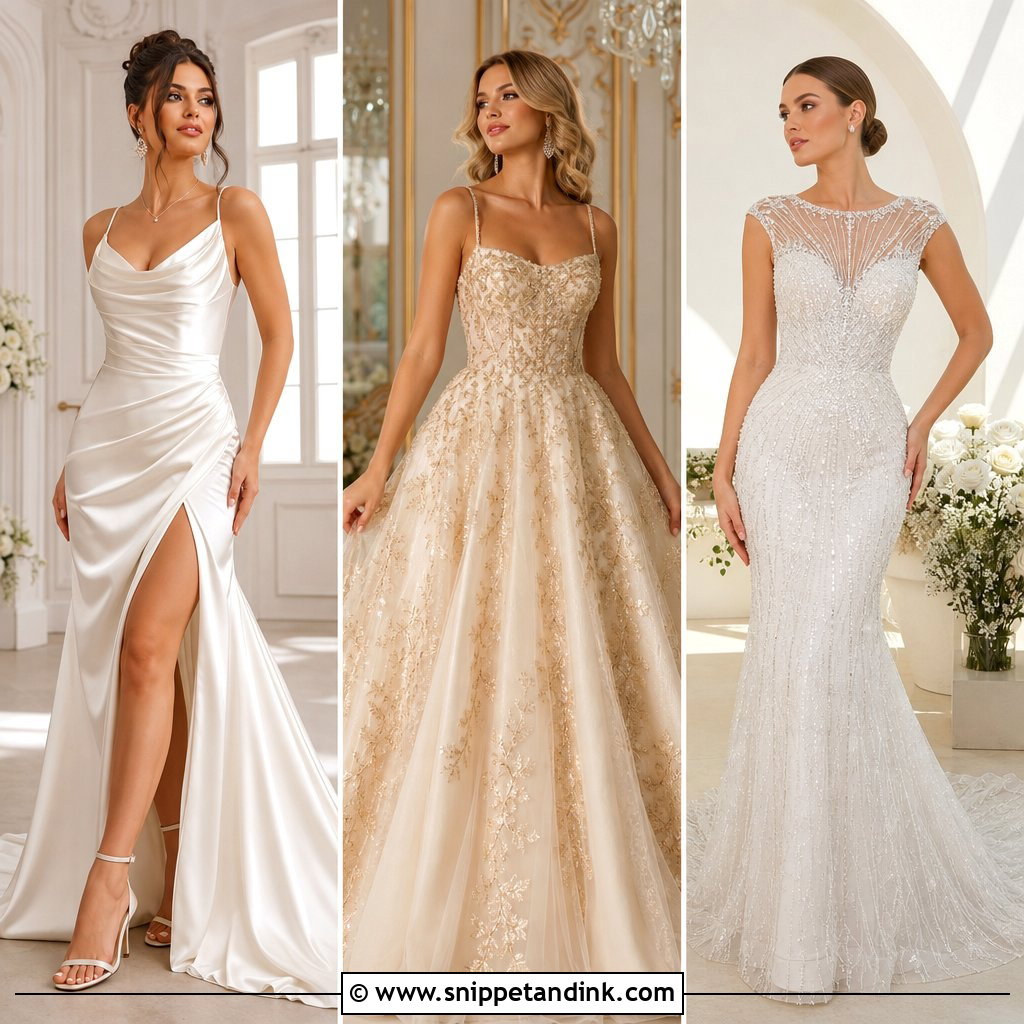
2. Inexpensive Satin Slip Wedding Dress
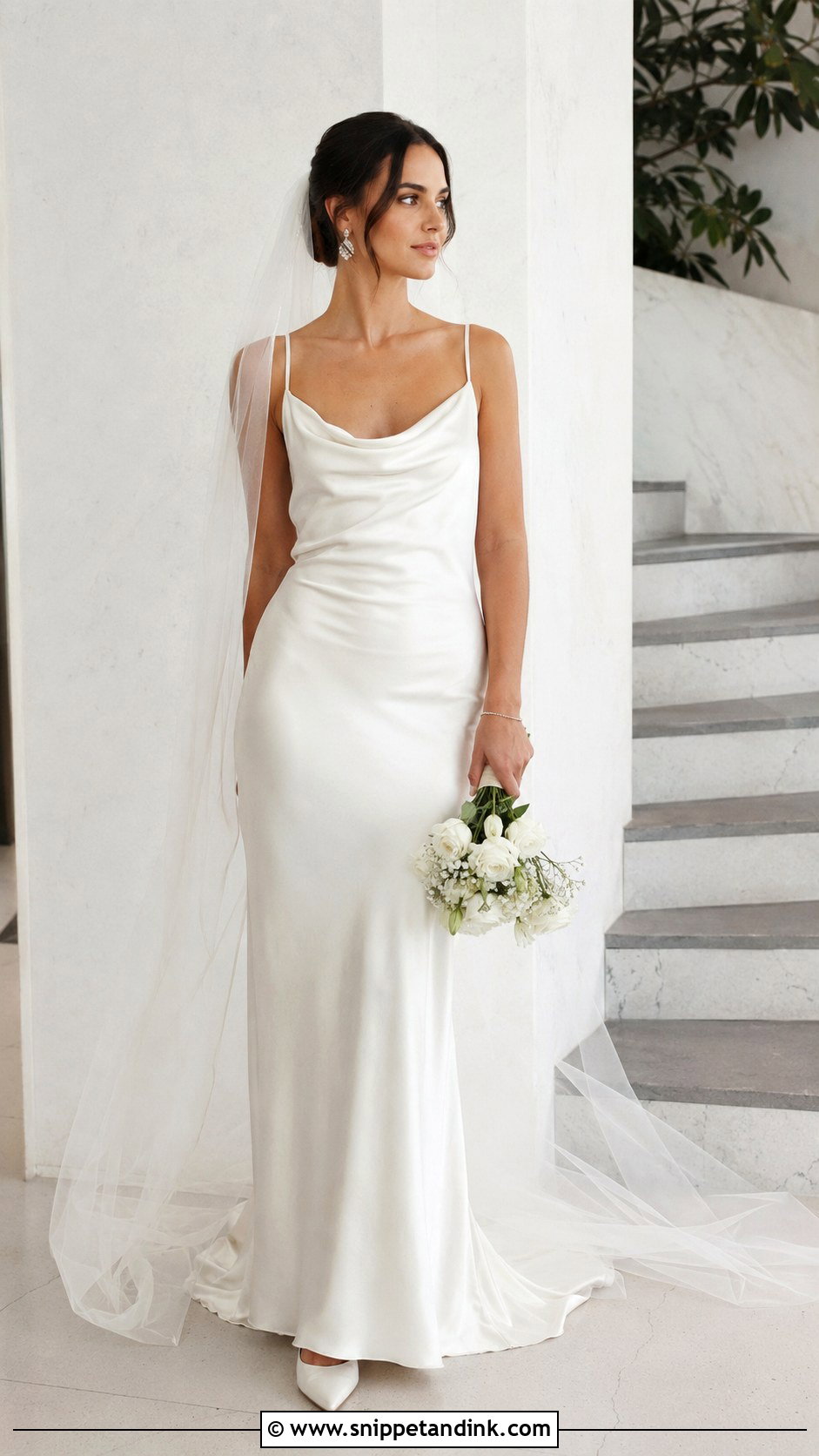
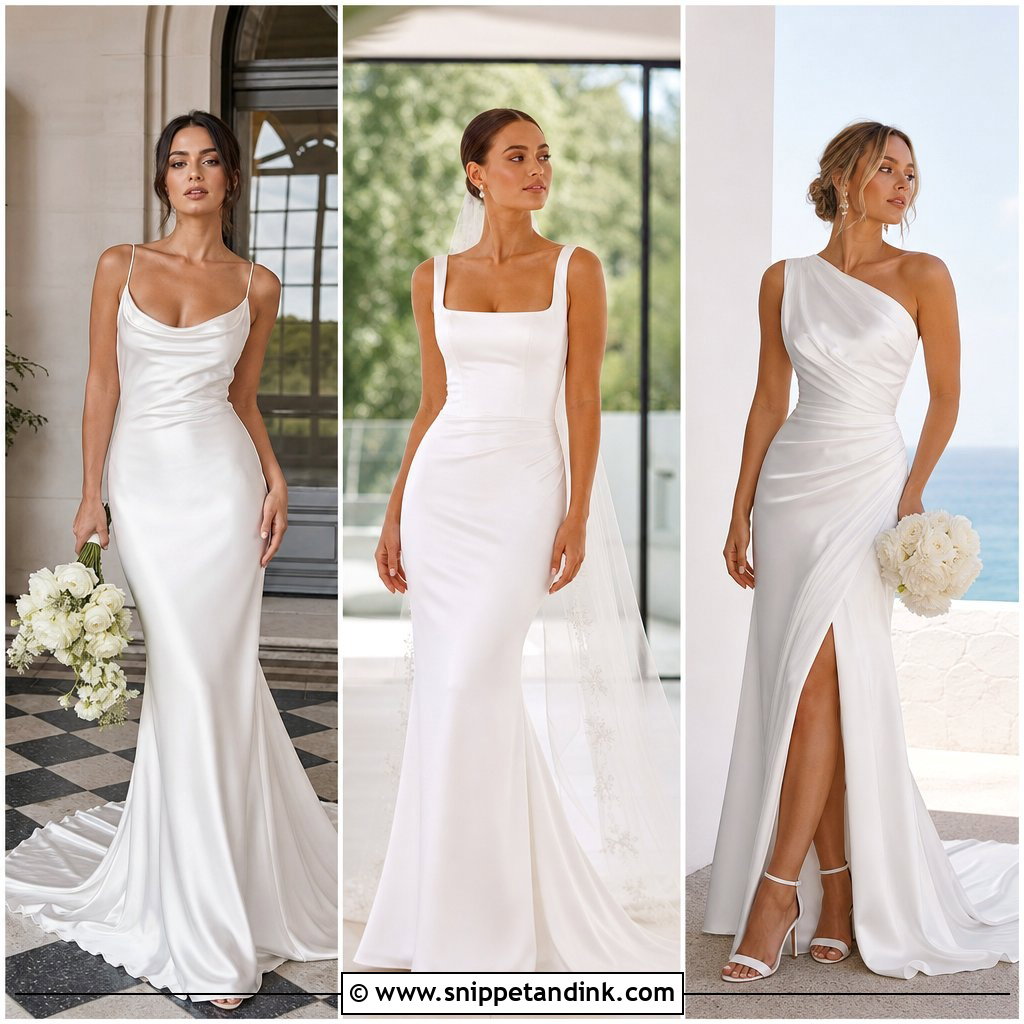
Bias-cut satin follows the body, which is exactly why it’s so unforgiving. The first thing I check on a cheap slip dress is whether it’s fully lined; an unlined polyester slip clings and shows every seam underneath. A cowl neck softens the look, and adjustable straps let you fine-tune the fit without a tailor. Steam it carefully, since satin shows every crease, and wear seamless undergarments. Pointed pumps, crystal studs and a sheer cathedral veil give the minimal dress a ceremonial feel. I’d steer you to it for a city venue or courthouse rather than a long outdoor day.
3. Inexpensive Lace Wedding Dress
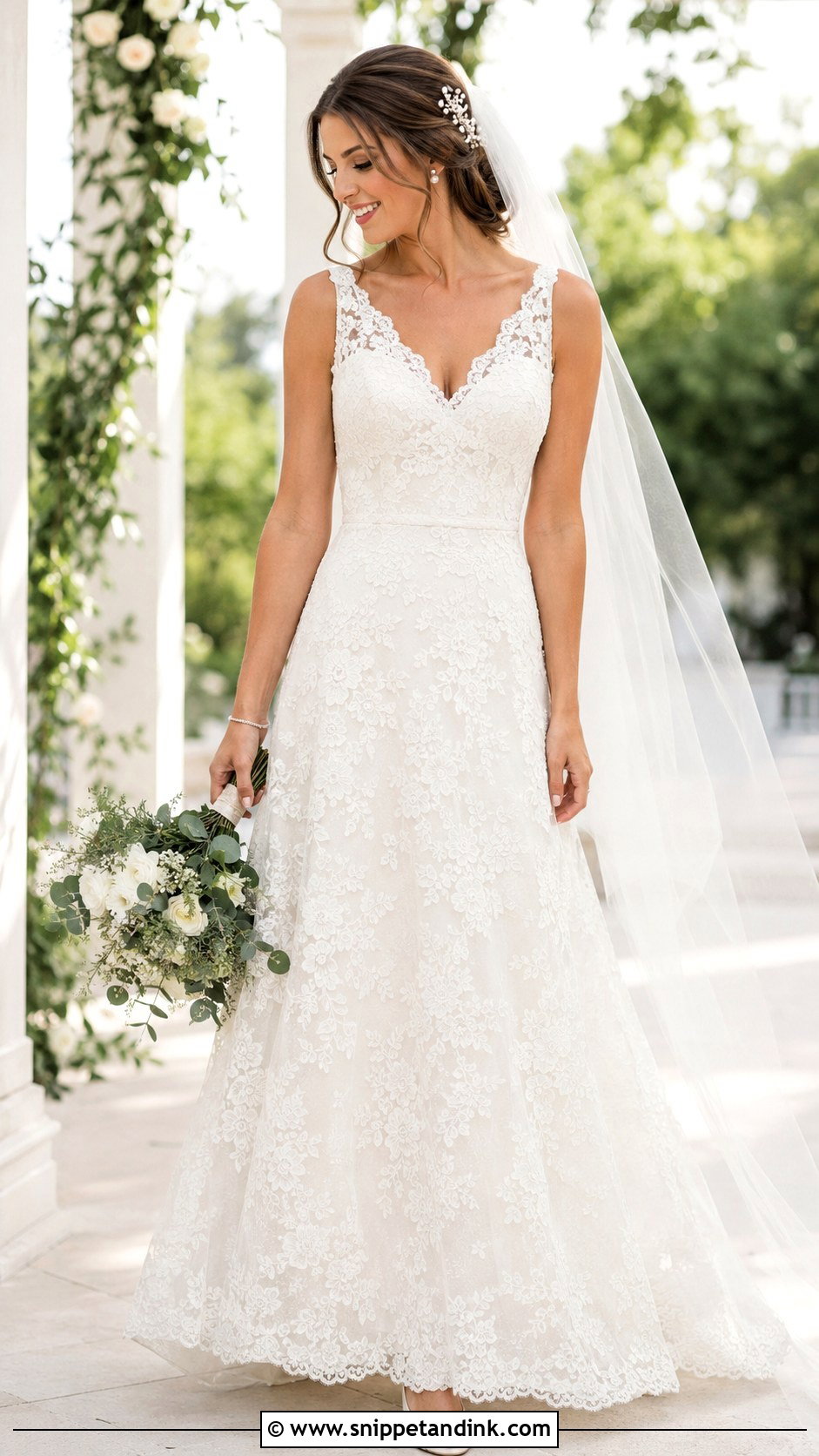
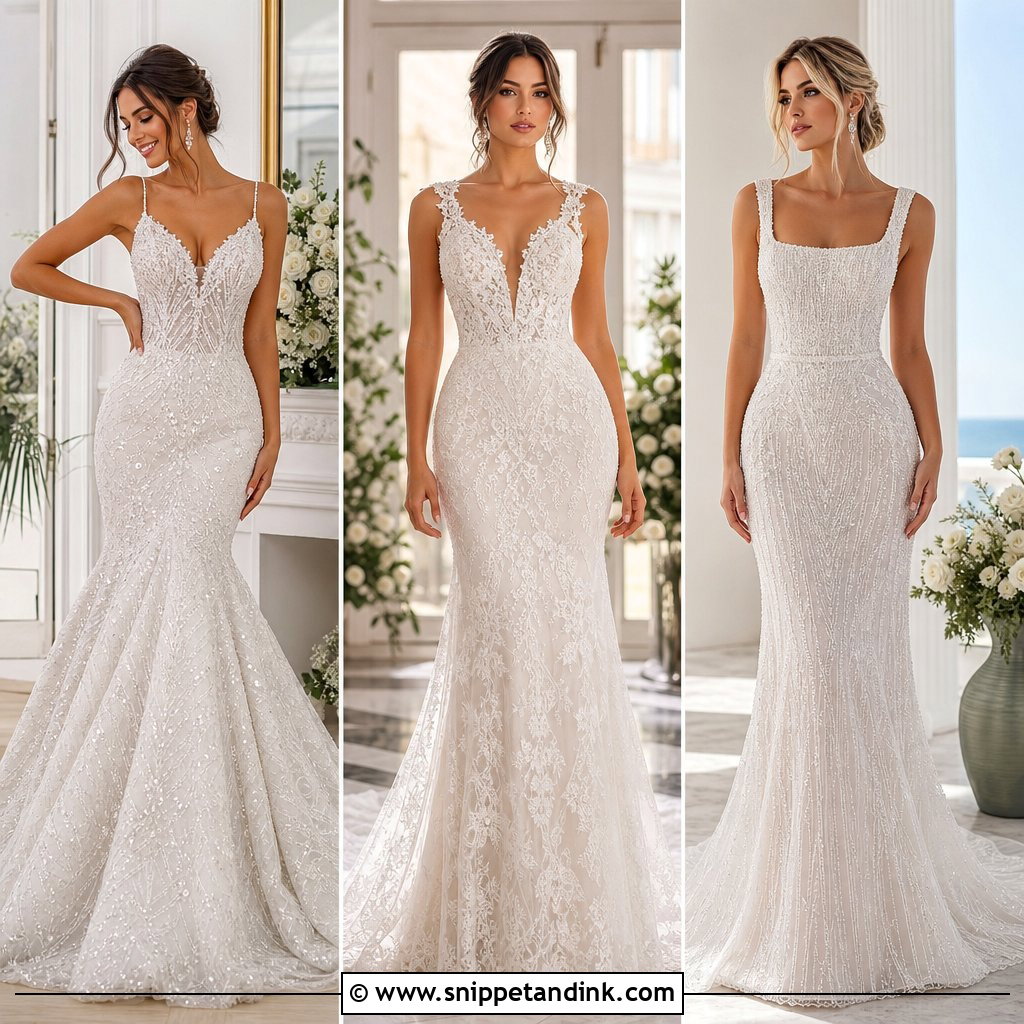
Budget lace varies enormously. Cheaper lace is usually machine-made with a flat, slightly plastic sheen, so hold it to the light: a good one has soft, raised motifs and an even net between them. Scalloped edges at the neckline and sleeves make an inexpensive gown look finished. Keep the silhouette simple, a fitted lace bodice over an A-line skirt, and the accessories quiet: pearl comb, studs, a plain tulle veil. If there are sheer panels, check the lining under both daylight and indoor light.
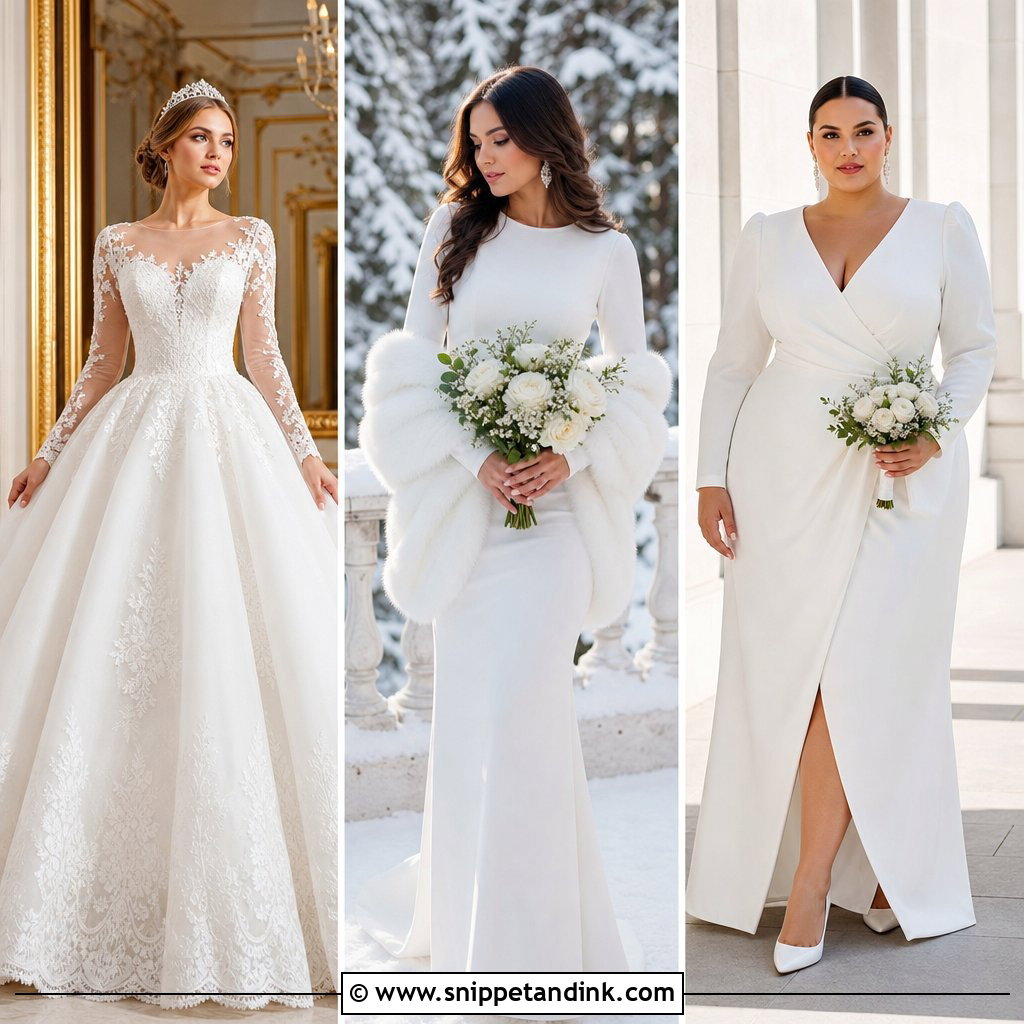
4. Inexpensive Long-Sleeve Wedding Dress
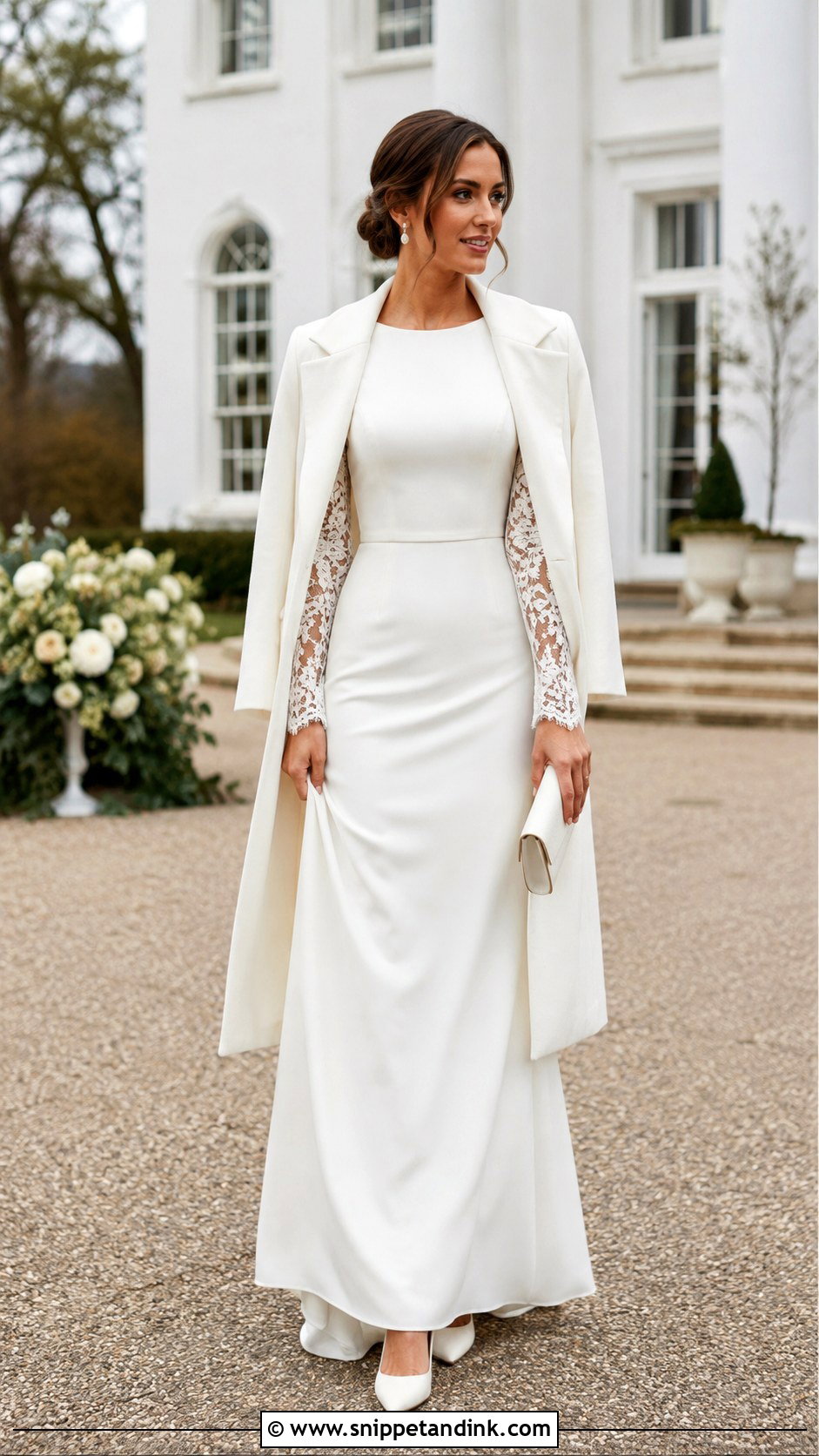
Sleeves are where cheap dresses show their price, because a poorly cut sleeve pulls across the back the moment you reach forward. Lift both arms and hug yourself in the fitting room before buying. Stretch crepe sleeves look clean and modern; lace sleeves feel softer and more vintage. A defined waist and flowing skirt balance the extra coverage. For a cold outdoor ceremony, an ivory tailored coat over the top lets you pose for portraits and then take it off for the reception.
5. Inexpensive Tea-Length Wedding Dress
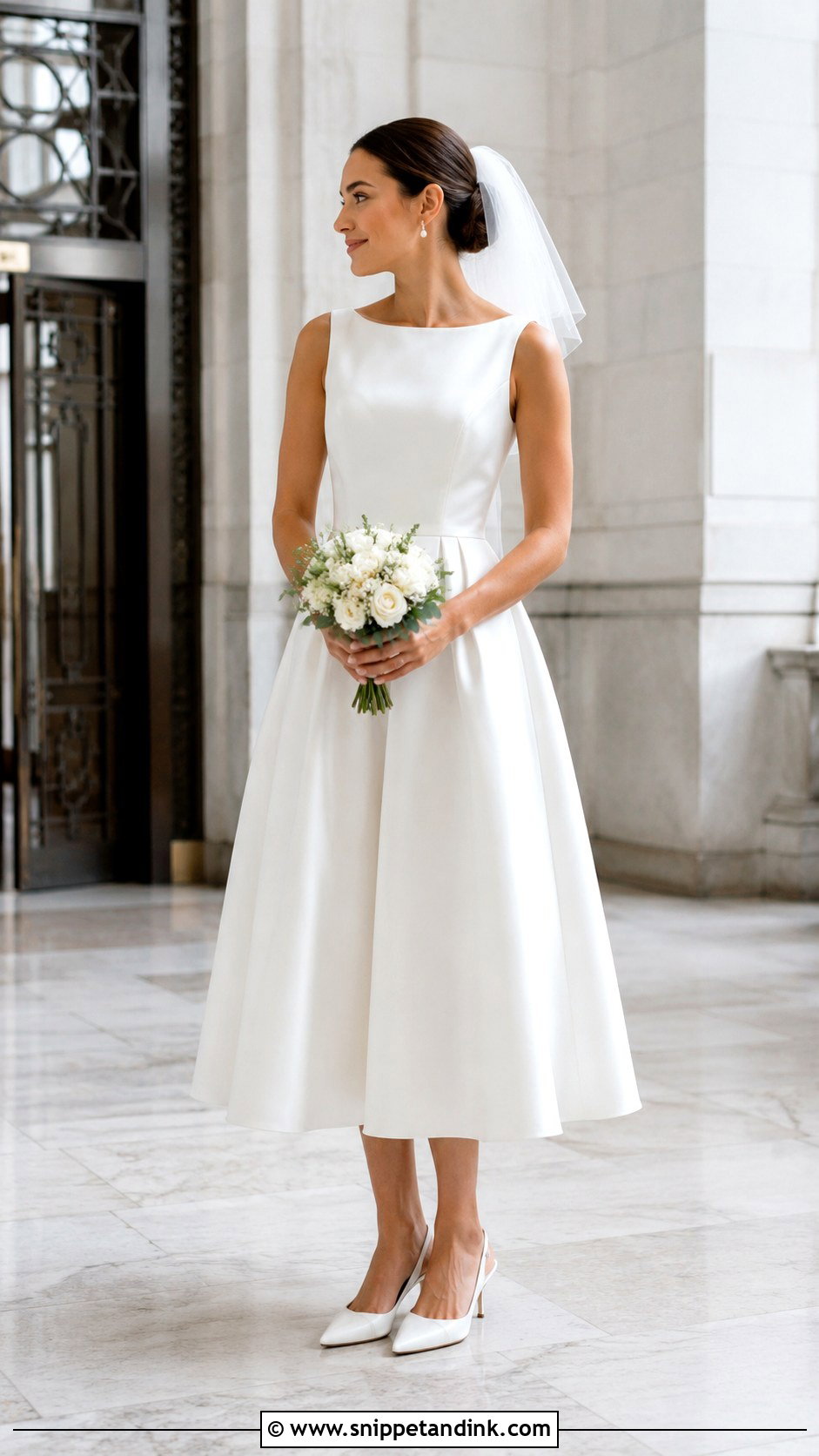
Tea length, somewhere between knee and ankle, is cheaper to make and cheaper to alter than a floor-length gown. Satin, tulle and floral jacquard all hold a structured skirt well. The shoes become part of the look, so pick a pair you’ll actually be able to stand in for hours; pointed slingbacks or a low block heel both work. Hold a compact bouquet; a large cascade overwhelms the shorter proportion. My favorite settings for it are courthouse weddings, brunch receptions and smaller venues.
6. Inexpensive Chiffon Wedding Dress
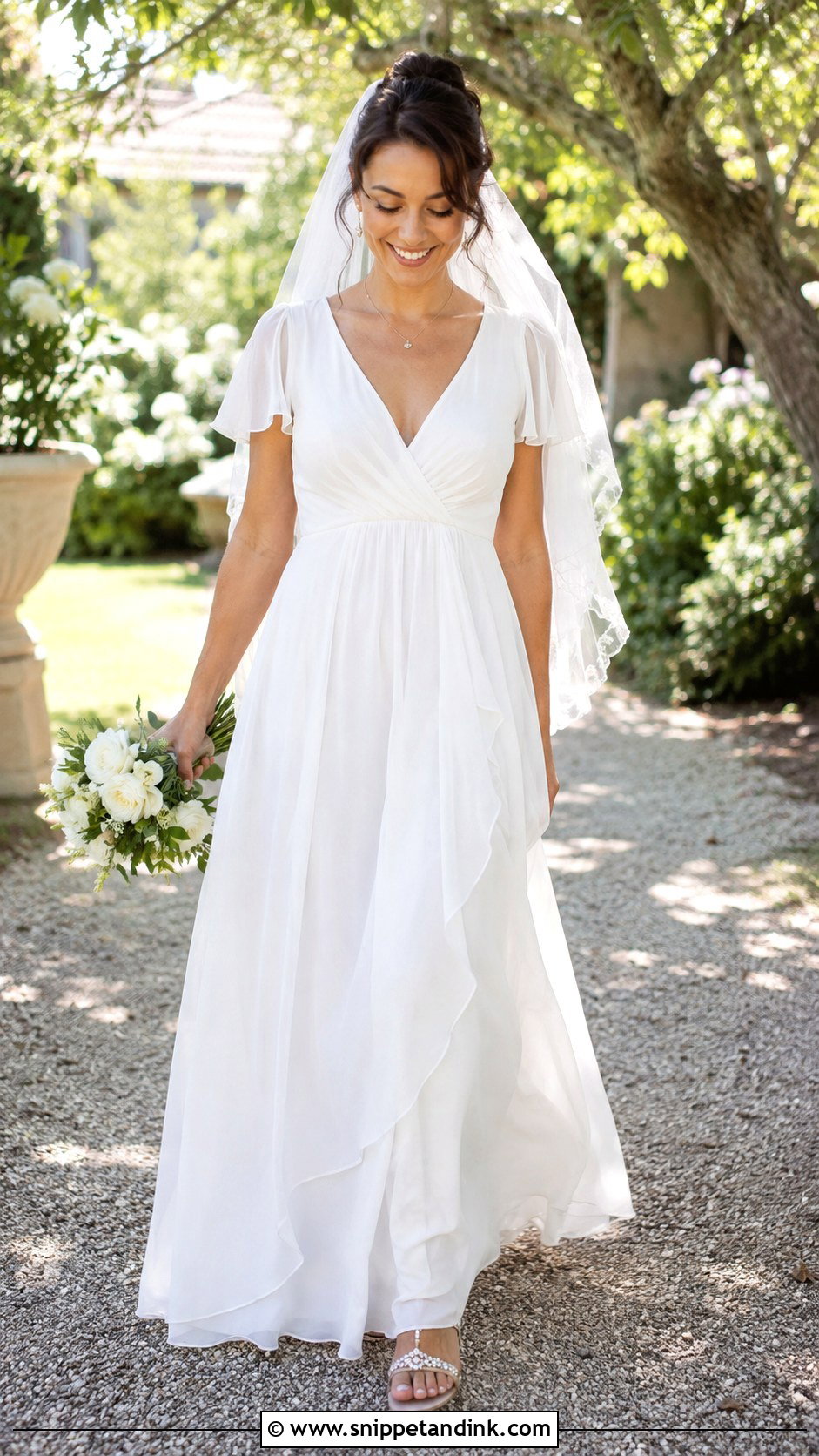
Chiffon is light, floaty and cool in summer heat. It’s also slightly sheer and wrinkles if you look at it, so I check two things before recommending one: full lining, and whether the dress has been cut with enough layers to fall nicely. A wrap bodice, flutter sleeves or an empire waist add shape. Low block heels or flat sandals suit grass and sand. Plan for a proper steam on the morning of the wedding, because travel creases in chiffon don’t drop out on their own.
7. Inexpensive Off-the-Shoulder Wedding Dress
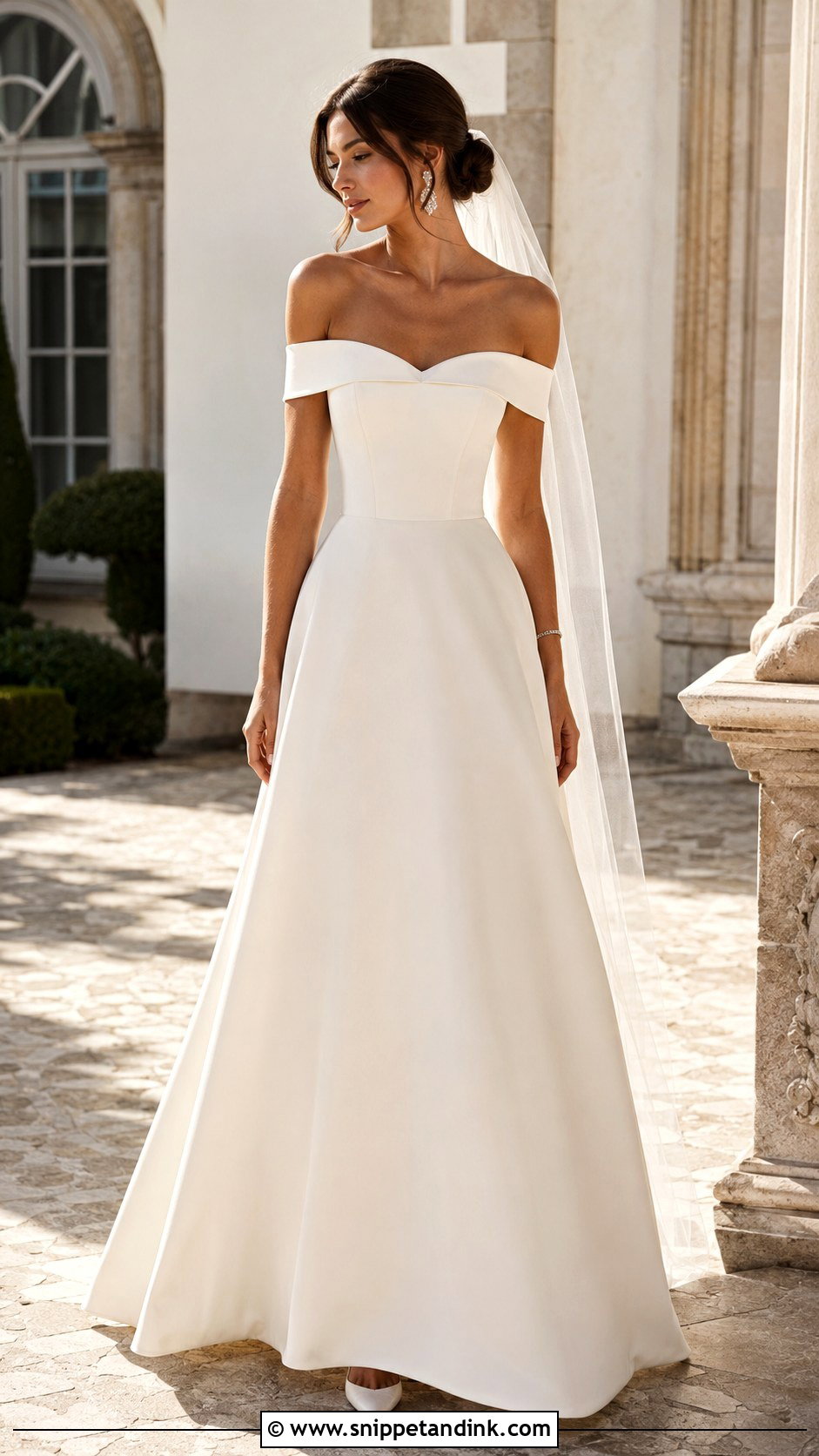
An off-the-shoulder neckline looks dressy without any embellishment, but it only works if the bodice has internal structure. Without boning or an elastic grip at the neckline, it slides down your arms all day and you spend the reception hitching it up. Sit, raise your arms and walk in it before buying. A smooth A-line or fitted crepe skirt keeps the look balanced. Skip the necklace and let the collarbone show; a low bun with a comb veil finishes it.
8. Inexpensive Square-Neck Wedding Dress
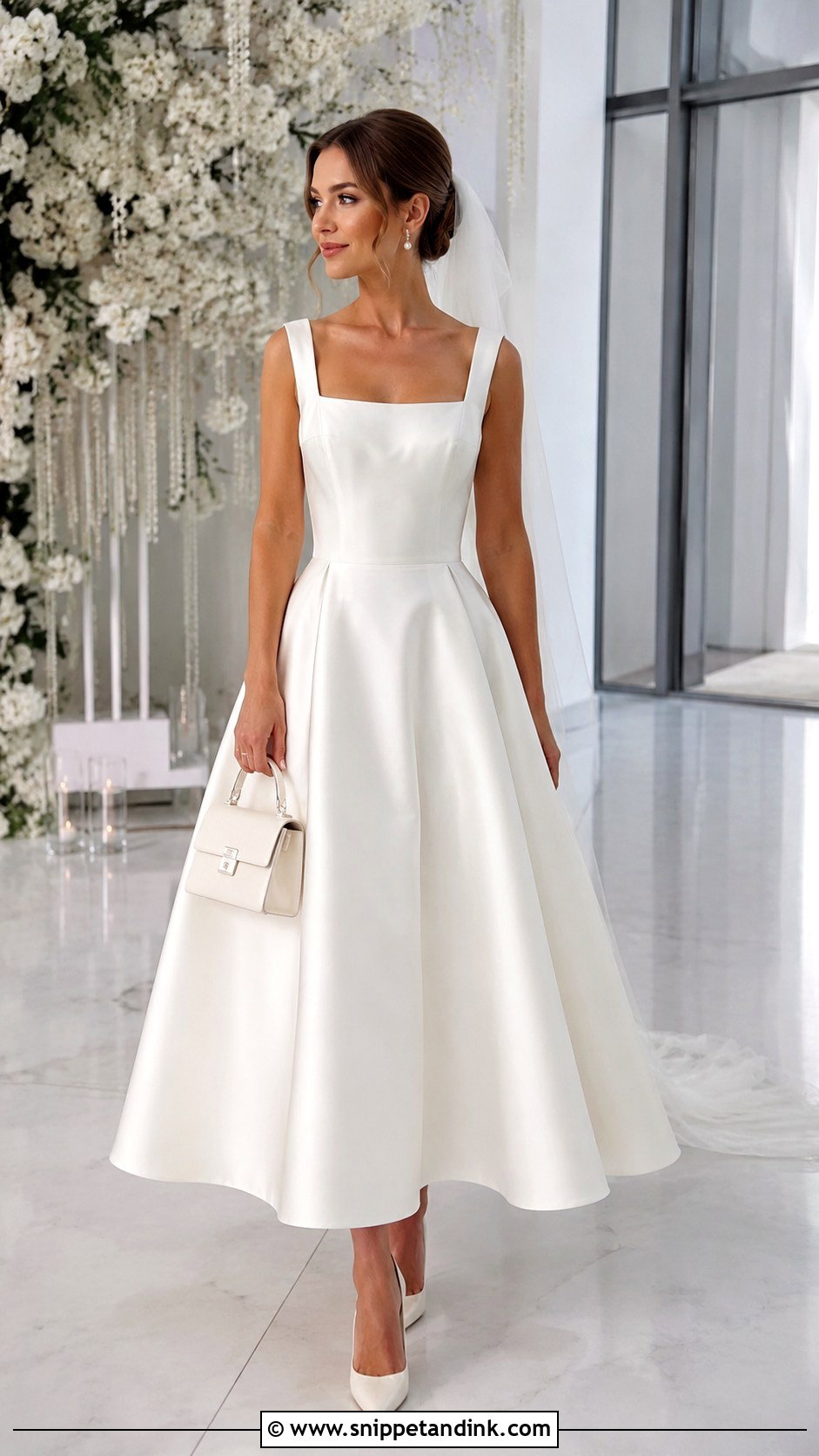
Clean lines and wide straps make the square neck an easy shape to wear on a budget. Satin, mikado-style polyester or a heavier crepe gives the bodice structure. The corners of the neckline are where I look first: if they gape when you lean forward, the bodice needs taking in at the side seams. A simple tulle veil and pointed pumps keep it crisp. Wear your hair up or in soft waves pushed back so the neckline shape stays visible.
9. Inexpensive Strapless Wedding Dress
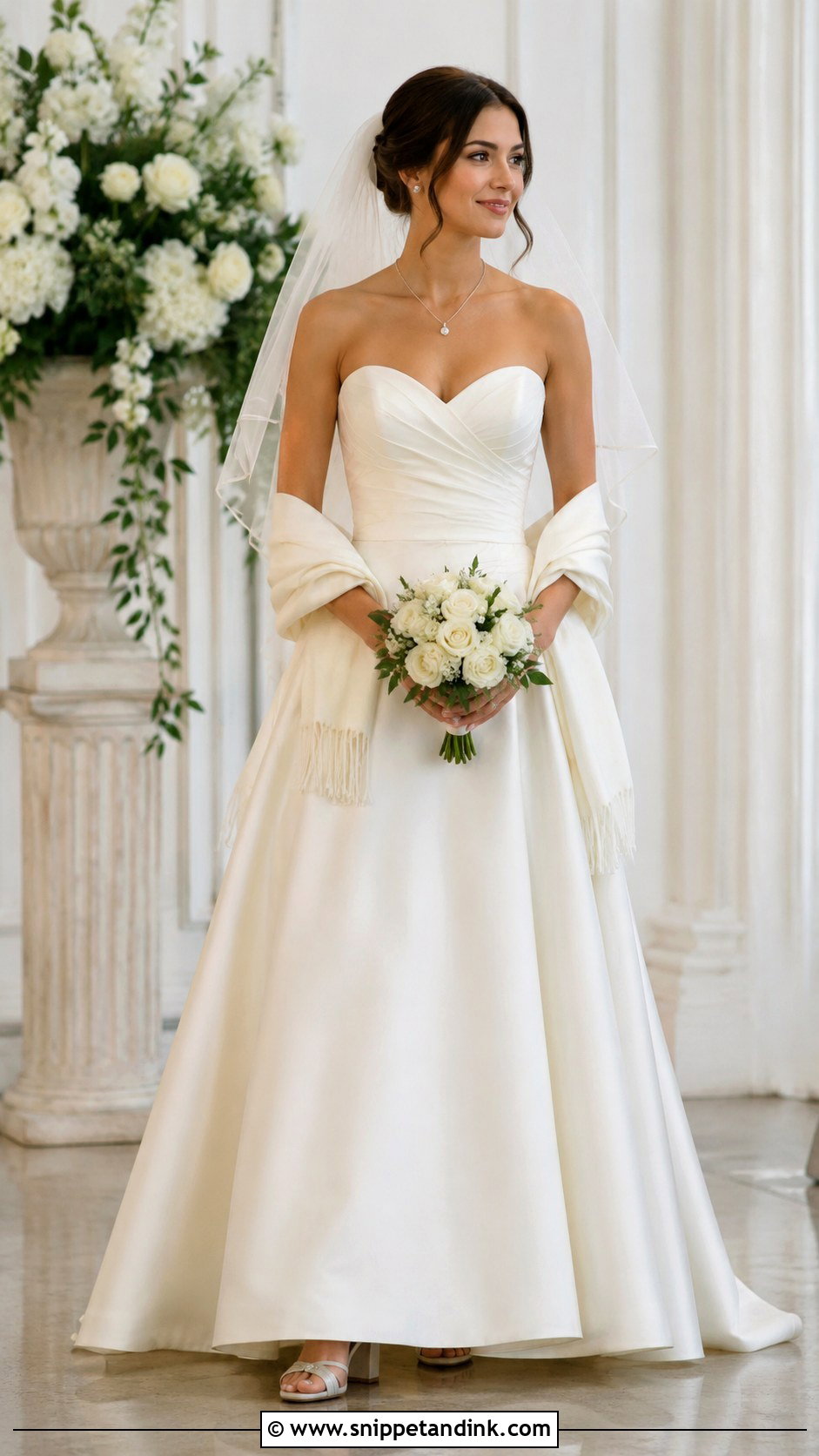
A strapless gown needs real construction to stay up. Look for boning, a silicone grip strip along the neckline and a supportive lining; decoration doesn’t hold a bodice in place. A sweetheart or straight-across neckline suits an A-line, column or modest ball skirt. Bring the exact bra or shapewear you’ll wear to every fitting, since even a small change underneath alters how the bodice sits. Professional bodice alteration is worth paying for here. A satin wrap gives optional coverage for the evening.
10. Inexpensive Empire-Waist Wedding Dress
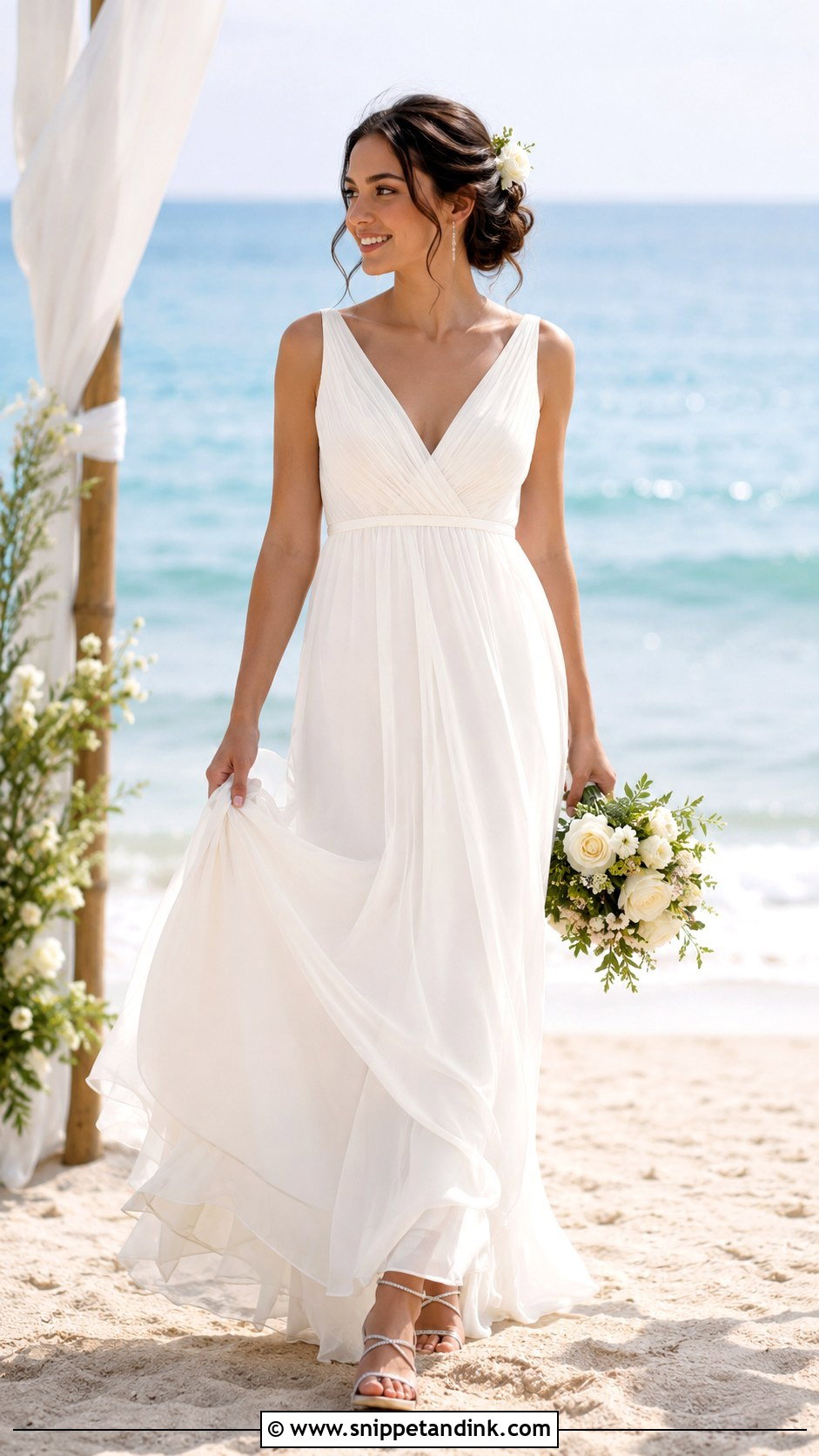
Empire waists gather just under the bust and let the skirt fall loose, so they’re comfortable through a long day. Lined chiffon, soft tulle or light crepe drapes best. A V-neck keeps the bodice from looking bulky. A narrow ribbon at the waist adds definition, but avoid heavy beading, which drags fine fabric down. Watch the hem: shortening several chiffon layers takes a tailor much longer than one layer, so buy as close to your height as possible to keep alteration costs down.
11. Inexpensive Courthouse Wedding Dress
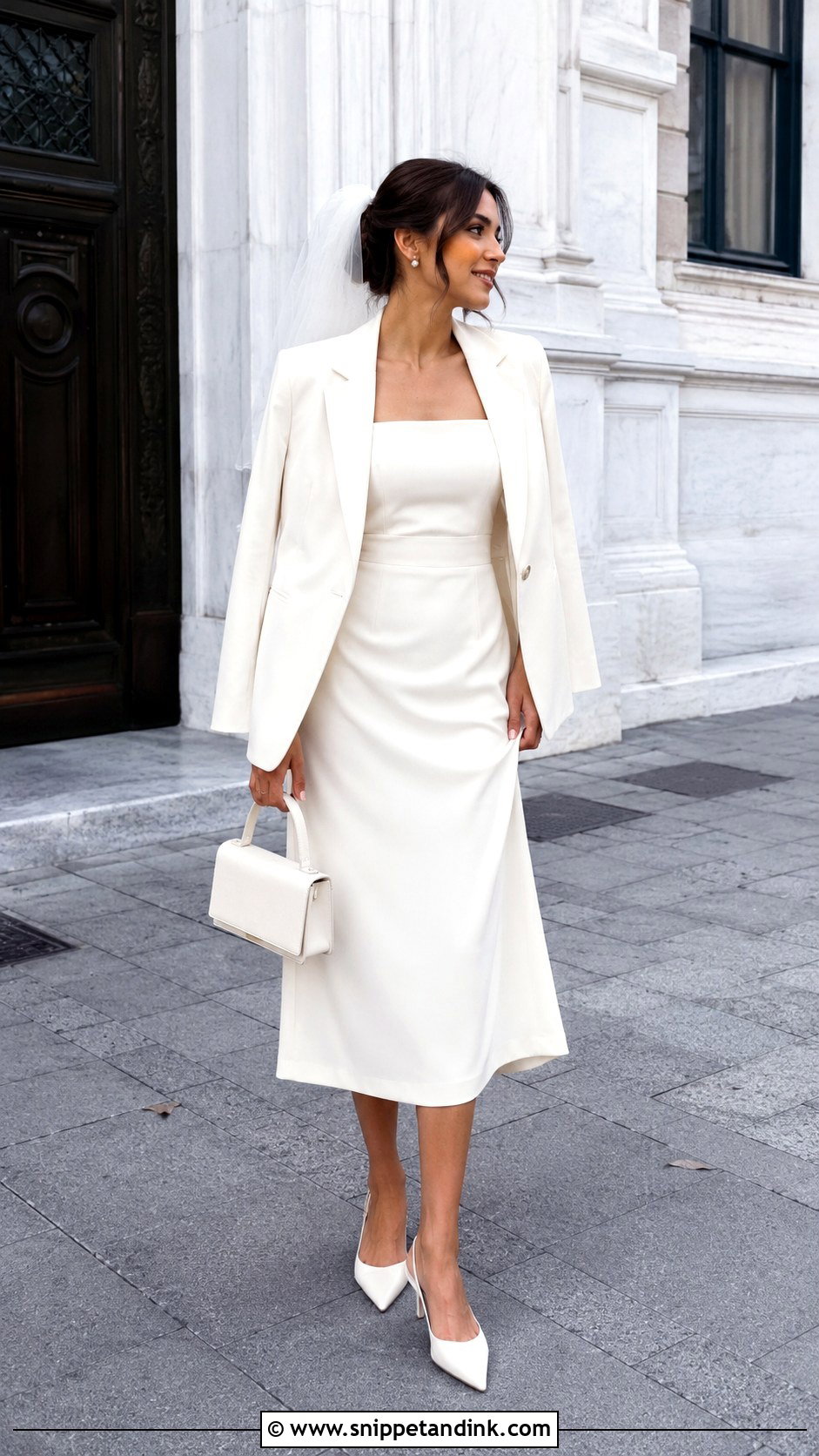
Courthouse weddings involve more walking than people expect: corridors, steps outside, maybe a street photo session and a restaurant afterward. A clean midi dress with a fitted waist and square neck is ideal. Crepe or satin gives a bridal finish without a train. A short veil, bow headband or simple comb signals “bride” without being too much for a small room. Choose shoes you can wear all day, and bring an ivory blazer for cooler weather.
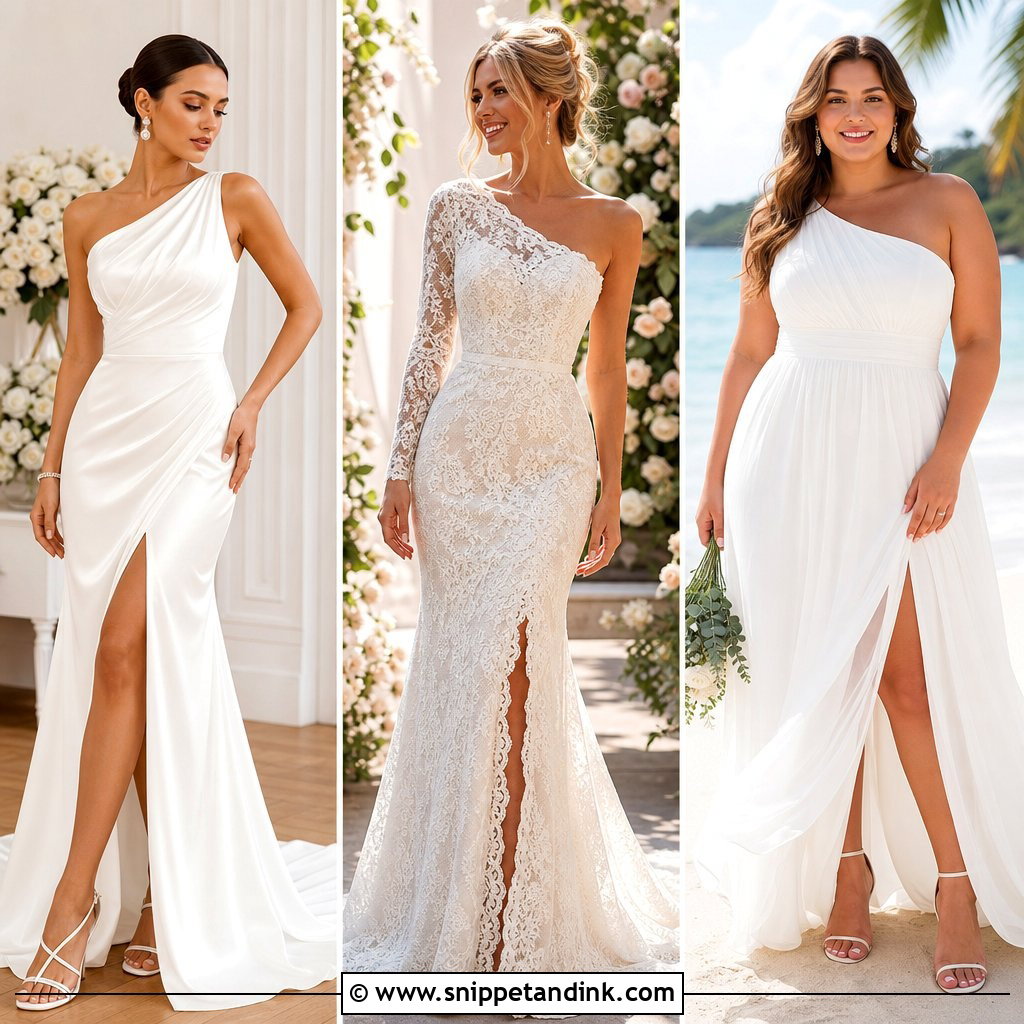
12. Inexpensive Beach Wedding Dress
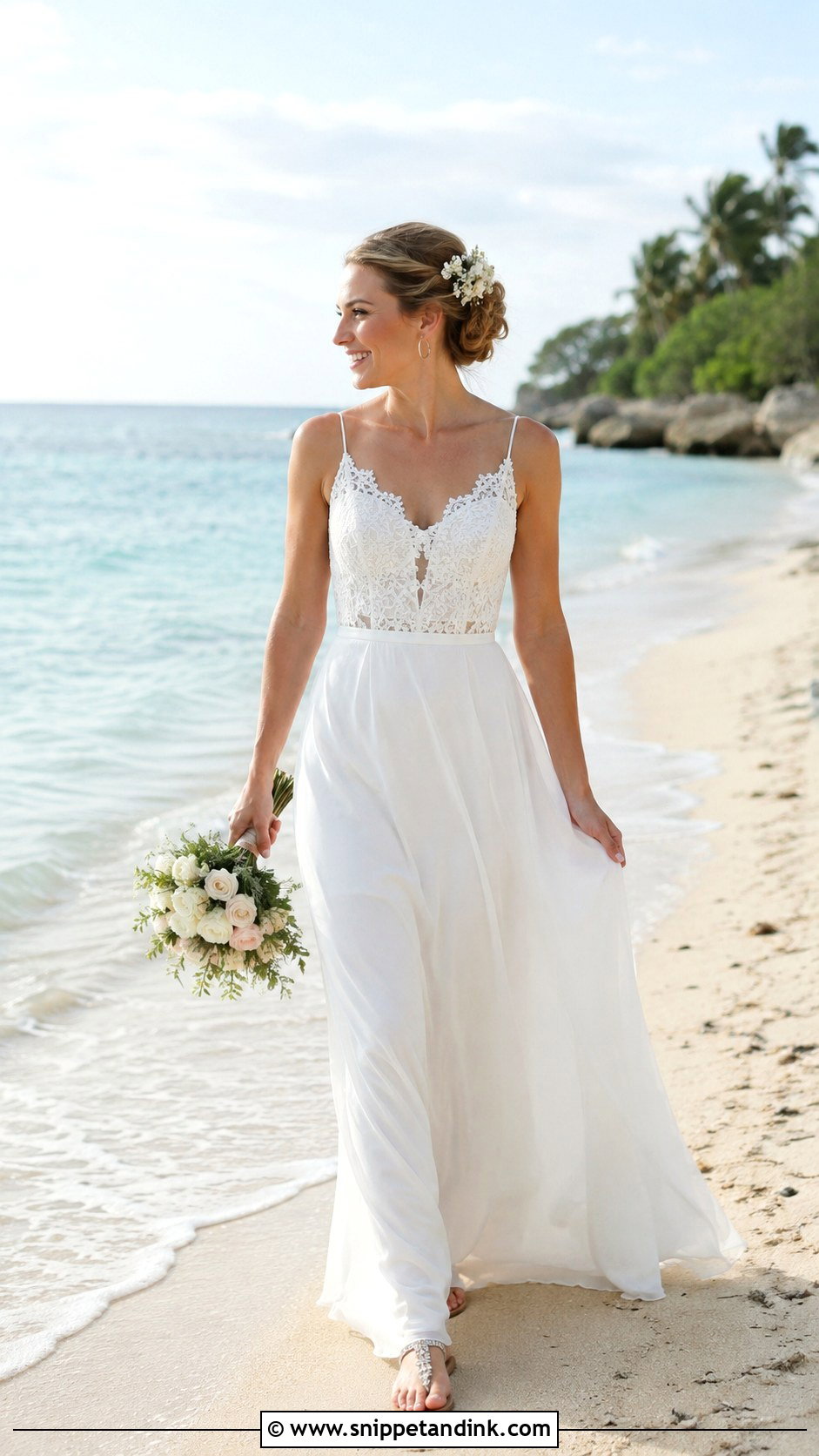
Beach weddings are hard on dresses. Sand drags on long hems, wind lifts veils and lightweight fabric turns see-through in strong sun. A simple chiffon, lace or crepe gown with a narrow A-line skirt handles all three best. Skip long trains, heavy underskirts and dense beading. Flat embellished sandals work better than heels on sand, and fresh flowers or firmly anchored pins hold up to wind better than a long veil. Before the day, take a photo of the dress in direct sunlight to check transparency. Hem it for bare feet or flats, not heels.
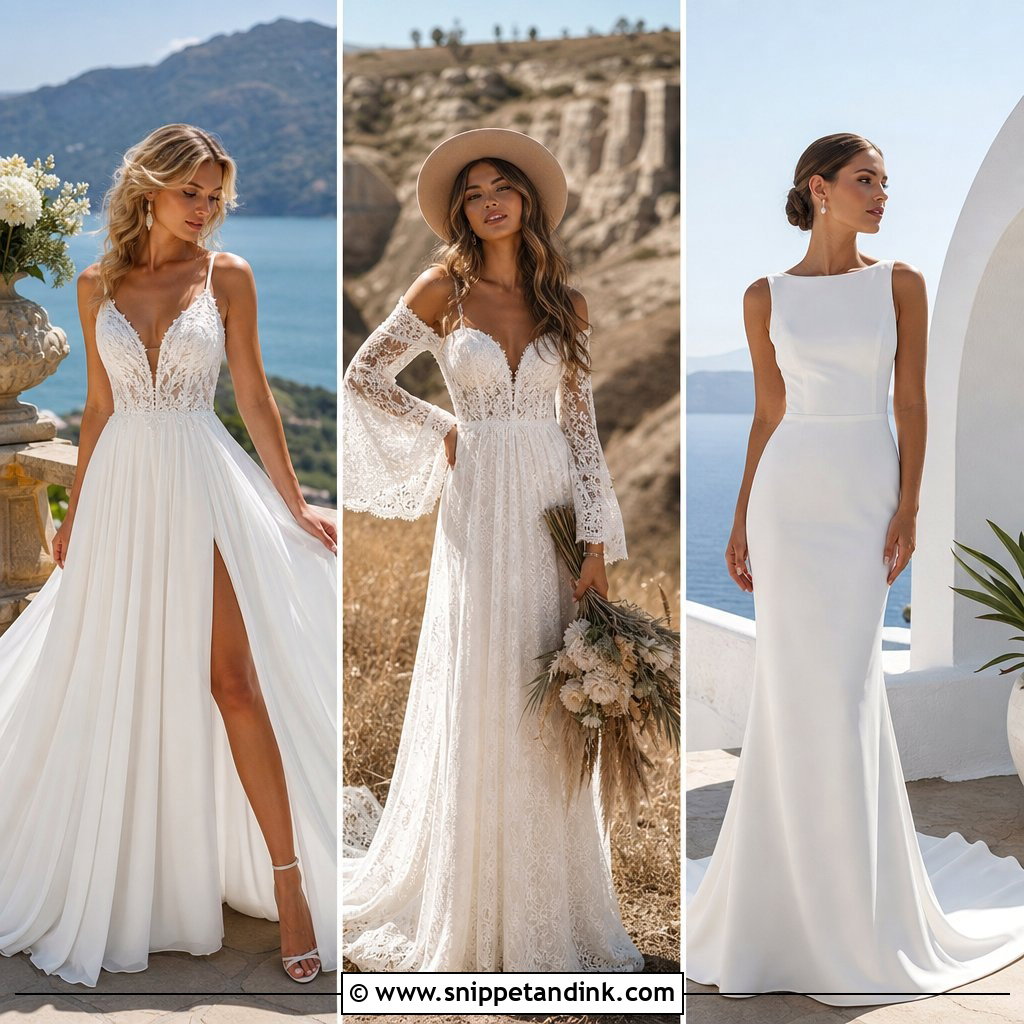
13. Inexpensive Boho Wedding Dress
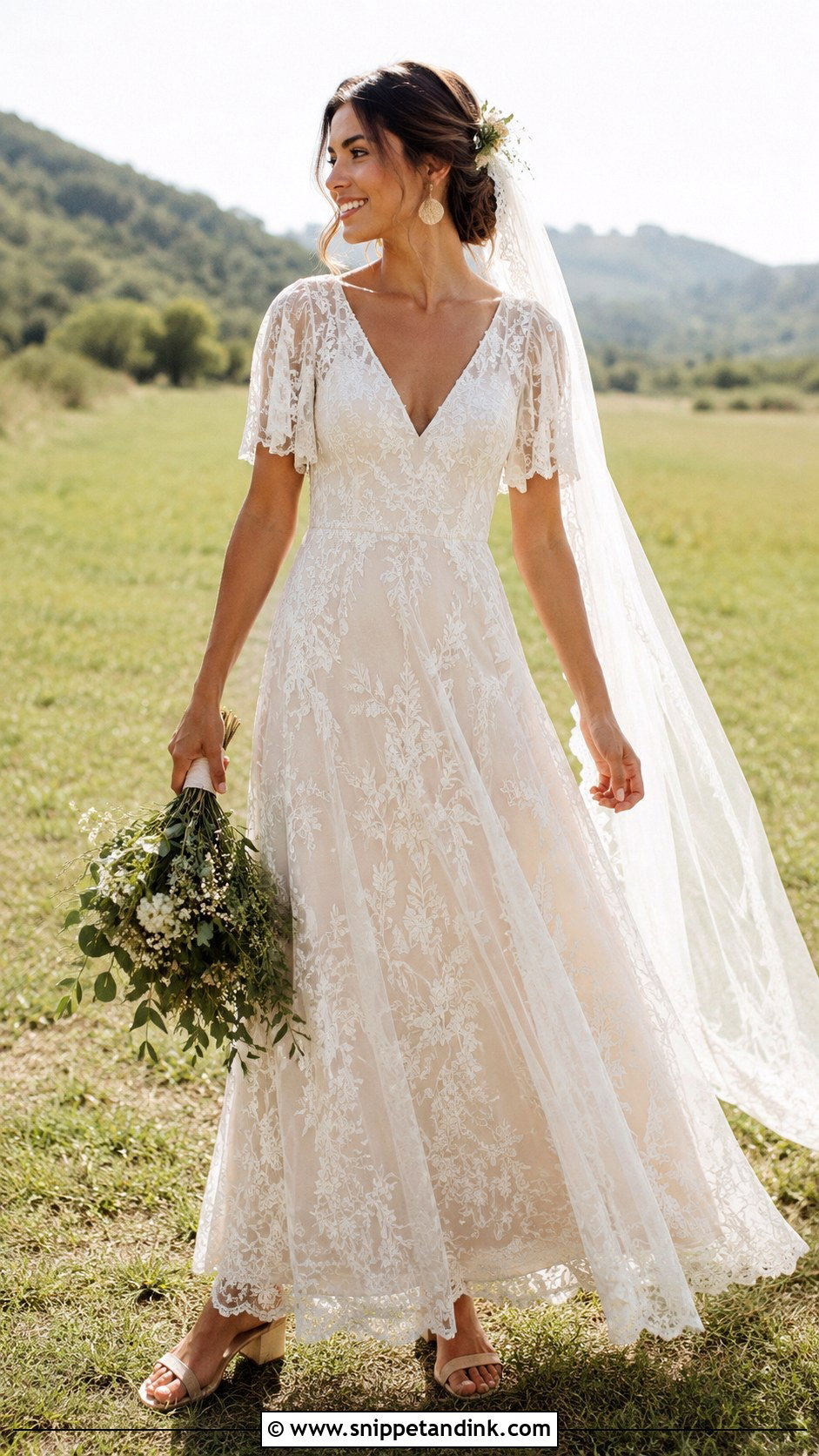
Boho dresses are naturally budget-friendly, since relaxed lace and flowing fabric don’t need complicated structure. Choose an A-line with botanical lace, flutter sleeves or a soft waist. A nude or champagne lining under ivory lace makes the pattern show up in photos. The common mistake is piling it all on, so fringe, bell sleeves, heavy lace and statement jewelry all together look like a costume. Pick two details and keep the rest simple. Low block sandals and a loose braided updo suit woodland and field venues.
14. Inexpensive Minimalist Wedding Dress
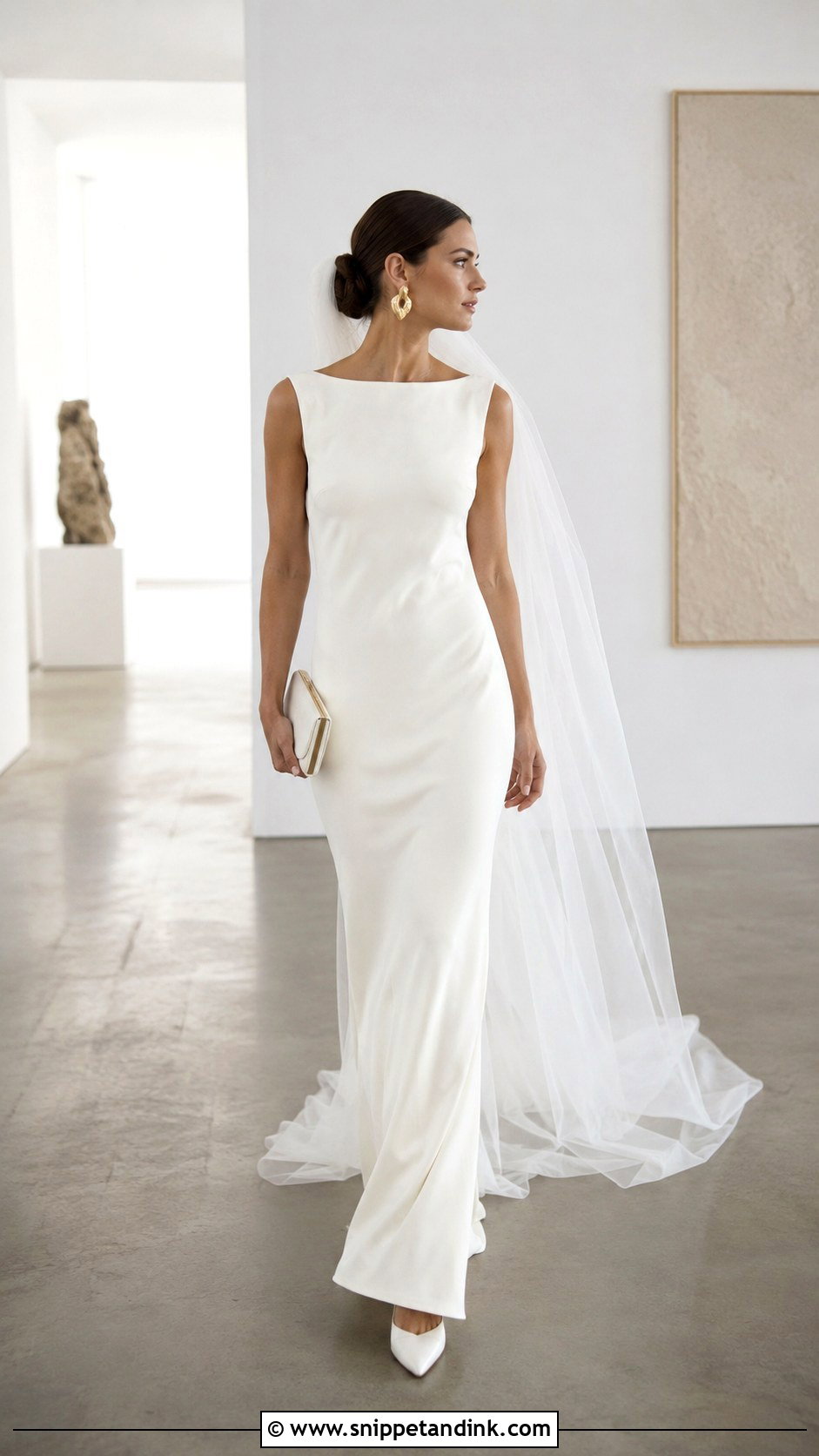
Minimalist dresses look expensive only when the fit is precise, because there’s nothing to distract from a badly placed seam. Smooth crepe, satin or a matte fabric in a column or soft A-line is the usual shape. A boat neck, scoop or narrow V keeps it modern. Before buying, look at the inside: the zipper should lie flat, seams should be straight and the lining shouldn’t twist. Line-free undergarments are essential here. Pair it with a long plain cathedral veil for contrast. It suits galleries, rooftops and city halls.

15. Inexpensive Vintage Wedding Dress
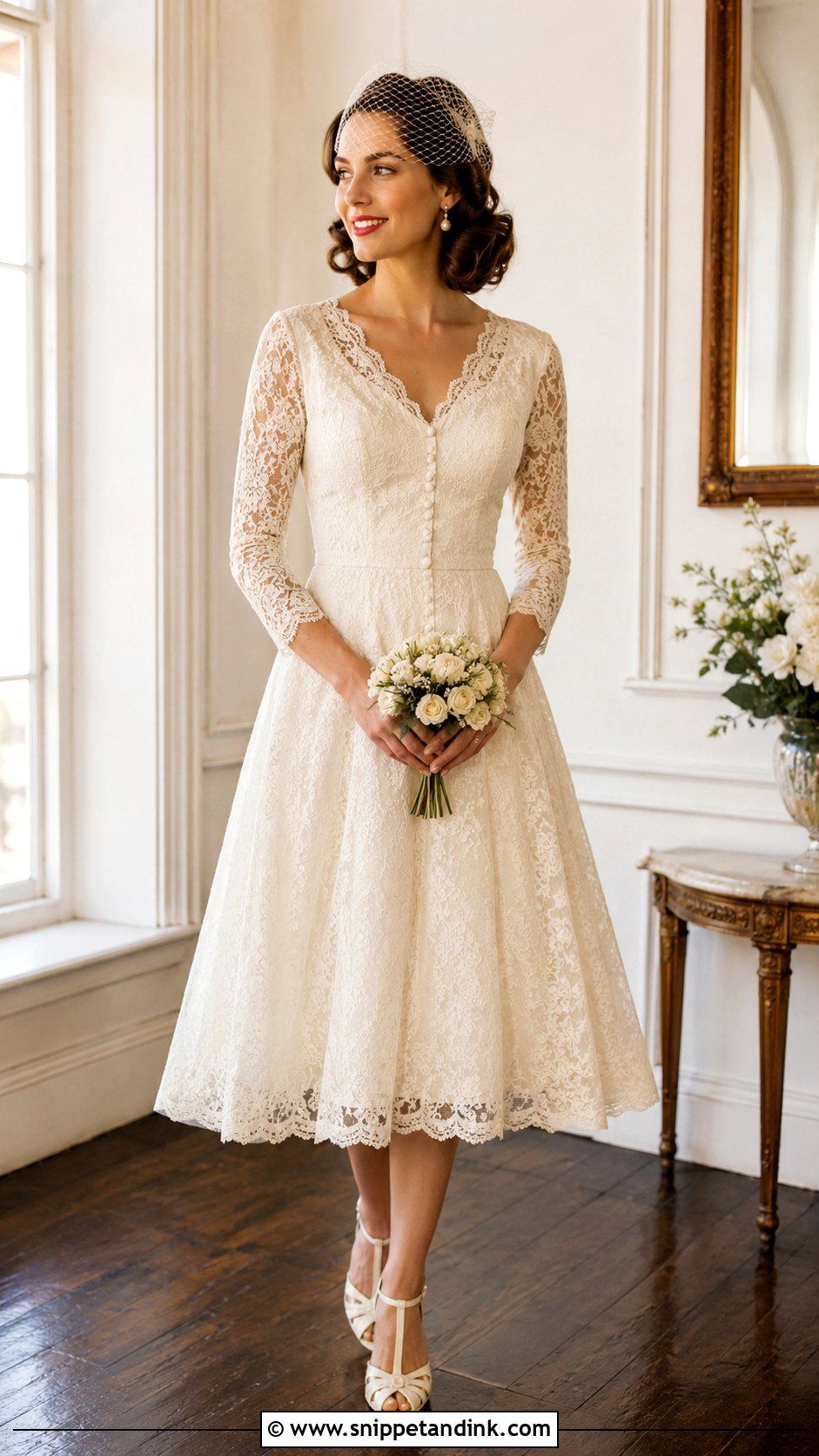
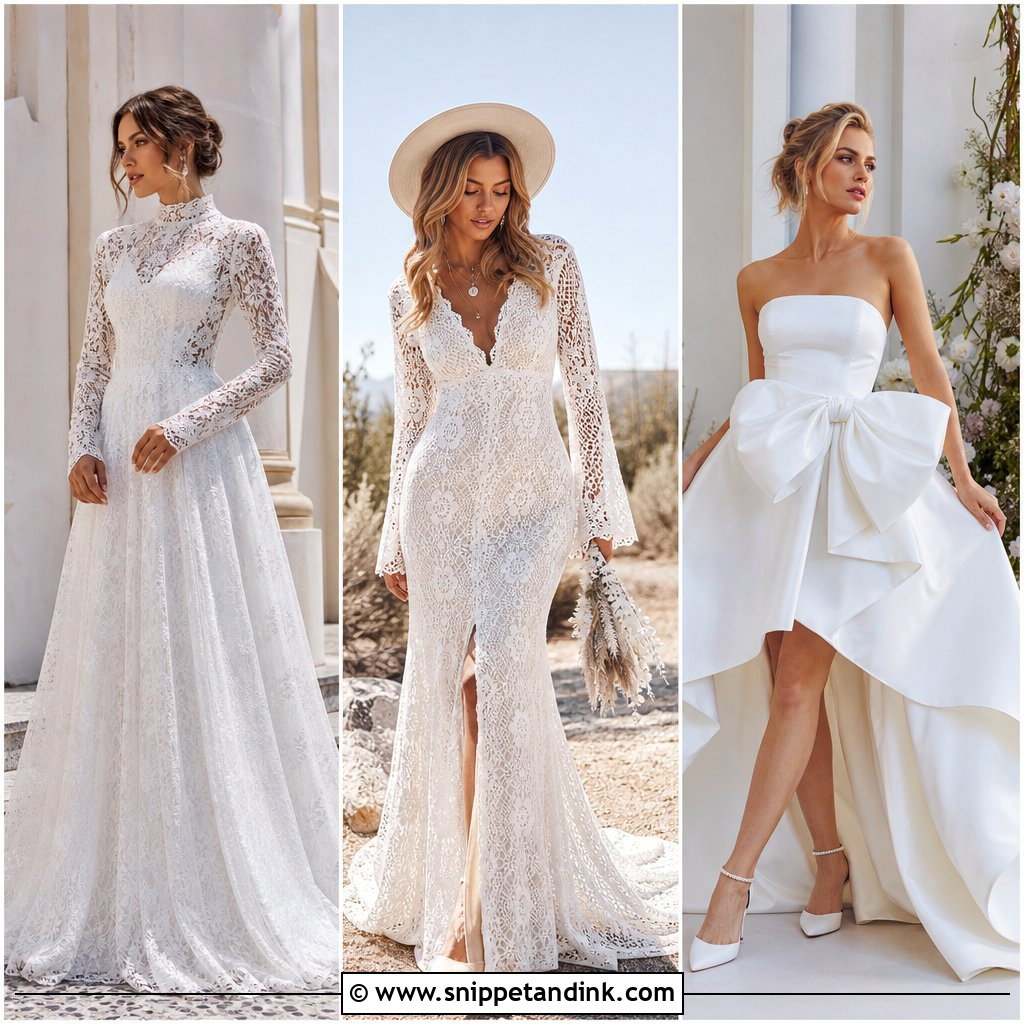
You can get the vintage feeling without buying a genuine antique. Choose a gown with one or two period details: a modest V-neck, lace sleeves, covered buttons or a pleated skirt. Mixing references from several decades looks like costume. Finish with T-strap heels, pearl earrings and a small birdcage veil or comb-style headpiece. If you do buy a resale gown, inspect for yellowing, missing buttons and fragile seams, since vintage repairs need a specialist and can quickly cancel out the savings.
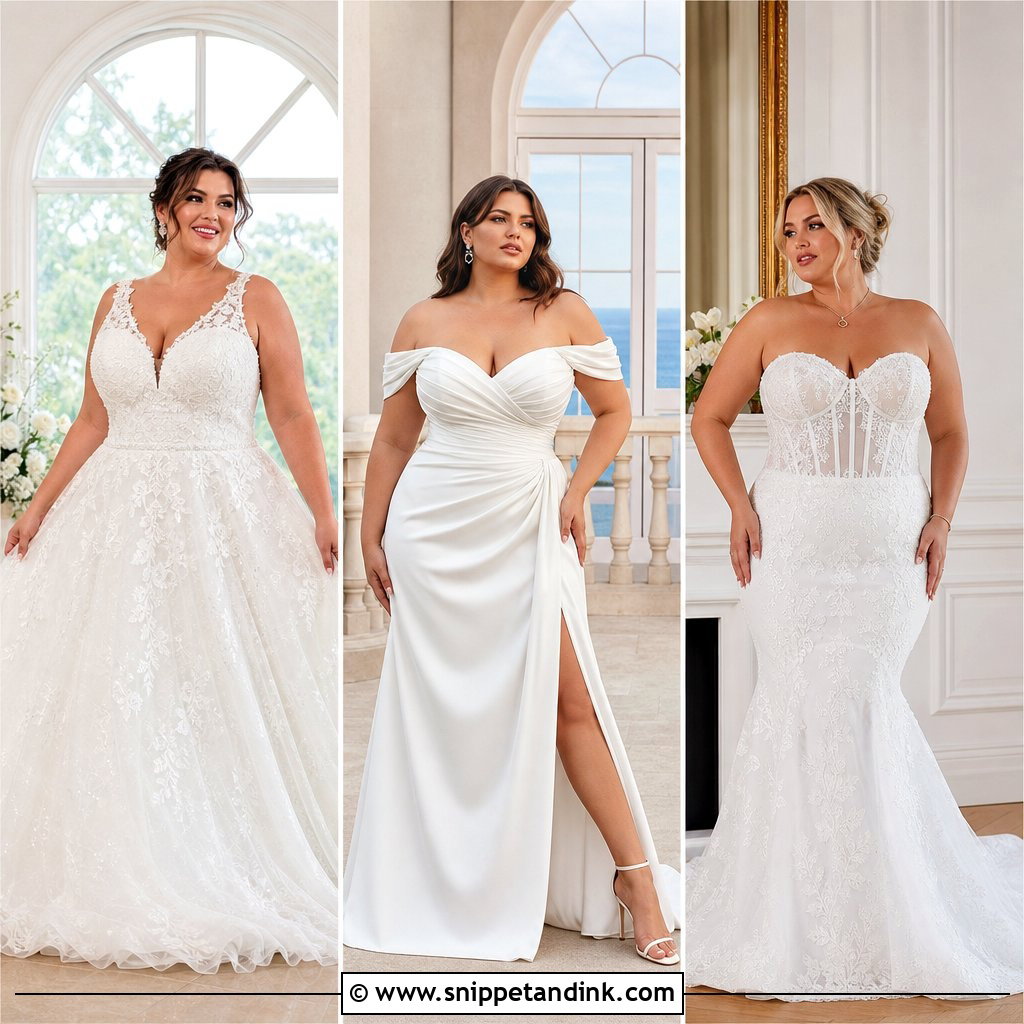
16. Inexpensive Plus-Size Wedding Dress
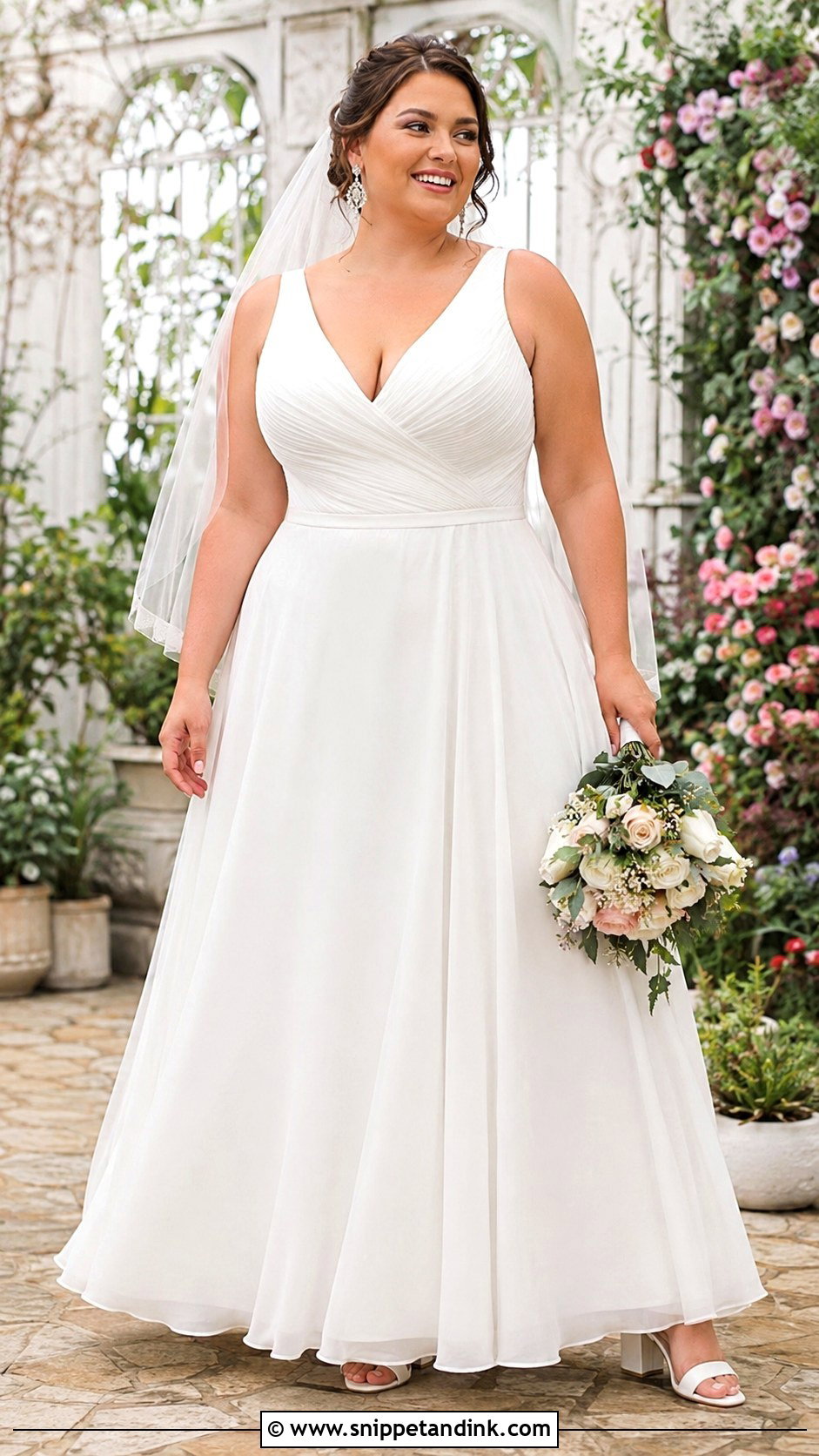
Plus-size budget gowns vary hugely in quality, and the difference is usually in the support rather than the look. Wide straps, real boning and a defined waist make the biggest difference. A-line, empire, fit-and-flare and wrap shapes all work; choose the one you feel best moving in. I always ask for the retailer’s actual garment measurements, because bridal sizing often runs a size or two smaller than everyday clothes. Shapewear should be comfortable and is never a substitute for alterations. Have the bust, waist, straps and hem fitted to your body.
17. Inexpensive Floral Wedding Dress
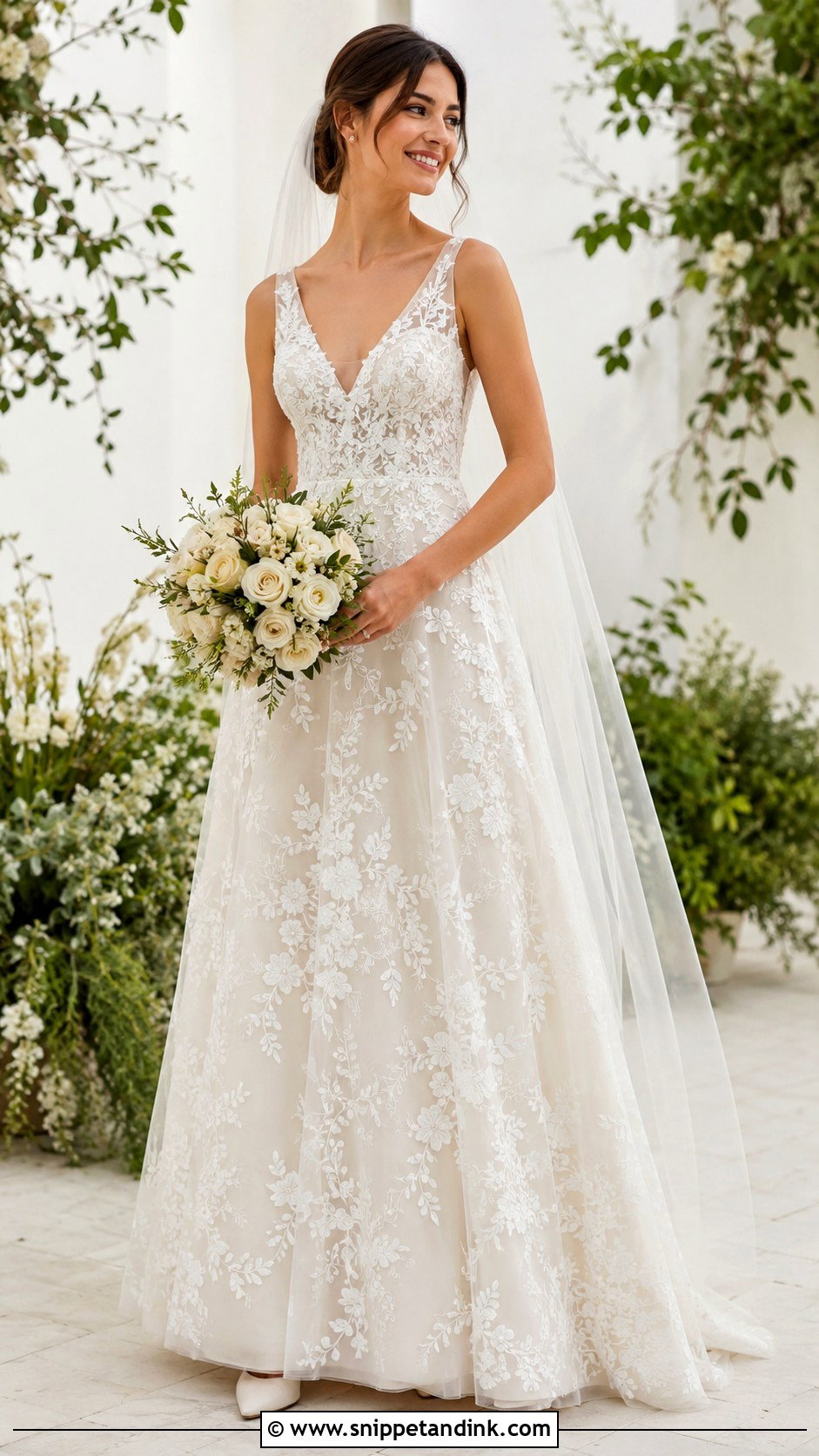
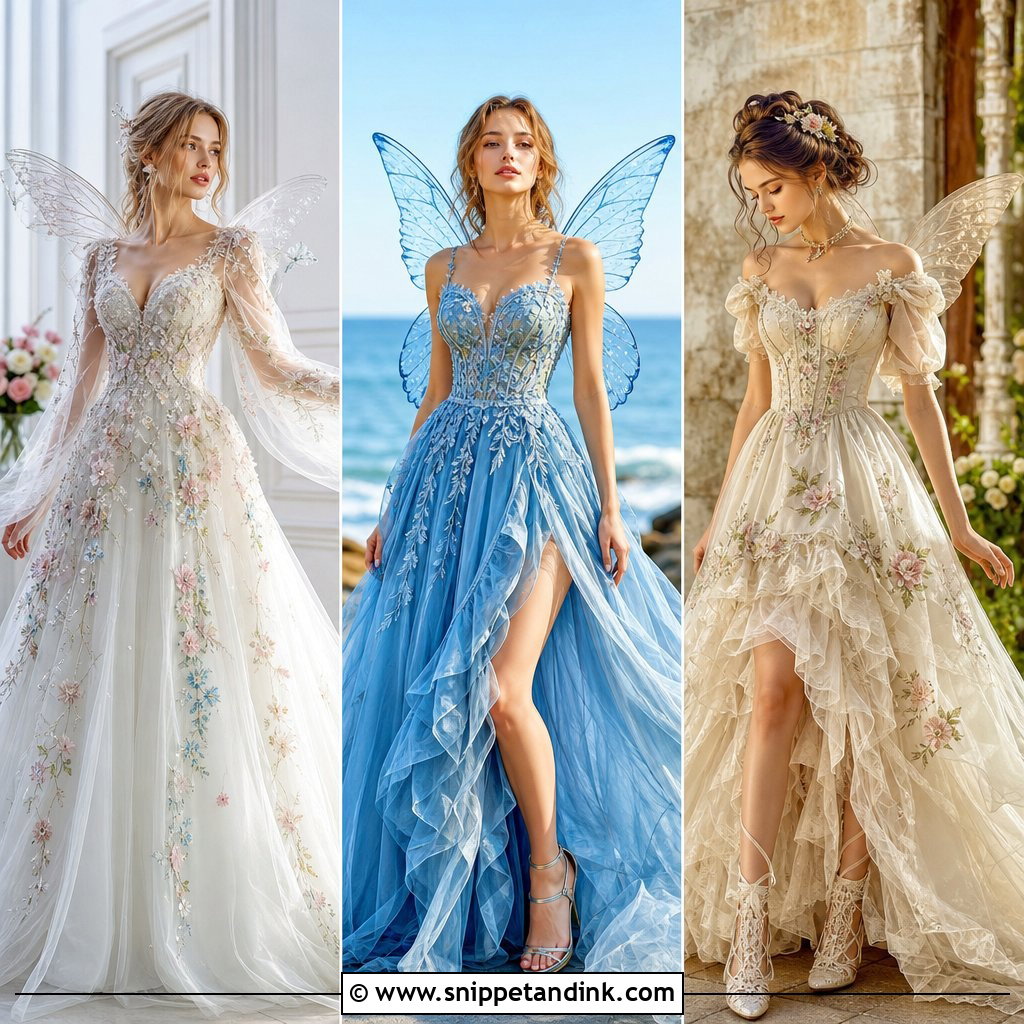
Florals add interest to a simple gown, whether through embroidered lace, jacquard texture or a subtle print. For a traditional look choose ivory flowers on a matching or pale lining; soft blue or blush accents work if you want some color. Keep the veil plain and the jewelry small. A fitted bodice with an A-line skirt gives the motifs room to show. When the dress is altered, check that major flowers still line up at the side seams; a tailor taking in a seam can cut a motif in half, so point out the ones you want kept whole.
18. Inexpensive High-Neck Wedding Dress
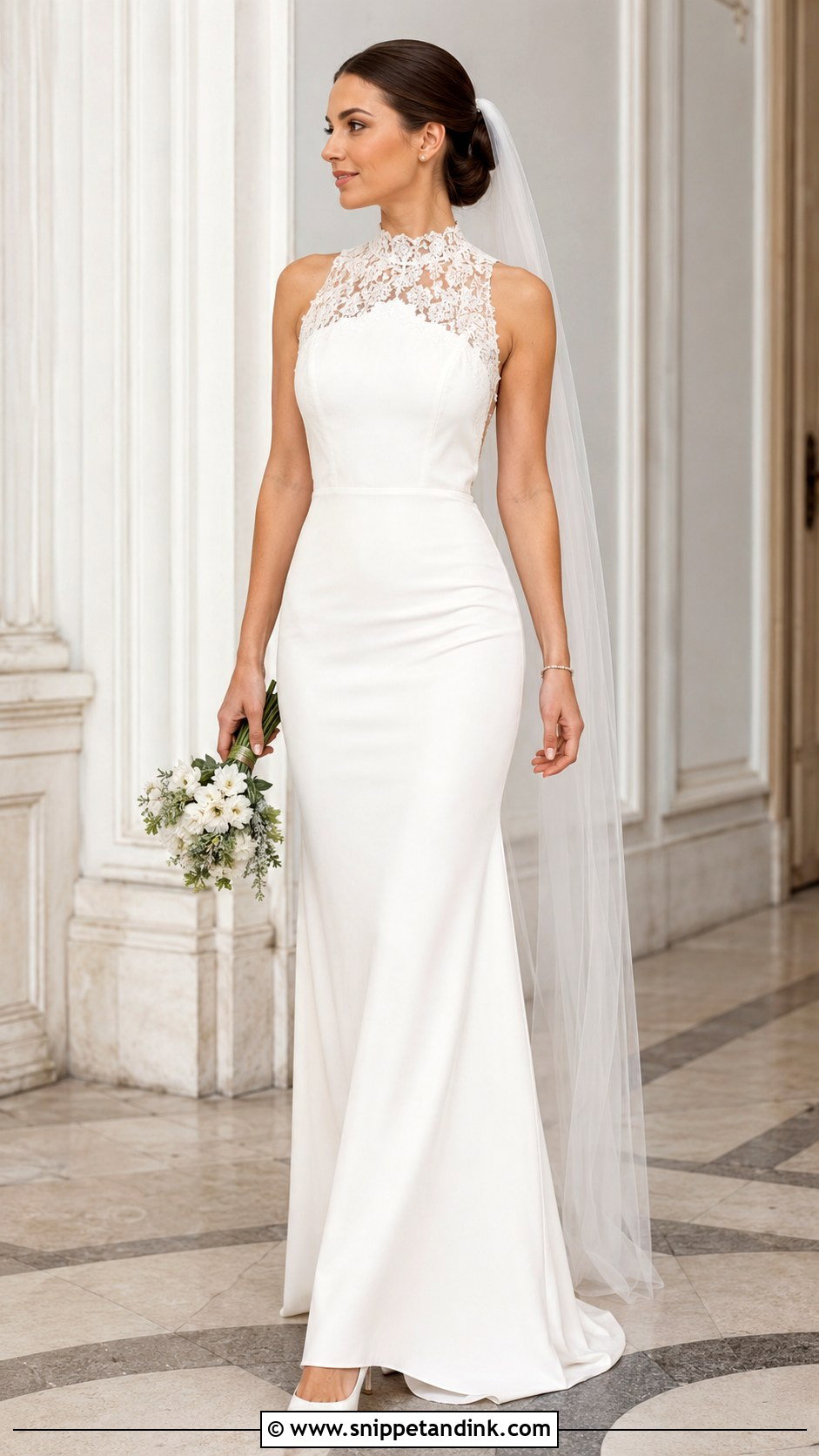
A high neck creates a focal point while giving coverage across the chest. Choose a lace mock neck, clean halter or softly draped neckline over a streamlined skirt. The collar does the work, so skip the necklace, wear studs and put your hair up. Cheaper high-neck gowns sometimes have a stiff collar edge that rubs, so sit down and turn your head both ways in it before you buy. Anchor the veil below your bun so it doesn’t cover the neckline.
19. Inexpensive Ruffle Wedding Dress
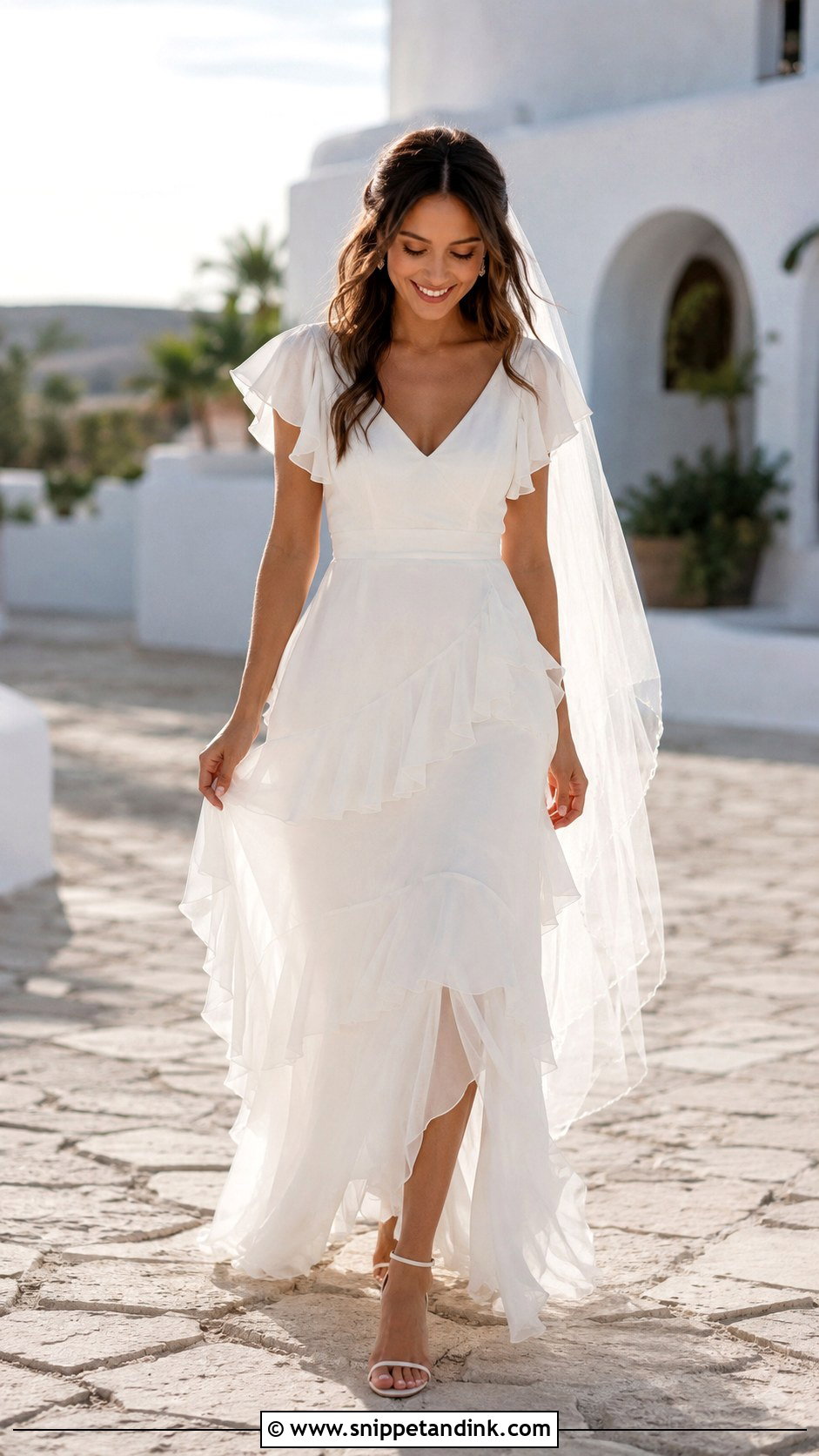
A ruffle detail adds movement without costly beadwork. Pick one: flutter sleeves, a ruffled neckline or a gently tiered skirt. More than that overwhelms most people and complicates alterations, since each tier has to be hemmed separately. Pair it with simple strappy heels, small earrings and a plain veil. Light ruffles look lively in motion during the walk and on the dance floor. Check every layer is evenly hemmed, and steam each tier one at a time.

20. Inexpensive Short Wedding Dress
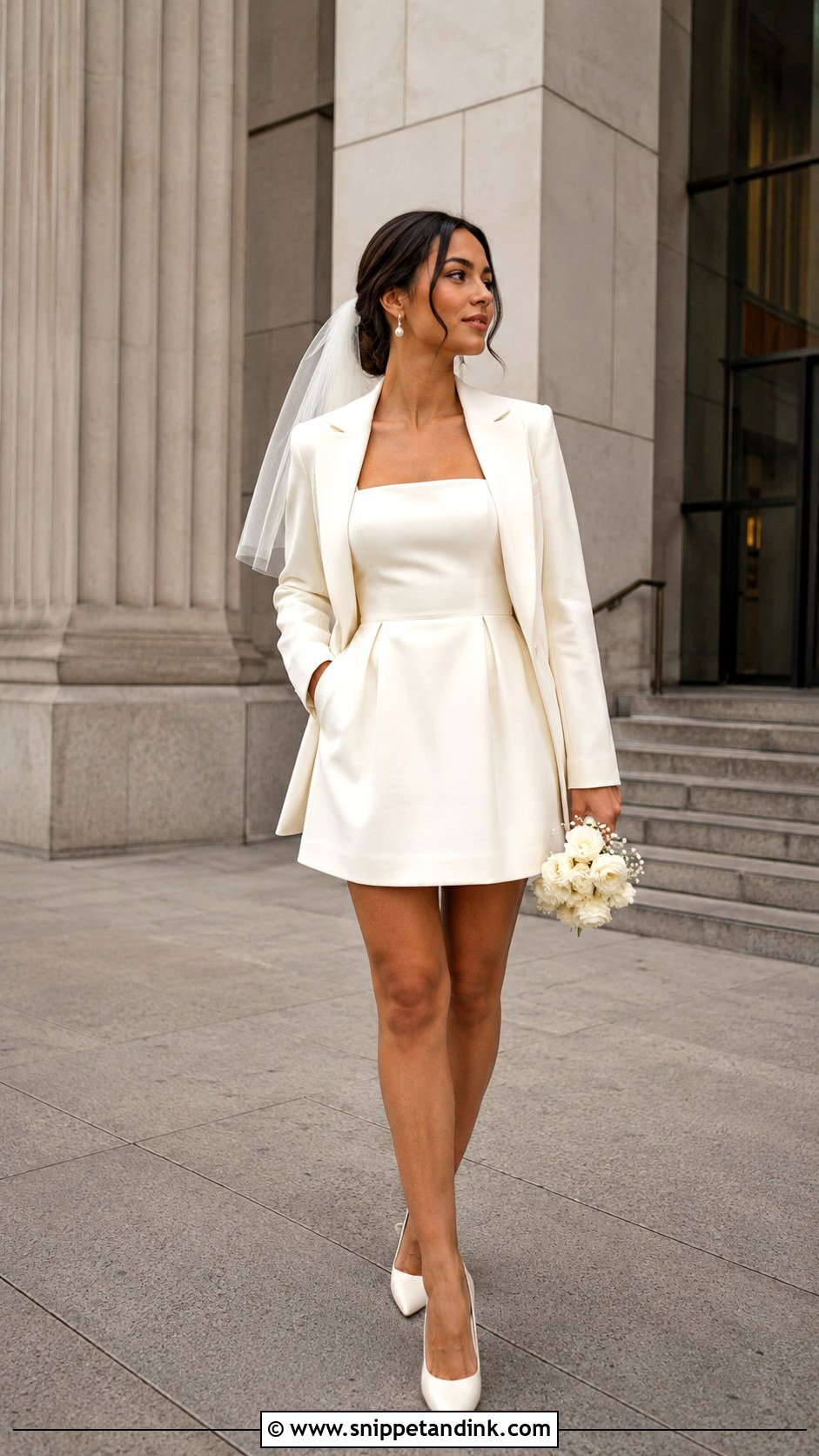
Short dresses are often the cheapest bridal option and the most fun. Choose a mini or knee-length cut with a structured bodice, secure straps and enough skirt to sit and dance without worrying. Satin, crepe and jacquard make the short length feel bridal. Shoes and legs are now part of the look, so pointed pumps and a small veil go a long way. A tailored blazer adds polish for the ceremony. Short dresses are great for city weddings, elopements and as a second reception look. Sit down in front of a mirror before buying to see how much the hem rises.
Where a Small Dress Budget Should Actually Go
The price tag on the gown is only part of the cost. With an inexpensive dress, I’d rather a client spend a little more on the things that change how it looks on the day.
Alterations first
A hem, a taken-in waist and adjusted straps are the cheapest way to make a budget gown look custom. Prices vary a lot by area and how complicated the dress is, so get a quote before you buy. Ask about a bustle too if there’s any train, since you’ll want to dance.
Then the foundation
A well-fitted strapless bra or a supportive bodysuit changes how the bodice sits more than any accessory. Buy it before your first fitting and wear it every time.
Places to find the dress itself
Sample sales, bridal shop clearance racks, resale sites and bridesmaid collections that offer white or ivory are all good sources. A bridesmaid line in ivory is often the same fabric and construction as a simple bridal gown for much less. Rentals exist too, though you’ll have limited ability to alter them.
A Plain Gown That Fits Beats a Busy One That Doesn’t
Price says very little about how a wedding dress will look on you. Satin slips, lace gowns, tea-length skirts, chiffon and courthouse midis can all look expensive when the fit is right. Start with a silhouette that suits the venue and lets you move. Then look closely at the lining, seams, closures and fabric under several kinds of light. Keep money back for alterations, undergarments and shoes, and add only a few accessories. A simple gown, properly tailored, will look and feel as special as a designer one.
You'll Like These Ideas:





Leave a Reply