
A silk satin gown has nowhere to hide its construction. The smooth surface lights up clean seams, pleats, drapes and sculpted necklines, and it lights up a wobbly seam just as clearly. Designers have moved well past the plain slip: fluid satin now sits alongside corseted bodices, fuller skirts, lace accents and layers that come off for the party. Before you fall for one, think about the weight of the cloth, how much support you need and how far you’ll walk in it. Below are twenty complete looks, each with the fitting detail I’d look at first.
Grass, Gravel and Sea Air: Satin at Your Venue
Before talking silhouettes, I ask where the dress will actually be walked. Silk satin is happiest indoors and fussier outdoors, and knowing the ground and the weather changes which gown I’d point you toward.
- Lawns: a long satin train picks up grass stains and damp, and silk shows water marks. A shorter sweep train, or a bustle you can hook up between photos, saves the hem.
- Gravel and cobbles: they snag and scuff a dragging hem. Keep the hem a fraction off the ground in your wedding shoes and gather the train in your hand as you cross.
- Heat: silk breathes better than polyester, but a boned satin bodice is still warm. Plan shaded spots for portraits instead of relying on the fabric to keep you cool.
- Wind and sea air: light slips and cowls blow flat against the body, and salt spray can mark silk. Heavier satin and structured shapes behave better on a beach or clifftop.
- Cold: satin holds very little warmth. A faux-fur wrap, wool cape or long satin coat all suit the fabric over the gown.
None of this rules satin out. It just tells me where to spend the alteration time and what to pack for the day.
1. Silk Satin A-Line Wedding Gown
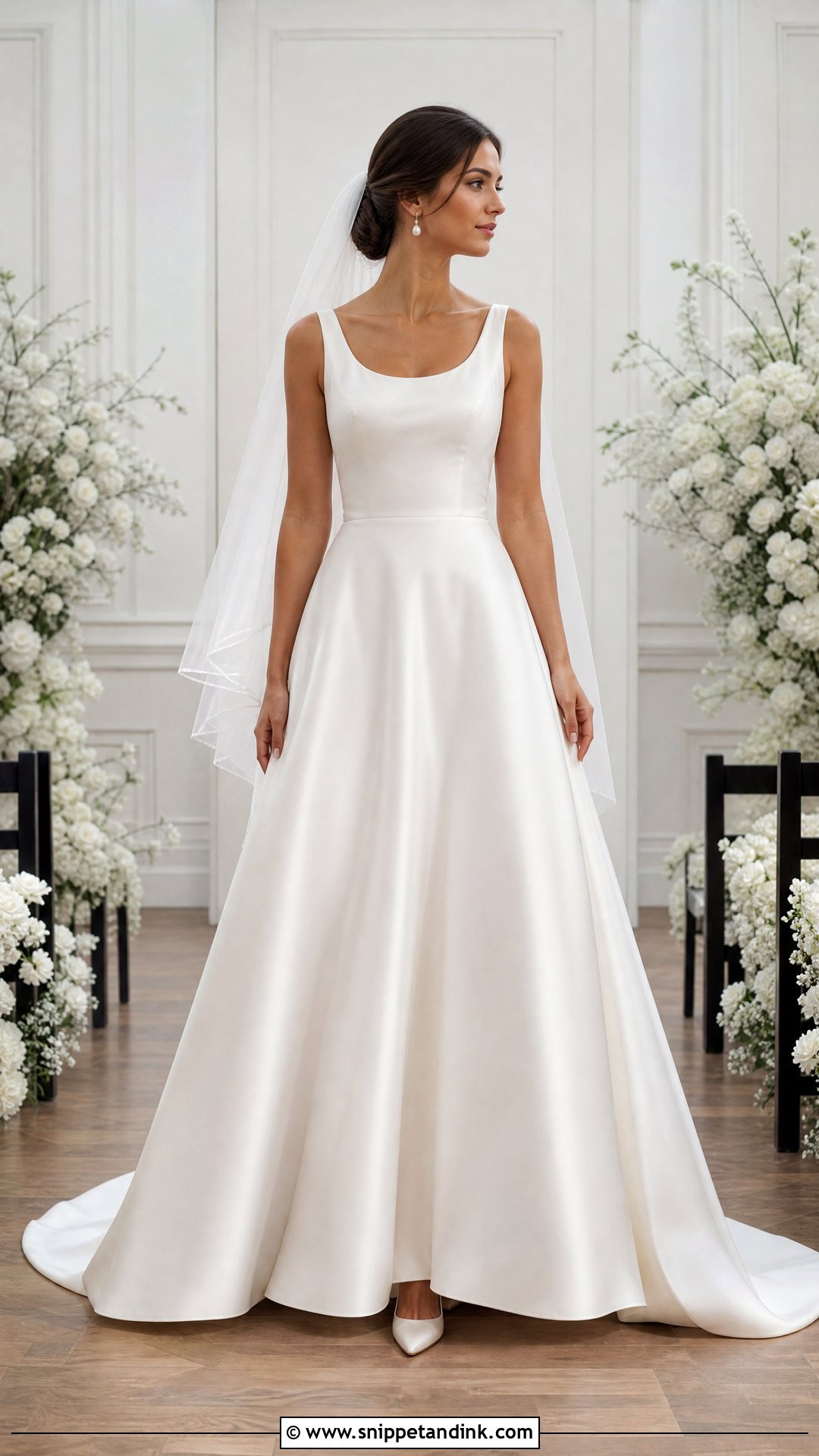
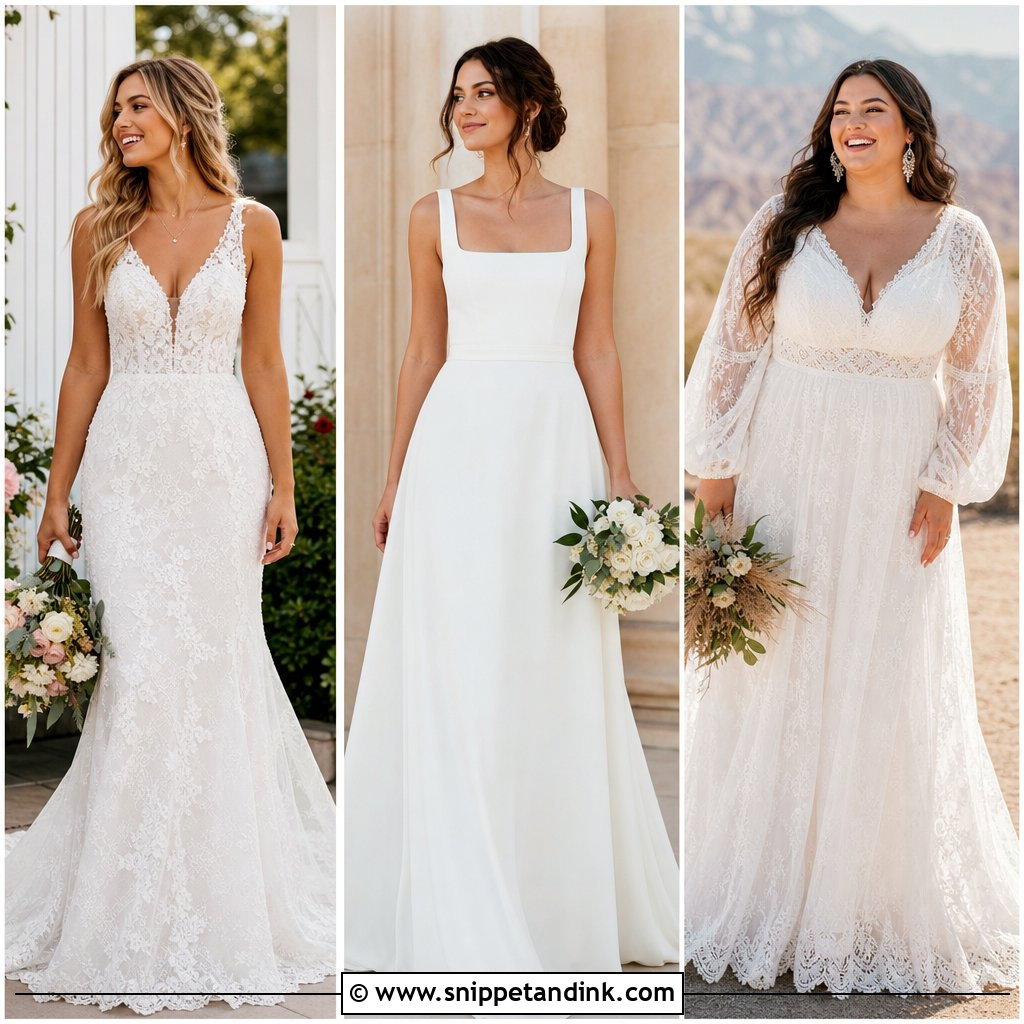
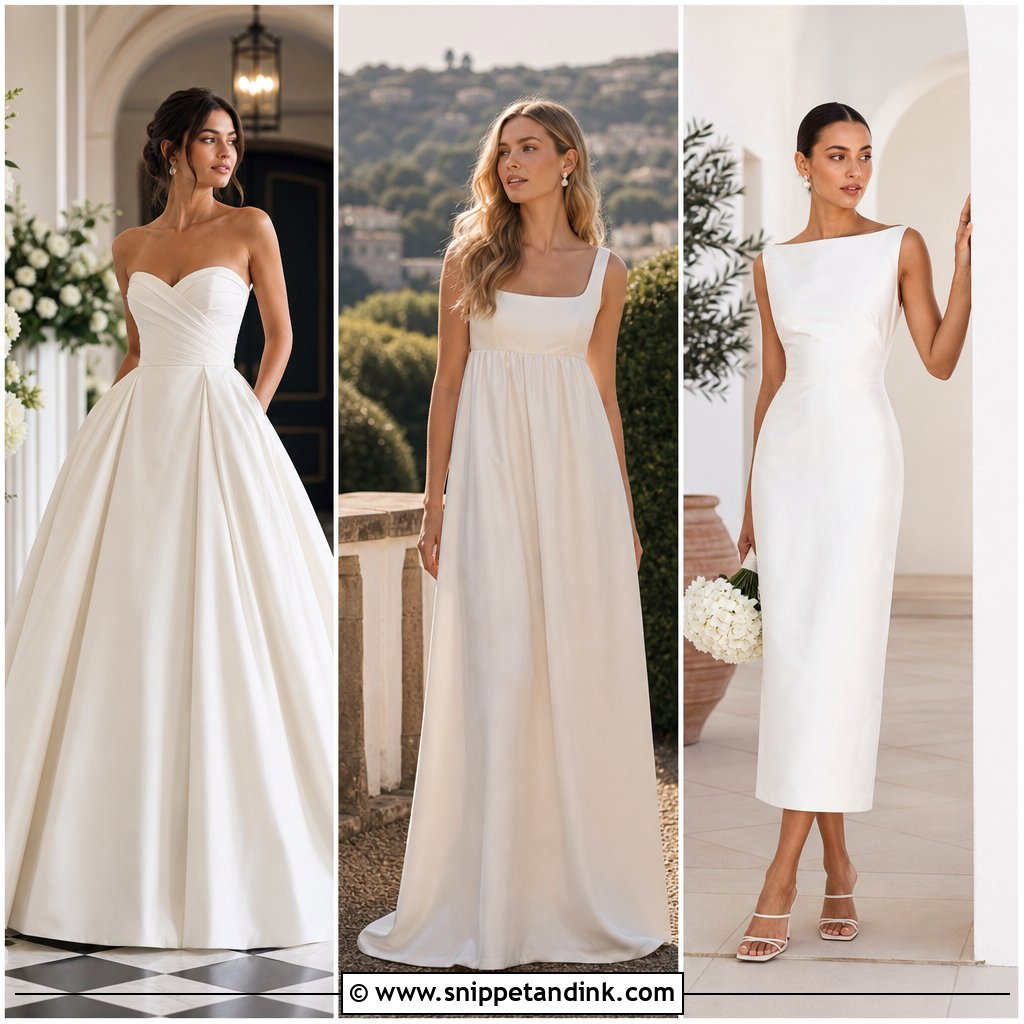
An A-line is the shape I trust most for a first satin try-on. The fitted bodice defines the waist and the skirt flows out softly, so you get presence without having to manage volume. A scoop, square or gentle V keeps it classic. Pointed ivory pumps, pearl drops and a fingertip veil with a narrow satin edge suit it, with a low chignon and a compact bouquet. One habit of mine: I never pin the hem until the bride is in her wedding shoes, because satin piles up around the feet if it’s a centimetre too long, and you’ll be stepping on that pile all evening.
2. Silk Satin Ball Gown Wedding Dress
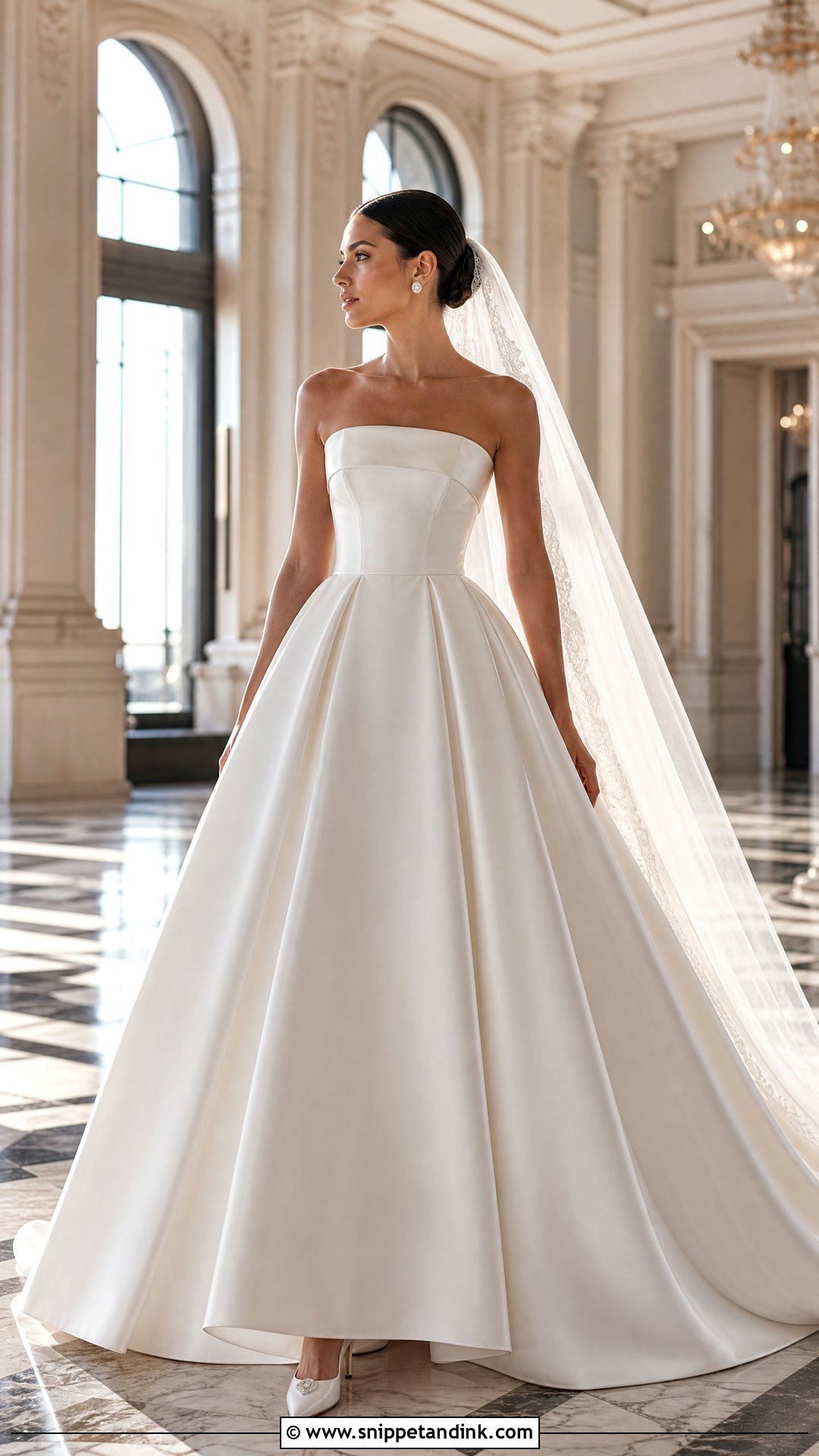
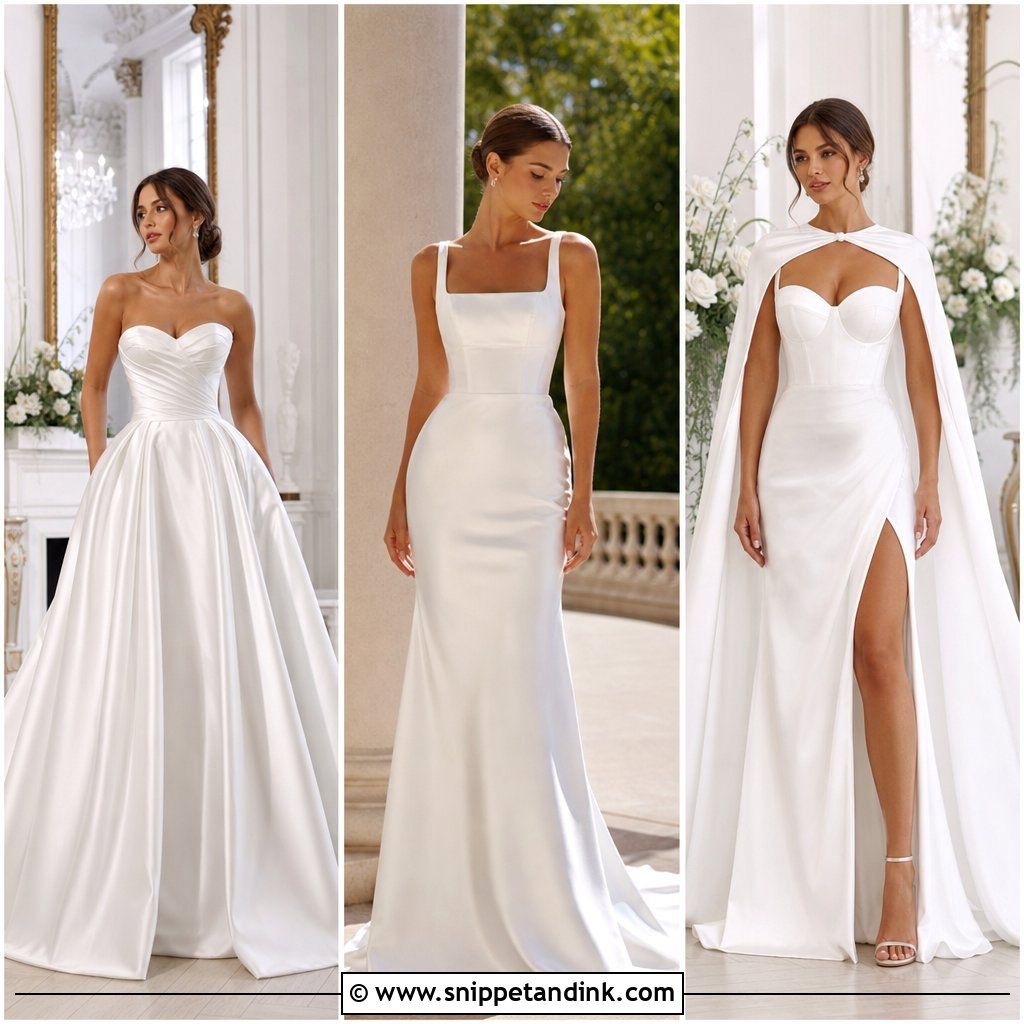
A satin ball gown makes the most traditional entrance there is, and the full skirt gives the fabric room to show its sheen. All that weight hangs from the waist, so the internal construction is what you’re really paying for: a firm waist stay, solid boning, and either wide-set straps or a strapless bodice that doesn’t shift when you lift your arms. Crystal studs, closed-toe satin heels and a cathedral veil keep it formal. If the bodice already has pleating or a strong neckline, skip the necklace. A smooth bun or polished waves won’t fight the volume. Full, structured skirts are firmly back in bridal fashion, so this reads current as well as classic.
3. Silk Satin Slip Wedding Gown
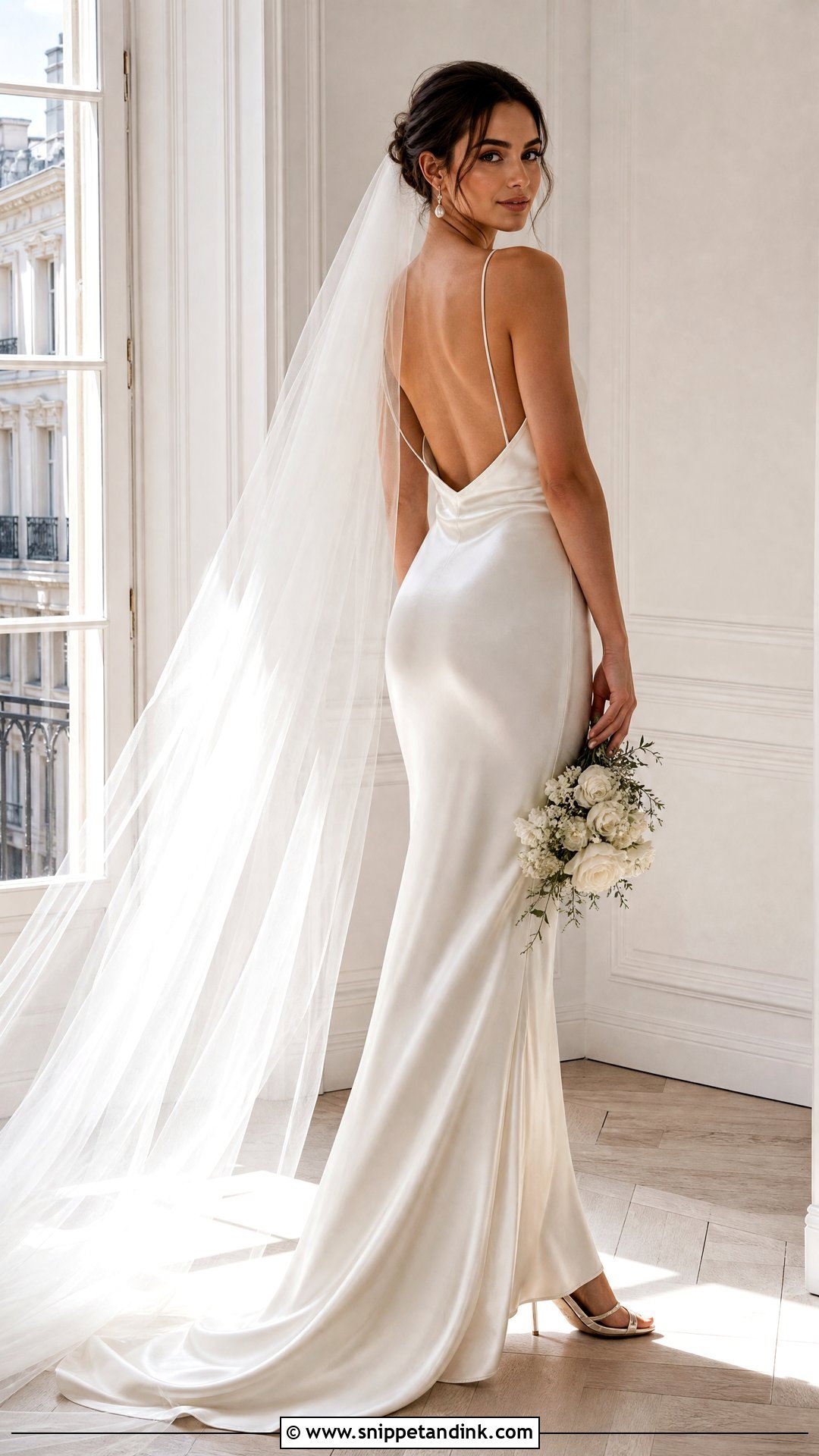
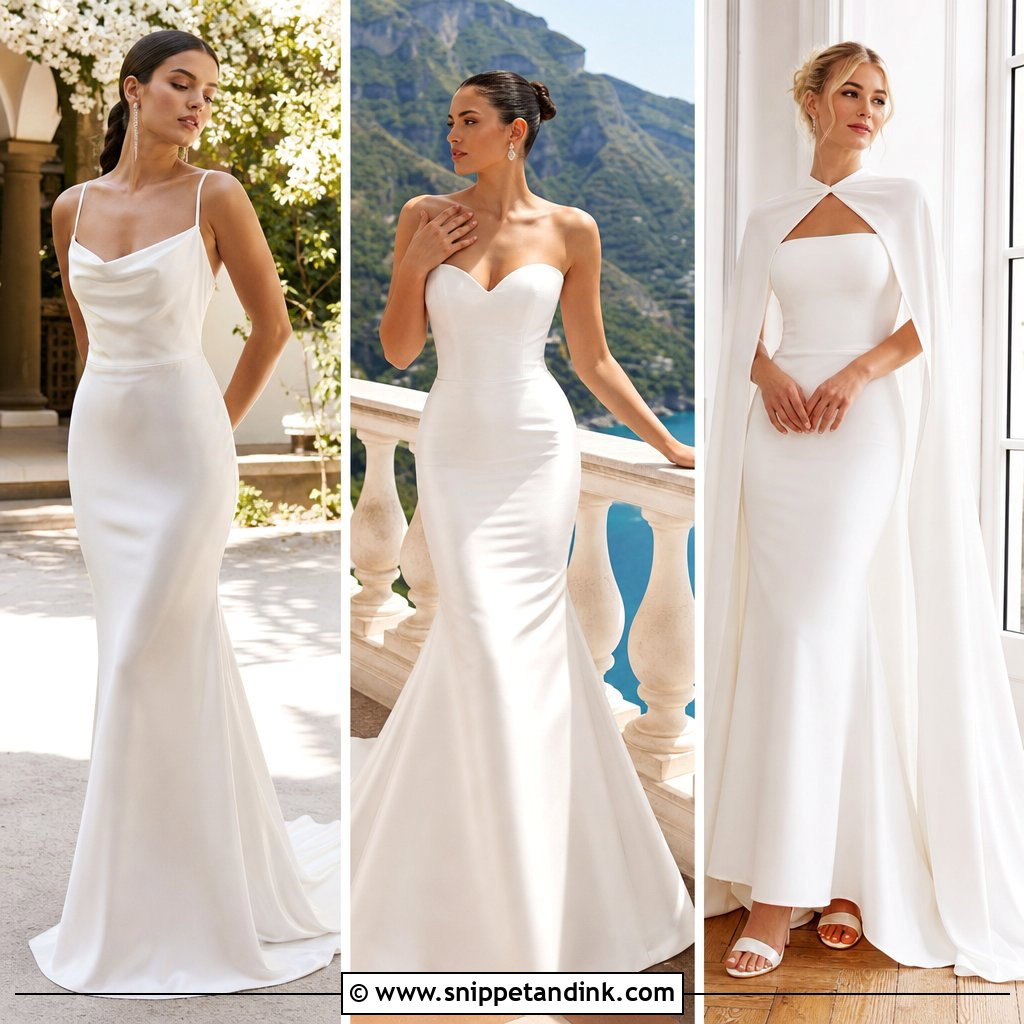
A slip gown has almost no visual weight, and that’s its appeal: fabric, proportion and movement do all the work. The bias cut follows the body softly, and delicate straps with a low back give it shape. I’d put the hair in a soft updo, partly to show the neckline and partly because loose hair catches under thin straps and drags them off the shoulder. Slim metallic sandals, small pearl earrings and a sheer floor-length veil are enough. For a covered ceremony, a light silk wrap or removable chiffon cape solves it. The gown should skim, not cling, so the underwear and alterations matter as much as the dress itself.
4. Strapless Silk Satin Wedding Gown
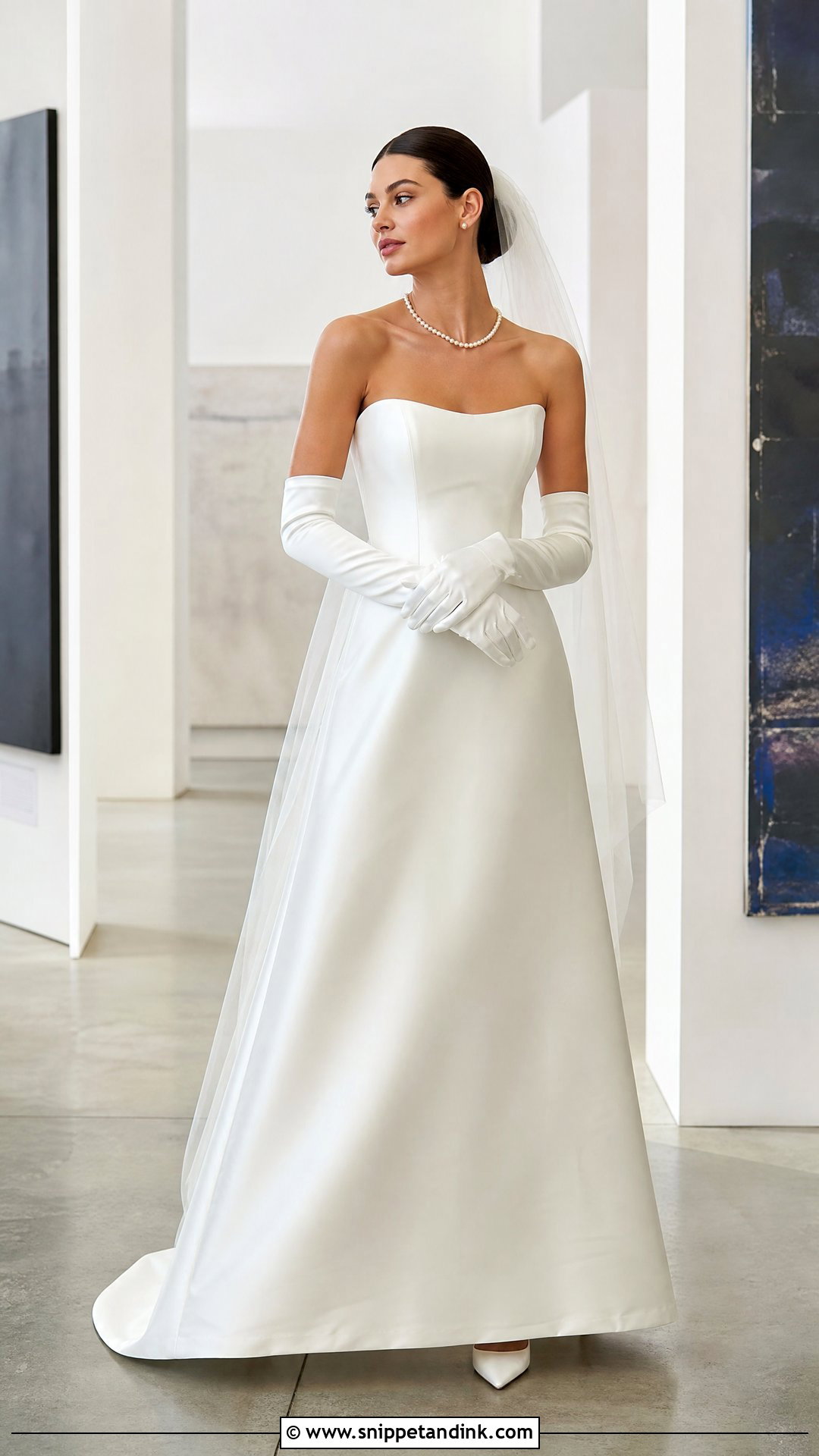
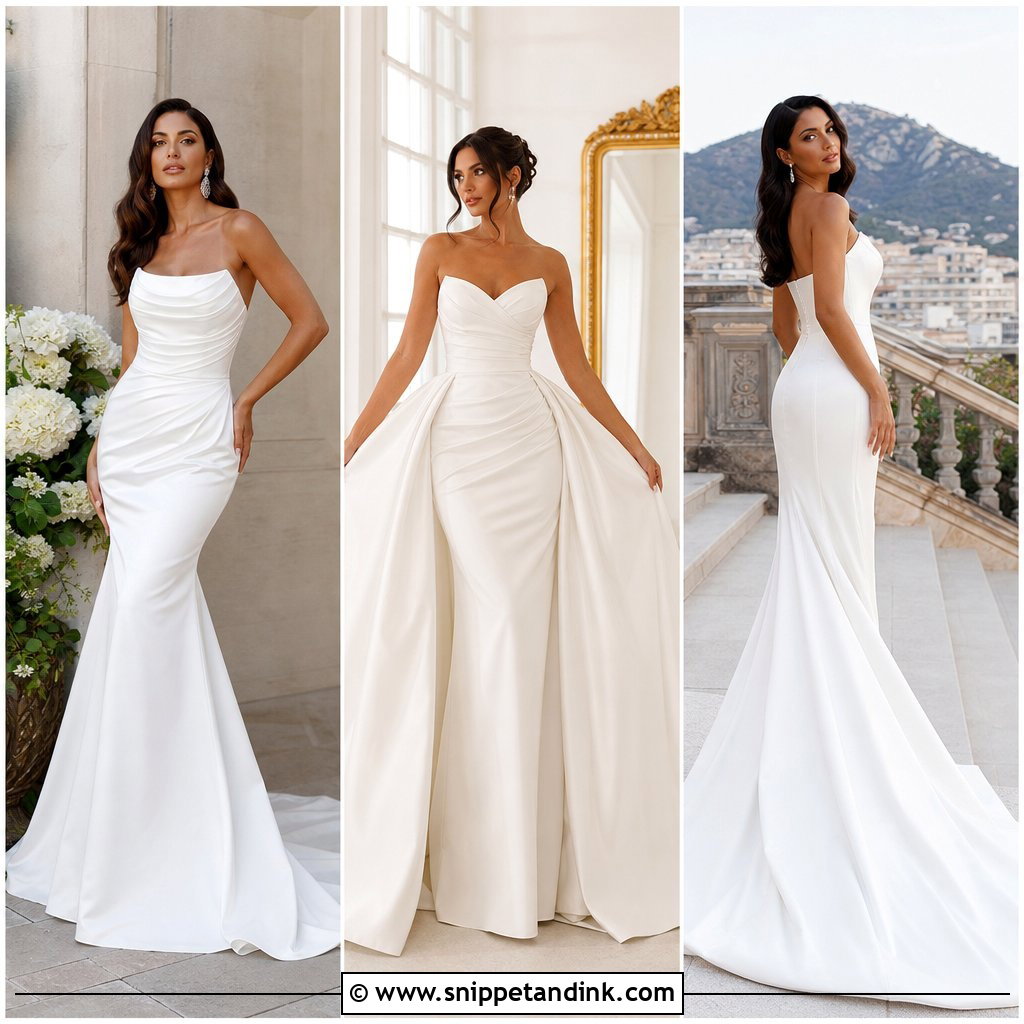
The neckline you pick on a strapless satin gown changes how much structure you’ll feel. A straight top is the most architectural, a sweetheart adds curve and needs well-shaped cups, and a soft curve sits between the two. Over a fitted bodice, an A-line or column skirt makes a clean base for a short pearl necklace, satin pumps and a veil set under a sleek bun. Long gloves give the ceremony some drama and come off for the reception. The giveaway of a poorly fitted strapless is a bride hitching it up in photos, so I have her sit, walk and lift her arms at every fitting until the bodice stays put without a thought.
5. Off-the-Shoulder Silk Satin Wedding Gown
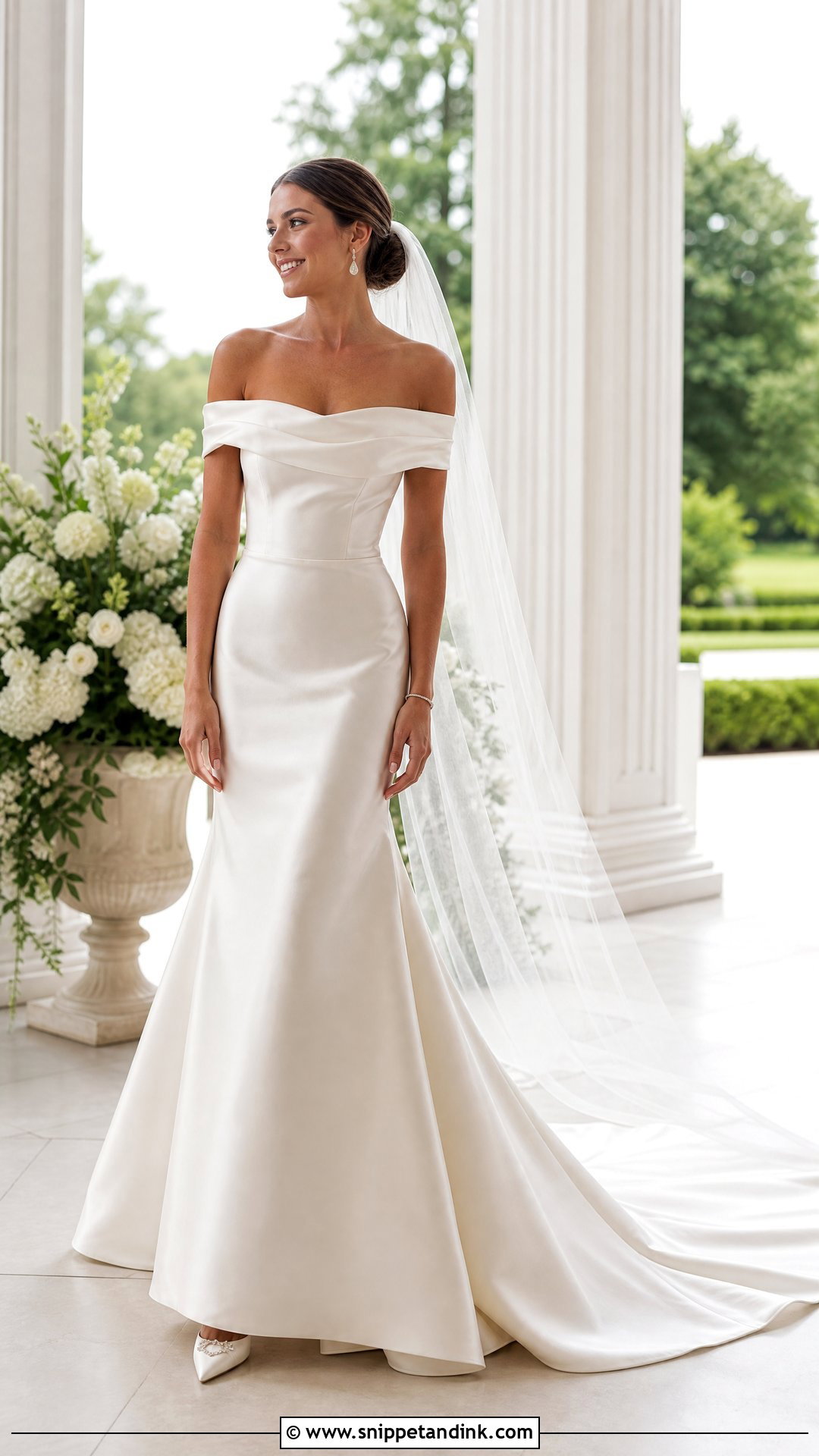
Draped sleeves are the softest take on an off-the-shoulder neckline, but they have to sit above the widest part of your upper arm or they’ll slide down it. A gently flared skirt balances the open neckline. I’d style it with teardrop earrings, a delicate bracelet instead of a necklace, pointed pumps, a long plain veil and a low bun that leaves the shoulders bare. At alterations, hug the seamstress, reach for something on a high shelf and sit down. If the sleeves move, hidden elastic or a discreet hook at the underarm usually fixes it.
6. Long-Sleeve Silk Satin Wedding Gown
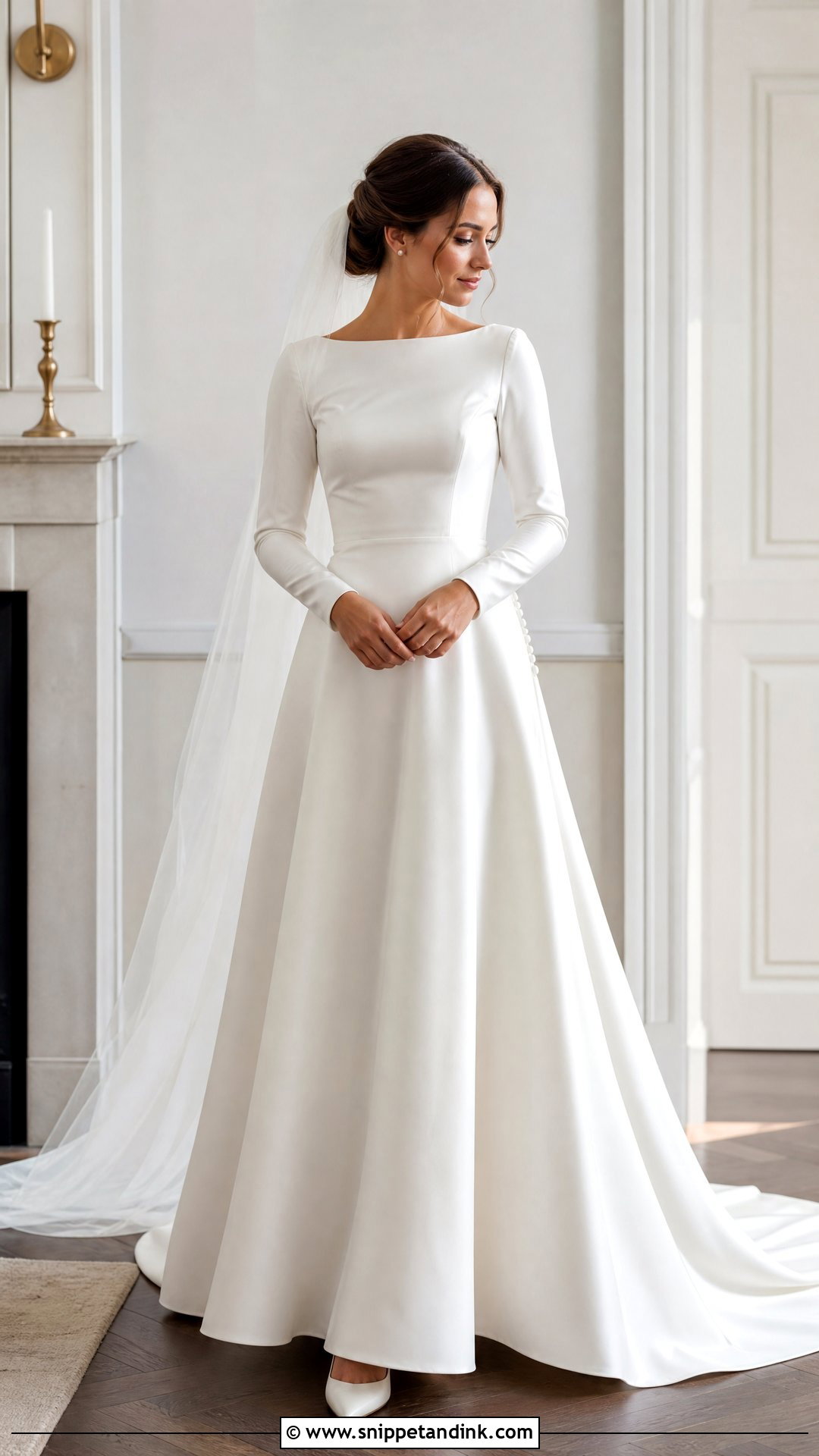
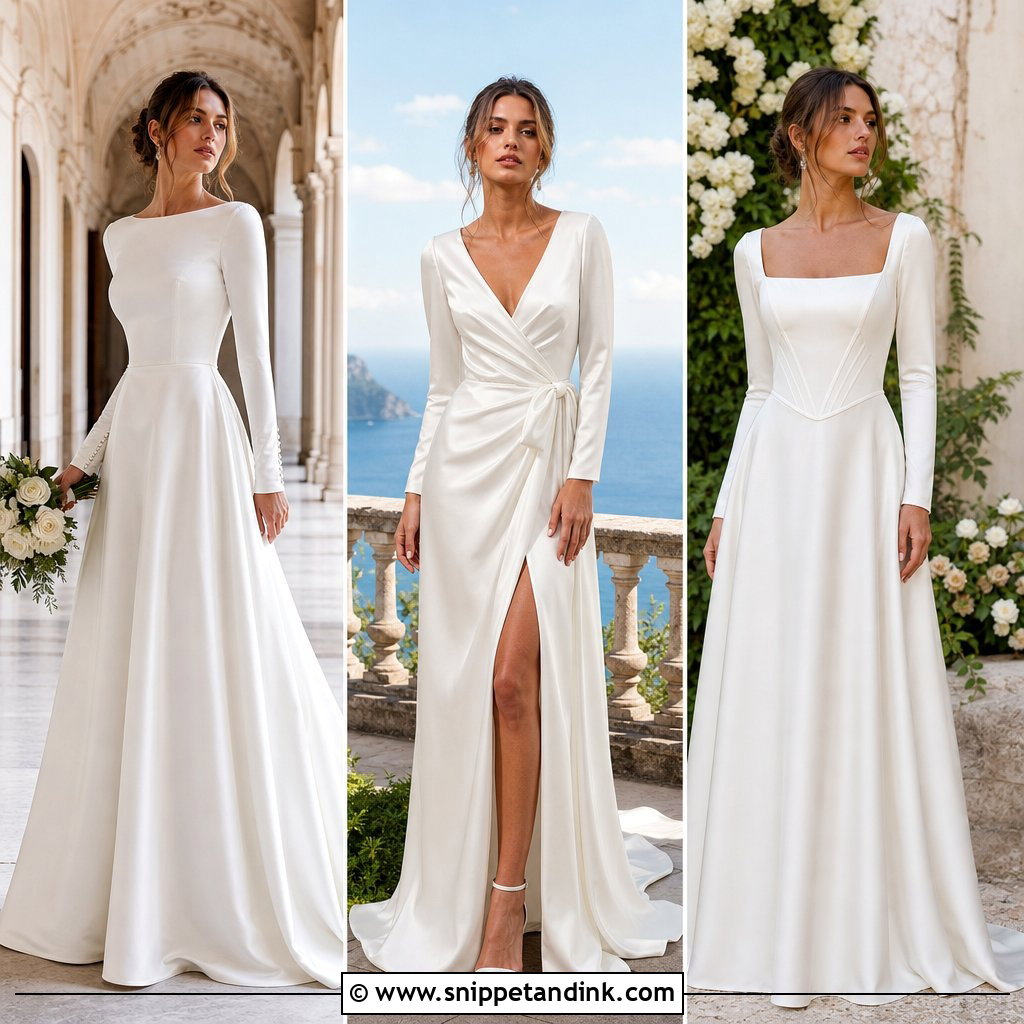
Slim satin sleeves look refined, and bracelets are their enemy: a chunky bangle stacked over the cuff can snag the weave or leave a visible bump, so I’d leave them off altogether. A high boat neck, modest V or structured square balances the coverage, and a flowing A-line skirt makes walking easy. For a cold-season wedding, a lined bodice and slightly heavier satin keep you warmer, as long as the sleeves still bend freely at the elbow. Pearl studs, closed-toe ivory heels, a chapel veil and a neat chignon keep it formal. Covered buttons at the cuffs and down the back add detail without breaking the smooth surface.
7. Square-Neck Silk Satin Wedding Gown
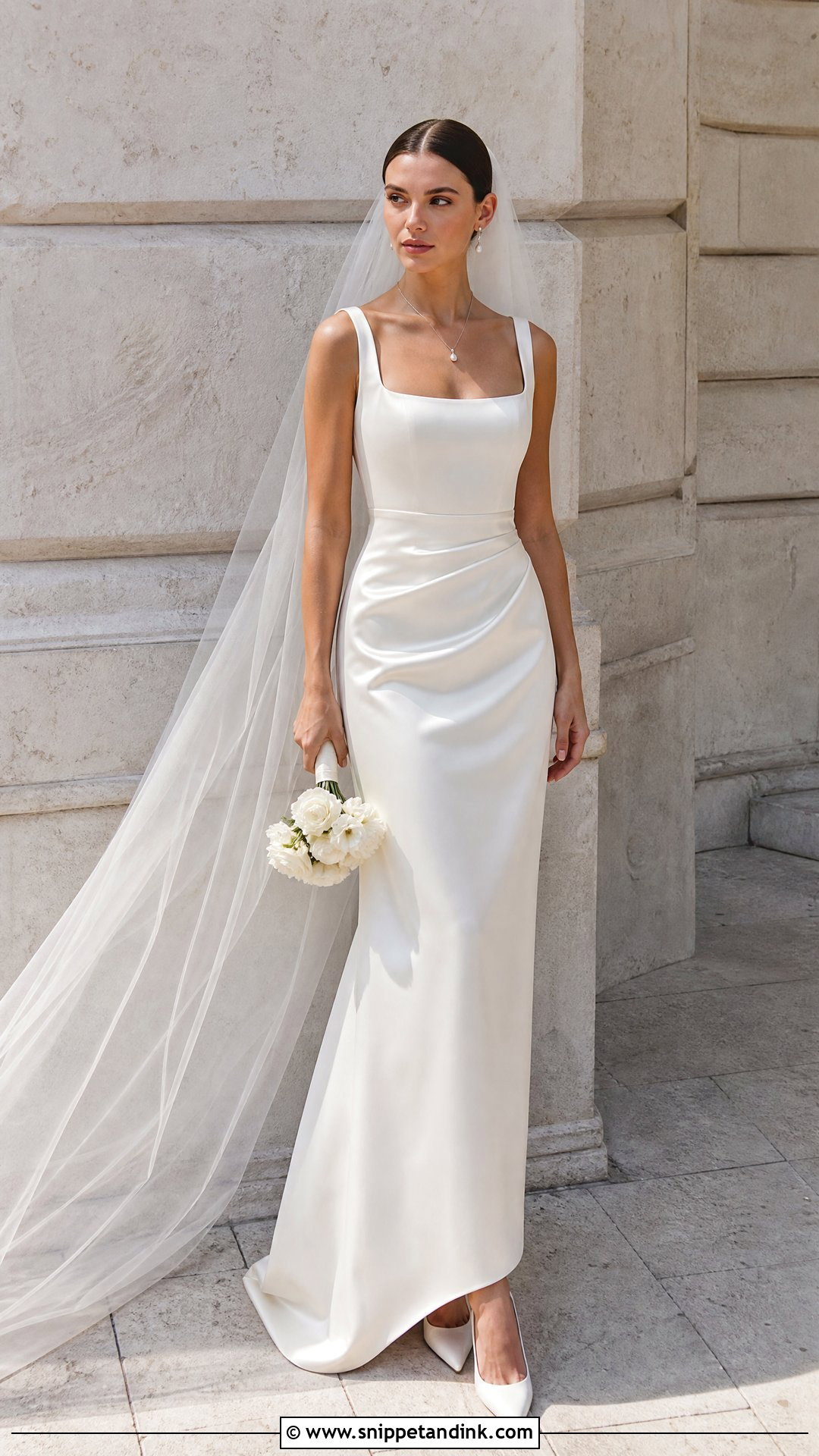
A square neckline lives or dies on how flat it lies, especially at the corners and armholes, where satin gapes first. If you need more support, I’d ask for wider straps and built-in cups rather than a separate bra that peeks out at the edges. Wide straps, cap sleeves or a sleeveless fitted bodice all suit it, over an A-line for softness or a column for something sharper. Short drop earrings, a delicate pendant, pointed slingbacks and a lightly gathered veil finish it, and a centre-parted bun repeats the symmetry.
8. Cowl-Neck Silk Satin Wedding Gown
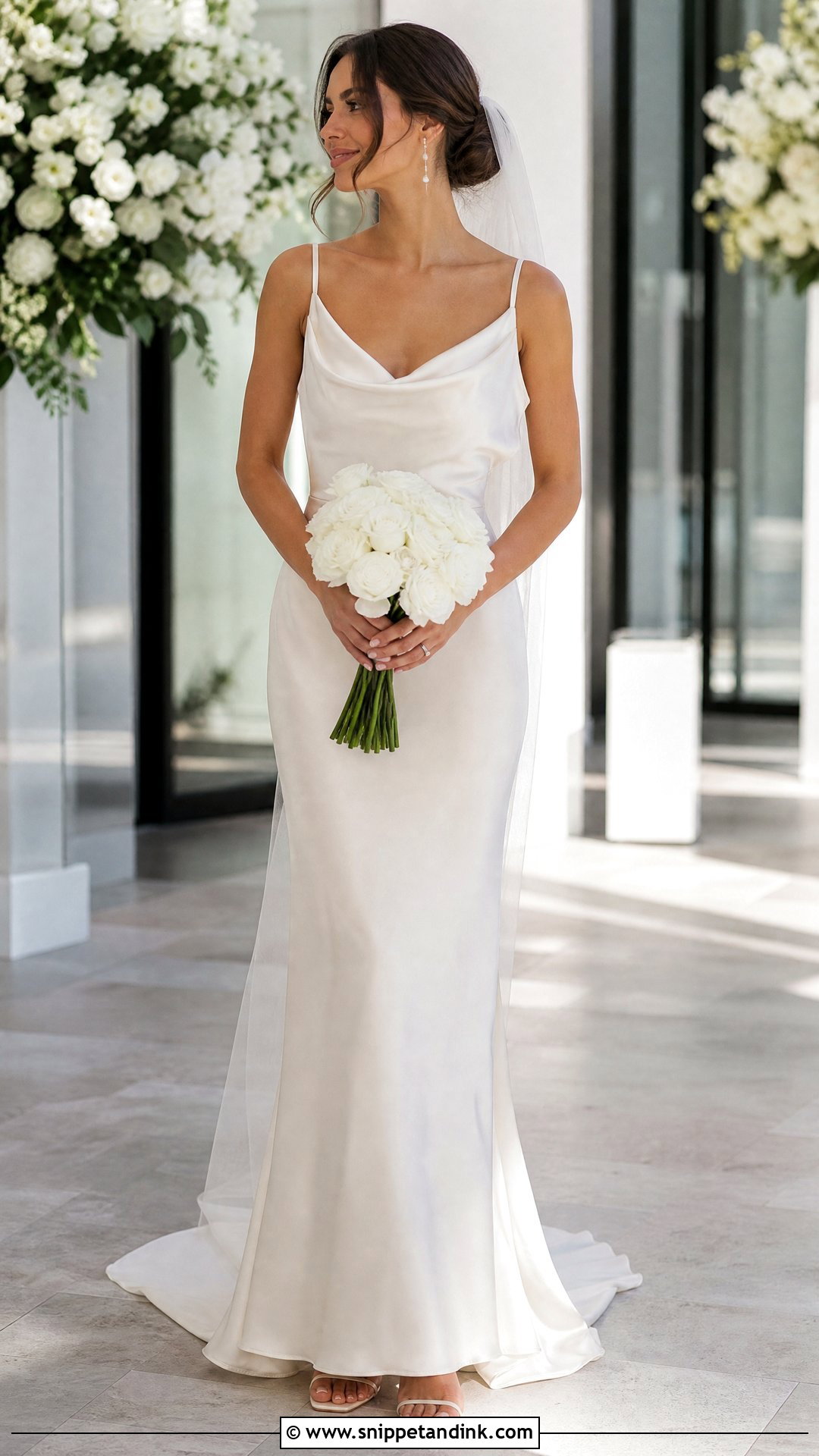
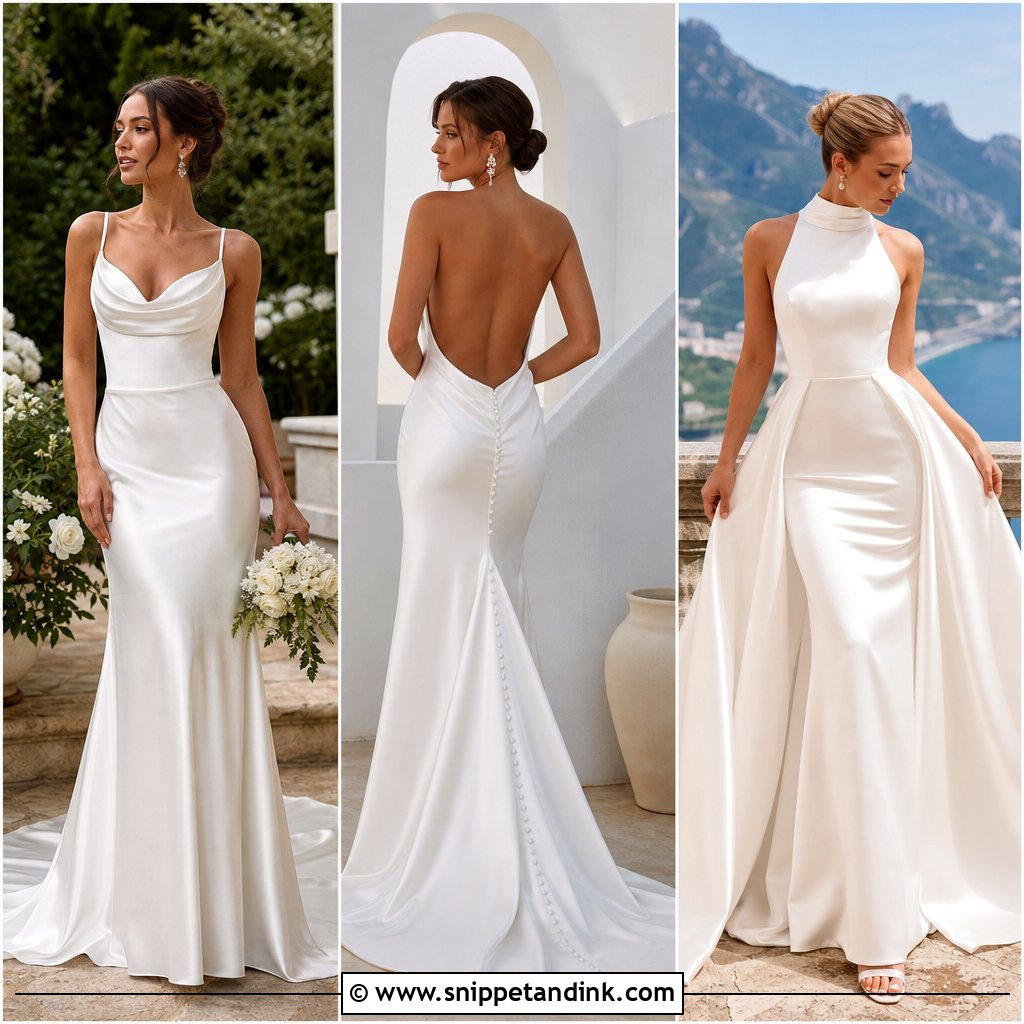
No neckline shows off the fabric’s liquid drape like a cowl. Narrow straps, a bias skirt and a low or gently curved back suit it. It should fall naturally rather than collapse flat or pull across the bust, so sizing is critical. Tailors can add small hidden weights inside the drape or a discreet tack to keep the folds balanced, and I’d ask about both. Pearl threaders, minimalist sandals and a sheer veil without heavy appliqué keep it clean, with a relaxed bun or side-parted waves. A satin clutch for the reception is plenty, because the cowl is already doing the work of a necklace.
9. Halter-Neck Silk Satin Wedding Gown
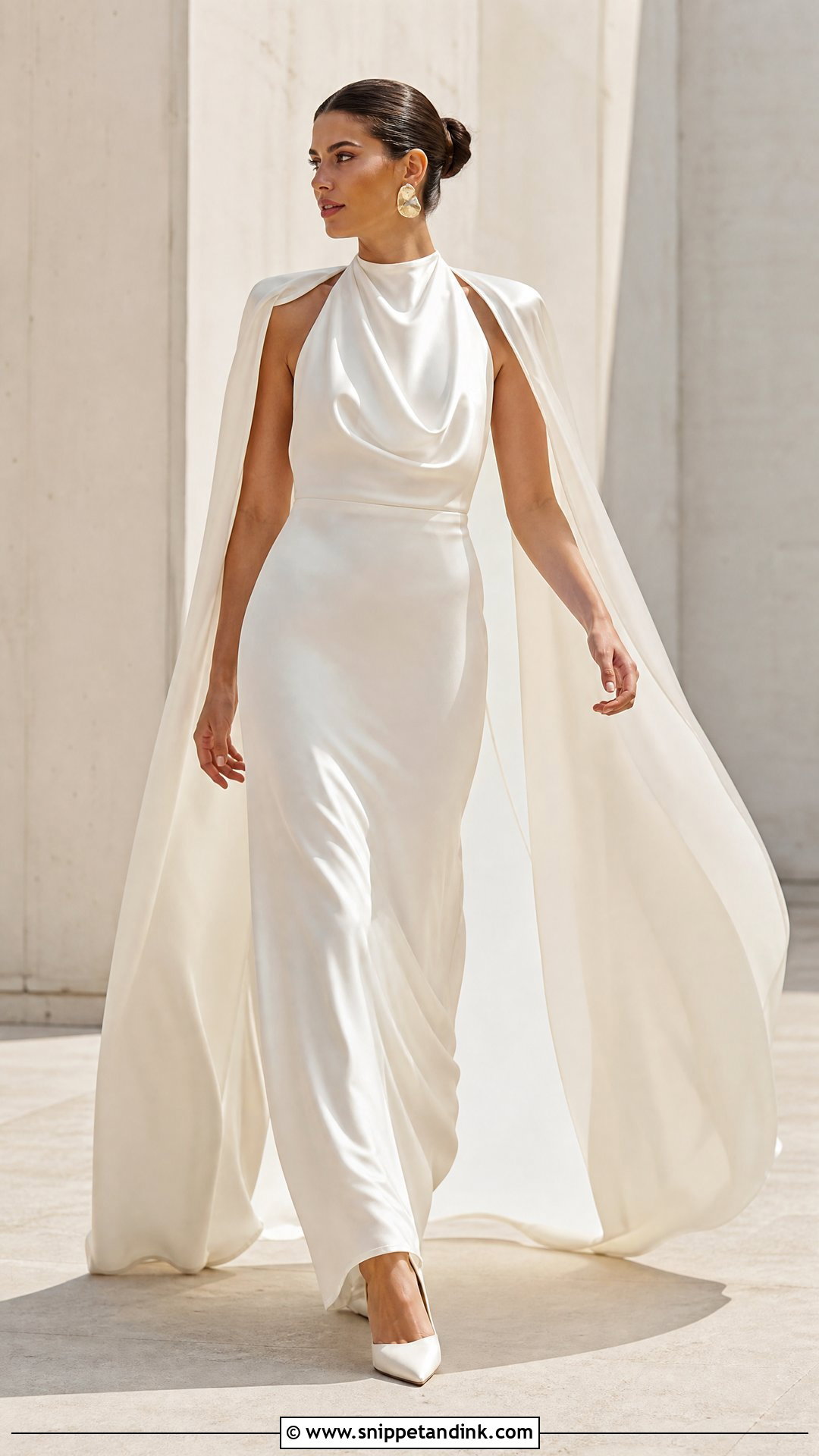
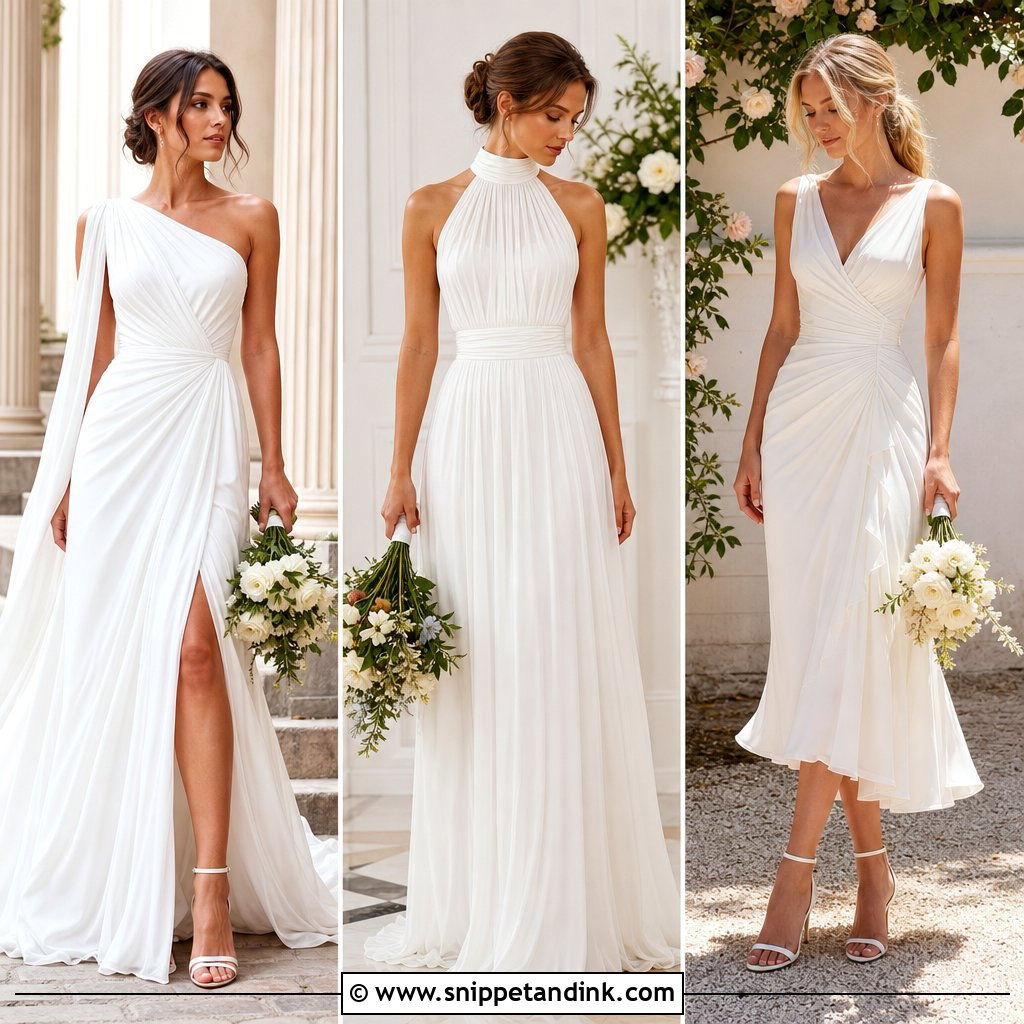
A halter should never hang the whole dress from your neck. In a well-made one, the bodice is supported at the waist and torso, and the neck strap simply holds the shape. At fittings I check two places: the back of the neck for pressure, and under the arms for pulling. A softly draped neckline or a structured band both work over a column or subtle fit-and-flare. Sculptural earrings, a low bracelet, pointed pumps and a veil under a smooth bun suit it, and a detachable satin cape can replace the veil for a more fashion-led look.
10. One-Shoulder Silk Satin Wedding Gown
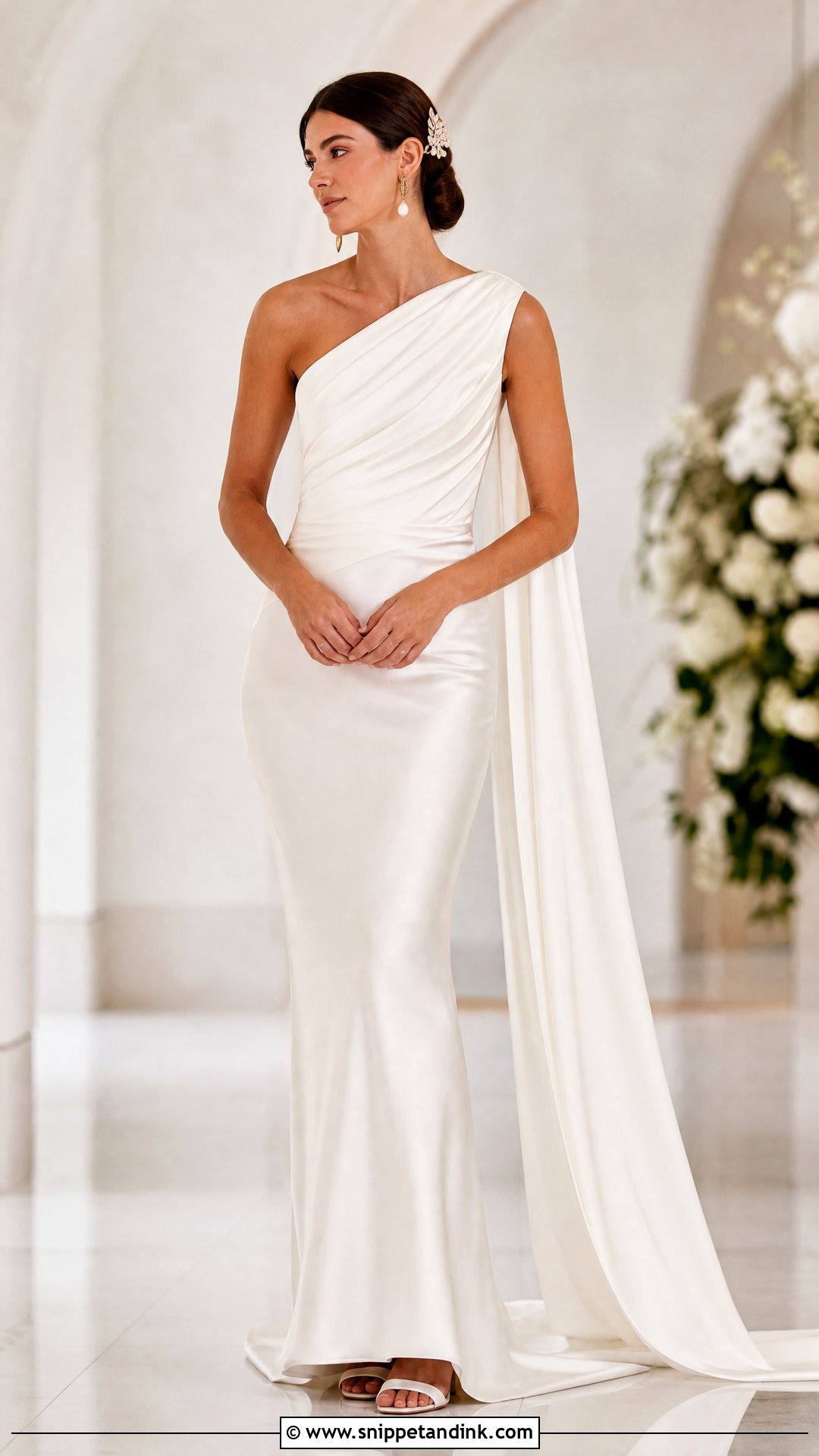
Asymmetry makes a one-shoulder gown modern, and the shoulder itself can be a wide band, folded satin or a removable trailing sash. The side without a strap is the one I watch. It has to lie flat against the body with no gap, which takes internal boning and real waist support. A draped bodice suits either a column or a fuller A-line. Mismatched earrings, sleek ivory heels and a low bun on the bare side balance the line, and a sculptural hair comb usually works better here than a veil.
11. Corset Silk Satin Wedding Gown
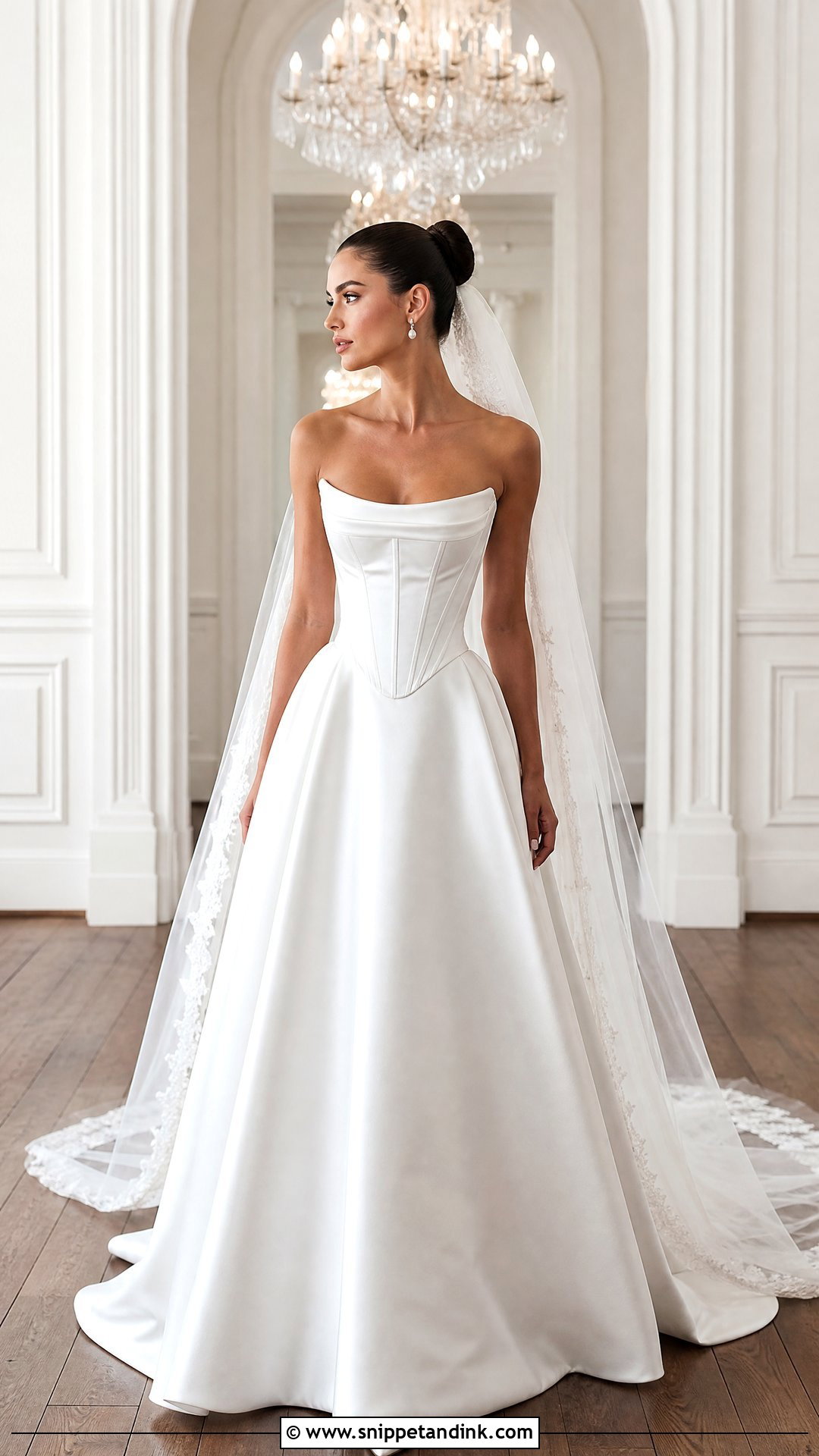
Elongated corsetry is having a real moment in bridal, often in plain fabrics with tightly controlled proportions, and satin shows the shaping clearly. Look for shaped seams, a long waist and a straight or sweetheart neckline, then either a full ball-gown skirt or one that follows the hips before flaring. Pearl earrings, satin pumps, a cathedral veil and a polished low bun complete it; if the corset already has draping or exposed construction, keep jewelry quiet. My rule at fittings is plain: if you can’t take a full breath, sit down and eat a plate of food, it’s too tight. A corset should hold you, not squeeze you.
12. Basque-Waist Silk Satin Wedding Gown
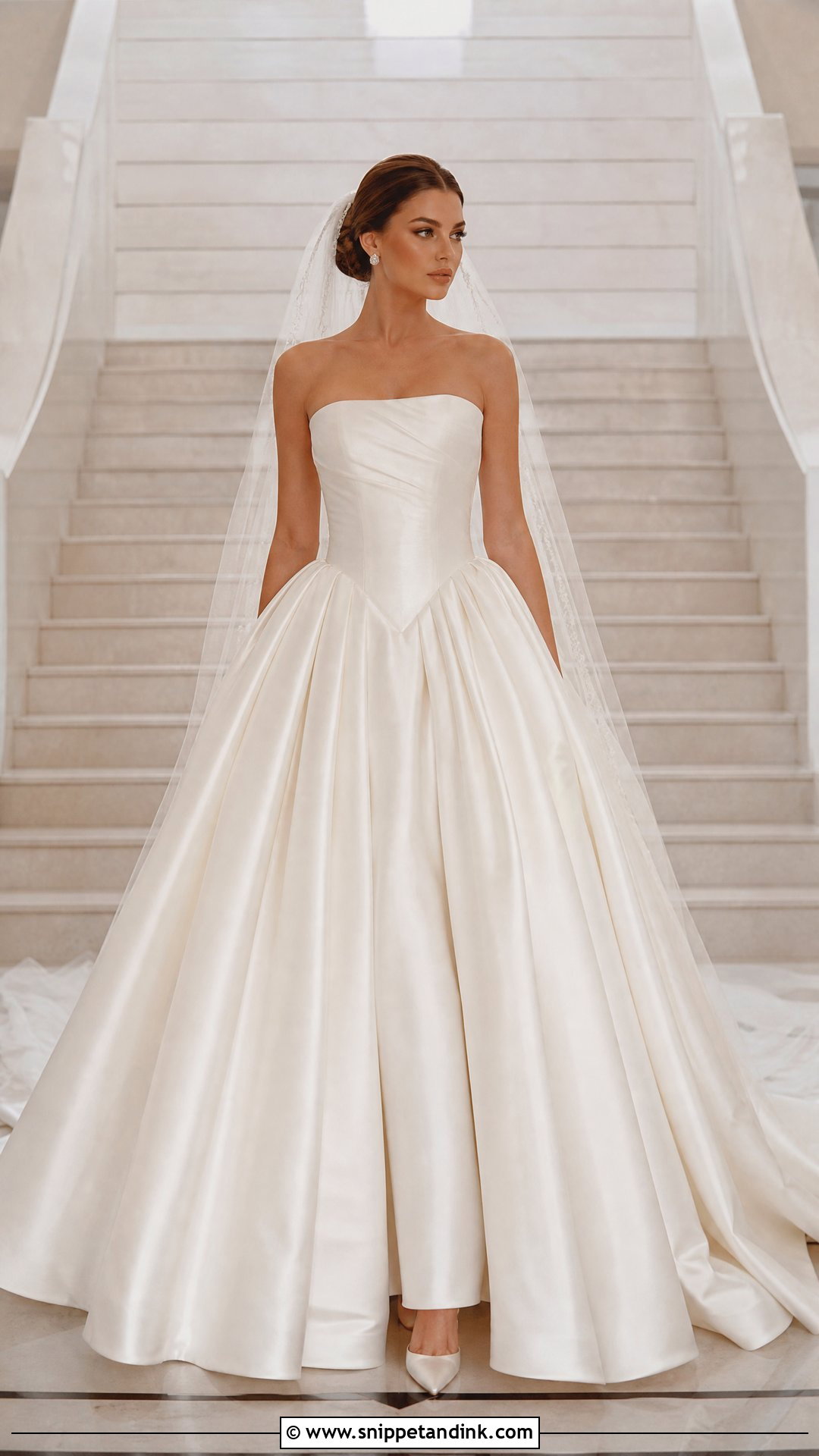
A basque-waist silk satin wedding gown lengthens the torso with its pointed waist, and over a full pleated skirt the effect is dramatic. A strapless or off-the-shoulder bodice suits it, and any embellishment belongs near the face so the waist stays clear. The weight of a pleated satin skirt drags on that point, so I’d have the tailor check the boning and how the skirt is attached; if either is weak, the point folds when you sit. Crystal studs, closed-toe pumps, a long veil and a sculpted bun finish it. A hidden wrist loop on the train makes moving around the reception much easier.
13. Draped Silk Satin Wedding Gown
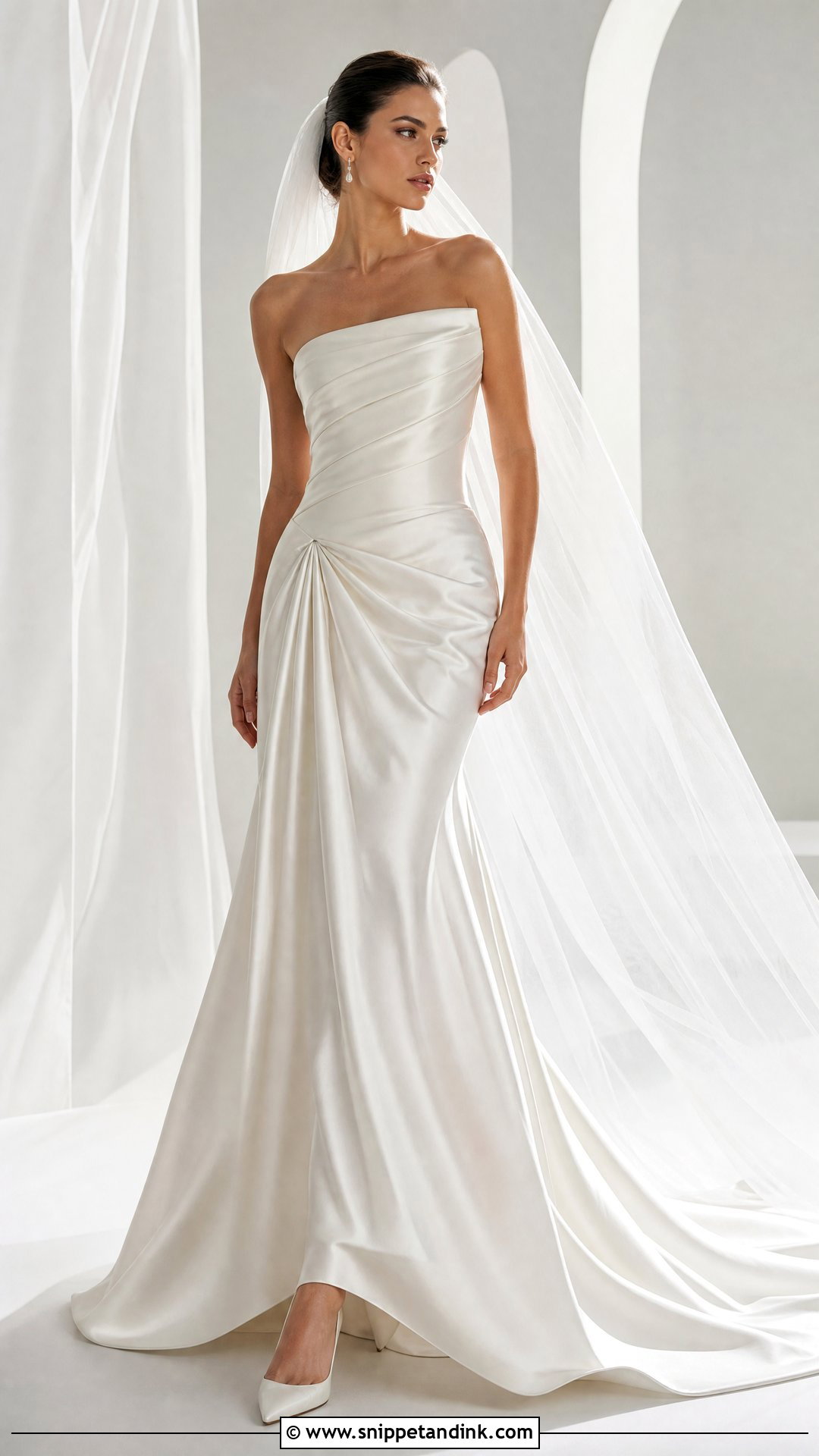
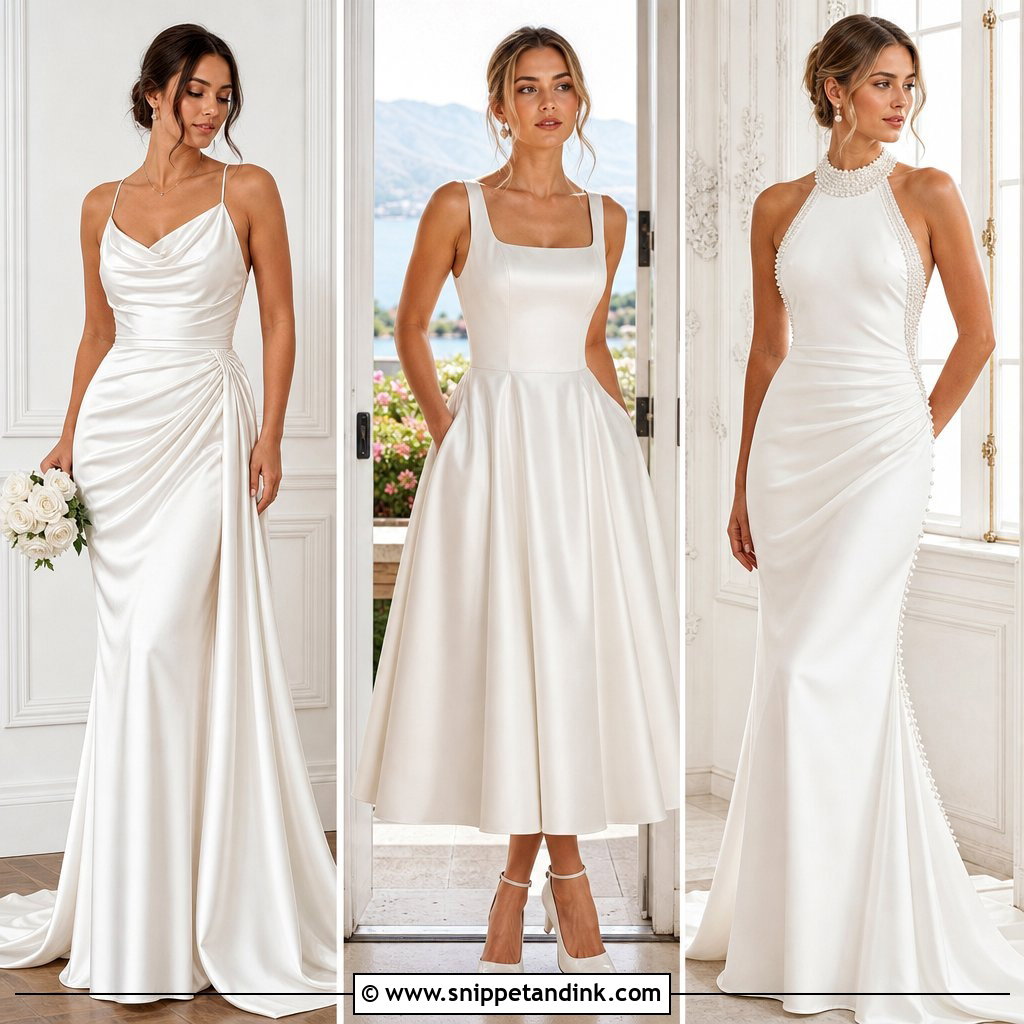
Fabric is the decoration in a draped gown. Diagonal folds across the bodice, gathering at one hip or a wrapped skirt add depth with no beadwork, and a fitted column or gentle fit-and-flare lets the drapes show from head to toe. Slim earrings, simple pumps and a plain veil with a clean-cut edge keep the outfit balanced and editorial, with the hair pulled back from the face. I check two things here: that the folds lie with intent instead of bunching at the waist, and that the lining moves separately, so the outer satin doesn’t catch as you walk or turn.
14. Ruched Silk Satin Wedding Gown
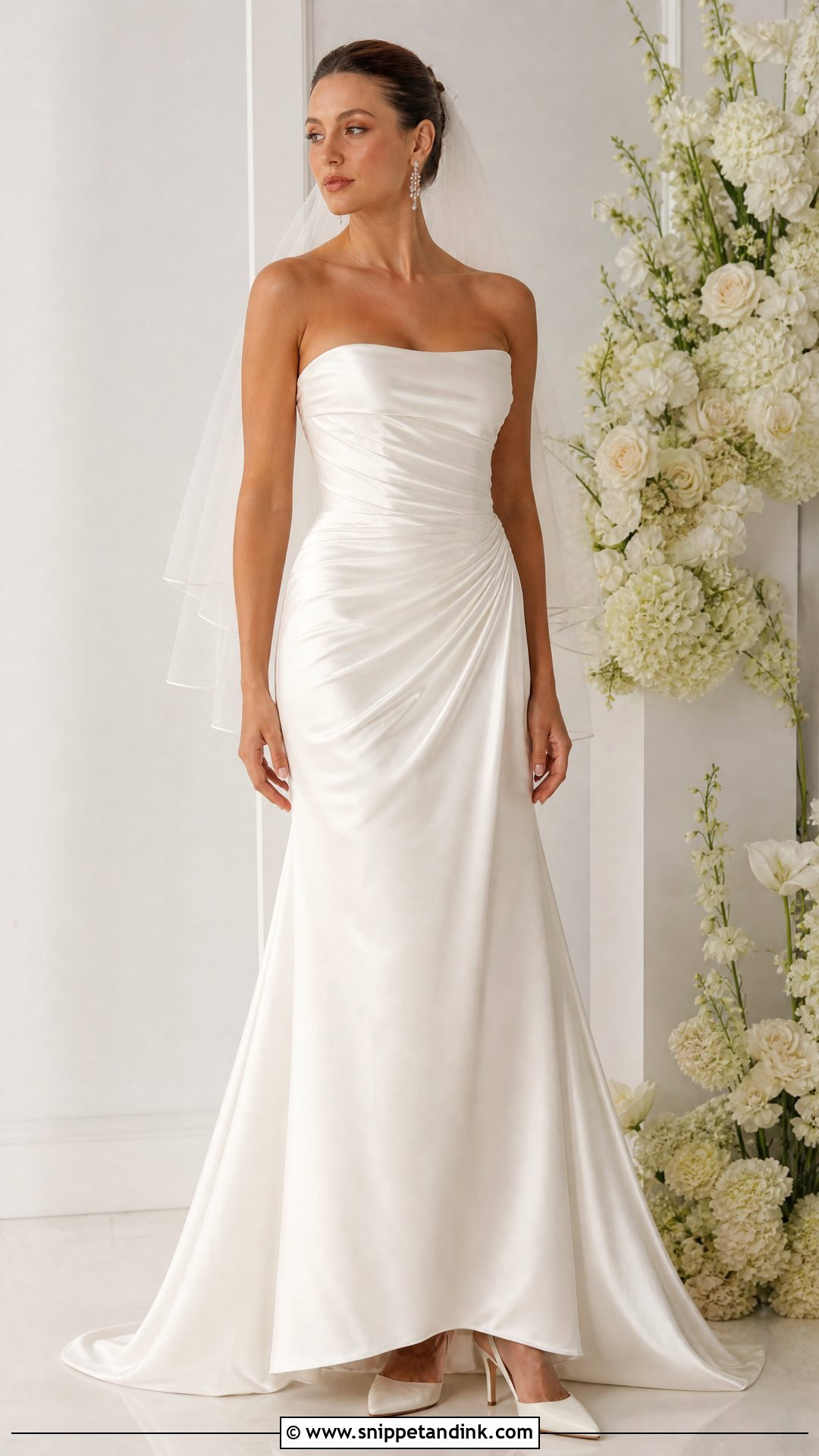
Ruching should follow the body, not add to it, so placement matters more than quantity. Diagonal gathers make a flowing line, while ruching centred down the front looks more structured. Strapless with a gently flared skirt is the classic pairing, finished with crystal drops, ivory slingbacks, a fingertip veil and a smooth updo. Keep the bouquet slim so it doesn’t cover the folds. A trick I use at fittings is to take phone photos from the front, back and both sides. Satin reflects light differently at every angle, and the photos reveal folds that need adjusting long before a mirror does.
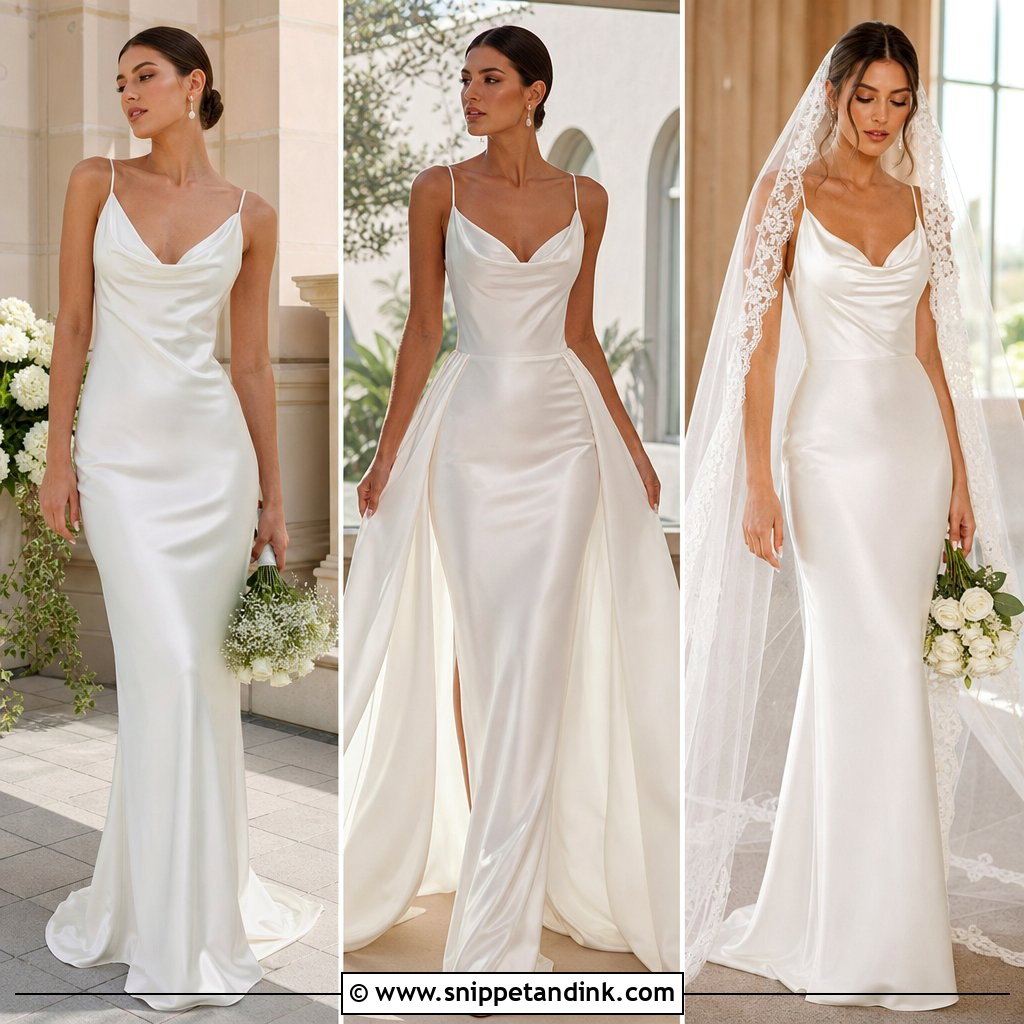
15. Mermaid Silk Satin Wedding Gown
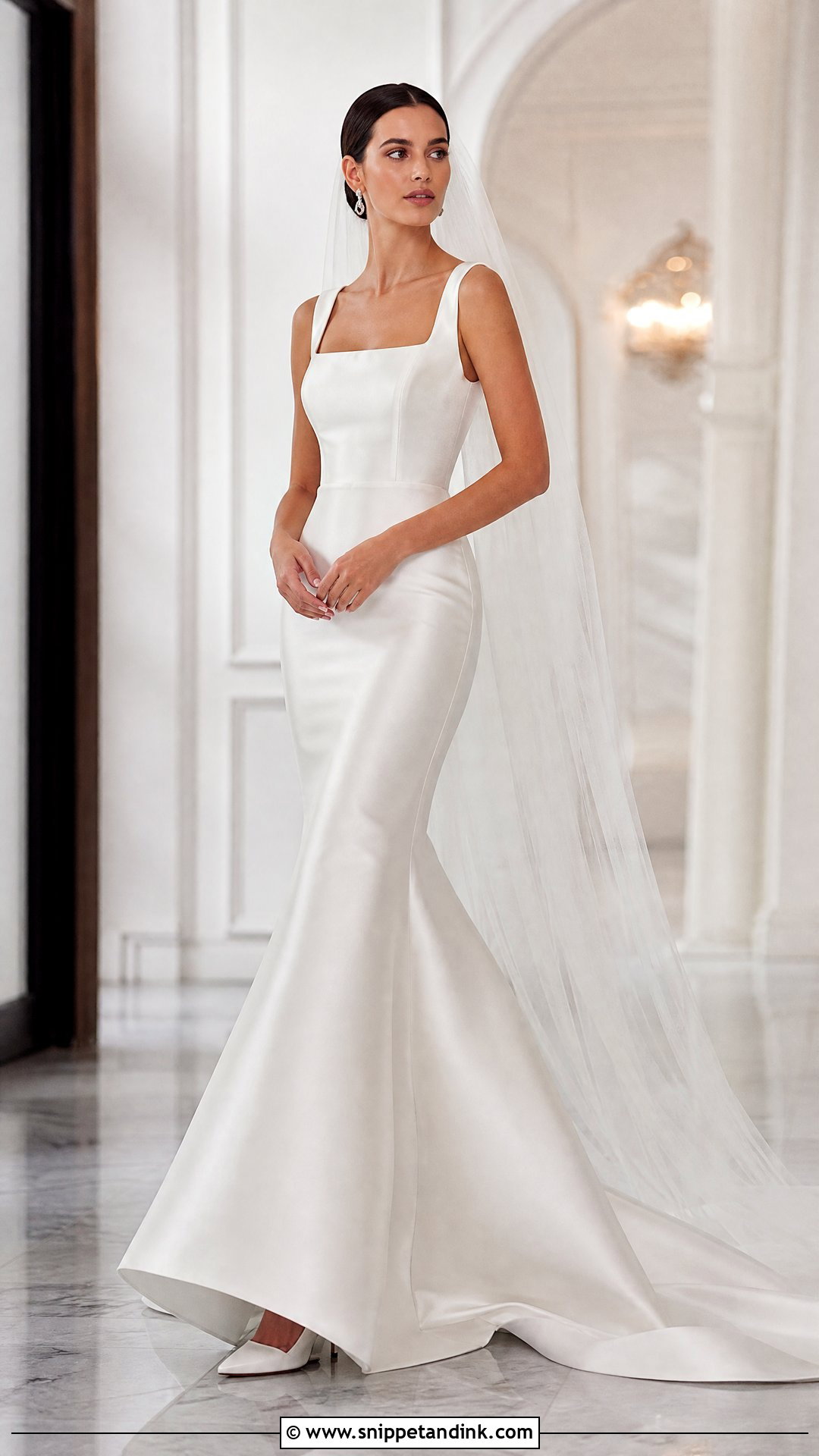
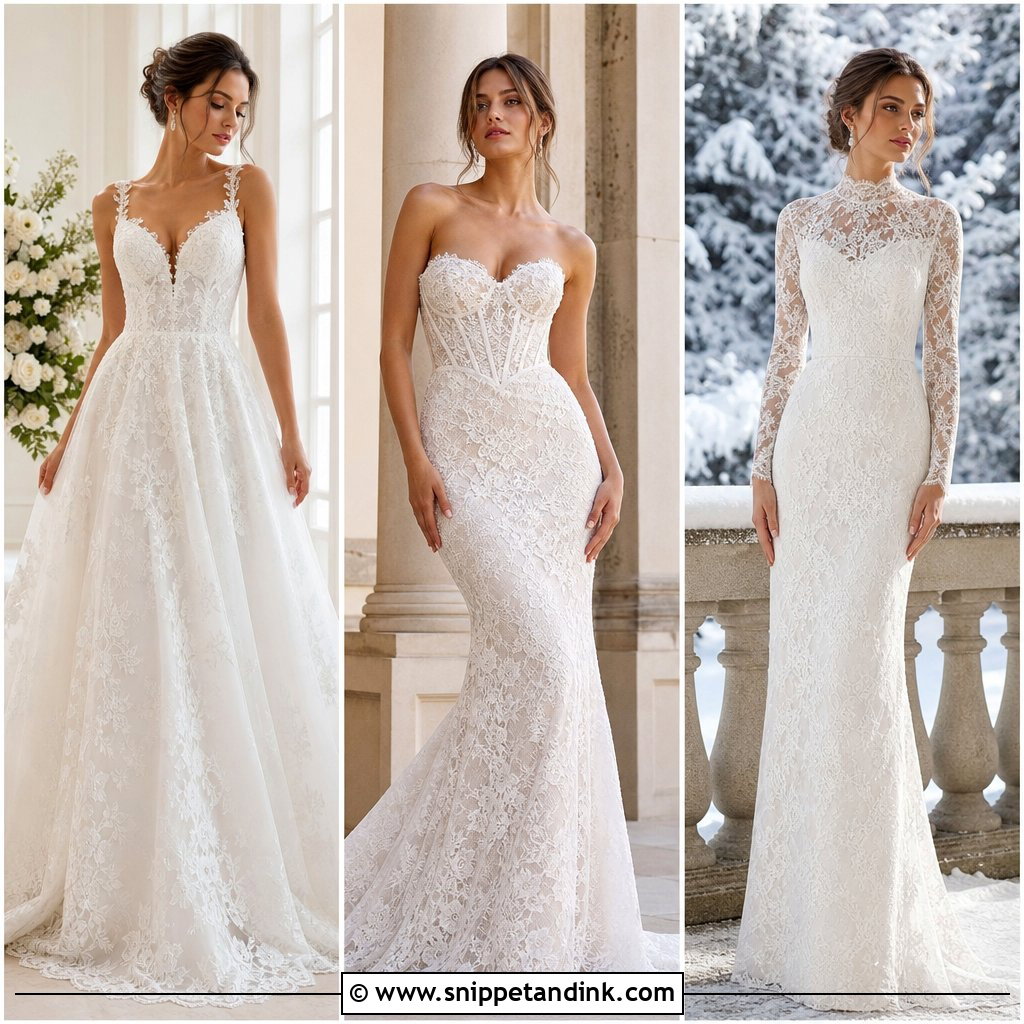
For a mermaid, I’d choose a thicker satin with a supportive lining, since thin satin shows every line beneath a fitted hip. The skirt opens below the knee, so a strapless, square or off-the-shoulder neckline balances the flare. Delicate earrings, pointed pumps, a long veil and sleek hair tucked behind the ears are enough. When you try it on, take normal steps, climb a few stairs and sit for several minutes. If any of that is a struggle, the flare needs to move. Ask about a secure bustle and an inner support layer to protect the train later in the night.
16. Column Silk Satin Wedding Gown
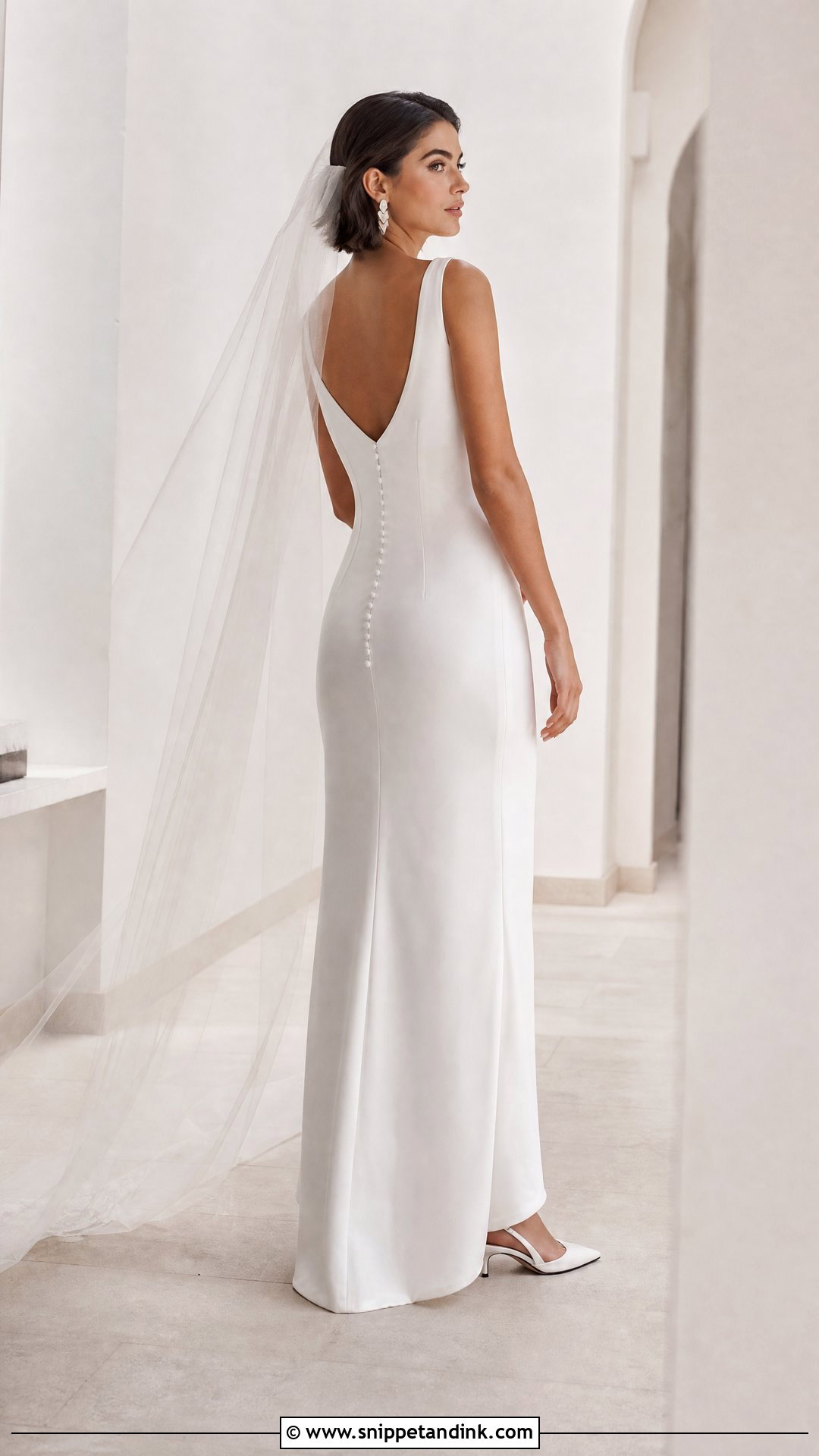
A column has nothing to hide behind, so the seaming has to do all the shaping. A bateau, square or softly rounded neckline suits the narrow skirt, which should skim the hips and fall cleanly instead of pulling across the thighs. Satin has little stretch, so I ask for a back vent or concealed slit so you can take a normal stride and climb into a car. Pointed slingbacks, geometric earrings, a long sheer veil and a sleek bun or polished bob suit the minimal mood. Add one memorable detail at most: a low back, a row of covered buttons or a detachable shoulder cape.
17. High-Slit Silk Satin Wedding Gown
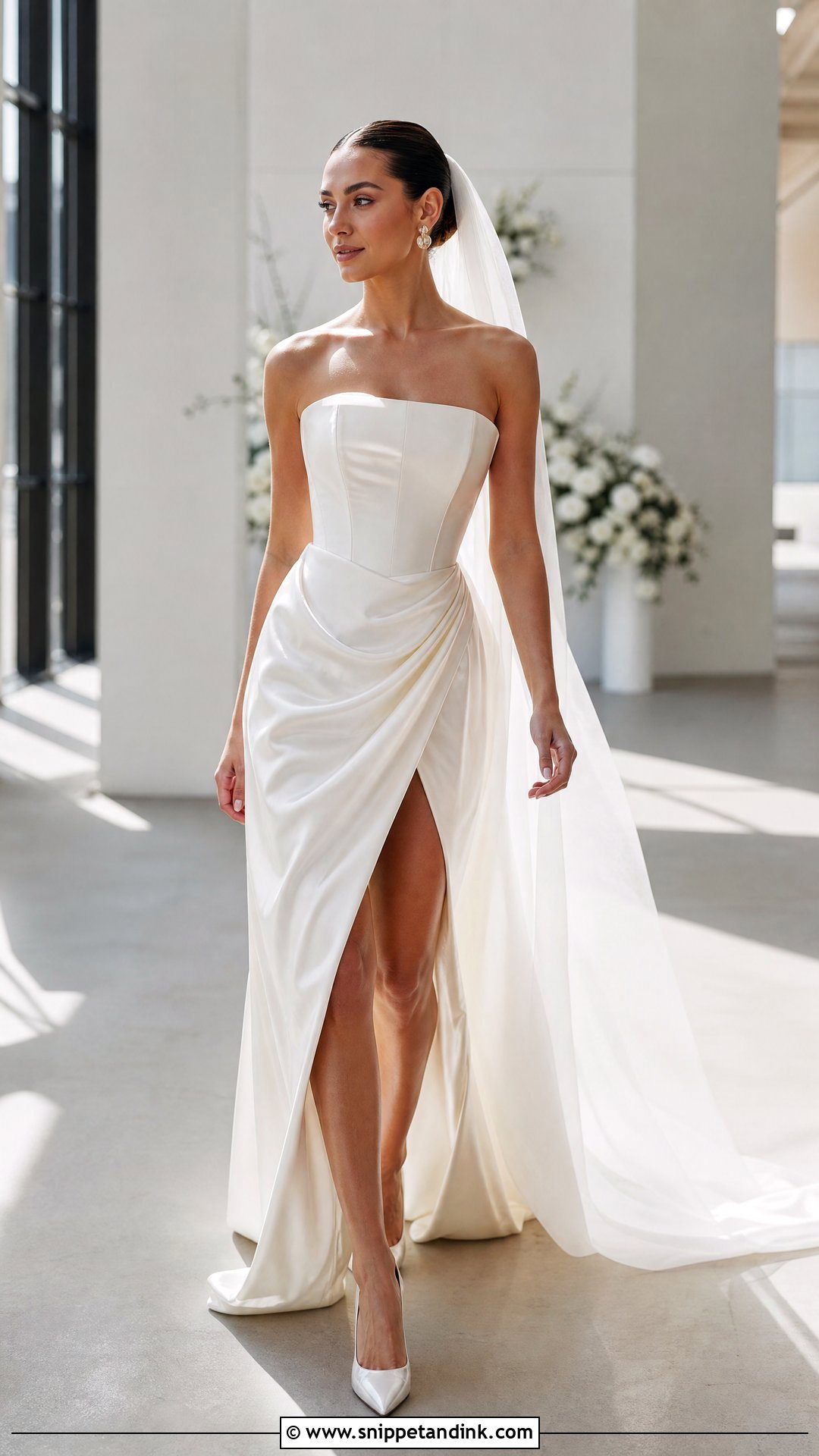
A slit brings movement to a full-length gown, and the best ones show the leg only while you walk. A wrap, draped or softly gathered skirt carries it well; balance it with a structured strapless bodice or a simple sleeved top. Your shoes will be seen far more often, so choose pointed pumps you can stand in for hours, then add small statement earrings and a plain chapel veil. The top of a slit takes a lot of strain. I’d have it reinforced with a bar tack and checked while you sit and climb stairs, and a discreet inner panel can add coverage if you’d like it.
18. Backless Silk Satin Wedding Gown
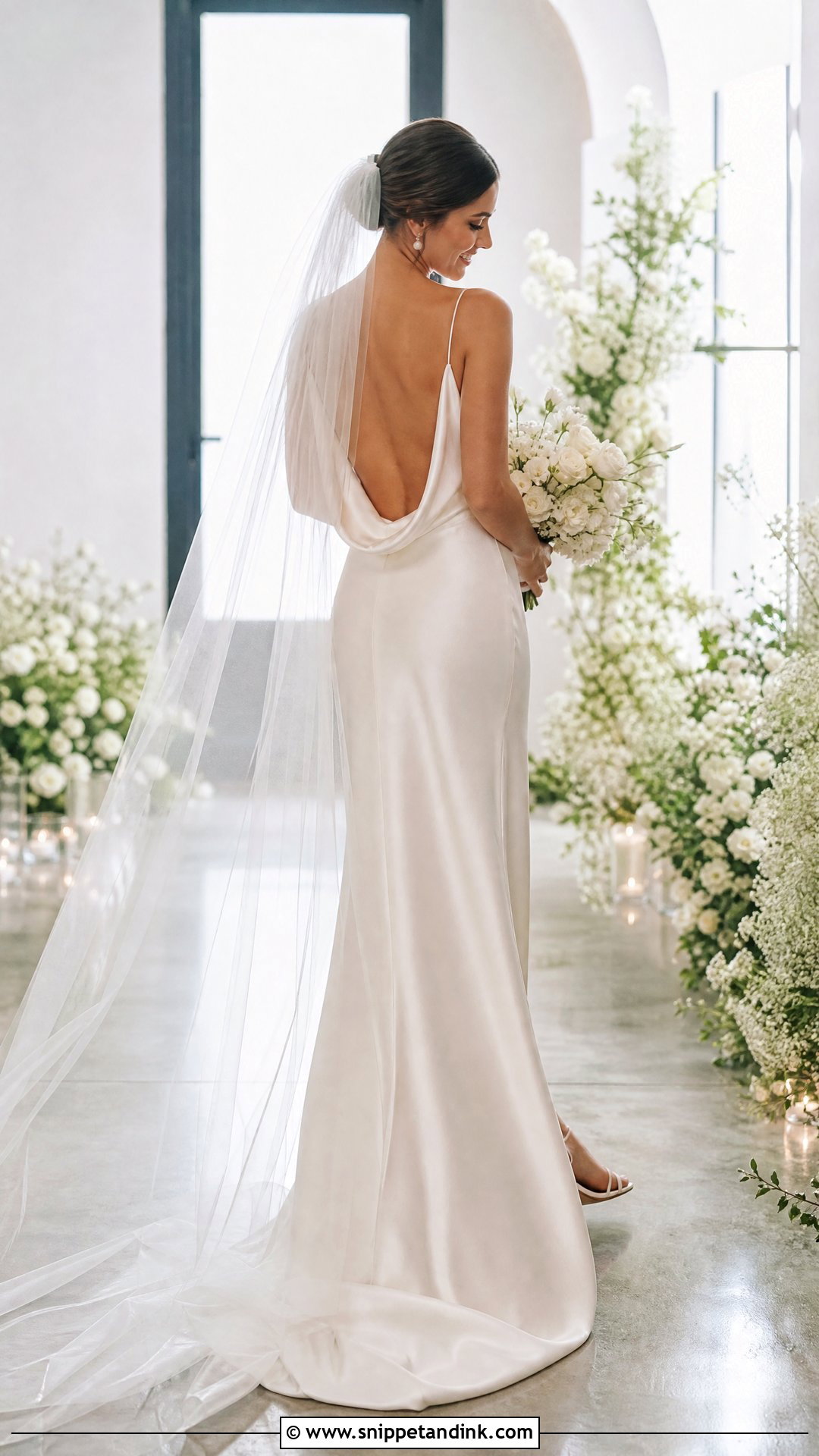
A backless silk satin wedding gown makes its impression as you walk away, so it suits a long aisle or an open-air ceremony where guests see you from behind. Balance the bare back with a high front, narrow straps or a draped cowl back, over a fitted column or subtle A-line. Pick one place for jewelry: a back-drop necklace or pearl earrings, not something at front and back. Strappy ivory heels and a veil set below the bun complete it. Plan the support early, because built-in cups, side boning, body tape or a custom underlayer may all be needed to keep the edges flat through hugging and dancing.
19. Silk Satin Wedding Gown With Overskirt
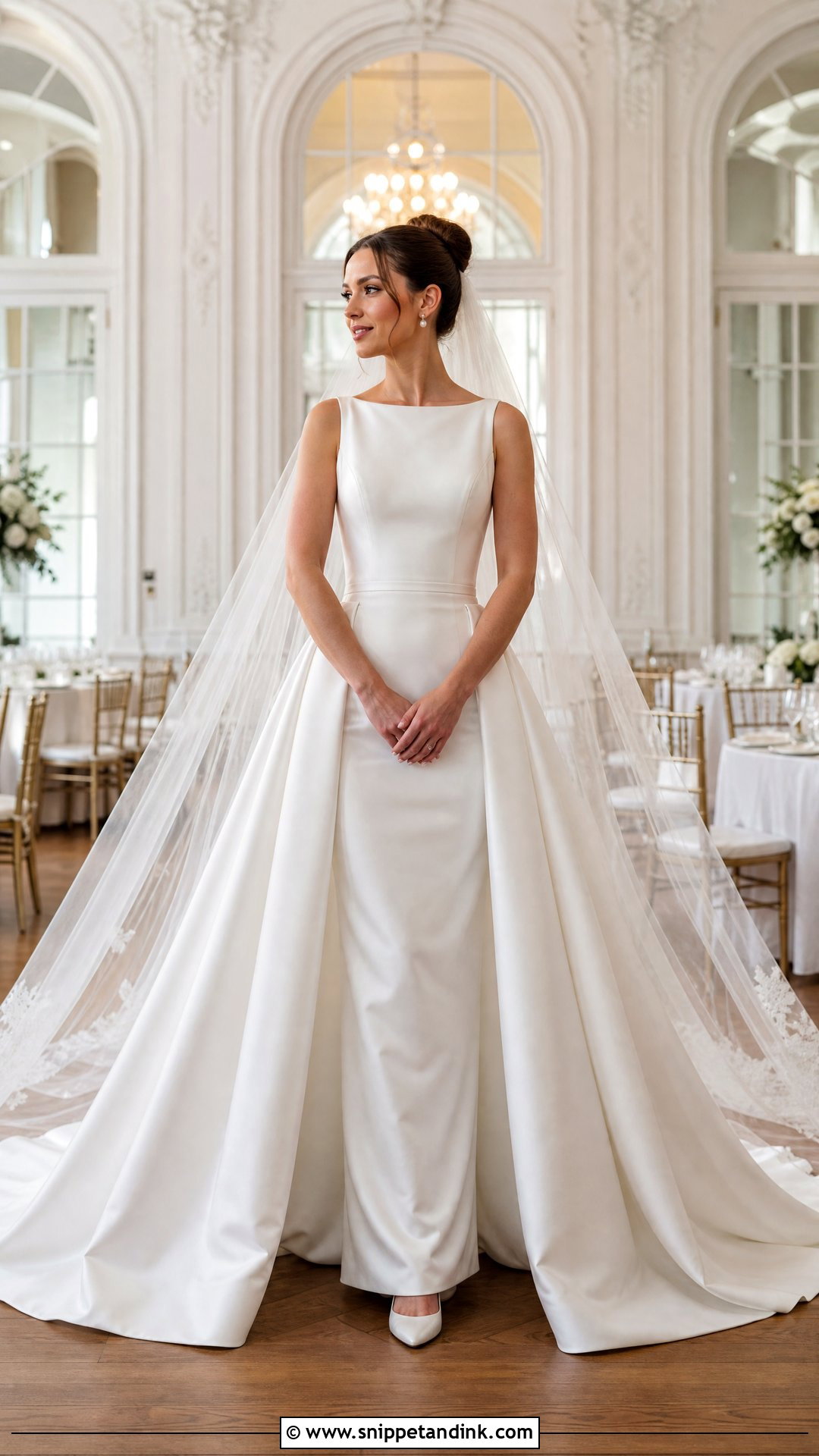
An overskirt gives you two looks without a full change. Start with a fitted column, mermaid or slip, then add a detachable satin overskirt for the ceremony to create an A-line or ball-gown shape. Pearl earrings, closed-toe pumps, a long veil and a neat updo suit the formal half; once it comes off, swap the veil for a smaller hair piece or bolder earrings. The waistband is the part I test hardest. It should fasten securely, lie flat with no ridge, and come off without a tangle of hooks you can’t reach yourself.

20. Tea-Length Silk Satin Wedding Gown
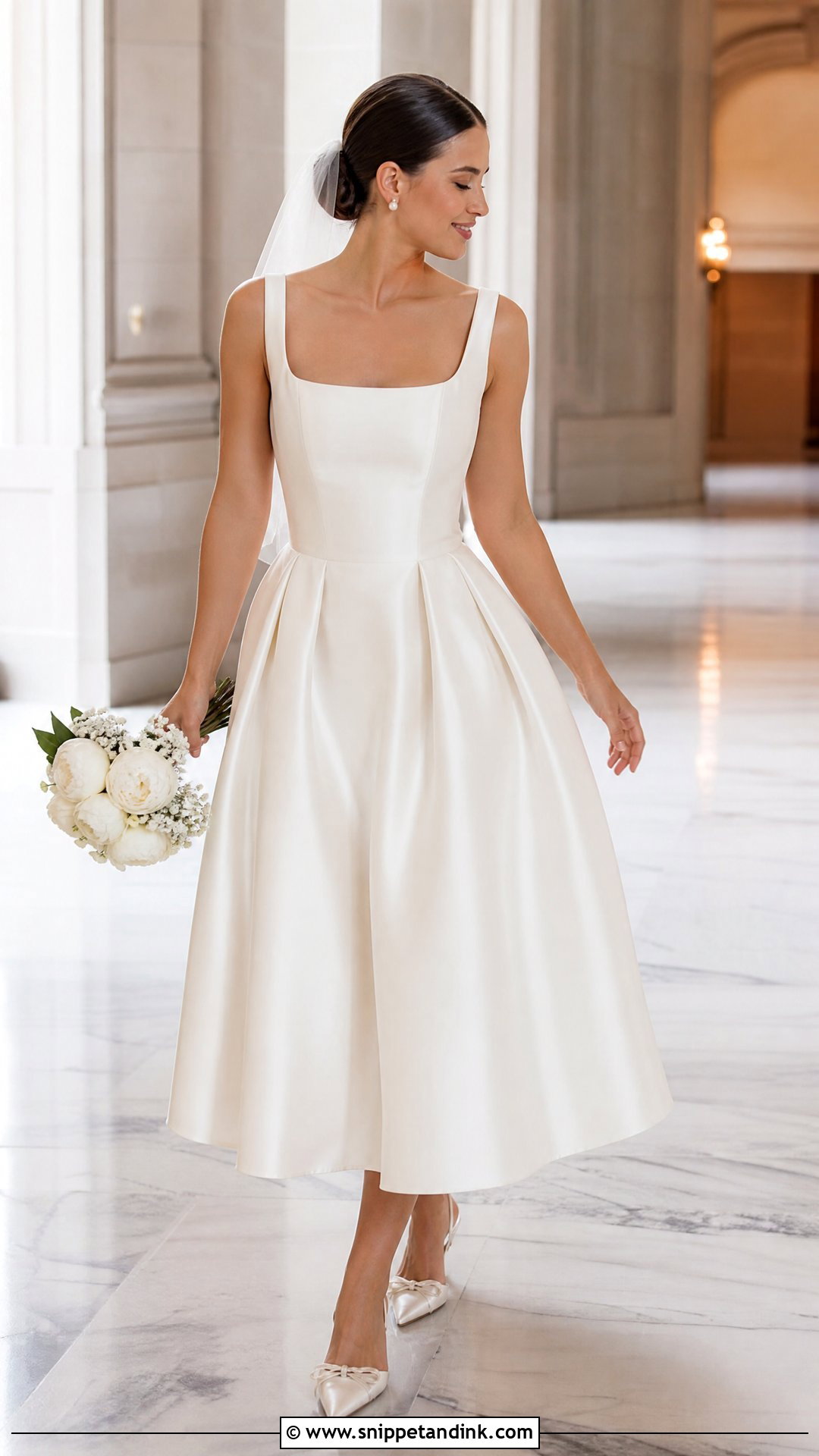
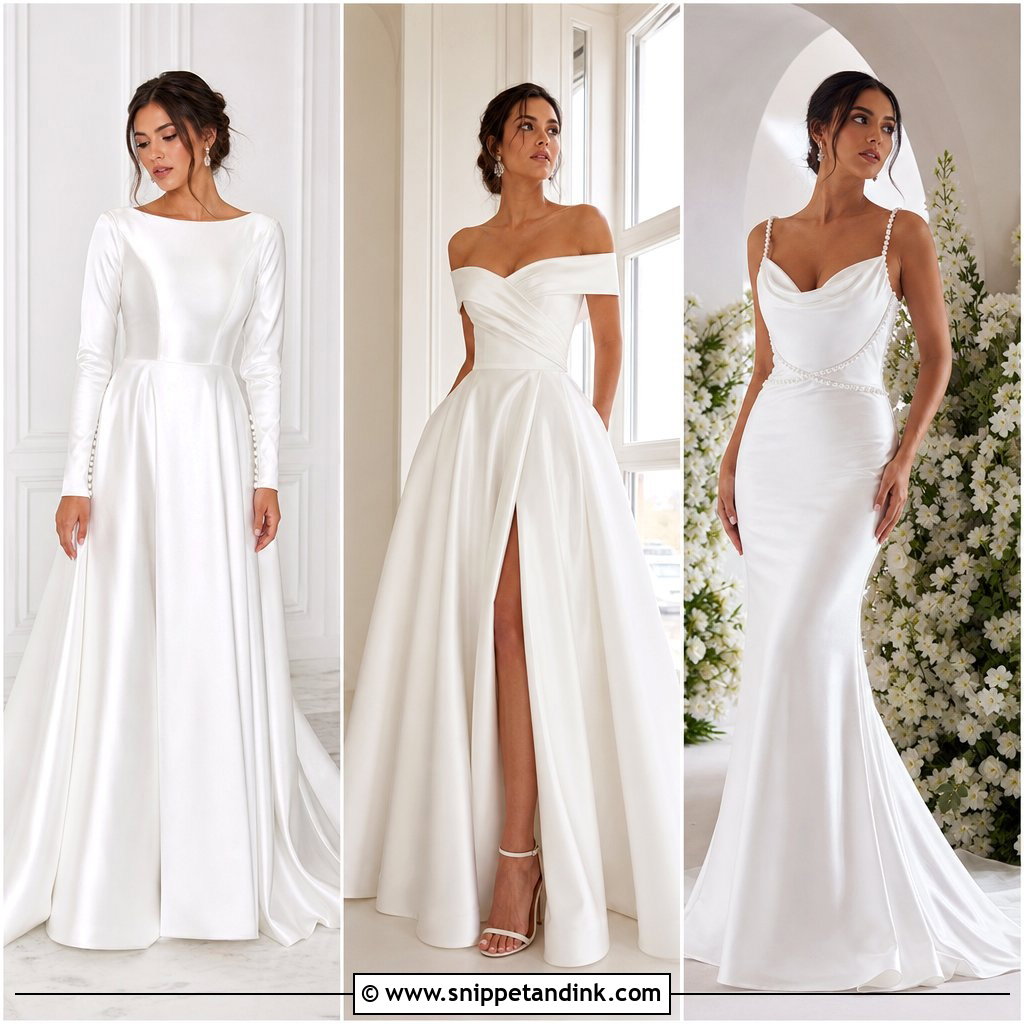
Tea length makes sense for a civil ceremony, a small wedding or a reception change. A fitted bodice with a full mid-calf skirt gives the classic balance, and a square neckline, wide straps or short sleeves add structure. Hem placement matters more than people expect: it should finish at a flattering point between knee and ankle, never across the widest part of the calf. The shoes stay on show, so use them for texture with satin, crystals or a small bow. Pearl studs, a short veil and a compact bouquet complete it. Pockets are welcome, provided they don’t add bulk under the smooth fabric.
Bustles, Explained for Whoever Is Holding the Ribbons
A satin train needs lifting once the ceremony is over, and the person doing it is usually a bridesmaid or your mum, in a dim corridor, in a hurry. Ask your seamstress which bustle she’d choose for your skirt, then teach your helper with the dress on at the final fitting.
- Over bustle (often called American): the train is hooked up over the skirt at one or more points. It’s quick, simple and still shows a little of the train’s shape.
- Under bustle (French or Victorian): the train folds under and is tied with ribbons, usually numbered or colour-coded. It makes soft tiers at the back and handles heavier satin well.
- Ballroom bustle: many hidden points lift the train so the hem is even all round, as if there never was a train. It takes the longest to fasten.
On satin, every hook and ribbon loop is a small pressure point, so I want them stitched into seams rather than the open fabric. Ask for colour-matched loops, and get a photo of the finished bustle onto your helper’s phone so she can check her work.
Pollen, Lipstick and Veil Combs: What Marks Satin
Most of the damage I see to satin gowns happens in the hours before the ceremony, not on the dance floor. Lily pollen is the classic culprit: orange, oily and very hard to shift from silk. Ask your florist to remove the stamens from any lilies, and if pollen does land on the gown, lift it off with tape or a soft dry brush instead of wiping.
Makeup transfers too, onto shoulders during hugs and onto the neckline while you dress. Step into the gown rather than pulling it over your head, and drape a light scarf over your face if it has to go overhead. Veil combs and earrings with exposed prongs can catch the weave and pull a thread, so check the comb’s teeth for rough edges and keep prong settings turned away from the fabric.
The Tailoring Matters More Than the Trend
Your gown should feel good from every angle and still let you walk, sit, hug guests and enjoy the party. Once you know which shape you like, compare fabric weights and construction in person, because two satin gowns that look identical online can feel completely different on. Bring the right underwear and shoes to every fitting and test the dress with real movement. Accessories should support the sheen rather than compete with it. Simple or full-skirted, the tailoring is what makes the biggest difference.
You'll Like These Ideas:






Leave a Reply