
A Saudi wedding dress has to hold its own in a large, brightly lit hall, often in front of hundreds of women, while respecting the coverage the bride and her family expect. That pairing shapes almost every decision: long sleeves, higher necklines, fabrics that keep their structure for hours, and embroidery that reads from across the room. Many brides also need more than one outfit, from a white gown for the entrance to a traditional look for a henna celebration or a lighter dress for later in the night. The 25 ideas below cover the main gown and those other moments, with notes on how each fabric and shape behaves over a long celebration.
A Dress for the Milka, the Henna Night and the Wedding
Most brides planning a Saudi wedding are building a small wardrobe rather than buying one gown. Each occasion asks for something different, and deciding the whole set early helps you spend where it will actually be seen.
- The milka: smaller, family-focused and often seated. A lighter, softer dress you can relax in.
- The henna night: colour, heritage and the freedom to sit still for a long time while the design is applied. Sleeves that push up matter more than a train.
- The wedding night entrance: the white gown that carries most of the budget, built to look right from across a large hall.
- Later the same night, if you want it: a lighter second dress for greeting guests and dancing.
Timing is the other early decision. A custom gown with hand embroidery or dense beading commonly needs several months from the first fitting to the finished dress, and lead times vary widely between designers, so start those conversations as soon as the date is set. Even a ready-made gown needs alterations, usually beginning a couple of months before the wedding.
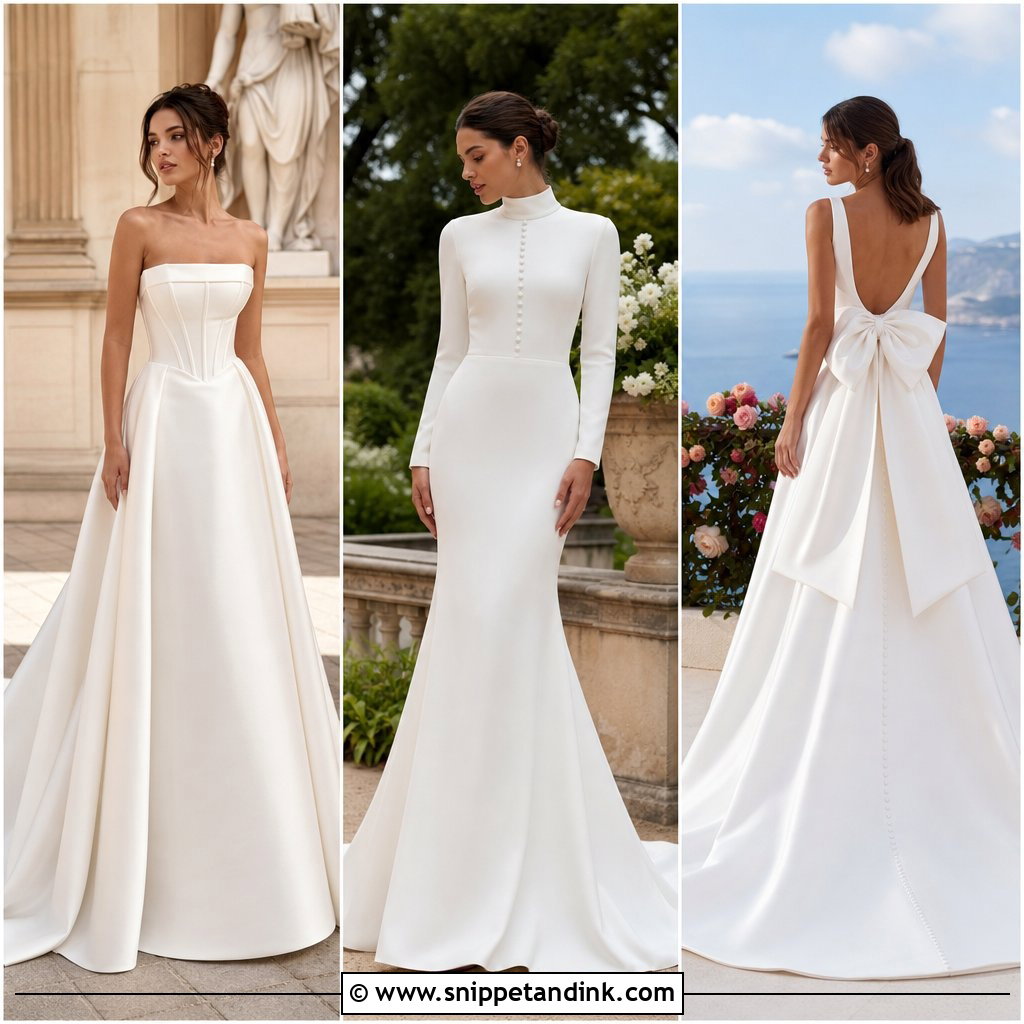
1. White Long Sleeve Saudi Wedding Dress
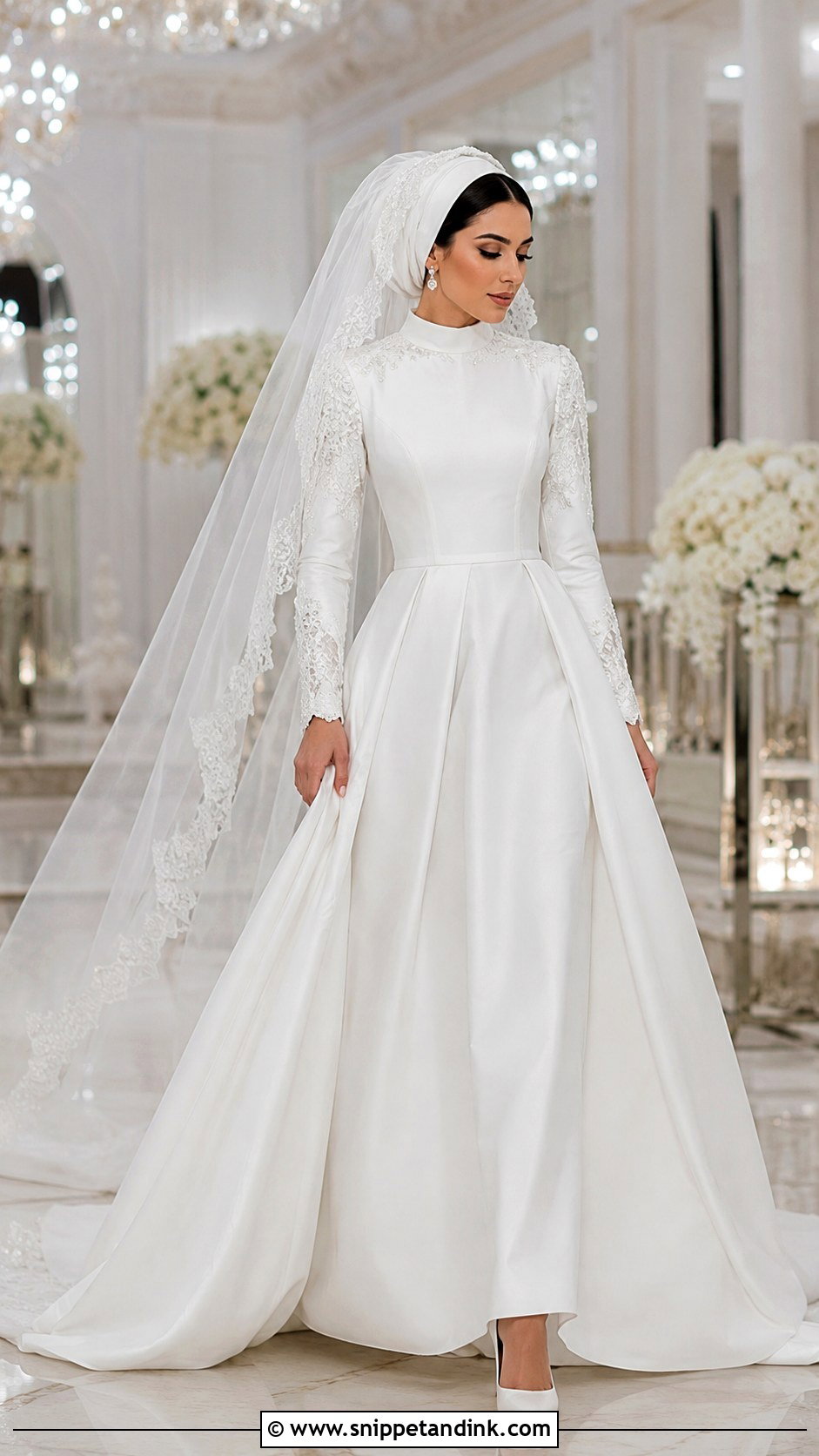
Long sleeves are the starting point for most Saudi bridal gowns, and the fit of the sleeve matters more than its decoration. Cut too tight at the upper arm, you can’t lift your hands to greet guests or hold the bouquet, so I look for a little ease above the elbow. A fitted bodice over an A-line or ball gown skirt gives a clean line for the entrance. Lace sleeves, pearl buttons or light beadwork add interest, and a high or illusion neckline pairs well with a simple veil, satin heels and a crystal hairpiece.
2. Saudi Ball Gown Wedding Dress
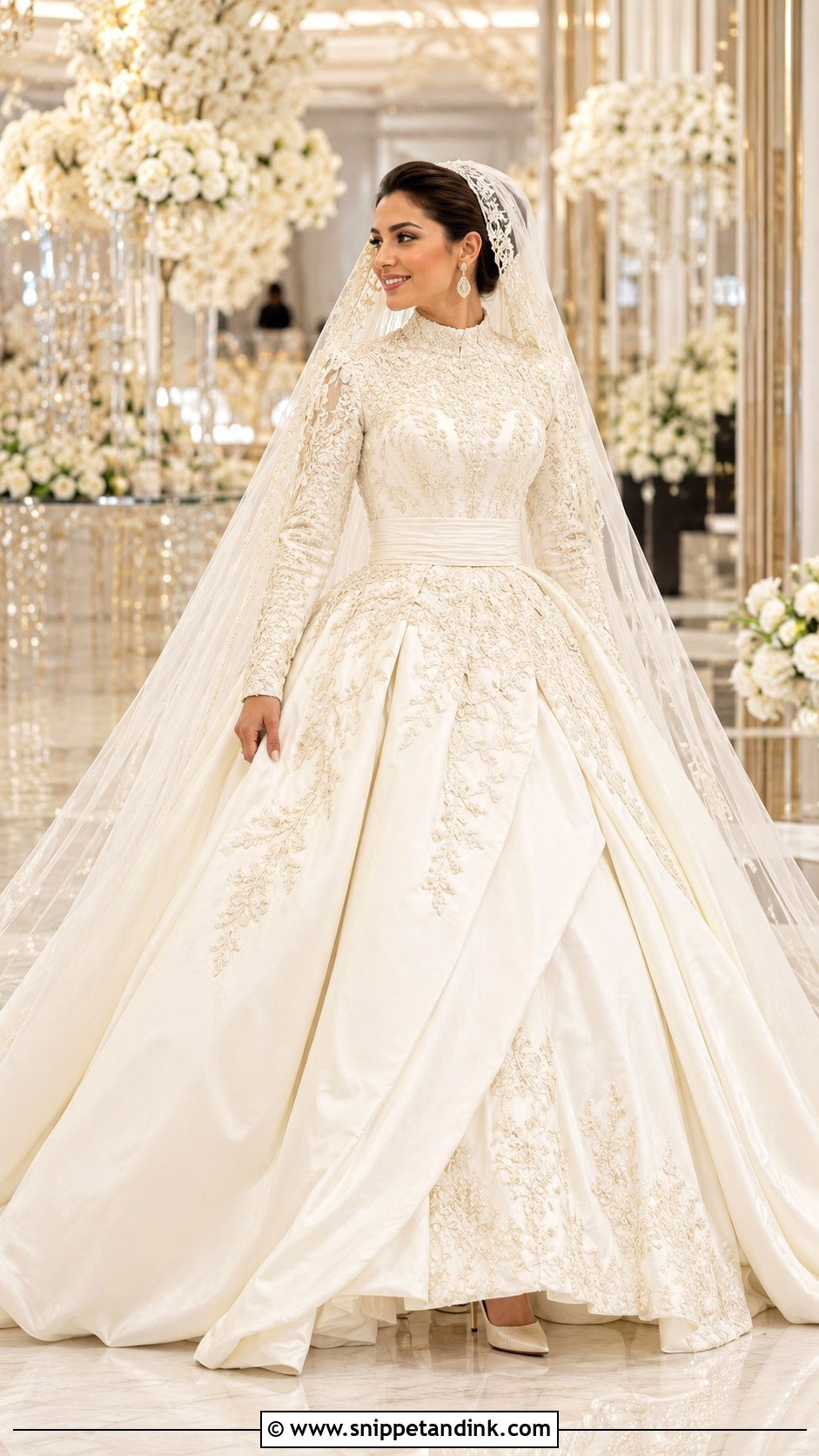
A full skirt is made for the grand, royal entrance, and in a wide hall the volume reads even from the back rows. Structured satin, layered tulle and organza all hold their shape; satin is the heaviest to carry and tulle the lightest. A long-sleeve bodice with embroidery or crystals keeps the coverage. With this much skirt, keep accessories few: a cathedral veil, pointed satin heels and drop earrings. Check the total weight at a fitting, because a beaded bodice plus a petticoat is a lot to wear until the early hours.
3. Saudi Mermaid Wedding Dress
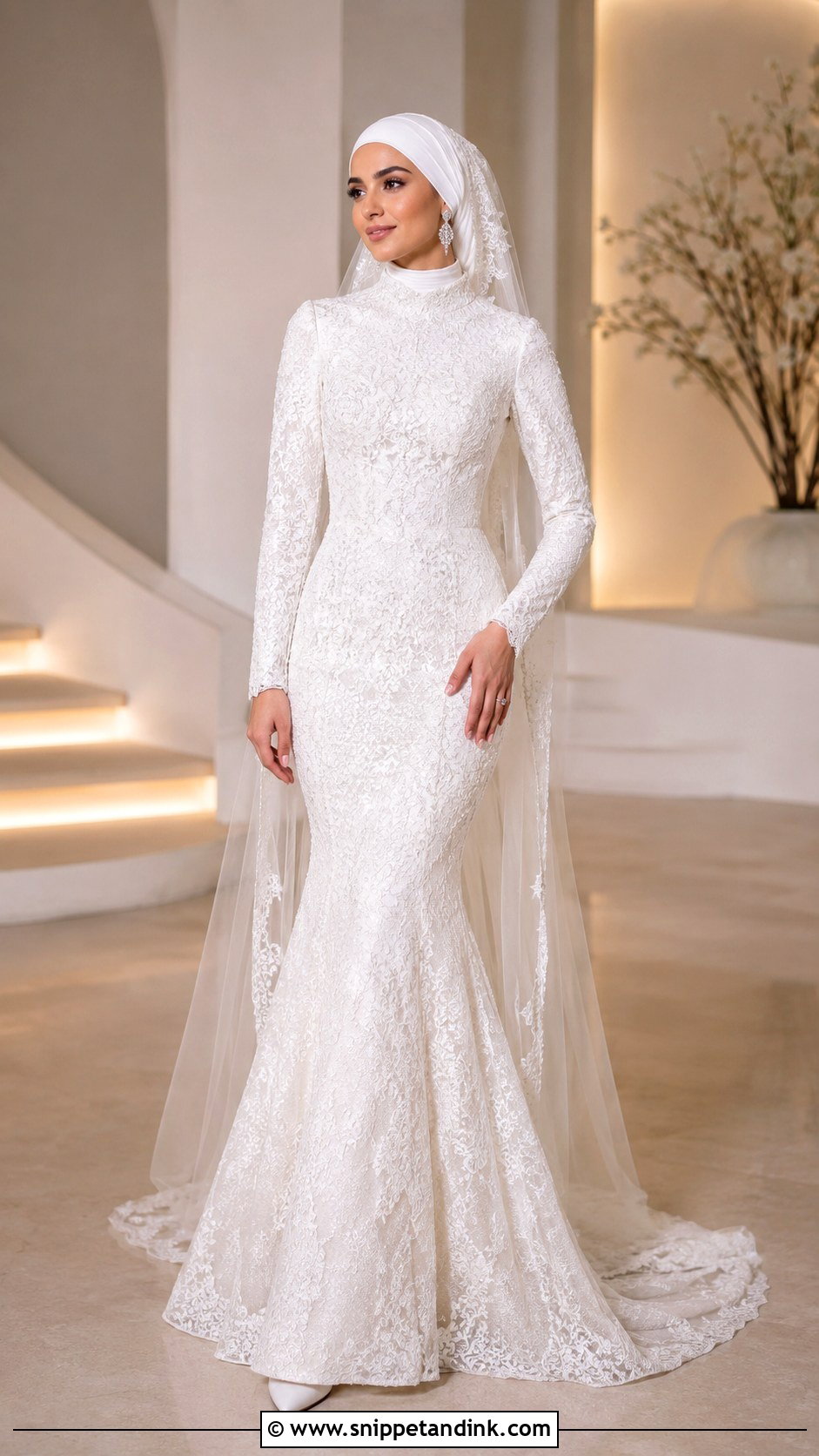
A mermaid can be modest when the coverage comes from the sleeves and neckline rather than loose fabric. The real challenge is movement. A gown that hugs to the knee shortens your stride on the walk to the stage and makes stepping up onto it awkward, so practise a few steps in it before the final fitting. Lace or subtle crystal work on the bodice and sleeves gives it detail. A long veil, sleek shoes and a structured bouquet finish it.
4. Saudi Cape Wedding Dress
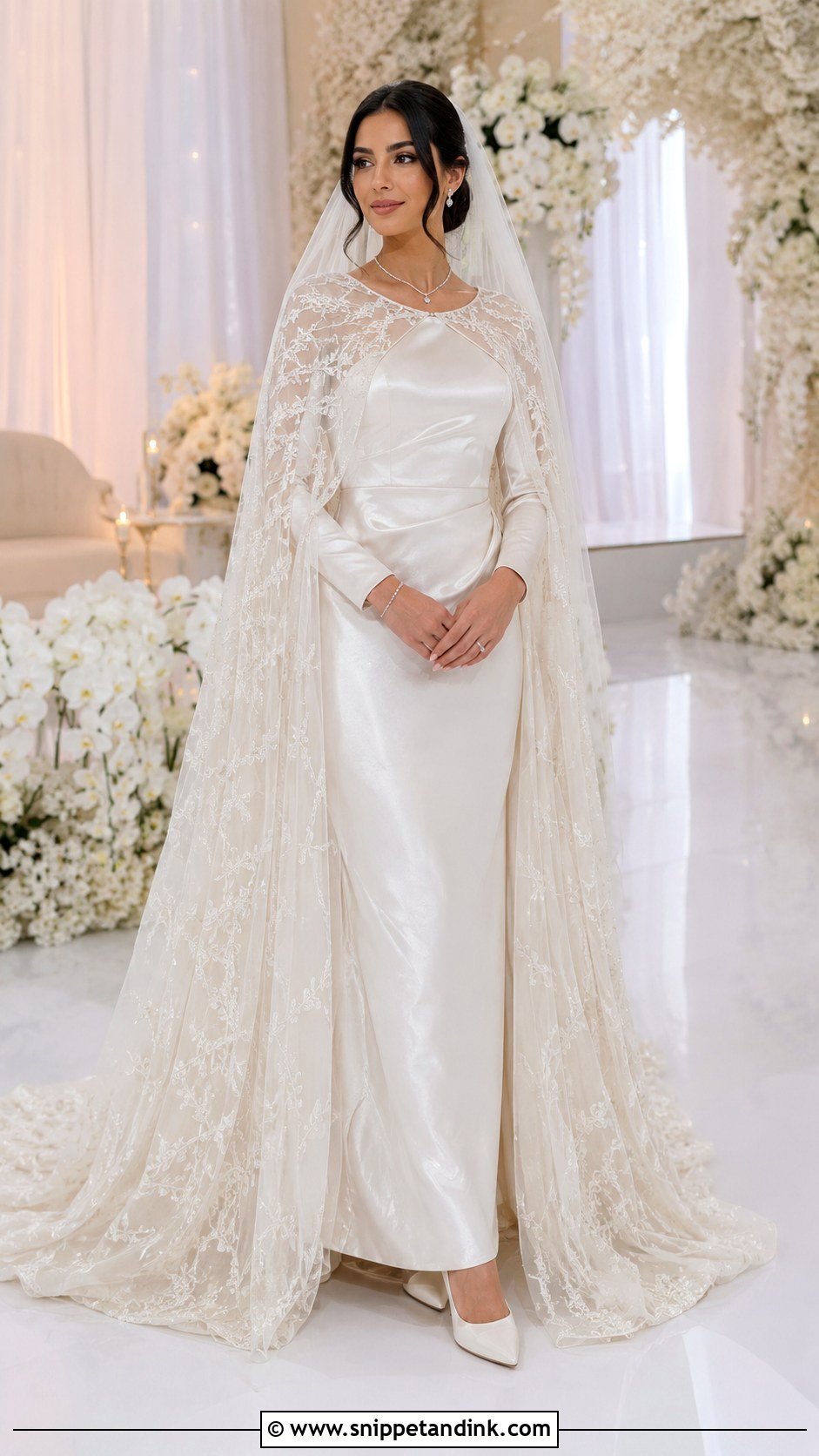
A cape can replace the veil or layer over it, adding coverage across the shoulders and arms without changing the dress underneath. I’d keep the base gown in plain satin or crepe and let a sheer cape carry the embroidery, pearls or lace trim. Make sure it fastens securely at the shoulders, since it gets pulled every time you sit and stand on the stage. A sleek bun, satin pumps and soft makeup keep everything else quiet.
5. Saudi High Neck Wedding Dress
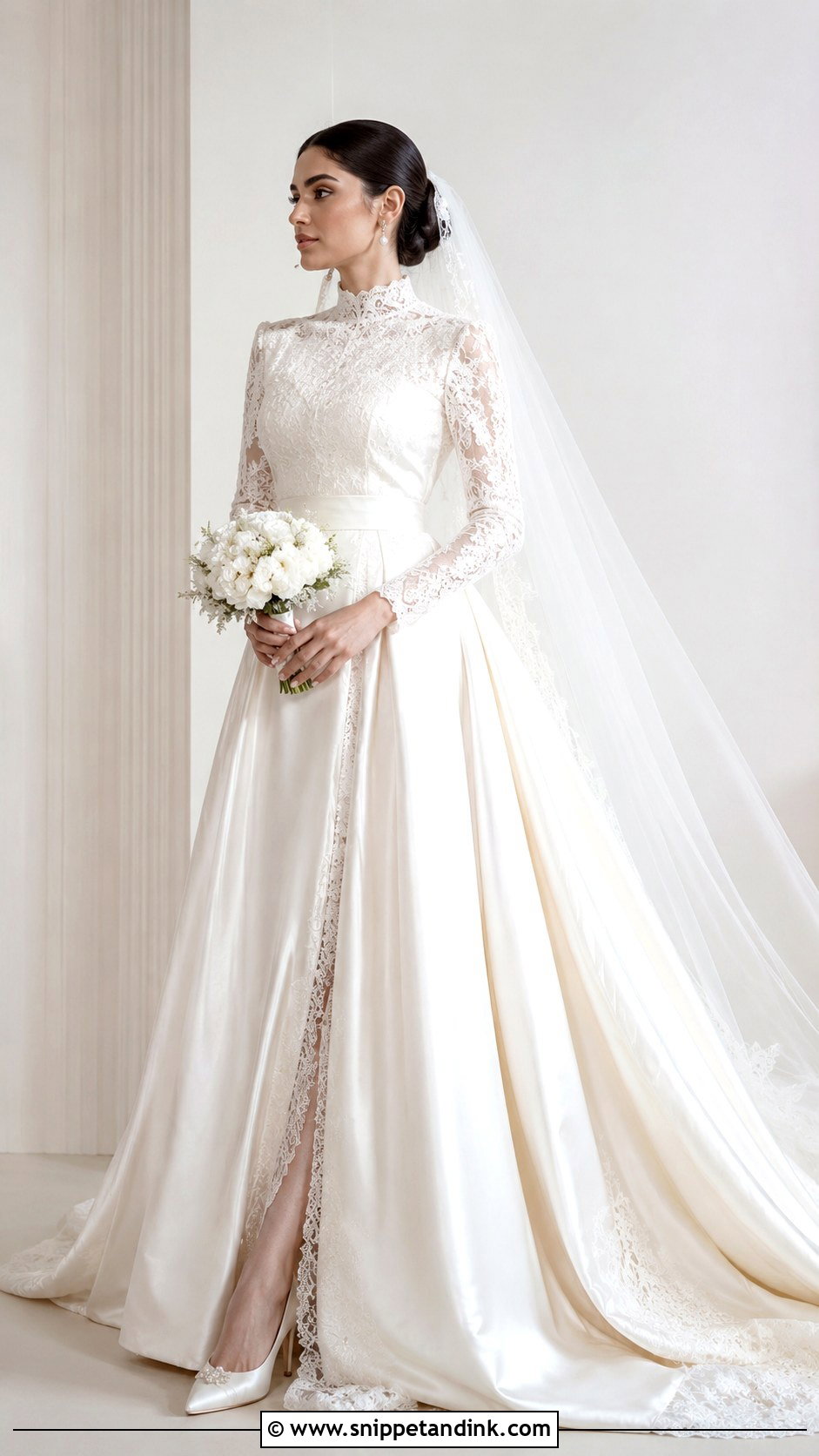
A high neck frames the face, which pays off in a hall where most photos are close portraits taken on the stage. Lace reads romantic, satin more modern. The risk is heaviness, so balance a covered neck with a lighter skirt fabric or restrained embroidery. A low bun, pearl earrings and a long veil set softly at the back of the head suit it.
6. Saudi Lace Wedding Dress
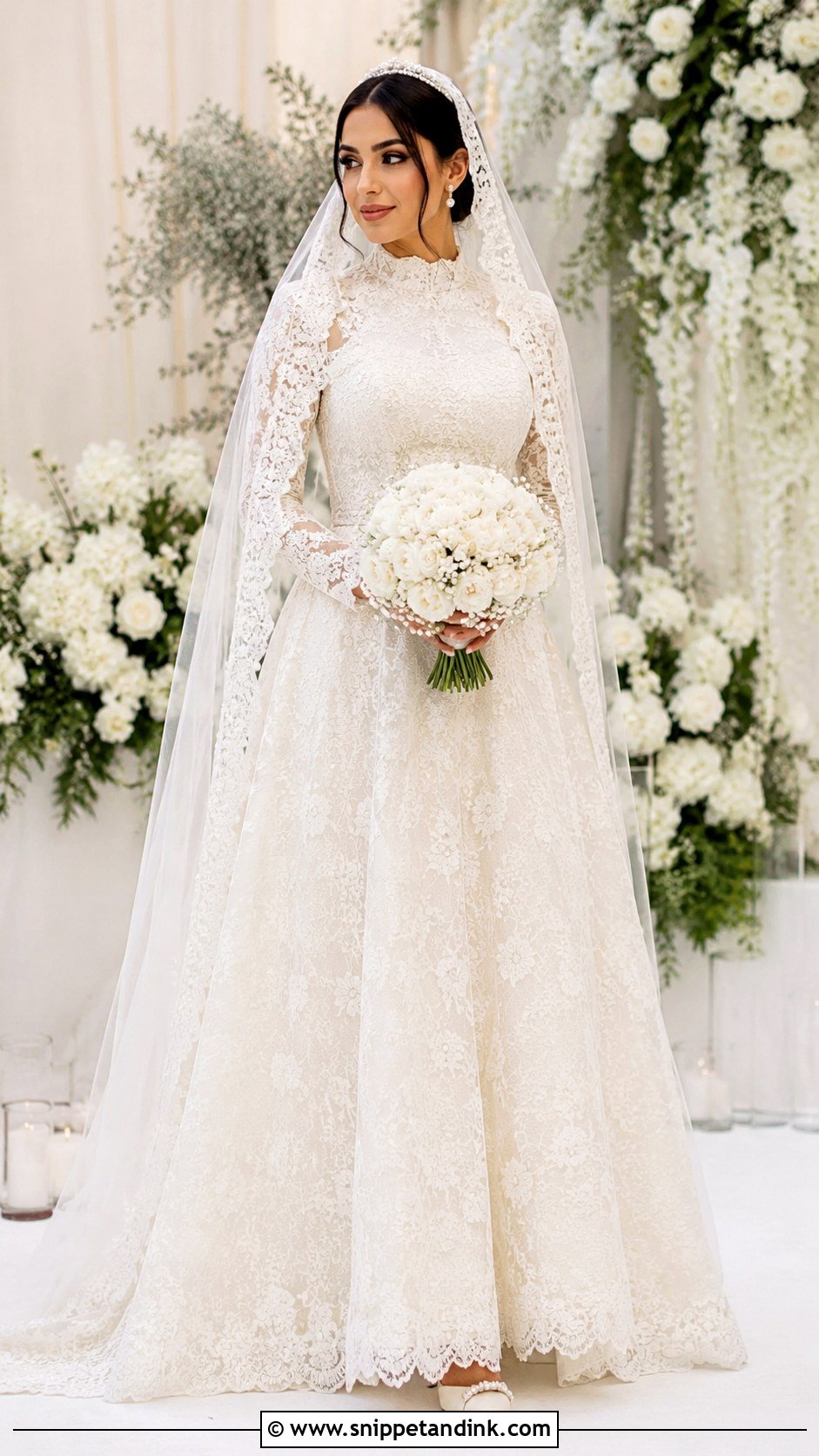
Lace gives texture across the sleeves, bodice, neckline and train. For full coverage, check that the lace is lined with an ivory or skin-tone layer behind it. Unlined lace shows far more than you expect under hall lighting and camera flash. A-line, ball gown and fitted shapes all take lace well. Pearl accessories and a lace-edged veil coordinate easily, and a heavily laced dress wants a simple bouquet.
7. Saudi Satin Wedding Dress
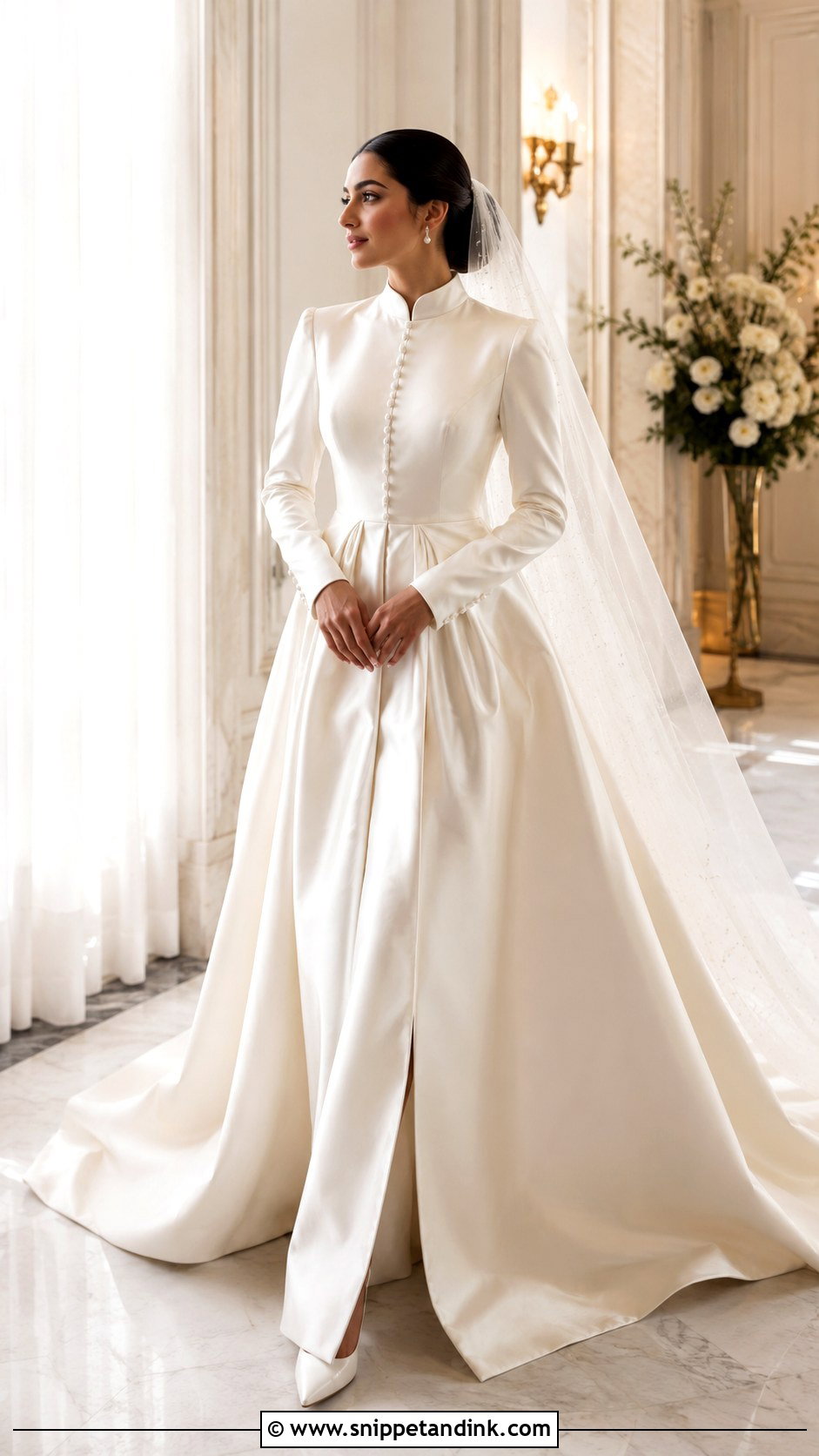
Satin tells you more about the dressmaker than any other fabric, because the shine shows every uneven seam. Bright hall lighting flatters it when the cut is clean, so this is where I’d spend on tailoring over decoration. Long sleeves, a structured bodice and covered buttons down the back are the classic version. Pointed heels, pearl earrings and a sleek veil complete it.
8. Saudi Pearl Wedding Dress
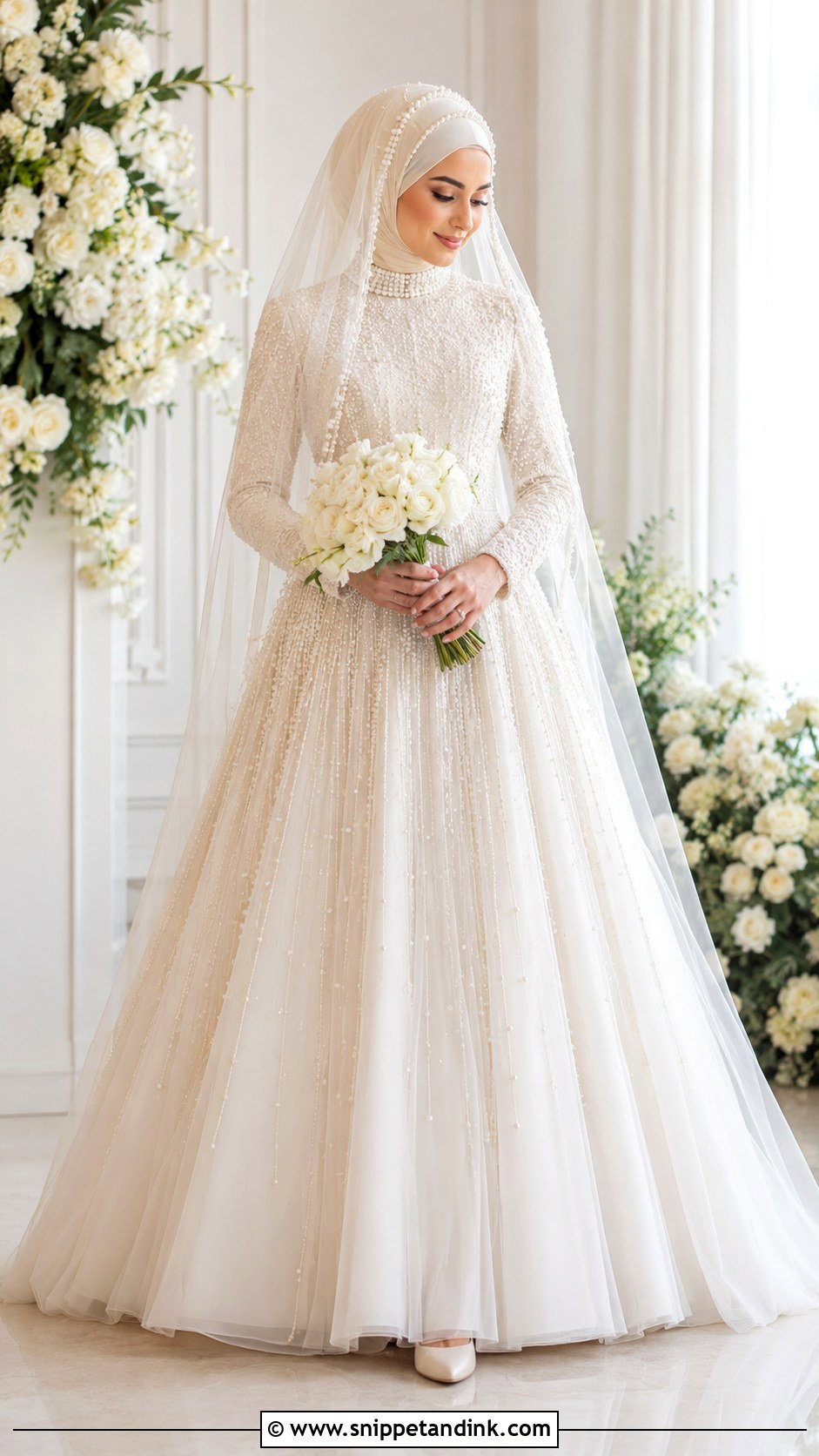
Pearls give a soft glow rather than sparkle, which some brides prefer under very strong lights. They can be scattered across the bodice, sleeves or veil, or stitched as cuffs at the wrist. Tulle, organza, lace and crepe all carry them well. Pearl earrings, a pearl-trimmed veil and ivory heels coordinate easily. Crystal-heavy accessories tend to fight the pearls, so pick one finish and stay with it.
9. Saudi Embroidered Wedding Dress
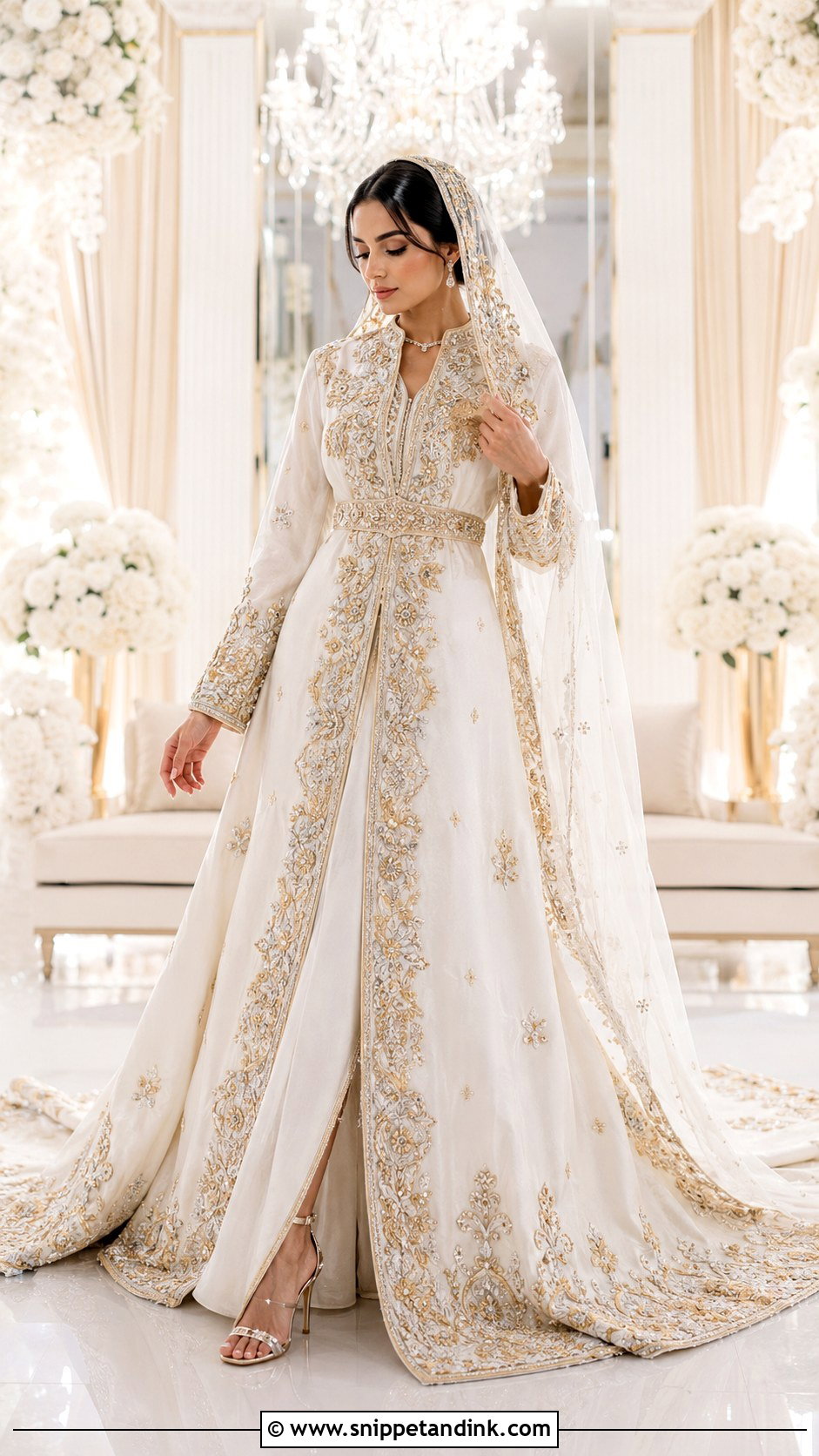
Embroidery is where a Saudi gown can carry real meaning, with floral, geometric or vine motifs that are sometimes drawn from the family’s region. Gold, silver, ivory or champagne thread all work on a bridal base. Hand embroidery takes time, so if you are commissioning it, think in months, not weeks. Concentrating the work on the bodice, cuffs, hem and train gives a finished look, and a veil with a lighter echo of the motif ties it together.
10. Saudi Beaded Wedding Dress
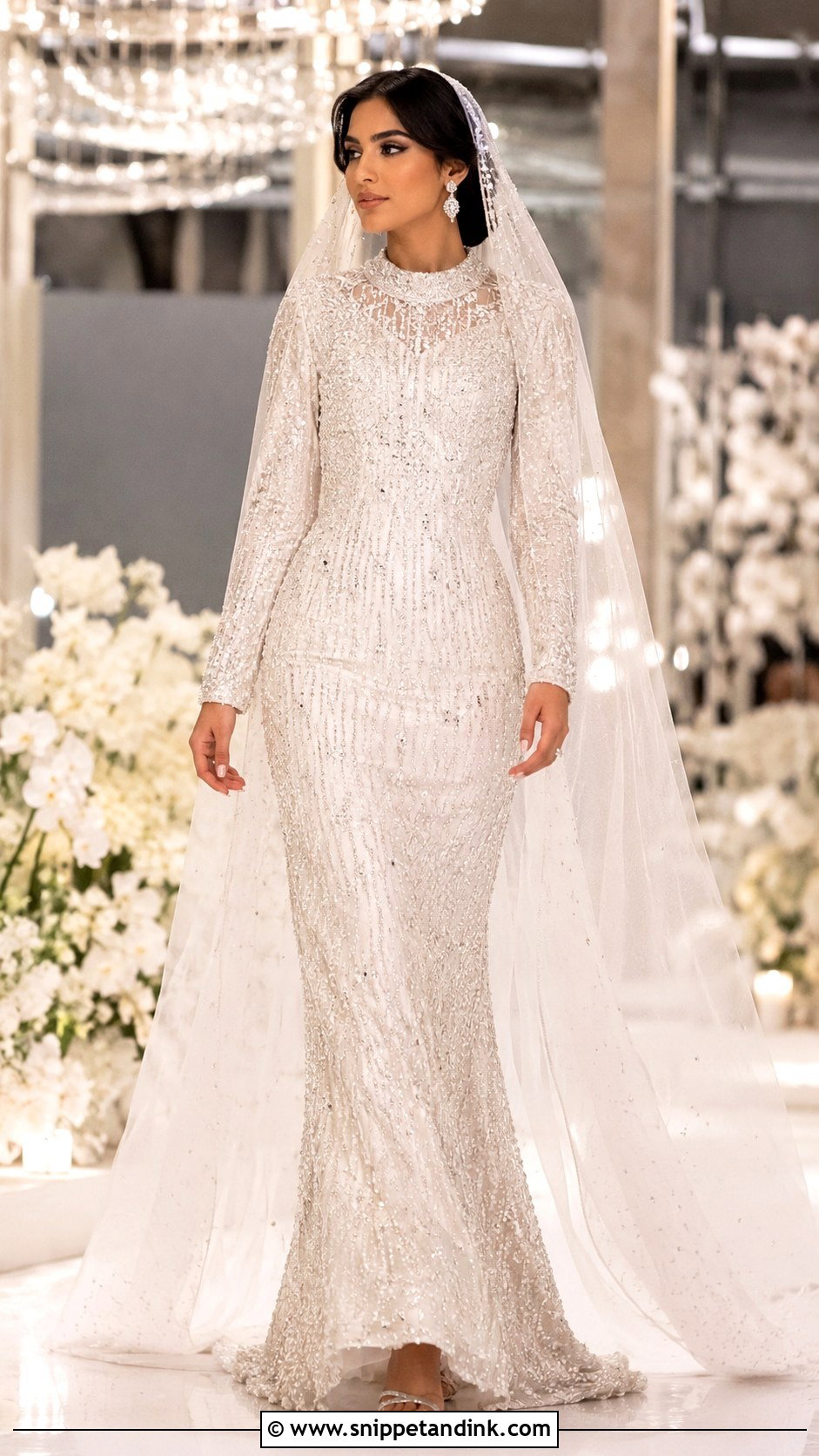
Beading catches the light during the entrance, but it adds real weight, and heavily beaded sleeves can drag on the shoulders by the end of the night. Ask for a fully lined bodice and beads secured individually, so one snag doesn’t unravel a whole row. Beading can cover the dress or sit only on the bodice and sleeves. A plain veil balances it, with metallic heels and crystal earrings.
11. Saudi Tulle Wedding Dress
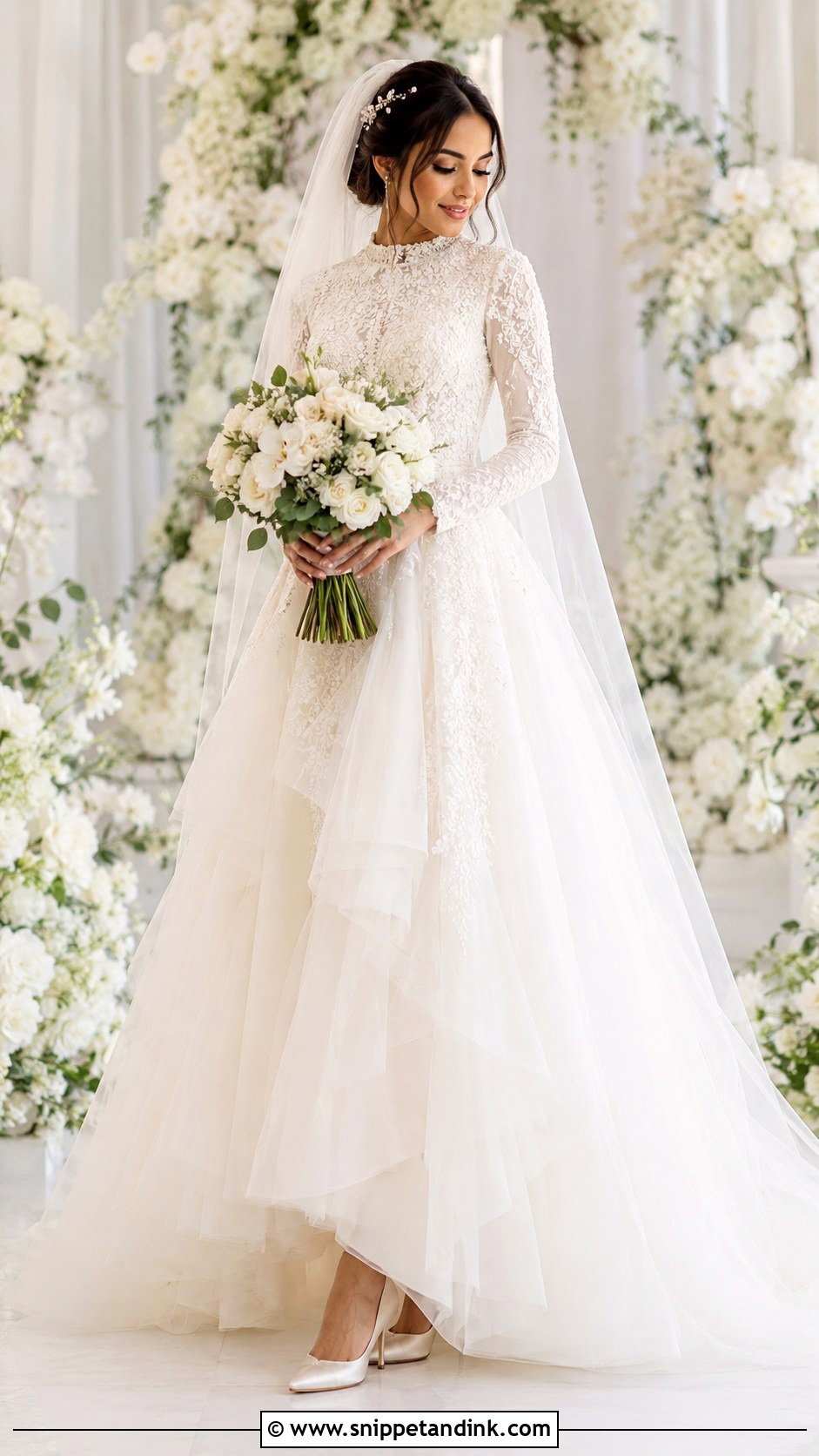
Tulle gives volume with far less weight than satin, which matters when you’ll be wearing the dress until the early hours. A layered skirt under a long-sleeve lace or embroidered bodice keeps the coverage. The catch is that fine tulle snags on beaded cuffs and shoe buckles, so keep jewelry smooth near the skirt. A matching tulle veil blends in, and crystal pins or pearl hair accessories add a little detail.
12. Saudi Organza Wedding Dress
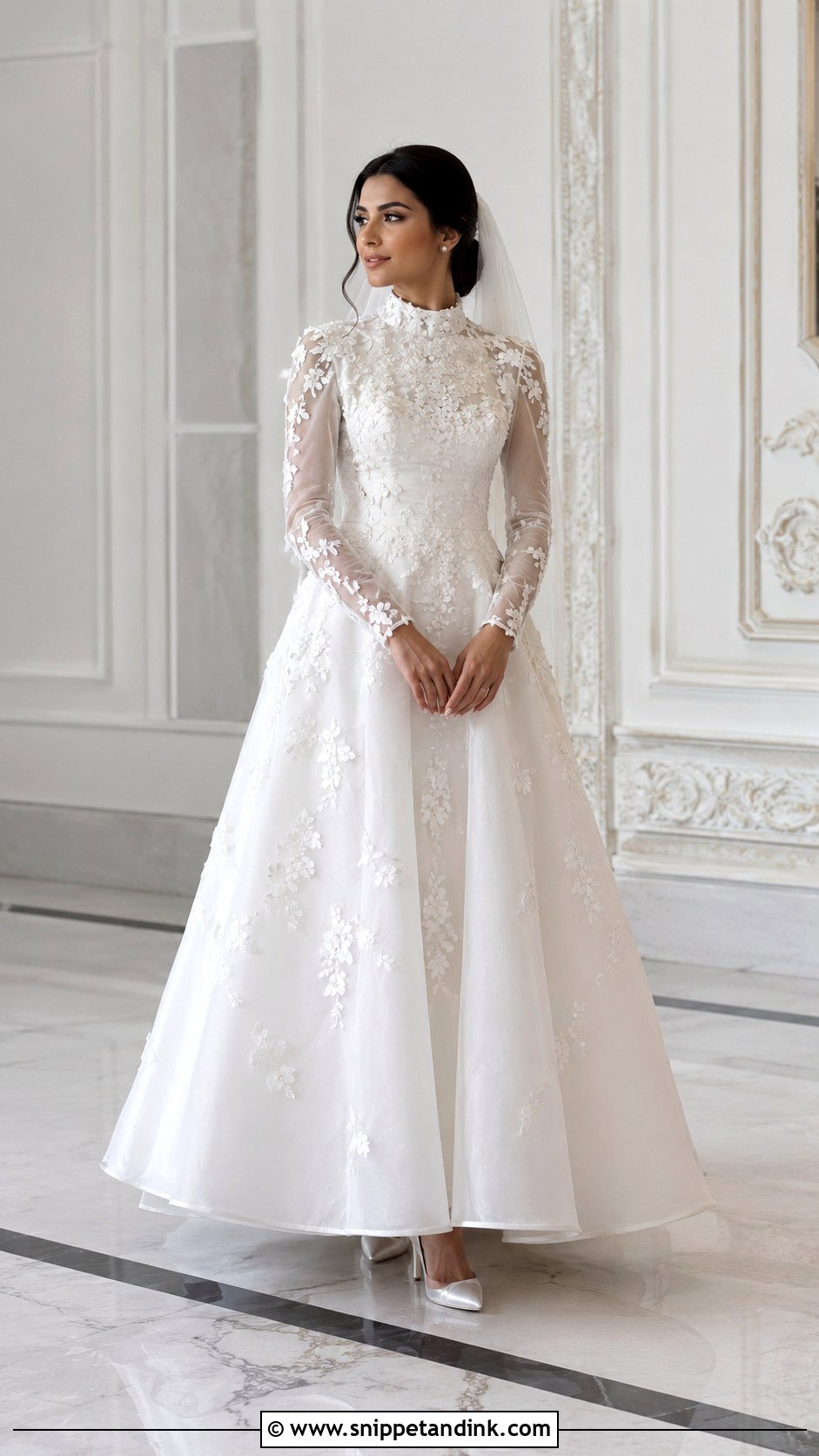
Organza is crisp and holds its shape, so it suits overskirts, puff sleeves, layered hems and dramatic trains. It creases more readily than tulle, though, so have it steamed at the venue rather than the night before. A long-sleeve organza gown looks modern with soft embroidery or floral applique. Simple jewelry suits its light sheen, along with satin heels and a neat veil.
13. Saudi Modest A Line Wedding Dress
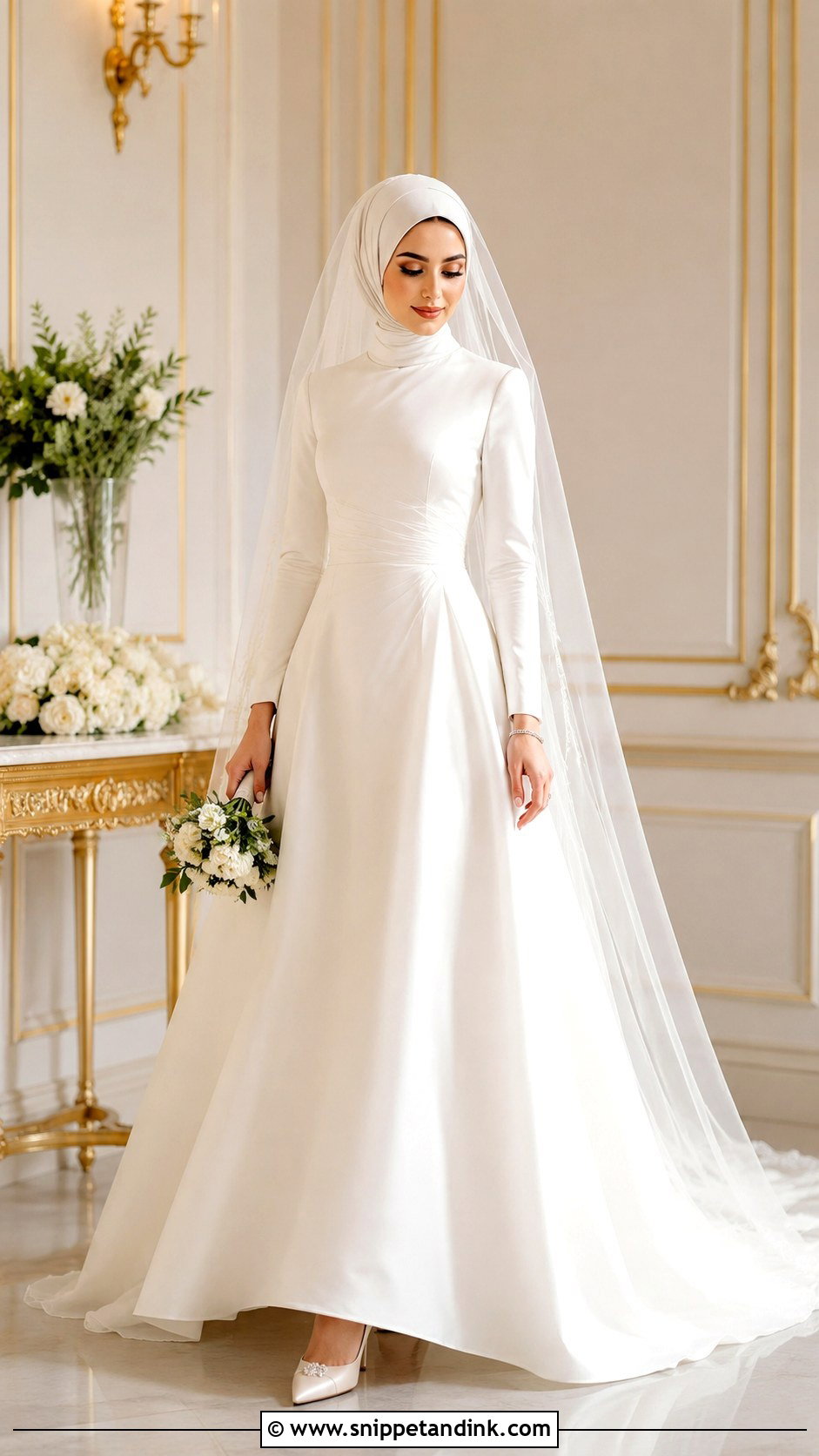
If I had to name the easiest bridal shape to wear through a long night, it would be the A-line. It defines the waist and falls clear of the hips, so sitting and walking stay comfortable. With long sleeves and a higher neckline it covers well without feeling heavy. Lace, satin, chiffon or crepe all work; chiffon and crepe are kindest if the hall runs warm. Match the veil’s detail to the dress and keep accessories small.
14. Saudi Princess Wedding Dress
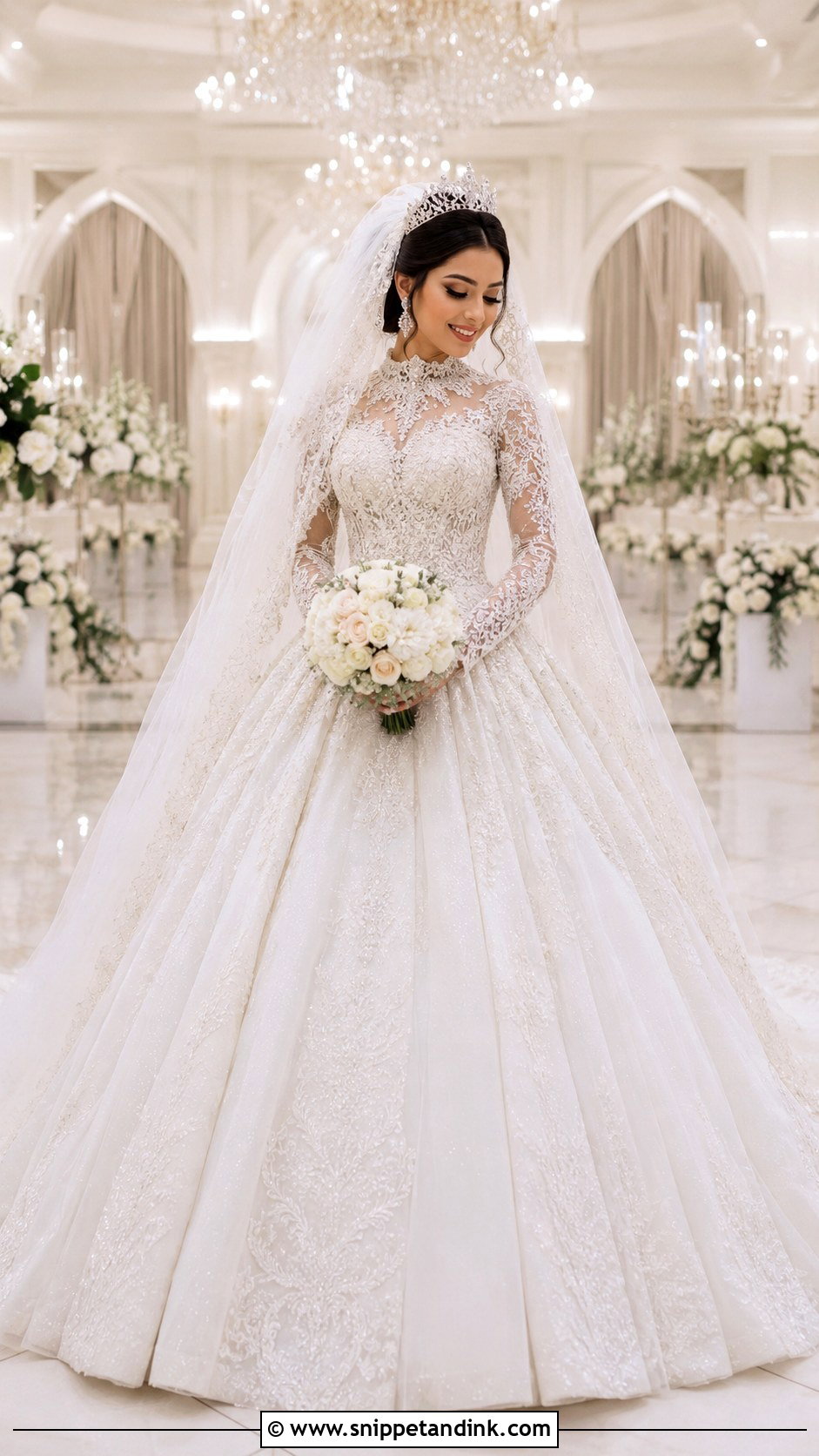
A princess wedding dress usually means a fitted bodice, a full skirt and a long train. The trap is too many competing details, so I’d choose one of embroidery, lace or crystals and apply it in a controlled design. Long sleeves and a modest neckline keep it right for the occasion. A tiara-style headpiece, cathedral veil and satin heels suit it, though it needs high ceilings and a wide aisle to work.


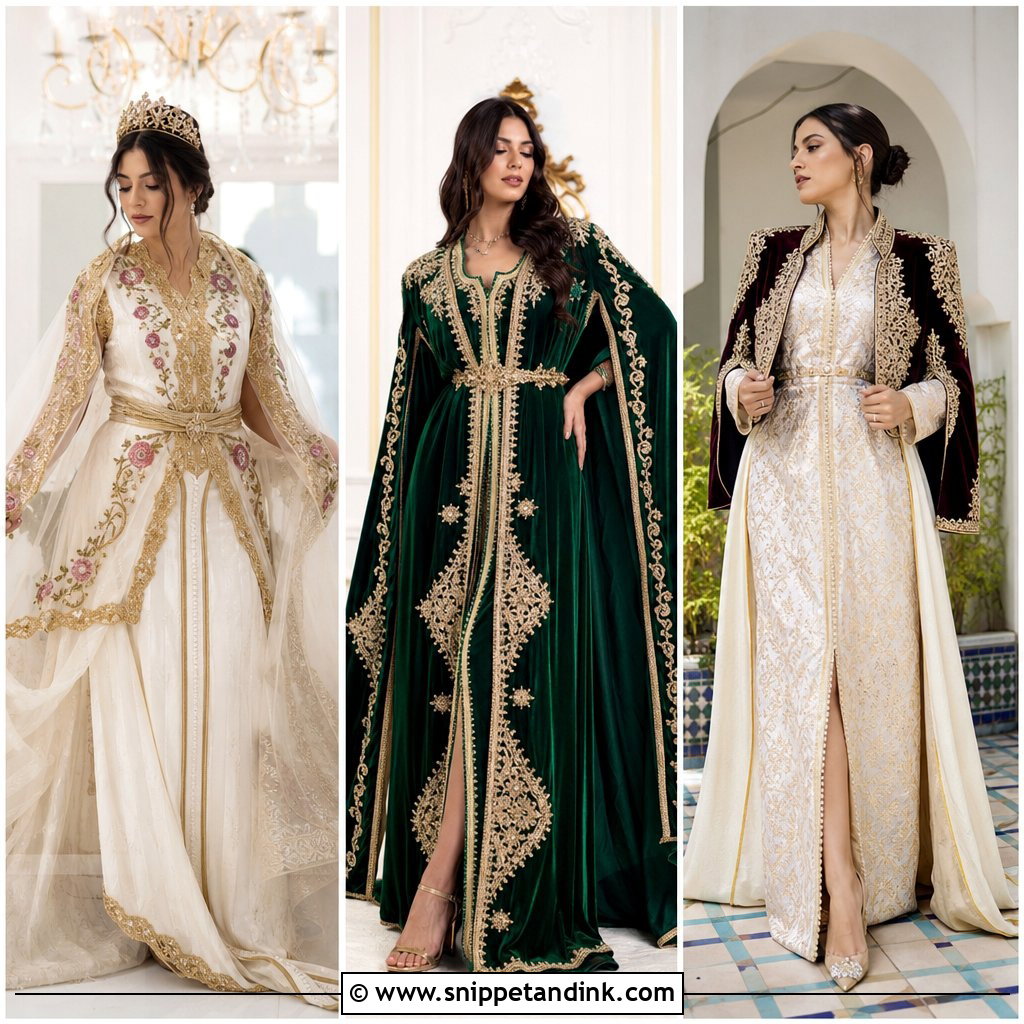
15. Saudi Traditional Wedding Dress
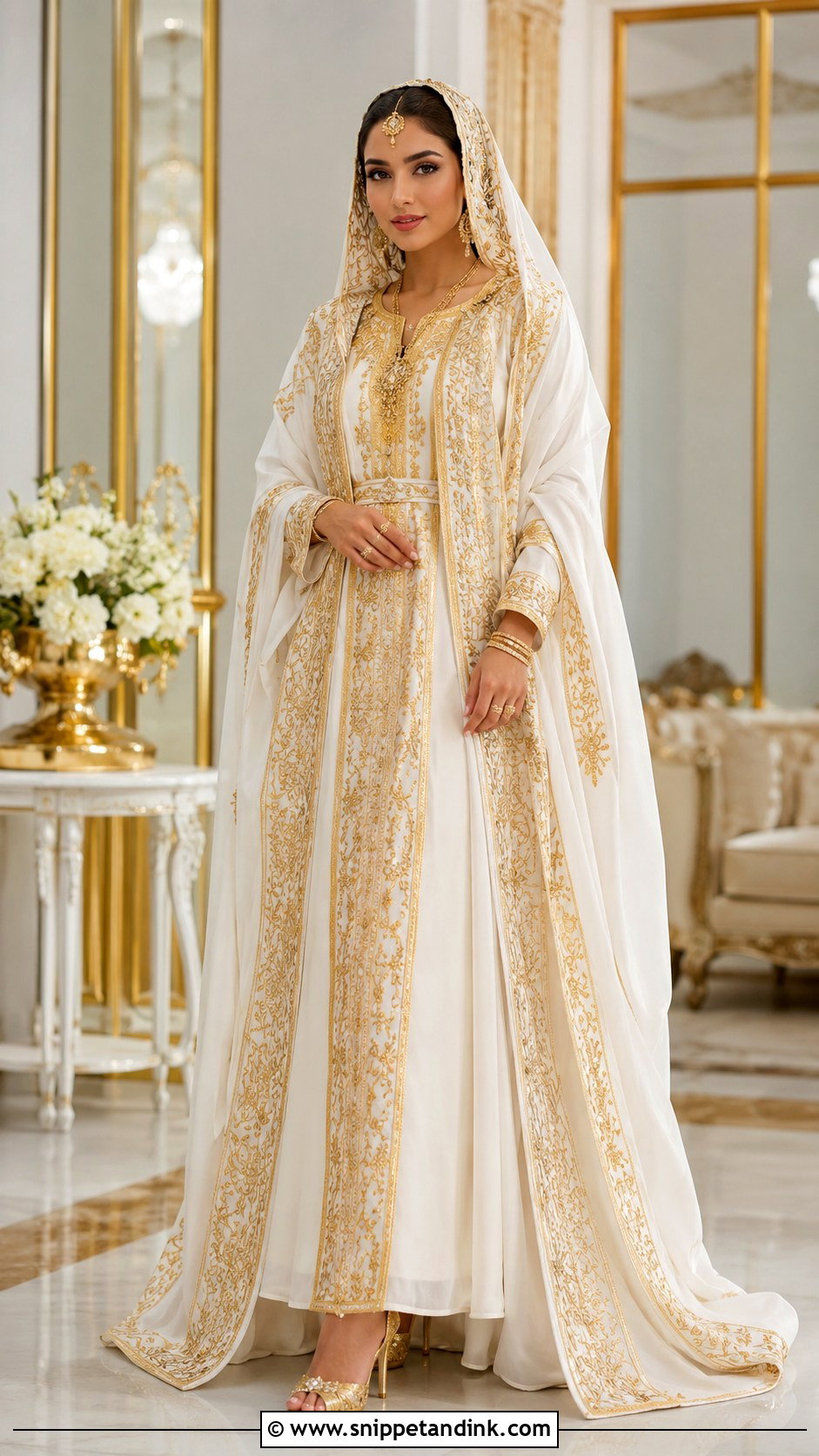
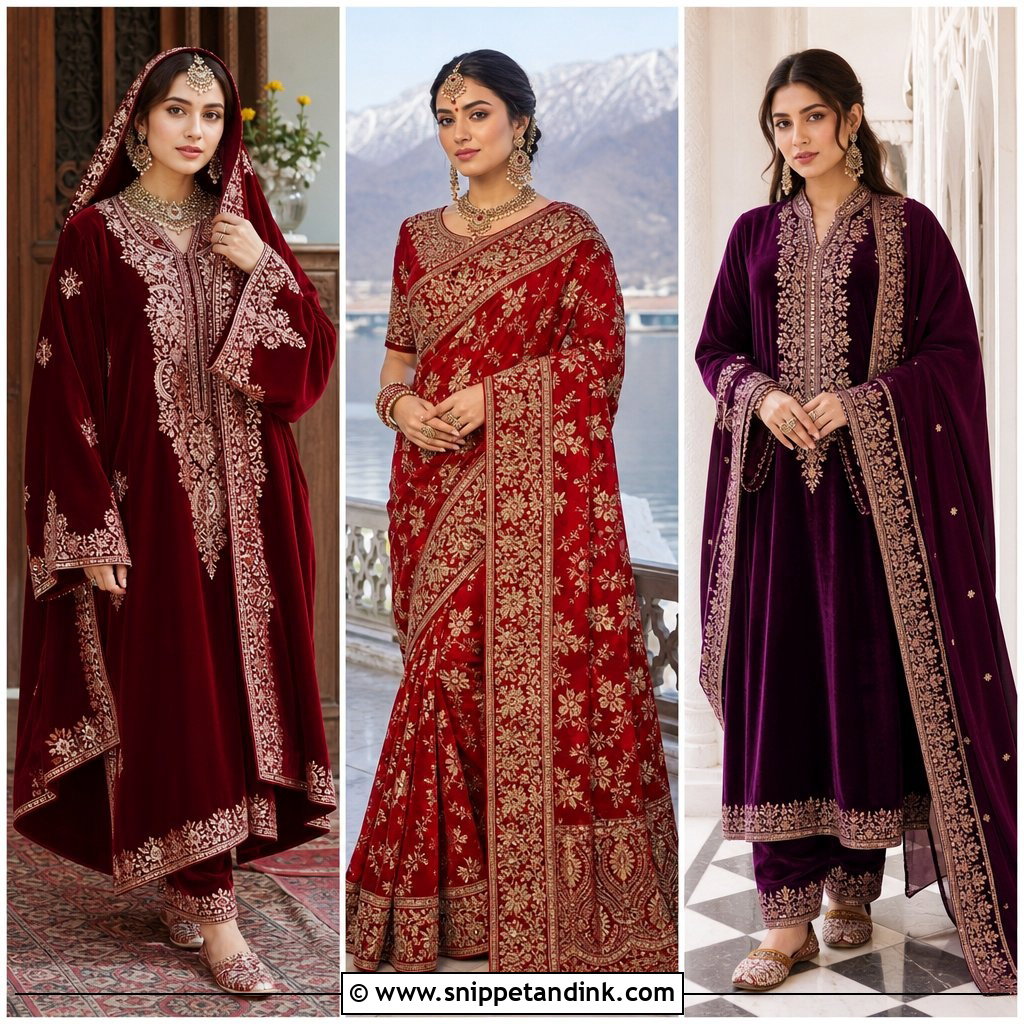
A traditional outfit honours heritage, and what that looks like depends on the family’s region. It may include rich embroidery, gold accents, layered fabrics or an embroidered over-garment, often worn for the henna night, a family gathering or as a second outfit. Deep ivory, gold, emerald, burgundy and black with metallic embroidery are all common. Before choosing, I’d ask an older relative what the women in the family wore, because details like the cut of the over-garment or the headpiece often carry meaning you won’t find in a shop.
16. Hijazi Saudi Wedding Dress
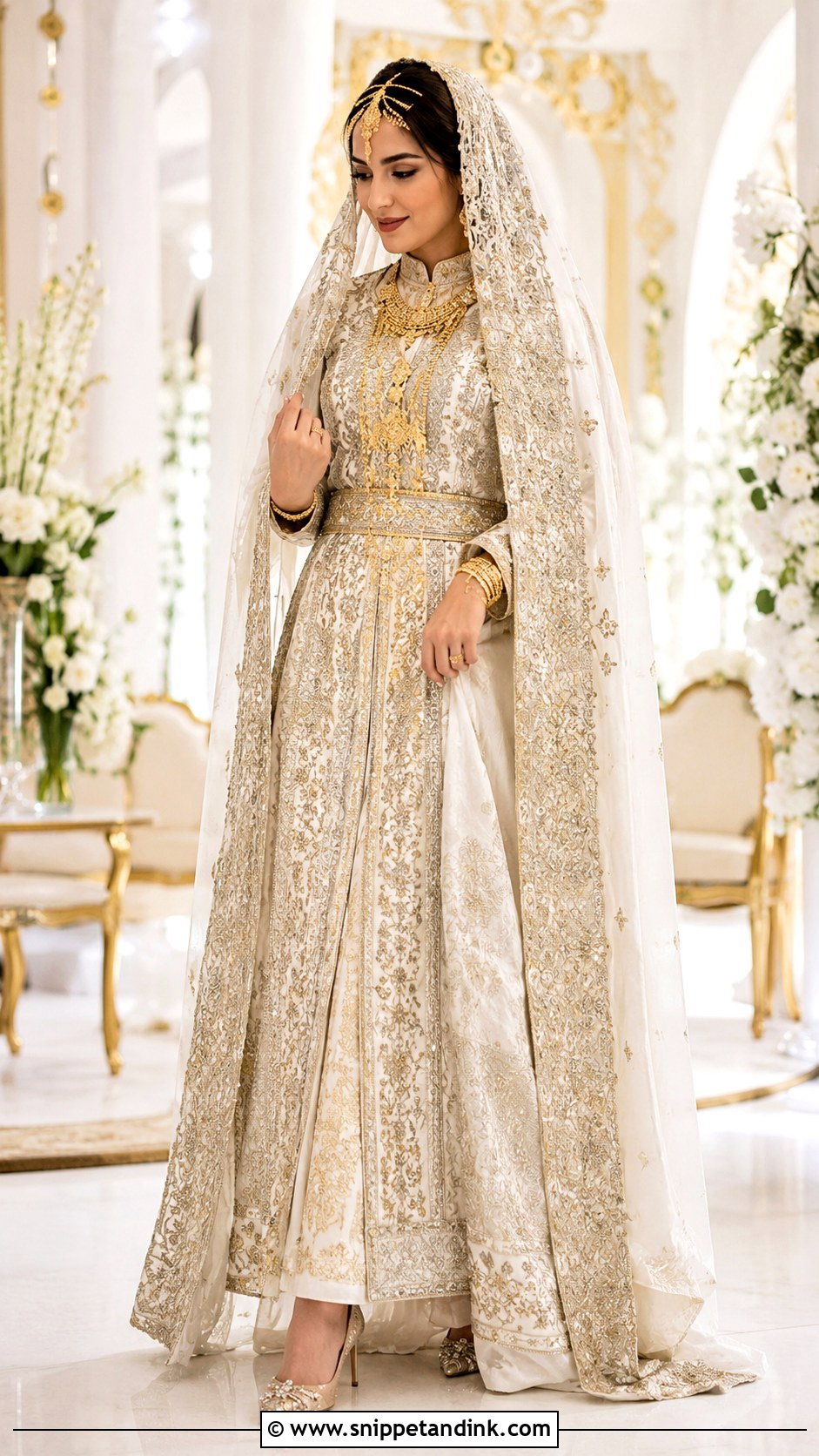
Hijazi dress, from the western region around Jeddah and Makkah, is known for rich decoration and metallic thread. A modern bridal version might be a long gown with ornate embroidery and a flowing outer layer, with gold work over ivory, champagne or jewel tones. Metallic embroidery is stiff and can scratch, so I ask for a soft lining under the sleeves and around the neckline. Gold jewelry, embellished heels and a matching headpiece complete it, and it sits naturally at a henna night or a family entrance.
17. Najdi Saudi Wedding Dress
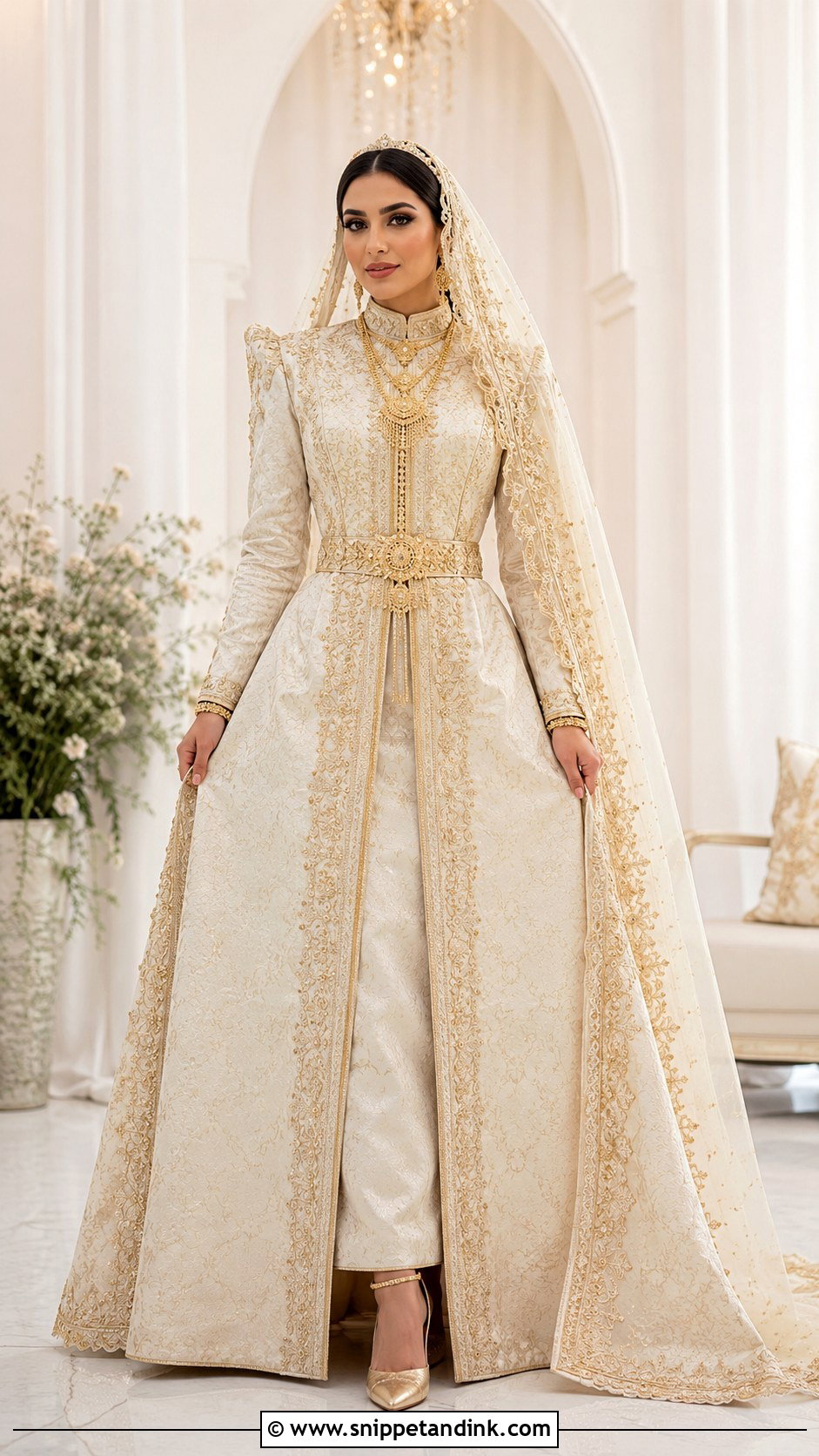
Najdi dress from central Saudi Arabia leans toward wide, flowing over-dresses with dense embroidery around the neckline and chest. A bridal take might be a gown or over-dress with gold detailing in ivory, black, burgundy or deep green, depending on the event and the family’s preference. A wide over-dress needs a slim gown beneath it, or the layers add bulk at the waist. Gold accessories, a neat veil and comfortable heels finish it for a bride who wants a wedding look with cultural depth.
18. Asiri Saudi Wedding Dress
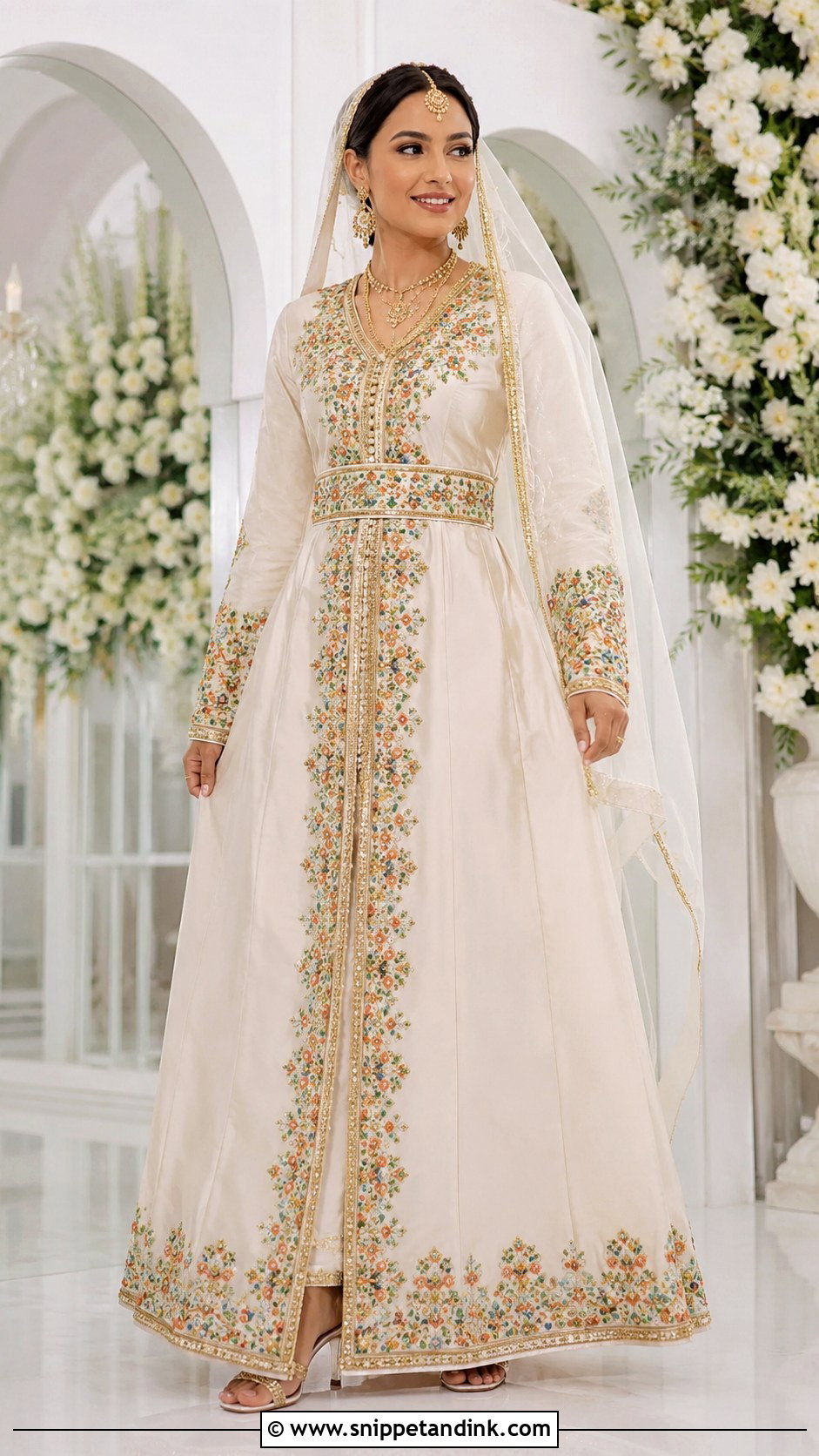
Asiri dress from the southwestern highlands is known for strong colour and patterned embroidery. An Asiri Saudi wedding dress in bridal form might be a long modest gown with colourful embroidery along the sleeves, neckline, waist or hem, on a refined base like ivory satin, white crepe or jewel-toned silk so the pattern stands out. Some dyed threads can run if they get wet, so ask whether the work is colourfast before anyone dabs at a spill. Gold jewelry and a simple veil balance the detail.
19. Saudi Gold Wedding Dress
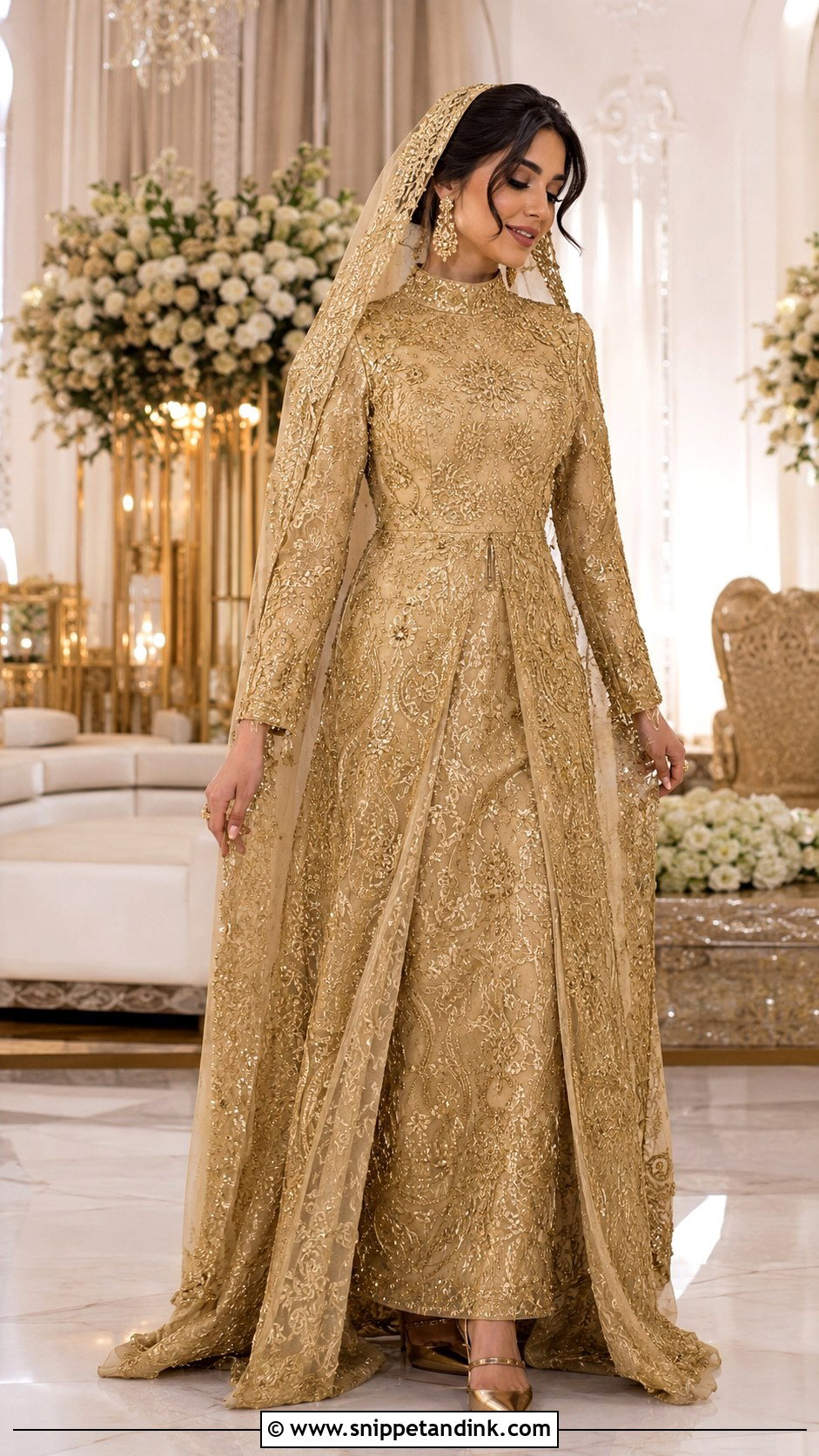
Gold reads festive and regal, and it works for henna nights, reception entrances or a second outfit. The shade matters more than people expect. Champagne and pale gold soften under warm hall lighting, while a deep gold can turn brassy in some photos, so look at the fabric in daylight and under warm bulbs before deciding. A modest cut with long sleeves and a high neck keeps it bridal. Matching metallic heels, gold earrings and a clean veil or head covering finish it.


20. Saudi Champagne Wedding Dress
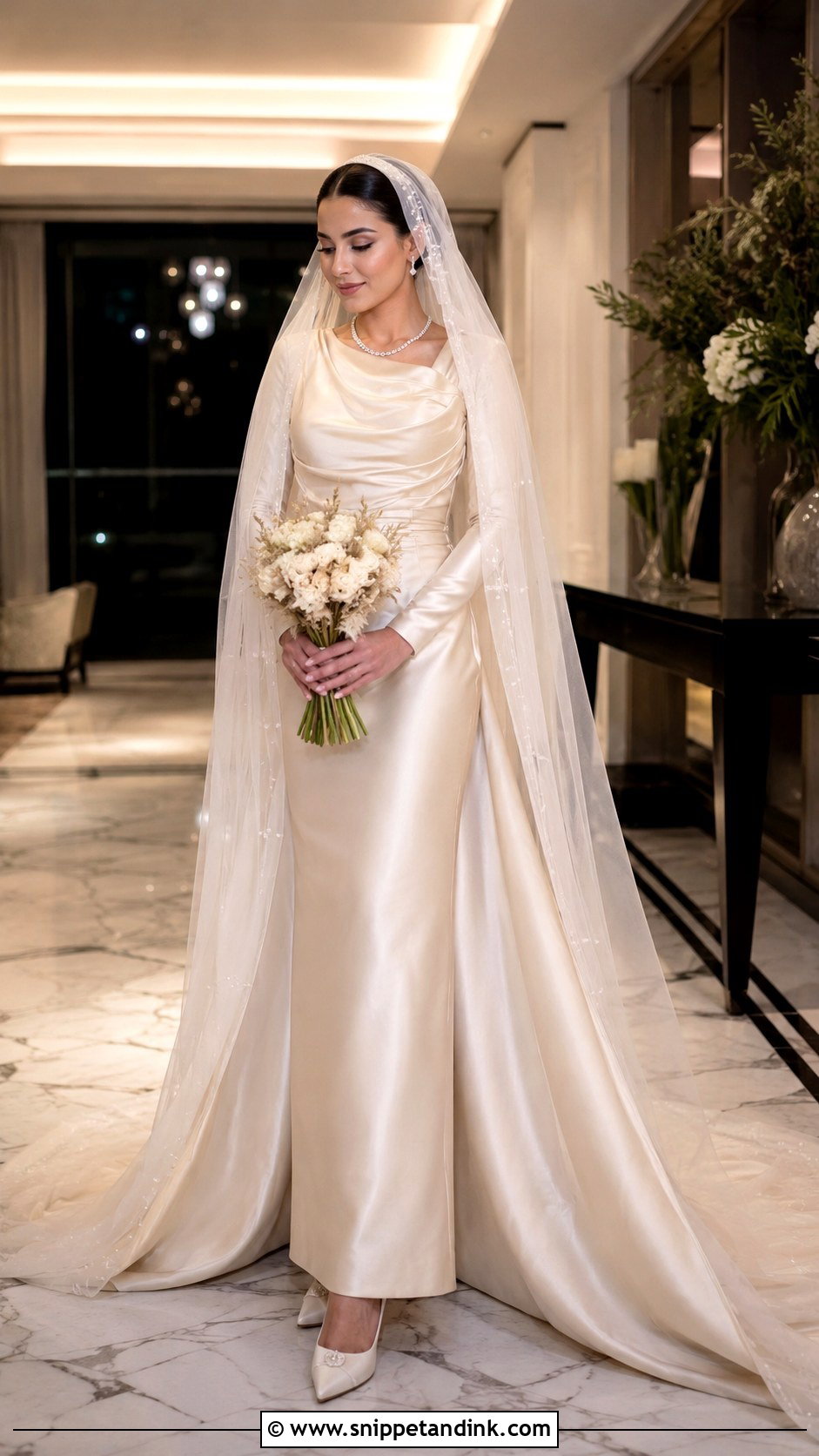
Champagne is softer than pure white and flatters warmer skin tones under evening light. Satin, tulle, lace and beaded fabrics all come in it. A full skirt feels romantic and a fitted crepe version sleeker. Match the veil to the dress’s undertone, not to white, because a bright white veil next to champagne makes the dress look dull. Ivory or champagne heels and pearl jewelry complete it.
21. Saudi Blush Wedding Dress
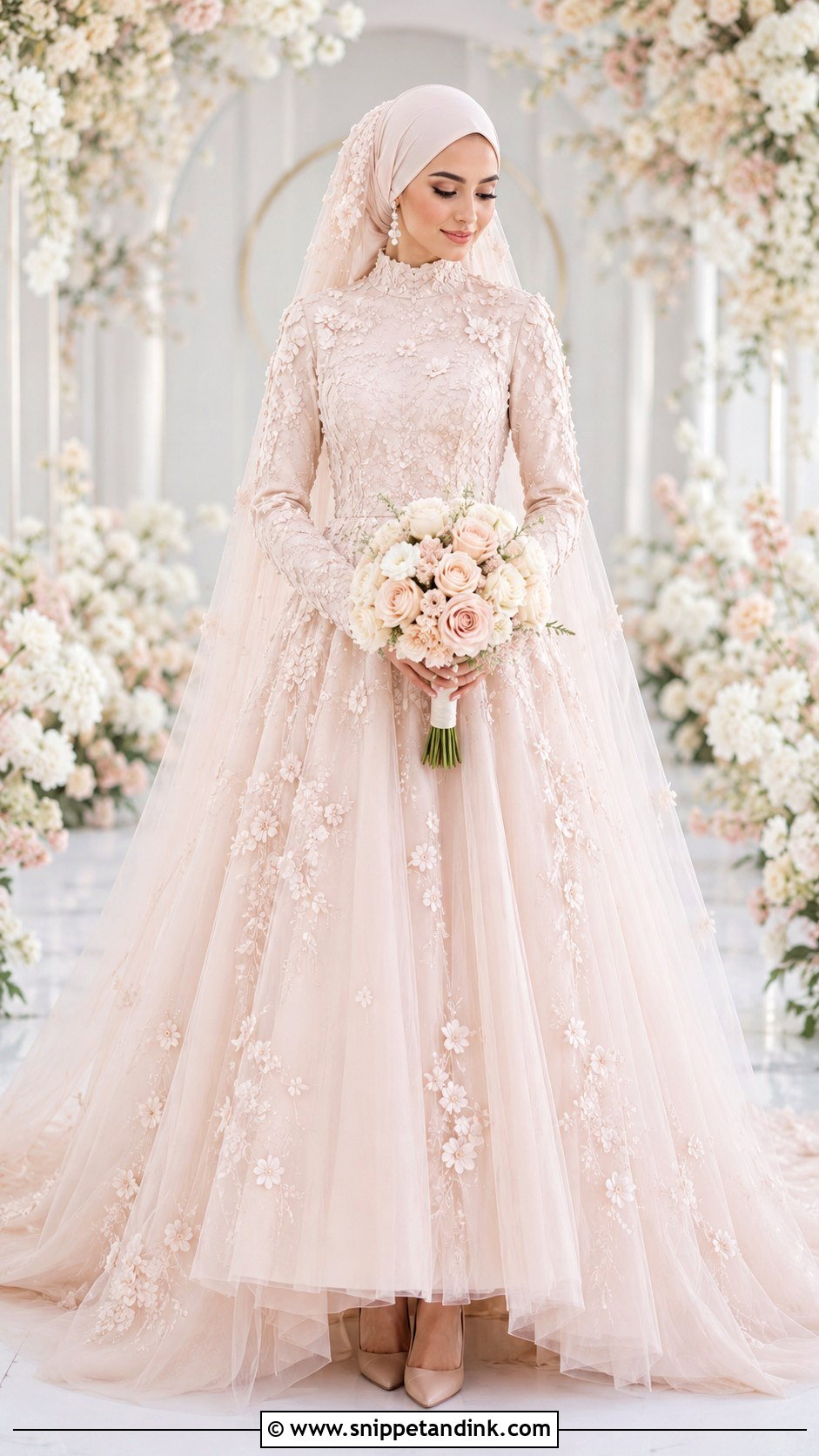
Blush brings a pale pink tone that still reads formal. Long sleeves with delicate embroidery or floral applique keep it modest, and blush tulle, lace or organza looks soft with a flowing skirt or cape. The colour shifts with light, washing toward white under strong flash and looking pinker under warm bulbs, so ask your photographer how it will read. Pearl earrings, nude heels and an ivory and blush bouquet suit it.
22. Saudi Reception Wedding Dress
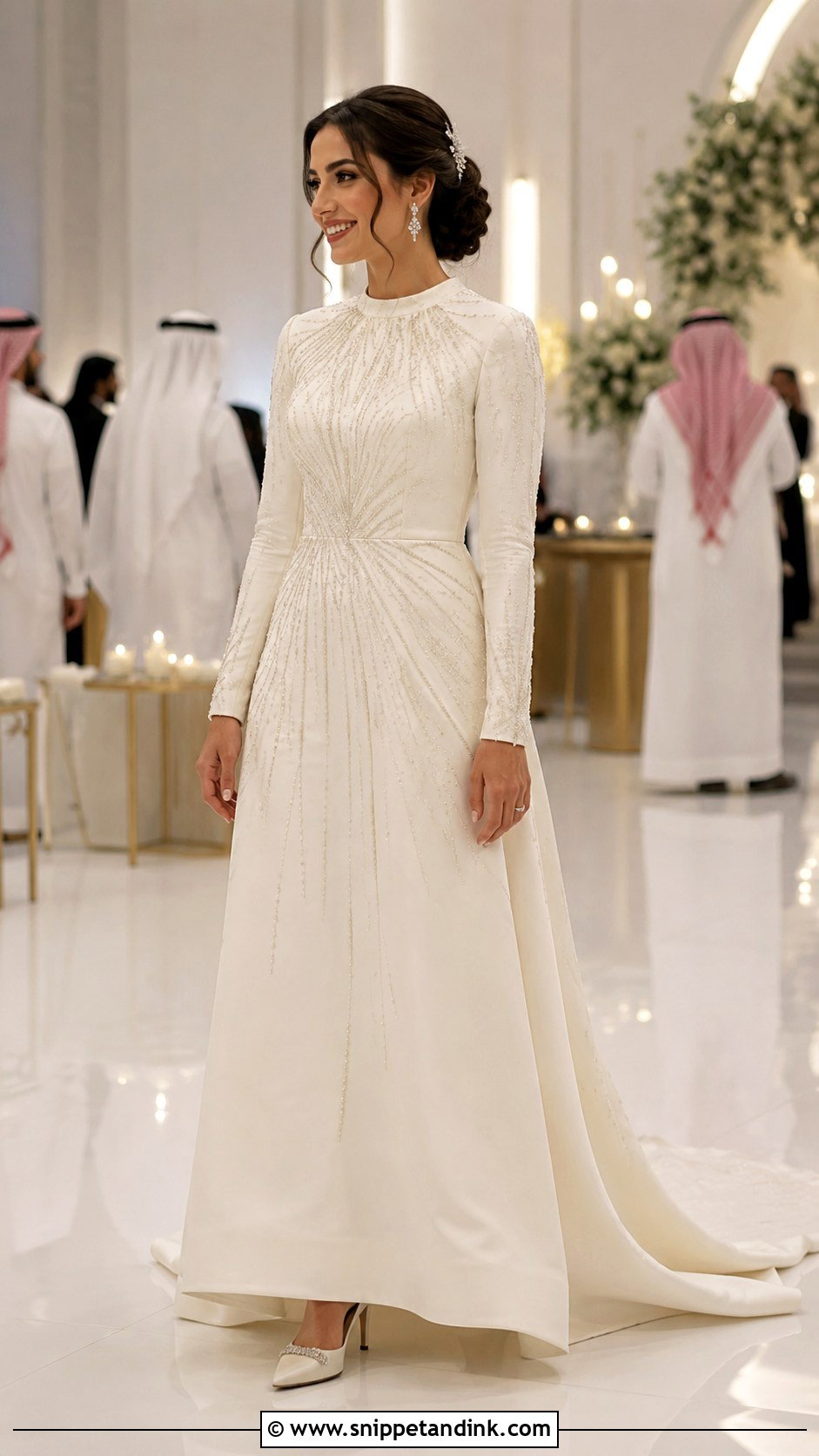
A second dress later in the night lets you greet guests and dance in something lighter. It usually has less volume but enough detail to stay bridal: a fitted A-line, a satin column or an embellished crepe gown with long sleeves and a short train. Plan the change properly. Getting out of a structured gown in a side room takes longer than brides expect, often twenty minutes with help. Comfortable heels and a lighter veil or hair accessory suit it.
23. Saudi Henna Night Wedding Dress
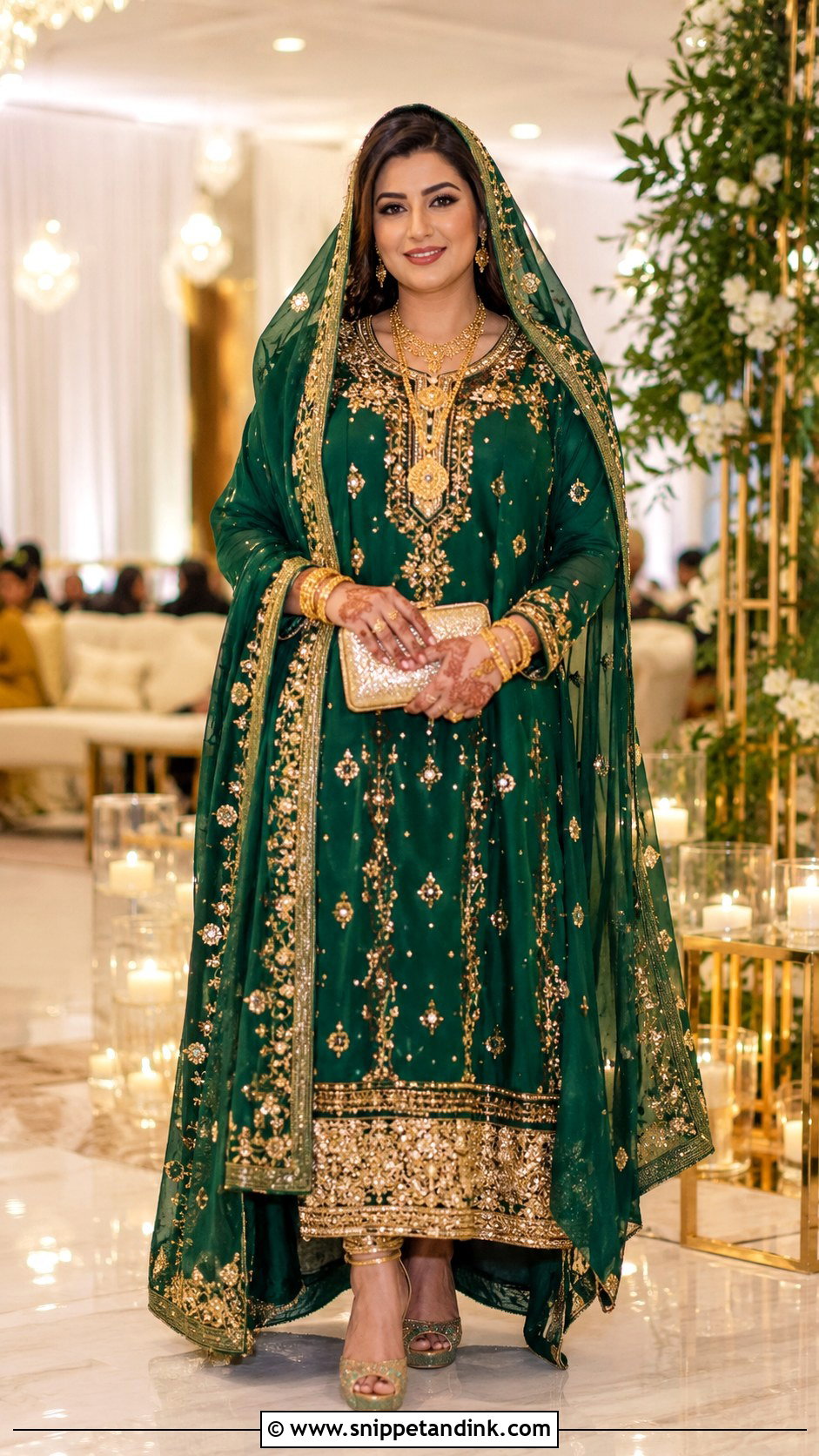
A henna night wedding dress can be bolder than the white gown. Emerald, burgundy, gold, royal blue and deep purple are all festive, on a modest long dress with embroidery or beading. If your henna is being applied that night, choose sleeves that push up easily or stop above the wrist, since wet paste stains fabric permanently. A matching scarf, embellished heels and gold jewelry complete it, and the cut should let you sit comfortably for hours.
24. Saudi Milka Wedding Dress
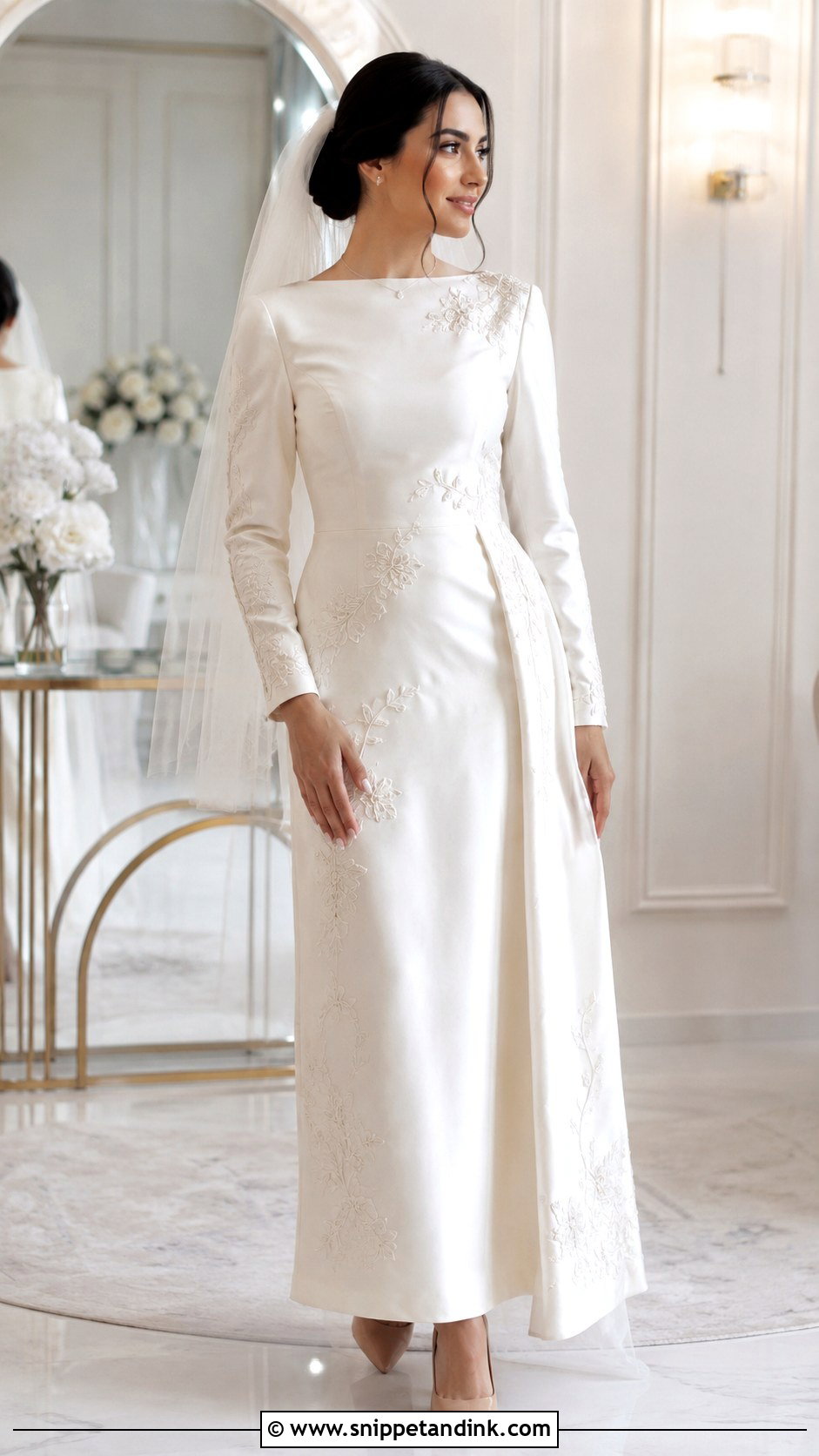
The milka, when the marriage contract is signed, is usually a smaller family occasion than the wedding itself, so the dress can be softer and less formal. Ivory, blush, champagne and pastels are common, in a modest midi-to-maxi dress, a long-sleeve satin gown or an embroidered kaftan-style piece. Delicate heels, simple jewelry and a polished hairstyle or veil suit the scale. Keep comfort in mind, because you may be seated with family for much of it.

25. Saudi Bridal Abaya Wedding Dress
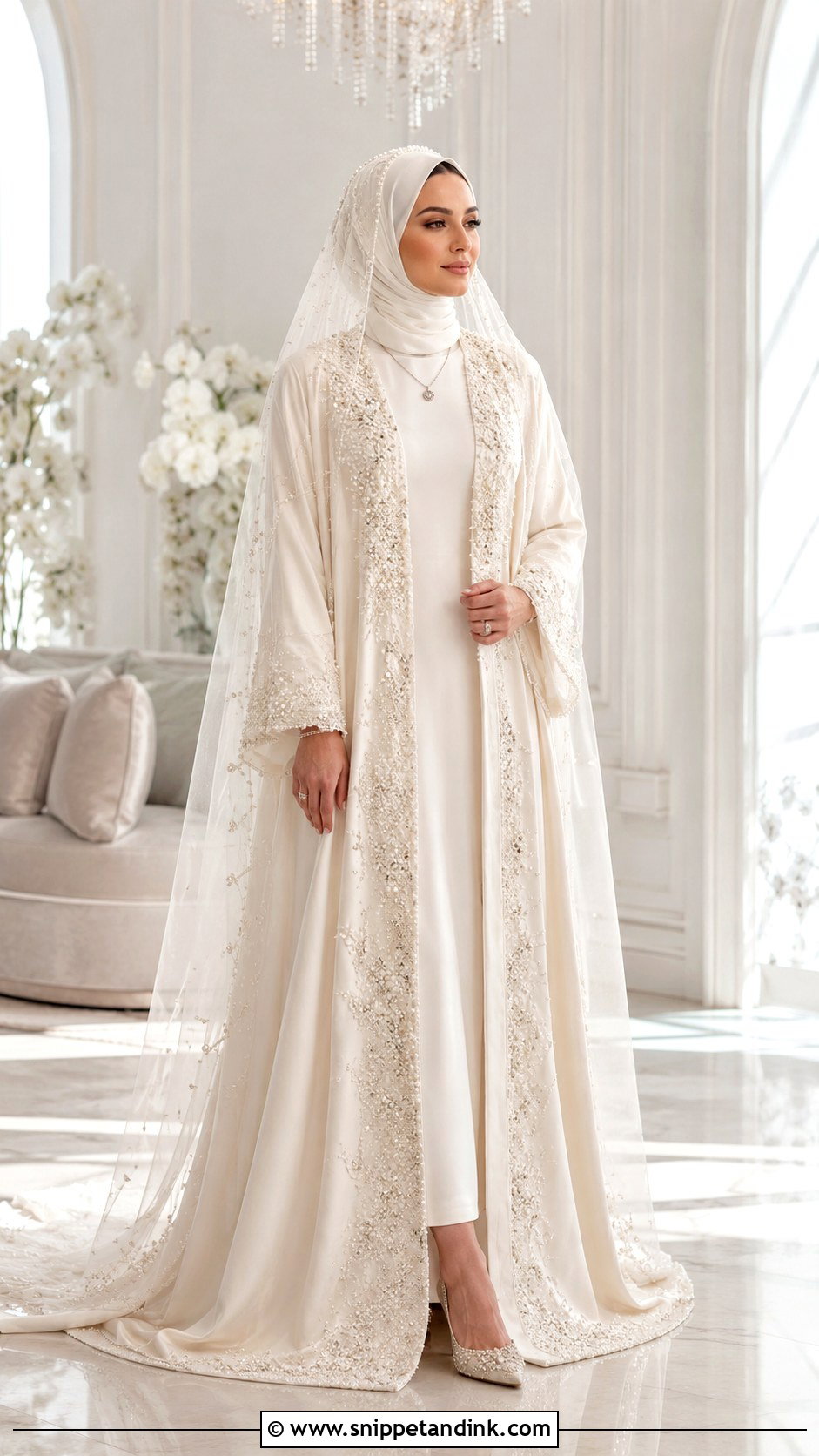
A bridal abaya gives a covered silhouette that many families find familiar. In white or ivory it can carry embroidery, pearls, lace panels or soft crystal work, worn over a matching inner dress. Check that the inner dress is finished to the same standard as the abaya, since it shows whenever the front opens as you walk. A coordinating veil, embellished heels and fine jewelry complete it, and it suits a milka, an entrance or a pared-back wedding.
Walking the Zaffa and Sitting on the Kosha in a Heavy Gown
The entrance procession and the hours on the kosha, the decorated stage where the bride sits, are when the dress works hardest. The hall is bright, the night often runs well past midnight, and much of it is spent seated for greetings and photos.
On the walk in
Walk the full length of the train in your actual shoes before the day. A long train on a stage with steps needs someone behind you to lift it and lay it out again, and you should rehearse the step up together once, because satin and heavy beading can catch under a heel.
Hours on the stage
Sitting compresses a full skirt and creases satin and organza at the hips, so ask your helper to shake the skirt out each time you stand. A petticoat with a soft waistband and a bodice that doesn’t dig into the ribs when seated make a real difference by the third hour. Keep a small bag nearby with safety pins, fashion tape, blotting papers and flat shoes.
For the photographer
Many women’s halls restrict guests’ phones, and the photographer on the women’s side is usually a woman booked for that purpose. Tell her in advance which parts of the dress matter to you, such as the back embroidery or the cuffs, so they are not lost in wide shots.
Heritage and the Hall Should Shape the Final Choice
Start from the event and the family, then the fabric. A white ball gown, a heritage dress, a soft champagne gown and an embroidered bridal abaya can each be right, depending on which night you’re dressing for and what your family hopes to see. Put money into good fabric and tailoring before extra embellishment, make sure the coverage feels right to you, and check that you can sit, walk and greet guests in it for many hours. A dress that passes those tests will look right in the photos too.
You'll Like These Ideas:






Leave a Reply