
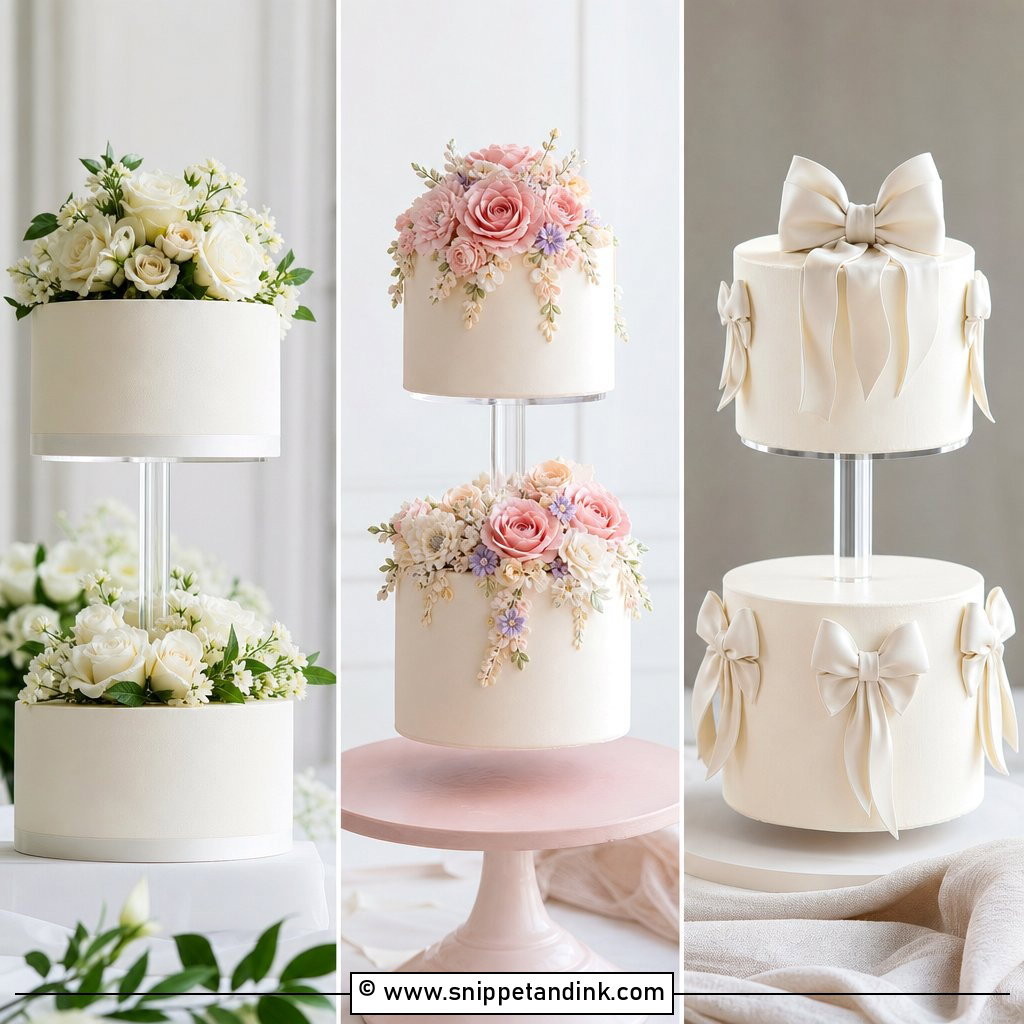
The trick behind a floating tier is simple to describe and fussy to build: a separator noticeably narrower than the tiers it holds, so from a few steps back the upper cake seems to hang in the air. That gap can stay clear or carry flowers, pearls, lights or greenery, and it adds height without adding sponge. Some designs use clear acrylic spacers; others rely on a hidden pillar or a recessed dummy tier dressed in blooms. What follows is twenty versions I’d build, with notes on how each one is held up and where it can go wrong.
What Holds the Top Tier Up
Nothing actually floats. Every version on this list relies on one of three supports, and knowing which one your baker uses helps you judge a quote and a design.
- Clear acrylic spacer. A narrow acrylic block or cylinder sits on a cake board over dowelled sponge. It’s the most convincing hover and the easiest to light.
- Recessed dummy tier. A narrow polystyrene tier, iced or wrapped in flowers, sits in the gap. It takes no weight itself; dowels in the cake below and a board above do.
- Pillar or separator plate system. A hidden central column carries the upper tiers, and the space around it is filled with blooms. This is what most tall or offset floating cakes need.
Whatever the system, every tier that holds weight needs dowels cut to the exact height of its icing, and tall designs need a central rod through the whole stack. If a baker can’t explain their support plan in a sentence or two, that tells you something.
Servings shrink as height grows
The gap isn’t cake. A floating four-tier design can look larger than a solid three-tier and still serve fewer people. Count servings from the edible tiers only, and plan a kitchen cake if the numbers fall short.
1. White Floating Tier Wedding Cake
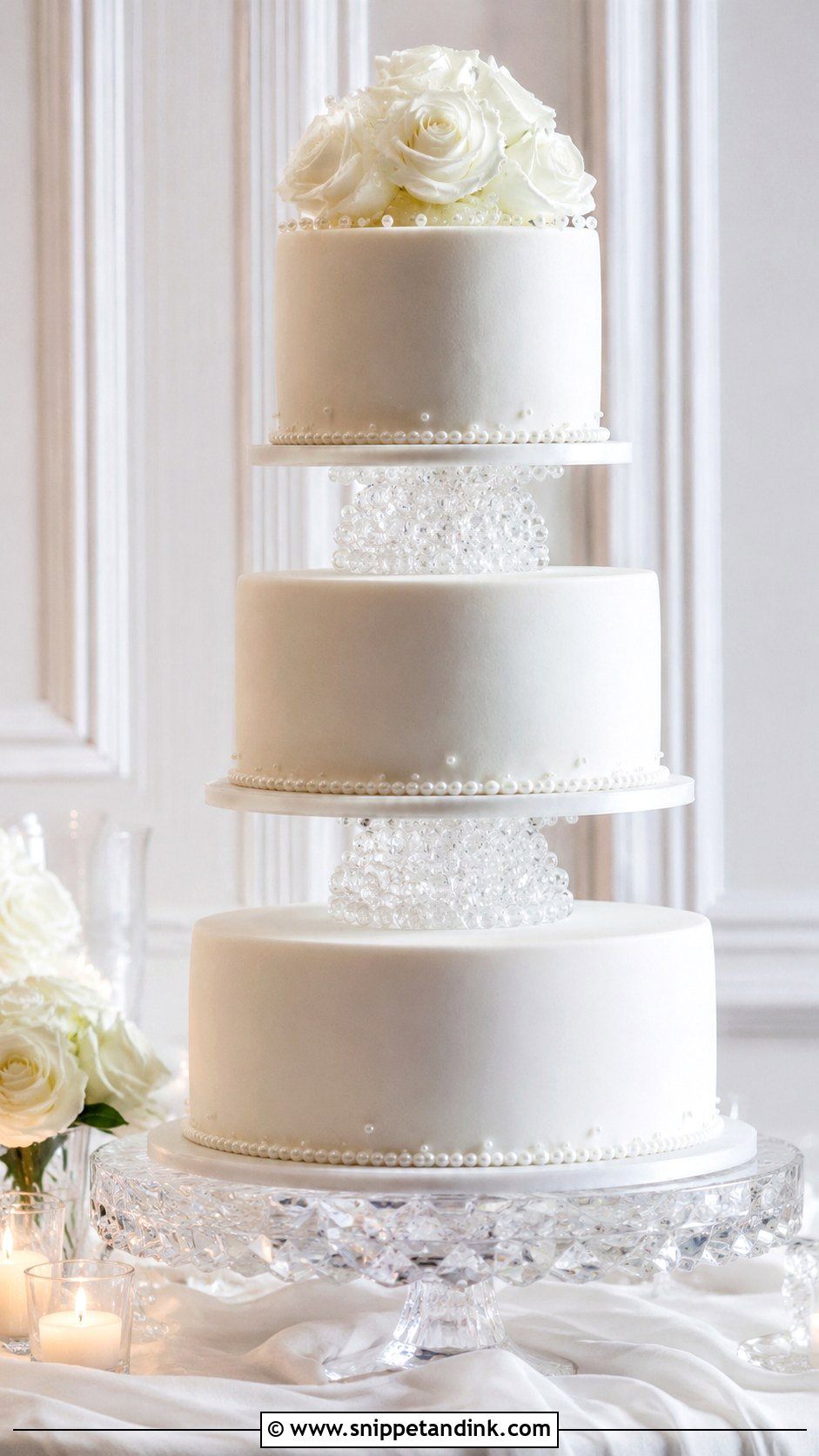
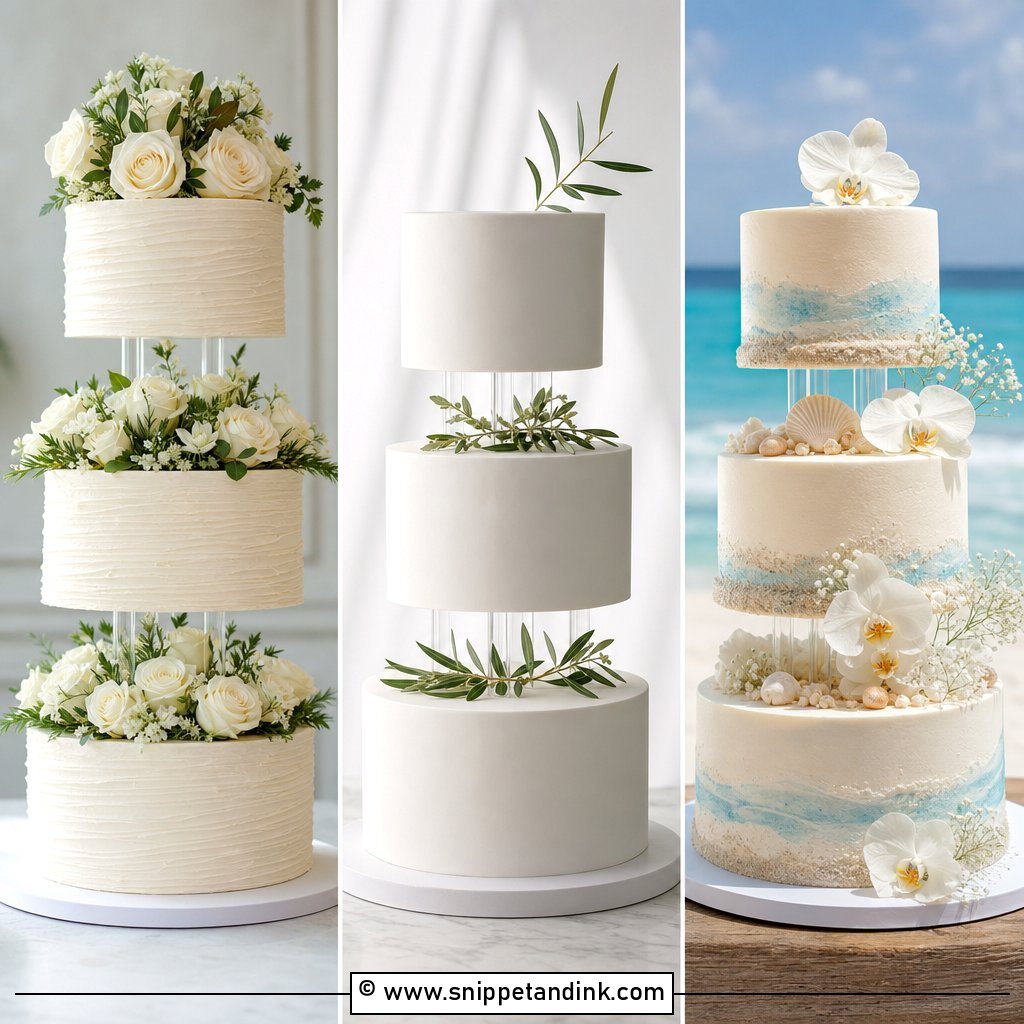
All-white is the least forgiving version, because nothing distracts from the lines. I take extra time on sharp fondant or buttercream edges and make sure the gap is the same width all the way round; a lean of a few millimetres shows straight away on white. White roses, orchids or a strand of sugar pearls in the space stop it looking empty. Candlelight and linen suit it well.
2. Floral Floating Tier Wedding Cake
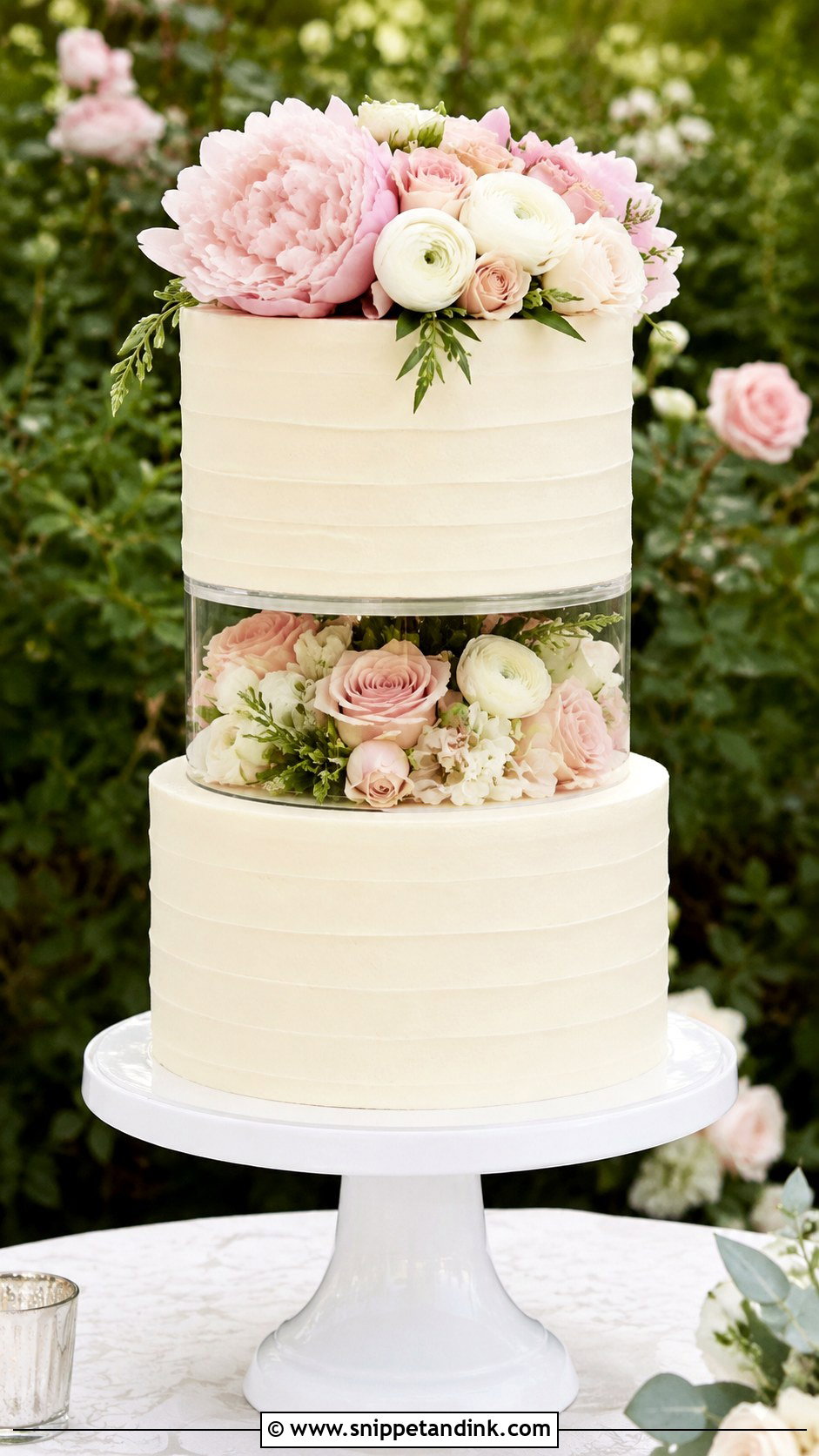
A ring of blooms in the gap looks as if the flowers are lifting the top tier, which is the whole appeal. Underneath, the flowers sit on or around a recessed dummy that takes no weight; the real support is a pillar or separator plate in the middle. Fresh flowers need wrapped stems and a food-safe barrier where they meet icing, and sugar flowers avoid that issue entirely. Blush, ivory and sage stay soft; berry and coral push it bolder.
3. Gold Floating Tier Wedding Cake
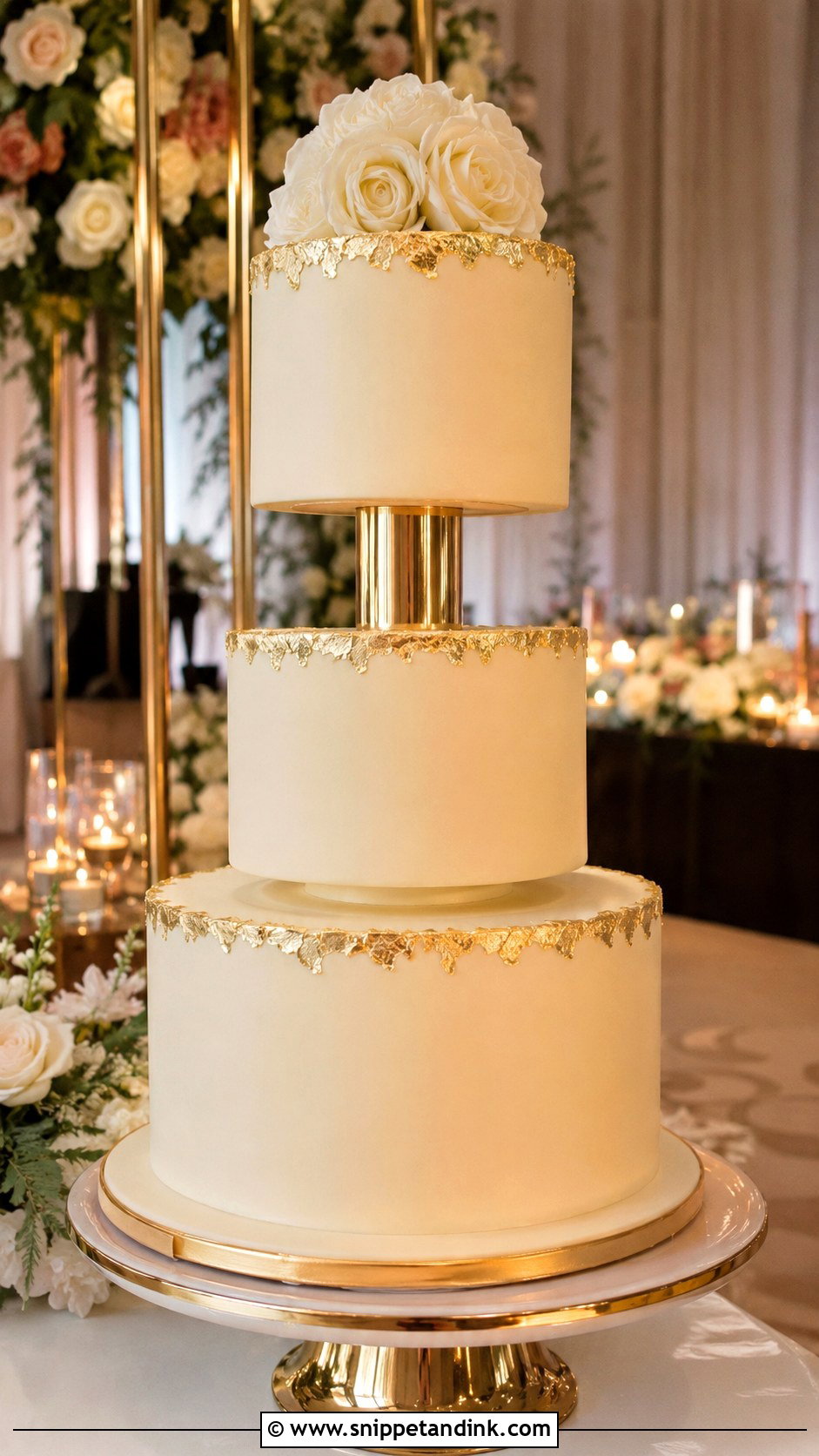
Gold can show up as brushed edges, gold leaf or a gold-finished acrylic spacer. I’d pick one of those, not all three. A gold spacer is the cleanest choice, because it frames the gap without touching the icing. Ivory tiers and champagne flowers keep the metallic from feeling heavy. If you also want flowers, cluster them around the floating section and leave the top tier bare.
4. Acrylic Floating Tier Wedding Cake
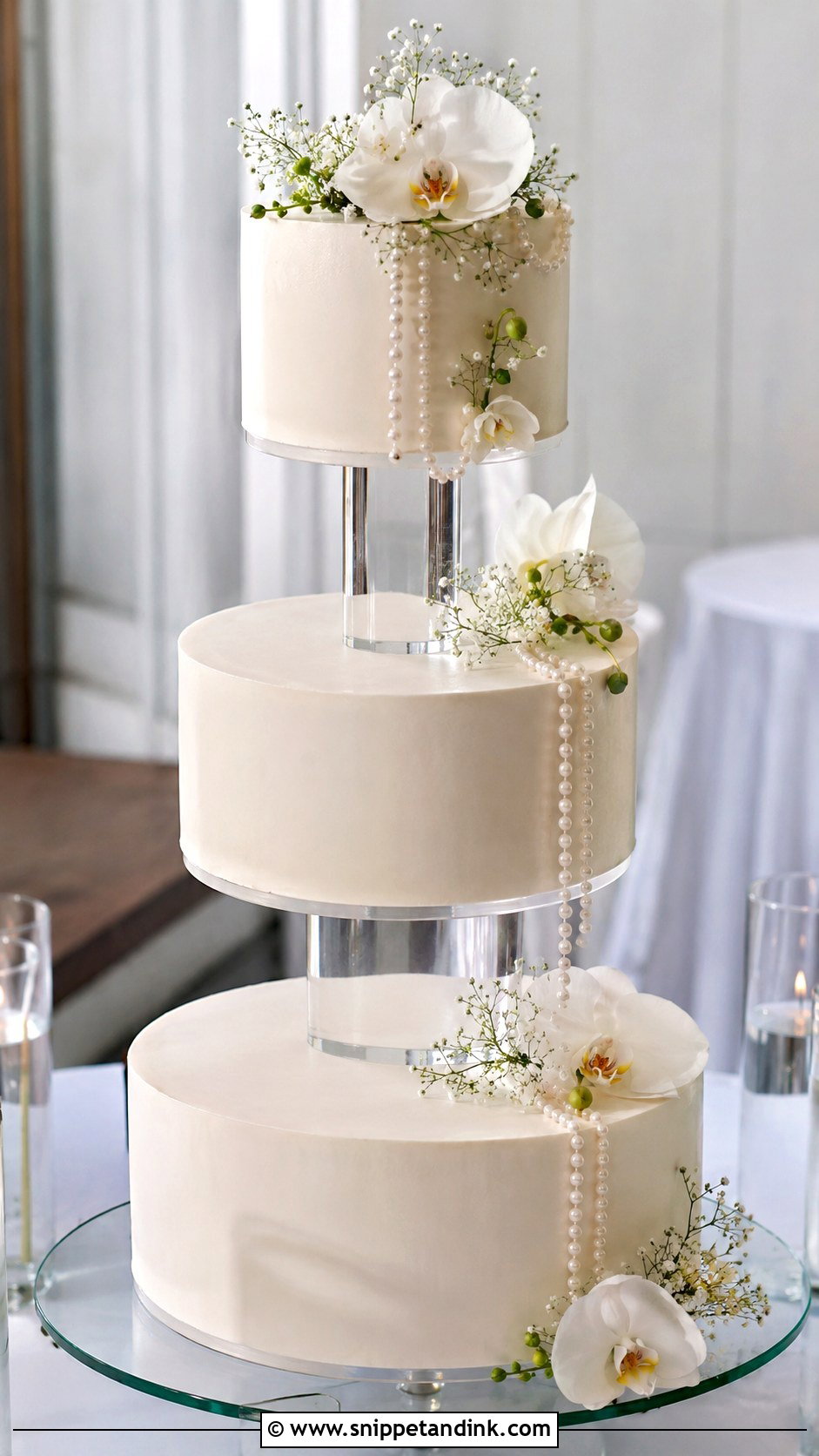
Clear acrylic almost disappears in person, which makes the hovering illusion strongest. It also scratches easily, and scratches catch light, so I handle spacers with gloves and keep them in their protective film until the cake is stacked. Left empty, the gap looks clean and graphic; filled with flowers or fairy lights, it softens. Smooth fondant matches acrylic’s crispness better than textured buttercream. Keep the stand plain.
5. Rose Floating Tier Wedding Cake
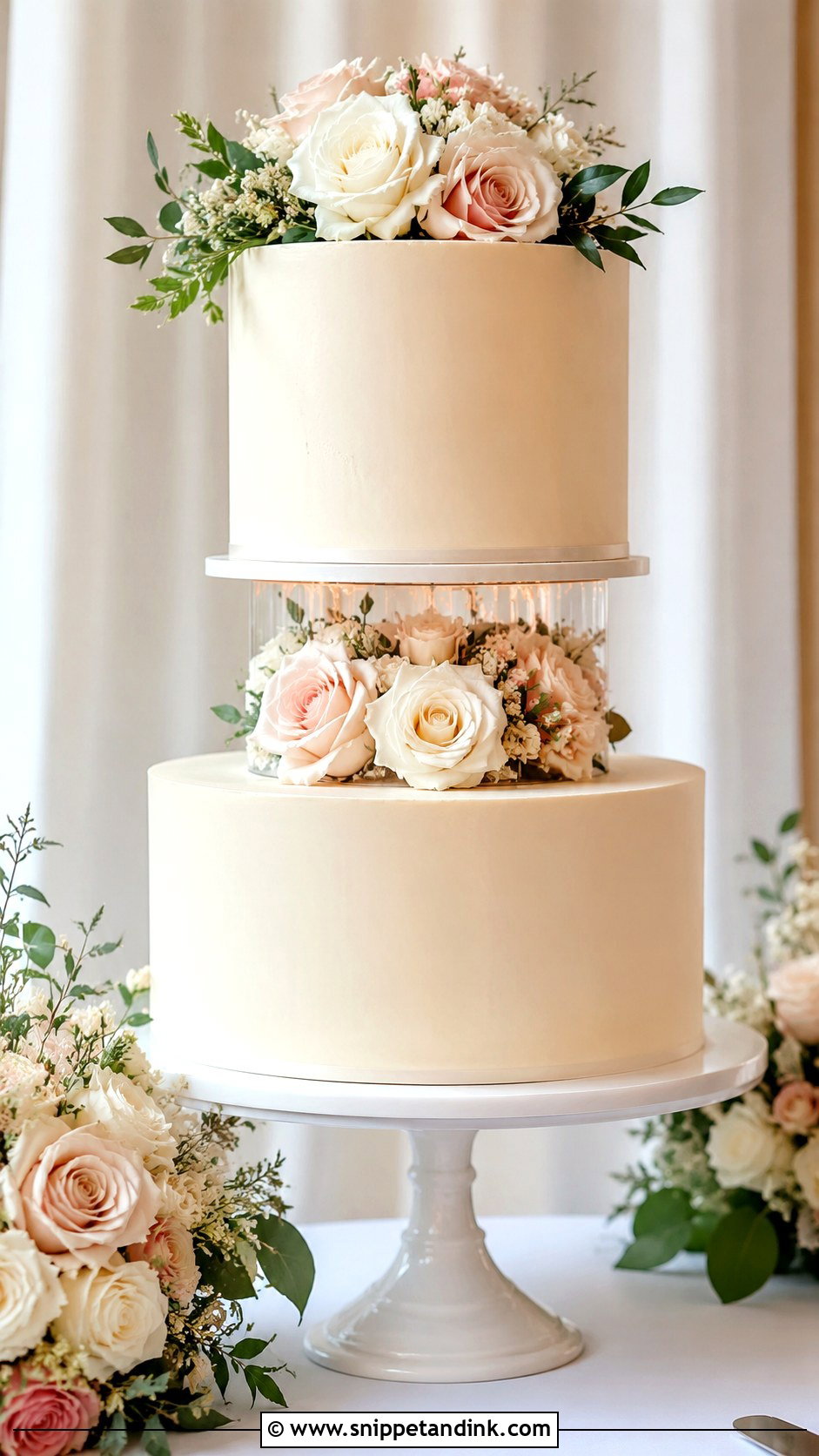
Roses are the easiest flower to tie back to the bouquet, and that link is the reason I suggest them so often. They can fill the gap, sit as a wreath between tiers or fall down one side. Garden roses are heavy-headed, though, so I wire them into a ring that rests on the separator rather than pushing stems into the tier below. White and blush stay bridal; peach or red feel richer.
6. Pearl Floating Tier Wedding Cake
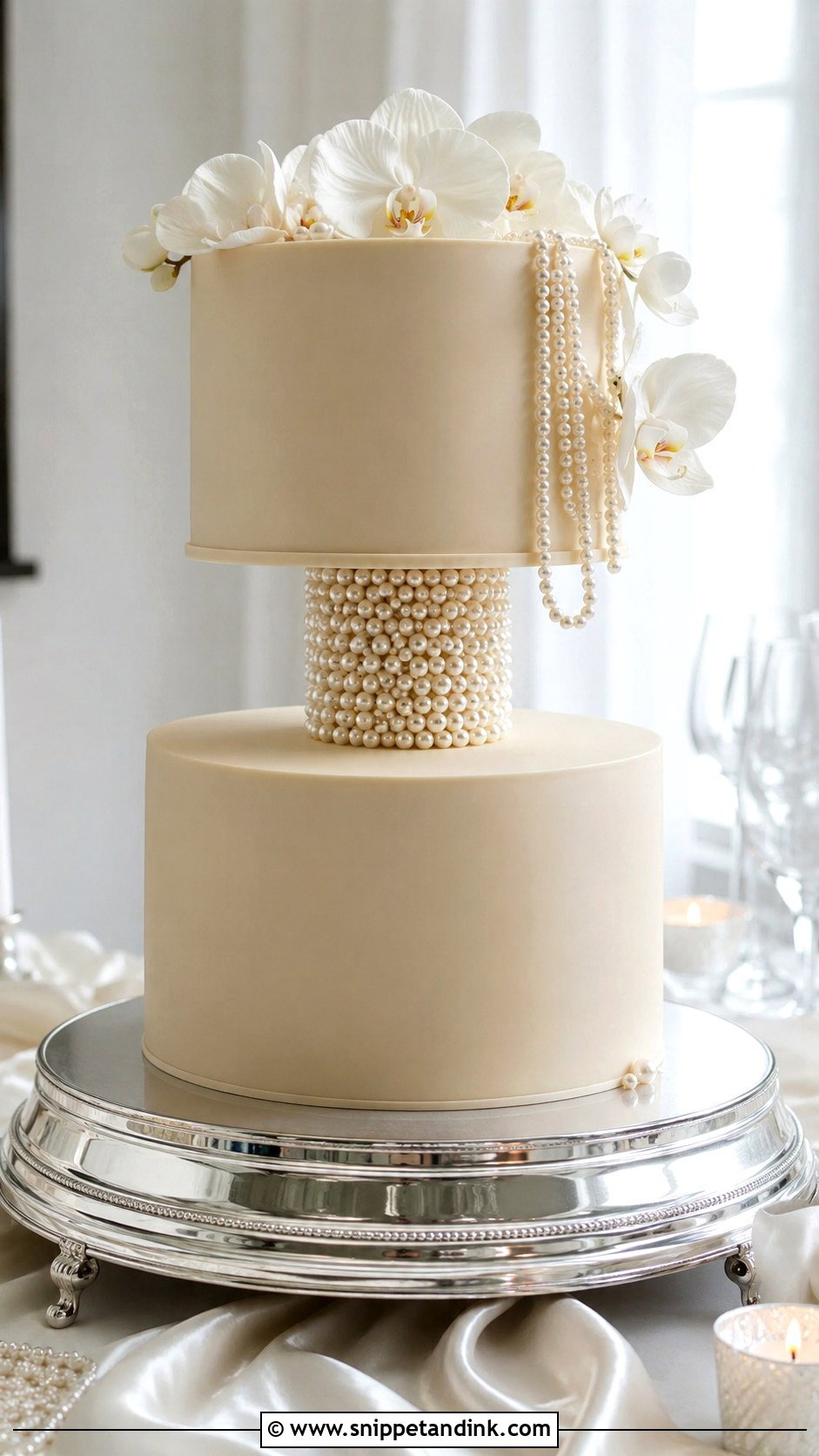
Sugar pearls can cover the spacer, ring the base of each tier or hang in strands inside the gap. Strands are the delicate part. I make them from pearls threaded on food-safe material or piped directly, and I fix them only after the cake is stacked at the venue, because swinging pearl strands don’t survive a car journey. Ivory and cream suit pearls better than bright white. One small orchid spray is enough flower.
7. Greenery Floating Tier Wedding Cake
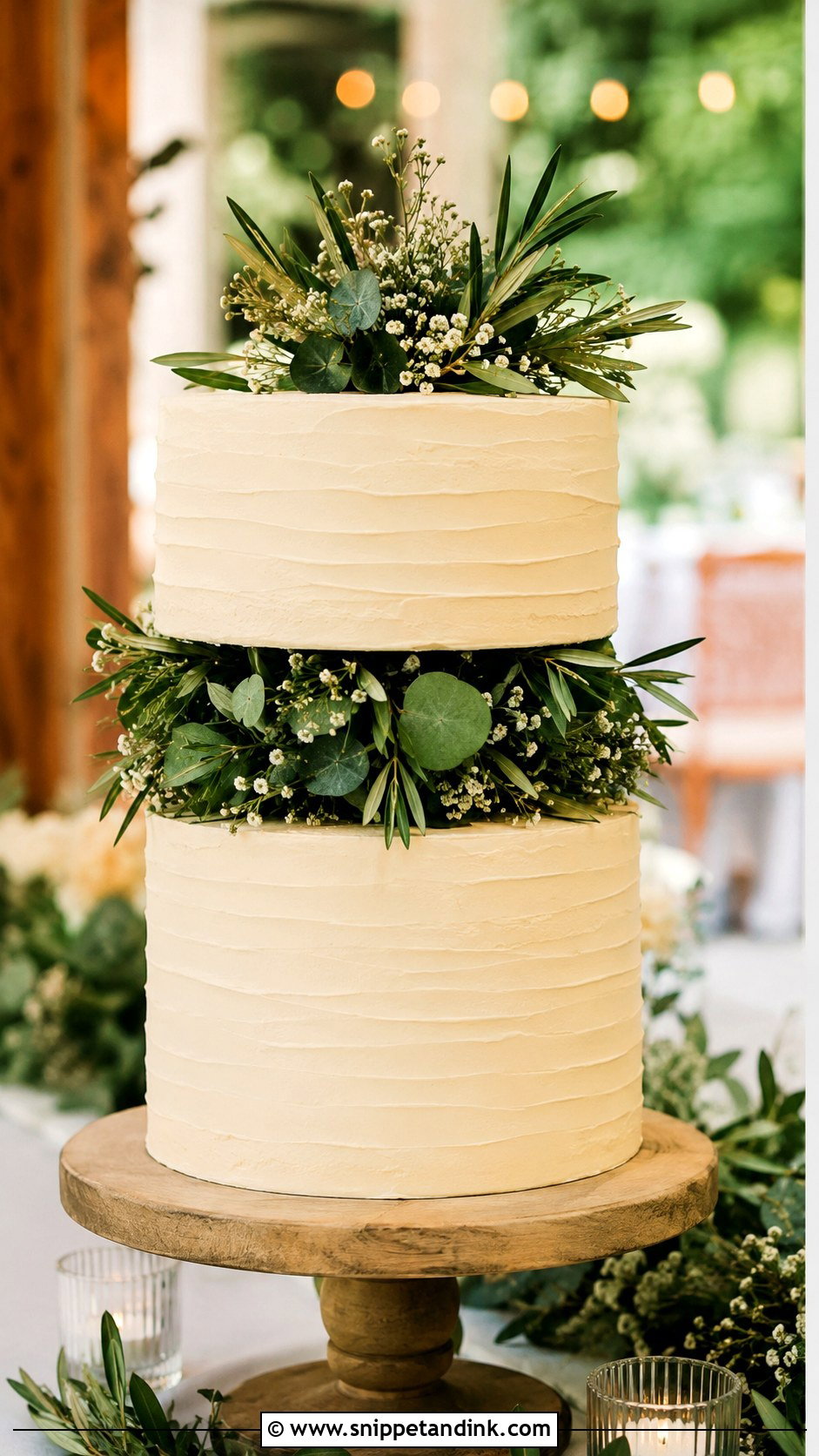
A greenery floating tier wedding cake makes the tiers look as if they’re resting on a wreath. Eucalyptus, ruscus and olive hold up well out of water for a few hours; ivy and fern wilt faster in warm rooms, so I’d use them only for indoor, air-conditioned receptions. Washed, dried and wrapped stems are non-negotiable. Textured buttercream gives a softer look; smooth fondant reads more formal.
8. Black And White Floating Tier Wedding Cake
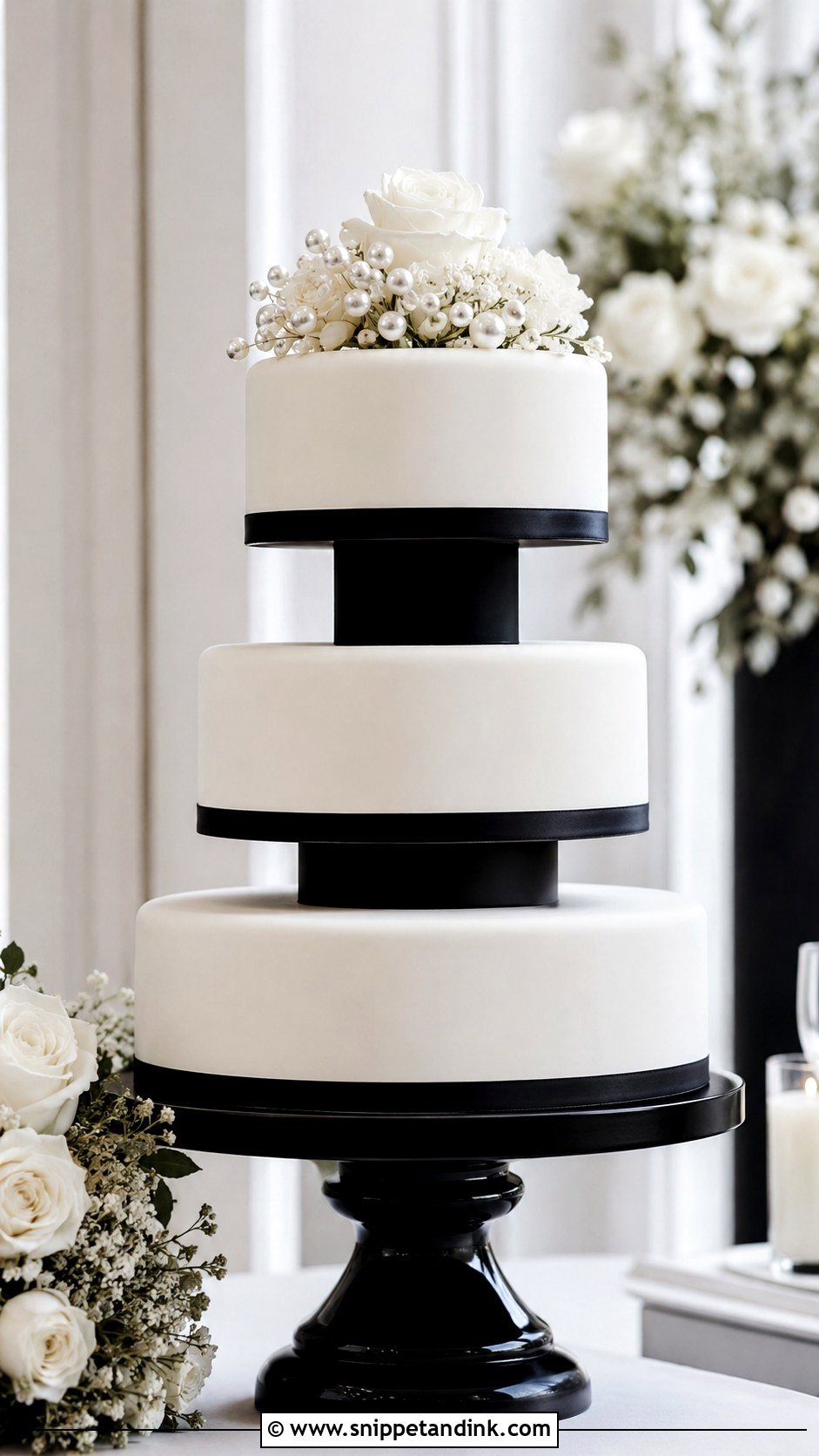
Contrast is easy here: a black spacer, black ribbon bands or one black fondant tier against white. What I watch is weight. A black floating section can read as a hole in the cake from across the room, so I often keep the spacer white and bring black in through ribbons instead. White roses or a thin gold line soften it. The gap throws a strong shadow under stage lighting, which suits a gallery or city venue.
9. Blush Floating Tier Wedding Cake
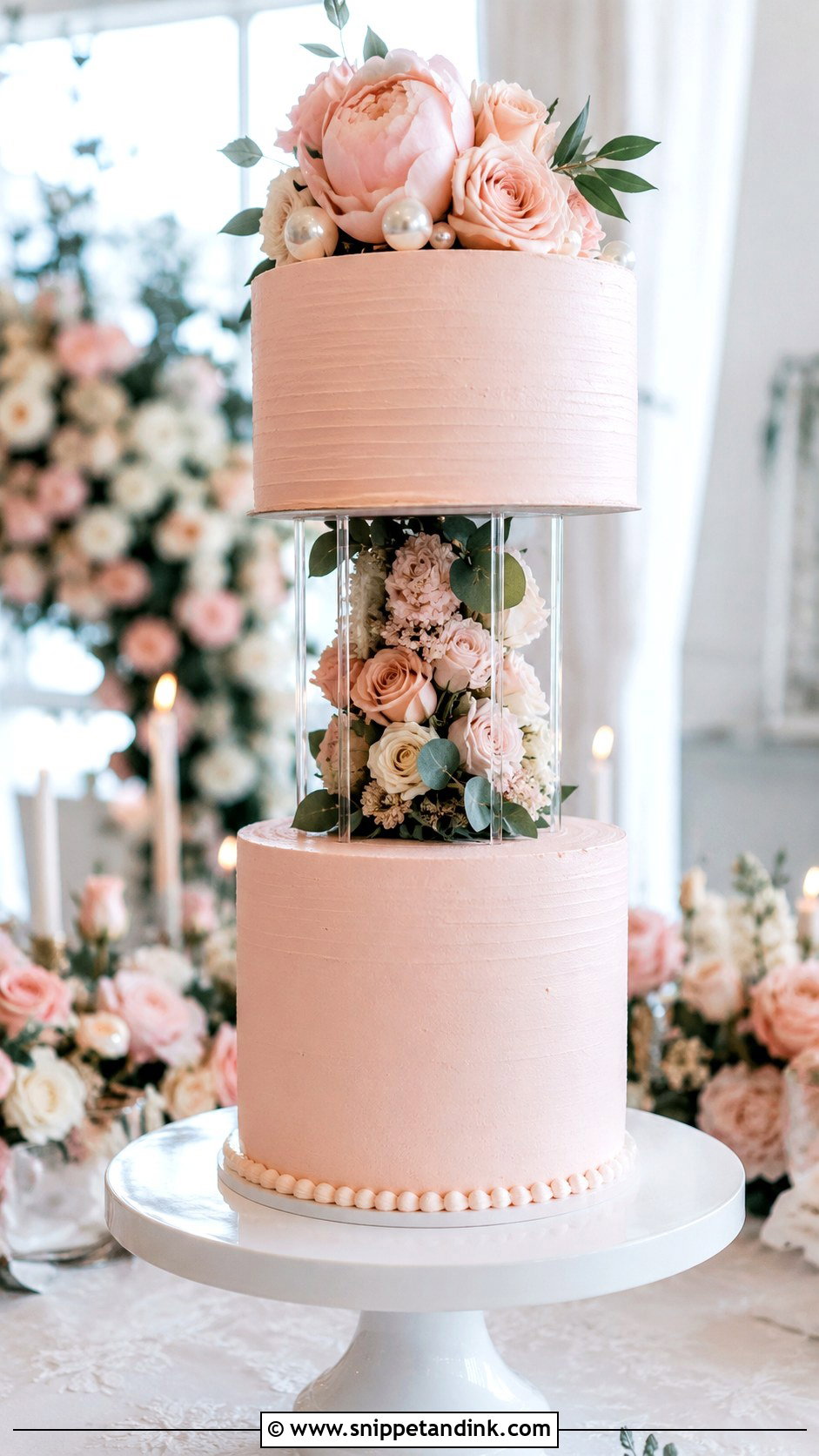
Pale pink icing with ivory accents and a ring of blush peonies or roses in the gap. Too much pink tips into sweet, so I pair it with champagne or sage. Matching flowers to a pink icing is harder than it sounds: pink buttercream deepens slightly as it sets, so I check fresh blooms against a sample piece the day before rather than the colour card.
10. Rustic Floating Tier Wedding Cake
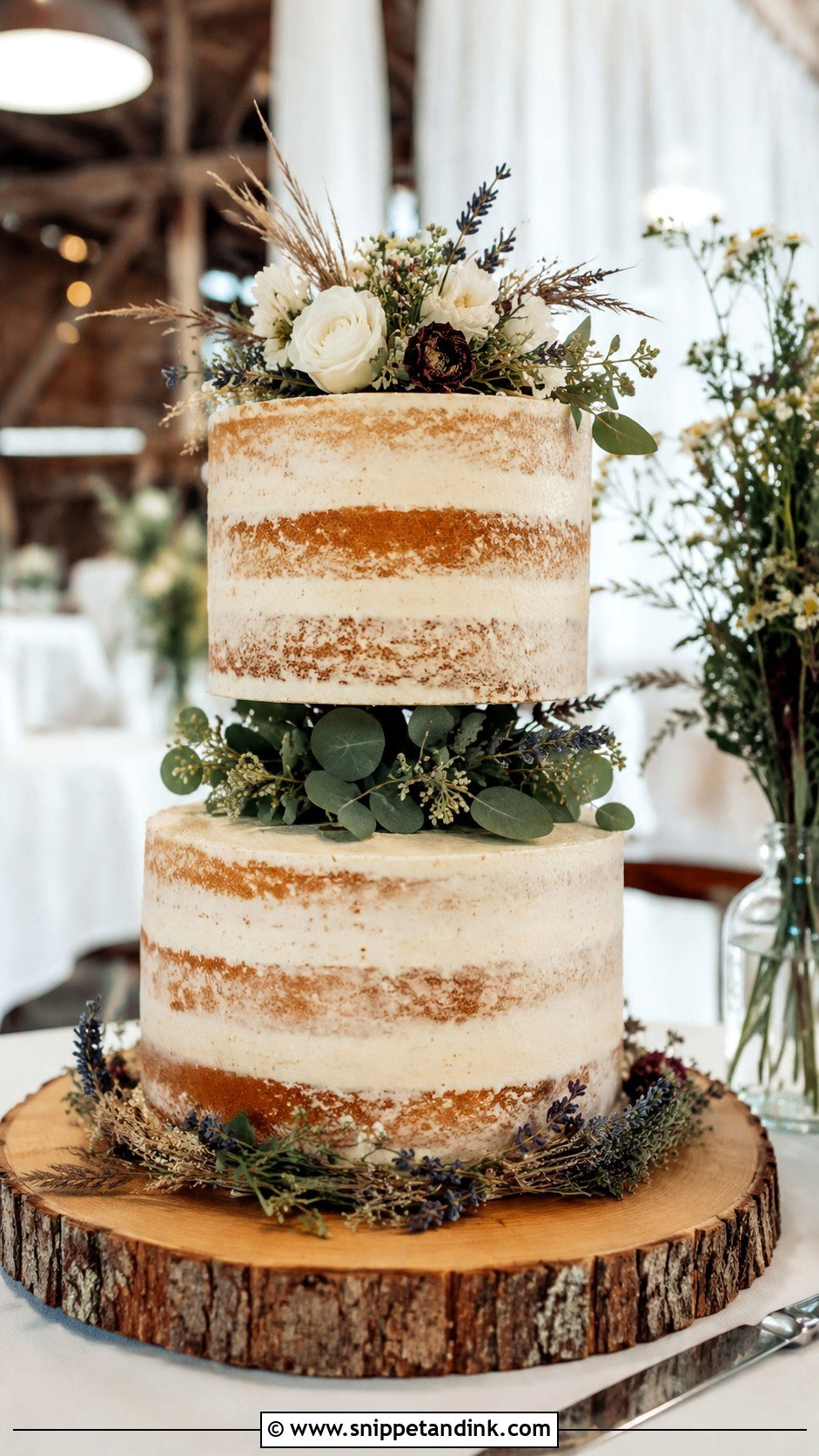
Semi-naked buttercream, ridges and wildflowers bring the texture; the floating gap brings the surprise. Rustic finishes hide less than people think, though. With a thin scrape of icing, any wobble in the stacking shows, and a gap makes the stacking more visible still, so the structure needs to be as precise as on a formal cake. A wood stand fits barns and mountain venues. Spice or almond sponge suits the setting.
11. Modern Floating Tier Wedding Cake
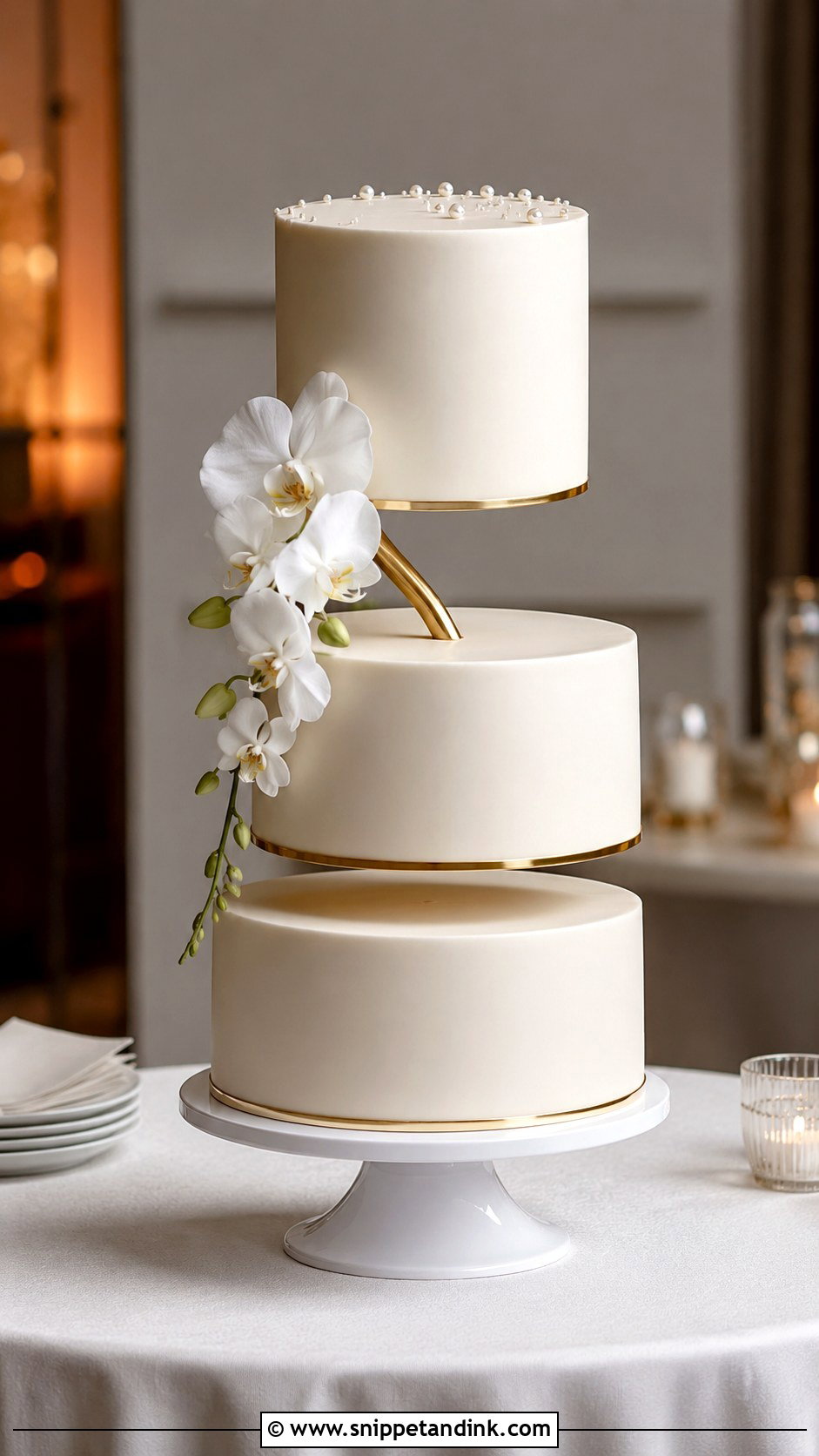
Modern floating cakes are about proportion. Offset tiers, sharp fondant and a single accent, an orchid spray or one band of ribbon, and nothing else. Offsetting a tier over a gap moves its weight off the central support, so I only do it with a central rod running through the whole structure and a separator plate rated for the load. Ask your baker how they’d support an offset before you fall for one.
12. Orchid Floating Tier Wedding Cake
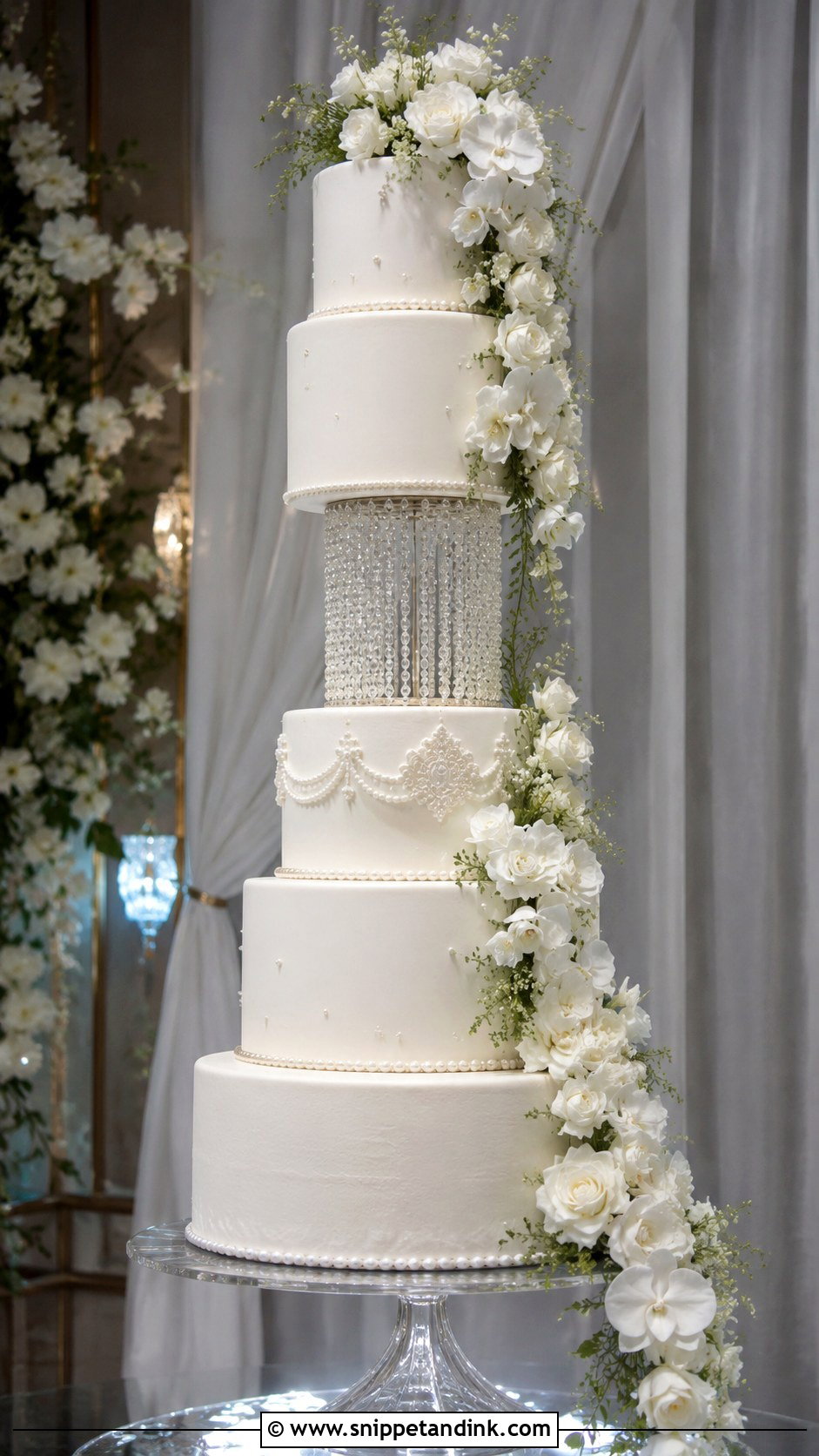
An orchid floating tier wedding cake works because orchids are light and arch naturally through an open space. White phalaenopsis looks clean; blush or lavender adds colour quietly. Fresh orchids bruise where they’re touched, so I place them last, by the stem, never gripping the petals. Smooth fondant shows off their outline. Leave out extra greenery unless the cake looks bare.
13. Buttercream Floating Tier Wedding Cake
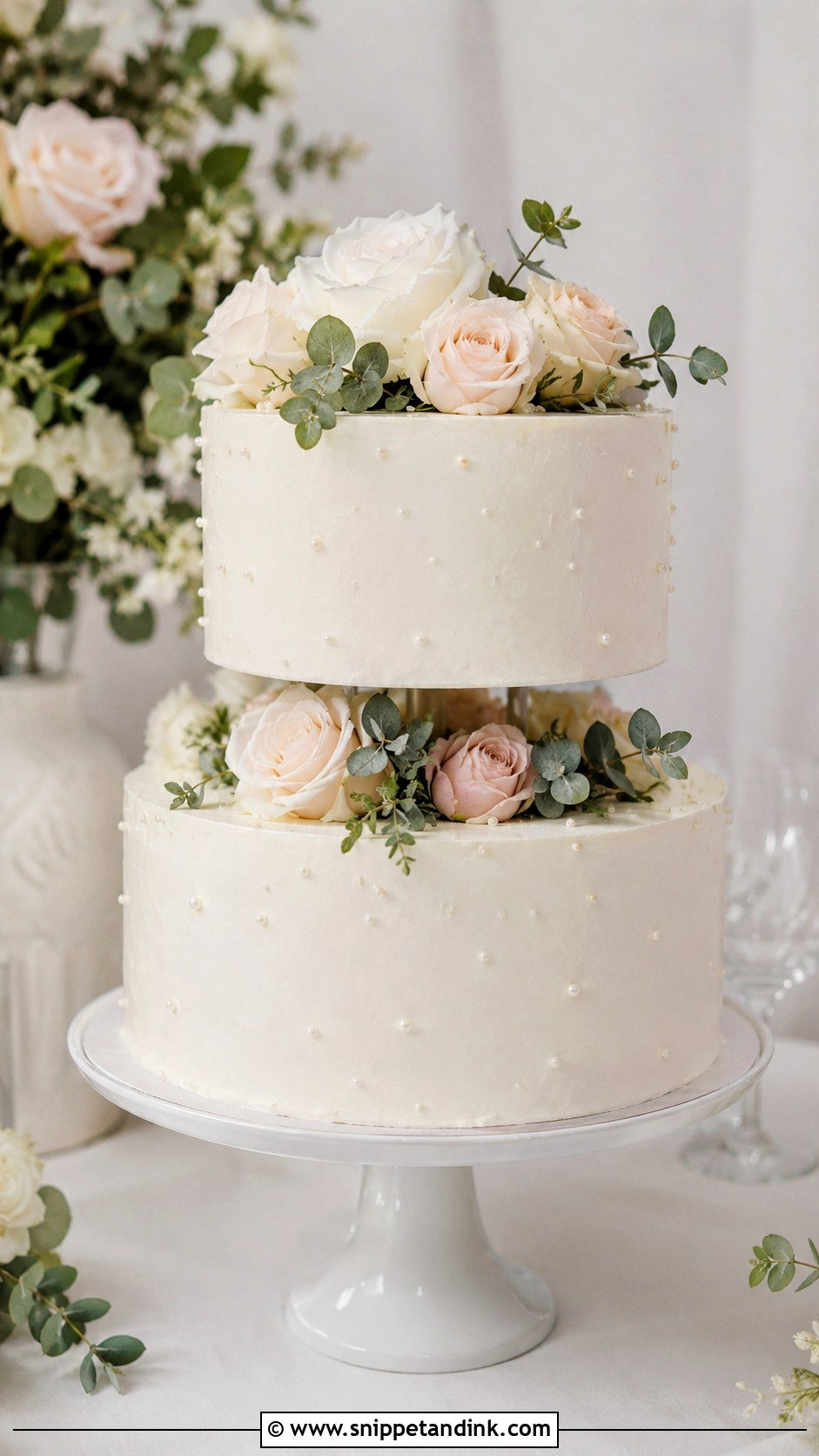
Buttercream feels softer and less formal than fondant, and that’s its appeal. It’s also the riskier finish for a floating design, because soft icing at the edge of each tier bulges if the cake warms up and the weight above presses down. I keep buttercream floating cakes refrigerated until delivery and ask venues for a cool spot away from windows. Smooth or gently lined finishes both suit it.
14. Fondant Floating Tier Wedding Cake
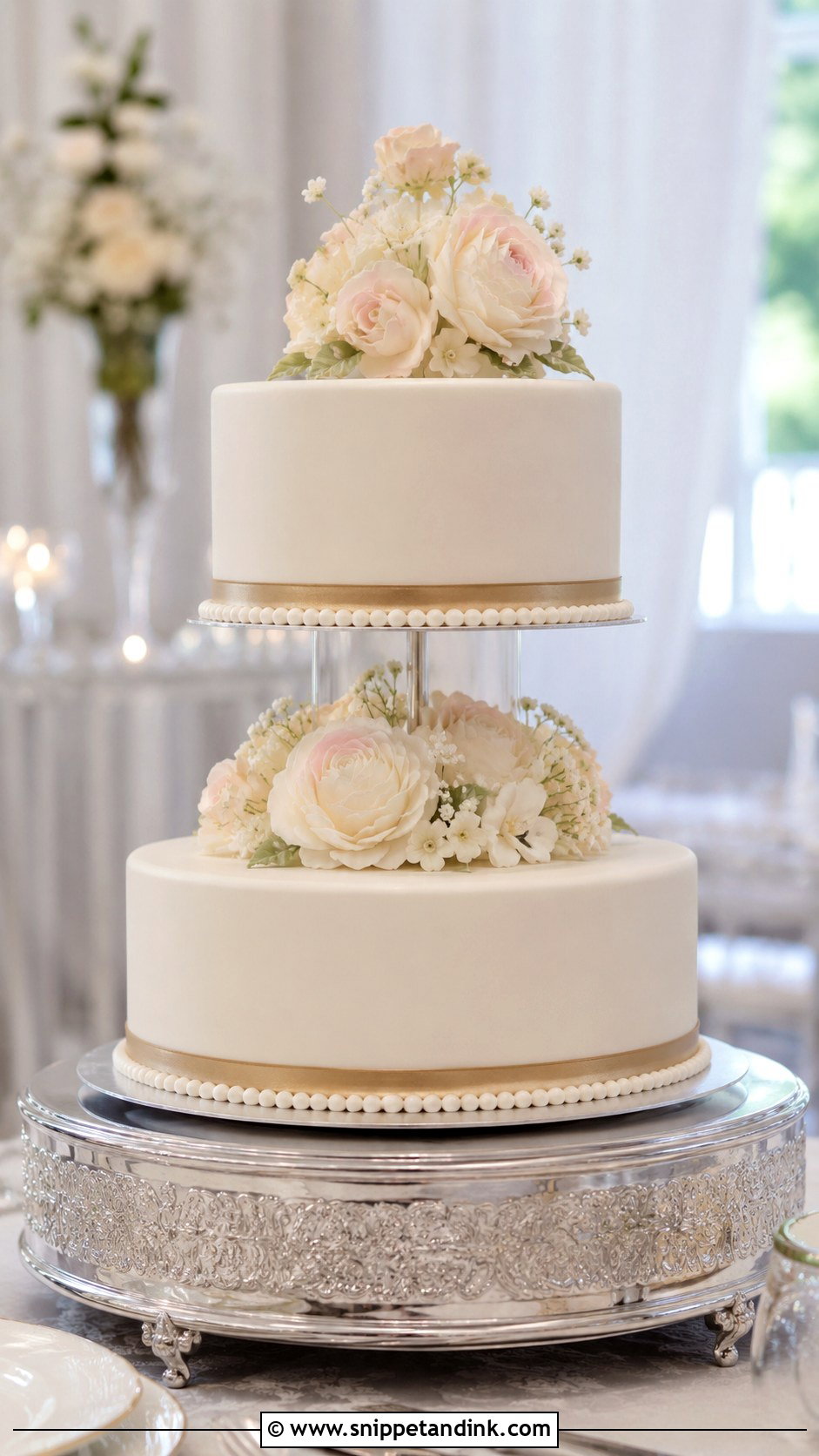
For a design that depends on crisp structure, fondant is the obvious partner. It gives sharp edges, holds painted or embossed detail and copes far better with long display times and warm rooms. That makes it my default when the cake will be out for several hours before cutting. One floral cluster or a fine metallic trim keeps it architectural.
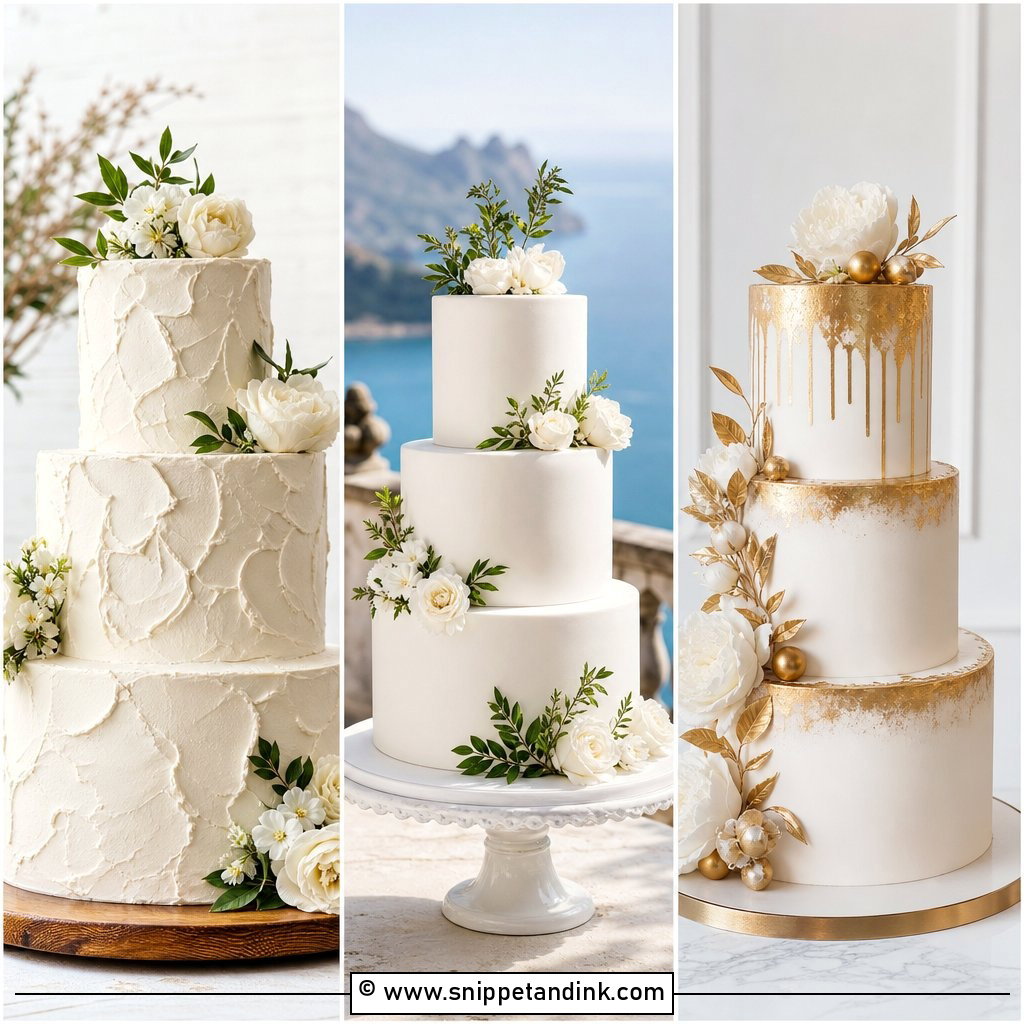

15. Square Floating Tier Wedding Cake
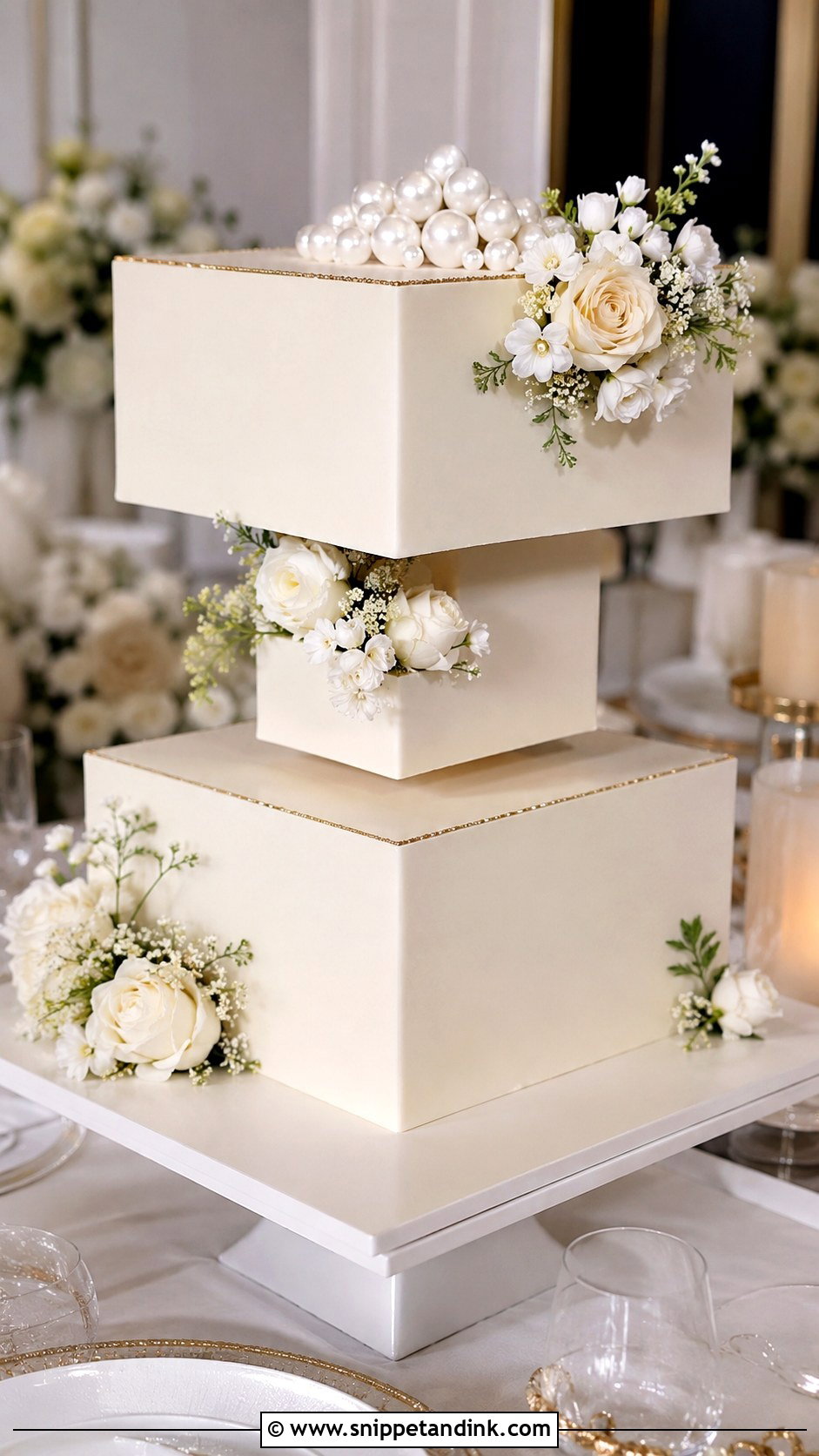
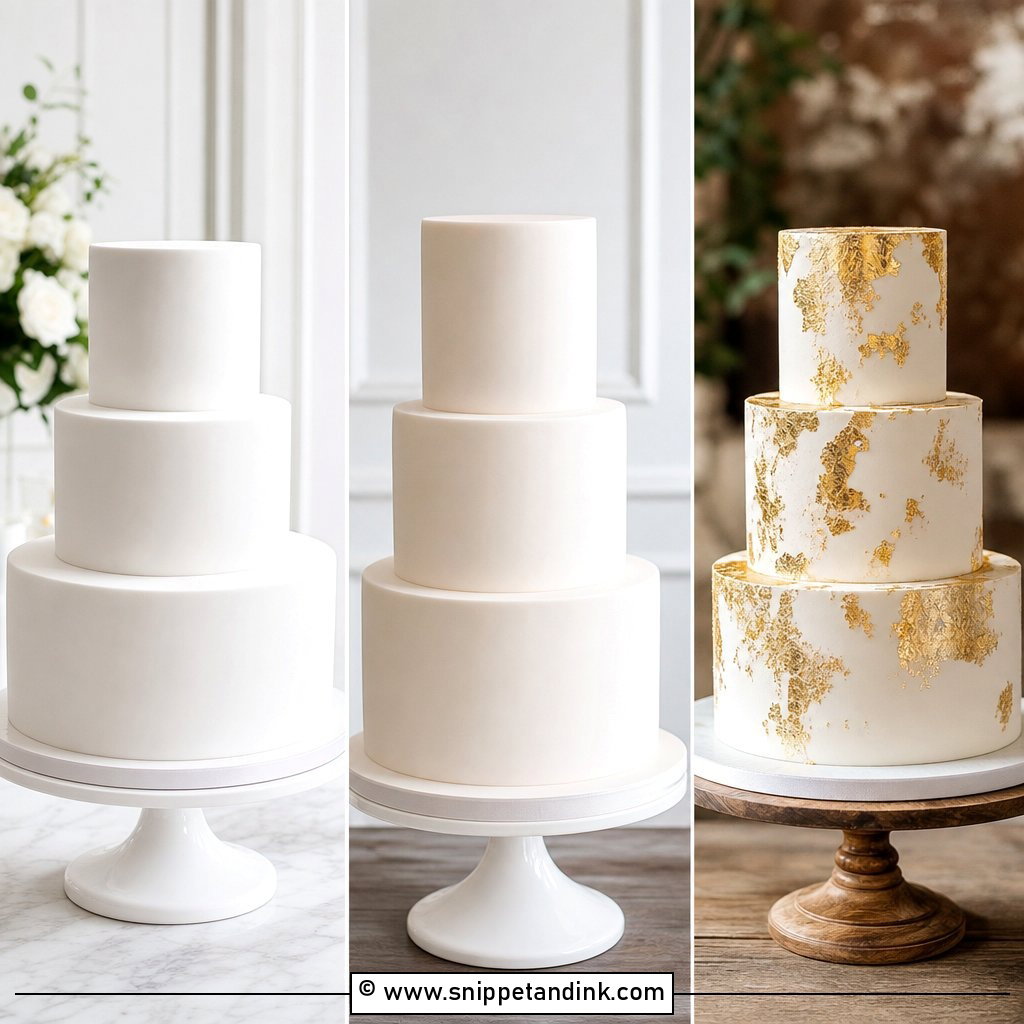
Square tiers make the gap look deliberate and architectural. Corners demand precision; any twist between the upper and lower tier is obvious, so I mark the alignment on the boards before stacking. Gold trim, black accents or corner flower clusters all work. A slight offset can look contemporary, but it carries the same support caveats as any offset cake.
16. Round Floating Tier Wedding Cake
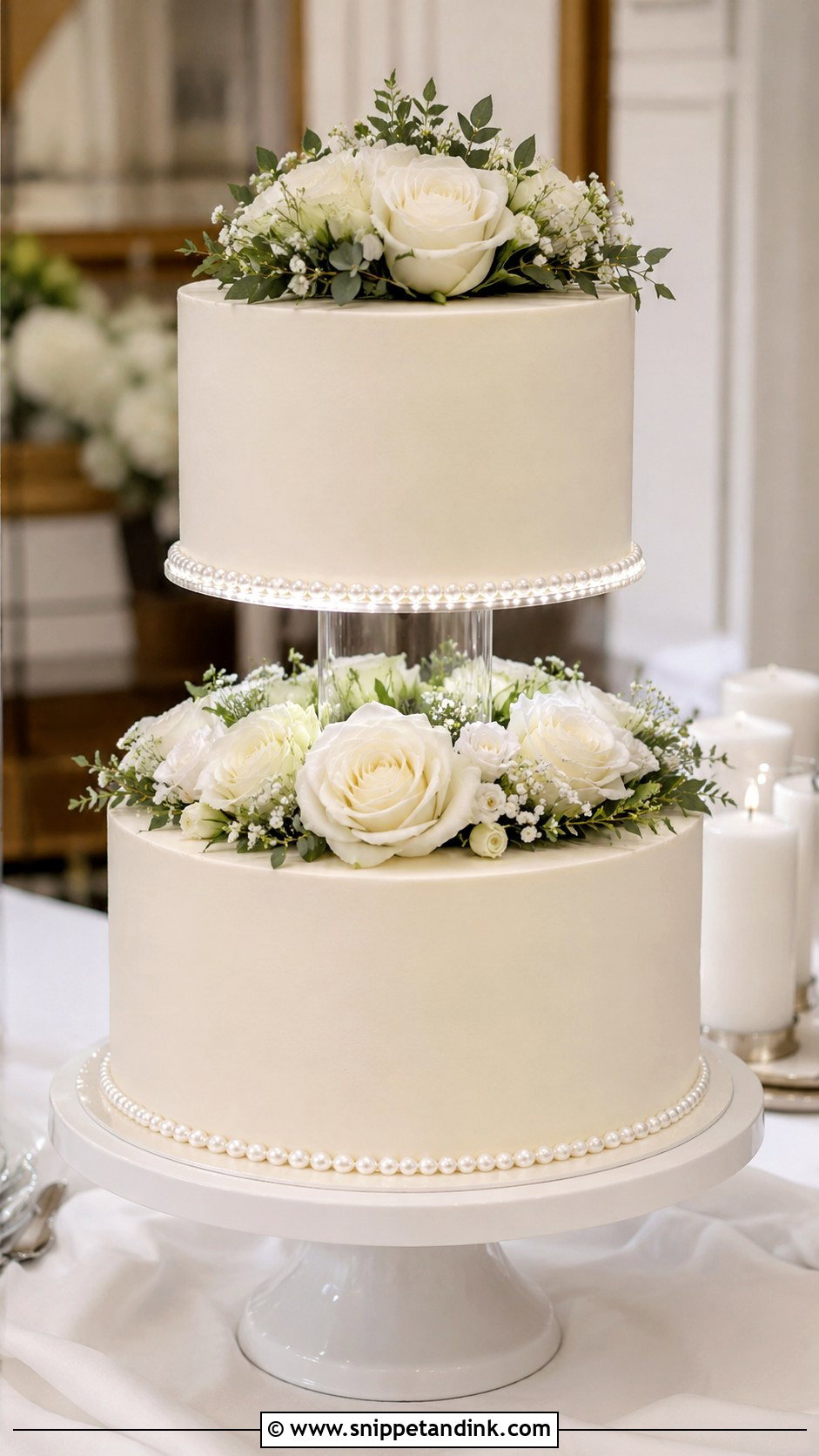
Round is the version I’d suggest to anyone unsure, because it suits almost every setting and is the easiest to stack true. The float can sit between the bottom and middle tiers for drama, or near the top for a lighter look. Floral wreaths and greenery rings fit naturally around a round spacer. Ivory with white flowers keeps it classic; tinted spacers bring colour.
17. Tall Floating Tier Wedding Cake
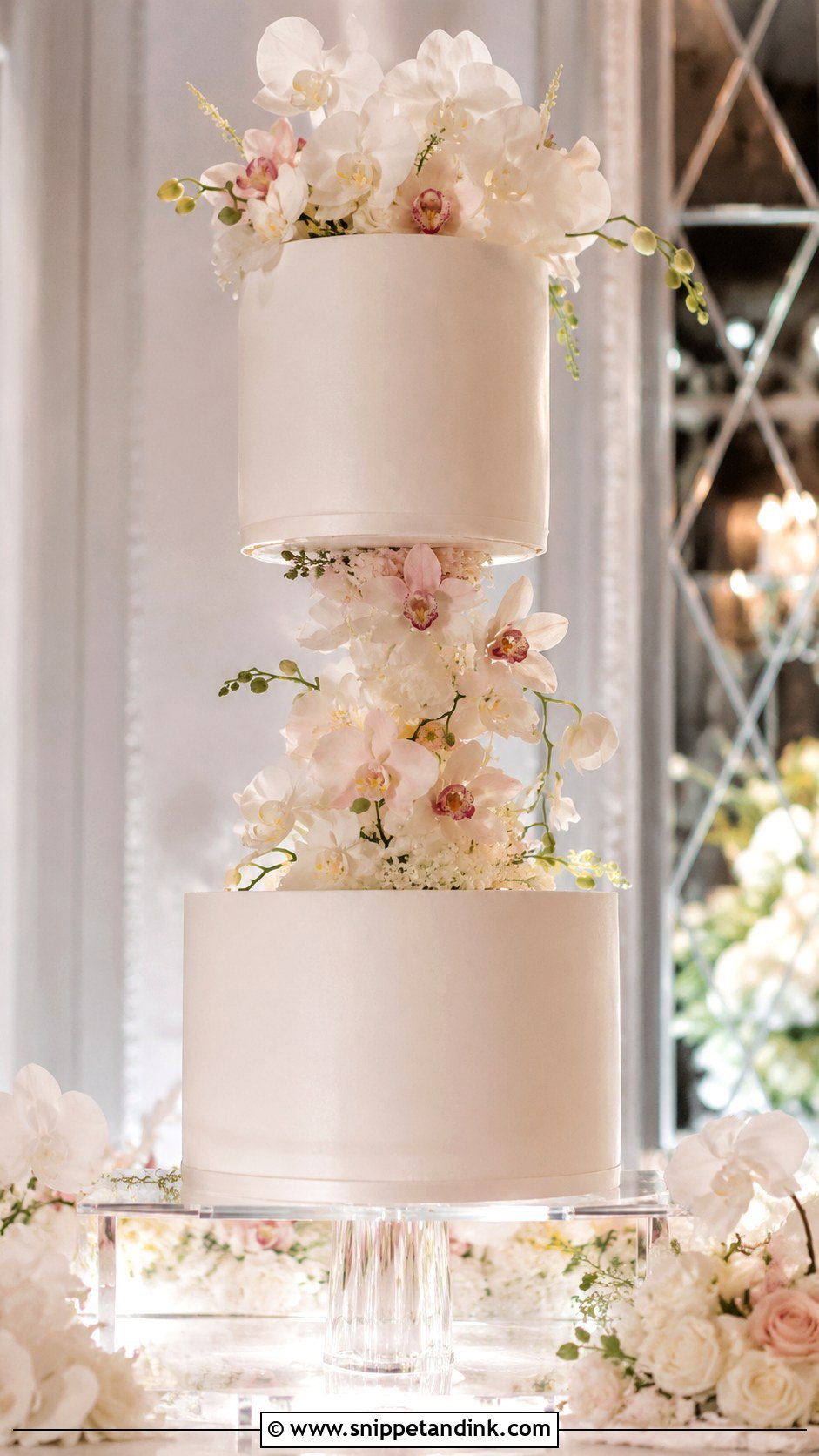
In a high-ceilinged ballroom, a tall cake earns its dramatic presence. The gap adds height without the weight of another full tier, which actually helps a tall structure. Even so, anything over four tiers needs a central rod, dowels in every supporting tier and a sturdy, level table. I would always assemble a tall floating cake on site. Long cascades or slim pearl lines lead the eye top to bottom.
18. Minimalist Floating Tier Wedding Cake
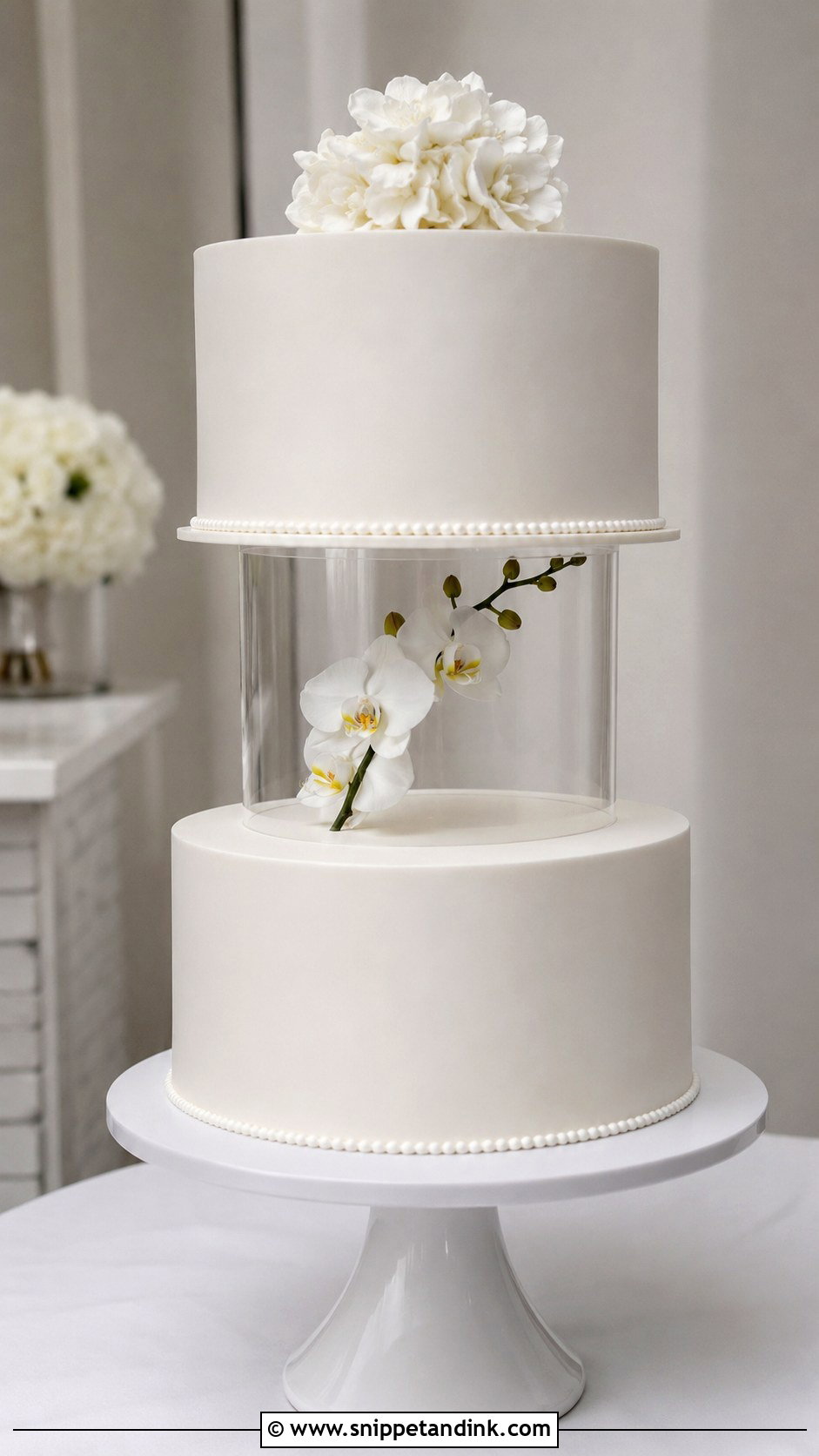
Proportion carries this design, so I spend more time on tier heights and gap width than on decoration. A single orchid stem, a pearl trim or a clear spacer with nothing in it. It suits courthouse weddings and intimate dinners. Resist the urge to add more once it’s on the table; the empty space is doing the work. A plain pedestal stand helps.
19. Draped Floating Tier Wedding Cake
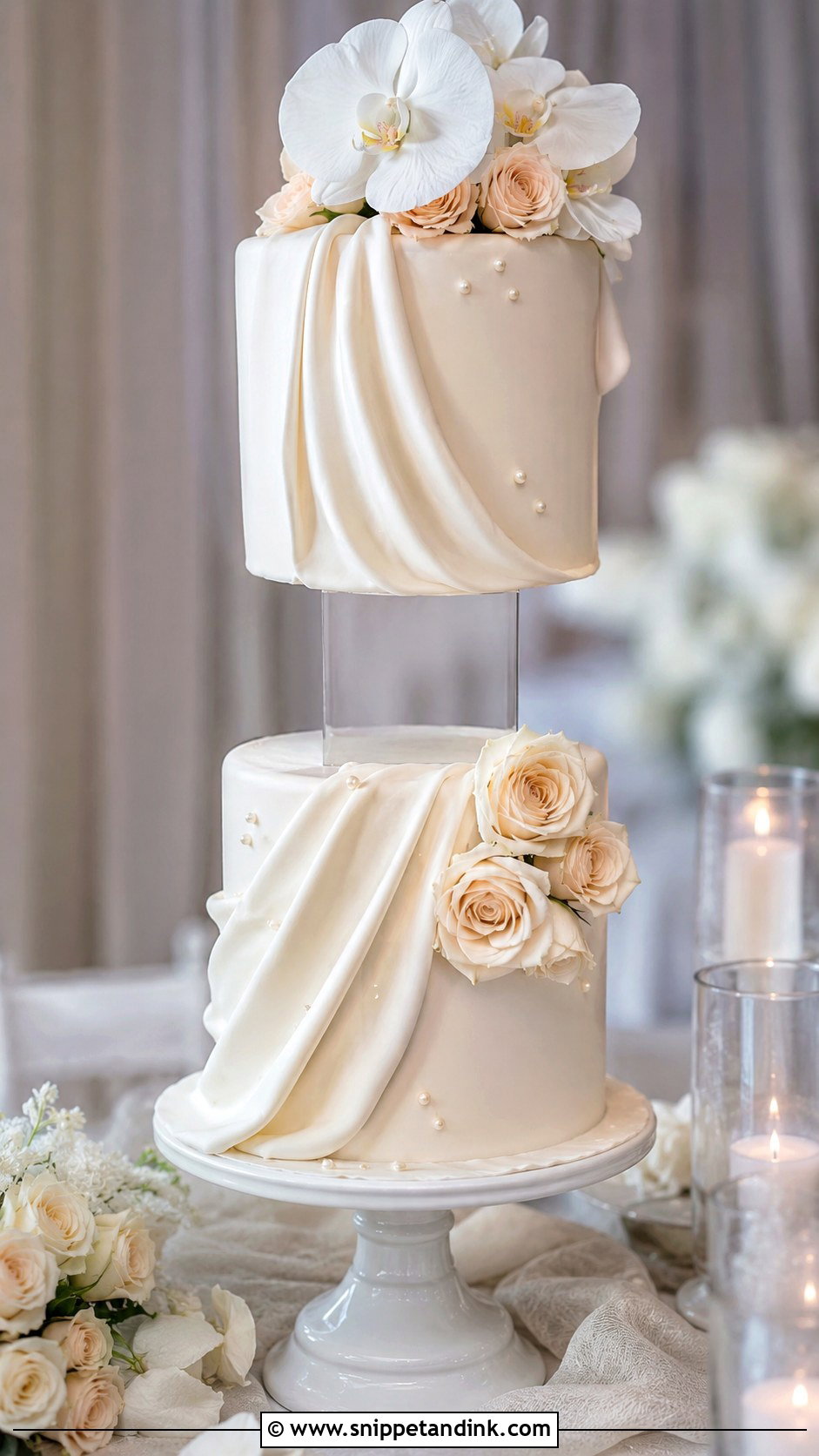
Fondant drapes, sugar fabric or wafer paper folds add movement to a structure that’s otherwise very still. Wafer paper reacts to humidity; it softens and droops in damp air, so for a summer marquee I’d choose fondant drapes instead. A small floral cluster where the drape begins hides the join. Ivory and champagne are the safest tones. Keep the drape light so it doesn’t add bulk.
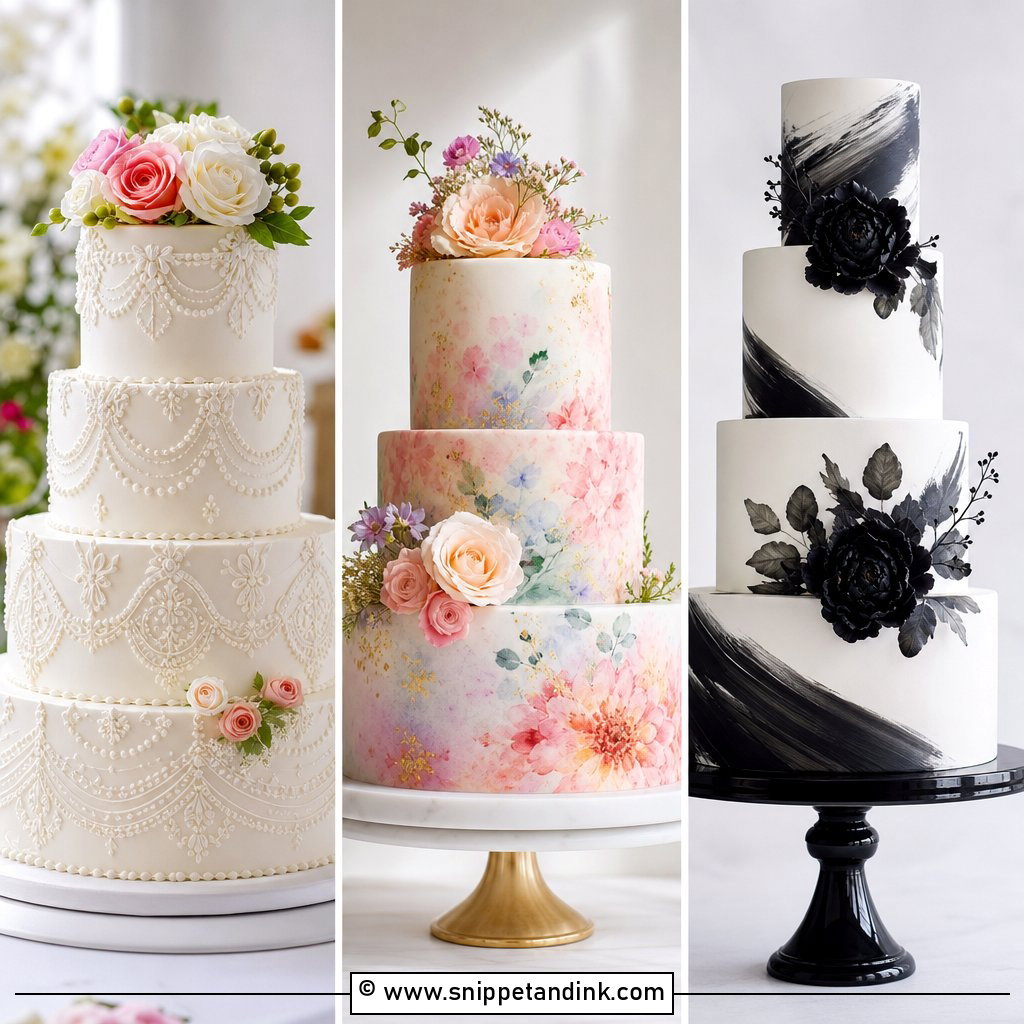
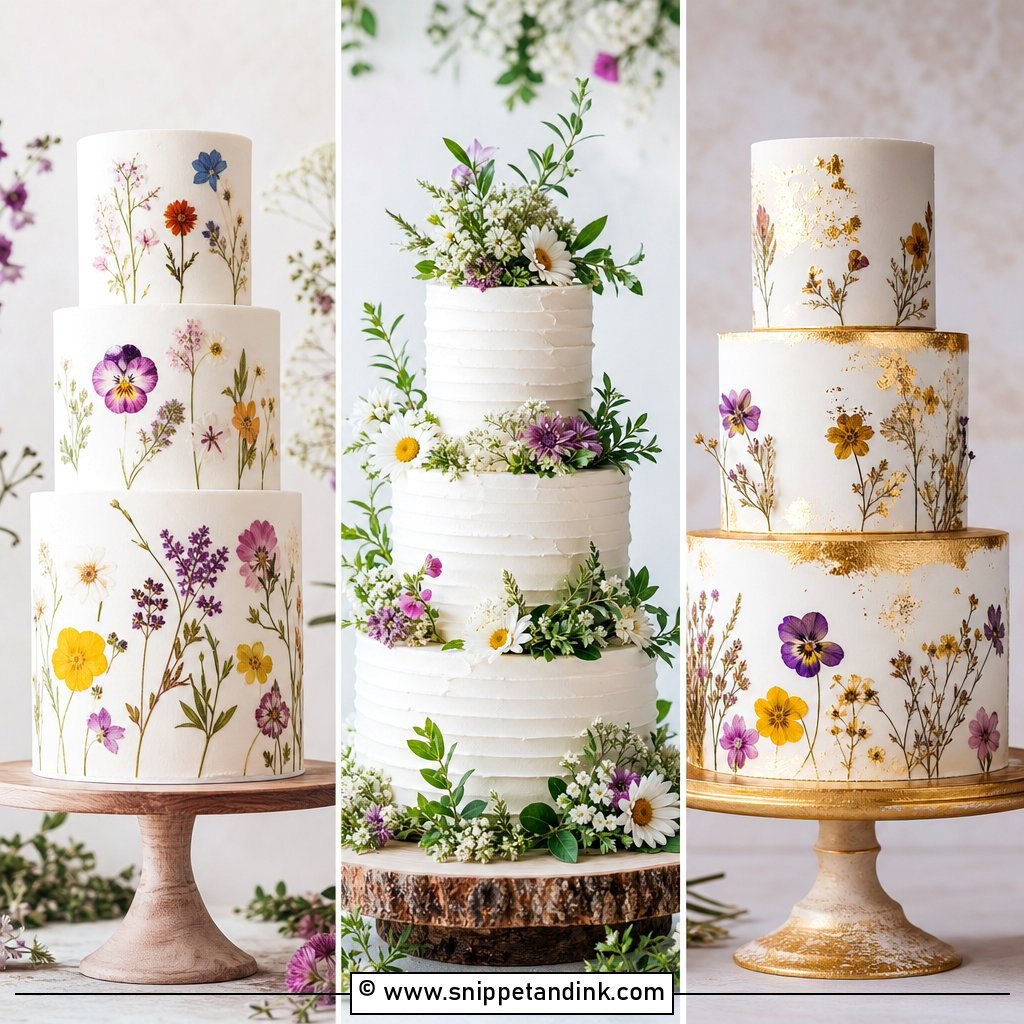

20. Marble Floating Tier Wedding Cake
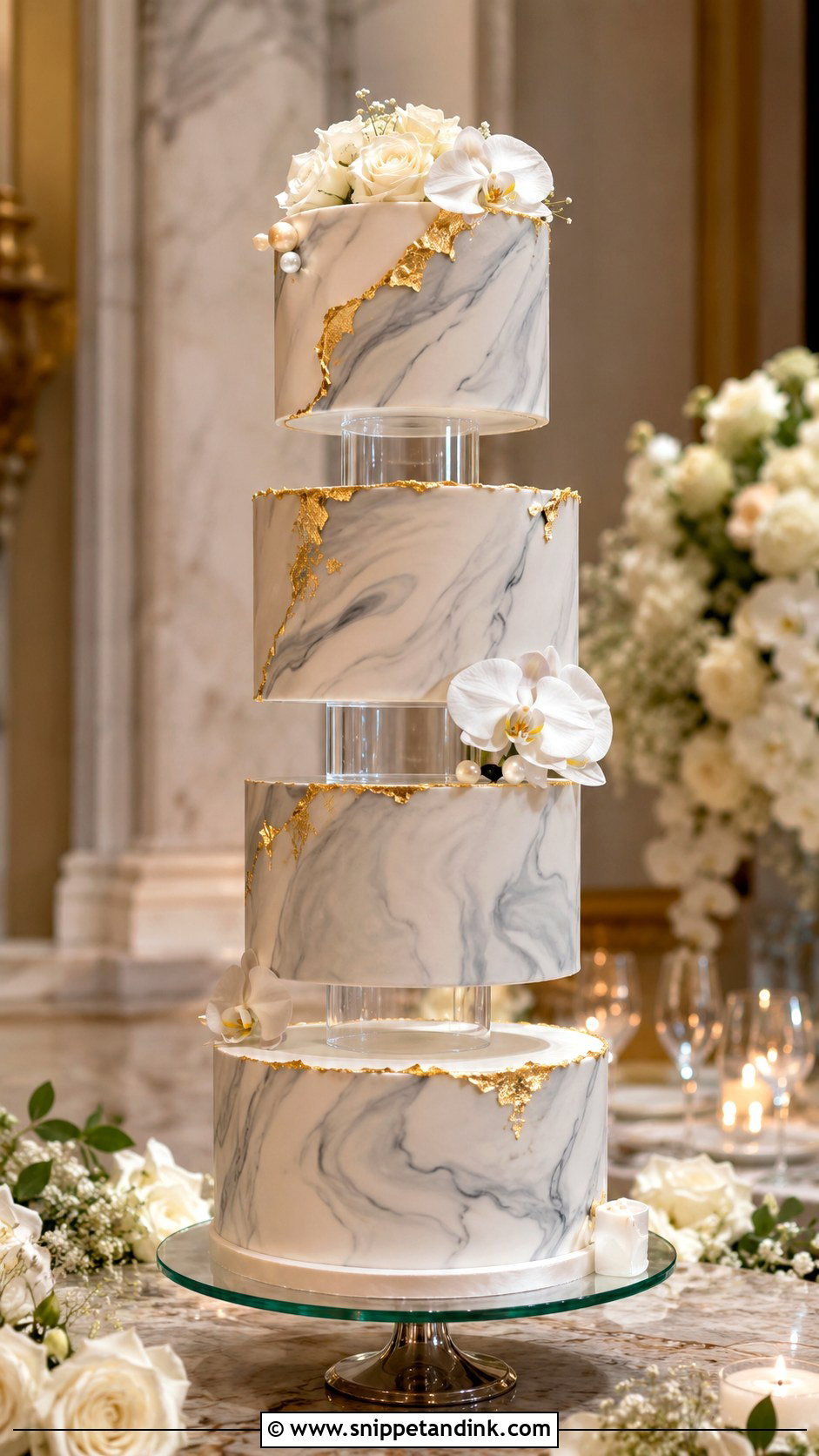
Marbled fondant in grey, ivory or blush moves across each tier without extra decoration. Marbling is unique on every tier, so I roll the fondant for all tiers at once to keep the veining consistent in tone. Gold accents or a clear spacer suit the floating section. Thin metallic edging gives definition. It sits naturally on stone or glass tables with candles.
Delivery Day With a Gap in the Middle
I don’t travel floating cakes fully stacked. The tiers ride in separate boxes, flat on a non-slip mat, and the spacer and flowers go in their own crate. Assembly happens on the cake table itself, which means the venue needs to give the baker set-up time and a table that is sturdy, level and already in its final position. Moving a stacked floating cake even a metre is where accidents happen.
- Confirm the table with the venue: solid, level, not a folding table that flexes in the middle.
- Ask your baker how long on-site assembly takes and agree an access time with the venue.
- If fresh flowers go in the gap, decide whether the florist or the baker places them, and when.
- Keep the finished cake away from windows, heaters and the dance floor speakers, which vibrate more than you’d think.
Spacers and separator plates are often rented, so ask whether there’s a deposit and who brings the hardware back after the wedding. A friend who knows the deal on the night saves a lot of chasing later.
Is a Floating Tier Worth the Extra Engineering?
A floating tier gives height, a place for flowers or light, and a cake people walk across the room to look at. It also asks more of your baker than a standard stacked cake: a support system that’s rated for the weight, careful timing and usually assembly at the venue. Pick the gap filler that matches your flowers, ask exactly how the float is held up, and the rest is decoration.
You'll Like These Ideas:




Leave a Reply