
Simple is the hardest thing I’m asked to make. On a heavily decorated cake, a bulge or a soft edge disappears under sugar work; on a plain white tier, every flaw is on show. That’s why the cakes below work: each one commits to a single idea and lets the finish do the rest. Clean buttercream, smooth fondant, a few flowers, pearls, pressed flowers, ribbon and a touch of metallic all appear here, along with notes from my side of the counter on how each one behaves at a garden ceremony, in a ballroom or at a small backyard reception. If you want a cake that will still look right in your photos decades from now, these are the 25 I’d start the conversation with.
Why a Plain Cake Often Costs More Than Couples Expect
Couples sometimes assume a simple cake is the budget option, and then the quote surprises them. Most of the cost is time, not decoration. A perfectly smooth tier with knife-sharp edges can take longer than a textured cake covered in flowers, because every pass of the scraper has to be right.
What actually moves the price
- Number of servings, which sets the size of each tier.
- Finish: textured or semi-naked is quicker than a flawless smooth coat or fondant.
- Handwork such as sugar flowers, piped lace or hand-painted gold.
- Delivery distance and whether the baker sets up and places flowers on site.
If the numbers are tight, keep the look you love on a smaller display cake and have the baker prepare a plain sheet cake of the same flavor in the kitchen for serving. Guests can’t tell the difference on the plate, and the display cake can be scaled to fit the budget. Most bakers book wedding dates several months ahead, so request quotes early enough to compare.
1. Two Tier White Buttercream Wedding Cake
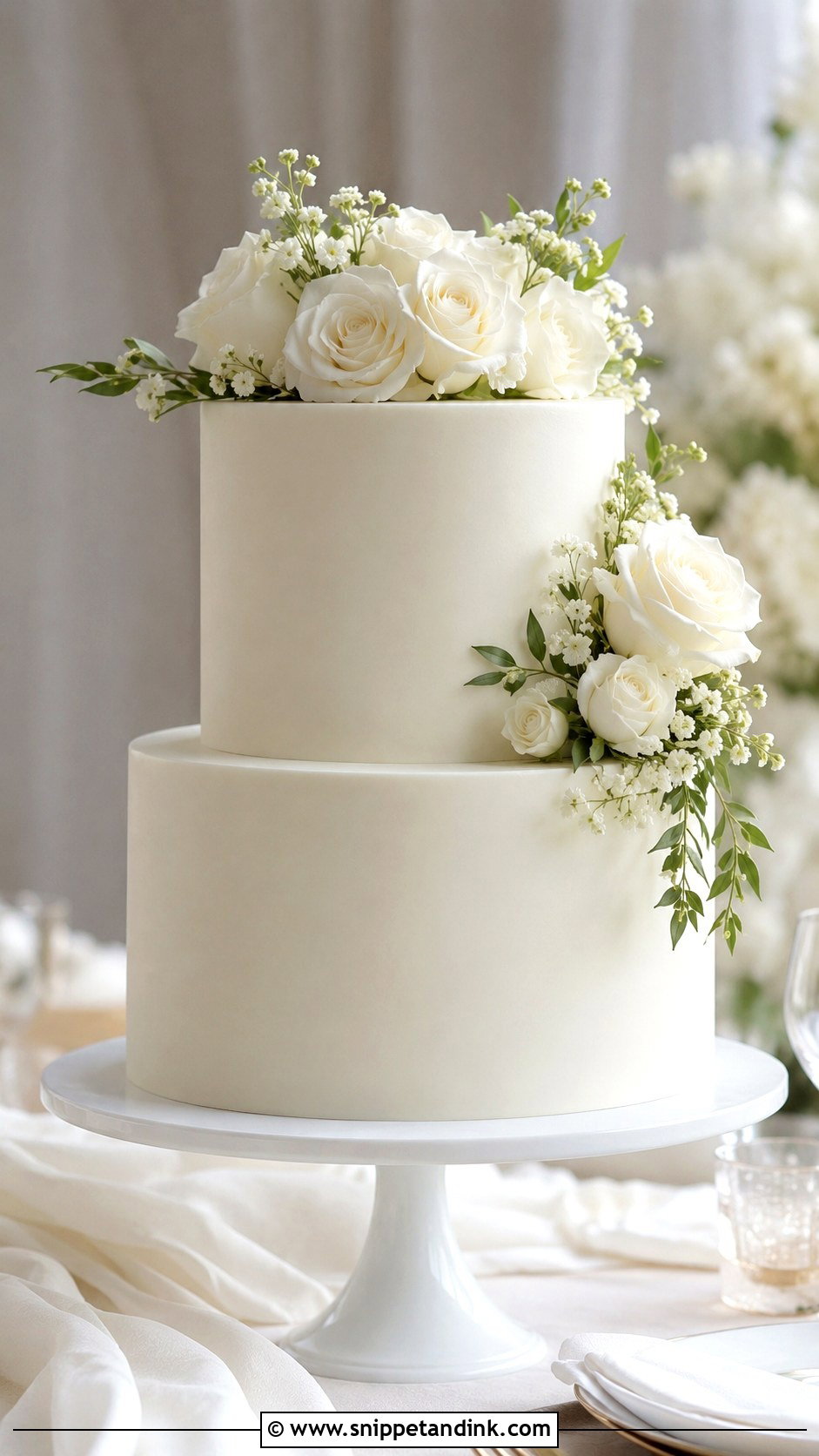
A two tier white buttercream cake is the design couples most often think will be easy, and it’s the one where a baker’s skill shows most. Getting buttercream smooth and the top edge crisp takes a chilled crumb coat and several passes with a hot scraper. A few roses or a little greenery on one side is all the decoration it needs. Inside, vanilla, lemon or almond keep the flavor as clean as the outside. Put it on a slim pedestal stand; two tiers sitting flat on a table can look short in a large room.
2. Three Tier Wedding Cake With Fresh Flowers
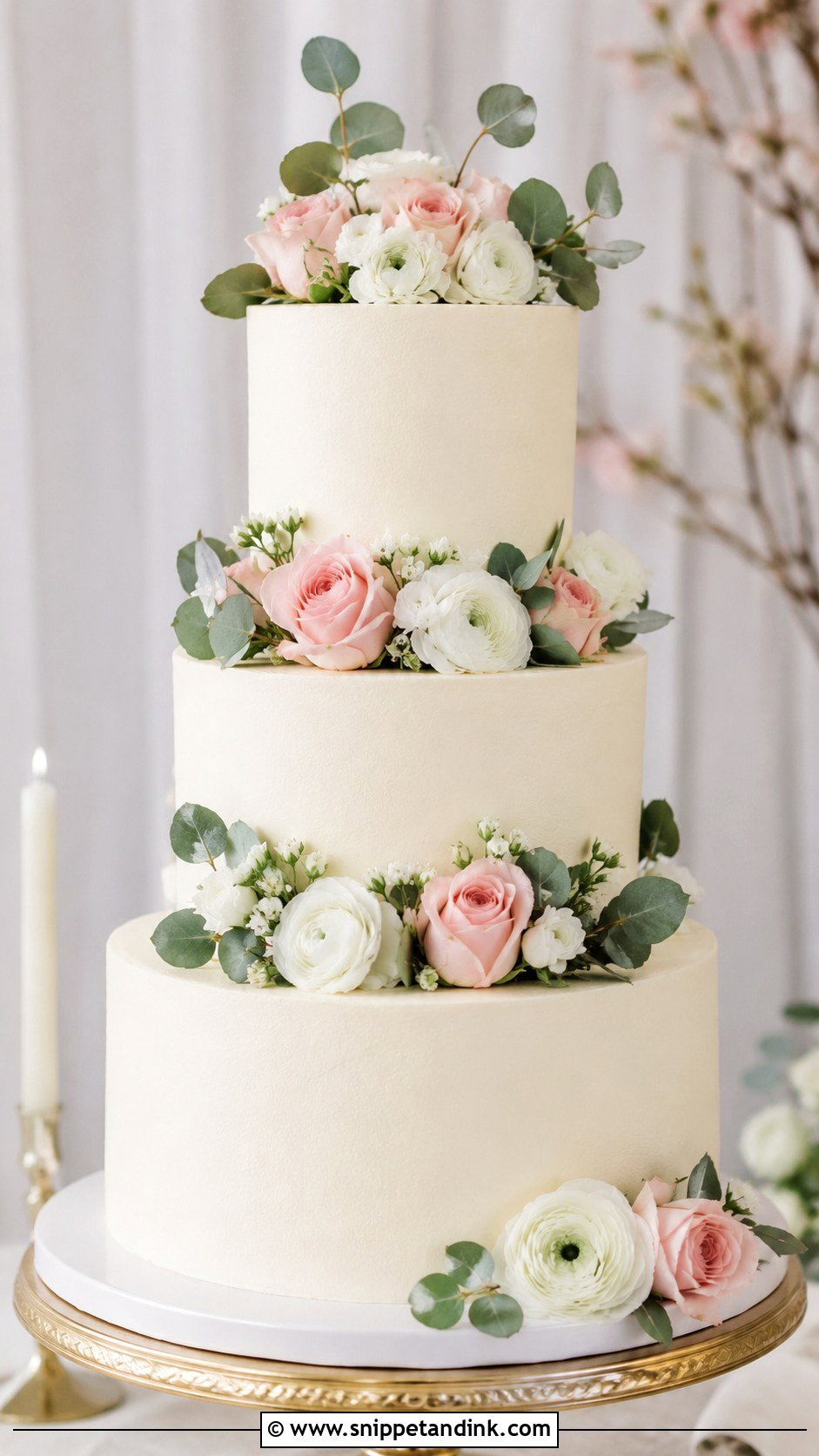
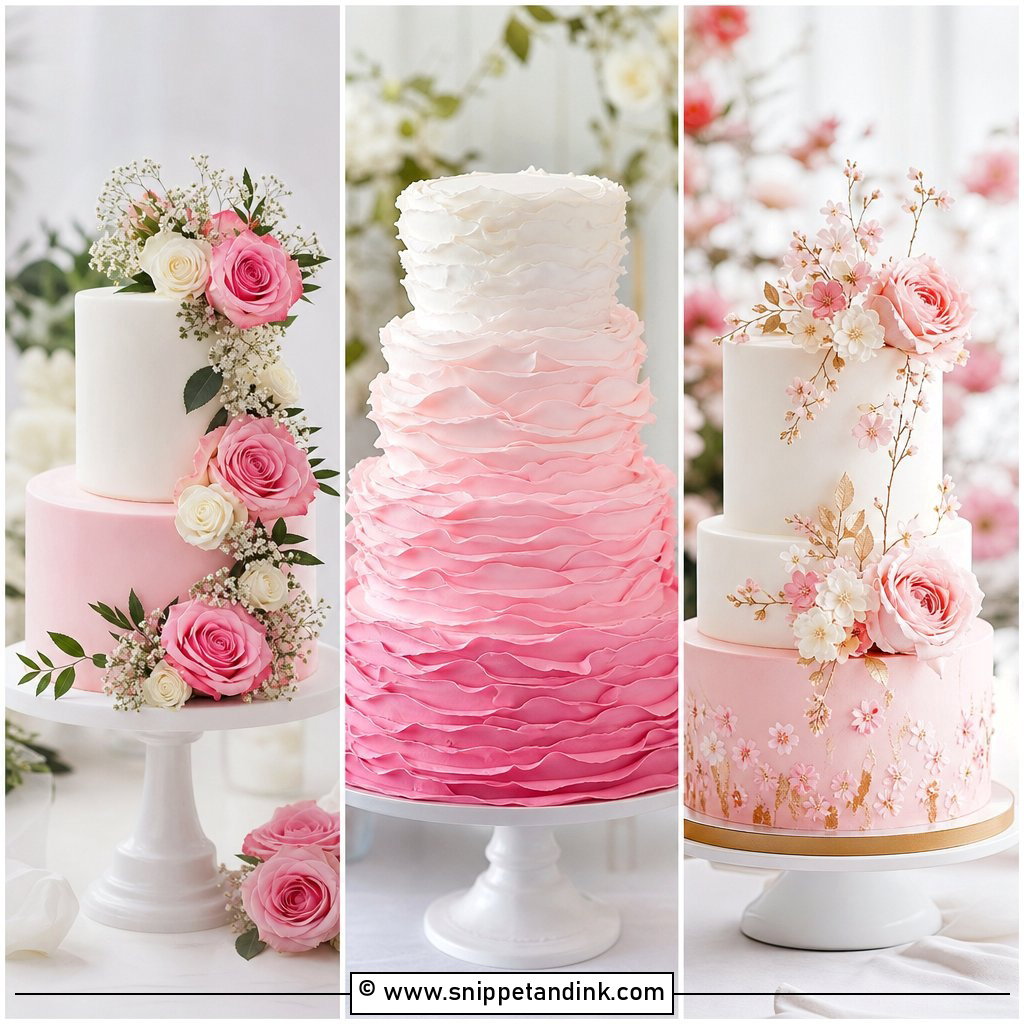
Three tiers with fresh flowers give you height and a focal point without sugar work. The flowers should come from the same order as your bouquet, so the colors match exactly, but the stems must never go straight into the cake. I wrap each one in floral tape and set it in a food-safe pick or straw. A small cluster between tiers looks tidy, while a diagonal cascade feels more romantic. Keep the icing smooth or lightly textured underneath so the blooms stay the main detail.
3. Simple Fondant Wedding Cake
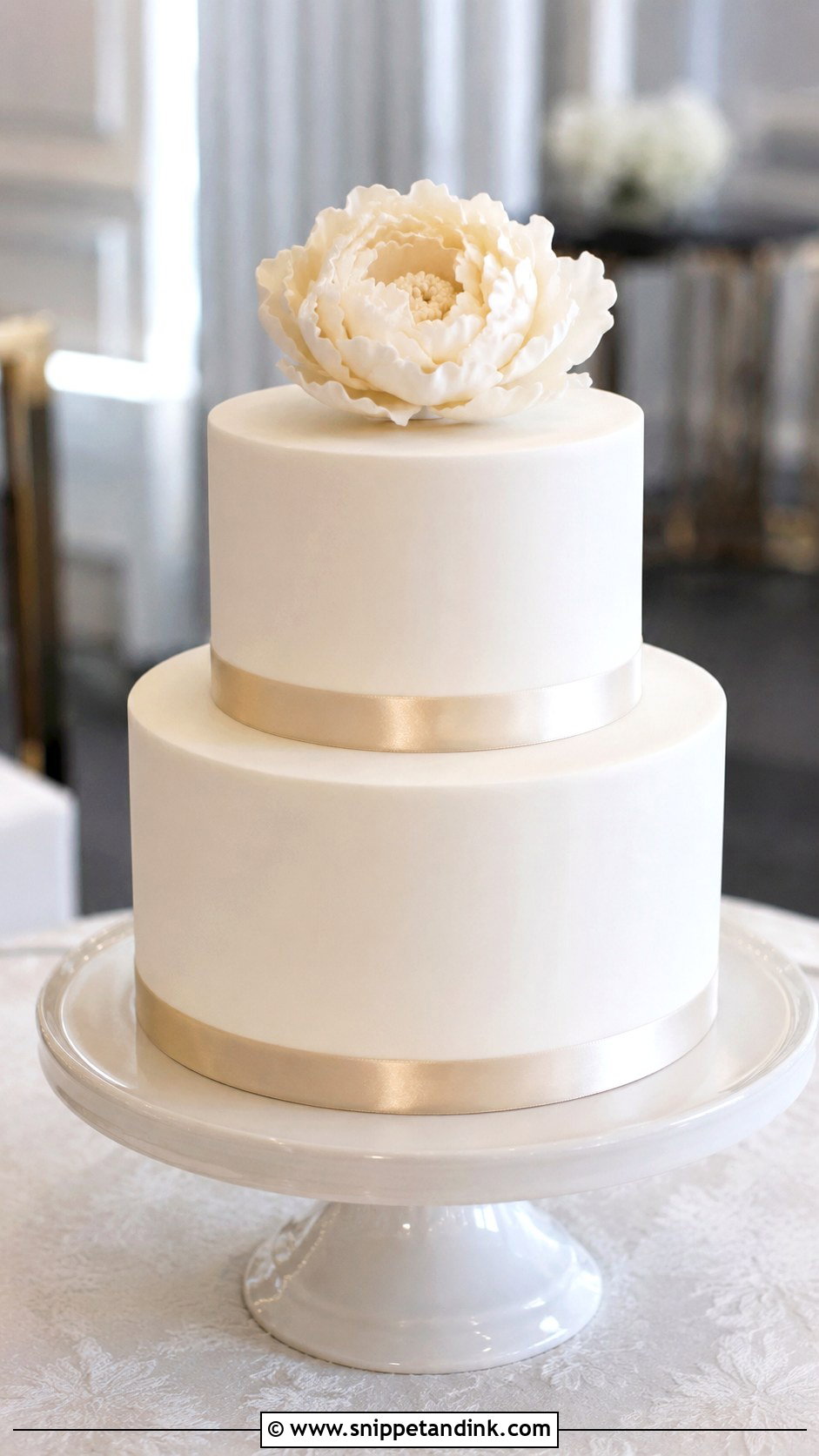
Fondant gives the crispest finish there is, which is why I suggest it for formal weddings and bright rooms where light rakes across the cake. Underneath I almost always use ganache rather than buttercream, because it sets firm and holds the sharp edges fondant is chosen for. Add one detail only, perhaps a satin ribbon, a pearl border or a monogram. Ivory reads softer than bright white and sits better beside blush, sage or gold. Be aware that fondant sweats if it moves from a cold fridge into a warm, humid room, so I deliver it at room temperature.
4. One Tier Wedding Cake
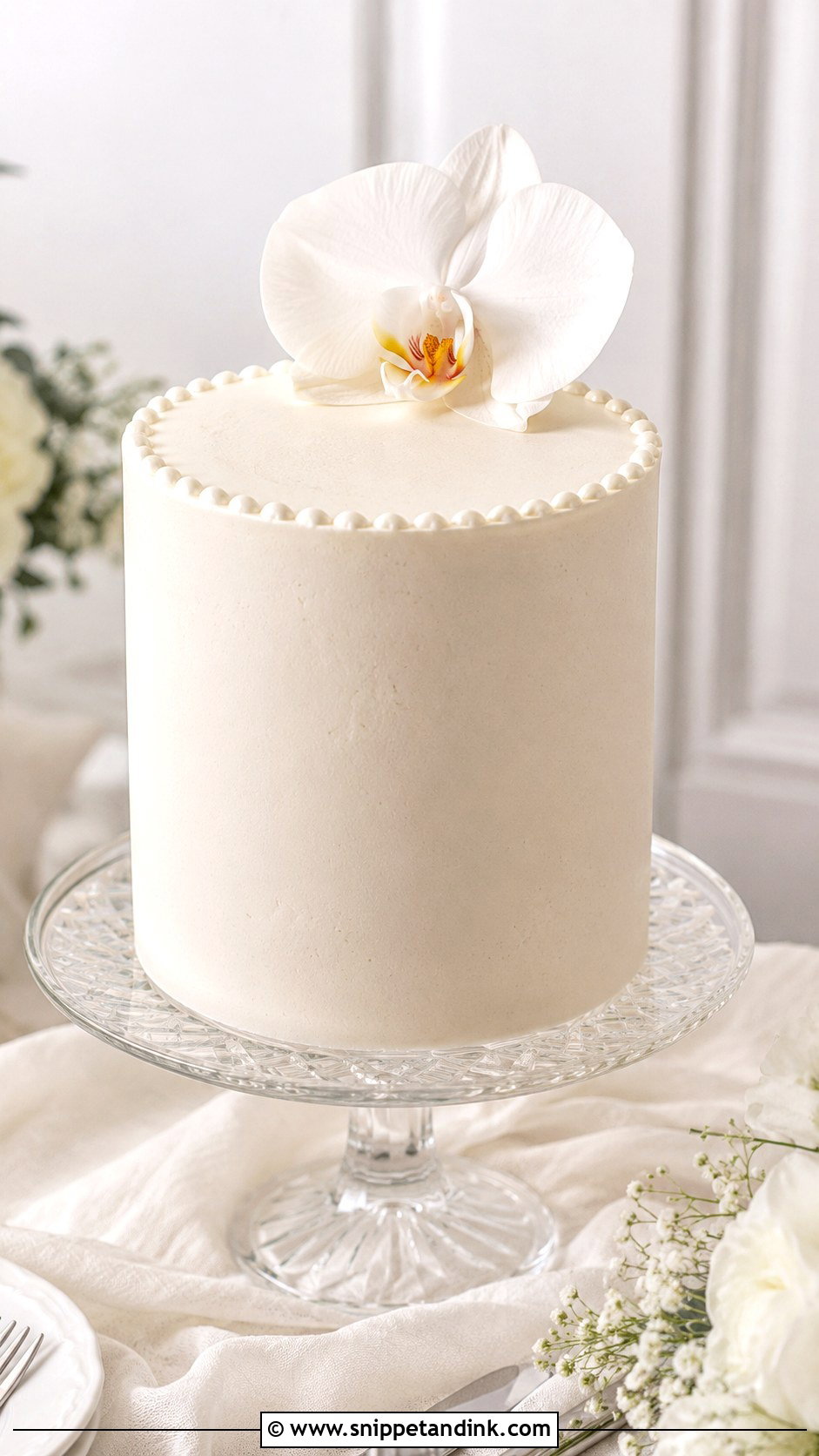
A one tier wedding cake suits elopements, micro weddings and receptions where the cake shares the table with other desserts. To make one tier look like a wedding cake, I build it tall, often a double-height barrel, and that height needs an internal board and dowels halfway up or it will compress. A single sugar flower or a fresh orchid finishes it. Small cakes leave room in the budget for a more interesting flavor, such as raspberry with vanilla bean or lemon elderflower.
5. White Wedding Cake With Pearls
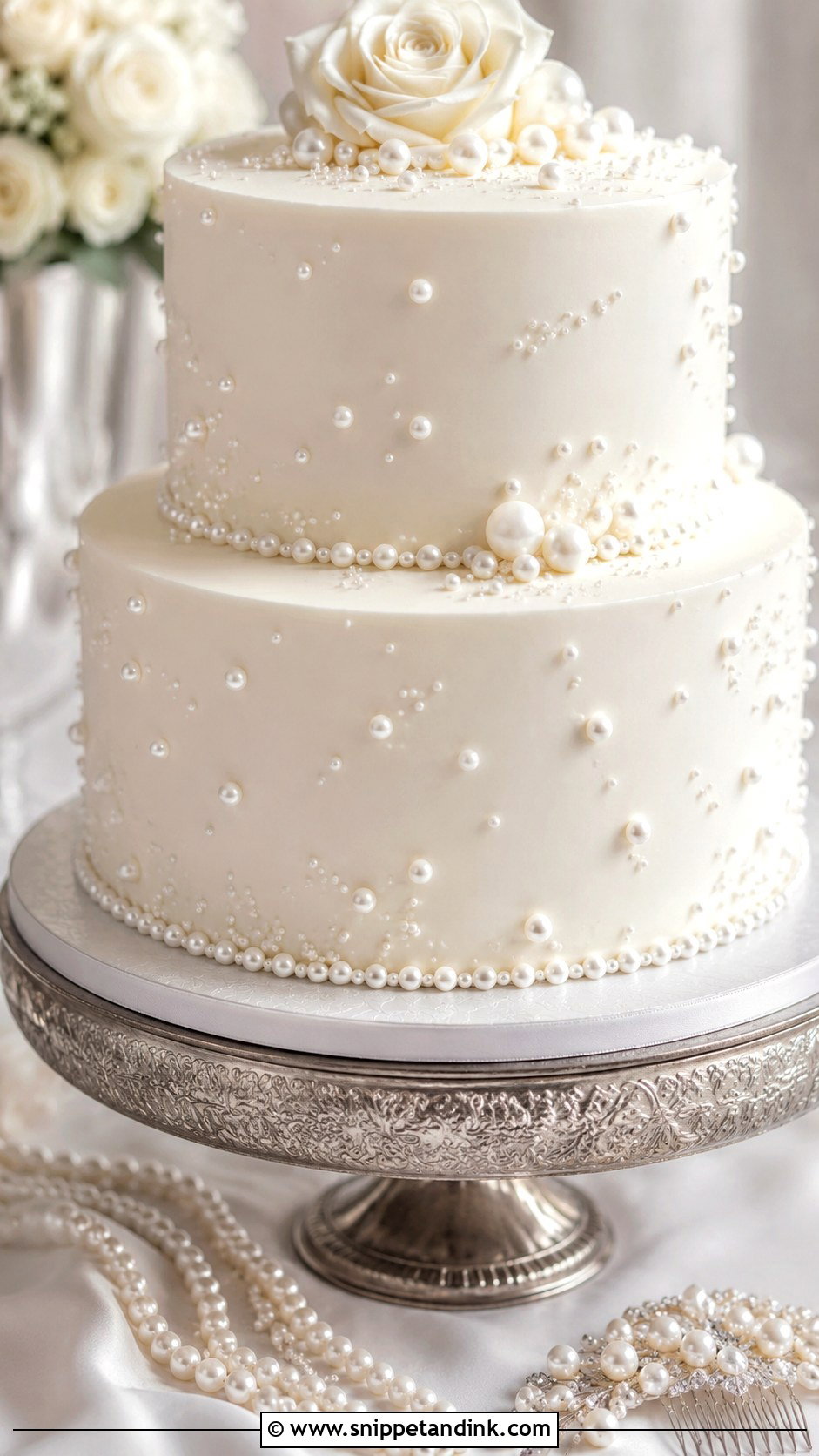
Pearls are where I ask couples what they mean by edible. Hard sugar dragées look sharp but crack teeth if someone bites one by surprise, while pearls molded from fondant are soft and safe to eat. I place them in rows or as a single border at the base of each tier, never scattered everywhere, so the cake still reads as simple. Ivory buttercream gives them a warmer glow; bright white looks more modern. The pairing with a lace gown or pearl earrings is the obvious one, and it works.
6. Wedding Cake With Gold Leaf
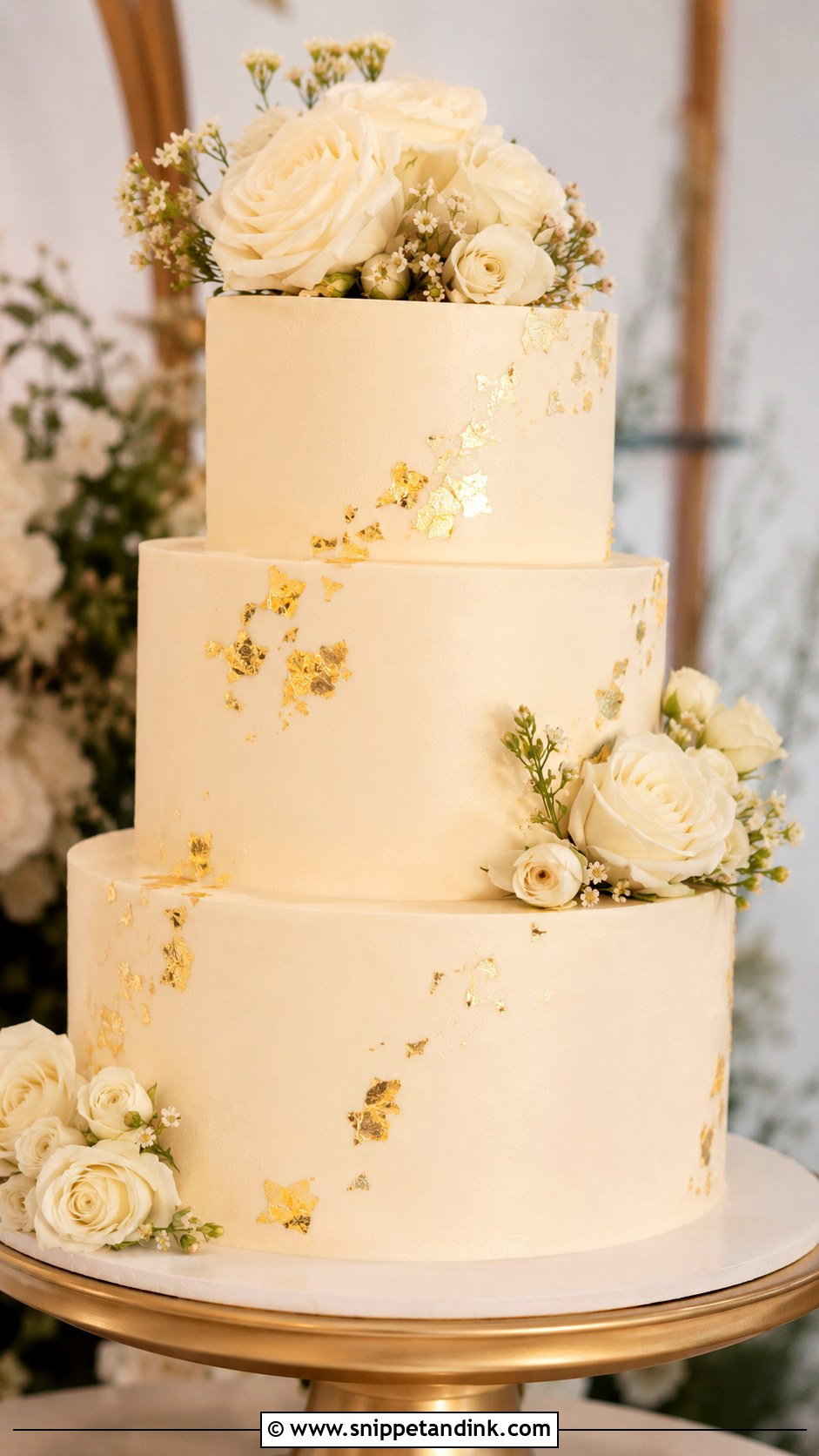
Gold leaf needs to be real edible leaf, usually 22 to 24 carat, not the craft or luster dust sold as decorative only. I apply it in small torn patches with a dry brush rather than wrapping a whole tier, because broken edges catch light better than a solid band. It shows best against white buttercream or fondant, and on smooth tiers, semi-naked cakes it adds warmth without clutter. Warm palettes like champagne and terracotta suit it, as do caramel or honey cake inside.
7. Minimalist Wedding Cake
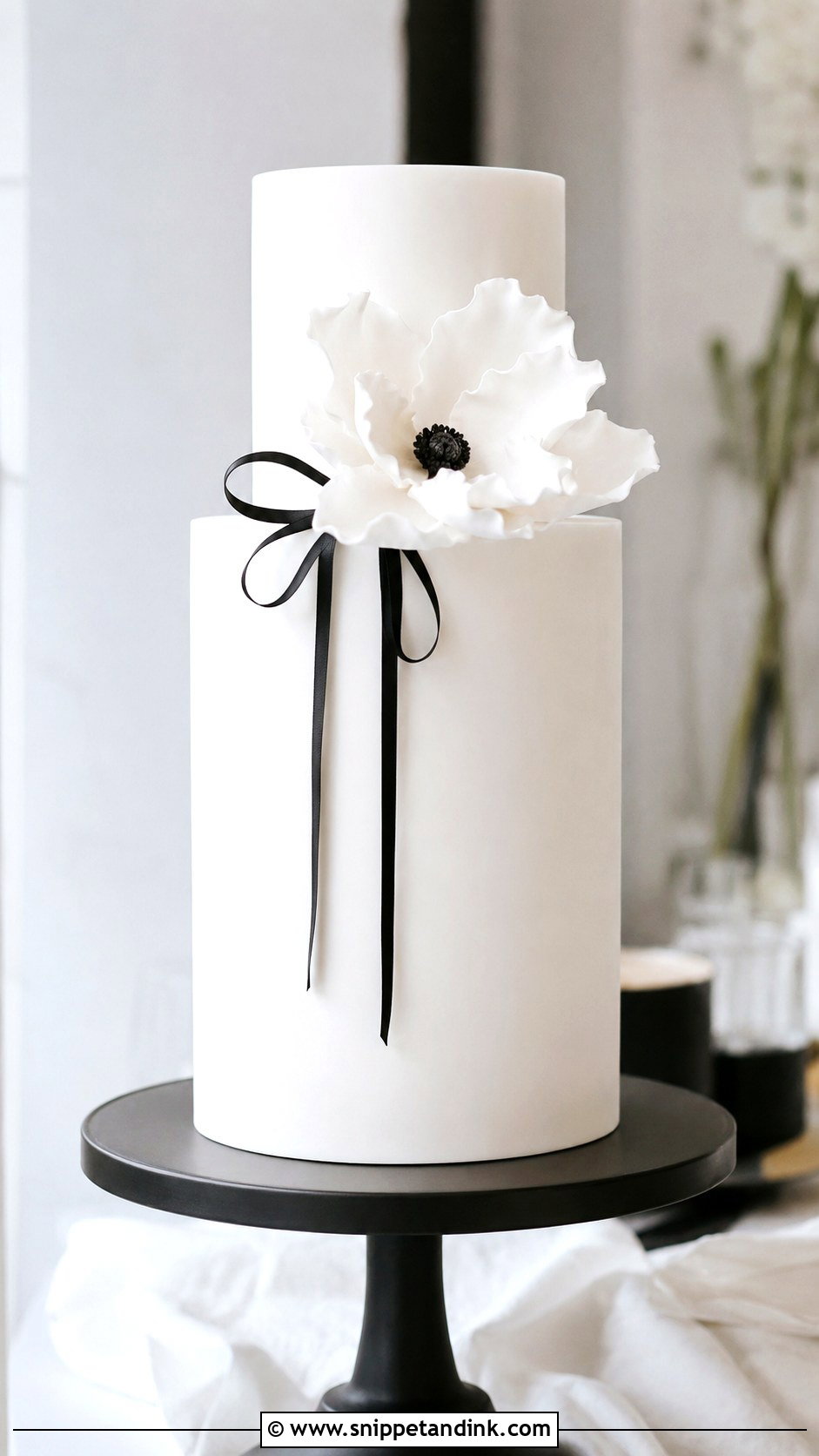
A minimalist cake is all proportion: tier heights, the gap between sizes and how sharp the edges are. There’s nowhere to hide, so this is the one cake where I’d look hard at a baker’s portfolio for smooth finishes before booking. One floral accent or a thin ribbon at the base is enough. Ivory warms it up; a black stand makes it graphic. It suits gallery spaces and city venues where the room itself is pared back.
8. Rustic Buttercream Wedding Cake
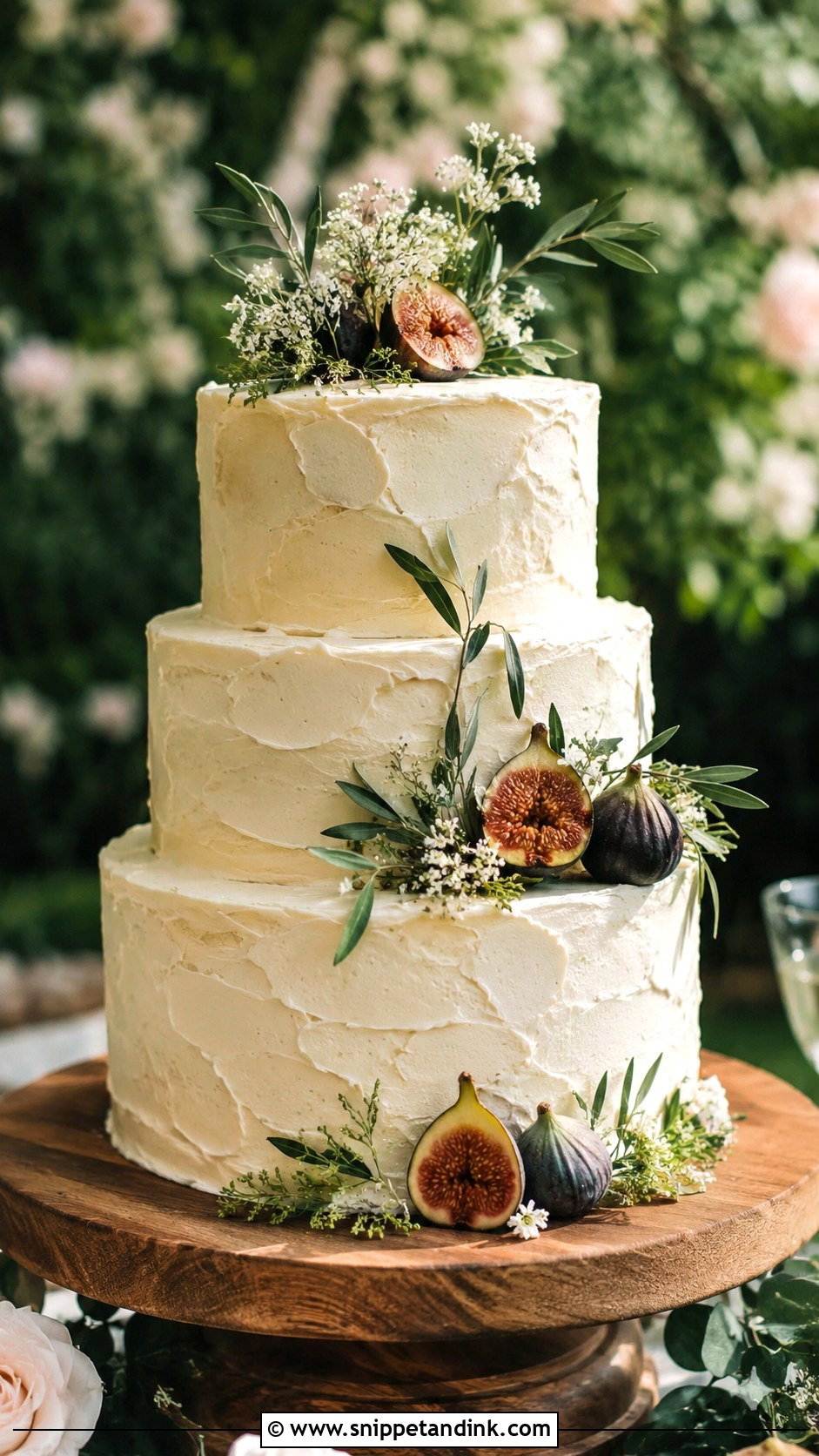
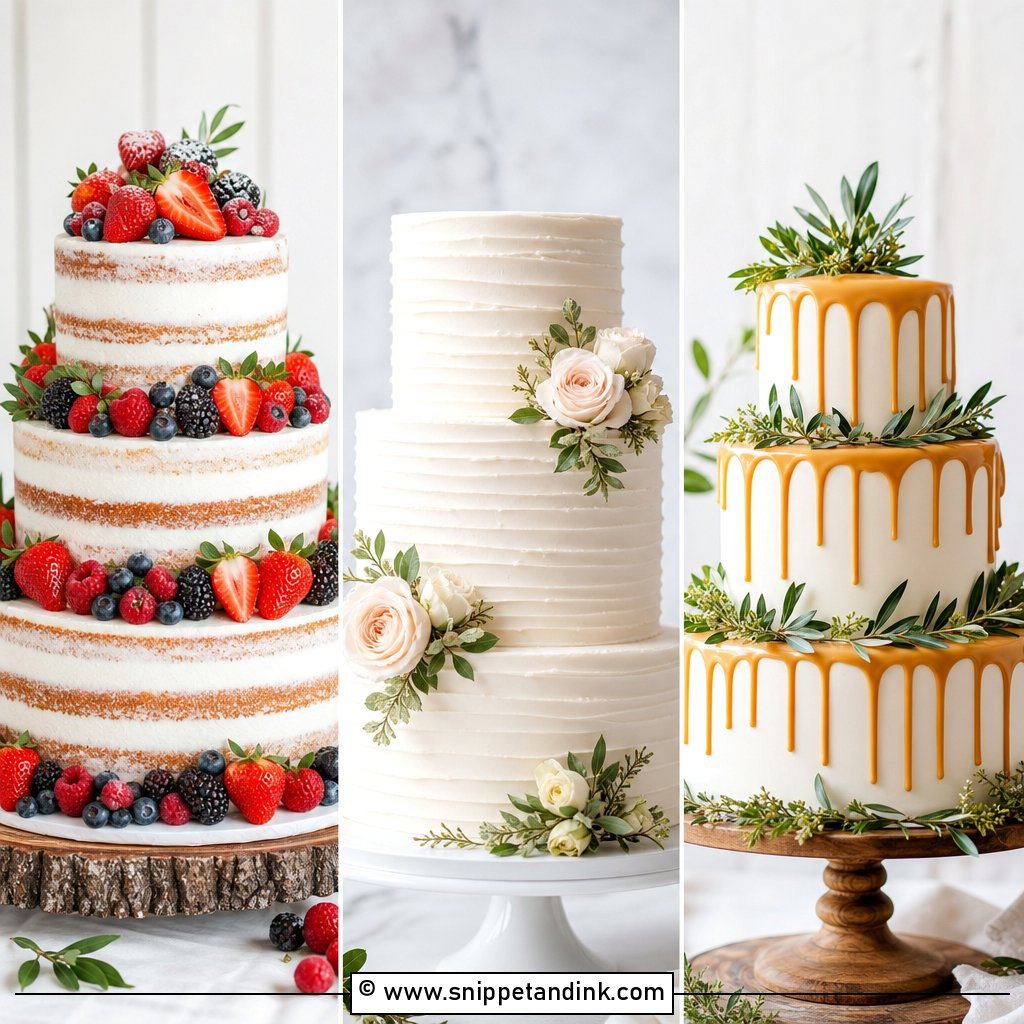
Rustic buttercream is finished with visible spatula strokes or soft ridges rather than a scraped surface, and it’s far more forgiving to make and to transport. Small dents from a bumpy farm track blend into the texture. I dress it with greenery, figs or berries, keeping to two or three colors so it doesn’t look busy. Carrot, spice and almond cake suit the mood well, and a wooden stand finishes it for barn and vineyard receptions.
9. Semi Naked Wedding Cake
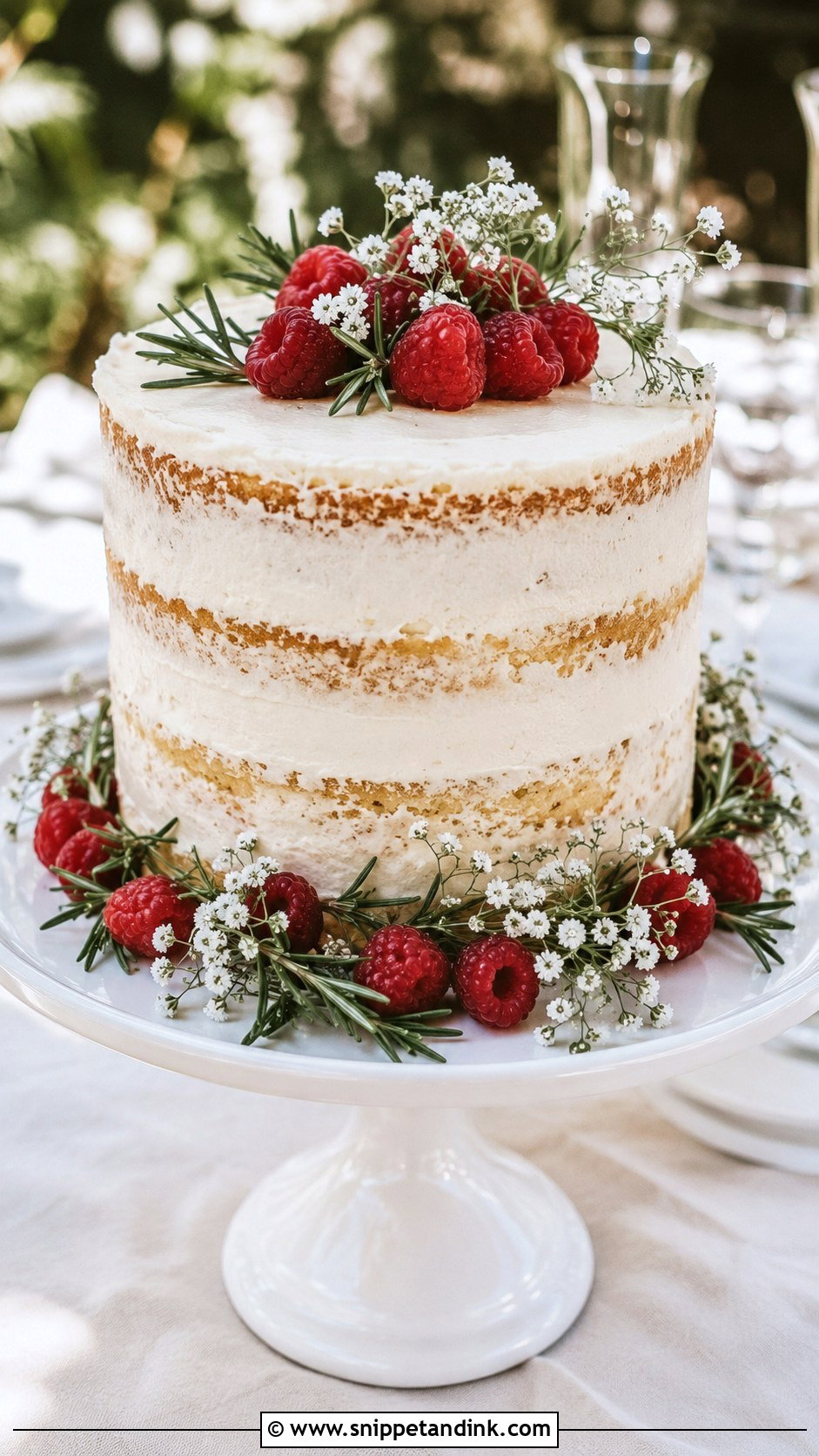
Semi-naked cake has a thin scraped layer of frosting so the sponge shows through. The trade-off is that the cake dries out faster than a fully iced one, since there’s so little frosting sealing it. I brush the layers with syrup during assembly and don’t set it out until close to the reception. Berries, herbs and small blooms can go on without crowding it. Ask your baker for even coverage; patchy scraping looks unfinished rather than relaxed. Outdoor summer weddings love it, but it should sit in shade.
10. Wedding Cake With Sugar Flowers
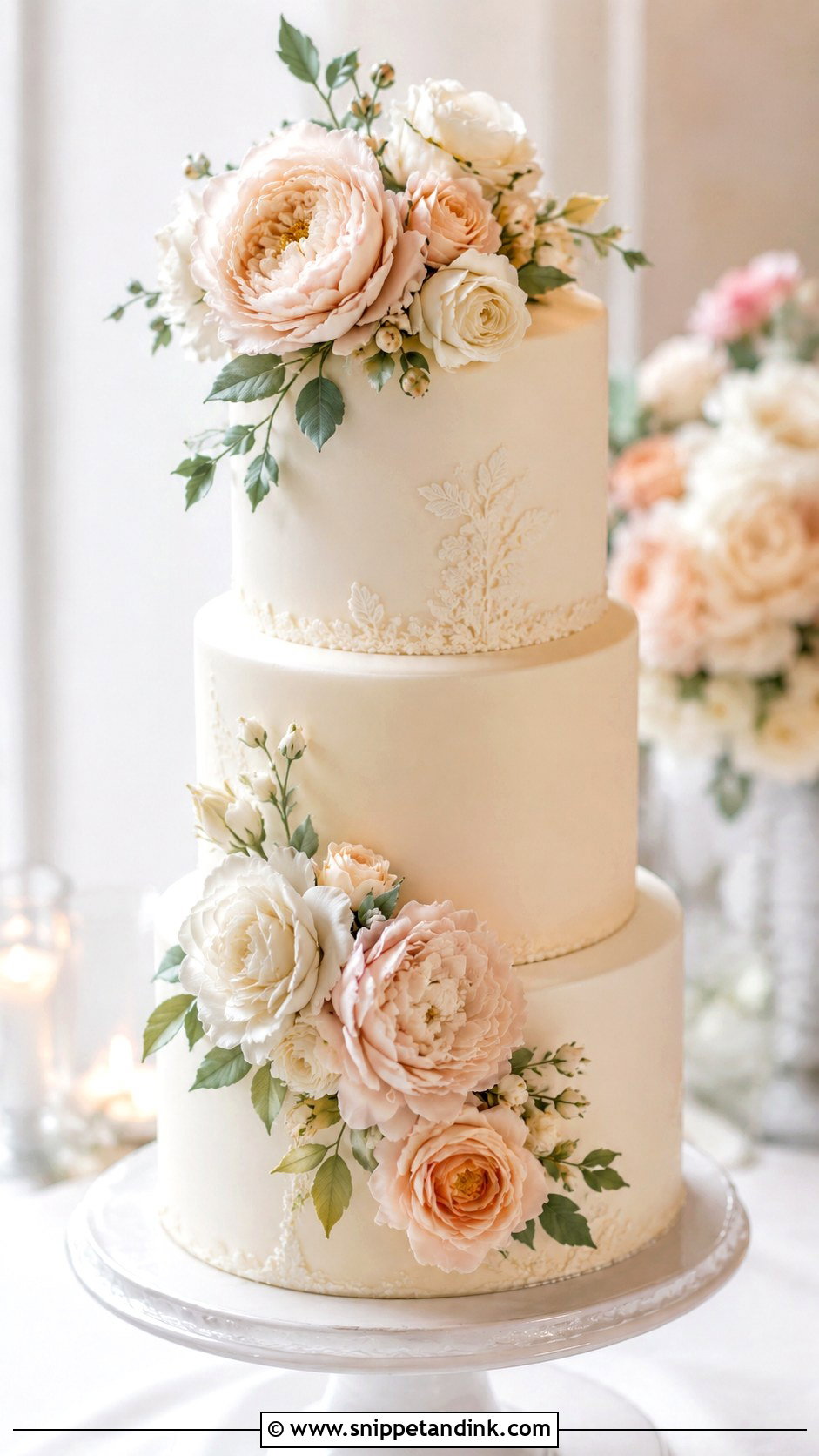
Sugar flowers won’t wilt, bruise or brown, and they can match a bloom that’s out of season, from peonies to anemones. They’re made petal by petal, often weeks ahead, which is why they add noticeably to the price. Choose one or two flower types in soft colors for a simple design. Two things couples don’t expect: sugar flowers usually contain wires and aren’t meant to be eaten, and humidity softens them, so they need to stay dry until delivery. Many couples keep them afterward as a memento.
11. Wedding Cake With Greenery
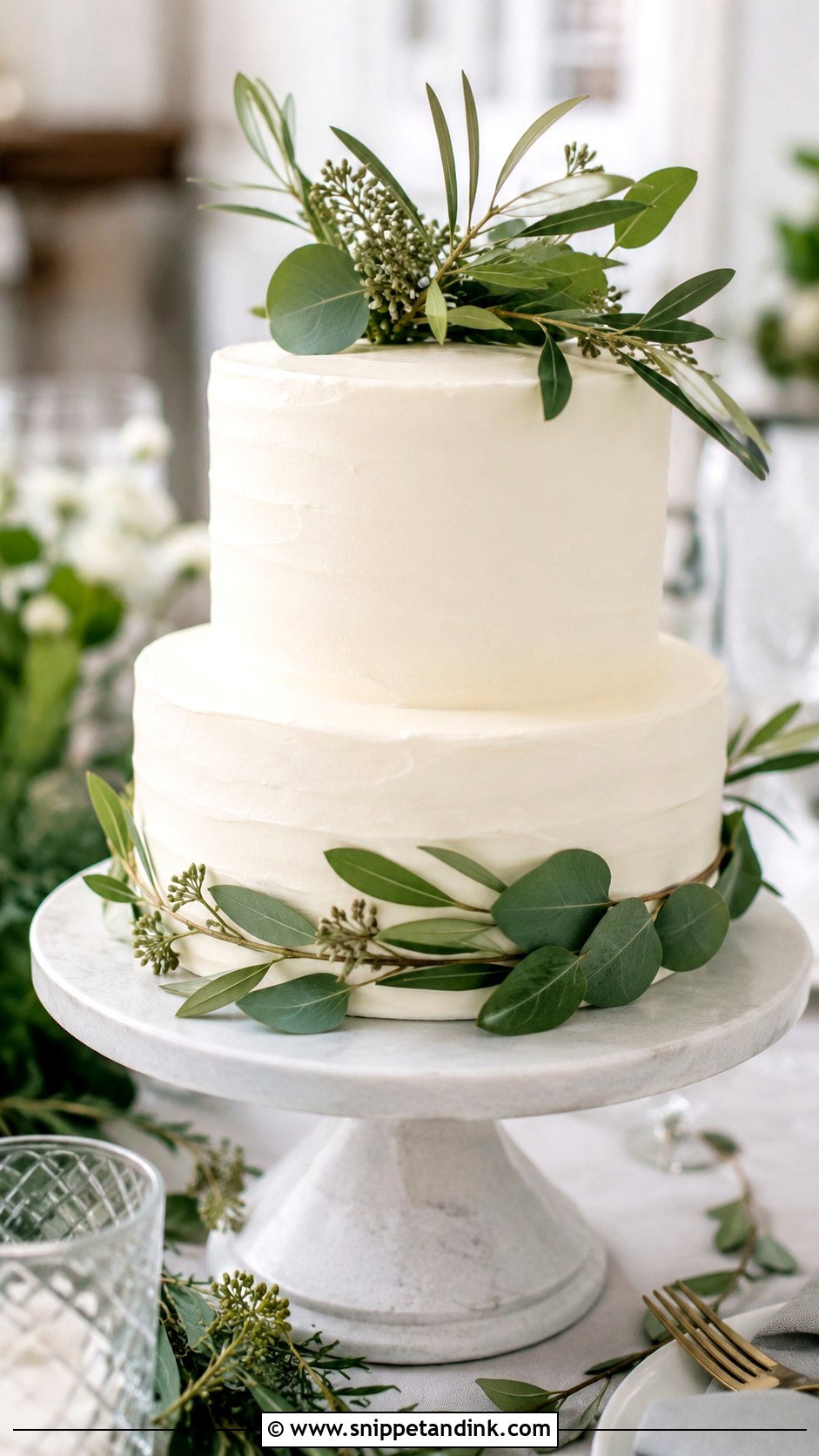
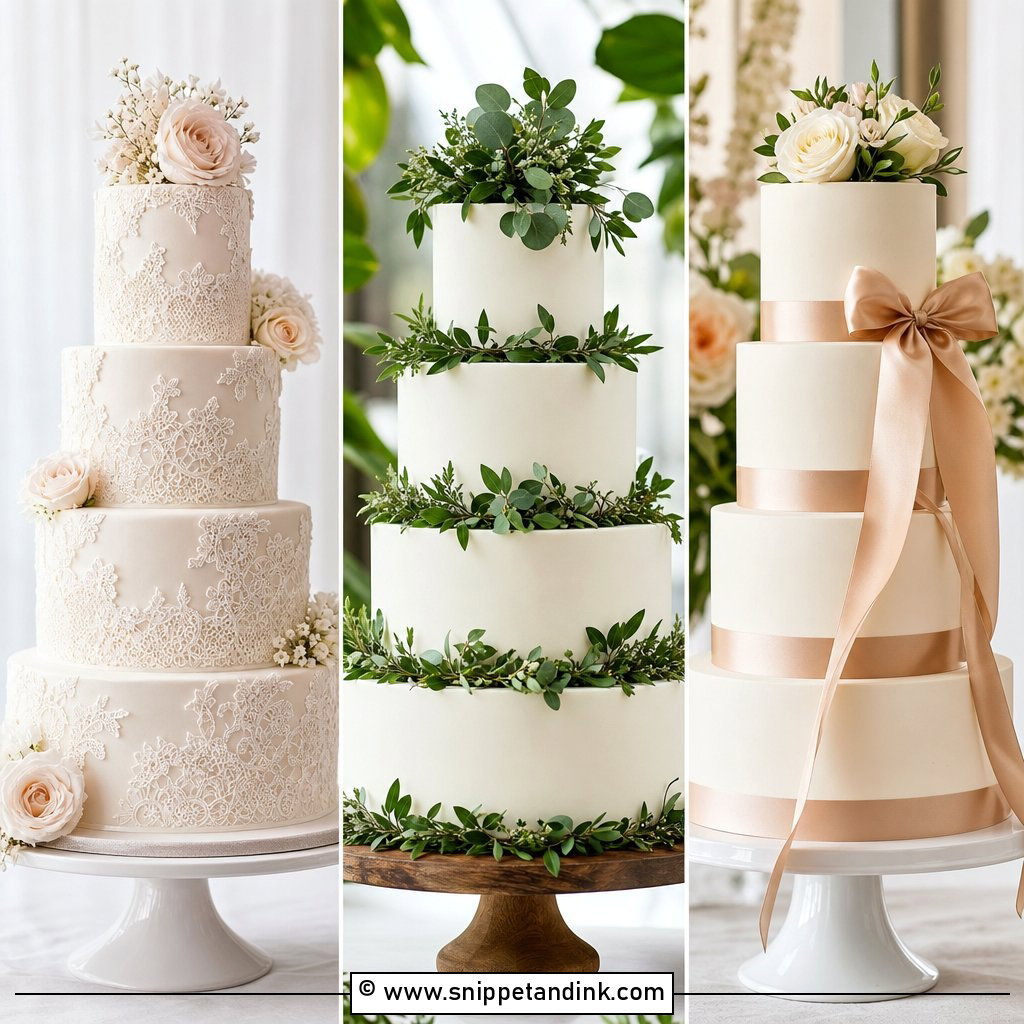
Greenery makes a white cake feel natural without adding color, but it’s the decoration I’m most careful with. Eucalyptus is toxic if eaten and is often sprayed, so it should only sit on a barrier and never press into the icing. Rosemary and olive leaves are safer choices for direct contact. I tuck greenery lightly around the base or between tiers of a two or three tier buttercream cake. Lemon or pistachio inside keeps the fresh, green feeling going.
12. Small Wedding Cake With Flowers
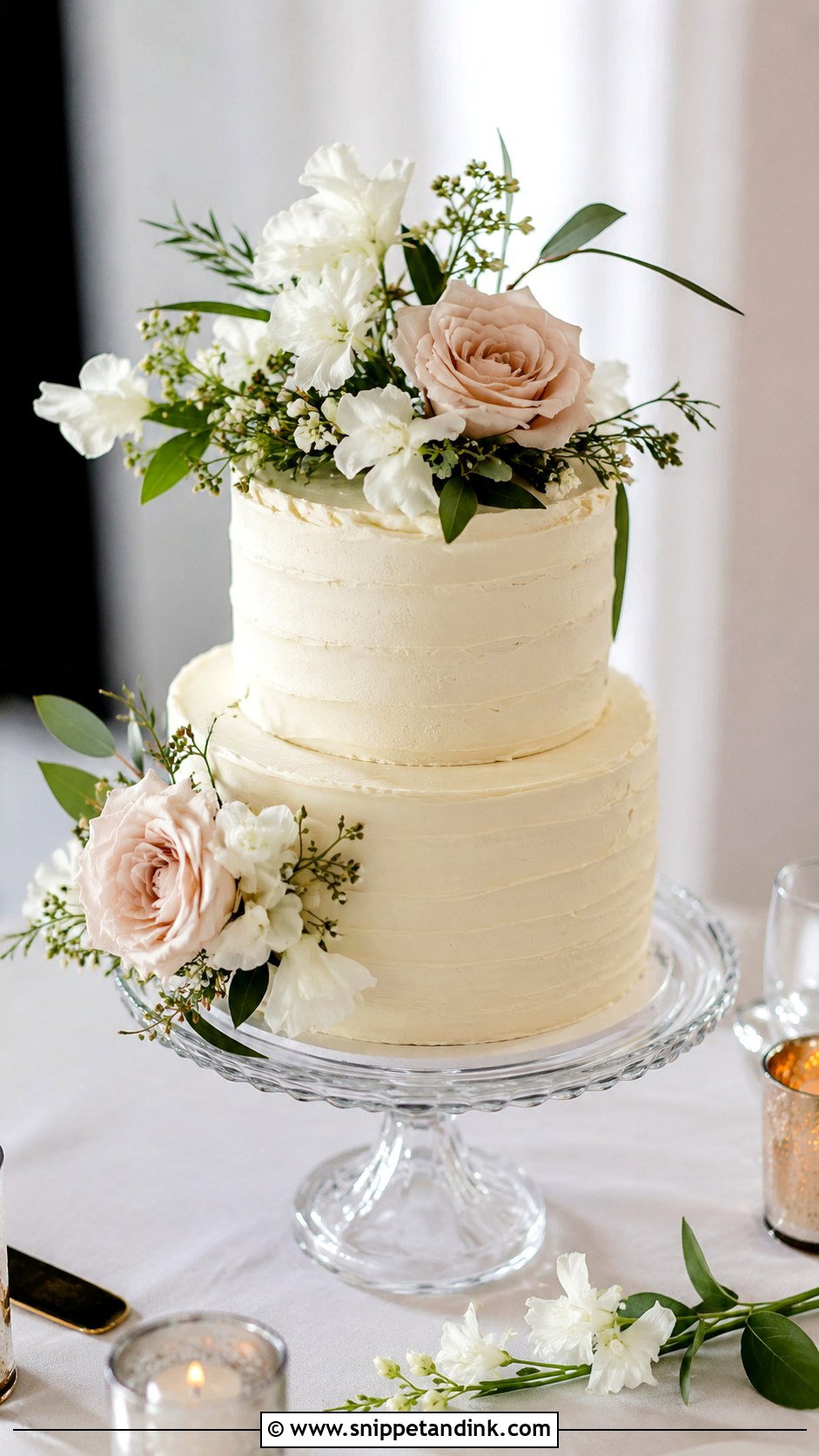
A small cake with flowers gives you a centerpiece without a large serving size. A tall single tier or a petite two tier can hold its own in photos if it has height, so I’d always raise it on a stand. One arrangement on top or a cluster on the side is plenty. This is where many couples pair the cake with a dessert table or a plain kitchen cake for serving. Swirled frosting gives it a homemade warmth that suits backyard weddings and bridal lunches.
13. Square Wedding Cake
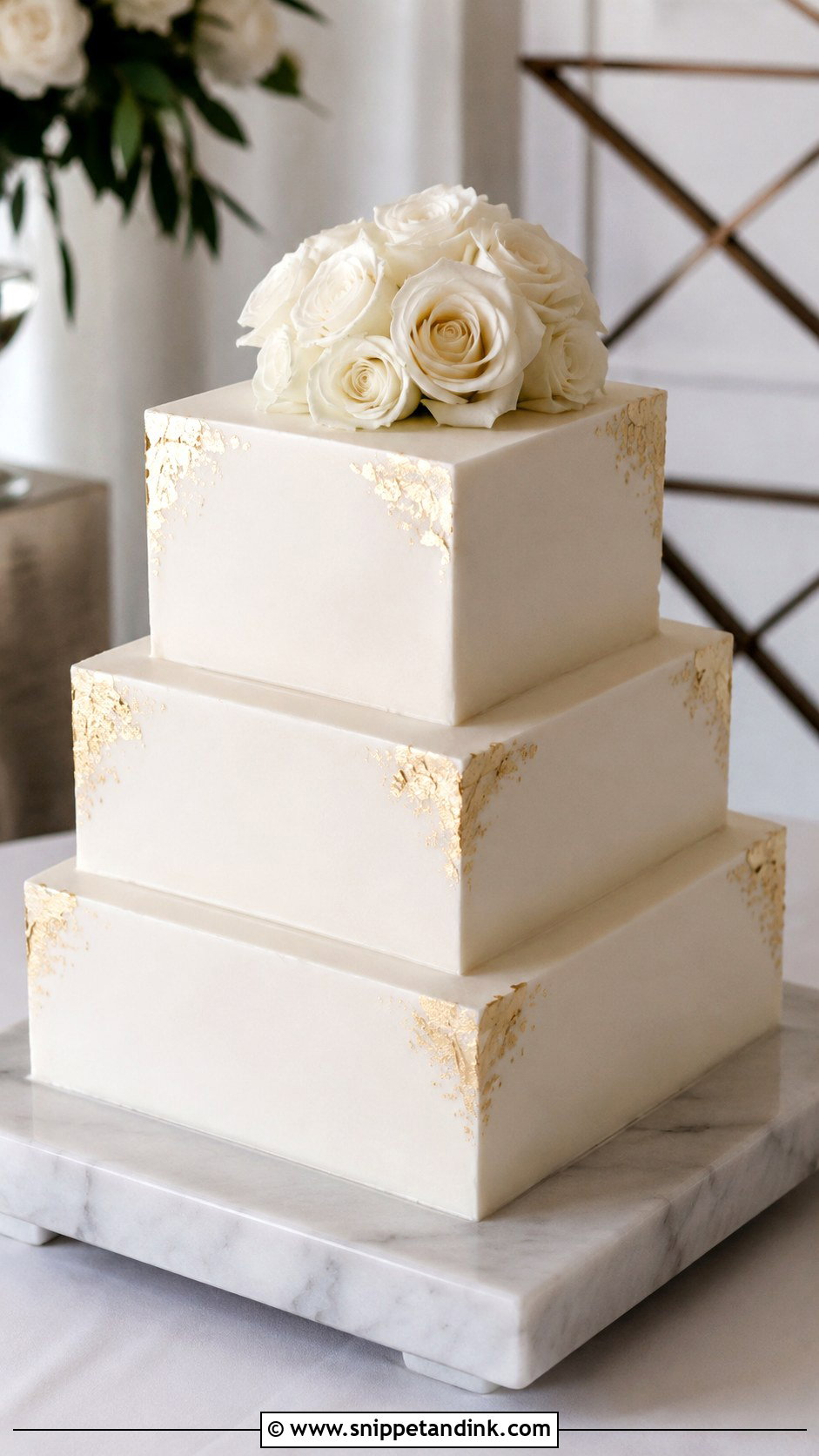
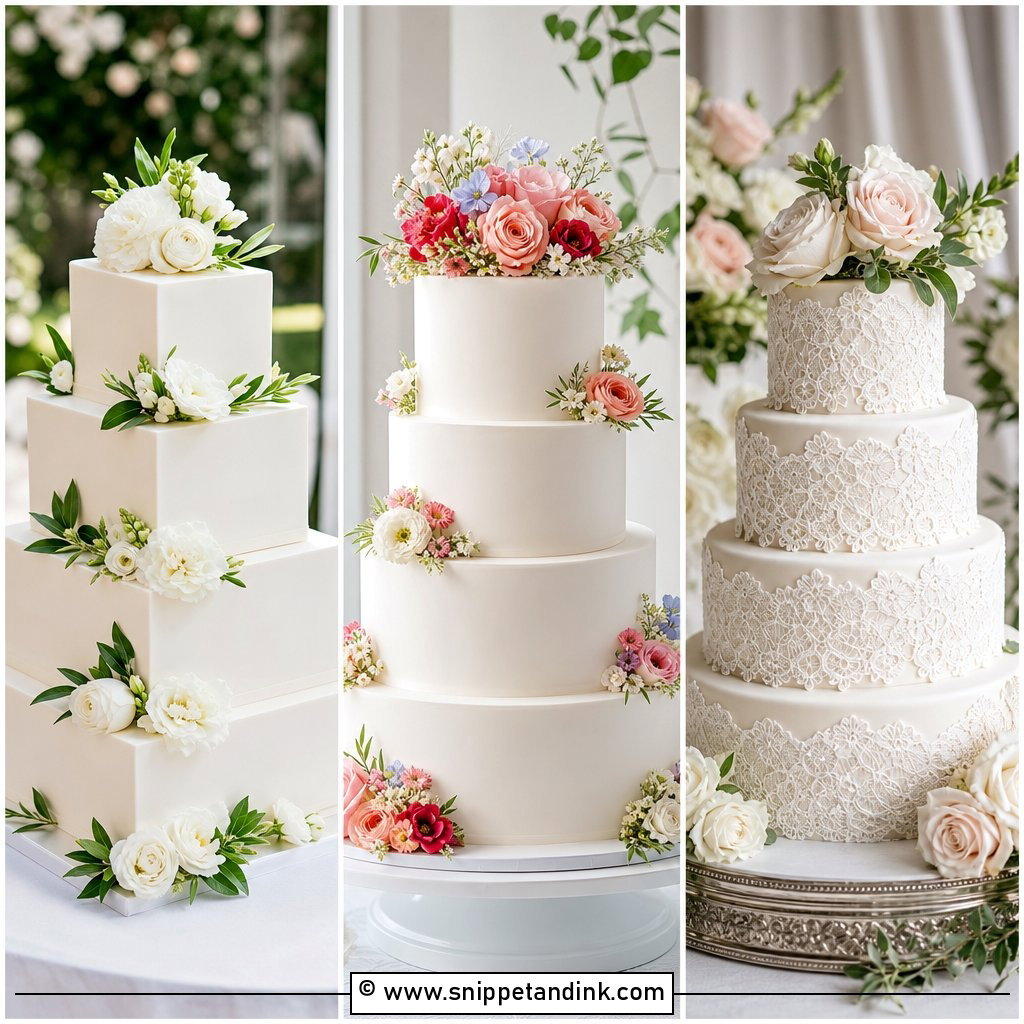
Square tiers feel modern and structured, and they’re harder to make than round ones. Sharp corners need a firm ganache base and patience, because buttercream wants to round off at every edge. They’re worth it for a black tie reception or a hotel ballroom. One practical bonus: a square tier serves more guests than a round tier of the same width. Keep the decoration to one idea, such as gold leaf on the corners or a cluster of flowers at the base.
14. Round Wedding Cake
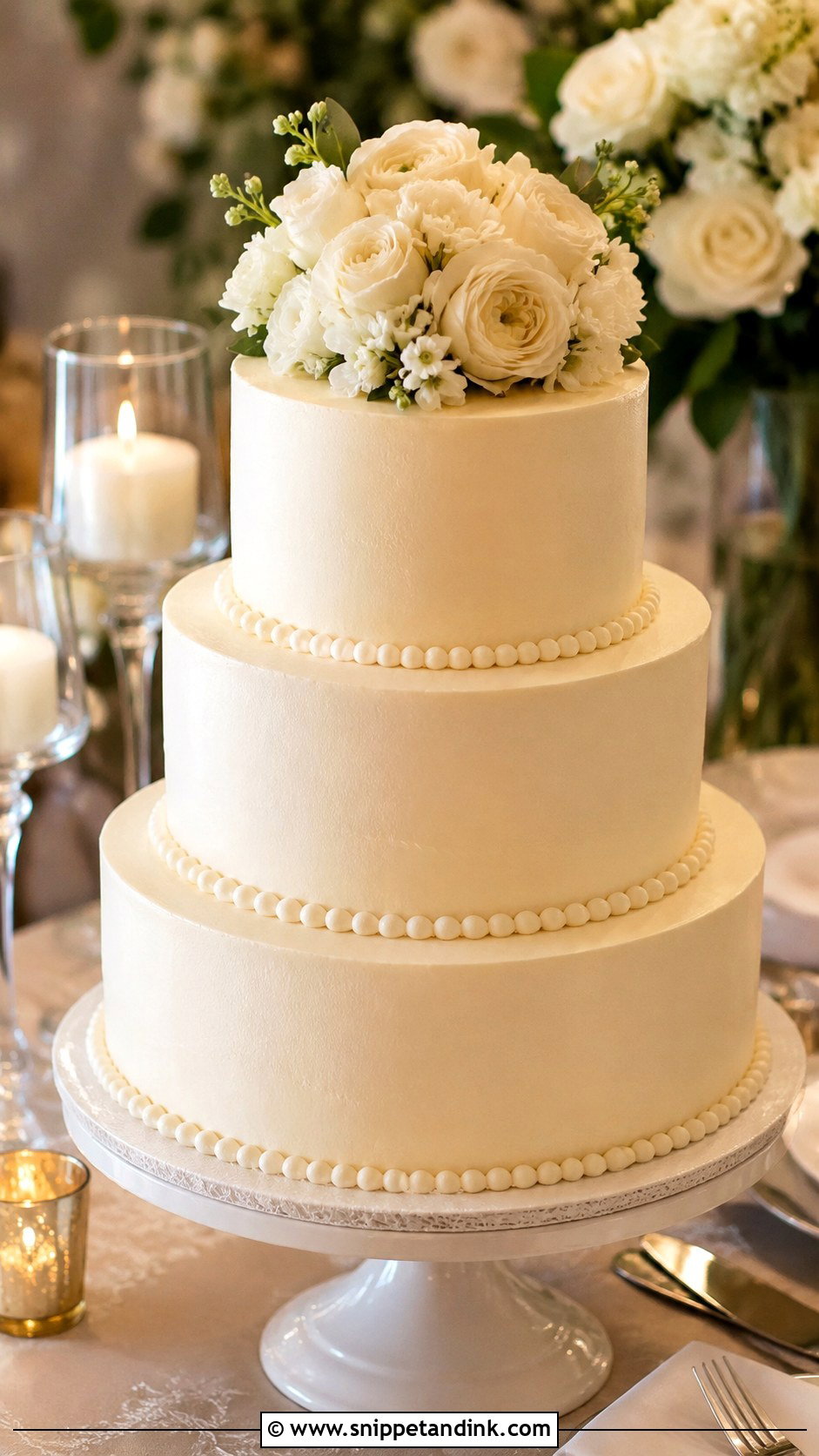
Round is the shape I’d recommend when you aren’t sure, because it suits every style from rustic to modern and it’s the easiest to finish smoothly. Stacking tiers of different heights gives presence without any extra decoration. A pearl border, light piping or a small floral cascade makes it personal. It also cuts neatly into the familiar wedding portions, which matters to the person slicing it at the end of the night.

15. Wedding Cake With Ribbon
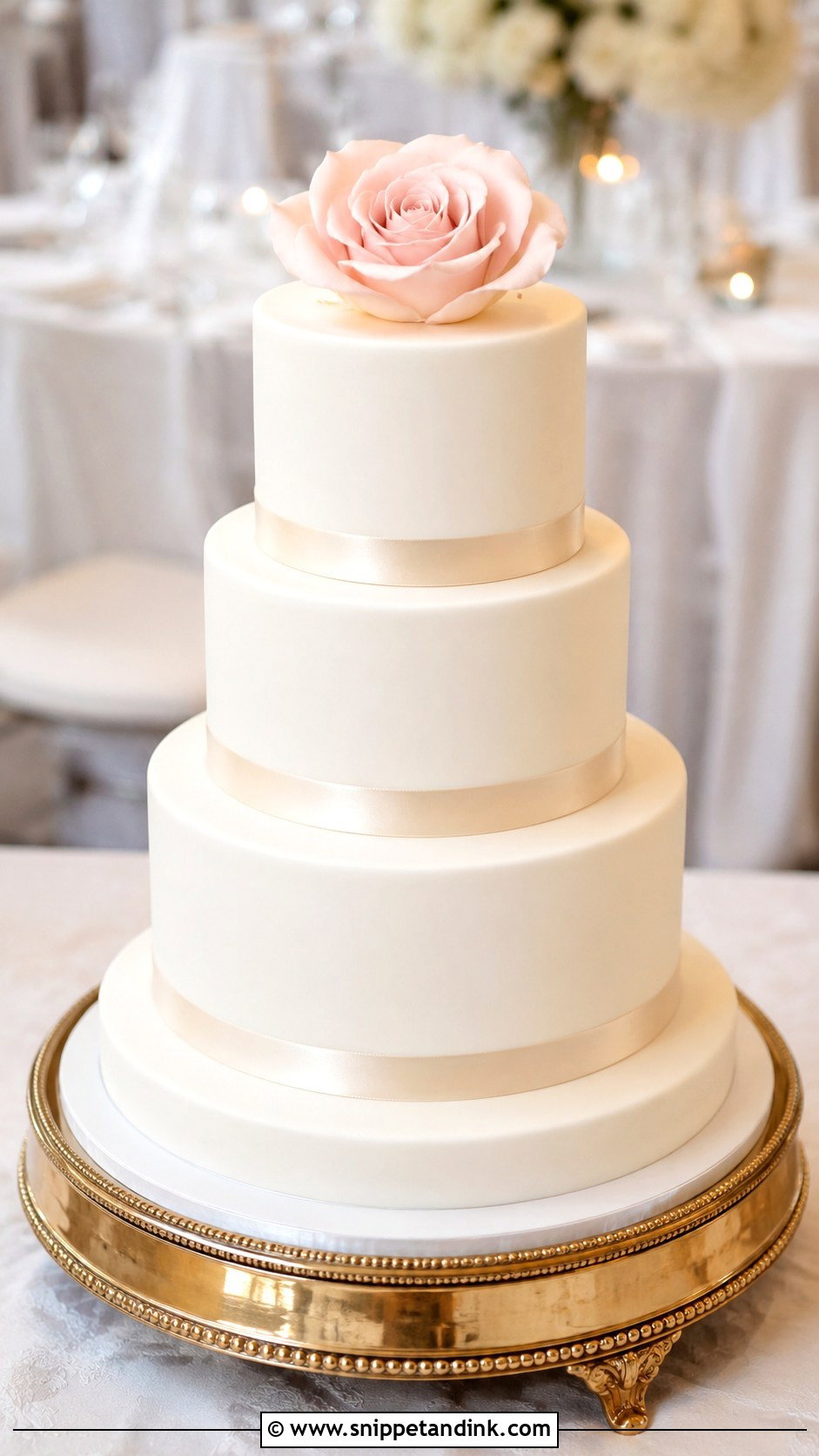
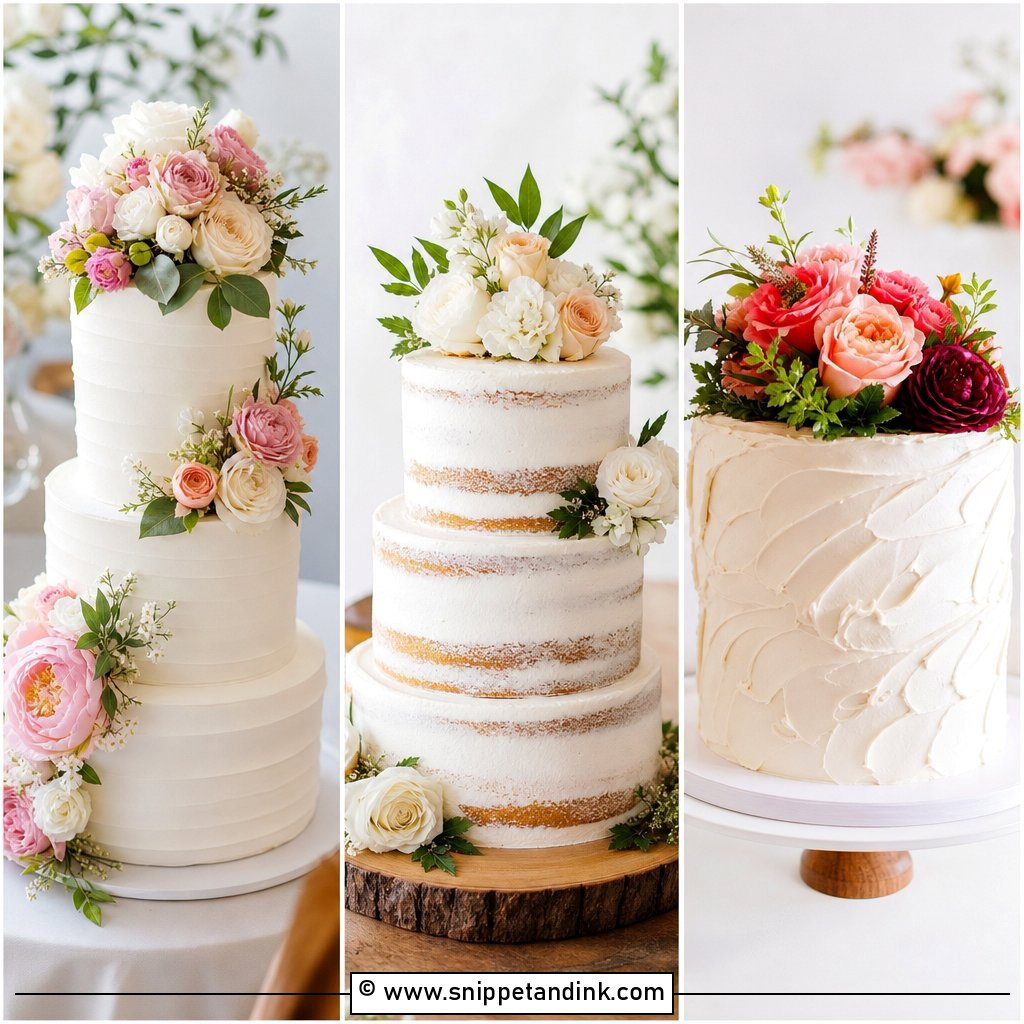
Ribbon can make a plain cake look finished in seconds, and it’s the easiest way to pick up your colors: white for classic, blush for romantic, black for modern. The problem nobody mentions is grease. Butter seeps into satin within an hour or two and leaves dark spots, so I line ribbon with a strip of acetate or clear tape before it touches buttercream. It sits cleanest against smooth buttercream or fondant, never against a textured finish.
16. Wedding Cake With Pressed Flowers
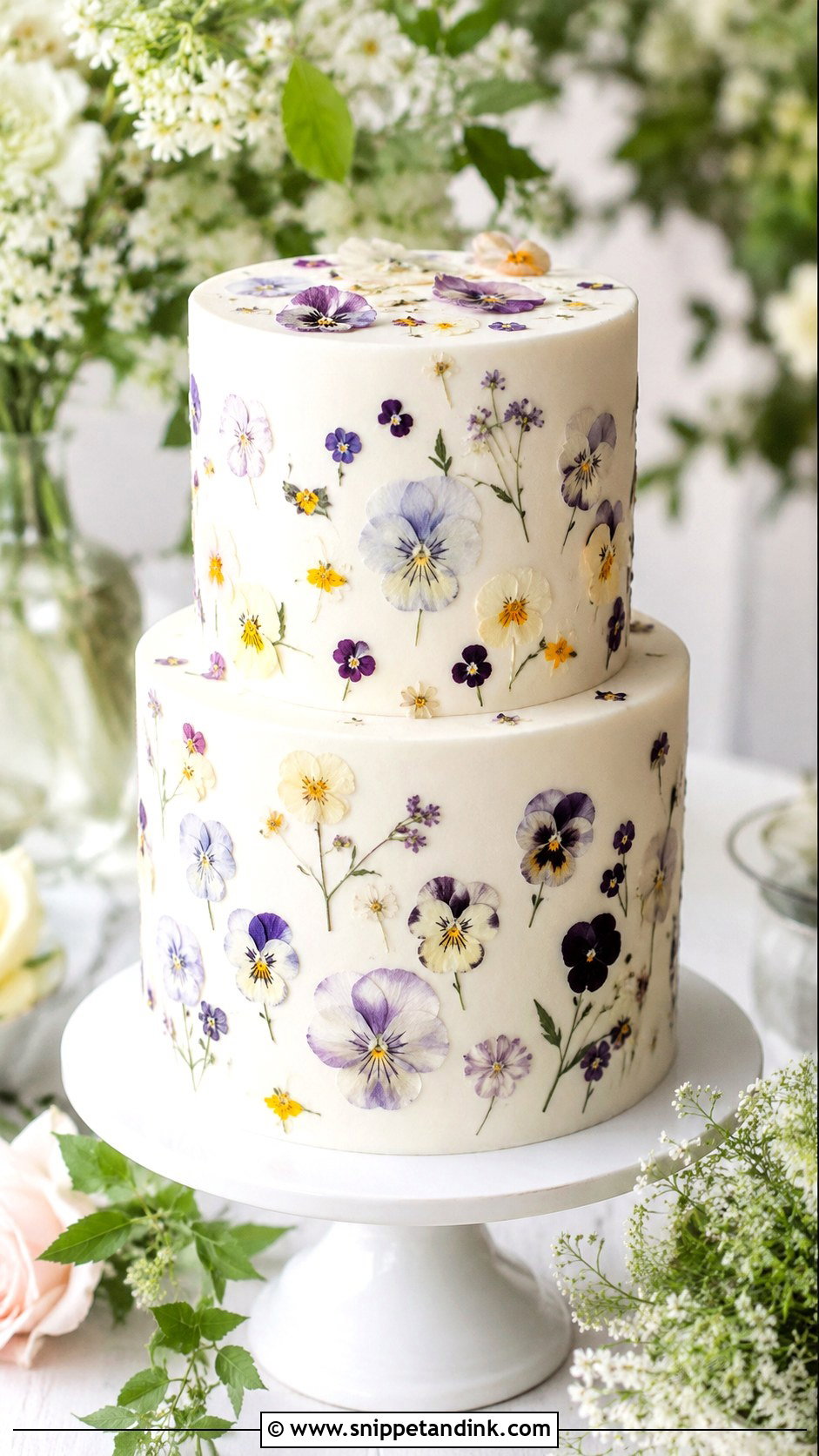
Pressed flowers give a soft, artistic look, laid lightly around the tiers or climbing up one side. They must be edible varieties pressed for food use, such as pansies and violas. Timing matters too. Pressed petals absorb moisture from buttercream and can darken or curl, so I apply them as late as possible, or onto fondant or ganache, which is drier. Leave breathing room between flowers; spaced out, they look deliberate, crowded they look like wallpaper. Spring and summer weddings suit them best.
17. Wedding Cake With Lace
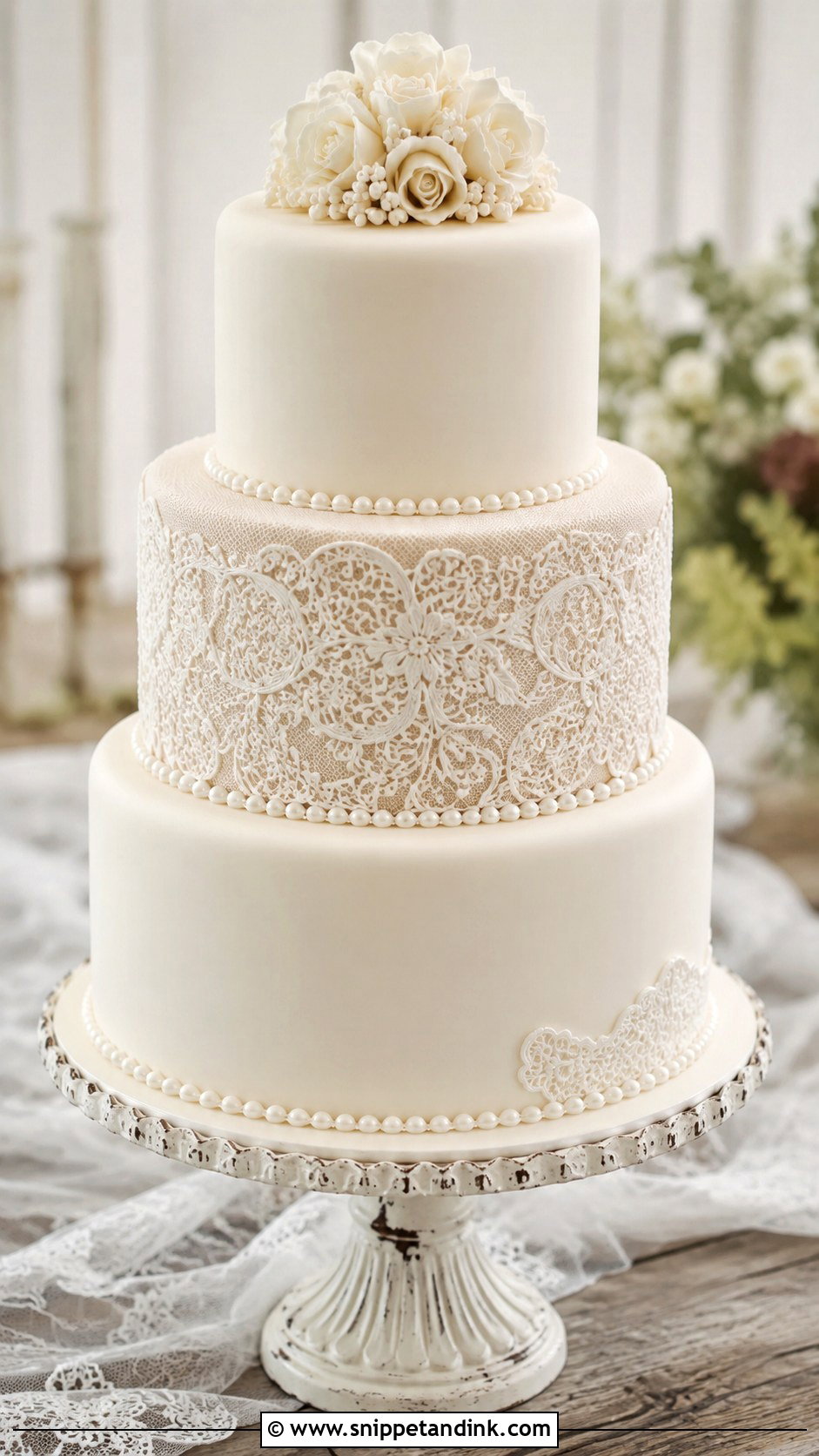
Lace on a cake can echo the gown, and I’d bring a photo or a fabric swatch of the actual lace to the tasting. It can be piped freehand in royal icing, cut as fondant appliqués or made from a flexible sugar lace set in a mat. Decorate one tier and leave the others smooth, or the cake starts to look busy. Sugar lace goes limp and sticky in humidity, so for a summer outdoor wedding I’d lean toward piped lace instead. White on white is classic; ivory feels more vintage.
18. Wedding Cake With Buttercream Texture
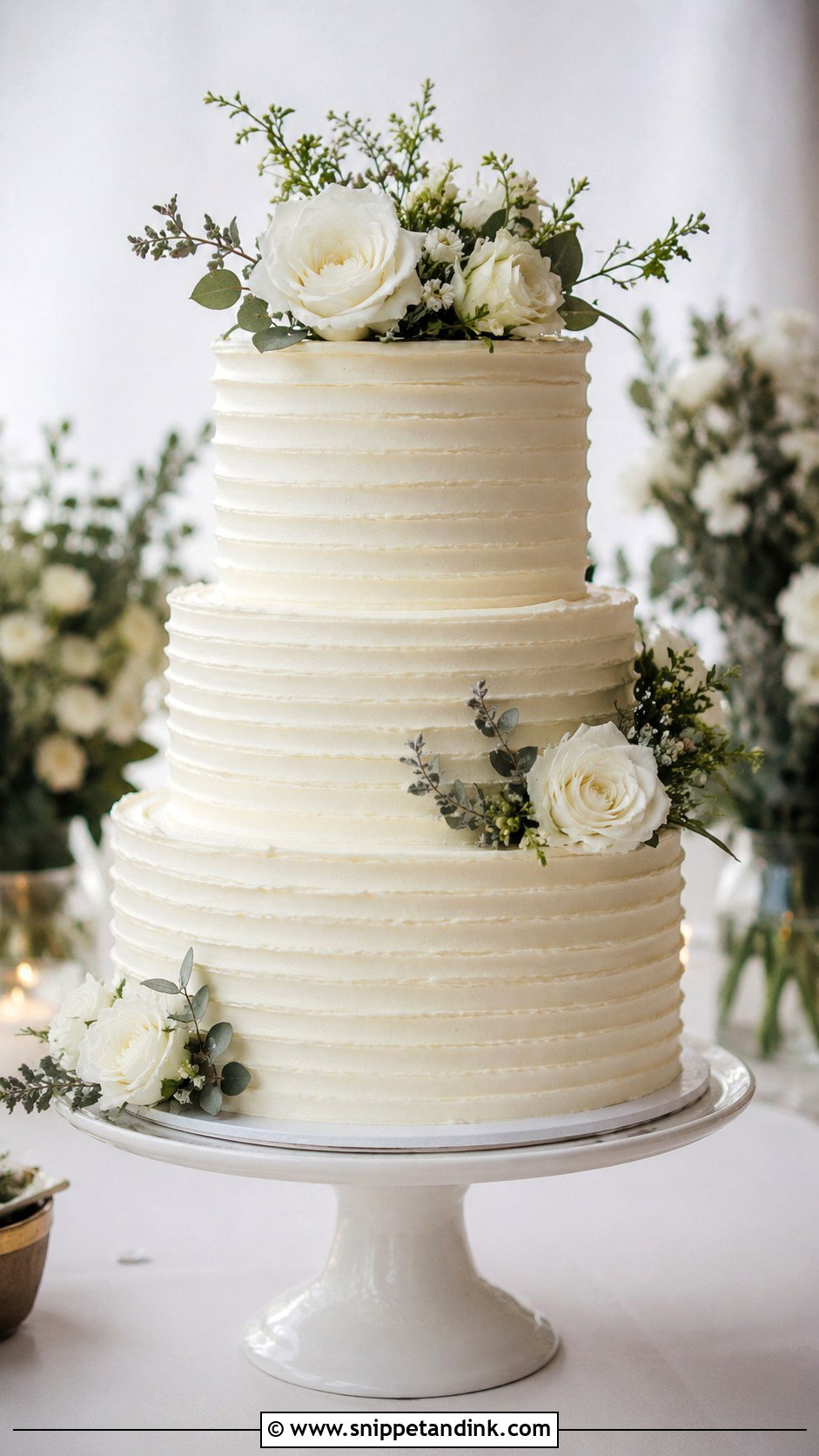
Textured buttercream turns the frosting into the design: horizontal combed lines, vertical ridges or soft spatula strokes. Texture also hides small imperfections and minor bumps from transport, which makes it a practical choice for warm, relaxed events. Pick one texture for the whole cake, or alternate textured and smooth tiers for contrast. A few flowers or a scatter of pearls finish it, but it rarely needs them.
19. Wedding Cake With Floral Cascade
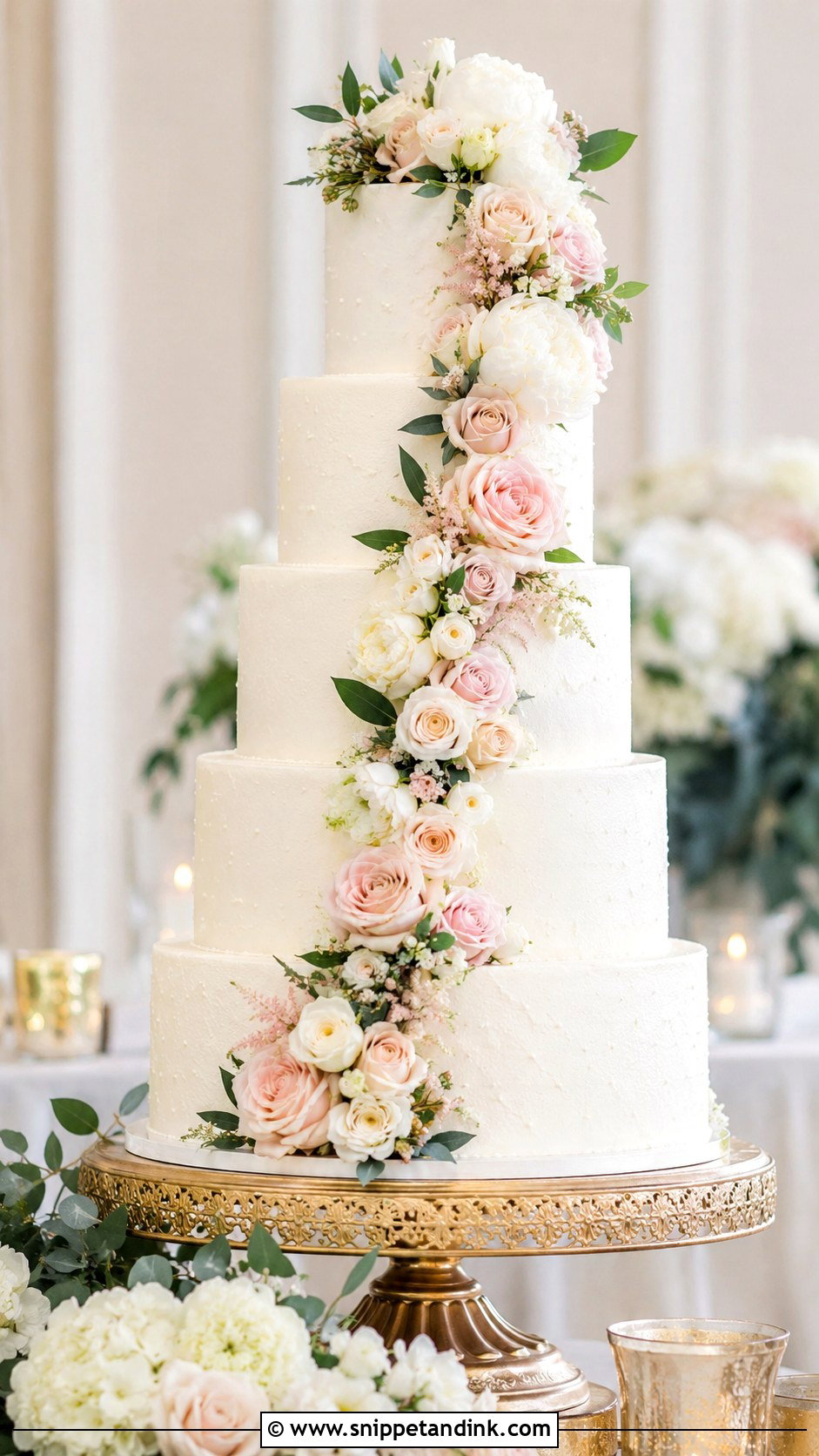
A floral cascade starts near the top tier and flows down one side, which adds movement to an otherwise plain cake. The common mistake is letting it get too wide; once it covers half the cake’s face, it stops looking simple. A narrow cascade in white, blush, ivory or pale peach over smooth buttercream keeps it controlled. I place cascades on site rather than transporting them attached, since the flowers shift and bruise in a van. Two to four tiers, depending on guest count.




20. White Wedding Cake With Blush Flowers
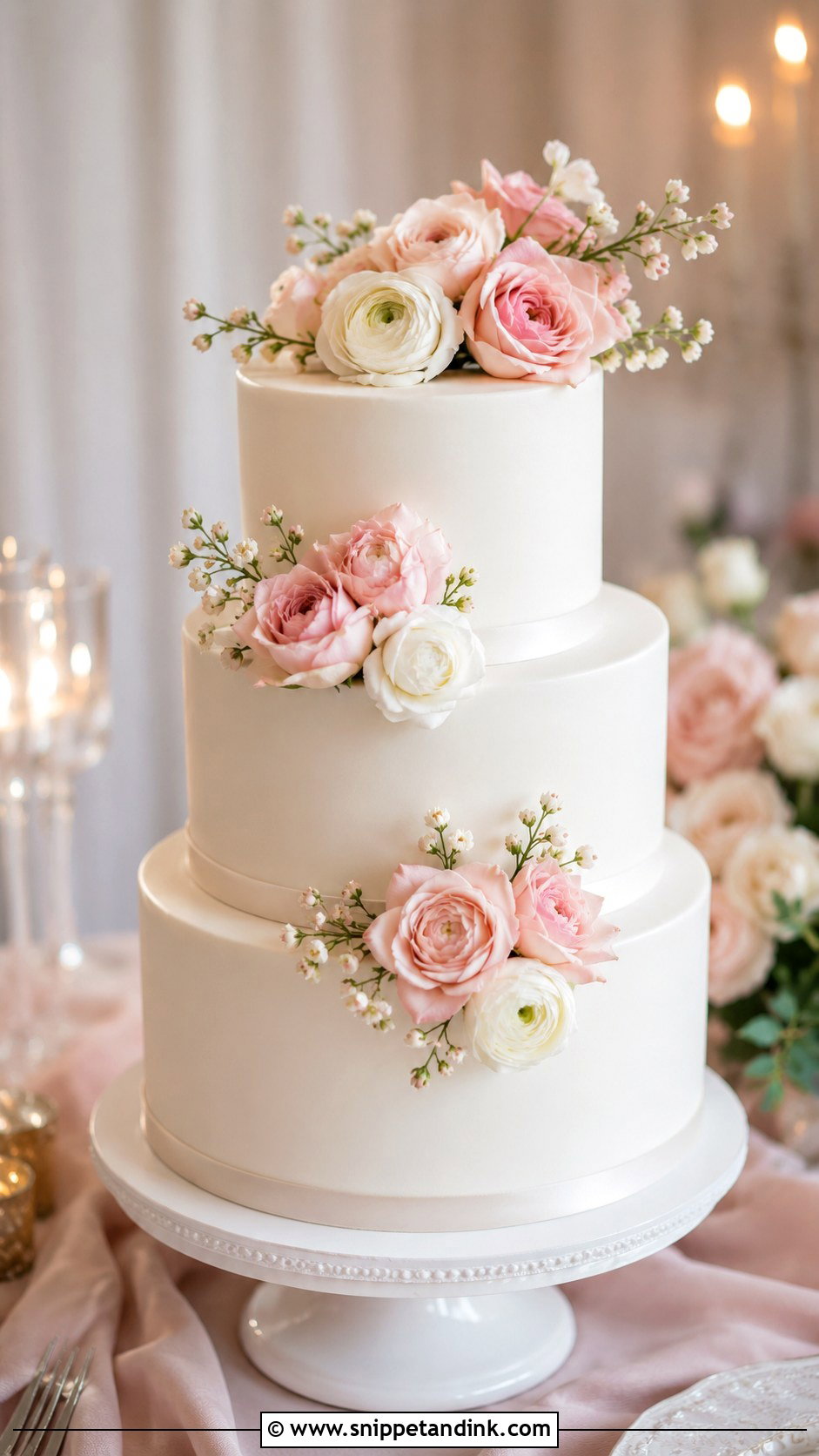
White cake with blush flowers is the combination I’m asked for most at candlelit receptions. Roses, peonies and ranunculus add warmth without overpowering the cake. Sweet peas are the one to be careful with: they look delicate but aren’t safe near food, so I make them in sugar if a couple wants them. Place flowers in a single cluster on the side or between the tiers, and keep the icing smooth so the blush color does the work.
21. Wedding Cake With Orchids
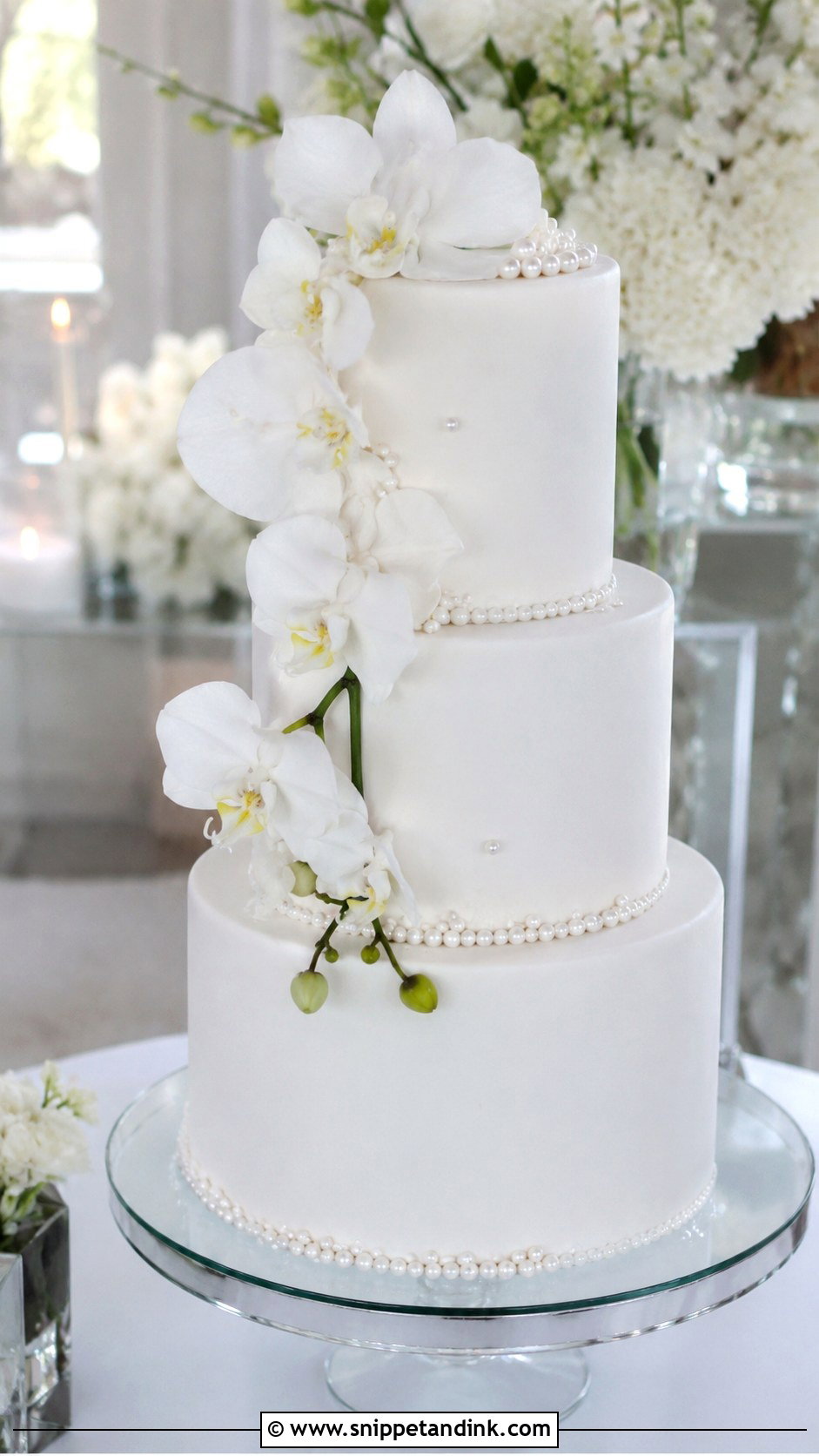
Orchids have a sleek, sculptural shape that reads more modern than roses or peonies. White on white looks clean; pale pink or soft lavender adds a hint of color. Because the flower is so strong, the cake needs almost nothing else. Fresh orchid petals bruise and mark from fingertips, so I handle them with gloves and add them last, in a small cascade or a single cluster. City venues, hotel ballrooms and beach receptions suit them.
22. Wedding Cake With Olive Branch
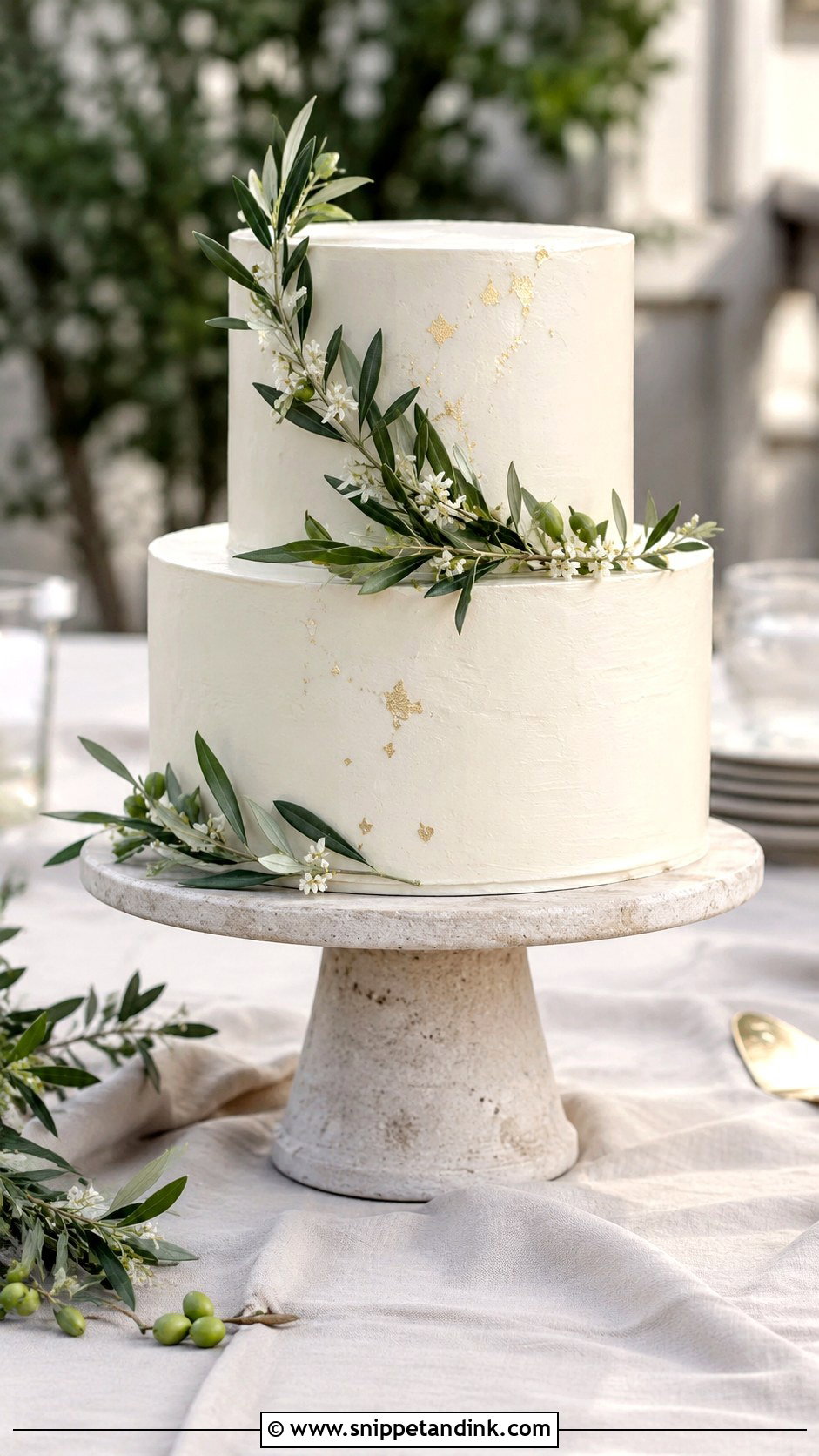
A cake with olive branch detail brings a quiet Mediterranean feel. The slim leaves add movement without heavy decoration, and real olive leaves are safe to sit against icing once washed and dried. Ivory buttercream and a touch of gold complement them well. Add a few small white flowers if you want something softer, or keep the branches alone. Lemon, honey or pistachio cake fits the mood, and it sits well on linen-covered tables at outdoor receptions.
23. Wedding Cake With Monogram
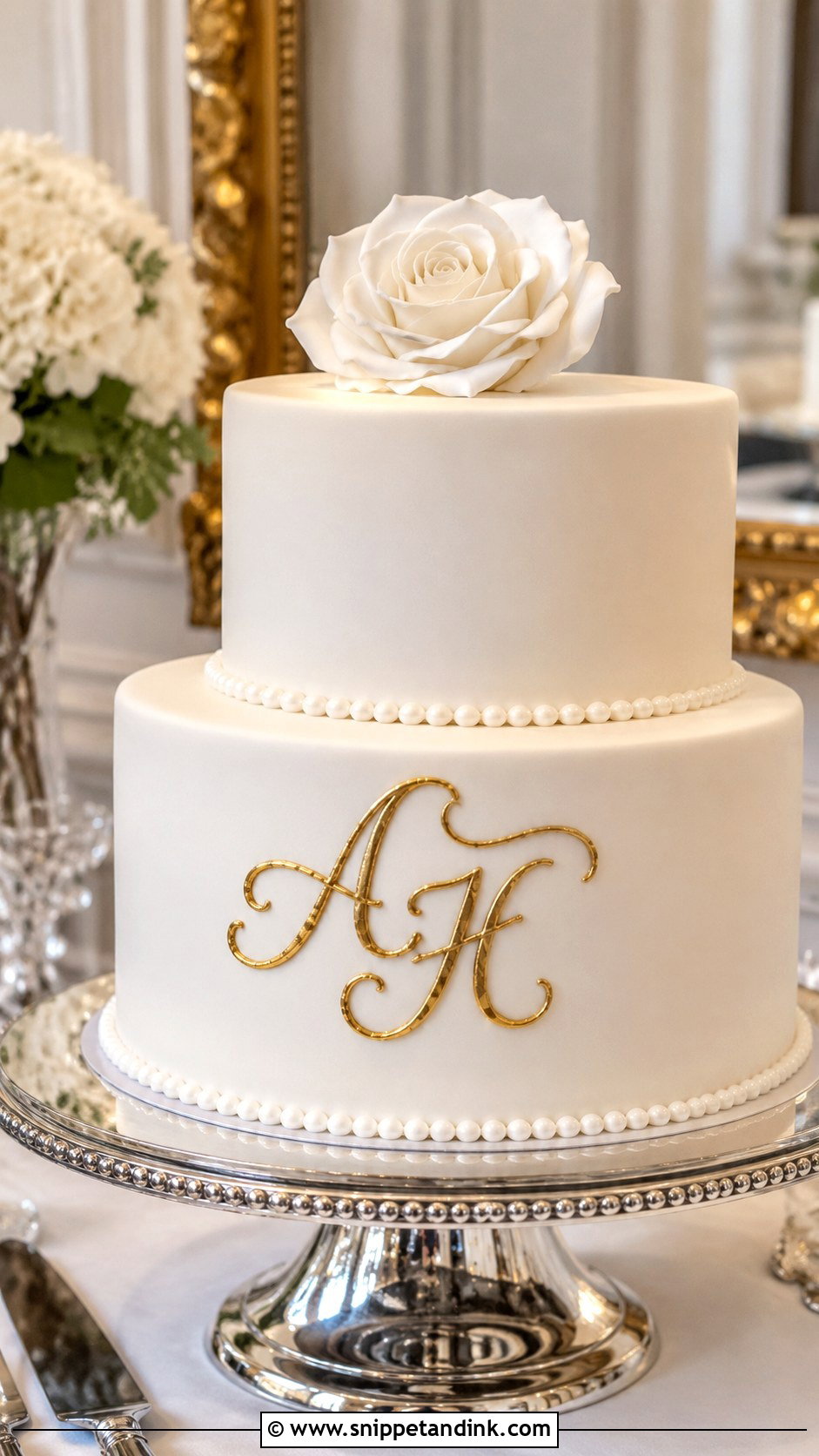
A monogram adds a personal detail without crowding a simple cake. It can be piped, stamped into fondant, painted in edible gold or set on top as a small topper. Letters applied to the curved side of a round tier distort slightly when seen at an angle, so I keep them thin and fairly small and place them where the photographer will stand. One monogram on the front of the middle tier is enough. It suits formal and church weddings especially.
24. Wedding Cake With Marble Fondant
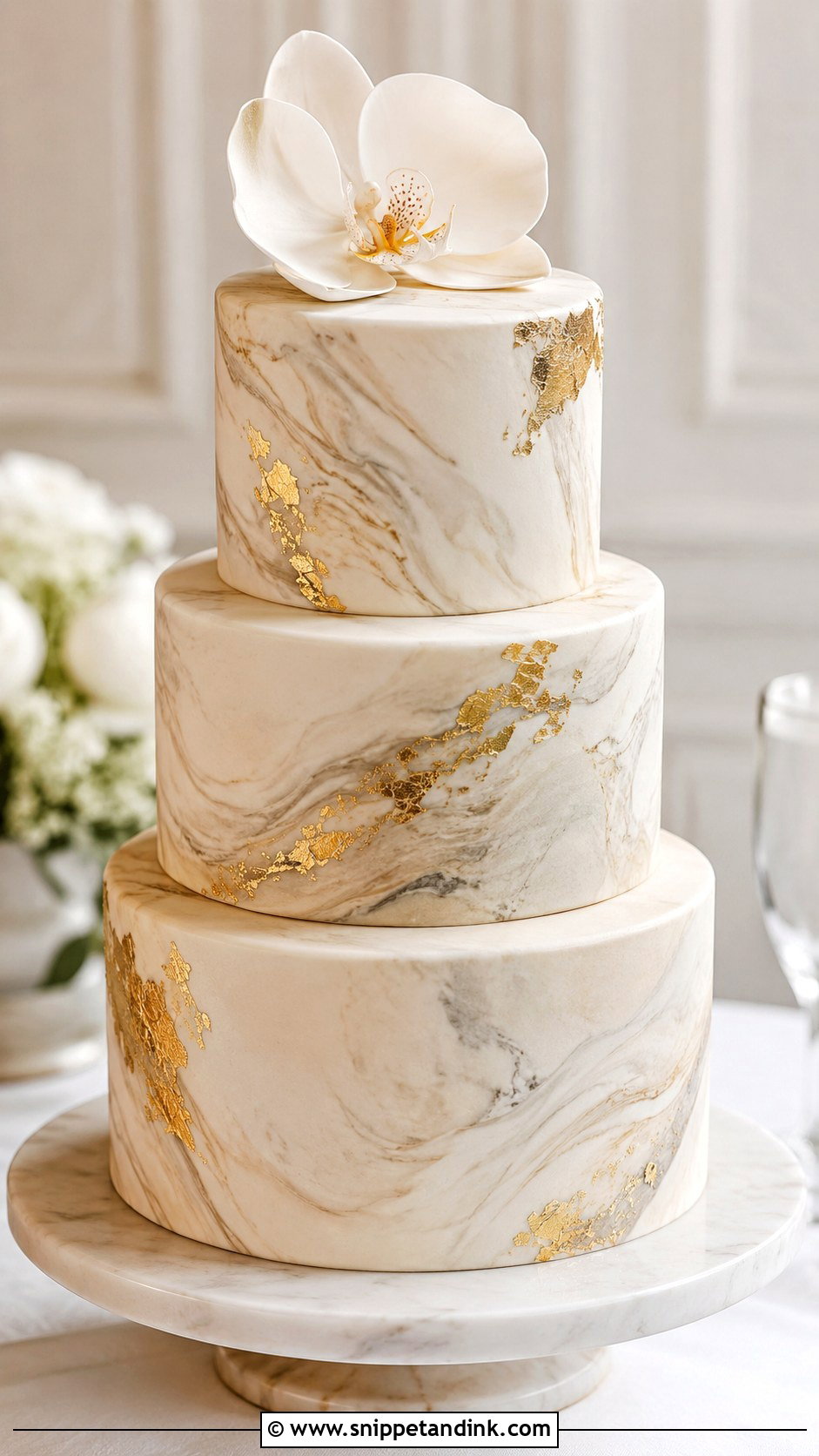
Marble fondant is made by twisting colored and white fondant together before rolling, so no two tiers come out identical. That’s part of its appeal, but if you want a very specific pattern, ask to see a sample. Soft grey, ivory or beige veining looks refined; dark, heavy veining turns dramatic quickly. A few touches of gold leaf or one sugar flower finish it. Modern venues with stone or acrylic details suit it, and chocolate or salted caramel inside pairs well.



25. Wedding Cake With Simple Piping
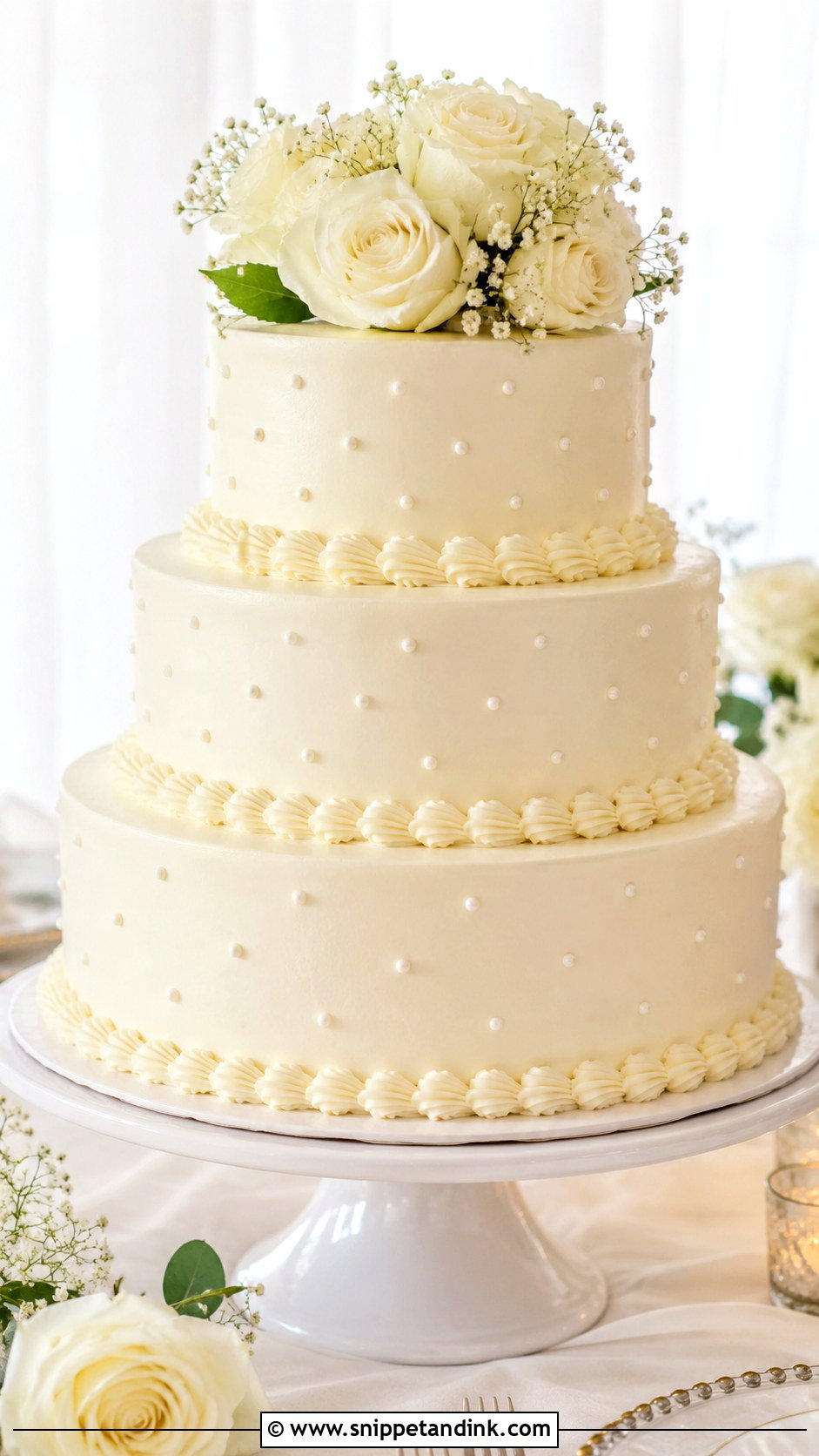
Simple piping brings back the classic bakery look: small shell borders, tiny dots or fine scrollwork framing each tier. Borders also do a practical job, hiding the seam where each tier meets its board. Royal icing piping dries hard and holds its shape in heat, while buttercream piping is softer to eat but slumps if the room is warm. I keep the piping light and even so it looks neat from every angle. White on white feels bridal; ivory adds warmth. Church weddings and family-style receptions are where I see it most.
Flowers, Heat and the Cake Table on the Day
Half the designs on this list use fresh flowers or greenery, and simple cakes rely on a clean finish that heat can spoil. These are the conversations I have with every couple before the delivery date.
Agree who handles the flowers
Your florist and your baker should know about each other. I ask florists for unsprayed blooms set aside for the cake, and I confirm who places them, since a florist pushing bare stems into a tier is the most common way chemicals and sap end up in the icing. Hydrangea, lily of the valley and sweet pea should stay off the cake entirely; roses, orchids, pansies and rosemary are the usual safe picks, always with wrapped stems or a barrier underneath.
Where the cake should stand
- Out of direct sun and away from heaters, candles, speakers and the dance floor.
- On a sturdy, level table; a wobbly folding table is the real reason tiers lean.
- Indoors or under cover for an outdoor wedding, with buttercream set out as late as the schedule allows.
- With a clear path for the venue staff who will carry it to the kitchen for cutting.
Meringue buttercreams soften fastest in summer heat, while ganache under fondant holds up best. If your reception is outdoors in July, tell your baker at the tasting so the recipe can be chosen for the weather, not just the flavor.
Let One Detail Carry the Whole Cake
The cakes that look best years later are the ones that did one thing well. A smooth finish, balanced tiers, a few flowers, light texture or a single meaningful accent will always feel calmer than a cake trying to show everything. Let your venue and season decide the finish first: marble fondant or sharp tiers for a modern room, pearls, lace or a cascade for a romantic one, greenery or rustic buttercream outdoors. Then put your energy into the flavor, because that’s the part your guests will actually remember.
You'll Like These Ideas:










Leave a Reply