
Tiered cakes hold their place at weddings because nothing else gives a reception that moment of height. What has shifted is the detail: sculptural shapes, textured buttercream, pearls, floral movement, vintage piping and separated tiers, with less of the stiff formality that used to come with a tall cake. The right number of tiers depends on the room, the dress code and the guest count as much as on looks. I’ve grouped twenty designs below by shape, finish and color, with the structural notes I’d give any couple ordering one.
Two Tiers or Five, Depending on the Room
Tier count starts with guest numbers, but the room gets a say too. A five tier cake in a low-ceilinged restaurant looks crammed, and a two tier cake in a ballroom can look lost. Rough wedding-portion guides for common round sizes, which every baker adjusts to their own tier height:
- Two tiers (6 and 8 inch): around 35 to 40 portions
- Three tiers (6, 8 and 10 inch): around 75
- Four tiers (6, 8, 10 and 12 inch): around 130
- Five tiers (6 through 14 inch): around 200
When the guest list and the look disagree
If you want height without the portions, ask about dummy tiers, which are foam shapes frosted to match. They add visual size, but most bakers still charge for decorating them, so the savings are smaller than people hope. The reverse fix works as well: a modest display cake plus a plain kitchen cake in the same flavor feeds a big crowd without a five tier price.
1. Three Tier White Wedding Cake
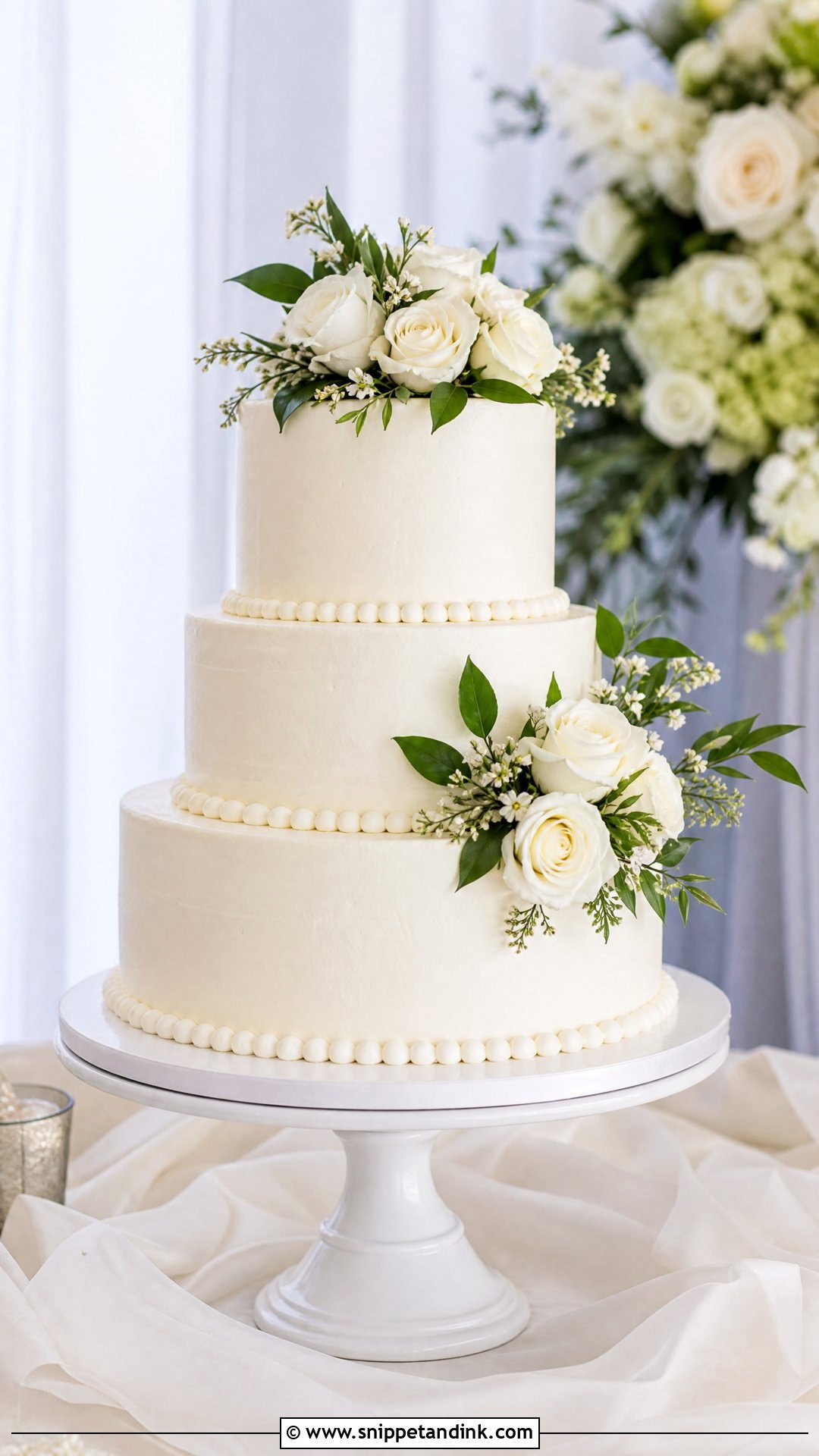
Three white tiers is the baseline I measure every other design against. It suits a ballroom, a garden, a church hall or a loft, and the finish decides the mood: smooth buttercream reads soft, fondant reads sharp and formal. With no color to lean on, small details carry the design, so white roses, a few pearl accents and restrained piping are enough. I keep the piping to one style across all three tiers. Height plus a single color keeps the camera on texture and shape.
2. Two Tier Wedding Cake With Flowers
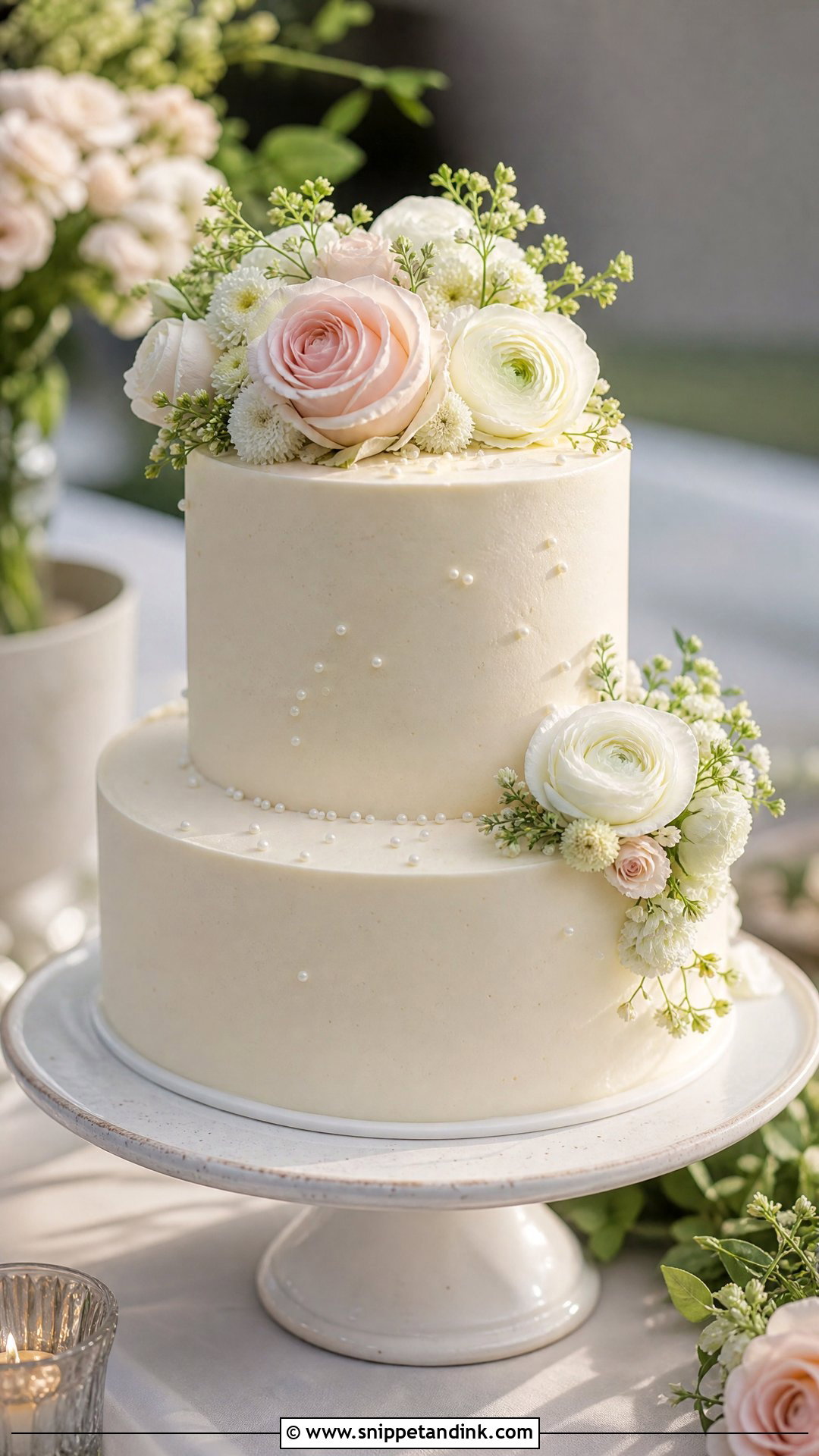
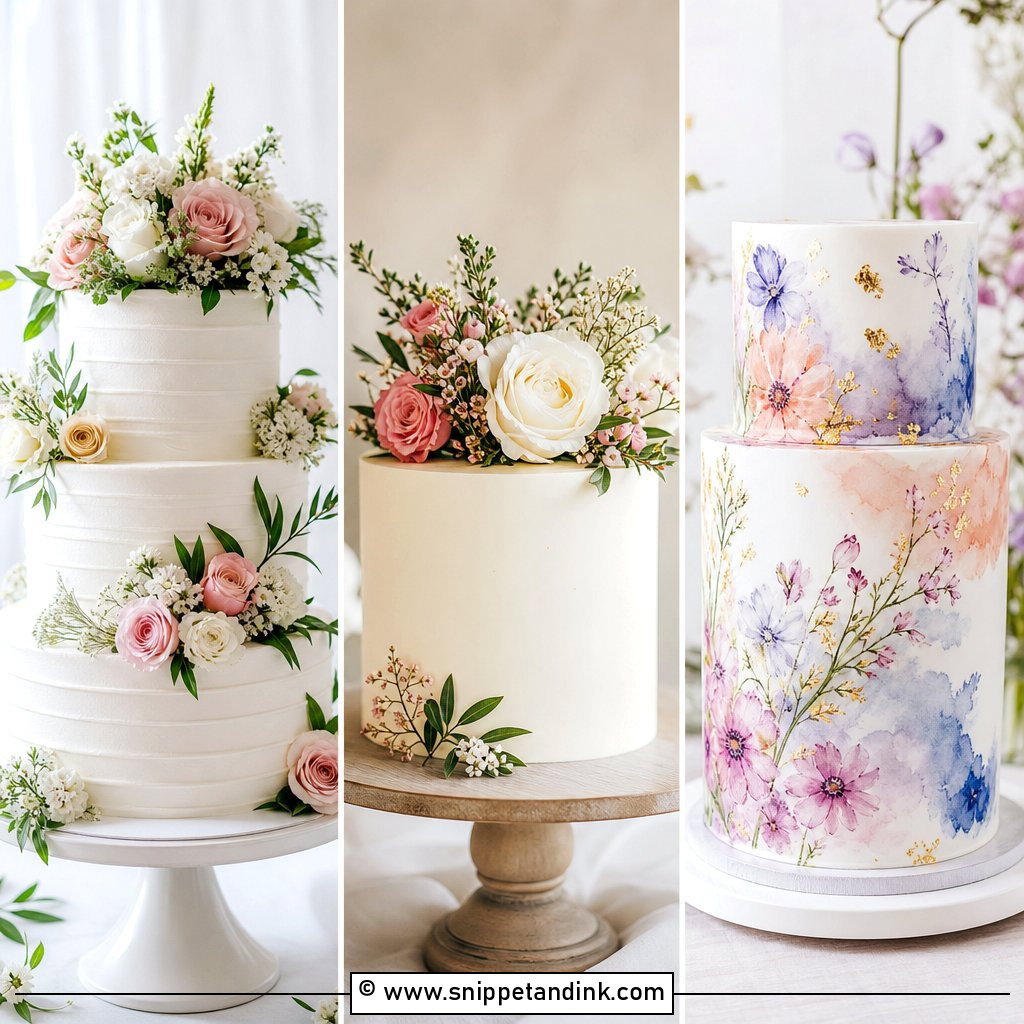
Two tiers is what I suggest for elopements, brunch receptions and smaller weddings, or when a couple wants a cutting cake beside a separate dessert table. Proportion is the whole game. I like the bottom tier at least two inches wider than the top, otherwise it looks like a pair of equal drums. Blush roses, white ranunculus, greenery and small fillers add the movement a short cake lacks, ideally the same varieties as the bouquet. On a cake this size every flower counts, and three well-placed groups beat twenty scattered stems.
3. Four Tier Wedding Cake With Gold
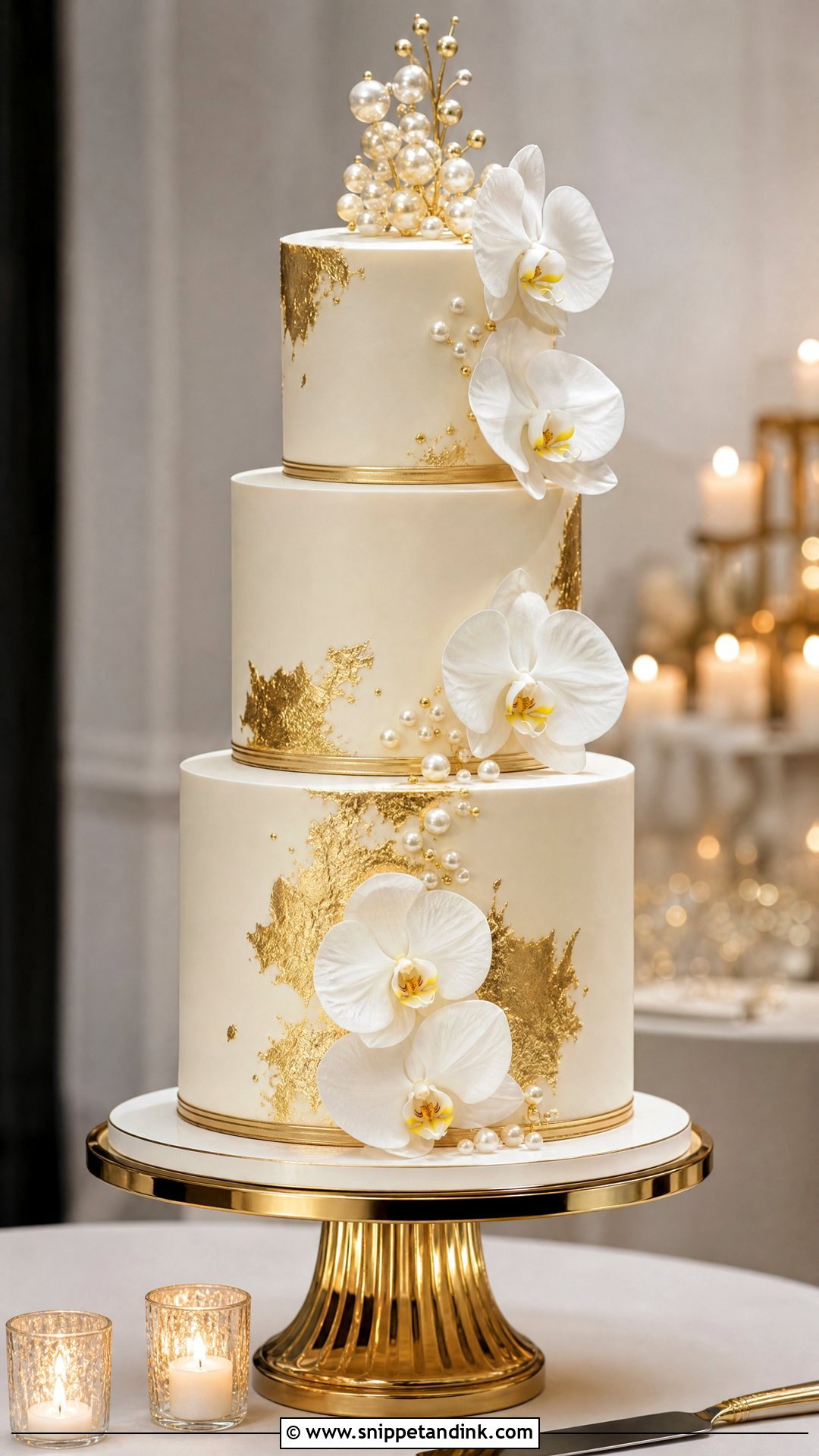
Four tiers with gold is grand, and the trick is restraint. Gold leaf, thin metallic bands, brushed edges or a single gold-painted tier each do enough on their own against ivory, white or champagne, so I’d pick one rather than all four. Hotel receptions, black tie and candlelit evenings suit it, because candlelight makes leaf glow rather than glare. Vanilla almond, champagne, lemon elderflower or white chocolate raspberry fit the look. White orchids or roses soften the shine. A four tier cake usually needs a central dowel, so tell your baker early if you want flowers sitting right on top.
4. Round Tiered Wedding Cake
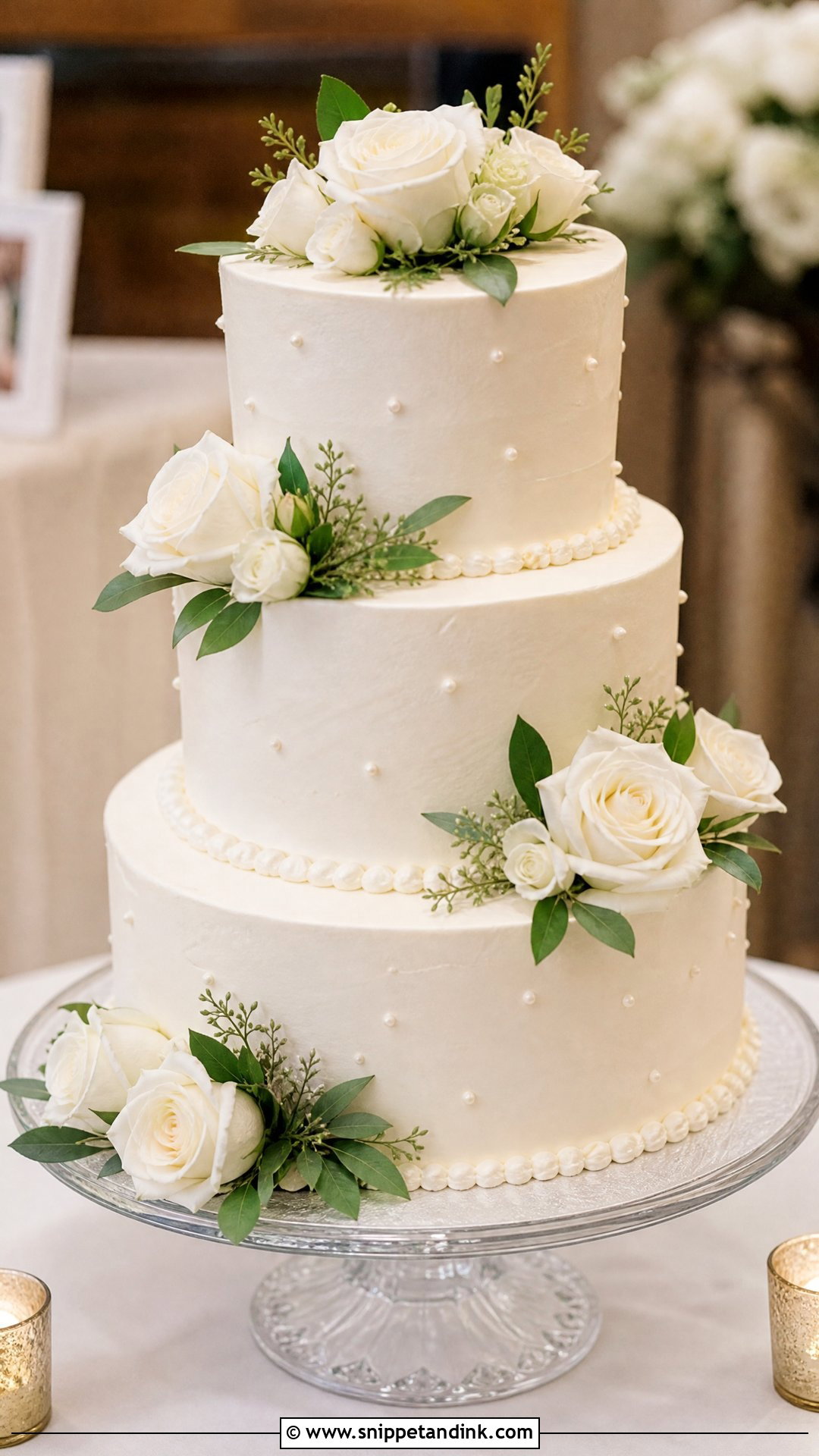
Round tiers are the default for good reasons. They stack evenly, the weight spreads around the support dowels, and caterers can cut a round tier into neat wedding portions quickly. The shape takes almost any style, from smooth and minimal to piped borders or cascading flowers. Tier height changes the character too: tall modern tiers look current, shorter traditional ones look classic. I display round cakes on a raised stand with nothing else on the table, so the silhouette carries.
5. Square Tiered Wedding Cake
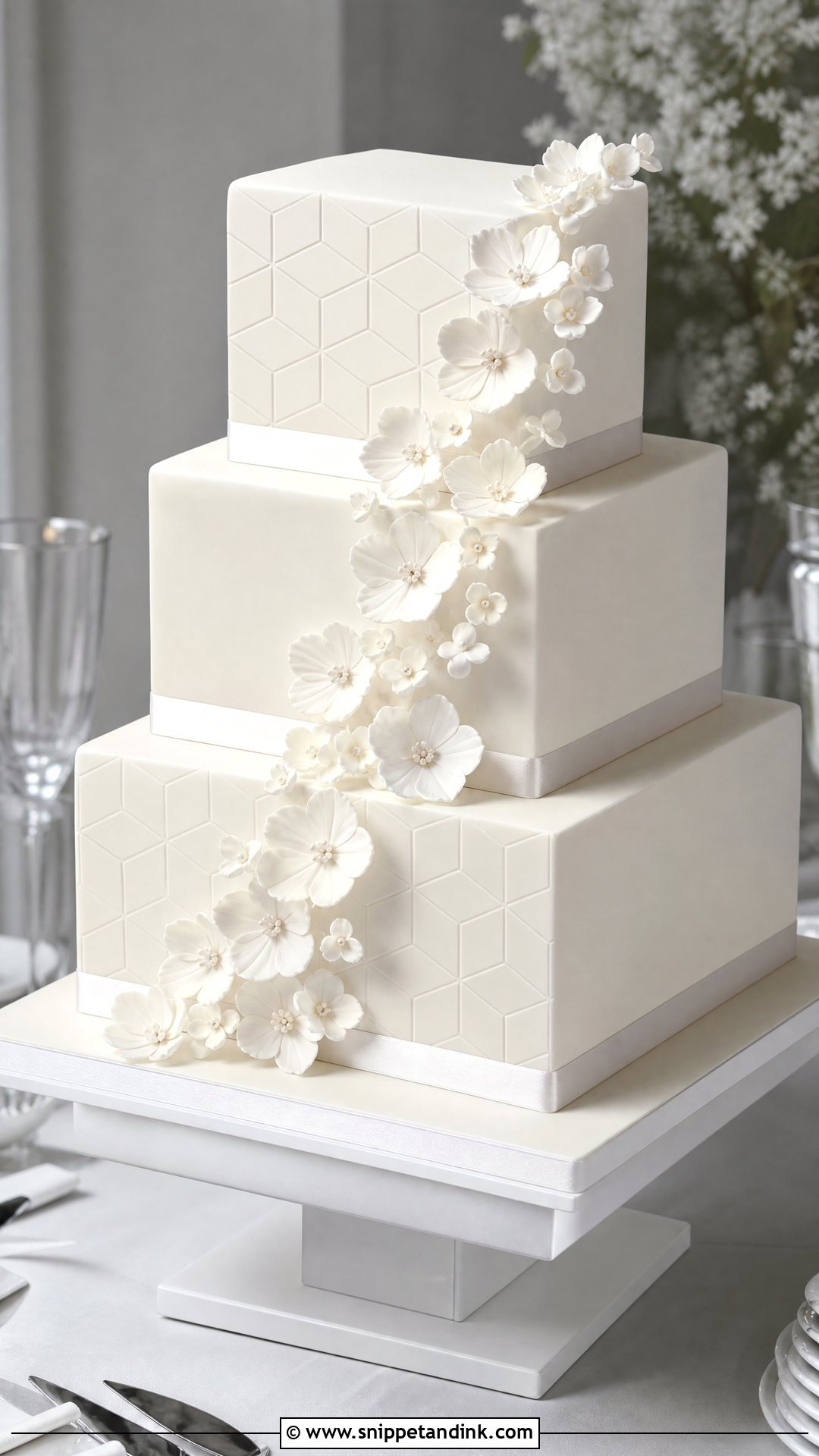
Square tiers feel architectural and slightly unexpected while still reading formal. They suit fondant best, since crisp corners in buttercream take a long time and still soften in a warm room. Ribbon borders and geometric accents look at home, and pattern work such as quilted fondant or subtle embossed texture shows clearly on flat sides. I soften the hard edges with flowers at opposite corners or a diagonal line of sugar blooms. Museums, rooftops and black-and-white weddings suit the shape. They take longer to make and to cut, and caterers sometimes need to be shown how.
6. Vintage Tiered Wedding Cake
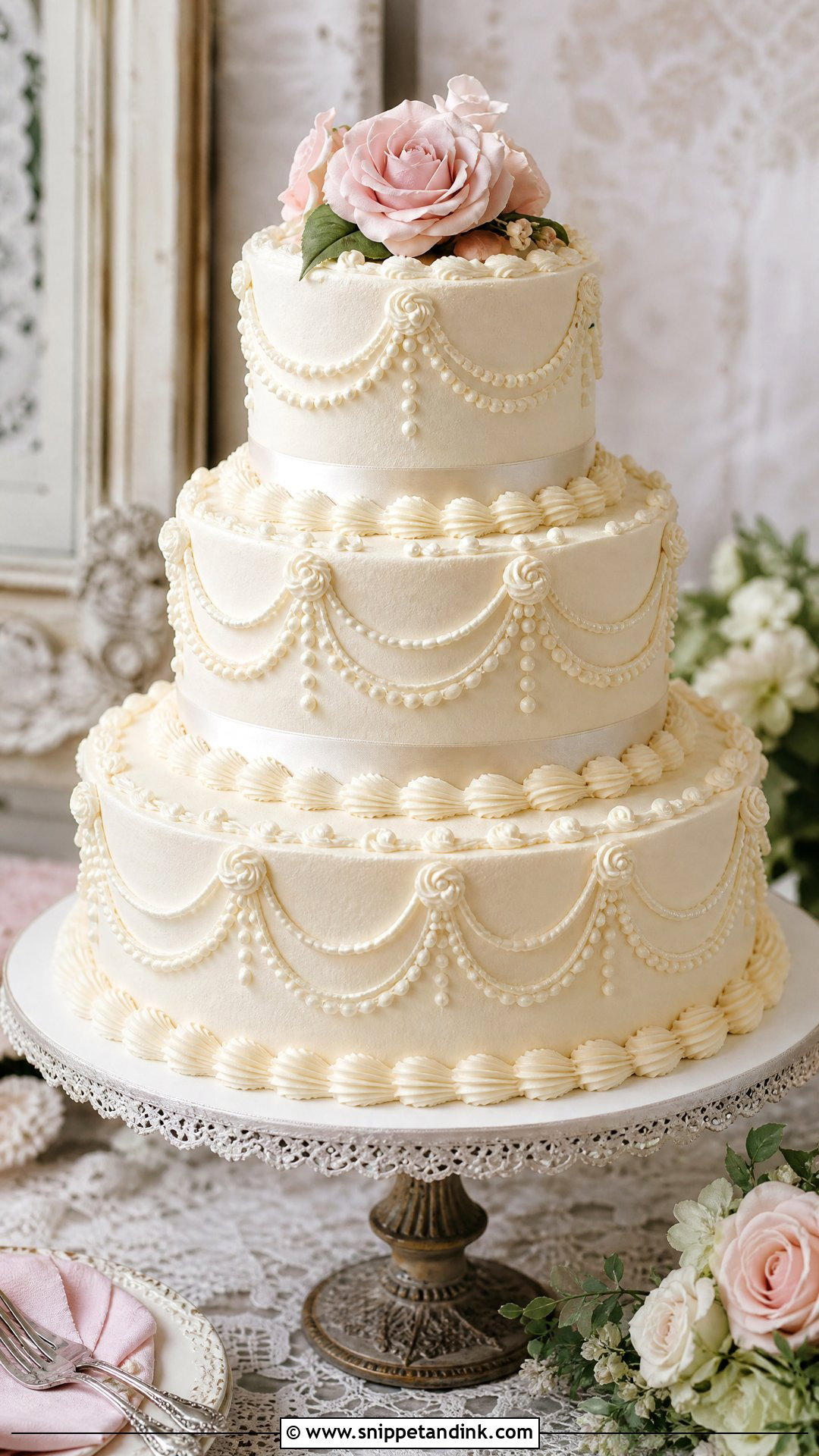
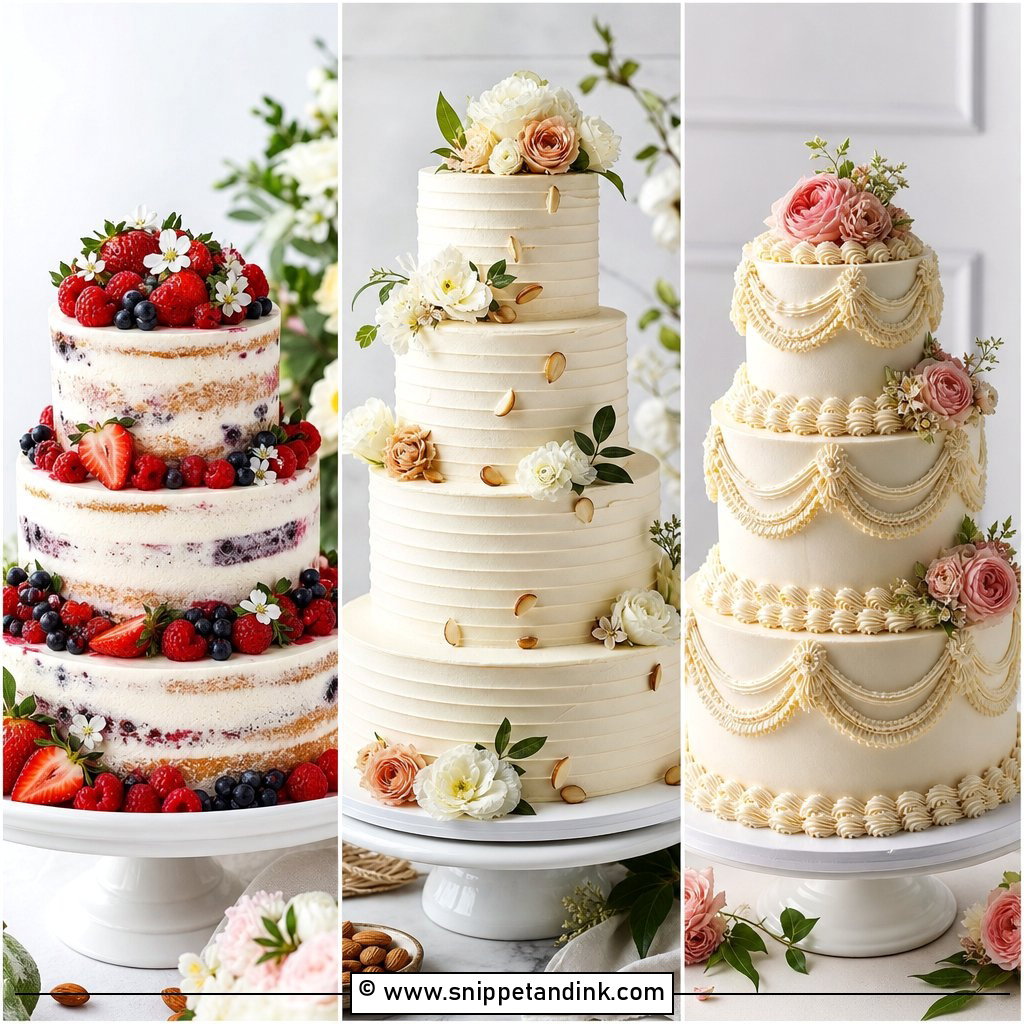
Vintage cakes belong with lace dresses, pearl details and soft lighting. That usually means ornate buttercream piping, shell borders, scalloped edges and small floral accents, all white or tinted blush, ivory, pale blue or butter yellow, finished with a small floral topper, satin ribbon or piped swags between tiers. What keeps it from looking cluttered is a gentle palette, so I hold it to two colors at most. Vanilla bean, almond or strawberry cream fit the traditional mood. If the cake will stand under hot lights, I pipe with a firmer buttercream than usual.
7. Lambeth Tiered Wedding Cake
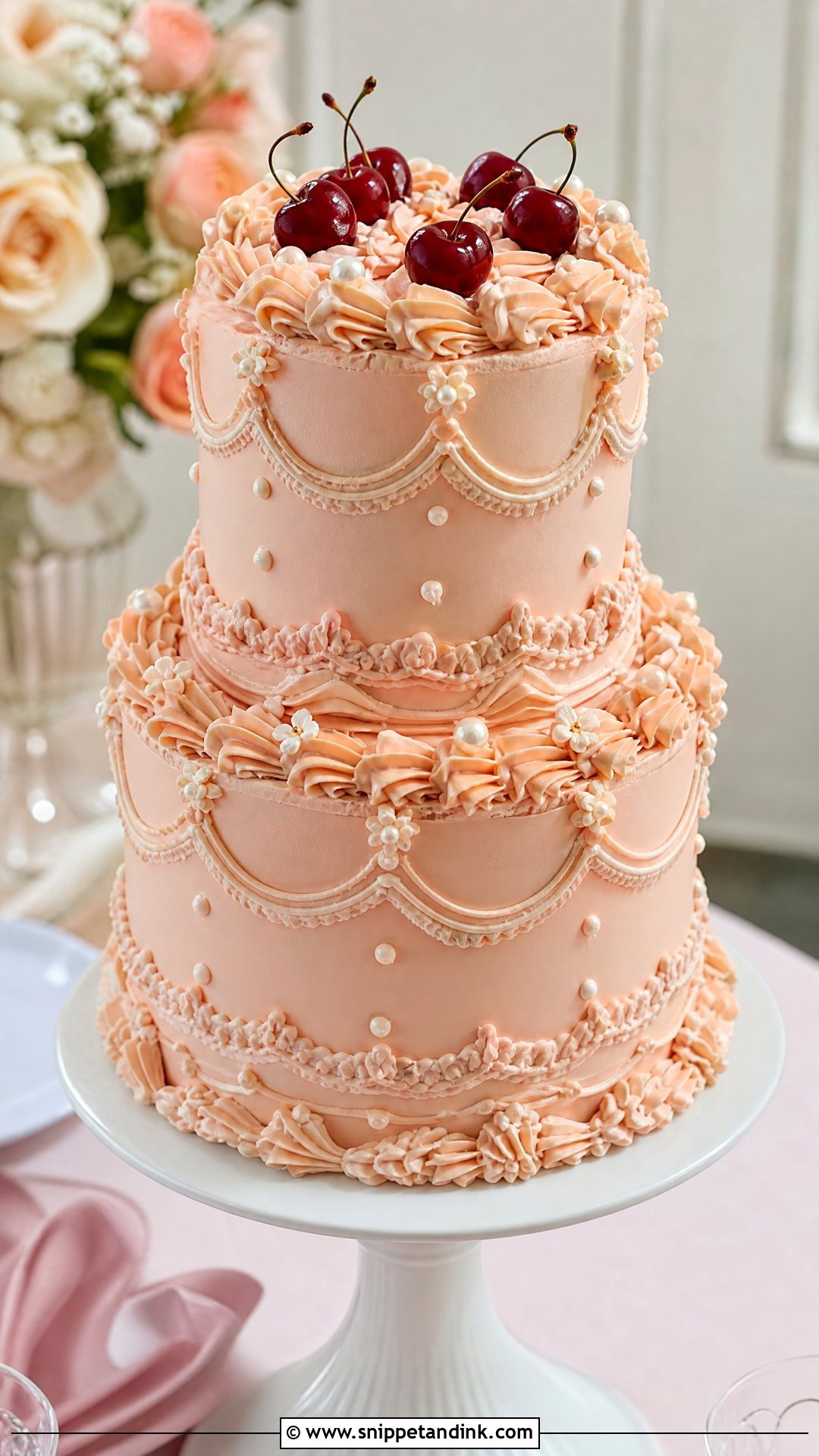
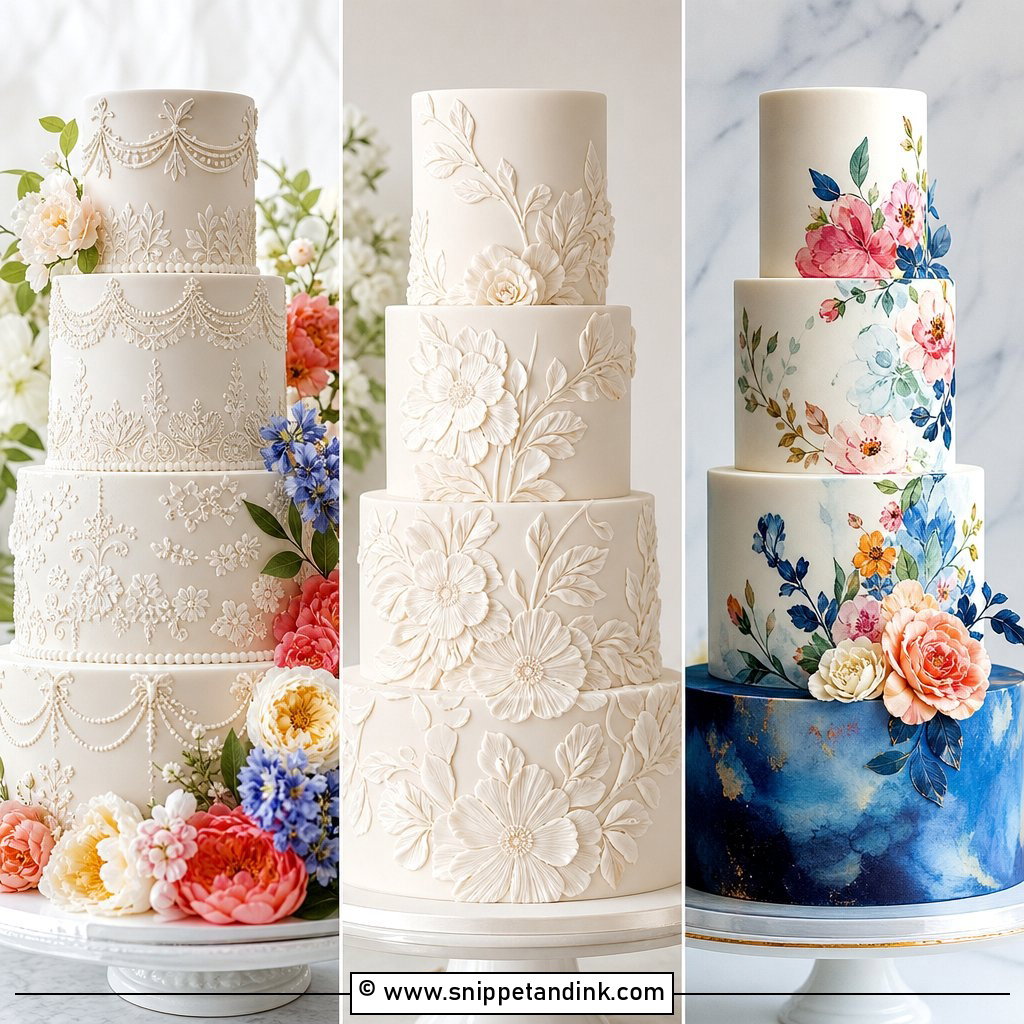
Lambeth is vintage turned up: layered overpiping, ruffles, shells, scrolls, dots and raised borders, built tier by tier. It’s the most time-intensive finish on this list, which you’ll see in the quote. All white looks bridal, though pastels, butter yellow, blush and soft sage suit it well. The thing I rely on is a perfectly straight, level cake underneath, because piping exaggerates any lean. Cherries, pearls or small sugar flowers add a playful finish. I’d skip it for an outdoor summer reception unless the cake stays indoors, since heavy buttercream piping slumps in heat.
8. Minimalist Tiered Wedding Cake
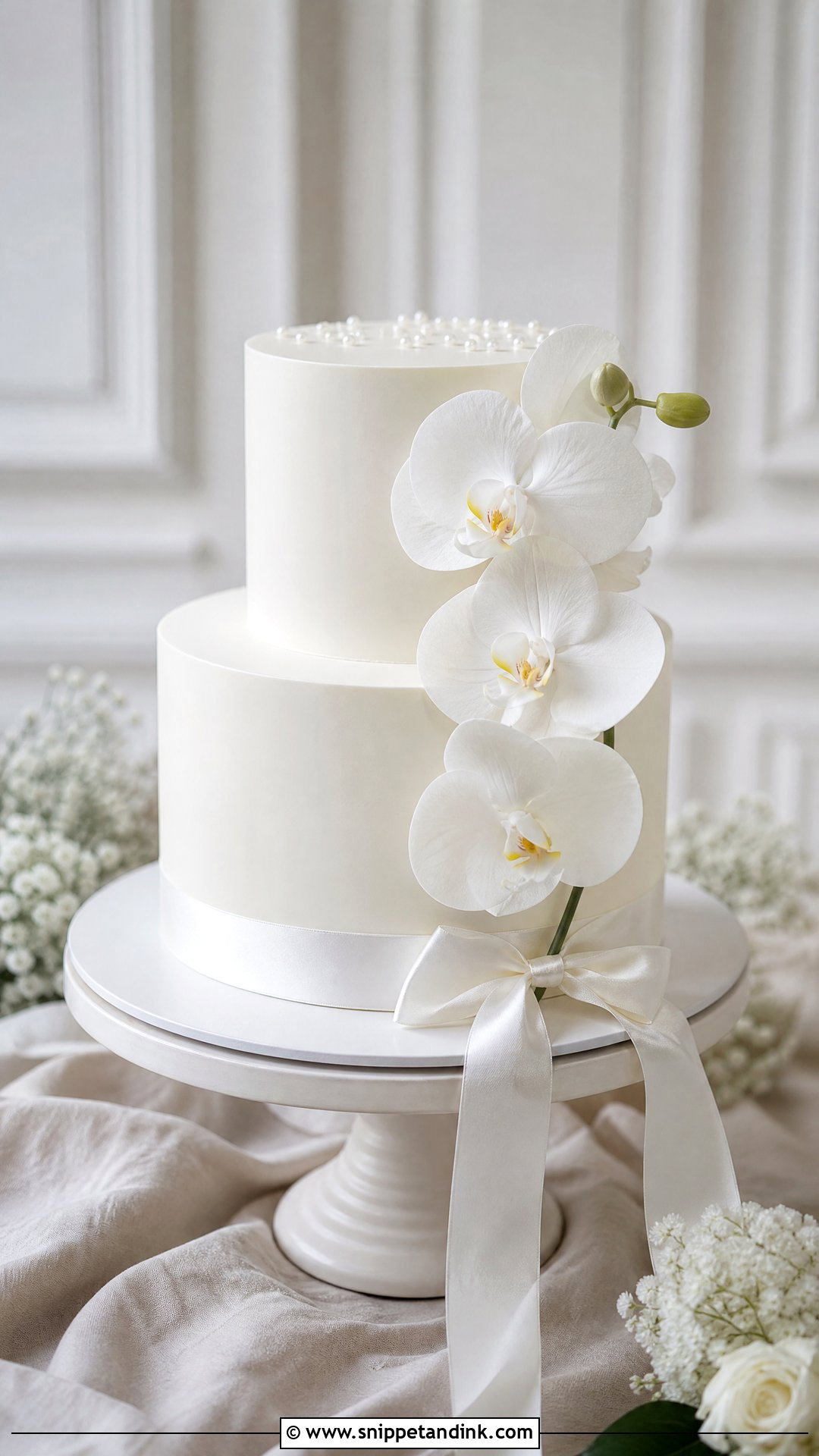
Minimal cakes look easy and are anything but. Smooth buttercream, straight edges, ivory color and one detail, perhaps a single orchid stem, silk ribbon or a small flower cluster, leave nowhere to hide a flaw. Ask to see a baker’s photos of plain cakes specifically, because sharp edges and flat sides are a skill of their own. Courthouse celebrations, intimate weddings and venues with strong decor suit it. Vanilla bean with raspberry or lemon with cream cheese frosting keep the inside simple. If you choose silk ribbon, I back it with a strip of parchment or food-safe tape, or the butter soaks through and stains it.
9. Rustic Tiered Wedding Cake
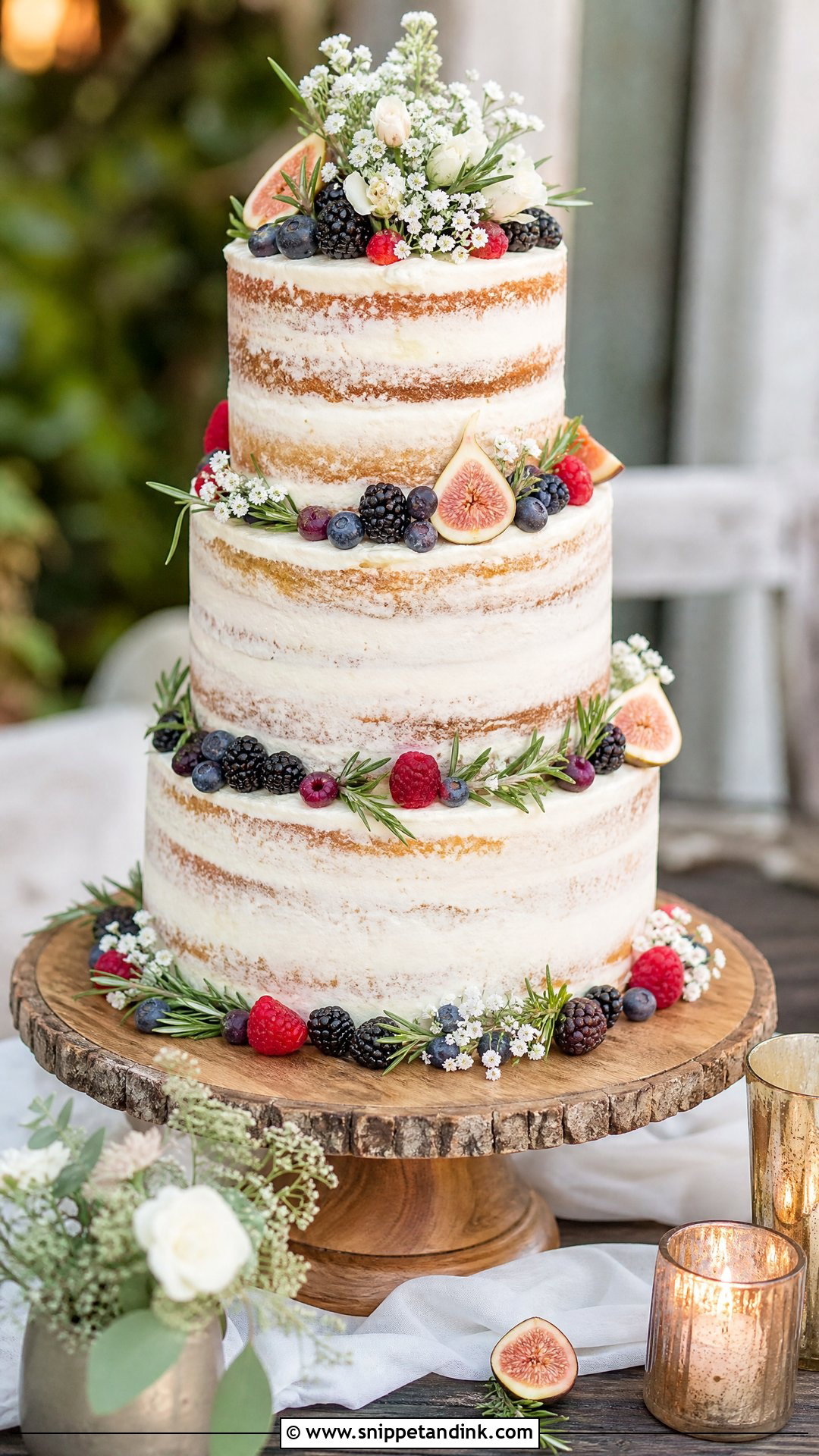
Semi-naked buttercream is the usual finish for barns, orchards and garden receptions, since a little sponge shows through while the cake still looks finished. Berries, figs, greenery, small blooms and rough texture keep it seasonal, and a wooden stand or a linen-draped table completes it. I keep rustic tiers sturdy and the decoration sparse, because a semi-naked cake piled with fruit starts to look like a dessert buffet. Exposed sponge dries faster than frosted, so I time assembly close to the event. Vanilla berry, carrot, spice or lemon blueberry suit it.
10. Floral Tiered Wedding Cake
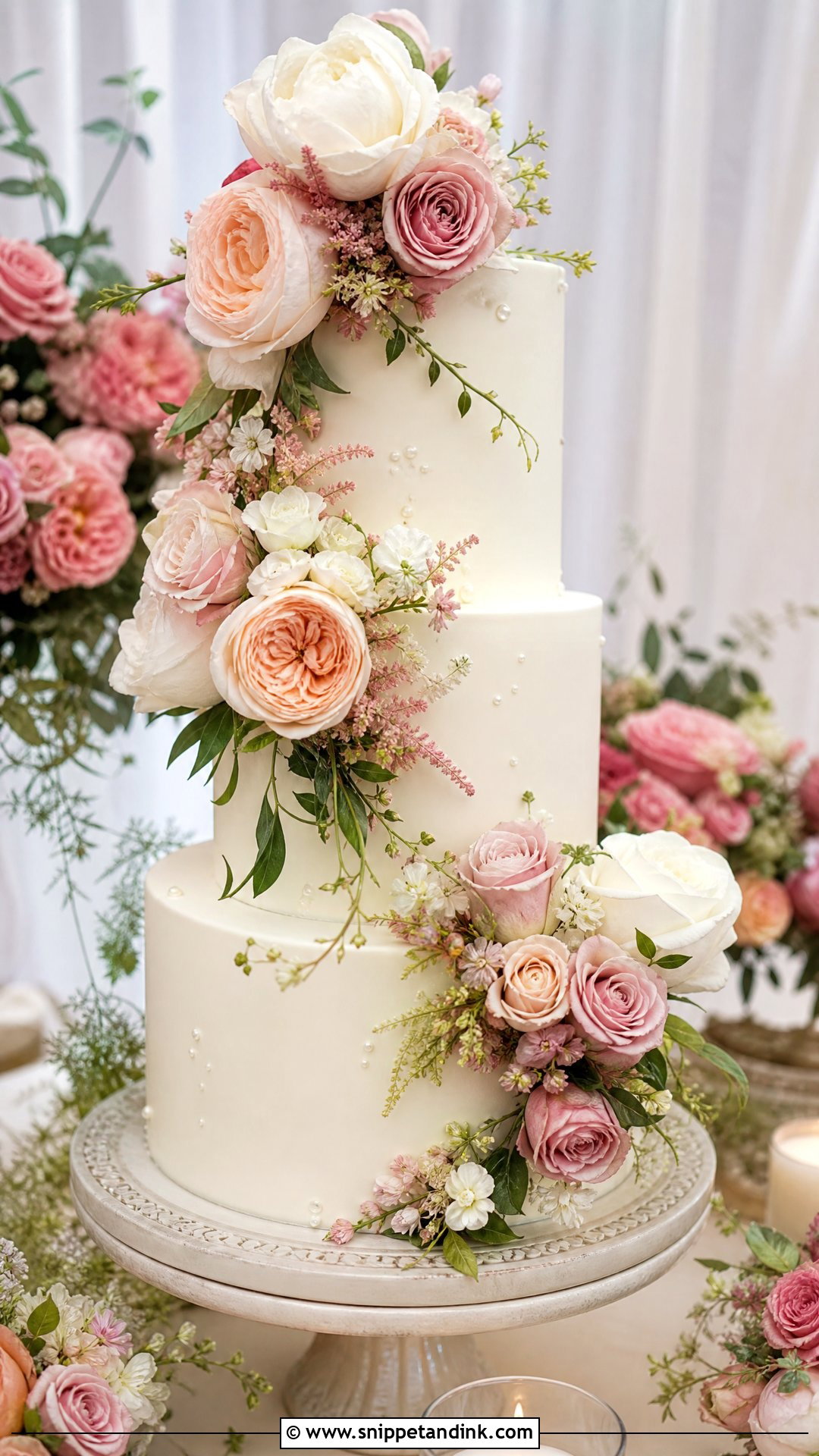
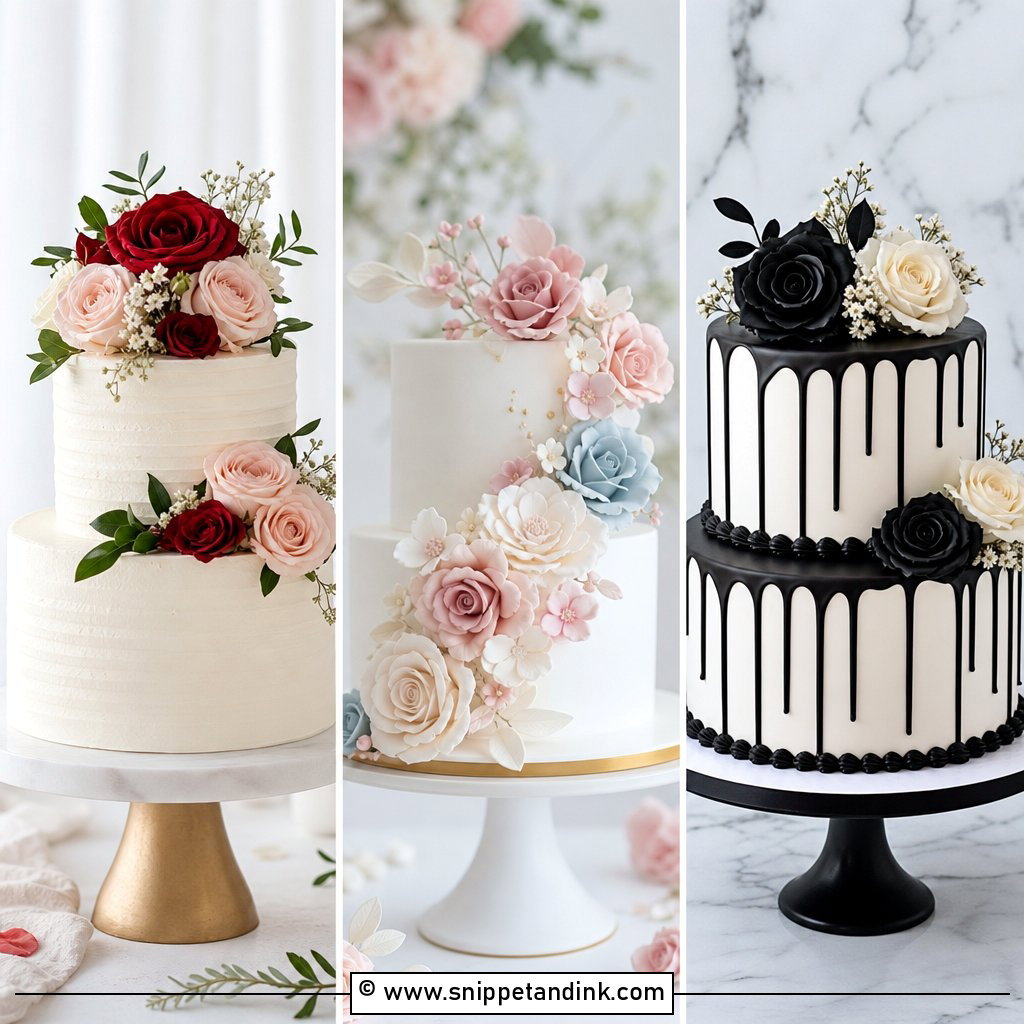
Flowers connect the cake to the bouquet and tables, whether they cascade down one side, wrap each tier or sit in tidy clusters. Fresh flowers look natural, while sugar flowers give me exact control over color and survive as a keepsake. Seasonal blooms make the most sense: peonies in spring, dahlias in late summer, roses most of the year, plus edible pressed flowers. A white, ivory or pale blush base lets them show. With fresh flowers I ask the florist to prep the cake stems separately, so nothing treated goes near the sponge.
11. Pearl Tiered Wedding Cake
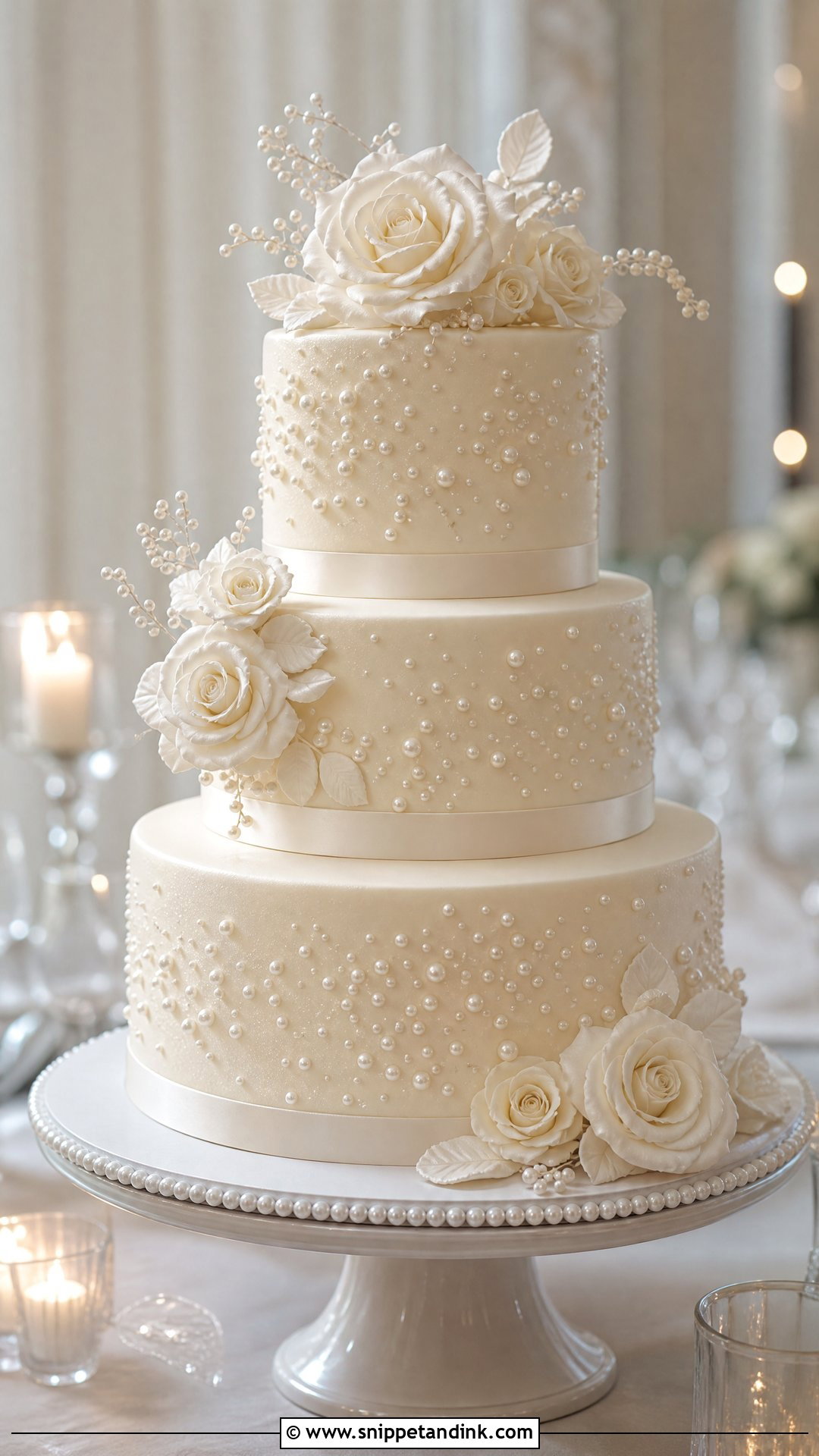
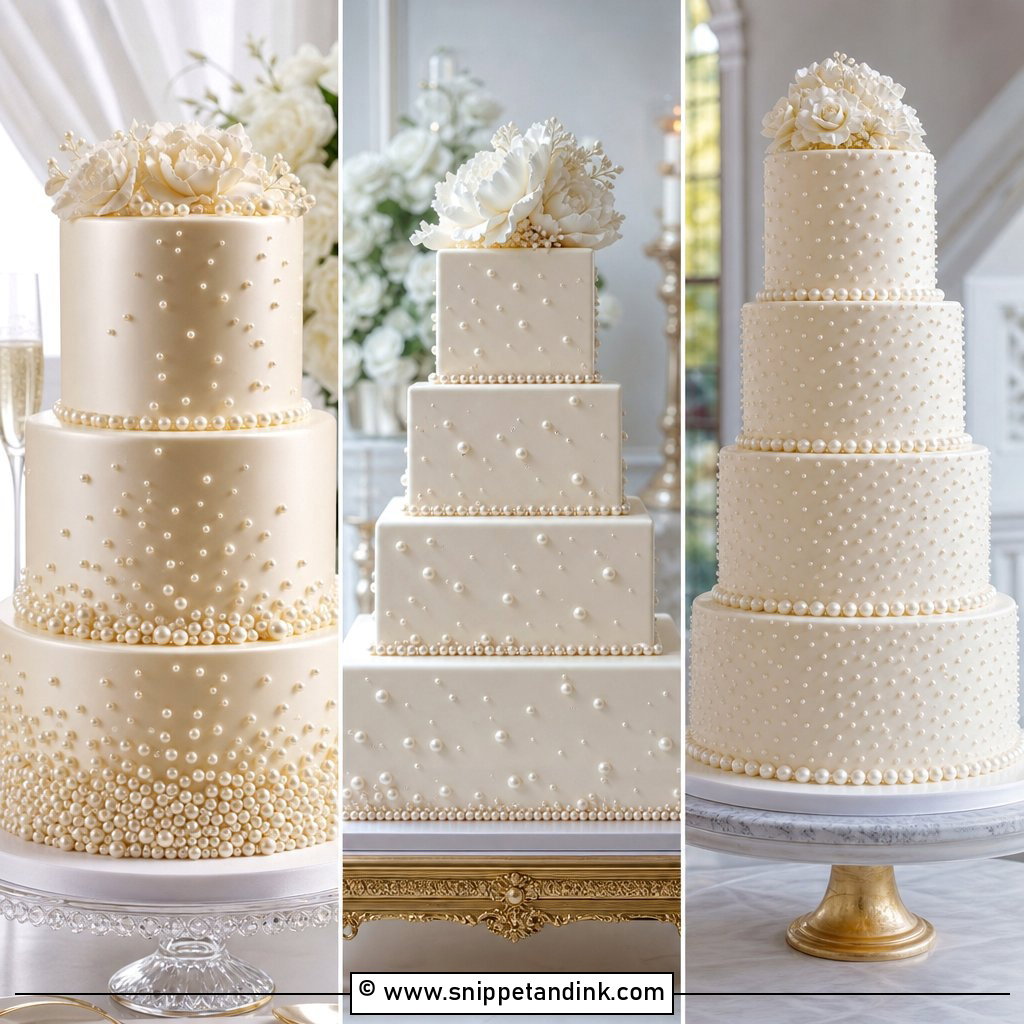
Edible pearls can be scattered over smooth buttercream, lined up as borders or set in neat patterns for a couture finish. I place them with tweezers and a dot of piping gel, one at a time, which is why a fully pearled tier costs more than it looks. Ivory, white, champagne or pale pink keep the sheen soft. Satin ribbon, sugar roses or a small topper add detail without crowding. It pairs naturally with a lace gown or a pearl-edged veil, and candlelit receptions show the shine best.
12. Tiered Wedding Cake With Cascading Flowers
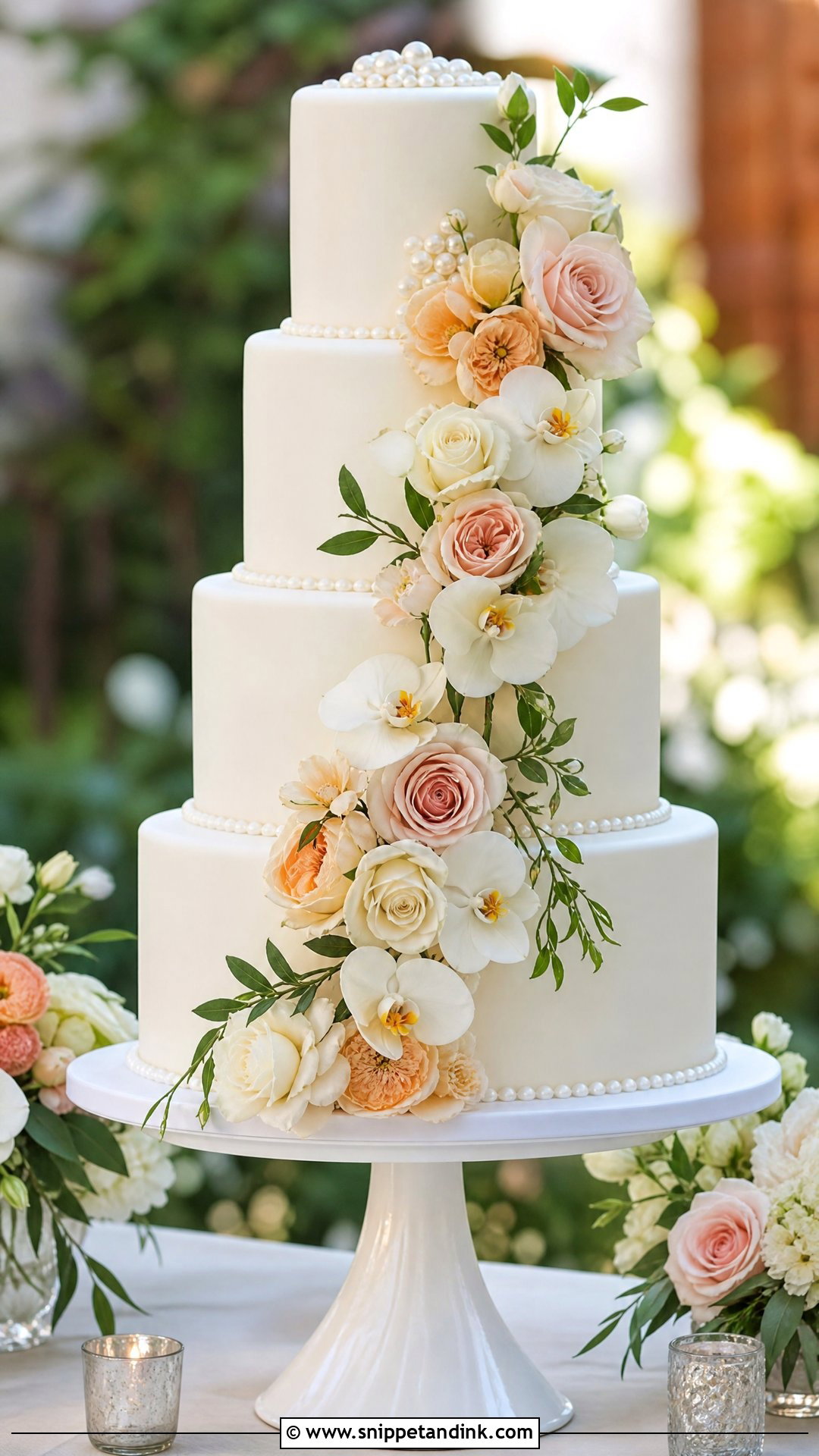
A cascade pulls the eye from top to bottom, which makes any cake look taller. The trail can drop straight down one side or spiral around the tiers. On three, four or five tiers the vertical line is strongest, and I sketch the curve first so the flowers land where the dowels aren’t. Wedding palette blooms tie it in: blush roses, ivory orchids, greenery, soft peach. Keep the frosting smooth so the flowers lead. Expect the florist to price a cake cascade like a small arrangement, because it takes about as long to build.
13. Tiered Wedding Cake With Fresh Fruit
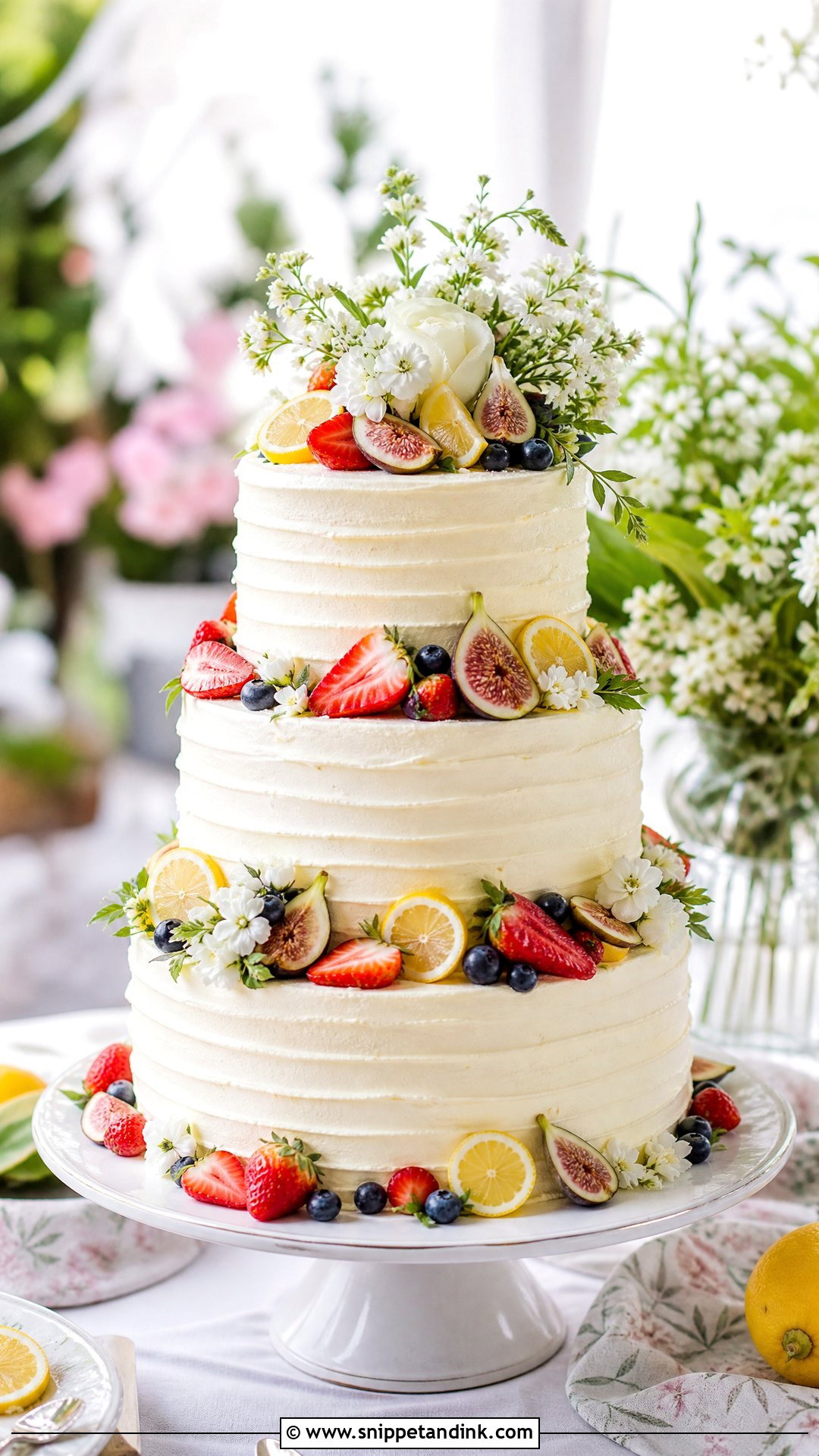
Fresh fruit makes a cake look delicious before anyone cuts it. Berries, figs, citrus, grapes, cherries or stone fruit can sit between tiers or in small clusters with flowers, which suits spring and summer weddings, garden receptions and brunches. Choose lighter flavors like lemon, vanilla, almond, berry or coconut so the fruit makes sense with what’s inside. The honest drawback is that cut fruit weeps and browns, so sliced apples and pears are out, and berries go on at the venue. A soft buttercream finish keeps it fresh rather than formal.
14. Black And White Tiered Wedding Cake
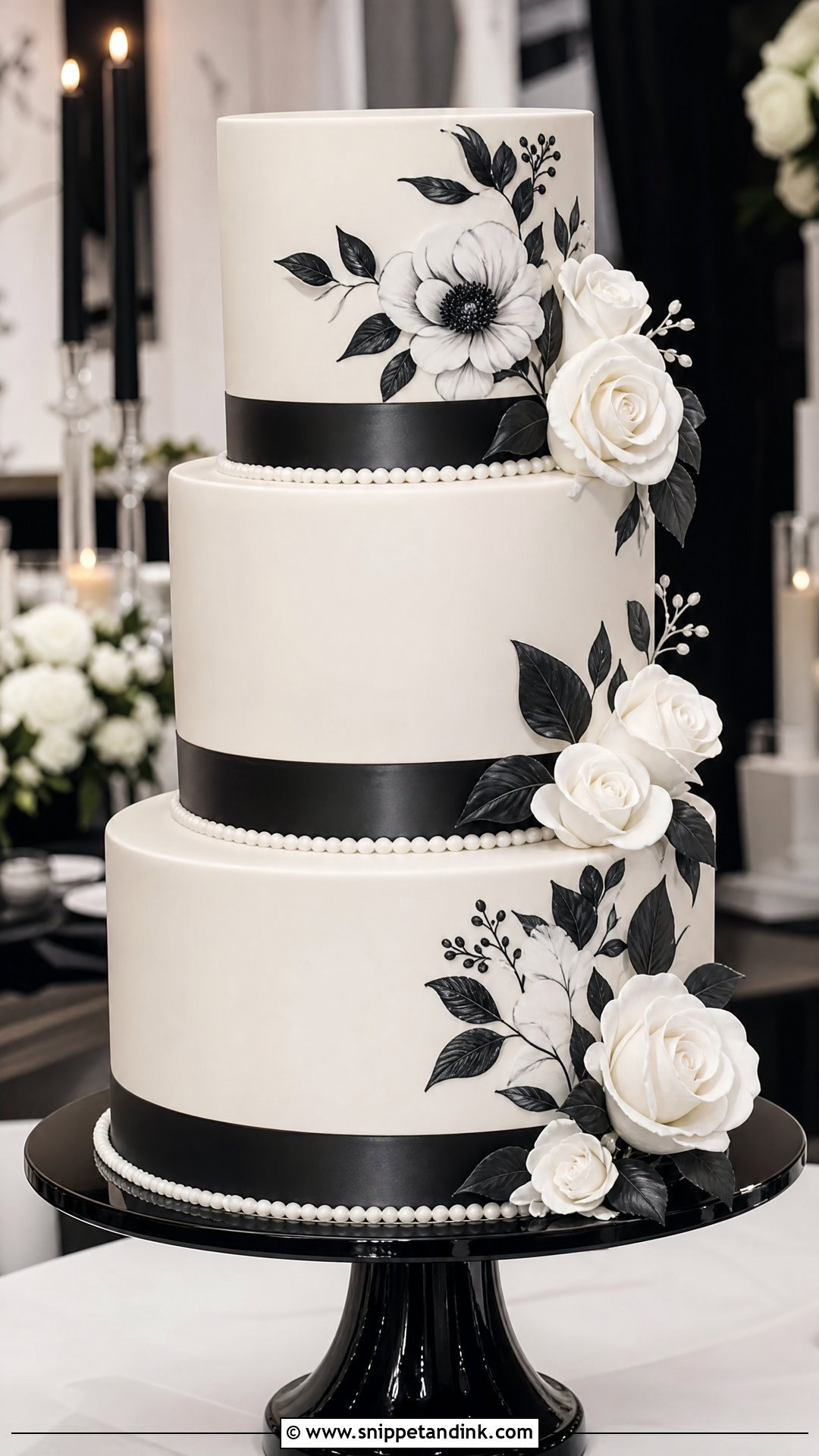
Black and white makes a bold centerpiece. It can be simple, with white tiers and black ribbon, or graphic, with black fondant panels, painted florals or monochrome piping, and formal evening weddings and city venues suit both. One strong design choice is enough; two patterns fight. White sugar flowers, black velvet ribbon or pearls soften it. Deep black frosting takes a lot of coloring and tends to stain mouths, so I keep the black on surfaces guests don’t eat or use black cocoa for a natural dark shade. Dark chocolate, vanilla bean, mocha or cookies and cream suit the inside.
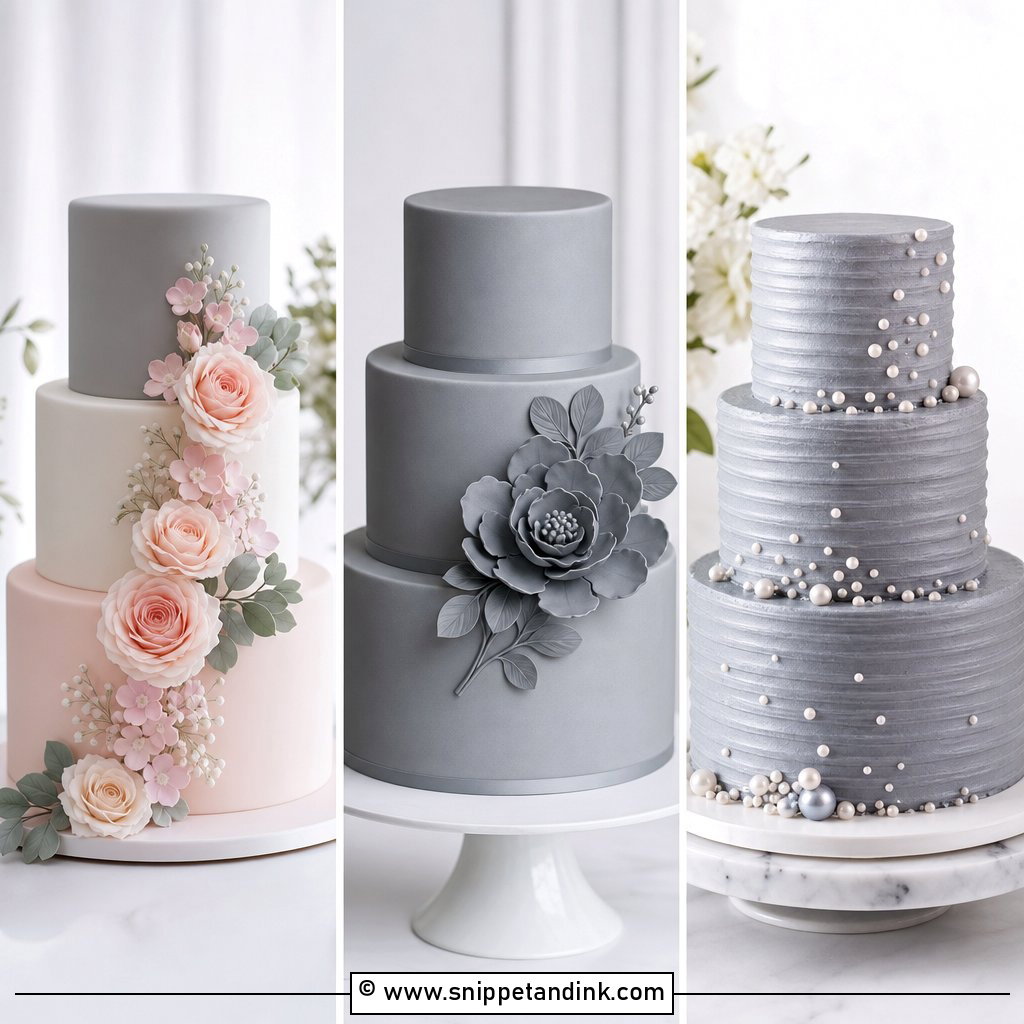

15. Blush Pink Tiered Wedding Cake
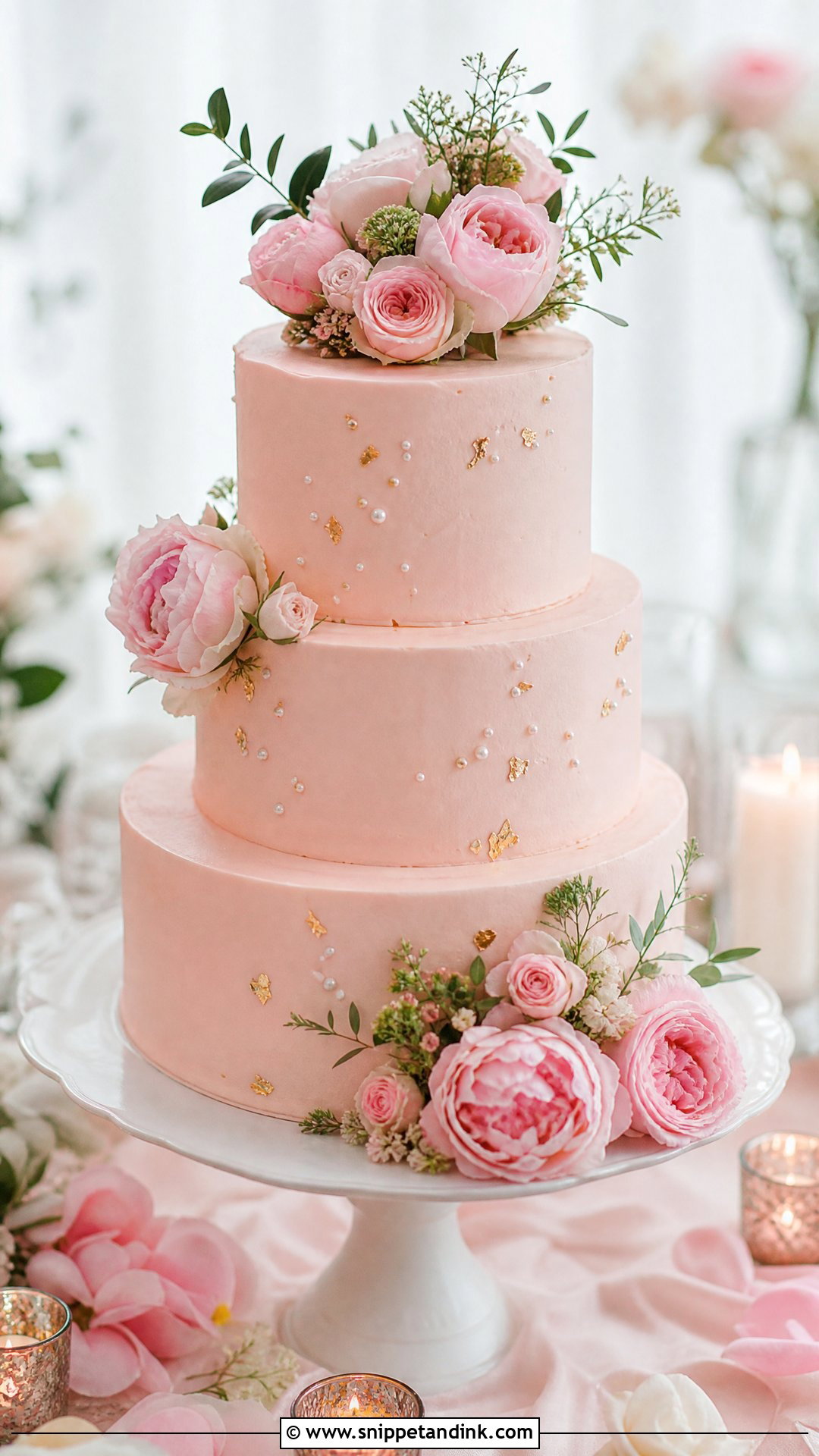
Blush runs from barely-there pink to a warmer rose, and I mix the exact shade against a fabric swatch from the bridesmaid dresses or the linens, since pinks shift between daylight and warm indoor bulbs. Smooth buttercream makes it modern; piped borders or sugar flowers make it vintage. Garden roses, peonies, ranunculus and light greenery suit it. Strawberry champagne, vanilla raspberry or almond cream match the color. It sits most naturally at a spring garden wedding.
16. Blue Tiered Wedding Cake
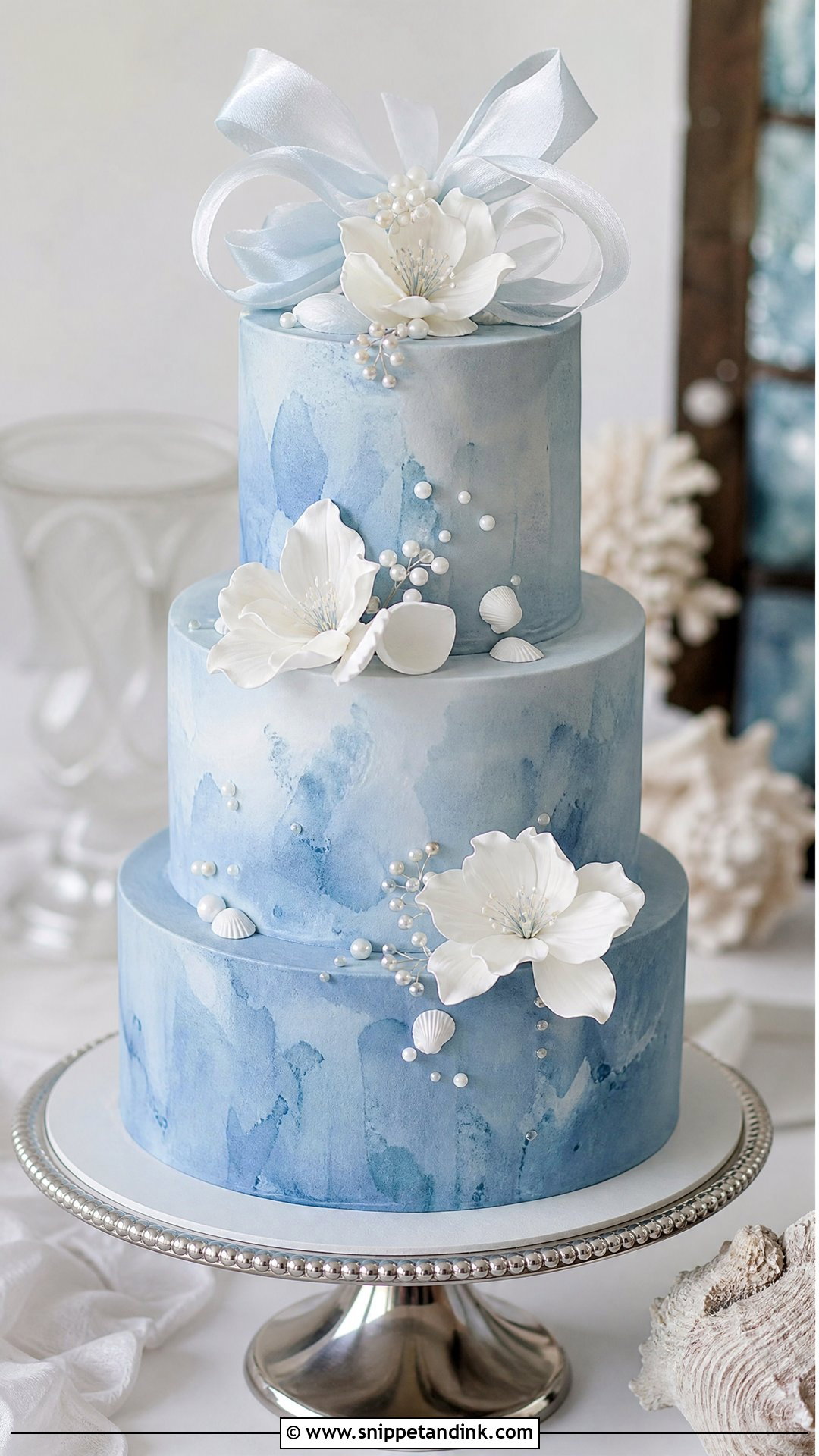
Pale blue is soft, dusty blue refined and navy formal, so the shade sets the mood of a blue tiered wedding cake before any decoration goes on. It can stay smooth, go watercolor, or carry white flowers and silver detail, and I usually match it to the bridesmaid dresses, stationery or linens. Deep navy takes so much coloring that it can leave a bitter aftertaste, so I keep navy to fondant accents or a single tier. Vanilla, lemon, blueberry or almond suit the cool palette.
17. Green Tiered Wedding Cake
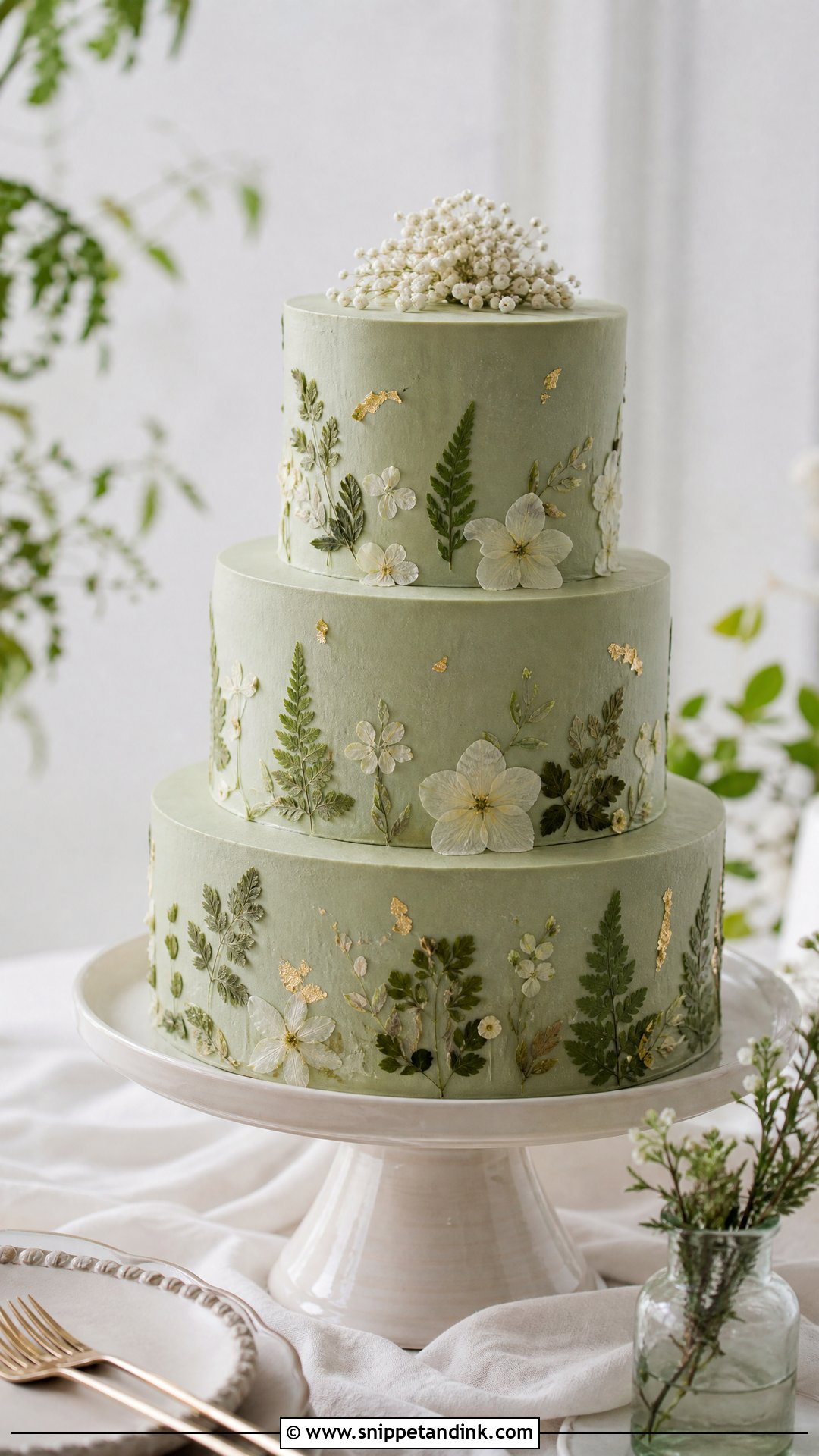
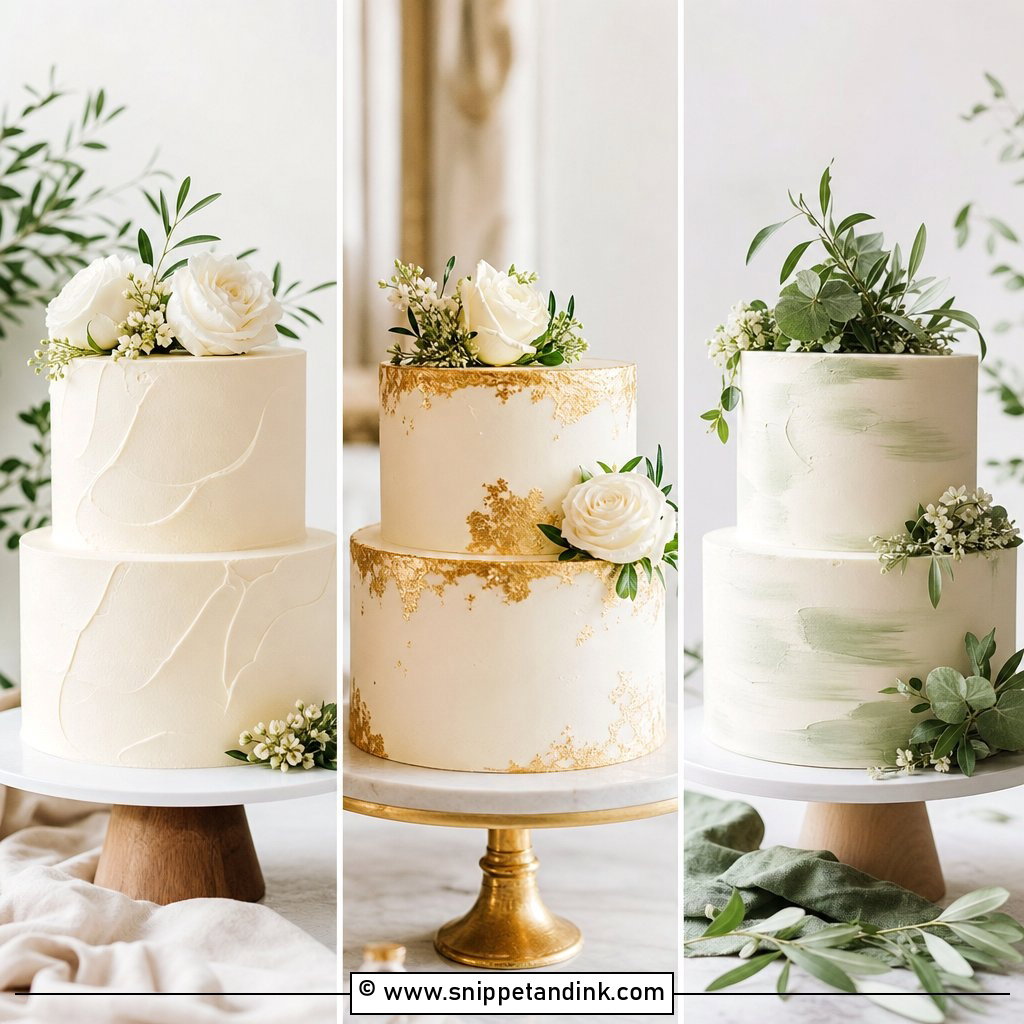
Sage green is the most adaptable green I work with, soft enough for nearly any palette, while olive and emerald are bolder and suit formal receptions. White flowers, gold detail, pressed leaves or buttercream texture all pair well. Green also lets flavor and color match: pistachio and matcha tint frosting naturally, though matcha can fade toward khaki in strong light. Smooth finishes look modern, textured ones organic. Garden and botanical venues are where it feels most at home.
18. Tall Tiered Wedding Cake
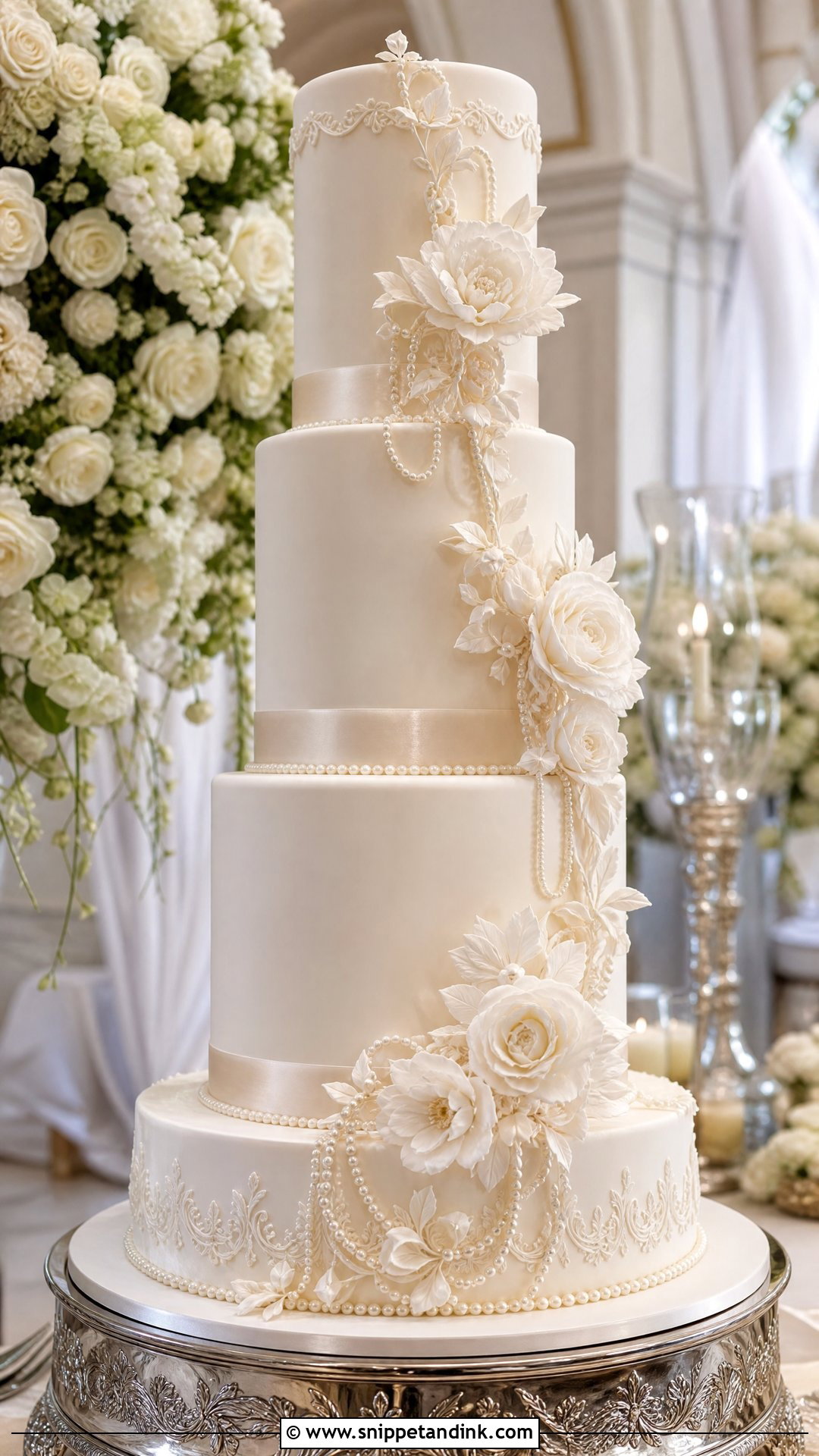
Tall tiers, often double the usual height, give a three tier cake the presence of five. The trade-off is structure. Each double-height tier is really two cakes on separate boards with their own supports, and that’s where I spend the extra time. Clean lines suit it: smooth fondant or buttercream, with vertical flowers, ribbon, pearls or textured panels. Set it on a sturdy stand in an open spot where guests can walk around it. Double-height tiers also serve more, so check whether you really need that many portions.
19. Separated Tier Wedding Cake
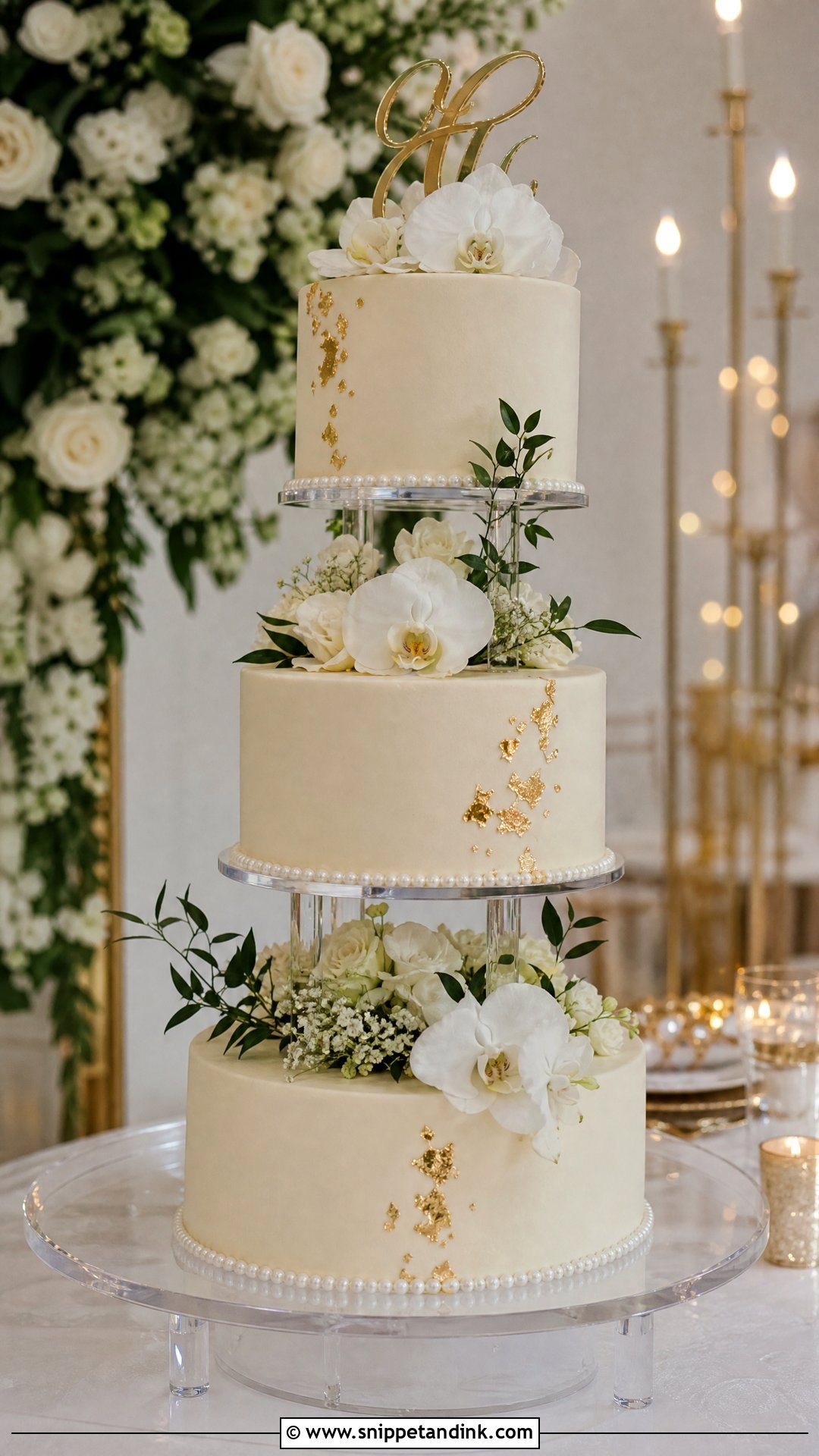
Separated tiers use clear spacers, floral risers or decorative stands to open up gaps between tiers. The look is lighter and more architectural than a stacked cake, and the gaps can hold flowers, greenery, pearls or acrylic supports. Structurally each tier sits on its own plate with pillars or a central rod, which actually makes it easier to transport than a tall stacked cake. Keep the frosting clean so the structure reads; ivory buttercream or white fondant with fine floral detail works. Flowers in the spacers sit without water for hours, so I ask for hardy varieties there.



20. Five Tier Wedding Cake
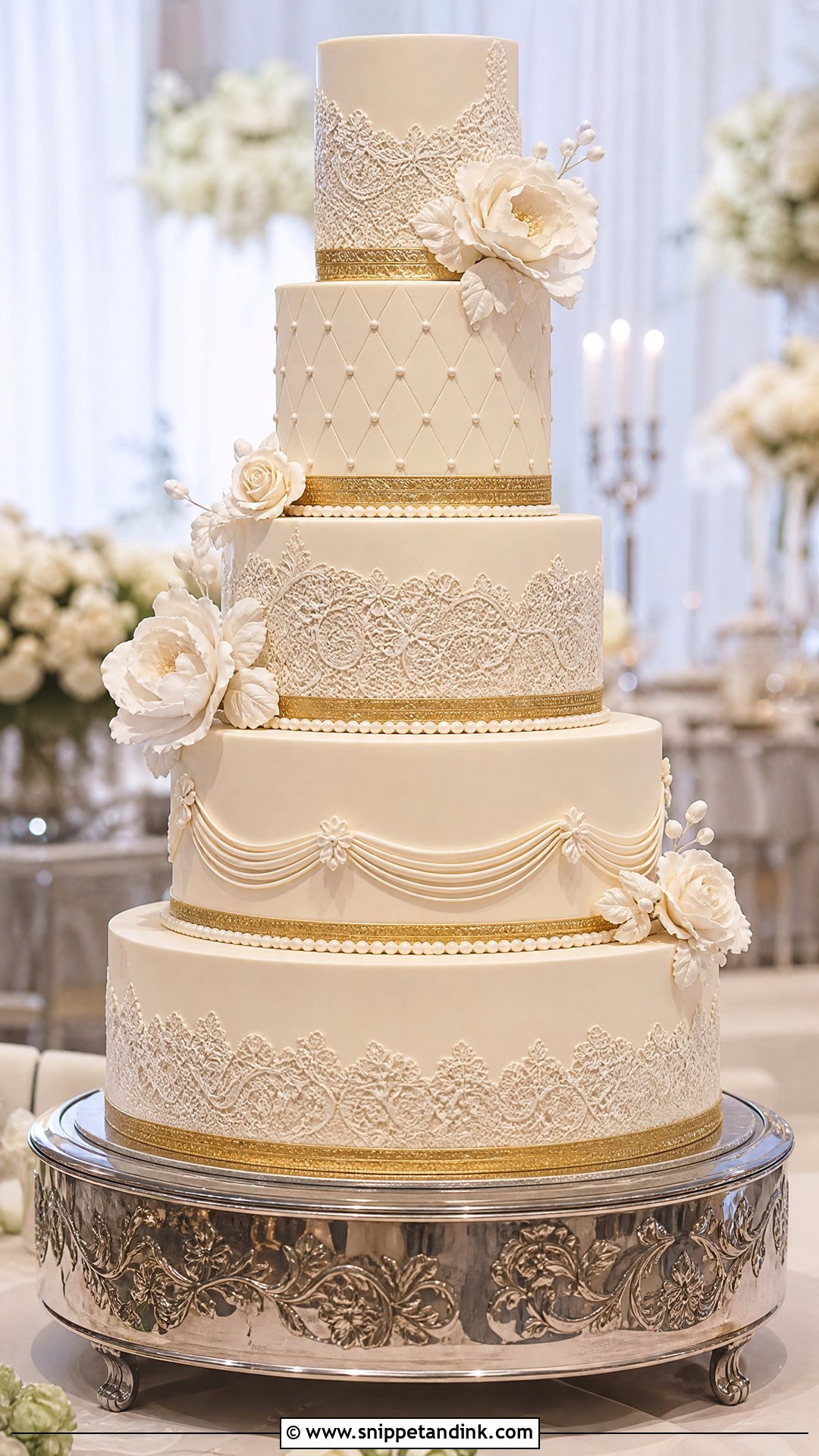
Five tiers is a statement for a large wedding, and it needs organizing. Repeating one detail on every tier, such as piped borders, sugar flowers or metallic bands, keeps it calm. Mixing textures can work, say one lace tier, one smooth and one floral, provided the colors stay consistent. Ivory, white, champagne or soft pastels suit the scale. A cake this size is assembled at the venue and takes a while to stack and finish, so the table has to be ready well before guests arrive. Light it properly, too, because a tall cake in a dark corner loses its impact.
What Holds a Tall Cake Upright
Every tier above the bottom one sits on its own thin cake board, and that board rests on dowels or wide straws pushed into the tier below and cut level with the frosting. The sponge carries almost no weight. It’s why a short dowel or an uneven table shows up as a leaning cake within the hour.
- Four and five tier cakes usually get a central dowel driven down through the boards, so the tiers can’t slide.
- Separated designs use plates and pillars or a central rod instead of stacking.
- Very tall or heavy cakes travel in pieces and are assembled on the cake table.
From your side, that means a sturdy, level table that won’t be moved once the cake is up, a clear route from the loading door, and a time slot for assembly. I also ask venues to keep the cake away from the busiest walkway. Cakes rarely fall on their own; they fall when someone backs into the table.
It’s also worth asking who cuts the cake and how. Caterers dismantle a stacked cake tier by tier, lifting each board off its dowels before slicing, and the dowels and boards have to be pulled out before anything reaches a plate. If your venue staff haven’t cut a tiered wedding cake before, I write the order down for them and leave it with the cake.
Bigger Isn’t the Brief
Tiered cakes can go classic, modern, rustic or bold, and the biggest one is not automatically the best. The right cake fits your guest count, the venue and the mood you want at the reception, and a two tier cake done well looks better than five tiers done in a hurry. Save the styles that feel like your wedding, then talk to your baker about structure, servings, flavors and seasonal decoration before you commit. I’d always rather redesign at the consultation than on delivery day.
You'll Like These Ideas:







Leave a Reply