
White and pink is the palette I get asked for more than any other, and it’s also the one that goes wrong in the quietest ways. A blush that looked delicate on a swatch can read peach under warm reception lighting, and a white buttercream made with real butter is never truly white. Get those two things right and the rest is a matter of mood: smooth tiers and roses for a classic table, sculptural shapes for a modern room, vintage piping and cherries if you want the cake to make people grin. Below are twenty designs I’d happily build, with notes on how each one behaves once it leaves my kitchen.
Why Pink Frosting Changes Color Between the Tasting and the Reception
Pink is the trickiest color I tint, and most of the surprises happen after the cake is finished. Buttercream colors keep developing for a few hours after mixing, so a shade that looks right at noon can be a step darker by evening. I mix pinks the day before I decorate and judge them the next morning, never straight out of the bowl.
Light is the second problem. Some pink and red food colors fade when they sit in strong daylight or under bright display lights, and the side of a cake facing a sunny window can lose its blush while the back stays put. If your cake table is near glass, tell your baker; it changes how the color is mixed and where the table should stand.
Then there is the white itself. Real butter makes buttercream ivory, which turns pale pink slightly peachy next to it. If you want a cool, crisp white beside a true blush, ask for one of these:
- Clear vanilla instead of brown vanilla extract, so the frosting isn’t tinted from the start.
- A tiny touch of violet color to cancel the yellow, which is an old decorator’s trick and needs a light hand.
- A partial swap to shortening or a fondant outer layer, accepting a slightly different taste for a brighter white.
- A side-by-side swatch at your tasting, looked at in daylight and under warm bulbs before you sign off.
Bring something real to match: a bridesmaid dress offcut, a ribbon, a photo of the exact flowers. Pink names mean nothing between vendors. Your florist’s blush and my blush might be two different colors.
1. White And Pink Floral Wedding Cake
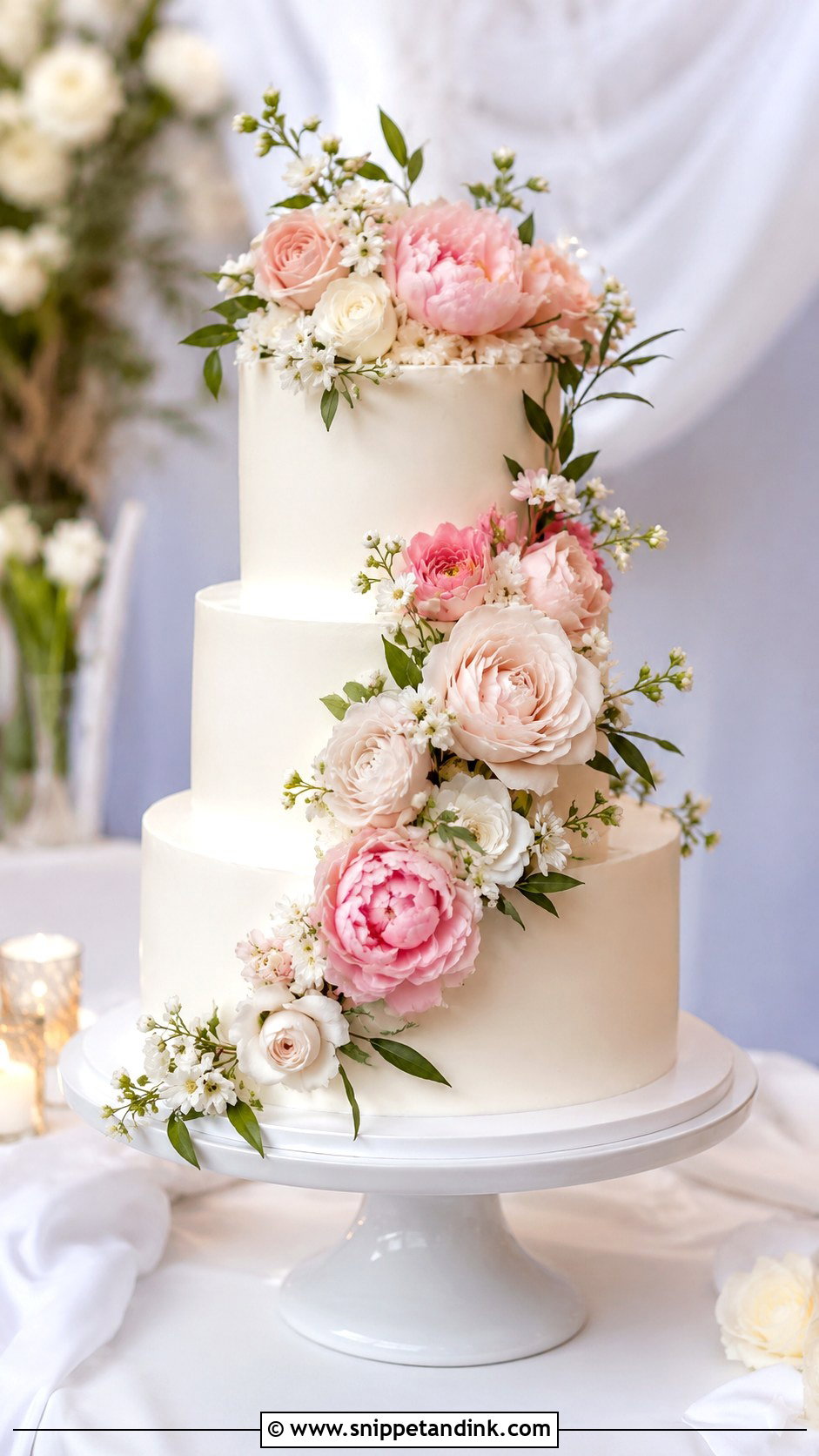
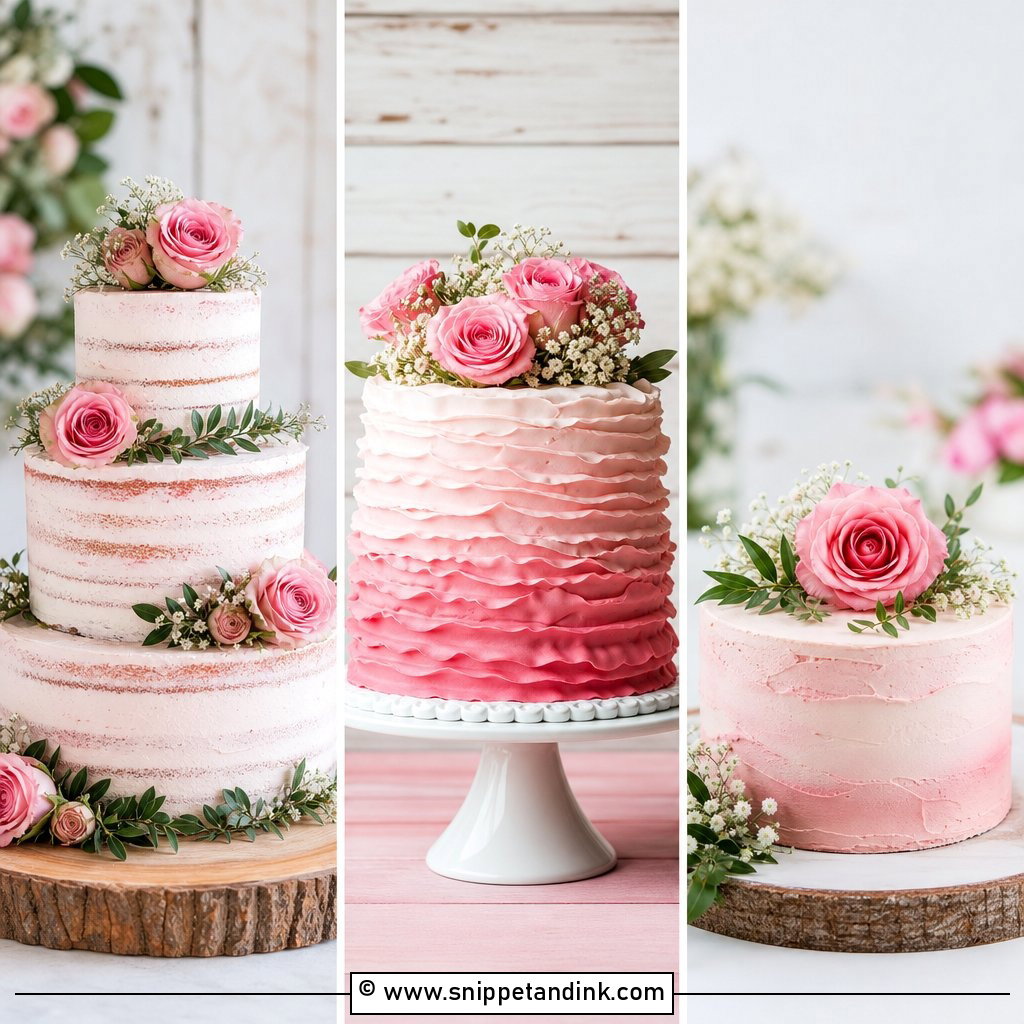
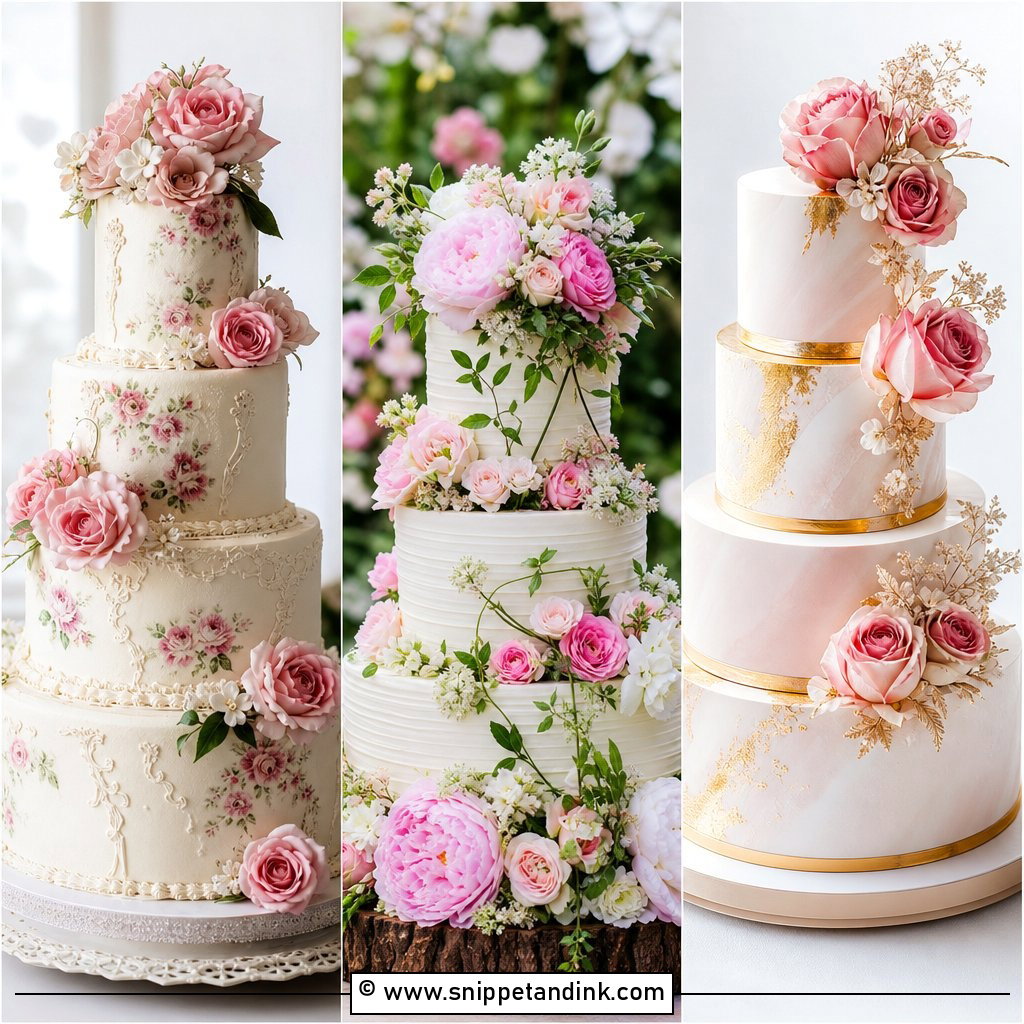
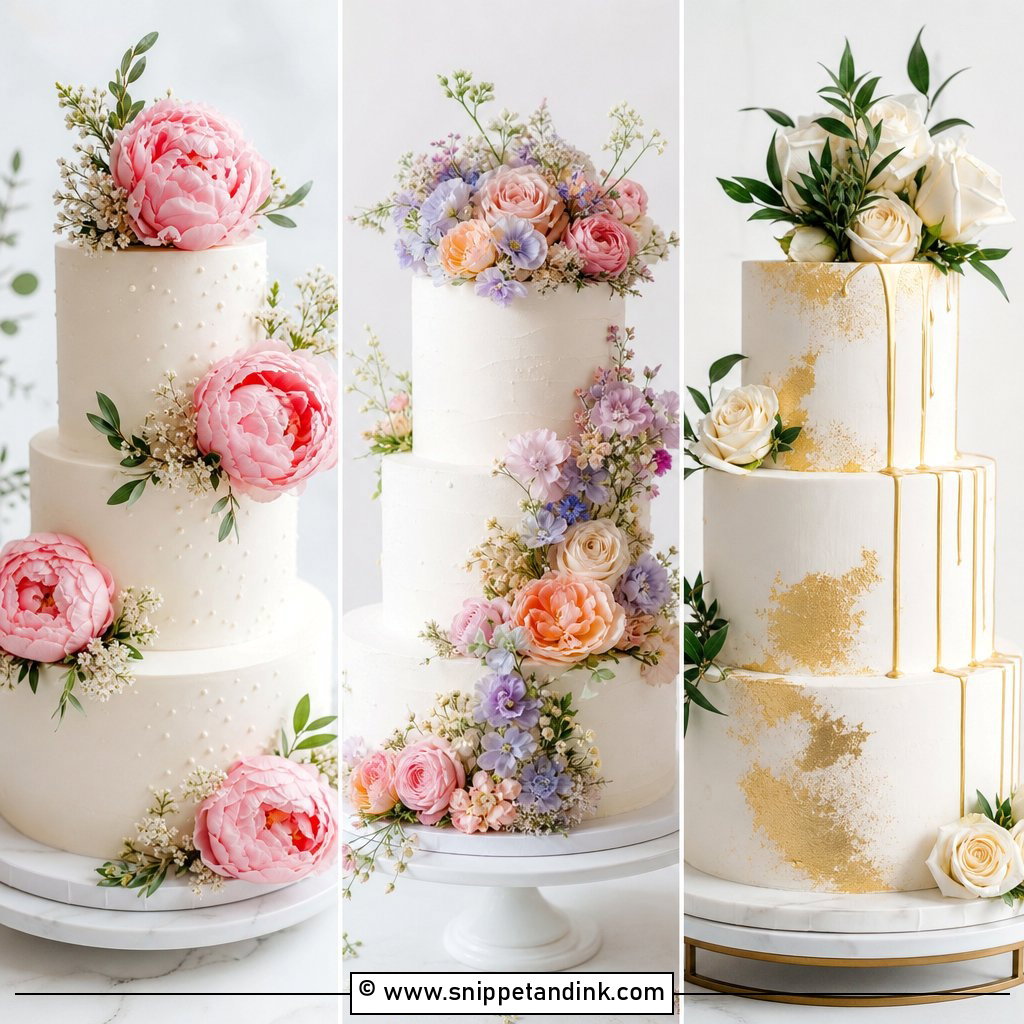
Floral is the safest place to start, because the flowers do the romantic work and the cake underneath can stay plain. I like smooth white buttercream or fondant as the base with pink blooms in clusters rather than scattered singly; roses, peonies, ranunculus and sweet peas give you different shapes, so a cluster never looks like a row of identical buttons. A diagonal cascade across the tiers adds movement. Gathering everything at the base is calmer and much easier to transport, since nothing on the upper tiers can shift in the van. Flavor is wide open here; vanilla, almond, lemon and pink champagne all sit well under it.
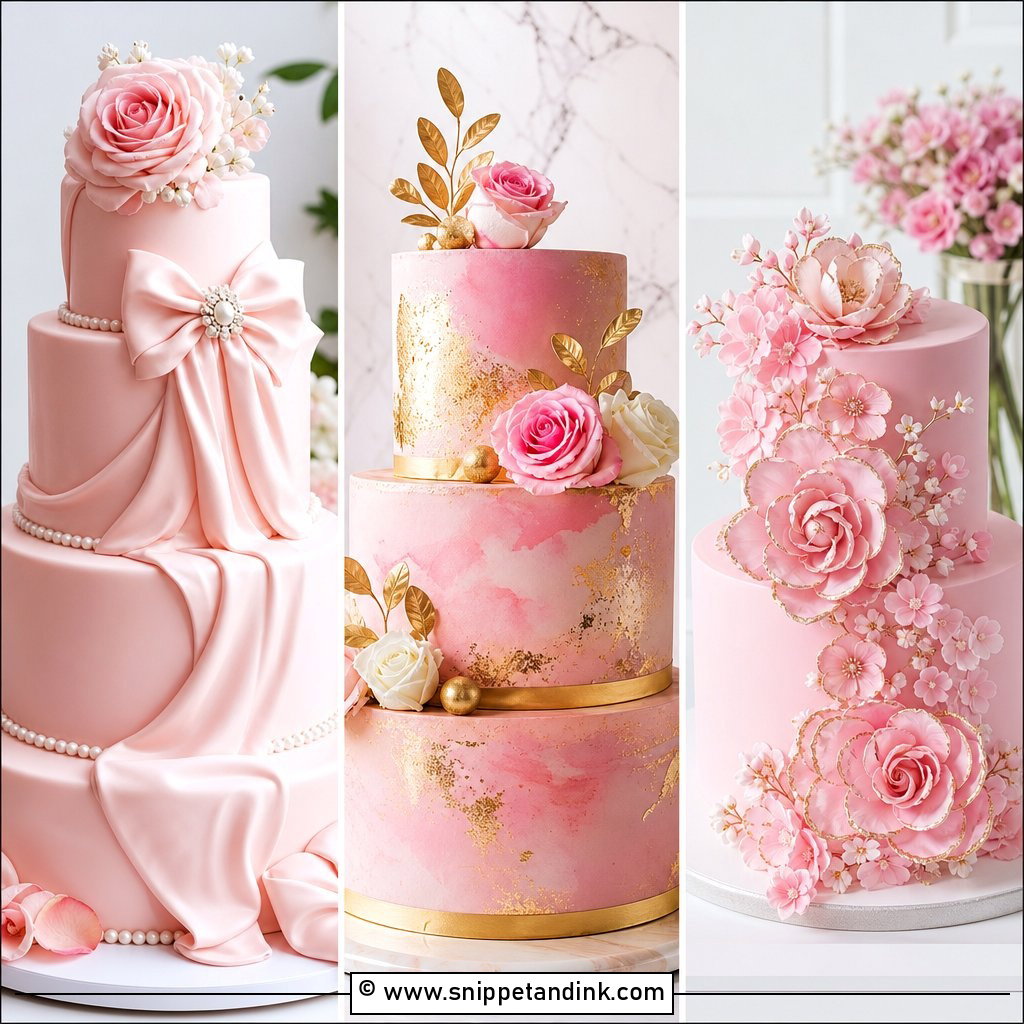
2. White And Pink Rose Wedding Cake
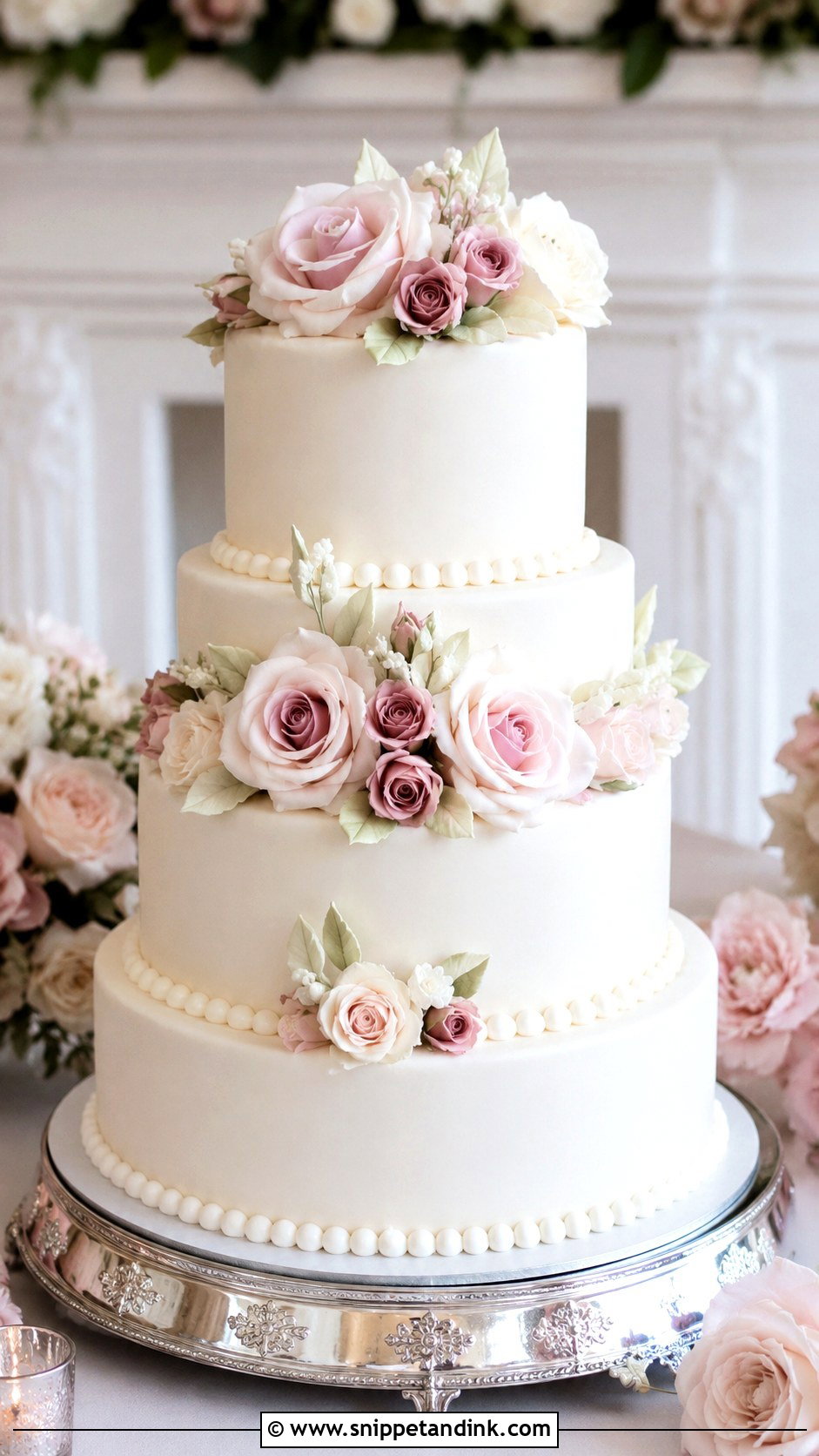
Roses are the bloom most couples picture first, and the pink is what keeps a rose cake from feeling stiff. The shade sets the tone: pale blush reads formal, dusty pink leans vintage, and a deeper rose gives you real contrast against the white. On a three-tier cake I tuck rose clusters into the seams between tiers, which also hides the joins. Tiny piped pearls or a thin pink ribbon at each base finish it off. If you go with ribbon, ask your baker to line it with a strip of acetate or wax tape, otherwise butter from the frosting seeps through and leaves greasy spots by the time you cut.
3. Blush Pink And White Wedding Cake
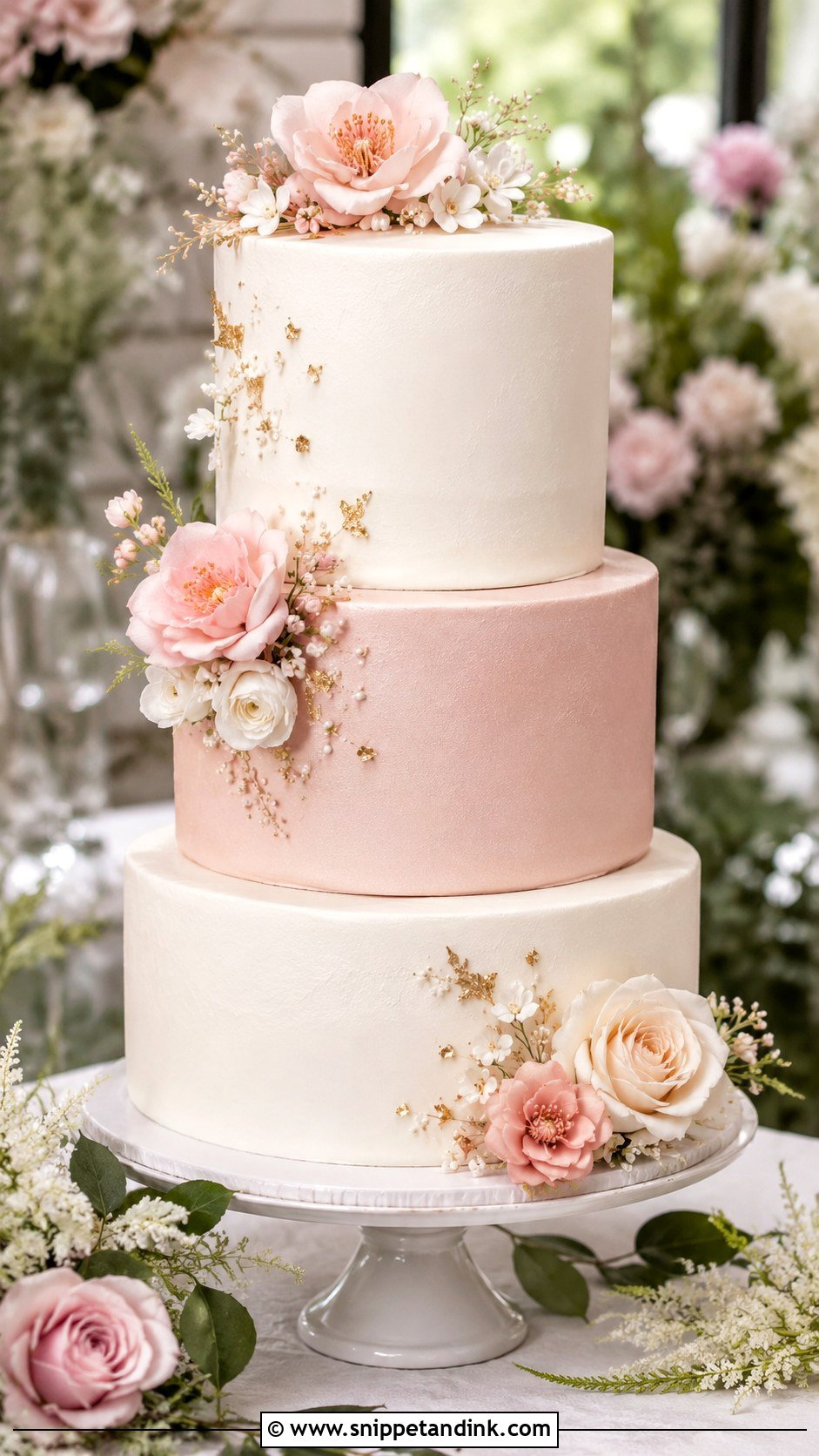
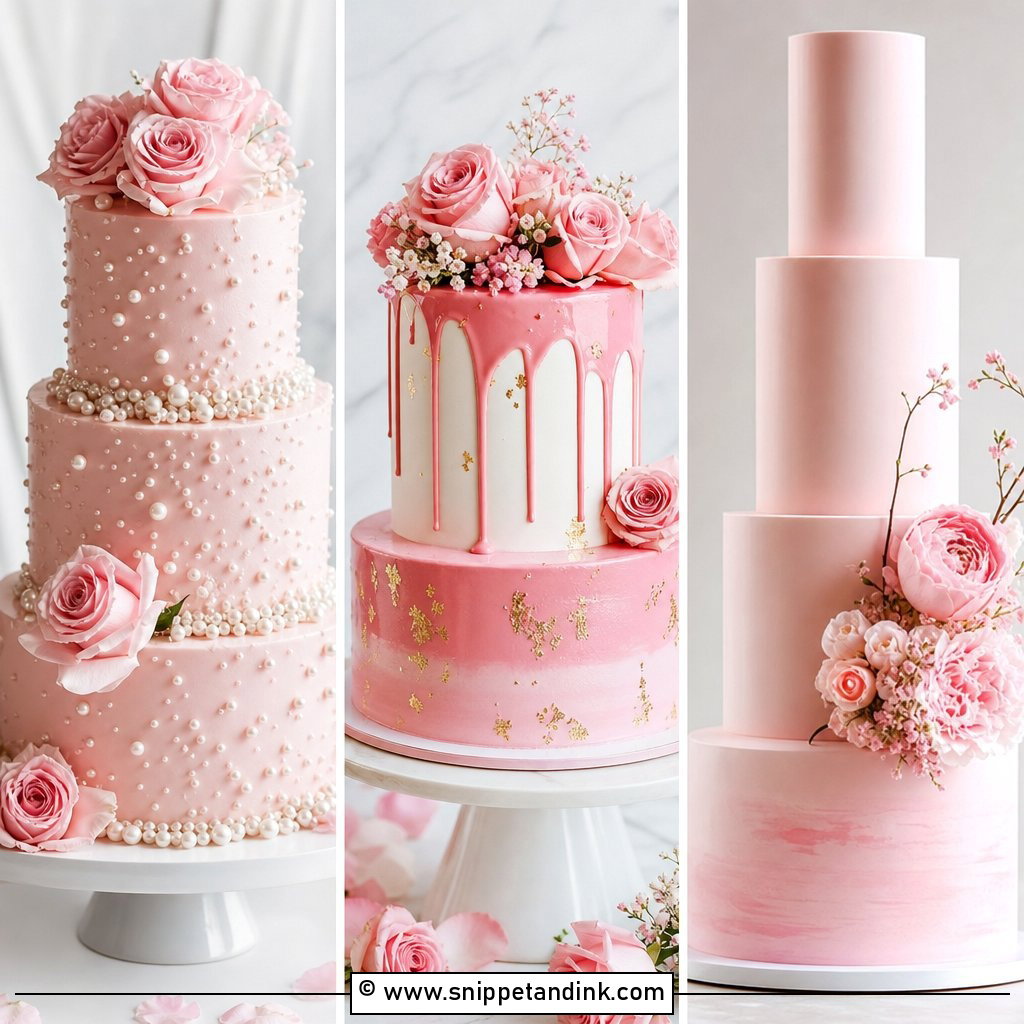
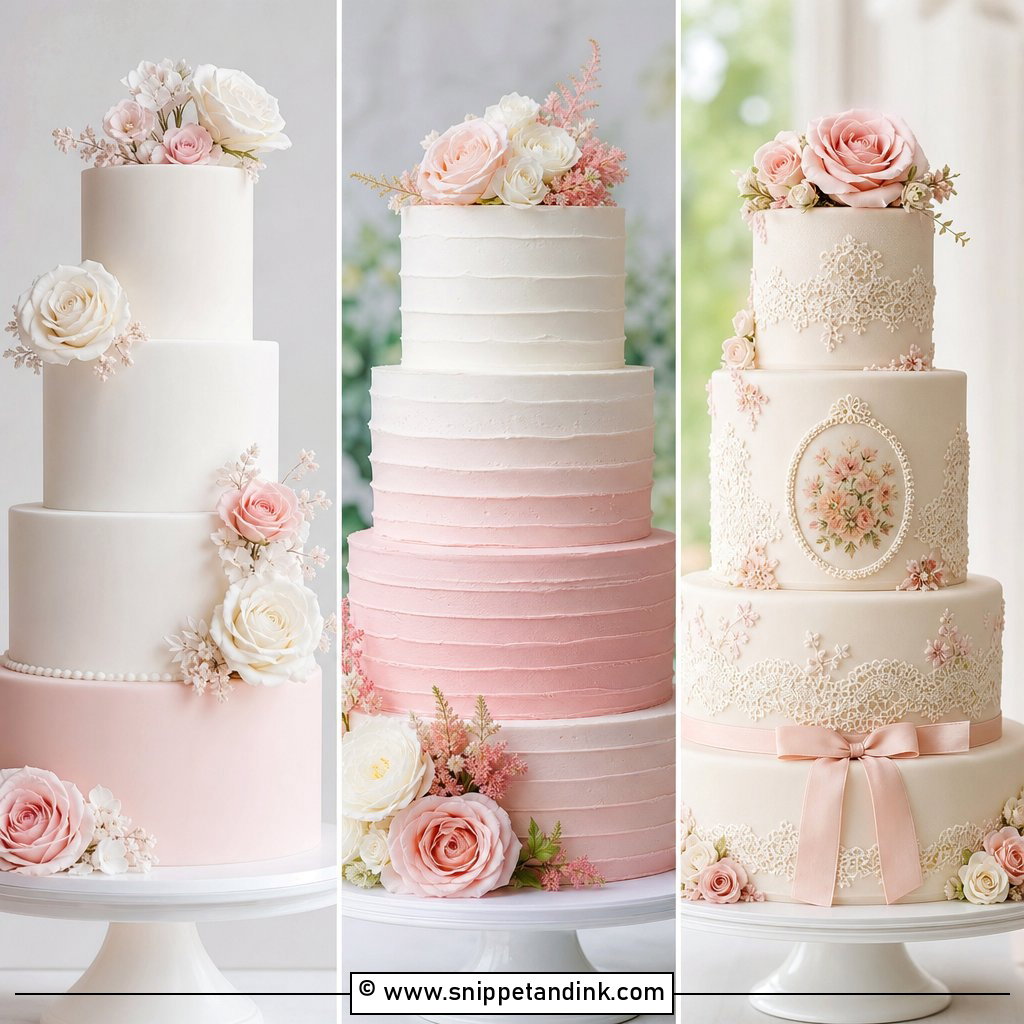
Blush is the shade I steer most people toward when they’re nervous about pink, because it can’t really shout. One pale blush tier between two white ones adds just enough color. You can also ask for blush watercolor frosting, blush sugar flowers or a blush drip over white buttercream. The catch with very pale pinks is that a few drops of gel color can swing them toward salmon, so I always mix a test patch and let it sit for an hour; buttercream colors deepen as they rest. Gold accents and greenery give it depth, and pink champagne or raspberry cream inside keeps the theme going.
4. White And Pink Buttercream Wedding Cake
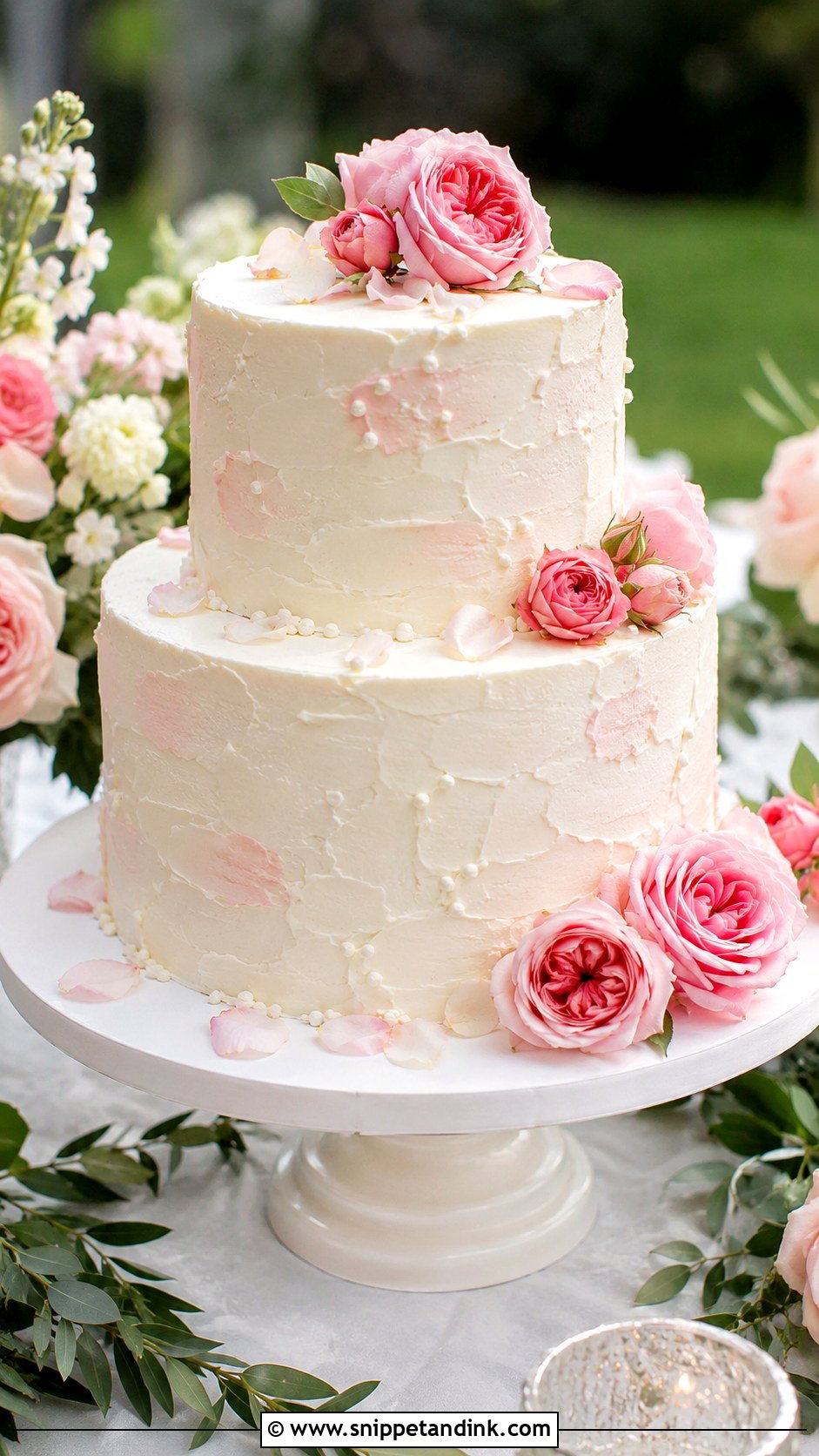
Buttercream gives you a softer, more relaxed finish than fondant, and it tastes better to most guests. The trade-off is heat. An all-butter frosting starts to slump in a warm room, so for outdoor summer receptions I switch to a Swiss meringue buttercream or a recipe with some shortening, and I keep the cake indoors until close to the cutting. White buttercream with pink florals is the classic version; a pink ombré rising from the bottom tier is the playful one. Lightly textured sides forgive small bumps from travel far better than a glass-smooth finish.
5. White And Pink Fondant Wedding Cake
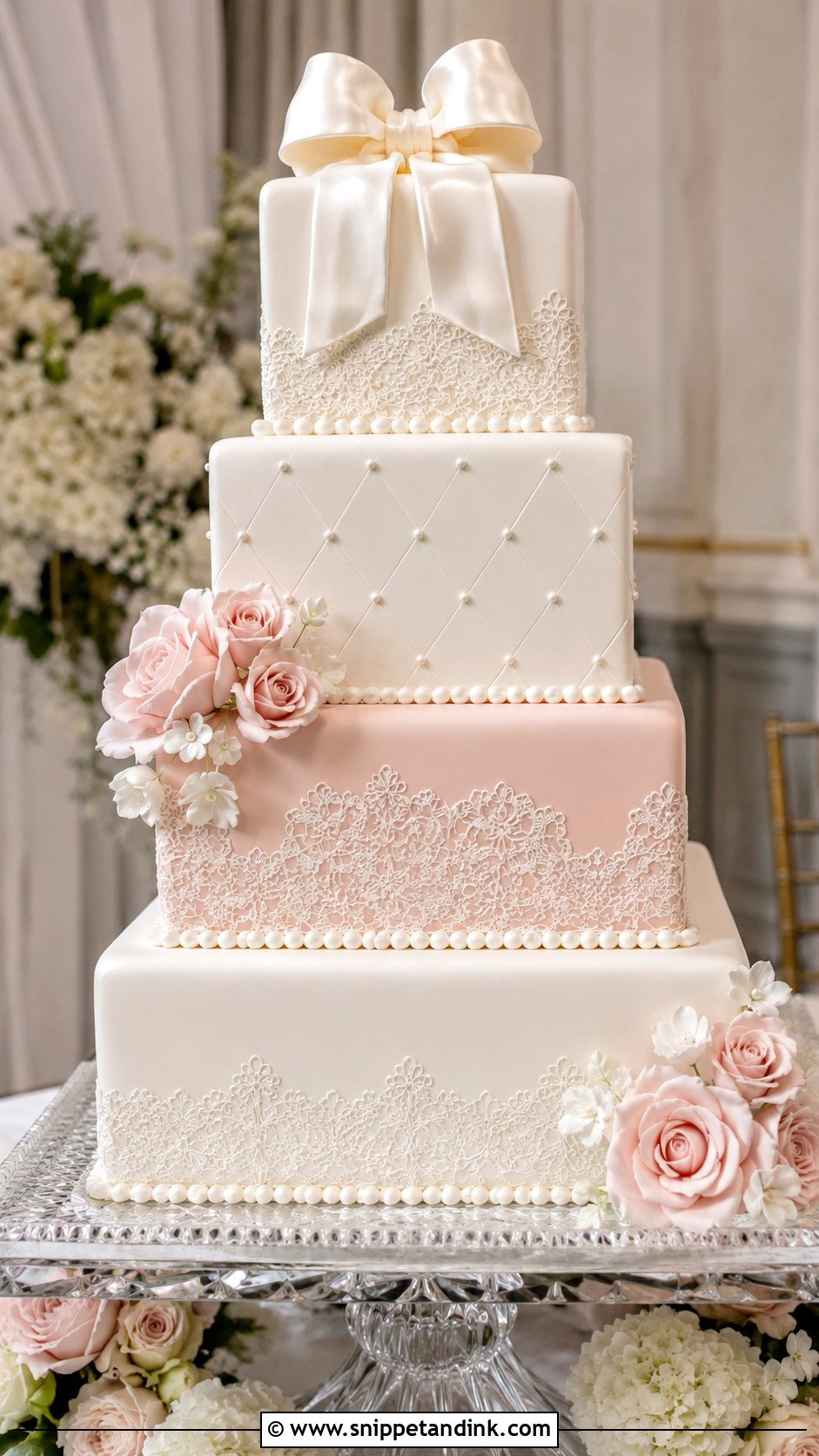
Fondant is what I reach for when a couple wants sharp edges and a surface that stays crisp for hours. A white and pink fondant wedding cake gives you a smooth canvas for painted flowers, sugar bows, lace impressions or pearl borders, and it holds its shape on tall tiers. One soft pink tier breaks up the white without crowding it. Two honest warnings: fondant sweats if a chilled cake goes straight into a humid room, and plenty of guests peel it off and leave it on the plate. Under it, I always put a proper ganache or buttercream layer so the cake still tastes like something.
6. White And Pink Pearl Wedding Cake
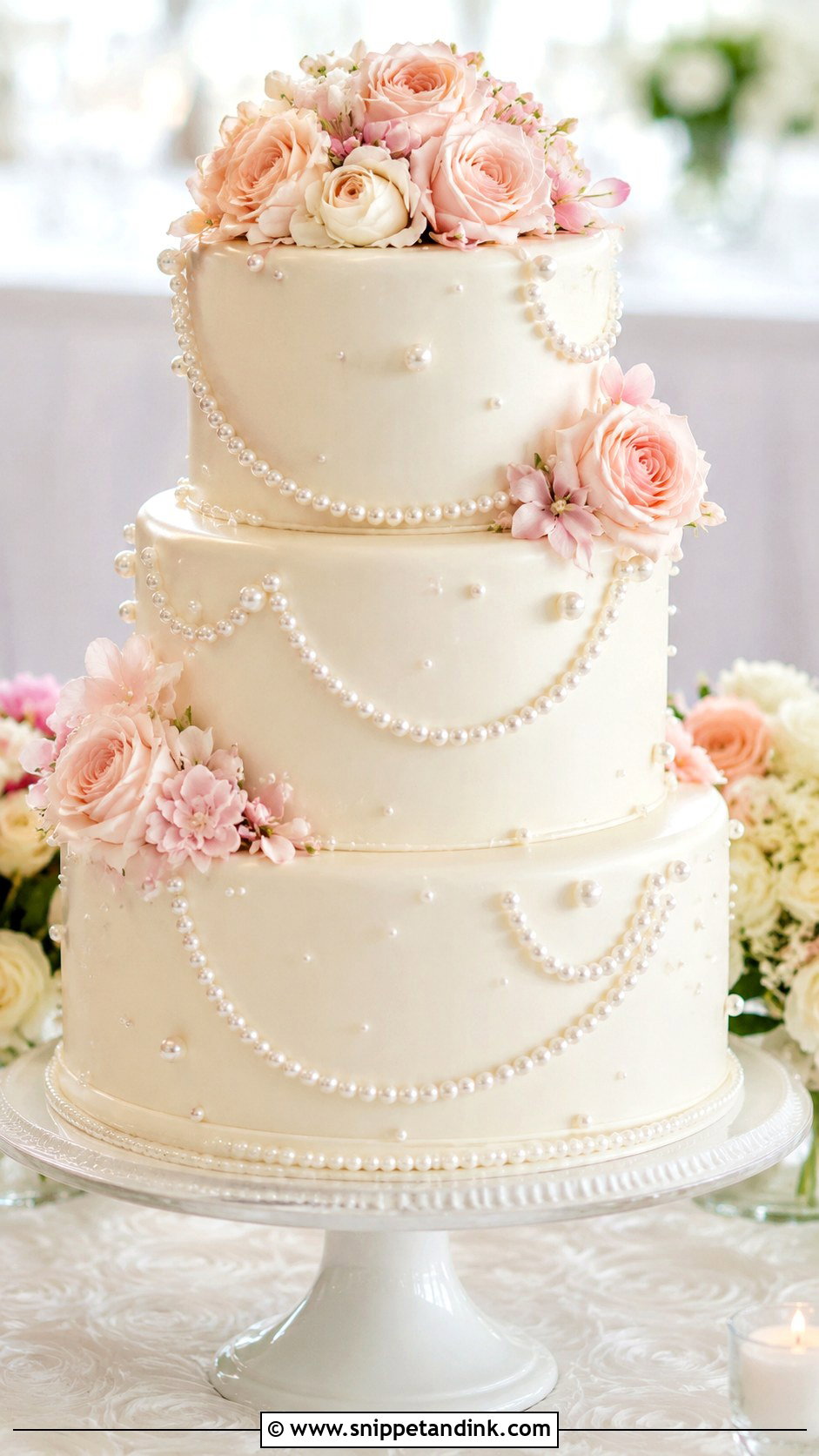
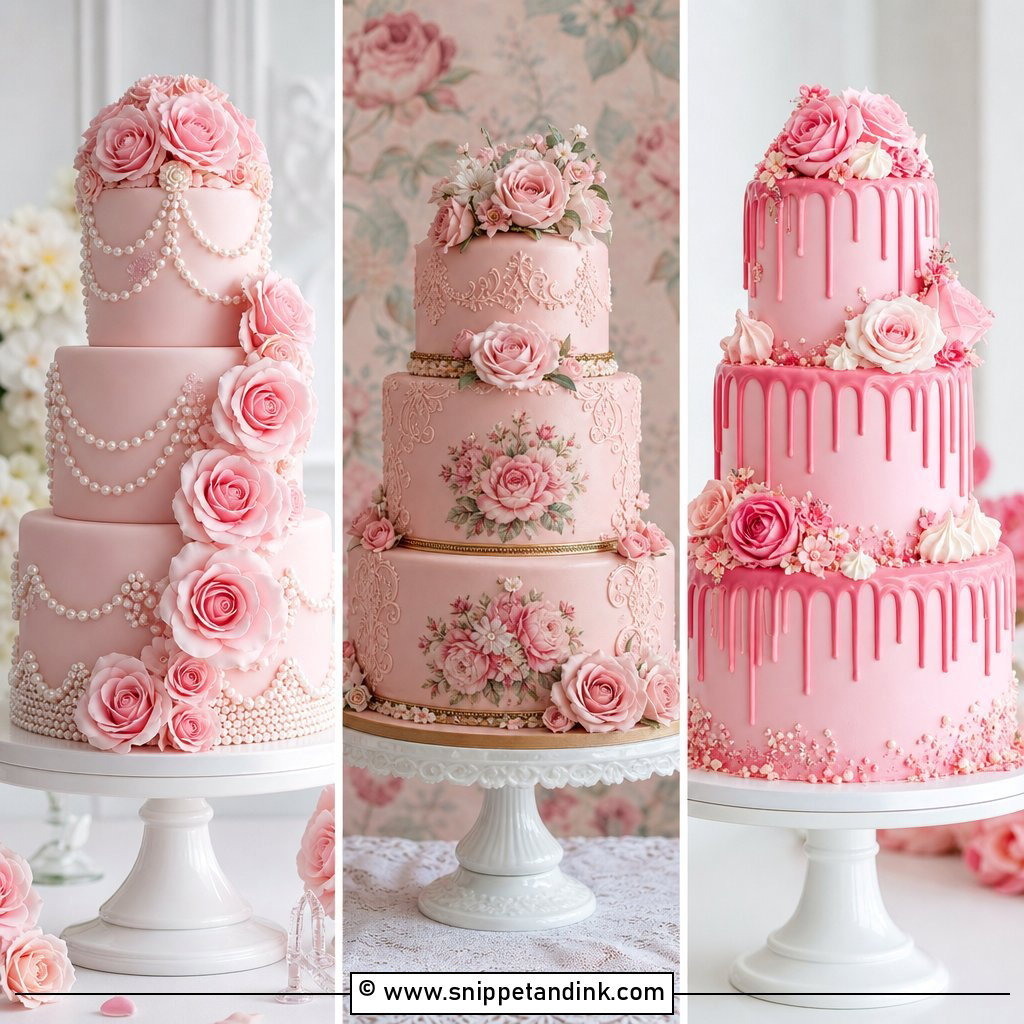
Edible pearls add a little shine that catches the light without needing any color at all. You can scatter tiny pearl sprinkles over the tiers, pipe a pearl border around each base, or set larger dragées among blush flowers. I pipe border pearls from the same buttercream as the cake rather than using hard candy pearls, because the hard ones can crack a tooth and some are labelled decorative only. Let the pink come through sugar roses, a pale middle tier or a soft drip. Smooth frosting matters here; pearls on bumpy sides look like a mistake.
7. White And Pink Vintage Wedding Cake
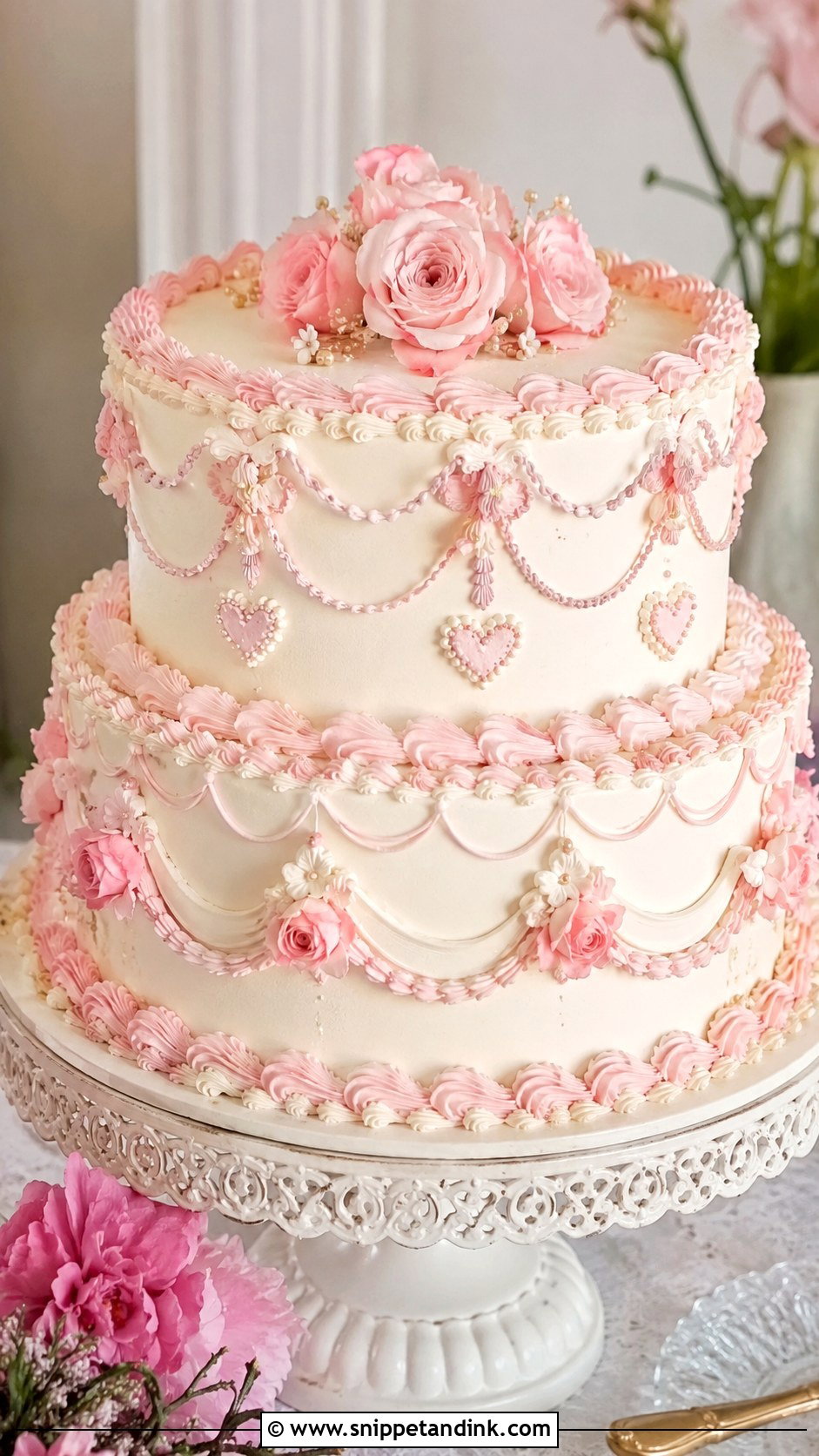
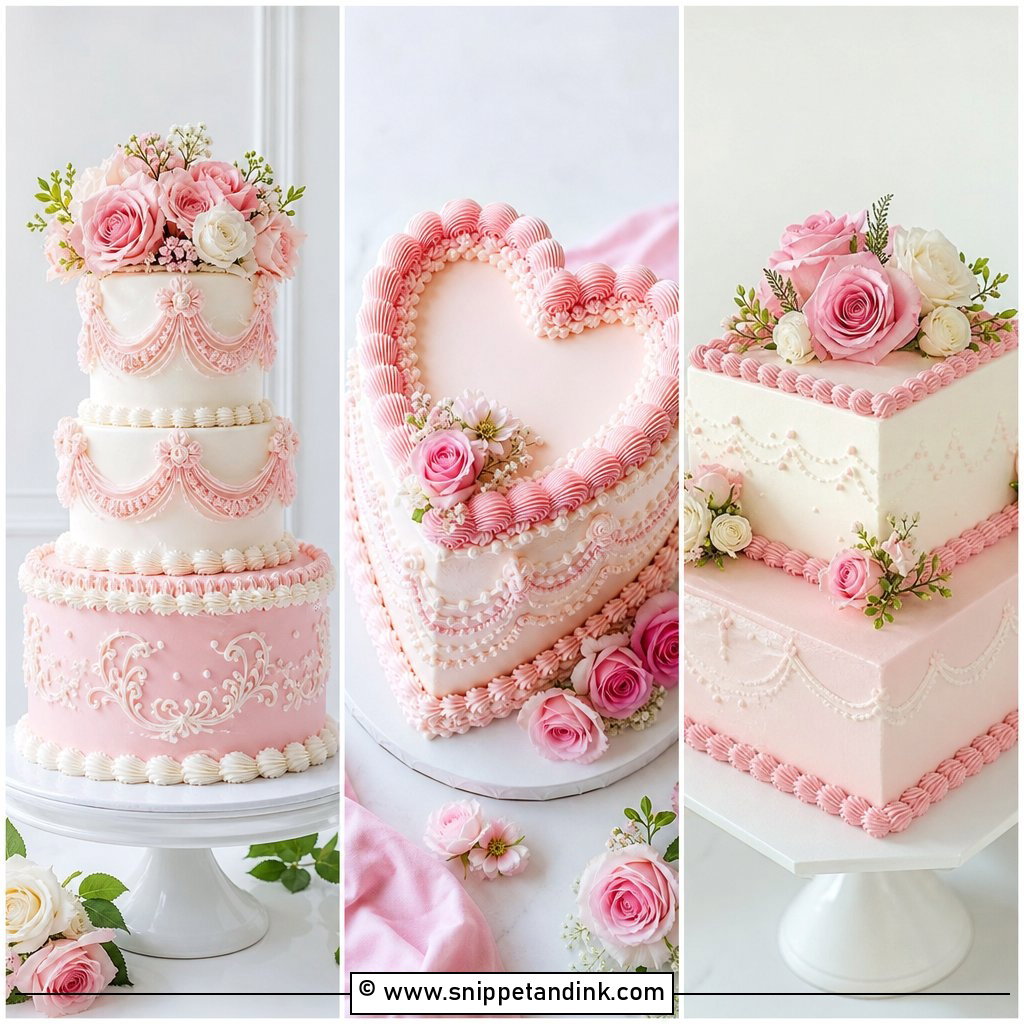
Vintage piping is pure nostalgia: shells, scalloped borders, ribbon-style swags and little pink accents over a white cake. It can be a single round tier or two or three stacked, and pink cherries, sugar roses or piped hearts add charm without tipping into a child’s birthday. What keeps it grown-up is the color choice. I’d use ivory rather than bright white and a dusty pink rather than candy pink, then finish with a simple topper carrying your initials. Piped work this detailed takes time, so expect it to cost more than a smooth finish.
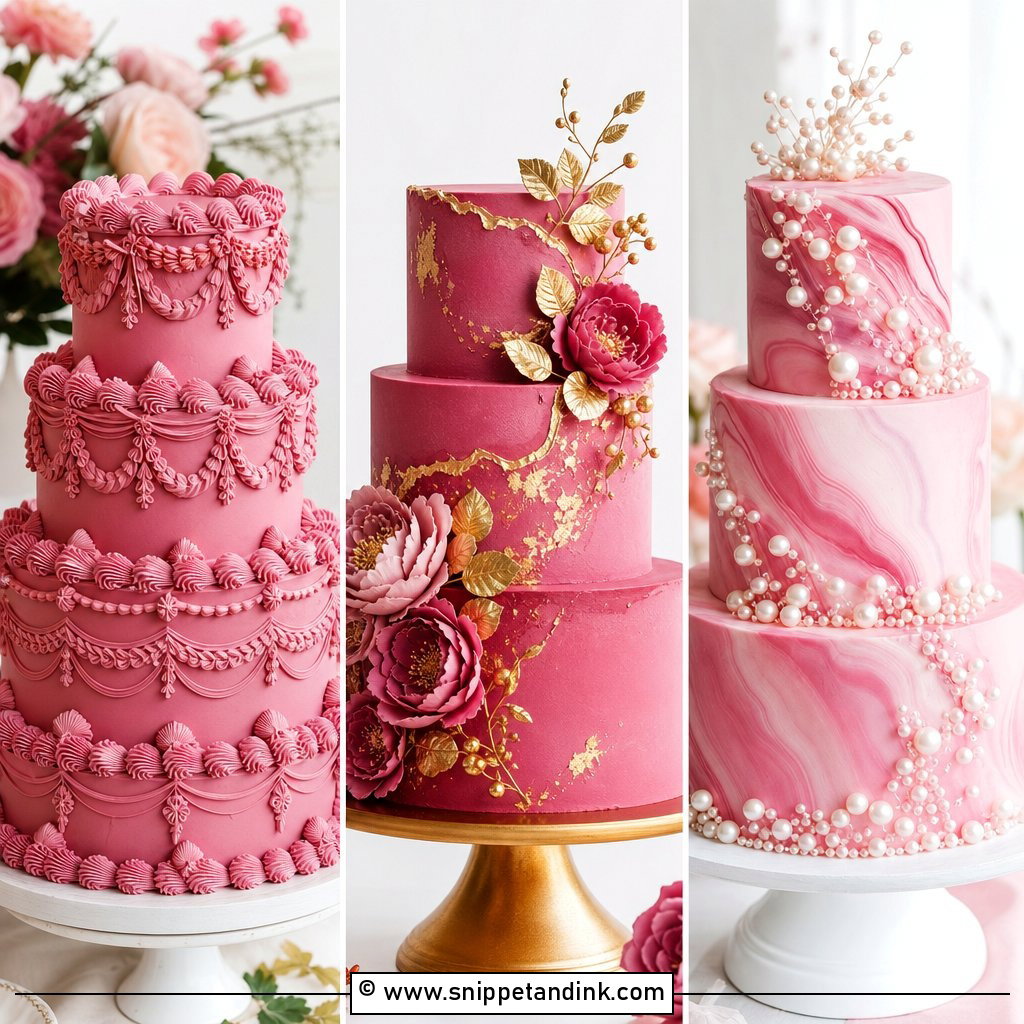
8. White And Pink Lambeth Wedding Cake
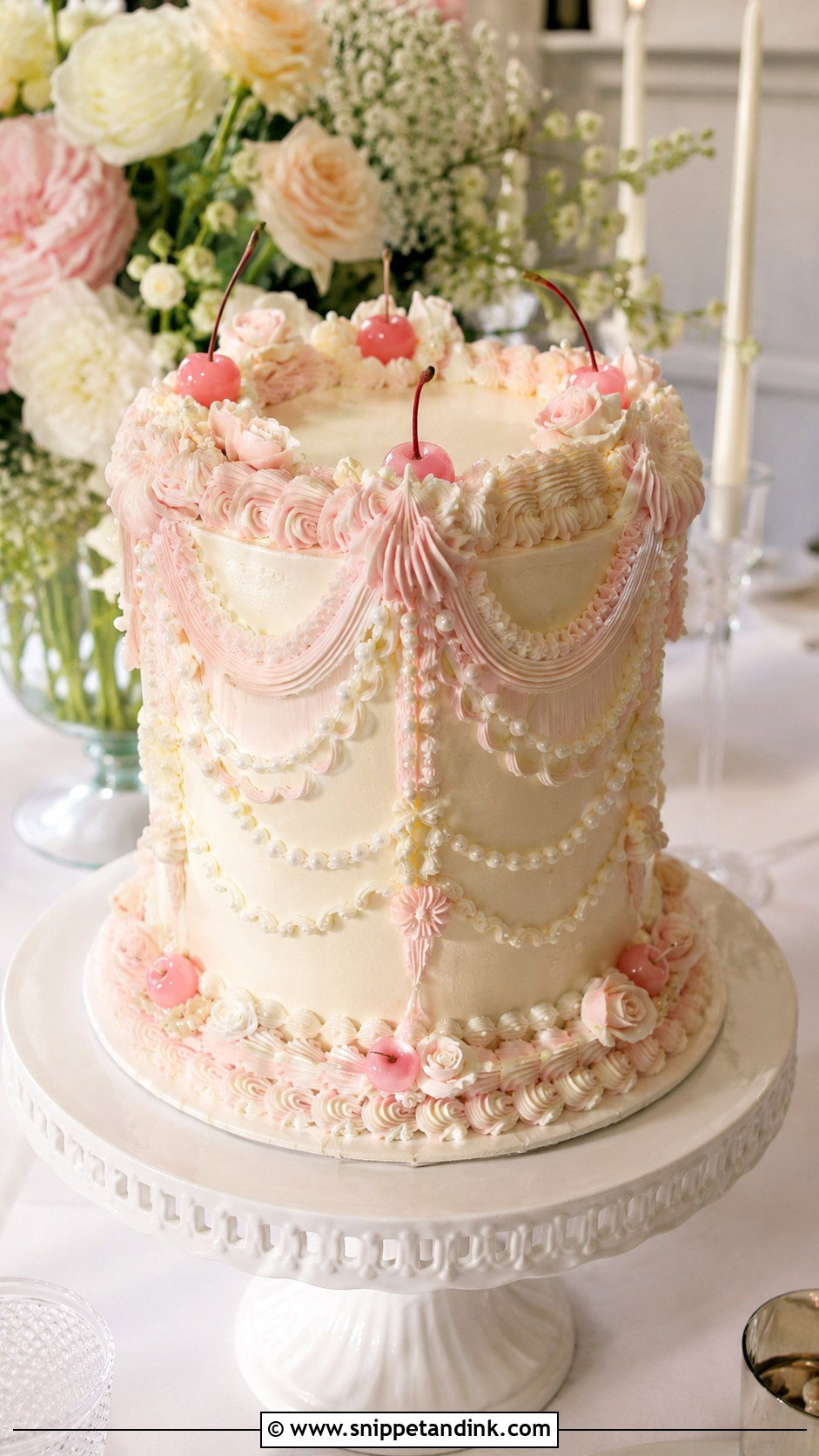
Lambeth is the over-piped style, layer upon layer of loops, shells and swags built up in buttercream until the cake looks carved. For a wedding I keep the base white and pipe in blush or rose, though reversing it with pale pink frosting and white over-piping is just as pretty. It makes a strong single-tier centerpiece. The thing nobody mentions is weight: all that piping adds a lot of buttercream, so stacked Lambeth tiers need firm dowelling and a cool room, or the lower borders start to sag. Cherries or pearls on top add texture.
9. White And Pink Heart Wedding Cake
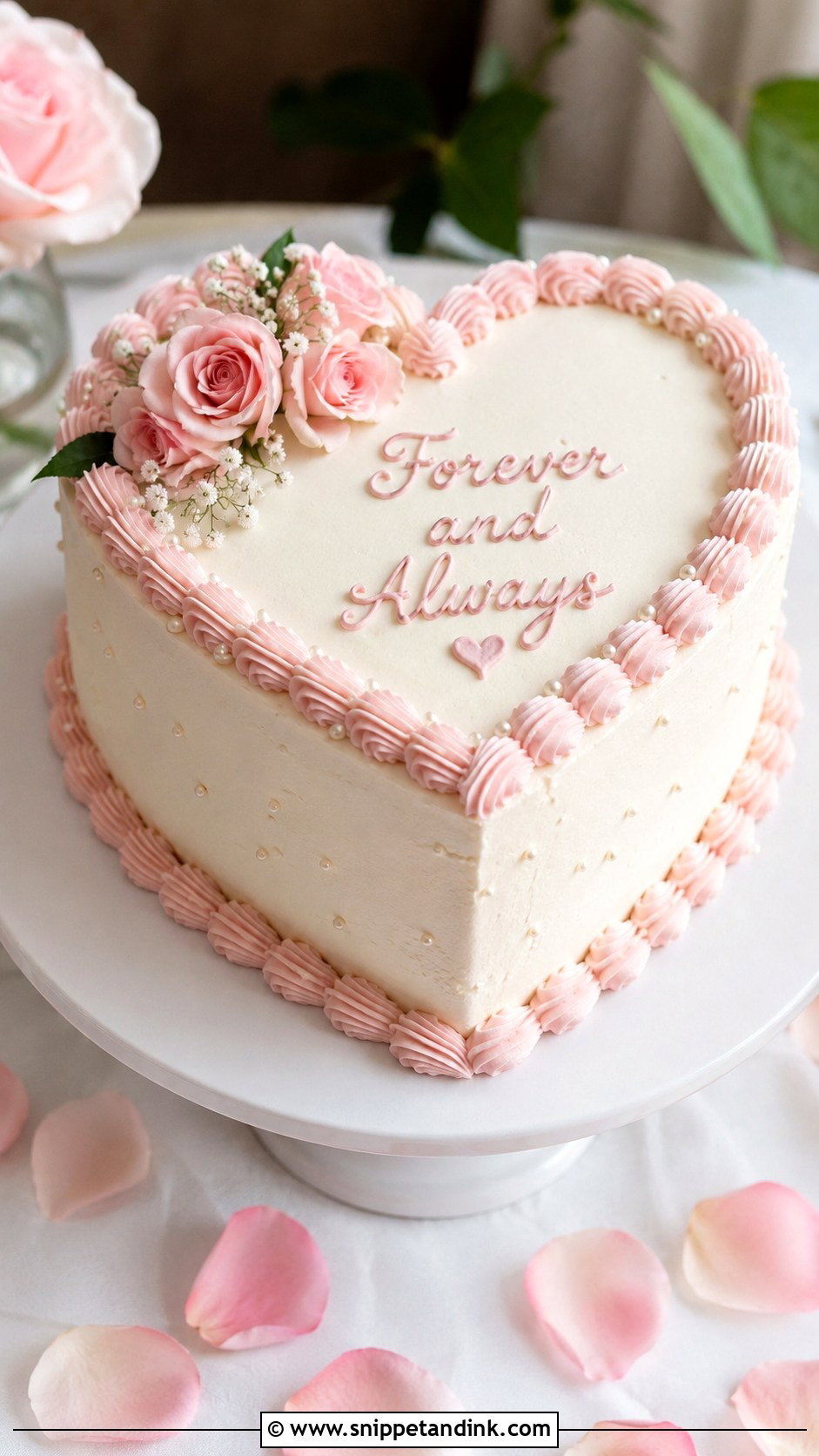
A heart-shaped cake already says romance, so it needs very little else. White with pink shell piping around the top and bottom edges is enough, maybe a few roses or a short piped message. I usually suggest it as a cutting cake with a sheet cake or dessert table behind it, because the shape wastes a fair amount when you slice and doesn’t serve as many guests as a round of the same width. Keep to soft blush rather than bright pink if you want it to read as wedding rather than Valentine’s.
10. White And Pink Tiered Wedding Cake
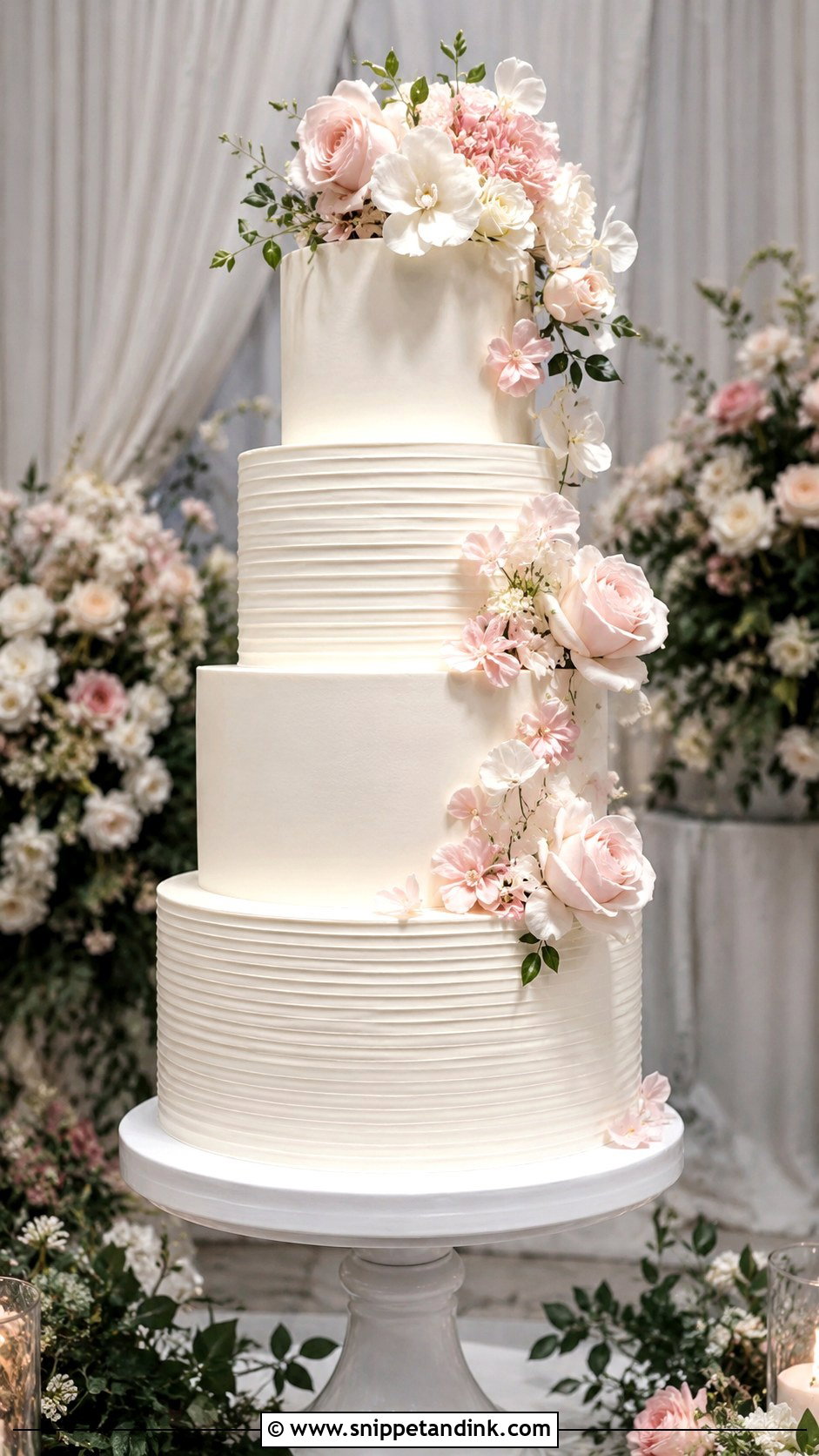
Height is what a white and pink tiered wedding cake gives you, and it earns its place in a large room with high ceilings, where a short cake simply disappears. You can keep every tier white with pink flowers or alternate white and pale pink. I like changing the finish from tier to tier, smooth on one, ruffles on another, floral appliqué on a third, but I hold the palette tight so the texture is the interest. White, blush and a little greenery is plenty. Do ask how it will travel; most tall cakes are stacked on site.
11. White And Pink Two Tier Wedding Cake
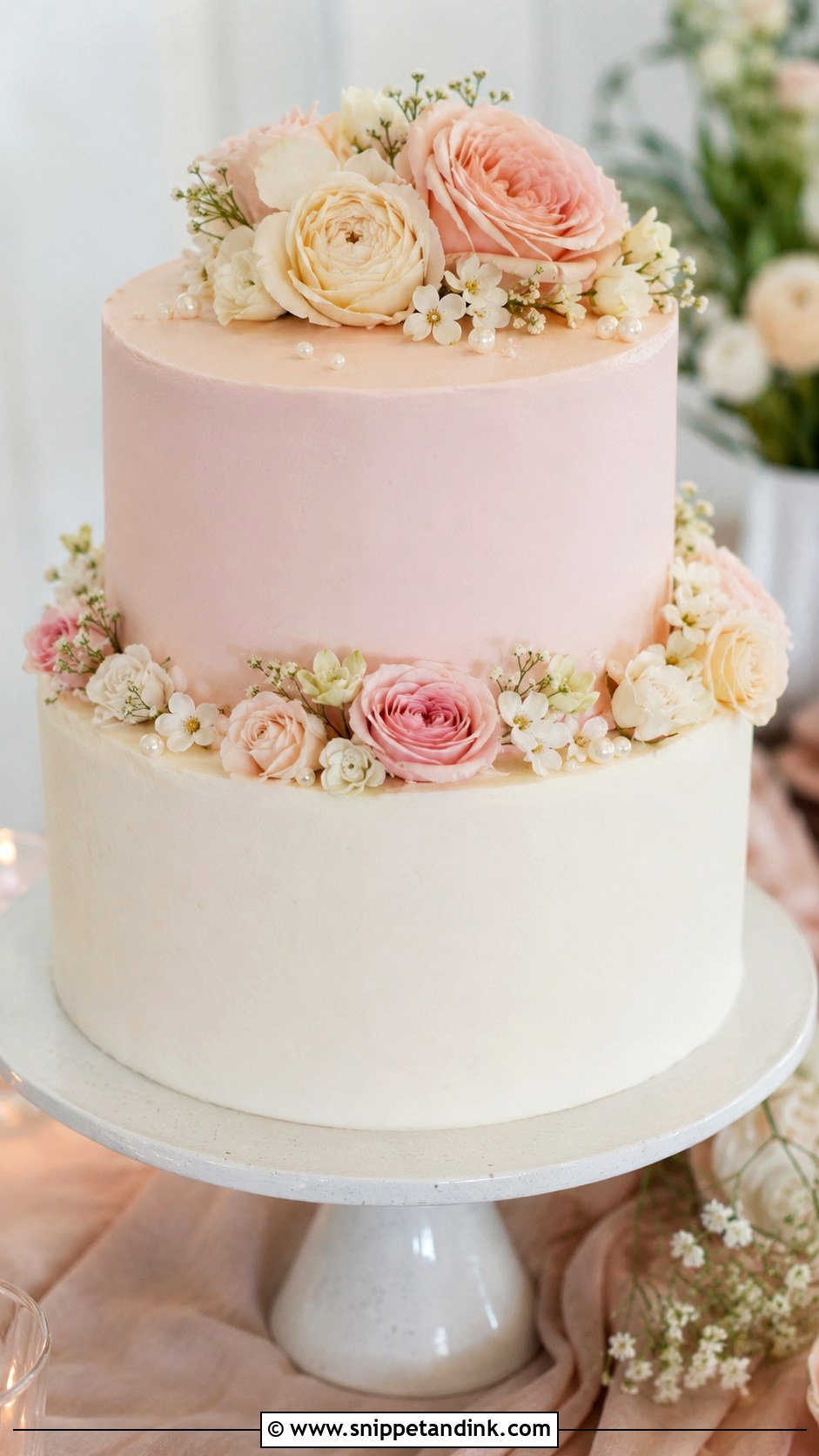
Two tiers suit intimate weddings and smaller tables, and they’re far less stressful to move than anything taller. A white bottom tier with a pale pink top looks balanced. All-white with pink flowers circling the center seam is the softer version. Buttercream, fondant and semi-naked finishes all work at this size. One thing I tell couples: two tiers of standard height feed fewer people than you’d guess, so if the guest list is over about fifty, plan a kitchen cake or extra tier height to make up the servings.
12. White And Pink Single Tier Wedding Cake
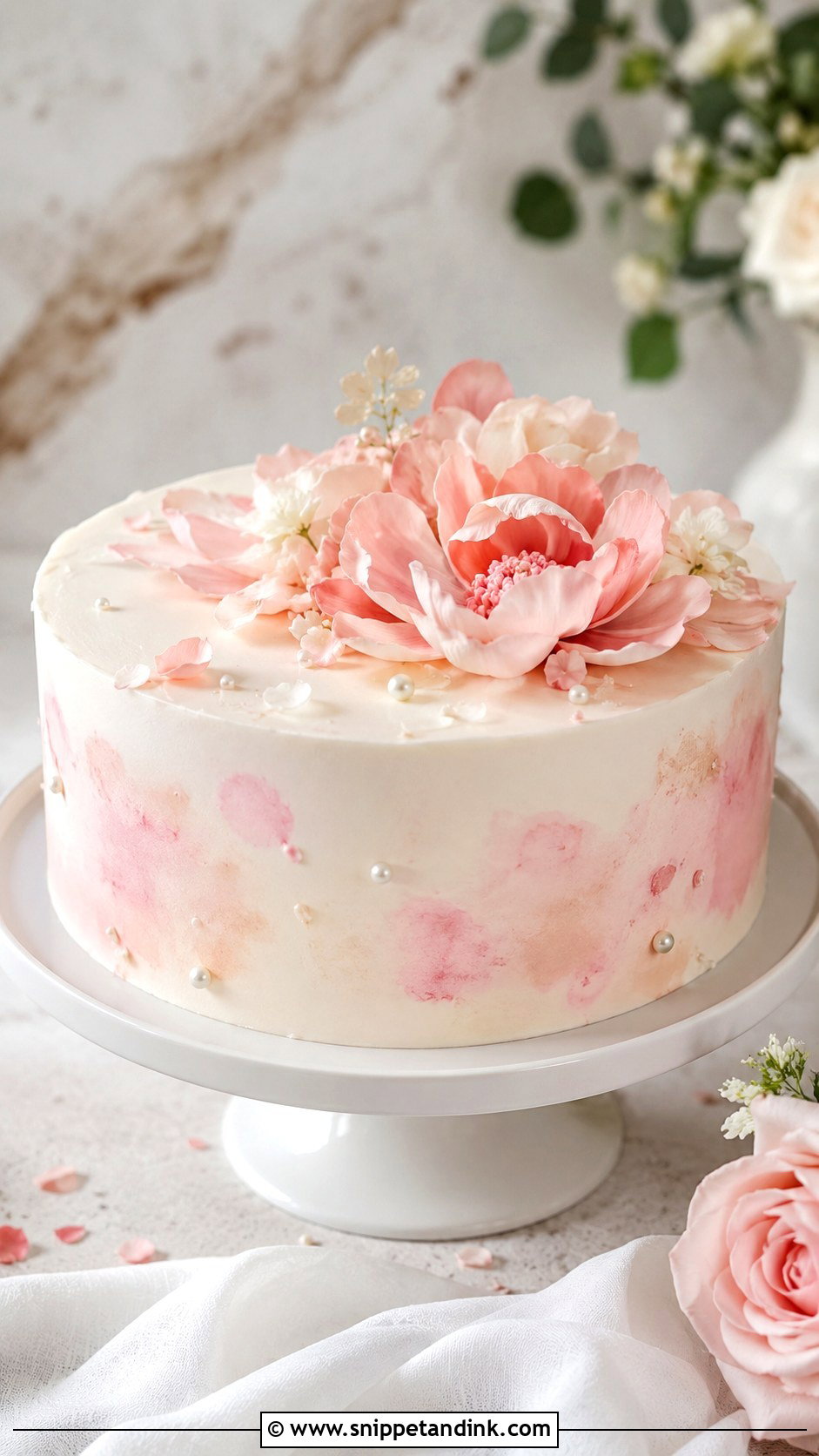
A single tier can feel just as special as a tall cake if every detail is deliberate. It suits elopements, small receptions and dessert tables loaded with other treats. A wide round reads modern, a tall single tier gives you height without stacking. White buttercream with pink sugar flowers is classic; pink watercolor over white is more painterly. With nothing to hide behind, the edges have to be clean, so I give single tiers extra time on the final smoothing. A good stand does half the work.
13. White And Pink Square Wedding Cake
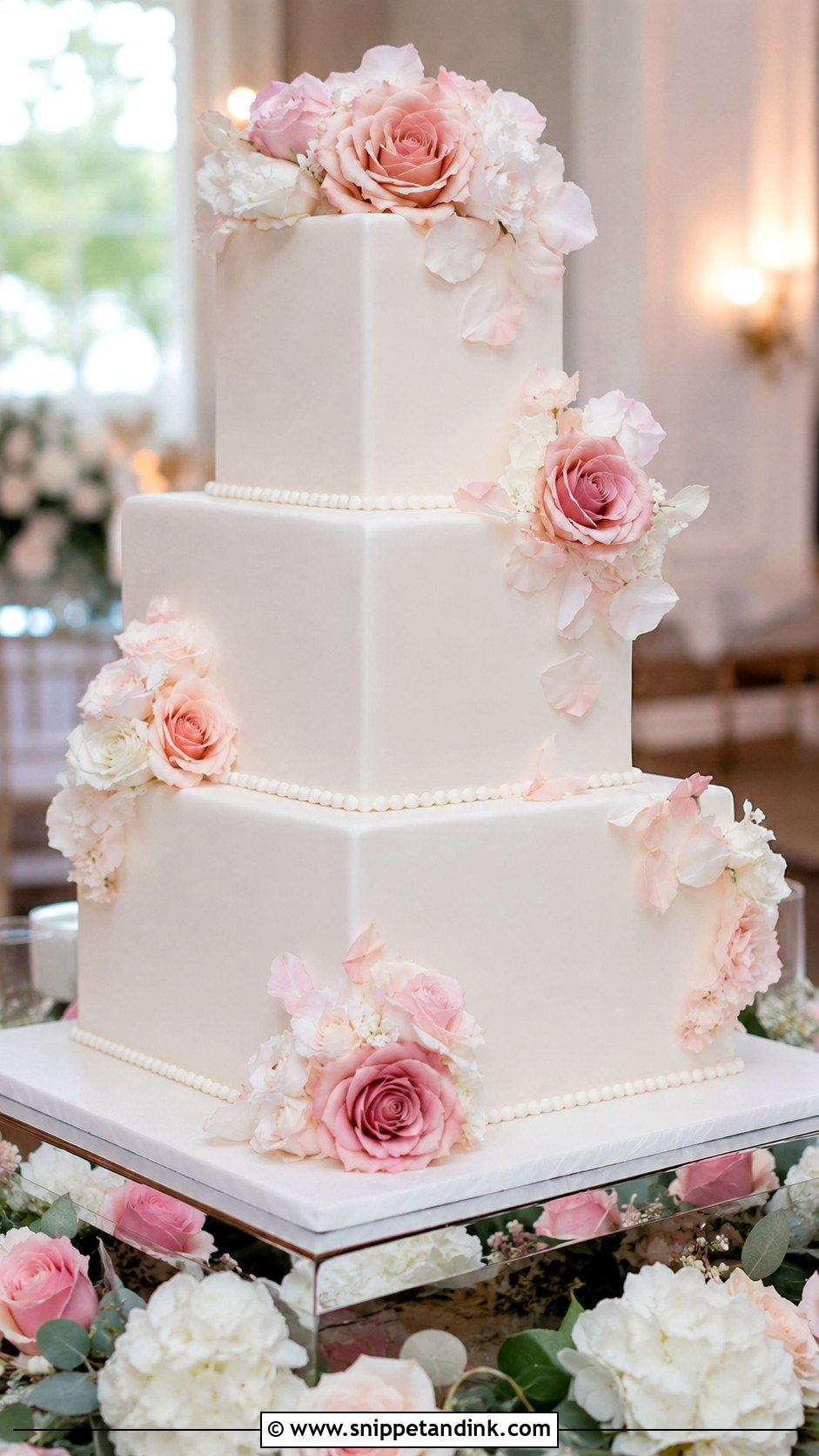
Square tiers look modern because the corners are sharp, and they’re unforgiving for exactly the same reason. Fondant handles square shapes best; buttercream corners take real skill to keep crisp and soften quickly in heat. I soften the geometry with blush roses tucked at the corners or a ribbon at each tier base. Square cakes also slice into neat even portions, which caterers like. Keep everything else restrained so the shape stays the point.
14. White And Pink Ombre Wedding Cake
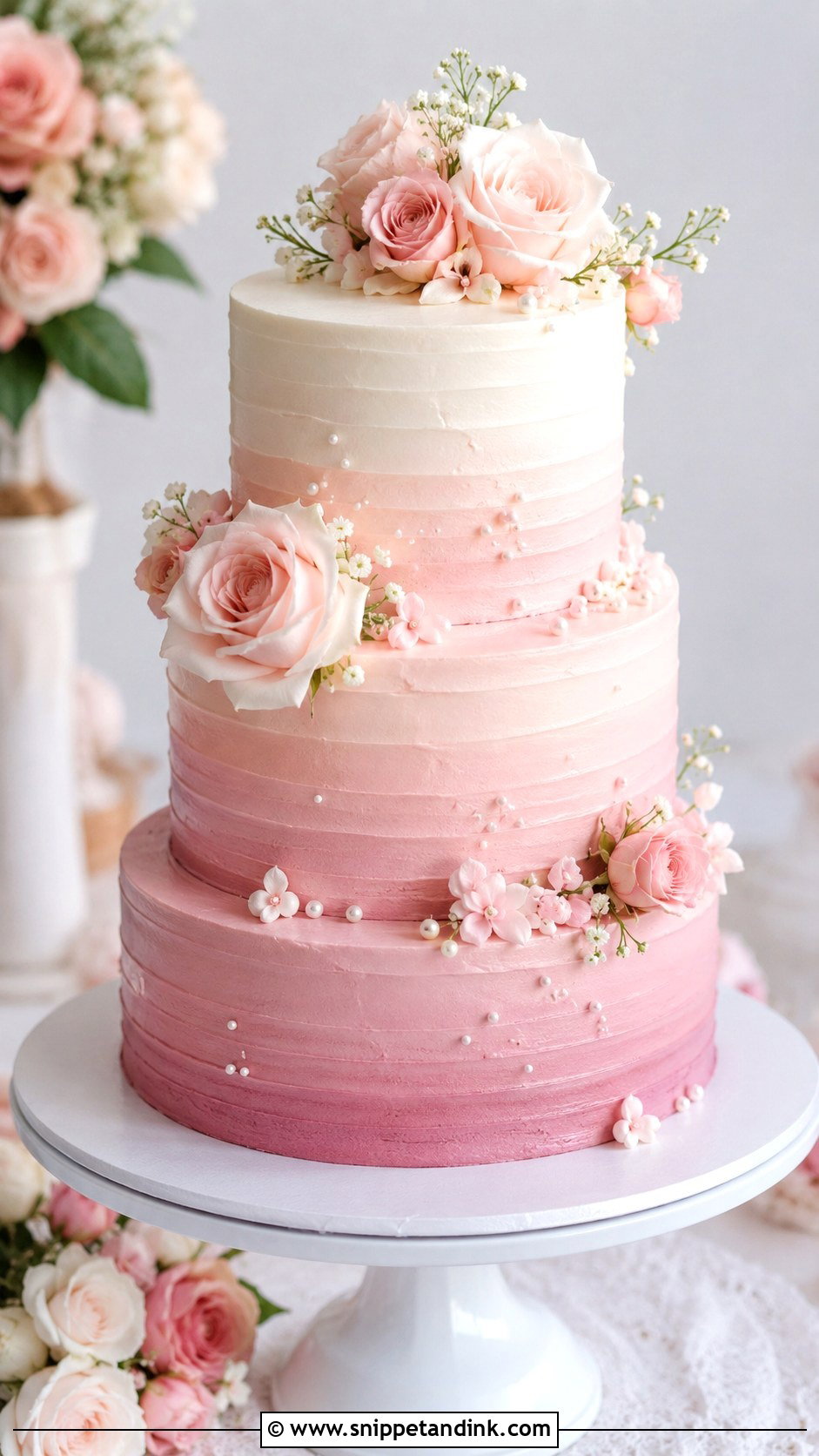
Ombré is a fade, usually deep rose at the bottom climbing to white at the top, or white melting into blush for something lighter. Buttercream blends the gradient best, and I mix each shade from the same base so the steps between tiers look even rather than striped. Keep decoration minimal or match fresh flowers to the darkest tone. A fair warning: deep pinks need a lot of gel color, which can leave a faint bitter taste, so I’d keep the strongest shade to the bottom tier only. Strawberry, raspberry or pink champagne inside suits the color.



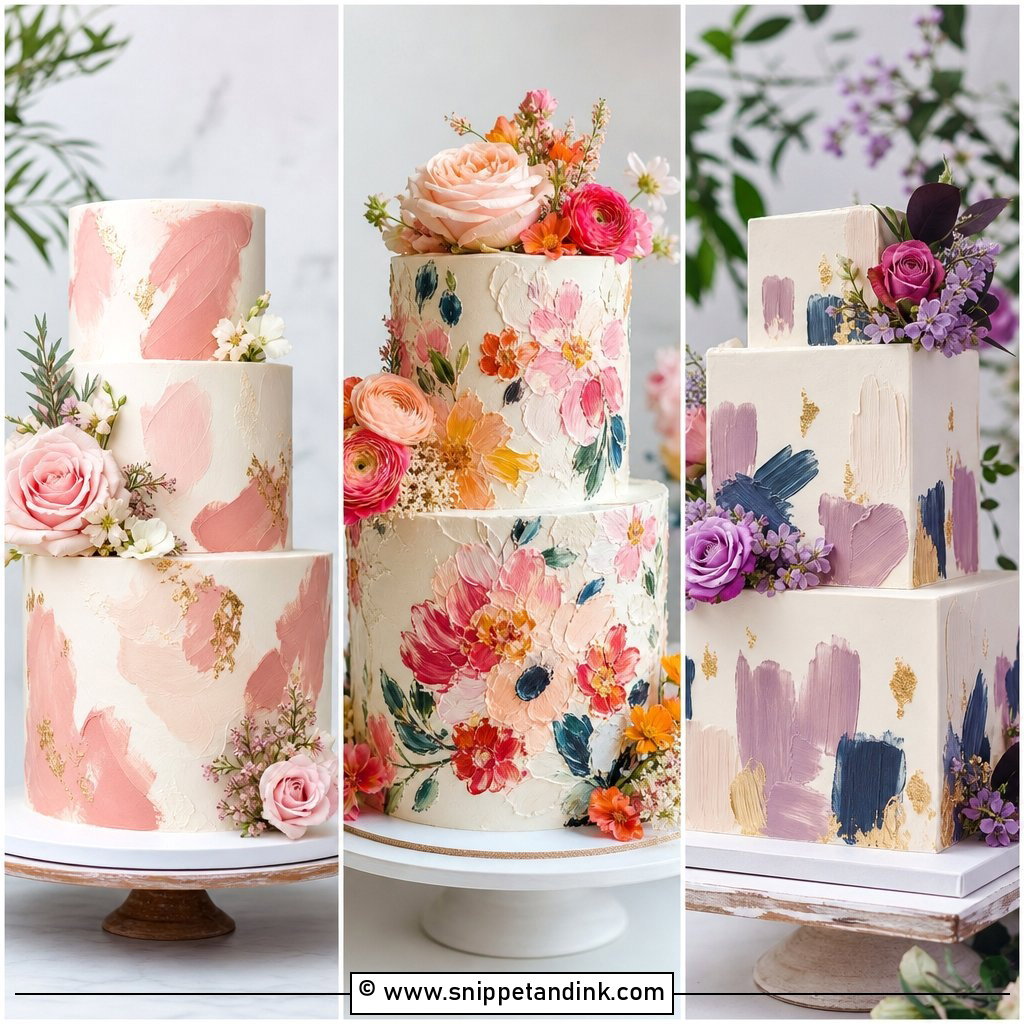
15. White And Pink Watercolor Wedding Cake
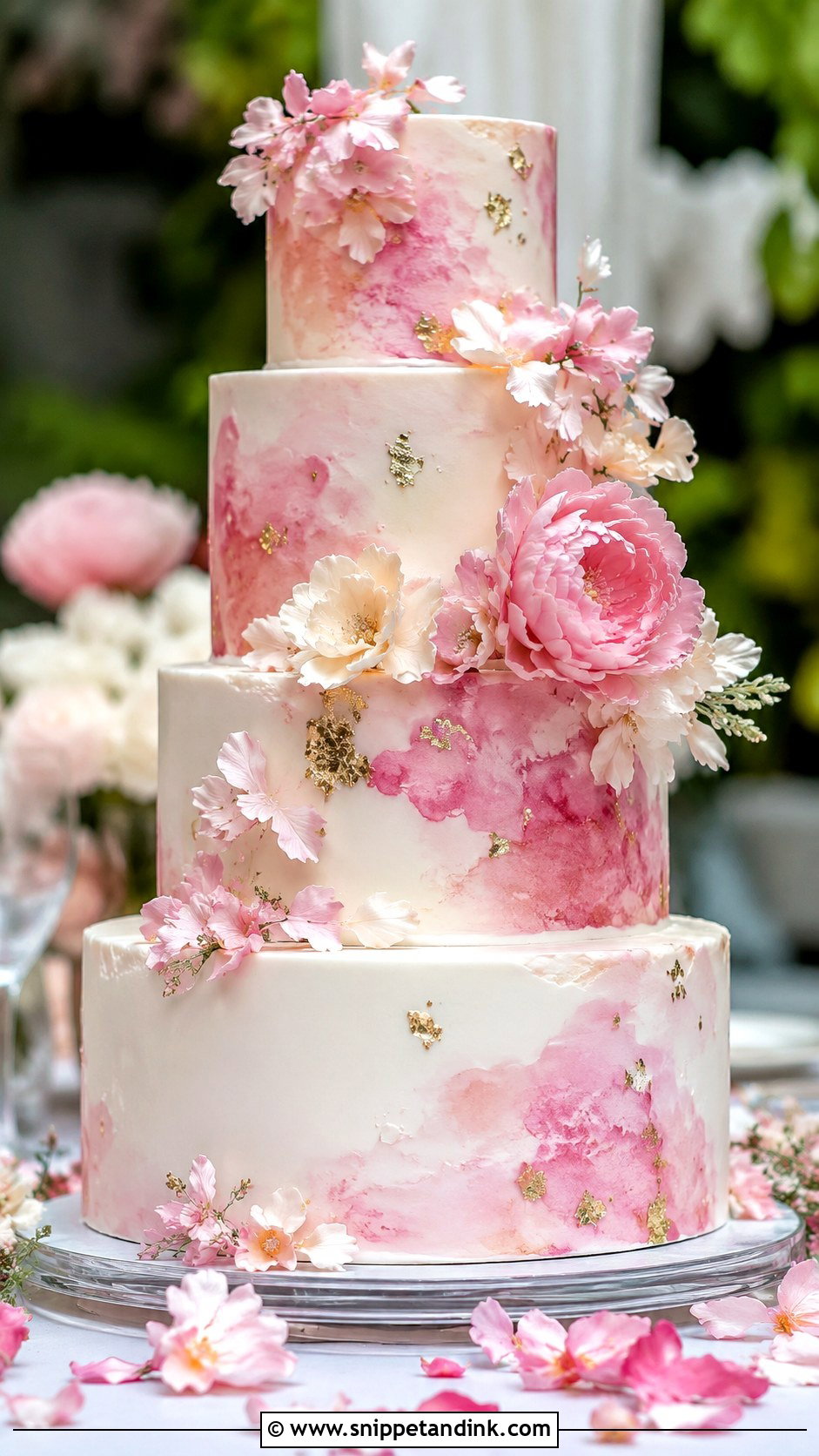
Watercolor frosting looks brushed rather than solid, with pale blush, rose and ivory moving across the cake in uneven layers. That unevenness is the charm, and it also means no two cakes come out the same. I build it by swiping tinted buttercream on with a palette knife and smoothing over the top, so the colors blend at the edges. Sugar flowers, a little edible gold leaf or a few fresh blooms finish it, but keep them light or the color work gets lost. Garden and spring weddings suit it best.
16. White And Pink Drip Wedding Cake
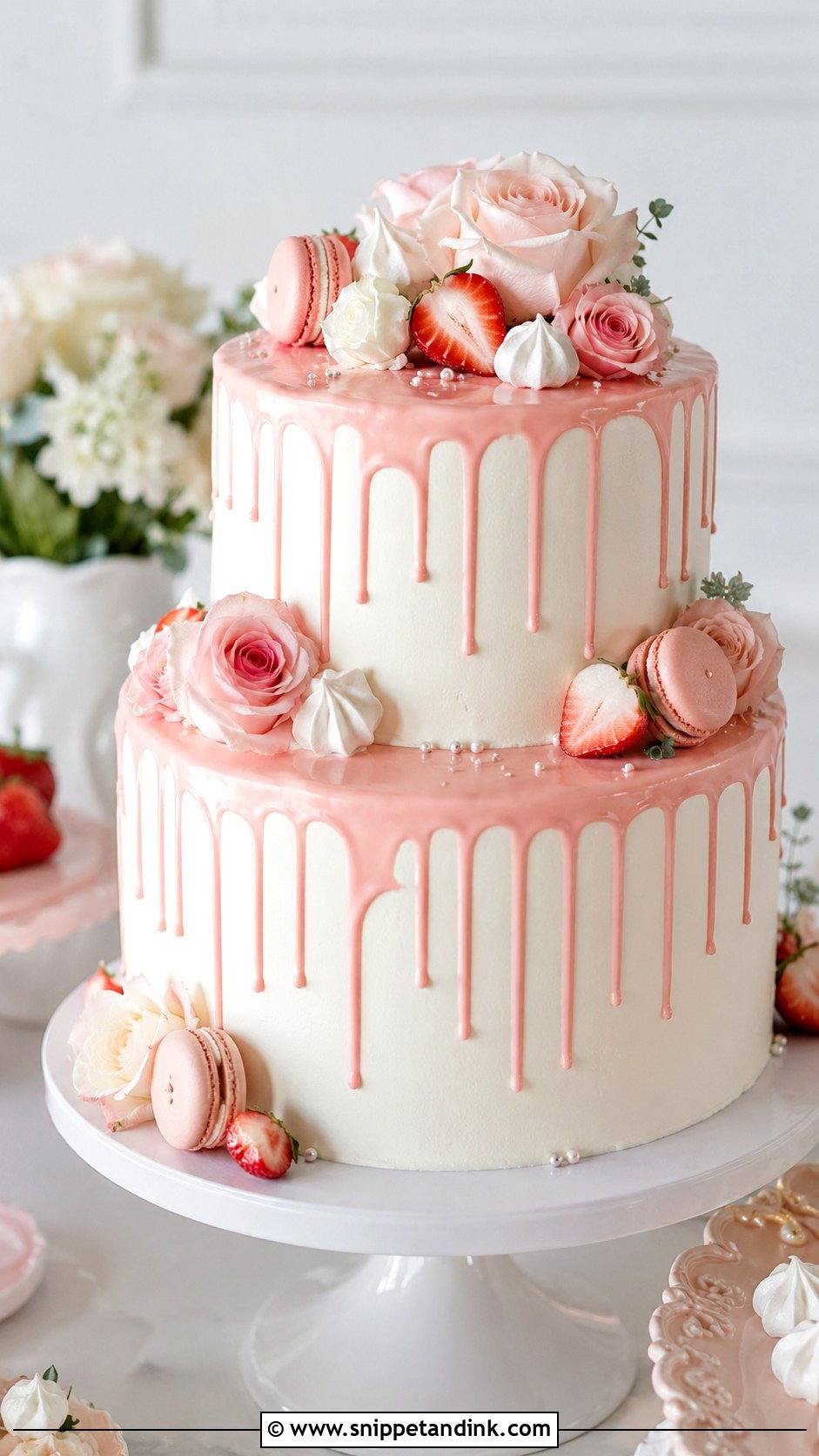
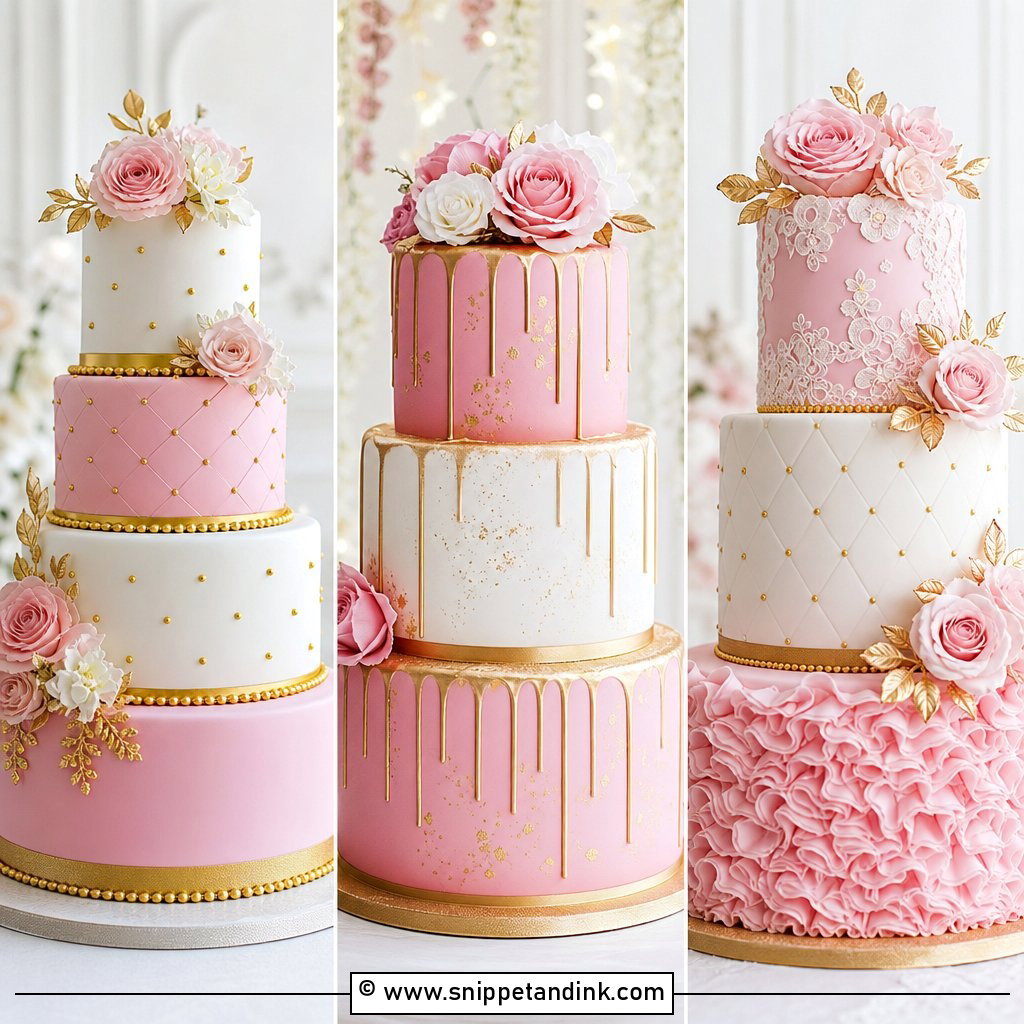
A drip feels modern and a little more relaxed. It can be pale pink chocolate ganache over white buttercream, or white chocolate dripping over a blush tier. The temperature of the ganache decides everything; too warm and it runs to the board, too cool and it sits in stubby blobs, so I test a drip on the side of a chilled tier before doing the whole cake. Top it with pink roses, macarons, strawberries or meringues. It ties neatly into a dessert bar, and raspberry or white chocolate flavors suit it.
17. White And Pink Ruffle Wedding Cake
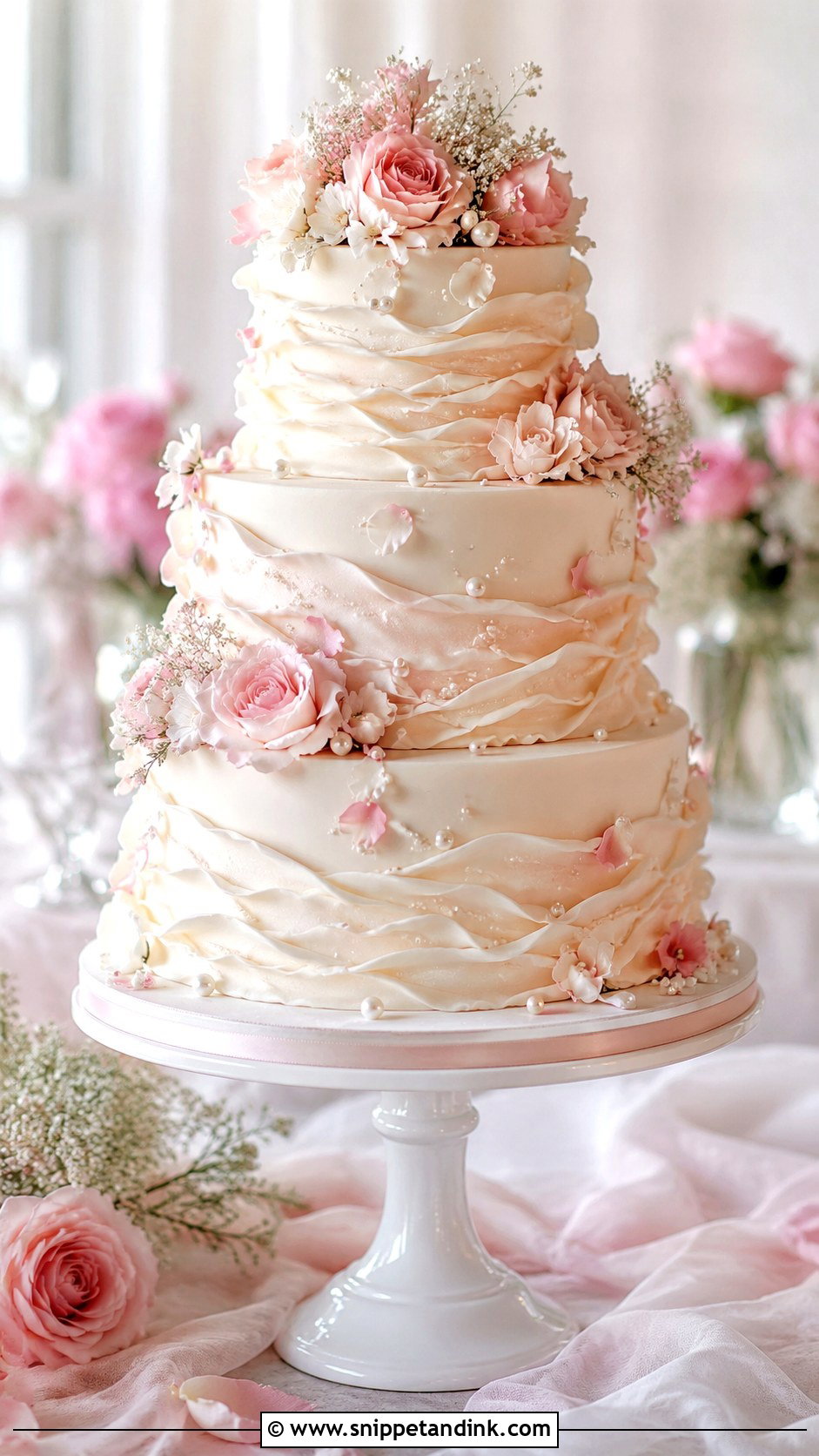
Ruffles give a cake movement from every side. They can cover one tier, wrap the whole cake or sit as a band near the base. Buttercream ruffles look softer and more handmade; fondant ruffles are crisper and hold up better in a warm room. White ruffles read airy, pink ones warmer. Because the texture is already busy, I keep flowers to a few blush roses or sugar petals. One practical note: buttercream ruffles bruise if anyone brushes against them, so the cake needs a spot away from the walkway.
18. White And Pink Cherry Wedding Cake
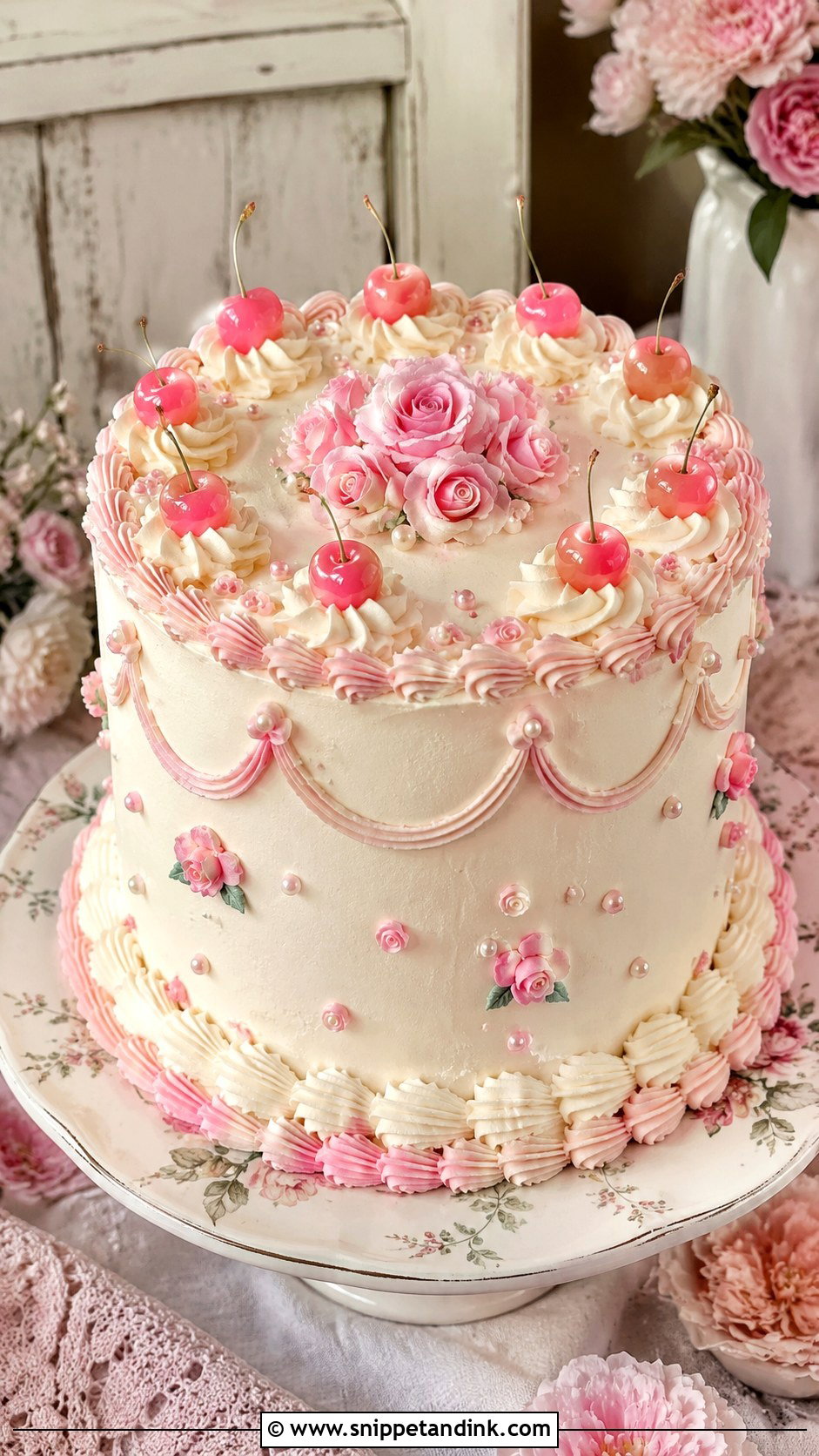
The cherry cake is the cheekiest design here, rooted in vintage bakery styling: white or pale pink buttercream, piped borders and glossy cherries on top. For a wedding, I’d shape it as a clean heart, a tall round or a small stack. Use cherries that are fully dry before they go on, because the syrup from jarred maraschinos bleeds pink streaks into white frosting within an hour. Pearl details or soft shell piping make it feel dressy enough for a reception. It suits couples who’d rather their cake be fun than formal.
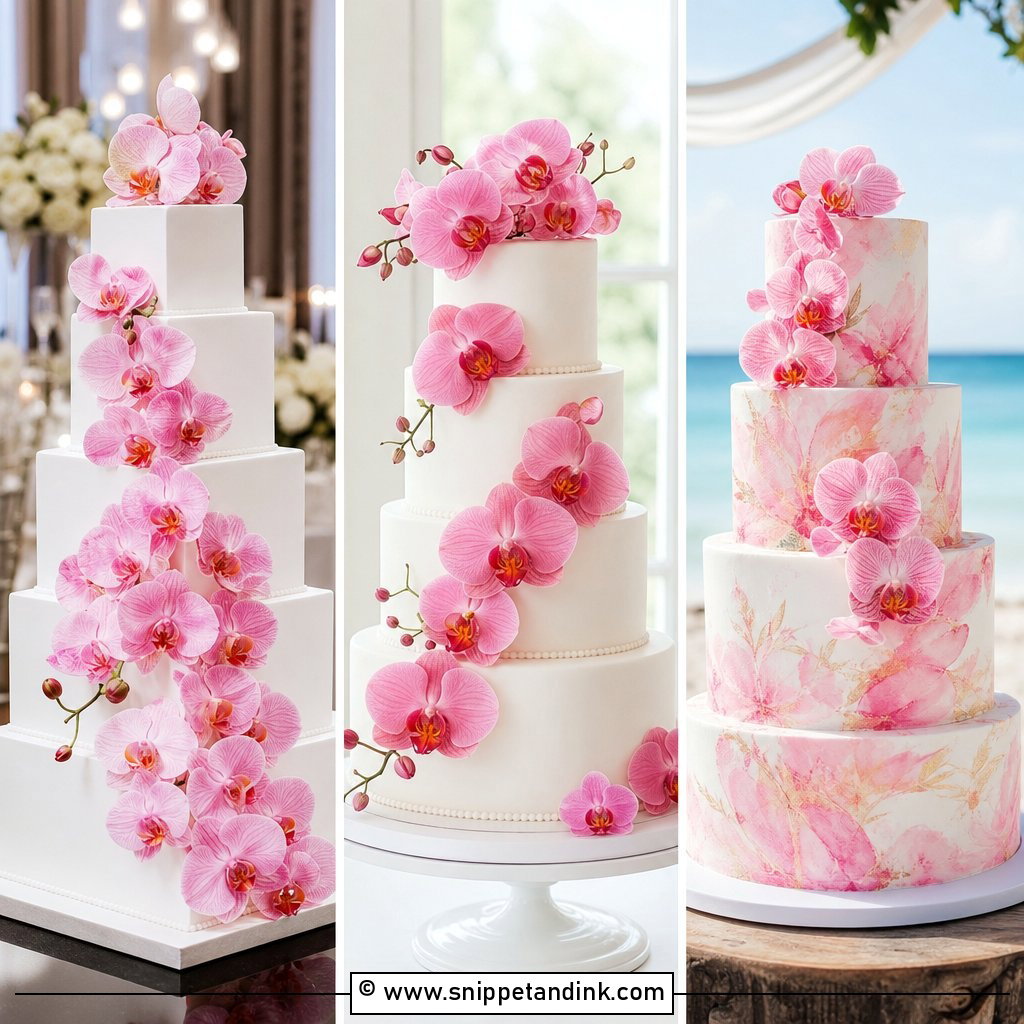
19. White And Pink Sugar Flower Wedding Cake
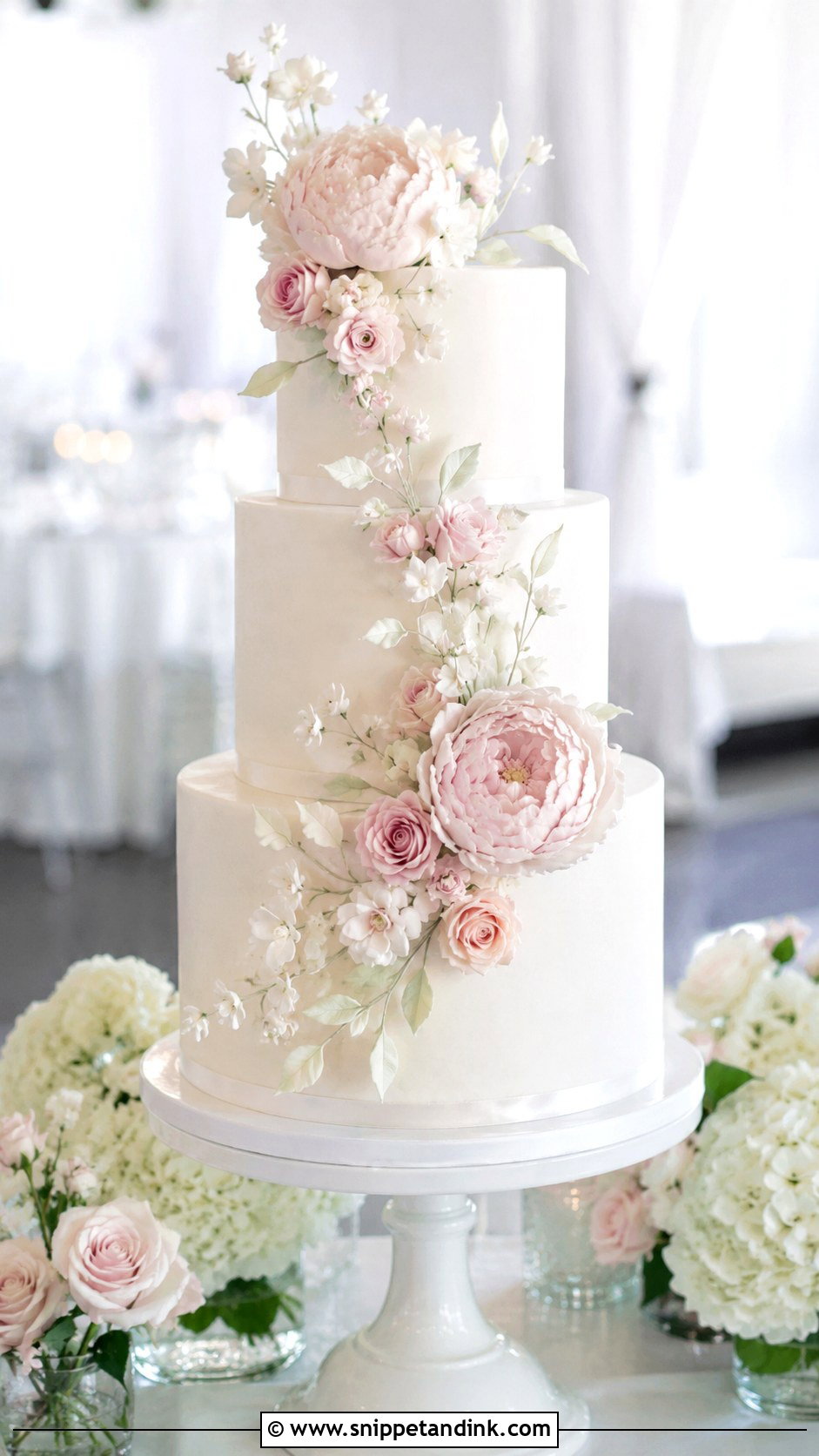
Sugar flowers are my answer for hot venues and long receptions, since they don’t wilt or brown at the edges. I can make roses, peonies, orchids, cherry blossoms and small filler blooms, and I tint them in several pinks so the arrangement has depth without adding another color. Place them as a cascade, around the tiers or in one confident cluster. They’re slow to make, so they’re usually the most expensive way to decorate. The upside is that the flowers can be lifted off and kept long after the wedding, provided they’re stored somewhere dry.

20. White And Pink Minimalist Wedding Cake
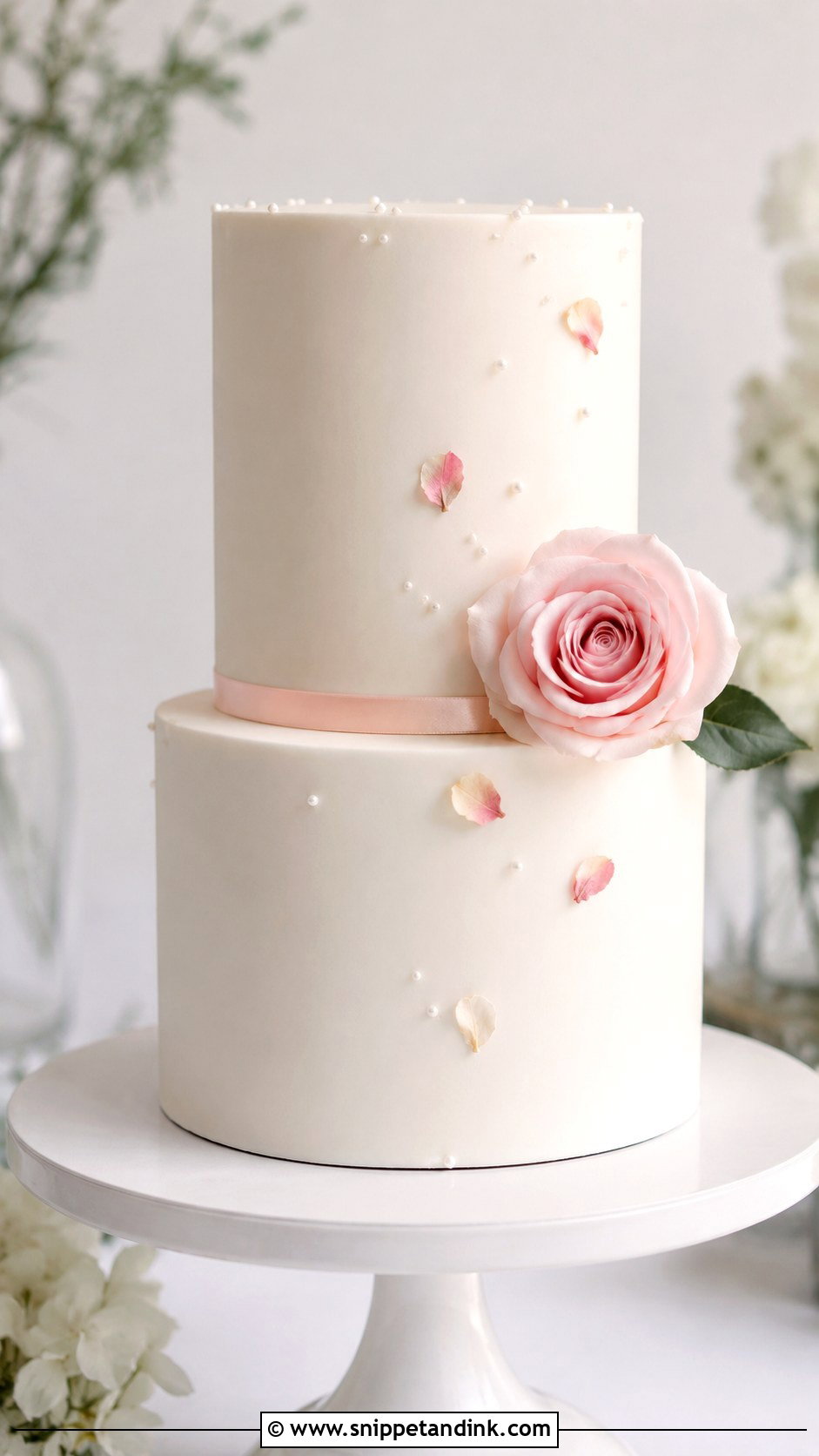
Minimalism here means white buttercream or fondant with only a whisper of pink: a single fresh rose, a thin blush ribbon, a painted stripe or a few pressed petals. It looks simple and is anything but, because with so little decoration every bump and lean shows. I’d only book this style with a baker whose plain cakes you’ve seen in photos, not just their decorated ones. A sleek stand and uncluttered flowers on the table around it keep the whole thing calm.
Real Roses on Buttercream Need a Plan Before They Touch the Cake
Fresh pink flowers are the easiest way to finish a white cake, and the part couples most often leave to chance. Most florist roses are grown with sprays that were never meant to go near food, so I treat every stem as decoration only. Nothing gets pushed straight into the sponge.
What I do with each stem
- Wrap the cut end in floral tape and then cling film, or set it into a food-safe flower pick, so sap and water never reach the frosting.
- Use a barrier such as a small disc of parchment under heavier clusters, which also makes them easy to lift off before slicing.
- Skip anything known to be toxic or that drops pollen, such as lilies, hydrangea, foxglove and lily of the valley.
- Ask for unsprayed or organically grown roses if you can get them, and still wrap them.
Who places them and when
Settle this in writing. Some florists dress the cake, some bakers prefer to do it themselves, and on the day each assumes the other is coming. I like to add flowers as late as possible, ideally once the cake is set up at the venue, because blooms on a cake in a warm room start to droop within a few hours. Order a few extra stems in the same pinks so there is a spare for anything that bruises in the box.
If your reception runs long or the room is hot, mix in sugar flowers for the focal points and keep fresh ones for the softer filler. You’ll get the color you planned, and nothing will look tired by the time the cutting comes around.
Matching the Pink to Your Day, Not the Swatch Card
Every cake above uses the same two colors and still lands somewhere different: classic with white tiers and blush roses or sugar flowers, playful with a Lambeth, heart or cherry design, quietly modern with a single tier and one pink detail. Let the venue and season make the practical calls, frosting for heat and height for the room, and let your own taste make the rest. Bring a fabric or flower sample to your tasting so we can match the pink to the real thing, choose a flavor you’d happily eat on any ordinary Tuesday, and ask your baker how each detail will hold up from delivery to the last slice.
You'll Like These Ideas:




Leave a Reply