
A Kandyan bridal look is one of the most architectural outfits a bride can wear: the osariya with its pleats and waist frill, the layered pendants, the nalalpata across the forehead, a sculpted bun and makeup that has to hold up under all that gold for the Poruwa ceremony. When I dress a Kandyan bride, I treat it as one structure rather than a list of pieces, because each part affects the next; the blouse neckline decides how the necklaces lie, and the bun decides where the headpiece can sit. Brides today keep those essentials and still make choices of their own, from lighter fabrics to softer colours and personal embroidery. Below are twenty complete looks, from classic white and gold through blush, blue, green, lavender and modern neutrals.
How a Kandyan Bride Is Dressed, Layer by Layer
Brides are often surprised by how much of the look is built on the morning itself. The osariya is draped and pinned on the body, not stepped into, so the order of dressing decides how well everything sits. This is the sequence I follow.
- Skin and makeup base first, while the bride is in a front-opening top she can slip out of without touching her face.
- The bun, shaped firmly and pinned with plenty of support, because it has to carry the ornaments and flowers later.
- The blouse, then the osariya: pleats at the front, the frill set at the waist, the drape taken over the shoulder and pinned at several hidden points so it survives walking and bending.
- The jewellery, from the inside out: short necklaces and throat pieces first, then the longer pendants on their chains, then bangles and the hip chain.
- The nalalpata and hair ornaments last, positioned at the hairline and anchored into the bun.
Two things make this go smoothly. The blouse must fit perfectly before the day, since the necklaces rest on it and a loose blouse lets them slide sideways. And the full set should be tried on at least once beforehand, so that clasps are checked, chains are untangled and the bride knows how the weight feels on her neck.
1. Traditional White Kandyan Bride
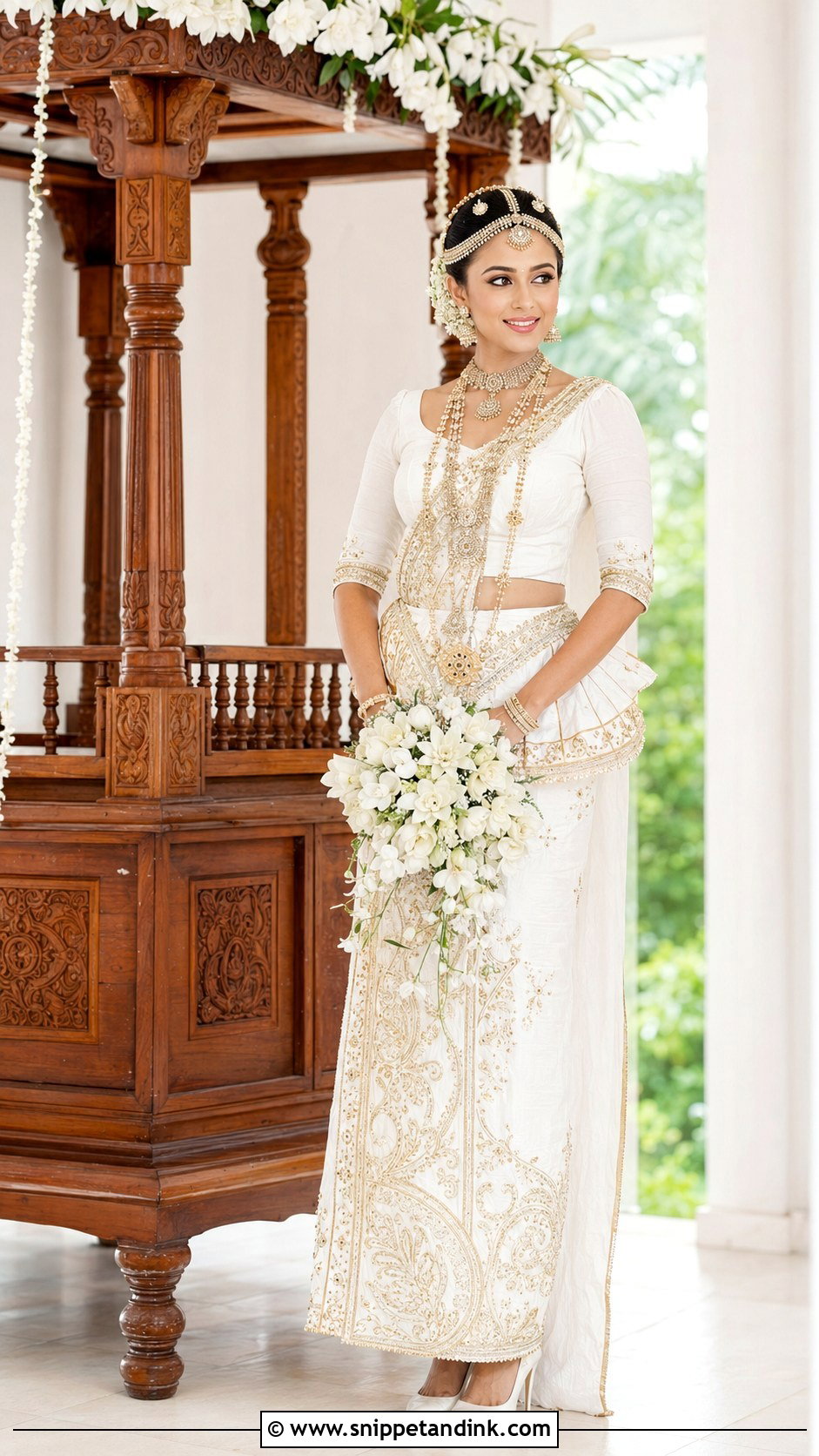
White and gold is the Kandyan look most families picture, and for a formal ceremony it’s still the one I recommend first. Choose crisp white or soft ivory for the osariya with neat pleating, a structured frill and fine gold embroidery on the borders, plus a fitted blouse with a modest neckline. Then the full Kandyan set: layered necklaces and pendants, earrings, bracelets, the waist chain and the nalalpata. With that much gold, the makeup must step back. I keep eyes softly defined, cheeks rosy and the lip muted. A smooth bun to hold the ornaments, ivory heels and a compact white bouquet, with the groom in Nilame dress, completes the traditional pairing.
2. Ivory And Gold Kandyan Bride
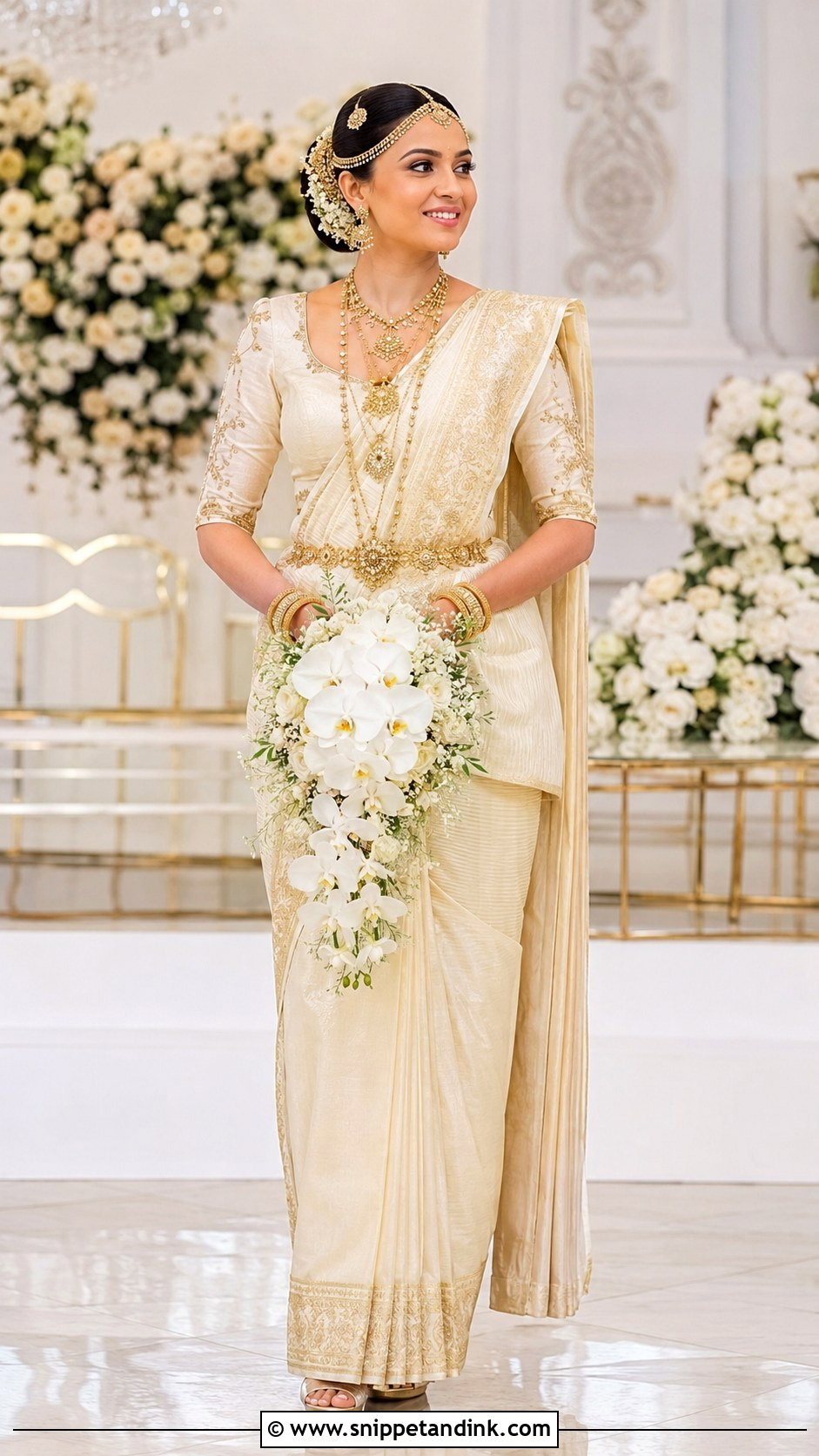
Brilliant white can look stark against some skin tones in daylight, which is why I often move brides to ivory. It’s warmer, and it makes antique gold glow instead of glare. Pick an ivory osariya with fine zari borders, a little beadwork and a well-shaped hip frill, and a short-sleeved blouse embroidered at the neckline and cuffs. Layer the necklaces at different lengths so each pendant is visible, then add earrings, bangles, the waist chain and the head ornament. A sleek low bun keeps it all on show and holds up through a long day. Warm neutral makeup, champagne heels and white orchids or roses. It sits easily with gold-toned décor.
3. Pearl White Kandyan Bride
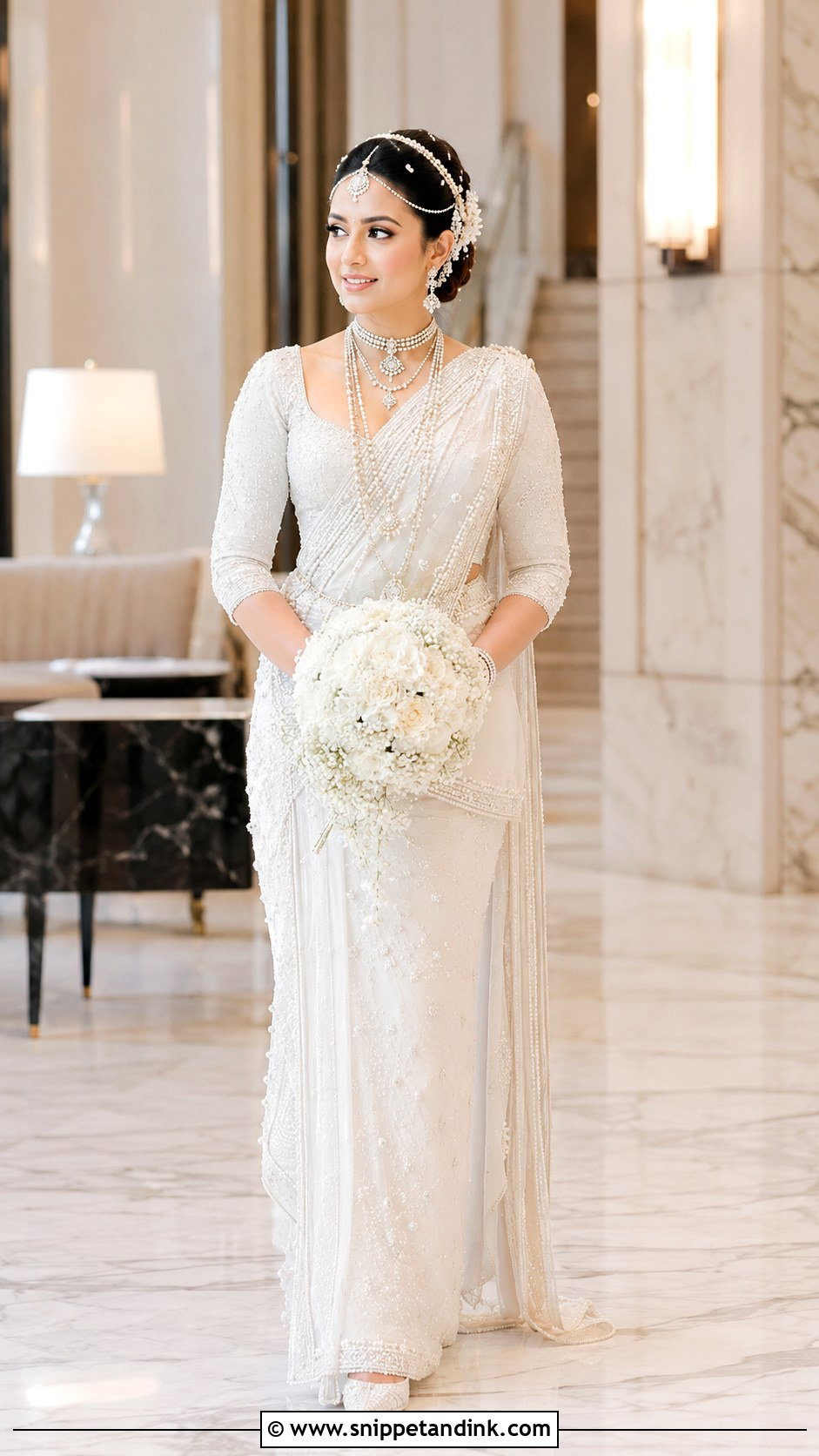
Pearl detailing gives a white osariya texture without changing its classic character. Start with a pearl-white saree worked with tiny pearls, clear stones and restrained silver thread, and a supportive fitted blouse edged in pearls at the neck and sleeves. The jewellery stays the focus, but I’d choose a set with white stones or pale accents to echo the fabric. Tuck pearl pins into the bun between the ceremonial ornaments. Pearls on a blouse can press into the skin under heavy necklaces, so I ask for flat-sewn beads where the pendants rest. Soft brown eyeshadow, defined lashes and a pink-nude lip suit the cool palette, with pearl-detailed shoes and a round white bouquet.
4. Champagne Gold Kandyan Bride
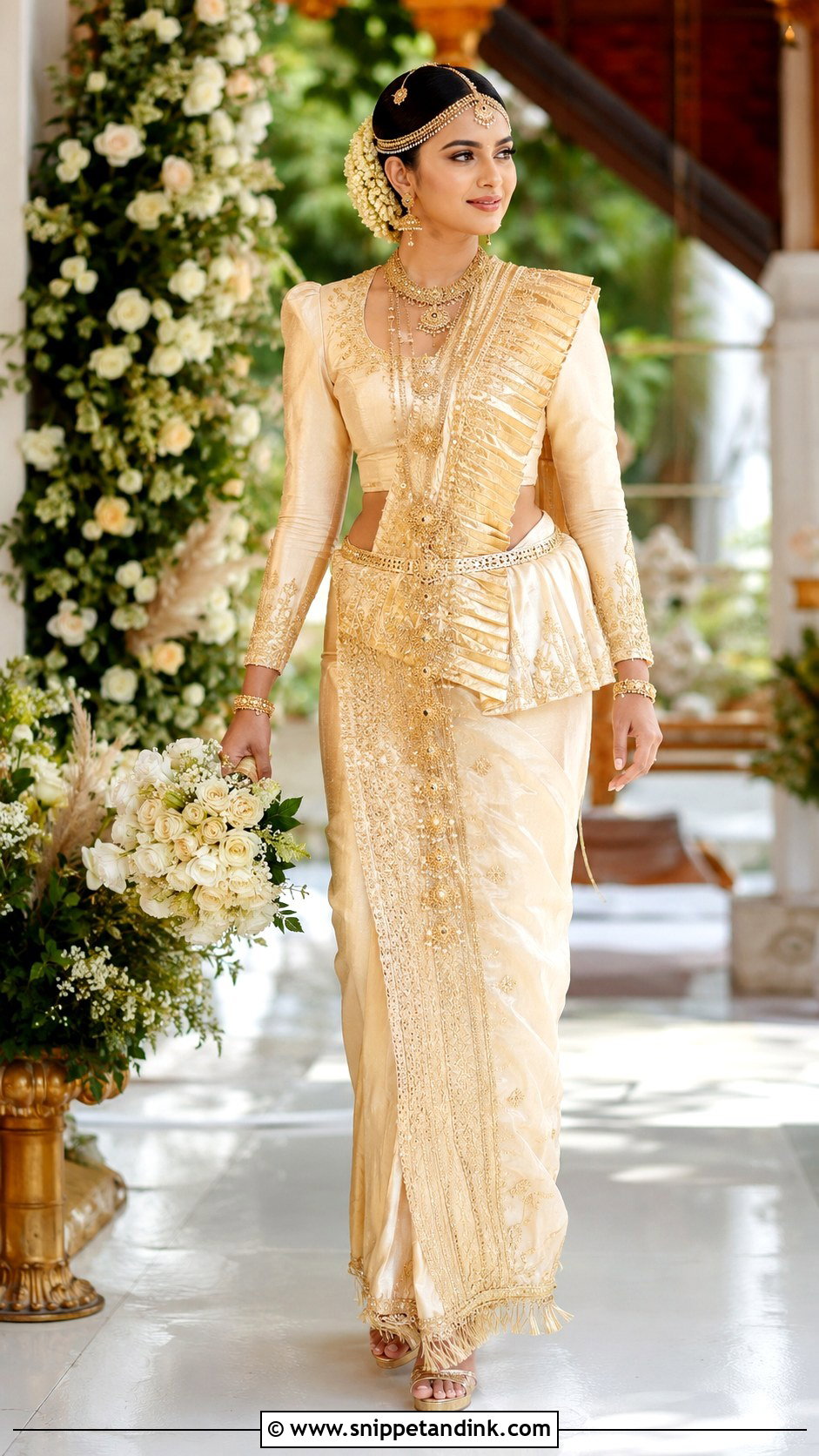
Champagne gold gives more warmth and shimmer than white, but the sheen has to be controlled. A very reflective fabric bounces flash light and looks almost metallic-grey in photos, so I look for silk or a fabric with a soft lustre. Gold embroidery, sequins and crystals can pick out the pleats, blouse and frill. Pair it with traditional gold jewellery set with warm stones, layered necklaces, substantial bracelets and a matching nalalpata. Keep the bun structured and tidy against so much decoration. Bronze eyeshadow, gently sculpted cheeks and a rose-neutral lip follow the gold story. Metallic heels and an ivory bouquet tied with champagne ribbon. It looks rich against white florals, a wooden Poruwa and greenery.
5. Blush Pink Kandyan Bride
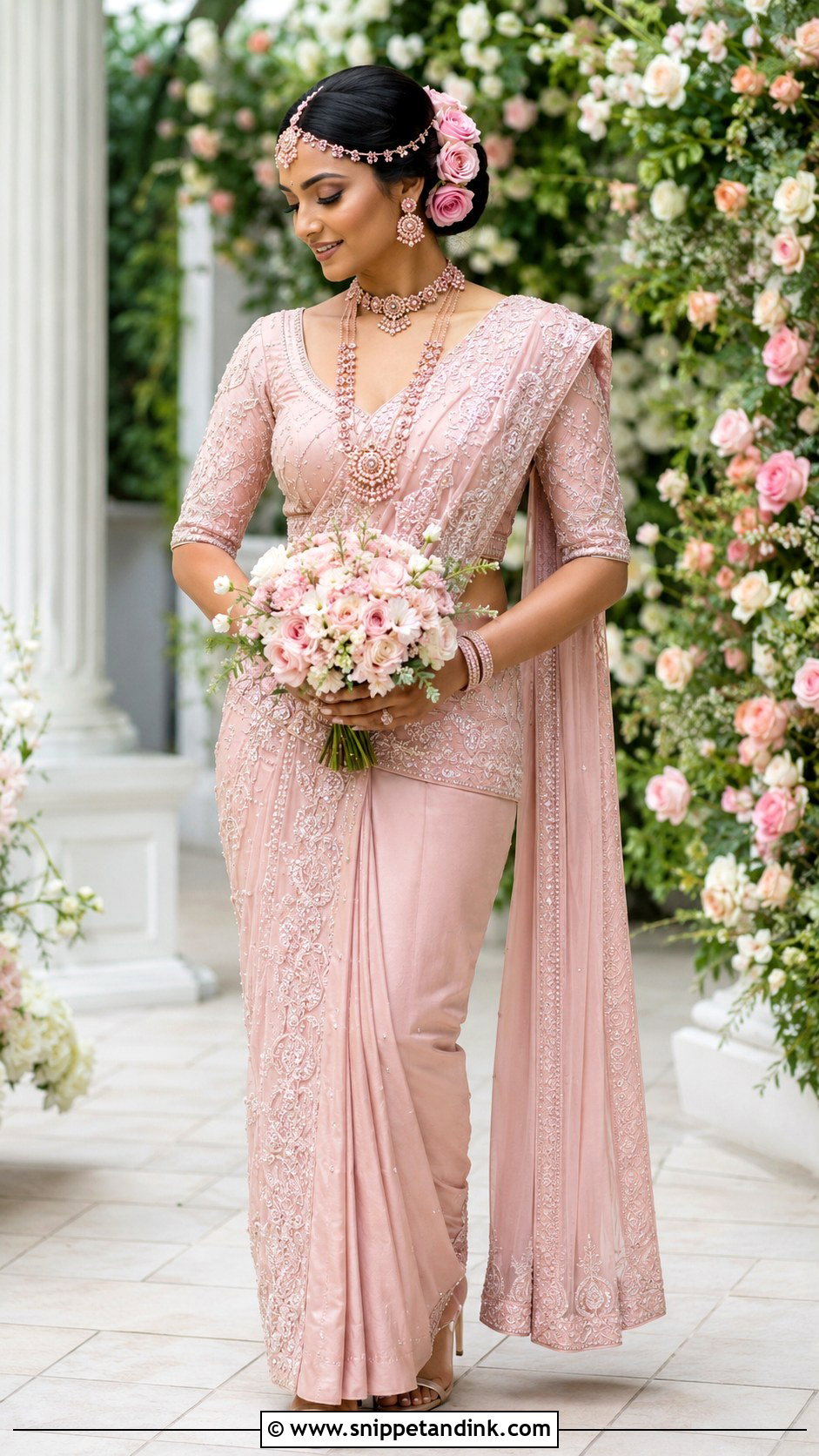
Blush pink can tip into girlish quickly, so the structure around it matters. A pale pink osariya with ivory embroidery, pearl beading and fine gold borders stays grounded when the blouse has a clean neckline and fitted sleeves. Gold or rose-toned Kandyan jewellery can be layered across the bodice, and the headpiece and hair ornaments keep the ceremonial identity clear. Decorate a smooth bun with pale pink roses or small jasmine. I match the blush on the cheeks to the fabric, then a satin pink-nude lip. Champagne shoes and a bouquet of white and blush flowers finish it.
6. Soft Peach Kandyan Bride
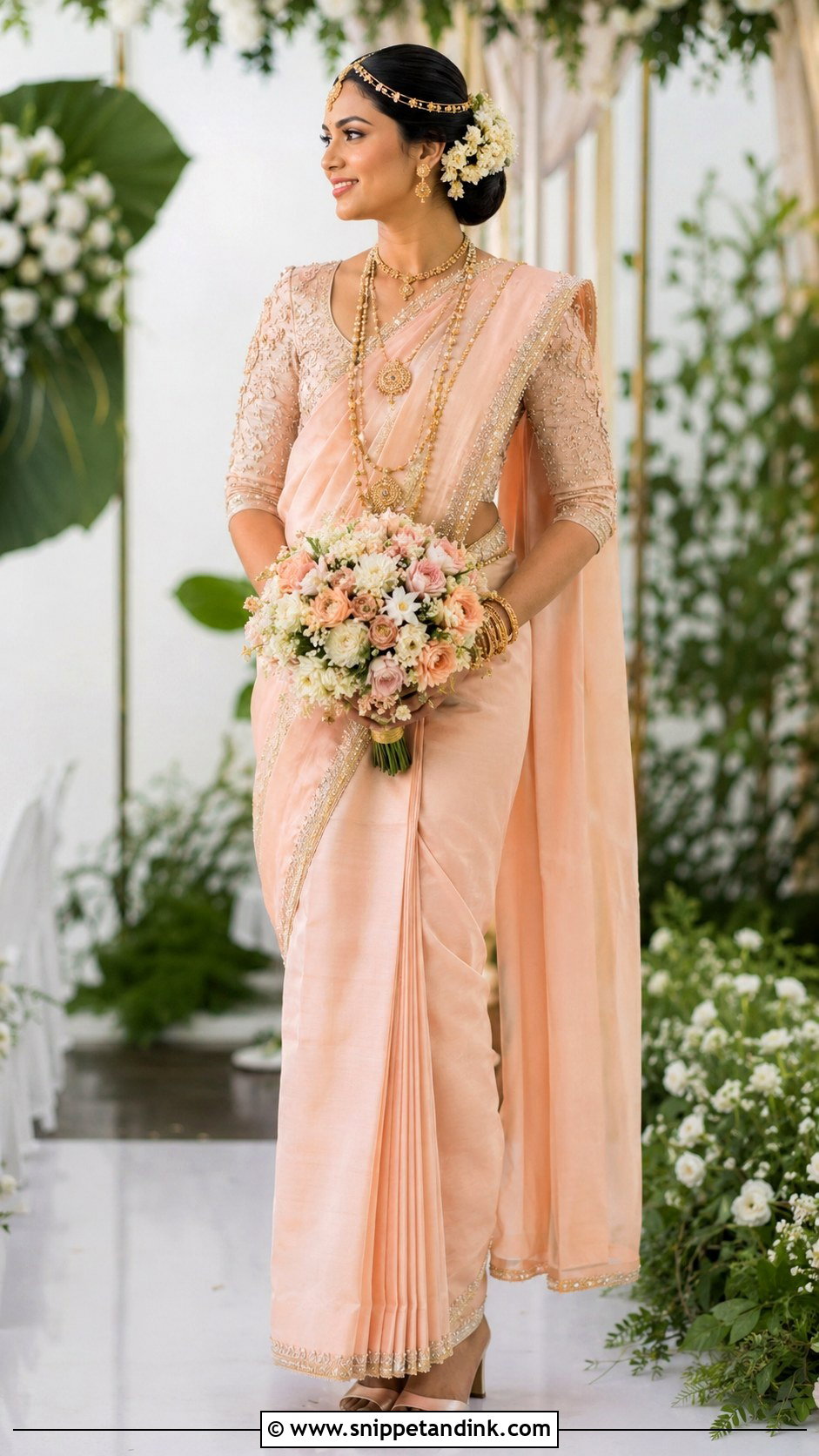
Peach is one of the most flattering pastels in natural daylight, especially on warm and deeper skin tones. Look for an osariya with ivory threadwork, pale gold borders and a few well-placed crystals that define the drape without covering it. A peach blouse with embroidered sleeves and a structured neckline gives the layered necklaces something firm to rest on. Classic gold jewellery provides the contrast that keeps a pastel looking ceremonial. White jasmine or cream roses arranged to one side of a low bun. Peach-toned blush, brown eyeliner and a warm nude lip tie the face to the saree. Light gold heels and a loose bouquet of white, peach and green, for a garden or a hotel.
7. Powder Blue Kandyan Bride
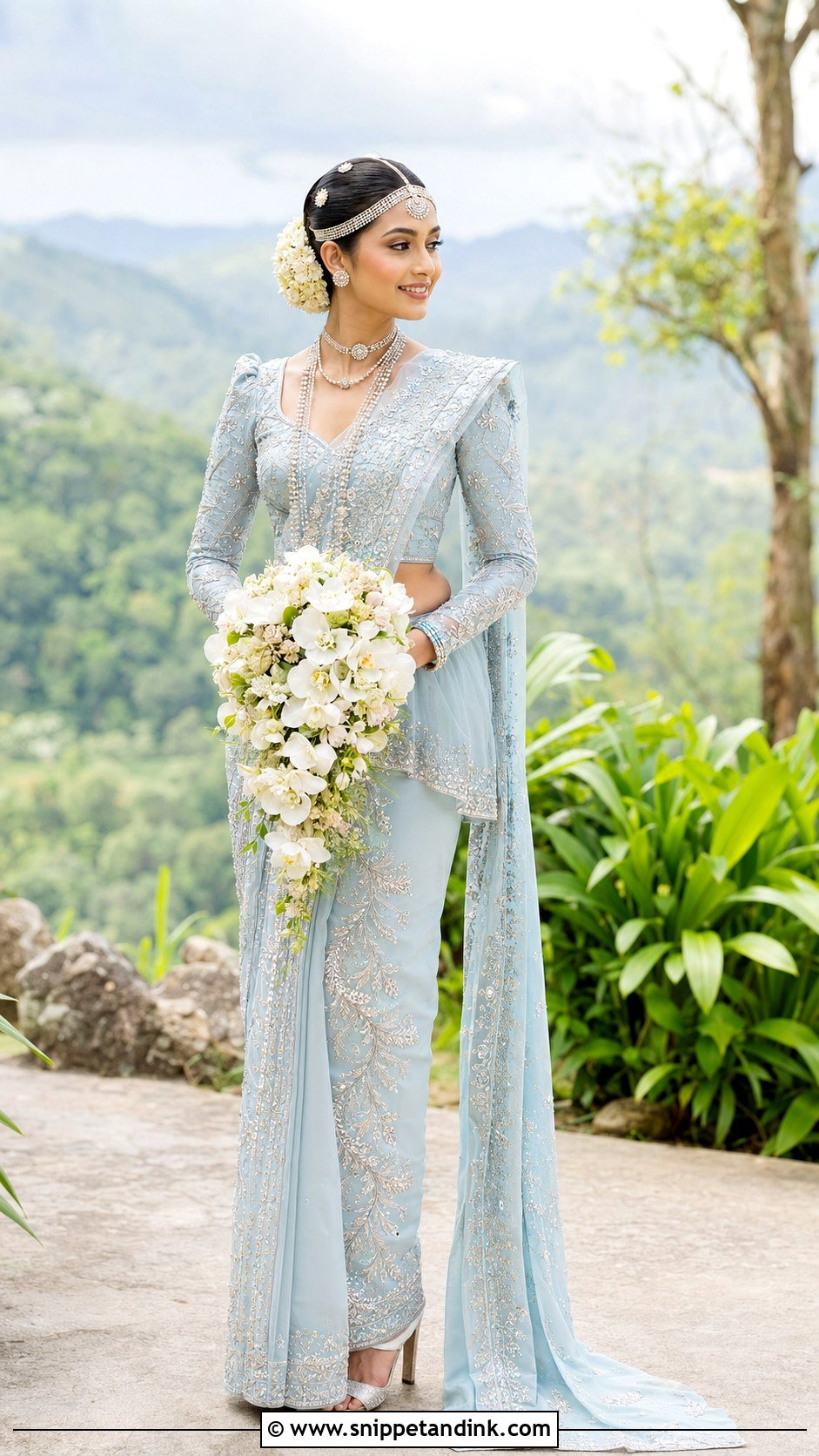
Powder blue is a cool change from the warm bridal colours, and it only looks polished when it’s tonal. I’d build the blouse, pleats and frill in the same blue fabric rather than contrasting pieces, then add silver, pearl or white embroidery. Choose jewellery with clear or pale stones, or softly aged gold, so there’s no harsh line between metal and fabric. A classic bun with silver-toned pins and white flowers keeps the Kandyan connection. Cool taupe eyeshadow, fine liner, luminous skin and a dusty pink lip. Silver or ivory heels and white orchids. Pale blue can look washed out under yellow indoor lighting, so check the fabric in the venue’s light if you can.
8. Sage Green Kandyan Bride
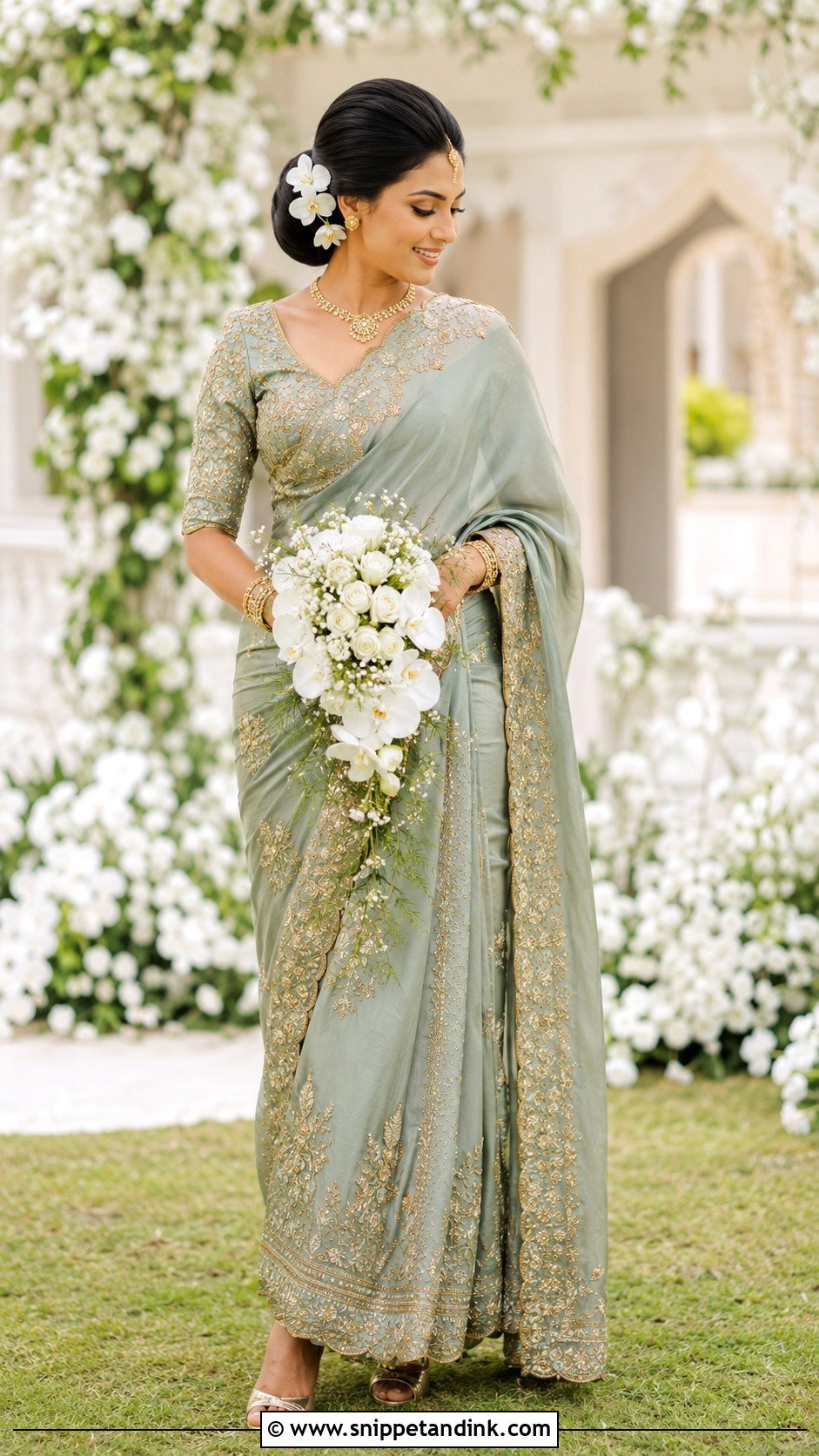
Sage green suits an outdoor or botanical wedding and calms down all that gold. Choose a muted green osariya with antique gold embroidery, pearl accents and a clear border that outlines the drape, and a matching blouse with elbow-length sleeves for coverage. The full traditional gold set warms the cool green. A rounded low bun with white orchids or jasmine. Keep the eyes neutral, the skin softly bronzed and the lip a muted rose. Gold heels and a white bouquet with soft greenery. I’d avoid dark green accessories; they make the sage look faded beside them.
9. Lavender Kandyan Bride
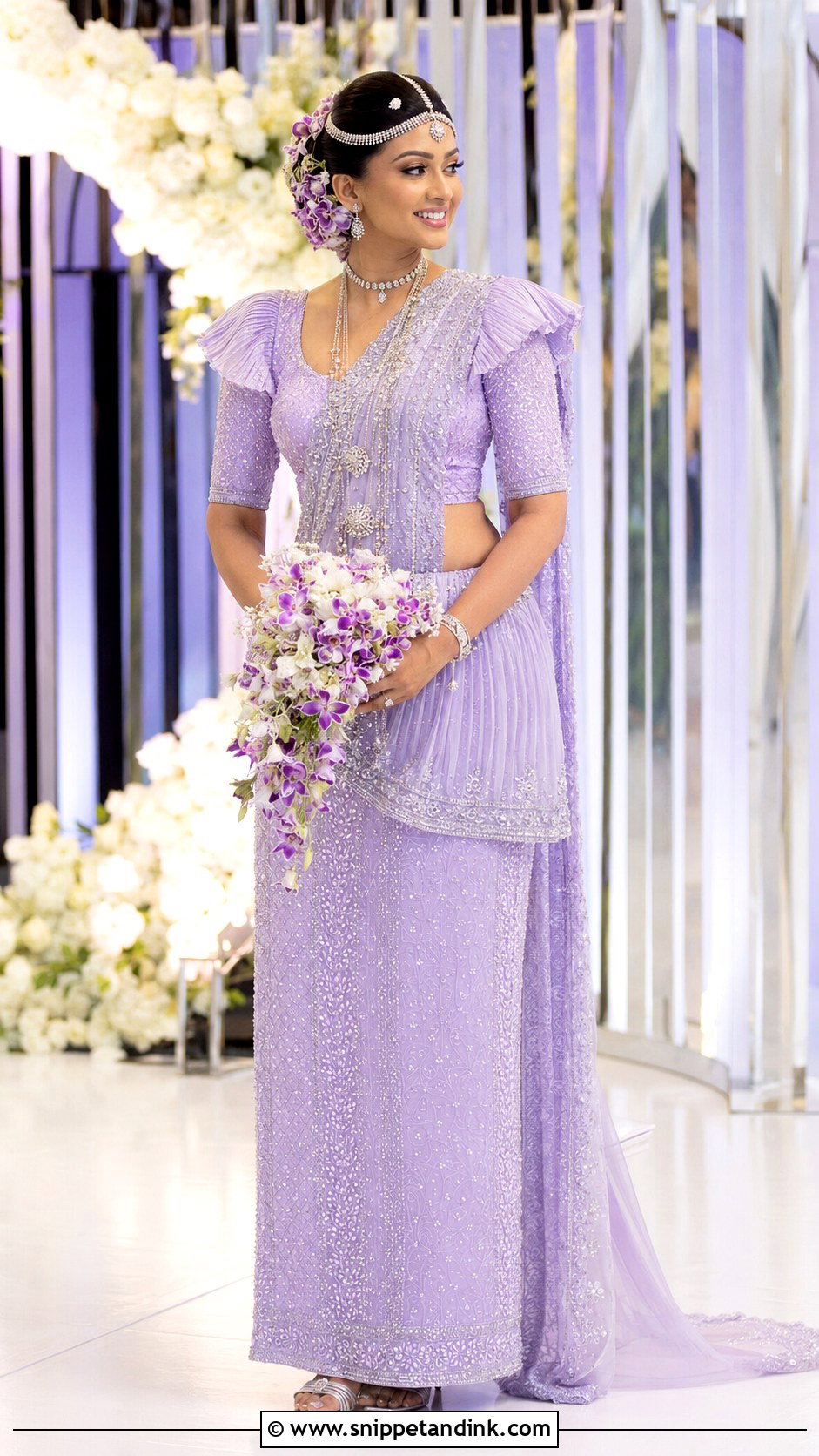
Lavender updates the Kandyan silhouette gently while staying formal. Choose a pale lavender osariya with silver beadwork, soft floral embroidery and a frill stiff enough to keep its shape all day, which means asking about interfacing when it’s made. A matching blouse with a high or softly curved neckline gives a clean base for the jewellery. Traditional gold makes a warm contrast; white-stone pieces feel cooler and more coordinated. Lavender orchids and small pearl pins in a smooth bun. Mauve eyeshadow, defined lashes, cool pink blush and a rose-nude lip. Silver heels and white flowers with a touch of lavender. Keep the hair flowers sparse so the ceremonial ornaments stay visible.
10. Rose Gold Kandyan Bride
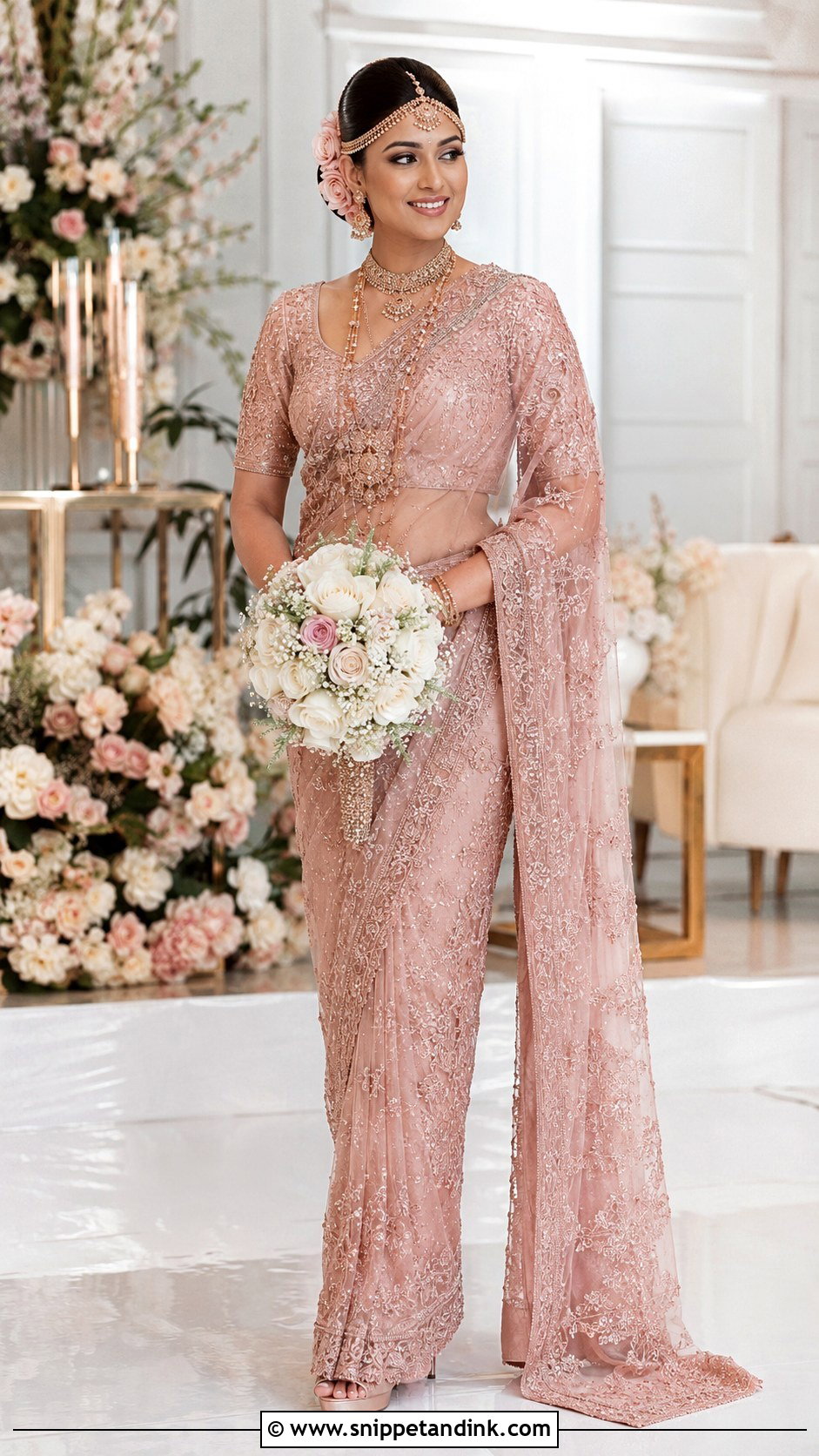
Rose gold sits between gold and pink, and it suits a bride who finds yellow gold too strong against her skin. Start with a pale rose osariya worked in rose-gold embroidery, crystals and fine beadwork along the border and blouse. The jewellery can follow the same warm metal, but I’d keep the traditional shapes and layering so it still reads as Kandyan. A sleek bun with matching ornaments and a few blush flowers frames the face. Rose-bronze eyeshadow, highlighted cheeks and a neutral pink lip. Rose-gold heels and an ivory bouquet tied with dusty pink ribbon. Without strong colour contrast, it relies on texture, so the embroidery has to be good.
11. Silver And White Kandyan Bride
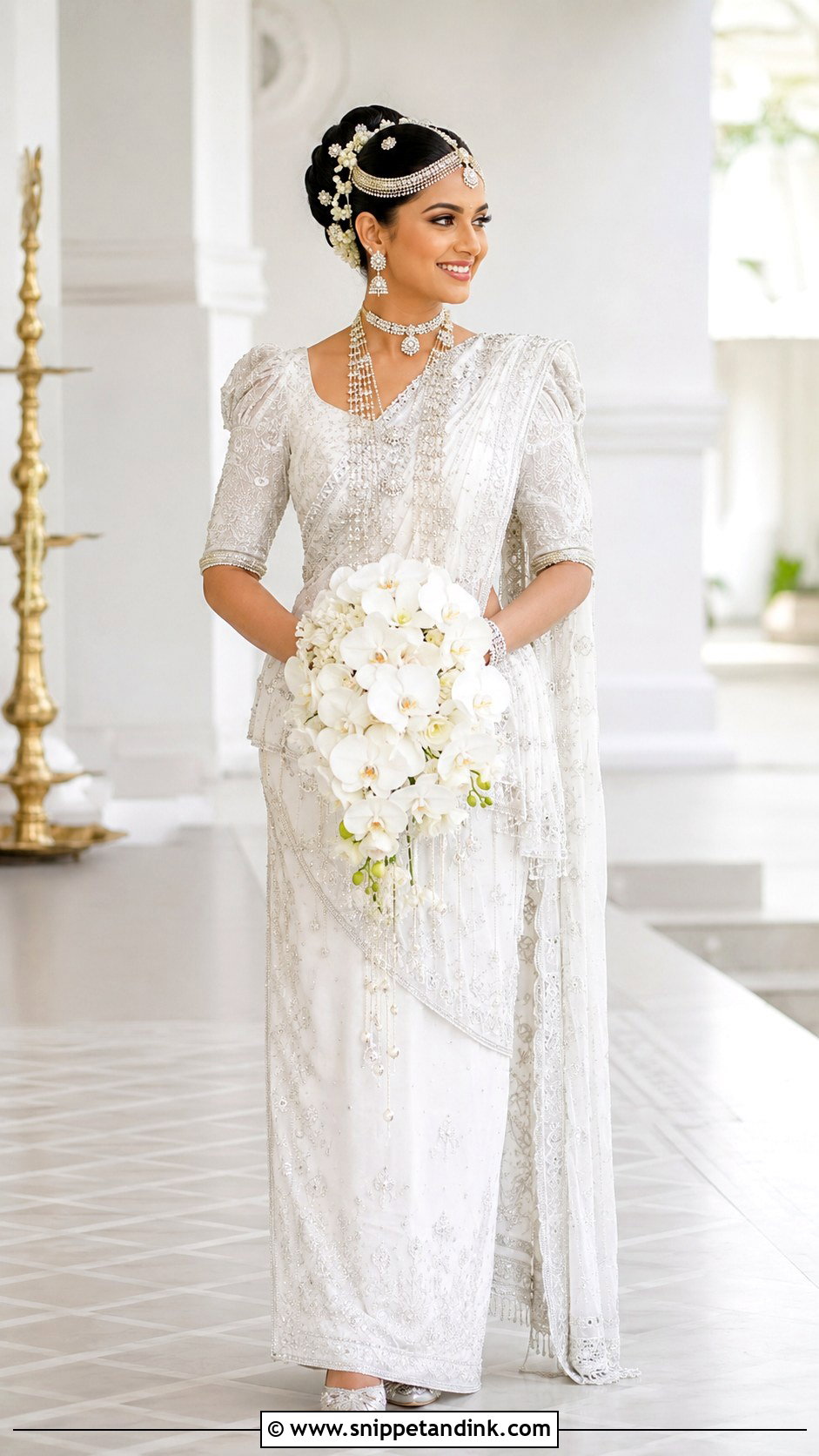
Silver on white looks bright and modern, but some families expect classic gold jewellery regardless. Choose a white osariya with silver embroidery, clear crystals and pearls concentrated around the border, pleats and blouse. Silver-toned or white-stone jewellery works if it keeps the traditional layered arrangement. If the family set is yellow gold, I bridge the gap with a soft white-gold thread in the saree rather than forcing two metals to fight. A neat bun with crystal pins and the ceremonial ornaments. Cool neutral makeup, pink cheeks and a soft berry-nude lip, with silver shoes and a structured white orchid bouquet. Bright, minimal venues with white flowers suit it.
12. Red And Gold Kandyan Bride
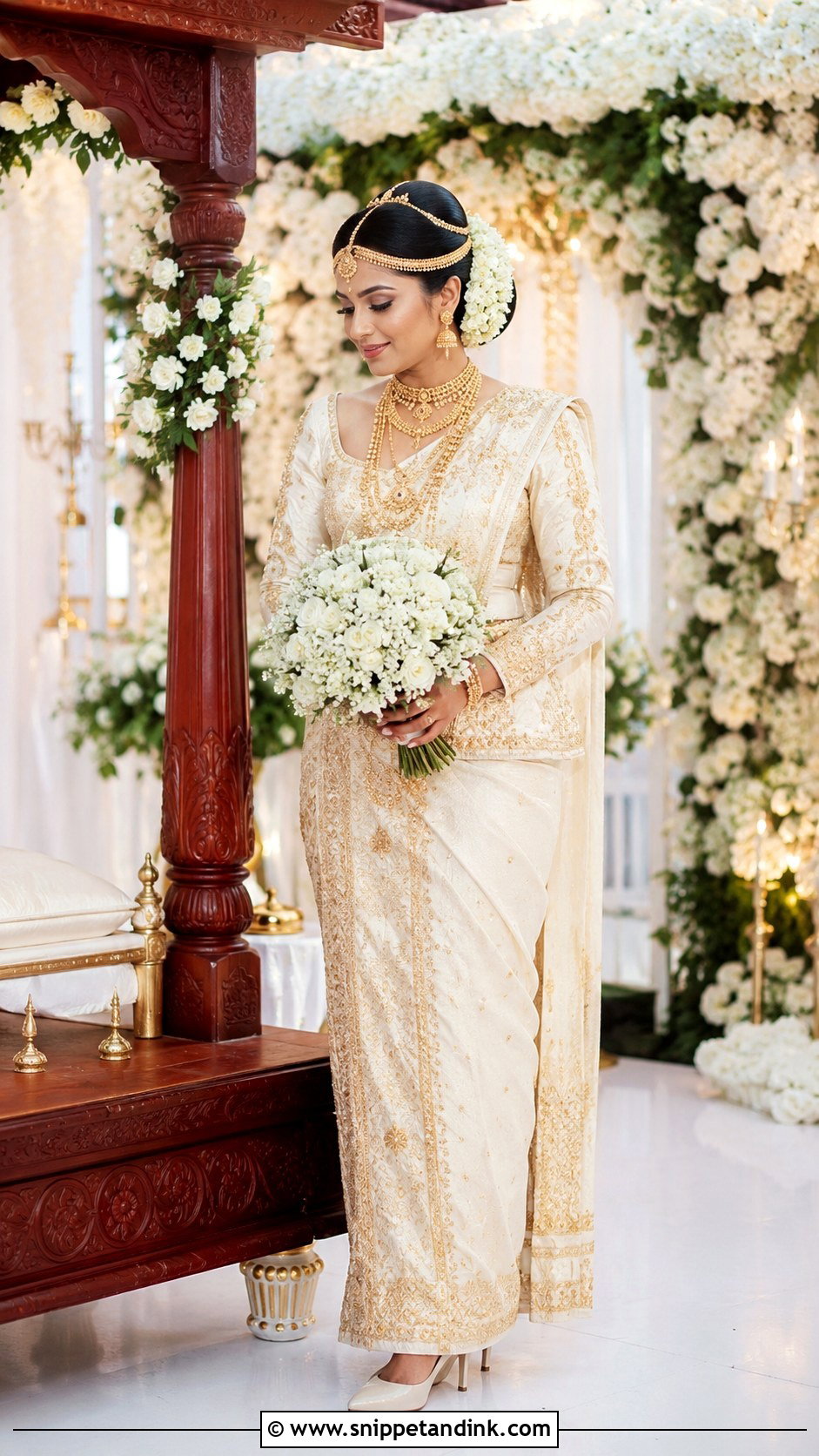
Red is bold, and I usually suggest it for a homecoming celebration, a reception or a ceremony the couple has personalised. Choose a deep crimson or ruby osariya with ornate gold borders, a sculpted frill and a richly embroidered blouse. Gold jewellery belongs with red: layered necklaces, statement earrings, bracelets and an embellished waist chain. Depending on the event, wear the full headpiece or a simpler set of hair jewellery. White jasmine across a low bun makes a sharp contrast. Gold-brown eyes, defined liner, warm blush and a classic red or deep rose lip. A deep red fabric can bleed dye in heat and sweat, so test the blouse lining against a pale cloth first. Gold heels and small ivory flowers.
13. Floral Embroidered Kandyan Bride
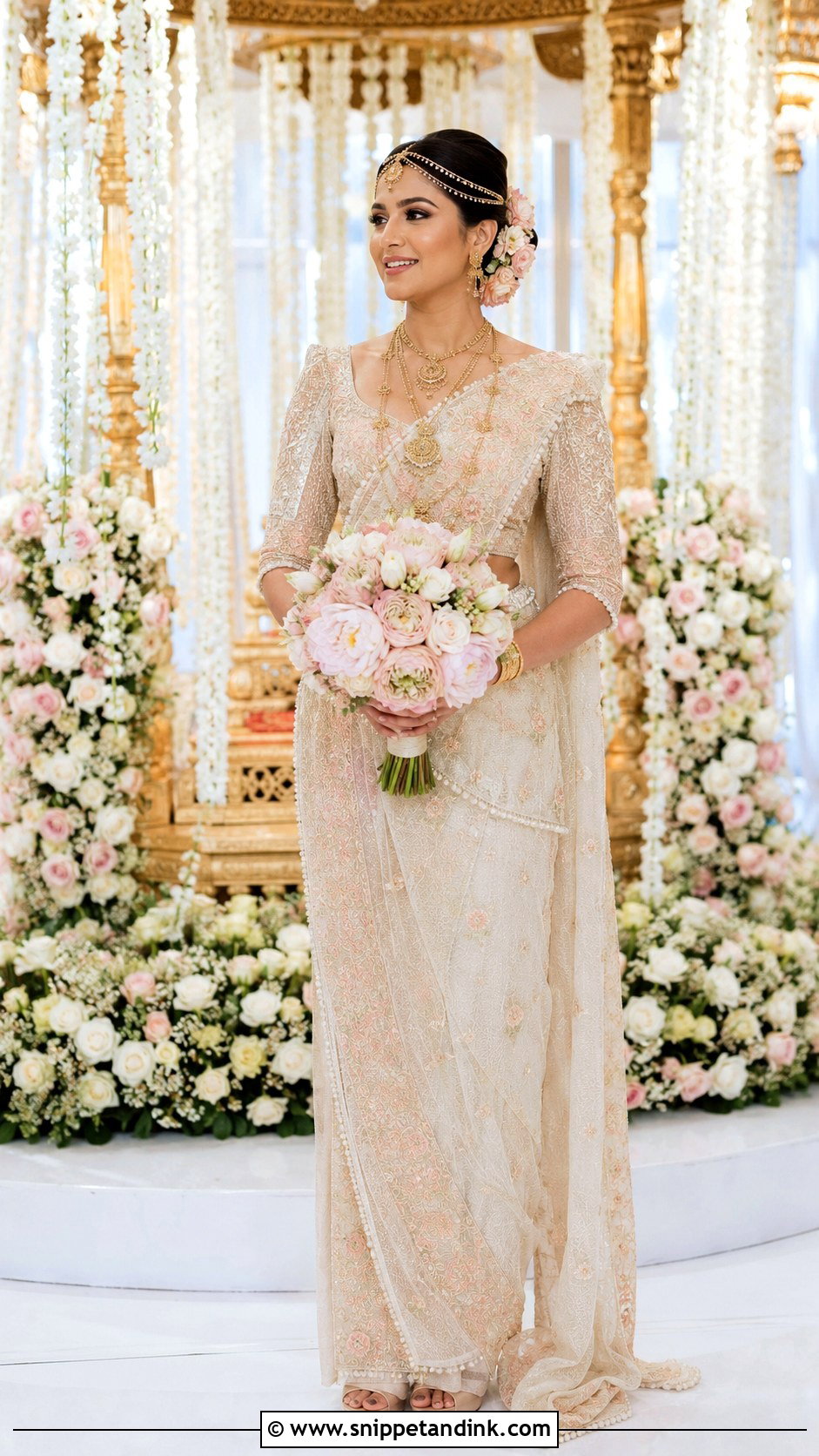
Floral embroidery is the easiest way to make an osariya personal without touching its construction. Start with an ivory, blush or pale champagne base and keep the flowers to the border, blouse and outer edge of the frill. I limit the thread palette to two or three colours; a full rainbow makes it look like a day saree. Match the jewellery metal to the metallic threads in the embroidery. Fresh flowers in a polished bun should repeat one shade from the saree, and the bouquet can echo the embroidered flowers too. Soft, natural skin, subtle liner and a rose lip, with neutral heels. The repetition is what makes it look designed.
14. Lace Blouse Kandyan Bride
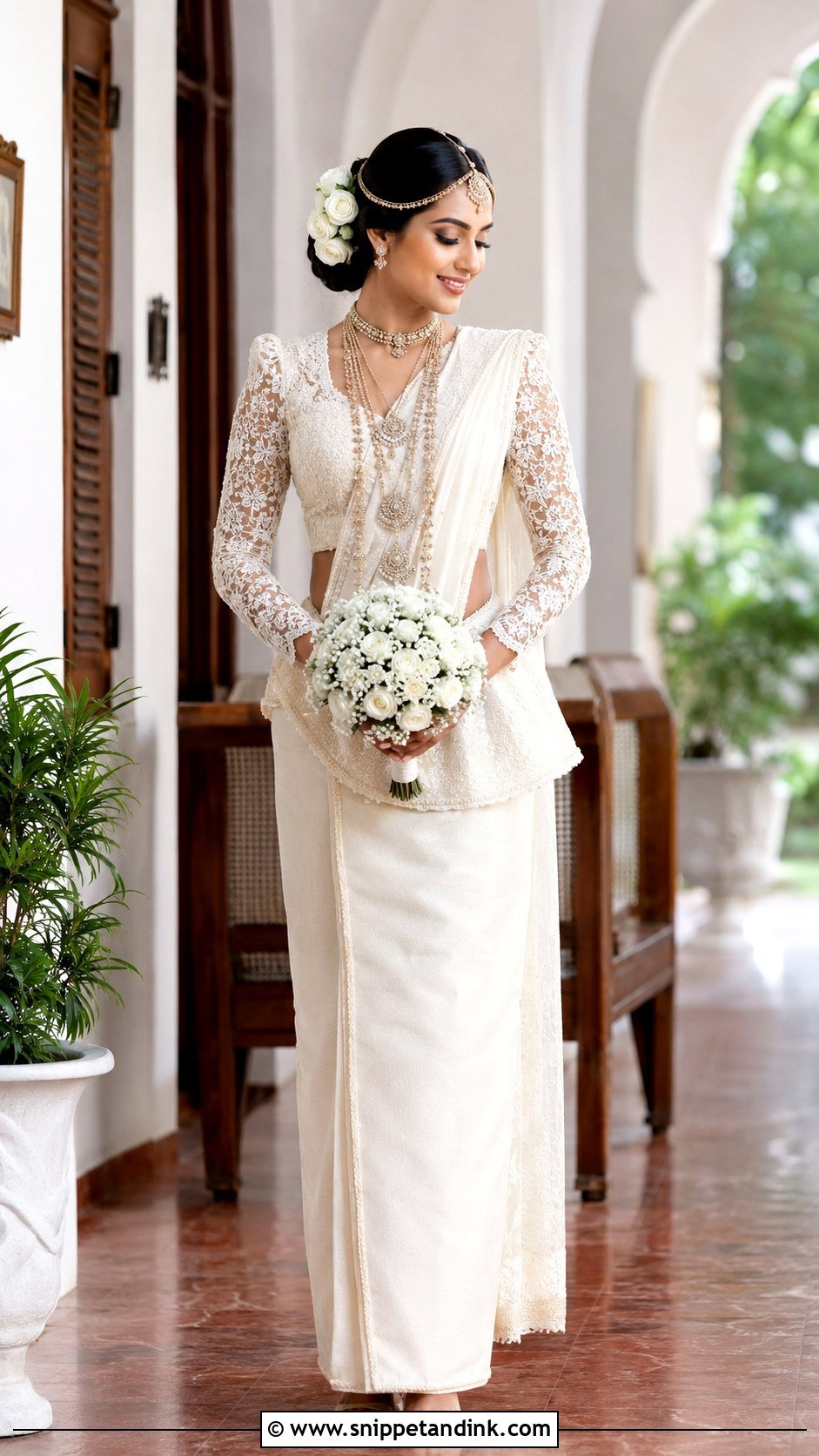
A lace blouse softens the structured Kandyan silhouette with a modern texture. Pair an ivory osariya with a fitted lace blouse lined through the bodice and sleeves. Pick a small lace pattern so it sits flat under the necklaces and shoulder ornaments; big motifs get lost and bunch. Pull the border details from the blouse, pearls, beads or metallic thread, rather than adding something unrelated. The traditional set and nalalpata bring back the heritage. A smooth bun with white roses, fresh makeup and a pink-nude lip, ivory heels and a small white bouquet. Hooks and raised settings snag lace, so I always do a jewellery run-through on the actual blouse before the wedding.
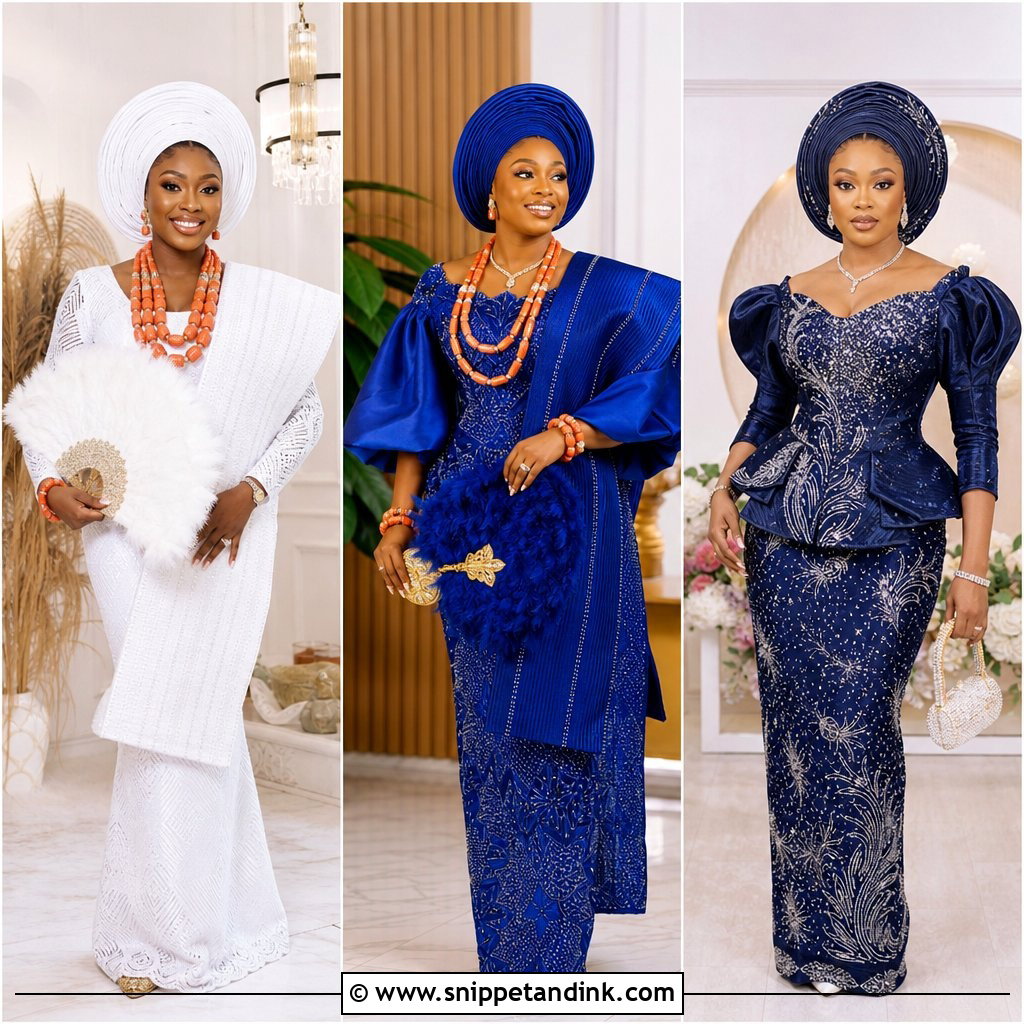
15. Long Sleeve Kandyan Bride
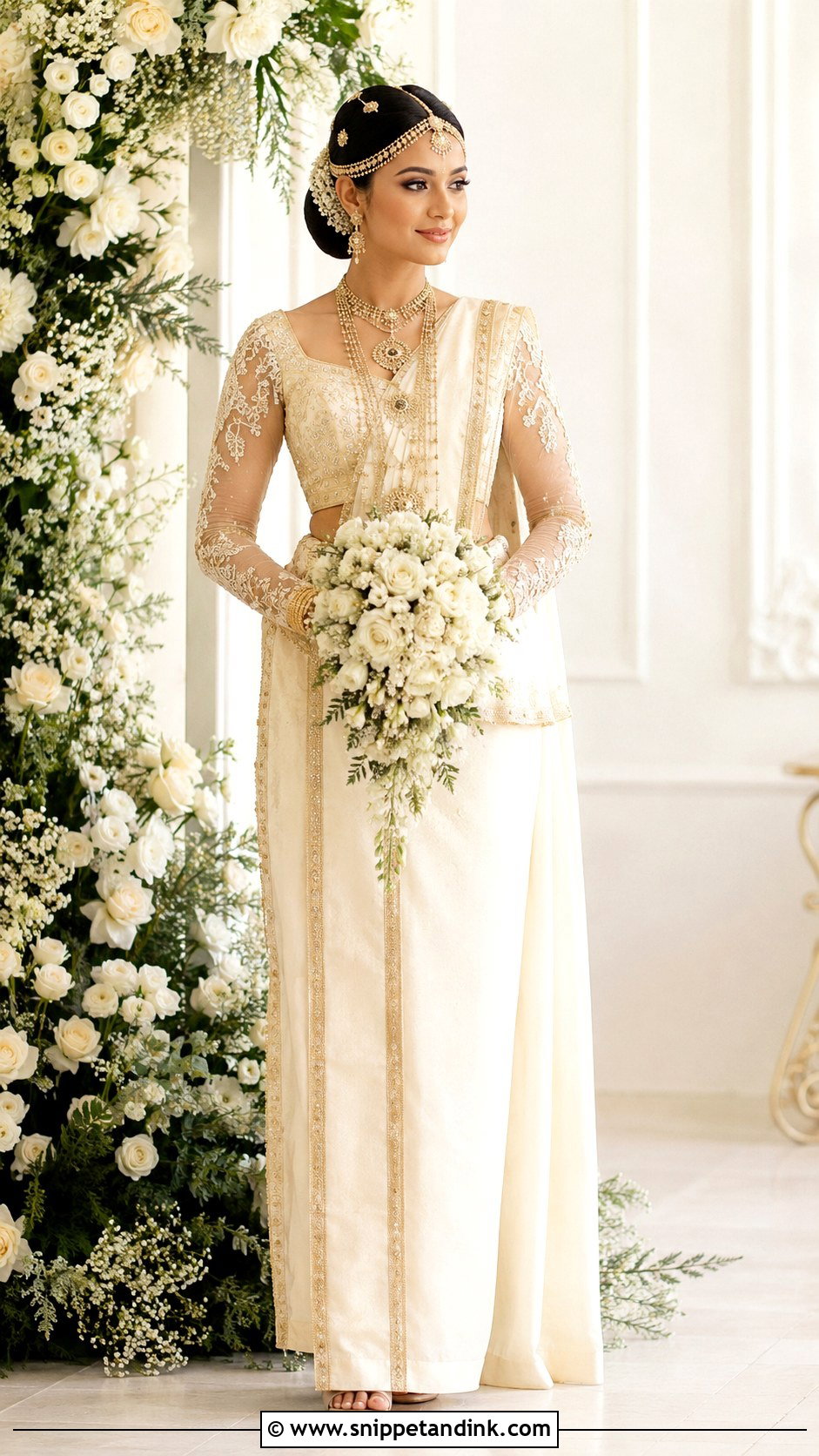
Long sleeves make a Kandyan outfit feel especially formal and suit a cooler morning or a bride who prefers coverage. Choose a fitted blouse with sheer embroidered sleeves or fully lined sleeves in the osariya fabric, and concentrate the heavy work at the cuffs and neckline. An ivory saree with gold borders is the classic route; blush or champagne softens it. The bracelets need thought: slide them over narrow cuffs rather than forcing them over dense embroidery, which crushes the work and scratches the metal. Lay the necklaces flat against the structured bodice. A neat bun with traditional head jewellery, neutral heels and an ivory bouquet. Balanced eyes and a muted rose lip keep the coverage from looking severe.
16. Minimal Jewelry Kandyan Bride
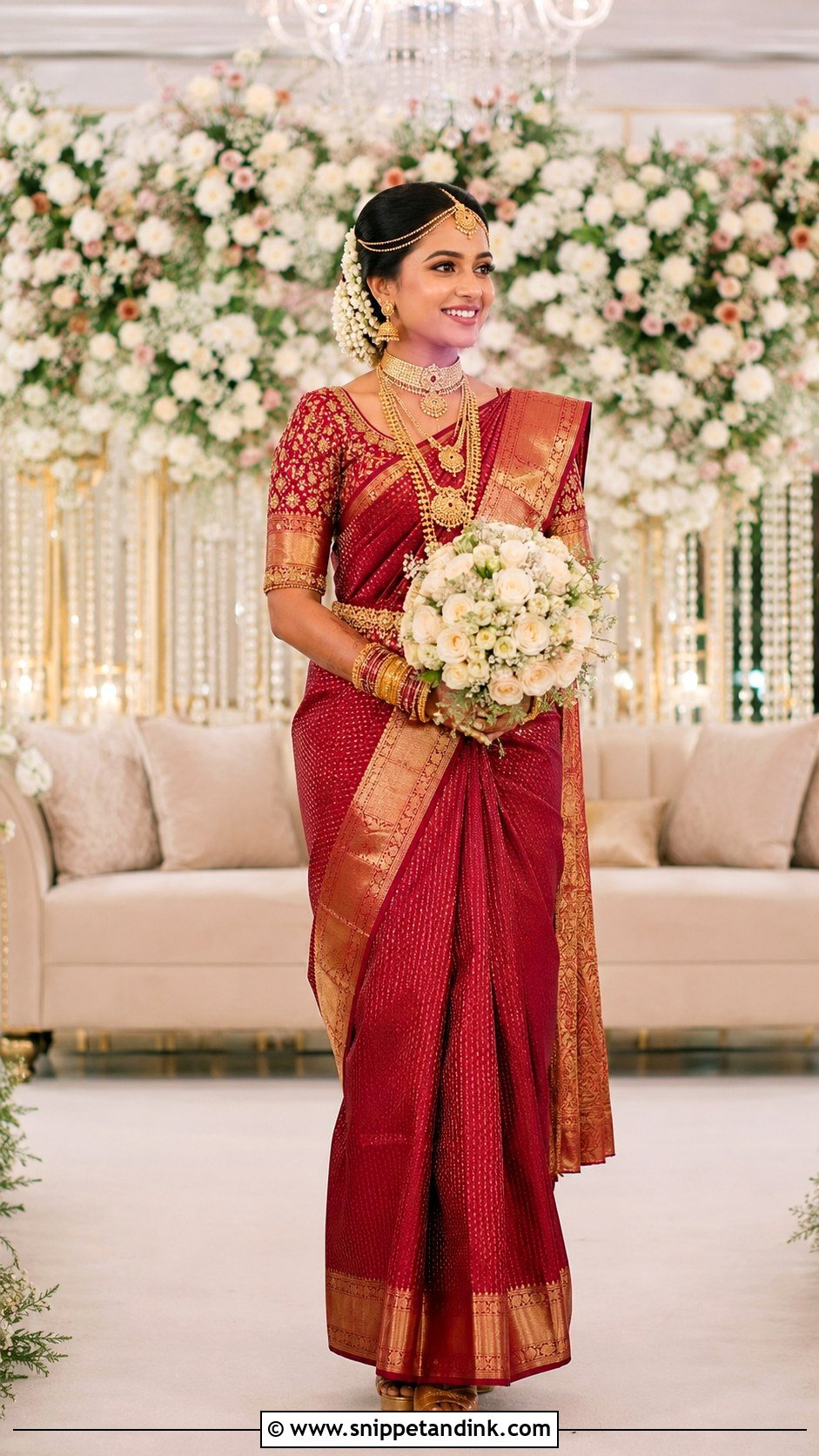
Can a Kandyan bride look ceremonial without the full, heaviest set? Yes, if the pieces she keeps are the recognisable ones. Traditionally a bride wore a great many ornaments, and most brides today already wear fewer. I’d start with a well-made ivory or champagne osariya with detailed pleating, a graceful frill and hand-finished embroidery, then keep the nalalpata, earrings, two or three necklaces, bracelets and a slim waist detail. It’s far more comfortable over a long day and lets the fabric show. A clean low bun with restrained gold pins or white flowers, natural makeup, gold heels and a small orchid bouquet. Talk to the family before you settle on a reduced set; some pieces carry meaning for them.
17. Heirloom Jewelry Kandyan Bride
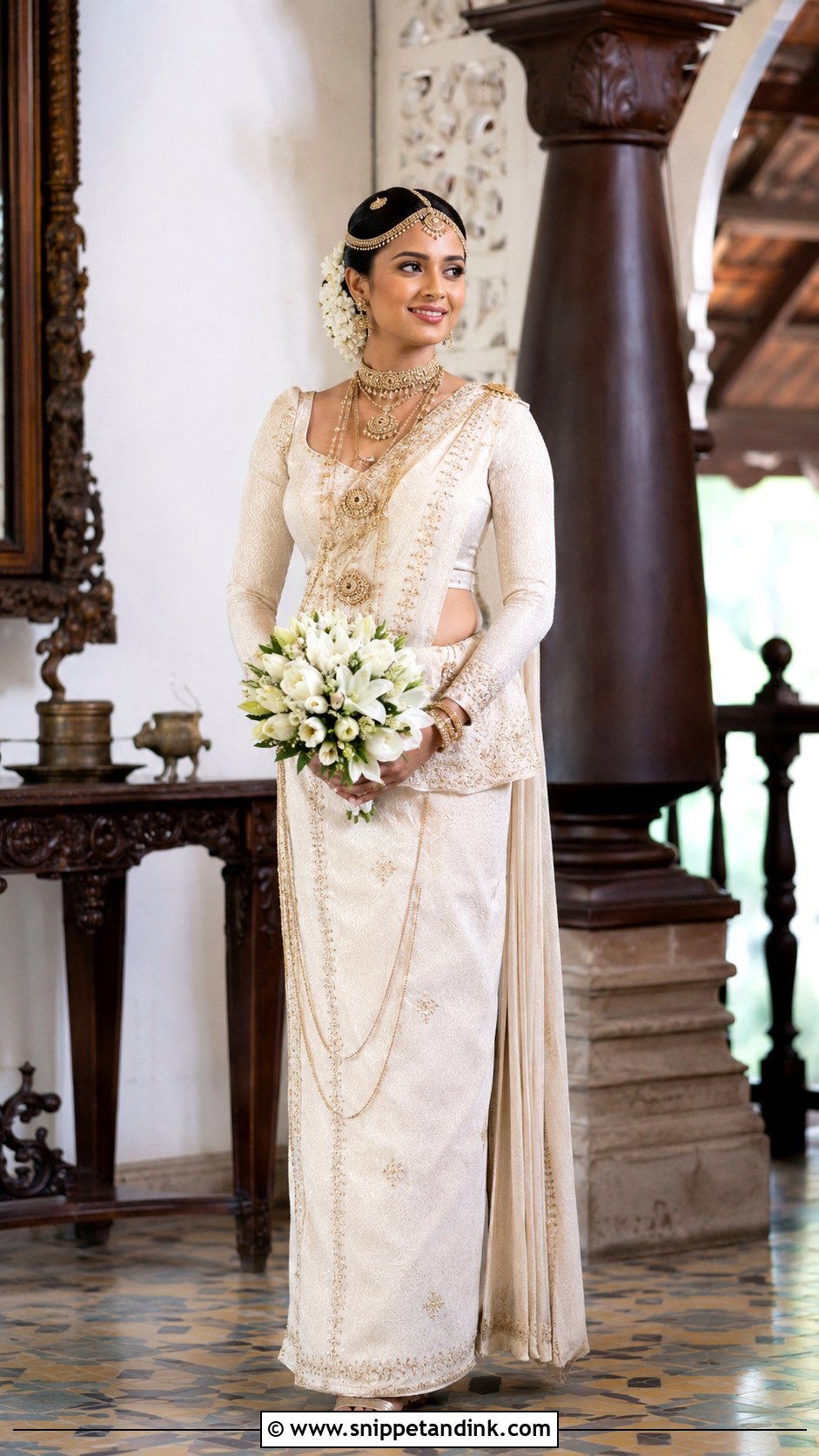
An heirloom set can become the heart of the whole look, and I build the outfit around it rather than the other way round. Before choosing fabric, look at its metal colour, stones, scale and condition. Antique gold glows against ivory, cream, champagne or muted blush. Keep the saree embroidery fine so it supports the jewellery’s shapes instead of competing. A traditionally arranged bun with the head ornaments properly positioned lets the whole set sit securely. Choose makeup in warm browns, soft rose and muted gold to suit both the bride and the aged metal. Simple gold heels and a white bouquet. Take old pieces to a jeweller well ahead to check clasps and settings; a weak catch on a long pendant chain is easy to lose during the ceremony.
18. Jasmine Bun Kandyan Bride
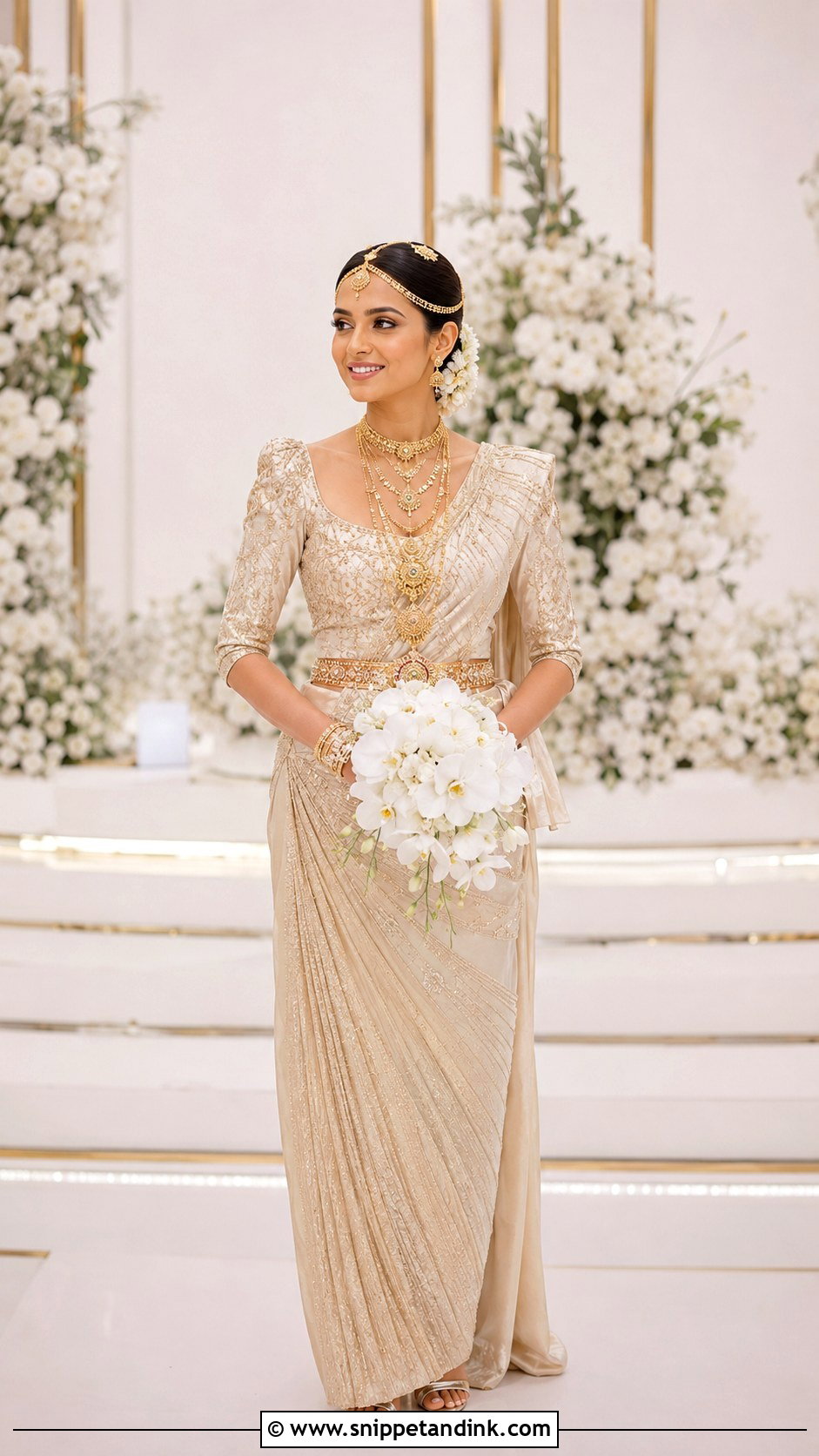
Jasmine brings scent and a clean white line to the traditional look. Pair an ivory osariya with gold embroidery, a fitted blouse and a complete jewellery set, then shape a smooth, rounded bun big enough to hold both the ceremonial ornaments and a controlled cluster of fresh jasmine. Place the flowers around the lower or side edge so they don’t cover the jewellery or widen the head. The gold reads clearly against the white. Fresh makeup with soft liner, warm blush and a pink-nude lip; ivory heels and a compact white bouquet. Jasmine browns at the edges within a few hours in heat, so I have the strands strung as late as possible, kept cool and damp, and pinned on last.
19. Orchid Hair Kandyan Bride
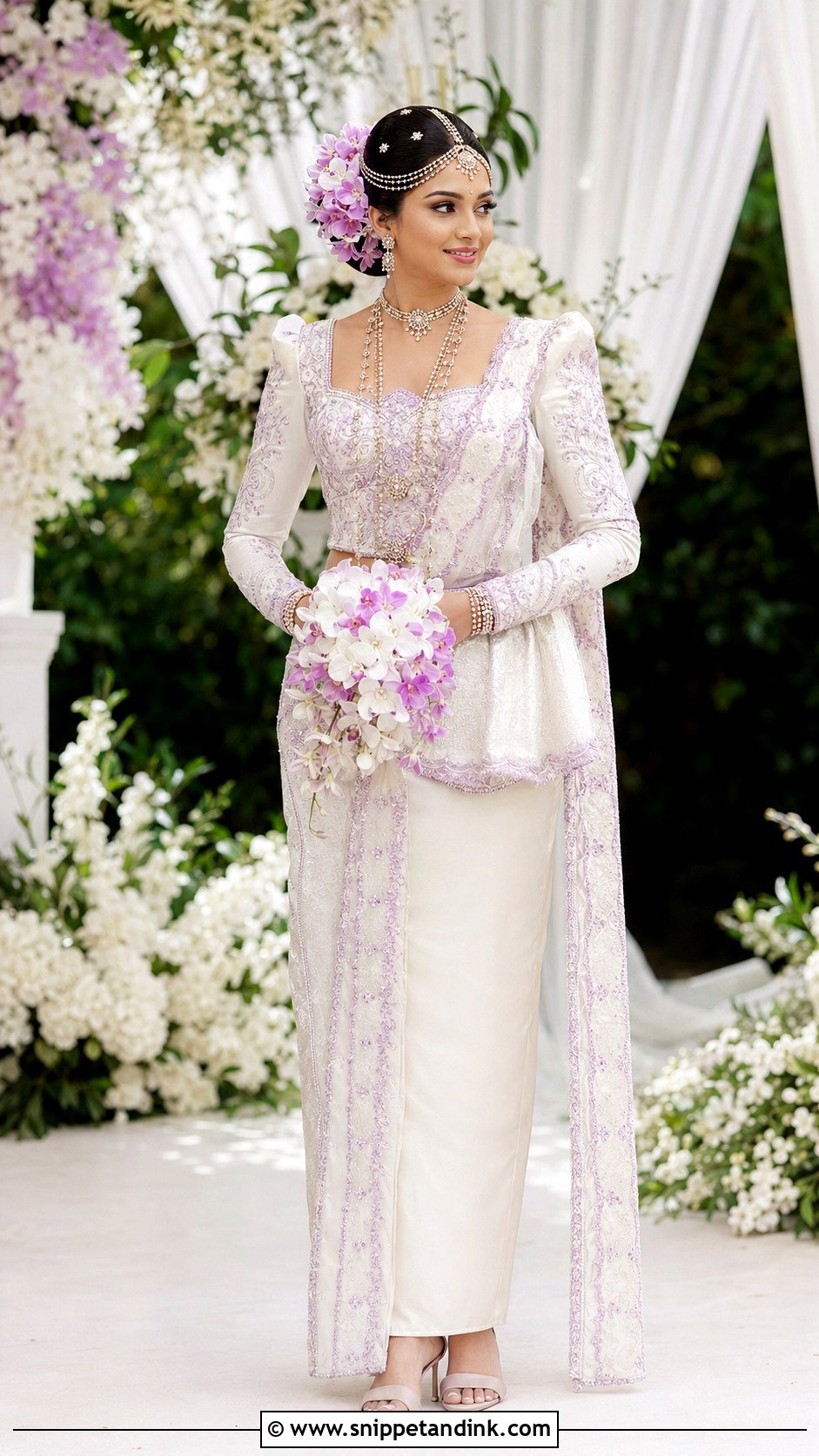
Orchids are sculptural and last far longer in the hair than jasmine, which makes them a practical choice for a long day. Choose a pearl-white, blush, lavender or powder-blue osariya and echo its colour subtly in the orchids. Keep them to one side of a low bun so the headpiece and hair jewellery stay visible. Restrained beadwork on the blouse and saree stops the upper half looking crowded once the flowers are in. Coordinate the jewellery with the embroidery metal. Glowing skin, defined lashes and a muted pink lip. Neutral heels and a simple orchid bouquet. Pick firm, fresh stems and wire them; a heavy bloom pinned without support droops by the photographs.
20. Modern Reception Kandyan Bride
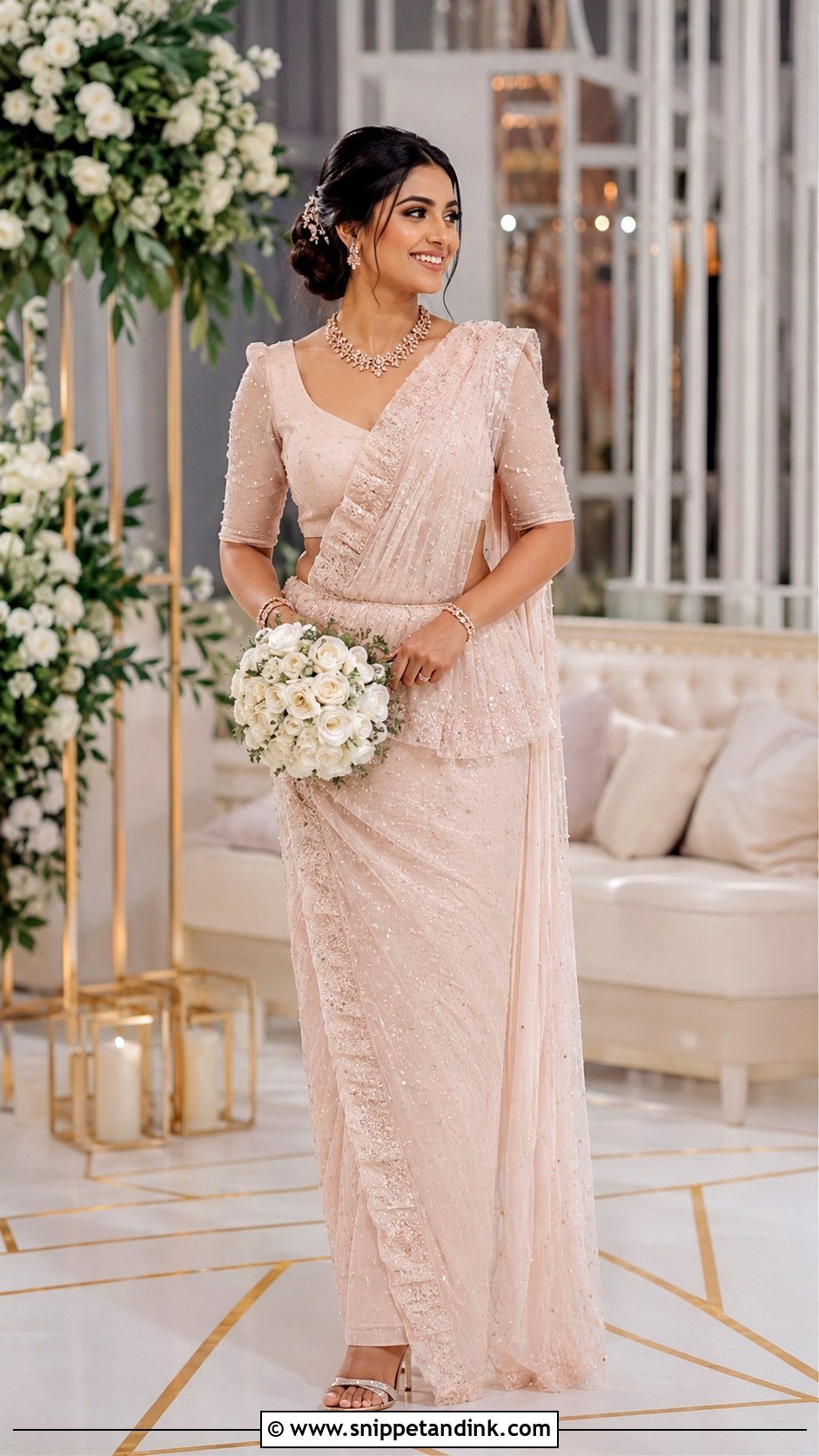
For the reception, many brides keep the osariya but drop much of its weight and ceremony. I’d choose a light champagne, blush, silver or pastel saree with a softly structured frill and scattered crystals, and a clean fitted blouse you can move and eat in. Swap the full jewellery arrangement for a refined necklace, matching earrings, bracelets and one meaningful hair piece. A textured low bun or sleek twisted updo looks current from every angle. Luminous skin, softly smoky eyes and a rose or berry-nude lip that still shows in evening photos. Metallic heels and a small bouquet. The silhouette stays Kandyan; the bride just gets to breathe.
Working Back From the Auspicious Time
Kandyan ceremonies are usually timed to an auspicious moment, the nekath, and the couple steps onto the Poruwa when it arrives. That time doesn’t move, so a late dressing room becomes everyone’s problem. I plan the whole morning backwards from it.
Build in a buffer
Agree a finish time well before the nekath, with space for family photos and for the bride to sit quietly for a few minutes. Draping and jewellery always take longer than expected when relatives drop in to help.
Plan for heat and weight
Sri Lankan humidity tests both makeup and fabric. I use a long-wear base, set the T-zone well and send a blotting kit with someone in the bridal party. The jewellery is heavy and the frill is stiff, so the bride should eat and drink before she is fully dressed, and use the bathroom just before the drape goes on. Once she is pinned in, undressing for a break is a real job.
Keep a small repair kit close
Safety pins in two sizes, bobby pins in the hair colour, a spare earring back and a few strands of thread in the saree colour. A slipped pleat or a loose earring is a ten-second fix if the kit is in the room, and a real worry if it’s in the car.
The Frill, the Pendants, Then Your Own Touch
A good Kandyan look honours the tradition and still leaves the bride recognisably herself. White and ivory remain the classic route, but champagne, blush, blue, green, lavender and red can all work with the right jewellery and embroidery. Plan the fabric, blouse, jewellery, hair, makeup, shoes and bouquet together from the start instead of piece by piece. Do a full dress rehearsal to check the pleats, movement, ornament placement and comfort, and let any family heirlooms guide the design. Richly traditional or softly modern, the aim is a meaningful wedding ensemble you can carry with ease all day.
You'll Like These Ideas:





Leave a Reply