
A Kashmiri Pandit bridal wardrobe is built around a few pieces that carry real meaning. The wedding itself traditionally centers on the embroidered pheran, taranga headgear, and dejhoor ornaments, and many brides now add silk sarees and lehengas for the functions around it. When I build a wardrobe for a Pandit bride, I start with those three anchors and plan everything else around how she will sit, kneel, walk and be dressed by family across several days. Red usually stays with the wedding, yellow with the mehendiraat, jewel tones with family dinners, softer shades with the reception. The twenty looks below move from the traditional pheran through sarees, lehengas and fusion outfits, with notes on what each one asks of you.
Matching Each Outfit to Livun, Devgon, Mehendiraat and the Lagan
A Pandit wedding is a run of separate days, and each one asks something different of the clothes. Before I look at a single swatch, I write out the functions with the bride and note what she will be doing at each one. That list decides fabric and fit far more than any mood board.
- Livun and the early house rituals: cotton or light silk you can clean and move furniture in. Nothing you would mind getting dusty.
- Devgon: a ritual morning with long sitting near the fire. Natural fibers, pinned pleats, modest jewelry. Many families also treat this as the day the ears are prepared for the dejhoor, so keep the hair and neckline clear.
- Mehendiraat: hands occupied for hours. Short sleeves or sleeves that roll easily, a dupatta pinned well out of the way, a skirt or sharara you can sit on the floor in.
- The lagan itself: the pheran or the red saree or lehenga, the taranga and the dejhoor. This is the outfit to fit most carefully, because you will kneel, stand and be guided around for hours.
- Reception: the one day you can switch to color, a lighter head covering and heels if you really want them.
Once the days are listed, gaps show quickly. Most brides discover they have three dramatic outfits and nothing comfortable for the morning ritual, and that is the outfit I fix first.
1. Traditional Red Kashmiri Pandit Bridal Pheran
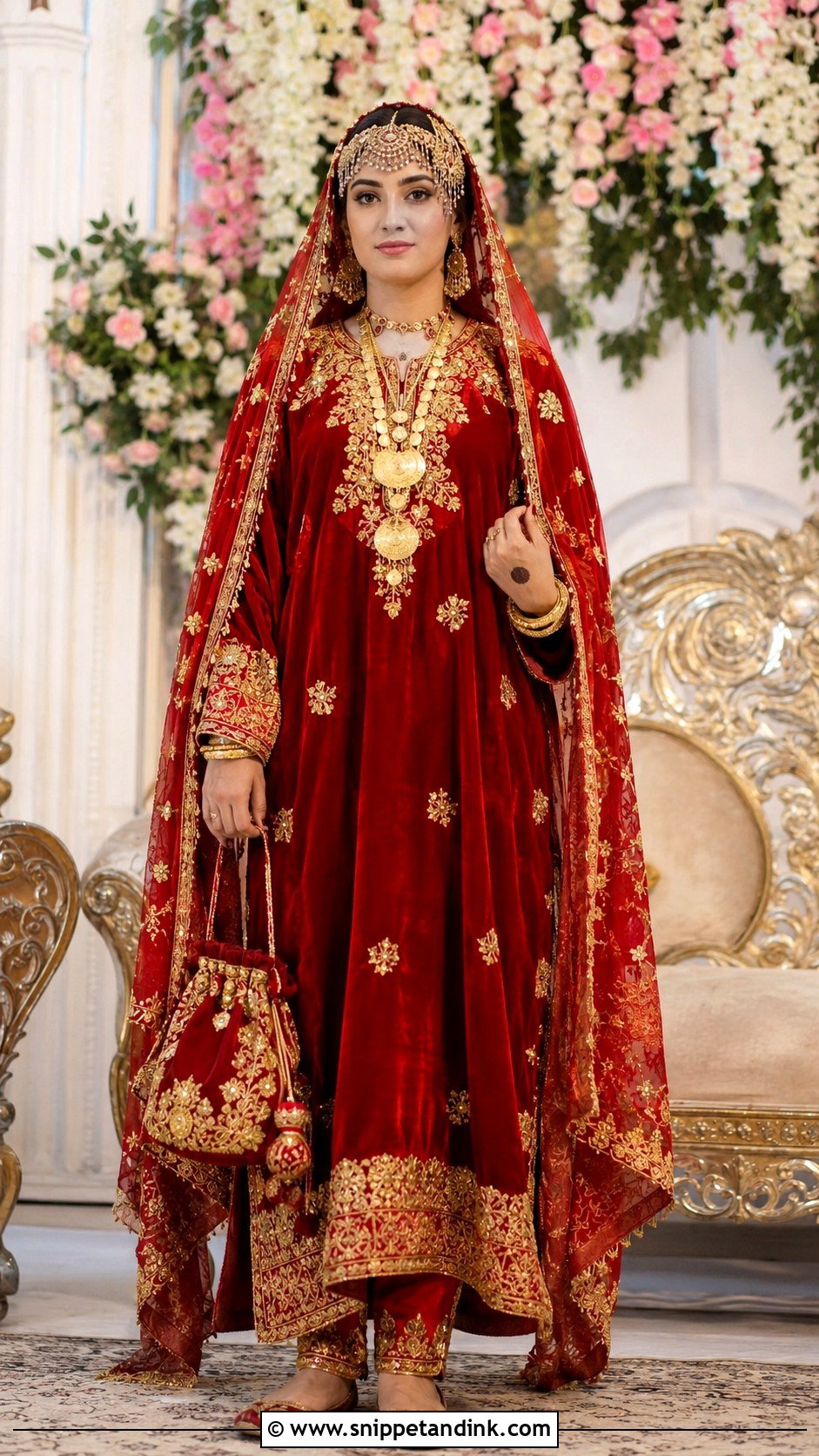
The red pheran is the look most families picture first, and it rewards restraint. I prefer floor length in velvet, silk or fine wool, with gold aari work kept to the neckline, cuffs and hem so the garment still drapes instead of standing stiff. Matching trousers and embroidered juttis go underneath; check that the juttis are broken in, because you will stand through long rituals. The taranga gives the outfit its height, and a light red veil can sit above it. Dejhoor, one gold necklace, bangles and a small clutch are plenty. A firm center part matters more than it looks: it gives the headgear a level base, so the taranga does not tilt as the day goes on.
2. Maroon Kashmiri Pandit Bridal Pheran
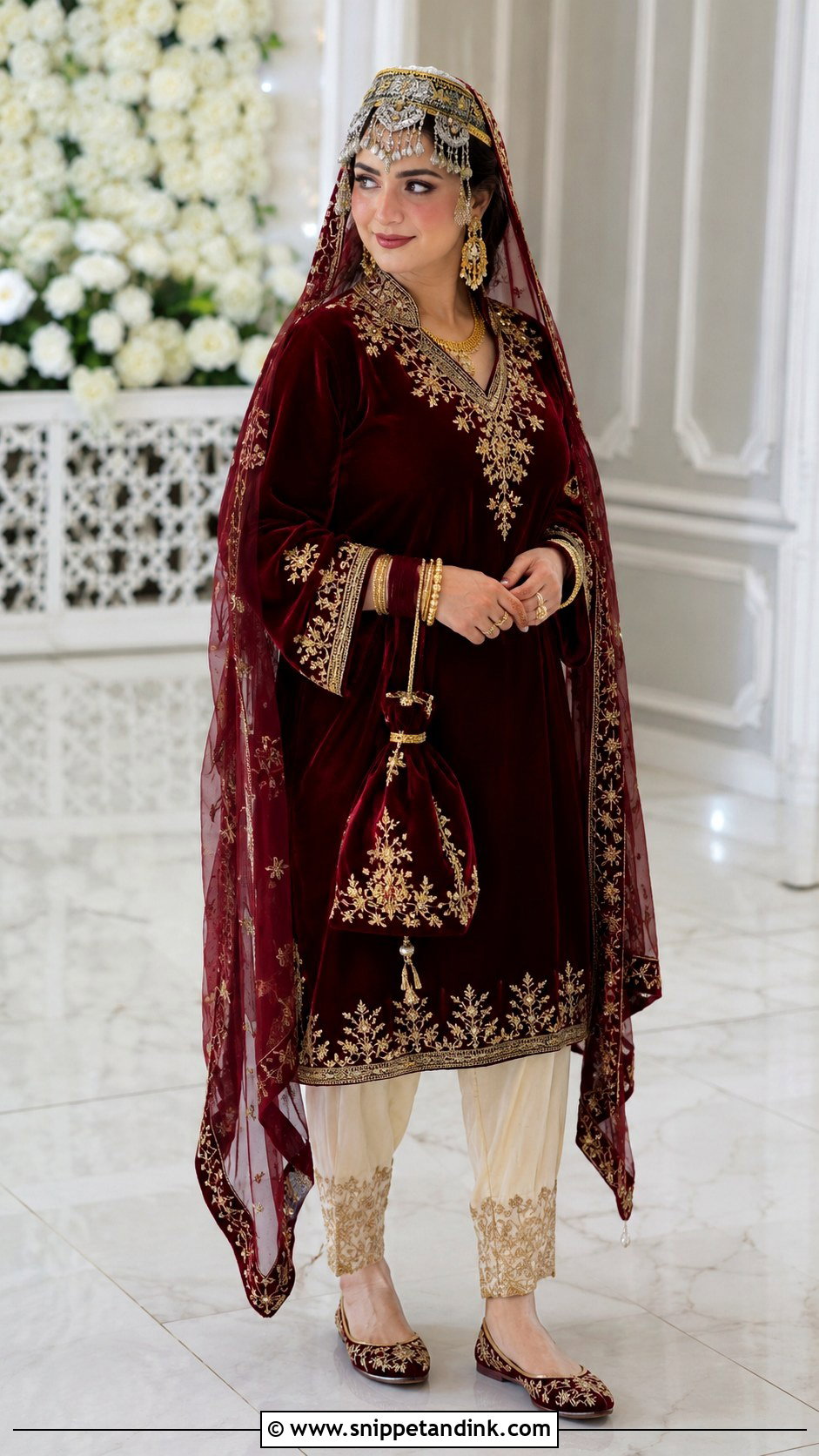
Maroon reads as regal rather than bright, and under warm indoor lighting it holds its depth better than a pinkish red. I’d choose velvet with antique gold embroidery, fitted sleeves and a gently flared hem, over a cream or muted gold trouser layer. Velvet adds real warmth, which is a gift in a winter ceremony and a problem in a heated hall, so ask about the venue before you commit. Keep earrings small, since long dejhoor need clear space beside the jaw. A sheer maroon veil with a narrow border, maroon juttis and a potli finish it. Bronze eyes and a berry lip hold up well against the darker cloth.
3. Ivory Kashmiri Pandit Bridal Pheran
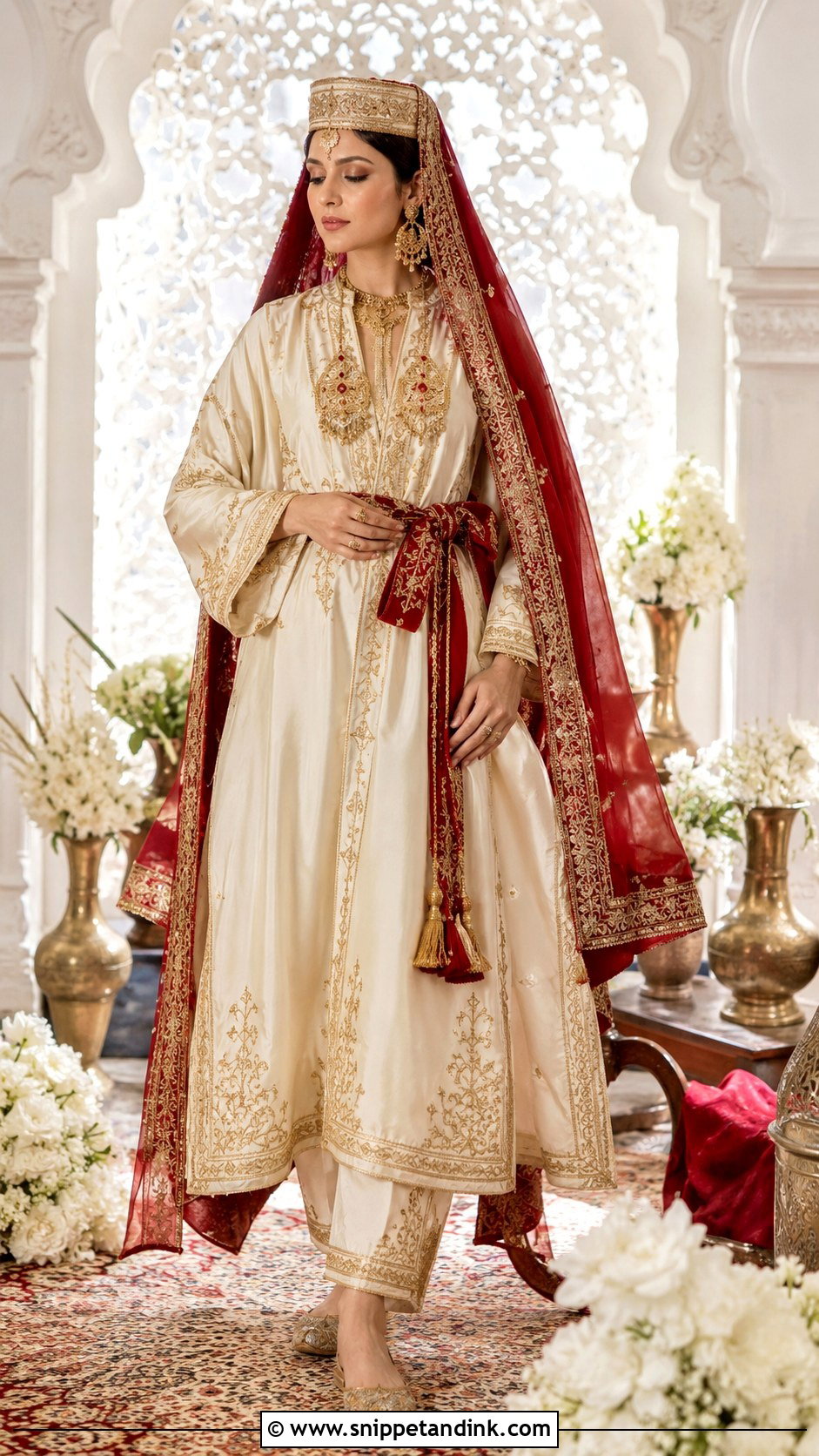
Can a neutral pheran still look ceremonial? Yes, if the embroidery carries the weight. I look for silk or a pashmina-style weave with gold tilla or aari work, worn with straight ivory trousers and metallic juttis. The red has to come back somewhere, through a deep red veil, red bangles or a maroon waist tie, or older relatives may feel the outfit lacks bridal color. Ivory also shows every mark, so I keep a white chalk pencil and a clean cloth in the kit for small marks from henna or food. Taranga and dejhoor give it identity; one refined necklace is enough. It suits a daytime or small ceremony best.
4. Red Banarasi Saree With Taranga
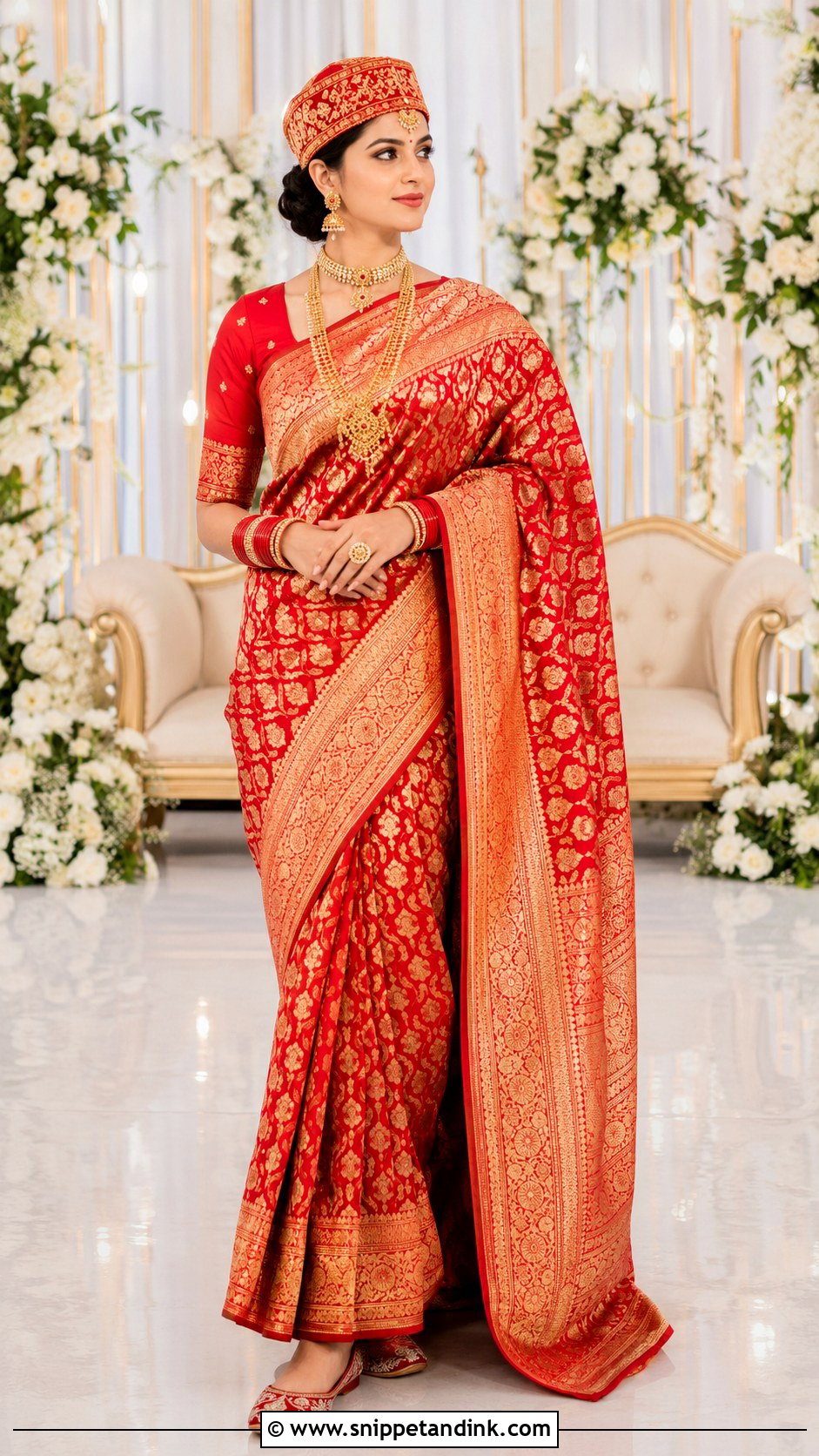
With a red Banarasi, I always ask for controlled zari rather than an all-over pattern, because the taranga and the pallu border need room to be seen. A fitted elbow-sleeve blouse with a modest neck supports layered jewelry and keeps you covered while you bend during rituals. The pallu goes over the headgear so its border frames the face without hiding the dejhoor. Banarasi silk is heavier than it looks once it is pleated, so I pin each pleat to the petticoat and add a safety pin at the shoulder. Gold bangles, anklets, a medium necklace and red juttis finish it, with kajal, a clear red lip and a smooth low bun.
5. Crimson Silk Saree With Gold Jewelry
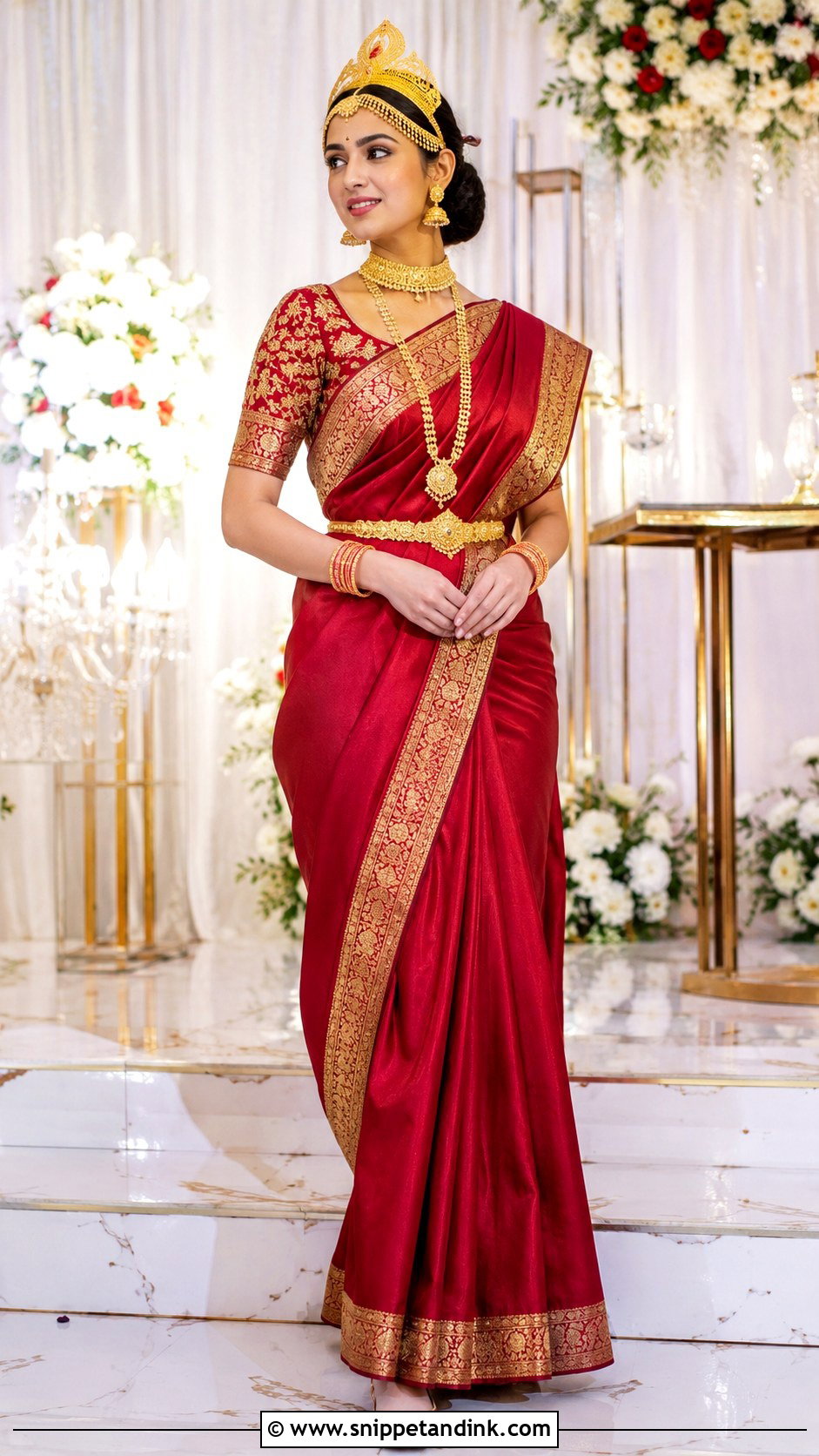
Plain crimson silk does most of its work through sheen, so it needs very little embellishment. A broad gold border and a blouse with subtle sleeve embroidery are enough. Wear it with the taranga for the ceremony, or swap to a draped veil for a smaller family function. Layer the dejhoor with a choker, one longer necklace and slim bangles. A gold belt can define the waist, but test it seated first; on soft silk it often drags the pleats sideways. Embroidered flats sit hidden under the hem and spare your feet. Finish with a low bun, gold shadow, fine liner and a rose red lip.
6. Rust Orange Silk Saree Bridal Look
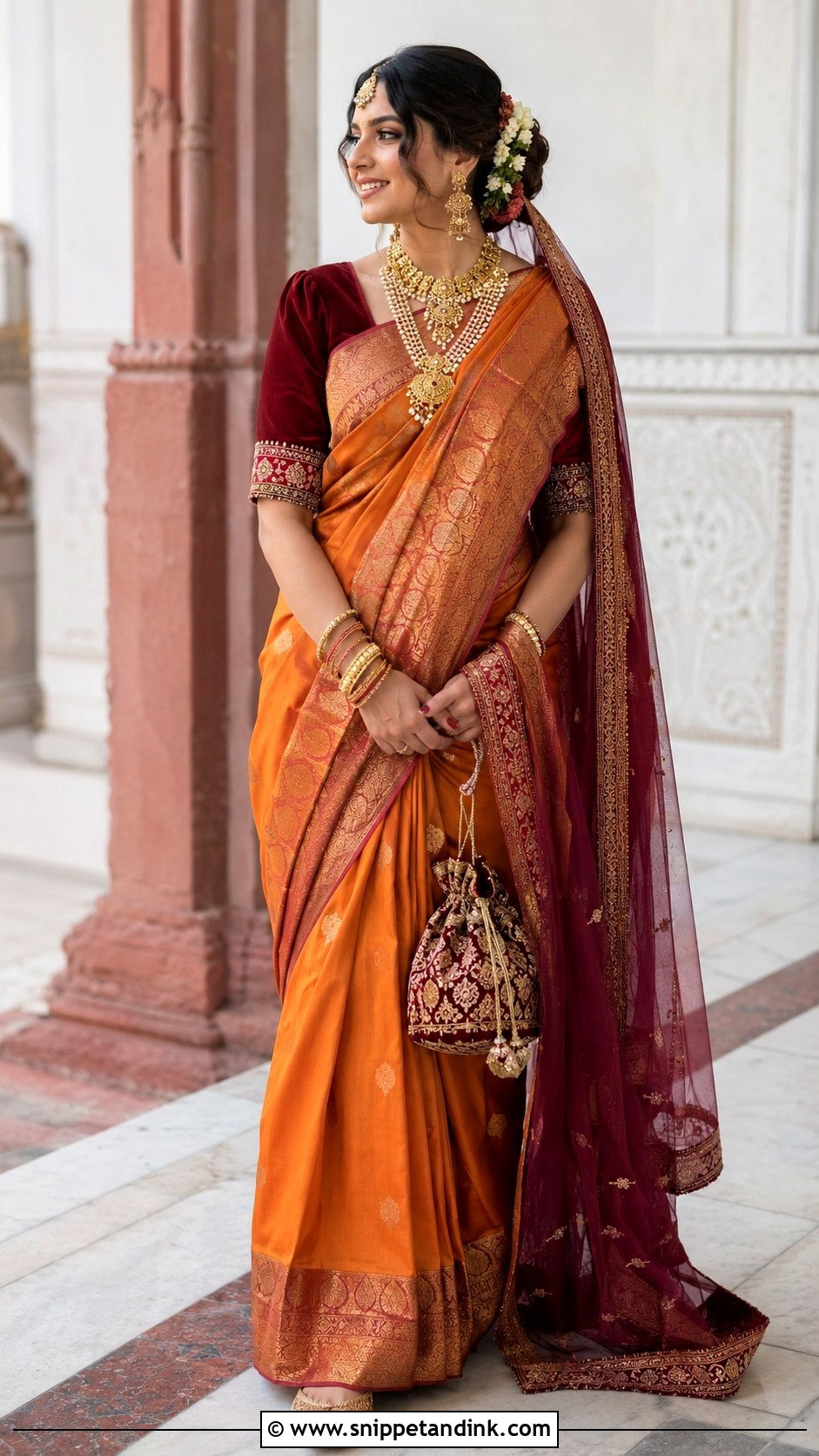
Rust orange is my suggestion for a bride who loves warm color but has worn red at every cousin’s wedding. A silk saree with antique gold zari gives depth, and a maroon blouse ties it back to the bridal palette. A light maroon veil or a taranga goes on depending on the function and what your family expects. Rust can flatten under fluorescent light, so if the venue uses it, step outside for portraits. Dejhoor, stacked bangles, one statement necklace, closed-toe gold juttis and a small potli keep it traditional. A sleek bun with a few flowers, warm brown eyes, terracotta blush and a brick-red lip keep the earthy tones from going muddy.
7. Red Kashmiri Pandit Bridal Lehenga
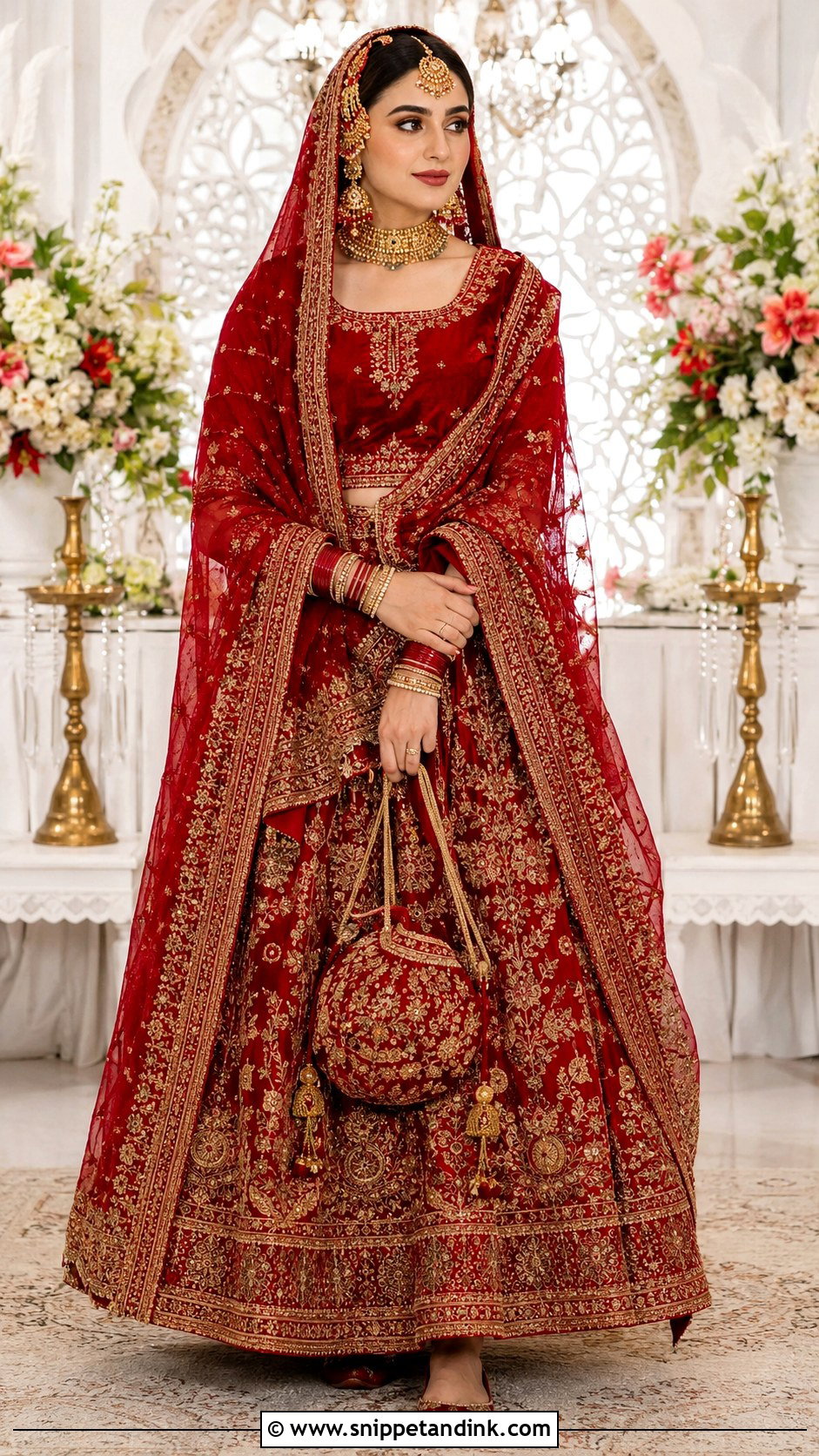
A red lehenga gives you structure and still leaves space for meaningful Kashmiri bridal elements. I keep the flare moderate, because a very full skirt fights with sitting cross-legged near the fire, and I ask the embroiderer to repeat one motif across skirt, blouse and dupatta so the three pieces read as one outfit. The dupatta must be soft enough to arrange around the taranga without lifting it. Dejhoor, a gold choker, bangles and a potli finish it; red or antique gold juttis handle the walking. Keep the blouse neckline clean so the jewelry has space. A center-parted low bun anchors the head covering.
8. Maroon Velvet Kashmiri Bridal Lehenga
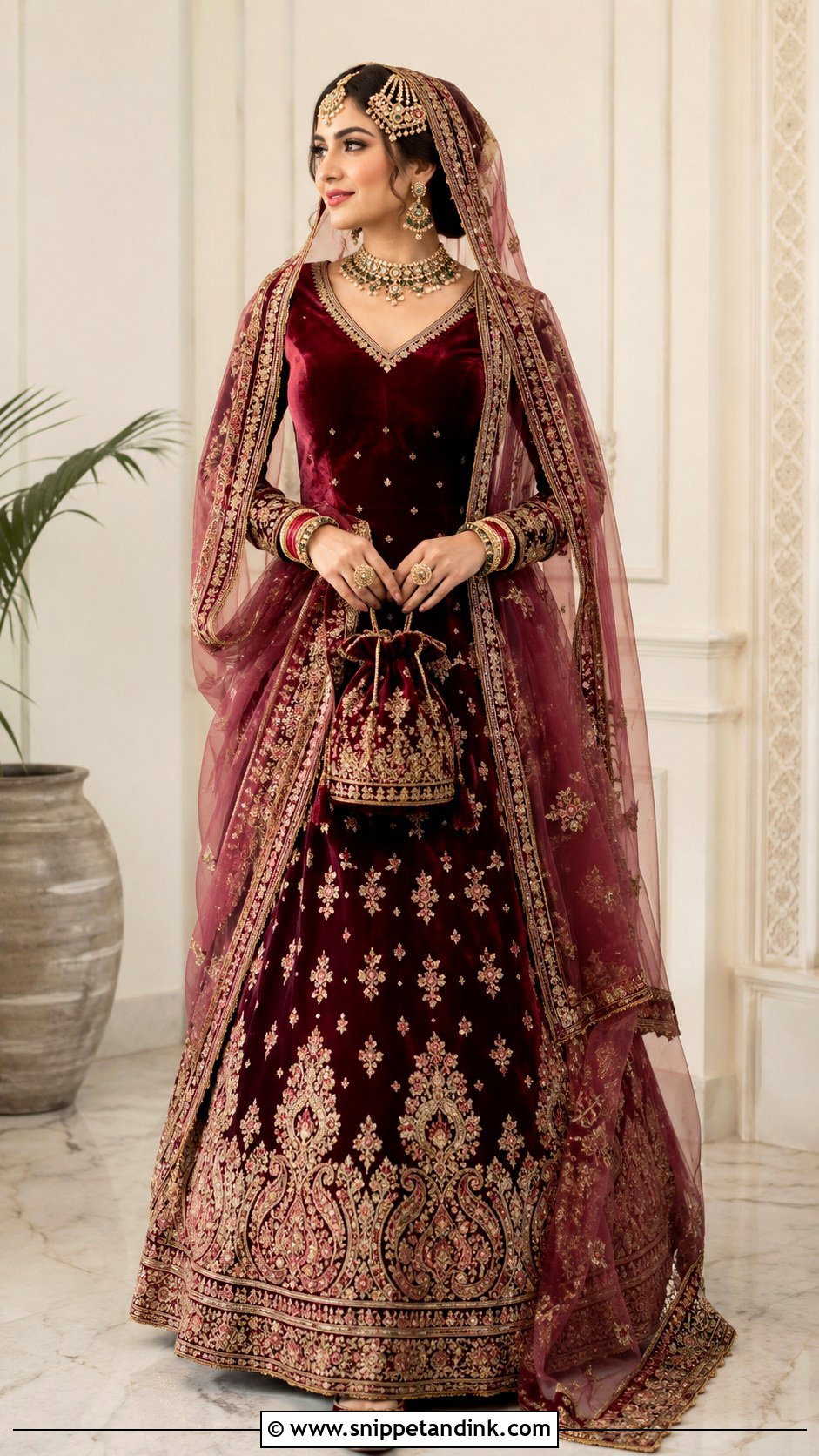
Maroon velvet is the lehenga I reach for in a cold-weather wedding. Panels let the skirt move without bulk, and the blouse needs enough ease across the upper arm to lift your hands during rituals; velvet has almost no give, so fit it with your arms raised. A net or organza dupatta keeps the whole thing from feeling heavy, worn over the taranga or pinned at the shoulders for a reception. Dejhoor, an antique gold necklace, stacked bangles, velvet juttis and a structured potli complete it. Tailoring decides this one. Excess velvet swallows a petite frame, so take it in close at the waist and keep the hem just off the floor.
9. Ivory And Gold Kashmiri Bridal Lehenga
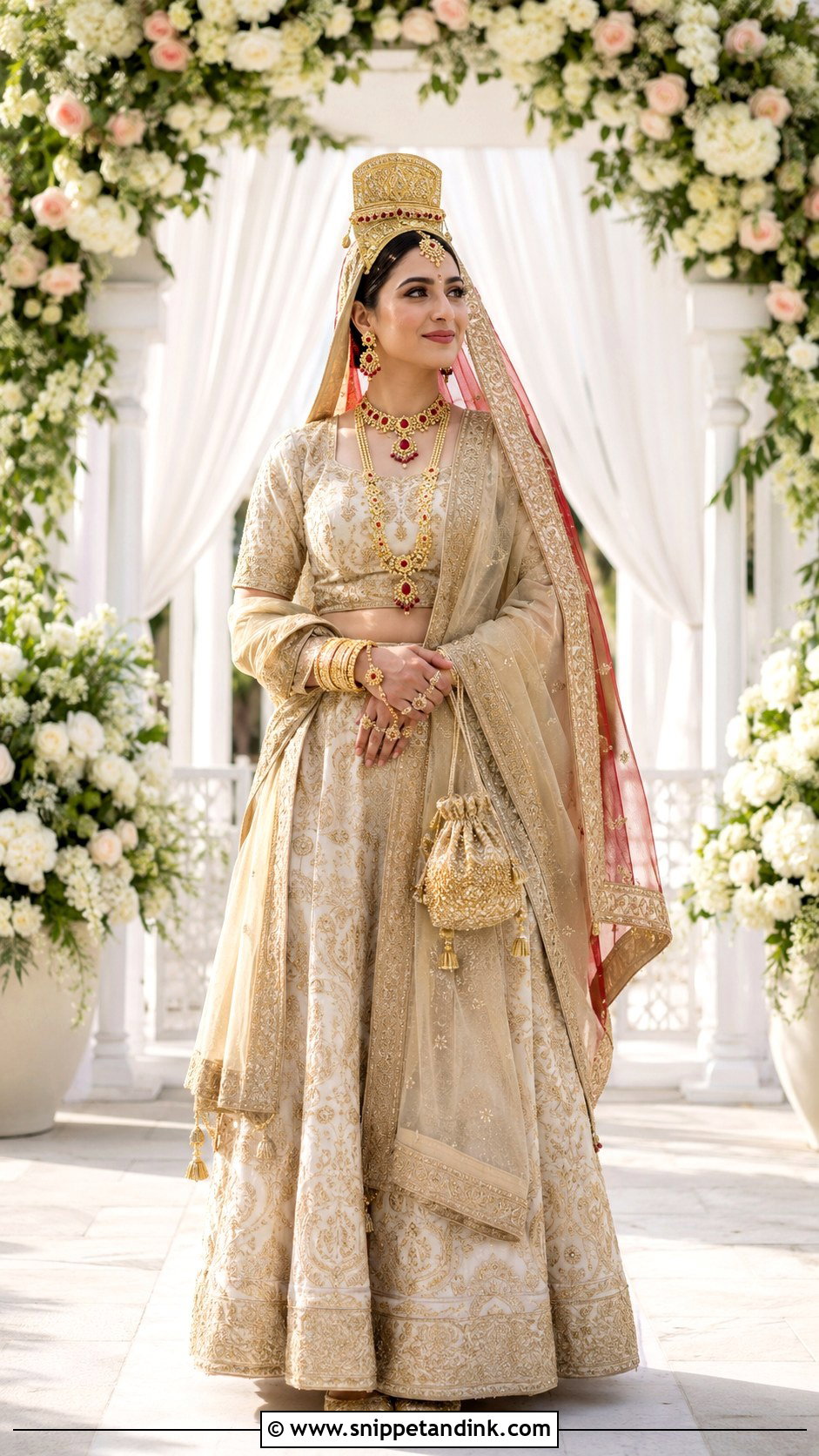
Ivory with gold is the easiest base to personalize, which is why I suggest it when one outfit has to stretch across two functions. Pick gold threadwork on the lehenga, a matching blouse and a light dupatta with a finished border. Dejhoor and the taranga carry the Kashmiri identity, and a second red veil adds bridal color when the ceremony calls for it. Gold juttis and a beaded ivory potli keep the palette soft. If you want colored stones, choose emerald or ruby in one necklace only. Champagne eyes and a neutral berry lip keep ivory from draining warmer skin tones.
10. Blush Pink Kashmiri Bridal Lehenga
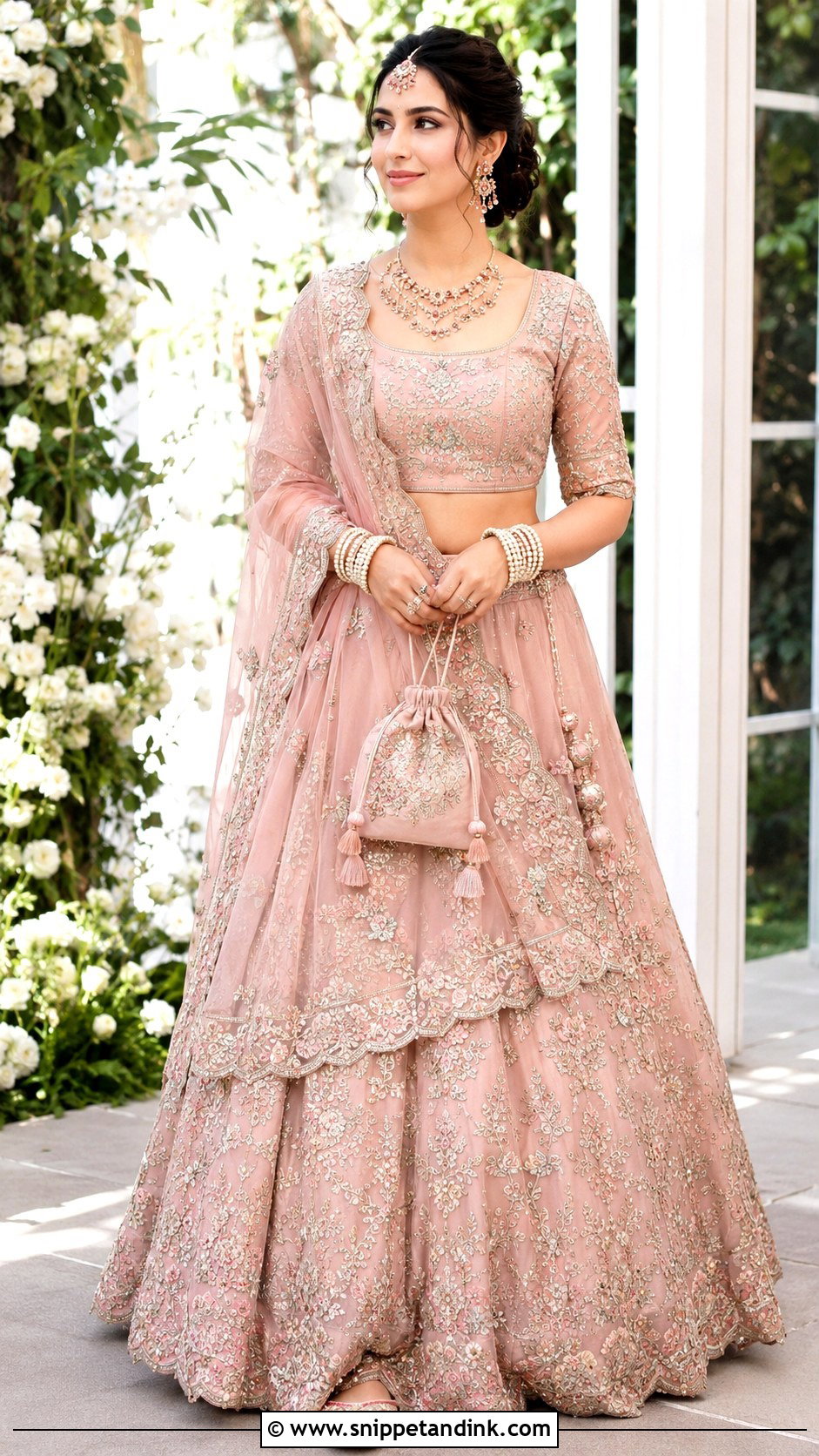
Blush pink belongs in daylight: an engagement, a morning function, or an afternoon reception. Under evening tungsten light it can turn beige, which is the main reason I steer brides away from it at night. Look for silver-gold embroidery or small florals rather than heavy sequins, with a structured blouse and a sheer dupatta over the head or one shoulder. Dejhoor sit nicely with a rose gold necklace and pearl details. Choose pink embroidered juttis over stark metallic ones. Without the taranga, a low textured bun with a few loose strands works, finished with soft brown liner and a rose lip.
11. Emerald Green Kashmiri Bridal Lehenga
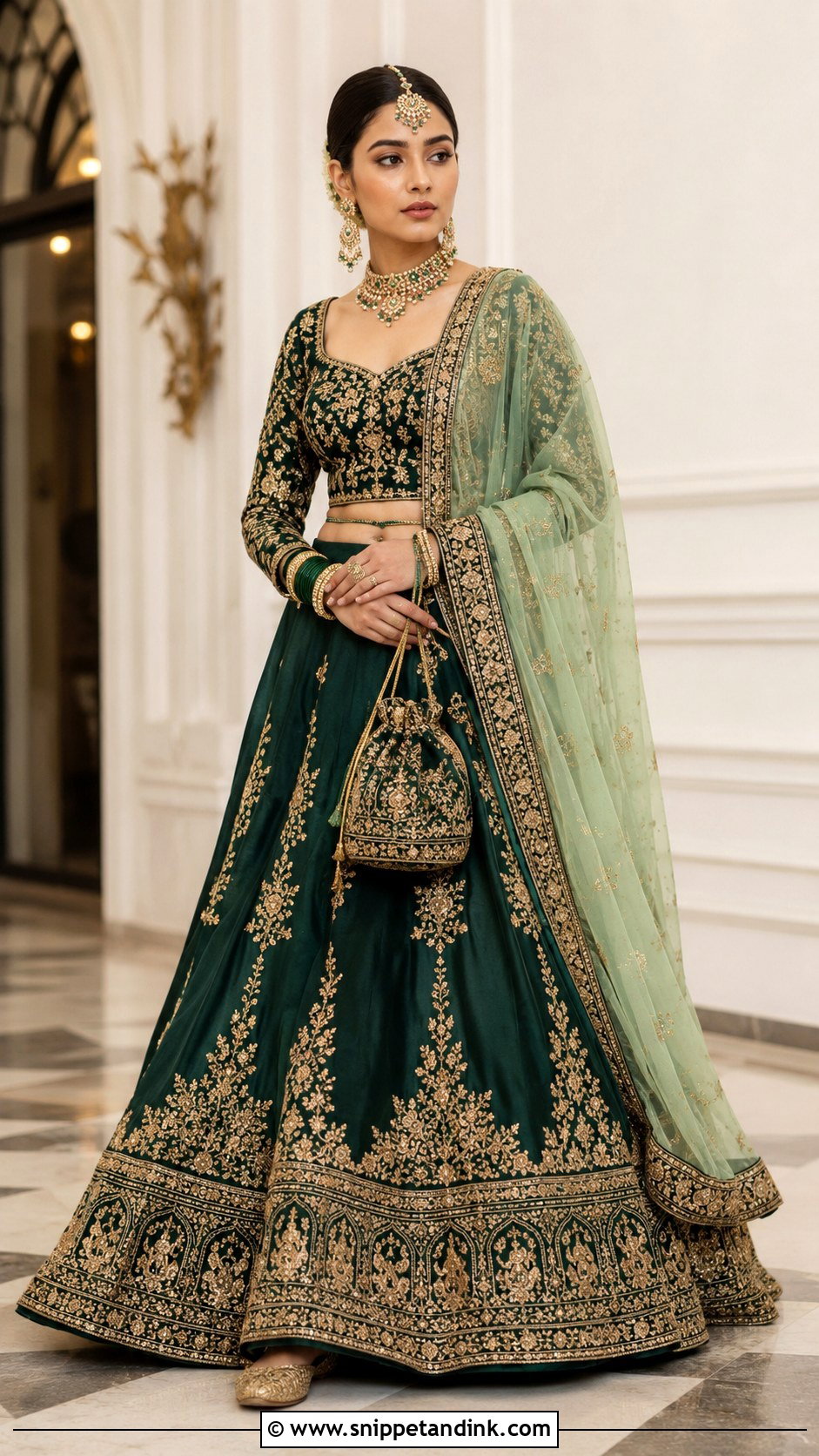
Emerald with antique gold is a reception or formal pre-wedding choice. I keep the embroidery evenly spaced on silk or velvet so the skirt’s volume reads balanced, and fit the blouse close to offset it. A light gold or matching green dupatta should sit clean on the shoulders. Dejhoor give the Kashmiri note, and a kundan-style necklace with coordinated bangles adds celebration. Gold juttis and a structured potli finish it. Without the taranga, a center-parted bun or a neat braid works. Warm gold shadow and a muted berry lip flatter the green without competing with it.
12. Yellow Kashmiri Pandit Mehendi Lehenga
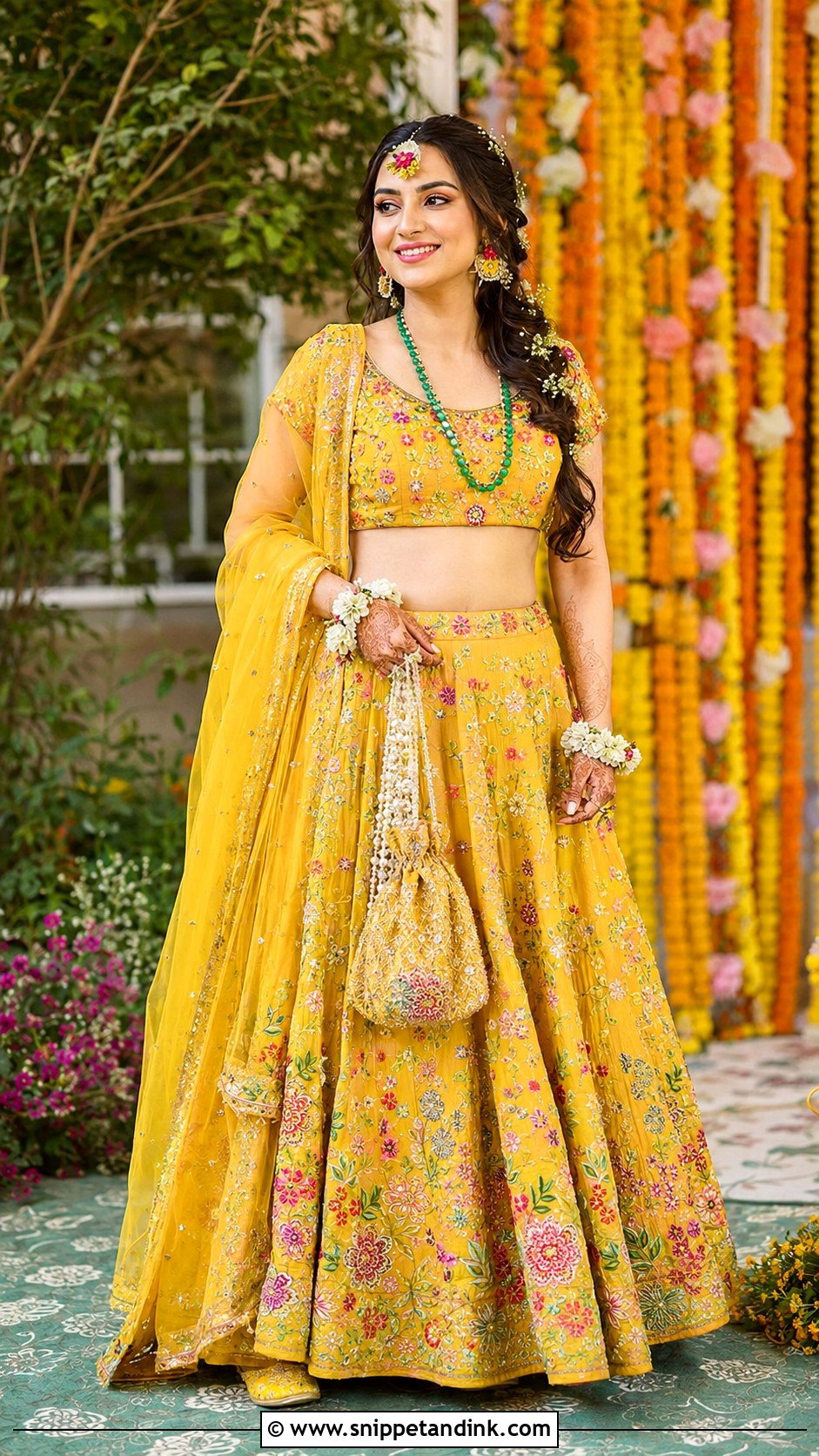
Yellow suits the mehendiraat, and the practical question comes first: can you sit for hours with your hands out? I choose a light lehenga with florals or mirror work and enough skirt to sit on the floor, plus a dupatta pinned firmly at one shoulder so it never slides into wet henna. A long emerald necklace gives contrast, and dejhoor keep the heritage visible. Leave bangles off until the paste has dried and been scraped; anything on the wrist smudges the design. Cushioned juttis, a small potli, a loose braid with small flowers, green liner and a peach lip finish it.
13. Green Kashmiri Pandit Mehendi Sharara
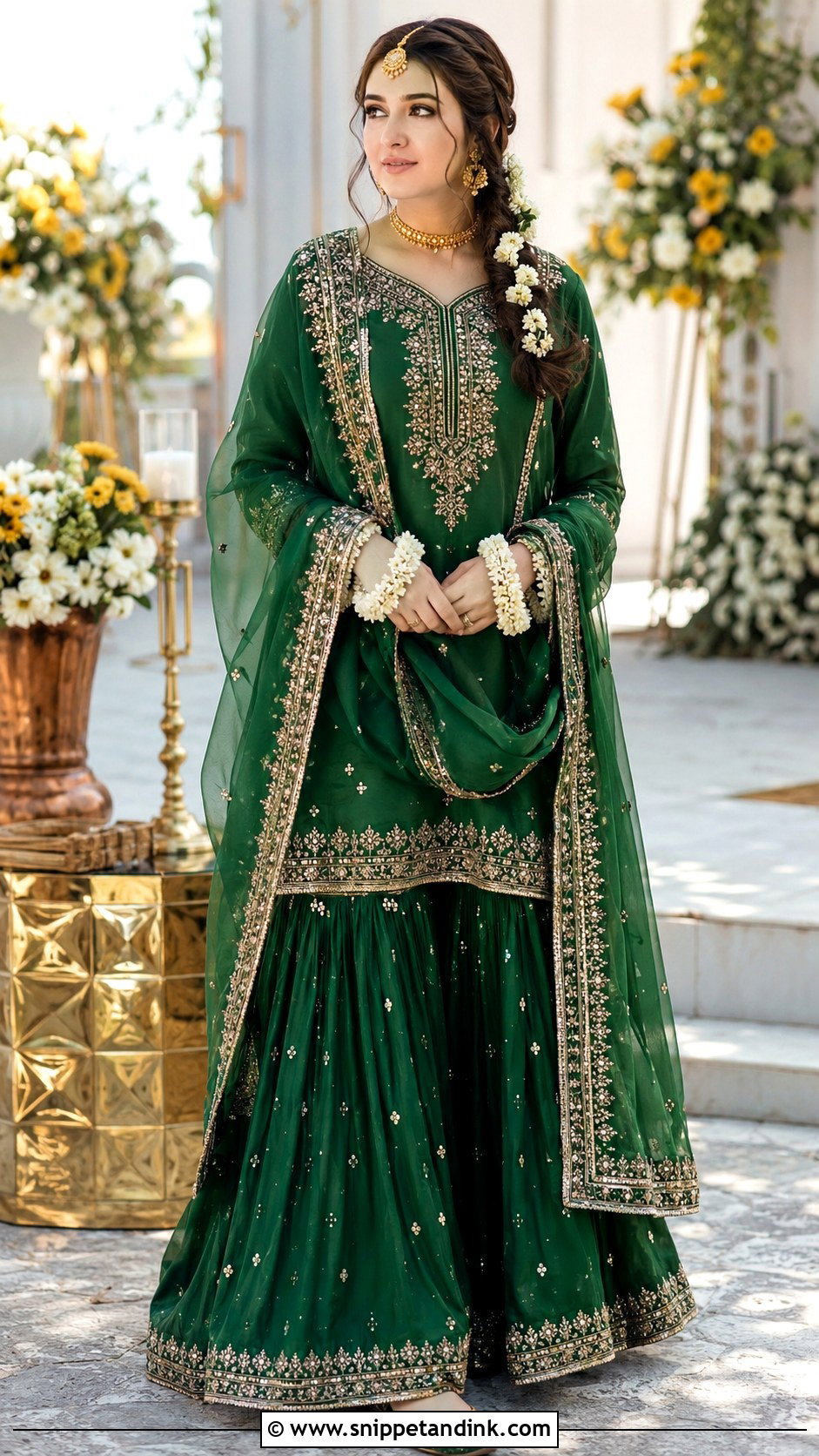
If a lehenga feels too much for a long henna night, an emerald or leaf-green sharara set is the comfortable answer. A short embroidered kurta over flowing sharara pants lets you sit, fold your legs and stand without gathering a skirt. Pin the dupatta at one shoulder so it stays clear of fresh henna. Dejhoor, a delicate choker, floral hand jewelry and green juttis complete it. A crossbody potli helps before the henna starts; take it off for photographs. A side braid or low ponytail with fresh-looking flowers, green-gold shadow and a rosy nude lip keep the look bright.
14. Orange Kashmiri Pandit Devgon Saree
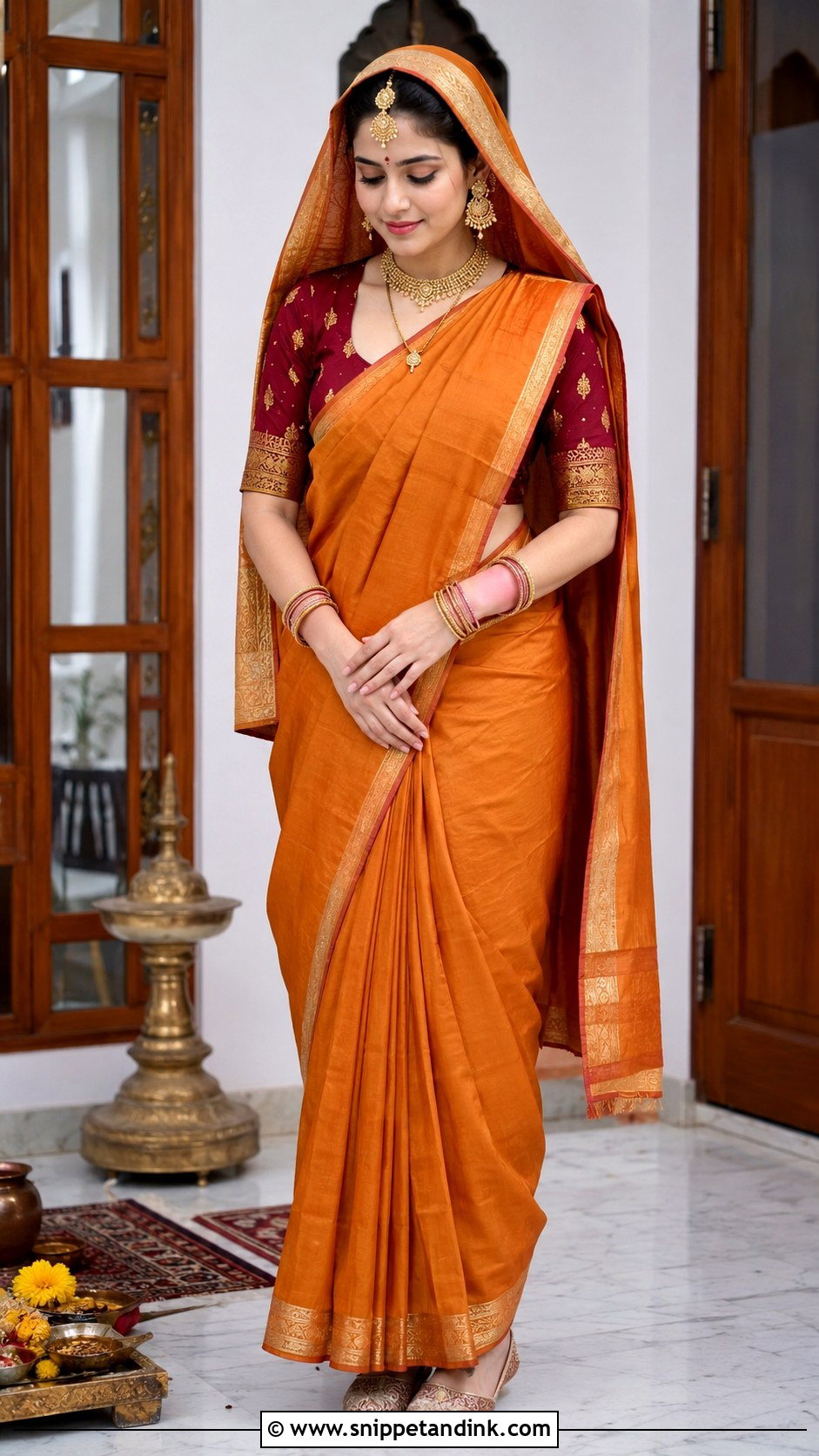
Devgon is a ritual day, and I dress the bride for sitting, bending and being fussed over by family. A saffron or orange saree in breathable silk, cotton-silk or chanderi, with a narrow gold border, looks festive without weighing you down. A maroon or red blouse grounds the color. Jewelry stays modest: dejhoor, slim bangles, a small necklace, simple earrings. Pin the pleats so they hold while you sit near the sacred fire, and keep any synthetic fabric well away from it. A clean low bun, minimal base, kajal and a soft red lip are right for a morning of prayers.
15. Red Anarkali With Kashmiri Embroidery
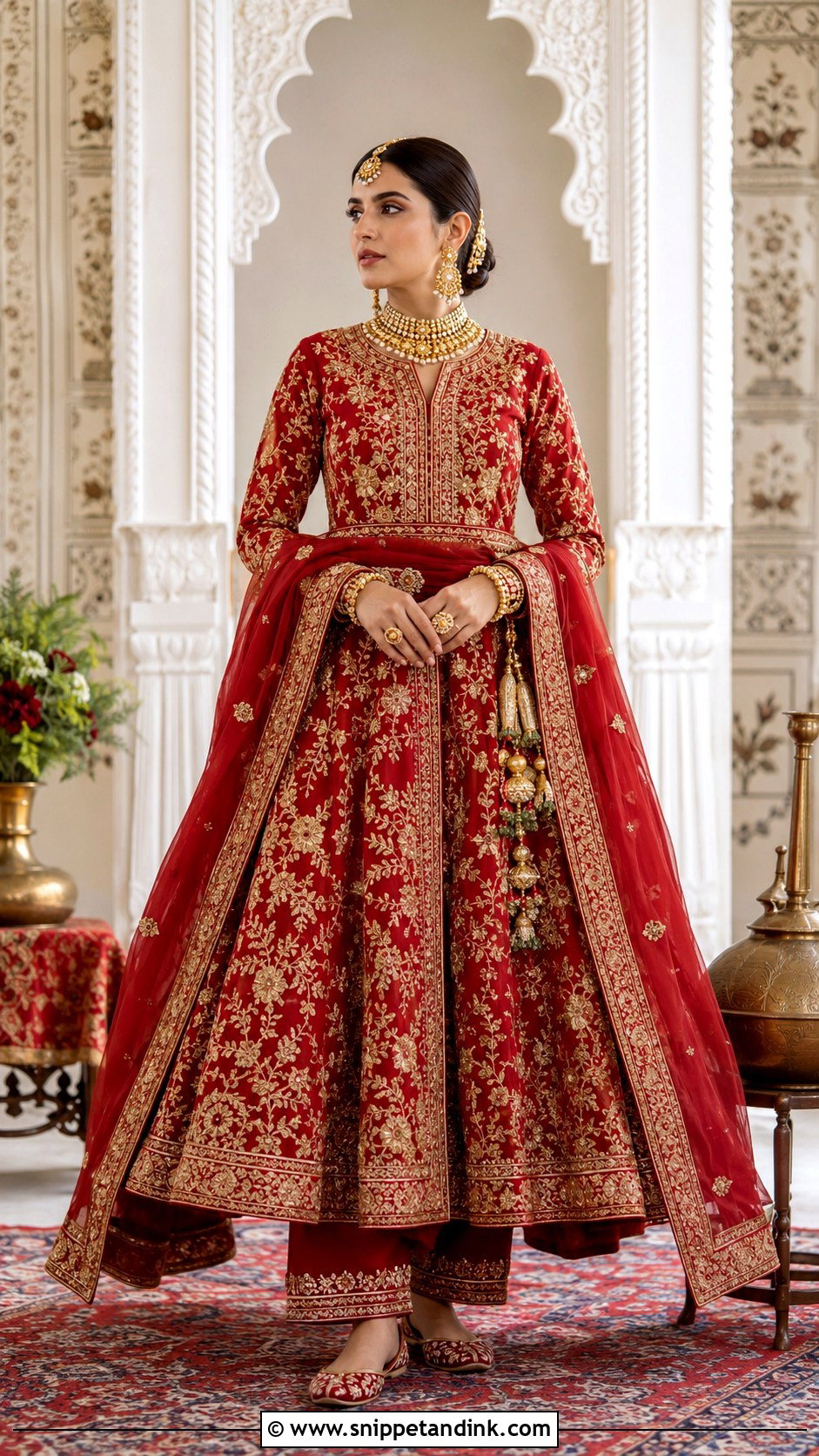
A floor-length red Anarkali behaves like a gown but wears like a suit, which is why brides who dislike pleating love it. I look for Kashmiri-style florals at the neck, sleeves and hem with some plain cloth left between motifs; wall-to-wall embroidery makes the flare stiff. Fitted trousers, a matching dupatta and red-gold juttis go with it. For a ritual, arrange the dupatta around the taranga and add dejhoor, a classic necklace and bangles. For a smaller gathering, the same outfit works with a low bun and lighter jewelry. A defined waist seam gives the skirt its shape without squeezing your ribs.
16. Ivory Anarkali With Red Dupatta
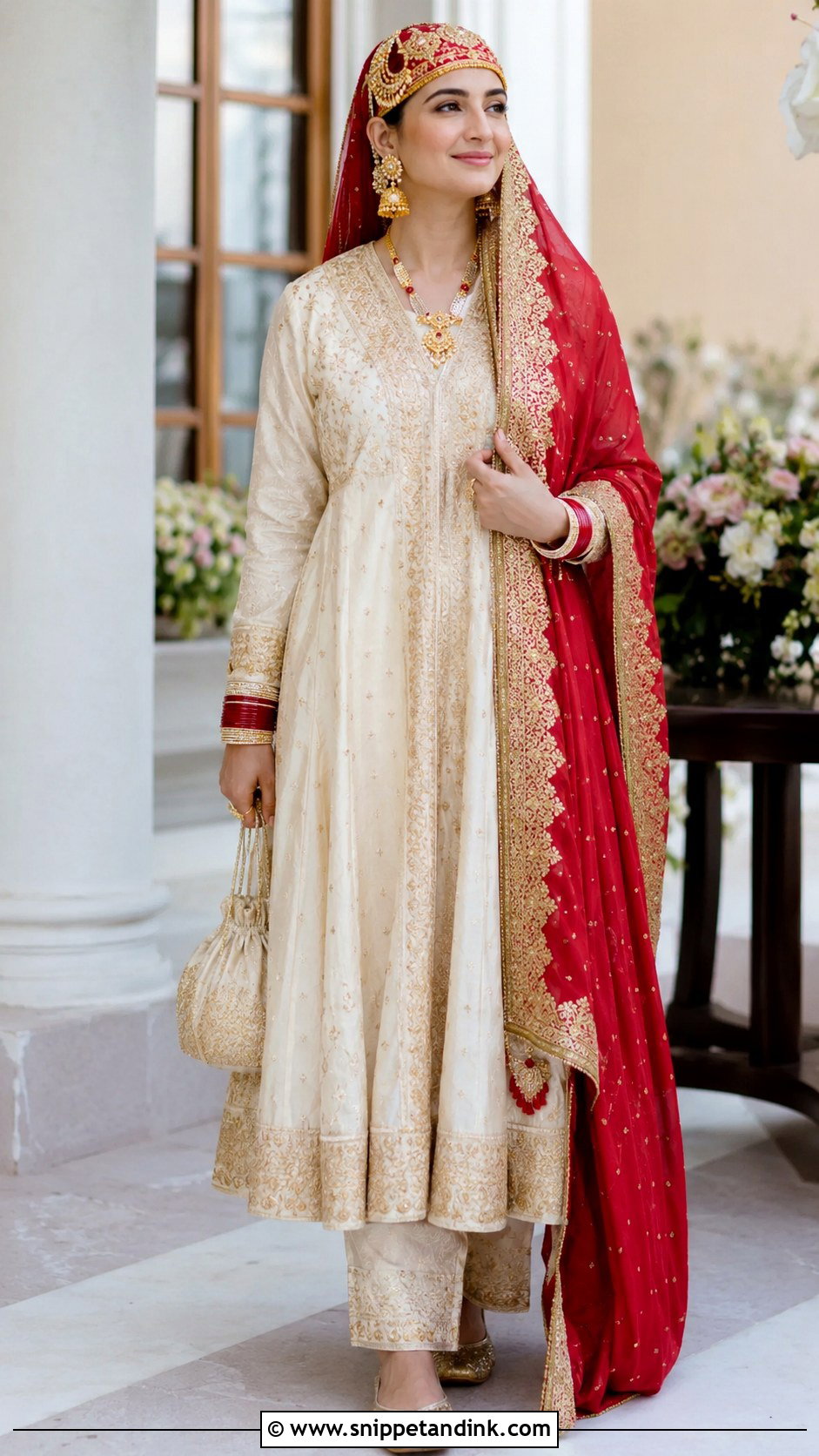
Ivory against a red dupatta is a crisp contrast that families tend to approve of quickly. The suit should be long with fine gold embroidery and a gently flared skirt, over straight trousers and gold juttis. The dupatta is the part I test most: it needs enough body to frame the face but must stay light enough to sit over a taranga without dragging it backward. Dejhoor, a gold necklace, red bangles and a small ivory potli complete it. A center part with a low bun supports traditional head styling, and repeating the red on the lips ties the face to the dupatta.
17. Pink And Orange Kashmiri Bridal Gharara
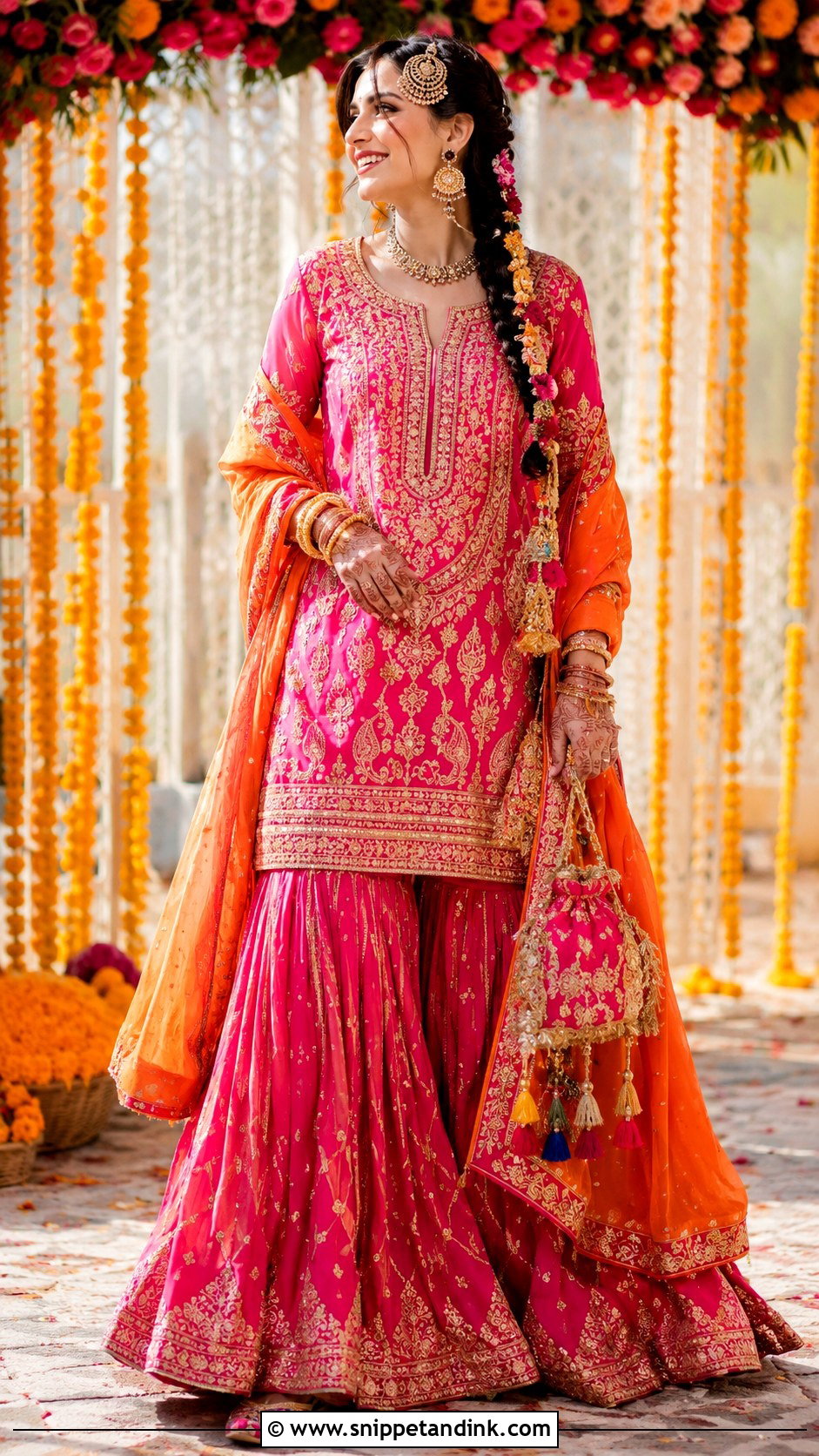
Pink and orange belong to the music night, not the wedding. Start with a fuchsia kurta embroidered in orange and gold, then a gharara wide enough to dance in; check that the flare at the knee does not catch your heel on the stairs. A light orange dupatta joins the two colors and can be pinned away from the hands. Gold dejhoor, a short necklace, mixed pink and gold bangles, embroidered juttis and a tasseled potli fit the mood. Skip the headpiece here. A long braid or a loose bun with peach blush and a berry pink lip lets the fabric stay loud.
18. Navy Blue Kashmiri Bridal Reception Lehenga
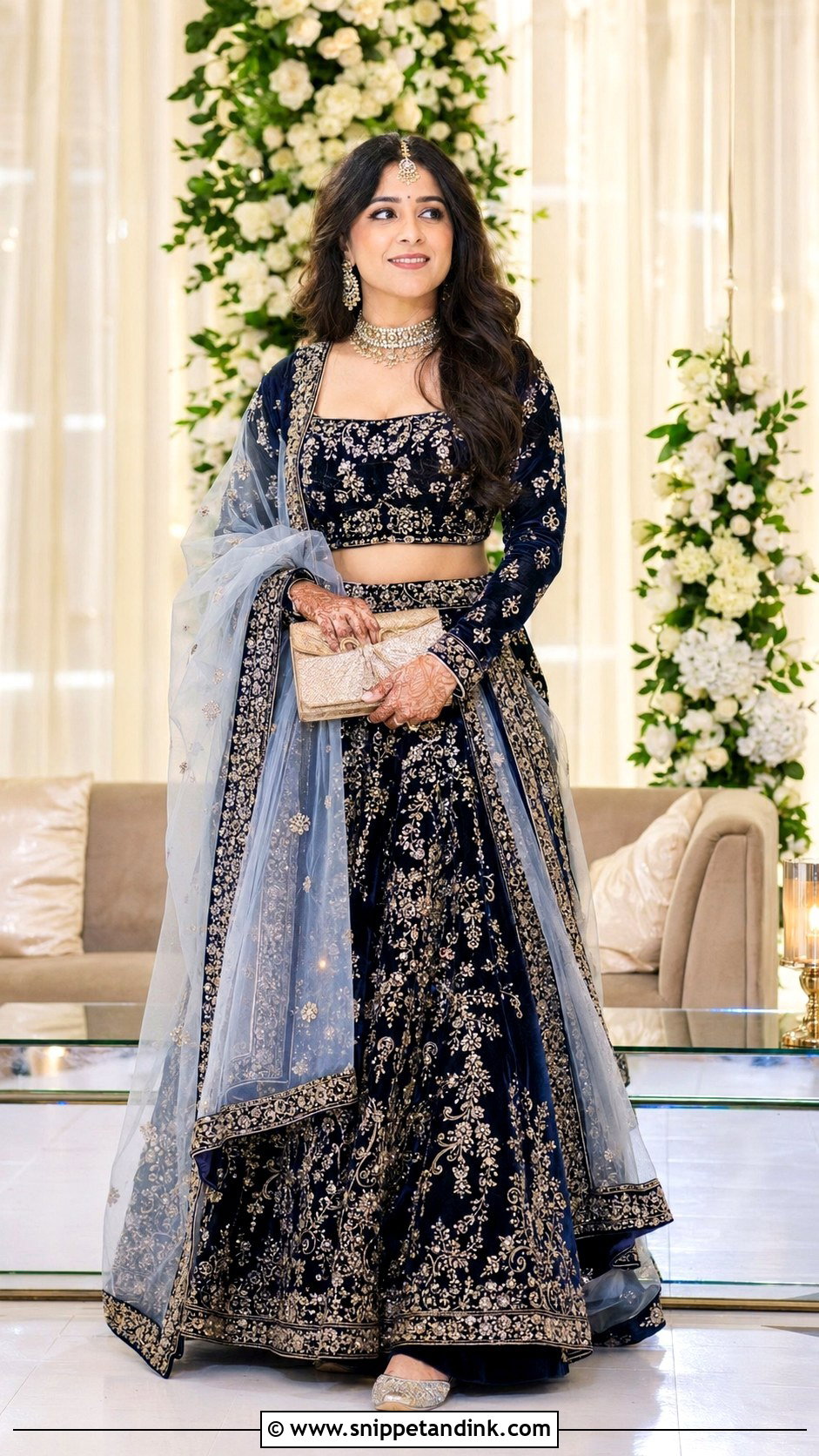
Navy gives evening drama without black, which many families avoid at weddings. I pick silk or velvet with silver-gold embroidery, because flat gold disappears on dark blue under bright reception lights while silver-gold keeps catching them. A fitted blouse and a lighter navy dupatta over one shoulder keep the neckline open. Pair the dejhoor with a diamond-style choker, a longer pendant or a few pearls. Silver-gold heels or juttis and a structured clutch finish it. With no headgear, wear a polished bun or soft waves, with cool bronze eyes and a berry lip.
19. Pastel Blue Kashmiri Bridal Saree
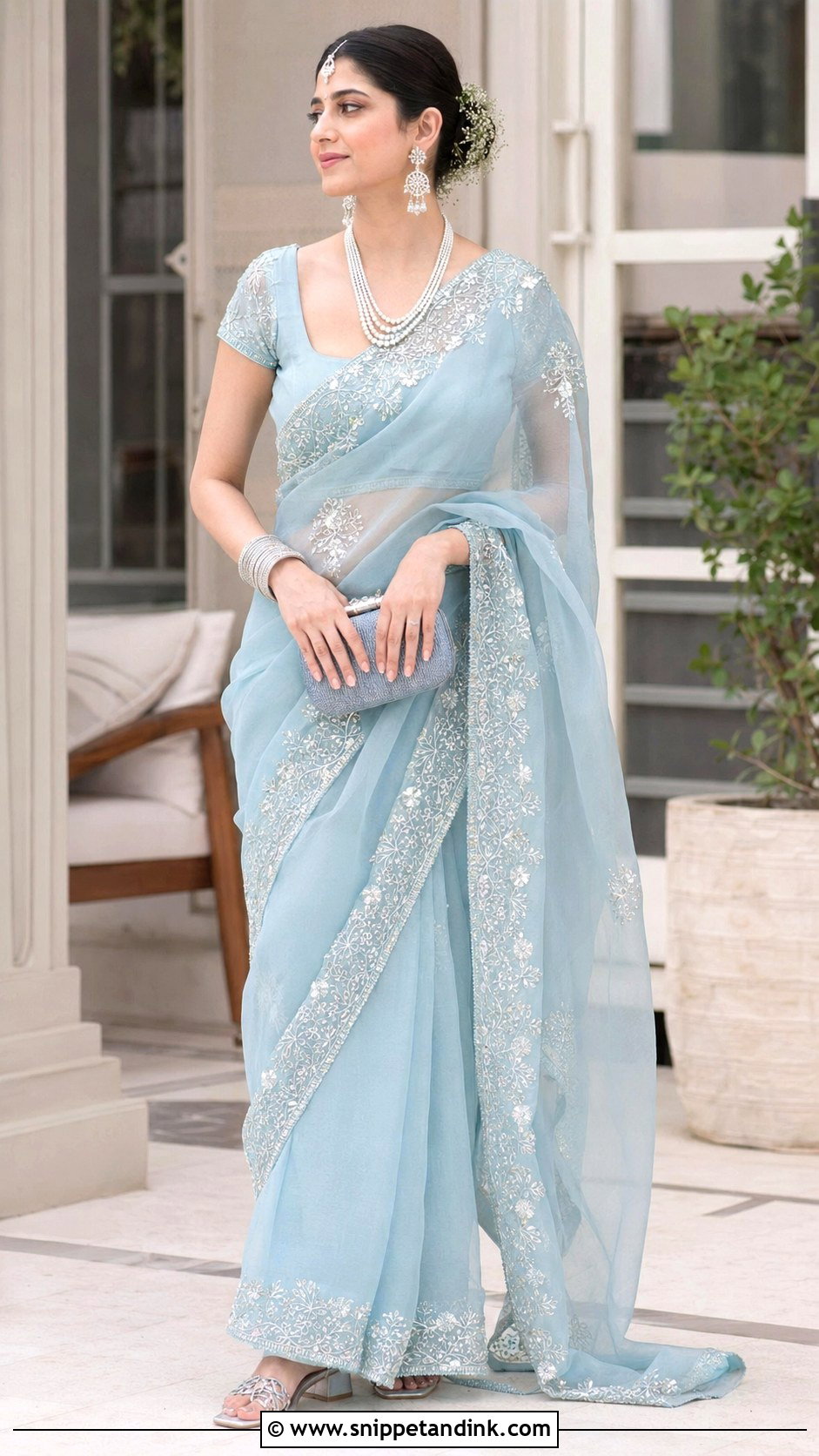
Pastel blue is for a daytime reception or the family meal after the wedding. Organza, silk or tissue with fine silver embroidery works, as long as the border has enough weight to define the drape; a bare organza edge flips up in a breeze. A matching blouse and a neat pallu over one shoulder keep it tidy. Dejhoor, pearls, silver bangles and a small blue clutch hold the cool palette. Silver juttis or low block heels and a sleek bun with white flowers keep the look clean. Soft gray-blue shadow and a mauve lip suit it far better than a strong red.
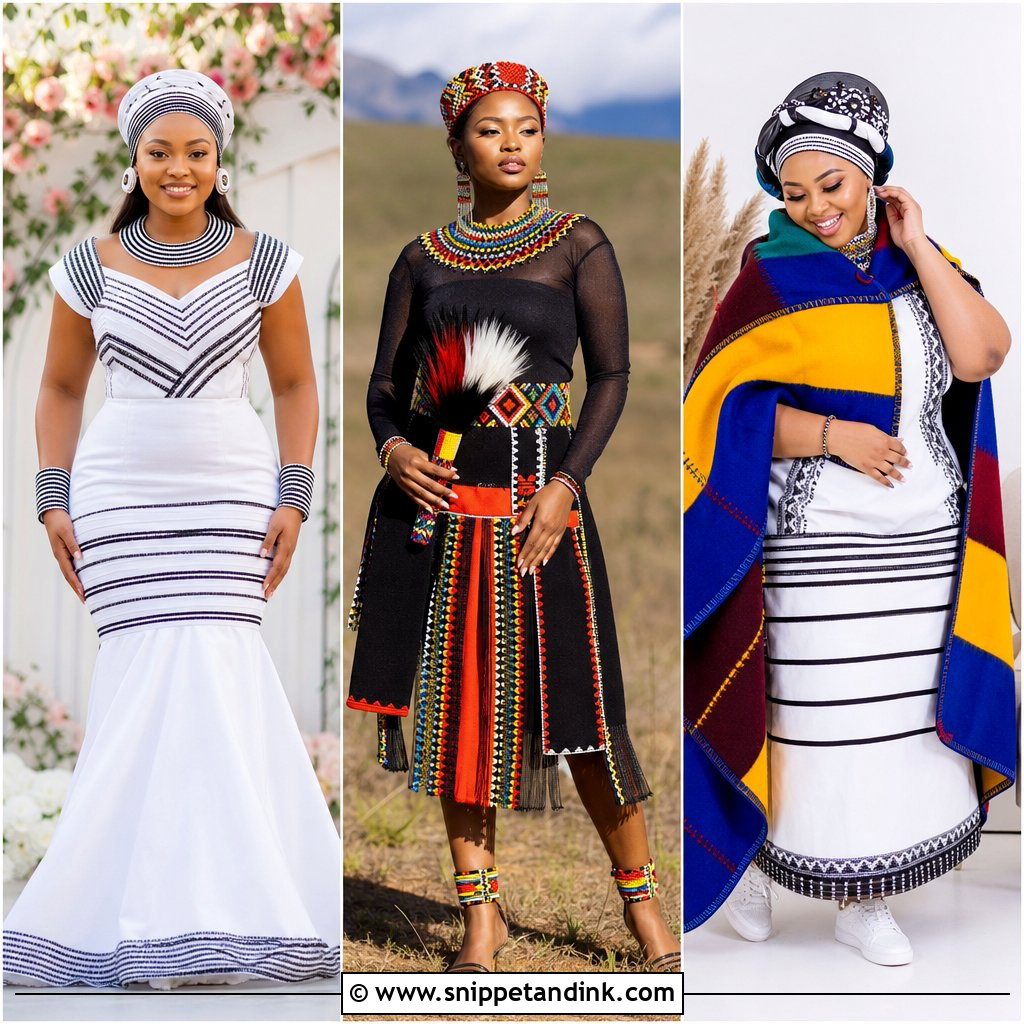
20. Burgundy Kashmiri Bridal Reception Saree
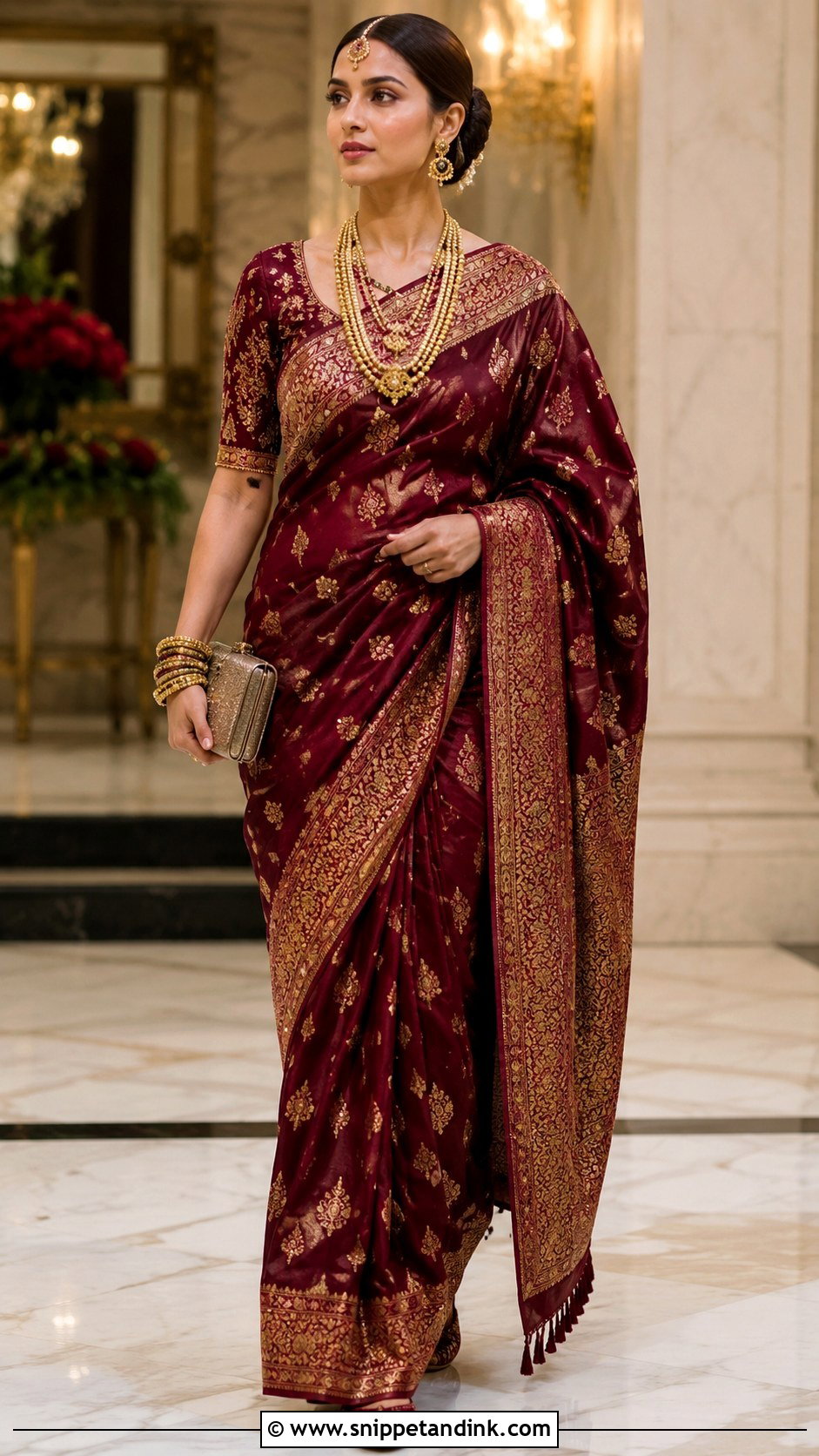
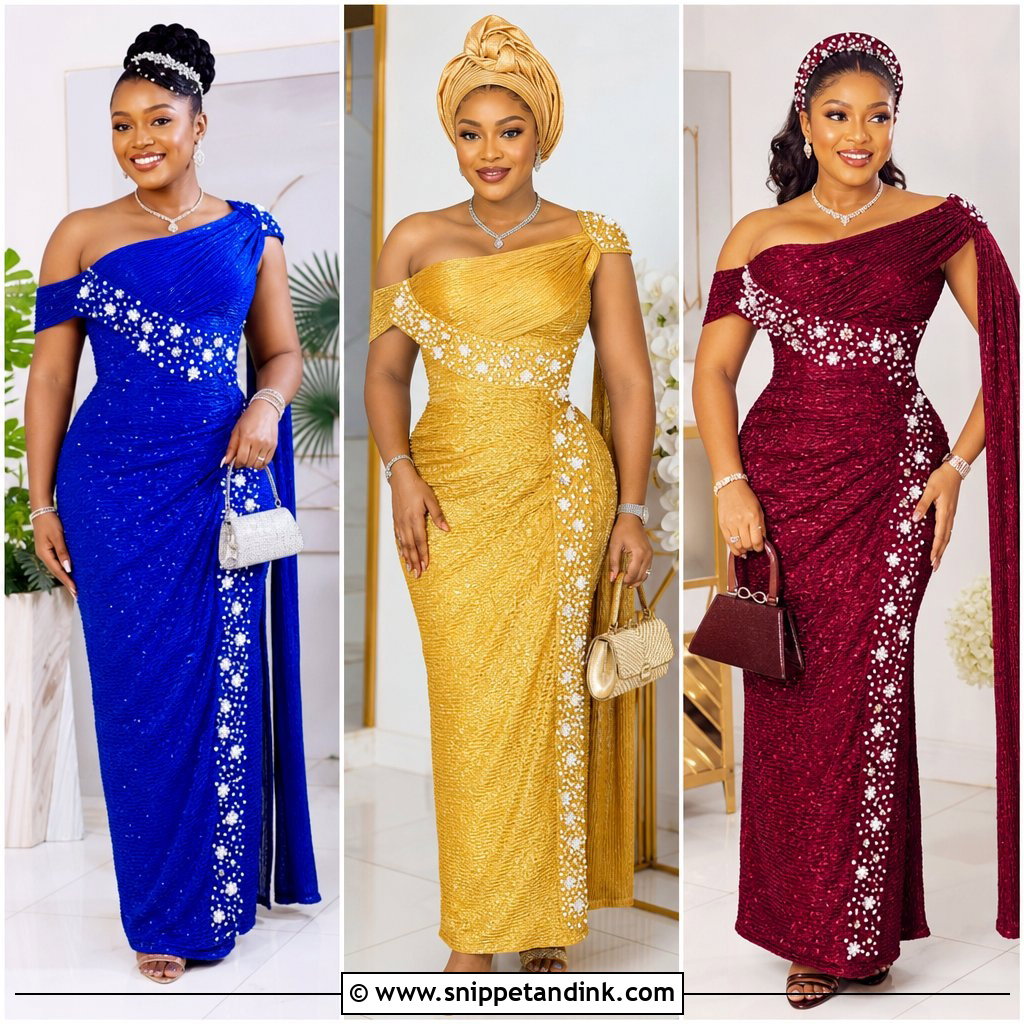
Burgundy closes the wardrobe well: deep enough for evening, close enough to red that elders accept it for a reception. Choose silk with antique gold motifs and a blouse in the same shade. Drape the pallu so the border runs clearly down the front, since full-length photographs pick up a crooked border at once. Dejhoor, a layered necklace, bangles and a compact metallic clutch complete it, with burgundy juttis or low gold heels. A smooth center-parted bun suits the long jewelry. For the face, I’d go with bronze eyeshadow, precise eyeliner, soft highlight and a matching berry lip. It moves far more easily than a heavy reception lehenga.
Getting Through Six Hours in a Taranga
The taranga is built from layered white cloth over a cap, with a long length falling down the back, and it is usually tied by a woman in the family who knows how. That makes it the part of the outfit brides rehearse least, and the one that causes the most trouble on the day.
Do a practice tying at home
Ask whoever will tie it to do a full run a week or two before, with your actual hairstyle and the veil you plan to layer. Wear it for an hour. You will learn where it presses, whether your bun is too high, and how far you can turn your head. A low bun at the nape with a firm center part gives the most stable base; volume on the crown pushes the whole structure forward.
Plan the pins and the veil together
If a red veil or dupatta goes over the taranga, I pin it to the cloth layers, never only to the hair, so its weight is shared. Use long U-pins and a few small safety pins hidden in the folds, and keep spares in a pouch with whoever is helping you. Heavy dupattas are the usual reason a taranga slips backward by the evening.
Think about the dejhoor early
Dejhoor hang from threads passed through the upper ear, so the ear needs to have settled before the wedding, not been prepared the night before. Keep earrings small or skip them so nothing tangles with the threads, and ask your hairstylist to leave the ears uncovered. If the threads feel tight or the ear is tender, tell the family early; there is time to adjust the length.
Starting From the Pheran and Building Outward
The pheran, taranga and dejhoor are the heart of the wedding look, and every other outfit here exists to carry you through the functions around it. Dress each day for what you will physically do: sit by the fire, hold out your hands for henna, dance, greet a long line of relatives. Keep embroidery balanced, drapes pinned and shoes worn in. And before anything is stitched, sit with the women in your family who know the rituals. They will tell you which details matter to them, and that conversation saves more last-minute changes than any fitting.
You'll Like These Ideas:







Leave a Reply