
Dressing a Xhosa bride is never just about the dress. The outfit carries family pride and a message about who she is becoming, and the elders in the room will read it. I work from the umbhaco outwards: the striped black braid, the beadwork, the iqhiya or doek, the shawl, then the silhouette, which can be anything from a classic flared skirt to a fitted mermaid. The looks below run from deeply traditional to clearly modern, and for each one I’ve noted what to think about when you brief your designer.
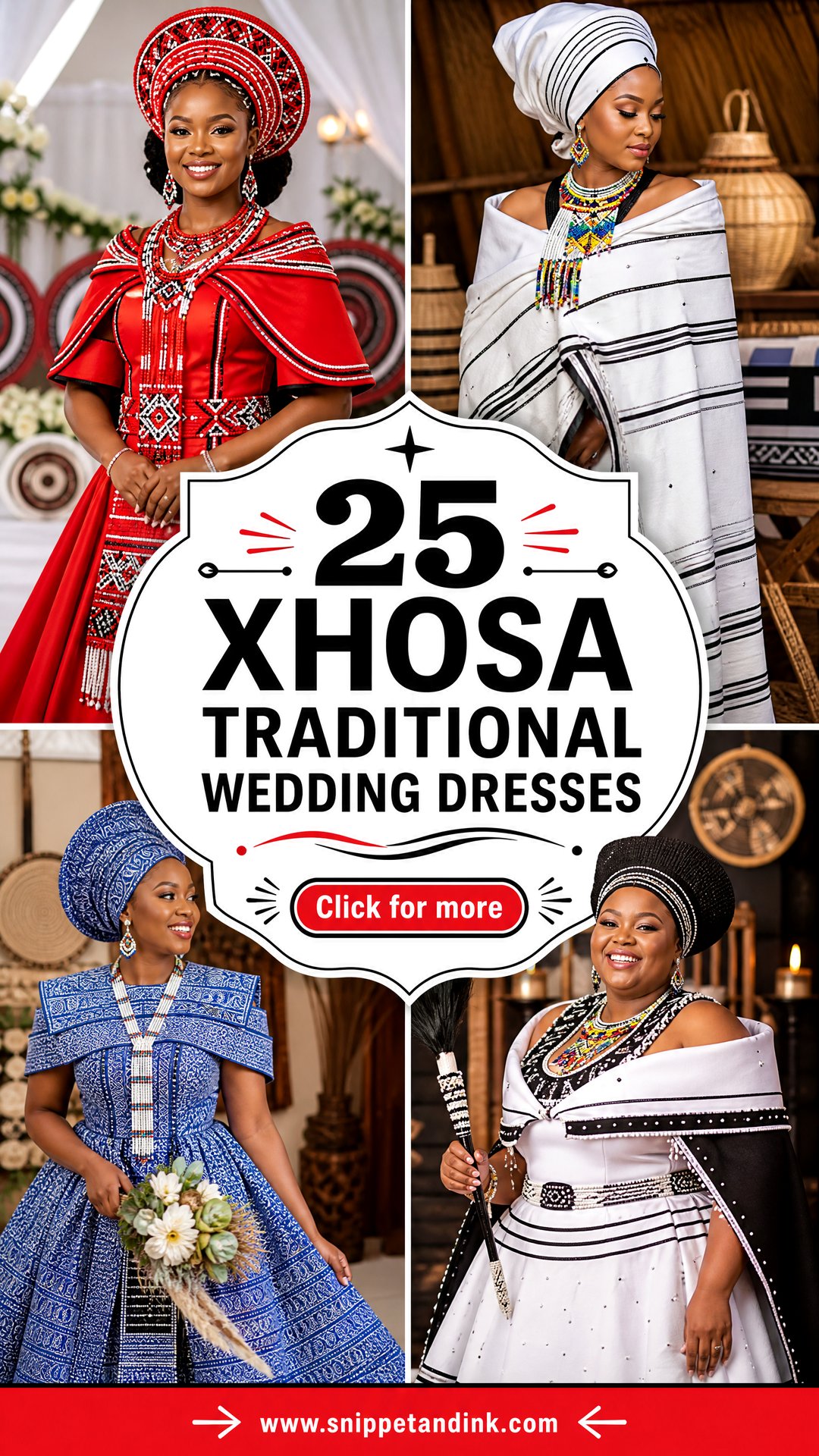
Talk to the Elders Before the Designer Starts Cutting
Xhosa bridal dress isn’t one fixed uniform. Expectations around colour, head covering, shoulders and skirt length can differ between families, clans and regions, and between the ceremony at the homestead and the reception later. The conversations I’d have first are with the women in both families, not with a designer.
- Ask whether there are colours the family prefers or avoids for each part of the day.
- Find out when you’ll be expected to cover your head and shoulders, and whether a doek alone is enough or a shawl is expected too.
- Check whether the in-laws plan to give you any garments, so your designer can work around them.
- Ask what you’ll be doing in each outfit: sitting on the floor, kneeling, walking long distances or dancing.
Once you know the boundaries, the creative part is easier. A bride who knows her shoulders must be covered during the ceremony can still wear an off-shoulder gown at the reception, with a matching shawl for the earlier part. Bring those answers to every fitting.
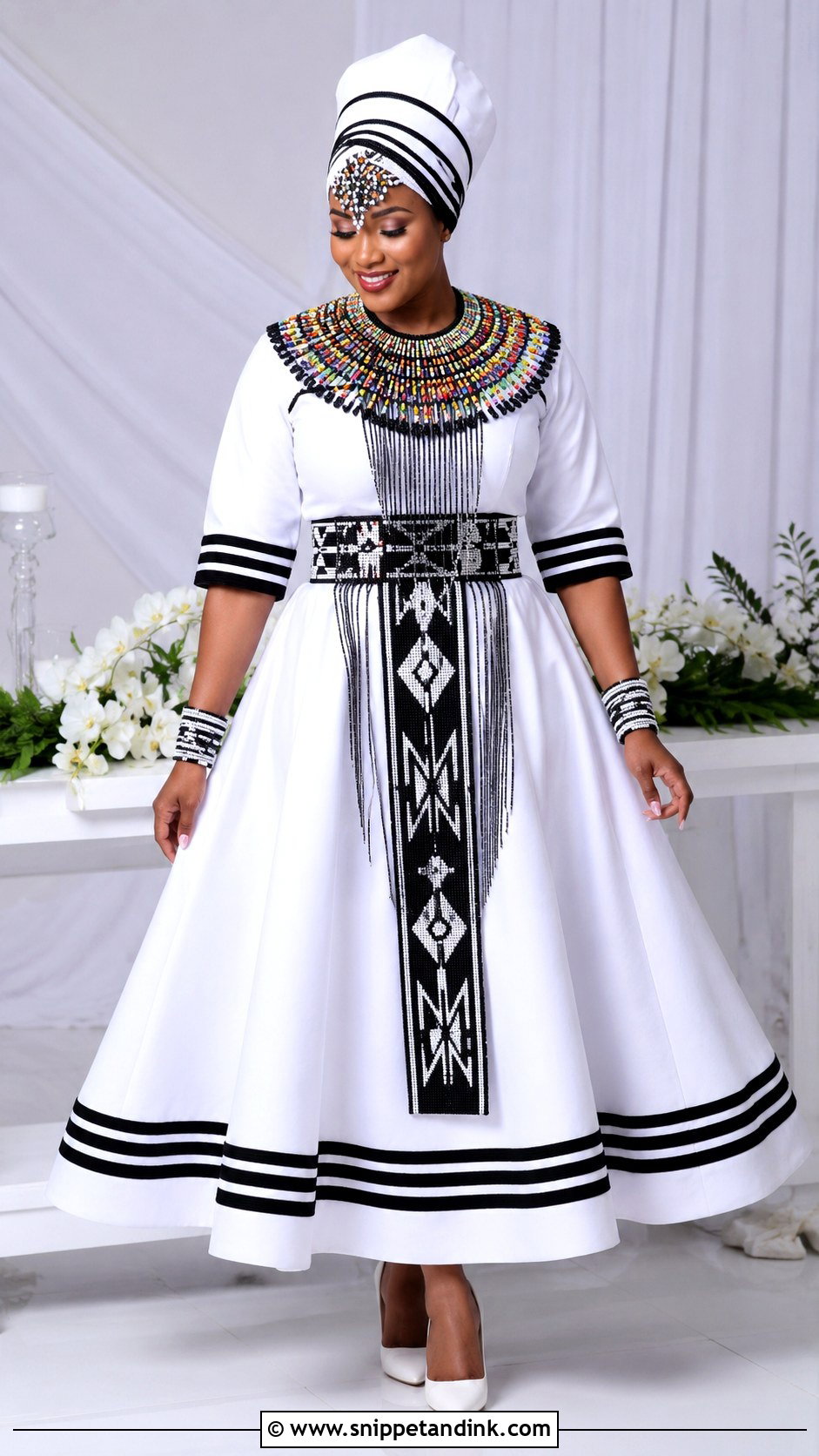
1. Black And White Xhosa Umbhaco Wedding Dress
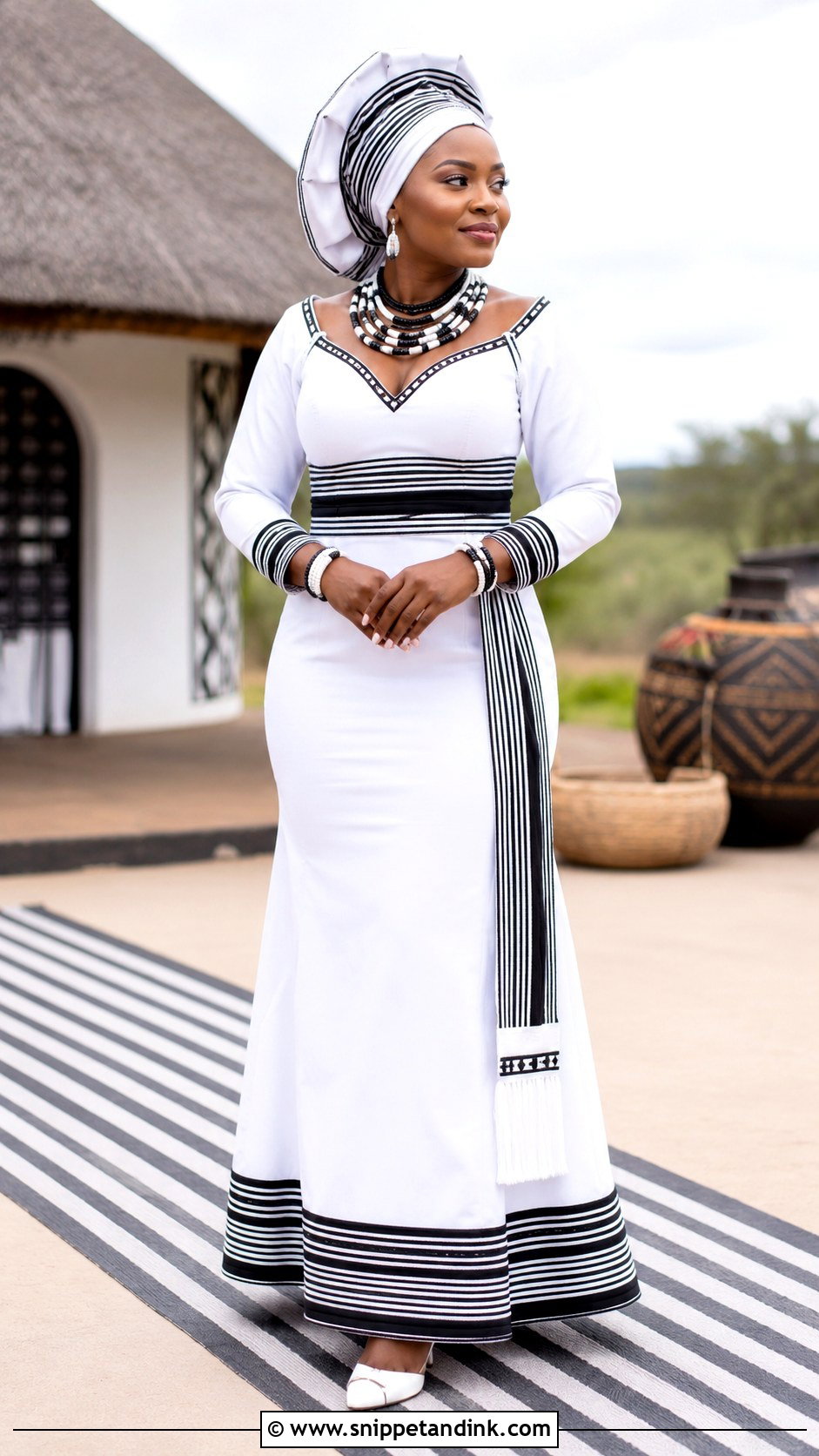
Black and white is the look most people picture first, and for good reason: the contrast is clear from the back of a crowded yard and in every photo. A Xhosa umbhaco wedding dress in this palette usually pairs a fitted bodice with a flared skirt, rows of striped braid and neat beadwork at the neckline, sleeves and waist. I ask the designer to stitch the braid rows before the skirt is fully assembled, because straight, evenly spaced lines are what make it look expensive. A matching doek, layered beaded necklaces and low heels or embellished flats keep you comfortable through a long ceremony.
2. White Xhosa Traditional Wedding Dress
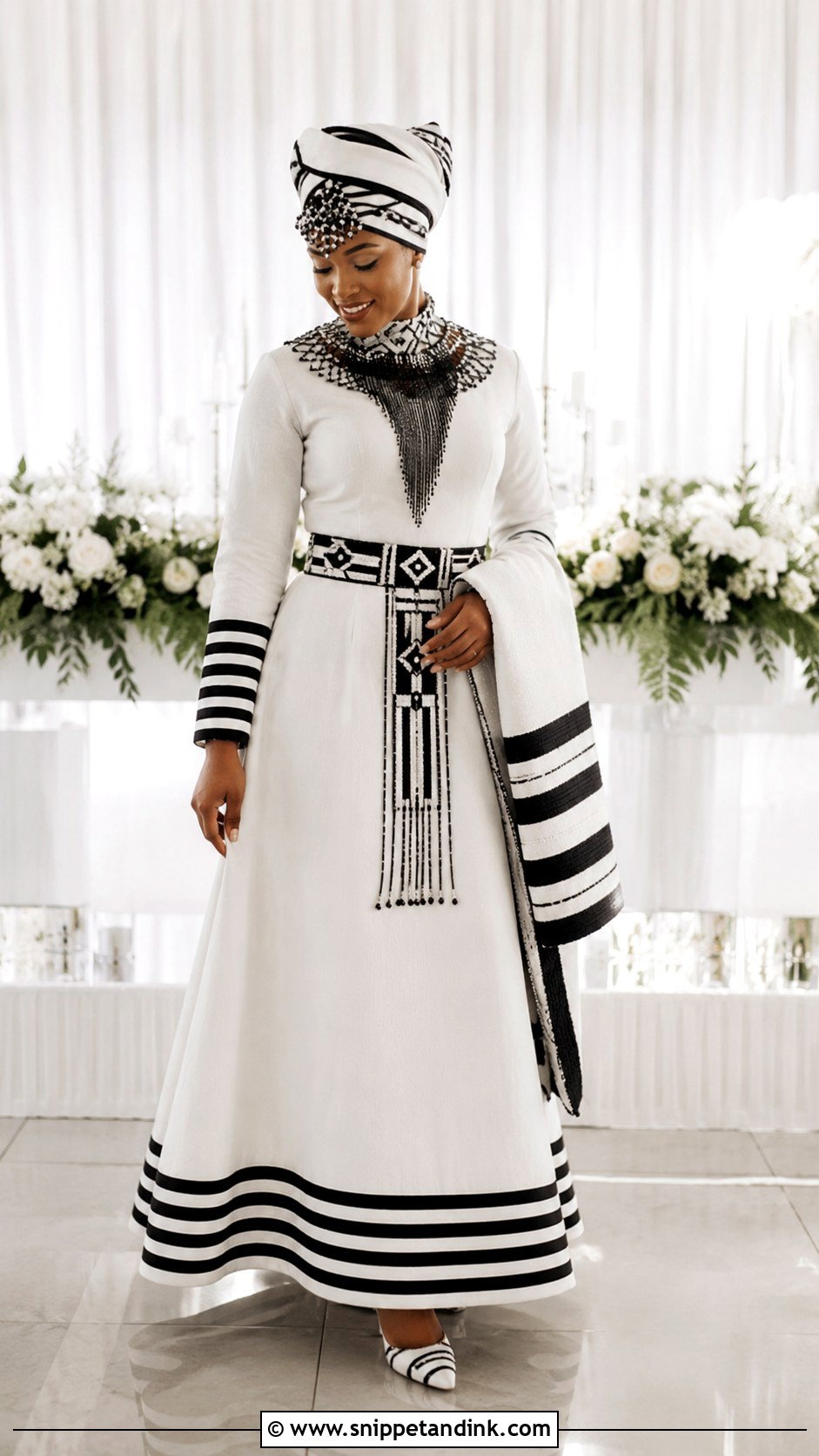
White gives the softness of a Western gown while the black stripes keep it unmistakably Xhosa. A long A-line with black braid at the hem, cuffs and waist is the version I’d start with. White fabric shows every mark from red soil and outdoor seating, so I suggest the hem sits a little higher than usual if the ceremony is at a rural homestead. White beadwork with silver touches, a structured doek, white heels and a neat shawl finish it.
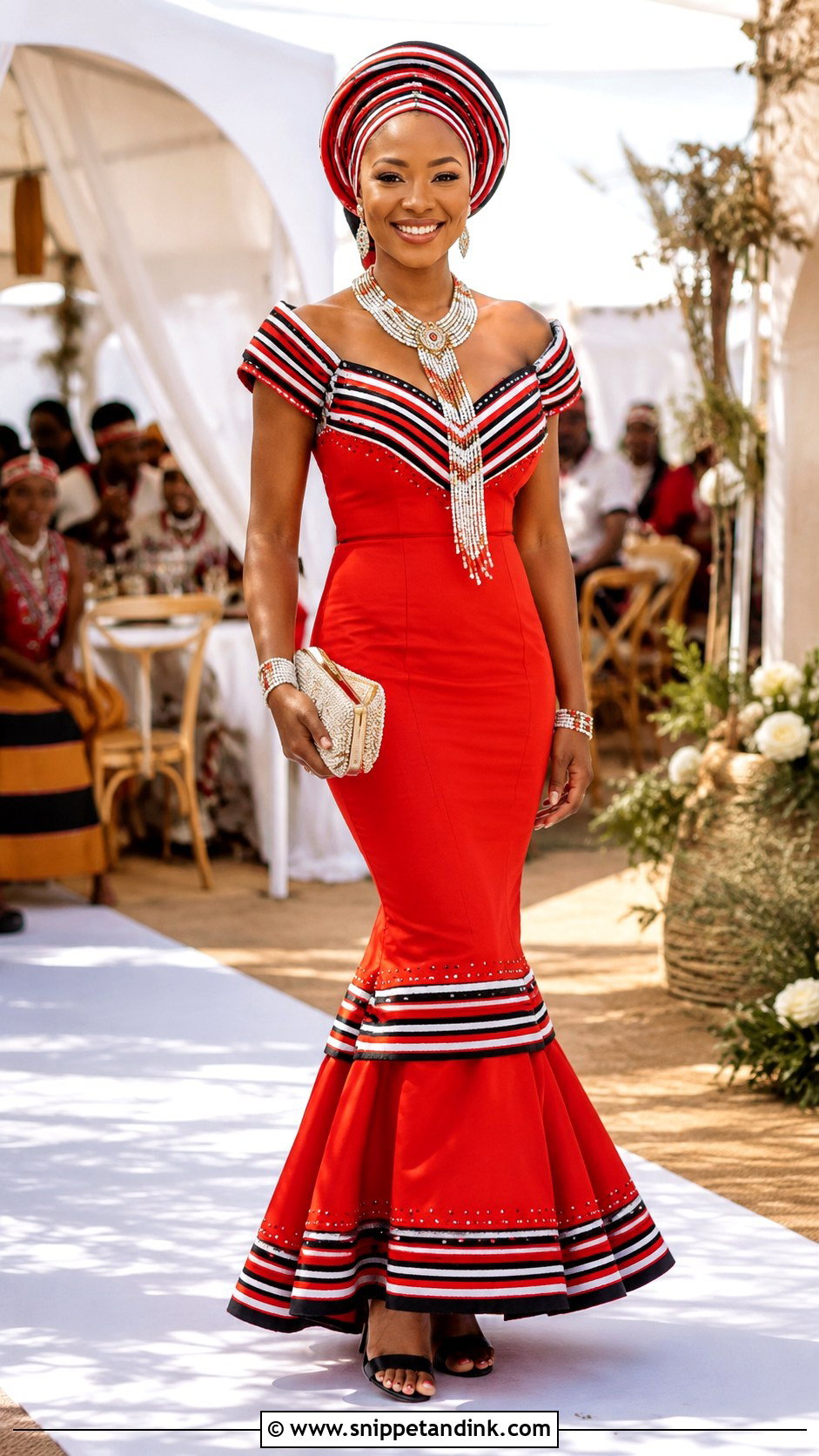
3. Red Xhosa Traditional Wedding Dress
Red is a strong entrance colour, warm and emotional, and black-and-white trim makes it sharper still. A mermaid, full skirt or peplum all work in red umbhaco fabric with beaded details. For the head, choose a matching red doek or switch to black and white for contrast. Gold or white beads sit well against red and black heels ground it. Red dyes differ more than people expect between batches, so if your bridesmaids are wearing red too, I’d buy all the fabric at once.
4. Blue Xhosa Traditional Wedding Dress
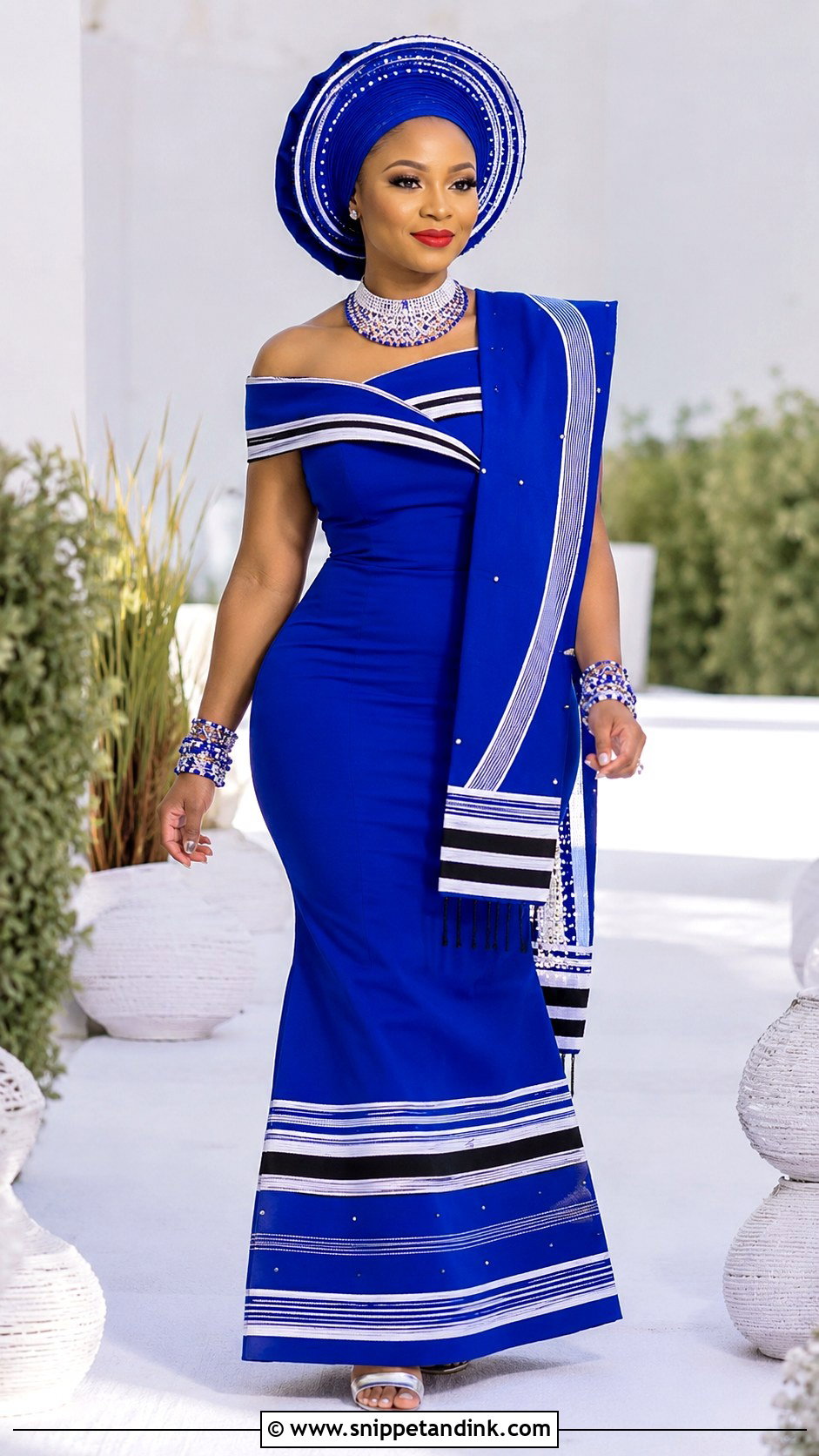
Navy, royal and powder blue each read differently against the black and white stripes. Navy looks formal and calm; powder blue feels light and young. A structured bodice with a wide skirt suits a formal ceremony, while a fitted dress with a slit or flared hem looks more current. A matching doek, a beaded collar and a stack of bracelets pull it together, with silver heels or white sandals. I often suggest blue to brides who want colour without the intensity of red.
5. Yellow Xhosa Traditional Wedding Dress
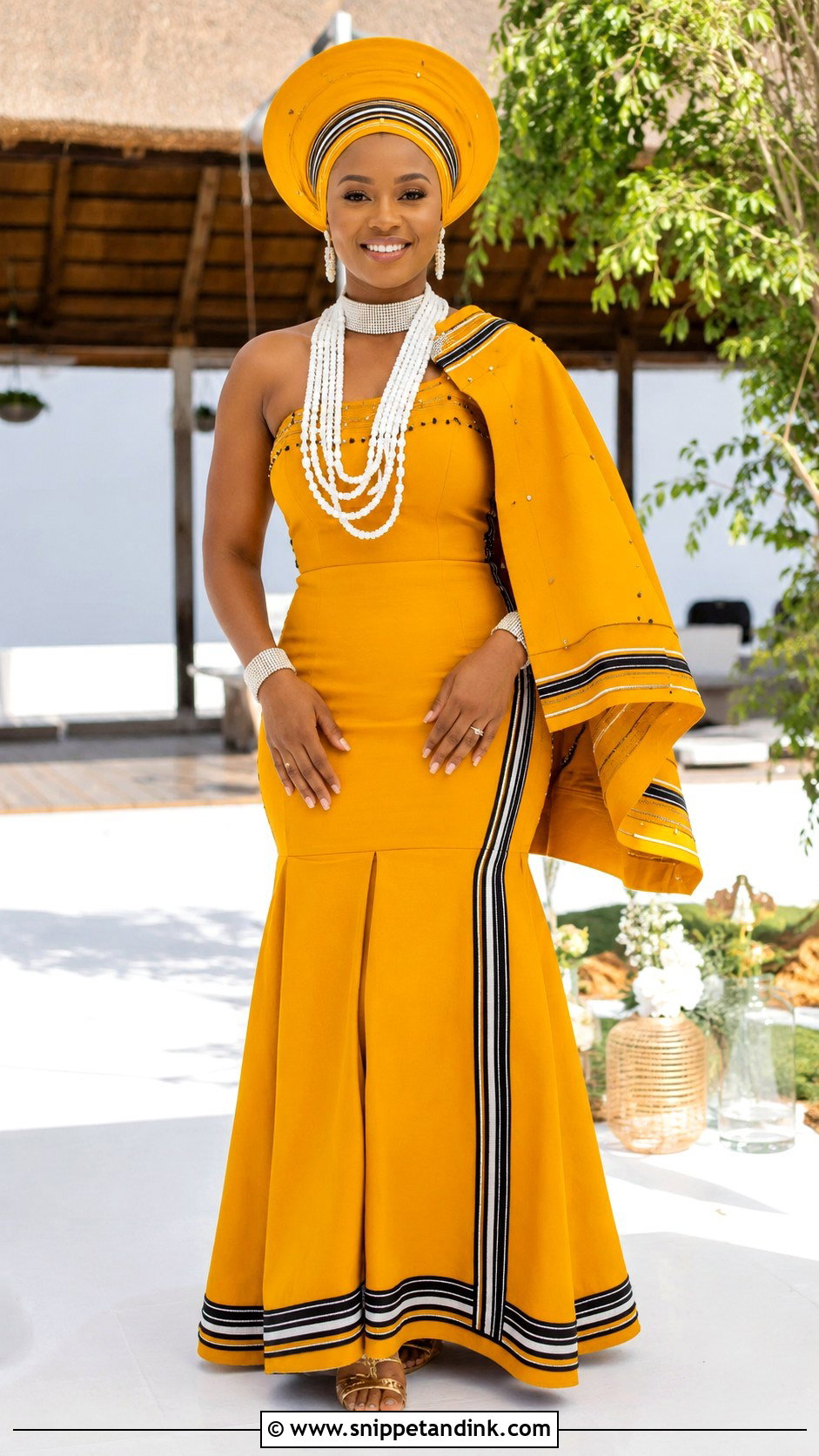
Yellow is the most joyful colour in this list, and it glows in outdoor daylight. Mustard, gold and sunflower yellow all pair well with black-and-white trim. A long fitted gown with a dramatic skirt, a matching shoulder wrap and white, black and gold beads complete it. Bright yellow can reflect onto the chin and neck in strong sun, so I flag it to the makeup artist and photographer ahead of time. Nude heels or gold sandals keep the focus on the dress.
6. Green Xhosa Traditional Wedding Dress
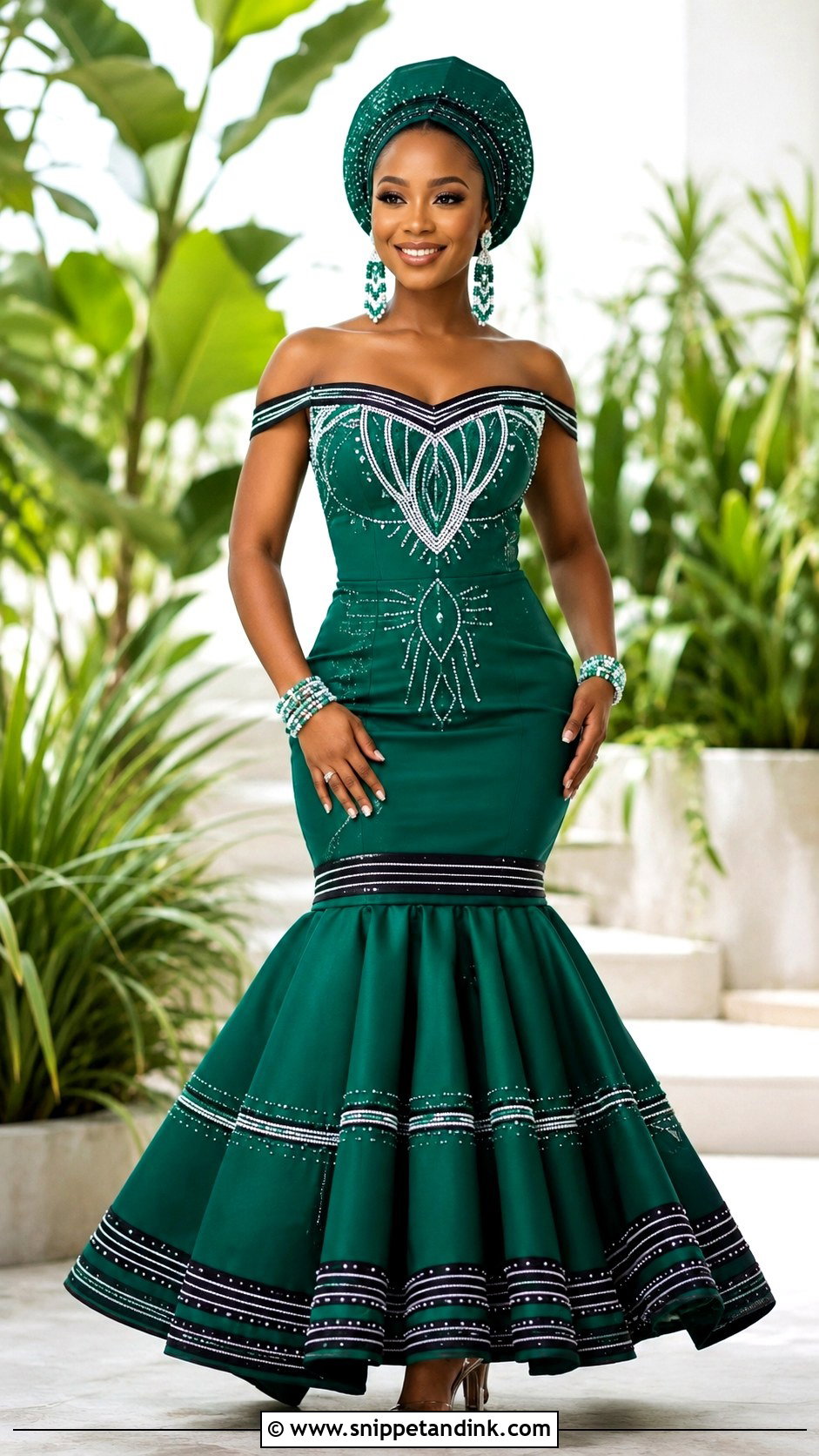
Green feels fresh and less expected than the usual Xhosa palette. Emerald, olive and forest green all suit white beadwork and black trim. A fitted waist with a flared skirt looks regal; a straight column gown looks sleek. I’d add a matching doek or a cape, but not both, so the outfit doesn’t get heavy. Repeat the green and white in necklaces, bangles and earrings to make the colour story clear.
7. Xhosa Mermaid Wedding Dress
The mermaid hugs the bodice and hips and flares near the knee, which makes it the most glamorous shape here and the least forgiving for traditional ceremonies. Before choosing it, ask whether you’ll be expected to sit on a low bench or a mat, kneel, or dance with the women of the family, because a tight mermaid makes all three hard. Stripe detailing at the neckline, waist, sleeves and hem keeps it rooted in culture. Black and white, red, navy and emerald suit it, with a matching doek, bead collar and elegant heels.
8. Xhosa Ball Gown Wedding Dress
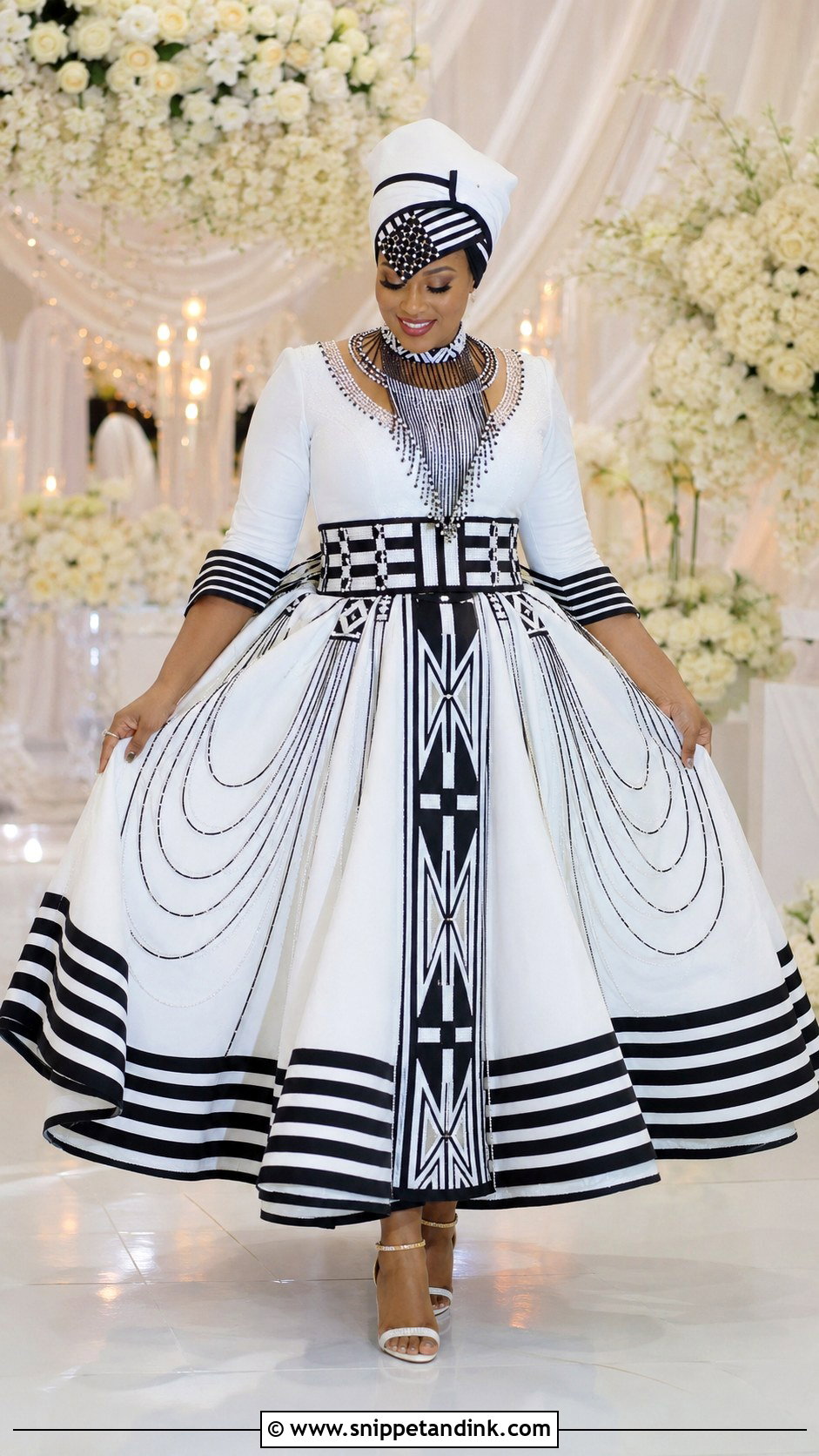
A full skirt gives the grandest moment of the day, and it moves well when you walk in with the family singing. The bodice can carry beading, embroidery or stripe panels, in white, black and white, red or blue. Heavy umbhaco cotton in a ball gown skirt gets weighty, so I ask the designer to line it with something lighter and limit the petticoat layers. A structured doek, layered beads and a shawl complete it. With that much skirt, keep shoes and makeup simple.
9. Xhosa Peplum Wedding Dress
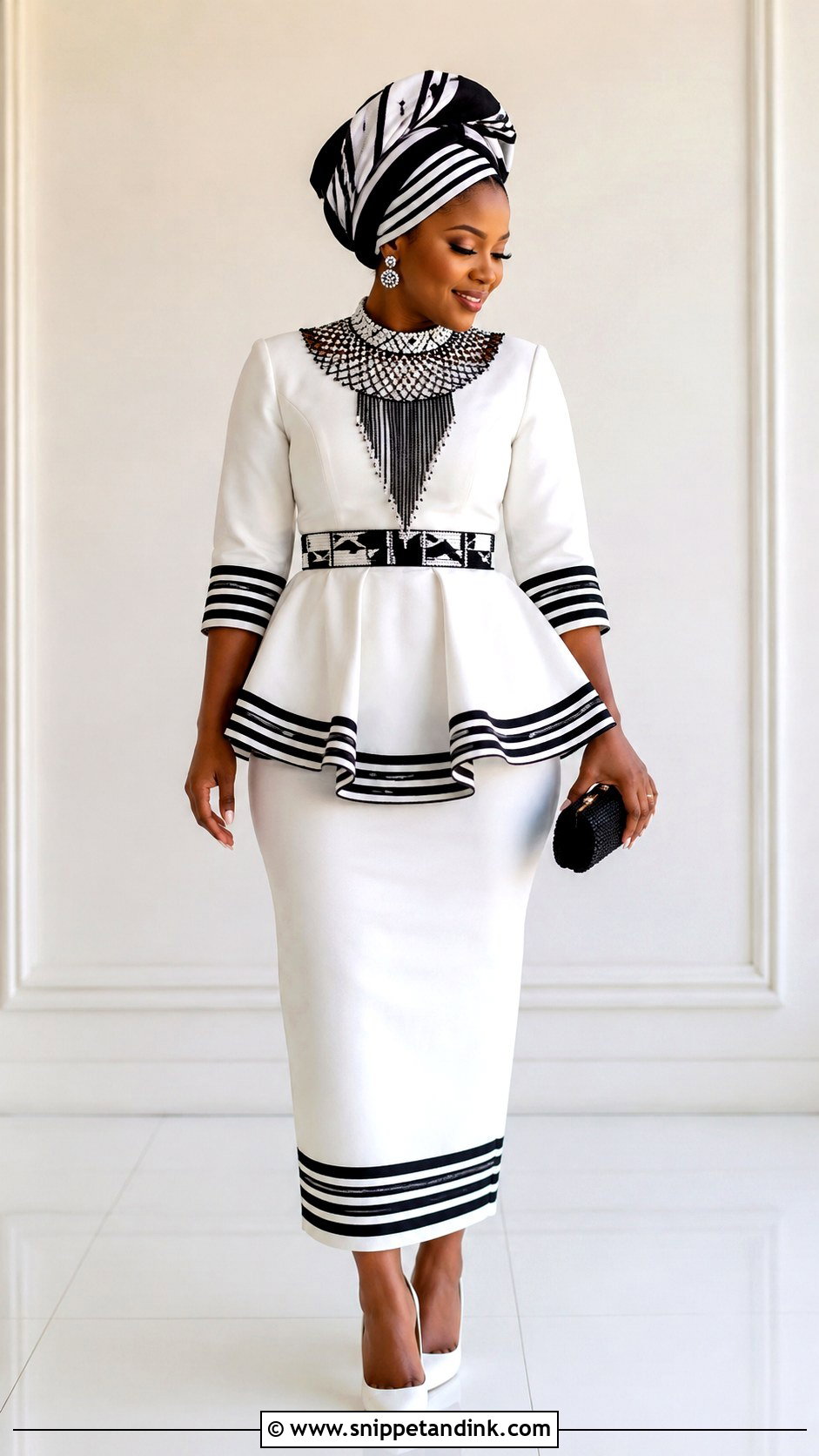
The peplum adds shape at the waist without a big skirt, and it’s one of the most comfortable silhouettes for a long day. Pair it with a pencil skirt, mermaid bottom or straight floor-length skirt. I like black-and-white trim framing the peplum edge, sleeves and hem, because it draws the eye to the waist. A matching doek, beaded collar and pointed heels complete it. Peplums can also be made as separates, which makes them easy to re-wear after the wedding.
10. Xhosa Two Piece Wedding Dress
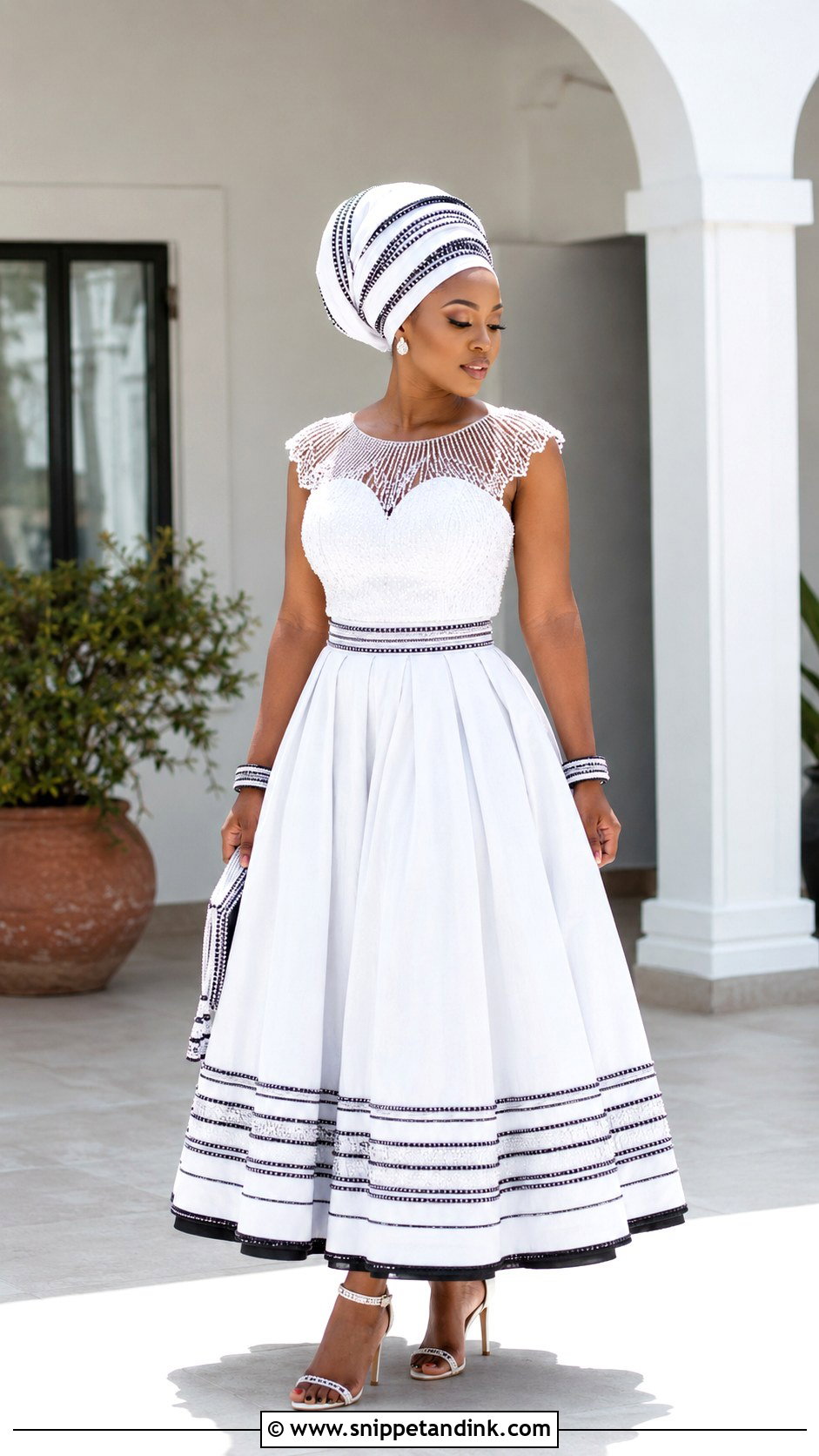
Separates give you freedom: a fitted beaded top with a high-waisted skirt, or a cropped blouse with a full traditional skirt. Check how much midriff a crop top shows before the day, especially if the ceremony is at your in-laws’ home, where many families expect more coverage. Stripe borders, a matching doek and layered beads make it feel complete. A practical bonus is that you can change only the top for the reception and keep the same skirt.
11. Xhosa Cape Wedding Dress
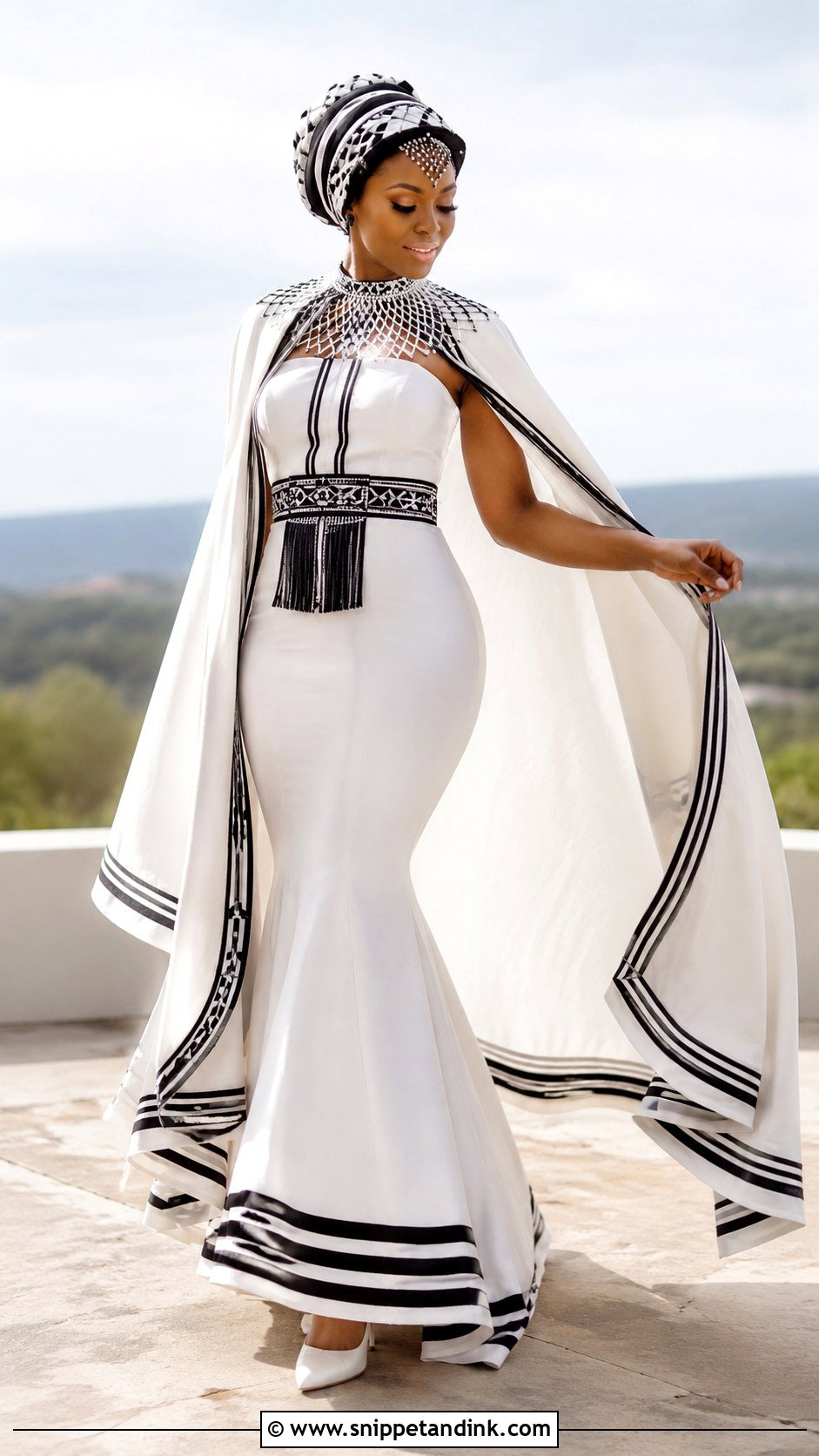
A cape adds drama with a refined line. It can be attached at the shoulders, layered over the dress or made as a matching umbhaco shawl with bold trim. Underneath, a fitted gown, A-line or simple column works. I’d choose the cape length by the venue: floor-length looks regal indoors, but outdoors on grass or dust a hip-length cape stays cleaner. White, black and white, deep red and emerald suit it, with a beaded headpiece or doek, sleek heels and a clean clutch.
12. Xhosa Dress With Doek
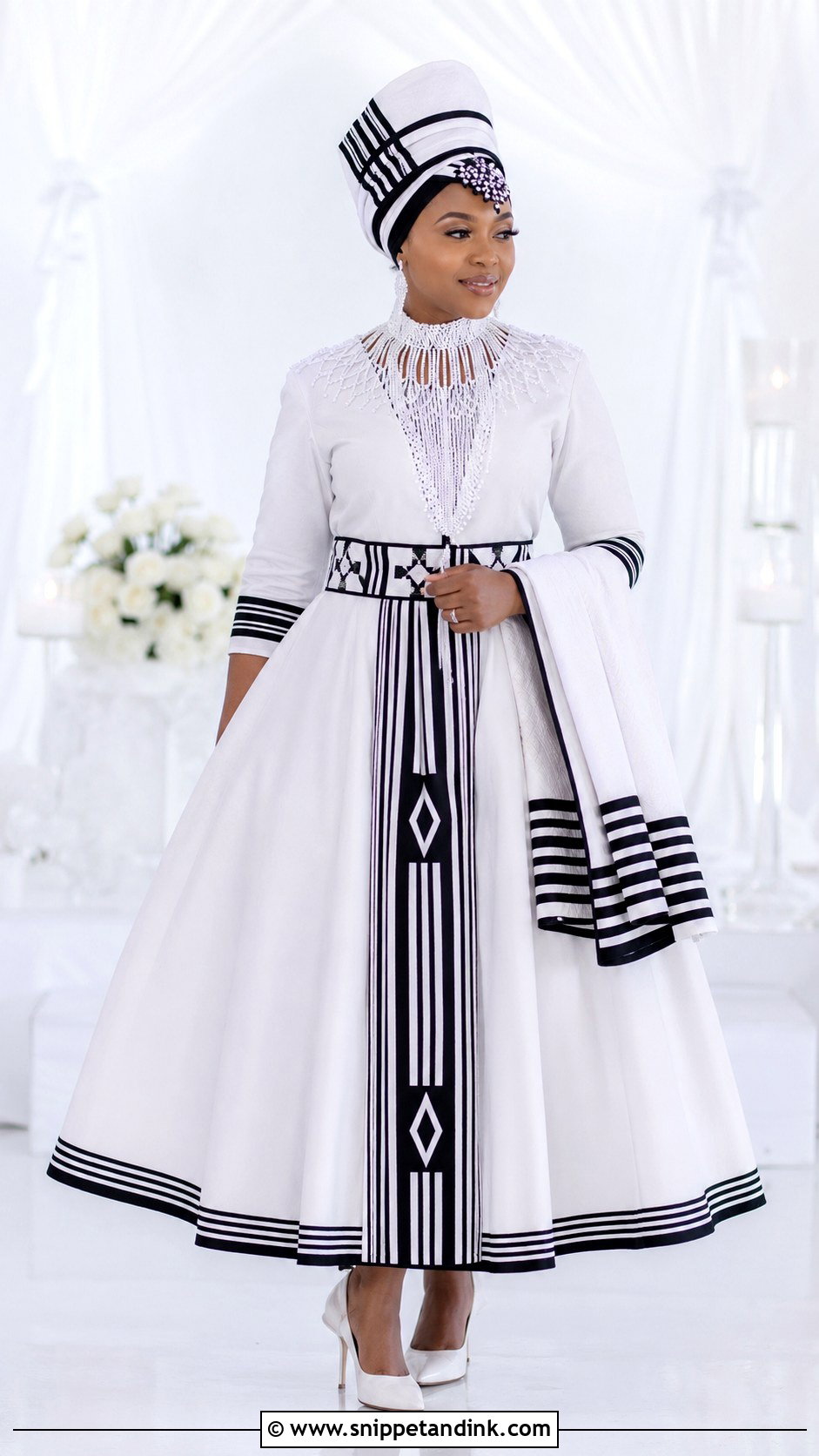
The doek frames the face and often gives the outfit its finished, ceremonial look. For many families it also carries meaning, as head covering is part of how a new bride shows respect. Match it to the dress fabric or tie a contrasting black-and-white design for impact. The dress can be fitted, flared, peplum or full-length with beading. I always ask the bride to practise the tie, or book someone who ties doeks well; a wrap that slips halfway through the ceremony is the most common styling problem I see. A beaded collar, matching bangles and comfortable shoes finish it.
13. Xhosa Dress With Beaded Neckpiece
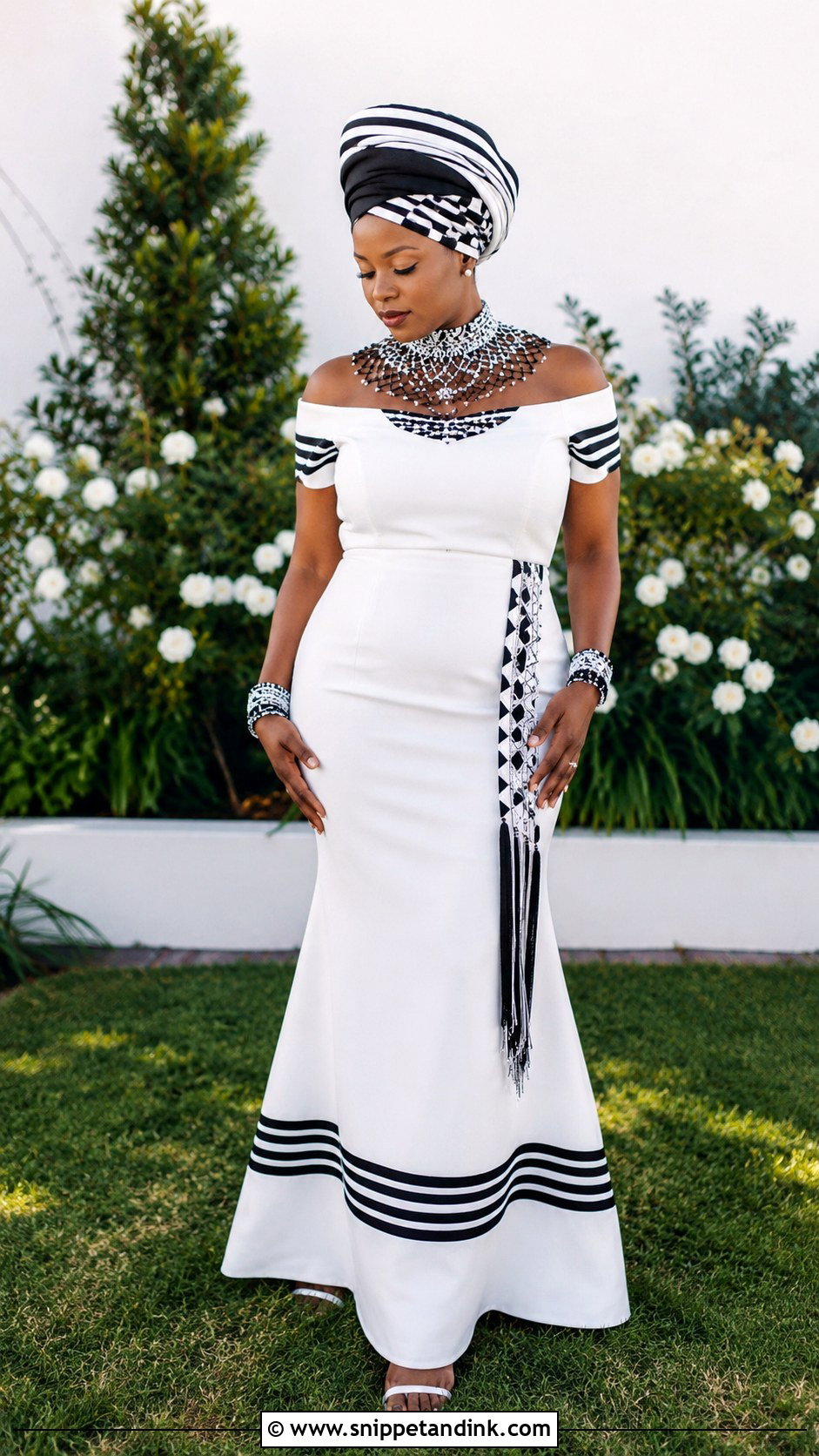
Let the beads do the talking and the dress can stay simple. A plain white or black-and-white umbhaco dress sets off a statement neckpiece well. Large collar pieces suit off-shoulder, scoop or strapless necklines; smaller layered strands sit better over high-neck or long-sleeve designs. Big beaded collars are heavier than they look, so I have the bride wear hers for an hour at the fitting to check it doesn’t rub. A matching doek, bead bracelets and neat heels complete it.
14. Xhosa Off Shoulder Wedding Dress
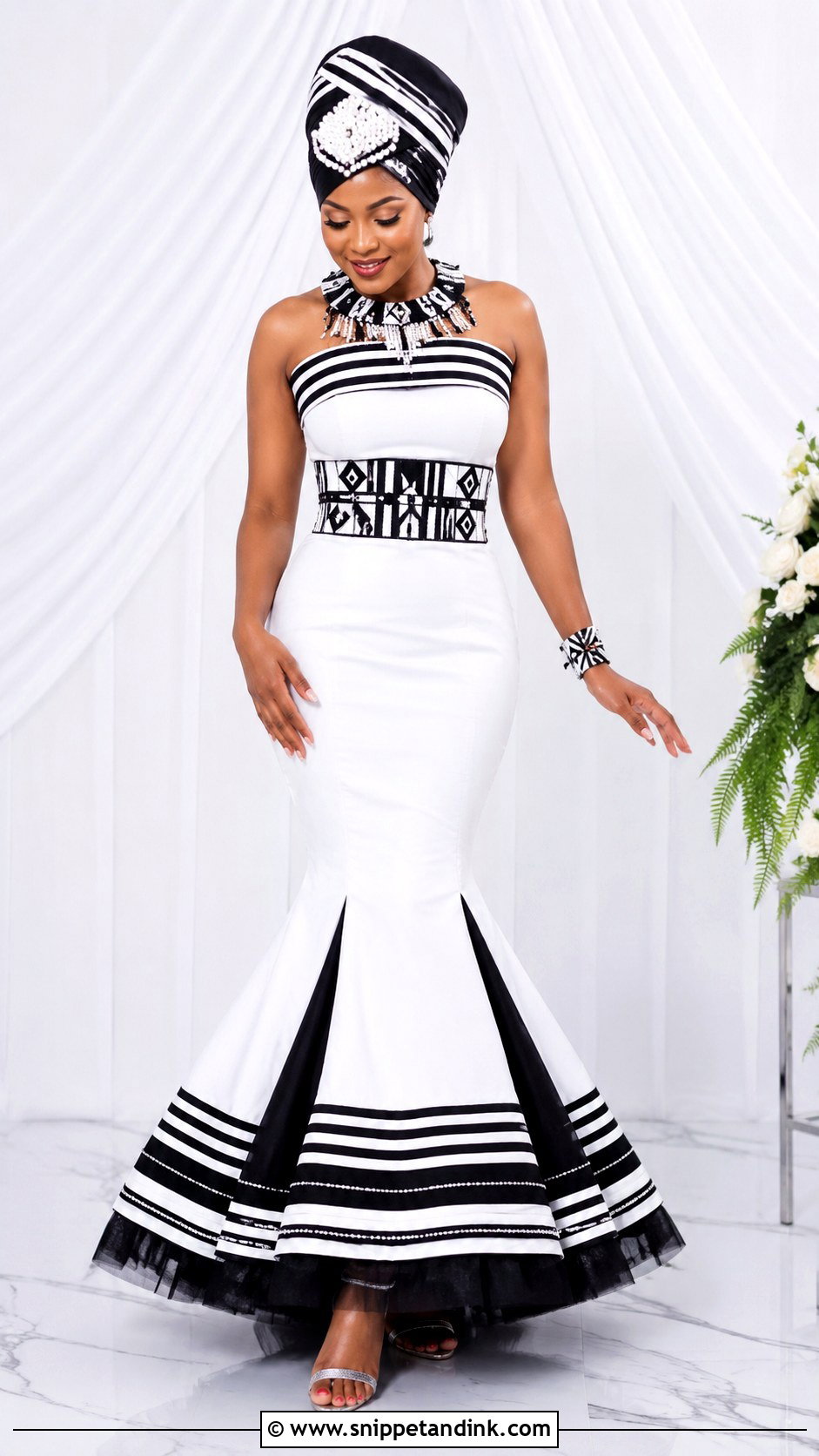
An off-shoulder neckline leaves room for a wide beaded collar or several layered necklaces, which is why it pairs so well with Xhosa styling. Mermaid, soft A-line or structured peplum all work. Traditional trim along the neckline and sleeves keeps it connected to the culture. A word of caution: some families expect a bride’s shoulders covered at certain parts of the ceremony, so plan a shawl for those moments. A matching doek or beaded headband and simple white or black heels finish it.
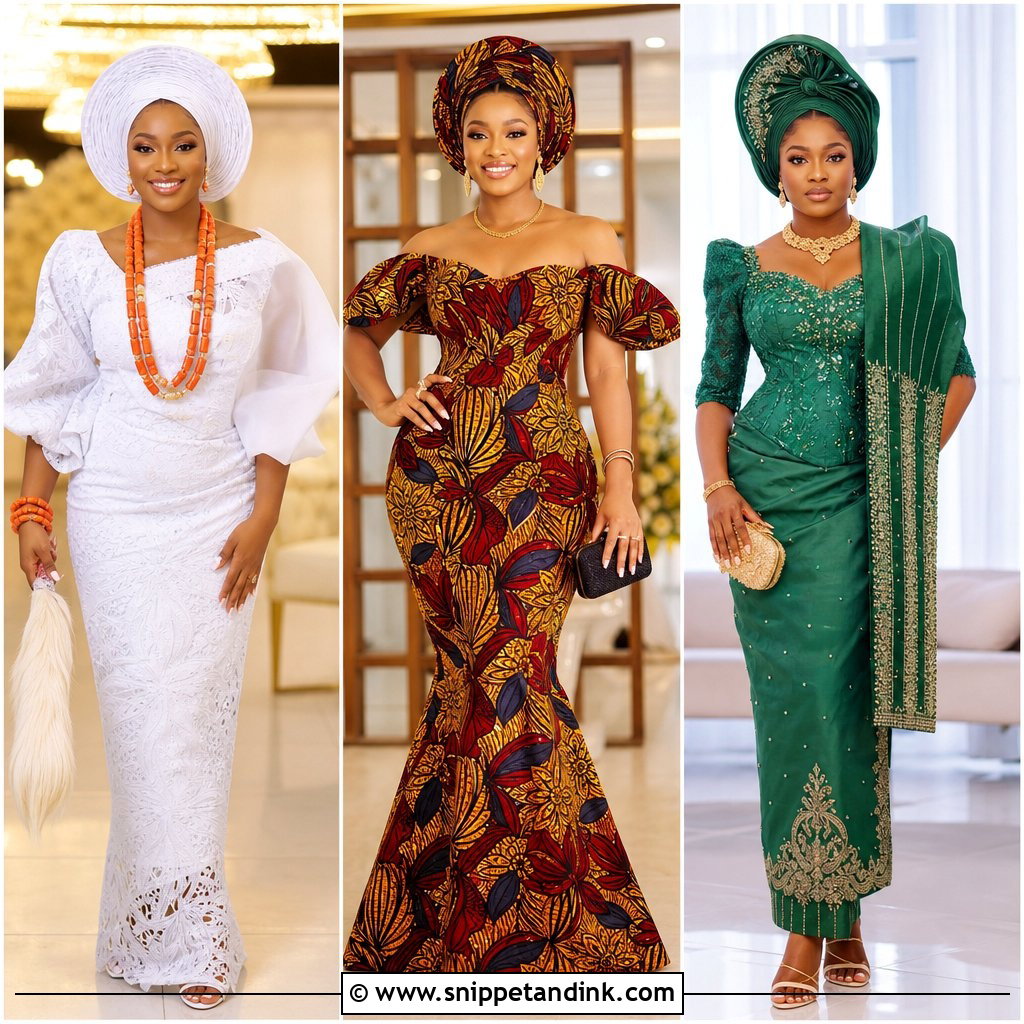
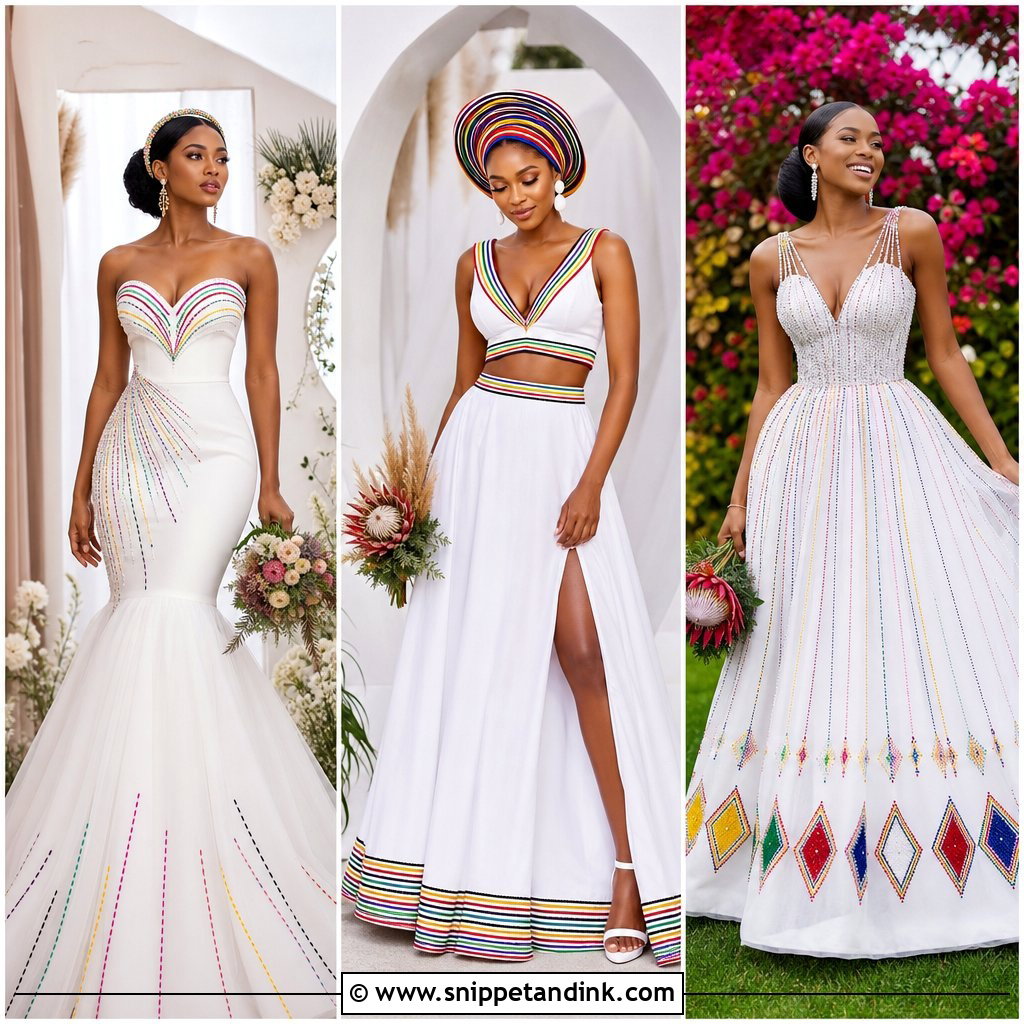
15. Xhosa Long Sleeve Wedding Dress
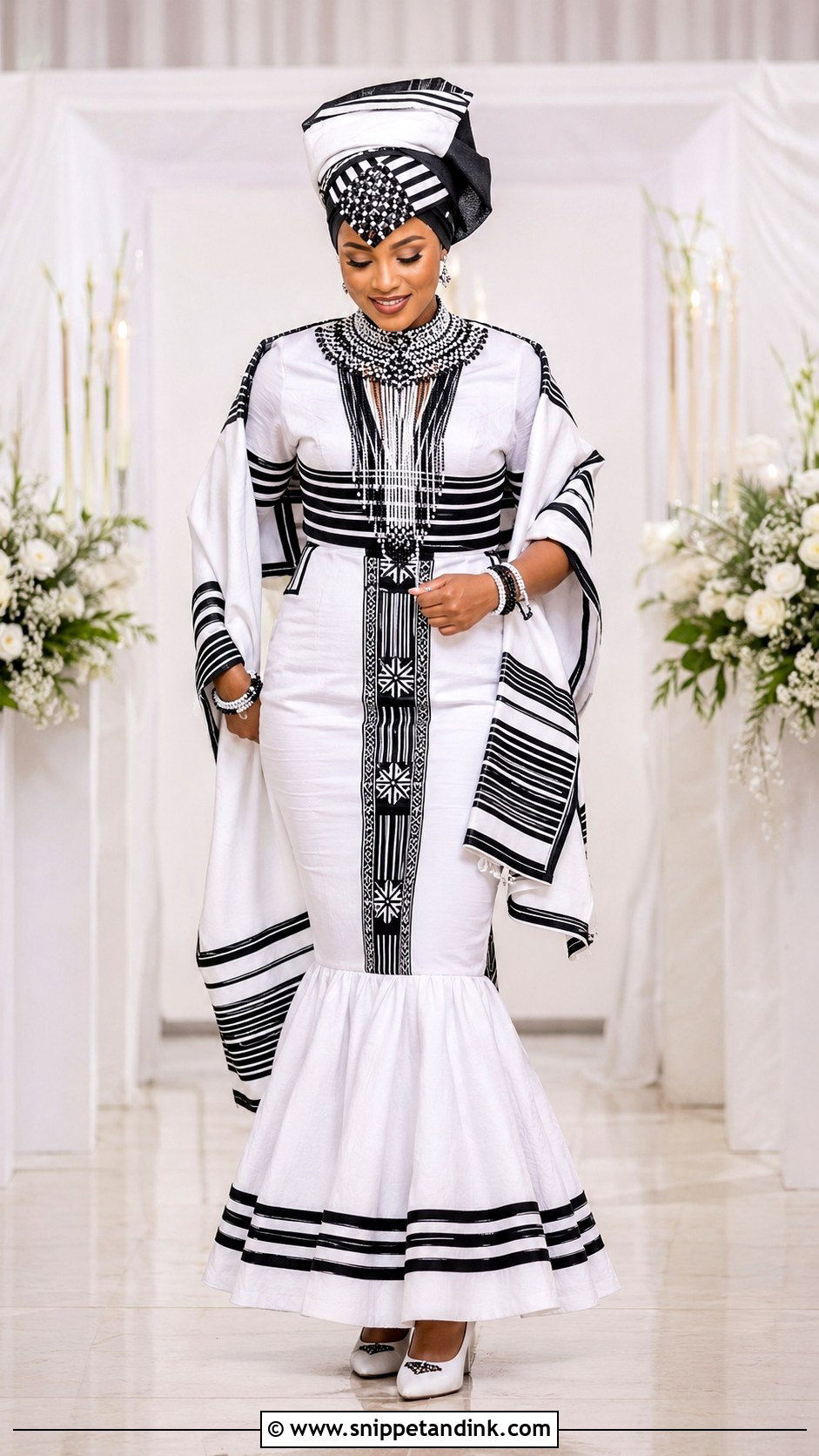
Long sleeves suit cooler weather and formal family gatherings, and they’re often the easiest answer when elders expect modest dress. The sleeves can be plain, beaded, sheer or edged with stripe detailing at the cuffs. A fitted bodice with a floor-length skirt keeps the line clean, and a doek and shawl add traditional polish. White, navy, black and white or burgundy all work. Choose a necklace that sits above the bodice edge and low heels for comfort.
16. Xhosa Lace Wedding Dress
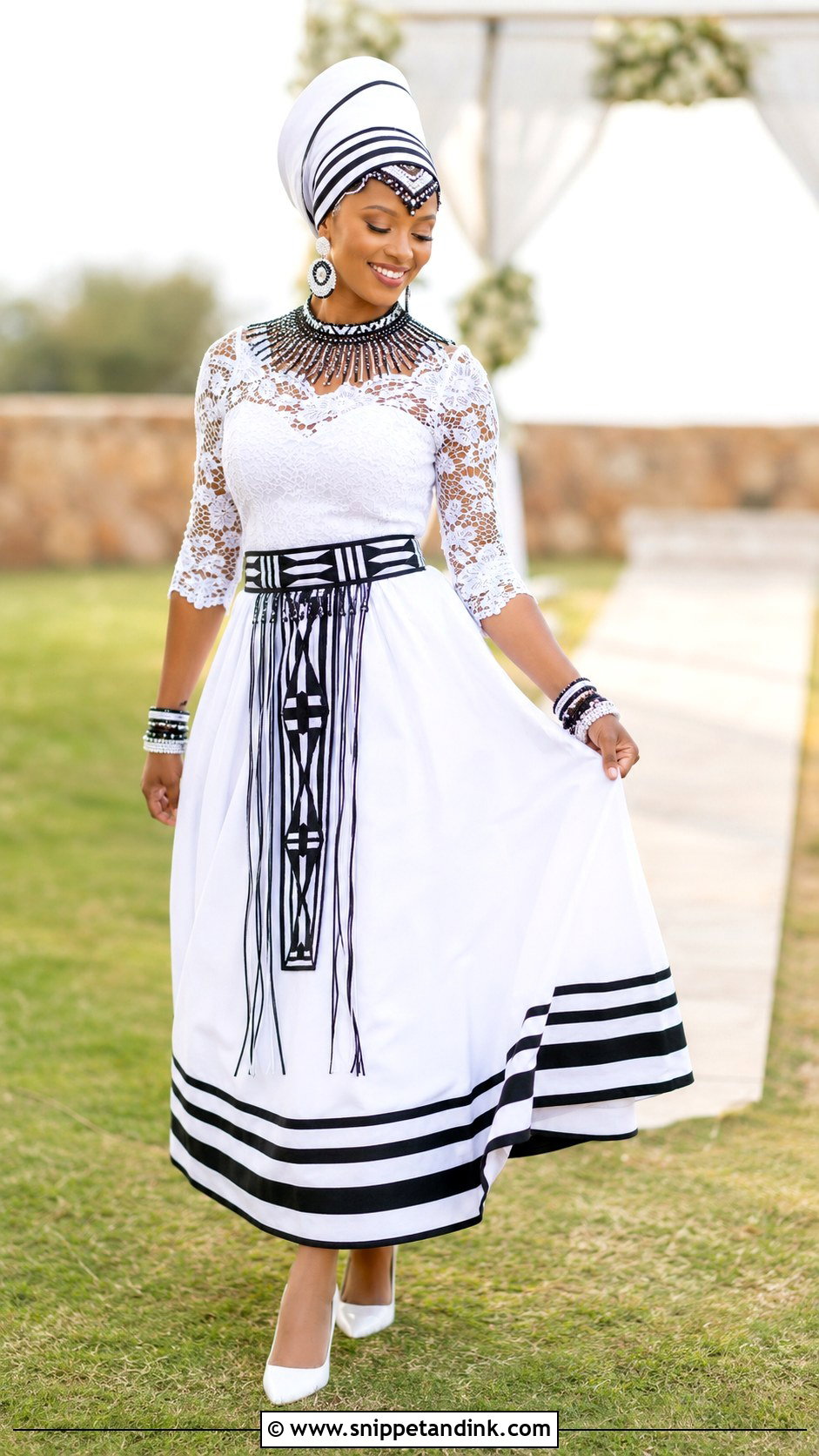
Lace brings bridal softness while umbhaco trim keeps the Xhosa identity. It can sit on the sleeves, bodice, neckline or as a full overlay. A white lace gown with black stripe borders looks crisp; red or navy lace feels bold. Sewing heavy braid onto delicate lace takes care, so I ask designers to back the lace where the trim sits, which stops puckering. A matching doek, beaded earrings and a neat bracelet stack are enough.
17. Xhosa Beaded Wedding Dress
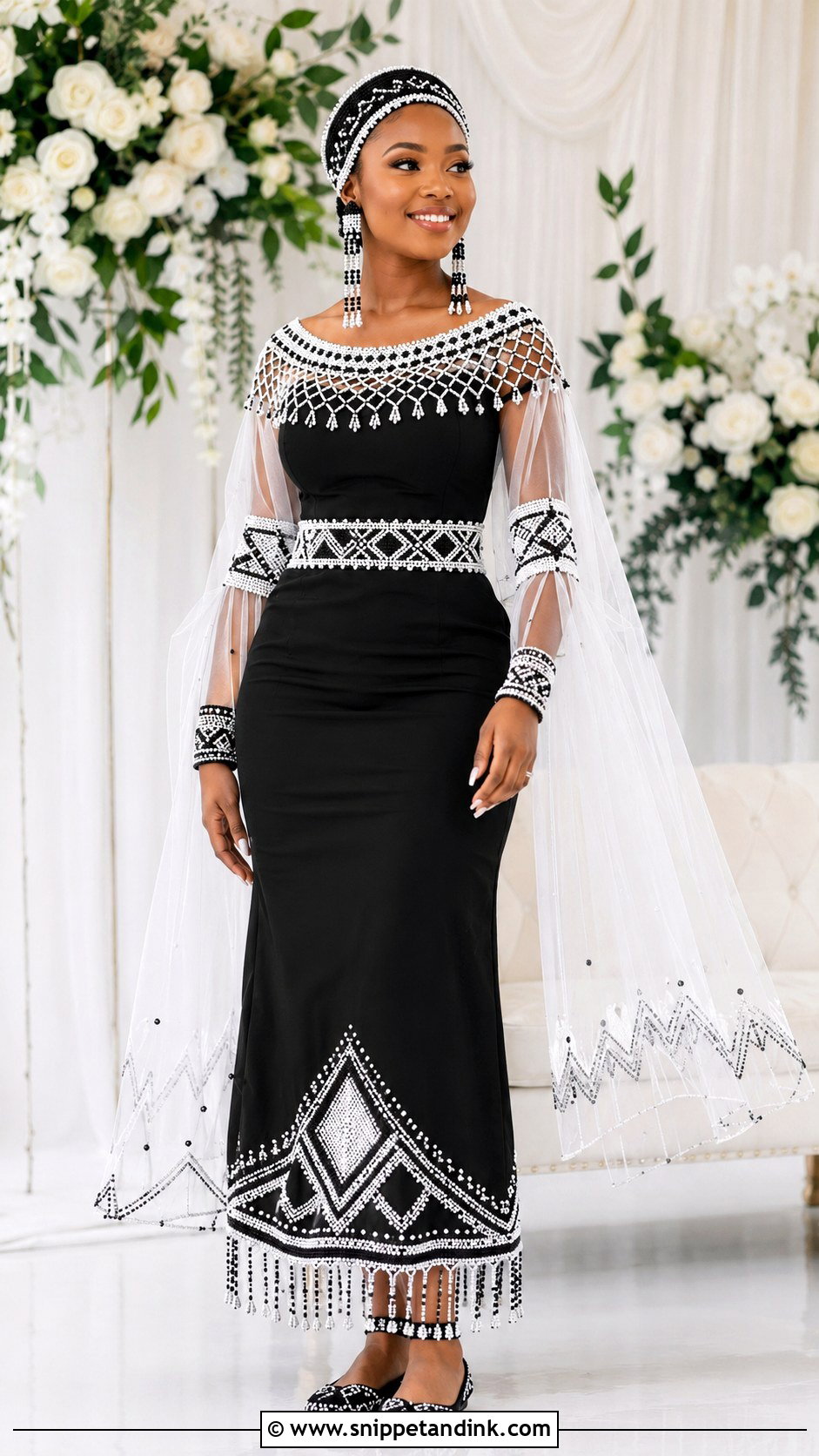
Beadwork takes time and skill, and that’s what makes a beaded dress feel special. It can trim the neckline, waist, sleeves, hem or the whole bodice. Balance matters, because a heavily beaded bodice gets hot and pulls on the seams. A black-and-white base makes coloured beads stand out; a white gown with white and silver beads looks more delicate. I’d order beadwork early, since handwork is usually the longest part of a commission. A matching doek or beaded headpiece and comfortable shoes complete it.
18. Xhosa Shweshwe Wedding Dress
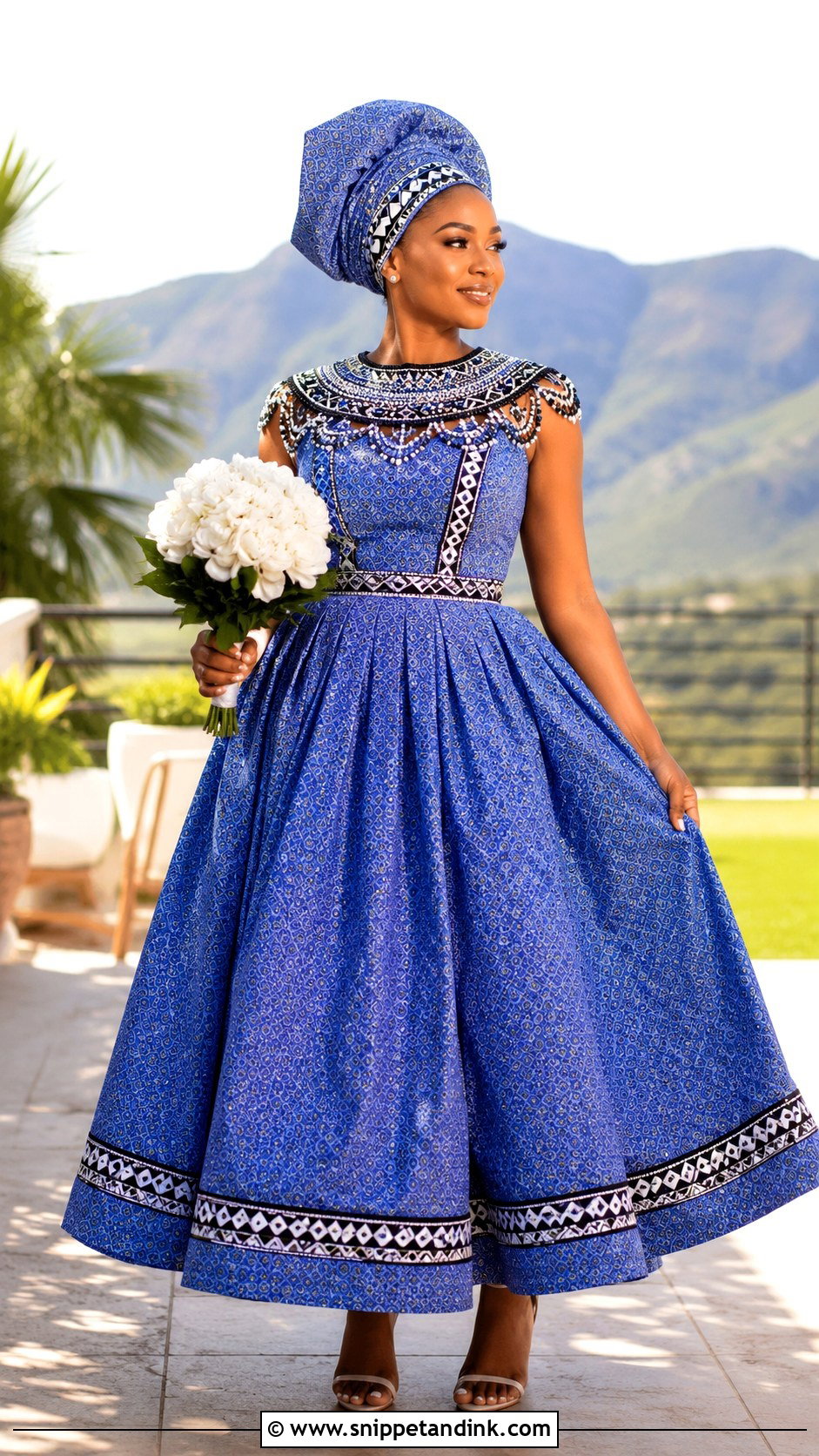
Shweshwe adds print and colour that most bridal fabrics can’t. A Xhosa shweshwe wedding dress works in blue, brown, red, green or black prints depending on your taste and family tradition. New shweshwe feels stiff and can shrink when first washed, so I ask the designer to pre-wash the fabric before cutting. A full skirt with a fitted top is classic, while a mermaid or two-piece feels fresh. Xhosa beadwork, a matching doek and simple shoes keep the print from feeling crowded.
19. Xhosa Traditional Dress With Shawl
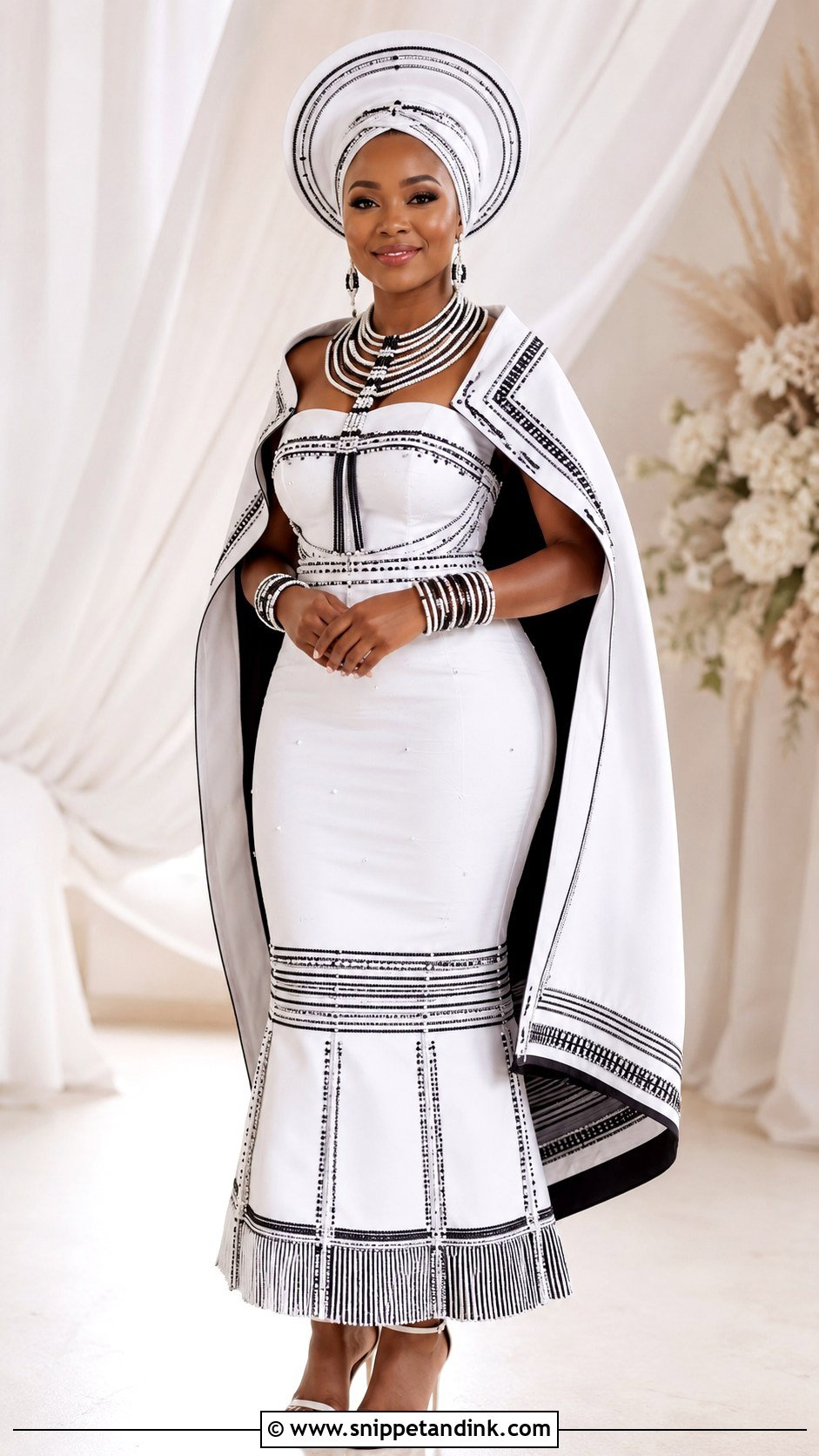
A shawl adds a layered, ceremonial feel, and in many homes draping the shoulders is itself a sign of respect. Wear it over both shoulders, across one arm or wrapped round the upper body for photos. It works with a fitted dress, ball gown or long straight skirt. Black-and-white shawls are classic; coloured ones can match a red, blue, green or yellow dress. I’d pin it discreetly at one shoulder, because a heavy shawl slides constantly when you greet guests. Beaded accessories and a structured doek tie it together.

20. Xhosa Traditional Dress With Apron
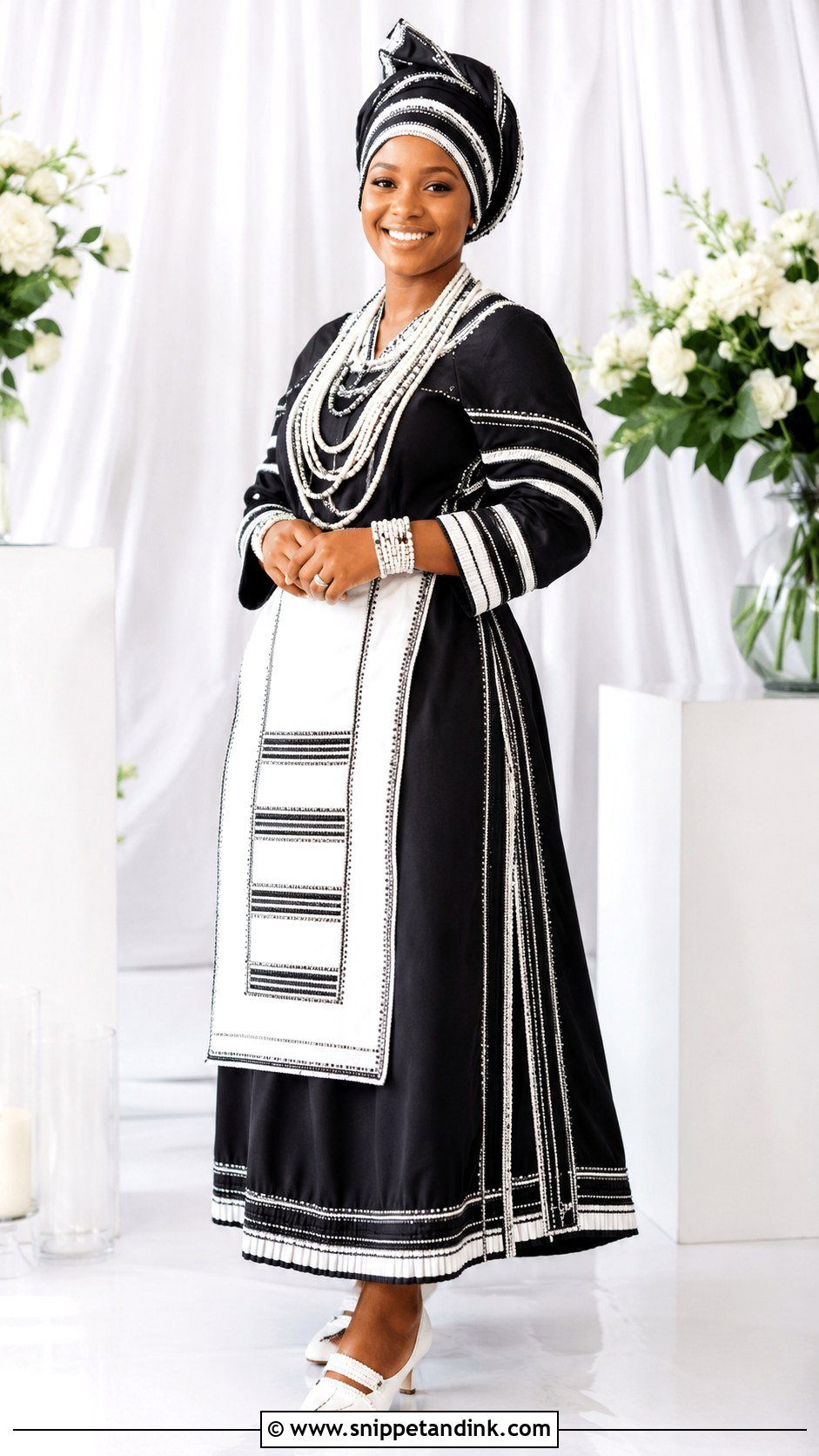
The apron is one of the most recognisable parts of Xhosa dress, and leaning on it makes a strong statement of heritage. It can sit over a long skirt or be built into a modern dress shape. A black-and-white base with beaded trim is traditional; a coloured dress with a contrasting apron feels newer. I’d ask an older relative to look at the design early, since apron styles and how they’re worn can differ between families. Pair it with a doek, layered beads and comfortable shoes.
21. Modern Xhosa Wedding Dress
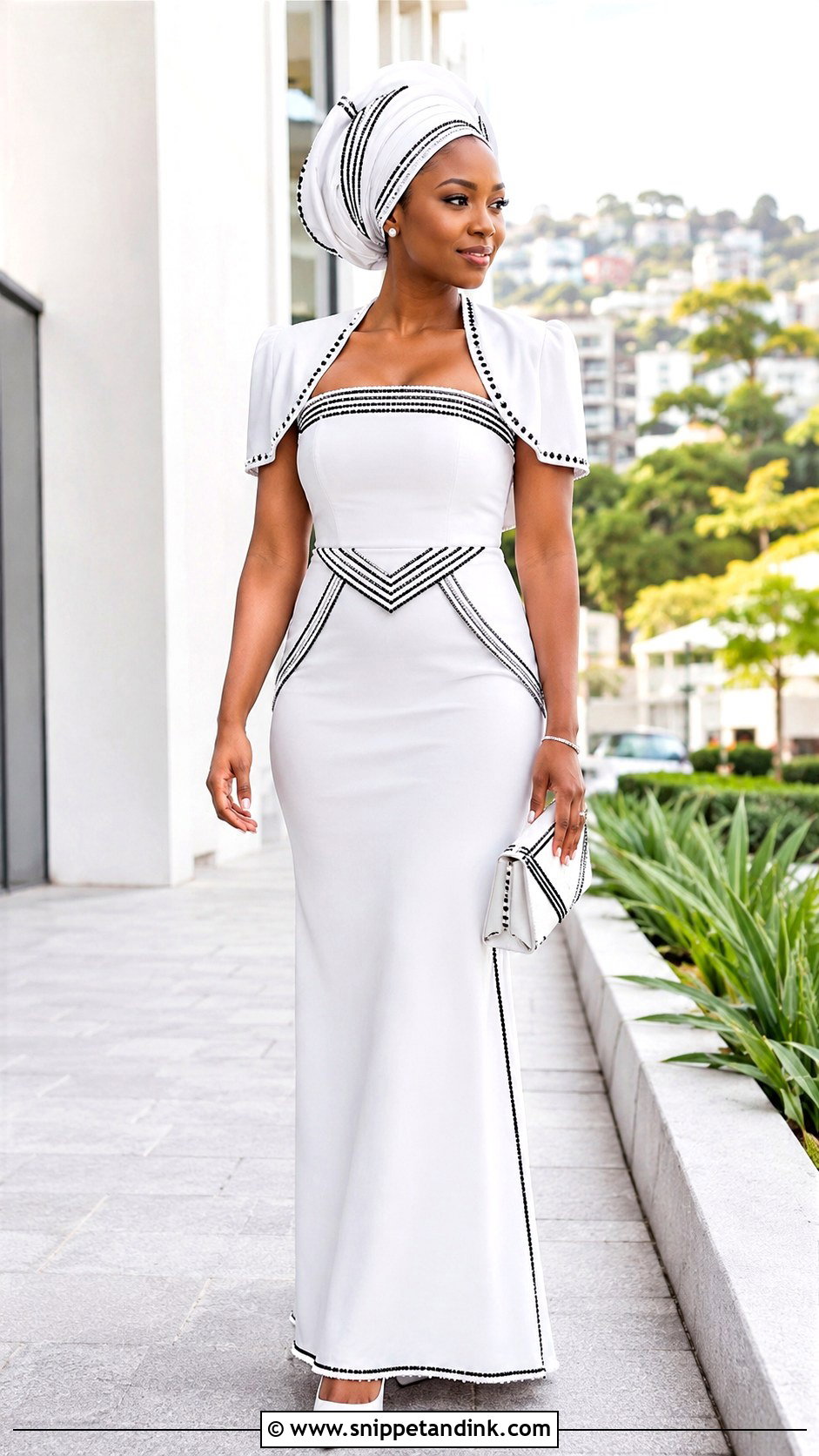
Modern doesn’t mean removing tradition; it means refining the cut. Clean lines, structured bodices and careful tailoring do most of the work, with cultural details placed deliberately. A sleek column with Xhosa trim, a strapless dress with a matching cape or a fitted dress with a bold doek all read as current. Minimal heels, polished beads and a simple clutch finish it. My test for a modern design is simple: if you removed the trim, would it still fit you perfectly? It should.
22. Xhosa Traditional Reception Dress
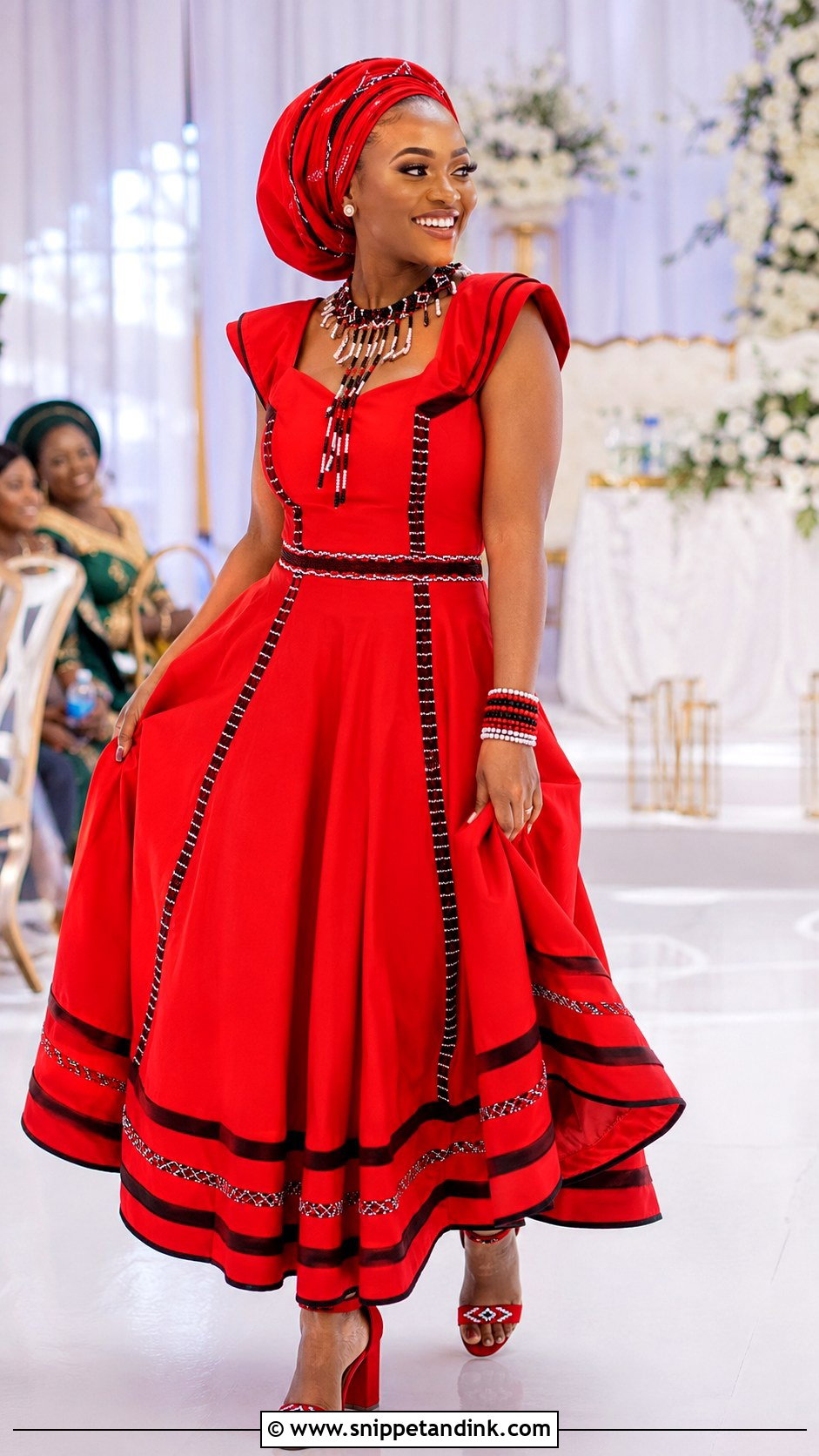
After the formal ceremony, most brides want something lighter for greeting guests, dancing and relaxed photos. A knee or ankle-length umbhaco dress, a peplum skirt set or a soft A-line all work. Keep the trim, beads and doek so you still look like the bride, but choose lighter fabric and shoes you can dance in. Brighter colours like yellow, red or royal blue suit the mood. I’d plan where and when you’ll change, and who helps, so you’re not missing the singing.
23. Xhosa Traditional Lobola Dress
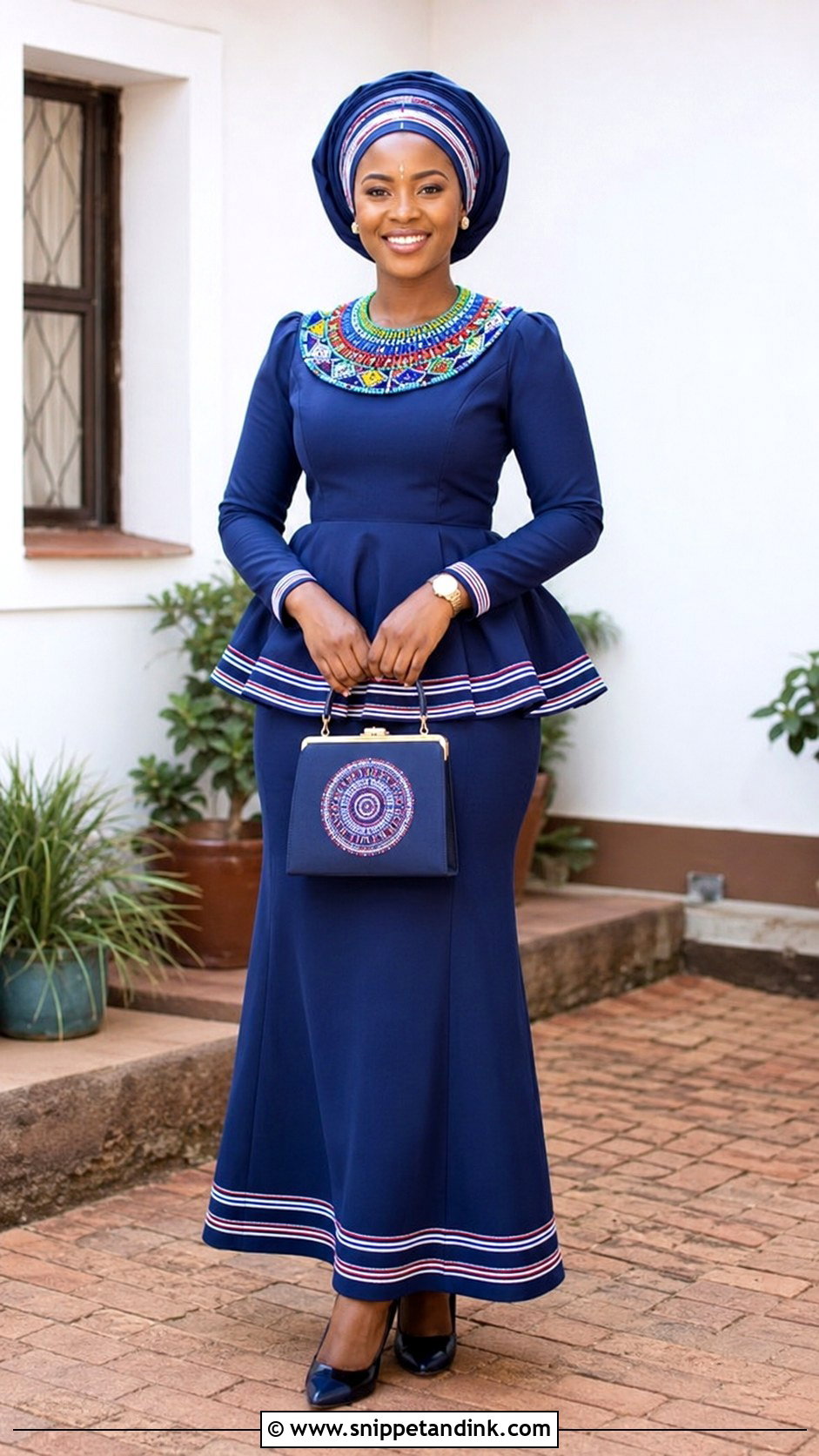
Lobola negotiations are a family occasion rather than a fashion moment, so a Xhosa traditional lobola dress should look polished and respectful, not dramatic. A modest long dress, peplum set or shweshwe outfit with Xhosa trim suits it, plus a doek, beaded necklace and low heels or flats. White, navy, brown and black and white are easy to wear; red or green make a stronger statement. Ask your family what’s expected, since some prefer the bride to stay low-key on this day.
24. Xhosa Traditional Plus Size Wedding Dress
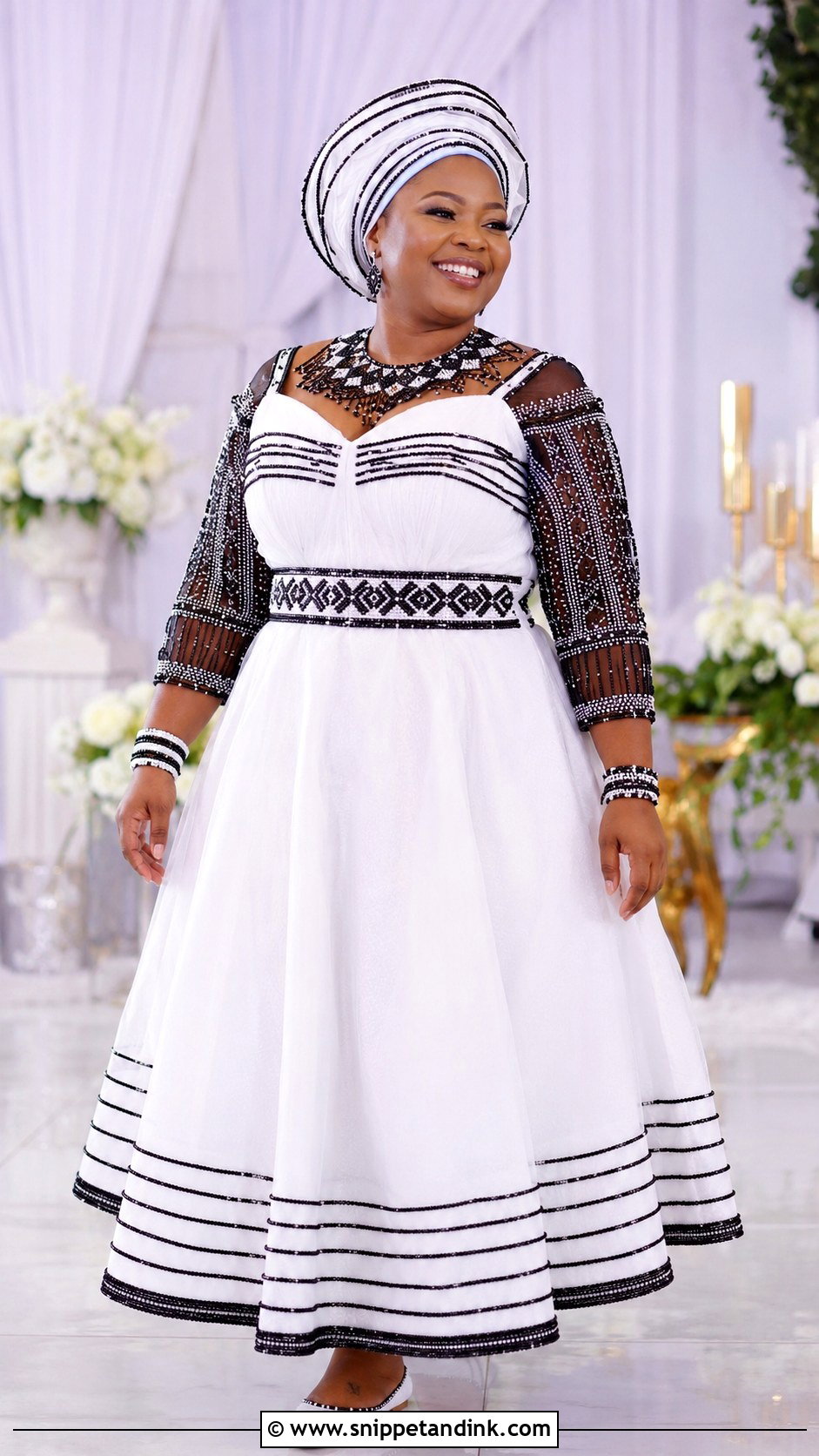
For a plus size bride, the dress has to be built for support first. A-line gowns, wrap-style bodices, peplum waists and well-tailored mermaids can all look striking. The bust needs real support, the waist needs definition and you need to move freely. I use the stripe trim deliberately: vertical rows lengthen, while a band at the waist creates shape. A matching doek, bold beads and supportive heels or elegant flats complete it. A designer making the dress to your measurements is the biggest advantage here.
25. Xhosa Traditional Maternity Wedding Dress
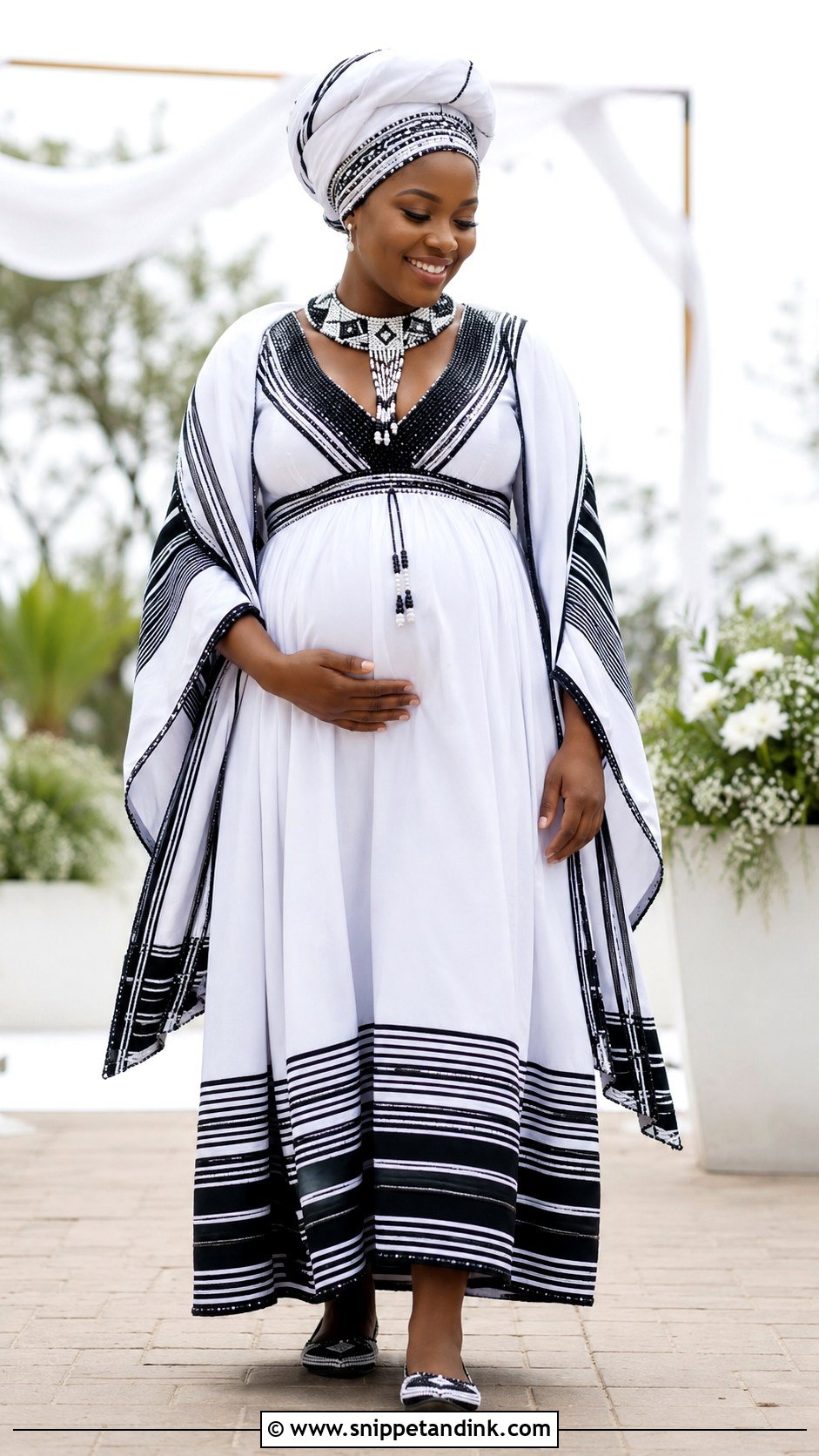
For a pregnant bride, comfort leads every decision. Empire waists, flowing A-lines and wrap-style shapes give room while still shaping the outfit. Lightweight umbhaco-style fabric, gentle beadwork and a matching doek create the bridal look without weight. A shawl adds comfort and coverage, and low block heels or embellished flats give support. Have the final fitting close to the date, with adjustable ties or lacing built in. Soft white, black and white, blue or green all suit it.
Commissioning an Umbhaco Outfit From a Designer
Most of these looks are made to order, and good traditional designers get busy. The festive season around December is a peak for weddings in many families, so I’d approach a designer several months ahead, and earlier still if the outfit has heavy beadwork.
What I bring to the first meeting
- A clear note of family expectations from the elders, so the designer doesn’t have to guess.
- Two or three reference pictures for silhouette, and separate ones for beadwork and trim.
- The shoes you’ll wear, because hem length on a full umbhaco skirt depends on heel height.
- Measurements taken by the designer, not copied from a standard size chart.
At the fittings
Look closely at the braid lines. They should run straight and evenly spaced all the way round, with neat joins at the seams. Sit, kneel and lift your arms in the dress, and wear the beaded collar and doek at the same time, because together they change how the neckline sits. Ask for a spare length of the dress fabric for the doek or shawl, so everything matches exactly, and get a written date for the final collection that leaves at least a week before the wedding.
Umbhaco, Beads and a Doek That Stays Put
There are many ways to honour Xhosa culture in a bridal outfit. Some brides want classic black-and-white umbhaco; others choose red, blue, green, lace, shweshwe, capes or fitted modern gowns. The outfit only works as a whole, with dress, doek, beads, shoes and shawl chosen together, and comfort counts for long ceremonies and family celebrations. Modest or bold, modern or deeply traditional, these Xhosa Traditional Wedding Dresses are a starting point. Bring the ideas to your designer and your family, and let both shape the final version.
You'll Like These Ideas:







Leave a Reply