
Korean bridal dressing spans centuries, and a single wedding can touch several of them. A bride might wear an embroidered hanbok for the paebaek, a minimal satin gown for the main ceremony, or a fusion design that carries both. Traditional bridal hanbok is built from the jeogori jacket and the chima skirt, and the most ceremonial layers add a hwarot or wonsam robe with a small jokduri crown. Modern designers rework those shapes in white silk, lace, pearls and sculptural bows. I’ve grouped the gowns below from the most traditional to the most Western, each with the full outfit around it.
Rent, Tailor or Buy? How Brides Get Their Hanbok
Most of the ceremonial pieces in this list, the hwarot, the wonsam and the jokduri, are rented rather than bought. They are worn for an hour or two, they are expensive to make, and rental houses usually include dressing on the day. A custom-made hanbok is a different decision, and one I’d make well ahead of the date, because tailoring one takes several weeks plus fittings.
- Rent the ceremonial robes and crown for the paebaek; the rental house knows how to layer them.
- Have a hanbok tailored if you want to wear it again for family occasions, and choose a color you’d still wear later.
- Borrowing an heirloom hanbok is meaningful, but check the silk for weak seams and stains several months out, since restoration takes time.
- Modern fusion gowns are ordered like any bridal gown, with the usual lead time for production and alterations.
Measurements that matter most
A chima wraps and ties high on the chest, so the under-bust measurement decides its fit, not the waist. The jeogori depends on shoulder width, chest and sleeve length with the arm bent. Wear the shoes you’ll actually use when the chima is measured; the hem should just brush the floor.
1. Traditional Red Korean Wedding Hanbok
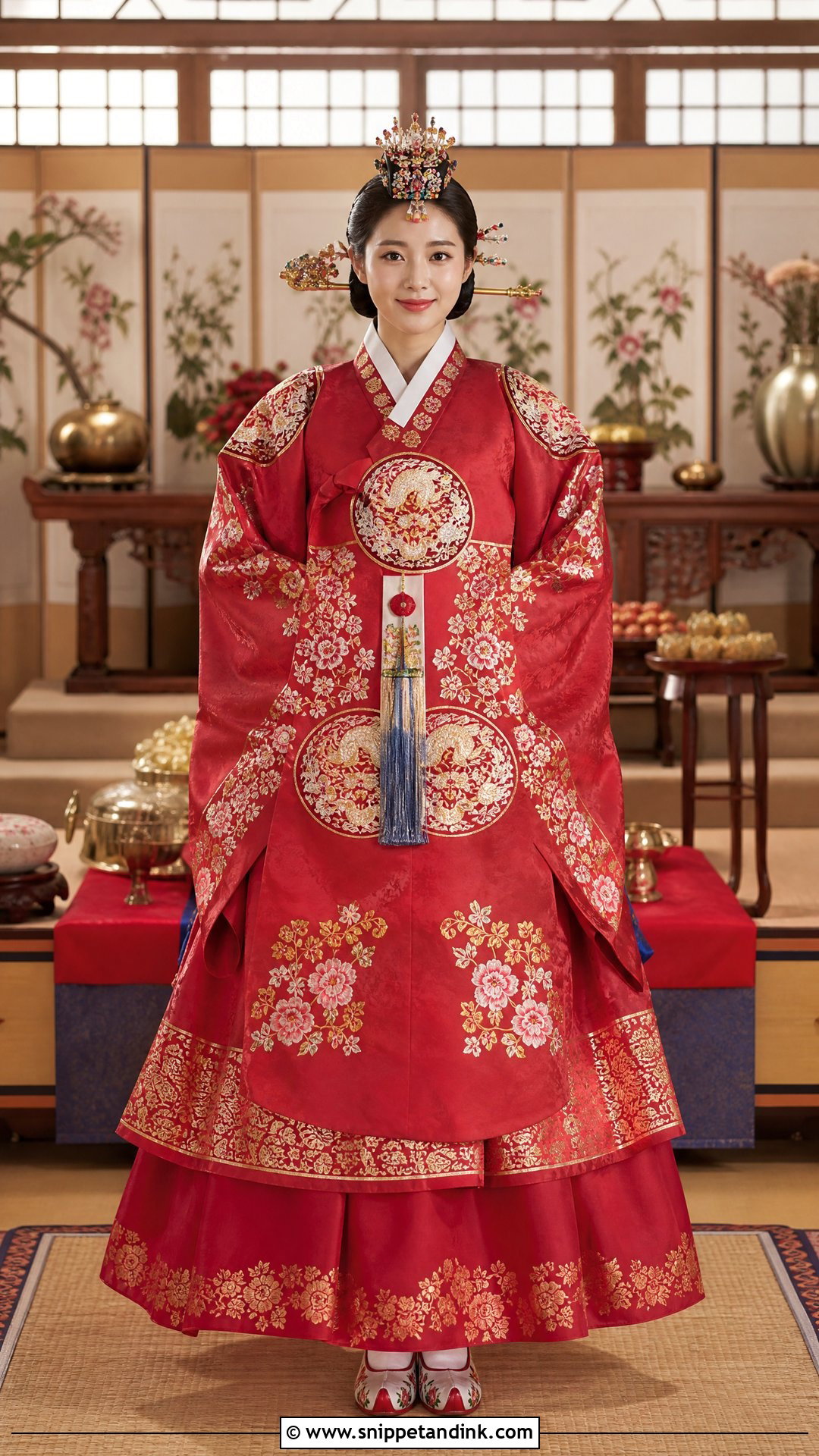
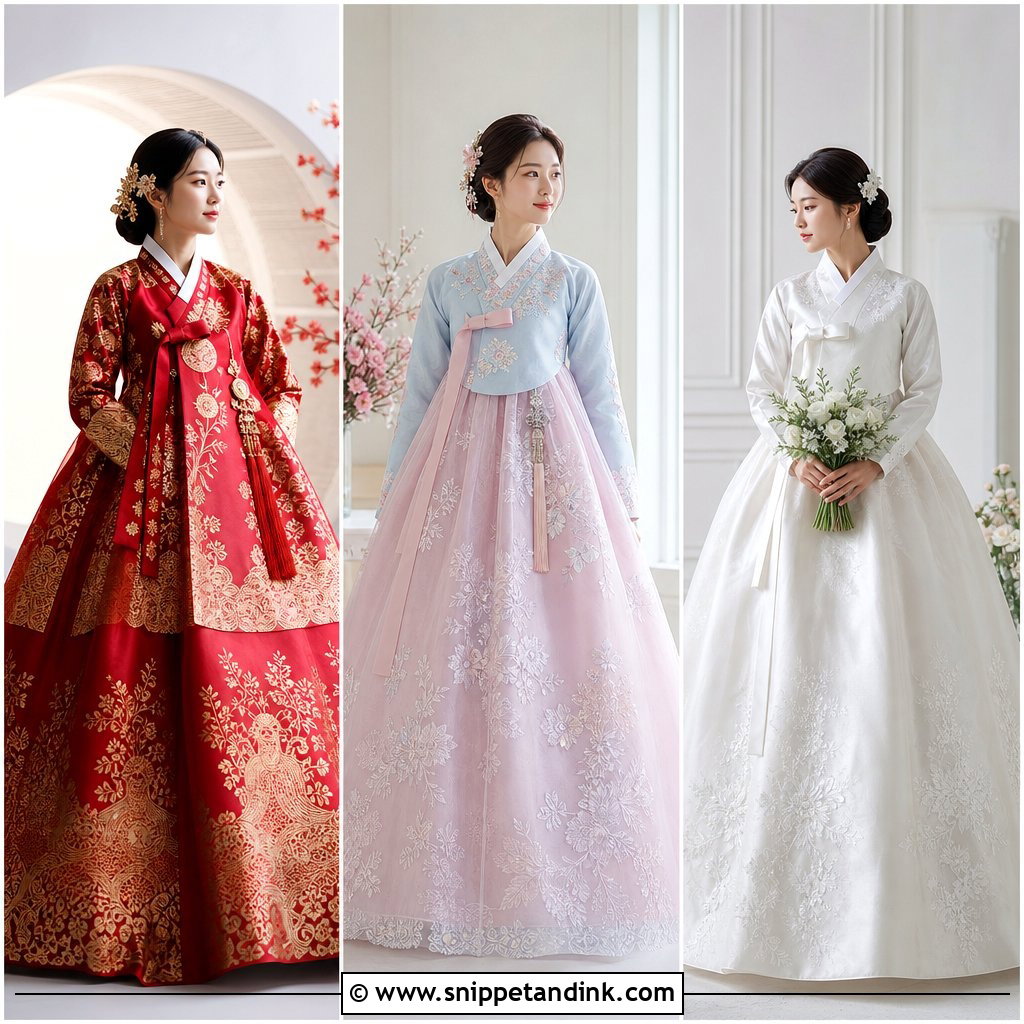
Red skirt, green jacket: that pairing is the traditional bridal combination, and red still carries the strongest sense of celebration. A full red chima, a fitted jeogori in green or yellow, and an embroidered hwarot over the top make the complete ceremonial outfit. Flowers, birds and decorative borders on the robe each carry wishes for the marriage. A jokduri, ornamental pins and a low braided bun finish the hair, with white beoseon socks and embroidered silk shoes. The thing brides underestimate is weight; a full hwarot over layered silk is heavy, so plan for it during the paebaek rather than all day.
2. White Korean Wedding Hanbok Gown
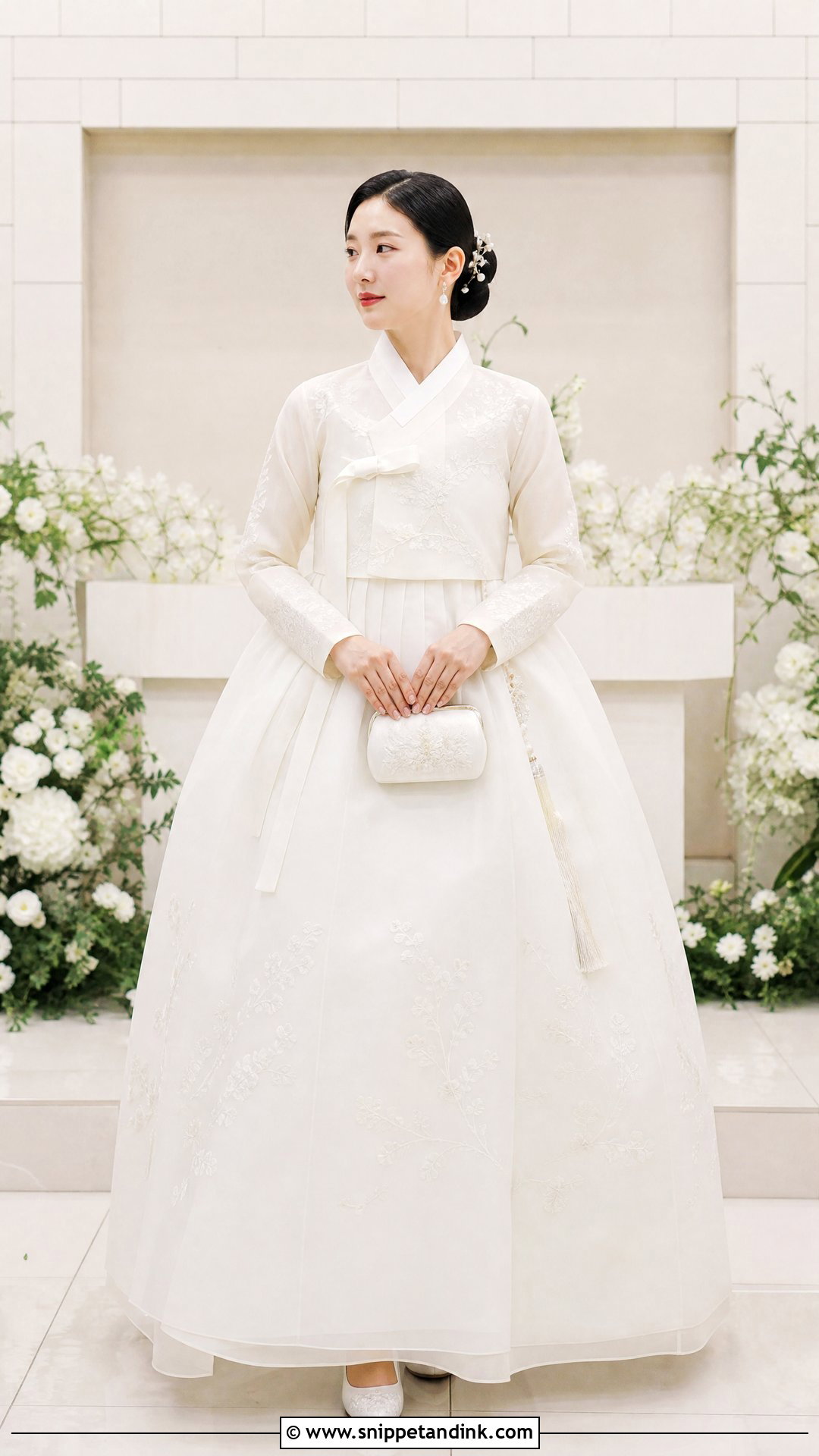
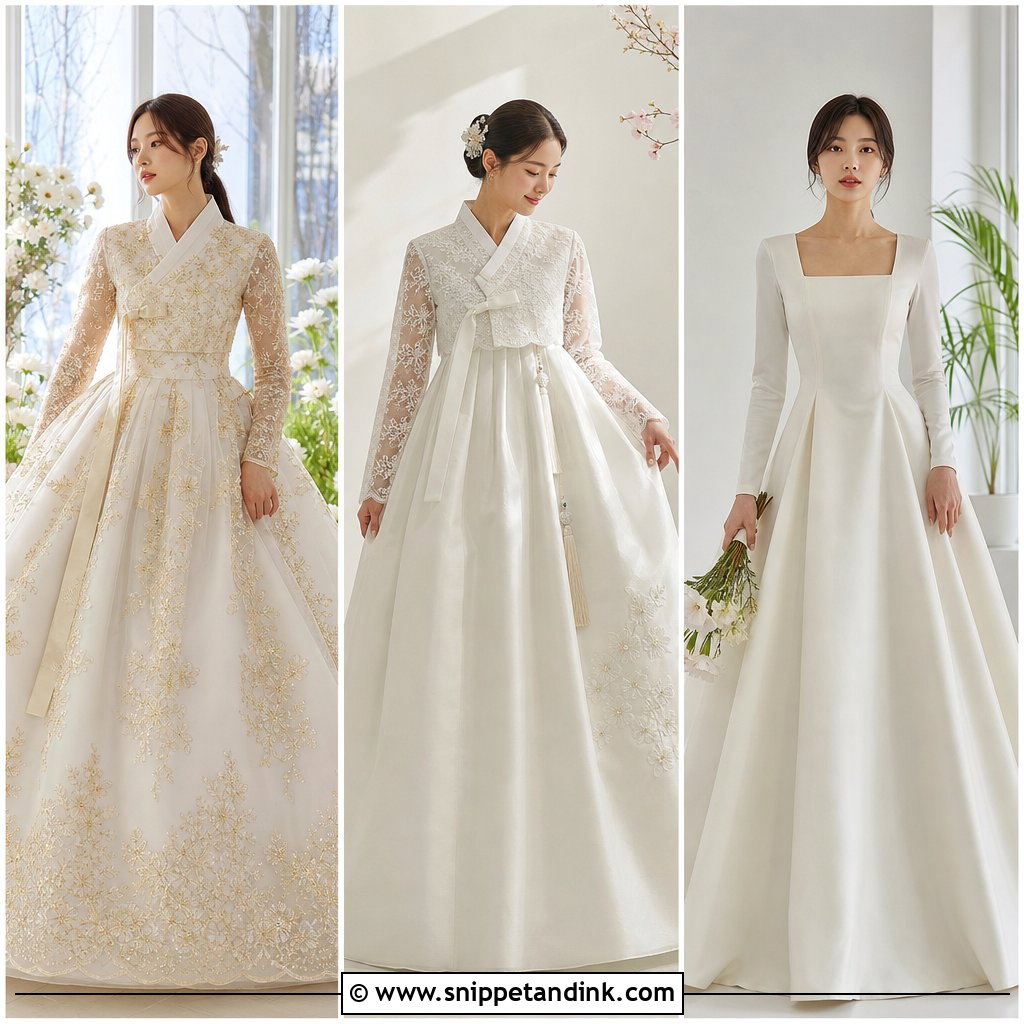
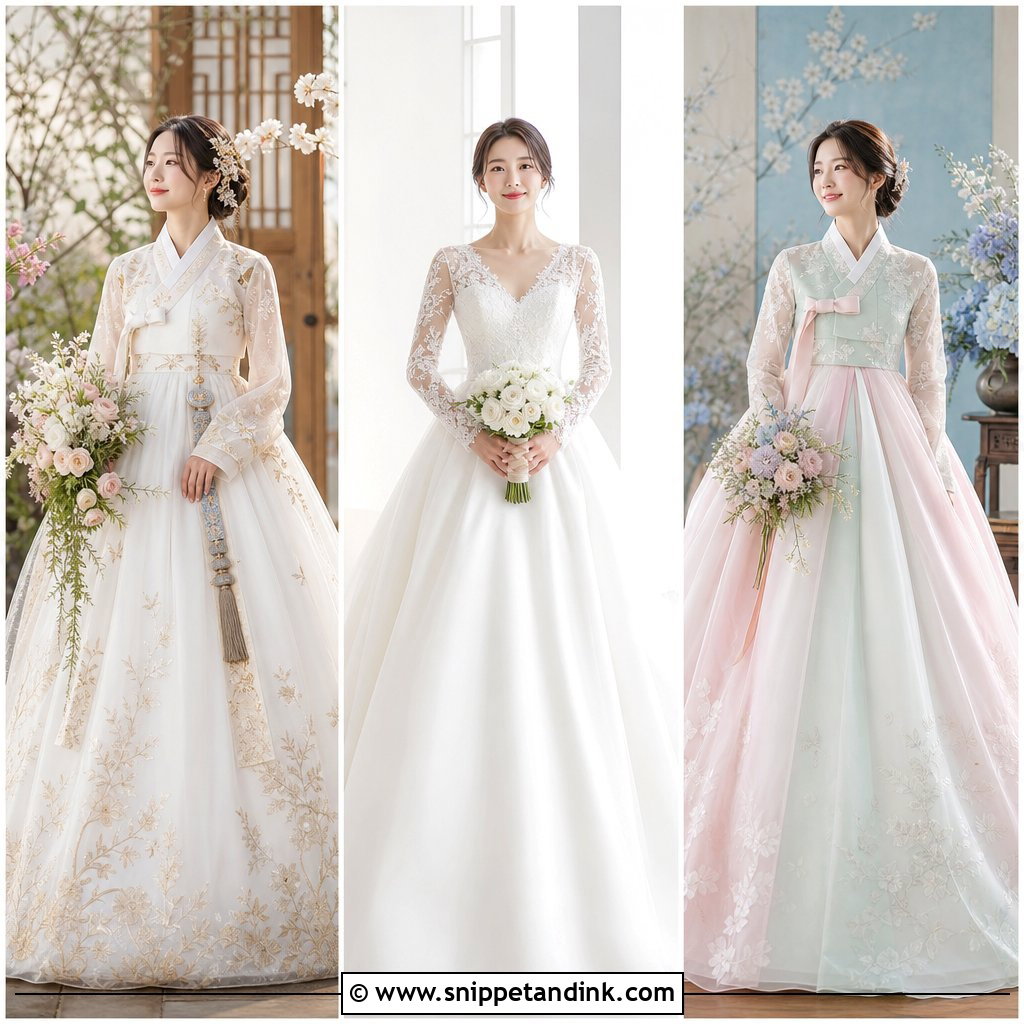
A white hanbok keeps the traditional shape and swaps in the Western bridal palette. A white silk jeogori over a full ivory chima falling from a high waist is the clean version. Embroidery along the collar, cuffs and hem adds depth, and pearls or pale gold thread add a quiet richness. Two whites in one outfit rarely match perfectly, so I lay the jacket and skirt side by side in daylight before the final order. Ivory embroidered shoes, a sleek low bun with pearl pins and rosy makeup complete it.
3. Hwarot Korean Wedding Dress Gown
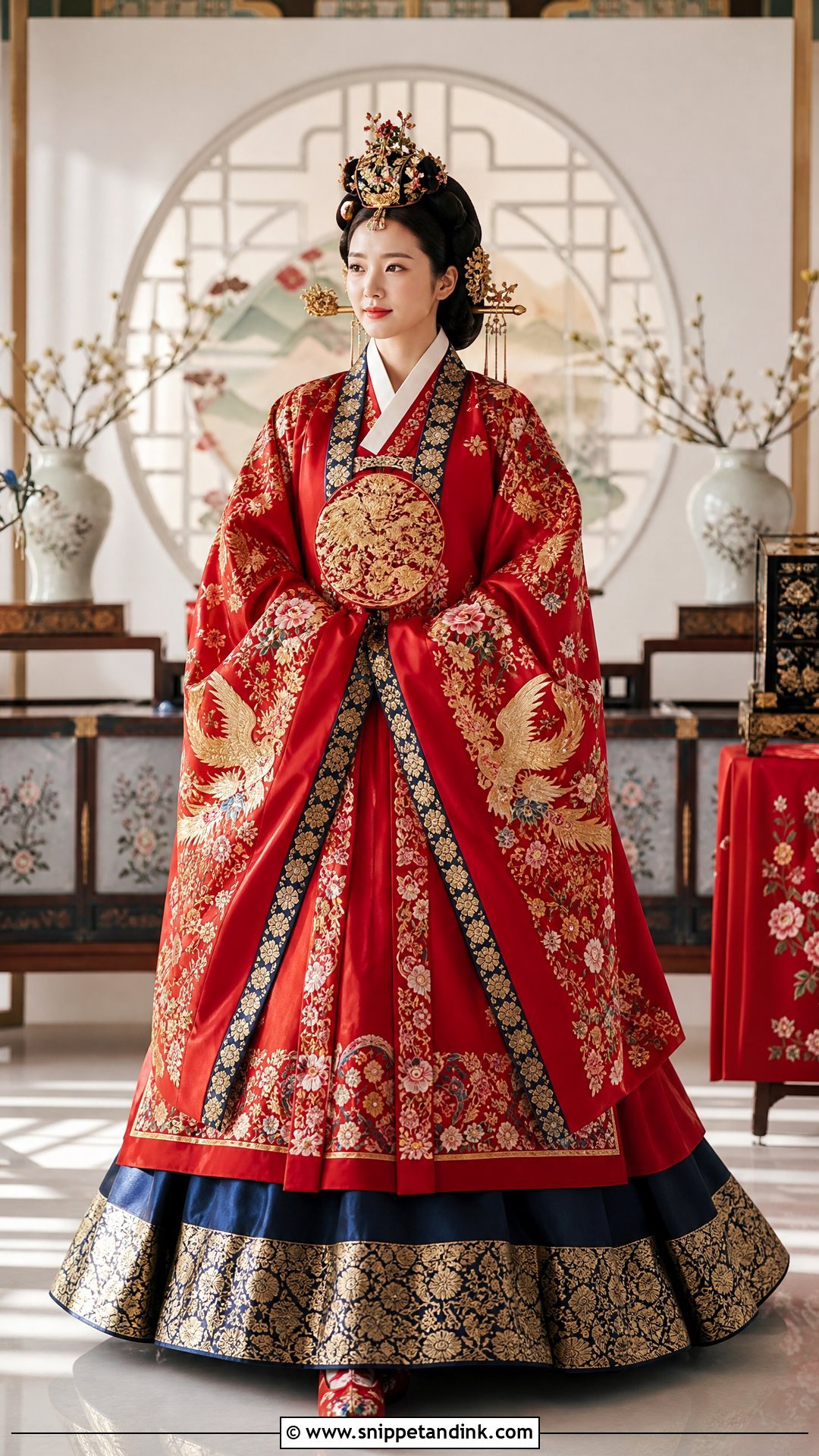
The hwarot is a long, wide-sleeved red robe covered in symbolic embroidery, once reserved for royal women and later worn by brides on their wedding day. Layer it over a jeogori and a full chima so the outfit keeps its proper shape underneath. A jokduri or floral hwagwan crown balances the height of the robe, and a polished bun keeps the styling formal. Embroidered silk shoes should pick up the robe’s red, blue, green and gold. Jewelry stays minimal: small gold earrings at most. Lift the long sleeves with both hands when you bow, or they sweep the floor.
4. Wonsam Korean Wedding Dress Gown
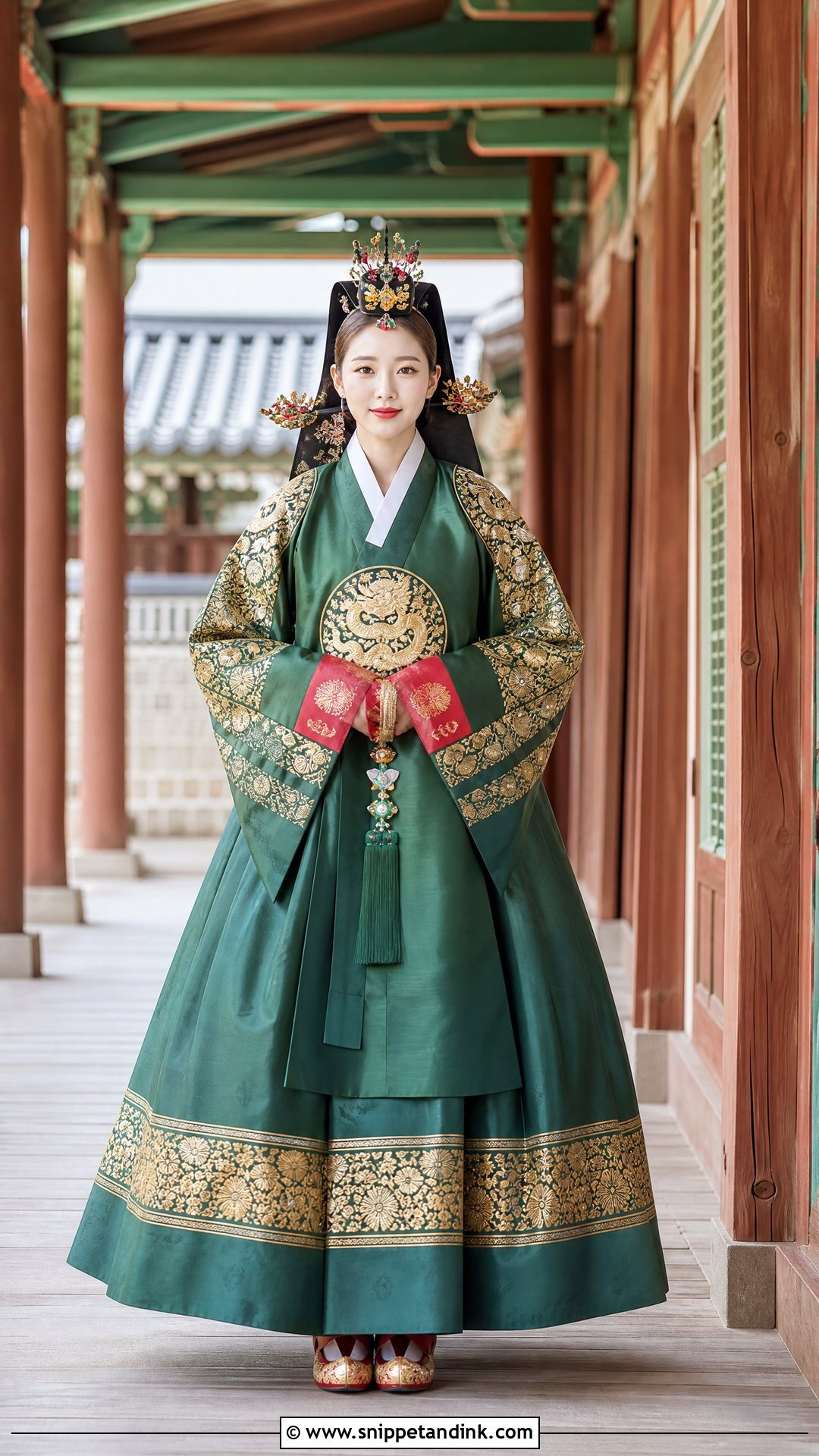
The wonsam has a structured front and sleeves banded in contrasting color, and a wonsam Korean wedding dress gown looks formal from every side. Green is the classic color, with red or soft ivory as alternatives, finished with gold embroidery. Worn over a full chima and fitted jeogori, it builds the traditional rounded silhouette. Style it with a jokduri, a binyeo hairpin through a smooth center-parted bun, and red or ivory silk shoes. Keep makeup natural with a soft coral lip. Wonsam are usually rented for the day, and the rental house should dress you, since the sleeves and front ties have a set order.
5. Modern White Korean Hanbok Wedding Gown
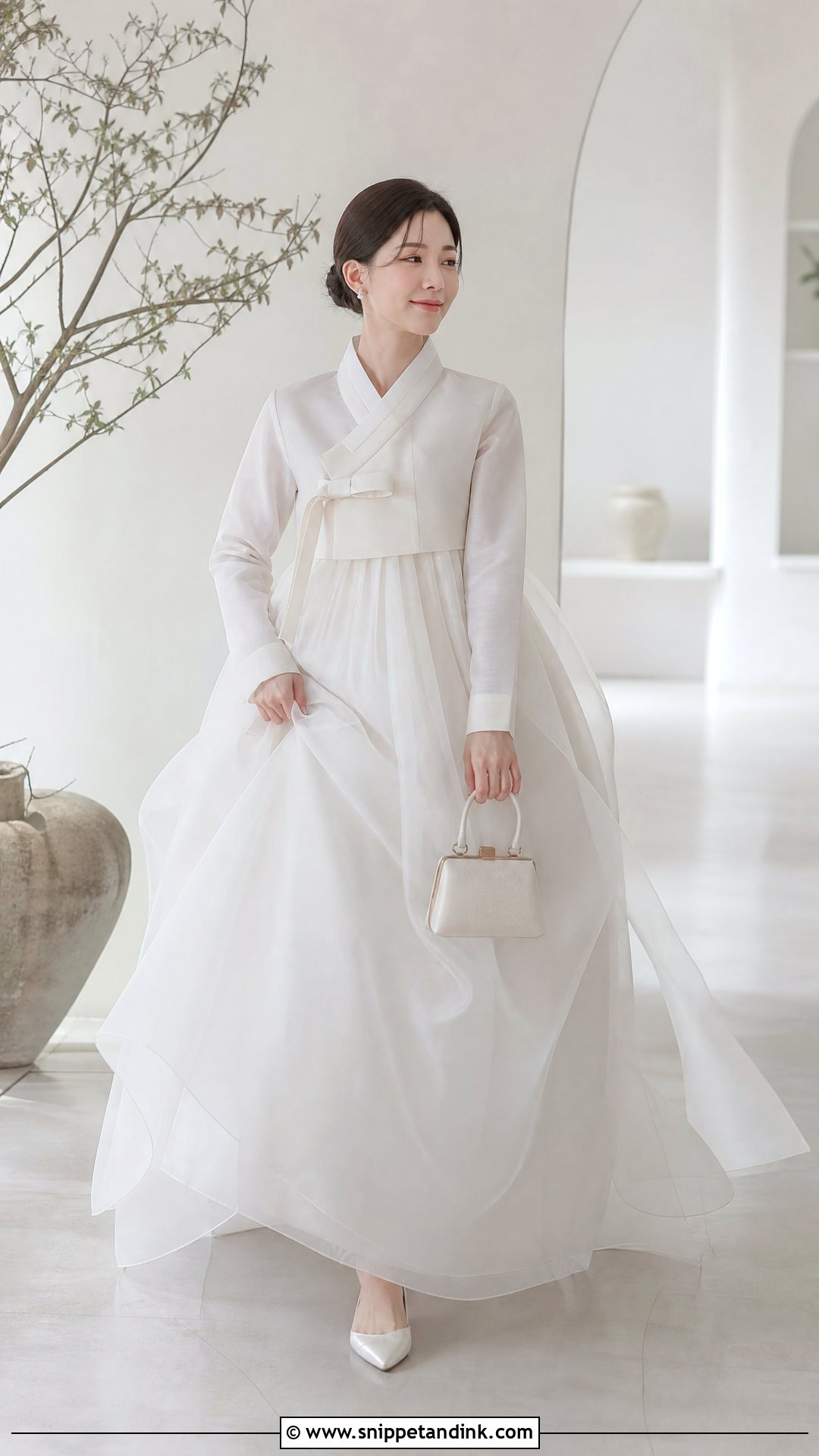
A modern white hanbok strips the form back. A streamlined jeogori with a gently curved collar, a floor-length chima in silk, satin or organza, tonal florals or pearl buttons instead of colored embroidery. A sheer outer layer adds movement over the clean shape. Organza chima skirts are the airiest, but they crease sharply in a car, so travel with the skirt laid across your lap rather than sat on. Pointed ivory flats, pearl drops and a mother-of-pearl pin in a low knot keep it minimal for a modern ceremony or an understated paebaek.
6. Korean Hanbok Wedding Gown With Gold Embroidery
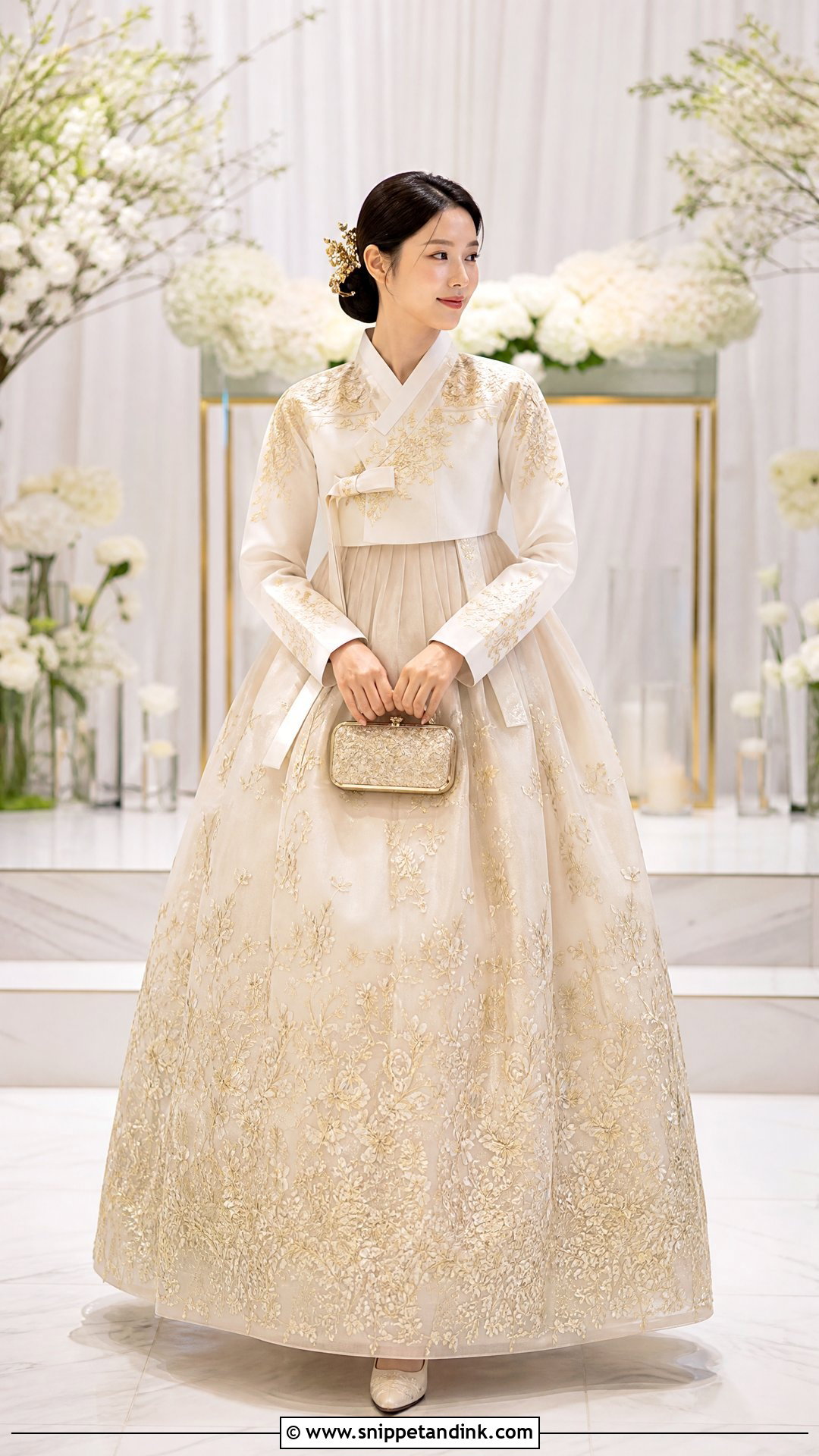
Gold thread warms an ivory or champagne hanbok without adding color. I’d keep the embroidery to the collar, sleeves and goreum ties, with motifs such as cranes, butterflies or clouds, so the gold frames the face rather than covering the body. Champagne silk shoes and a small gold-framed clutch coordinate with it. One sculptural gold hairpin in a low bun works better than a jeweled crown, which competes with the collar. Bronze eyeshadow and a muted rose lip suit the warm tone. Neutral indoor venues show metallic thread best.
7. Pink Korean Hanbok Wedding Dress Gown
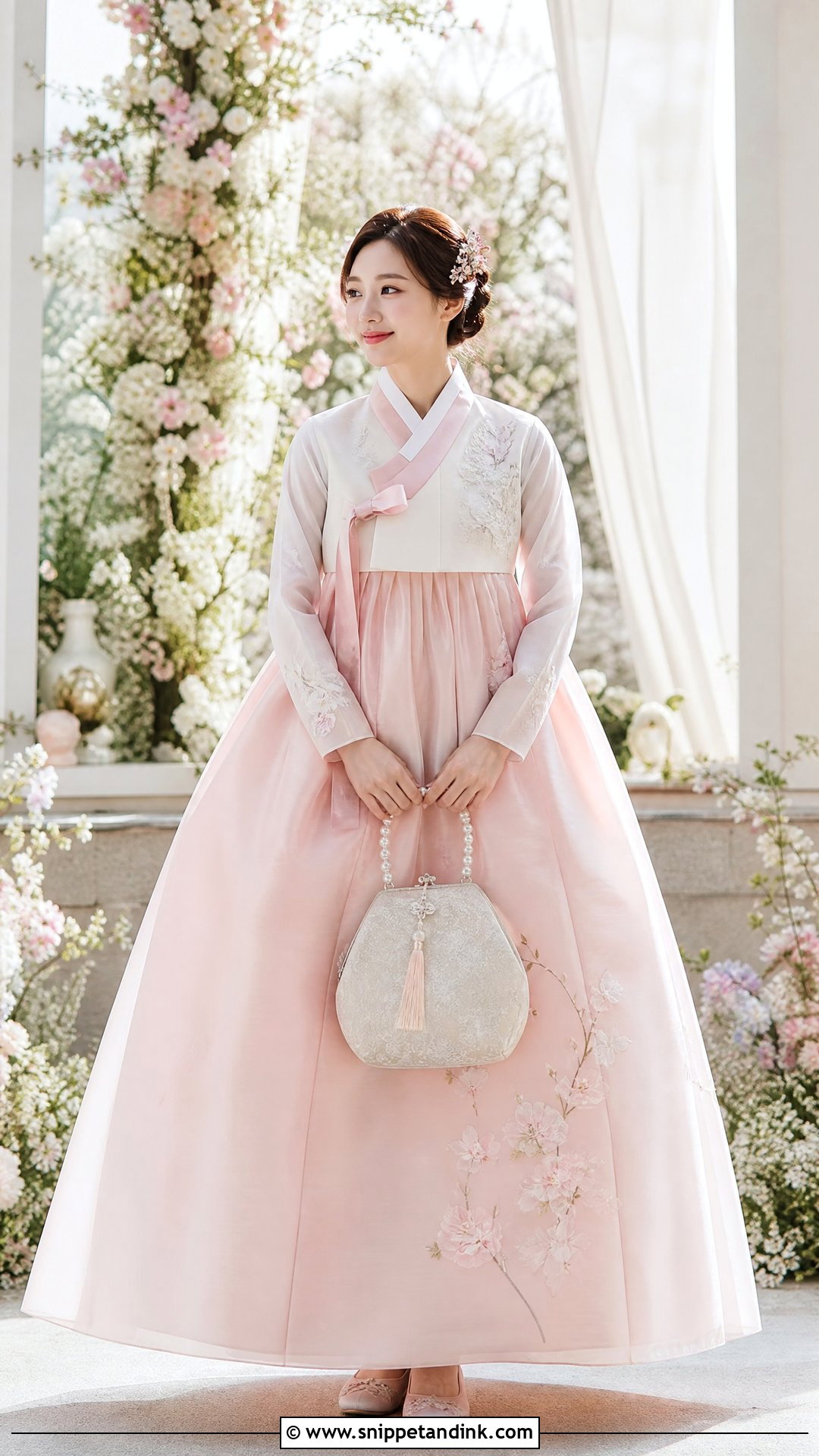
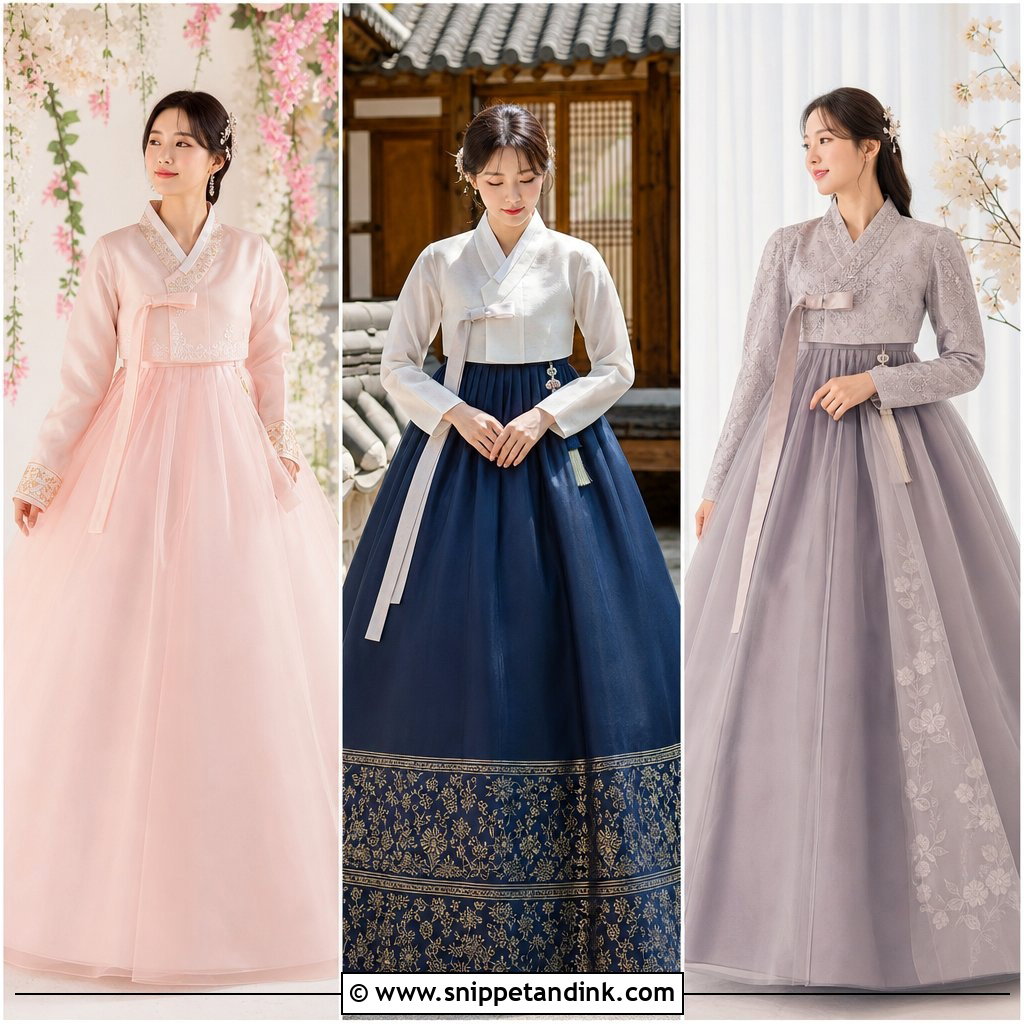
Blush pink softens a hanbok without making it look childish, provided the pink is pale and the volume of the chima carries it. An ivory jeogori trimmed in matching pink keeps the color from overwhelming. Tonal floral embroidery and translucent sleeves make it feel ceremonial. Remember that pink is the shade traditionally worn by the bride’s mother, so if she’s wearing pink too, compare fabrics before you both order. Blush flats, a pearl-handled bag and blossom pins in a low bun suit a spring wedding or a reception change.
8. Blue Korean Hanbok Wedding Dress Gown
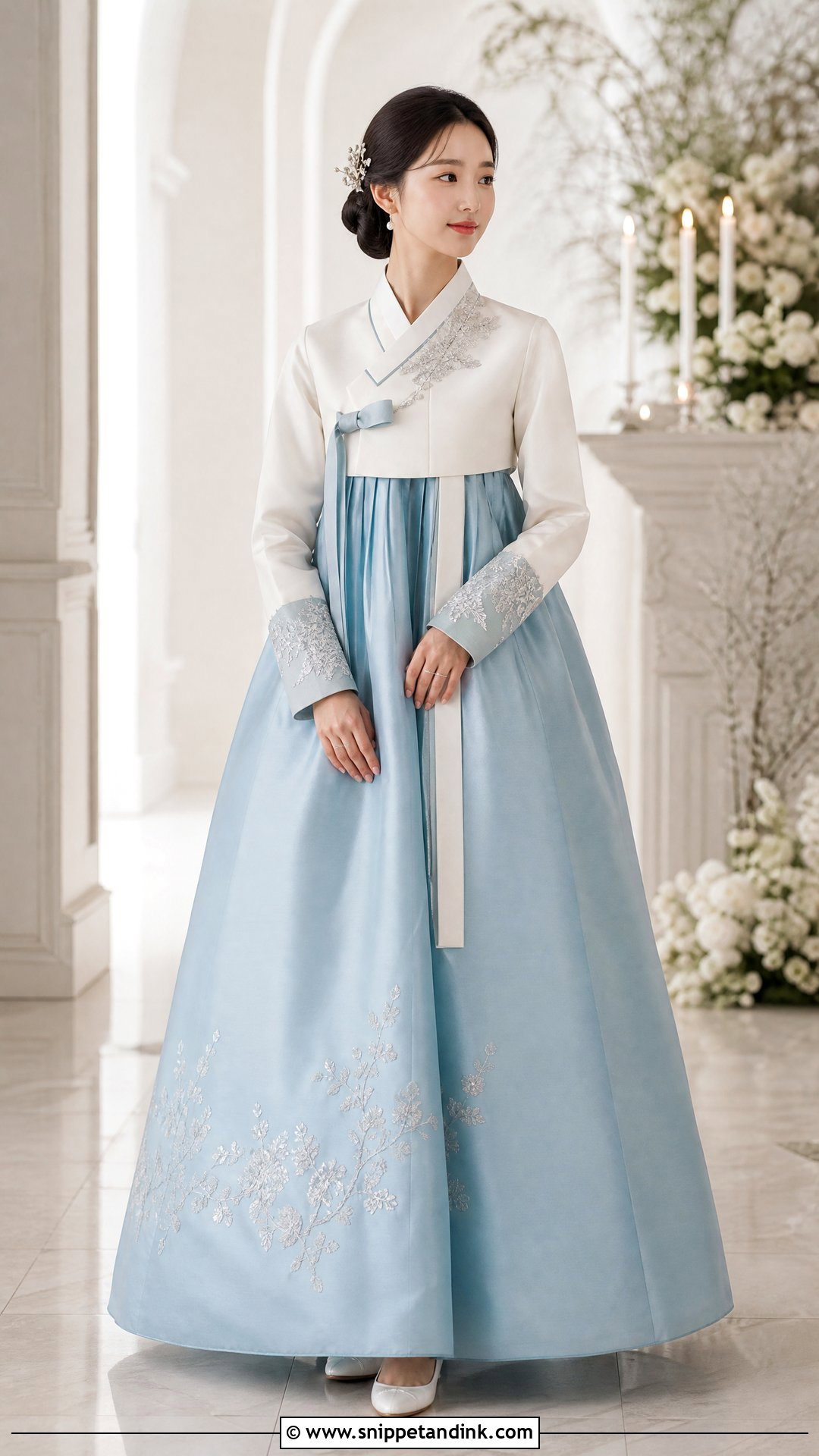
Powder blue or misty gray-blue gives a calm, cool palette. An ivory jeogori with blue piping and silver embroidery keeps it light, and a sheer blue robe over the top makes it more ceremonial. Pearl earrings, a silver pin and a pale blue embroidered pouch tie the accessories together; ivory flats stop it from becoming color-heavy. Blue is traditionally the groom’s mother’s color, so it’s worth checking with family before choosing it. Cool pink makeup suits it, and it looks especially refined in winter.
9. Pastel Korean Hanbok Wedding Dress Gown
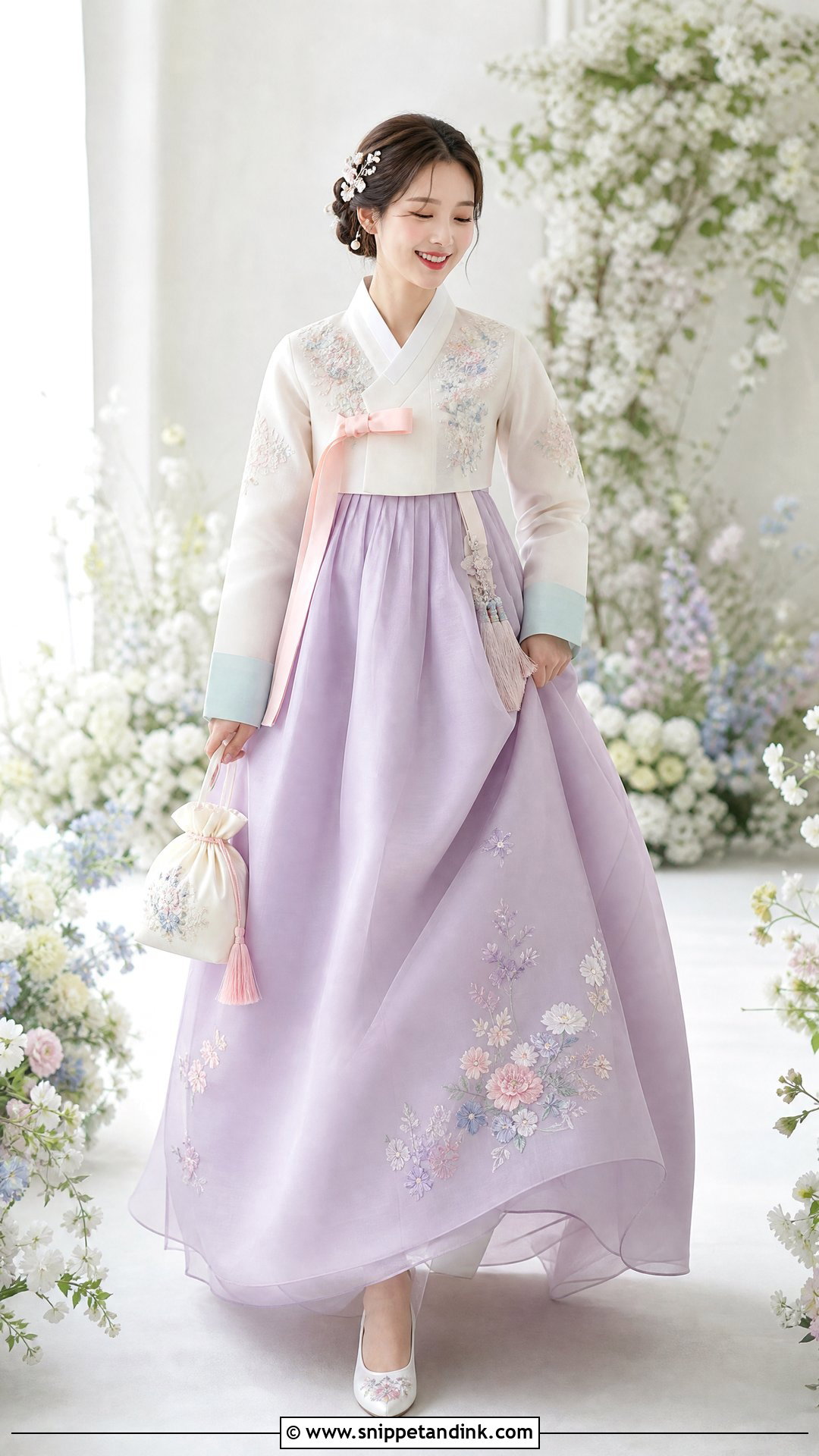
Pastel hanbok mix lavender, blush, mint and ivory, and the risk is a candy-shop effect. My rule is one main color for the chima, with the others confined to the cuffs, collar, ribbon and embroidery, so the combination looks planned. Add pearl hair ornaments, understated earrings and embroidered ivory shoes, with a small silk pouch for traditional portraits. A smooth, structured hairstyle contrasts nicely with the light fabric. It suits spring ceremonies and bright studio shoots.
10. Ivory Korean Hanbok Wedding Dress Gown
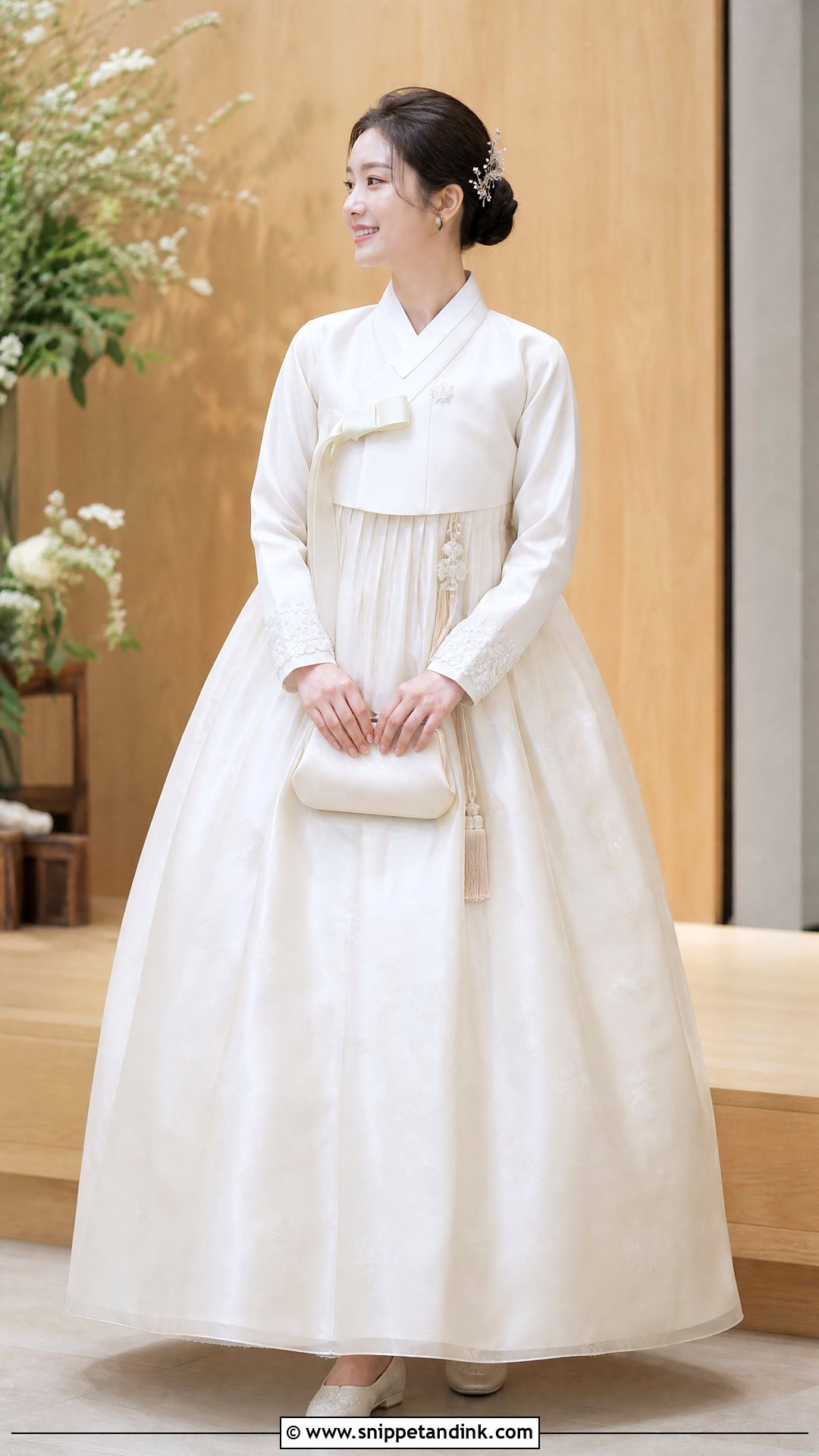
Ivory is warmer than bright white, and it suits most skin tones better close up. A silk chima with soft sheen and a structured jeogori with clean seams, a curved collar and tonal ties is the classic form. Cream lace cuffs or subtle embroidery add interest. Pearl studs, ivory silk flats and a small satin clutch keep it simple; a center-parted low bun lets a mother-of-pearl pin stand out. Neutral eyes and a muted peach lip suit it, and it looks right in any season and against pale wood or greenery.
11. Lace Korean Hanbok Wedding Gown
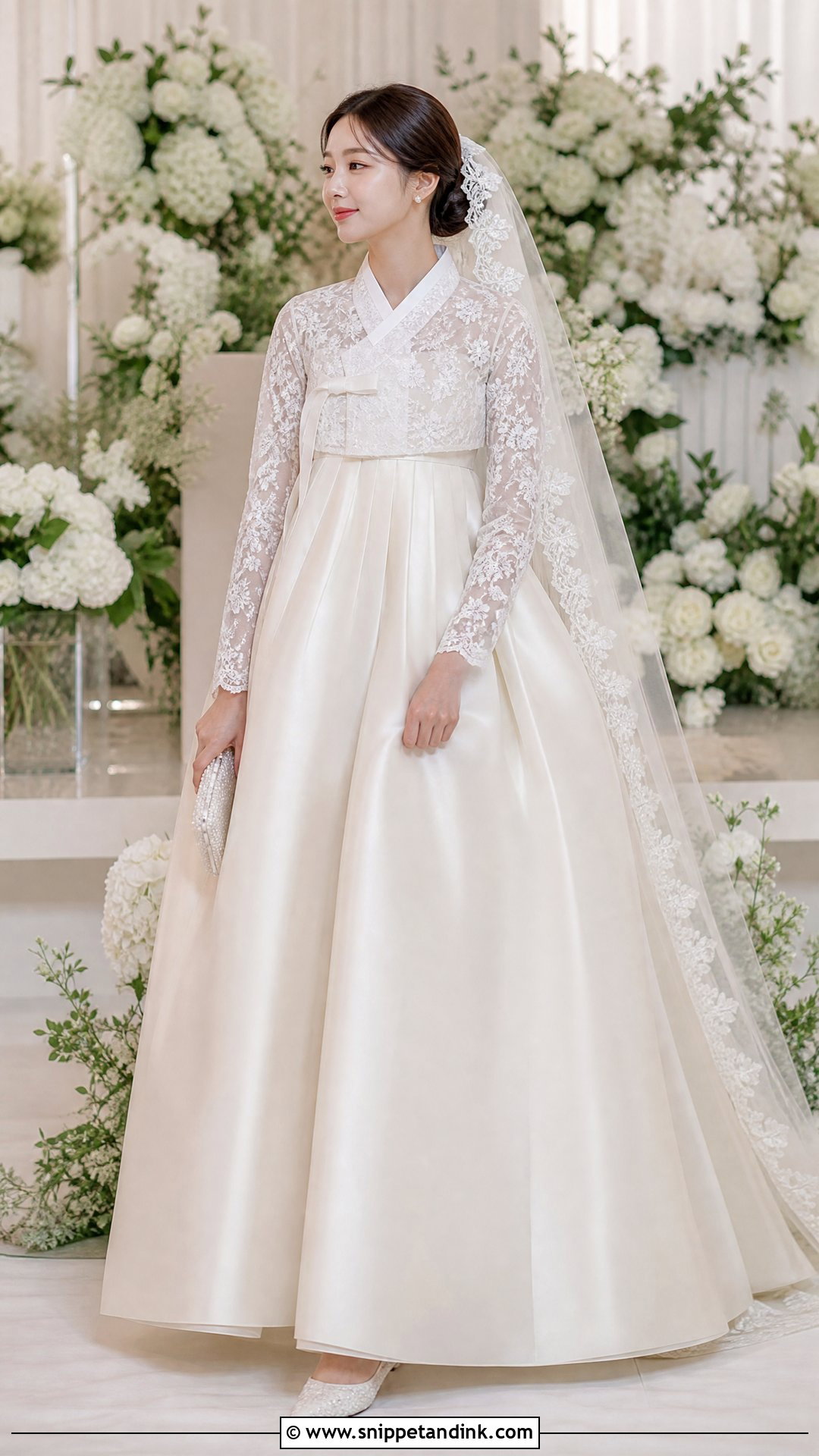
Lace on a jeogori adds texture while the hanbok shape stays recognizable. The jacket body should be lined so only the sleeves show skin through the pattern. Balance the lace top with a smooth ivory chima in silk or matte satin; lace on both pieces looks heavy. A narrow ribbon at the chest keeps the traditional construction visible. Pointed ivory flats, small pearls and a slim clutch suit it, and a lace-edged veil on a low chignon ties Korean and Western influences together.
12. Sheer Sleeve Korean Hanbok Wedding Gown
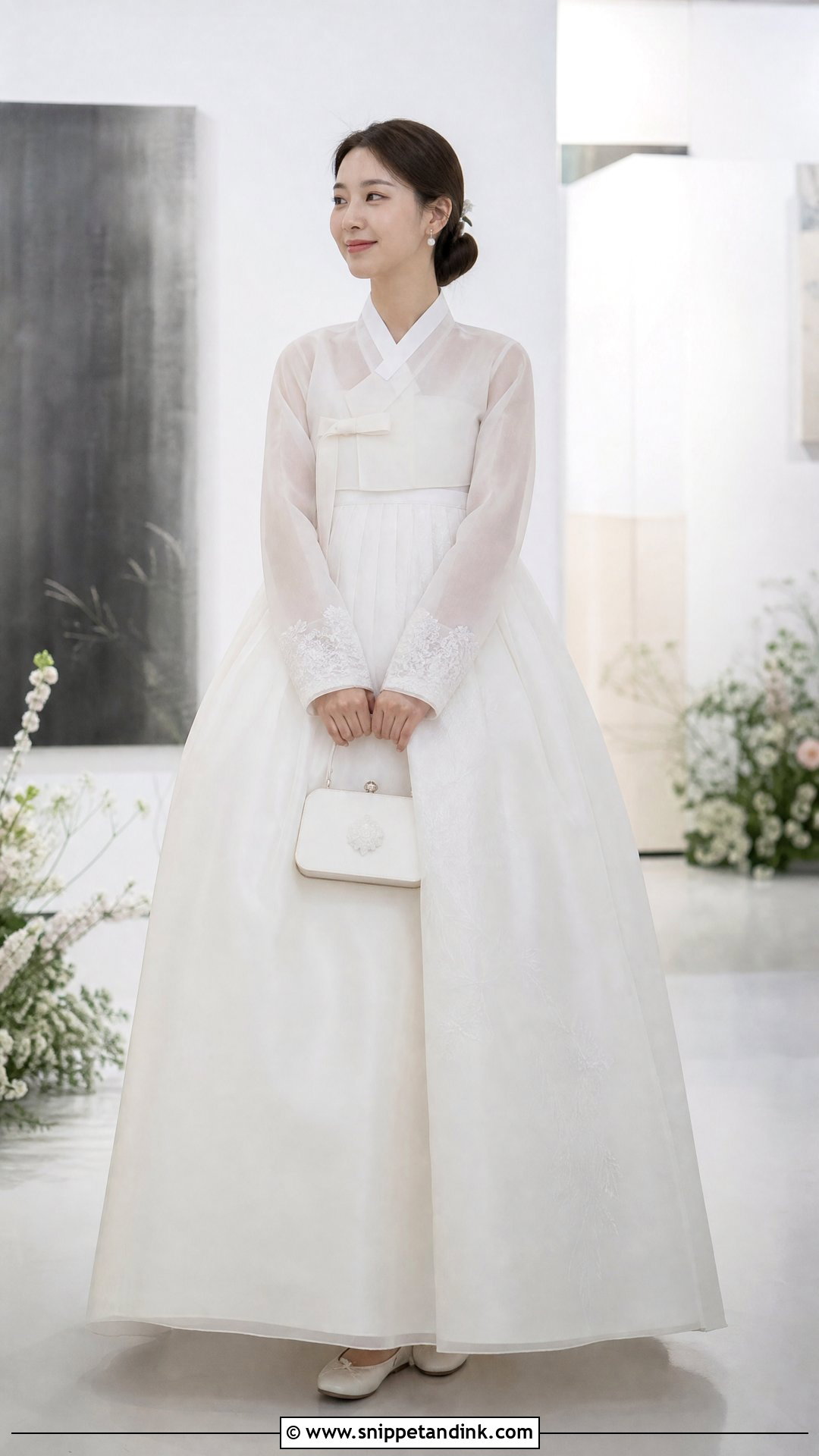
Sheer organza sleeves lighten a jeogori without changing its shape. Opaque cuffs give the sleeve a clean finish, and a structured body and curved neckline keep it formal. A full white or pastel chima provides movement and coverage. Keep embroidery on sheer sleeves sparse, because stitching on organza shows its threads from inside. Pearl drops, ivory ballet flats and a single floral pin in a polished bun complete it, with subtle eyeliner and a berry-pink lip. It suits a minimalist venue.
13. Pearl Korean Hanbok Wedding Dress Gown
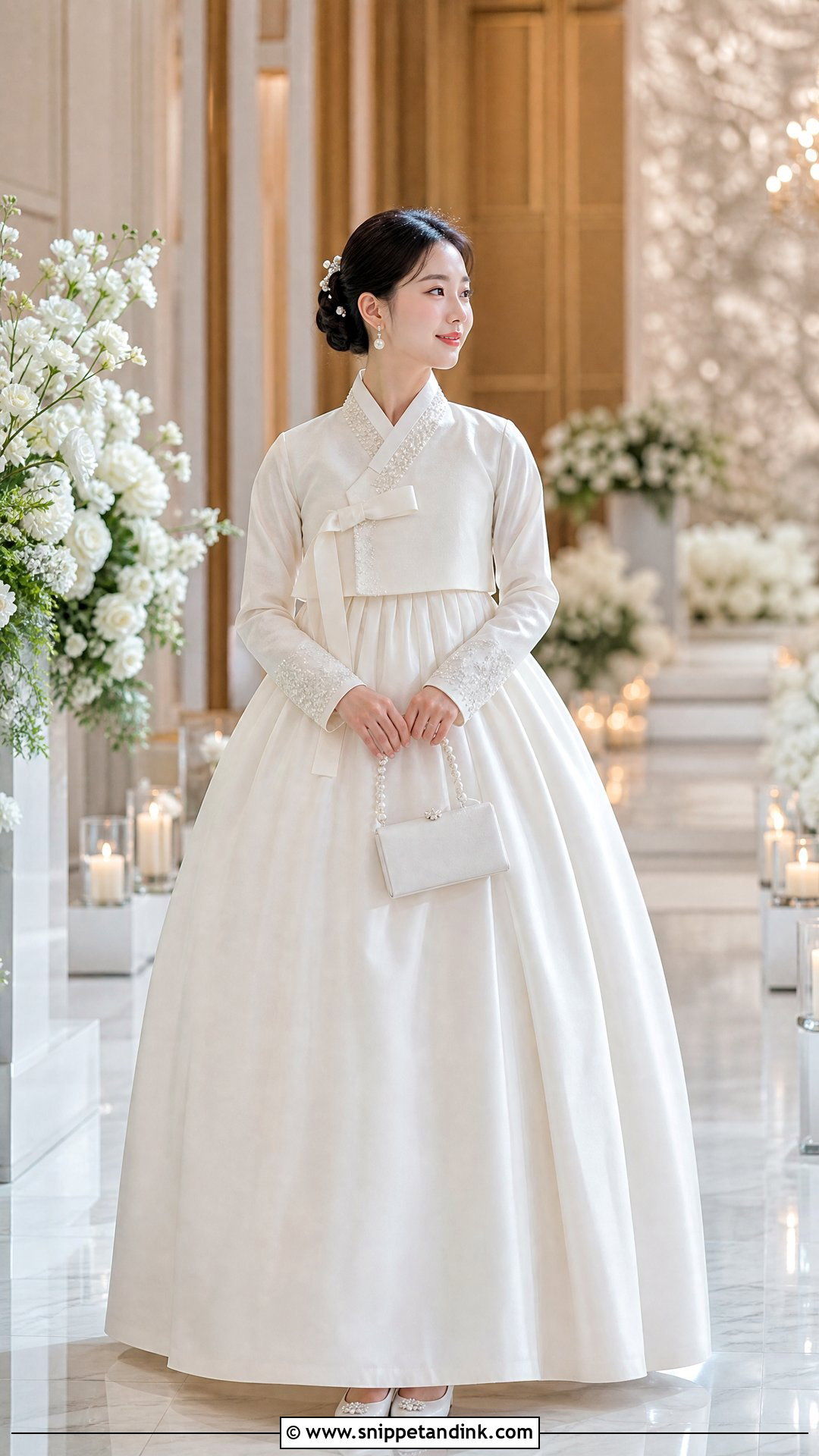
Pearls give a simple hanbok texture without color. Scatter them around the jeogori neckline, shoulders or cuffs over a white satin chima, and keep the amount controlled; heavy beading pulls fine silk out of shape. Pearl earrings, a pearl-handled clutch and satin flats repeat the theme. Instead of a crown, several small pearl pins around a low braided bun. Fresh makeup with luminous skin, fine eyeliner and a rosy lip suits it. Hotel ceremonies and portraits show pearls well, since they catch soft light.
14. Floral Korean Hanbok Wedding Dress Gown
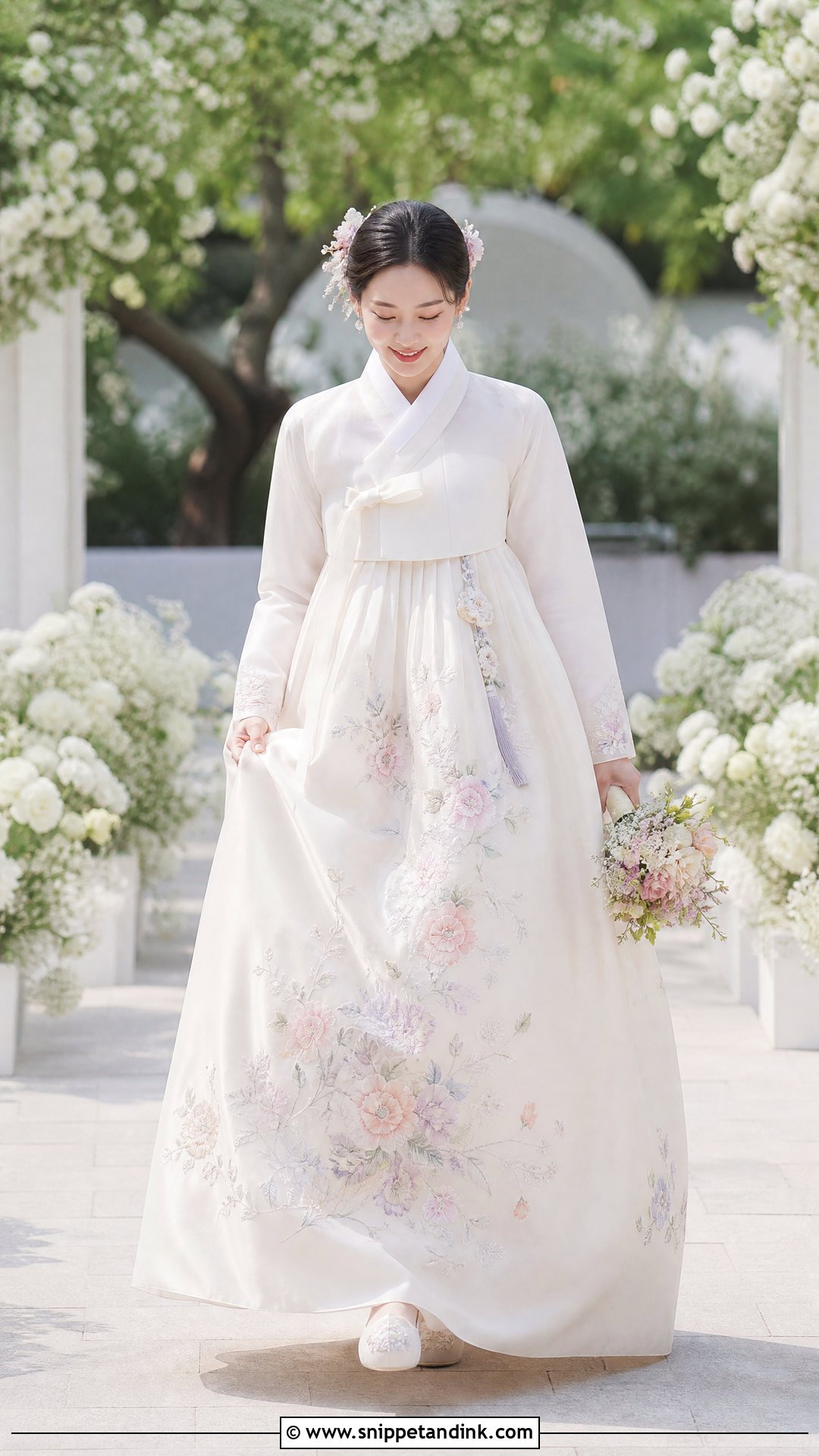
Floral embroidery near the hem of an ivory chima, with one repeated flower at the jeogori collar or cuffs, brings in the garden without crowding the shape. Soft threads in blush, blue, lavender and pale green keep color gentle. Ivory embroidered shoes and a compact bouquet whose flowers echo the stitched ones tie it together, and small floral pins in a low bun keep the theme. A necklace has nowhere to sit on a jeogori neckline, so delicate earrings are enough. Spring garden ceremonies suit it.
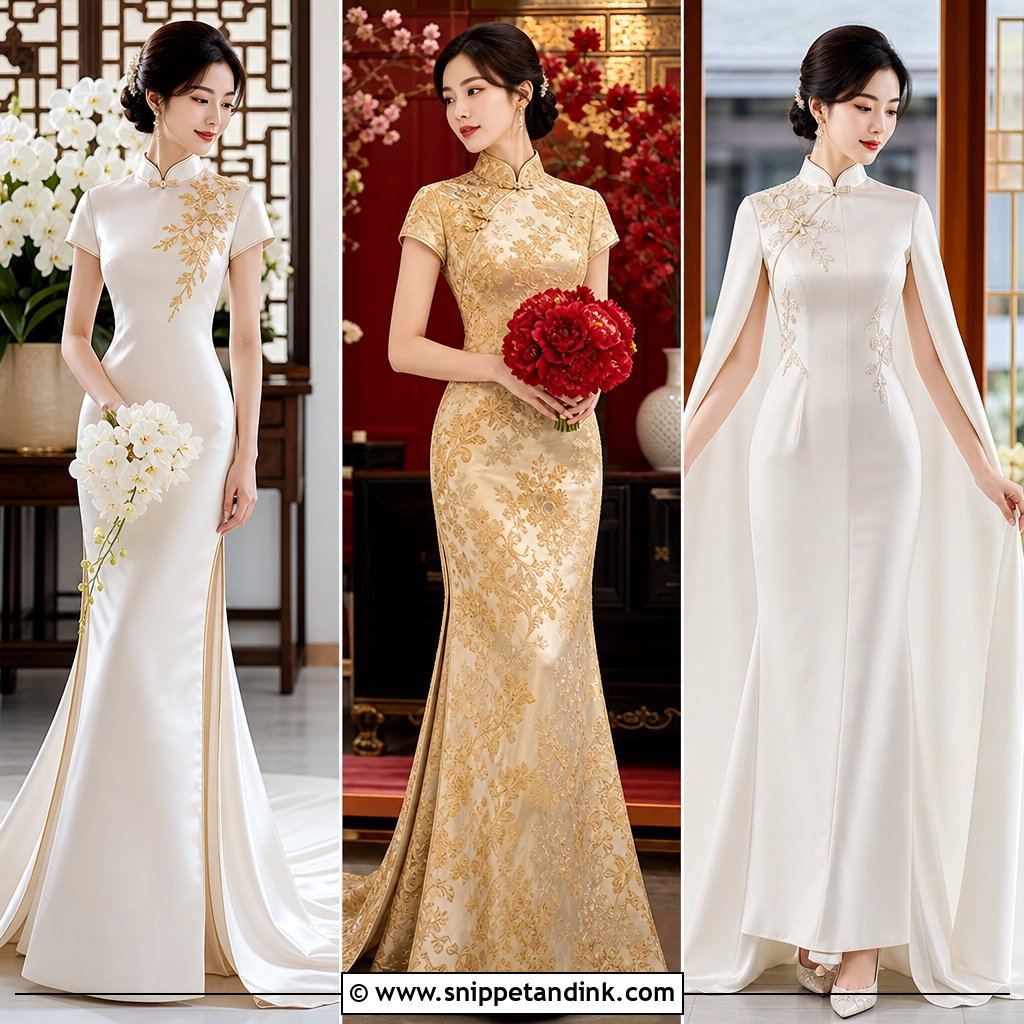
15. Korean Fusion Wedding Dress Gown
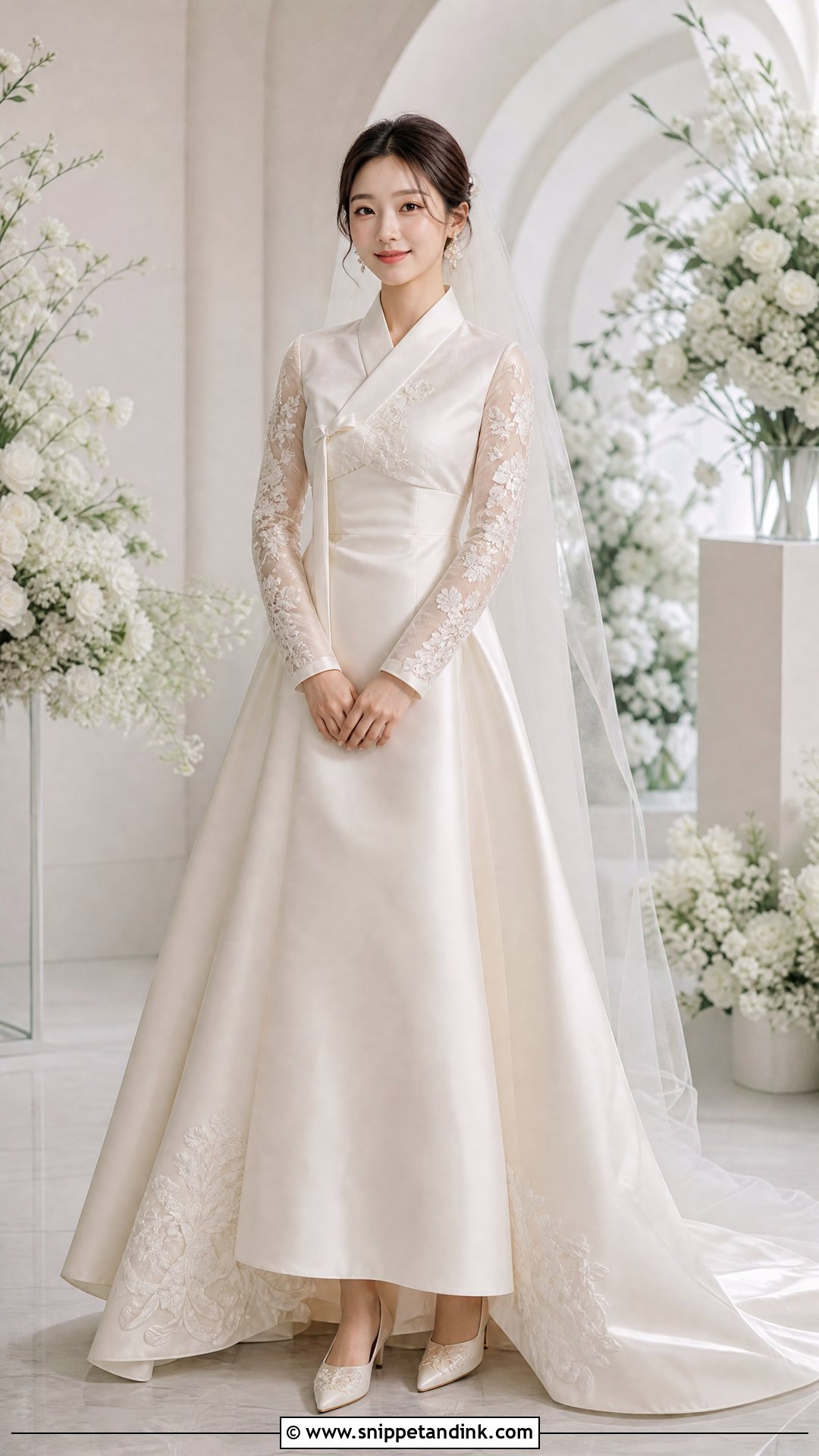
Torn between a Western gown and a hanbok? A Korean fusion wedding dress gown puts both in one outfit: a fitted bodice modeled on the jeogori, with a crossed neckline or ribbon closure, over a long A-line skirt with a gentle train. Silk, satin and organza keep it formal. The crossed neckline should follow the jeogori’s direction, left side over right, or Korean guests will notice. Embroidered ivory heels, pearl earrings and a sheer veil under a low bun complete it. Korean floral motifs along the sleeves or train nod to heritage, and it suits multicultural ceremonies where one gown stands for both families.
16. Korean Wedding Ball Gown
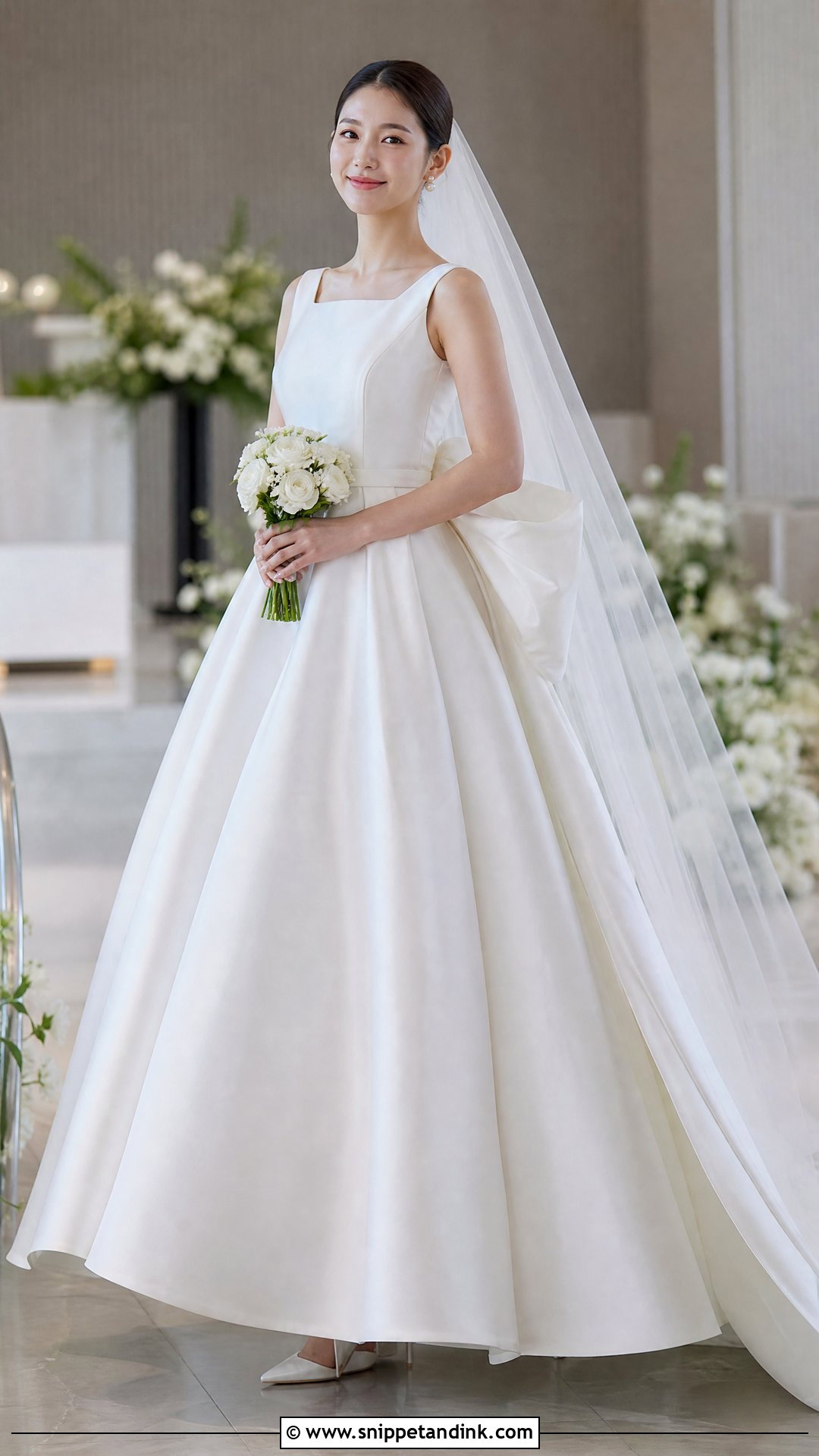
Korean ball gowns trade beading for structure. A satin bodice with a square or softly curved neckline holds up a full skirt that keeps its shape, usually with a crinoline or layered tulle underneath. A detachable bow at the back adds drama with no sparkle. Pointed white pumps, pearl drops and a cathedral veil suit a ballroom or hotel. Ball gowns need room, so check the width of the aisle and of any doors you’ll pass through; a full skirt can be wider than you’d expect.
17. Korean Satin A-Line Wedding Gown
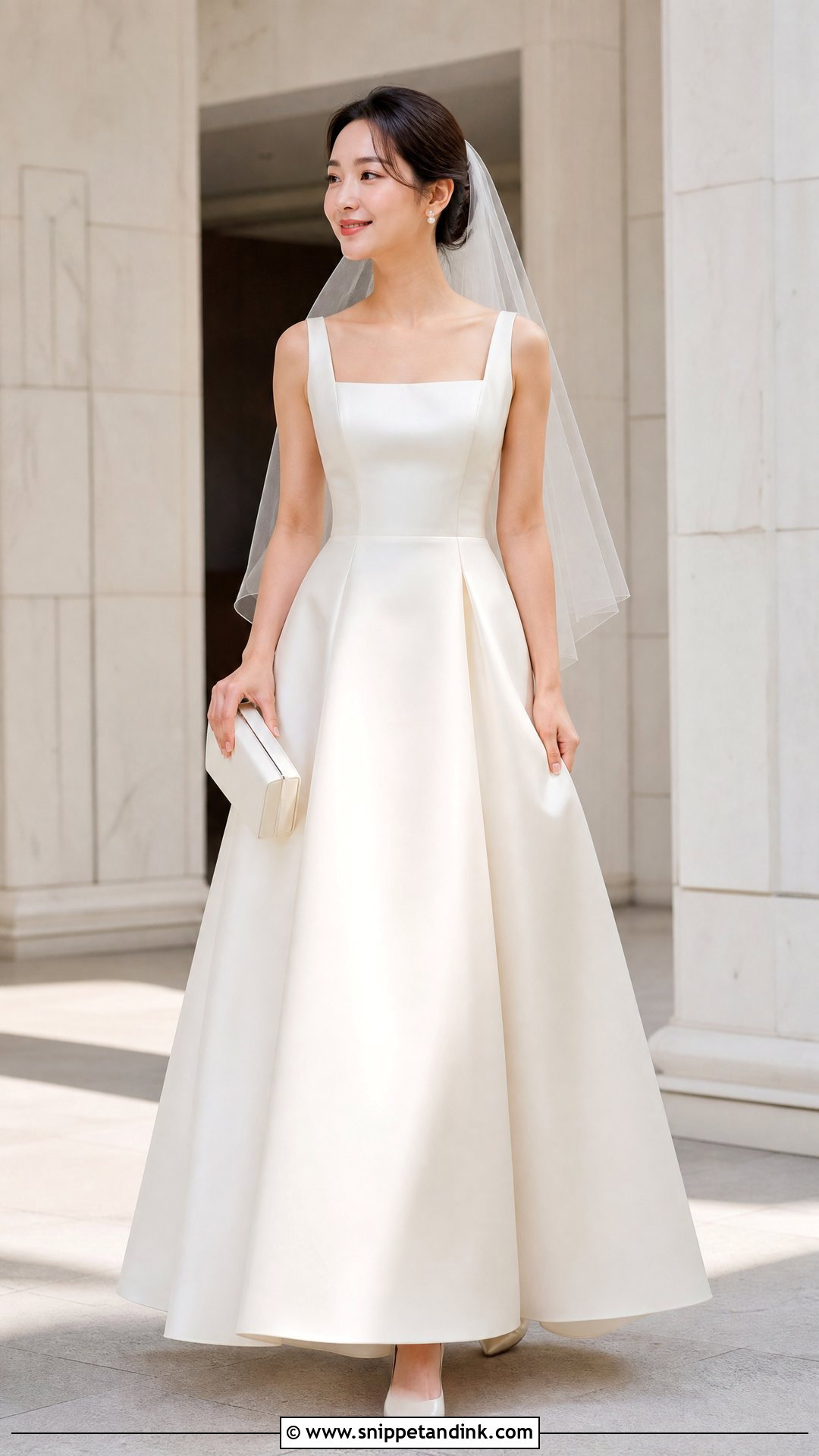
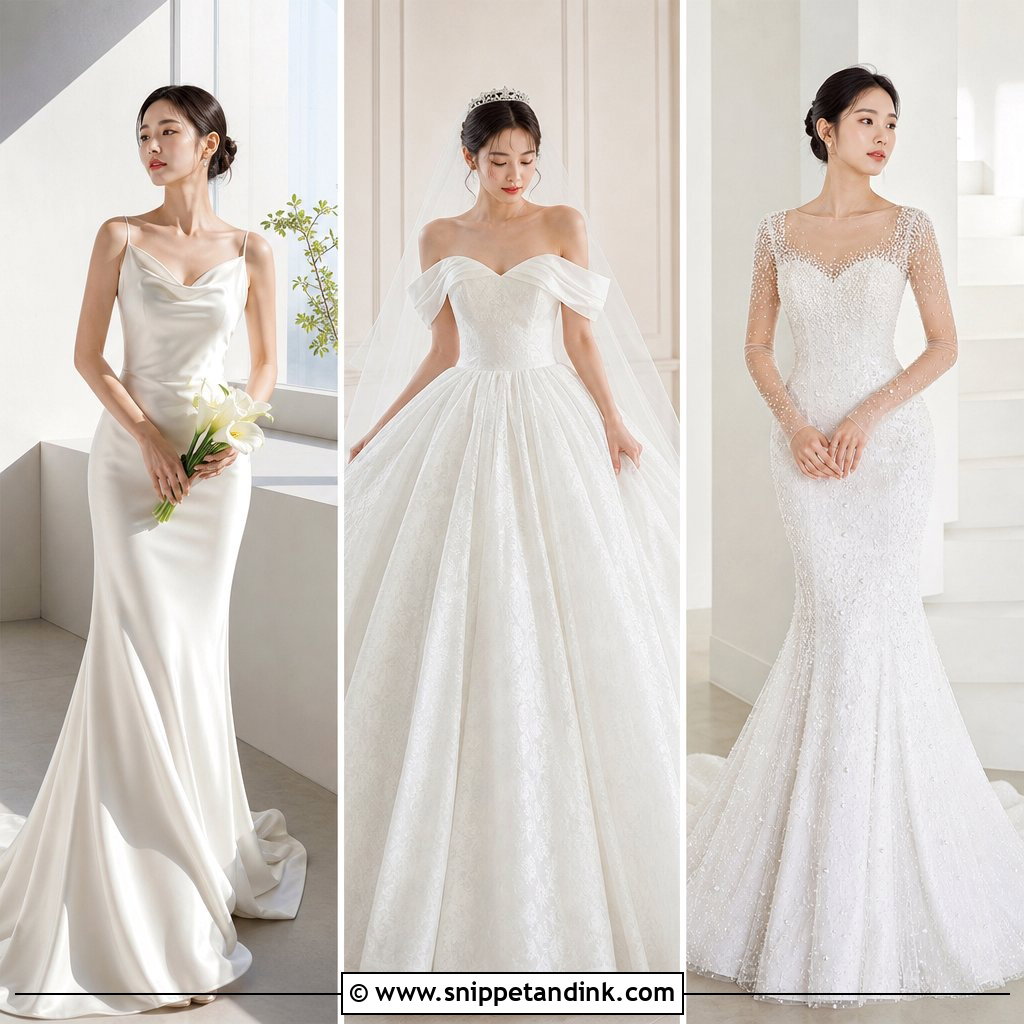
Satin and an A-line shape: there’s very little to this one, which is precisely why the fit matters. A fitted waist, a V-neck or square neckline and a skirt falling gradually to the floor. Covered buttons down the back add interest. Satin pumps, pearl studs and a small structured clutch suit it, with a fingertip veil and a low bun or glossy waves behind the ears. Satin marks easily, so ask the bridal shop to wrap the gown in a breathable bag rather than plastic for transport. It suits city venues and quiet outdoor ceremonies alike.
18. Korean Long Sleeve Wedding Dress Gown
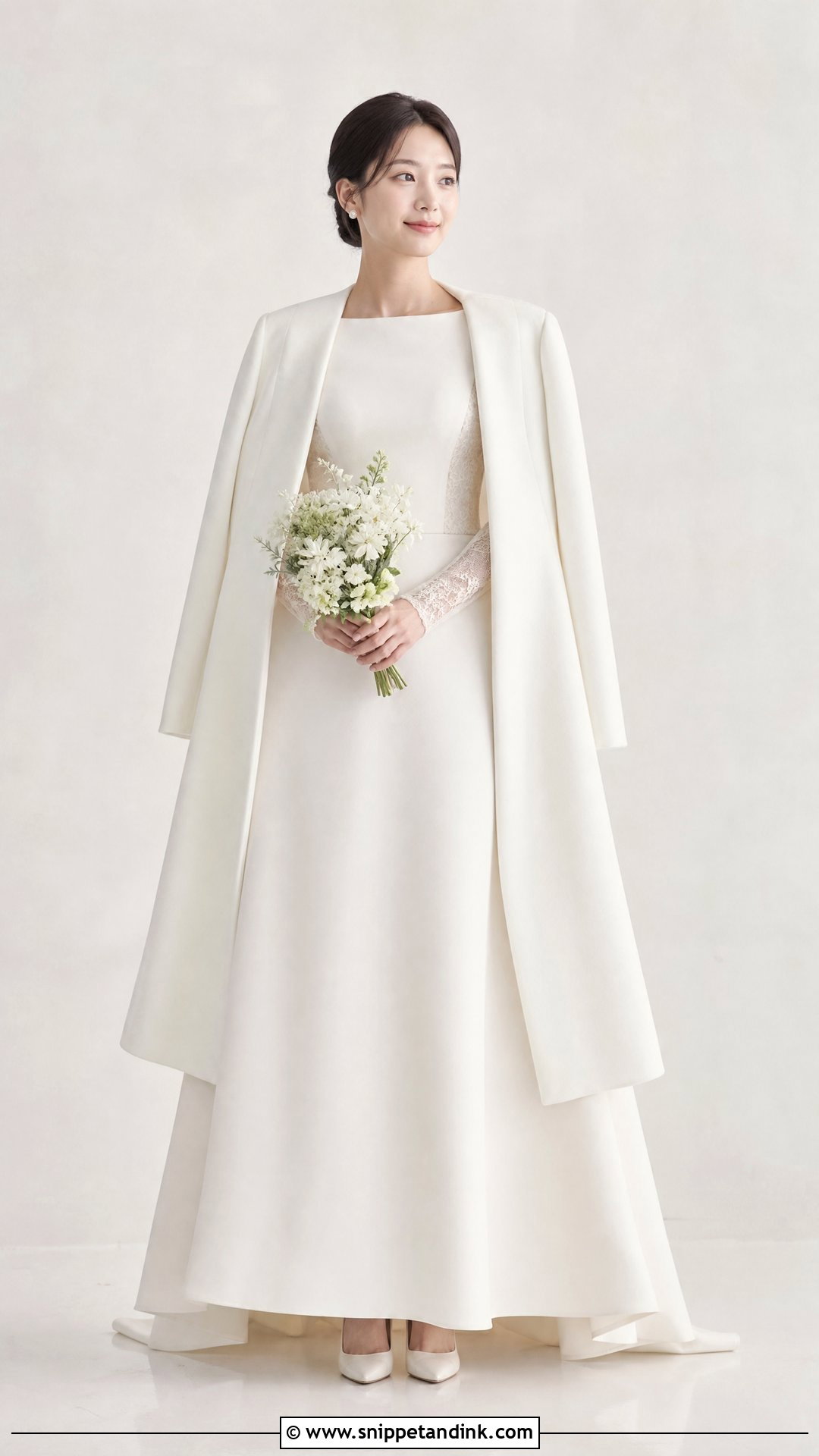
Long sleeves carry a gown through autumn and winter. Sheer lace or smooth crepe sleeves on a fitted bodice, a softly flared skirt and a high bateau neck give a clean frame; a low back or covered buttons add contrast. Crepe sleeves should be cut with a little ease at the elbow, or they pull when you lift your bouquet. Closed-toe heels, pearl earrings and a structured white coat for outdoor portraits suit the season. A low chignon, simple veil and compact monochrome bouquet keep the sleeves visible.
19. Korean Off Shoulder Wedding Dress Gown
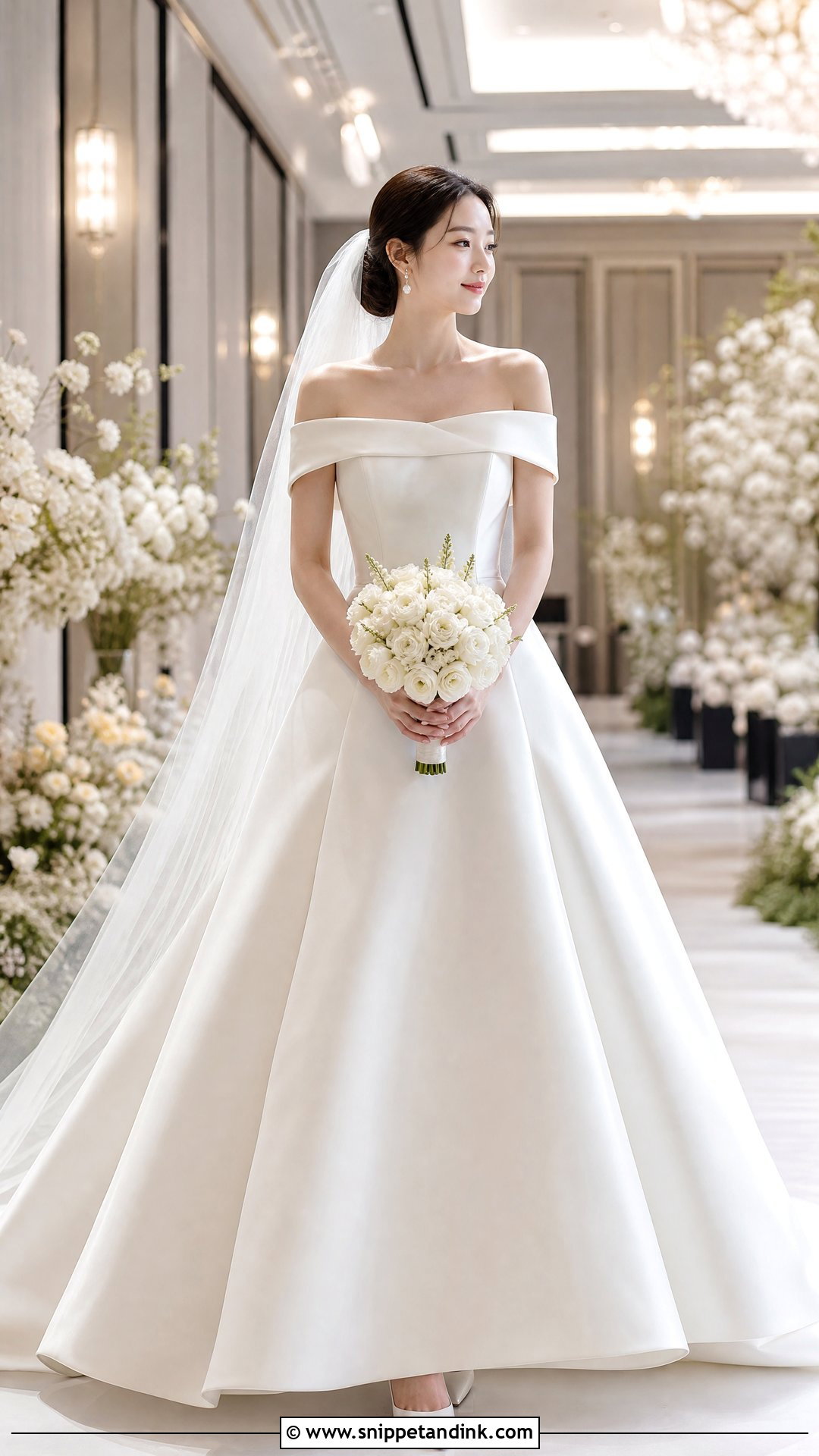
A folded satin band across the shoulders is the secure way to wear off-shoulder. It continues into a fitted bodice and an A-line or ball skirt. I ask for a silicone grip strip inside the band, which stops it sliding when you raise your arms to hug. Pearl drops, pointed heels and a long sheer veil under a smooth bun suit it; skip the necklace. A rounded white bouquet echoes the gown’s soft shape. It suits hotel weddings and studio portraits.
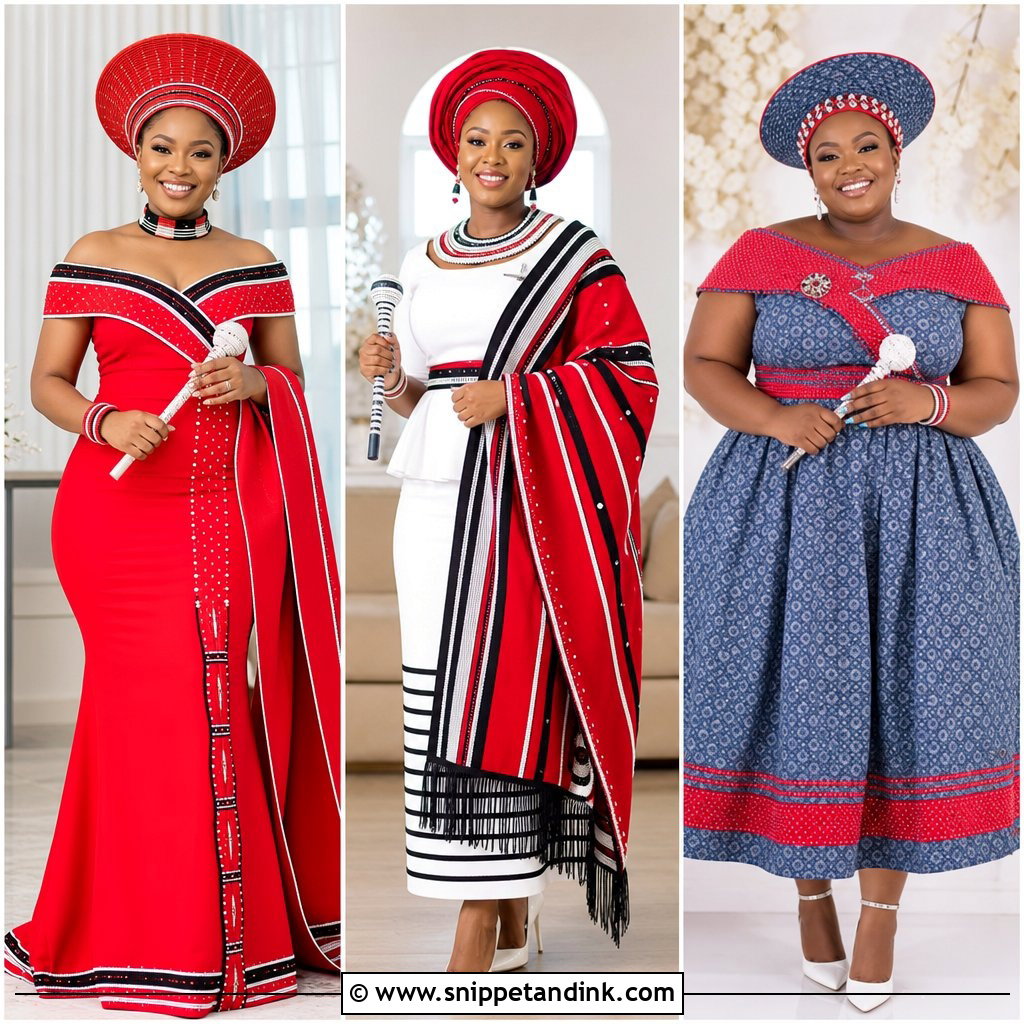
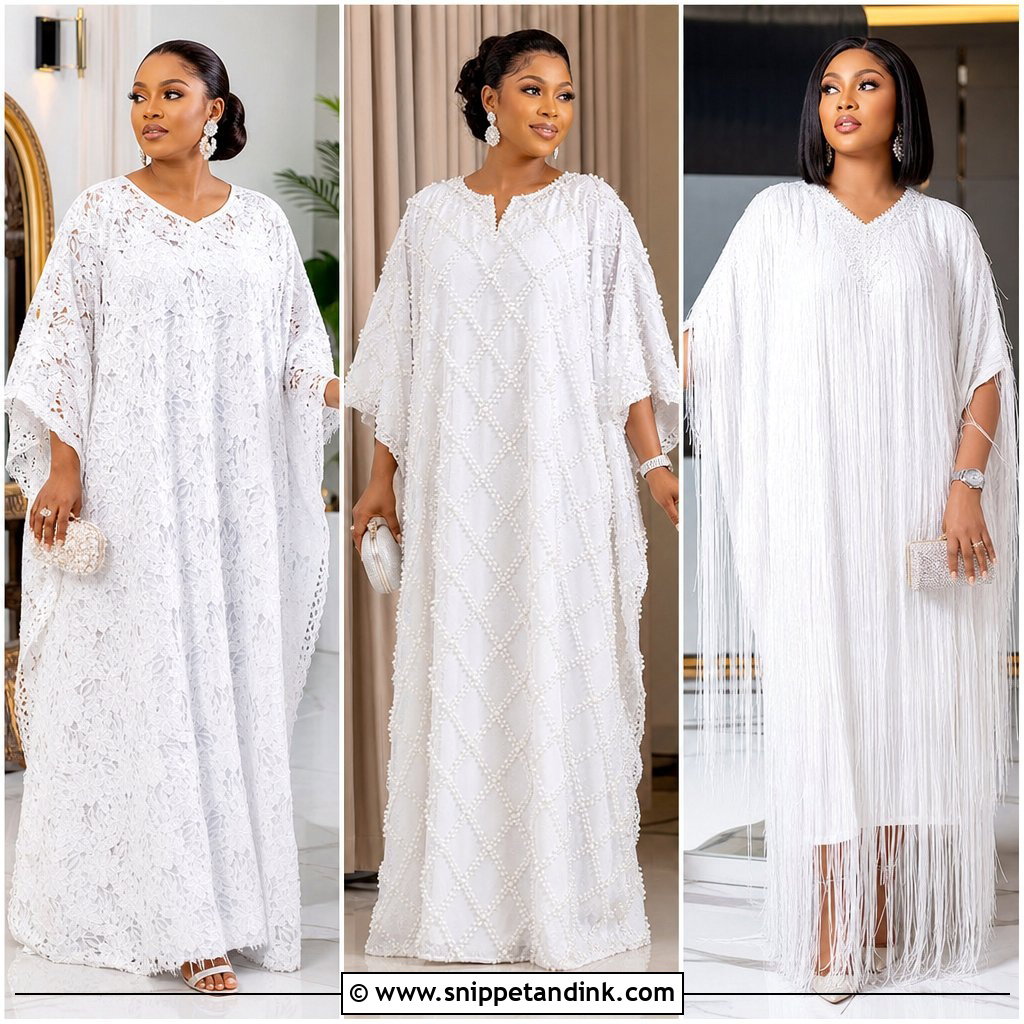

20. Korean Square Neck Wedding Dress Gown
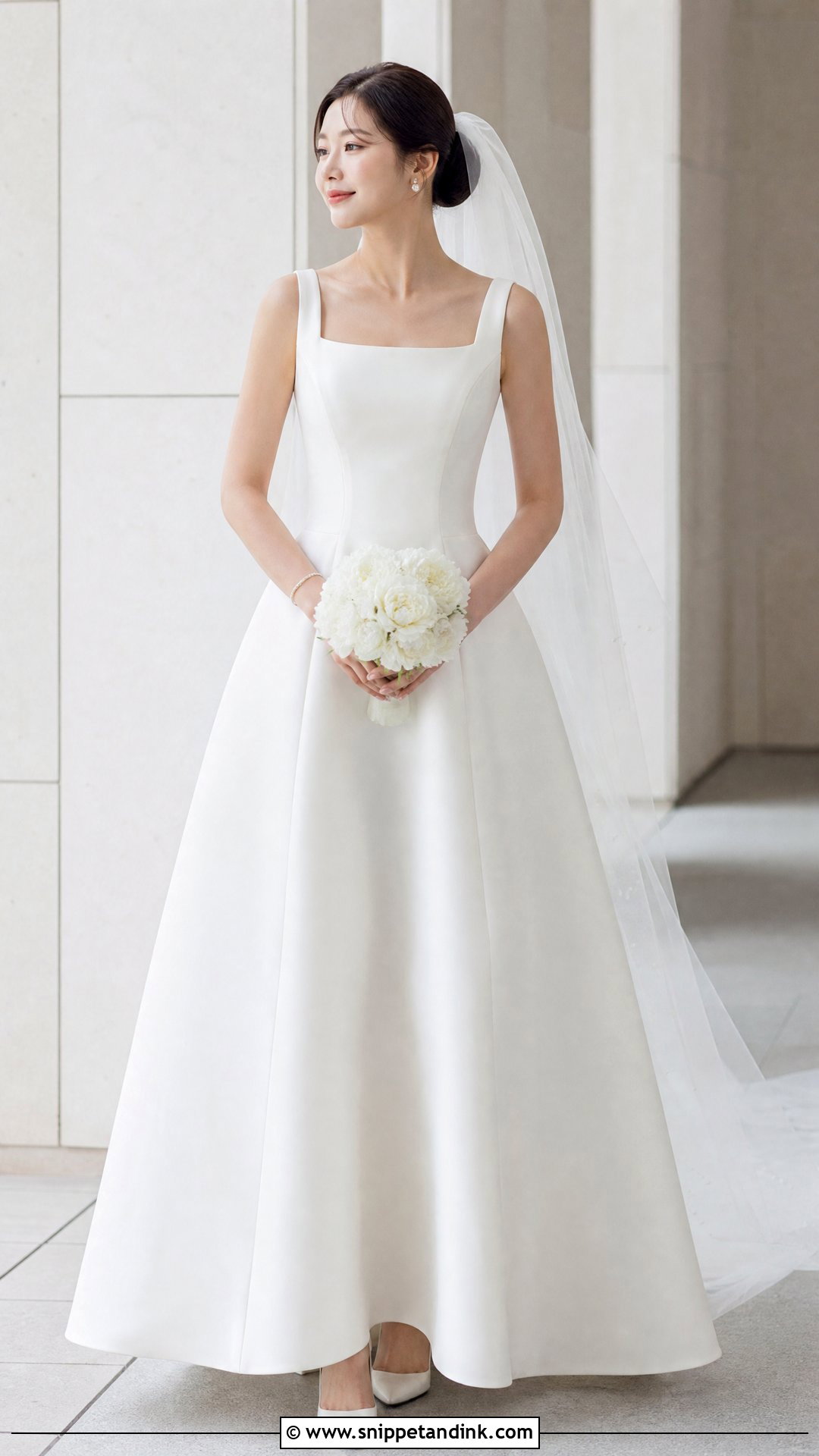
Square necklines suit Korean minimalism because the shape is precise rather than decorative. A fitted bodice with wide straps or slim long sleeves balances a flowing A-line skirt. Matte satin, mikado or crepe holds the corners sharp. Pearl studs, a slim bracelet, pointed pumps and a chapel veil complete it, and a sleek low bun repeats the straight lines. Natural skin, straight brows and a rose-pink lip suit the look.
21. Korean High Neck Wedding Dress Gown
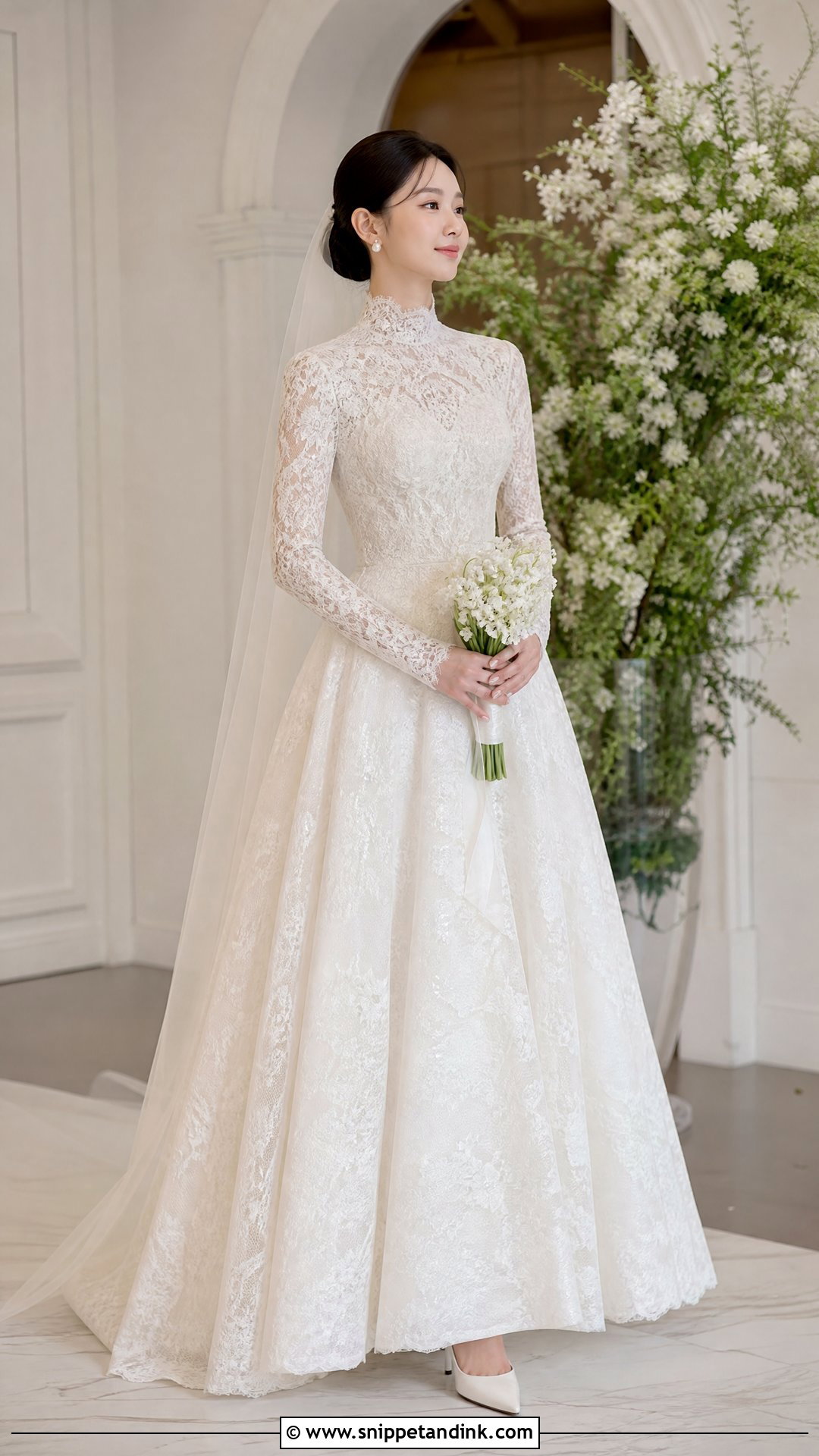
High necklines frame the face, and the fit at the throat makes or breaks them. Lace, organza or crepe should sit close without pressing when you look down at your vows. Long sleeves and an A-line skirt balance it; a keyhole back stops it from feeling closed in. A smooth low bun keeps the neckline visible, with pearl earrings and a veil attached beneath. Carry a narrow bouquet so you don’t hide the bodice. It suits formal ceremonies and cooler seasons.
22. Korean Mermaid Wedding Dress Gown
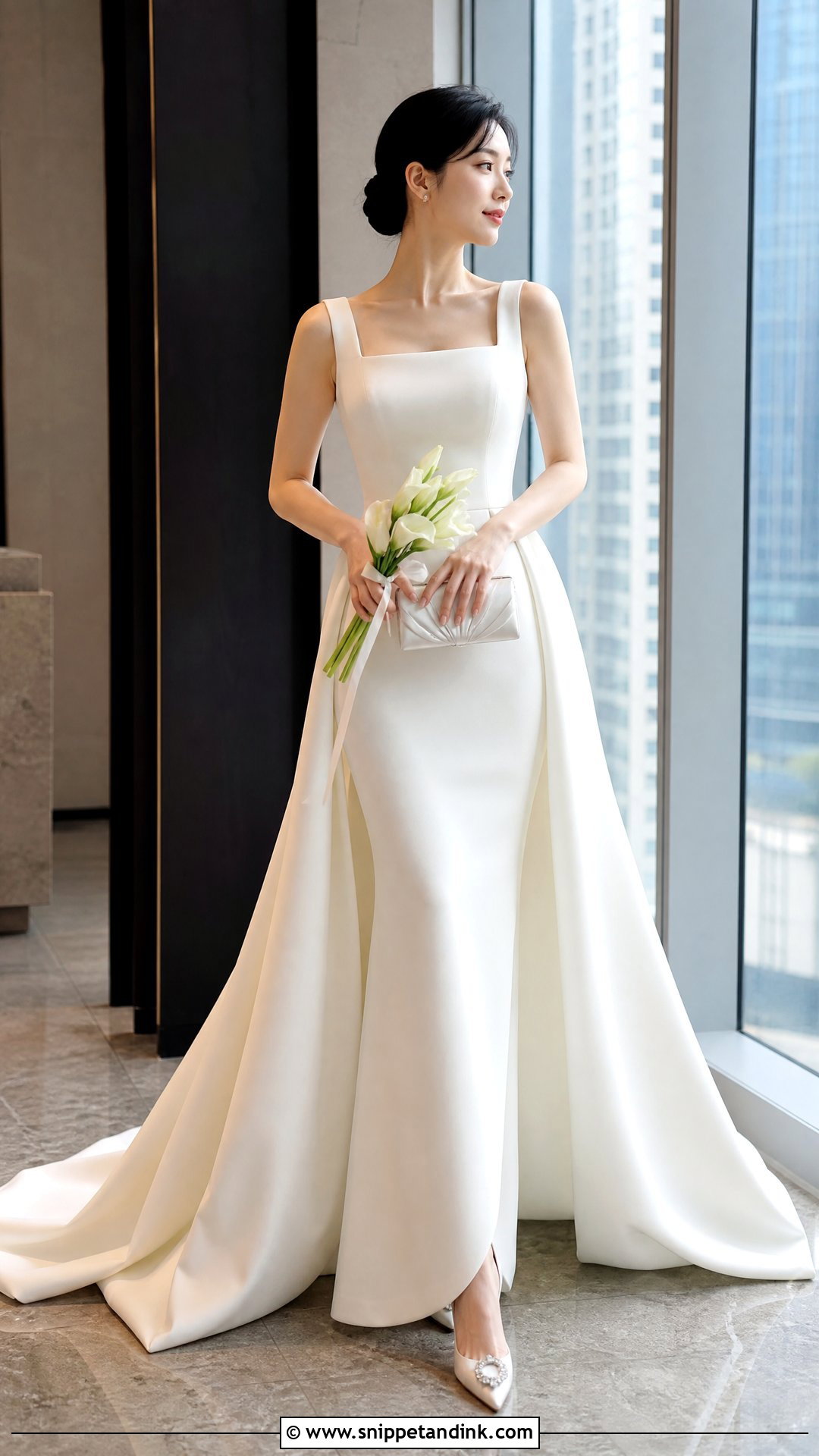
Korean mermaid gowns keep the shape sleek and the decoration low: smooth crepe or satin following the body before widening below the knee, with a square, off-shoulder or strapless bodice. Pointed heels support the long line. A detachable train gives ceremony drama and comes off for dancing. I always check that a bride can manage the stairs at a wedding hall in it, since many have a raised stage. Glossy waves or a sculpted low bun and a narrow, vertical bouquet suit it.
23. Korean Bow Wedding Dress Gown
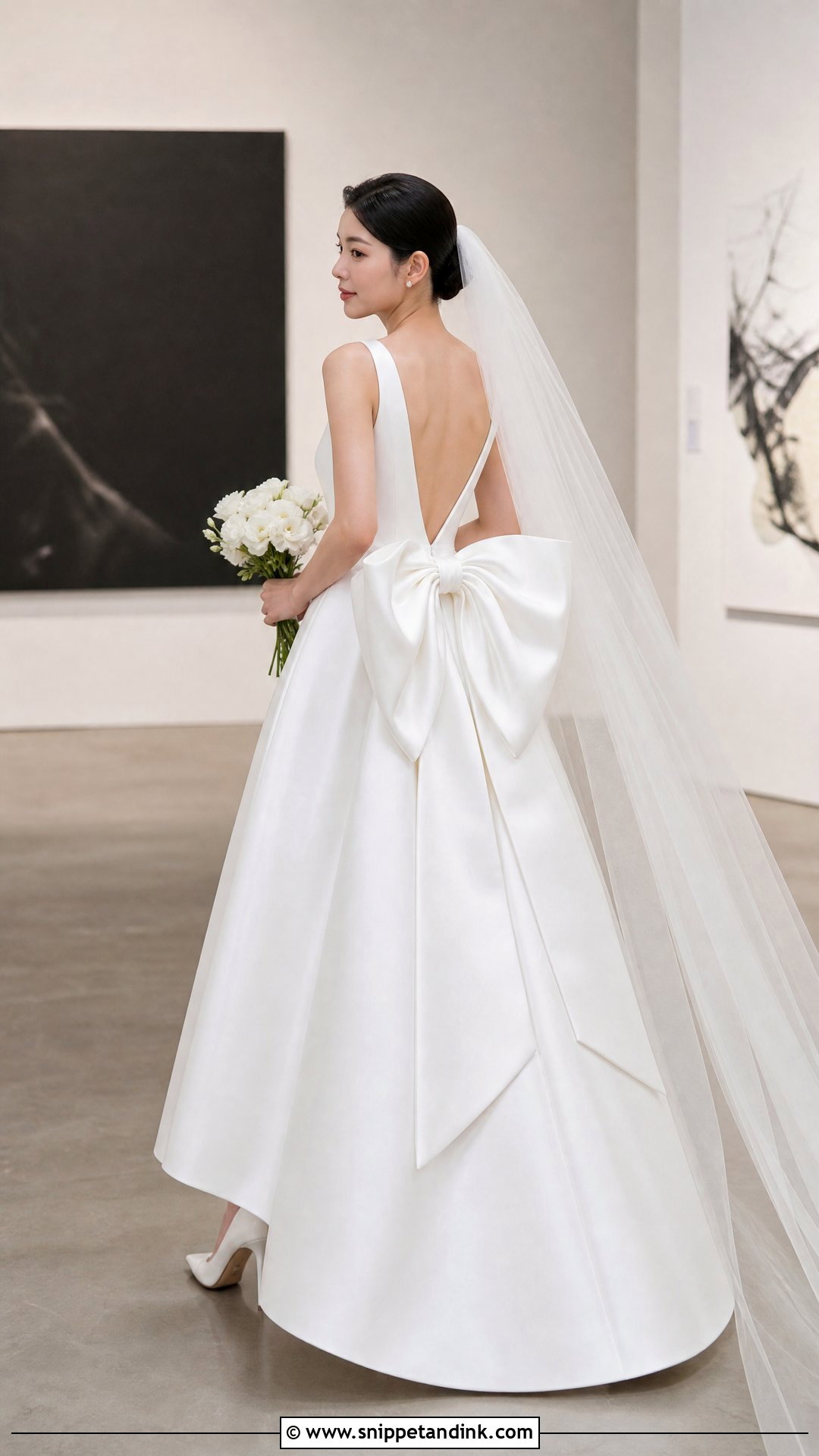
An oversized bow turns a plain satin gown into a signature look. Place it at the back, shoulder or waist and keep everything else simple. If the bow sits near the upper back, a sleek bun is the only hairstyle that won’t hide it, and the veil should be plain and attached low. Bows on satin hold their shape best when they’re interfaced inside; ask whether yours is. Pointed white pumps, pearl earrings and a compact white bouquet complete it, and the best photos will be from behind.
24. Korean Cape Wedding Dress Gown
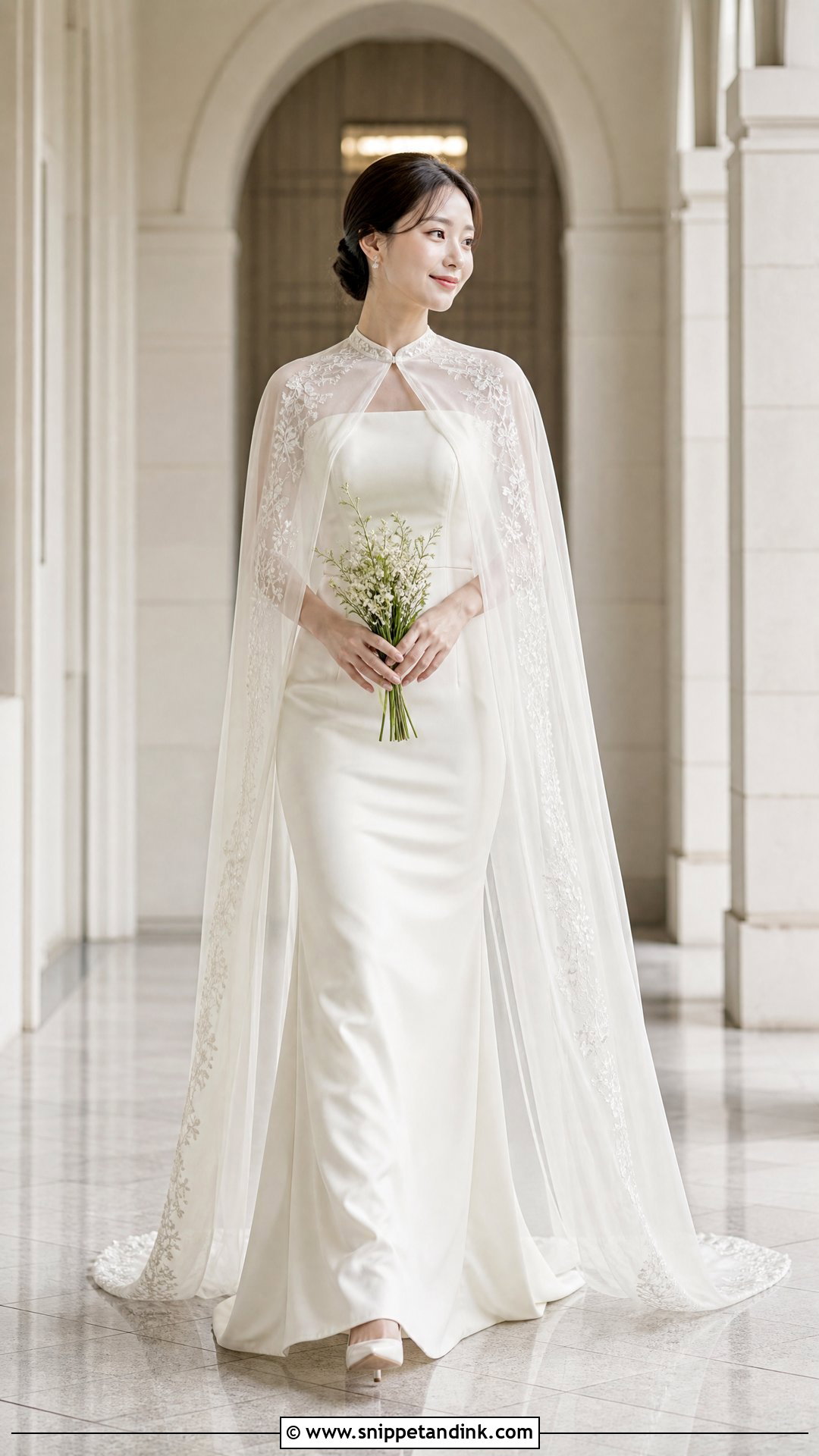
A detachable sheer cape falling from the shoulders to the floor can replace a veil. Over a clean ivory column or A-line gown, it adds movement for the ceremony and comes off for the reception. Embroidered edges, pearl fastenings or subtle Korean floral motifs make it personal. Satin heels and stud earrings keep the cape prominent, and a low bun or smooth half-up style leaves the neckline clear. Hold the bouquet in one hand so the fabric flows. Ask how the cape fastens; pearl buttons at the shoulder look lovely but need a helper to undo.
25. Korean Tea Length Wedding Dress Gown
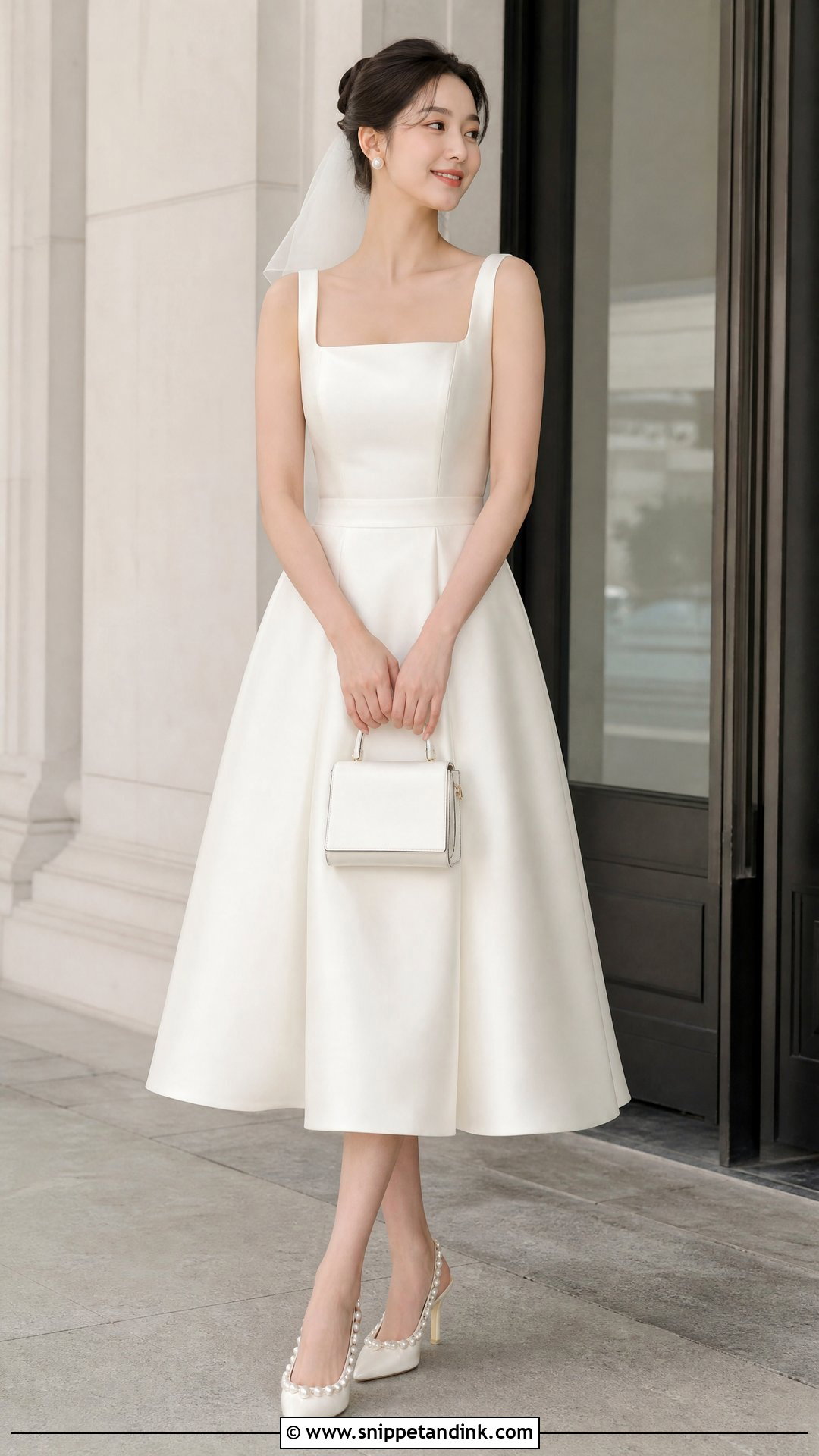
Tea length works for smaller celebrations and outfit changes. A structured satin dress with a fitted bodice, a defined waist and a skirt ending between knee and ankle is the base; a square neck, short sleeves or a jeogori-style collar adds the Korean influence. Your shoes are visible, so pearl-trimmed pumps, slingbacks or low embroidered heels count. A short veil, pearl earrings and a top-handle bag finish it, with a neat bun or soft curled bob. It suits courthouse ceremonies and intimate receptions.
Red Cheek Dots, a Crown and a Bun at the Nape
Ceremonial dress comes with its own hair and makeup, and it is worth briefing your makeup artist on it separately from the Western look. Traditional brides wear yeonji-gonji: round red dots on each cheek and one on the forehead, once believed to ward off bad spirits. Many modern brides keep them for the paebaek only, painted or applied as stickers, and remove them before the reception.
The jokduri sits on top of the head and is held in place by the hairstyle beneath it, usually a low bun at the nape pinned through with a binyeo. That bun has to be firm. Short or layered hair often needs a chignon piece to build enough of a base, so tell your hairstylist in advance.
Silk hanbok after the wedding
- Air the outfit overnight before storing it; trapped perspiration marks silk.
- Have it cleaned by someone who handles silk and embroidery, and point out any makeup on the collar.
- Fold the chima along its pleats and store the pieces flat in cotton or paper, never in plastic.
- Refold it once or twice a year so the creases don’t set permanently.
From Hwarot to Satin, Wear What the Moment Asks For
Korean bridal dressing lets you move between centuries in one day. You might wear a traditional red hwarot for the paebaek, a white hanbok for portraits and a modern satin gown with a hint of Korean embroidery for the ceremony. Let accessories support the shape of each garment rather than fight it. Think about where each outfit will be worn, how much moving you’ll do in it, and whether you need a change. Custom pieces take extra time to make and alter, so start early, and the outfits will honor heritage while still feeling like yours.
You'll Like These Ideas:




Leave a Reply