
A long train changes how you enter a room, and it also changes how you spend the rest of the night with all that fabric behind you. The twenty gowns below run from fitted sequin columns to flowing princess gowns, and they suit receptions, engagement parties and evening galas as much as the ceremony itself. For each one I’ve noted the shoes, jewelry, hair and makeup I’d put with it, plus the practical point I’d raise at a first fitting. That last part matters most. A train looks simple in a still photo, but fabric weight, the venue floor and how you plan to bustle it decide whether you enjoy wearing it after the first hour.
Train Lengths, From a Floor Sweep to a Full Cathedral
Brides often fall for a photo without knowing how long that train actually is. Measurements vary from one designer to the next, but the names are used fairly consistently, and each length asks something different of you and your venue.
- Sweep or brush: just grazes the floor behind you. Easiest to dance in, and the only length I’d suggest for sand or long grass.
- Court and chapel: roughly one to four feet behind the hem. Enough presence for an aisle walk, still manageable with a wrist loop.
- Cathedral: several feet longer again. It needs a long, clean aisle and someone to arrange it for photos.
- Royal or monarch: the longest of all, usually a detachable piece or a train worn only for the ceremony.
The floor matters as much as the room. Polished stone and church carpet let a train glide; gravel paths and decking catch tulle and lace hems; wet grass leaves a green tide line that won’t brush off. Measure your aisle if you can, and if the ceremony and reception are in different spaces, think about whether one length really suits both.
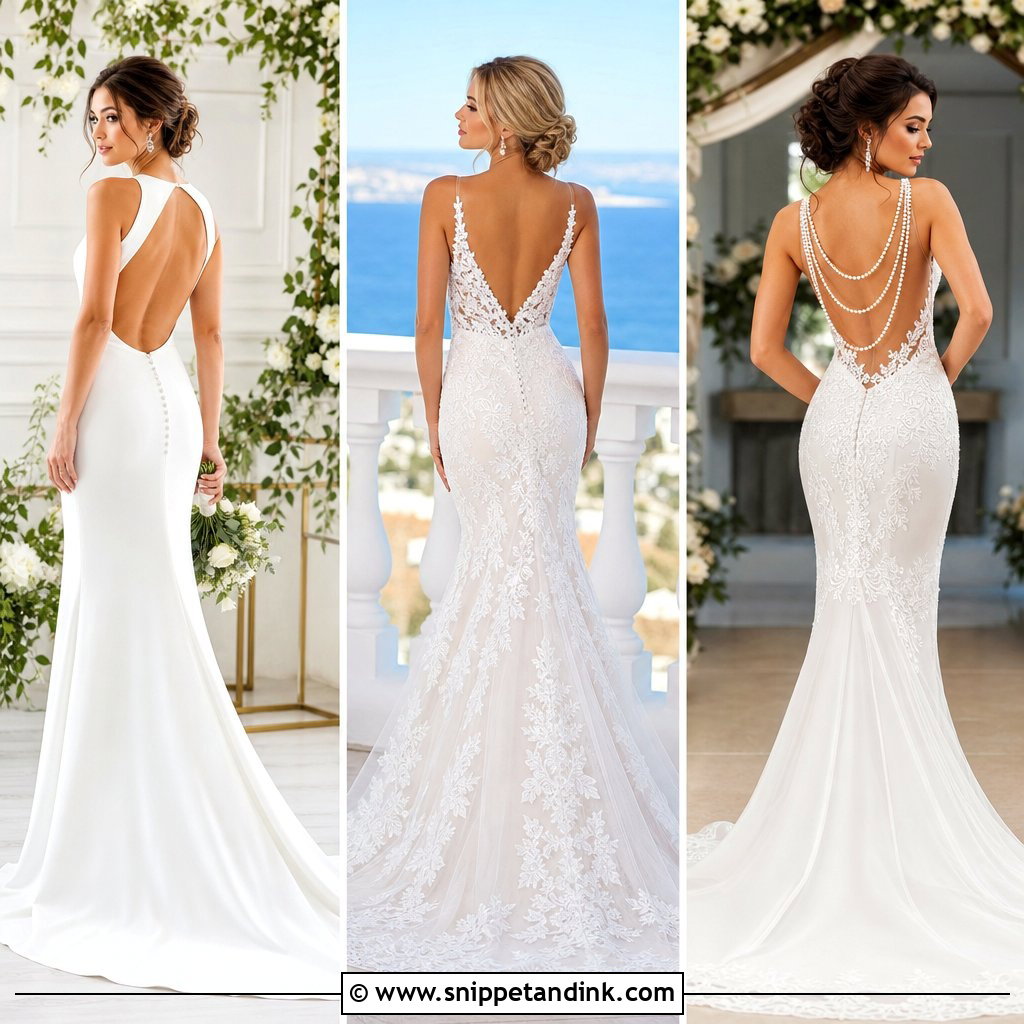
1. White Lace Long Trail Bridal Gown
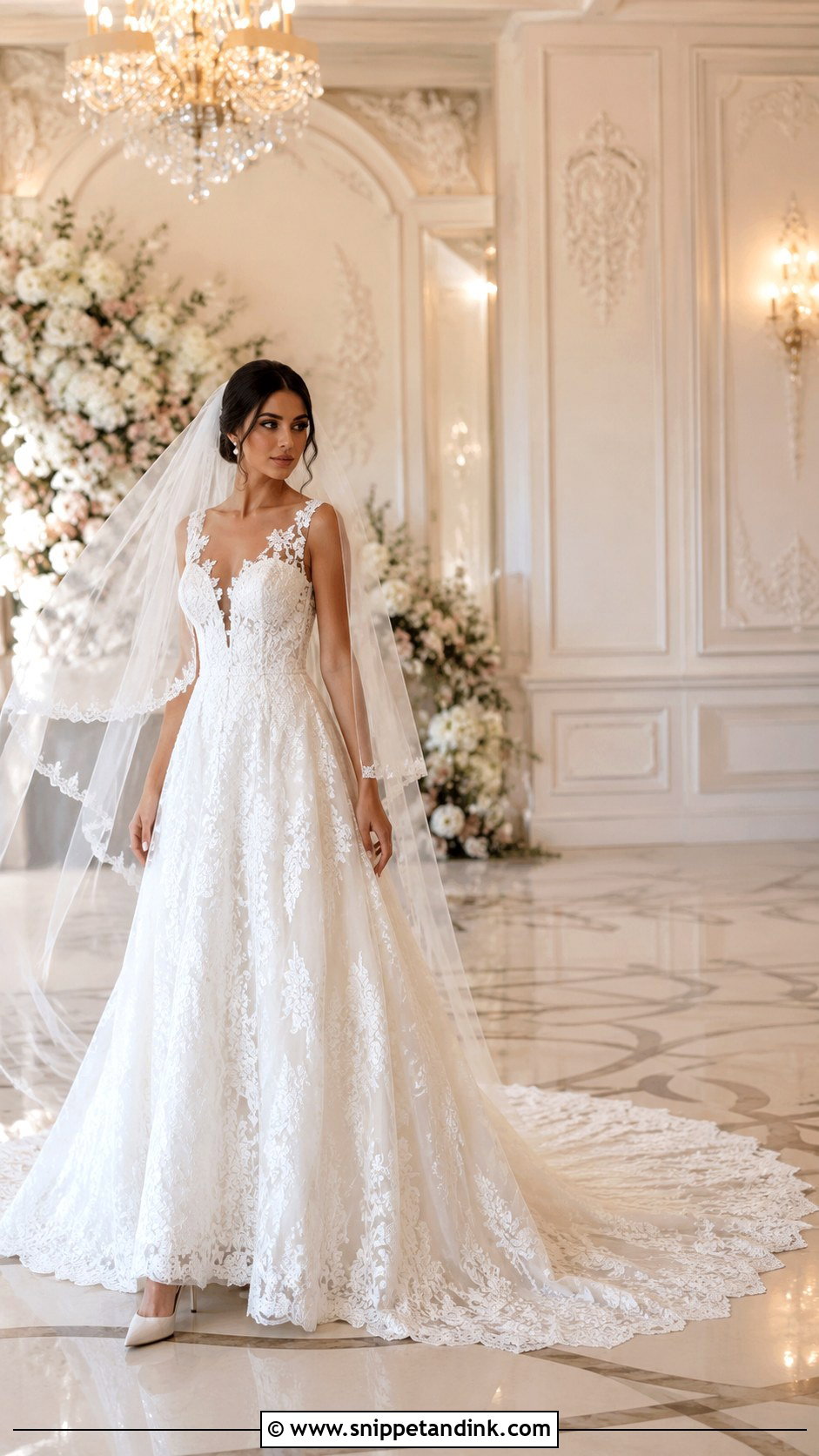
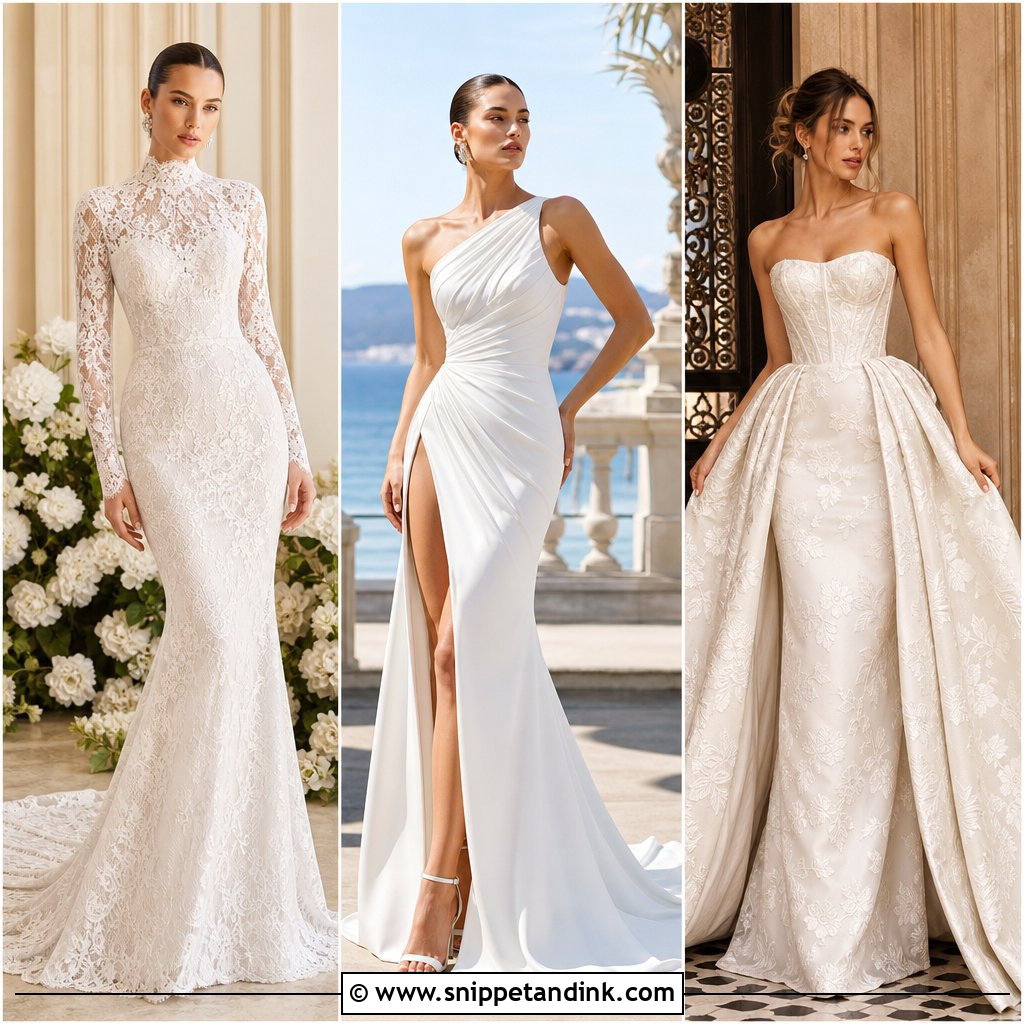
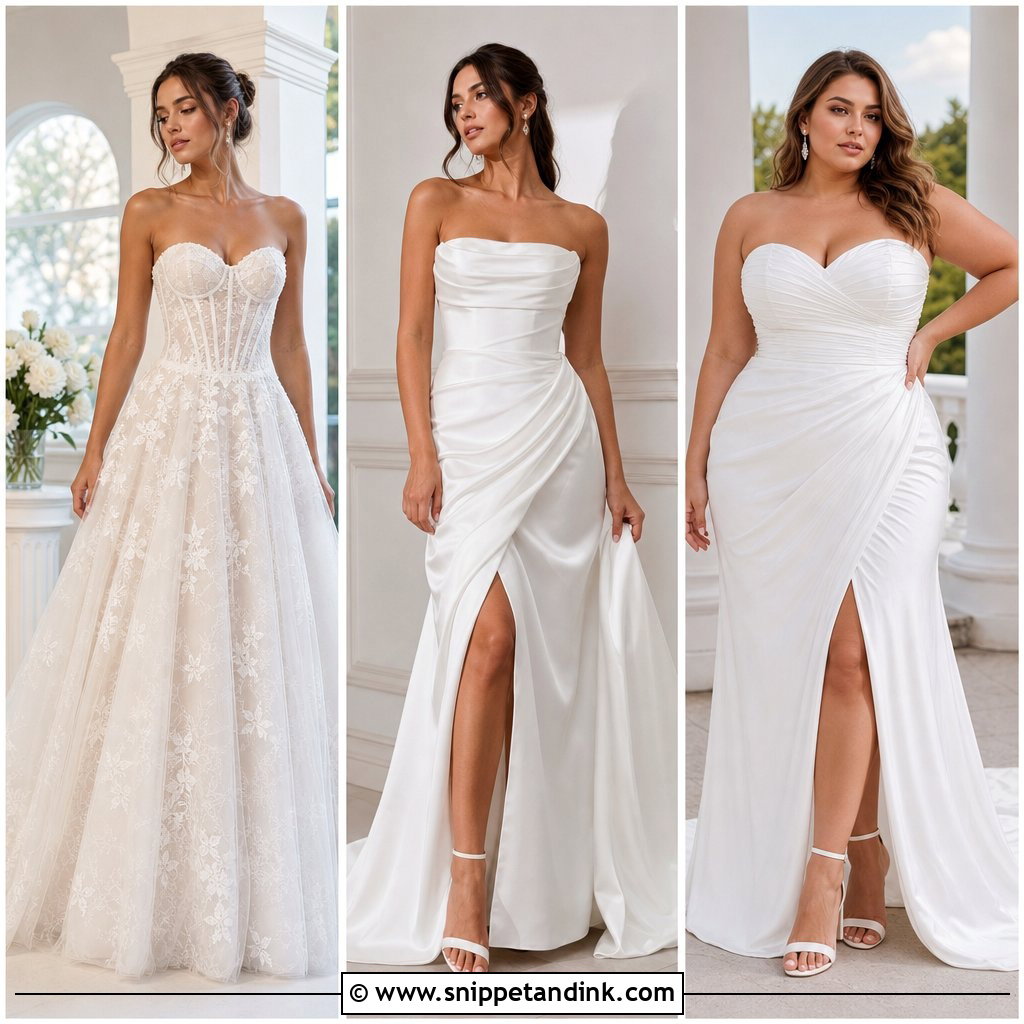
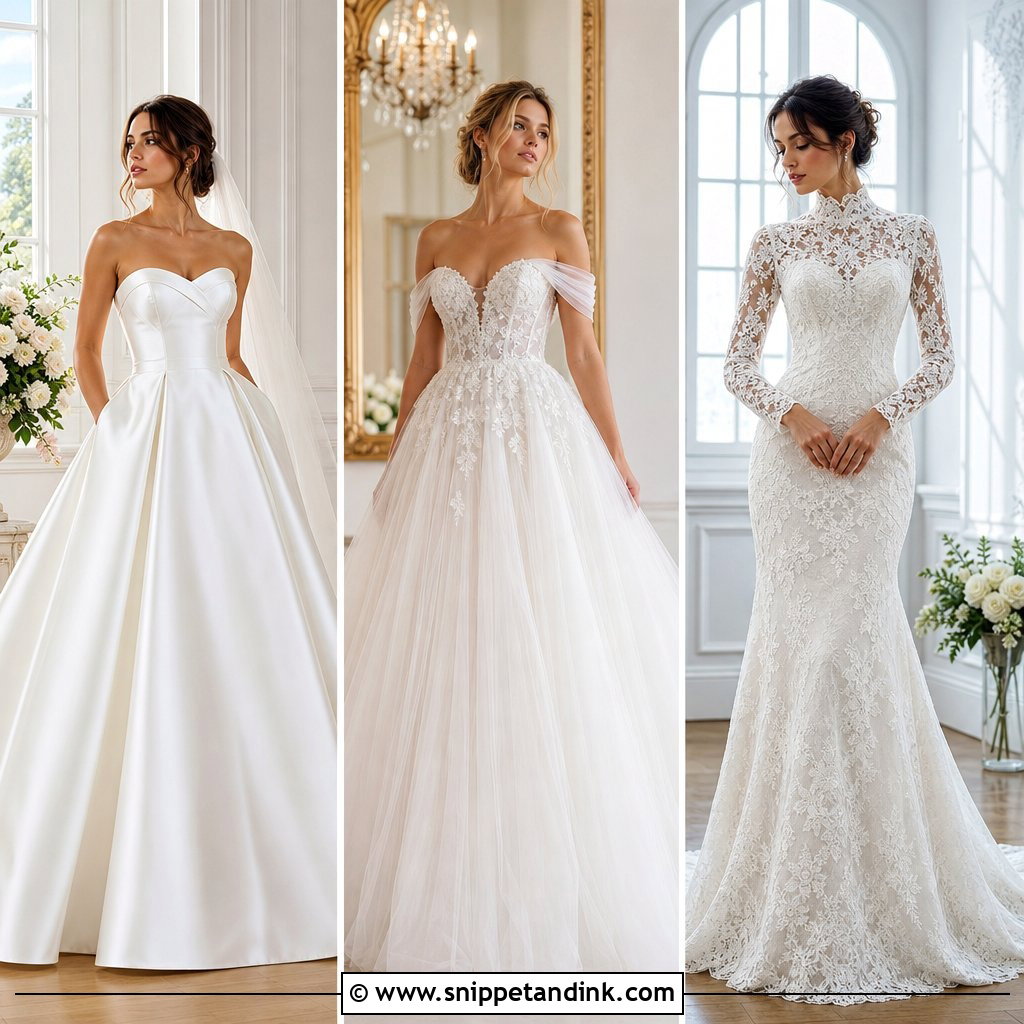
Lace is the most forgiving fabric for a sweeping train, because its texture hides the small creases that form after you’ve sat through a ceremony. I’d look for an A-line with a fitted lace bodice, real inner boning and appliqués that travel down the skirt to a softly scalloped edge. The first thing I check is how those scallops are finished. Hand-cut edges can snag on garden stone or a rough aisle runner, so walk the ceremony path before the day if it’s outdoors. Pointed ivory heels, pearl drops and a single bracelet are enough, and a low bun leaves room for a fingertip veil to lie over the lace instead of fighting it.
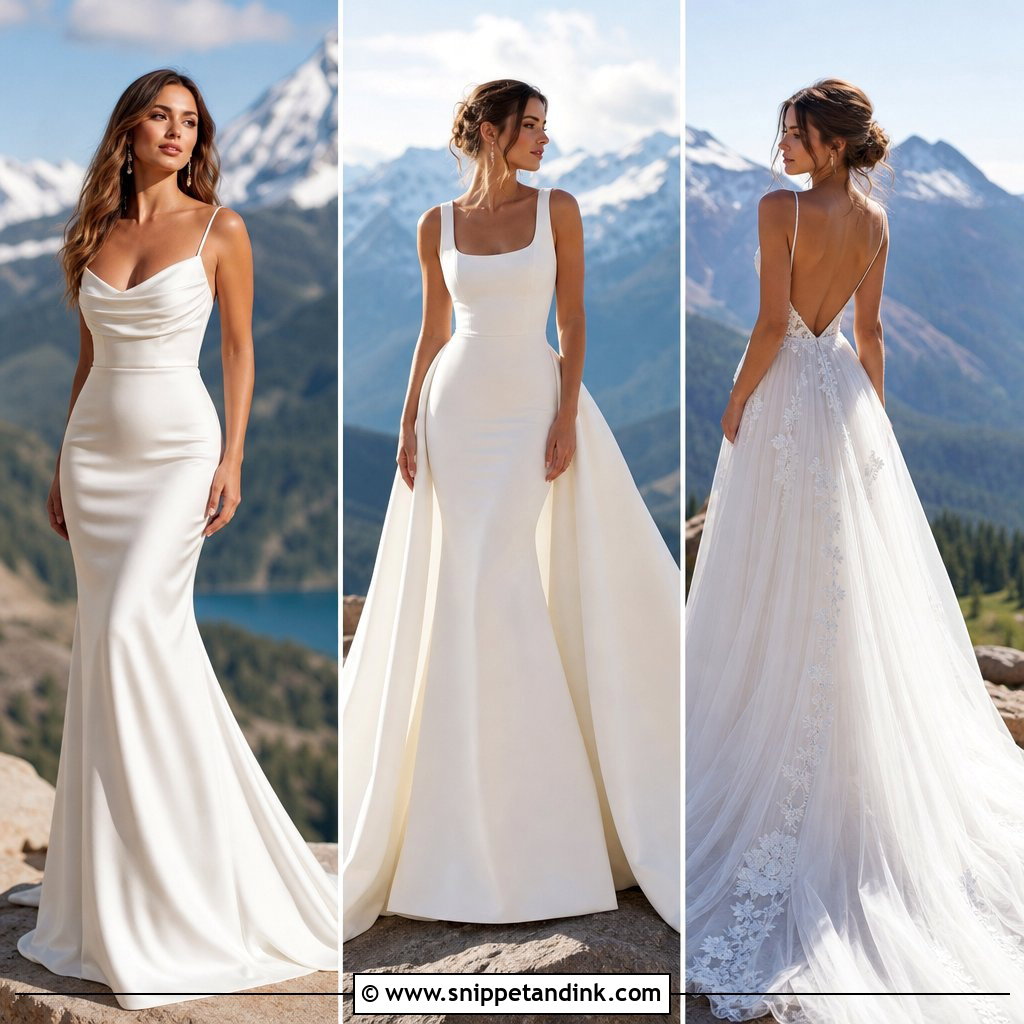
2. Satin Mermaid Long Trail Gown
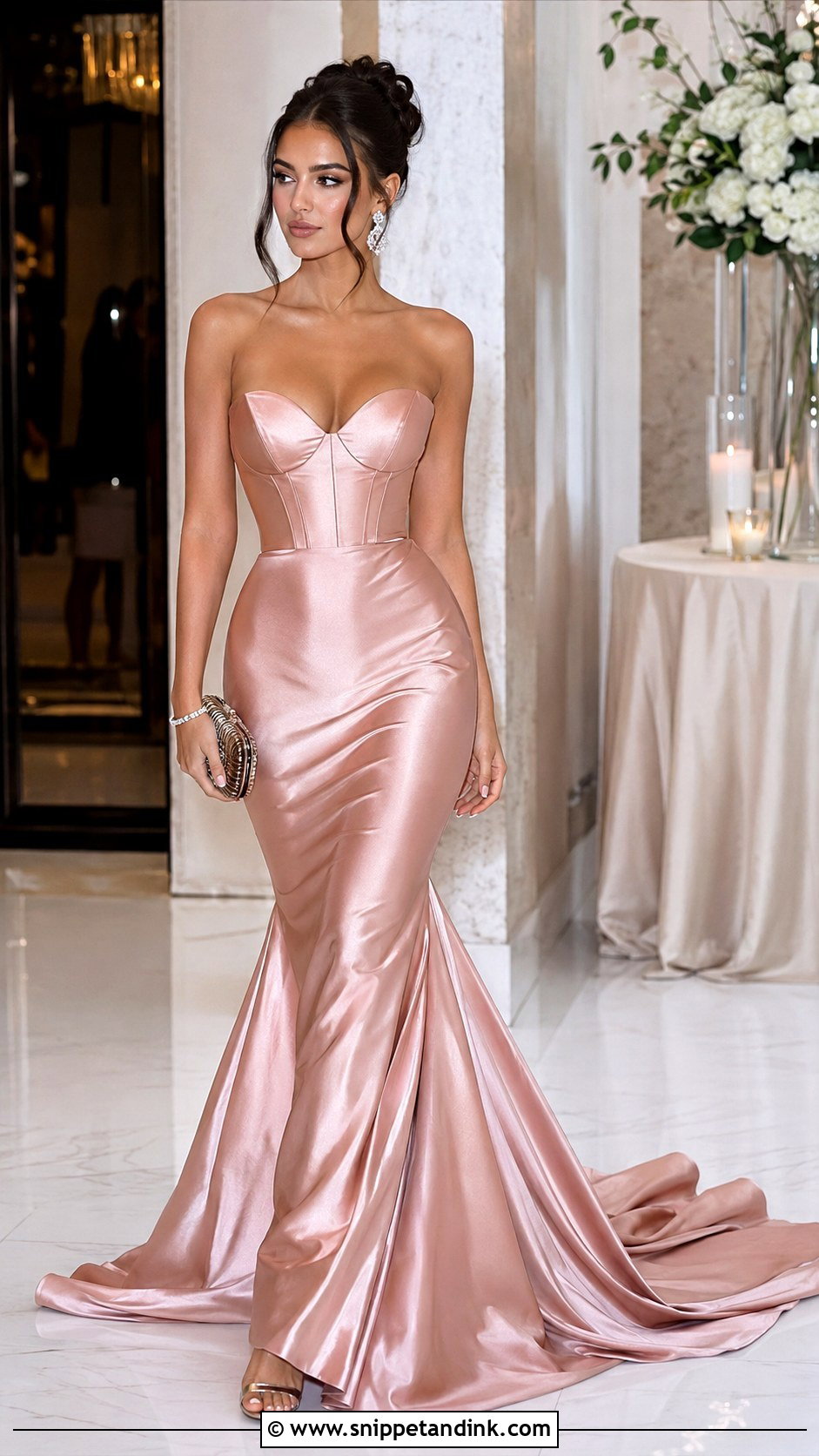
Satin is honest fabric. On a mermaid shape it shows each seam, any pucker at the zip and every line from your underwear, so I budget more fitting time for this gown than for any other on the list. It should hug through the bodice and hips before flaring into the trail, and a square, sweetheart or off-the-shoulder neckline balances that narrow middle. Metallic pointed heels, crystal earrings and a structured mini clutch suit it, with polished waves for softness or a sleek bun for a sharper evening finish. Sit down at your last fitting. Satin creases across the lap, and the knee flare shortens your stride, so plan a wrist loop or hidden bustle for after the photographs.
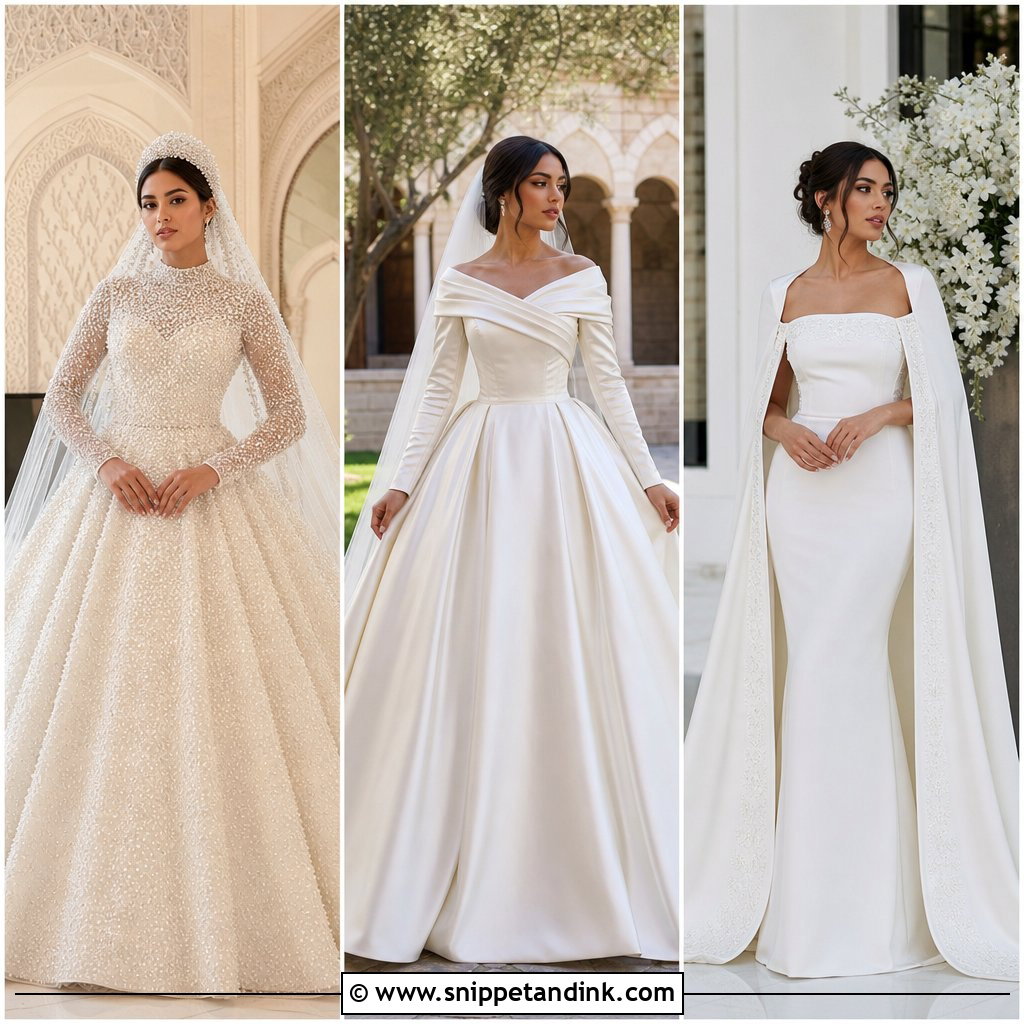
3. Princess Ball Long Trail Gown
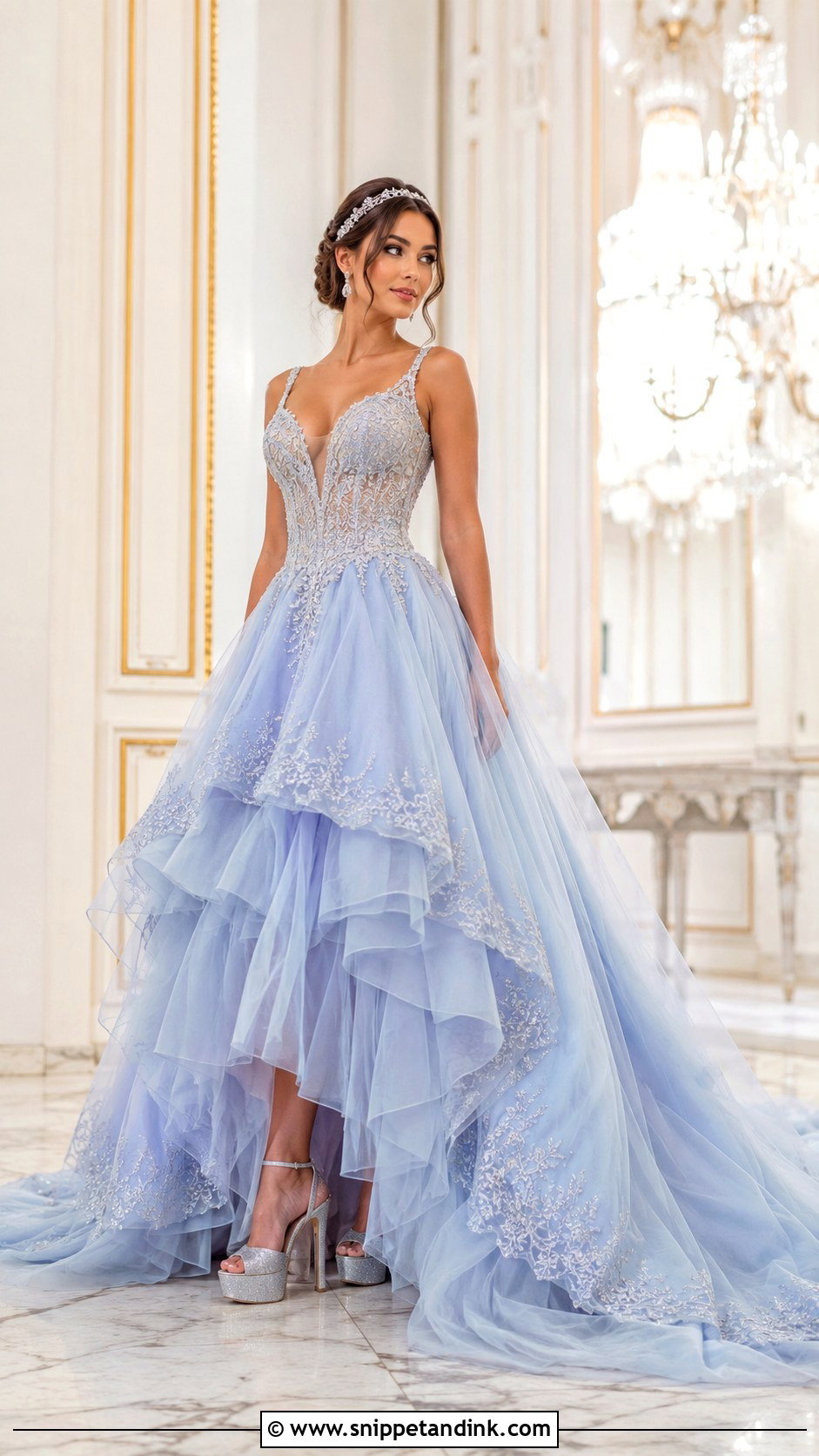
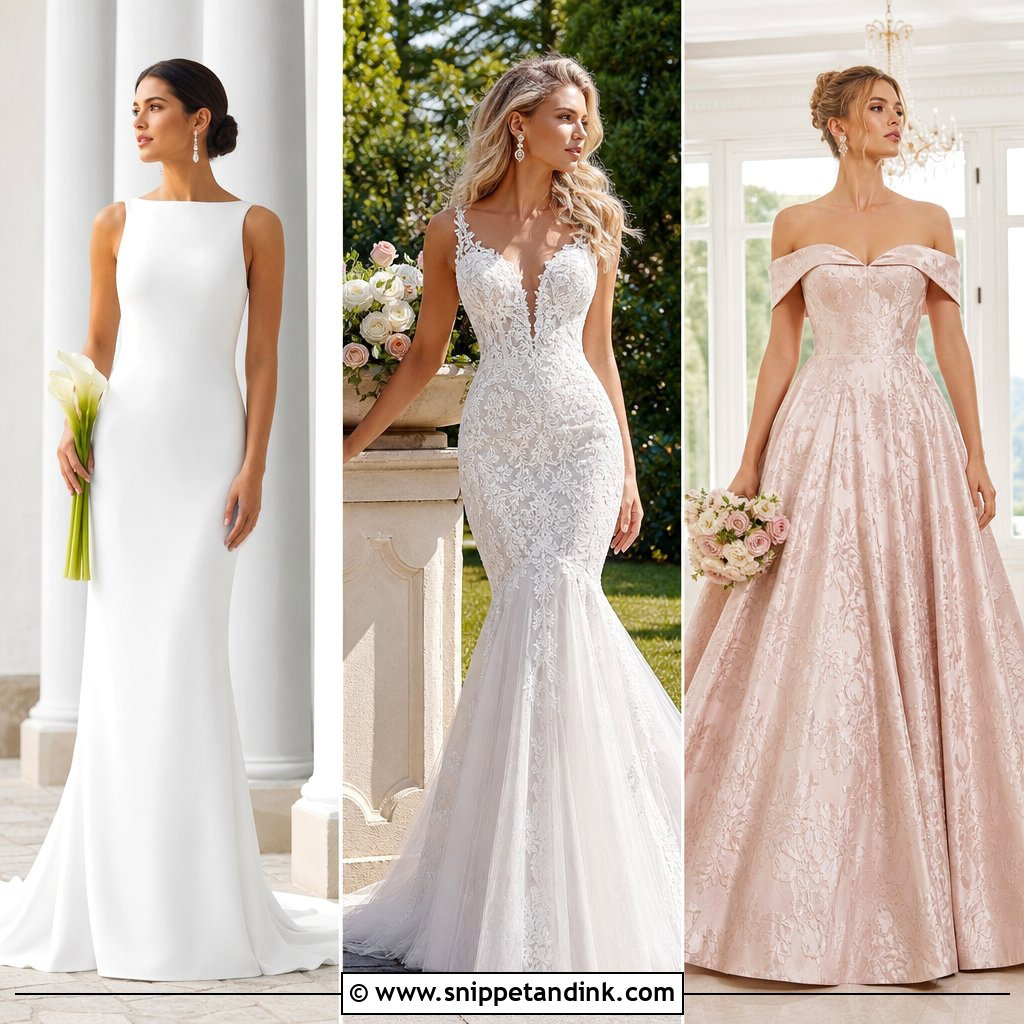
Volume needs room. Before falling for a full ball gown, I’d ask how wide the aisle is and how close the reception tables sit, because a layered tulle or organza skirt with a wide trail can fill a narrow walkway on its own. Choose a fitted bodice with a defined waist and a skirt that feels light when you lift it; heavy satin underlayers make a princess skirt exhausting by mid-evening. Platform heels are a kind choice here, since nobody sees your feet anyway. With that much skirt, a delicate tiara or jeweled headband, small drop earrings and a compact bag are plenty, and the necklace can go. A smooth high bun or half-up style suits the classic shape. Ask your tailor for a multi-point bustle. One hook rarely holds this much tulle.
4. Red Long Trail Engagement Gown
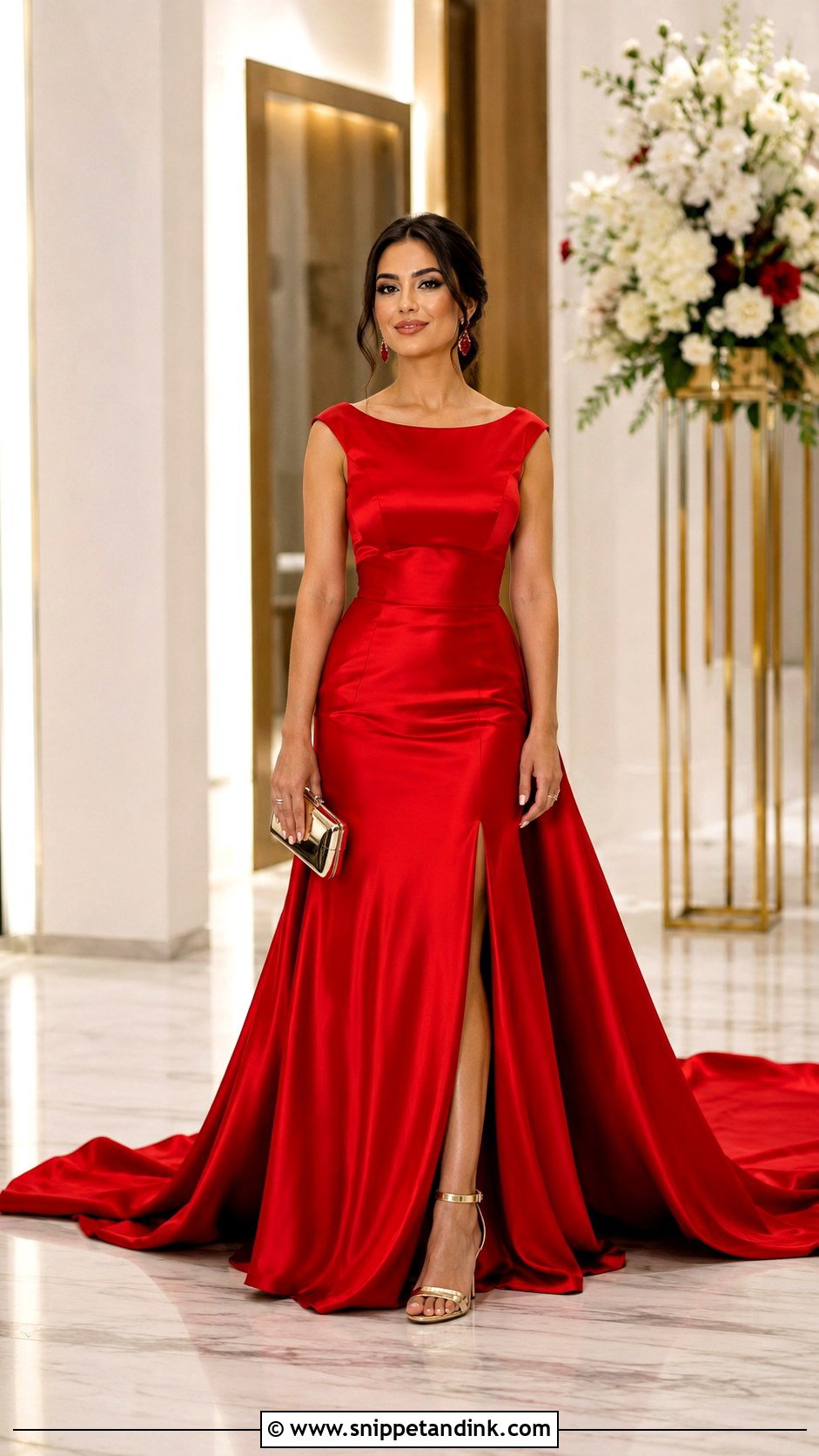
Red reads stronger on camera than it does in the mirror, so I usually steer clients toward a fitted bodice and a gentle flare rather than a heavily embellished skirt in the same shade. Satin, crepe and embroidered tulle all work, chosen by how formal the event is. Gold heels and a small metallic clutch warm the color, and ruby-toned or crystal earrings pick it up without adding a second focal point. Keep the hair polished with side-swept waves or a low textured bun. A matching red lip is glamorous, but it competes with the gown in close-ups, and a softer lip lets the dress lead. For an engagement party or reception entrance, a clean train with little decoration keeps the color looking current.
5. Champagne Sequin Long Trail Gown
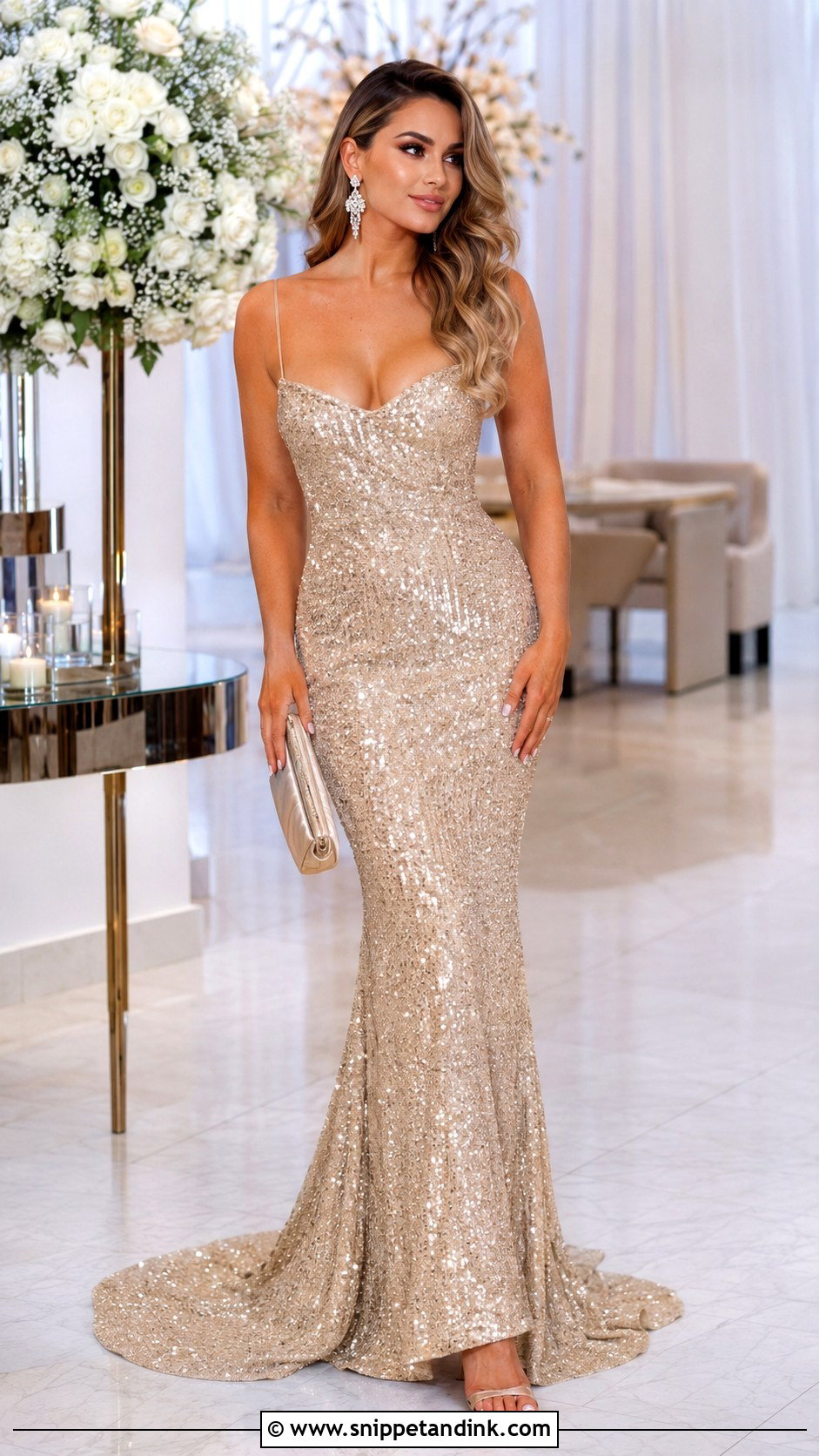
Champagne sequins sparkle without the hard glare silver throws back under a flash. A fitted column or trumpet with a lined bodice and a light trail is the shape I’d pick, since sequins stitched onto a heavy train drag and shed over a long walk. Nude or pale gold heels keep the line unbroken, and a satin clutch gives the eye somewhere quiet to rest. Wear slim crystal earrings and one ring, not a stack. Loose Hollywood waves lean old glamour, while a sleek ponytail turns it modern. Here’s the fitting test: rub the inside of your arm against the bodice side seam. If it scratches, ask for a lining or mesh guard along the arm line before the wedding, not after.
6. Pink Floral Long Trail Gown
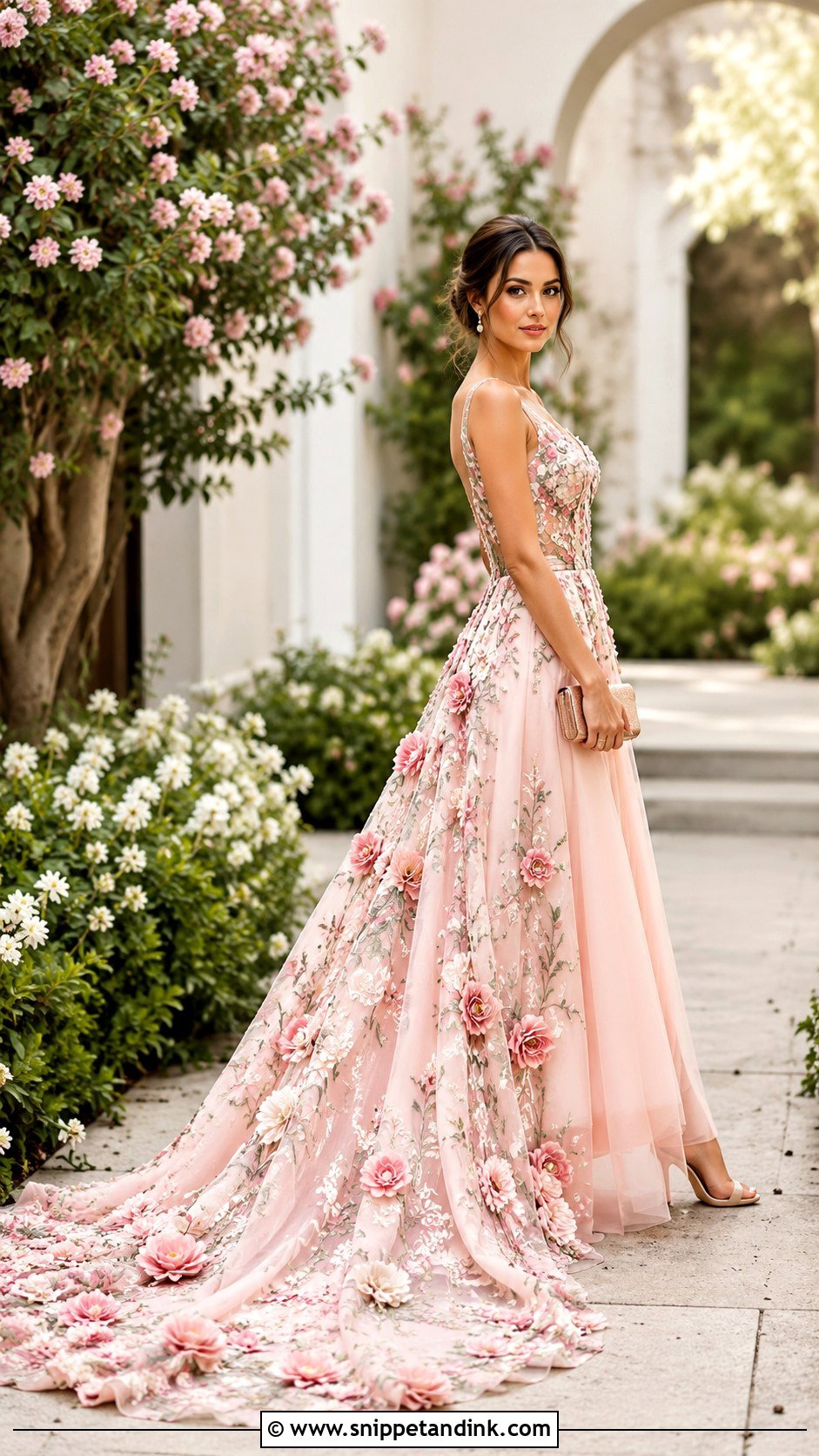
Blush and dusty pink shift a lot with the light. Under warm reception bulbs they can drift toward peach, so look at the fabric swatch in daylight and indoors before you order. The embroidered flowers should sit around the bodice, waist and train edge with clear space between them, and an A-line skirt gives those appliqués room to breathe. I pair this gown with nude heels, pearl earrings and a small rose-gold clutch, plus a loose braided bun or a curled half-up style. Ask for embroidery thread a shade or two away from the base pink rather than a mix of bright colors, so the detail still looks refined from across a garden.
7. Royal Blue Long Trail Evening Gown
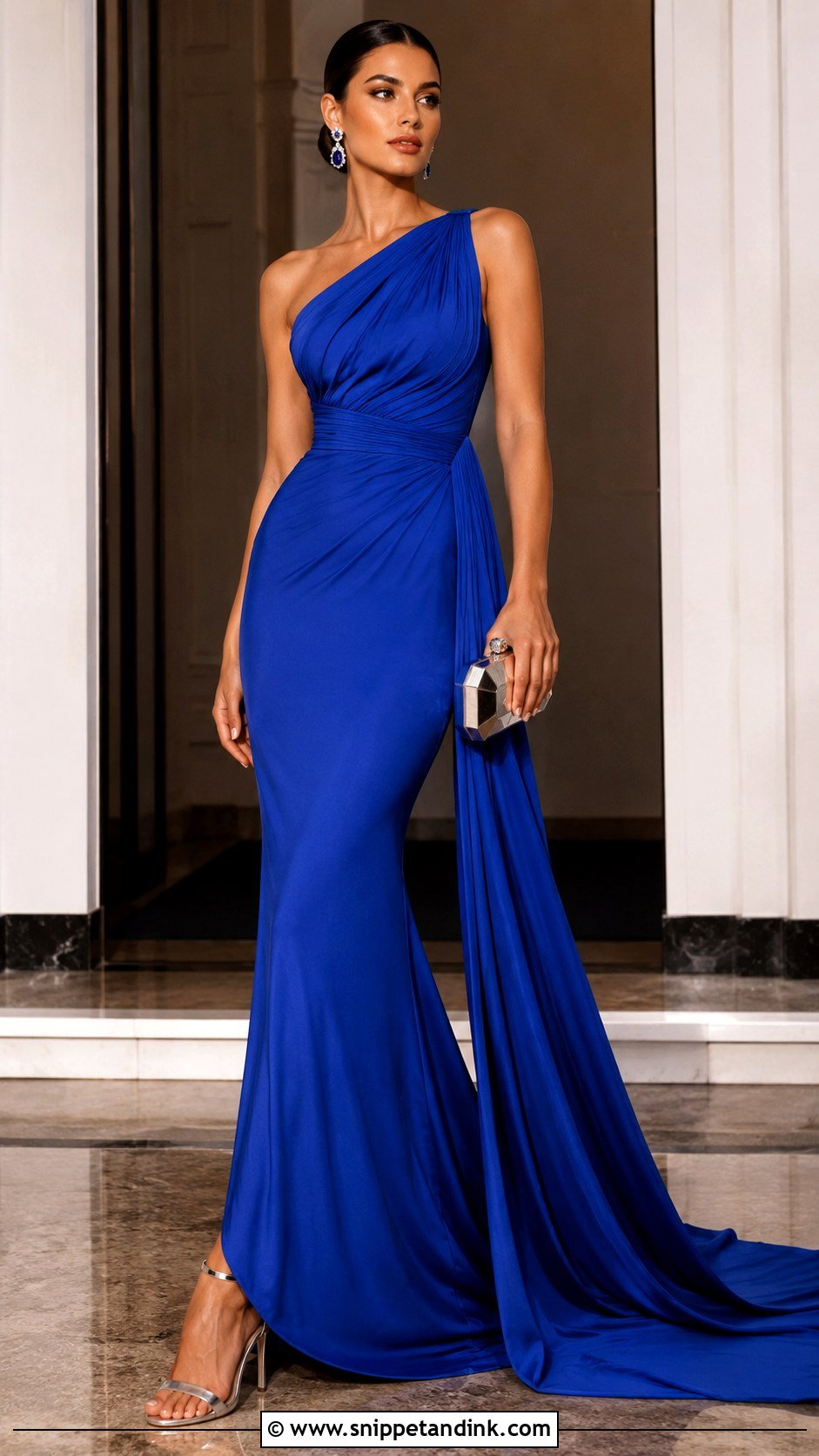
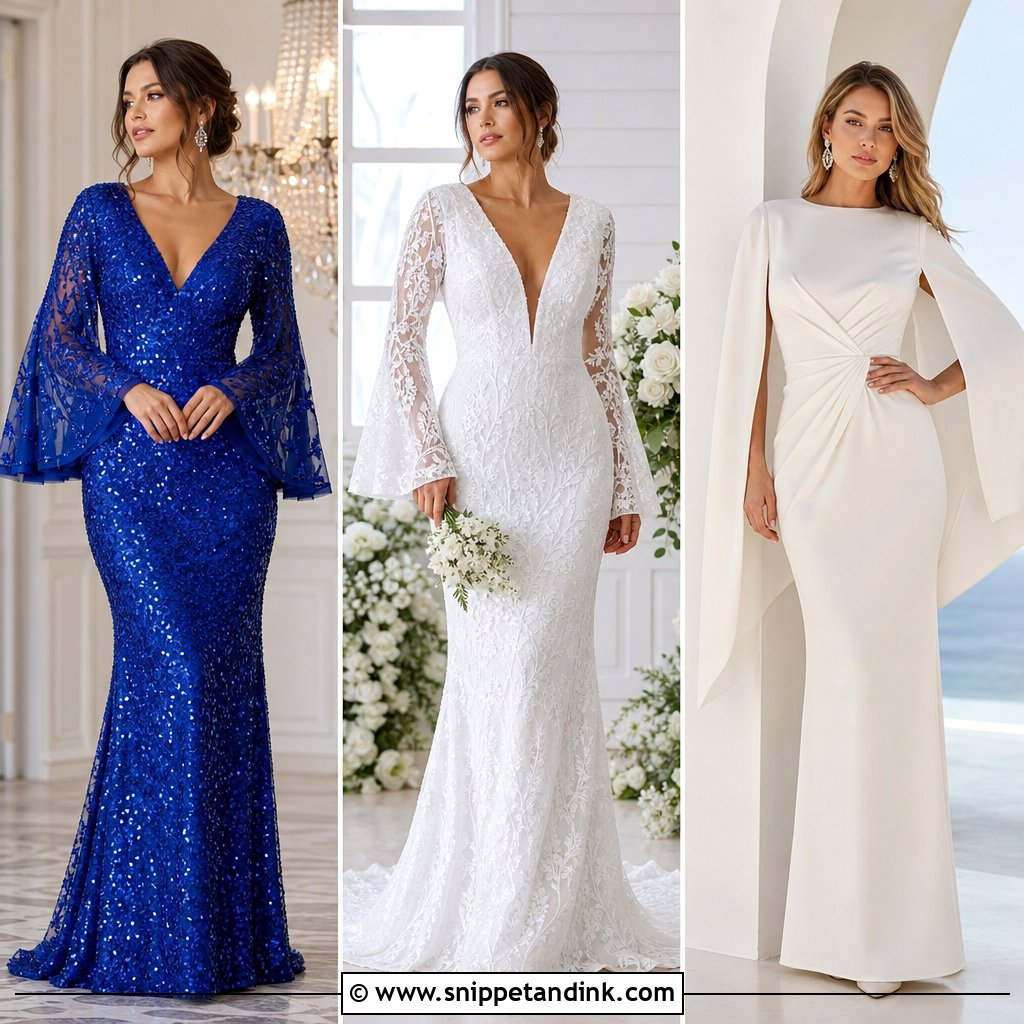
Royal blue is one of the easier bold colors to photograph, holding its depth outdoors and under evening lighting alike. A one-shoulder or draped bodice with a slim waist and a fluid trailing skirt suits it, in crepe for a clean finish or satin if you want shine. Silver heels, sapphire-toned earrings and a mirrored clutch stay in the same cool family, and a high ponytail or smooth bun keeps the neckline in view. My caution is the skirt. Fluid trains on narrow cuts restrict your stride, so walk the length of the fitting room and sit down twice. If either move feels tight, ask about a back slit or a fabric with a little stretch.
8. Black Velvet Long Trail Gown
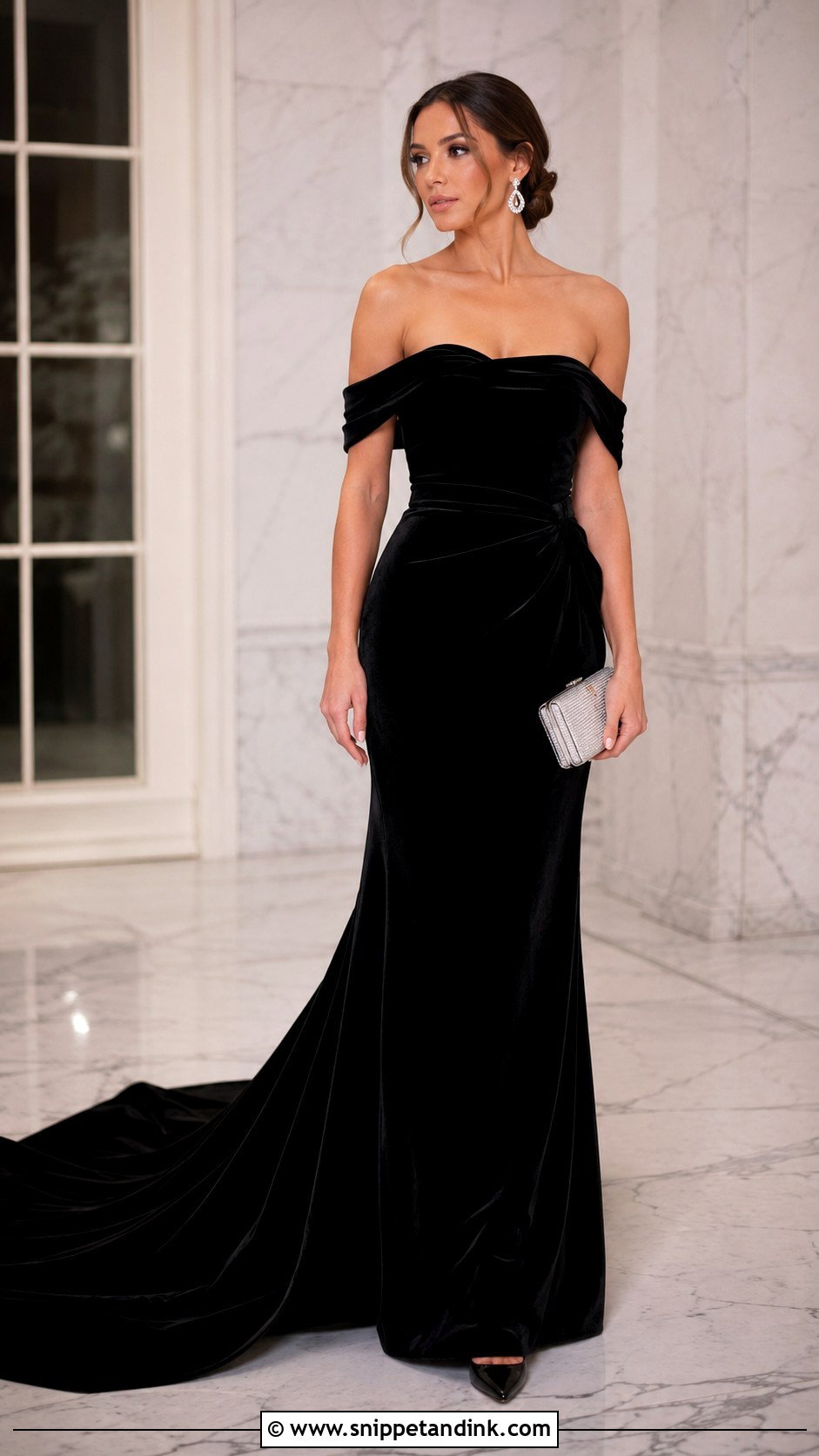
Velvet is heavy and warm, which makes it a joy in winter and miserable in a hot room. Its pile also changes shade depending on direction, so a careful maker cuts every panel the same way; ask about it if the price seems low. I’d choose a fitted shape with a bateau, square or off-the-shoulder neckline and a controlled train that falls straight behind you, with very little embellishment because the fabric already carries visual weight. Pointed black heels continue the line, and diamond-style earrings with a silver clutch bring light up to the face. Insist on a breathable lining. Velvet also marks if it’s crushed, so hang it early and keep it off the floor of the car.
9. Emerald Green Off-Shoulder Long Trail Gown
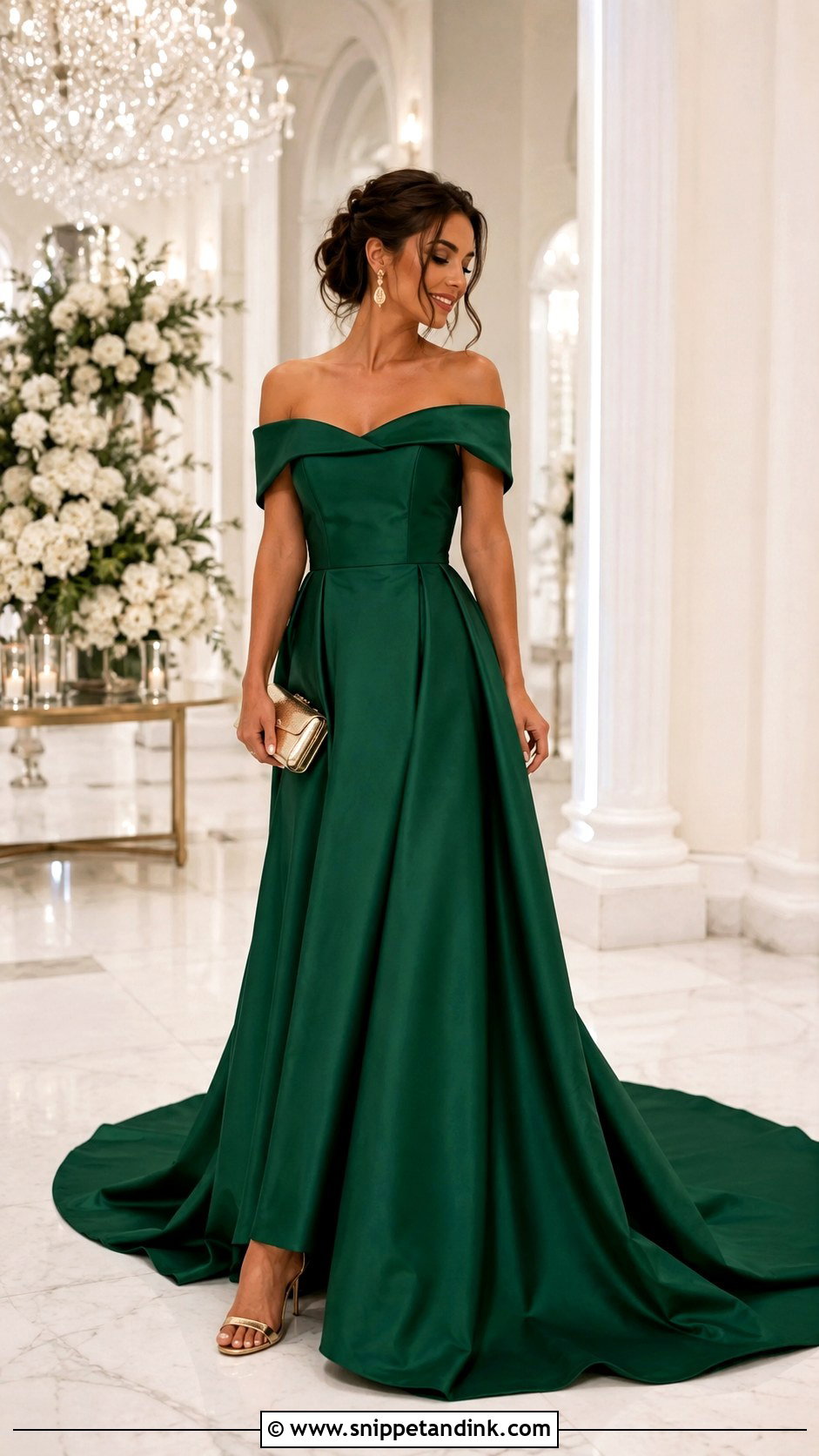
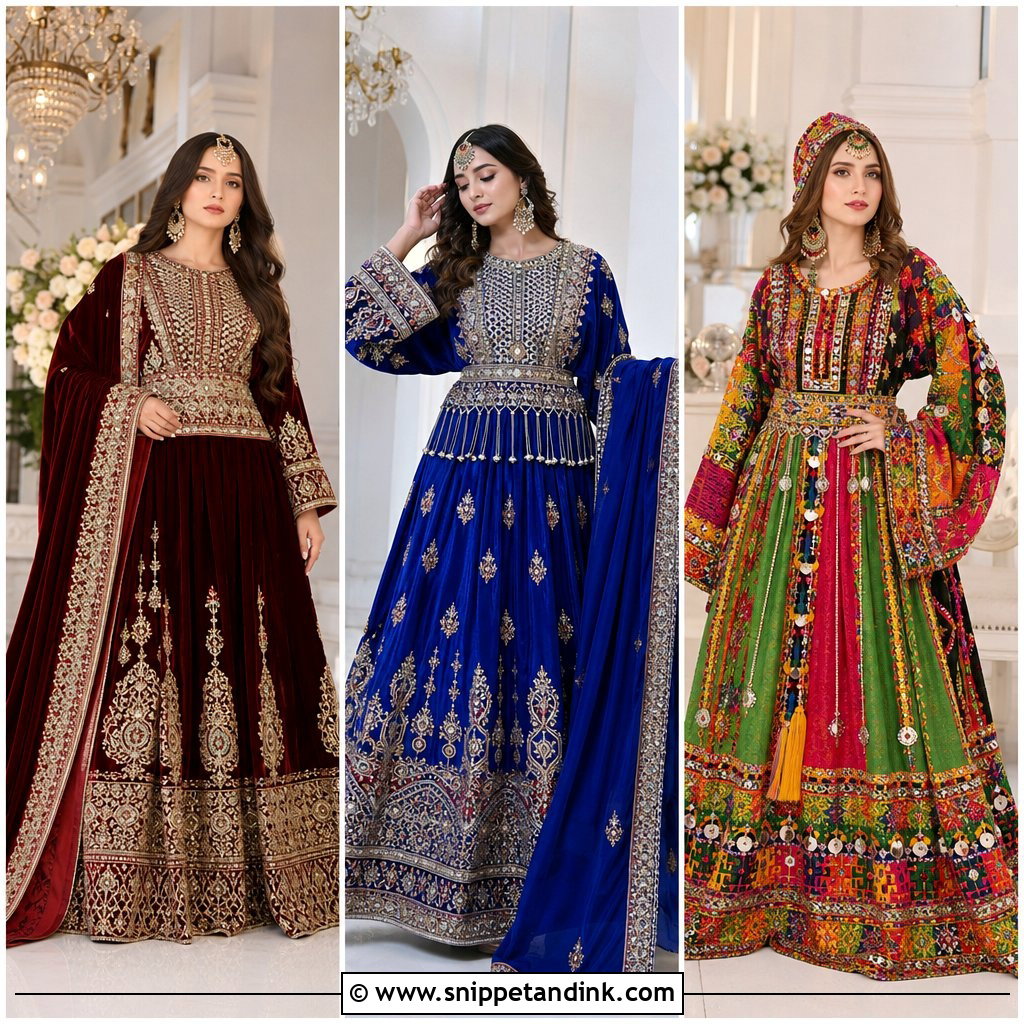
Emerald flatters a wide range of skin tones and looks rich without a single bead. Off-the-shoulder is where I get careful: the bodice has to stay up on its own, so I look for boning, a grip strip along the top edge and a fit you can raise your arms in without it sliding. Satin deepens the green, while crepe gives a quieter finish. Gold heels, small drop earrings and a metallic clutch are all it needs. A low bun with a few face-framing pieces keeps the shoulders clear, and warm bronze eyes with a muted rose lip suit the shade. Skip the big necklace. On this neckline it crowds the collarbones, and the earrings are already doing that job.
10. Silver Beaded Long Trail Gown
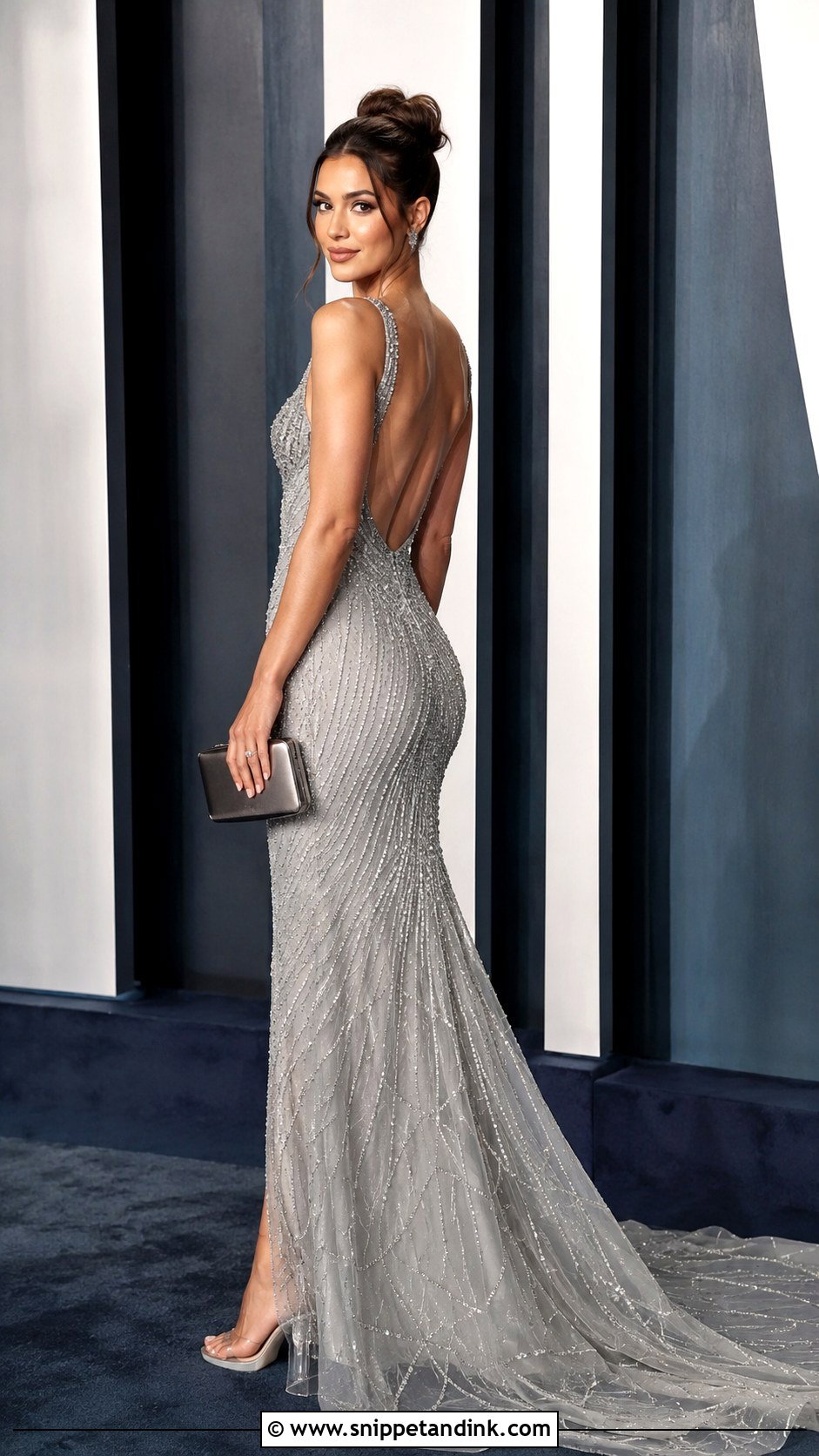
Beading is heavy. A fully beaded train adds real weight at the back of the gown, so I look for beadwork concentrated on the bodice and thinning toward the hem, which keeps the sparkle where cameras see it and lightens what you drag. Silver or clear heels, crystal studs and a smooth metallic clutch keep things clean, with a center-parted sleek bun for a red-carpet finish or soft waves for a gentler one. For makeup, smoky taupe eyes and a nude pink lip suit the cool palette. At the fitting, run your hand along the inside of the arms and under the train. Loose threads mean beads on the dance floor later, and a rough interior means you need a lining.
11. Cape Sleeve Long Trail Gown
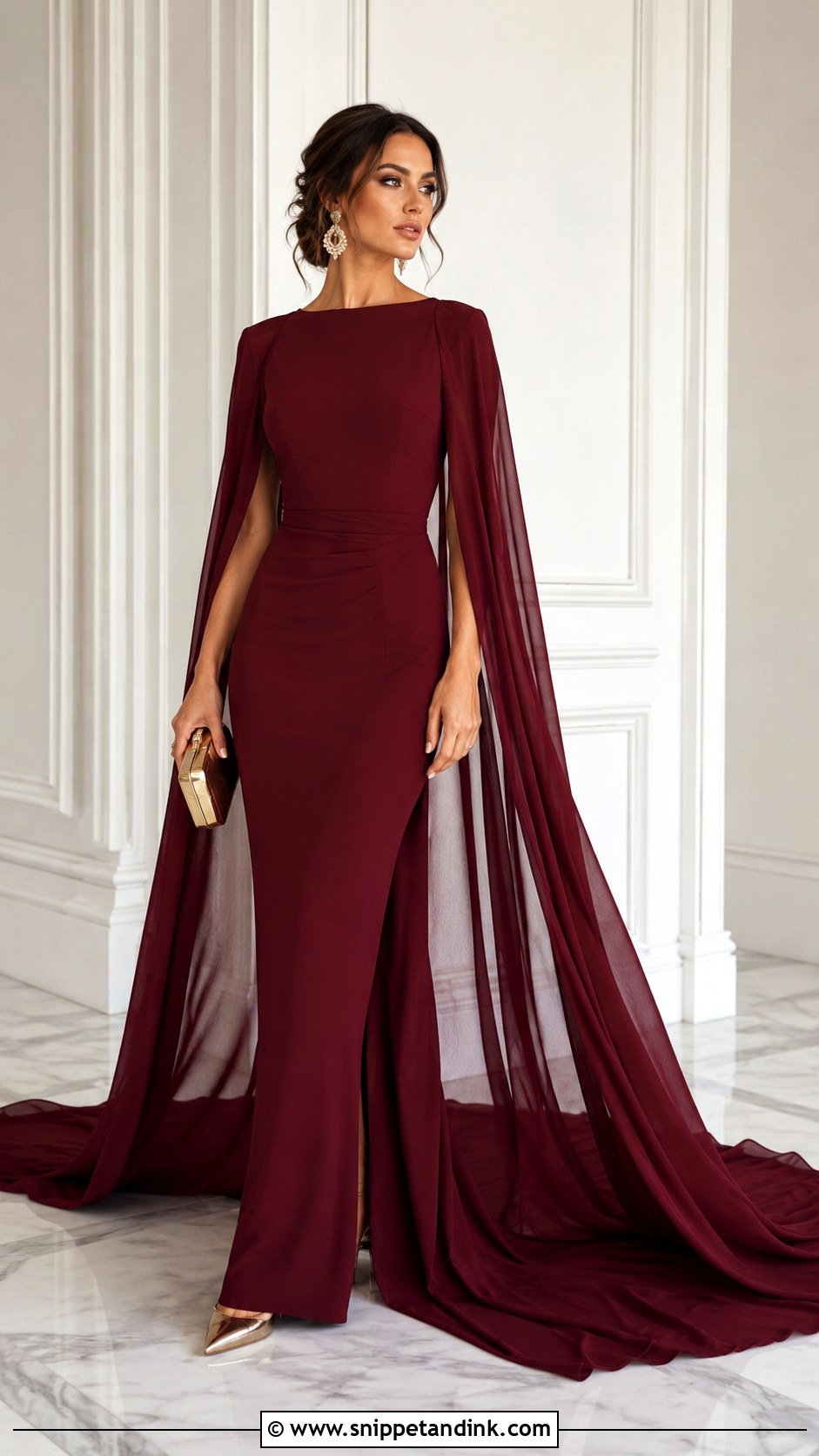
Cape sleeves move every time you do, and they echo the train in walking shots. Chiffon panels float; crepe holds a sharper outline. The gown underneath should be clean and fitted so the cape and trail stay the focus, with pointed heels, statement earrings, a small box clutch and almost no necklace, since the shoulder fabric already frames you. I keep hair up in a neat bun or smooth ponytail here, because long loose hair tangles in chiffon within minutes. Check the cape length against the train. If it reaches the floor it gets stepped on, by you and by every relative in a hug line, so ask for it to end higher or attach at the wrists.
12. One-Shoulder Long Trail Gown
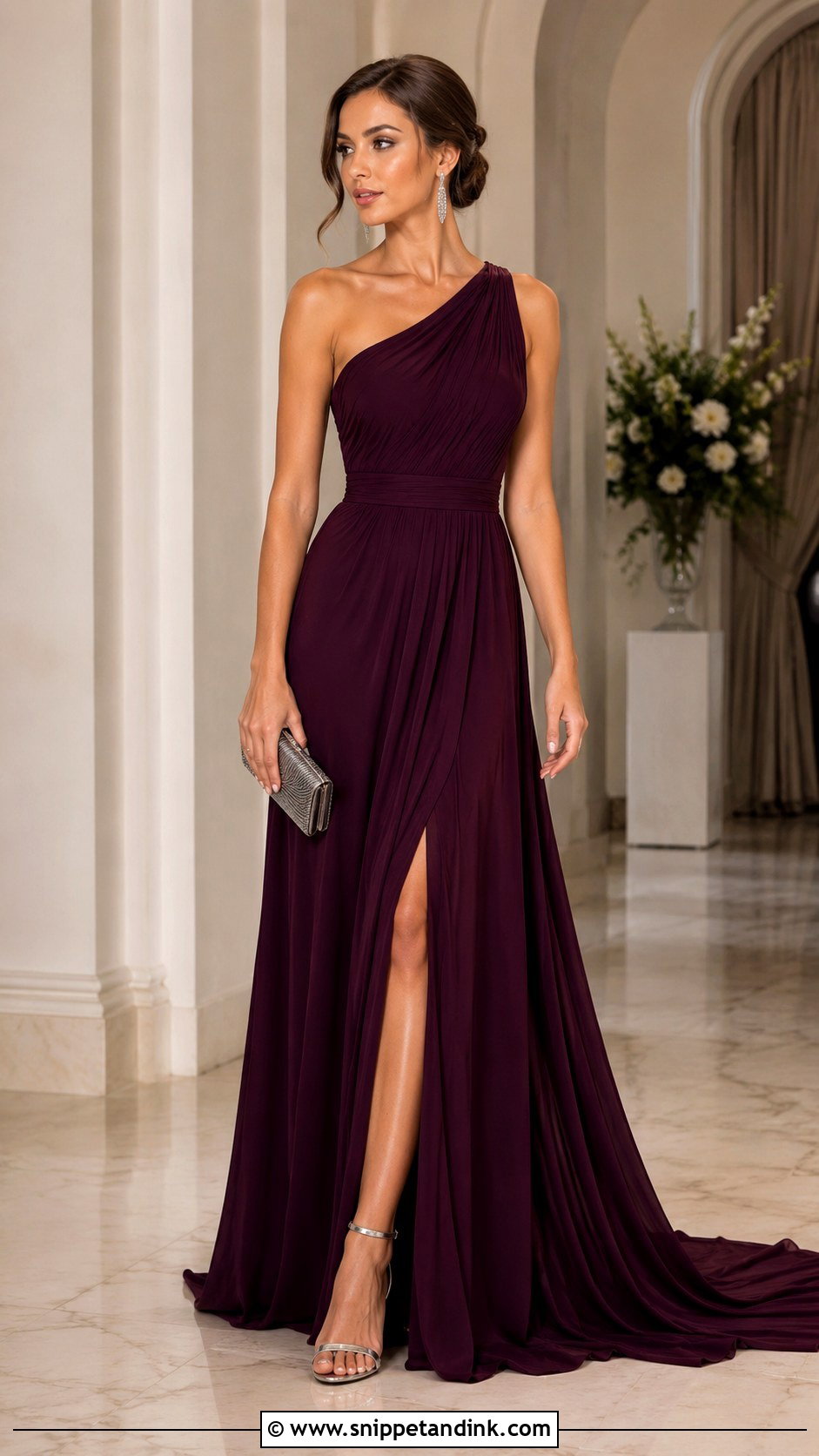
An asymmetric neckline gives a trailing gown a modern line, and it suits jewel tones, black and deep burgundy especially well. Pick a softly draped one-shoulder bodice with a defined waist so the skirt can fall cleanly into the train. One statement earring on the bare side is my usual call, though slim matching drops work too. Metallic heels and a compact clutch that echoes the gown’s hardware finish it, and a side-parted bun placed opposite the strap balances the shape. The fit test is simple: raise both arms, then hug someone. If the bodice shifts or the strap slides, it needs more support now, before you spend the evening tugging at it.
13. Long Sleeve Long Trail Gown
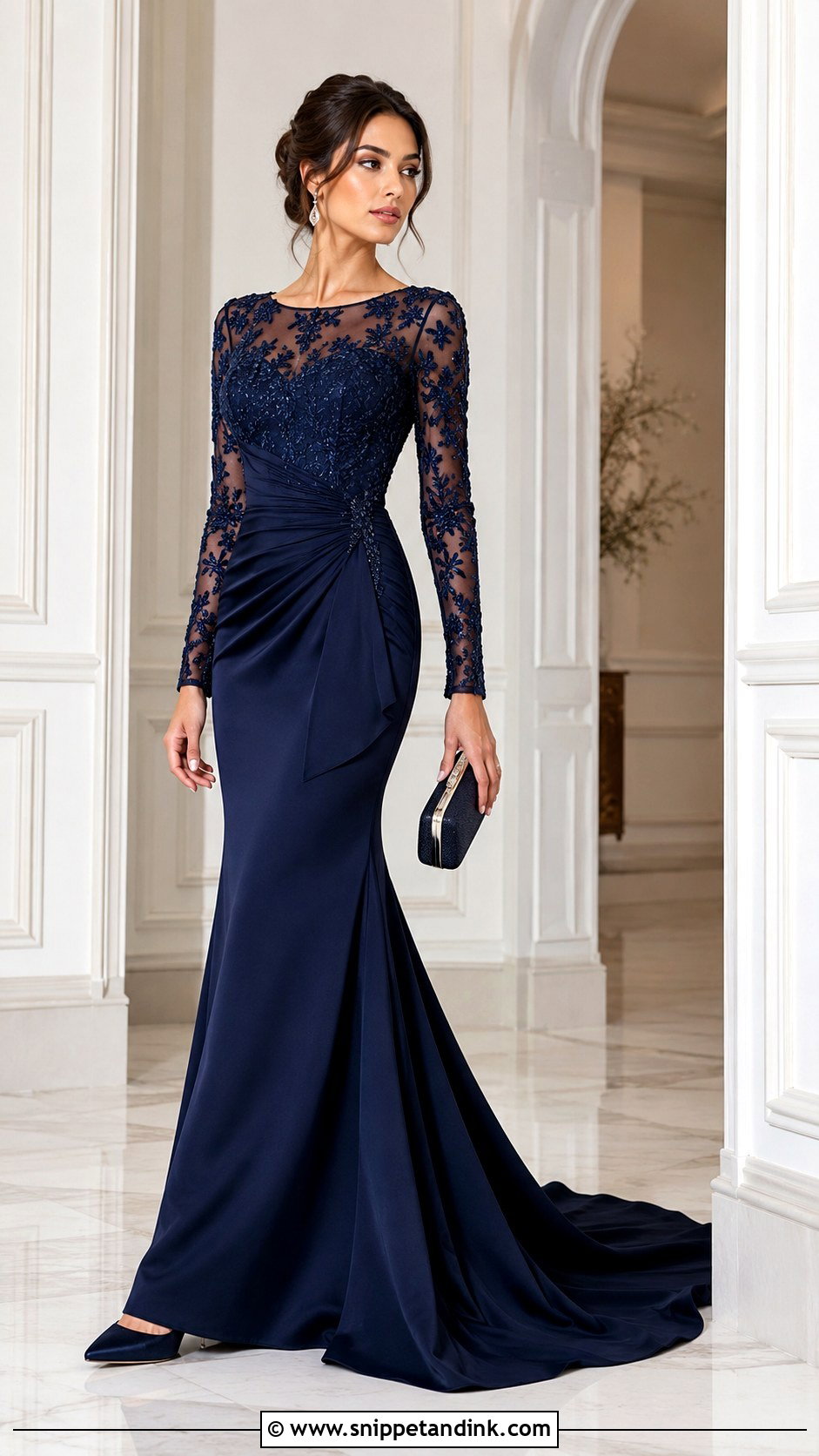
Long sleeves suit cooler months and chilly air-conditioned ballrooms, and they have to be fitted with your arms moving, not hanging still. Sheer embroidered sleeves look delicate; fitted crepe ones look clean and modest. Either way, the armhole should be cut high enough that you can lift a glass and hug without the whole bodice rising. A defined waist and gentle flare stop the covered top from feeling heavy. Pointed heels, refined drop earrings and a slim clutch work, but leave bracelets off, because they catch on lace and beading. A low bun or twisted updo keeps any back detail visible. Natural makeup with defined lashes and a rose lip suit the quieter mood.
14. Corset Bodice Long Trail Gown
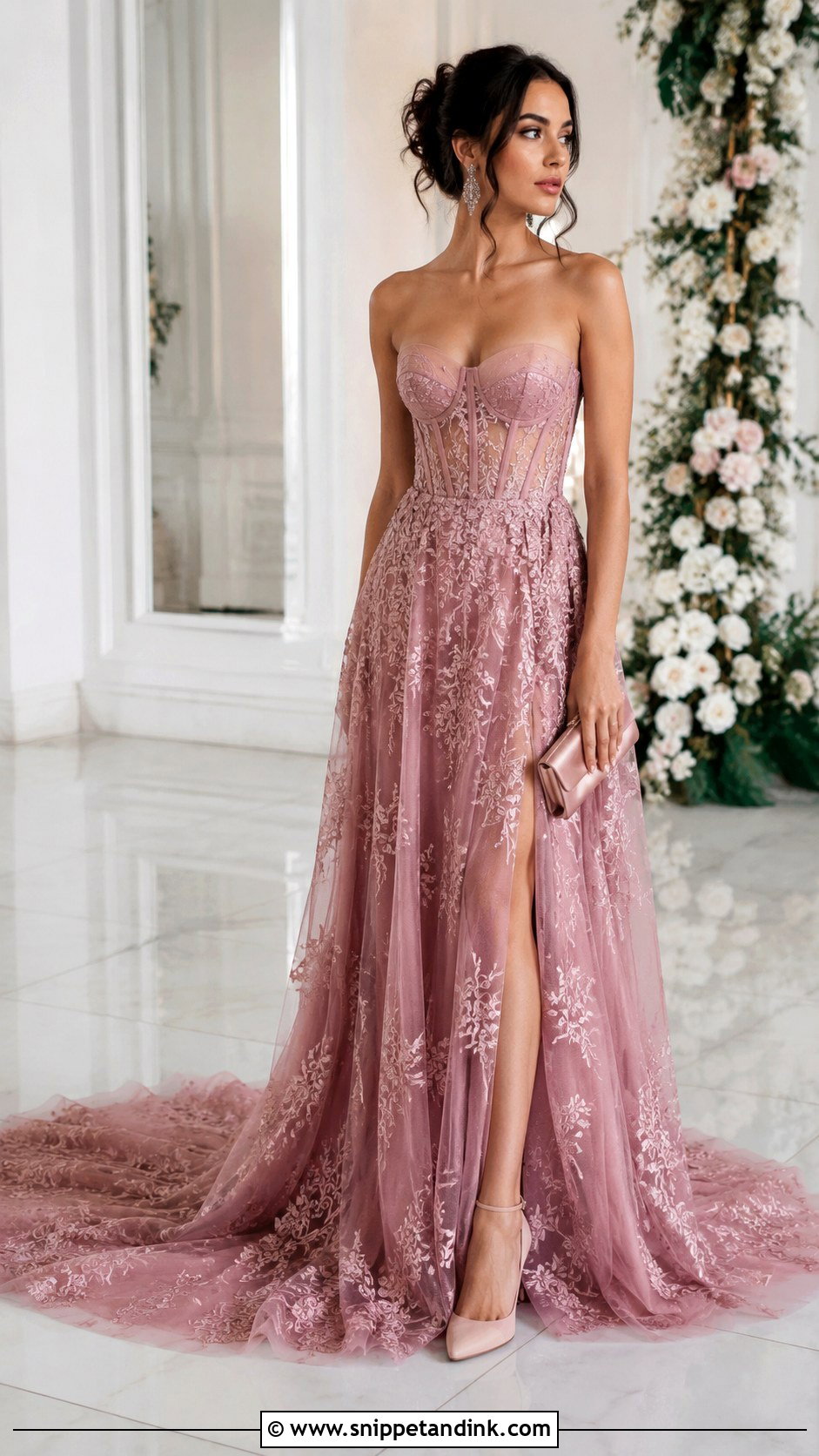
A corset bodice does the structural work for the whole gown. Boning covered in satin, embroidered mesh or tonal appliqués looks refined, and the skirt below can be A-line, trumpet or full depending on the volume you want. The rule I hold to at fittings is that you should be able to take a full breath, sit, and eat a plate of dinner. Lace-up backs make that easier because they can be adjusted on the morning itself, which a zipped corset can’t. Pair it with sleek heels, a small satin clutch and earrings that follow the embellishment. A soft updo balances all that structure, and a fine necklace keeps the bodice seams in view.
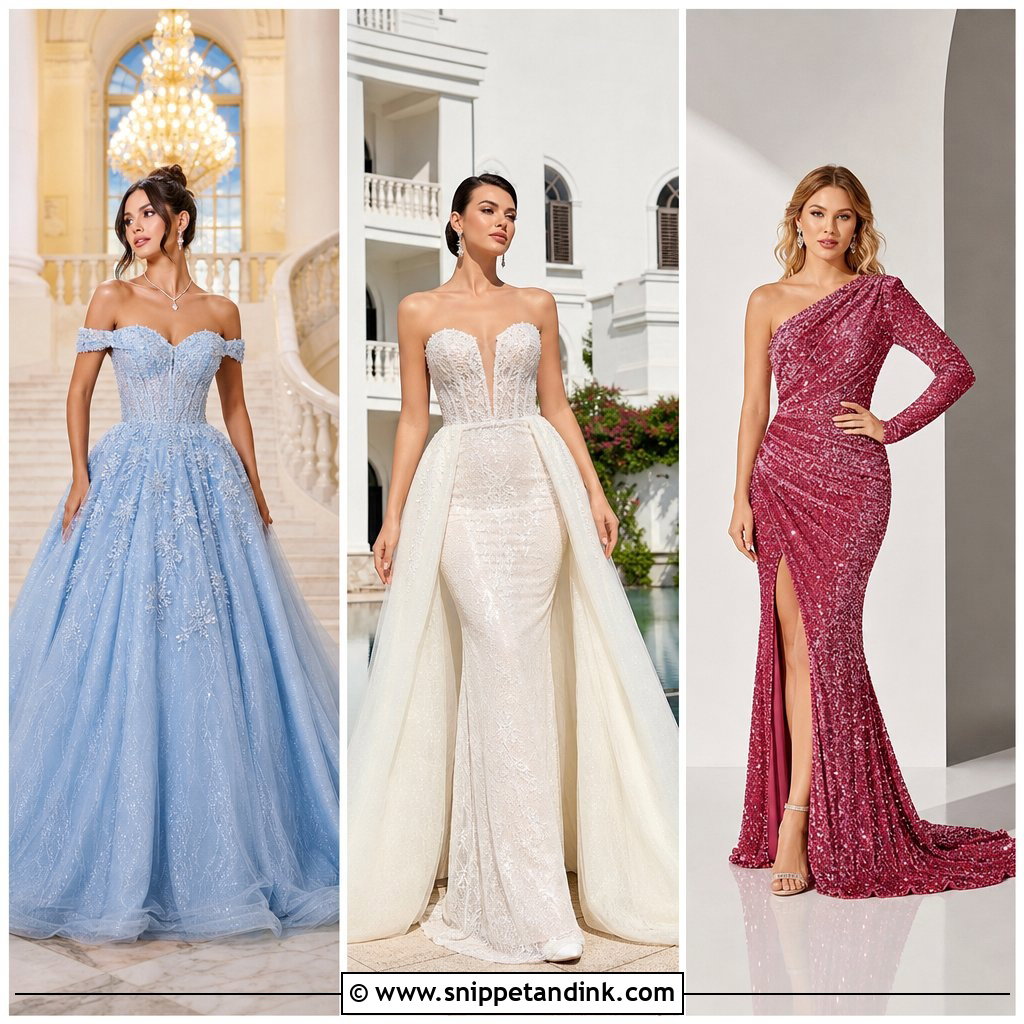

15. High Neck Long Trail Gown
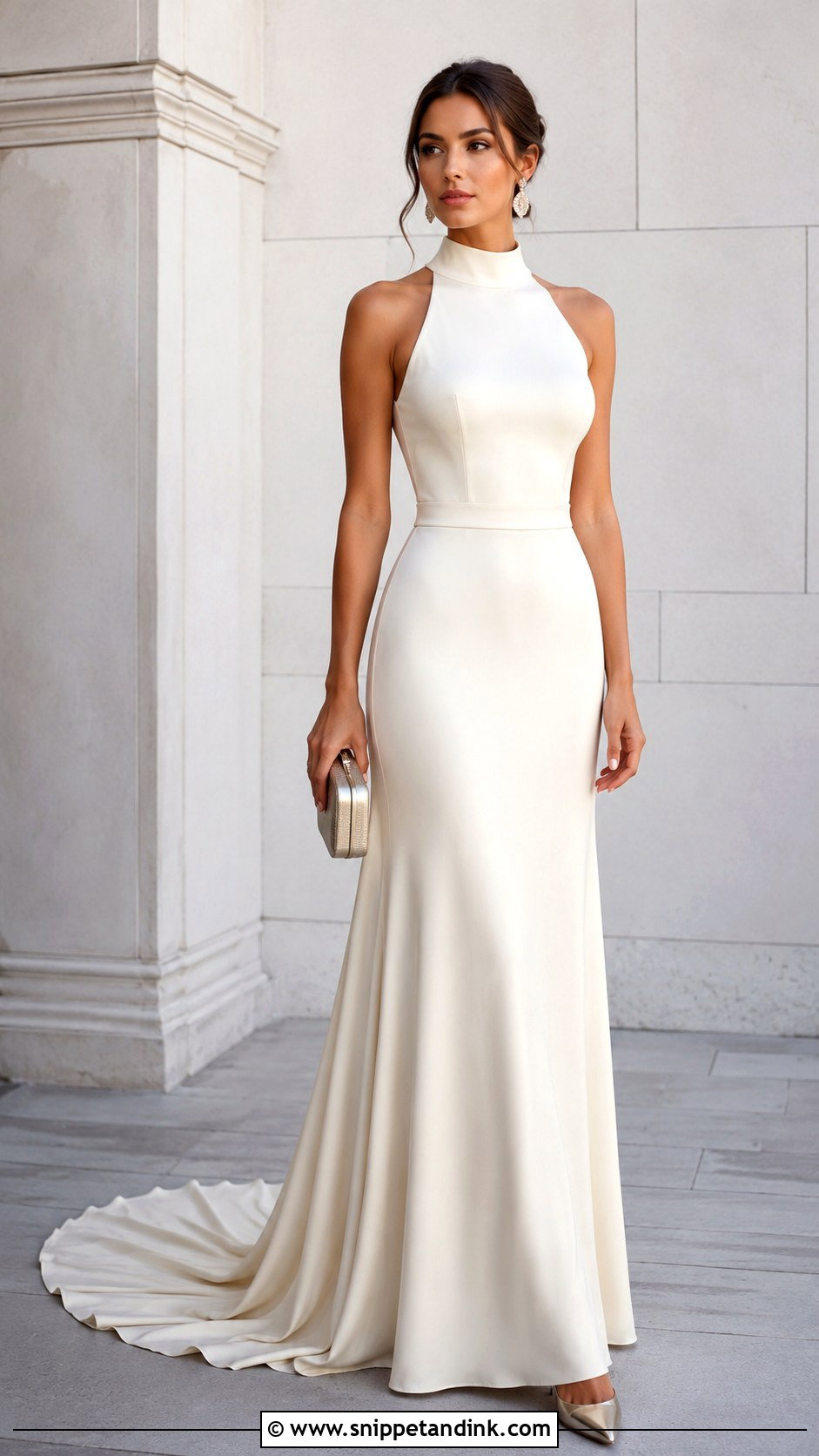
A high neckline adds height and pulls attention up to the face. A fitted bodice with clean tailoring, fine embroidery or subtle beadwork works best; sleeveless versions look contemporary, while sheer long sleeves give more coverage. Statement earrings take the place of a necklace, with elegant heels and a structured clutch. Hair should go up into a high bun or smooth ponytail, otherwise it hides the collar entirely. I’d steer you away from a tight collar if you have a shorter neck or tend to run warm. A softly curved neckline or sheer upper panel gives a similar line with far more breathing room.
16. Ruffled Organza Long Trail Gown
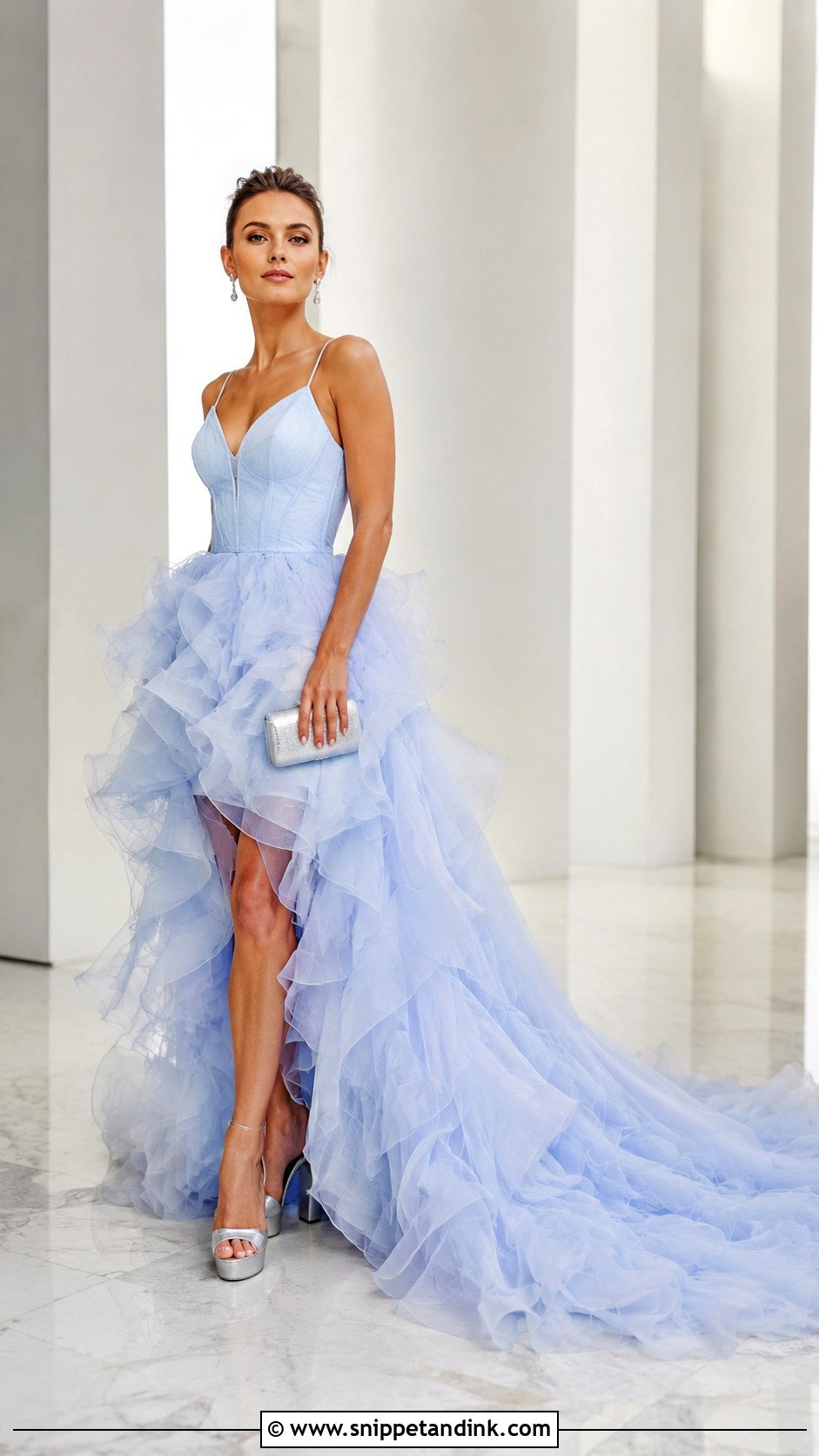
Organza is crisp and light, so ruffles cut from it add drama without much weight. Placement matters more than quantity. Ruffles along the skirt, one side seam or the train look intentional, while ruffles everywhere swallow the person wearing them. Keep the bodice simple and fitted so the waist stays clear, and wear platform heels for stability under a busy hem, with small crystal earrings and a smooth clutch. A sleek bun stops the hair competing with the skirt. One habit of organza to know about: it holds a crease stubbornly. Walk in the gown at the fitting to make sure the ruffles move freely around your shoes, and keep it hanging, never folded, until you dress.
17. Detachable Long Trail Gown
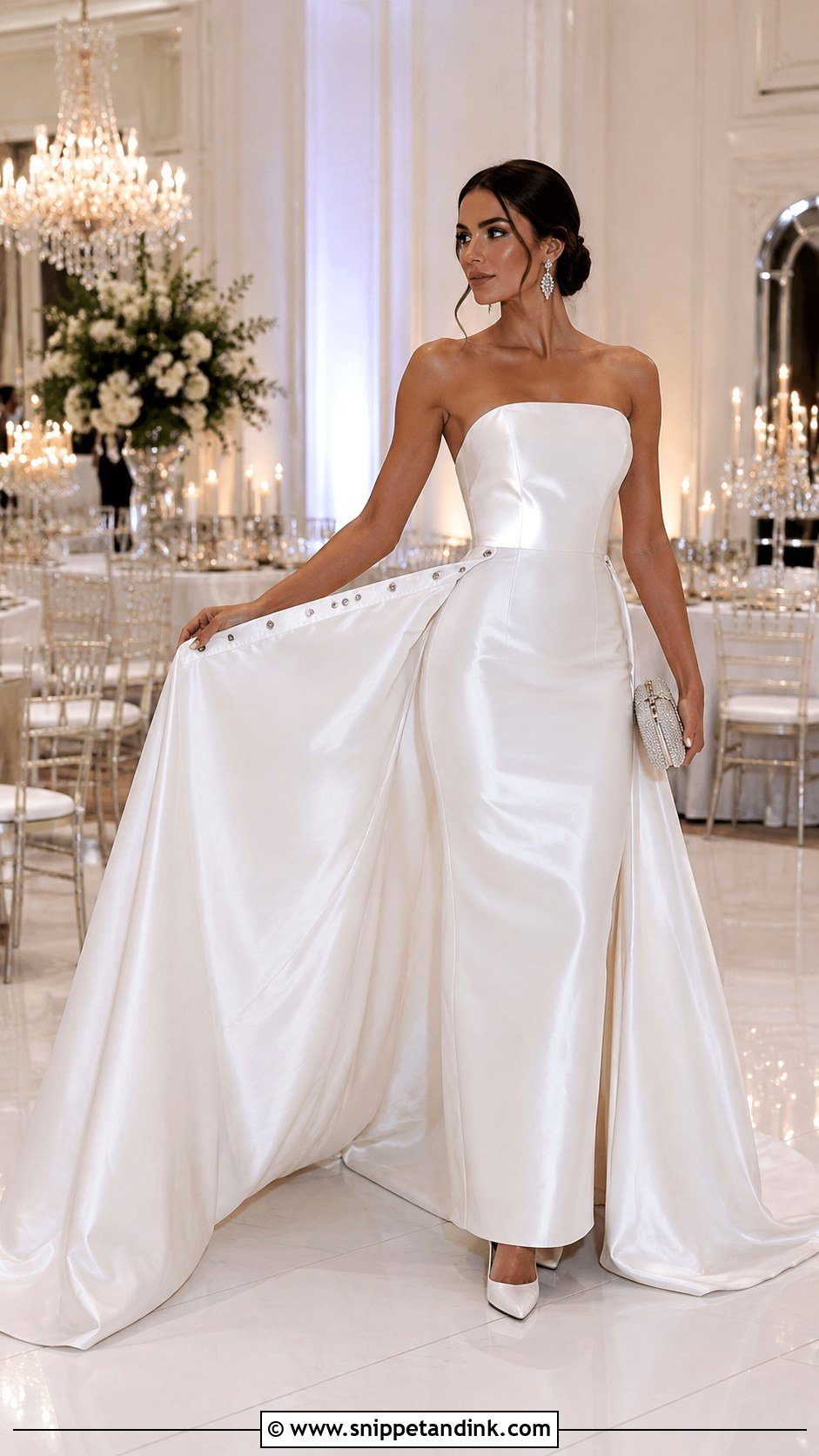
Two looks, one gown. The base is a fitted column, mermaid or A-line, and a coordinating overskirt or train fastens at the waist for the ceremony and portraits. Satin gives a smooth formal effect, tulle gives soft volume. Choose heels, earrings and a clutch that suit both versions, and a polished ponytail or structured bun that still looks right once the volume drops away. My practical concern is the fastening. Ask whether it uses hooks, snaps or buttons, have them hidden under a waistband, and rehearse the removal with the person who’ll actually do it at the reception. Two minutes in a corridor is fine; ten minutes of fumbling while guests wait is not.
18. Plus Size A-Line Long Trail Gown
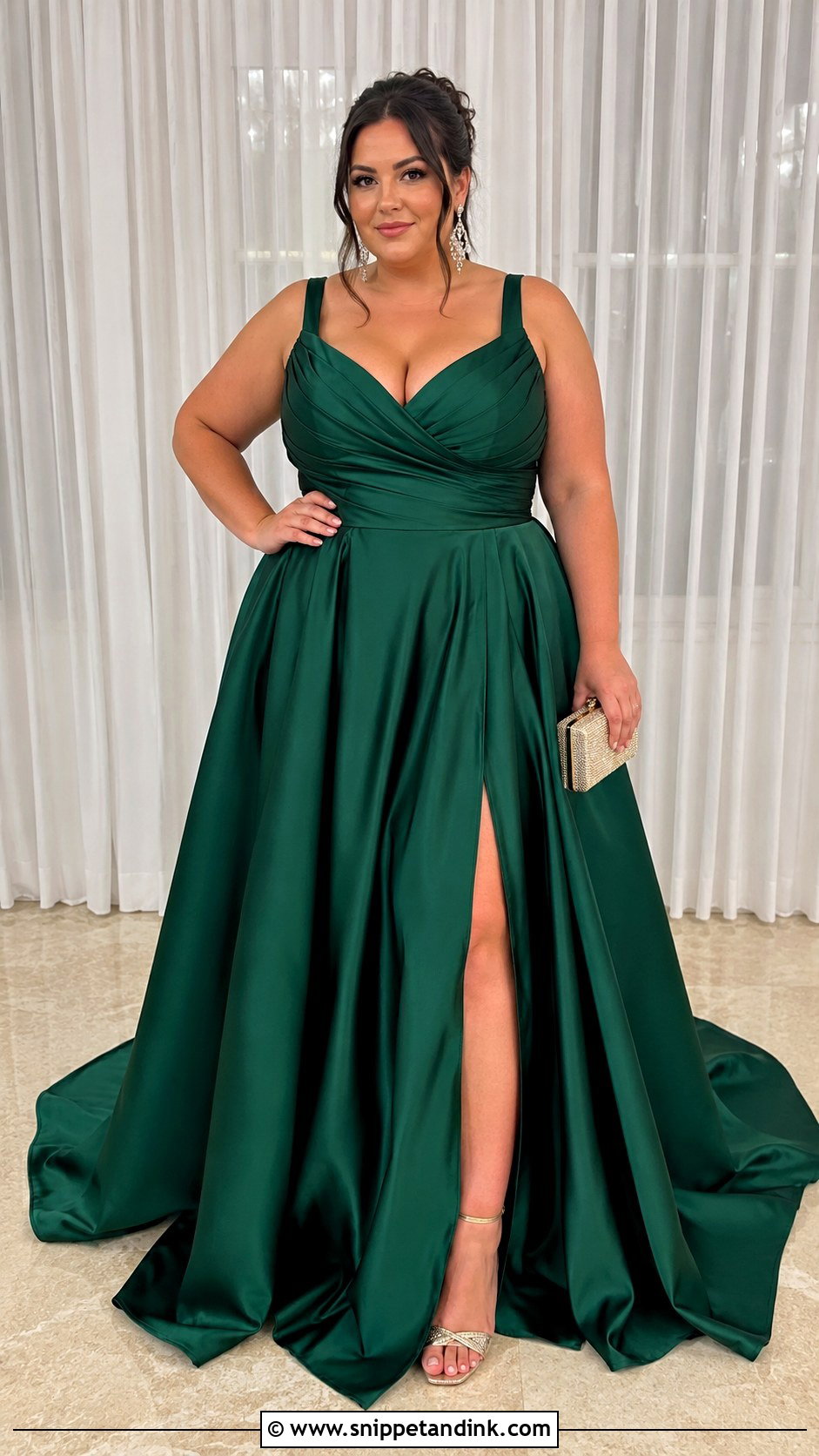
A well-cut A-line gives support and movement across a wide range of sizes, and it’s the shape I start with for most brides who want a long train without a tight skirt. Look for a structured bodice with straps or sleeves you’re comfortable in, a defined waist and a skirt that falls away from the body into a generous trail. Fuller figures don’t need extra decoration to look finished; smooth satin, crepe, lace and subtle beadwork all hold up well. Supportive block heels or platforms make a heavy skirt easier to carry, and a side-swept style or soft updo frames the face. Judge the fit, not the label. Bridal sizing tends to run small, and a good seamstress works from your measurements rather than the tag.
19. Modest Long Trail Gown With Hijab
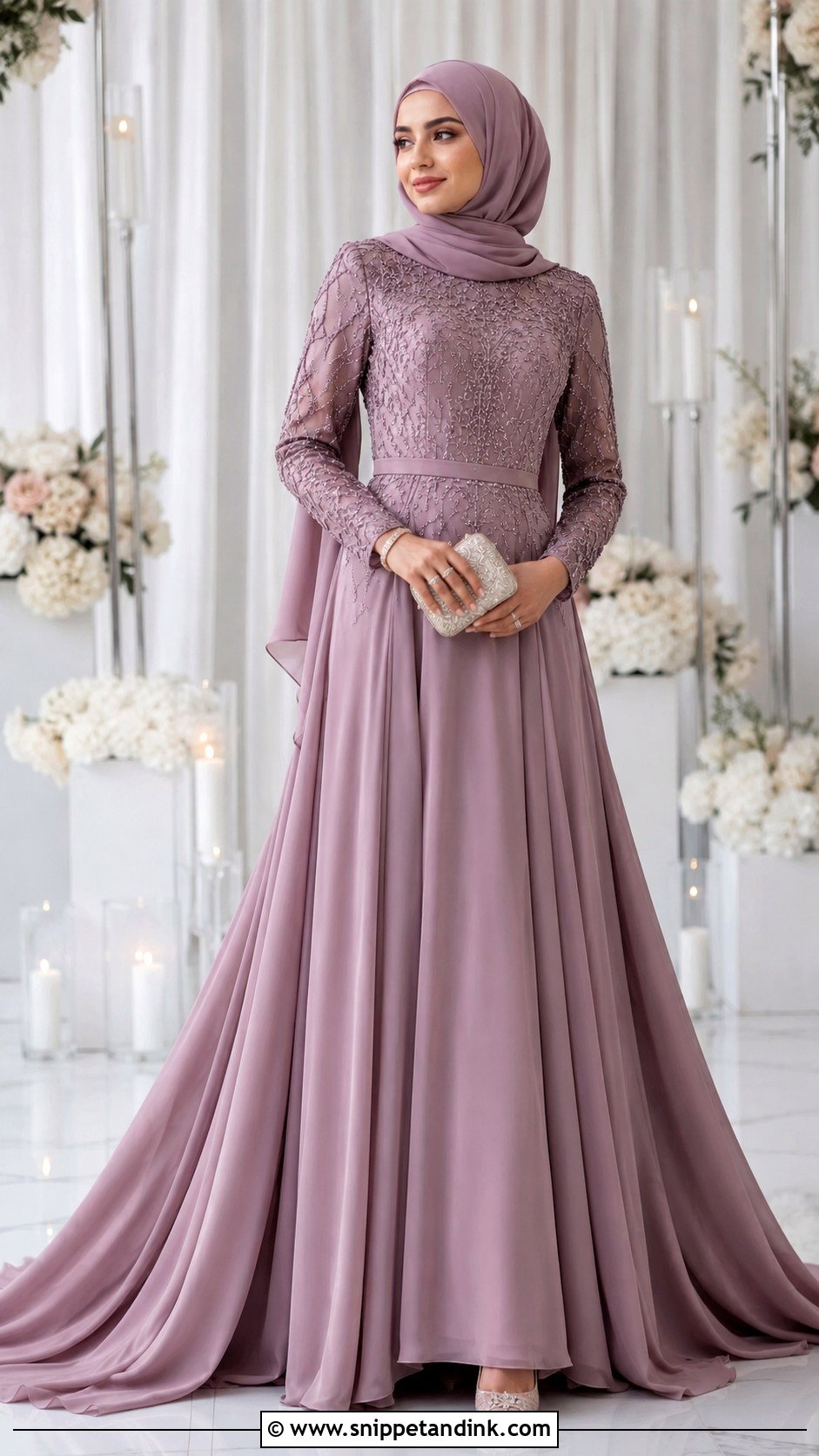
Full coverage and a graceful train sit together easily when the base is right. Ask for an opaque lining under the bodice, full-length sleeves and a high neckline over an A-line or softly flared skirt, with embroidery around the cuffs, waist and train. Coordinate a chiffon or satin hijab in the same color family, and bring the actual hijab fabric to fittings so the shades can be matched under the shop lights. Closed-toe pointed heels, a small embellished clutch and delicate earrings, if they’ll show, complete it. Test the sleeves by reaching forward, since fitted sleeves can pull tight across the back, and make sure the train has a wrist loop or bustle.



20. Minimalist Crepe Long Trail Gown
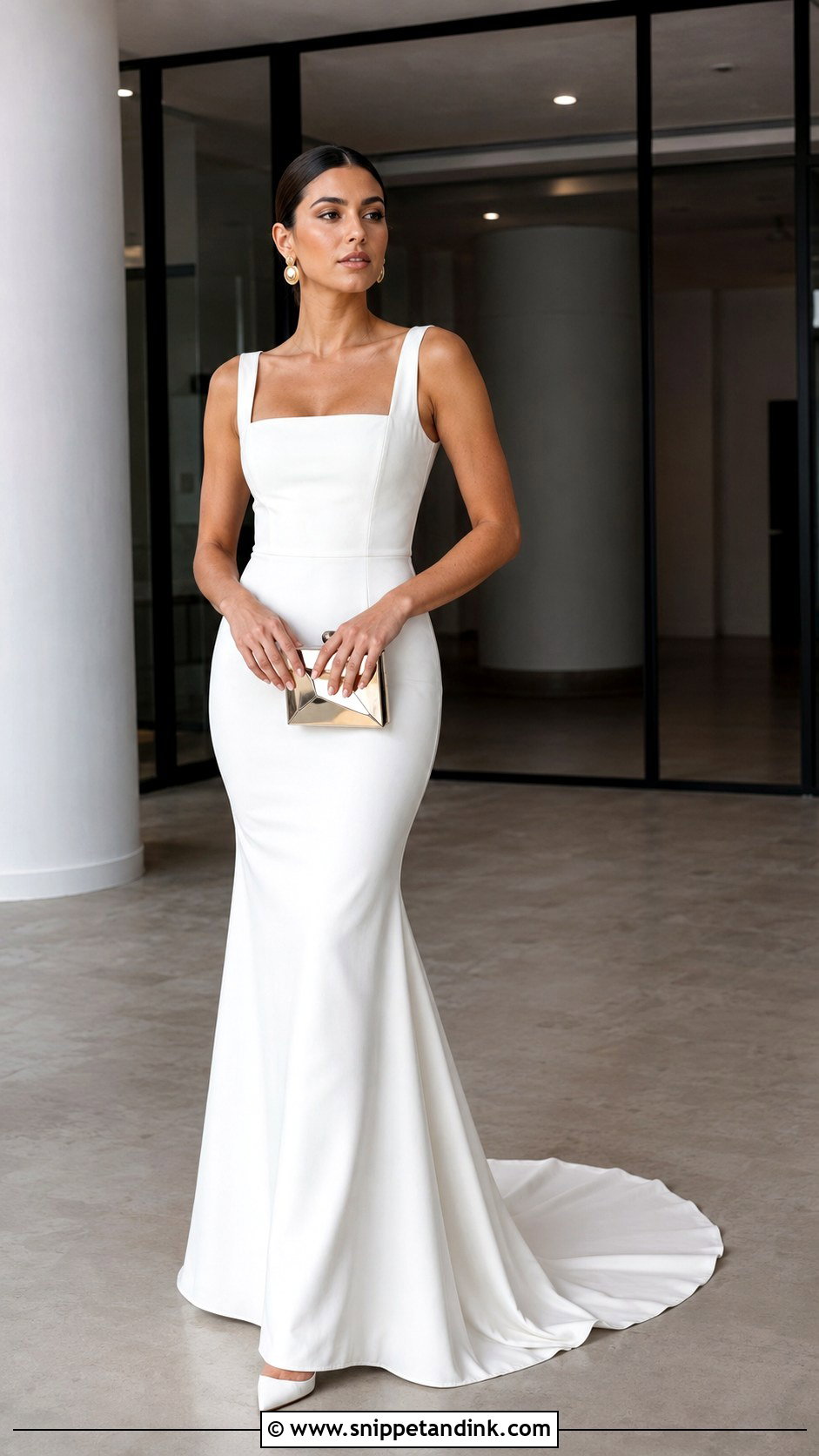
Crepe proves a long trail doesn’t need lace or sequins. A column or fit-and-flare with precise seams, a structured neckline and a smooth train is the whole design, in white, ivory, black, navy or a muted neutral. That simplicity is also the risk. With nothing to distract the eye, every uneven hem and pulled seam shows, so this is the gown where I’d spend the alterations budget. Sculptural earrings, pointed heels and a small geometric clutch suit the clean look, along with a sleek bun or straight ponytail. For makeup, go with glowing skin, precise eyeliner and a neutral lip.
Bustles, Wrist Loops and Who Does Them Up
Almost every gown on this list needs a plan for after the ceremony, and that plan is a bustle. It’s added by your seamstress during alterations, usually once the hem is set, because the lift points depend on the finished length.
Over, under, or a simple loop
An over bustle hooks the train up onto the back of the skirt, which shows off lace and beading and copes with heavy fabric. A French or under bustle tucks the train underneath with numbered ribbon ties and gives a softer, gathered look that suits satin and tulle. A wrist loop is fine for a short, light train, but holding several feet of fabric all evening tires your arm and pulls at the waist seam.
Bring the person who will bustle you to your final fitting and let them do it twice while the seamstress watches. Ribbon ties look obvious in a quiet fitting room and baffling in a dim corridor, so ask for the ties to be numbered or color-coded.
From the Car Door to the Cleaner
Long trains get dirty fastest in the ten minutes nobody plans for: getting into the car, crossing a car park, stepping through a doorway. Gather the train over your arm or have someone carry it for those moments. A small kit in a bridesmaid’s bag is worth having, with safety pins, clear tape for a dropped hem, a lint roller and white chalk to soften a light mark on ivory fabric.
Afterwards, get the gown to a specialist cleaner within a few weeks. Spilled champagne and sugary drinks can dry invisible and then turn yellow months later. Store it in acid-free tissue in a breathable box, never sealed in plastic, and keep it somewhere dark and dry.
Walk the Train Before You Commit to It
Once the ceremony is over, a well-planned train is the part of the gown you’ll think about least. Pick the fabric for your season and venue, the neckline for the jewelry you’ll actually wear, and the train length for the floor you’re walking on. Then settle how it will be bustled, who will do it, and run through it once before the wedding. Wear your real shoes to every fitting so the hem is set at the right height. If the gown lets you breathe, sit and dance, the entrance takes care of itself.
You'll Like These Ideas:




Leave a Reply