
Arab bridal gowns tend to be built on a grand scale: couture embroidery, generous coverage and silhouettes designed to be seen across a big hall. Full skirts, intricate lace, rich beadwork and removable pieces that turn one gown into several looks remain the backbone of most collections I work with. What I care about first, though, is how the dress will be lived in. Neckline height, sleeve fit, train weight and the venue decide more than any sketch, and nearly every detail, from embroidery to coverage, can be customized. The looks below cover ball gowns, fitted shapes and heritage dress, with what each asks of the bride.
Dressing for the Zaffe, the Stage and Several Outfit Changes
Customs differ widely across Arab families and countries, but many weddings I dress brides for share a shape: a lively entrance procession with drums and dancing, long stretches seated on a decorated stage while guests come up for photos, and often more than one outfit across the henna night, the ceremony and the party. Each of those moments asks something different of a gown.
The entrance
You will be walking slowly, often dancing a little, with family close around you. A train needs space and someone assigned to it, and a heavy skirt needs a waist that can bear its weight without slipping. Practice the walk in the shoes.
The stage
This is where a gown is seen most and photographed most. A full skirt spreads well on a seat; a tight mermaid is uncomfortable to sit in for long. Ask what the stage seating is like and try the dress sitting on something similar.
Women-only celebrations
Where the party is women-only, some brides who cover in mixed company wear an open neckline or a lighter gown for that part of the night. Detachable capes, sleeves and hijab-ready toppers let one dress serve both settings, so tell your designer early which spaces you will be in.
1. Long Sleeve Arab Wedding Dress
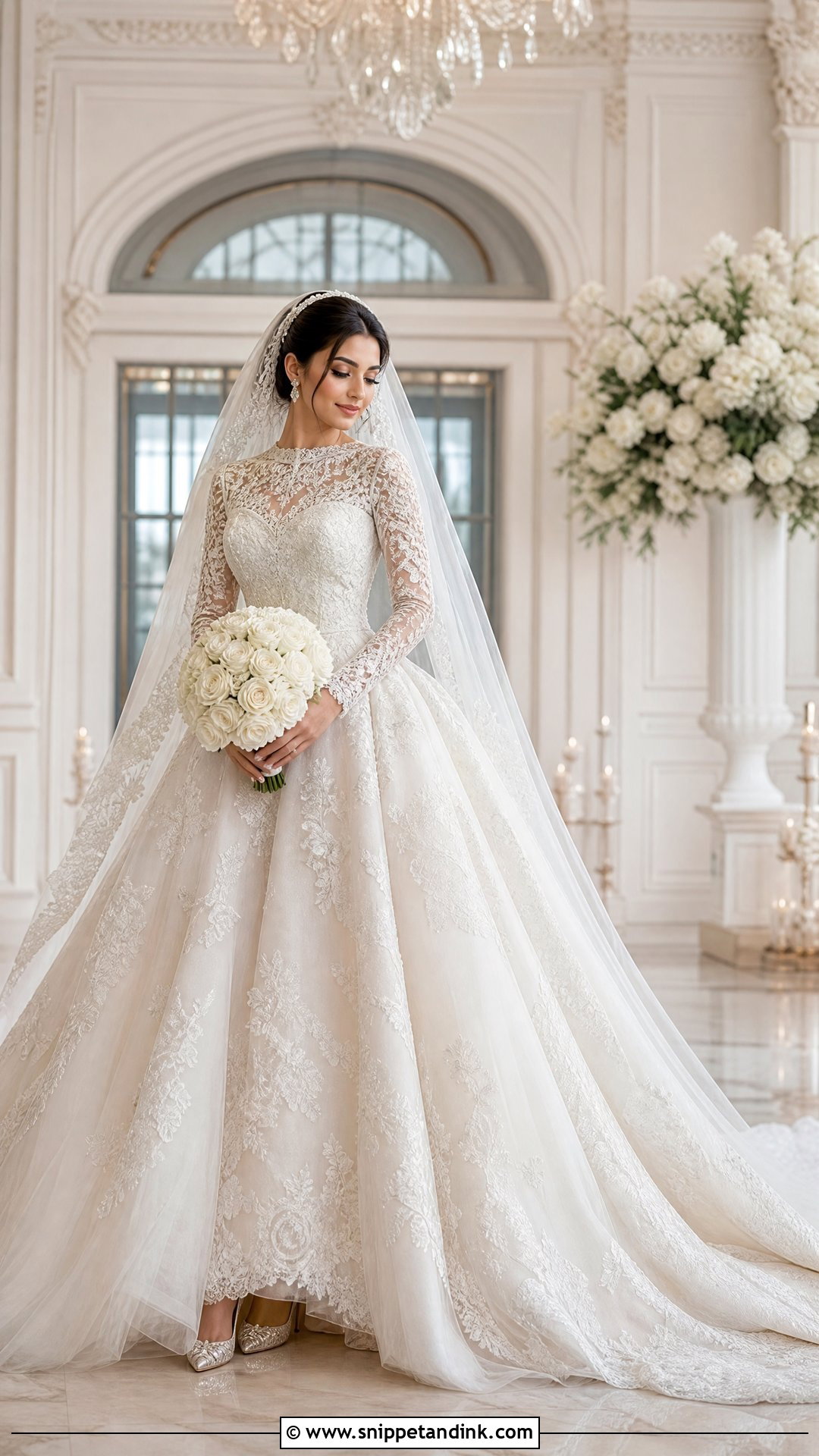
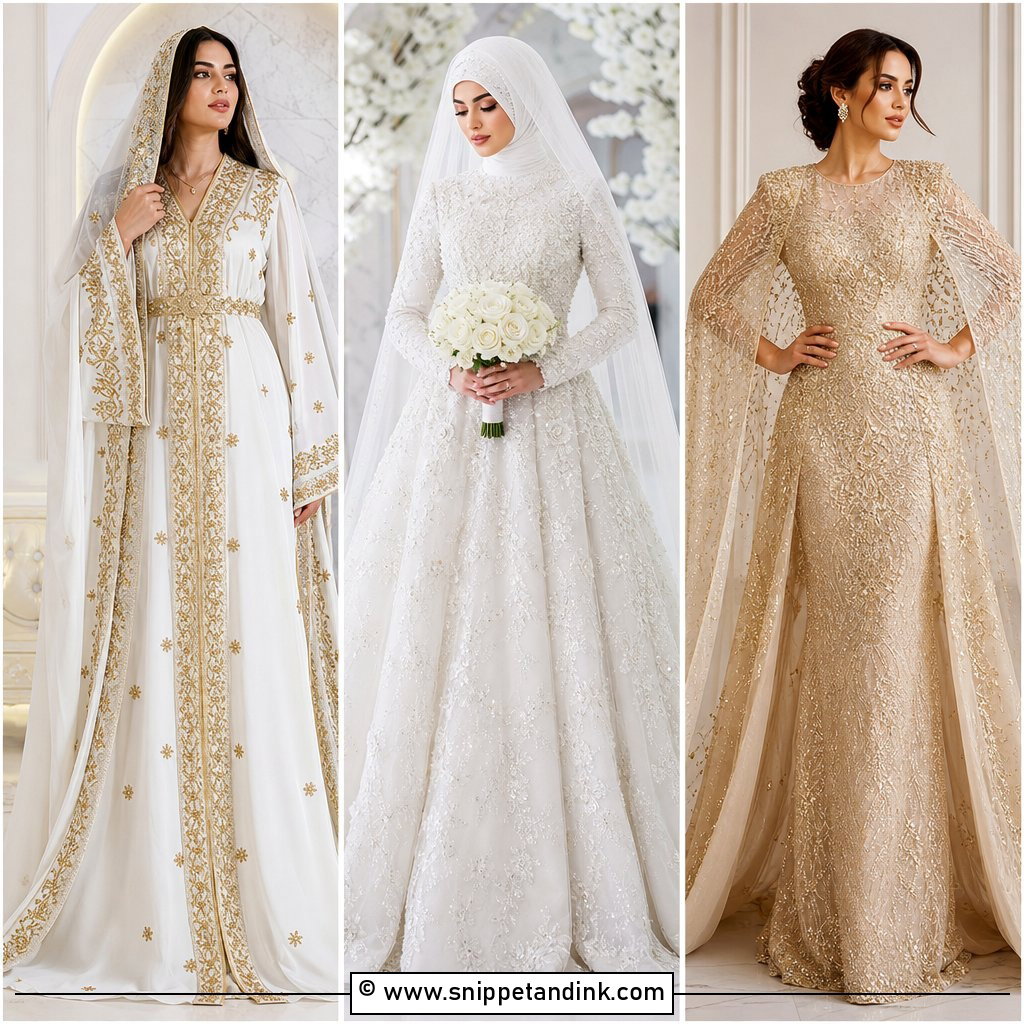
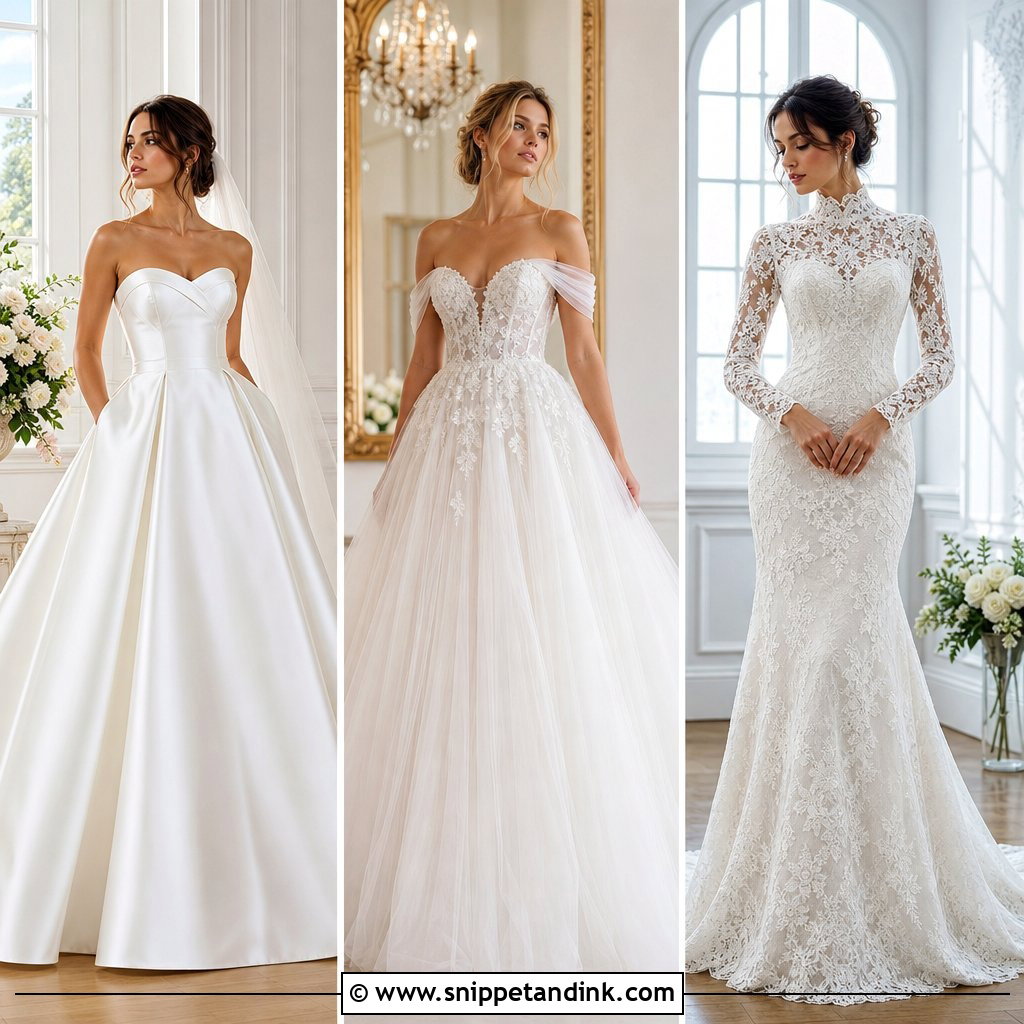
Long sleeves on a ball gown give the regal outline many families picture for the entrance. I like an ivory bodice with hand-placed lace and a little crystal, a structured waist, and a full tulle or satin skirt that keeps the top from feeling heavy. Fit the sleeves close at the wrist so the embroidery reads in photos, but allow room at the elbow, because embroidered lace has almost no stretch and you will be hugging guests for hours. A cathedral veil with a narrow lace border and crystal pumps finish it. Brides wearing a hijab should choose a smooth ivory wrap matched to the gown’s undertone, never a near match.
2. High Neck Arab Wedding Dress
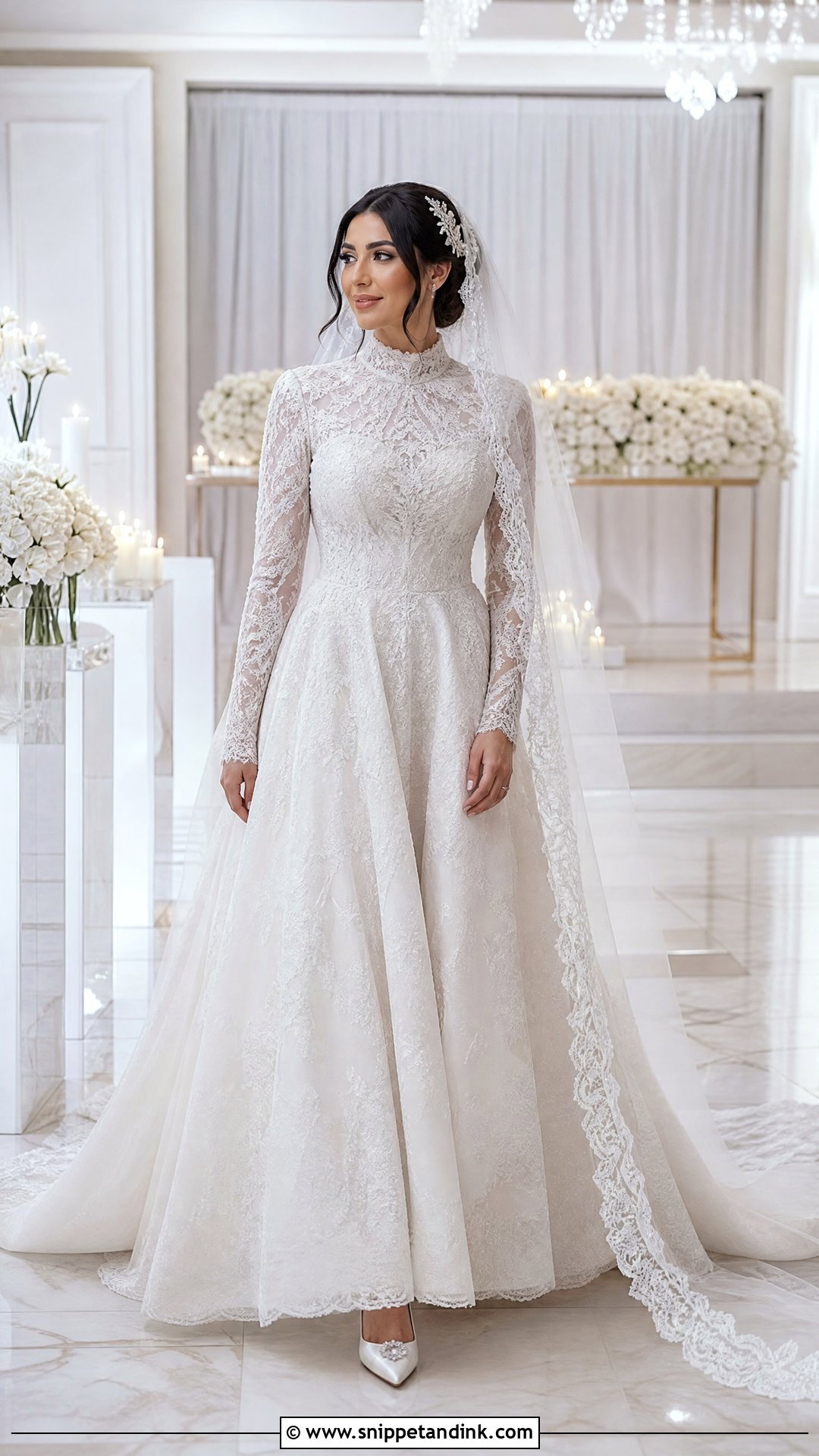
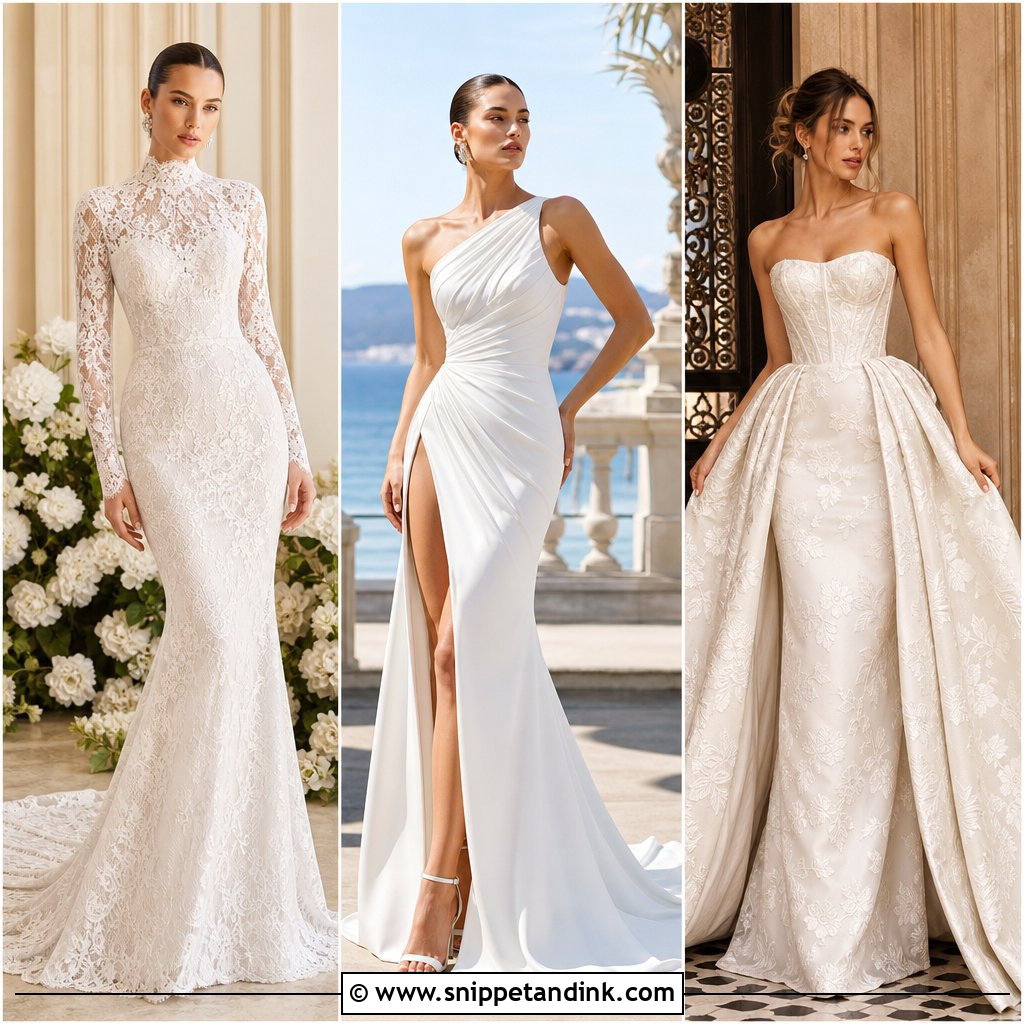
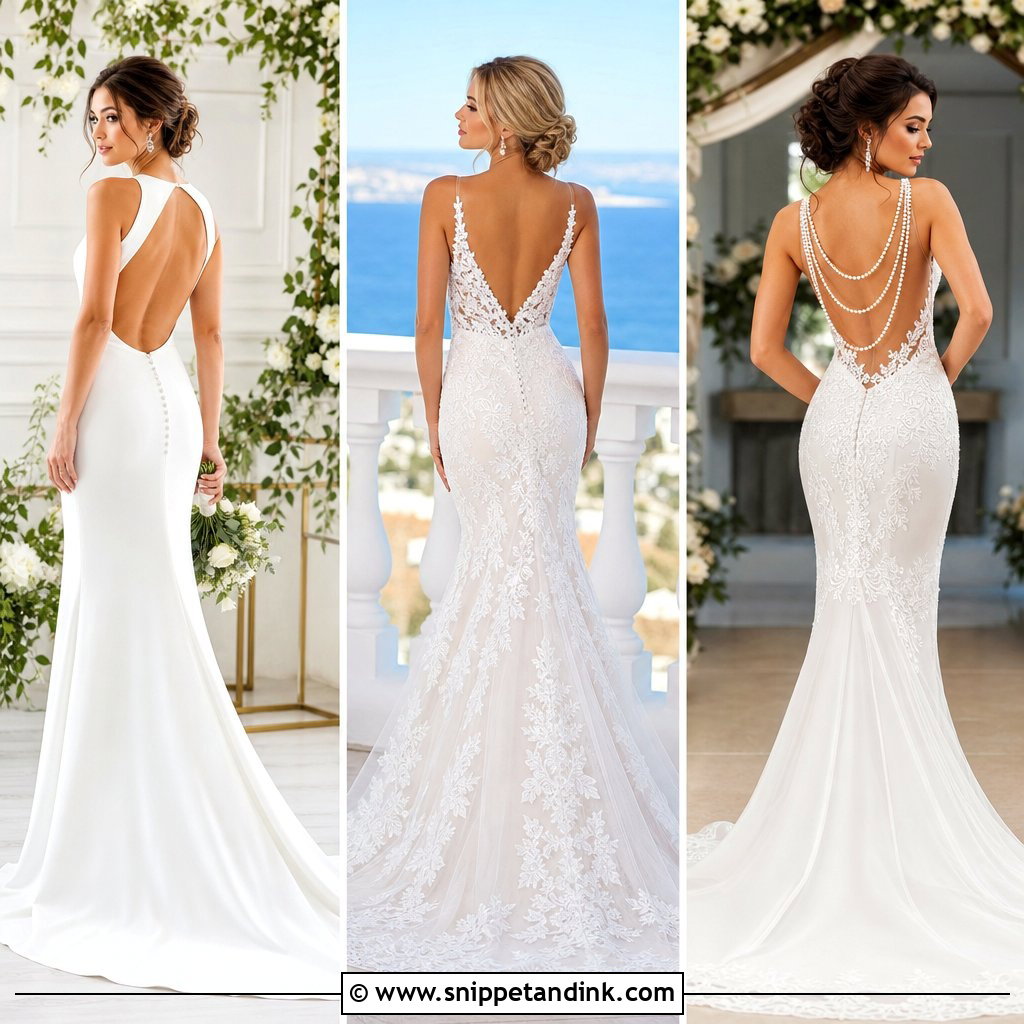
A high neck suits a formal ballroom, and its success comes down to the lining. A soft, well-finished lining at the collar is what stops lace scratching your neck through a long evening. Pair a fitted lace bodice with long sleeves and a natural waist over a flowing A line skirt. Pearl buttons down the back add interest without exposing skin. For hijab styling, keep the wrap flat around the collar, since extra volume there hides the neckline you chose. Skip the necklace; a slim bracelet and pointed satin heels are plenty.
3. Beaded Mermaid Arab Wedding Dress
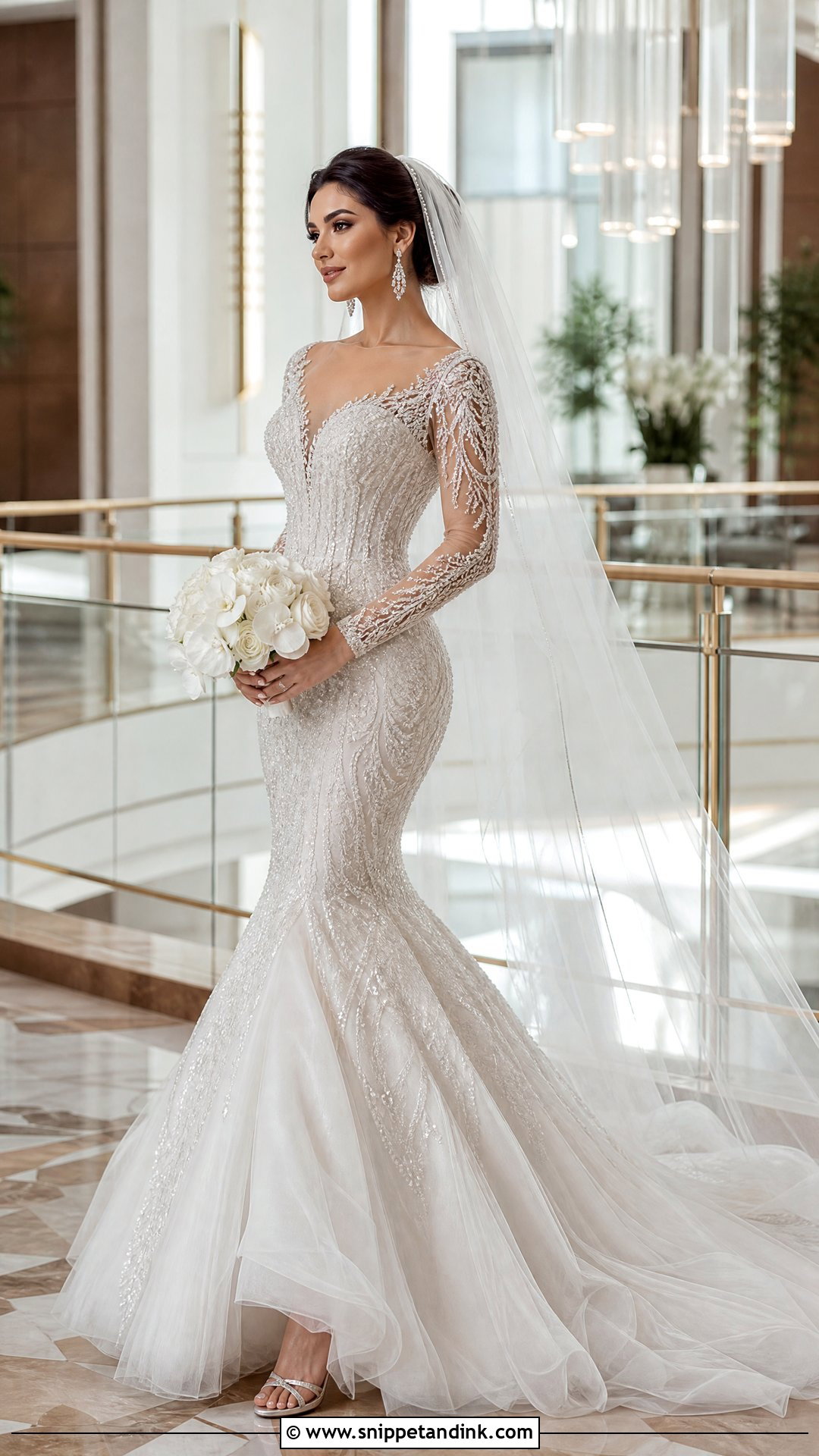
A beaded mermaid gives shape and sparkle, but I fit it with the bride sitting down as often as standing. The skirt should follow the body comfortably and flare around the knee into tulle or organza, with enough room to take a natural step. Beading that thins toward the hem looks balanced and keeps weight off the lower skirt. Long illusion-lined sleeves give coverage, and a full lining stops beads scratching your skin over a long night. A plain cathedral veil and a structured white bouquet keep the styling calm next to so much detail.
4. Arab Wedding Dress With Cape
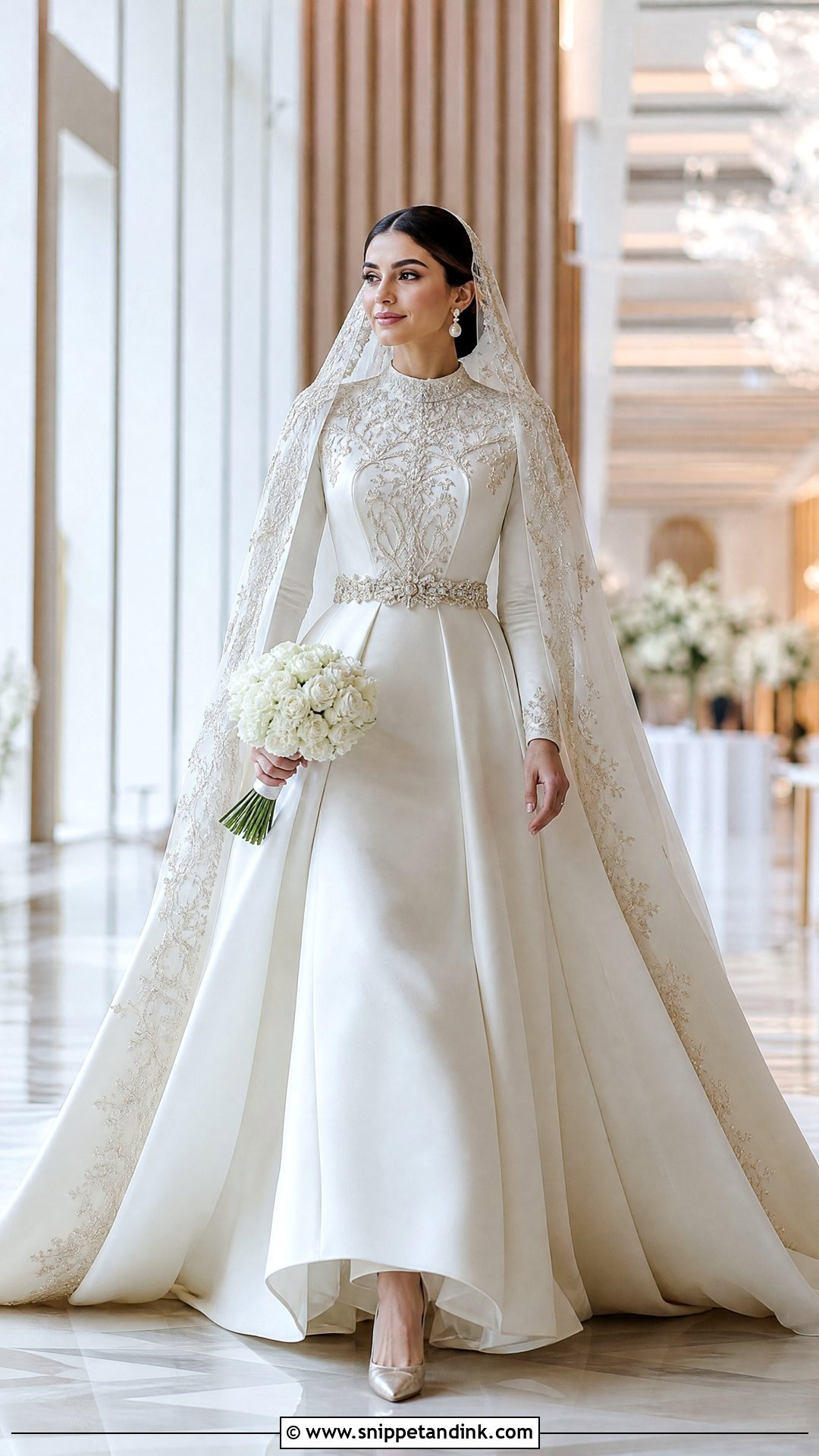
Many brides swap the veil for a cape, and I understand why: it frames the entrance and comes off later in seconds. Start with a clean A line gown with a structured bodice, long sleeves and light crystal at the waist, then add a floor-length cape in embroidered tulle or chiffon that falls slightly past the train. It must attach firmly at the shoulders with hooks or snaps sewn into the gown’s structure, not just the fabric. Pearl earrings and a sleek bun or neatly wrapped hijab finish it, and the bouquet should stay small.
5. Arab Wedding Dress With Detachable Overskirt
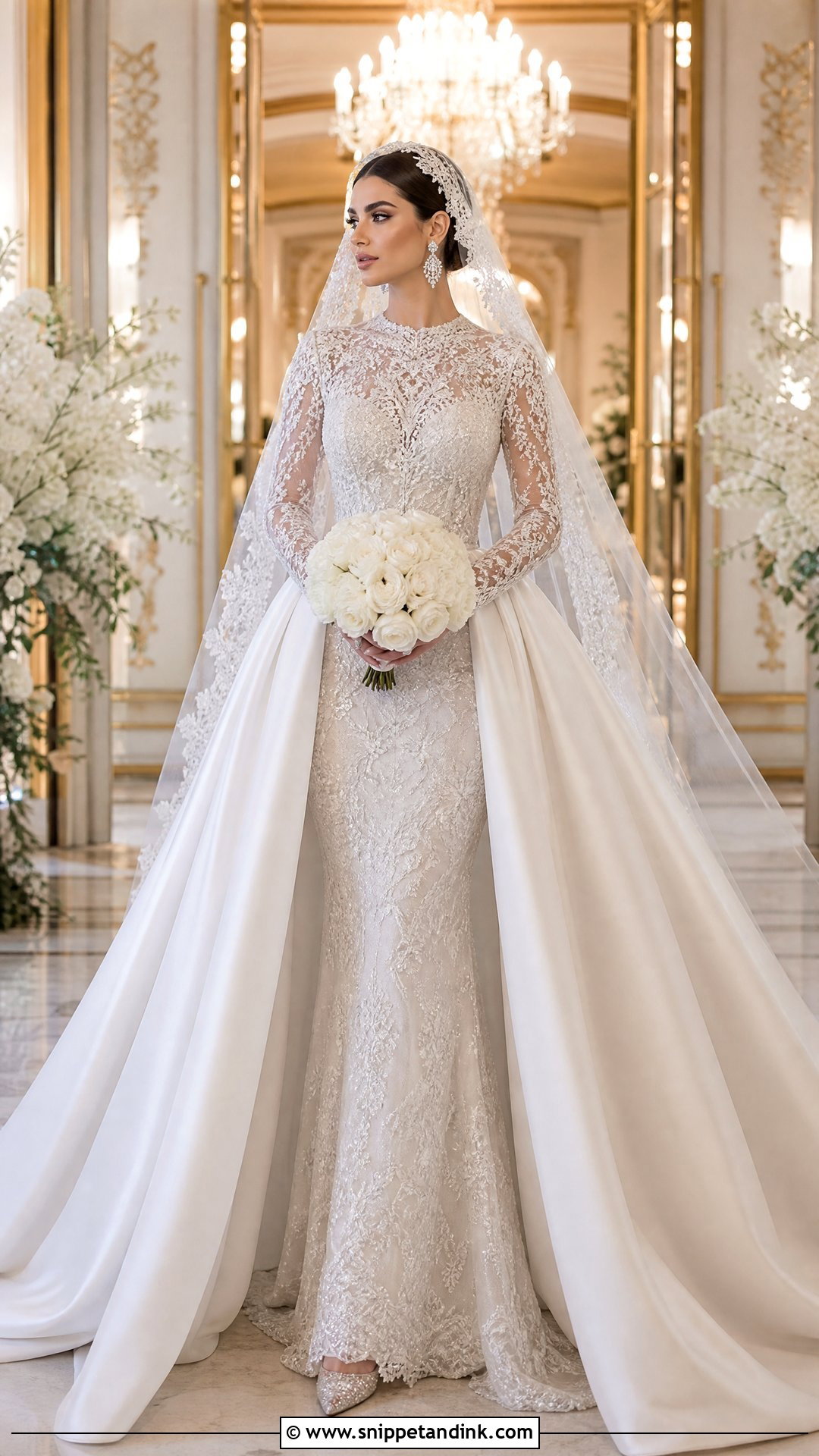
The overskirt gives you a ball gown for the ceremony and a slim, dance-friendly gown underneath. Choose a fitted column or mermaid base with a supportive bodice and long sleeves, and layer a full satin or tulle overskirt on top. The fastening should hide under a beaded belt or embroidered waistband. What matters most is rehearsal: practice the removal at fittings with whoever will help you, until it takes under a minute. A long veil, chandelier earrings and crystal pumps carry through both looks.
6. Pearl Arab Wedding Dress
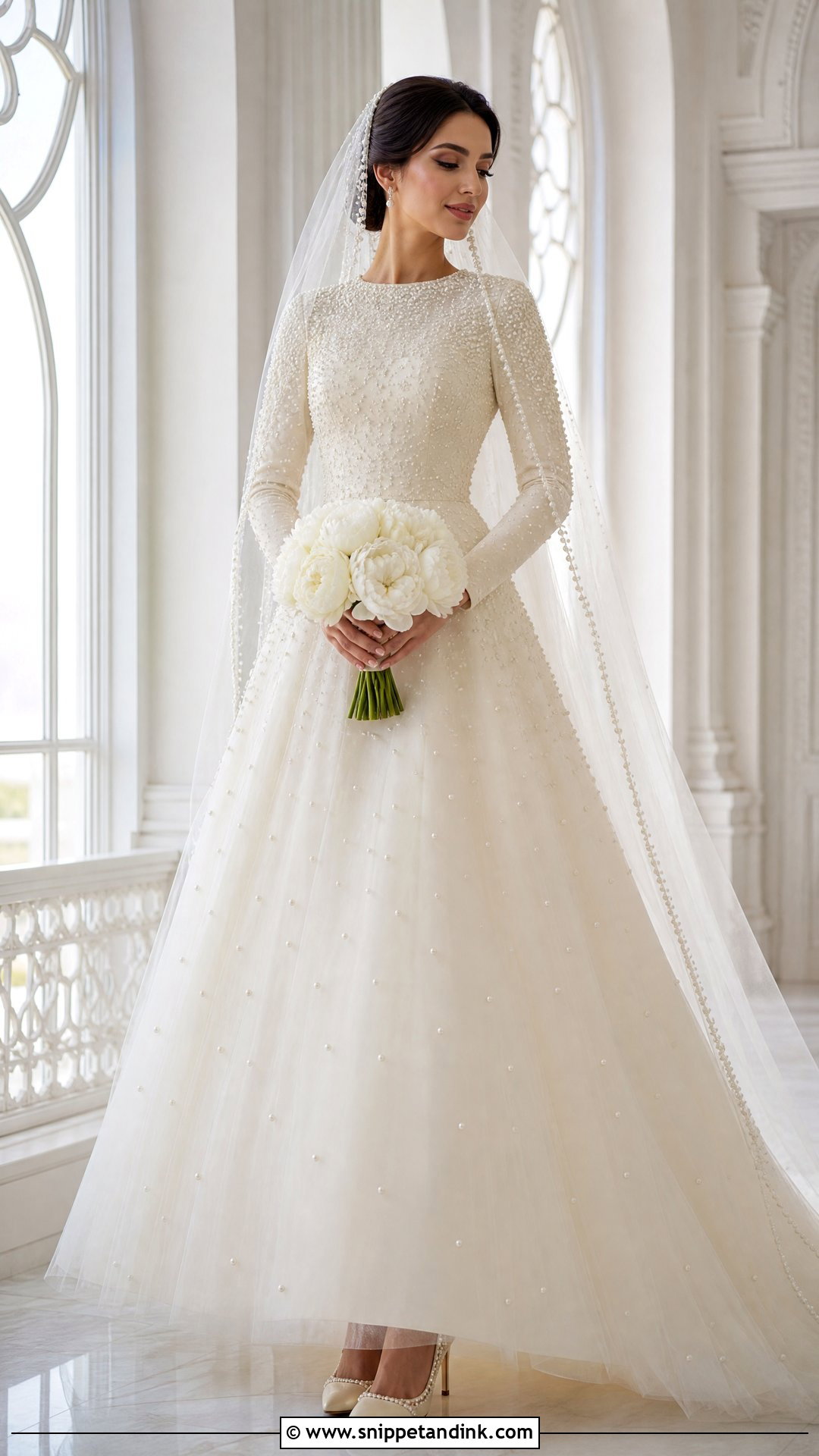
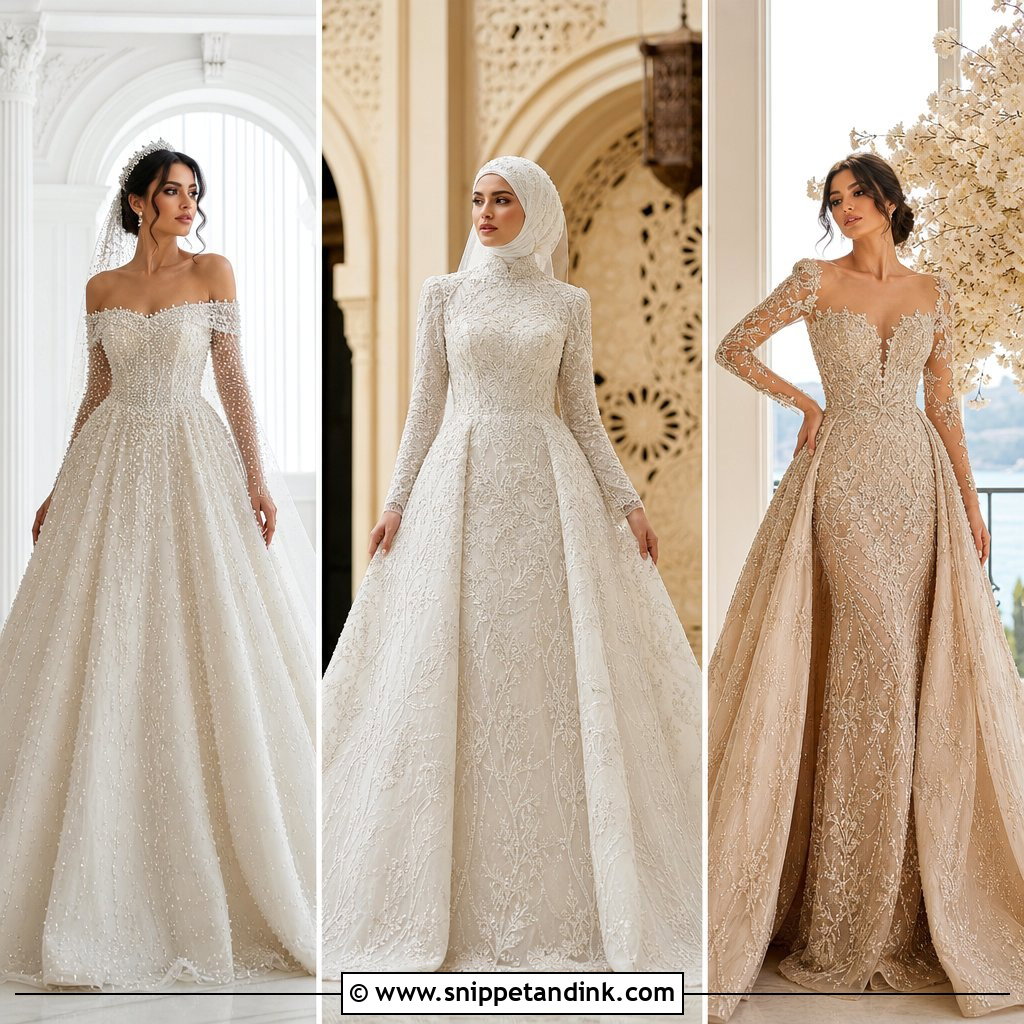
Pearls glow rather than flash, which makes them easier to photograph in harsh light than crystals. I prefer mixed sizes concentrated at the neckline and waist, scattering out across an A line skirt of layered tulle. Pearl beads do add weight, so check how the bodice sits after you have worn it for an hour at the final fitting. Style it with pearl earrings and a sheer veil edged in tiny matching beads; a hijab bride can add a fine pearl headband over a smooth wrap. White peonies or roses suit the texture.
7. Gold Embroidered Arab Wedding Dress
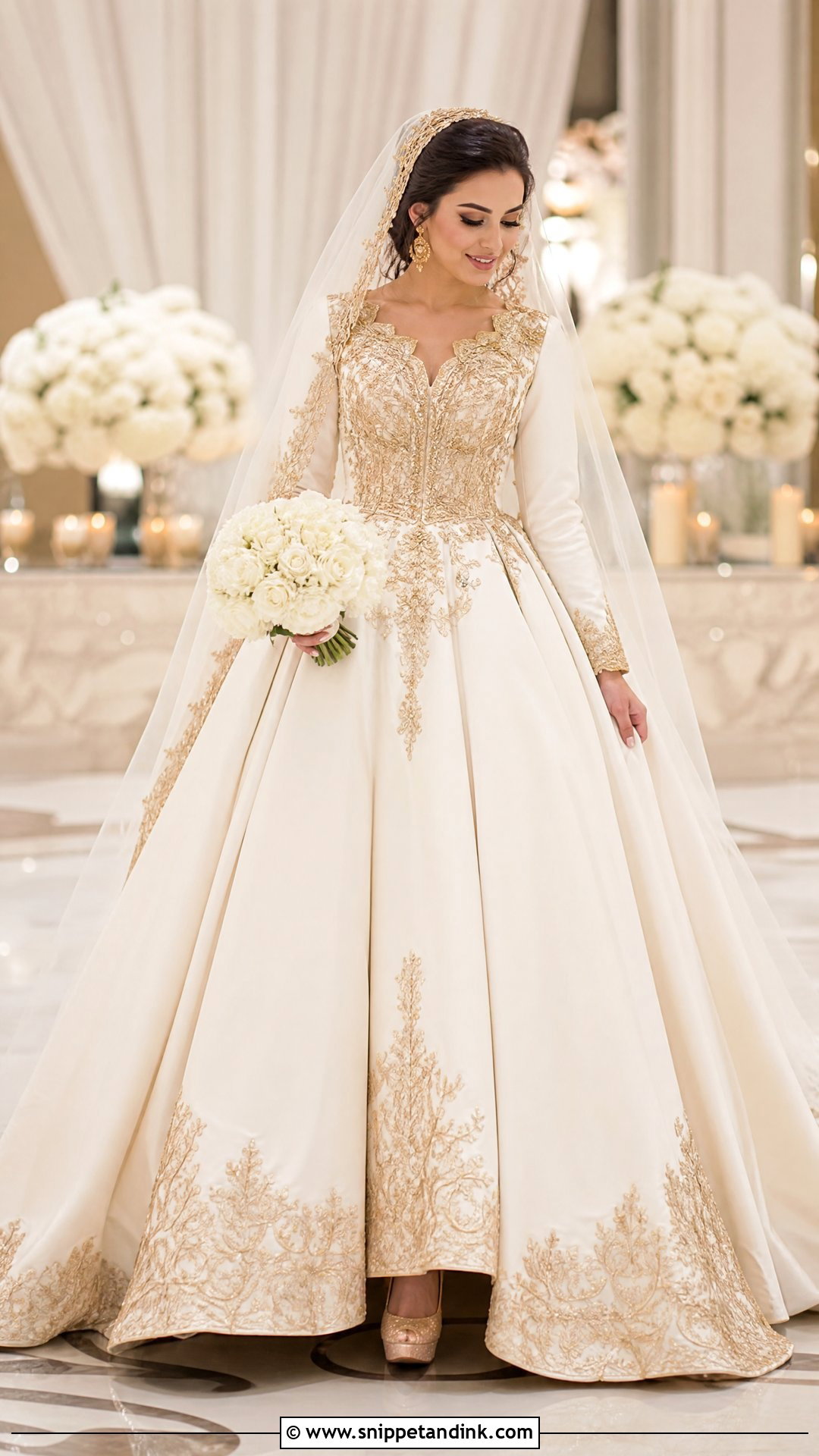
Gold threadwork on ivory feels warm and ceremonial. On an A line or princess shape, I like it along the bodice, cuffs and skirt border, with plain fabric left between motifs so the work has room. Metallic embroidery is stiff and heavy, so I ask for a breathable lining and reinforced waist support, otherwise the bodice can drag downward by the end of the night. Antique-gold earrings, champagne heels and a cream veil with an embroidered edge match its warmth, as does a warm ivory hijab.
8. Silver Crystal Arab Wedding Dress
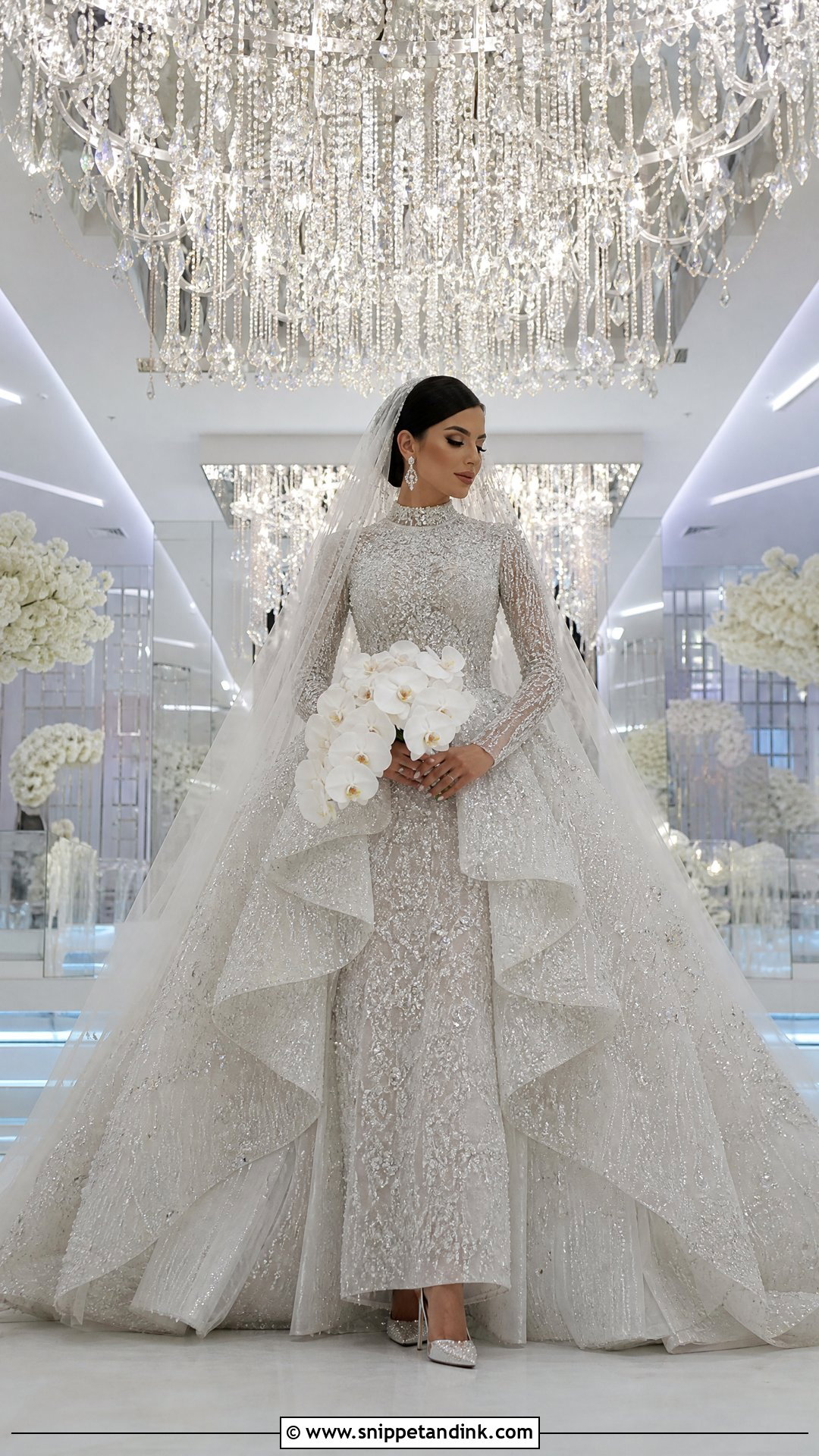
Silver crystal gives a cool, polished look, best on a white ball gown with crystal patterns fading gradually from a structured bodice into a light tulle skirt. My first check at fittings is the underarm and inner sleeve. Crystals on those surfaces rub against each other and against your skin, and rough settings can snag the skirt. Balanced placement photographs better than dense sparkle everywhere. A cathedral veil without a heavy border, silver pumps and a sleek bun or smooth white hijab let the crystals lead.
9. Floral Applique Arab Wedding Dress
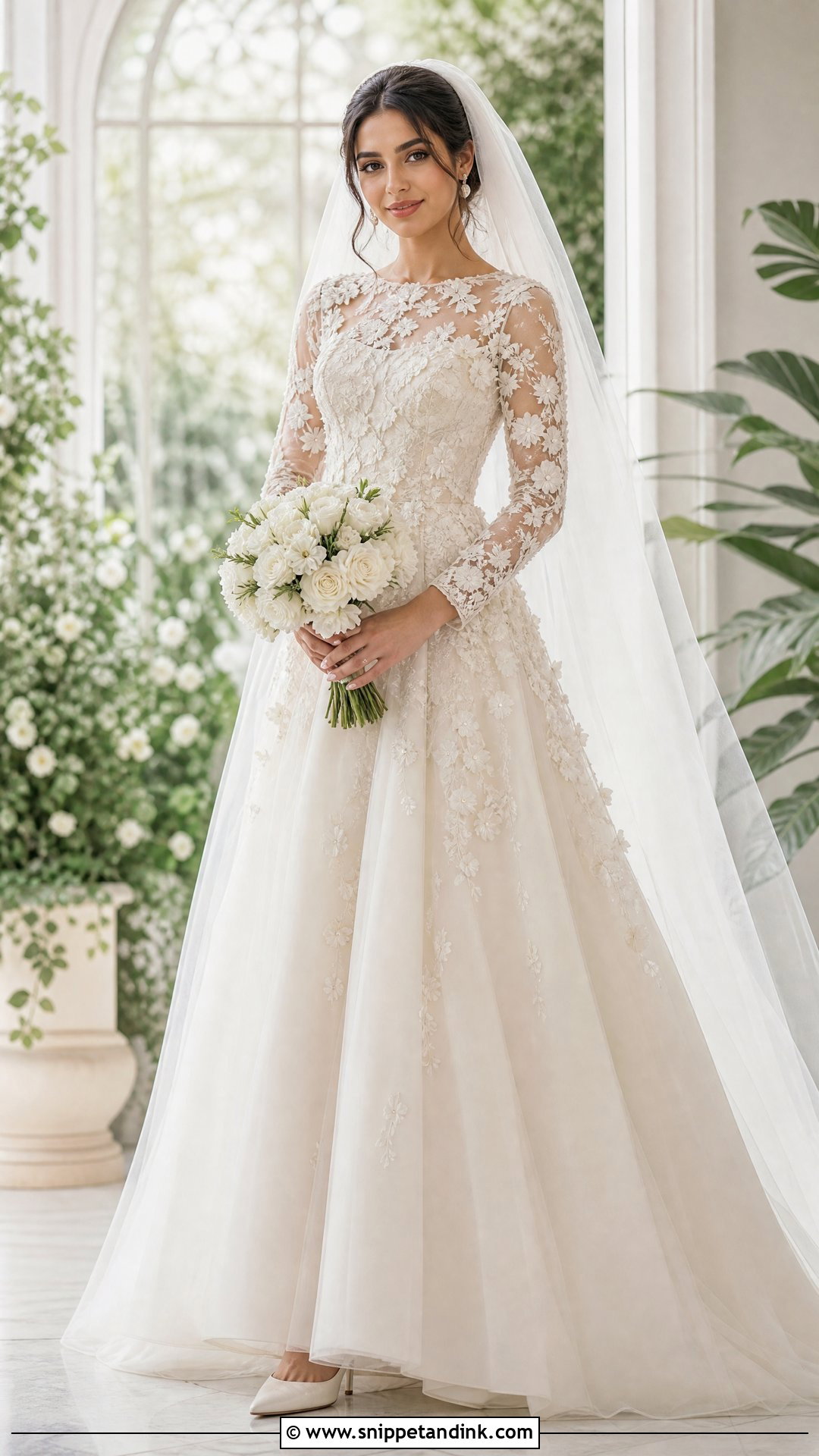
Three-dimensional flowers bring depth and softness, set across the bodice and shoulders and thinning out toward the hem so the pattern feels like it grew there. Sheer sleeves can be lined for coverage without losing the floral effect. During alterations, appliqués that cross a seam or zip have to be removed and re-stitched by hand, so ask about this up front, because rushed work leaves flowers cut in half at the back. A plain tulle veil keeps the texture visible; carry a restrained bouquet that does not fight it.
10. Satin Princess Arab Wedding Dress
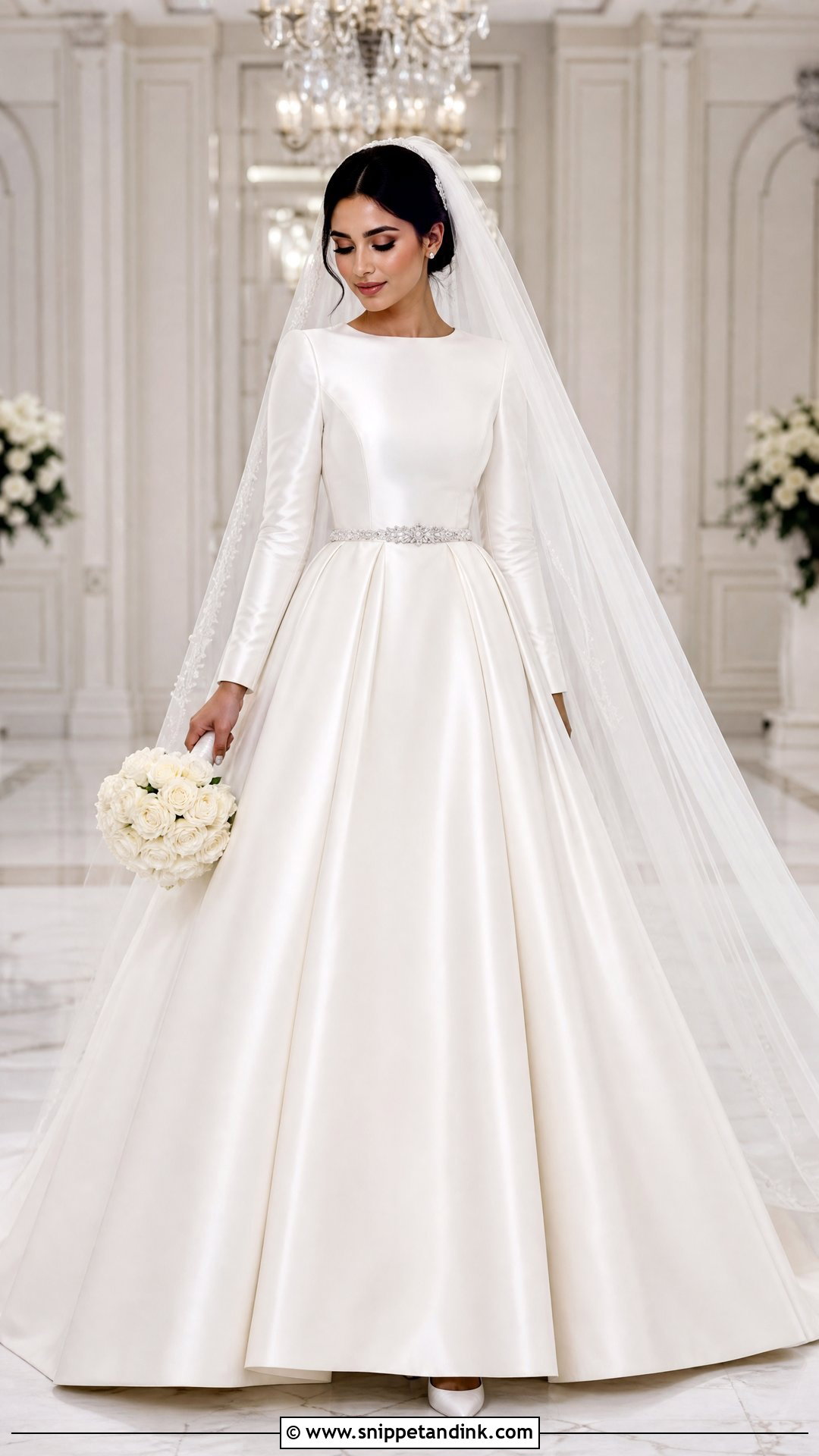
Smooth satin gives a commanding princess look with almost no decoration: a structured bodice, defined waist, full skirt and long clean sleeves. Pleats at the waist add volume and let the fabric fall in controlled folds. A crystal belt can give a focal point, with everything else simple. Satin shows creases and every seam, so book steaming for the morning and build firm internal support into the bodice for hours of standing and greeting. A hijab bride looks best in matching matte satin pinned minimally.
11. Tulle Ball Gown Arab Wedding Dress
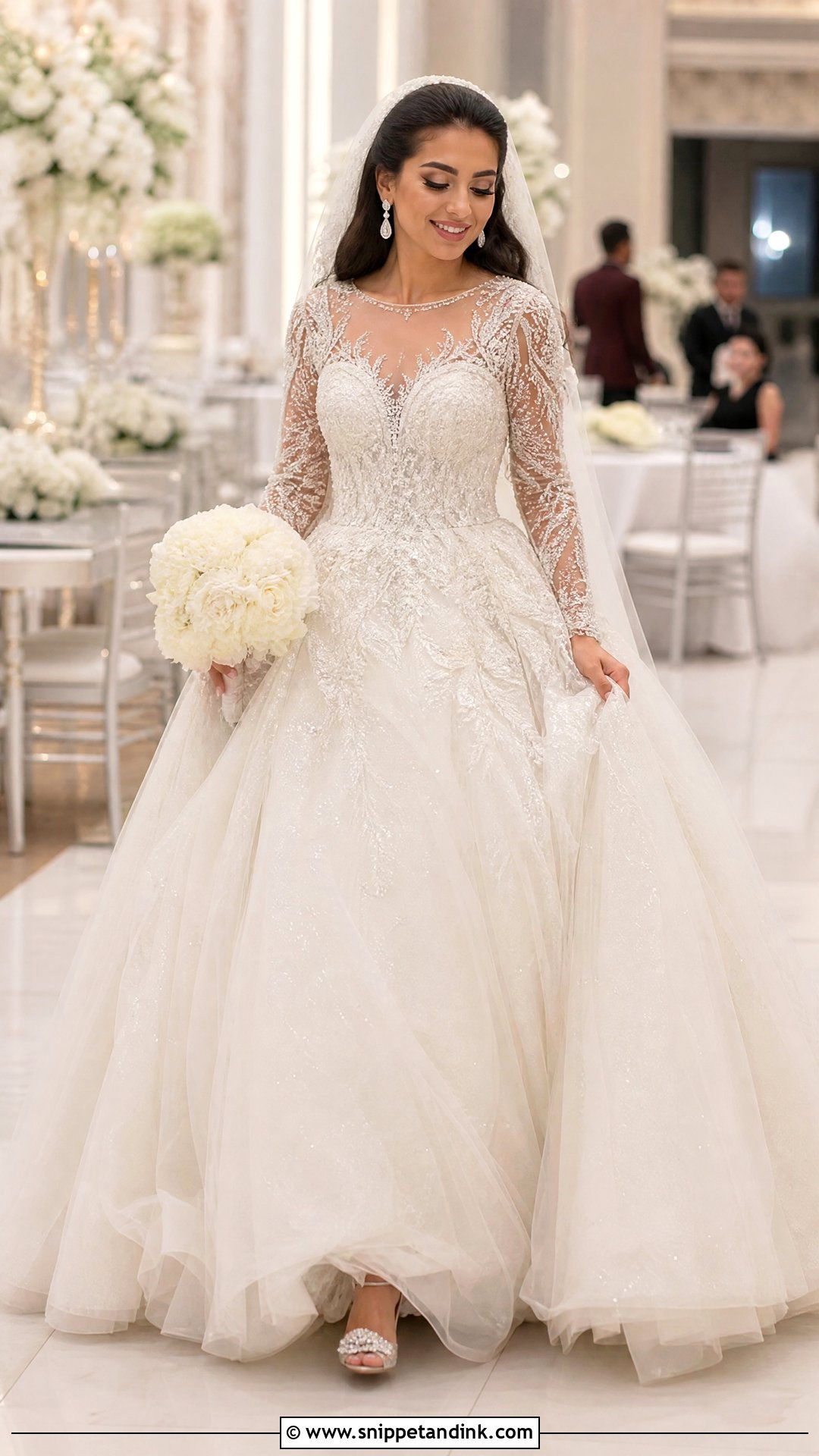
Many layers of soft tulle give volume without the stiffness of a hoop. I like a fitted embroidered bodice, full sleeves and a skirt built from several light layers, with a faint sparkle under the top layer that glows when you move. Hem it while you wear your actual wedding shoes; a tulle skirt even slightly too long is stepped on and torn quickly. Add a secure bustle for later in the evening. Keep the hair or hijab sleek to balance the skirt, and choose a small round bouquet so the waist stays visible.
12. Cathedral Train Arab Wedding Dress
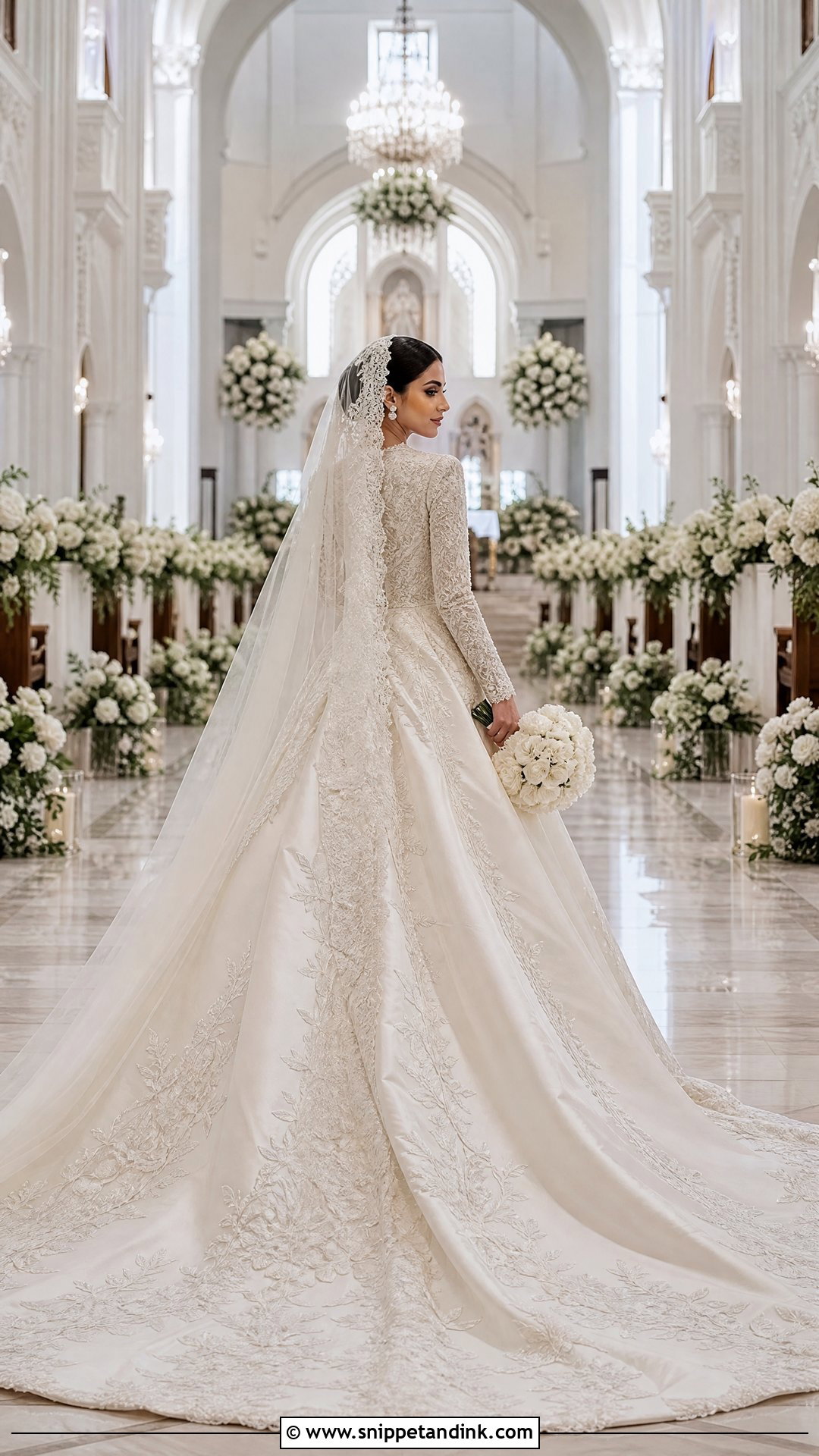
A cathedral train turns the walk into the main event, and it needs a fitted A line or ball gown with enough structure to carry it. Lace, satin or embroidered tulle all work, chosen for the venue. Keep the front of the gown streamlined so the train stays the focus. Before ordering, I measure the aisle, the stage steps and the turn onto the stage, because a long train that cannot move freely becomes a hazard. Build in a strong bustle and give one person the job of arranging the train before every entrance and photo.
13. Hijab Arab Wedding Dress
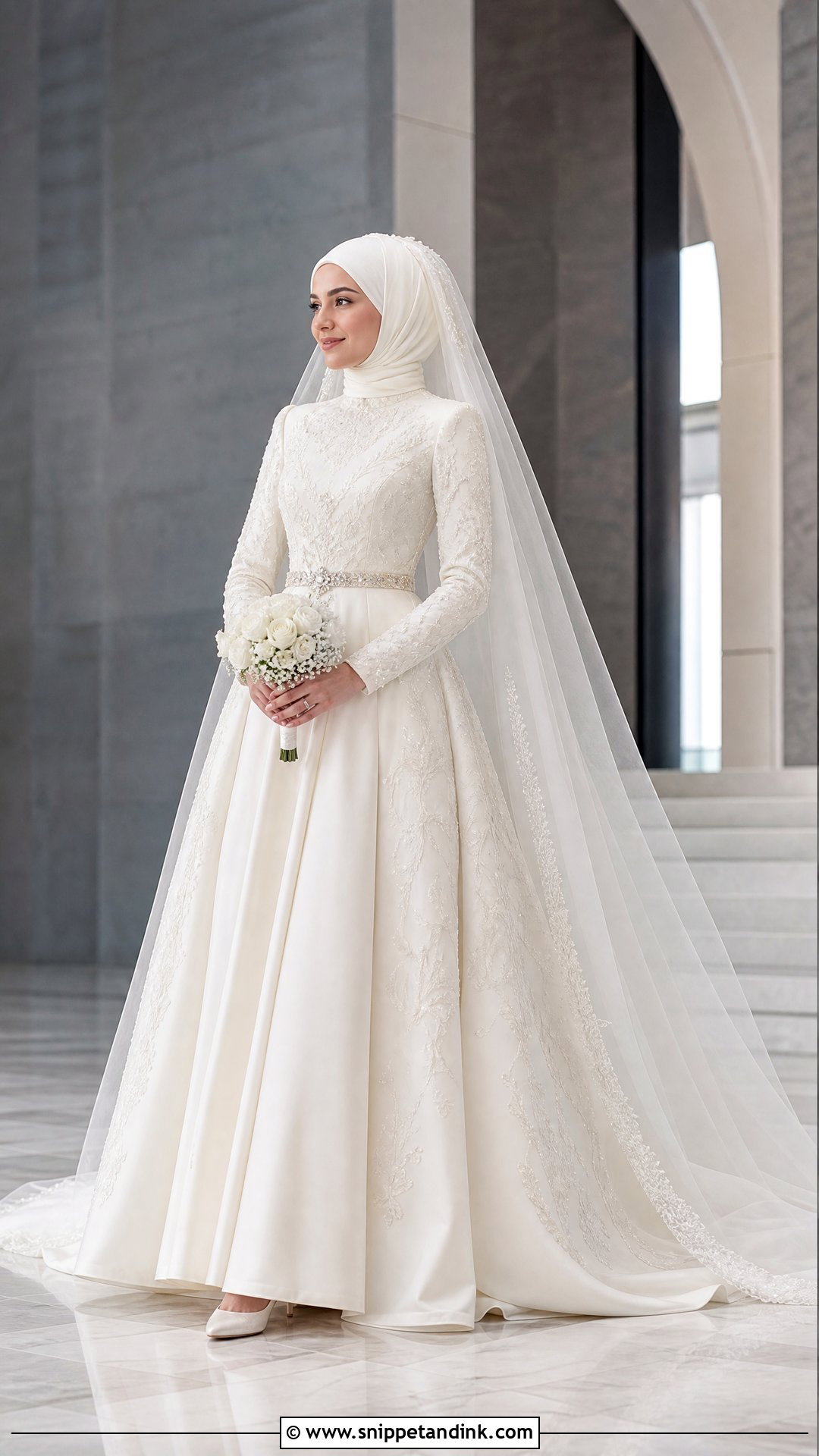
A hijab bridal look should be designed as one outfit from the start, not a gown with coverage added afterwards. That means a high neckline, fully lined long sleeves and an A line skirt, with the hijab matched to the exact undertone of the gown. Crepe or chiffon wraps sit smoothly under a veil or headpiece. At fittings I test the whole set together, undercap and veil included, so we can adjust the collar, close any gaps and check the pins will hold through dancing. Embroidery at the cuffs and neckline adds interest without bulk.
14. Modest Fitted Arab Wedding Dress
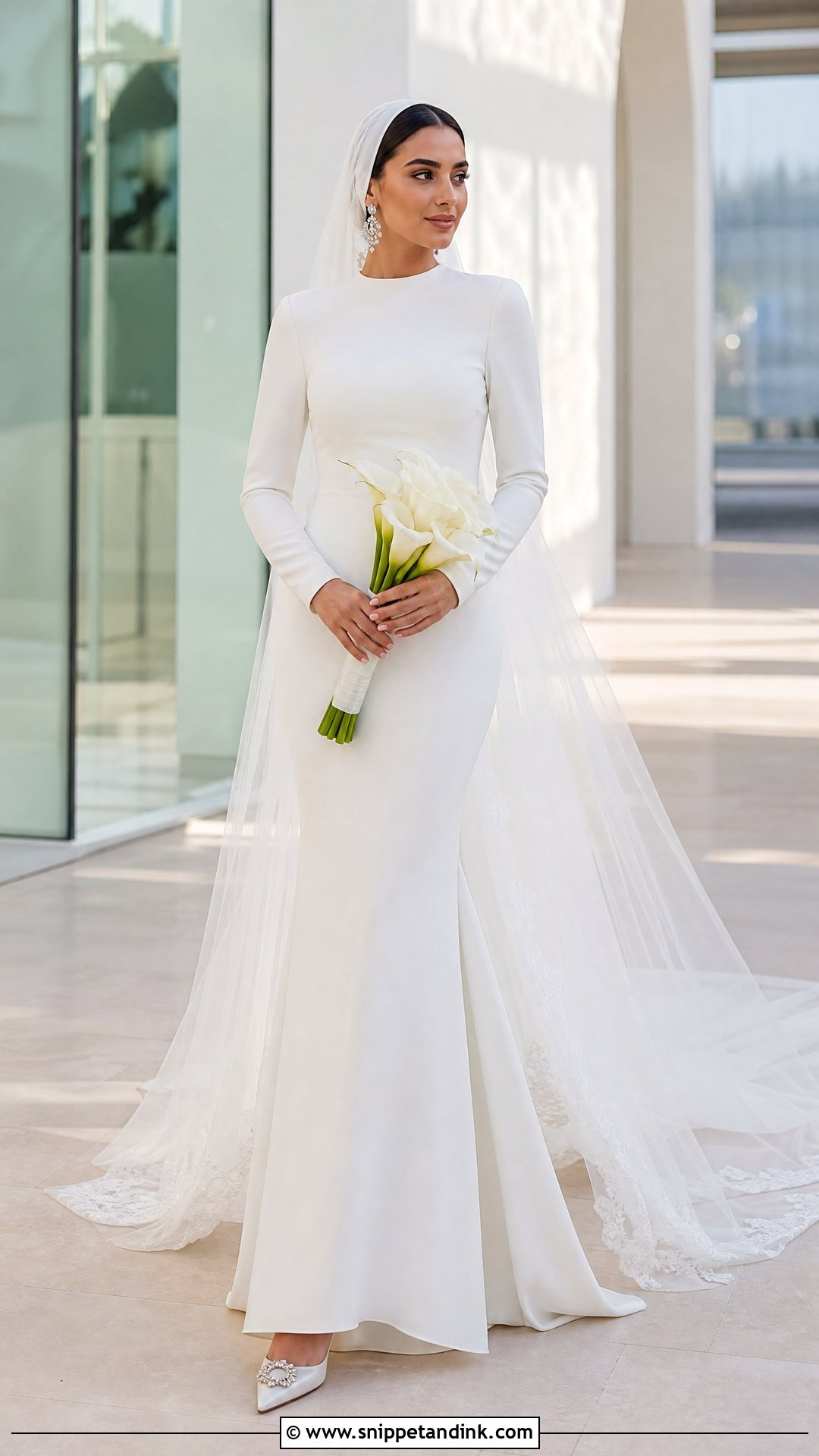
Fitted and modest can coexist when the gown skims rather than grips. Lined crepe or lace with long sleeves, a higher neckline and a skirt that widens gently below the hips gives shape without transparency. Embroidery along the side panels or waist adds definition. A detachable tulle train or light cape adds ceremony drama. Before final alterations, I put brides through a movement test: walk, climb a step, sit, raise both arms. A clean bouquet of white calla lilies suits the simple line.
15. Off Shoulder Arab Wedding Dress
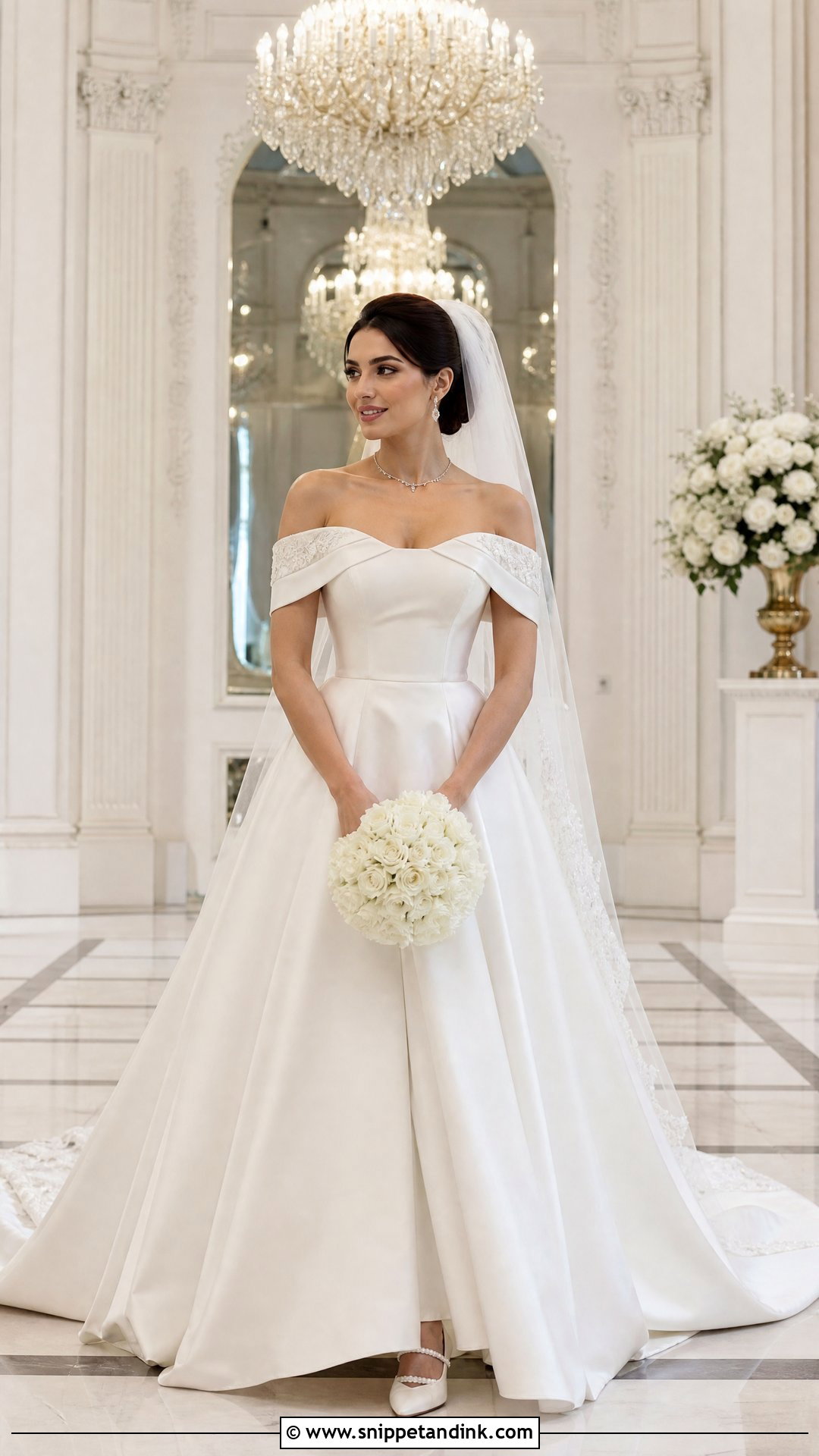
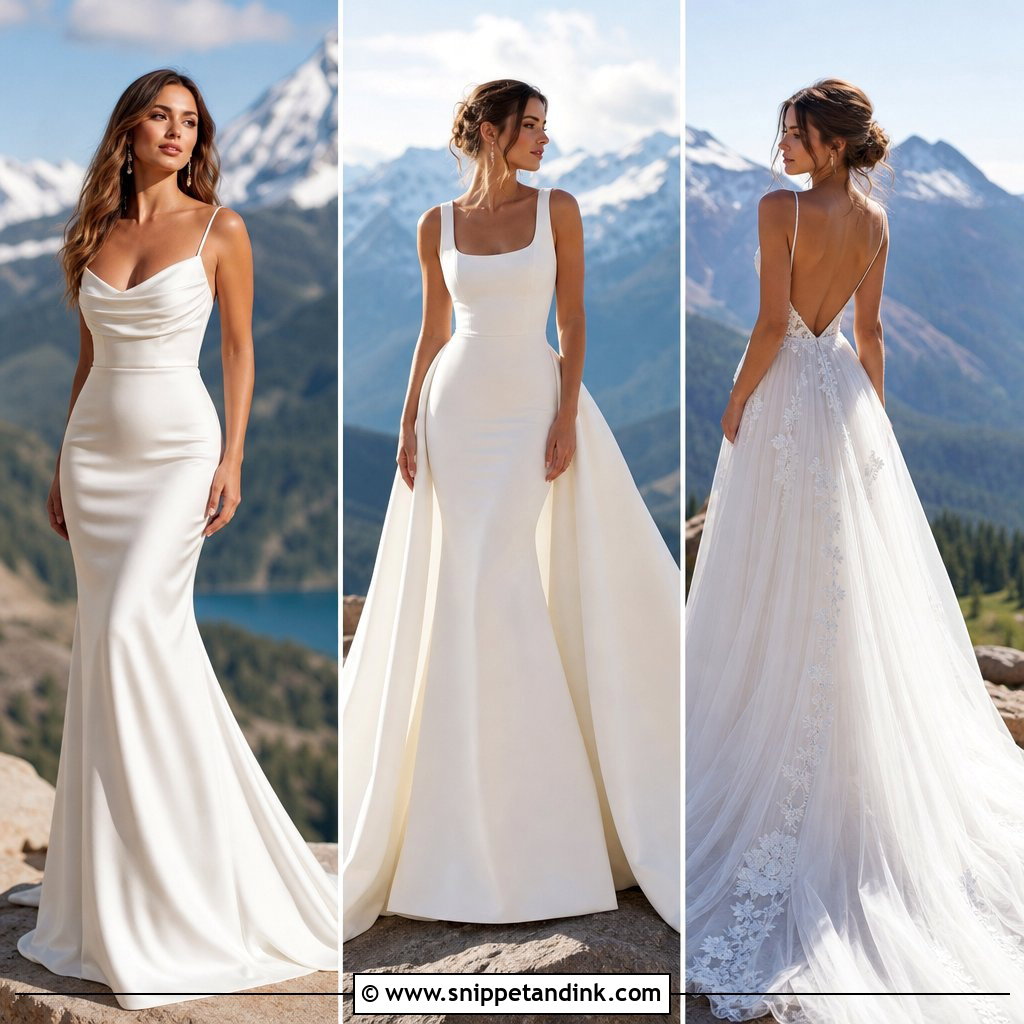
Off the shoulder gives a graceful neckline, provided the band stays put. Folded satin, lace edging or embroidered shoulder bands need internal boning and a grip strip, and I check them seated and with arms raised. A full skirt balances the open neck. Brides who want more coverage for part of the day can add a removable cape, bolero or ceremony sleeves in matching fabric. A delicate necklace and a long veil beneath a low bun complete it, and hold the bouquet low in photos so the bodice shows.
16. Strapless Arab Wedding Dress With Cape
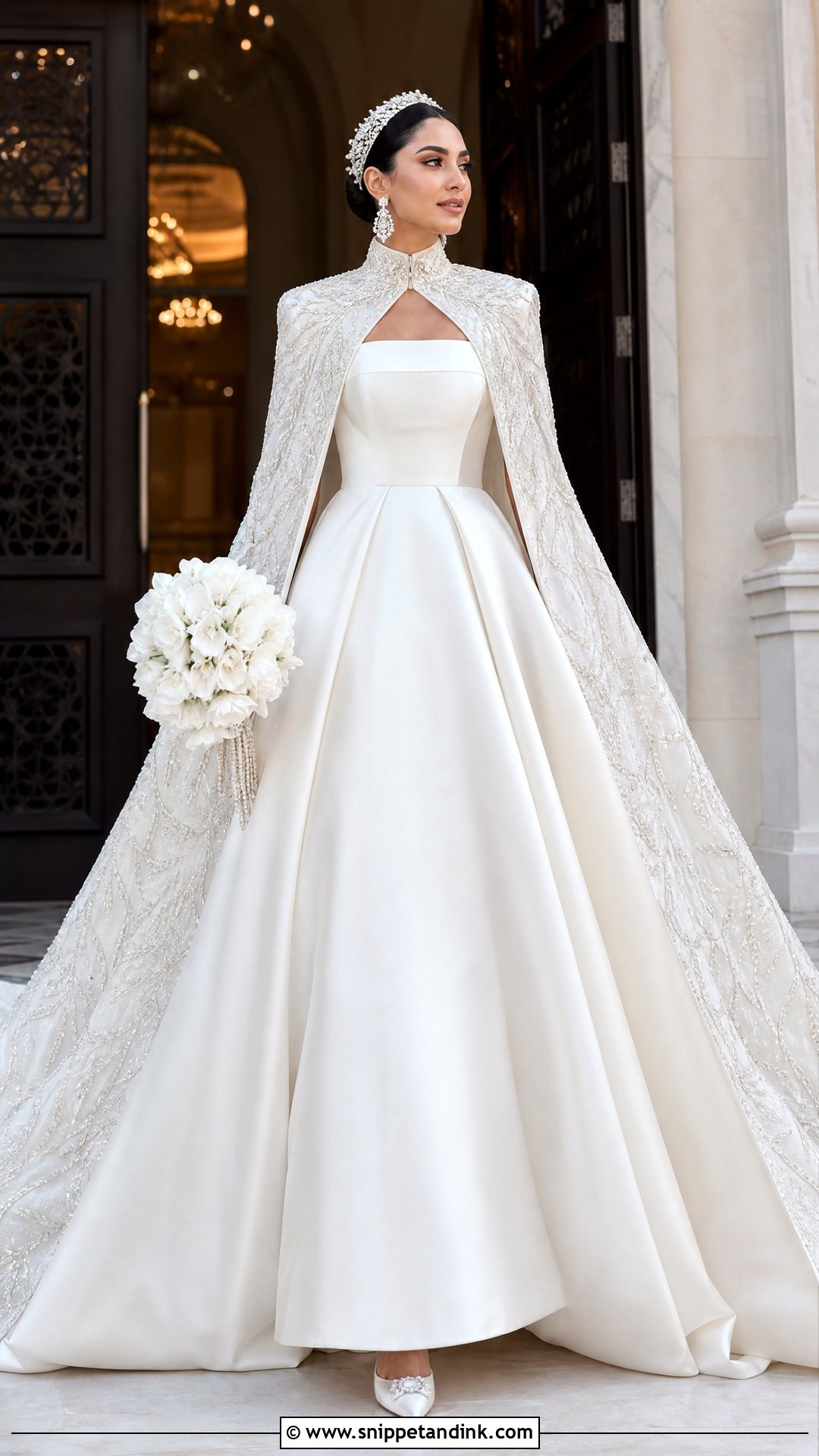
A strapless gown with a detachable cape gives you two moods: covered and formal for the ceremony, open and lighter afterwards. The cape can have a high neckline and long flowing panels edged with pearls or crystals that tie it to the dress. The thing I watch is the attachment point. If the cape hooks onto the strapless bodice, its weight pulls the neckline down, so I attach it to an internal band instead. The gown must stay fully supportive once the cape is removed.
17. Square Neck Arab Wedding Dress
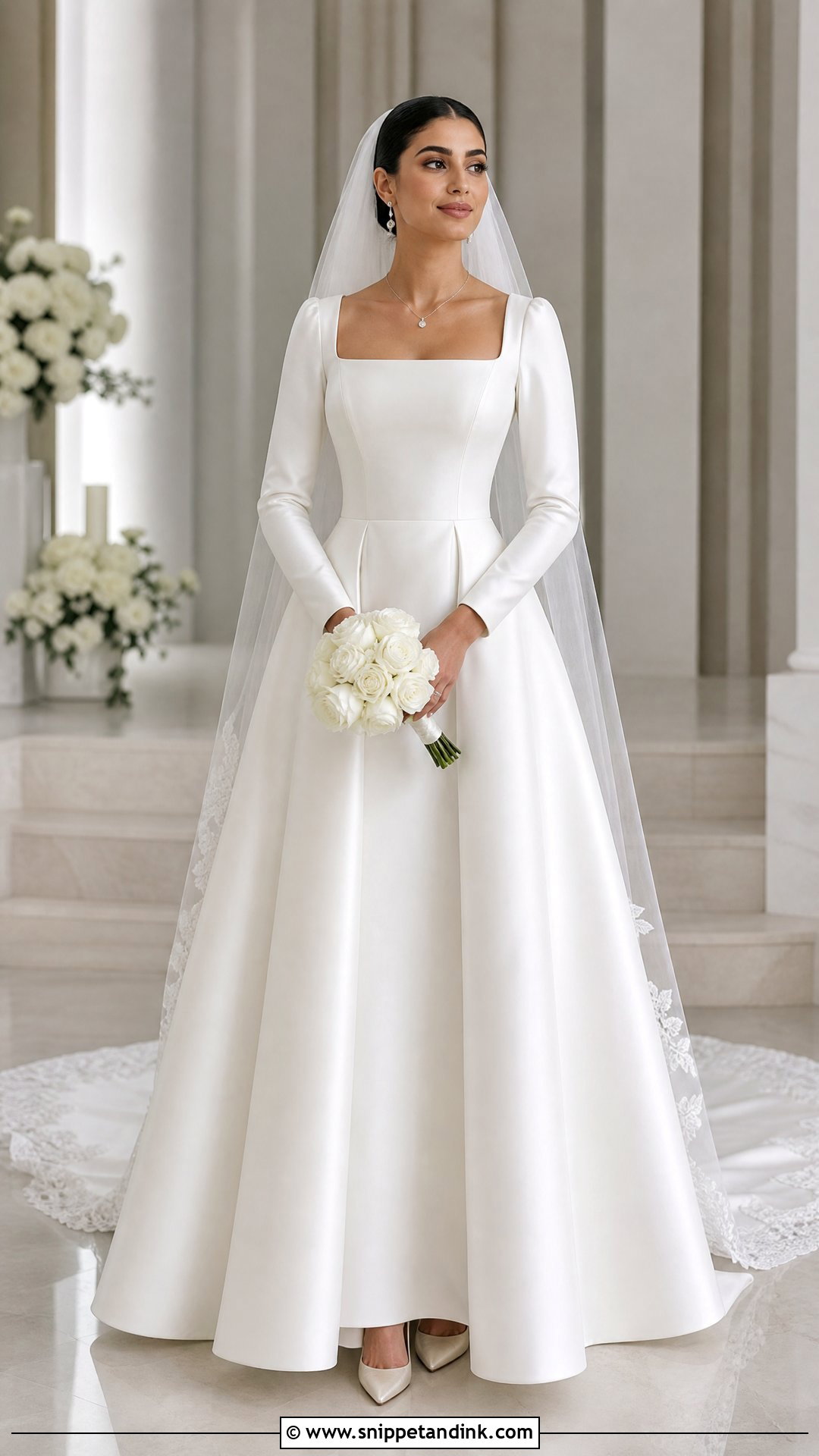
The square neckline frames the face and shoulders with clean structure. Pair it with fitted long sleeves and a softly flared A line skirt. Matte satin keeps it minimal; lace or pearls make it richer. If wearing a hijab, tuck the wrap neatly inside the neckline so the square line remains visible. The fitting detail here is the corners: a square neck must lie flat during movement, and any rippling at the corners usually means the shoulders need taking up.
18. Basque Waist Arab Wedding Dress
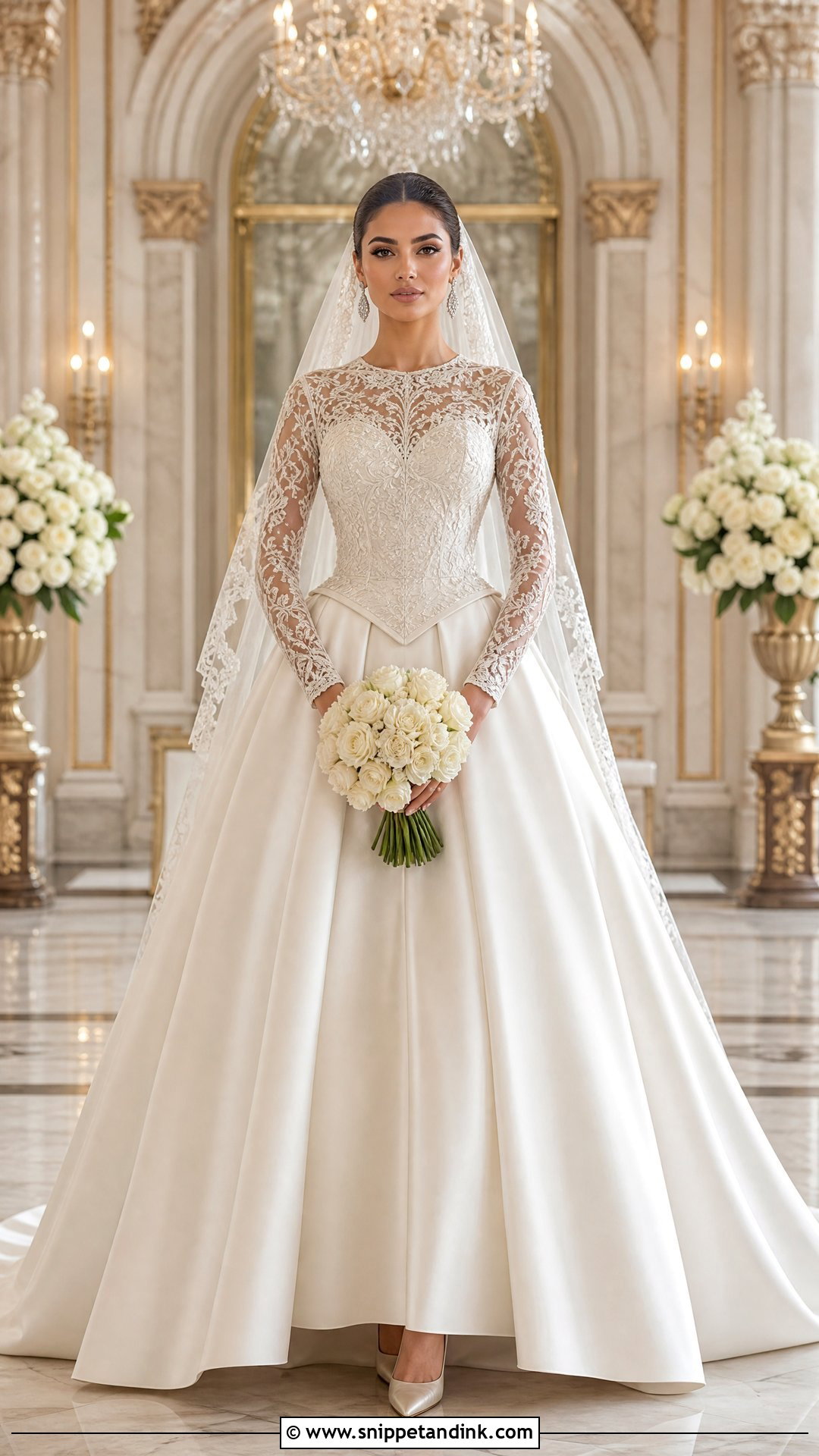
A basque waist dips into a soft point at the center front, lengthening the torso and suiting a full satin or tulle skirt. Keep embroidery concentrated on the bodice so the waistline shows, and never add a wide belt over it. The test I use is sitting down: a basque point that is too long or too stiff folds and pokes into the lap. Long lace sleeves or a high neckline add coverage. A long veil and a structured bouquet finish the princess outline.
19. Corset Ball Gown Arab Wedding Dress
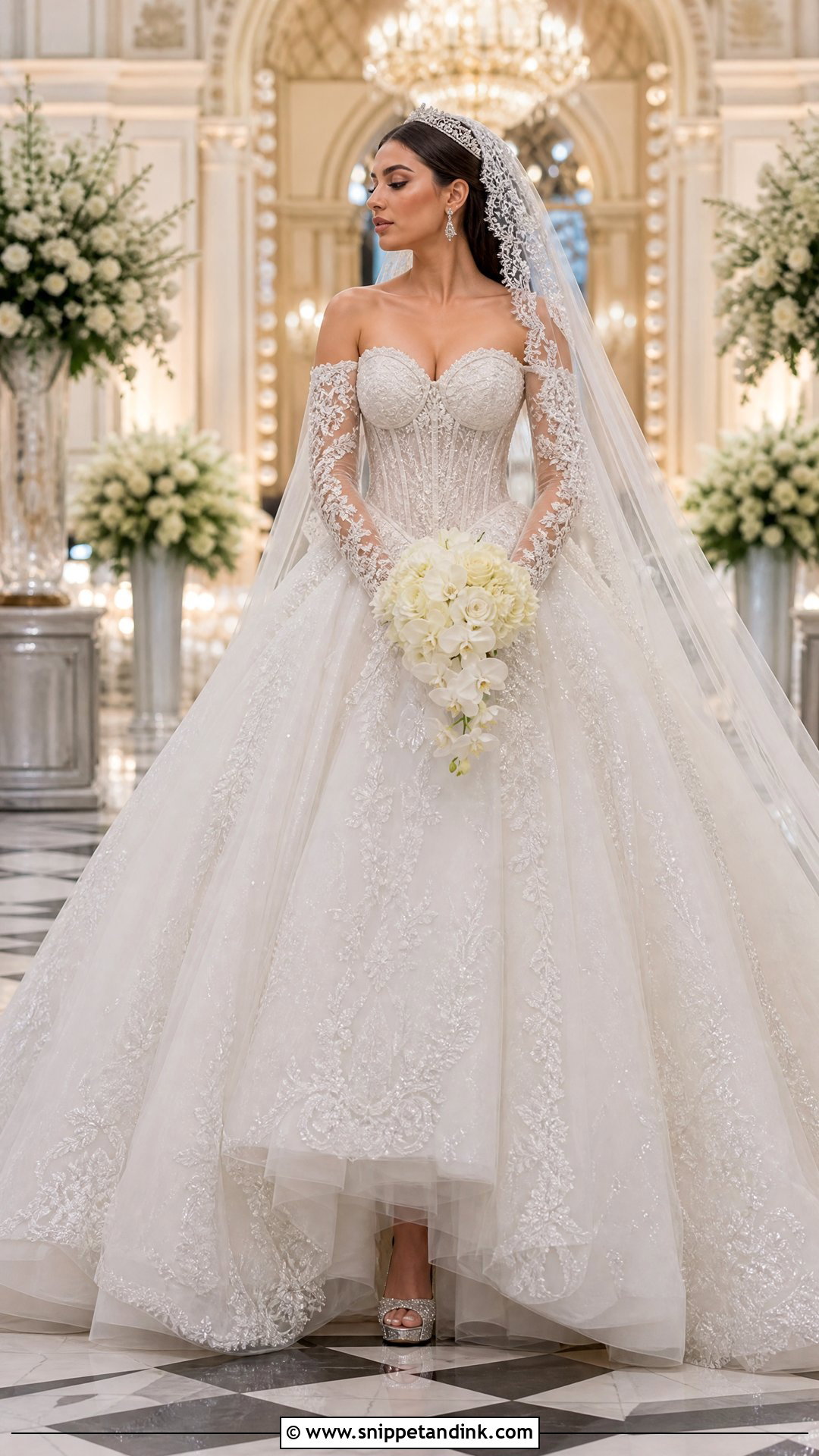
Structure inside, volume outside. A corset bodice with visible seam lines and delicate embroidery, worn with removable long sleeves or a lace topper, sits above a full satin or tulle skirt. If the corset has decorative lacing at the back, keep the veil sheer so it shows. Secure should never mean painful, so I check that the bride can breathe deeply and sit without pressure. Ask the tailor to blend the join between bodice and skirt so it looks like one gown.
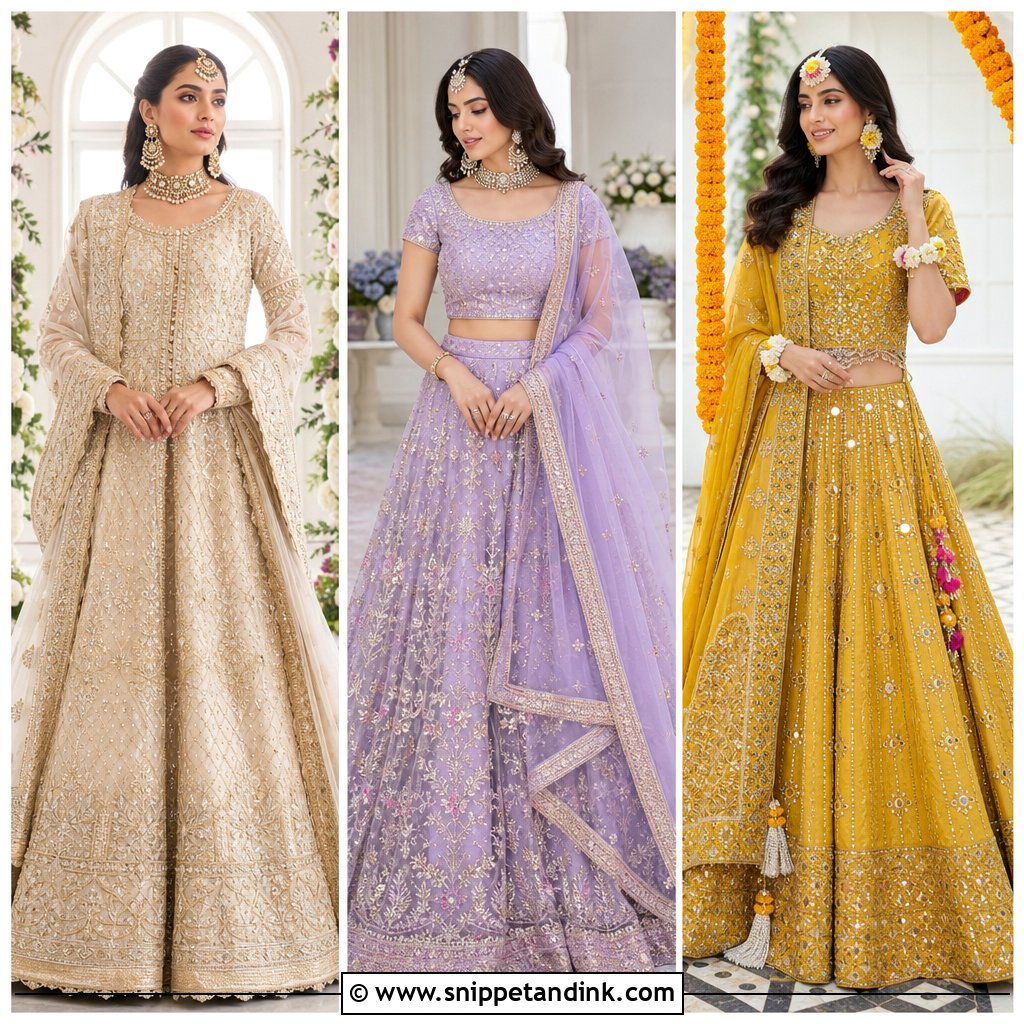
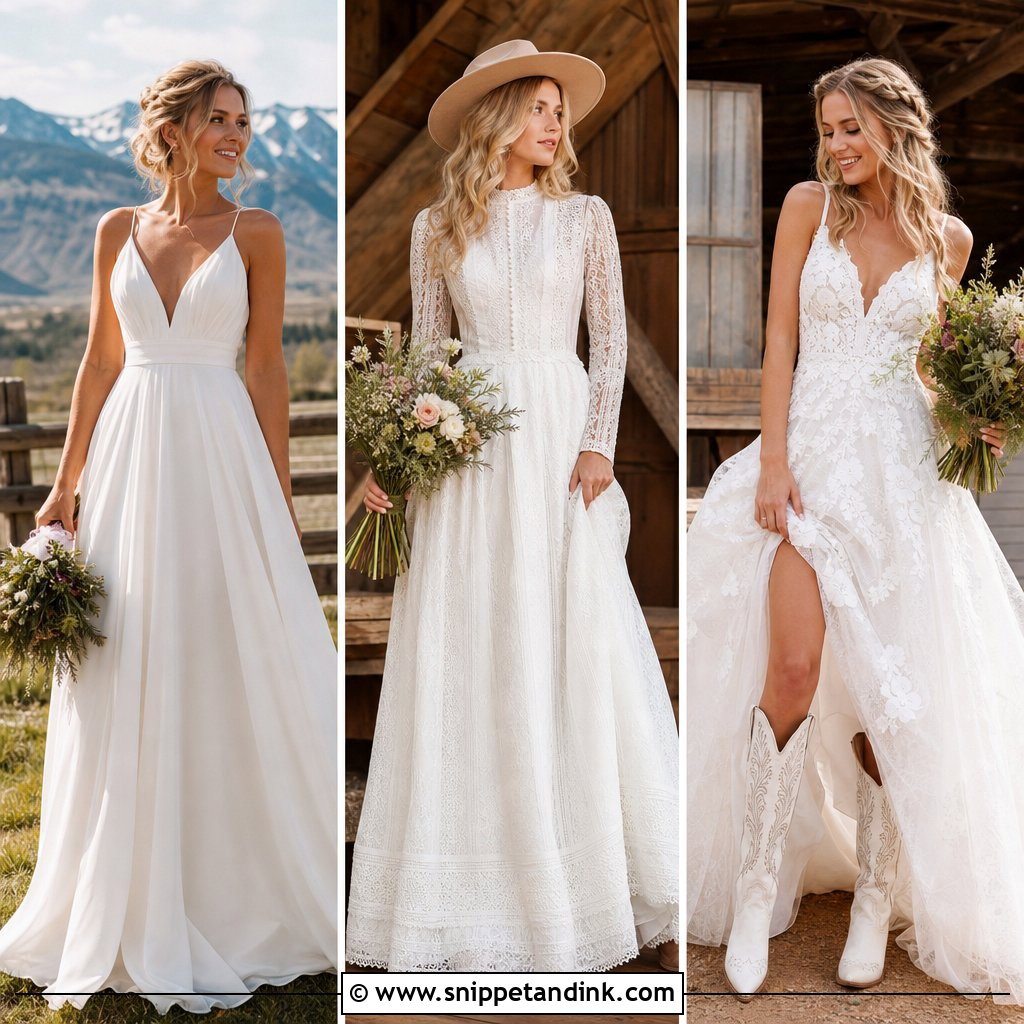
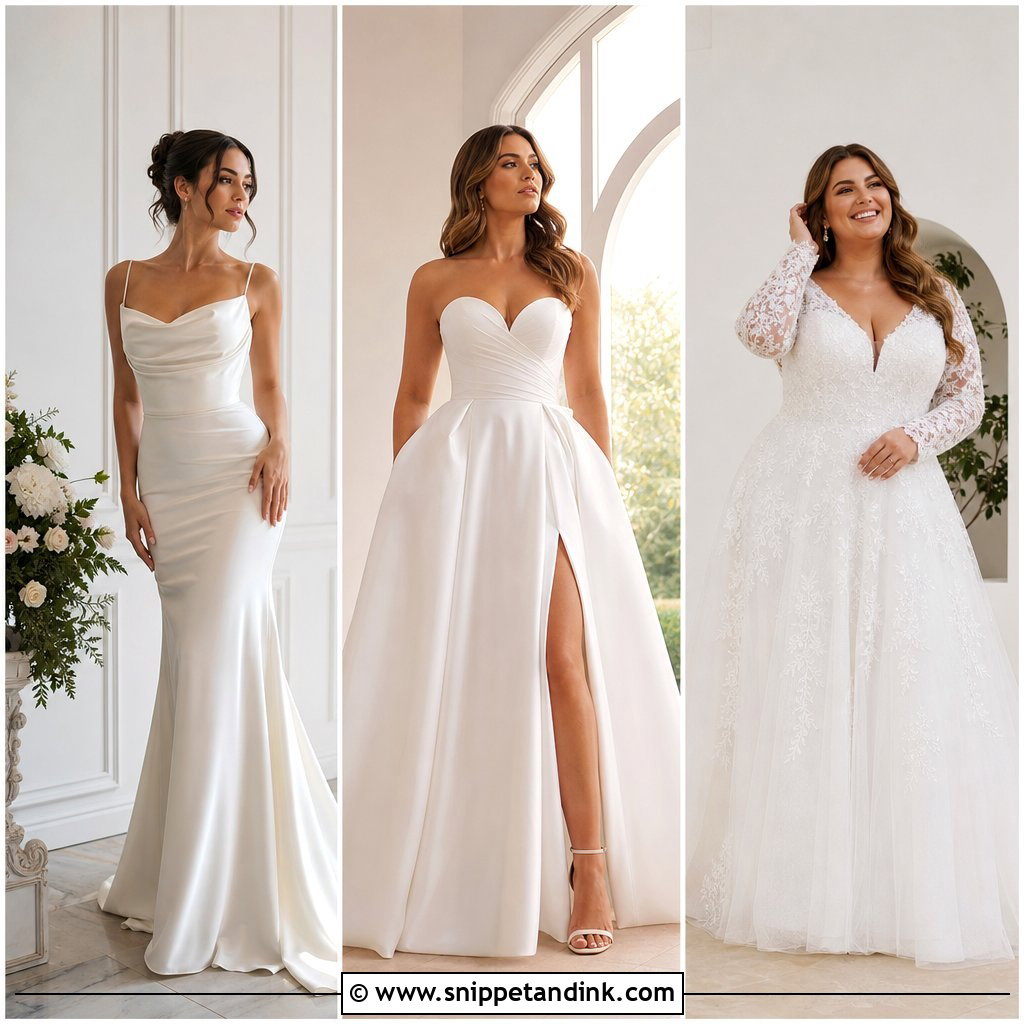
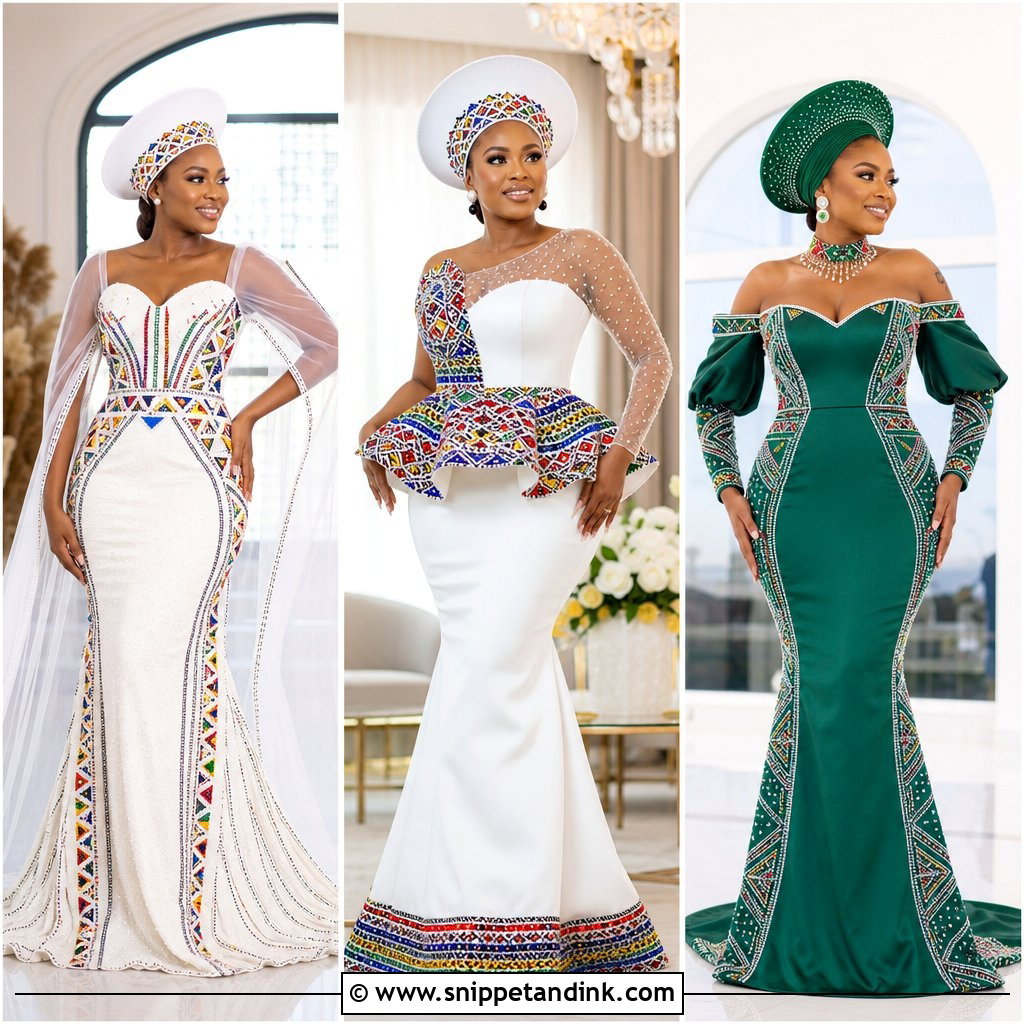
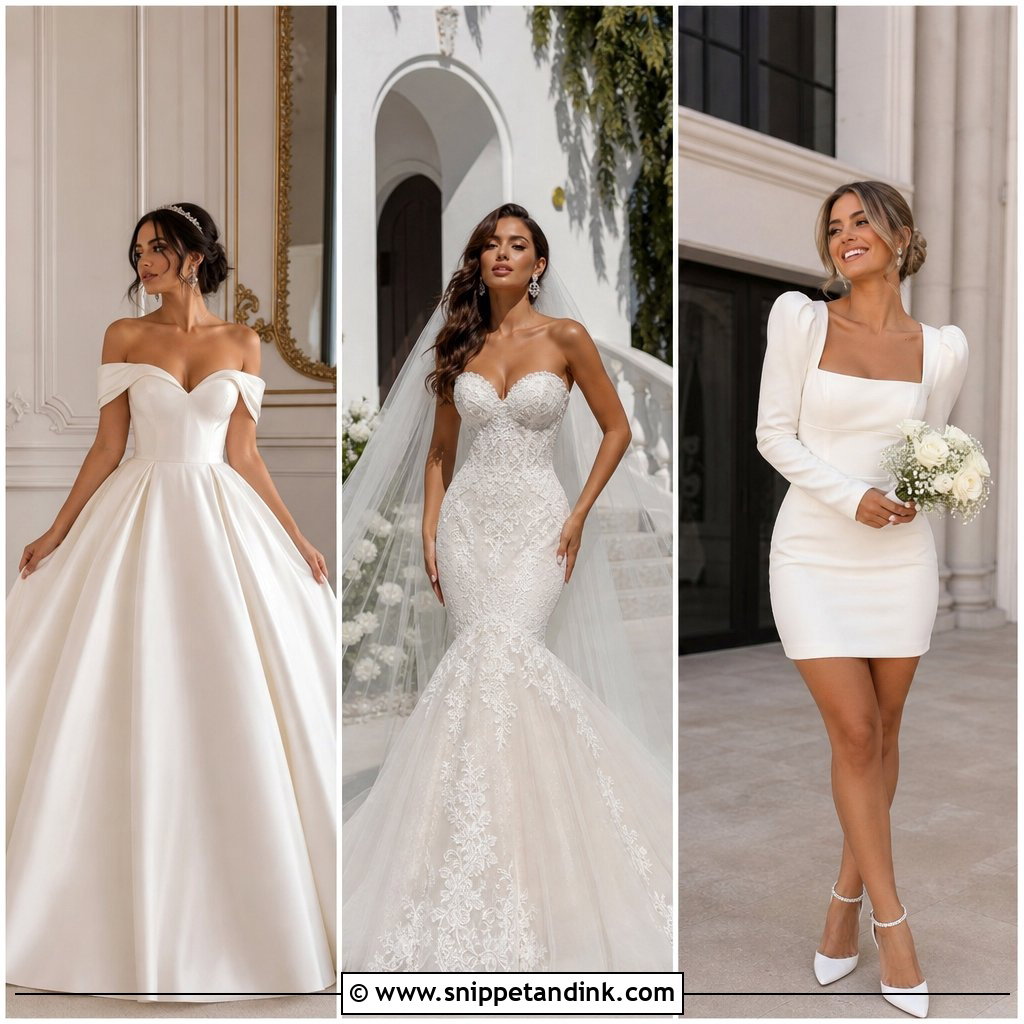
20. Moroccan Caftan Arab Wedding Dress
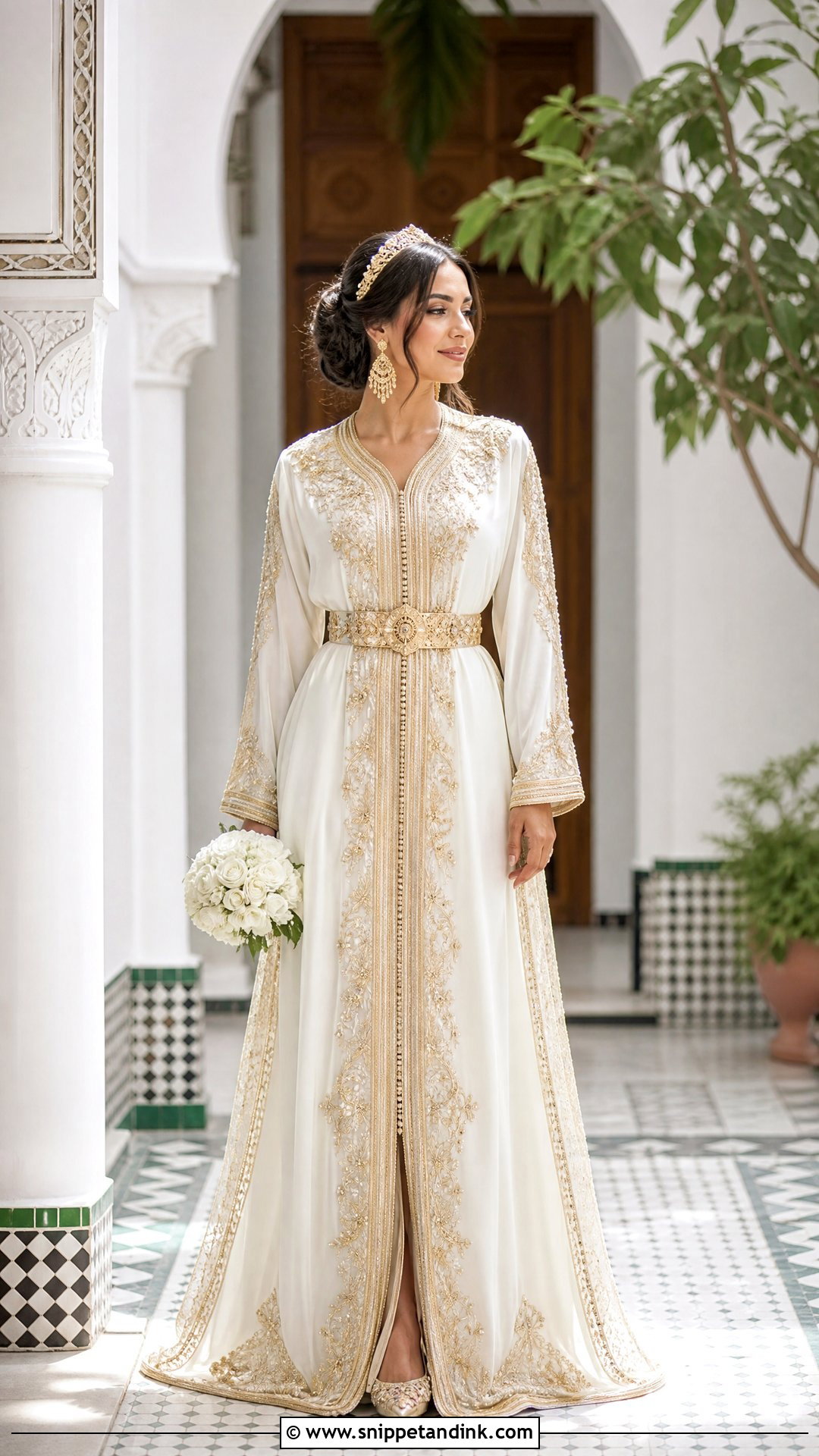
A Moroccan-inspired bridal caftan is a richly worked alternative to a white gown. Ivory or champagne with long sleeves, gold embroidery and a decorative belt at the waist is a classic choice. A light underlayer lets the outer fabric drape and gives full coverage. Measure the shoulders, sleeves and hem with care, since a caftan that is too long at the sleeve makes eating and greeting awkward. Brides honoring Moroccan heritage often choose colors and motifs with family or an artisan who knows the regional traditions.
21. Palestinian Tatreez Arab Wedding Dress
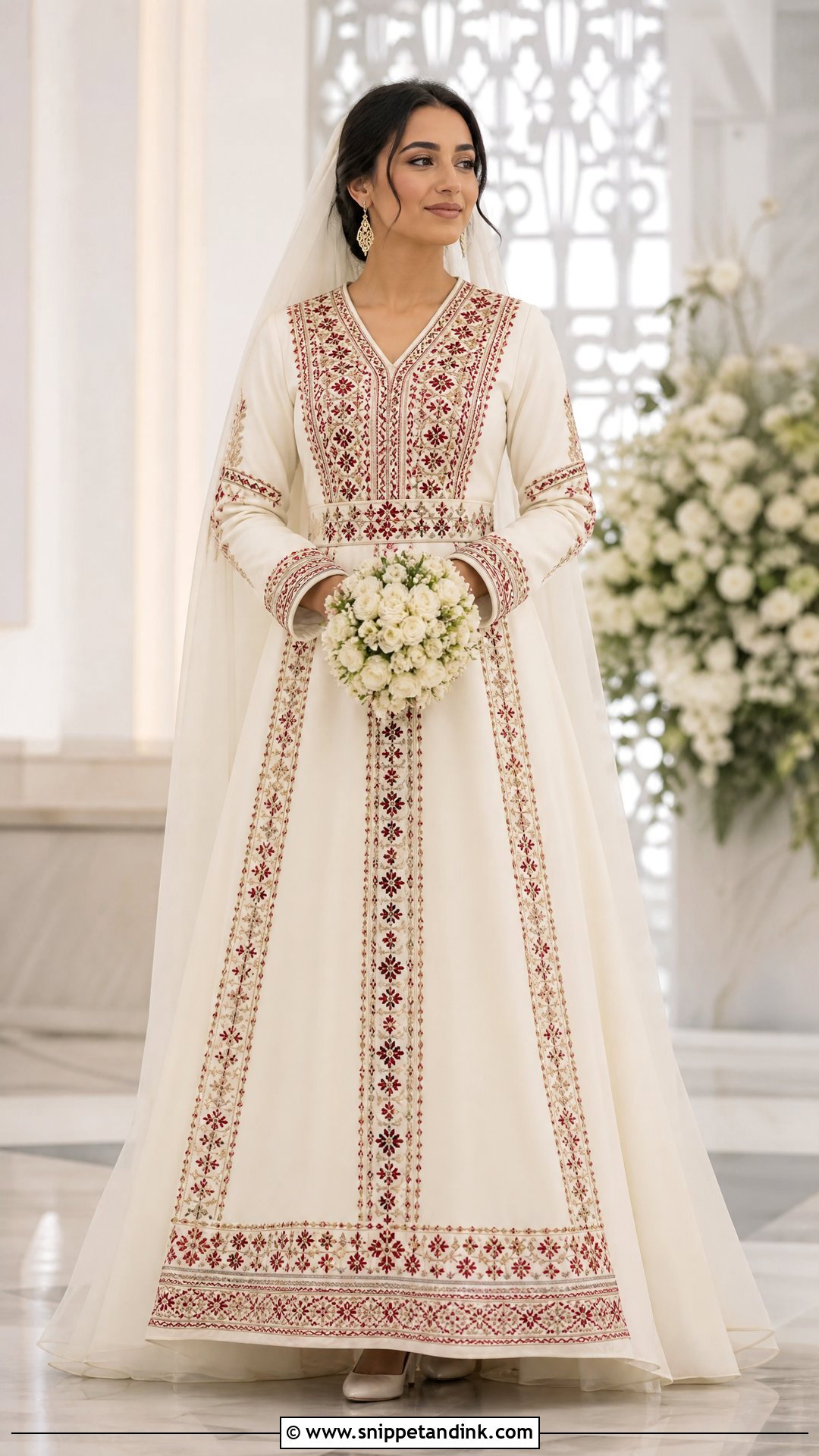
A Palestinian tatreez-inspired wedding dress puts heritage at the center, with cross-stitch embroidery on the chest panel, sleeves, cuffs and skirt of a white or ivory gown. A straight or soft A line shape gives the motifs room. Patterns and colors often carry family or regional meaning, so I encourage brides to choose them with relatives or a Palestinian embroiderer. Settle the embroidery placement before any structural alterations, because moving a hand-stitched panel later is slow, delicate work. Keep jewelry understated.
22. Algerian Karakou Arab Wedding Dress
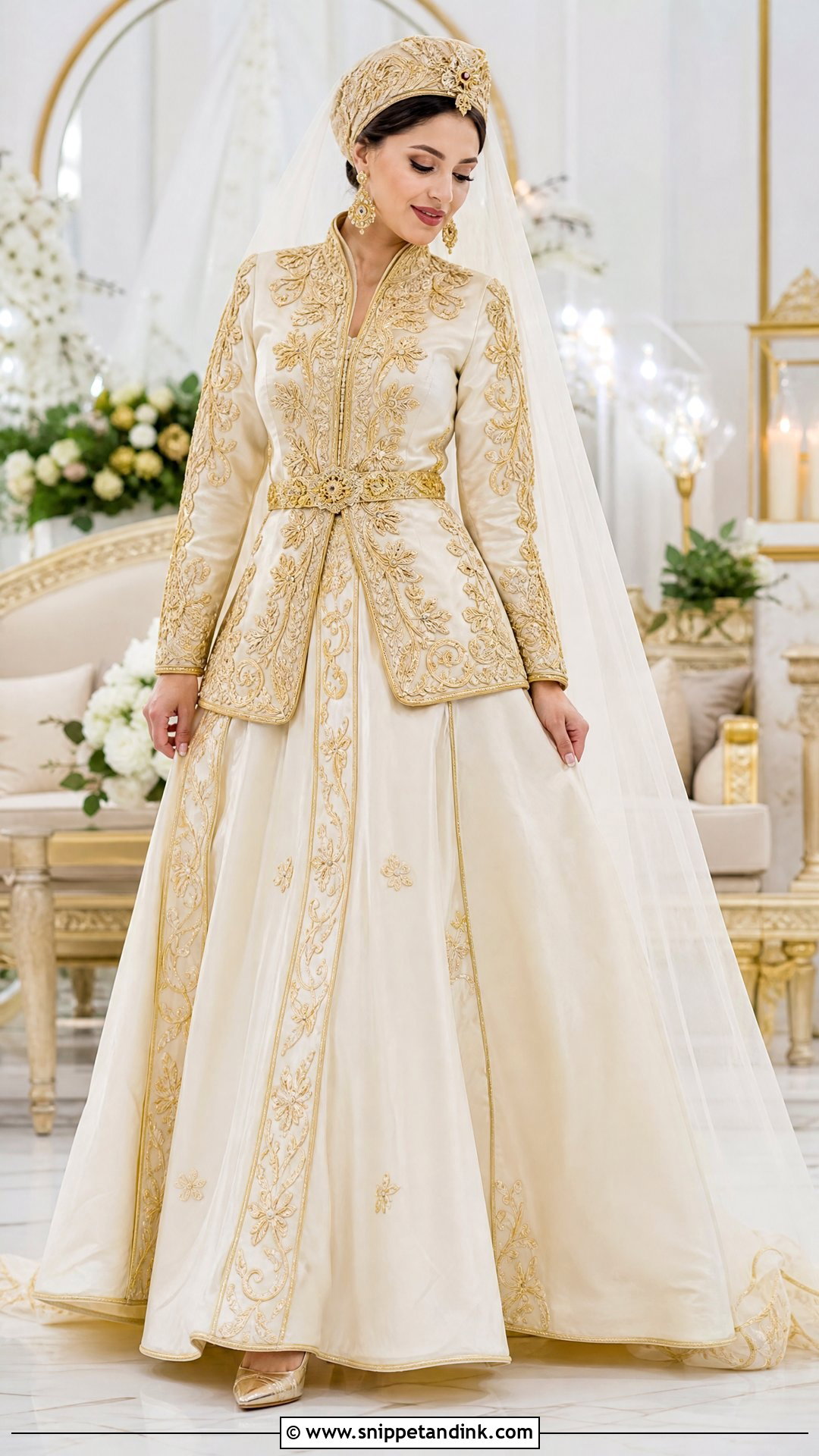
An Algerian karakou-inspired bridal outfit centers on a fitted velvet jacket heavy with gold embroidery, worn over a flowing skirt or wide-leg trousers. Velvet with dense metallic work is warm, so I ask for a breathable lining and check arm movement carefully; a jacket fitted tight at the armhole restricts every gesture. Gold earrings, an embroidered headpiece and pointed metallic shoes complete it. Families usually have strong views on fabric and regional details, so involve relatives or an Algerian maker early.
23. Khaleeji Jalabiya Arab Wedding Dress
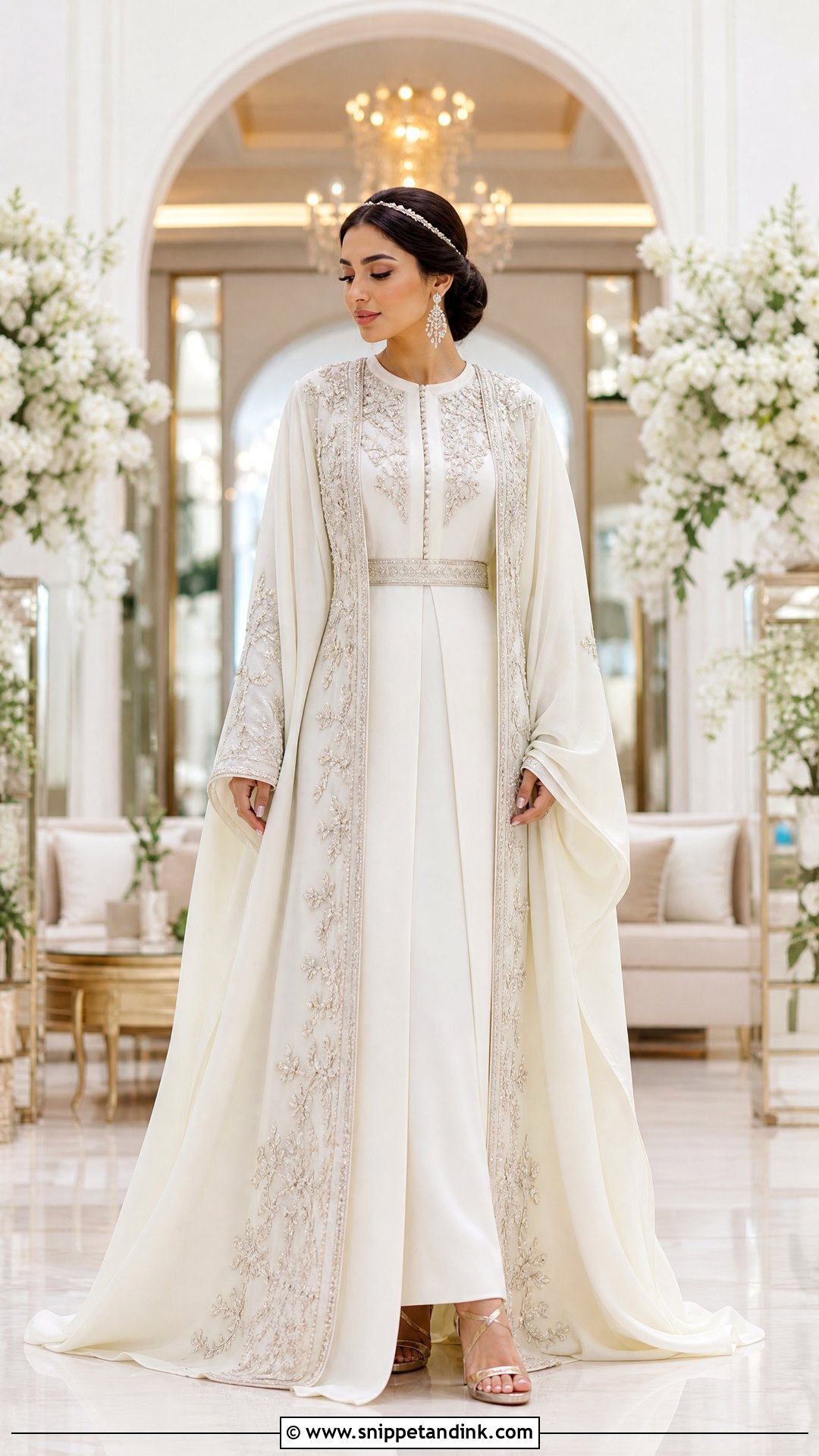
A bridal jalabiya is the most comfortable piece on this list and a favorite for henna nights. A floor-length design in white, ivory, blush or pale gold with wide sleeves and controlled crystal work feels luxurious without structure. A matching inner dress prevents transparency. I always check sleeve width at a table, because a wide sleeve can drag through food. A narrow belt can define the waist if you want shape, with statement earrings and a coordinating hijab or headpiece.
24. Minimalist Silk Arab Wedding Dress
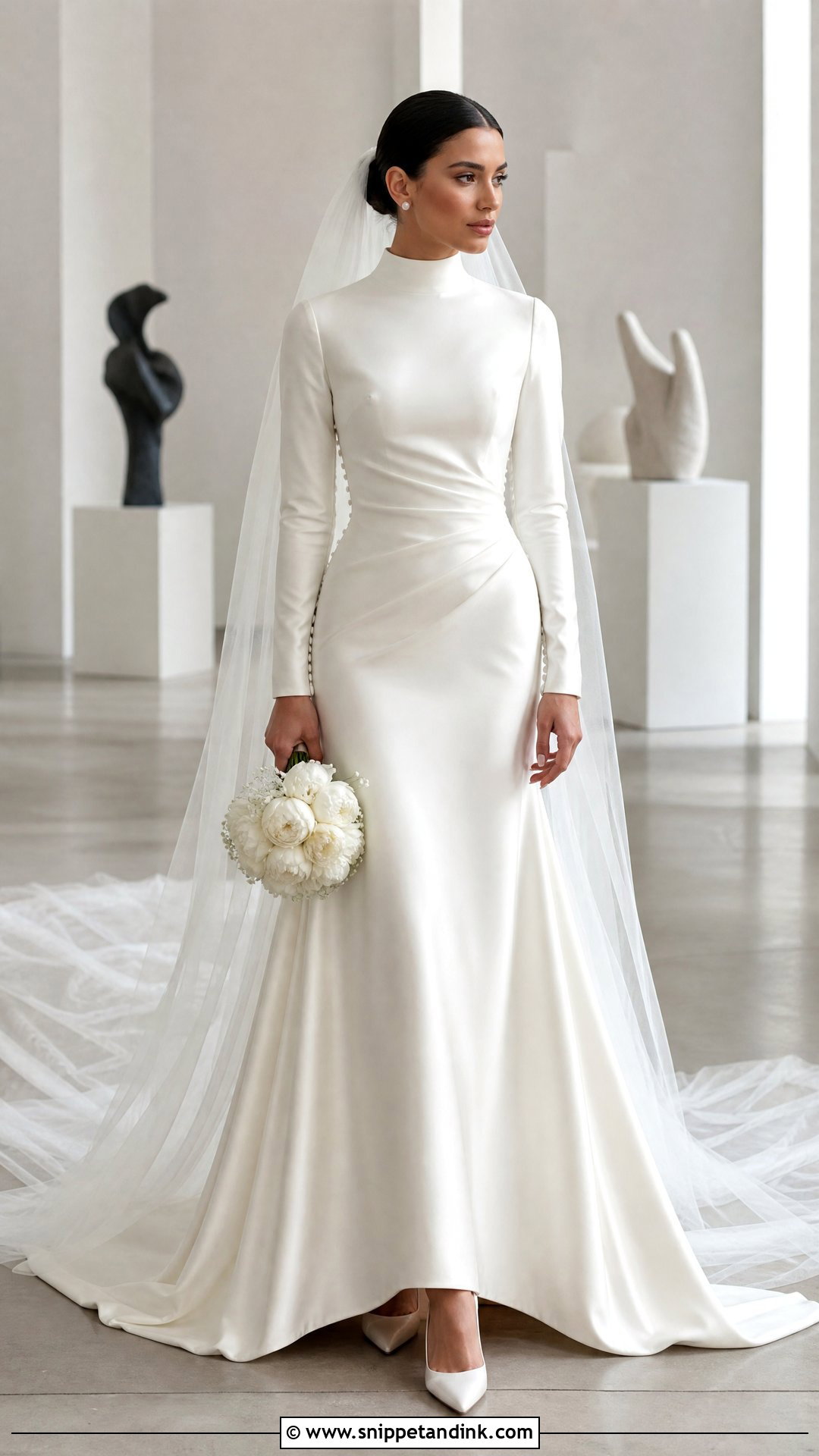
Minimal gowns are the least forgiving. With no embroidery to distract the eye, every seam, crease and undergarment line shows on plain silk or satin, so the tailoring has to be exact. A long-sleeve gown with a high neck, defined waist and soft flare is my preferred shape, with covered buttons, a draped shoulder or a narrow train as the one detail. Choose smooth, no-show undergarments and steam the gown close to the ceremony. A sheer cathedral veil and pearl studs keep the calm mood.
25. Arab Wedding Reception Dress
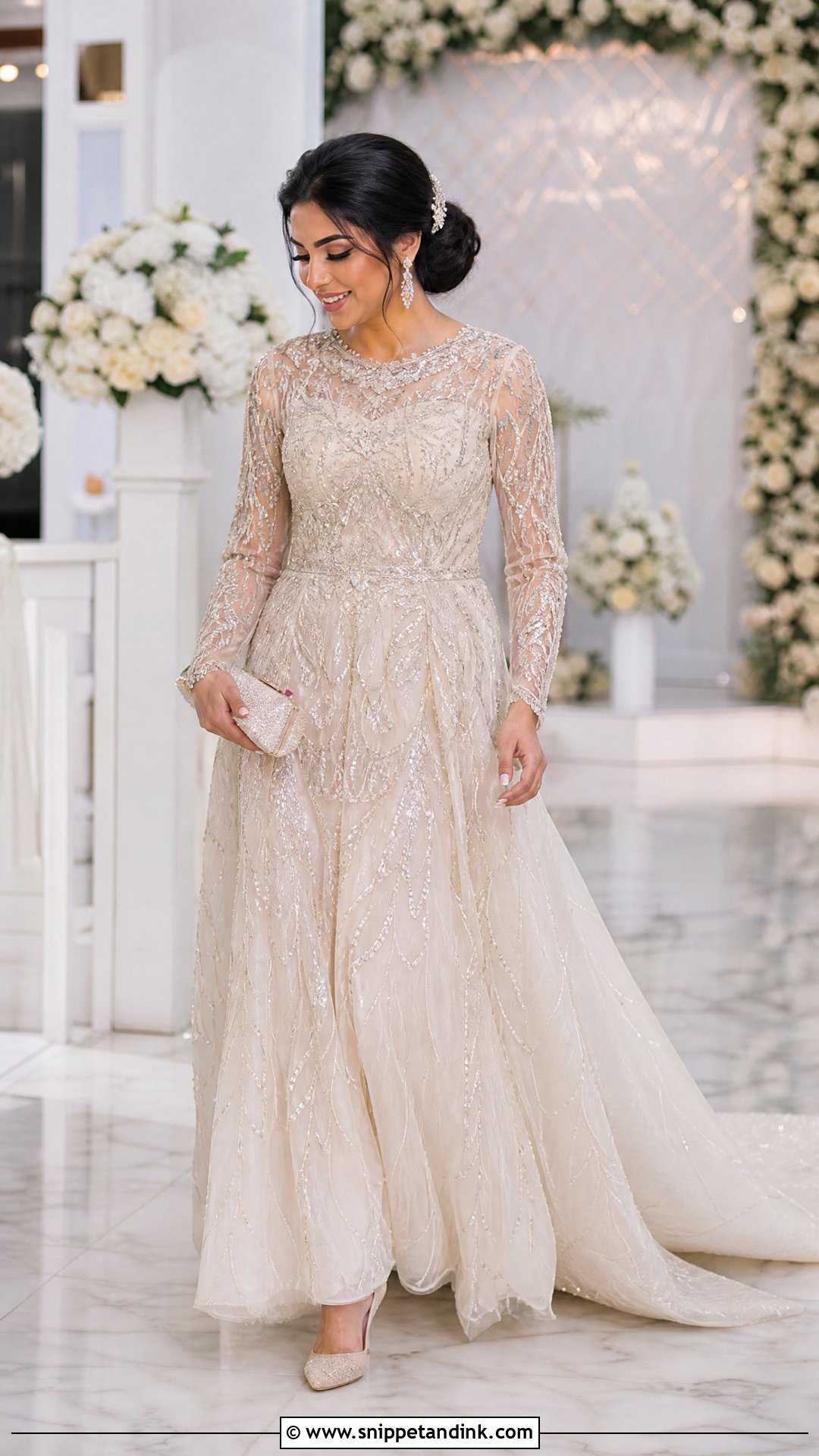
The reception dress should feel noticeably lighter than the ceremony gown while still clearly bridal. A slimmer A line, column or tea-length gown with long sleeves and beadwork concentrated on the bodice lets you dance without a train in the way. I suggest repeating one element from the main gown, pearls or floral embroidery, so the two looks connect in the album. Practice the full change before the wedding, shoes and hijab or hair accessory included, and time it.
Carrying a Heavily Embellished Gown Through a Long Night
Densely beaded and embroidered gowns are heavy, and that weight is felt at the shoulders and waist by midnight. Good construction spreads it: an internal waist stay that takes the skirt’s load off your shoulders, boning that sits on the body rather than pressing into it, and straps or sleeves anchored to the bodice frame.
- Wear the finished gown at home for an hour before the wedding. Pressure points show up then, not in a ten-minute fitting.
- Stage lighting is hot. Choose breathable linings, and use a clear deodorant applied well before dressing so it does not mark the fabric.
- Plan the bathroom. Decide who helps, and practice with the bustle and underskirt so it takes minutes, not half an hour.
- For hijab brides, a cotton or bamboo undercap breathes better than synthetics, and pins set into the undercap rather than the scarf alone hold through dancing.
- Pack a small kit: spare pins, clear nail polish for a snag, a few spare beads or crystals from the maker, and a needle threaded in ivory.
After the wedding, have the gown cleaned by someone who handles embellished bridal wear, and point out food or makeup marks. Store it flat or folded in acid-free tissue in a breathable box rather than hanging, because the weight of beading stretches shoulders and seams over months on a hanger.
Which Moment of the Night Should the Dress Be Built For?
Start with silhouette, coverage, venue and comfort, then think about which moments matter most to you: the entrance, hours on the stage, the dancing. A crystal ball gown suits a grand ballroom; a silk A line suits a smaller ceremony. Capes, overskirts and removable sleeves can turn one gown into several looks. If you are wearing regional dress or heritage embroidery, bring in family and skilled artisans. Whatever you choose, professional alterations matter, and the full outfit should be tested walking, sitting and with your arms raised. A dress that feels secure and personal will carry you through the whole celebration.
You'll Like These Ideas:


Leave a Reply