
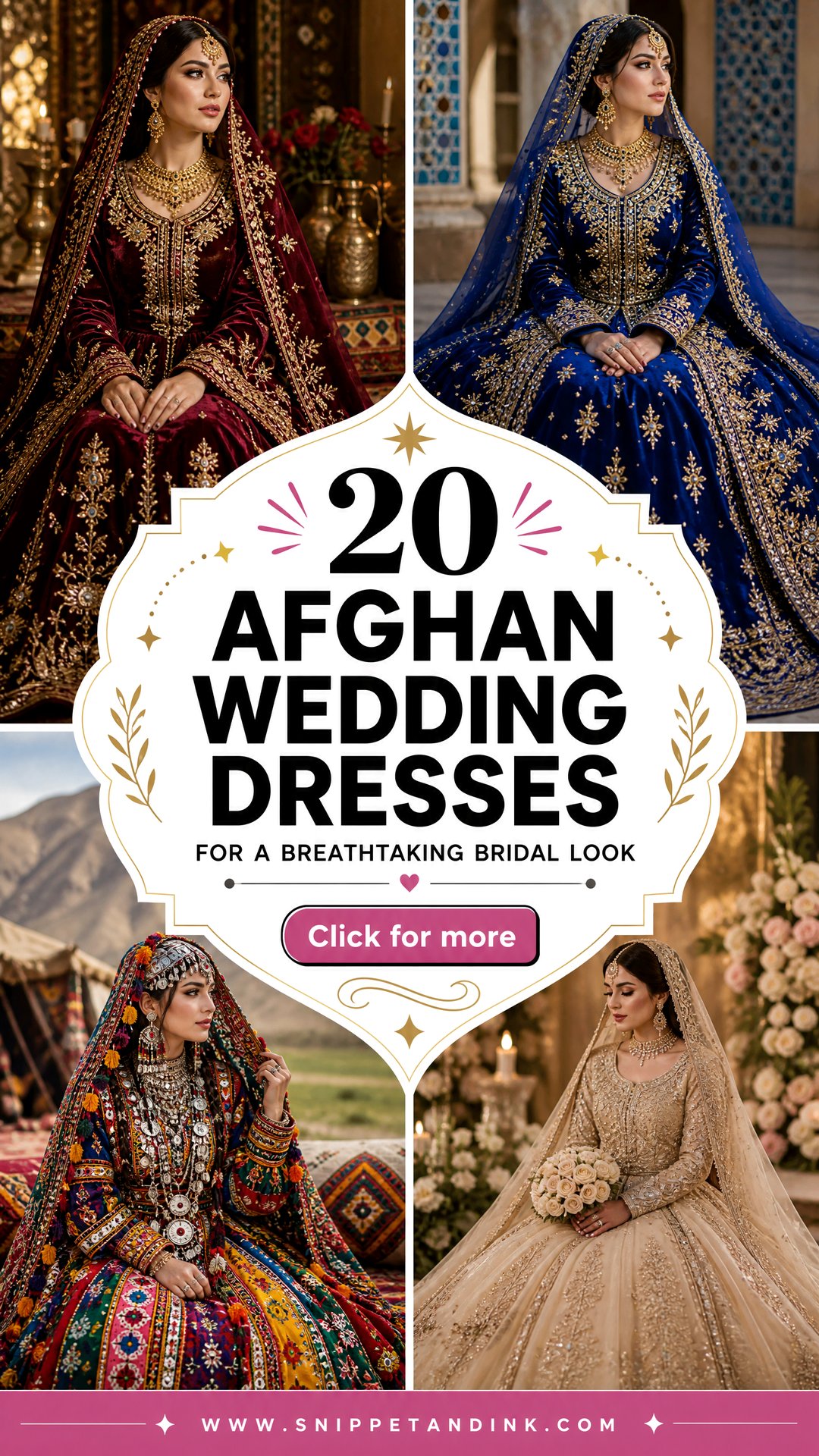
The thing that separates an Afghan wedding dress from most bridal gowns is the handwork. Mirrors, beads, metal thread, coins and regional embroidery sit on long skirts and fitted bodices, usually with a matching dupatta or veil and trousers underneath. Plenty of brides, especially in diaspora families, now bring those traditional details with white gowns or A-line and ball-gown shapes, most often for the nikah. Customs differ from family to family, so I start every consultation by asking which events she’s dressing for and who in the family will have opinions. The 20 looks here cover the henna night, the nikah, the reception and a few modern versions, each with the fitting notes I’d give in person.
Ordering From an Afghan Artisan You Have Never Met
Many brides outside Afghanistan order embroidered dresses from makers abroad, through family contacts or online. It can work well, but I’ve seen orders arrive with sleeves too short and hems far too long, so I approach it the same way every time.
- Get measured by a local tailor, not at home with a tape. Ask for bust, waist, hip, shoulder width, arm length with the elbow bent, upper arm, and floor length while wearing the wedding shoes.
- Ask for a physical fabric swatch and a close-up photo or short video of a finished section of the embroidery in daylight. Screens shift color badly, especially reds and greens.
- Agree on the finished weight and the lining fabric in writing. A heavy dress with an unlined bodice is uncomfortable within an hour.
- Have it arrive with time to spare, ideally a couple of months ahead, because shipping and customs delays happen and a local tailor will usually need to adjust the fit.
- Request a little extra seam allowance at the sides and hem, and a spare strip of the embroidered border, which a tailor can use for repairs.
If the maker can’t send process photos, I’d be cautious about trusting them with the main wedding dress. A henna or engagement outfit is a better place to try someone new.
1. Traditional Red Afghan Wedding Dress
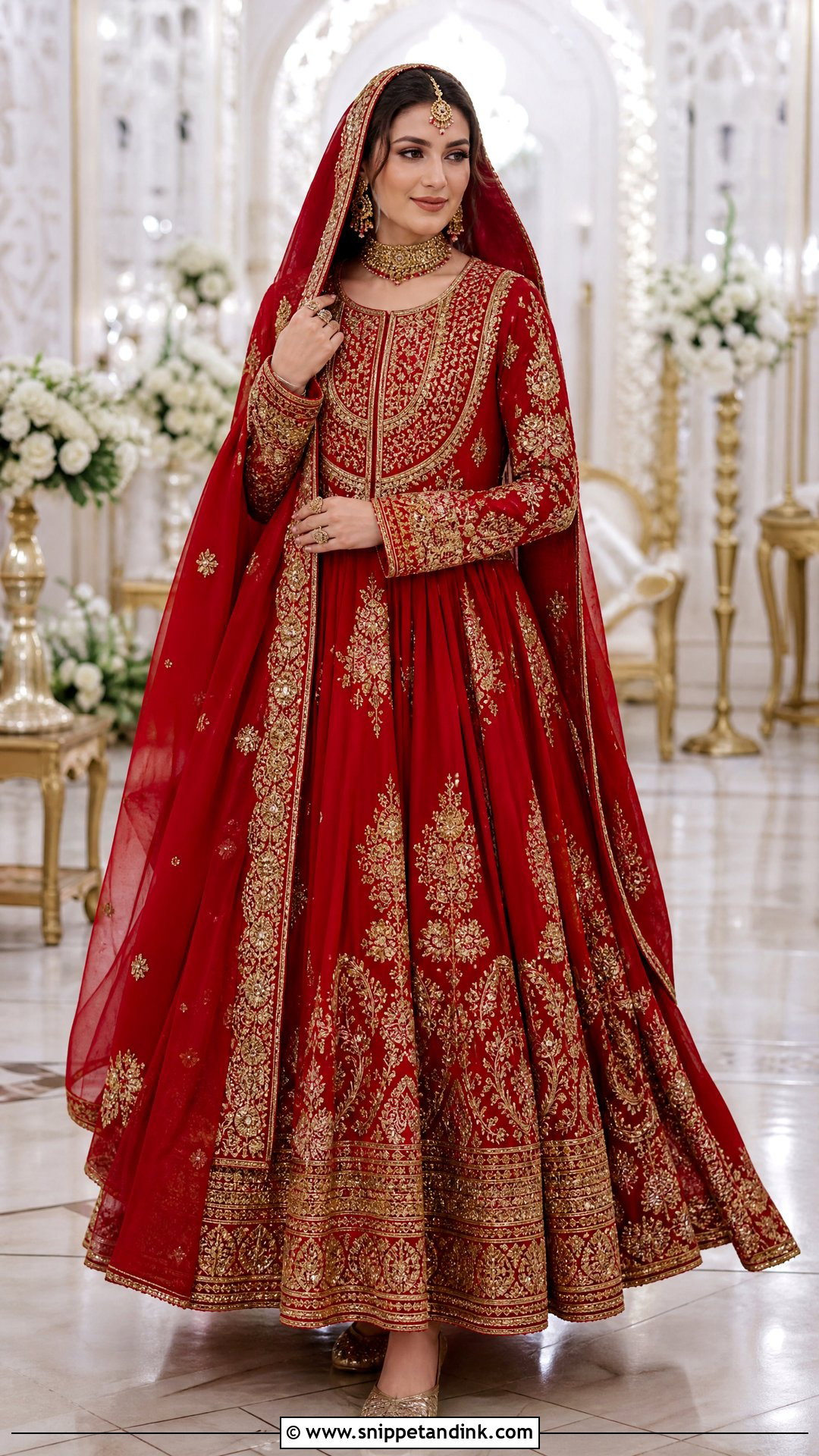
Red is still the color most families expect for the main celebration, and I wouldn’t argue with it. A fitted embroidered bodice, long sleeves and a deeply gathered skirt give it presence, and that gathered skirt is what swings when the bride joins the Attan. Put the zardozi, beads or mirrors at the neckline, cuffs and hem so the weight is spread out rather than piled on the chest. Because a fully worked red dress gets heavy, I insist on a supportive inner lining and a firm waist that carries the skirt. Finish with a red dupatta edged in gold, embroidered flats, a structured choker, drop earrings and a forehead ornament.
2. Green Afghan Henna Wedding Dress
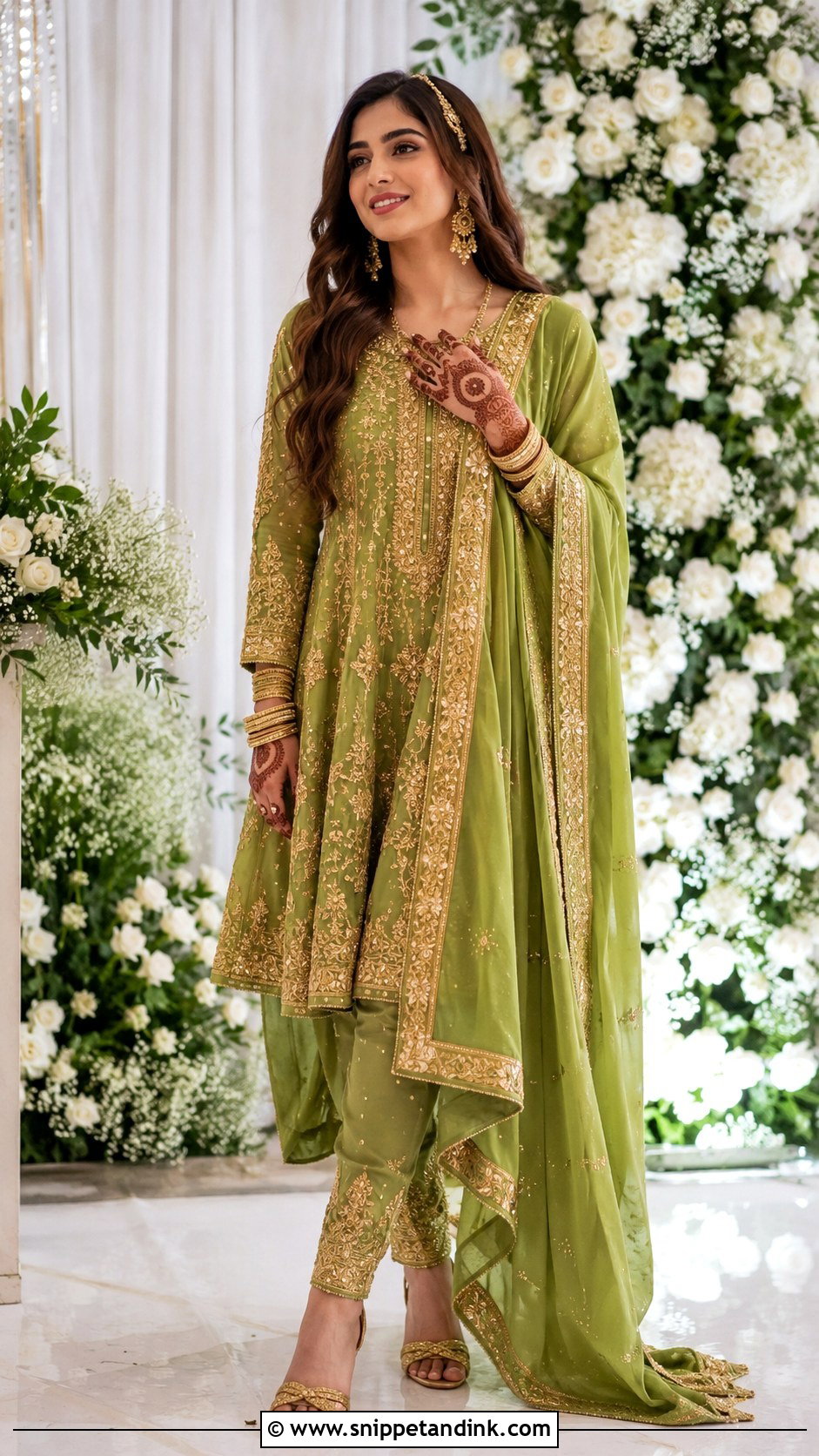
Keep it light and let her dance: that’s my brief for a henna-night dress. A green full-length dress with a decorated bodice, flowing skirt and matching shalwar covers tradition, and floral stitching with small mirrors brightens the neckline. Make this skirt noticeably lighter than the reception dress. She’ll be sitting on the floor or a low seat for the henna, then up and greeting, then dancing. Sage or pistachio reads softer by day; emerald is richer under evening light. A light dupatta with a metallic edge, gold sandals and stacked bangles finish it. Bangles go on after the henna dries, not before.
3. White Afghan Nikah Wedding Dress
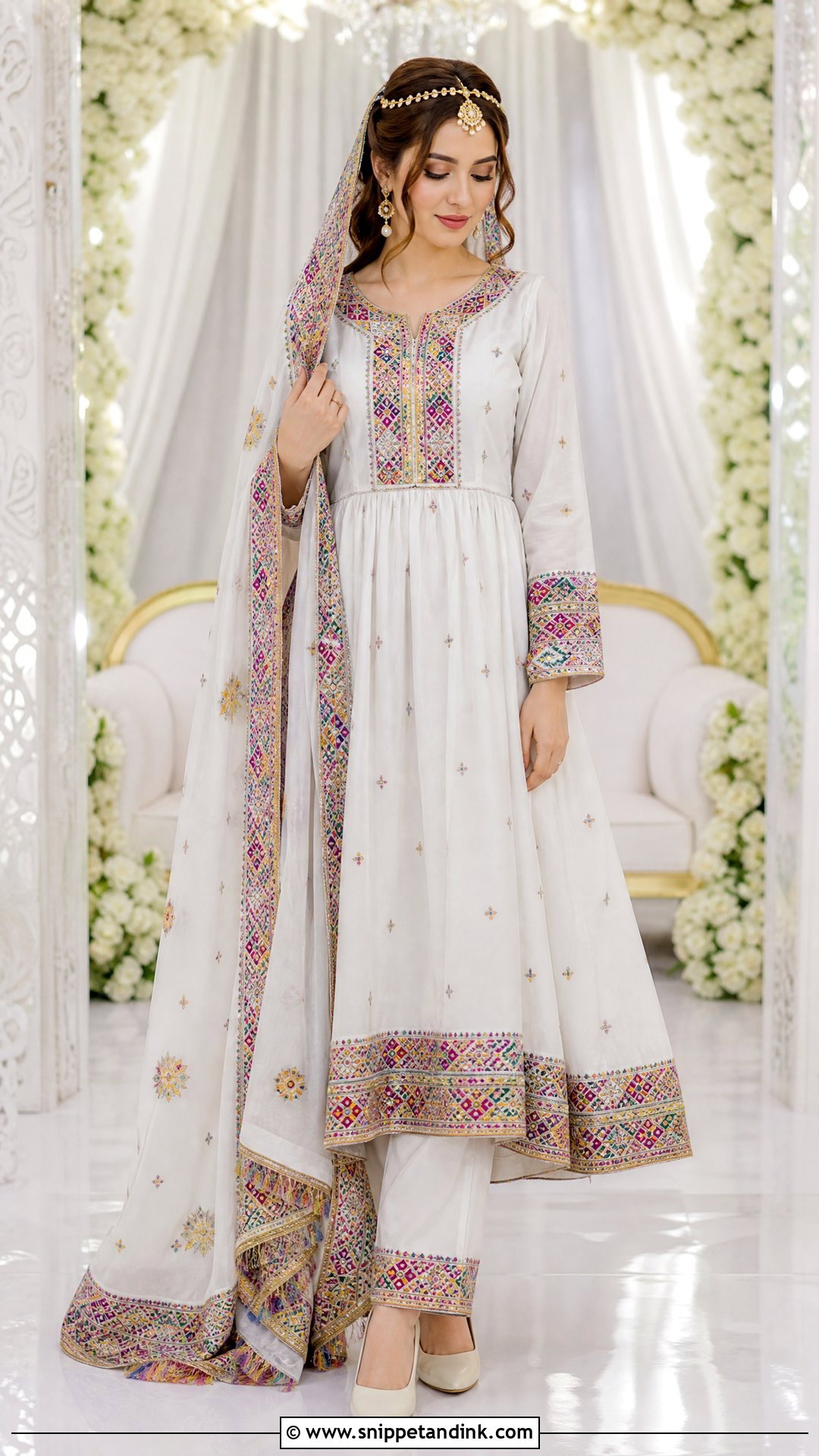
White or ivory for the nikah, then a colorful traditional dress later in the day, is a pattern I see in many families now. On a white base, colorful Afghan embroidery at the bodice, cuffs or skirt border shows every stitch, which is the point. Keep the shape modest: an A-line, long sleeves, a defined waist and a shalwar underneath for coverage and easier walking. A multicolored embroidered dupatta brings the color up to the face. If the bride wants it quieter, cream thread and fine beadwork replace the bright colors. I check white fabrics next to her skin in daylight; a blue-white can look grey against warm skin tones where ivory won’t.
4. Maroon Velvet Afghan Wedding Dress
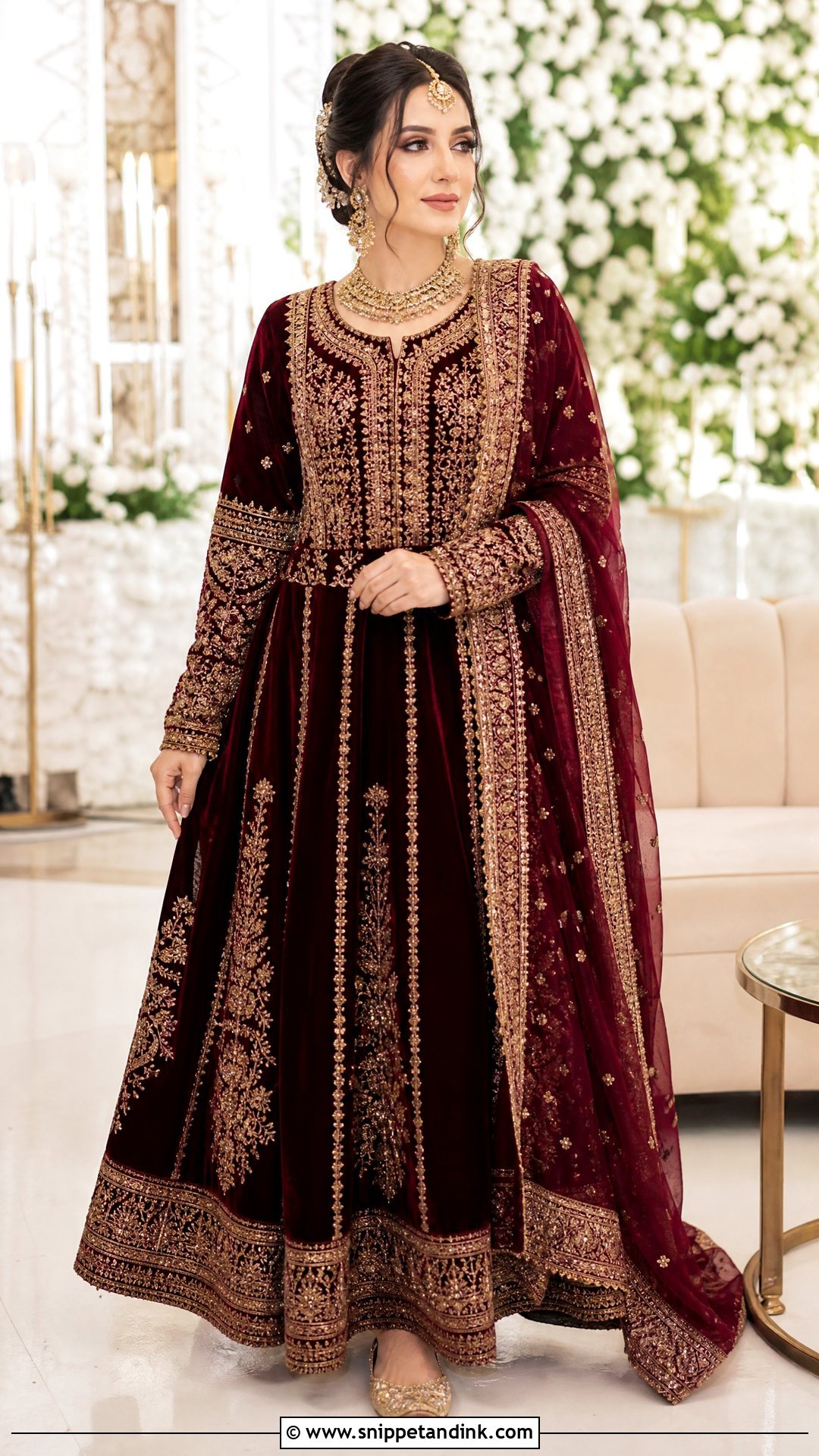
Velvet traps heat, and I’ve watched brides in full velvet start to wilt by the second hour of a warm reception. Maroon velvet is still my favorite for fall and winter, with gold charma dozi or geometric motifs standing out against the dark pile. Ask for a breathable lining and a well-supported waist. If the venue runs warm, the smart move is velvet on the bodice and sleeves only, with a lighter skirt that keeps the look but halves the weight. A chiffon dupatta in maroon or antique gold lightens it further. Pointed gold flats and a secure head ornament complete the outfit.
5. Emerald Afghan Wedding Dress
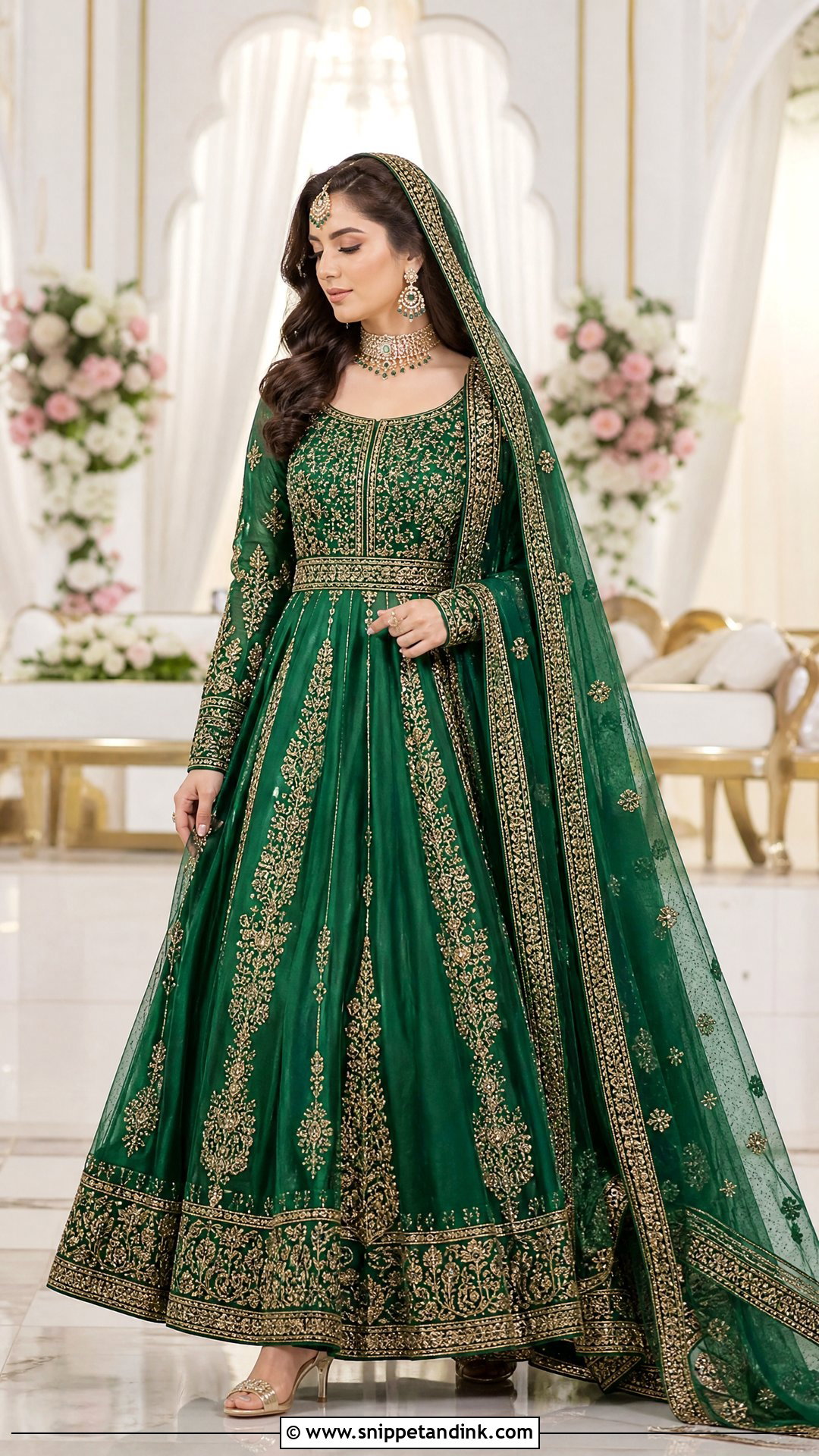
Emerald lets a bride step away from red without losing ceremony. A defined waist, long embroidered sleeves and a wide skirt give the shape, with gold thread, beads and mirror accents concentrated at the chest, cuffs and lower border. I like a few ruby-colored stones in the jewelry for warmth against the green. The embroidery can shift with the event. For a henna night, multicolored stitching suits the mood; for a reception, refined gold work and a longer veil look more formal. Keep the bag small if the dress is heavily embellished.
6. Royal Blue Afghan Wedding Dress
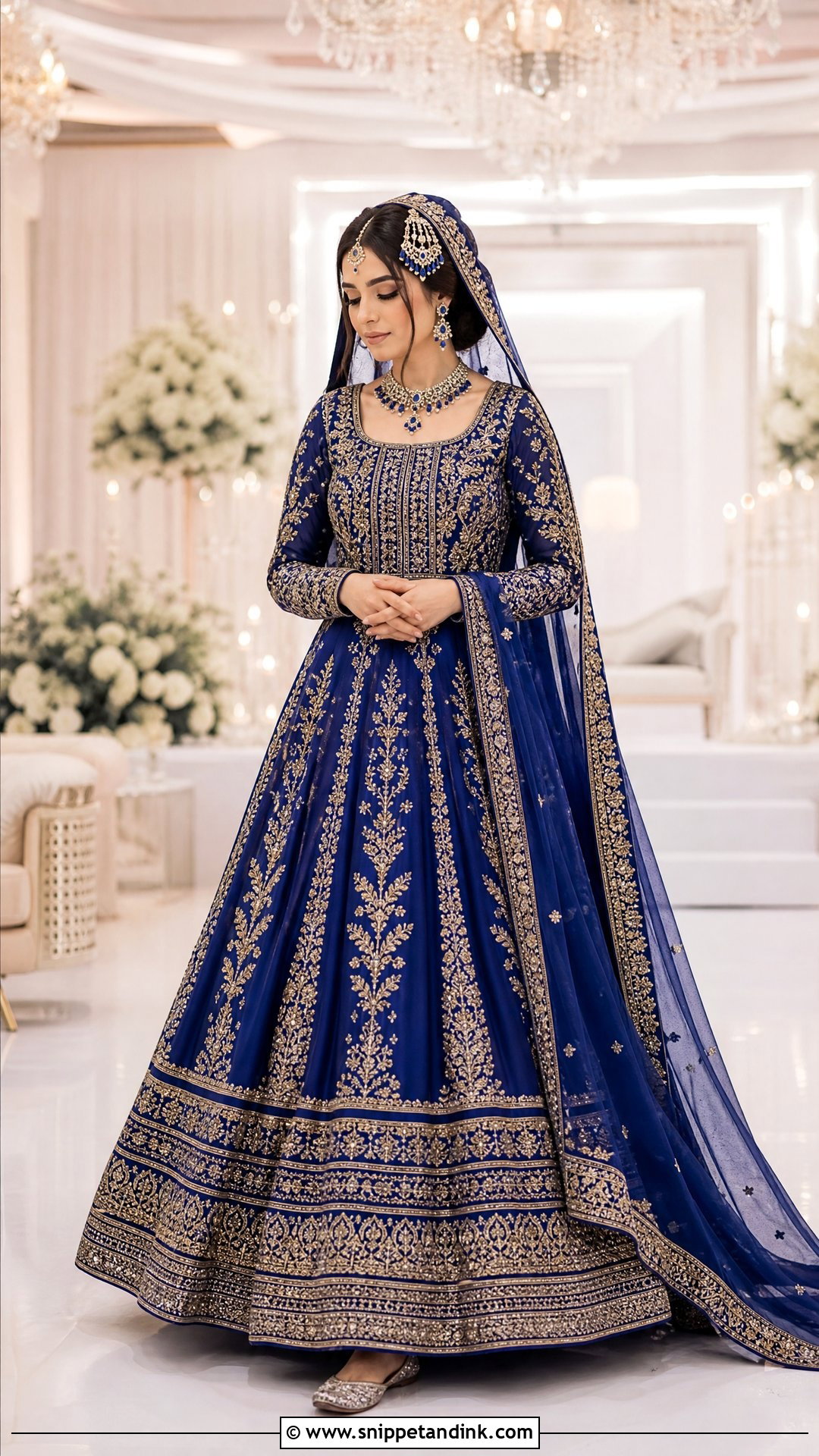
Royal blue takes silver or antique gold equally well, so decide by the jewelry she already owns. A structured bodice and circular skirt give drama, with embroidery framing the neckline and running down the sleeves and hem. Don’t load every area equally; heavy work on the bodice and smaller motifs across the skirt look intentional instead of busy. A matching blue dupatta with metallic edging, silver heels or embroidered flats and a decorative headpiece finish it. I always run my hand along the inside of the bodice at a fitting. Embroidery backing can scratch, and a smooth lining fixes that.
7. Ivory And Gold Afghan Wedding Dress
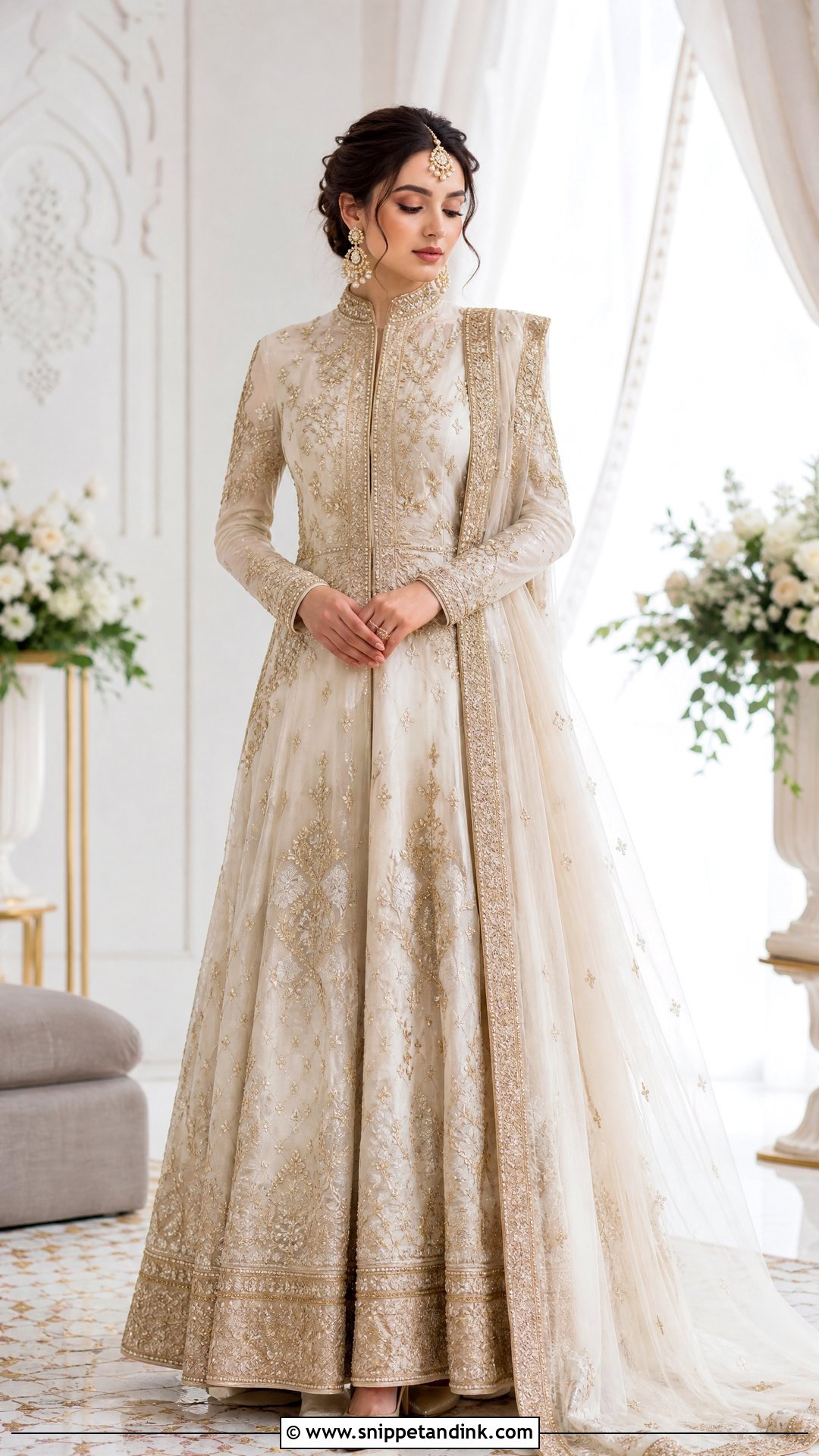
Ivory and gold is a safe pairing on paper and a tricky one in person, because ivory varies so much. I have brides look at the swatch in daylight and under warm evening light before committing, since one shade can read creamy at noon and yellow at night. A high neckline, fitted waist, long sleeves and an A-line skirt keep it graceful, with gold tracing the bodice, cuffs and skirt panels. Add an ivory dupatta with a scalloped gold border and pearl-and-gold earrings. When the gown already carries dense zardozi, scale the jewelry down. Emerald, ruby or turquoise stones can bring in color through the accessories alone.
8. Pink Afghan Wedding Dress
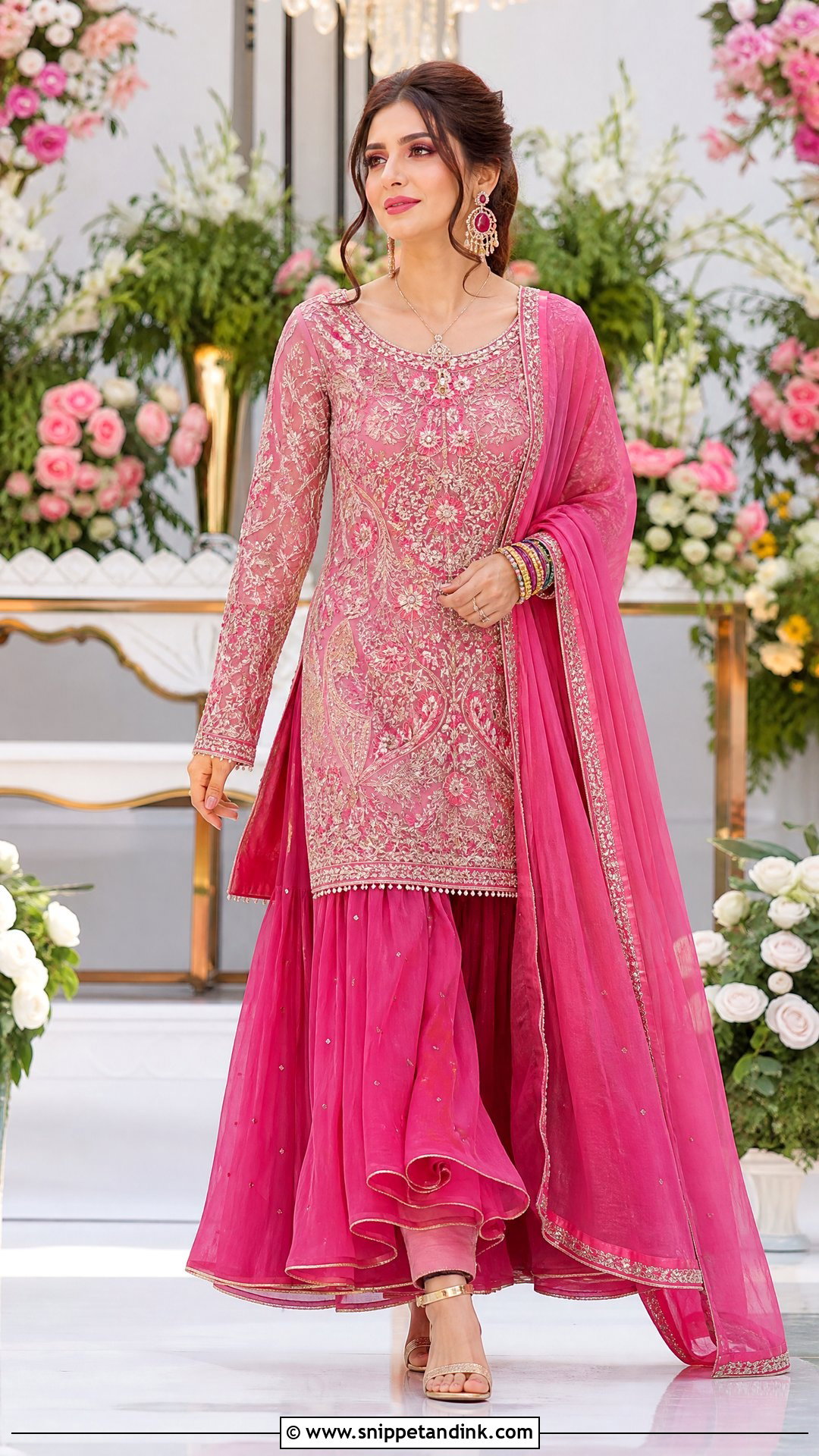
Pink covers a wide range: blush is soft and works best by day, while fuchsia and raspberry hold their own next to the strong traditional colors. A hand-embroidered bodice, decorated sleeves, matching shalwar and a layered skirt make the base. Pale pink in particular needs multicolored threadwork and a touch of gold, or it goes flat in photos. For a daytime event keep the skirt light; for evening, velvet panels add depth. I’d keep makeup to defined eyes and a soft lip color, with rose-gold sandals and earrings in pink or green stones, so the embroidery stays in front.
9. Purple Hazaragi Afghan Wedding Dress
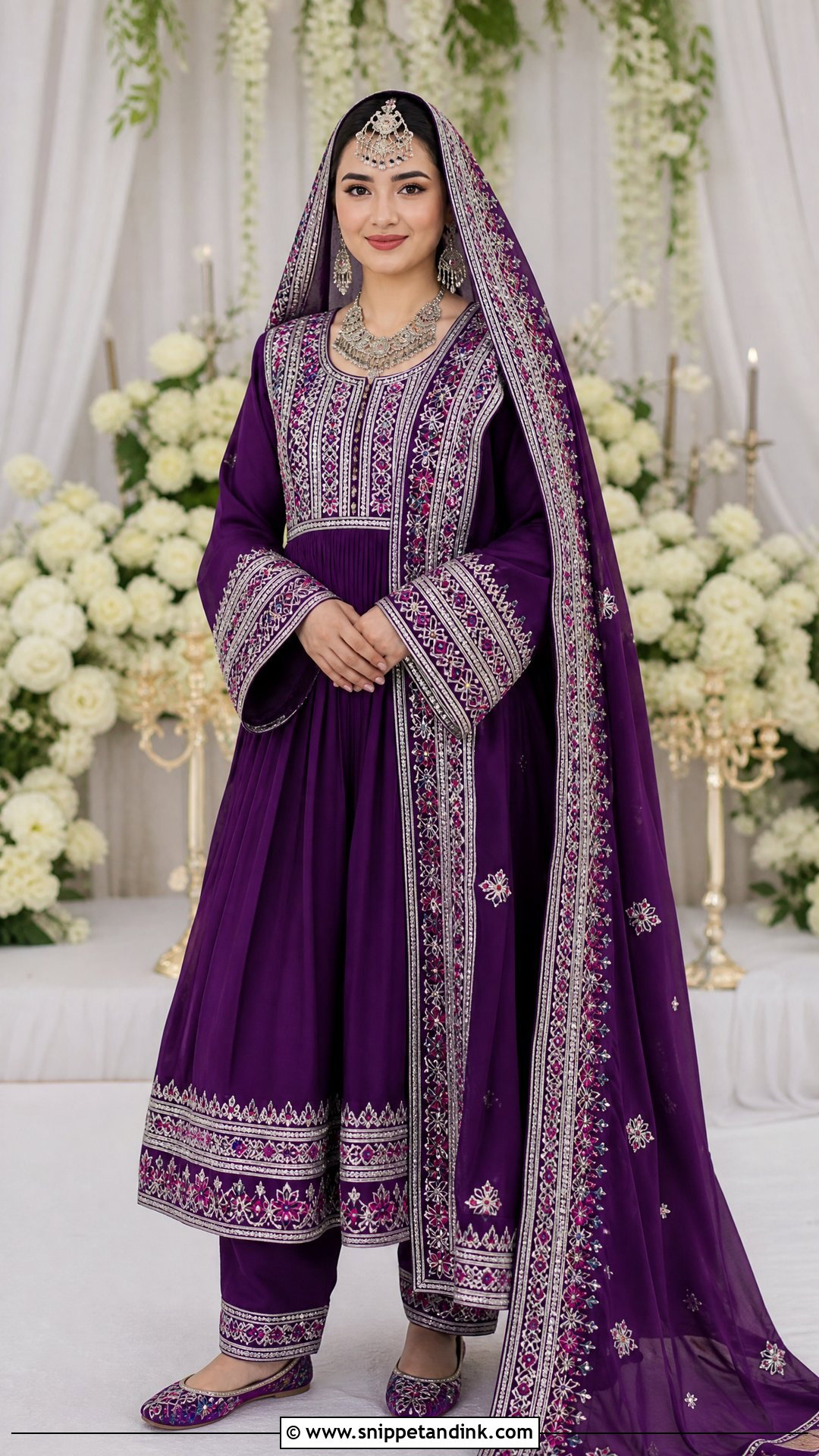
A purple Hazaragi-inspired Afghan wedding dress in plum or deep grape is about layered fabric and dense embroidery around the neckline, chest, sleeves and hem, worn with trousers and a decorated head covering. An embroidered or woven sash at the waist helps carry the full skirt. Regional clothing belongs to particular families and communities, so I’d never design one from pictures alone. Bring in an artisan or relative who knows the tradition and let them guide the motifs. Silver-toned jewelry and comfortable embroidered shoes suit it.
10. Multicolor Kuchi Afghan Wedding Dress
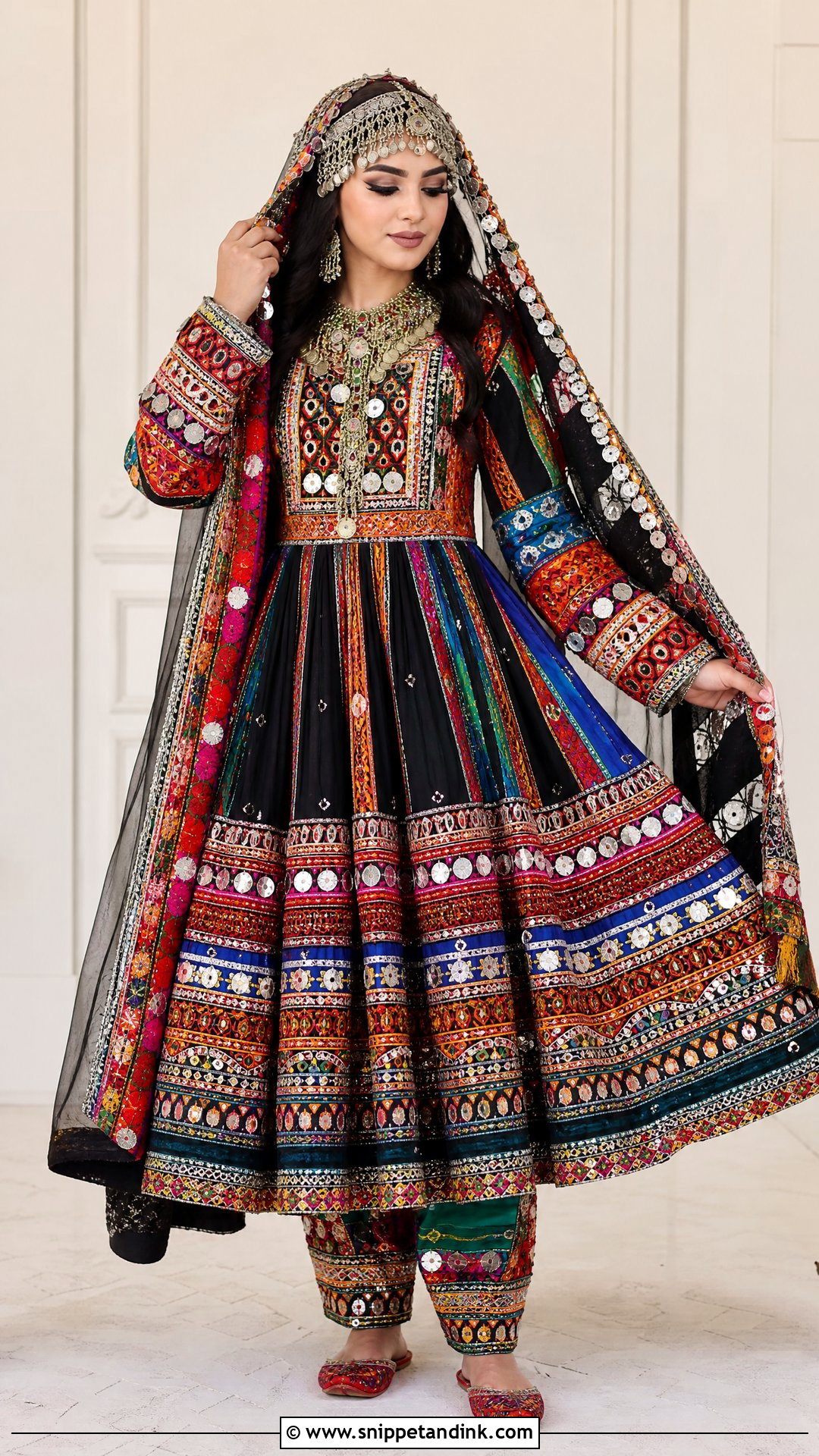
Kuchi-inspired dresses are the boldest on this list: red, orange, green, blue and pink together, with mirrors, coins and heavy embroidery on a wide skirt and full-sleeved bodice. It works when motifs repeat in a balanced rhythm. A coin headpiece or decorated cap looks right with it, but I fit it to her head well before the event, because coins shift and pull. Skip any modern beaded handbag. If antique coins, textiles or jewelry are part of the look, ask where they came from and make sure they were acquired responsibly.
11. Gold Zardozi Afghan Wedding Dress
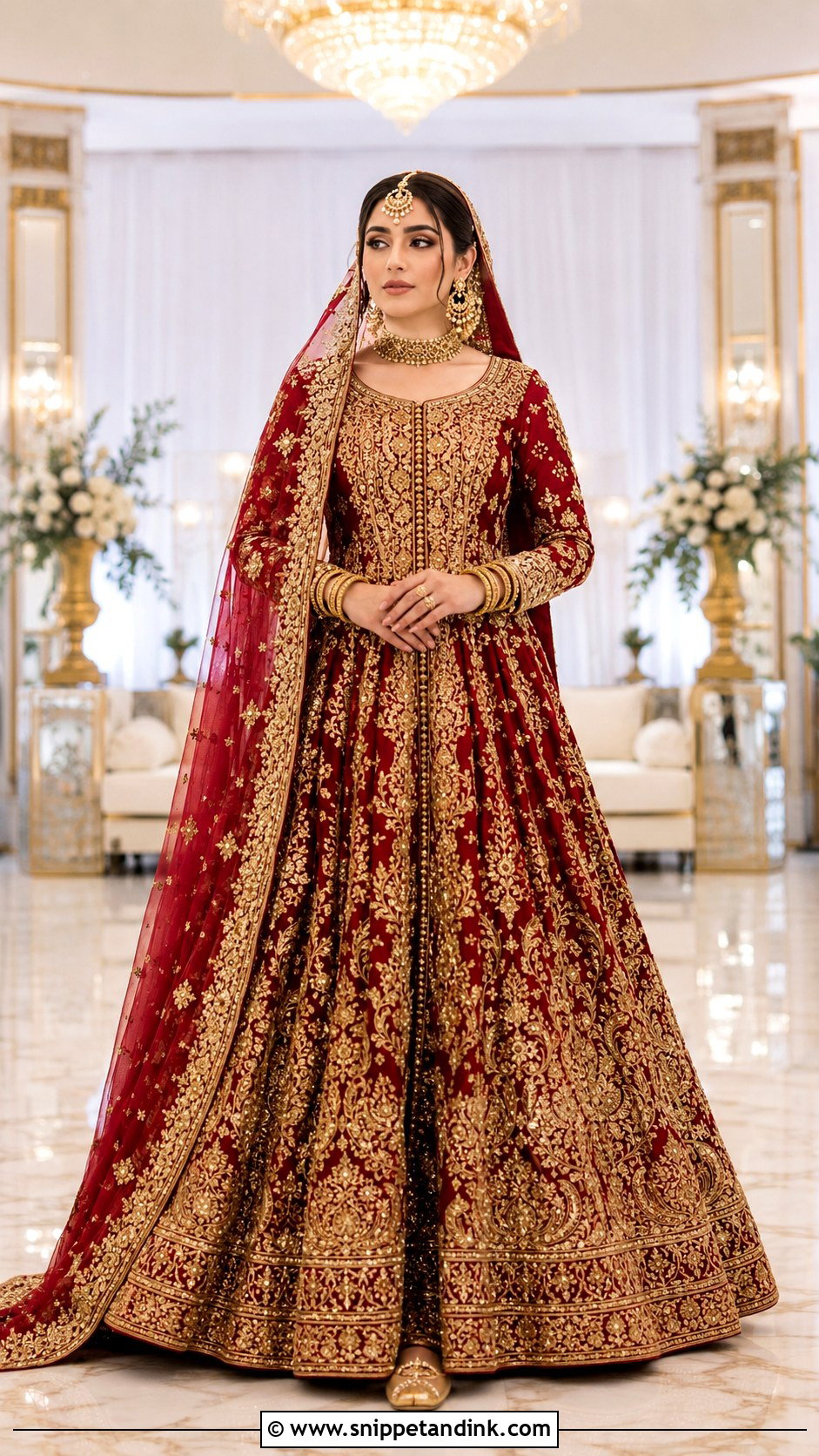
Gold zardozi needs a dark or saturated ground to read properly, so choose crimson, burgundy, emerald or navy. Put the heaviest metal work at the neckline, waist, cuffs and border, with smaller motifs across the rest. Metal thread stiffens fabric, which is why I ask the maker for flexible panels at the elbows and waist. At the fitting, I have the bride sit, stand and walk a lap of the room before anything is finished. A long-sleeved bodice, wide floor-length skirt, matching dupatta, gold choker, bangles and forehead ornament complete it, and bright reception lighting does the rest.
12. Silver Mirror Work Afghan Wedding Dress
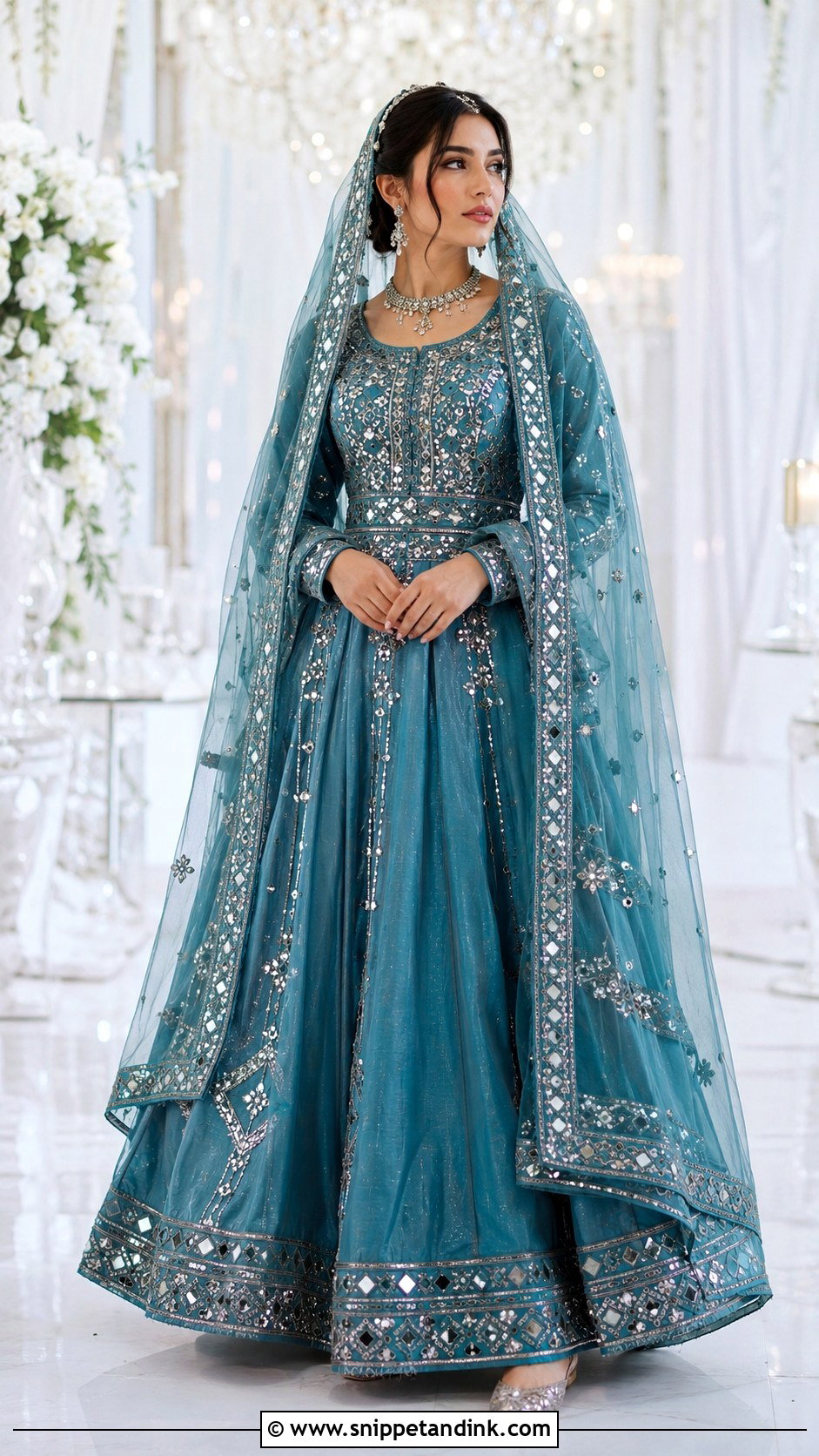
Mirror work catches every light in the room, so I treat it as jewelry and keep the actual jewelry modest. Teal, purple, navy or berry make good grounds, with evenly spaced mirrors and silver embroidery on the bodice, sleeves and skirt border. The detail I check most closely is the stitching around each mirror at the arms and waist; loose ones fall off on the dance floor. Ask the dressmaker to cover any rough backing so it doesn’t catch the lining or the veil. A matching dupatta, silver embroidered flats and drop earrings are enough.
13. Burgundy Charma Dozi Afghan Wedding Dress
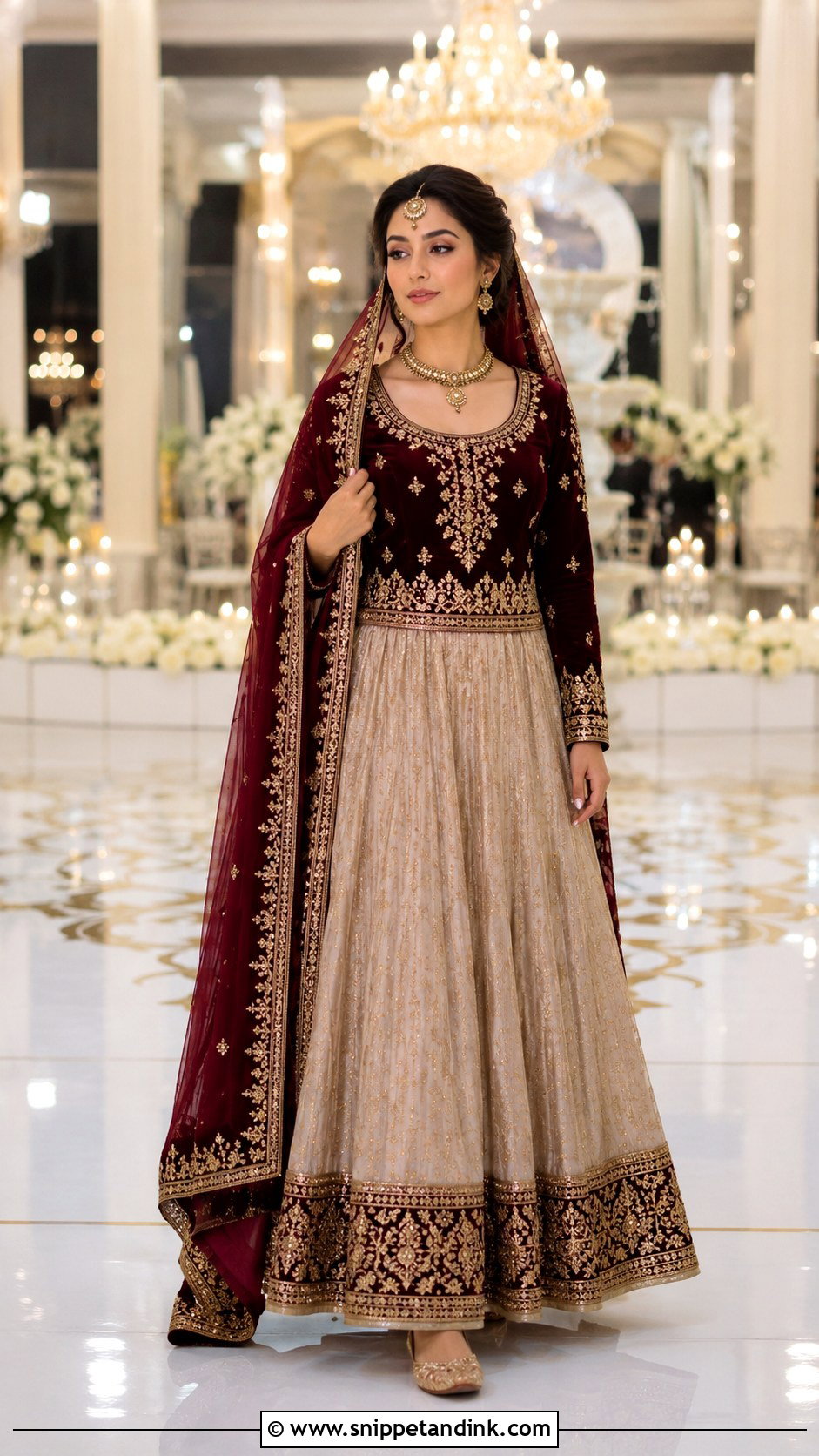
Charma dozi is slow, detailed handwork, so the dress needs a longer lead time than most. Burgundy shows it well. I’d pair a velvet bodice with a lighter circular skirt, long sleeves, a modest neckline and embroidery across the chest, cuffs, waist and hem. Talk through timeline, materials and the finished weight with the maker early. If the artisan is far away, ask for fabric samples and close-up photos of the stitching before you approve anything. A burgundy chiffon dupatta, antique gold shoes, a structured necklace and small earrings keep the upper body comfortable.
14. Teal Afghan Wedding Dress
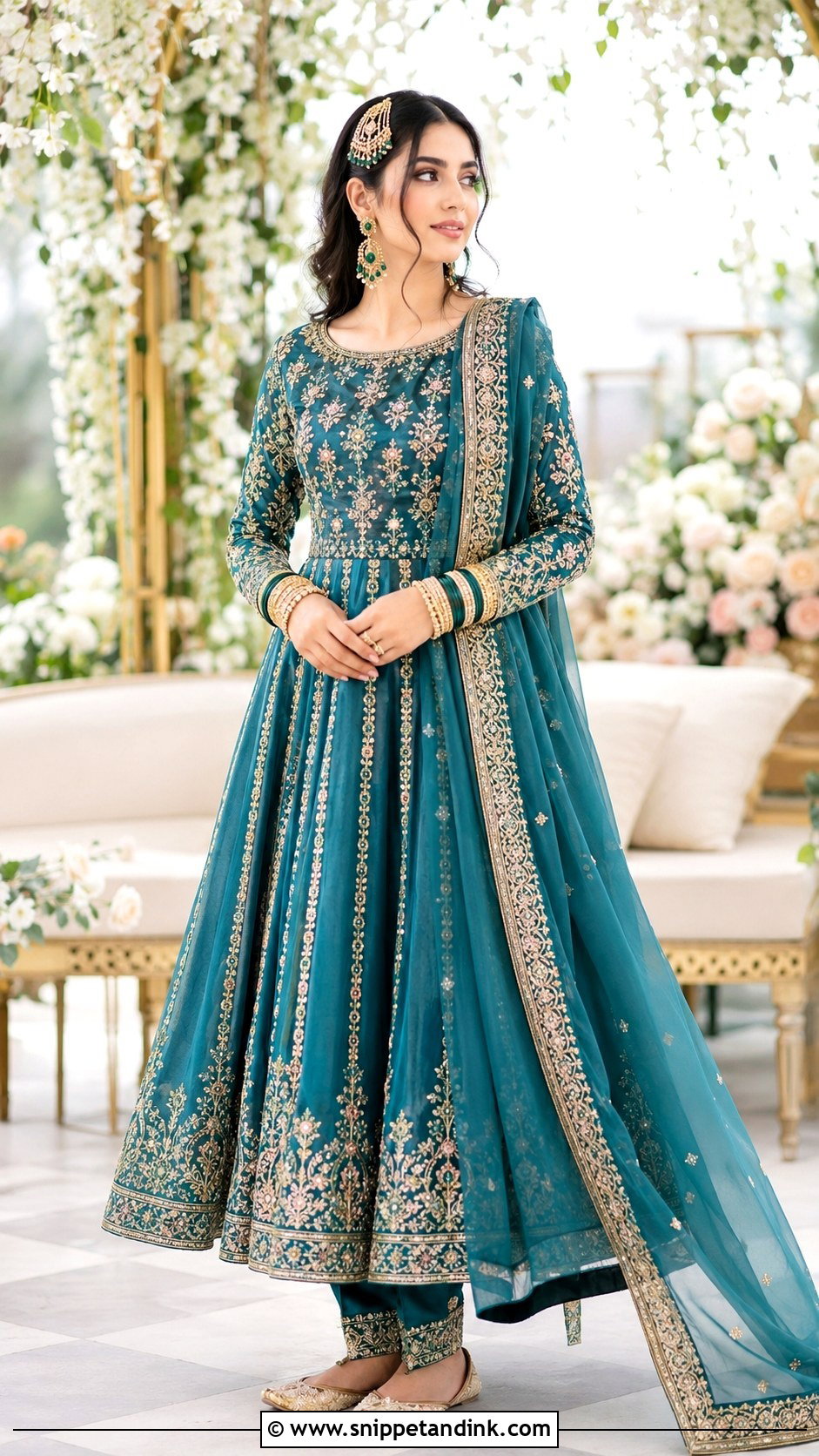
Teal sits between blue and green and suits a surprising range of skin tones. For warm-weather weddings I swap velvet for breathable satin, chiffon or a light blend, with a fitted embroidered top, flowing skirt, long sleeves and trousers underneath. Gold thread with a few coral or turquoise details brightens it. Keep embellishment away from the underarm; that’s the spot that rubs raw by the end of the night. A matching dupatta, gold flats, a decorative headpiece and a few coordinating bangles finish the look.
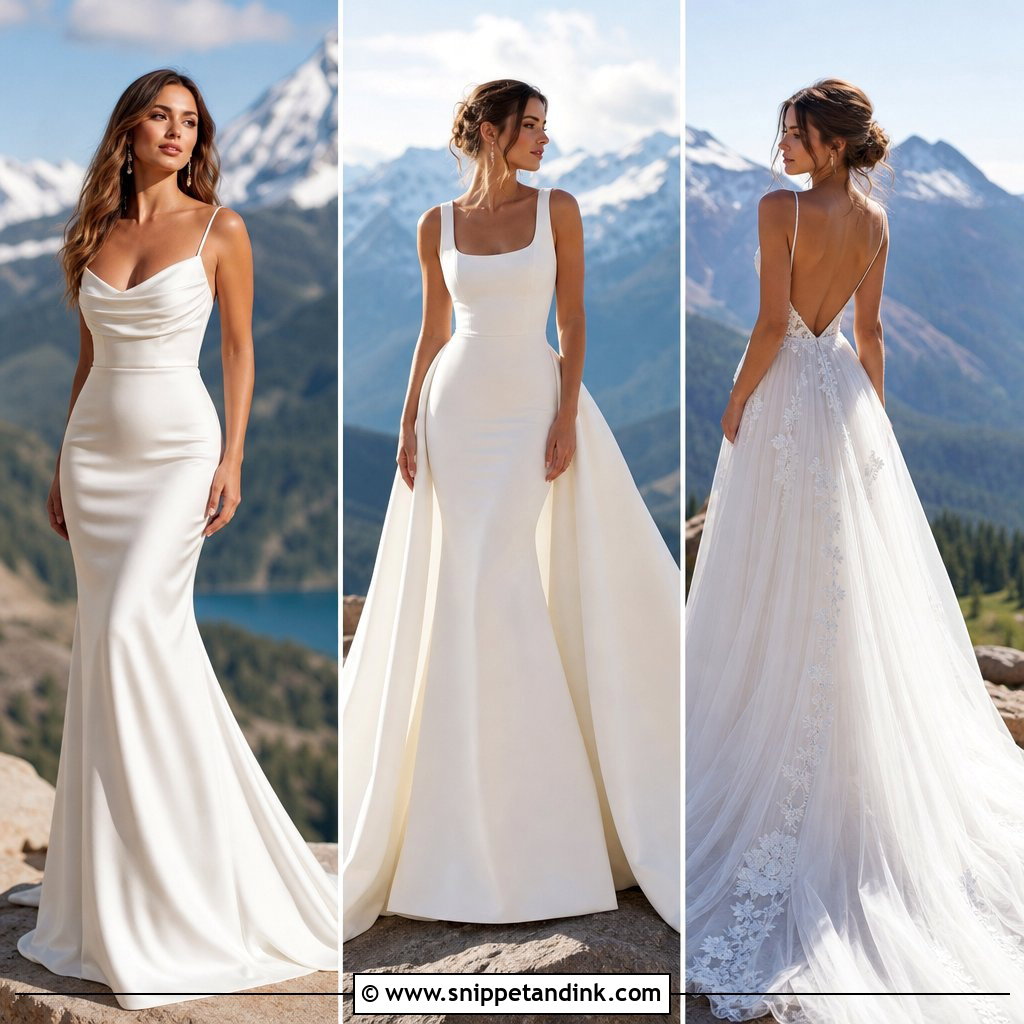
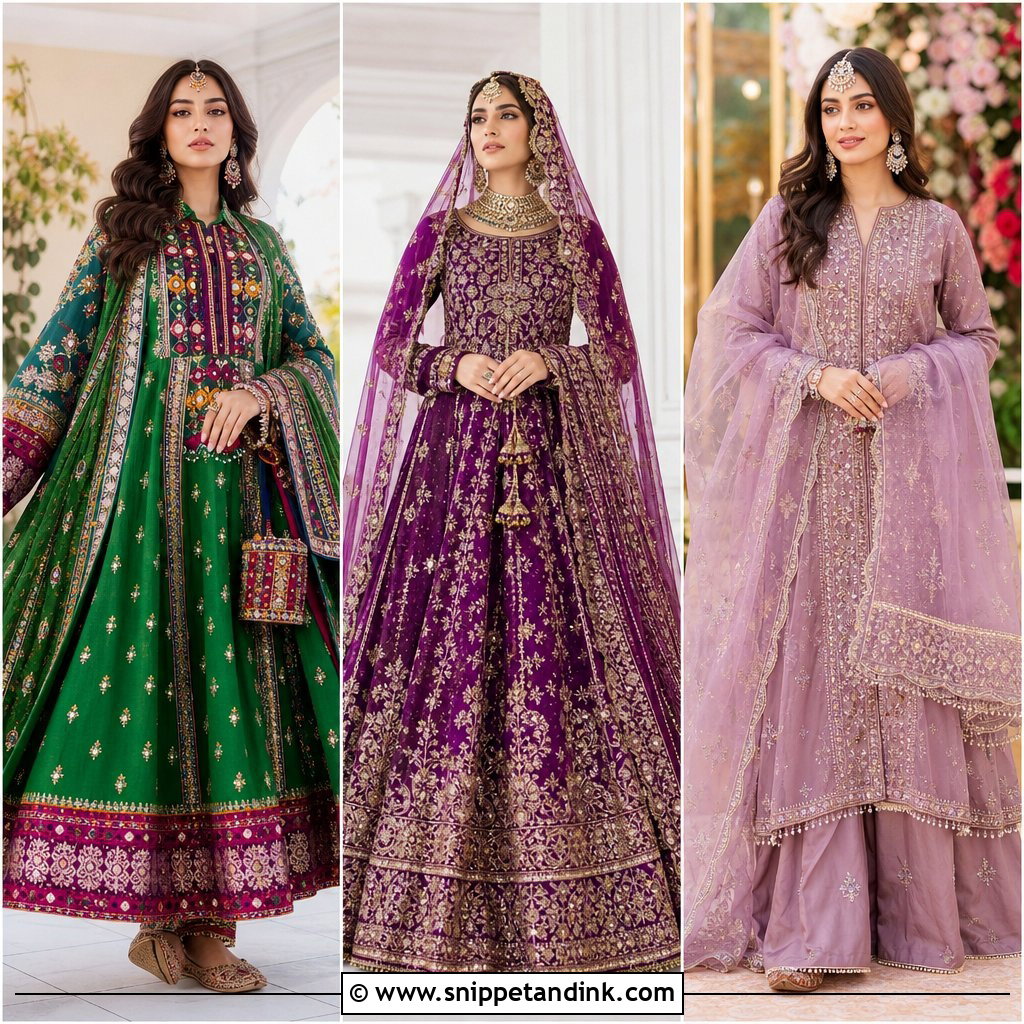
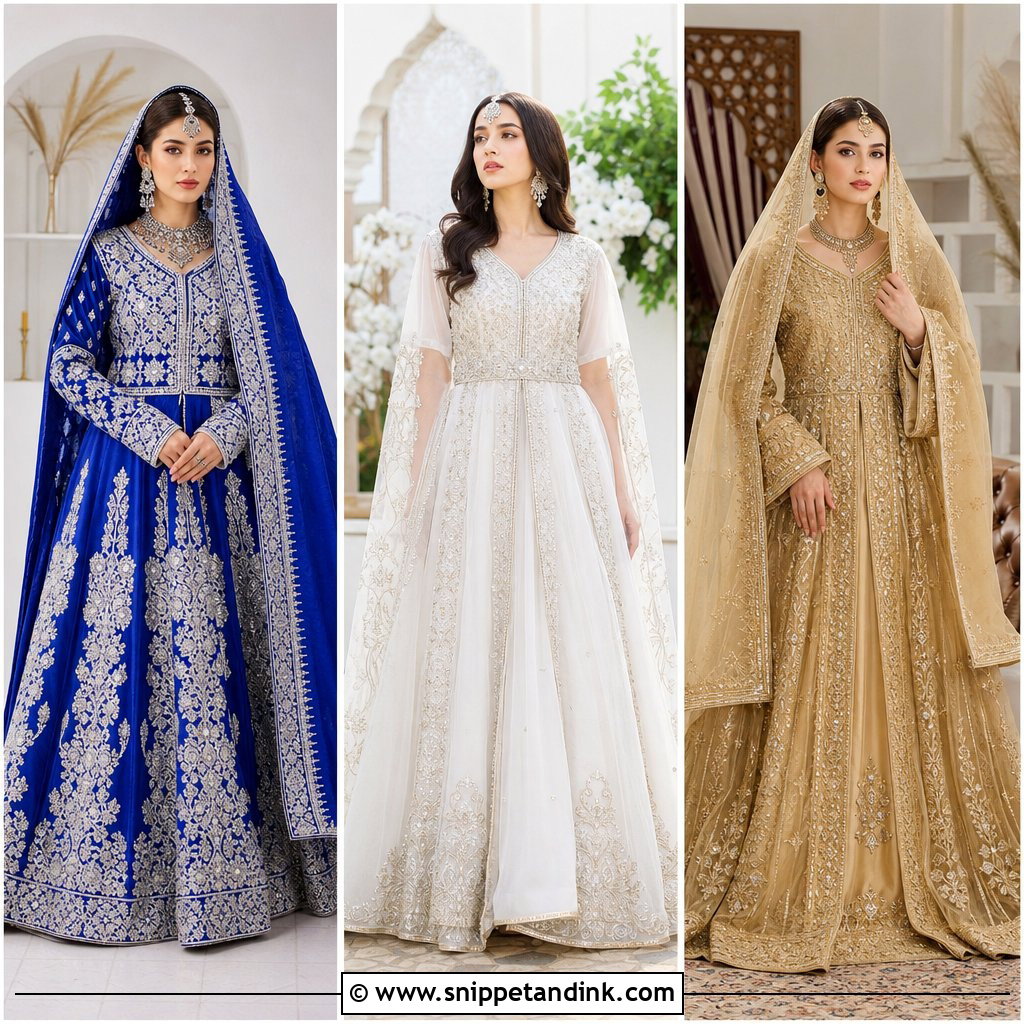
15. Champagne Afghan Ball Gown Wedding Dress
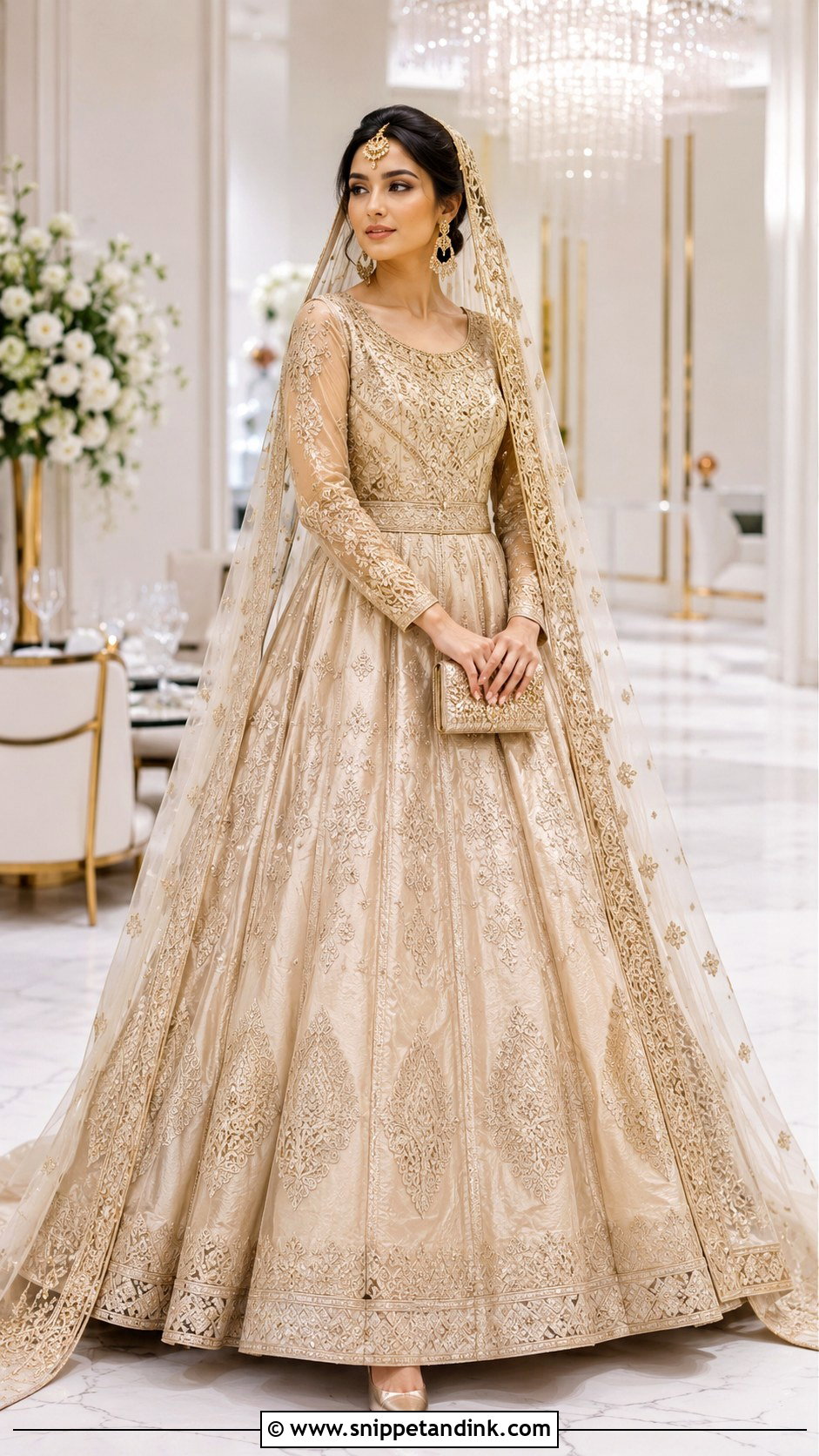
A champagne ball gown with Afghan embroidery is a reception dress. Start with a structured bodice, long or sheer-lined sleeves and a big skirt, then add embroidery at the neckline, cuffs, waist and along the train in gold, ivory and muted jewel tones. The embroidery has to be designed into the gown, not stitched on afterward as a panel; you can always tell. I’d have an experienced artisan create or approve the patterns. A champagne veil with a narrow embroidered edge, closed-toe metallic heels and a refined forehead ornament keep it polished.
16. Red Afghan Skirt And Embroidered Bodice Dress
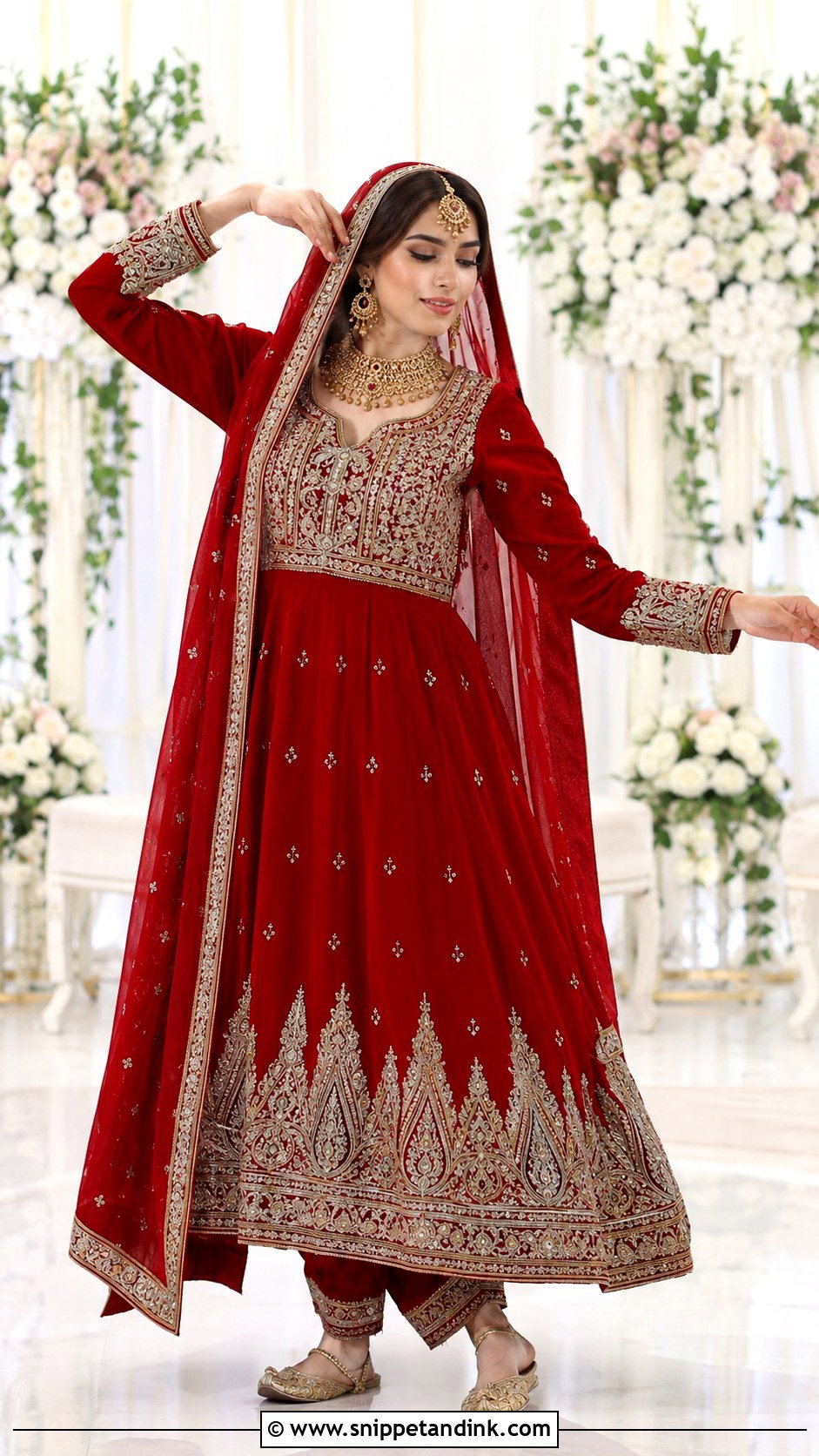
A full red skirt with a separate embroidered bodice moves better than almost any other Afghan silhouette. The bodice is fitted velvet or satin with long sleeves and dense geometric or floral work; the skirt is full, floor-length and properly supported at the waist. Before an Attan, I check the hem with her actual shoes on, while she spins. If the hem catches underfoot, take it up. A red embroidered dupatta, gold flats, a statement necklace and a head ornament balance the volume below. A plain skirt with a decorated border gives a lighter version.
17. Afghan Wedding Dress With Coin Headpiece
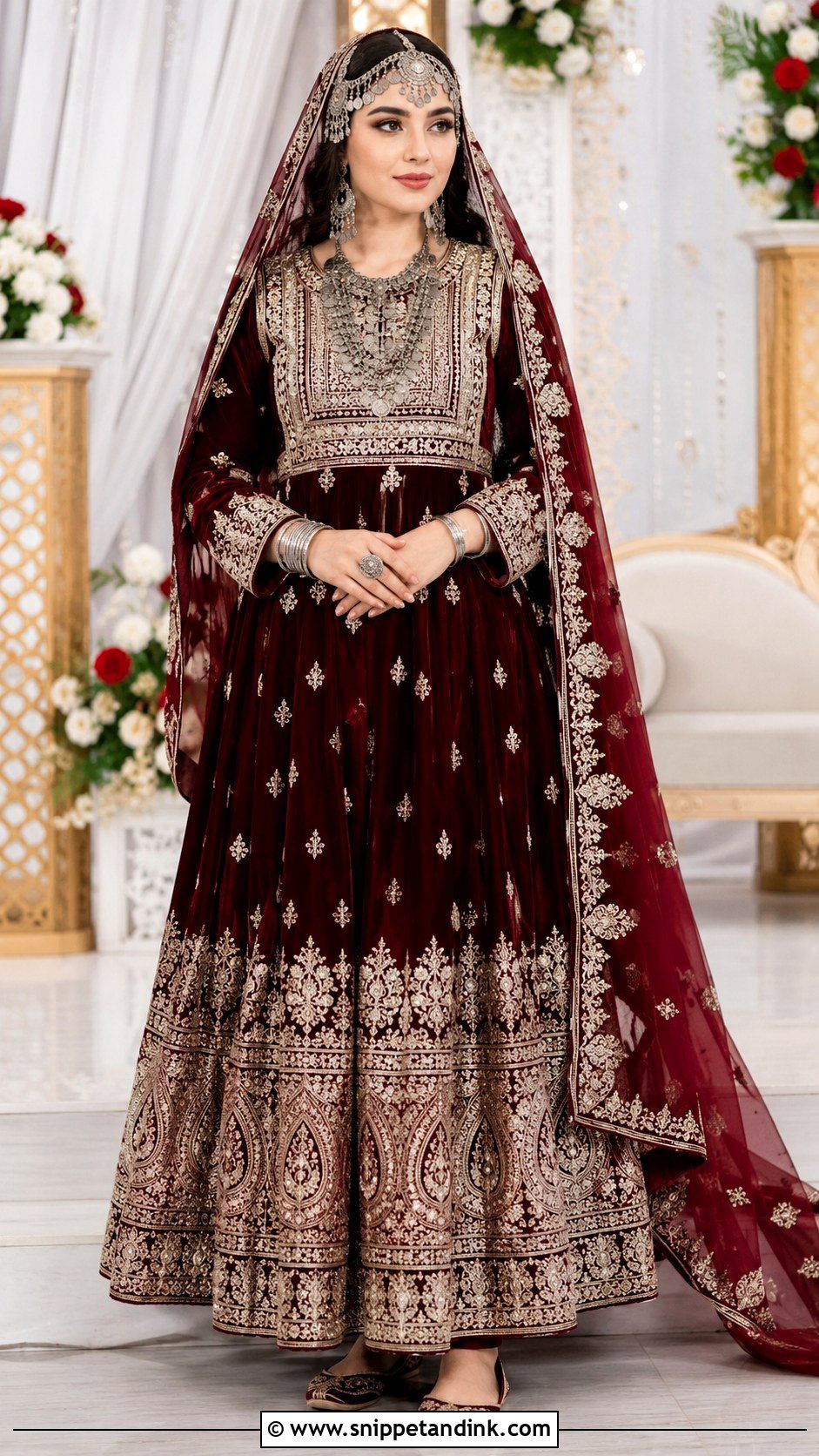
Coin headpieces vary enormously in weight, and genuine old pieces are often much heavier than reproductions. I have the bride wear hers for at least an hour before the wedding, with a padded inner band and discreet pins. Put the dupatta underneath or around it so the metal doesn’t drag directly on her hair. The dress can be red, green, maroon or multicolored with a fitted bodice, long sleeves and a wide skirt. If the headpiece is elaborate, simplify the neckline so the two aren’t fighting.
18. Modest Long Sleeve Afghan Wedding Dress
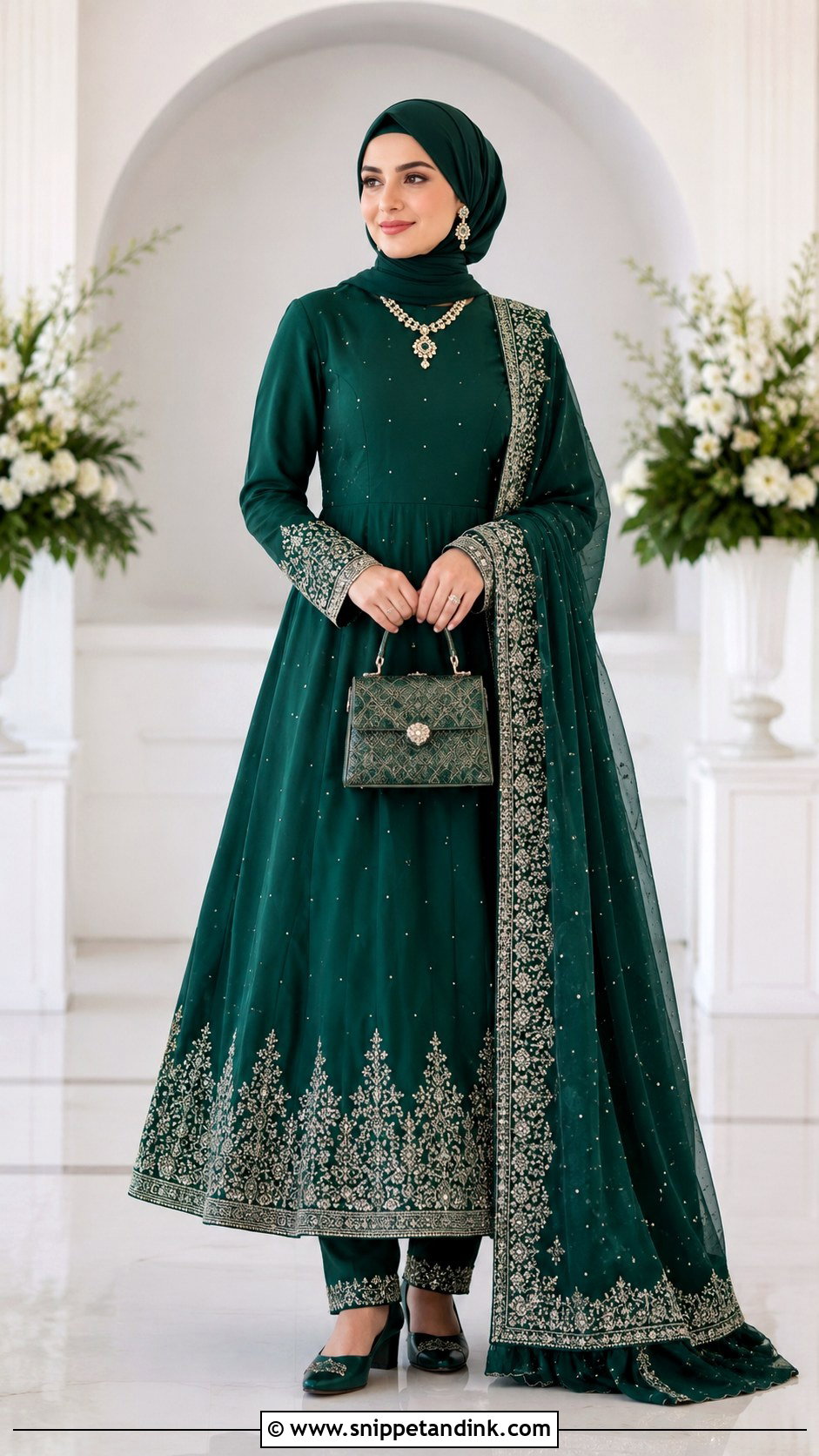
Modest doesn’t mean plain. An A-line or softly gathered silhouette with a high neckline, full-length sleeves and a floor-length skirt over trousers gives plenty of room for embroidery at the chest, cuffs and hem. Ask for an opaque lining under any chiffon, mesh or lace. For brides in hijab, I match the scarf either to the dress base or to one thread color from the embroidery, never something new. At the fitting she should sit, lift both arms and walk, because sleeves set too low pull the whole bodice up.
19. Plus Size Afghan A-Line Wedding Dress
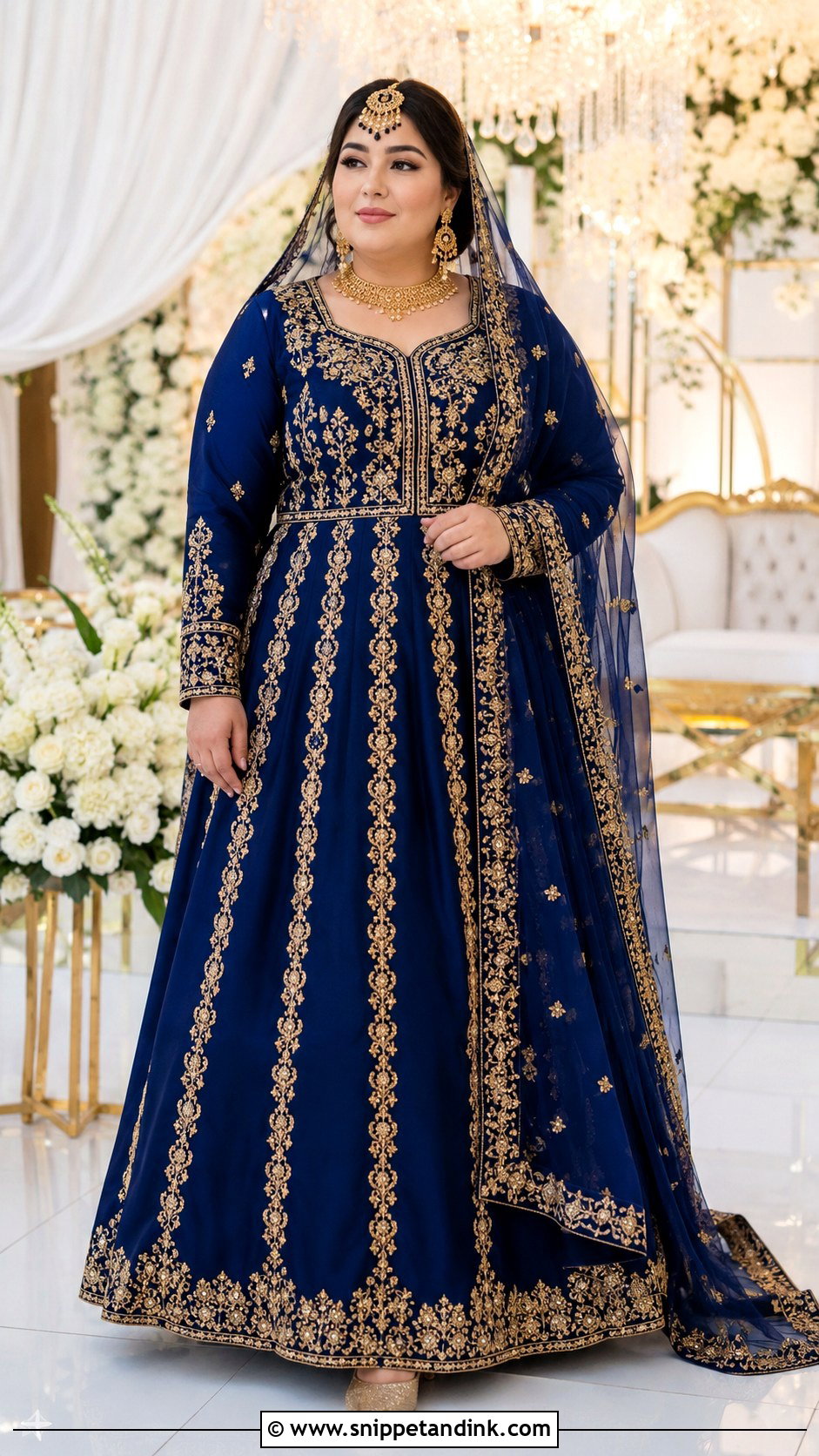
With plus-size Afghan dresses, a good dressmaker reshapes the pattern instead of enlarging a standard one. Bodice length, sleeve width, waist placement and skirt volume all get adjusted to her body. A shaped bodice, gently defined waist and an A-line skirt that widens smoothly without extra bulk work well. Vertical embroidered panels lead the eye down the dress, and decorative cuffs balance the neckline. I avoid rigid fabric across the shoulders and upper arms; it restricts movement and creases. A lightweight dupatta and stable low heels finish it.
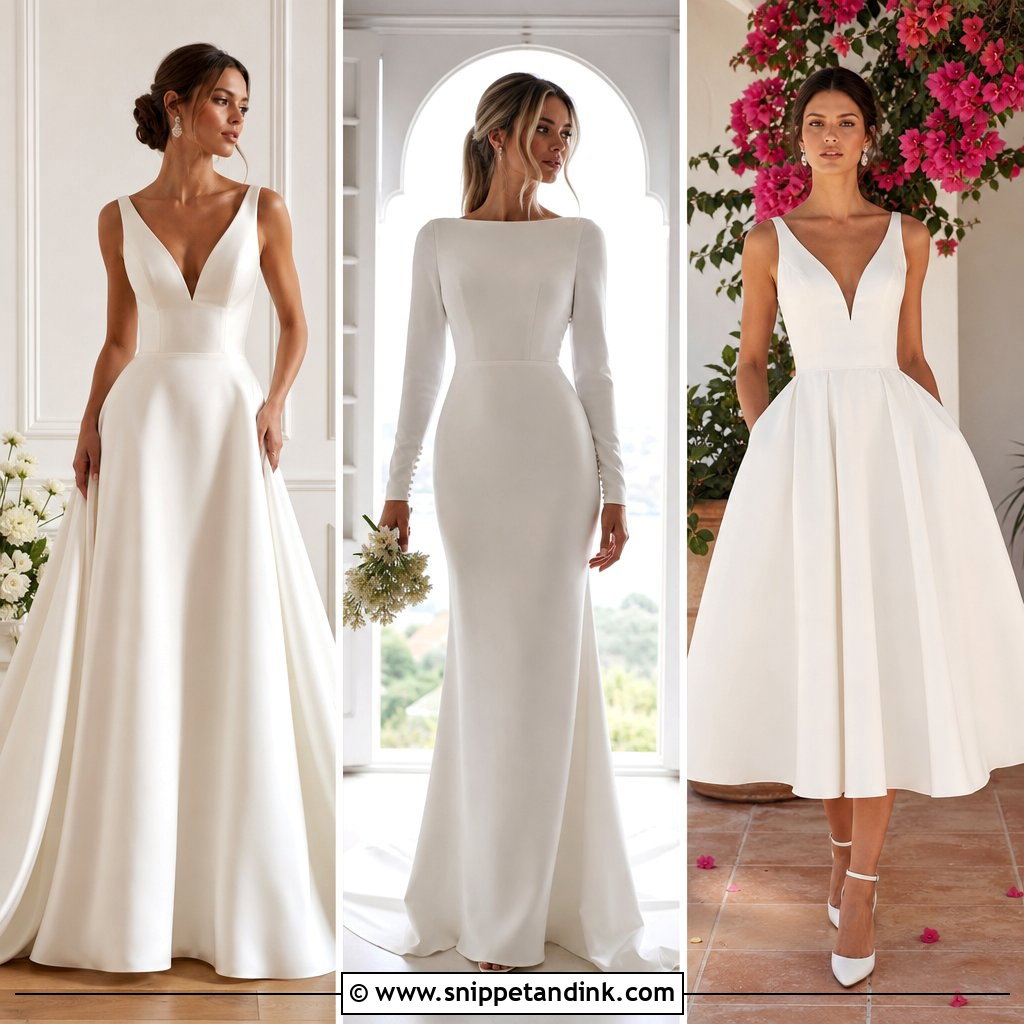
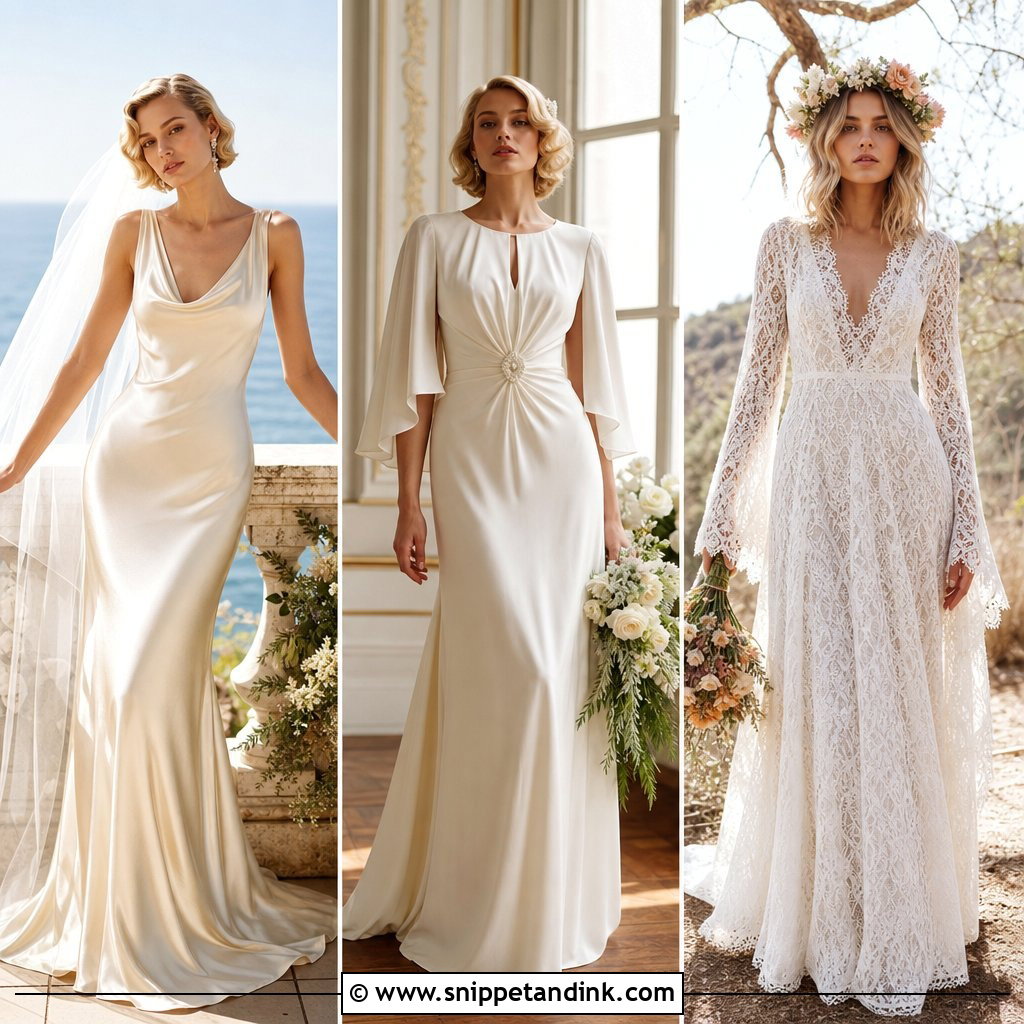
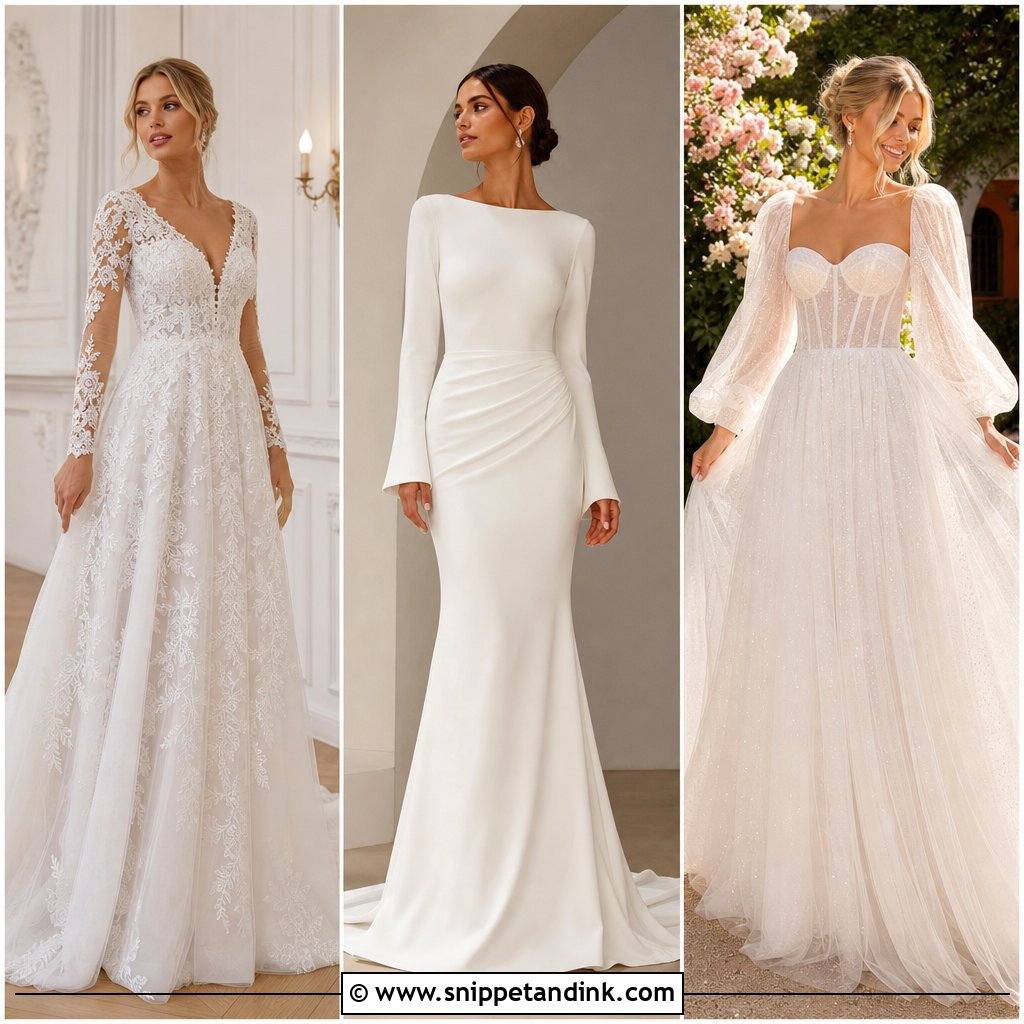
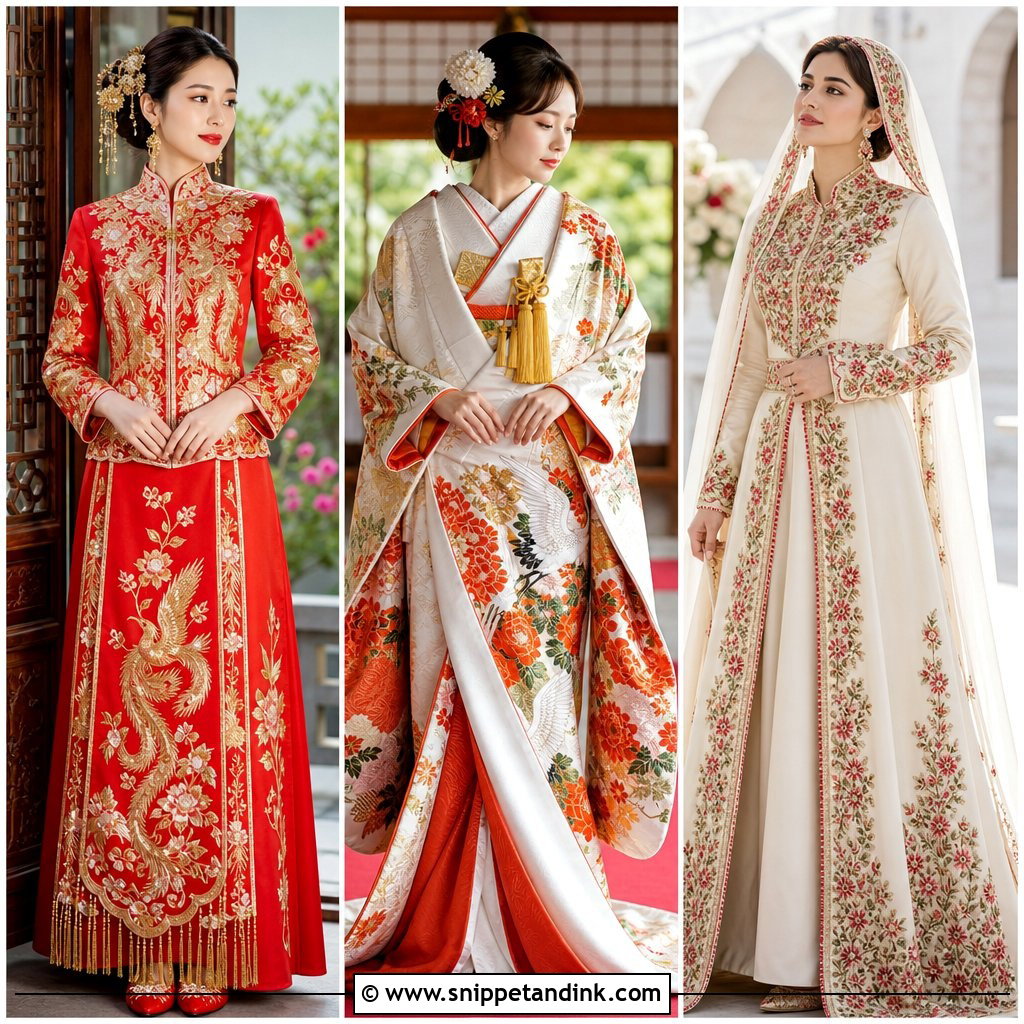
20. Modern White Afghan Embroidered Wedding Gown
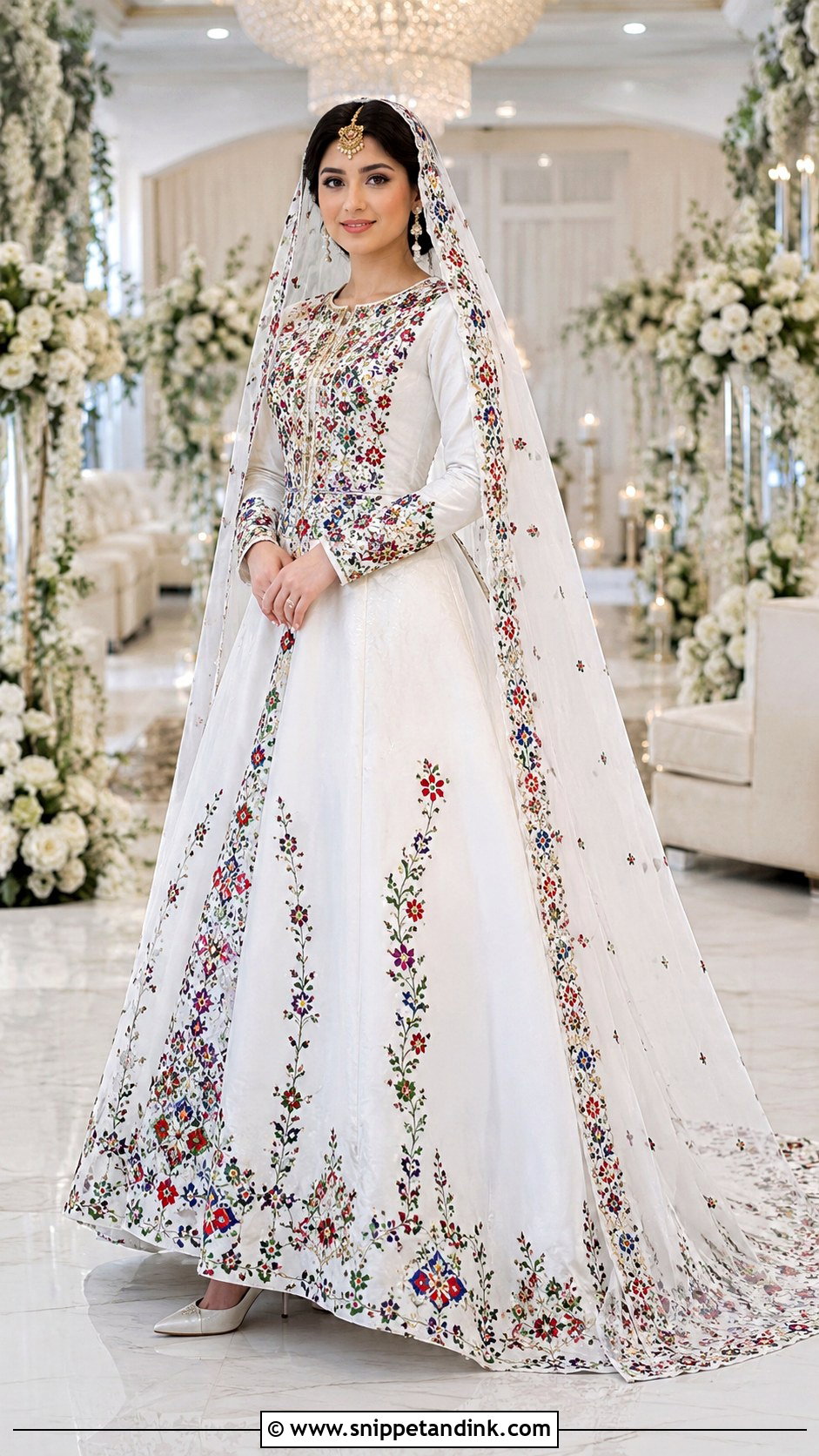
For a modern white gown with Afghan embroidery, the white space is part of the design. A clean A-line, column or ball-gown shape with long sleeves and a modest neckline carries colored hand embroidery on the bodice, cuffs, back or train, with enough plain fabric around each motif to let it read. A white veil with an embroidered border, ivory heels, pearl earrings and one traditional head ornament keep it modern. A multicolored dupatta can come out for portraits later. I’d plan the motif placement with an artisan who understands the bride’s regional and family background.
A Repair Kit for Mirrors, Coins and Metal Thread
Heavily decorated dresses lose bits during long celebrations. A mirror pops loose while dancing, a coin catches the dupatta, a strand of metallic thread snags on a bangle. None of it is a disaster if someone close to the bride has a small kit and knows what to do.
- Needles with thread in the dress base color and in gold or silver, already threaded, because nobody threads a needle well at a reception.
- Small safety pins in two sizes and a strip of fabric glue dots for a lifted border or a coin that has come loose.
- Bobby pins matched to her hair and a few extra dupatta pins; the dupatta needs re-pinning more often than people think.
- A lint-free cloth for wiping mirror work and a small pair of scissors for snipping a pulled thread rather than yanking it.
My rule for snagged metal thread is to never pull it. Push the loop back to the wrong side with a needle or trim it close and secure the end. Keep any mirror or coin that falls off, wrapped in tissue, so the maker can stitch it back on properly after the wedding.
Where Each Afghan Dress Earns Its Place
Red velvet, a green henna dress, a white nikah gown or a modern silhouette finished with Afghan embroidery can all be the right dress, depending on the event and the family. Whatever the color, I look at the same practical things: is the embellishment balanced, are the accessories secure, is the lining breathable, and can she sit, walk and dance? Bring relatives or Afghan artisans into any decision about regional motifs. They keep the story behind the clothing intact, and a well-tailored dress with that story behind it is one she’ll want to keep.
You'll Like These Ideas:


Leave a Reply