
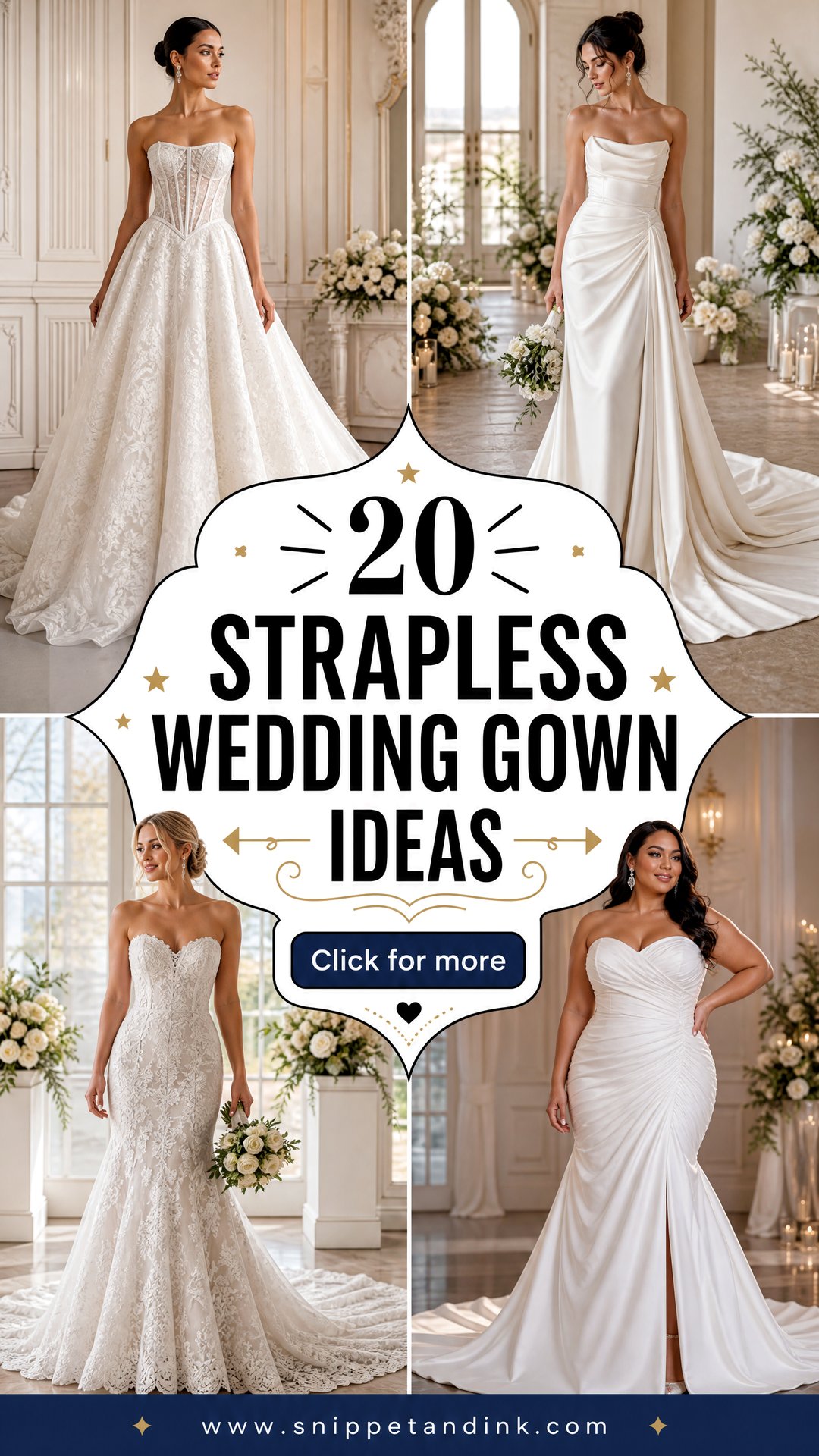
Strapless gowns keep coming back because bare shoulders suit almost any venue, from a ballroom to a beach. Right now I’m seeing a lot of sculptural volume, basque waists, creative draping, tactile lace and raised floral work in bridal collections, so the choice is wider than it used to be. What doesn’t change is the engineering: a strapless gown stands or falls on its internal support. Below are twenty strapless styles, each with the accessories I’d pair and the one fitting detail I’d look at hardest. Read them as whole looks, fabric, waist, skirt, train and accessories together.
Judging a Sample Gown That Doesn’t Fit You Yet
Most bridal salons carry one sample of each style, often in a single size, and it gets clipped onto you from behind. That makes strapless gowns harder to judge than anything else, since fit is the whole point. Here’s what I look at when the sample is wrong in size but might be right in every other way.
- Ignore the gap at the top edge if the clips are doing the work. Instead, look at where the waist seam and the neckline dip fall on your body. Those are hard to move later.
- Check the boning length against your torso. If the bones dig into your hips while you sit, a smaller or larger size won’t fix that.
- Lift your arms and turn. A sample that pulls badly at the side seams may simply be too small, but one that buckles at the center front usually has the wrong bodice shape for you.
- Ask what alterations typically cost for that style. Alterations are almost always charged separately, and boned bodices with layered skirts cost more to adjust.
Wear smooth nude underwear and bring shoes at roughly your wedding heel height. Without the right height, every skirt looks too long and you can’t judge the proportions.
1. Satin A-Line Strapless Wedding Gown
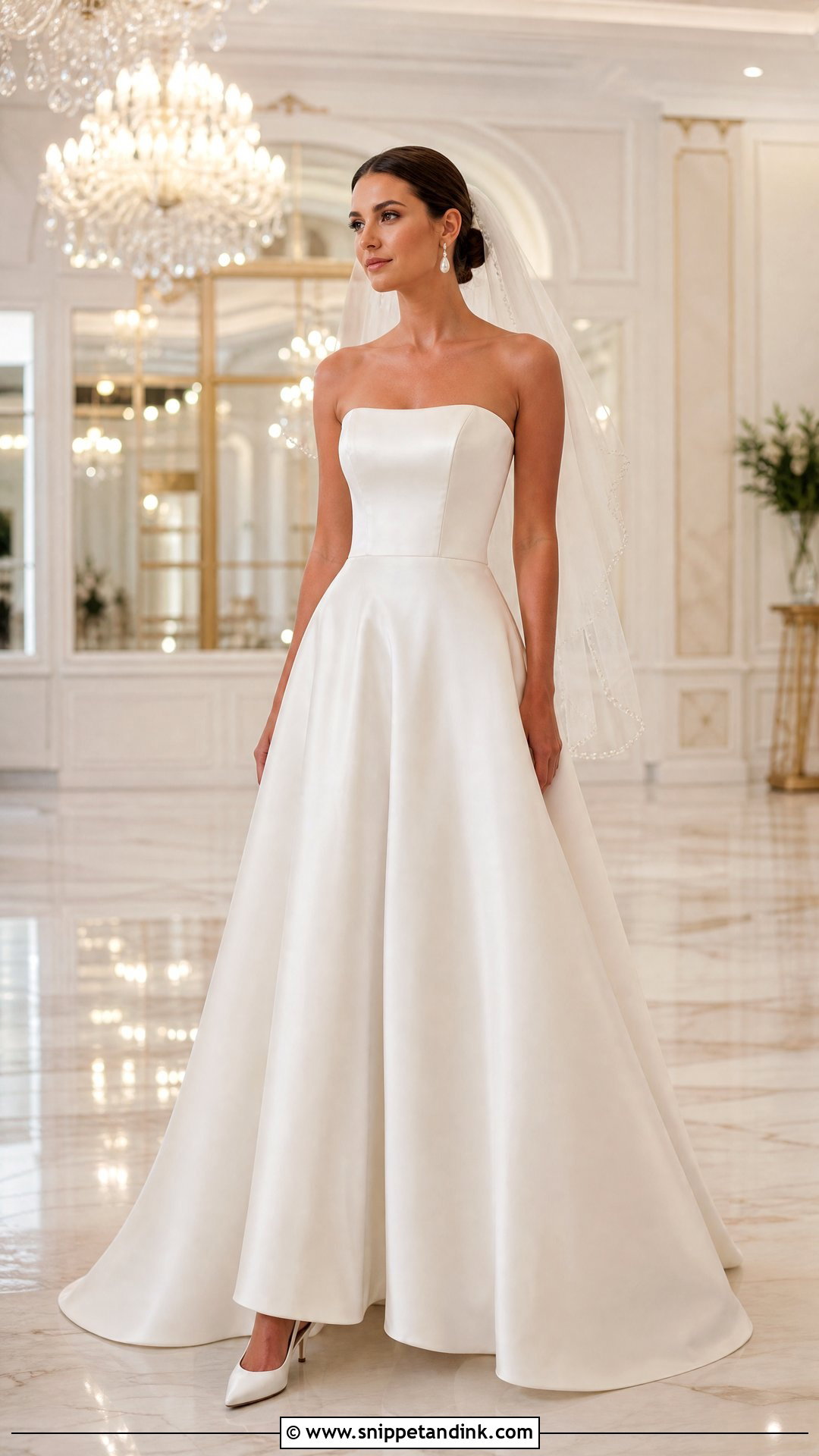
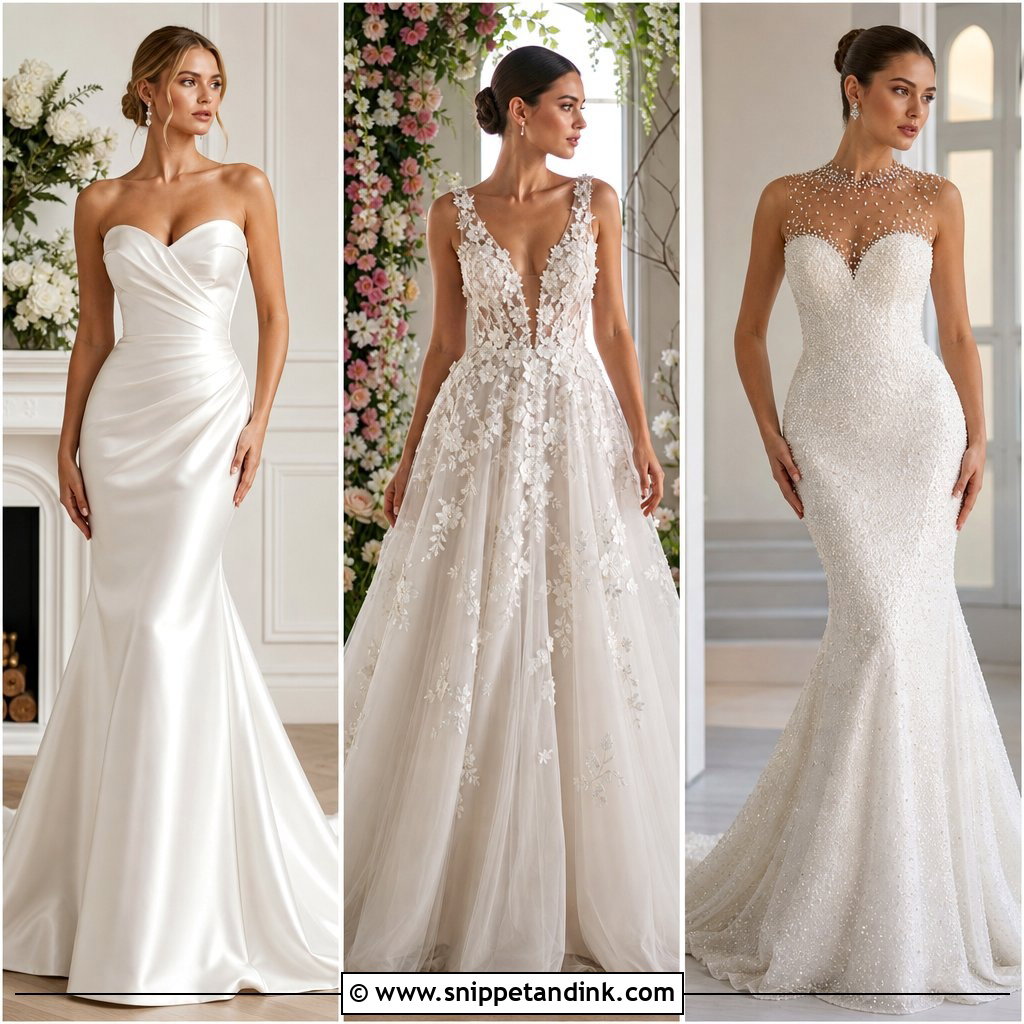
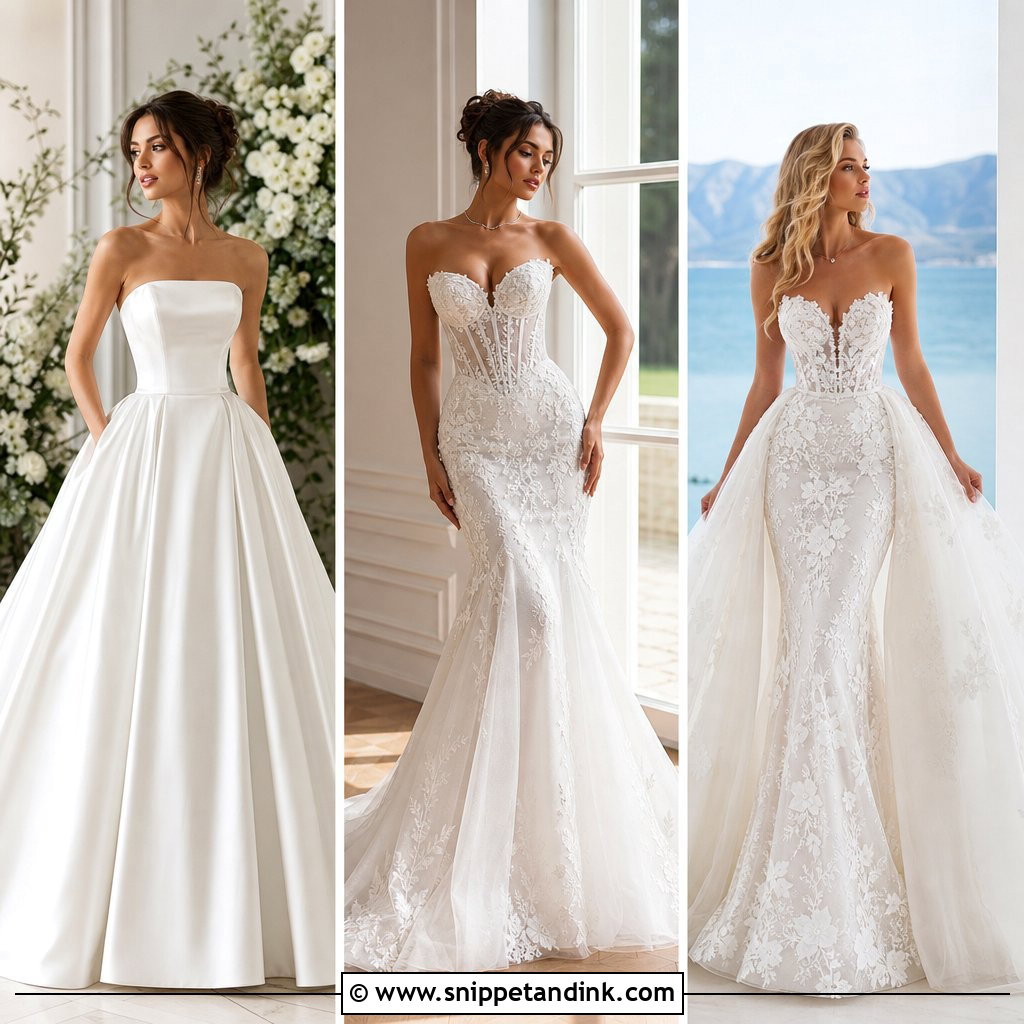
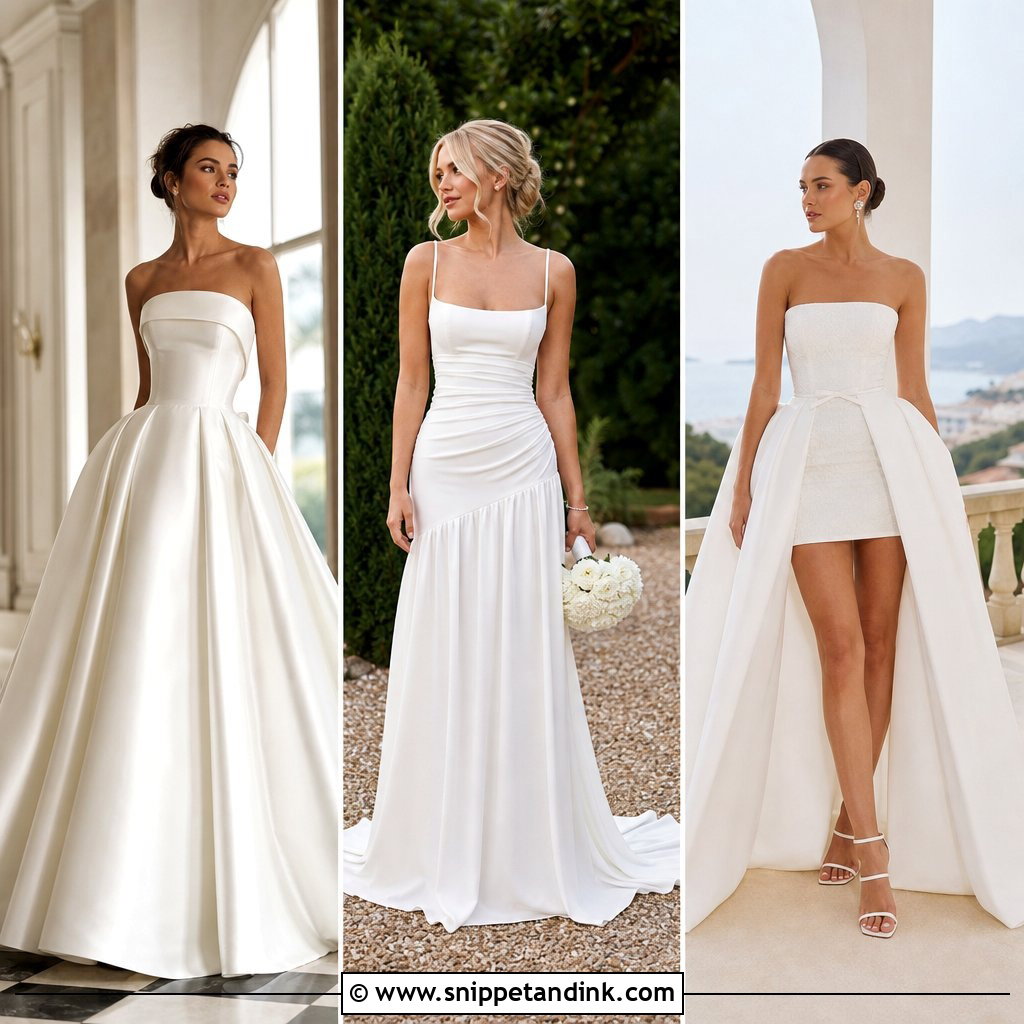
Ivory satin has a soft sheen that needs no beading, which makes an A-line in it one of the easiest gowns to style. Choose a softly curved neckline and a fitted bodice falling into a clean, floor-length skirt. Pointed pumps, pearl drops and a fingertip veil with a narrow satin edge are enough, with a polished low bun. Satin does show pressure marks, so when the seamstress checks the boning, I’d ask her to look for any bone that dents the fabric from inside. A ballroom or formal estate suits it.
2. Sweetheart Ball Gown Strapless Wedding Gown
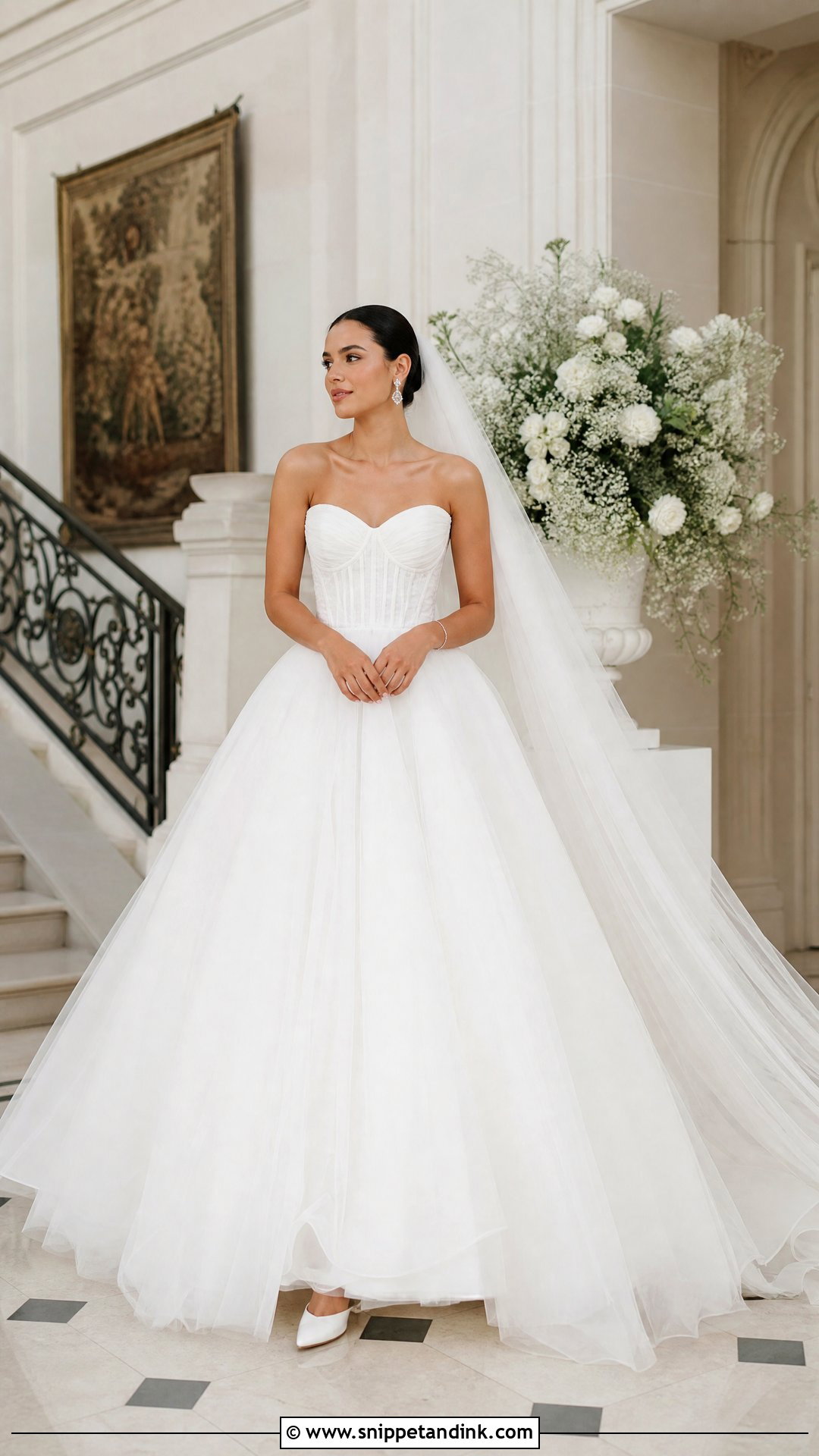
Full skirts and a sweetheart curve together give the classic storybook entrance. Tulle layers make the volume airy; satin or mikado make it architectural. Brides with fuller busts often feel more secure with a slightly higher sweetheart curve and firm internal corsetry, and I’d test that by leaning forward in the mirror. Crystal earrings, a fine bracelet and closed-toe heels hidden under the skirt keep the decoration light. A cathedral veil adds drama without loading the bodice. Leave the neck bare; the neckline is already the frame.
3. Minimal Crepe Column Strapless Wedding Gown
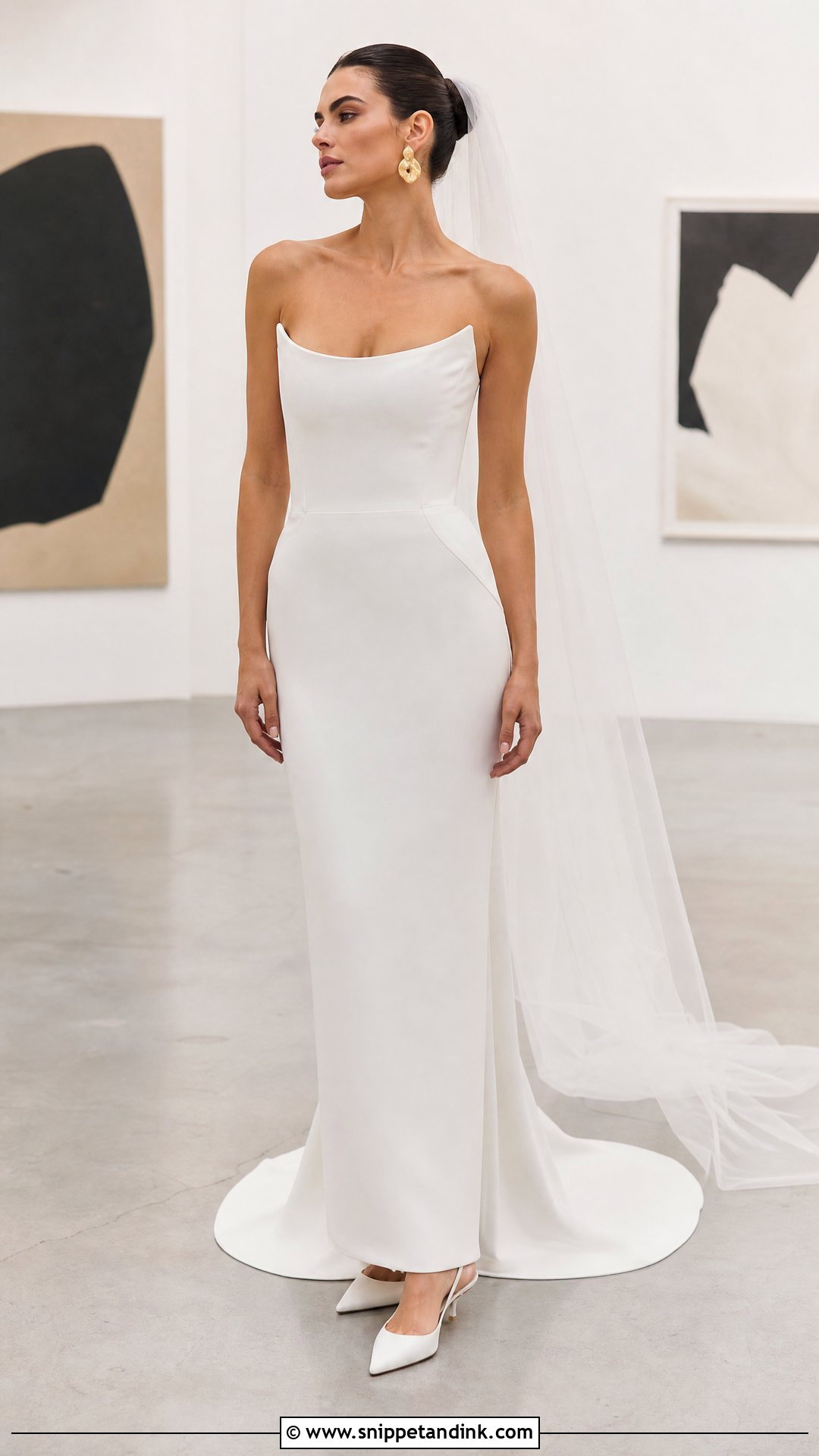
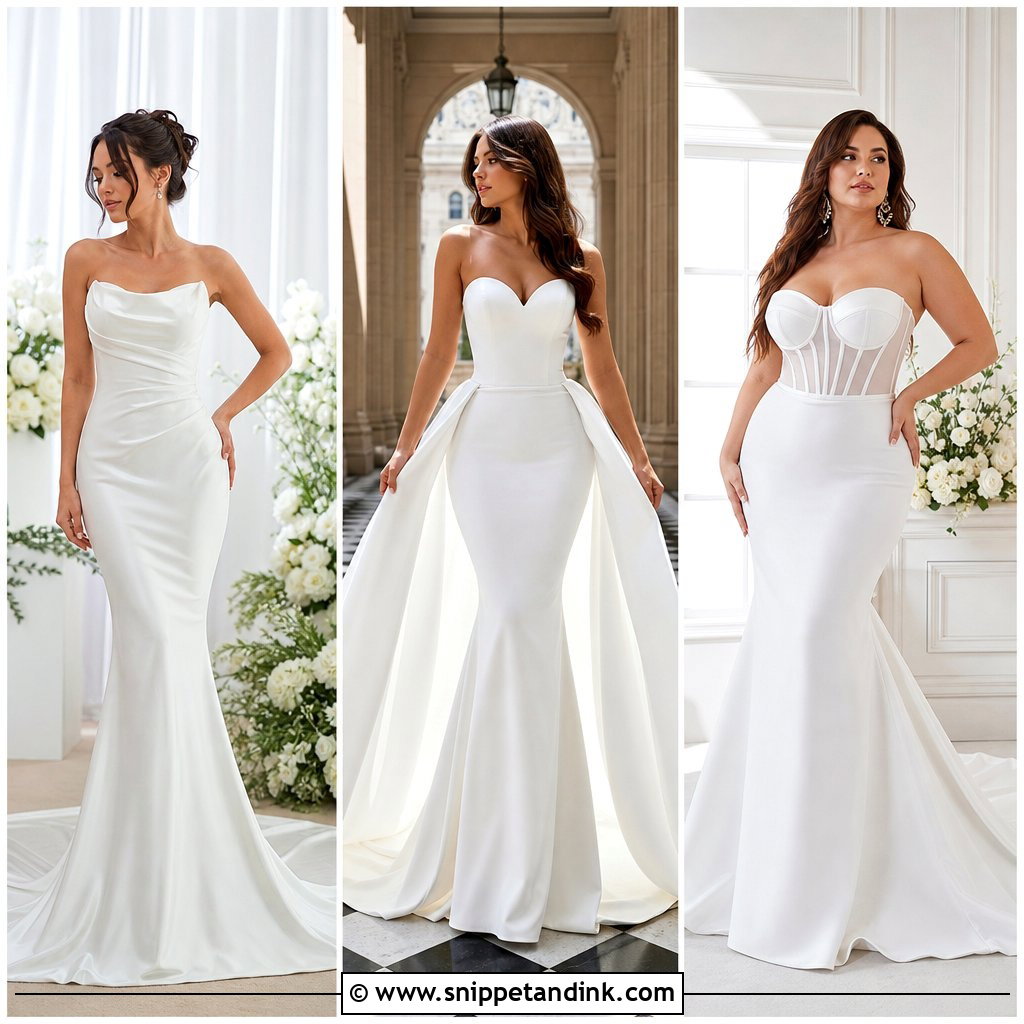
Crepe falls close to the body and shows every lump, so a crepe column is only as good as its lining. Look for shaped seams, a straight or softly scooped neckline and a small train. I’d ask for the lining to be fitted as carefully as the outer layer, because a twisted lining shows straight through. Sculptural earrings, pointed slingbacks and a chapel veil keep it modern, with a sleek ponytail or center-parted bun. If you want a bit more waist definition, choose subtle draping there. Think rooftops, galleries or a city courthouse.
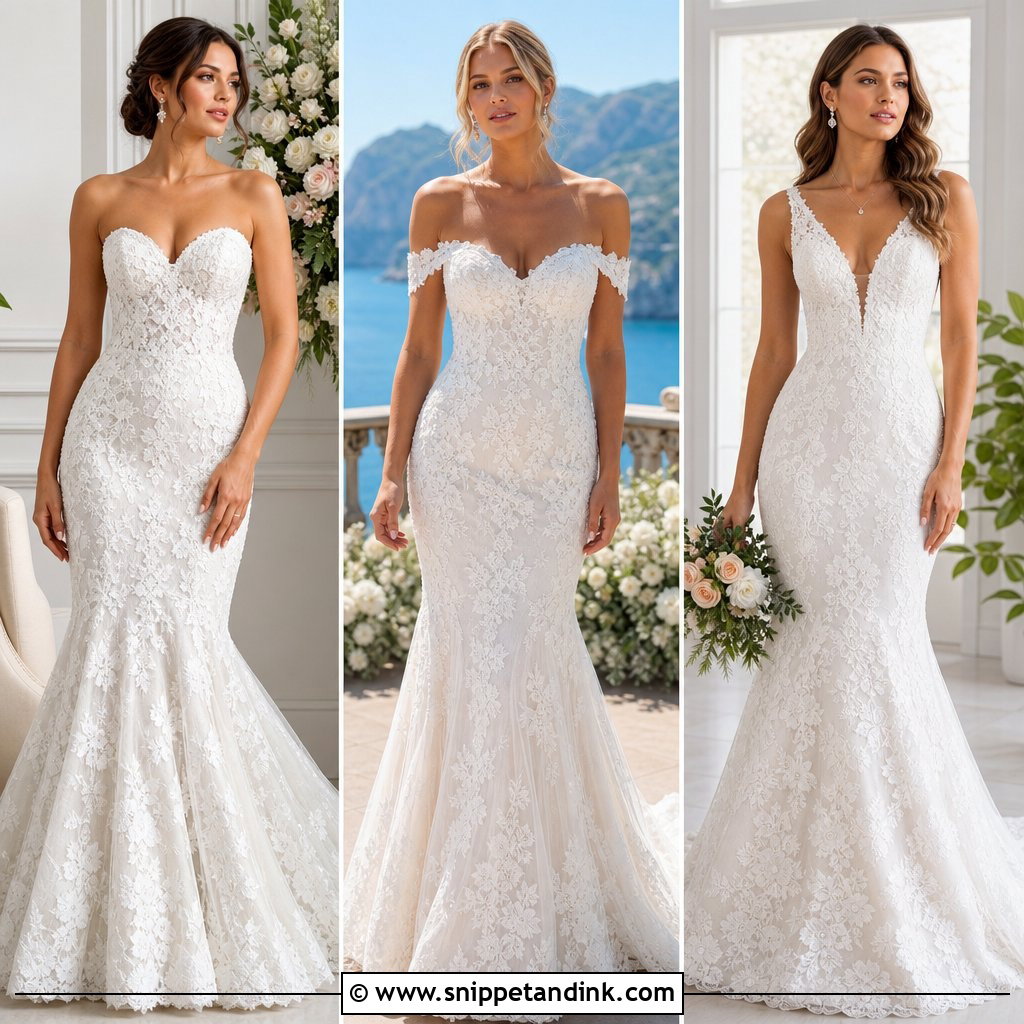
4. Lace Mermaid Strapless Wedding Gown
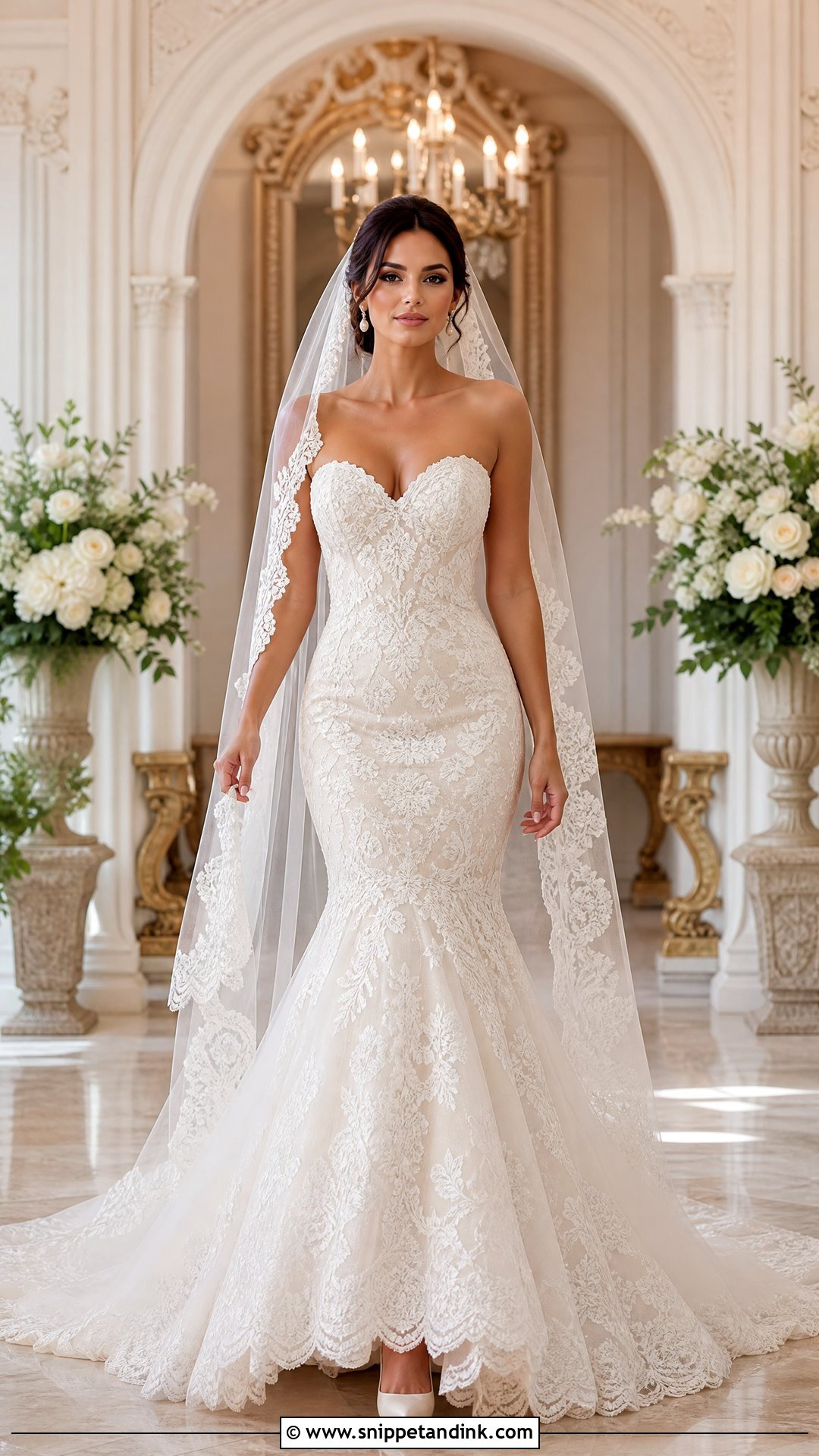
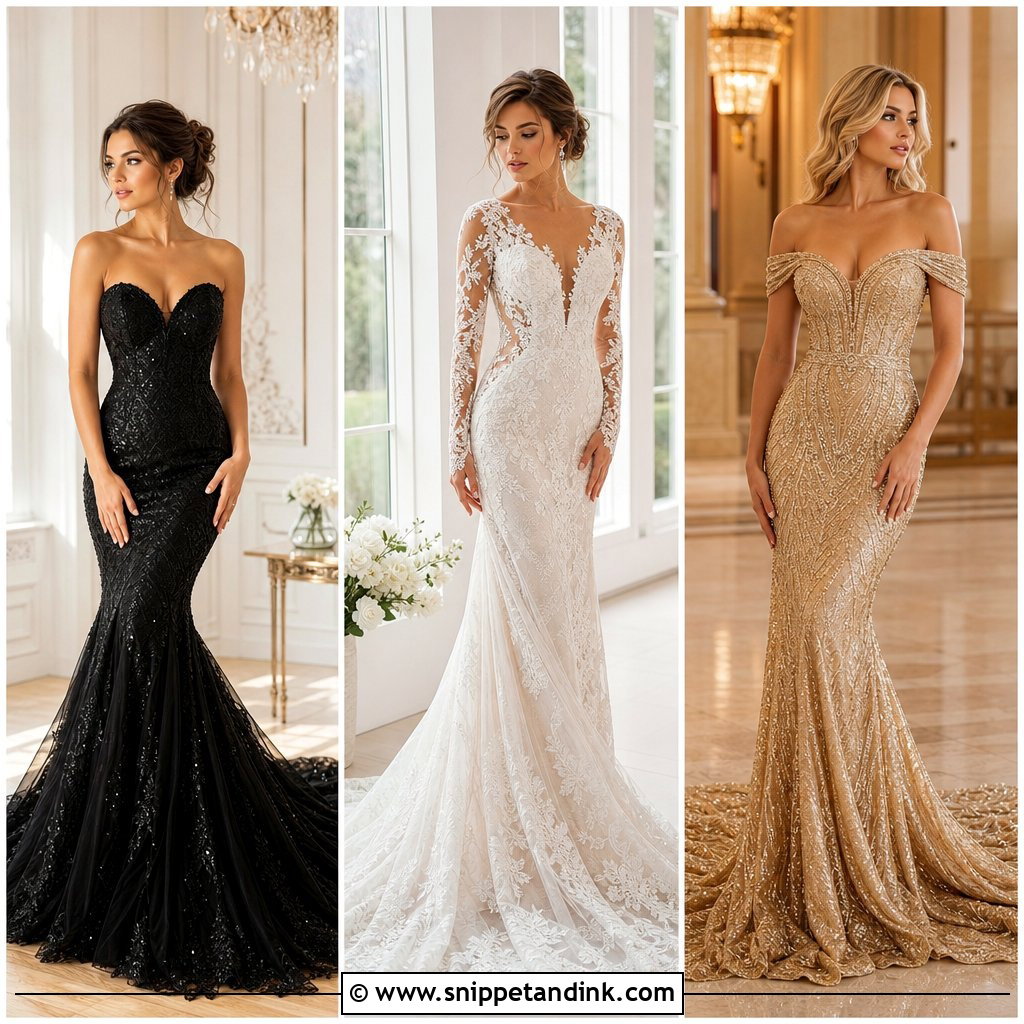
Lace on a mermaid needs a balanced, mirrored pattern, because the fitted shape stretches the lace over the hips and any asymmetry shows. A sweetheart neckline echoes the curves, and a soft tulle flare stops the skirt looking heavy. Pearl studs, a lace-edged veil and ivory pumps, with Hollywood waves pushed back from the neckline. In fittings, sit down and take full steps. If the flare starts too low, you’ll be taking small, careful steps all night. It belongs at a formal evening celebration in a grand room.
5. Basque Waist Corset Strapless Wedding Gown
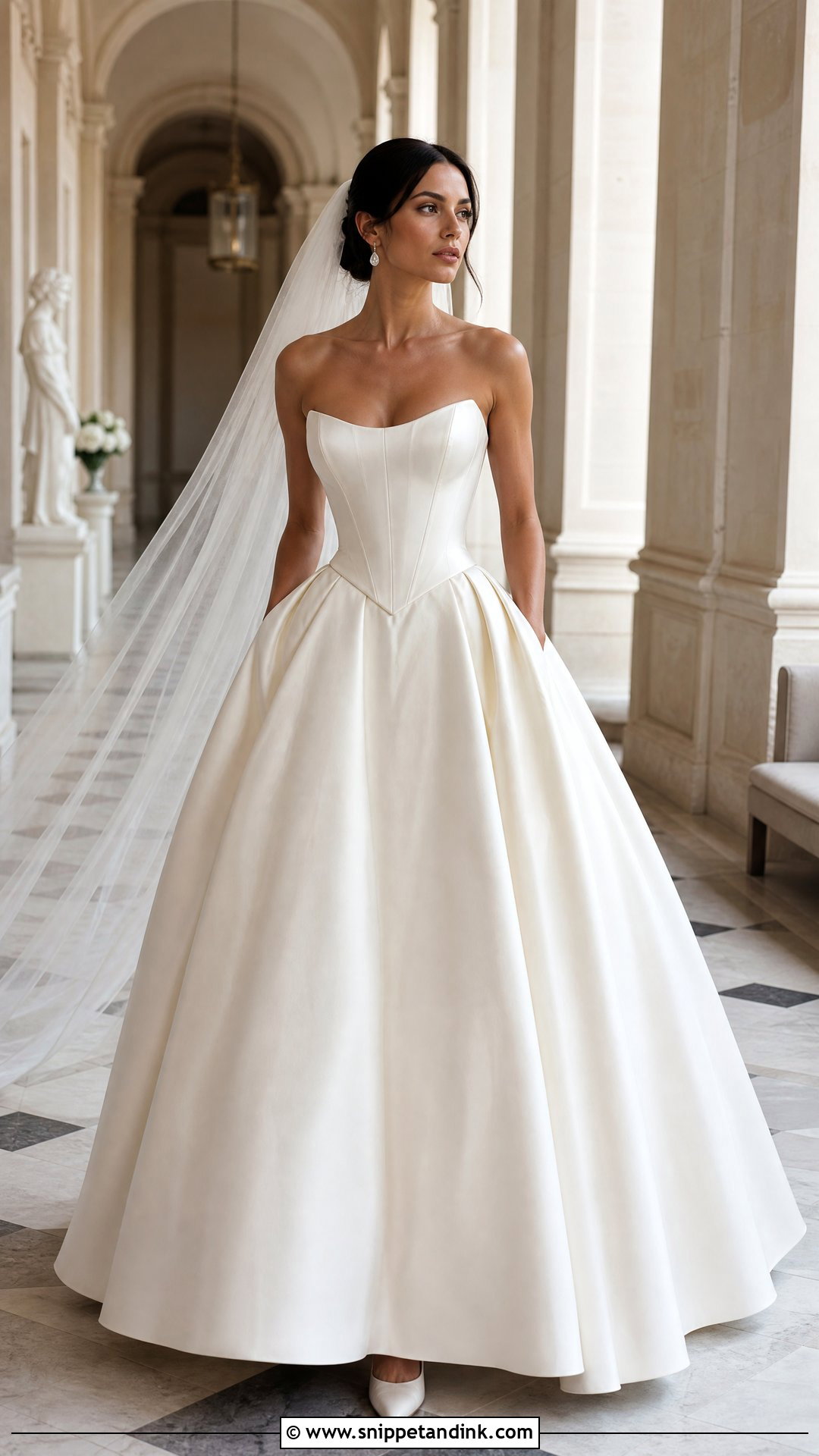
A basque waist dips into a point below the natural waist, which lengthens the torso and makes the waist look smaller. Choose visible seaming, covered boning or light lace panels over a corset that feels too exposed for a ceremony. A rounded or softly scooped neckline balances the sharp point. Pair it with a long sheer veil, teardrop earrings, satin pumps and a neat chignon, and stop there. The point must sit centered on your body; a skilled alteration can move it if it lands off-center on you.
6. Draped Satin Strapless Wedding Gown
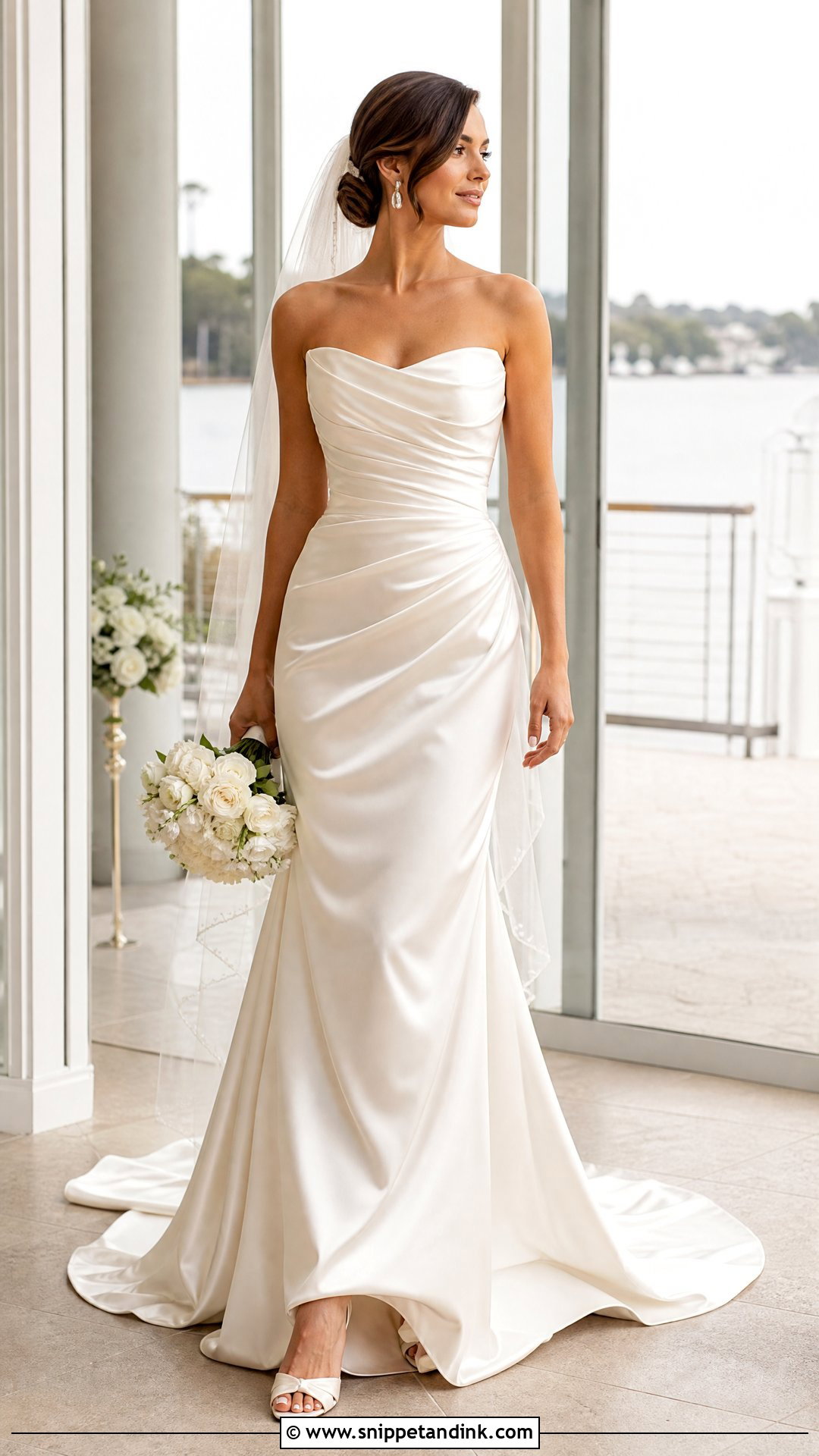
Diagonal draping is one of the most flattering things a seamstress can work with, because the folds lead the eye across the body rather than around it. A fit-and-flare or slim A-line keeps the drape as the main event. Metallic or pearl earrings, ivory heels and a lightweight veil, with a side-parted bun for a vintage hint. Check in fittings that the folds lie flat and don’t add bulk at the hip. Draping that’s only basted on, rather than stitched to the lining, slowly slides out of place during the day.
7. Floral Appliqué A-Line Strapless Wedding Gown
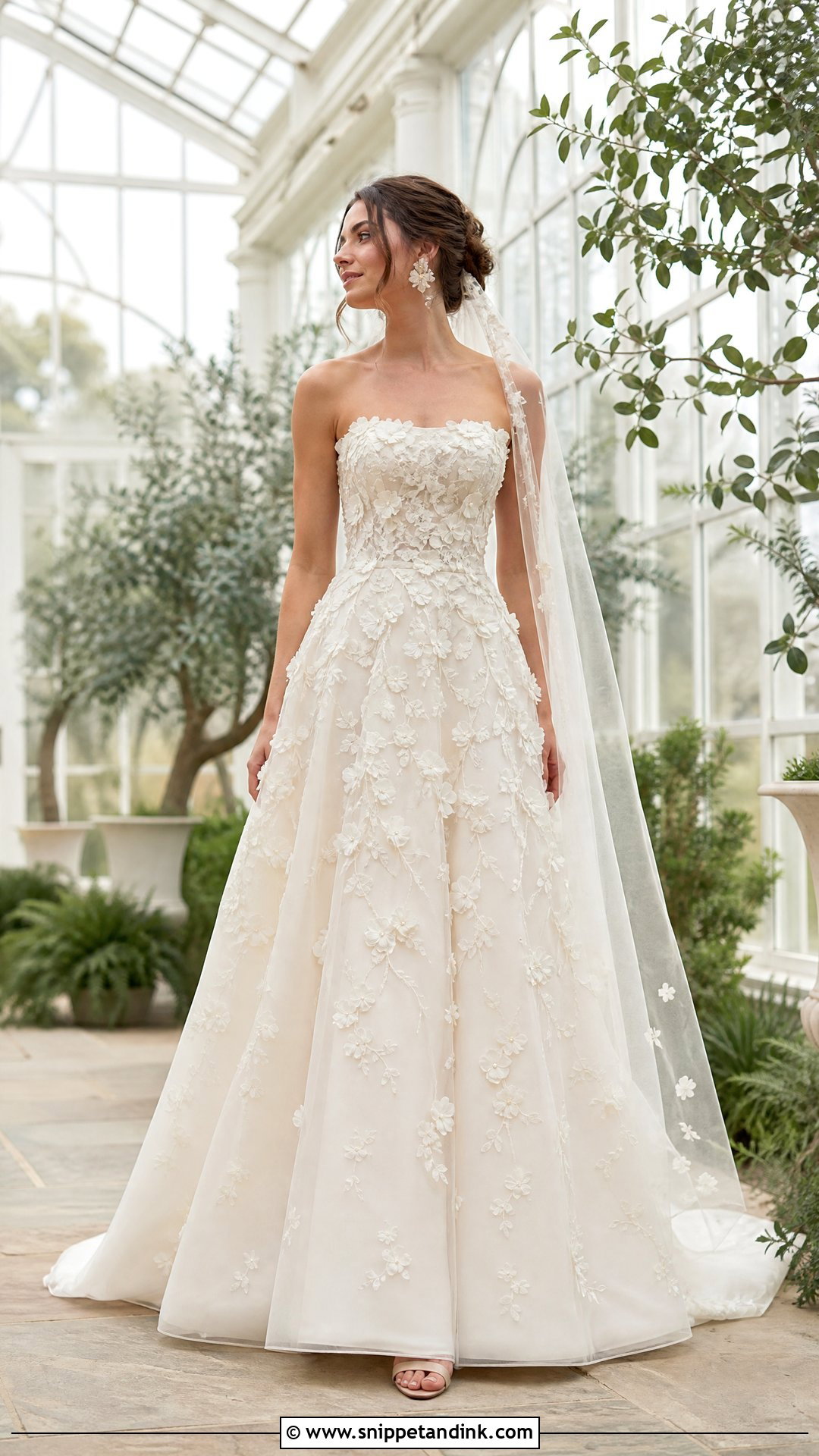
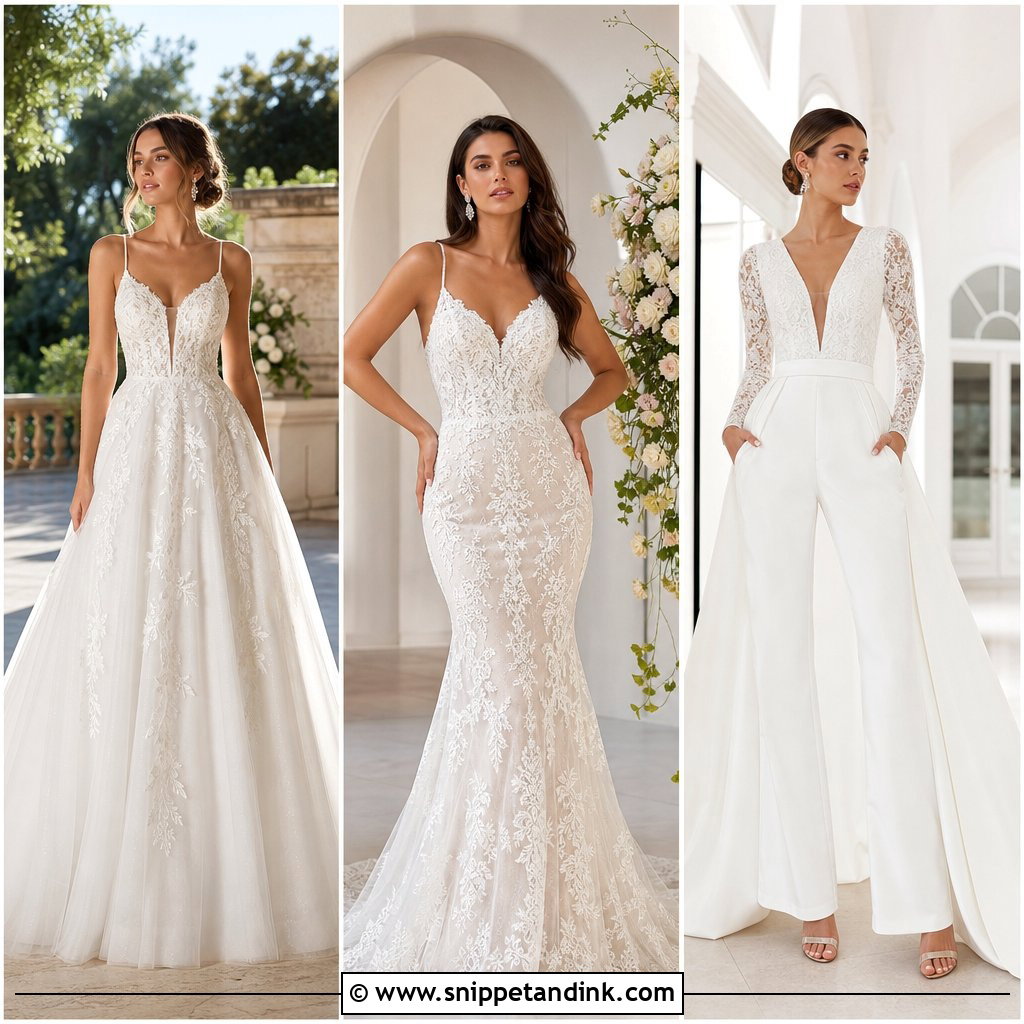
With three-dimensional flowers, I look at where the pattern stops. The best gowns let the appliqués travel down from the bodice into the skirt instead of ending in a hard line at the waist. A nude or ivory underlayer makes each flower stand out. Floral earrings, neutral heels and a sheer veil with a few matching flowers suit it, along with a softly twisted updo. Keep the makeup fresh and skip extra accessories; the fabric is doing enough. Gardens, vineyards and spring ceremonies are its natural home.
8. Drop Waist Ball Gown Strapless Wedding Gown
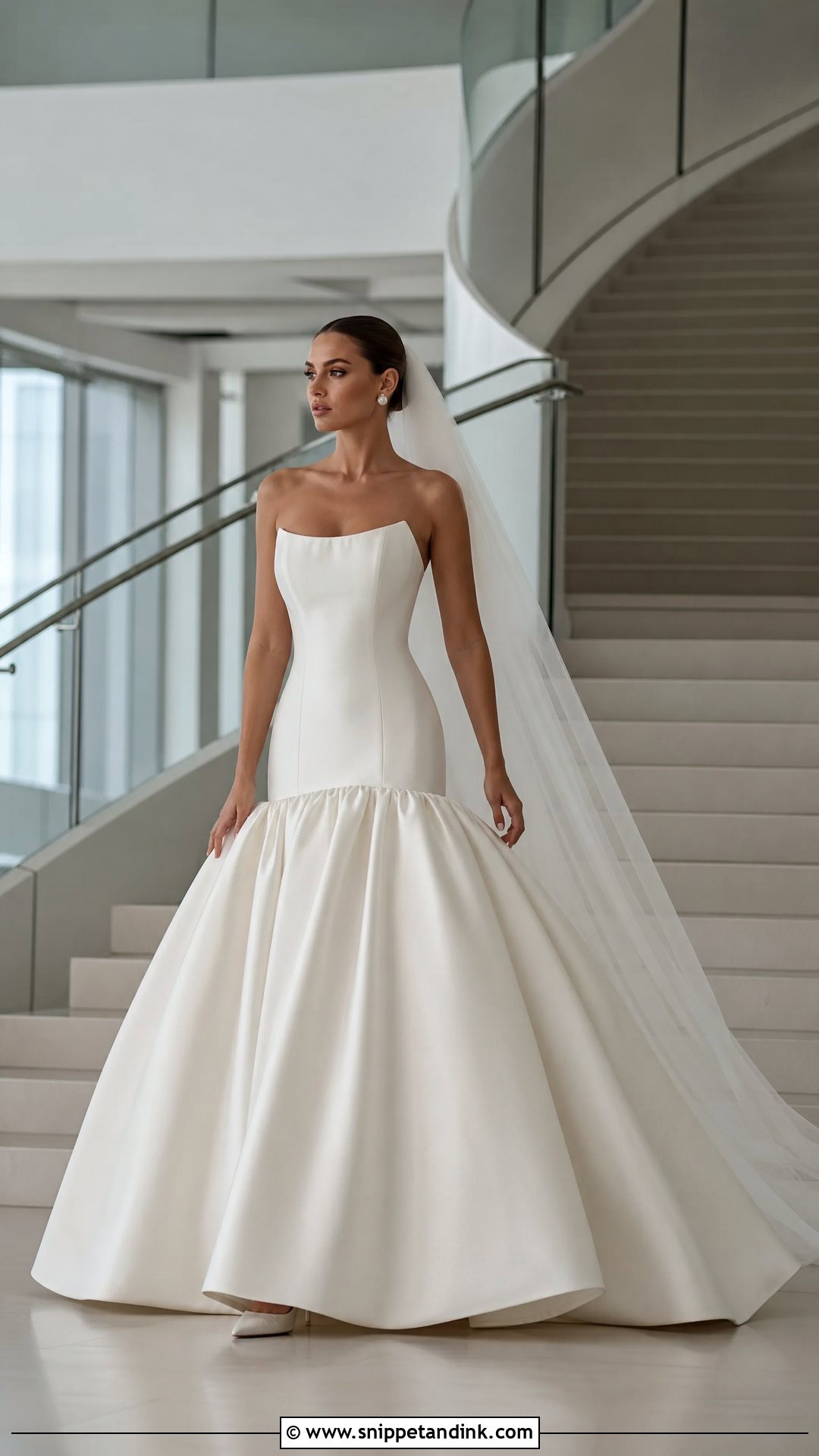
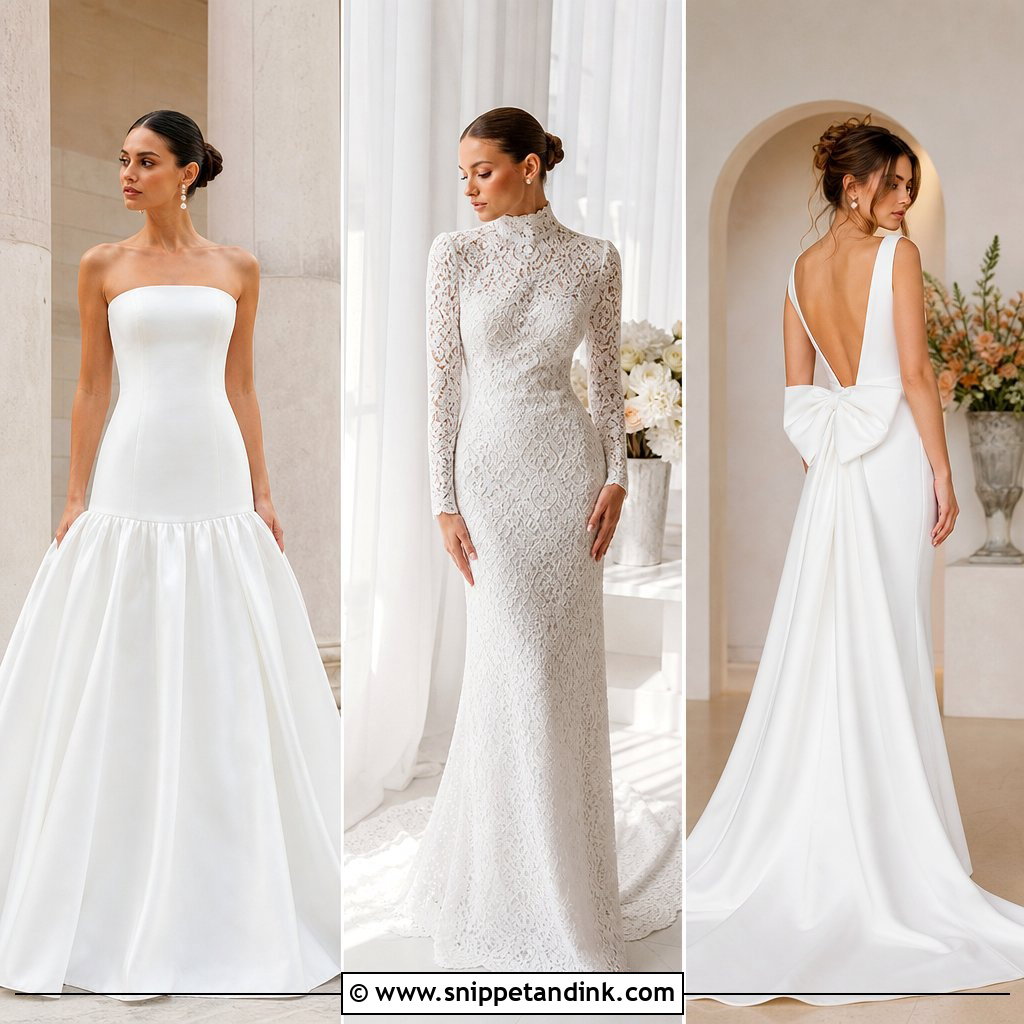
A drop waist moves the skirt seam below the natural waist, giving a long, sculpted torso before the full skirt opens. It needs firm fabrics, structured satin, taffeta or mikado, to hold that line. The skirt has to begin at a point that flatters your frame, usually just over the top of the hip bone; too low and it looks like it’s slipping. I’d schedule careful alterations and sit down at each one. Pointed heels, bold studs, a plain veil and a smooth bun or short polished style keep it sharp.
9. Pearl Embellished Fit-And-Flare Strapless Wedding Gown
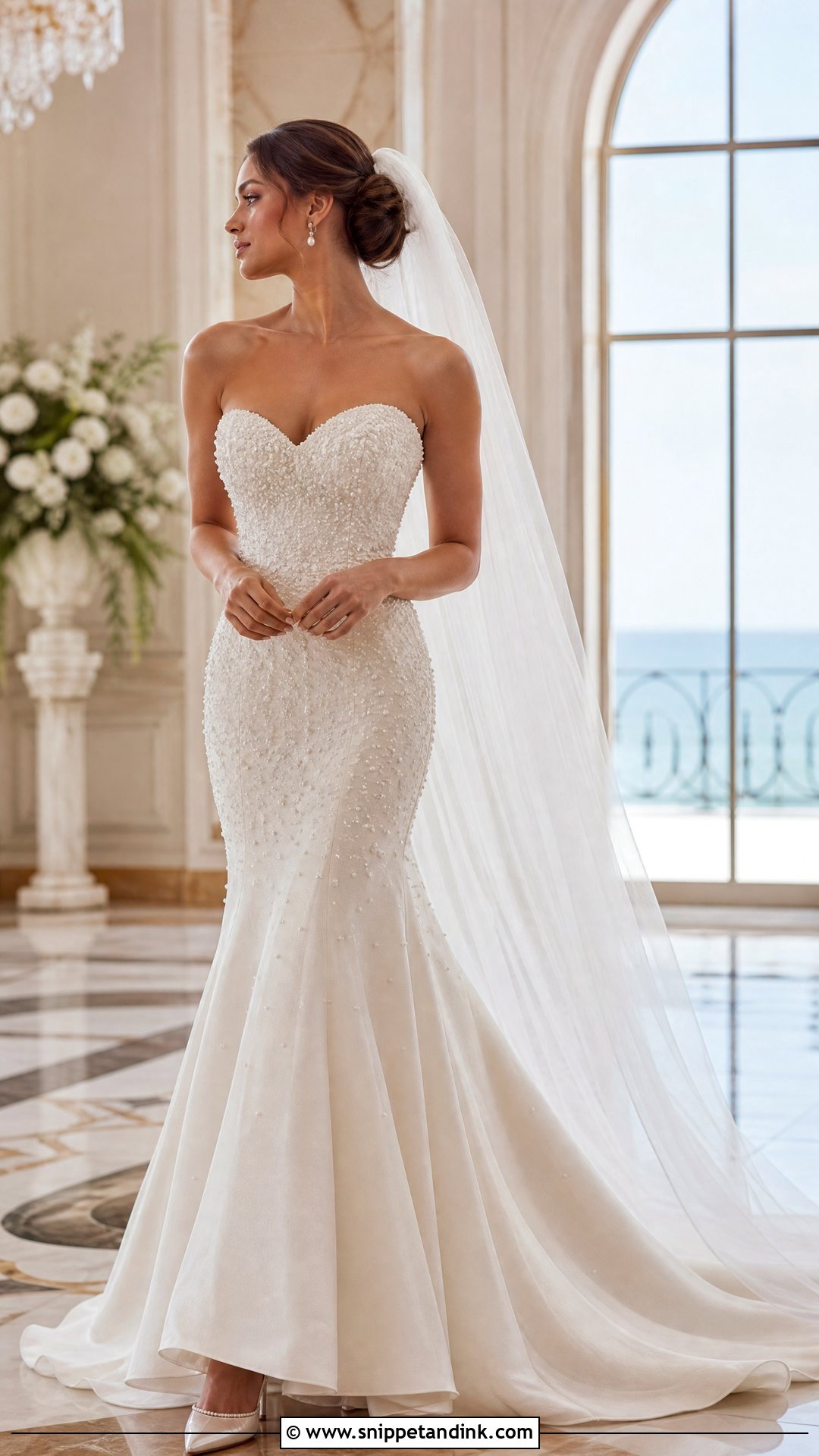
Pearls glow where crystals sparkle, so a pearl fit-and-flare reads softer in candlelight. Look for pearls scattered across the bodice and thinning out toward the skirt. A fit-and-flare moves more freely than a mermaid while keeping the shape. Pearl earrings, satin heels and a plain tulle veil; no elaborate necklace or hairpiece. A low textured bun keeps the shoulders clear. The waist and underarms take the most friction over a long day, so I’d check every pearl there is stitched down, not glued.
10. Mikado Princess Strapless Wedding Gown
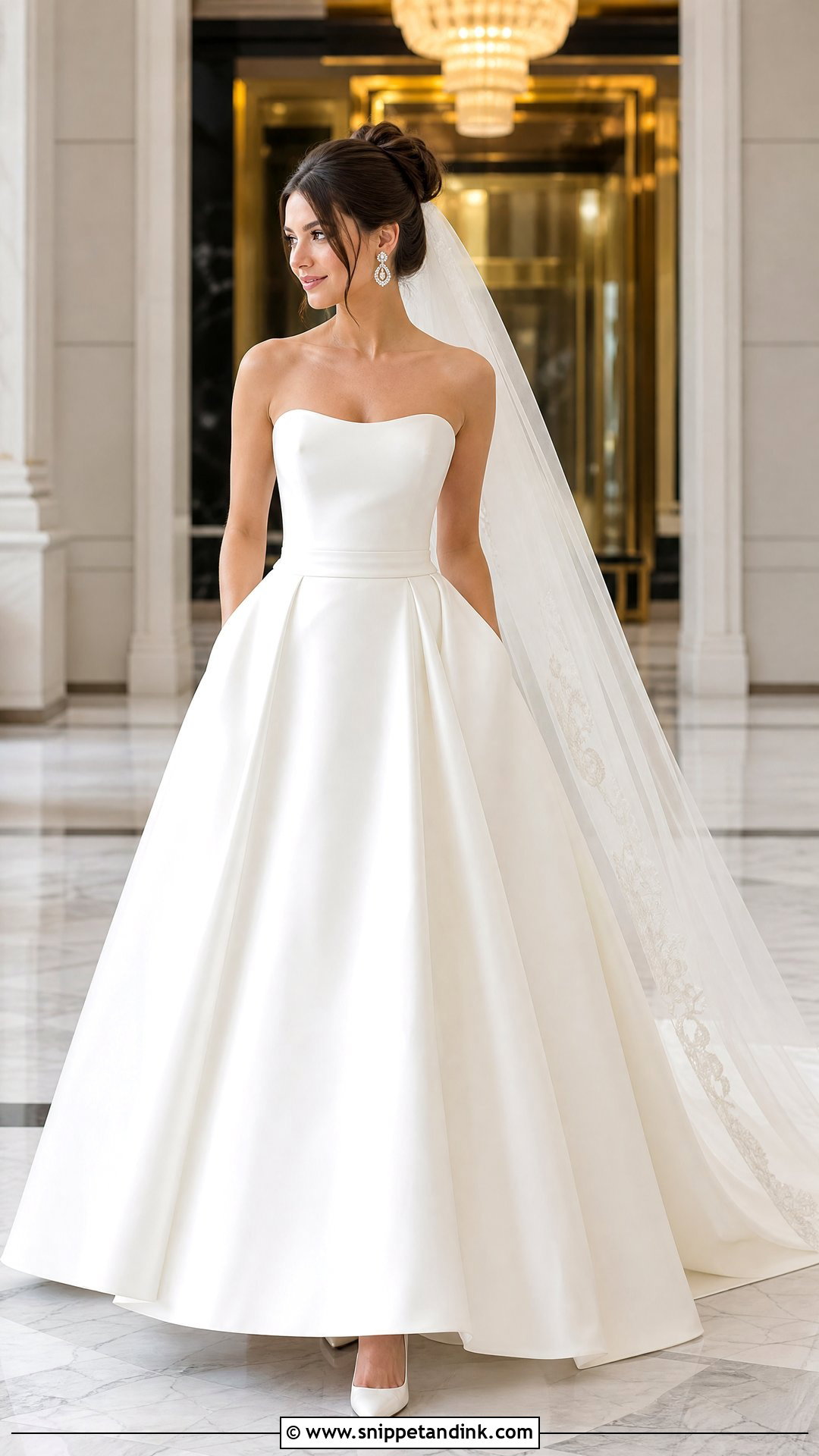
Mikado is a heavy silk or silk-blend with a slight sheen, and it gives a princess strapless wedding gown crisp folds that hold their shape all day. That weight is also its catch: a big mikado skirt is heavy, and a strapless bodice has to carry it. Choose a clean bodice with a curved neckline and solid internal construction. Crystal drops, pointed pumps and a cathedral veil suit it, with a polished updo. Hidden pockets are worth asking for. Check the skirt’s volume from the side as well as the front; mikado can stand out further than you expect.
11. Chiffon Beach Strapless Wedding Gown
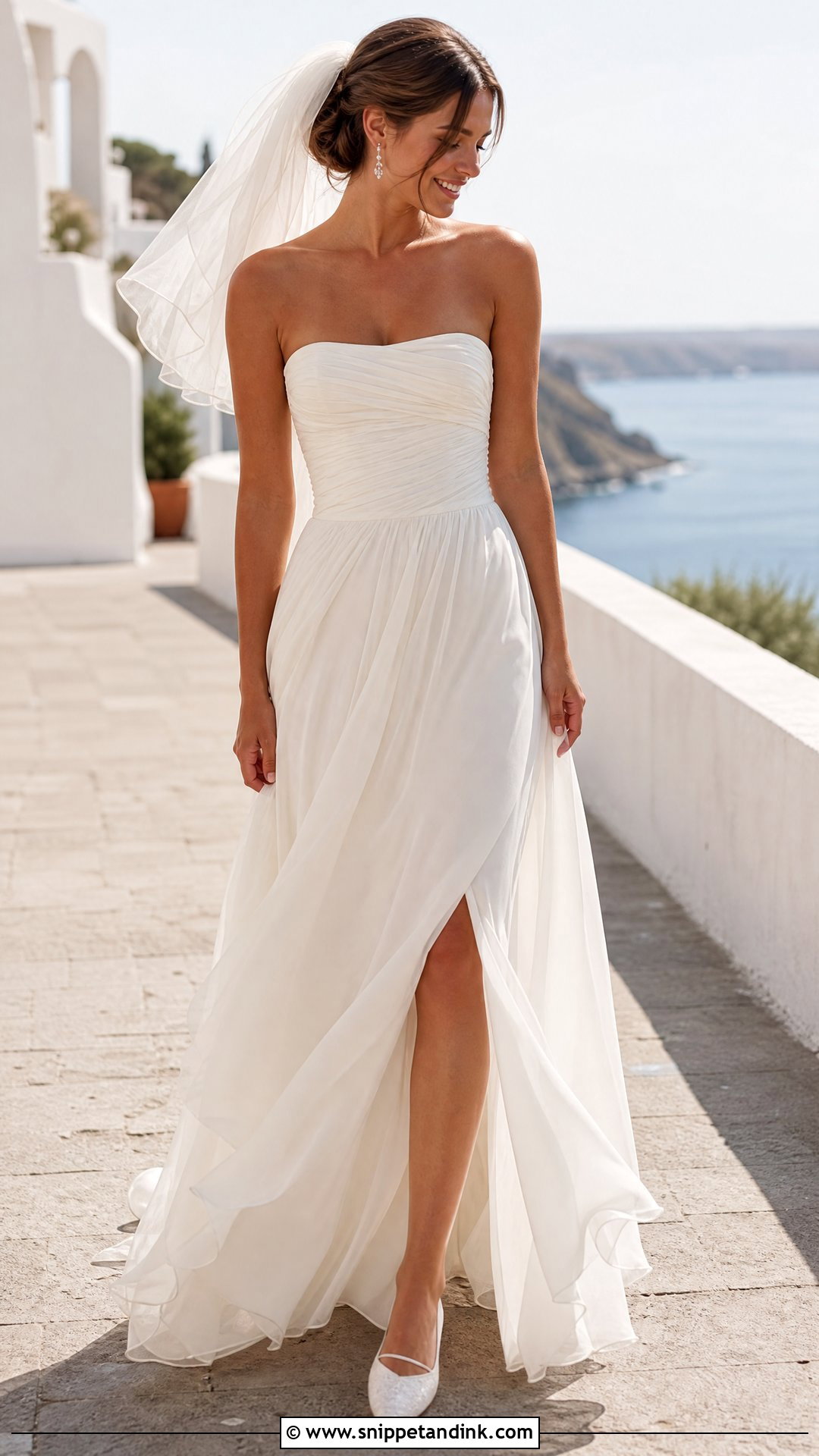
A strapless beach wedding gown has to stay secure in wind while staying light enough for heat. Chiffon over an A-line or relaxed empire shape, with a lightly gathered bodice, does both. Choose block-heel sandals or flats, delicate earrings and a short veil that won’t wrap around your face. Skip a long train; it fills with sand. A subtle side slit lets air in and helps you walk on soft ground. Above all, get the bodice fitted snugly, because a breeze finds any gap at the top edge.
12. Tea-Length Strapless Wedding Gown
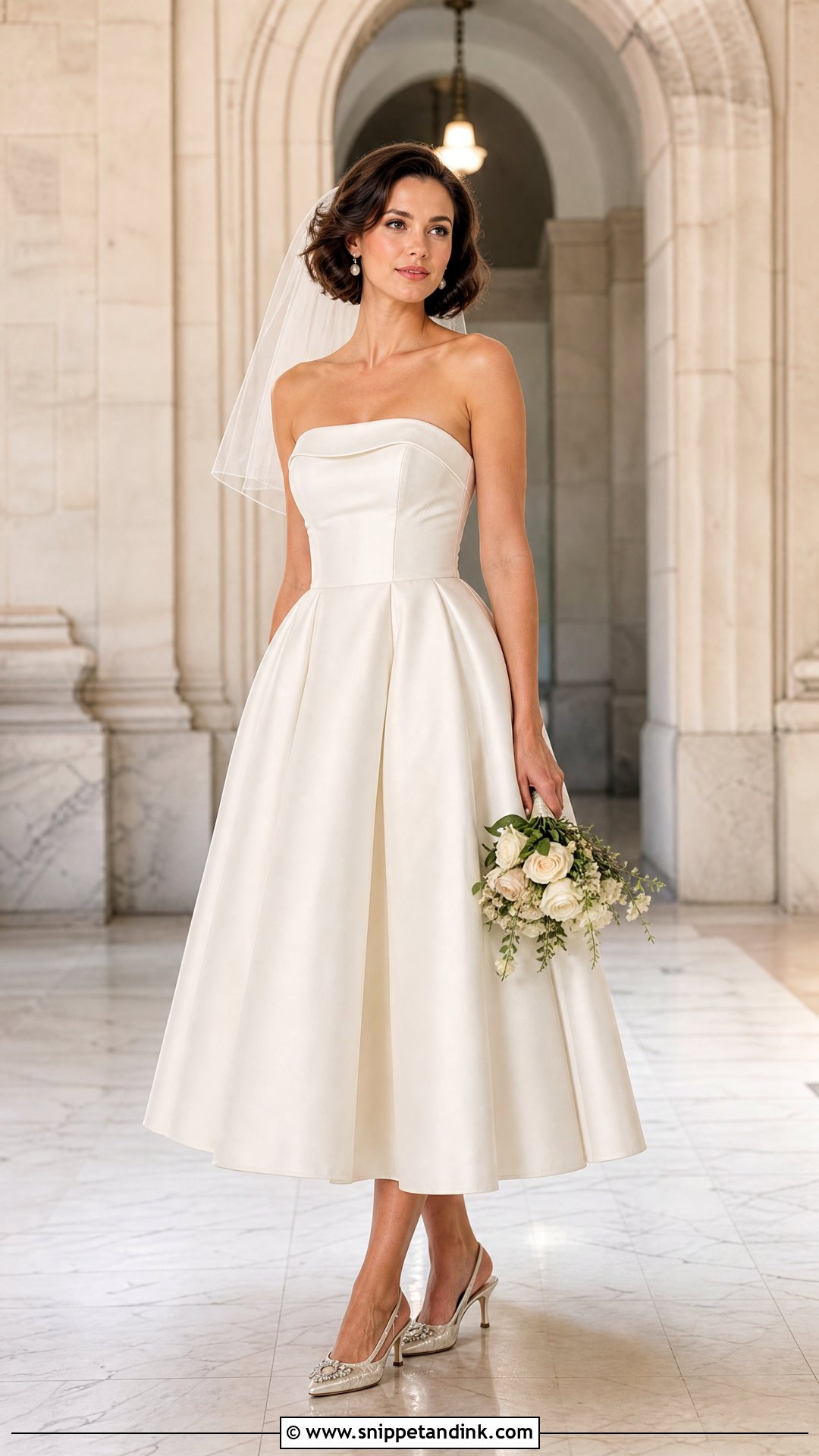
Tea length shows your shoes, so the shoes become part of the dress. The skirt ends between knee and ankle; pair a structured bodice and a full, neat skirt with pointed pumps, slingbacks or embellished block heels. Pearl earrings and a short veil keep it vintage without tipping into costume, as does a smooth bun or curled bob. Bring the exact shoes to every fitting. A hem set with flats on and then worn with heels ends up too short, and on this length an inch matters. Courthouses, restaurants and small gardens suit it.
13. High-Slit Strapless Wedding Gown
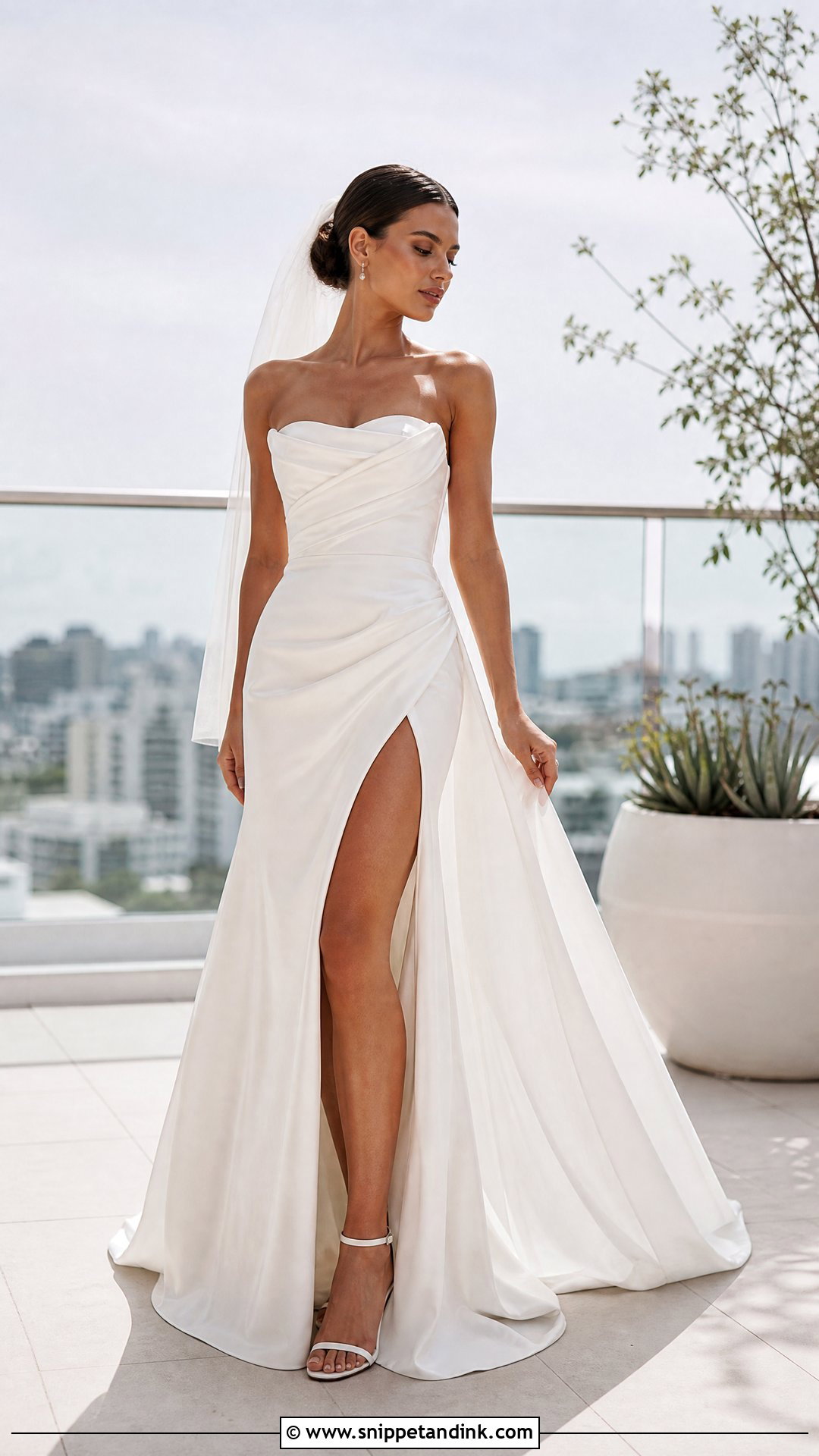
High slits need restraint everywhere else. Choose fluid satin, crepe or chiffon with a secure bodice and the slit set slightly to one side of center, which falls more naturally when you stand. Refined ankle-strap heels, slim earrings, a clean veil and a sleek low bun keep it controlled. In fittings, walk on carpet and stone, climb steps and sit. If the slit opens further than you’d like, a hidden modesty panel fixes it. It suits a rooftop, a destination wedding or an evening reception.
14. Detachable Overskirt Strapless Wedding Gown
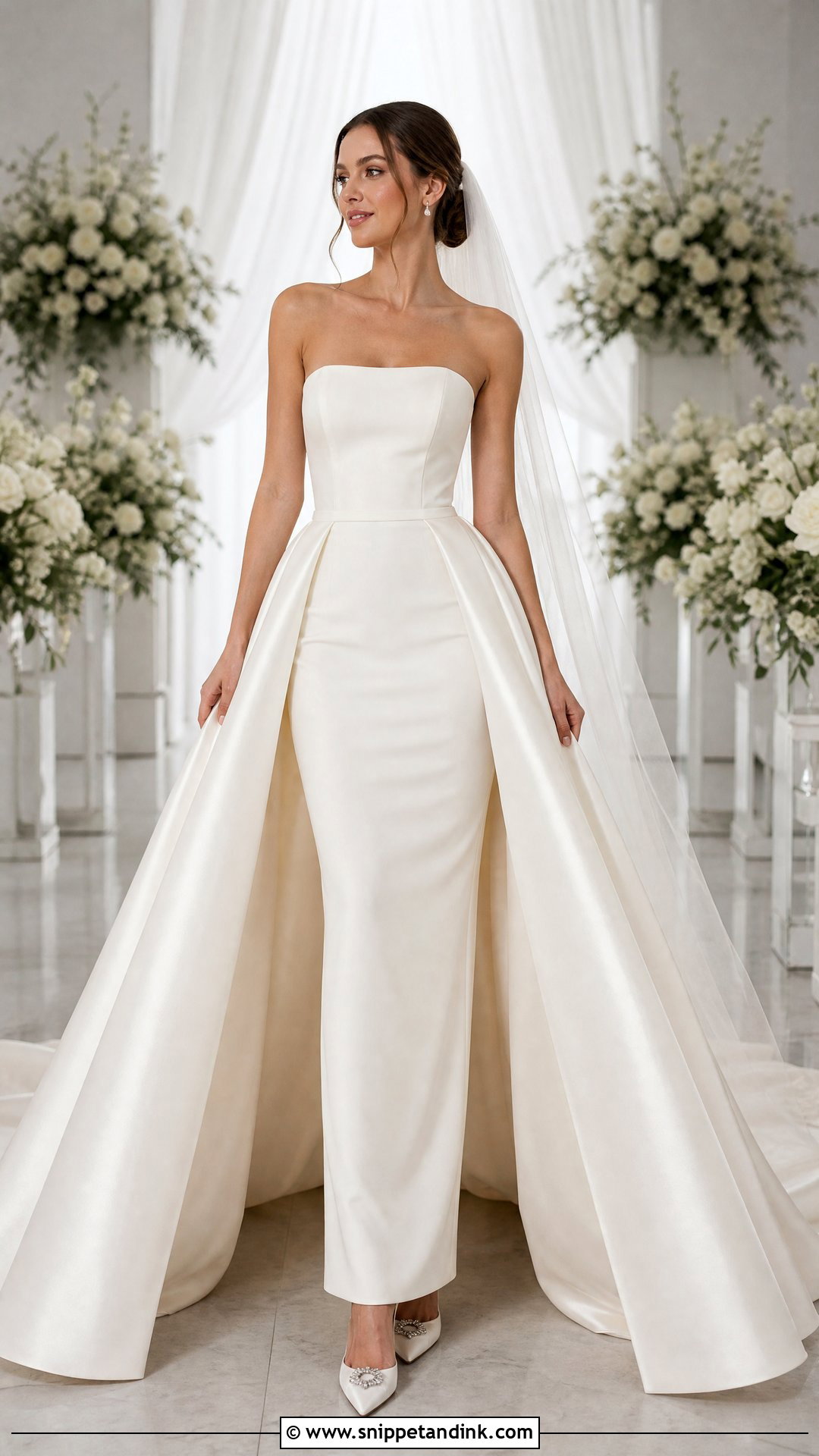
Two silhouettes, one gown. Wear a full tulle or satin overskirt over a fitted column, mermaid or fit-and-flare for the ceremony, then take it off for dancing. Understated earrings, comfortable heels and a veil that works with both versions keep the change simple. The attachment should sit flat around the waist and come off quickly with one helper, not three. I’d rehearse the change at the last fitting with a timer, because that ten minutes usually comes out of your cocktail hour.
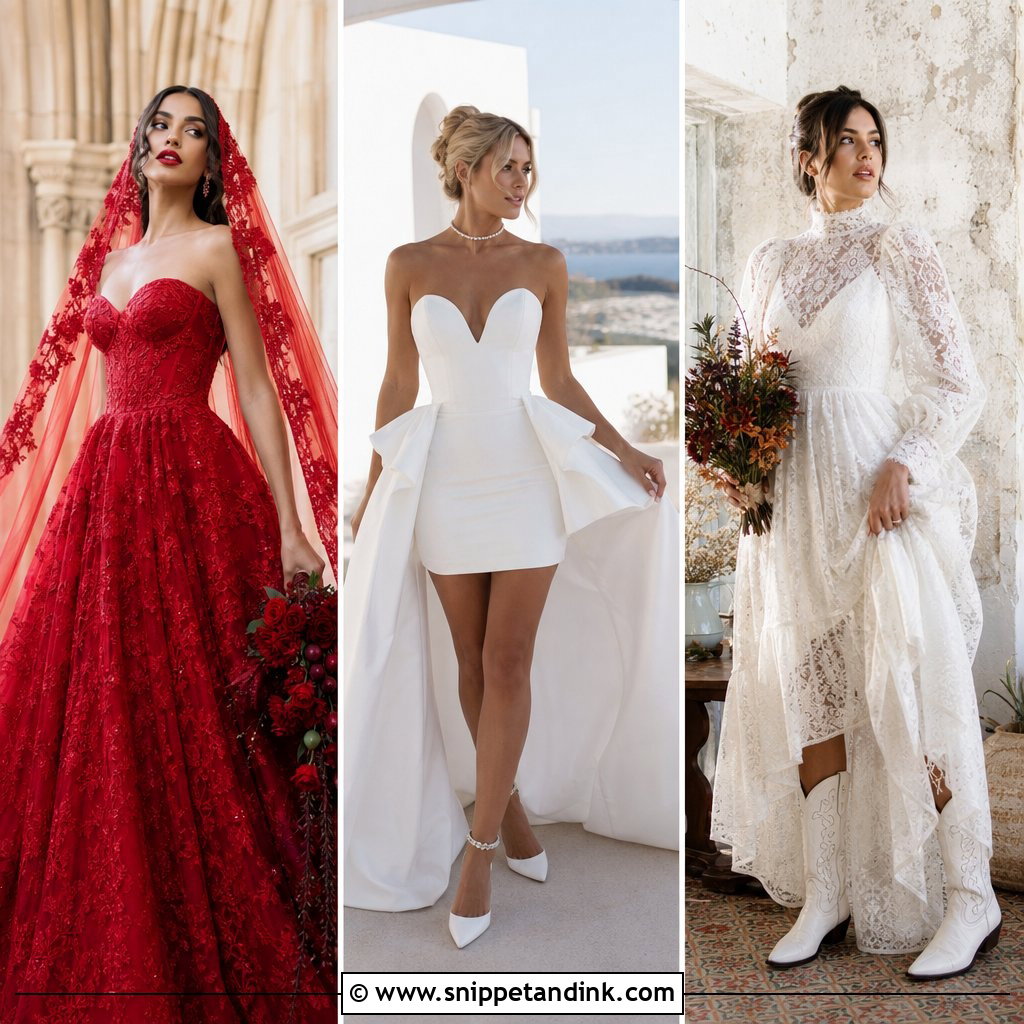

15. Bow Back Strapless Wedding Gown
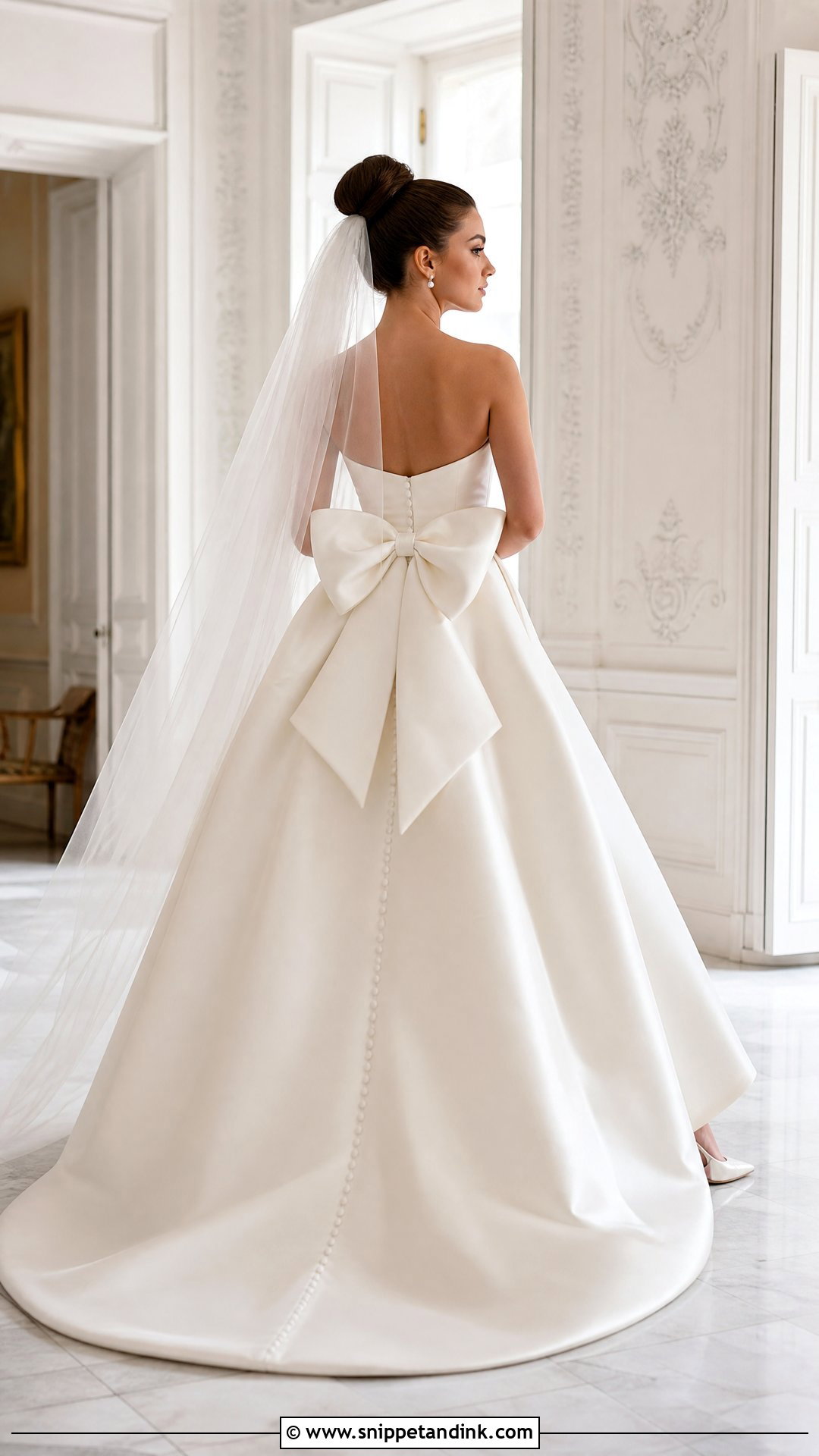
A large back bow gives the gown a moment as you walk away down the aisle, which is when most guests see you longest. Choose satin or mikado on an A-line, with a smooth bodice and a structured or detachable bow at the waist, and keep the front plain. Pearl studs, pointed heels and a veil sheer enough to see the bow through. A high bun or short hair keeps the back visible. Sit down in it before you buy. A bow placed on the seat line will be crushed every time you take a chair.
16. Scalloped Lace Strapless Wedding Gown
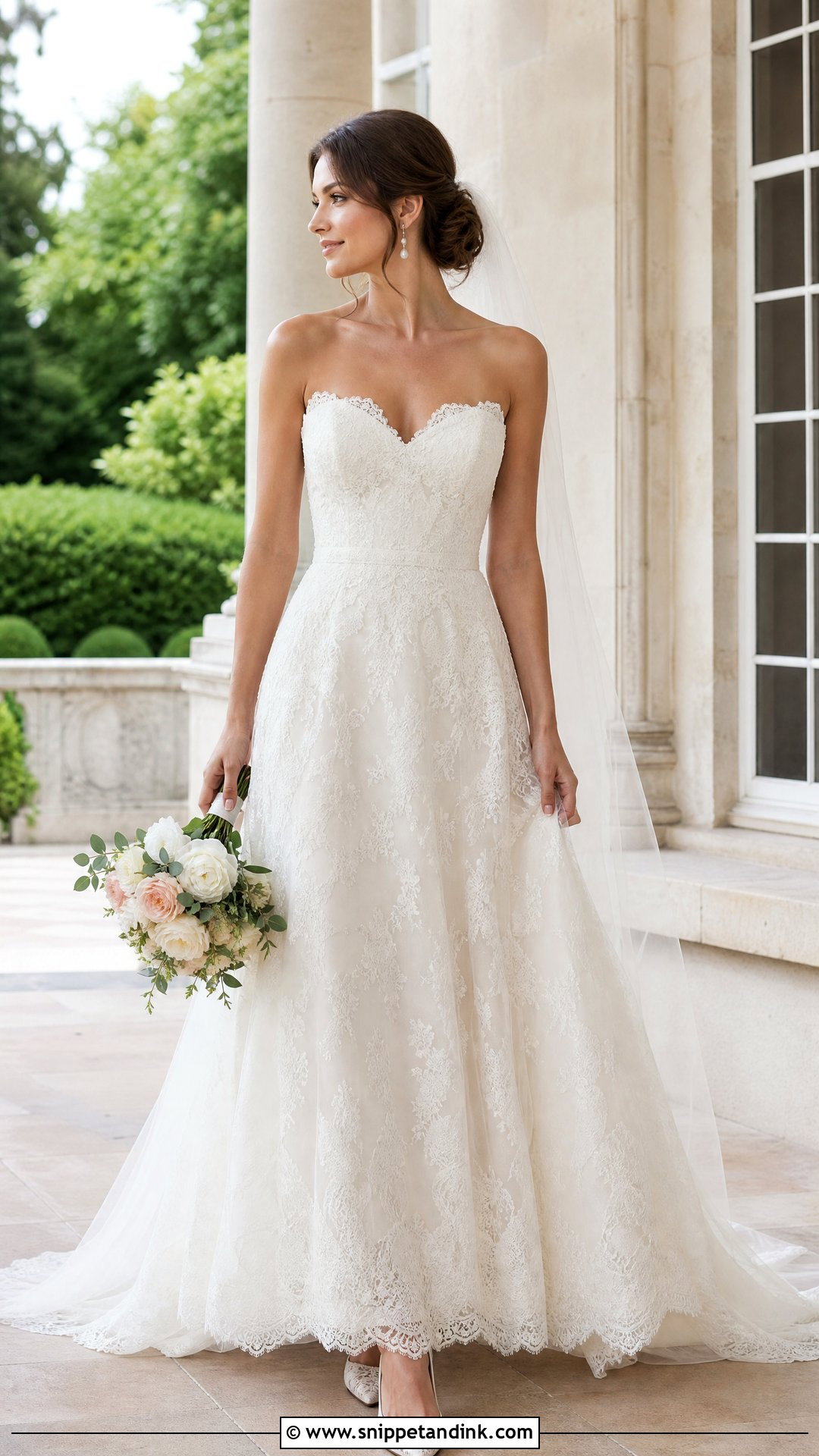
Scalloped lace along the top edge gives a strapless neckline a delicate finish, provided the scallops lie flat. If they curl outward, they catch on everything and look tired by evening. I run a finger along the edge in the fitting; a narrow clear stay sewn behind the lace keeps it flat. A lined bodice covers more, a lightly sheer overlay adds depth. Pearl drops, lace-trimmed pumps and a plain veil let the neckline show, with a loose chignon. Gardens and historic venues suit it.
17. Plus Size Ruched Strapless Wedding Gown
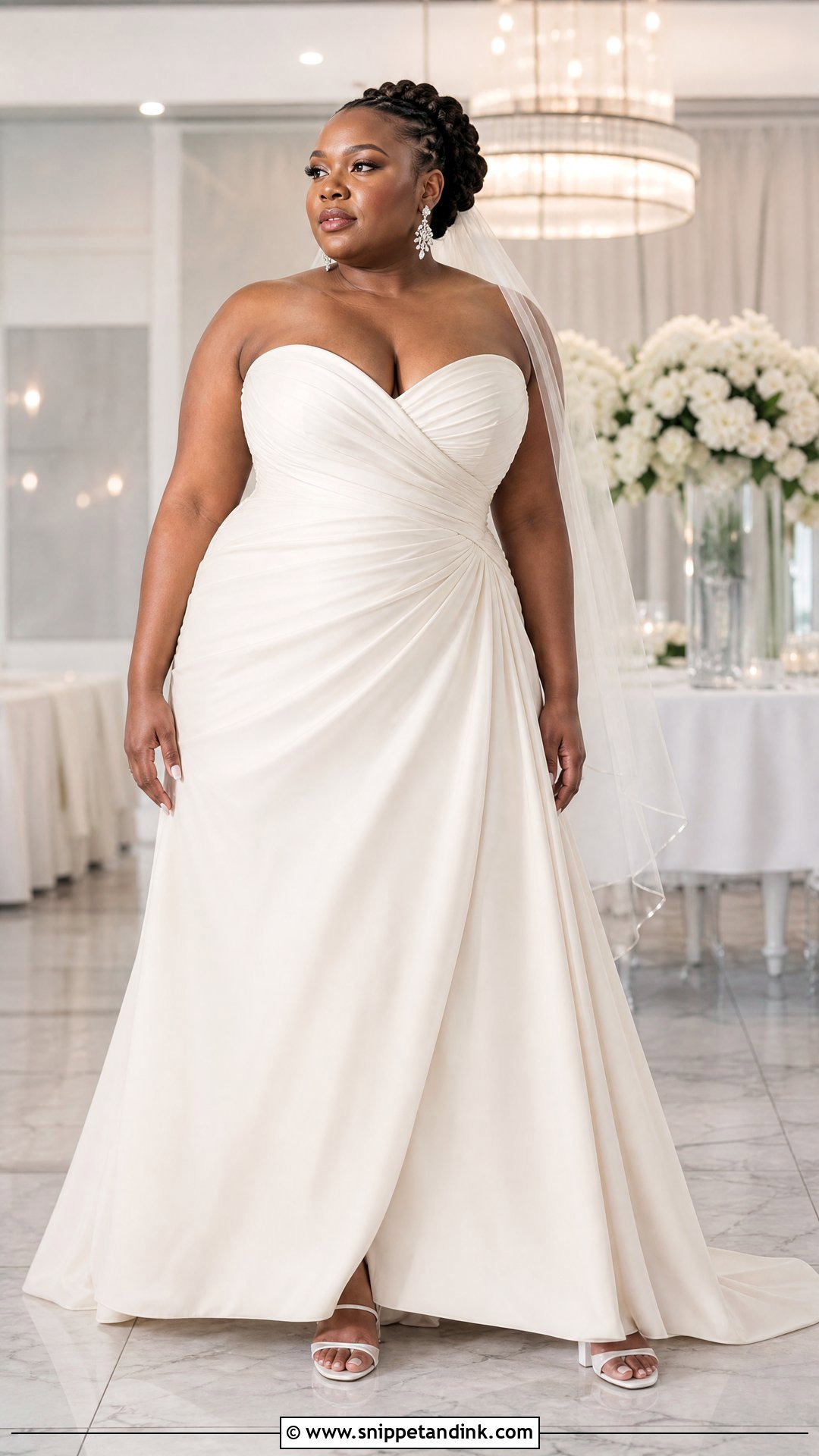
Ruching is a gift on a plus-size strapless gown when it’s placed with intent: diagonal gathers across a structured bodice shape the waist and smooth the torso. Pair it with an A-line or fit-and-flare skirt, firm boning and a fitted waist so the top stays put. Statement earrings, comfortable block heels and a light veil, with a braided updo or polished waves. Ask salons ahead of time which samples come in your size, so you’re judging the real fit, not a gown held together with clips. Buy for the body you have now and let alterations do the rest.
18. Champagne Tulle Strapless Wedding Gown
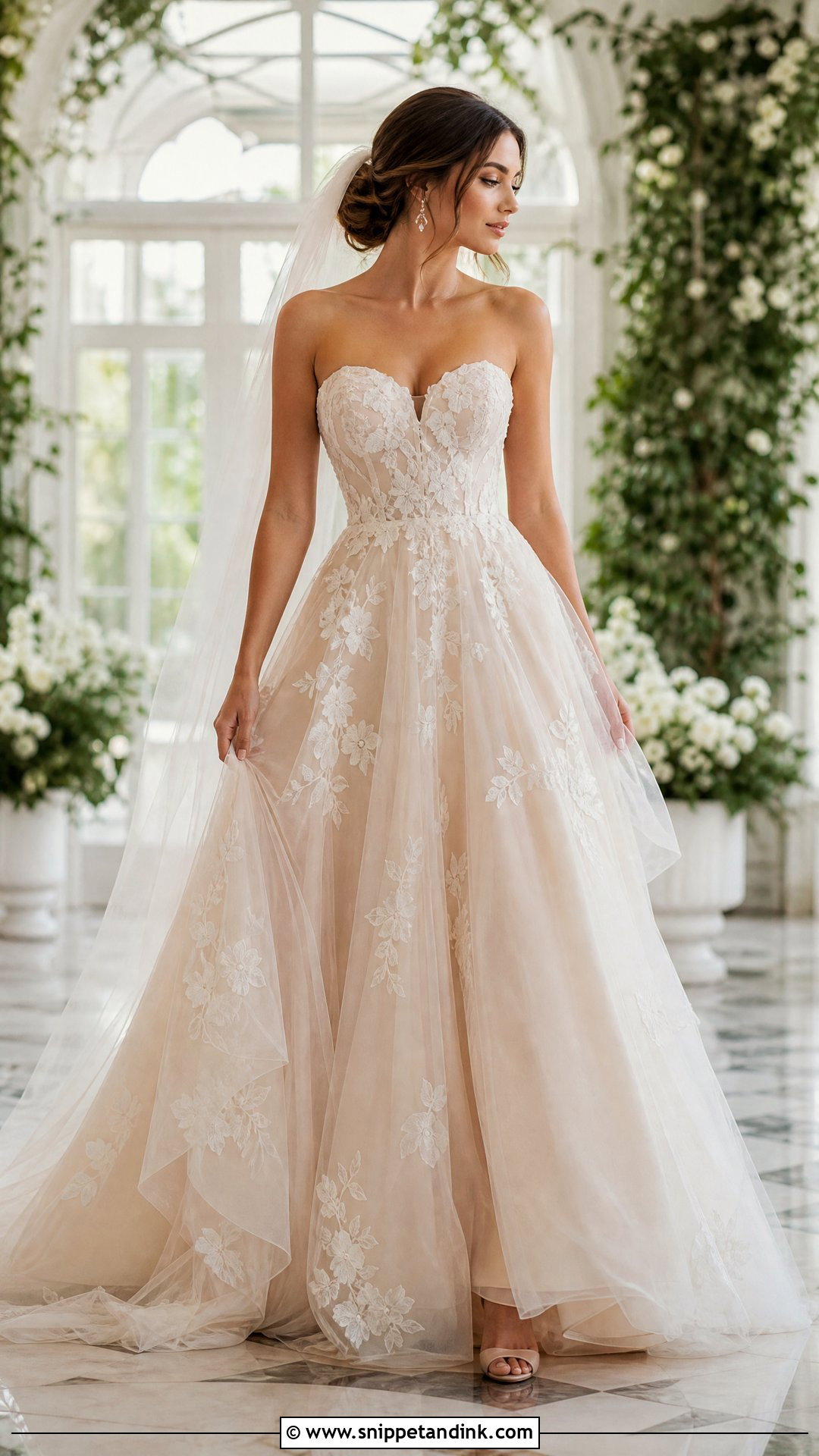
Champagne tulle reads warm without losing the bridal look. An ivory lace or tulle overlay over a champagne lining gives appliqués and embroidery more depth. Neutral satin heels, soft gold earrings and an ivory veil tie the colors together, with a low bun and natural makeup. Before deciding, I’d lay champagne, blush, ivory and nude lining swatches against your inner wrist by a window. Undertones shift in photos, and the right one is the shade that warms your skin rather than matching it.
19. Sculptural Neckline Strapless Wedding Gown
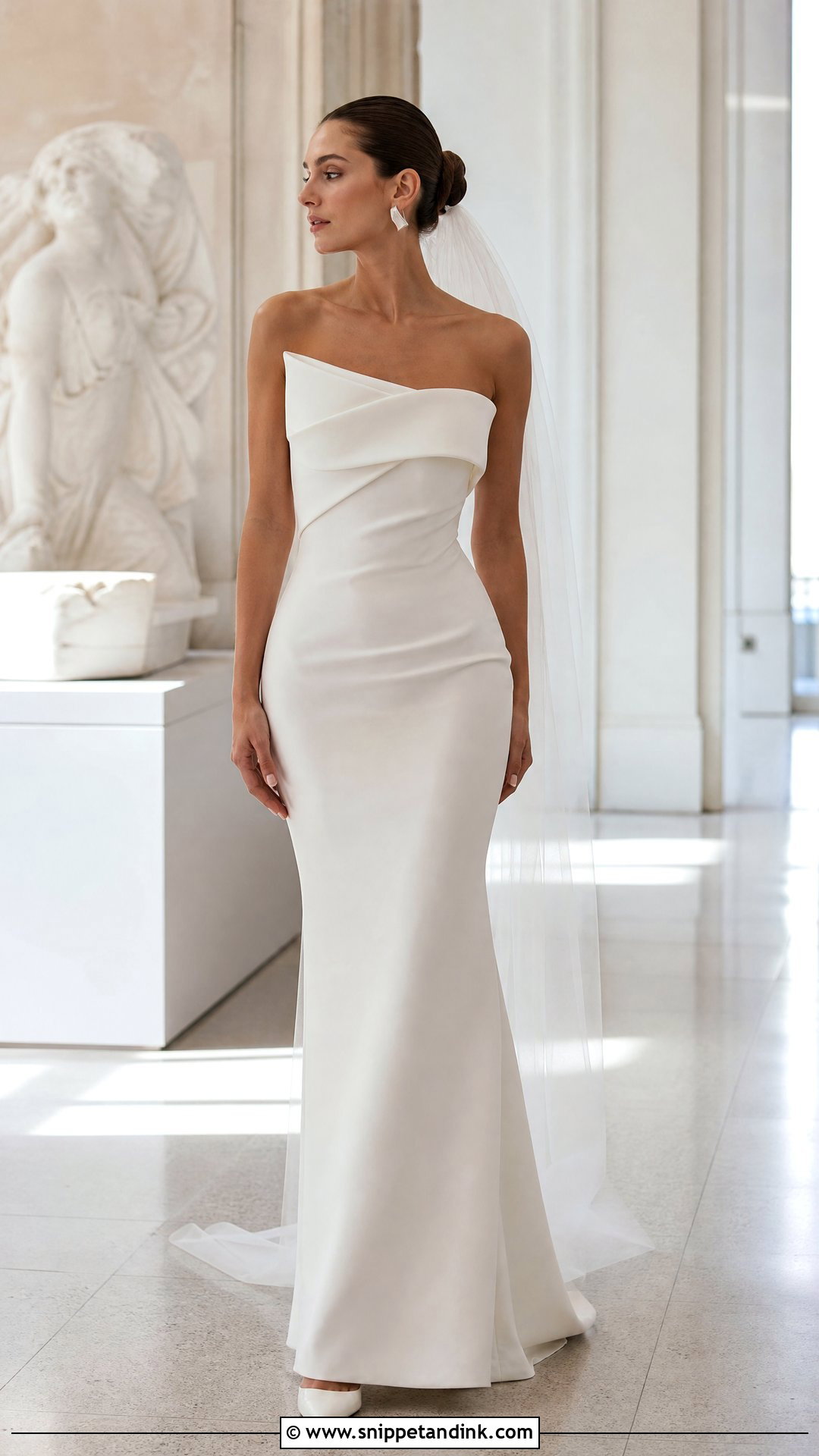
Folded satin edges, an asymmetric curve, petal shapes: a sculptural neckline turns a plain gown into the statement. Keep the skirt streamlined, column, A-line or a controlled ball gown, and skip the necklace. Geometric earrings, pointed pumps and a simple veil under a sleek bun finish it. The fold has to be built over a stiff interlining or it collapses inward after an hour of body heat. I check it from both sides for symmetry. Strong construction is what gives a polished, editorial appearance through the night.

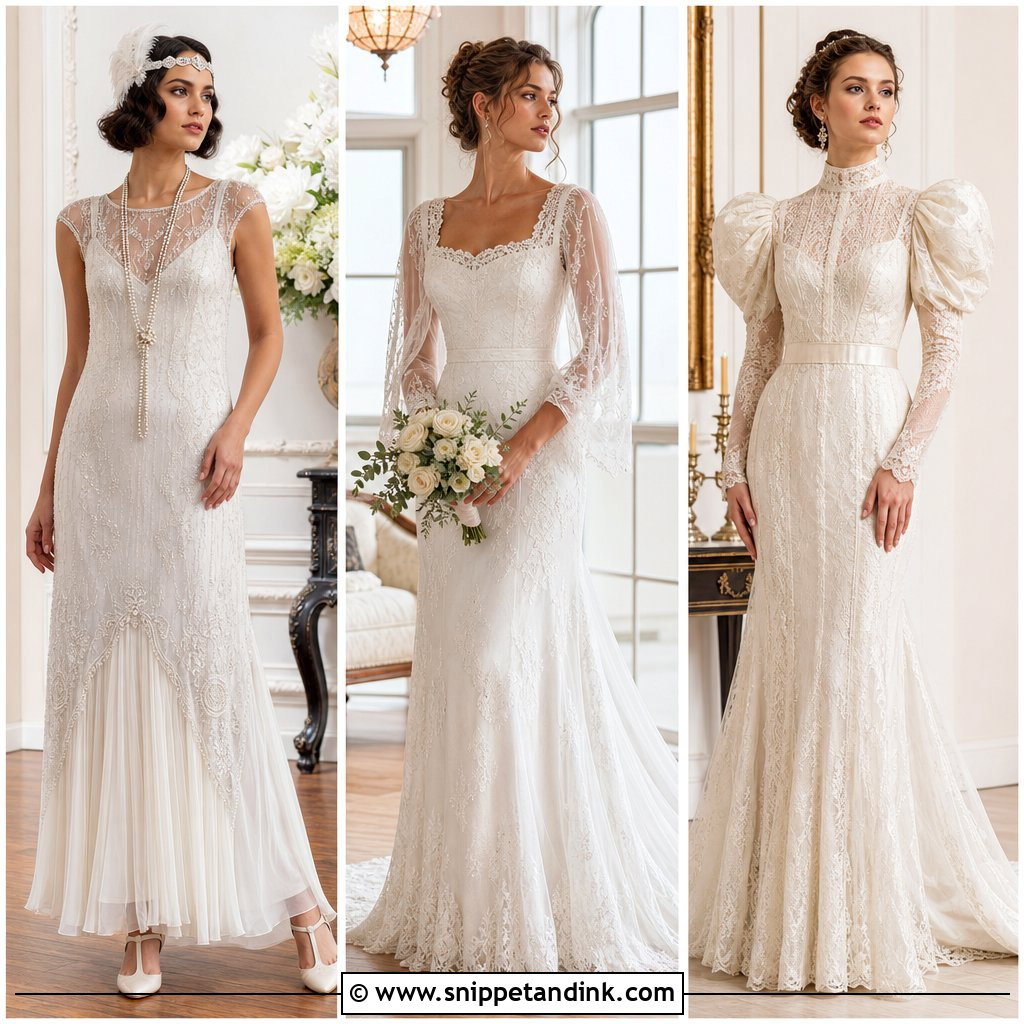
20. Detachable Sleeve Strapless Wedding Gown
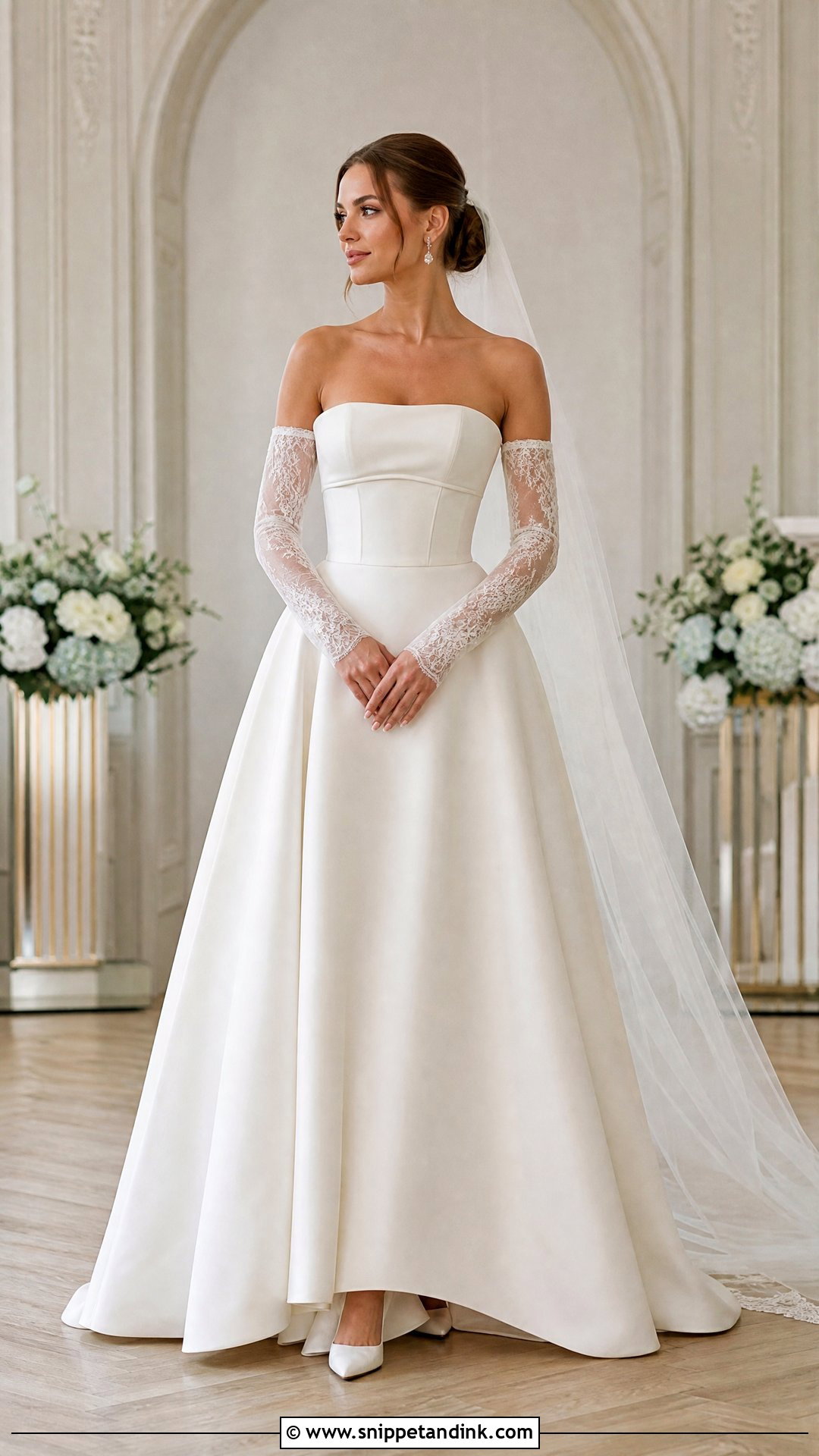
Detachable sleeves let you start covered and finish strapless. Choose matching lace, fitted satin or soft tulle sleeves that attach without pulling on the top edge of the bodice. Wear them for the ceremony with a long veil, classic earrings and closed-toe heels, then remove sleeves and veil together for the reception. A low bun makes the change quick. They’re handy for a cold church or a cooling evening. Test the fastenings beforehand and name one person to help. The sleeve fabric should match the gown exactly, or they’ll look borrowed.
Tan Lines, Posture and Bare Shoulders on Camera
A strapless gown puts your shoulders, collarbones and upper back in almost every photo, so the weeks before matter a little more than they would with sleeves.
- Watch for strap marks. Wear strapless or halter tops in the sun for the month before, or cover up, so you don’t arrive with pale stripes across the shoulders.
- Exfoliate the upper back gently and moisturize daily. Skin that’s been hidden under clothes all winter shows dry patches in flash.
- Practice standing with your shoulders down and back and your arms a little away from your body. Pressing your arms flat to your sides widens them on camera.
- Keep the hair off at least one shoulder for the ceremony, or the neckline disappears in photos taken from the front.
A Cover-Up for the Church, the Chill or the Late Evening
Some houses of worship ask for covered shoulders, and plenty of venues get cold after sunset. Plan a cover-up while you’re still at the fitting stage, so it can be matched to the gown.
- A sheer lace bolero covers shoulders and arms while showing the bodice through it.
- A short cape fastens at the neck, so it doesn’t drag on the strapless edge.
- A faux-fur or cashmere-blend stole is the warmest option for winter photos outdoors.
- A long tulle shrug is the lightest choice for a warm church.
Bring the cover-up to your final fitting. If it’s too tight across the back, it will push the bodice down when you lift your arms.
Whose Gown Is It? Yours, Fitted to How You Move
One neckline, many directions: crepe columns, light beach dresses, lace mermaids, full mikado ball gowns. Start with the skirt shape and fabric that suit your venue, then spend your attention on the bodice, the alterations and a short list of accessories. At fittings, sit, walk, raise your arms and dance a few steps. That tells you more about how the day will feel than any mirror does. Plain or detailed, choose the gown that holds you securely and still looks like you.
You'll Like These Ideas:



Leave a Reply