
A gown on a hanger tells you very little. What I look at with a bride is the whole picture: neckline, fabric, waistline, veil, jewelry, shoes and bouquet all pulling in the same direction. Classic A-lines and ball gowns are sharing the rails right now with basque waists, dimensional florals, fine lace, clean satin and versatile removable details. Below are 20 complete looks, romantic to minimal, with the accessories I’d pair and the fitting checks I’d make. Comfort counts as much as the silhouette, so keep your venue, the weather and how much you plan to dance in mind as you read.
Why Salons Ask for Nine Months
Most bridal gowns aren’t sitting in a stockroom. When you order, the designer usually cuts and sews your gown from scratch, and that production alone commonly takes four to six months, sometimes longer for heavily beaded or lace designs. Alterations then need another two to three months and at least two or three fittings. That’s why so many salons suggest ordering about nine months to a year before the wedding.
If you’re short on time, there are honest options. Ask about rush production, which some designers offer at a fee, or buy a sample or an off-the-rack gown that can be altered straight away. I’d never promise a bride a made-to-order gown in less time than the salon itself is willing to put in writing.
A rough fitting calendar
- First fitting about two to three months before the wedding, once the gown arrives.
- Second fitting four to six weeks out, with your shoes, underwear and any jewelry.
- Final fitting one to two weeks out, when the bustle is taught to whoever will help on the day.
1. A-Line Satin Bridal Wedding Gown
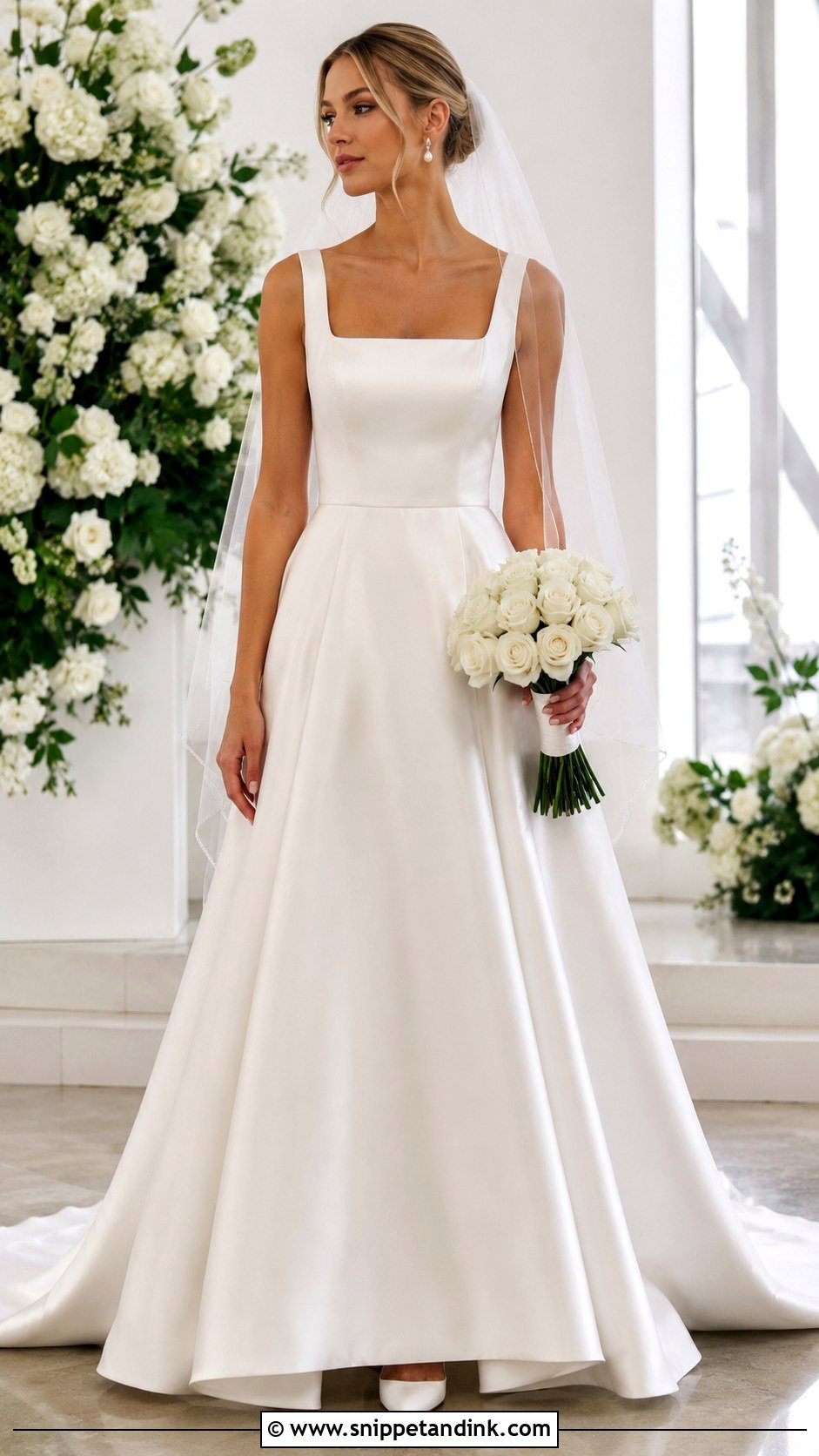
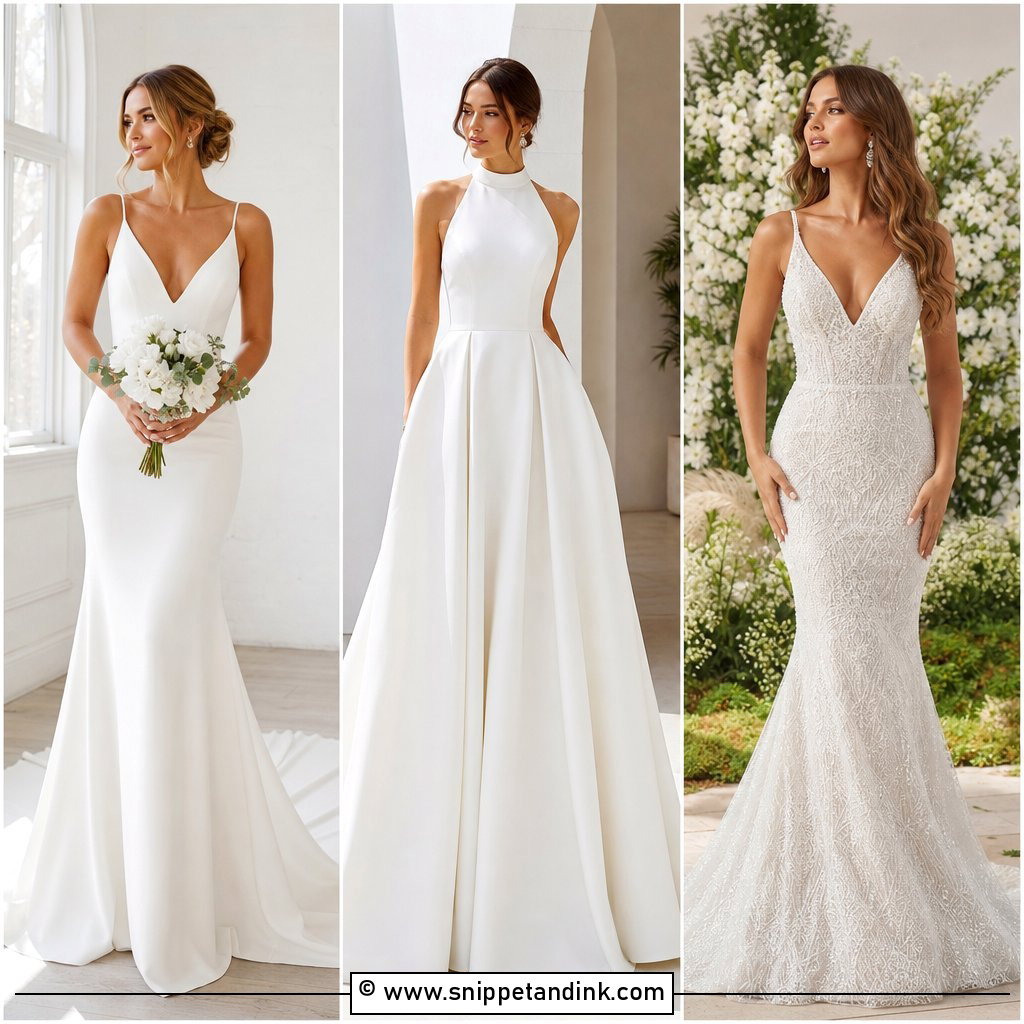
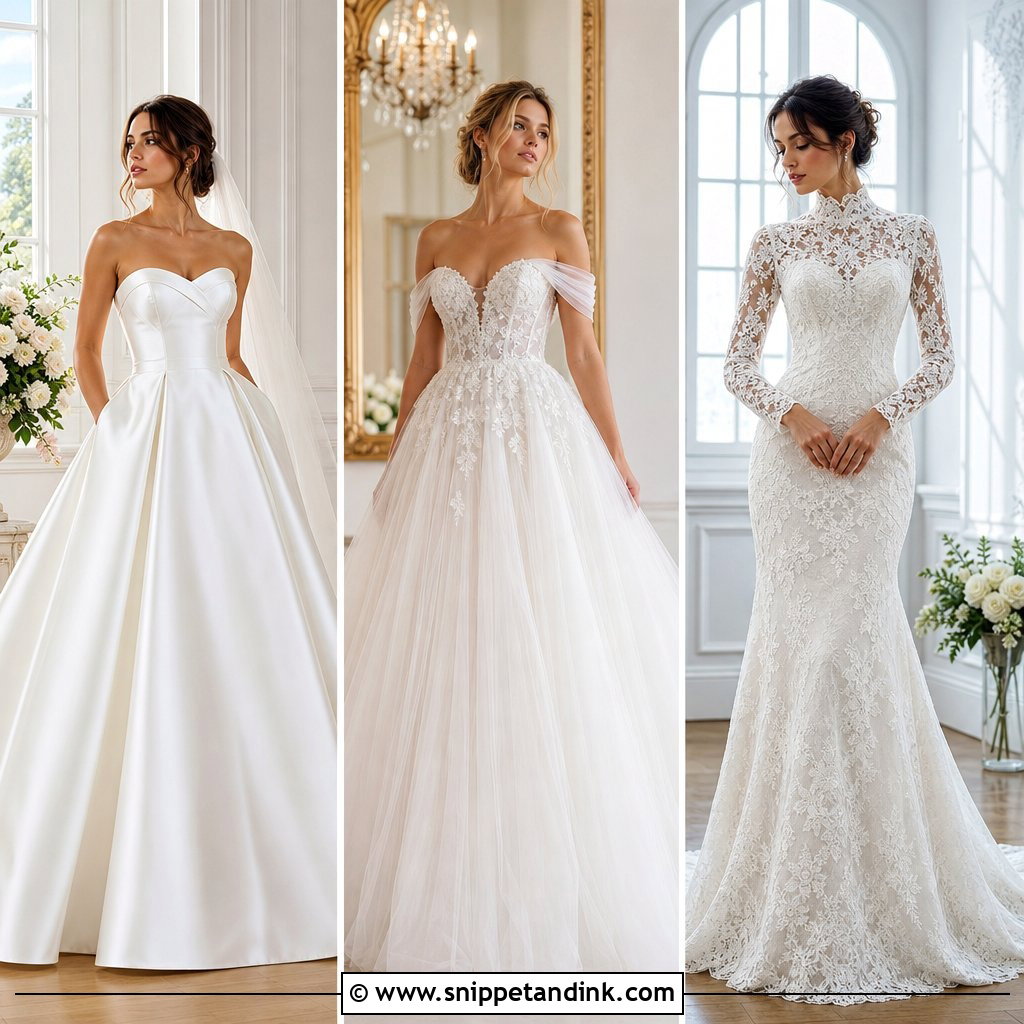
Most first appointments I run start with an A-line, and for good reason. It gives structure without the weight of a ball gown and suits more body shapes than any other cut. In satin, I’d keep a fitted bodice, a softly defined waist and a skirt that widens gradually, with a square or gentle scoop neck. Satin shows creases and pulls at the seams, so the fit across the bodice has to be exact. A fingertip veil, pearl drops, pointed ivory pumps and a compact bouquet of white roses keep it polished. A low bun or smooth waves suit formal hotels and old estates.
2. Lace Ball Gown Bridal Wedding Gown
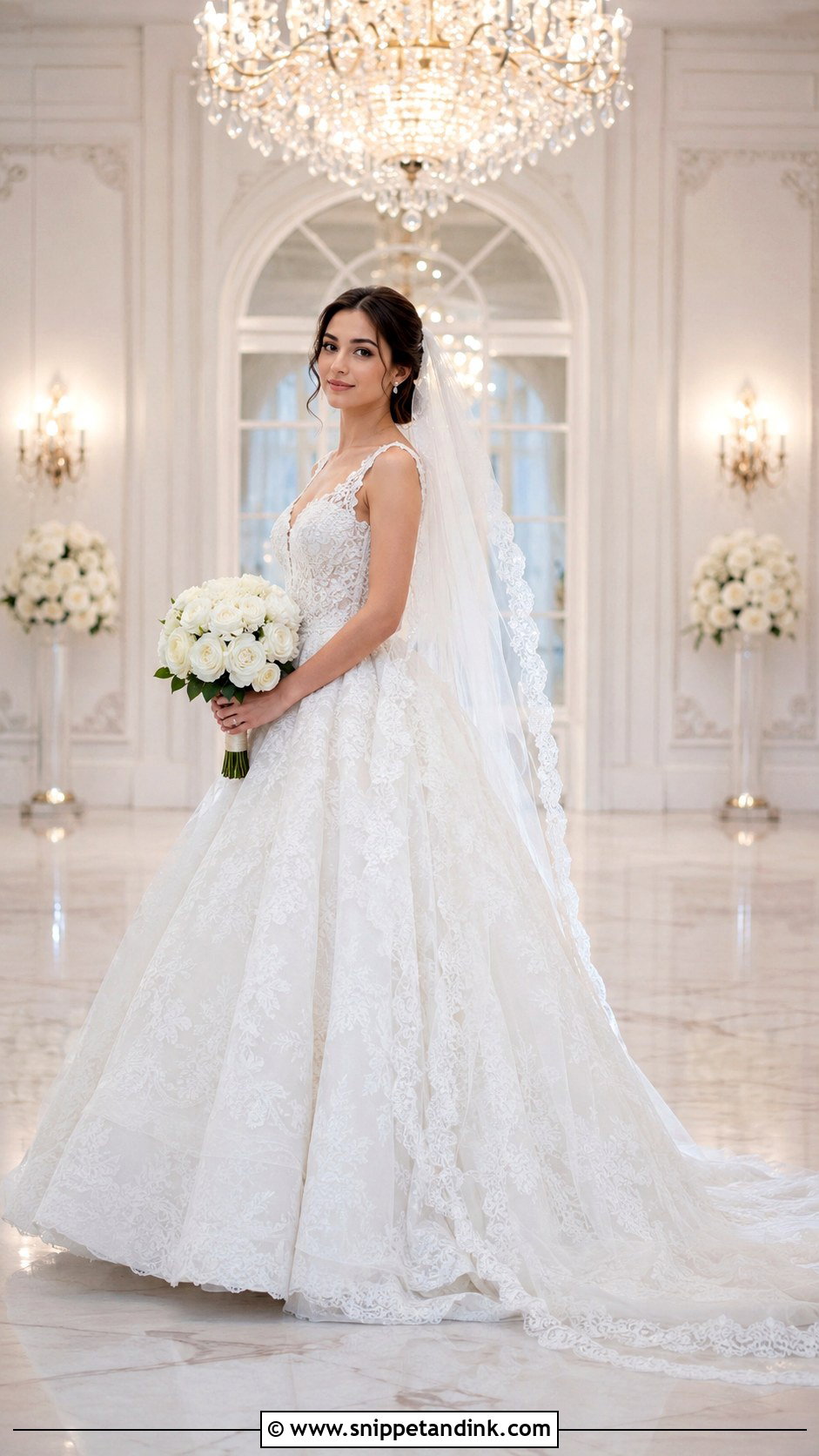
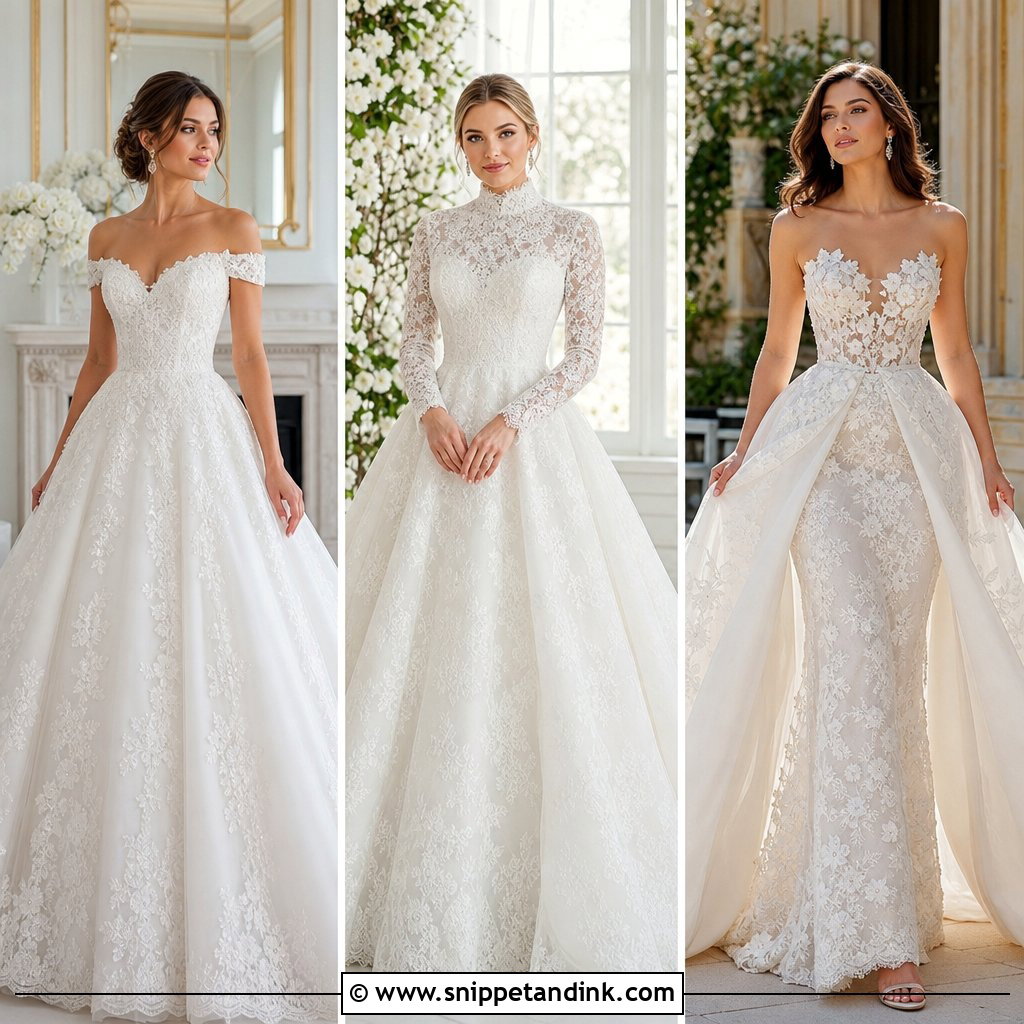
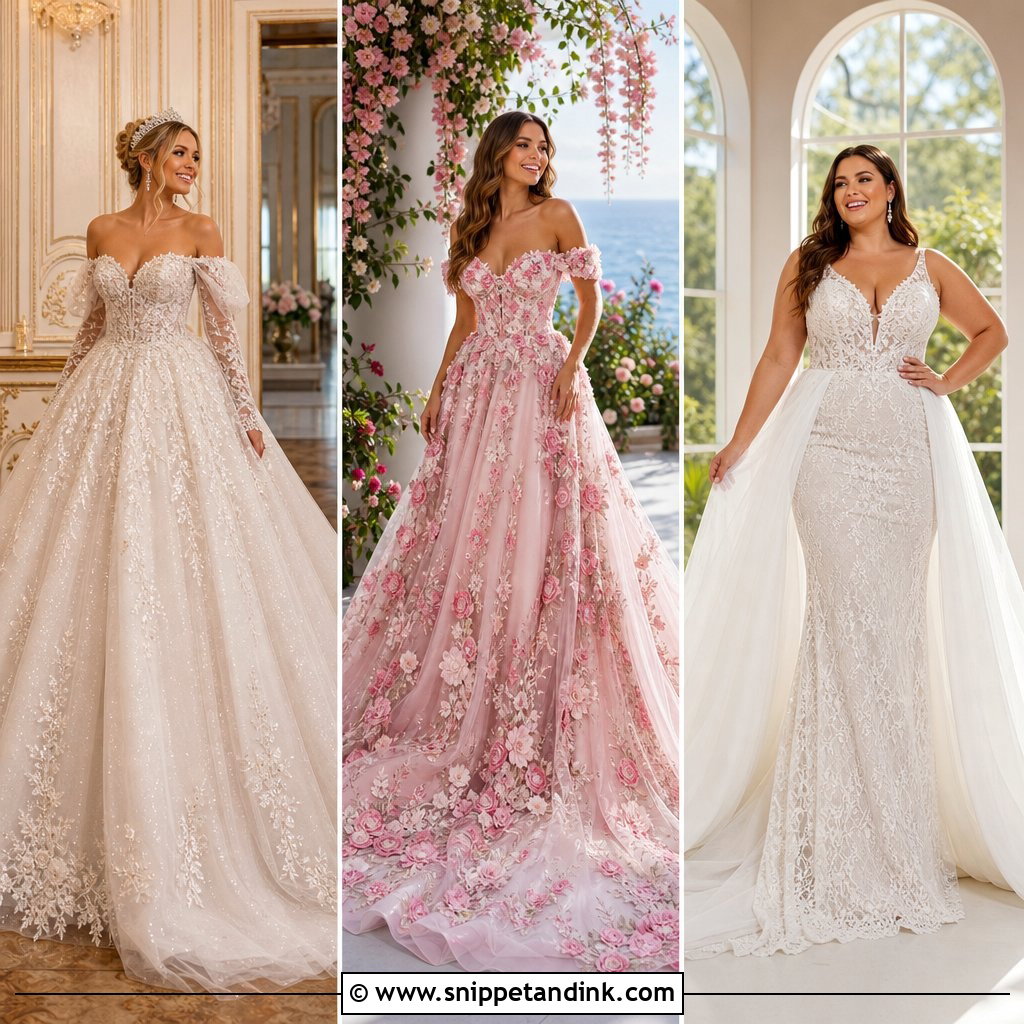
The one question I ask about any lace ball gown is where the lace stops. Good lace continues naturally down onto the skirt; cheap construction ends it at a hard line on the hip, and that line is all you see in photos. Look for a supportive fitted bodice and a defined waist, then a cathedral veil edged in matching lace. Small studs, block-heel pumps and a smooth bracelet that won’t snag the lace finish it, with a structured bouquet to balance the texture. A full skirt needs space, so check the aisle width before falling for this one; it suits ballrooms and grand halls far better than a narrow chapel.
3. Basque Waist Bridal Wedding Gown
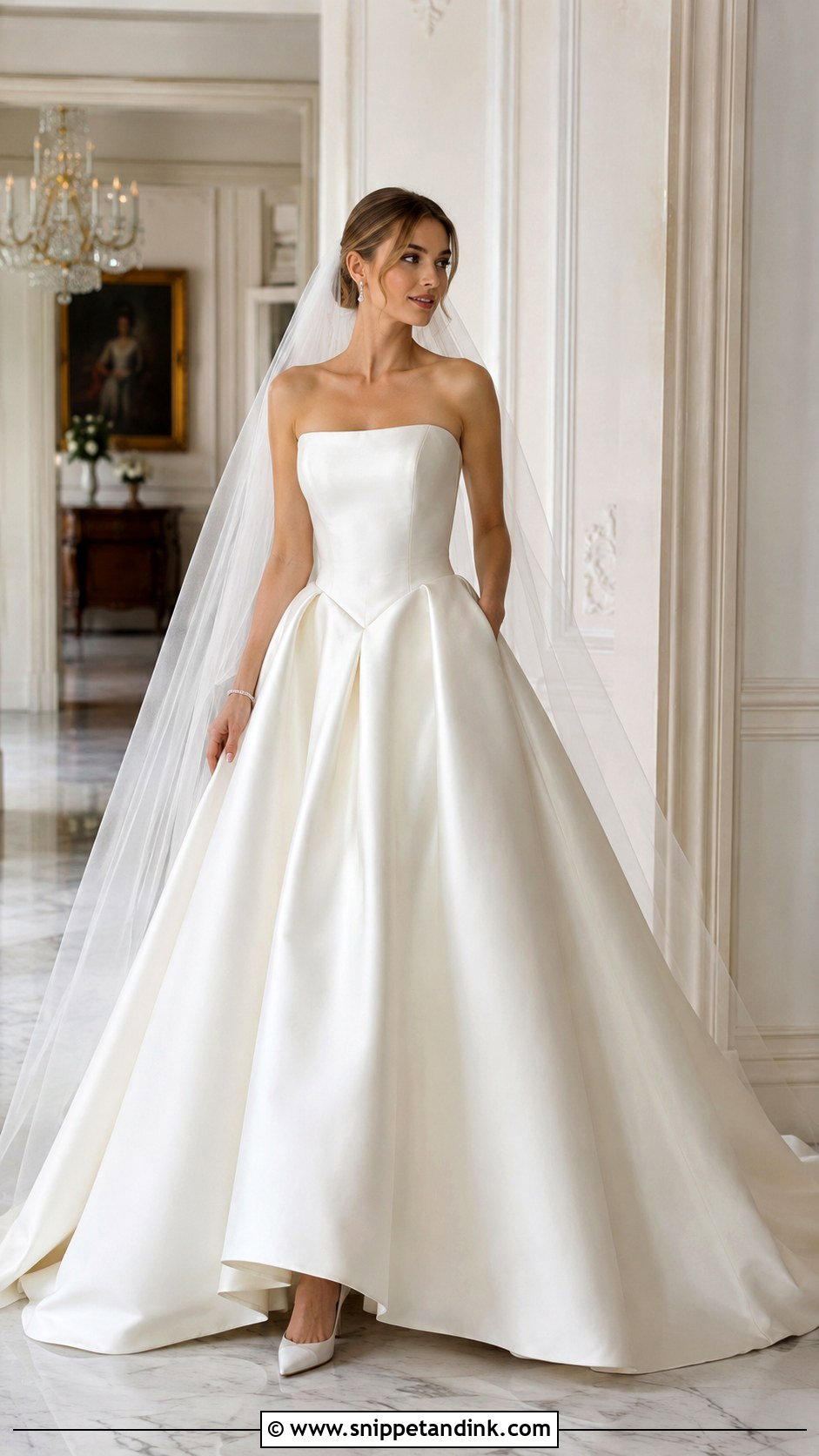
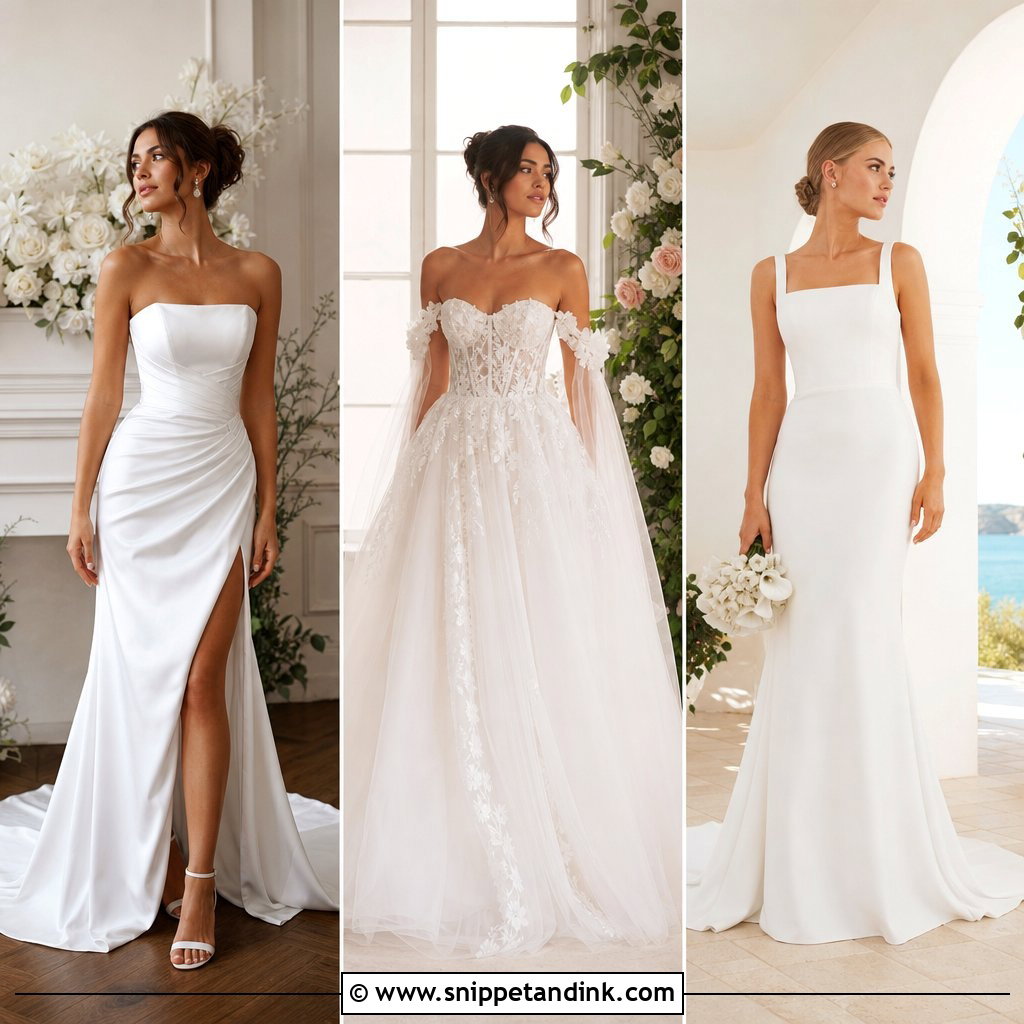
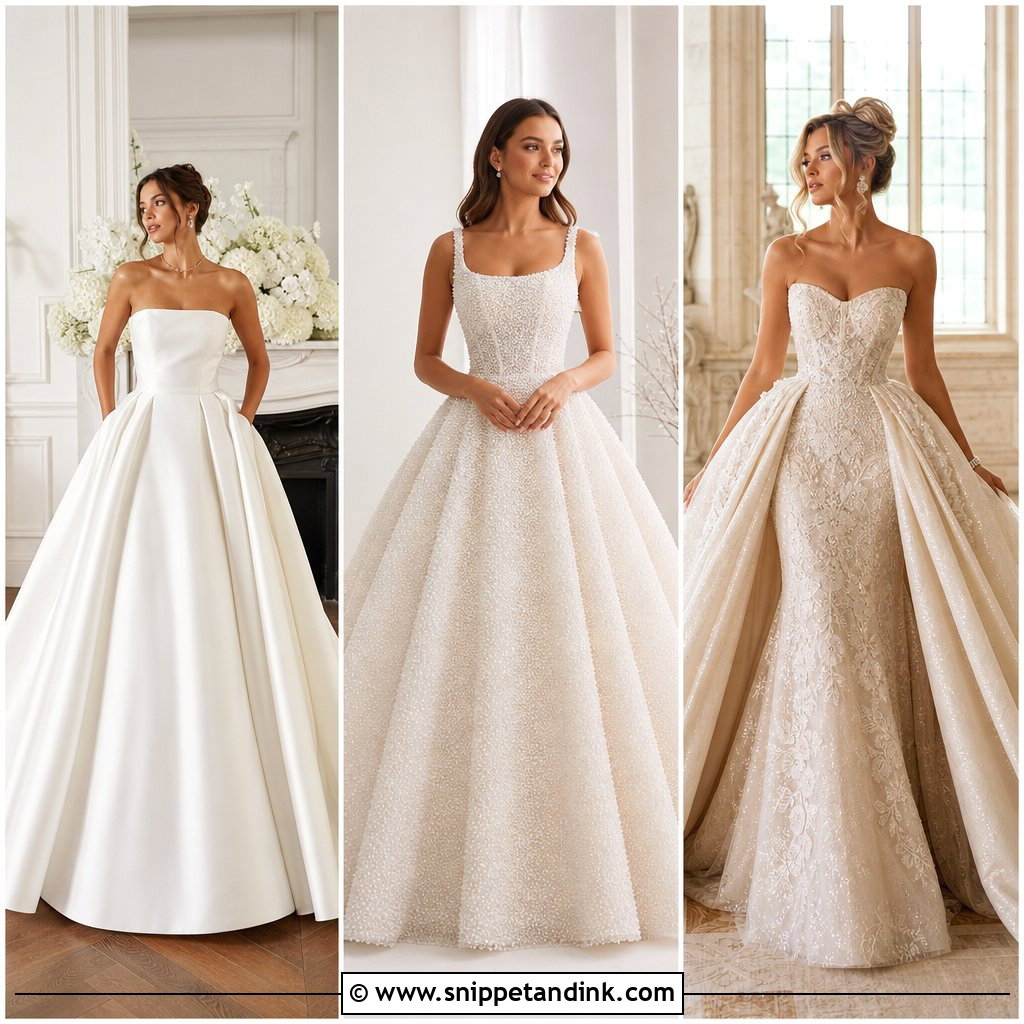
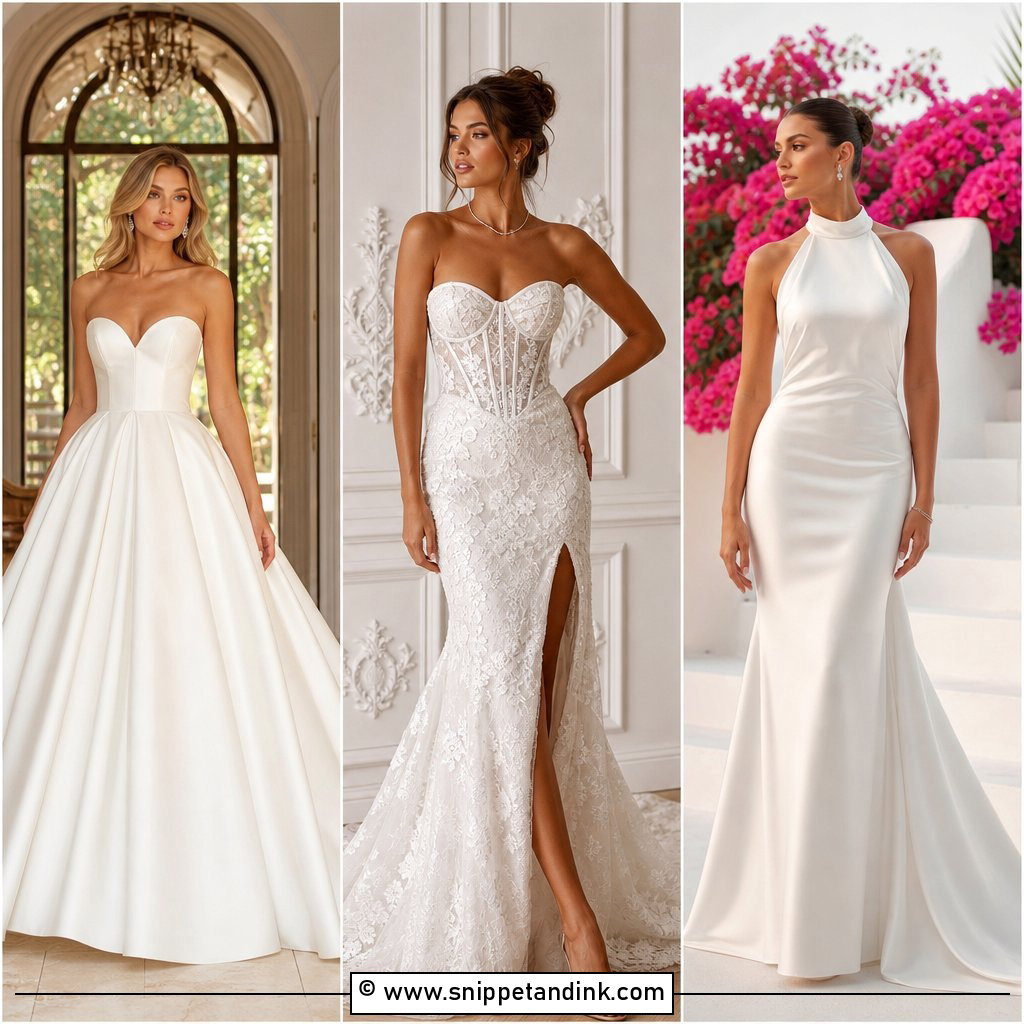
A basque waist bridal gown drops the bodice below the natural waist into a soft V, which makes the torso look long and the skirt look fuller. The point of that V is also where it can dig in. In the sample, I ask brides to sit on a low chair and lean forward; if the point presses into the hips, the boning needs adjusting. A strapless or scoop-neck bodice over a full satin or tulle skirt is the classic version. Keep the veil plain so the waistline stays the focus, with pointed pumps, understated earrings and a slim tennis bracelet. An updo shows off the neckline.
4. Minimalist Column Bridal Wedding Gown
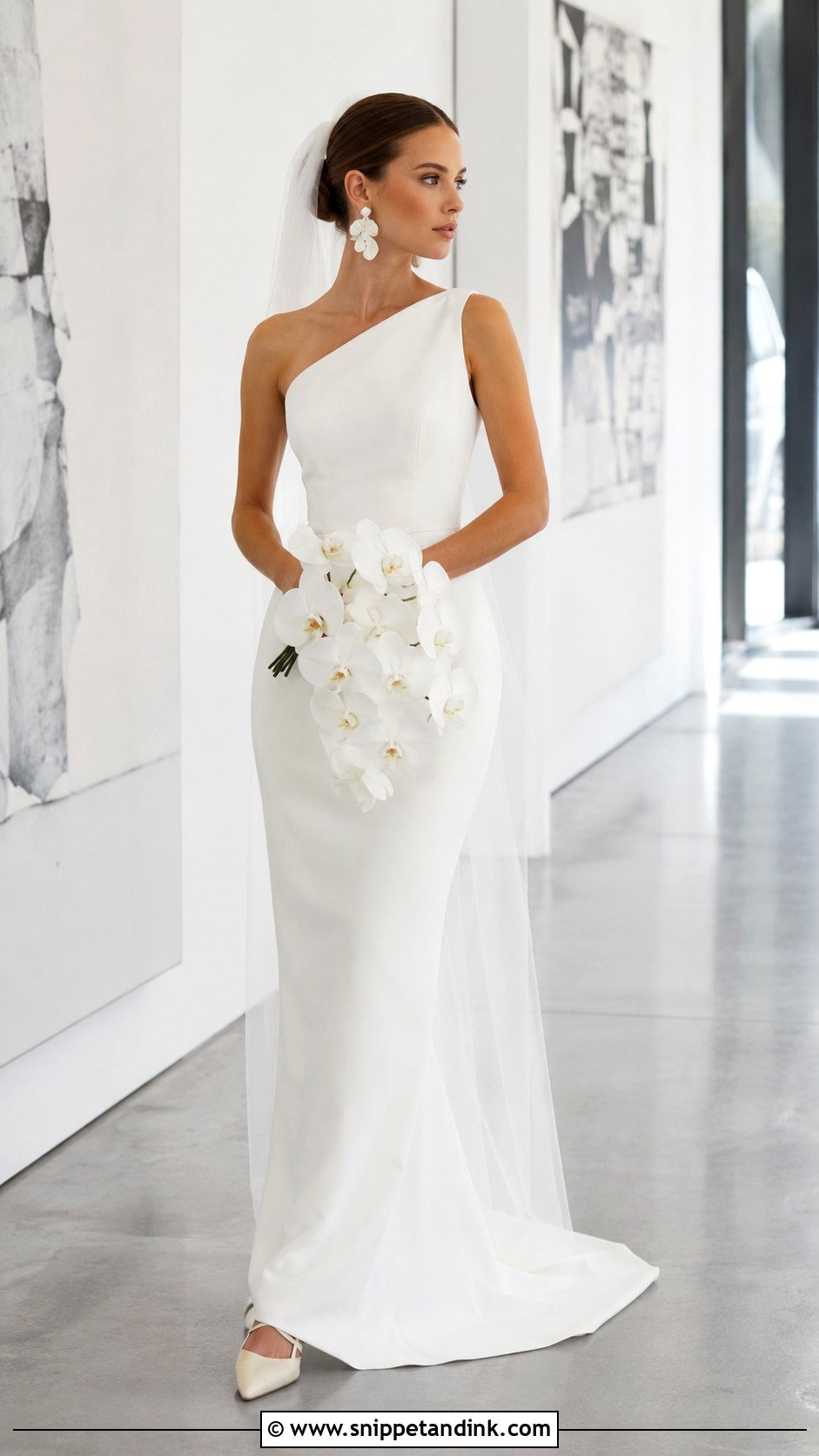
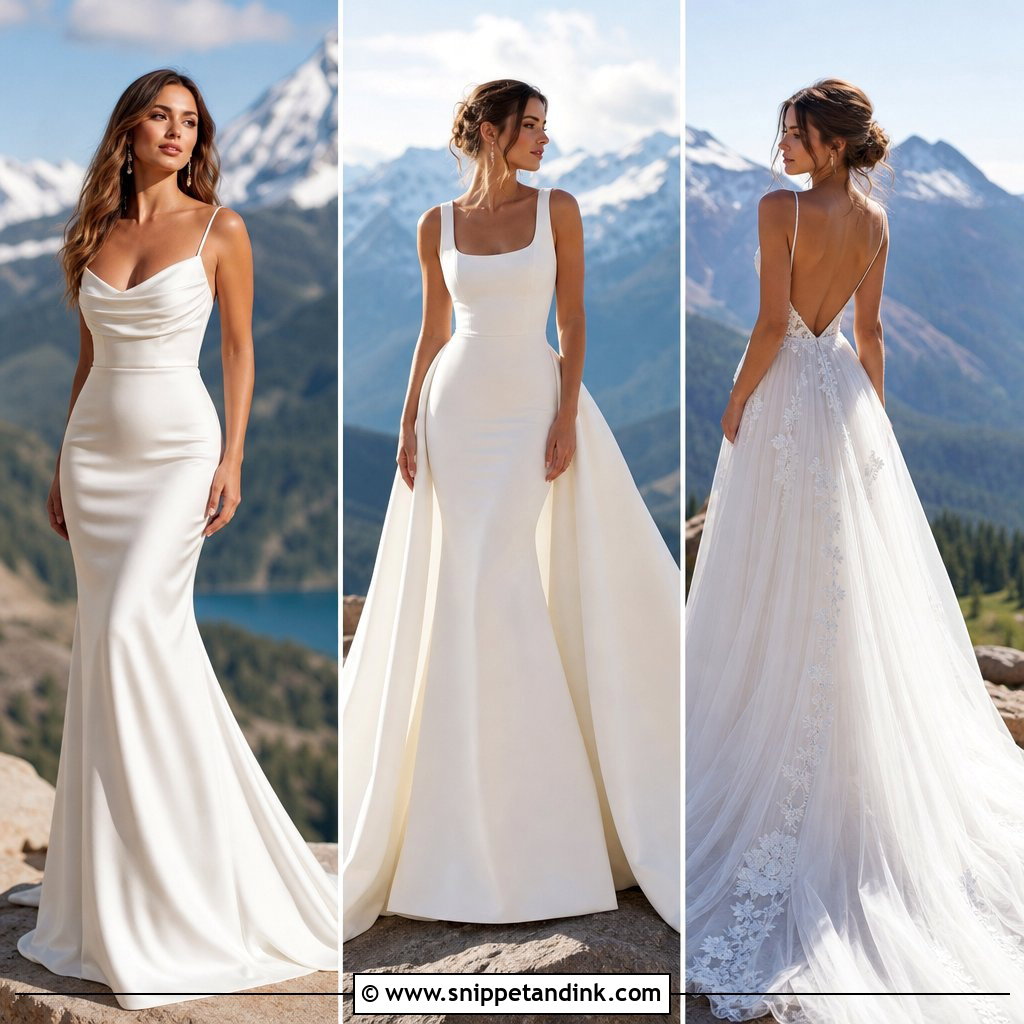
With nothing to distract the eye, a column gown is all fabric and tailoring. It follows the body gently in one smooth line, so I’d only choose silk, heavy satin or a good crepe, and I’d budget for an experienced tailor. A bateau, square or asymmetric neck personalizes it. Sculptural earrings, pointed slingbacks and an unedged veil keep the mood modern, and a white orchid bouquet gives shape. A center-parted bun or glossy shoulder-length waves match the clean line. Hem it while you wear the actual wedding shoes; on a column, even a centimeter changes the proportions. It suits galleries, rooftops and city venues.
5. Off-Shoulder Bridal Wedding Gown
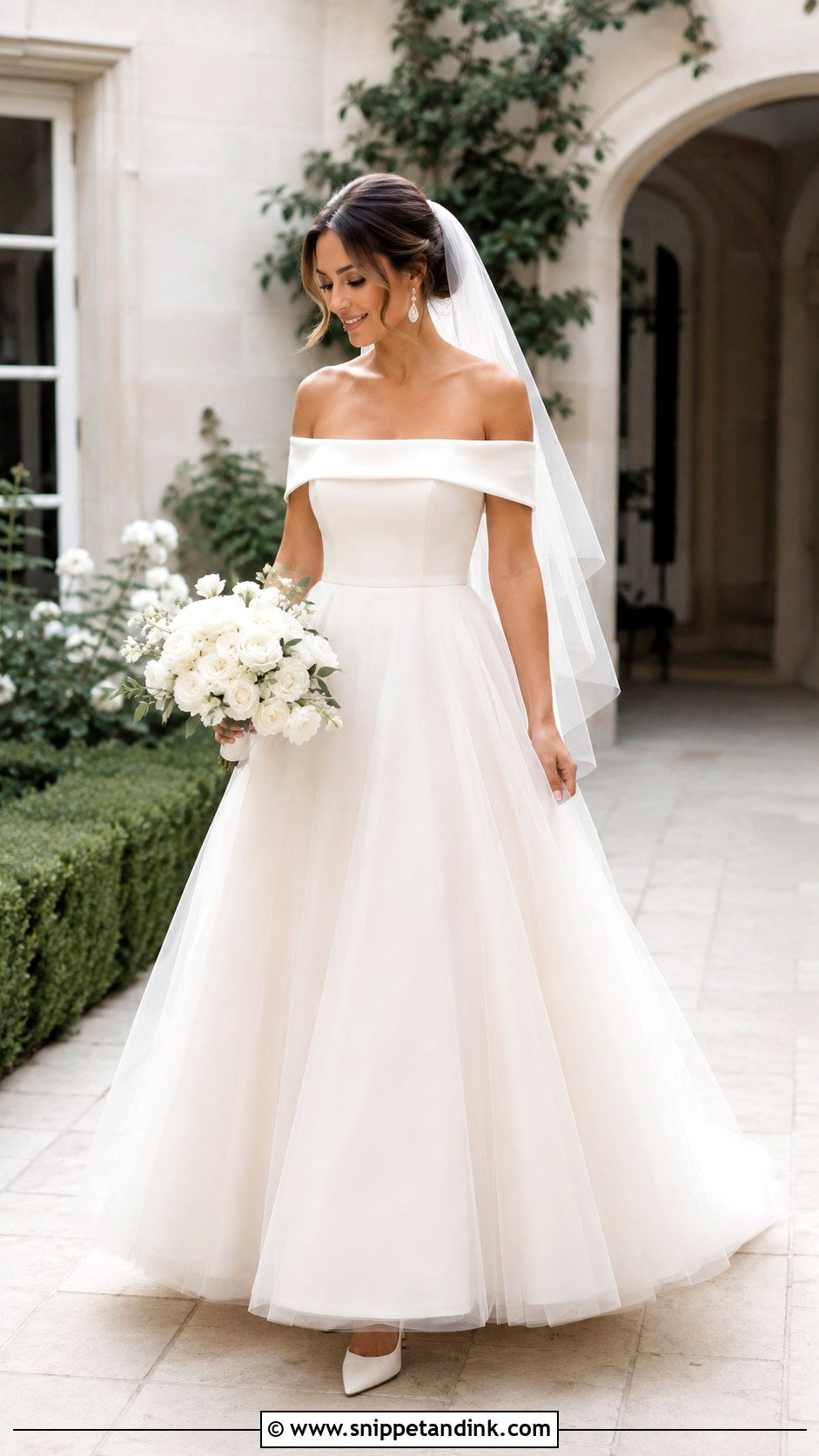
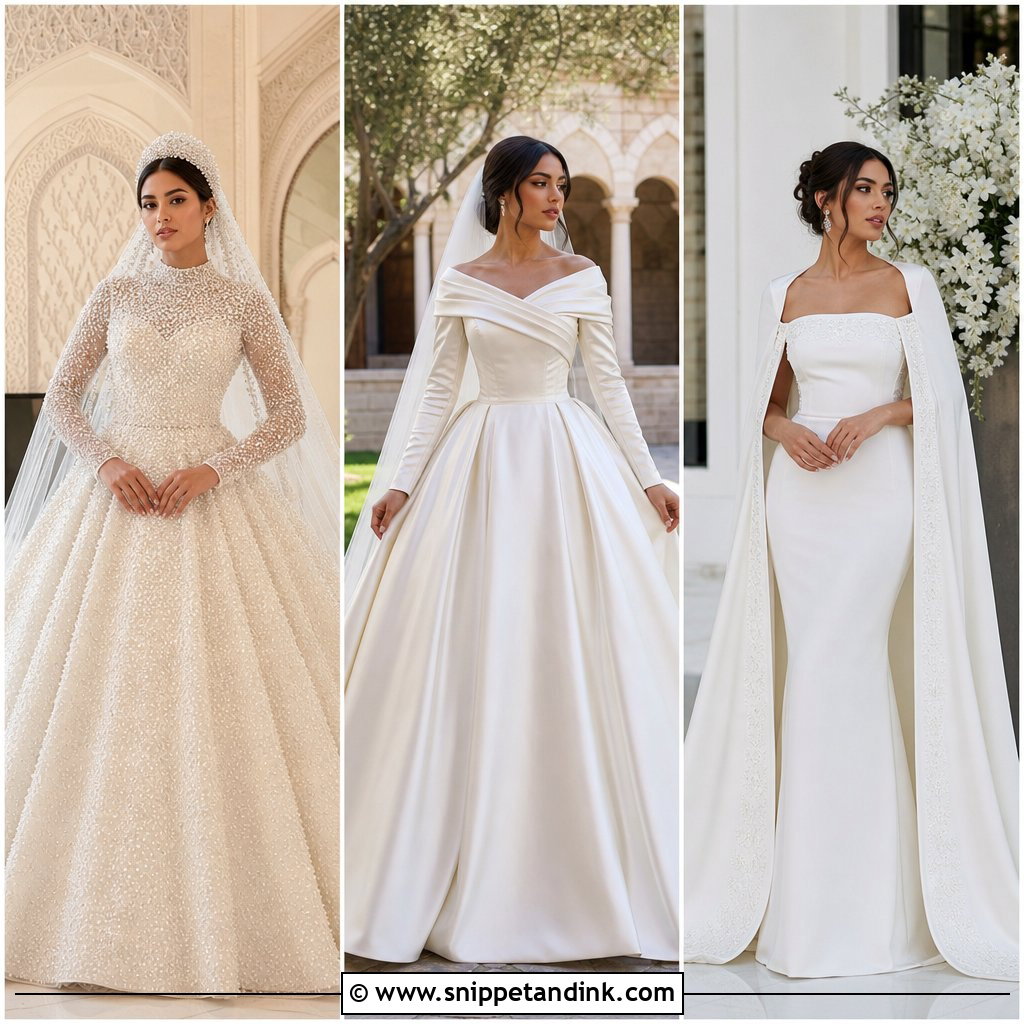
Off-shoulder necklines photograph romantically and fail in one predictable way: the bands either slide down or pin your arms to your sides. At the appointment, hug someone, sit and do a few dance steps. If the neckline moves or you can’t lift your arms to shoulder height, the fit isn’t right yet. A fitted bodice with a flowing A-line in soft satin or layered tulle balances the bare shoulders. Wear a medium-length veil anchored under a loose bun, teardrop earrings and closed-toe pumps. A rounded bouquet with greenery softens a formal gown; all white keeps it traditional. Gardens and evening venues suit it.
6. Long Sleeve Lace Bridal Wedding Gown
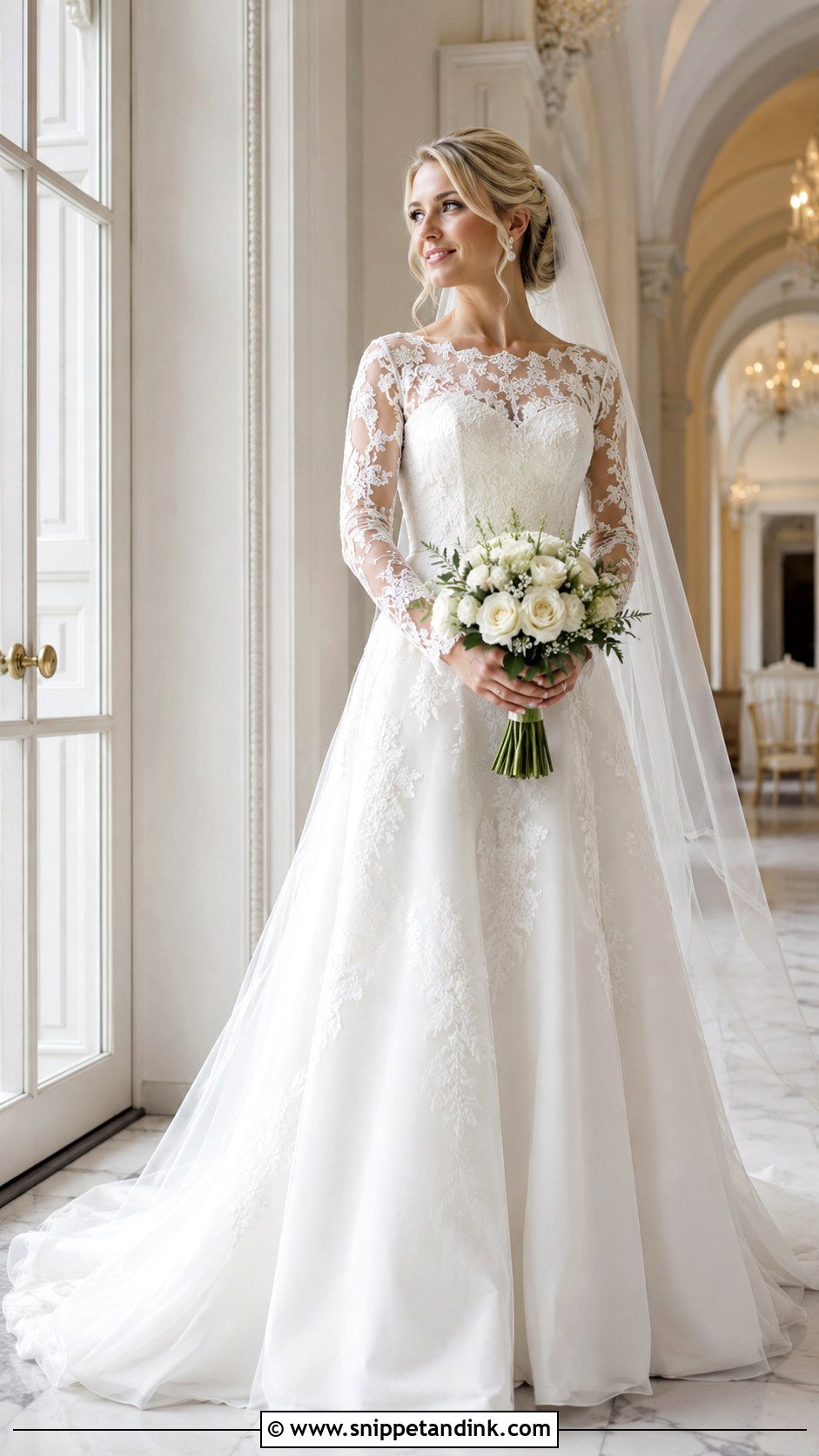
Long lace sleeves need movement built in. I ask brides to reach forward as if hugging and then overhead as if waving, because sleeves cut too close pull the whole bodice up at the shoulders, and loose ones bunch at the wrist. A lightly lined bodice and flowing skirt balance the coverage, and illusion lace at the shoulders softens the effect. Pearl earrings, satin pumps and a plain chapel-length veil that doesn’t fight the sleeve detail suit it. A low chignon keeps hair away from the lace, where it catches. It’s right for cooler months, indoor ceremonies and historic venues.
7. Square Neck Bridal Wedding Gown
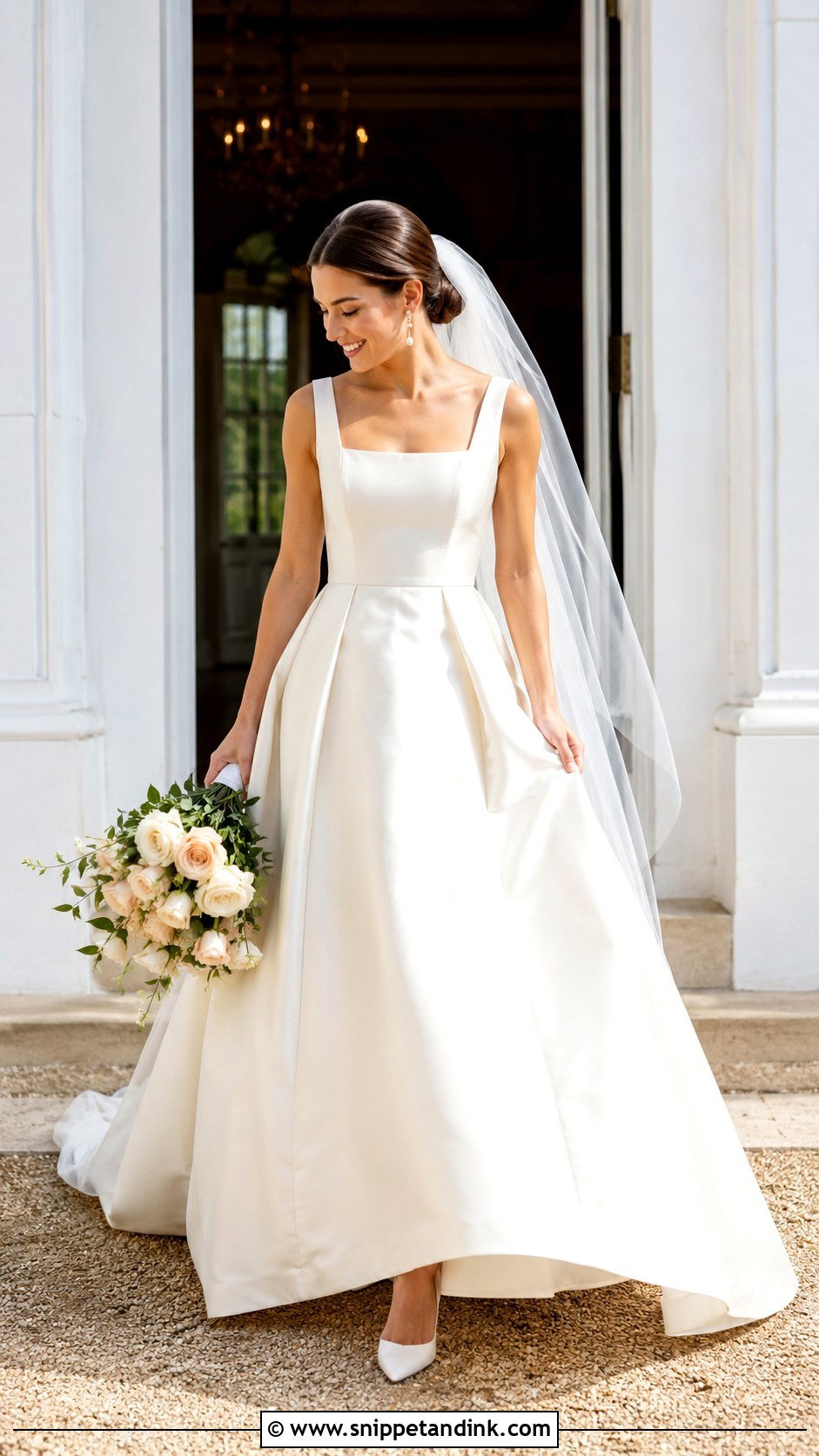
A square neck frames the collarbone with clean straight lines and can read traditional or modern depending on the skirt. Build it on a structured bodice with wide straps for reliable support, and balance it with an A-line or full pleated skirt. Check the corners while seated; a square neck that isn’t cut precisely lifts away at the edges when you lean in. A short pendant works, though I often skip the necklace for pearl drops. A soft tulle veil, pointed ivory heels and a loose bouquet of roses with seasonal greenery finish it, with a low bun or half-up style. Manor houses and gardens suit it.
8. Sweetheart Corset Bridal Wedding Gown
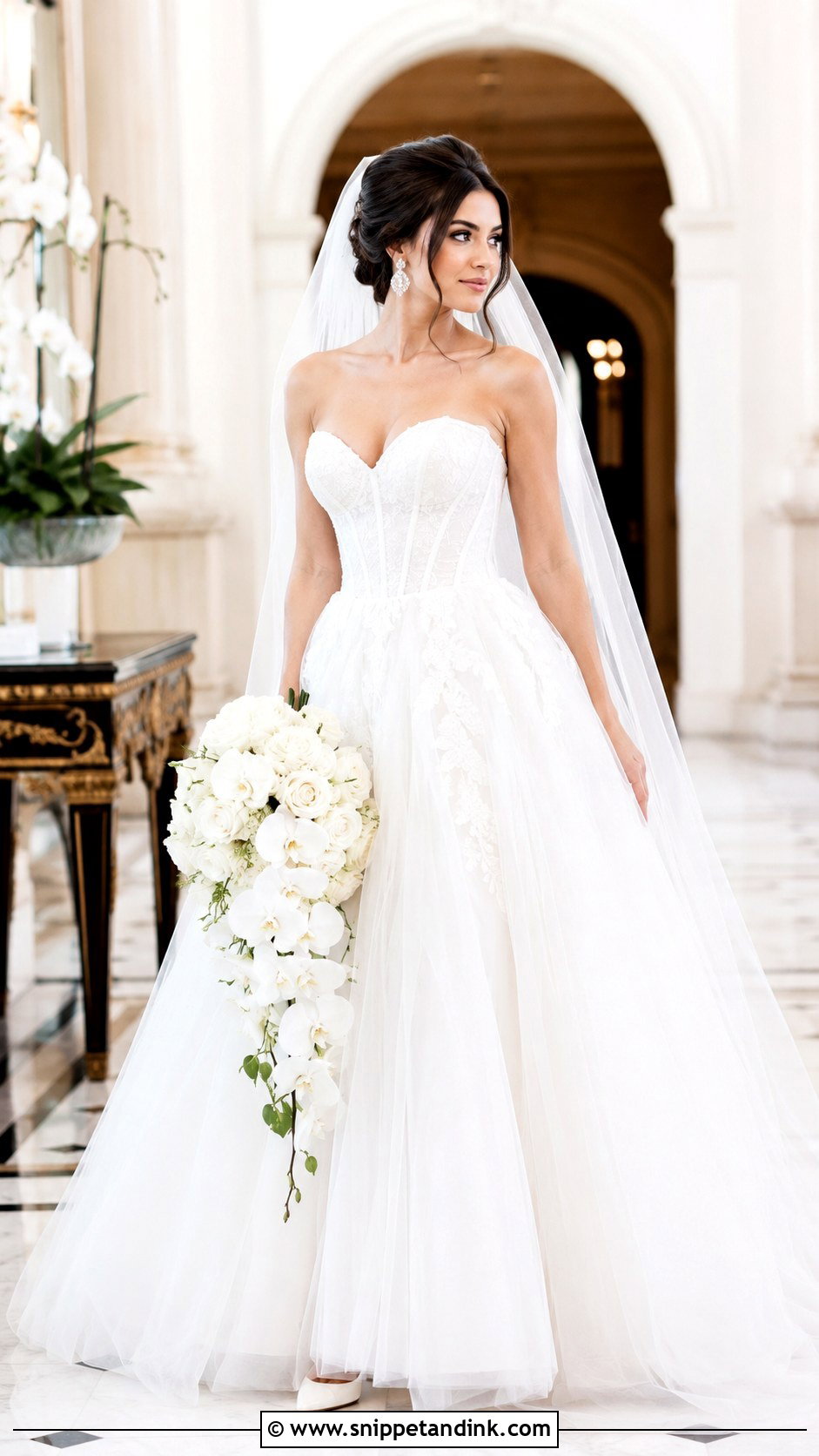
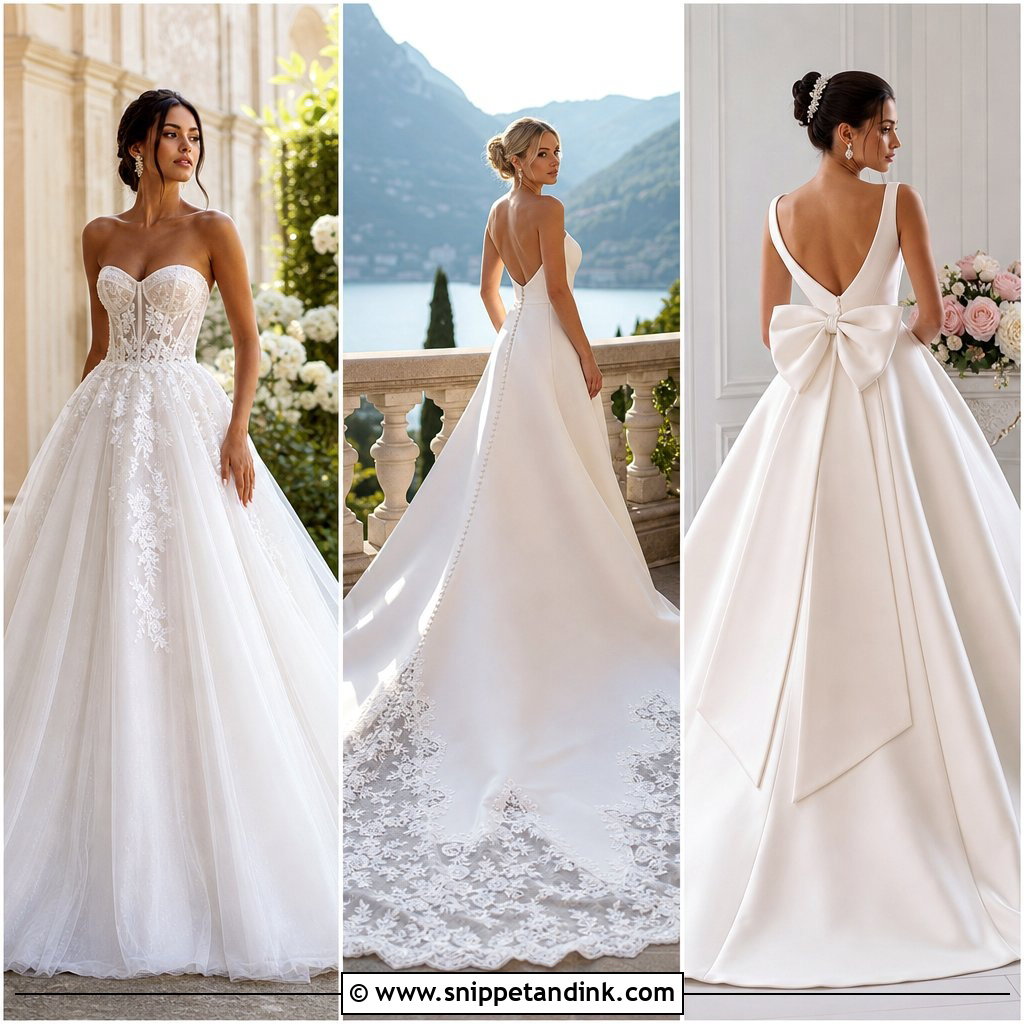
The fitting test for a sweetheart corset is simple: you must be able to take a full breath and sit through dinner. Visible boning looks fashion-forward; covered internal structure gives a smoother, more traditional line, and both depend on precise fitting. Exposed corsetry is very visible on the rails right now, but it should match your comfort level and your ceremony setting, not a trend. A full tulle or satin skirt balances the fitted top. A cathedral veil, delicate crystal earrings, pointed pumps and a bouquet with trailing greenery complete it. Skip a big necklace; the curve of the neckline is enough.
9. Halter Neck Bridal Wedding Gown
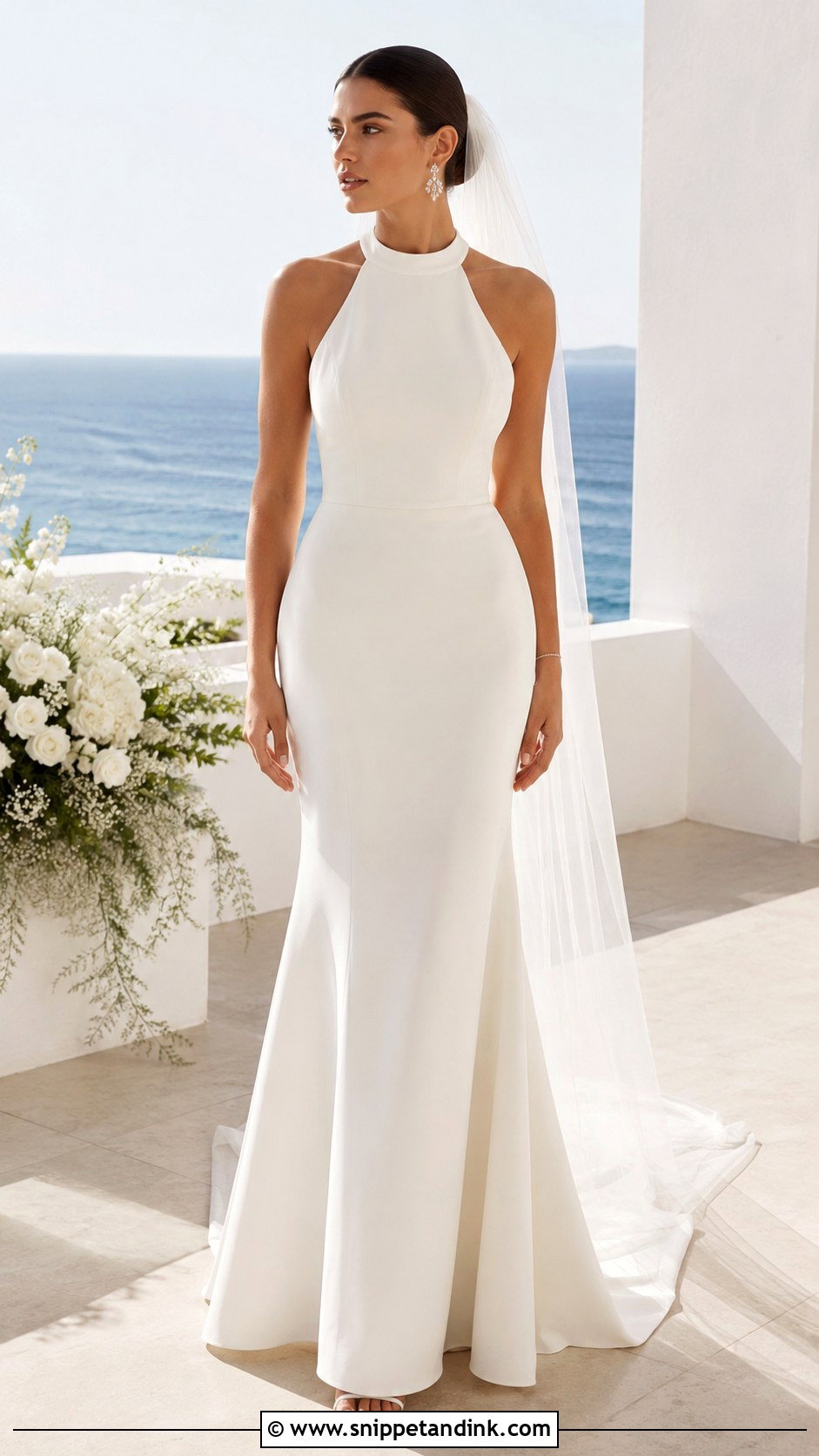
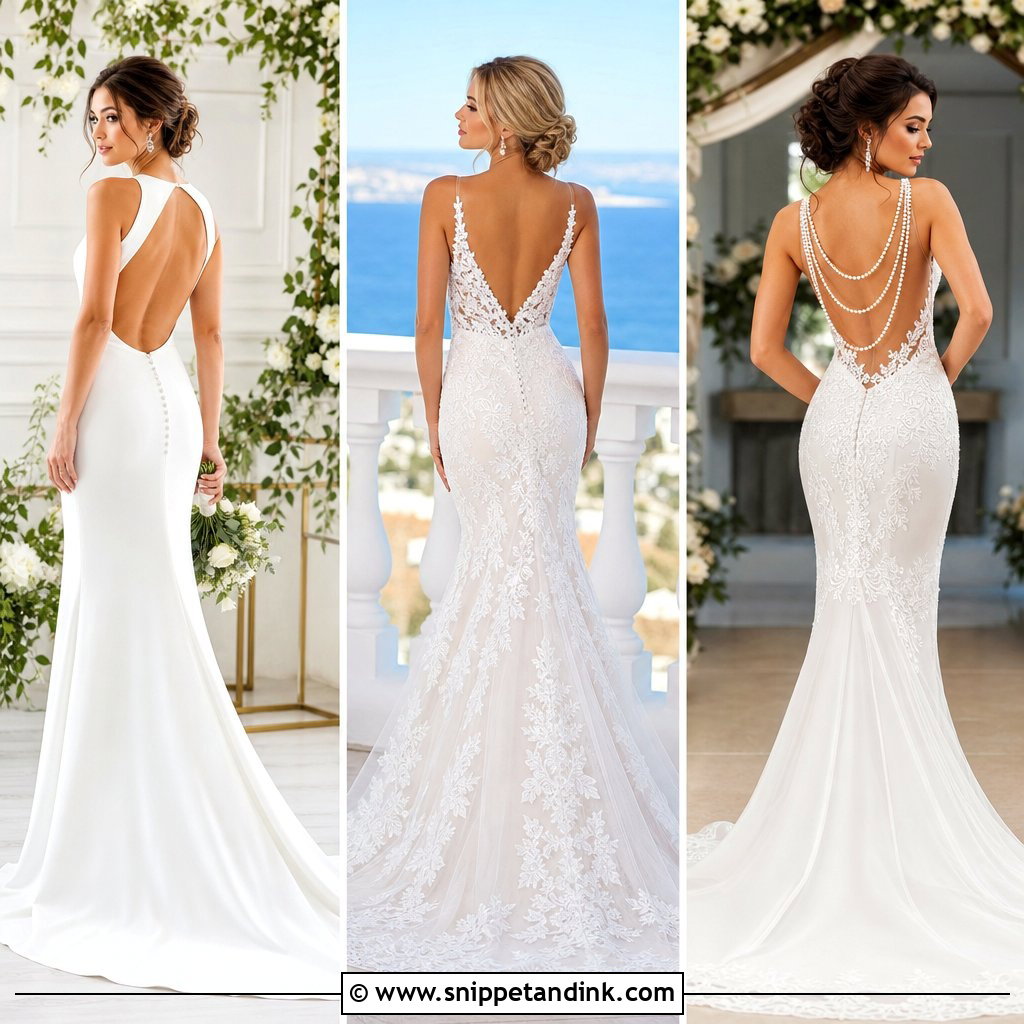
A halter draws the eye up and bares the shoulders and back, so the hair has to go up too. A smooth bun, braided updo or high ponytail keeps the line visible. I’d choose clean crepe or satin with an open back, a fitted waist and a softly flared skirt. Skip the necklace for small statement earrings. Minimal sandals, a slim bracelet and a simple veil fixed below the hairstyle finish it. A long sheer scarf detail can replace the veil, as long as it’s stitched or pinned securely. One warning: an open back limits your bra options, so bring the support you’ll wear to every fitting. Coastal and warm-weather ceremonies suit it.
10. Scoop Neck Bridal Wedding Gown
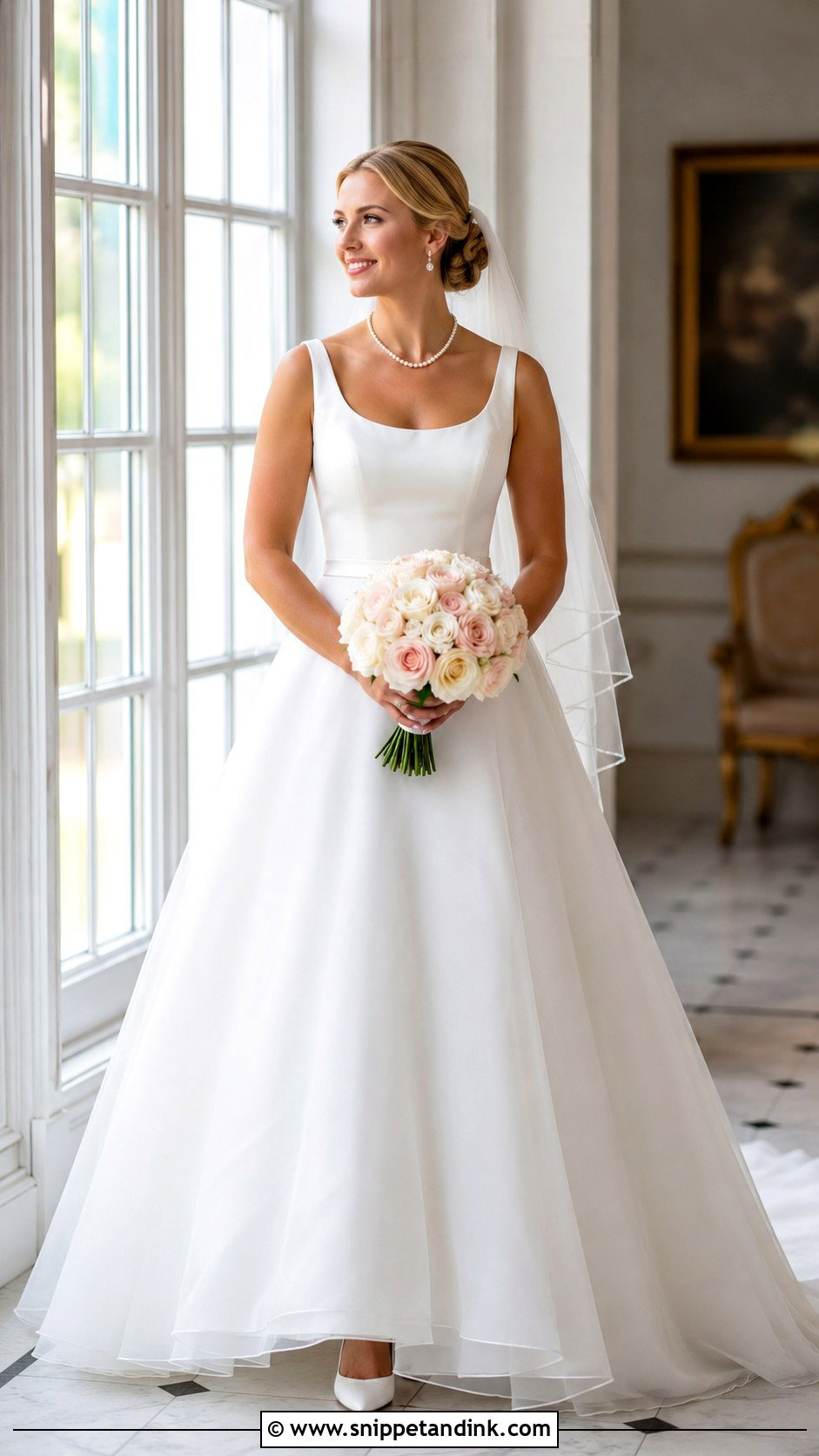
A scoop neck is the easiest neckline to wear for ten hours, which is a large part of why brides keep coming back to it as a softer option to sharper shapes. Look for wide straps, a supportive lining and a depth that feels comfortable from every angle, including when you bend to hug a small child. An A-line skirt in satin, organza or fine tulle completes the shape. A short pearl strand with matching earrings, closed-toe pumps and a fingertip veil suit it, with a loose low bun. Change the fabric and accessories, and the same gown moves from a garden to a formal reception.
11. Mermaid Bridal Wedding Gown
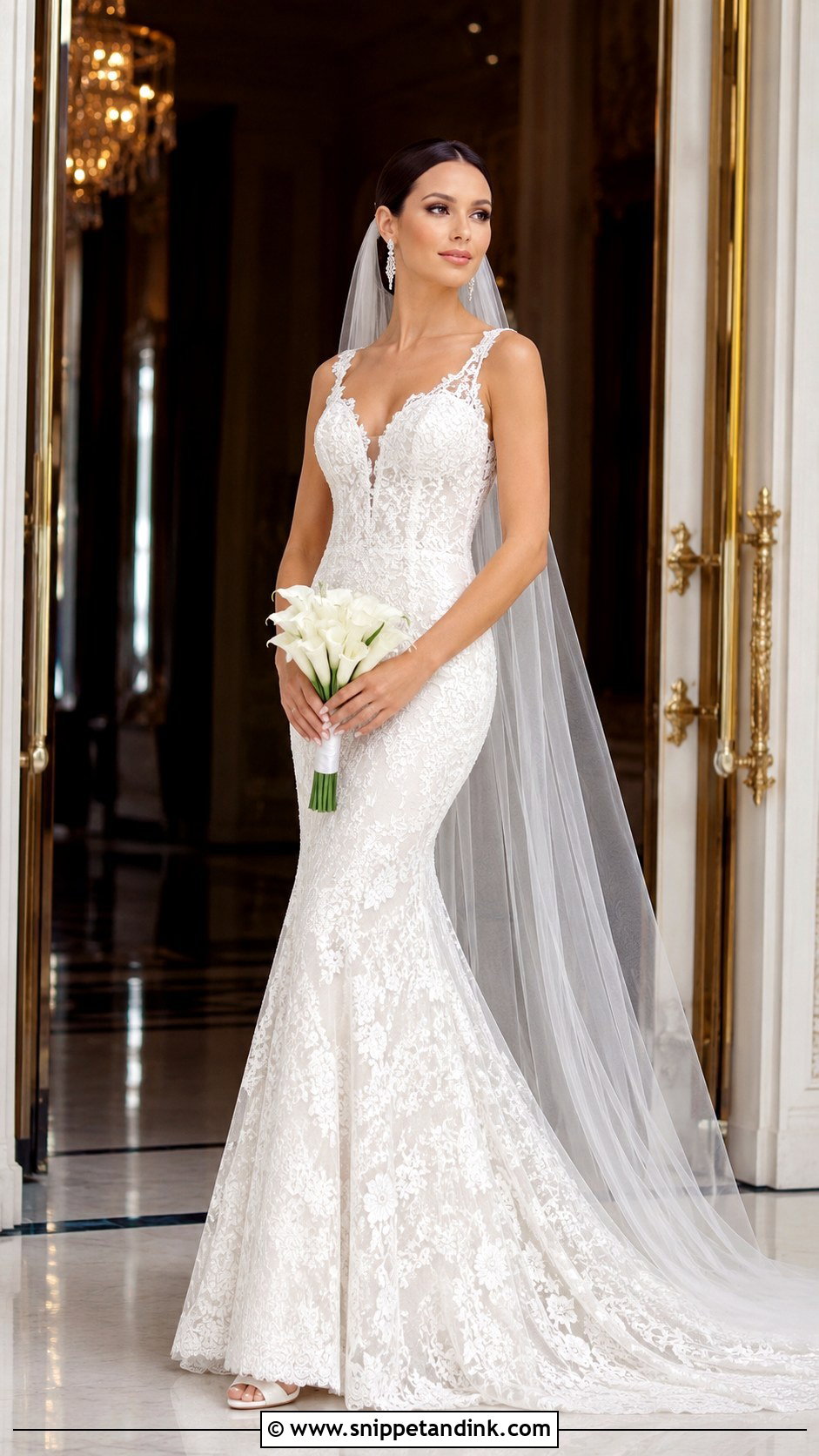
A mermaid gown fits through the bodice and hips and flares around the knee, and the height of that flare decides whether you can walk. Too low and you shuffle; that’s my most common alteration request on this cut. Choose enough stretch and a flare set to allow a natural stride, then practice sitting and climbing stairs, especially at a venue with several levels. Lace makes it romantic; smooth crepe makes it modern. A long plain veil, drop earrings and supportive heels with cushioned insoles suit it, along with a narrow bouquet. Plan a hidden bustle so the train lifts for the reception.
12. Crepe Sheath Bridal Wedding Gown
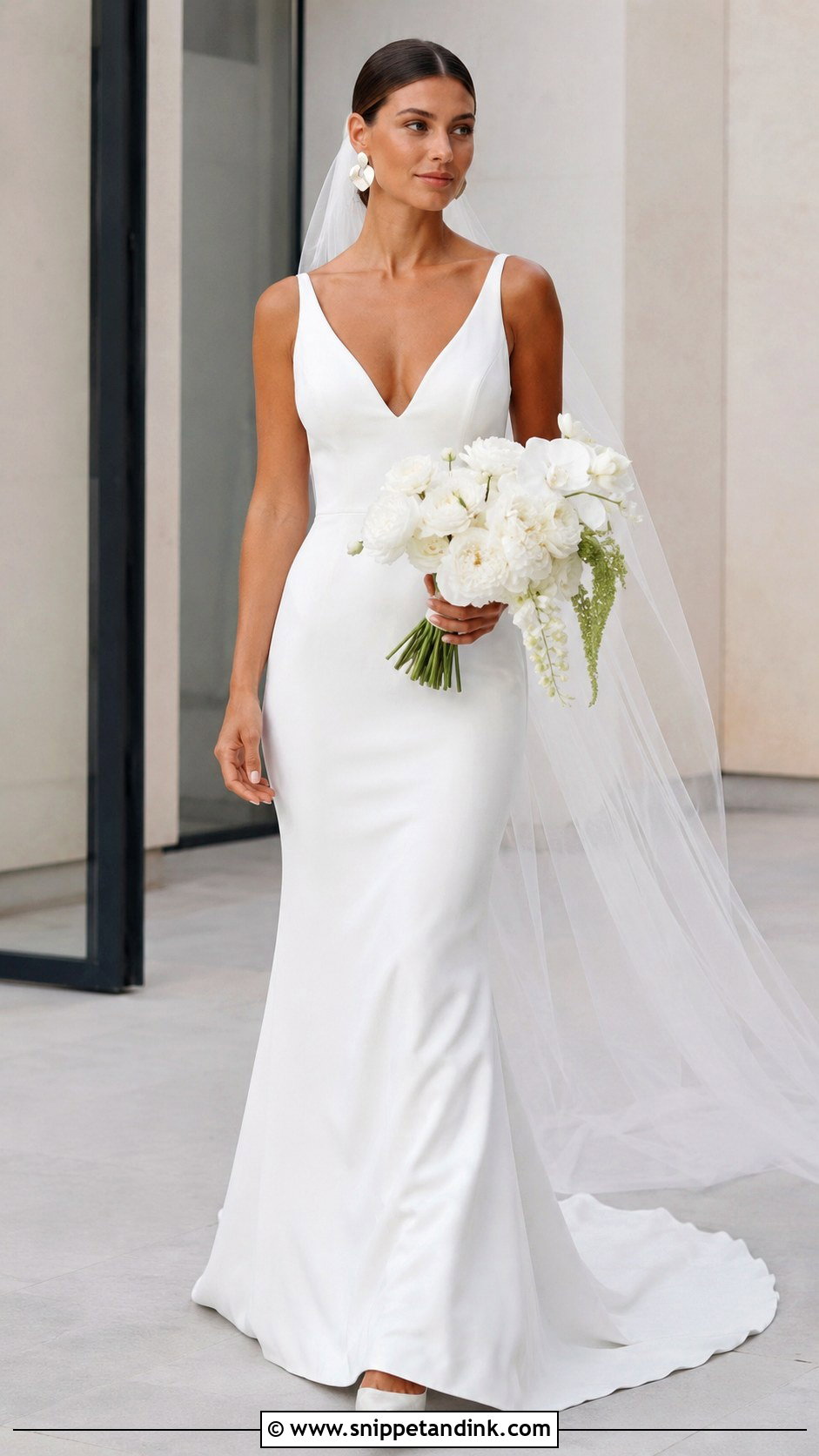
Smooth crepe gives a sheath gown a refined surface, and it also shows every fit flaw, pocket line and visible seam allowance. I’d only take it to an experienced bridal tailor and ask for full lining. Look for a design that skims rather than clings, with a V, bateau or soft cowl neck. Pearl or sculptural earrings, low pointed heels and a chapel veil suit it, and a structured white bouquet adds contrast. Check the gown in daylight and indoor light before the last fitting, since crepe looks different under each. It’s practical for intimate ceremonies, restaurants and destination weddings.
13. Chiffon Empire Waist Bridal Wedding Gown
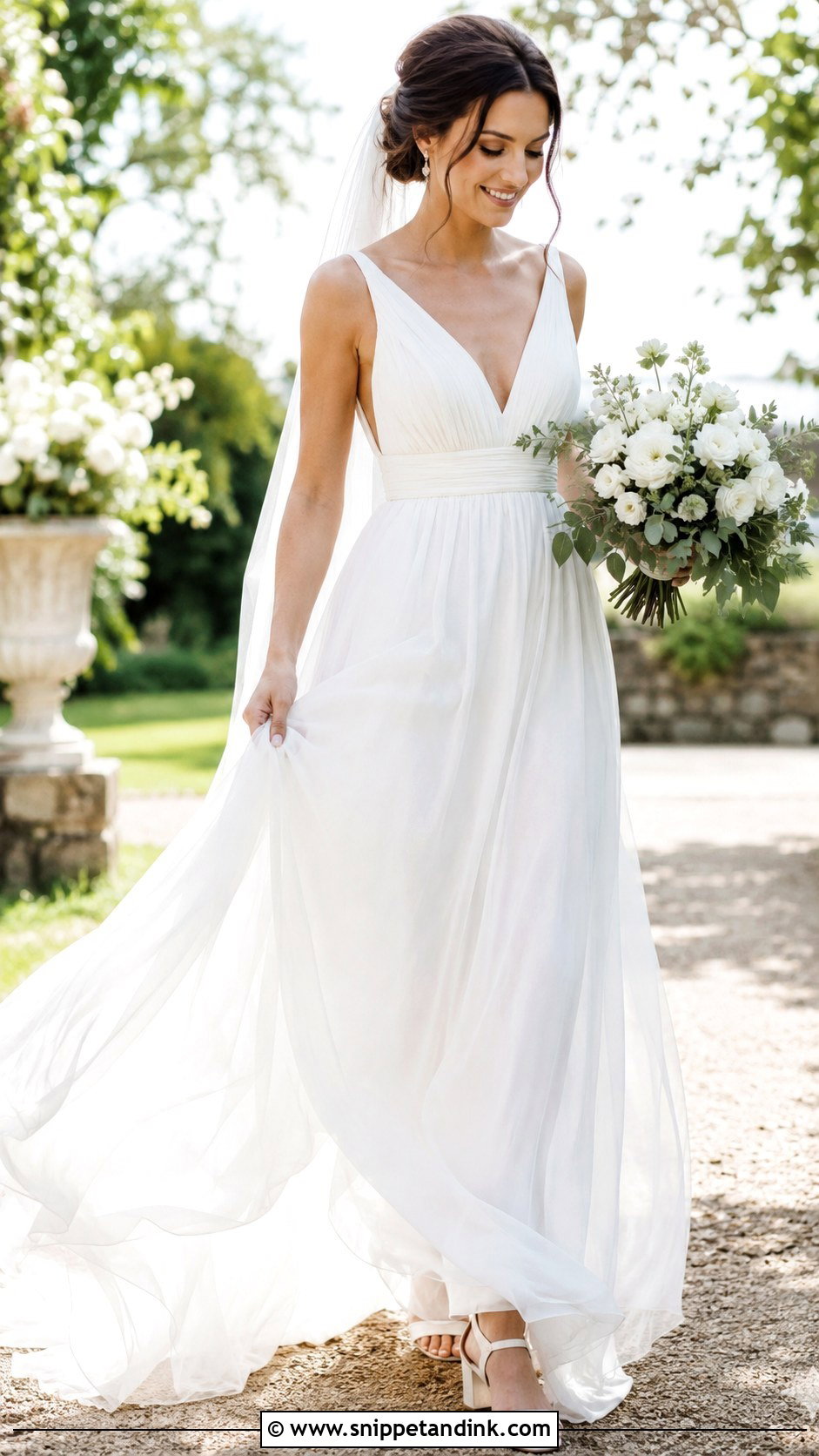
Heat and sand are where a chiffon gown earns its place. Light chiffon falling from an empire waist just below the bust moves with the breeze and doesn’t trap warmth. A softly structured bodice gives support without stiffening it, and a V-neck or gathered scoop suits the flowing skirt. Ask for enough skirt lining to stop it turning see-through in strong sun. Keep the hem floating just above the ground, especially on grass or sand. Low block heels, delicate earrings and a light fingertip veil suit it, with a loose updo and a natural bouquet.
14. Tea-Length Bridal Wedding Gown
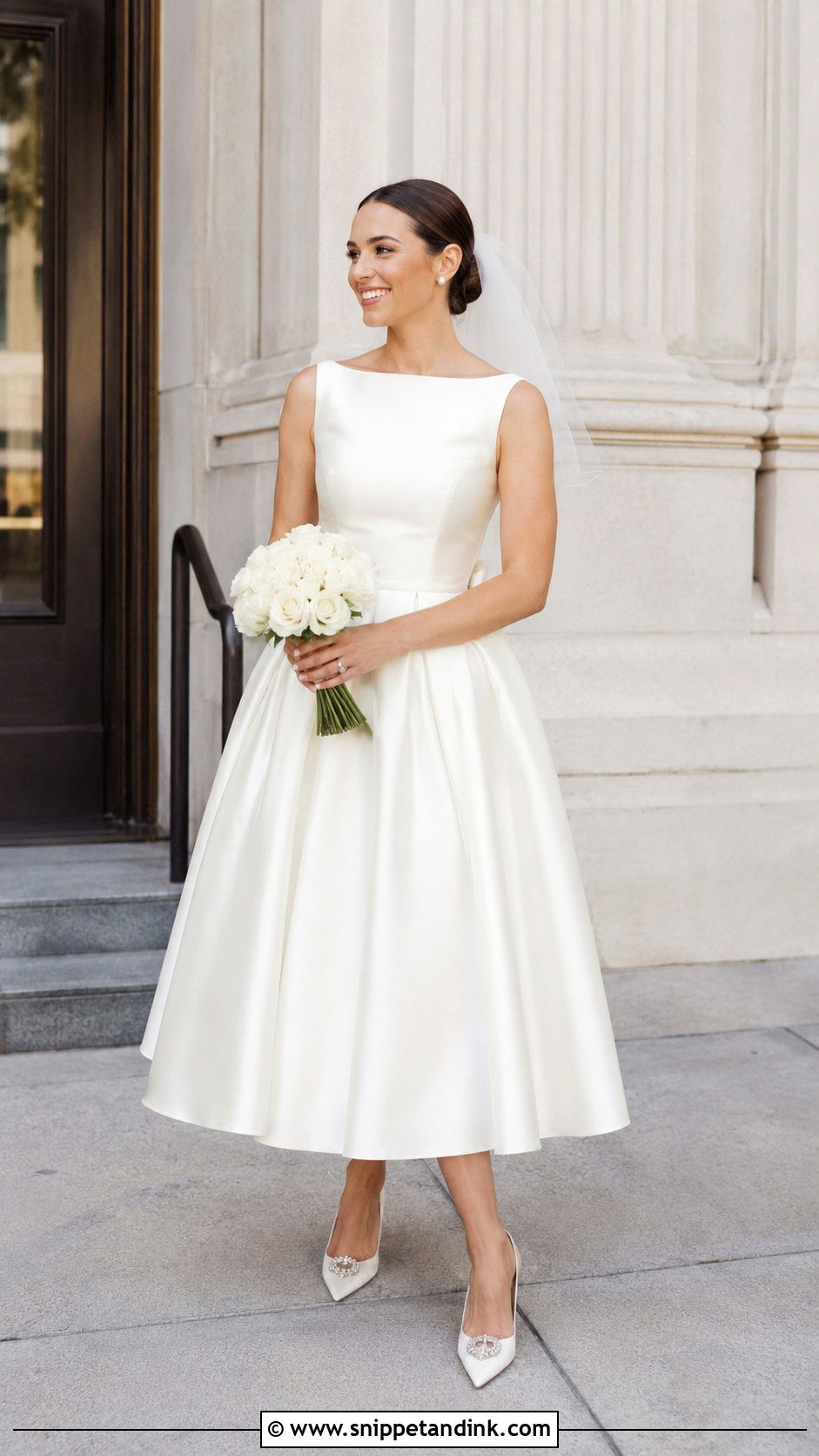
Tea length puts the shoes on show and keeps the hem well clear of the floor, which is why I suggest it for brides who plan to dance hard. A fitted bodice with a full skirt ending between knee and ankle reads formal in satin, mikado, lace or structured organza. Choose shoes as carefully as the dress: pointed pumps, slingbacks or embellished block heels. A birdcage veil, short tulle veil or headband sets the mood, with pearl studs and a compact bouquet. Have the hem set at the narrowest point of your calf; a centimeter either way changes how the leg looks. It suits courthouses and daytime weddings.
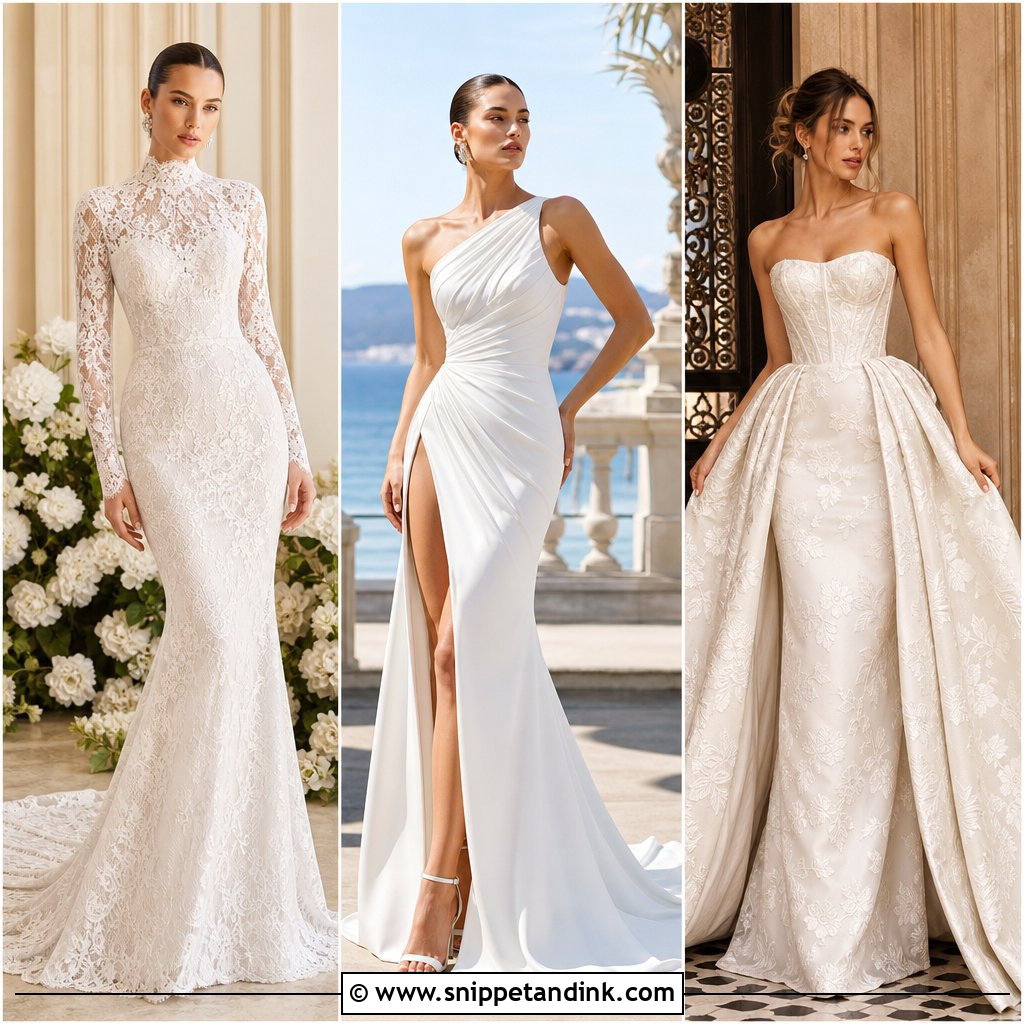
15. Floral Appliqué Bridal Wedding Gown
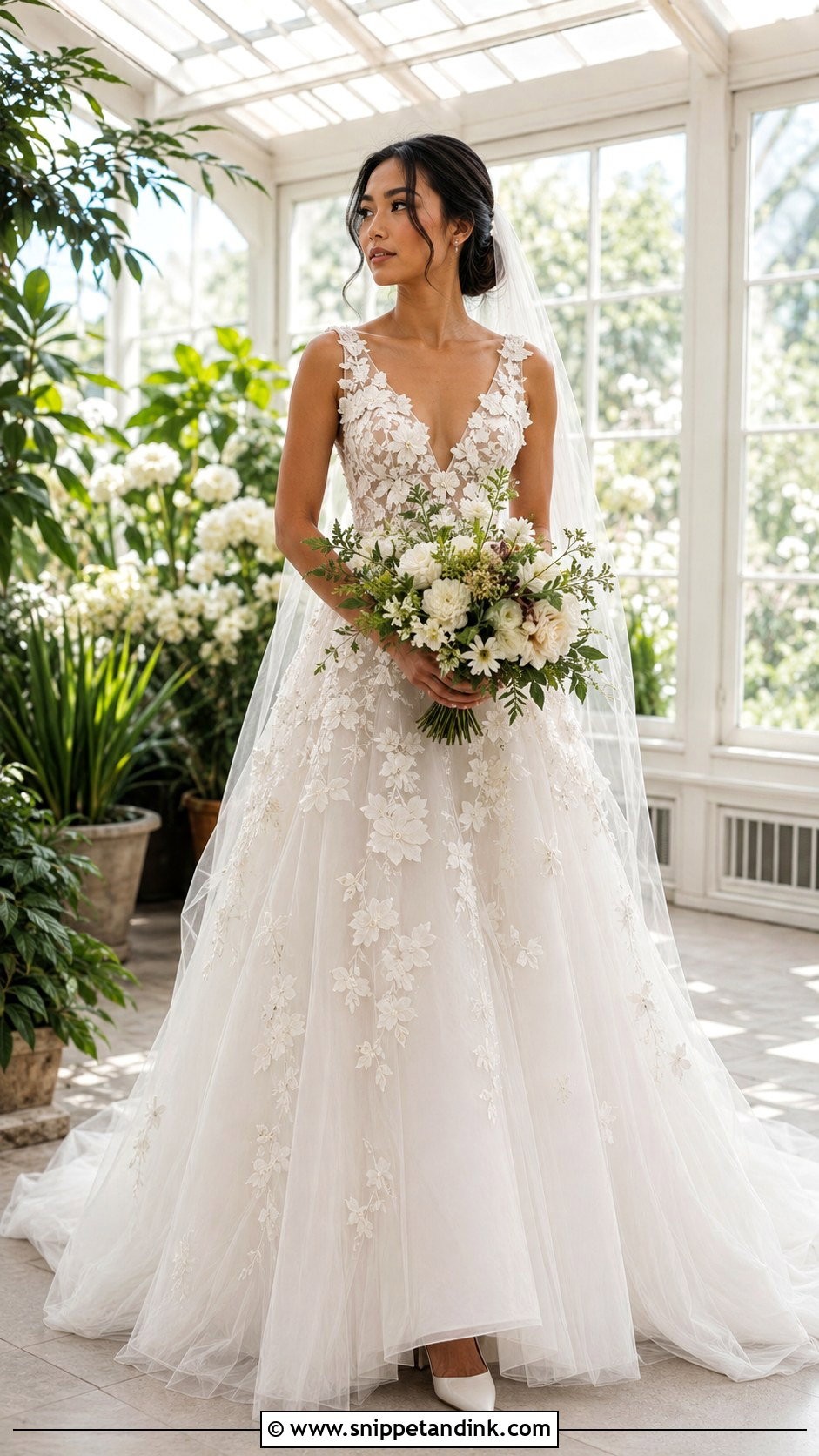
Three-dimensional flowers on a gown do the work of jewelry, so I keep everything else quiet. An A-line or ball gown with appliqués placed thoughtfully across the bodice and skirt needs only small earrings, plain satin heels and a simple veil that doesn’t hide the surface. A bouquet repeating one or two flowers from the dress ties the look together. Avoid floral hair pieces, which compete with the gown. Ask how the appliqués are attached; hand-stitched flowers survive a day of hugs better than glued ones. Conservatories, botanical gardens and green outdoor venues suit it naturally.
16. Bow Back Bridal Wedding Gown
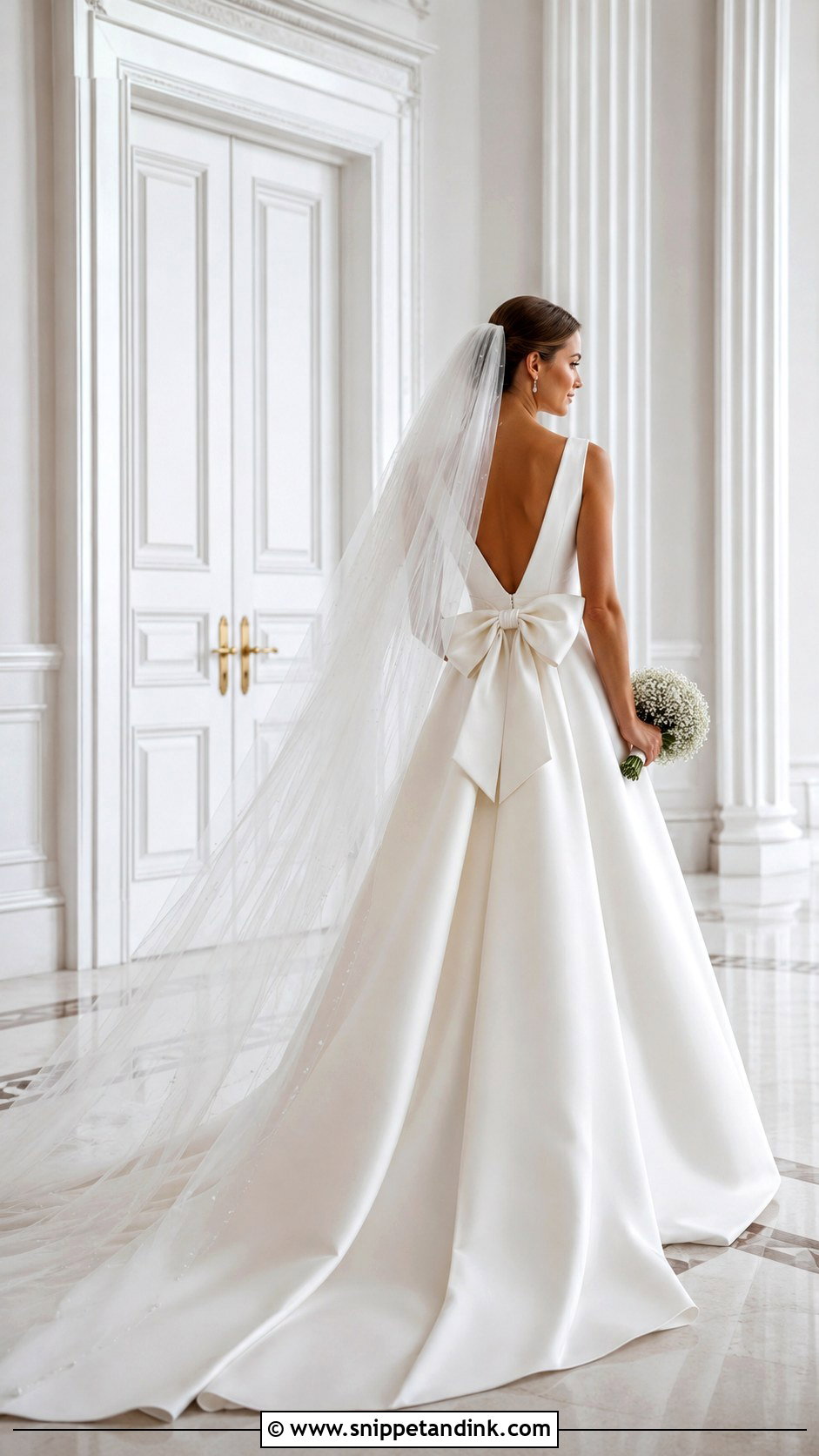
A bow-back gown is designed for the walk away, and the bustle is the part people forget. Plan it around the bow, not hidden underneath it, or the bow ends up crushed for the reception. A smooth satin or mikado dress with a well-built bow at the waist, lower back or top of the train can be subtle or dramatic. Choose a veil ending above the bow or a sheer cathedral that lets it show through. Pearl earrings, pointed pumps and a clean compact bouquet keep the front simple, with a polished bun. Ask whether the bow is removable for dancing.
17. Detachable Overskirt Bridal Wedding Gown
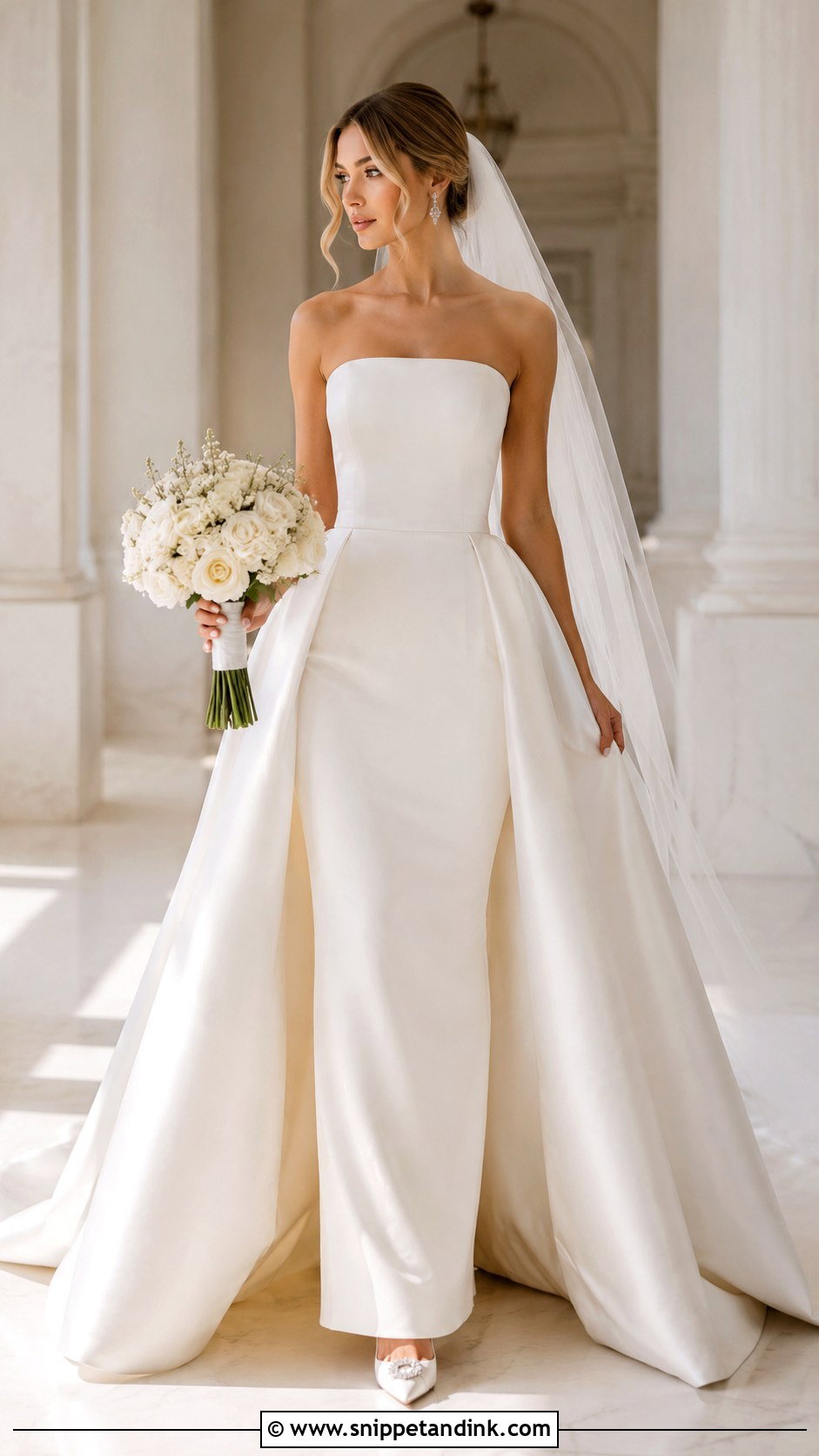
One gown, two silhouettes. A detachable overskirt over a fitted column, sheath or mermaid base gives a full ceremony entrance, then comes off for a streamlined reception. Brides love it because it saves buying a second dress. The fabrics must match and the fastenings be secure, or the overskirt looks added on. With the skirt, wear a long veil, drop earrings and pointed heels; without it, a shorter veil option, statement earrings or comfortable embellished shoes. Practice taking it off at a fitting, and name one person to fold and store it, especially if it carries a long train.
18. High Neck Lace Bridal Wedding Gown
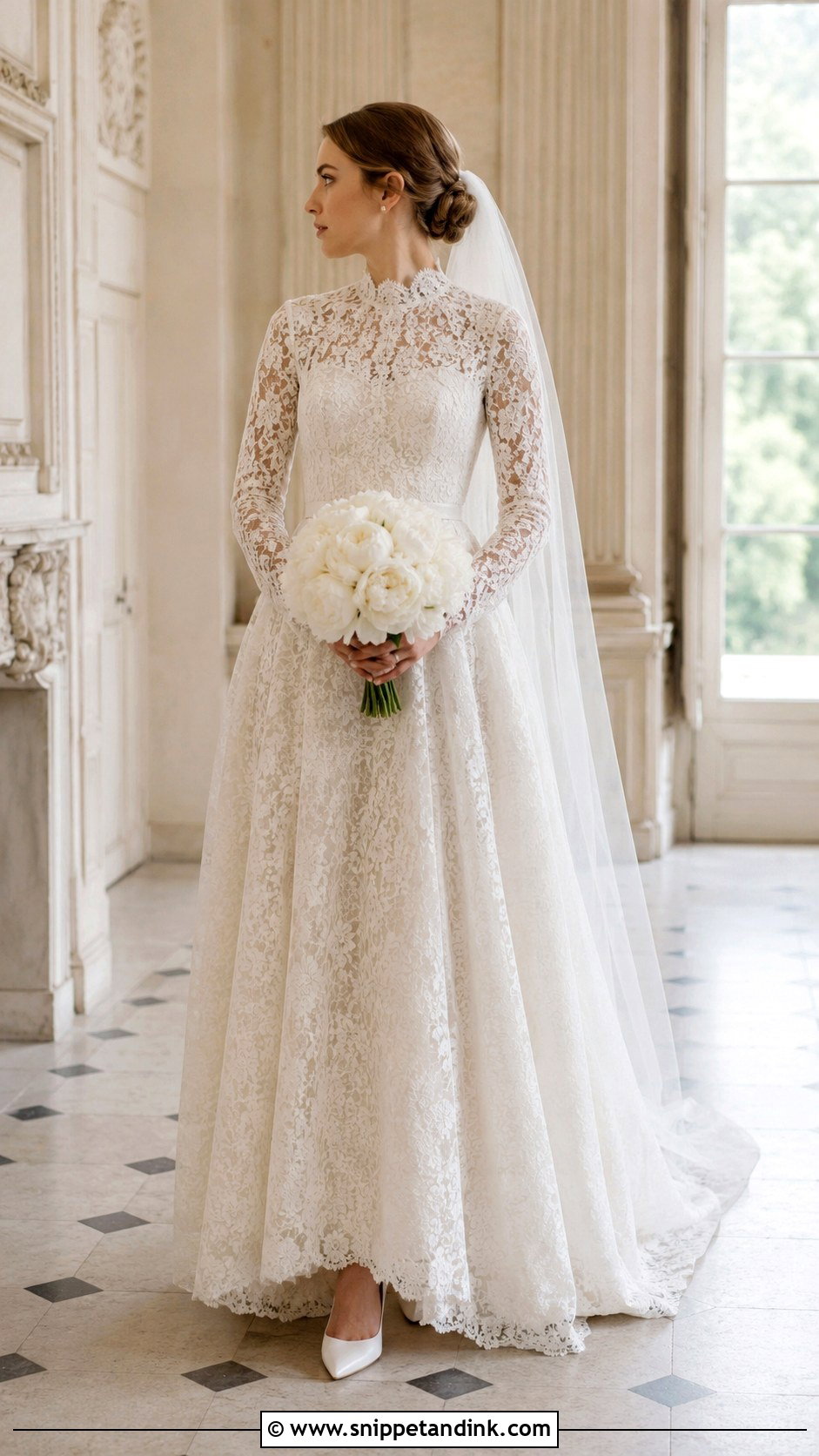
High-neck lace can scratch where you least expect it, under the jaw and in the underarms, so I run a finger along every edge at the fitting and ask for soft finishing there. A fitted bodice can flow into an A-line, or a slimmer column for a more modern result. Pair it with a veil attached under a low bun so the neckline stays visible. Skip the necklace in favor of pearl studs, small drops or a vintage-inspired bracelet. Closed-toe satin pumps and a structured bouquet keep it formal. Vintage lace with clean modern construction is a good balance, and it suits cool weather and historic venues.
19. Pearl Embellished Bridal Wedding Gown
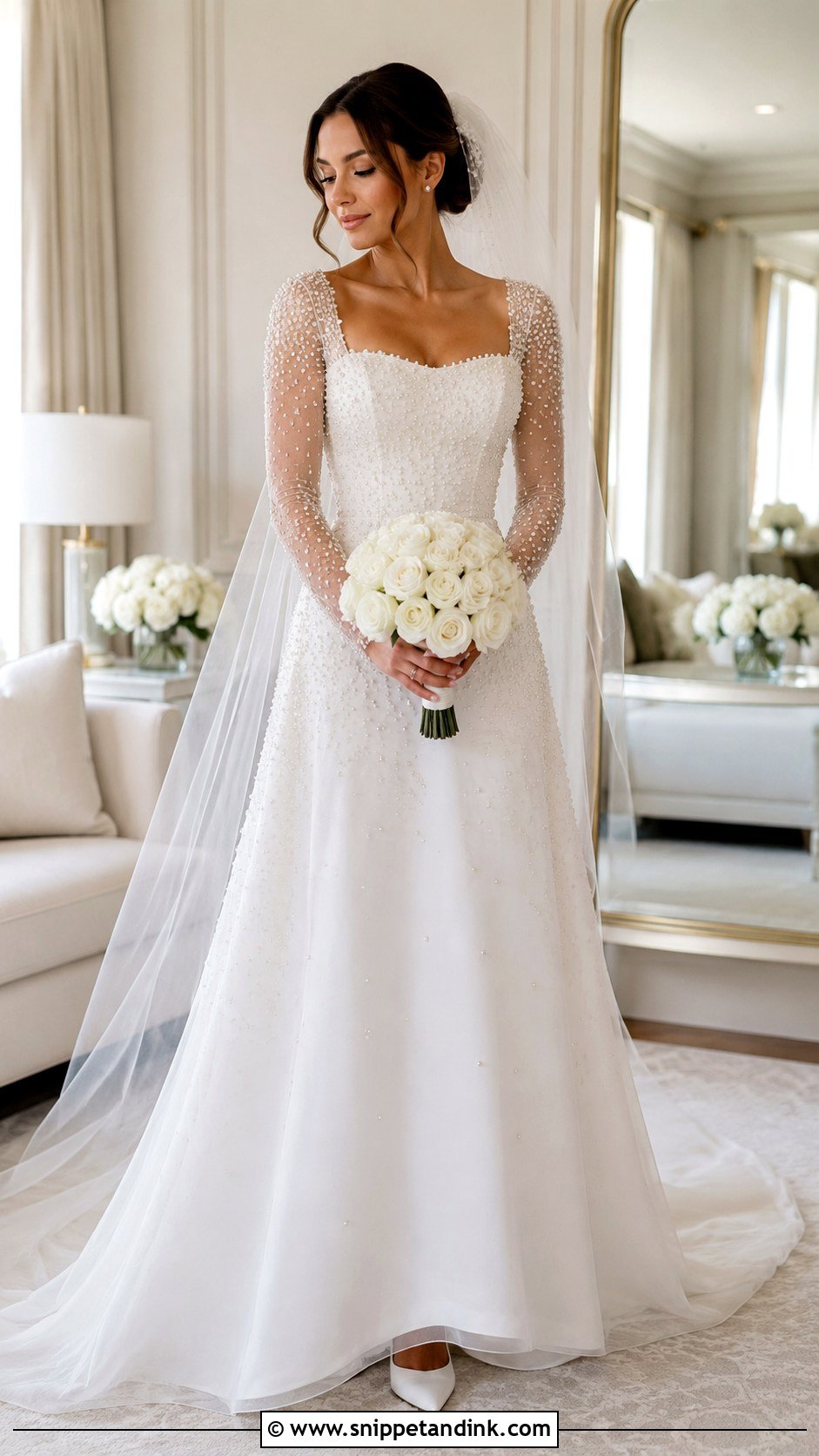
Pearls give a softer glow than crystals, and they look best with a simple silhouette underneath: a fitted A-line or clean column. Concentrate them on the bodice, scatter them on sheer sleeves or let them drift down a tulle skirt. Don’t repeat several pearl sizes in every accessory; plain satin pumps, pearl studs and an unembellished veil are plenty. A smooth bun and white roses finish it. Check the beading at every fitting and ask the salon for spare pearls and how they handle loose ones. When you store it, keep the veil away from the beads, which snag fine tulle.
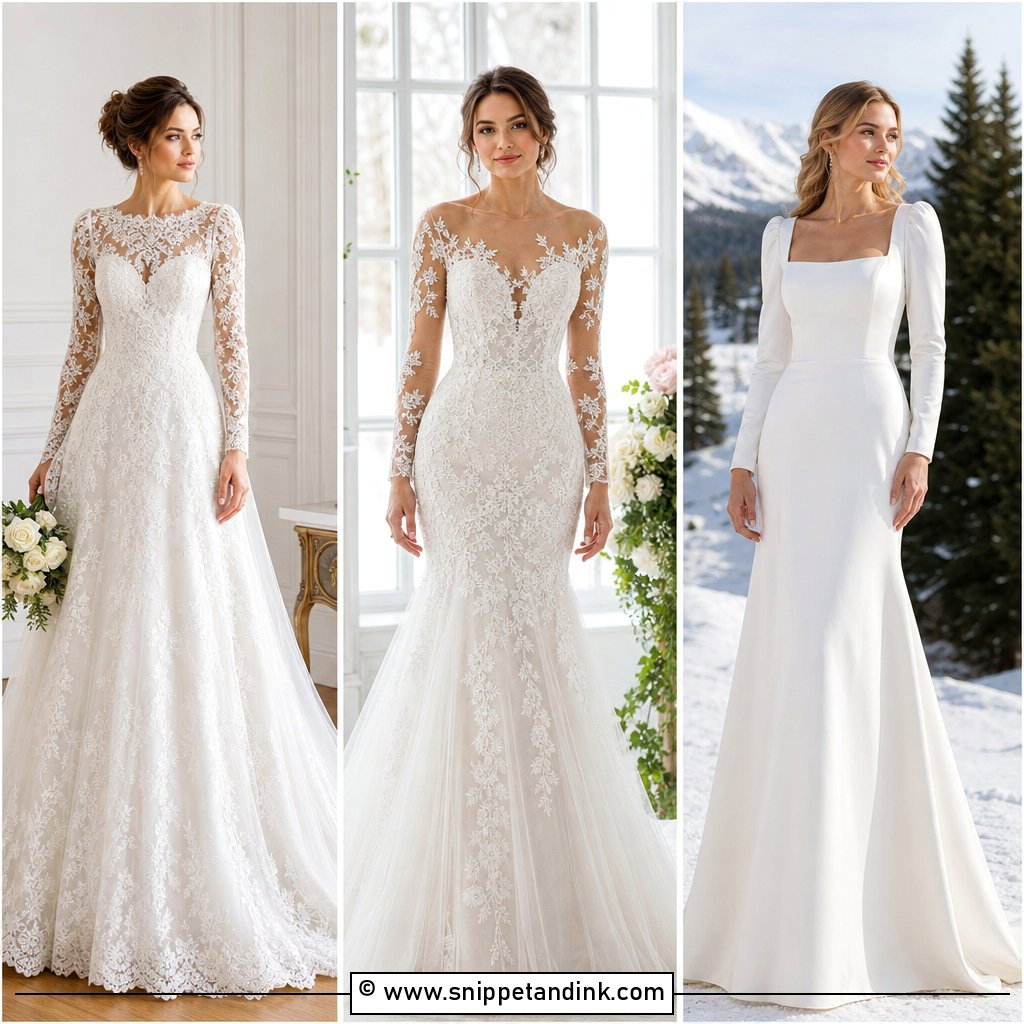

20. Blush Jacquard Bridal Wedding Gown
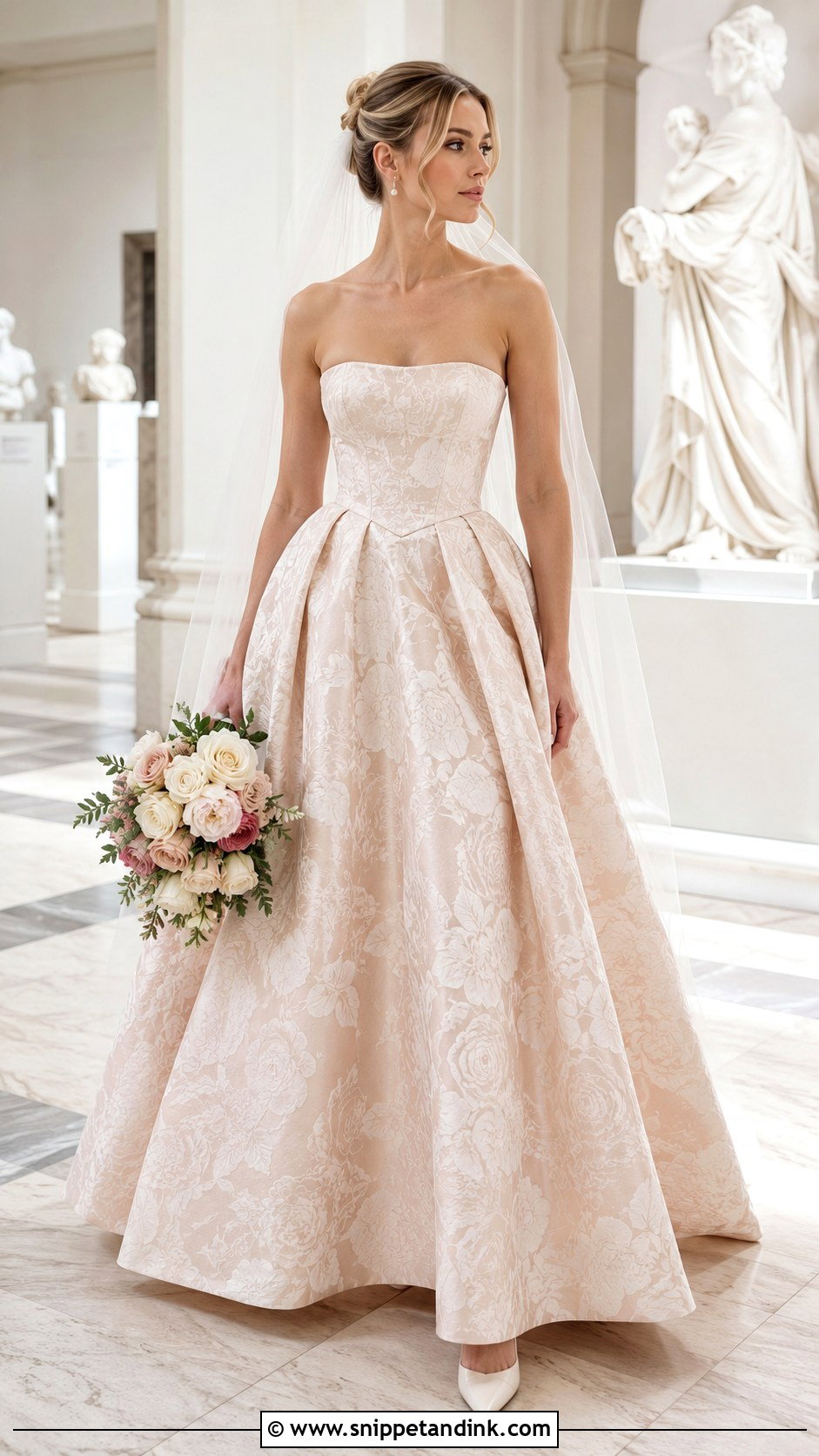
Blush jacquard is my favorite way to step away from white without losing the bridal feel. The pattern is woven into the fabric rather than printed, so it catches light with real depth. Choose pale rose, champagne or soft ivory with a restrained floral pattern. A strapless basque bodice with a full skirt is formal; an A-line feels lighter. Because jacquard is already busy, avoid beading and a decorated veil. Ivory shoes, simple diamond or pearl earrings and a sheer veil let the fabric show, with a tonal bouquet of cream, blush and muted green. Grand estates and museums suit it.
What a Sample Gown Can’t Tell You
Salon samples are often made in one size and clipped at the back to fit whoever is trying them on. That’s fine for judging shape and neckline, but it hides how the gown will feel once it’s built to your measurements. Clips also flatten the back, so a sample can look sleeker than the finished dress.
- Ask whether the fabric on the sample is the same as the one you’ll receive; some designs come in several fabric options.
- Lift the skirt and feel its real weight, since a ball gown in heavy satin is very different from one in tulle.
- Find out what alterations are included and what’s charged separately before you sign anything.
- Ask how the gown is delivered and how it should be steamed or pressed before the day.
Bring a small group to appointments, two or three people whose taste you trust. With a large crowd, the bride often ends up choosing the gown that wins the room rather than the one she felt best in.
Sit, Walk, Hug, Then Decide
A wedding gown has to look right, feel secure and suit the way you’ll move through the day. I’d start with the silhouette, then judge the neckline, fabric, internal structure, train and how much alteration it needs. Only then add the veil, shoes, jewelry, hair and bouquet. Try at least one shape outside your original idea, and photograph each from the front, side and back. Sit and walk in every serious contender. From romantic lace to clean crepe, sculpted satin or a transformable design, the gown that passes those tests is the one to buy.
You'll Like These Ideas:




Leave a Reply