
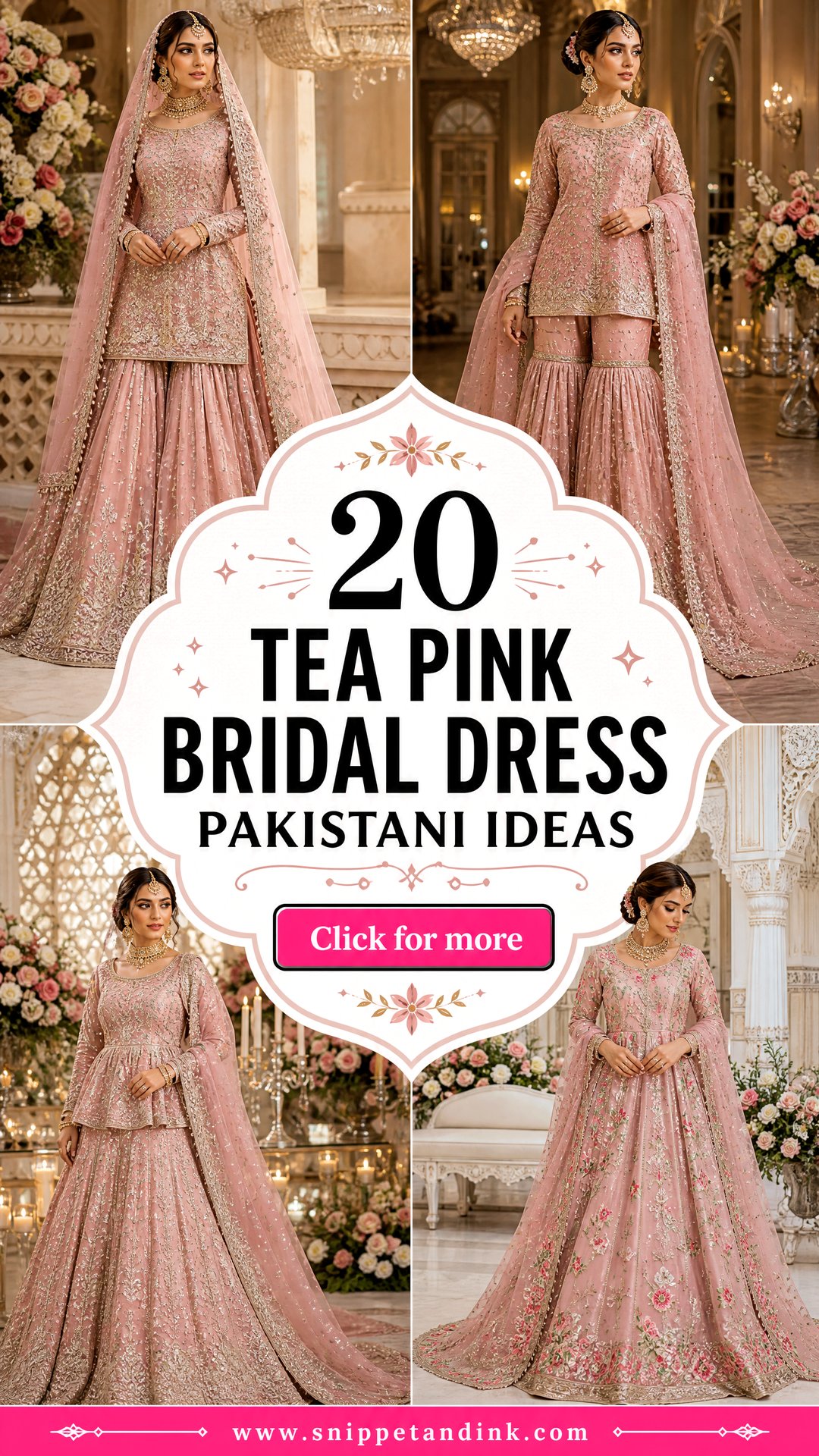
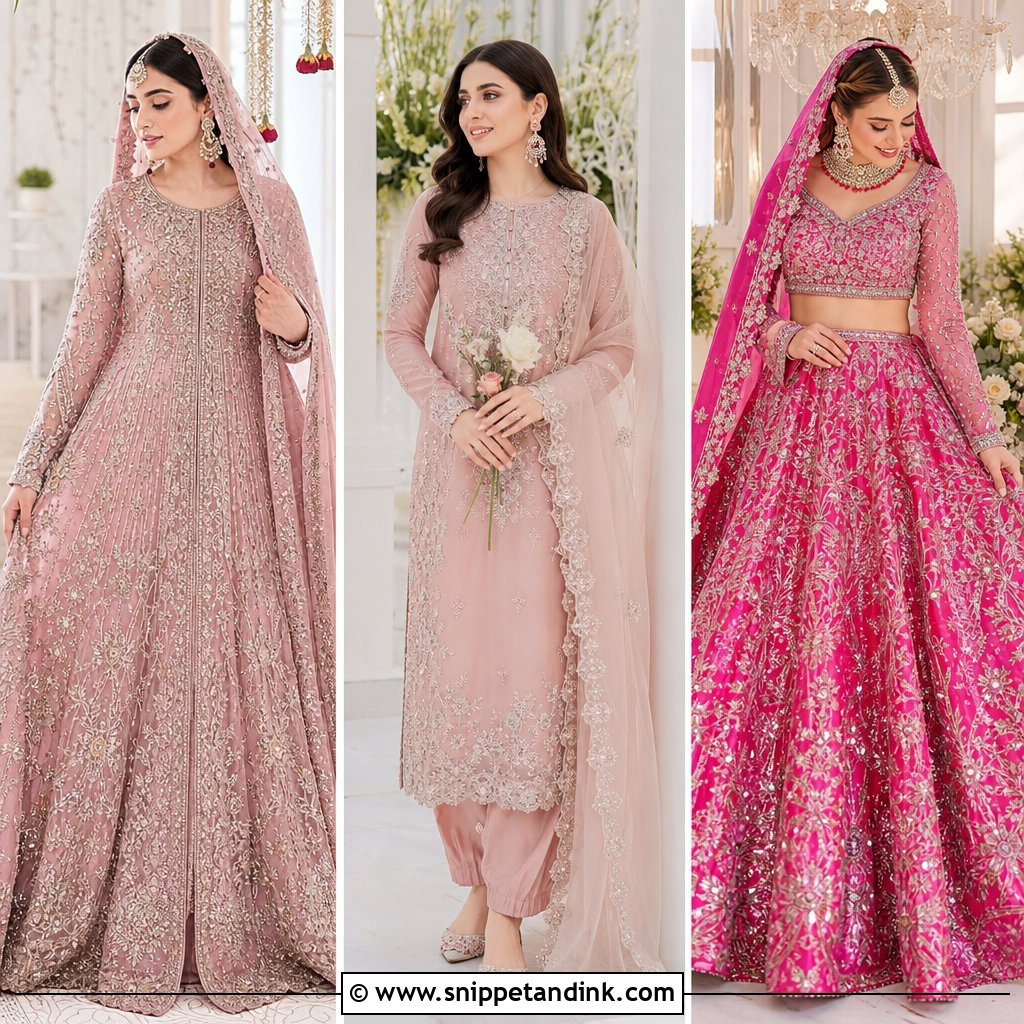
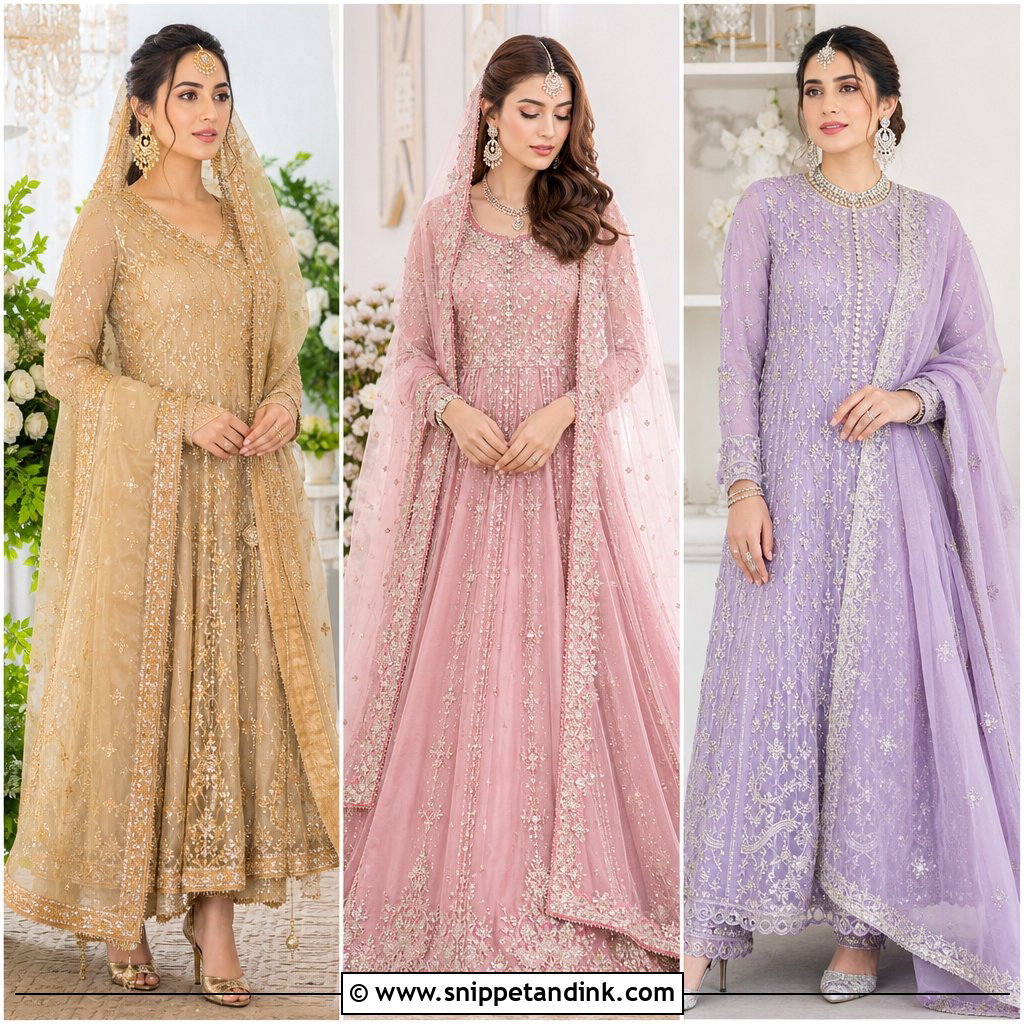
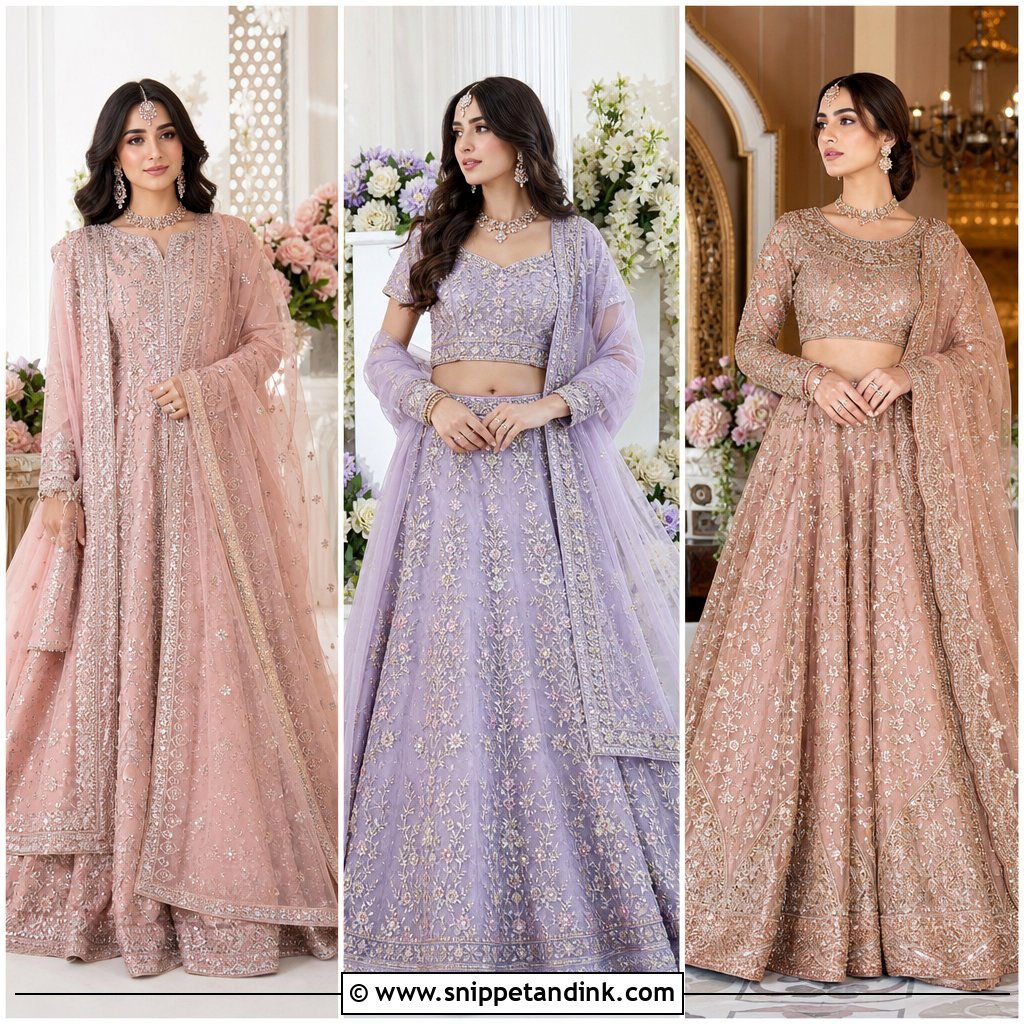
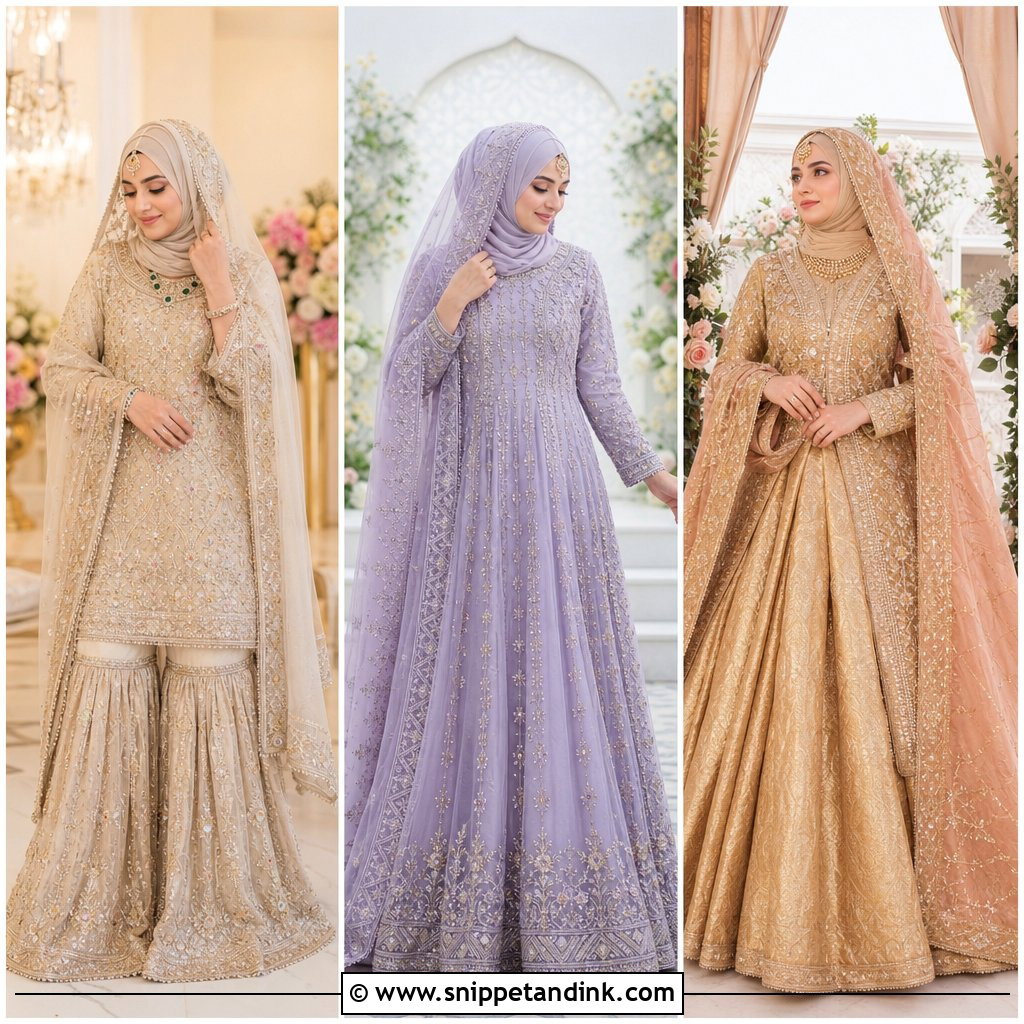
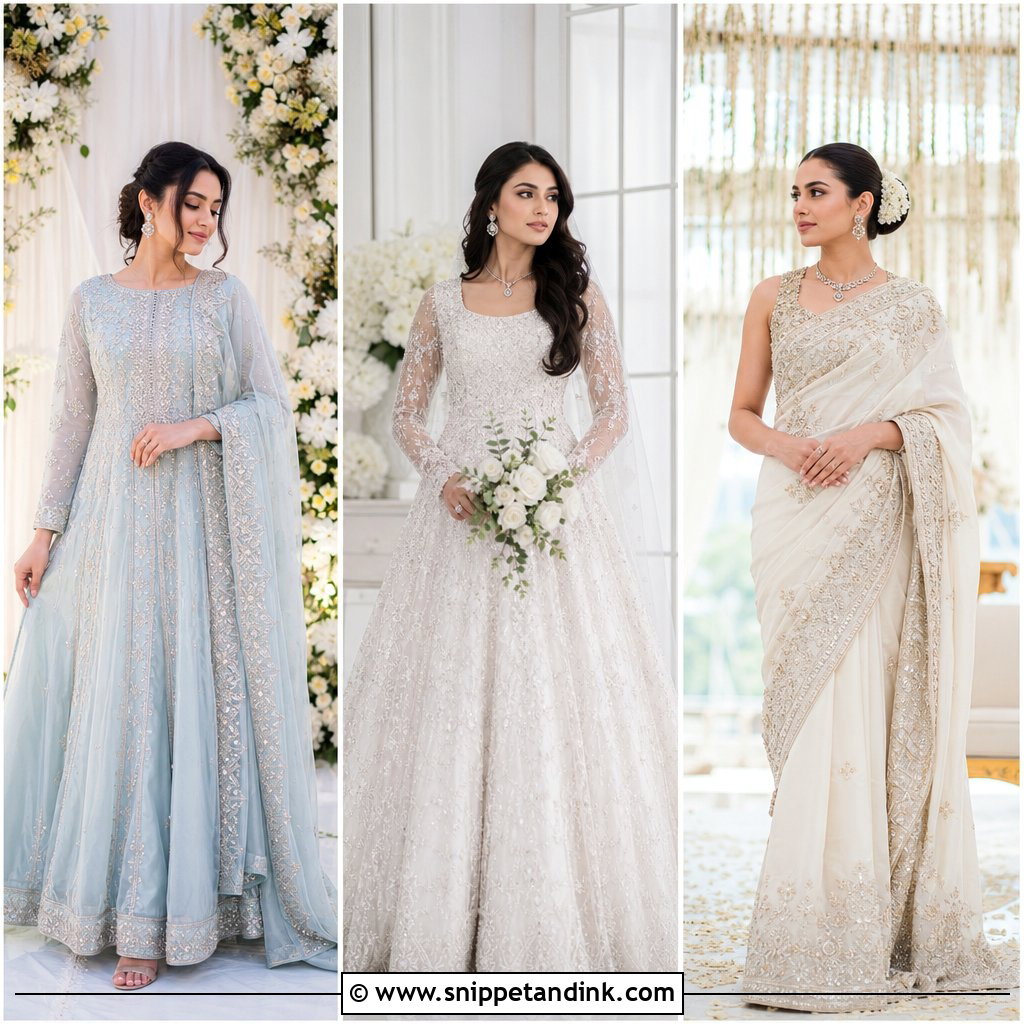
Tea pink sits between dusty rose and blush, a muted, slightly brownish pink that reads soft by day and warm under evening lights. In Pakistani bridal wear it turns up as lehengas, pishwas, open gowns and three-piece sets worked in zardozi, pearls, crystals, dabka, sequins and gota. What decides the final look is the metal you pair with it. Silver keeps tea pink fresh and cool, while antique gold pushes it toward a richer, traditional finish. Below are twenty outfits I’d put together for nikah, baraat and walima, each with the jewelry, shoes and dupatta setting I’d use, and a note on what to check before you order.
How Tea Pink Behaves Against Your Skin and Under Venue Lights
Tea pink is a dusty shade, and dusty shades are the ones most changed by skin tone and lighting. On fair, cool skin it can look washed out unless the embroidery adds contrast, so I lean toward antique gold or deeper rose threadwork there. On wheatish and deeper skin tones it tends to glow, and silver or champagne keeps it bright. Always hold the actual fabric up to your face in daylight, not a phone photo of it.
Then think about where you’ll be photographed. Warm yellow hall lighting pushes tea pink toward peach, and cool LED stage lights can make it look grey. If your baraat is in the evening, ask the designer to show you the swatch under a warm bulb too.
Leave enough time for the order
Designer bridal outfits with hand embroidery are made to order, and popular studios often ask for several months, longer in peak wedding season. Build in time for at least two fittings after the outfit arrives, because heavy embroidery changes how a bodice sits once it’s finished. Ask to approve the dyed base fabric before embroidery begins; once the zardozi is on, the shade can’t be changed.
1. Tea Pink Bridal Lehenga With Zardozi Choli
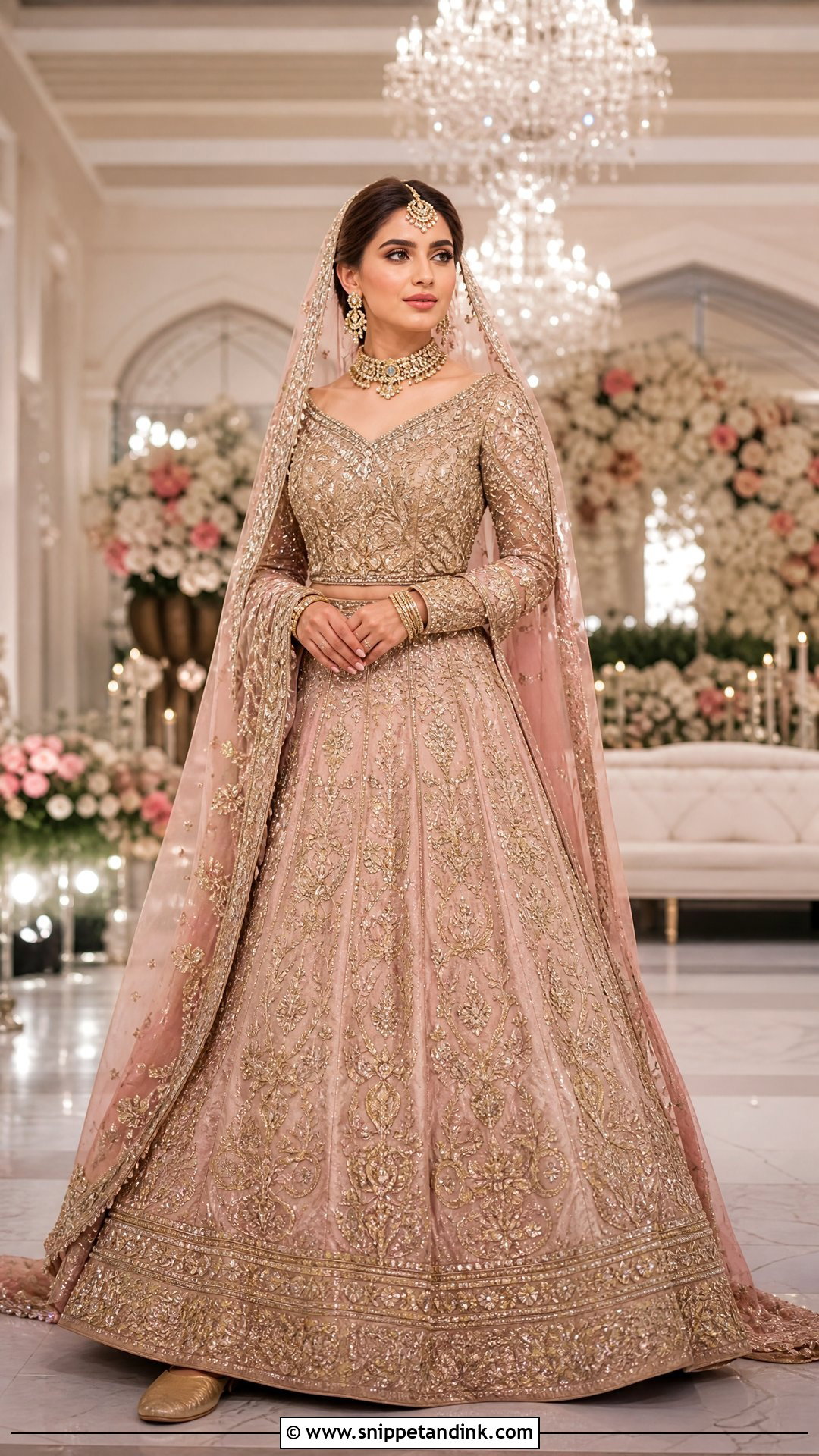
A tea pink lehenga in raw silk with a wide flare and a fitted zardozi choli is the classic version, and it holds up for a baraat because raw silk keeps its shape under heavy borders. The choli can carry antique gold dabka, naqshi, pearls and fine threadwork. I like a softly curved neckline with fitted sleeves to balance the volume below. Set the net dupatta over the head with one worked edge falling across the shoulder. A gold choker, matching earrings, maang tikka and bangles, plus embroidered gold khussas, finish it. One caution: raw silk creases where you sit, so have a steamer on hand before the rukhsati photos.
2. Tea Pink Front Open Bridal Gown With Lehenga
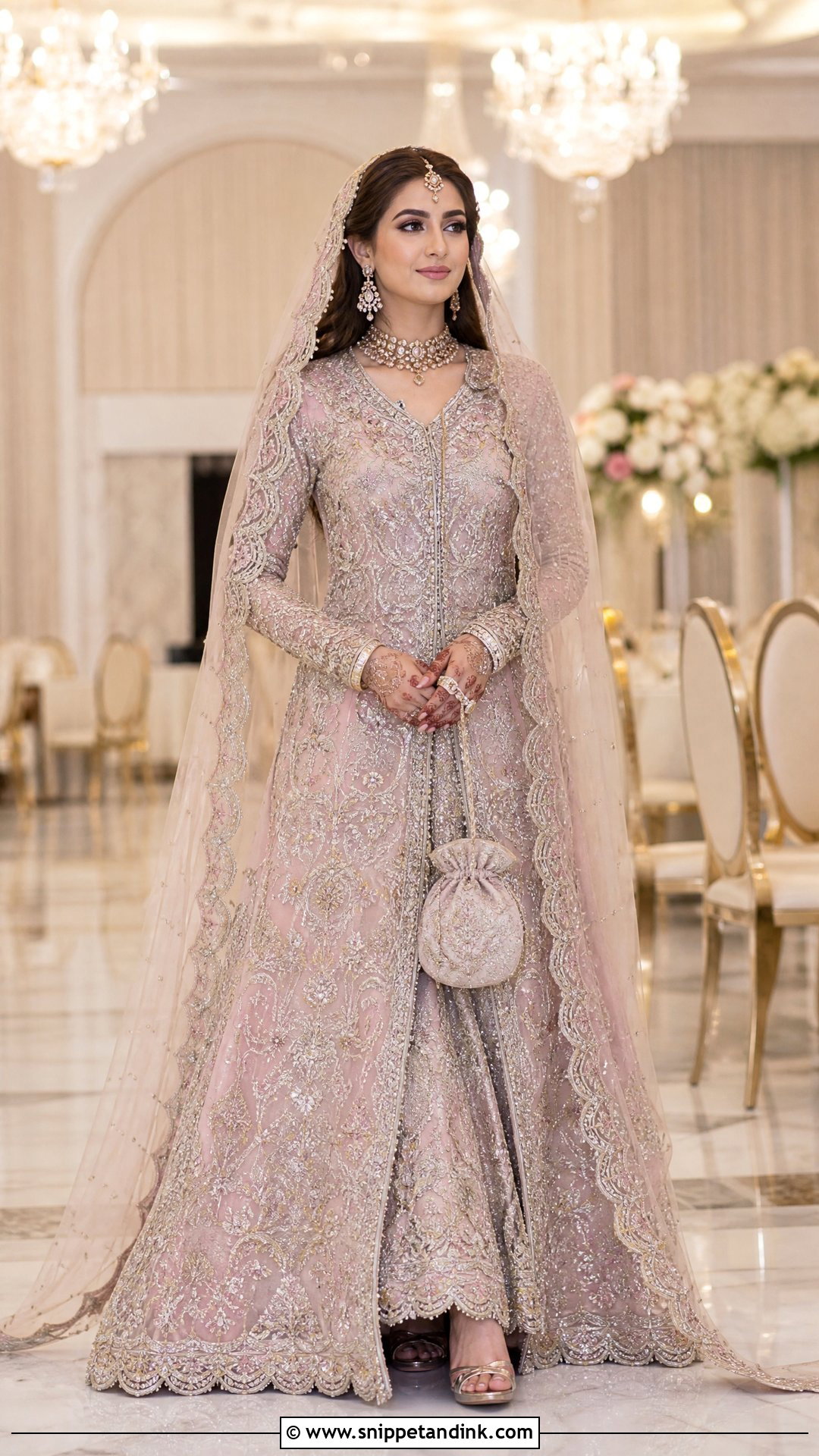
A front-open gown over a lehenga gives you a walk with real movement, because the open skirt swings back with each step and shows the lehenga beneath. The gown needs a structured bodice and fitted sleeves; silver-gold threadwork, crystals and fine sequins running vertically lengthen the line. If the gown is heavily worked, keep the lehenga plain or lightly sprinkled, or the two layers fight each other. A scalloped net dupatta goes over the head, with an optional second light veil on one arm. Polki necklace, drop earrings, a small tikka, metallic heels and a compact potli suit a walima or reception.
3. Tea Pink Double Layer Pishwas Bridal Dress
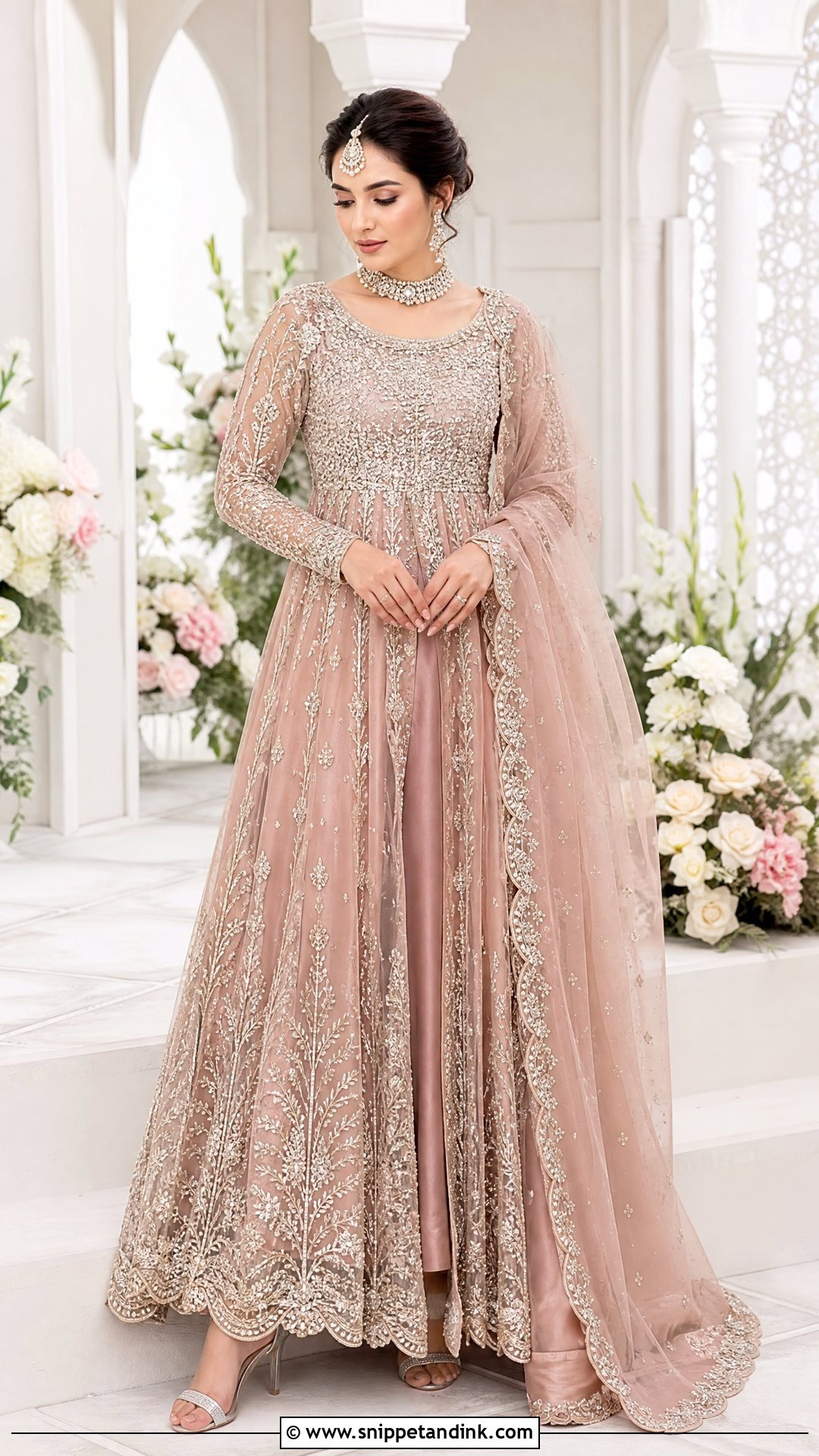
Soft layers give a tea pink pishwas an airy presence without making it look bulky. A double-layer design works best with net or organza on top, fine silver embroidery, and a satin or silk under-layer that gives the color depth. Make sure the waist is clearly defined; without it, all that flare swallows a petite bride. Underneath, a narrow churidar or plain lehenga stays mostly hidden. I’d set the scalloped dupatta over the head and secure the second end at the wrist with a small loop so it doesn’t trail. Crystal earrings, a delicate choker, a centered tikka and silver heels keep it light for a nikkah or daytime event.
4. Tea Pink Farshi Gharara Bridal Dress
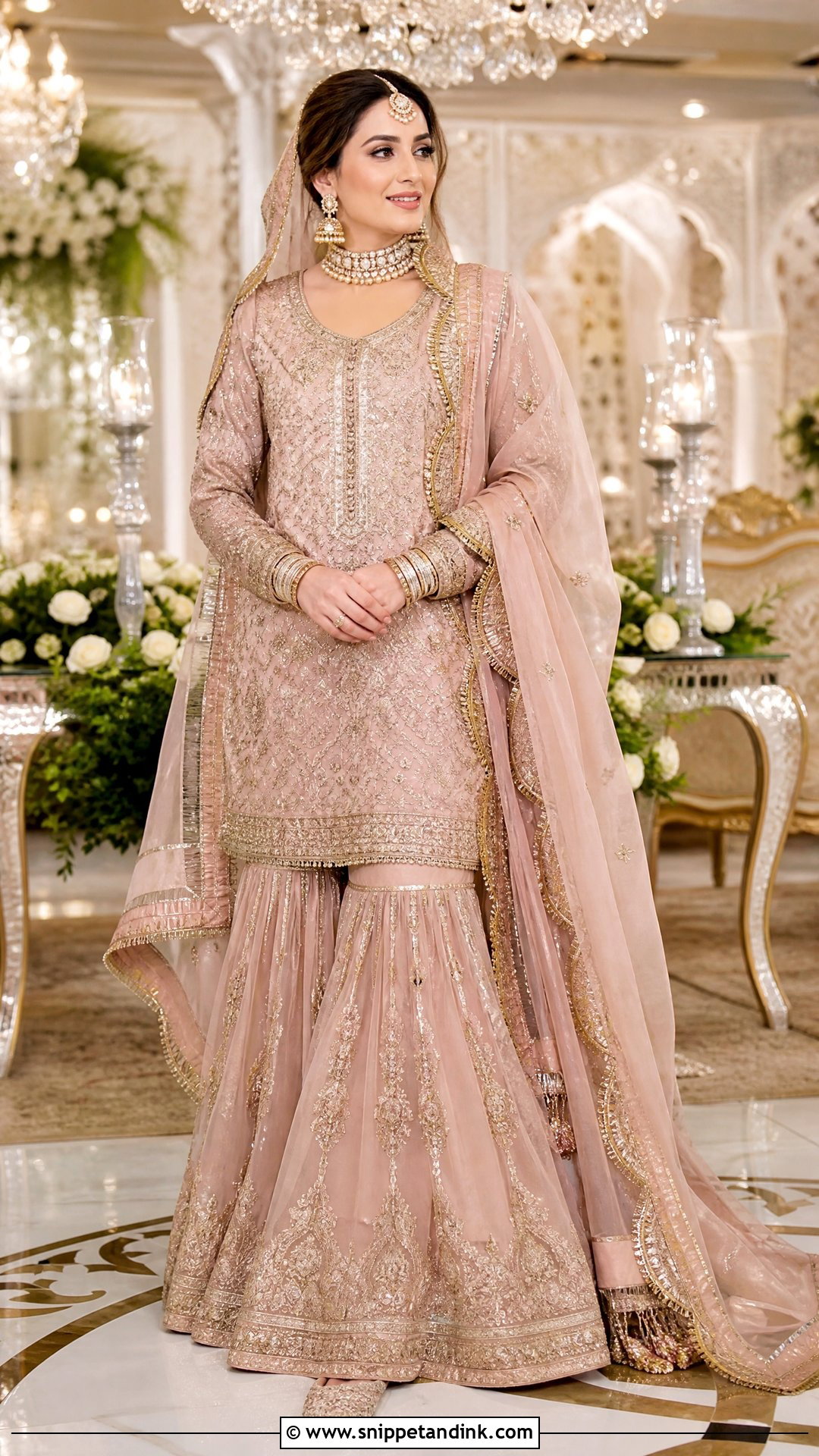
A tea pink farshi gharara is the grandest option here and also the heaviest to wear. The joint at the knee, usually covered by a band of embroidery, is what gives the farshi its shape, so it needs firm fabric: tissue, jamawar or silk hold the flare in photos far better than soft georgette. A short knee-length shirt with side slits and antique gold work balances the sweeping hem. Add a long organza dupatta with kiran trim and gota, then jhumkas, a pearl choker, a passa and stacked bangles. Walking in a farshi takes practice because the hem pools on the floor, so rehearse at home and lift it from the knee panel, not the hem.
5. Tea Pink Sharara With Short Bridal Shirt
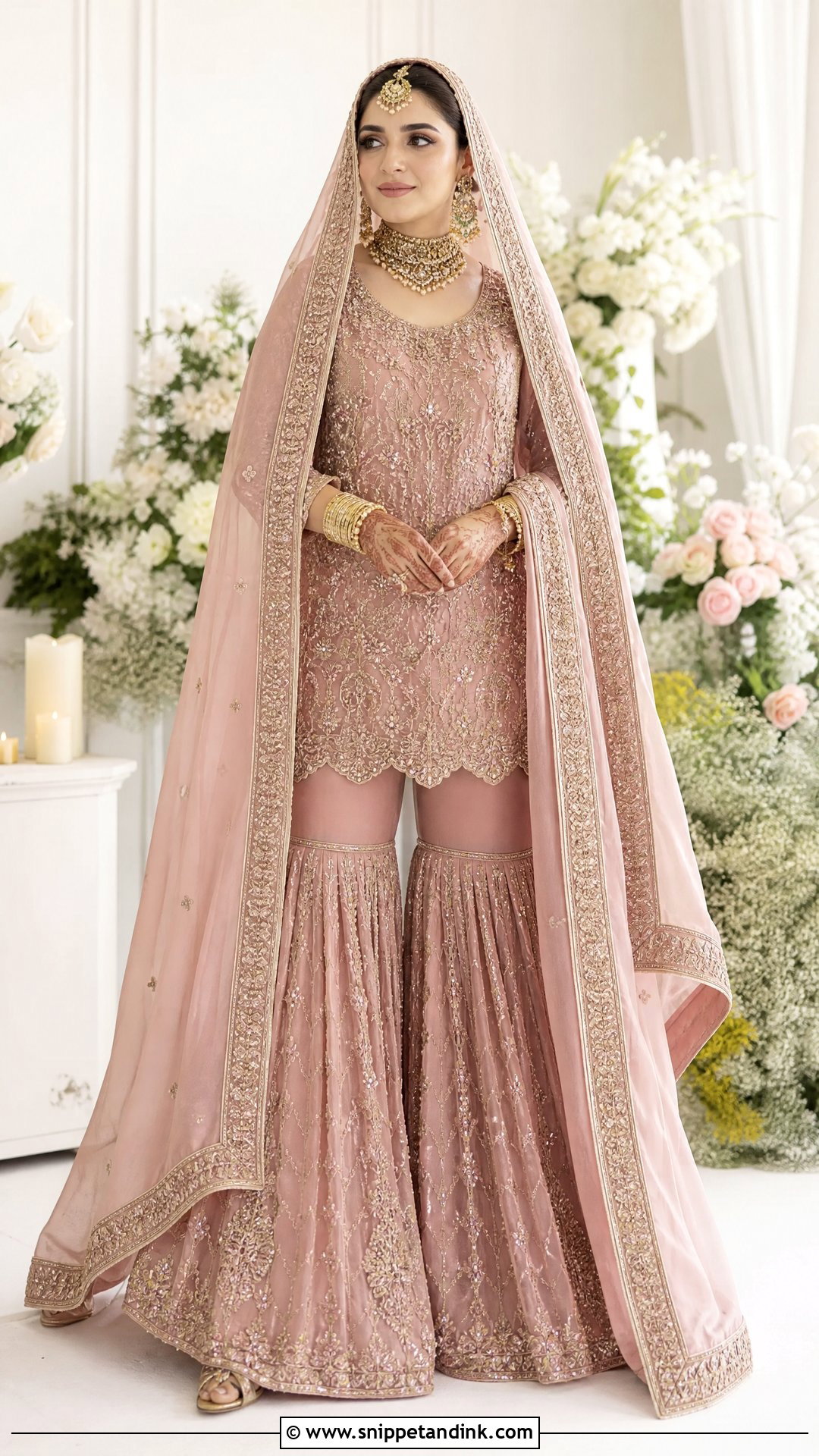
A sharara with a short shirt feels traditional but is far easier to carry than a farshi. The shirt should be structured and end near the upper thigh, worked densely at the neckline, sleeves and hem, while the sharara flares from the knee with layered borders. Pearl, dabka, sequins and cutwork add richness without overpowering the soft pink. Put a bordered organza dupatta over the head and let the rest fall along one arm. A kundan choker, earrings, small tikka and bangles complete it. Low block heels or khussas make sense here; you’ll be sitting on a stage and standing up repeatedly for hours.
6. Tea Pink Long Shirt With Bridal Lehenga
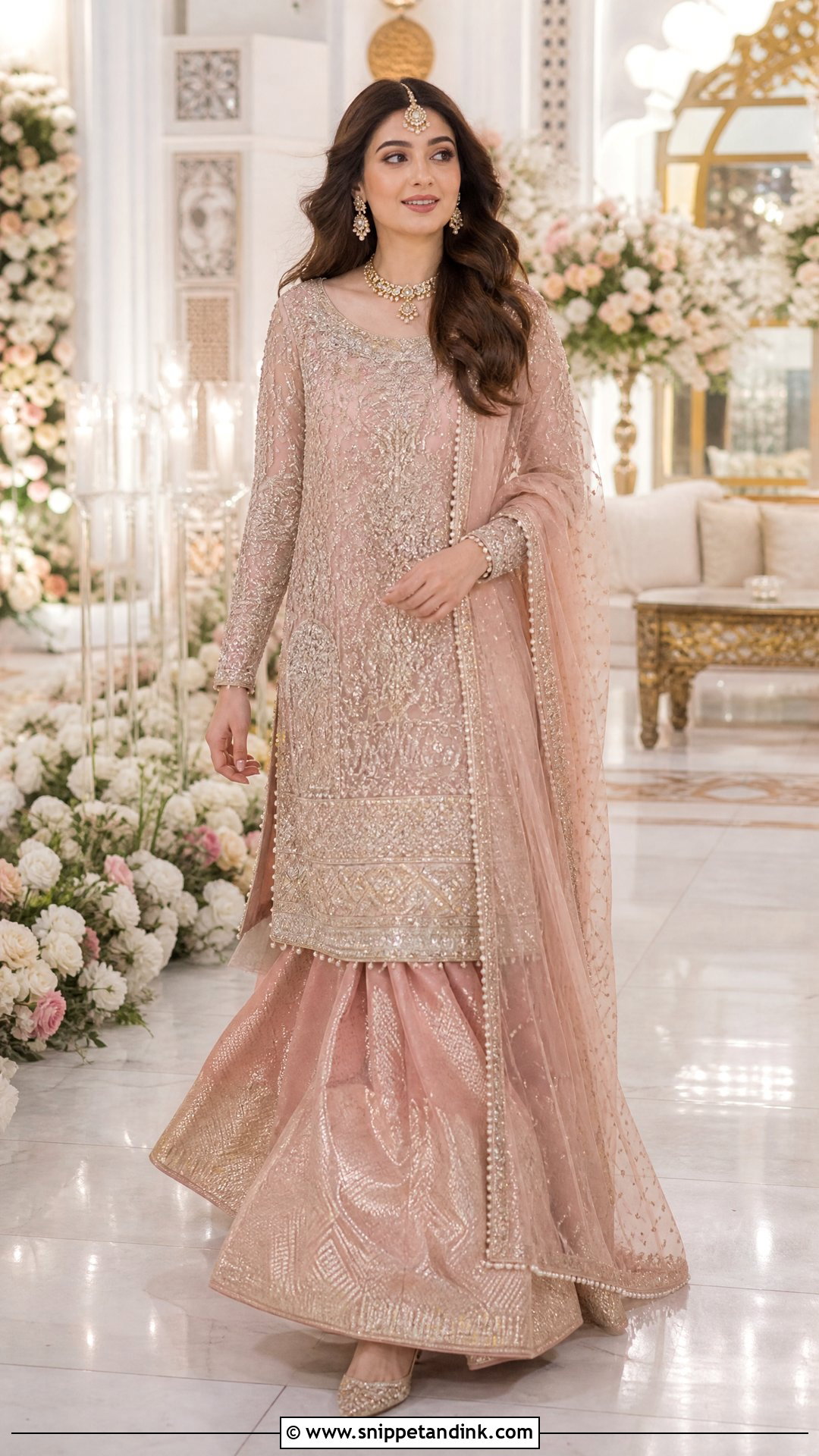
Layering a long shirt over a lehenga lengthens the figure, which is why I often suggest it to shorter brides who still want a lehenga. Side slits let the decorated lehenga show as you walk. I’d keep the embroidery dense across the bodice and let it thin out toward the hem, so the eye travels down rather than stopping at the waist. A silk lehenga with a broad border and small motifs sits underneath, and a sheer pearl-edged net dupatta softens the structure. A medium-length necklace, statement earrings, a subtle tikka and pointed metallic heels give traditional coverage with a clean, current finish.
7. Tea Pink Peplum Choli With Bridal Lehenga
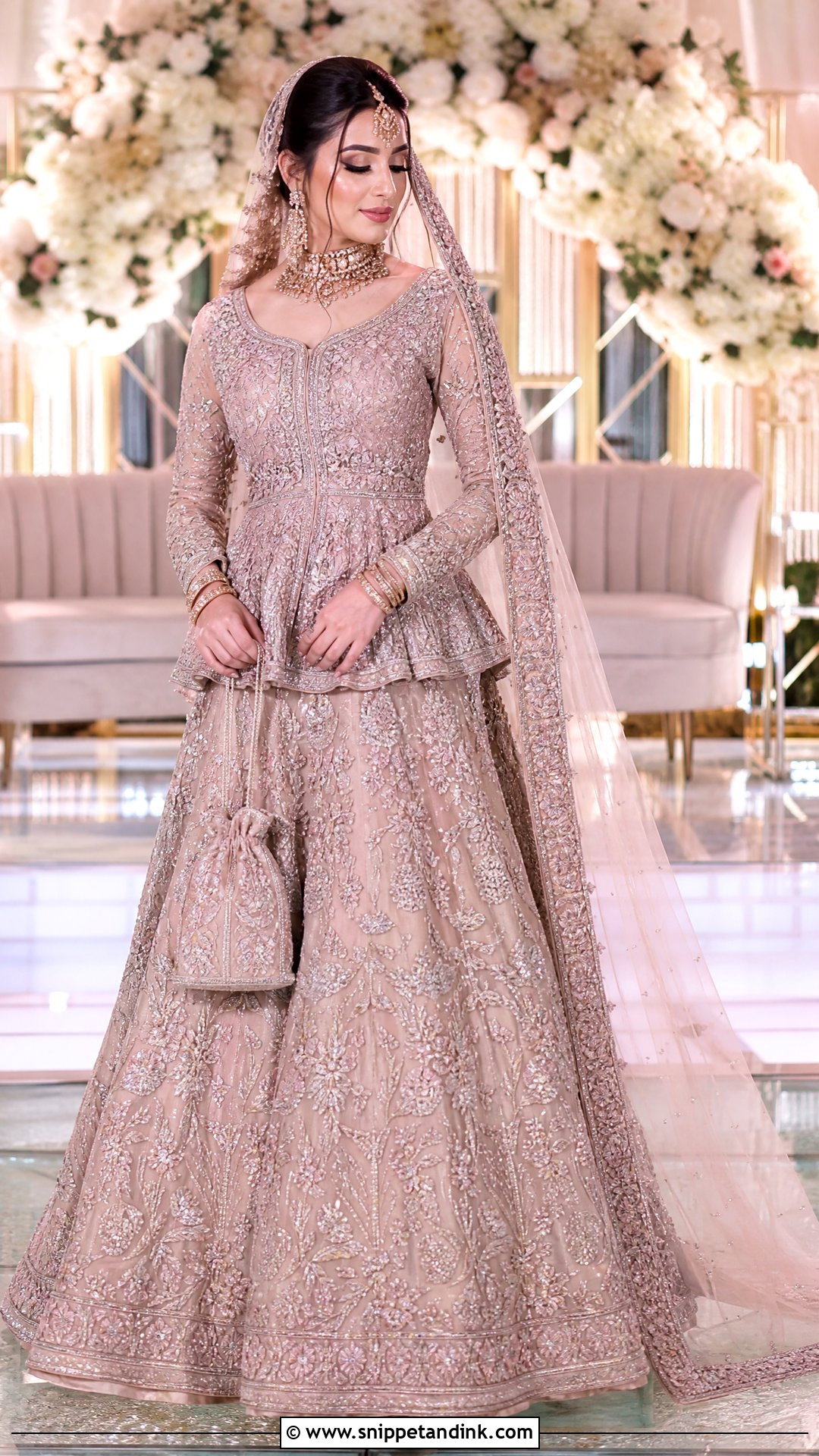
A peplum choli is the most modern shape in this list while the lehenga itself stays traditional. Keep the peplum short, ending above the hip, so the lehenga waistband and its embroidery still show; a long peplum makes the whole outfit look bottom-heavy. A full circular lehenga with coordinated zardozi borders and bootis goes underneath. A boat neckline, fitted sleeves and pearl detailing polish the top. Drape the net dupatta over one shoulder for the reception, or pin it over the head for the ceremony. Choker, long earrings, matching tikka, platform heels and a small embroidered potli finish it.
8. Tea Pink Bridal Maxi With Long Train
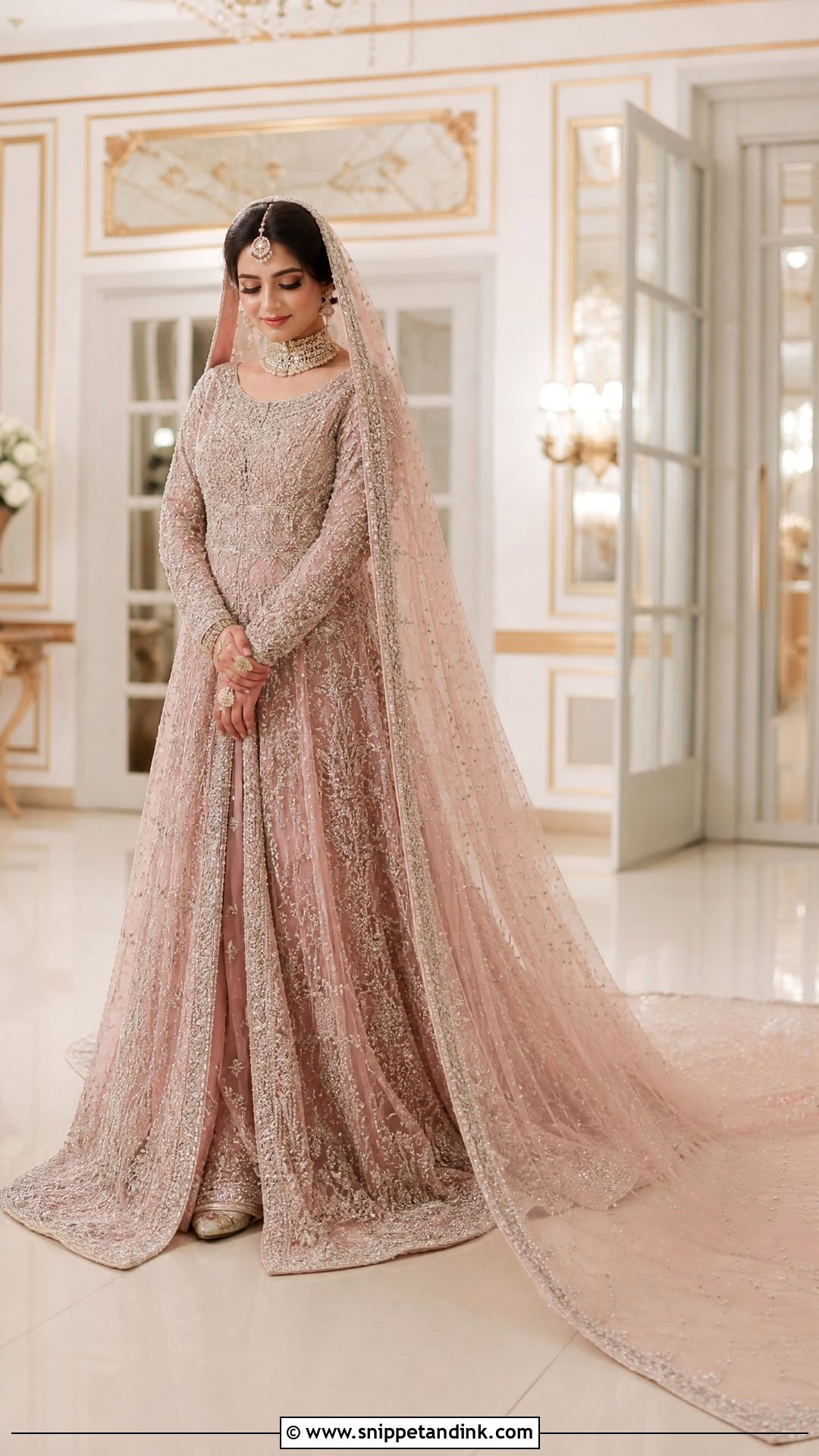
A tea pink maxi with a train gives you a big entrance without separate lehenga layers. Look for a fitted bodice, a defined waist and a floor-length skirt that ends in a train you can actually manage. Vertical embroidery adds height, and heavier work near the hem anchors the pale color. Full sleeves with fine pearls or sequins give coverage and some shimmer. A light cathedral net veil, secured firmly at the crown, adds drama of its own, so I keep the front jewelry to a crystal choker, earrings and a delicate tikka. Before you commit, ask the designer to add a bustle loop so the train can be lifted for dinner; most ballroom walimas involve a lot of mingling.
9. Tea Pink Kalidar Anarkali Bridal Dress
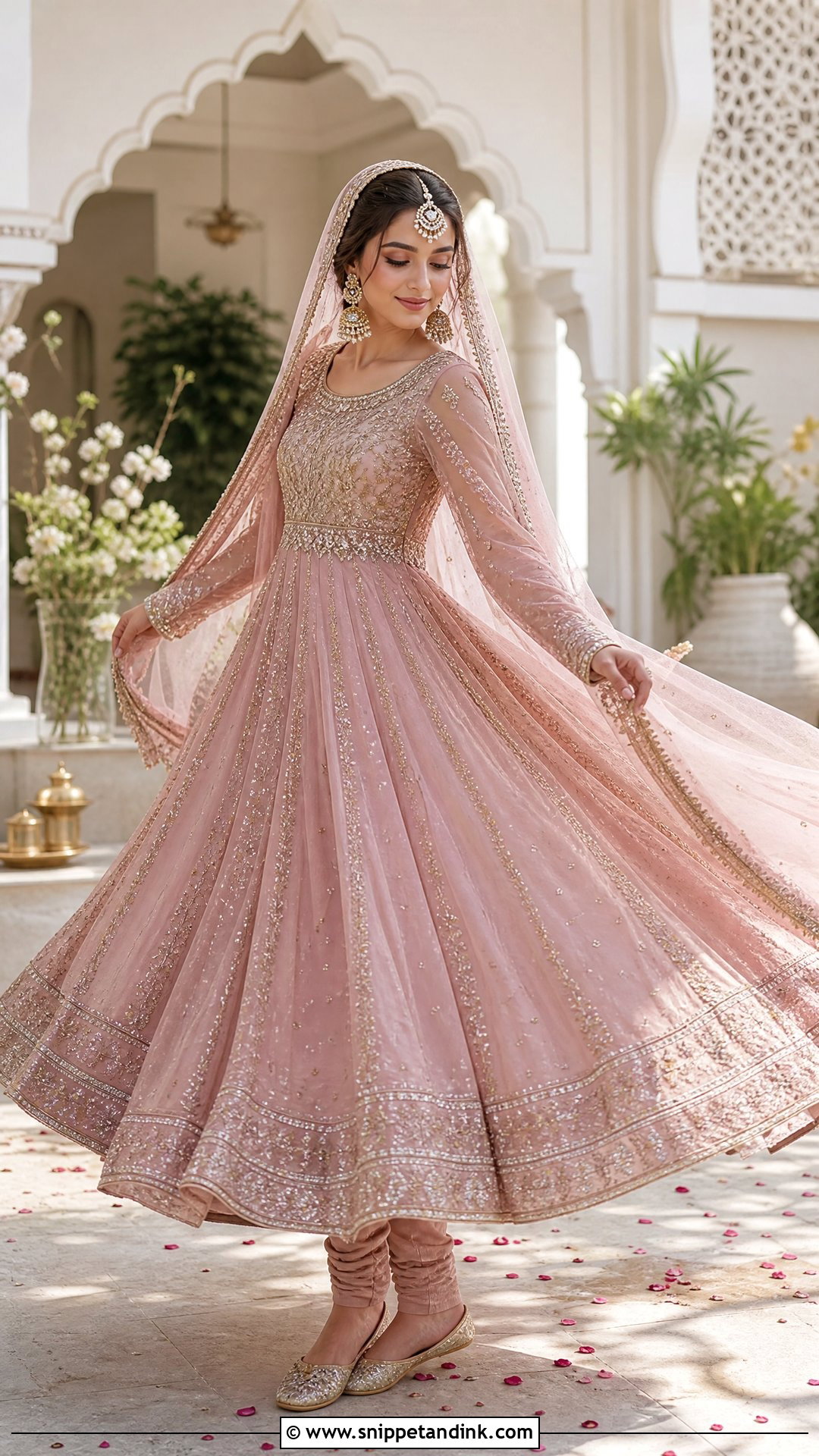
Kalis are the triangular panels of an Anarkali, and the more there are, the more the skirt opens when you turn. A fitted bodice with a round or V neckline defines the upper body before the flare starts. Fine tilla, gota, pearls and threadwork across the bodice, sleeves and panel borders suit tea pink. Pair it with a churidar and an organza dupatta with an embroidered frame, placed over the head with one side brought forward to show the border. Jhumkas, a maang tikka and embroidered khussas finish it. Of every shape here, this is the one I find suits the widest range of body types, since the fitted top and controlled flare even out proportions.
10. Tea Pink Bridal Jacket Gown With Lehenga
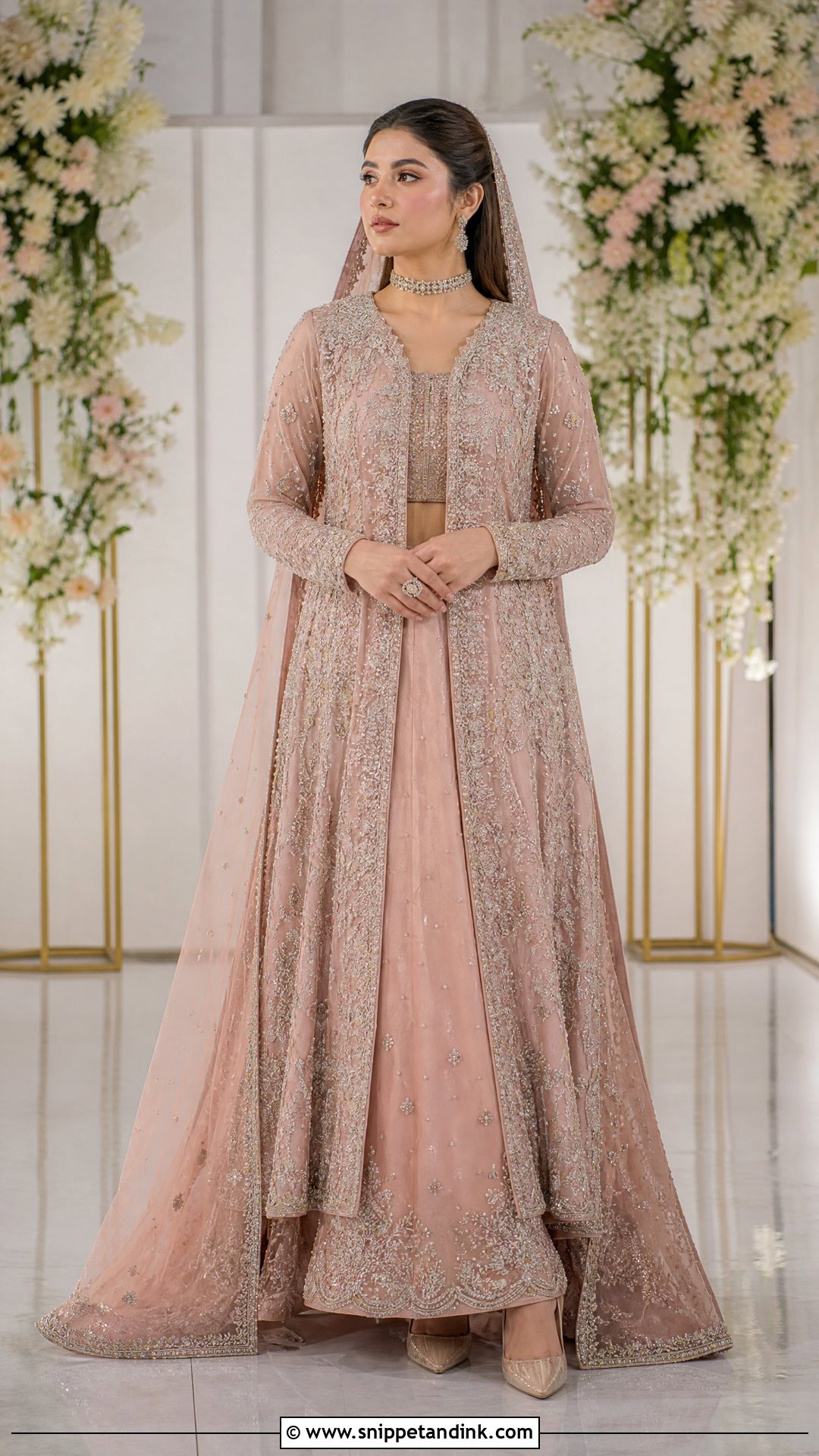
A long embroidered jacket brings structure and a slightly fashion-led edge. Wear a sleeveless or short-sleeved blouse under a floor-length open jacket and pair both with a coordinated lehenga. Let the jacket carry the dense crystal, pearl and metallic work along the front, sleeves and hem, and keep the blouse and lehenga restrained. Choose a soft net dupatta that can sit over the head without hiding the jacket. A sleek bun, drop earrings, a slim choker and one statement ring suit its clean lines, with pointed silver or champagne heels. Check the jacket’s weight on a hanger first; heavily worked jackets pull at the shoulders after a few hours.
11. Tea Pink Tissue Lehenga With Organza Choli
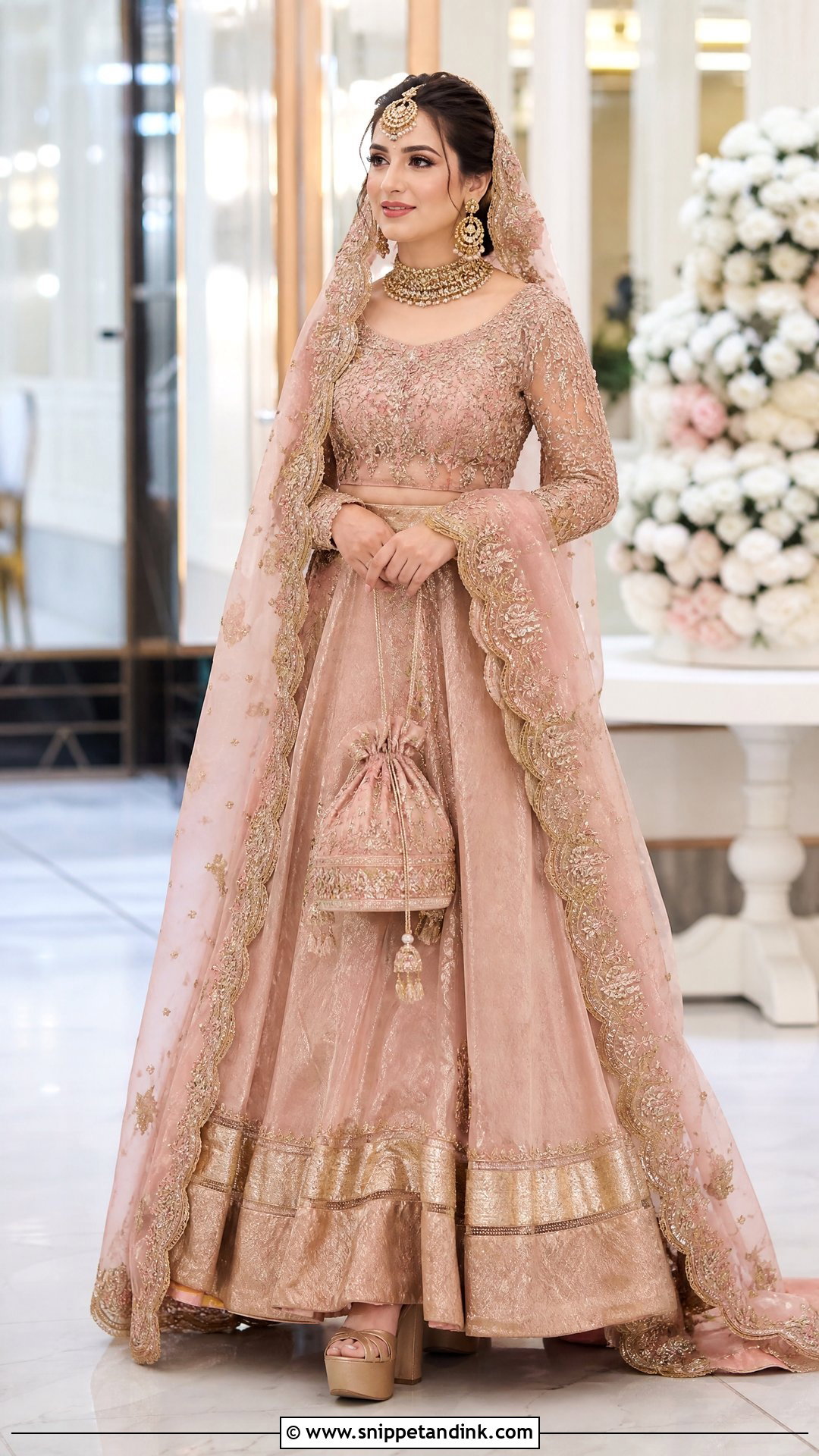
Tissue has metallic yarn woven through it, so a tissue lehenga gives tea pink a subtle glow. It’s also scratchy and stiff against bare skin, which is why I always ask for a soft lining underneath; it improves the fall as well. Balance the reflective skirt with an organza choli in controlled embroidery, fitted sleeves and a clean neckline, and let the lehenga carry broad gold borders and floral motifs. An organza dupatta with scalloped edging and scattered sequins links the two textures. Antique gold jewelry, gold platforms and a beaded potli suit a formal baraat or reception under warm evening lights.
12. Tea Pink Jamawar Lehenga With Net Shirt
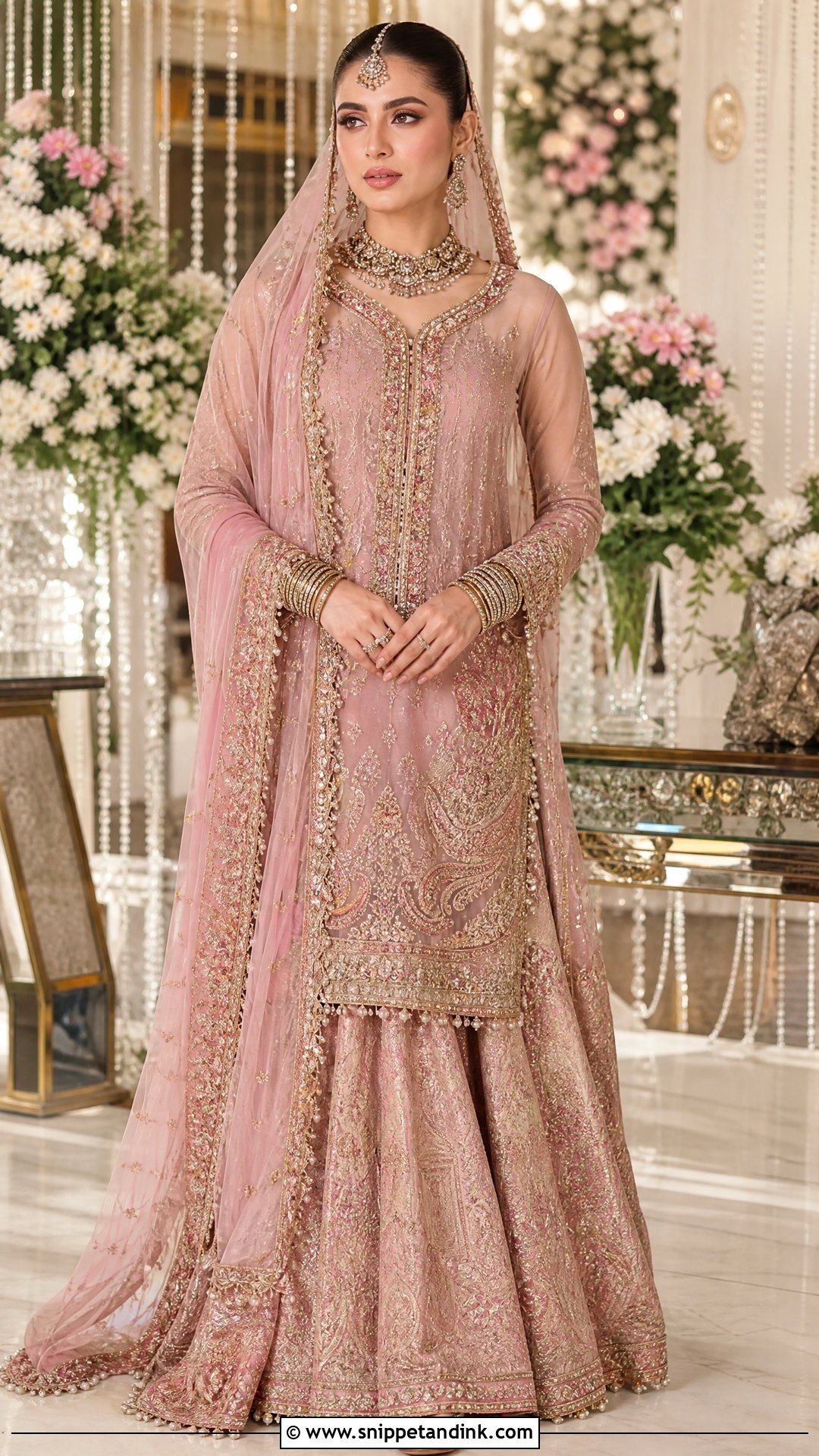
Jamawar is woven with its pattern built into the cloth, so the fabric is already decorative before anyone embroiders it. Use it for a broad, structured lehenga and put a sheer net shirt over a fully lined bodice on top. Concentrate the shirt’s embroidery at the neckline, cuffs, side slits and hem, leaving the jamawar pattern visible rather than burying it. A light chiffon or net dupatta with gota and kiran borders keeps the weight down. Antique gold suits jamawar’s warmth, and pearl accents stop the palette getting too heavy. Matching khussas and stacked bangles finish it. Jamawar is warm to wear, so it’s better suited to a winter baraat than a summer afternoon.
13. Tea Pink And Ivory Bridal Lehenga
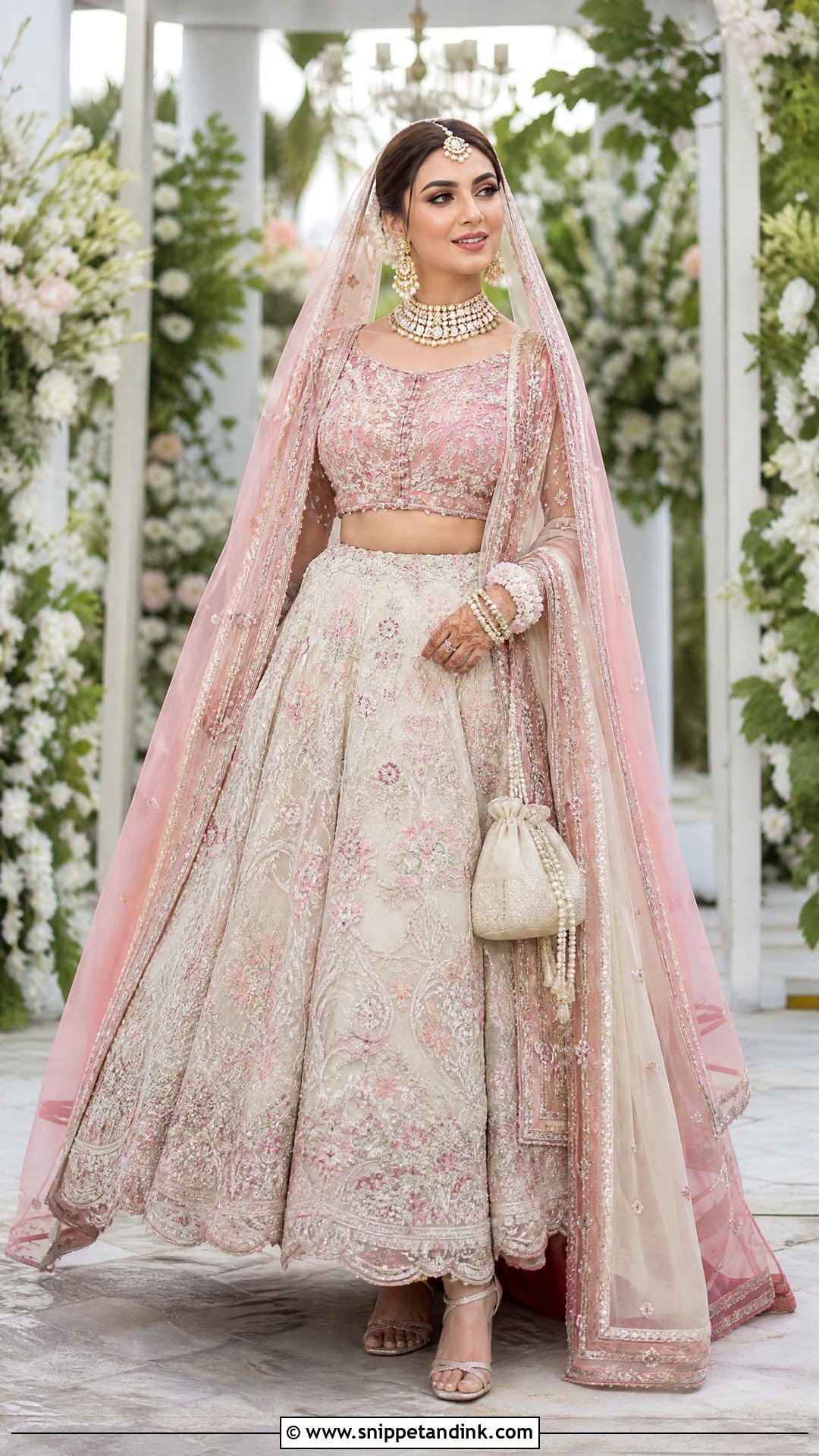
Tea pink with ivory is the pairing I reach for most for daytime events. A tea pink embroidered choli over an ivory lehenga worked in pink florals, pearls and pale metallics, with a tea pink border on the skirt to tie the pieces together, looks fresh in natural light. Layer an ivory net dupatta over the head and a tea pink one across the shoulder. Pearl jewelry and a light kundan choker keep it gentle. Ivory heels with subtle embroidery and a potli in the same two colors complete it. One practical point: ivory hems show every speck of dust, so keep someone ready to lift it when you move across an outdoor venue.
14. Tea Pink And Champagne Gold Bridal Gown
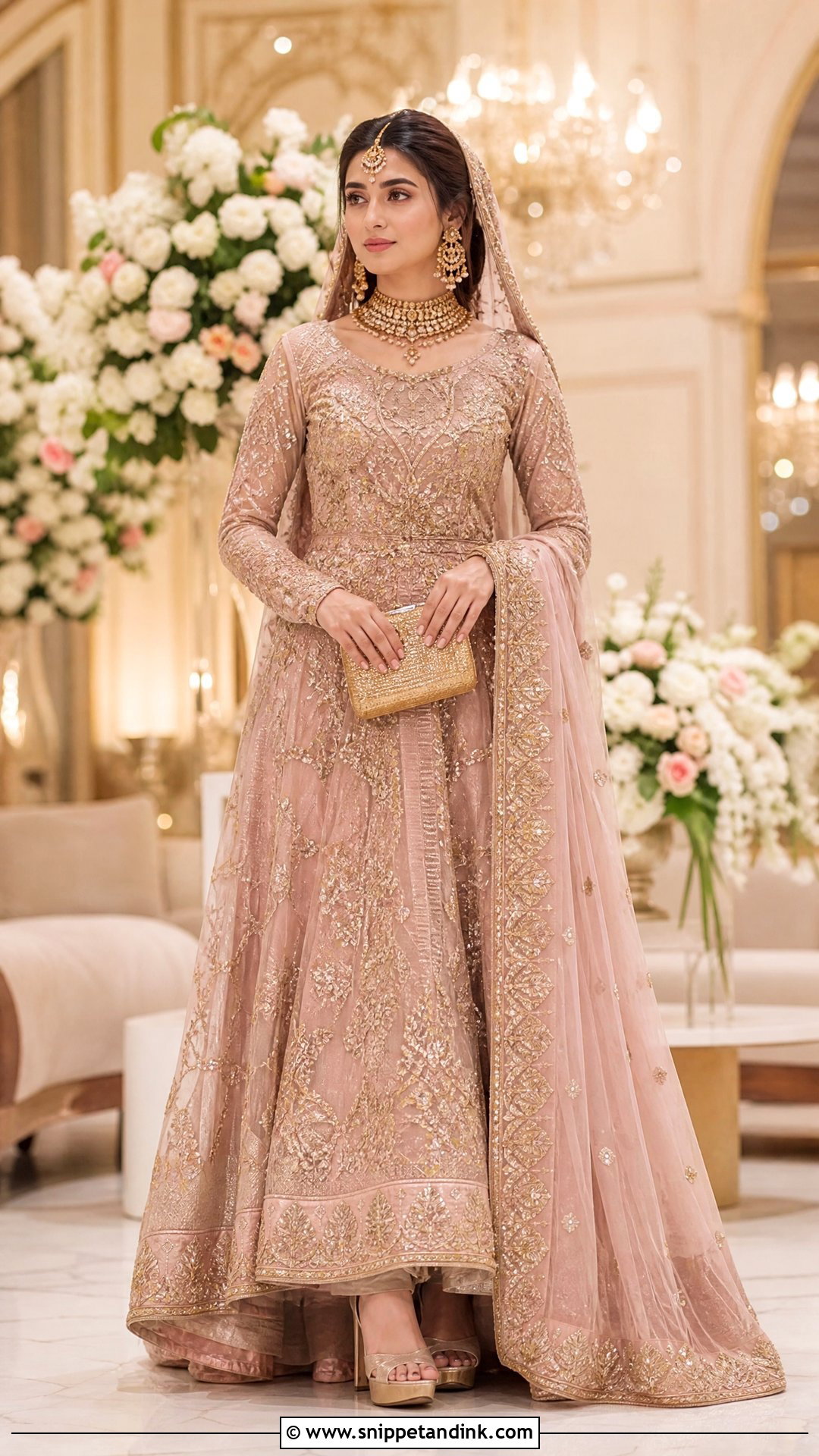
Champagne gold warms tea pink without the yellow cast of bright gold, which suits evening receptions. Start with a full-length gown: fitted bodice, defined waist and a controlled A-line skirt. Champagne thread, crystals, dabka and sequins work best when they get denser toward the hem, which grounds the pale color in photos. A sheer tea pink dupatta edged in champagne embroidery, a gold polki set, a matching tikka and statement earrings echo the metallics. Champagne platforms give height and let the hem clear the floor, and a small structured clutch is enough.
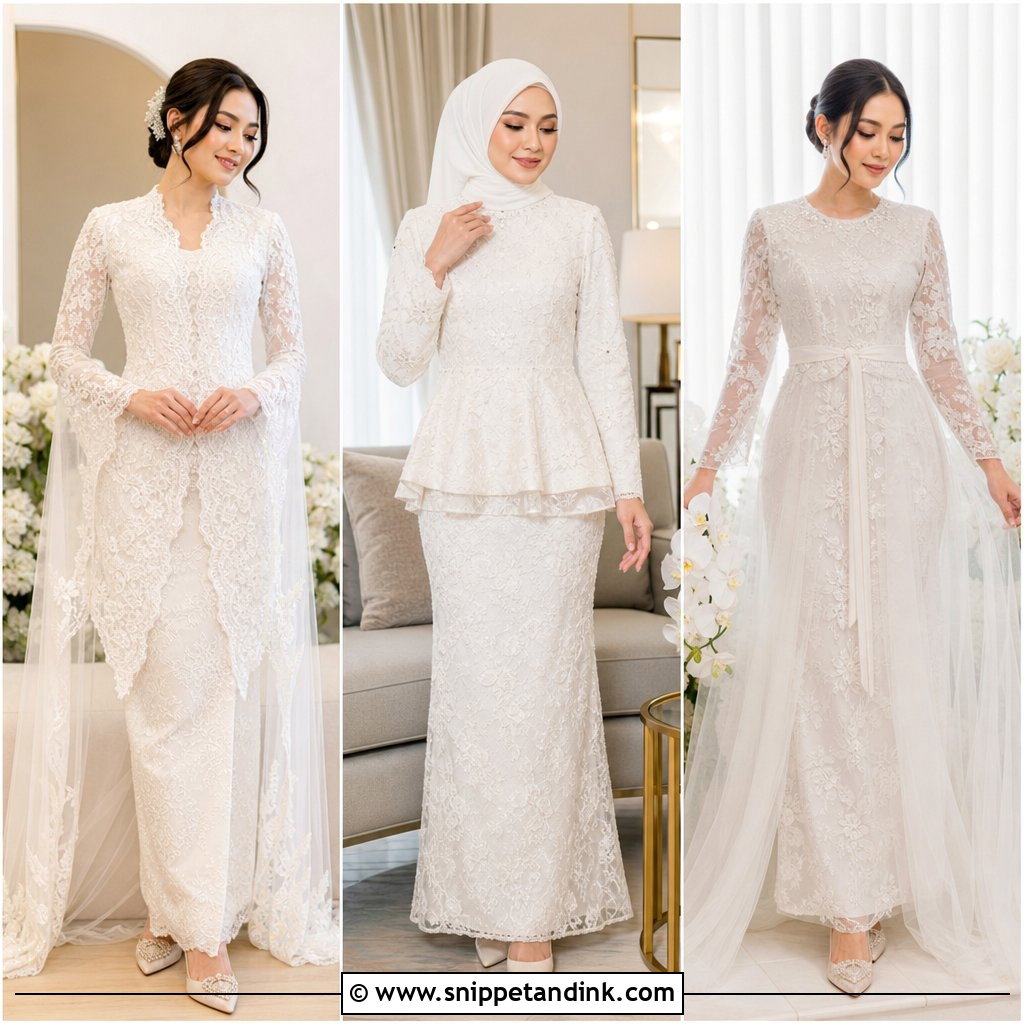
15. Tea Pink Bridal Dress With Silver Embroidery
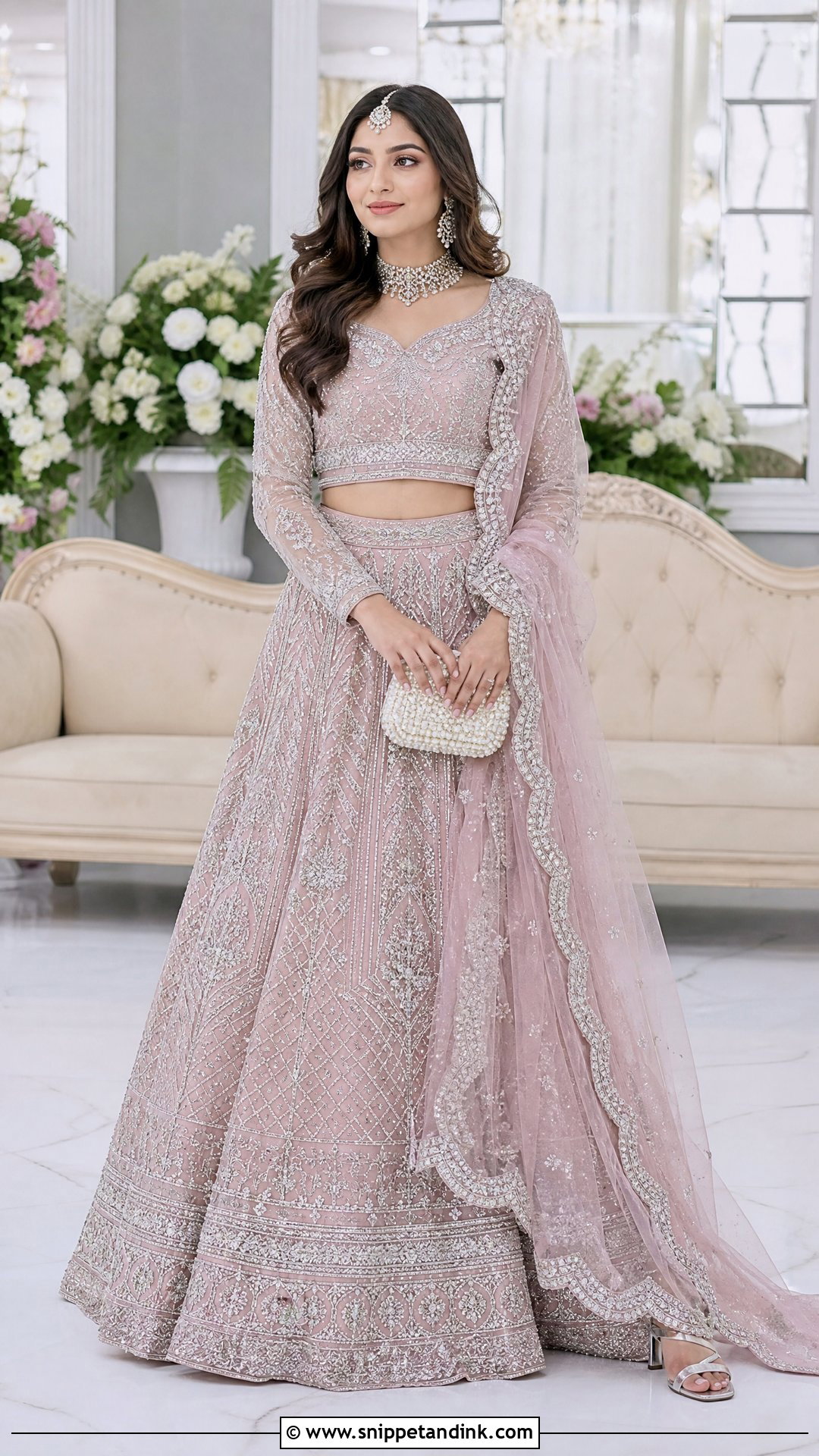
Silver keeps tea pink cool and bright. Choose a fitted blouse and flowing lehenga worked in silver tilla, crystals, sequins and fine pearls. Geometric borders read modern; small florals keep it bridal. Carry the silver onto a scalloped net dupatta, but leave open space so the pink base still shows; covered edge to edge, the whole outfit turns grey in photos. Diamond-look jewelry, a crystal choker, drop earrings, a slim tikka, silver heels and a pearl clutch keep the palette consistent. Don’t mix in yellow gold bangles. Bright indoor lighting at a walima or indoor nikkah makes silver work sparkle without looking heavy.
16. Tea Pink Floral Embroidered Bridal Pishwas
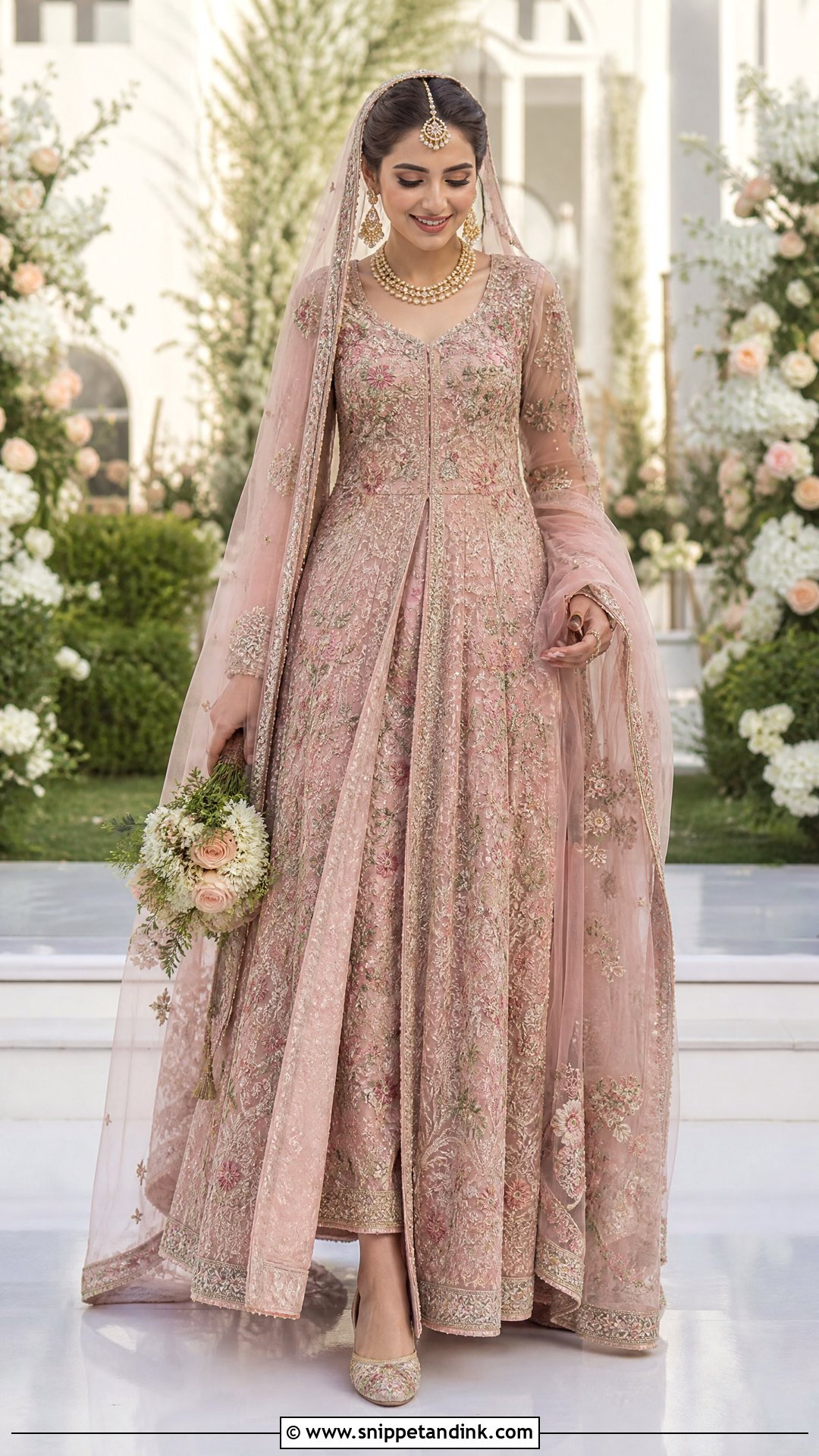
Colored floral embroidery makes a tea pink pishwas feel joyful rather than formal. Dusty rose, sage, ivory and muted gold flowers work on this base. Concentrate them around the bodice and the lower panels and leave the middle quieter, so the pishwas keeps its long line. A plain silk lehenga or churidar sits underneath, with a tea pink organza dupatta carrying matching floral borders. Pearl and kundan jewelry sits comfortably beside multicolor thread. Khussas embroidered in the same palette pull it together. This is the outfit I’d suggest for an outdoor nikkah or for a bride who’d rather wear color than heavy metal work.
17. Tea Pink Pearl And Crystal Bridal Lehenga
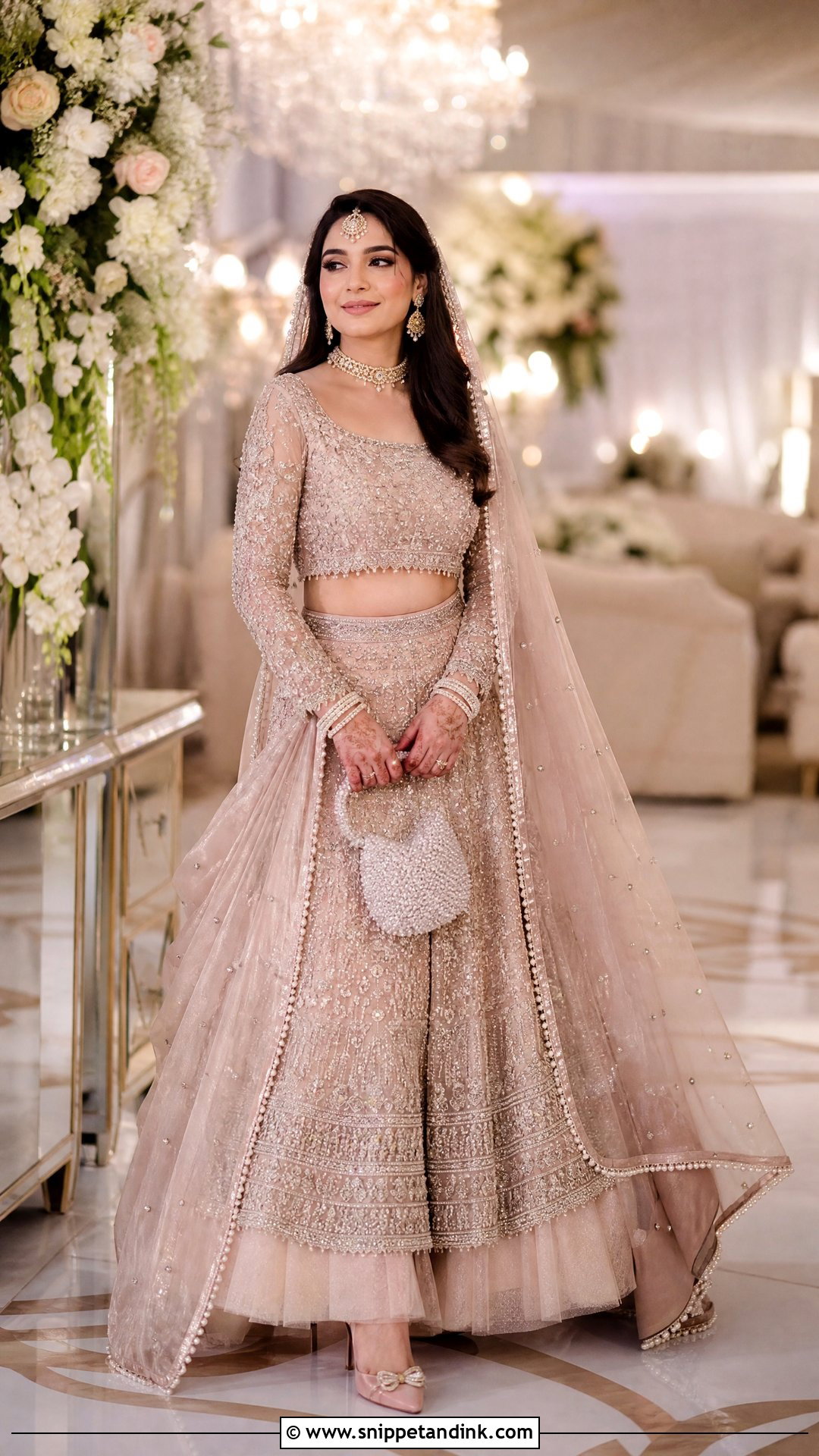
Pearls and crystals give tea pink texture that catches light without looking brassy. A structured choli with pearl-lined sleeves, crystal motifs and a curved neckline pairs with a large net lehenga over silk, scattered pearls high on the skirt and heavier crystal borders near the hem. The pearl-edged dupatta frames the face, but it’s heavier than it looks. Pin it at several points so the weight spreads evenly, or it drags backward through the evening. A pearl choker, crystal earrings, a small tikka, a few slim bangles and silver or blush heels finish a walima look that stays soft.
18. Tea Pink Modest Bridal Pishwas With Hijab
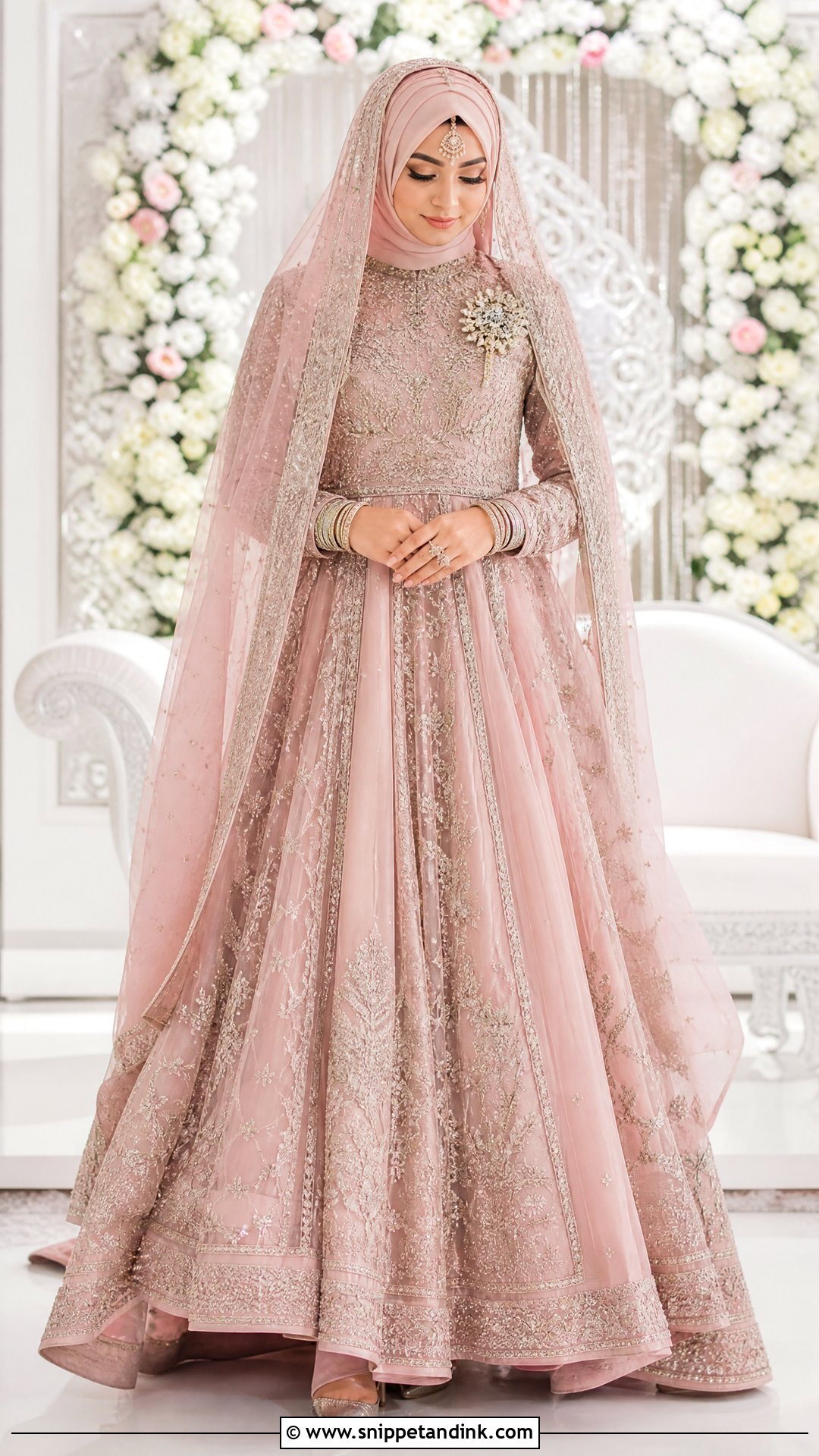
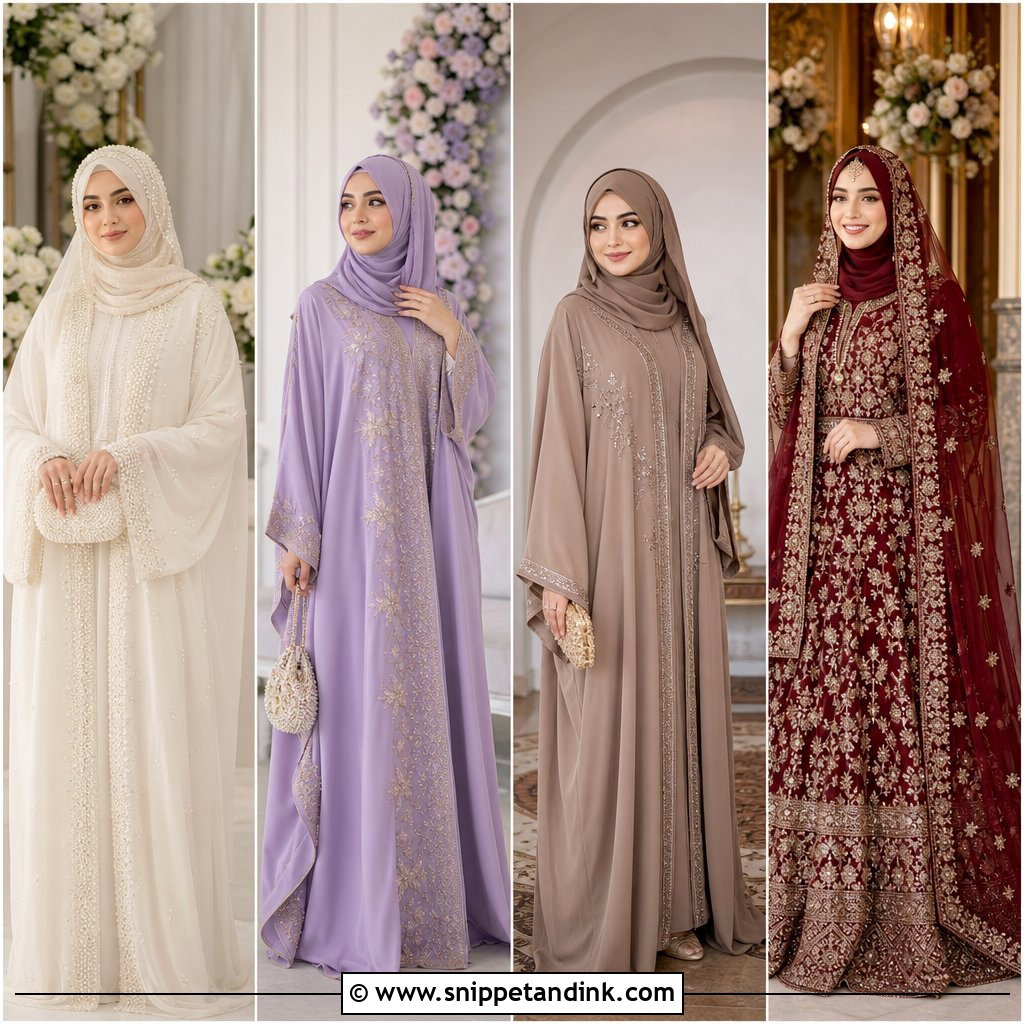
A modest pishwas can be fully covered and still look celebratory. Choose an opaque high-neck bodice, full fitted sleeves and a wide paneled skirt, with fine embroidery at the neckline, cuffs, waist and hem to give it shape. Wrap a smooth tea pink hijab close to the face and secure it under a light embroidered veil, with a long dupatta falling from the crown down the back. A jeweled headpiece, a brooch, rings and bangles take the place of a necklace. When I style hijabi brides, I use a non-slip underscarf and magnetic or flat pins rather than long straight pins near the face, so the hijab stays put during hours of photos. Closed-toe metallic heels complete it.
19. Tea Pink Plus Size Bridal Pishwas
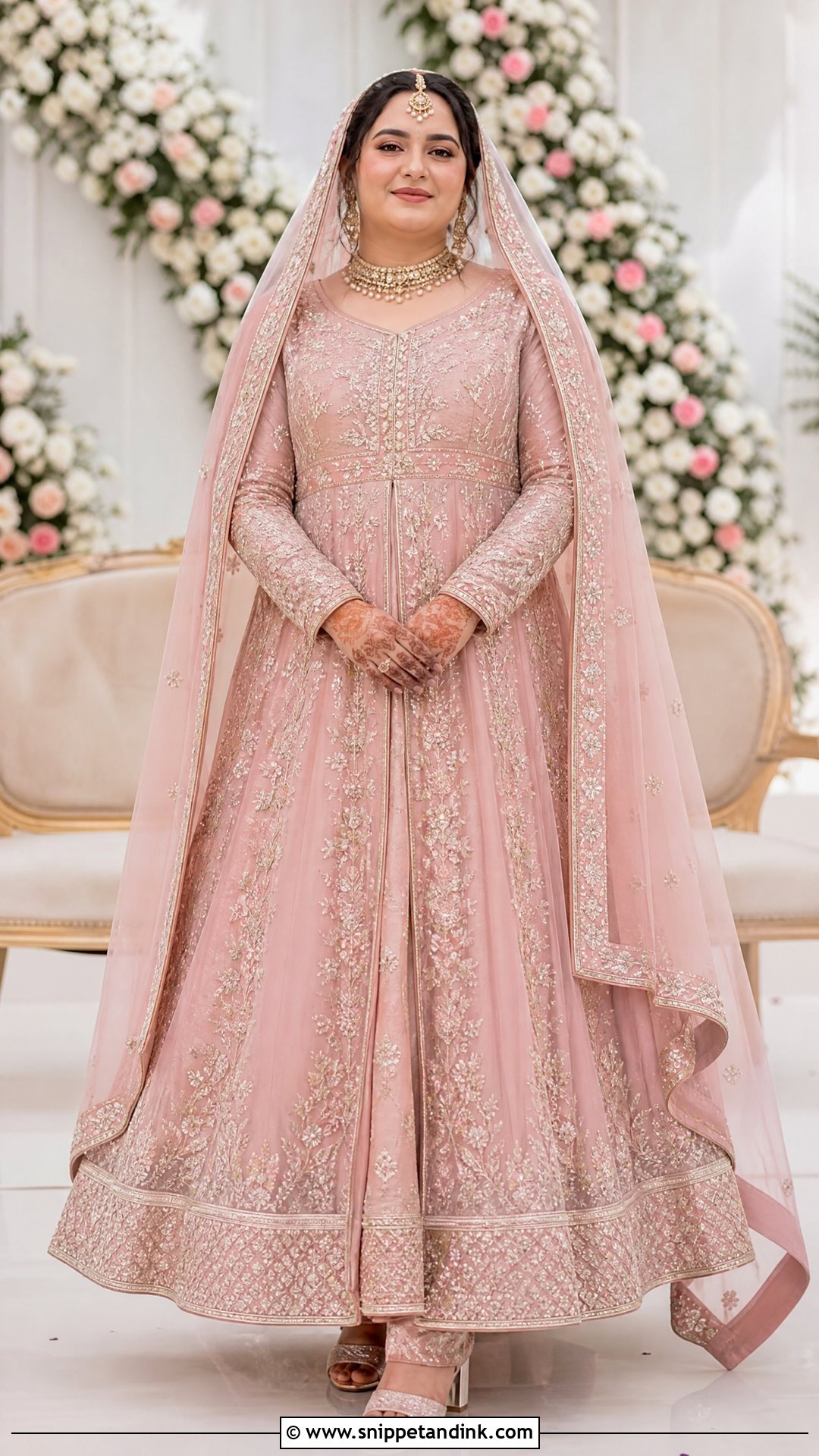
For a plus-size bride, a well-built pishwas sits comfortably for hours, which matters more than any trick. Look for a supportive bodice, a waist seam at your natural waist and panels that flare smoothly instead of gathering at the hips. A V or softly rounded neckline draws attention upward, and vertical embroidery lengthens the line. I’d put heavier work at the neckline and hem with lighter motifs through the middle. Full sleeves and an opaque lining give coverage while still letting you move. Pin the net dupatta at one shoulder with minimal volume near the face. A medium choker, drop earrings, a centered tikka and cushioned block heels or khussas finish it.
20. Simple Tea Pink Nikkah Bridal Dress
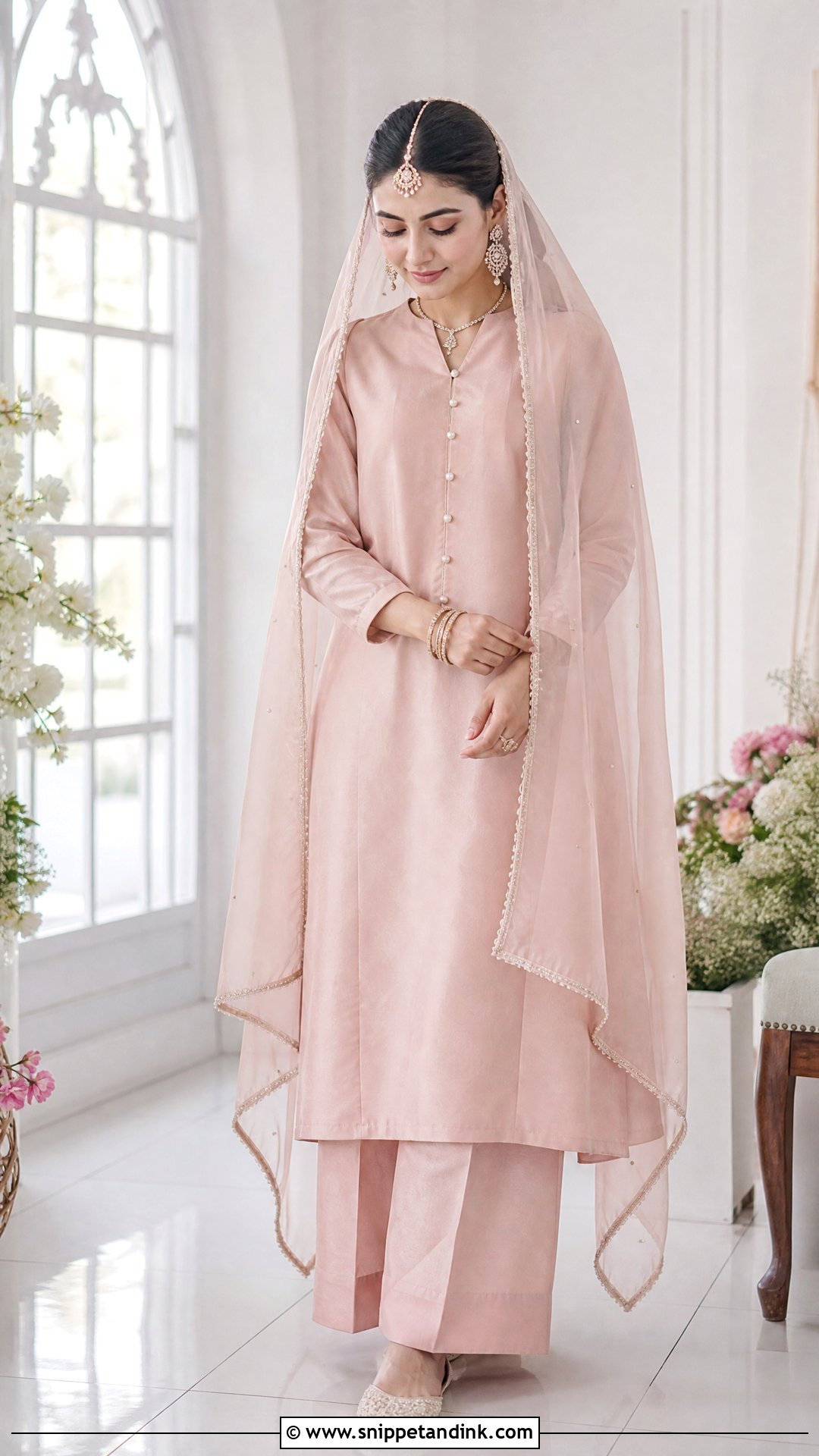
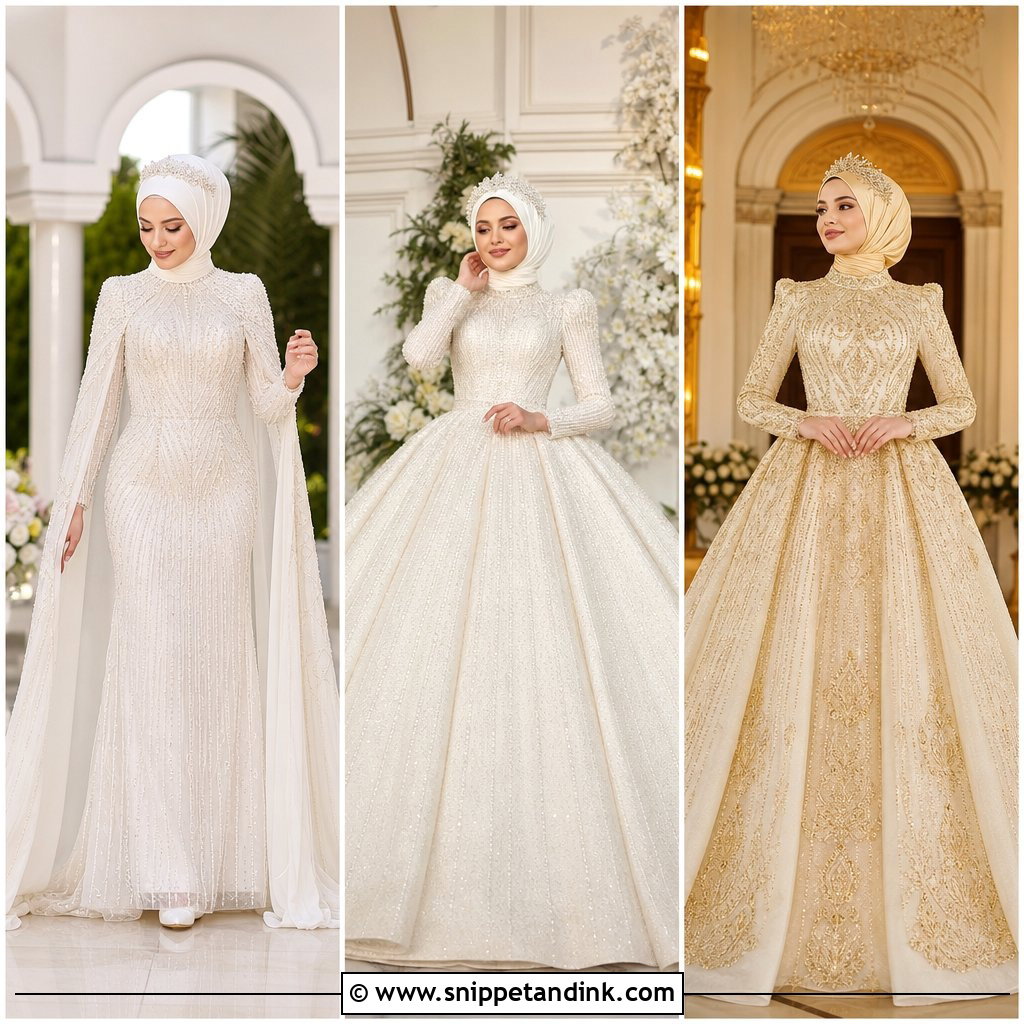
Not every bridal outfit needs dense embroidery. A simple nikkah look can be a straight silk shirt, wide-leg trousers and an organza dupatta with a fine border. Pearl buttons, light hand embroidery at the neckline and small motifs on the sleeves and hem are enough. Swap the trousers for a lightly flared gharara if you want more movement. Place the dupatta over the head and let one side fall along the arm. Pearl earrings, a slim necklace, a small tikka, matching bangles and ivory khussas keep it soft. For a home nikkah or a small daytime gathering, it’s comfortable enough to sit on the floor in, which a lehenga often isn’t.
Setting a Heavy Dupatta So It Lasts From Nikah to Rukhsati
The dupatta causes more discomfort on the day than any other piece. A fully worked net dupatta can weigh as much as the choli, and if it’s pinned in one place it slides back, tugs your hair and pulls the tikka off center. I set it in stages.
- Fix the tikka and hair first, with a firm bun or base for pins to grip.
- Fold the front edge so the embroidered border frames the face, then pin it at the crown with crossed U-pins into the bun.
- Add two more pins behind each ear, where the weight starts to pull backward.
- Secure the shoulder fall to the choli with a small safety pin hidden under the border, so it doesn’t slip when you hug people.
- Leave a little slack at the front so you can turn your head and look down at the nikah papers without the dupatta dragging.
Afterward, don’t fold dabka or zardozi pieces tightly or store them in plastic. Roll heavy embroidery with tissue or soft muslin between the layers, keep it somewhere dry, and air it out every few months. Metal threadwork tarnishes in damp air, and folds pressed into tissue fabric are hard to remove.
Lehenga, Farshi or Pishwas? Matching the Shape to the Event
Lehenga cholis and farshi ghararas carry traditional grandeur, while pishwas dresses, jacket gowns and long maxis feel softer and more current. Silver keeps tea pink cool; antique or champagne gold warms it. Before you sign off on a design, think about how heavy the fabric will feel after six hours, where the dupatta will be pinned, whether your shoes will be seen at all, and what lighting the venue has. Choose jewelry that sits around the neckline rather than on top of its embroidery. Get those decisions right and the color does the rest.
You'll Like These Ideas:



Leave a Reply