
More of the couples I bake for are asking for one tier, and I understand why. A single layer lets the budget go into flavor and finish instead of internal supports and stacking time, and it sits comfortably at a small reception. The ideas below lean on what I’m decorating most often for weddings right now: wide single tiers, old-fashioned piping, fresh flowers, pearl finishes, sculptural shapes, and a smaller cake backed up by a dessert table. I’ve added notes on how each one behaves once it leaves my kitchen, because a cake that looks right in a picture still has to travel, sit out and be cut.
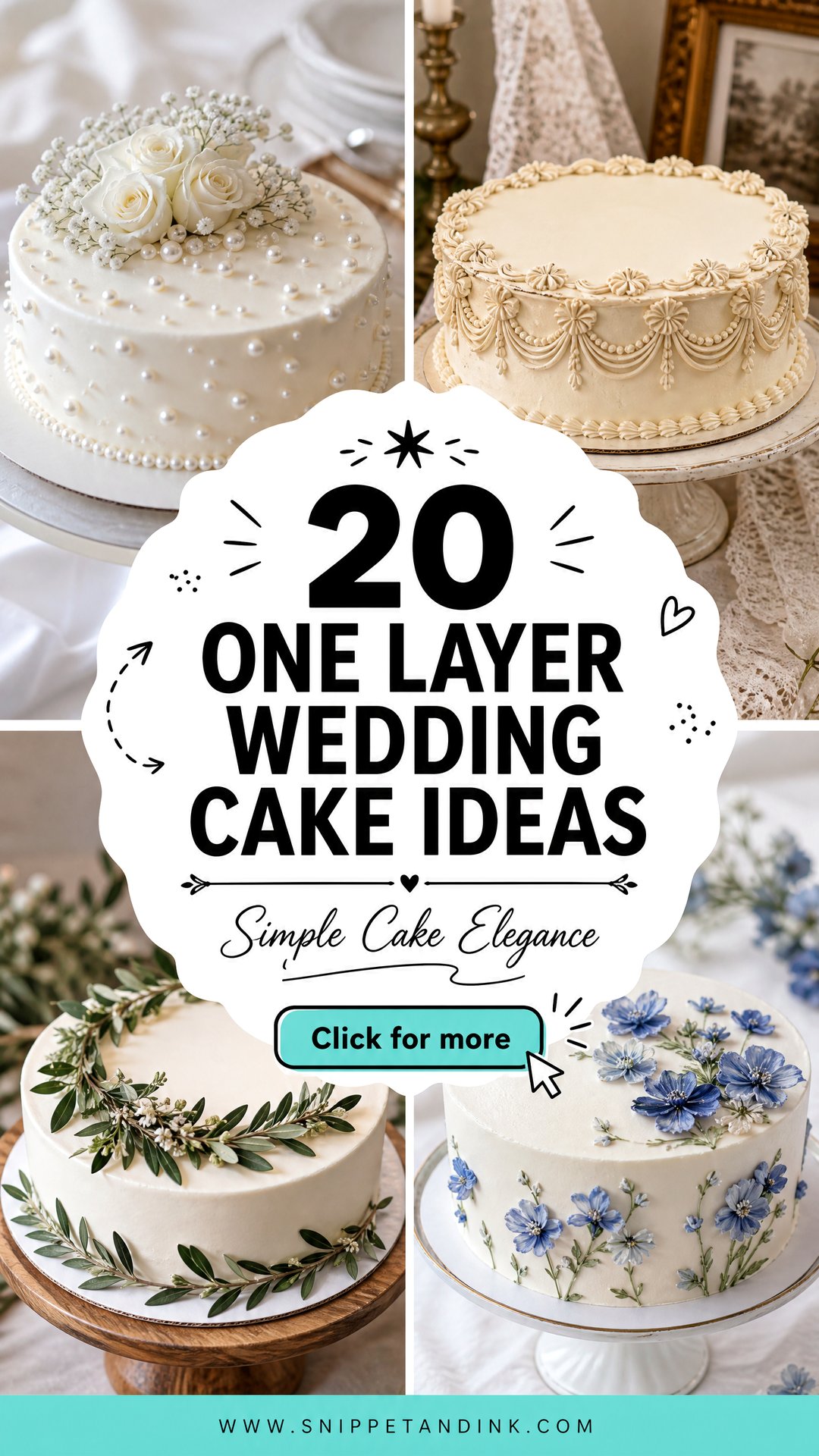
How Many Guests One Tier Actually Feeds
This is the first question I answer at every consultation, because a single tier feeds fewer people than most couples assume. Wedding slices are cut narrower than party slices, usually about one inch by two inches across a cake around four inches tall. Using that cut, rough counts for a round cake look like this, though every baker’s chart varies a little:
- 6 inch: around 12 servings, enough for an elopement or a cake just for the two of you
- 8 inch: around 24 servings
- 10 inch: around 38 servings
- 12 inch: around 56 servings, and about as wide as I’d go before a single tier starts to look flat
A square cake of the same width gives you a few more pieces than a round one. If your guest count is higher than the chart, you don’t need a second tier. A plain kitchen cake in the same flavor, cut out of sight, is the cheapest way to cover the gap.
Making a Single Tier Look Taller
Ask for an extended-height cake, about six inches tall instead of four, which adds height and servings without stacking. A raised stand does the rest. I’d put the cake on a stand that lifts it at least a few inches off the table, since a low cake disappears behind centerpieces and candles in photos.
1. One Layer Wedding Cake With Fresh Flowers
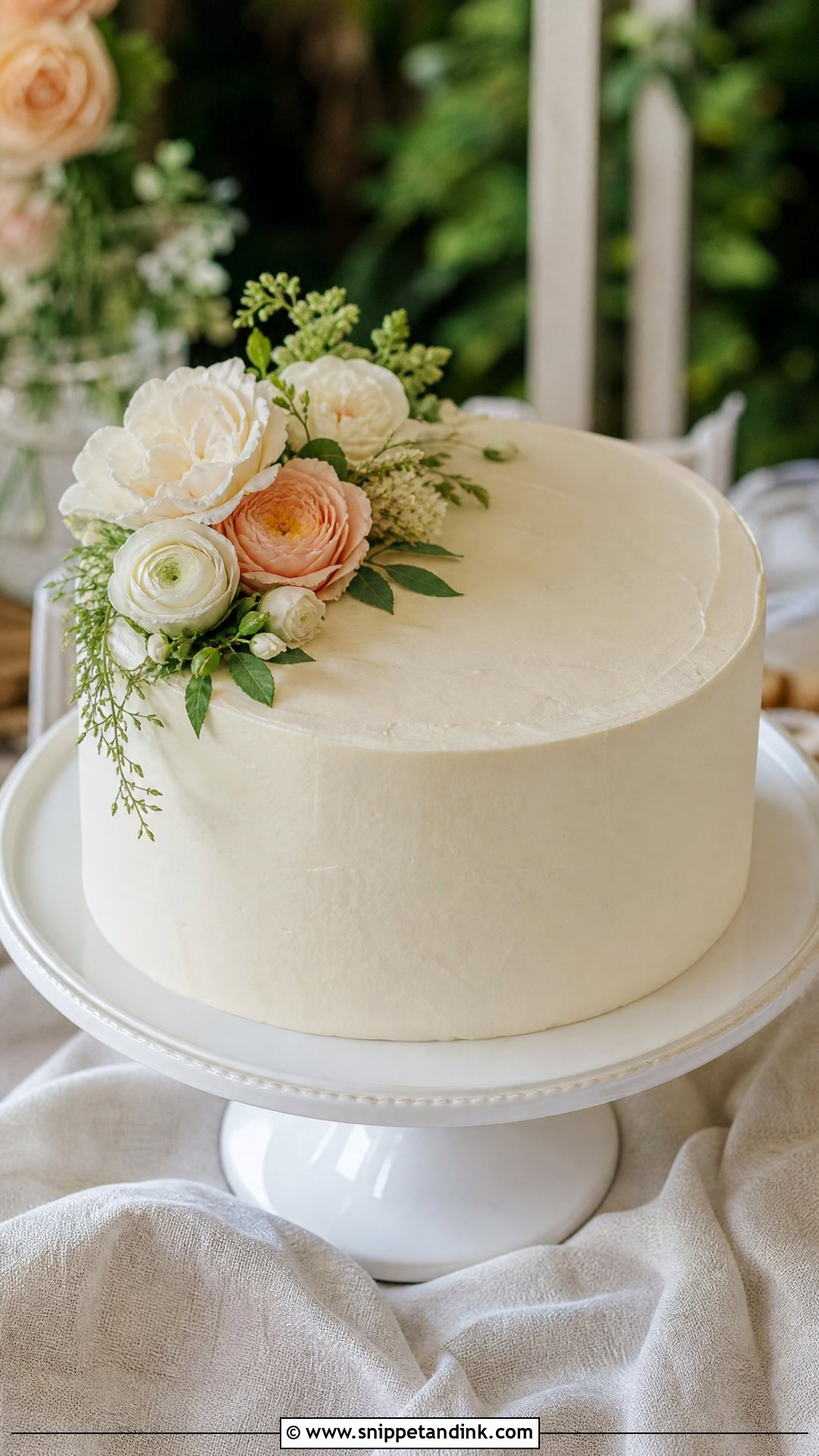
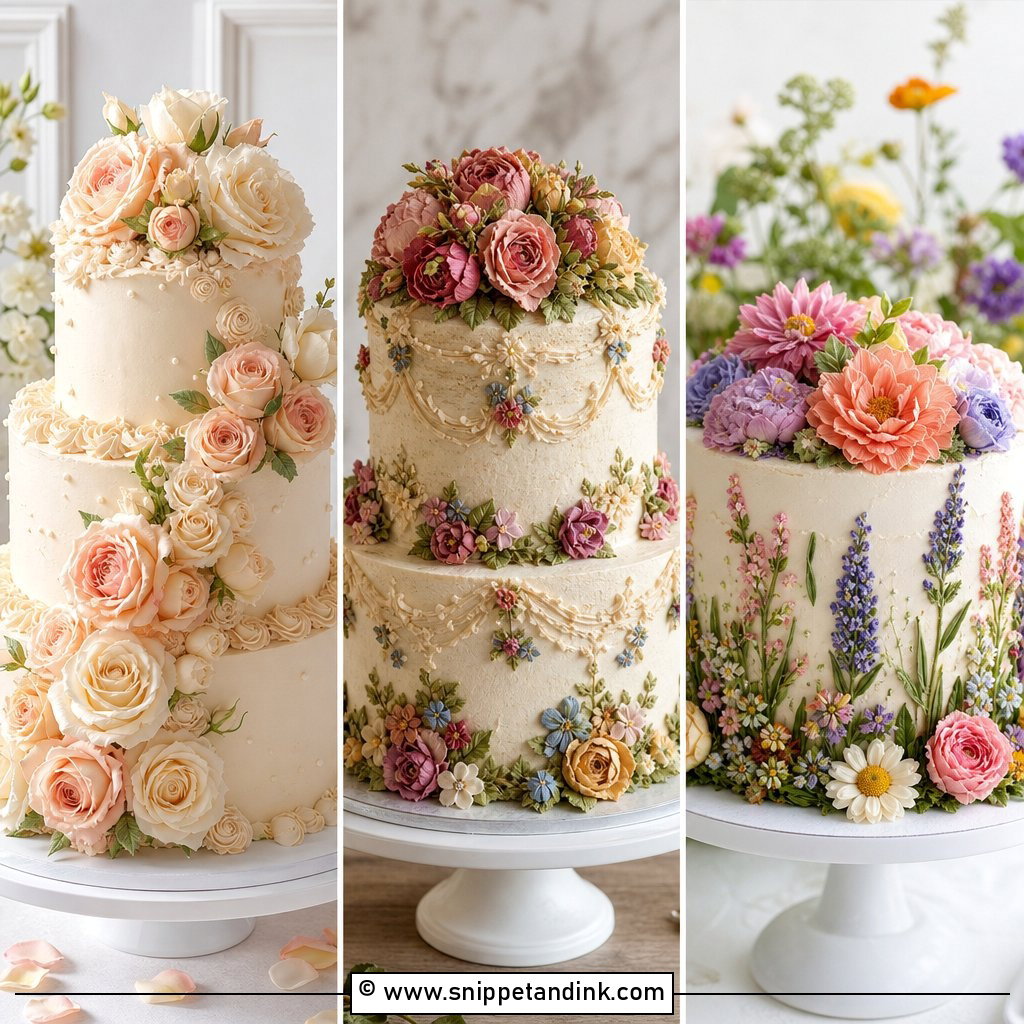
Fresh flowers are the quickest way to give a small cake some presence. I keep the base plain, usually ivory buttercream or smooth fondant, and let the blooms carry the color and height. Roses, ranunculus, sweet peas, cosmos and orchids all sit well on cake, but stems never go straight into the sponge: I wrap them in floral tape and push them into straws or picks so sap never touches anything a guest eats. If your florist is supplying them, ask for unsprayed flowers and have them arrive the morning of, not the night before. An off-center cluster reads more modern than a crown and leaves room for the knife.
2. One Layer Wedding Cake With Buttercream
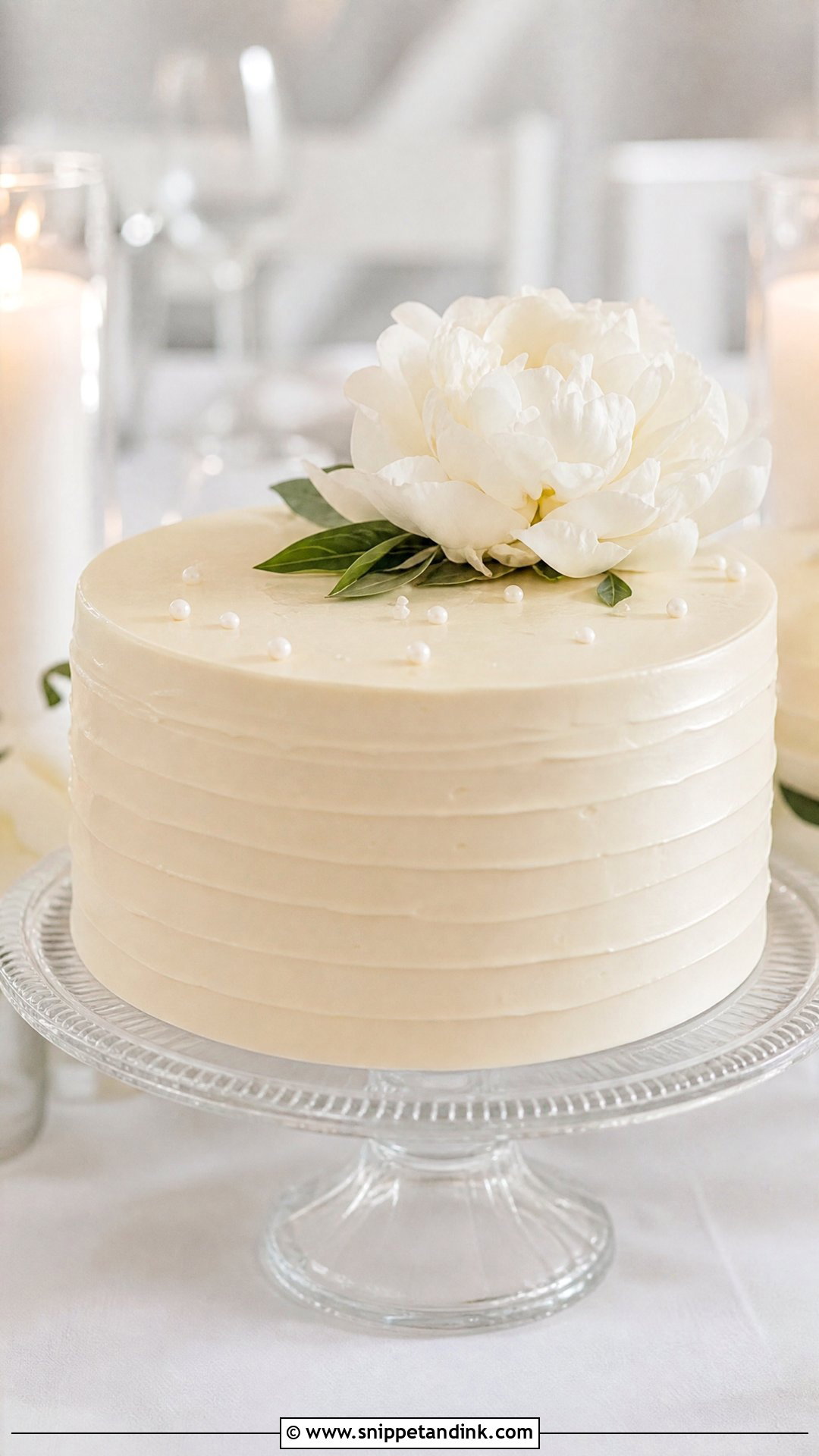
Buttercream is what I’d recommend to most couples choosing one tier, because a single layer is where a handmade finish looks best. American buttercream crusts and holds up to a bump in the car; Swiss meringue is silkier and pipes cleaner, but it softens faster in a warm room. I can take it to a sharp smooth edge, comb a light texture into it, or pipe the borders. One blossom or a ring of pearls is usually enough. For an outdoor reception, the conversation with your baker should cover shade, how long the cake sits before cutting, and whether the table is in afternoon sun.
3. One Layer Wedding Cake With Berries
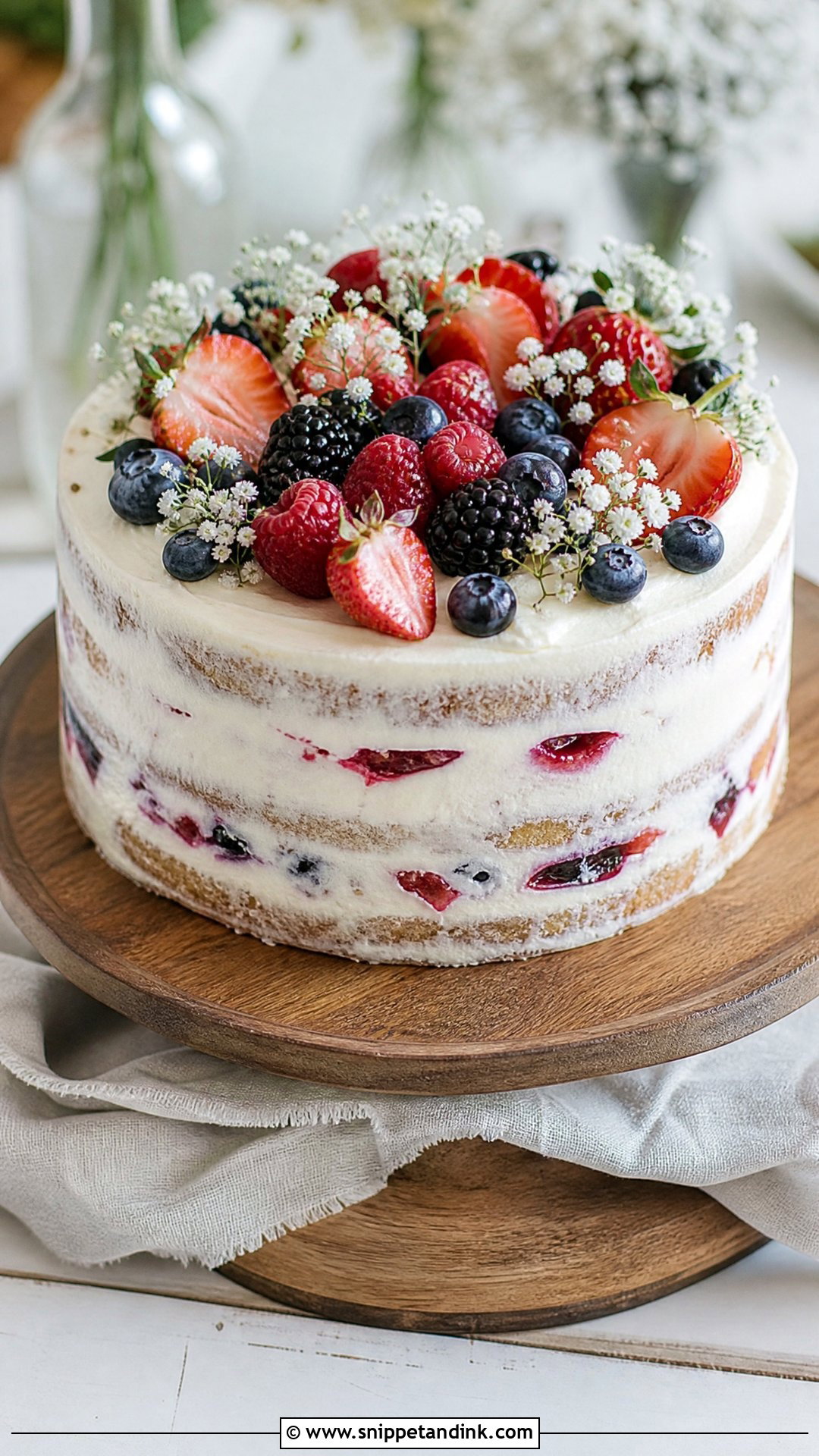
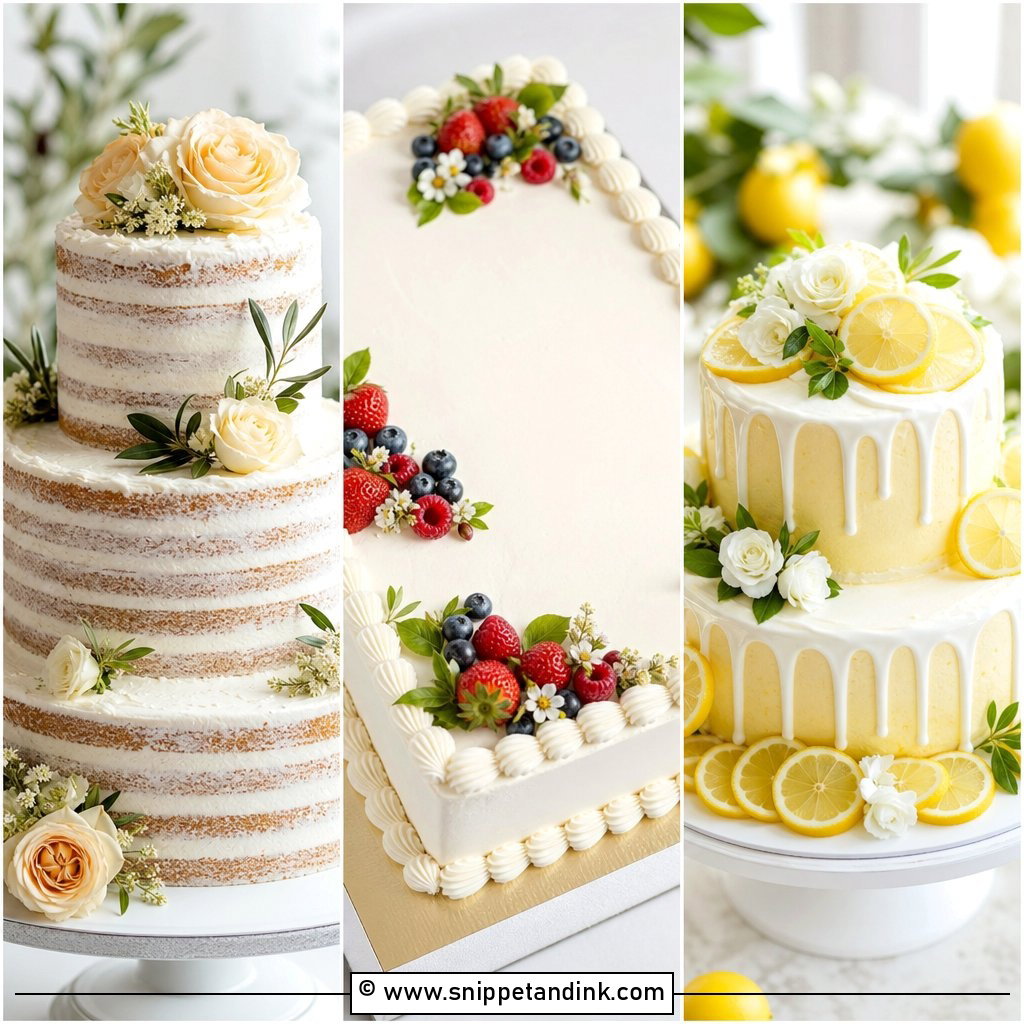
Berries add color without any sugar work, which keeps the cost down. Strawberries, raspberries, blueberries and blackberries suit a semi-naked finish, plain vanilla, lemon or almond. The catch is moisture: cut strawberries weep within an hour or two, so I use whole berries and add them as close to serving as I can, often at the venue. A loose crescent or a small tumble down one side looks more natural than a full pile. Powdered sugar dusted on top will dissolve into wet fruit in a warm room, so I save that for indoor, air-conditioned receptions.
4. One Layer Wedding Cake With Pearls
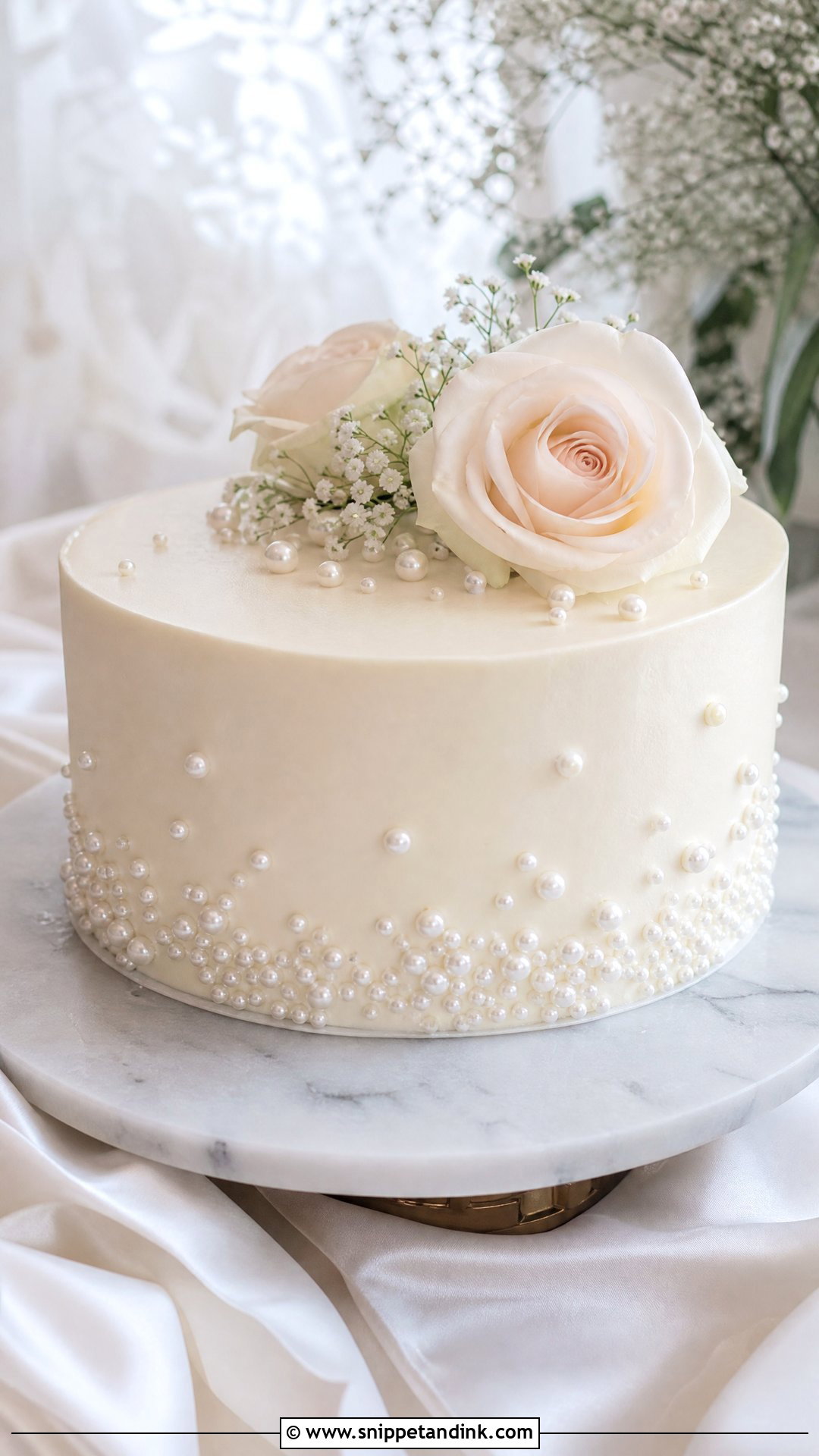
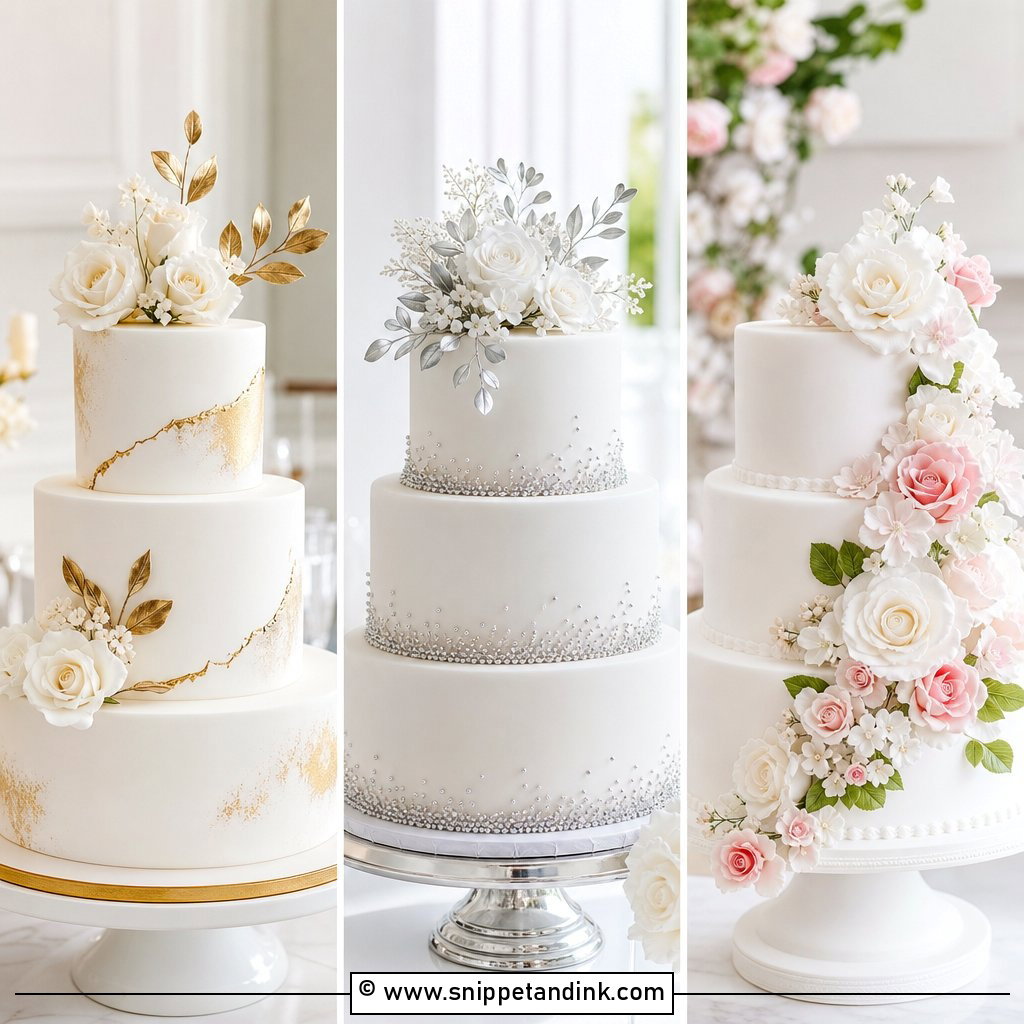
Edible pearls do the decorating on their own when the base is simple. I set them in rows along the bottom edge, scatter a few up the sides, or press them into a lattice over smooth buttercream while it’s still tacky enough to grip. Ivory, blush and champagne bases suit them best. Larger sugar pearls are hard on teeth, so I keep anything bigger than a few millimeters to the border, where guests can leave it on the plate. On a round cake they look classic; on an oval or heart they lean more modern.
5. One Layer Wedding Cake With Vintage Piping
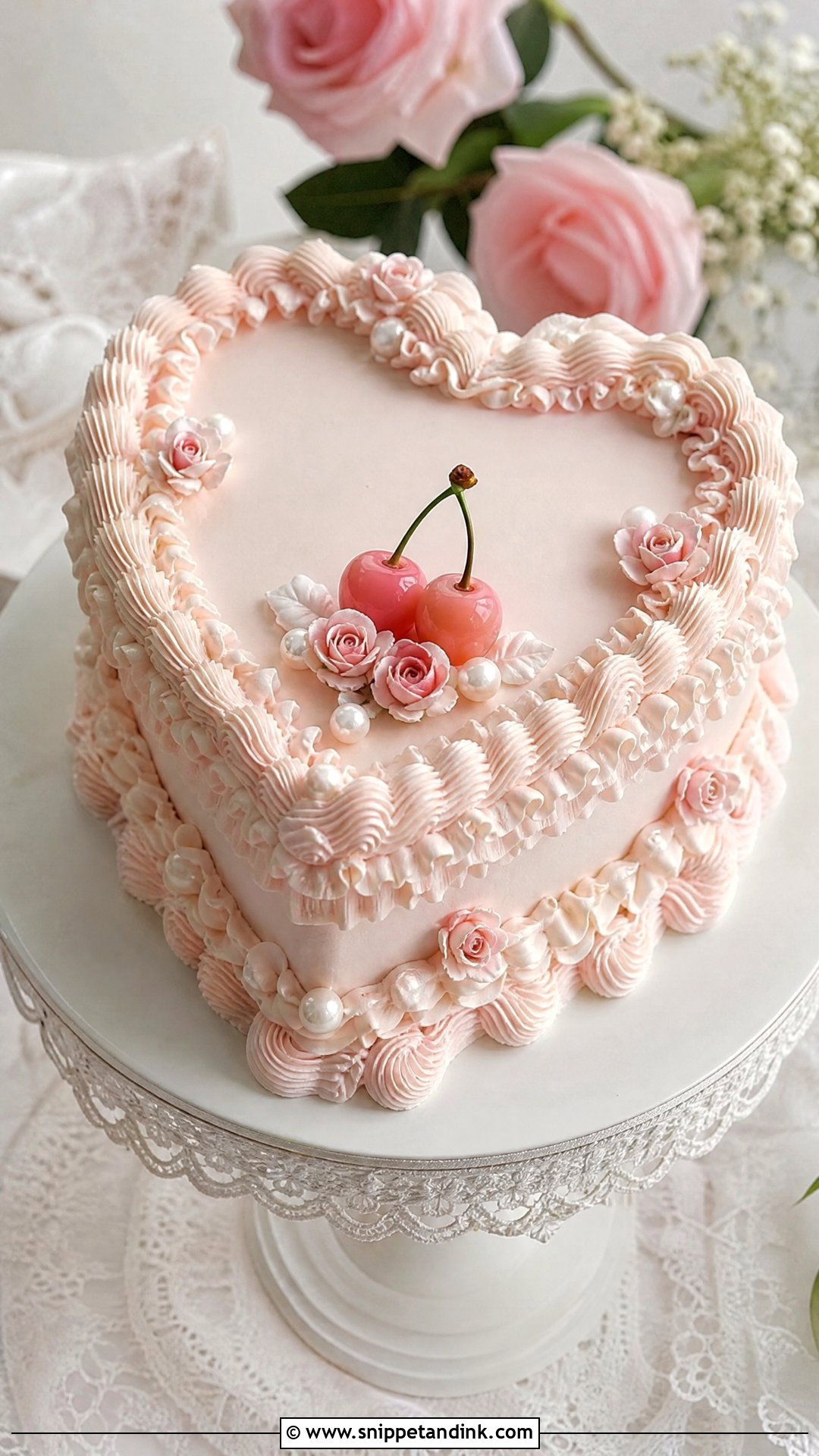
Piped borders are the bakery-window look a lot of couples bring me photos of right now: shell borders, ruffled edges, tiny rosettes and swags. Balance matters more than quantity. On a single tier, the piping should frame the top and base rather than climb every inch, or the cake starts to look busy from across the room. Ivory and blush keep it romantic, while pale blue or butter yellow make it playful. Piping in buttercream needs a cool room to hold its ridges, which is worth knowing for summer retro-inspired celebrations or a courthouse lunch. A pair of cherries or a small custom topper adds personality without crowding it.
6. One Layer Wedding Cake With Gold Leaf
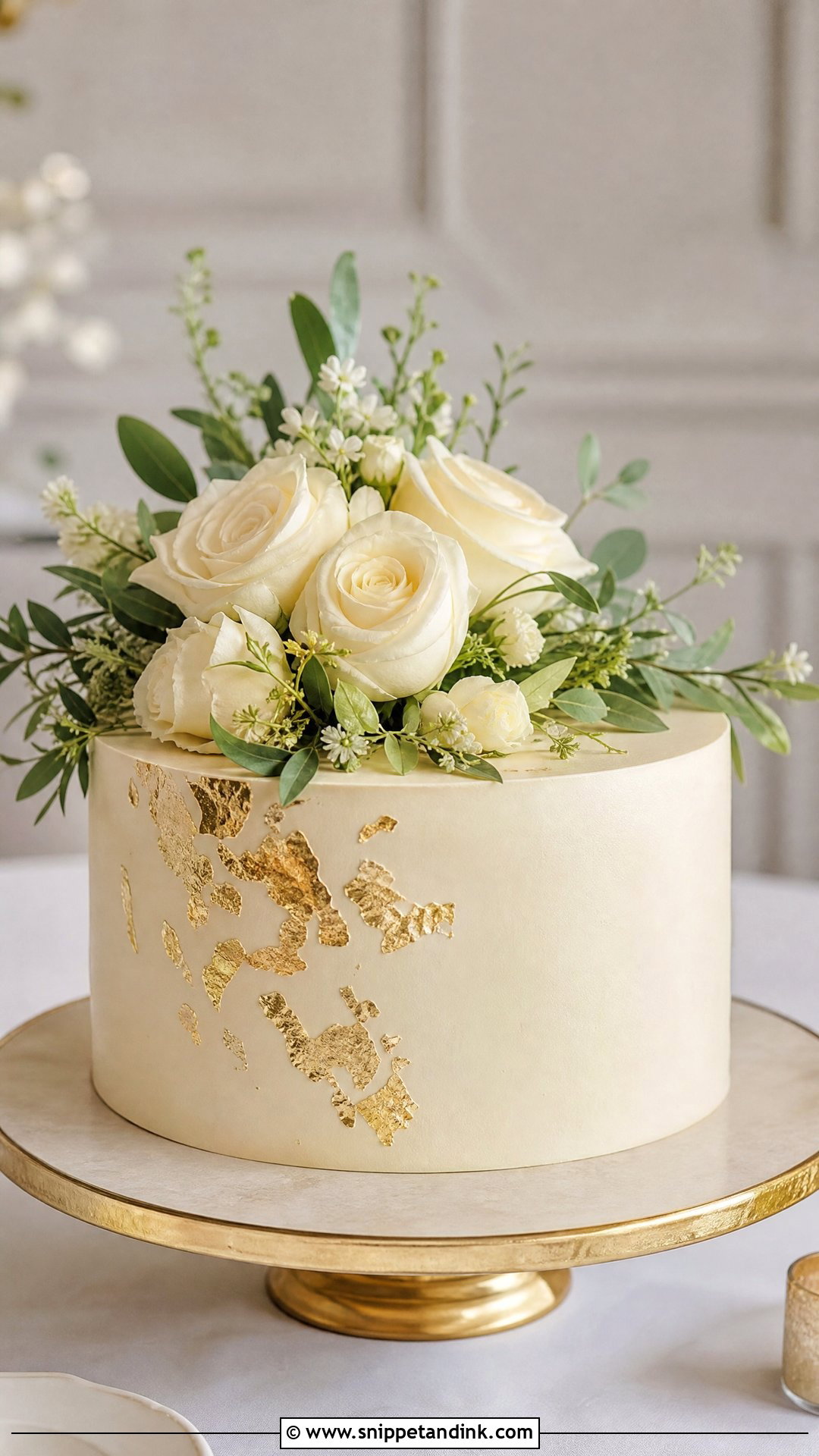
Gold leaf works because a little goes a long way. I apply it with a dry brush in a few deliberate patches, along one side or around the top edge, rather than flecking it everywhere. It sits best on a firm surface: fondant, chilled ganache or a well-crusted buttercream, since it wrinkles on anything soft. Ivory, caramel and dark chocolate all make it glow under evening light, especially next to candles on the cake table. If you plan to eat the gilded parts, make sure your baker is using edible-grade leaf and not craft foil.
7. One Layer Wedding Cake With Dried Flowers
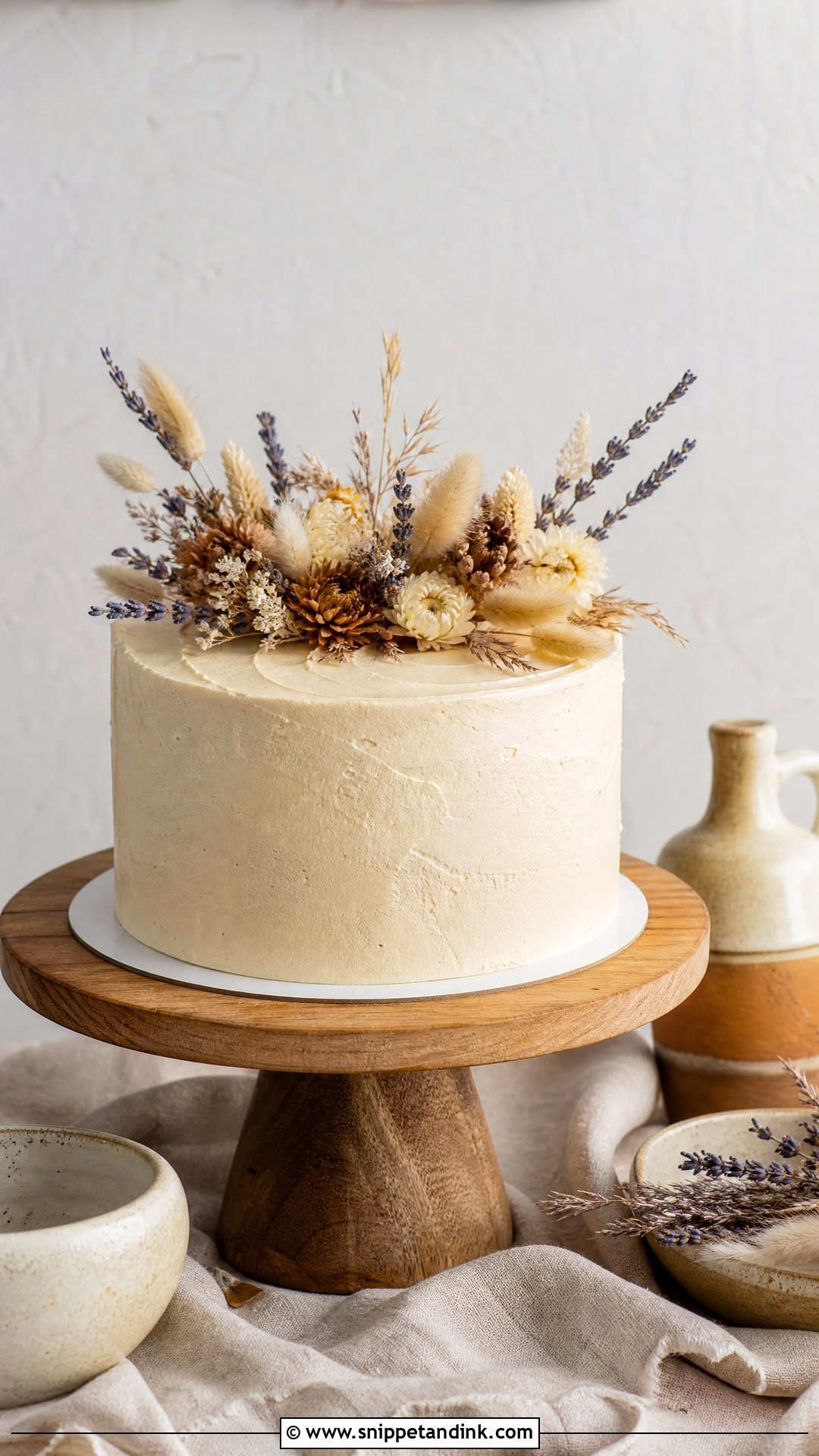
Dried flowers give a soft, earthy texture that suits a neutral palette. Pampas grass, dried lavender, bunny tails, strawflowers and pressed petals all hold their shape for days, which makes them easier than fresh blooms for a cake that has to sit out. Most dried stems aren’t food-safe, so I place them in a cluster on a small piece of parchment or in picks, never pressed into the icing. Beige, taupe or pale blush buttercream keeps the arrangement looking cohesive. Pampas sheds, so I trim and shake it outside before it goes anywhere near the cake.
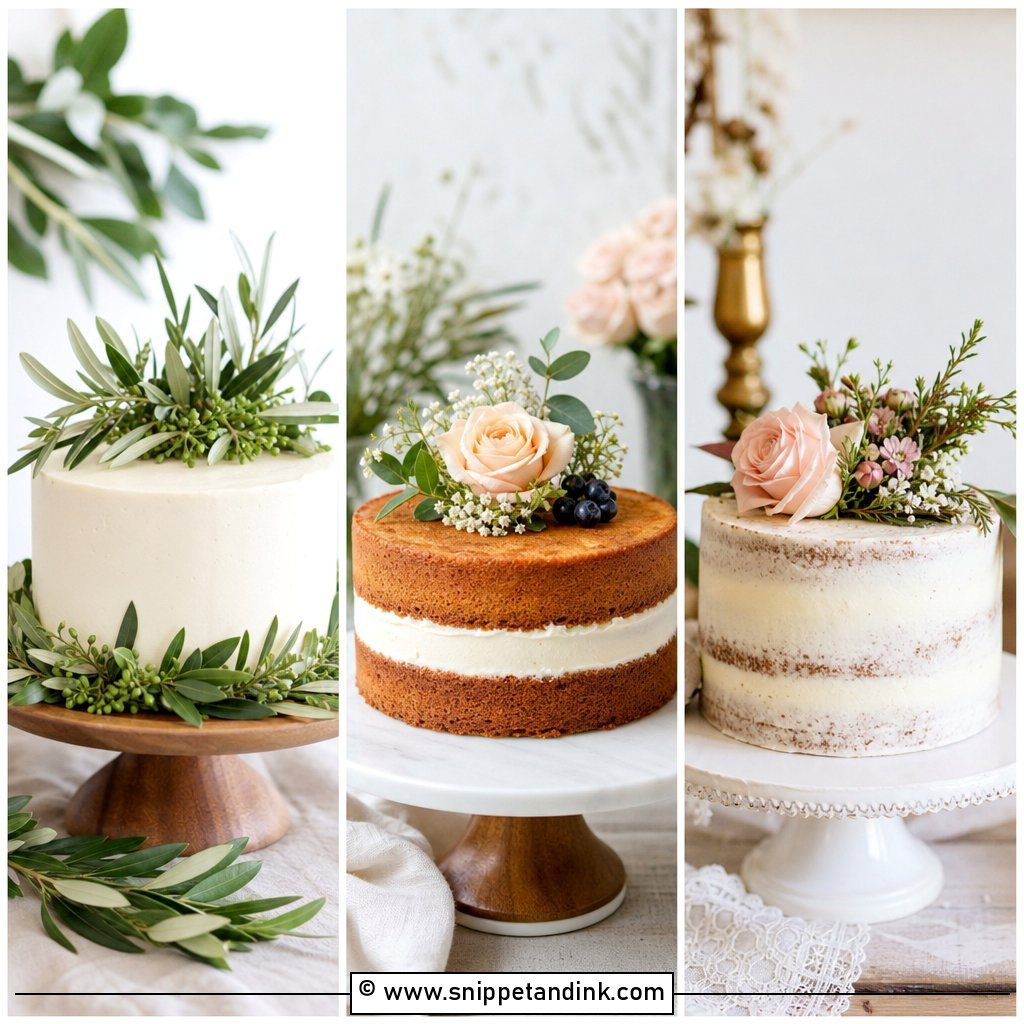
8. One Layer Wedding Cake With Greenery
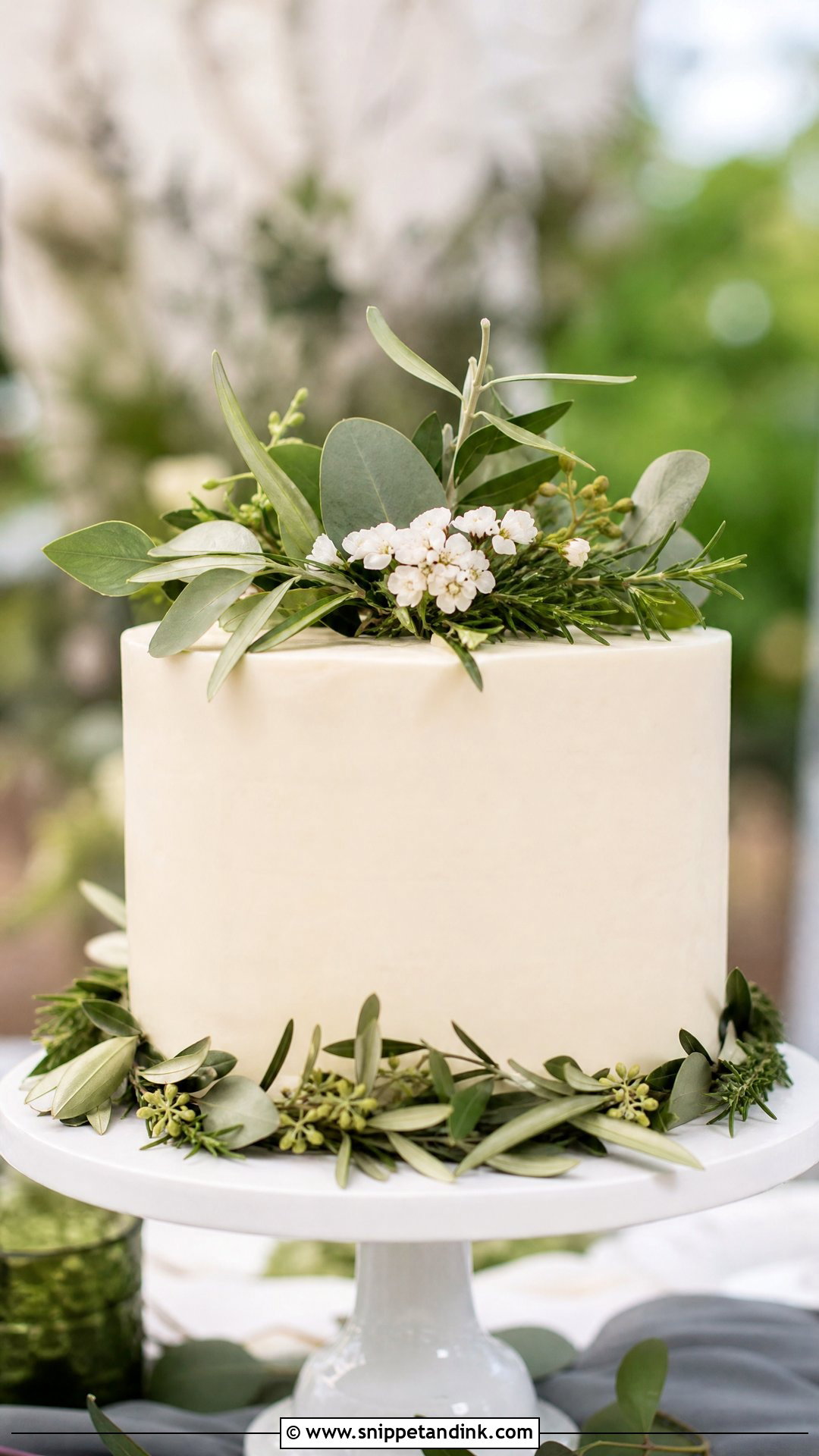
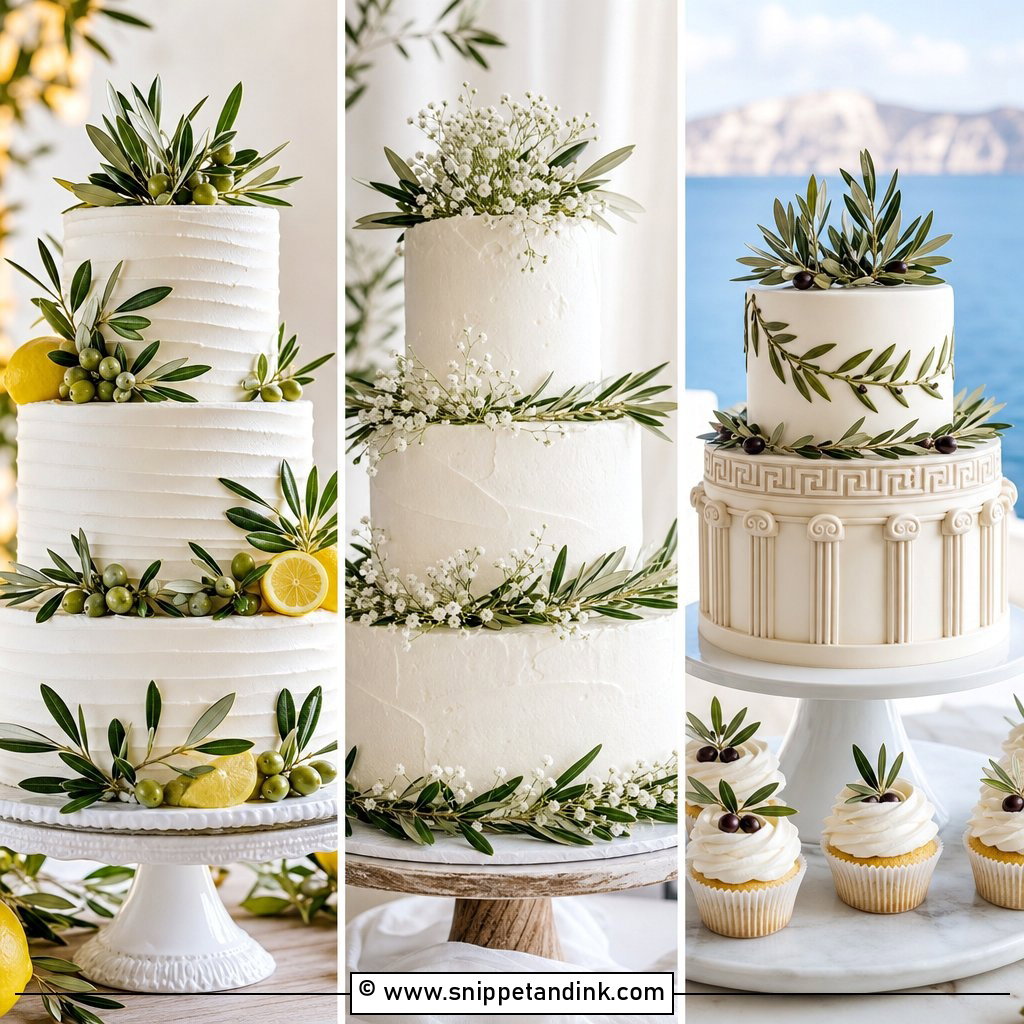
Greenery on its own suits couples who want a cake that looks picked rather than arranged. Olive leaves, rosemary and ruscus are the stems I reach for; eucalyptus is common on cakes, but it’s toxic if eaten, so I keep it off anything guests might nibble or use a faux version. A loose wrap around the base or a single arc across the top is plenty. White buttercream makes the green read crisp in photos, and a few tiny berries or white blooms are the most I’d add.
9. One Layer Wedding Cake With Ganache
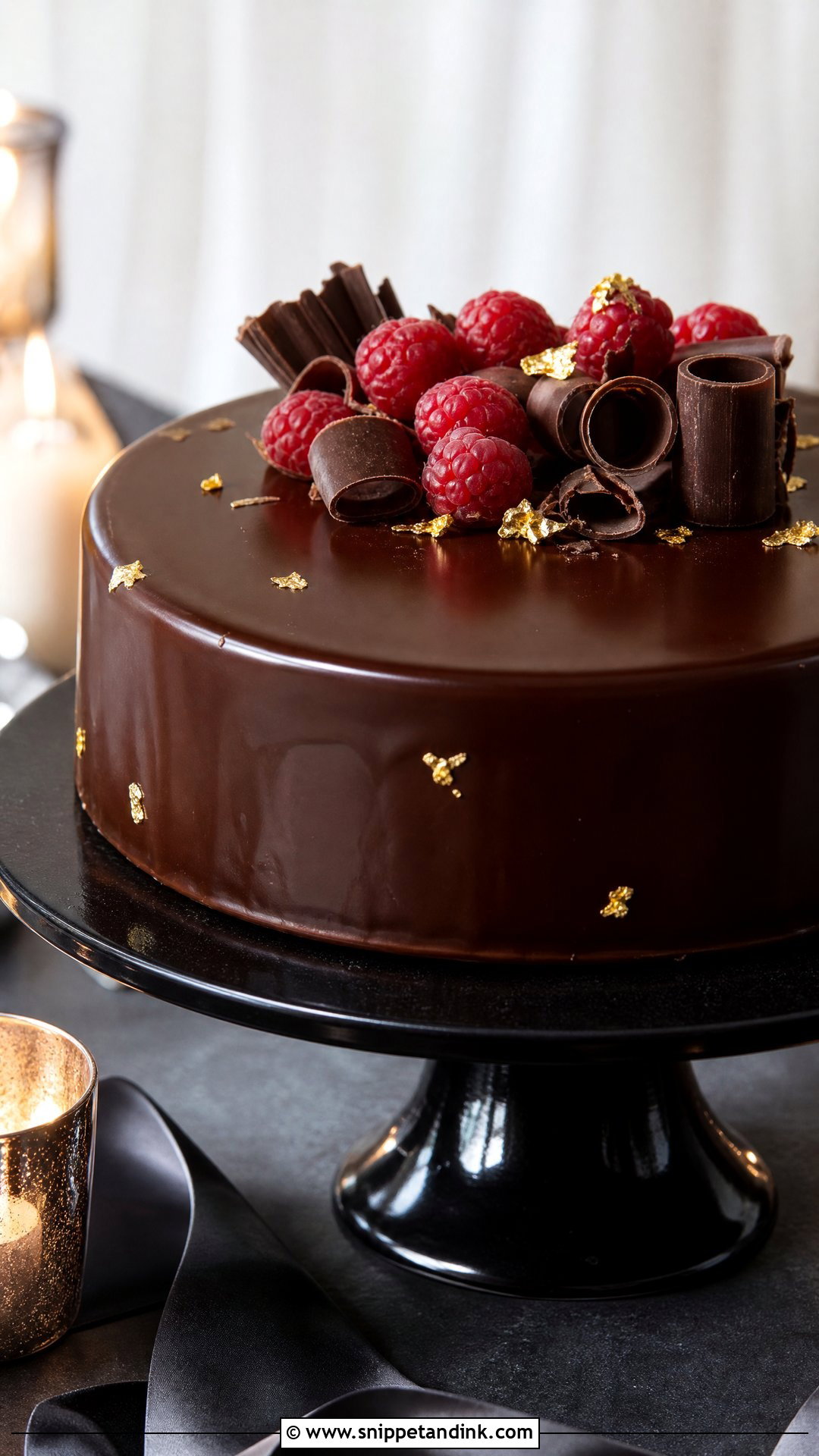
Chocolate ganache is my pick for couples who don’t want white buttercream but still want a formal finish. Dark chocolate ganache sets firm and glossy and holds a sharp edge better than any frosting in warm weather; milk and white chocolate versions are softer and more fragile. Raspberries, figs, cherries and gold leaf all sit well against it. A single tier has no height to hide behind, so the edge has to be clean and the flavor has to be good, and ganache delivers both.
10. One Layer Wedding Cake With Lemon
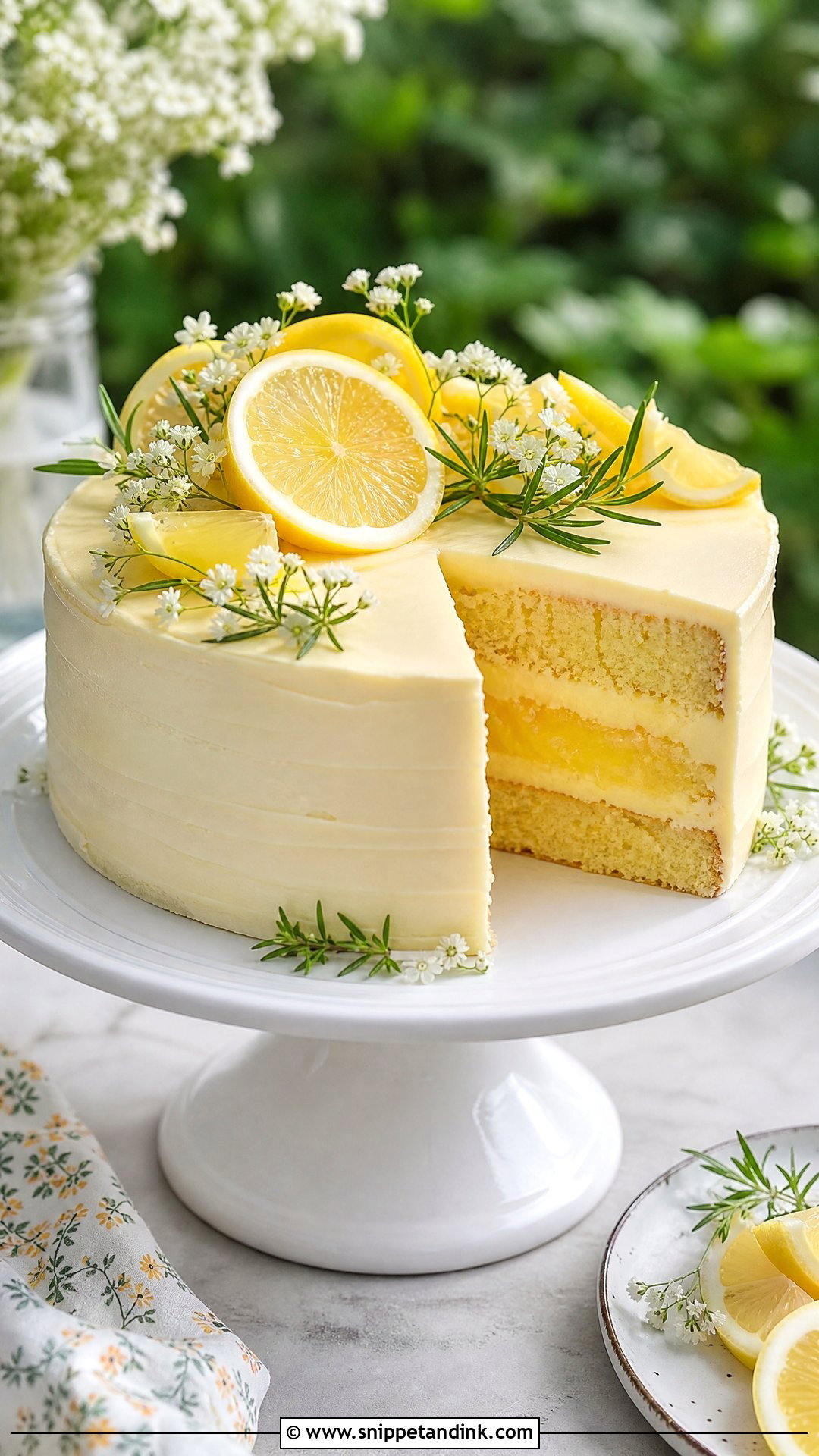
Lemon is the flavor I suggest when the guest list is mixed, because almost nobody dislikes it. I pair the sponge with lemon curd and a vanilla buttercream, or keep it lighter with a thin glaze. Curd is soft, so I pipe a buttercream dam around each layer to stop it bulging out the sides on a warm day. Fresh lemon slices look pretty but leak juice into the frosting within a few hours; candied slices or small white flowers hold up better. Keep the frosting pale so the citrus details look refined rather than farmhouse.
11. One Layer Wedding Cake With Red Velvet
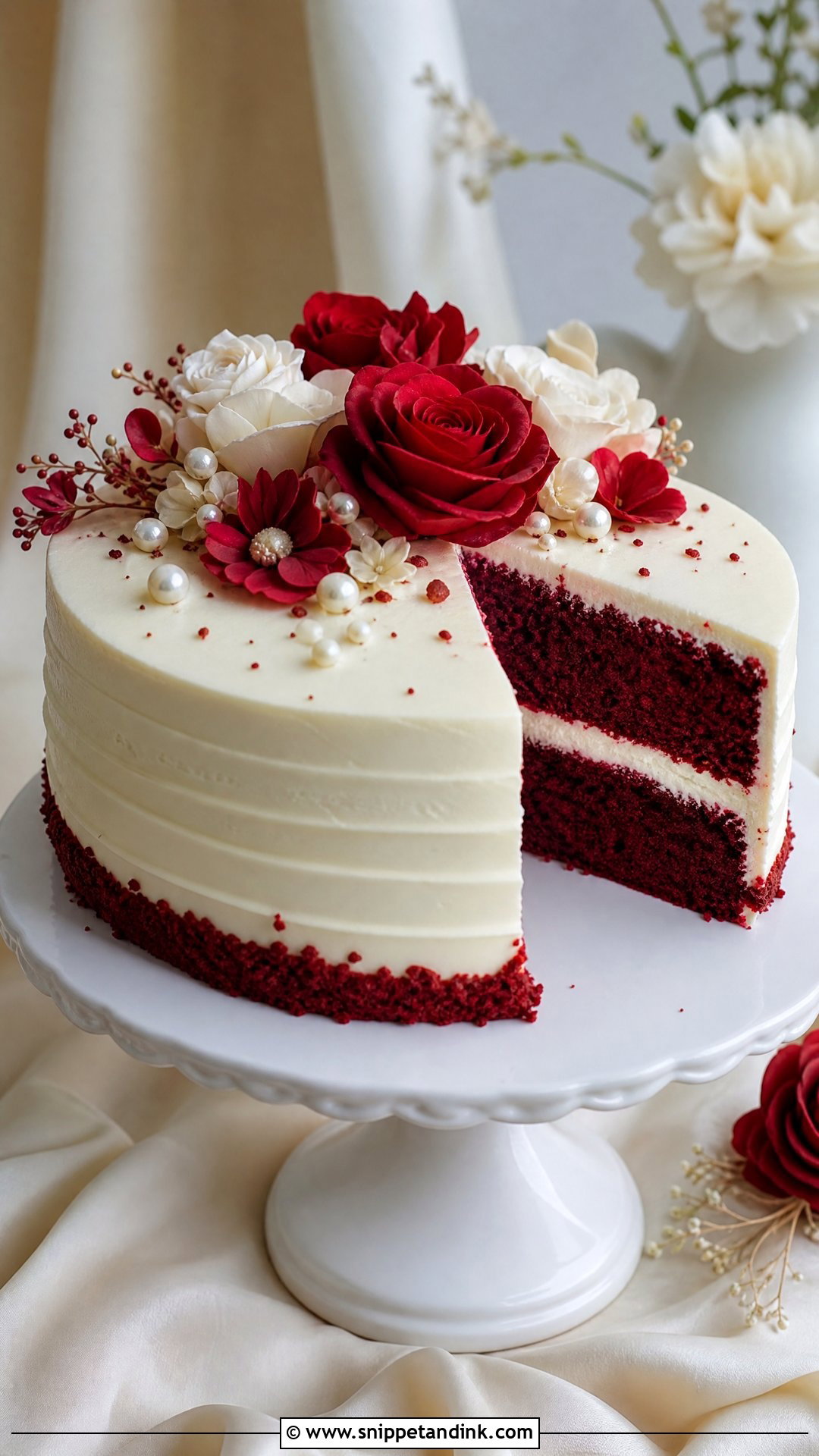
Red velvet is all about the slice. The crumb is the decoration, so I keep the outside quiet: smooth white cream cheese frosting, a crumb border at the base or a simple piped edge. Cream cheese frosting is the trade-off. It’s softer than buttercream and needs refrigeration, so this cake shouldn’t sit out for hours before cutting. A few sugar flowers or pearls on top are enough to make it read as a wedding cake.
12. One Layer Wedding Cake With Carrot Cake
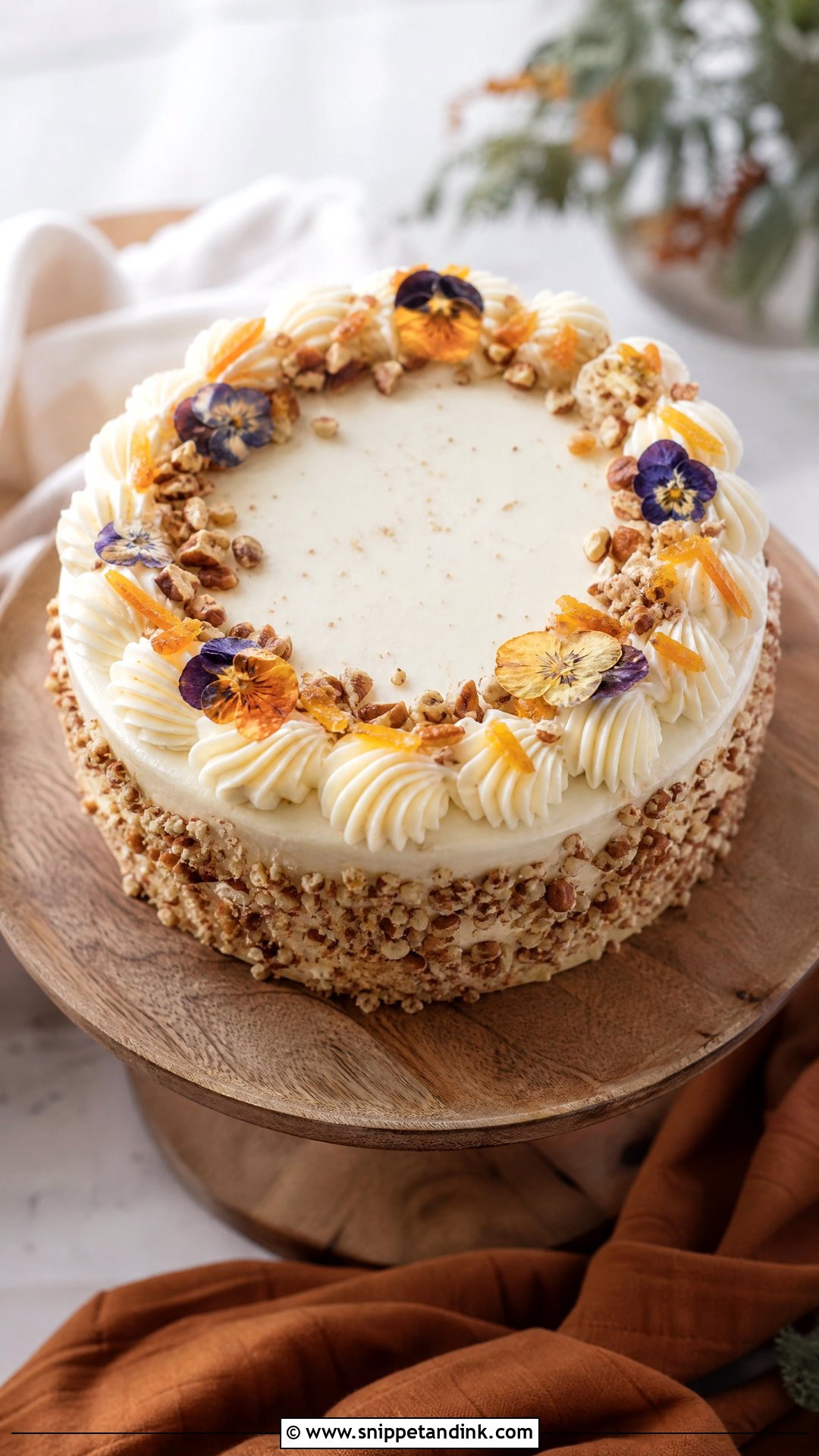
Carrot cake is the flavor guests talk about afterward, and it’s sturdier than people expect, which makes it easy to transport. Its homey reputation means the finish has to do the formal work. A smooth cream cheese frosting, a neat piped border and a plain stand pull it away from the bake-sale look. Chopped pecans or walnuts suit it, but nuts on the outside rule out some guests, so I’d keep them in the filling or flag them on a small sign. Candied orange peel or pressed flowers add color without fuss.
13. One Layer Wedding Cake With Almond
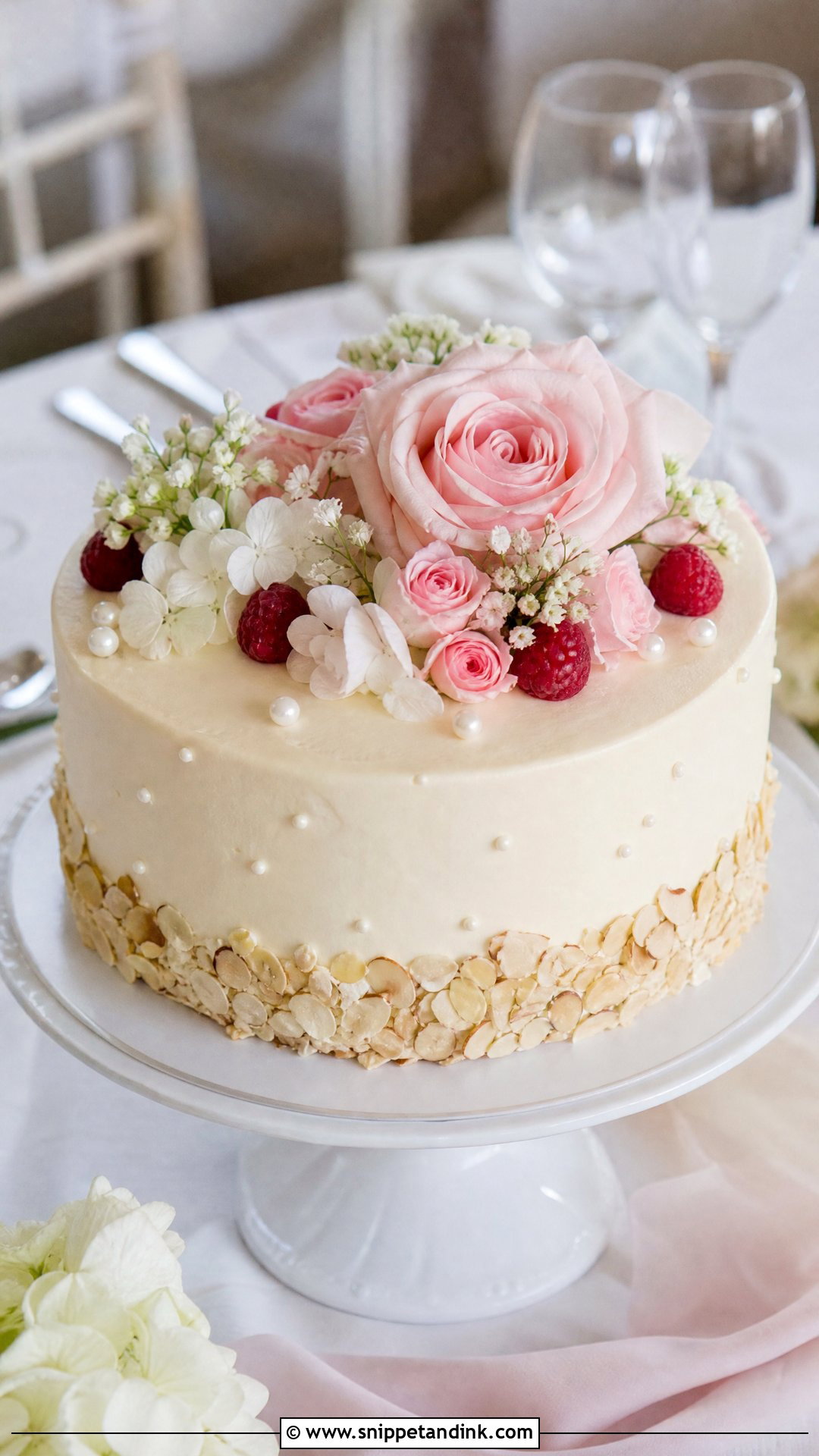
Almond tastes more special than plain vanilla without being divisive. It pairs with raspberry filling, apricot jam, cherries or a white chocolate frosting, and the design can stay very simple: smooth ivory buttercream, a few sugar pearls and a small cluster of pale flowers. The one thing I always raise is allergies. An almond cake means every guest with a nut allergy skips dessert, so I suggest having a nut-free option on the dessert table if this is your only cake.
14. One Layer Wedding Cake With Coconut
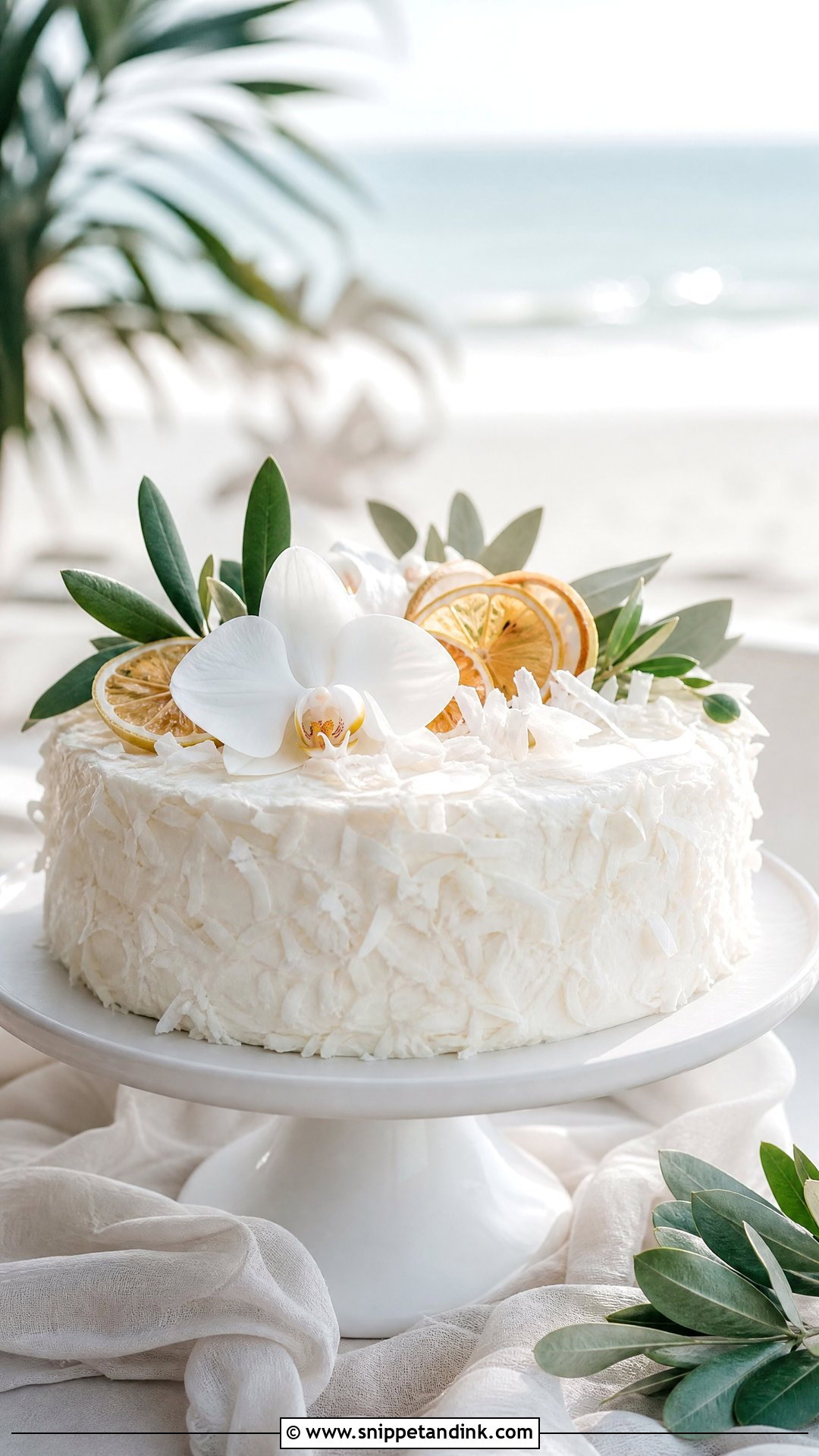
Coconut gives a single tier texture and a soft white surface in one step. A coconut cake can be finished in fluffy buttercream, whipped frosting or cream cheese frosting, then pressed with toasted or white flakes. The flakes also hide small imperfections, which helps if the cake has a long drive. Whipped frosting is the risky choice here; it slumps in heat, so I’d only use it indoors. Some guests dislike shredded coconut, so I keep the coconut on the outside and the crumb itself smooth. Orchids or citrus finish it for a beach or summer reception.

15. One Layer Wedding Cake With Pressed Flowers
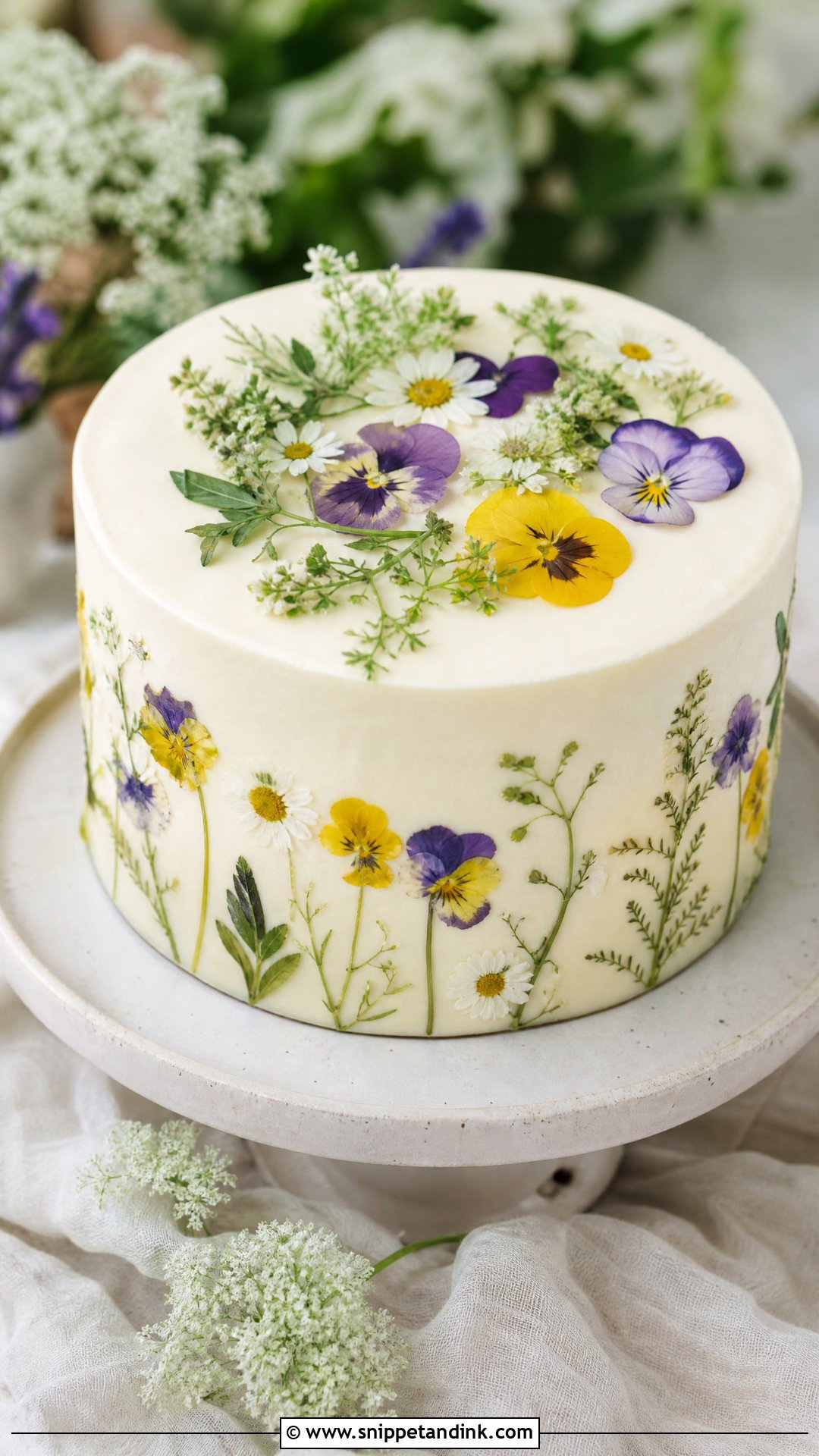
Pressed flowers lie flat against the frosting like a botanical print, which is why they look handmade rather than arranged. They need a smooth surface, so I use fondant or a well-chilled buttercream in white or a pale pastel, and I press them on with a dab of piping gel. Only edible flowers belong here because they sit directly on what guests eat: violas, pansies, cornflowers and calendula are the usual ones. A full wrap takes time to apply, so a single cluster is the cheaper option, and it reads more modern. They show up well from overhead and from the side.
16. One Layer Wedding Cake With Black And White
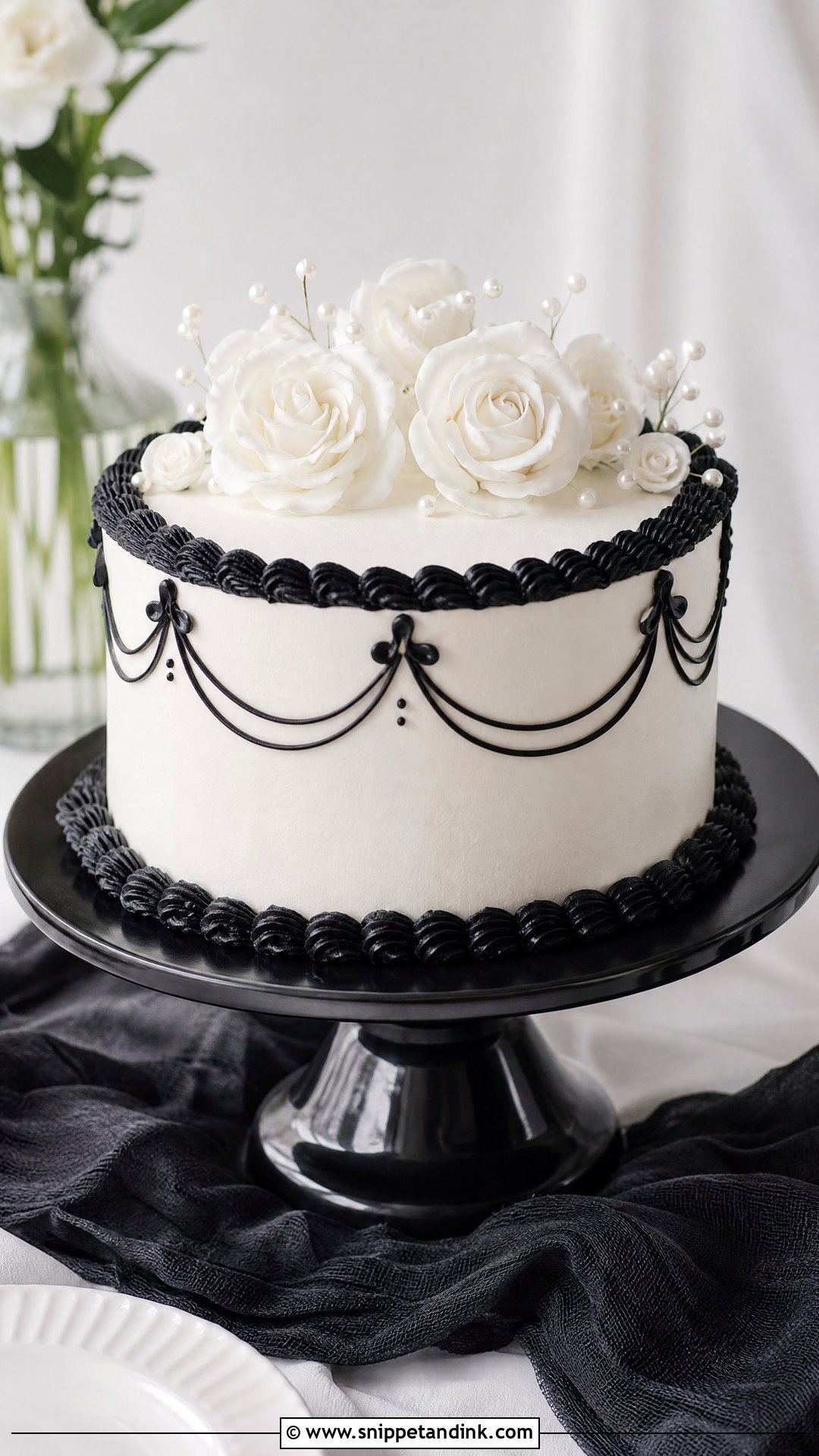
Black and white only works if the lines are clean. Black frosting needs a lot of coloring to get there, and it can stain teeth and turn bitter, so I limit it to piping, a fondant ribbon or a few painted brush strokes over a white base. The contrast is what gives a single tier its impact, so I’d skip extra patterns. White flowers soften it; a smooth finish and plain topper keep it sharp for a city or gallery reception.
17. One Layer Wedding Cake With Blue Flowers
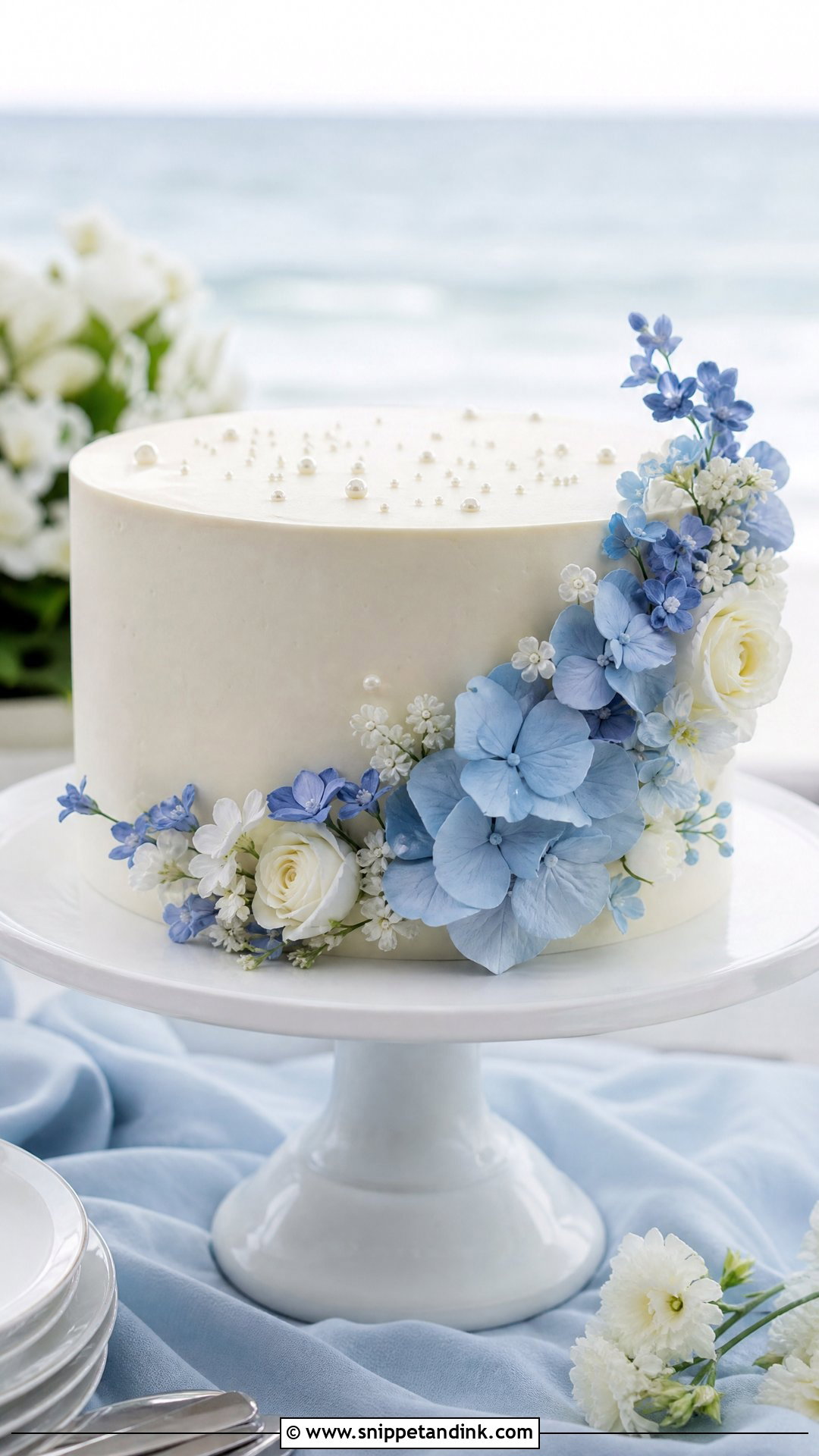
Blue is harder to put on a cake than people expect, because few blue flowers are edible and blue icing tends to look artificial. Hydrangea and delphinium are fine as decoration if they’re wrapped and kept off the sponge; for anything touching the cake, I use cornflowers, edible pansies or sugar flowers. Against white or ivory buttercream, a half-moon of blue along one edge is enough to count as your something blue. Too much blue overpowers a small cake fast, so I stop well before I think I should.
18. One Layer Wedding Cake With Pink Buttercream
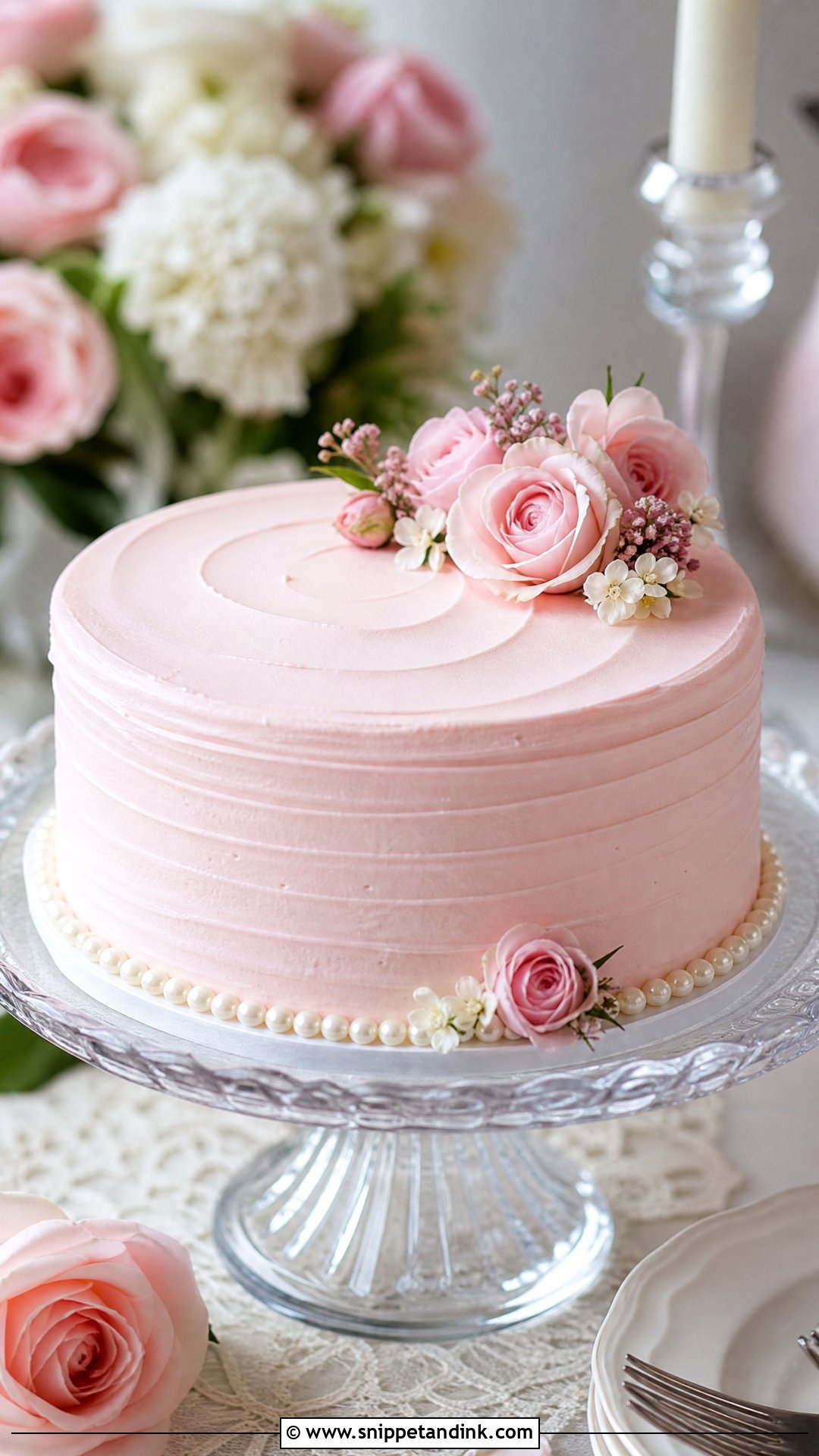
Pink buttercream does most of the decorating by itself. I mix blush and dusty rose for weddings; bright pinks tip it toward a birthday cake, and so do sprinkles. Pink also shifts as it sits: buttercream tinted in the morning can deepen a shade by evening, so I mix it lighter than the swatch. Roses, pearl borders, cherries or tiny sugar flowers keep it bridal, and a plain cake stand finishes the job. It suits a brunch or garden reception with a soft palette.
19. One Layer Wedding Cake With Square Shape
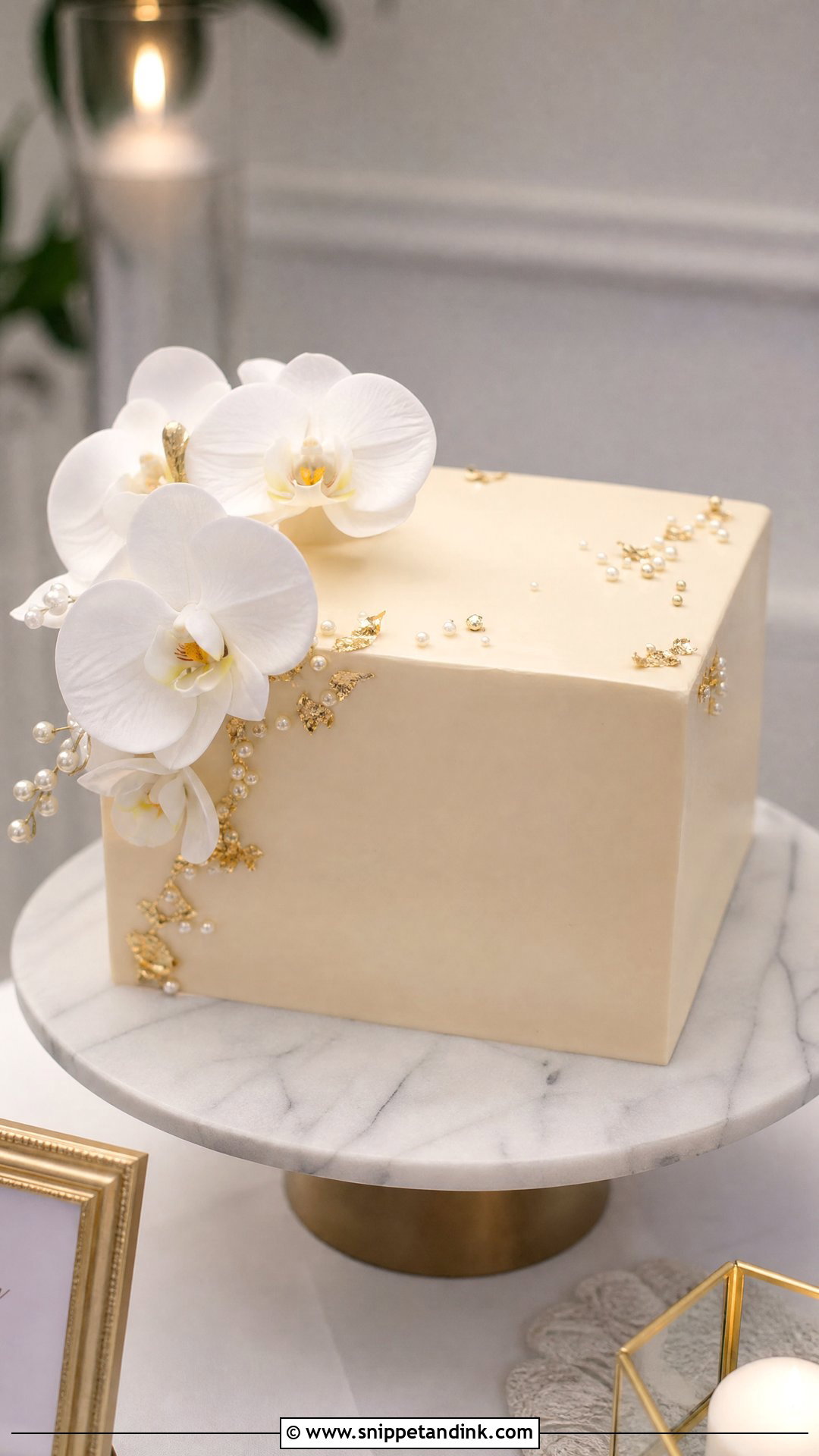
A square cake looks modern because it lets every corner show. It’s also the most demanding shape to finish: those corners need very firm buttercream or fondant, and a slightly soft corner is visible from across the room. Corner flowers, a piped top edge or a little gold leaf are all the decoration it needs, and asymmetry keeps it contemporary. The straight sides make a small cake look deliberate, which is why I suggest it for restaurant and rooftop receptions. Square cakes also cut into neater, more even pieces than rounds.
20. One Layer Wedding Cake With Heart Shape
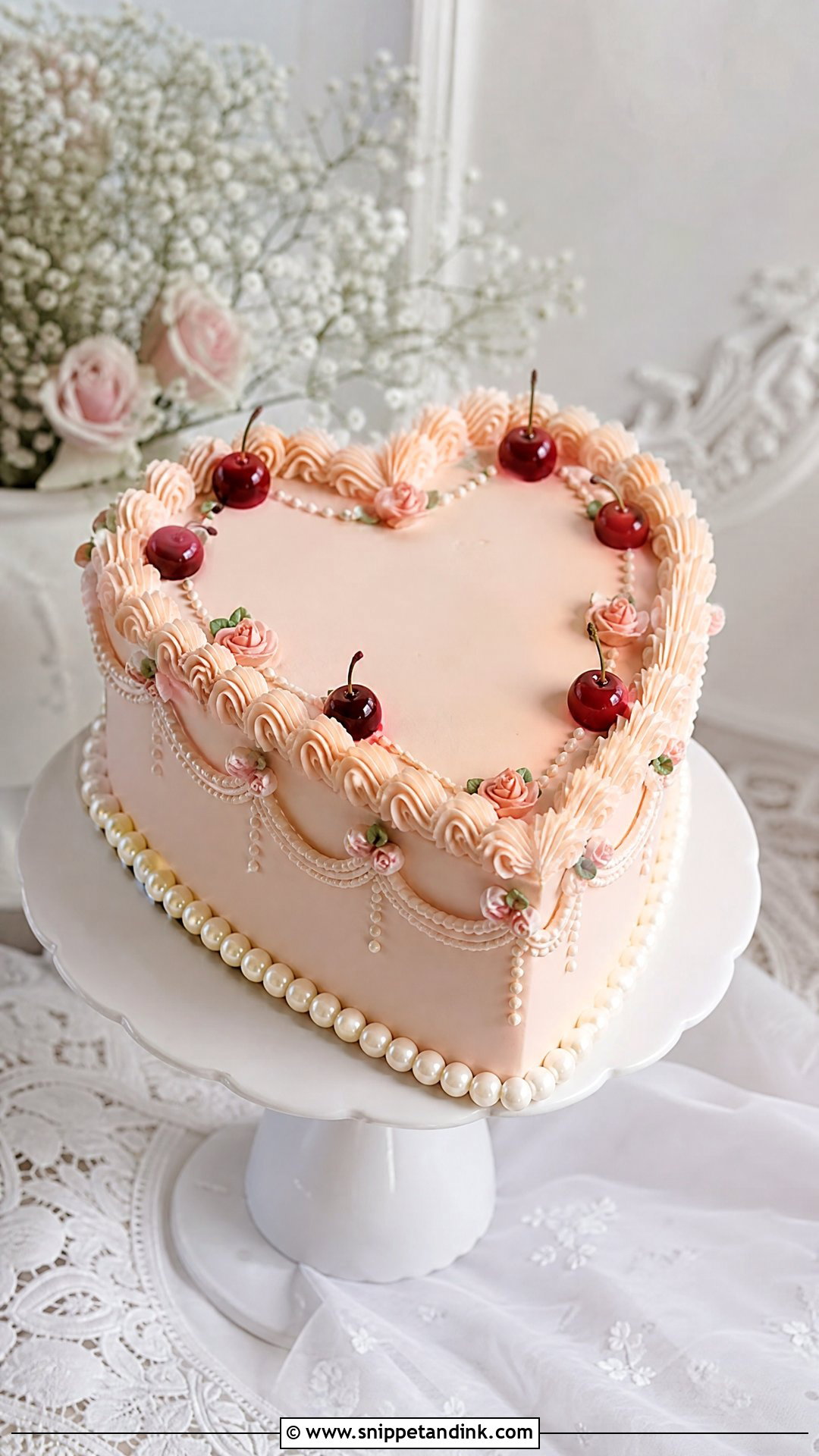
A heart-shaped cake already has a strong outline, so the decoration’s job is to support it. I bake hearts in a shaped pan rather than carving them, which keeps the point crisp. Vintage piping, a pearl border, cherries or a few tiny flowers are enough. White, blush, ivory and pale pink are the safest colors, and a little red works if you like a retro feel. It’s a good fit for an elopement or courthouse wedding where the cake is part of the mood rather than a centerpiece for a large room.
What Happens Between My Kitchen and Your Cake Table
One tier is the easiest cake I deliver, with no stacking and no dowels, but the finish still matters once it leaves the fridge. Buttercream starts to soften in a warm room within an hour or two, and fondant can sweat when a chilled cake meets humid air. Ganache is the most forgiving in heat. Cream cheese frosting and whipped cream are the least forgiving.
- Put the cake table away from windows, heaters and the dance floor lights.
- Plan to cut within a couple of hours of the cake being set out, sooner on a hot day.
- If you’re collecting it yourself, carry the box flat on the floor of the car, never on a seat, with the air conditioning on.
- Ask who adds fresh flowers and fruit at the venue; they should go on last.
Leftovers from a single tier keep well. Wrap slices tightly in plastic and then foil and freeze them the next day; they taste best eaten within a few months, so if you want to save a piece for your anniversary, ask your baker to make a small fresh one instead.
A Small Cake Still Gets a Proper Cutting Moment
A single tier can hold its own against a tall cake if the flavor is good and the finish is clean. Match the decoration to the room: fresh flowers for a garden, berries for a relaxed lunch, pearls or piping for something classic, ganache for an evening dinner. The money you save on structure can go into better ingredients and a well-styled cake table. If you need more servings, back it up with cupcakes, a kitchen sheet cake or a few mini desserts. You’ll still get the cutting moment without paying for cake you won’t eat.
You'll Like These Ideas:




Leave a Reply