
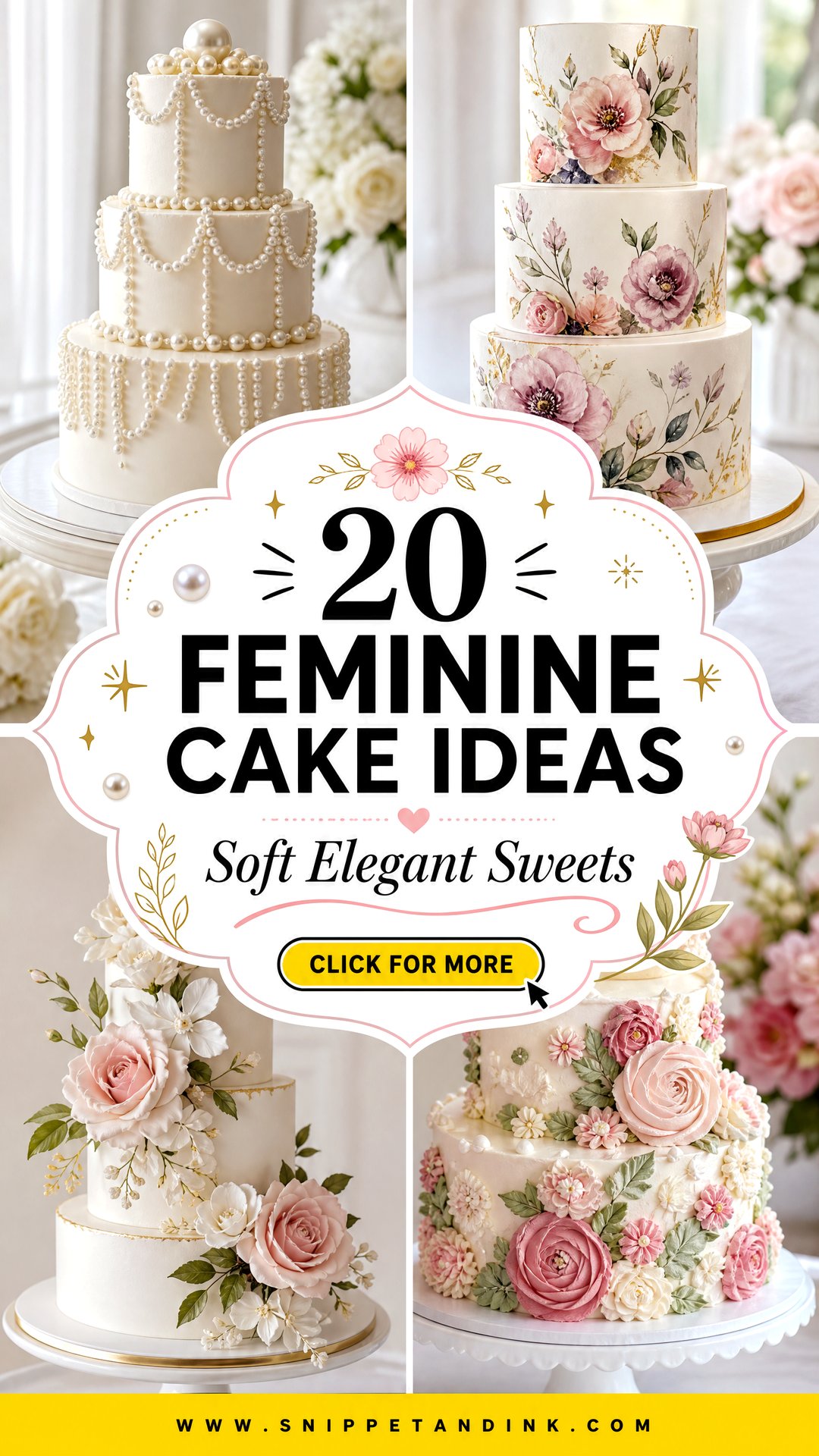
Pink frosting and a floral topper are only one way to make a cake look soft. In my studio, the requests that fall under this heading include lace piping, pearl finishes, ruffles, pressed flowers, bows, painted blooms, fabric-style draping and garden tiers. What separates a graceful cake from a fussy one is restraint: one focal detail, a gentle palette and enough plain surface for the eye to rest. Here are twenty designs I’d build for a classic, vintage, modern or garden wedding, with the practical notes I’d give you at a tasting.
Borrowing From Your Gown Without Copying It Stitch for Stitch
Many couples who ask me for a soft, romantic cake really want it to echo the dress. That’s a good instinct, but a literal copy of a full lace bodice rarely translates to sugar. I’d rather pull one element and repeat it with care.
- Bring a close-up photo of the fabric, not just the full gown. I can trace a lace motif from a sharp image and repeat it as piping or a stencil.
- Look at the finishing details: covered buttons can become a row of pearls, a satin sash can become a fondant ribbon, tiered tulle can become ruffles.
- Match the white. A bright white cake beside an ivory dress makes the dress look yellow in photos. I tint the base to sit near your fabric.
- Pick one gown detail per cake. Lace plus pearls plus a bow from the same dress tends to look busy at cake scale.
If the gown is a secret from your partner, send me photos privately; I keep design boards for each couple.
1. Blush Floral Wedding Cake
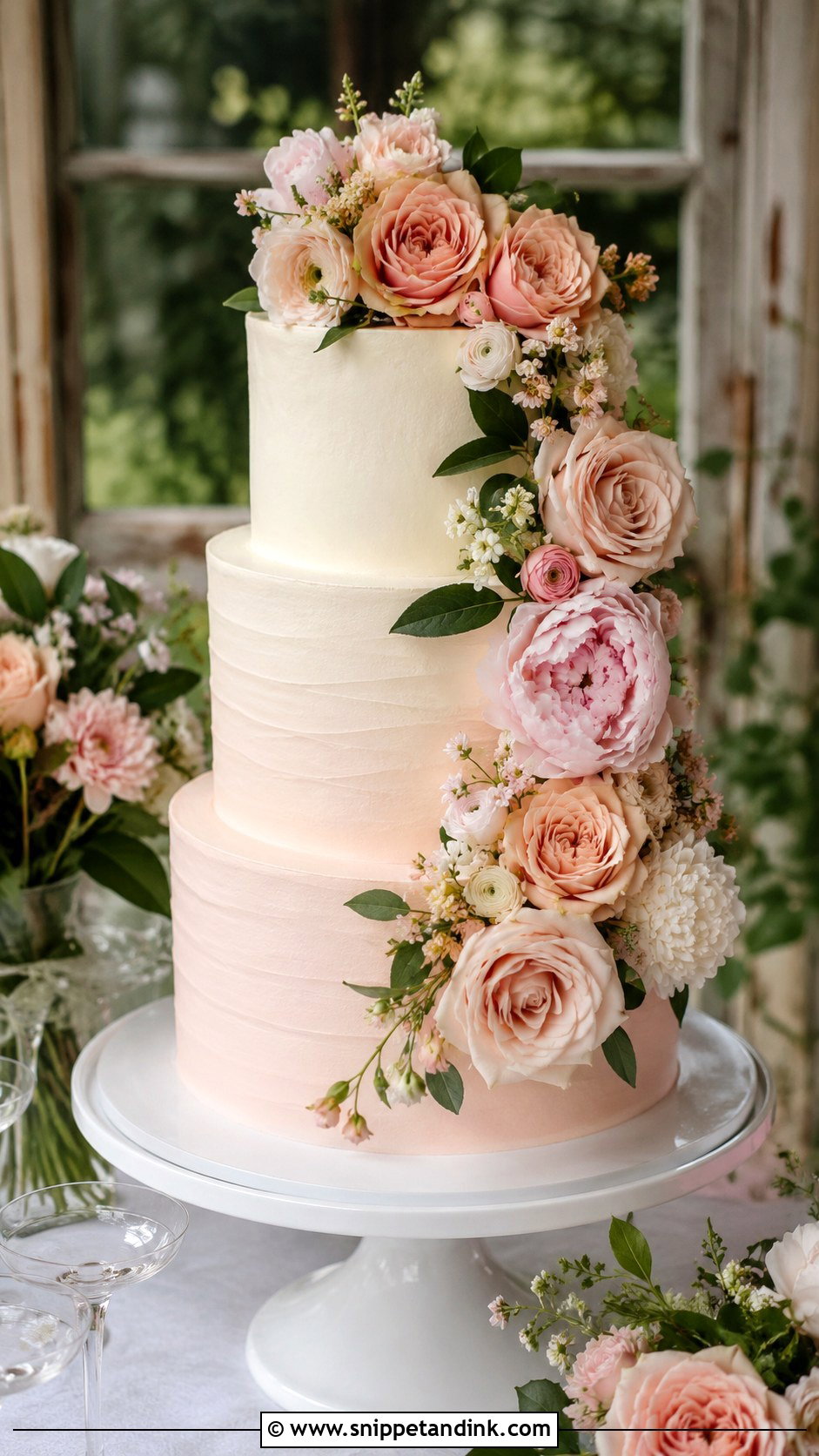
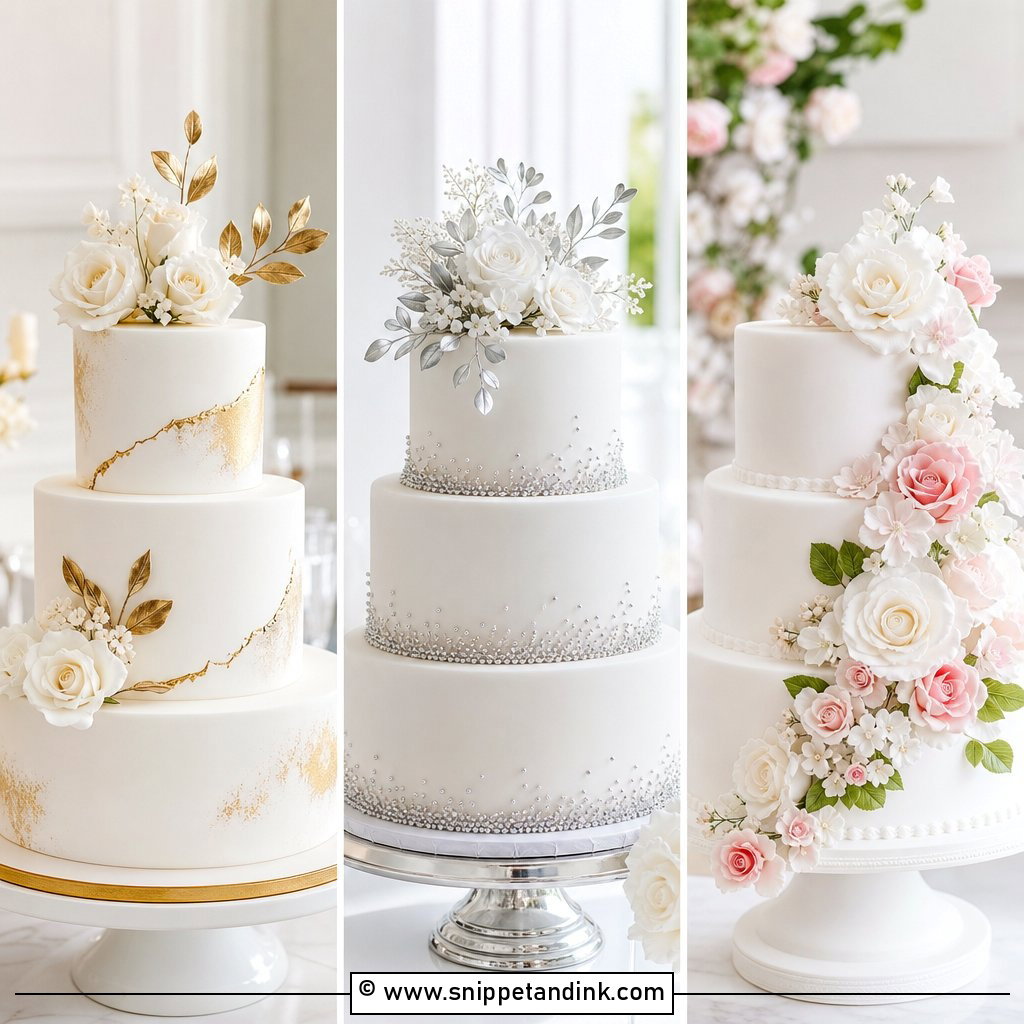
Blush florals are the gentlest entry point. I start with an ivory, pale pink or champagne base and add roses, peonies, ranunculus or sugar flowers. Smooth tiers with flowers trailing down one side feel current; a few piped dots or a thin pearl border at each base push it toward classic. If you’re using fresh roses, ask your florist for unsprayed blooms and let the baker insert them, since stems must be wrapped or placed in picks before they touch cake. Vanilla, almond, raspberry and rose suit the color.
2. Pearl Wedding Cake
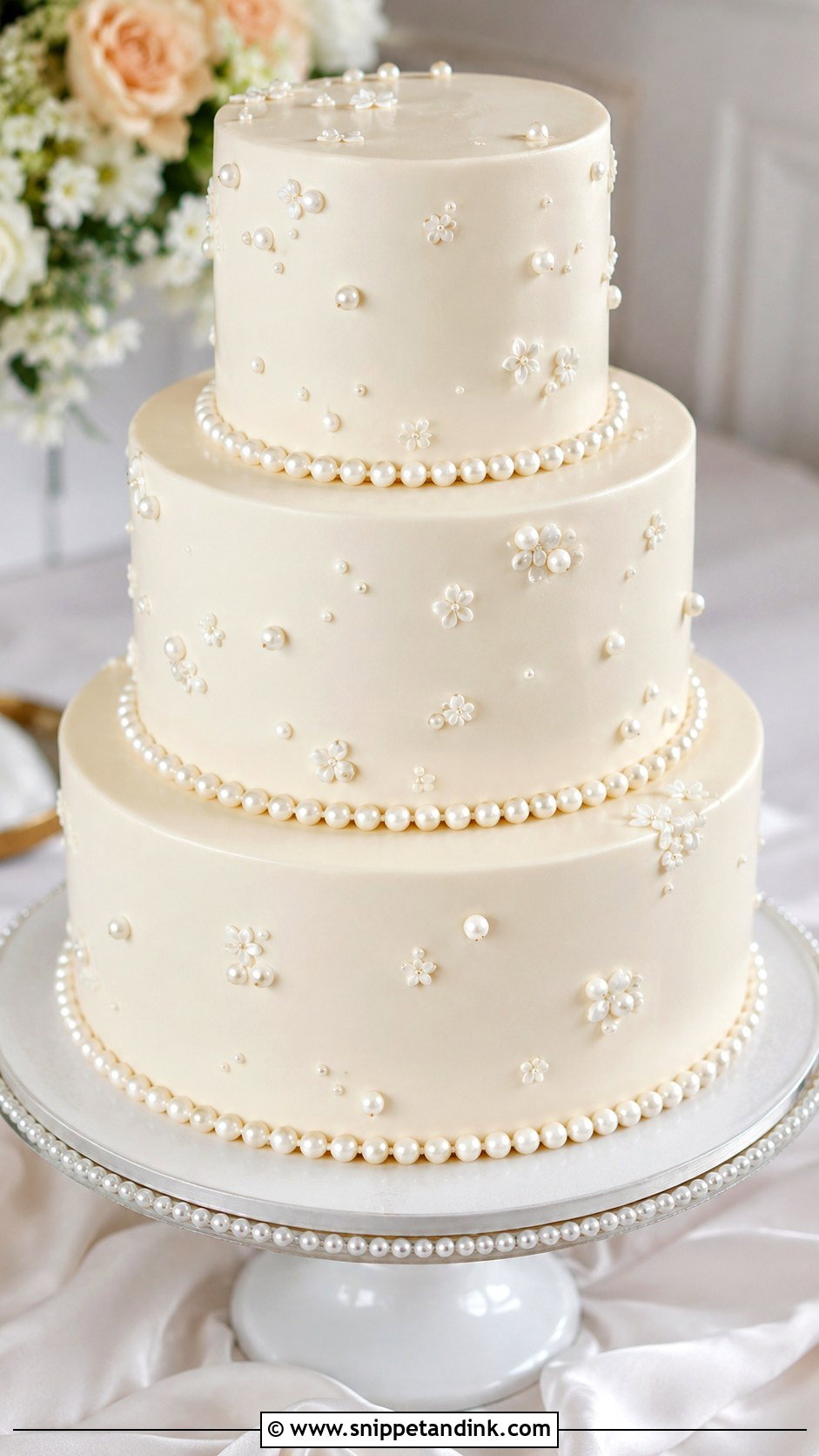
Pearls can be scattered sparingly or cover a whole tier. Spacing is everything. I mark a light guide on the buttercream before I set the first pearl, because a row that drifts even slightly is the first thing the eye catches. Ivory buttercream, smooth fondant or a satin-finish fondant all show them well, in white, blush, cream or champagne. Small sugar flowers, bows or lace piping sit comfortably alongside. Vanilla bean, white chocolate, almond and lemon complement the finish.
3. Bow Wedding Cake
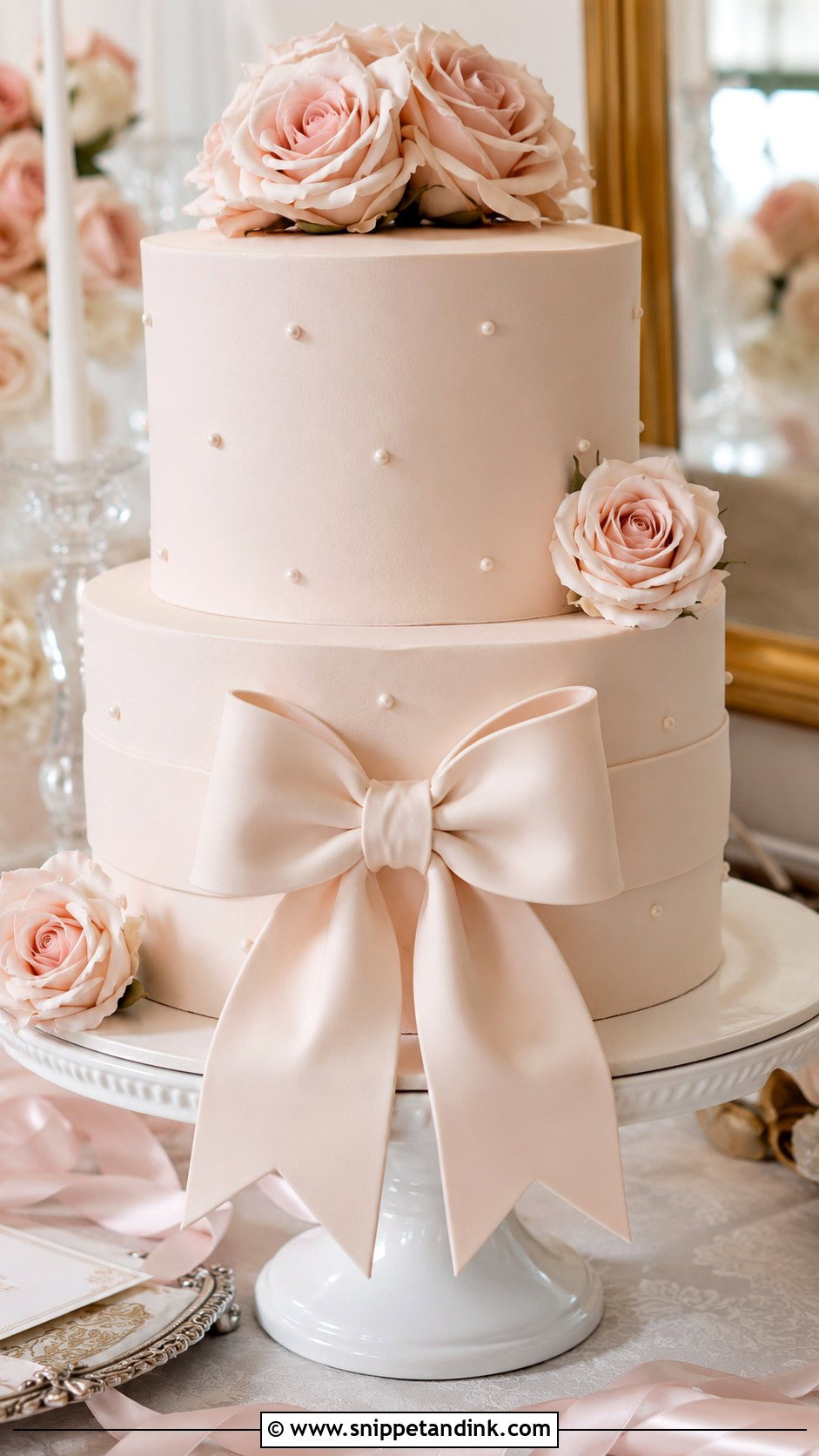
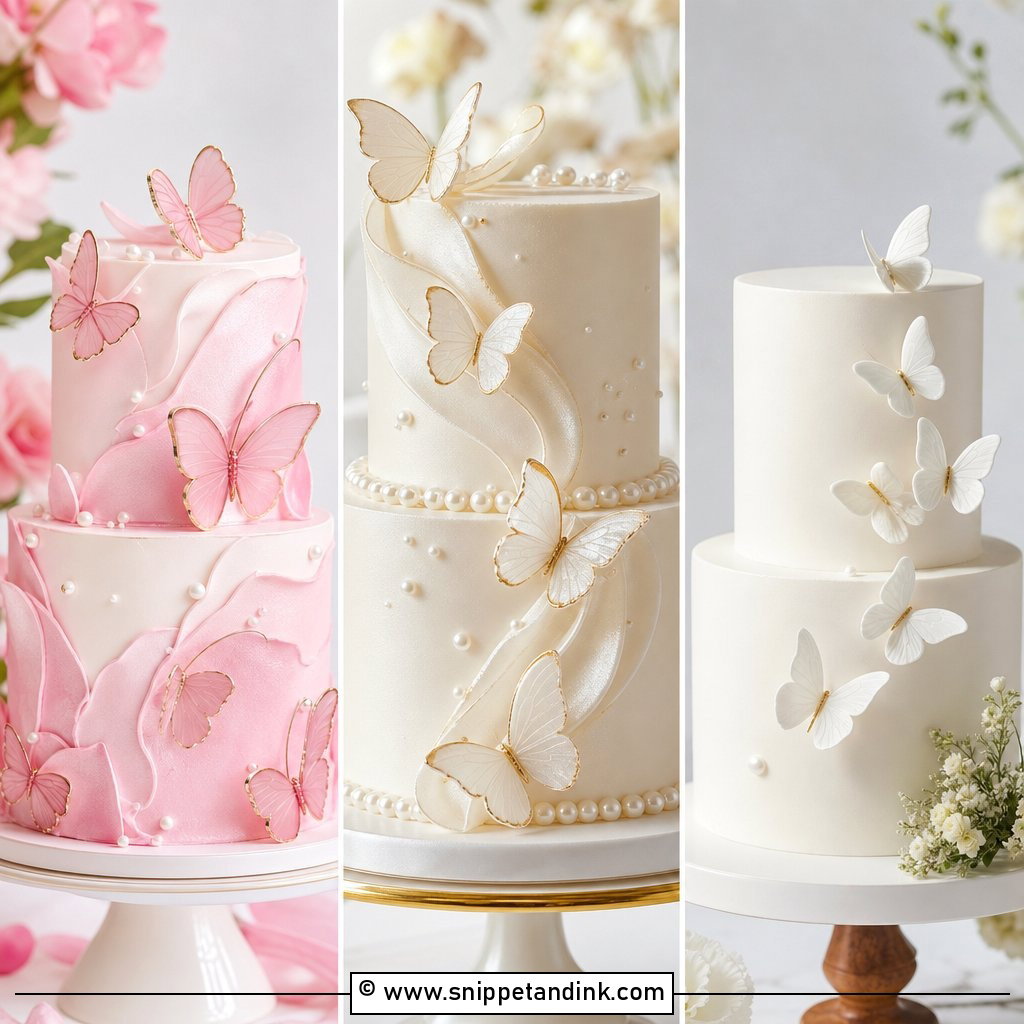
A bow gives the cake a fashion-house feel, and the material changes the look completely. Fondant bows are sturdy and crisp; wafer paper bows look airy but wilt in humidity; a silk-style edible ribbon drapes more naturally. One oversized bow on a clean white cake reads modern, while little bows around every tier lean vintage. White, blush, pale blue and butter yellow all suit it. Keep everything else plain. Almond, vanilla or strawberry sponge keeps the flavor as light as the look.
4. Lace Wedding Cake
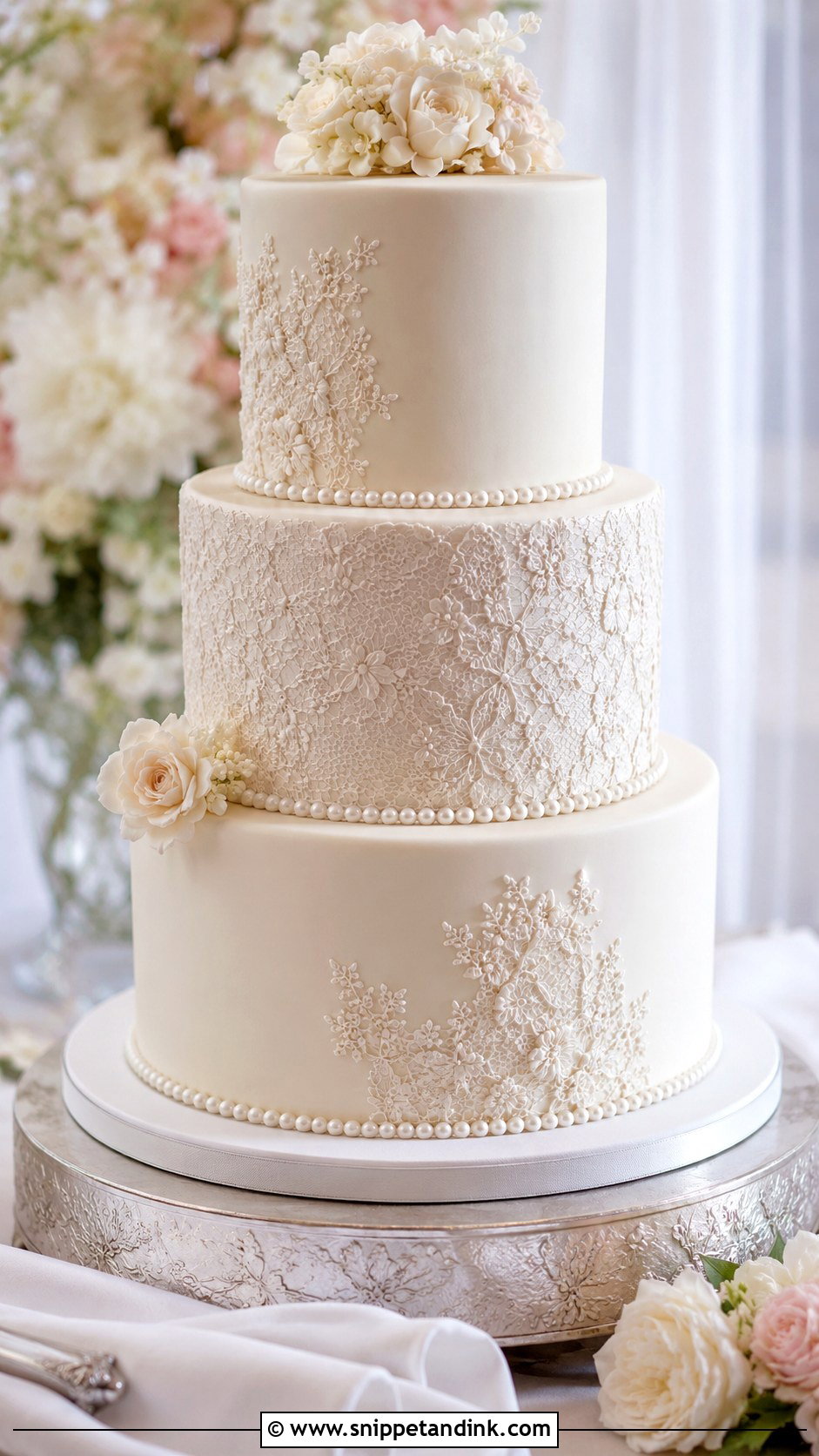
Lace is the detail I’m most often asked to copy from a gown. It can be piped in buttercream, cut as fondant appliqué or set as flexible edible lace panels, and each gives a different depth. Piped lace looks hand-drawn; panels are flatter and more precise. All-over lace feels traditional, while a single lace tier between plain ones feels modern. Finish with tiny sugar flowers, pearls or a slim ribbon at the base. Vanilla, almond, lemon or coconut keep the inside as delicate.
5. Ruffle Wedding Cake
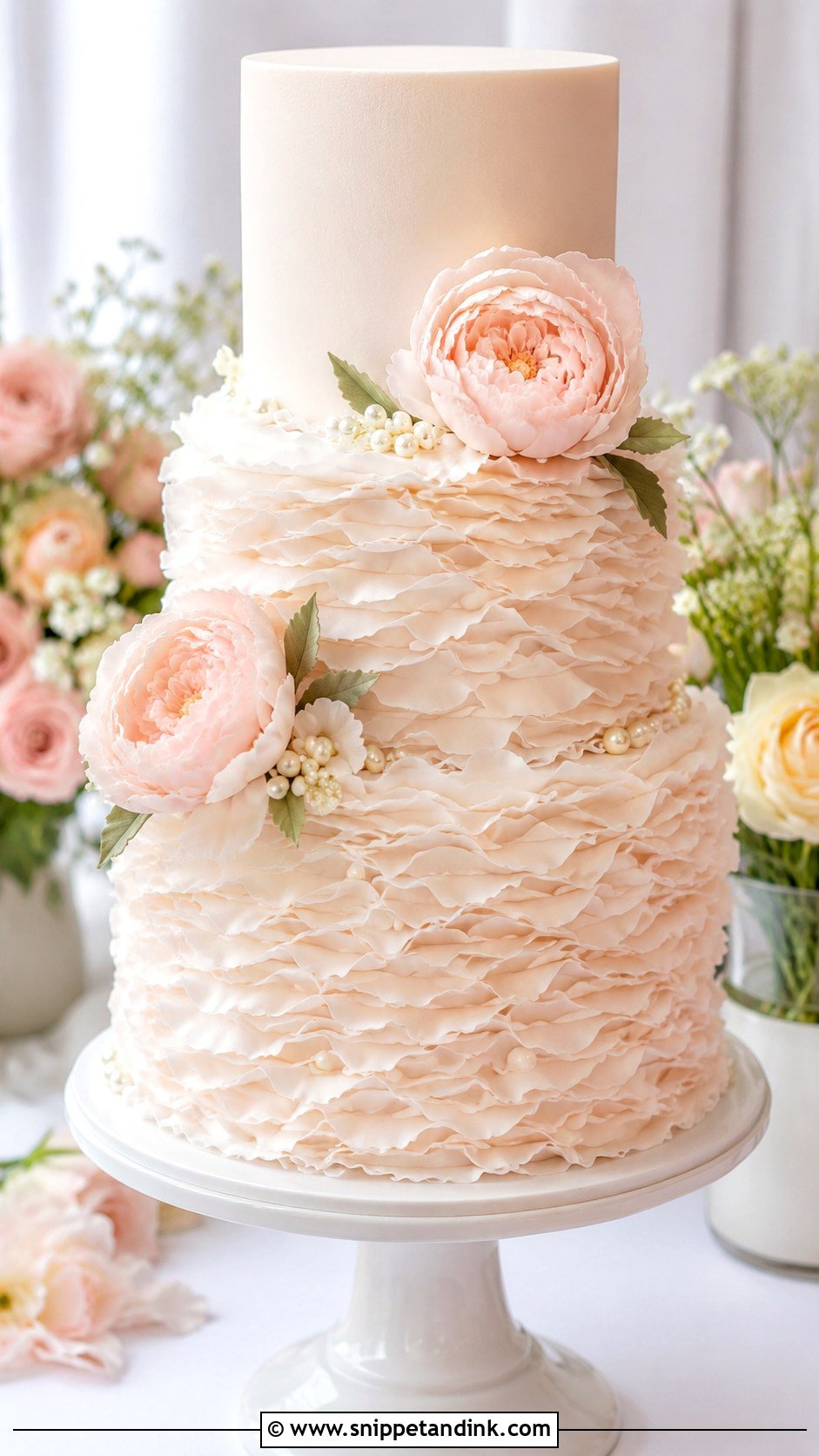
Ruffles bring movement, almost like a skirt in motion. They can be made in buttercream, fondant or wafer paper. Fine horizontal ruffles feel refined; big petal-like ruffles are bolder. I usually limit them to one or two tiers, because a fully ruffled cake takes hours of piping and can look heavy from a distance. Buttercream ruffles are also the first thing to droop in a warm room. Ivory, blush, peach and pale lavender are the shades I’d suggest, with lemon, vanilla or almond inside.
6. Vintage Lambeth Wedding Cake
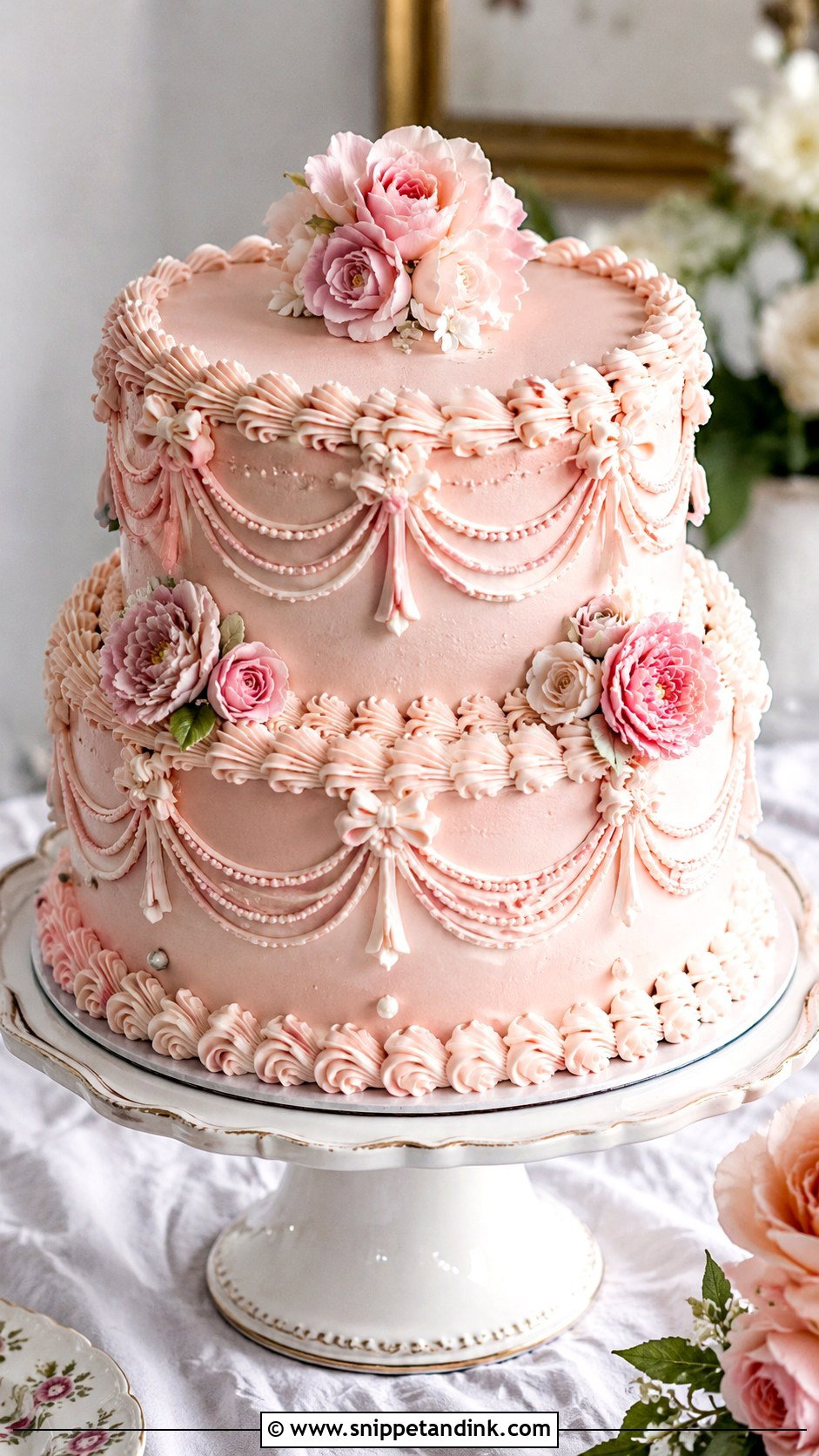
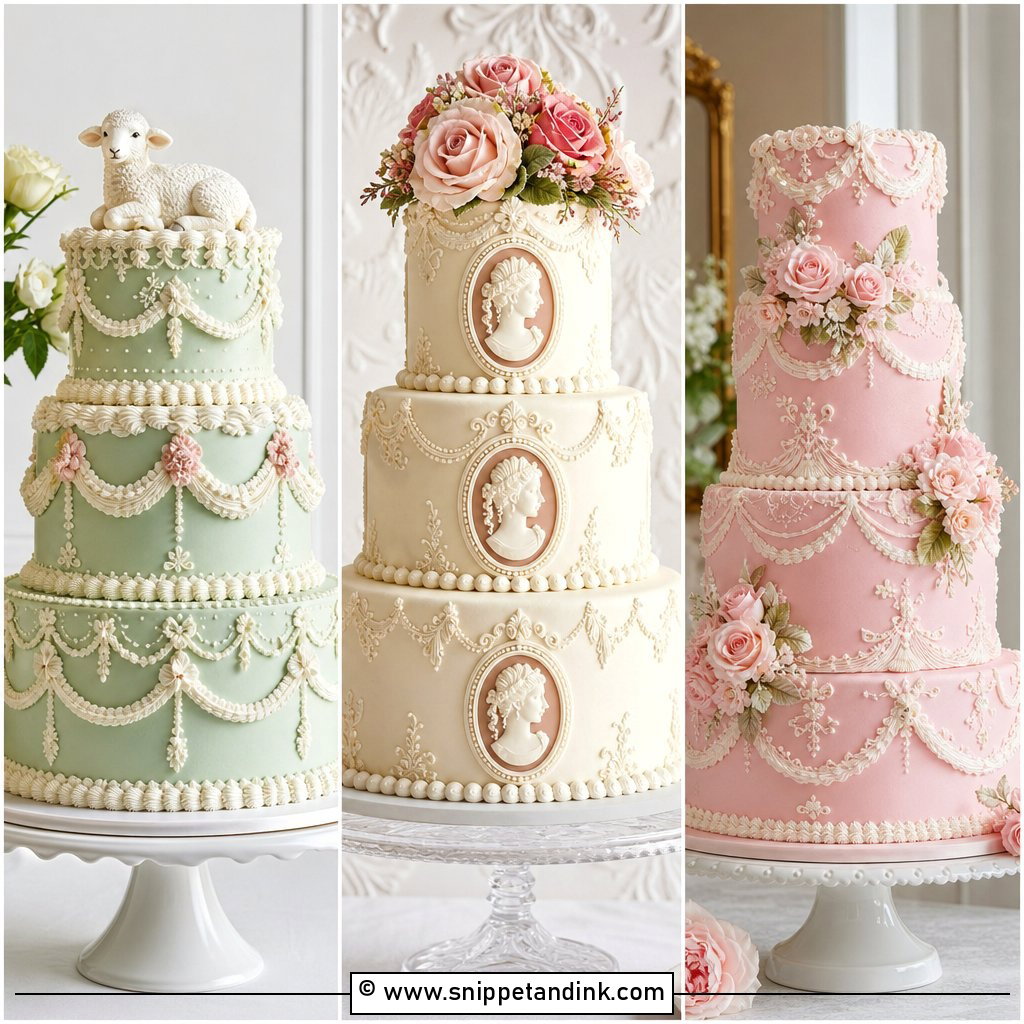
Lambeth piping is the over-piped, layered style of borders, shells, scrolls, garlands and swags, and it’s the most time-consuming finish I do. Every layer has to set before the next goes on, so allow for it in the price and the lead time. Ivory, blush, baby pink and pale butter tones suit it. For a softer feel, add tiny pearls, piped bows, cherries in a soft pastel palette or fresh flowers around the base. It can be a single cutting cake or a full tiered centerpiece, filled with vanilla bean, strawberry, almond or chocolate.
7. Pressed Flower Wedding Cake
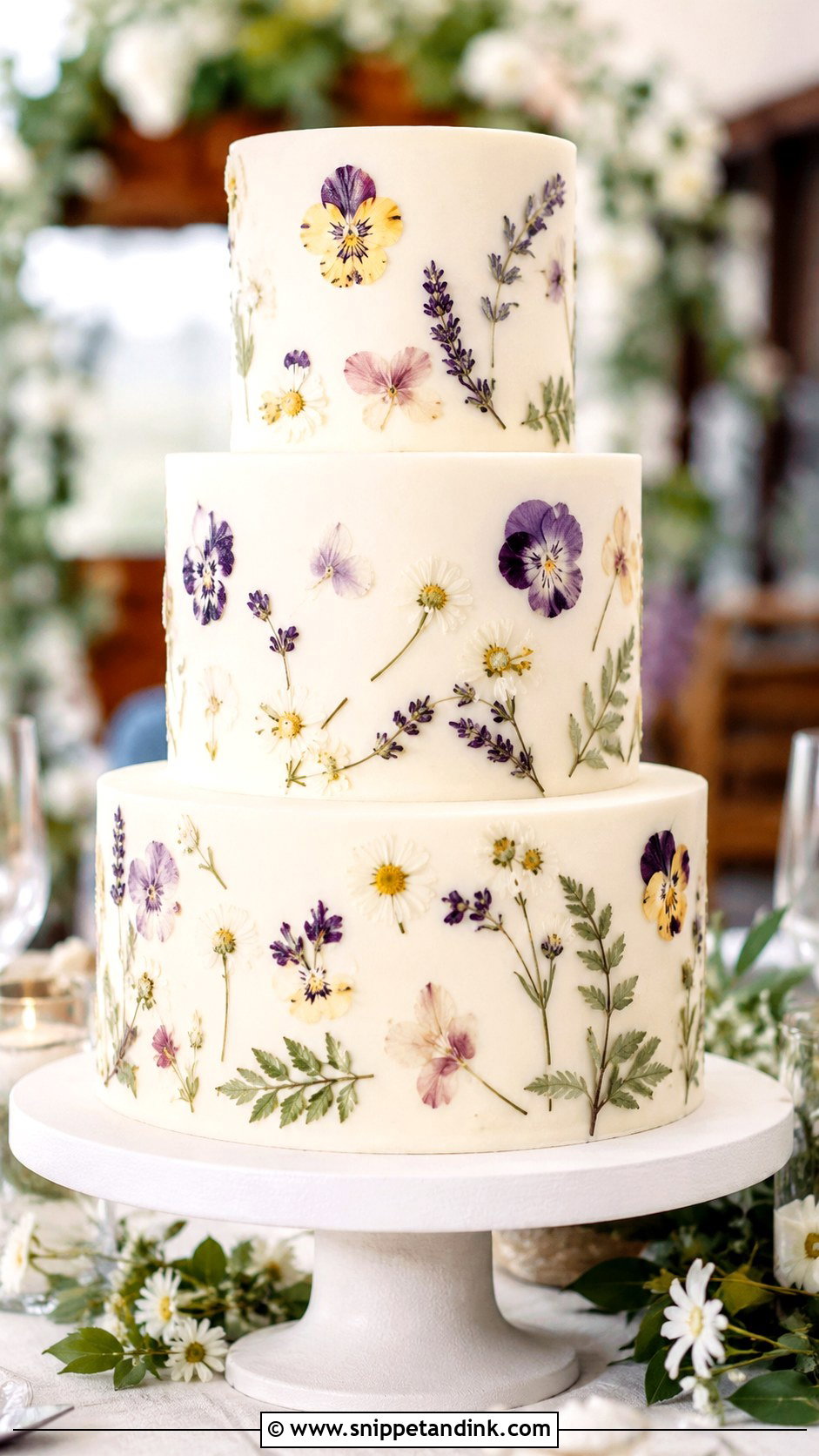
Pressed flowers lie flat against smooth buttercream or fondant in a neat botanical pattern. It’s a natural fit for spring, summer, cottage garden, or boho weddings. The flowers must be food-safe varieties pressed for eating, such as violas, pansies and cornflowers. Florist stock is often treated and shouldn’t touch cake. I apply pressed petals close to delivery, because they draw moisture from buttercream and darker petals can bleed. An ivory or pale cream base keeps them clear, with lemon, honey, lavender or elderflower inside.
8. Painted Floral Wedding Cake
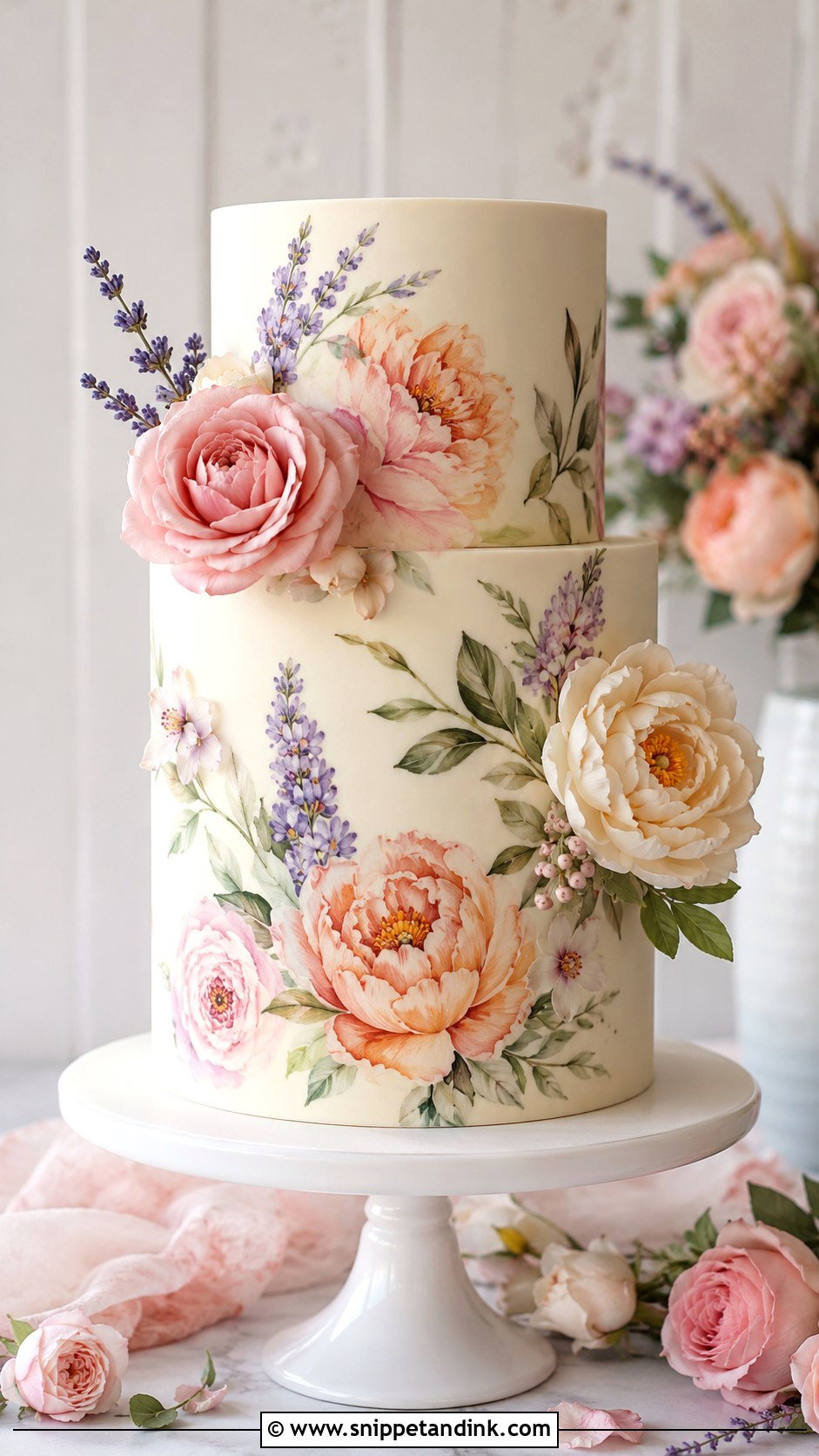
A painted floral wedding cake is edible artwork, painted with food coloring onto fondant or chilled, firm buttercream. Fondant takes fine brushwork better; buttercream gives a softer, looser watercolor. Blush roses, forget-me-nots, lavender sprigs and peach peonies create a delicate mood. The painting needs space, so I keep extra decoration to a few sugar flowers or pearls. Vanilla, lemon, raspberry and almond suit it, and because every stroke is by hand, no two are the same.
9. Sugar Flower Wedding Cake
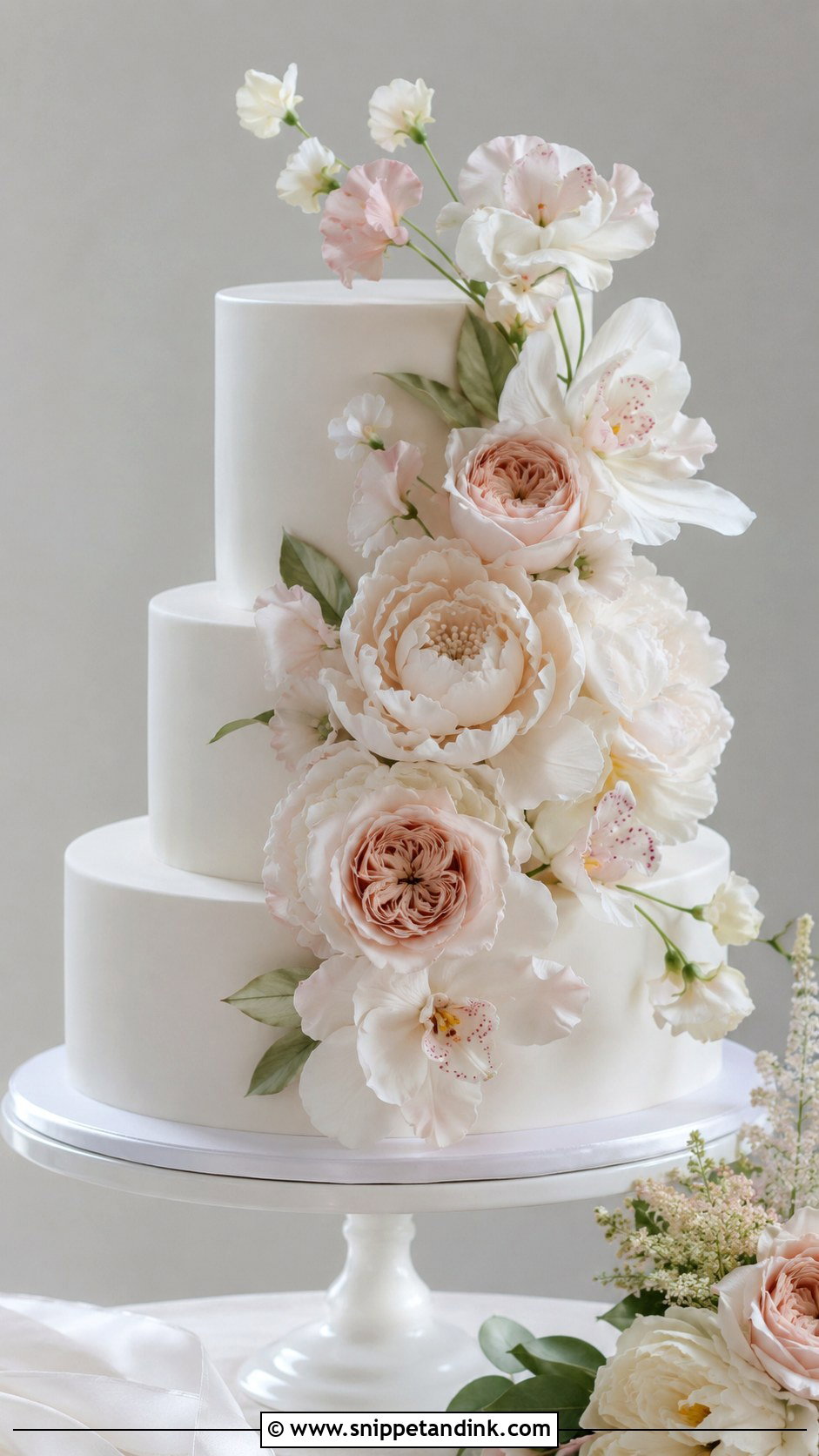
Sugar flowers give me full control over color, shape and placement, so they’re my answer when you want blooms that match your bouquet exactly or must last a long, warm reception. Roses, orchids, peonies, sweet peas and ranunculus can look very real. They’re labor-heavy, though: each petal is rolled, wired, dried and dusted, so book early. They’re also usually wired and not meant to be eaten, but many couples keep them as a memento. Arrange them in a cascade or cluster on white or ivory tiers.
10. Buttercream Floral Wedding Cake
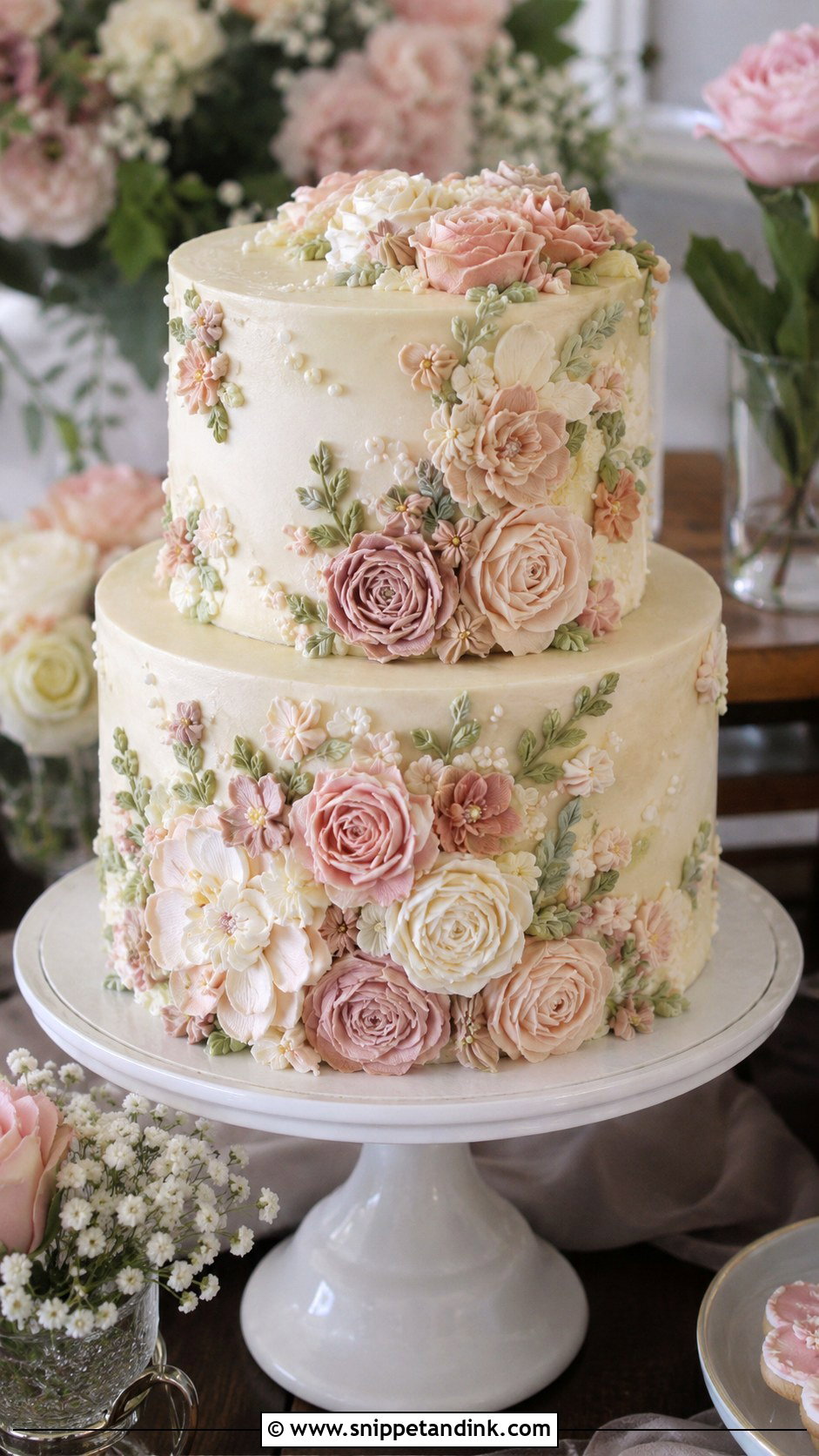
Piped buttercream flowers feel handmade and warm, and they’re entirely edible. Roses, peonies, anemones and filler blossoms can be arranged as a border, a wreath or a full floral cover. I pipe them onto parchment squares, chill them and then set them in place, which keeps the shapes crisp. Swiss meringue buttercream gives the cleanest petals; a cream-cheese style frosting tastes richer but won’t hold sharp edges. Blush, ivory, pale peach and sage suit rustic, garden and vintage receptions.
11. Draped Fondant Wedding Cake
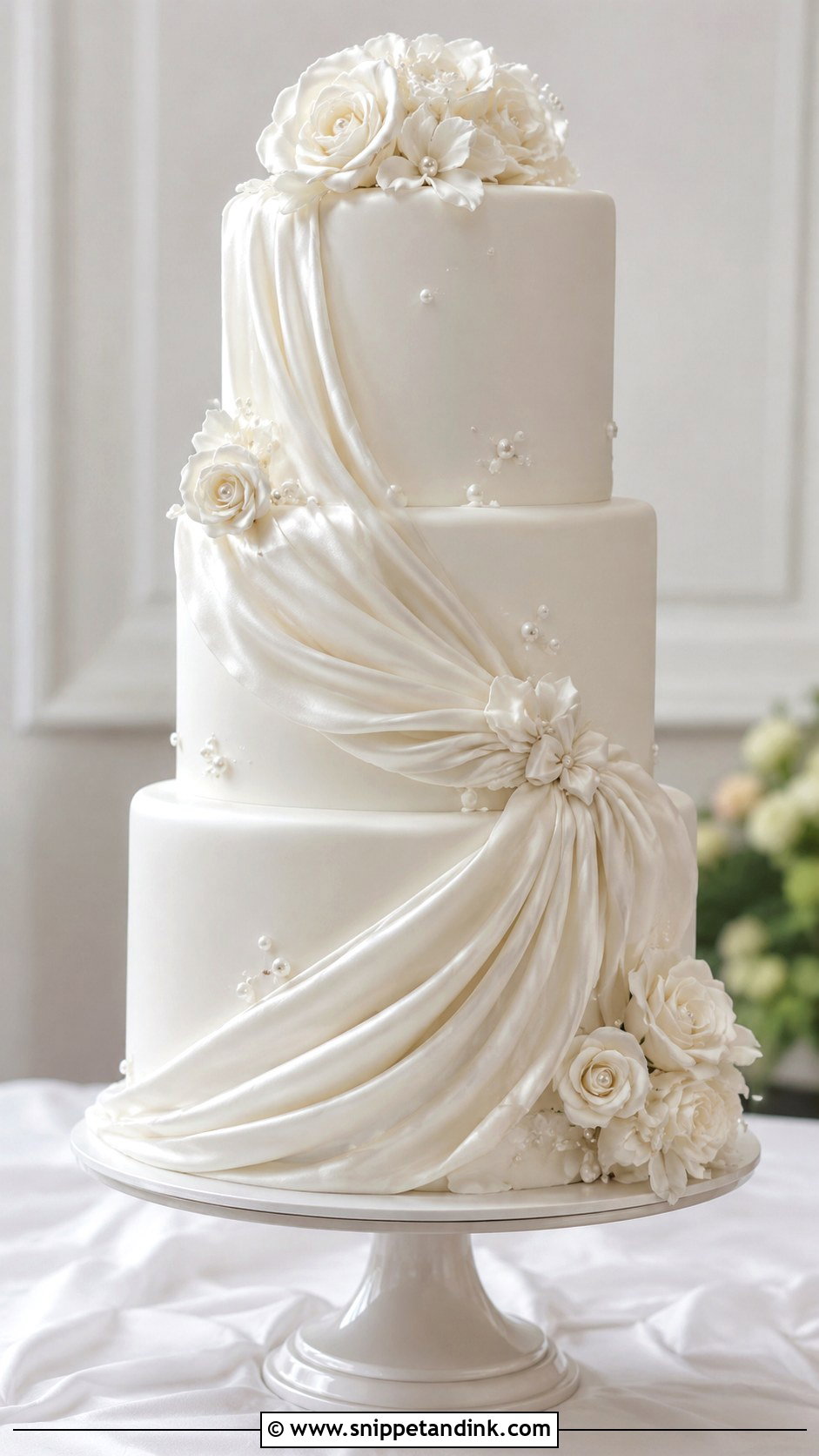
Draped fondant mimics fabric: folds like silk, a wrap like a gown bodice, or gentle swags around each tier. The drape has to be rolled thin and placed in one confident move, because fondant creases if it’s reworked. Ivory, pearl white, blush and champagne keep it bridal. A small sugar flower cluster, a few pearls or a bow at the gathering point finishes it. I’d put this in a hotel ballroom or a classic formal room, with vanilla, almond, lemon or white chocolate inside.
12. Floral Cascade Wedding Cake
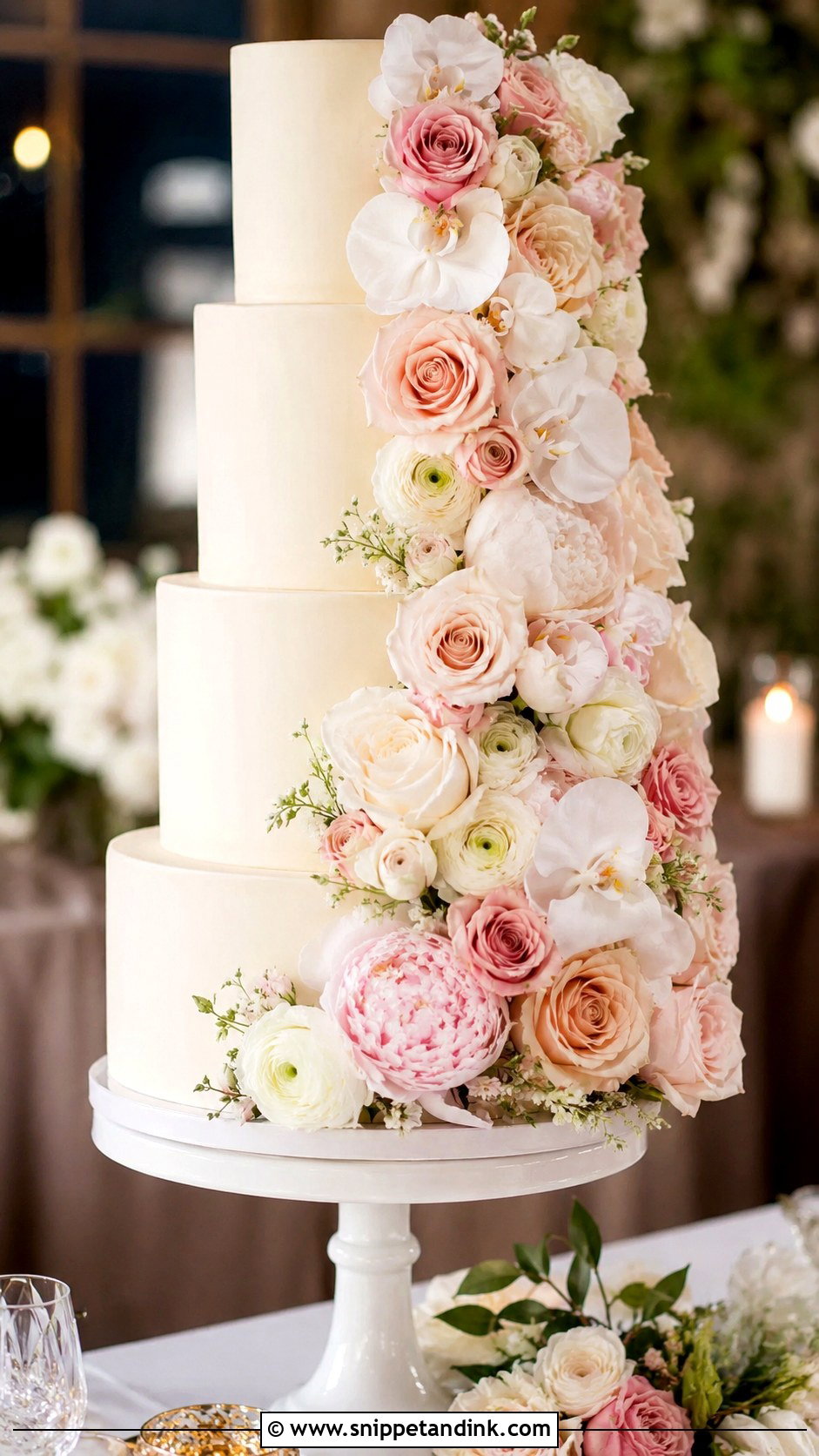
A cascade draws a vertical line down the cake, which makes even plain tiers look tall and dramatic. Fresh, sugar or buttercream flowers can all flow from the top tier down one side. Roses, peonies, orchids, sweet peas and ranunculus in blush, cream and peach keep it soft. With fresh flowers, the cascade is built on site and should be food-safe and properly wrapped. It suits large weddings where the cake must hold its own in a big room. Vanilla raspberry, lemon elderflower, almond and coconut are popular. Go light on greenery.
13. Pastel Wedding Cake
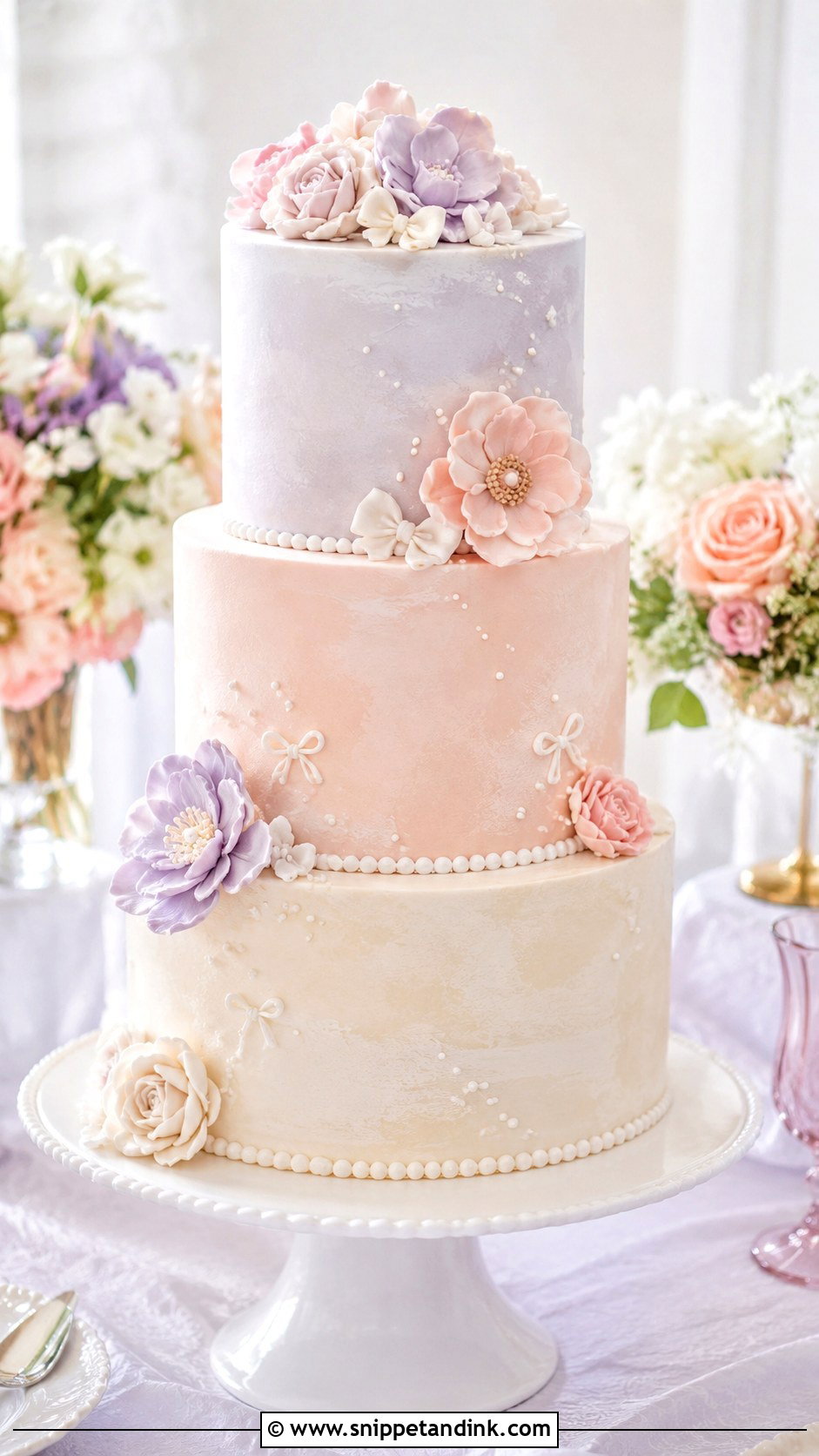
Pastels can sit on one cake in blush, lavender, pale blue, butter yellow and mint, each tier in its own shade. Muted is the key word. I mix a touch of ivory or a whisper of brown into every pastel buttercream so it looks dusty rather than candy-bright. The finish can be smooth, lightly textured or watercolored, with soft florals, pearls, bows or subtle piping. Lemon, strawberry, lavender and pistachio sponges can carry the colors inside too, which guests notice when it’s sliced.
14. Pink Ombre Wedding Cake
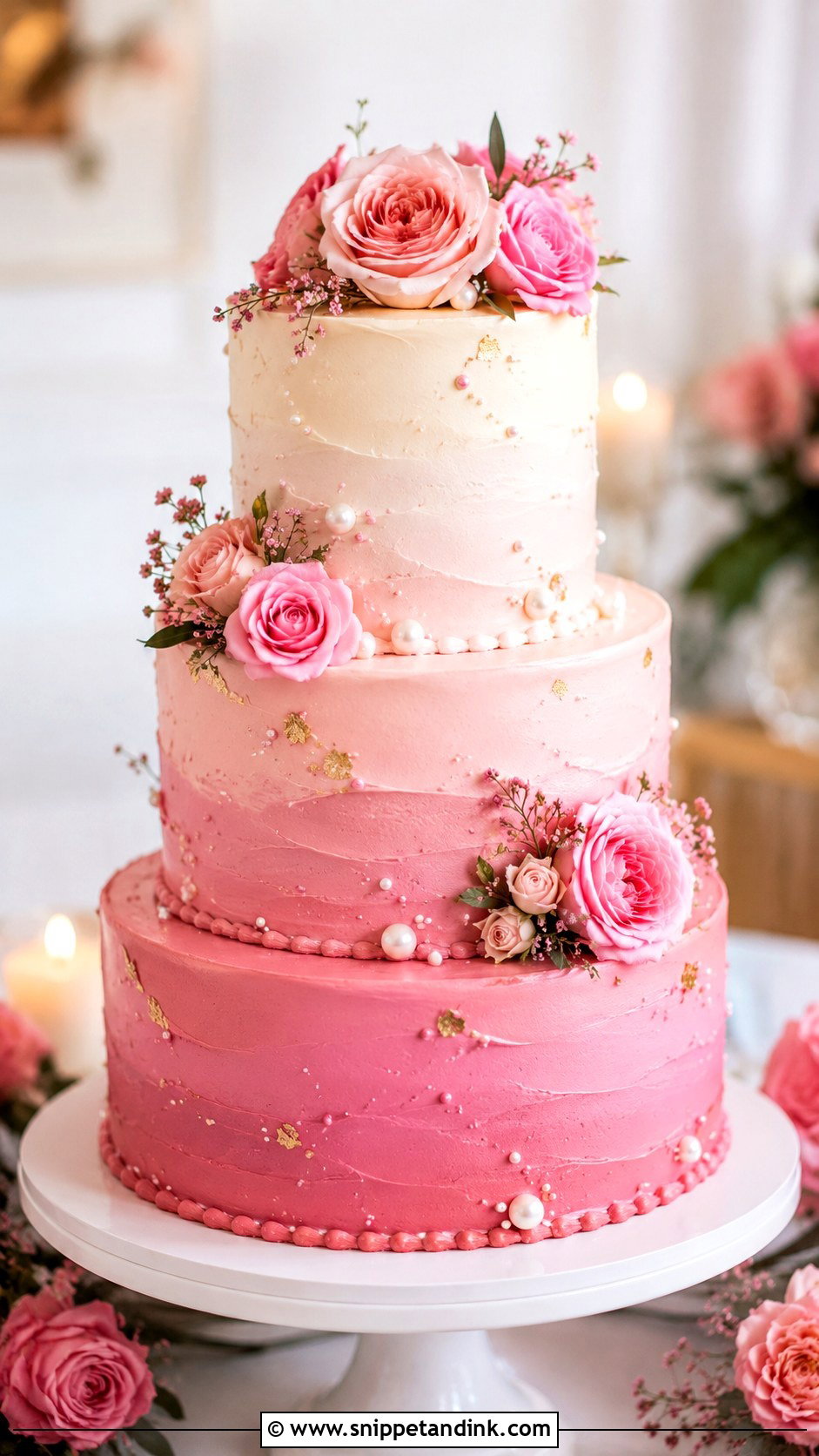
Ombre gives you color while keeping the cake bridal. Tiers can fade from ivory to blush to rose, or a single tier can be blended top to bottom. I mix all the shades from one base batch so the steps between them stay even; separately mixed colors rarely line up. It suits smooth frosting, ruffles or painted edges. Light decoration keeps the gradient visible: a few flowers, pearls or gold accents. Strawberry, raspberry, vanilla or rose flavors match the color story.
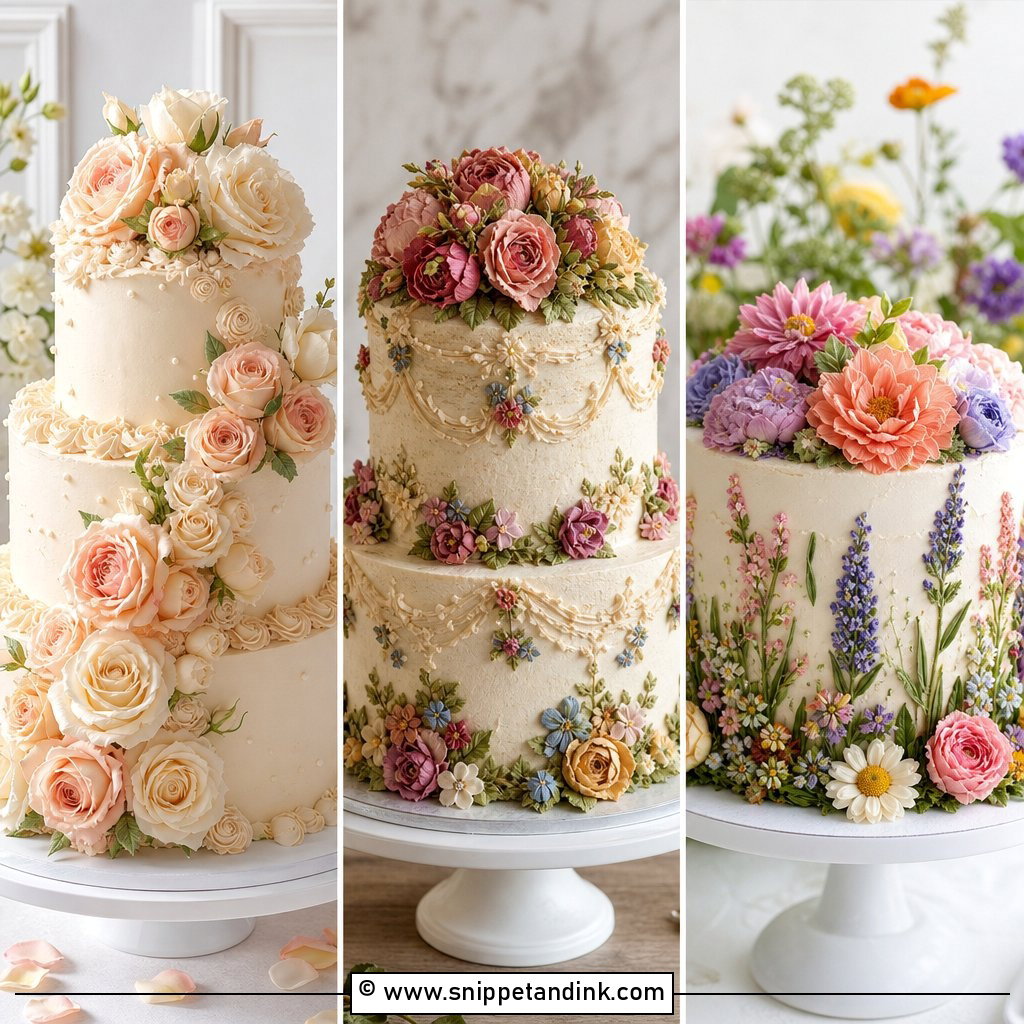
15. Minimal Floral Wedding Cake
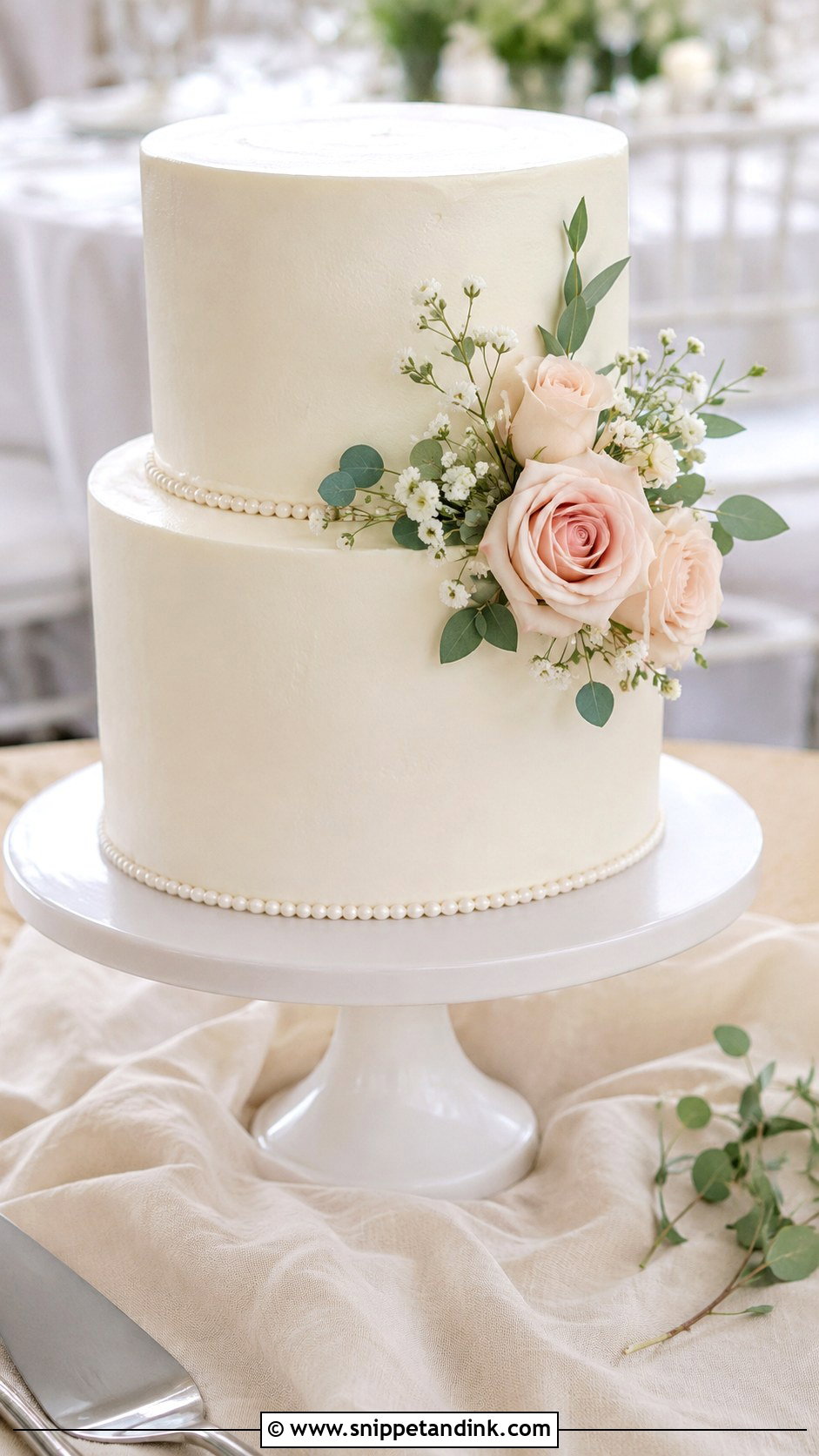
Minimal florals rely on spacing and proportion rather than quantity. A smooth buttercream or fondant cake gets one small arrangement on the top, side or base. It sounds easy, but a plain finish shows every bump, so this design demands the sharpest edges I can produce. Ivory tiers with blush roses or white tiers with tiny wildflowers feel fresh. It’s well suited to intimate weddings, courthouse celebrations and dinner receptions, with vanilla bean, lemon, almond or coconut inside.
16. Edible Lace And Pearl Wedding Cake
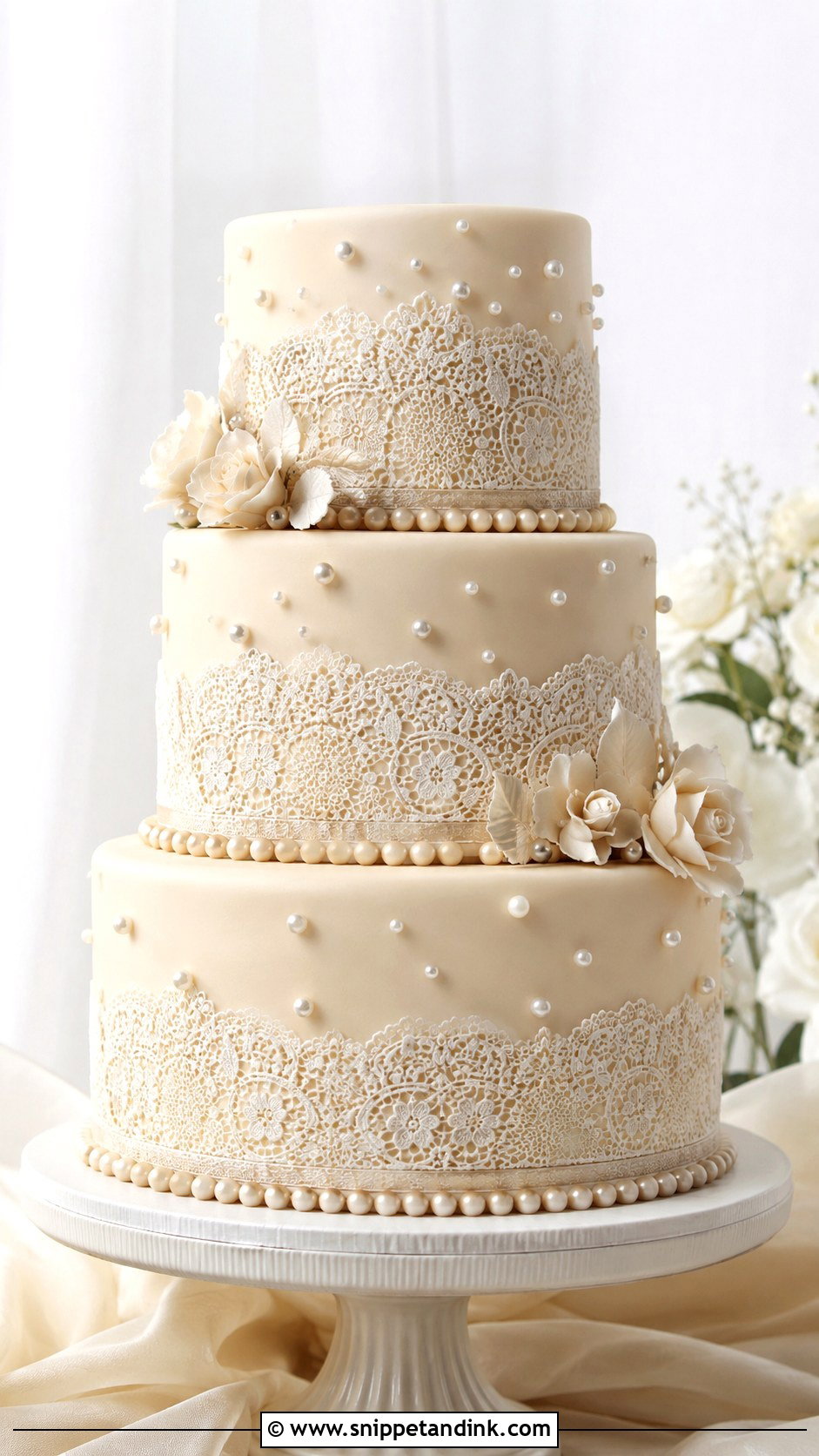
Lace and pearls together give texture and soft shine in one design. I’d wrap lace panels around one tier and run a pearl border or scattered pearl dots on another, so the two details don’t compete on the same surface. White, ivory, champagne and blush tiers all suit the pairing. A tall, clean silhouette makes it feel modern; sugar roses or small bows make it romantic. Almond, vanilla bean, white chocolate or lemon suit it, and it sits most naturally at a formal wedding.
17. Garden Rose Wedding Cake
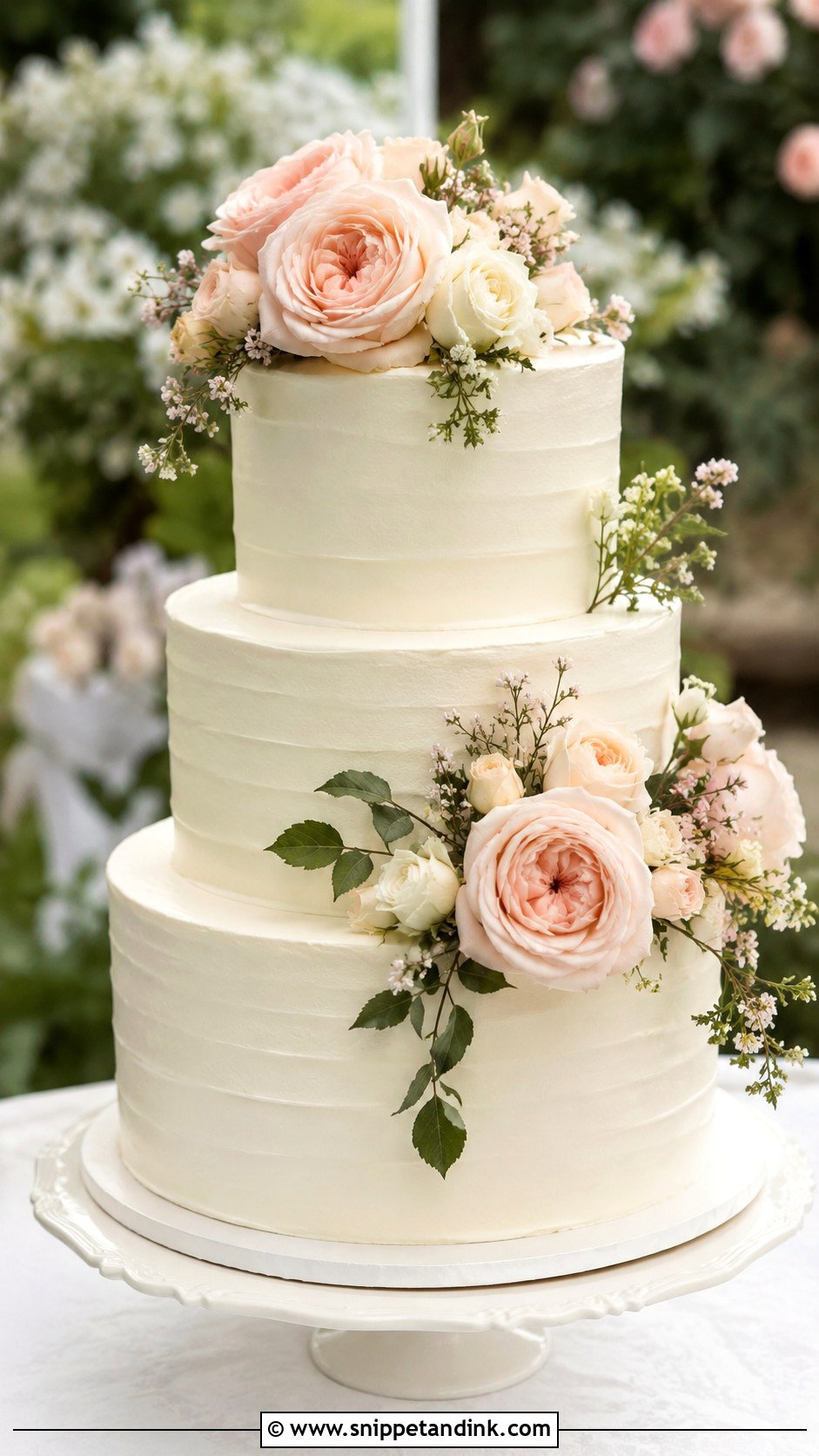
Garden roses are fuller and more open than standard roses, which gives the cake a relaxed, romantic feel. Blush, cream, peach or dusty pink roses can form a neat crown, a side cluster or a loose garden arrangement. Real garden roses drop petals and open quickly in warm tents, so for outdoor ceremonies I often suggest sugar roses for the main cluster and a few fresh buds for scent and movement. Keep the base plain ivory buttercream. Rose, vanilla, raspberry, almond or lemon cake fits.
18. Floral Sheet Wedding Cake
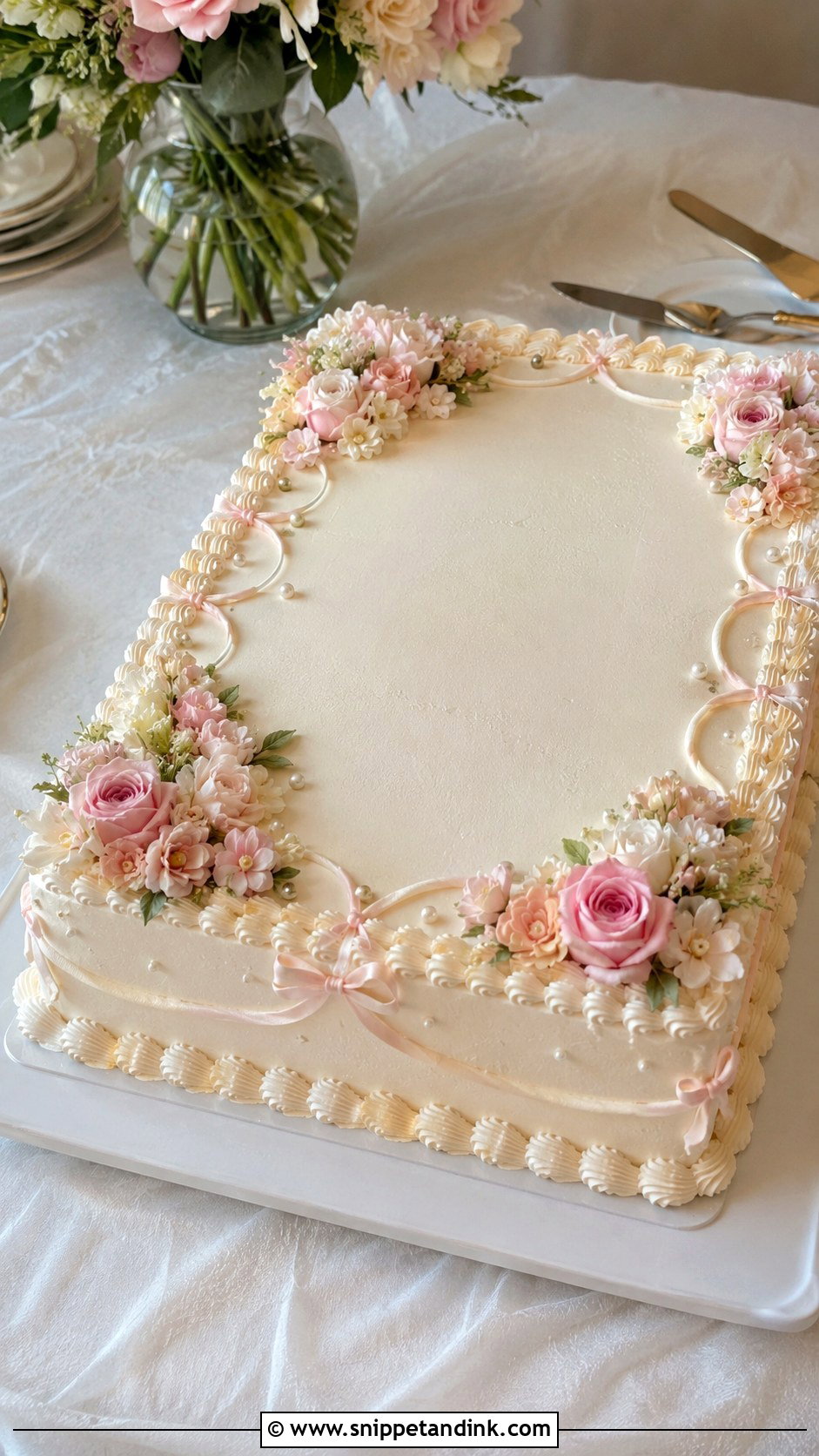
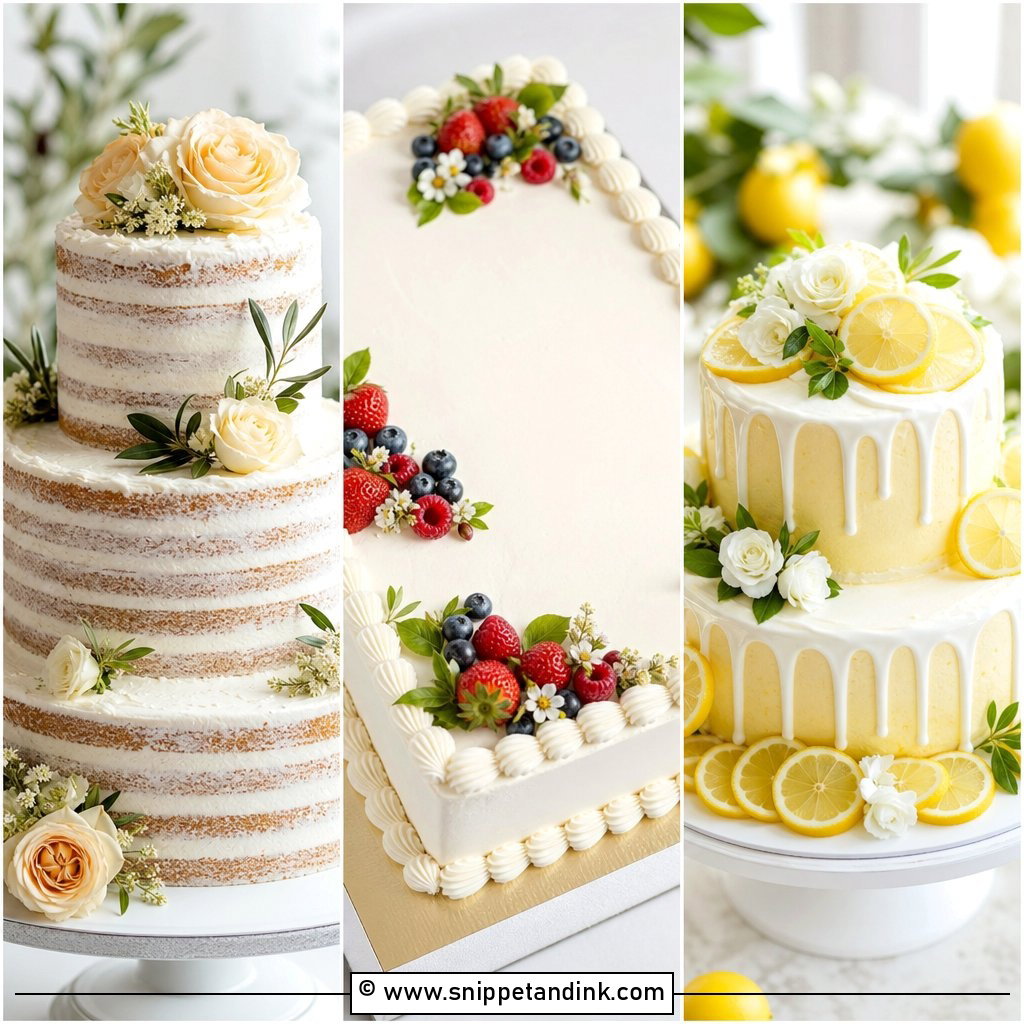
Sheet cakes are easy to cut and serve, and dressed properly they hold their own on a dessert table. I decorate them with smooth buttercream, piped borders, small bows, pearls and fresh or buttercream flowers in blush and ivory. A sheet cake also costs less per slice than tiered construction, since there’s no stacking or dowelling. It suits casual receptions, brunch weddings and dessert tables. Vanilla, strawberry, lemon or almond work well. Present it on a proper tray or board, not hidden in the kitchen.
19. Coquette Wedding Cake
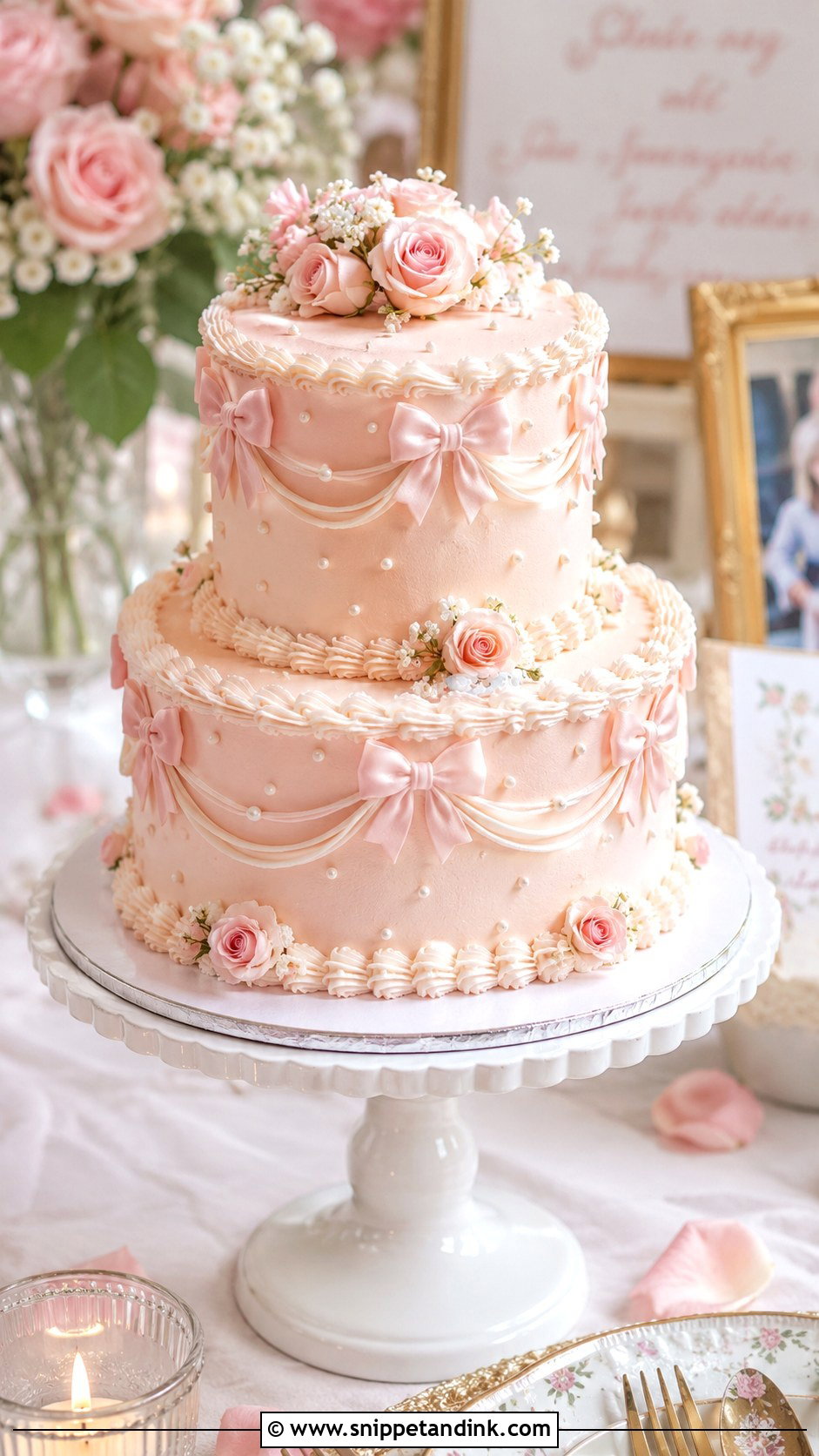
Coquette style leans into bows, pearls, soft pink and dainty piping. It stays wedding-appropriate only when the details are controlled; once every surface has a bow, it starts to look like a child’s birthday cake. I begin with ivory or blush buttercream, then add small fondant bows, pearl dots, piped shells and a few tiny florals, leaving clear space between them. One tier for cutting or two for a dessert table is the right scale. Vanilla, strawberry, almond or raspberry suit the sweetness.



20. Romantic Tiered Wedding Cake
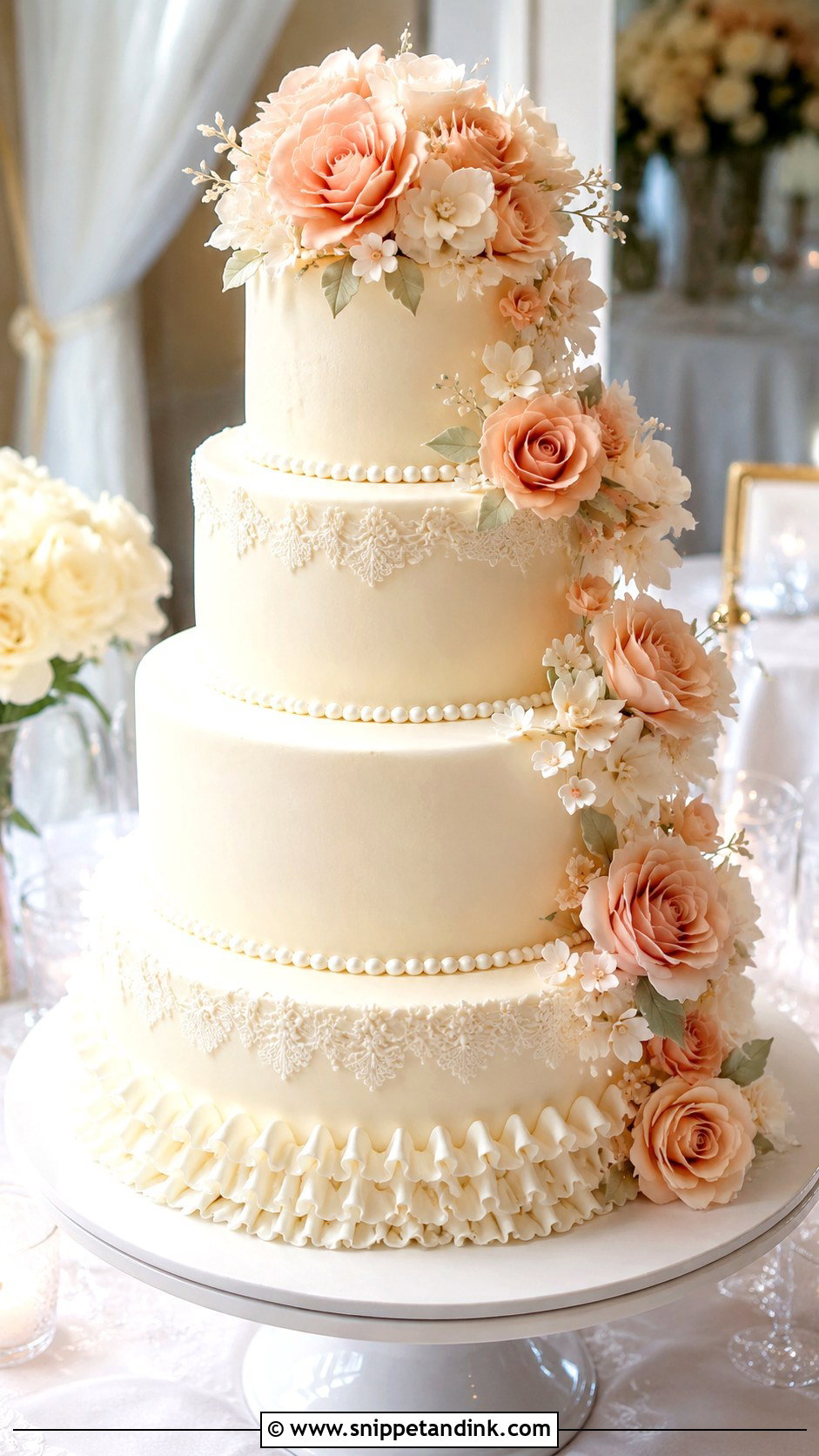
The romantic tiered cake is the centerpiece most people picture first: smooth ivory tiers, soft florals, pearl borders, gentle piping and a graceful outline. It adapts to modern, vintage, garden or formal styling through the finishing details, such as blush flowers, lace accents or subtle ruffles. Three tiers are enough for many weddings, while larger receptions may need four or more, or a display cake supported by kitchen sheet cakes. I’d choose between vanilla raspberry, lemon elderflower, almond, coconut and white chocolate.
Which Parts of a Pretty Cake Can Guests Actually Eat?
Delicate cakes carry a lot of decoration, and not all of it should end up on a plate. I walk every couple through this at the tasting so the caterer knows what to pull off before slicing.
Eat it
Piped buttercream flowers and lace, painted designs, fondant drapes and bows, edible lace panels and soft sugar pearls are all fine to eat, though fondant is chewy and many guests leave it on the plate.
Remove it first
- Wired sugar flowers. The wire and floral tape run into the cake; lift the whole spray off in one piece.
- Fresh flowers and greenery, even food-safe ones, along with any picks or wraps holding their stems.
- Hard dragée pearls in quantity. Edible, but they’re tough on teeth.
- Ribbon around tier bases, and any cake boards and dowels between tiers.
I write a short cutting note for the caterer listing each of these, and I’d suggest you ask for the same. It saves a guest from biting into florist wire, and it lets you keep the sugar flowers in a box as a memento.
One Soft Detail, Given Room to Show
The most graceful cakes I make have one clear focal point, whether that’s blush flowers, pearls and lace, a bow, or minimal florals on clean tiers. Texture, color and that one detail do more than every decoration at once. Before you decide, look at your venue, your dress, your flowers and your table styling together, and bring photos of all of them to your tasting. A cake should taste good first, and then look as if it was always meant to be part of your day.
You'll Like These Ideas:




Leave a Reply