
Stripes are the one cake pattern I can push in almost any direction. In black and white they read as formal, in pastel they turn sweet, and in white-on-white they become a texture you only notice up close. What makes or breaks them is precision: a stripe that wobbles by a few millimetres is the first thing the eye catches, so most of my planning goes into how the lines are made and how they’ll survive the trip to your venue. The ideas below run from bold contrast bands to quiet combed buttercream, on round, square and extra-tall tiers.
Four Ways a Baker Actually Puts Stripes on a Tier
Couples often show me a striped cake photo without knowing how it was made, and the method decides how sharp the line is, how it handles heat and what it costs in hours. It helps to know which one you’re looking at before you book.
- Combed and inlaid buttercream. A comb cuts grooves into a chilled base coat, a second colour fills them, and the tier is scraped back once firm. Soft edges, lovely to eat, and the least heat-tolerant.
- Cut fondant bands. Strips are rolled, measured and wrapped around the tier. This gives the crispest, most even line and travels best, though some guests peel fondant off.
- Piped lines. Raised stripes piped in buttercream or royal icing. Good for white-on-white texture, but every line is freehand, so consistency depends entirely on the decorator’s hand.
- Painted stripes. Edible paint or lustre brushed over a smooth, firm surface. Ideal for thin metallic lines; it needs a fondant or very well chilled base to paint on.
When you send inspiration photos, say which tiers you want striped, roughly how wide the bands should be, and whether the cake will be in a warm room. Those three answers let a baker tell you straight away which method fits, and whether the photo you love was buttercream at all.
1. Black And White Striped Wedding Cake
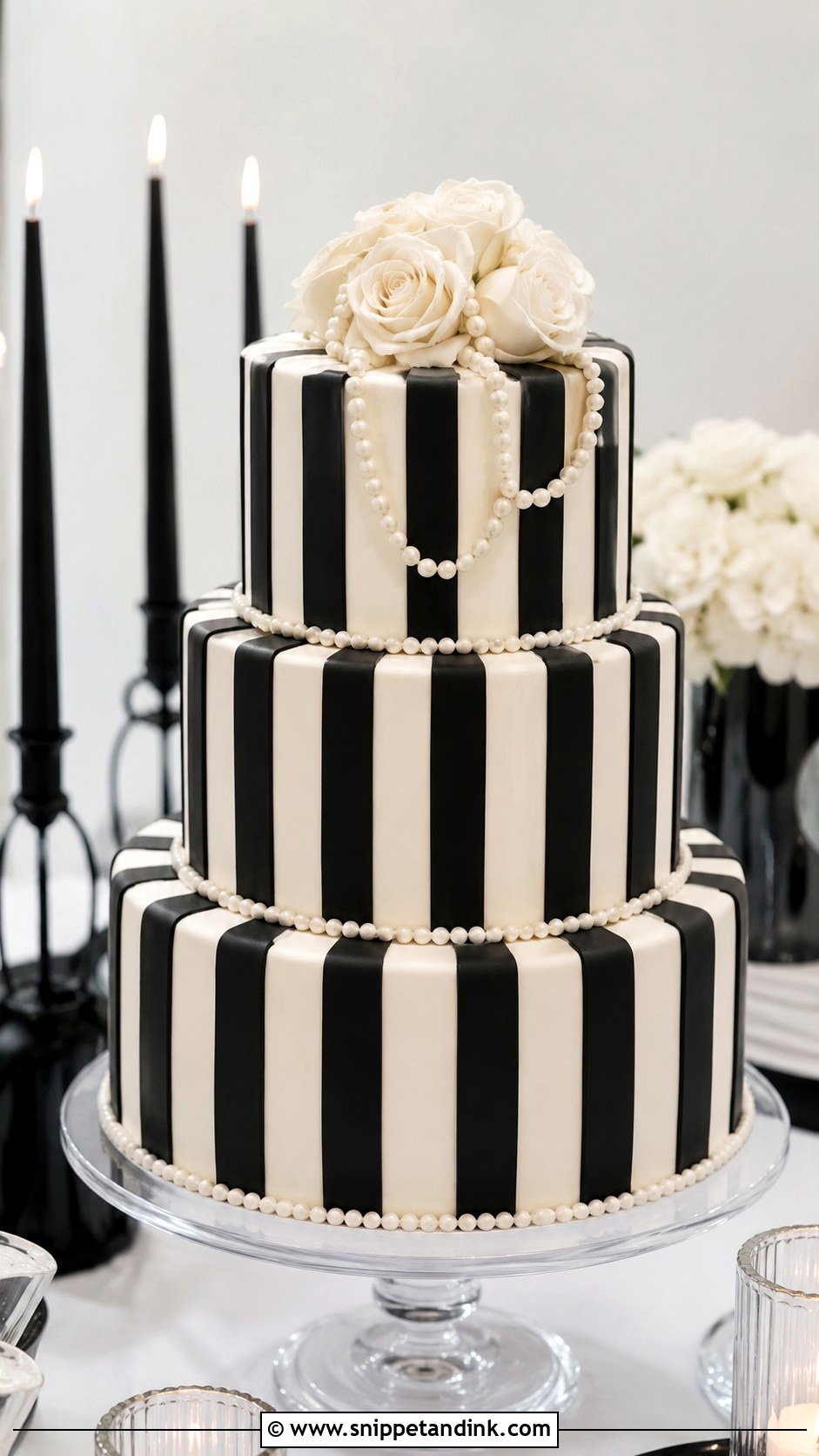
Black and white is the hardest stripe to get right and the most rewarding when it is. Black buttercream takes a lot of colour to reach true black, so I mix it a day ahead and let it deepen overnight, otherwise it sits on the cake looking charcoal. Vertical bands give a tall, fashion-led silhouette; horizontal ones look more tailored. I soften the pattern with white roses or a few pearls and leave it there. Put it on a table with white linen and black tapers and it holds its own without anything else.
2. Gold Striped Wedding Cake
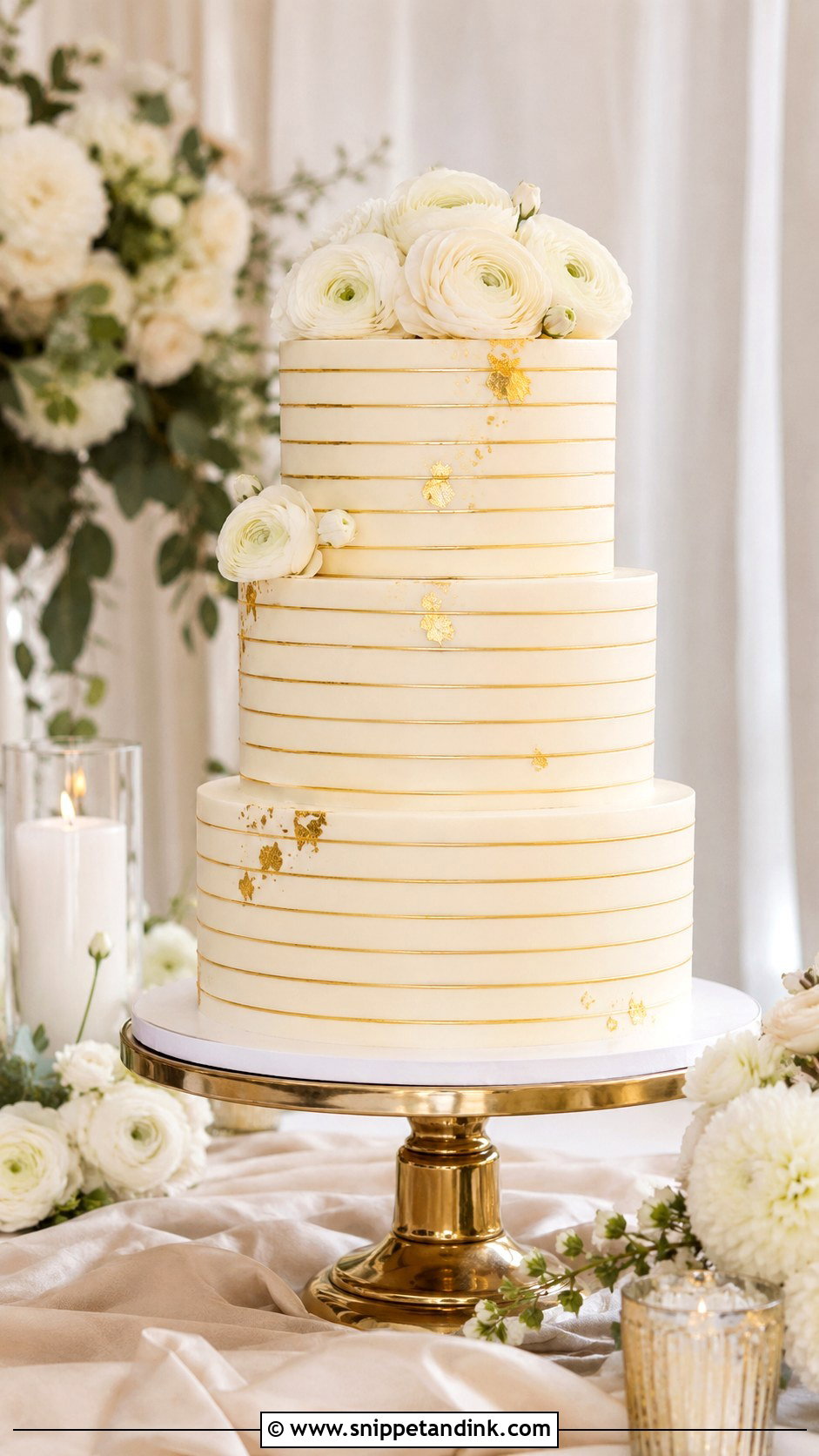
Thin gold bands on ivory are how I add shine without weighing down the dessert table. The method changes the look: hand-painted edible gold gives a soft, slightly brushed line, gold leaf crinkles and catches light, and fondant strips painted gold stay perfectly even. Check that whatever gold your baker uses is labelled edible, since some lustre dusts are only meant for decoration. Square tiers suit this one well, because the corners make each metallic line look sharper.
3. Pastel Striped Wedding Cake
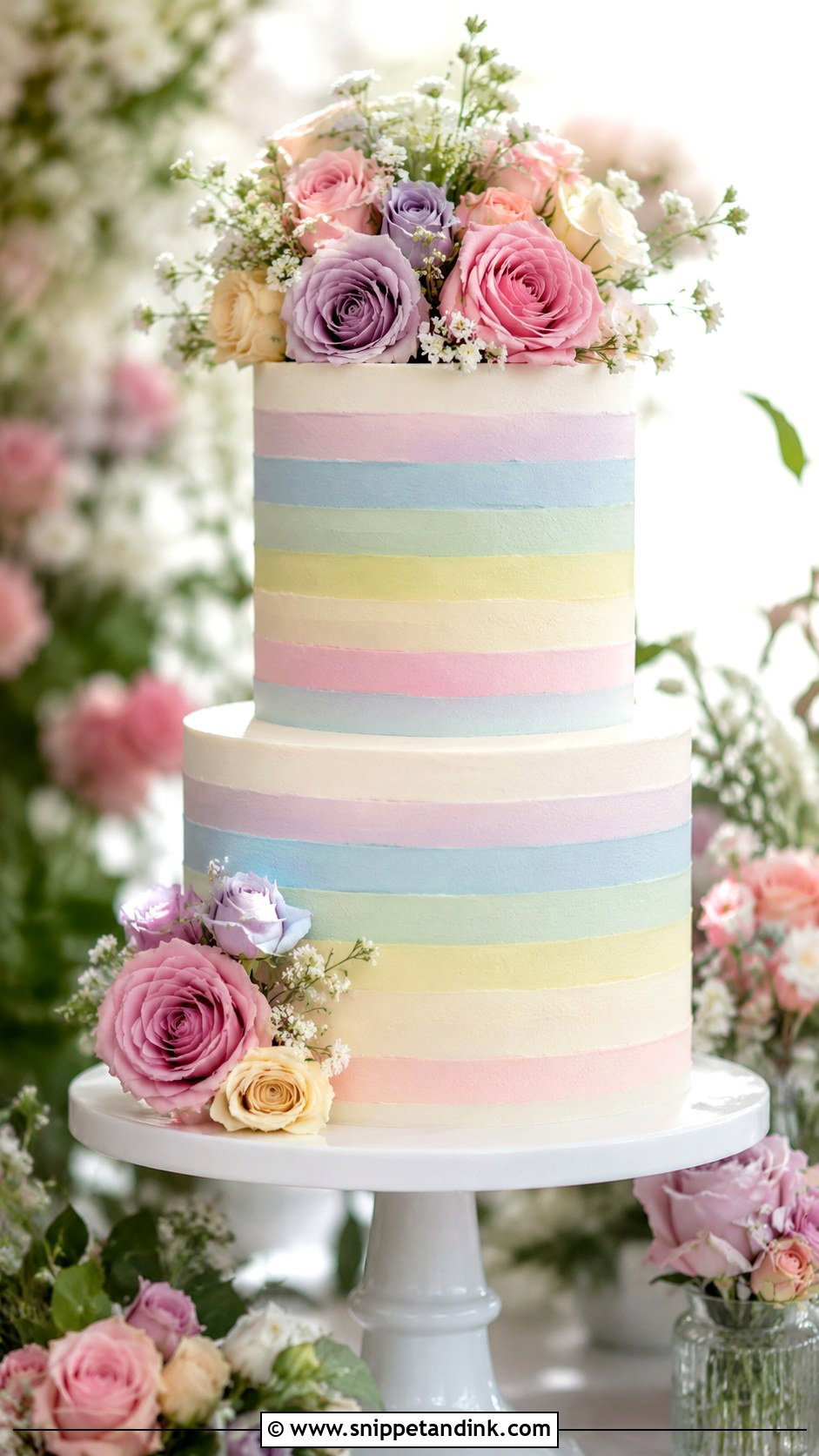
Pastel stripes only look grown-up when the shades are close in value. If the pink is much paler than the blue, the cake starts to read like a nursery. I mix pale pink, butter yellow, lavender and mint from the same white base so they sit at a similar depth, then keep the frosting dead smooth between them. Matching a few flowers to the stripe colours ties it back to a garden or brunch wedding.
4. Navy Striped Wedding Cake
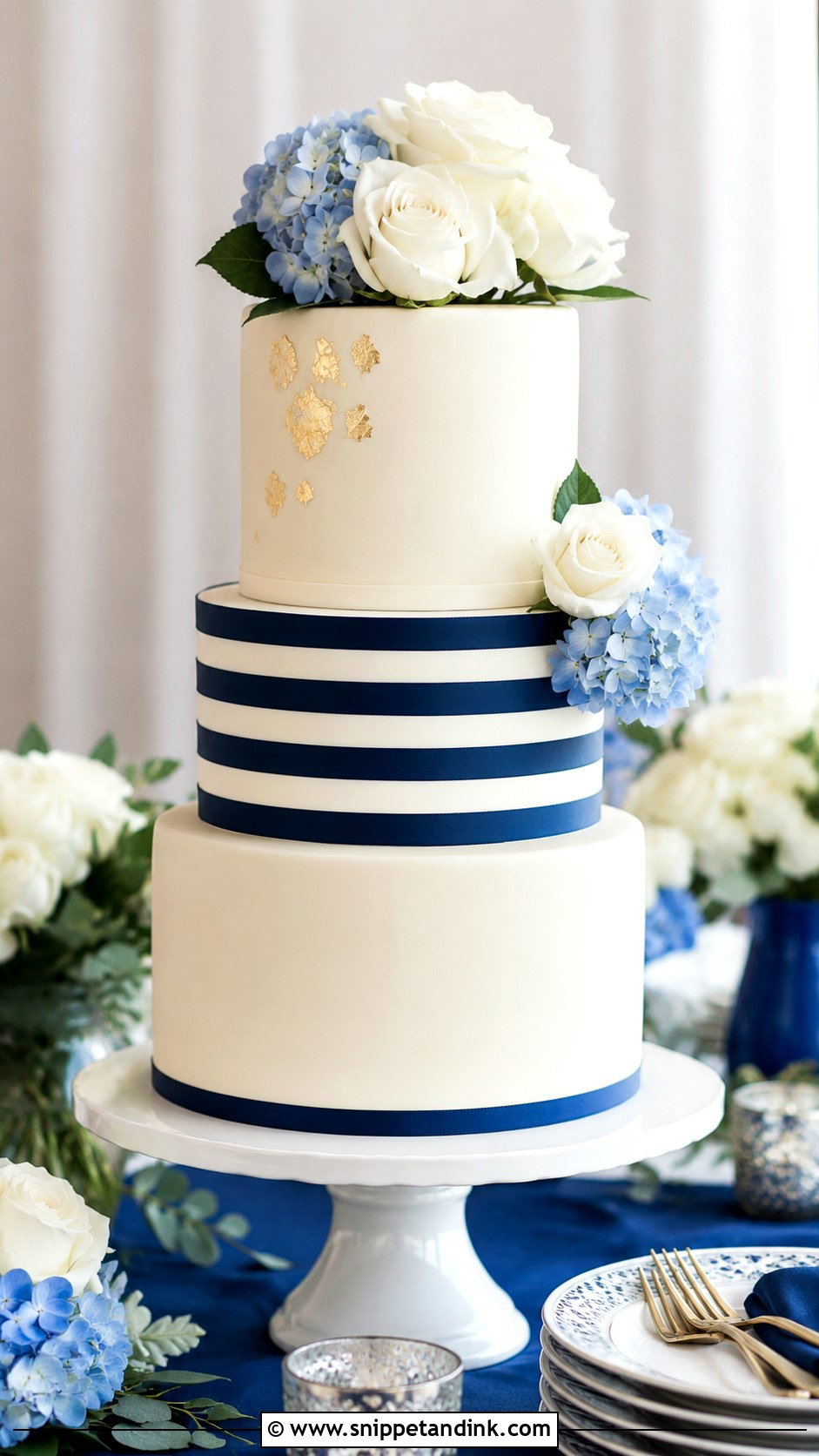
Navy stripes can swing nautical or formal depending on width. Thin navy and white bands feel like a seaside club; wide navy panels on ivory look more serious. Deep blue buttercream can pick up a slightly green cast in yellow light, so I always check a sample swatch under warm bulbs before committing. If you’d rather keep it restrained, stripe one tier and leave the rest white, then bring in blue hydrangeas or a touch of gold at the base.
5. Pink Striped Wedding Cake
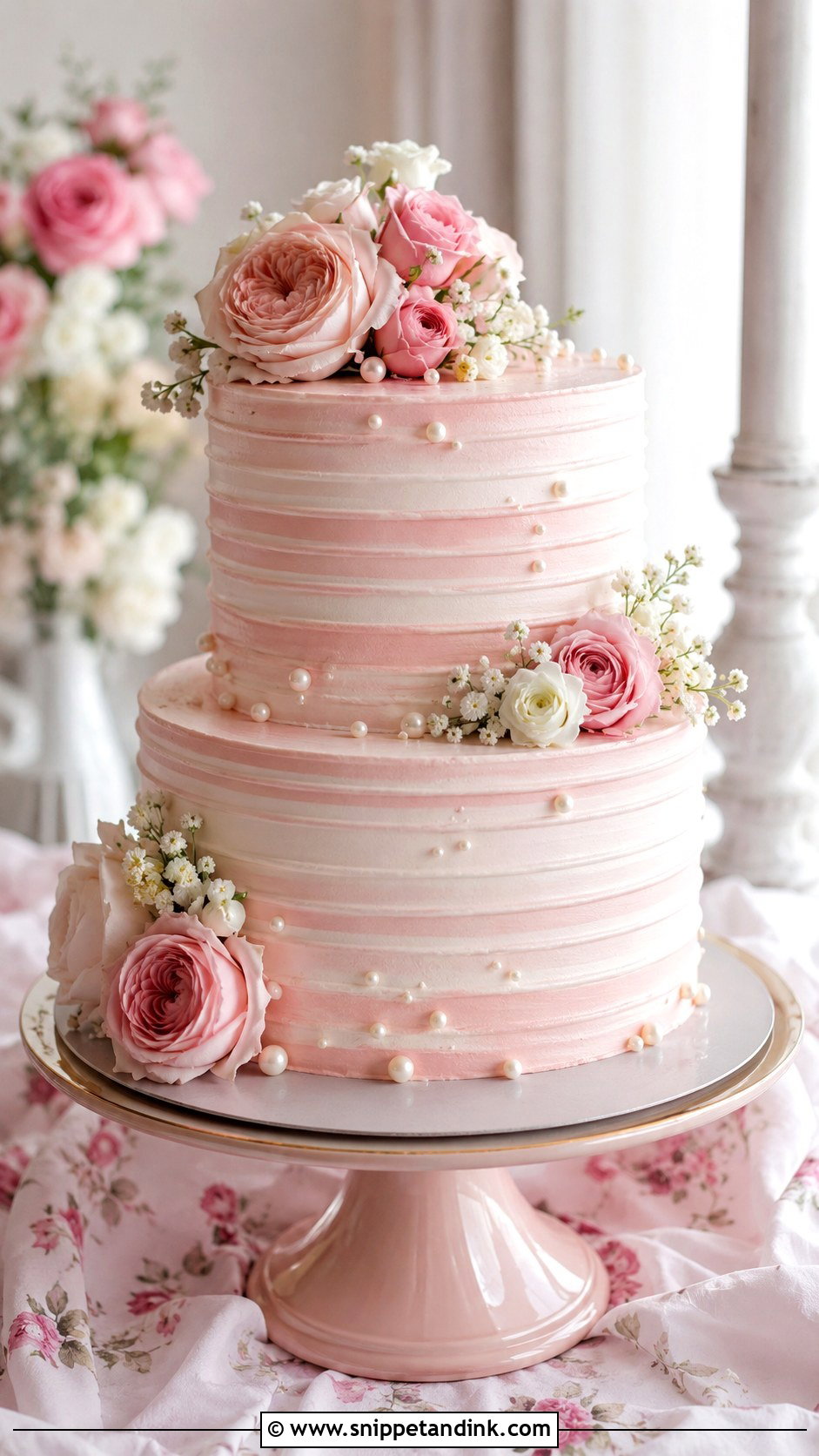
Pink stripes live or die on the exact shade. Blush, dusty rose and mauve each change the mood of the whole table, so I ask couples to bring a fabric swatch from the bridesmaid dresses or a real petal from their florist rather than a screen photo. Two or three tiers give the stripe room to repeat. Keep the edges sharp and the piping minimal and it stays sweet instead of casual.
6. Vertical Striped Wedding Cake
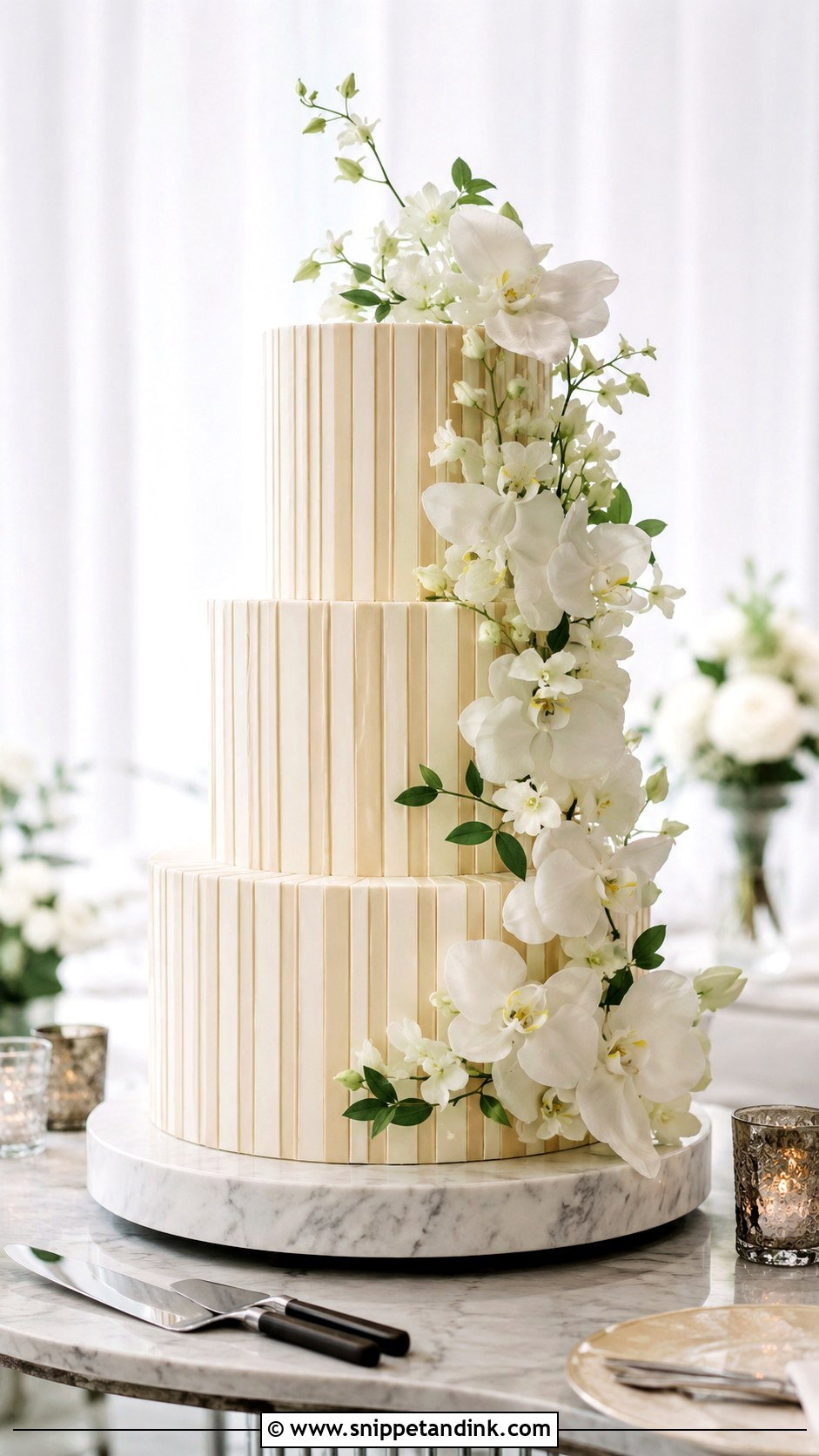
Vertical lines make any cake look taller, which is why I suggest them for couples worried their cake will disappear in a large room. They are also the fussiest to cut and place: every strip has to be spaced by measurement around the tier, or the last gap ends up narrower than the rest. White-on-white keeps it subtle; black, sage or blush gives contrast. Flowers climbing one side work well here, and I often leave the top tier plain to stop the pattern feeling relentless.
7. Horizontal Striped Wedding Cake
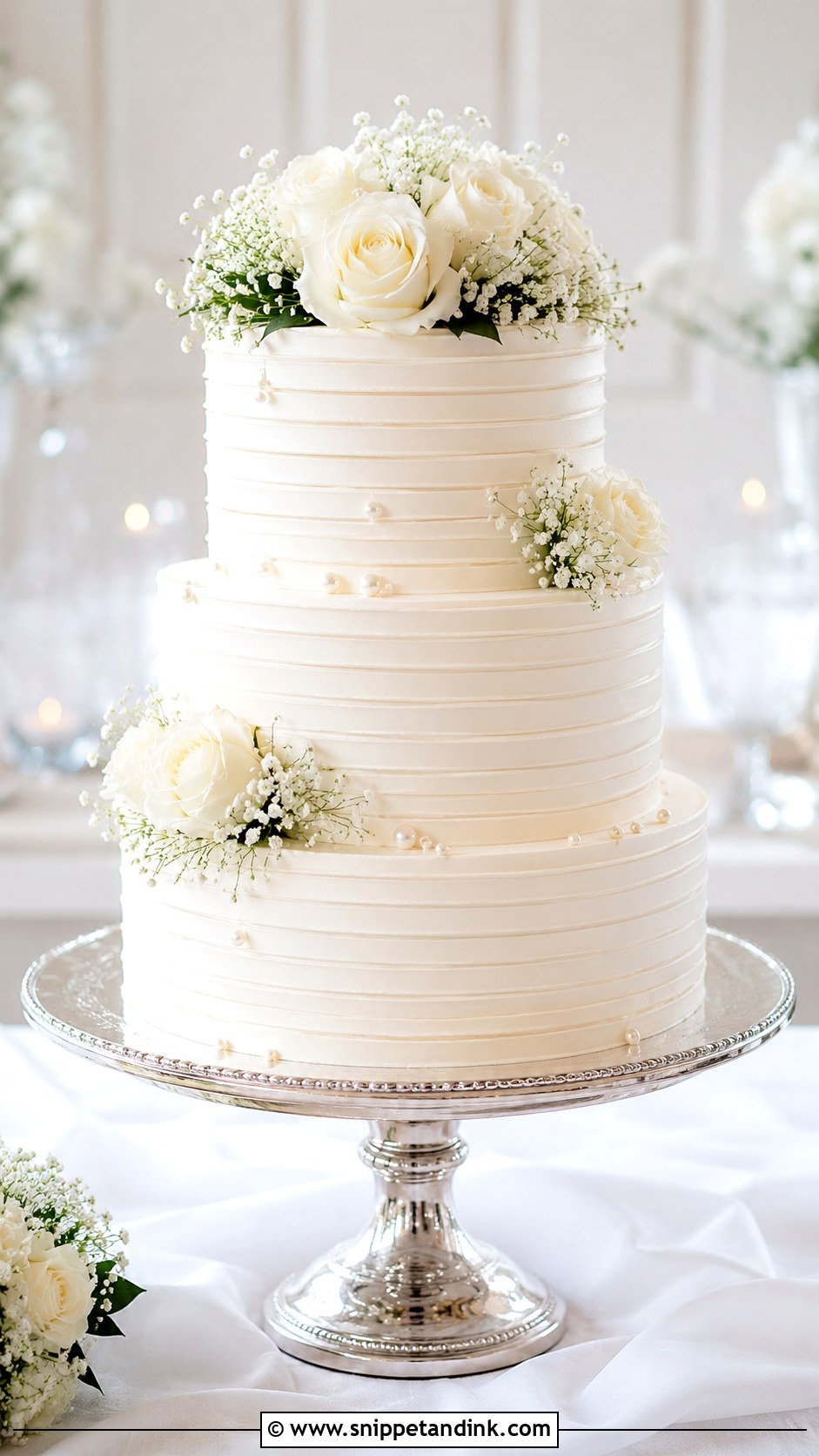
Horizontal bands are the stripe I’d recommend to anyone unsure, because they look even from every angle and suit almost any finish. In buttercream they’re usually combed; in fondant they’re cut and wrapped. Thin bands feel formal, thick ones bolder. The thing to watch is alignment between tiers: if the stripes don’t line up from one tier to the next, the cake looks like it was stacked in a hurry. A ring of flowers between tiers softens all those straight lines.
8. Diagonal Striped Wedding Cake
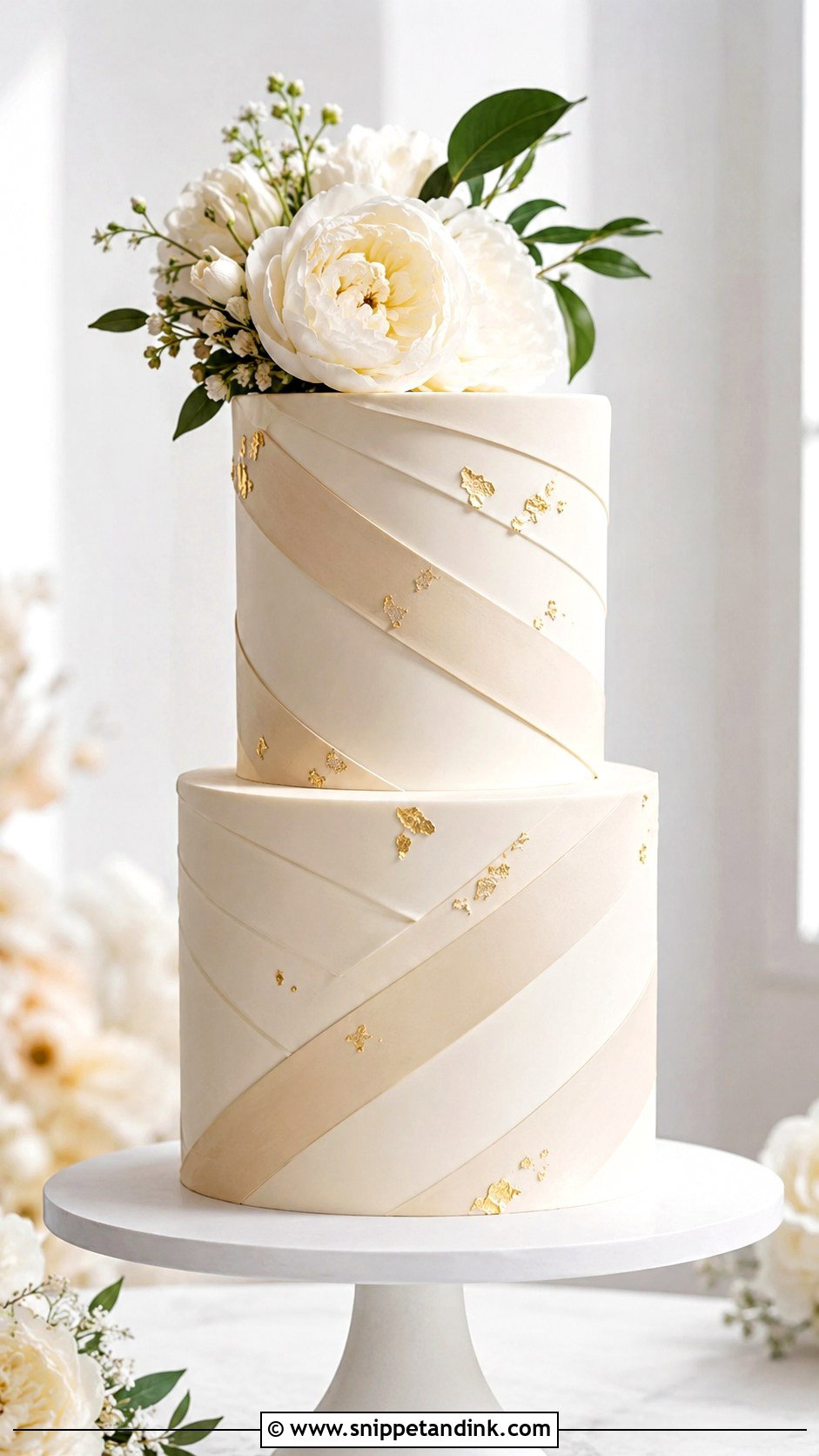
Diagonal stripes bring movement, and they’re my suggestion for couples who like stripes but find them a little traditional. They are tricky to keep at a consistent angle around a round tier, so I’d usually put them on one feature tier and keep the tiers above and below smooth. Two colours are plenty: ivory with champagne, or white with blush. A few fresh flowers finish it.
9. Chevron Striped Wedding Cake
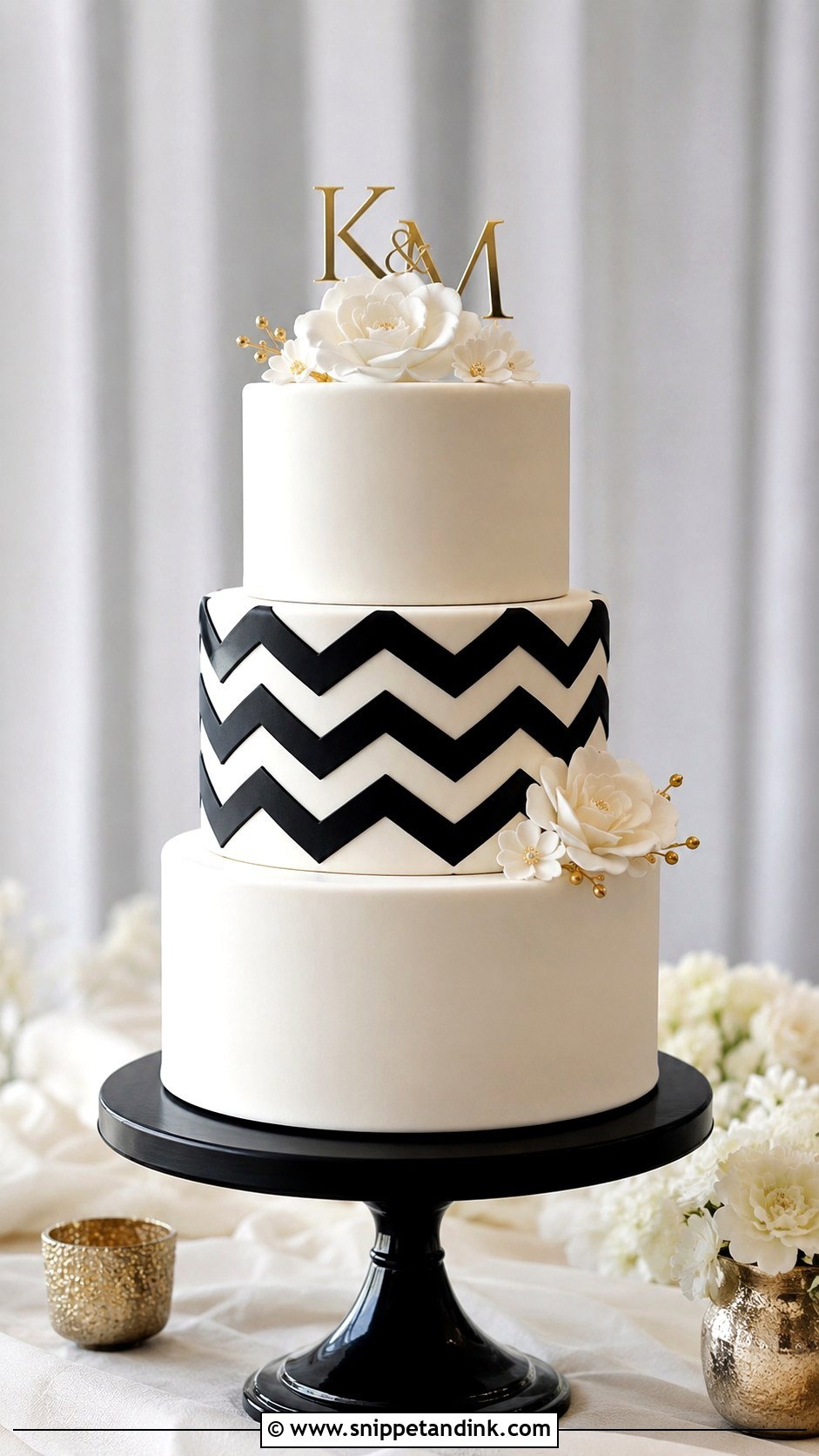
Chevron is already doing a lot of work, so a chevron striped wedding cake needs very little else. I nearly always confine the zigzag to one tier and keep the others plain. Black and white is the boldest version, gold and ivory the most glamorous. The points need to meet cleanly at the back seam, and that is where a less experienced decorator usually gives themselves away, so ask to see the back of their past work. A small floral cluster or monogram topper is enough.
10. Buttercream Striped Wedding Cake
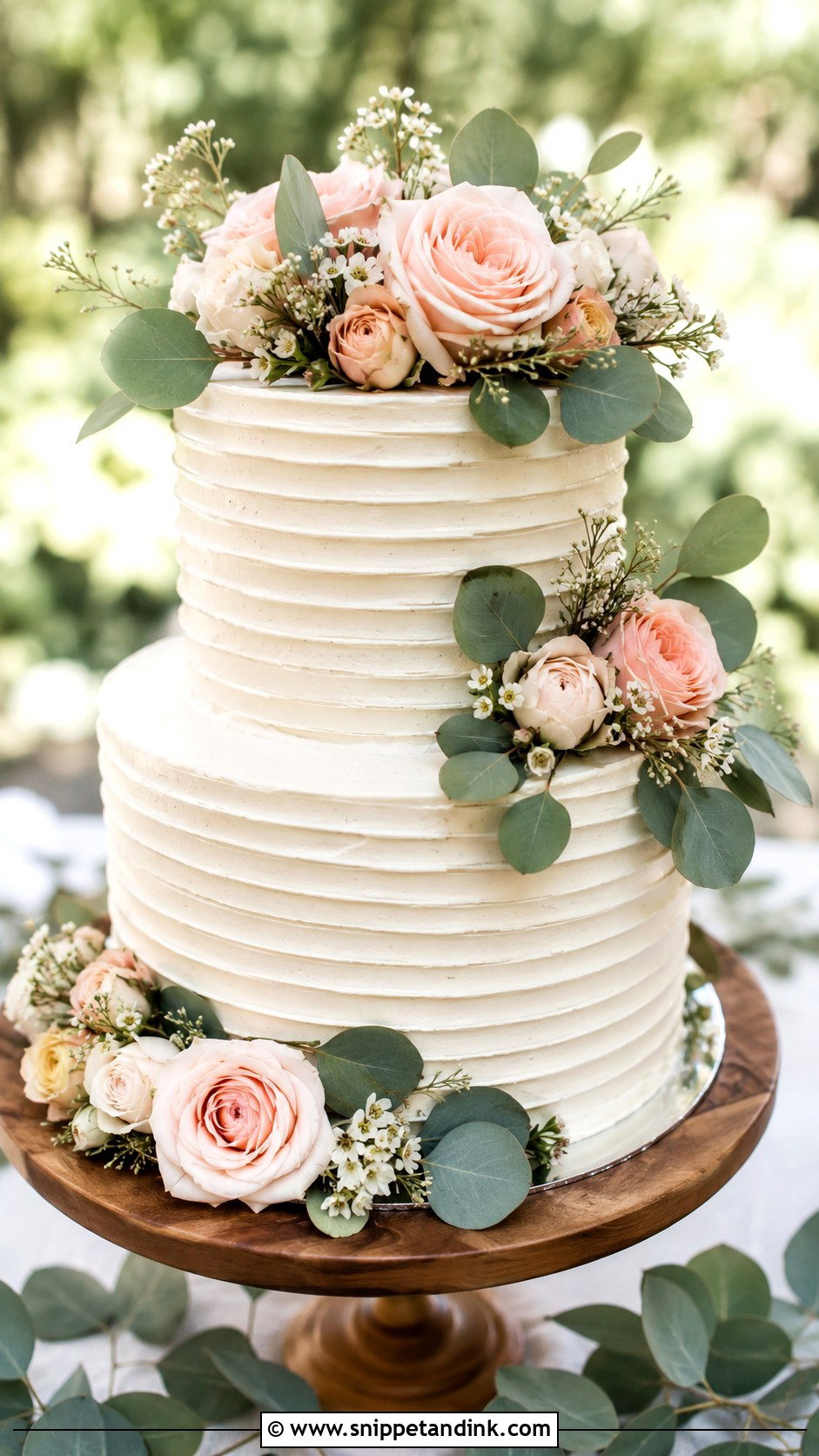
Combed buttercream is my favourite stripe to make by hand. I comb grooves into a chilled base coat, fill them with a second colour, chill again and scrape back until the lines appear, so the finish has a slight softness that fondant never has. White-on-white is subtle; colour can pick up the bridesmaid dresses. The honest drawback is heat: buttercream stripes blur if the cake sits in a warm room or in sun, so this one wants an indoor or shaded cake table.
11. Fondant Striped Wedding Cake
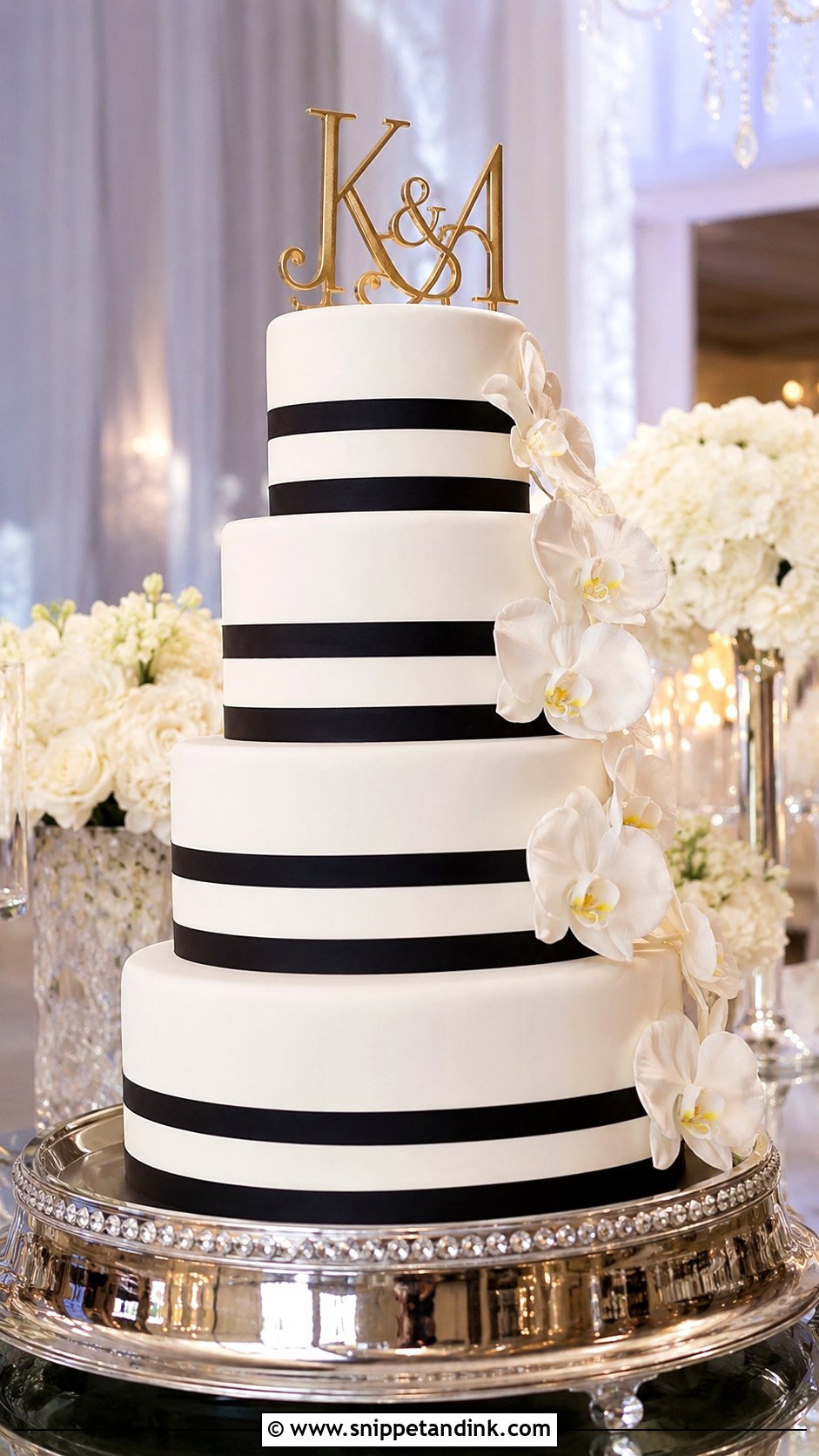
Fondant gives the crispest edge of anything here, which makes a fondant striped wedding cake my choice for hotel ballrooms and formal rooms. Each band is rolled to an even thickness, cut against a straight edge and wrapped, so the colour stays exactly where it’s put. Black, gold, navy or blush on white all look sharp. One warning: fondant sweats if the cake comes out of a cold fridge into a humid room, and dark strips can bleed slightly onto white when that happens. A good baker plans the timing to avoid it.
12. Textured Striped Wedding Cake
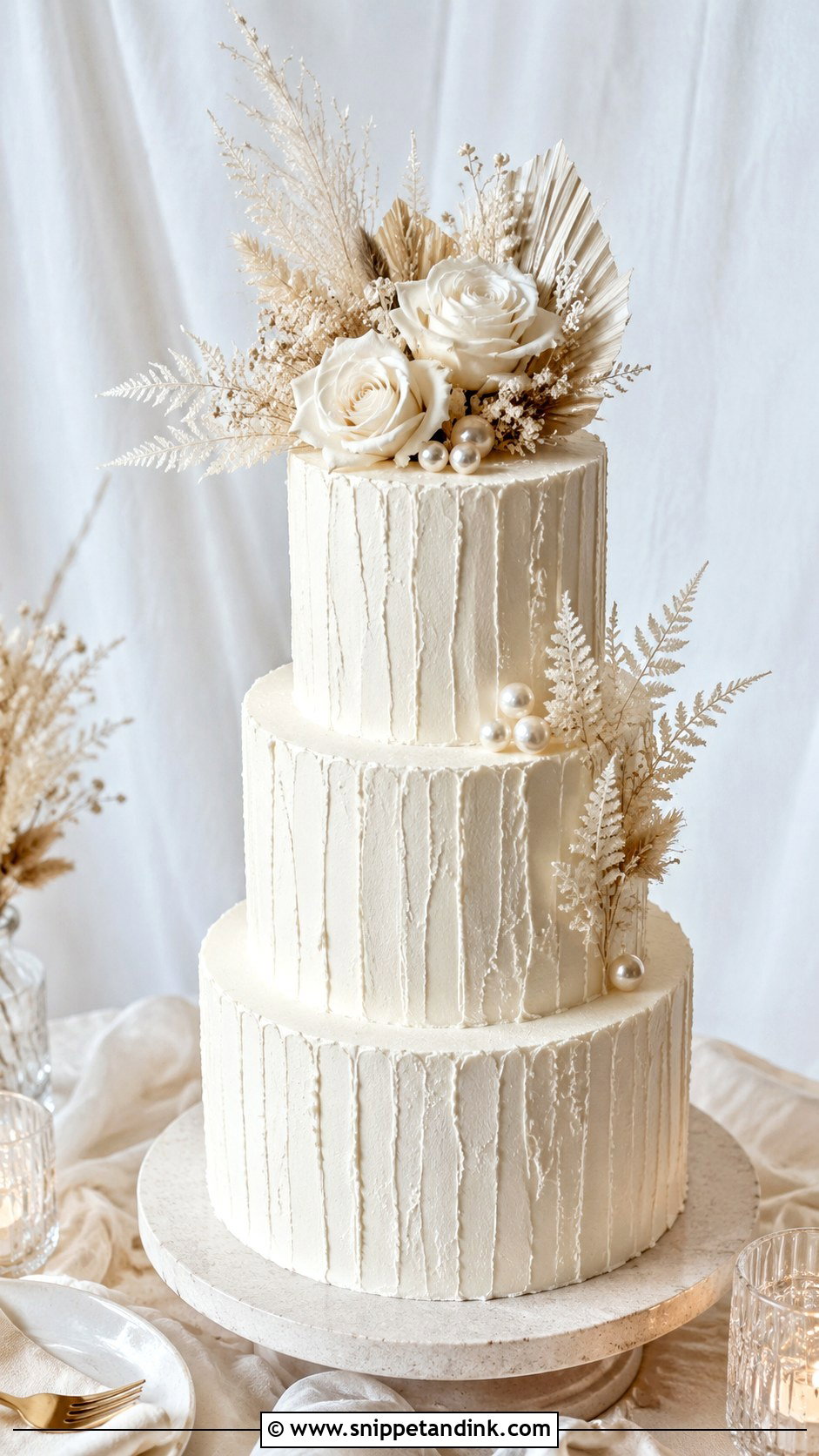
Texture is how I make an all-white cake interesting. Stripes can be combed, piped, embossed or built up as raised bands, and on an ivory or champagne palette they cast tiny shadows that read as pattern without any colour at all. Side lighting is what shows them off, so ask for the cake table near a window or a warm uplight rather than under flat overhead lights. Fresh flowers sit happily against it because the cake isn’t competing for attention.
13. Floral Striped Wedding Cake
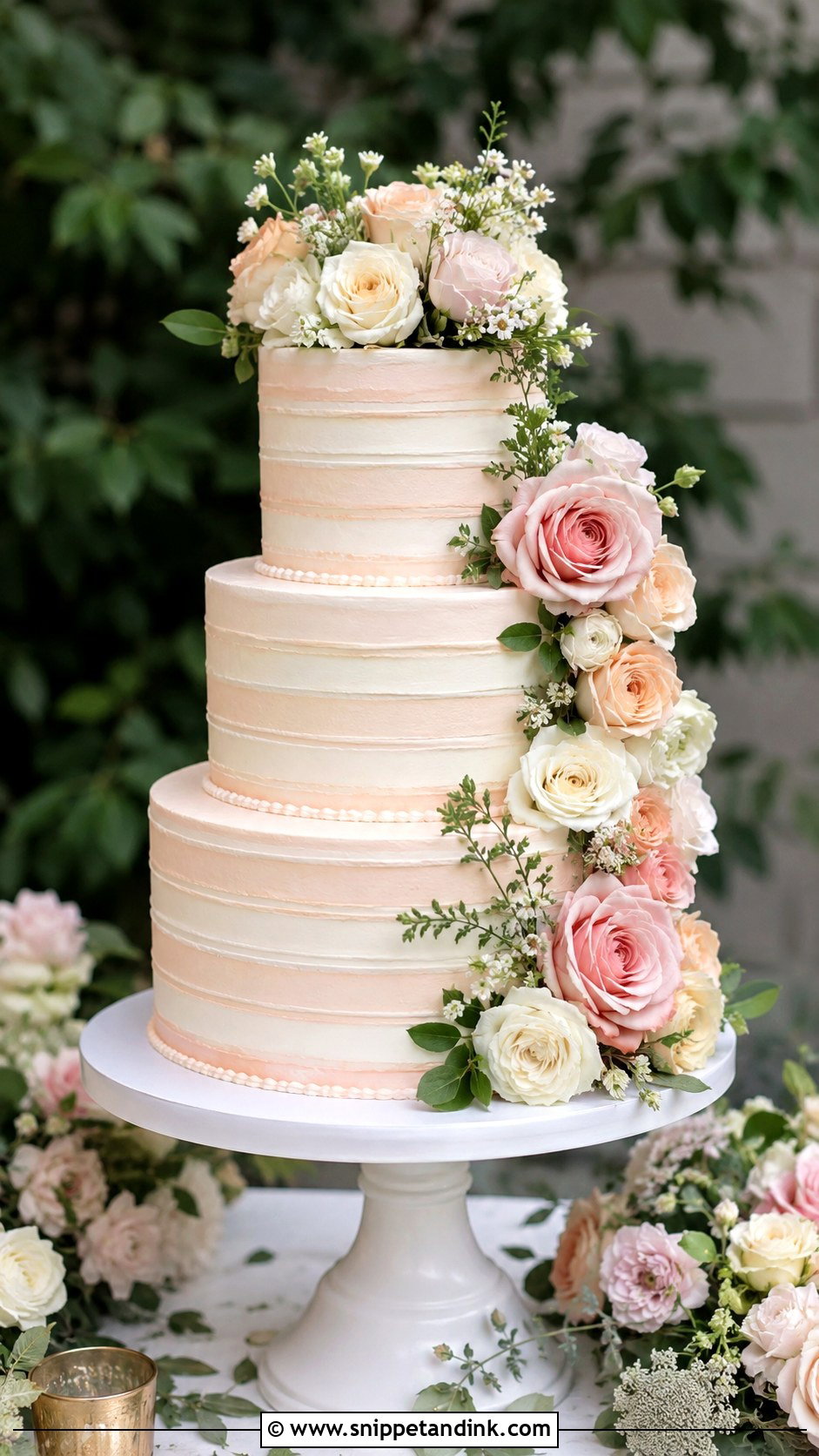
Flowers and stripes work together when one leads and the other supports. A floral striped wedding cake usually goes wrong when stems are pushed all over every tier and the pattern disappears. I stripe one or two tiers and let blooms sit between them or sweep down one side. Any fresh stems touching the cake should be pesticide-free and wrapped or picked so they don’t go straight into the sponge, which is worth confirming with both your florist and your baker.
14. Pearl Striped Wedding Cake
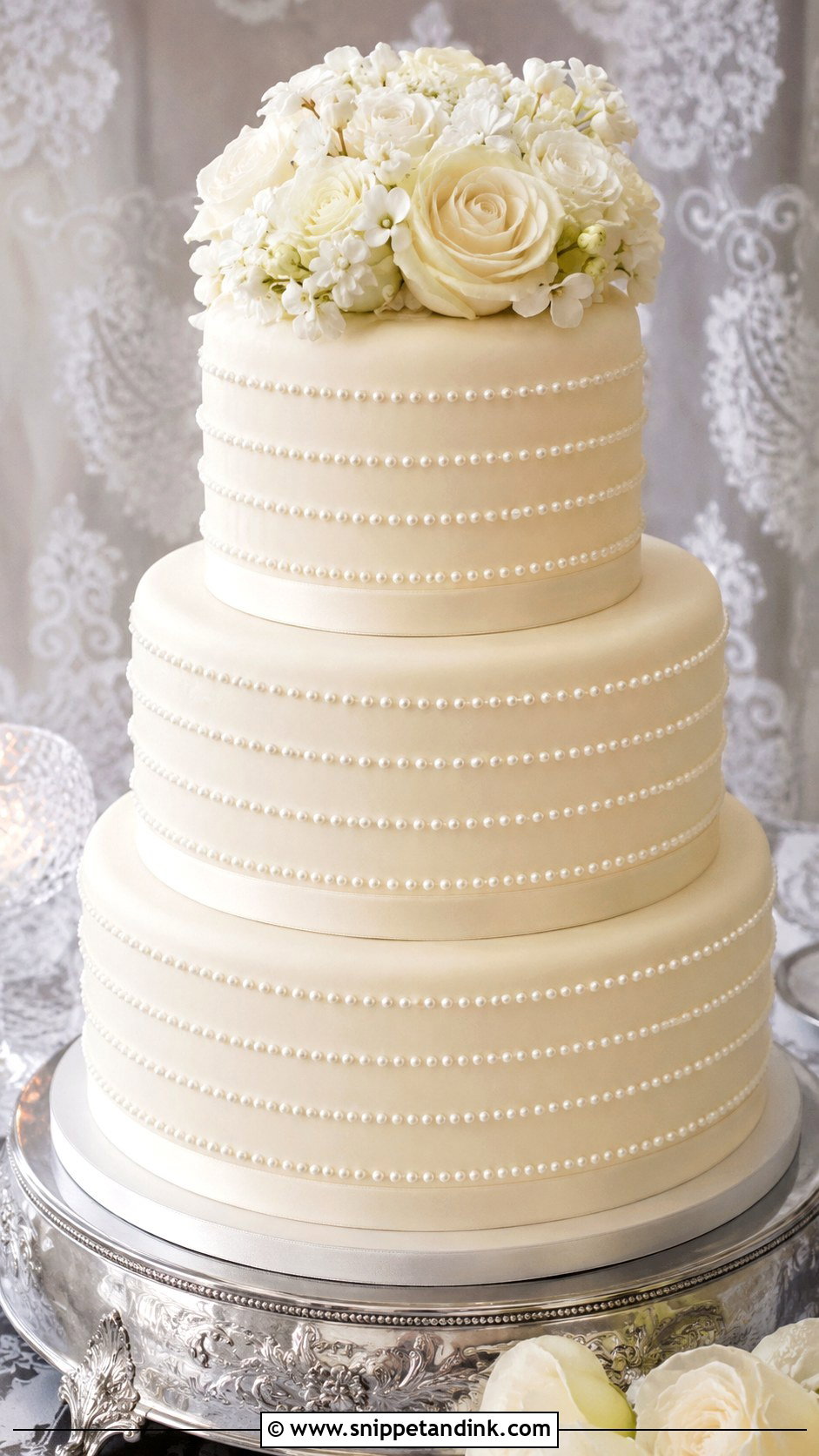
Pearl stripes skip colour contrast altogether. Rows of sugar pearls are pressed into soft icing one at a time to form neat bands, which takes patience but gives a delicate, bridal finish on ivory buttercream or white fondant. A single row per tier is minimal; stacked rows add detail. Ask whether the pearls are soft sugar or hard dragées, because hard ones are unpleasant to bite into. White roses and lace linen suit it well.
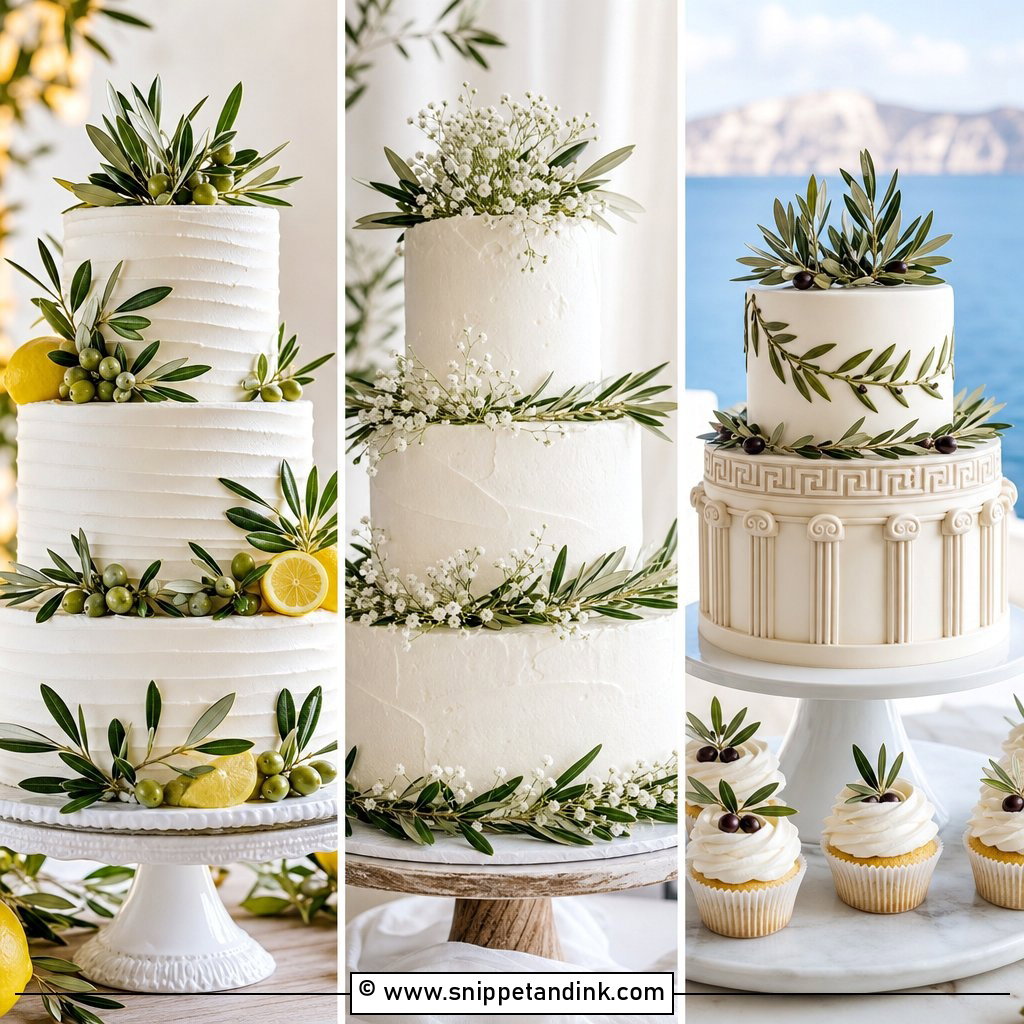
15. Sage Green Striped Wedding Cake
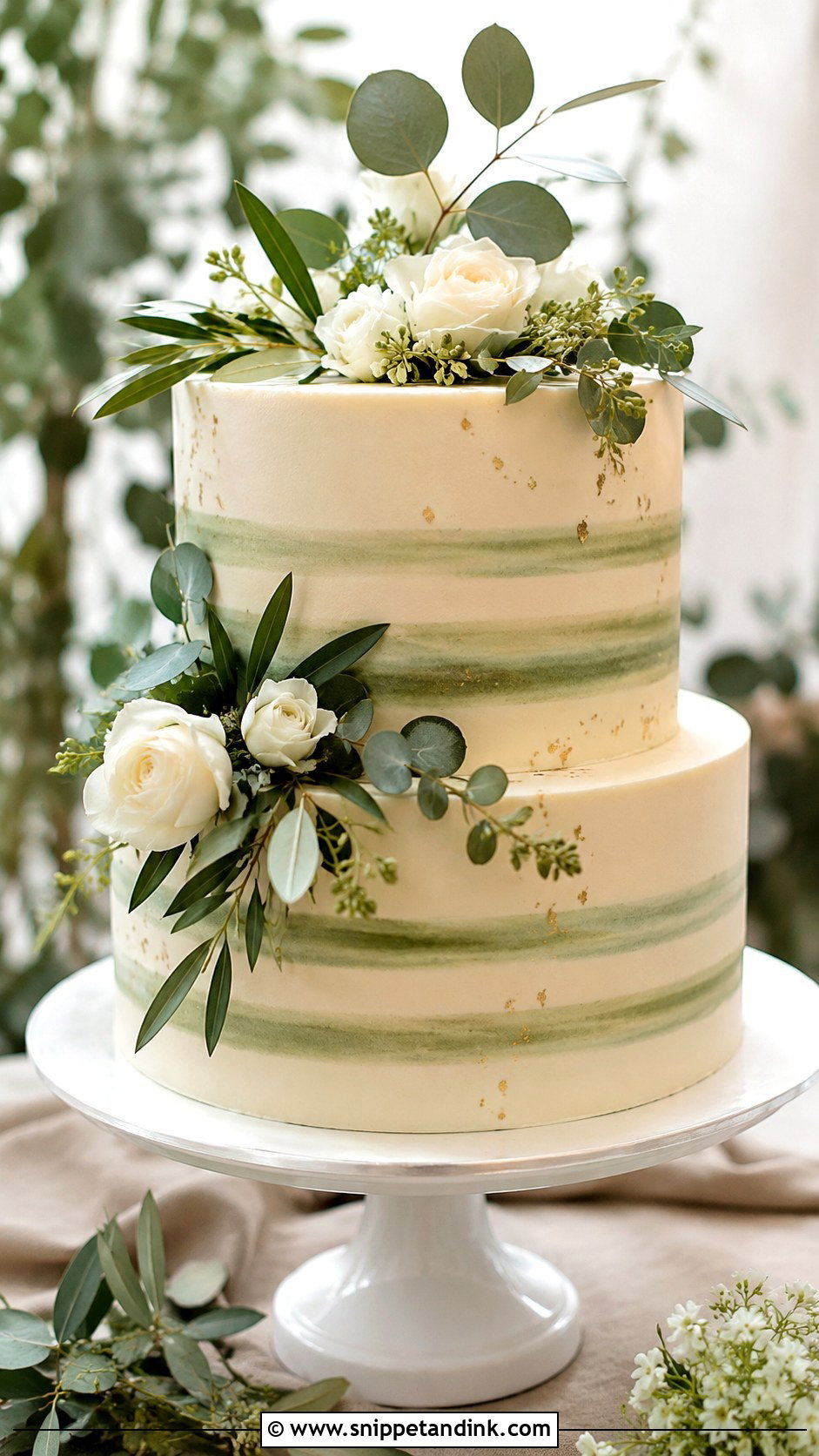
Sage is a colour I like for stripes because it’s muted enough to sit beside almost anything. A sage green striped wedding cake pairs easily with eucalyptus, olive branches and white blooms. Green tints can drift towards grey or mint in buttercream, so I mix and match against a physical swatch rather than a photo. Thin stripes feel delicate, one fully striped tier gives more impact, and a touch of gold warms it up for an evening reception.
16. Burgundy Striped Wedding Cake
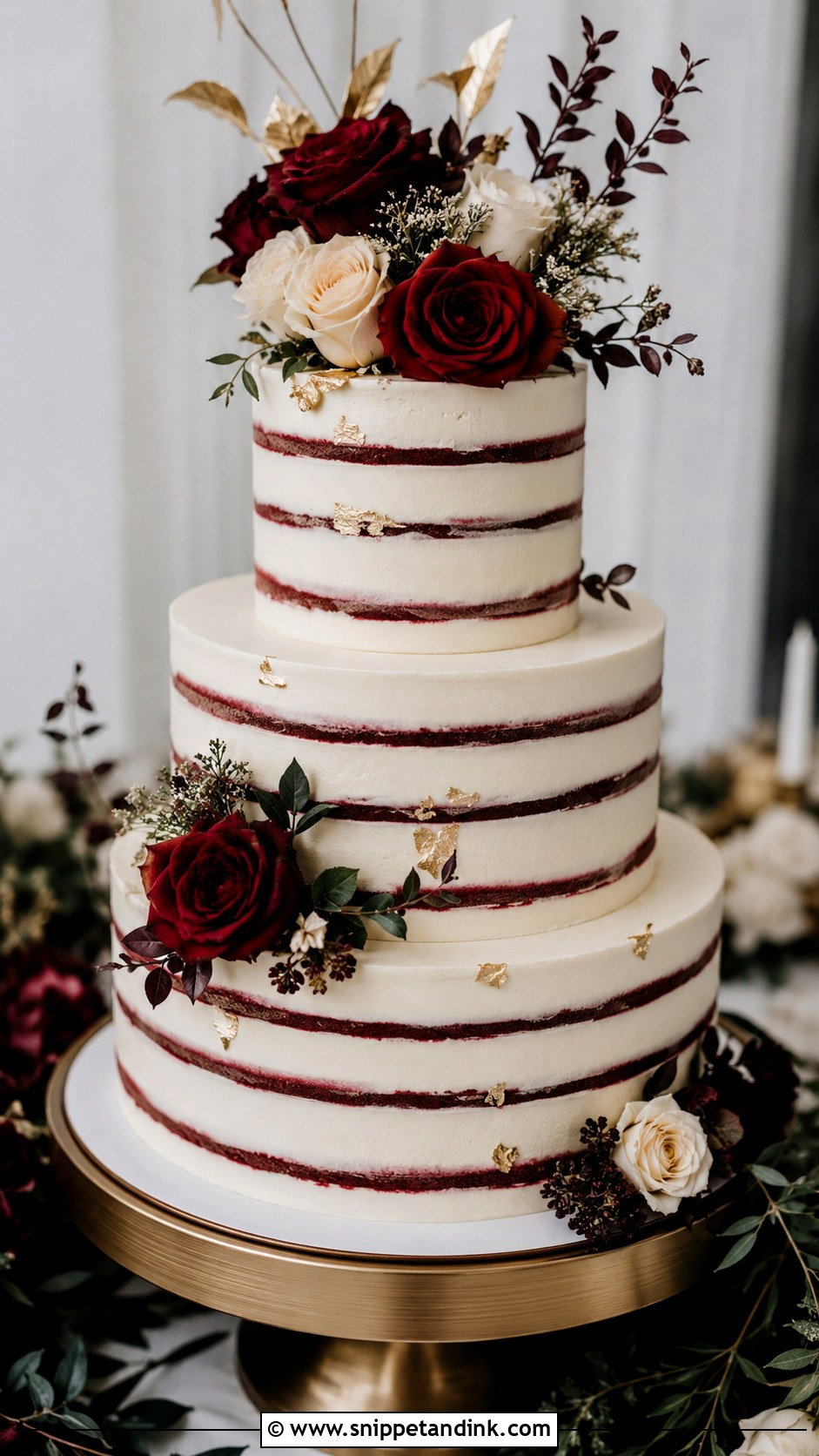
Burgundy is rich, and it’s also the shade I warn people about most. Deep red buttercream needs a heavy dose of colour, which can taste slightly bitter and can tint lips at the cake cutting, so I’d usually suggest burgundy fondant bands over ivory buttercream instead. Pair it with cream or soft gold so the cake doesn’t go dark and heavy. For a fall or winter evening wedding, on a gold stand with burgundy and mauve flowers, it’s very hard to beat.
17. Square Striped Wedding Cake
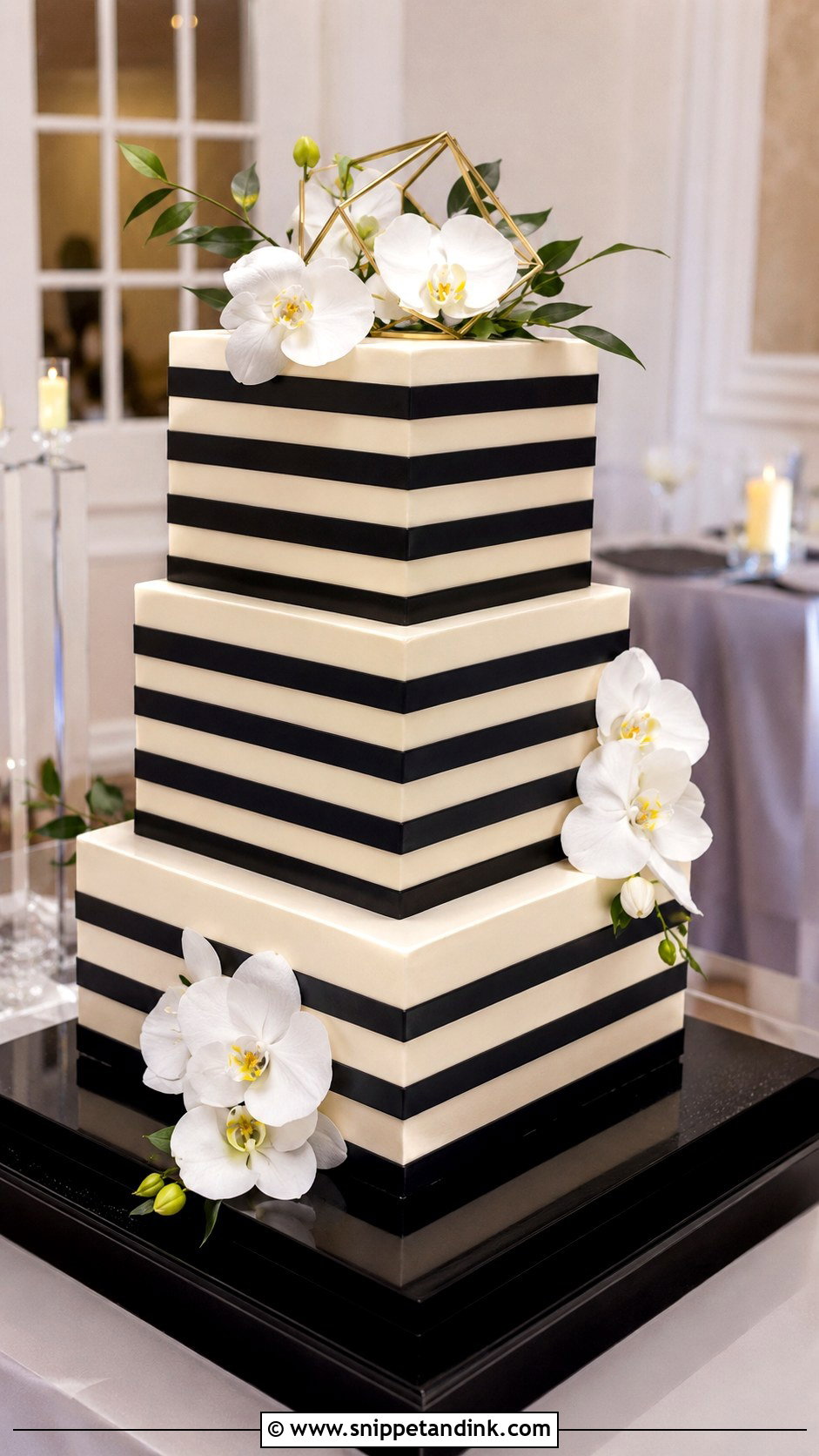
Square tiers make stripes look architectural because every band meets a straight edge. They also show every flaw, since the corners are where fondant tears and where a misaligned stripe is most obvious, so I’d only go square with a baker whose square work you’ve seen in person or in unedited photos. Black and white or ivory and gold suit the shape. Stack evenly for a formal look or offset slightly for something more contemporary.
18. Tall Striped Wedding Cake
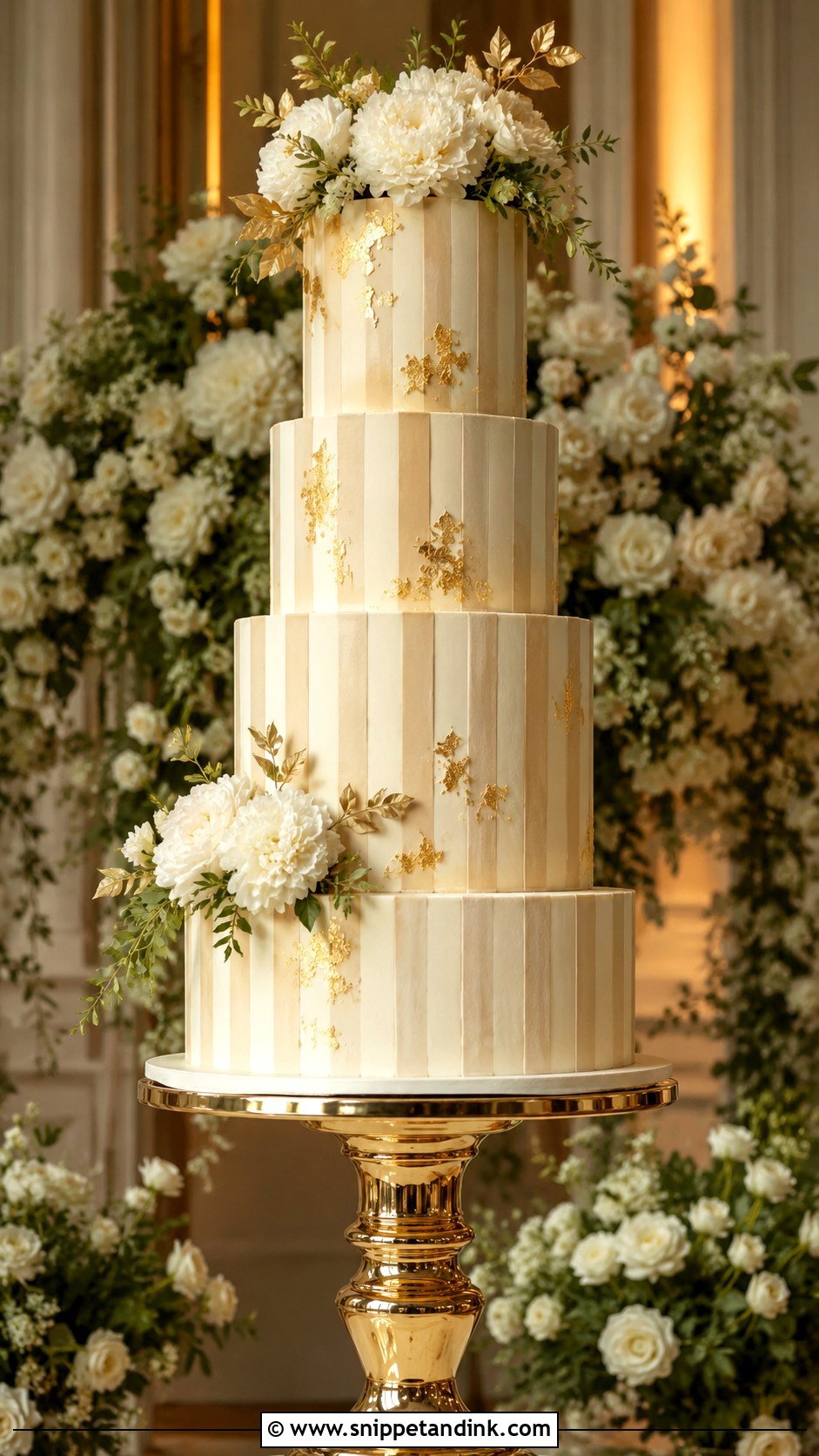
Extra-height tiers give the stripes room to run, and in a room with high ceilings or a big guest count, height does more than any decoration. Tall tiers need extra internal support, usually a board and dowels partway up each tier, which is worth asking about if the cake has to travel any distance. Keep the palette controlled, two colours at most, and use flowers sparingly so the stripes stay the focus. It reads well from the far side of the room, which matters when guests see it mostly from their seats.
19. Minimalist Striped Wedding Cake
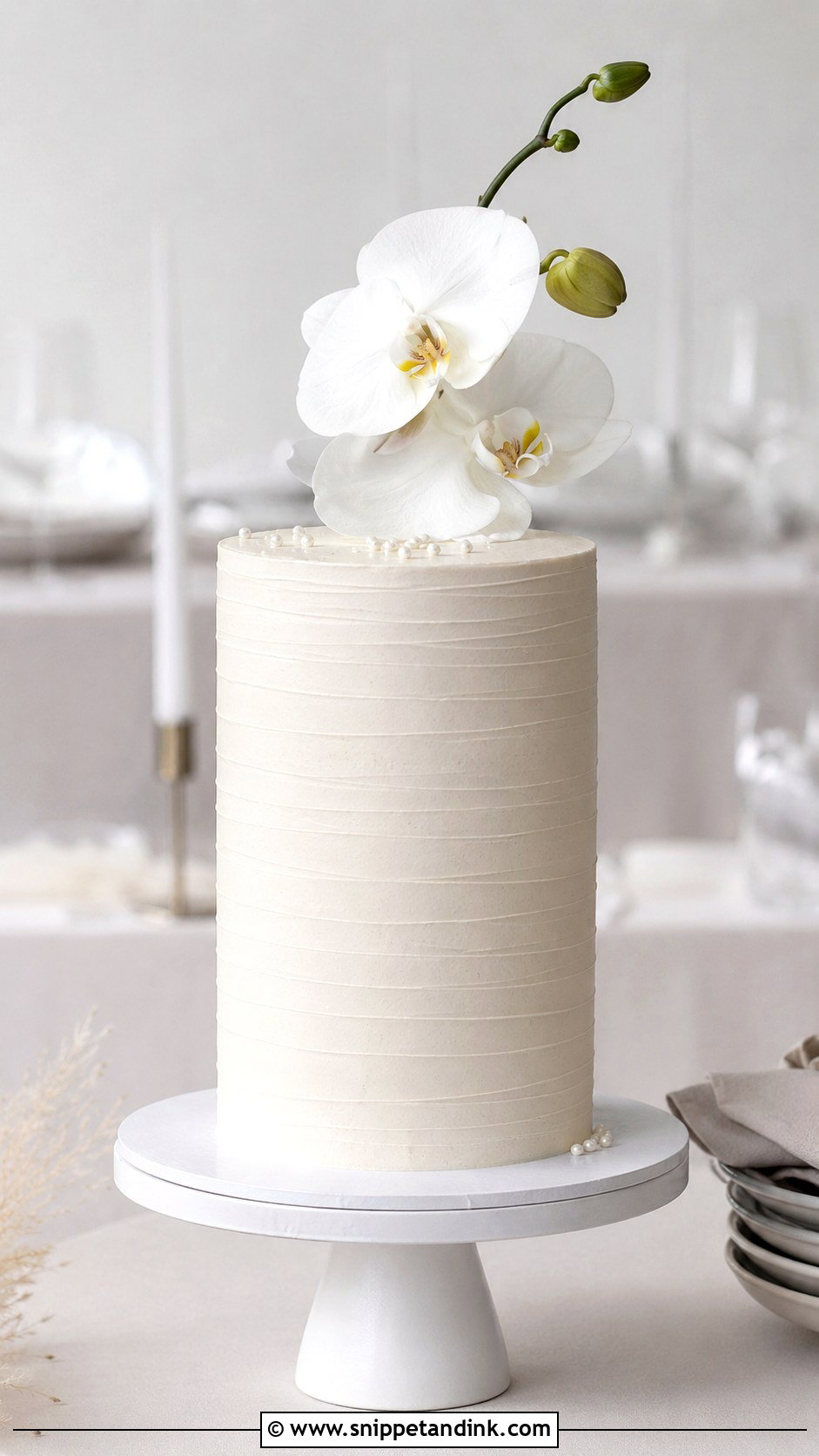
Minimalism with stripes is all about restraint: one or two details, no more. A white cake with thin ivory stripes, a single black striped tier, or pale grey bands on smooth buttercream can look striking. Because there’s nothing to hide behind, the finish has to be flawless, with sharp top edges and no air bubbles. Skip extra toppers and textures and spend the attention on a good stand. It suits loft venues, galleries and small, neutral receptions.


20. Multi Tier Striped Wedding Cake
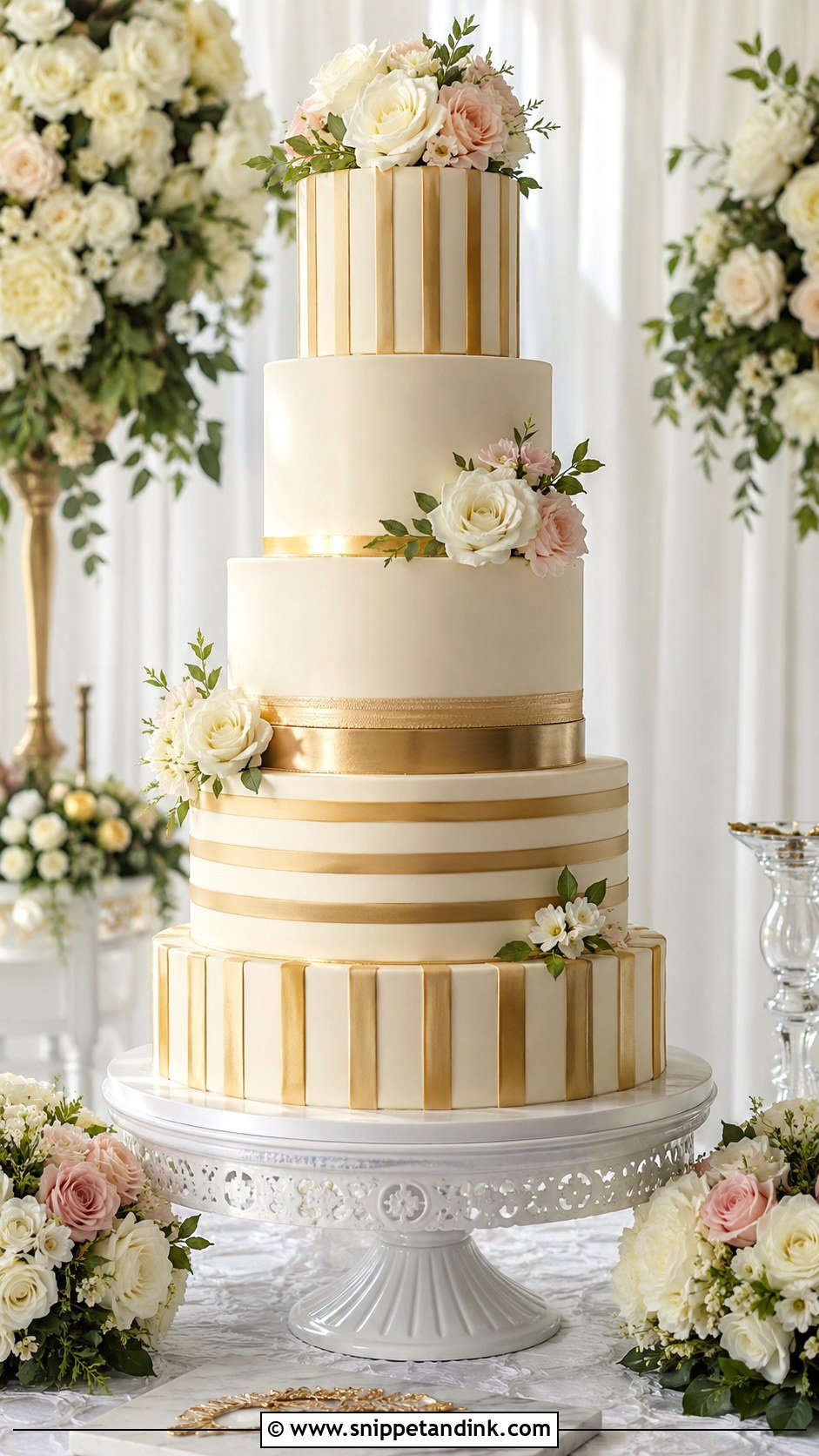
Several tiers let you mix stripe directions while keeping the cake coherent, as long as the colours repeat. A multi tier striped wedding cake might have vertical stripes on the base, horizontal bands in the middle and a smooth top tier to rest the eye. I keep the palette to two or three colours across all tiers and place flowers in a few deliberate spots rather than everywhere. Plan this one with your guest count first, since tiers are sized for servings and the design follows.
Dark Stripes, Warm Rooms and the Drive to the Venue
Clean lines are unforgiving. A smudge that would vanish on a floral cake is obvious on a stripe, so most of the problems I plan around happen between my kitchen and your cake table.
Colour bleed
Heavily coloured stripes, especially black, navy and burgundy, can migrate into neighbouring white icing when the cake gets damp. That usually happens when a chilled cake meets a humid room and beads with condensation. Letting the cake come up to room temperature in its box, rather than opening it straight into a warm hall, does a lot to prevent it.
Heat and sun
Buttercream stripes soften and blur in heat long before the cake looks like it’s melting. For an outdoor summer reception, ask for the table in shade and away from the dance floor lights, and consider fondant bands or a ganache base, which hold an edge much better than plain buttercream.
Lead time and set-up
Striped designs take longer to decorate than smooth ones, and many decorators book wedding dates months ahead, so enquire early. Tall or many-tiered cakes are often stacked at the venue rather than driven fully assembled. Ask your baker who sets up, how long they need at the table, and whether the stand has to be level, because a slight tilt makes horizontal stripes look crooked in every photo.
Matching Stripe Width to Your Room and Your Palette
Stripes earn their popularity because they adapt so easily: bold in black and white, soft in pastel, warm in gold, quiet in white-on-white texture, and on round, square or very tall tiers. When you’re deciding, think about scale as well as colour. Wide bands carry across a large ballroom; thin ones reward guests who come close. Bring your swatches, a flower list and a photo of the room to your consultation, and the stripe will look like it belongs to the wedding rather than sitting apart from it.
You'll Like These Ideas:




Leave a Reply