
A cake with one good idea on it will always look better than a cake with six. Clean shapes, soft frosting and a single feature, fresh flowers, fruit, pearls, a ribbon or a texture, give guests something to look at and leave the flavour to do the rest. That restraint is also what makes these cakes easy to personalise and easier to fit into a real budget. Below are twenty plain designs I’d suggest, and because the outside is quiet, I’ve paid as much attention to what goes inside each one.
What Should You Taste Before You Look at Designs?
With a decorated cake, guests remember the look. With a plain one, they remember the slice. That is why I’d book the tasting first and pick the design second.
Taste fillings as well as sponge, because the filling is where most of the flavour lives. Try each one at room temperature, not straight from the fridge, since that is how it will be eaten at the reception. Cold buttercream tastes of very little and feels waxy.
Matching flavour to the month
- Warm months: lemon, raspberry, passion fruit or elderflower read light after dinner, but fresh curds and cream fillings need careful cooling.
- Cold months: spice, caramel, chocolate and coffee feel right and hold up better structurally.
- Any season: vanilla bean and almond are the flavours that the fussiest guests will still eat.
If you choose a different flavour for each tier, put the heaviest sponge at the bottom. It carries the weight better and it’s usually the tier that gets cut first.
1. One Tier Buttercream Wedding Cake
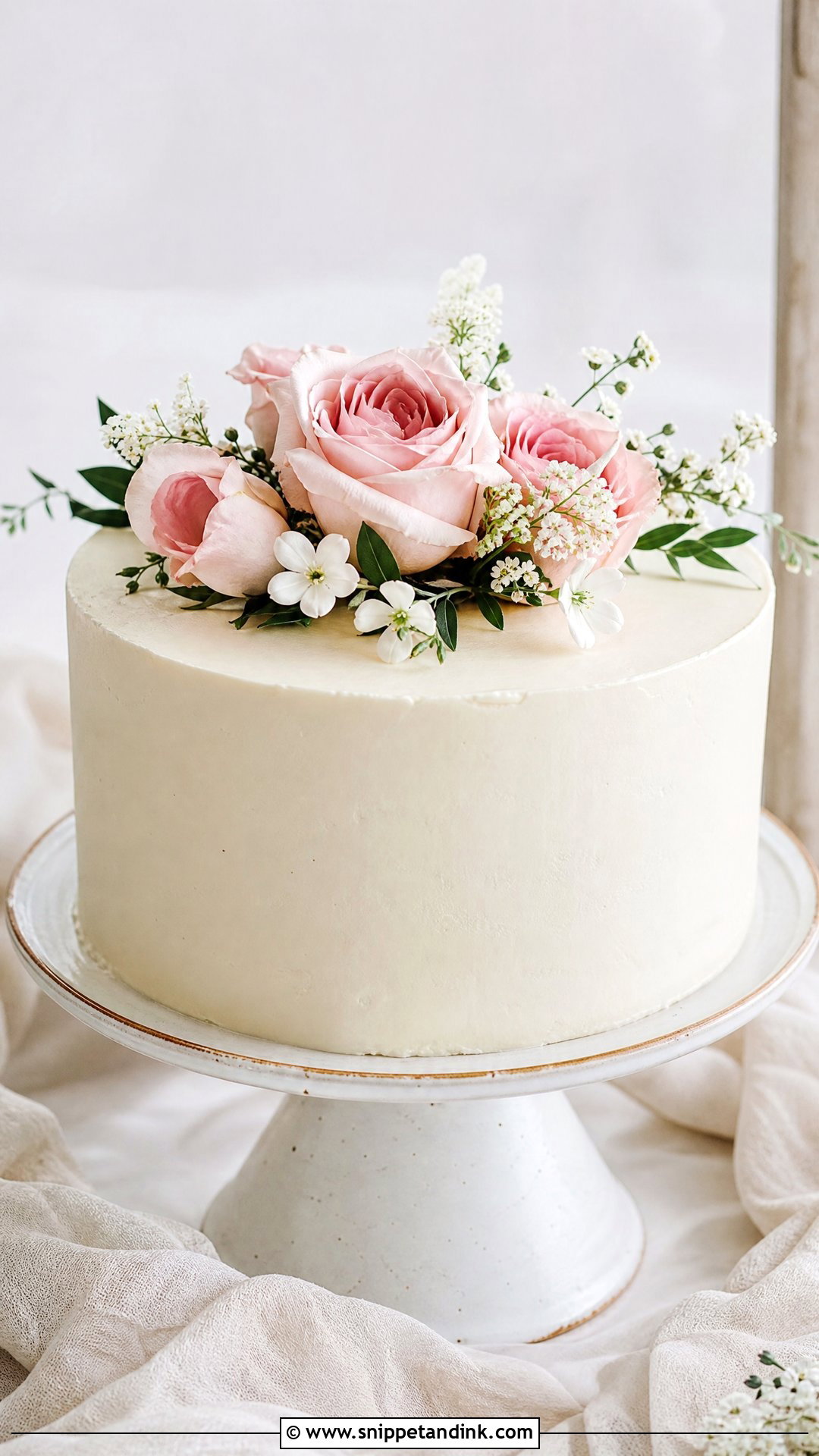
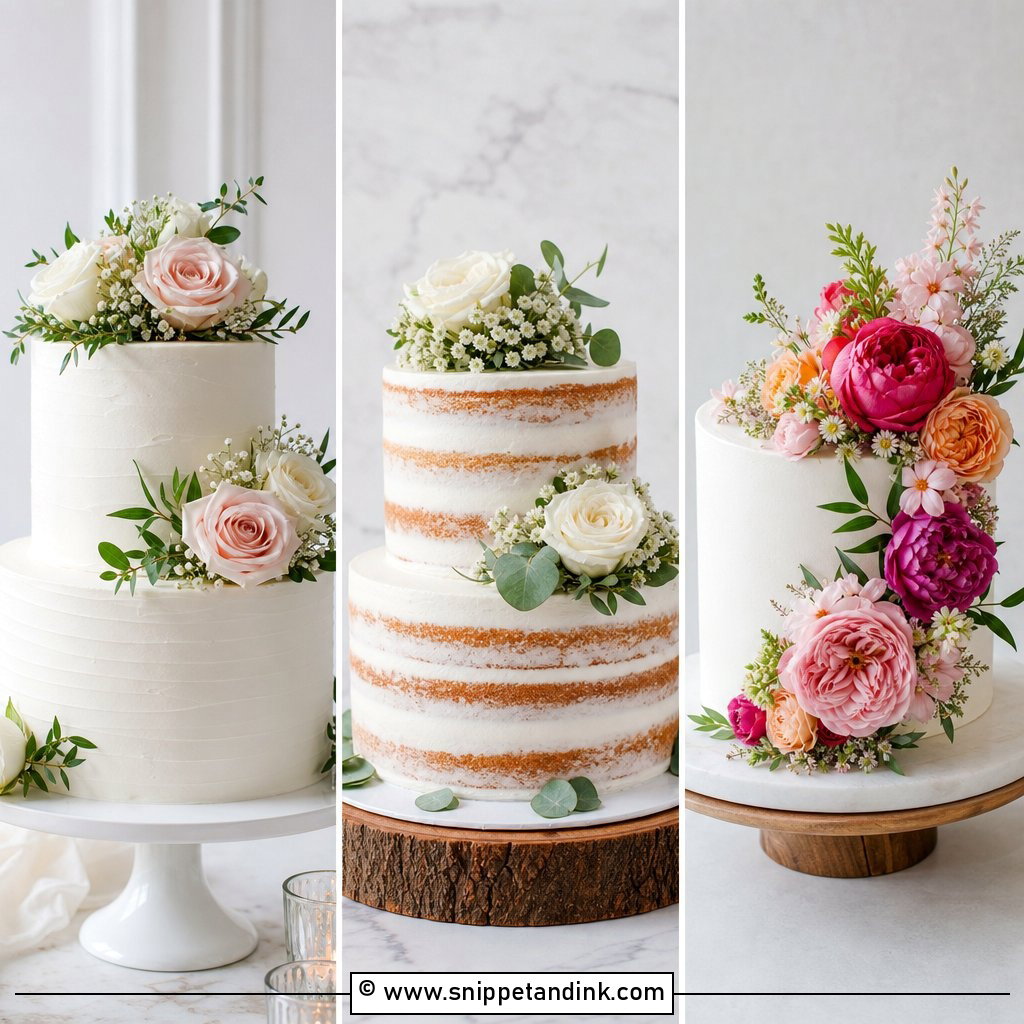
One tier of buttercream is the most honest wedding cake there is: easy to serve, easy to carry, and enough for an elopement, a micro wedding or a small cutting cake beside a dessert table. The finish has to look deliberate. Smooth ivory is classic; loose spatula texture is more relaxed and forgives a bumpy car ride. A few roses or ranunculus on top, trailing down one side, is plenty. I’d add height with a slim stand rather than a second tier. Lemon or almond sponge suits the plain outside.
2. Two Tier White Wedding Cake
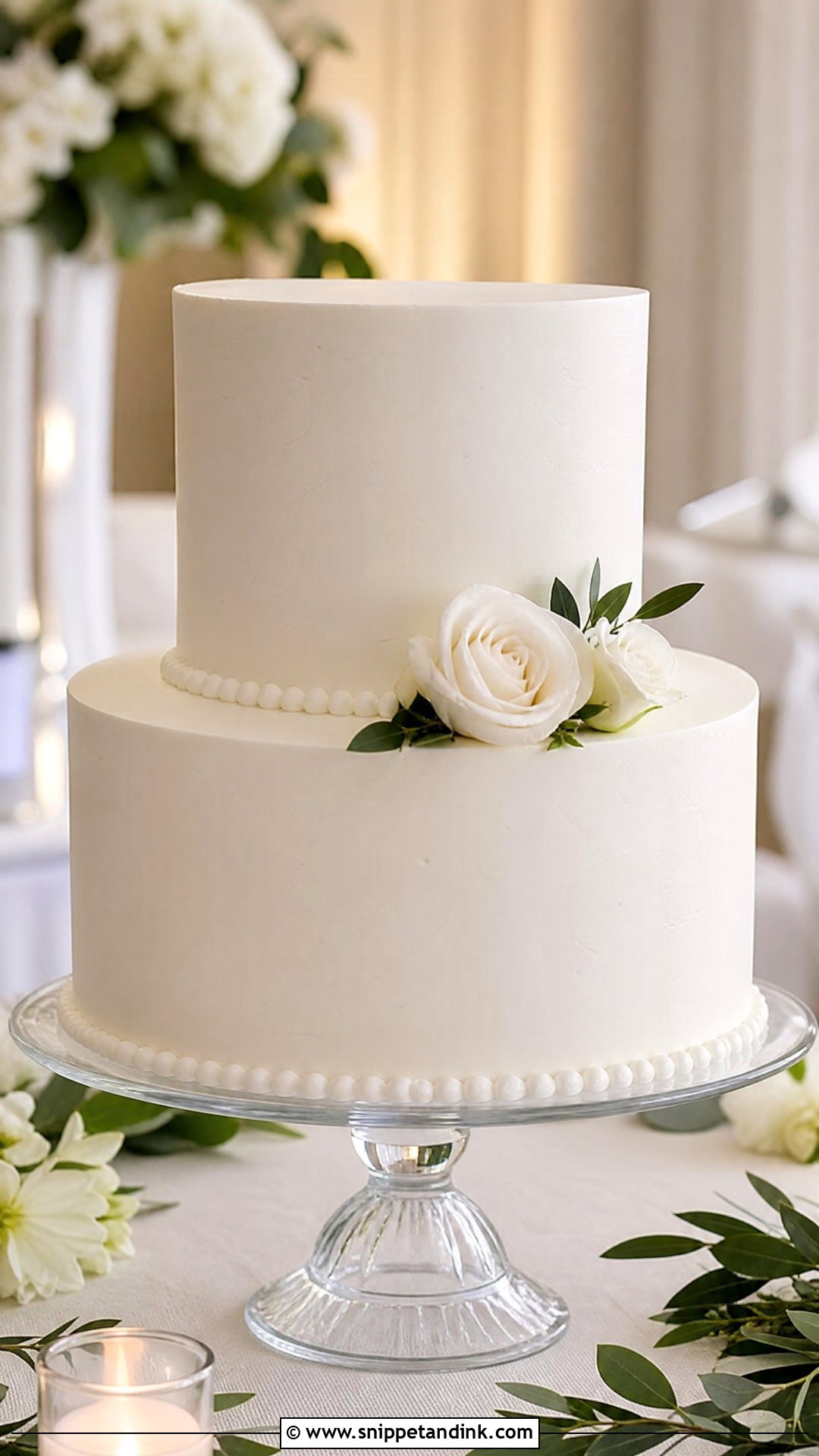
Two white tiers give you the traditional cutting photo without a cake that towers over the table. Many couples keep the top tier for an anniversary, so I’d make that one a flavour that freezes well; dense butter or chocolate sponge does, delicate chiffon and fresh fruit fillings don’t. Different flavours per tier are an easy way to please more guests: vanilla on top, chocolate or lemon below. Choose one decoration theme for both tiers, flowers at the base or a silk ribbon, and stop there.
3. Small Wedding Cake With Fresh Flowers
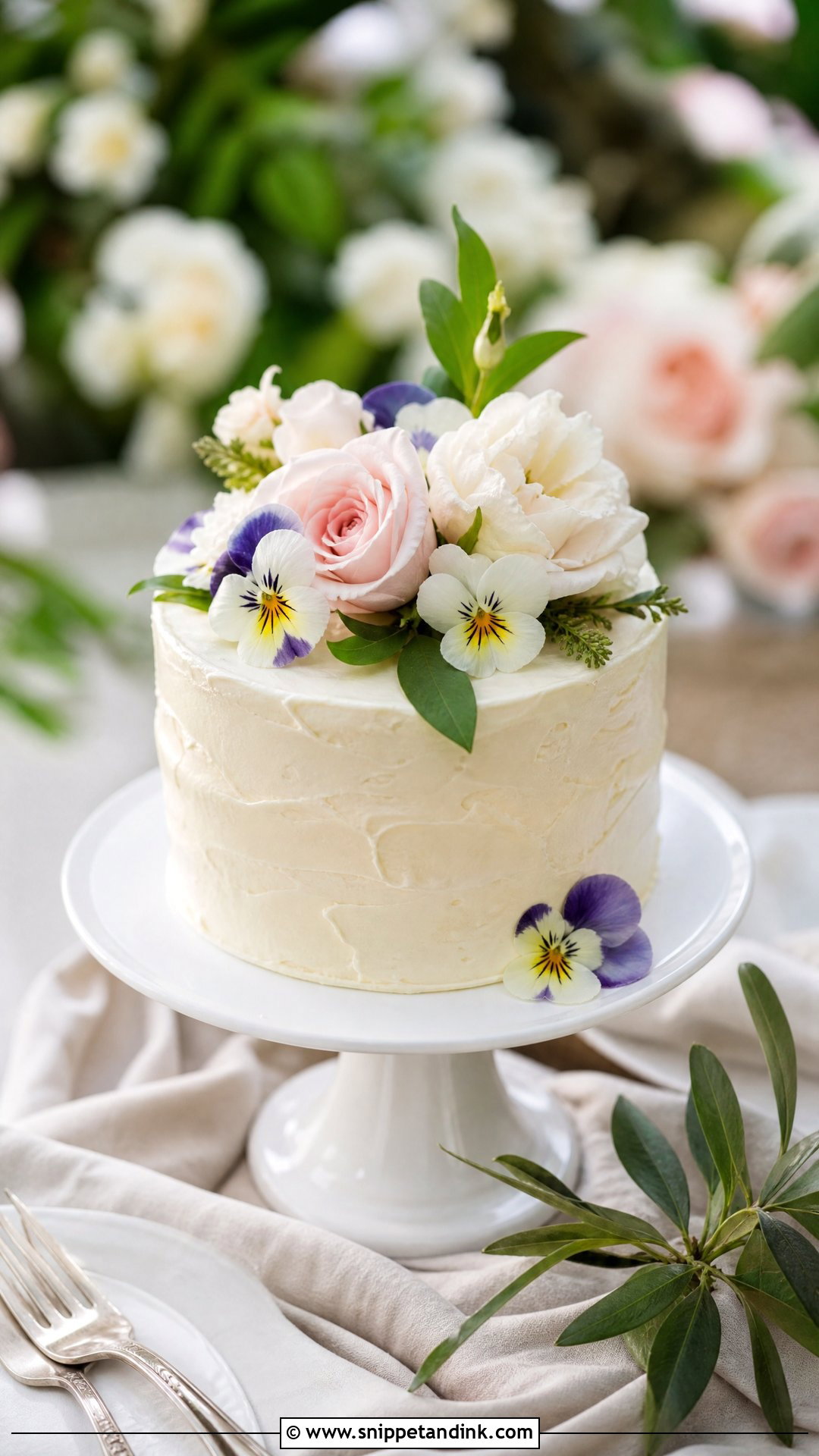
A handful of flowers is the quickest way to turn a small cake into a centrepiece, and the quickest way to put something unsafe on food. Edible pansies, violas, chamomile and lavender can touch frosting; roses are fine if they’re unsprayed. Florist stock usually isn’t grown for eating, so those stems should be wrapped and sit on a small barrier, placed by your baker or florist, not pushed into the sponge. Keep the cake underneath smooth or lightly textured. Repeating two blooms from your bouquet ties it to the day.
4. Simple Naked Wedding Cake
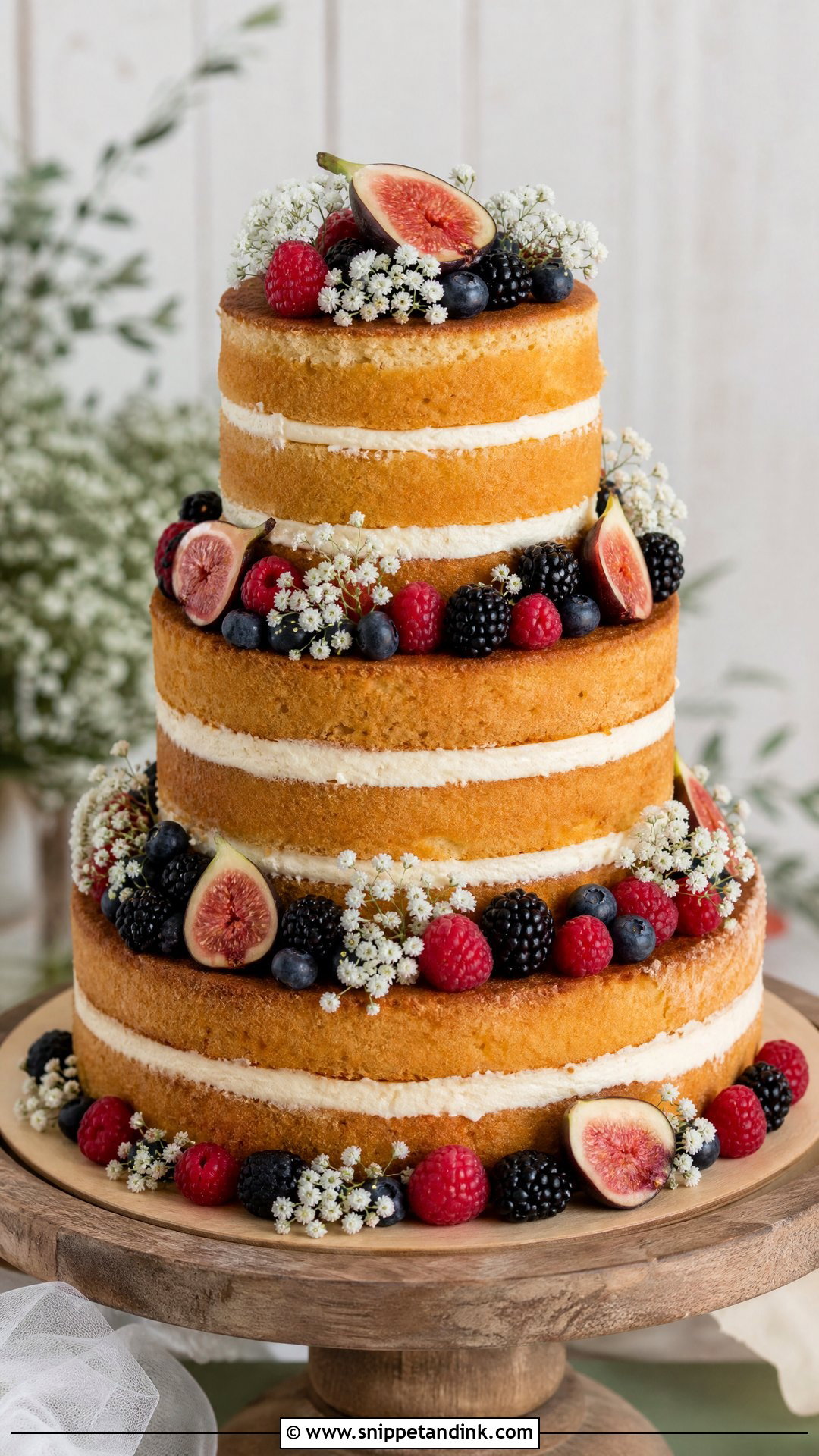
A simple naked wedding cake has exposed layers with only a thin smear of frosting between and around them, so the sponge colour and filling are the decoration. That makes the bake unforgiving: layers must be level and evenly risen, because there’s no frosting to hide a dome or a gap. Vanilla with berry filling, chocolate with cream or lemon with curd all look good cut open. Finish with berries, figs, herbs or a few small flowers. Bare sponge dries in open air, so I’d only choose this for a reception where the cake comes out shortly before cutting.
5. Semi Naked Wedding Cake
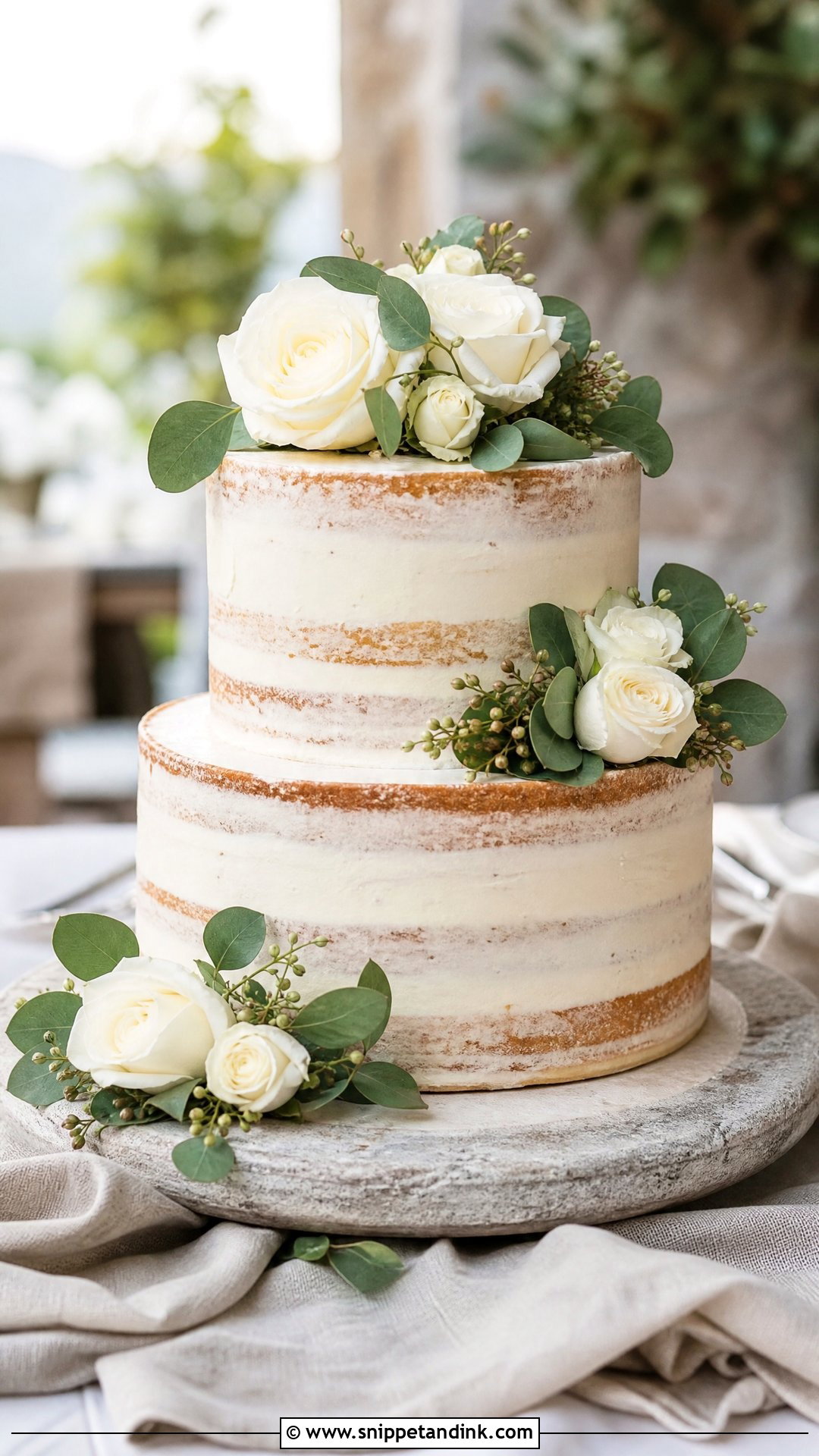
Semi naked is a thin coat of buttercream scraped back so the sponge shows through in places. That coat does a job: it slows the cake drying out and holds crumbs in, which makes this the safer of the two rustic styles for an afternoon outdoors. Ivory buttercream with white roses or a few berries is the classic version. I like it on a stone or wooden board rather than a tall stand. Spice, carrot and almond sponges all have the warm colour that makes the exposed edges look good.
6. Minimalist Wedding Cake With Pearls
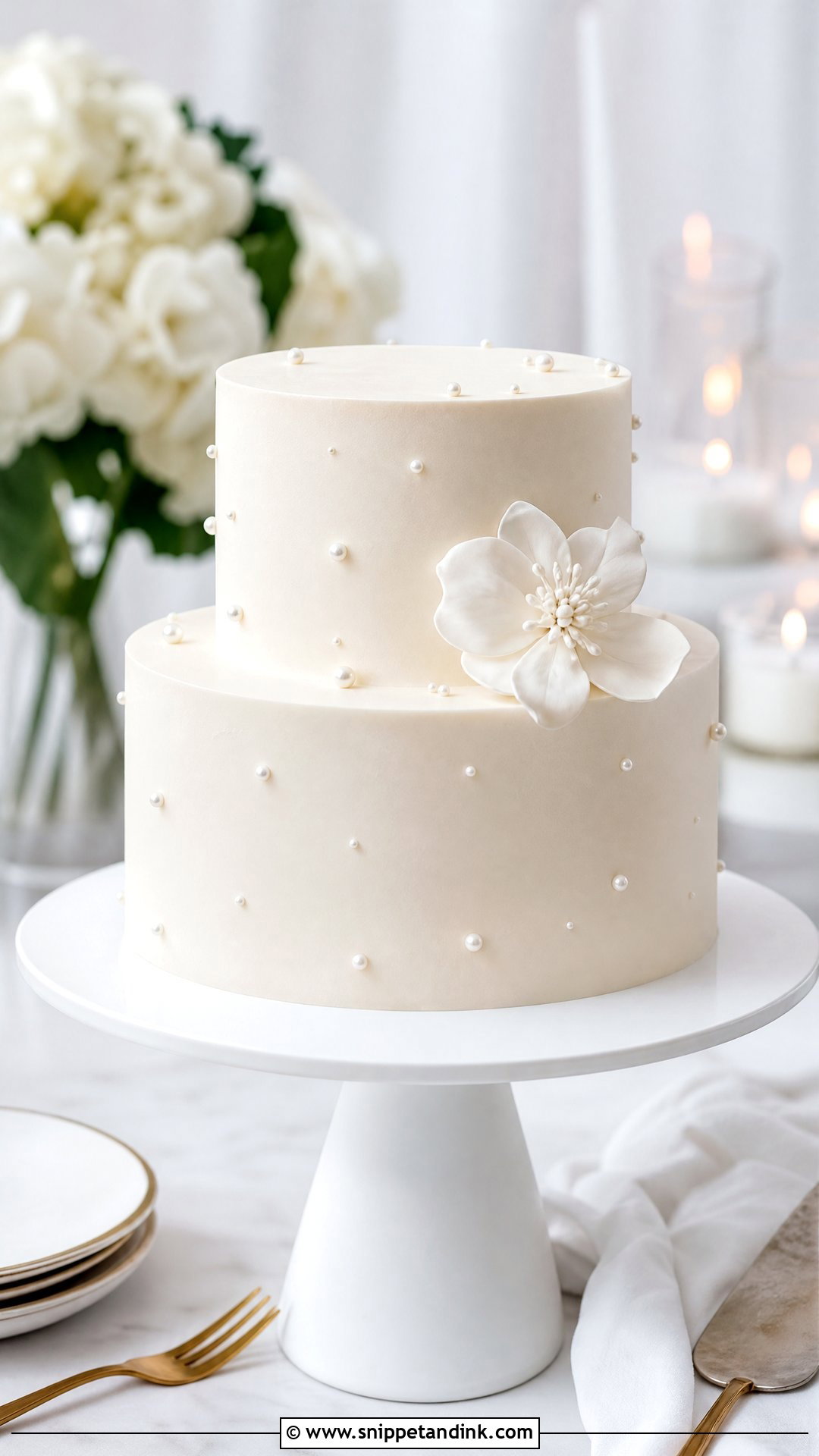
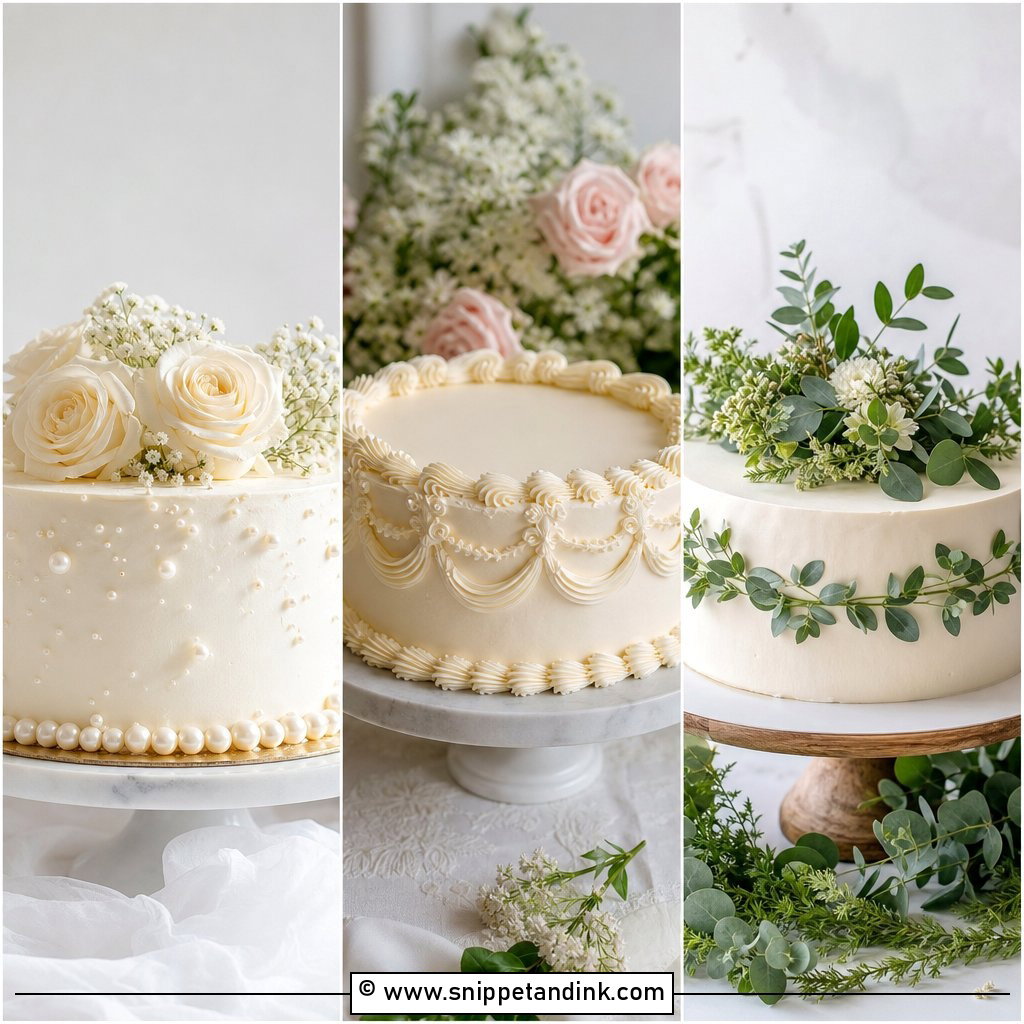
Edible pearls work on a minimalist cake because they add light without adding bulk. I place them either in a single line at the base of each tier or scattered sparingly over smooth white buttercream, and set them while the surface is still tacky so they stay put. With a black stand it looks graphic and modern; with blush flowers it leans vintage. One sugar flower or a small bow can be the focal point if you want one. A clean flavour suits it, vanilla bean or almond.
7. White Wedding Cake With Greenery
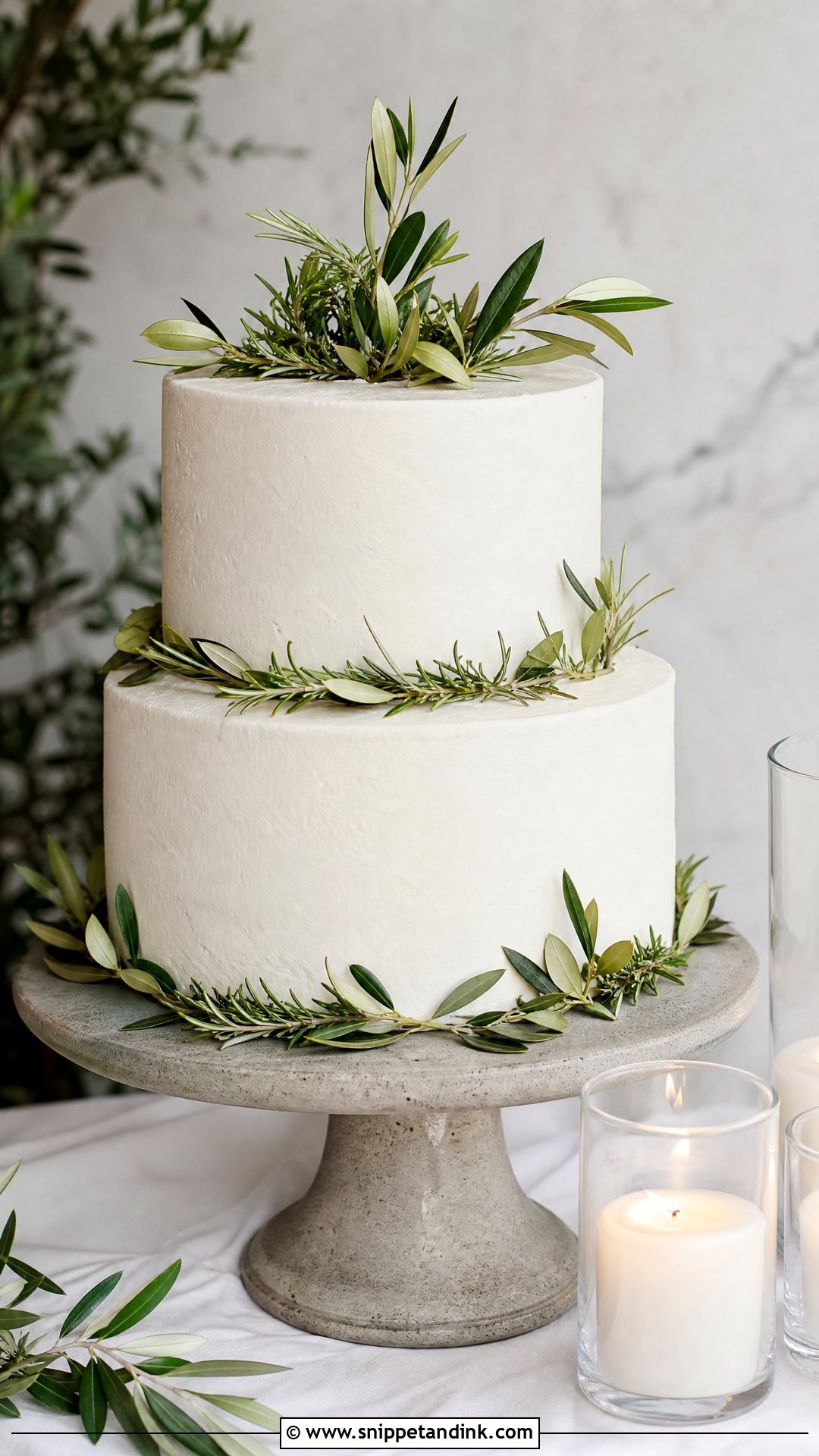
Greenery gives a white cake shape and colour without the cost of flowers. Olive leaves and rosemary are good near frosting; eucalyptus has the right look but is toxic, so I keep it off the cake itself or on a barrier. A few stems wrapping one tier, or two small clusters, is enough to read from across the room. Smooth buttercream or faint horizontal lines let the green stand out. Pistachio or coconut sponge echoes the natural feel if you want the inside to match.
8. Rustic Wedding Cake With Berries
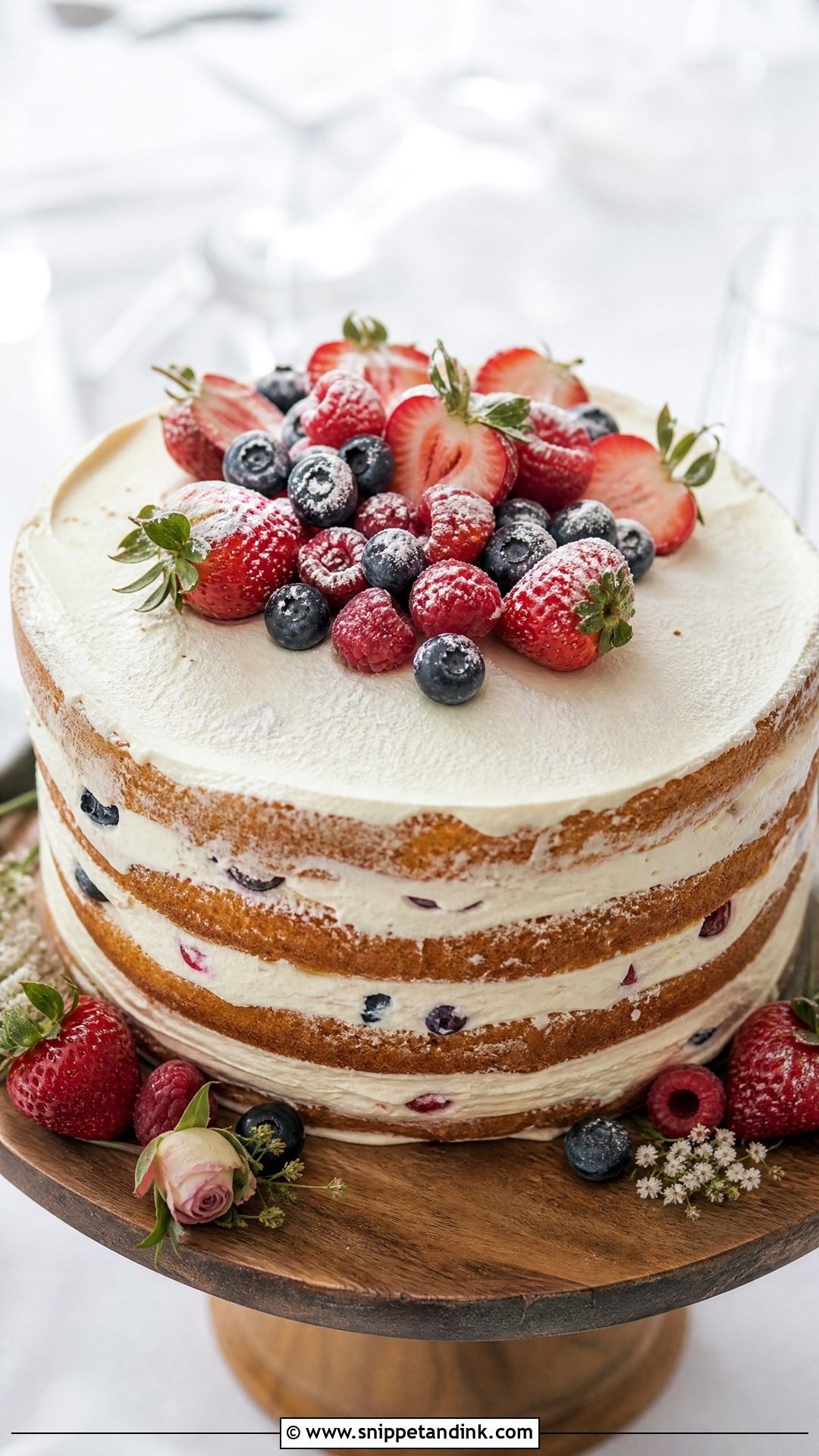
Berries make a cake look good to eat before anyone cuts it. Fresh strawberries, raspberries, blueberries and blackberries can sit on top, tuck between tiers or spill down one side. Whole berries hold up much better than cut ones, which weep juice and stain buttercream pink within a couple of hours, so I halve strawberries only at the venue. Lemon sponge with raspberry filling is bright; vanilla with mixed berries is the safe crowd choice. A light dusting of icing sugar goes on just before it’s displayed, since it dissolves on damp fruit.
9. Simple Wedding Cake With Gold Leaf
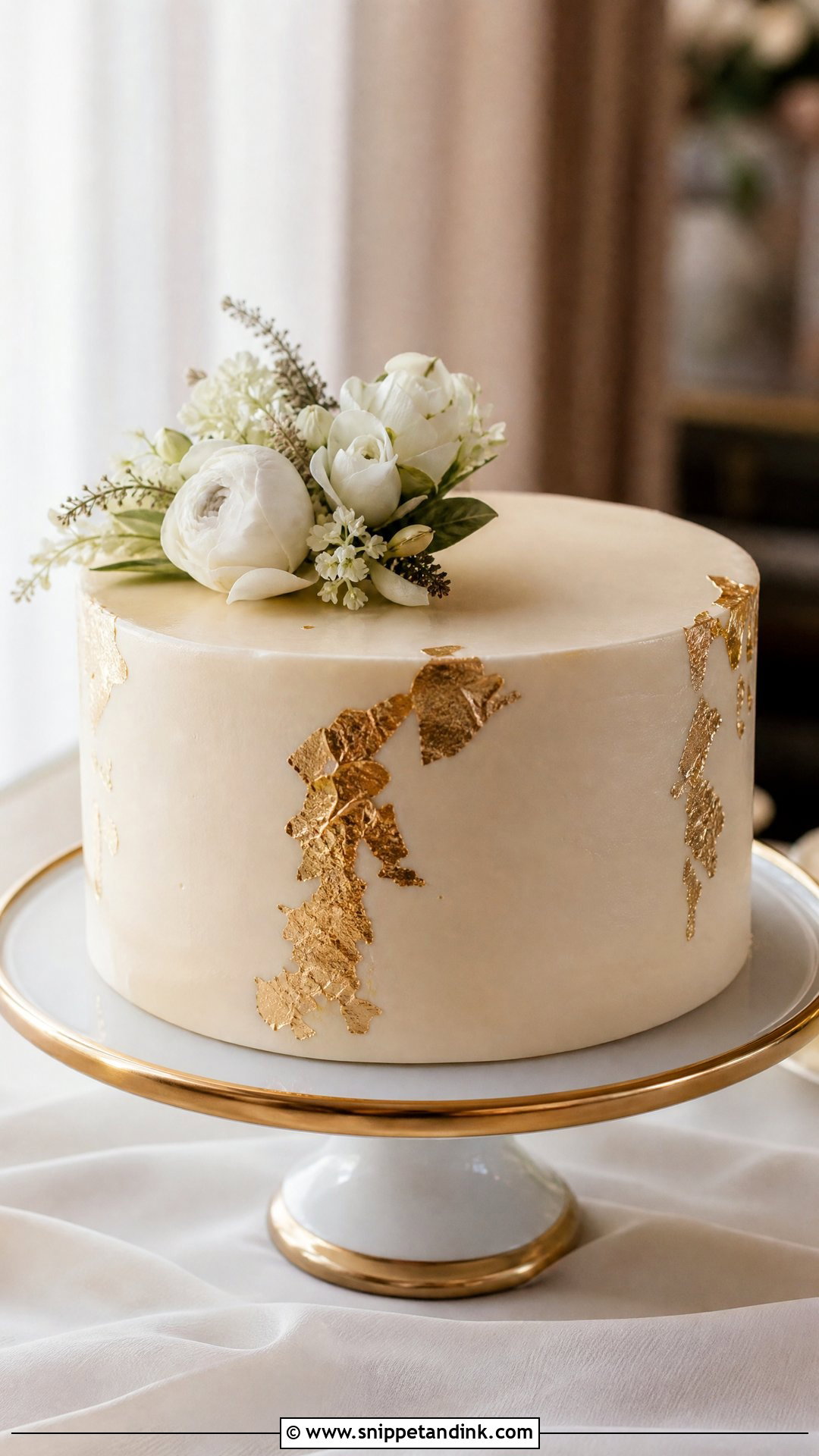
Gold leaf only looks expensive when it looks a little accidental: a few torn flakes on smooth buttercream, a gilded edge or one touch near the flowers. Full coverage tips into flashy fast. Leaf is so thin it lifts in a draught, so I apply it with a soft brush in a still room and keep the cake boxed until it’s placed. It suits blush and champagne frosting and evening light, where it catches candles. Honey, caramel or almond sponge picks up the warm tone.
10. Simple Wedding Cake With Ribbon
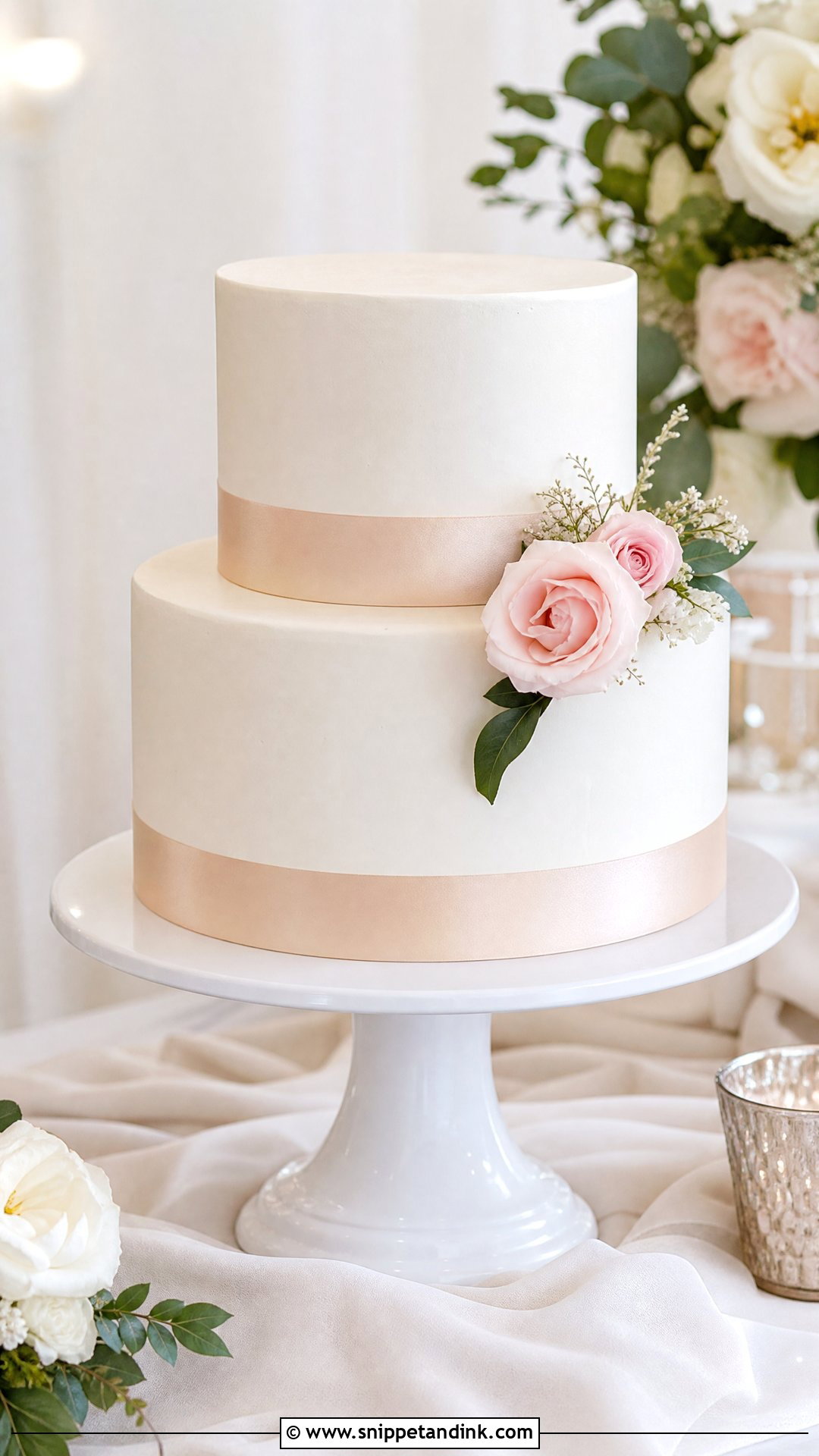
Ribbon is the cheapest way to match a cake to your colours: white for monochrome, champagne for warmth, sage for a garden, dusty blue for something soft. Fabric ribbon on buttercream needs a backing of acetate or a thin fondant strip underneath, because the fat soaks through and leaves a darker greasy line. On fondant that isn’t a problem. Run it around the base of each tier and leave the rest plain, or add one small cluster of flowers.
11. Vintage Piped Wedding Cake
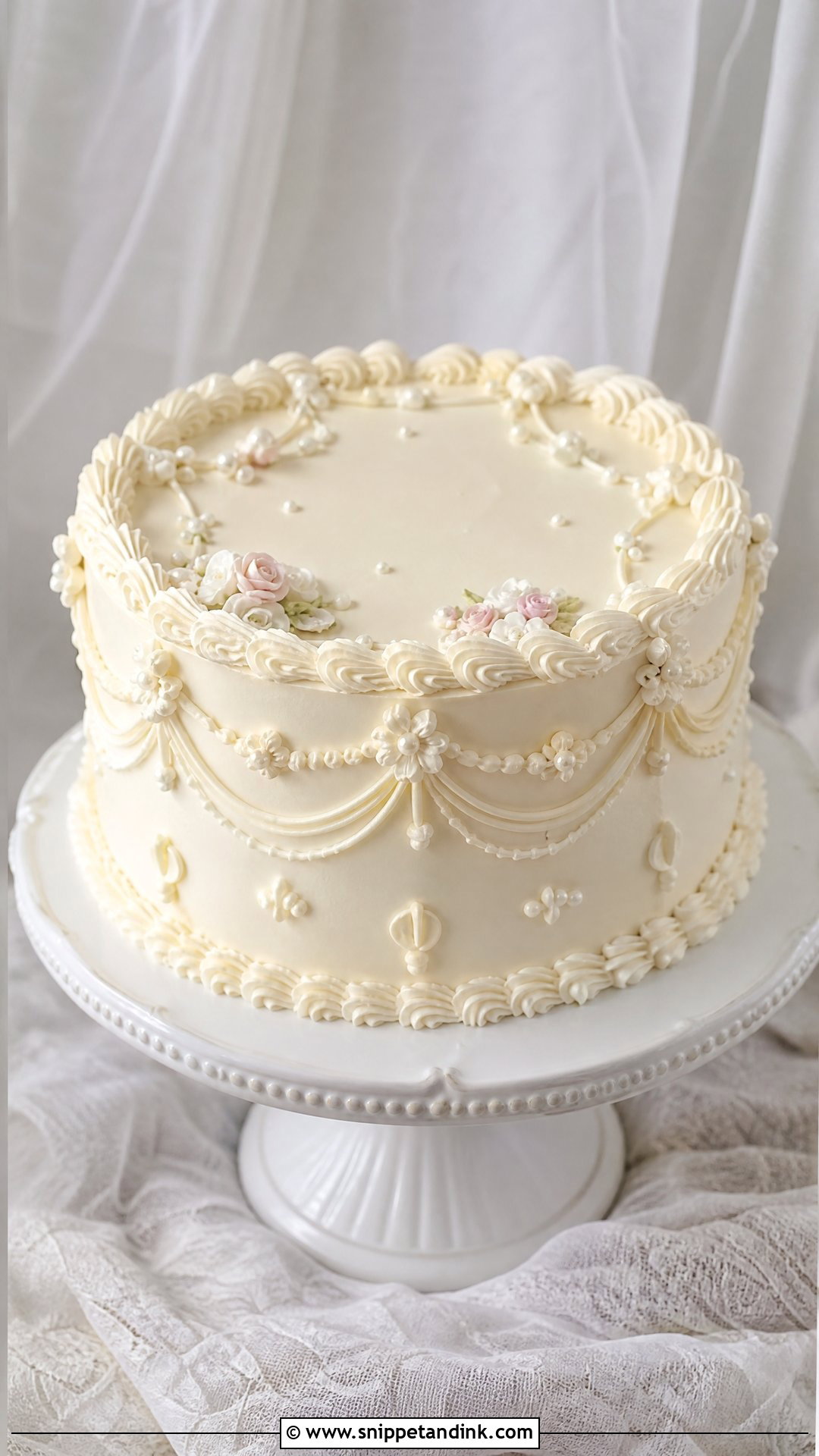
Old-fashioned piping, shell borders, swags, dots and little ruffles, is having a revival, and it stays charming if the cake is modest in size and the palette pale. White or ivory buttercream keeps the piping crisp. Piping of this kind needs a stiff buttercream that holds ridges, so in heat it’s one of the first designs to droop; I’d keep it indoors. A few glacé cherries, pearls or tiny sugar flowers add personality. One tier for an intimate dinner, two for a bigger reception.
12. Square Wedding Cake
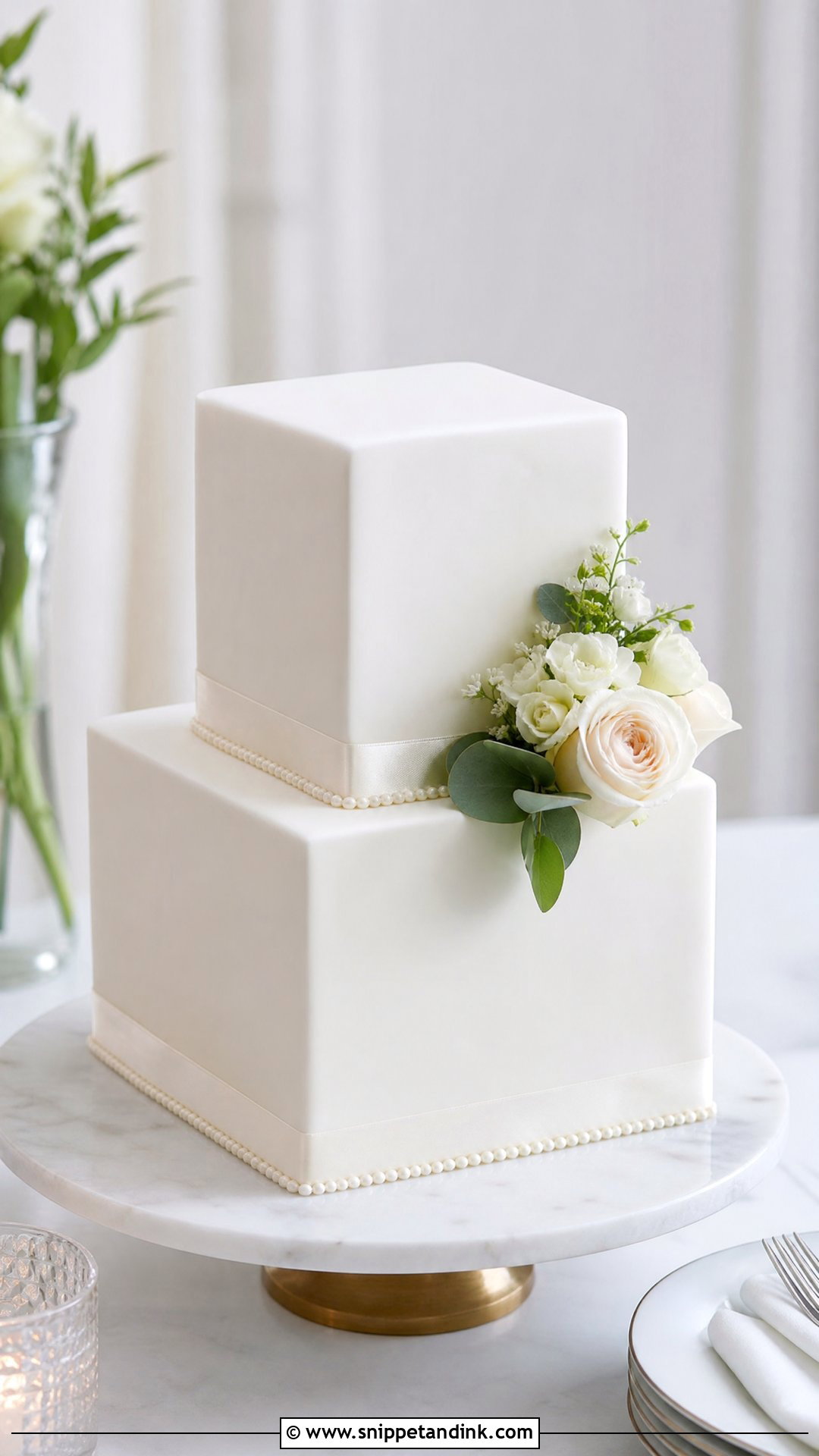
Straight edges make a square cake look tailored even with almost nothing on it. The catch is construction: the corners need a firm shell, usually ganache under fondant or very cold buttercream, or they round off and bulge. A thin ribbon, one flower cluster or a few pearls softens the lines. Square tiers cut into neat even portions, which caterers appreciate. Marble sponge looks good in those clean slices.
13. Round Wedding Cake With Smooth Buttercream
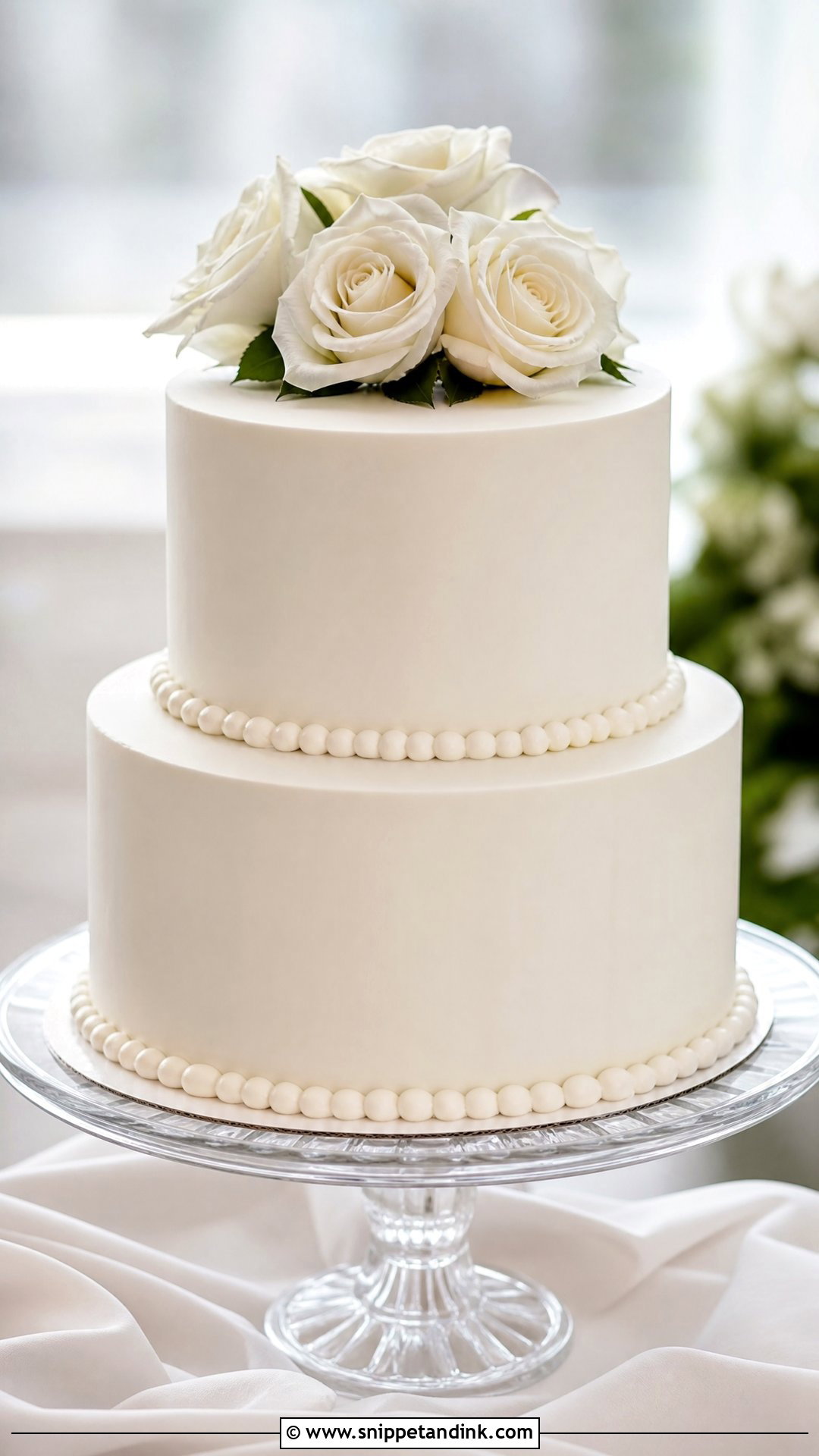
Smooth buttercream on round tiers is the cake most people picture, and getting it truly smooth is harder than it looks. I crumb coat, chill, then apply a final coat and scrape it with a hot bench scraper until the sides are straight and the top edge sharp. Leave it plain, add a few flowers or put your initials on a small topper. The stand and the room dress it up or down. Vanilla with raspberry, or almond with buttercream, are pairings I rarely see anyone regret.
14. Textured Buttercream Wedding Cake
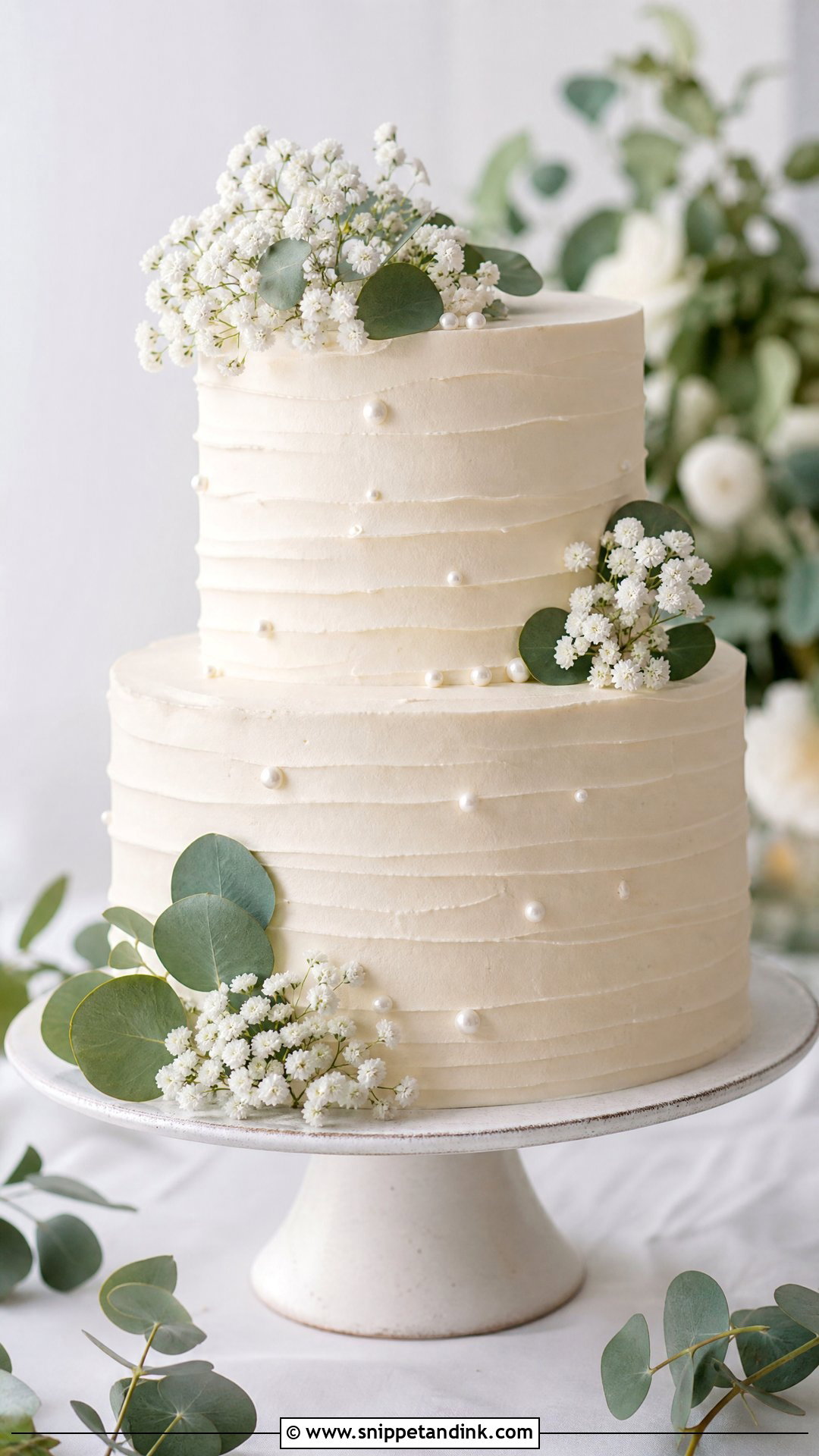
Texture is the forgiving option. Gentle ridges, waves or spatula marks hide small dents and uneven tiers, so this style suits long drives and relaxed or DIY-leaning weddings. Pale blush or soft beige frosting shows texture more than bright white, because shadows read better on a warmer colour. Keep any flowers or pearls small so they don’t cover the pattern. Brown sugar or coconut sponge makes a nice change from vanilla.
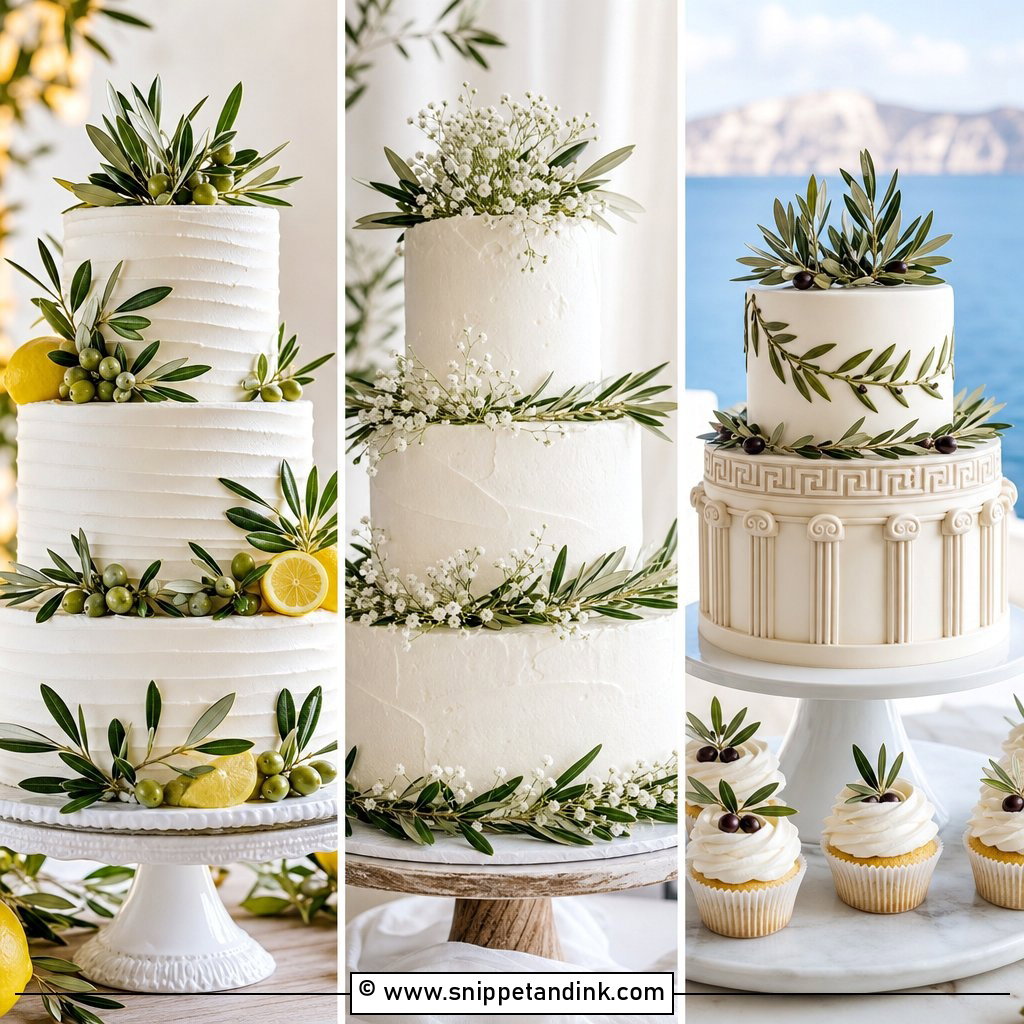
15. Wedding Sheet Cake
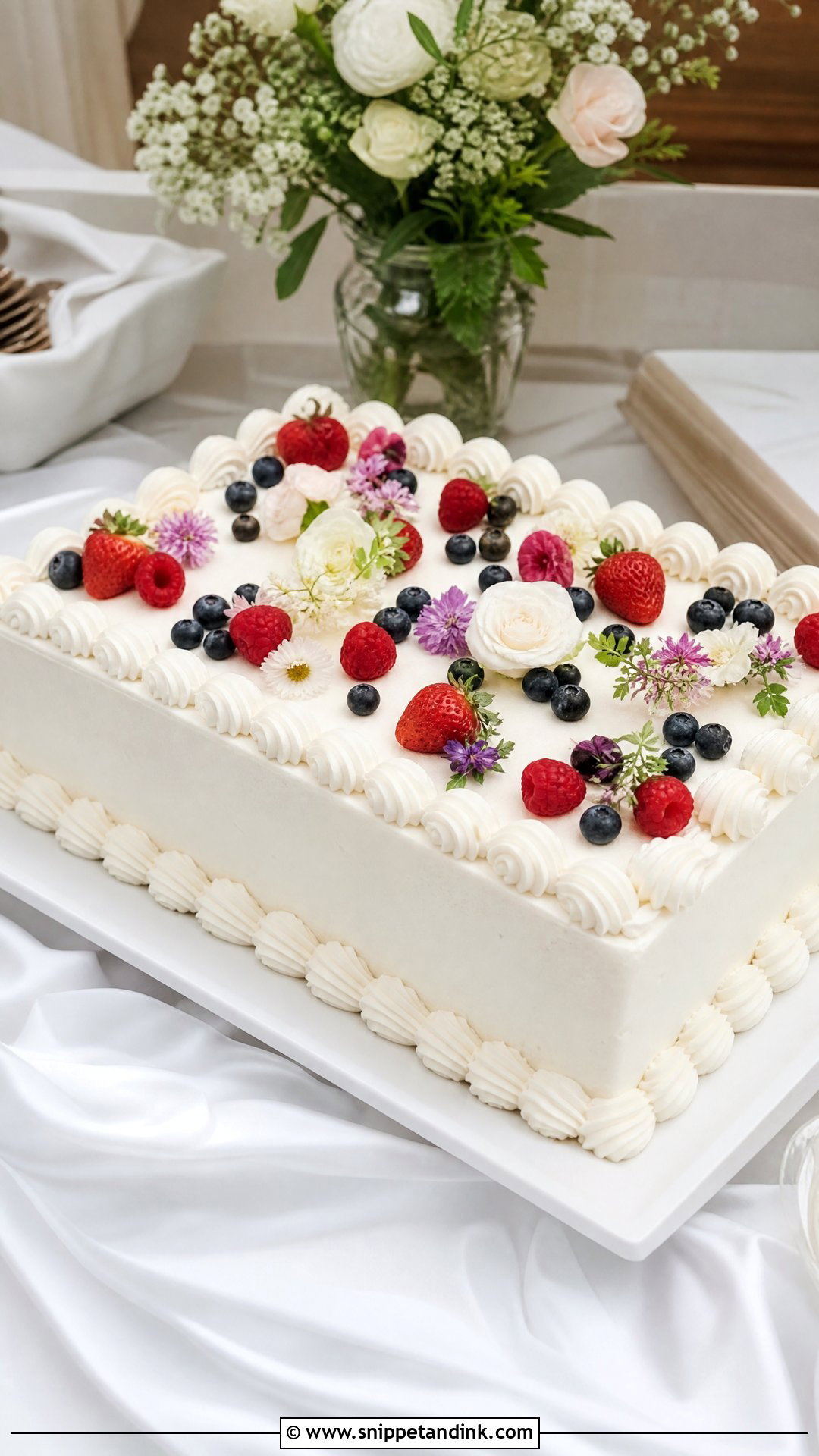
A wedding sheet cake is the practical answer to a large guest list. Set it out and decorate it like it belongs at the wedding: smooth buttercream, a piped border and either berries or a scatter of flowers across the top. White with soft piping looks classic; berry-topped feels casual. Pairing a small cutting cake with a decorated sheet cake for serving is a common setup. It cuts quickly and travels flat, which takes pressure off the catering team at the busiest moment of the night.
16. Simple Floral Wedding Cake
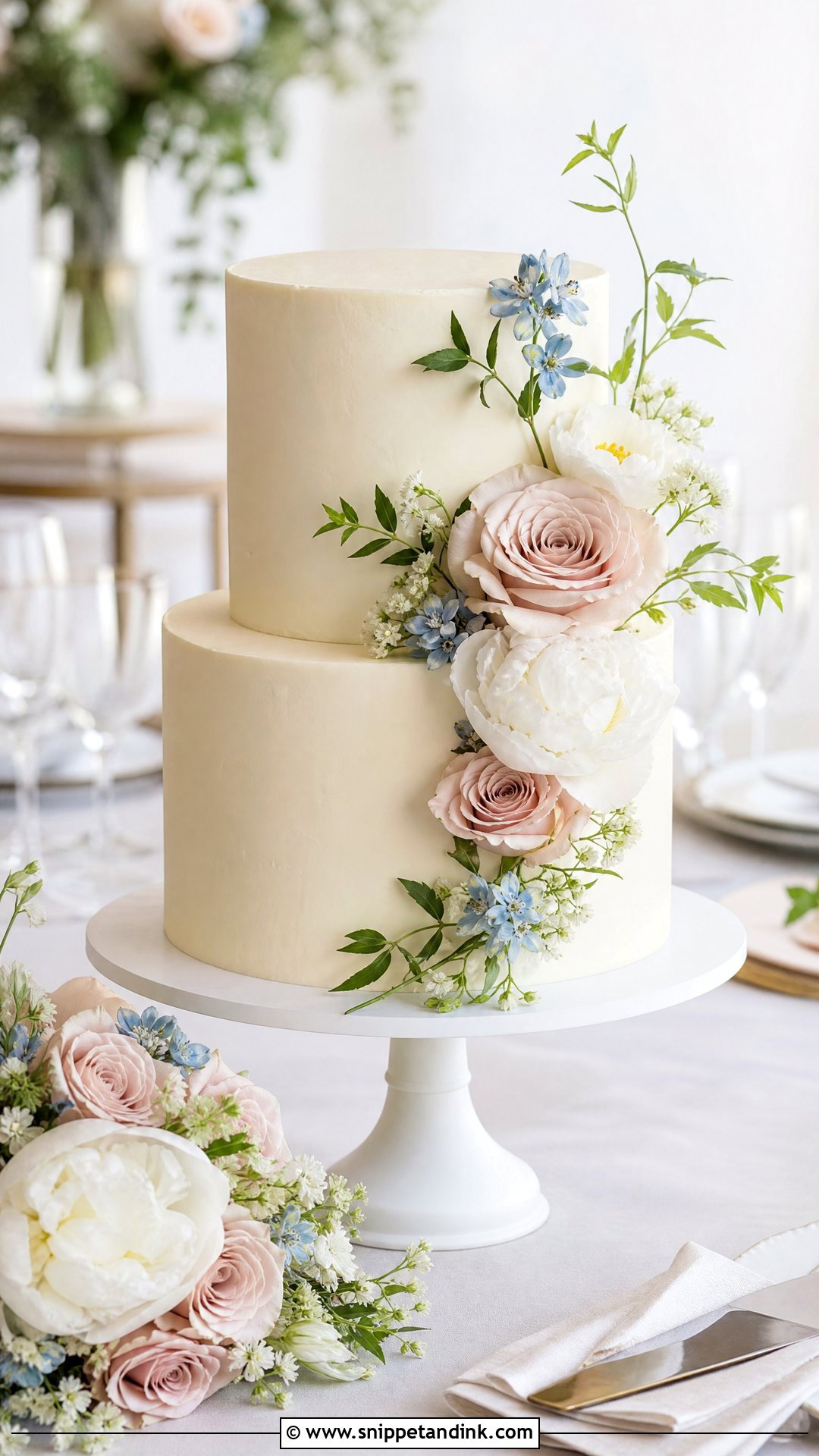
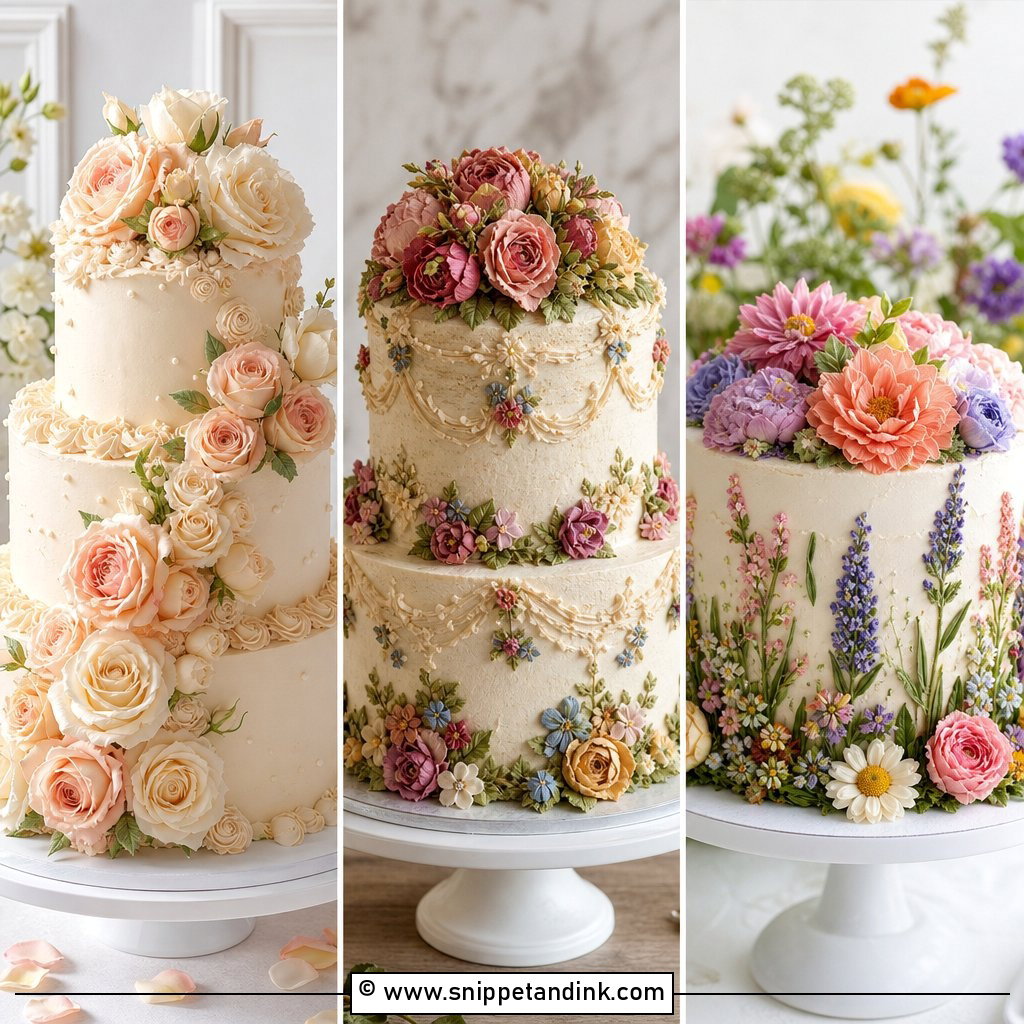
Floral cakes stay simple when the flowers happen in one place: a crescent around the base, a gathering on top or a line climbing one side. White buttercream lets the flowers carry the colour. Pull the varieties from your bouquet or centrepieces so the cake looks part of the room. Blush roses, white peonies, edible violets and soft blue blooms all work in season. Peonies drop petals as they open, so for a long reception I’d choose them in tight bud or swap to garden roses.
17. Simple Drip Wedding Cake
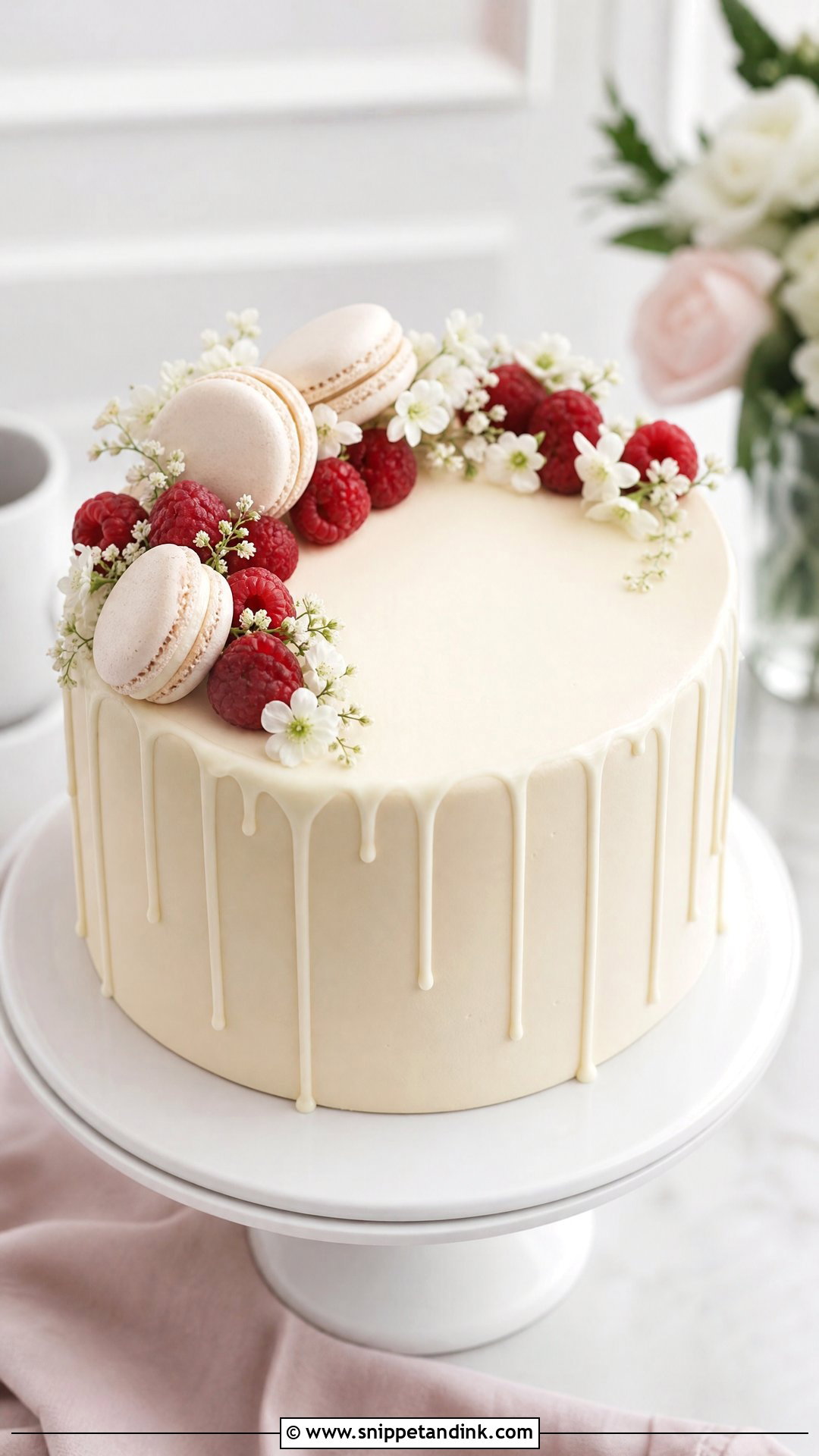
A drip adds movement with very little effort, and it’s very easy to get wrong. The ganache has to be at the right temperature: too warm and it runs to the board, too cool and it stops in thick blobs. White chocolate over ivory looks bridal; caramel suits autumn. I keep drips short and spaced evenly, and leave the top plain or add a few flowers or berries. A drip cake should stay out of direct sun because the ganache softens first.
18. Lemon Wedding Cake
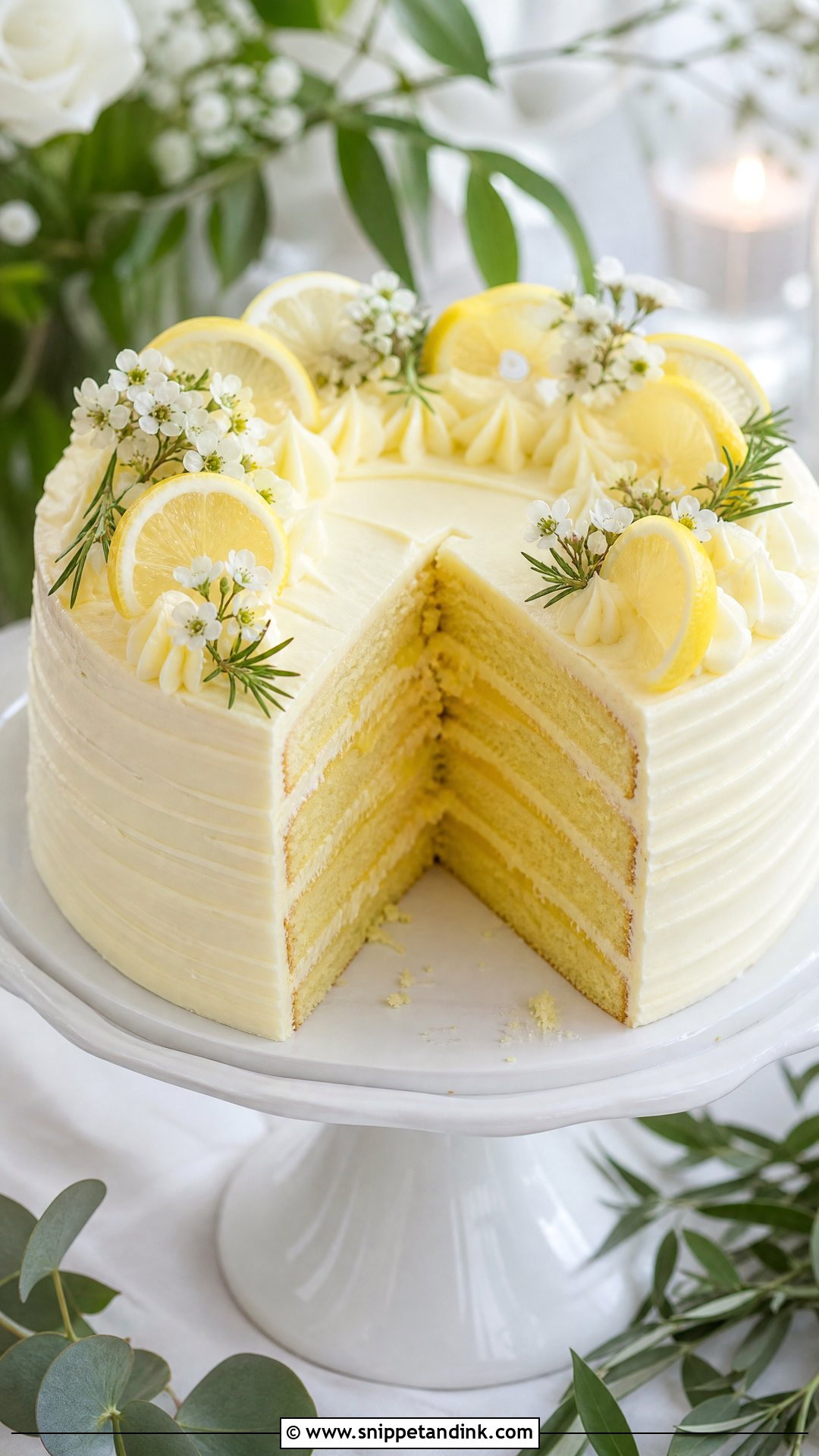
Lemon is the flavour I suggest most for summer, because it tastes light after a heavy dinner. The outside can stay white or pale yellow, with thin lemon slices, small white flowers or herbs on top. Lemon curd filling is lovely but soft, so I pipe a stiff buttercream dam around each layer to stop it pushing out under the weight of the tier above. Fresh slices dry and curl after a few hours on display; candied slices last longer.
19. Chocolate Wedding Cake
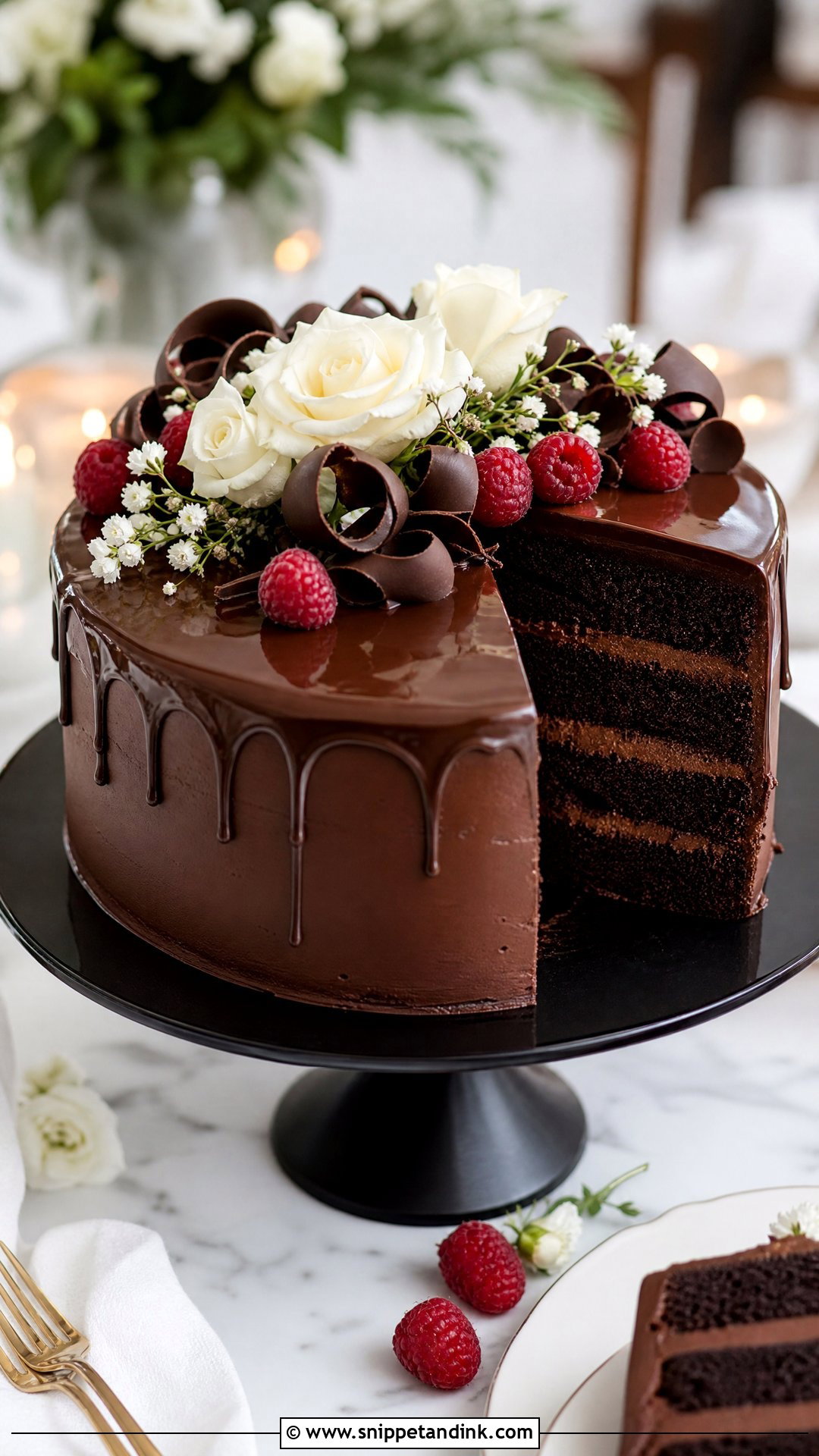
Chocolate cakes split couples: one wants it, the other worries it’ll look heavy. Dark ganache gives a sleek, almost glossy finish; chocolate buttercream is softer. White buttercream outside with chocolate layers inside is the quiet compromise. Dark ganache is also one of the more heat-tolerant finishes once set, which is useful outdoors. Berries, white flowers, gold leaf or chocolate curls are all simple decorations. A white plate or marble board gives it contrast.


20. Cupcake Wedding Cake Tower
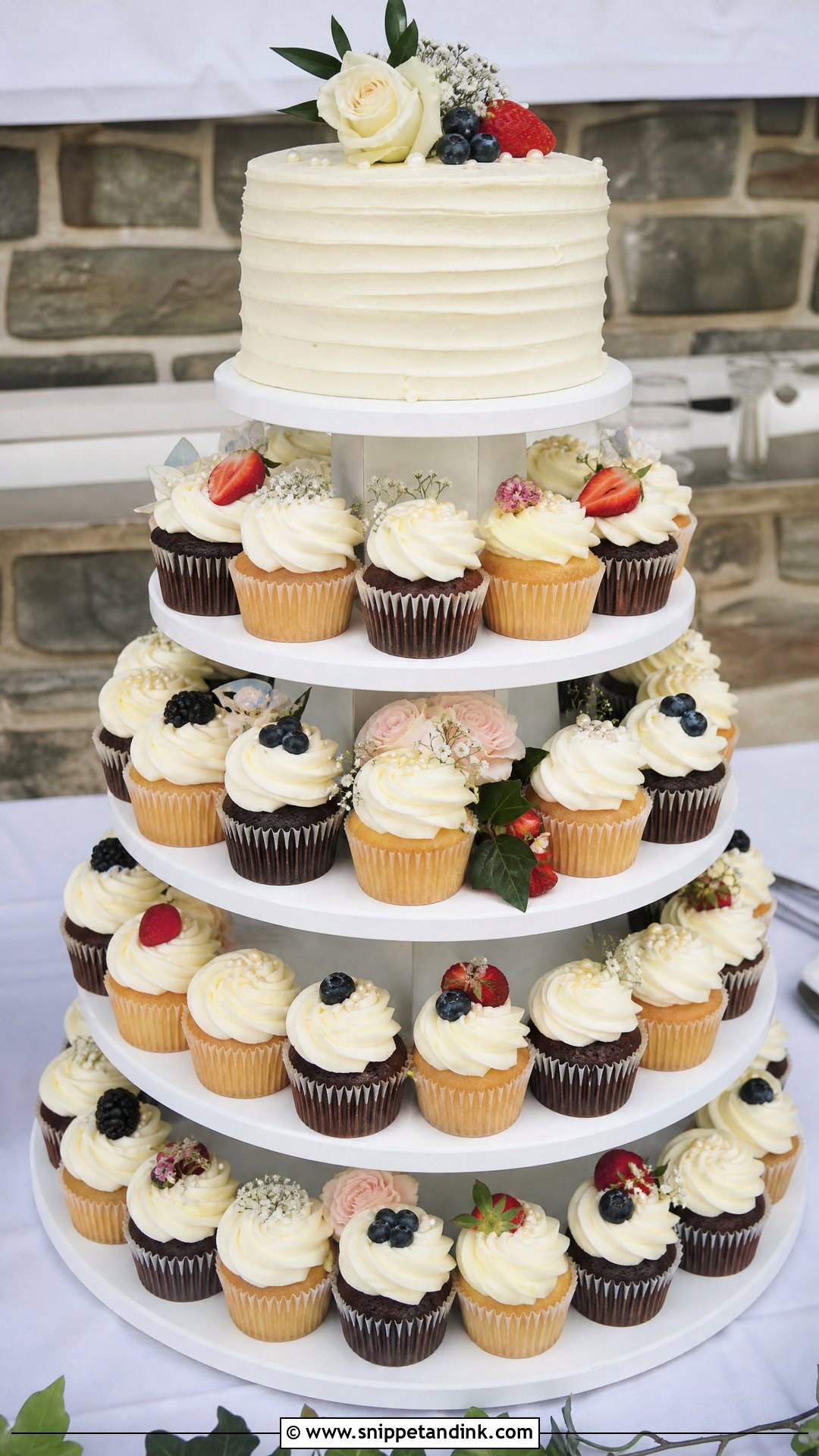
A cupcake wedding cake tower puts a small cutting cake on top and matching cupcakes on the tiers below, so guests help themselves and no one has to slice. It’s the easiest way to offer several flavours. Use the same liners, frosting colour and topping throughout, white buttercream swirls with a pearl or a berry, so the tower reads as one cake. Cupcake towers need a sturdy stand on a level table; a knock sends the lot sliding. Small flavour labels save guests from guessing.
How Much Cake Do You Actually Need?
Bakers count wedding portions as a finger-sized slice, roughly one inch wide, two inches long and four inches tall. That is smaller than a party slice, and it’s why a modest-looking cake can feed more people than you expect. Charts vary between bakers, but as a rough guide a six-inch round gives around a dozen wedding portions and an eight-inch round somewhere in the twenties.
Not every guest eats cake, especially after a big meal or when there is another dessert. Many couples order for most of the room rather than every seat. Your baker and caterer will each have a view on that from your guest list.
Splitting the job between cakes
A small display cake for the photo, plus a sheet cake or cupcakes for serving, keeps a simple design small without anyone missing out. Tell the caterer in advance who is cutting and plating, because some venues charge a per-head cutting fee for cake brought in from outside. That fee can change which setup is cheaper, so it’s worth asking before you order.
Start With the Flavour, Then Dress the Outside
A plain cake can carry a whole dessert table without a huge budget behind it. A clean finish, a flavour you actually love and one decorative idea will do more than a cake covered in extras. Start from your venue, season and guest count, then let the style follow. Flowers, berries, pearls, greenery, ribbon and texture all work when only one of them is on the cake. One tier, two, a sheet cake or a cupcake tower: it should taste like something you’d order again.
You'll Like These Ideas:




Leave a Reply