
When the guest list fits around two or three tables, a stacked cake can look out of scale, and that’s where a lone tier comes into its own. Micro weddings, courthouse lunches and backyard dinners still deserve a proper cake cutting, and one well-made layer gives you that moment without a towering display. Because there is no second tier to pull the eye away, every choice shows: the flavour, the frosting, the finish. Here are twenty directions I bake for small parties, along with what each one asks of the baker and of the room.
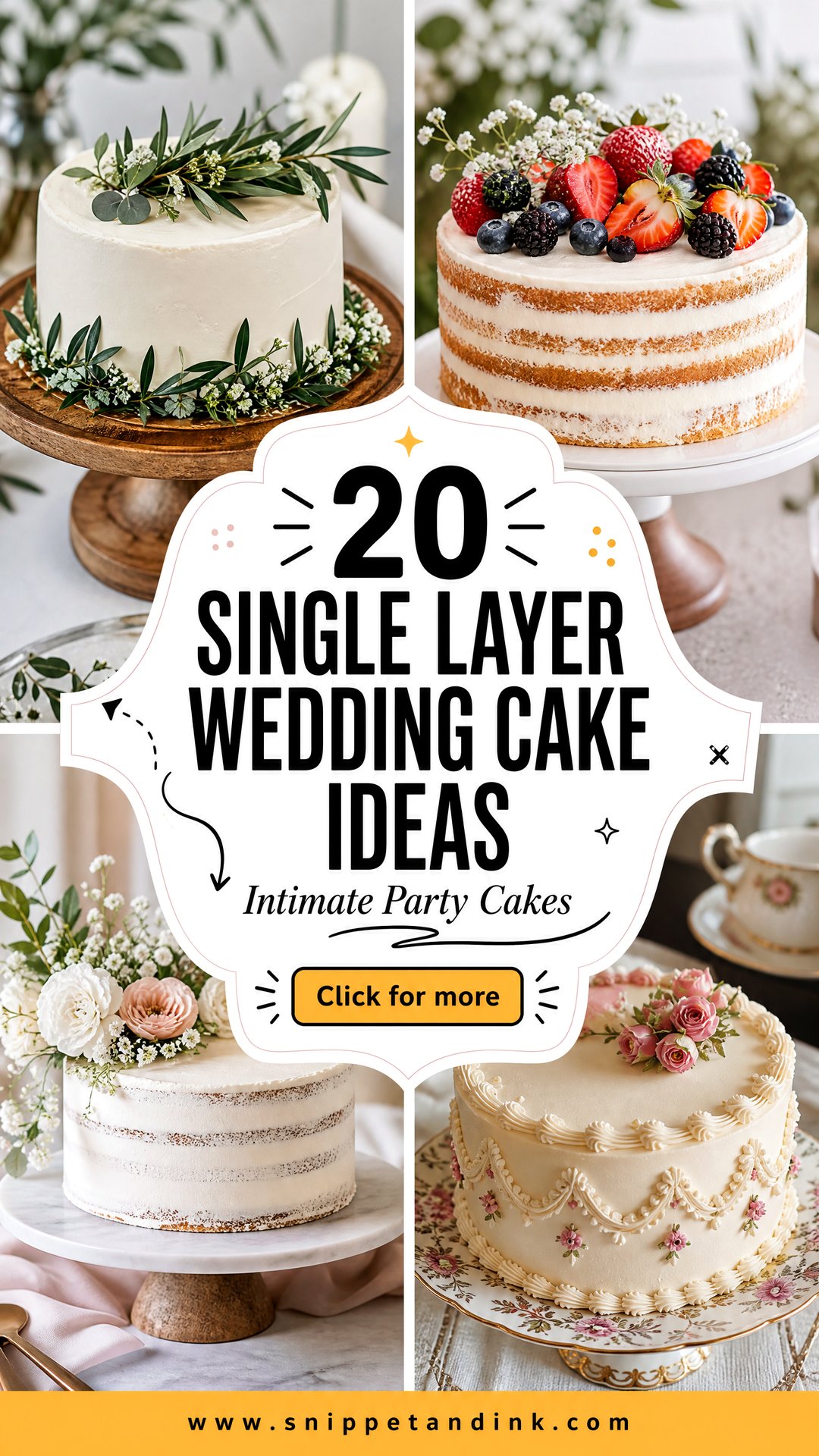
What Should You Taste Before Committing to One Flavour?
With a single tier you usually get one flavour, so the tasting carries more weight than it would for a three-tier cake where every layer can be different. I run small-cake tastings around three questions.
Does the filling hold up?
Mousse, whipped cream and fresh fruit fillings taste lovely and are the first to slump if the cake sits out. Curds and jams need a buttercream dam. Ganache and buttercream fillings are the sturdiest. If your cake will stand for a few hours before cutting, choose from the sturdy end, or ask how the baker stabilises the softer ones.
Can it be split?
Some bakers will make a tall tier in two flavours, half and half, which is a good fix when you can’t agree. It does mean slicing has to be planned so each guest knows what they’re getting, so tell whoever serves it.
How will you brief the design?
Bring two or three photos of cakes you like and, just as useful, one you don’t. Add a fabric swatch or a flower from your florist’s palette. I’d rather see a real colour than read the word blush, because everyone means something different by it.
If a guest is coeliac, vegan or has a nut allergy, raise it now. Many bakers will make a few separate small cakes for them; very few can promise a shared kitchen is completely free of an allergen, so ask that directly.
1. Simple Single Layer Wedding Cake
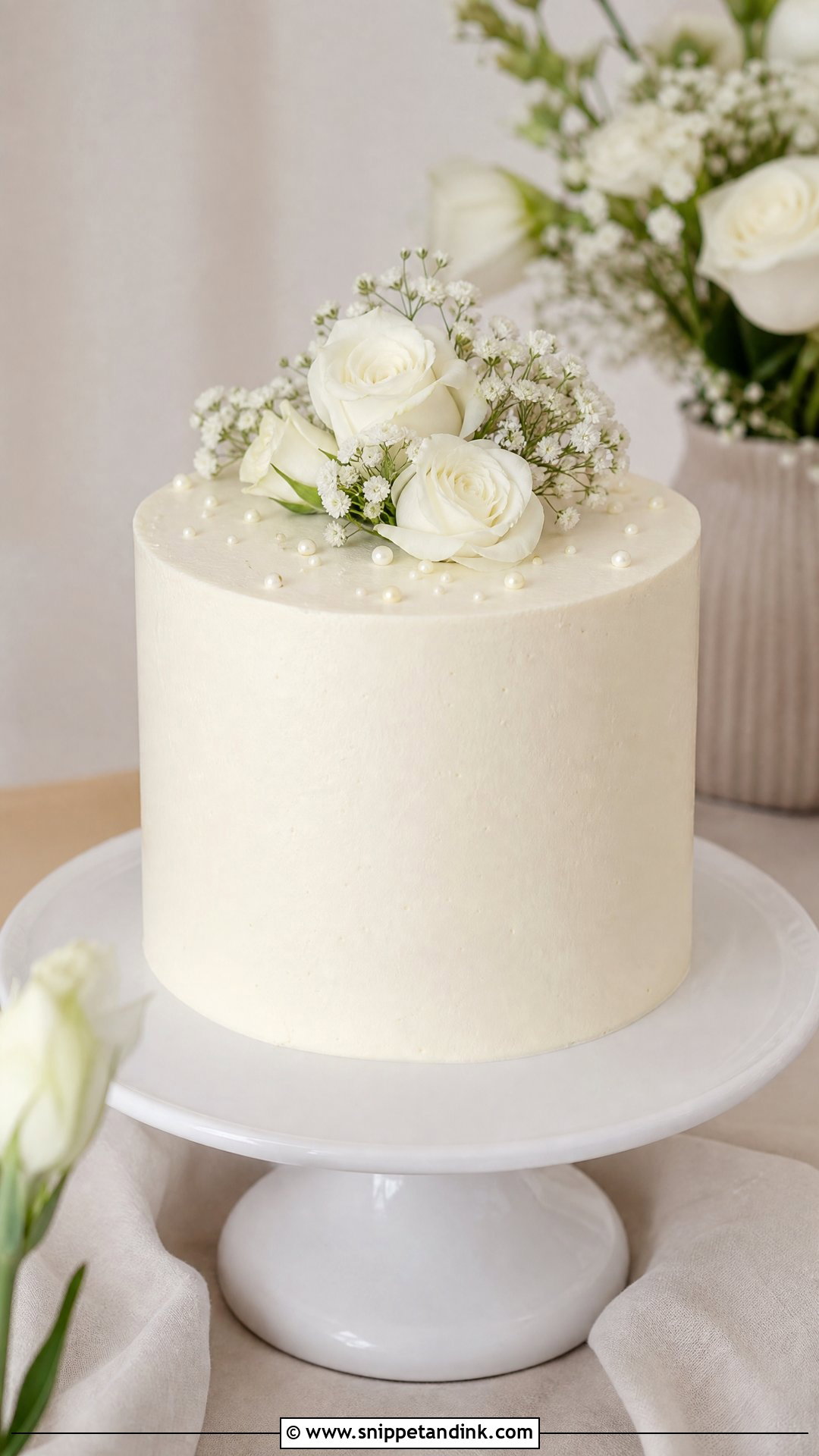
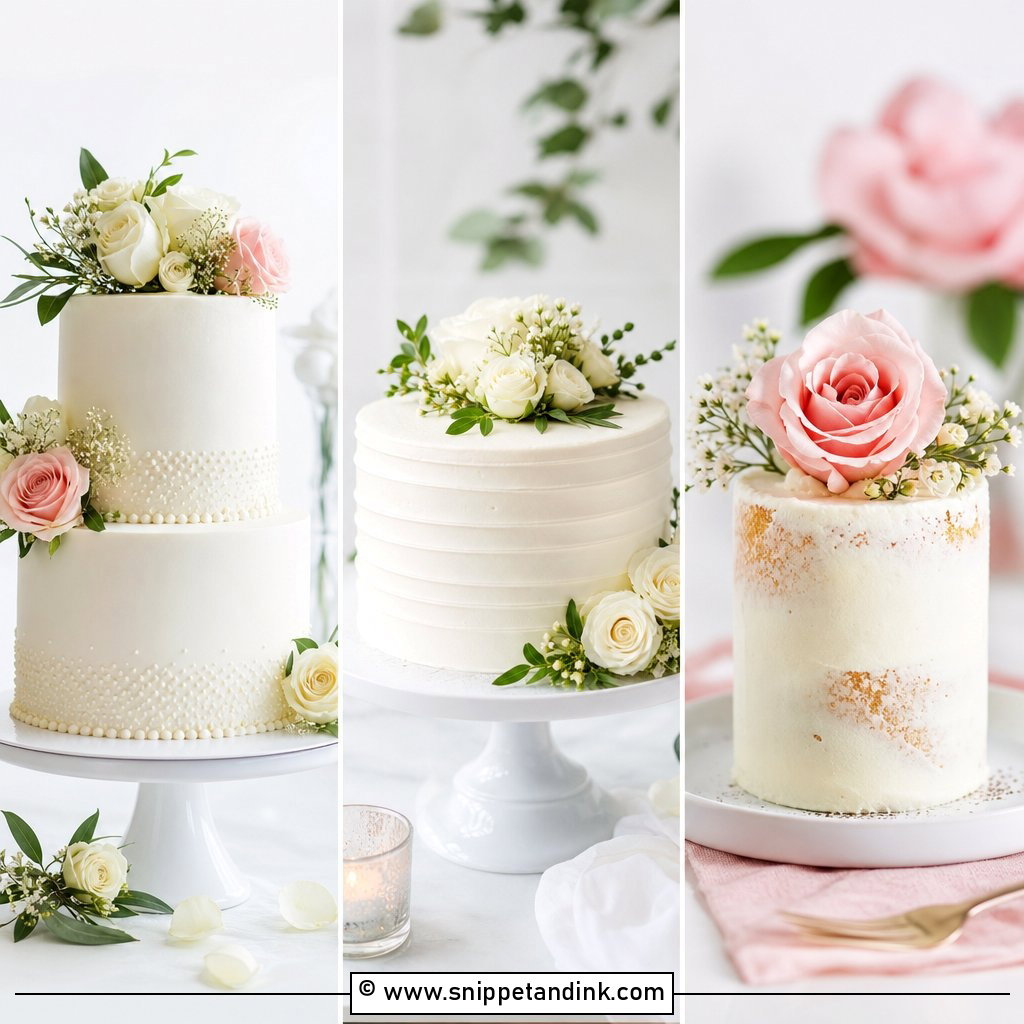
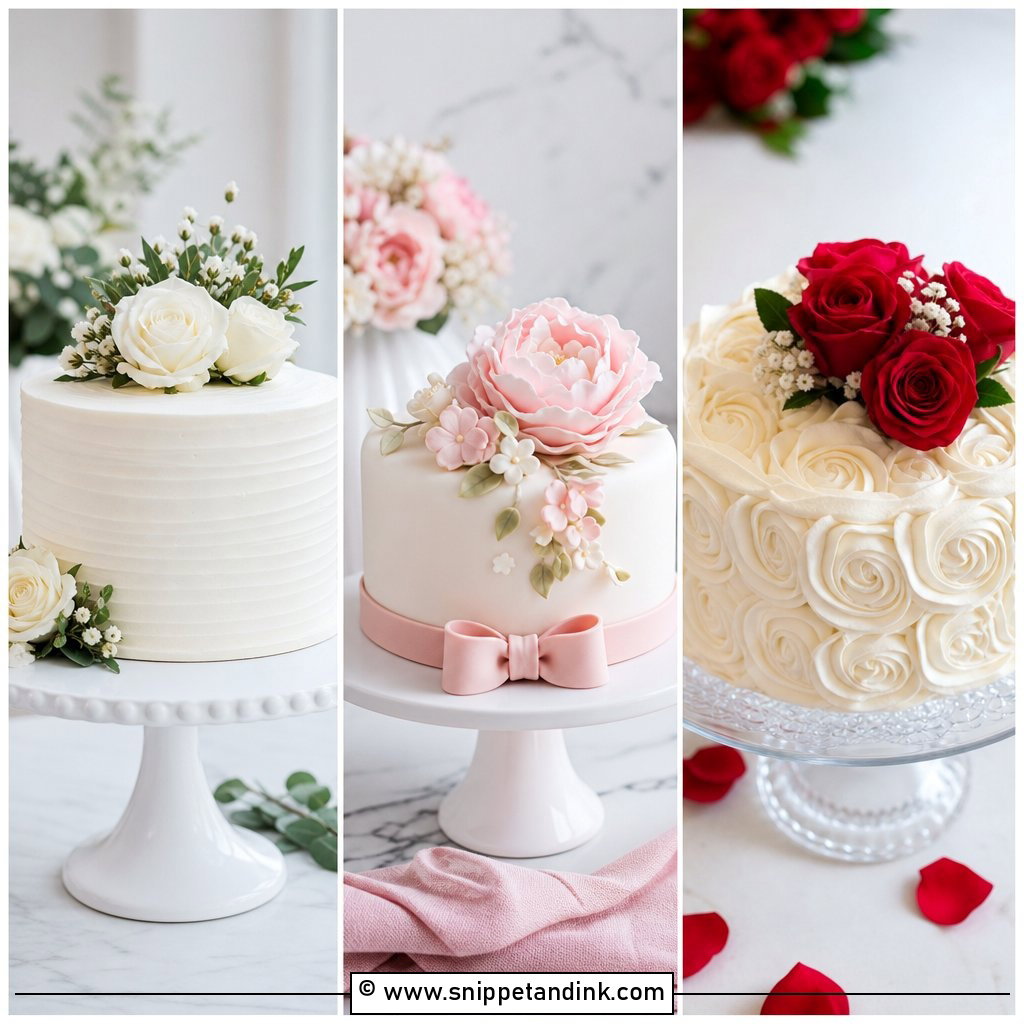
Plain is the version I respect most, because you can see straight away whether the baker knows what they’re doing. Smooth ivory buttercream, crisp top edge, a small knot of white ranunculus. That’s it. I’d ask for a tall tier, around six inches, so it doesn’t look like a dessert from the café counter. A slim satin band or a row of piped dots finishes it if the top feels bare.
2. Single Layer Wedding Cake With Fresh Flowers
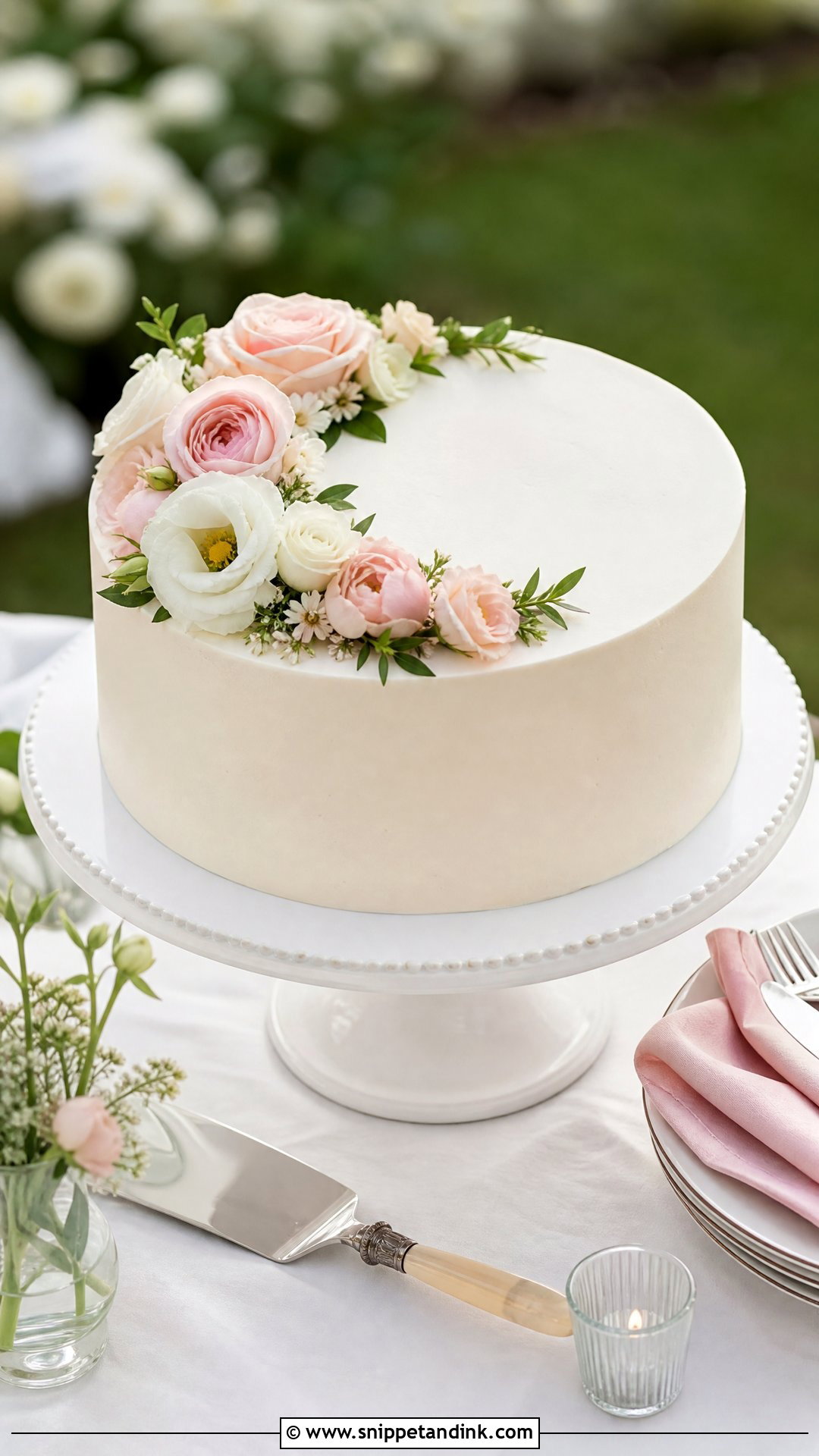
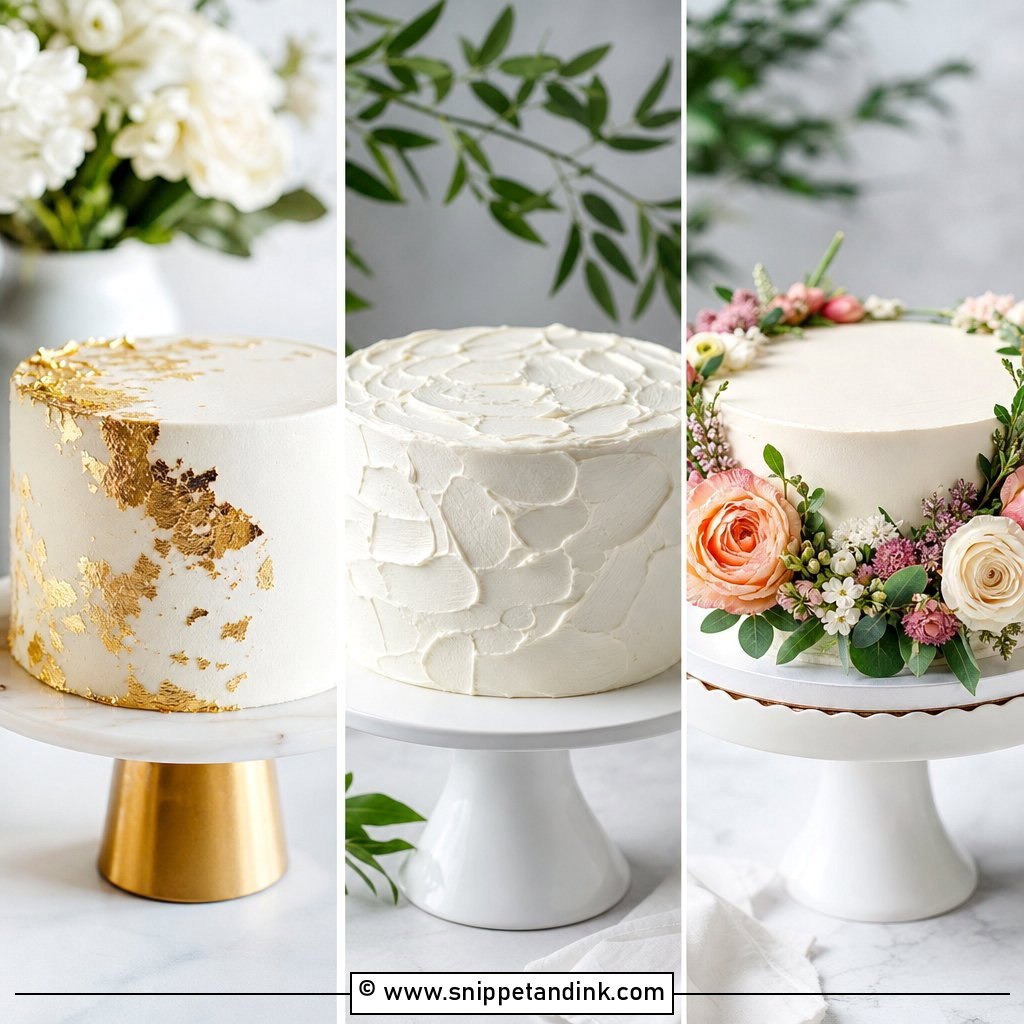
With fresh blooms, the florist and baker need to talk to each other, and I’d make that call for you rather than hope it happens. Garden roses, lisianthus and chamomile sit well on frosting once the stems are sealed or set into picks; orchids look delicate but are fairly hardy, so they last the evening. I usually arrange a crescent across the top edge or one side spill rather than covering everything. A pale base lets the colour of the petals do the work.
3. Single Layer Buttercream Wedding Cake
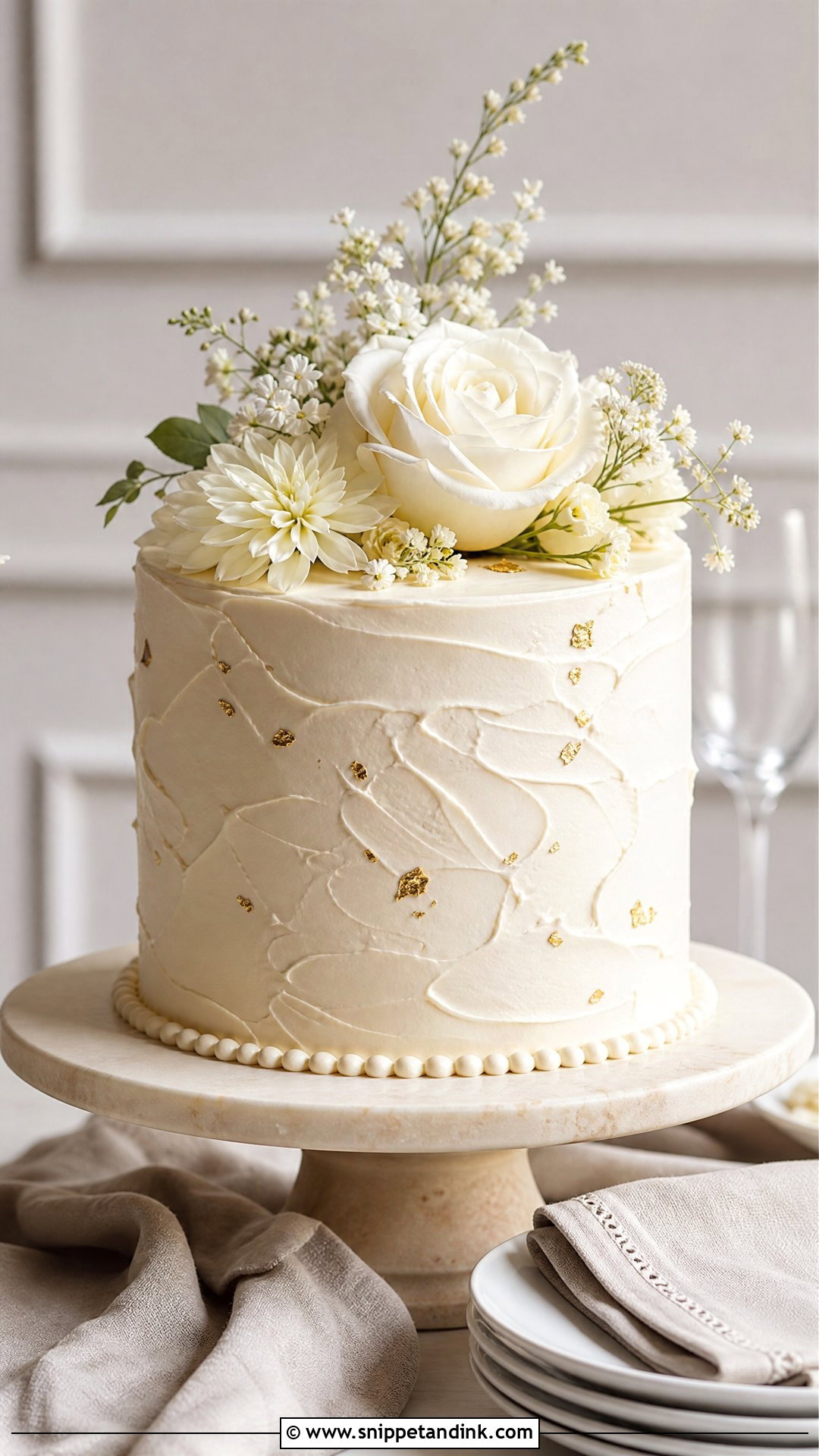
Most of my small cakes are covered in Swiss meringue buttercream. It’s made by whisking egg whites and sugar over heat before beating in butter, which gives that silky finish and a far less sugary taste than the American kind. The trade-off is that it softens sooner in a warm room. Smooth and polished, swirled, or spatula-marked with an uneven edge, the same frosting can go formal or relaxed. Flavour is wide open: almond, vanilla bean and strawberry all sit happily under it.
4. Single Layer Wedding Cake With Greenery
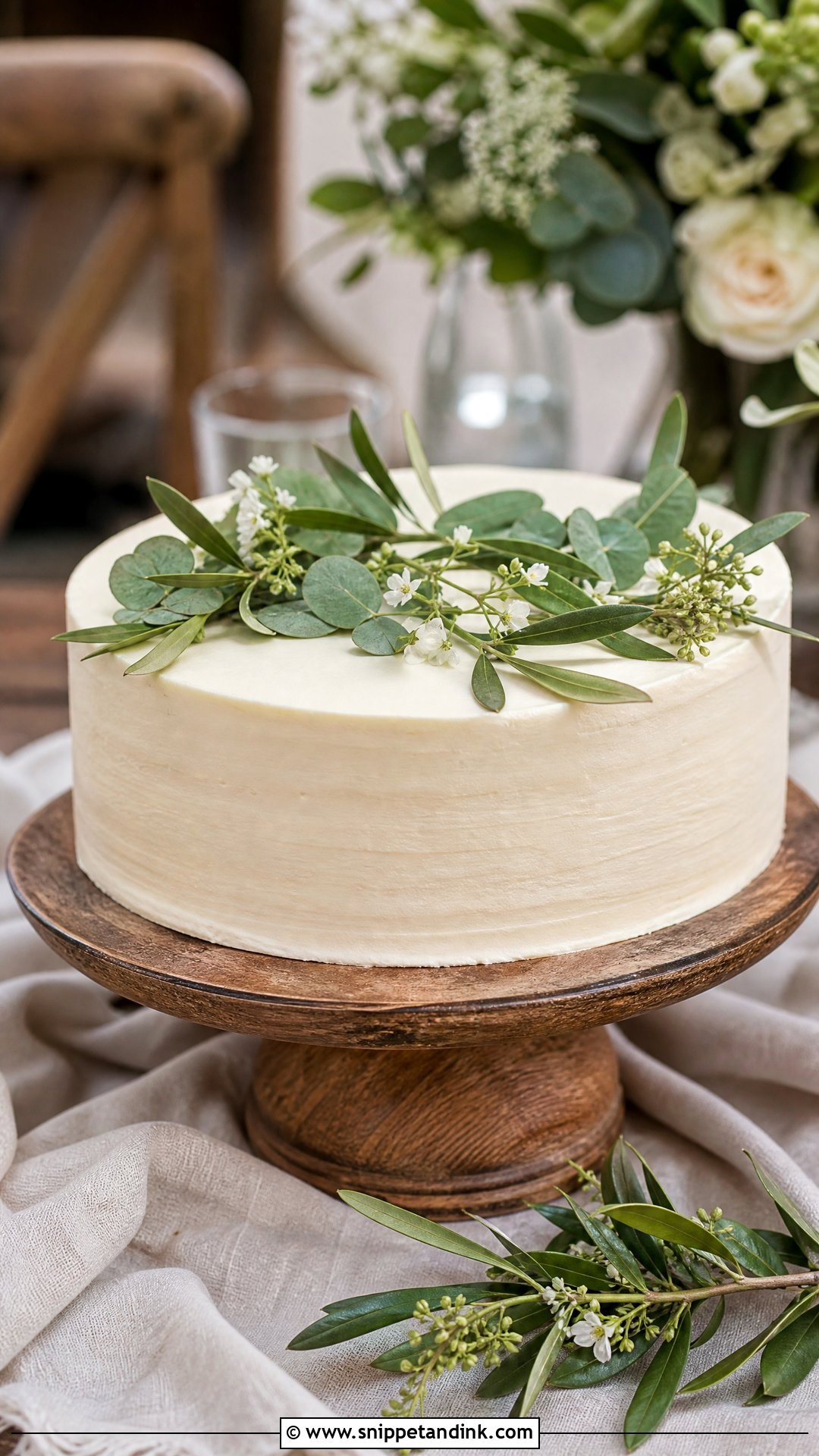
Leaves give a single layer a quiet, earthy frame. Eucalyptus, olive leaves, rosemary and bay all look right around the base or bunched on top, though eucalyptus is not something I let touch the frosting, so it sits on a small barrier. Cream cheese frosting and semi-naked finishes both suit greenery. If it starts to feel too much like a herb garden, one or two white flowers soften it. A wooden stand warms it up; white ceramic keeps it cooler and more modern.
5. Single Layer Naked Wedding Cake
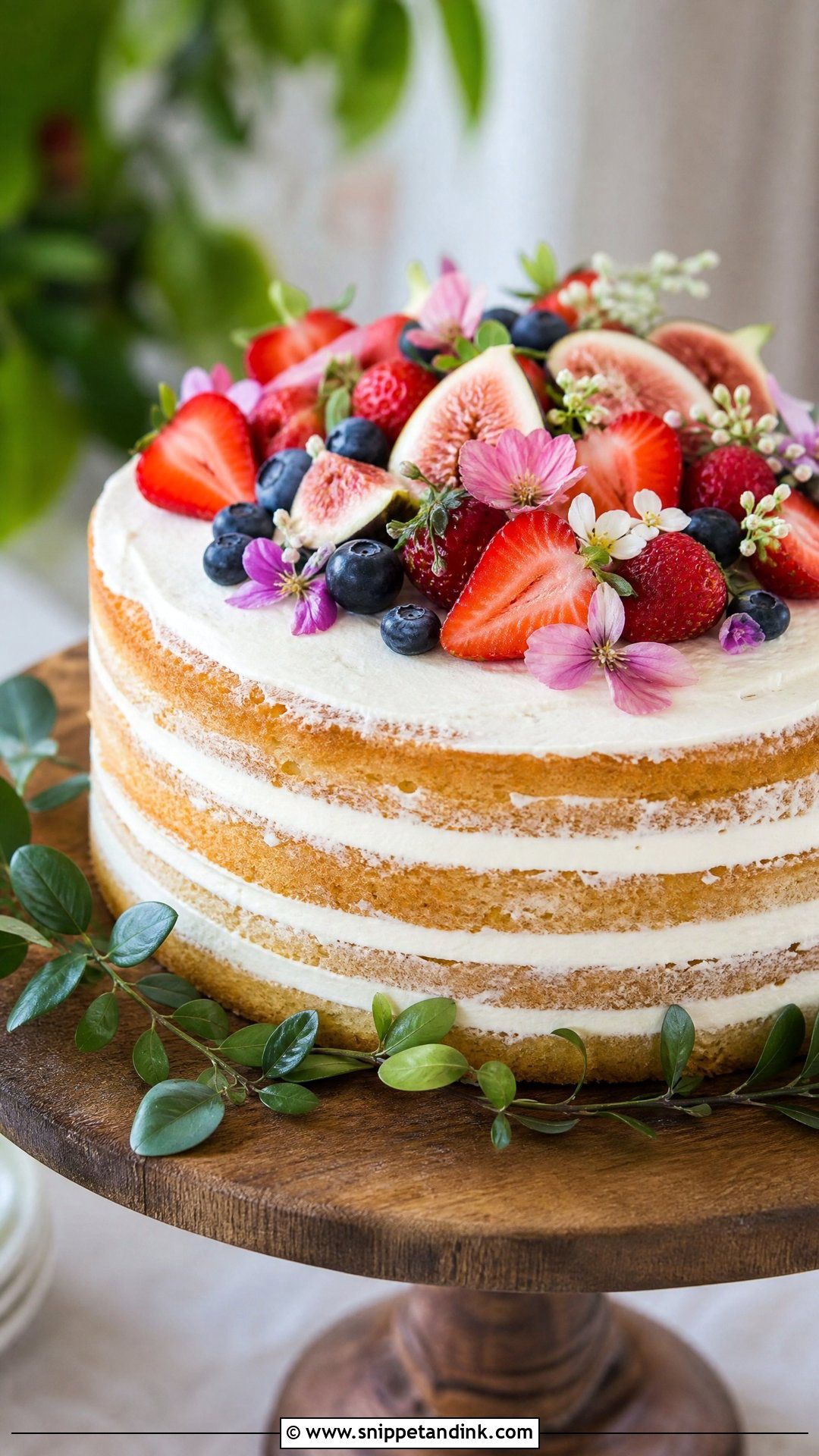
Naked cakes look casual and are surprisingly unforgiving. With almost no frosting to protect them, the exposed sponge dries out within a few hours of being cut, so I brush each layer with a light syrup and assemble as close to the event as I can. The layers also have to be baked level and stacked straight, because every flaw is on show. Vanilla cake with berry filling is the classic, and lemon with curd or spice with cream cheese suit an autumn farm wedding. I wouldn’t put one in full afternoon sun.
6. Single Layer Semi Naked Wedding Cake
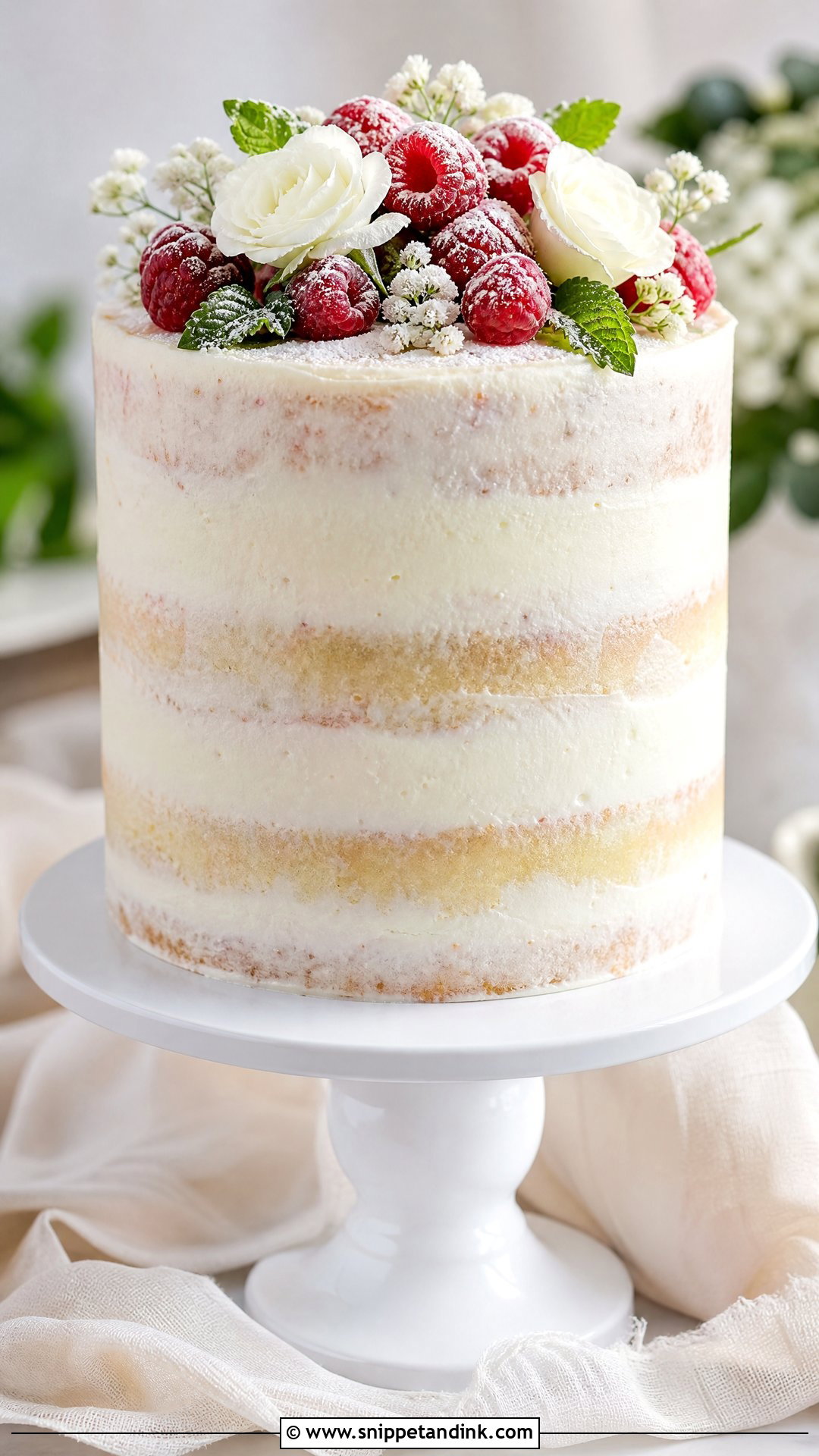
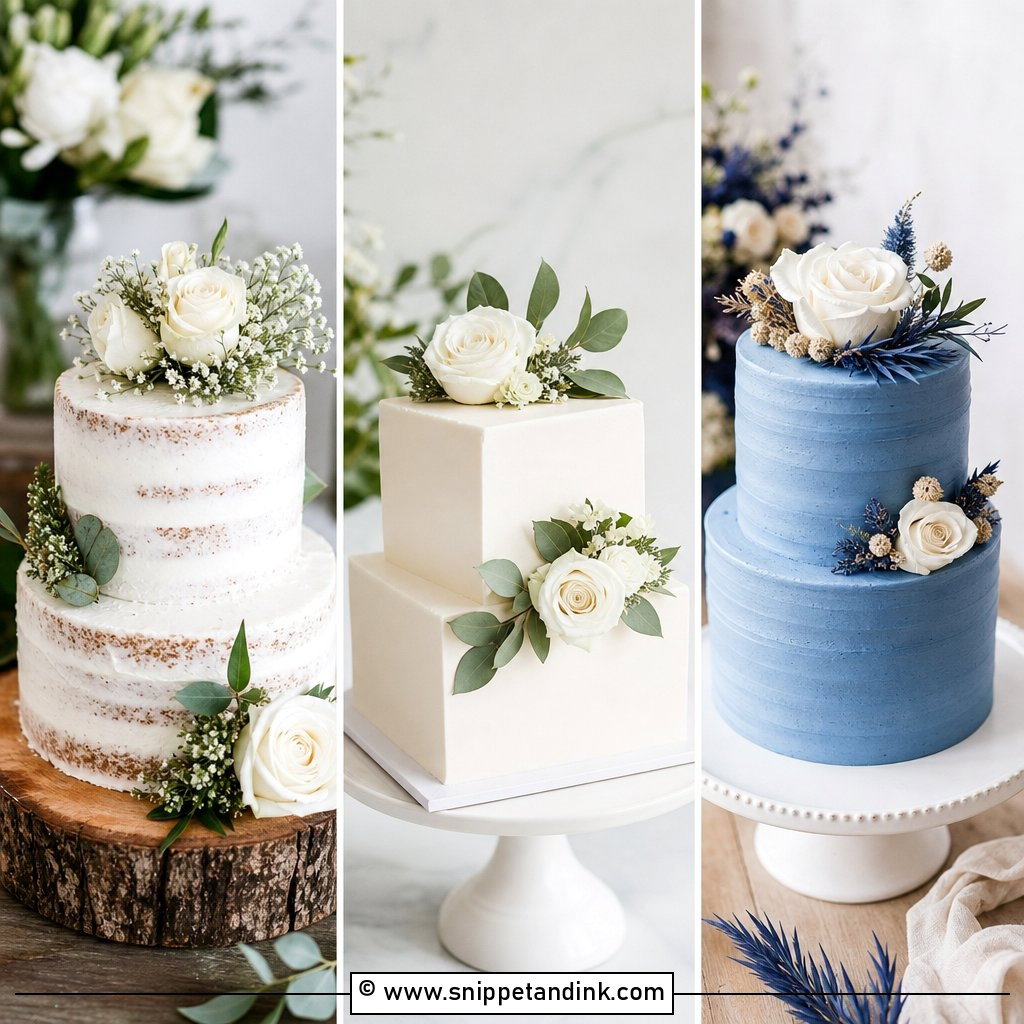
Semi naked is my compromise for couples who like the rustic look but worry about dry edges. A thin coat of buttercream gets scraped back so the cake shows through in soft patches, and that coat seals the sponge far better than nothing at all. Go tall and round if you want it to read as a wedding cake rather than a picnic bake. Berries and a dusting of icing sugar on top is all it needs, added just before guests see it so the sugar doesn’t melt into the frosting.
7. Single Layer Vintage Wedding Cake
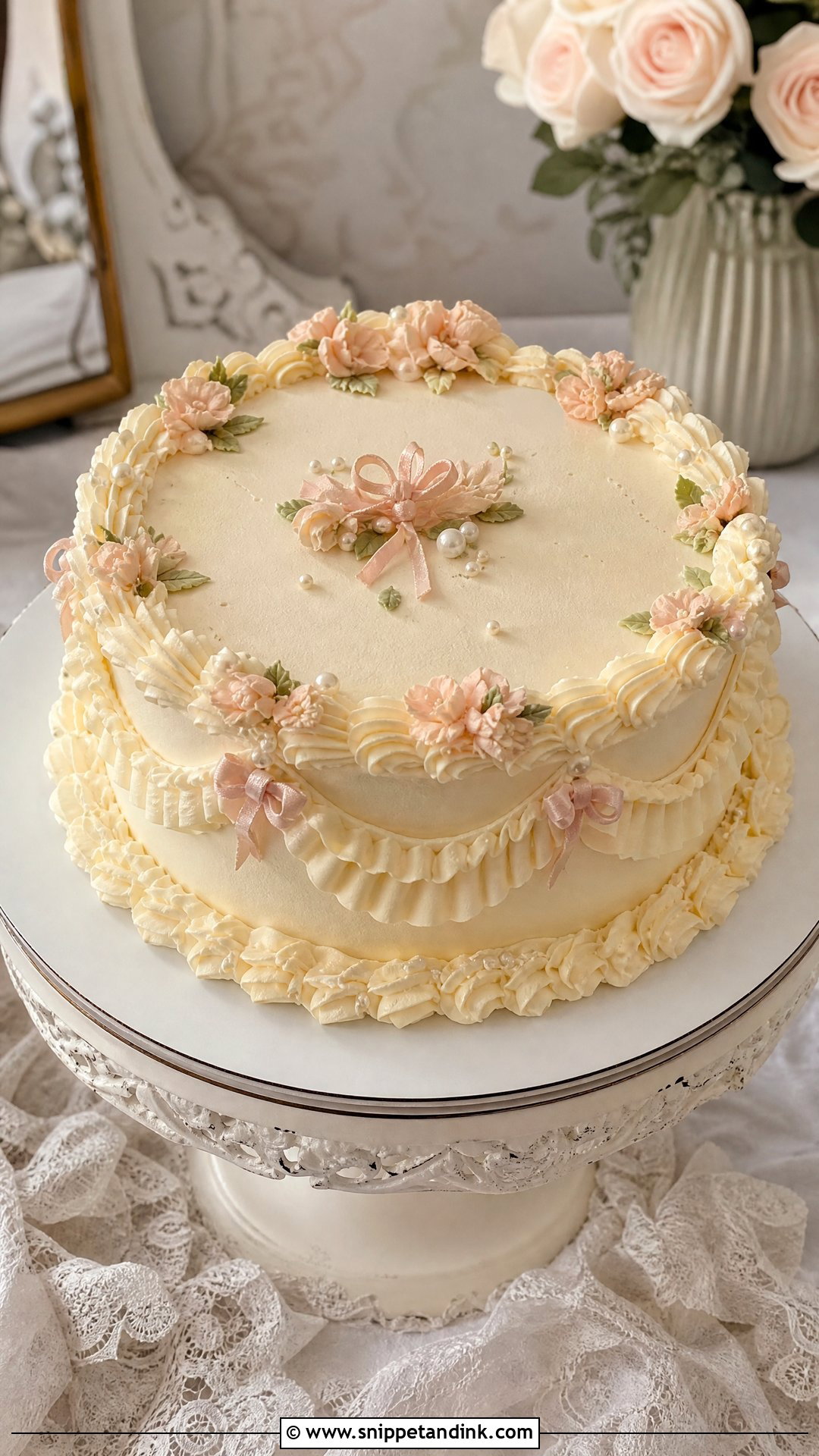
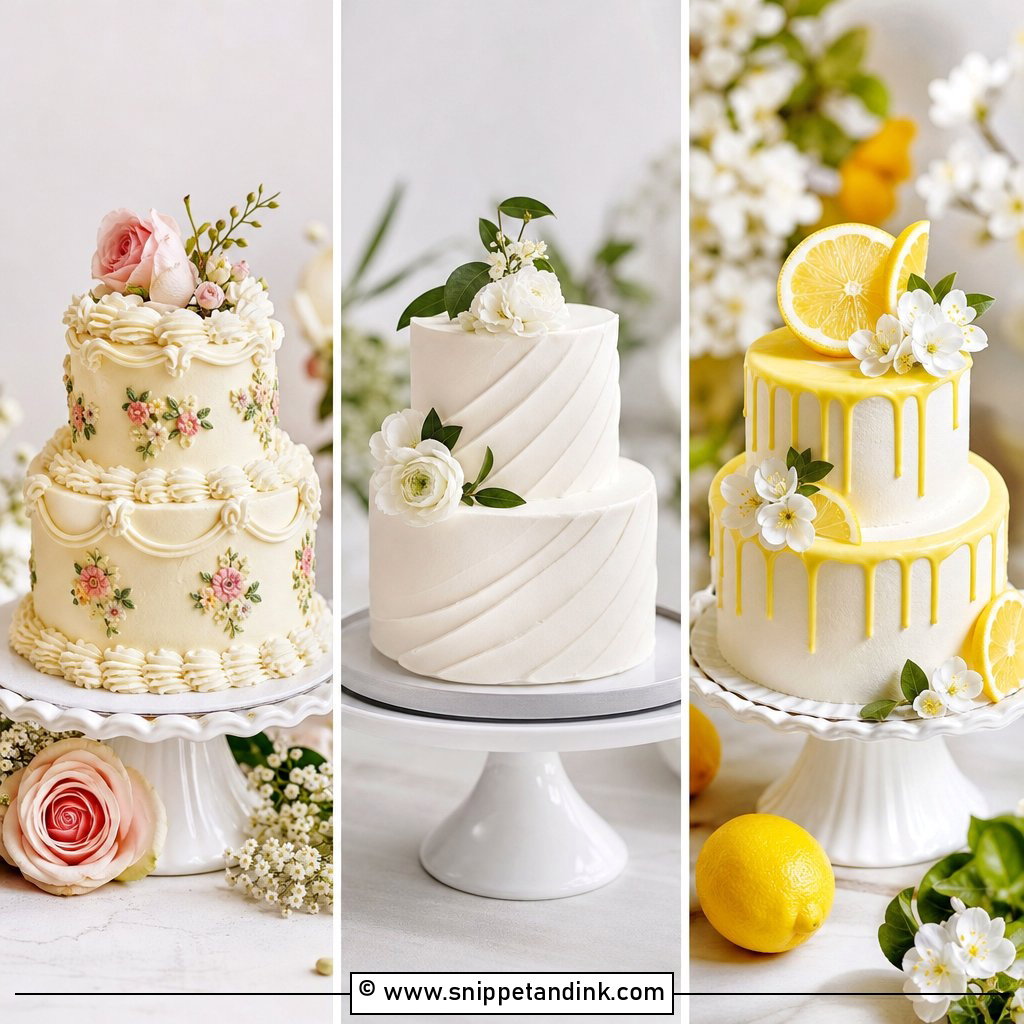
Vintage piping can tip into costume quickly, so I keep the colour restrained and let the pattern carry the nostalgia. Shell borders, small bows, swags and pearls, in ivory or one pastel such as butter yellow. A heart makes it playful, a round keeps it classic. I pipe these in buttercream rather than covering the cake in fondant first, because people actually eat the frosting on a small cake and fondant tends to get left on the plate. Lace runners and antique plates on the table finish the story.
8. Single Layer Lambeth Wedding Cake
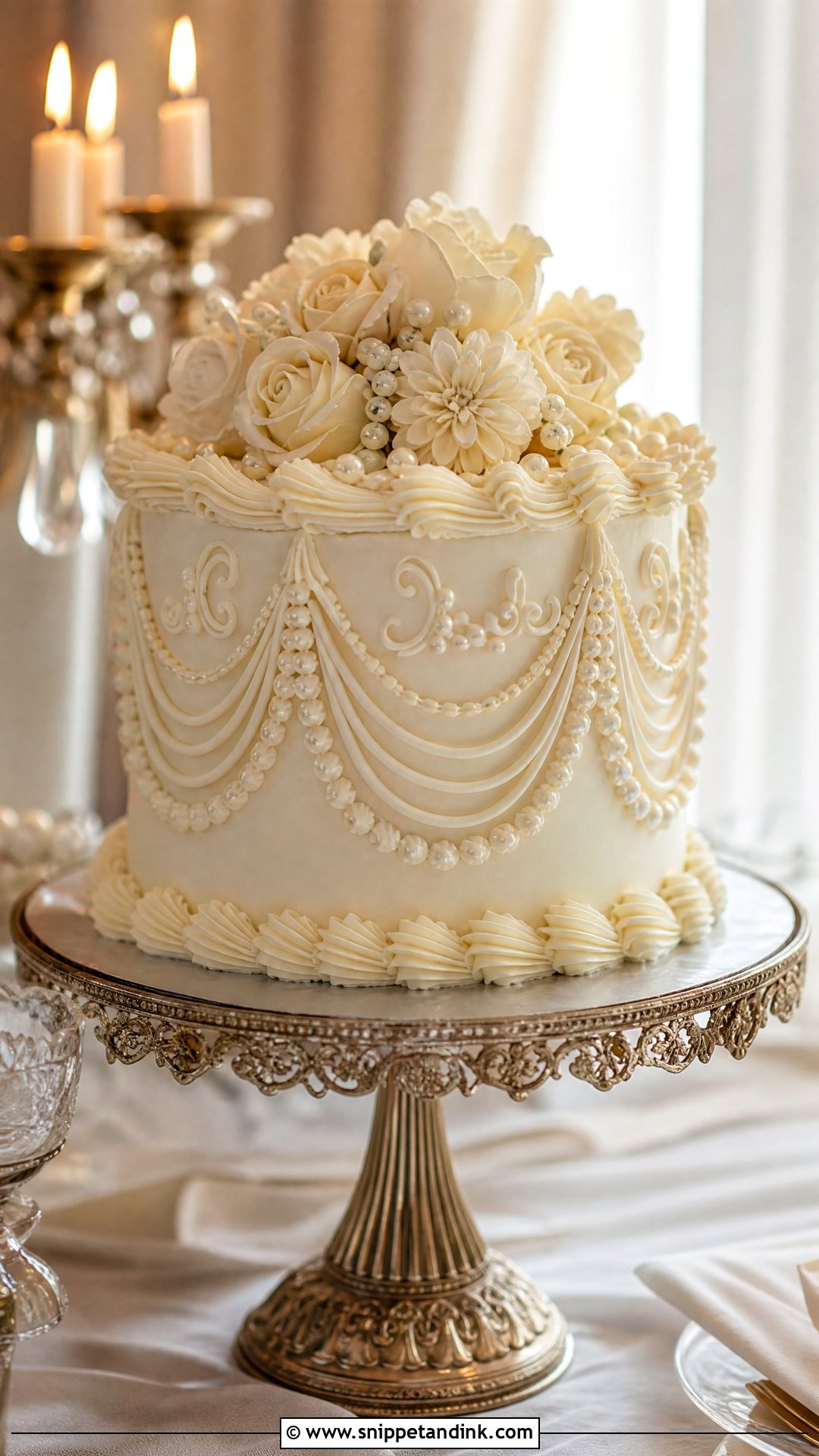
Lambeth is the heavy end of vintage piping: borders built on top of borders, scrolls over shells, swags hanging from swags. It’s an overpiping method, which means each layer has to set before the next goes on, so it takes far longer than it looks and is priced accordingly. A tall round or a heart gives the most surface to work on. Ivory is traditional; sage and pale blue feel current. Sugar pearls and piped cherries add character. Ask any baker you’re considering to show you their own Lambeth cakes, because steady overpiping is a specific skill.
9. Single Layer Pearl Wedding Cake
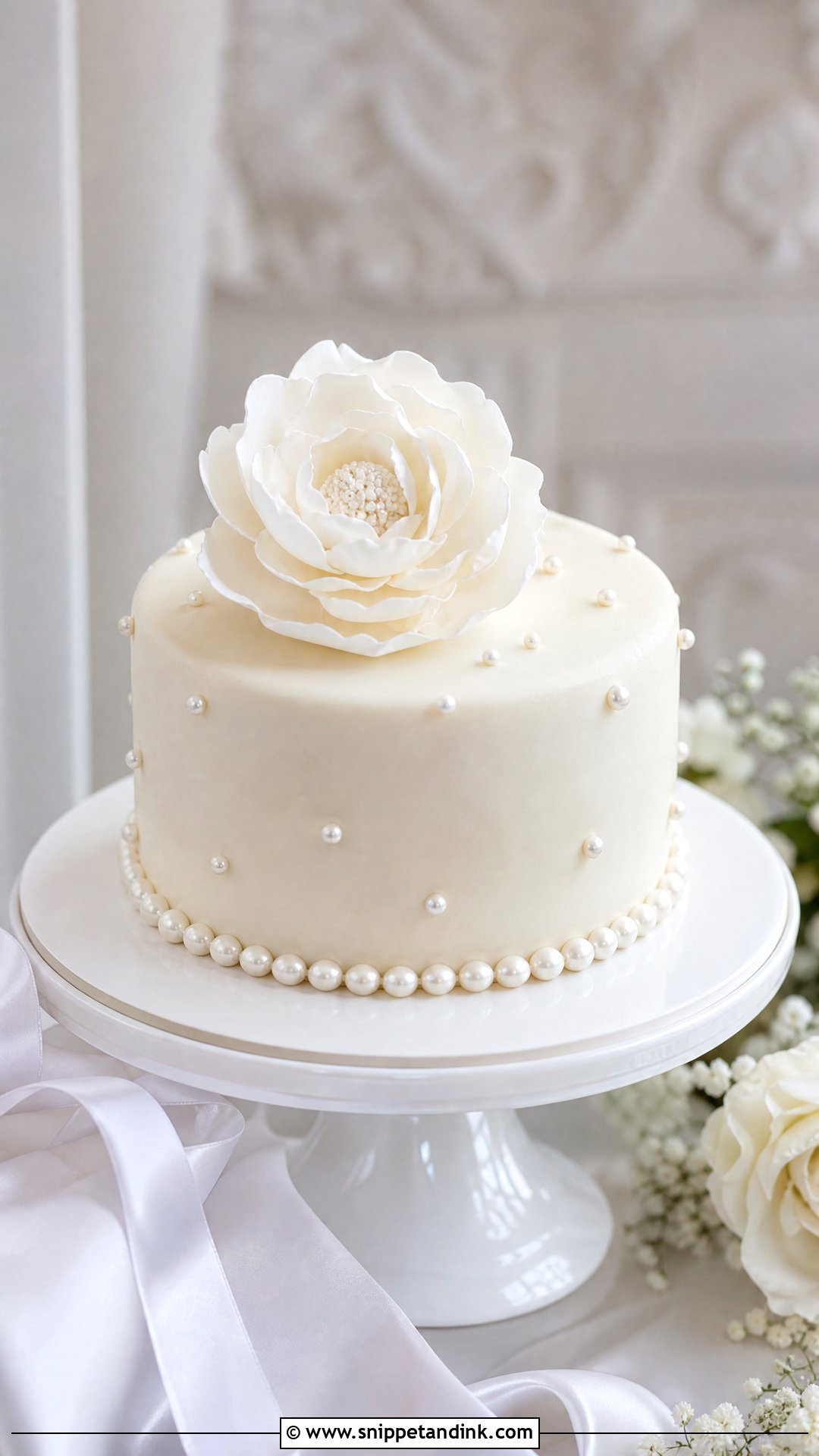
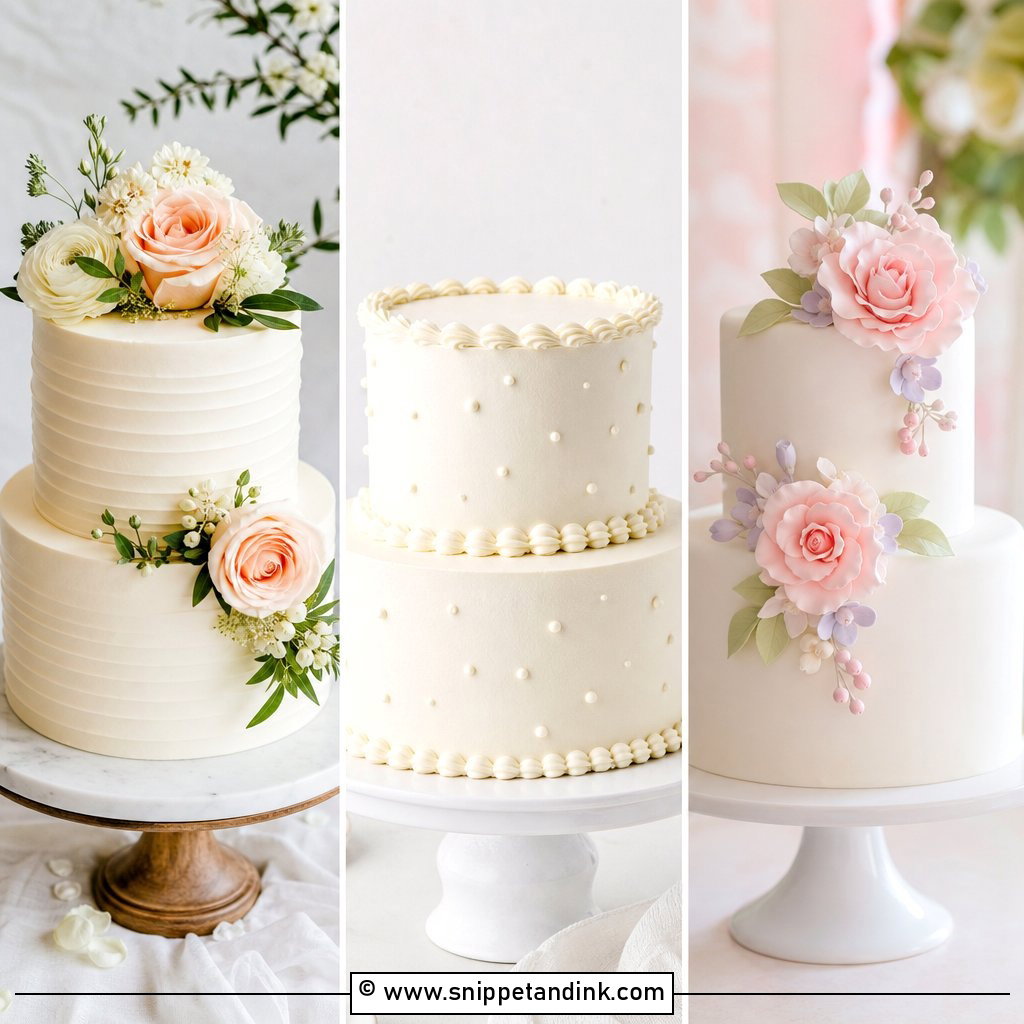
I treat pearls like jewellery on a neckline: one placement, not three. A neat border on the top edge, a run around the base or a light scatter on the sides. On a smooth ivory base they look bridal straight away; alongside one large sugar flower or a few white orchids they look modern. If you want more texture, I’ll mix edible pearls with tiny piped dots. It goes particularly well with satin dresses and candlelit tables.
10. Single Layer Gold Leaf Wedding Cake
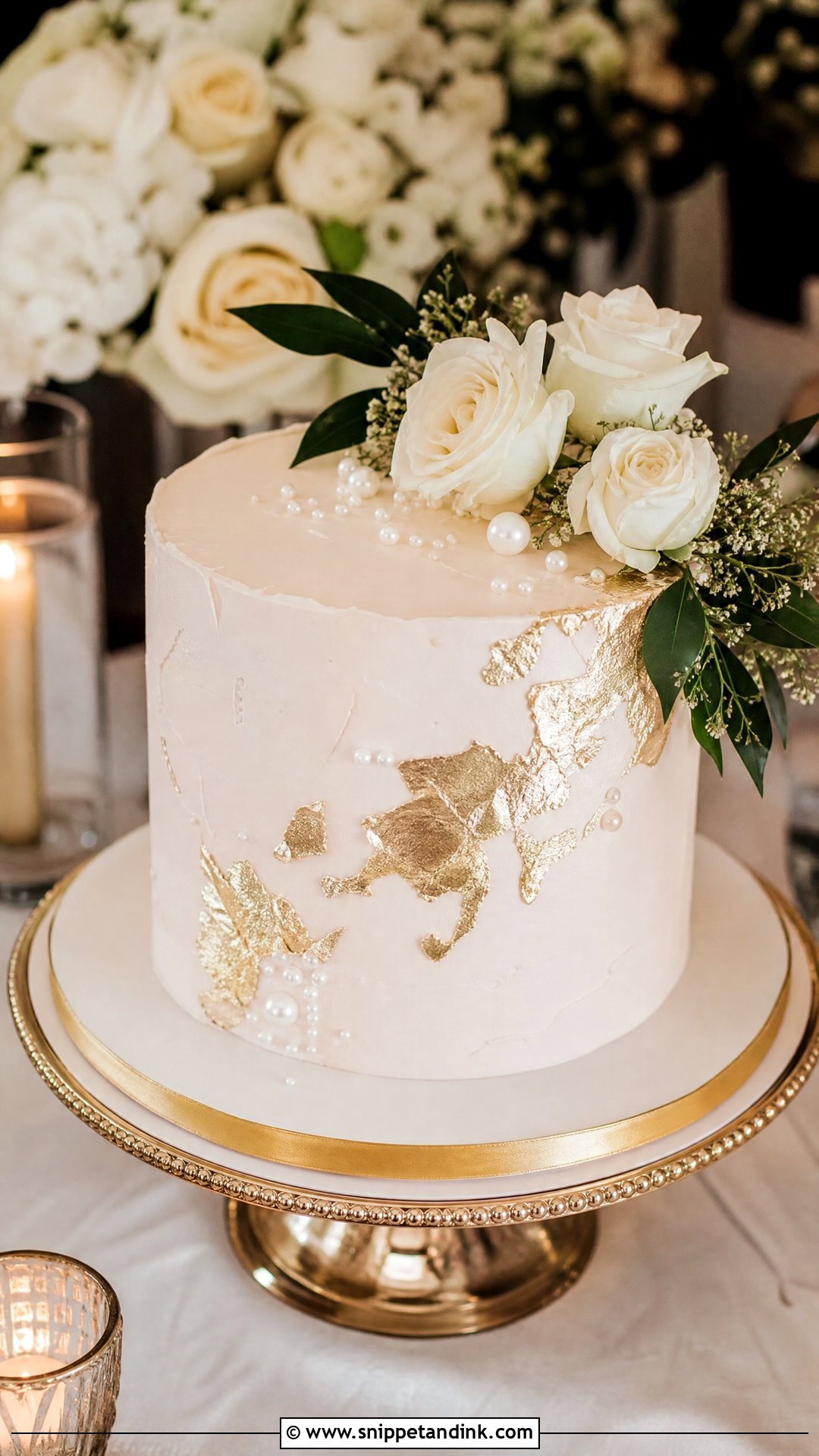
Edible gold leaf is thinner than tissue and sticks to anything it touches, including the decorator’s fingers, so I lift it with tweezers or a dry brush and press it into a slightly tacky surface. Irregular flecks running up one side look natural; neat squares look like a pattern. Balance it with one floral cluster or a few berries. Almond, vanilla bean and chocolate under pale buttercream all suit it, and it’s at its best under evening lighting, when it glints.
11. Single Layer Floral Wedding Cake
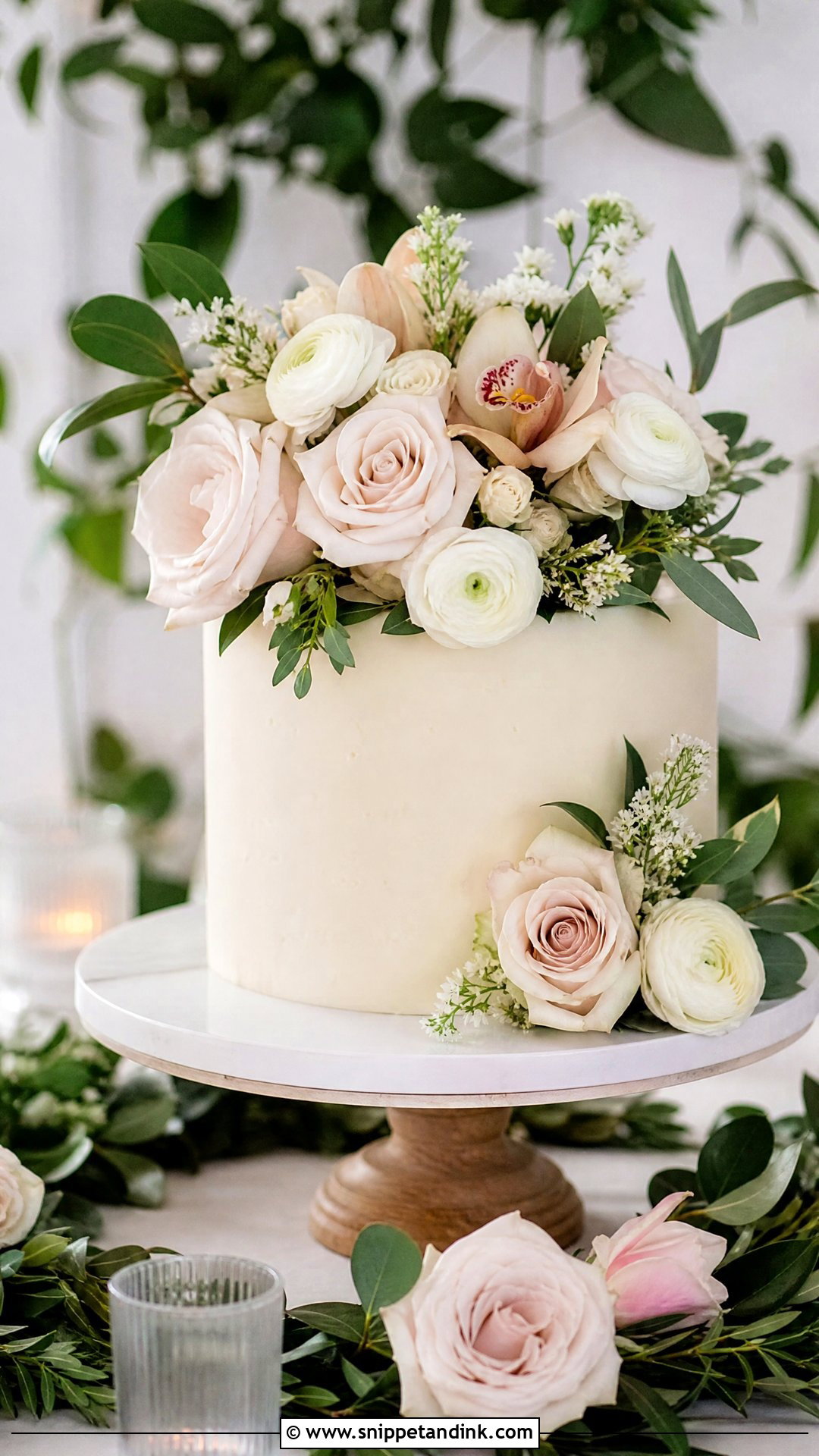
On a single layer I build flowers in one of two ways: a full crown sitting on top, or a diagonal that starts at the top edge and runs down one side. Both give the cake a direction; scattered blooms everywhere just look busy. Buttercream, sugar or fresh flowers all work, and the decision is mostly about heat and budget. White with blush and cream reads romantic, brighter flowers feel summery. A pedestal with greenery around its foot gives a small table a clear focal point.
12. Single Layer Watercolor Wedding Cake
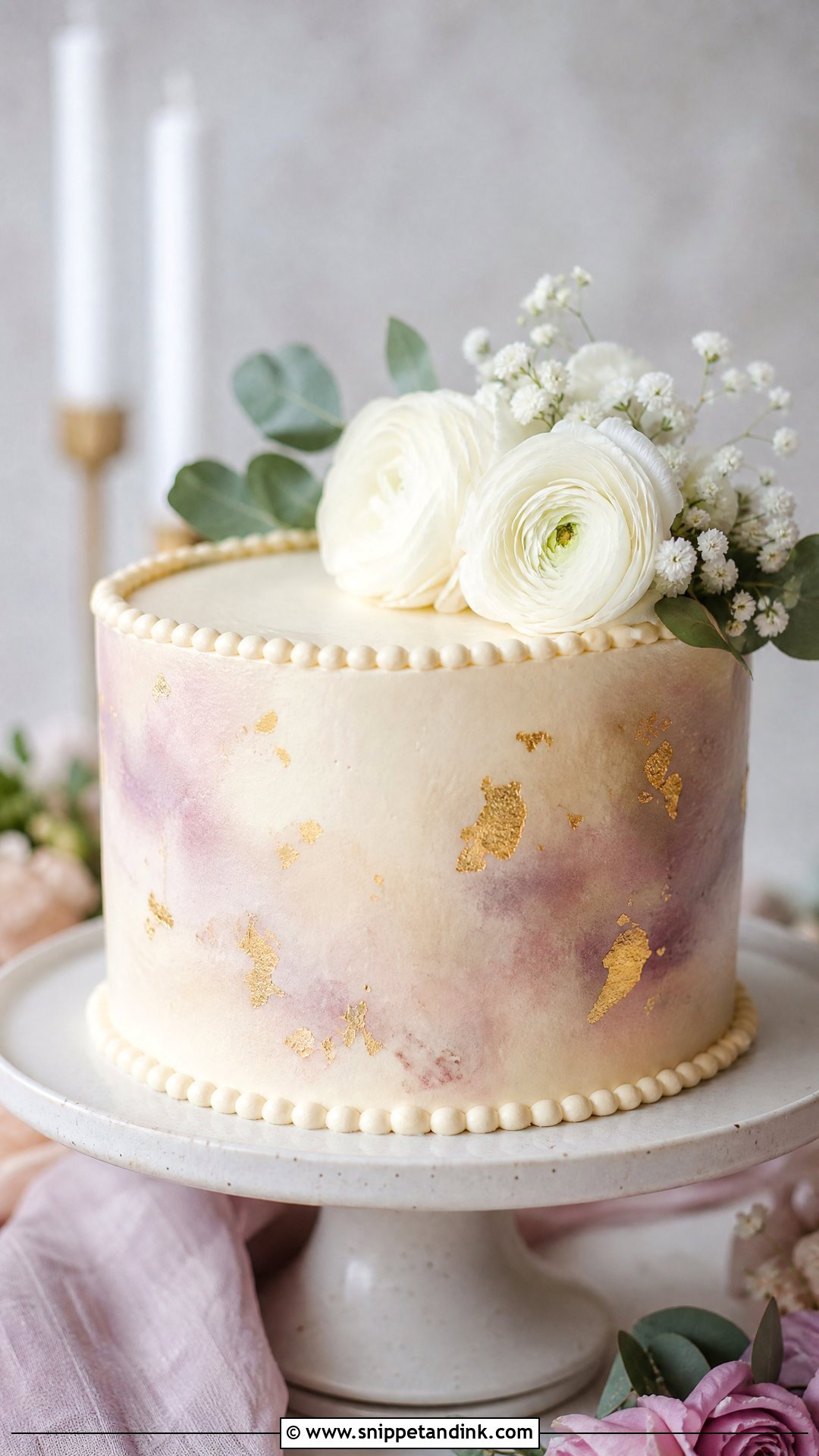
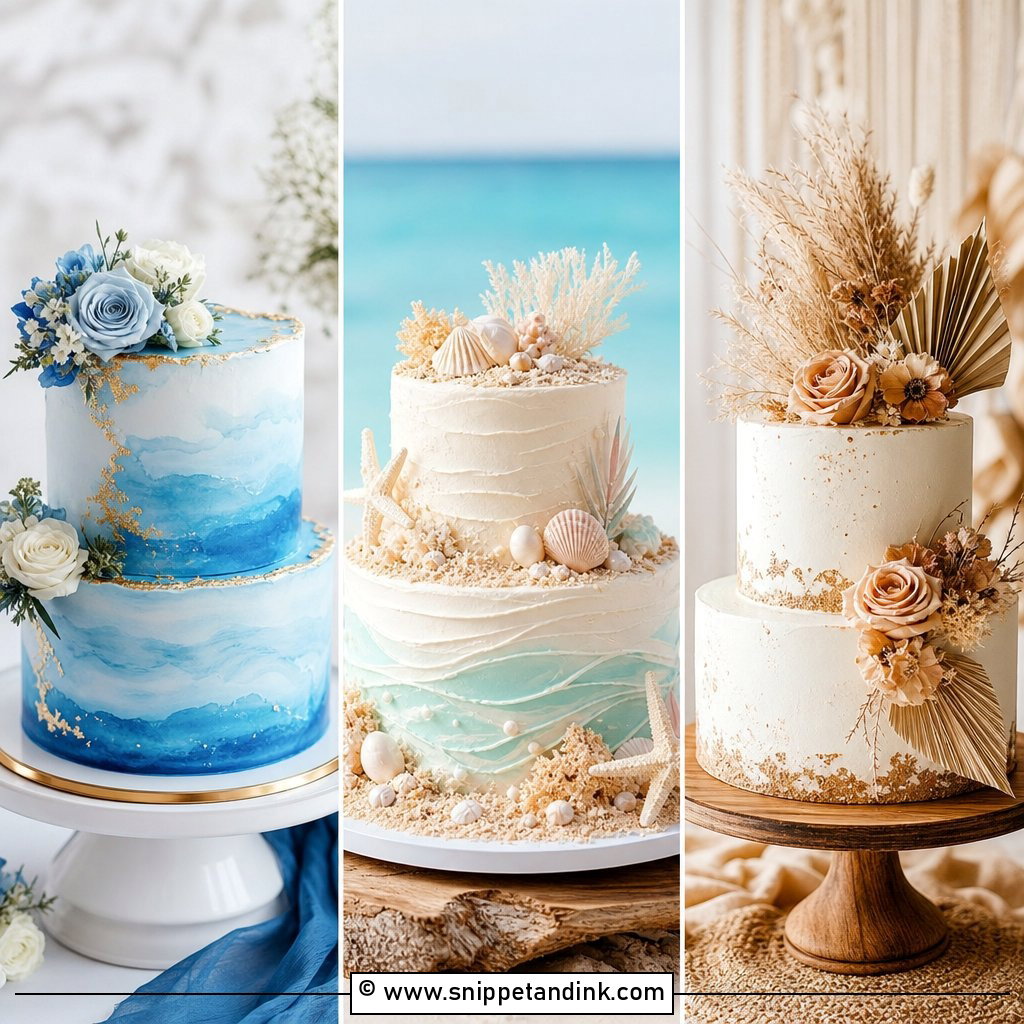
Watercolour finishes are blended with a scraper, not a brush. I dot a few shades onto a chilled coat and smooth them together so the colours bleed softly into each other. Blush, lavender, dusty blue and sage are the ones I’m asked for most. Two or three shades at most; any more and the blend turns muddy. Keep everything else minimal, maybe a few fresh flowers or a thin piped border, and you have a subtle way to bring your wedding colours to the table.
13. Single Layer Textured Buttercream Wedding Cake
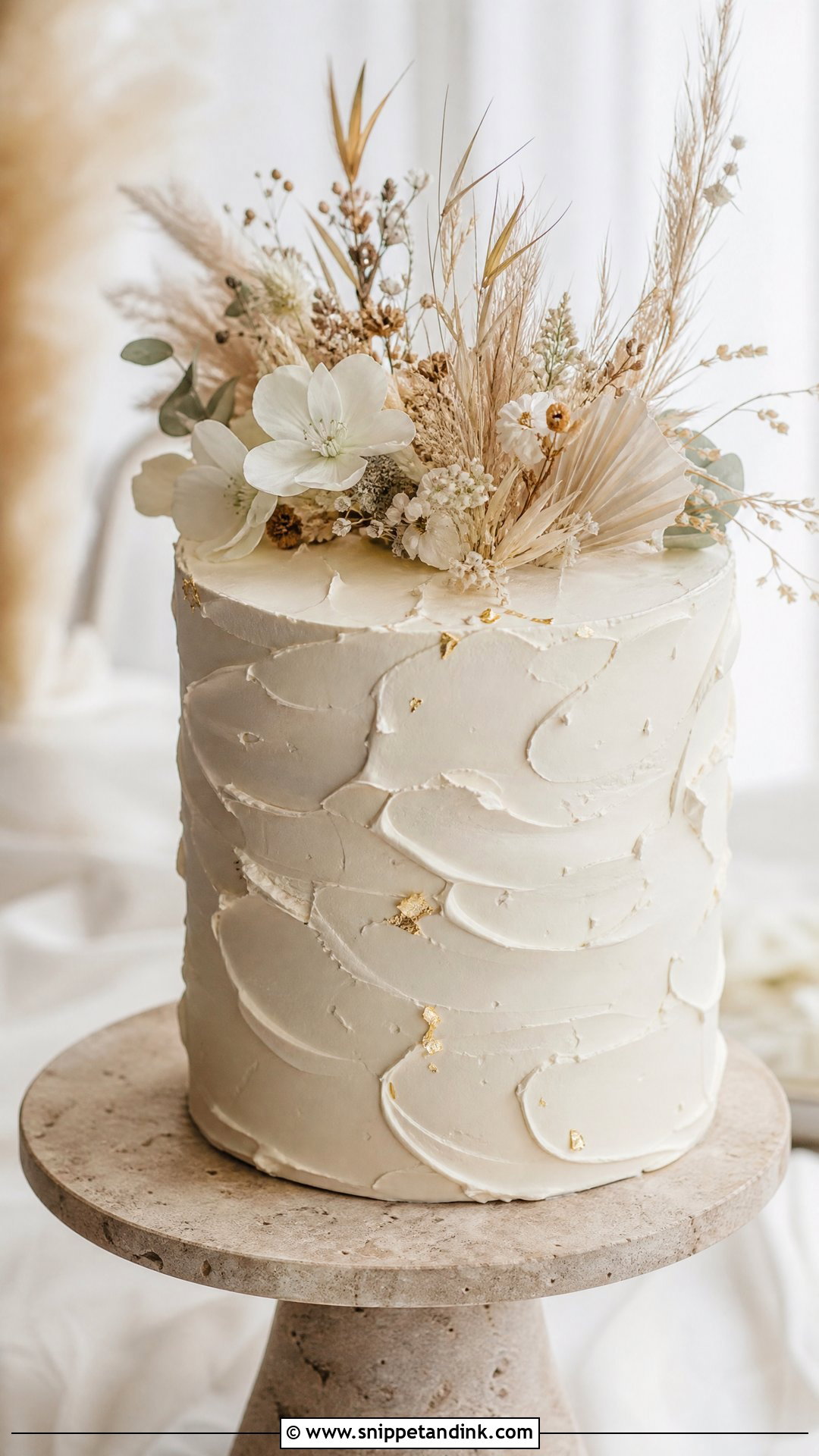
Texture is my go-to for couples who want style with very little decoration. A comb gives clean ridges, a palette knife gives petal-like strokes, and a stucco finish looks almost like plaster. It also hides the small knocks a cake can pick up on the way to a backyard or barn. Warm beige or soft terracotta feel modern; ivory keeps it classic. A few flowers or dried grasses are enough.
14. Single Layer Square Wedding Cake
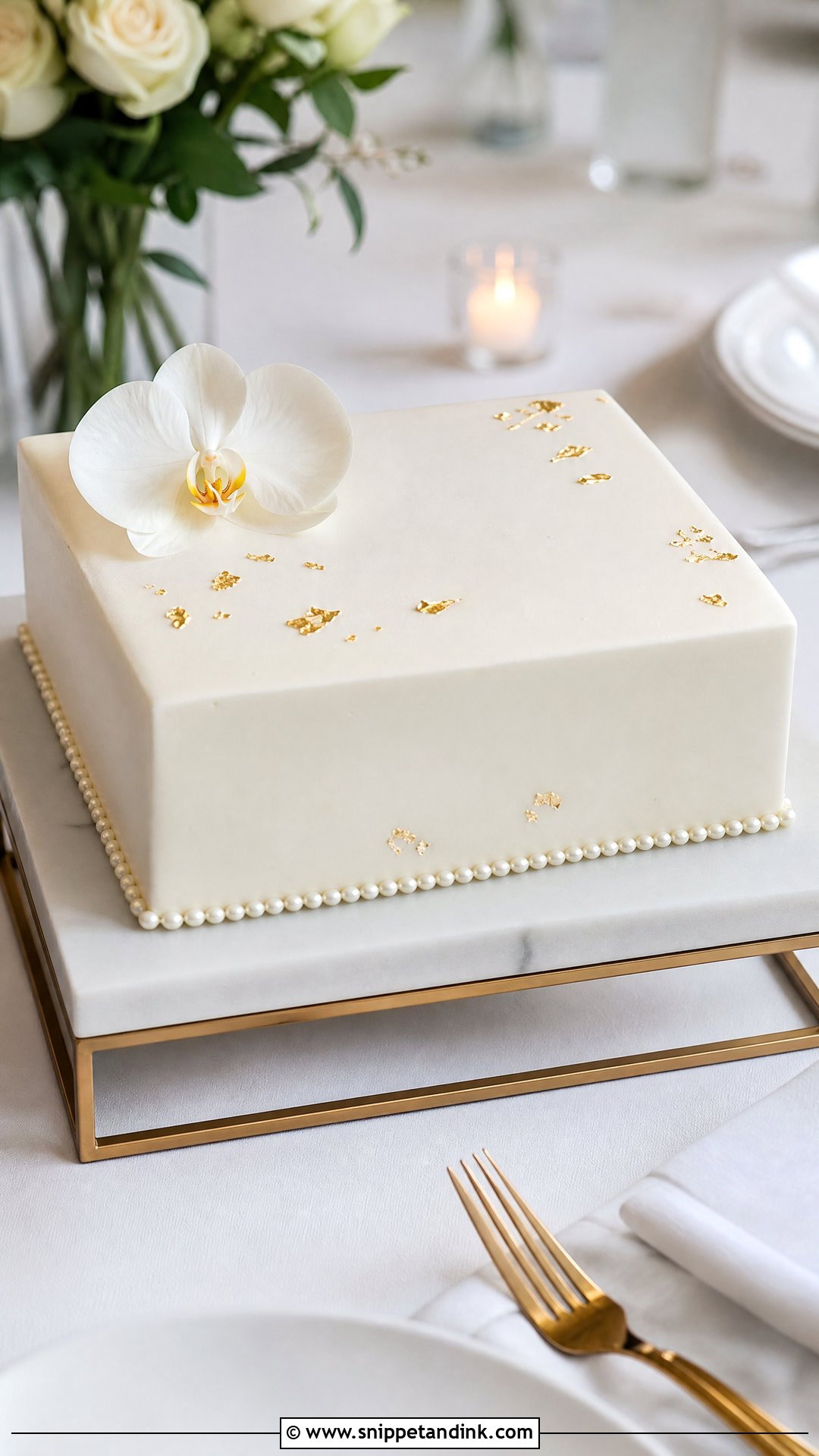
Square cakes stand out simply because most cakes are round. The corners are where I spend the most time, since they have to be scraped clean and crisp for the architectural look to work, and fondant or very firm buttercream holds them best. They slice into tidy, even portions, useful when one cake feeds everyone. One statement flower or a line of piped pearls along an edge is plenty; more than that and the shape gets lost.
15. Single Layer Heart Wedding Cake
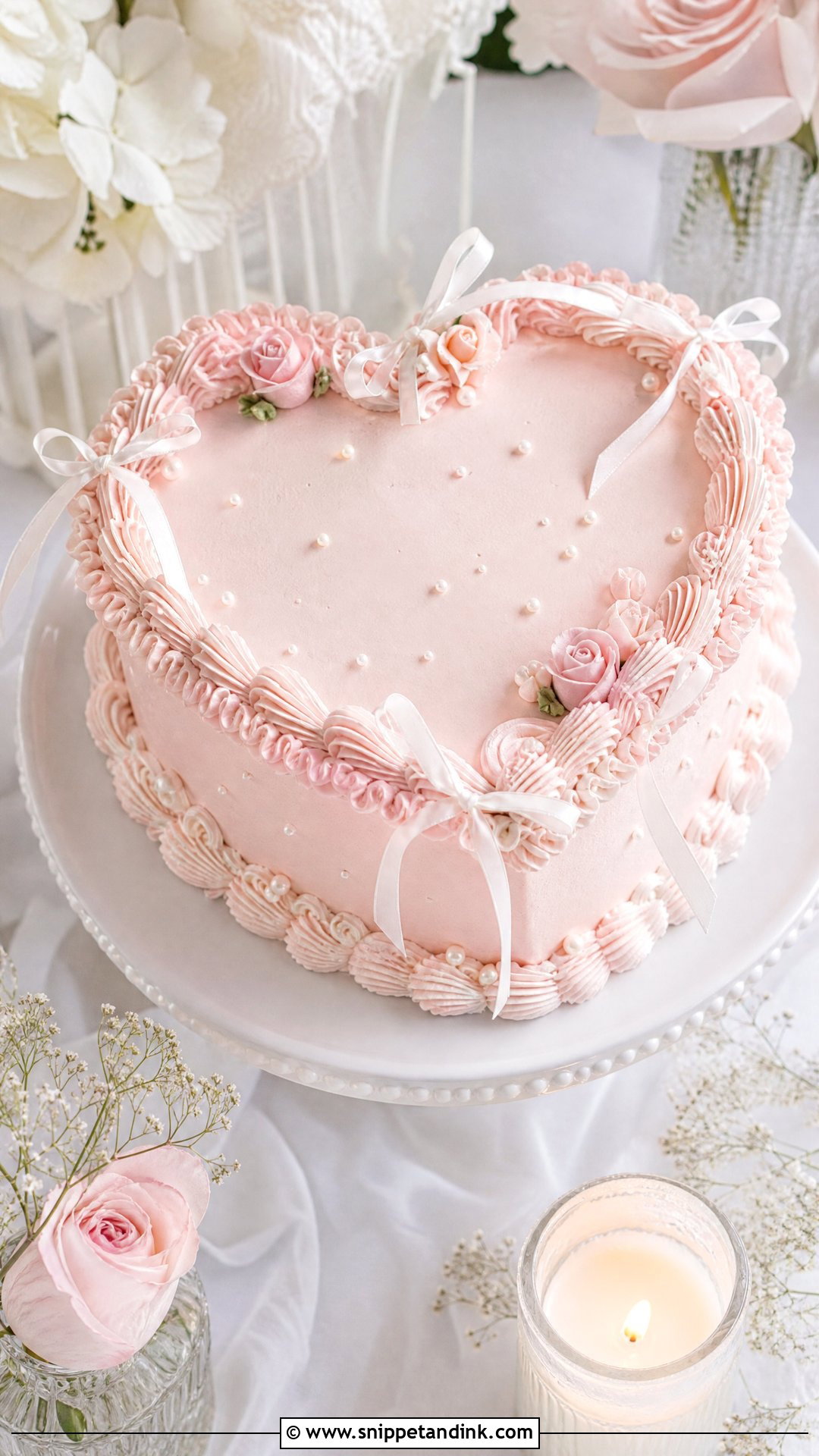
Hearts are the most requested shape for elopements and courthouse days, and they need very little help. Vintage piping traced around the outline makes the shape pop, and a few pearls or piped flowers add charm. Ivory, blush and champagne keep it from looking like a Valentine’s bake. A short message on top works if that suits you. I’d display it on a plain white stand so the outline stays clear from across the room.
16. Single Layer Drip Wedding Cake
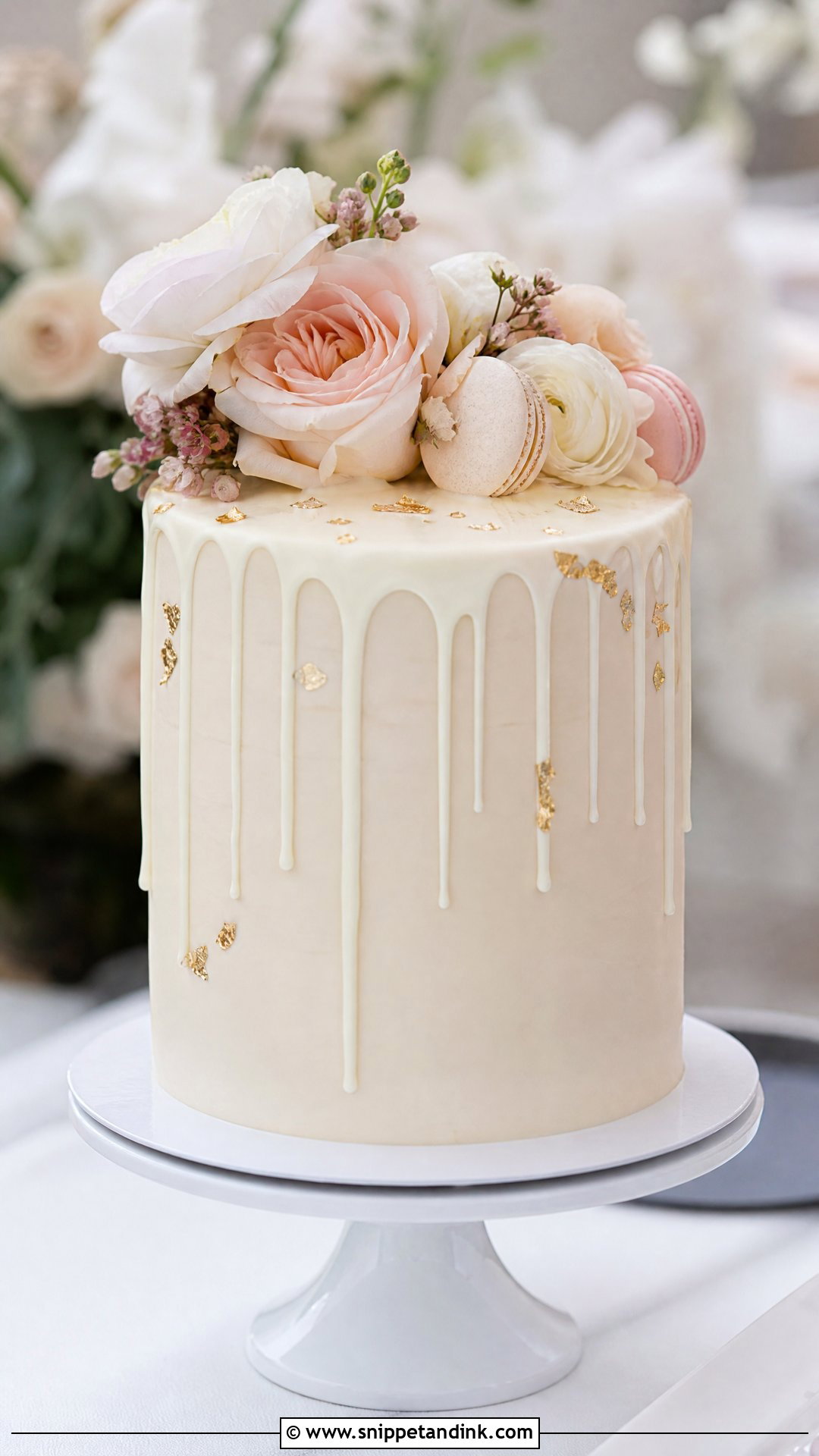
For a wedding drip, I’d steer you toward white chocolate ganache, caramel or a pale pink drip over a heavy dark one. Getting the drips to fall at uneven lengths and then stop is about the cake being cold and the ganache being just warm enough; too hot and it runs to the board. Flowers, macarons, berries or a little gold leaf go on top. Vanilla raspberry, chocolate caramel and almond with berry filling all fit the style, which feels modern and a bit playful.
17. Single Layer Berry Wedding Cake
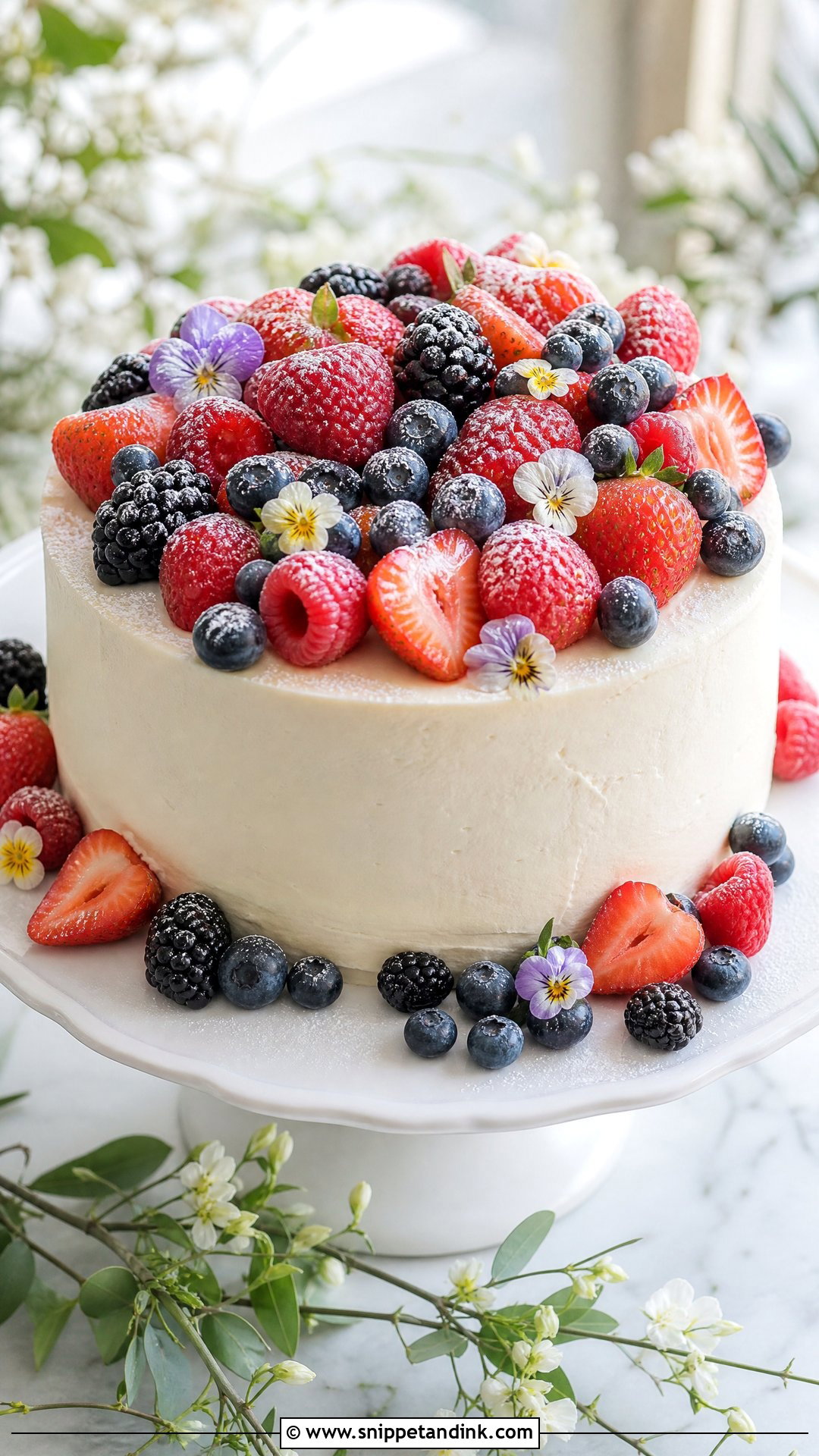
Berries do a lot for very little effort, and they are one of the cheapest ways to decorate a small cake. Strawberries, raspberries, blueberries and blackberries over a smooth or semi-naked coat give colour without sugar work. I wash and fully dry them first, since water spots on frosting are the main way this goes wrong, and I add them last. Mint leaves or edible flowers finish it. Vanilla, lemon and almond sponge suit spring and summer menus.
18. Single Layer Lemon Wedding Cake
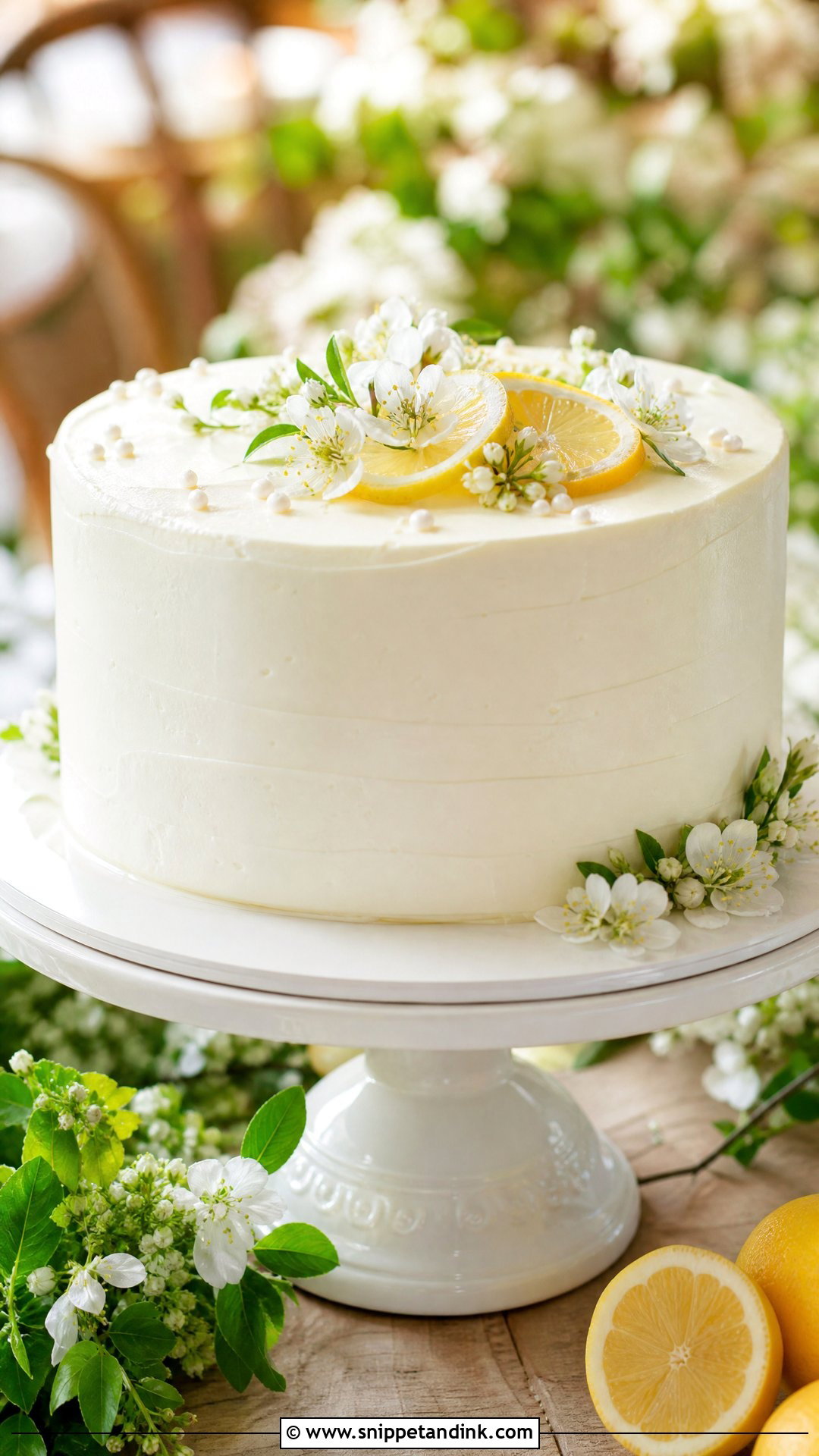
Lemon is the flavour I’d suggest after a heavy meal, because it cuts through rather than adding weight. Pale yellow buttercream, lemon curd filling and a few citrus slices on top make a sunny version. Curd is soft, so I pipe a stiff buttercream dam around each layer to keep it from bulging out the sides. For something more formal, white frosting, tiny white flowers and thin lemon wheels around the base. Keep it fresh rather than themed.
19. Single Layer Chocolate Wedding Cake
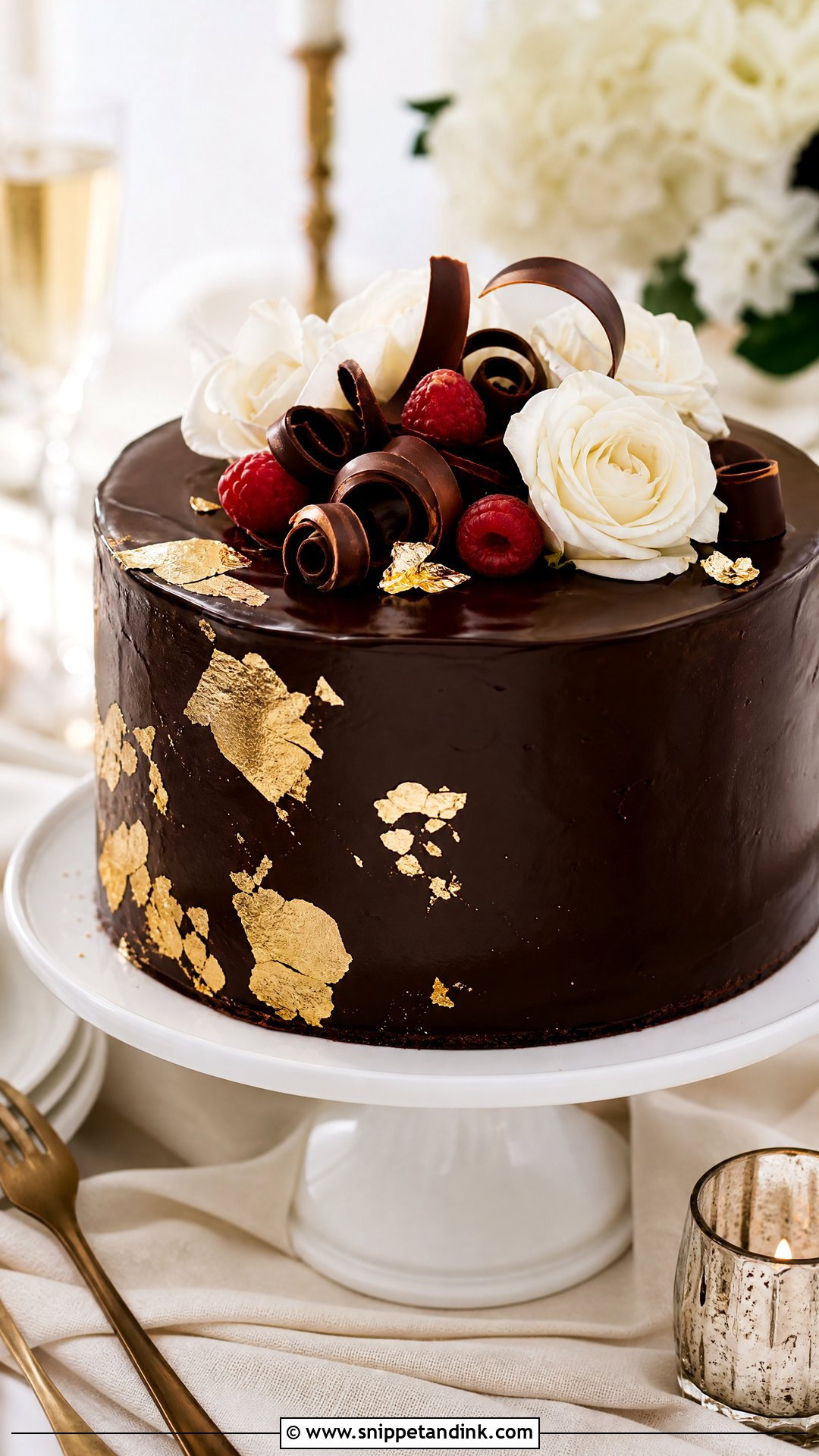
Chocolate can look grown-up if you skip the sprinkles. Glossy ganache or smooth chocolate buttercream, raspberries, a few curls and maybe a touch of gold. Ganache actually holds up better in warmth than most buttercreams, which makes it a sensible pick for a summer evening, although it shows every fingerprint, so setup hands need to be careful. A tall dark cake on a white stand gives strong contrast in photos. For couples who don’t love vanilla, it suits autumn dinners and late receptions.

20. Single Layer Minimalist Wedding Cake
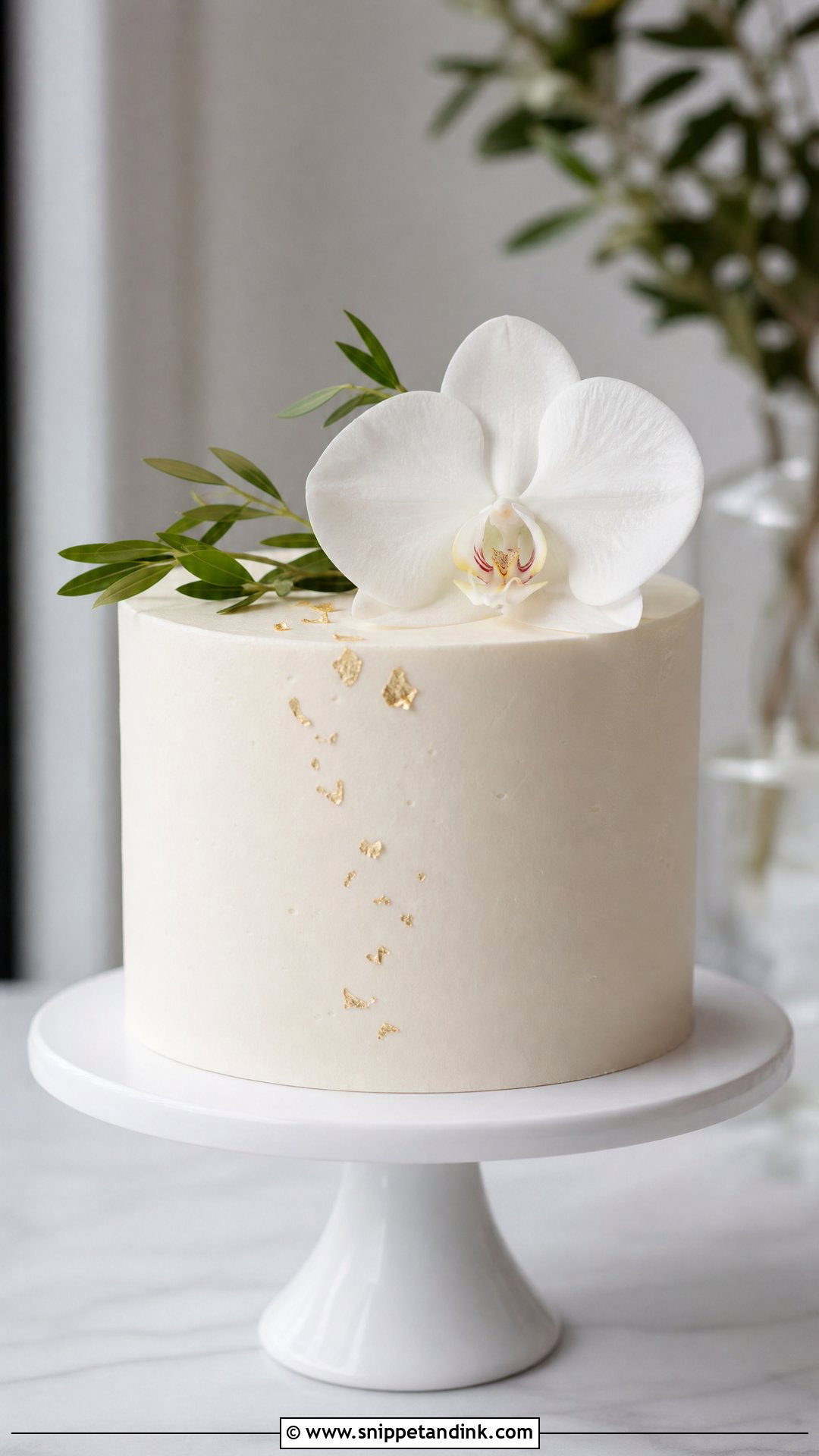
A minimalist single layer wedding cake leaves the finish nowhere to hide, so I’d only order one from a baker whose plain cakes you’ve seen up close. One orchid, a small gold accent or a sprig of greenery, placed with care. Rooftops, galleries and modern restaurants suit it. Go tall to give it presence, use a sleek stand and keep props off the table so the empty space looks deliberate.
Setting the Scene for a Cake Cutting at a Dinner for Twenty
At a small party the cake is often on the same table everyone is eating at, or on a side table in a restaurant corner, so it needs a little staging to feel like a moment.
- Lift it. A pedestal of about four to six inches stops a short cake from vanishing among glasses and plates.
- Light it from the side, not from behind. A cake placed in front of a bright window turns into a silhouette in photos; candles to one side give it warmth.
- If you’re at a restaurant, ask about a cake-cutting or plating charge when you book, since many venues add one per guest for bringing in an outside cake, and ask where it can wait cool before dessert.
- Bring your own knife and server if they matter to you, plus a clean cloth for wiping the blade between slices.
- Agree who cuts after the first ceremonial slice. A tall single tier is easiest cut in a grid: a ring two inches in from the edge, slice that into fingers, then repeat on the core.
My last bit of advice is the simplest: time the cutting while people are still seated. Small parties drift outside or to the bar after dinner, and a cake cut to an empty room is a missed moment.
Why One Layer Is Often the Right Amount
A single layer gives you flavour and a real cake cutting without the size or cost of a tiered display. What suits you comes down to the venue, the season, how many people you’re feeding and how you like to dress a table. Flowers lean romantic, pearls classic, texture modern and piping playful. For more presence, go taller or pick a shape; for less, keep the frosting pale and the trim small. Choose the flavour you’d happily eat on any ordinary Sunday, and build the look around it.
You'll Like These Ideas:




Leave a Reply