
Olive is one of my favourite greens to put on a cake, partly because it looks calm and partly because it behaves. The leaves are tough and slightly waxy, so they hold their shape out of water far longer than soft herbs or ferns do. They sit well against white frosting, ivory tiers, textured buttercream, handmade sugar leaves, a little gold, citrus and Mediterranean flowers. I’ve seen olive work at garden weddings, coastal receptions, rustic barns and formal ballrooms, and it adapts to each one depending on the shape and finish of the cake. Below are 35 olive leaf wedding cakes, with what I’d actually tell you about building each one.
Fresh Olive, Sugar Leaves or Wafer Paper on the Tiers
Every cake below can be dressed with real branches or with edible copies, and the choice affects cost, safety and how the cake looks at the end of the night.
Fresh olive branches
The most natural look and usually the cheapest. Olive foliage is sturdy and doesn’t wilt quickly, which is why I like it. But florist stems may have been sprayed, so I only use branches I know are unsprayed, wash and dry them, and never push a bare stem into the cake. Every stem gets wrapped in florist tape or set into a food-safe pick, and the leaves come off before slicing. They’re decoration, not food.
Sugar or gum paste leaves
Fully edible and completely controllable: I can tint them that silvery sage exactly and make each one the same size. They take time, so they cost more, and they’re made well in advance to dry hard. Their weakness is humidity, which softens them.
Wafer paper leaves
Light, thin and very realistic in movement, good for a delicate cascade. They also hate moisture, and will curl or dissolve if they touch damp buttercream for too long, so I attach them close to display time.
1. Simple Olive Leaf Wedding Cake
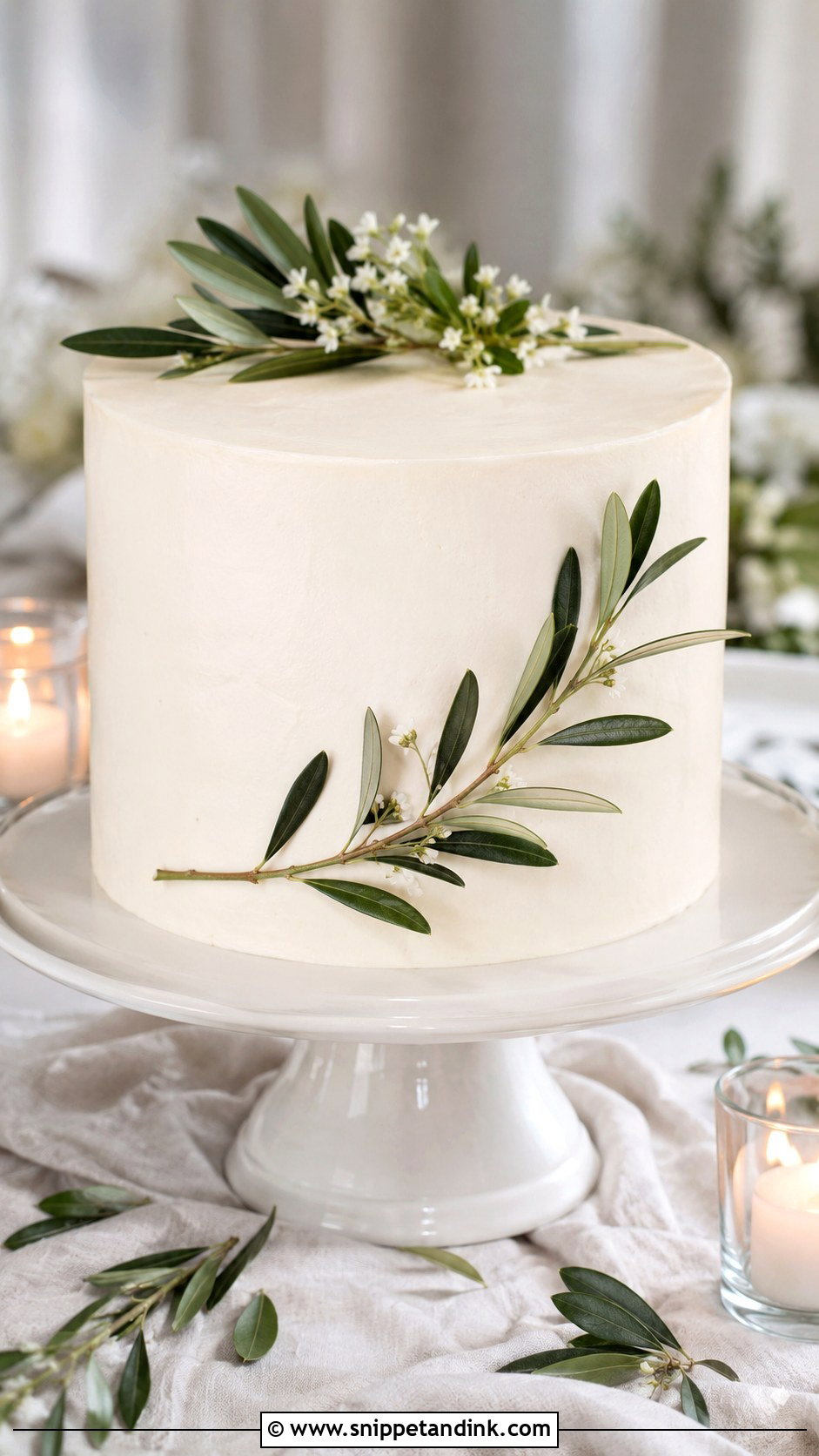
One branch, one cake. A smooth white or ivory buttercream tier with a single olive sprig curving across the front is about as quiet as a wedding cake gets, and that’s the appeal. It suits courthouse weddings, backyard receptions and small dinners. Restraint is harder than it looks here: with only one branch, its angle carries the whole design, so I usually place it last, once the cake is on its stand and I can see it from where guests will stand. A white ceramic stand and candlelight finish it.
2. Two Tier Olive Leaf Wedding Cake
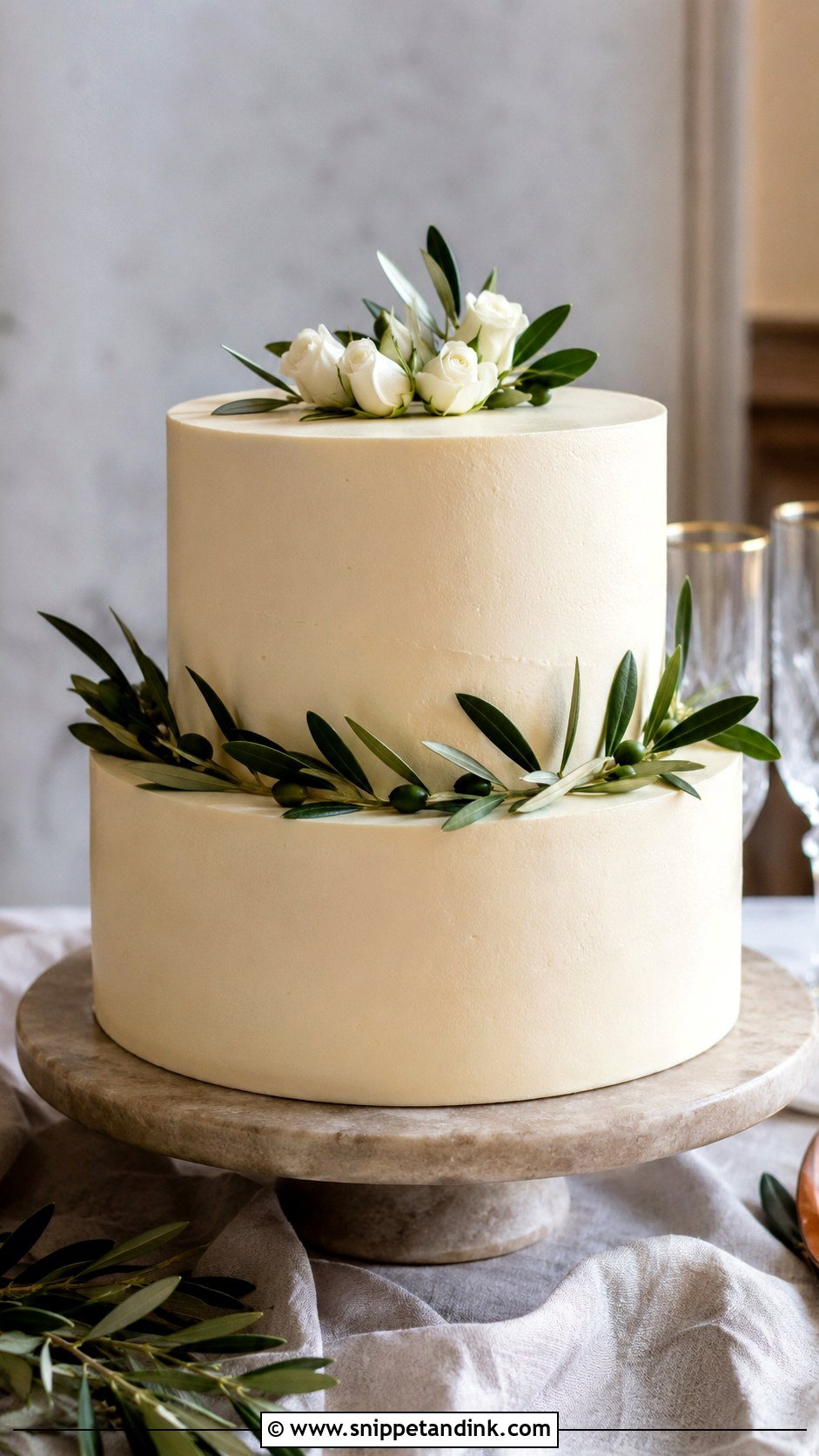
Two tiers give a bit of height without the commitment of a tall cake. I keep the bottom tier smooth and plain, and let the top carry a light ring of olive at its base or a sprig up one side. Many couples use a two-tier as the cutting cake and serve kitchen sheet cake to the rest of the room, which is a sensible way to feed a larger guest list. If your palette is warm, ask for ivory rather than bright white; olive green looks greyer against stark white. A few tiny white blossoms are enough extra.
3. Three Tier Olive Leaf Wedding Cake
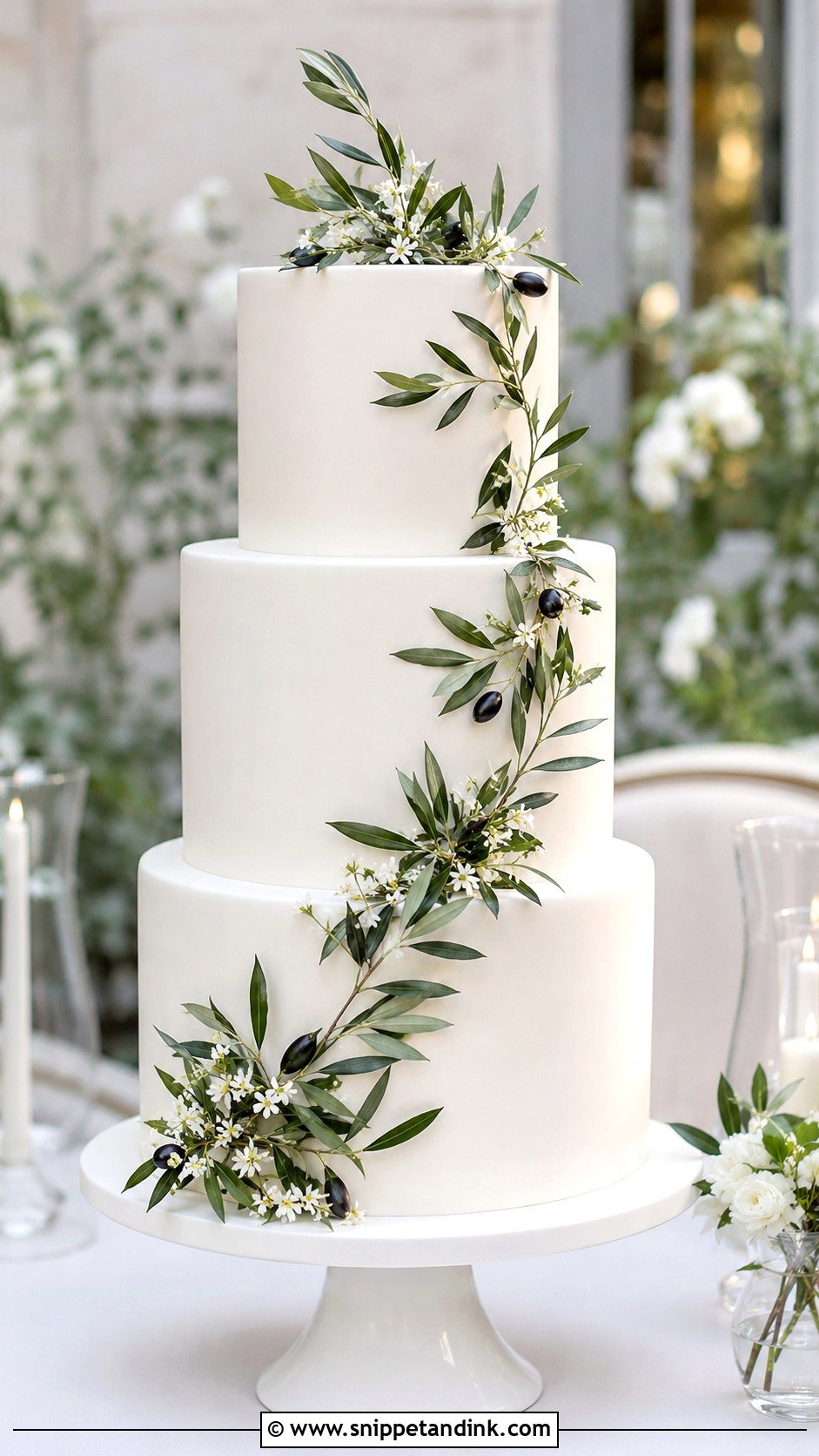
Three tiers can go formal while the greenery keeps things relaxed. My favourite layout here is a diagonal: branches climb from the bottom tier on one side to the top tier on the other, which pulls the eye upward. Smooth fondant gives a sleek finish; smooth buttercream reads softer. Three tiers also mean three flavours if you want them, and vanilla, lemon and almond all sit naturally with the olive theme. Leave visible frosting between leaf groups so the climb stays readable.
4. Olive Leaf Buttercream Wedding Cake
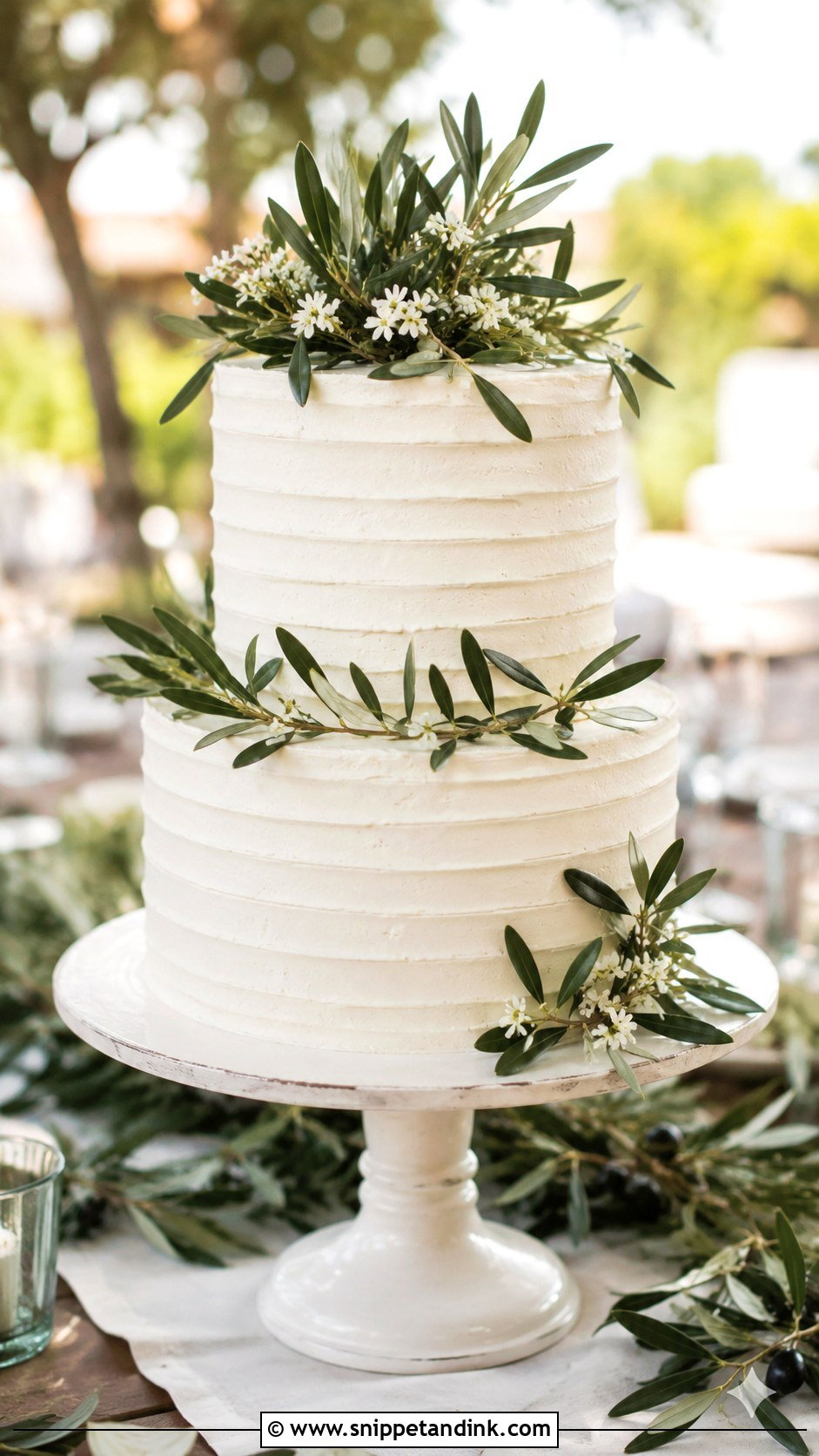
Buttercream and olive share a matte, touchable quality that fondant can’t quite match. The finish can be glass-smooth, lightly textured with a palette knife, or combed into gentle horizontal lines around each tier. Barn weddings and outdoor dinners suit it. The trade-off is temperature: buttercream softens in a warm room, and any leaves pressed into it will slowly sink or slide if the cake sits in heat. I place olive in small clusters rather than scattered singles, so each group can be anchored properly.
5. Olive Leaf Fondant Wedding Cake
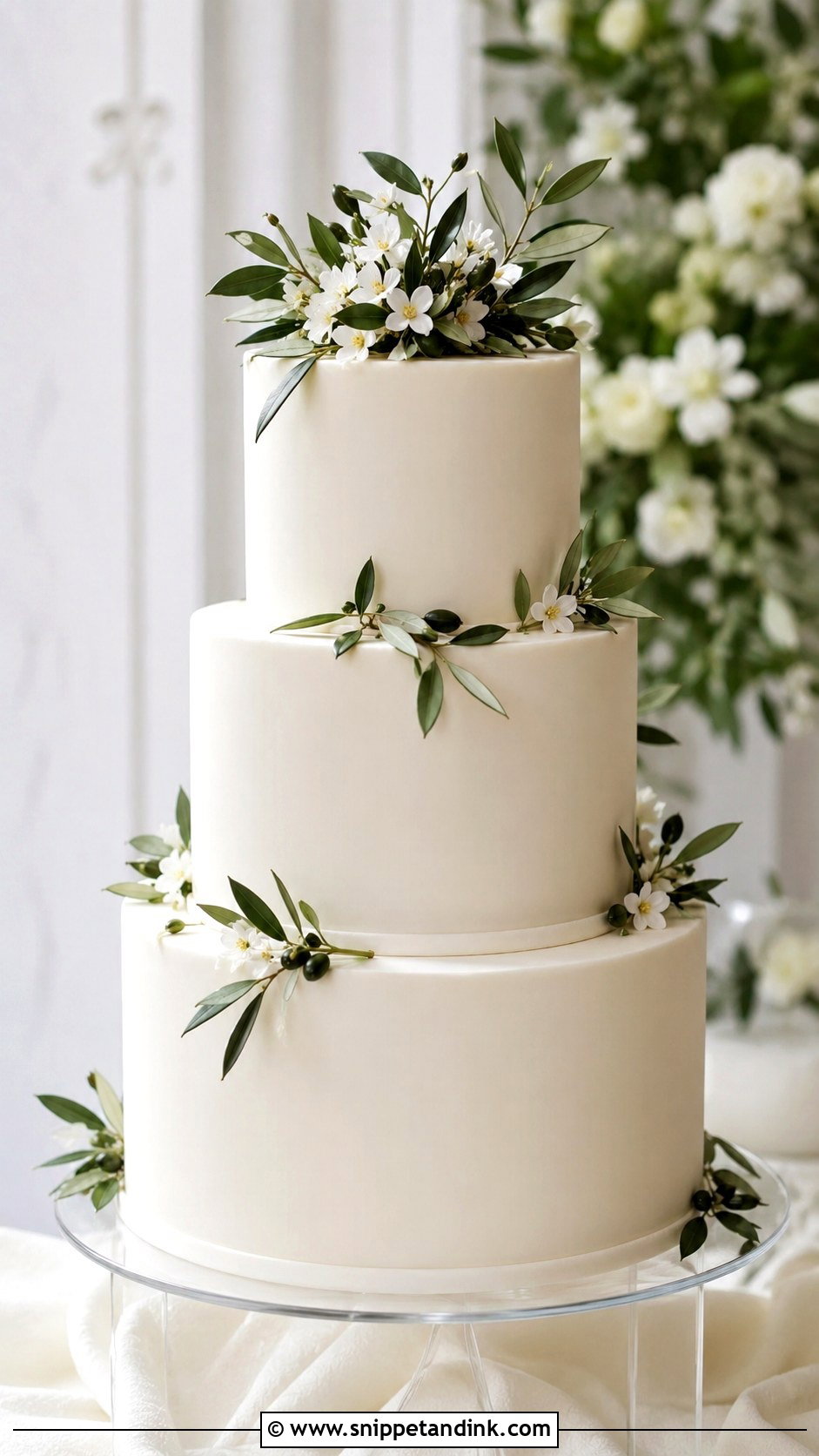
Fondant gives the sharpest edges and the smoothest surface, which makes every leaf look deliberate. Fresh sprigs give a natural finish; sugar olive leaves keep the whole cake edible. I’d choose fondant for a formal ballroom or a cake that has to sit out for hours, as it shields the cake beneath it from drying air. It pairs well with a fine gold trim, pressed texture or white sugar flowers. Let the leaves frame the tiers rather than cover them. One warning: a fondant cake taken from a cold fridge into a humid room will bead with condensation, so I bring it up to temperature gradually.
6. Olive Leaf Naked Wedding Cake
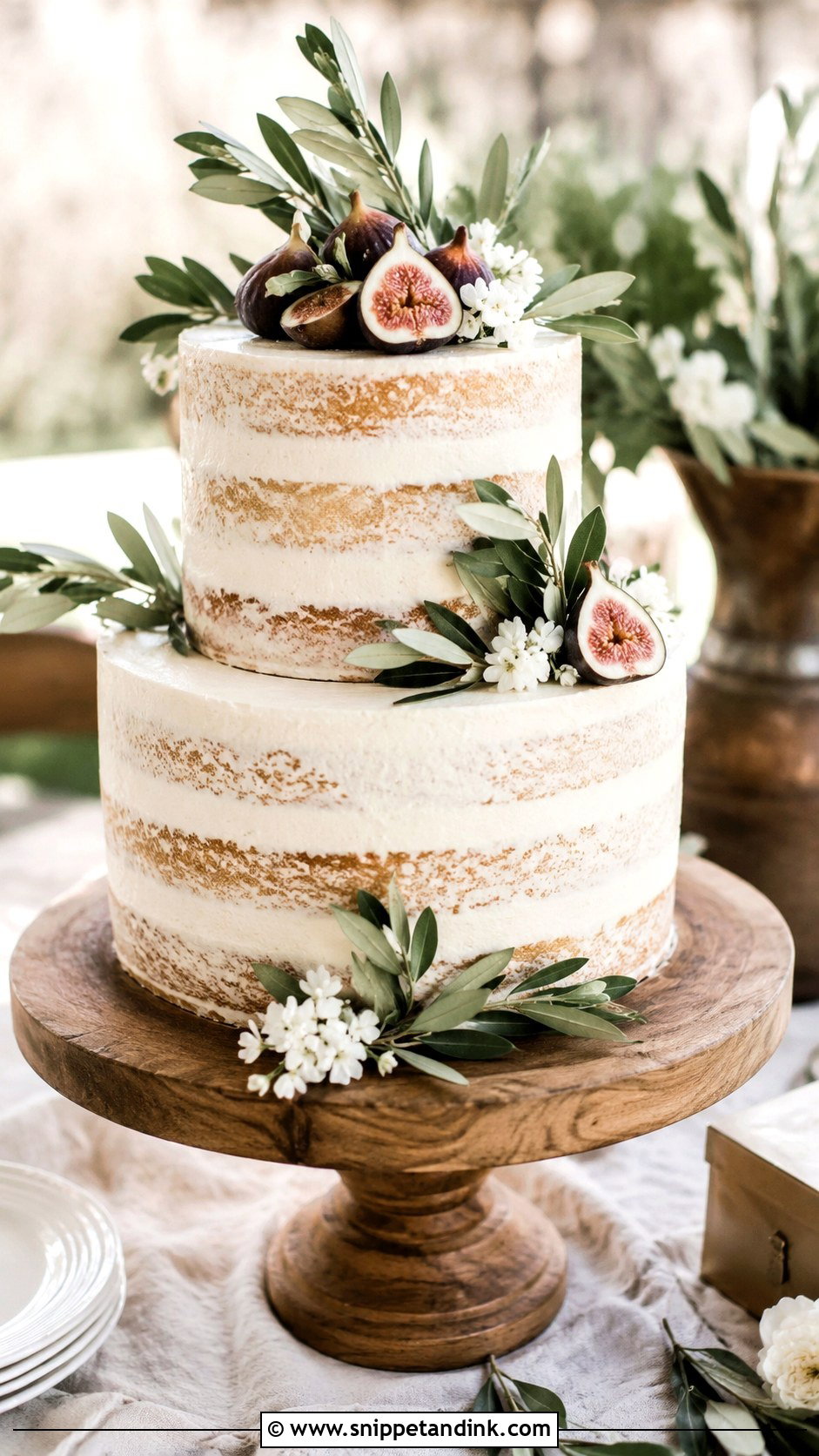
Naked cakes show their layers, and that exposed sponge brings warmth olive branches complement well. A thin layer of buttercream between each layer, vanilla, almond or lemon sponge, olive wrapped around the bases or tucked into side clusters, and perhaps a few white flowers or figs. The honest drawback is that unfrosted sponge dries out faster than any other finish. I assemble naked cakes as close to the event as possible and keep them covered until they’re displayed. Neat, not messy, is the line to hold.
7. Olive Leaf Semi Naked Wedding Cake
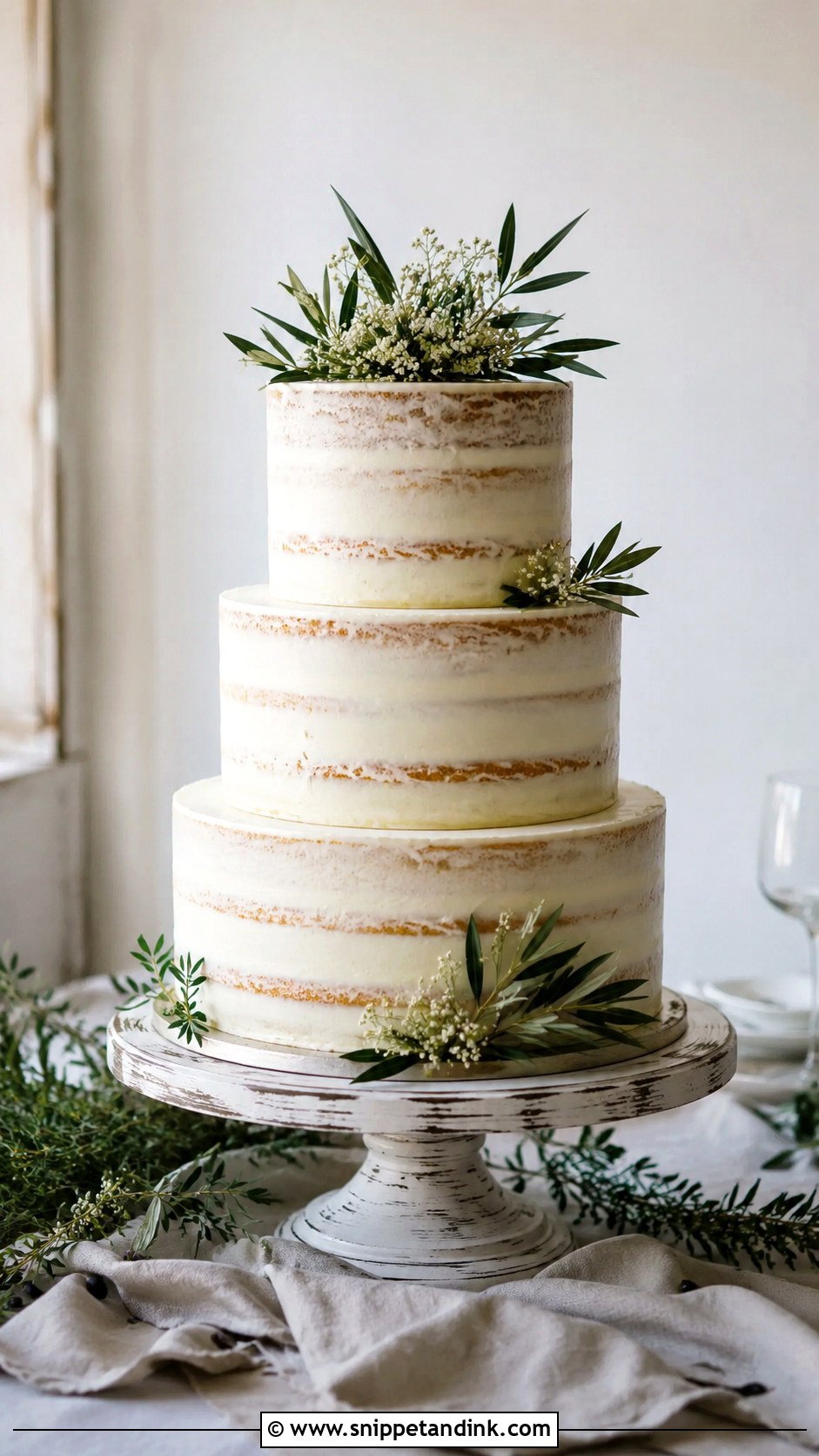
Semi-naked sits between rustic and polished: a thin scrape of buttercream with hints of sponge showing through. Olive leaves look especially good against that soft, uneven texture. I put small sprigs along the tier edges and one fuller cluster near the top. Because the coating is so thin, it protects the sponge better than a fully naked cake but still less than a full coat, so it’s best served within a few hours of setting out. Wood stands, stoneware and neutral linens suit it.
8. White Olive Leaf Wedding Cake
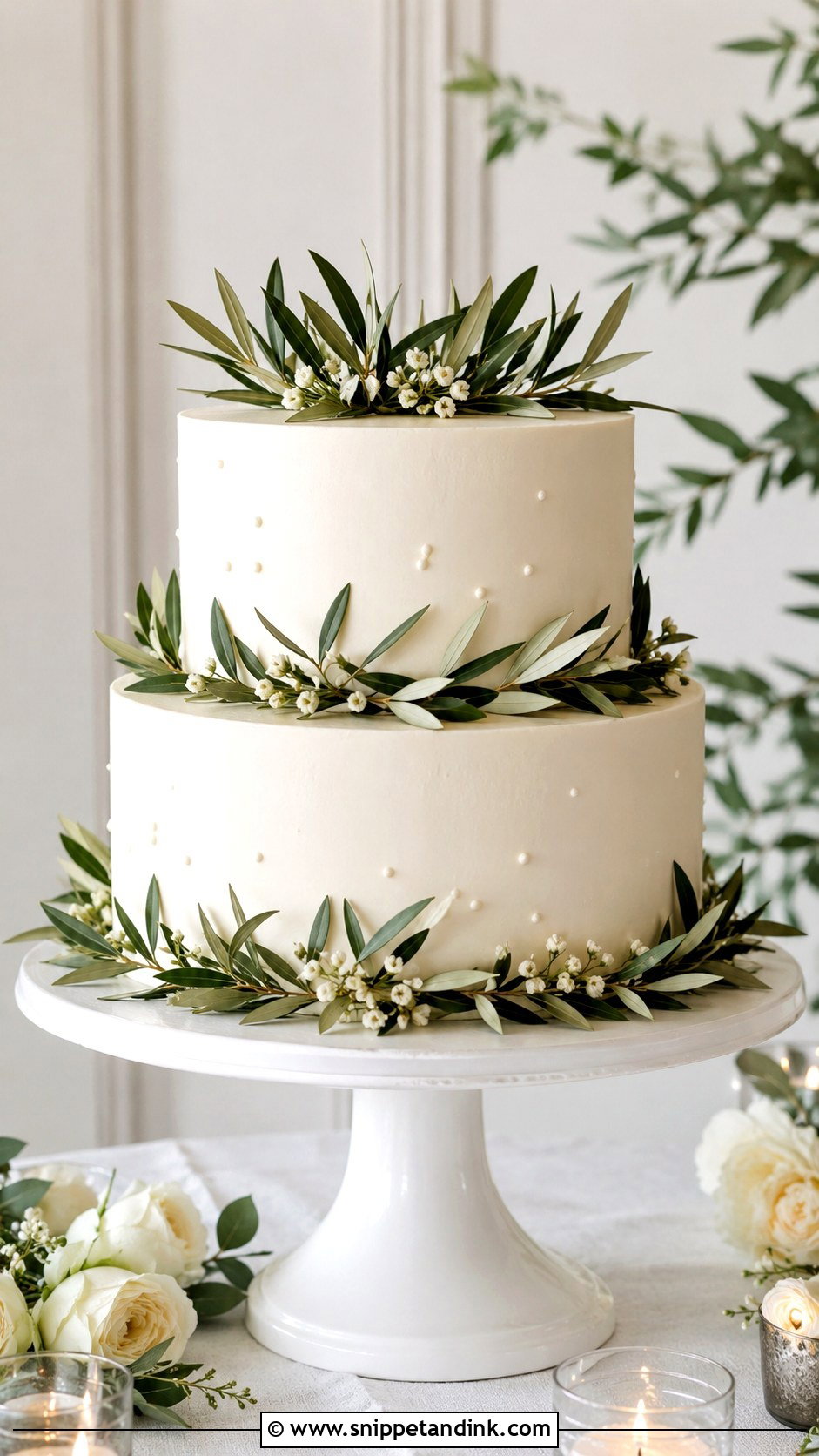
Bright white makes olive the only colour on the cake, so the frosting has to be truly clean and smooth. It suits chapel ceremonies, garden receptions and coastal venues, and the size can be one tier or a tall stack depending on guest numbers. Pure white buttercream is harder to achieve than people think, since butter is naturally yellow; bakers use whiter fats or a tiny touch of violet to correct it. Small white sugar flowers or tiny pearl dragées add softness if you want it.
9. Ivory Olive Leaf Wedding Cake
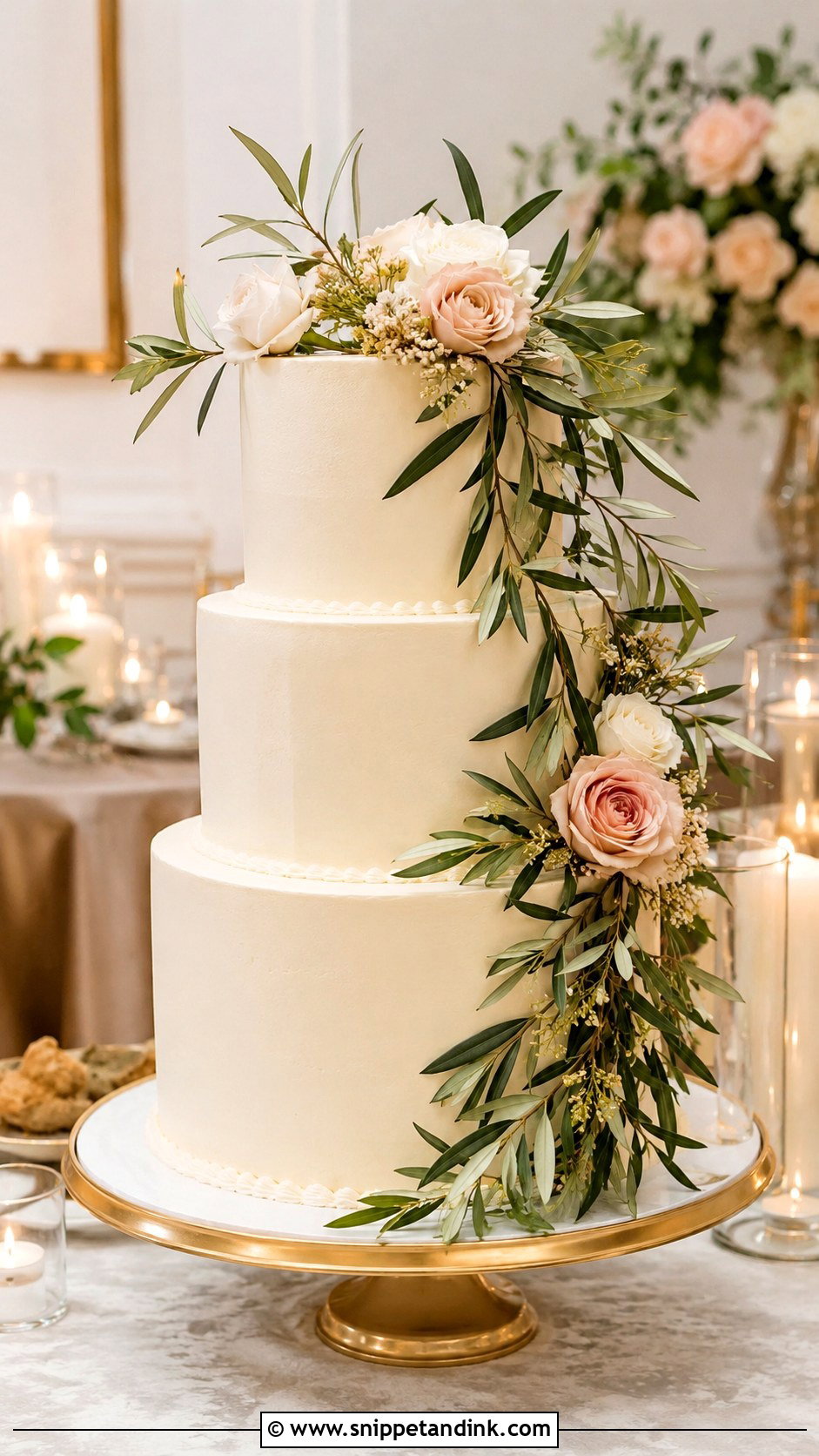
Ivory is my default recommendation for olive. Against it, the green looks warm and silvery rather than grey, and it sits happily with gold, linen, terracotta and candlelight. Ivory also tends to photograph creamy instead of stark, especially indoors under warm light. Smooth buttercream with branches trailing down one side keeps it soft; fondant with sugar leaves makes it formal. Add a few small white or blush flowers if your florals run that way.
10. Olive Leaf Gold Wedding Cake
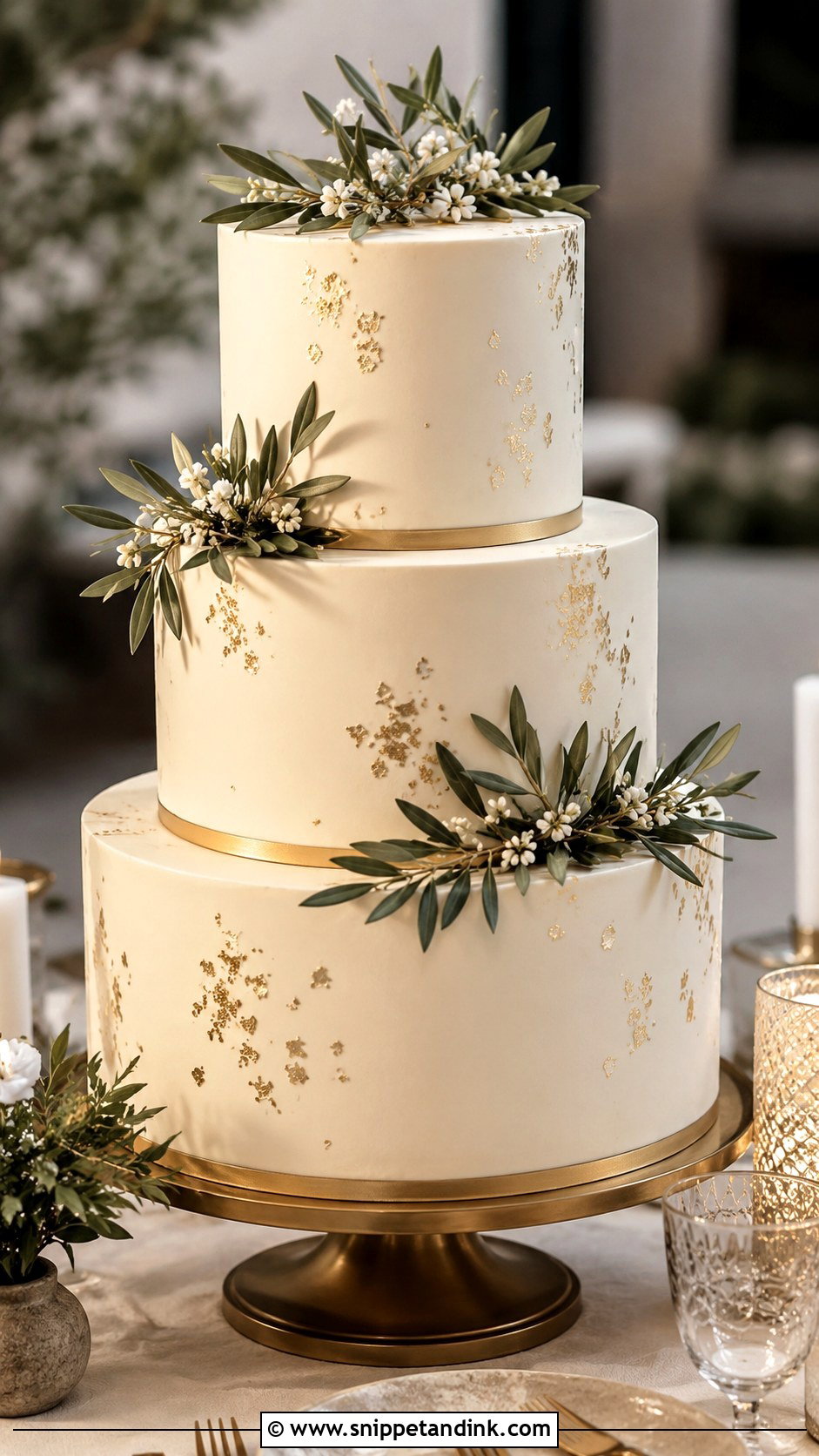
Gold works with olive when it stays thin. A fine gold band at the base of each tier, a few flecks of edible gold leaf or a brushed gold edge will lift a plain olive cake quickly without tipping into flashy. Edible gold leaf is fragile and catches on anything, so I apply it last and keep it away from where leaves will be pressed in. Ivory or white makes the best base, with branches running diagonally or ringing the tier bases. Evening receptions and formal venues suit it.
11. Olive Leaf And Rose Wedding Cake
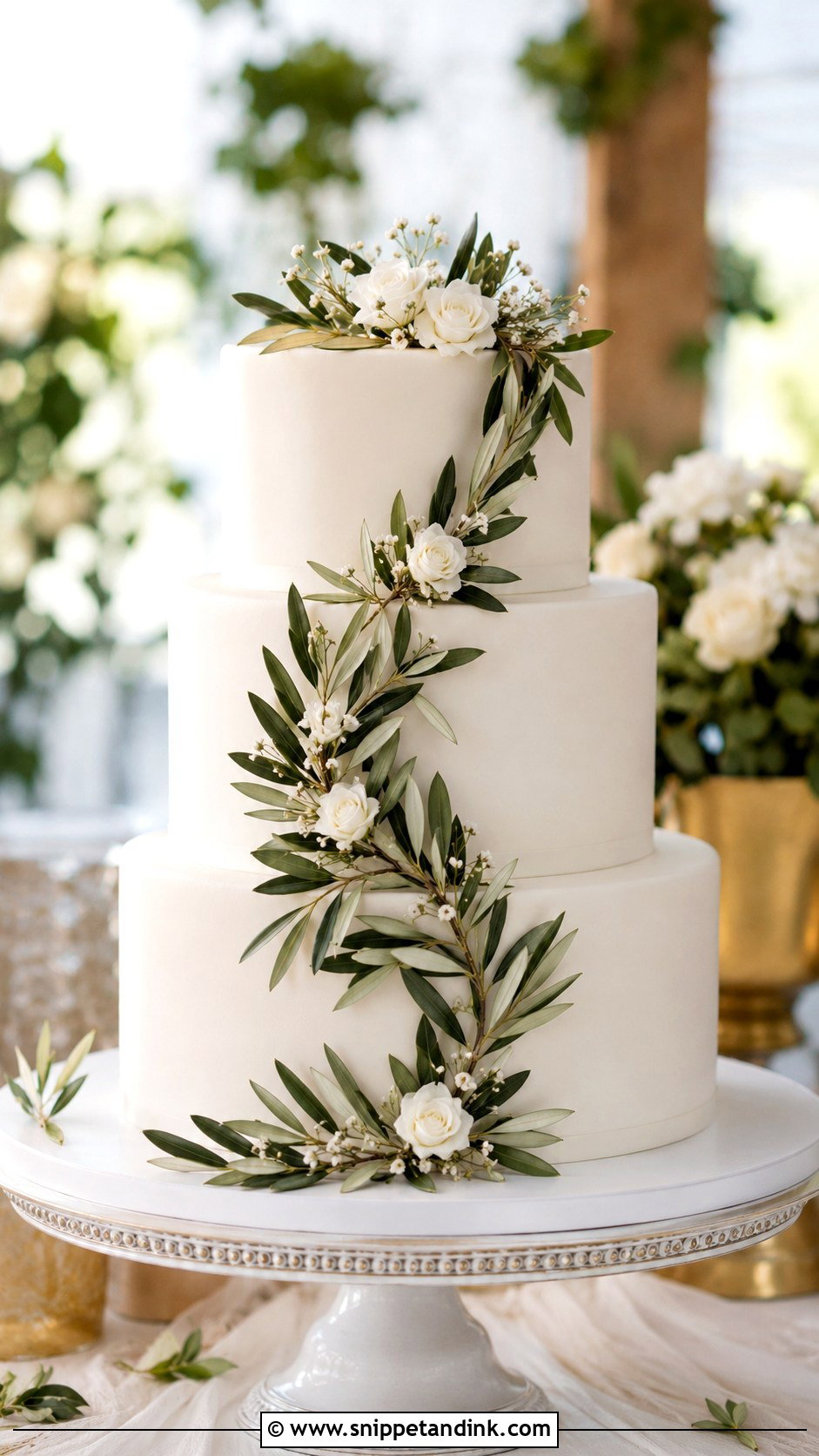
Roses bring classic romance, and olive keeps them from looking stiff. White roses stay clean, blush softens, and pale peach warms the palette. I prefer clusters that flow from one tier to the next instead of a pile on the top, which gives a fuller cake without crowding. Fresh roses need their stems wrapped or set in a food-safe pick before they touch the cake, the same as the olive does. Buttercream, fondant and semi-naked finishes all work.
12. Olive Leaf And White Flower Wedding Cake
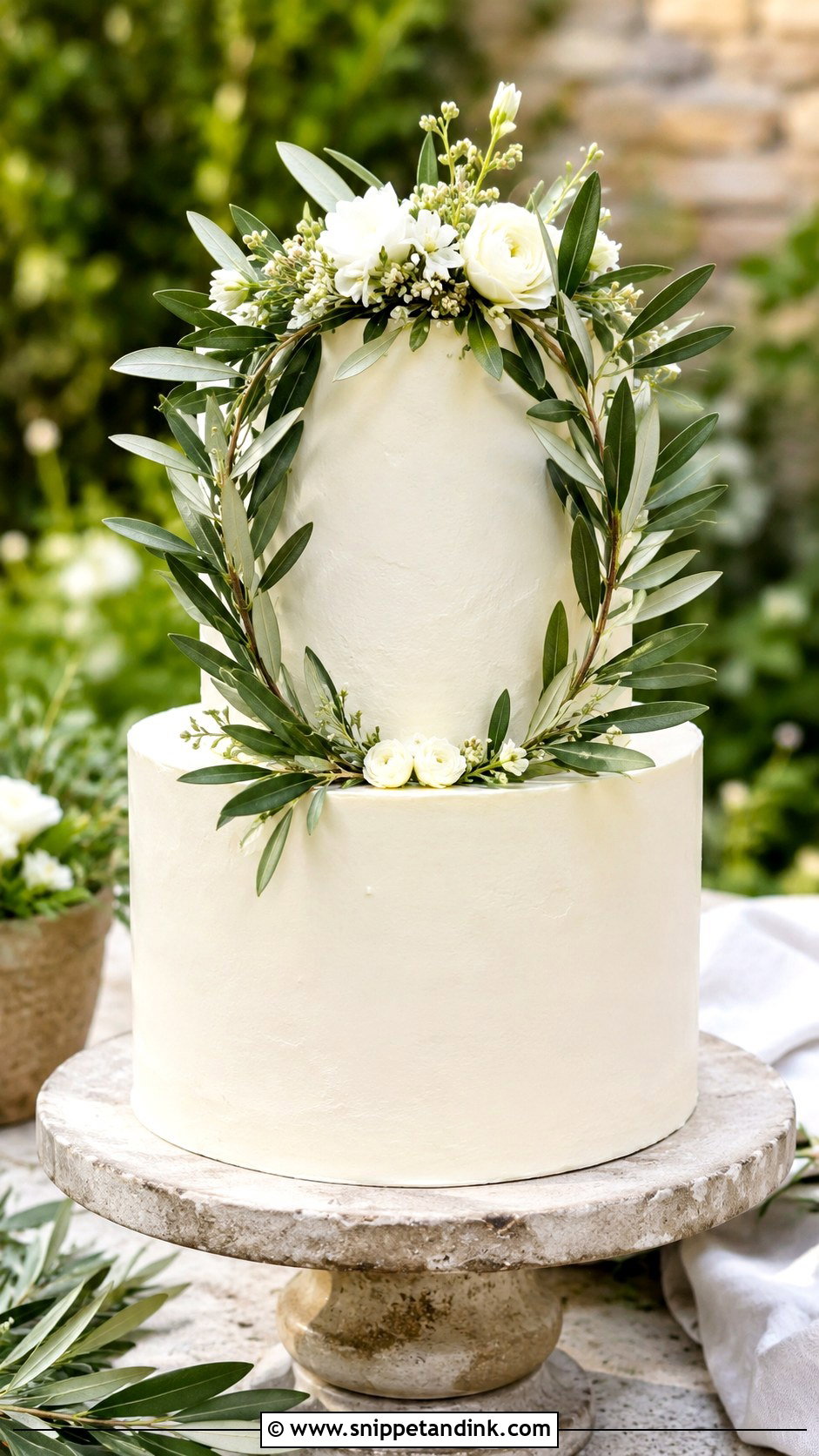
White flowers almost disappear into white frosting, so the olive leaves end up supplying all the shape and definition. That’s what makes this combination work. Roses, ranunculus, anemones or small sugar blossoms are good choices. I group them in a couple of deliberate clusters rather than dotting them evenly over every tier, which reads as handmade rather than mass-produced. A plain stand keeps attention on the greenery.
13. Olive Leaf And Lemon Wedding Cake
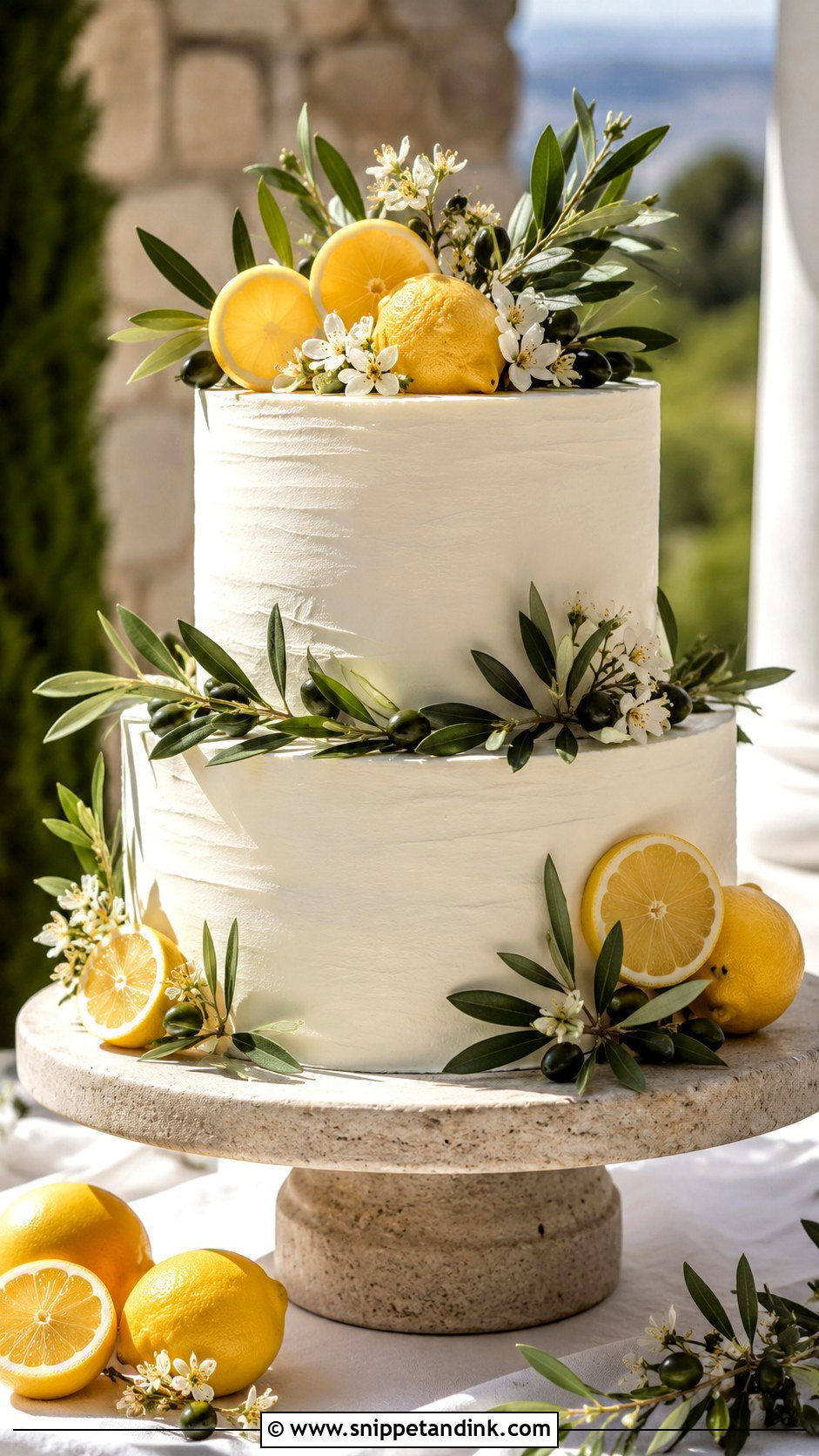
Lemons and olives together feel like a Mediterranean lunch table. A white or very pale yellow buttercream base, olive branches, small whole lemons, and either sugar citrus or real slices. Here’s the practical problem: cut lemon weeps juice and acid into buttercream, which can mark it within an hour or two, so I use whole fruit, sugar slices or dried citrus wheels on the cake itself and keep fresh cut slices for the platter. A lemon sponge with vanilla buttercream or lemon curd filling makes the theme taste right too. Keep the fruit in small groups.
14. Olive Leaf And Fig Wedding Cake
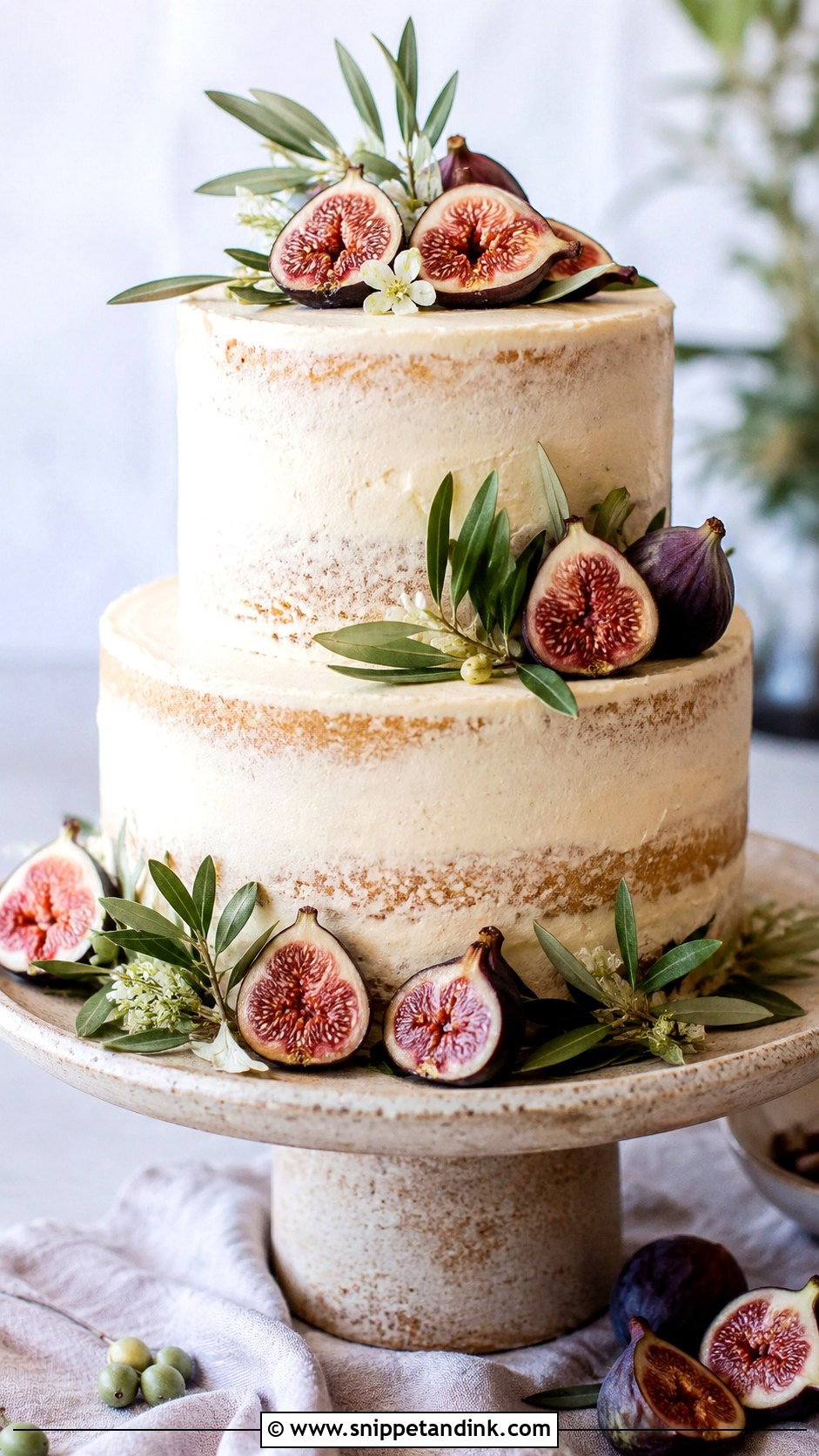
Late summer into autumn is fig season, and their deep purple next to ivory frosting and muted olive is a rich contrast. Figs can sit whole, halved or around the base. Halved figs look wonderful but bleed into frosting the same way citrus does, so I seal the cut face or add halves only just before the cake goes out. Honey-coloured accents or small white flowers soften the look. Couples after a Mediterranean harvest feel usually end up here.
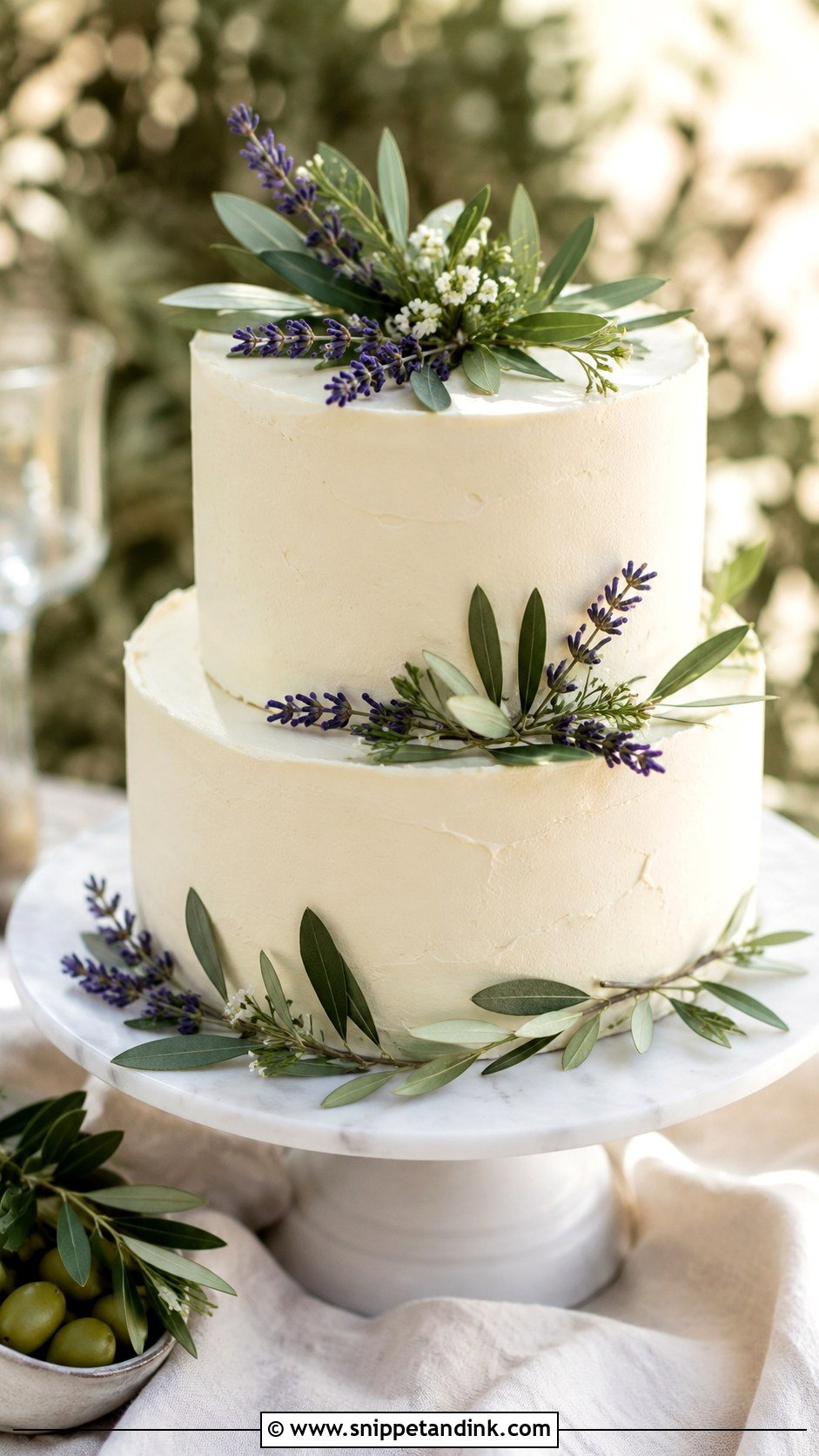
15. Olive Leaf And Lavender Wedding Cake
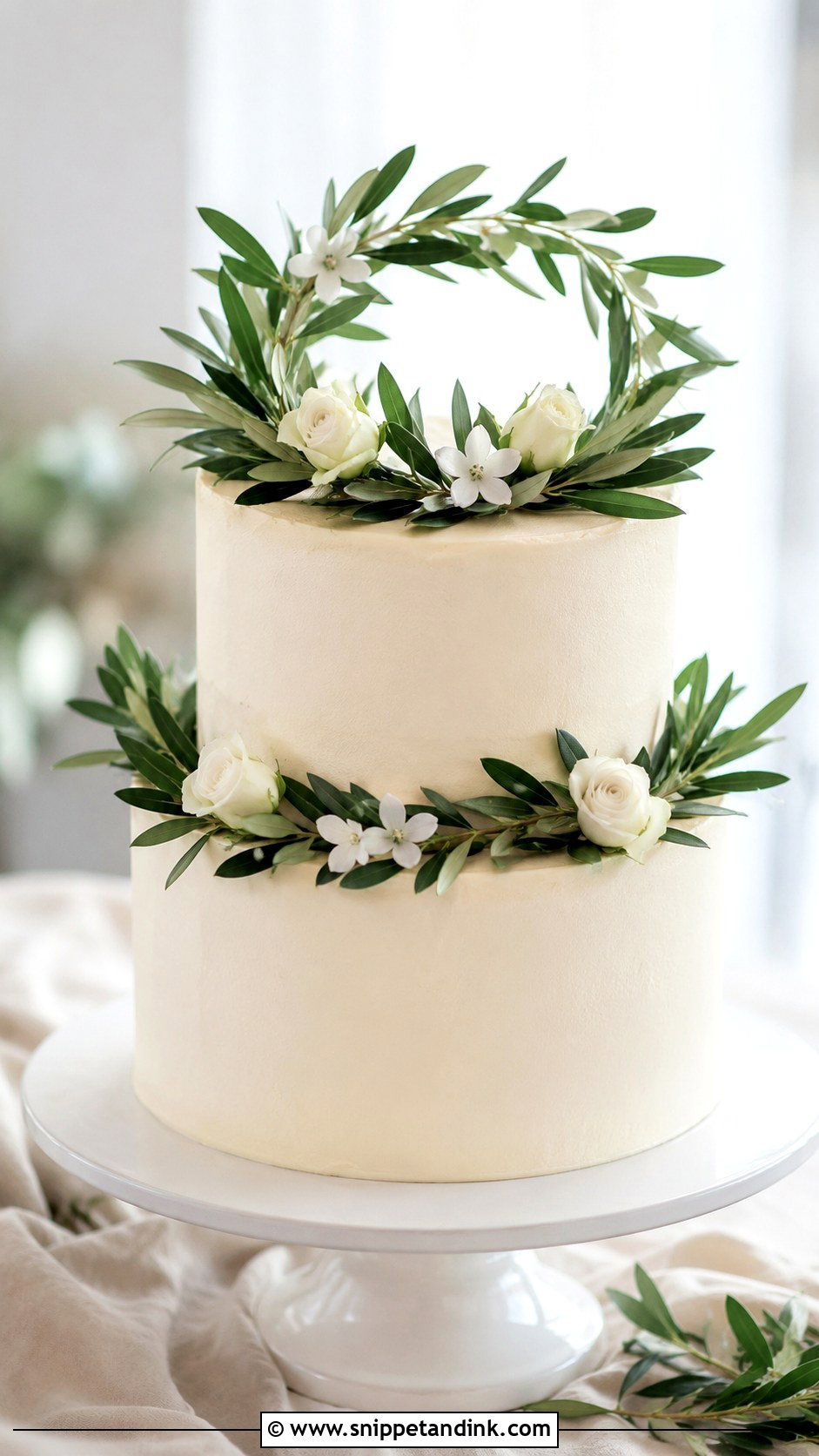
Lavender and olive make a garden-inspired pairing, muted green with pale purple. A smooth ivory buttercream base gives both room. Use lavender sparingly: a few sprigs at the tier bases or near the top is plenty, and more than that turns the cake cluttered and casual. Its scent is strong at close range, too, which some guests won’t enjoy on something they’re eating. Lemon, vanilla or honey flavours suit the look.
16. Olive Leaf And Baby Breath Wedding Cake
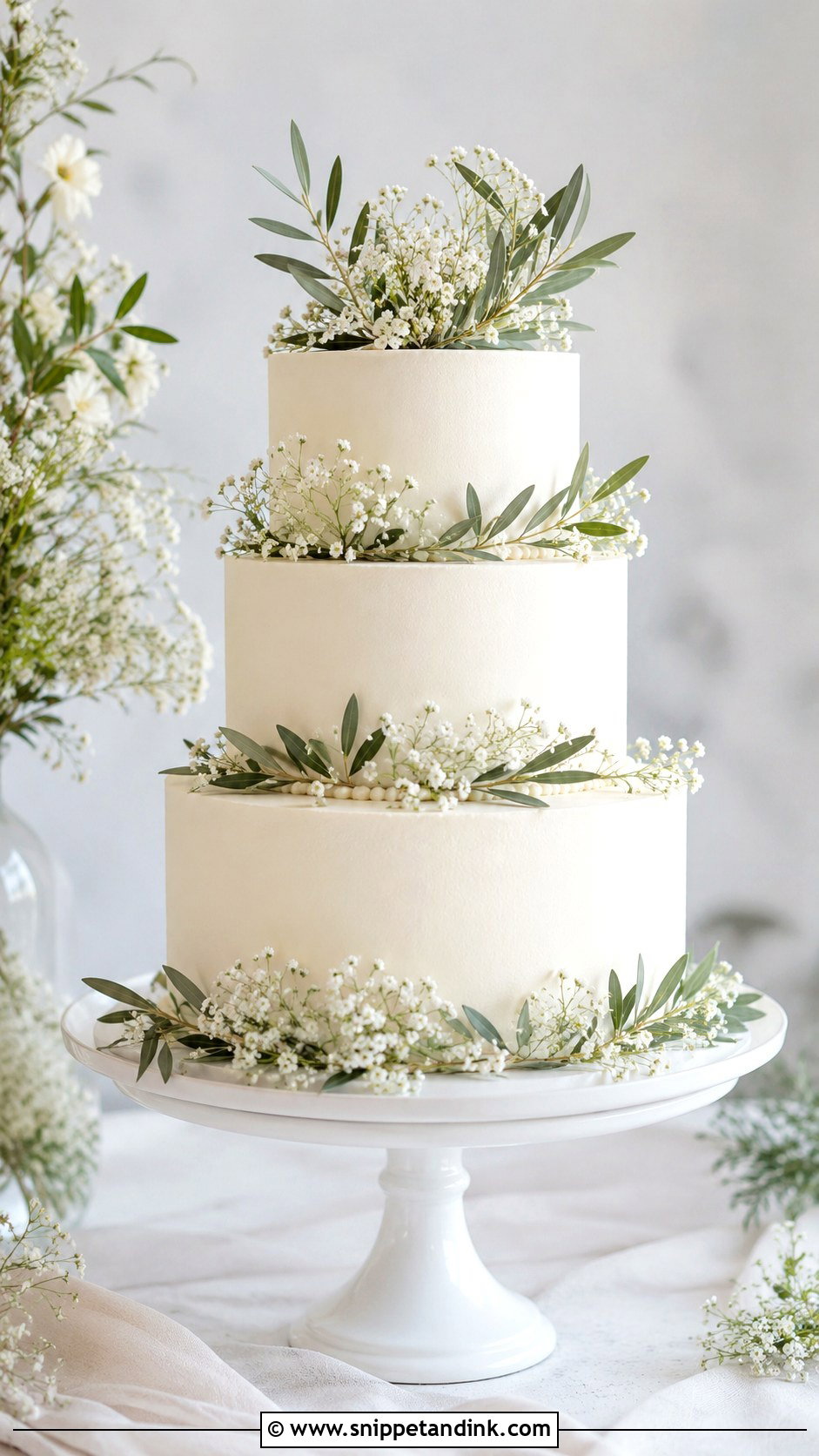
An olive leaf and baby breath wedding cake gives a floral impression without big statement blooms. Baby’s breath adds tiny white texture; olive gives structure. I keep the baby’s breath in tight, controlled clusters tucked beside the branches. One caution I always mention: gypsophila is mildly toxic if eaten, so it must never touch the frosting directly. I insert it in wrapped bundles or food-safe picks, and remove it before cutting. Smooth buttercream, white fondant or semi-naked all suit it.
17. Olive Leaf Wreath Wedding Cake
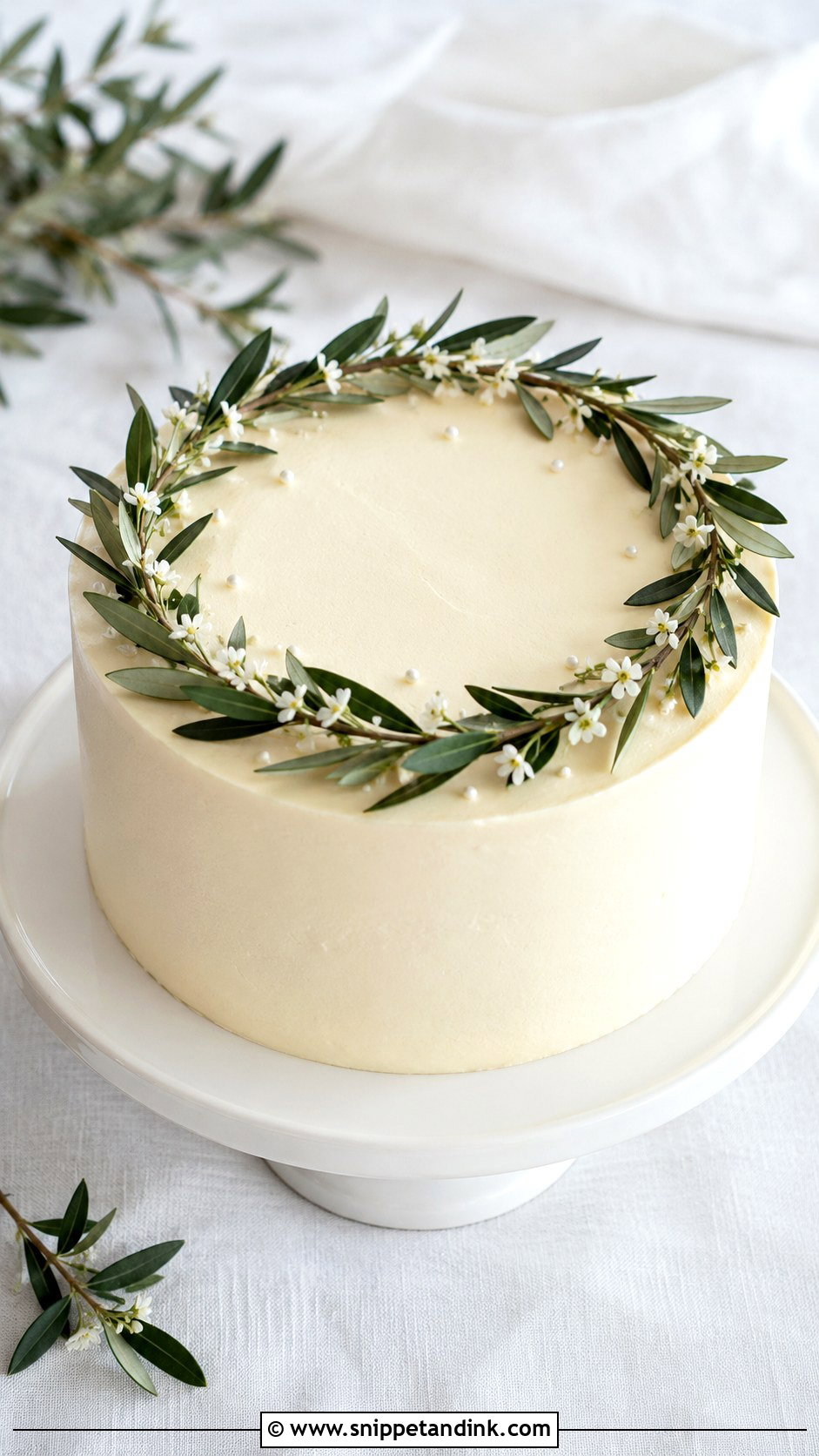
A wreath turns the greenery into the main feature. Instead of scattering leaves, olive branches form a ring around one tier, around the top edge or at the base. It’s a balanced, symbolic design, and olive wreaths carry obvious associations with peace. Smooth frosting is essential so the circle reads cleanly. Single tiers, two tiers and tall modern cakes all suit it, finished with a small monogram, a pair of white flowers, or nothing at all.
18. Olive Leaf Cascade Wedding Cake
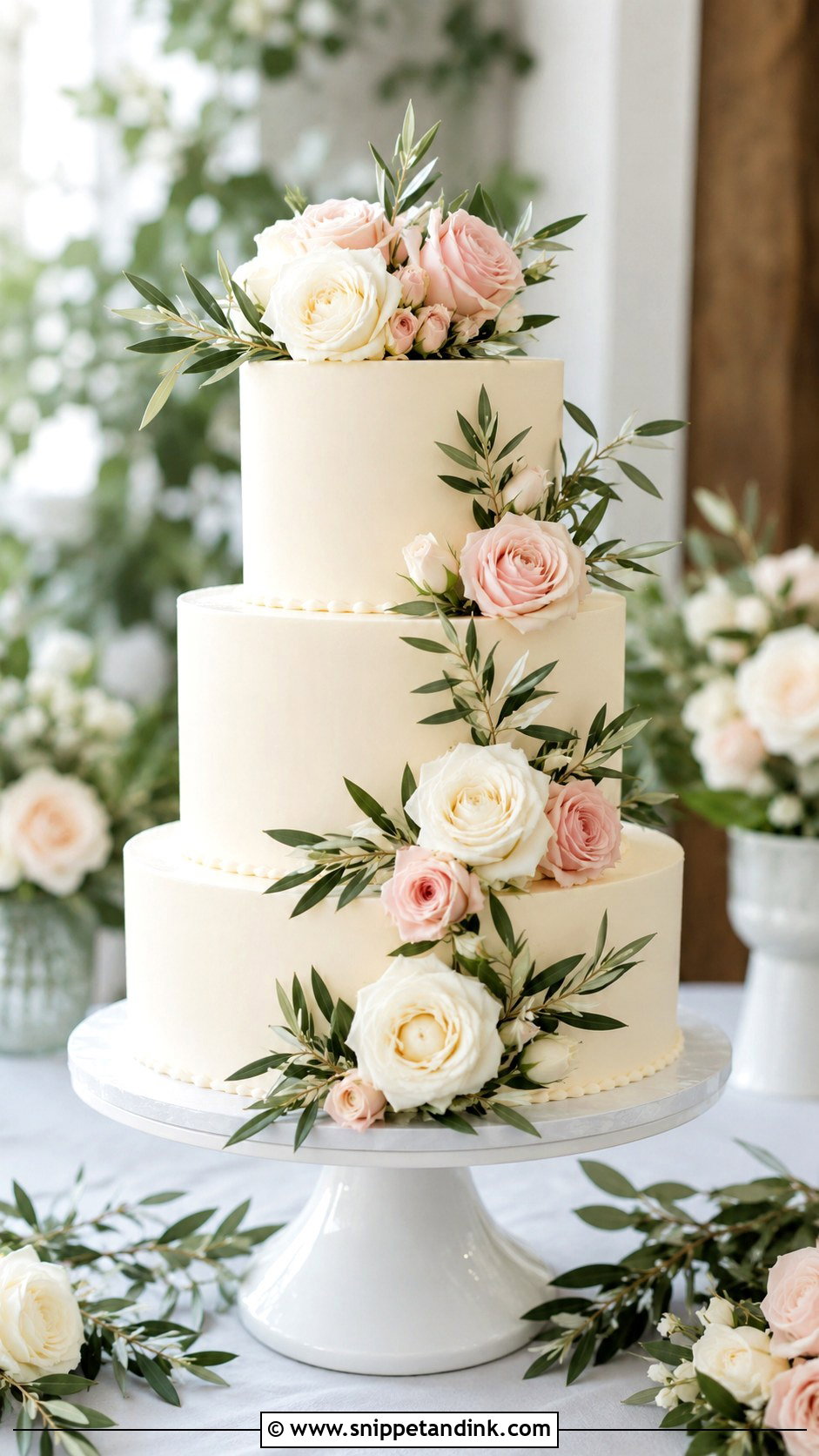
A cascade trails leaves diagonally down the tiers like a vine, which makes good use of a taller cake. The trick is keeping it light. A heavy cascade starts to look like it’s slipping off the cake, and on buttercream it physically can slide in a warm room, so I build it from short individual sprigs anchored separately rather than one long branch. A few small white flowers, buds or touches of gold can add detail. View it from the front and the side before signing off on placement.
19. Olive Leaf Topper Wedding Cake
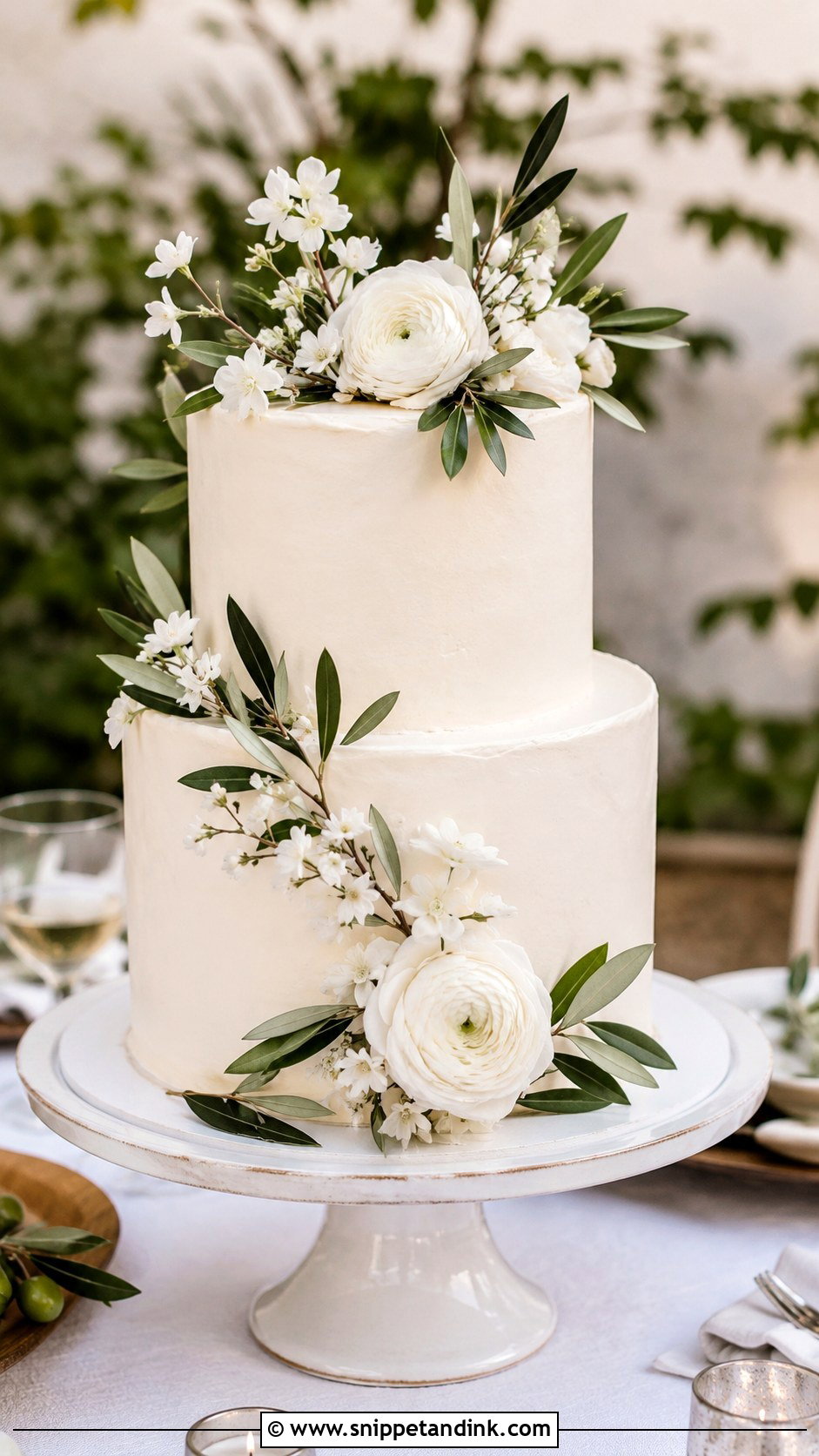
Here the sides stay plain and everything happens on top: a crown of olive lying flat, curving upward or framing a small floral cluster. It suits buttercream cakes, single tiers and small cutting cakes, and it’s one of the more budget-friendly options because the decoration is concentrated in one spot. Pair it with a smooth finish, light texture or a little gold edging. The clean sides also leave room for neat slicing photos.


20. Olive Leaf Arch Wedding Cake
Arches echo the ceremony structure. Greenery can curve over the top tier, frame the front of the cake or form a half arch on one side. To make an arch hold its curve, I wire the branch in an armature that sits on top of the cake board rather than pressing it into the frosting, so nothing structural depends on the cake itself. A smooth white or ivory base keeps the shape legible, and a few white blooms at the foot of the arch balance it. Courtyard and outdoor ceremonies suit it.
21. Olive Leaf Square Wedding Cake
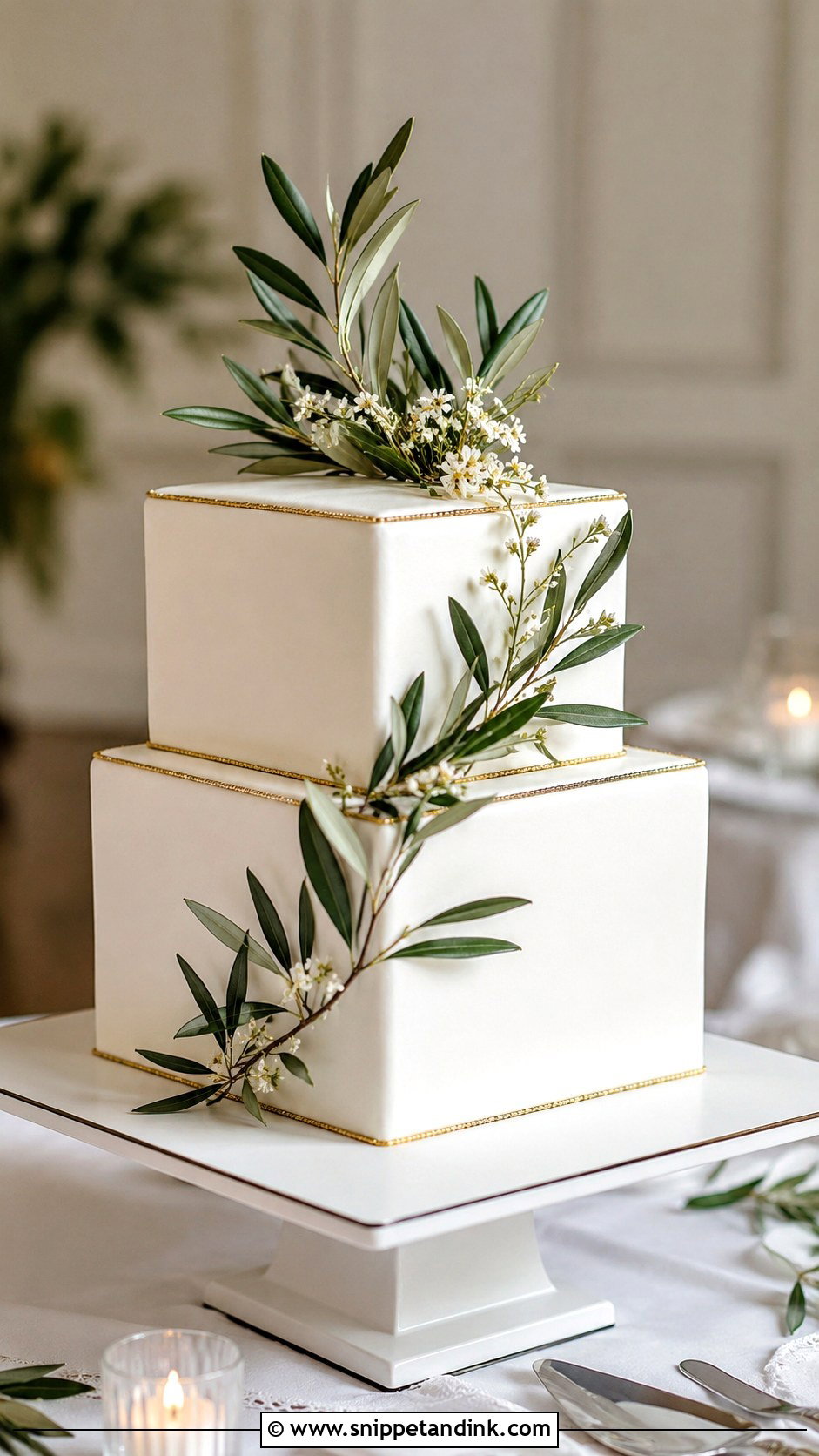
Square tiers feel architectural and slightly unexpected. The corners give strong lines, and olive softens them. Smooth fondant or very clean buttercream is a must; I’ll be honest that sharp square corners in buttercream take far more time than round tiers, and that shows up in the price. Branches can wrap the corners, trail down one side or sit at the tier bases, and a thin gold trim suits the shape.
22. Olive Leaf Round Wedding Cake
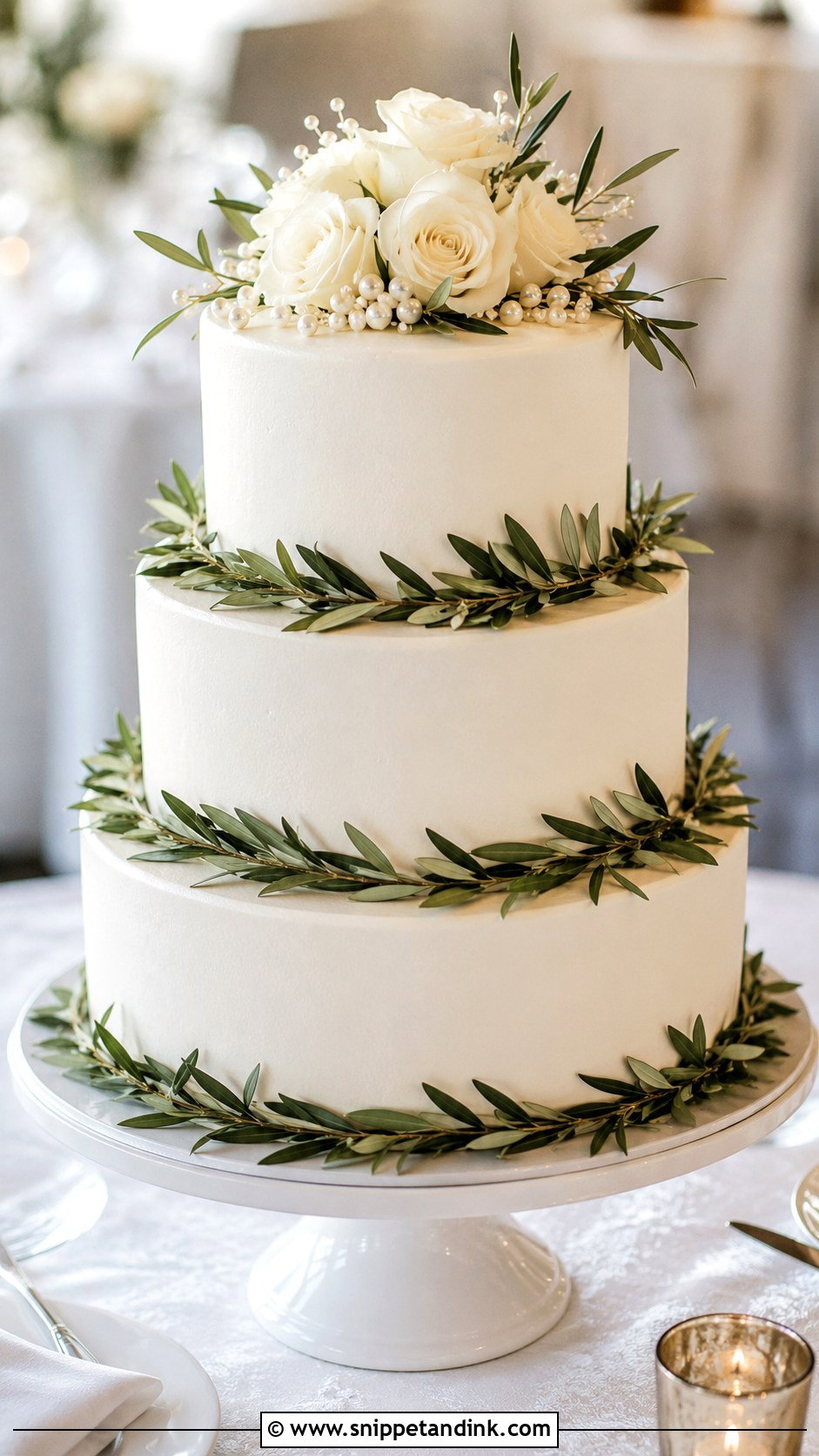
Round tiers are the classic, and the easiest to style well. Their curves suit olive naturally, whether as a small topper, side clusters or a full wreath at the base. Round cakes also slice and serve predictably, which makes portion planning straightforward. Smooth buttercream reads clean; textured buttercream feels relaxed. Ivory frosting, fresh olive and a few white flowers is a combination I rarely see go wrong.
23. Olive Leaf Tall Wedding Cake
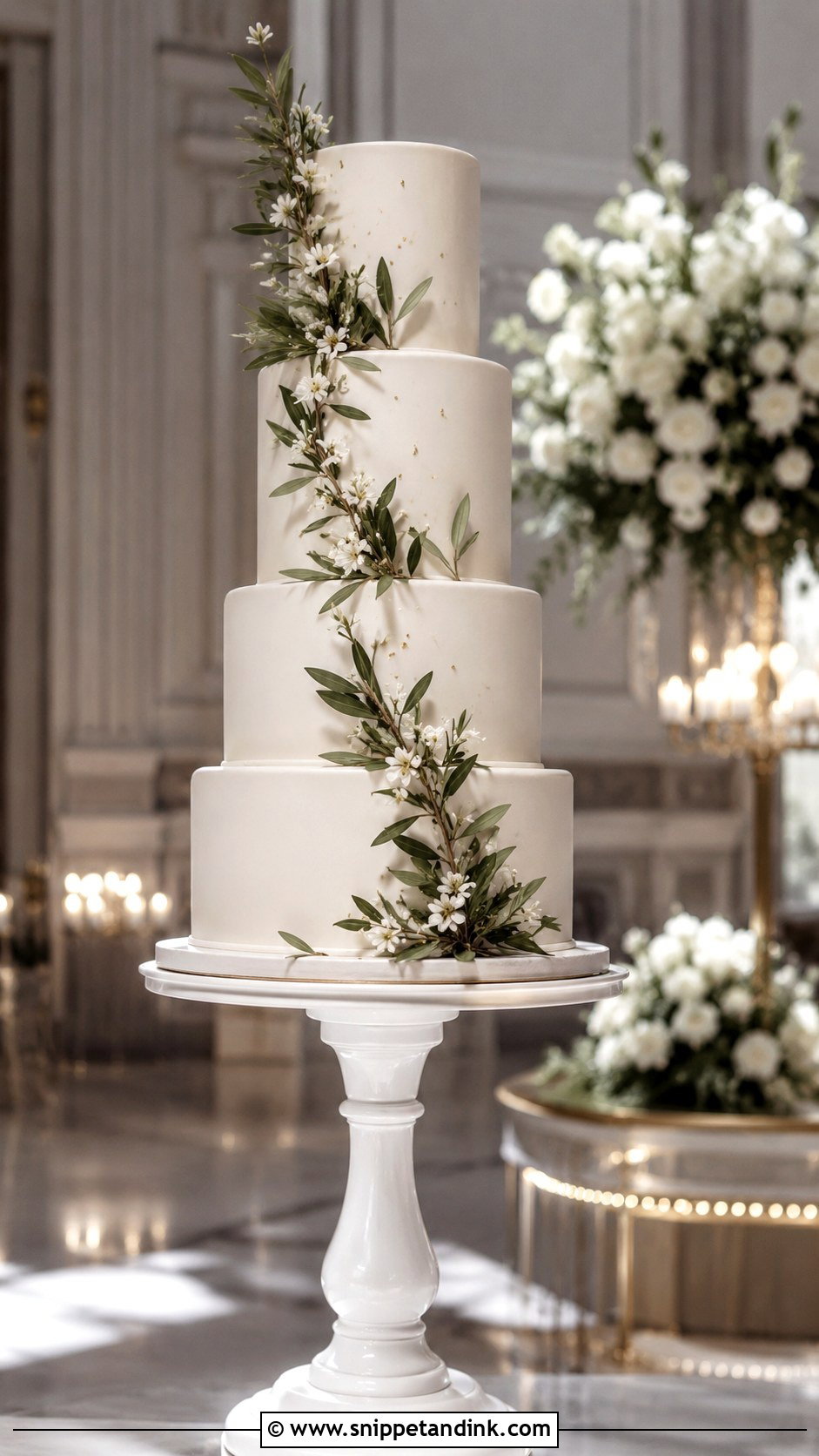
Height alone makes an impression, so a tall cake doesn’t need much decoration. The height can come from slim tiers, double-barrel tiers or several stacked layers, and it needs proper internal support: dowels in every tier and a central dowel through the stack, because tall cakes are the ones that lean in transit. Olive should move vertically here, trailing down the front or climbing one side. Keep the topper minimal so the silhouette stays the focus.
24. Olive Leaf Small Wedding Cake
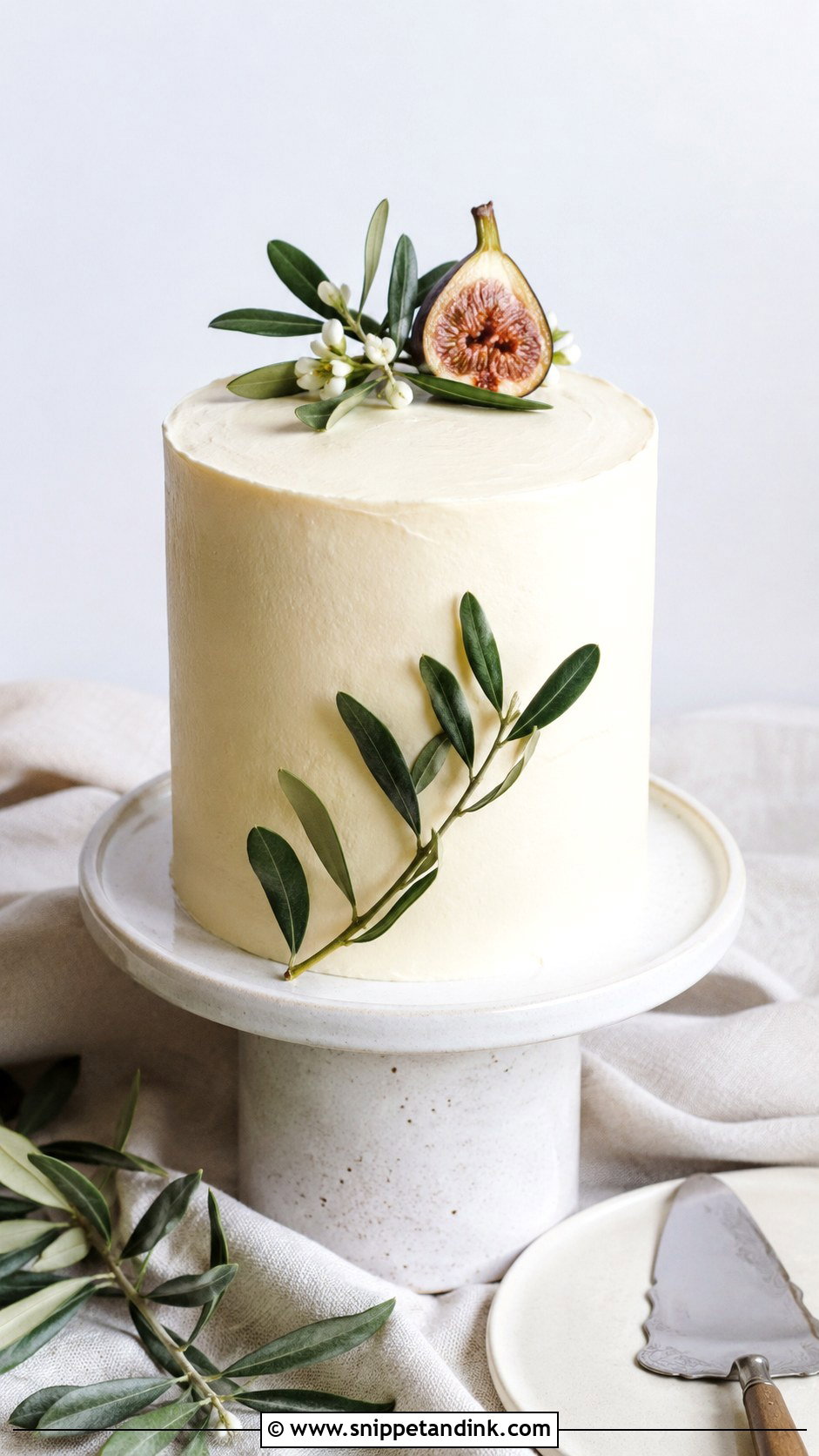
Small cakes still deserve care. One or two tiers with smooth ivory buttercream and a small olive accent suit elopements, micro weddings, or couples serving other desserts alongside a cutting cake. Proportion is everything at this size; a branch that looks right on a three-tier will swamp a six-inch cake, so I trim sprigs down to a few leaves. A tiny cluster of white flowers, a lemon or a fig adds character. A raised stand gives it presence on the table.





25. Olive Leaf Rustic Wedding Cake
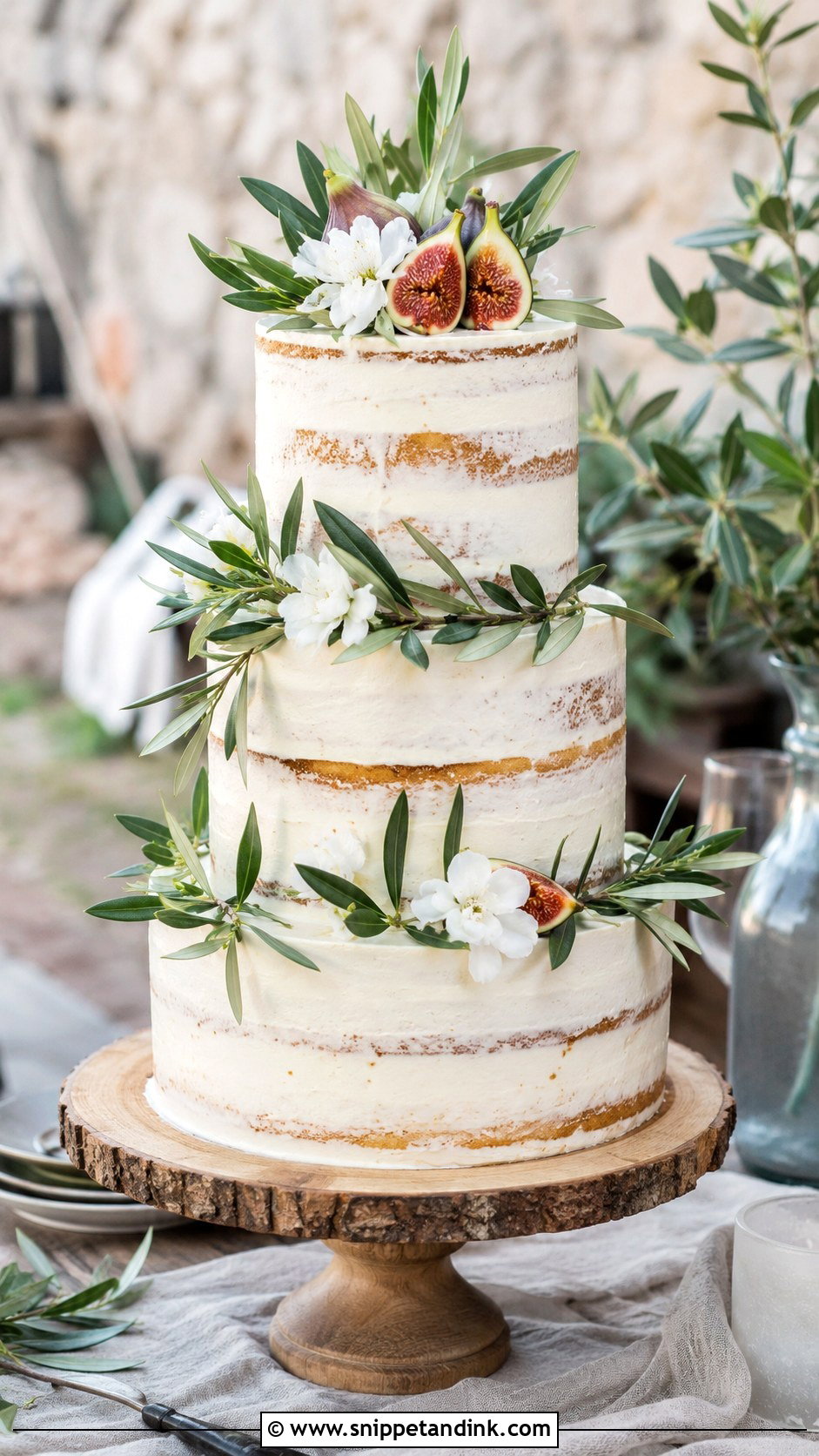
Rustic olive cakes often use semi naked frosting, textured buttercream, wood stands and loose greenery. Olive suits this style because it looks organic without looking untidy. White flowers, figs or small herbs push it toward farm-to-table. The finish should be soft and slightly imperfect, yet still clean at the edges and base board, which is where a rustic cake starts to look careless. Vanilla bean, almond, honey or lemon flavours match the styling.
26. Olive Leaf Modern Wedding Cake
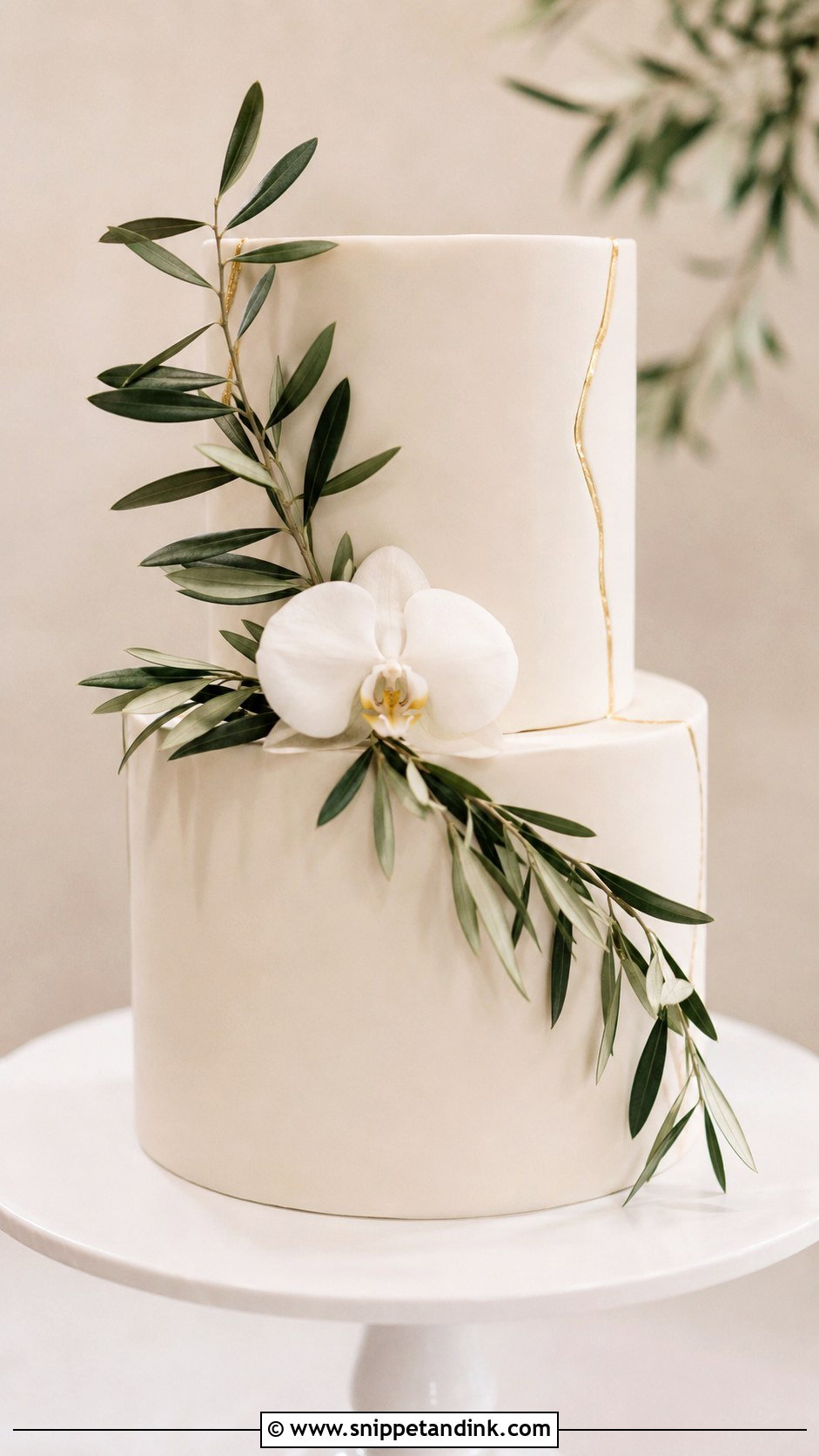
Modern means edited. Smooth white tiers, sharp edges, asymmetrical greenery and almost nothing else. Instead of covering the cake in leaves, I place olive in one bold area and let the rest stay bare. Tall tiers, square cakes and smooth fondant suit it, with perhaps one fine gold line, a matte finish or a single white flower. Empty space is part of the design, so resist adding a second cluster.
27. Olive Leaf Boho Wedding Cake
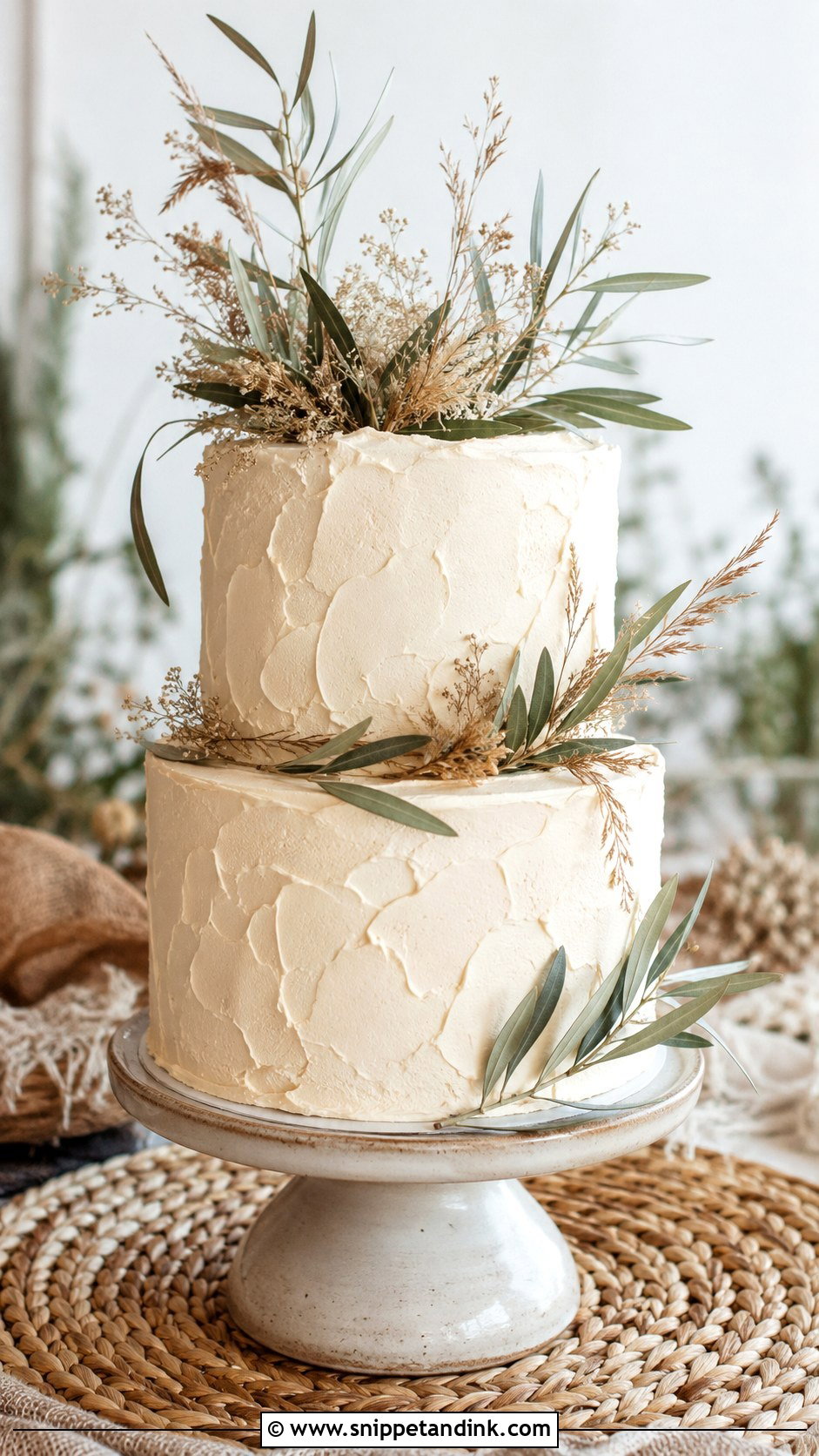
Boho cakes lean warm and earthy: textured buttercream, dried neutral flowers, soft grasses and loose olive, in ivory, beige, sage and muted green. Dried flowers need the same care as fresh ones; many are dyed or treated with preservatives, so they go into picks or wrapped bundles and never straight into the frosting. A semi-naked finish or rough buttercream gives a handmade feel. Keep the cake shape simple so the decoration can carry the look.
28. Olive Leaf Mediterranean Wedding Cake
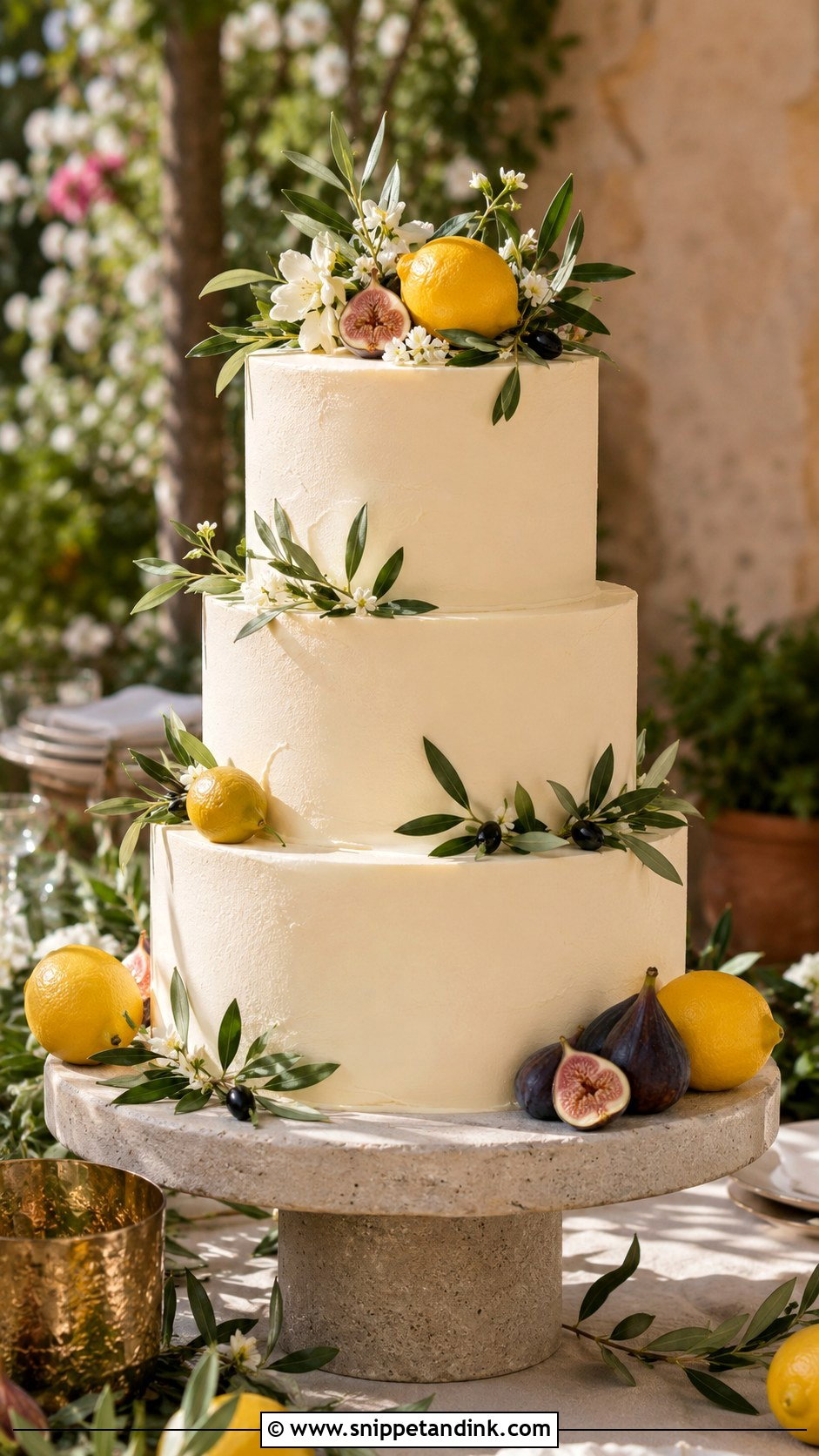
Olive branches are the main event on a Mediterranean cake, supported by lemons, figs, white flowers or a touch of gold. Ivory buttercream or fondant keeps the base classic, and a stone, ceramic or plain white stand suits it. Flavour can carry the theme as much as the decoration: lemon, almond, vanilla, honey, or a moist olive oil cake, which keeps beautifully and stays tender for longer than many butter sponges. It belongs at a long outdoor table.
29. Olive Leaf Greek Wedding Cake
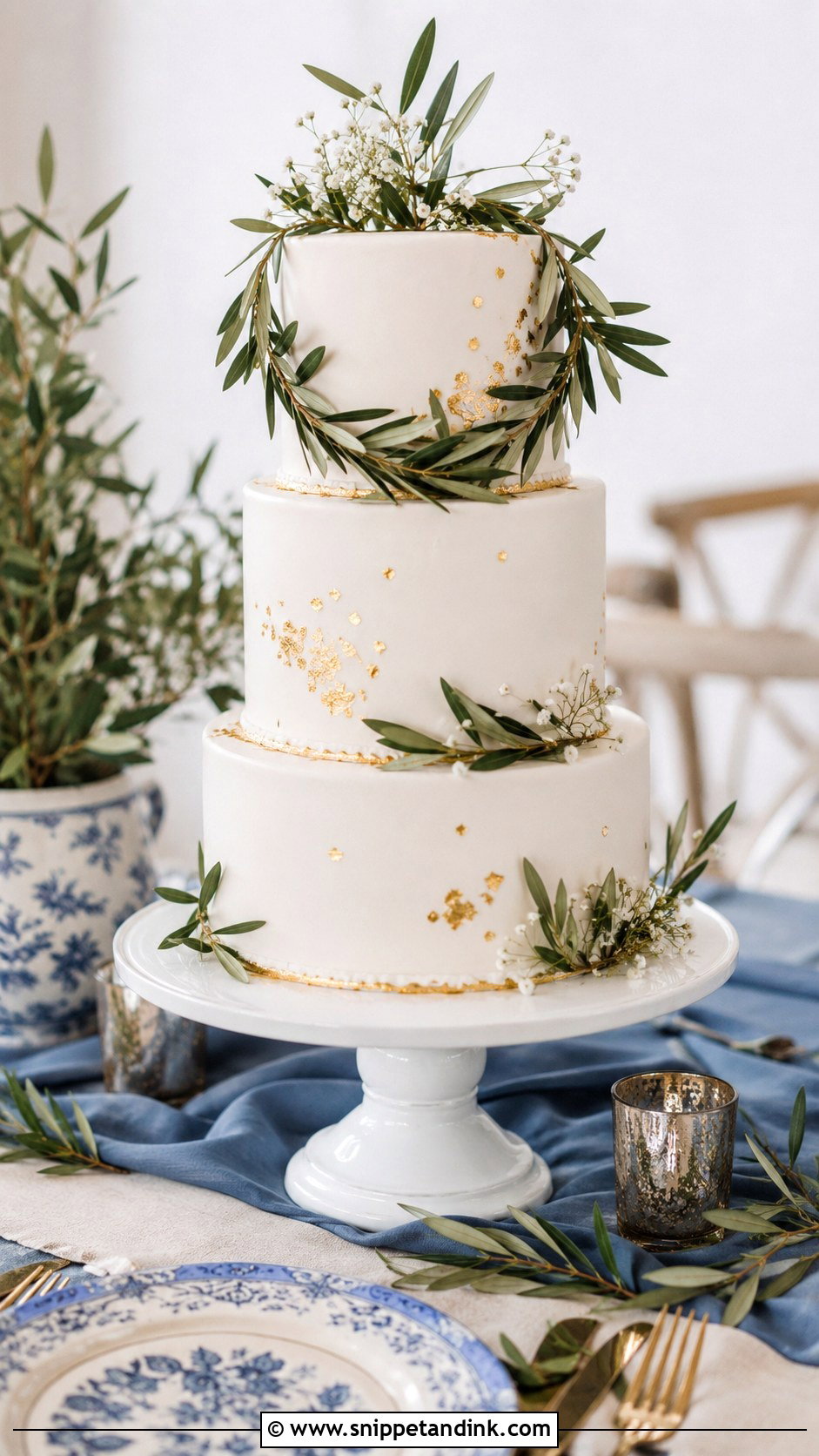
Olive branches are tied closely to peace, victory and tradition in Greek culture, which gives this cake meaning beyond decoration. I keep the cake itself white or ivory, with a clean olive wreath and maybe some gold, and let any blue come from the table styling rather than the frosting, so the cake doesn’t tip into theme-party territory. Smooth fondant, crisp buttercream and structured tiers all suit it. Almond, citrus, honey or vanilla flavours fit.
30. Olive Leaf Italian Wedding Cake
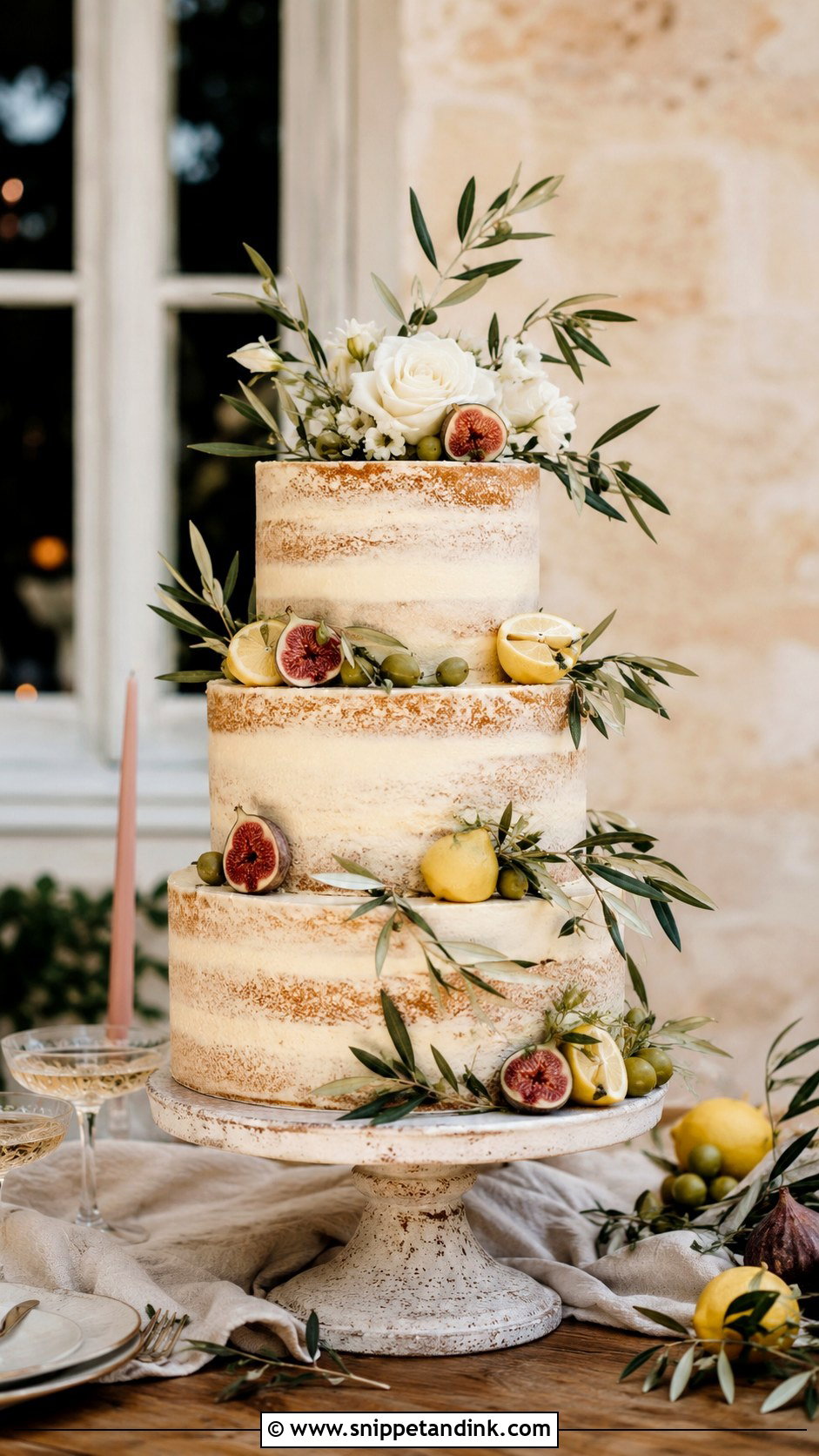
An Italian olive leaf wedding cake leans romantic and countryside: creamy frosting, olive branches, fresh figs, citrus and soft white flowers. A semi-naked finish feels relaxed, while smooth ivory buttercream looks more polished. Branches can ring the tier bases or trail down one side. I keep the decoration food-inspired rather than formal, the kind of thing that could have come from the same orchard as the dinner. Lemon, almond, vanilla bean or olive oil sponge suit it.
31. Olive Leaf Outdoor Wedding Cake
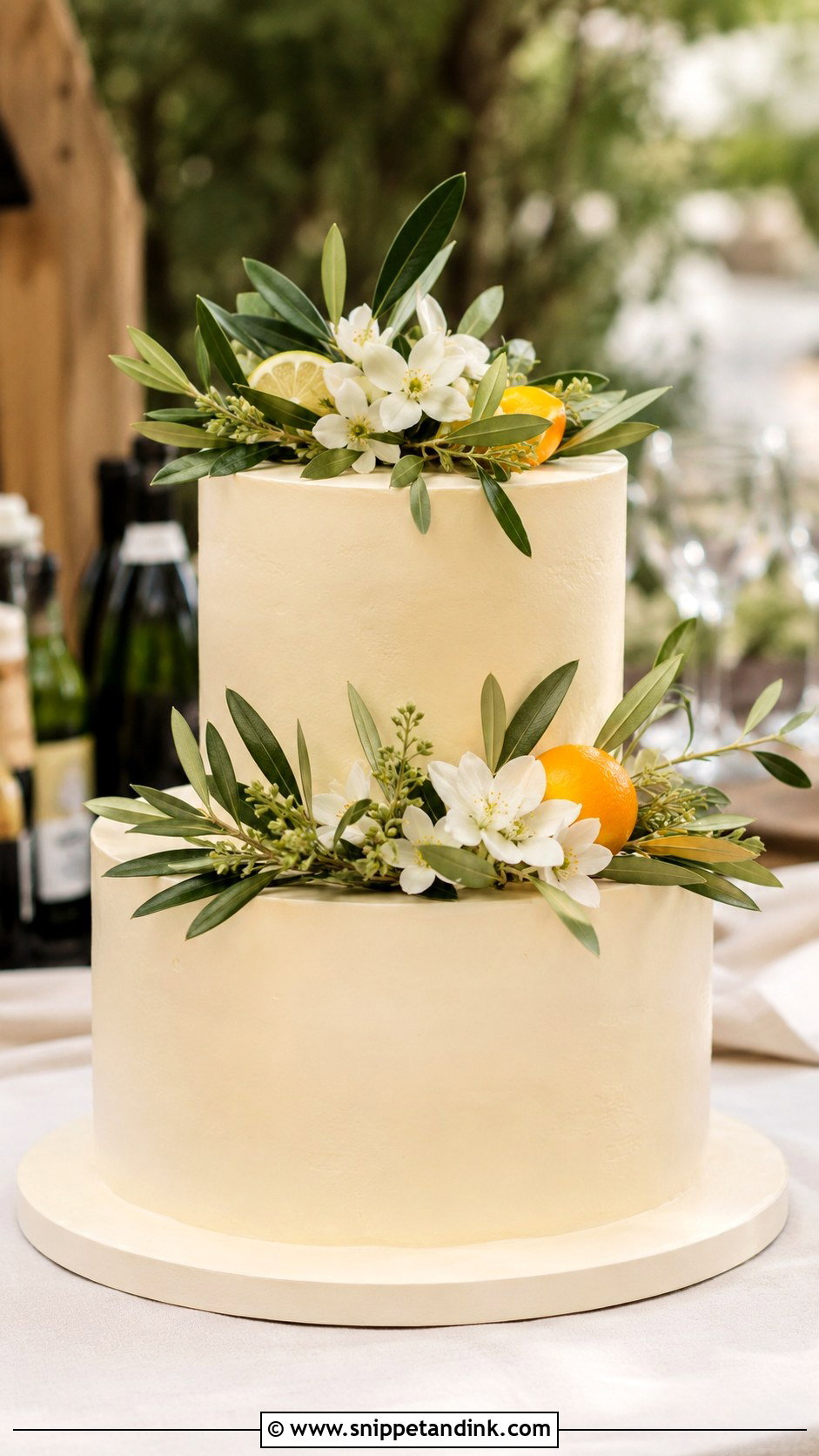
Outdoors, the weather makes half the decisions. Buttercream softens quickly in direct sun and warm air, so I’ll steer couples toward a firmer finish, a fondant or ganache-coated cake, for a hot afternoon, and insist the cake stays in the shade until it’s needed. Greenery goes on in secure clusters rather than loose pieces that wind can shift. Flowers, figs or lemons only if they match the tables. Talk to your baker about the venue’s shade and timing before you settle on a finish.
32. Olive Leaf Garden Wedding Cake
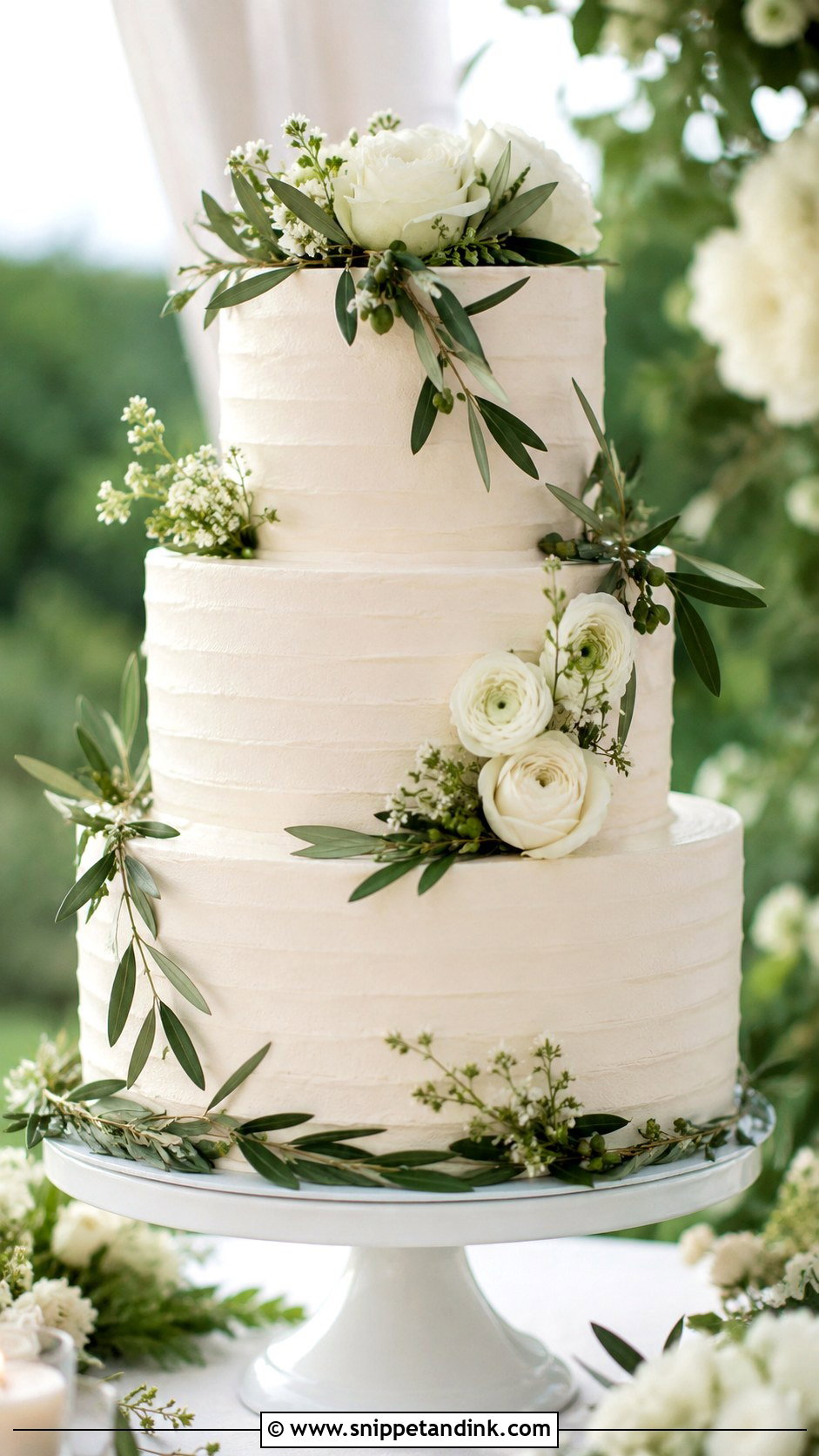
A garden cake mixes olive with roses, ranunculus, tiny white flowers or other soft foliage for a lush but controlled look. An ivory or white base makes the botanicals stand out. Smooth buttercream is the refined version; textured is more casual. I arrange garden cakes asymmetrically on purpose, so the greenery looks hand-placed rather than forced into a mirror image. Floral linens and candlelight sit well around it.
33. Olive Leaf Beach Wedding Cake
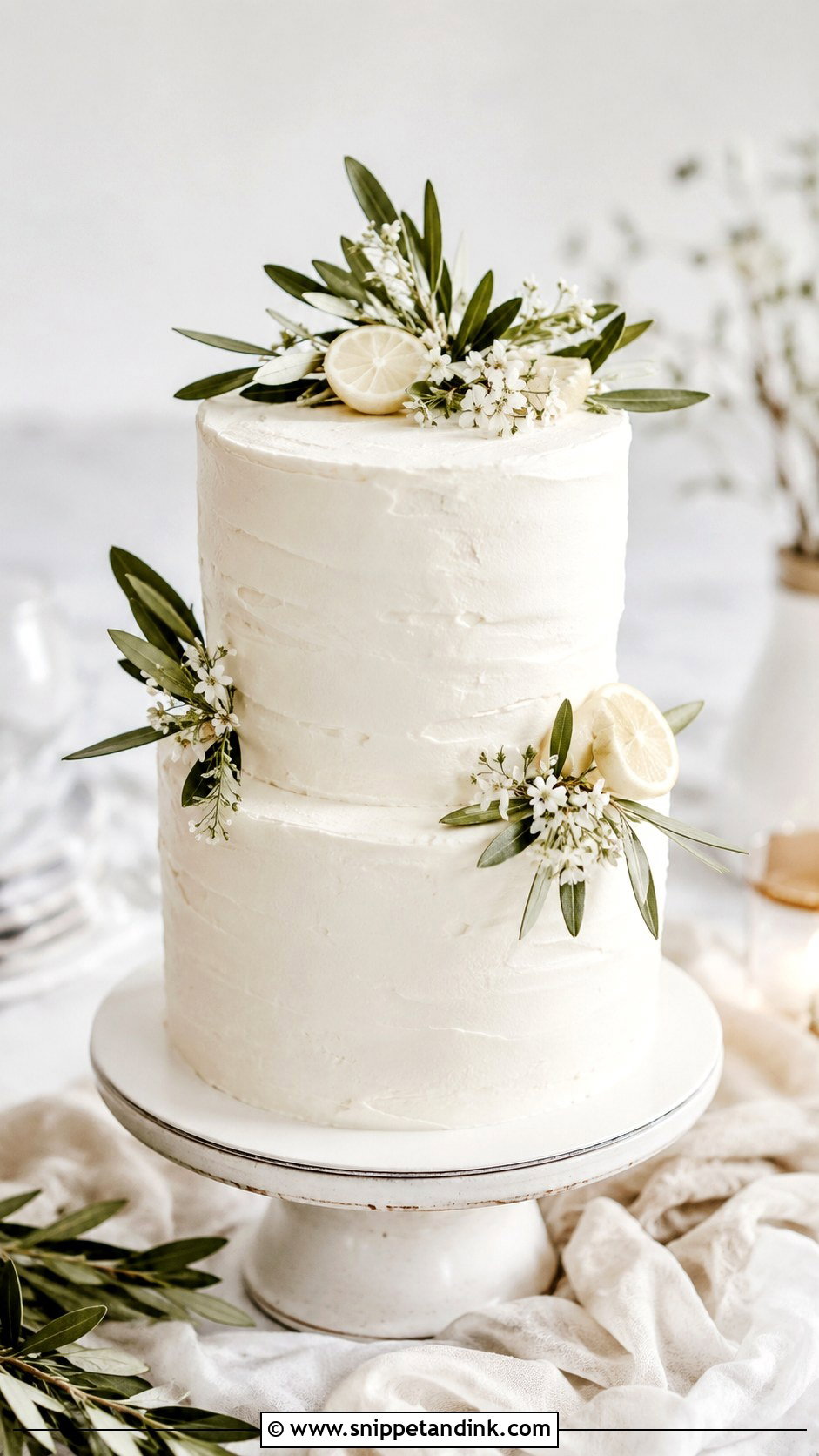
Olive makes a calmer beach cake than shells or bold blue. White frosting, olive branches and sandy neutrals keep it fresh for a coastal reception. Sea air is humid, and humidity is hard on sugar work; sugar leaves and flowers can soften and droop, so for a beach I lean on fresh olive and keep sugar decoration minimal. Smooth buttercream or fondant photographs cleanly in bright light. Seaside terraces and destination weddings suit it.
34. Olive Leaf Cupcake Wedding Cake
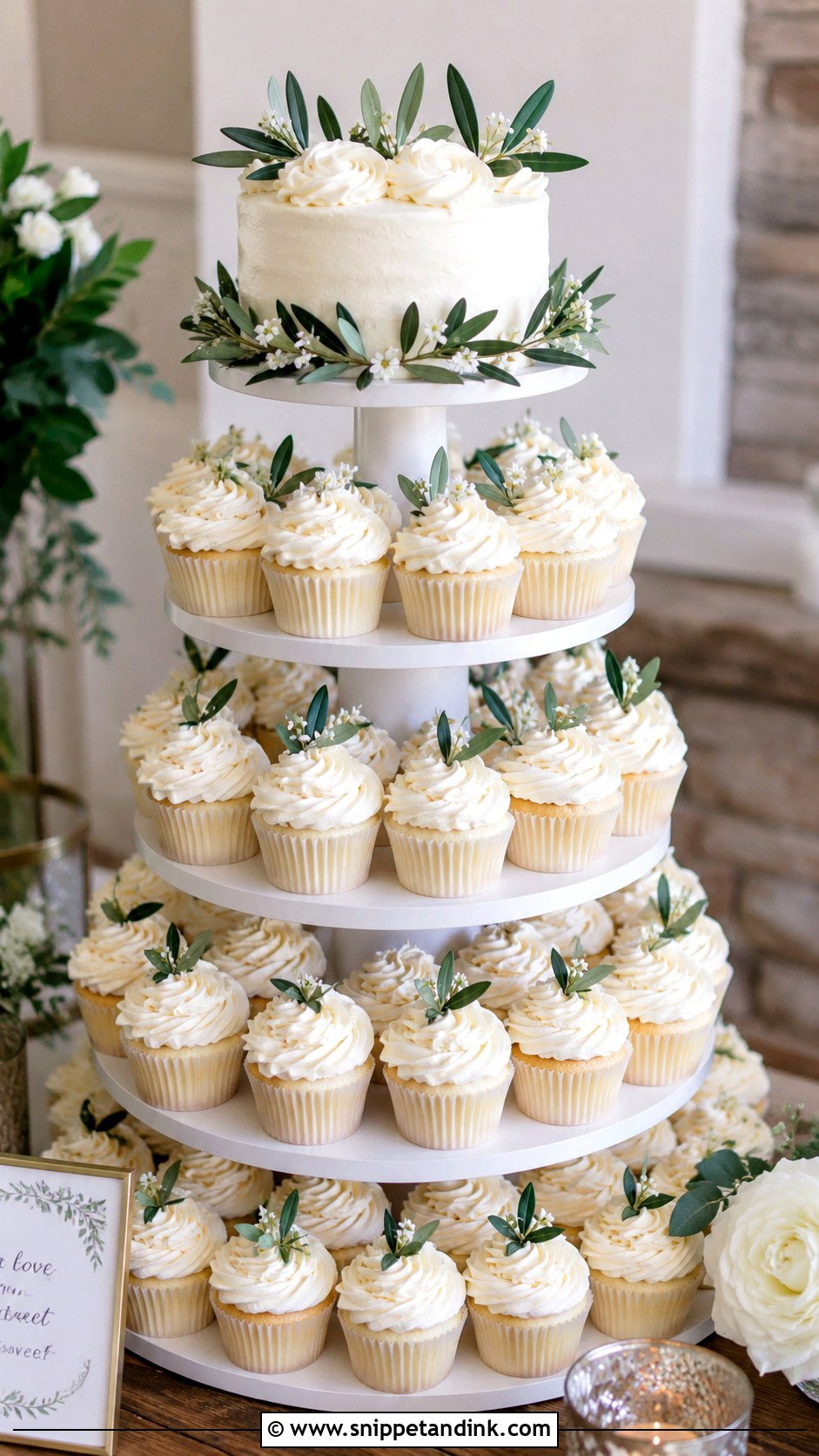
An olive leaf cupcake wedding cake puts frosted cupcakes on tiered stands with a small olive-trimmed cutting cake on top. You still get the cutting moment, and dessert serves itself. Matching ivory buttercream on every cupcake makes the display read as one piece. Each one can carry a small sugar olive leaf, a piped rosette or a tiny white blossom; I avoid fresh greenery directly on cupcakes, since guests eat them straight from the stand. Casual and outdoor receptions suit it.
35. Olive Leaf Sheet Wedding Cake
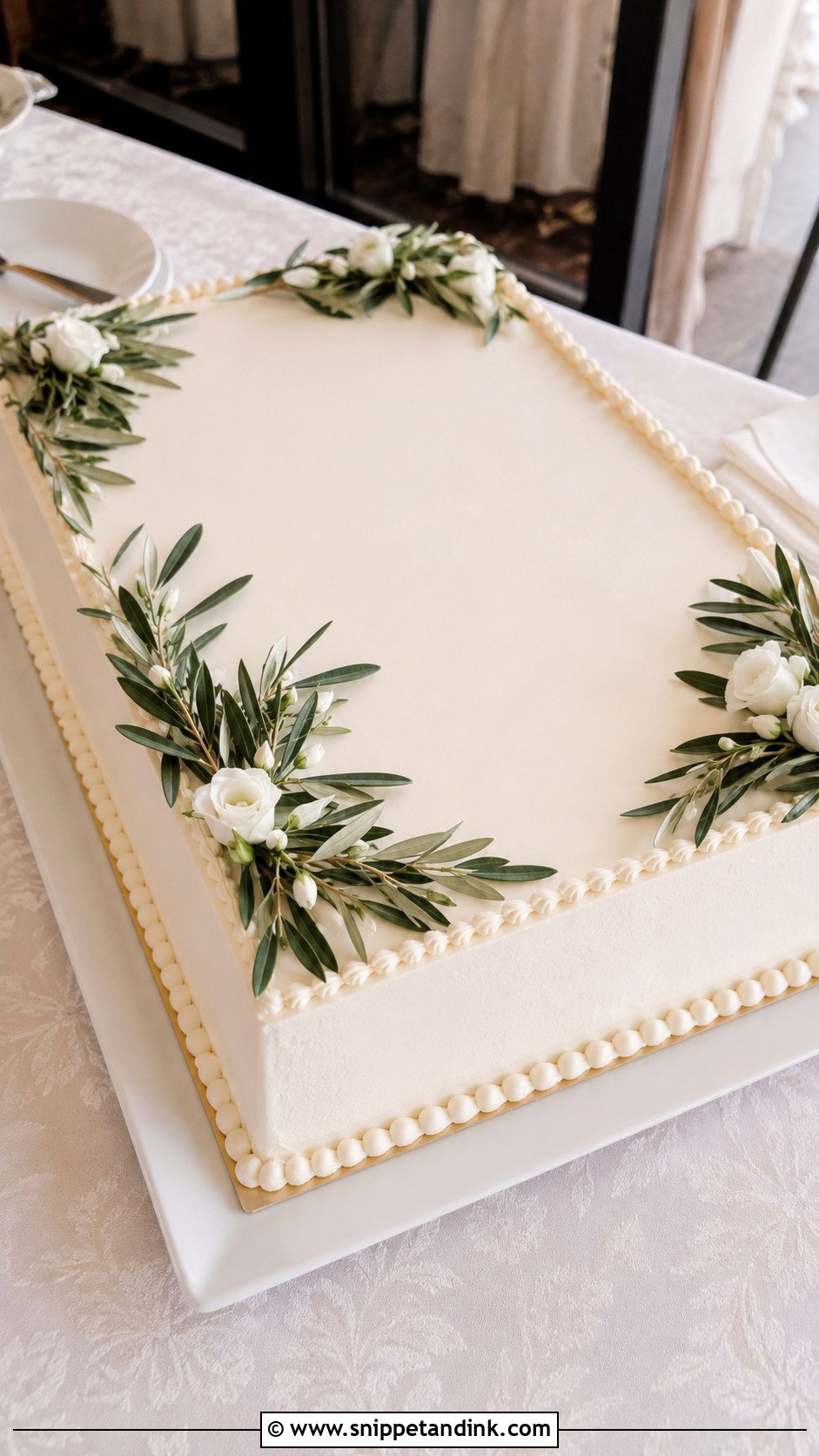
Sheet cakes feed a crowd economically. It can be displayed as a decorated cutting sheet, or kept in the kitchen while a small tiered cake takes the spotlight, which is what most of my couples choose. Dressed with smooth ivory buttercream, piped borders, olive clusters and small white flowers, a sheet cake can look smart on its own. It also slices into even portions quickly and travels far more easily than a stacked cake. Vanilla, lemon, almond or olive oil sponge all work.
Sizing Tiers for the Number of Guests
Wedding cake portions are cut smaller than party slices, typically a finger-width piece about an inch wide and two inches deep from a four-inch-tall tier. Using that standard, rough figures for round tiers look like this, though every baker cuts a little differently:
- 6-inch tier: about 12 portions
- 8-inch tier: about 24 portions
- 10-inch tier: about 38 portions
- 12-inch tier: about 56 portions
So a 6, 8 and 10-inch stack serves roughly 74 guests. For a larger wedding, a smaller display cake plus kitchen sheet cake in the same flavour saves money and keeps the olive design in proportion. Square tiers yield more portions than round tiers of the same width.
Heat, Fruit Juice and Other Things That Ruin a Finished Cake
Most cake disasters I’m called about happen after delivery, not in the kitchen. A few rules I set with every venue:
- Keep the cake out of direct sun and away from windows, heaters and the dance floor lights.
- Display it as late as the schedule allows on hot days, and keep it cool until then.
- Cut fruit goes on just before guests see it, or not at all; figs and citrus bleed into frosting.
- Nobody moves the cake after setup except the person who built it. Tiers shift when lifted by the board edge.
Let the Branch Be the Decoration
Olive proves how much a little greenery can set the mood of a cake. A sleek modern tier, a rustic semi-naked stack, a lemony Mediterranean cake or a tiny elopement cake can all carry it without strain. It sits comfortably beside white or ivory frosting, gold, roses, figs, lavender, baby’s breath and citrus. Settle the venue, season and flavours first, then bring your favourite images to your baker and ask how they’ll keep every leaf safe and secure on the day.
You'll Like These Ideas:




Leave a Reply