
Lilac is one of the trickier colors I mix in the studio, and one of the most rewarding when it lands. A pale lavender frosting sits happily on a spring garden table, in a ballroom, or beside a small courthouse dinner with a few flowers. Push it toward plum, gold or soft gray and it gets serious; keep it near ivory and it reads airy. The ideas below cover the finishes I get asked about most, from Lambeth piping and pressed petals to marble, wafer paper and tiny cutting cakes, with notes on how each one actually behaves once it leaves my kitchen.
Why Lilac Frosting Turns Gray or Blue, and How I Stop It
Purple is the least stable color in my kit. Three things push it off course: the yellow in butter, the light in your venue, and time. Butter’s warm tone mixed with violet gives a dusty gray, which is why lilac buttercream often looks dull in photos even when it looked fine in the bowl.
- Base first: I beat buttercream until it’s as pale as it will go, then neutralize the yellow with a tiny dot of violet before adding the real color.
- Mix the day before: purple gel deepens as it sits, so I mix lighter than the target and let it develop overnight.
- Keep it out of direct sun: purple and lavender fade surprisingly fast in daylight and under some fluorescent tubes. A cake on a sunny window table can lose color within hours.
- Check the swatch in daylight and tungsten: a lilac that matches bridesmaid satin under shop lights can look blue next to it at dusk.
If your shade needs to match something exact, bring me the actual fabric, not a phone photo. Screens shift purple more than any other color, and I’d rather mix against a real swatch at the tasting than guess.
1. Lilac Buttercream Wedding Cake
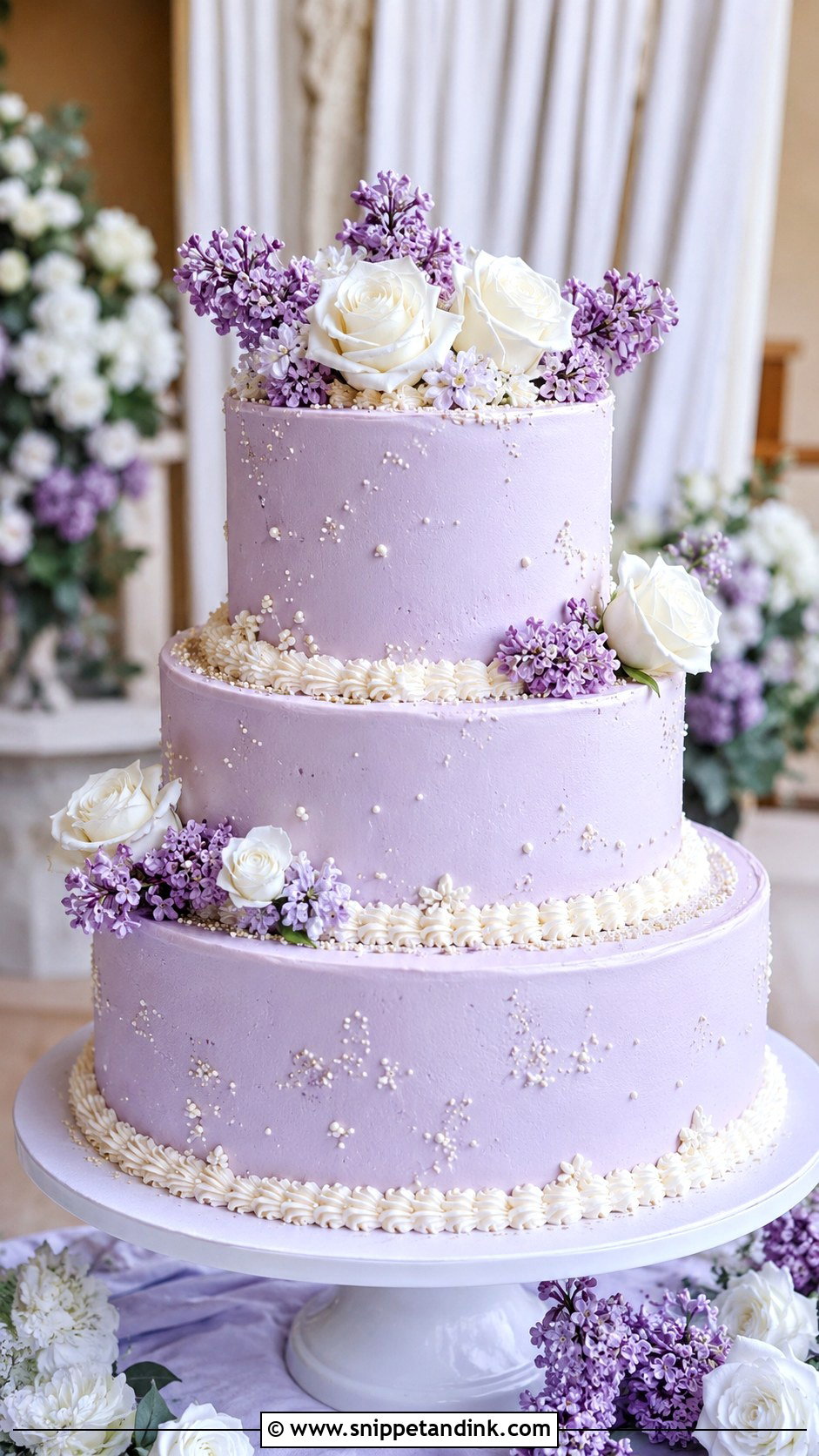
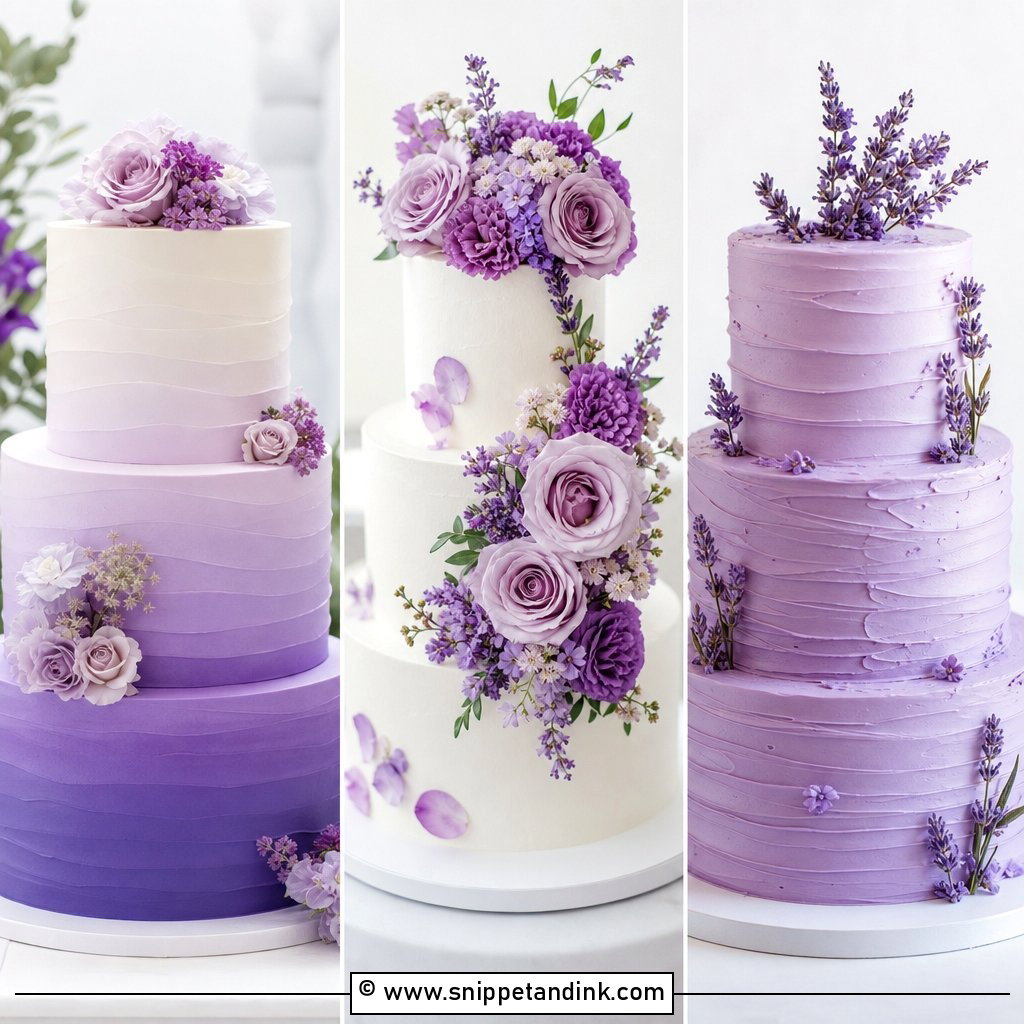
Smooth buttercream is where I start most couples, because it shows the color honestly and costs less labor than sugar work. The catch is butter itself: it’s yellow, and yellow plus purple drifts toward a muddy gray. I whip the buttercream longer to pale it and add a pinprick of violet before the main color goes in. Finish it glass-smooth or with a light palette-knife texture, then keep the decoration to a few white roses or a scatter of pearls. Vanilla bean, almond, lemon and lavender honey all sit well under it, on one tier or three.
2. Lilac Ombre Wedding Cake
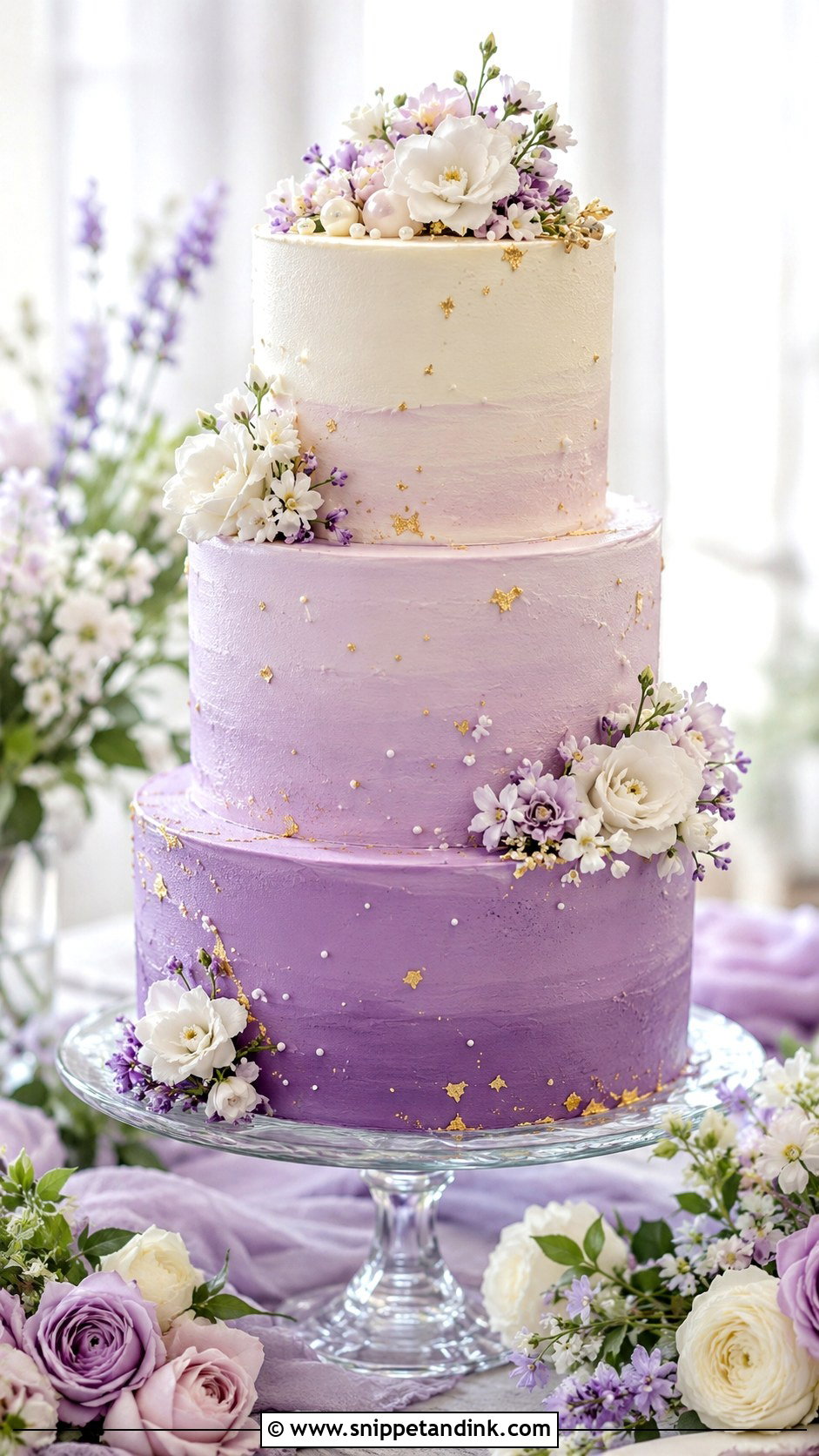
For a lilac ombre wedding cake I mix three shades from one batch, so the bottom tier is the deepest lavender and each tier above takes a step toward ivory. Mixing them separately is how you end up with a tier that’s slightly too blue. The gradient gives the cake depth from every side of the room. Buttercream, fondant and a watercolor wash all carry it. I’d keep the trims quiet, white flowers or one thin gold line, and pair it with lemon elderflower or vanilla raspberry.
3. Lilac Floral Wedding Cake
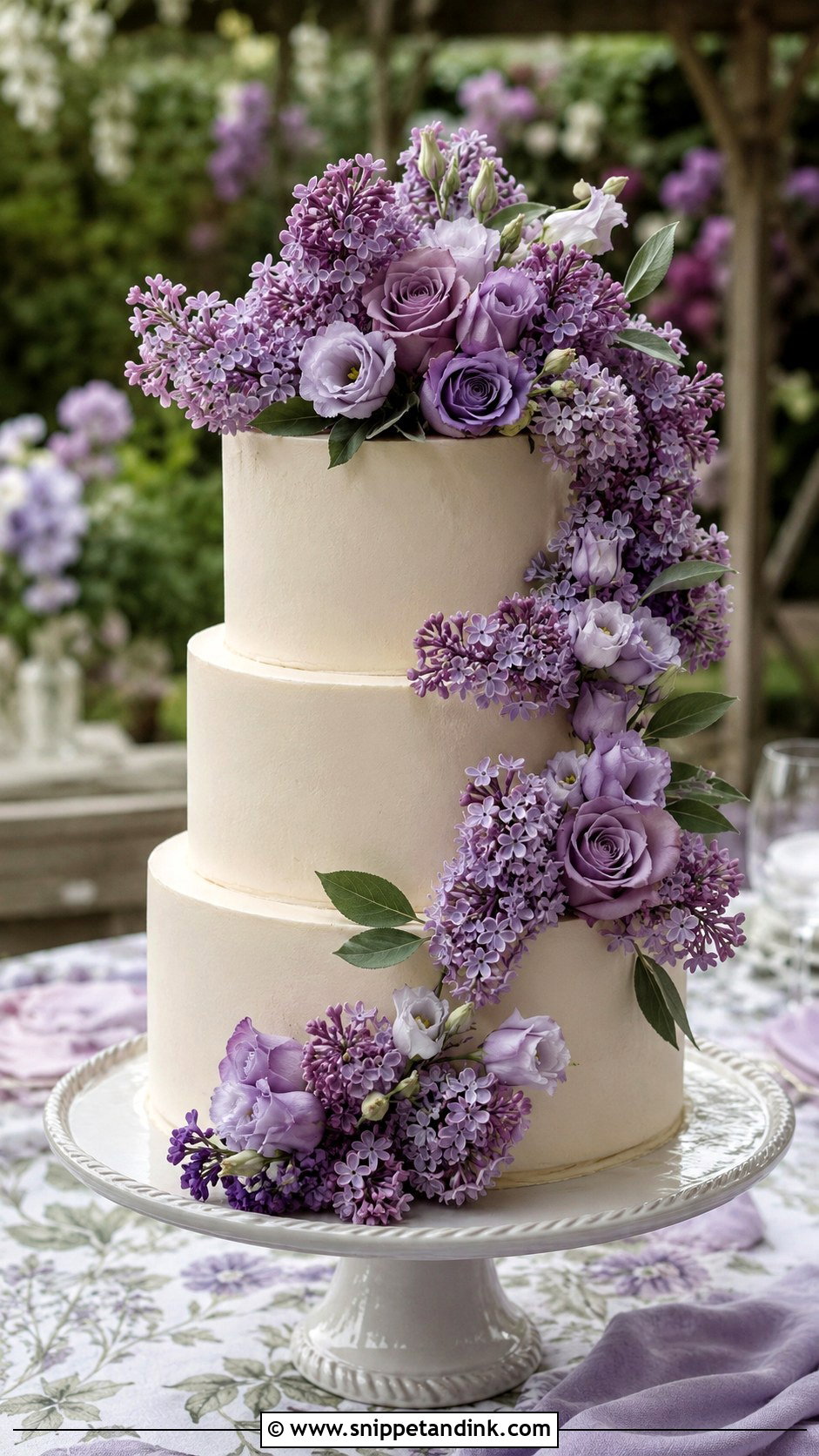
Fresh flowers on pale lilac frosting look lush, but this is the design where I’m strictest about safety. Lisianthus, roses, orchids and seasonal lilac can all work with the florist’s plan. Sweet peas I’ll only do in sugar, because the real plant isn’t something I want touching food. Every stem I place is wrapped in floral tape and set into a food-safe pick, never pushed bare into the cake. Keep the arrangement to one cascade down a side or small clusters between tiers, and agree in writing who is placing the flowers on the day, your florist or me.
4. Lilac And Gold Wedding Cake
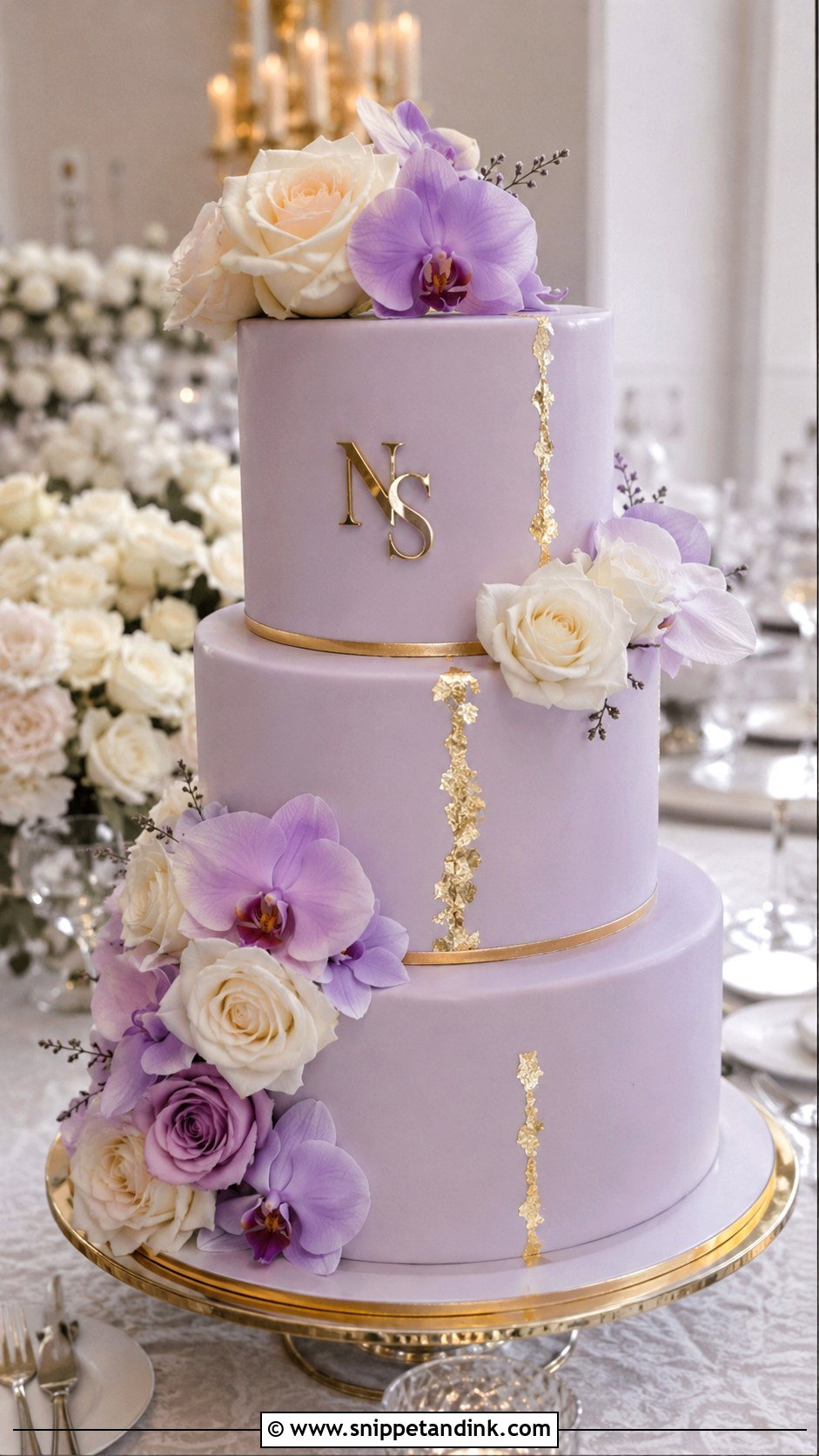
Gold gives lilac a more formal, evening feel. I apply gold leaf or hand-paint thin lines onto smooth fondant or very firm buttercream, because metallic detail on a soft or bumpy surface looks smudged up close. A monogram in gold on the front tier reads clearly from the back of a ballroom. Ivory roses, lavender orchids or pale purple sugar blooms finish it without competing with the shine. Vanilla almond, honey lavender and white chocolate raspberry are the flavors I’d put inside.
5. Lilac Vintage Wedding Cake
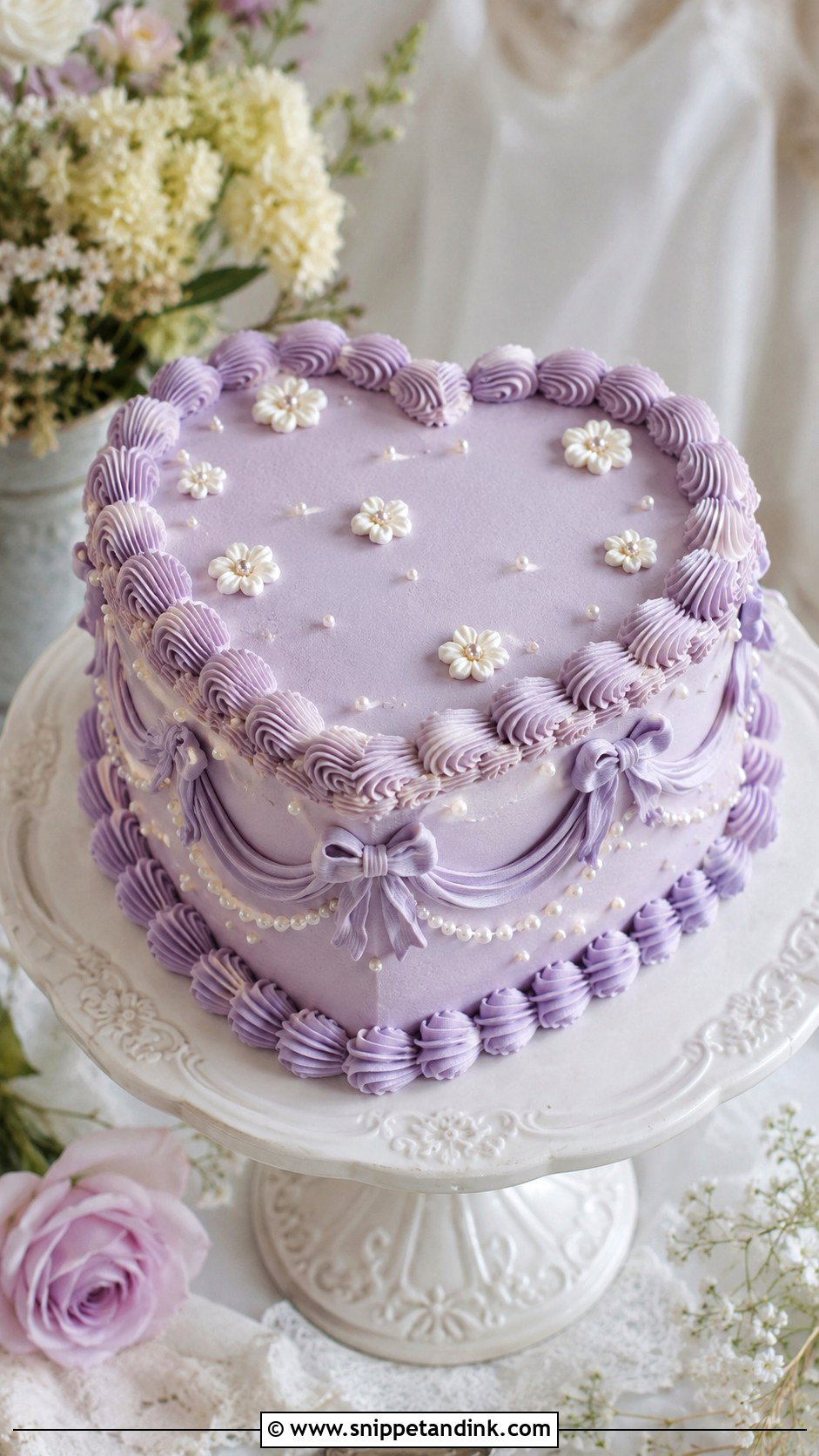
Vintage piping in lilac means shell borders, ruffles, pearl dots and little buttercream bows, often on heart-shaped tiers. You can go fully lilac or keep the base ivory and pipe only the trims in color, which I find easier to match to bridesmaid dresses. Heavy piping is time on the bench, so this style costs more than its soft color suggests. It suits smaller receptions and dessert tables where guests get close enough to see the work. Vanilla, almond or strawberry cream keep it nostalgic.
6. Lilac Lambeth Wedding Cake
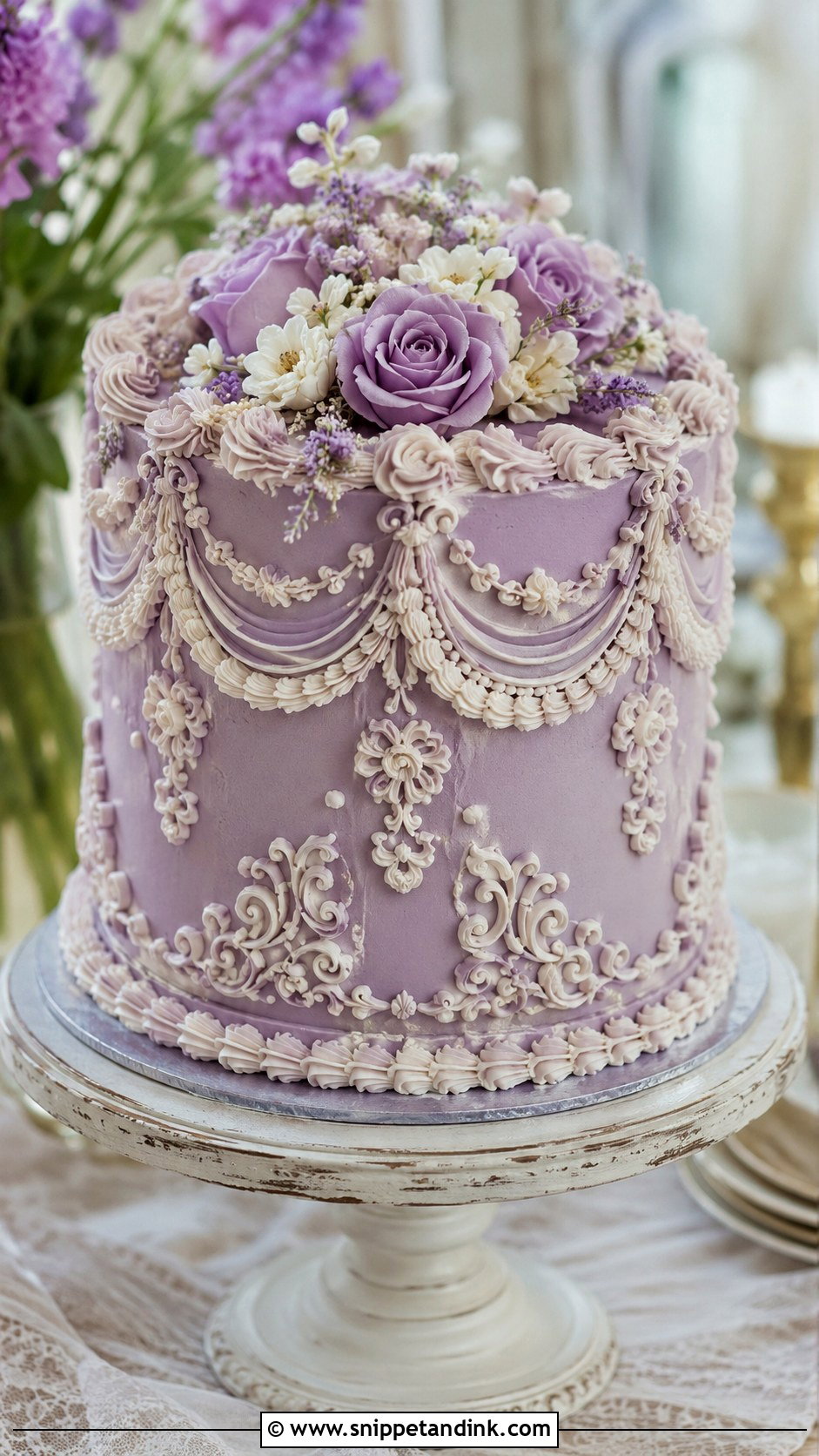
Lambeth is overpiping: layer upon layer of swags, scrolls and raised borders built up until the cake looks carved. I pipe it in a stiffer buttercream than I’d use for smoothing, otherwise the top layers slump into the ones below, and warm rooms are its enemy. In lilac it feels softer than in bold colors while keeping its drama. Round tiers, one tall single tier or a heart all work. Since buttercream does most of the talking here, vanilla bean, lemon, almond or Earl Grey make sense inside.
7. Lilac Watercolor Wedding Cake
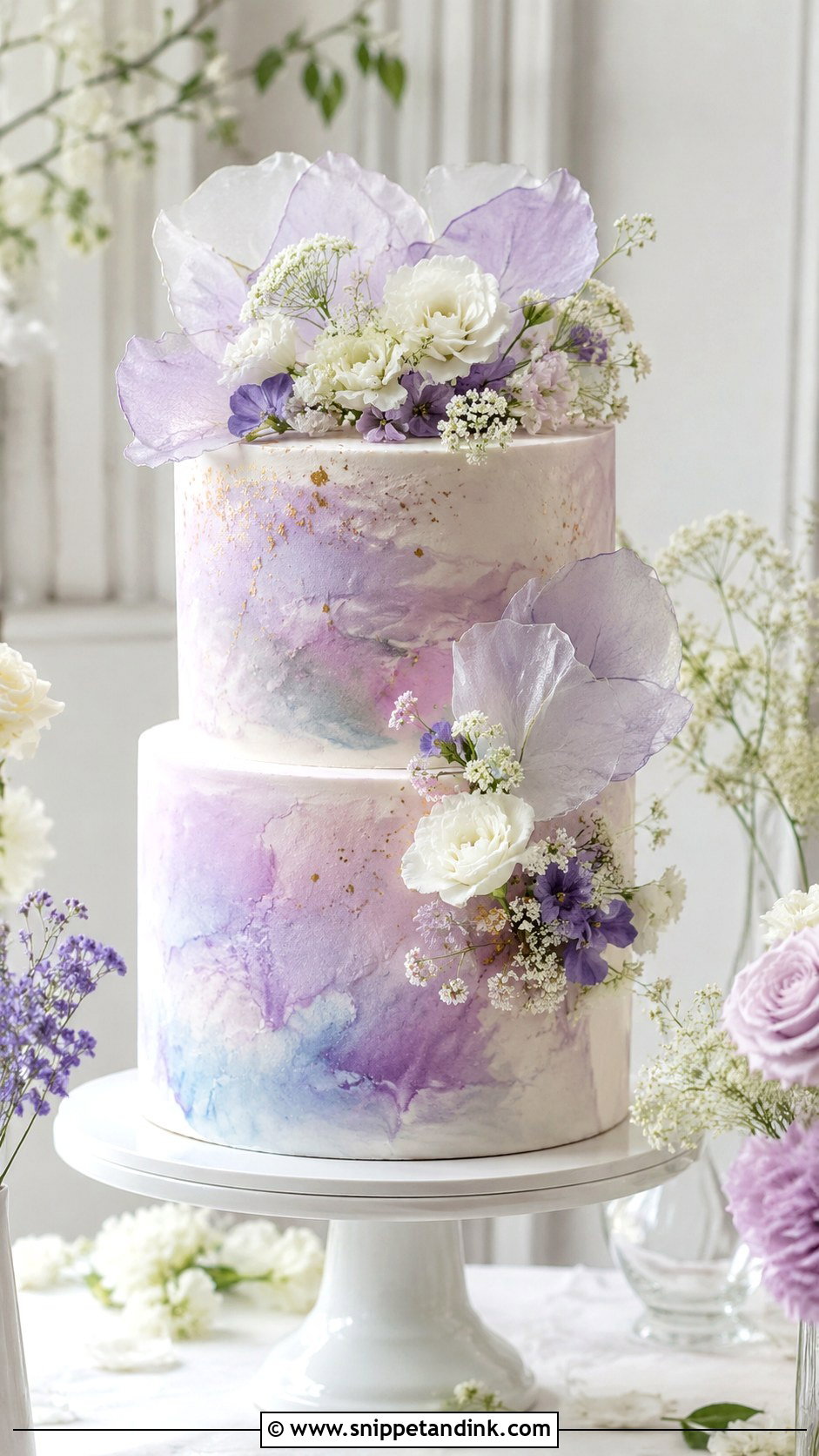
A watercolor finish is built by brushing lilac, lavender, ivory and sometimes a breath of pale blue onto the cake and softening the edges until they look cloudy. On fondant I paint with diluted gel color; on buttercream I spread the shades with a scraper while it’s still soft. The danger is overworking it until the tones blend into one dull mauve. A few fresh flowers, wafer paper petals or gold flecks finish it. Lemon blueberry and white chocolate are good matches.
8. Lilac Marble Wedding Cake
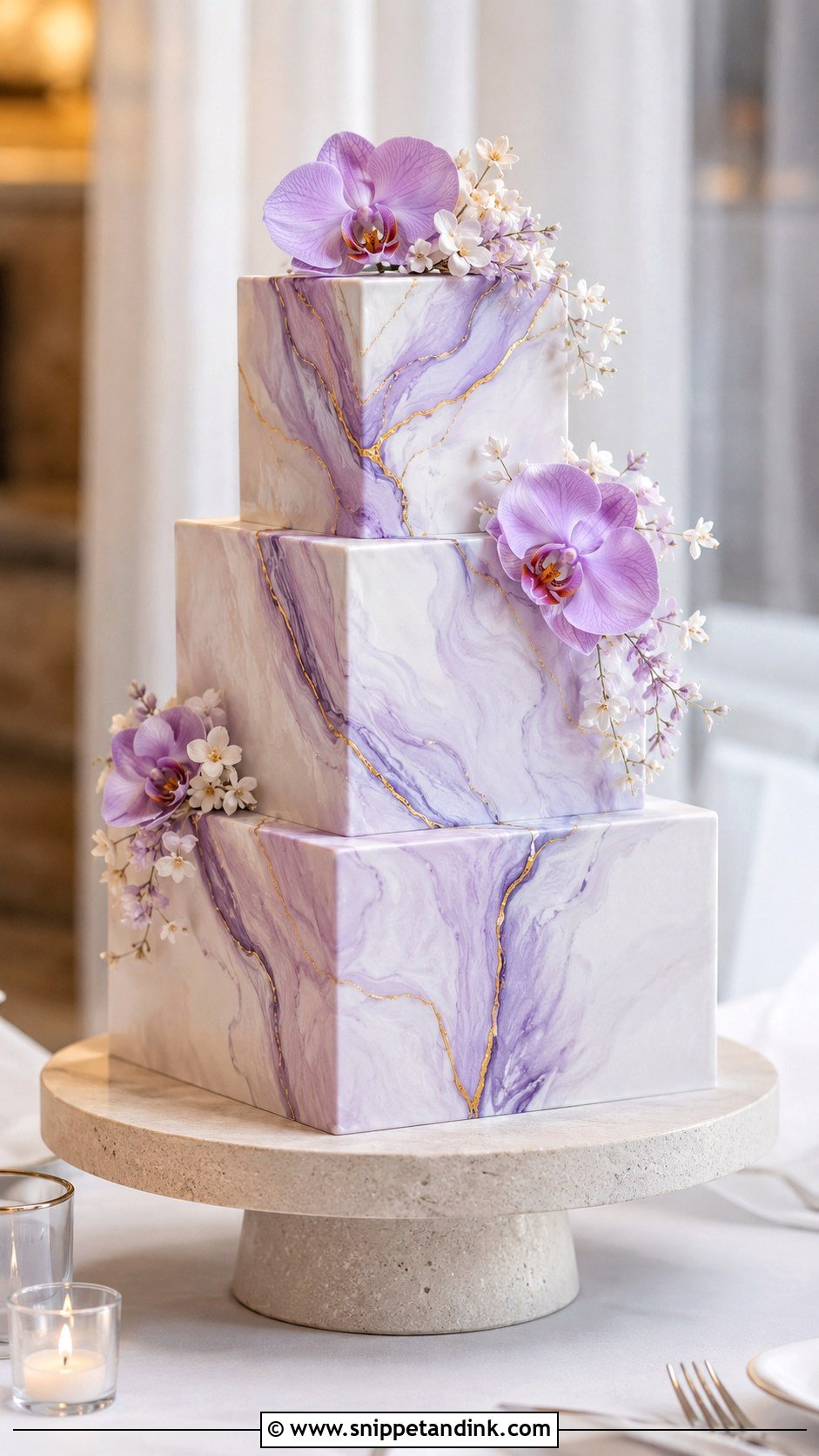
Marbling only looks like stone when the surface underneath is flawless, so I do this on fondant or very sharply finished buttercream. White, pale lilac, lavender and a touch of gray are twisted together before rolling, and every cake comes out a little different, which I’d warn you about if you’re attached to one photo. Gold veining warms it up. Decorate sparingly, an orchid cluster or a single sugar flower, and choose a light flavor such as almond, coconut or lemon cream. It fits modern rooms and gallery venues.
9. Lilac Drip Wedding Cake
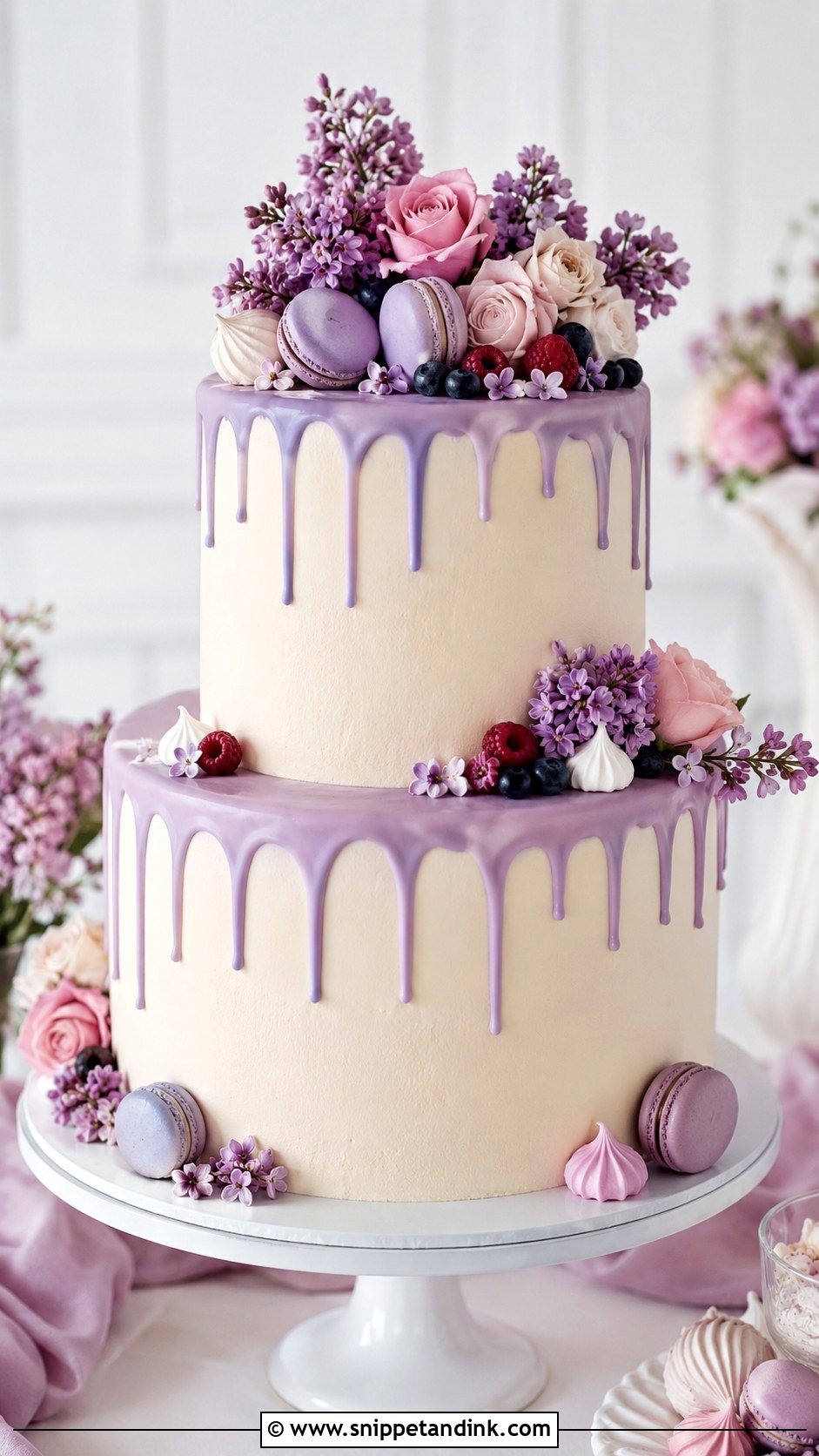
The drip here is white chocolate ganache tinted lavender, poured over chilled ivory or pale lilac buttercream. Temperature decides everything: too warm and it runs to the board, too cool and it stops in stubby blobs. I test one drip on the back of the cake before committing. Top it with macarons, meringue kisses, berries or a few flowers in matching tones. Blackberry, vanilla raspberry and lemon all work under it, and it’s one of the more relaxed options on this list.
10. Lilac Ruffle Wedding Cake
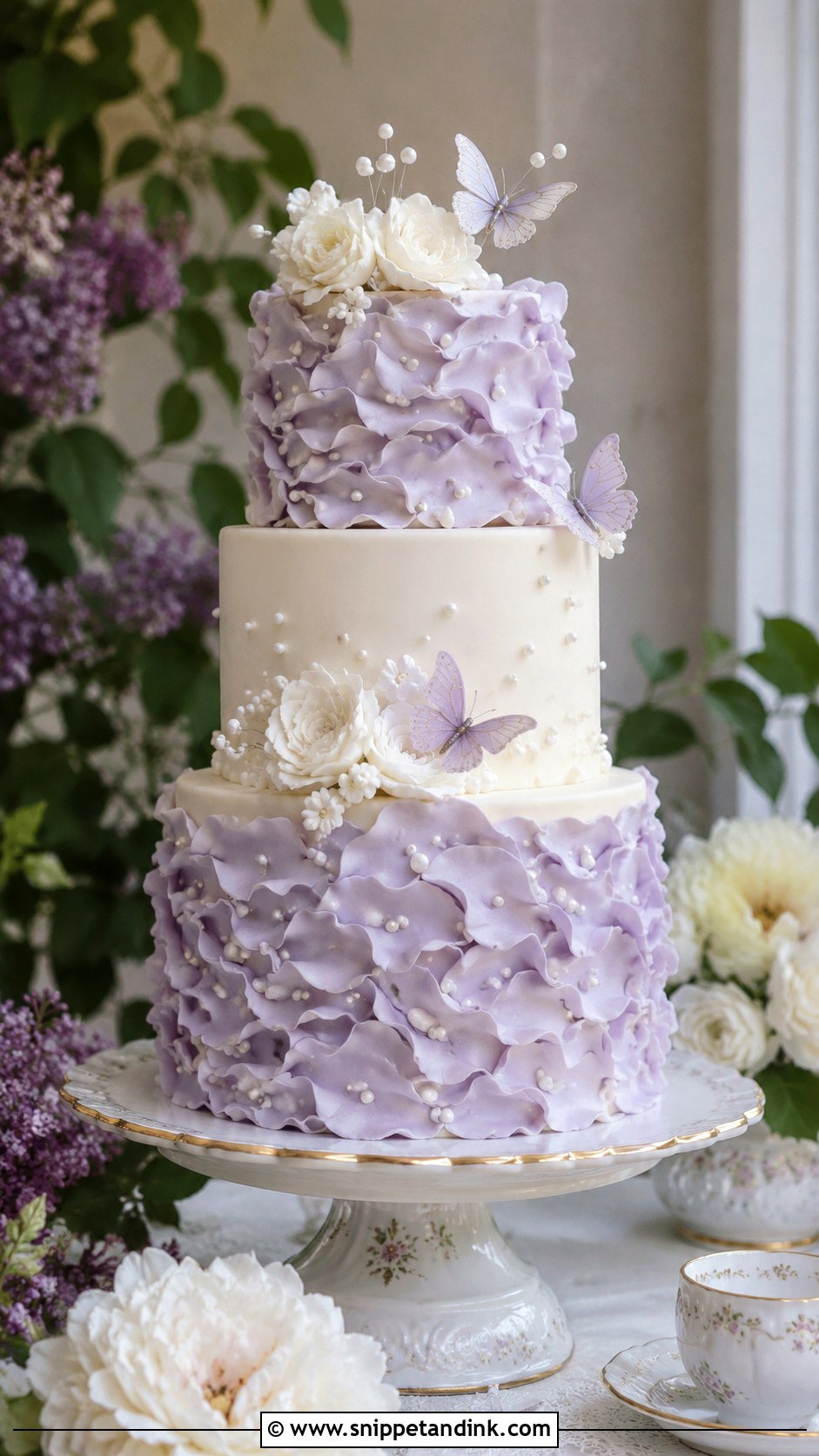
Ruffles can be buttercream, fondant or wafer paper, and they behave very differently. Buttercream ruffles are soft and tasty but heavy; wafer paper is light and airy but hates humidity and can wilt near a steamy kitchen. I usually alternate a ruffled tier with smooth ones so the cake doesn’t look like one big skirt. Fresh roses, edible pearls or a few sugar butterflies give it a garden mood. Strawberry, vanilla cream or lemon elderflower suit the texture.
11. Lilac Sugar Flower Wedding Cake
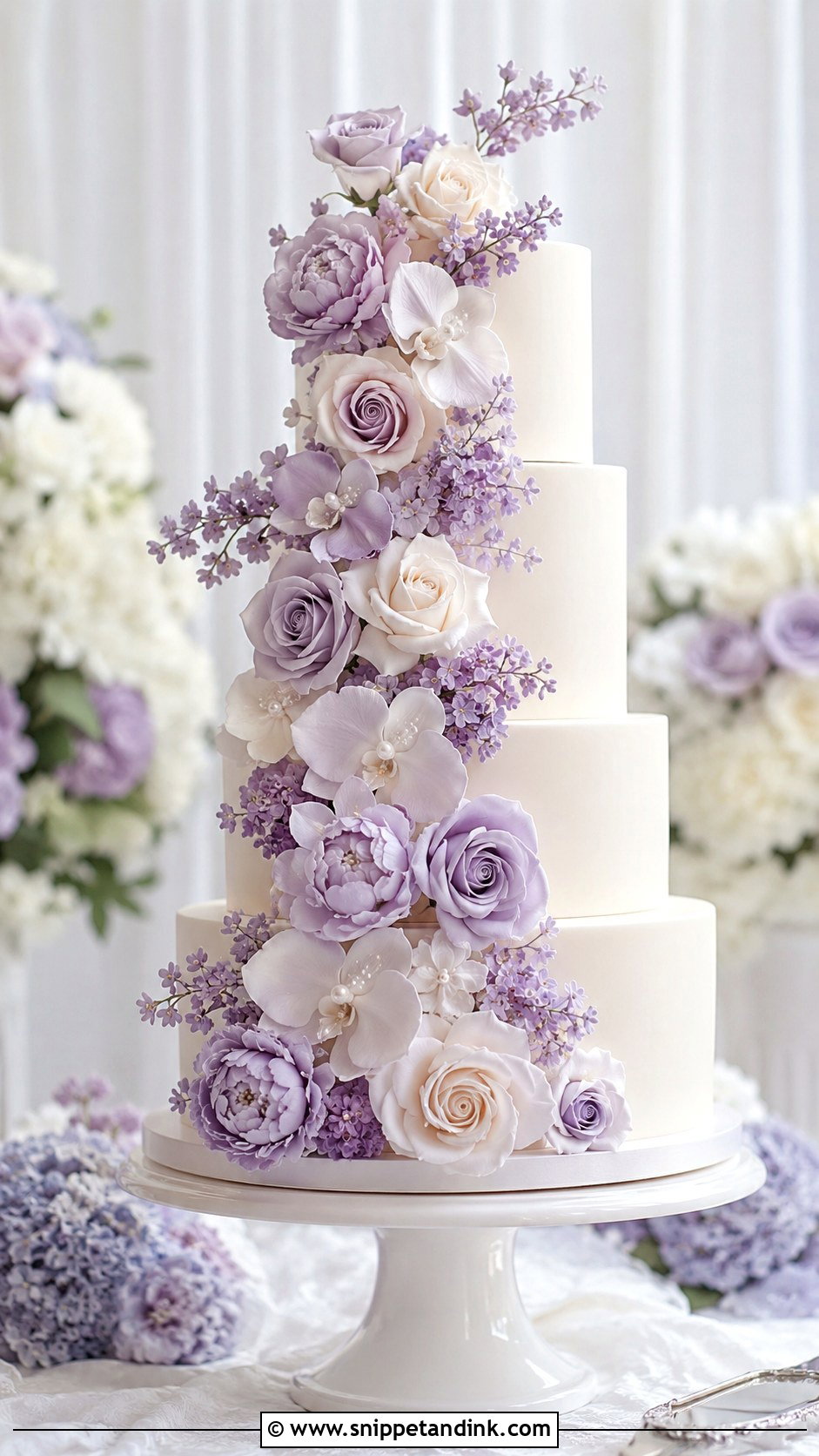
Sugar flowers are my answer when real lilacs are out of season or the flowers you love aren’t food-safe. I can color them to an exact swatch, and they don’t wilt under lights. Lilac sprays, roses, peonies, hydrangea and sweet peas are all possible in sugar. They’re fragile and take days to make, so I need the design settled weeks ahead, not the week of. A cascade down one side gives height without covering the whole cake. Inside, vanilla bean, almond raspberry or Earl Grey lavender.
12. Lilac Pressed Flower Wedding Cake
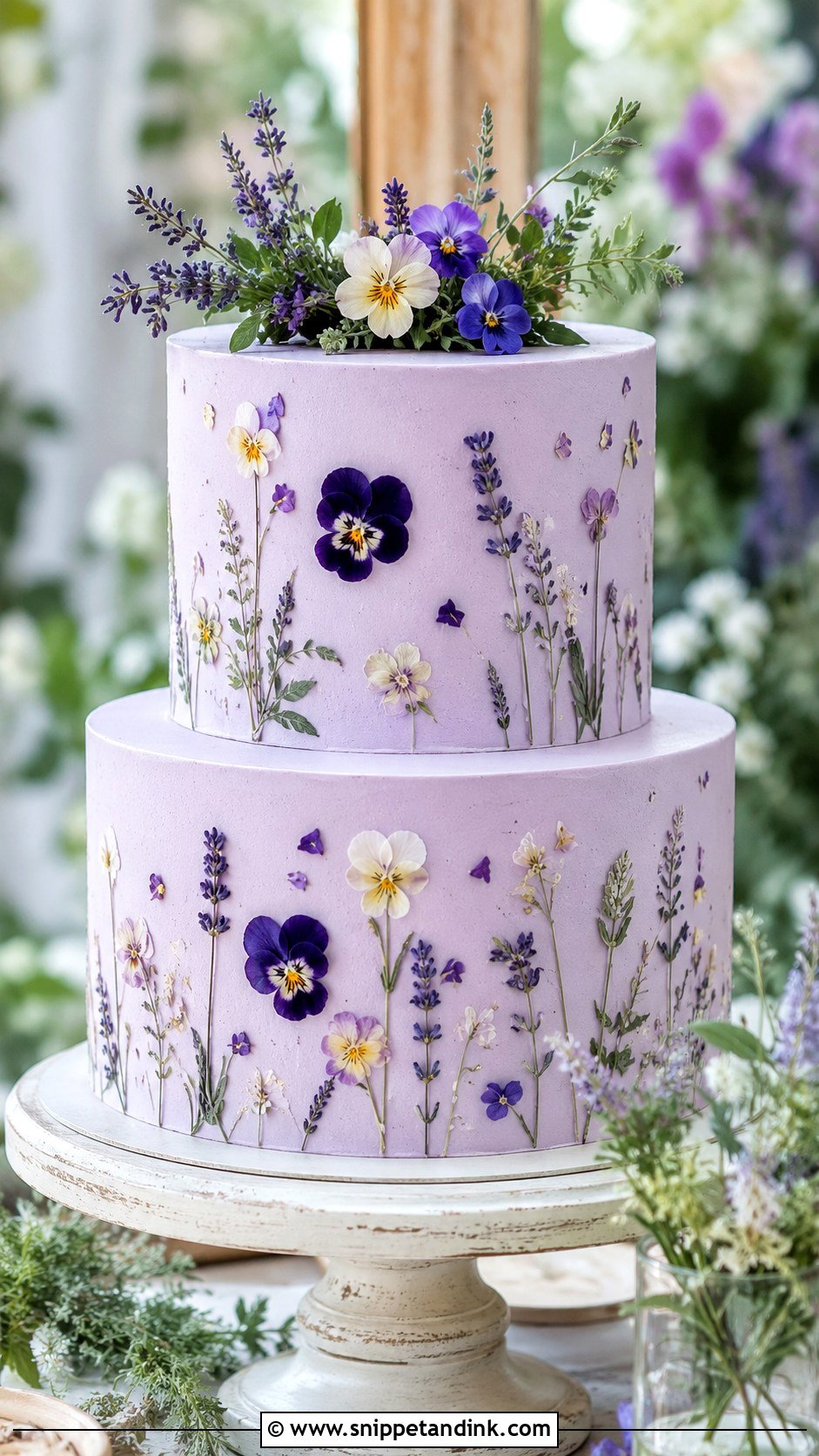
Pressed flowers sit flat against a smooth buttercream side: violas, pansies, lavender, calendula and small edible petals in lilac, purple, white and pale yellow. They must be grown as edible and pressed dry, not picked from a decorative bouquet. I space them with breathing room, since a crowded panel looks like confetti rather than a garden. Petals can darken slightly on a humid day, which I mention before outdoor brunches. Lemon, honey and vanilla are natural pairings.
13. Lilac Fondant Wedding Cake
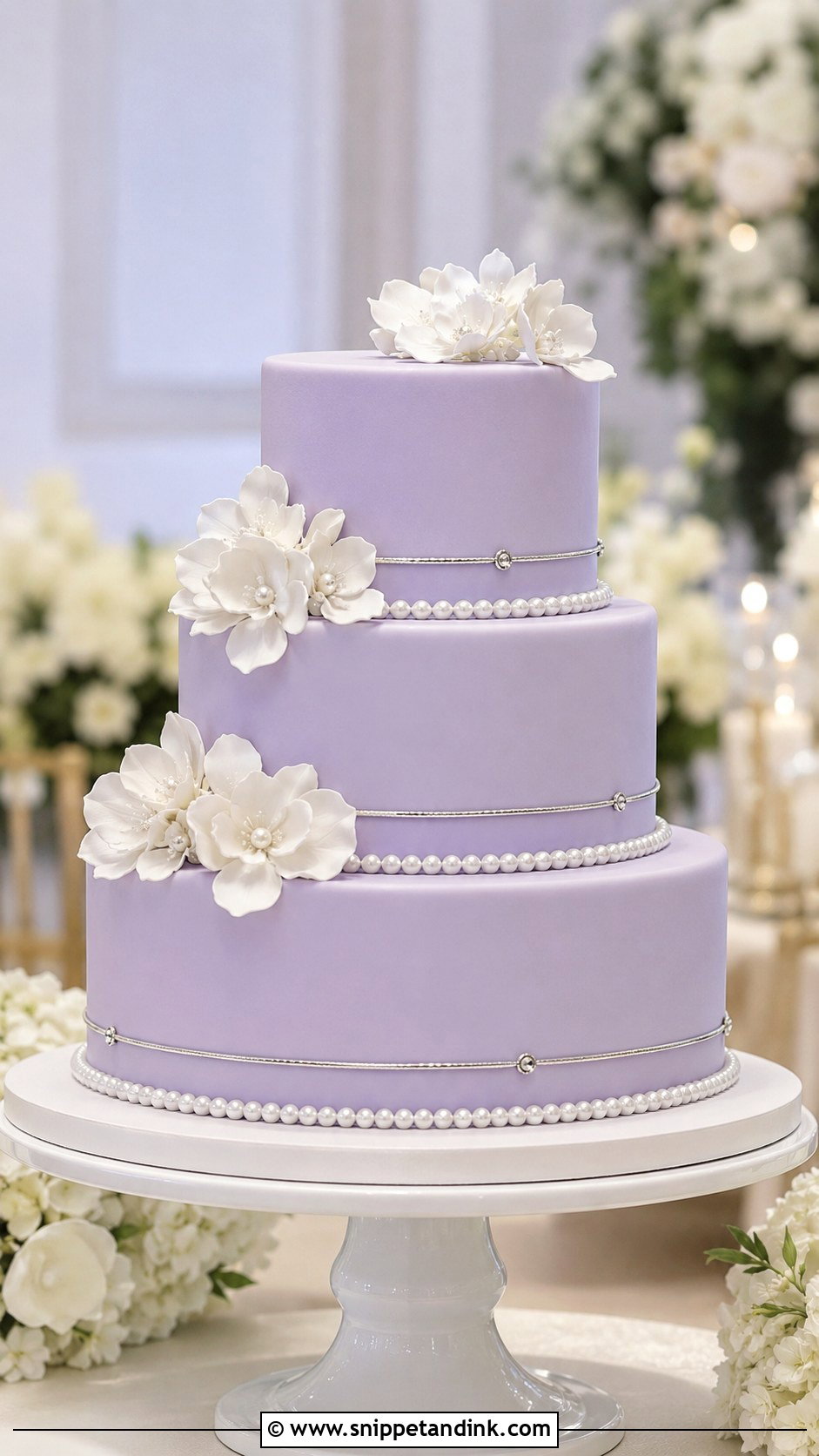
Fondant holds what buttercream can’t: razor edges, pleats, painted panels, bows and sculpted flowers. In pale lilac it pairs with white sugar flowers, pearl borders or thin silver lines. One lilac tier between two ivory ones is a subtle way in. I’ll be honest that some guests peel fondant off, so I keep it thin and put the flavor work into the layers, almond cream, lemon curd or white chocolate raspberry. It also travels better than most finishes on a warm day.
14. Lilac Naked Wedding Cake
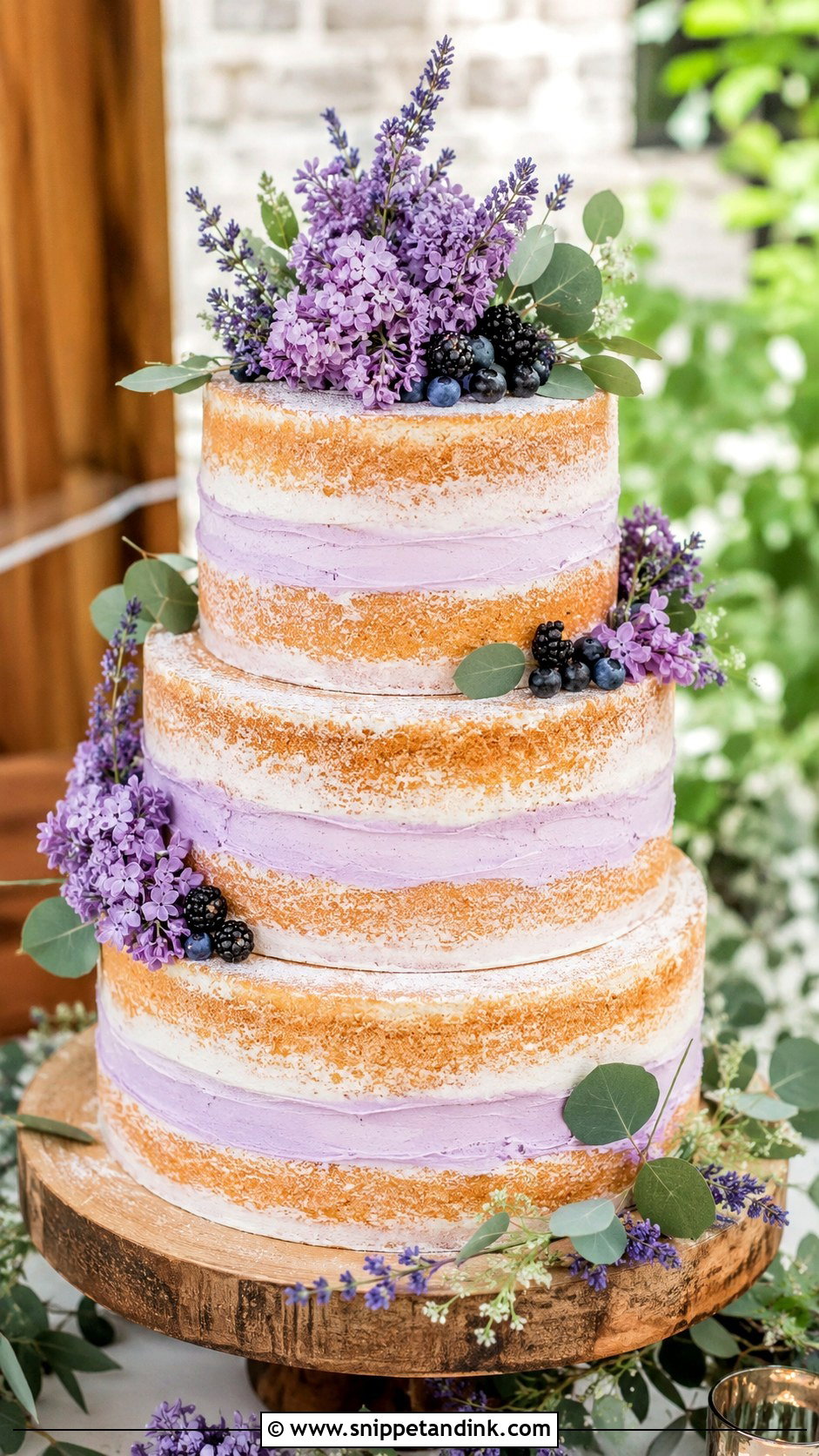
A naked cake shows the sponge underneath, with lilac buttercream only between the layers or swiped thinly on the edges. Exposed sponge dries out faster, so I assemble these as close to the event as I can and brush the layers with syrup. Berries, lavender sprigs and soft greenery finish it. Lemon, honey or berry fillings fit the farmhouse feel, which is why I see these most at barn and garden receptions.


15. Lilac Semi Naked Wedding Cake
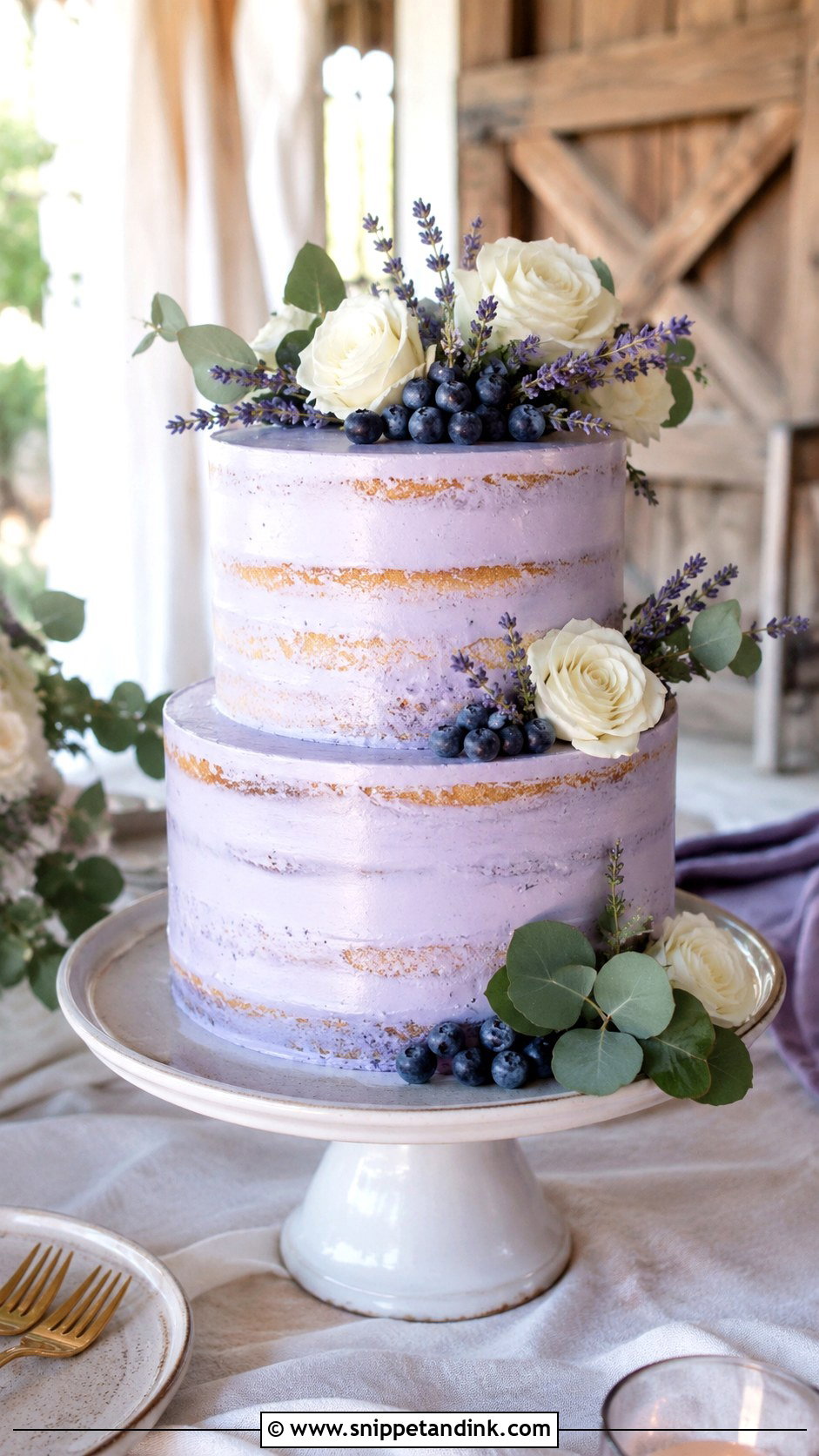
Semi naked sits halfway: a thin scraped coat of lilac or ivory buttercream with just a little sponge peeking through. It looks finished enough for a formal tent and still relaxed. I find it forgiving for outdoor spring weddings because there’s less frosting to soften in the sun. Add small flowers, herbs, berries or a simple topper. Lavender honey and lemon blueberry are the flavors I’d steer you toward.
16. Lilac Tiered Wedding Cake
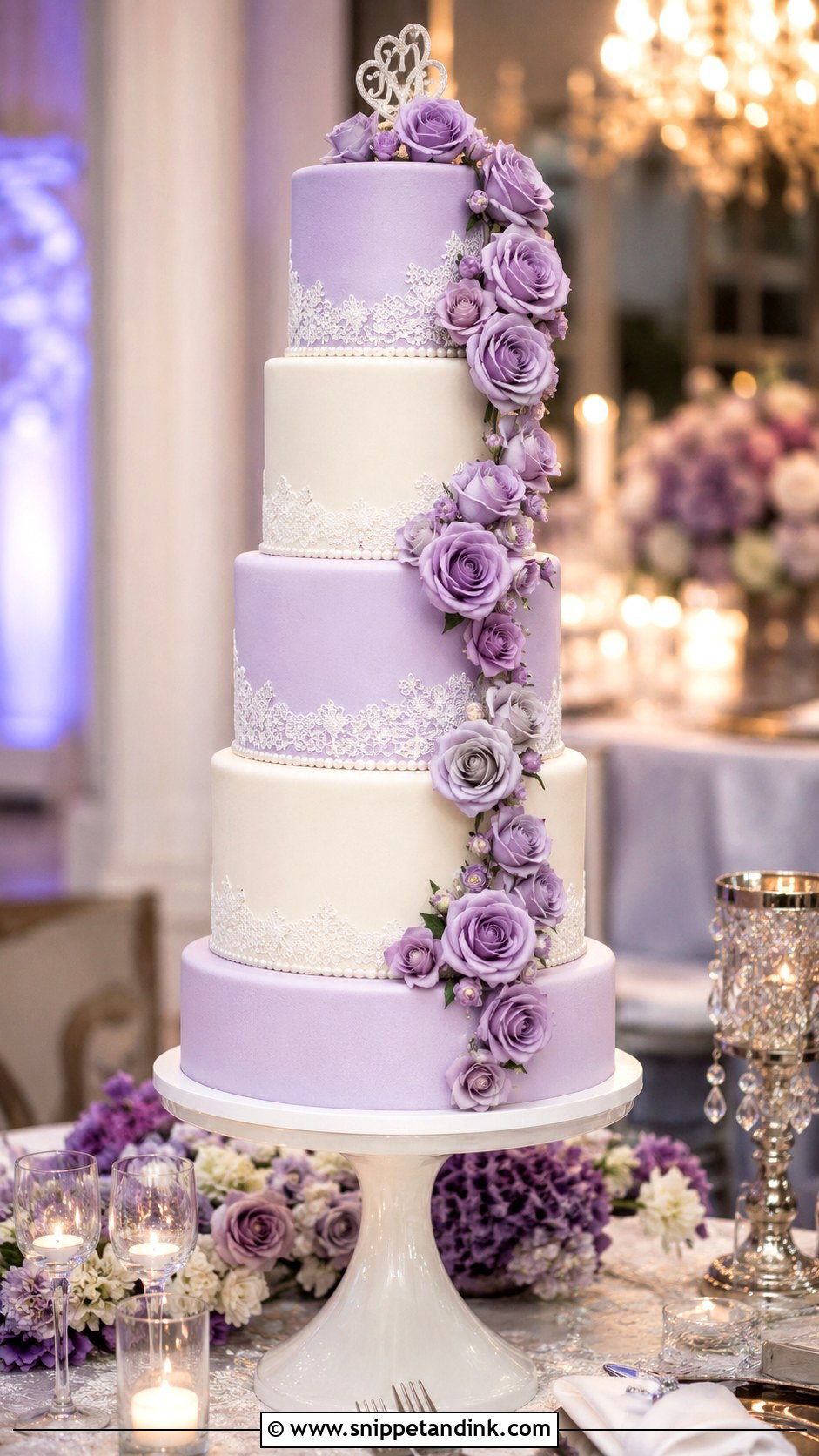
Three or four tiers give me room to mix smooth frosting, florals, texture and blocks of color in one cake. You can keep every tier pale lilac or alternate with ivory, and add cascading blooms, pearl trim, edible lace or a monogram. A tiered cake needs internal dowels and a board under every tier, which is why I deliver and stack big cakes myself. The payoff is more servings for a long guest list. Vanilla, lemon, almond and raspberry keep it guest-friendly.
17. Lilac Two Tier Wedding Cake
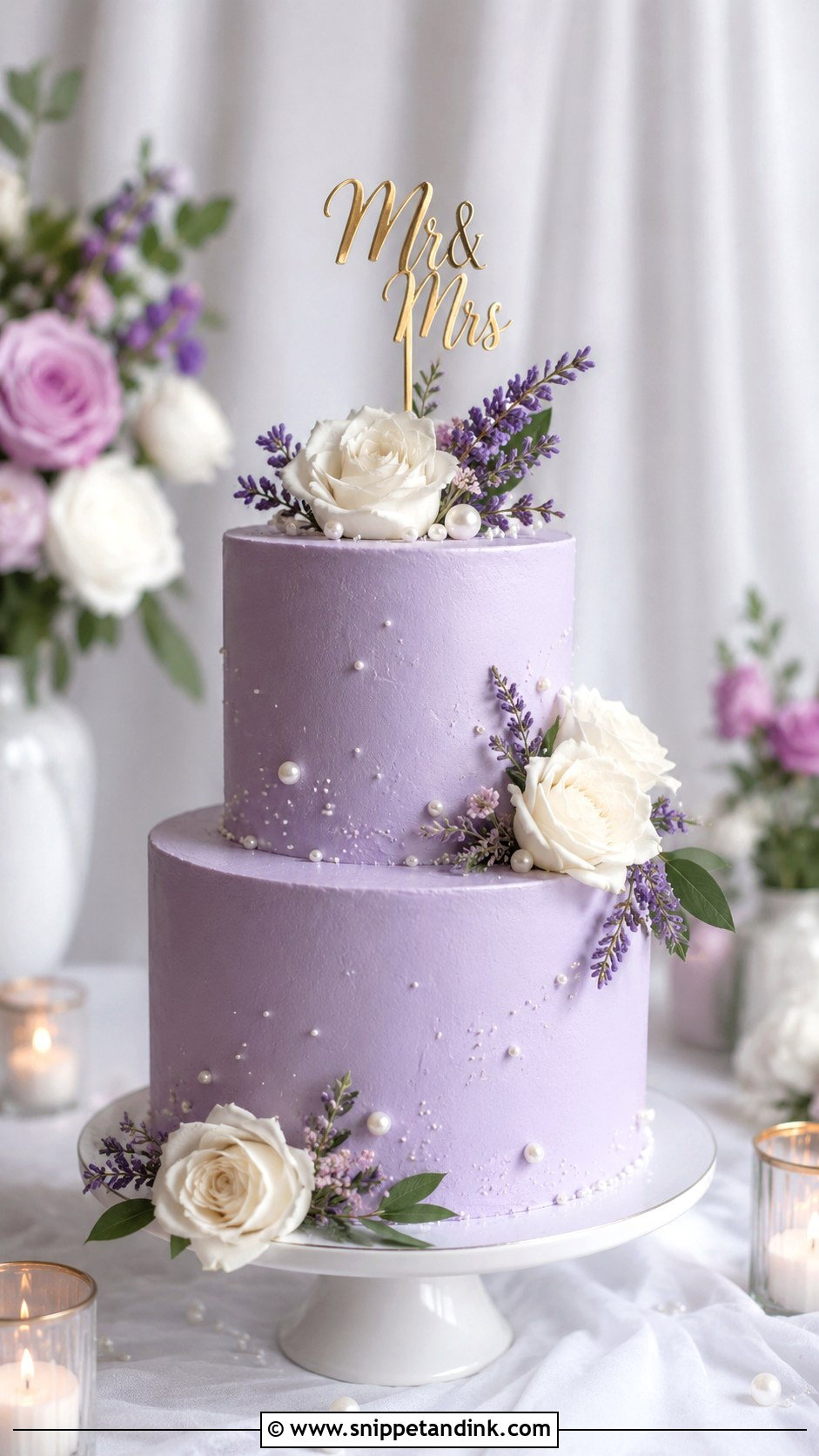
Two tiers suits a smaller wedding: enough height for the cutting photo without dwarfing an intimate table. Smooth lilac buttercream with fresh flowers is the simplest version; piping, ruffles or pearls add texture. My favorite reason to choose two tiers is flavor, lemon on one and vanilla raspberry on the other, so guests get a choice. It’s also one of the more budget-friendly ways to have a real stacked cake. Style it on a plain stand with a few candles.
18. Lilac Square Wedding Cake
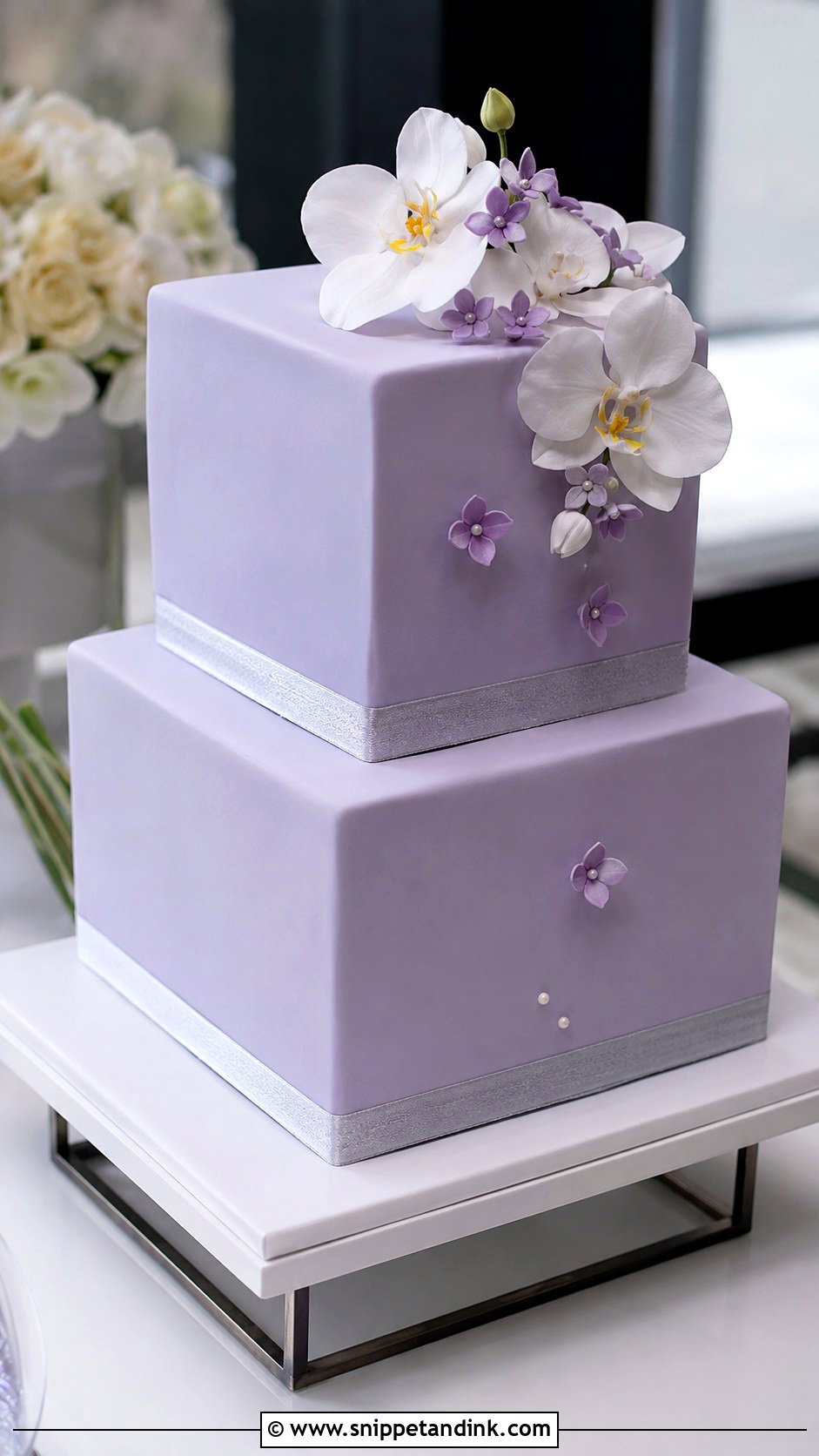
Square tiers make soft purple look architectural. They are also harder to finish than rounds, because every corner has to be sharp and a single dent shows, so expect more time and cost. Stack them evenly for a crisp line or offset them for something contemporary. Smooth fondant, painted lilac panels or a marble effect suit the shape. Keep decoration to orchids, a sugar flower or a ribbon line, and serve almond, coconut or lemon curd. It fits city weddings and minimal rooms.
19. Lilac Heart Wedding Cake
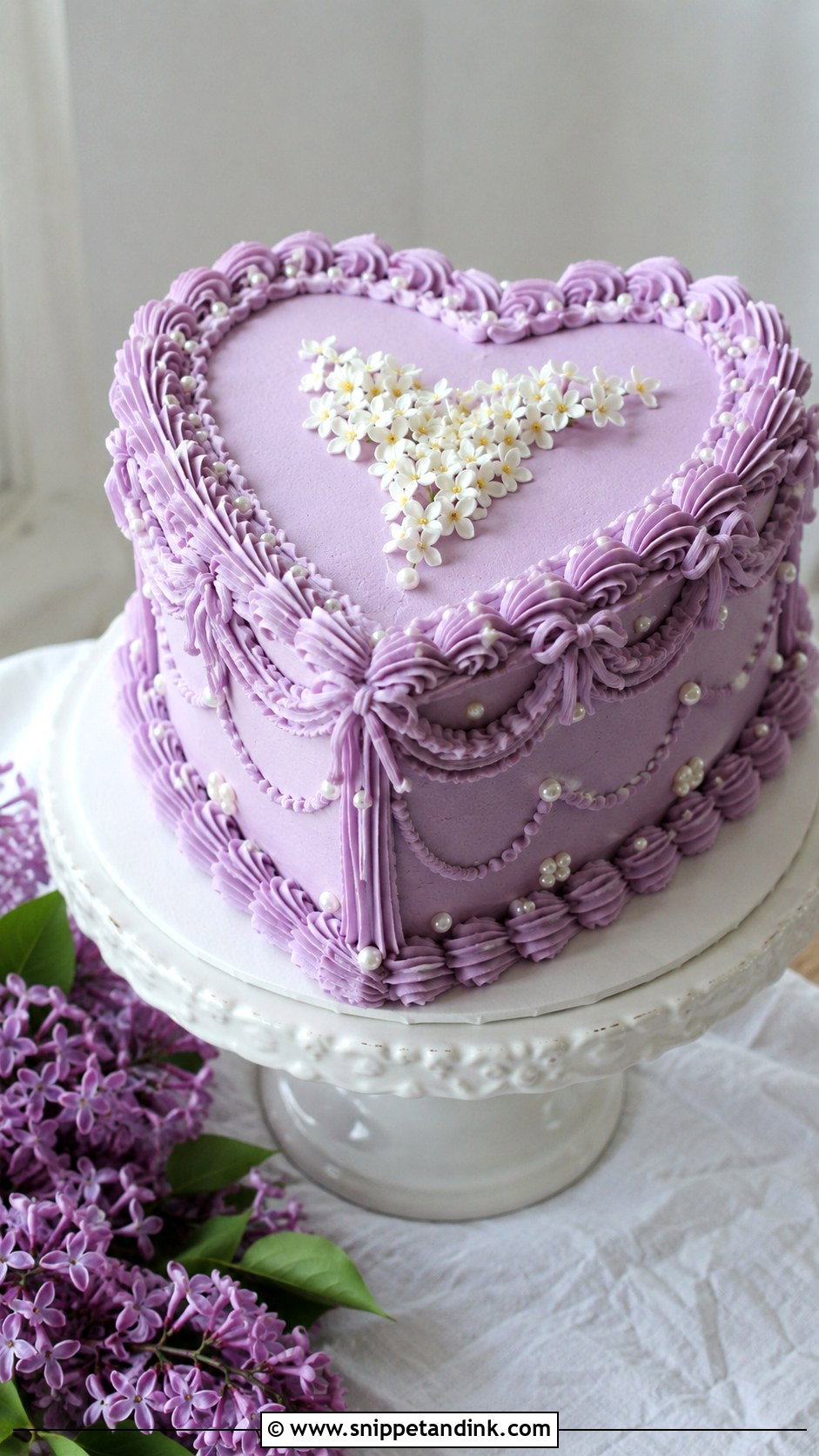
Heart cakes have come back with the vintage piping trend, and lilac keeps them from feeling childish. Piped borders, pearl dots and buttercream bows around the top edge are the classic finish. I most often make these as a cutting cake beside a larger dessert table, or as the only cake at a small wedding. Hearts cut into awkward slices, so I plan the portion count with that shape in mind. Vanilla strawberry, almond cream or lemon raspberry suit it.
20. Lilac Floral Meadow Wedding Cake
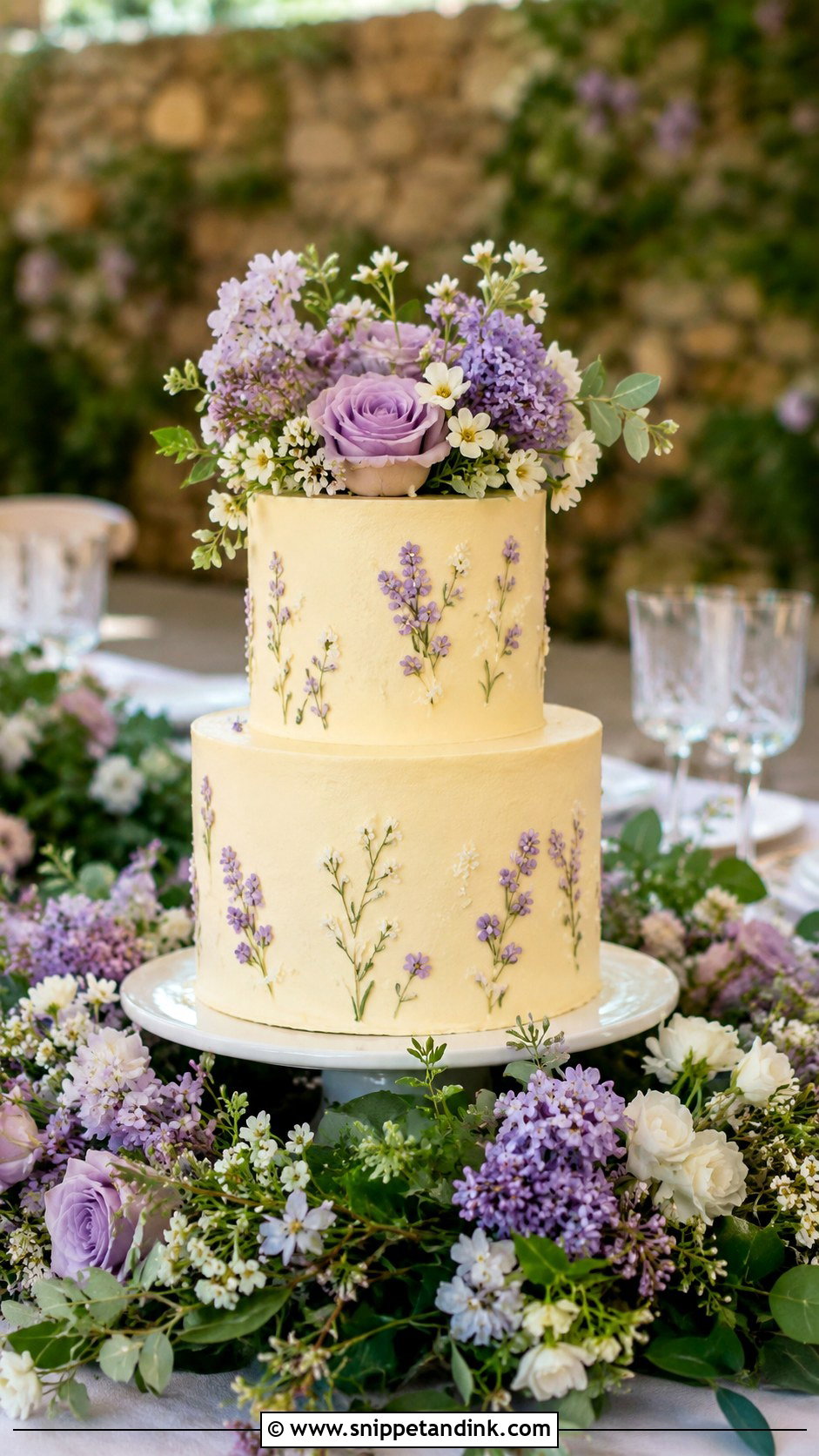
A floral meadow puts most of the design around the cake, not on it. The cake stays simple, smooth ivory or pale lilac, while the florist builds a bed of blooms at the base and lets a few climb the sides. The display looks lush even when the cake work is minimal, which can shift budget from my bench to the flower order. Lilac, lavender, white and sage make a soft palette. Vanilla, lemon, honey and elderflower suit a greenhouse or outdoor ceremony.
21. Lilac Wafer Paper Wedding Cake
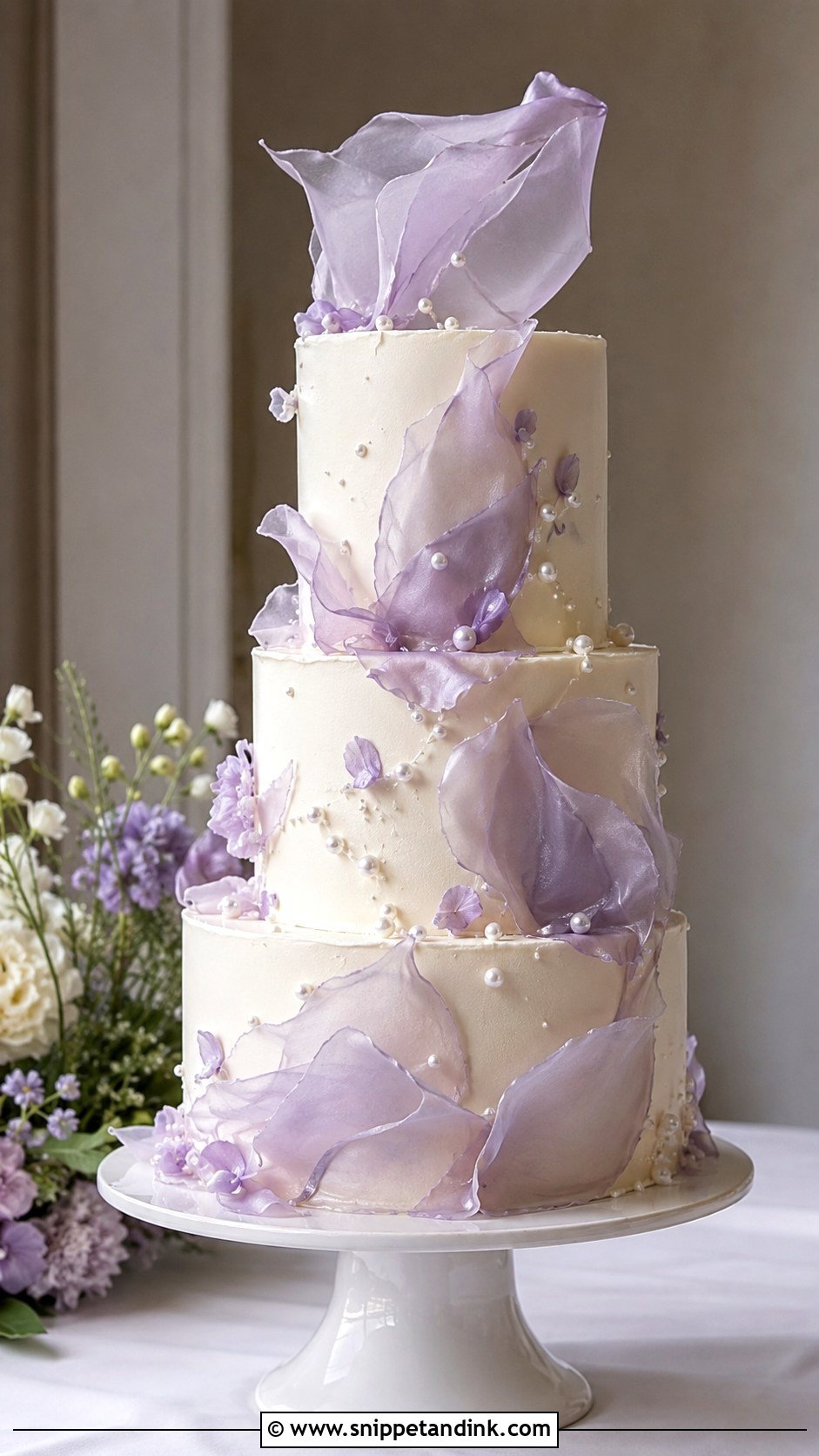
Wafer paper can be shaped into sails, petals, ruffles, butterflies or abstract flowers, and it weighs almost nothing, so I can build tall sculptural pieces without loading the tiers. Pale lilac pieces read softly against ivory buttercream or fondant. The weakness is moisture: wafer paper curls and droops in humidity, so I seal the pieces and avoid it for steamy summer tents. Go minimal with one large statement piece or layer paper flowers across several tiers, with vanilla bean or almond raspberry inside.
22. Lilac Pearl Wedding Cake
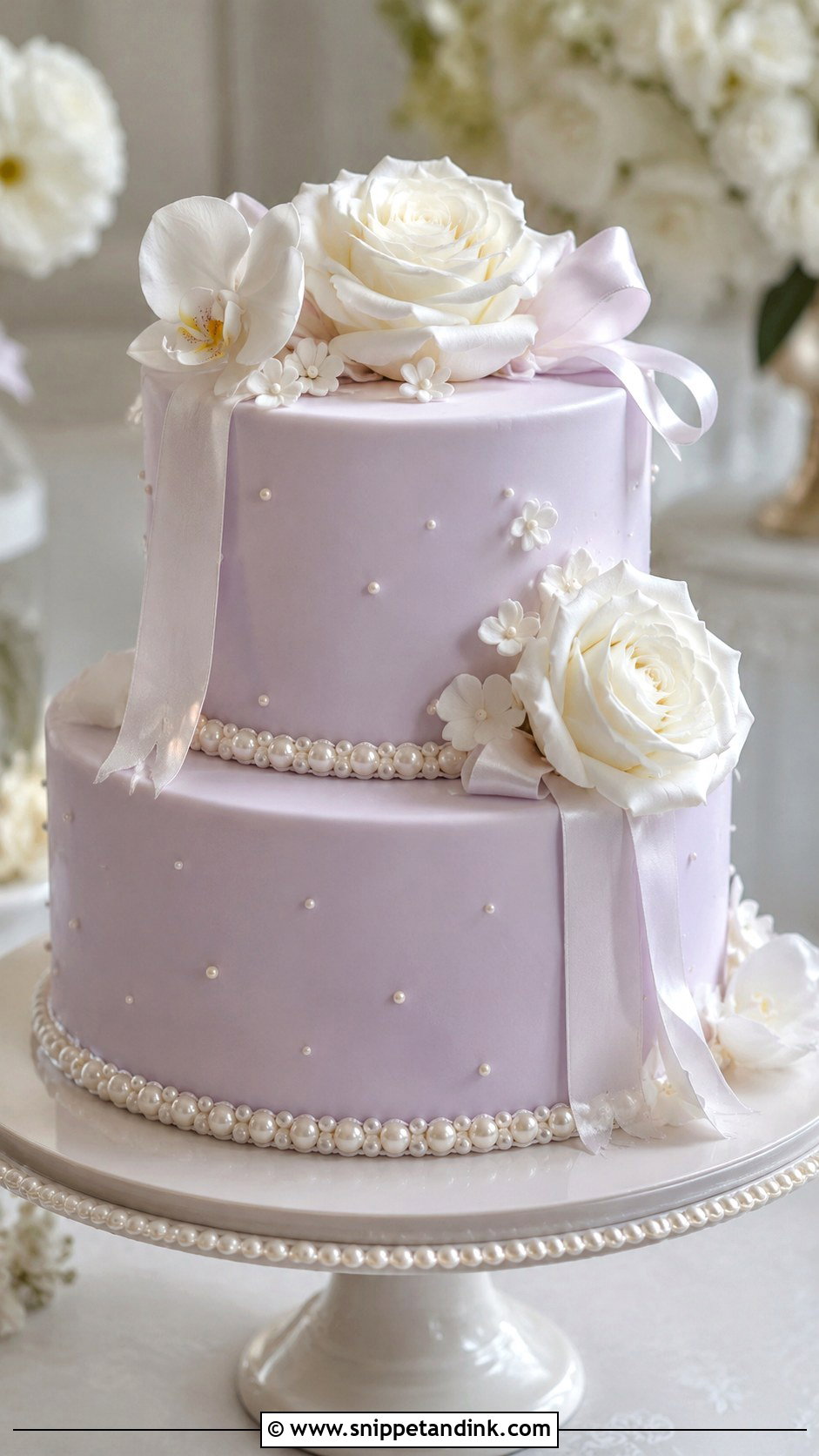
Edible pearls can be scattered, set in neat rows or used to outline each tier on smooth lilac frosting, adding texture without clutter. I set them by hand with tweezers, and on buttercream they need to go on while the crust is still slightly tacky or they’ll pop off in transit. Keep the lilac pale so the pearls glow. White roses, sugar orchids or a ribbon effect finish it, with vanilla almond or lemon cream inside. It pairs easily with a pearl-trimmed gown.
23. Lilac Lace Wedding Cake
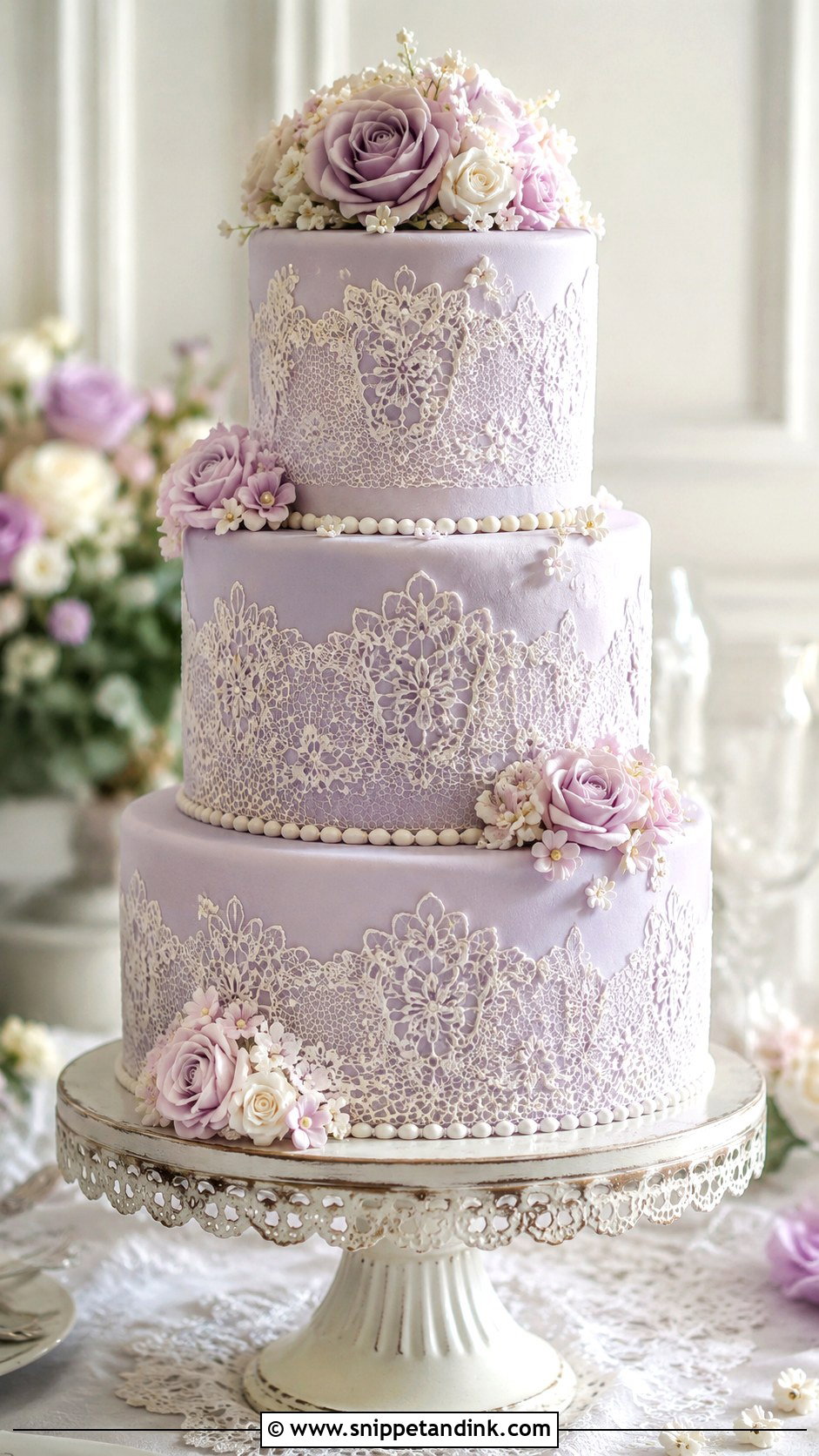
Edible lace is made in a silicone mat and laid over lilac fondant or ivory frosting, and many couples bring me a scrap of their dress lace to echo. I can match the motif closely, though not every pattern exists as a mat, so I’ll show you the nearest options. Lace can wrap every tier, cover just one or sit as a front panel. Finish with pearls or a small floral topper. Almond, vanilla bean or lavender honey fit a historic venue.
24. Lilac Monogram Wedding Cake
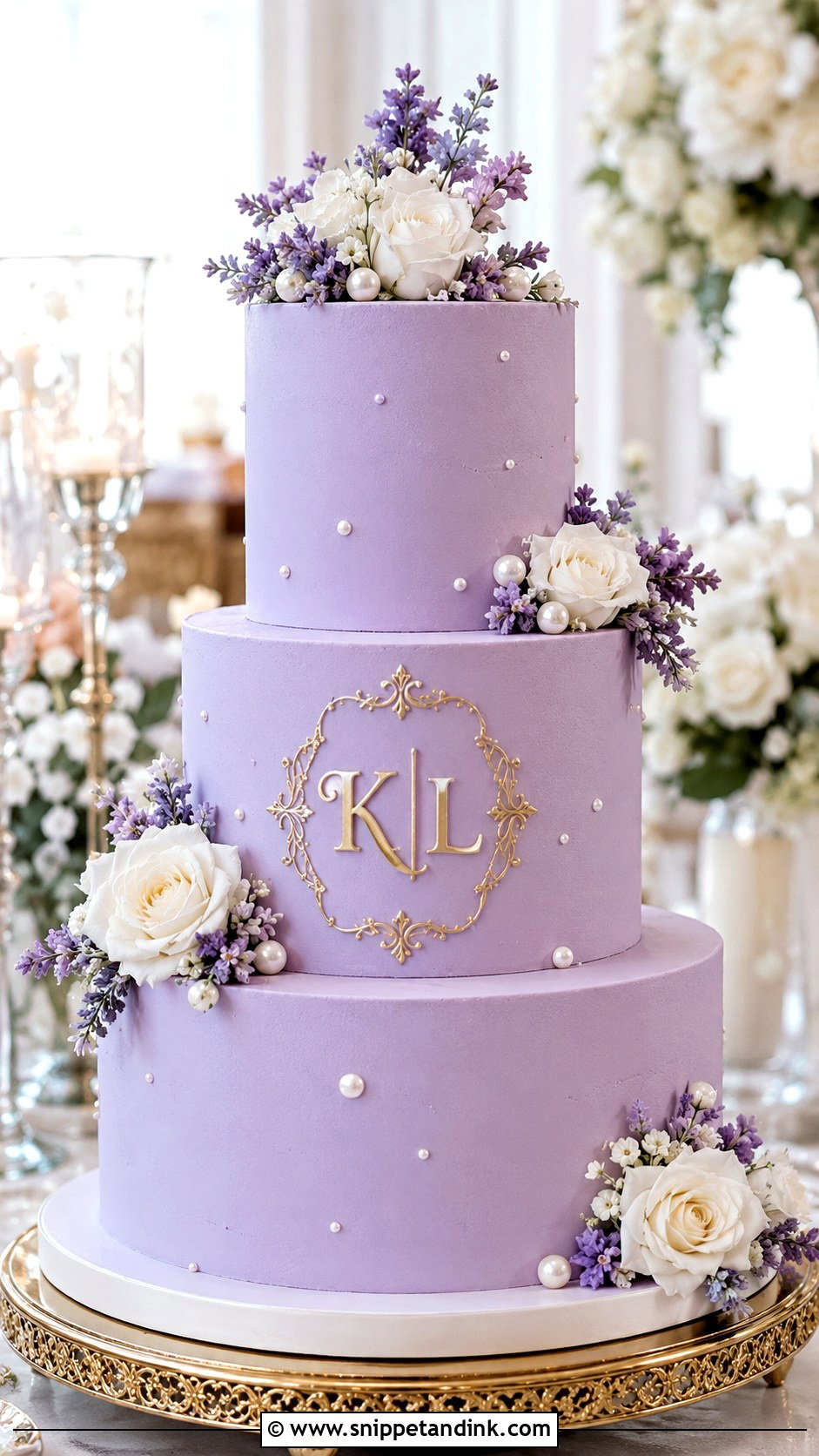
Initials on the front tier personalize a cake without much else on it. I pipe them in buttercream or paint them in gold, white or silver, and a smooth lilac background keeps them easy to read from across the room. Ask for a mock-up of the lettering at actual size before you approve it; a font that looks fine on screen can turn spidery on a cake. Two-tier, three-tier and square cakes all suit it. Vanilla bean, almond raspberry or white chocolate cream keep it crowd-pleasing.


25. Lilac Mini Wedding Cake
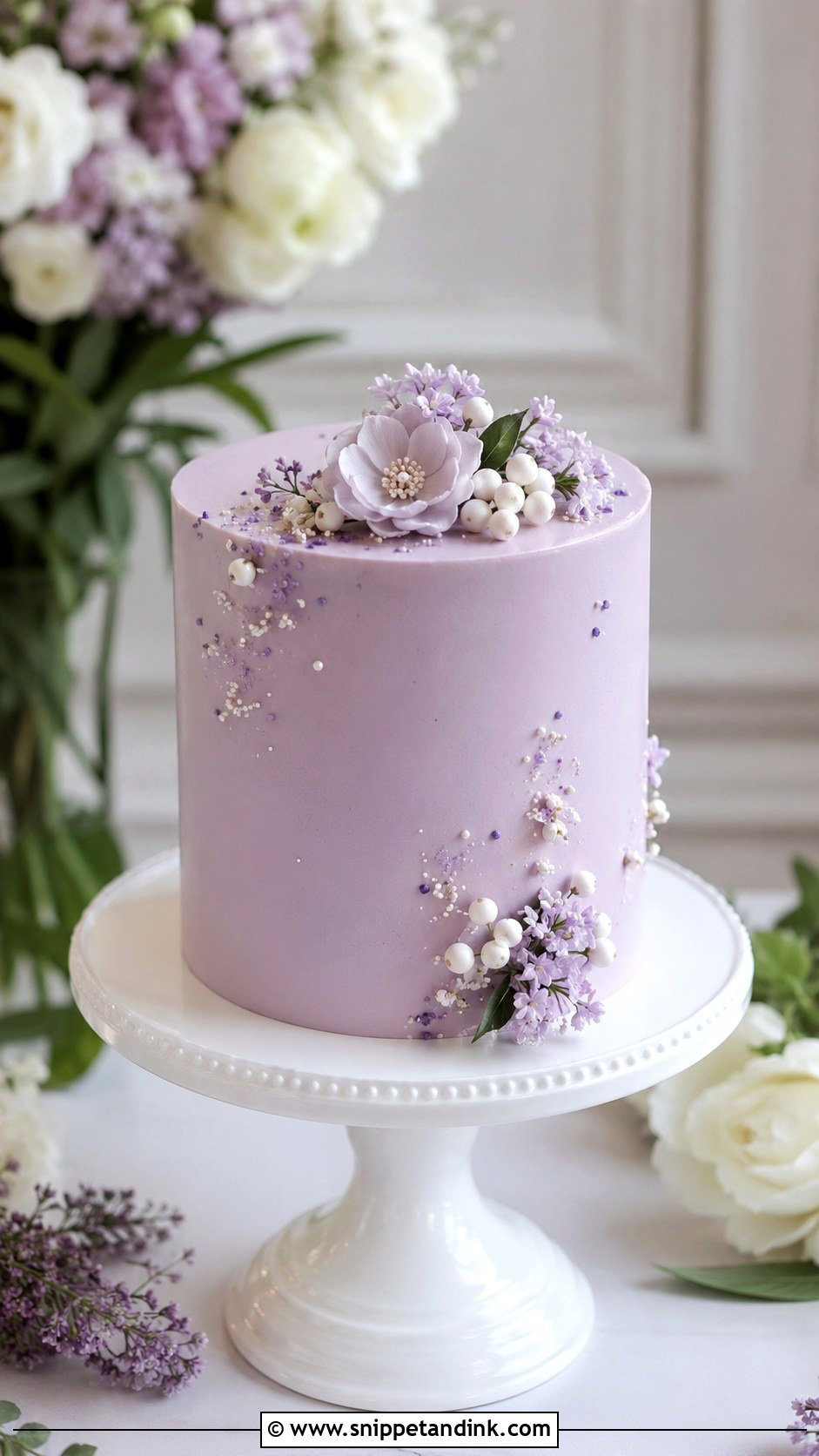
A single tall tier works for an elopement, a tiny wedding, or as a cutting cake beside a bigger dessert table. Height is what makes it feel like a wedding cake rather than a birthday one, so I usually build it at least as tall as it is wide. Pale lilac buttercream has room to show on that height. Add a few blooms, pearls, berries or a small sugar flower spray, with lemon lavender or vanilla raspberry inside. It also sits right at camera level for close-up photos.
Lavender in the Sponge Without the Soapy Aftertaste
Many couples who choose a lilac cake want the flavor to match, and lavender is wonderful in small amounts. Overdo it and the cake tastes like hand soap. I steep culinary lavender in warm milk or cream and strain it out, rather than baking buds into the batter, so nobody bites into a stalk.
Lavender also gets stronger as the cake rests a day, so I flavor lightly on purpose. Lemon, honey, blueberry and white chocolate soften it; Earl Grey doubles the floral note, which some people love and others don’t. If half your guests are wary of floral desserts, put lavender in one tier only and keep vanilla or almond in the rest.
Getting a Pale Cake to the Venue in One Piece
Pale frosting shows every scuff, so delivery matters more with lilac than with darker colors. I chill buttercream cakes until firm, drive them flat in an air-conditioned car, and stack tall cakes on site.
- Ask where the cake table sits and move it out of direct sun or away from a heat lamp if needed.
- Fondant cakes moved from a cold fridge into a warm room can sweat beads of water; I let them come up to temperature in their box, unopened.
- Keep the cake indoors until close to cutting time at outdoor summer weddings. Buttercream softens, piping slides and wafer paper wilts in heat.
- Give your planner one contact who can handle the cake if a tier shifts, so nobody improvises with a butter knife.
One Soft Purple, Twenty-Five Ways to Finish It
Lilac can read vintage, modern, floral, rustic or formal; the finish decides which. Settle on one direction first and add details after. Smooth buttercream stays simple, Lambeth piping turns it nostalgic, Sugar flowers and pressed flowers bring the garden in, and marble, square tiers or wafer paper push it modern. Inside, I’d stick to flavors guests actually finish their slices of: vanilla, almond, lemon, raspberry, honey or elderflower. Bring your venue photos and a fabric swatch to the tasting, and we can work out the rest from there.
You'll Like These Ideas:












Leave a Reply