
Most couples who sit down with me now bring a screenshot of texture rather than a picture of a tall white cake: heavy vintage piping, a single oversized bow, a scatter of pearls, cut figs tumbling down a tier. Classic white tiers haven’t gone anywhere, they just get paired with one modern detail instead of five. What I try to do at a first consultation is work out which part of a photo someone actually loves, because a cake that suits a candlelit ballroom can look lost under a marquee at noon. A small single tier can carry a whole table if it has height; a piped vintage cake needs a calmer room around it. Treat the ideas below as raw material for the brief you’ll hand your baker, and keep the two or three that make you stop scrolling. Here are 20 Wedding Cake Aesthetic.
Turning Twenty Pictures Into One Brief a Baker Can Quote
A folder of forty saved cakes tells me you like cakes. What I actually need is short, and it saves us both a round of back-and-forth emails. Before you contact anyone, pull your favourites down to three and write a line under each saying what you love about it: the piping, the colour, the height, the flowers.
- Guest count, and whether every guest gets a slice or there’s a dessert table as well.
- Venue, the month and roughly where the cake will stand, so I know about heat, sun and how far I’m carrying it.
- The one detail you can’t live without, and one you’d drop if the quote comes in high.
- Flavours you love and any allergies in the room, since that changes what I can put inside.
- A photo of your flowers or colour swatch, if you have one.
Bring a rough budget range too. It isn’t a trap; it tells me whether to suggest sugar flowers or fresh ones, three tiers or two plus a plain kitchen cake to make up the numbers. For a heavily detailed design, contact bakers months ahead, because the hand-finished ones fill their summer weekends first.
1. Vintage Lambeth Wedding Cake
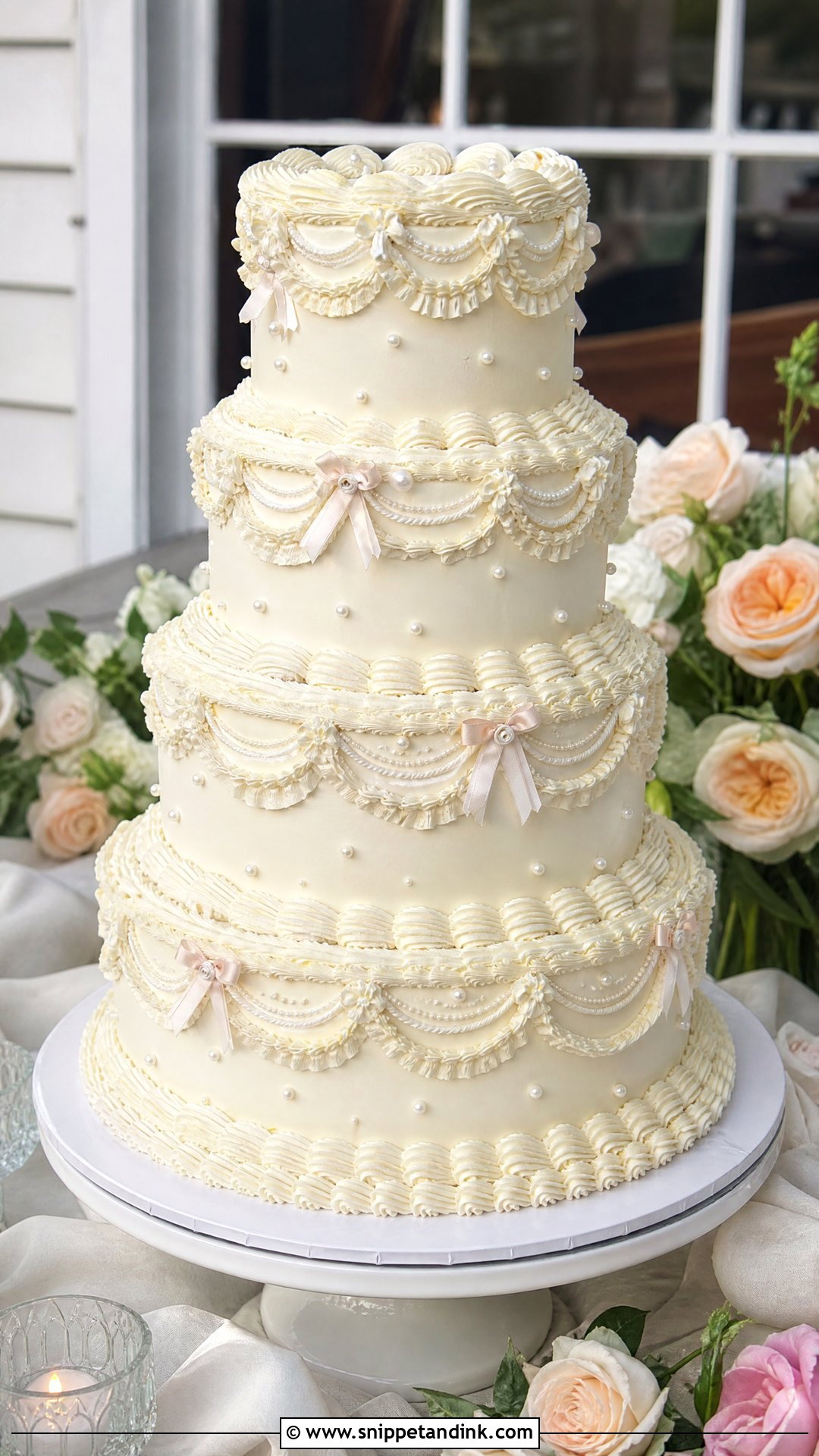
Lambeth work is overpiping: layer upon layer of piped buttercream borders, swags, shells, ruffles and pearl dots built up until the sides look carved. I pipe it in a stiffer buttercream than I’d use for filling, because a soft batch slumps and the shells lose their ridges within an hour on a warm table. Ivory, butter yellow, pale blue and soft pink all suit it. Keep to one colour plus white, or the detail starts to look busy from across the room. A heart-shaped top tier, a few glossy cherries or tiny piped bows bring some fun to it. Put it on a pedestal with plain linen and candles; the piping is already doing all the talking.
2. Minimalist White Wedding Cake
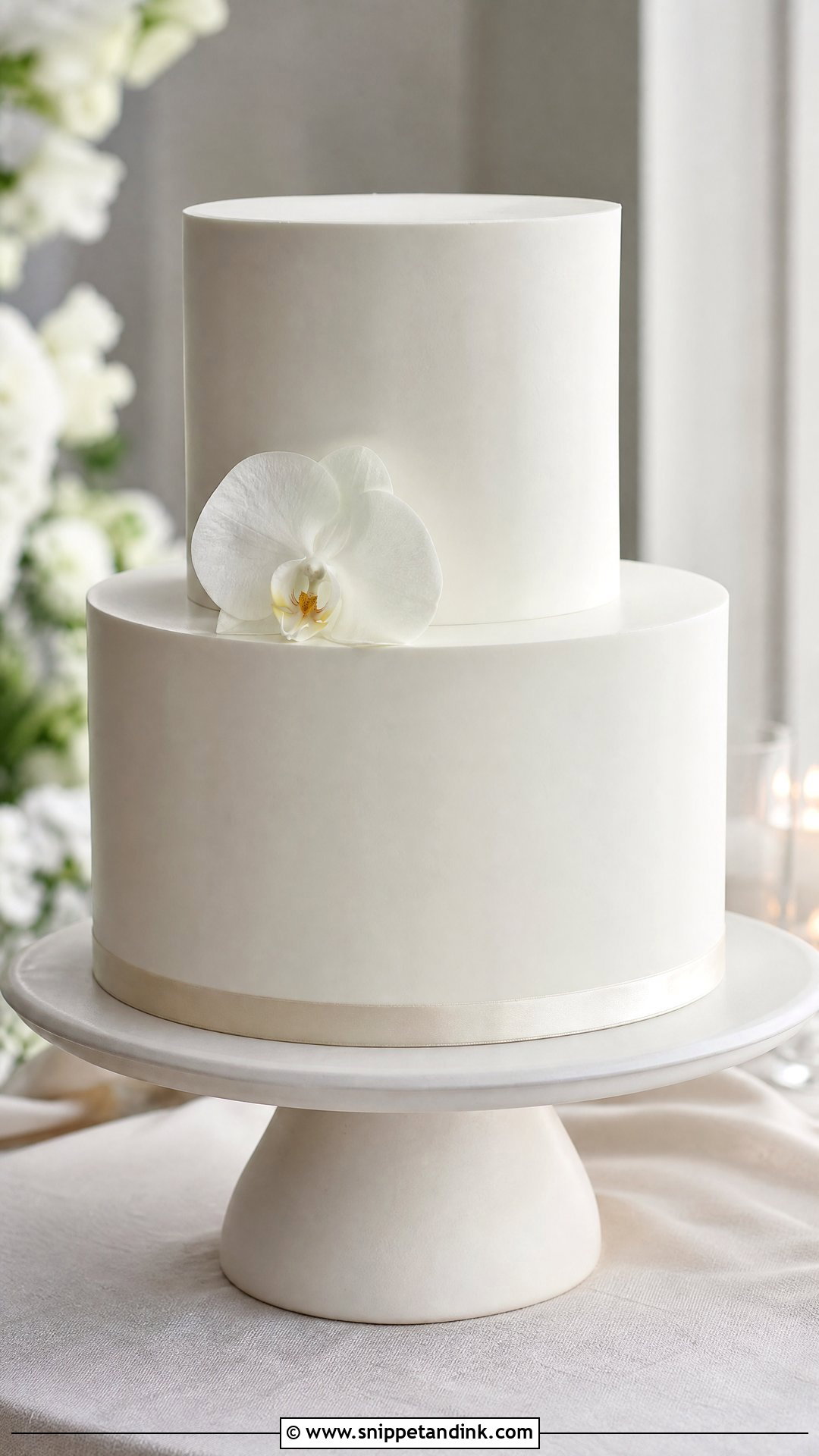
Plain looks easy and is the hardest cake on this list to get right. With nothing on the sides, every dent, air bubble and leaning tier shows, so I finish these over a chilled ganache or a firm buttercream crumb coat and scrape the edges sharp. Decoration stays tiny: one stem, a little cluster of sugar petals, a narrow ribbon at the base. Ask for a tall single tier or two tiers with a faint texture rather than mirror-smooth sides if your venue is warm, because a slight finish hides the small marks that a hot van ride leaves behind. Next to a detailed dress or heavy florals, this is the cake that lets them breathe.
3. Pearl Wedding Cake
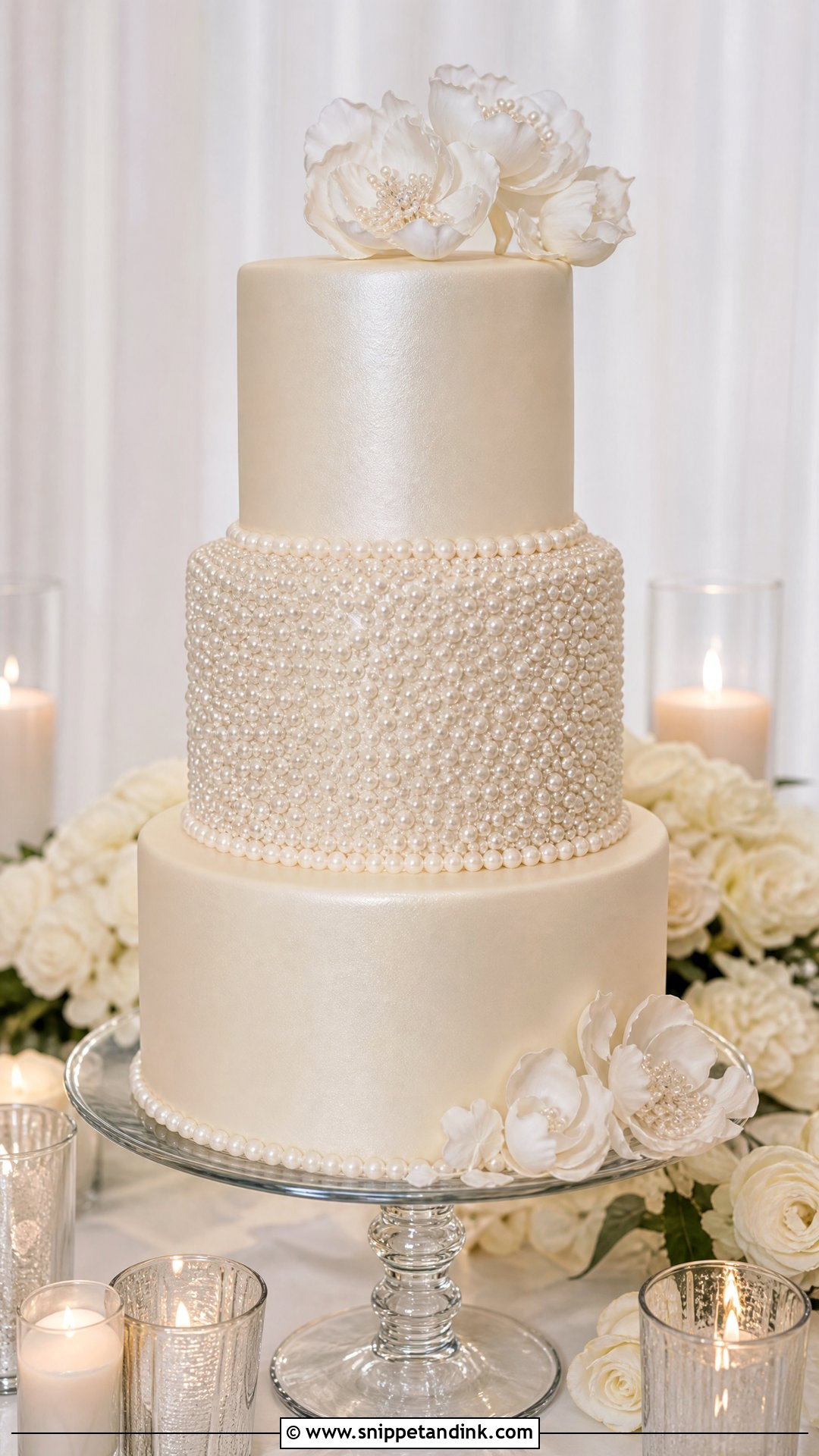
Pearls carry this cake without any colour at all, on white, ivory, champagne or the palest blush. The first thing I ask is how they should eat. Hard sugar pearls are crunchy and some guests will pick them off, so on a cake that’s going to be sliced I usually pipe soft buttercream pearls or press moulded fondant ones. For something quiet, run a single strand around the base of each tier. For more impact, cover one tier entirely and leave the others smooth. Pearls only read as luxurious when they have empty space around them, so resist adding flowers as well.
4. Bow Wedding Cake
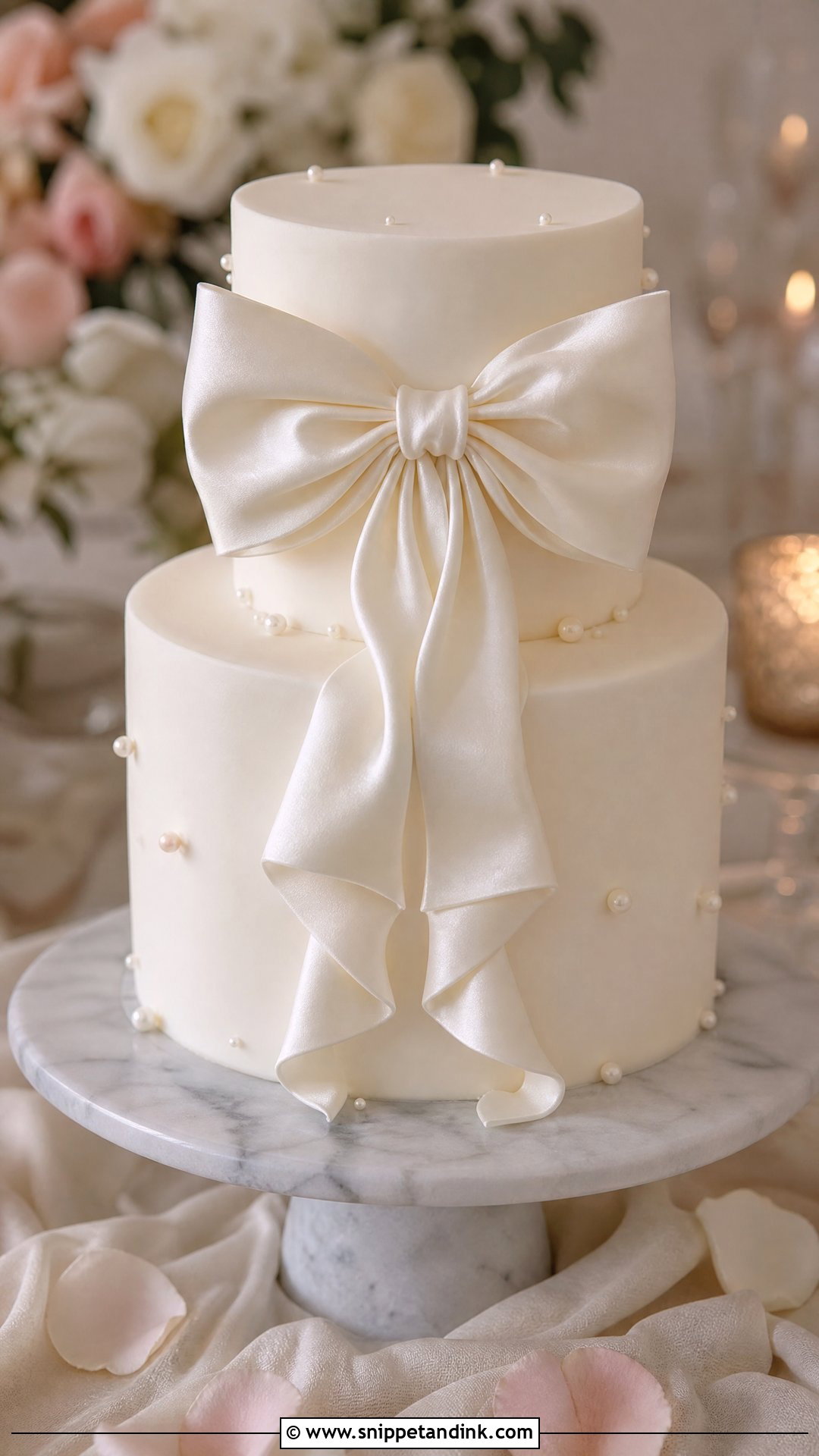
The bow is where this cake lives or dies, and I make fondant or sugar-paste loops days ahead so they’re dry enough to hold their shape on the cake. Silk ribbon is prettier up close, but it soaks up butter and darkens in patches, so I back it with tape or a thin strip of fondant before it touches buttercream. One big bow across a smooth white tier reads modern and fashion-led. A row of tiny ones on every tier is softer and more vintage. Keep the cake neutral and let the bow carry the colour: ivory, blush, pale blue or champagne.
5. Floral Wedding Cake
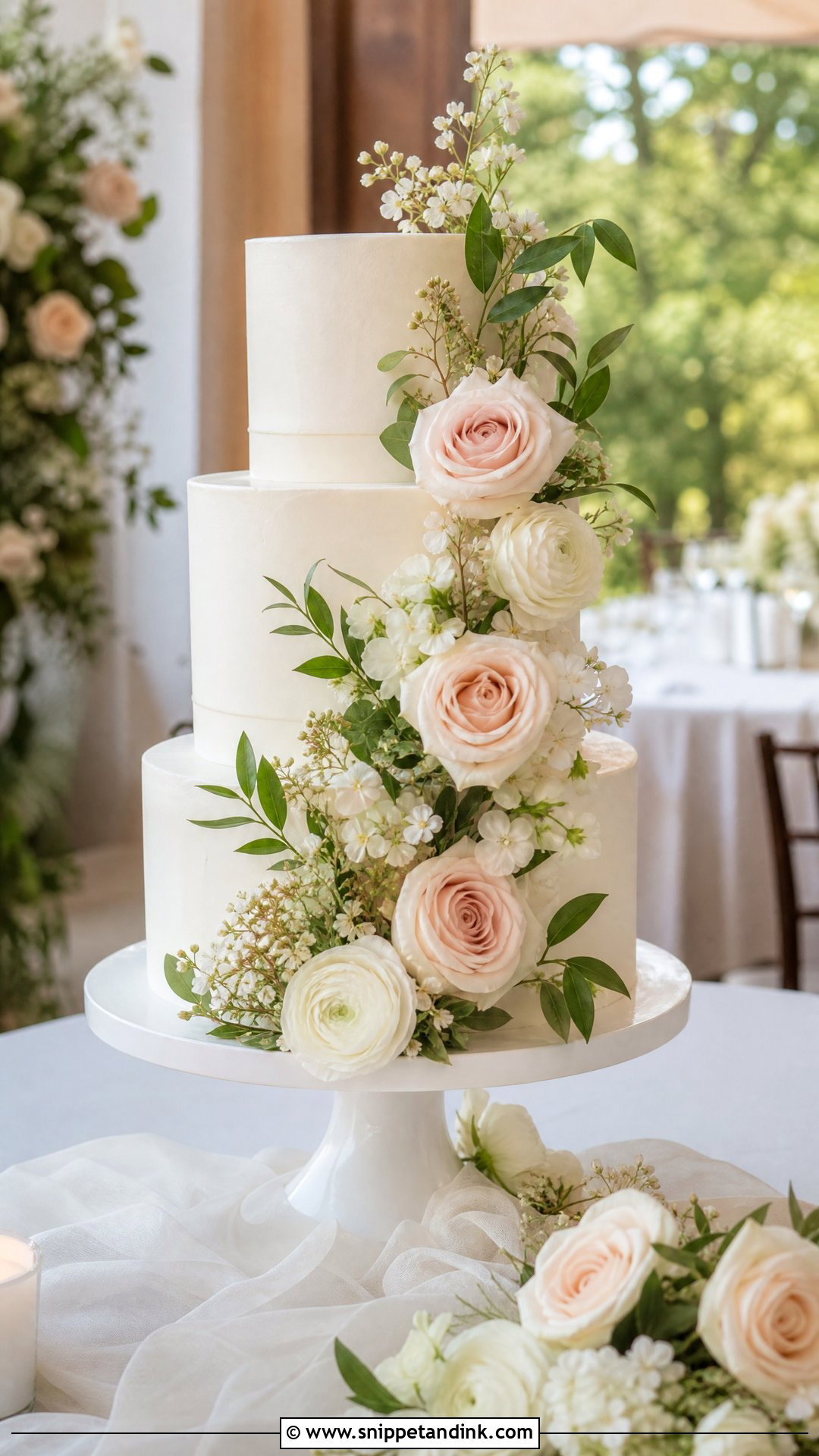
Flowers are the quickest way to tie a cake to the bouquet and the tables, and they can be fresh, sugar flowers or piped buttercream depending on budget. Loose stems trailing down the tiers suit a garden party; tight clusters of roses or orchids feel more formal. Lily of the valley looks delicate in pictures but is poisonous, so on a cake I only ever use a sugar version of it. Any fresh stem should be grown without sprays, wrapped and placed in a pick so sap never touches the icing, and agreed between your florist and baker before the day.
6. Textured Buttercream Wedding Cake
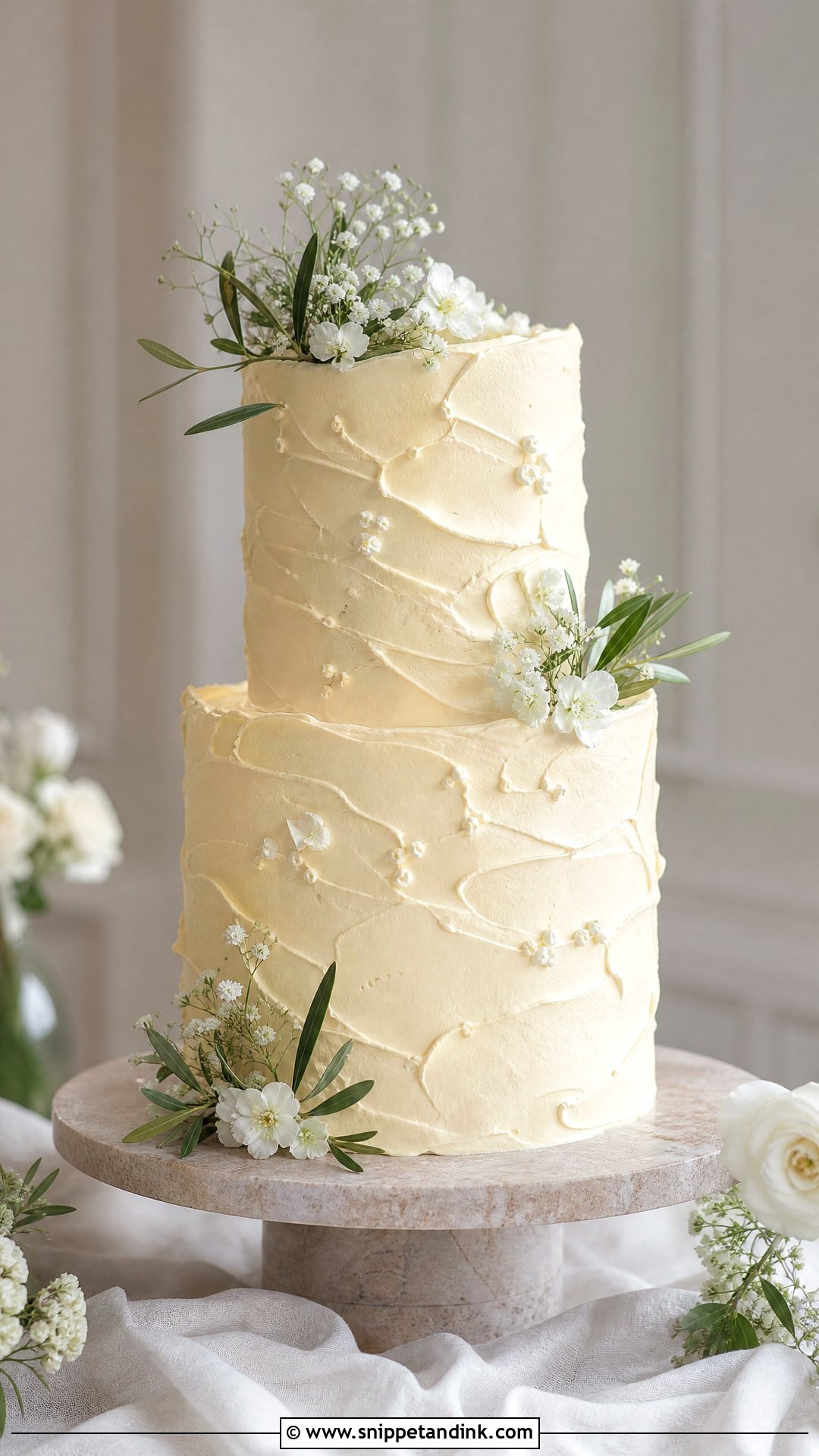
Texture is my favourite answer for couples who want a handmade feel and still need a cake to travel well. I pull a palette knife or a comb around the tier while the buttercream is still soft, which gives ridges, swirls or brushed waves, and those marks hide the tiny bumps a smooth finish would show. White on white looks refined; a soft colour feels more current. It sits happily at rustic, coastal and city venues alike. Add a little fruit, a couple of flowers or a few pearls, but leave most of the texture uncovered or there’s no point to it.
7. Sculptural Wedding Cake
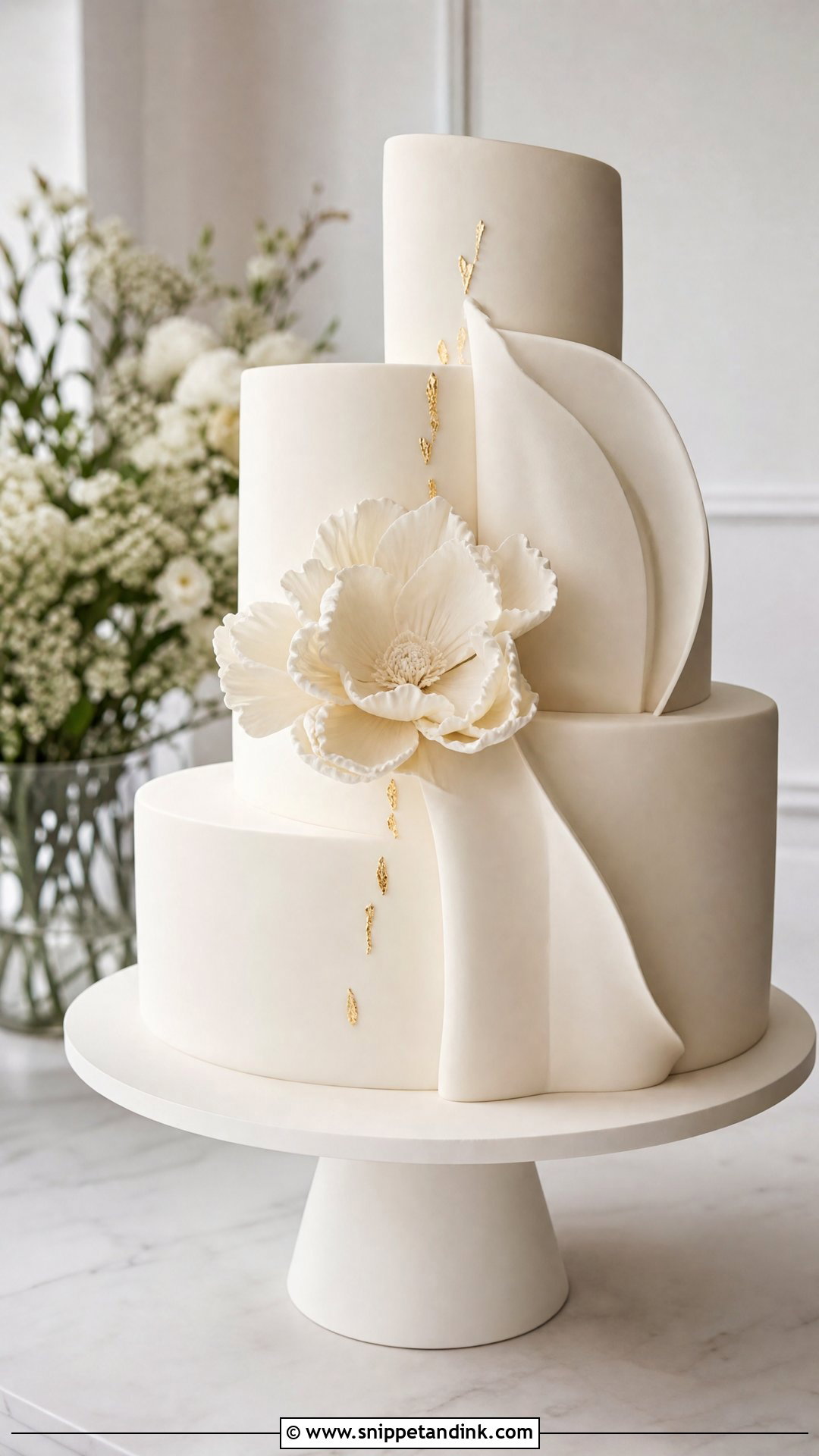
A sculptural wedding cake is engineering first and decoration second. Offset tiers, curved edges, folded fondant panels and wave shapes all need internal boards and dowels planned before I bake, and they’re usually the slowest designs to make, so book early. Stone, white, ivory and soft beige let the shape show. One floral accent, a brush of gold or a small cake meadow at the base is plenty. If the table sits in the middle of the room, ask your baker to show you the back, because guests will see it.
8. Single Tier Wedding Cake
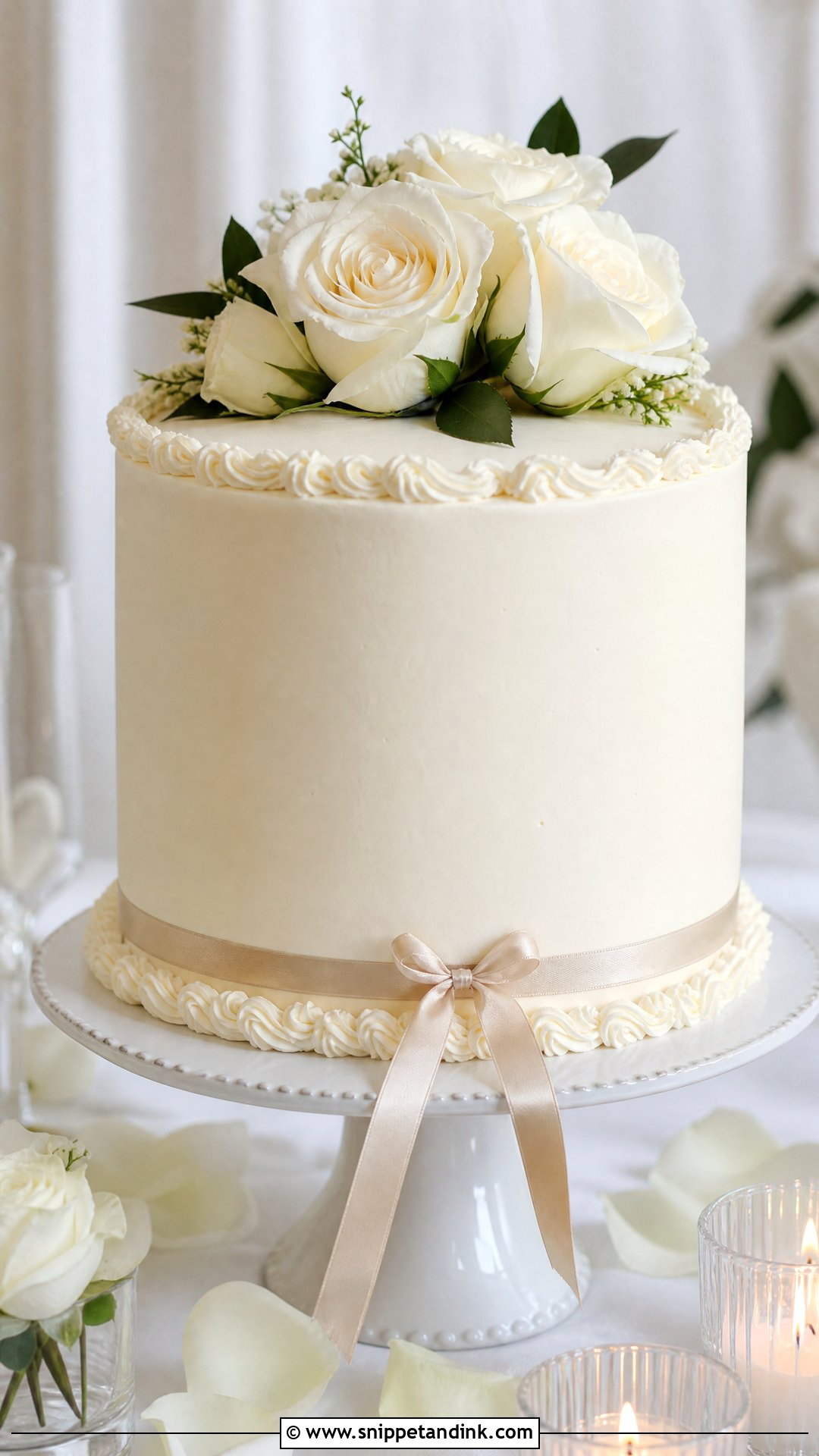
One tier can absolutely hold a wedding table, but it needs height. I’d make it a tall double-barrel tier, which means an extra board and dowels halfway up so it doesn’t compress, then finish it with smooth icing, careful piping, a few fresh flowers or a fine ribbon. It suits elopements, courthouse weddings and small dinners, or a party where a dessert table is doing most of the feeding. You can pick a bolder flavour, too, since there are no upper tiers resting on soft sponge. Give it a good stand and some space; a small cake crowded by props looks smaller still.
9. Two Tier Wedding Cake
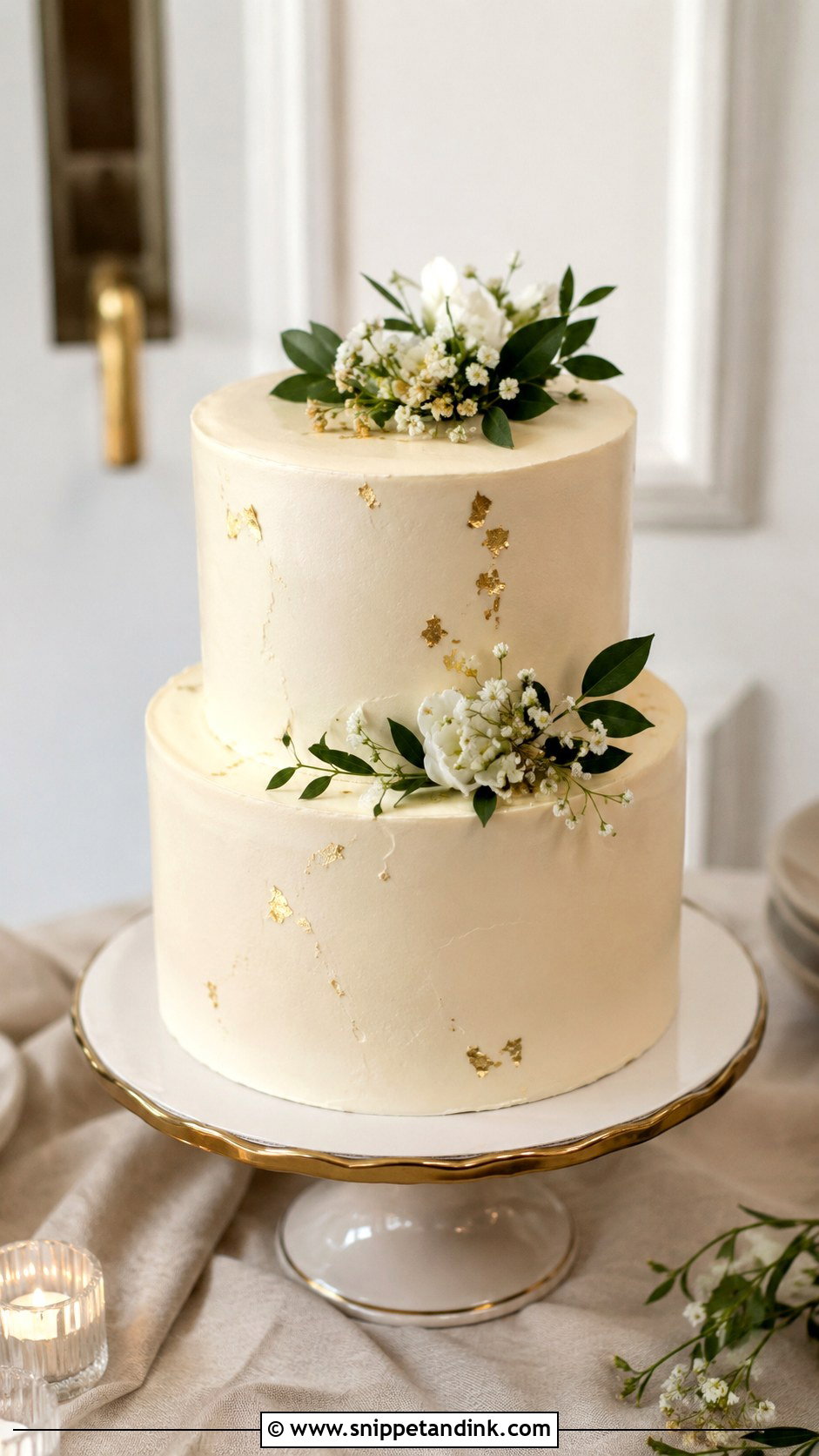
Two tiers is the size I build most often. It has the shape everyone recognises as a wedding cake without towering over a modest room, and a six-inch on an eight-inch feeds roughly thirty to forty slim wedding portions, depending on how your caterer cuts. Smooth buttercream, vintage piping, pearls, flowers or a bow all suit it. Two flavours is an easy way to please more people. I make the top tier slightly taller than you’d expect, because equal heights look squat in photos.
10. Three Tier Wedding Cake
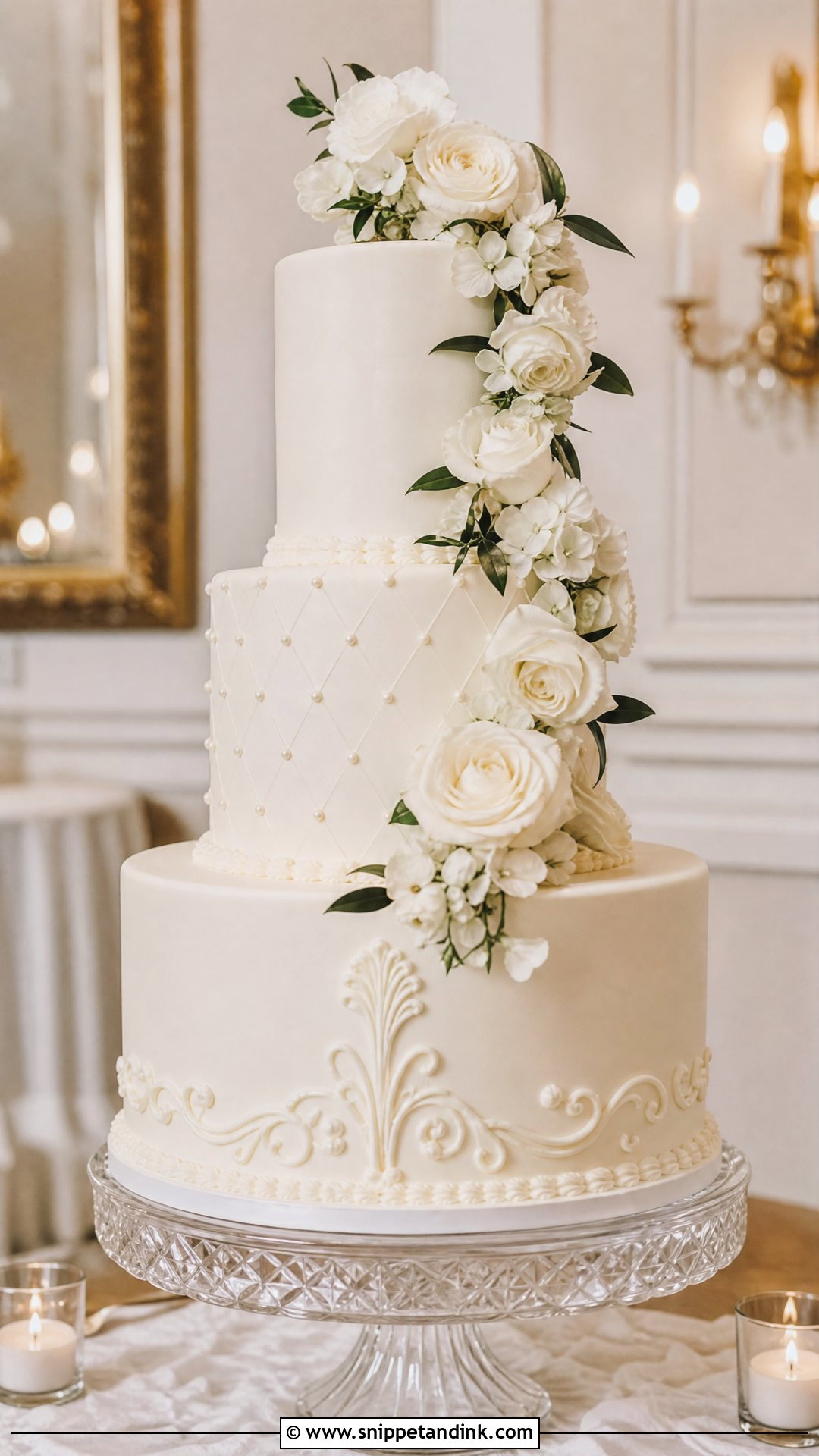
Three tiers gives you a proper centrepiece, and a six, eight and ten stack serves somewhere around seventy wedding portions, though slice size changes that a lot. The mistake I see is three tiers that each have a different idea. Mixing one pearl tier, one floral tier and one plain tier can work, as long as something repeats top to bottom: the same ivory, the same piping, the same flower. Keep the linens simple. With this much height, the cake is the decoration.
11. Heart Shaped Wedding Cake
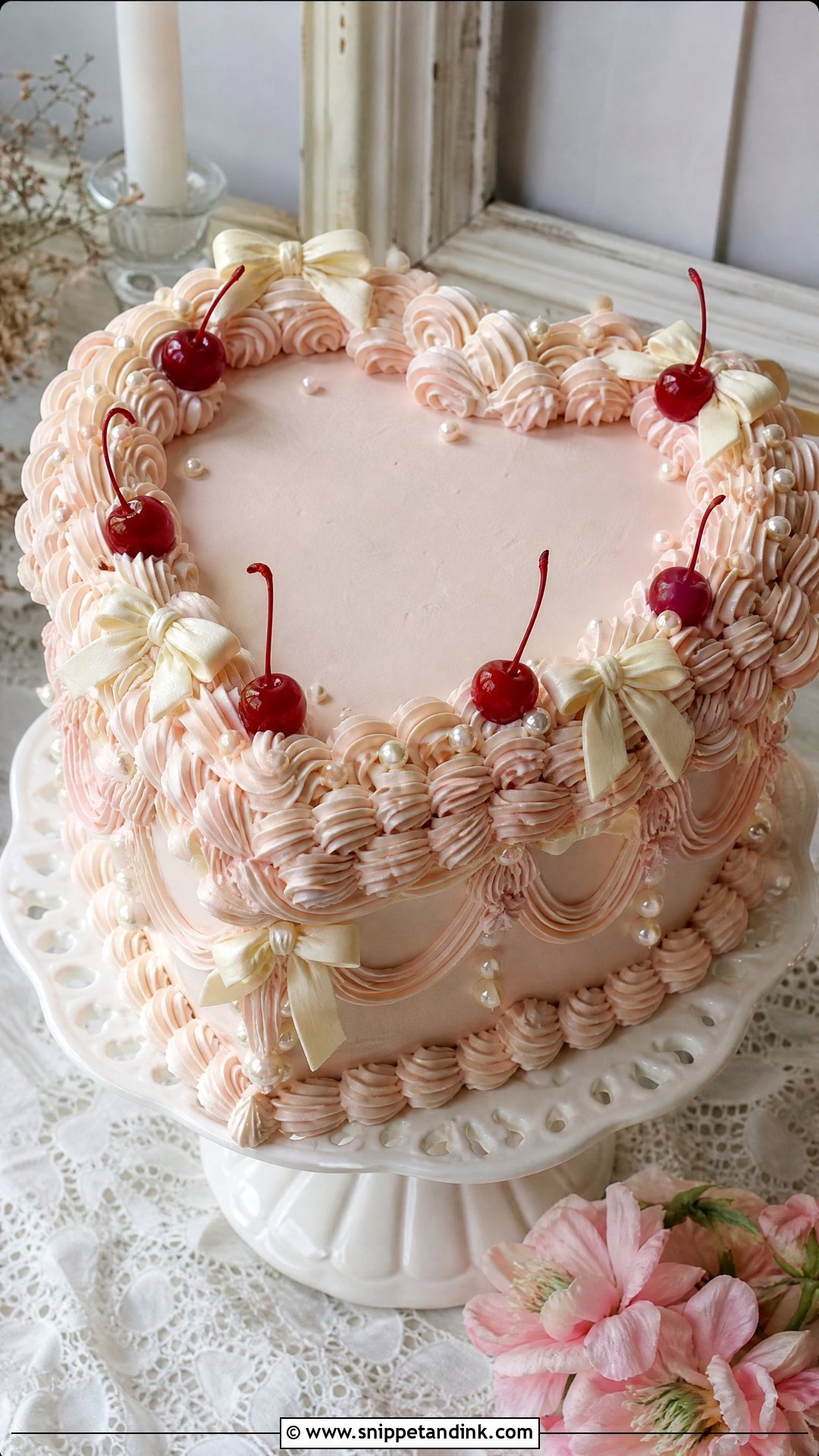
A heart shaped wedding cake is nostalgic and a bit cheeky, and it suits retro piping, scalloped borders, cherries, pearls or tiny bows. Stacking two hearts adds drama for a bigger party. Two practical things: the point and the curves are fiddly to cut, so the slices come out uneven, and a heart serves fewer people than a round cake of the same width. Pale shades keep it bridal, ivory, blush, butter yellow or baby blue, and a piped message or your initials in a slightly deeper tone gives you a moment for the photographer.
12. Oval Wedding Cake
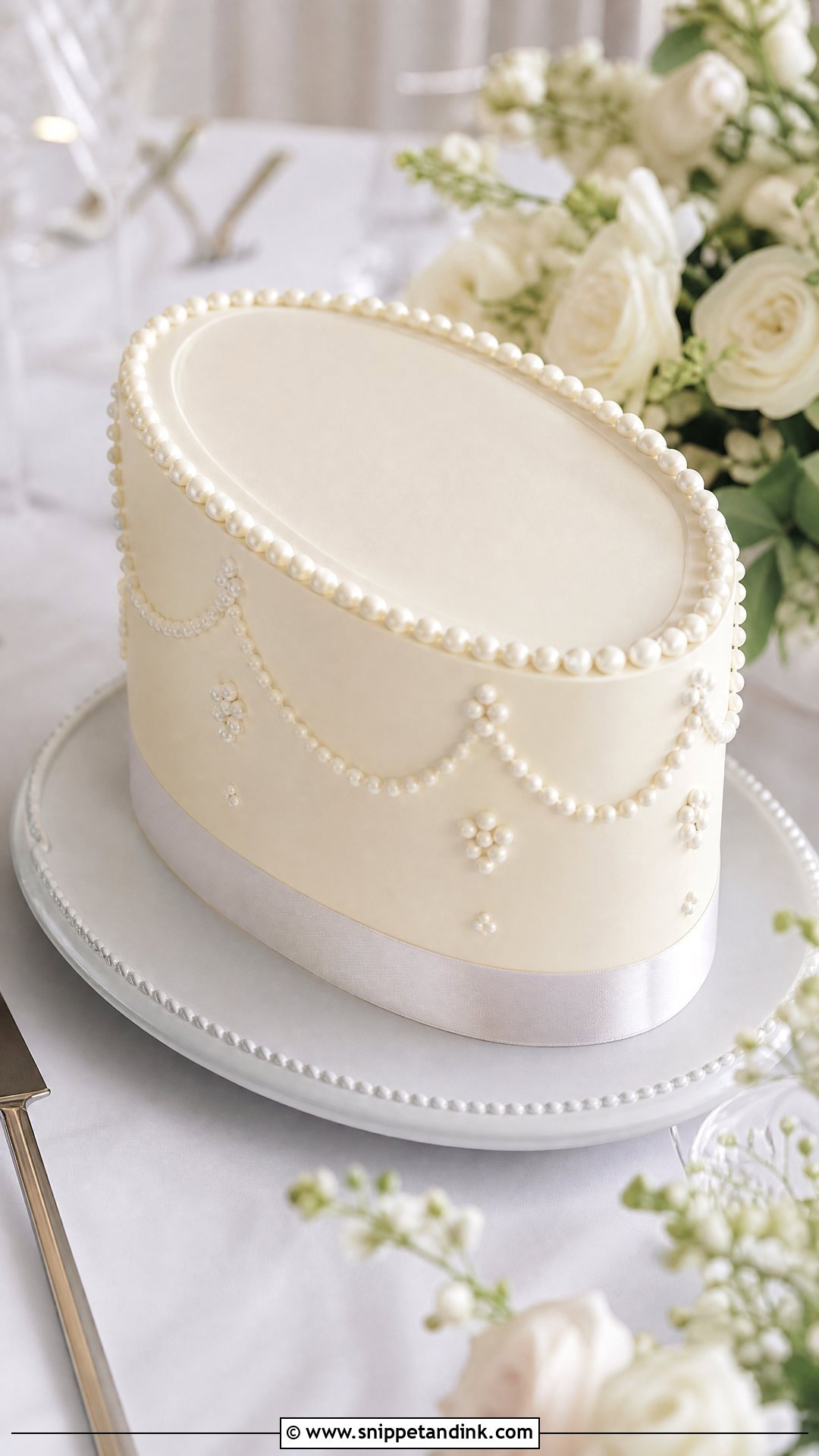
Oval tiers are the quiet surprise on this list. The shape already looks considered, so the decoration can stay small: pearl piping, a few sugar flowers, a satin ribbon or a crescent of blooms on one side. Not every baker owns oval tins and boards, so ask before you fall for it, and expect stacked ovals to cost a little more in labour. From the front, the long curve frames itself nicely on the table, which makes it easy for your photographer.
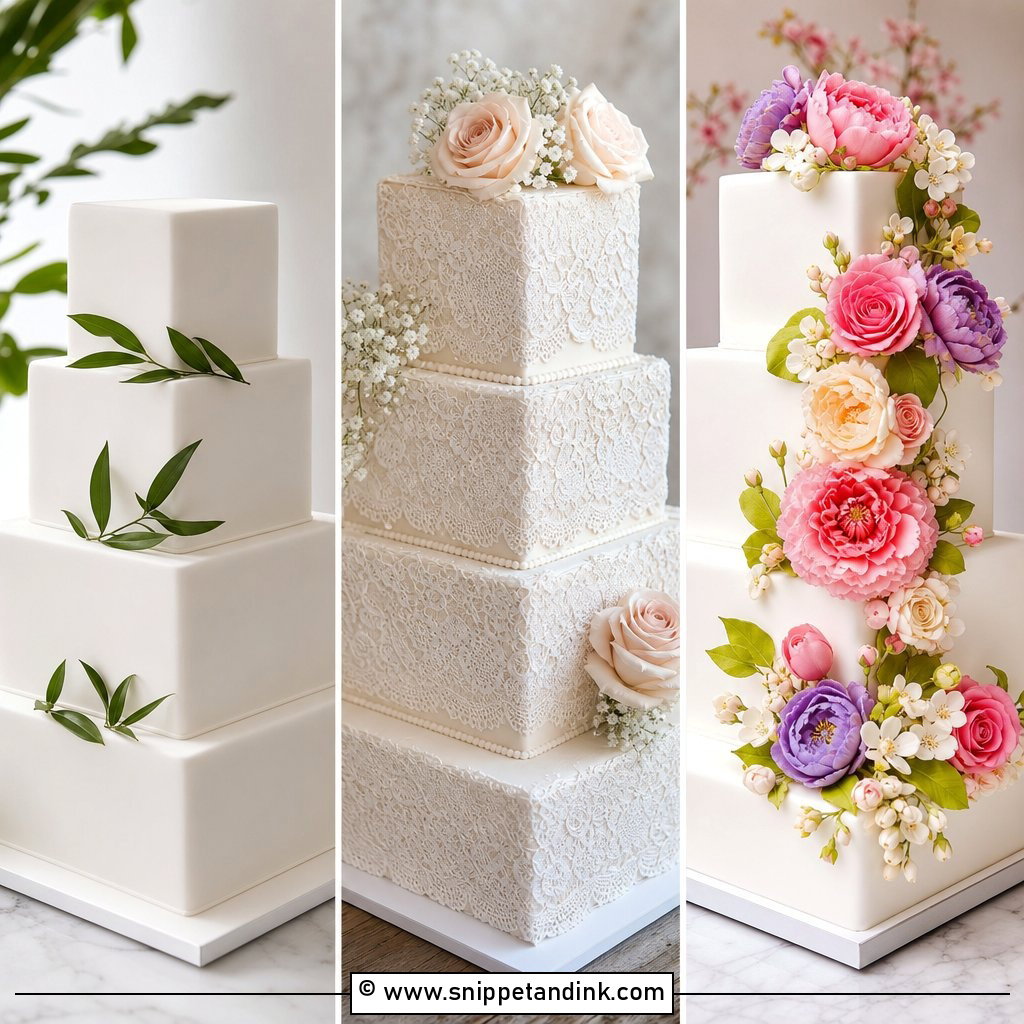
13. Square Wedding Cake
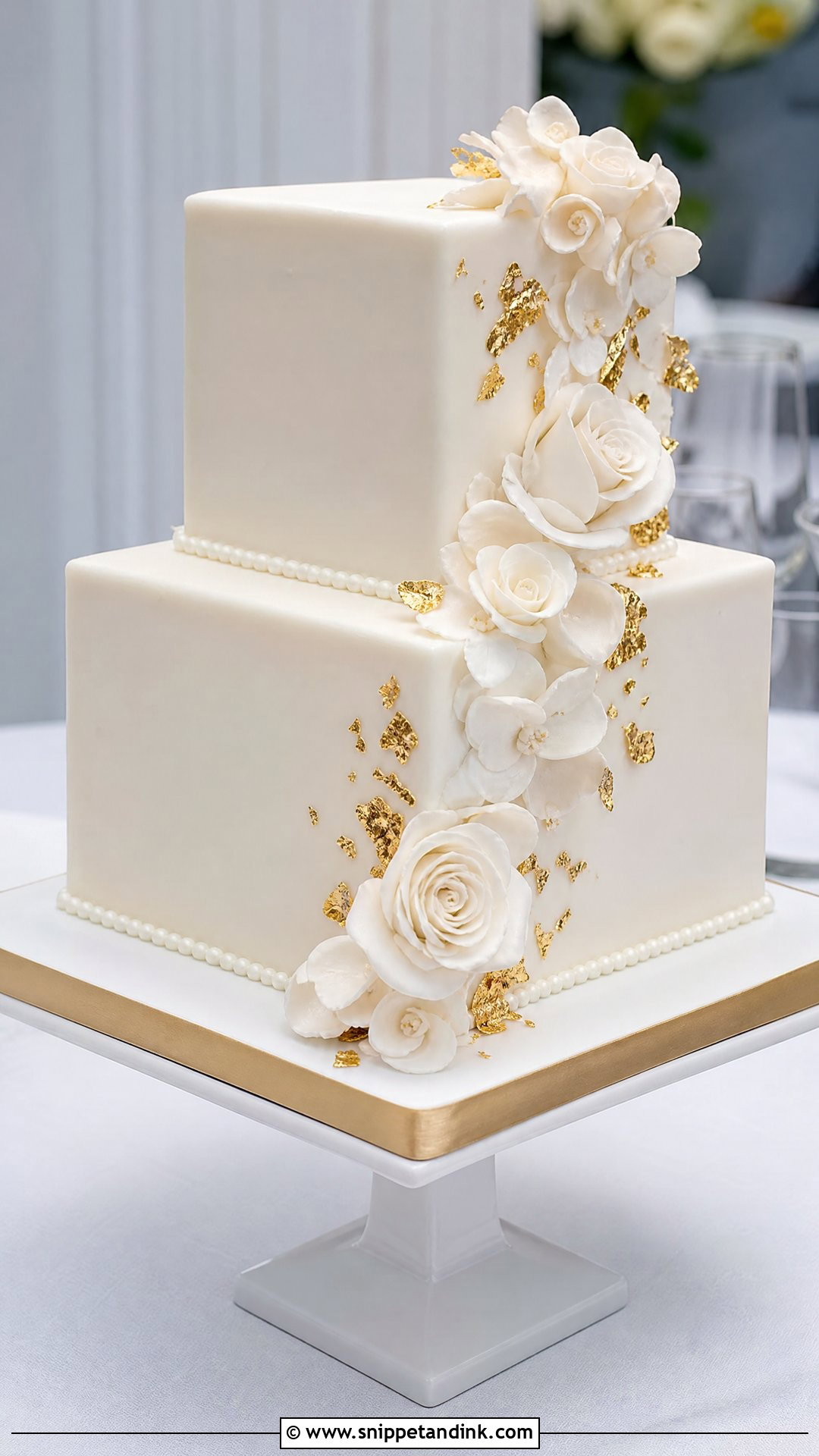
Square tiers look tailored and slightly architectural, and the corners are the whole design, so they need a very firm finish. Corners are also where icing cracks or bulges first, which is why I chill them hard before stacking. All white is the cleanest version; sugar flowers, gold leaf, textured panels or a diagonal spray of blooms soften the lines. Square tiers also cut into more portions than round ones of the same width, a real help on a tight budget.
14. Gold Leaf Wedding Cake
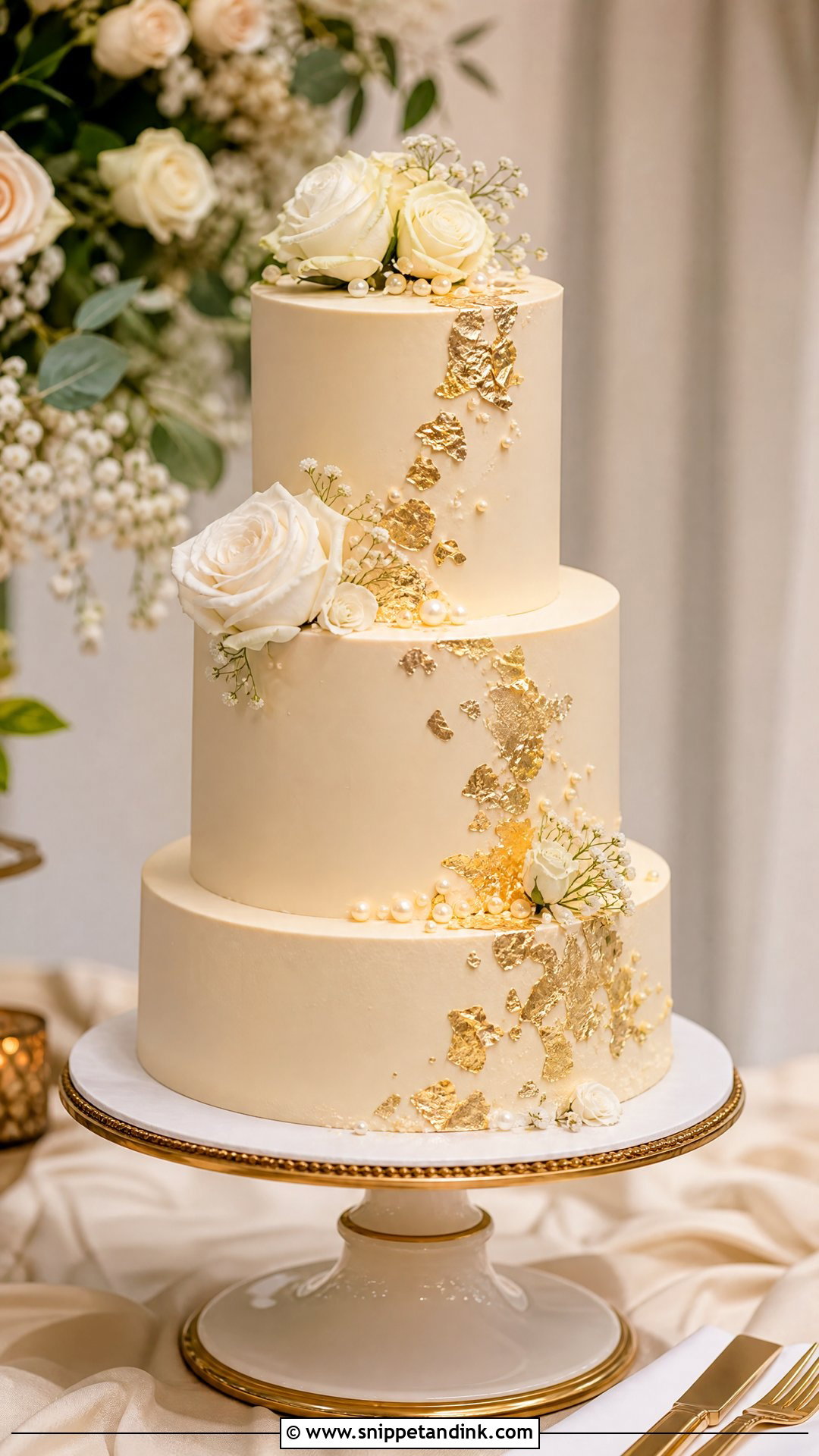
Treat gold leaf like jewellery, not wallpaper. A few flakes on ivory, white, blush or champagne icing catch candlelight in a way paint never does. I lay it with a dry brush along textured edges or near the flowers, and on smooth fondant just a scatter across one tier. Check with your baker that it’s real edible gold leaf; some shiny dusts are sold as decorative only and shouldn’t be eaten. Evening receptions and formal rooms get the most out of it, because the shine needs low light to show.



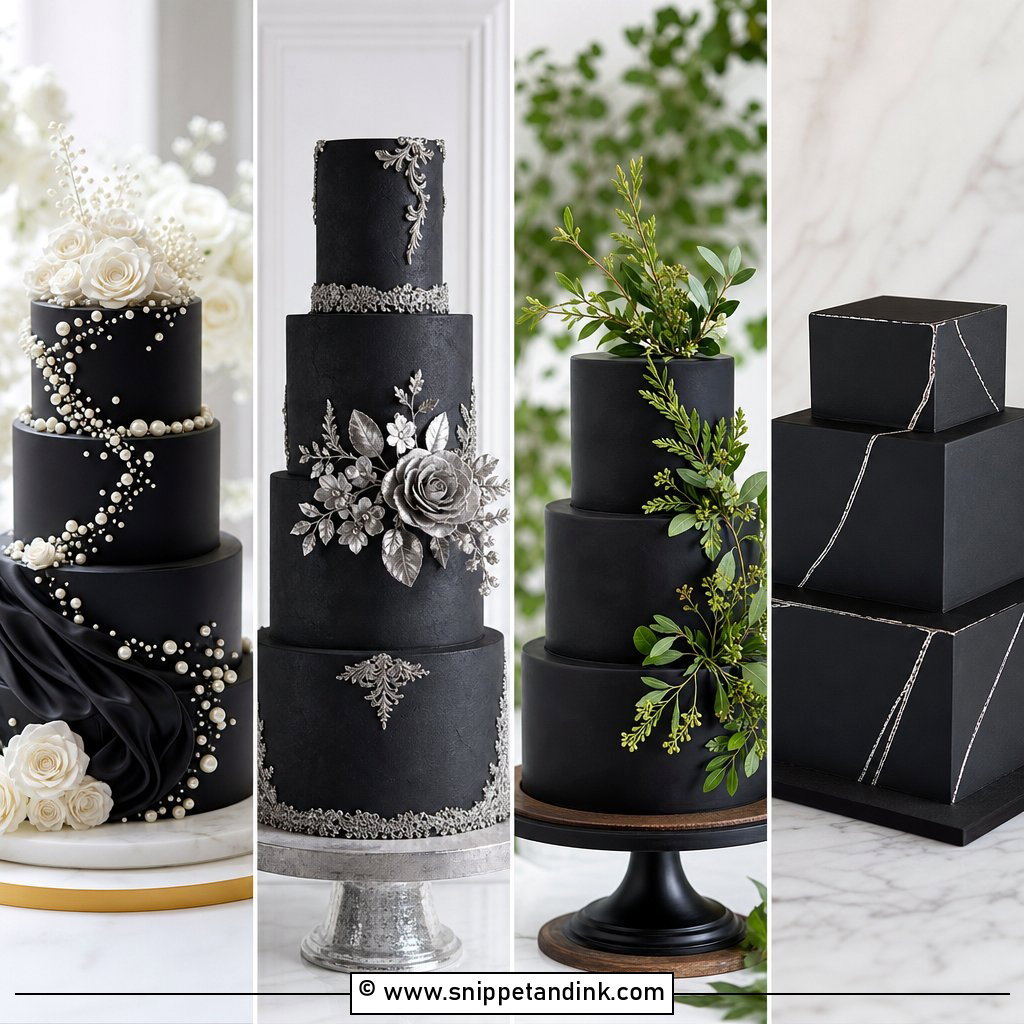
15. Black And White Wedding Cake
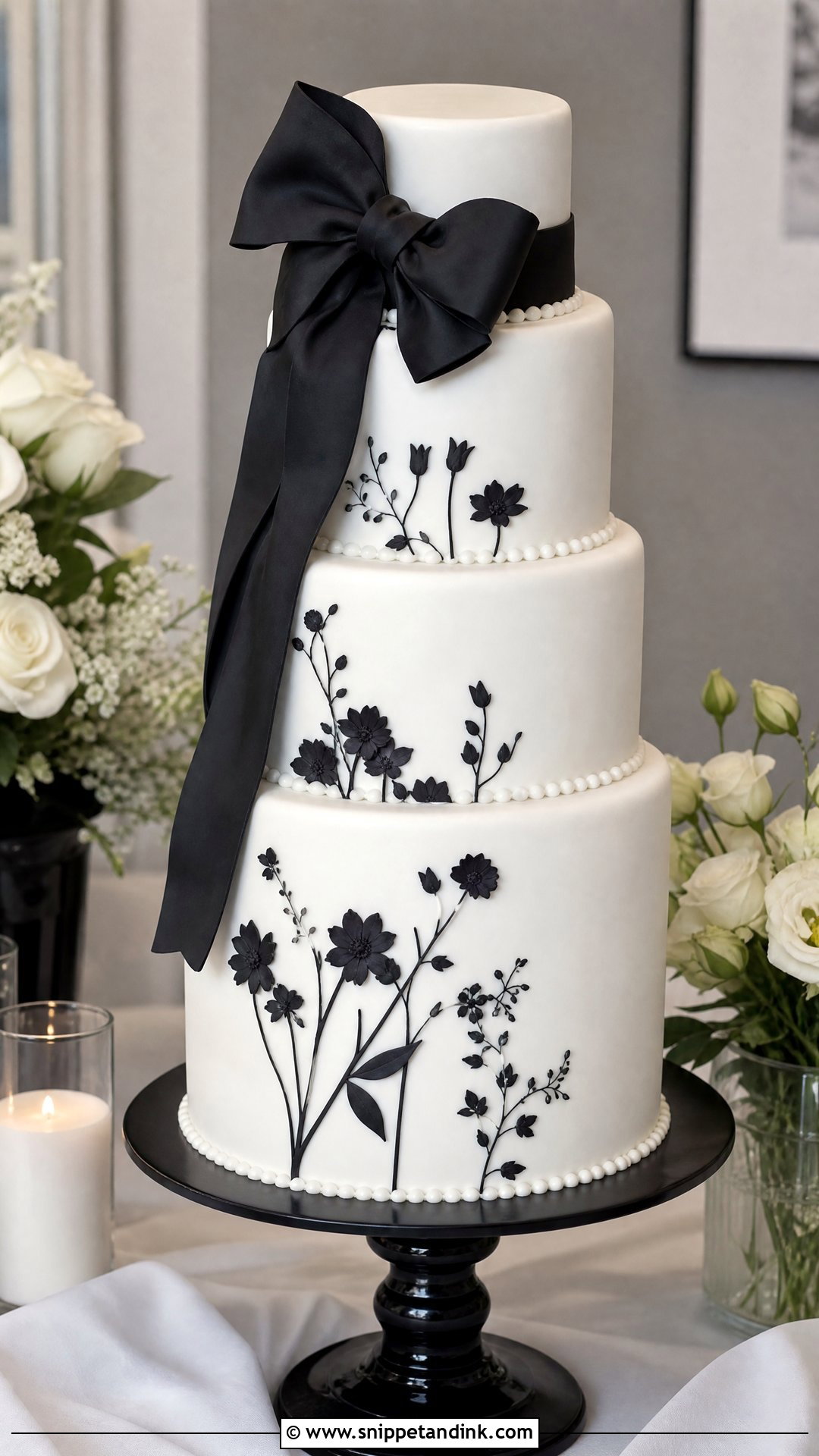
Black on white is graphic and grown up, with a black ribbon, black piping, black sugar flowers or a painted black tier. Getting true black icing takes a lot of colouring, and it can stain lips and turn bitter, so I keep black to the decoration and build it from a cocoa base where I can. Clean lines and generous spacing stop it looking like a party cake. A single black bow reads fashion; black floral silhouettes go darker and more dramatic. It suits city venues, museums and ballrooms. Light it softly so the contrast doesn’t burn out in photos.
16. Blue Wedding Cake
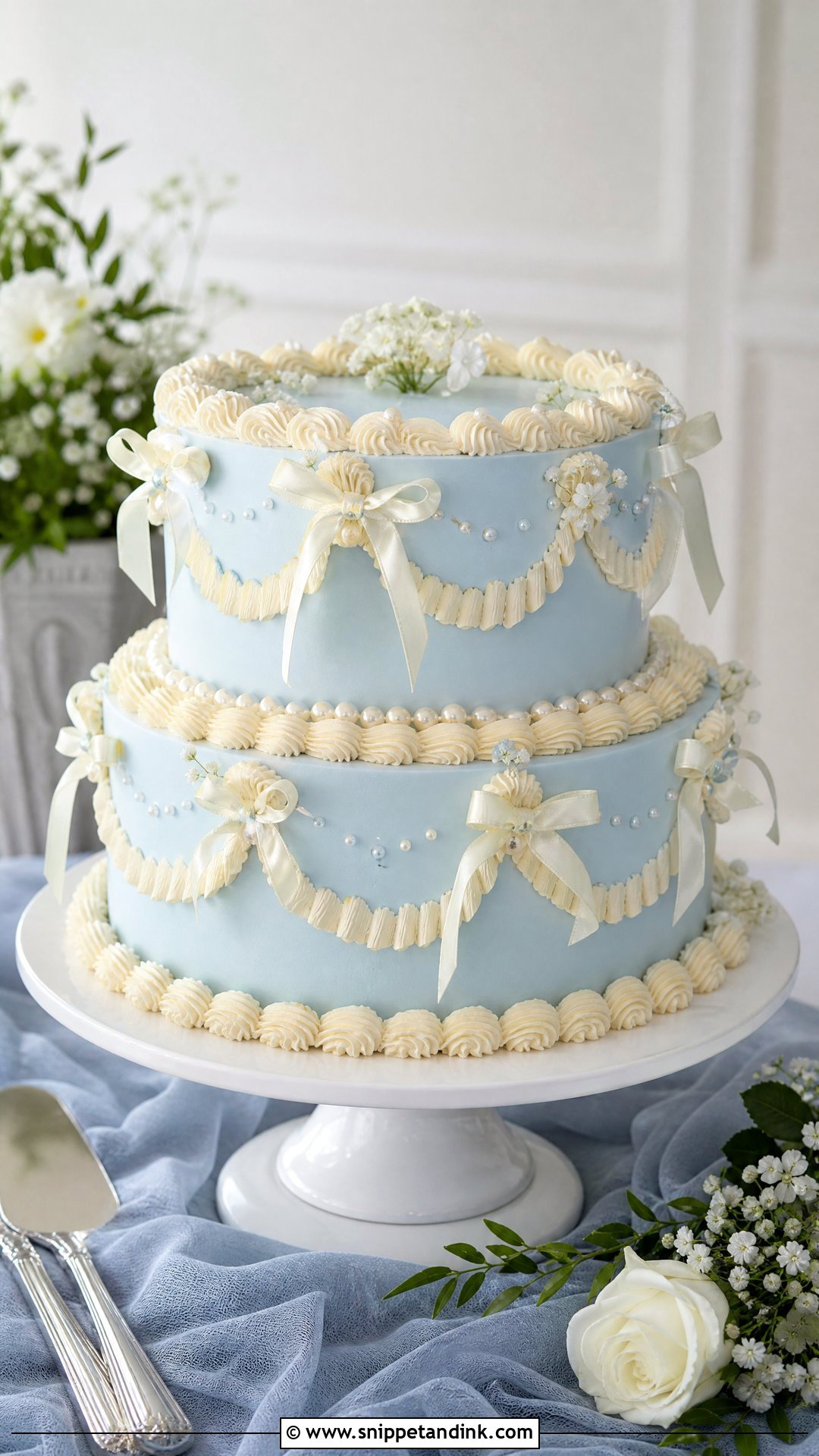
Blue changes personality with the shade. Baby blue suits Lambeth piping and pearls, dusty blue loves white flowers and silver, and a deep navy can carry an evening wedding if you balance it with ivory or gold. The catch is that ordinary buttercream is pale yellow, and blue added to yellow goes slightly green. I whiten the base first, or switch to a whiter frosting, before tinting. Keep the surface smooth or lightly textured and the decoration small: piped borders, little bows, a few clusters of flowers. Against white linen and glassware, blue reads clean in pictures.
17. Blush Pink Wedding Cake
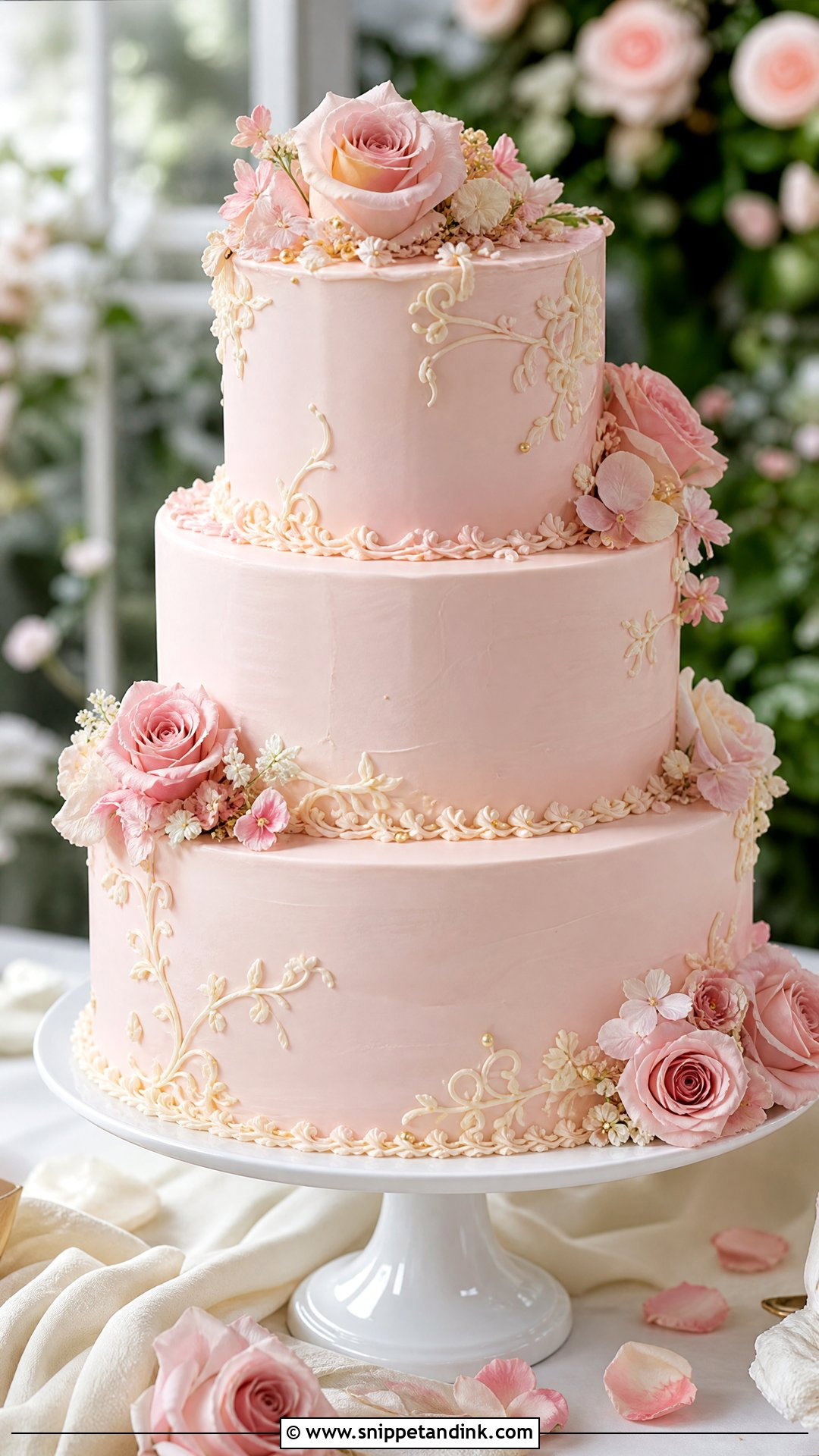
Blush is the easiest colour to live with. Next to bright pink it stays grown up, and it sits happily beside ivory piping, pearls, fresh roses, sugar flowers or a satin ribbon. One thing most people don’t know: some pink colourings fade under strong daylight, so if your cake sits by a sunny window for hours, ask your baker which colour they use. Colour one tier or the whole cake, but pick a single decoration style and let the shade set the mood. A touch of gold or champagne finishes it.
18. Fruit Wedding Cake
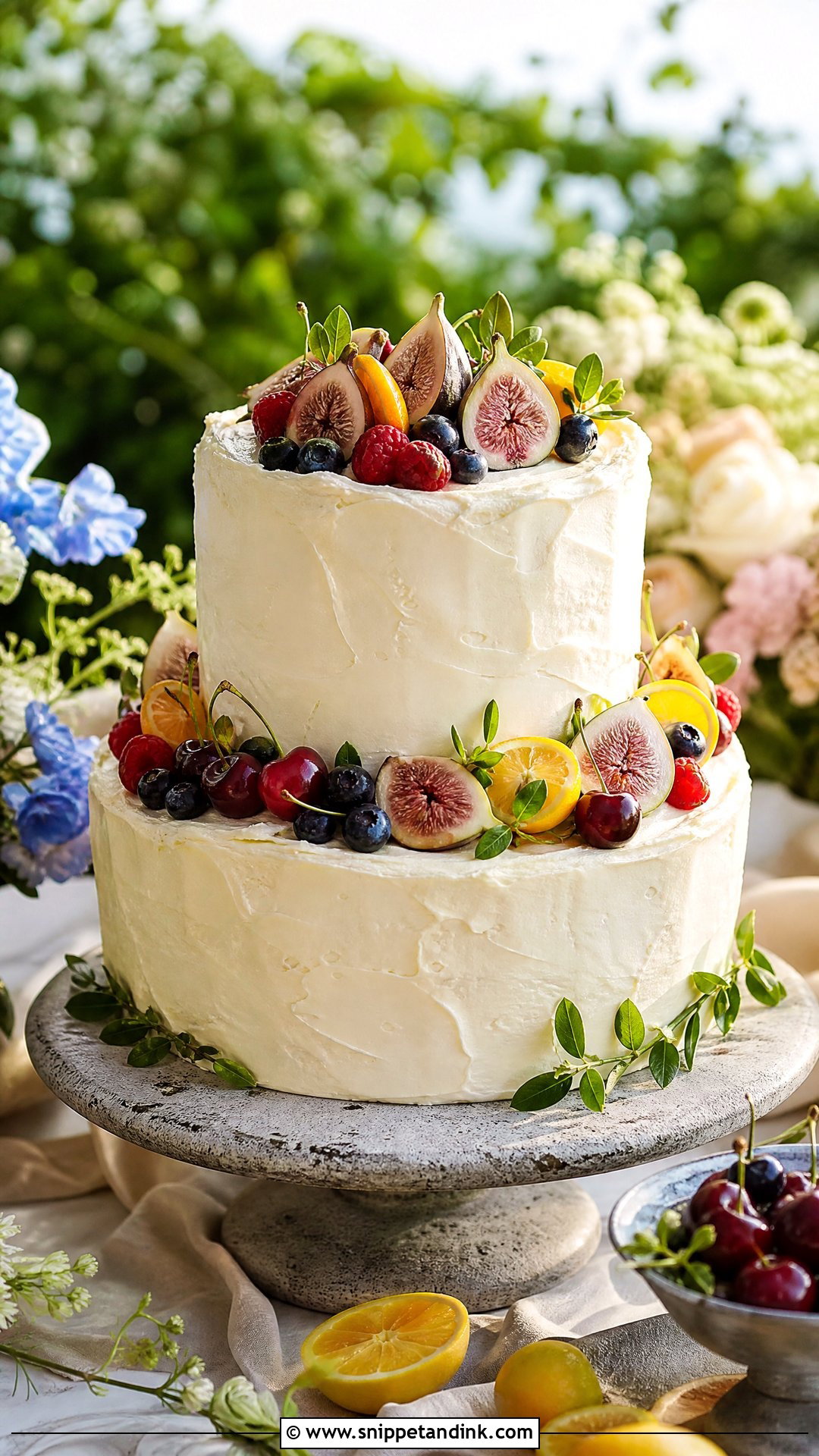
A fruit wedding cake looks generous and tastes bright, and it belongs on buttercream, whipped frosting or a light glaze rather than fondant. Cut fruit is the tricky part. Sliced figs, citrus and stone fruit start to weep juice and discolour within hours, so I add them as close to the reception as I can and glaze them lightly to slow it down. Whole berries, cherries and grapes hold up far better. Pick fruit that’s actually in season so it looks and tastes ripe. With greenery, linen and a ceramic or stone stand, the whole table feels relaxed and abundant.
19. Pressed Flower Wedding Cake
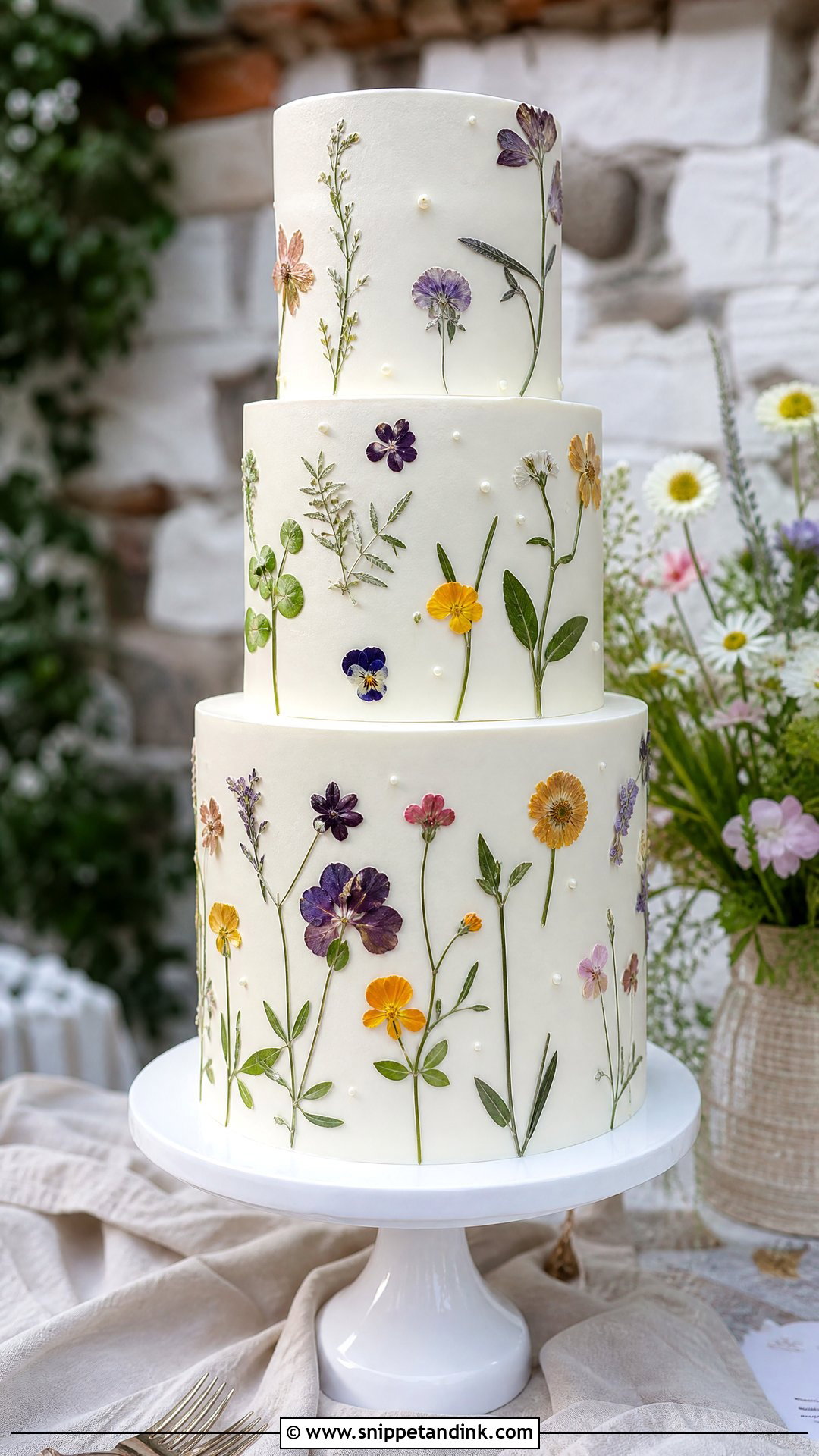
Pressed flowers sit flat against the icing, so this design looks almost painted. Each petal has to be an edible variety, usually violas, pansies, cornflowers or calendula, pressed and dried well before the cake is decorated, because not every bloom is safe to eat. Arrange them loosely or cover a whole tier like a meadow. Keep the base pale, white, ivory, pale yellow or soft blush, so the colours show. Pressed petals can fade under bright light over a long day, so I keep these cakes out of direct sun until they go on display.



20. Cake Meadow Wedding Cake
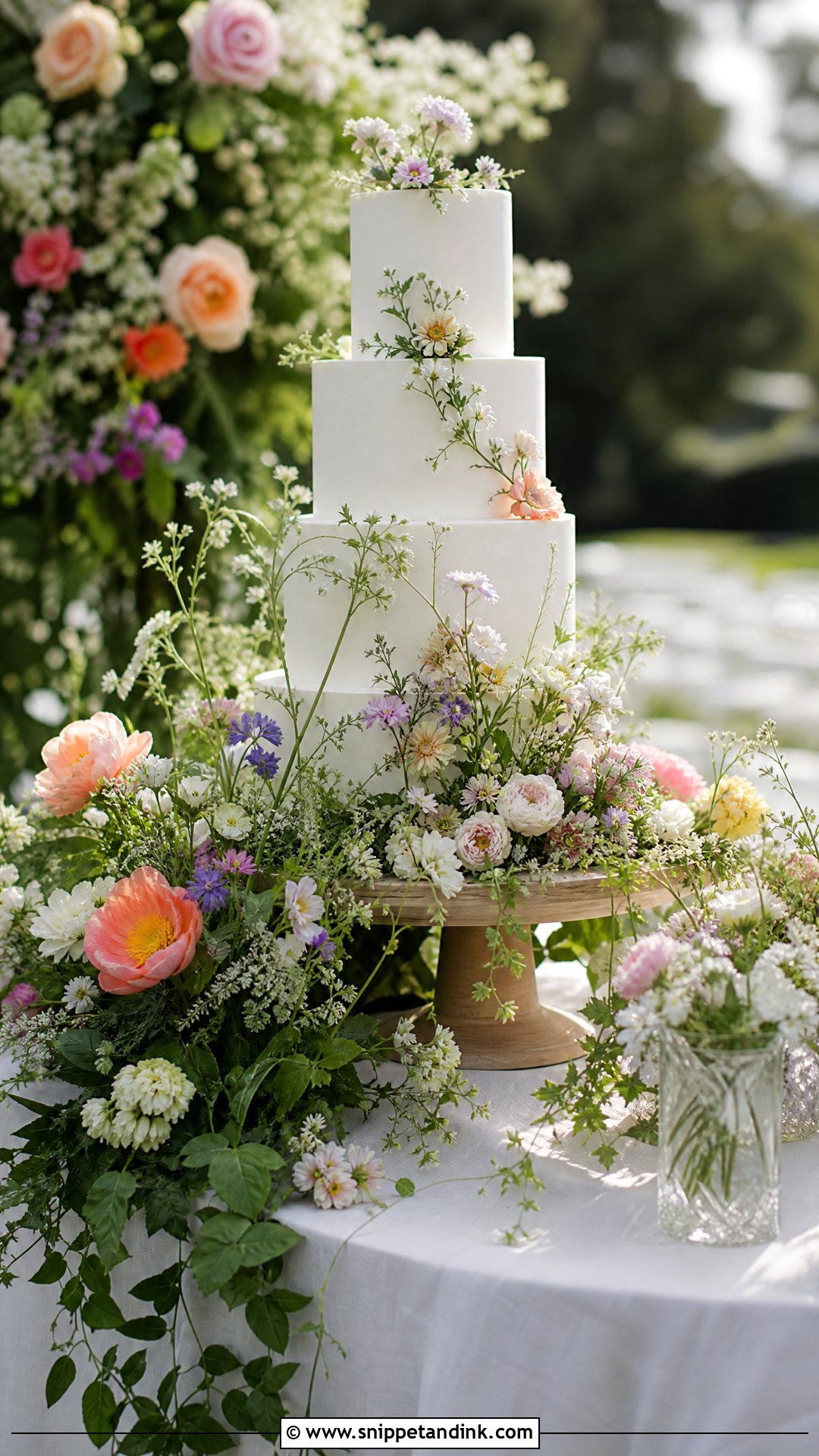
Here the decoration moves off the cake. Flowers and greenery sit around the base so the tiers look as if they’re growing out of a small garden, and the cake itself can stay plain, textured, pearled or lightly floral. I always put the meadow on its own board or tray, with the stems in water or foam, so moisture and sap never reach the bottom tier. It fills the table in photos and suits gardens, marquees and country houses. Use the same flowers as your ceremony so the cake looks part of the day rather than an extra.
How These Finishes Hold Up in a Warm Reception Room
Most cakes are set up an hour or two before guests arrive and cut much later, so the finish you choose has to survive a long, often warm, wait. This is how I’d think about the looks above.
Soft buttercream and heavy piping
Lambeth work, textured buttercream and piped pearls are the most sensitive. In a hot marquee the ridges soften and heavy piping can start to sag. I firm up the recipe for summer, but the bigger fix is placement: keep the table out of direct sun, away from the dance floor lights and nowhere near a radiator or heater.
Fondant and sharp-edged cakes
Fondant shrugs off warmth better, but moving it from a cold fridge into a humid room makes it sweat, beading with condensation that can mark colour and gold leaf. I let these come up to room temperature slowly in their boxes before setting up, so ask your baker how they handle that if the day is muggy.
Fresh fruit, fresh flowers and pressed petals
These are the parts that age fastest on the table. Cut fruit weeps, petals wilt and pressed colours fade under bright light. If your speeches or dinner run long, ask for the delicate pieces to go on at the last moment, or keep a few spare stems so the caterer can refresh the cake before you cut it.
A Short Gut Check Before You Sign the Cake Order
Popular online and right for your room are two different things. Start with the mood you want people to remember: soft and romantic leans toward blush, pearls or vintage piping; clean and modern toward sculpted shapes, smooth white tiers or black-on-white; fresh and natural toward fruit, pressed flowers or a meadow. Then check the unglamorous parts with your baker, the flavour, the serving count, how warm the room gets and how high the table sits. I’d rather a couple love the first bite as much as the first photo, because the cake is the one decoration everyone actually eats.
You'll Like These Ideas:






Leave a Reply