
Blush and blue is a palette I enjoy designing because the two colours calm each other down: the pink keeps the blue from looking cold, and the blue stops the pink from turning sugary. It suits spring gardens, summer coast receptions, ballrooms and old estate venues alike. Most of the cakes I make in these colours balance pale pink flowers with dusty blue accents on an ivory base, with pearls, painted washes or texture doing the rest. Below are 25 directions, with notes from the decorating side on how each finish behaves, what to ask your baker and where the colour can go wrong.
Why Blue Buttercream Turns Green, and How I Stop It
Butter is yellow, and yellow plus blue makes green. That’s why a pale blue buttercream mixed straight from the bowl often ends up minty or teal. I whiten the buttercream first with a tiny amount of violet colouring, or use a meringue-based buttercream, which starts paler. Only then do I add the blue.
- Gel colours deepen over a few hours, so I mix a shade lighter than the target and let it rest before judging it.
- Pinks and pale blues fade under strong sunlight. If the cake will sit by a window or outdoors, keep it shaded until it’s cut.
- Bring a fabric swatch of your blue. Dusty blue, powder blue and periwinkle look very different on icing than they do on a screen.
Fondant takes colour more evenly than buttercream, which is why I often use fondant for blue tiers even on a cake that’s mostly buttercream.
1. Blush And Blue Wedding Cake With Fresh Flowers
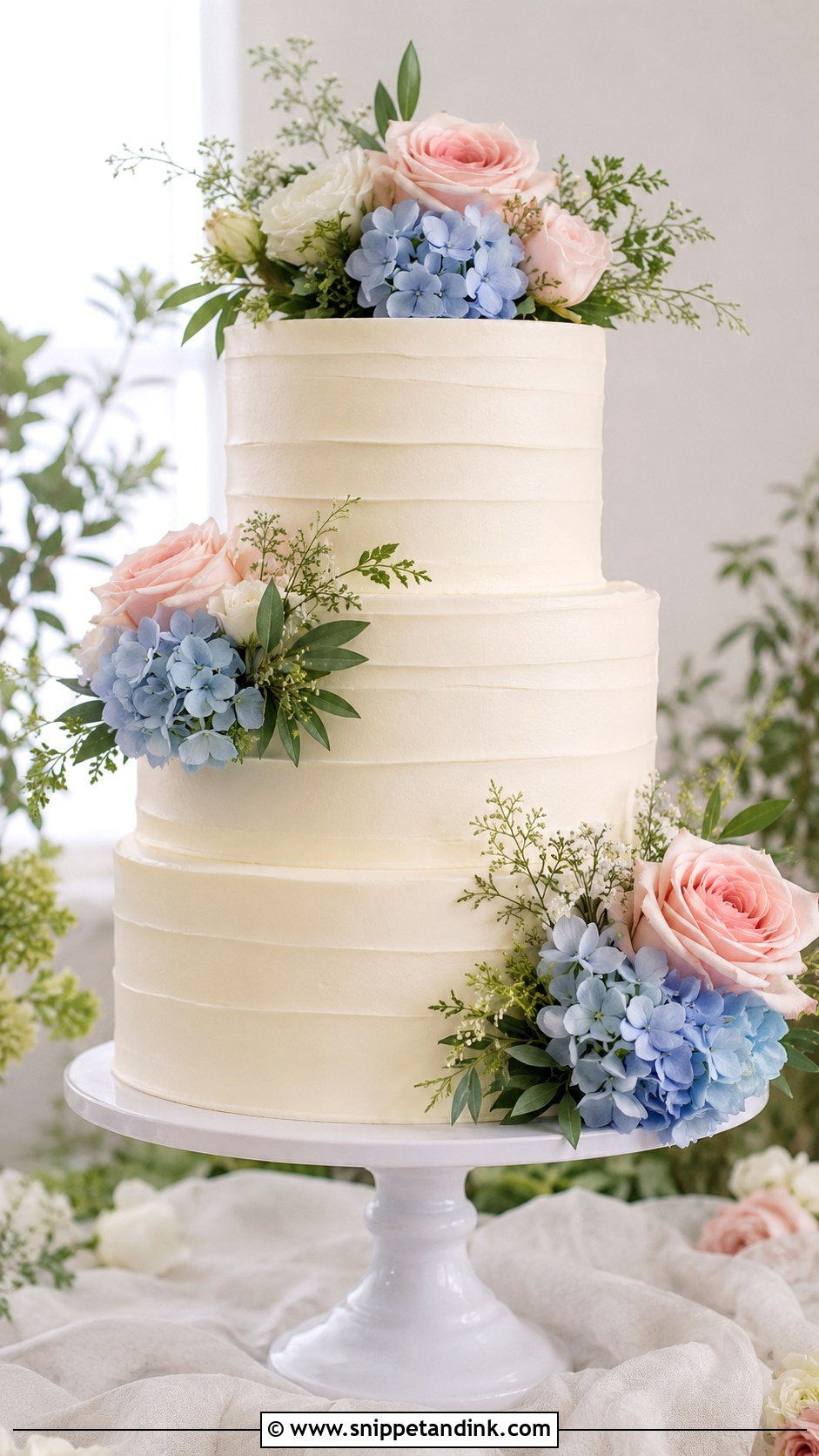
Fresh flowers make this palette look natural straight away. I start with a white or ivory buttercream cake, then the florist adds blush roses, ivory ranunculus and soft greenery, with blue coming from flowers that are safe near food or kept off the icing entirely. Flowers can trail down two, three or more tiers without weighing the cake down visually. The part couples forget is coordination: your florist and baker need to agree on who places the flowers and when, because I won’t push untreated stems straight into a cake. A plain stand, soft linen and a ring of matching flowers at the base finish it.
2. Dusty Blue Wedding Cake With Blush Roses
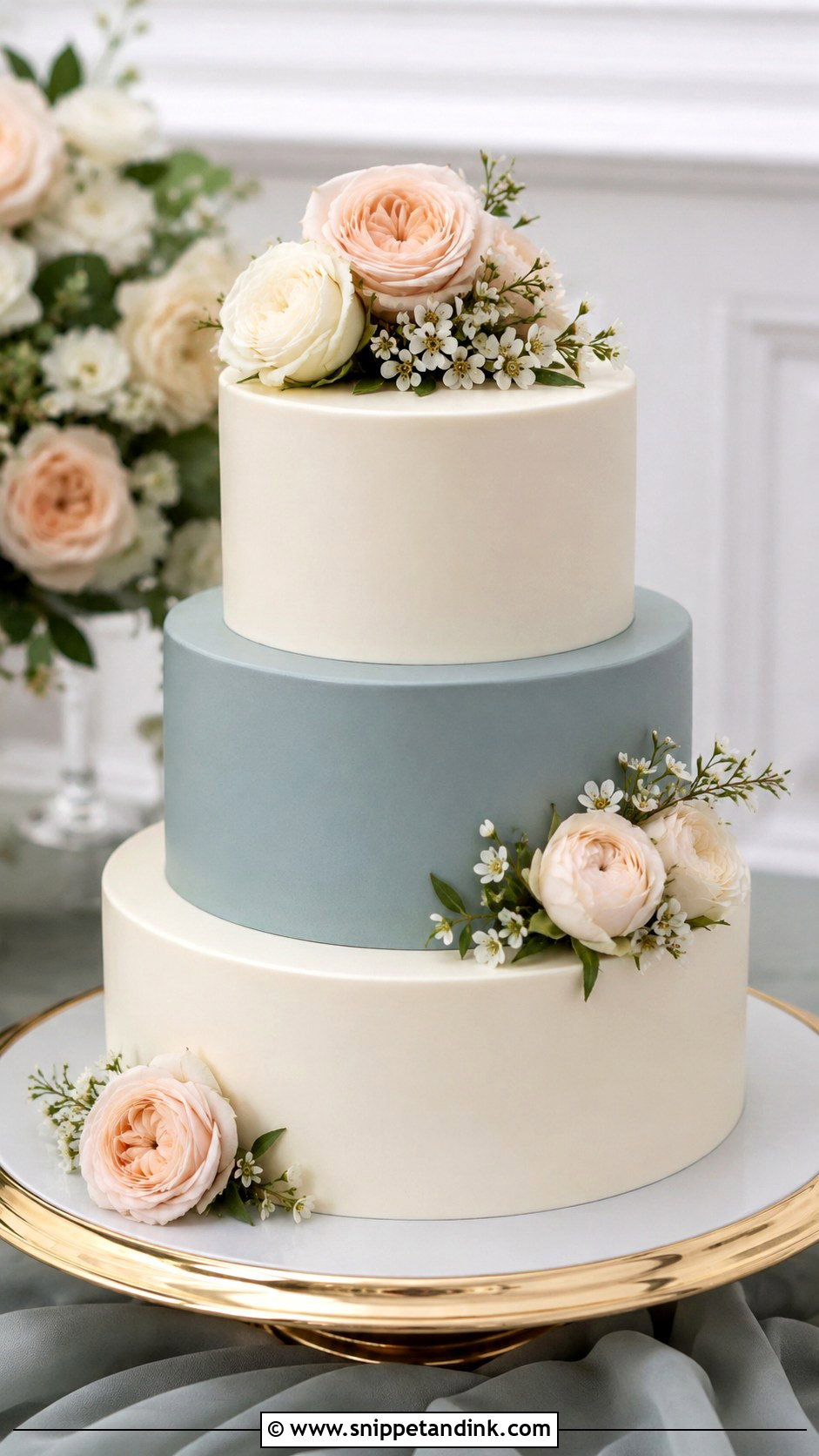
Dusty blue is muted, so it pairs easily with pink. Rather than colouring every tier, I cover one or two in dusty blue and keep the rest ivory. Blush roses can sit between the tiers or cascade lightly down one side. Smooth fondant reads formal; buttercream keeps it relaxed. Dusty blue is a tricky shade to mix, because a touch too much grey makes it look dirty under warm lighting, so I always mix a sample tier first. Tiny pearls or a little silver leaf add shine without crowding the flowers.
3. Blush And Blue Buttercream Wedding Cake
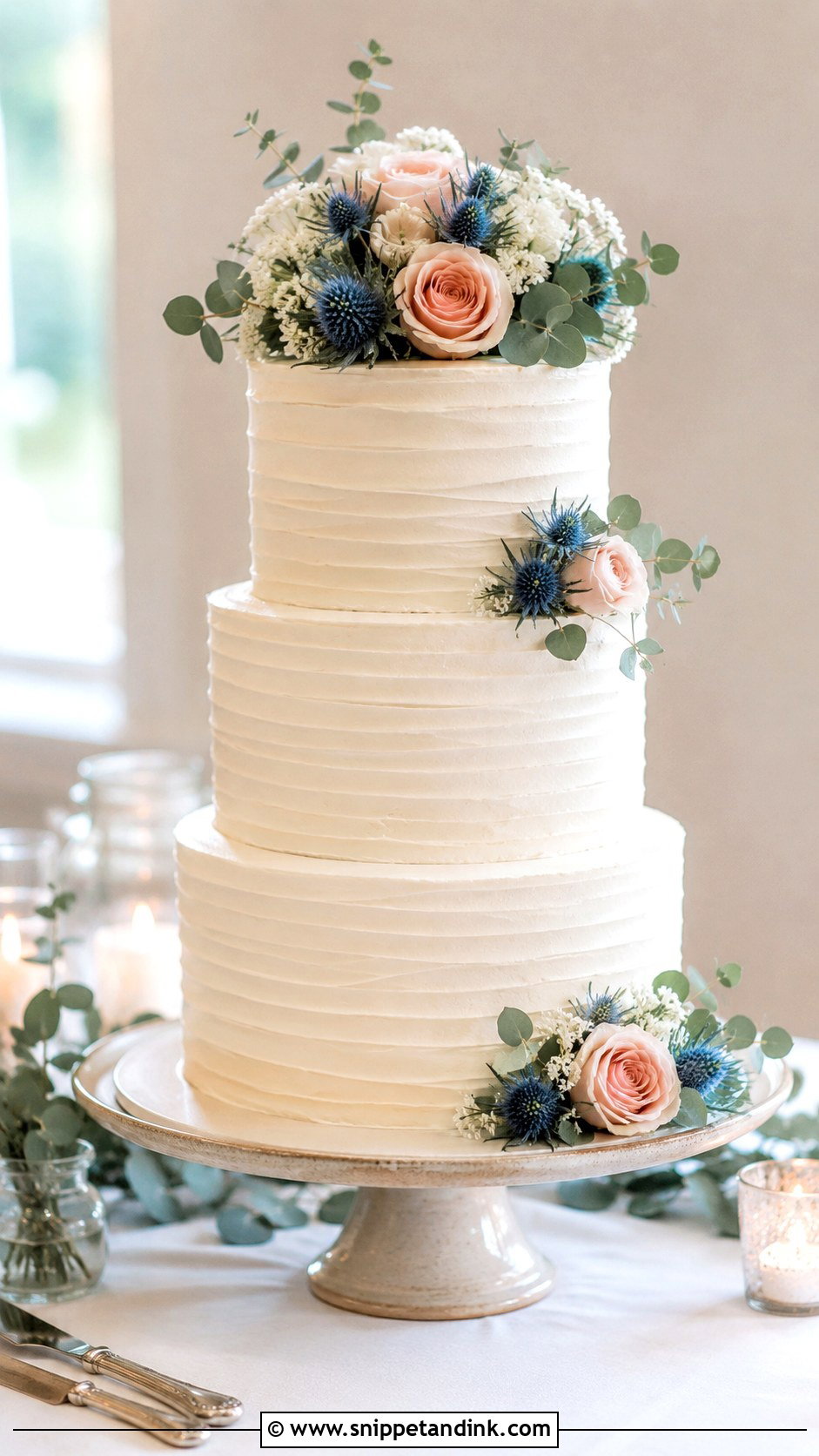
Buttercream has a soft, handmade texture that looks warm in photos. The finish can be smooth, lightly textured or pulled into horizontal ridges with a cake comb. I usually keep it mostly ivory with blush and blue flowers as accents, or colour one tier pale blue for contrast. Outdoors, buttercream is the finish I watch most closely: it softens in heat, so the cake should stay in a cool room until close to serving. Blush blooms, blue thistle, small white flowers and eucalyptus finish it.
4. Blush And Blue Watercolor Wedding Cake
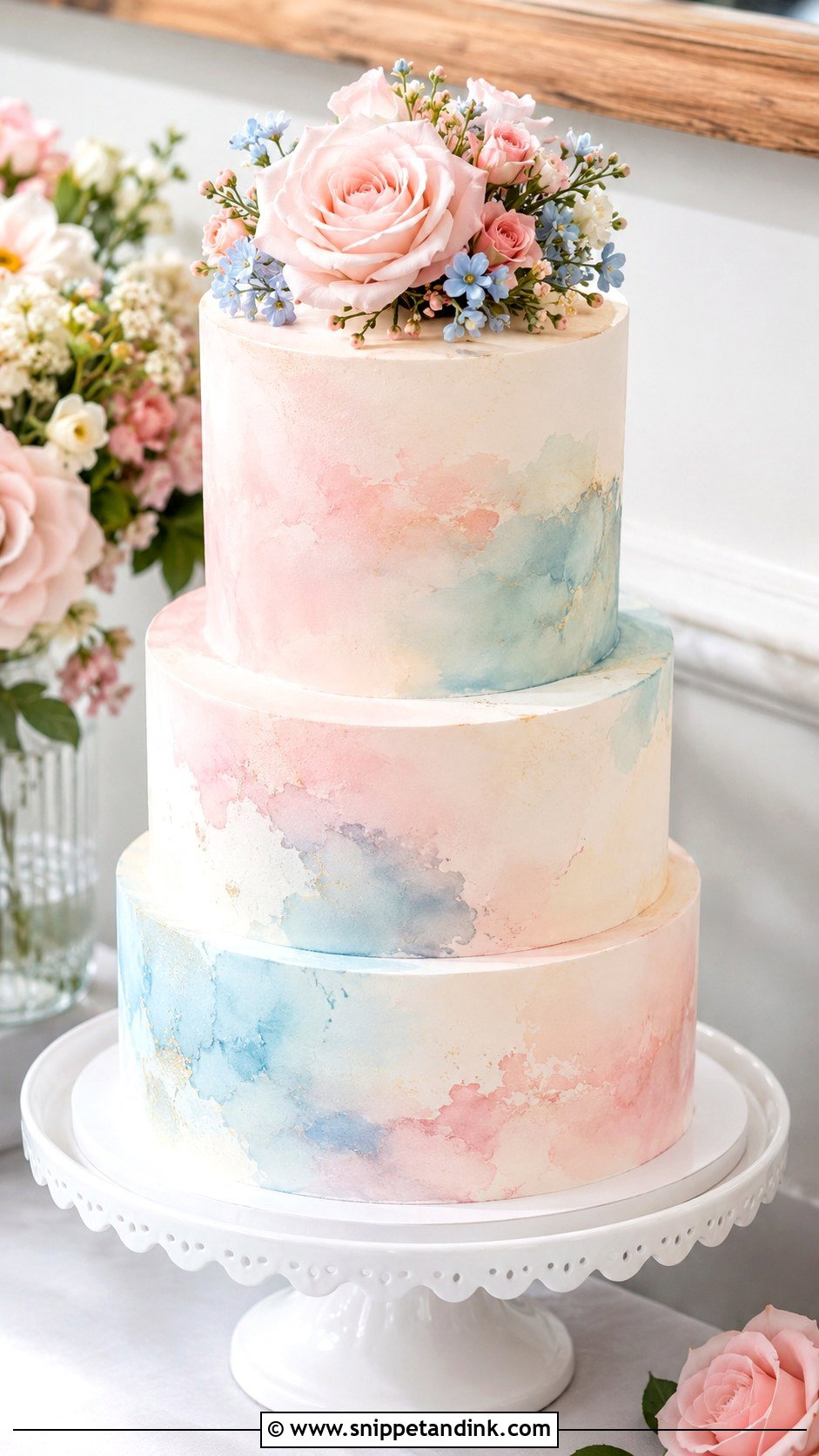
A watercolour finish gives colour without hard lines. Pale blue, dusty blue, blush and ivory are blended across smooth fondant or buttercream with a palette knife or brush. On buttercream I chill the cake first so the colours smear softly instead of mixing into mud. Keep the flowers simple so the wash stays the main feature; a few blush sugar roses or tiny blue florals are plenty. It sits nicely with spring, beach and pastel-stationery weddings. Ask for loose, uneven strokes rather than blocks of solid colour.
5. Blush And Blue Ombre Wedding Cake
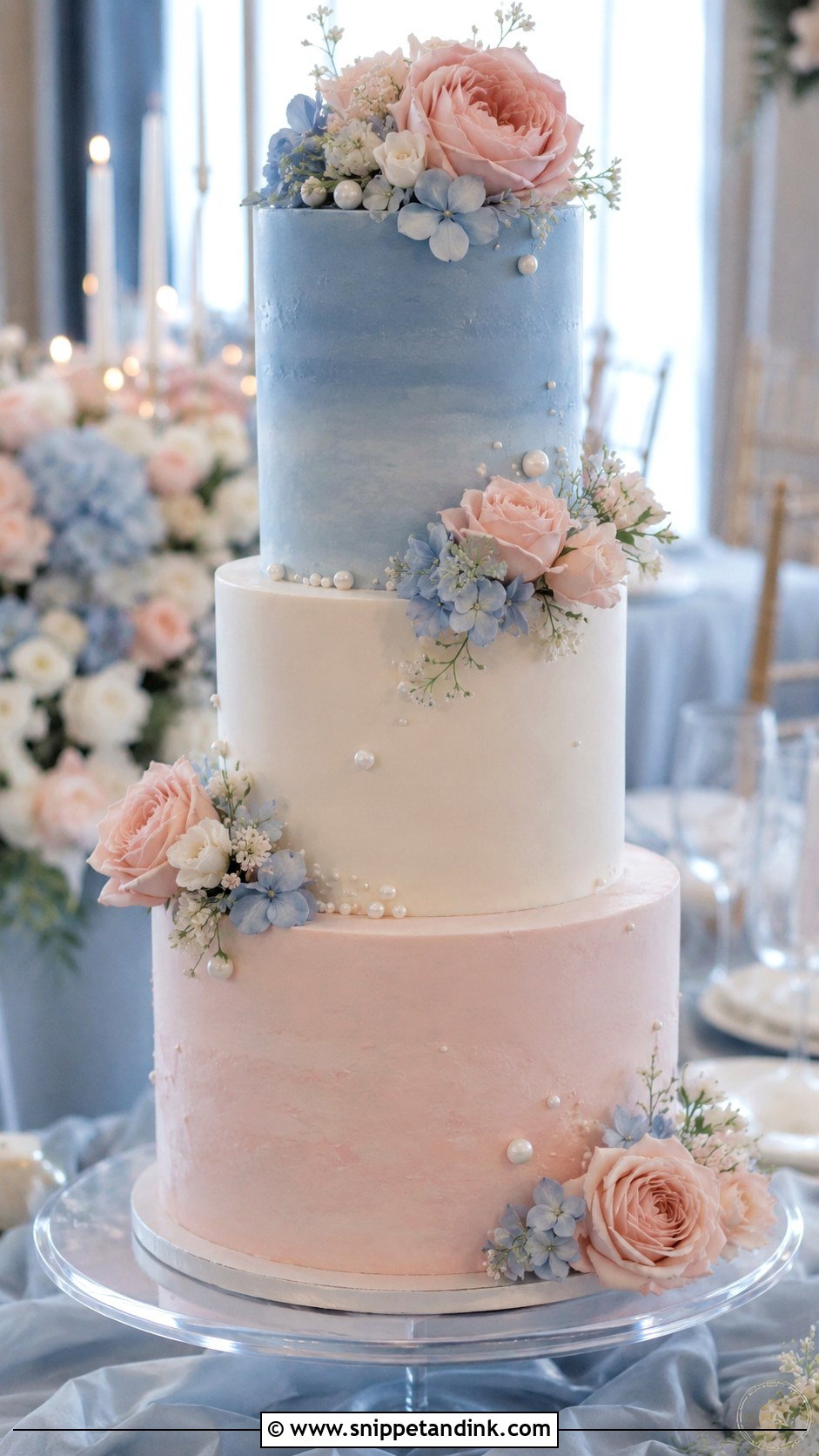
Ombre is the modern way to use both colours. It can fade from ivory to pale blue, blush to ivory, or blush at the bottom to dusty blue at the top. Keep the shades soft so it still reads bridal. I mix every tier’s colour from the same base batch, adding colour step by step, otherwise the fade jumps between tiers. Ombre buttercream with a textured finish adds movement. A small cluster of blush roses and blue flowers near the top keeps it from looking like a birthday cake.
6. Blush And Blue Floral Wedding Cake
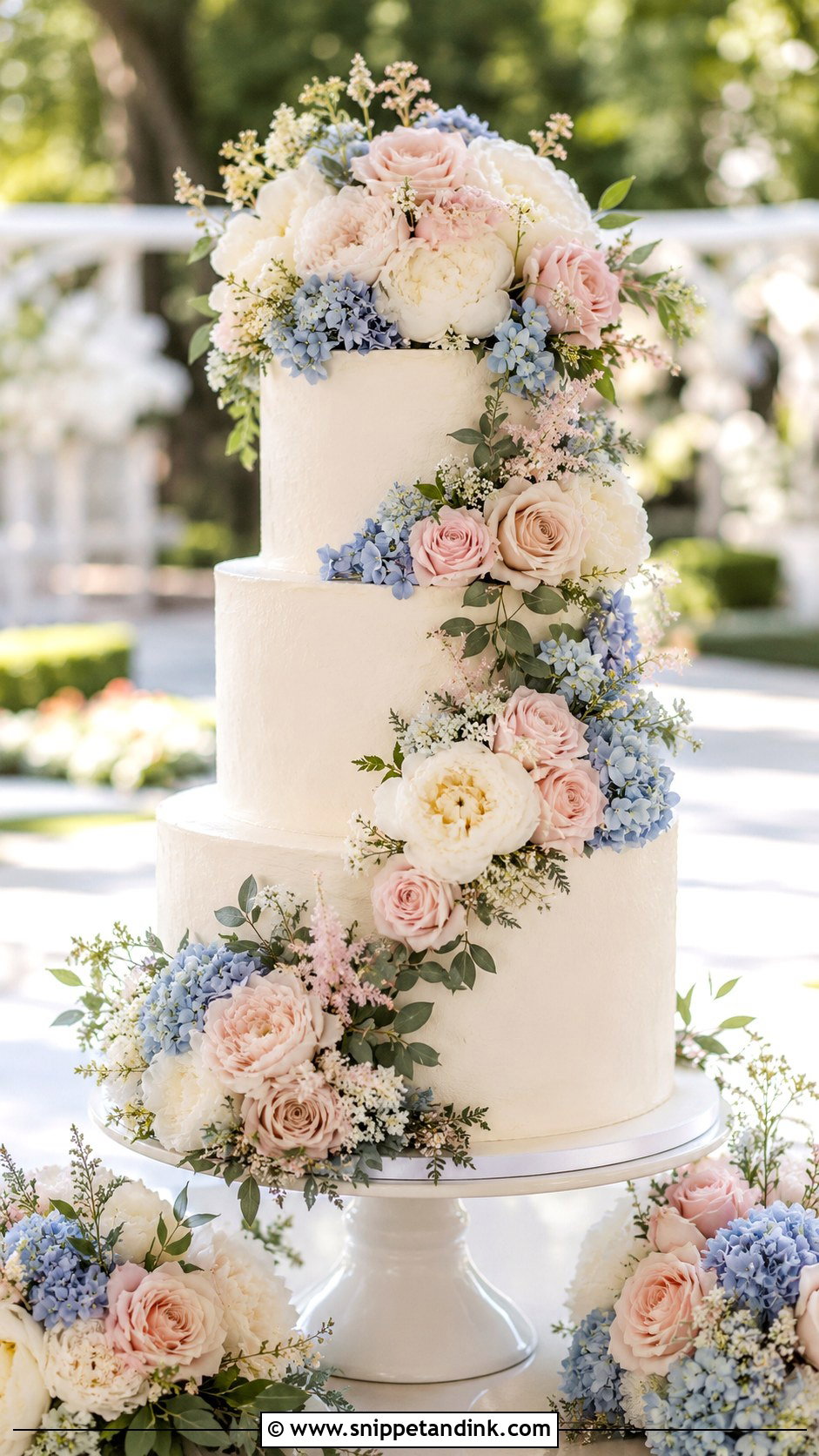
Here the flowers are the design. They can be fresh, sugar or piped buttercream, depending on budget and venue. Blush roses, pale blue hydrangeas, ivory peonies, delphinium and dusty miller all look good together, but hydrangea, delphinium and dusty miller are not food-safe, so on a real cake I either make them in sugar or set them on a barrier so they never touch the icing. Keep the base simple. On a three-tier ivory cake I place flowers in diagonal clusters, which looks full without crowding. It’s easy to tie in with your bouquet and centrepieces.
7. Blush And Blue Fondant Wedding Cake
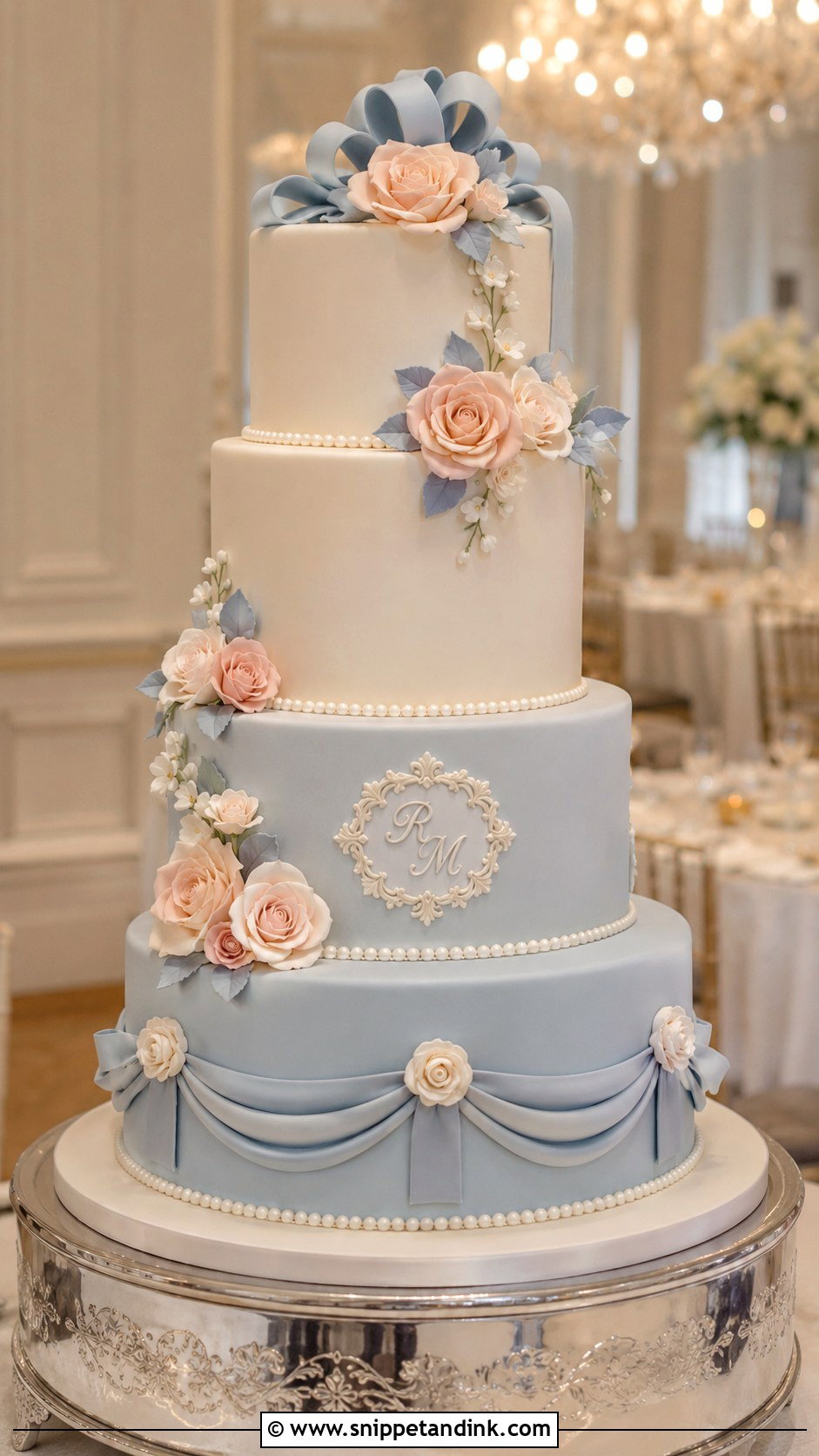
Fondant gives a clean, smooth surface and the sharpest tier edges, so it’s the finish I’d pick for painted details, embossing or sugar flowers. A pale blue fondant tier between ivory tiers with blush floral accents looks timeless. You can also use blush fondant on one tier and dusty blue ribbon on another. Fondant does sweat when a chilled cake moves into a warm room, so I let it come to room temperature slowly before decorating is finished. Soft flowers, pearls or light greenery stop it looking stiff.
8. Blush And Blue Wedding Cake With Gold
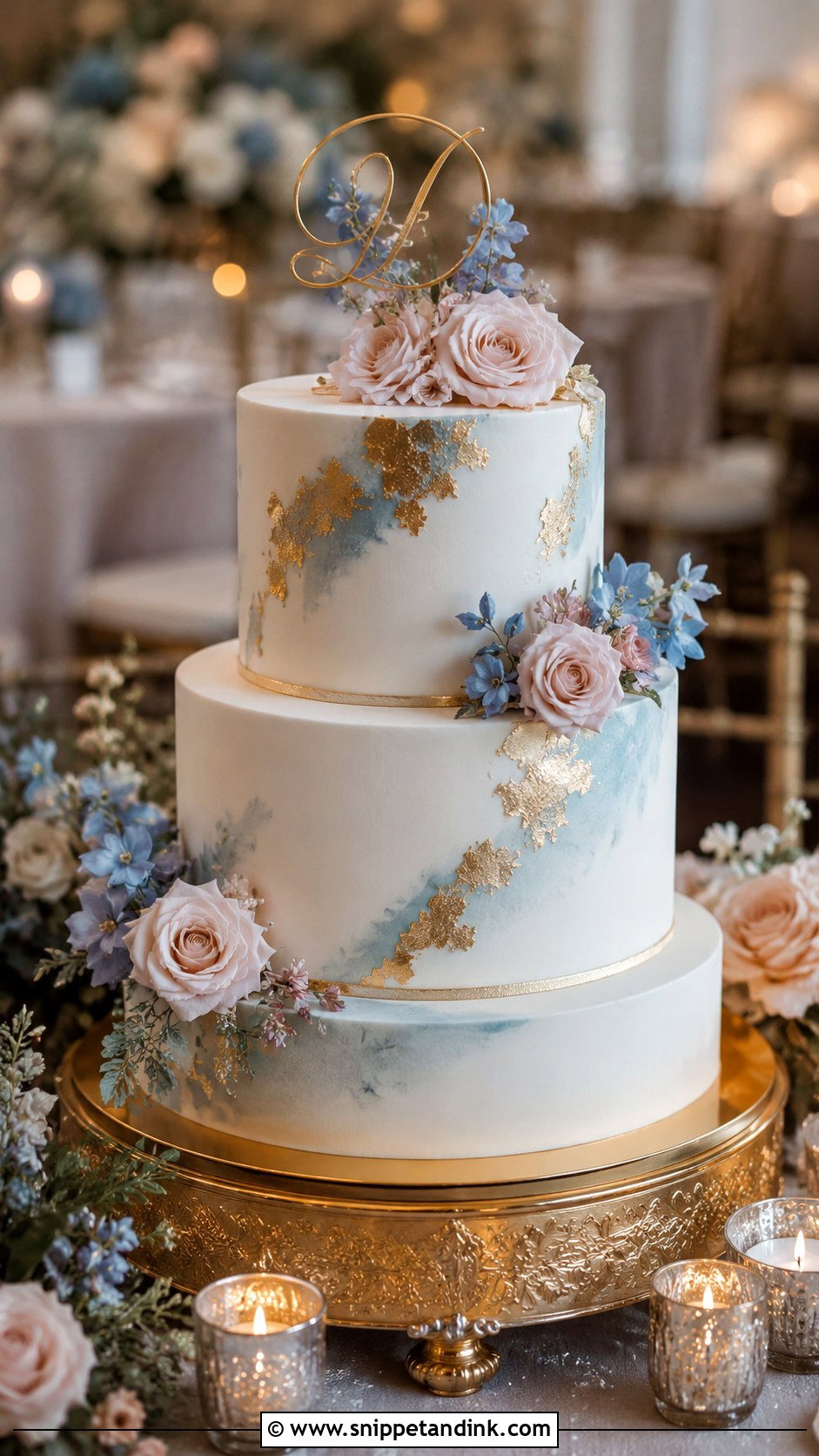
Gold warms the palette without taking away its softness. I use it sparingly: thin patches of gold leaf, a narrow painted rim or a small detail between tiers. The cake can be ivory with blush and dusty blue flowers, and just enough gold to catch the light. It suits ballroom, estate and evening receptions, especially if the tables have gold chargers, flatware or warm candlelight. Edible gold leaf is very thin and lifts with the slightest draught, so I apply it last, with tweezers.
9. Blush And Blue Wedding Cake With Silver
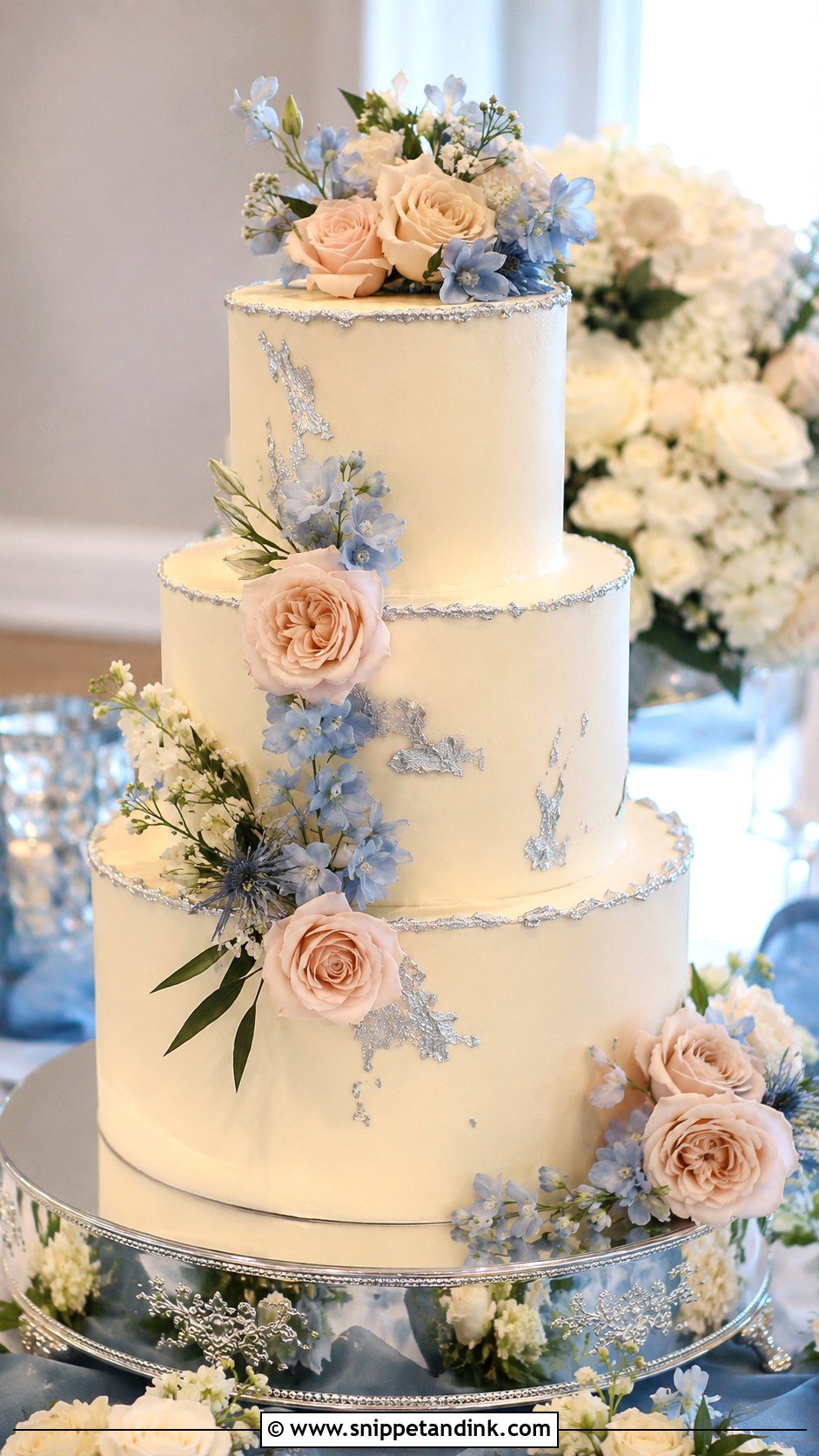
Silver gives blush and blue a cooler finish, and it suits dusty blue, grey-blue and icy blue accents. A white cake with silver leaf, blush flowers and blue blossoms looks crisp. Silver dragées, a slim silver ribbon or shimmer dusted on sugar flowers also work. It suits a winter palette without looking like a holiday cake, and modern venues with glass, marble or mirrors. I keep the blush roses warm-toned so the cake doesn’t feel too cold.
10. Blush And Blue Wedding Cake With Pearls
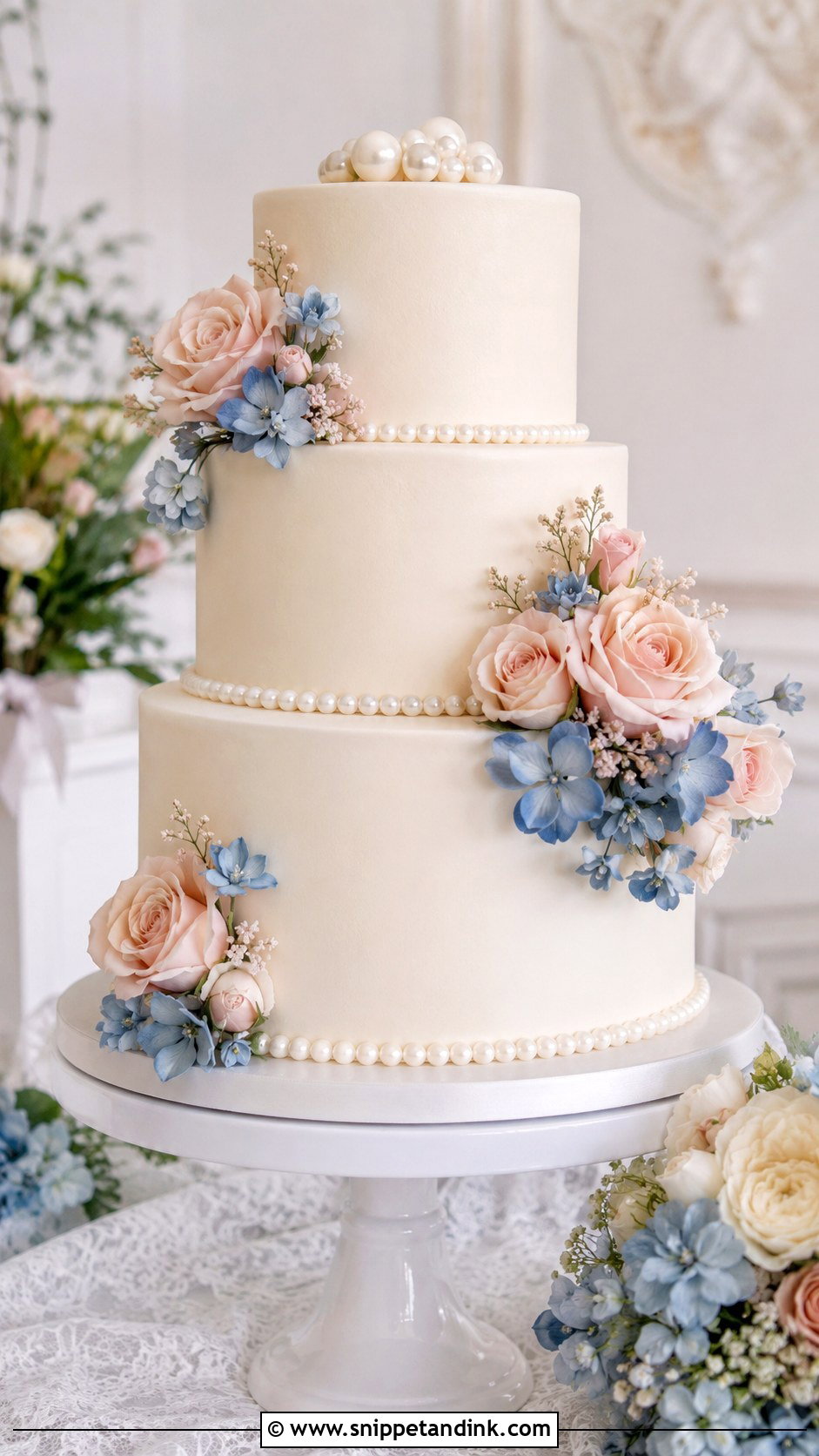
Pearls make a cake look classic. They can run in neat rows, scatter like tiny beads or border each tier. A smooth ivory cake with blush roses, dusty blue flowers and pearls looks romantic without clutter, and suits traditional weddings, vintage receptions and hotel ballrooms. For a more modern look, keep pearls to one tier. I pipe pearl borders by hand or use edible sugar pearls; hard dragées look lovely but some guests won’t want to bite into them, so I keep those to decorative areas.
11. Blush And Blue Wedding Cake With Lace
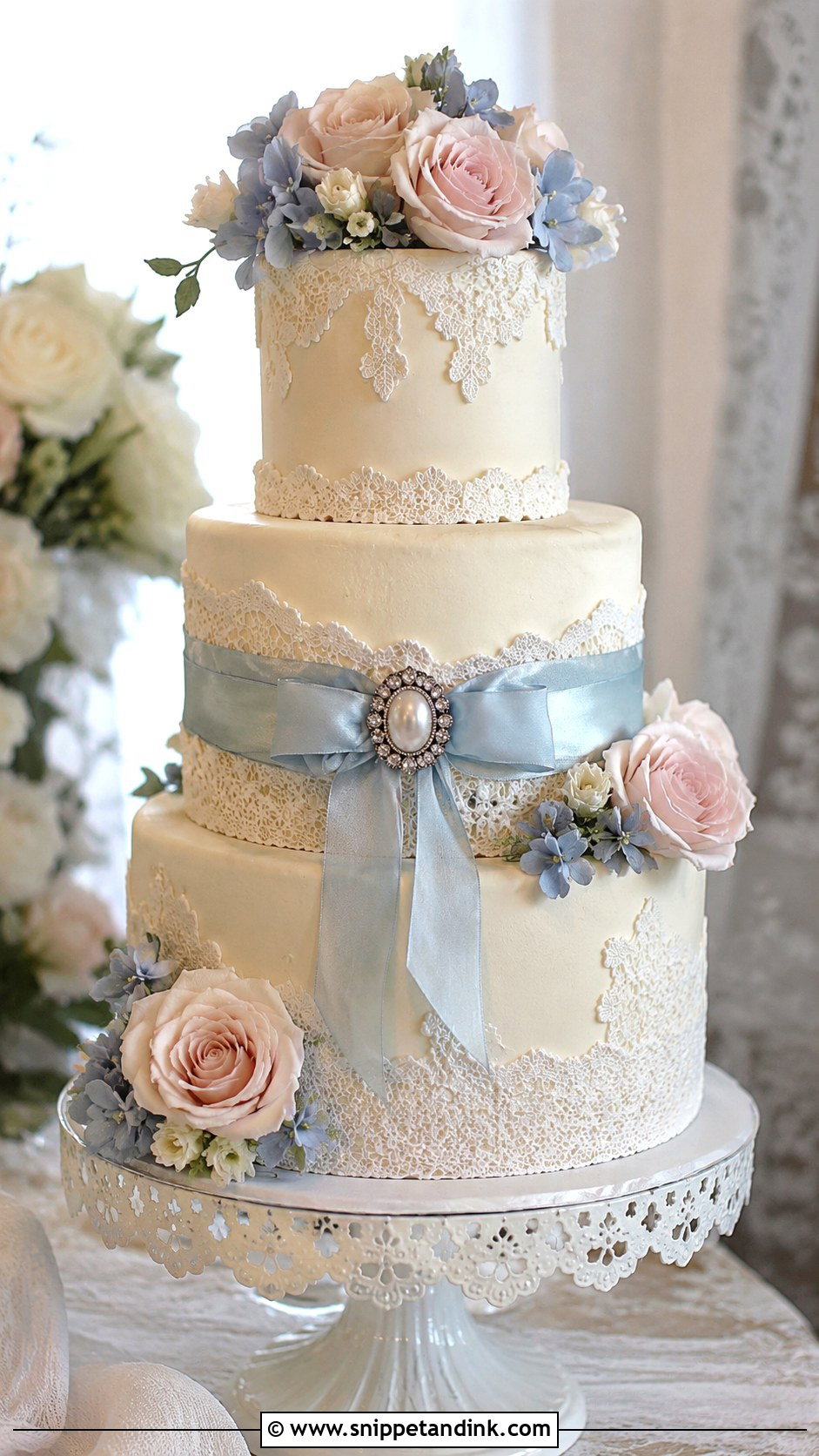
Lace adds texture without bold colour, which is why it suits a soft palette. I make it from fondant appliqués, piped royal icing or a pattern pressed into fondant with a mould. Keep the base ivory, then add blush flowers and light blue accents. If your dress has lace sleeves or a lace train, bring a close-up photo and I can echo its pattern. A dusty blue ribbon around one tier ties the colours together. Keep the floral arrangement modest so the lace stays visible.
12. Blush And Blue Wedding Cake With Sugar Flowers
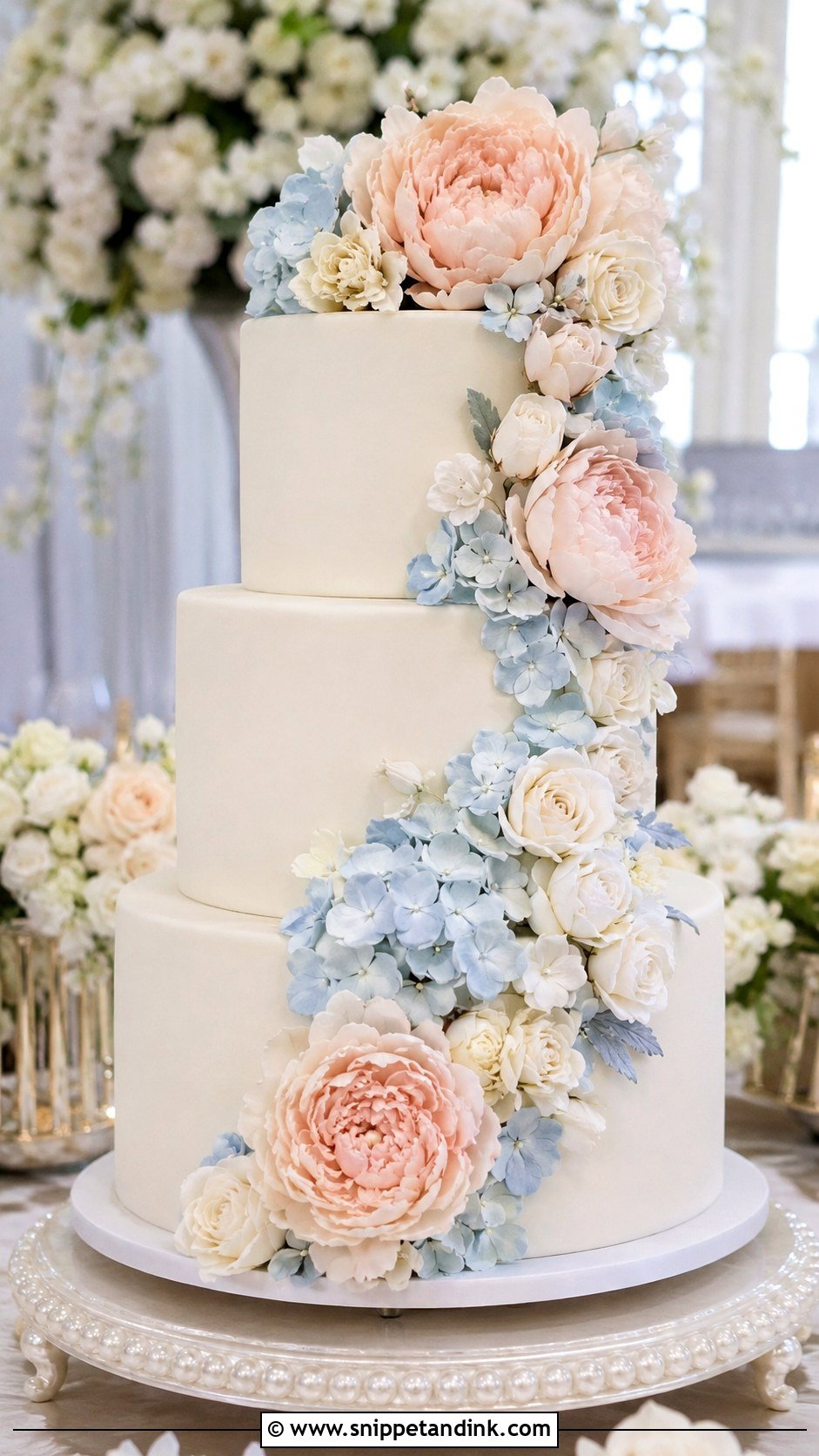
Sugar flowers are what I recommend when the flowers you want are out of season, not food-safe or simply too fragile for a cake. They’re shaped and coloured by hand, petal by petal, so blush peonies, pale blue hydrangeas, ivory roses and tiny blue blossoms can match your bouquet closely. They take time, which is why they need to be ordered early. Place them in a cascade, around the top tier or between tiers. Unlike fresh flowers, they can be kept afterwards as a keepsake in a dry box.
13. Blush And Blue Wedding Cake With Hydrangeas
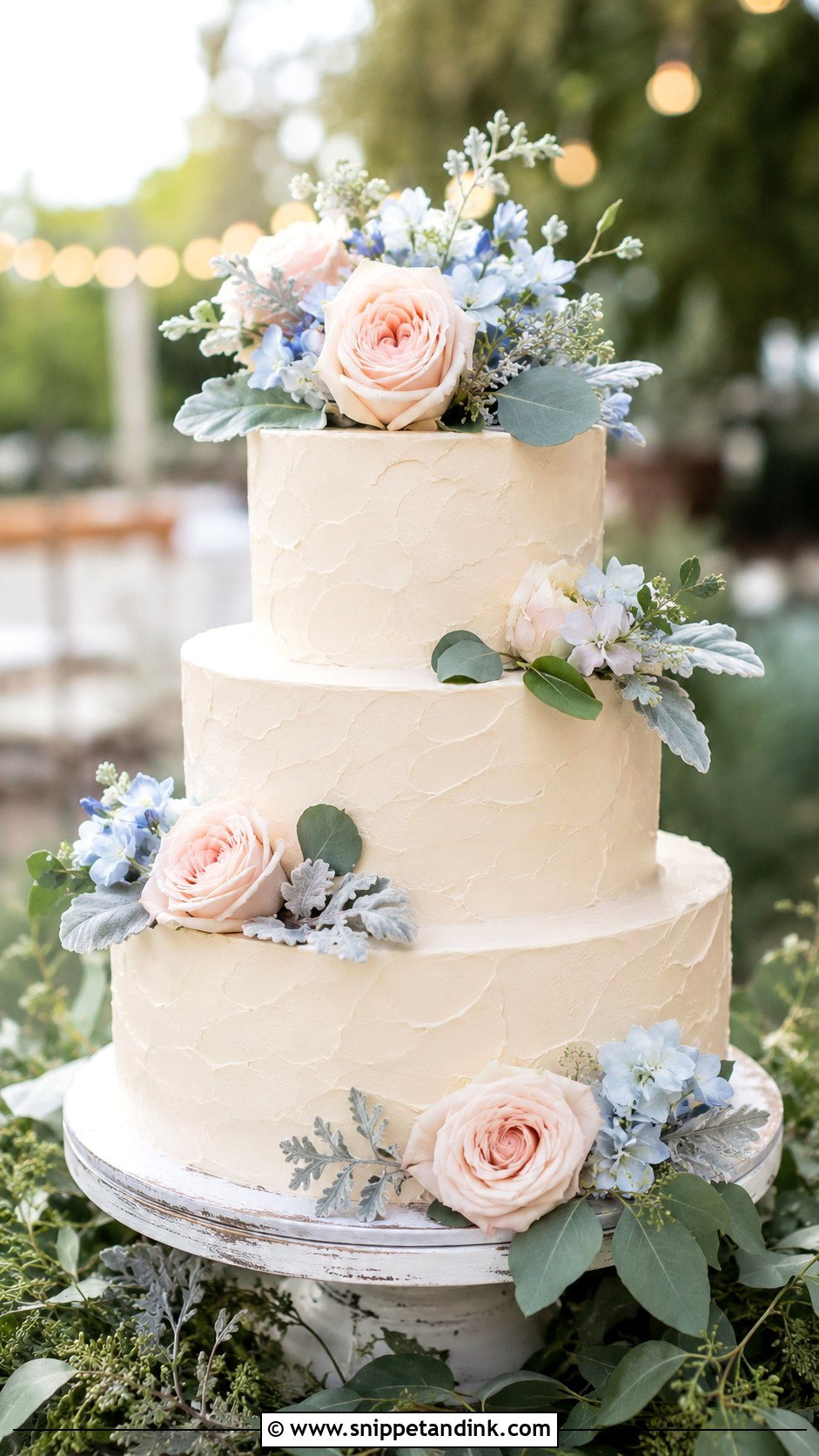
Hydrangeas bring soft volume and colour, and blue hydrangea with blush roses, ivory ranunculus and greenery gives a full garden look. Because the heads are so large, I use them in controlled clusters rather than covering the cake. Fresh hydrangea is not edible, so if it’s real, it sits on a small barrier and comes off before cutting; sugar hydrangea avoids the question. A simple buttercream or fondant base keeps it balanced. It suits spring and summer weddings with garden centrepieces and blue bridesmaid dresses.
14. Blush And Blue Wedding Cake With Roses
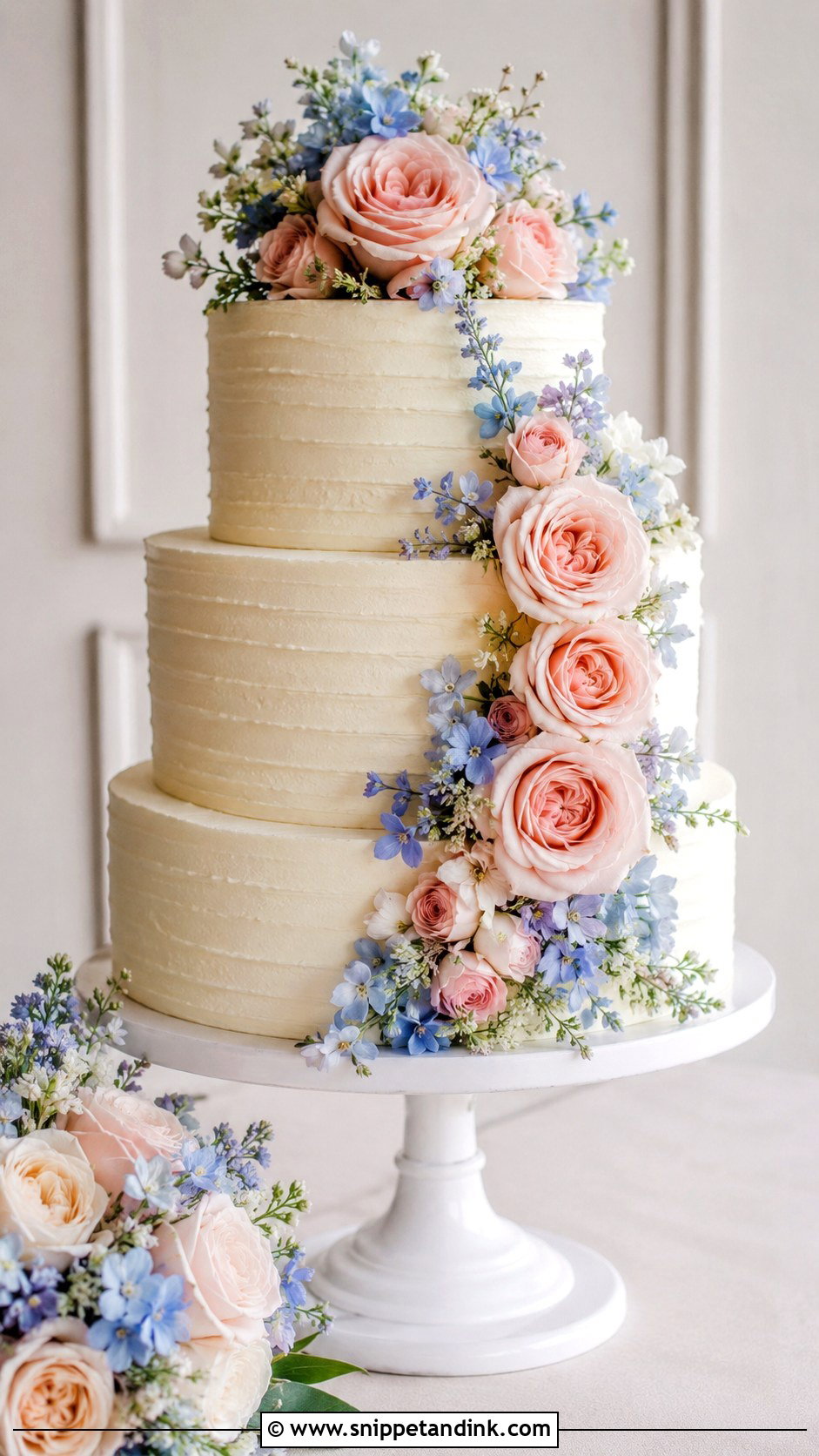
Roses are classic for good reason. I use blush garden roses as the main flower and bring in blue through thistle, ribbon or sugar delphinium. The cake can stay ivory, dusty blue or lightly textured buttercream. A rose cascade feels dramatic; small clusters are quieter. Garden roses should be grown without sprays if they’ll go near the cake, so tell your florist early that some stems are for the cake. A clean stand and simple styling around the base finish it.


15. Blush And Blue Wedding Cake With Ribbon
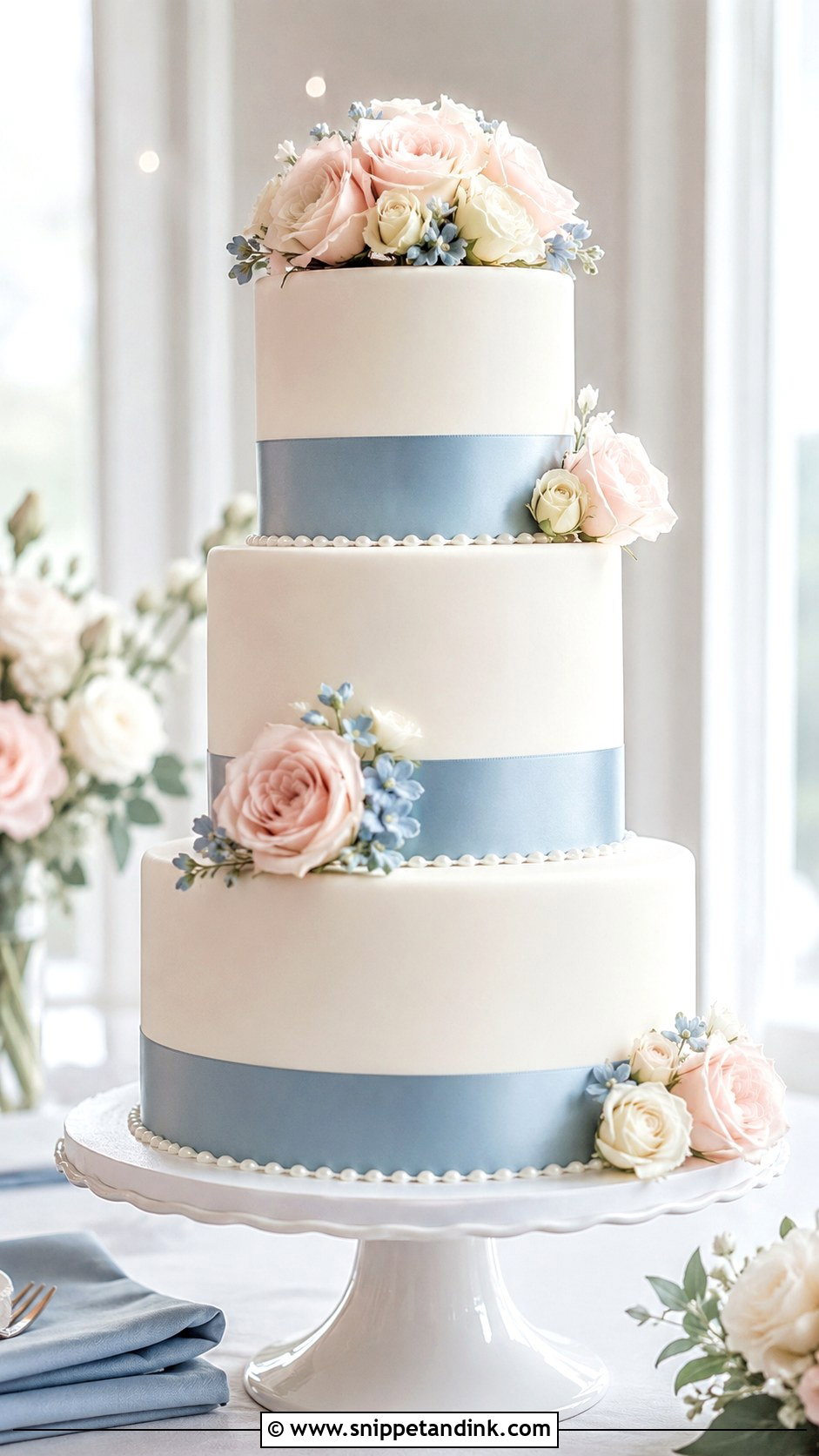
Ribbon is the simplest way to add colour without heavy decoration. A white cake with dusty blue ribbon around each tier and blush flowers at the base looks neat. Reverse it with blush ribbon and blue floral accents if you prefer. Satin reads formal, silk feels softer. Ribbon placed directly on buttercream absorbs grease and darkens in patches, so I back it with a thin strip of fondant or acetate. Match the shade to your stationery or bridesmaid dresses.
16. Blush And Blue Wedding Cake With Ruffles
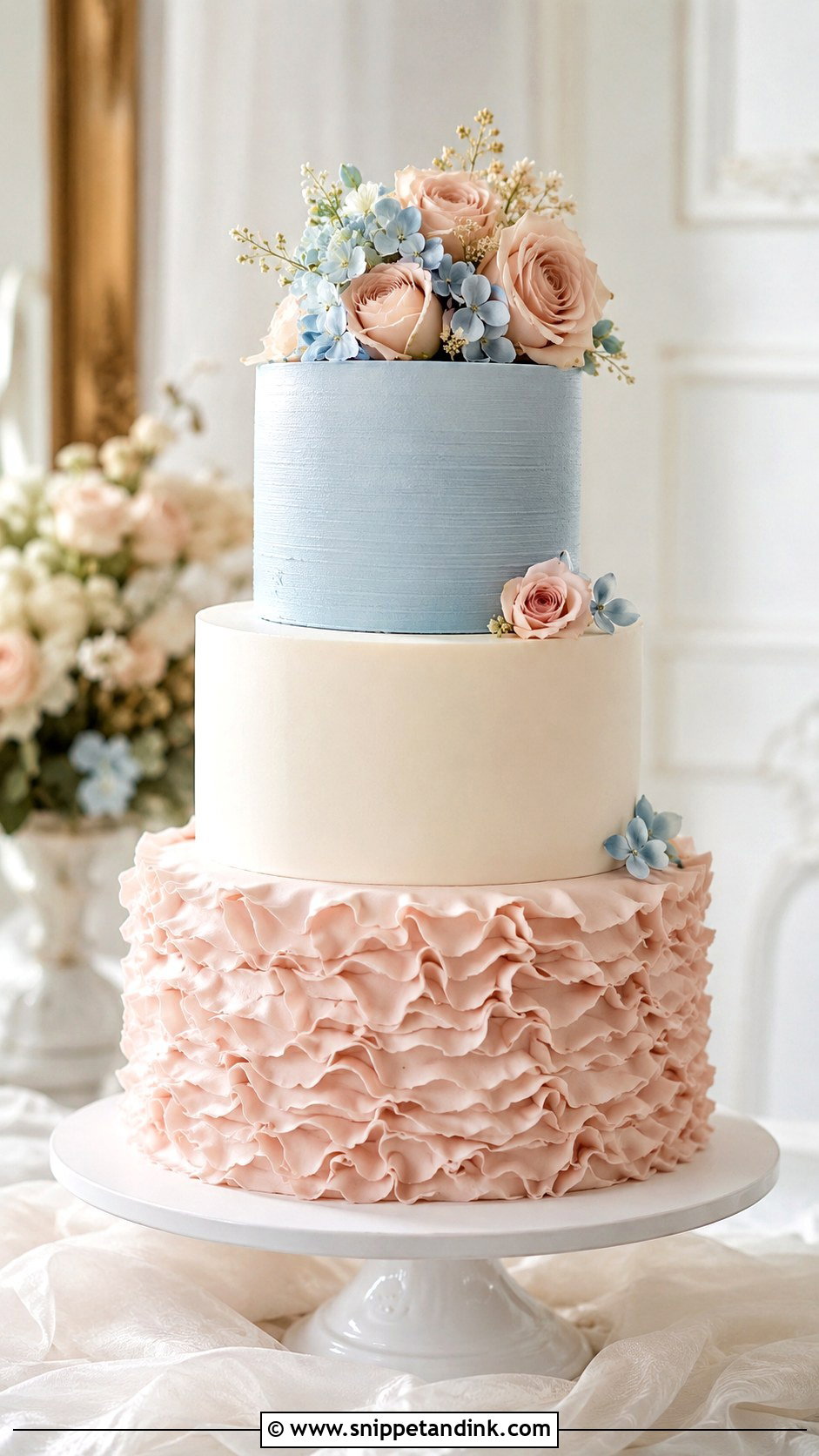
Ruffles bring movement and softness, made from buttercream or fondant on one tier or the whole cake. A ruffled bottom tier in blush, under smooth ivory and dusty blue tiers, gives a layered look. Keep flowers on one side so the ruffles show. For a lighter result, I roll fondant ruffles very thin; thick folds look heavy and add a lot of sugar. It suits garden receptions and soft, floaty dresses.
17. Blush And Blue Wedding Cake With Drip
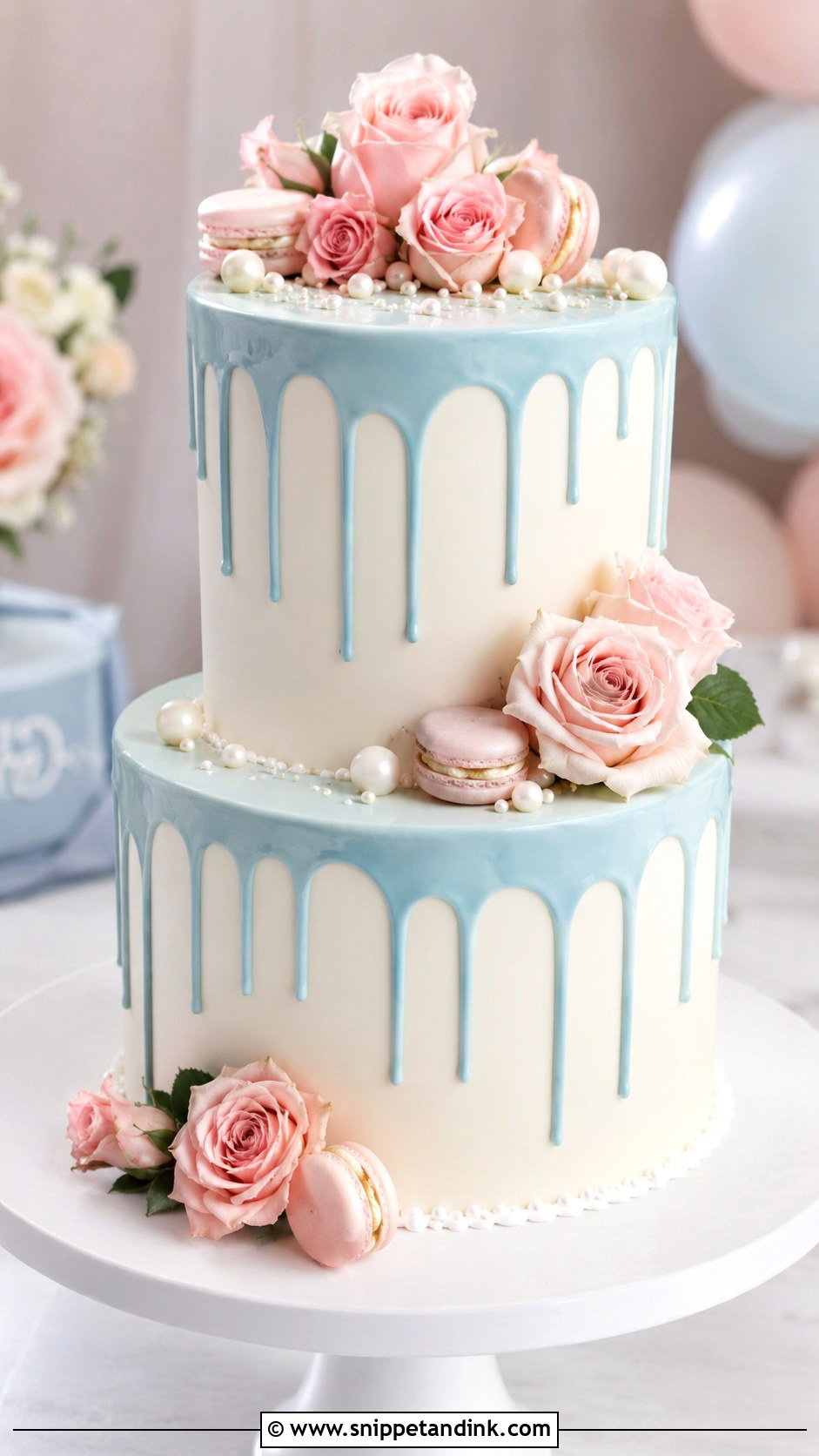
A drip cake can look wedding-worthy when the colours stay soft and the finish is tidy. I use a white or ivory cake with a pale blue drip, then add blush roses, macarons or small sugar flowers; a blush drip over a dusty blue tier gives more colour. The drip has to go onto a well-chilled cake, or it runs too far. Keep it thin and controlled. A few pearls or gold touches make it more formal, which helps at a modern reception or dessert table.
18. Blush And Blue Wedding Cake With Macarons
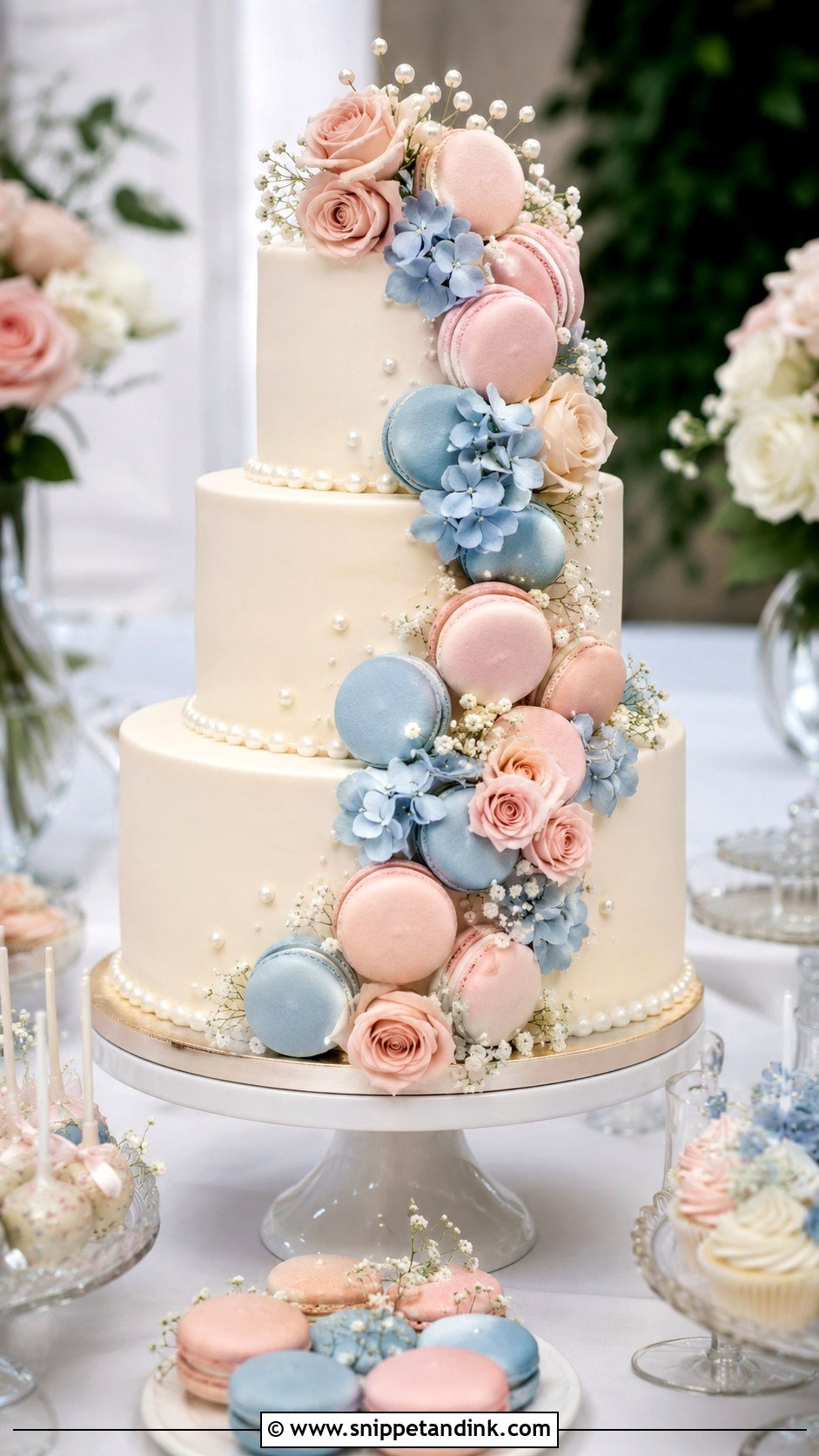
Macarons give a dessert-table feel. I pick blush, pale blue, ivory and grey-blue shells to match the palette, and stack them around the base, in a cascade or between fresh flowers on the tiers. Smooth buttercream gives them a clean background. Macarons soften once they sit against moist icing for hours, so I attach them as close to the reception as I can. Keep them evenly spaced so the cake still looks refined, and it’ll sit happily next to a dessert bar.
19. Blush And Blue Wedding Cake With Navy Accents
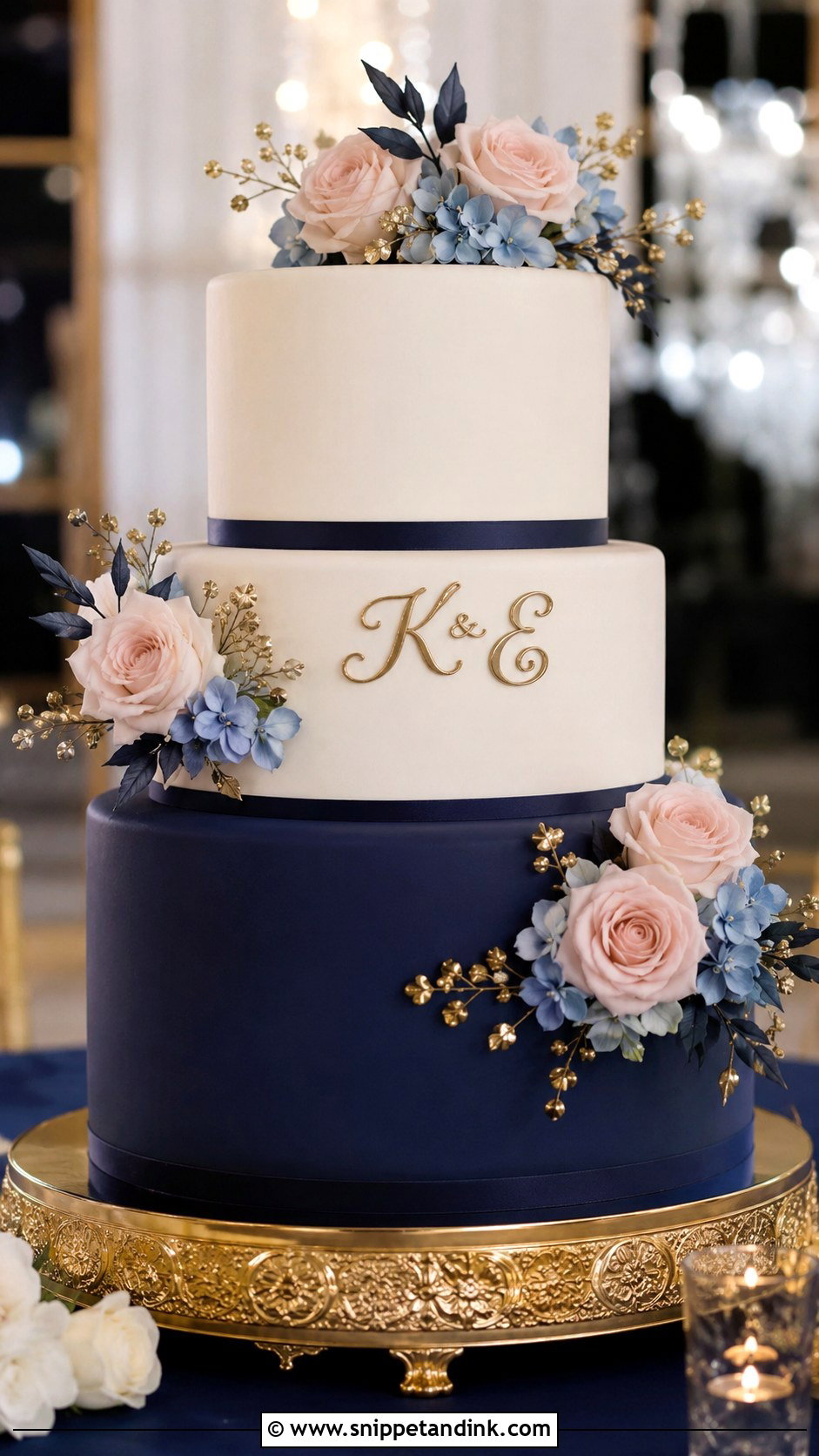
Navy makes blush and blue richer and more dramatic. Rather than covering the cake, add it in small details: ribbon, painted florals, berries or a deep blue bottom tier. Blush flowers soften it and ivory keeps it bridal. It suits evening, autumn and formal receptions with navy suits or dark linens. Dark blue icing needs a lot of colouring and can stain teeth and tongues, so I keep navy to accents or a fondant layer rather than thick buttercream. A little gold or pearl adds depth.
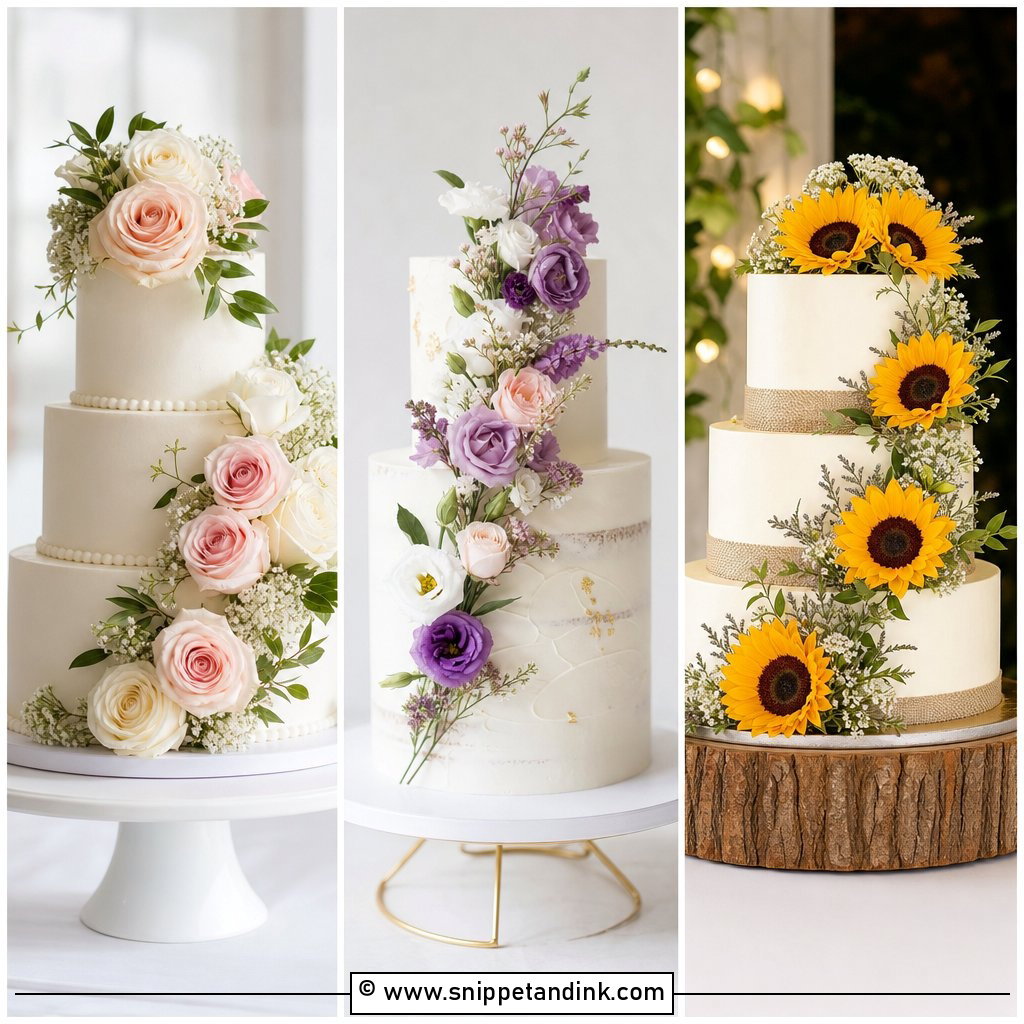

20. Blush And Blue Wedding Cake With Dusty Miller
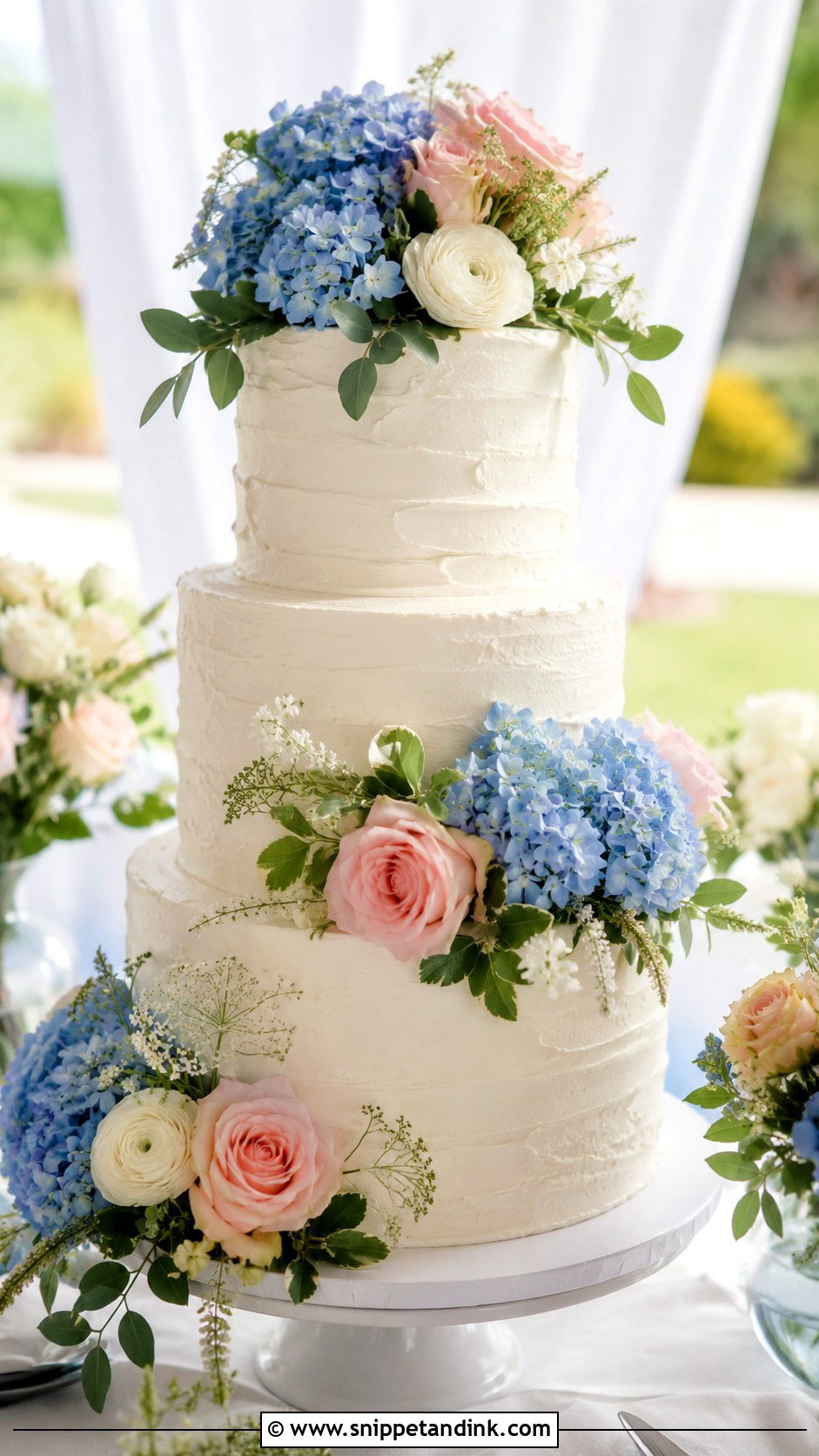
Dusty miller has soft silver-green leaves that bridge pale blue flowers, blush roses and ivory frosting. It suits garden, rustic and outdoor receptions. It isn’t food-safe, so I wrap or back each sprig and keep it off the icing, or swap in eucalyptus-look sugar leaves for anything that touches the cake. I use small sprigs around floral clusters or at the base of each tier. Textured buttercream pairs well with it, and it matches bouquets with roses, hydrangeas and eucalyptus.
21. Blush And Blue Wedding Cake With Marble
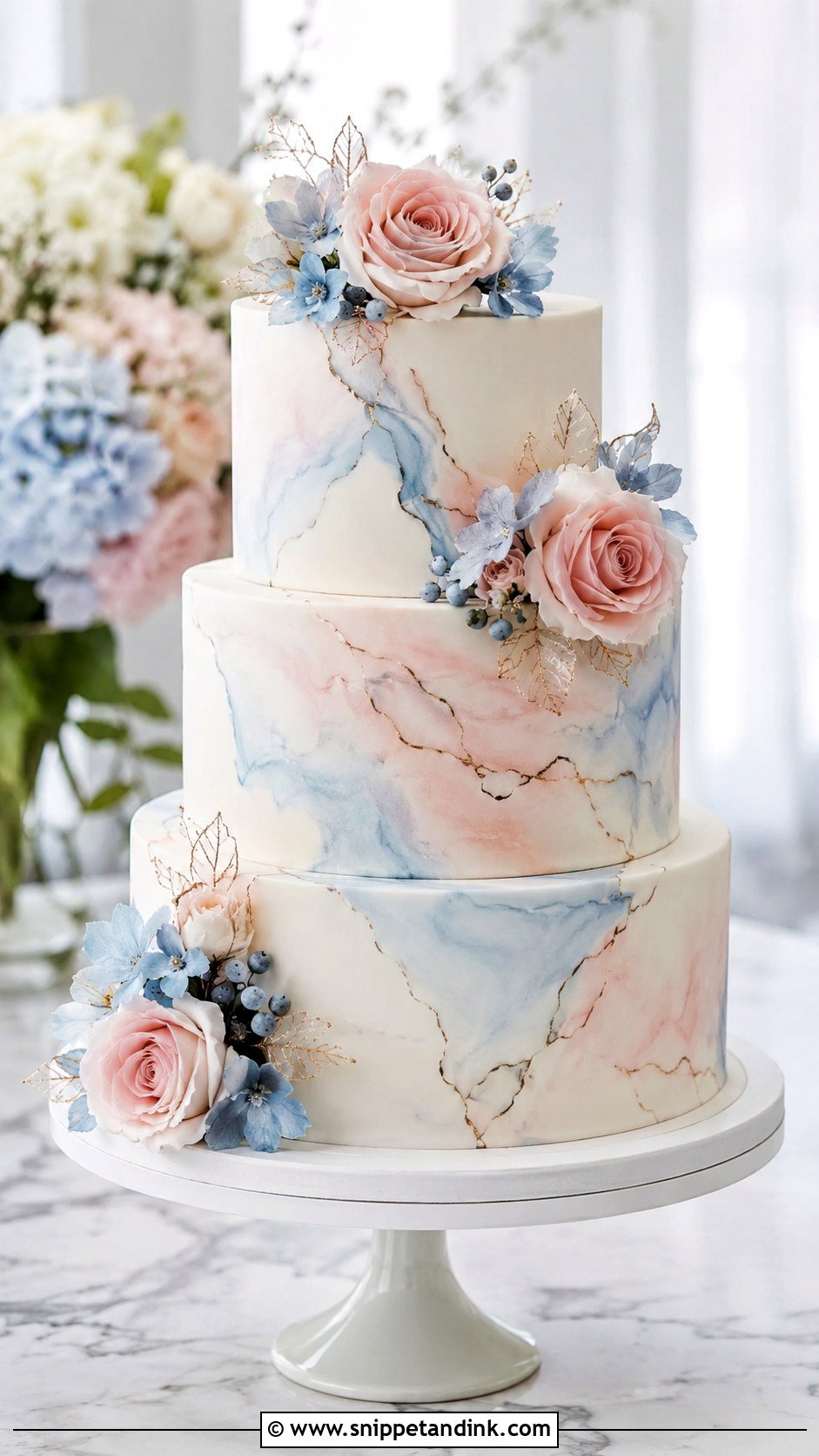
Marble uses the palette without leaning on flowers. A white fondant cake with pale blue and blush veining looks soft and clean. I knead the colours partway into the fondant and stop early, because overworking turns the veins into one muddy shade. Add a few blush sugar flowers, small blue blossoms or thin metallic lines. It suits modern venues and galleries. For more contrast, marble one tier and keep the others smooth ivory or dusty blue.
22. Blush And Blue Wedding Cake With Geode
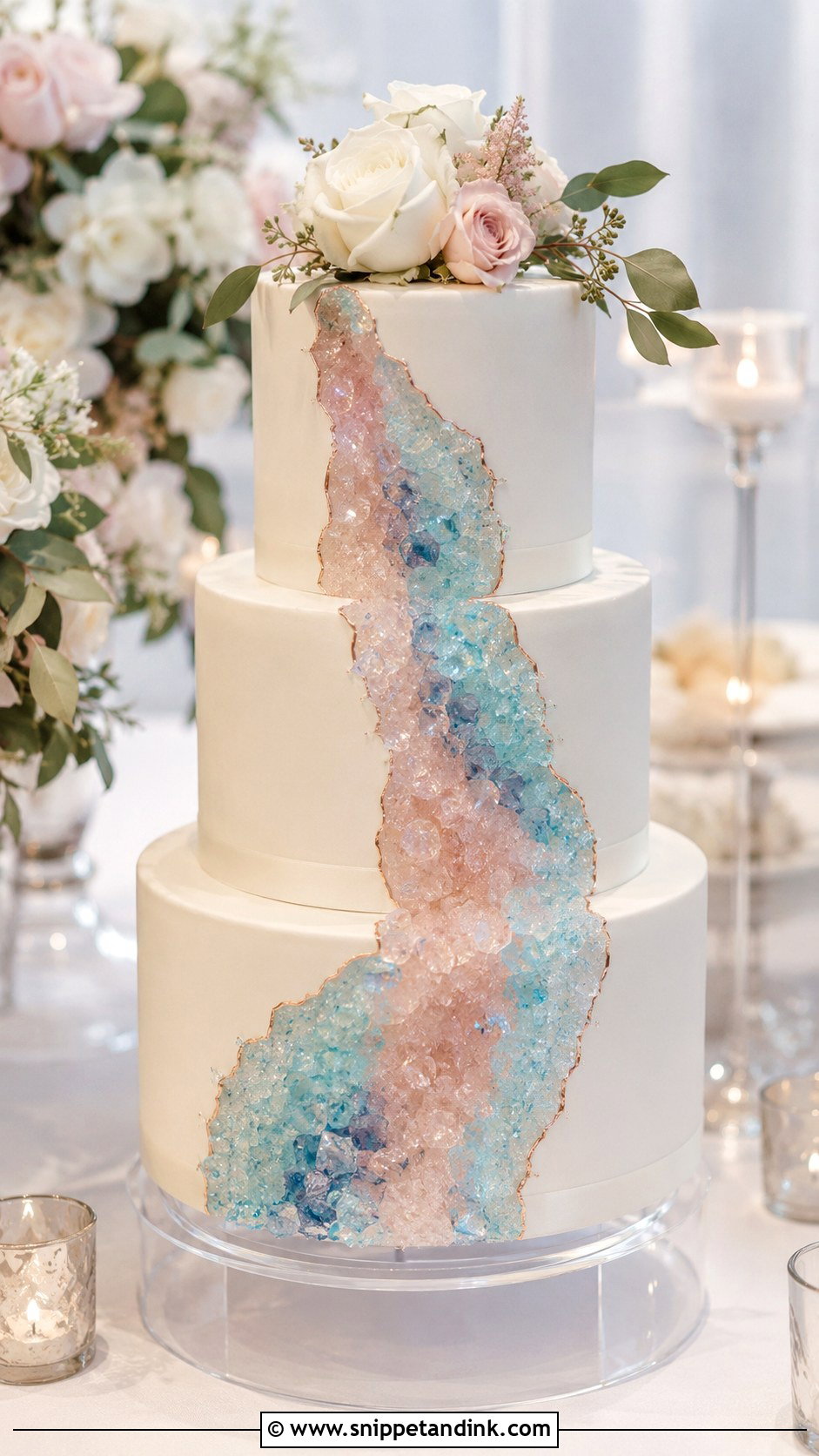
A geode cake turns the palette into sparkle. The crystal section can use pale blue sugar crystals, blush rock candy and touches of white or silver. Keep the rest of the cake smooth so the geode detail looks intentional. A tall three-tier cake gives the cut-out room to run down the side. Sugar crystals draw moisture in humid rooms and can go cloudy, so I add them on the day of delivery. Keep flowers minimal; it suits modern and glamorous receptions.
23. Blush And Blue Wedding Cake With Pressed Flowers
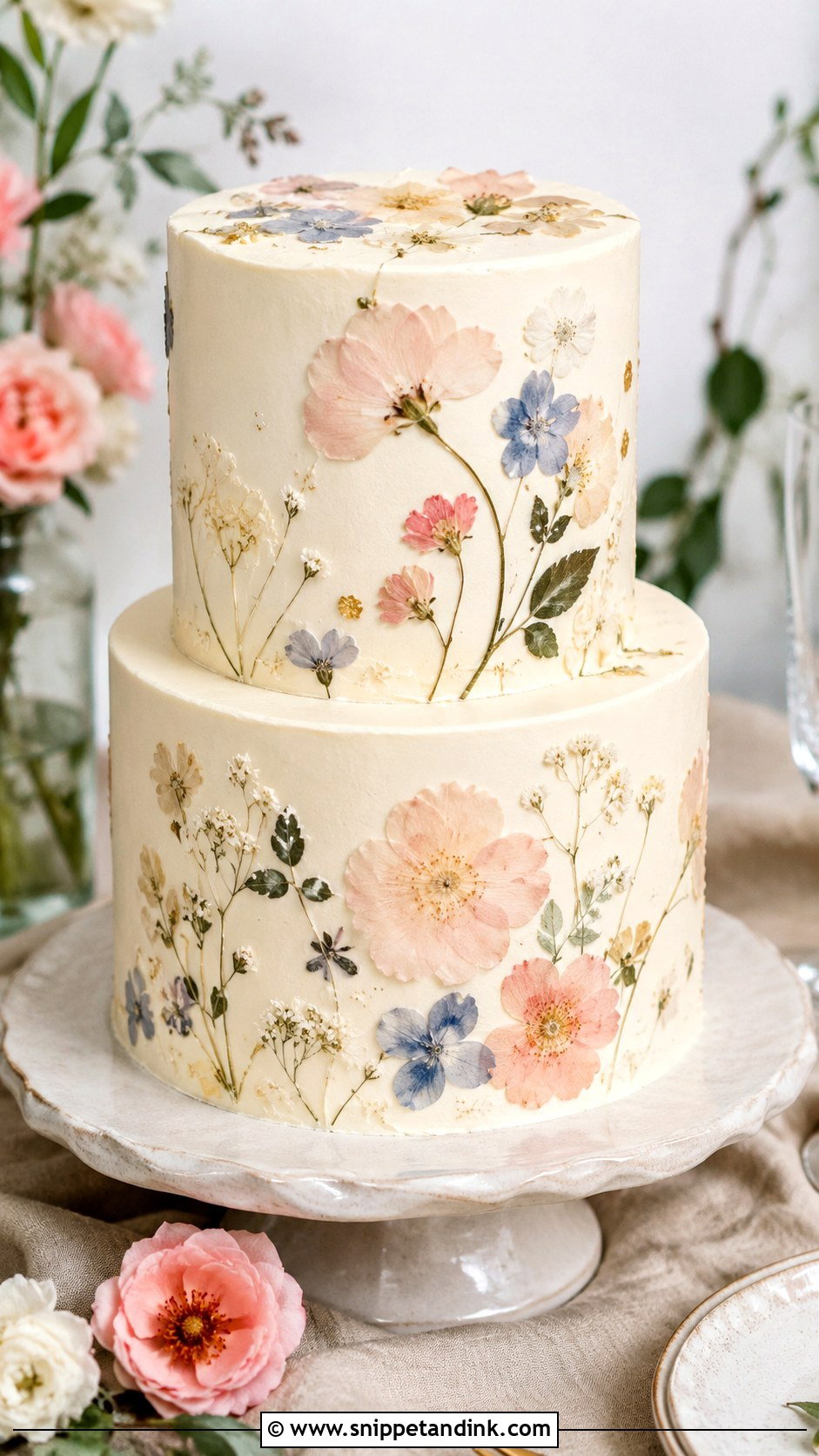
Pressed flowers look delicate and handmade. I use edible, food-safe pressed blooms in blush, pale blue, ivory and soft green, laid across smooth buttercream or fondant in a light scatter. They stick best to slightly tacky icing and need gentle pressing so the edges don’t curl. It suits outdoor, spring and cottage-garden receptions. Keep the cake shape simple; a white or ivory base lets the colours show clearly.
24. Blush And Blue Wedding Cake With Blueberries
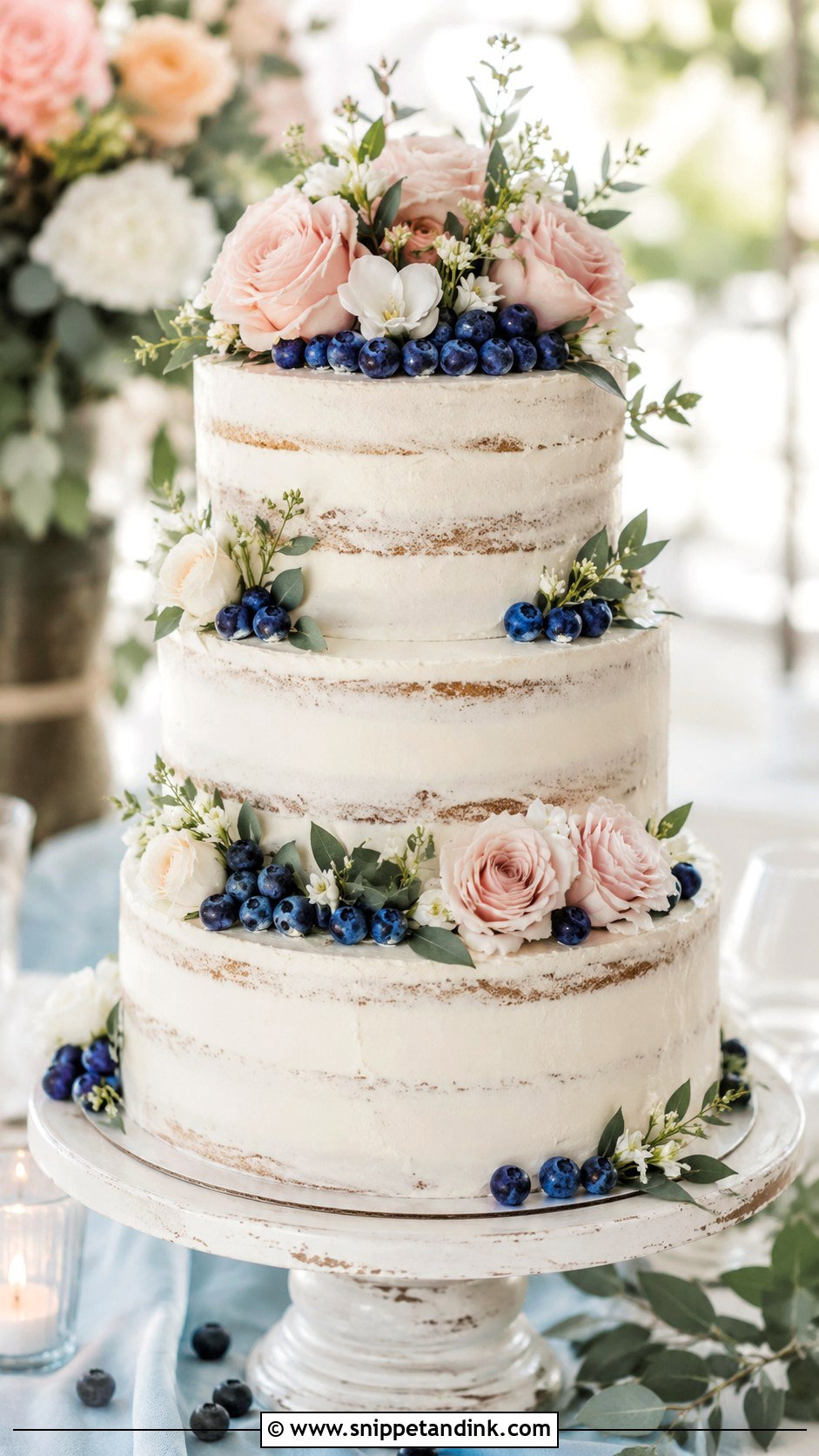
Blueberries add a natural blue accent with blush flowers and ivory frosting, and the look is fresh and a bit rustic. It suits summer weddings, brunch receptions and outdoor venues. I cluster them around the tiers with blush roses, white flowers and greenery. A semi-naked or textured buttercream finish keeps it relaxed. Berries should be washed and dried thoroughly first, or they bleed purple into pale icing. A pale blue ribbon adds more colour if you want it.

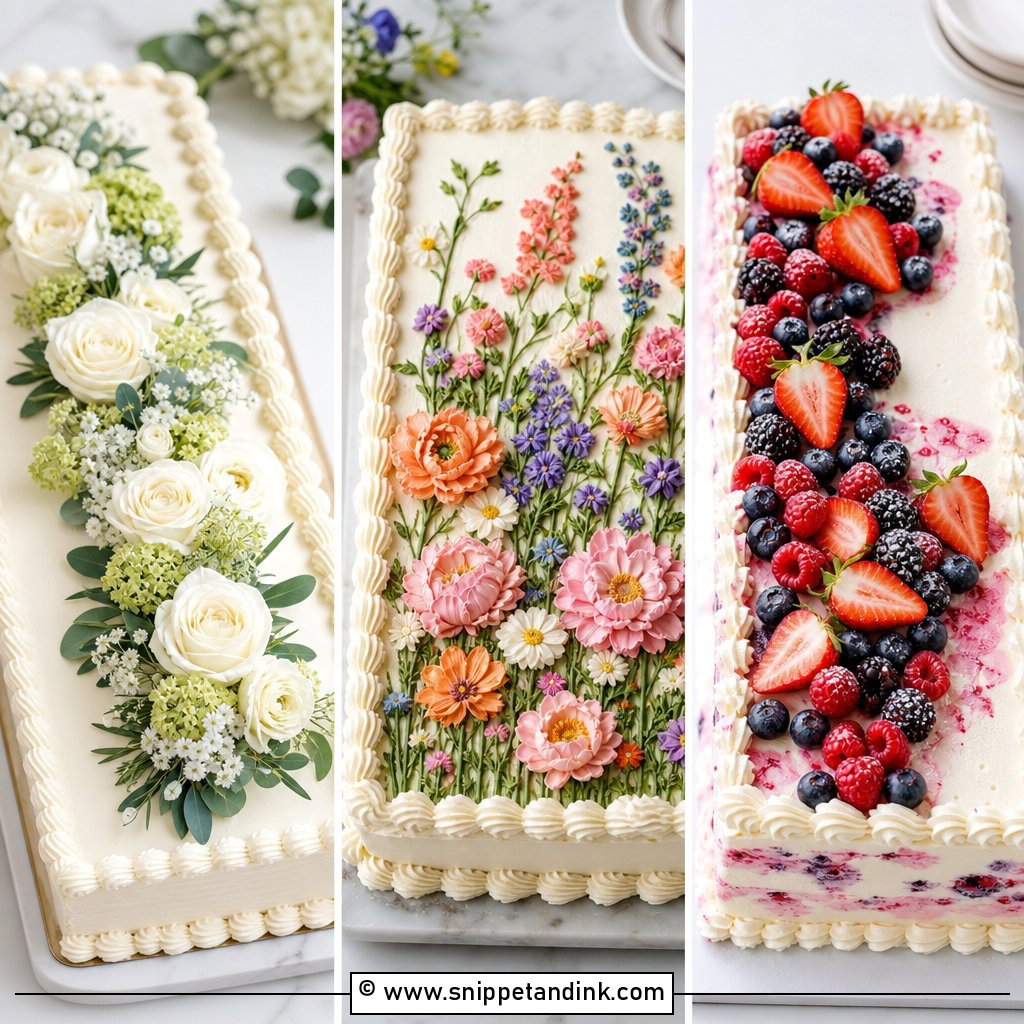

25. Blush And Blue Wedding Cake With Cupcakes
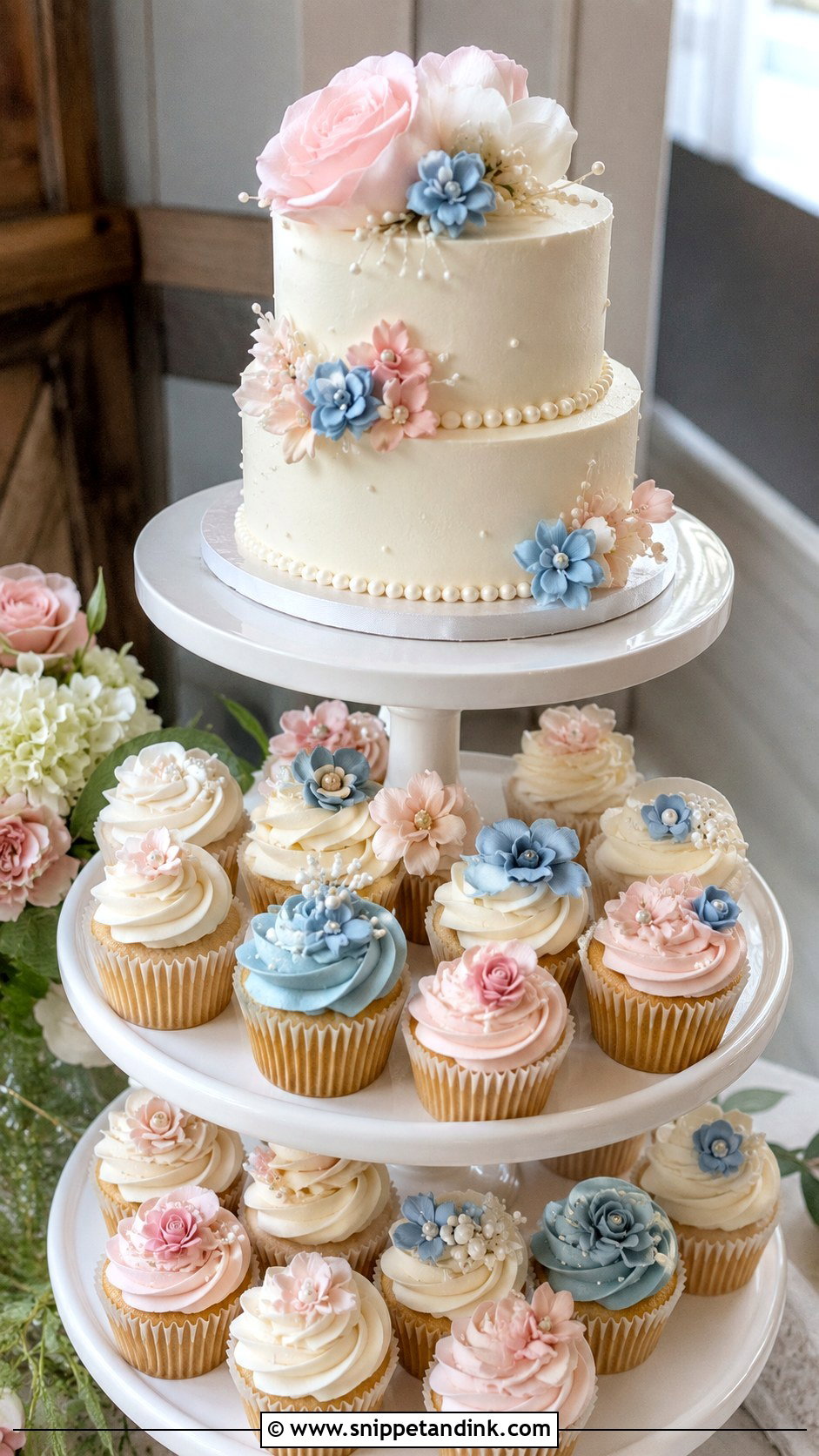
A small cutting cake with matching cupcakes is practical and easy to serve. The cutting cake carries fresh flowers for photos, and cupcakes in blush, ivory and pale blue frosting surround it. Cupcakes can carry rosettes, pearls or tiny blossoms. I usually suggest two or three flavours, which lets guests choose. Tiered stands make it feel special. It suits casual and backyard weddings, and cupcakes avoid the need for anyone to cut and plate slices.
Hydrangea, Delphinium and Other Blooms to Keep Off the Icing
Many of the flowers that give this palette its blue are not edible. Hydrangea, delphinium and dusty miller are all ones I keep away from icing, and florist flowers in general may have been sprayed. That doesn’t mean you can’t have them on the cake. It means they have to be handled properly.
- Stems are wrapped in floral tape and pushed into food-safe picks or straws, never straight into the sponge.
- Heads that lie on the cake sit on a small disc of fondant or baking paper.
- Ask your florist for unsprayed flowers for the cake, and tell them early so they can source them.
- All fresh flowers come off before the cake is cut. Decide who will do that, the caterer or the venue team.
If you’d rather not think about it at all, sugar flowers solve the problem. They can match the blue of a hydrangea exactly and won’t wilt in a warm room.
Getting a Soft-Coloured Cake to the Venue Intact
Pale icing shows every scuff, so delivery matters. I deliver tiered cakes in a cooled car, often stacking the top tier on site. Ask your venue for a cool, shaded spot for the cake table, away from heaters and windows, and confirm the time I can set up. For a summer outdoor reception, plan to bring the cake out shortly before cutting rather than leaving it on display for hours.
One Colour Leads, the Other Follows
The cakes that work best in this palette let one colour lead and the other support it, through flowers, ribbon, a painted wash, fruit or small details. Ivory frosting is always a safe base, while dusty blue tiers, blush ruffles, marbling or sugar flowers make it more personal. When you meet your baker, bring a swatch of your colours and a photo of your flowers, so the cake repeats details from the rest of the day.
You'll Like These Ideas:













Leave a Reply