
Pink, white and gold is one of the palettes I’m asked for most, because it manages to be romantic without getting fussy. White keeps a cake reading as a wedding cake, pink adds warmth, and gold gives it a finished edge under reception lights. It suits a ballroom as easily as a garden dinner. The styles couples bring to me lately lean toward textured buttercream, fresh and pressed flowers, vintage piping, small metallic accents and taller, more sculptural tiers, and this color mix adapts to all of them. Below are twenty complete cake looks, each with notes from the decorating side on how the design is built, where it struggles, and what to ask your baker.
Real Gold Leaf Versus Gold Paint on a Wedding Cake
Not every gold you see on a cake is meant to be eaten, and couples are often surprised by that. When we talk about gold, I explain the three ways I apply it.
- Edible gold leaf is very thin, high-karat gold, applied in sheets or torn flakes. It’s safe to eat, tasteless, and has the softest, most natural shine. It’s also delicate to handle, so it’s often priced as a detail.
- Edible gold paint or luster dust is mixed with alcohol and painted on for drips, bands and lettering. Check that it’s labelled edible. Some craft and decorating dusts say only “non-toxic” or “for decoration,” which means they aren’t intended to be eaten.
- Non-edible gold covers toppers, ribbon and sugar-free props. Fine on display, but it should sit on a barrier or be removed before cutting.
Pink needs similar care. Blush and rose shades made with food coloring can fade if the cake sits in direct sunlight or under bright display lights for hours. If your cake table is near a window, ask your planner to move it or shade it until it’s time to cut.
1. Pink White Gold Tiered Wedding Cake
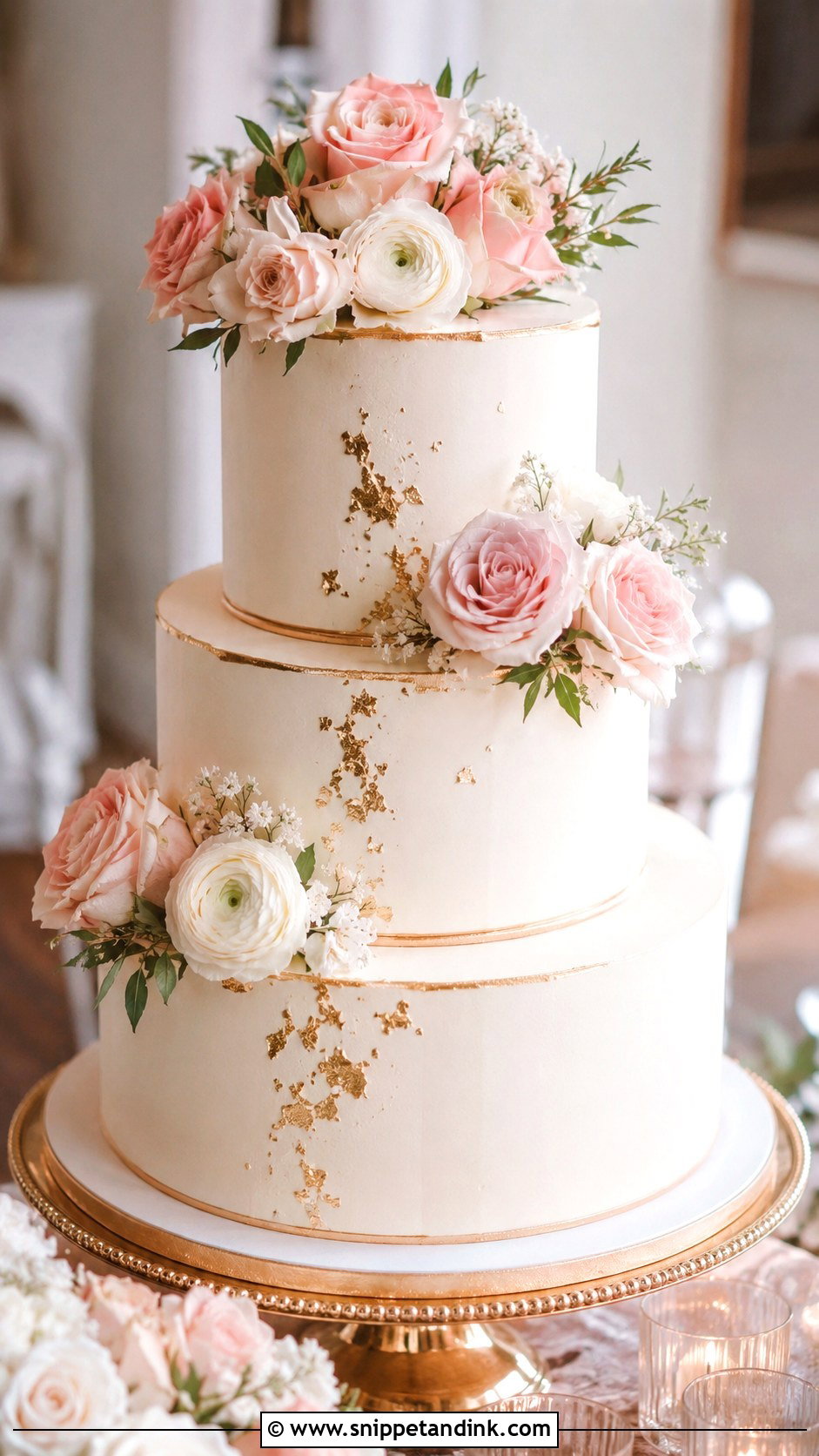
Three tiers is still the shape most people picture, and it earns its place as a centerpiece. I cover each tier in white buttercream or fondant, nestle blush flowers at the base of each one and wrap the bottom edges in a thin gold band. The band has a job: it hides the seam where tiers meet, which is the hardest spot to keep tidy. For balance, I keep the pink and gold to roughly one tier’s worth of decoration in total so it still looks bridal rather than shiny. Medium and large weddings suit it. Inside, vanilla almond, strawberry cream or raspberry white chocolate keeps the slice in the same mood.
2. Pink White Gold Buttercream Wedding Cake
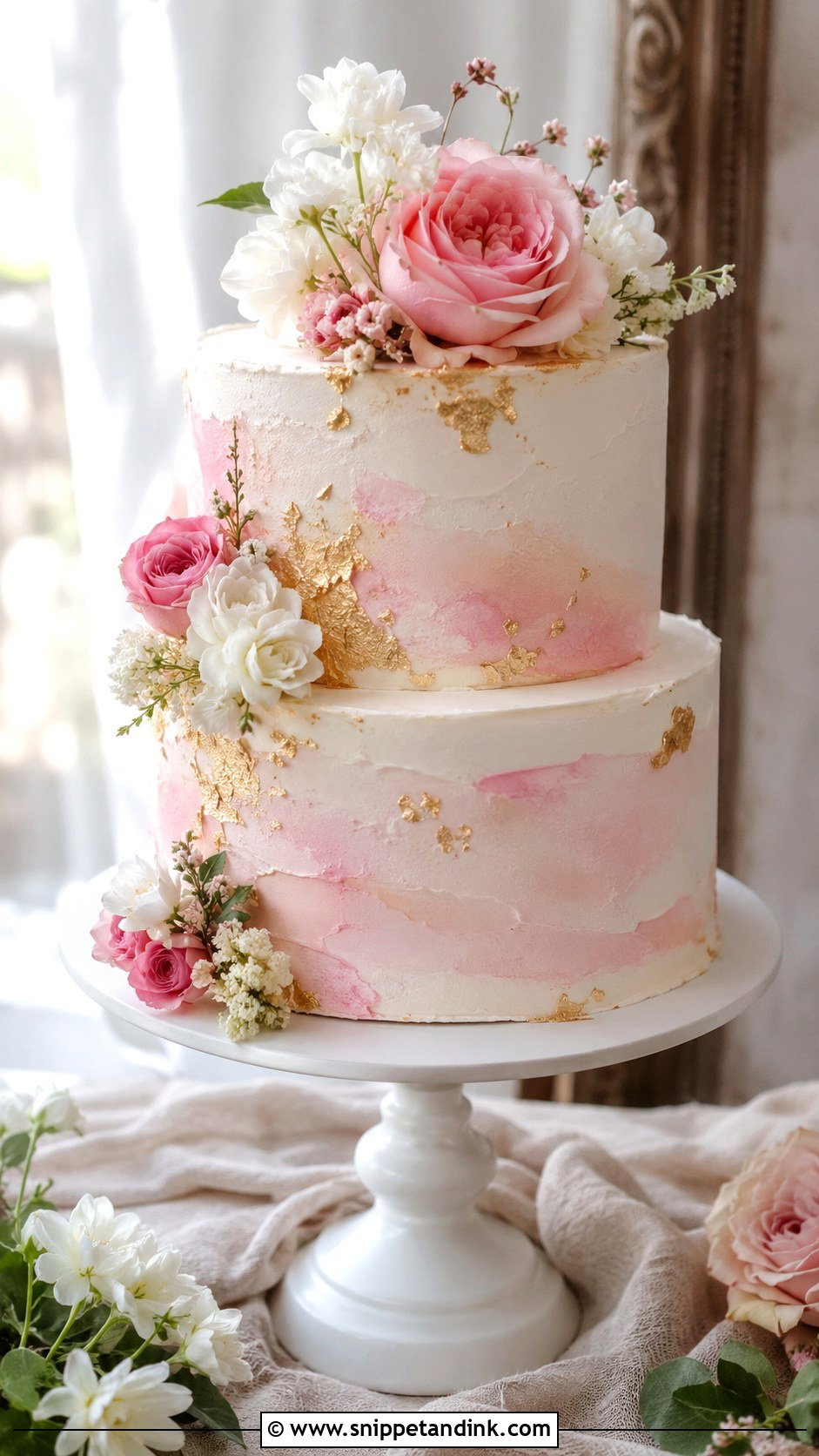
Buttercream is my favorite finish for this palette because the pink can be blended right into the frosting. I keep the base white and work pale pink buttercream around one side with a palette knife, so it looks like a watercolor wash with a little texture. Edible gold leaf goes on in small torn pieces; heavy metallic paint over buttercream tends to look streaky. Pink roses and white ranunculus finish it. The honest trade-off is heat. Buttercream softens in a warm room, so for an outdoor summer reception I’d want the cake kept inside until close to the cutting.
3. Pink White Gold Fondant Wedding Cake
Fondant gives the sharpest edges, which is what you want for a formal or modern room. Blush panels, white tiers and fine gold trim all look precise on it. One pink tier between two white ones is the classic arrangement; an all-white cake with pink sugar flowers and gold edging is quieter. Embossed lace, a monogram or small geometric accents sit well on the smooth surface, and uneven tier heights or an offset stack make it less traditional. Under fondant I usually put a soft vanilla bean sponge with raspberry filling. If the cake has been chilled, it needs time to come up to room temperature before the reception, or condensation beads on the surface.
4. Pink White Gold Floral Wedding Cake
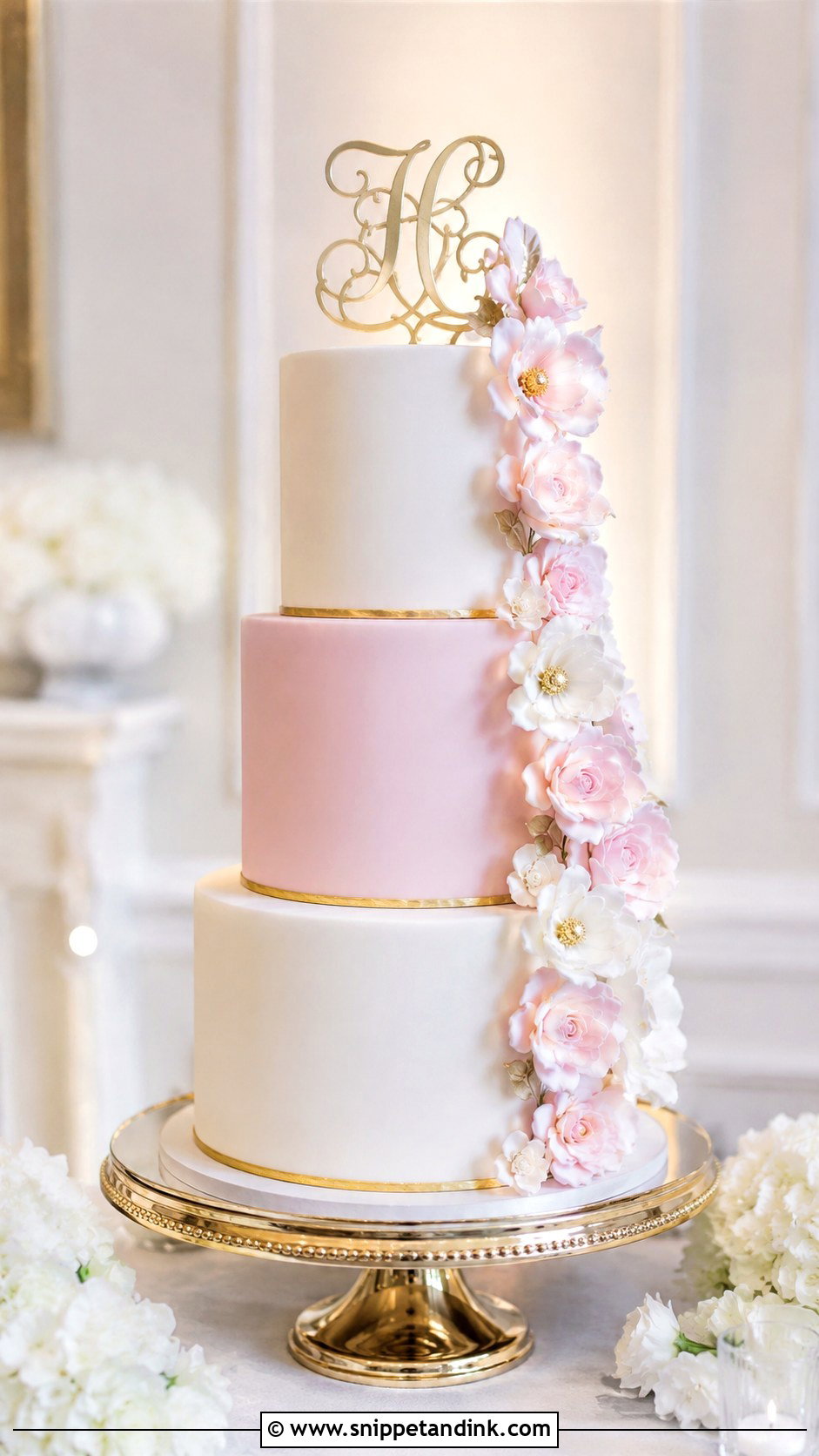
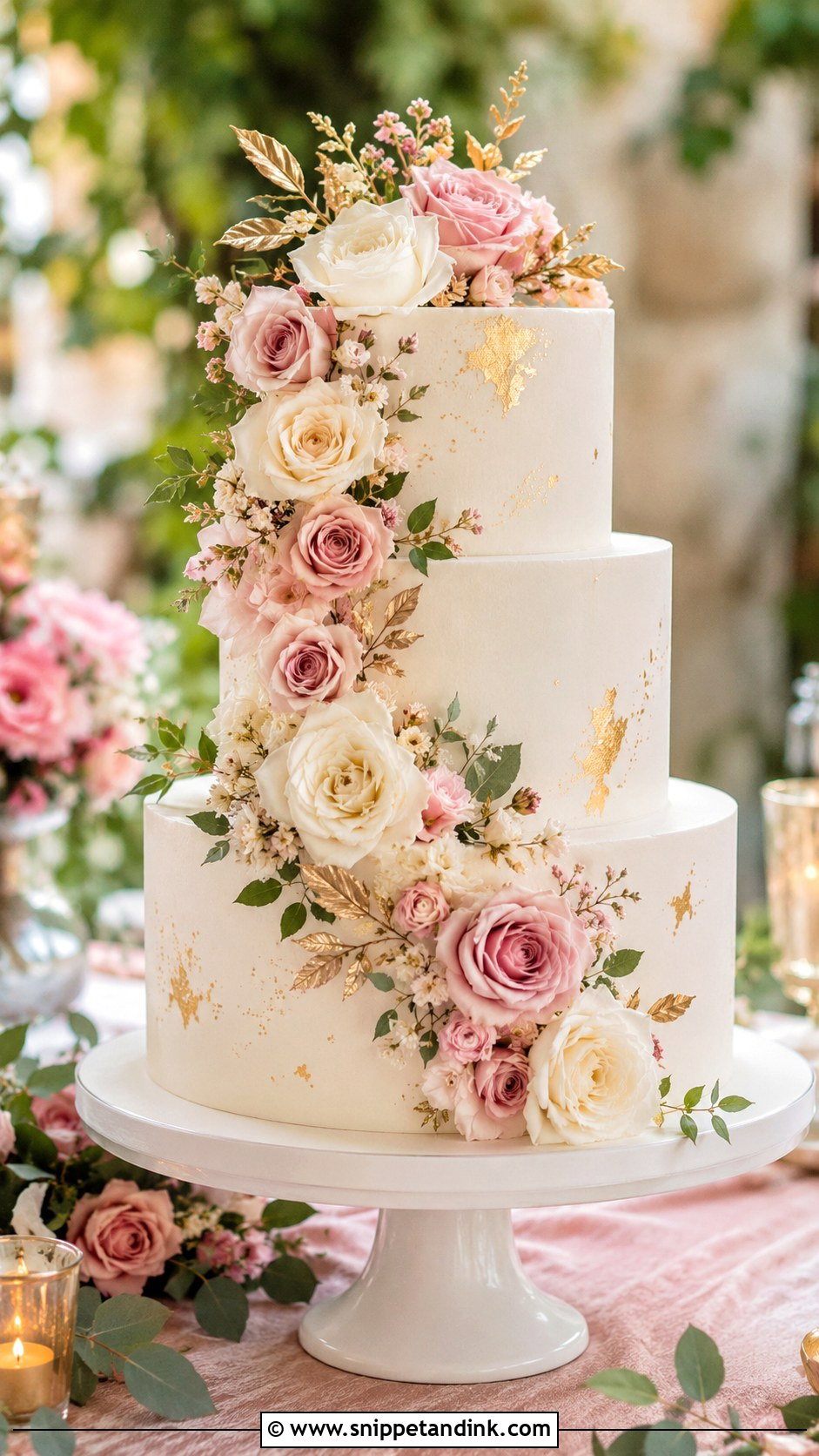
Fresh flowers make this palette feel alive, and I try to pull them straight from the bouquet: blush roses, white garden roses, pink lisianthus, or peonies when they’re in season. A white buttercream base keeps them clean, and a few small gold leaf accents add shine without stealing attention. A diagonal cascade from top tier to bottom looks the most natural. Food safety is the part people skip. Stems should be wrapped or placed in picks so they never touch the cake directly, and the flowers must be non-toxic and grown without pesticides. Your florist and baker need to agree on who supplies and places them.
5. Pink White Gold Drip Wedding Cake
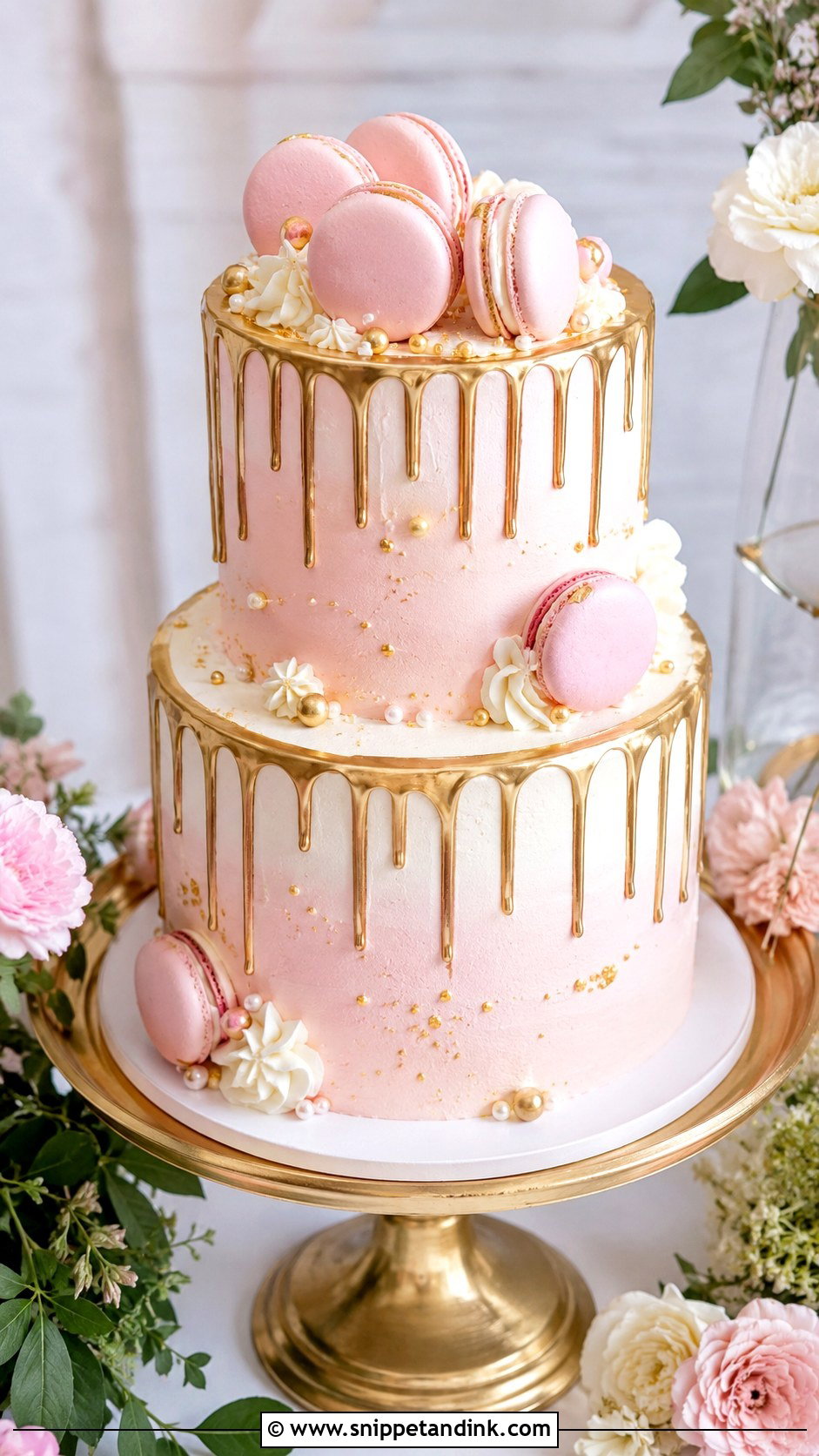
A drip is the most playful cake here. I start with a white or blush buttercream cake and chill it well before the gold drip goes on, because a warm cake lets the drip run all the way down instead of stopping in neat, even lengths. On top go pink macarons, white buttercream swirls, gold sugar pearls and a few small flowers. Two tiers suit a smaller reception; three makes a bigger impression. Strawberry with a champagne-style filling, vanilla bean or lemon raspberry fits the sweet look.
6. Pink White Gold Vintage Wedding Cake
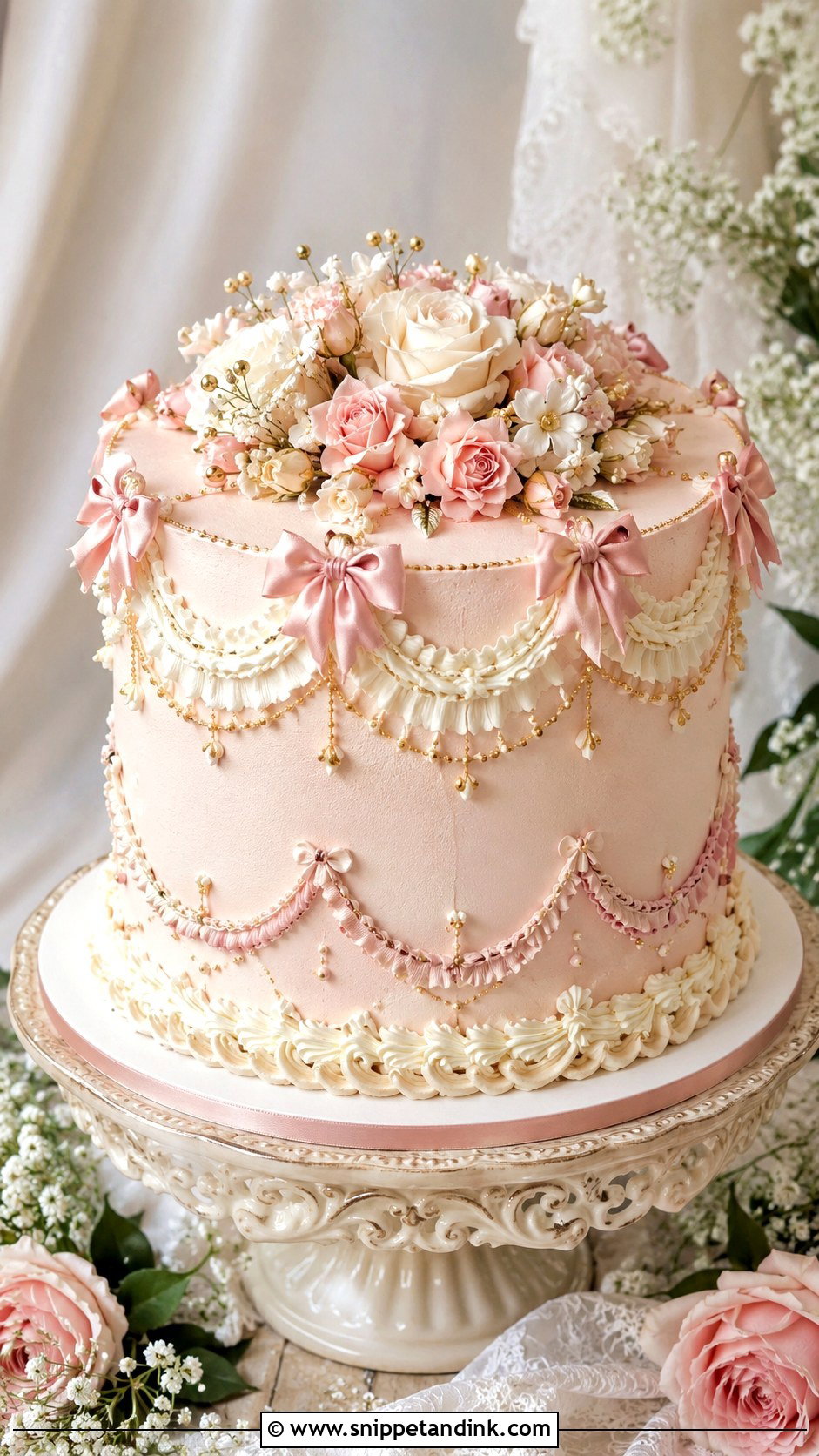
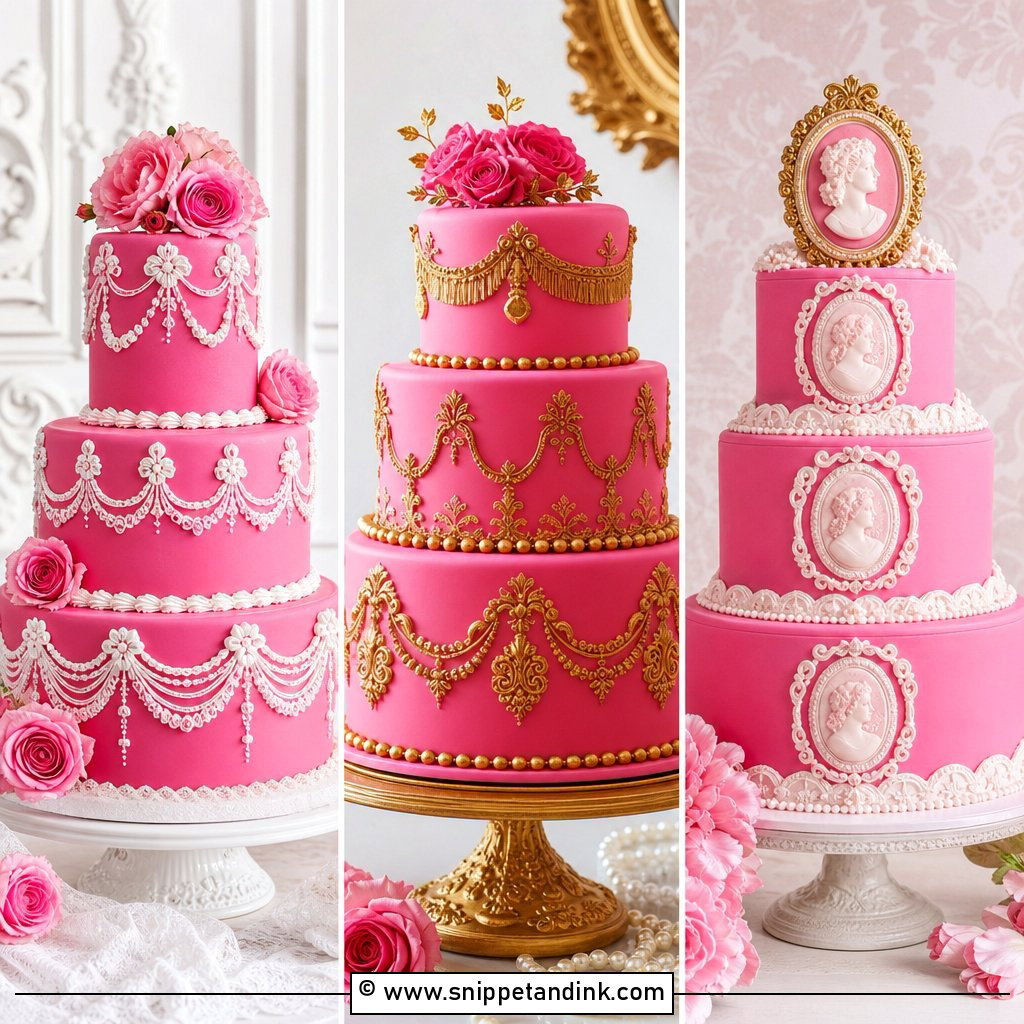
Vintage cakes are all about piping: shell borders, swags, ruffles and little bows. I pipe in soft pink or white buttercream and add gold as tiny pearls, a few painted accents or a small topper. The skill is restraint. Piping looks old-fashioned in a good way when the spacing is even, and cluttered when every surface is covered. Stacked hearts, a two-tier round cake or a tall single tier keeps it feeling current, and pink bows with white ruffles give it that saved-to-every-board quality. Classic vanilla, almond or strawberry keeps the flavor nostalgic.
7. Pink White Gold Marble Wedding Cake
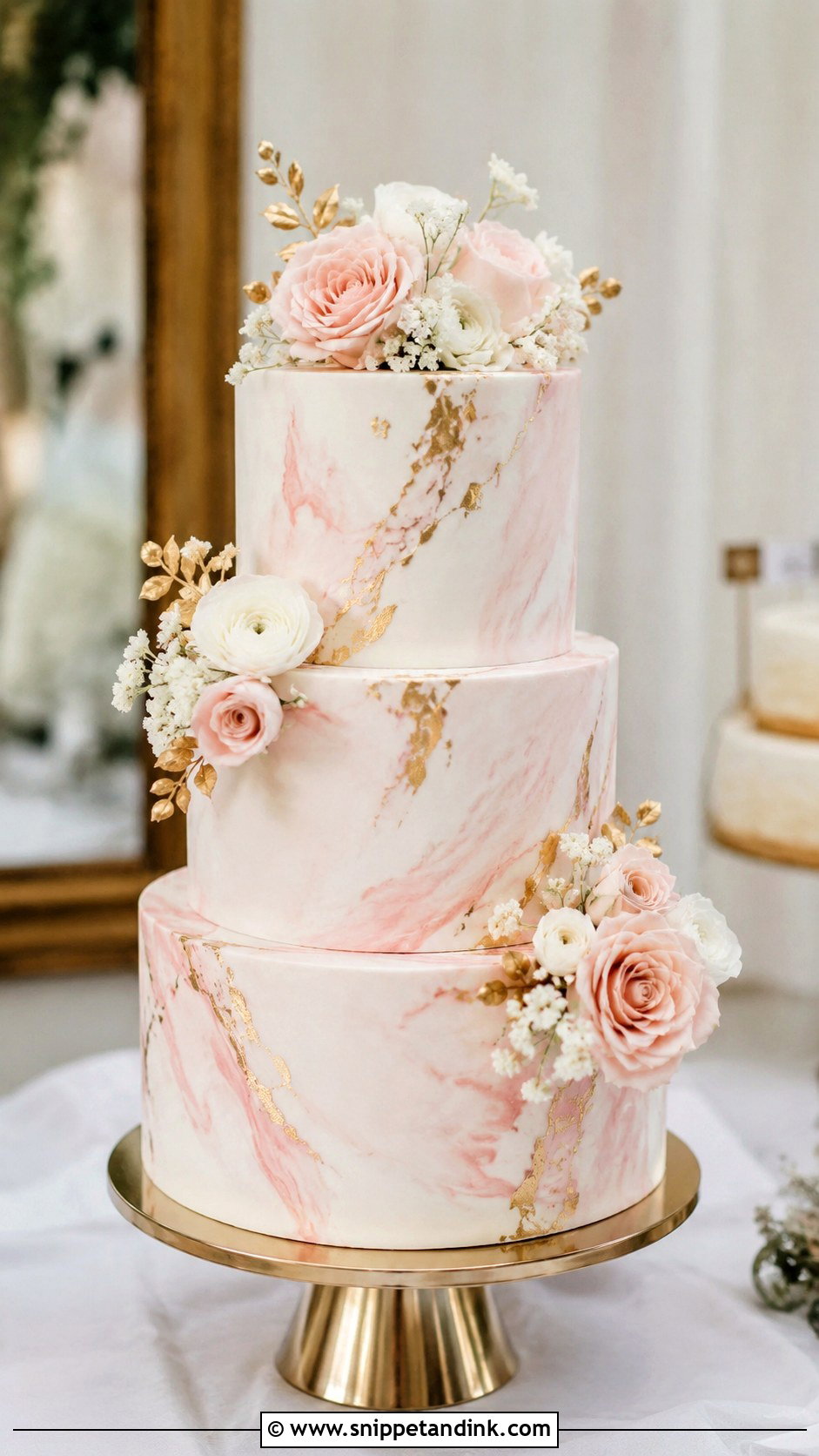
Marbling looks artistic when it’s soft. I knead blush and pale rose into white fondant until the streaks look like polished stone rather than tie-dye, then brush a few fine veins of edible gold along the natural lines. Contemporary venues, galleries and hotel receptions suit it. I usually marble one or two tiers and leave the rest white so it doesn’t overwhelm, with a small cluster of pink and white flowers for warmth. Inside, vanilla bean with raspberry cream or white chocolate with strawberry.
8. Pink White Gold Cake With Roses
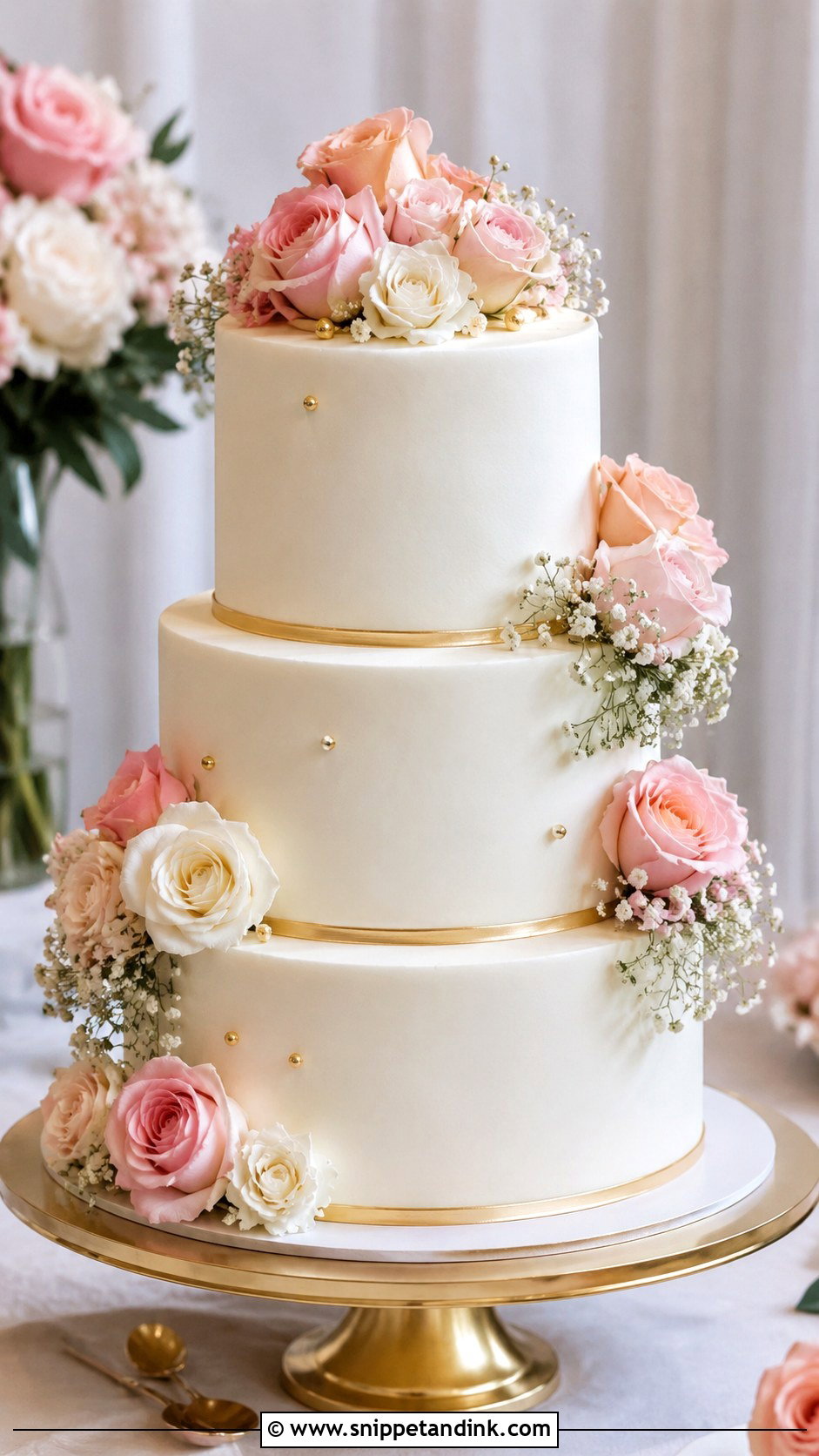
Roses suit almost any style, which is why they never really leave the cake table. You can keep the tiers white and let the roses bring all the pink, or add a blush middle tier for more color. Gold leaf, gold ribbon or a few metallic pearls frame the roses without overloading the cake. For a garden wedding I use loose clusters with greenery; for a ballroom, tighter arrangements with fewer leaves. Ribbon should go on over a thin barrier so buttercream grease doesn’t seep through and stain it. A gold stand finishes it, and almond, vanilla or rosewater buttercream with raspberry carries the romance inside.
9. Pink White Gold Pearl Wedding Cake
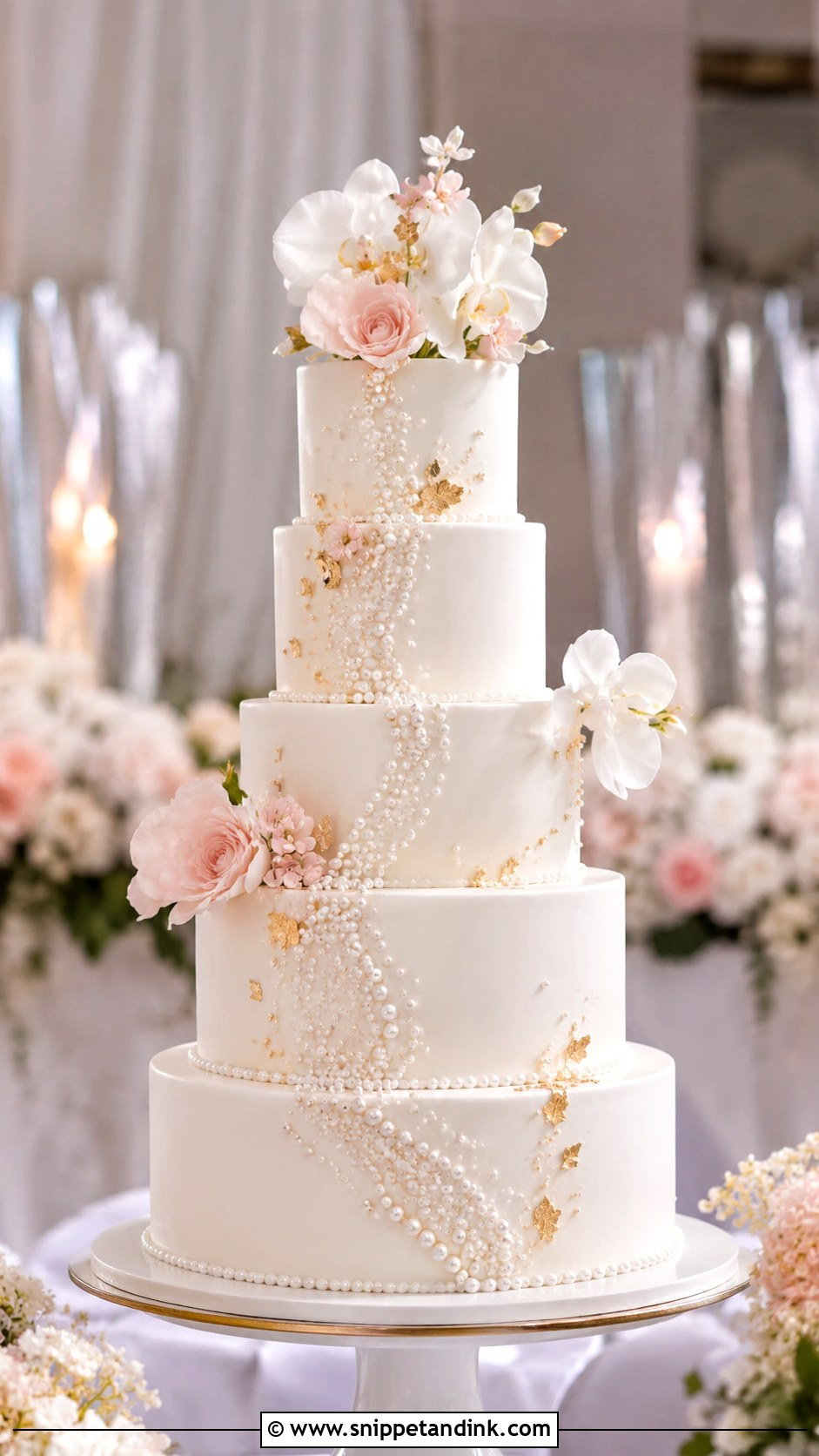
Pearls look graceful in small doses and heavy in large ones. On a white buttercream or fondant base, I place edible pearls along tier borders, around a monogram or in a loose scatter down one side, leaving open space between details. Blush flowers and gold accents sit around them. Sugar pearls can be hard to bite, so I keep them off the areas that end up on most plates. Formal receptions, classic hotel weddings and evening celebrations suit it, softened with pink sugar roses, white orchids or small buttercream flowers. A white cake with raspberry preserves or vanilla cream keeps the slice light.
10. Pink White Gold Naked Wedding Cake
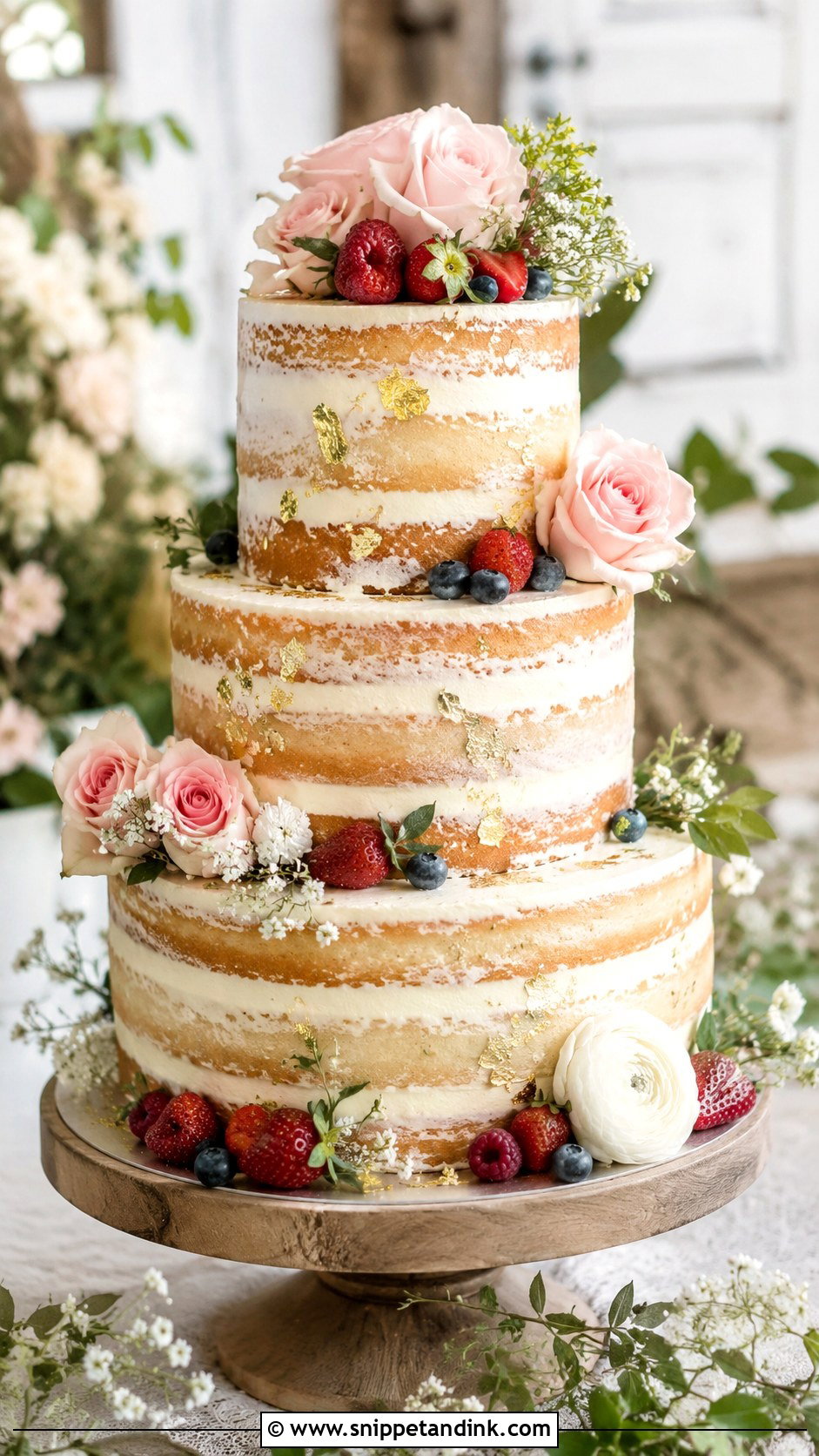
The appeal of a naked cake is that it looks relaxed while still being carefully made. The sponge shows through a thin scrape of white buttercream, with pink flowers, white blooms and a few gold leaf touches on the edges. Barn venues, gardens and outdoor receptions suit it best. What I always flag is drying: with so little frosting, exposed sponge stales faster than a fully covered cake. I brush the layers with syrup and assemble as close to the event as I can, and I’d ask that it isn’t displayed in sun or wind for hours before cutting. Vanilla, almond, lemon or strawberry layers all work.
11. Pink White Gold Pressed Flower Wedding Cake
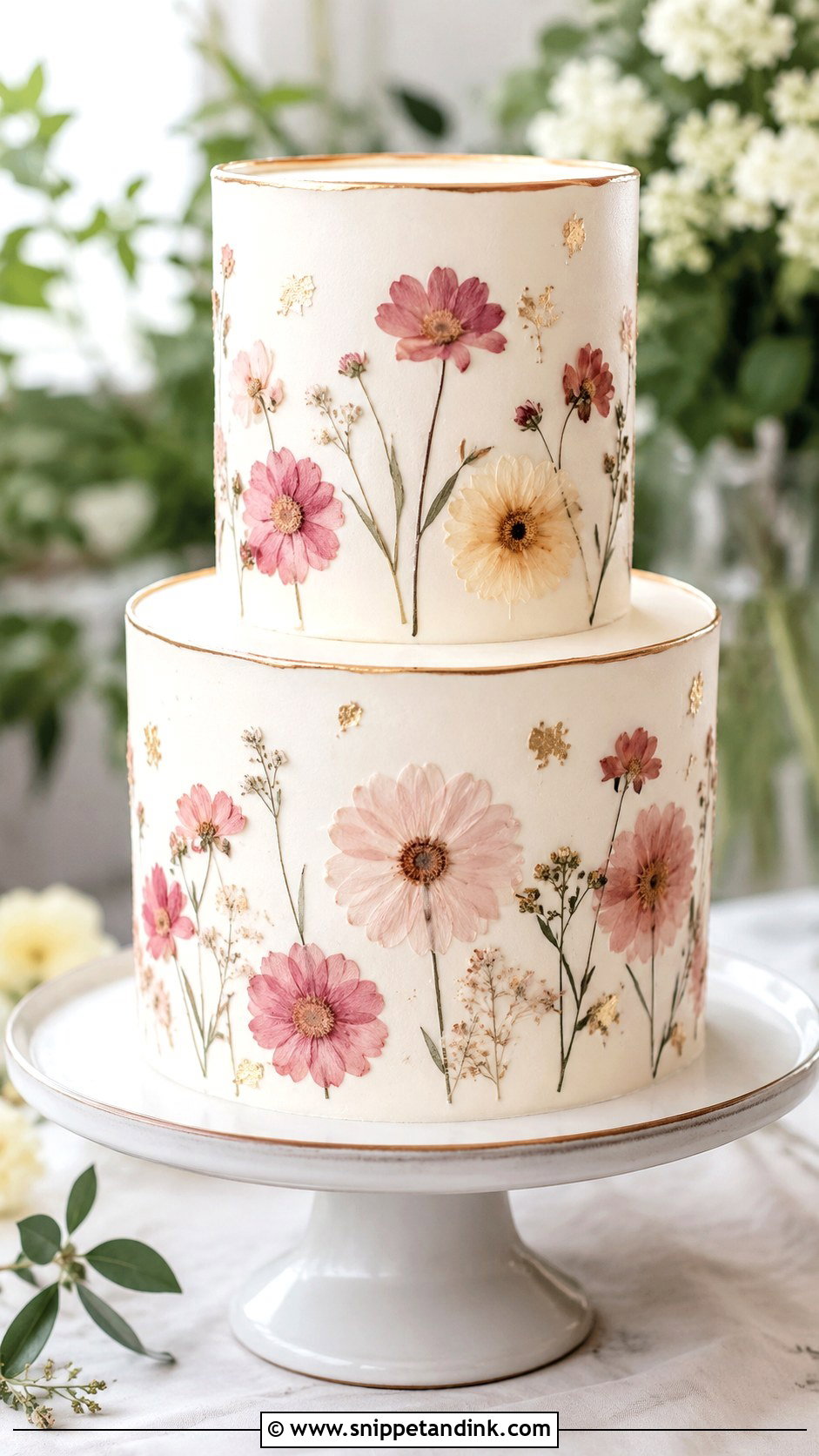
Pressed flowers feel delicate and very current. I set edible pressed blooms in pink and ivory along the sides of smooth white buttercream, adding gold as fine leaf flakes or a slim painted border. The flowers need to be edible varieties pressed and dried specifically for food use, not decorative pressings from a craft shop. Spacing matters too; packed tightly, they look like wallpaper. Keep the tiers simple so the flowers carry the design. Garden weddings and brunch receptions suit it, with lemon elderflower, vanilla sponge or honey almond inside.
12. Pink White Gold Square Wedding Cake
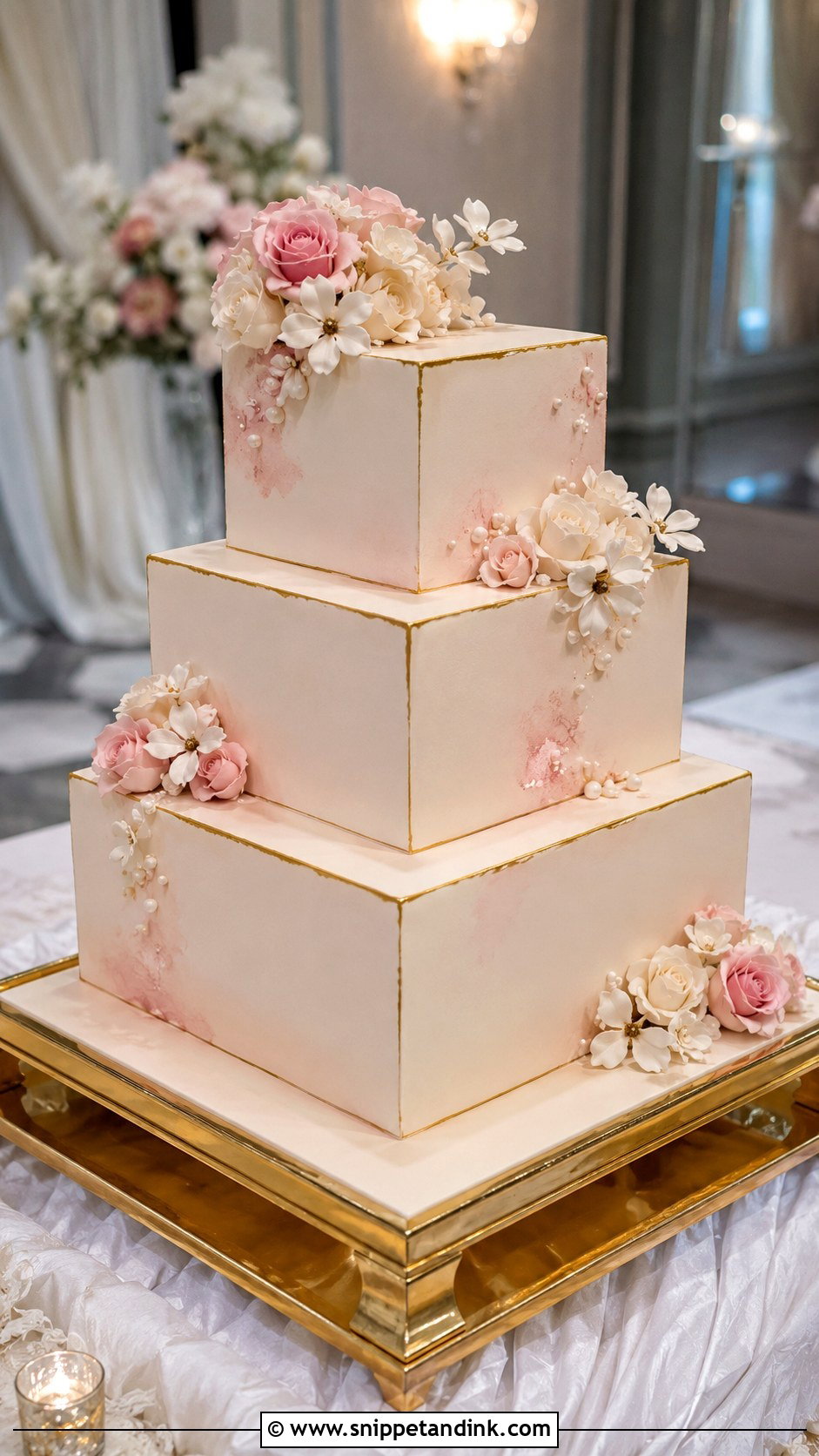
Square tiers turn a romantic palette into something more structured. Clean lines pair well with smooth white fondant, blush floral corners and thin gold edging, and I can soften the corners slightly if you want it gentler. Square tiers also give a bit more cake per tier than round ones of the same width, which helps with larger guest counts. I’d keep the decoration to the corners or one diagonal line. Fondant on sharp square corners is tricky to keep from cracking, so this one is worth leaving to an experienced decorator. Raspberry vanilla, almond cream or white chocolate strawberry suit it.
13. Pink White Gold Single Tier Wedding Cake
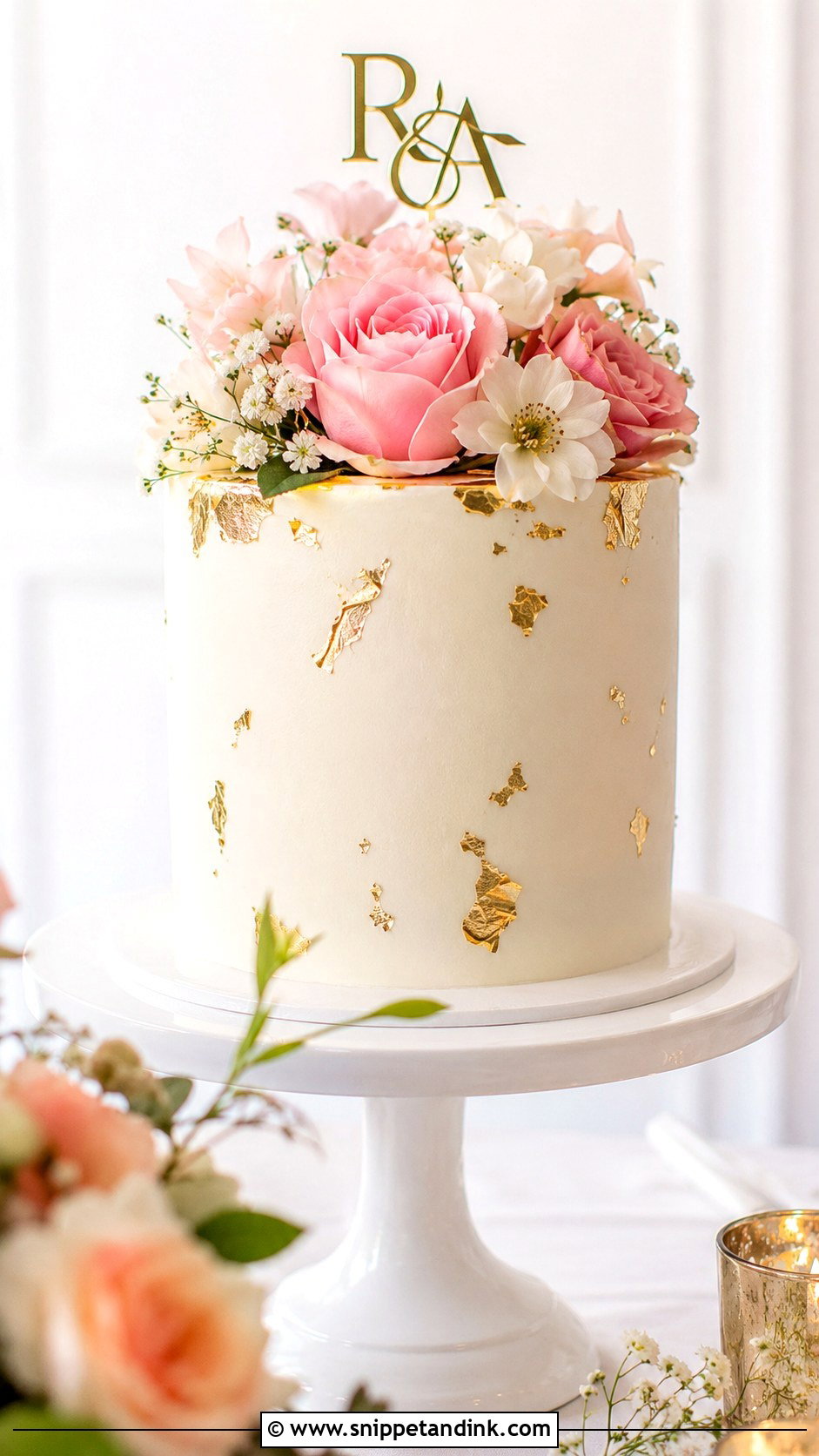
Elopements, micro weddings and couples serving a dessert table often only need one tier. A pink white gold single tier wedding cake can still feel like an occasion if it’s tall: I build it extra high in smooth white buttercream, with pink flowers on top and gold leaf around the sides. A small gold topper or piped initials make it personal. It also works as a cutting cake beside cupcakes or mini desserts. Since it will be photographed close up, I keep the decoration concentrated on the front and top. Strawberry vanilla, lemon cream or almond raspberry are good choices.
14. Pink White Gold Tall Wedding Cake
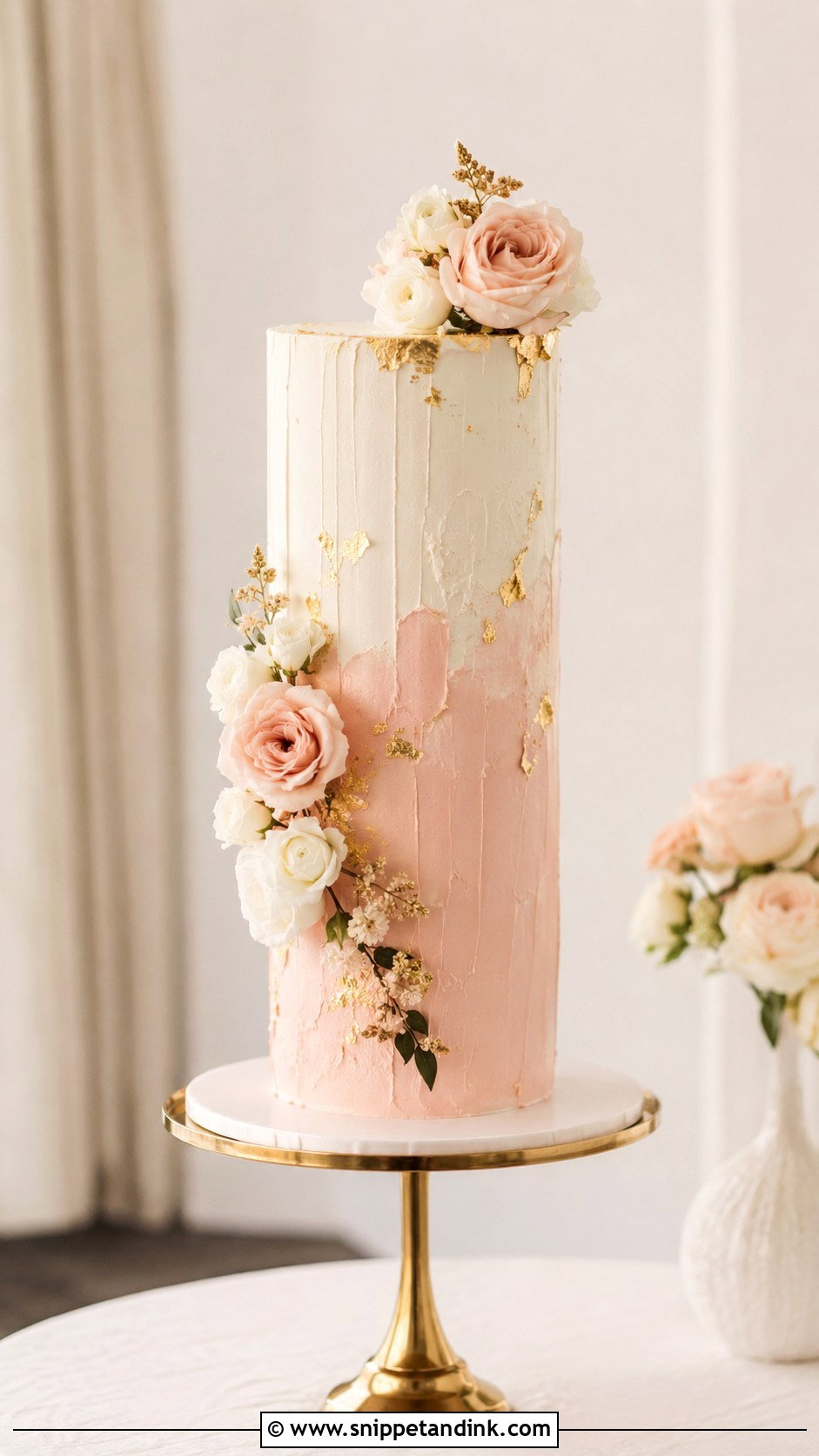
Height reads as drama even with only one or two tiers. I build extended tiers, which need internal dowels and boards partway up so the sponge doesn’t compress under its own weight. Smooth buttercream or fondant, blush color blocking, a band of vertical white texture and scattered gold leaf give it a sleek line. It’s a good answer for a smaller wedding that still wants a real cake-table moment, since it looks grand while serving fewer people. Decorate with one floral cluster at the top and one at the base. Vanilla bean with strawberry mousse or white chocolate raspberry fits well.

15. Pink White Gold Ombre Wedding Cake
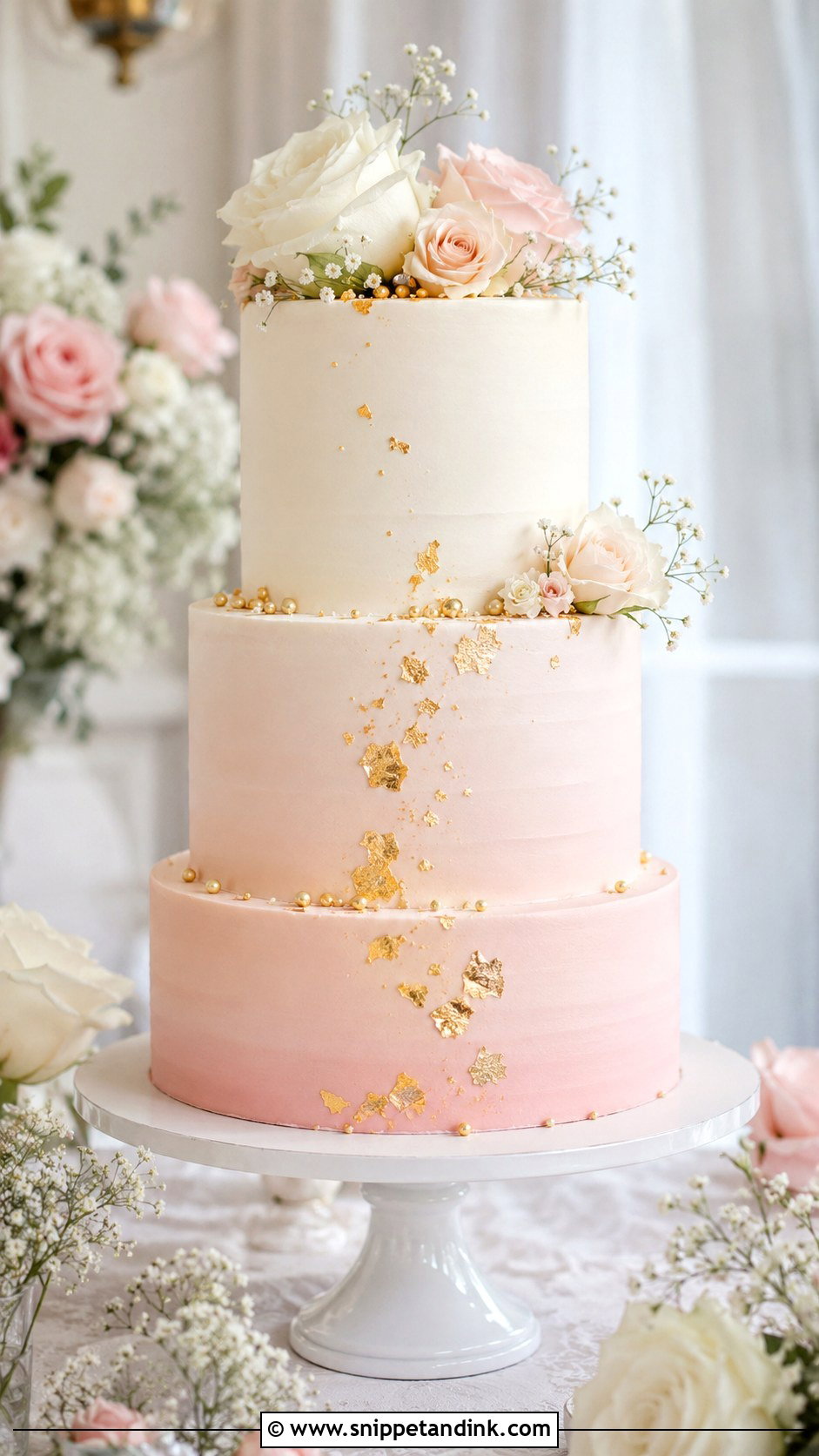
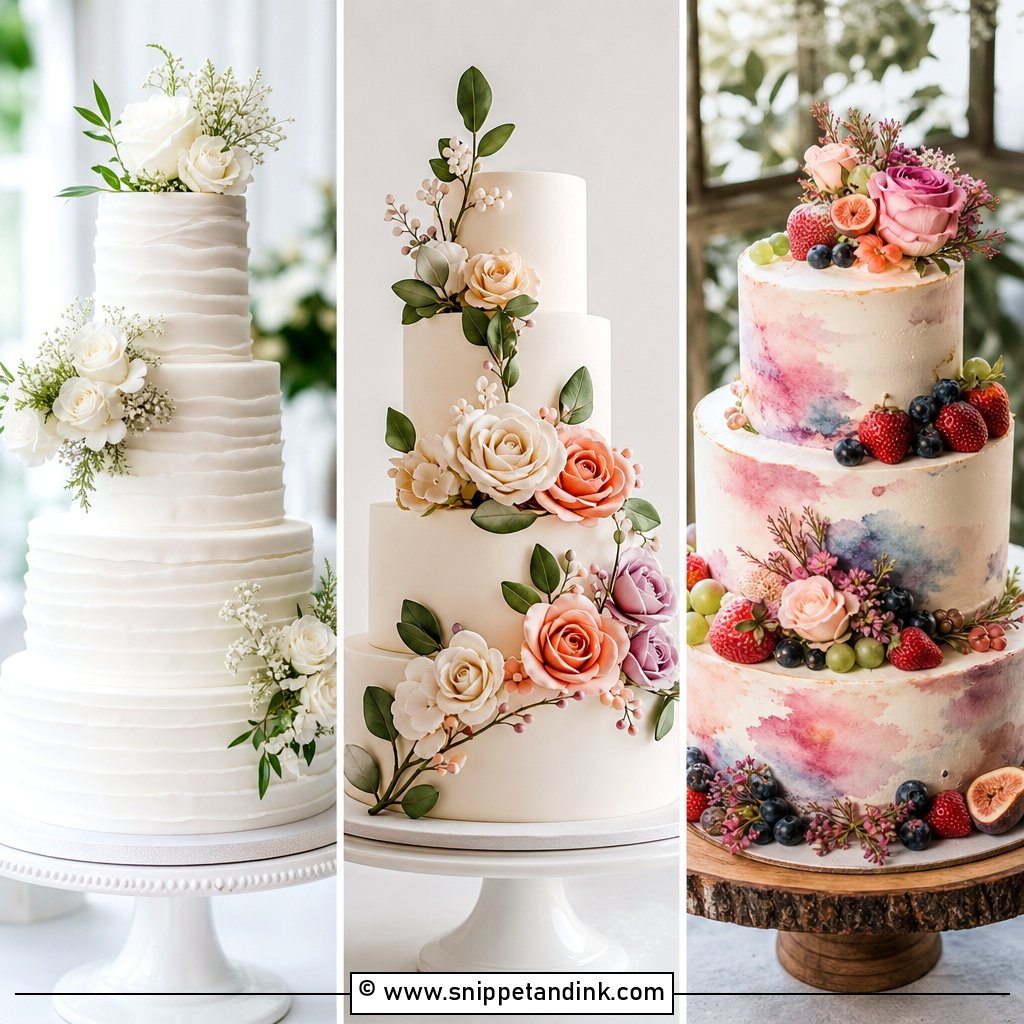
Ombré works best in buttercream, where the colors can blend into each other naturally. I mix three or four shades from white to pale pink and either stack them tier by tier or blend them up the side of each tier. Gold leaf stays in small patches so the gradient remains the main feature. One thing to know about pink coloring: it fades in strong light, so a cake left in a sunny window for hours can lose its blush tones. Spring weddings, garden receptions and romantic indoor venues all suit it, finished with white flowers, pink roses or a few gold pearls. Strawberry cream or vanilla with berry filling continues the color inside.
16. Pink White Gold Watercolor Wedding Cake
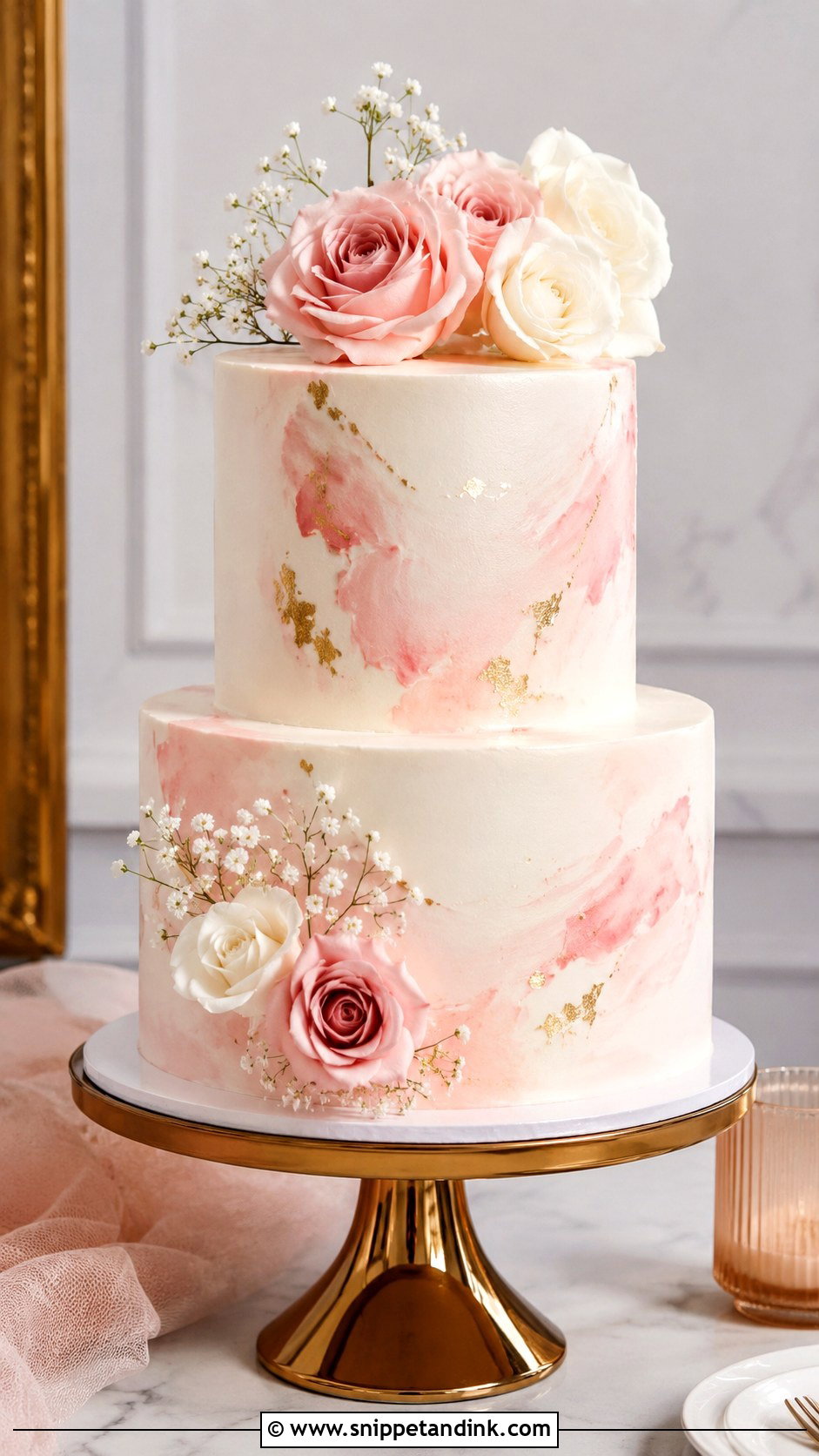
For a watercolor wedding cake I brush soft pink washes of thinned color or tinted buttercream over a white base, then add edible gold in thin strokes or scattered leaf so the surface has movement. Because the brushwork is done by hand, every angle looks slightly different, which is lovely in photos. It suits creative couples, modern garden weddings and airy décor. Flowers should stay minimal, just a few white blooms or a small blush arrangement, or they fight the painting. Lemon raspberry, vanilla almond or white chocolate with strawberry buttercream work well.
17. Pink White Gold Lace Wedding Cake
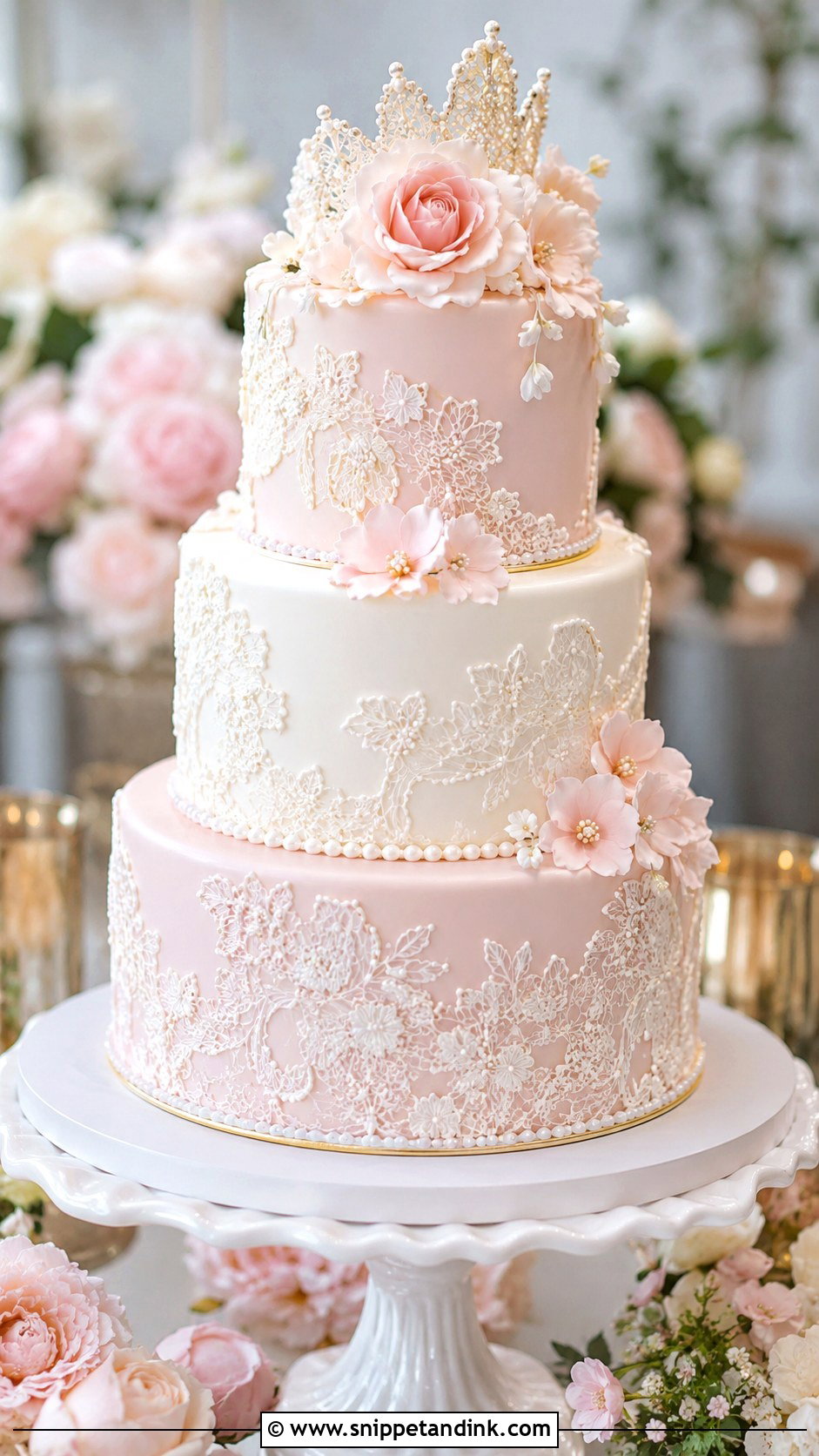
Lace gives a cake texture that ties straight back to a lace gown. I either pipe it in white buttercream or press fondant lace appliqués over a blush tier or an all-white cake. Gold stays light: a thin painted trim, small pearls or a simple topper. Pink sugar flowers sit more comfortably next to lace than large fresh flowers, which can crush the fine detail. If you’d like the lace to match your dress, bring a close-up photo of the fabric. Almond, vanilla sponge or coconut cream suits the delicate look.
18. Pink White Gold Geometric Wedding Cake
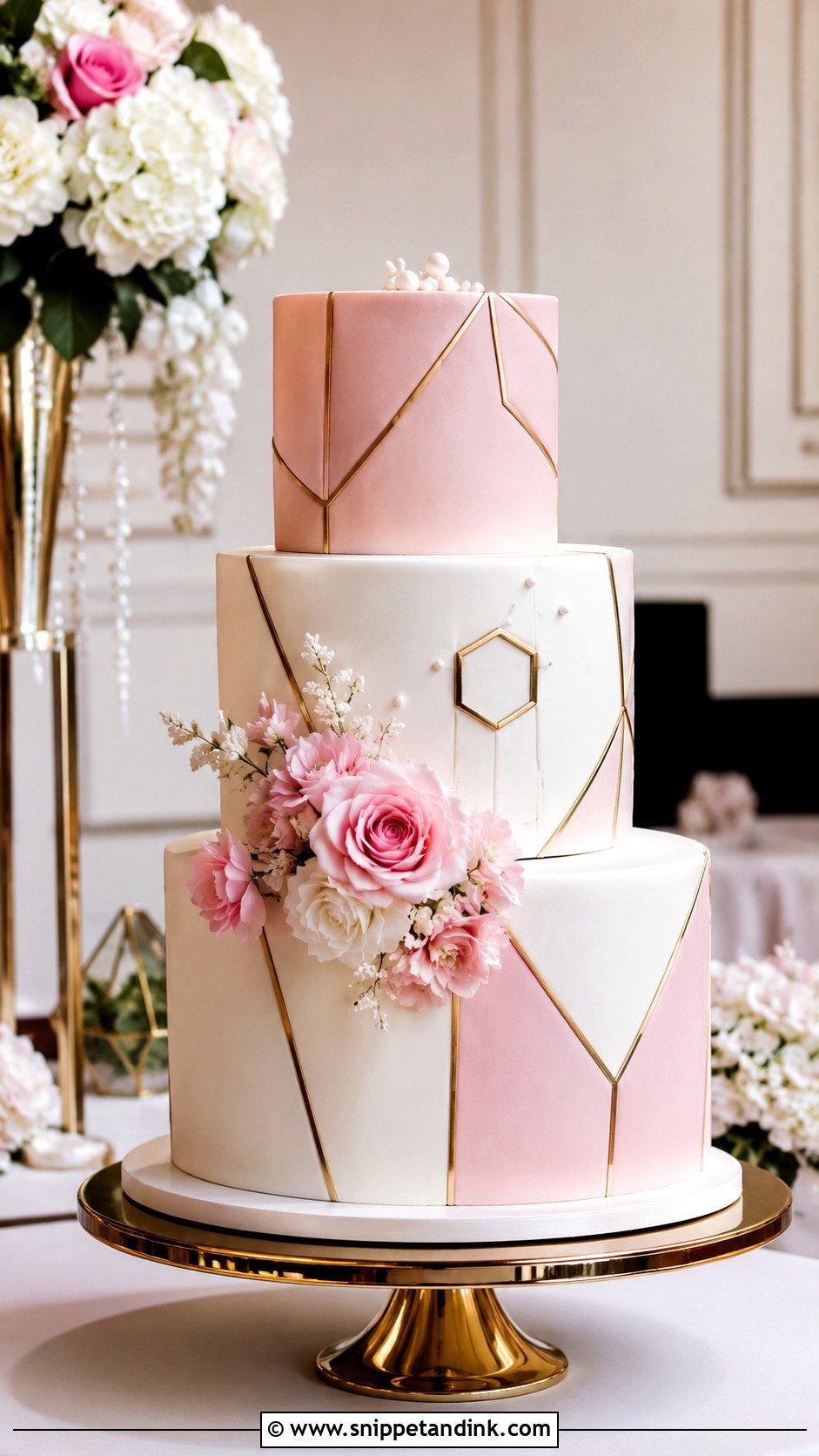
Geometric cakes depend on precision. Clean white tiers carry blush panels, gold lines, hexagon accents or crisp fondant shapes, and everything has to be measured and cut so the spacing lines up all the way round. Loft venues, hotel ballrooms and minimalist receptions suit it. A small cluster of pink and white flowers on one side softens the hard edges. Keep the gold lines slim so it reads elegant rather than flashy. Square, round or mixed tiers all work, with white chocolate raspberry, vanilla bean or almond inside.
19. Pink White Gold Ruffle Wedding Cake
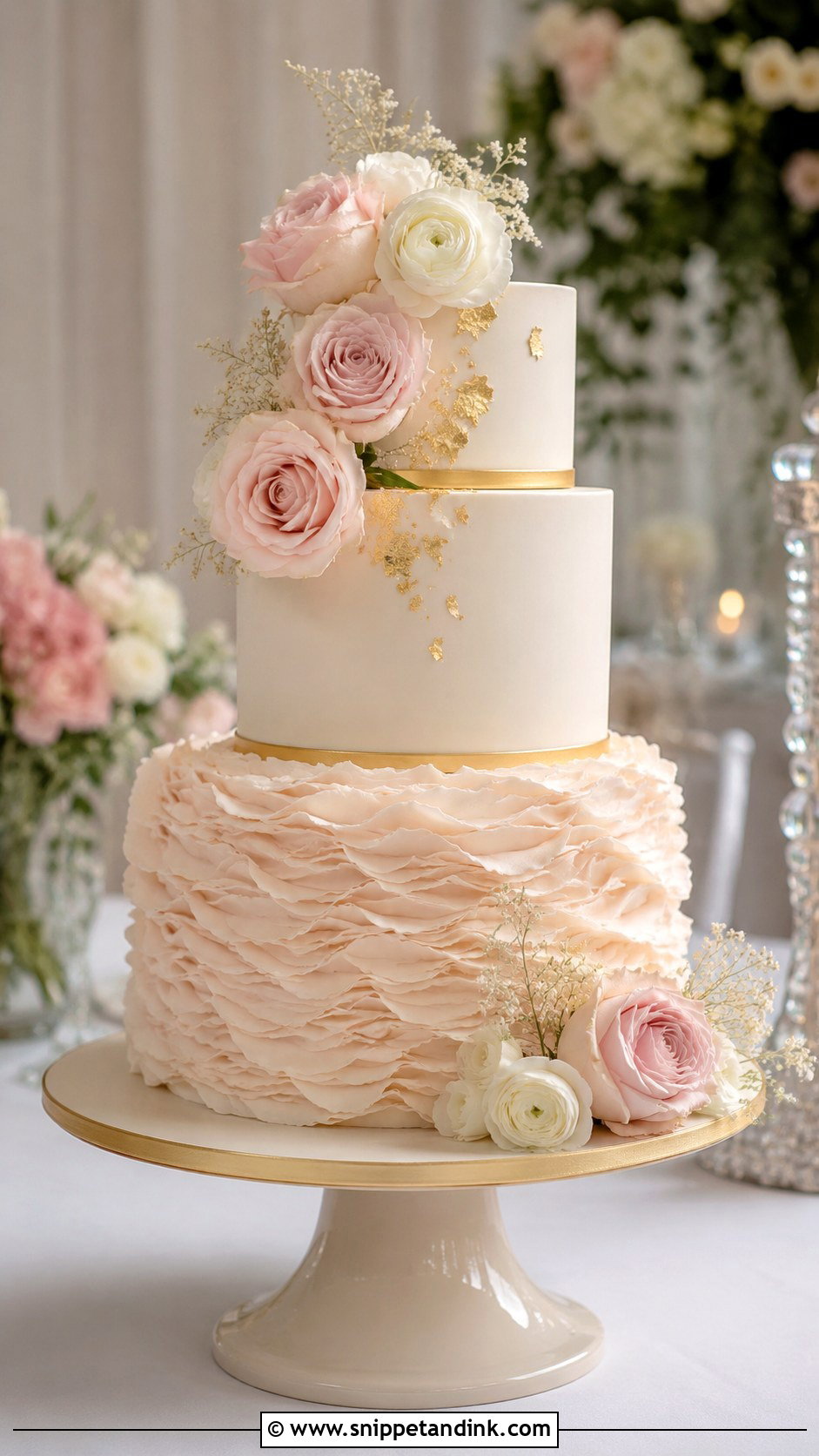
Ruffles add movement and a lot of softness. I make them in buttercream or fondant, in white or pale pink, and keep the gold minimal: a slim band between tiers or a little leaf on the top tier. One fully ruffled tier between smooth white tiers gives the best balance; a whole cake of ruffles can look like a bridesmaid dress. Fondant ruffles also dry out and can droop or crack if they’re made too far ahead, so timing matters. Blush roses or white flowers near the base finish it. Strawberry vanilla or almond cream suits it.




20. Pink White Gold Mini Wedding Cake
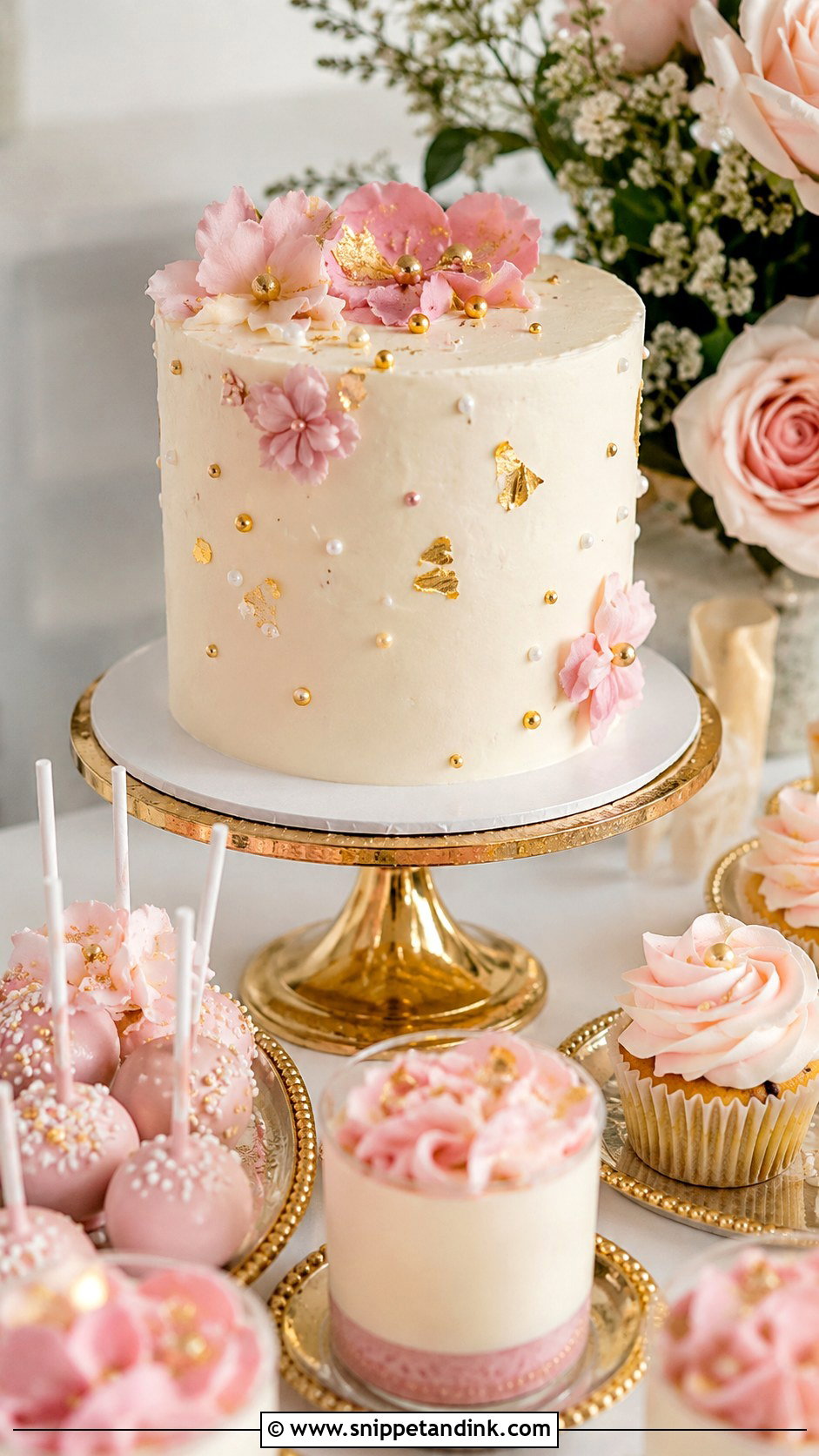
Small cakes solve a few problems at once. A mini wedding cake can mean one little cake per table, a tiny two-tier cutting cake, or a collection of minis displayed together. I keep each one white with pink buttercream flowers, small gold pearls and a clean finish. They let guests try different flavors without anyone cutting a large tiered cake, and they look tidy on a dessert display with matching flowers. They are fiddly to decorate in quantity, so they don’t always cost less than one larger cake. Vanilla raspberry, lemon cream, strawberry almond or white chocolate fillings keep them fresh.
From First Tasting to the Cake Table
Most of the stress around a wedding cake comes from timing. Lead times vary a lot by baker, region and season, but this is roughly how I’d pace it.
- Book early for peak dates. Popular cake designers often fill busy weekends many months ahead, so reach out once you have your date and venue.
- Taste and design a few months out. Bring photos of the cakes you like, a picture of your flowers and the color of your linens. Ask to see the actual pink they’ll mix, because blush on a screen and blush in buttercream rarely match.
- Confirm the numbers a few weeks before. Wedding portions are cut smaller than birthday slices, so a cake that looks small can still feed everyone. Your baker will size it from the final guest count.
- Settle delivery and setup. Tiered cakes travel best stacked on site or carefully doweled, chilled and driven flat. Make sure there’s a sturdy, level table in a cool spot, out of the sun.
Heat, humidity and a long reception
Buttercream starts to soften in a warm room, and fondant beads with moisture if it moves from a cold fridge into humid air. For summer and outdoor weddings, I plan the cutting earlier in the evening and ask venues to keep the cake indoors until then. If the cake has to stand out all night, a firmer frosting or a fondant finish holds its shape better than soft buttercream.
Restraint Is What Keeps Gold Looking Expensive
Pink, white and gold can go soft, modern, vintage, romantic or formal depending on the cake’s shape and finish. The right one follows your venue, dress, flowers and guest count. A tiered floral cake feels classic, while a marble, geometric, or watercolor cake feels more current. Buttercream brings softness and flavor; fondant brings smooth structure. In every version, gold looks best used sparingly beside blush and clean white. Bring your saved photos, a swatch or photo of your flowers and any flavor notes to your first meeting, and your baker can turn them into one cake that’s actually yours.
You'll Like These Ideas:





Leave a Reply