
A cake dressed like the bridal bouquet ties the dessert table back to the flowers you carried down the aisle, and it’s the request I hear most often once a couple has booked their florist. The idea is simple: the blooms and colors of the bouquet get repeated on the tiers, so the cake reads as part of the floral plan instead of a separate purchase. What makes it work or fail is rarely the flower itself. It’s what the flowers are made of, who places them, and how they’re kept off the frosting. Here are twenty bouquet-style designs I’d happily build, with notes on how each one behaves on a real cake.
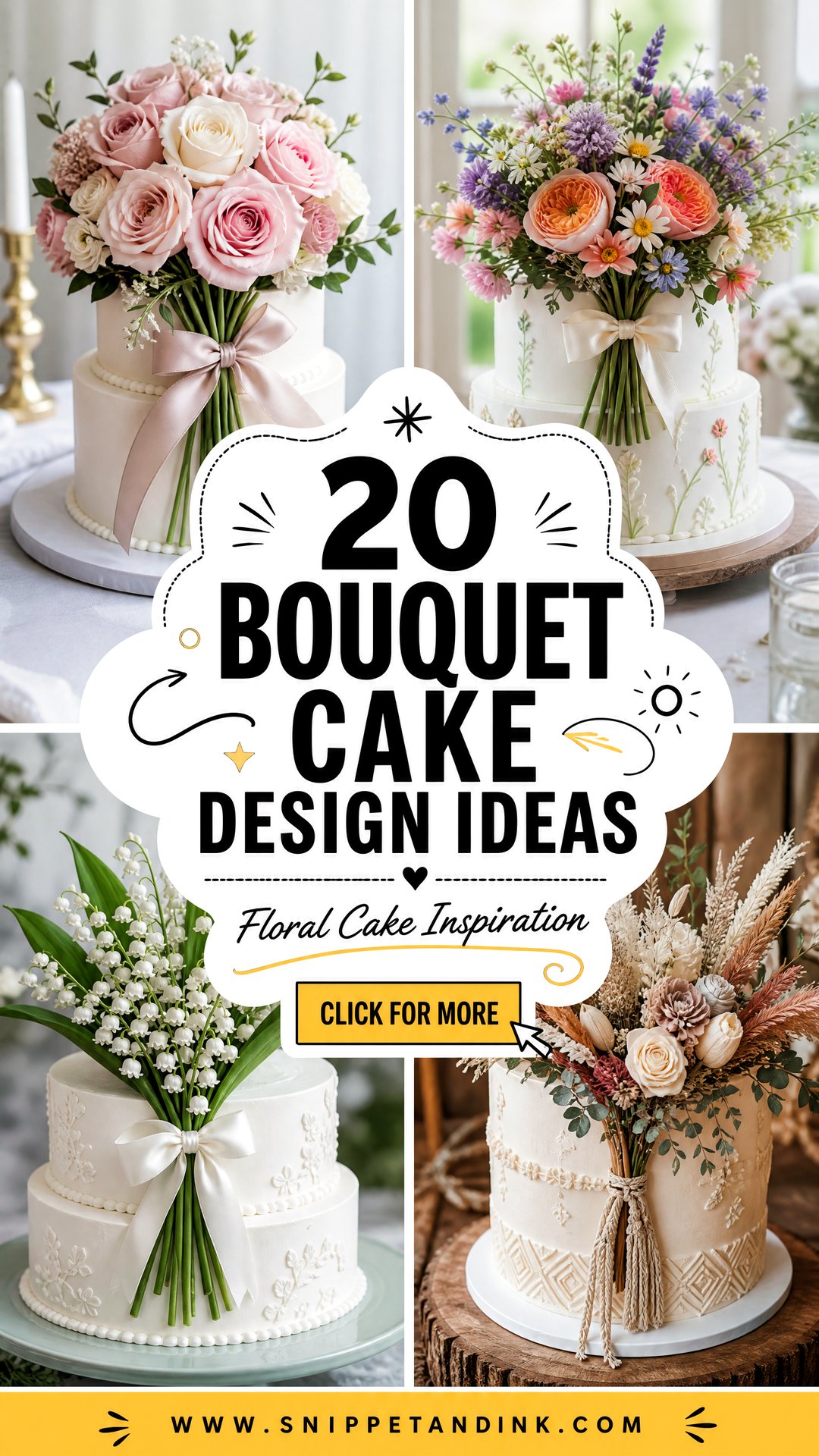
Fresh, Sugar or Pressed: Deciding What the Cake Flowers Are Made Of
Before we talk about roses or peonies, decide what the flowers on your cake will actually be. That single choice changes the price, the safety, the timing and how the cake looks at ten at night, so I settle it at the first tasting.
Fresh stems from the florist
They’re the cheapest to add and the closest match to your bouquet, but they need the most care. Many favorite wedding flowers aren’t edible, and most florist stock has been sprayed. I wrap each stem in floral tape and set it into a straw, a posy pick or a small barrier disc, so nothing bare touches the frosting. Fresh blooms also wilt: sweet peas and hydrangeas can droop within hours out of water.
Hand-made sugar flowers
Gum paste flowers cost more and need ordering early, but they’re safe, they don’t wilt, and they can copy flowers that are toxic or out of season. They also travel better than fresh blooms because I wire them into one spray that lifts on and off the cake in a single piece.
Pressed edible blooms
These are flat flowers grown for eating. They go directly onto the buttercream, give a delicate botanical finish, and they’re the only option here a guest can safely eat. Before any deposit, I’d want these questions answered in writing:
- Who supplies the fresh flowers: your florist, the baker, or both?
- Were the blooms grown without pesticides, and if not, how will they be kept off the cake?
- Which flowers come off before cutting, and who removes them?
- Are the sugar flowers yours to take home after the reception?
1. Rose Bouquet Wedding Cake
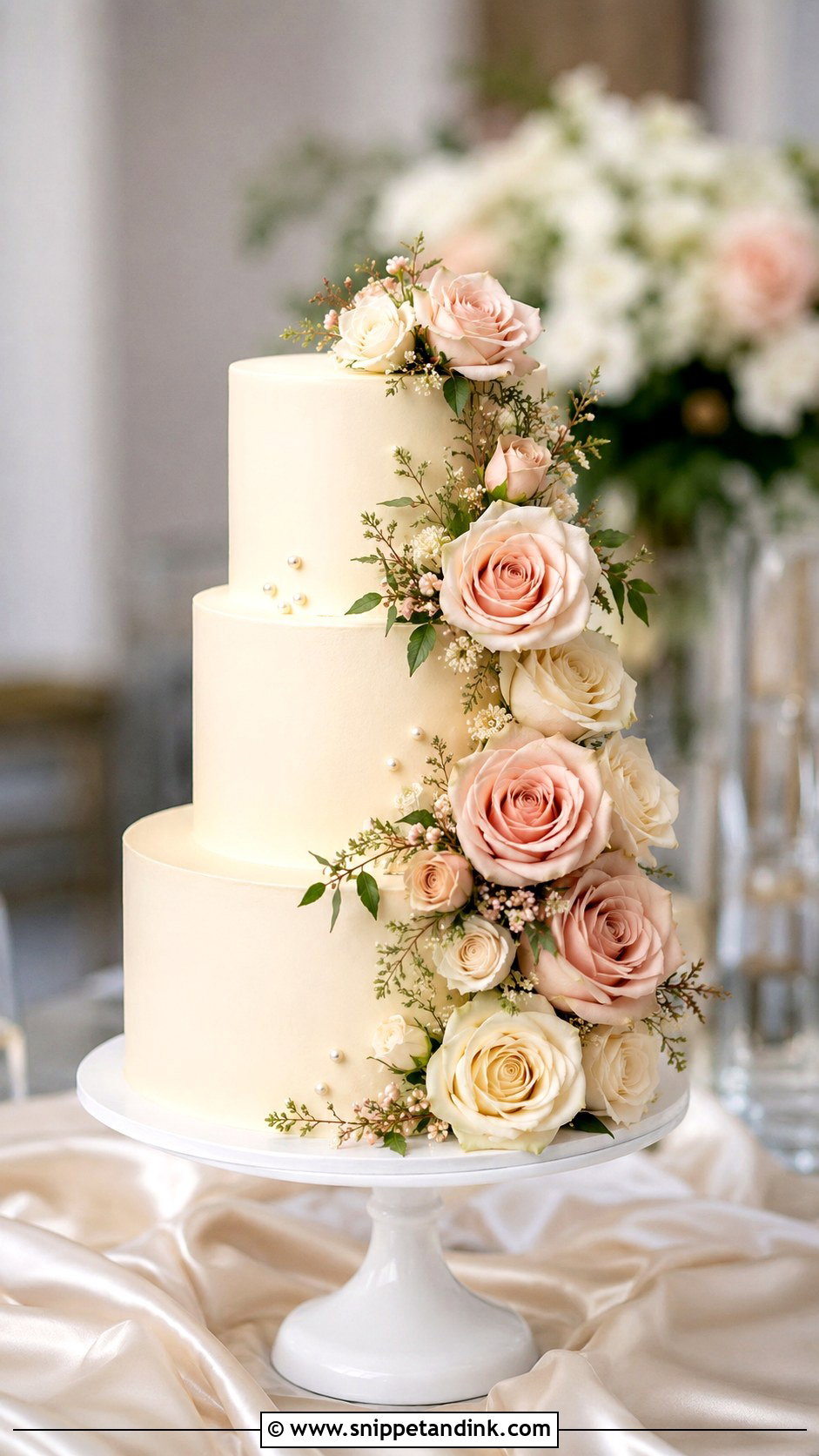
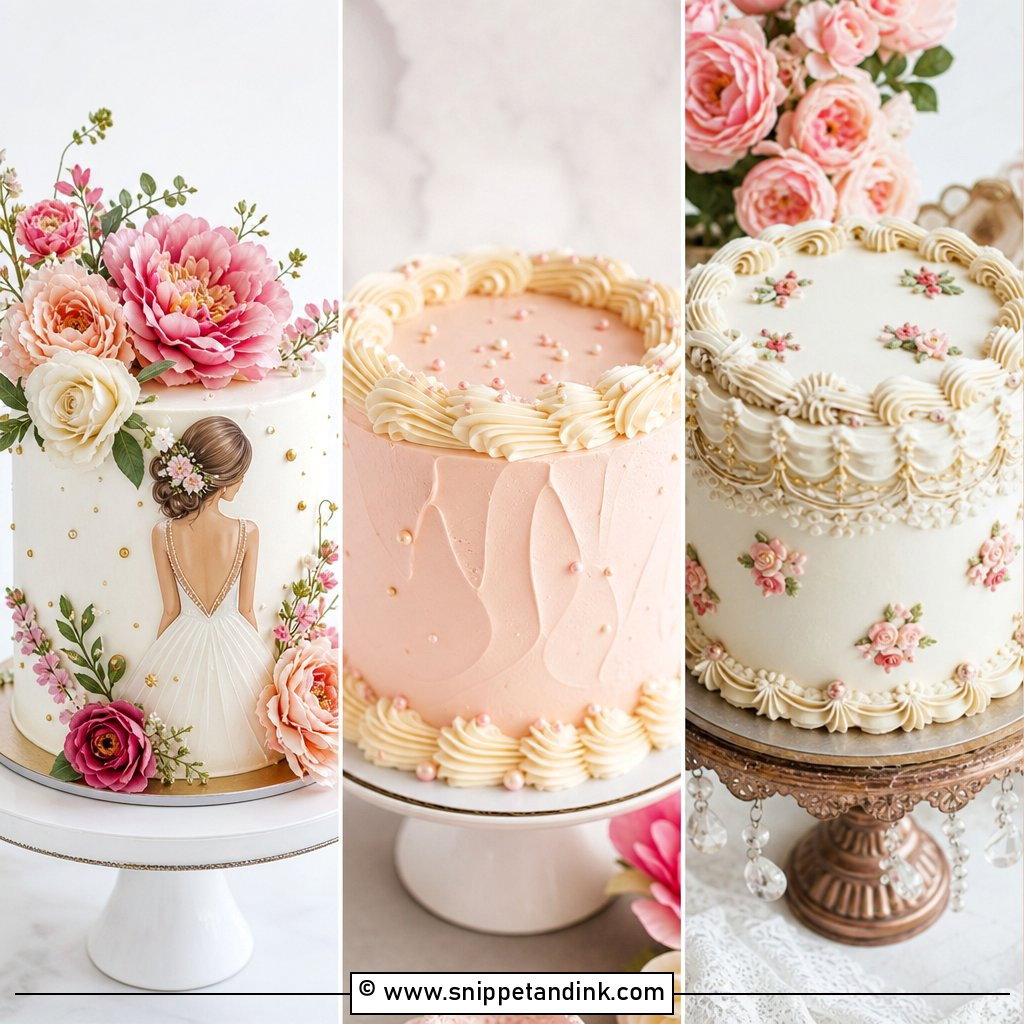
Roses are the safest flower to put on a cake because they suit almost any style and hold up out of water better than most blooms. For a classic version I’d finish the tiers in ivory buttercream and build one front-facing cluster of blush, cream and dusty pink roses, sized like a small bridal bouquet. A three-tier cake gives that cluster room to spill a little without crowding the edges. Fresh garden roses bruise on their outer petals, so I strip those before any stem goes in. Sugar roses cost more and take days to make, but they’re the only kind you can keep afterward.
2. Peony Bouquet Wedding Cake
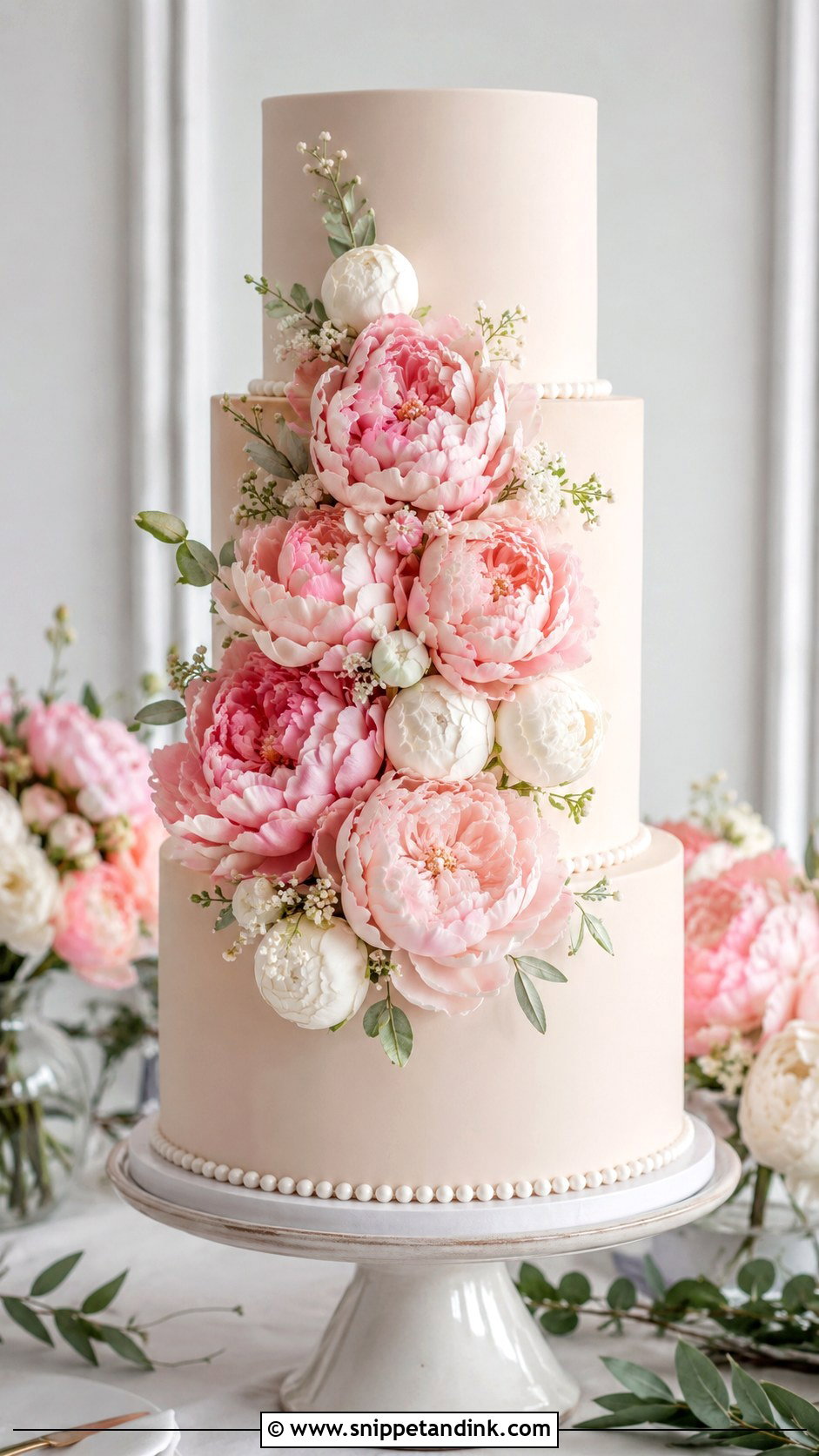
Peonies give you the most volume per stem of anything on this list, so three or four open heads can do the work of a dozen roses. They sit well on white, ivory or pale pink frosting, either as a loose cluster across one tier or running down one side. The catch is timing. Fresh peonies have a short season in late spring and early summer, and a bud that hasn’t opened by the wedding morning won’t open on the cake. Outside that window I’d talk you into sugar peonies, which can be tinted to your palette and won’t drop petals on the cake table halfway through dinner.
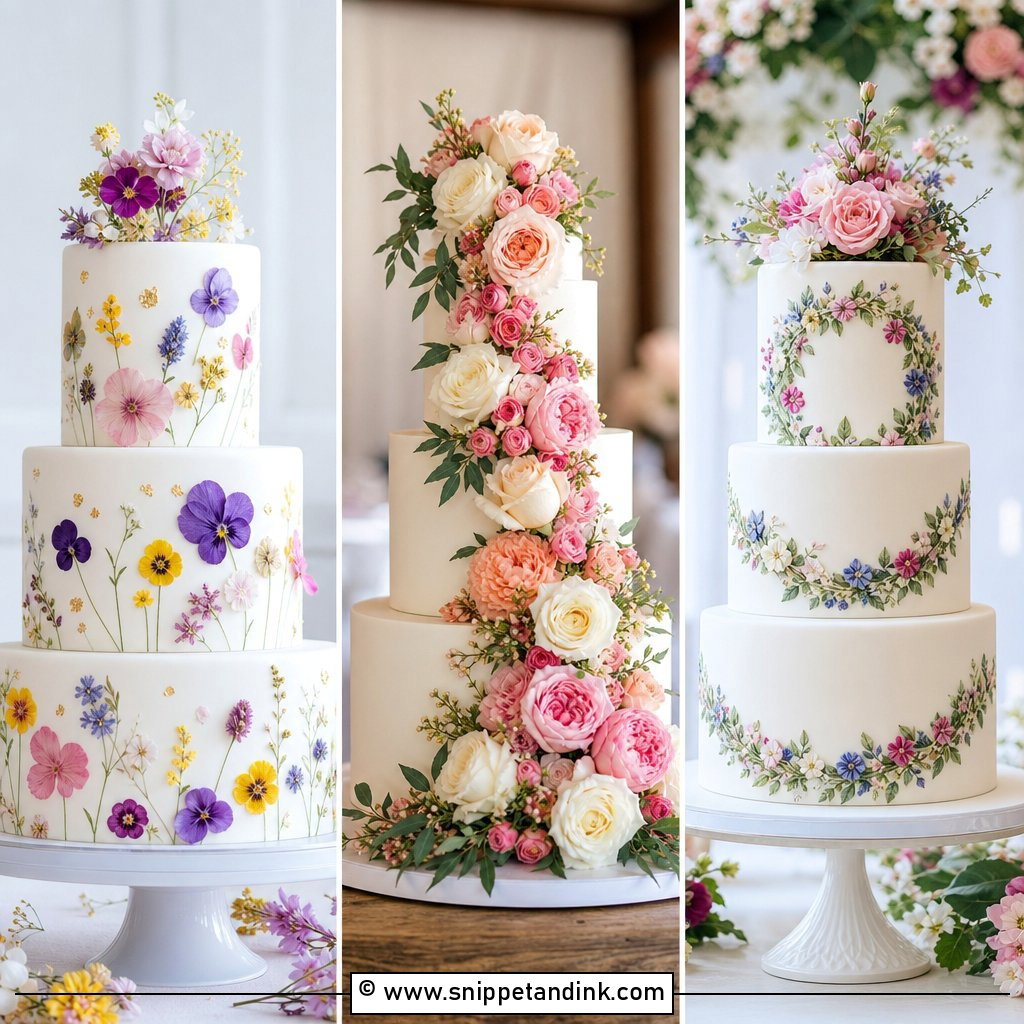
3. Wildflower Bouquet Wedding Cake
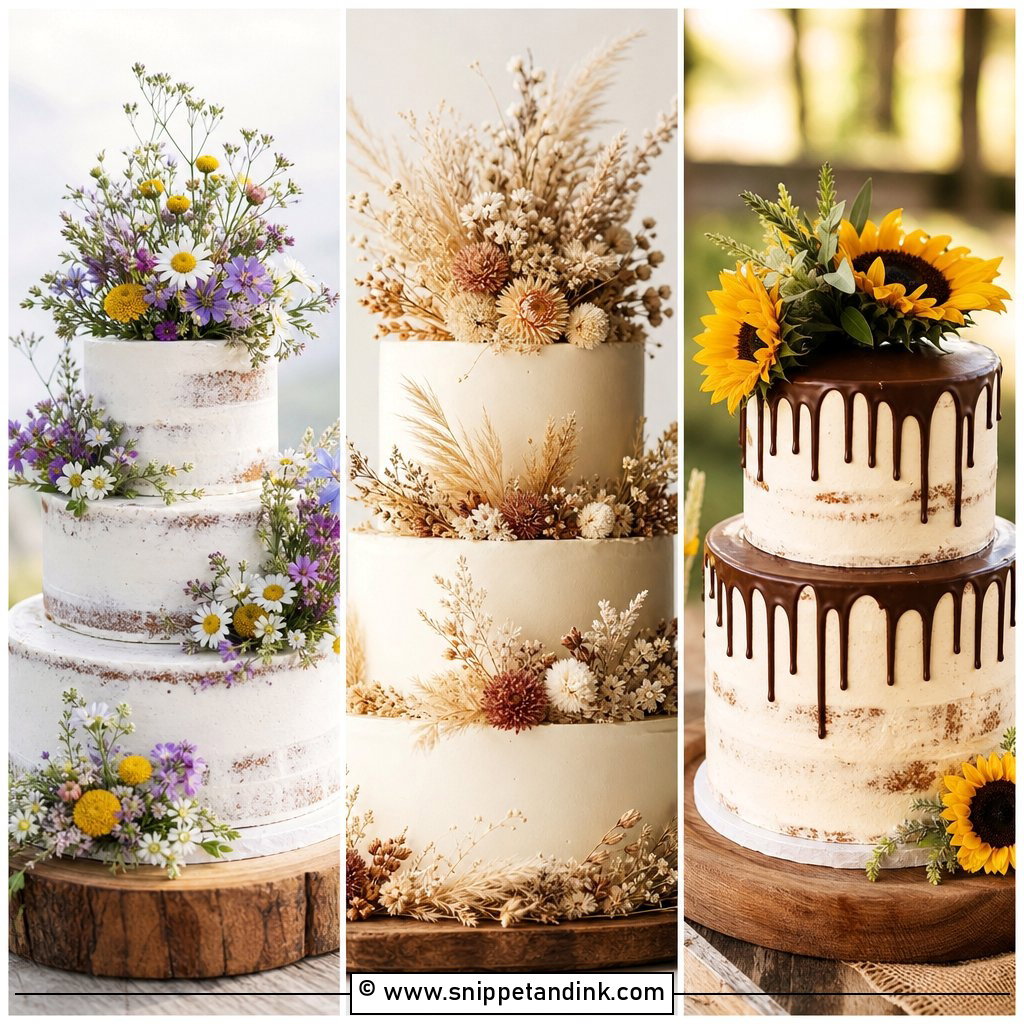
A wildflower bouquet wedding cake swaps big formal blooms for small flowers, grasses and uneven color, so it looks picked from a meadow that morning. I finish these in textured buttercream with a palette knife or ridged scraper, because a perfectly smooth surface makes loose flowers look misplaced. Edible pressed flowers such as violas, cornflowers and calendula petals can go straight onto the frosting; anything fresh that isn’t grown for eating goes in on a pick. The hard part is restraint. Loose doesn’t mean scattered, and I group the stems in two or three drifts so the cake still looks finished from across the room.
4. Cascading Bouquet Wedding Cake
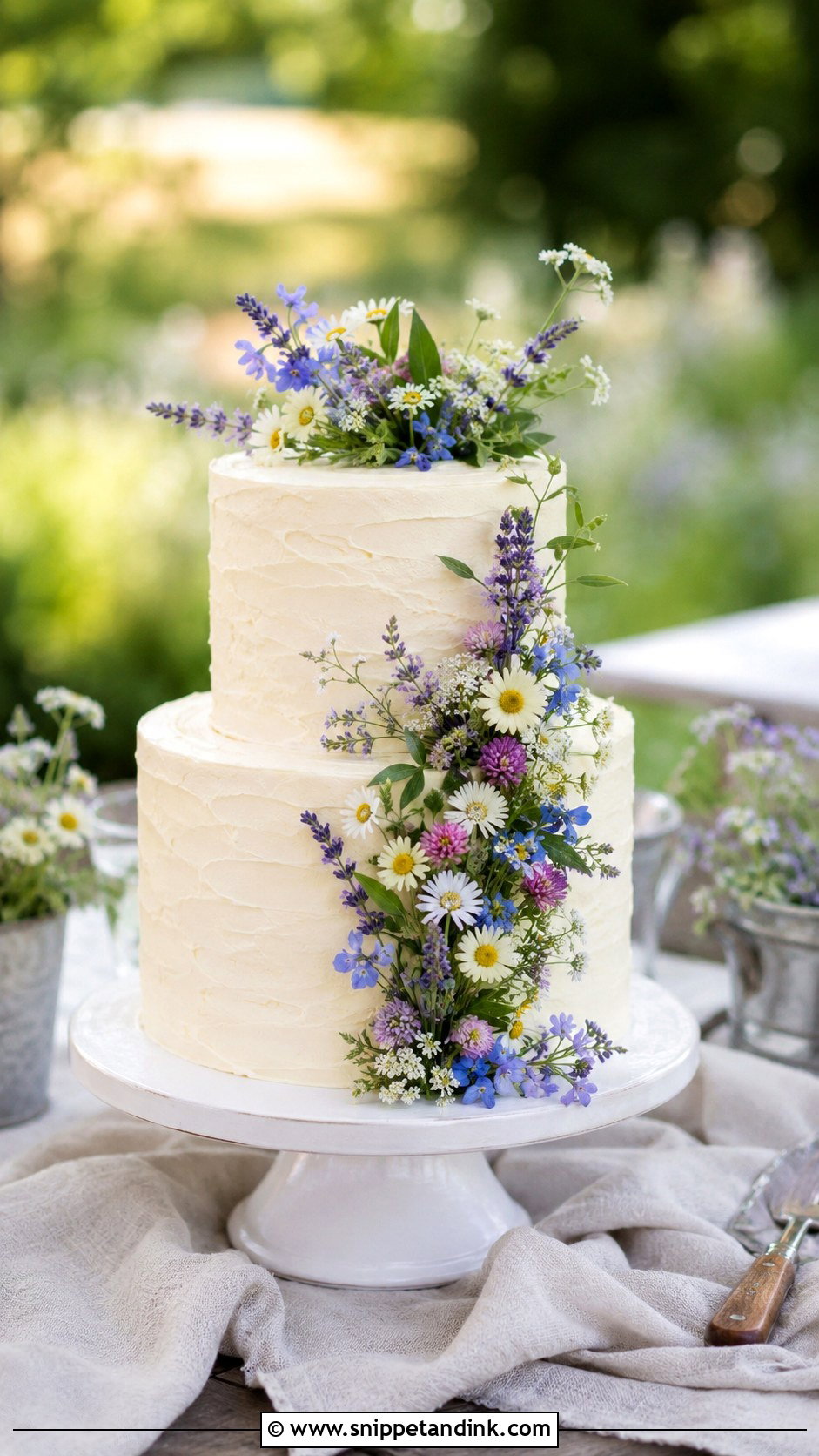
A cascade runs flowers from the top tier down to the base, and it’s the version I suggest when the bride is carrying a trailing bouquet or the reception needs one big focal point. Keep the cake surface plain, smooth ivory fondant or buttercream, so the flowers carry the design. Roses, orchids, ranunculus and trailing greenery all cascade well. Structurally, a cascade has to be anchored into each tier rather than resting on the surface, or the lower stems slide as buttercream softens in a warm room. I also set the cascade’s direction by where the cake will be photographed, so the flowers fall toward the camera and not toward the wall.
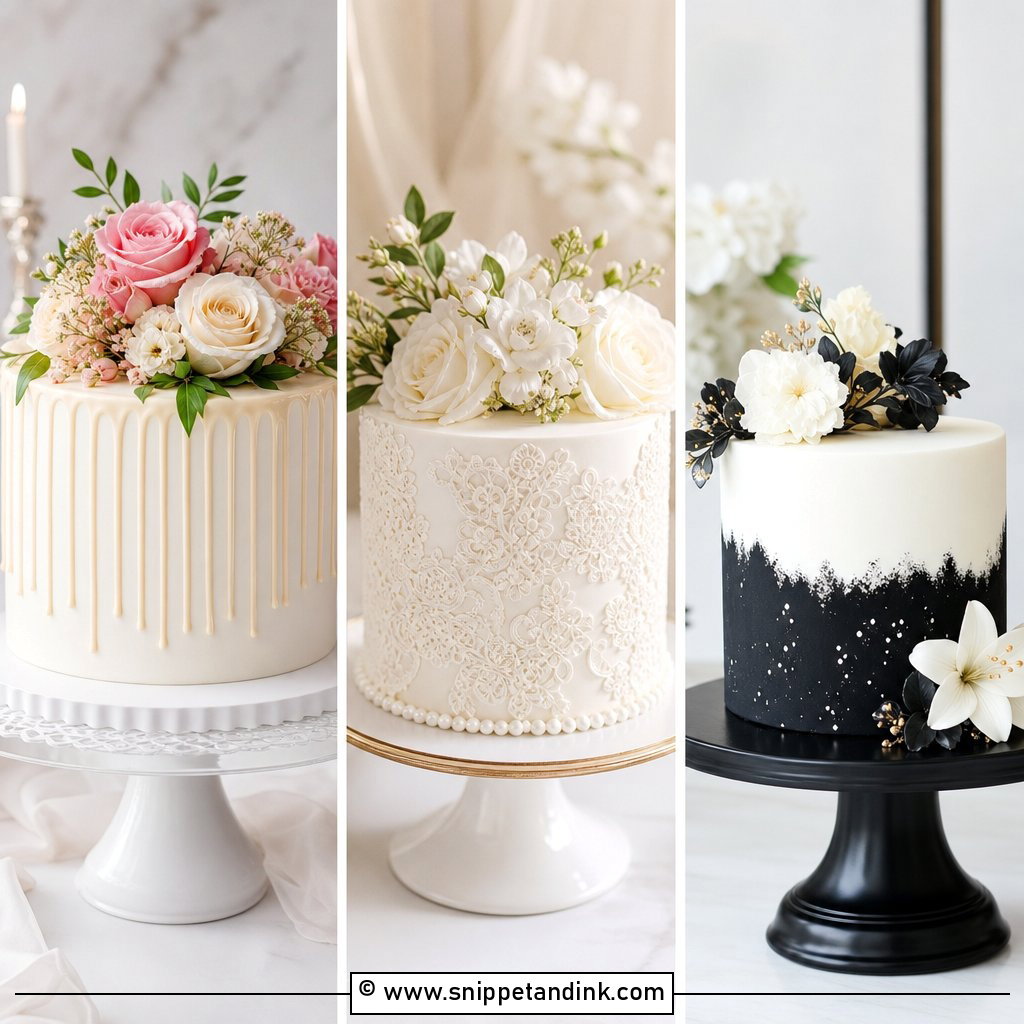
5. Minimalist Bouquet Wedding Cake
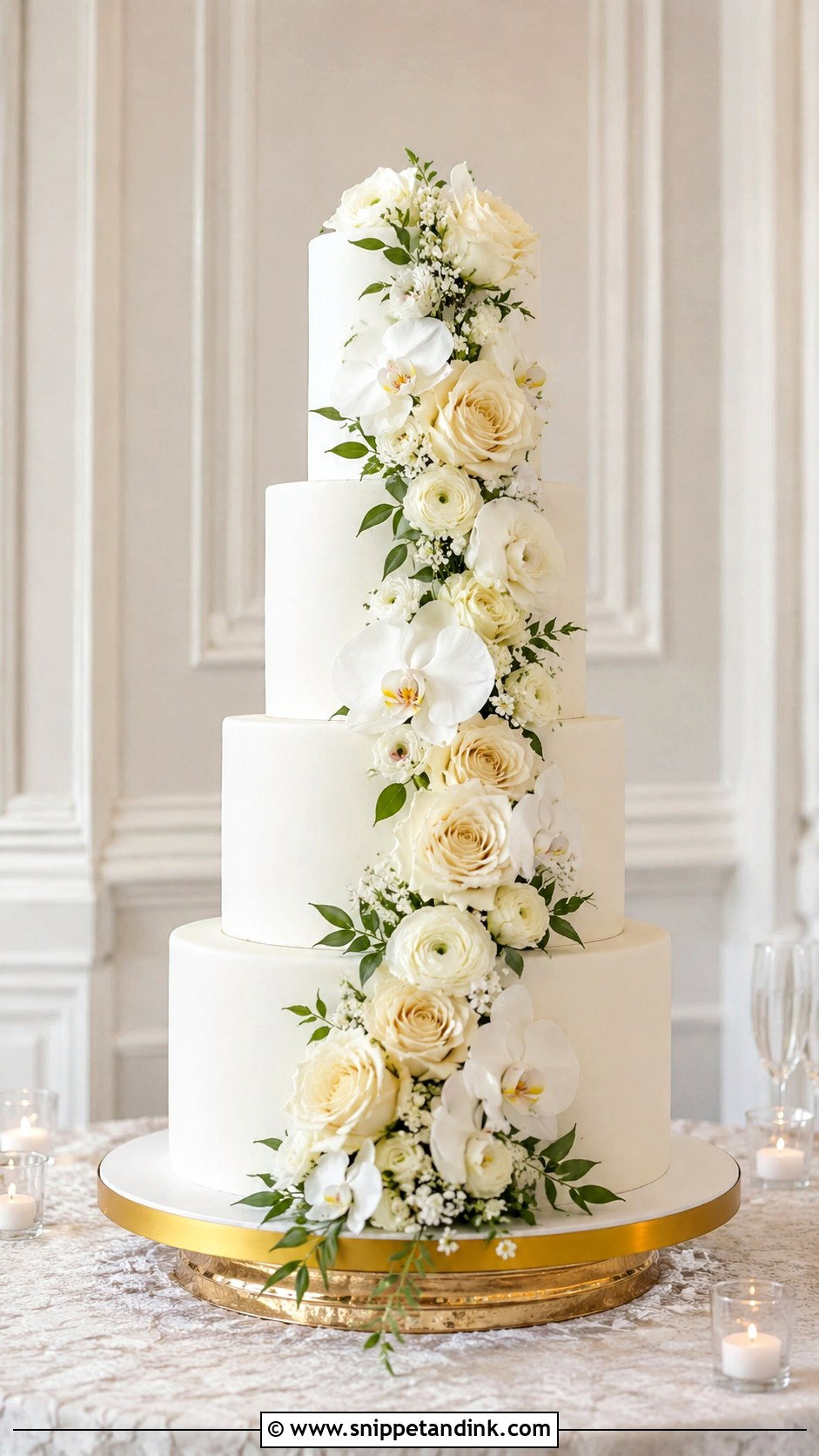
One small cluster, off-center, on a smooth white tier. That’s the whole design, and it suits modern weddings and smaller dessert tables where a full floral treatment would swamp the cake. A few white roses, a couple of ranunculus and a sprig of greenery are plenty. Because there’s so little decoration, every flaw in the finish shows, so I only recommend this with sharp-edged buttercream or fondant. I’d skip it if your reception is lit mainly by candles, since a single small cluster disappears in low light.
6. Garden Bouquet Wedding Cake
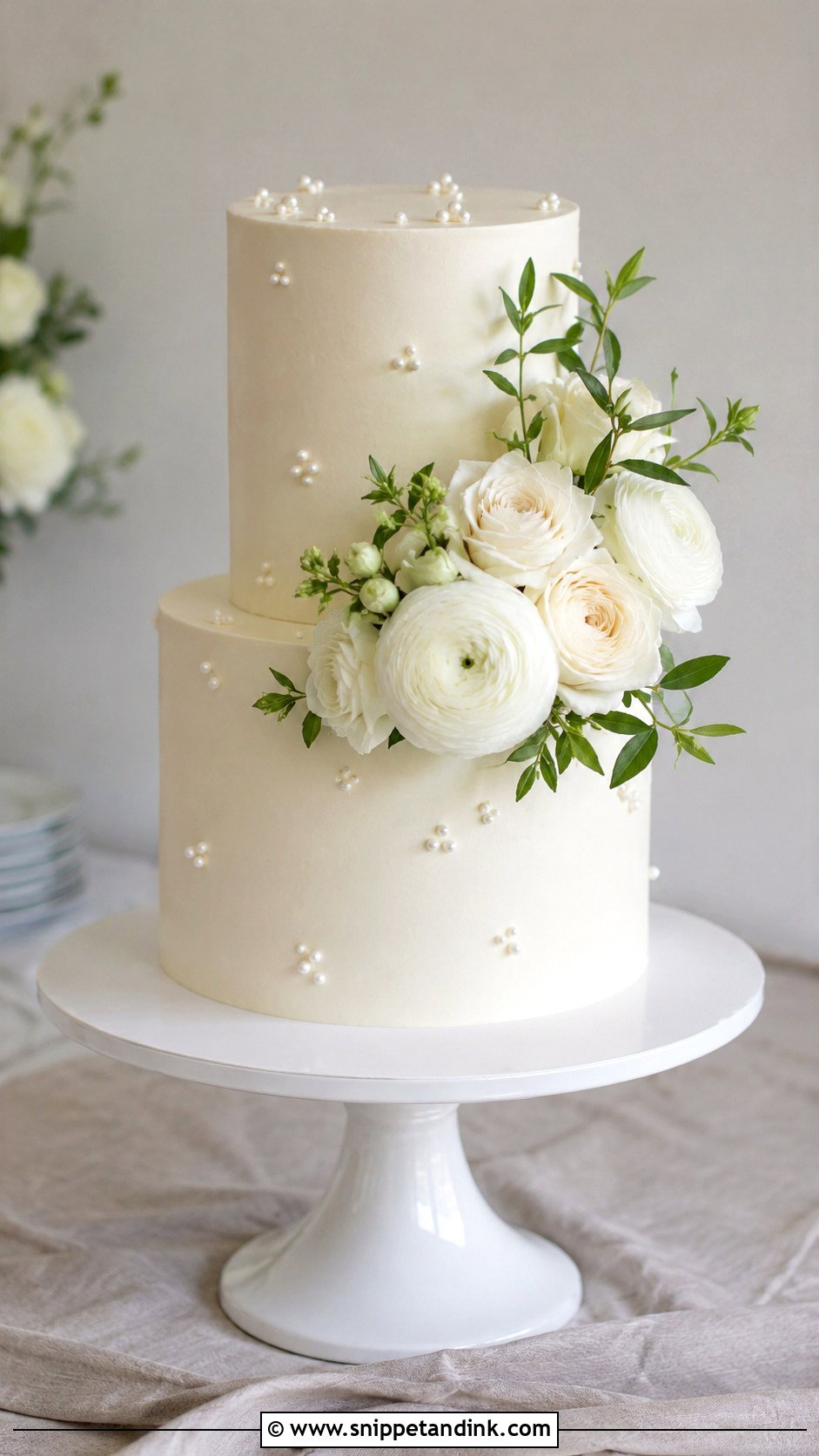
A garden cake should look as if the flowers grew around the tiers, not as if someone lined them up. I tuck roses, ranunculus, sweet peas and lisianthus at different depths and let greenery break the outline of each tier. Sweet peas are the fragile ones; they wilt fast out of water, so I only use them when the cake is dressed shortly before guests arrive. Buttercream takes this style better than fondant, and a light ruffled texture on the lower tier picks up the petal shapes. Tented and estate receptions suit it, though a hot tent is also where buttercream struggles most.
7. Orchid Bouquet Wedding Cake
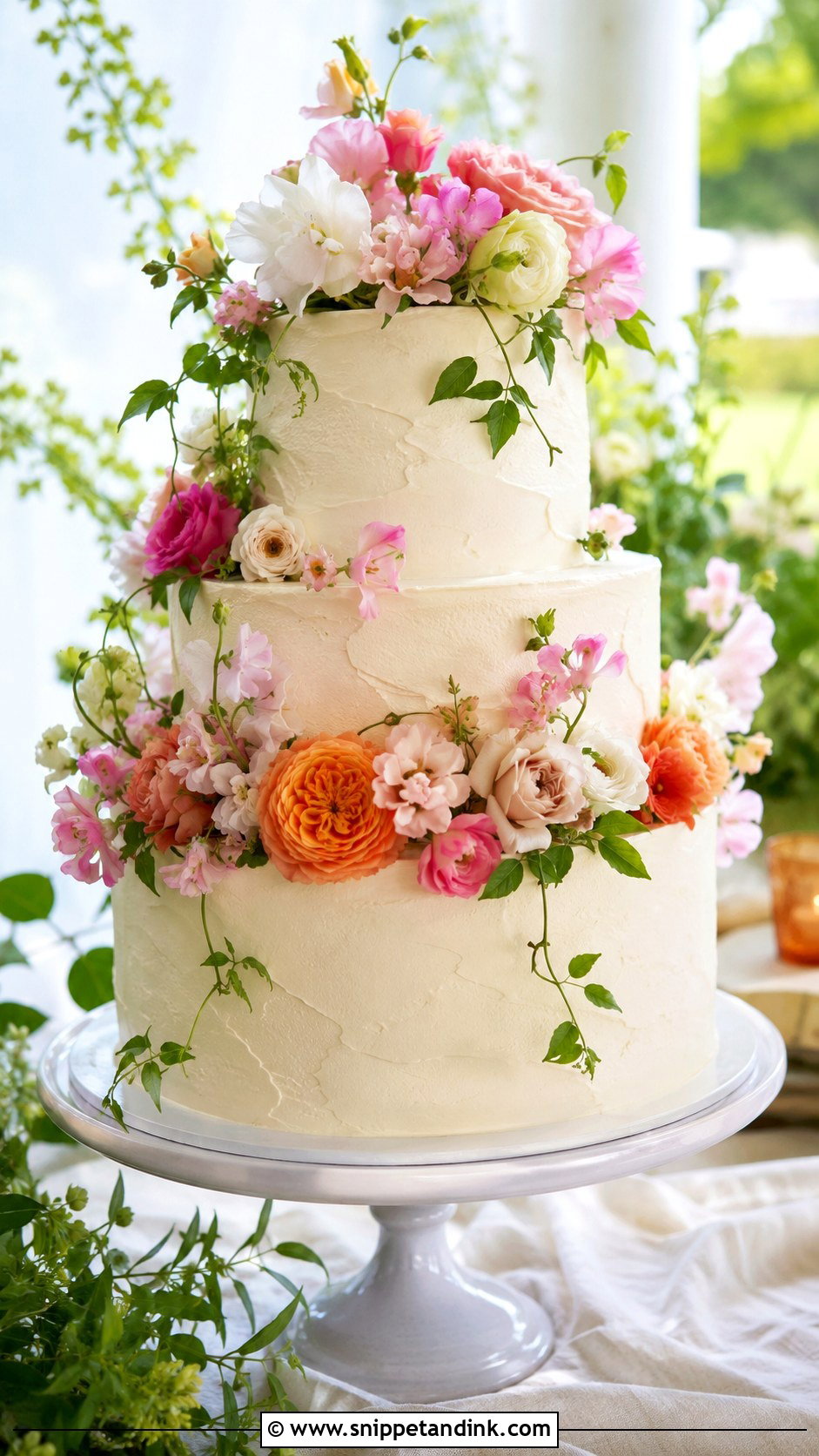
Orchids need very little help, which is why they sit so well on tall tiered cakes, square tiers and modern rounded shapes. White orchids on ivory read clean and formal; blush, mauve or peach blooms warm the whole table. A short trail draped across one tier gives the bouquet effect without any filler. They’re one of the hardier fresh flowers I use because the petals are waxy and don’t bruise the way roses do. Every stem still goes into a floral tube or a wrapped pick, since nothing fresh should be pushed bare into frosting.
8. Lavender Bouquet Wedding Cake
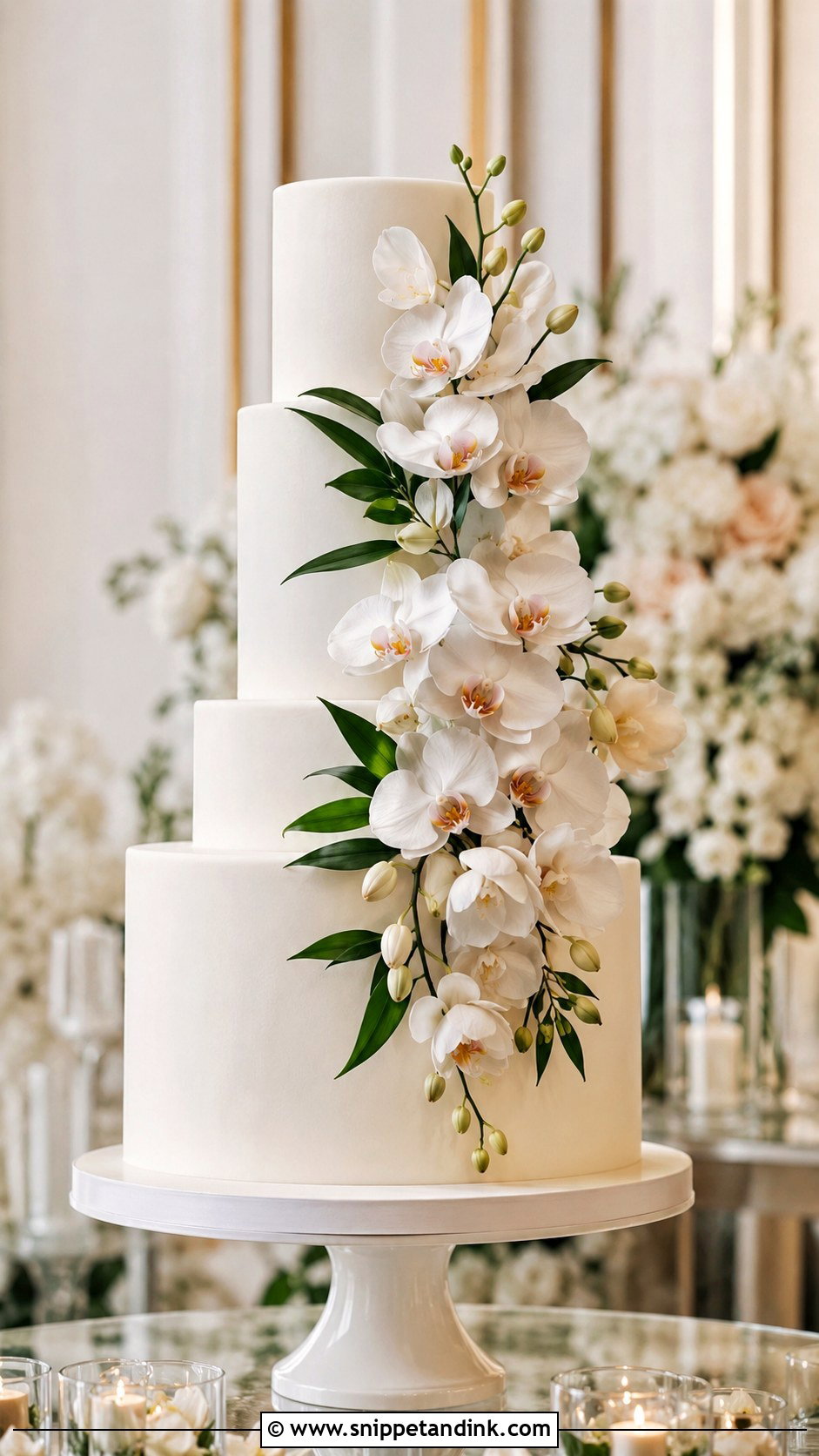
Lavender adds softness and a hint of scent, and it belongs at garden and countryside receptions in spring or summer. I pair a few small sprigs with white roses or greenery on pale ivory buttercream, or use lavender-colored sugar flowers for a more polished finish. Go easy with the real thing. Culinary lavender is edible, but its oils are strong, and a cake crowded with fresh sprigs can leave the frosting near them tasting soapy. If you want lavender in the flavor, ask for a lightly infused syrup or buttercream and keep the decoration to a few stems.
9. Sunflower Bouquet Wedding Cake
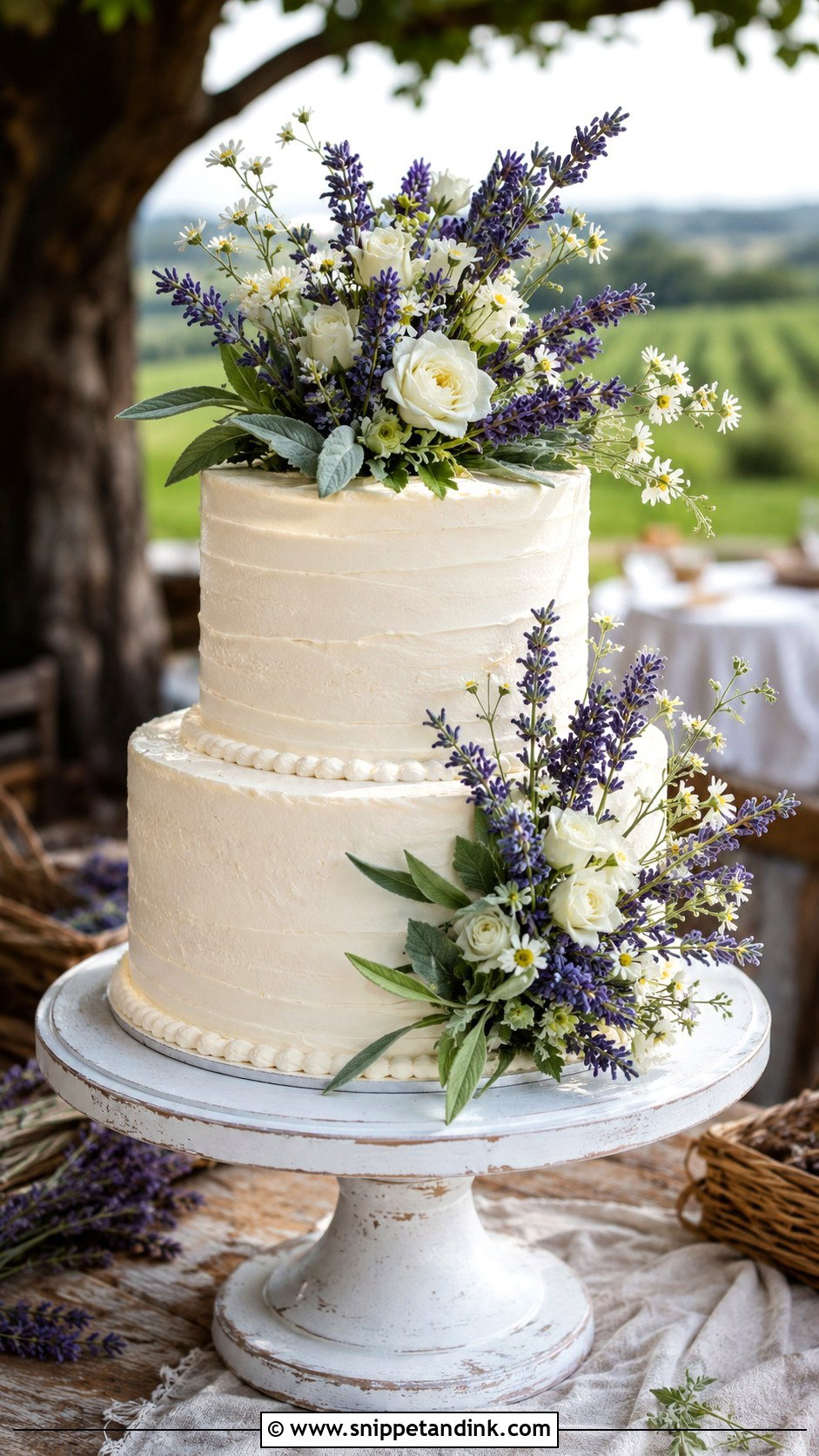
A sunflower bouquet wedding cake brings warmth to late summer, early fall and barn receptions, but sunflowers are heavy and loud. I put them on a quiet base, white buttercream or a semi-naked finish, and choose smaller-headed varieties so the cake doesn’t look top-heavy. A big head can drag through soft frosting, so each one sits on a pick with a short stem instead of lying flat. White filler and greenery around them turn three blooms into something that reads as a bouquet. With this flower, one main cluster nearly always beats a cascade.
10. Baby’s Breath Bouquet Wedding Cake
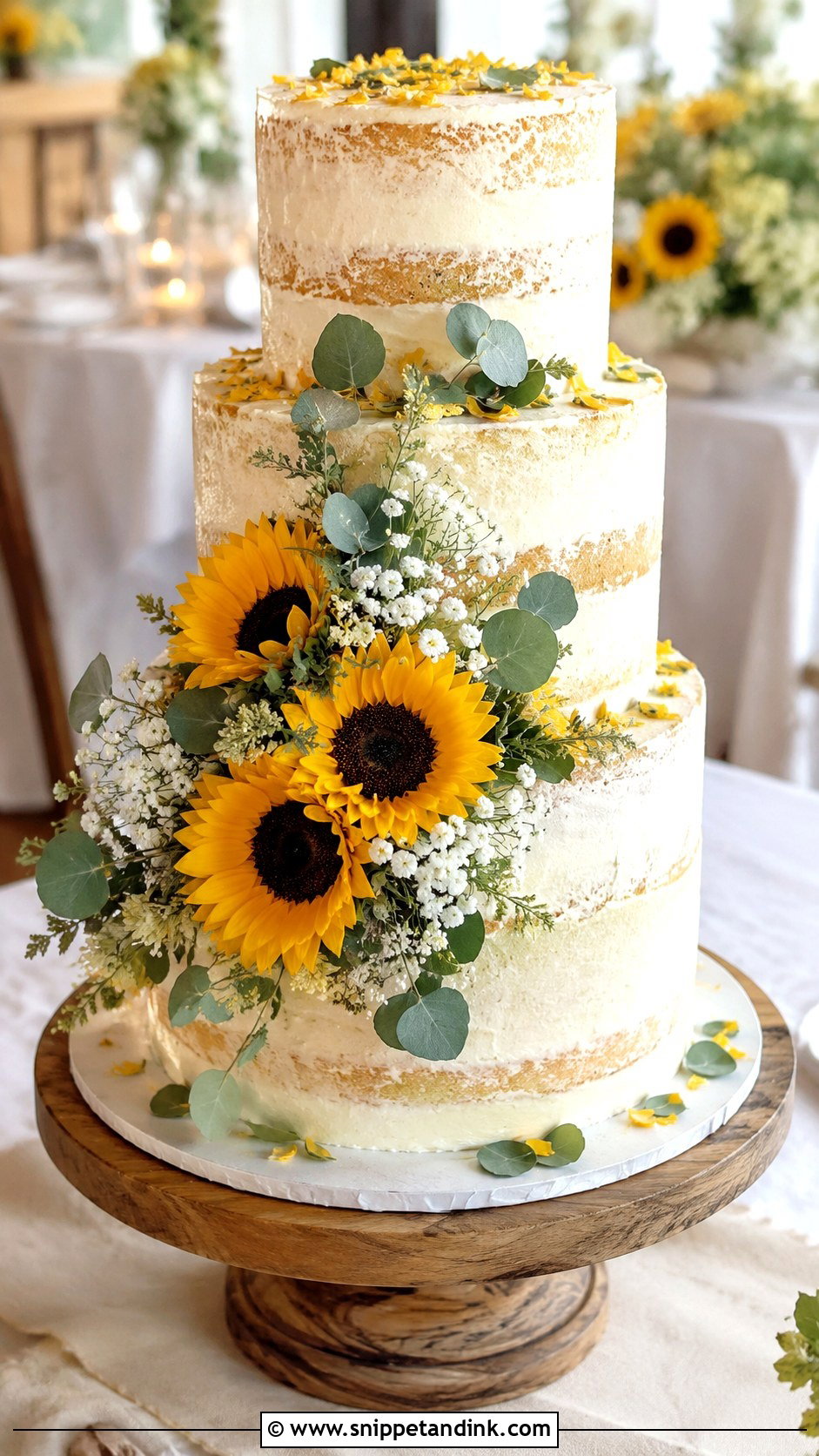
Baby’s breath is inexpensive, light and very bridal, and on a white cake it gathers into small clouds around the tiers. It sits happily beside roses or on its own in chapels and neutral palettes. Here’s what people don’t expect: gypsophila isn’t considered food-safe, so it must never touch the frosting. I wrap the stems, keep the clusters on picks or a thin barrier, and remove them before cutting. Arrange it tightly, too, because loose baby’s breath sheds tiny flowers that land in the buttercream and look like crumbs.
11. Hydrangea Bouquet Wedding Cake
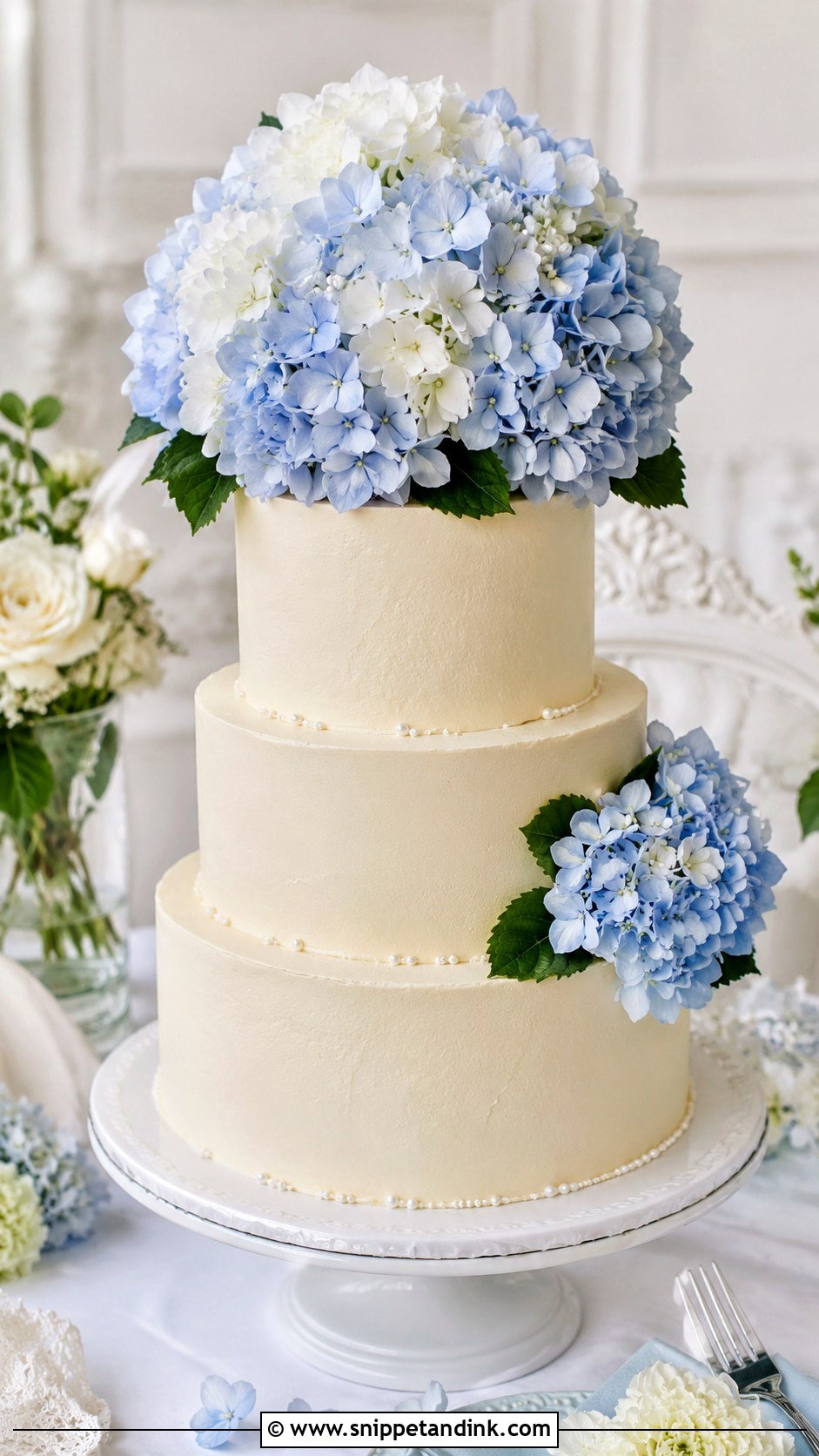
Hydrangea heads are large and round, so one or two give a full bouquet effect without covering every tier. Blue, white, blush and pale green all work, depending on your palette and what the florist can source. A smooth white cake shows the shape best, while textured buttercream pushes it toward a garden look. The trouble is that hydrangeas drink heavily and wilt fast once cut, and they aren’t edible. If you love them, I’d steer you toward sugar hydrangeas; the tiny florets take patience to make, but they hold all evening.
12. Lily Of The Valley Bouquet Wedding Cake
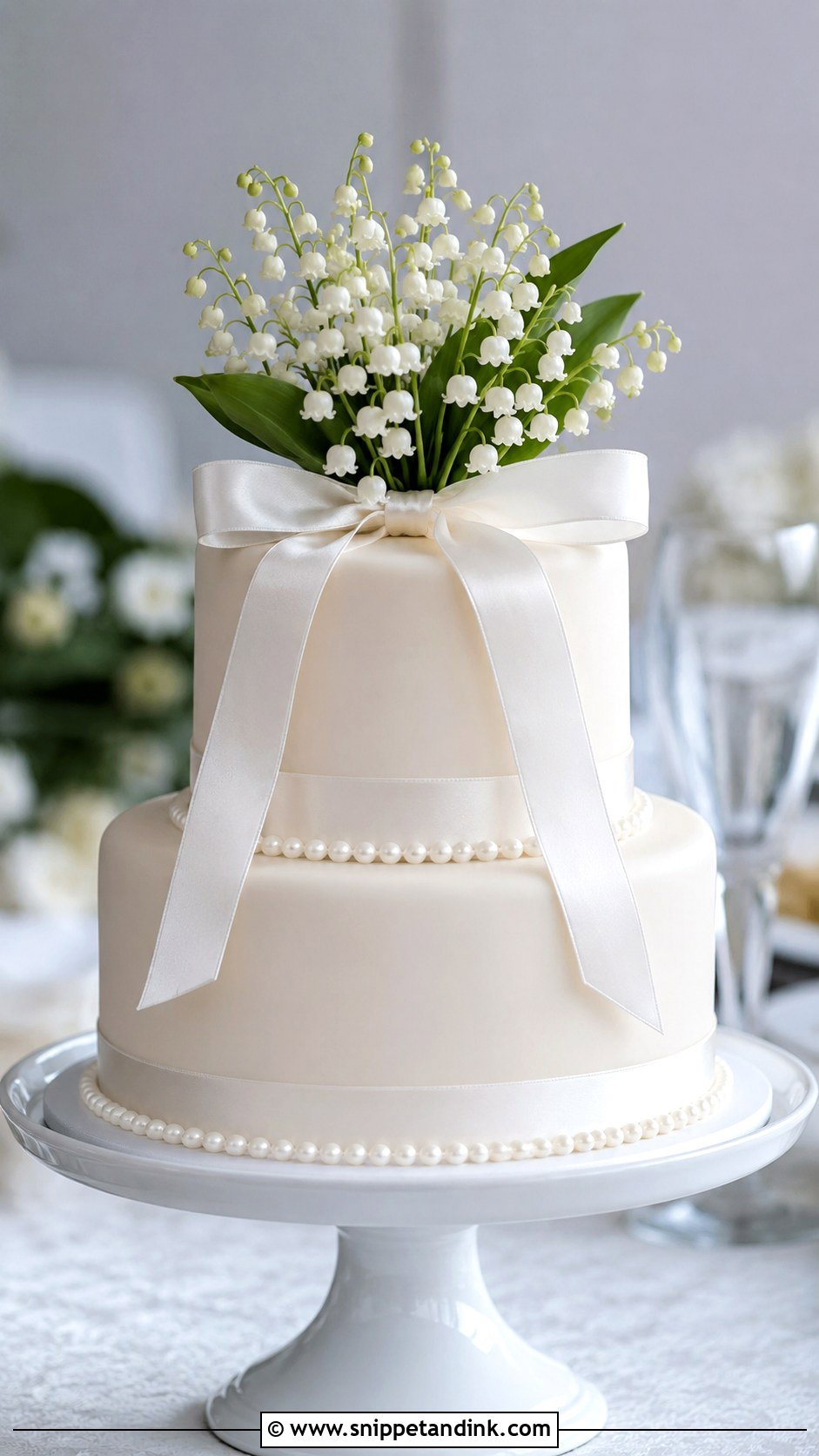
Lily of the valley is tiny, bell-shaped and long tied to bridal bouquets, and on a cake it reads as quietly expensive. The blooms are so small that they need a clean base: a single spray near the top tier or along one side of a smooth ivory cake is enough. It’s also toxic, so real stems have no business on a cake at all. I make these in gum paste instead, which also gets around the flower’s short spring season. Each sugar bell keeps its shape, so the spray looks crisp in close-up photos.
13. Tulip Bouquet Wedding Cake
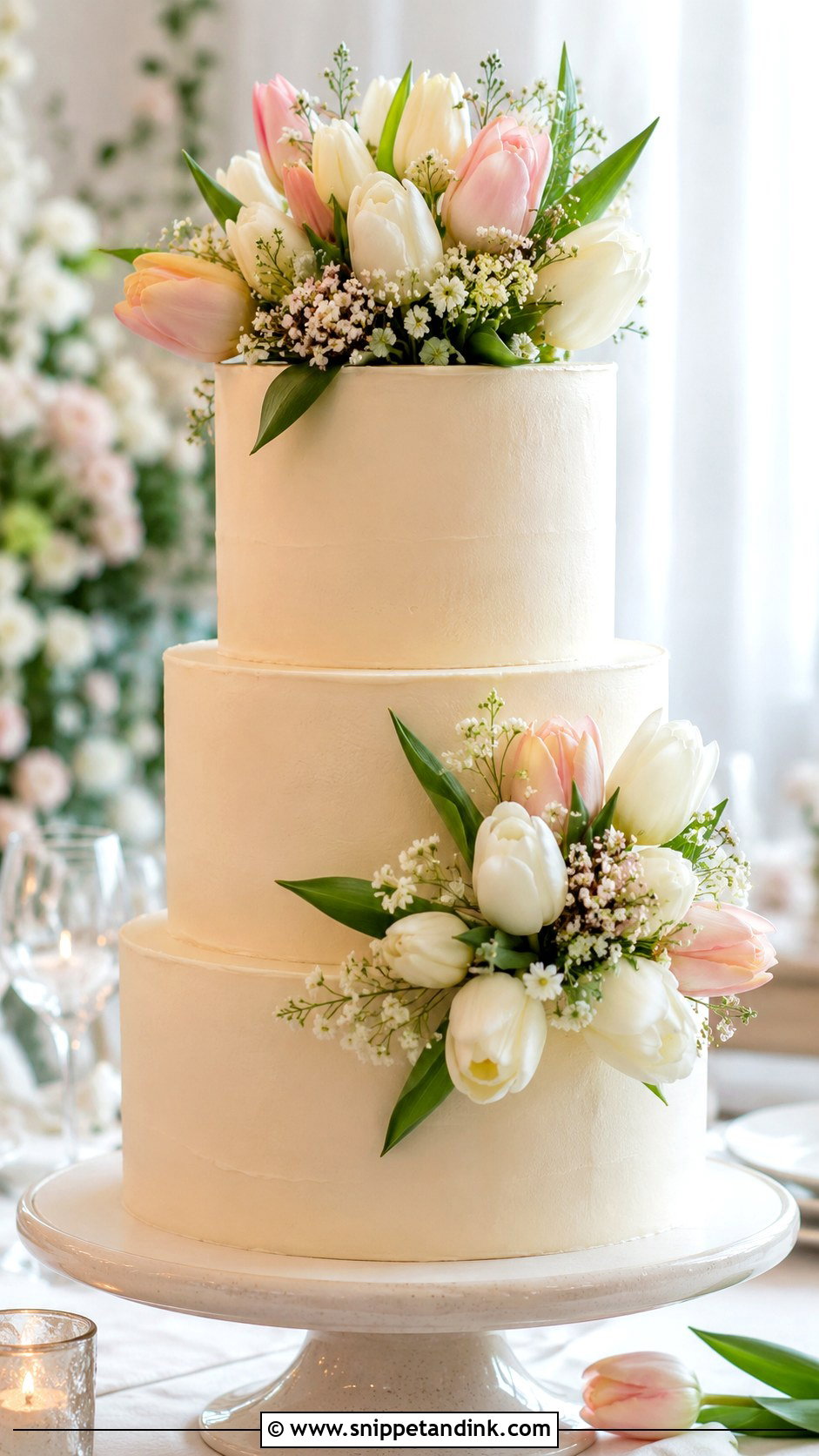
Tulips have a simple cup shape that suits modern cakes, smooth buttercream and pastel palettes. White feels clean and minimal, while pink, peach or yellow bring spring color. Know this before you order: cut tulips keep growing and bending toward light, so a tulip that looks perfect at setup can lean sideways by the evening. I trim them short, set them low in the cluster and let only one or two trail down a side. Brunch weddings and garden venues suit them, and a tight arrangement keeps the cake balanced in pictures.
14. Ranunculus Bouquet Wedding Cake
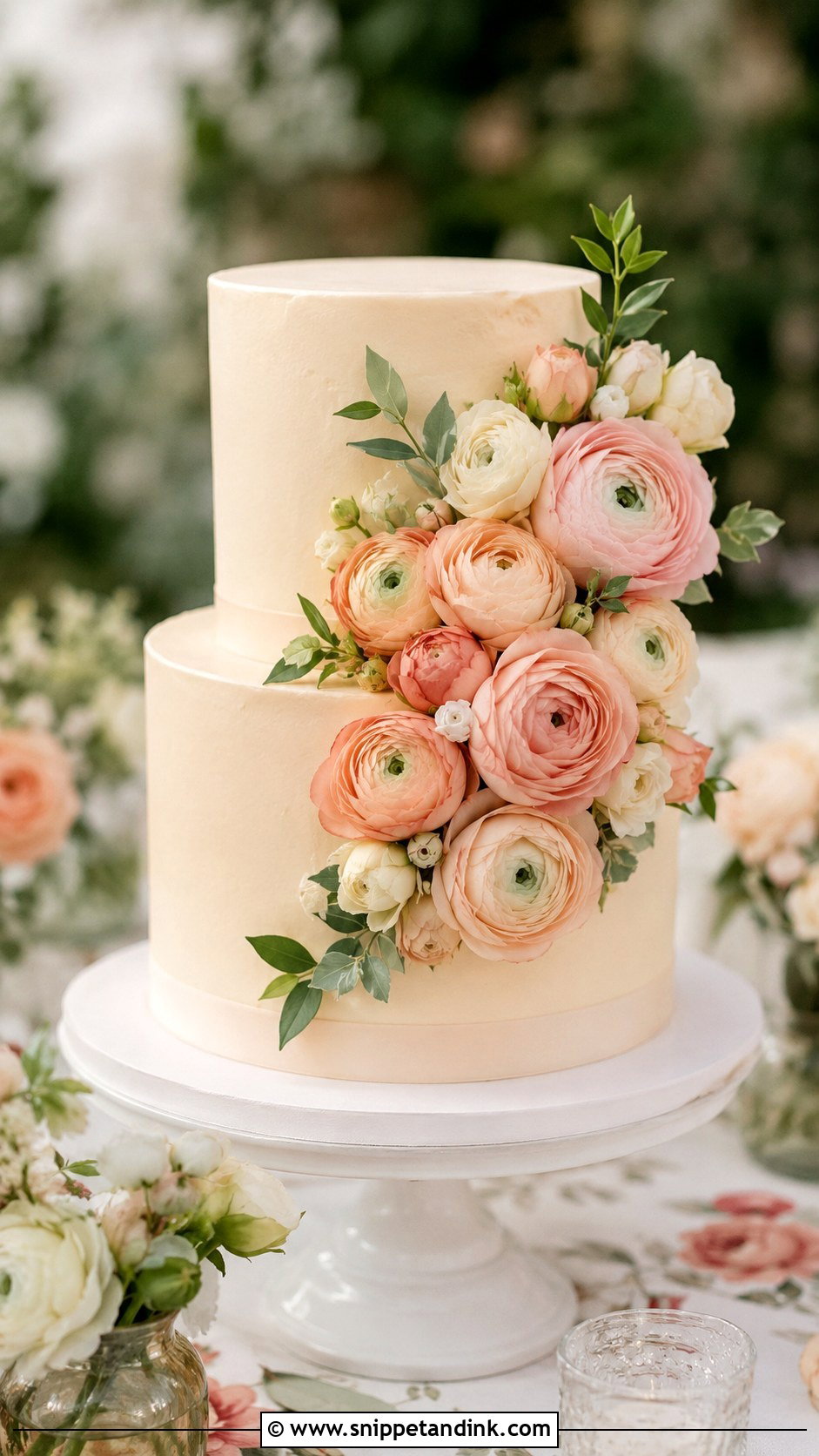
A ranunculus bouquet wedding cake gives you layered petals at a smaller scale than roses or peonies, which keeps the whole thing delicate. Blush, ivory, peach, butter yellow and soft coral are all easy to find in this flower. I group them on one side of a two- or three-tier buttercream cake with a little greenery, and stop there. Ranunculus stems are hollow and soft, and they collapse if you push them into frosting, so mine are always wired or set on picks. The heads themselves are sturdier out of water than they look, which makes them one of my favorite fresh flowers for outdoor and brunch receptions.

15. Pastel Bouquet Wedding Cake
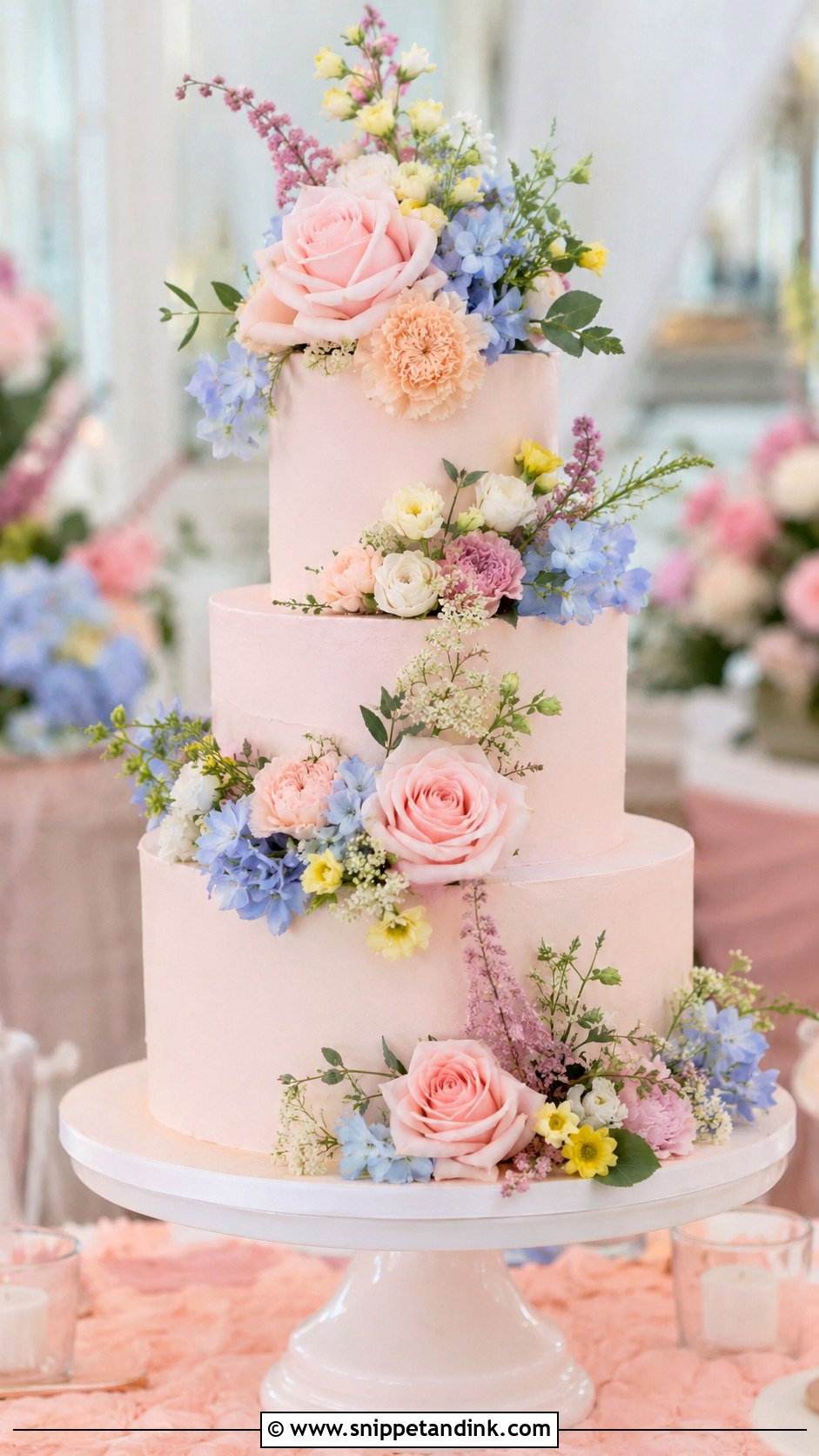
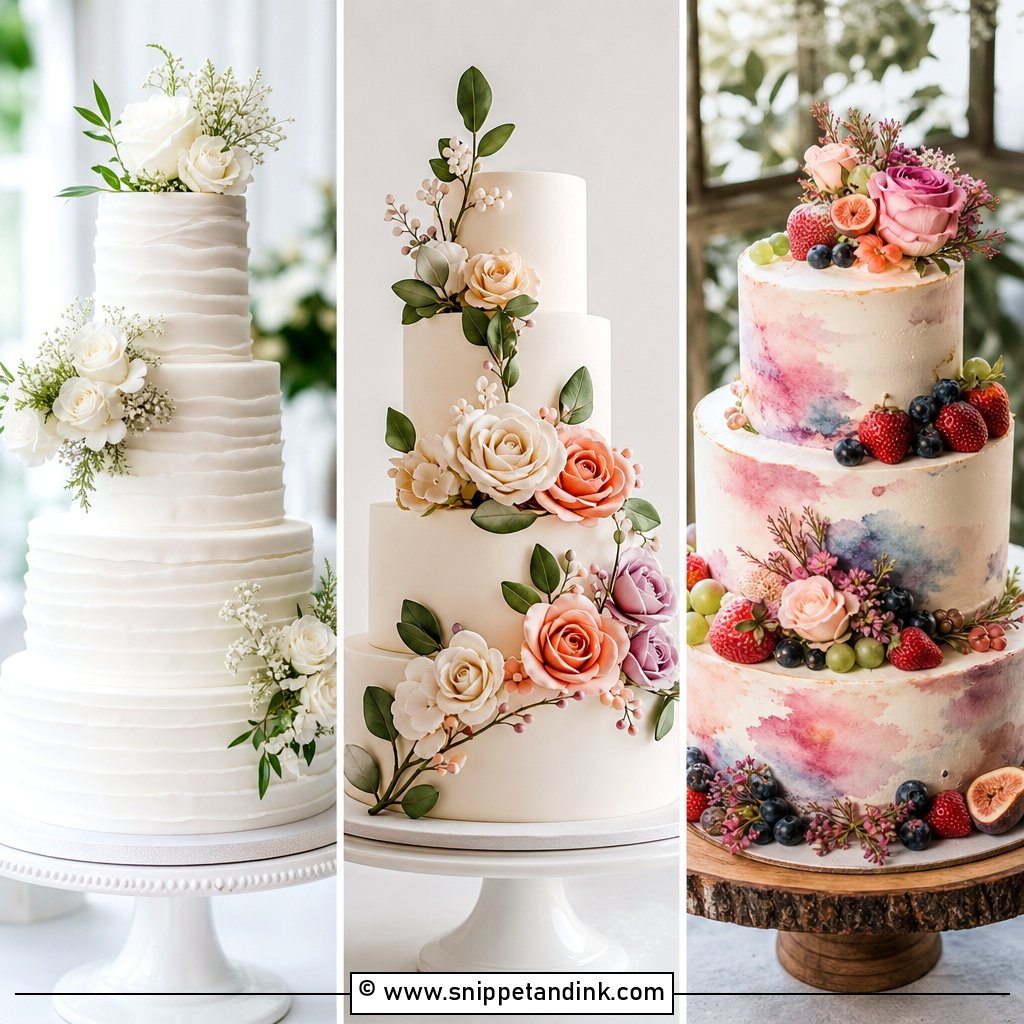
Pastels give you color without anything loud. Soft pink, pale blue, butter yellow, lavender and peach can spread across the tiers like a gentle bouquet, as long as the cake itself stays plain in ivory buttercream, pale blush or smooth white fondant. My one rule is to pull two or three shades from the bridal bouquet, not every color available; five pastels together start to look like a baby shower. Check the colors under the reception lighting too, because pale blue and lavender can turn grey in warm, dim rooms.
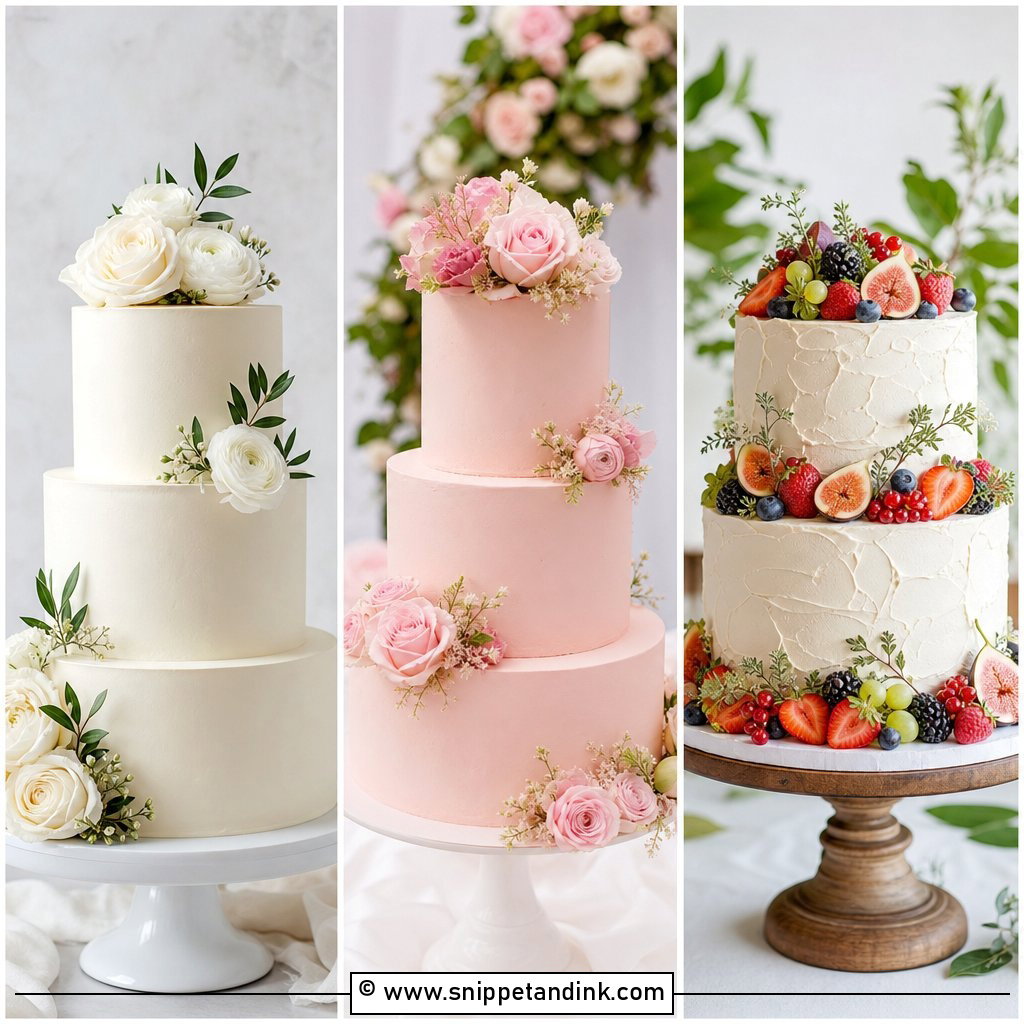
16. White Bouquet Wedding Cake
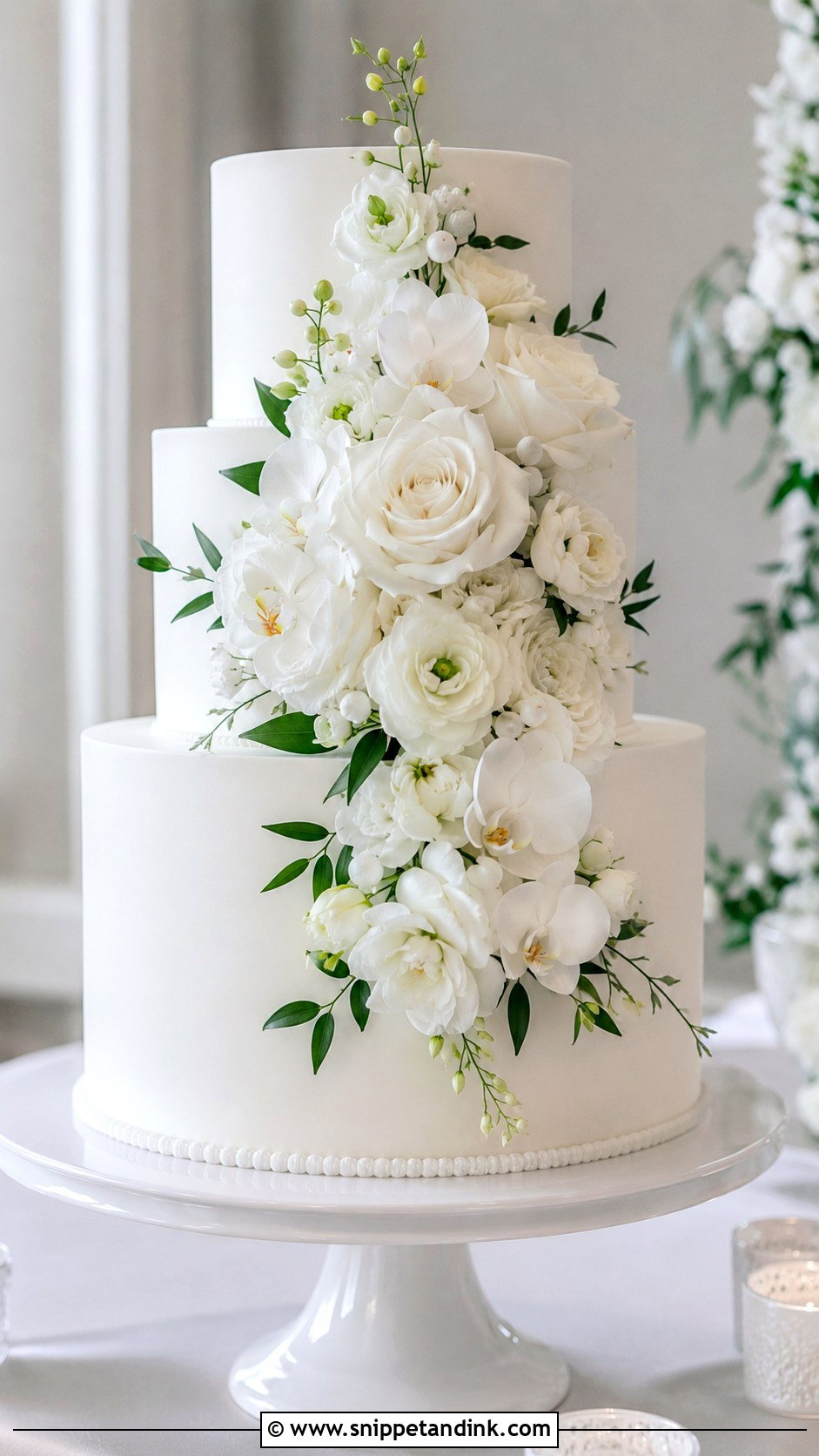
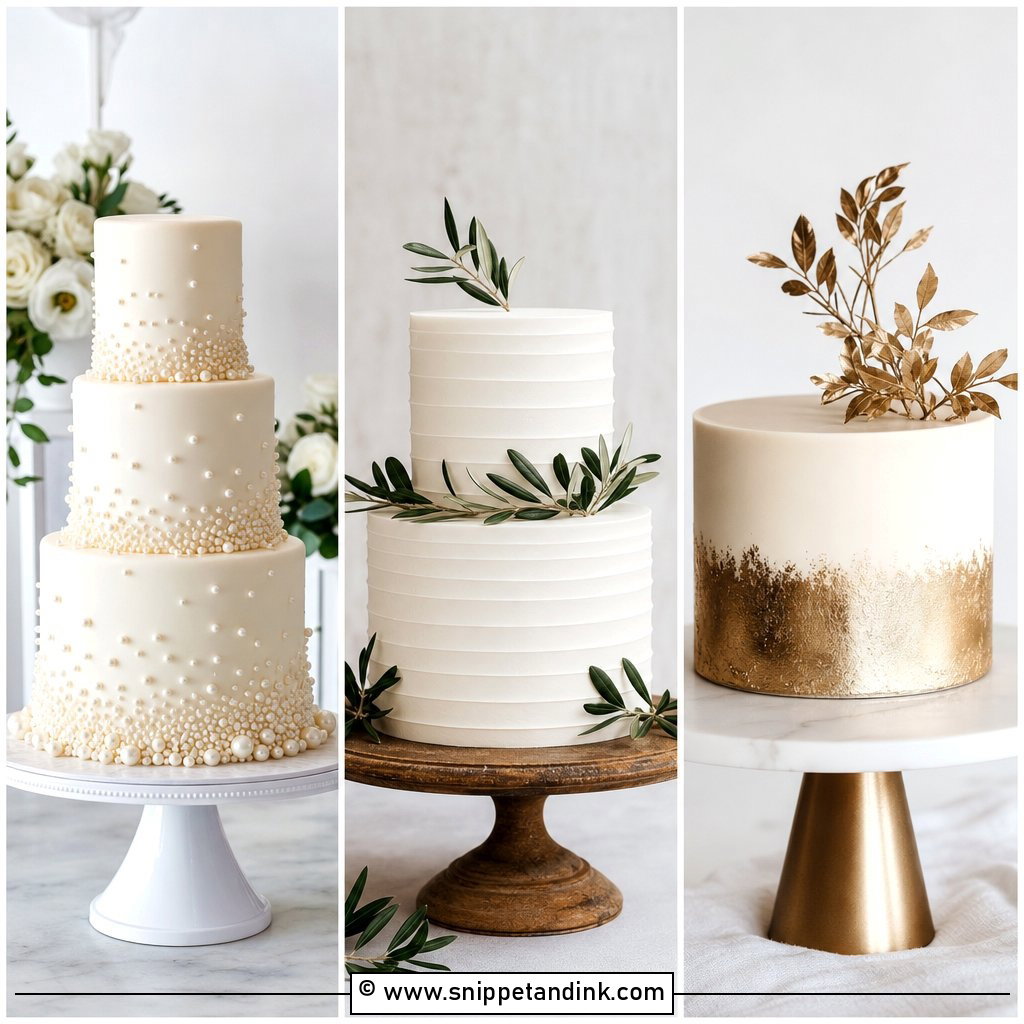
An all-white cake relies on texture instead of color, which is harder than it sounds. White roses, orchids, ranunculus, anemones or sugar flowers can all form the cluster, but if every bloom is the same size the cake looks flat. I mix large and small flowers, add a few soft green leaves, and sometimes a line of sugar pearls so the eye has something to catch. Fondant gives a crisp surface for ballrooms; buttercream softens it for chapels and gardens. White hides nothing, so ask your baker to show you their exact ivory beside your flowers before you sign off.
17. Blush Bouquet Wedding Cake
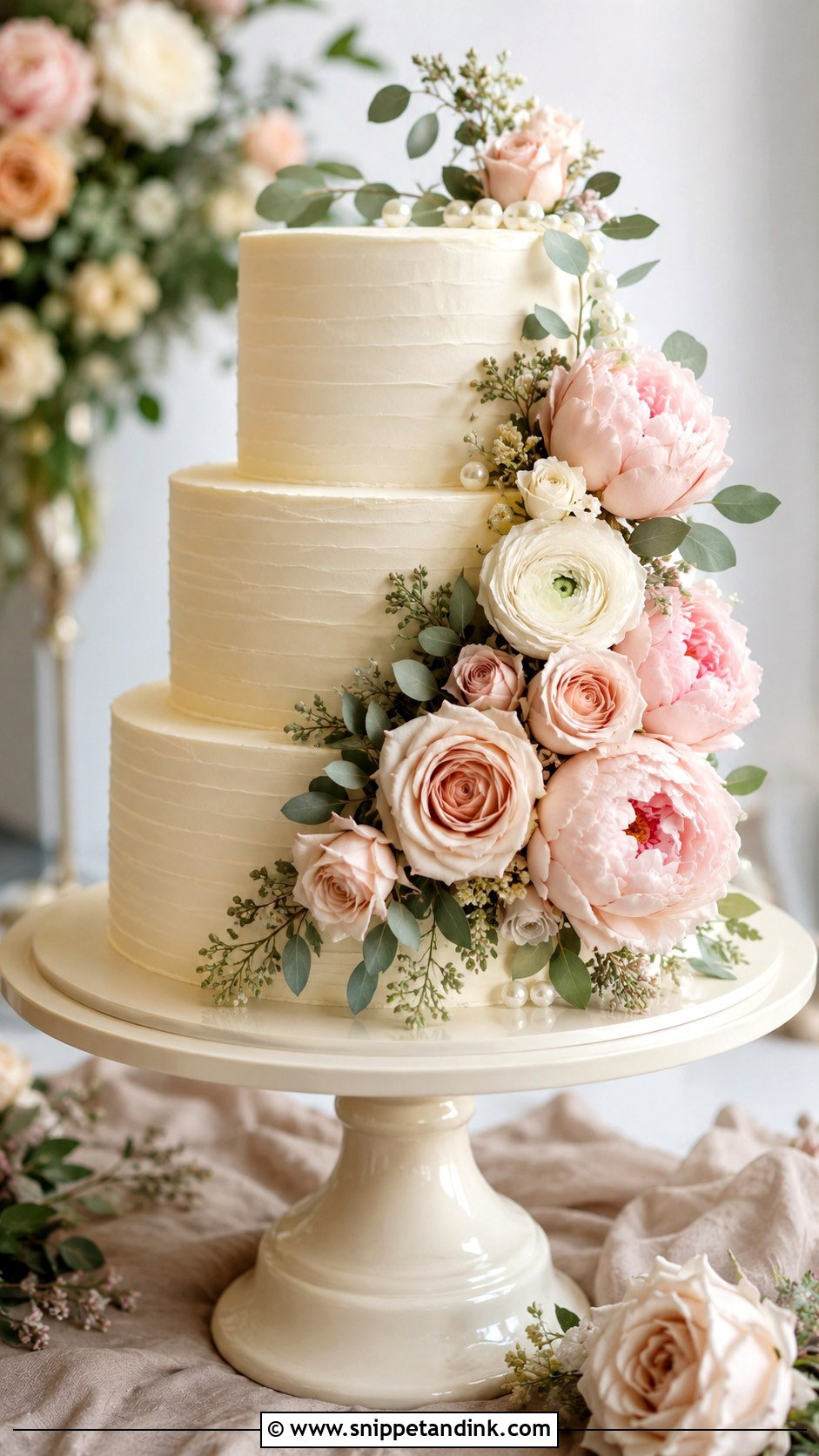
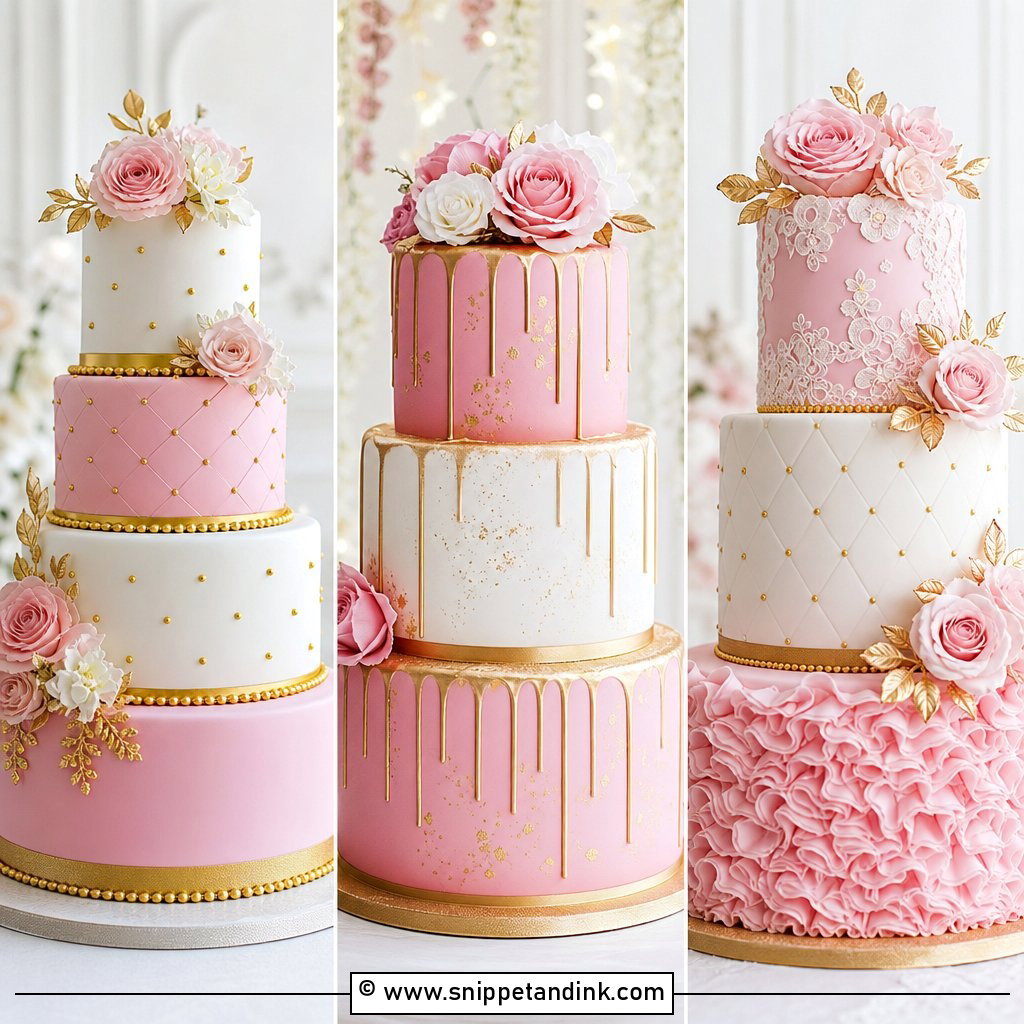
Blush sits between pale and pink, so it warms the cake table without tipping into sugary. I pair it with ivory frosting, champagne tones and a touch of gold, with blush roses, peonies, ranunculus or sugar flowers clustered on one side. A fine pearl border or a smooth finish is all the extra detail it needs. What I watch is the match between petals and frosting. Blush beside a slightly yellow ivory can look muddy, so I tint the buttercream cooler when that happens. It pairs easily with sage, cream, mauve, dusty blue and taupe.
18. Pressed Flower Bouquet Wedding Cake
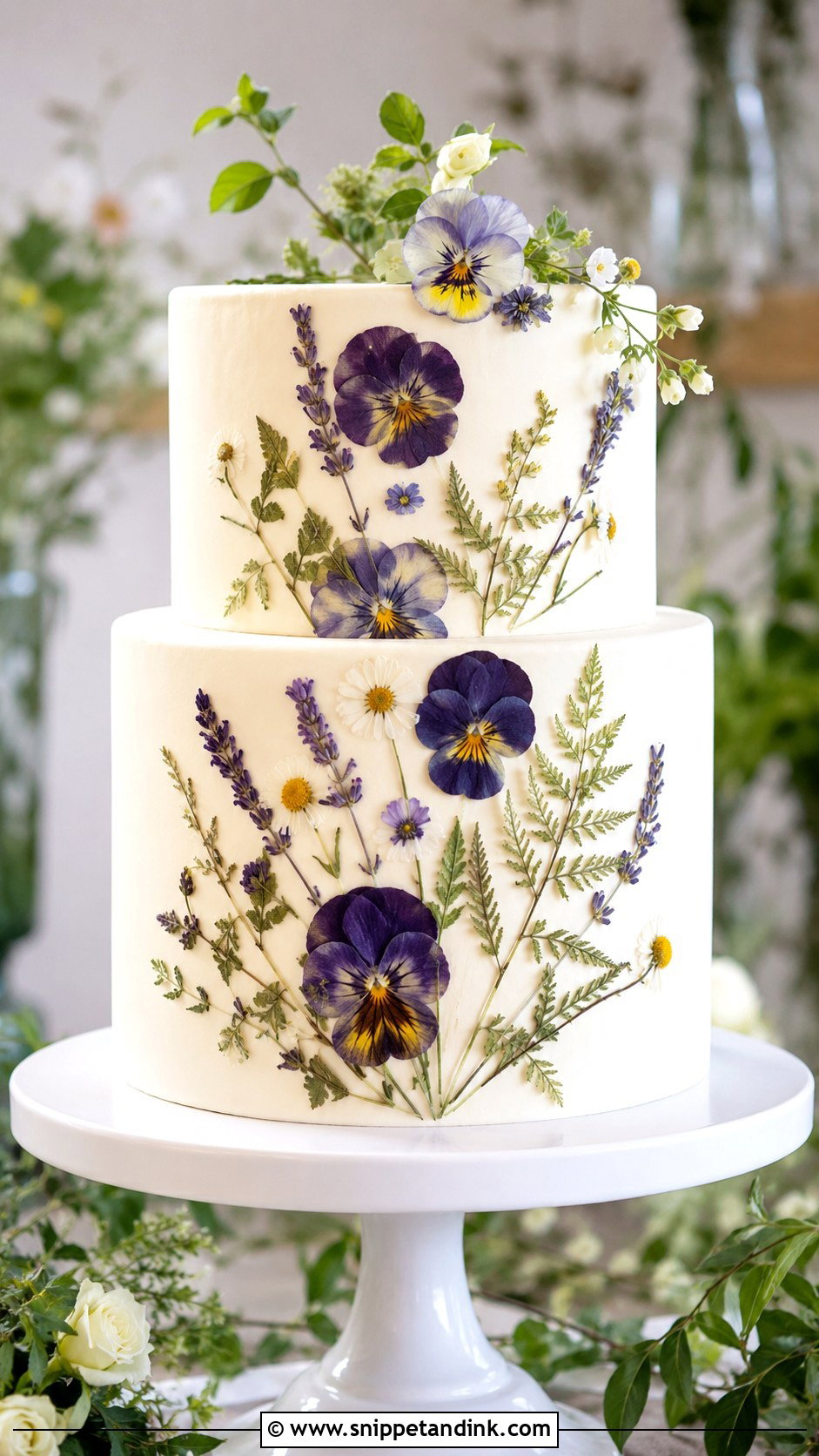
Pressed flowers lie flat against the frosting, so instead of a tall arrangement you get something closer to a botanical print across the tiers. Smooth white buttercream shows every petal and stem. Only edible flowers belong here, such as violas, pansies and cornflowers grown without pesticides; craft-store pressed flowers are not safe to eat. I press them onto chilled buttercream so they don’t smear and keep the cake cool until display, because humidity makes them curl and darken. Spring weddings and small receptions suit this handmade, botanical finish.
19. Sugar Flower Bouquet Wedding Cake
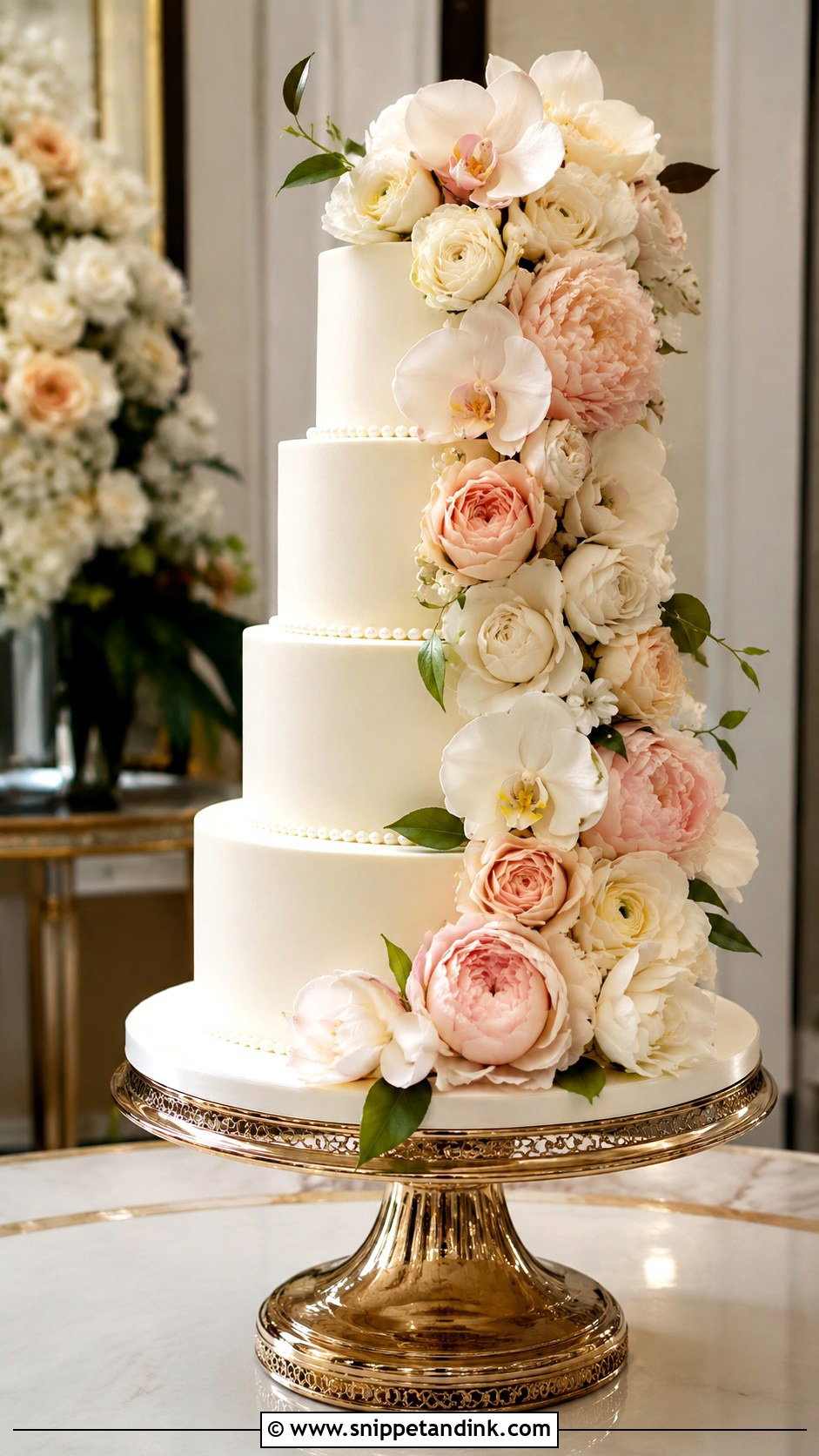
Sugar flowers are the answer when you need blooms that won’t wilt, bruise or droop before the cake is cut. Every petal is rolled, shaped, dried and dusted by hand, so they can match the bridal bouquet closely, including flowers that are out of season or unsafe to use fresh. The design can be a single rose or a whole tier of peonies, orchids and ranunculus on white fondant. Expect to pay more, because the work is slow and has to start well ahead of the wedding. Kept dry and away from humidity afterward, they last for years.



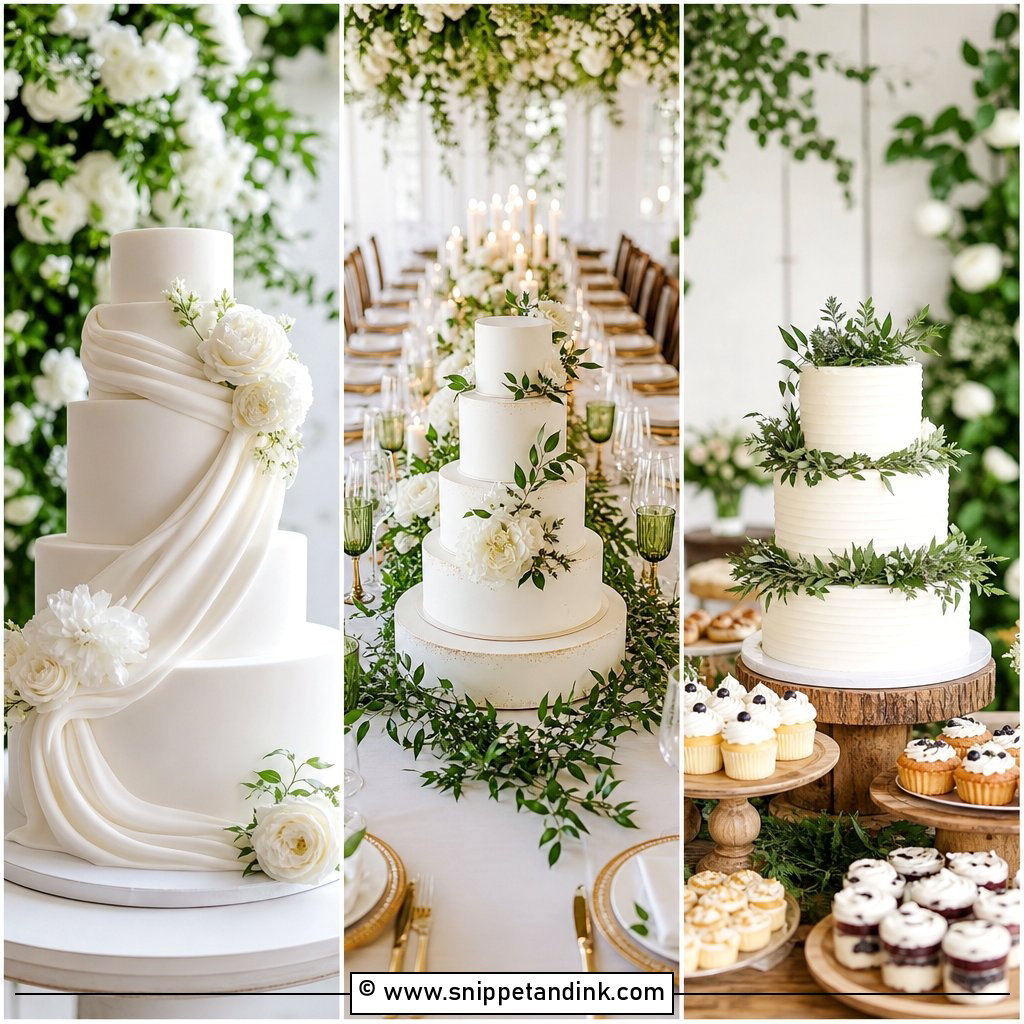

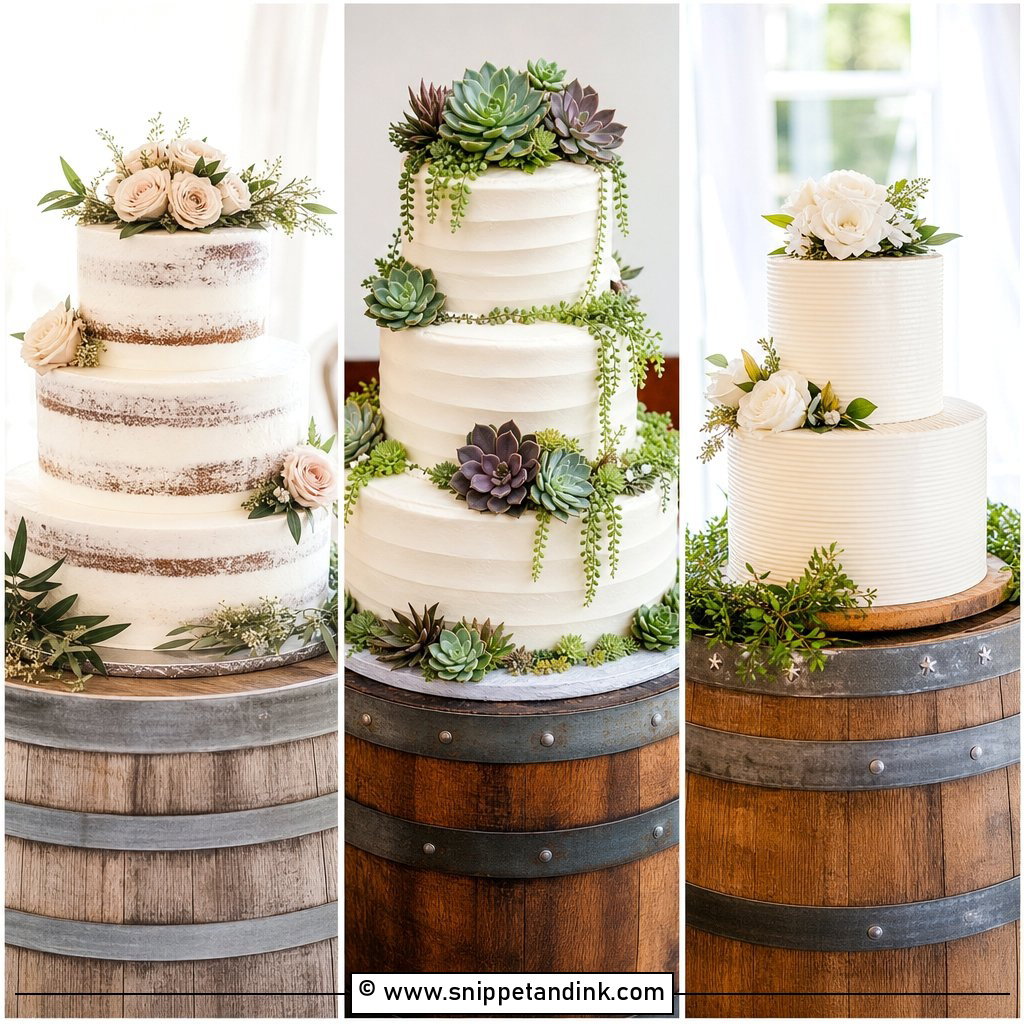
20. Boho Bouquet Wedding Cake
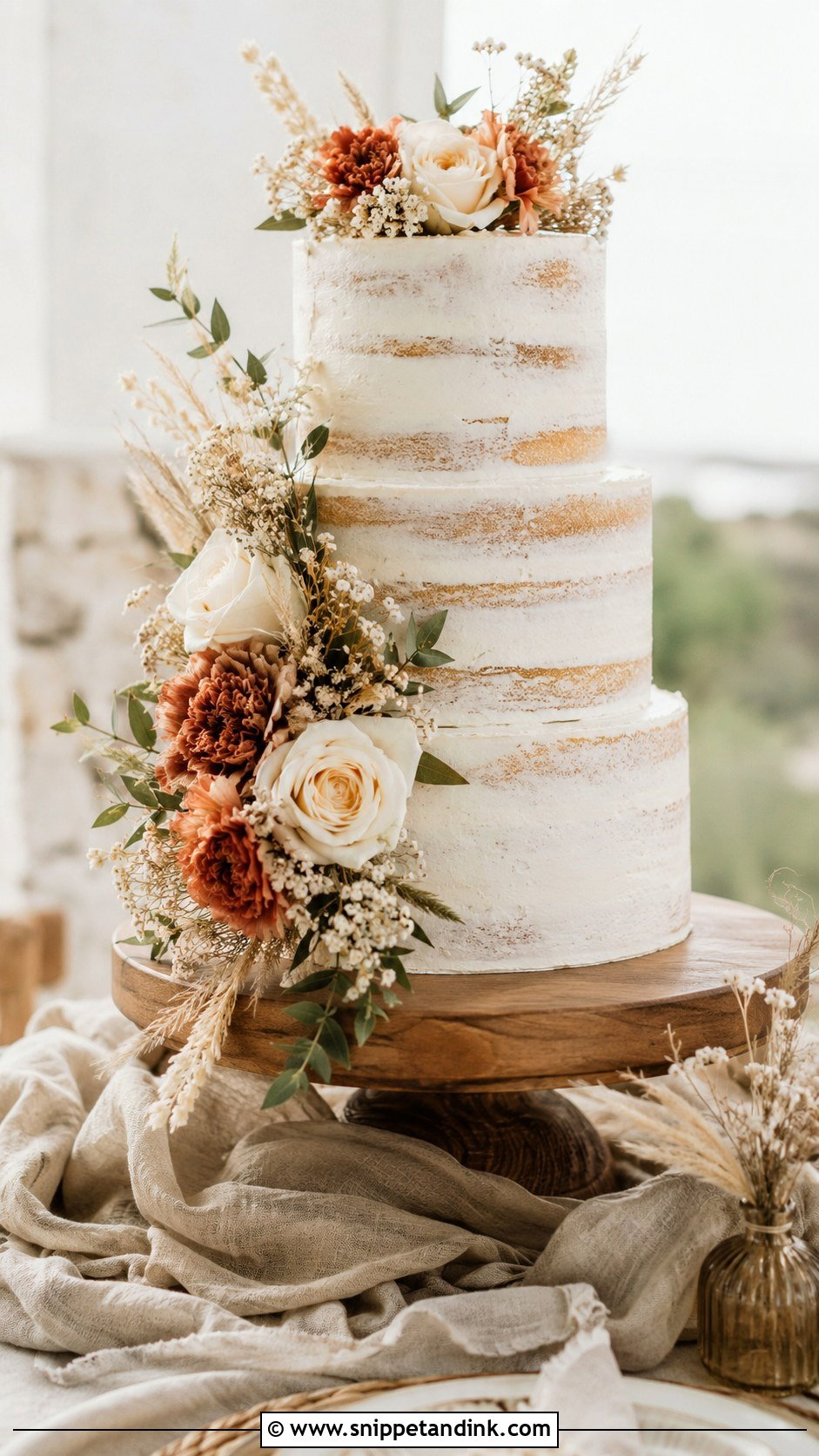
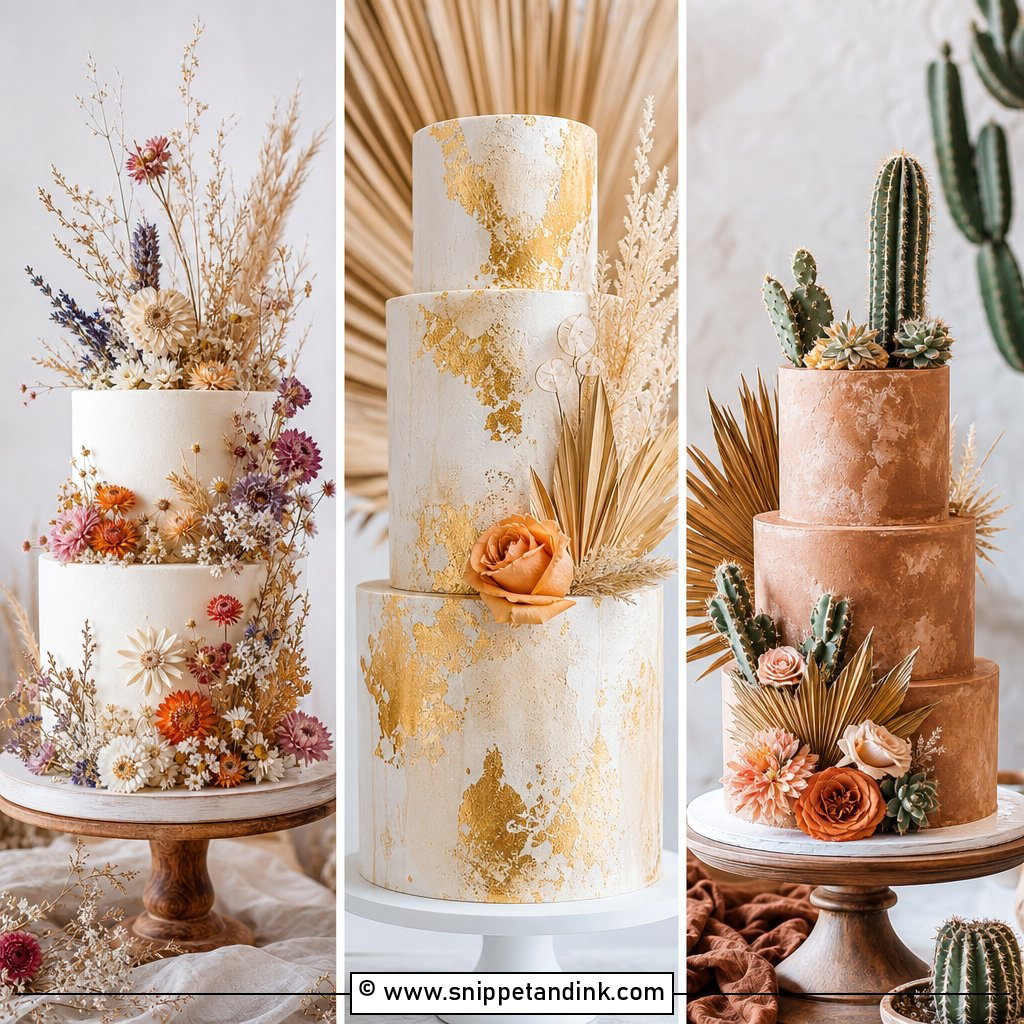
A boho cake leans on muted colors, dried textures and a loose arrangement, which suits outdoor weddings, desert palettes and relaxed receptions. Pampas-style accents, cream roses, beige florals, terracotta tones, and sage greenery can all go on, provided they’re clean and kept off the frosting. Dried grasses shed fine fibers, so I shake them out outdoors before arranging and set them on picks well back from where the knife will go. A semi-naked or lightly textured buttercream base finishes it. Keep the arrangement airy, because a heavy pile of dried material makes a cake look inedible.
The Hours Between Cake Delivery and the First Slice
Most bouquet cakes are dressed at the venue, not at the bakery. Fresh flowers travel separately in water and go on once the cake is set on its table, as late as the schedule allows. So your florist and baker need to know about each other weeks ahead: who brings the stems, who arrives first, and who has the floral tape and snips.
Heat is the other enemy. Buttercream softens noticeably in a warm room, and fresh petals drop sooner in direct sun. Put the cake table away from windows, heaters and the stage lights, and at a summer outdoor reception, ask whether the cake can wait indoors until shortly before guests sit down.
When a bloom wilts or a cluster slips
A drooping rose can be pulled and replaced in seconds if the florist left a few spare stems with the coordinator, so ask for them. A cluster that has slid usually means the pick wasn’t set deep enough; I press it back into the same hole rather than a new one, which would leave a second mark. A small smudge in the frosting disappears under one extra bloom, which is another reason to keep spares on hand.
Clearing the cake before it’s cut
Every fresh stem and every pick comes off before the knife goes in, and whoever does it should know where each one was placed. Sugar flowers lift away whole and can go home in a box lined with tissue paper.
Echoing the Bouquet Without Copying It Stem for Stem
A bouquet cake works when it feels like part of the floral plan rather than a dessert that happens to have flowers on it. Begin with the bouquet you’ll actually carry, then decide how much of it the cake needs to echo; often two flowers and one color are plenty. Keep the base simple when the blooms are bold, and add texture when they’re small. Most of all, settle who is responsible for flower safety before the wedding, because that one conversation heads off nearly every problem I see at the cake table.
You'll Like These Ideas:




Leave a Reply