
Pink and gold is a palette I enjoy designing because the two colors pull in opposite directions. Pink softens a cake; gold wants attention. The job is to let pink carry the surface and use gold as punctuation, a band here and a few flakes of leaf there, so the tiers still read as cake rather than as a trophy. Below are twenty designs I’d happily build, from blush buttercream with roses to a crystal geode tier, each with a note on what it asks of your baker and your venue.
Edible Gold, Luster Dust and What Shouldn’t Touch Your Cake
Not every gold product sold for cake decorating is food. Edible gold leaf is high-karat gold beaten paper thin, and it’s safe to eat in the tiny amounts used on a cake. Many gold luster dusts and sprays, though, are labeled “non-toxic” or “for decoration only,” which means they’re meant for pieces that get removed before serving, like a topper or a sugar flower wired onto a pick. If a design has gold across a tier that guests will eat, ask your baker directly which product is on it.
Leaf or paint?
They look different, and that’s worth knowing before you fall for a photo. Gold leaf is mirror-bright and goes on in flakes or sheets; I lay it on fondant with a touch of water or piping gel, and on buttercream only once the tier is cold. Painted gold is edible luster mixed with a little clear alcohol, so it dries quickly and gives me fine control for lines, piping highlights and drips. It’s softer and slightly satiny. Leaf costs more and takes longer, which is why a fully gilded tier is one of the pricier requests.
Three questions settle most of this at a tasting:
- Is every gold element on the cake edible, or will some pieces be lifted off before cutting?
- Which tiers get leaf and which get paint?
- Will the gold go on at the bakery or be finished at the venue after delivery?
1. Blush Pink And Gold Wedding Cake
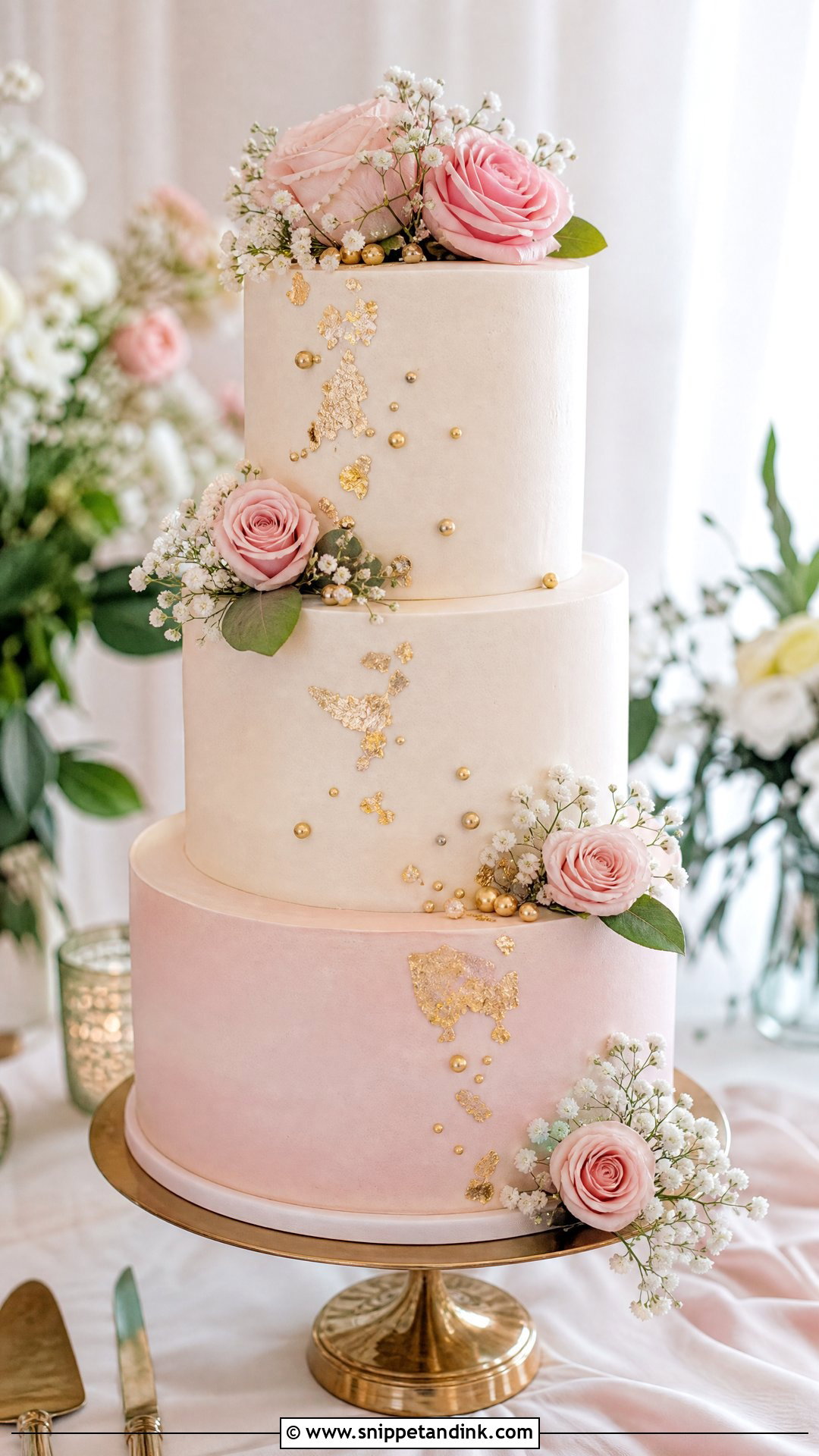
Blush with gold is the classic version, and the one I steer first-timers toward. The pink base reads warm under reception lighting, while gold leaf or piped gold gives the tier edges definition. I build it as two or three tiers in smooth buttercream or fondant, then add pale roses, a little white filler and a scattering of gold dragées. One thing I always adjust: blush mixed too lightly can look plain ivory under yellow uplighting, so I tint it a shade deeper than the swatch. A white or gold stand with a few low candles is all the styling it needs.
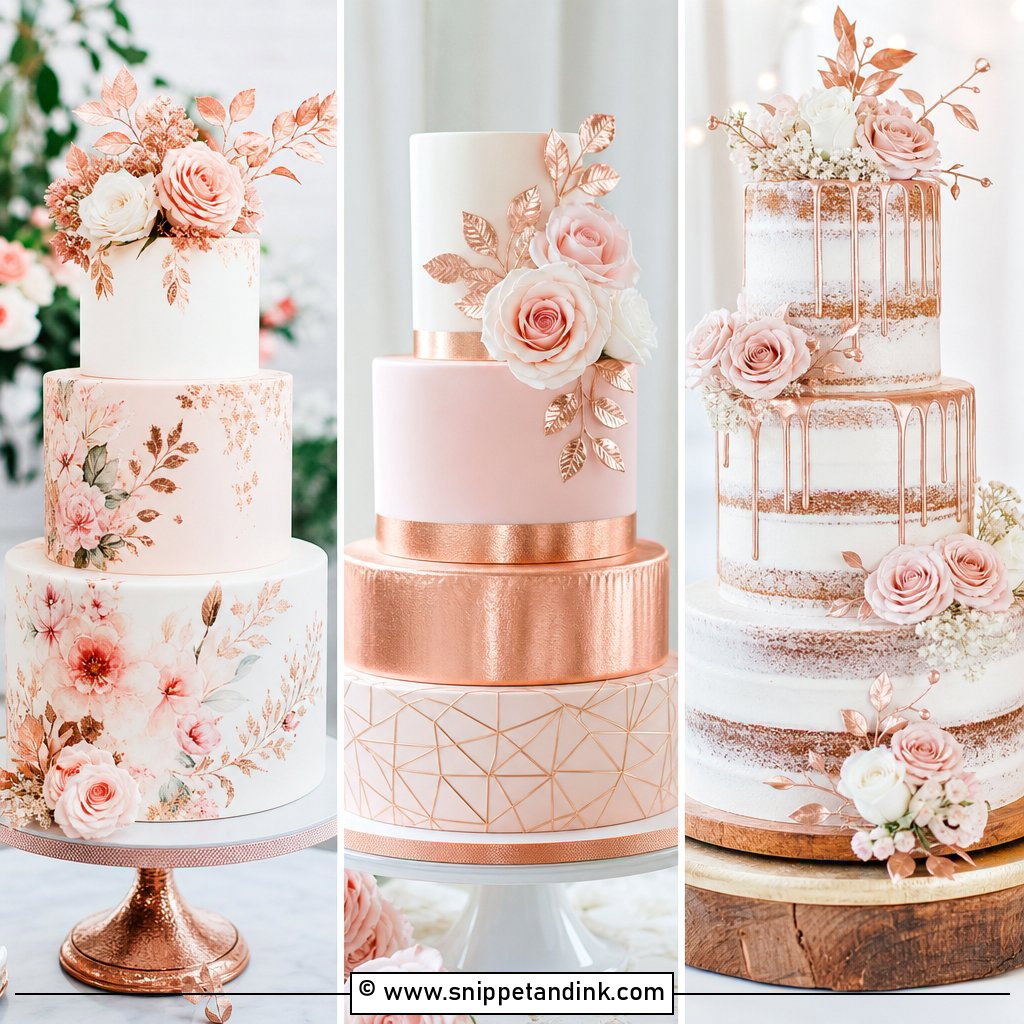
2. Rose Gold Wedding Cake
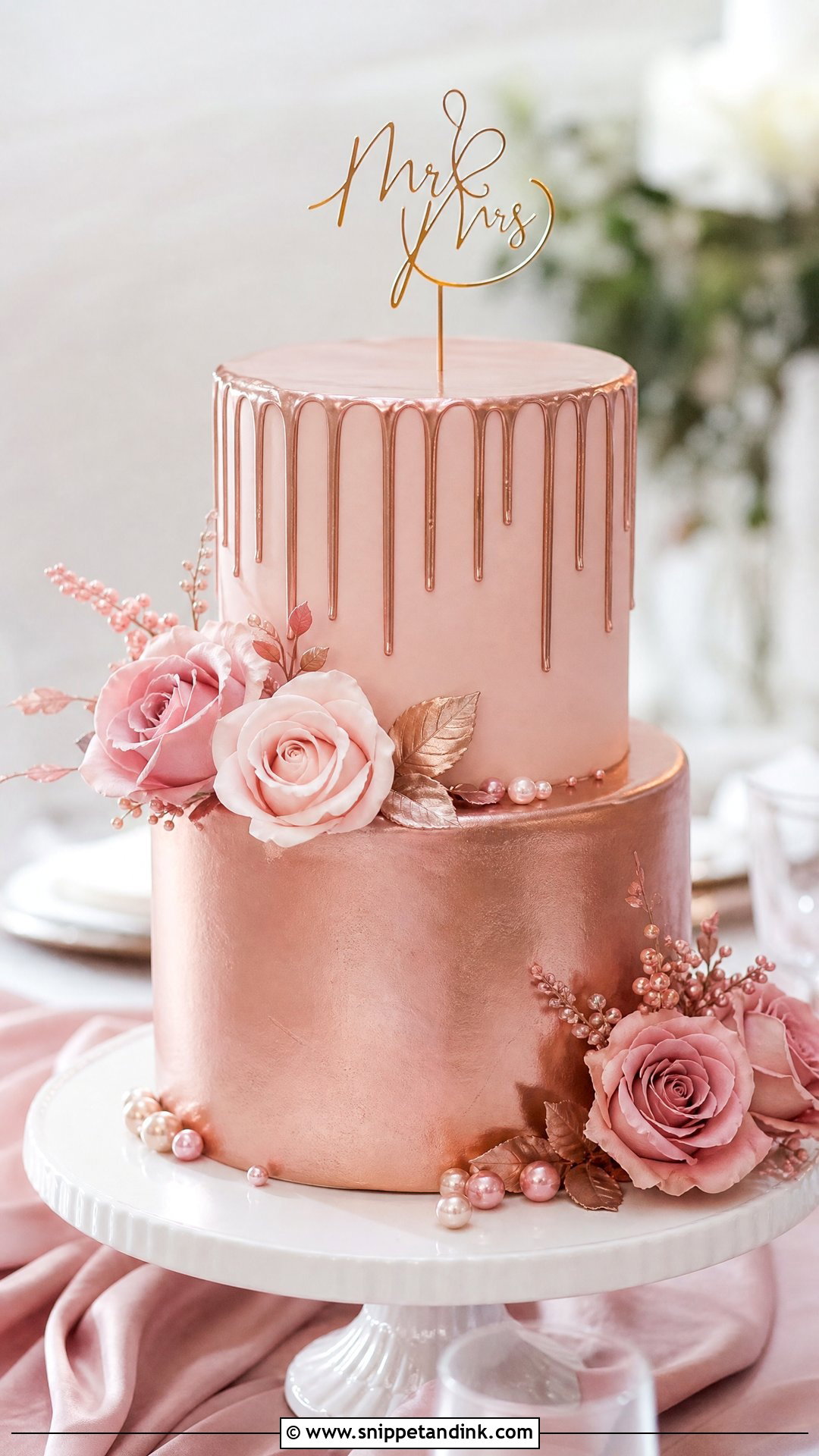
A rose gold wedding cake warms the palette and drops the brassy yellow of true gold. Rose gold rarely comes from a single jar, though. I usually blend a gold luster with a pink or copper one until it sits right beside the flowers, and I test it on a scrap of the actual fondant, because the base color changes how the metallic reads. My favorite layout is a tall two-tier with one rose gold tier over one blush tier. Sugar roses or a slim topper will do; the metallic tier is already the feature.
3. Pink And Gold Drip Wedding Cake
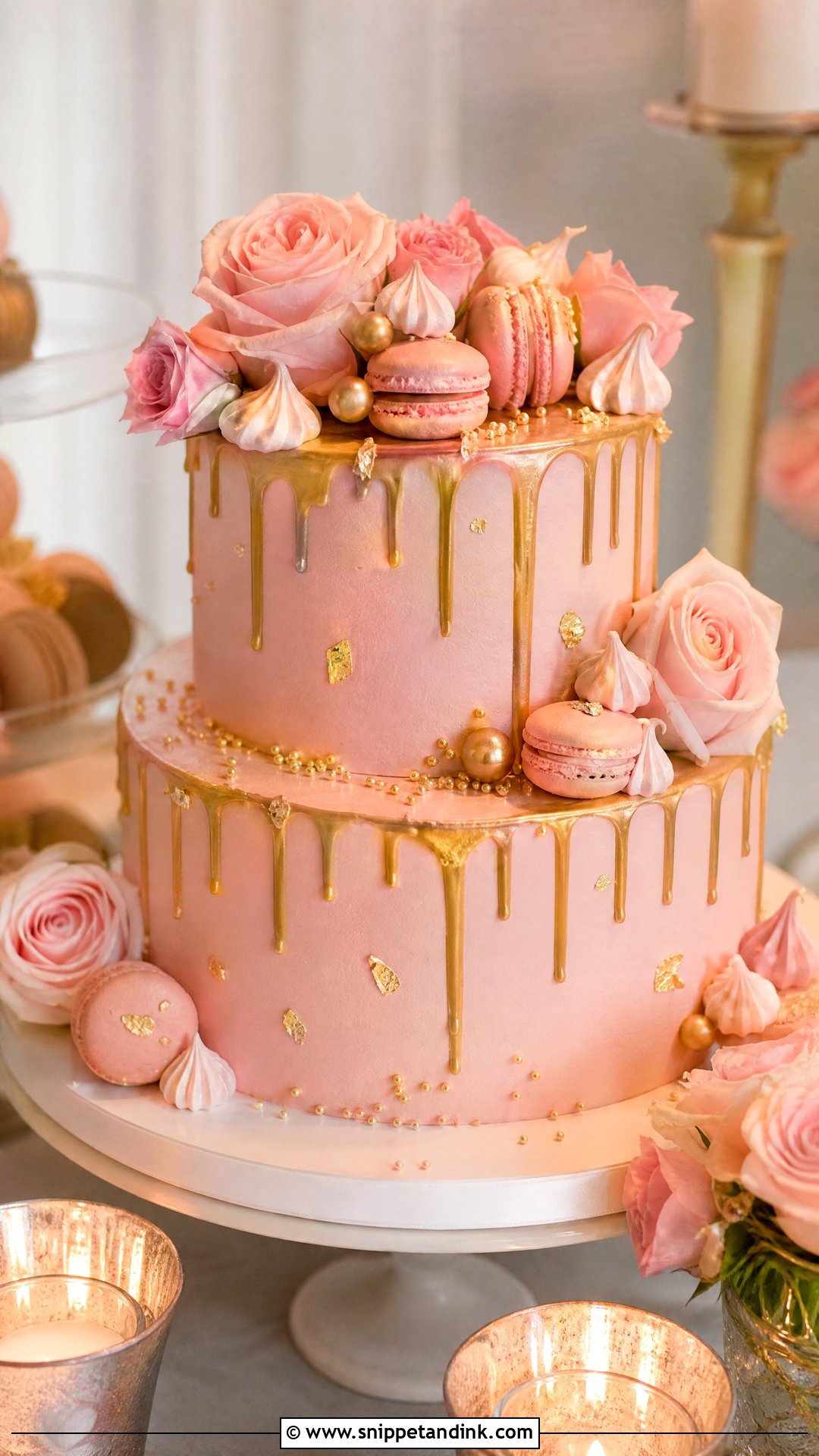
Drips give this palette movement, and they’re also the design I’m most careful with in a warm room. I pour white chocolate ganache onto a chilled blush buttercream tier, let it set, and then paint the drips with edible gold. Thin, controlled drips look deliberate. Heavy ones keep creeping and pool at the base if the cake sits near a sunny window. Roses, macarons or meringues on top add height, and a pink sponge with raspberry filling inside is a nice echo of the outside, with enough tartness to cut the ganache.
4. Pink And Gold Marble Wedding Cake
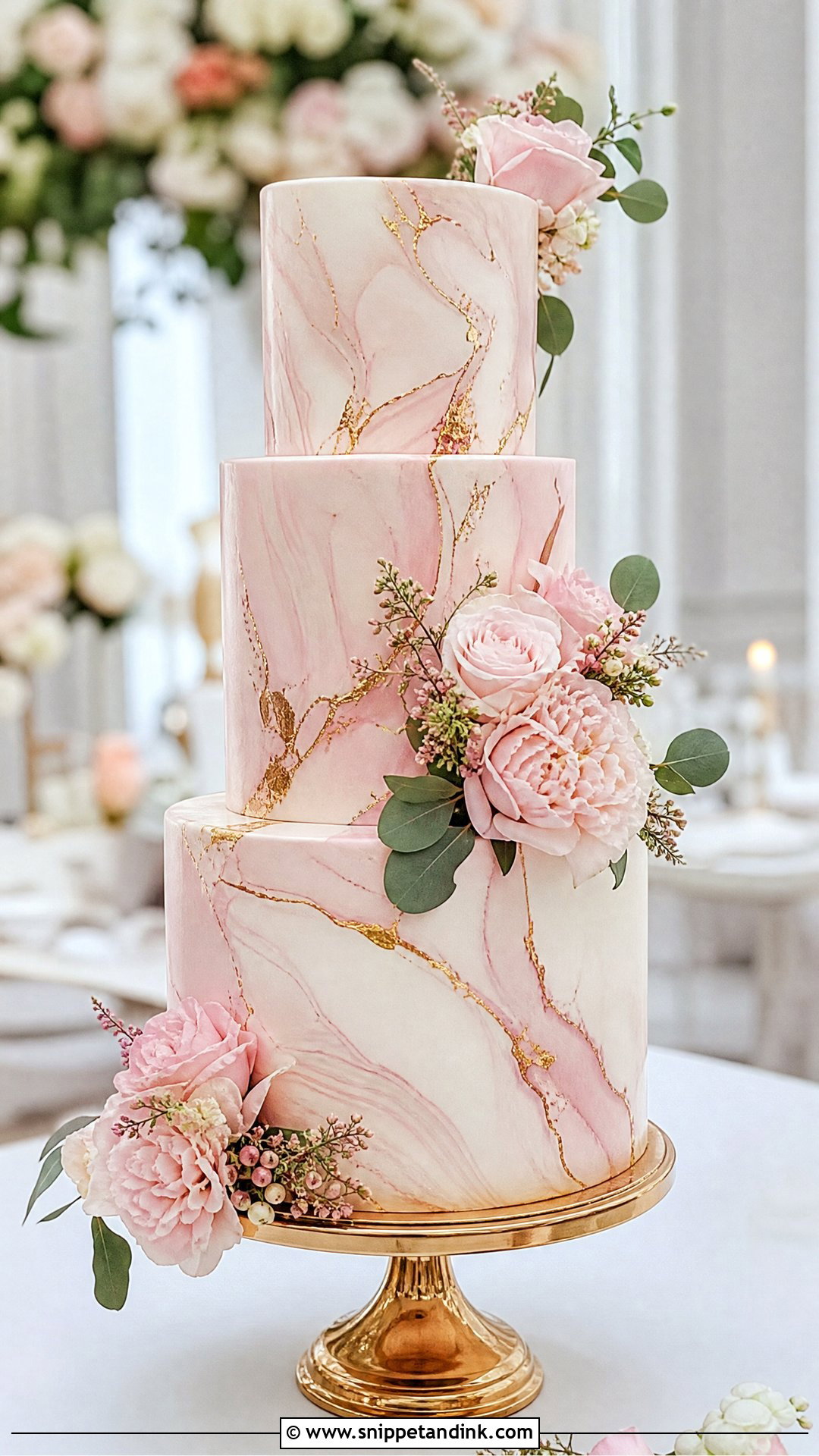
Marble is easier to get crisp on fondant than on buttercream. I knead blush and ivory fondant together only partway, roll it so the veins stretch, then trace a few of those veins with gold leaf. Tall tiers suit it, since the pattern has room to travel instead of looking like smudges. Buttercream marbling is possible but softer, so if sharp veining matters to you, say so at the tasting. Keep flowers to the base or one gap between tiers; a big cascade hides exactly what you’re paying for.
5. Pink And Gold Floral Wedding Cake
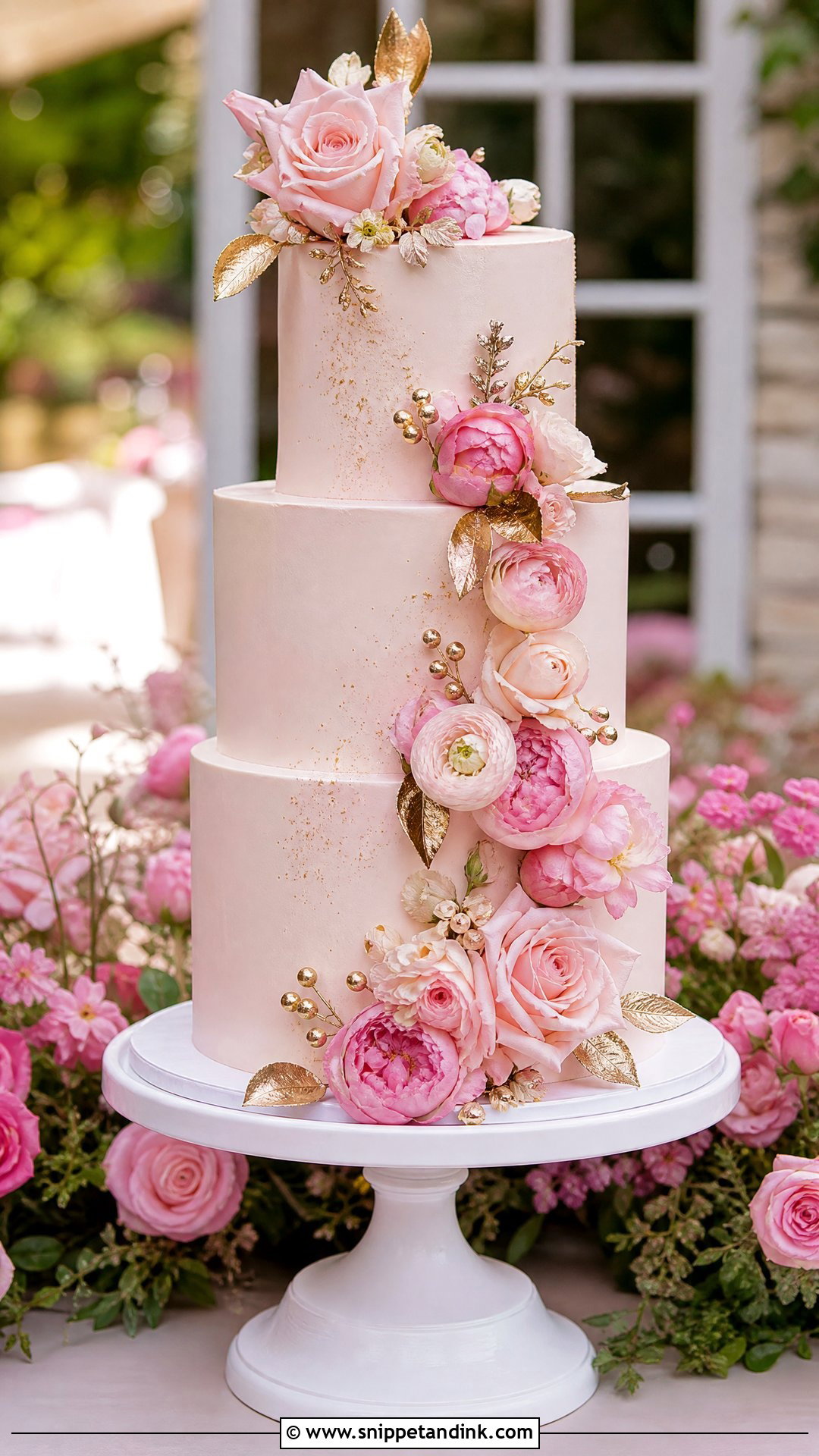
When the florist is doing the heavy lifting around the room, I keep the cake itself quiet, ivory or pale blush, and let deeper pinks come from the flowers. Roses, peonies and ranunculus all sit well on a cake, but fresh stems must be wrapped or set into flower picks so sap and any spray residue never touch the icing. A few gold leaves or berries tie it back to the palette, and anything that isn’t edible comes off before cutting. Ask your florist and baker to speak directly. It’s the easiest way to get the cake flowers matching the bouquet and the ceremony arch.
6. Pink And Gold Buttercream Wedding Cake
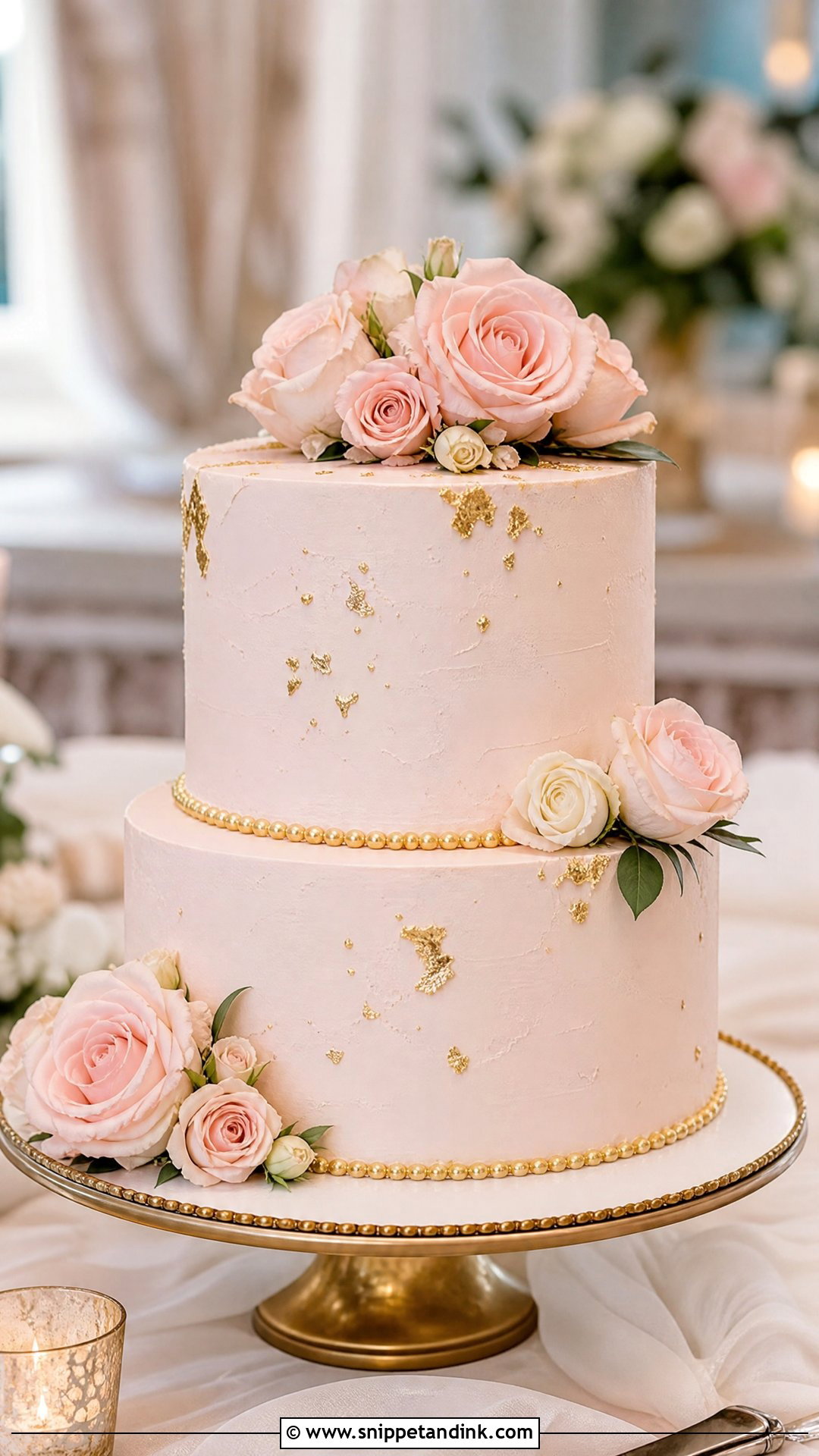
Buttercream is softer and less formal than fondant, and most guests prefer the taste. Blush takes well in it, though the type matters: American buttercream crusts and looks slightly matte, while Swiss meringue stays silky with a faint sheen. Gold leaf only behaves once the cake is chilled and firm. Press it onto soft buttercream and it wrinkles. You can go rustic with a palette-knife texture or crisp with sharp edges, and flavors like vanilla bean, almond, lemon or raspberry suit the light look of the outside.
7. Pink And Gold Fondant Wedding Cake
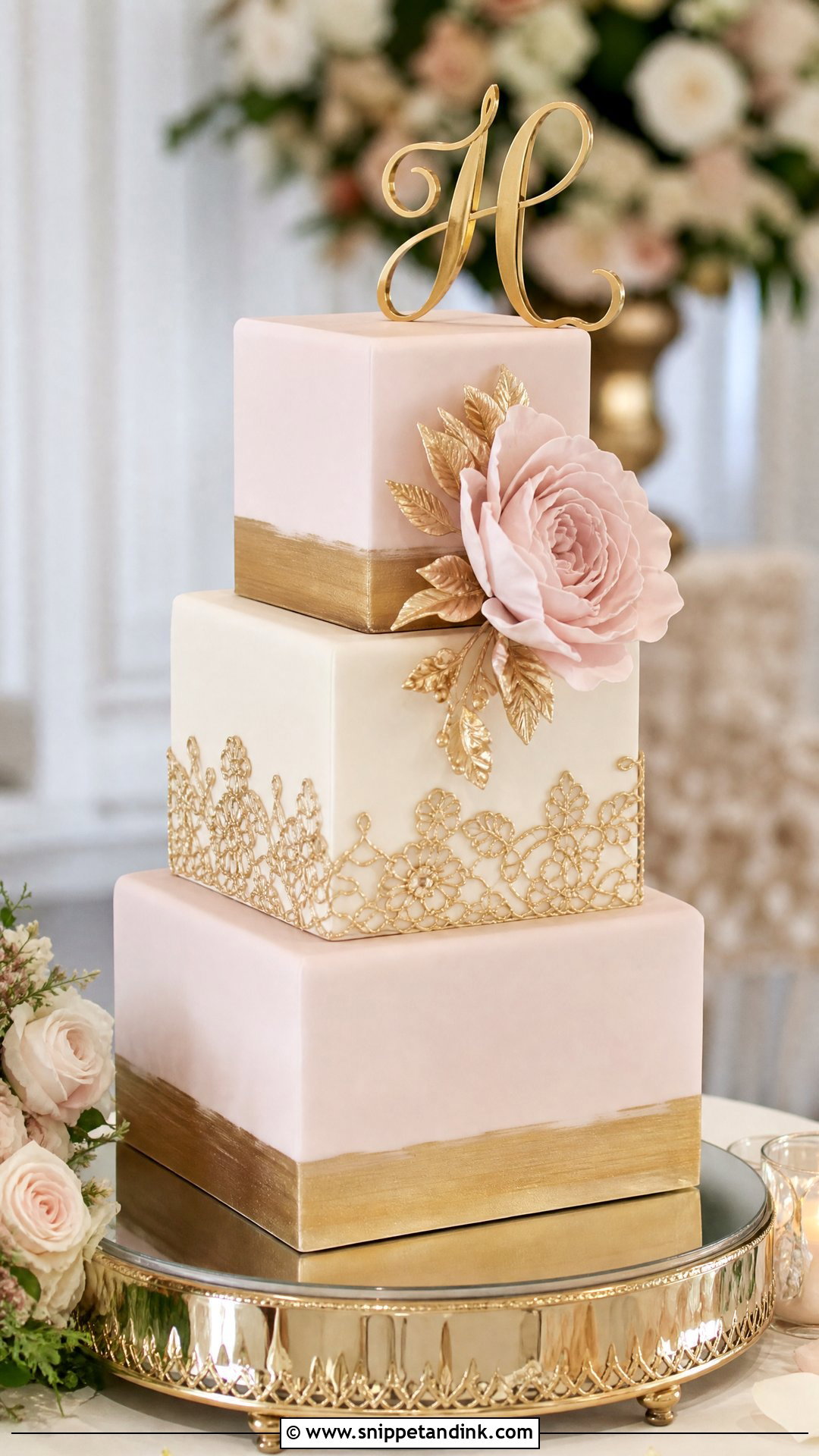
A pink and gold fondant wedding cake is where metallic detail looks most precise. The smooth, sharp-edged surface keeps gold bands, stenciled lace or a fully gilded tier crisp, and fondant seals the sponge so it stays moist through a long day. The trade-off is texture; plenty of guests peel it off. I’d give this cake one strong idea, a single large sugar flower or a monogram topper, and let the finish handle the rest.
8. Pink And Gold Tiered Wedding Cake
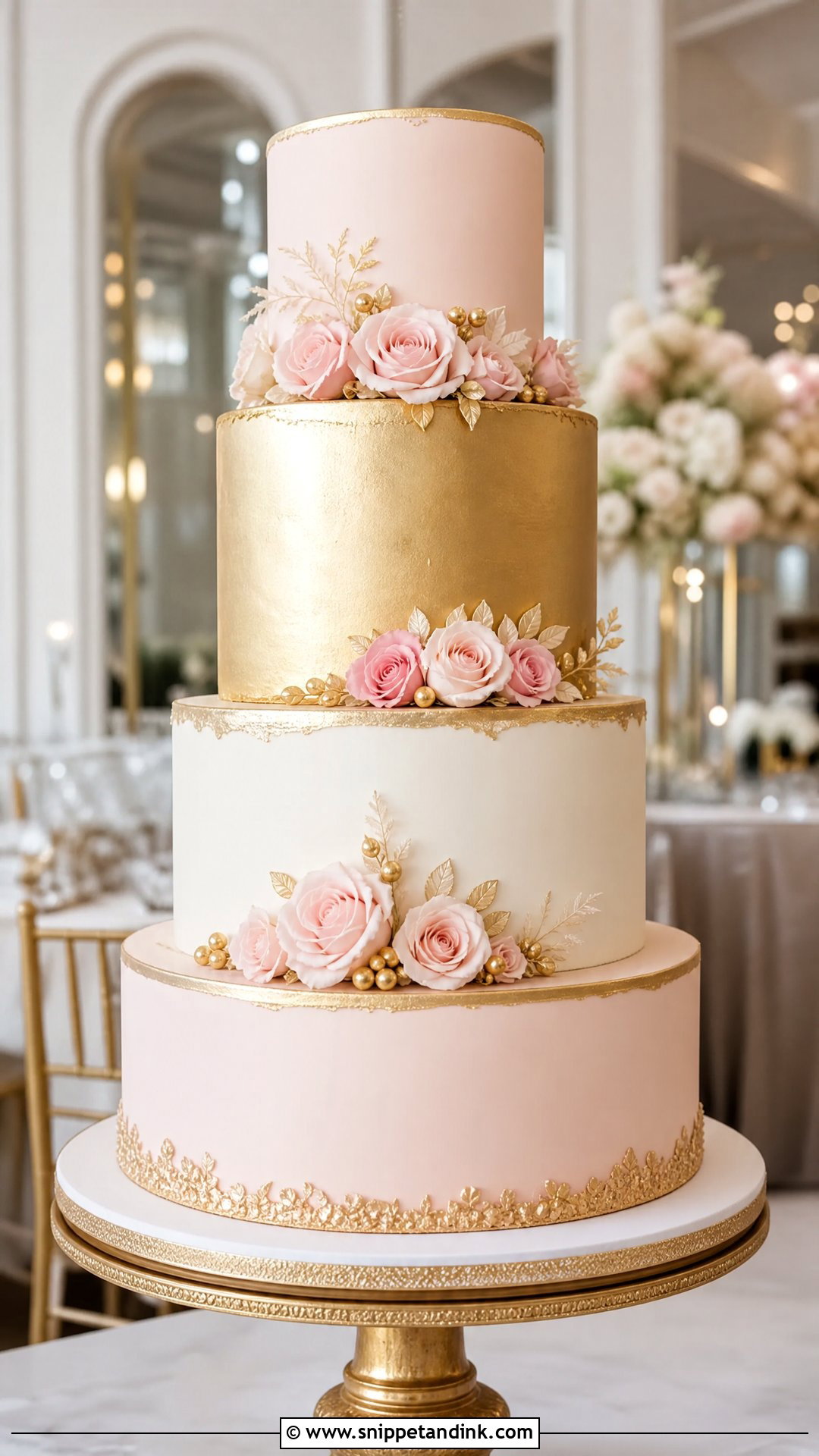
Tall tiers give you room to vary finishes, with one blush, one ivory and one gold-accented. The risk is too much metal. On a three or four tier cake I limit full gold to one tier at most, because a lot of reflective surface photographs as yellow rather than gold. Structurally, each tier above the base sits on its own board with dowels underneath, and very tall cakes are usually stacked at the venue. For a big guest list it’s the practical choice, and flowers tucked between tiers hide the seams.
9. Pink And Gold Wedding Cake With Roses
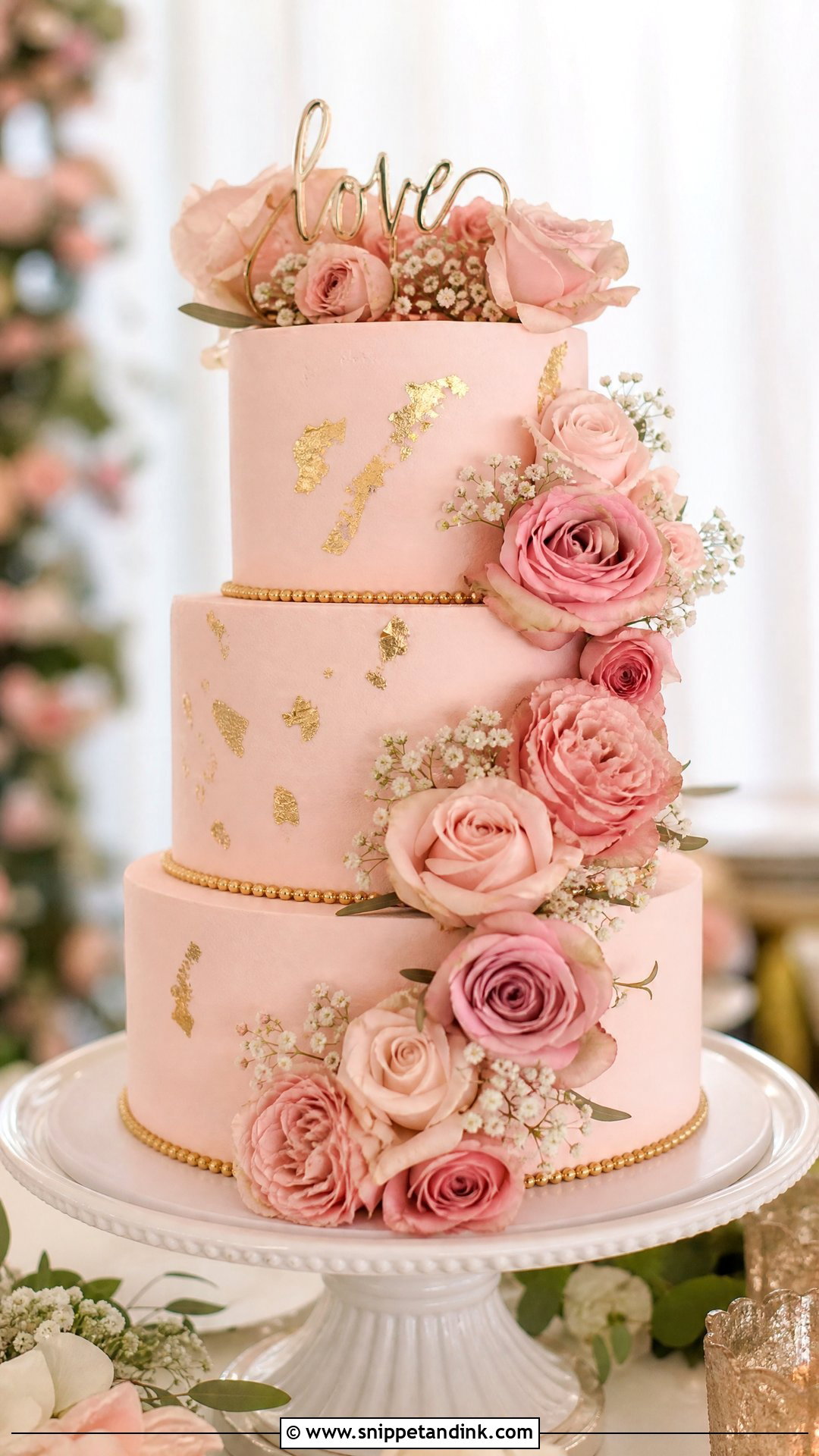
Roses are the most forgiving flower on a cake, and they suit fondant, buttercream and semi-naked finishes alike. Blush roses stay soft; deeper pinks give more contrast against gold foil or a painted edge. For a classic look I place roses in a diagonal cascade from the top tier to the base. If you’d rather see more cake, one cluster on top and one near the bottom is cleaner. With fresh roses I strip thorns and lower leaves and wrap each stem before it goes anywhere near the icing.
10. Pink And Gold Wedding Cake With Sugar Flowers
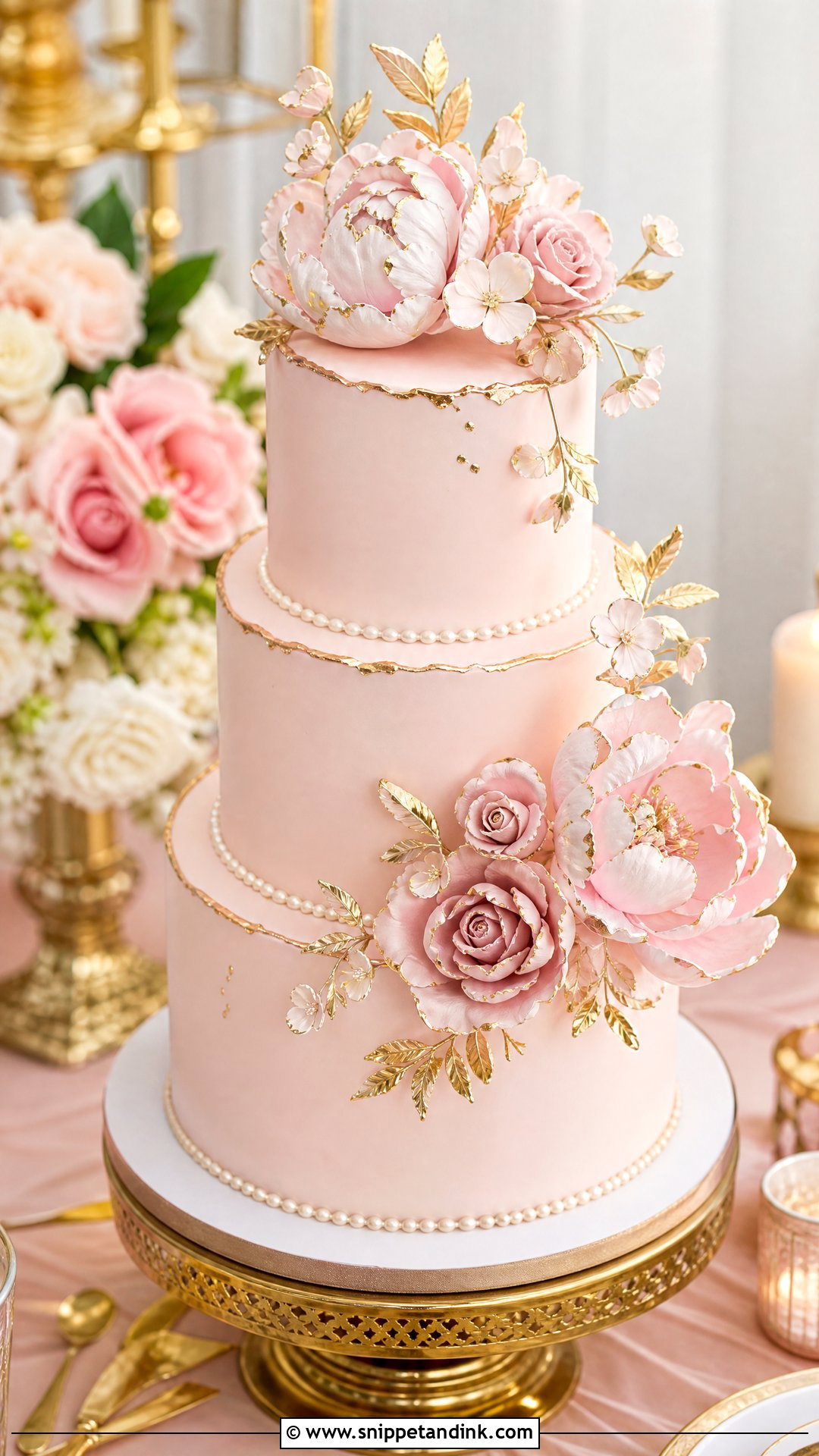
A pink and gold wedding cake with sugar flowers solves the wilting problem, because sugar petals don’t droop in a hot room. They do take time. A large peony is built petal by petal and left to dry, so sugar flowers are made well ahead and add real labor to the quote. Gold-tipped edges look rich on dusty rose petals. Humidity is their weak point: in a damp marquee they soften, so I keep them boxed until setup. They suit formal fondant cakes that guests will see from every side.
11. Pink And Gold Pearl Wedding Cake
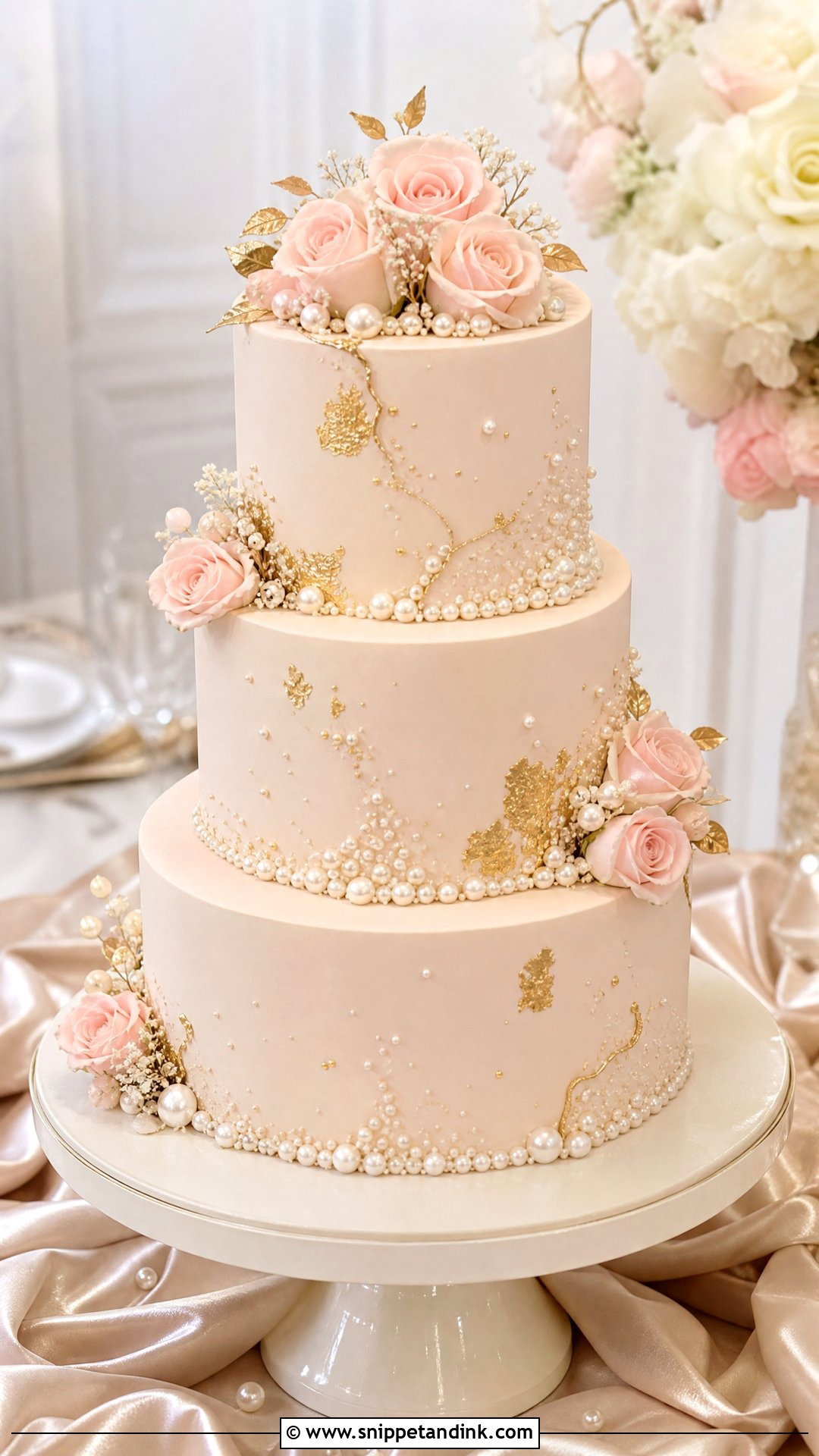
Pearls give the palette a vintage note without turning fussy. I use edible pearl beads as a border at the base of each tier, in loose clusters, or pressed in neat rows. On blush, white pearls show up gently, while gold-dusted ones almost vanish, so I mix the two. Hard sugar pearls are crunchy and some guests dislike biting into them, which is why I keep them to borders rather than covering a whole tier. They sit naturally beside satin gowns and pearl earrings.
12. Pink And Gold Lace Wedding Cake
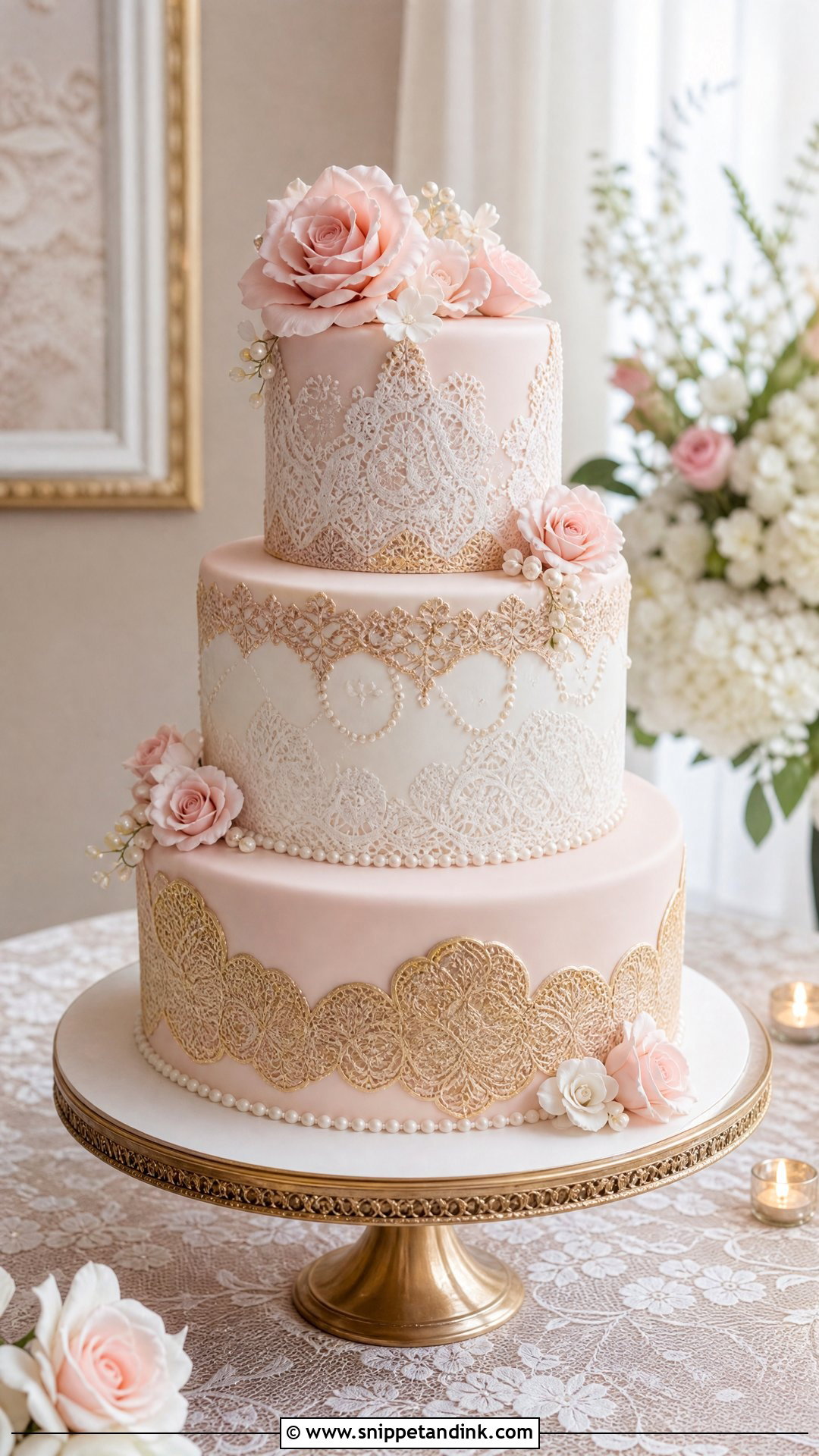
Lace on a cake can be edible lace set in a silicone mat, piped royal icing, or fondant appliqué, and each looks different up close. Edible lace is the most delicate and drapes well, but it goes soft in humidity. Piped royal icing is the most precise and the slowest to make. I keep lace to a single tier, alongside a smooth tier and a floral one, so the pattern has space. Bring a photo of your dress lace to the tasting. A motif borrowed from the gown is the detail brides notice first when they see the finished cake.
13. Pink And Gold Ruffle Wedding Cake
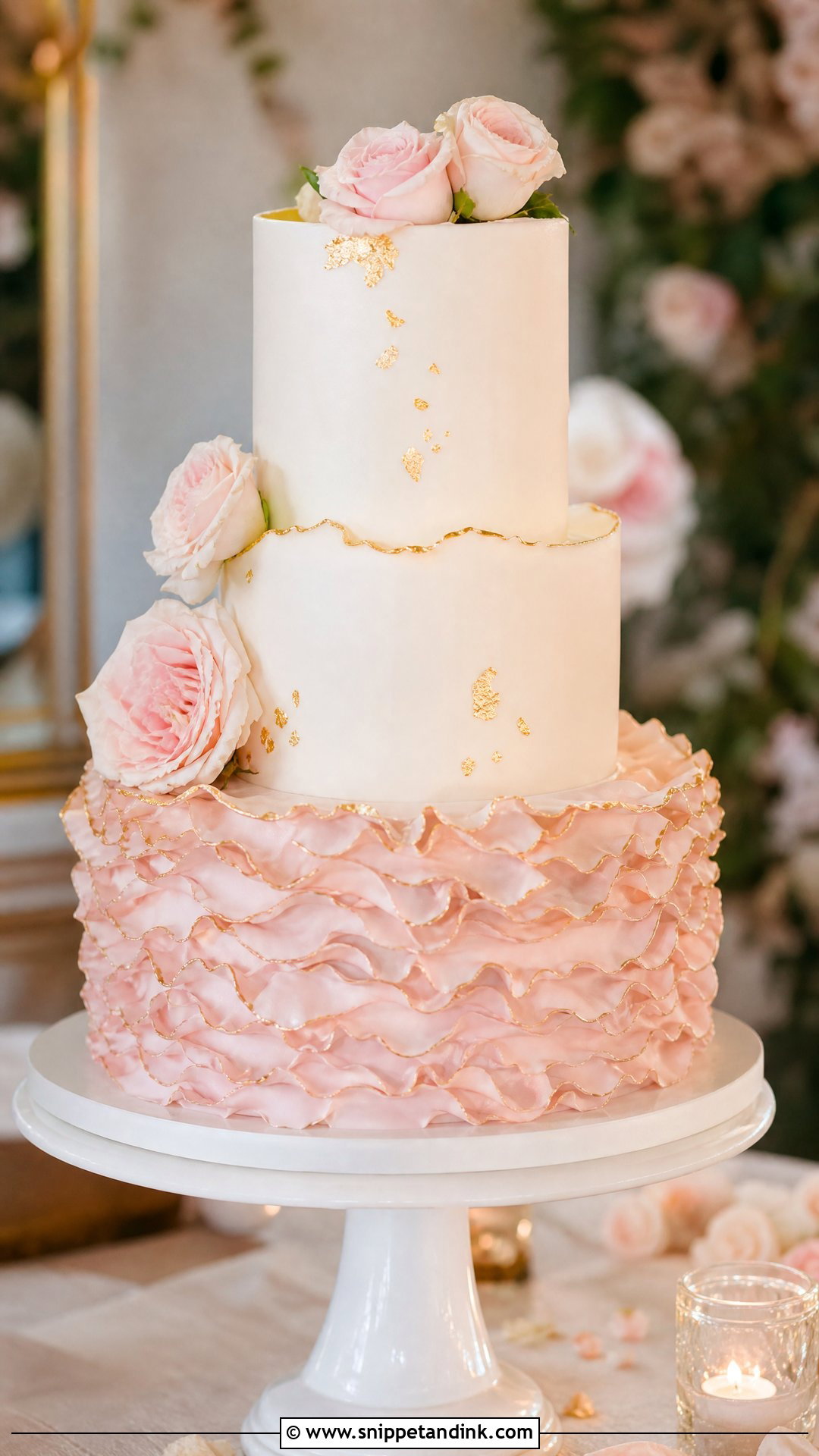
Ruffles add height and texture with very little else needed. Fondant ruffles hold their shape best. Wafer paper ruffles are lighter and slightly translucent, but they react to moisture, so they can’t sit against buttercream for long. Piped buttercream ruffles soften in heat. My preferred layout is one fully ruffled bottom tier under smooth tiers, with gold brushed along a few ruffle edges and one floral cluster on top.
14. Pink And Gold Ombre Wedding Cake
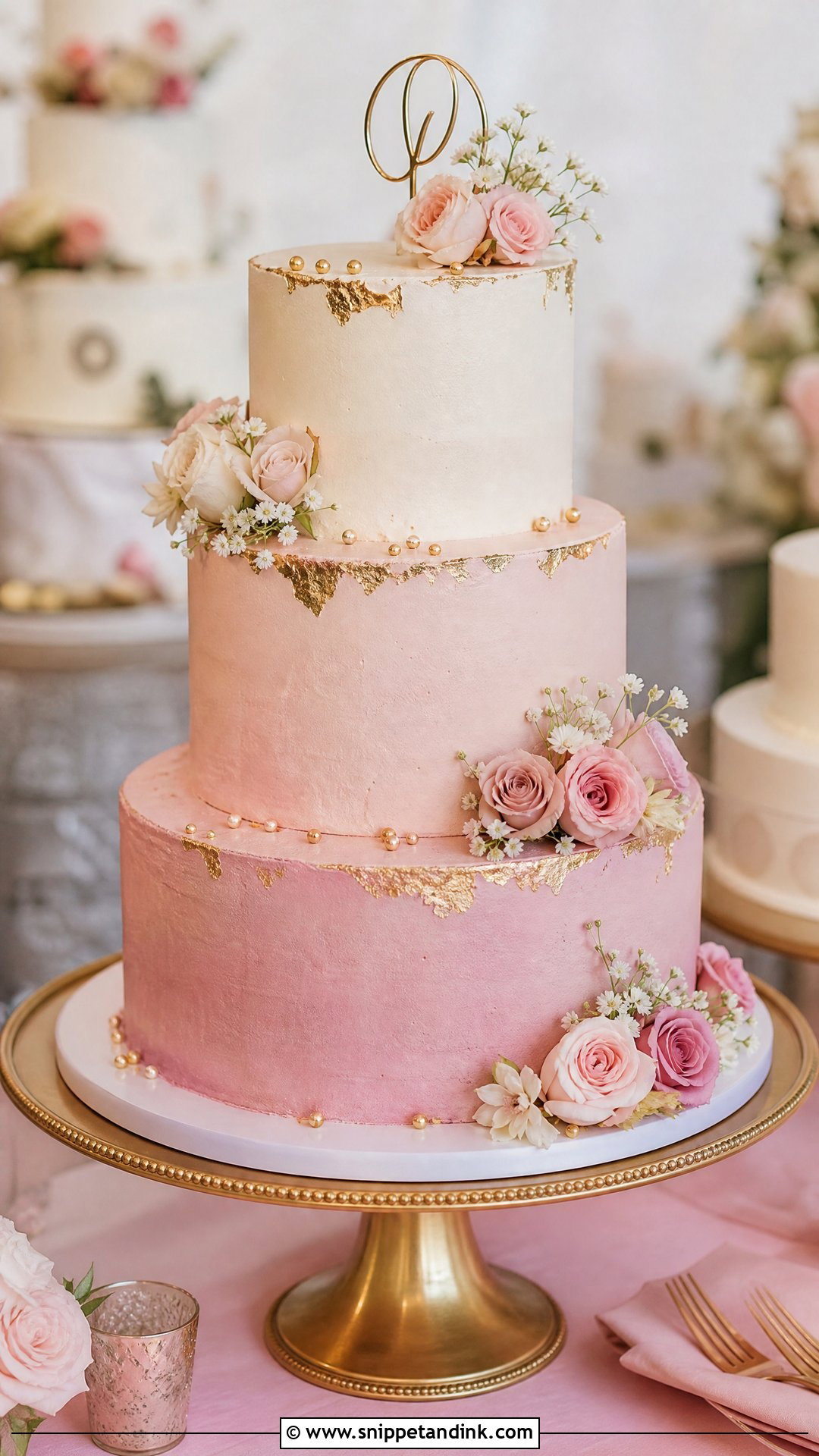
Ombre is a buttercream job for me, fading from ivory through blush to dusty rose down the tiers. The trick is mixing every shade from one base batch and adding color in steps, so the fade looks related instead of like three unrelated pinks. Gold leaf goes lightly along the top edges, and decoration stays minimal or the gradient gets lost. It’s a clever pick when bridesmaids wear several shades of pink, since the cake can echo that range.
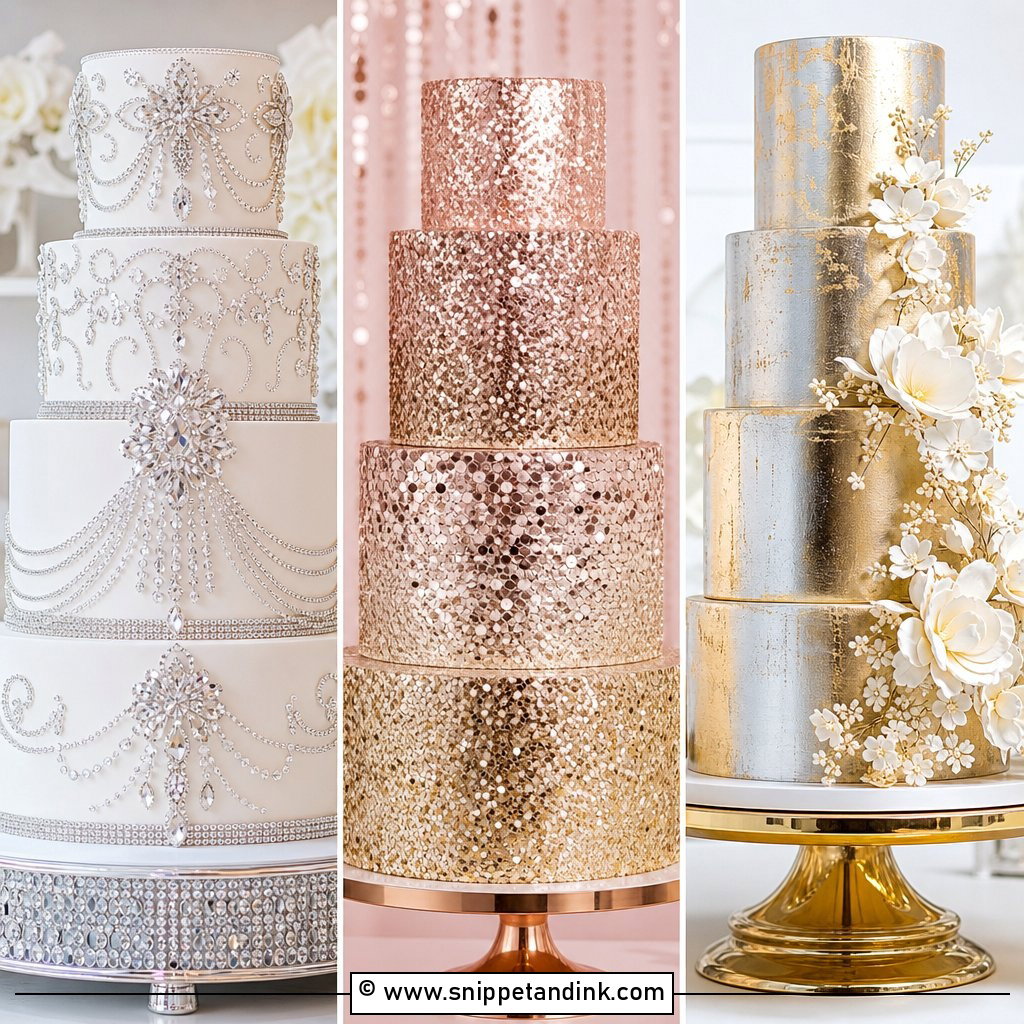

15. Pink And Gold Geode Wedding Cake
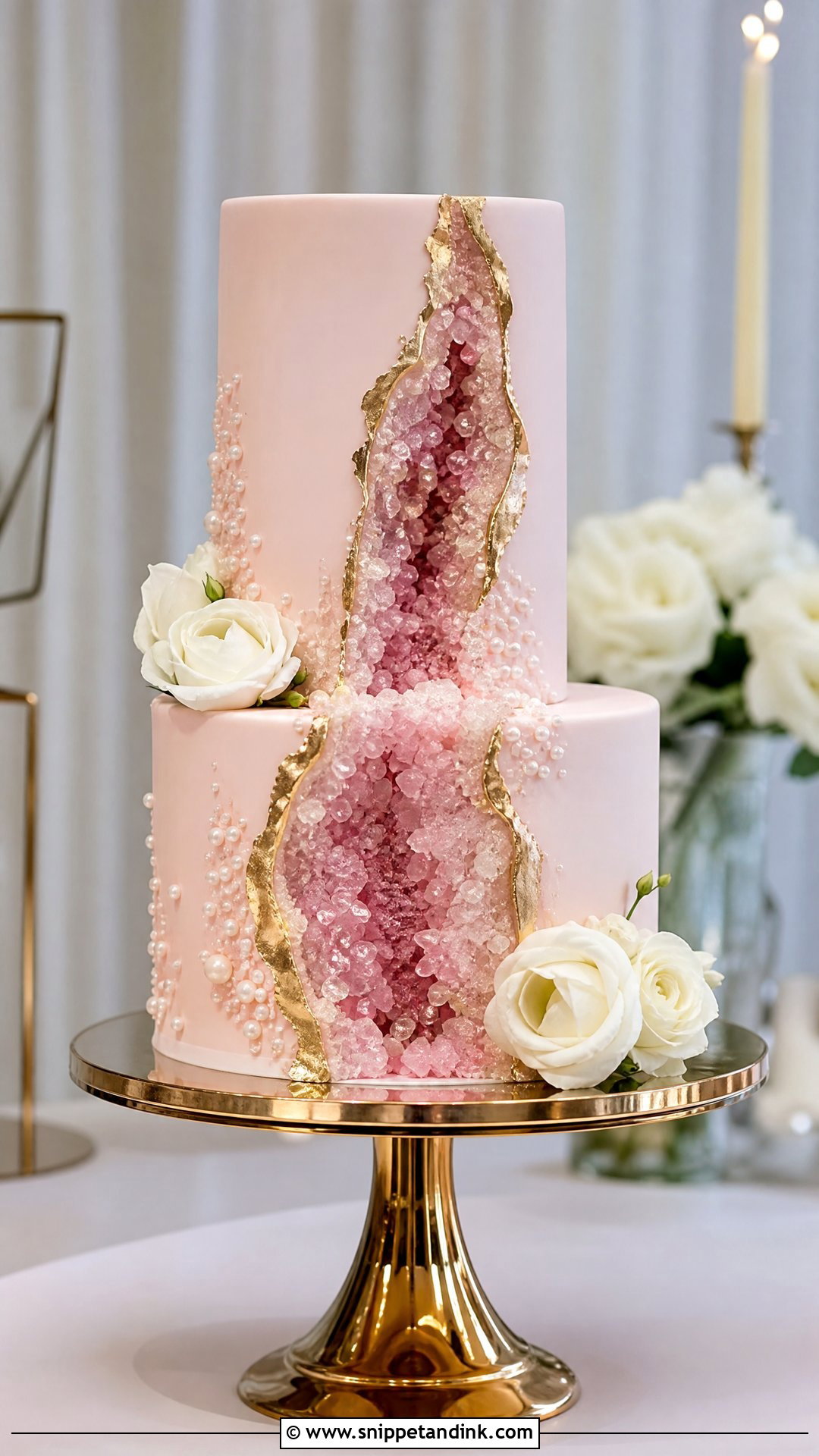
The geode tier is the boldest design here. The crystals are usually rock candy or isomalt set into a carved channel, then framed with gold paint so the edge looks like split stone. I build it on a white or pale pink cake so the crystal section is the clear focus. Couples should know that isomalt crystals are lifted out before cutting and rock candy is edible but very hard on teeth. Skip extra flowers; the geode is already dramatic enough.
16. Pink And Gold Square Wedding Cake
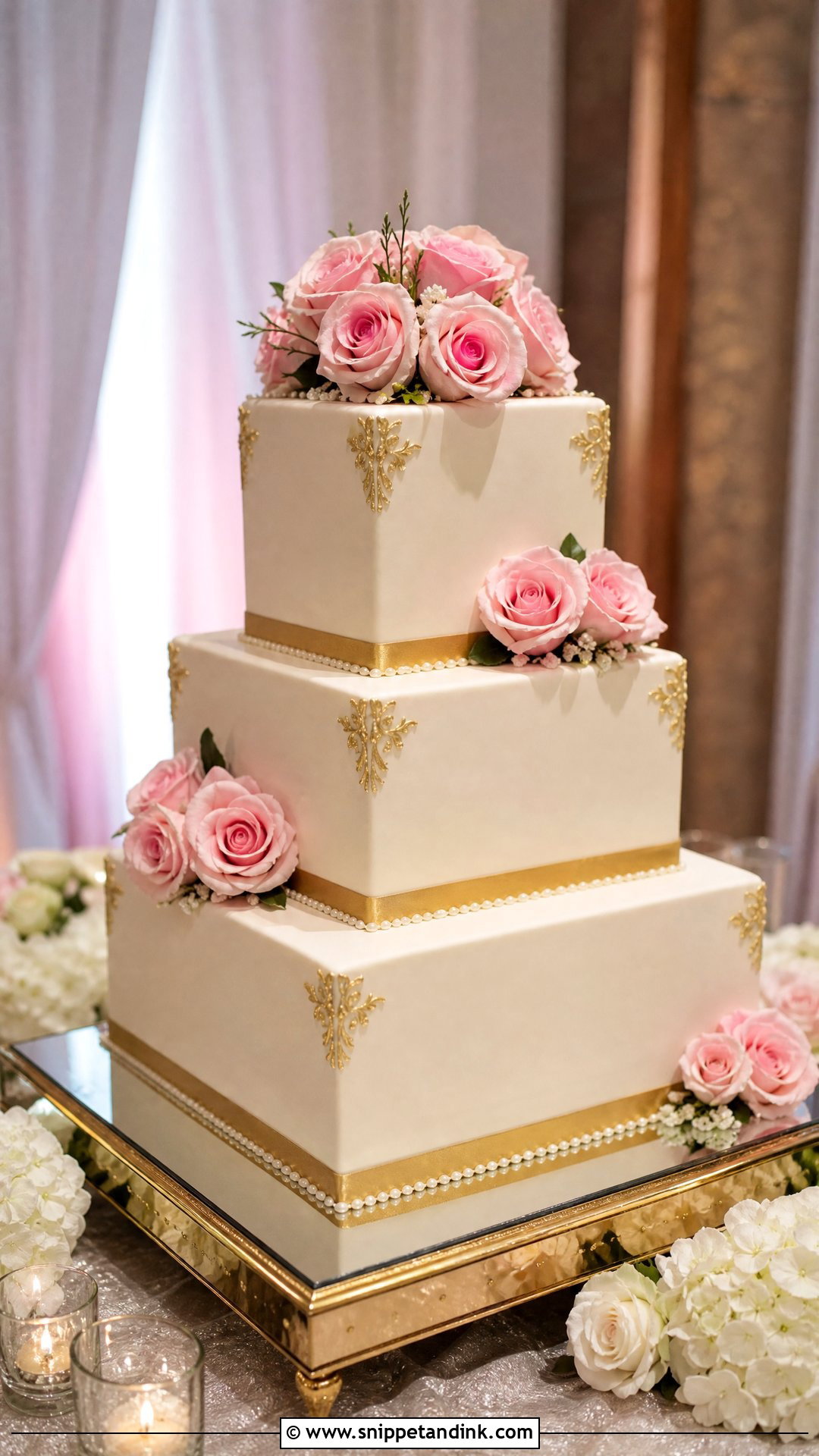
Square tiers look architectural, and they’re harder to make than round ones. Getting four clean corners in fondant takes practice, and buttercream corners rarely stay razor sharp all evening. A pale pink base with gold ribbon bands or painted corners shows off the shape, with flowers on one corner only. There’s a practical bonus too: a square tier serves more slices than a round of the same width. A mirrored or gold stand suits the geometry.
17. Pink And Gold Minimalist Wedding Cake
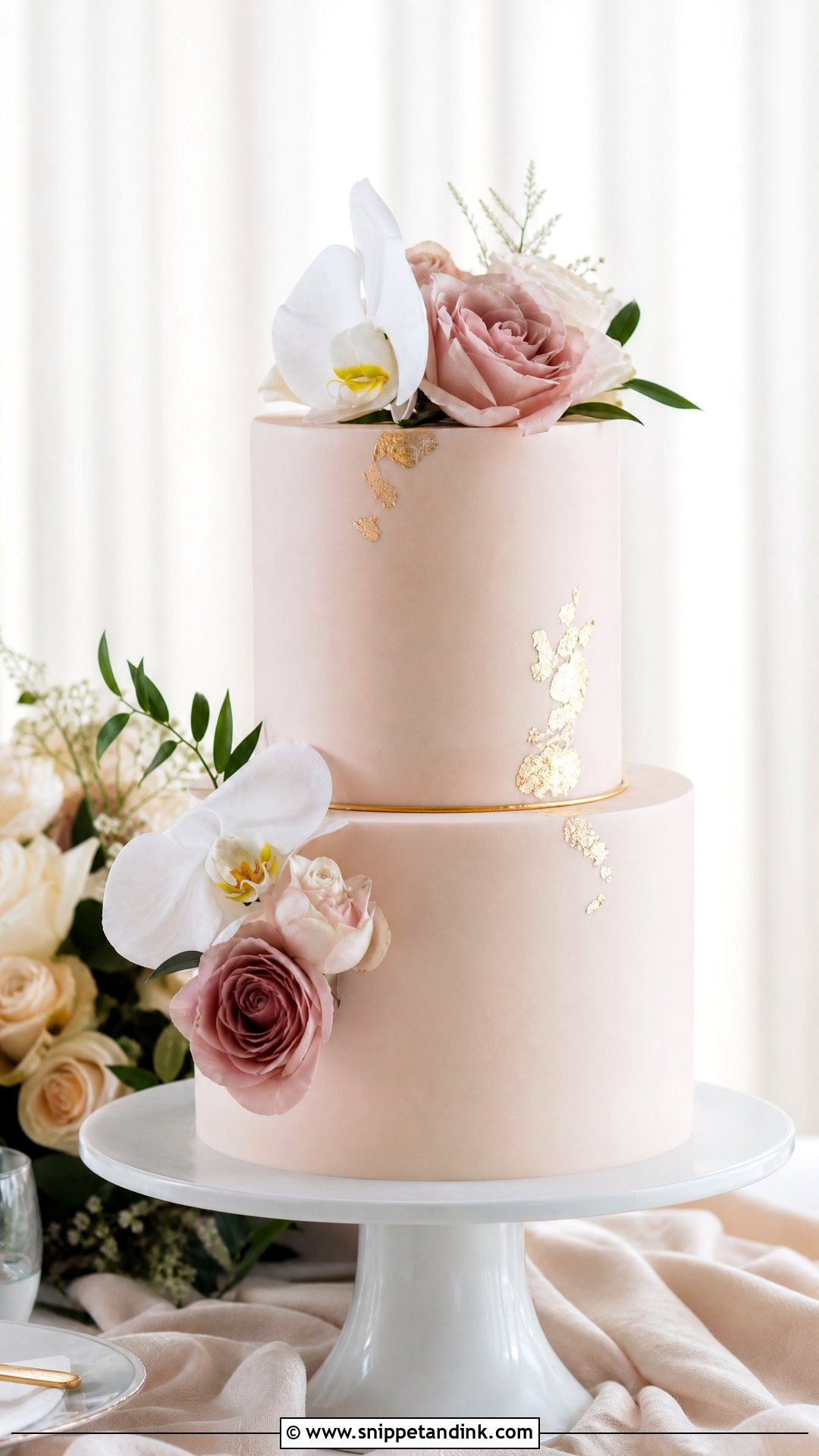
Minimalist cakes leave nowhere to hide. A smooth blush tier with one thin gold line, a small patch of leaf and a few placed stems needs perfectly straight sides, because any bulge shows. I build these as two tiers with a matte finish and keep gold in small doses rather than all-over shine. Bright daylight venues show the clean surfaces at their best.
18. Pink And Gold Vintage Wedding Cake
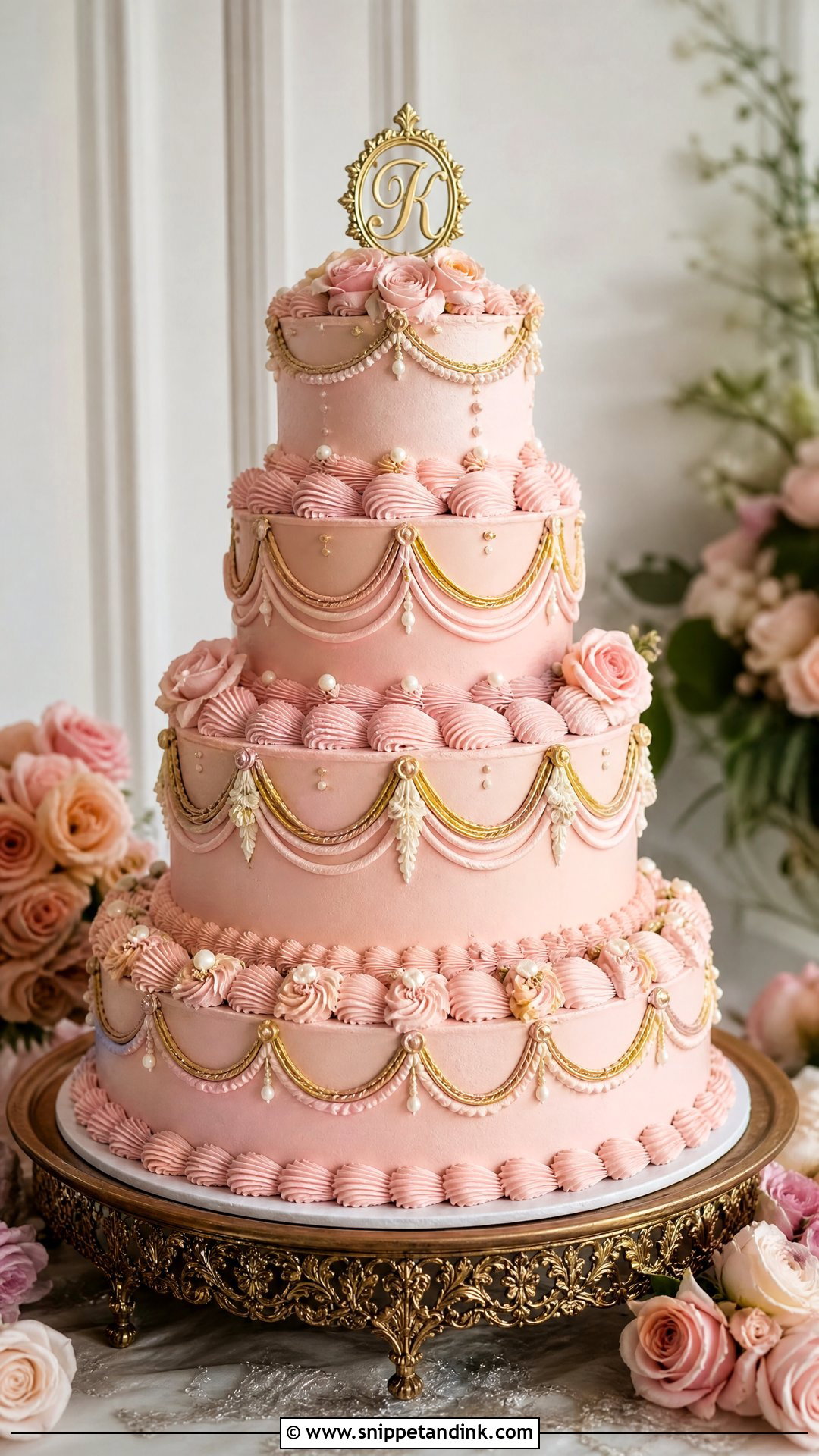
The vintage style revives Lambeth overpiping: shell borders, swags and scrolls built up in layers. It’s slow, skilled work, and it looks best when the pink stays soft so the piping, not the color, is the feature. I paint gold onto a few borders as highlights rather than gilding all of them. Heart-shaped or round tiers both suit it. Couples who love heirloom details tend to fall for this one, and a small floral topper or gold monogram finishes it.
19. Pink And Gold Watercolor Wedding Cake
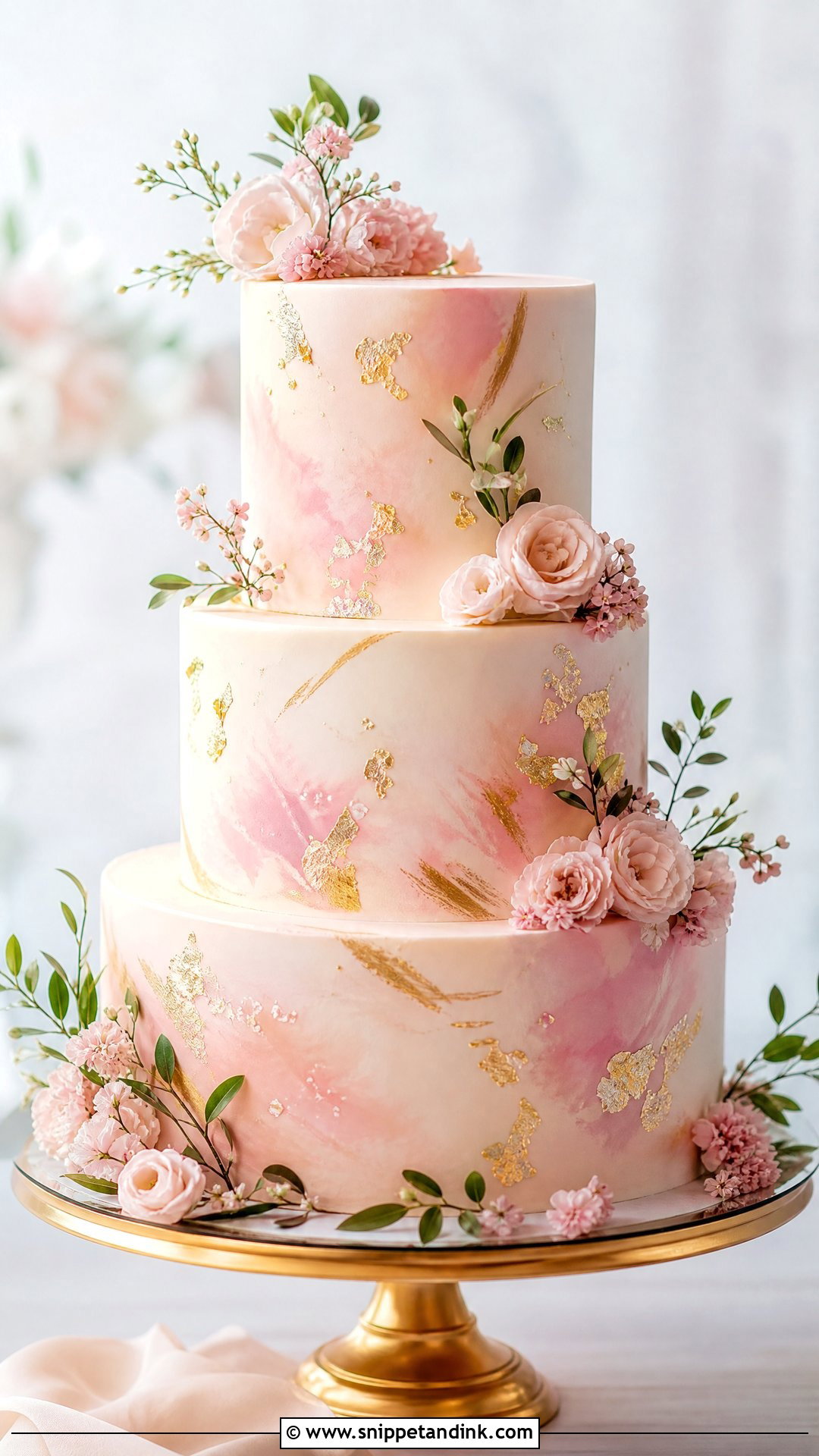
Watercolor finishes are painted by hand, usually with gel color thinned in clear alcohol over fondant, or swept on with a palette knife in buttercream. Fondant gives cleaner washes; buttercream looks looser and more textured. I follow some of the painted strokes with fine gold brush marks for shimmer. Natural light flatters this finish, which makes it a good fit for outdoor and spring receptions. Keep the tiers plain, let the paintwork lead, and add only a few small blooms.


20. Pink And Gold Cake Table Wedding Cake
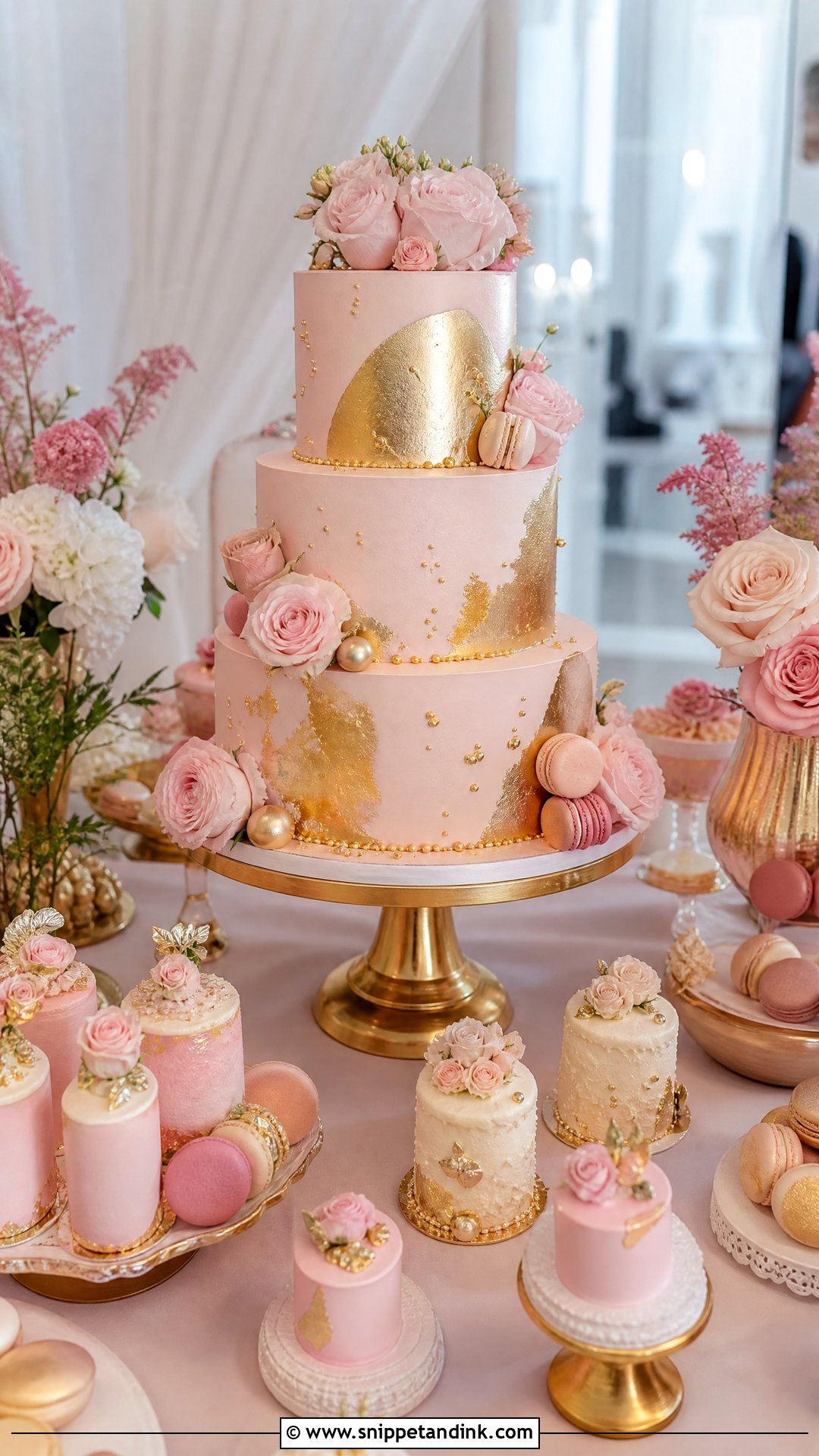
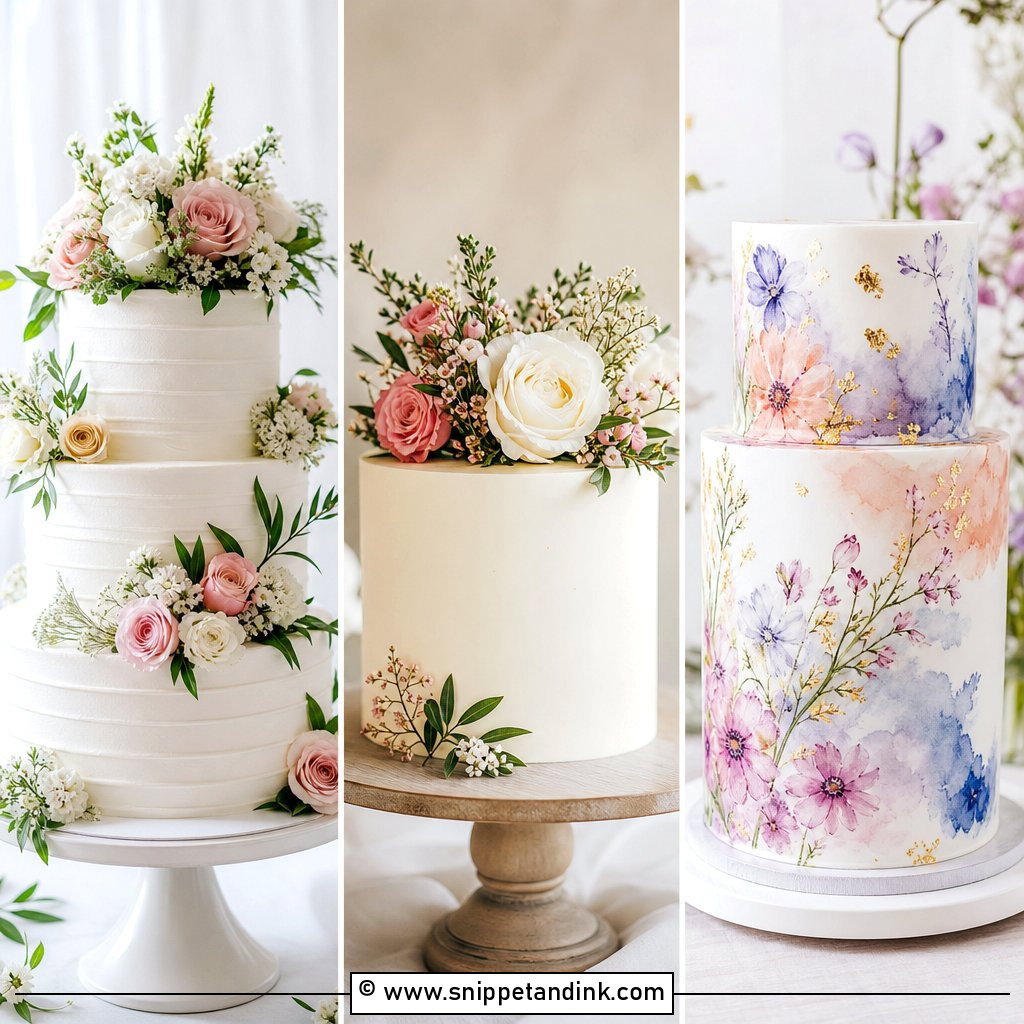
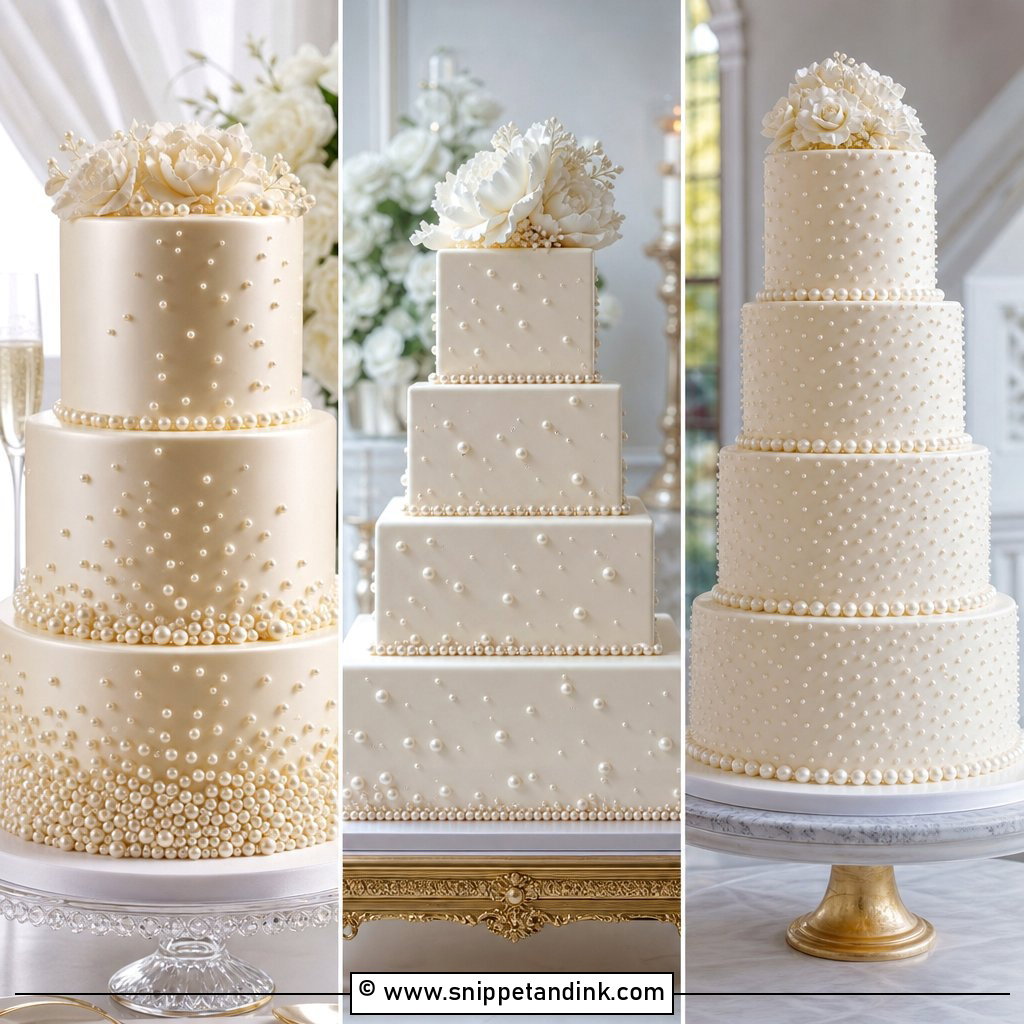
A pink and gold cake table wedding cake is about the whole display. The main cake, two or three tiers with gold leaf and roses, takes the center, with matching cupcakes, mini cakes or macarons around it. Matching the pinks across different bakes is harder than it sounds, since macaron shells, cupcake frosting and fondant all take color differently, so I work every element from one color reference. A gold stand and pale pink linen pull it together, and guests get a choice of desserts.
Pink Fades in Sunlight, and the Cake Table Has to Allow for It
Some pink food colors are light sensitive. A blush cake left for hours in a bright conservatory or beside a window can come out noticeably paler on the side facing the glass, and pale pink is the first shade to go. I ask venues for a cake spot out of direct sun and away from heaters, and I set up as close to the reception as the schedule allows.
Heat causes the other problems. Buttercream starts to soften well before a room feels hot to guests, and once the surface gives, gold leaf creases and drips keep sliding. A marquee in July is a fondant or ganache-coated cake job, or a cake that stays in a cool room until speeches.
Send a swatch, not a screenshot
Phone screens show the same pink in wildly different ways, so a screenshot of a bridesmaid dress tells me very little. A fabric offcut, a ribbon from your invitation suite or a petal from the florist’s sample is far more useful. I color-match under daylight and then check the tint again under warm bulbs, because blush shifts toward peach under yellow light and you want it right for the evening photos, not just the afternoon.
How Much Gold Is Too Much?
Nearly every design here comes down to two dials: how much gold, and how firm the finish. Blush buttercream with a little leaf reads soft and airy, while fondant with a gilded tier reads formal. Roses, sugar flowers, pearls and painted finishes each push the mood their own way. Bring your venue details, a photo of your dress and your flower palette to the tasting, and your baker can tell you which designs will hold up on the day. When in doubt, keep the pink soft and give the gold one job.
You'll Like These Ideas:










Leave a Reply