
A wedding cake now sits inside the reception design rather than at the end of it. It shares a table with the flowers, it’s lit like a centerpiece, and it’s often the first thing guests photograph. When a couple sits down with me, I want to know three practical things before we talk about decoration: where the cake will stand, how warm the room will be, and how many people it needs to feed. Those answers rule some designs in and others out. Here are 20 designs couples keep asking me for, with honest notes on what each one needs to look its best.
What Sits Under the Decoration Matters More Than You Think
Couples usually fall for a decoration first and ask about the frosting later. I work the other way round, because the coating decides which designs are possible and how long the cake can stand out.
- Swiss meringue buttercream tastes the best to most guests and pipes beautifully, but it softens in warm rooms. It’s the right base for piped, textured and painted designs indoors.
- Ganache sets firm and gives the sharpest edges. It handles warmth better than buttercream, and I use it under fondant for square or very tall cakes.
- Fondant over ganache is the most stable choice for summer or outdoor weddings, and the only surface for draping or embossed patterns.
- Semi naked frosting is light and pretty, but it needs to be served the same day it’s finished, before the sponge dries.
If you already know the cake will sit in a tent in July, tell your baker at the first meeting. It’s much easier to choose the right base than to rescue a sliding tier.
1. White Tiered Wedding Cake
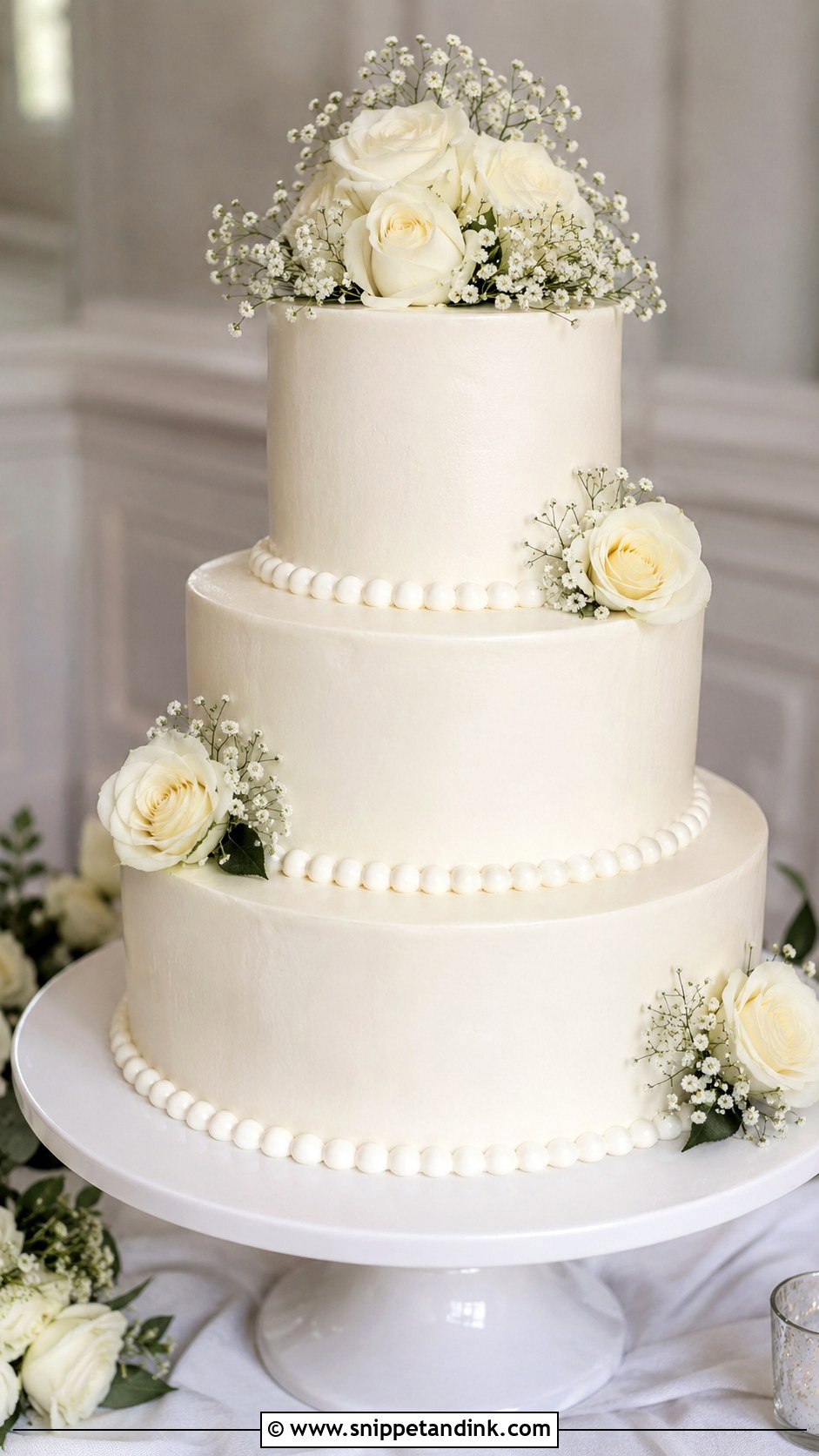
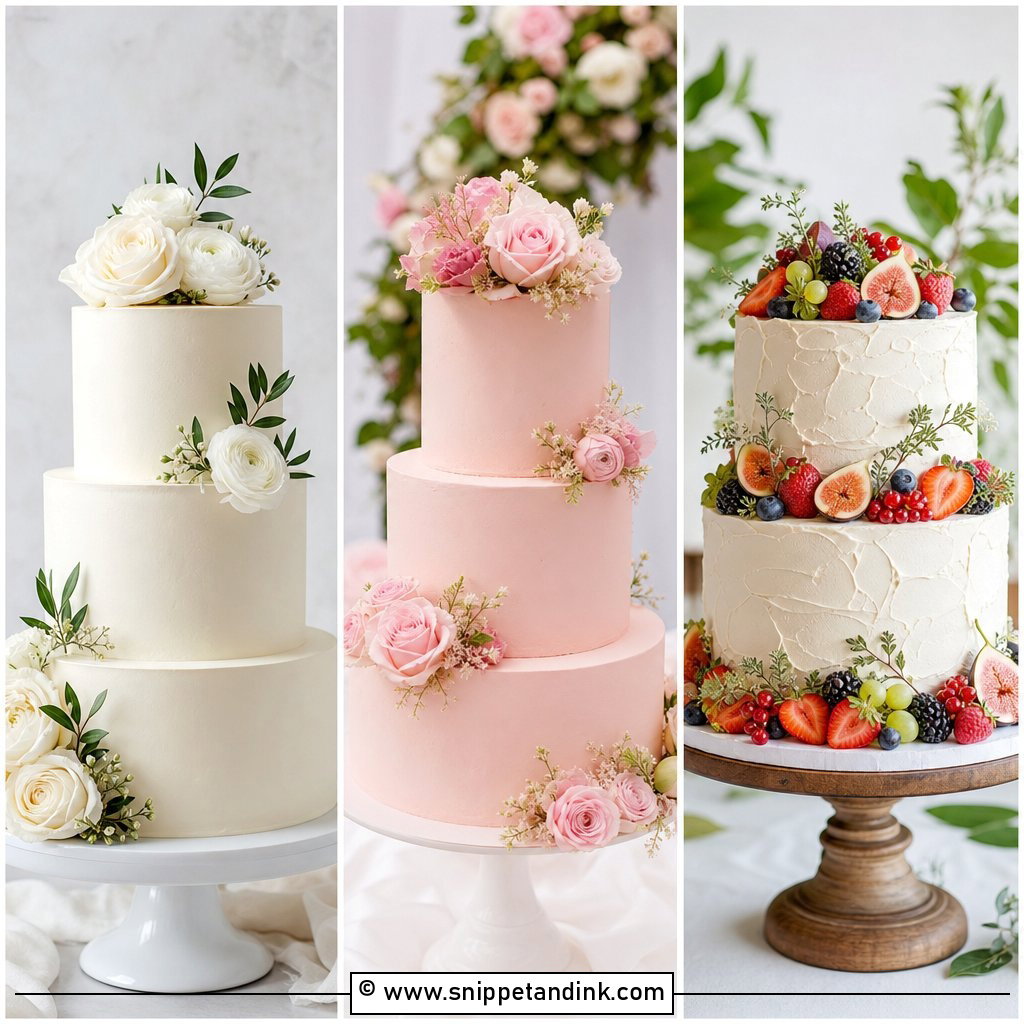
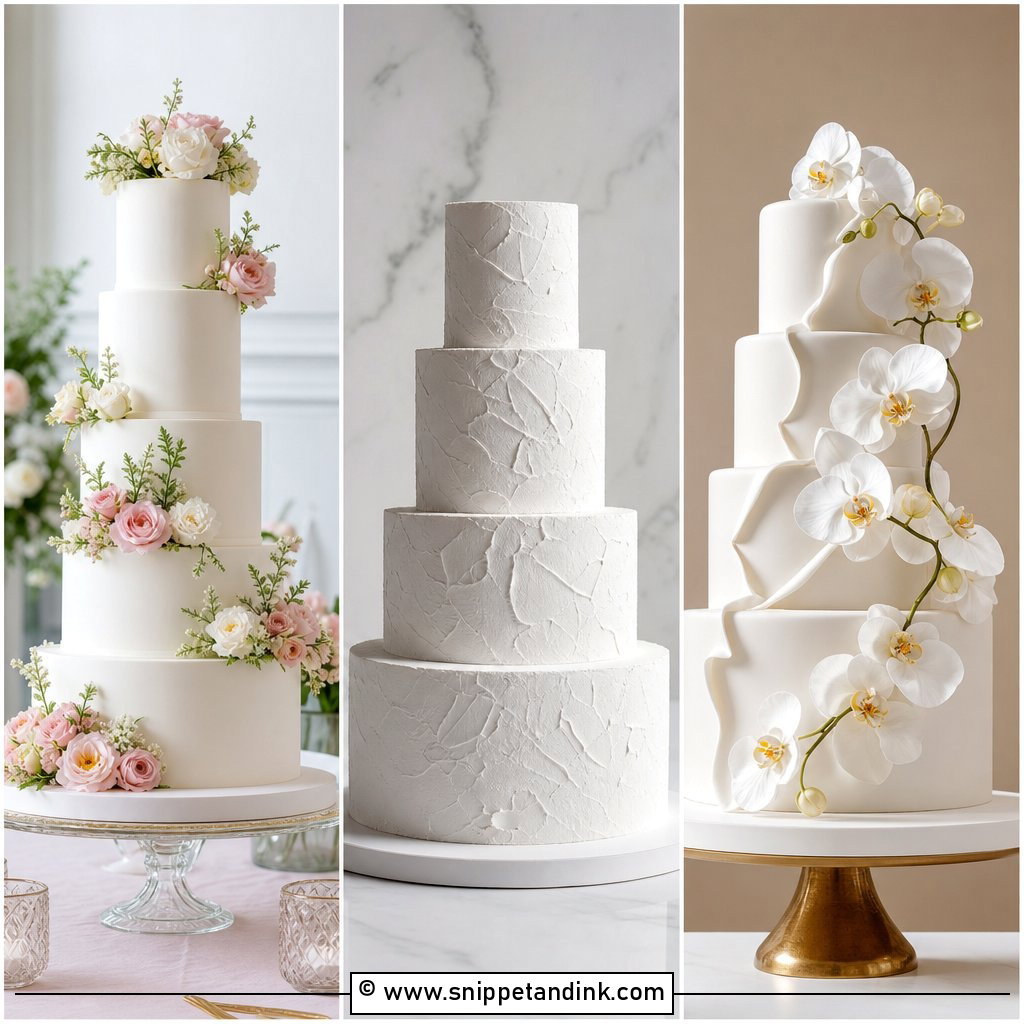
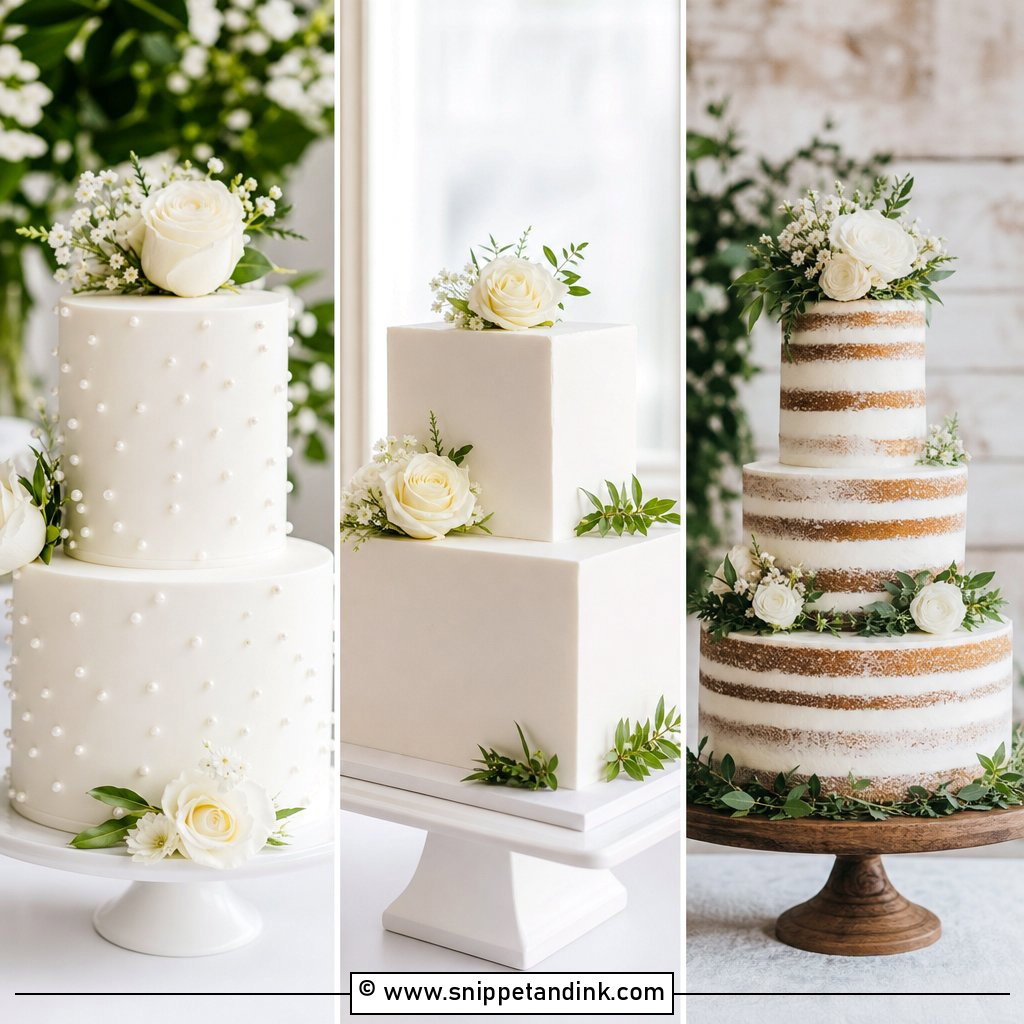
White tiers are the design I’m least worried about at any venue. The decision that really shapes it is the finish. Buttercream gives a soft, creamy edge with a slight hand-finished quality, while fondant gives sharp corners and a smooth, almost porcelain surface. Fresh white roses, orchids or baby’s breath add romance, but keep them to one cluster or a gentle drift so the tiers still read as white. A pearl border or a ribbon at the base of each tier is the quiet detail that makes it look finished.
2. Buttercream Wedding Cake
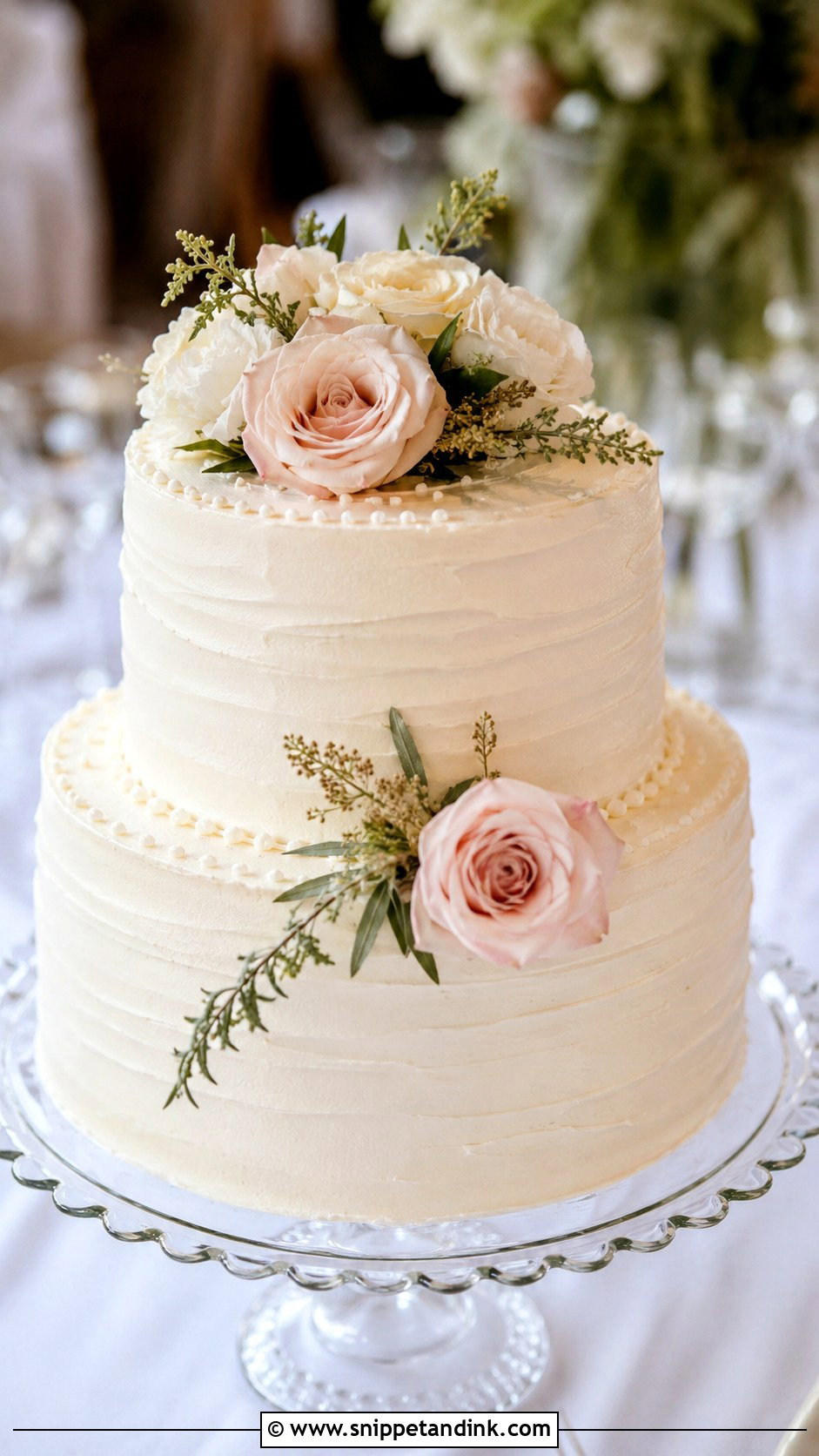
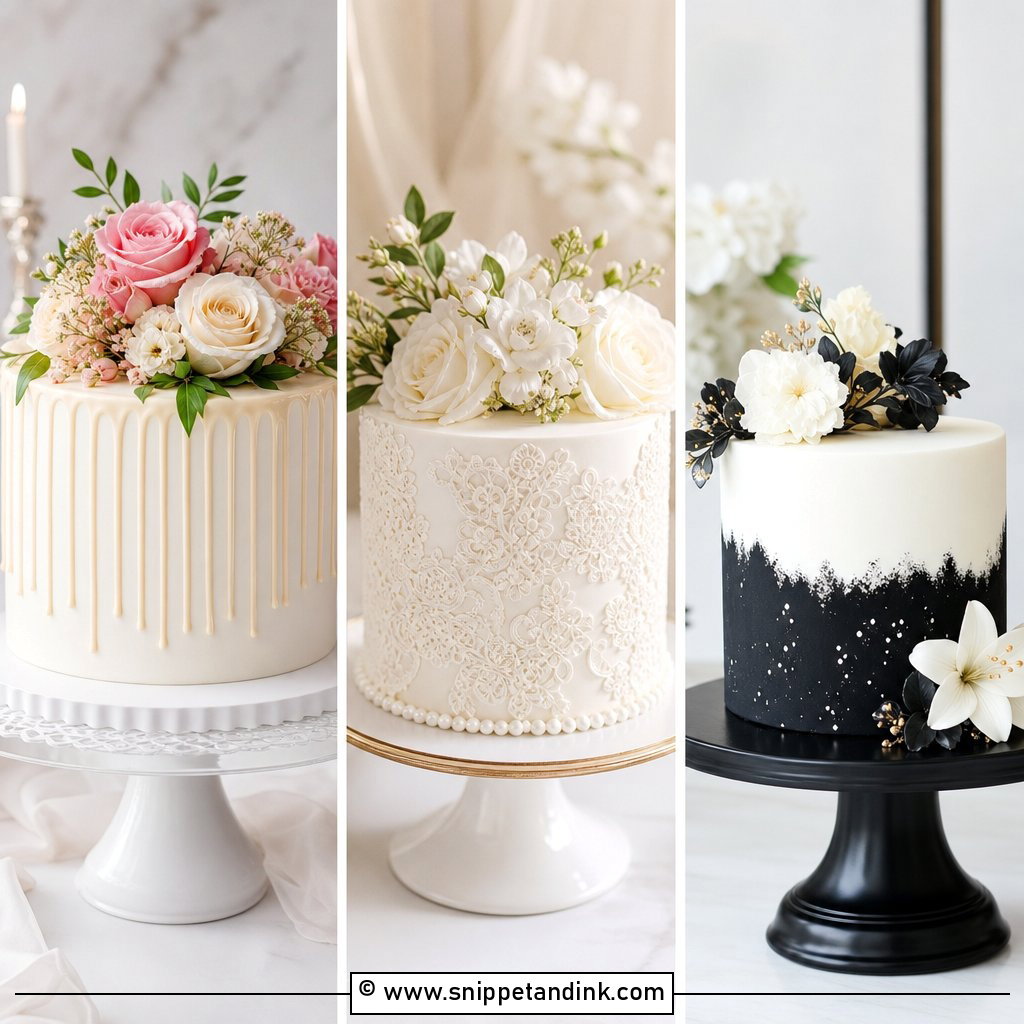
Buttercream is the frosting guests actually finish. I use Swiss meringue for most wedding work because it’s less sweet than American buttercream and goes on silky enough to photograph smoothly. It can be piped, textured with a palette knife, or painted with color. The honest limitation is heat: buttercream softens in a warm room and can start to slump on an outdoor table in summer, so I plan delivery as late as possible and ask for a spot out of direct sun. If your reception is warm, tell your baker early.
3. Fondant Wedding Cake
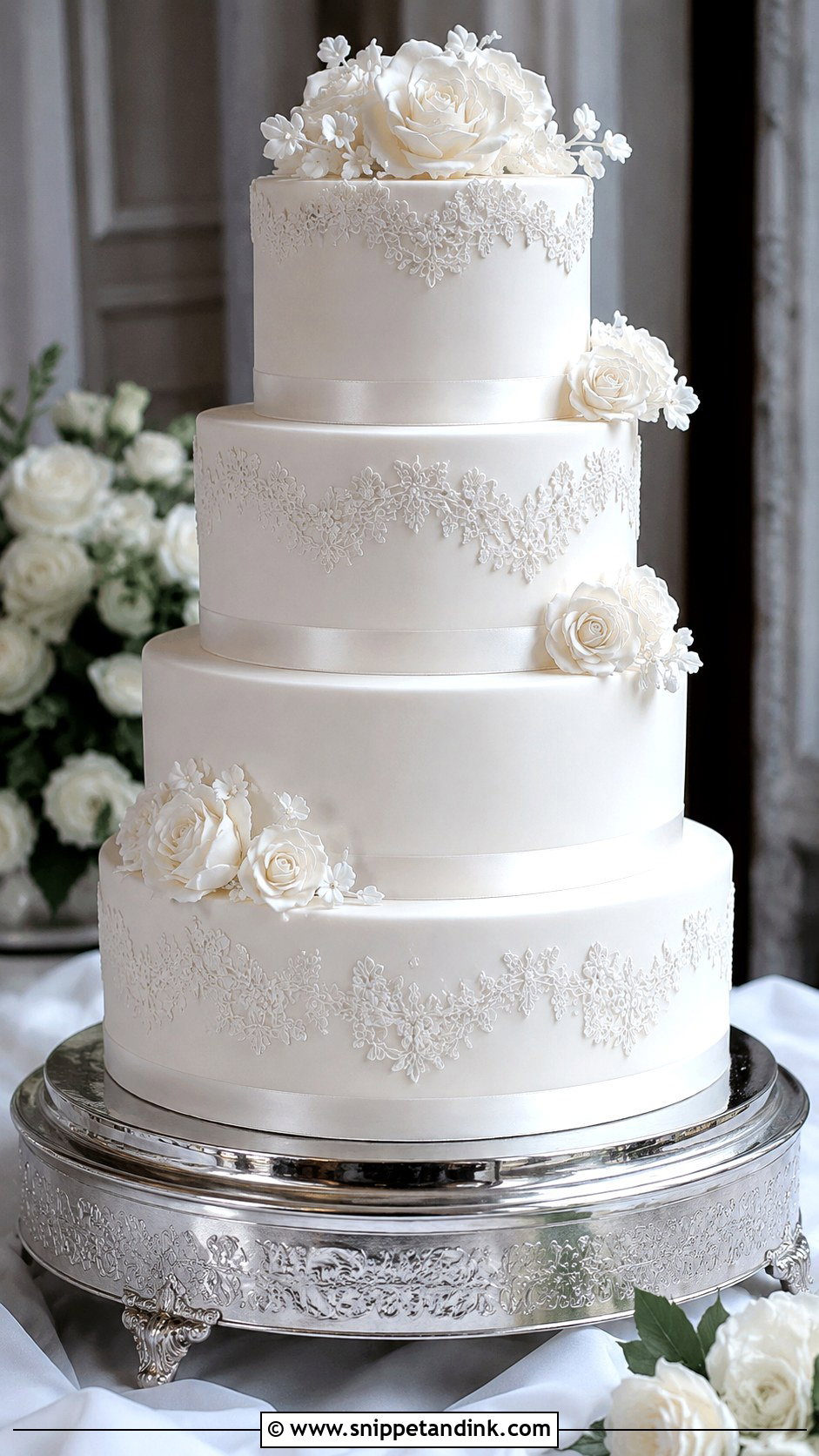
A fondant wedding cake gives the cleanest structure of any finish, which is why it suits tall, formal designs. Fondant is rolled and smoothed over a firm layer of buttercream or ganache, and that layer underneath is what gives the sharp edges. It’s also the best surface for draping, embossing, lace molds, bows and metallic paint. Many guests peel fondant off, so I keep it thin and make sure the cake inside is the part that tastes best. It stands up to warm rooms far better than buttercream.
4. Fresh Flower Wedding Cake
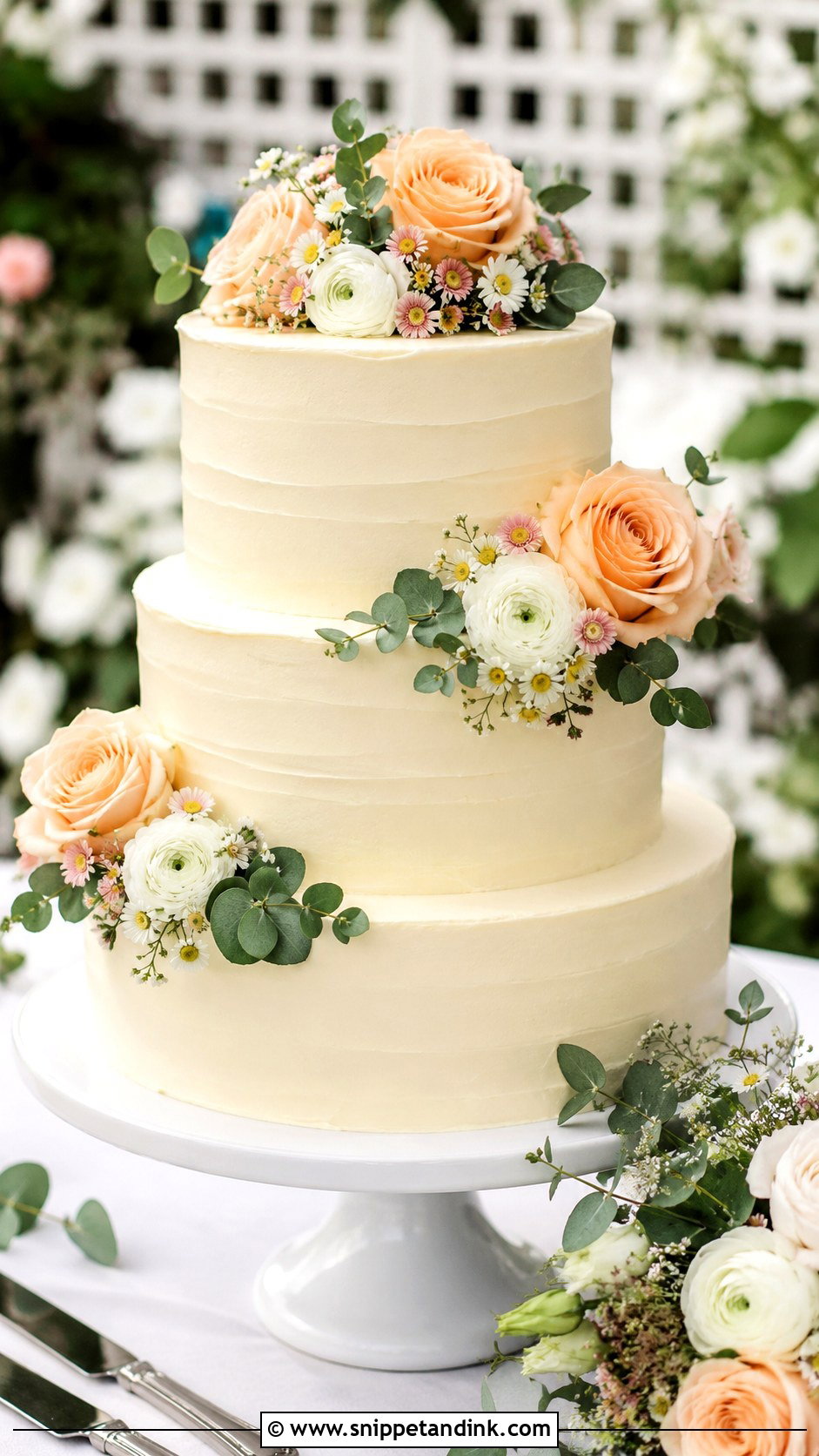
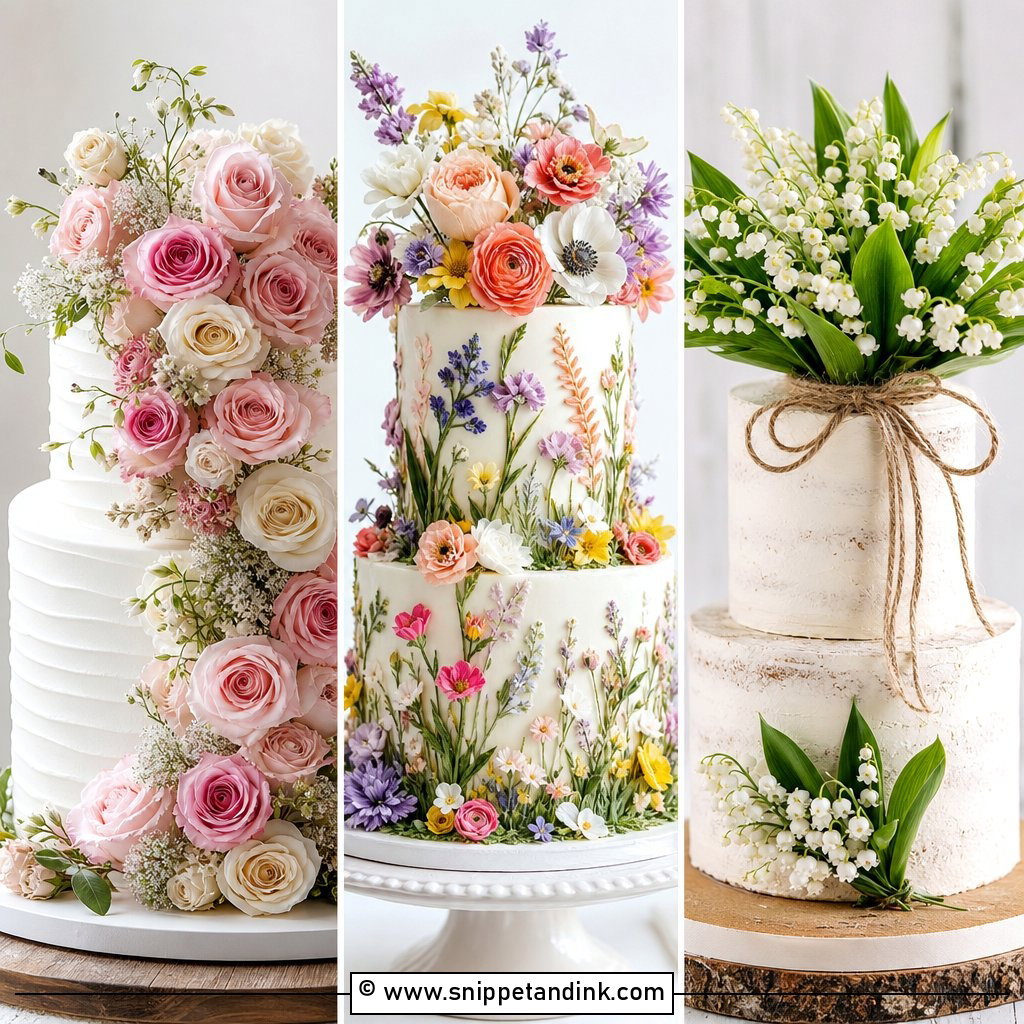
Fresh flowers tie the cake to the rest of the decor faster than anything else, but the prep is not optional. Many popular wedding flowers aren’t safe to touch food, so I ask the florist for pesticide-free stems and wrap or tape every stem, or insert them into a flower pick, so nothing goes directly into the cake. A cascade adds drama; small clusters look more modern. Matching blooms to the bouquet looks cohesive. Keep the frosting plain so the flowers have room to lead.
5. Vintage Wedding Cake
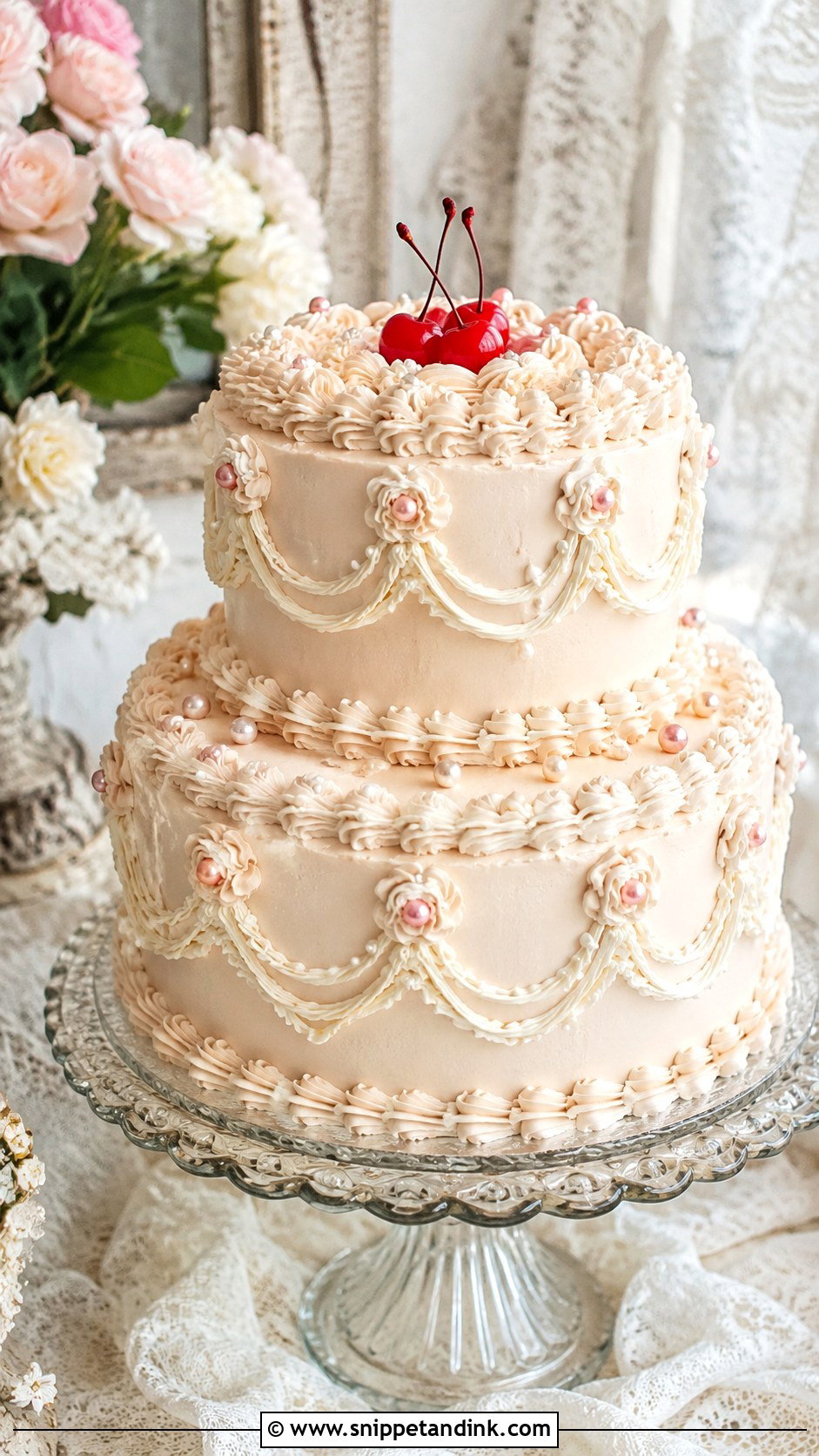
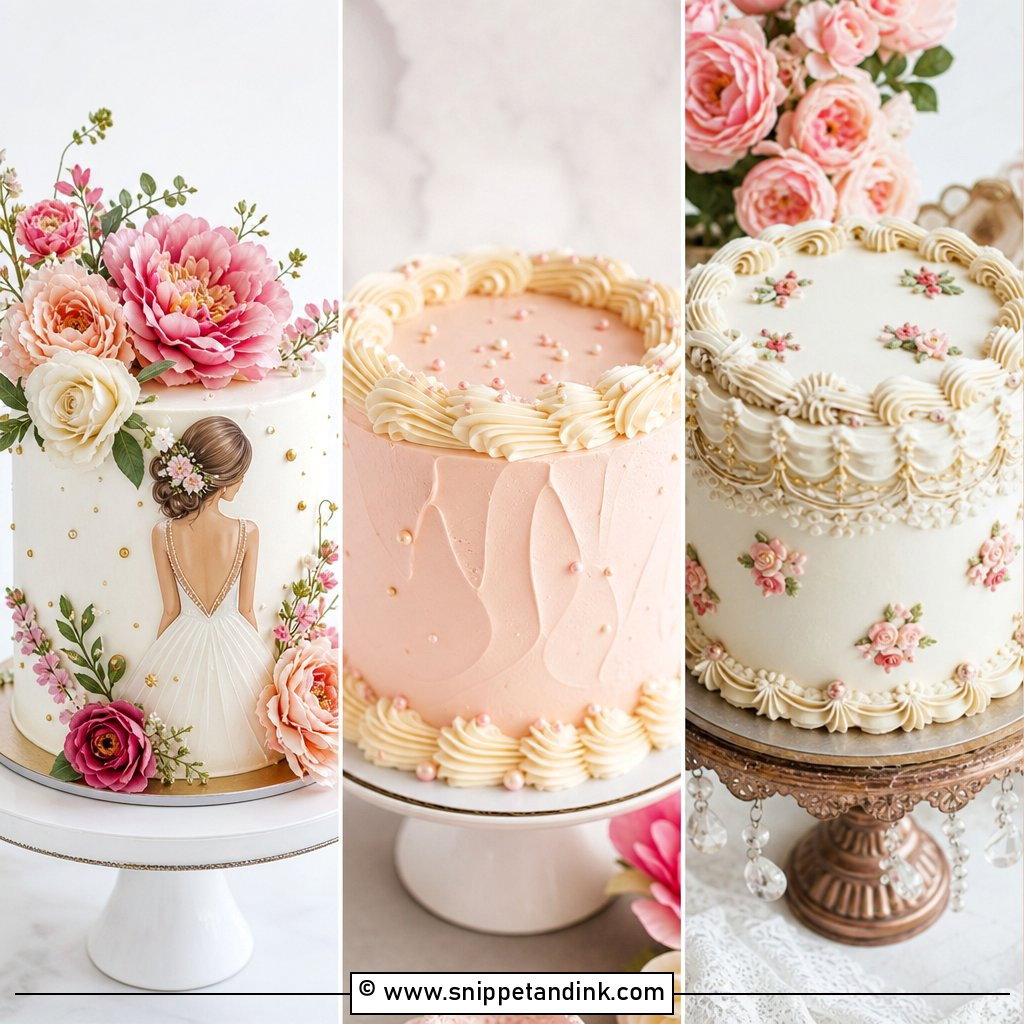
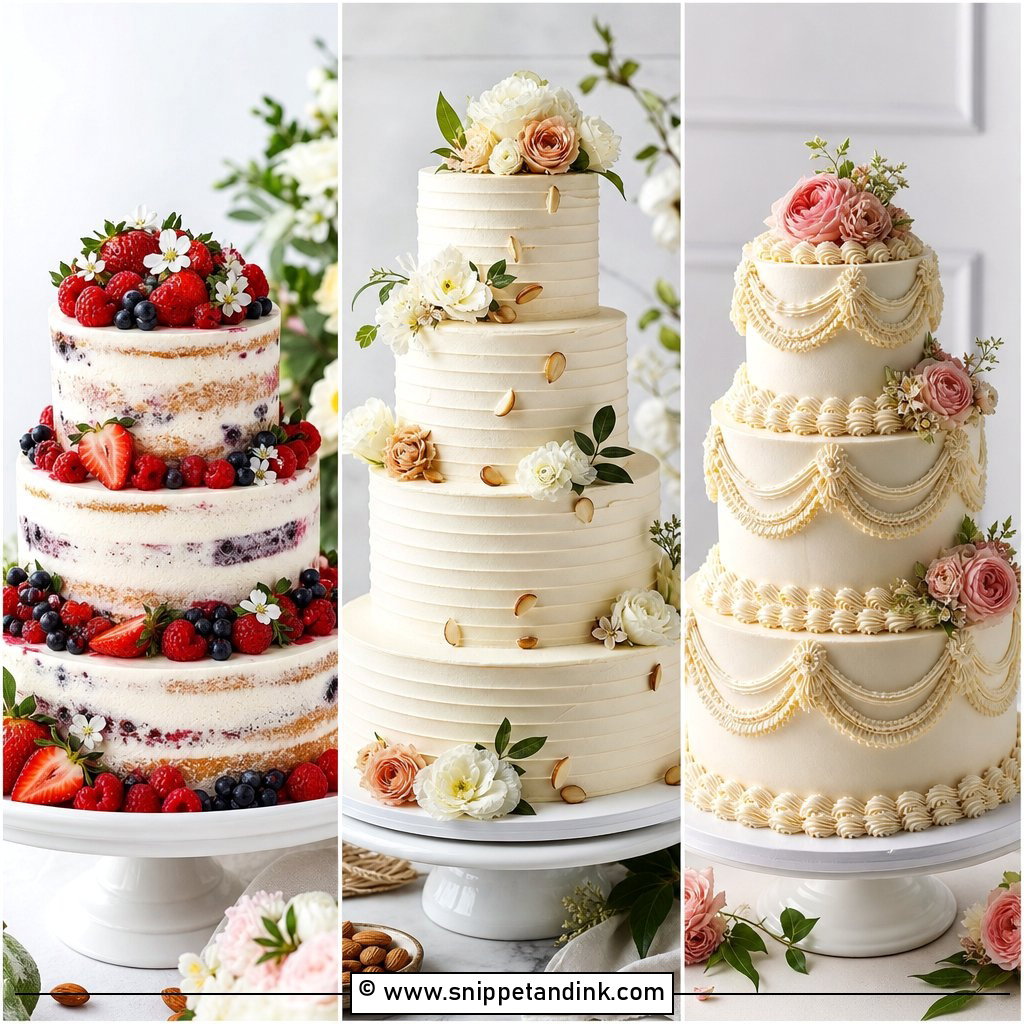
Vintage cakes lean on piping: piped borders, shells, swags and small rosettes on round or heart-shaped tiers. Ivory, blush, baby blue and soft yellow are the usual colors, though white piping on white frosting feels just as nostalgic. I pipe these in a stiffer buttercream than I’d use for a smooth finish, otherwise the ridges soften and lose their definition before the cake is cut. Cherries or sugar pearls give it a playful retro touch.
6. Lambeth Wedding Cake
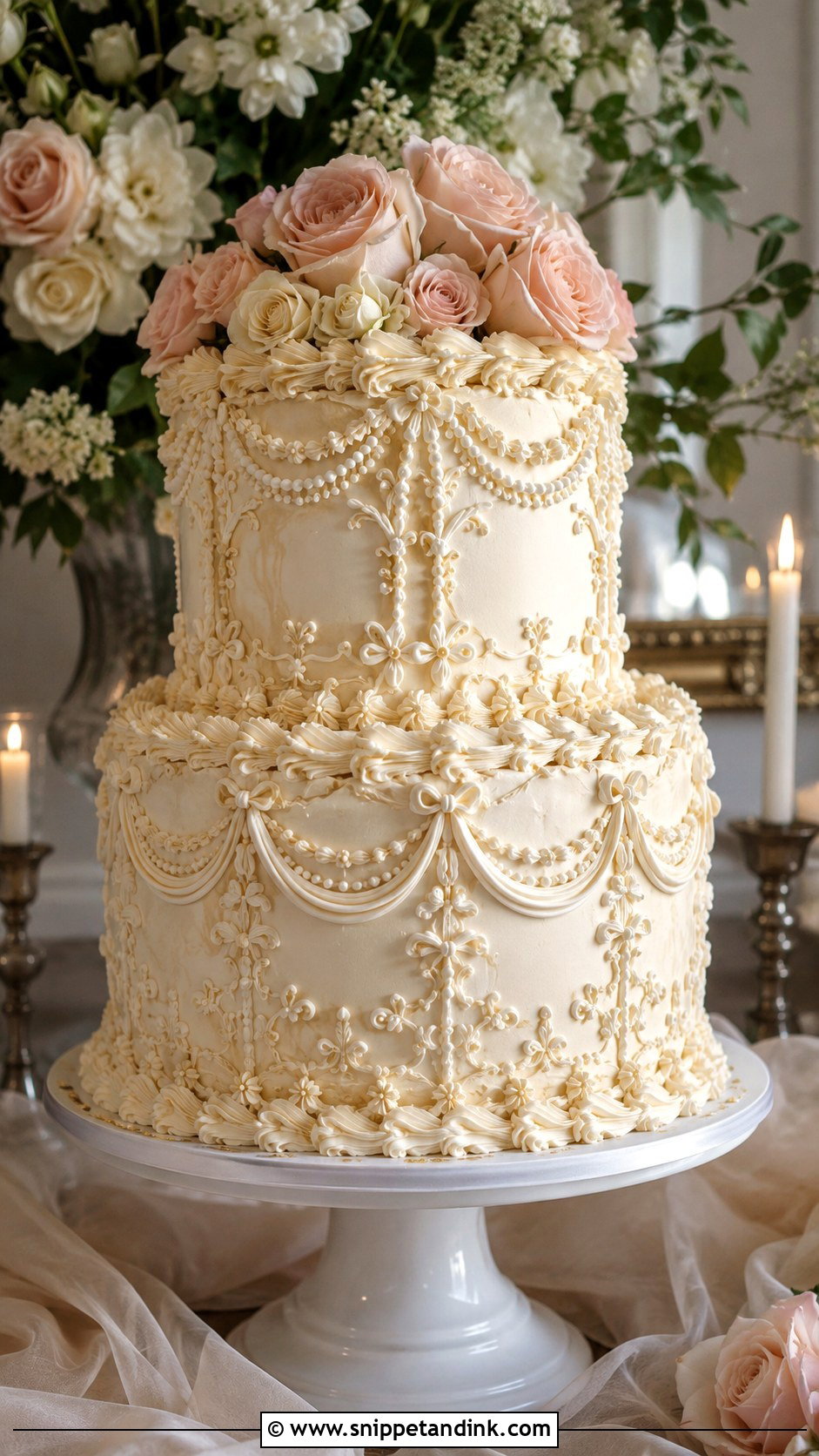
Lambeth is the most labor-intensive design on this list, and that’s worth knowing when you see the quote. It’s built from layer upon layer of over-piping: scrolls, swags, shells and dots stacked on top of each other until the surface looks carved. Every ridge catches light, which is why it photographs so well even in white. Because the decoration does the work, two tiers can look as impressive as four, which makes it a great choice for smaller weddings.
7. Pearl Wedding Cake
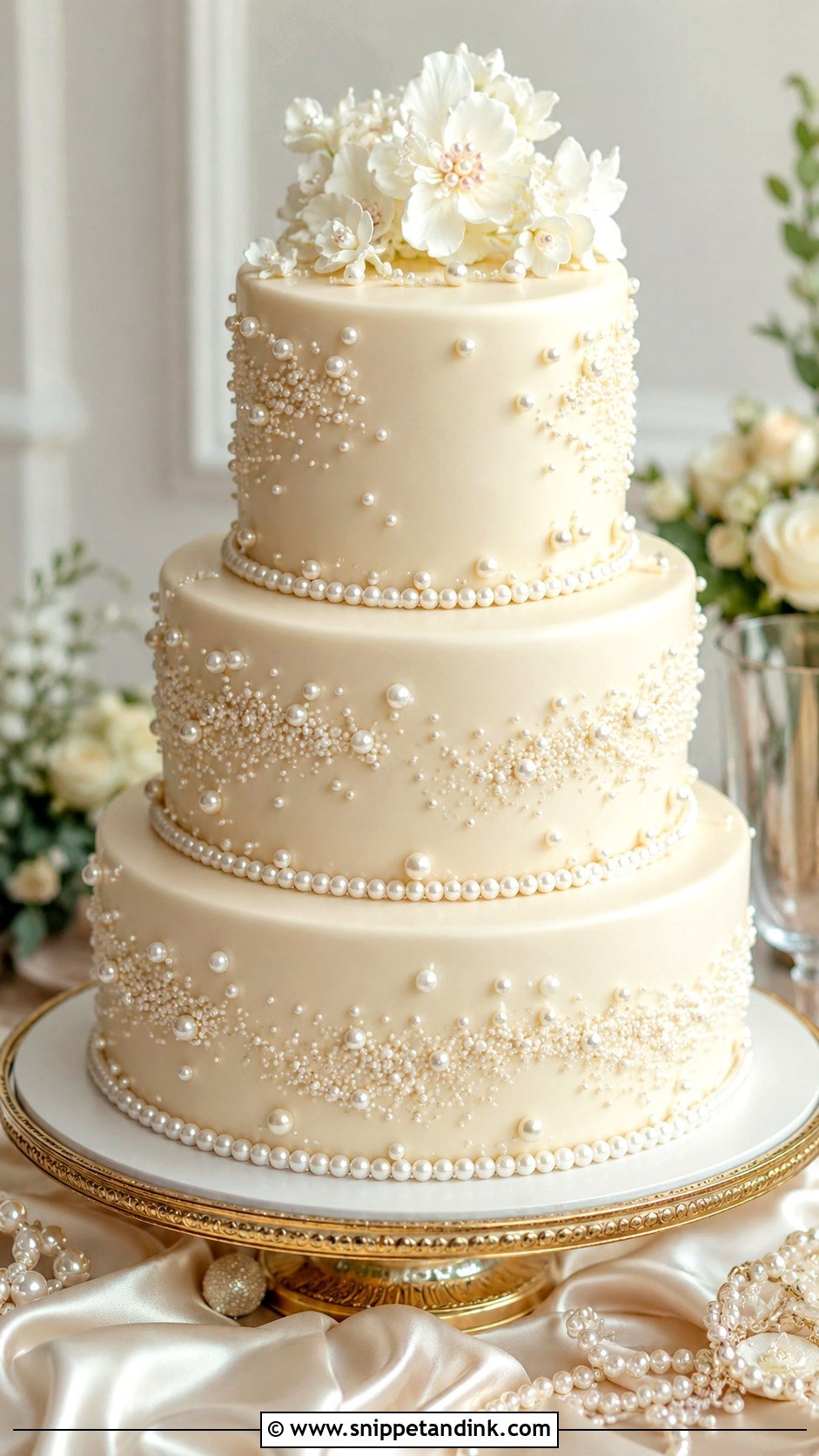
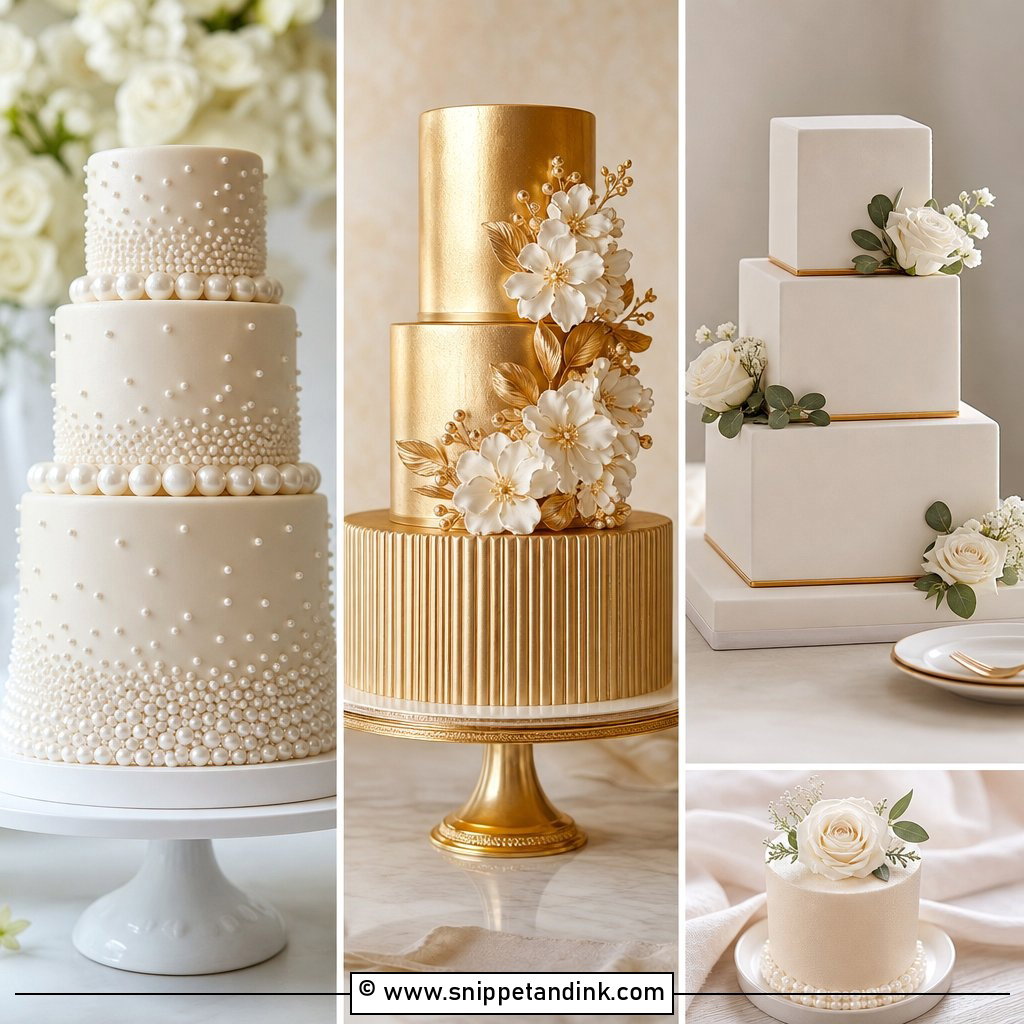
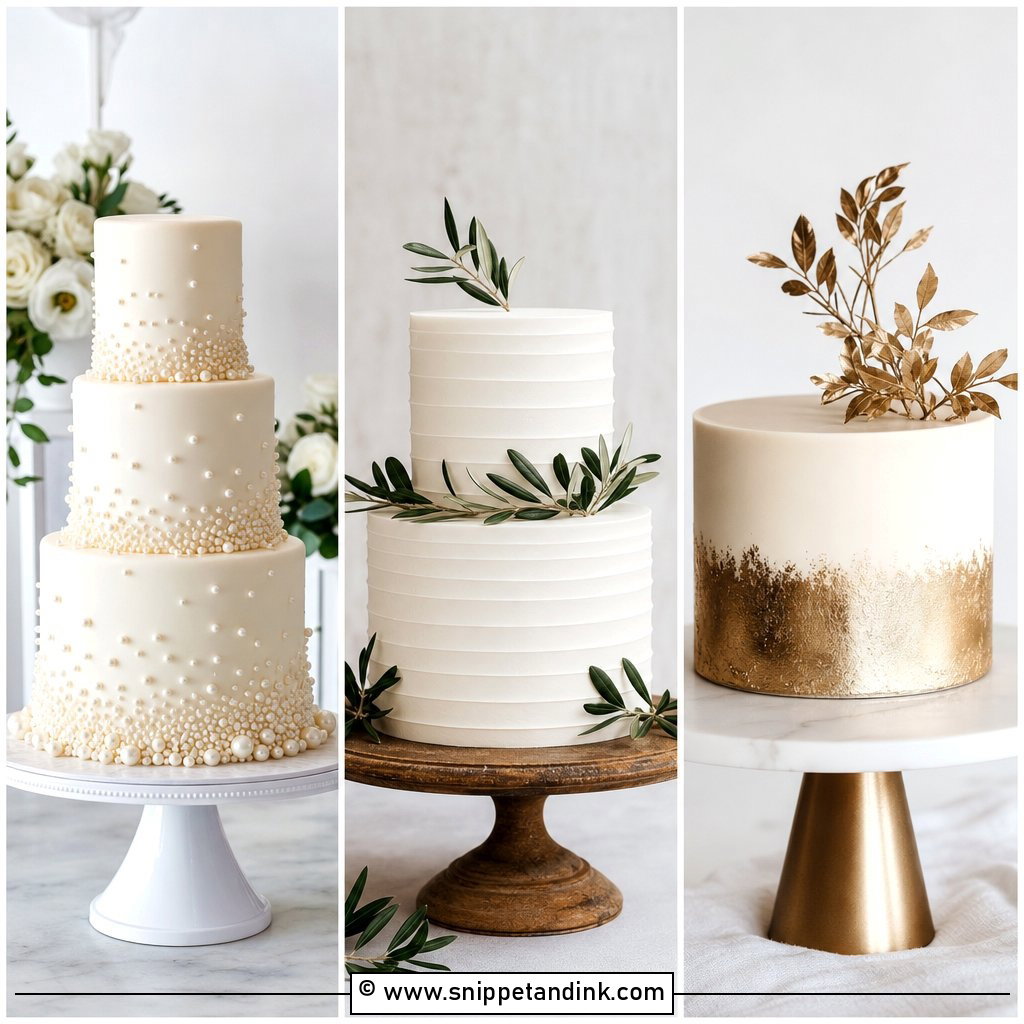
Pearls can be scattered as tiny edible dragées, piped as a border, or brushed on as a pearlescent sheen over the whole tier. Full coverage on one tier looks bold; a single row at each base is quieter and easier on the budget, because pearls are placed one at a time by hand. The sheen works best on ivory, champagne or pale gray rather than stark white, where it can look chalky. It pairs naturally with satin gowns and pearl veils.
8. Floral Cascade Wedding Cake
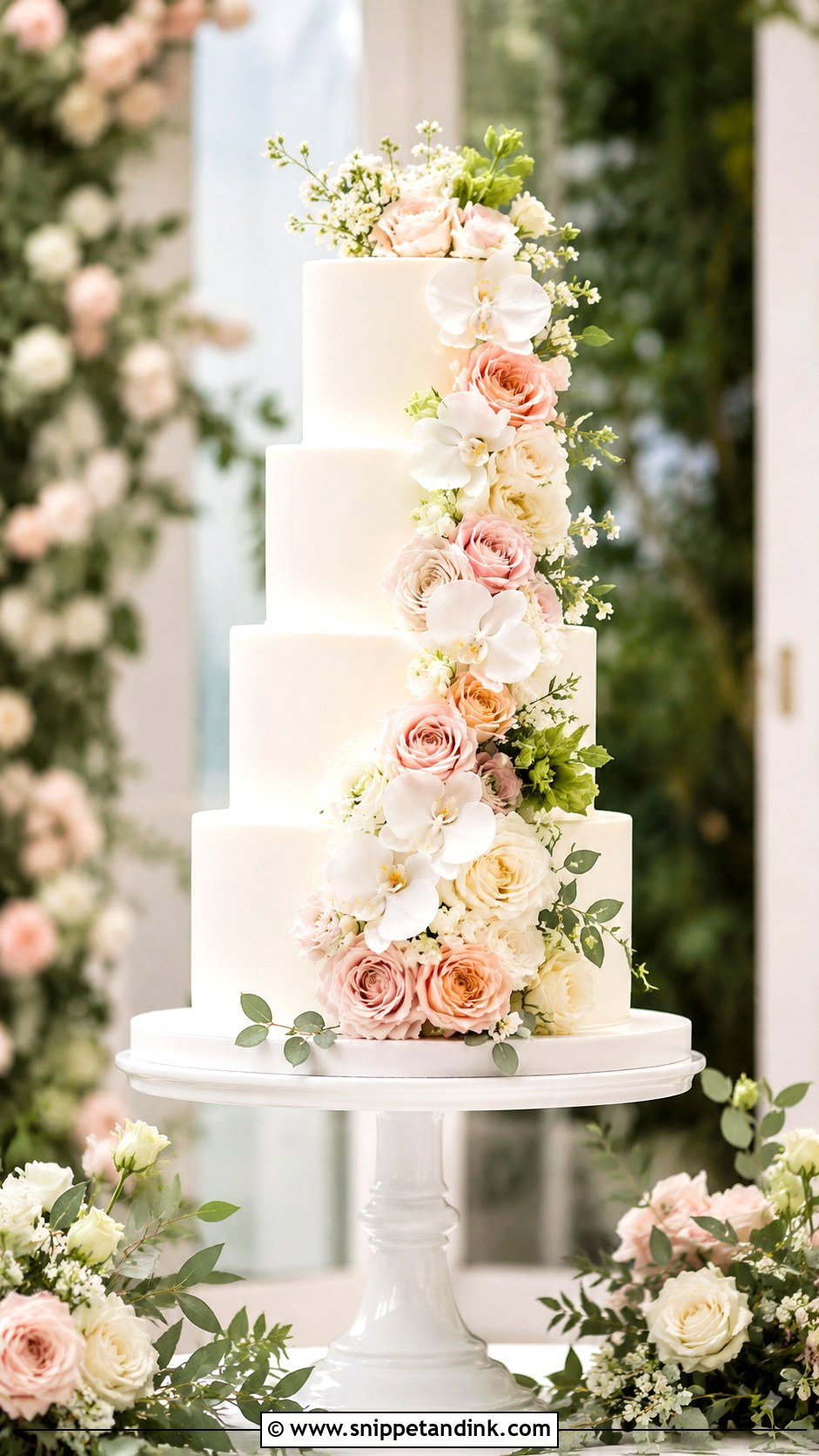
A floral cascade needs height to travel, so it looks most balanced on three or four tiers. I plan the line before the cake is stacked so the flowers can sweep in one direction from top to bottom. Fresh roses, orchids, lisianthus and greenery are common, but sugar flowers give total control over color and shape and won’t wilt, which matters for a long reception or a warm room. Keep the frosting plain so the cascade doesn’t fight with texture.
9. Minimalist Wedding Cake
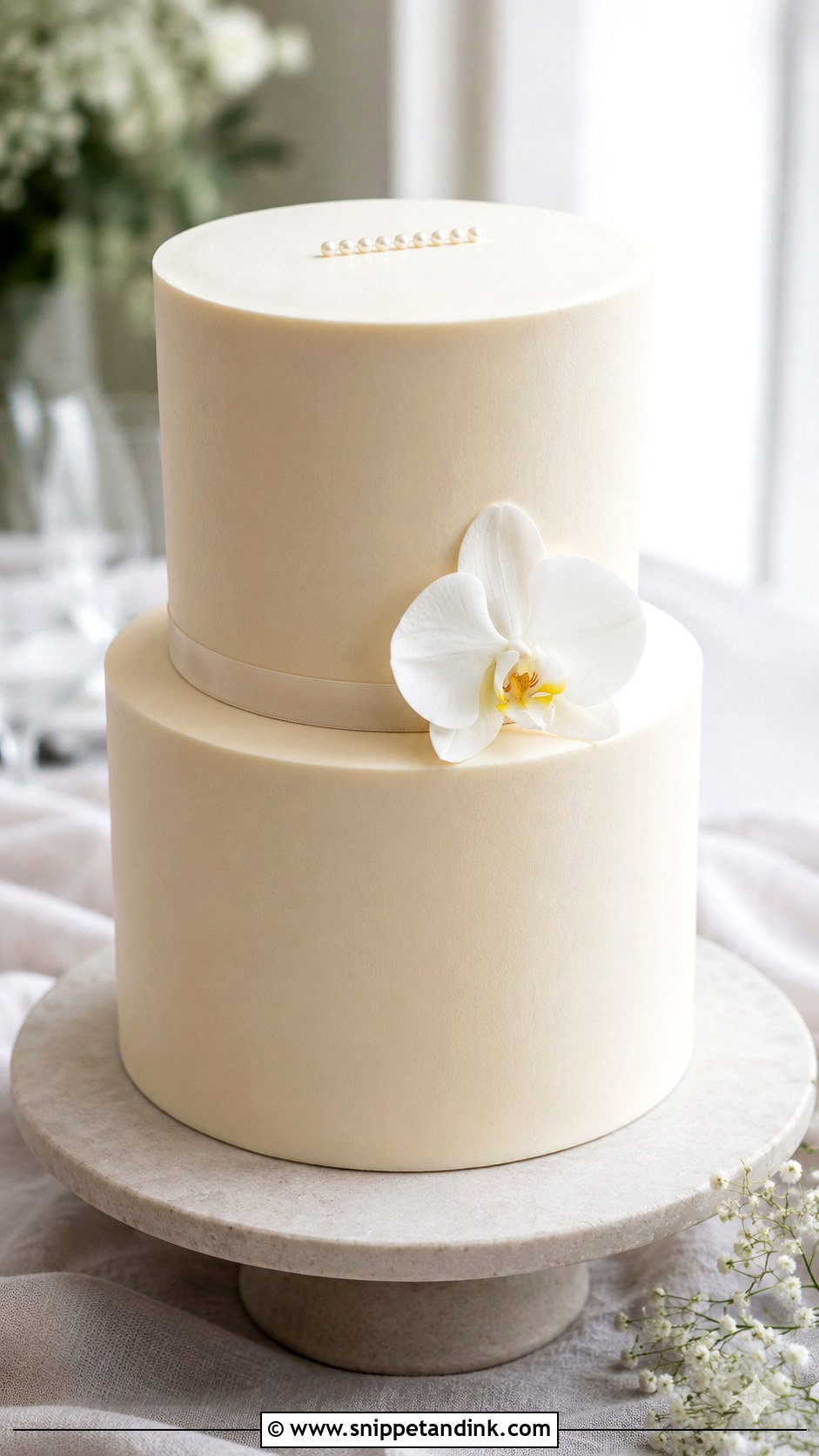
Minimalist cakes are less forgiving than ornate ones. With nothing to hide behind, every edge, every tier height and every bit of spacing between tiers is visible, so I spend extra time on smoothing and leveling. One detail is enough: a single bloom, a slim ribbon or a soft curved edge. Ivory and cream are the usual colors, though a muted sage or taupe can look striking. It’s the right cake for a calm, refined room.
10. Rustic Wedding Cake
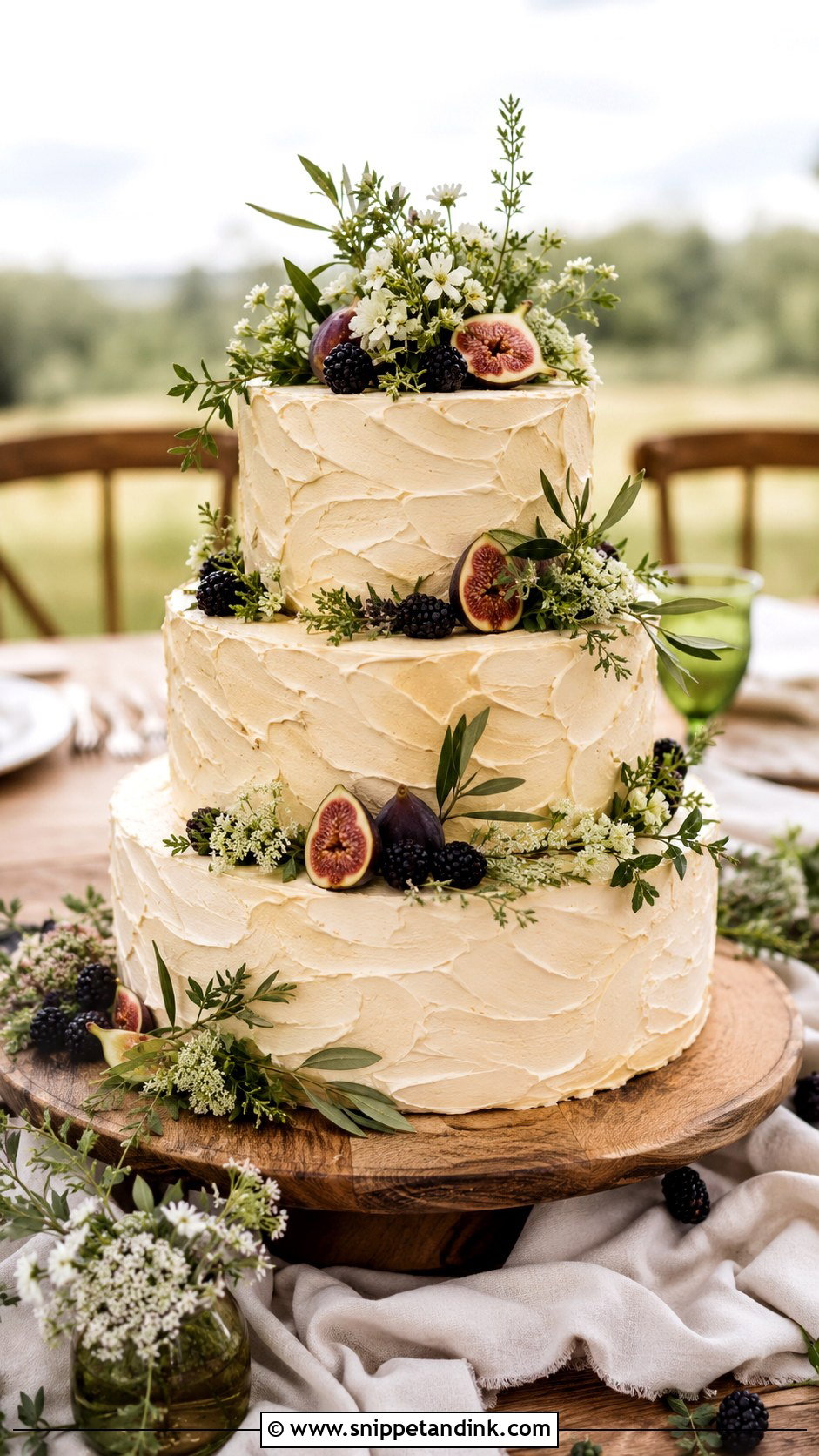
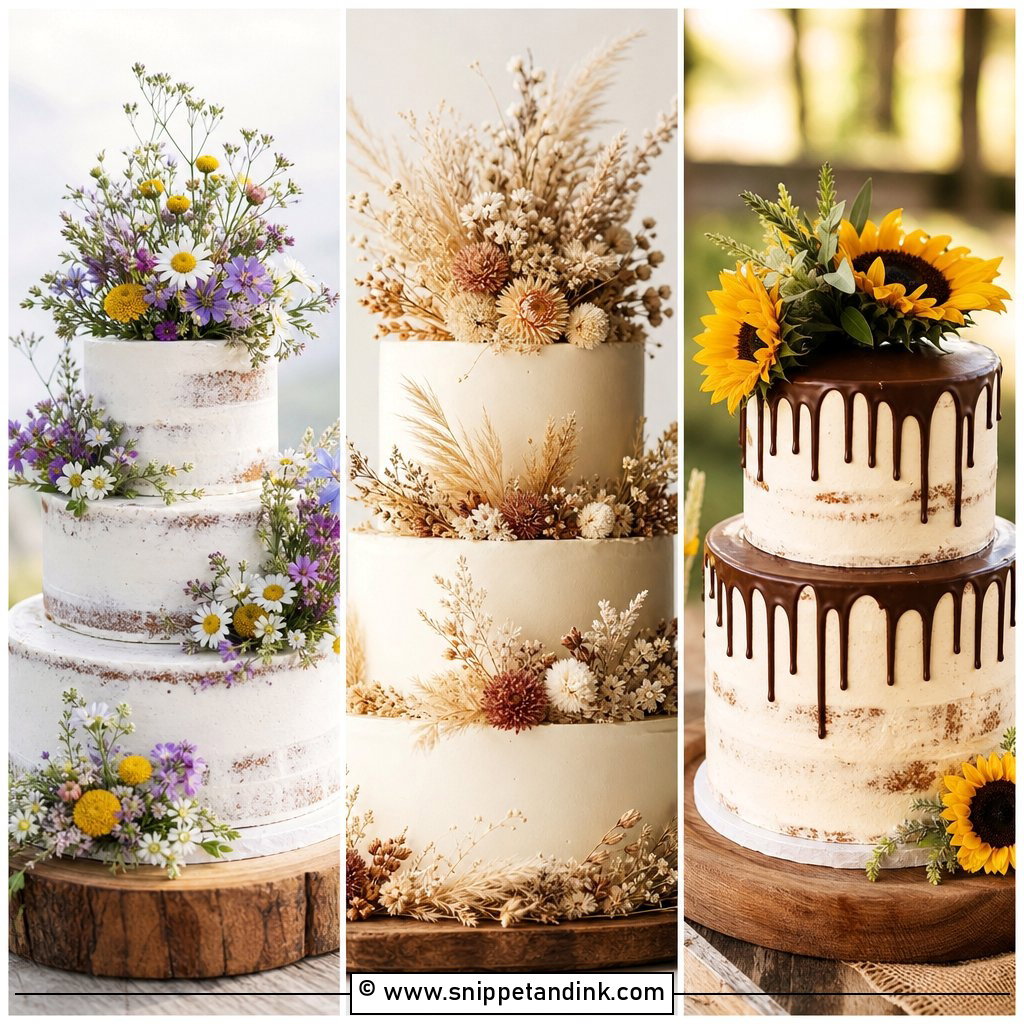
A rustic cake is meant to look handmade, which doesn’t mean careless. I keep the frosting textured and slightly uneven, then add greenery, berries or loose flowers. Barns, fall weddings and outdoor dinners suit it best. Flavors lean warm: vanilla bean, carrot, spice, almond or lemon. A wooden stand and a linen runner finish the display. Too much polish works against it, so ask your baker to leave some spatula marks visible.
11. Semi Naked Wedding Cake
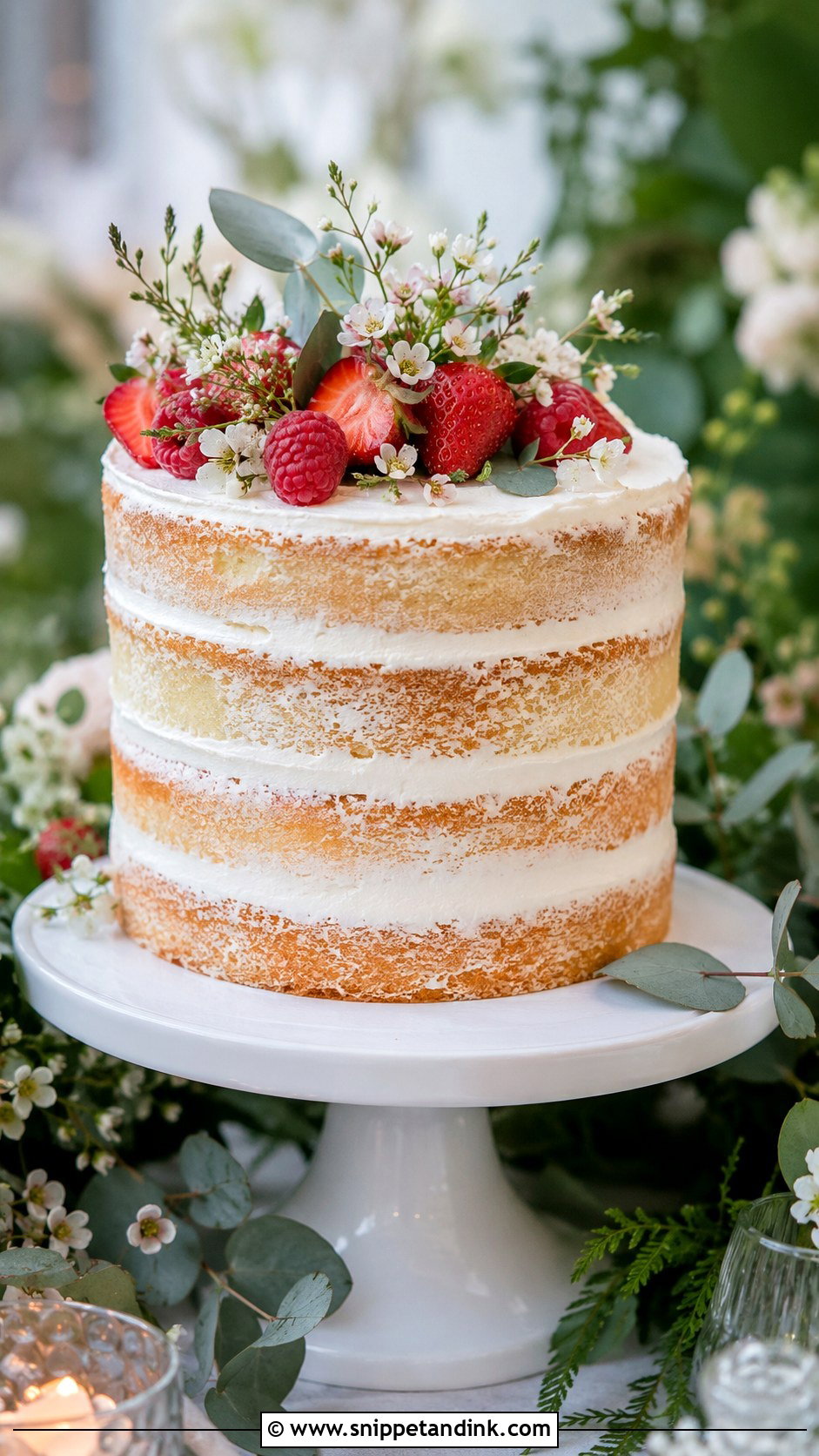
A semi naked wedding cake has a thin scraped coat of frosting that lets the sponge show through at the edges. That exposure is its weak point: the sponge dries out faster than a fully frosted tier, so I brush each layer with syrup and assemble as close to the event as I can. Vanilla, almond, lemon and berry-filled layers show off nicely through the gaps. It’s at home on a relaxed garden dessert table with fruit and greenery.
12. Square Wedding Cake
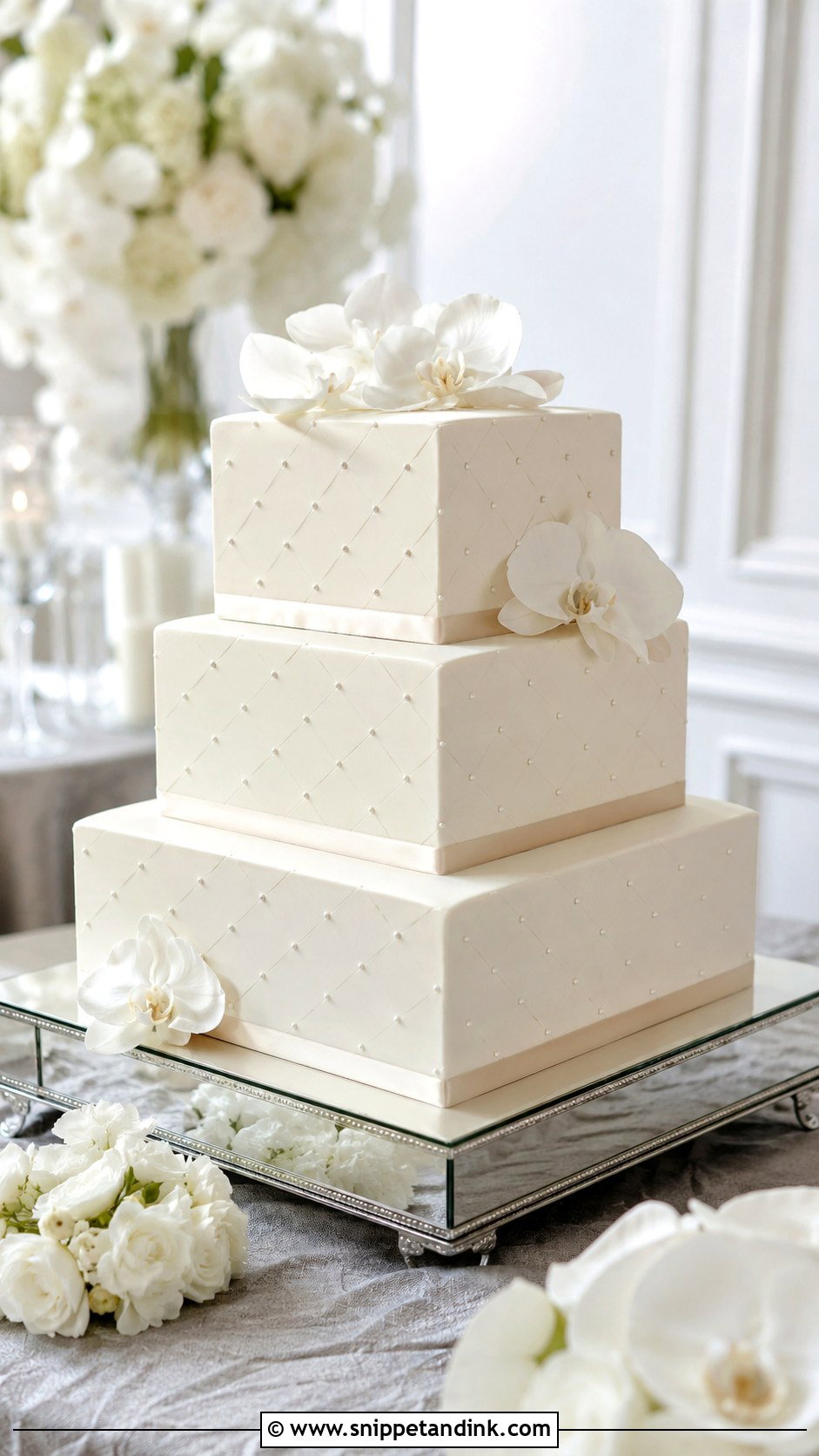
Square tiers look sleek and architectural, but they’re harder to make than they look. Each corner needs to be sharp and every side straight, so most square cakes are finished in fondant over ganache. Quilted patterns, ribbon borders and simple sugar flowers sit well on the flat sides. Stacking the tiers straight looks clean; rotating each one slightly gives a modern twist. Square tiers also yield a few more slices per tier than rounds of the same width.
13. Heart Wedding Cake
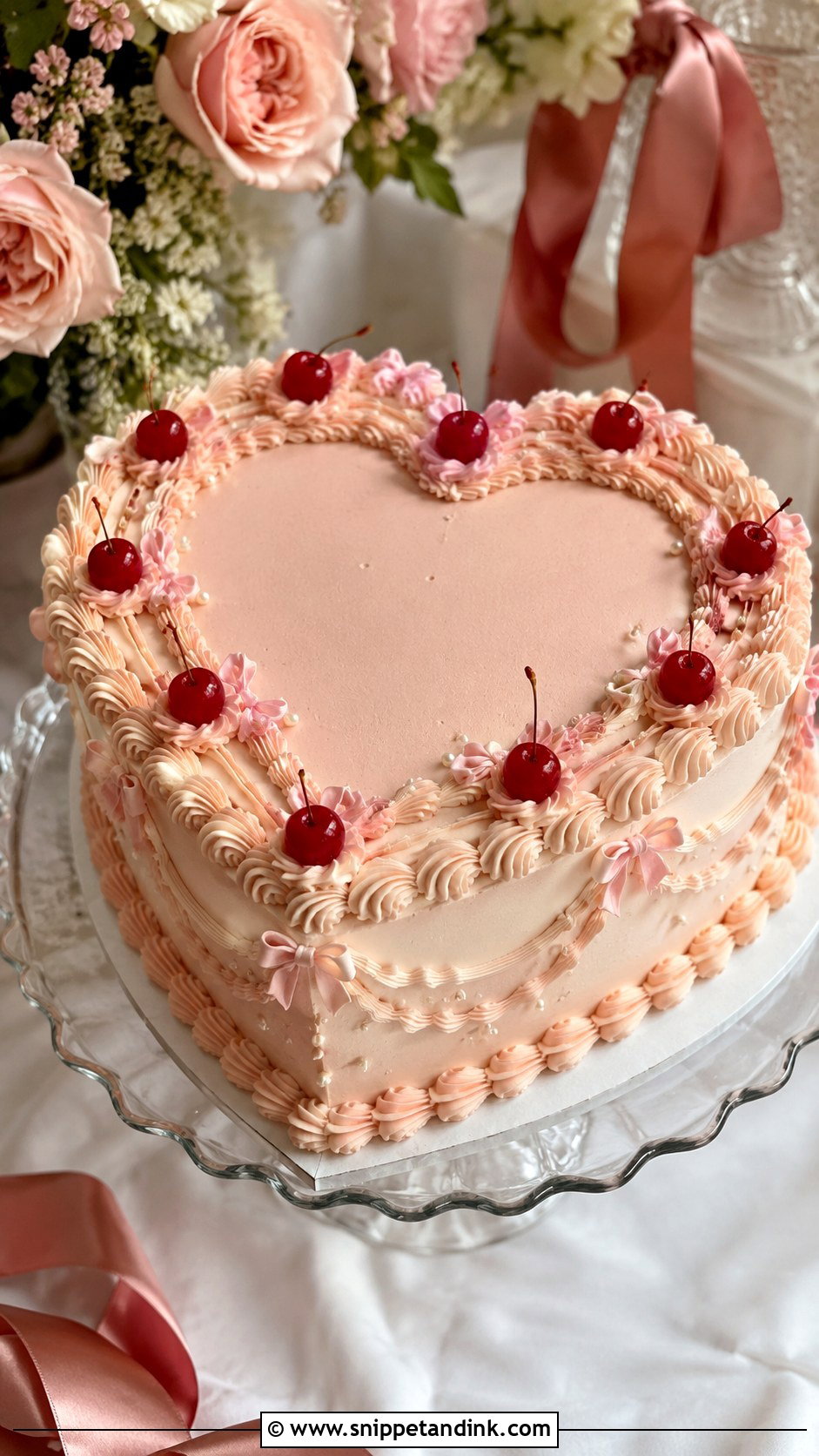
Heart cakes are trending again, often as a small cutting cake beside a larger dessert table. The shape pairs naturally with Lambeth piping, ruffled borders, cherries, bows and pearls. I’d keep the colors restrained, white or soft pink, unless you want a deliberately kitsch look; a red heart with heavy decoration can tip into Valentine’s Day very quickly. It’s a sweet fit for courthouse ceremonies and intimate weddings.
14. Tall Wedding Cake
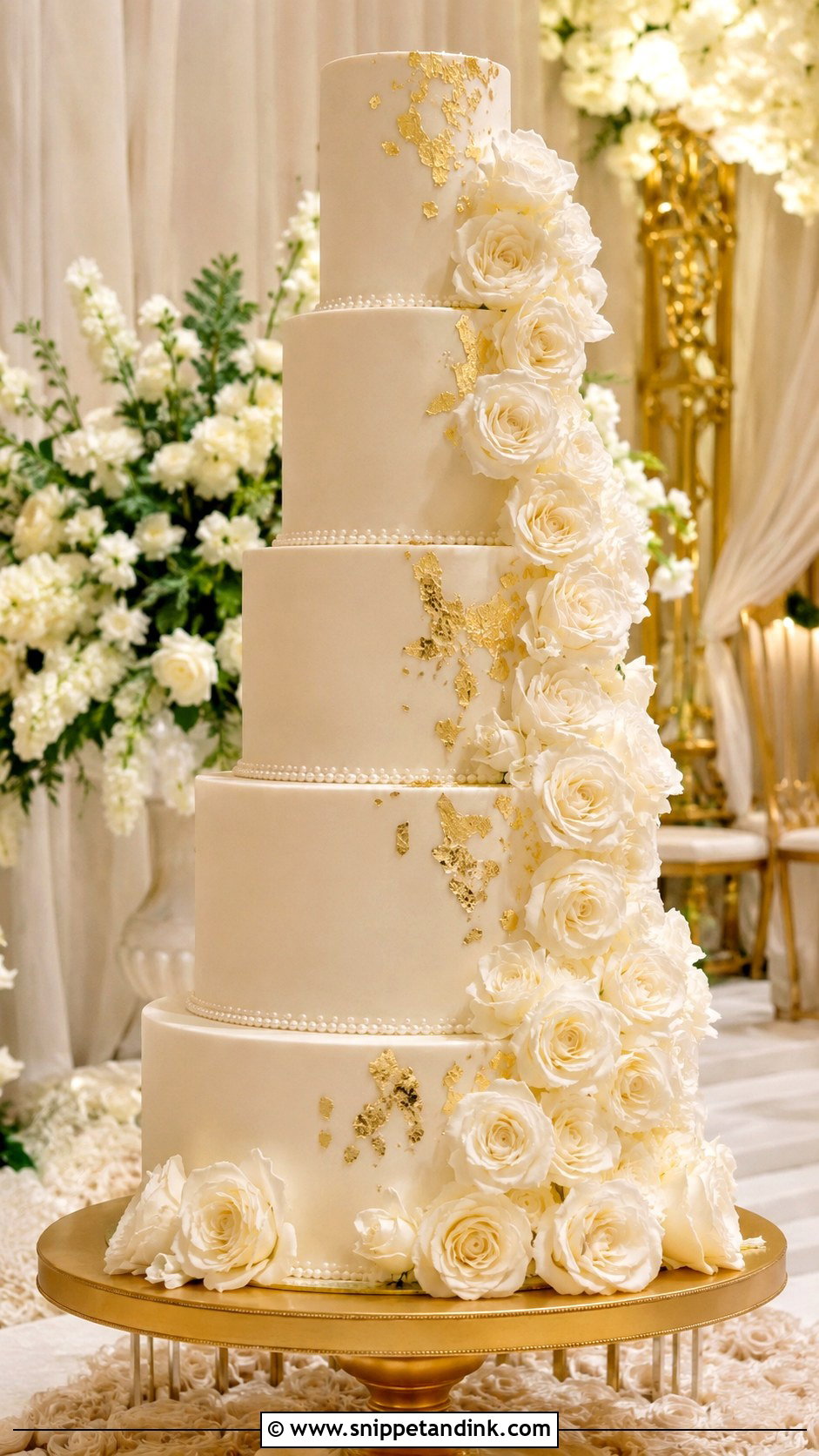
Height reads from across a big ballroom in a way width never will. Tall cakes can be all real tiers, all dummy (styrofoam) tiers, or a mix, which lets you build height without paying for cake nobody eats. I support every real tier with dowels and a cake board, and the cake must be assembled at the venue past a certain height, since it won’t survive a car ride stacked. Make sure the table is sturdy and level before the cake arrives.


15. Single Tier Wedding Cake
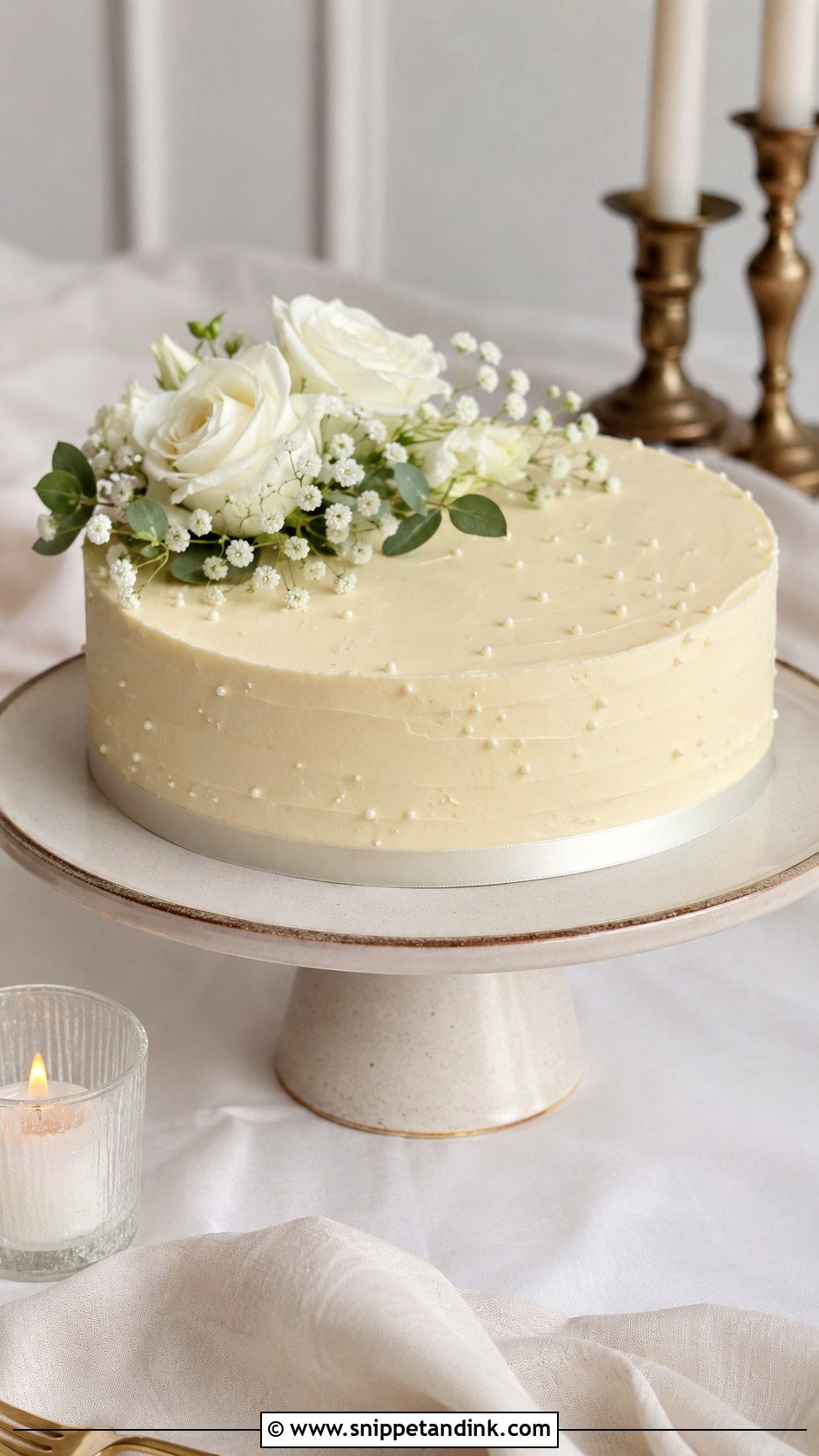
A single tier is enough when it’s styled with care. It suits elopements, micro weddings and couples serving other desserts. A wide, shallow tier feels modern; a taller, smaller round feels more intimate. With one tier, the finish carries everything, so I give it more decoration than I would one tier of a stacked cake. A raised stand and a few flowers or candles around it turn it into a proper wedding moment.
16. Sheet Wedding Cake
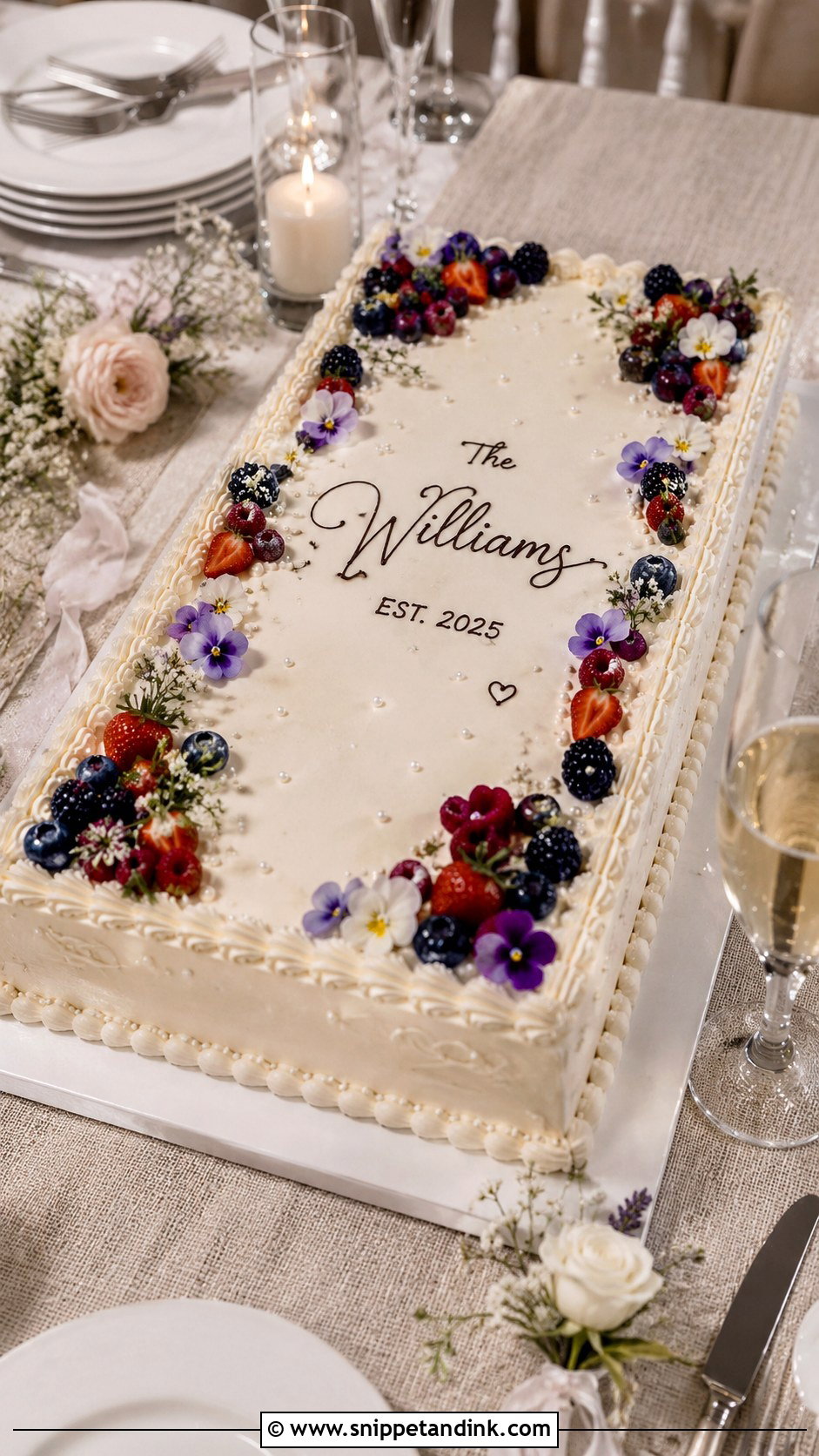
Sheet cakes are no longer hidden in the kitchen. Many couples now display a long rectangular cake as part of the table design at family-style dinners. It slices into neat, generous portions, which makes service fast. The large flat surface shows every flaw, so I focus on neat frosting and piped borders, then decorate with fruit, edible flowers or delicate writing. It’s the most cost-efficient way to feed a big crowd.
17. Watercolor Wedding Cake
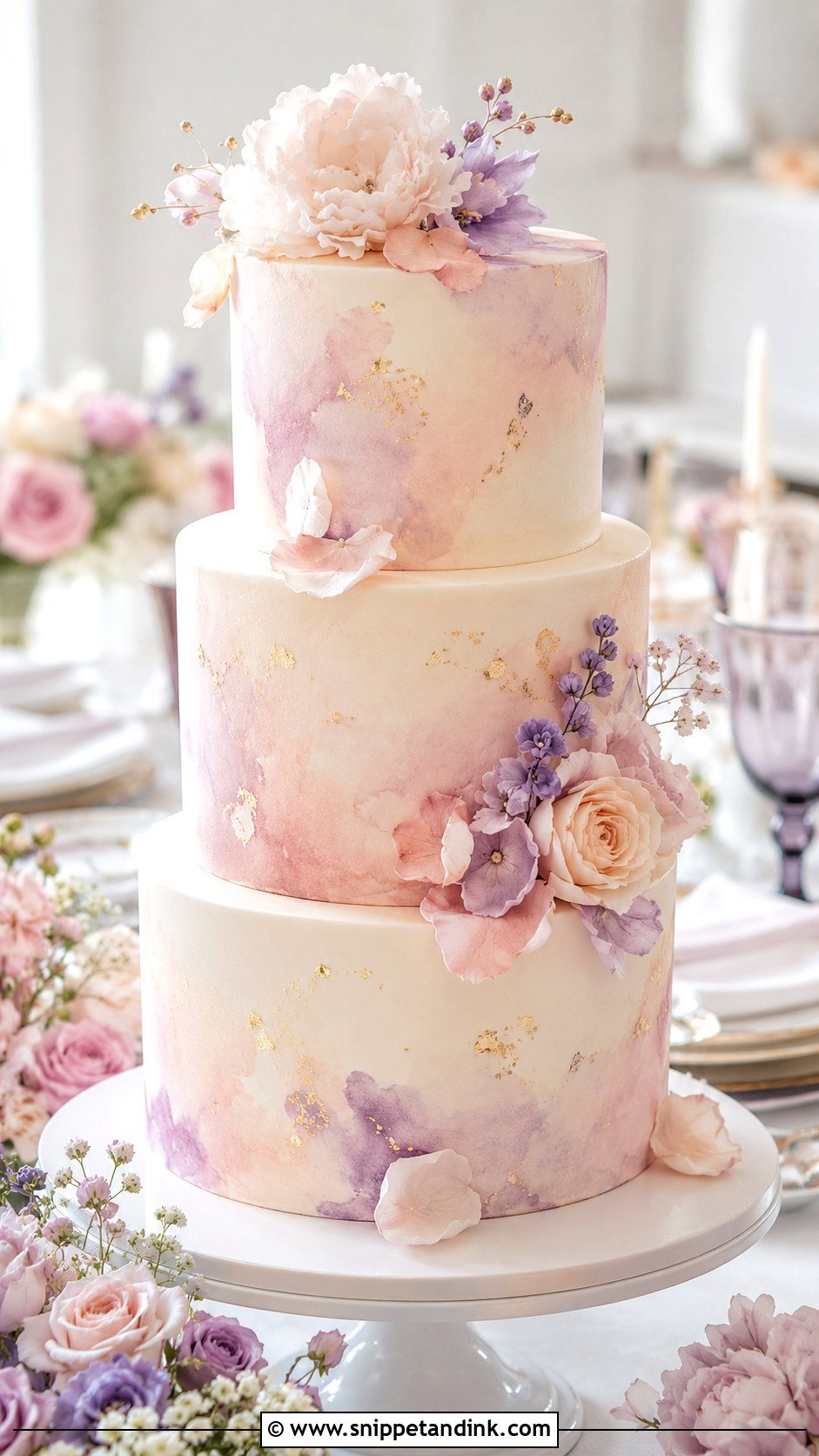
The watercolor effect is painted by hand, using thinned food color brushed and blended on smooth buttercream or fondant. Blush, blue, lavender, peach and sage all work, and the effect looks softer in buttercream. I always test the colors under the lighting I expect at the reception, because a pale wash can disappear under warm tungsten bulbs. Keep decoration light so the painted surface stays visible.
18. Gold Wedding Cake
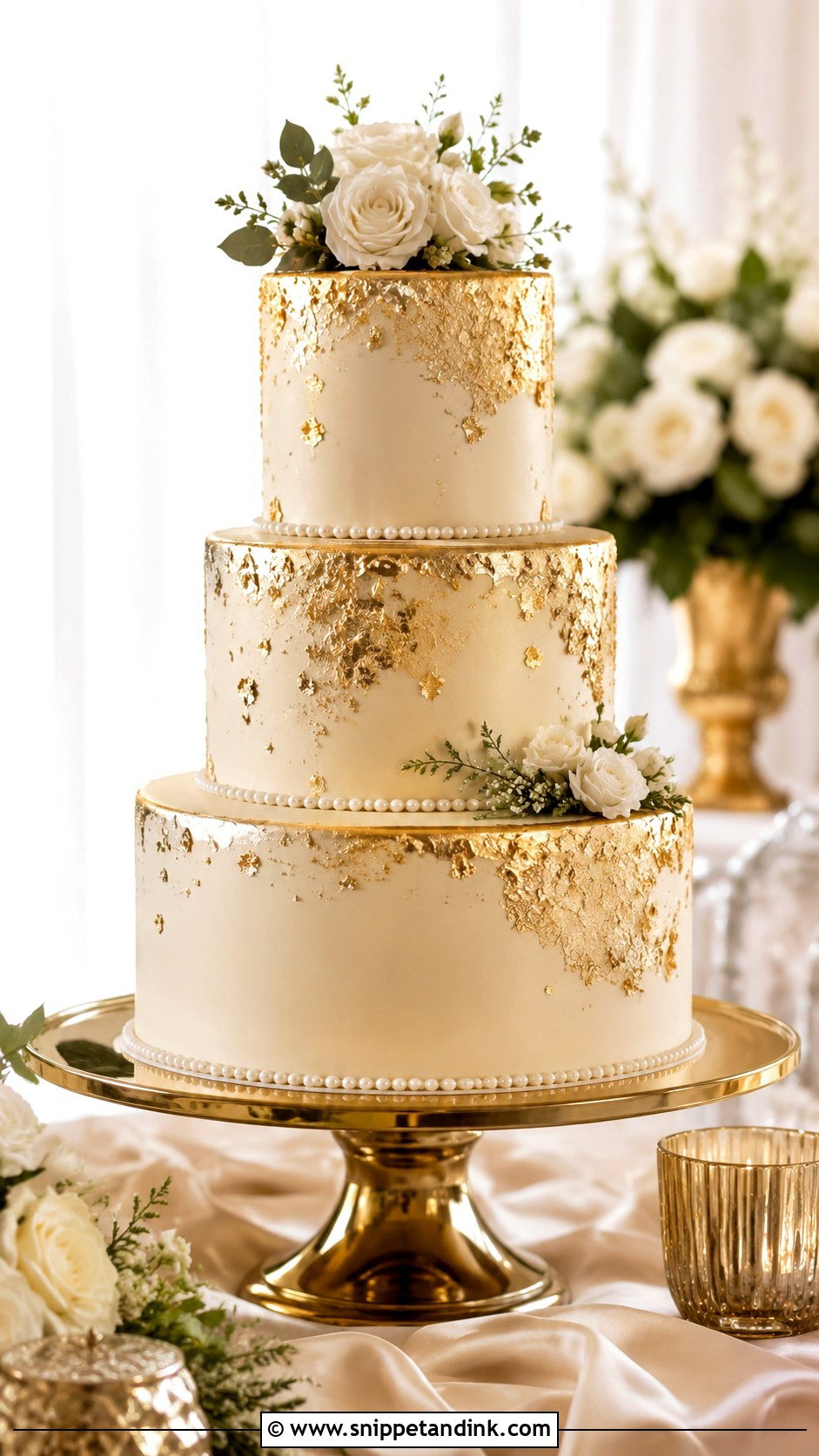
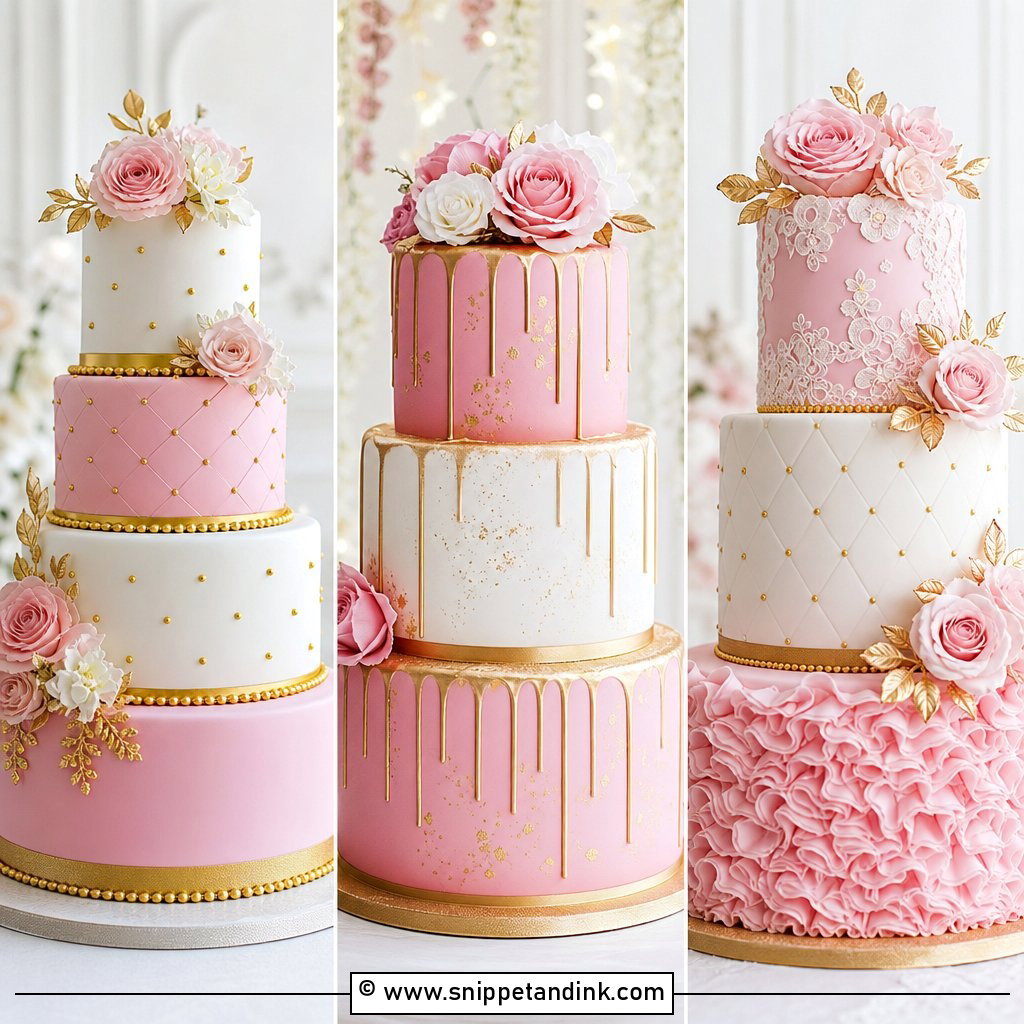
Gold works best as an accent: leaf on one tier, a painted edge, or thin lines between tiers. Covering the whole cake in gold tends to look heavy and flat in photos. Real edible gold leaf is fragile, so it’s applied last and it hates humidity, which can make it wrinkle or lift. Gold looks right with ivory, champagne, blush, emerald or black palettes. A few white flowers balance the shine.
19. Fruit Wedding Cake
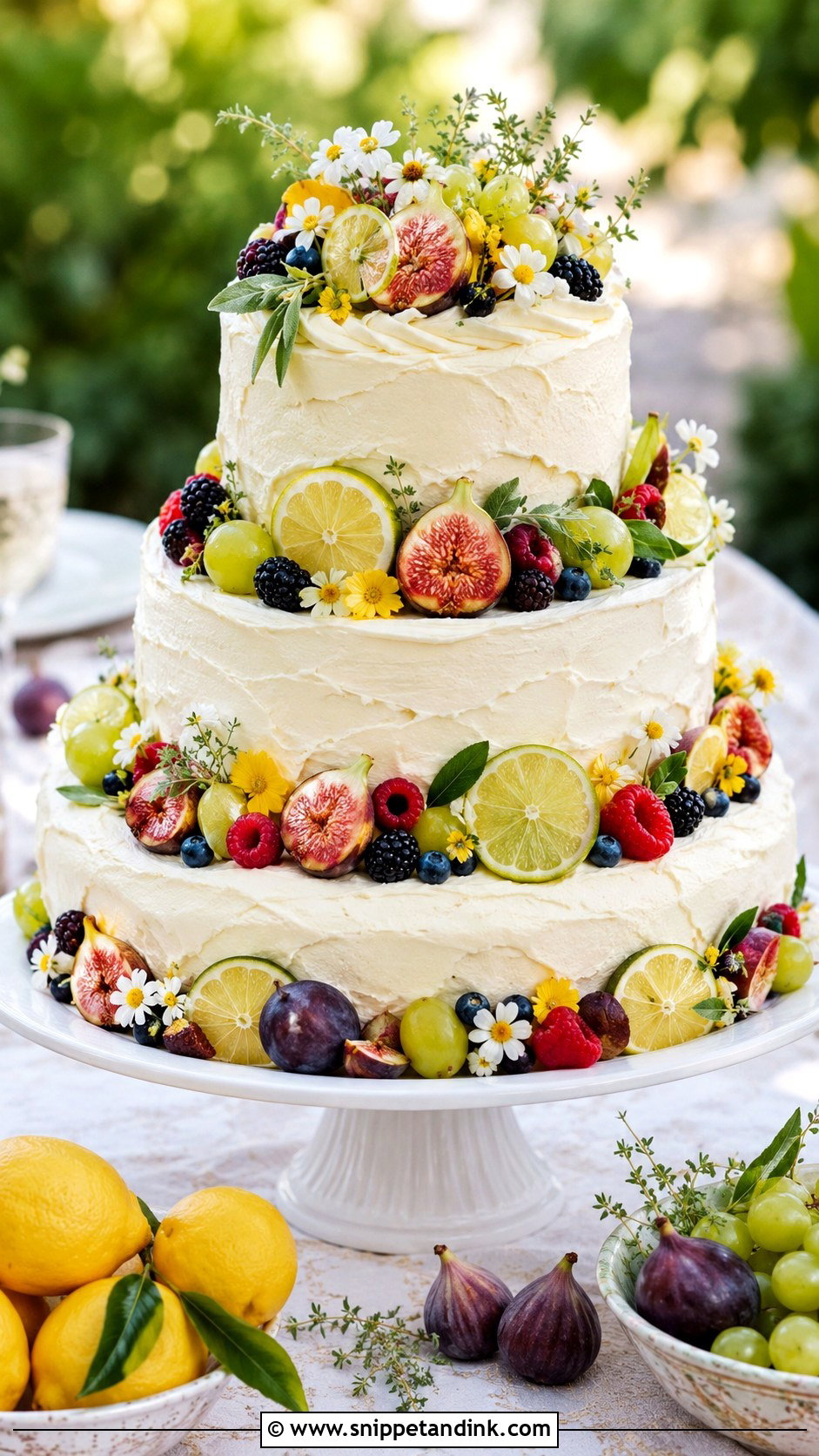
Fruit brings color and freshness, and it reads best at spring and summer receptions. Fresh berries, figs, citrus slices, cherries and stone fruit all work in season. Cut fruit weeps juice, so I glaze it and add it close to serving time, and I keep juicy fruit away from whipped cream frosting, which breaks down quickly. Lemon, almond and pistachio layers pair well. A few herbs or flowers break up the fruit.



20. Black And White Wedding Cake
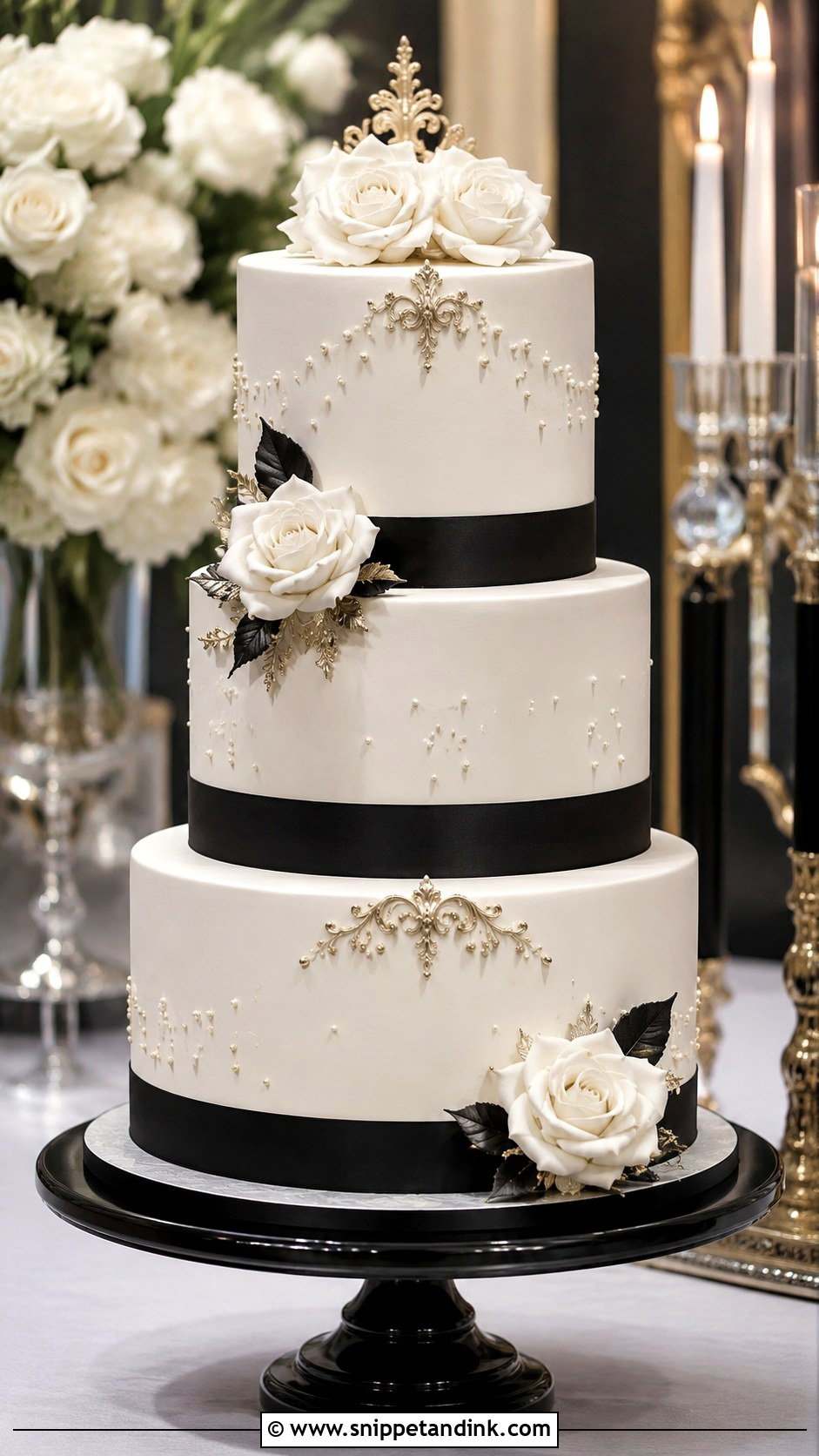
Black and white is all about contrast, so the cleanest version is the strongest. White tiers with black ribbon or a single black tier with white sugar flowers look sharp; mixing stripes, lace, monograms and polka dots on one cake gets busy fast. Black fondant is made with heavy coloring that can stain teeth and lips, so I often use it only on decorative or dummy tiers. Gold accents add warmth.
How Big Should Your Cake Be?
Most bakers count servings as a slim wedding slice, roughly one inch wide and two inches across the top. Cut that way, approximate servings for standard four-inch-tall round tiers look like this:
- 6-inch tier: about 12 slices
- 8-inch tier: about 24 slices
- 10-inch tier: about 38 slices
- 12-inch tier: about 56 slices
So a classic 6, 8 and 10-inch three-tier cake feeds around 70 guests. If you want a taller cake than your guest list needs, add a dummy tier and serve from the real ones. If you want a smaller display cake, a sheet cake can wait in the kitchen to fill the gap. Numbers vary by baker, so always confirm the chart they use.
Timing Your Order and Tasting
Busy bakers often book several months ahead, and Saturdays in peak season fill first. I’d reach out once you have a venue and a rough guest count, then book a tasting. Bring photos of your flowers, your colors and the room. The final design and number can usually be confirmed a few weeks before the date, and that’s when I ask about delivery access, the cake table and whether anyone at the venue will cut and serve.
Look at Your Saved Cakes and Spot the Pattern
The cake that looks best on a mood board isn’t always the one that fits your day. Before you meet a baker, pull up your saved cakes and look for what they share: is it height, texture, a color, or flowers? Bring that, along with your venue, season and guest count. Those details let a baker tell you which of these designs will hold up, and that’s how you end up with a cake that suits you.
You'll Like These Ideas:


Leave a Reply