
More of the couples who come to me now want one tier, not four. They still want the moment of cutting a real cake, but not the cost of a tall one feeding guests who’d rather have dessert from a table. A single tier can take almost any style: textured buttercream, sugar flowers, pearls, pressed blooms, soft color, an oval or square shape. It suits elopements, courthouse weddings, backyard receptions and micro weddings. What separates a good small cake from one that looks like an afterthought is proportion and finish, so for each idea below I’ve noted what I’d watch for while making it.
A Single Tier Can Stand Taller Than You’d Expect
Height is what makes a small cake read as a wedding cake rather than a birthday cake. The first thing I adjust is the cake itself: a standard tier is about 10 cm tall, but a taller tier, sometimes called a double barrel, can be twice that. A tall 6-inch tier looks far grander than a short 8-inch, and serves a similar number.
- A tall tier needs internal dowels and a board halfway up, or the weight of the top layers compresses the bottom.
- Put it on a pedestal stand; even a few centimetres of lift changes how it photographs.
- Match the stand to the decoration: glass for floral cakes, white ceramic for plain finishes, wood for rustic ones.
- Ask your planner to place the cake table against a plain wall, so the backdrop doesn’t swallow a small cake.
1. Small White Buttercream Wedding Cake
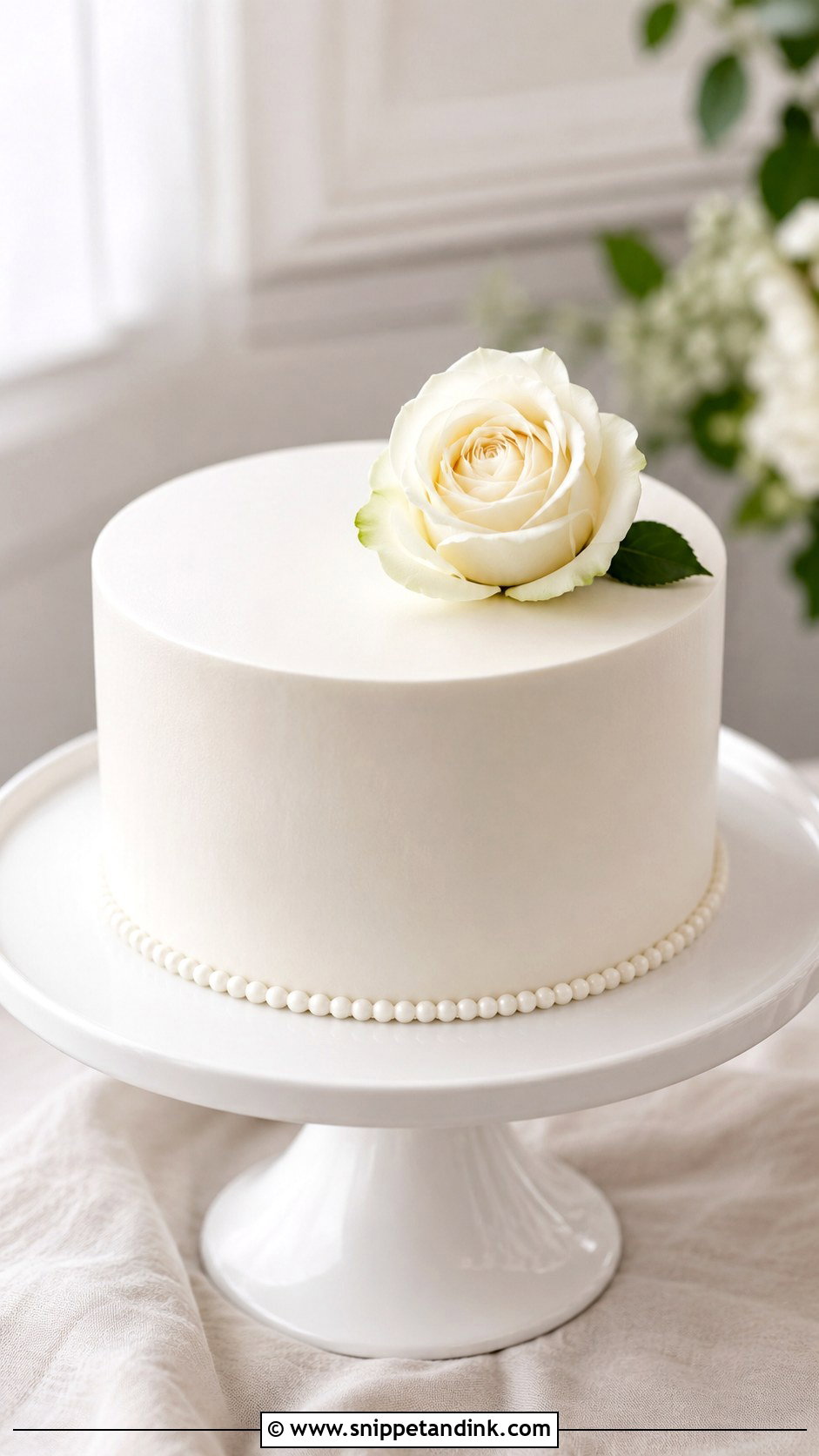
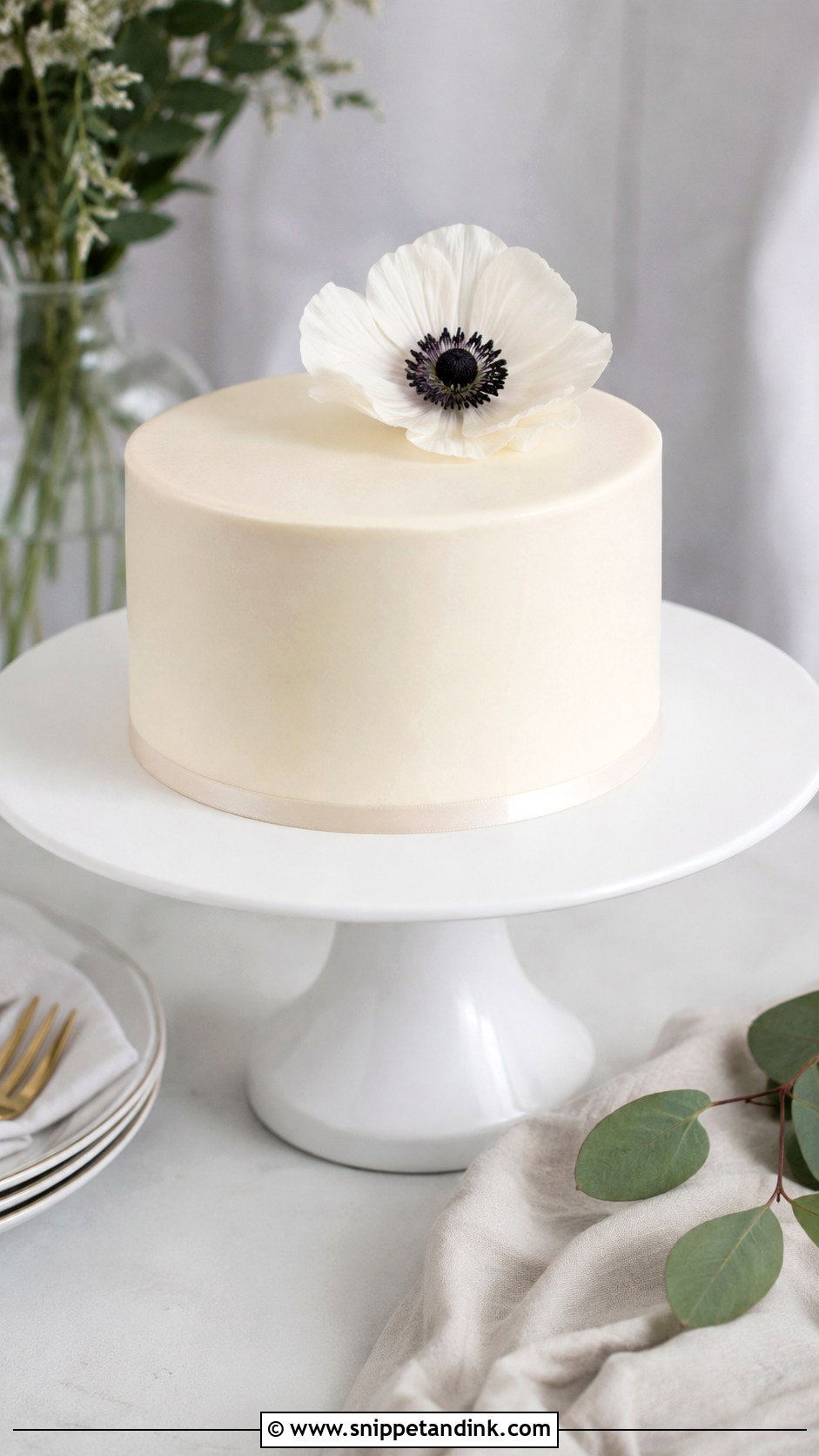
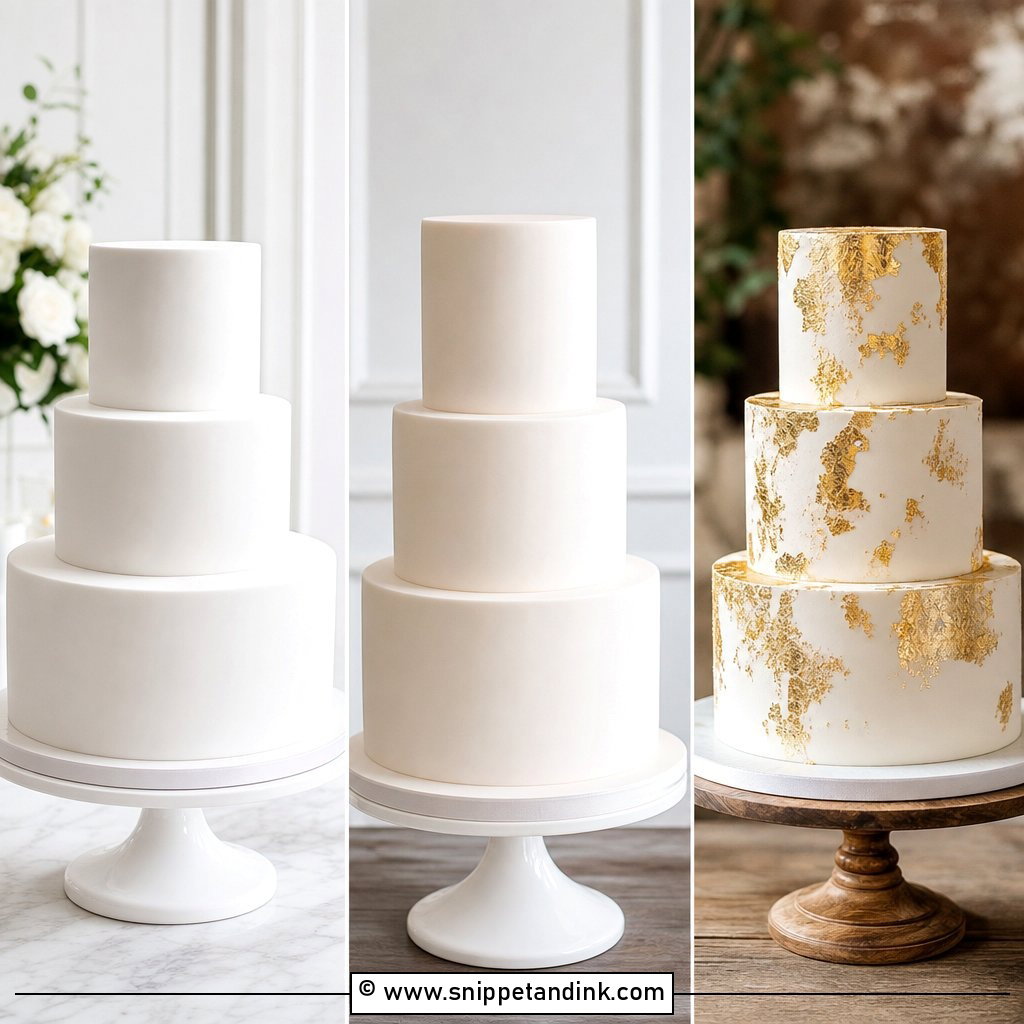
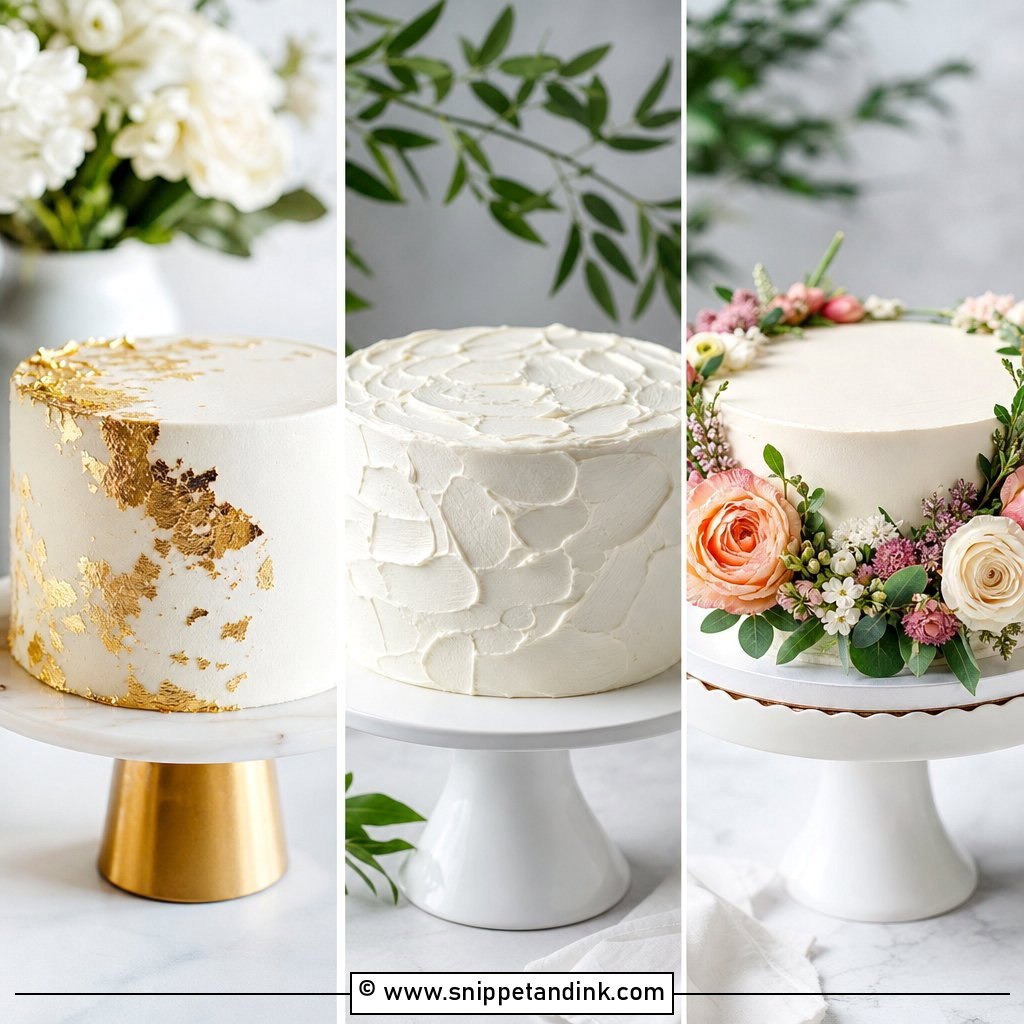
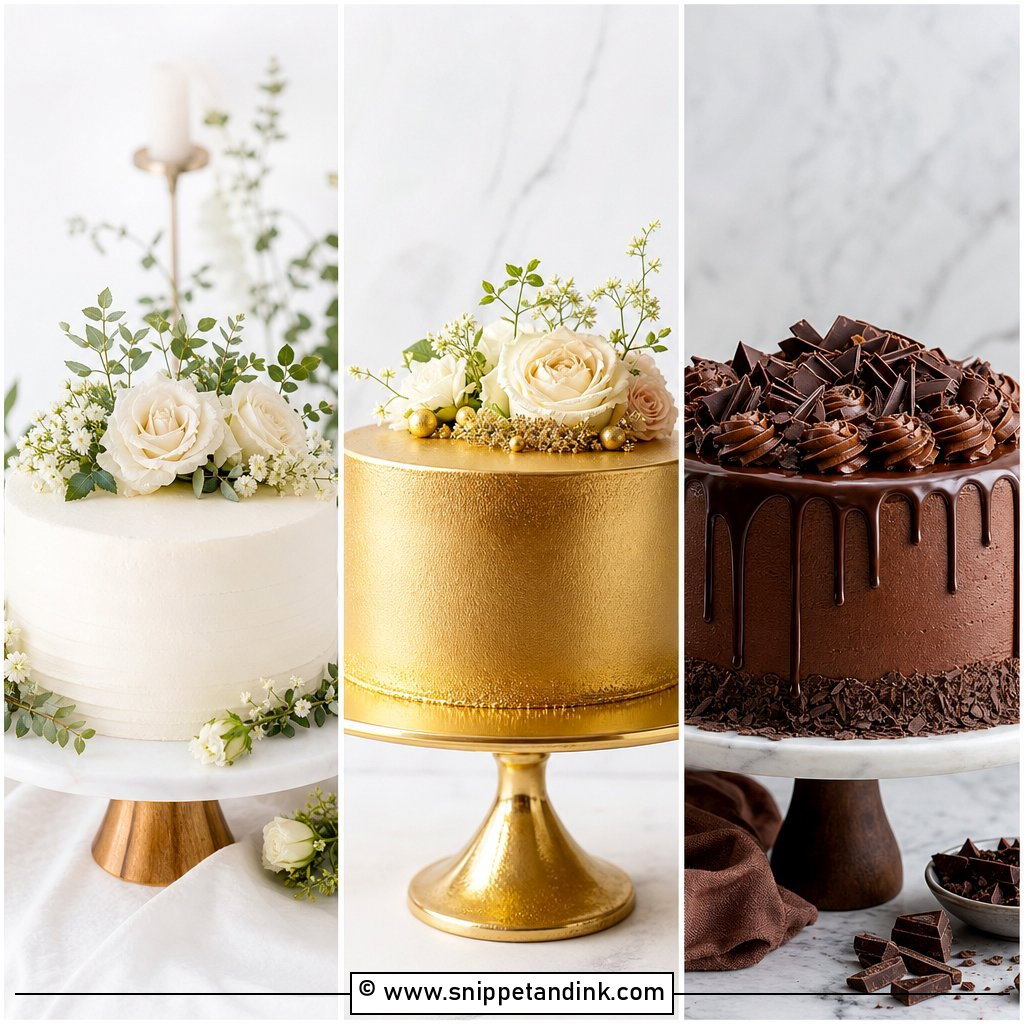
Plain white buttercream is where I’d start if you’re unsure. A 6-inch or 8-inch round on a pedestal stand looks finished with just a ribbon around the base or a ring of tiny buttercream pearls. With nothing to hide behind, the edges need to be sharp and the sides straight, so I chill between coats and finish with a hot scraper. It suits a garden, a church hall, a courthouse or a dinner. Vanilla, almond or lemon inside, and one flower or a small topper on top.
2. Small Floral Wedding Cake
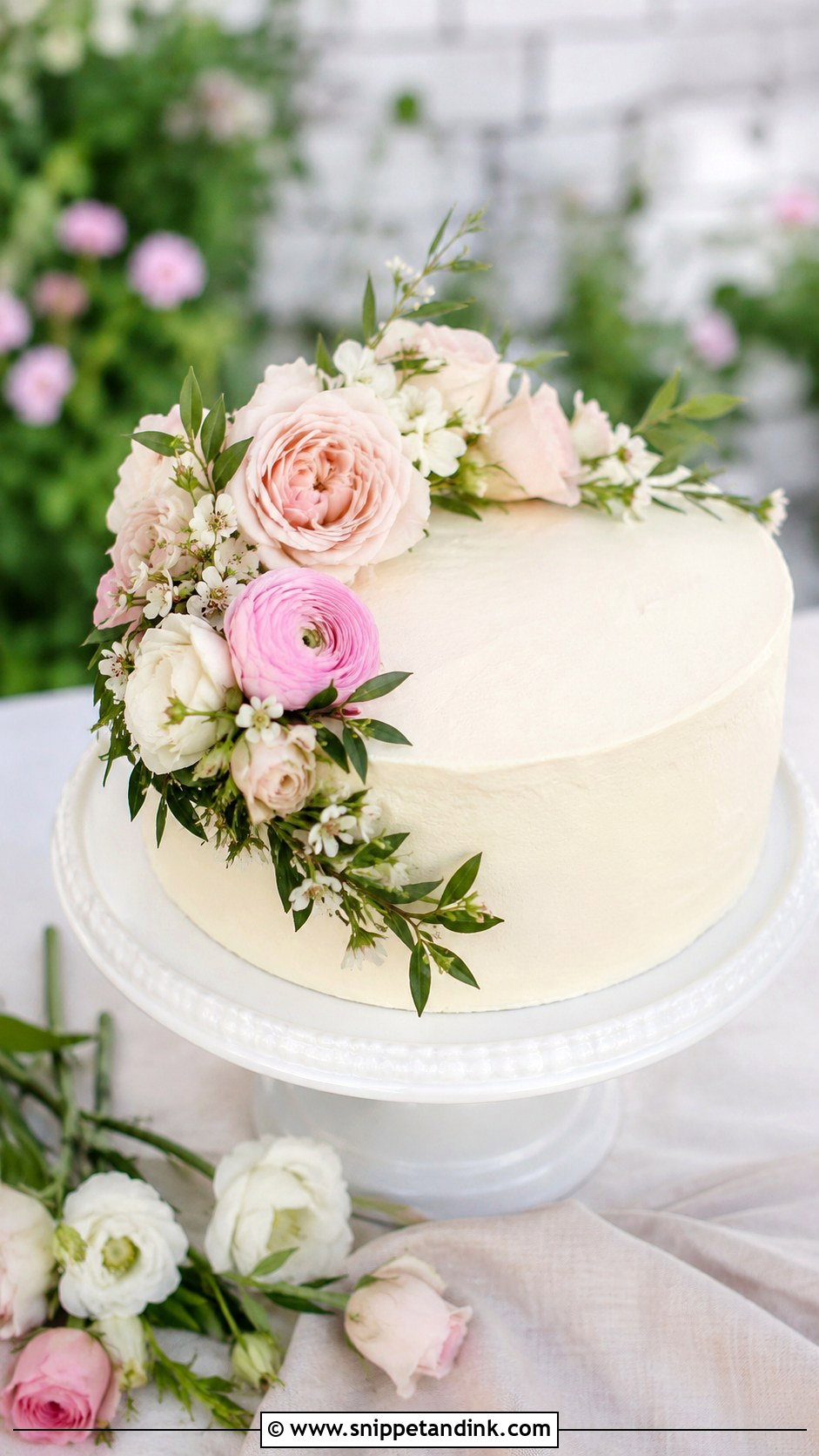
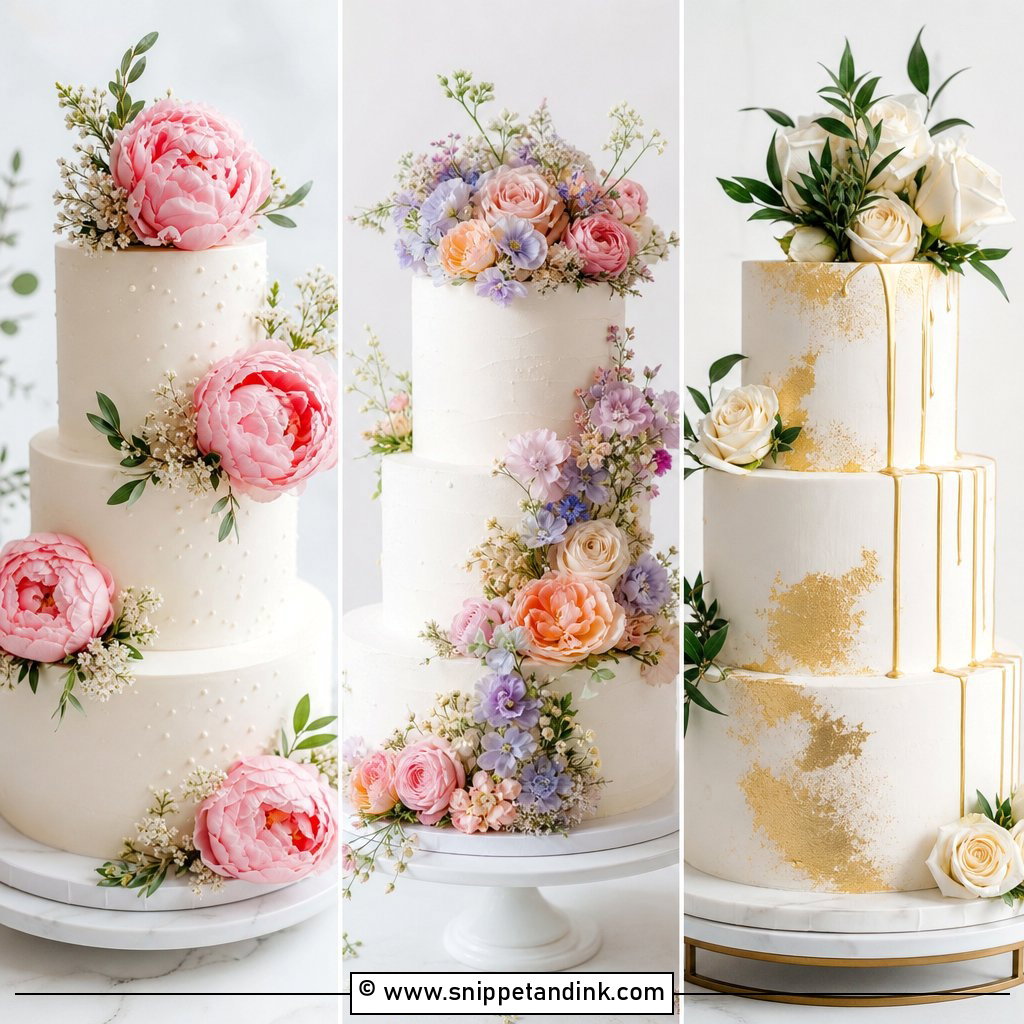
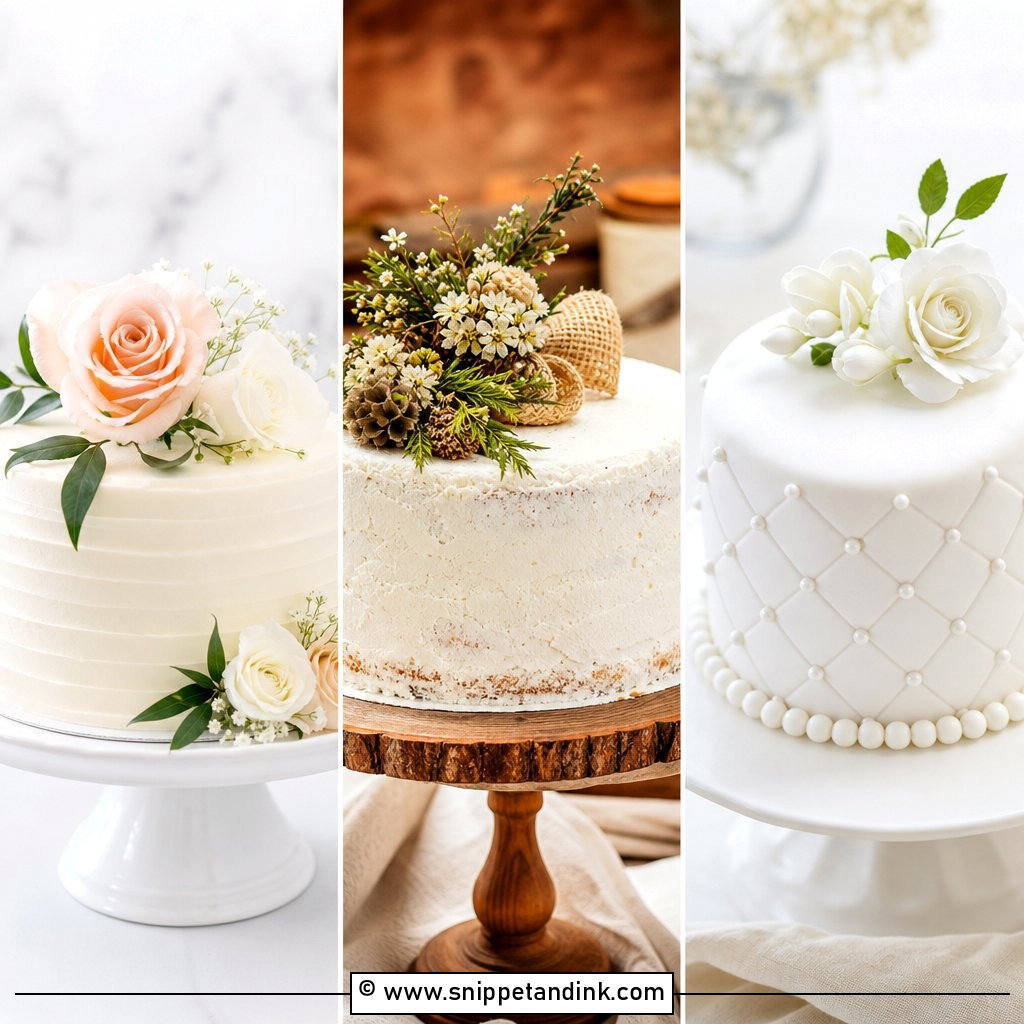
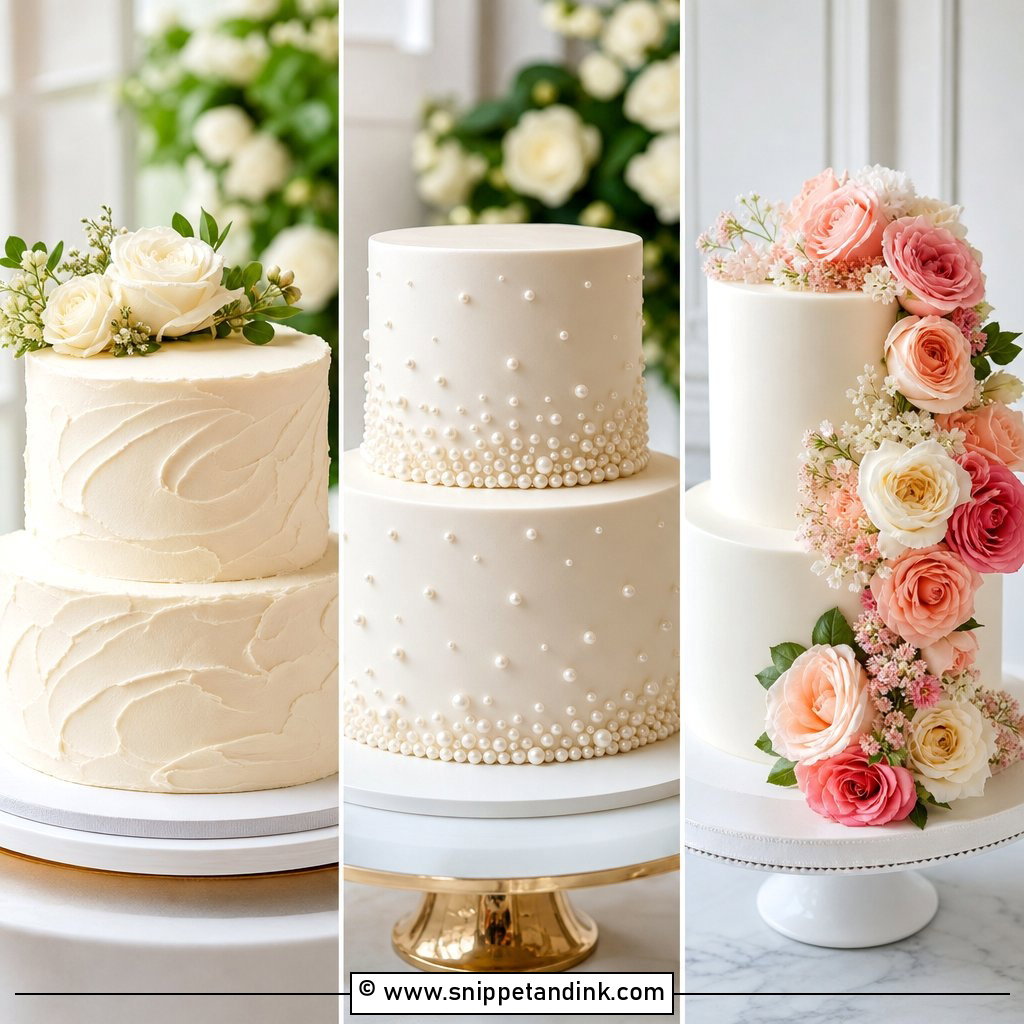
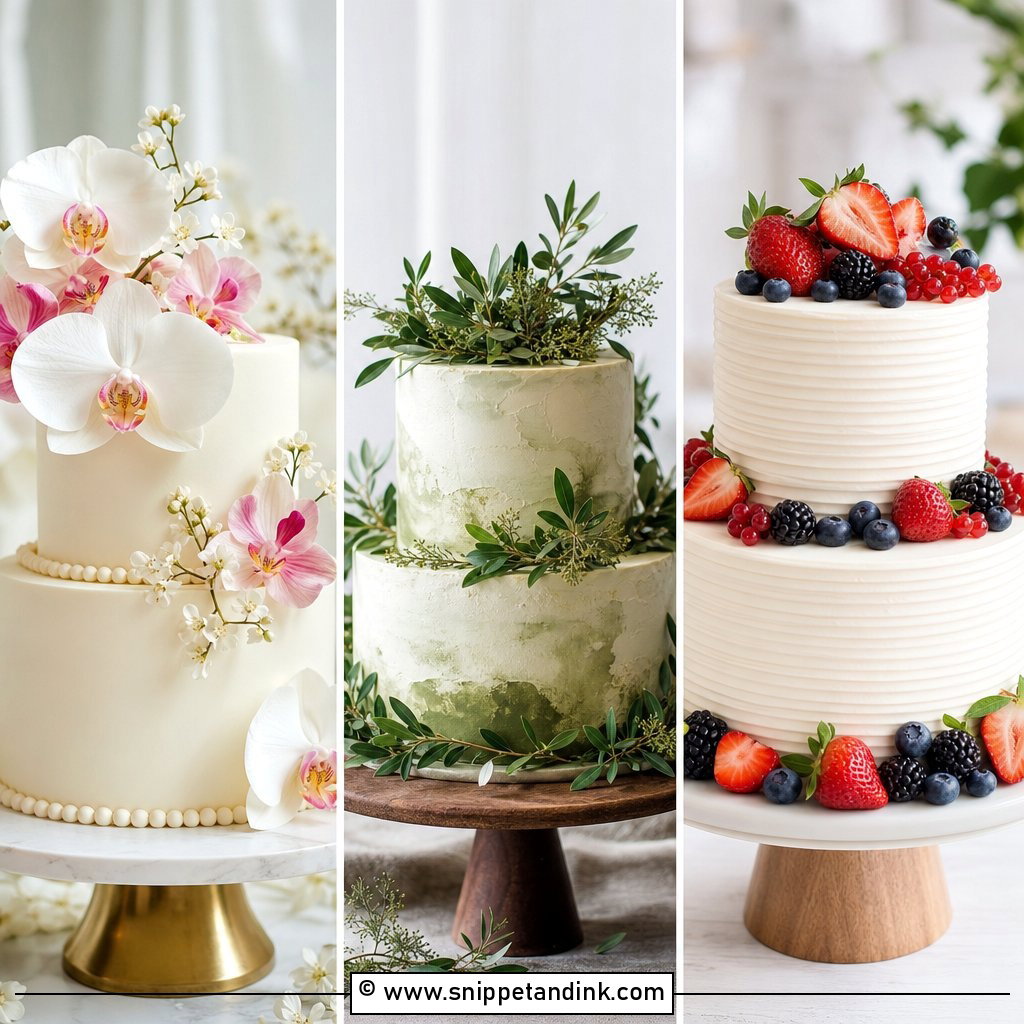
With flowers on a small cake, less is better. One cluster on the top edge, the side or the base looks deliberate; a full cover looks like the cake is hiding under a bouquet. Garden roses, ranunculus, spray roses and edible pansies all sit well on smooth white buttercream. Non-edible flowers need to be pesticide-free and kept off the sponge with wrapped stems or a small barrier, which your baker and florist should agree on in advance. Lemon raspberry, vanilla bean and almond keep the inside light.
3. Small Vintage Wedding Cake
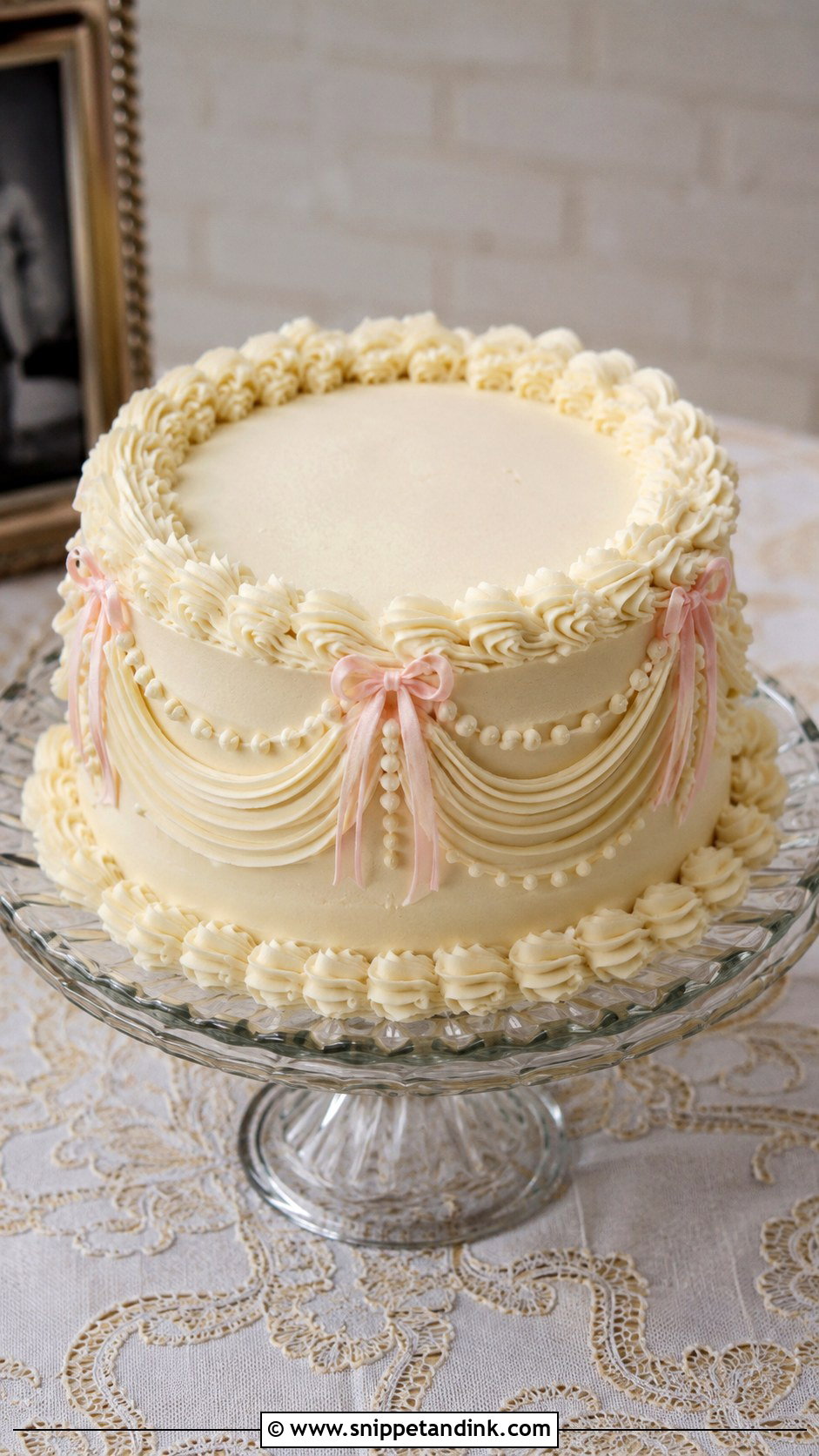
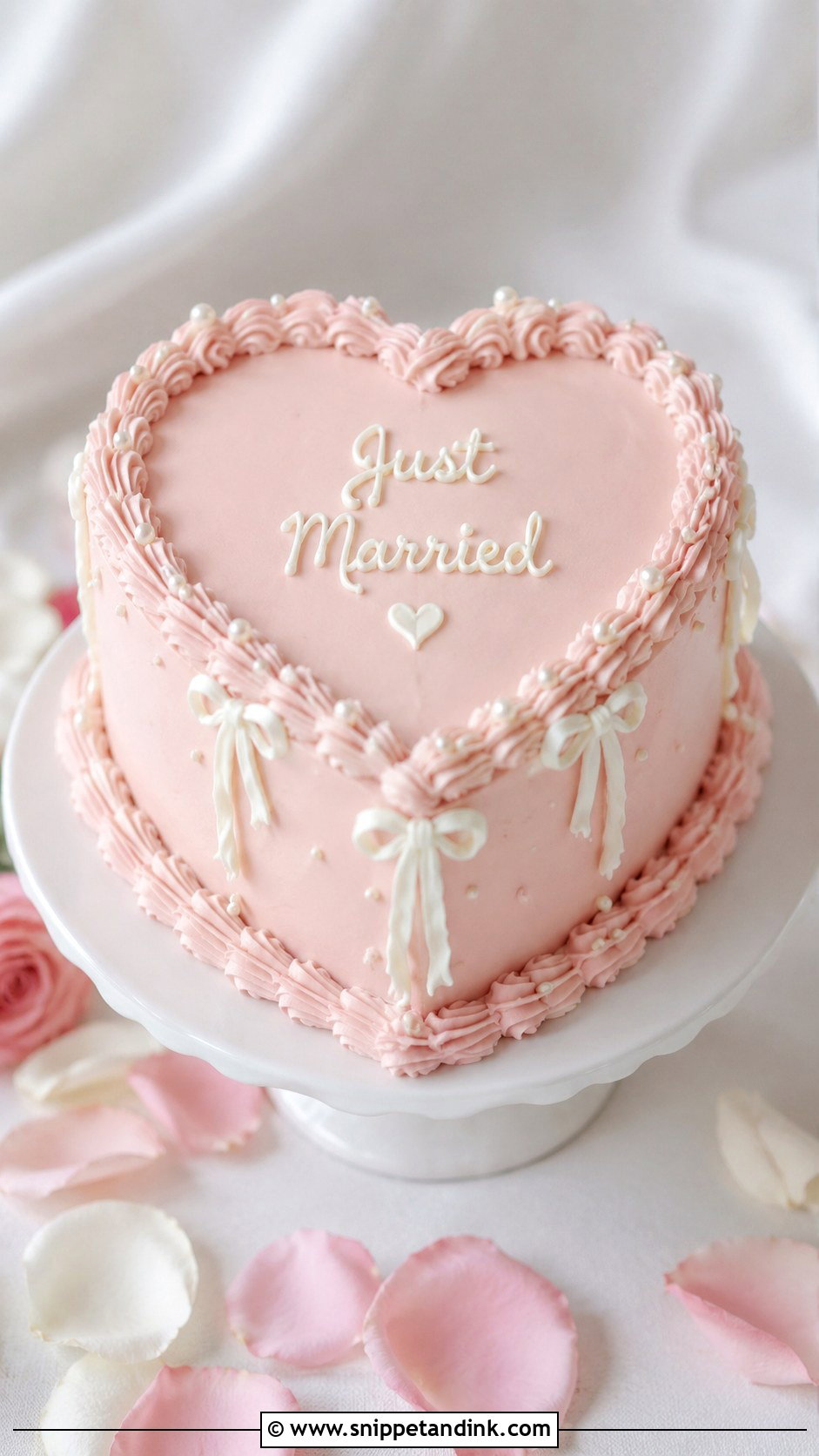
Piped borders, ruffles, shells and tiny buttercream details are what make a cake look vintage, and they scale down well. I pipe the top and bottom edges in layers on a chilled cake, then add bows, pearls or a piped heart. Pastels or white keep it elegant; too many colors make piping look busy. It fits a courthouse wedding, a tea party or retro-inspired celebrations. Vanilla, strawberry, almond and champagne cake all suit it.
4. Small Pearl Wedding Cake
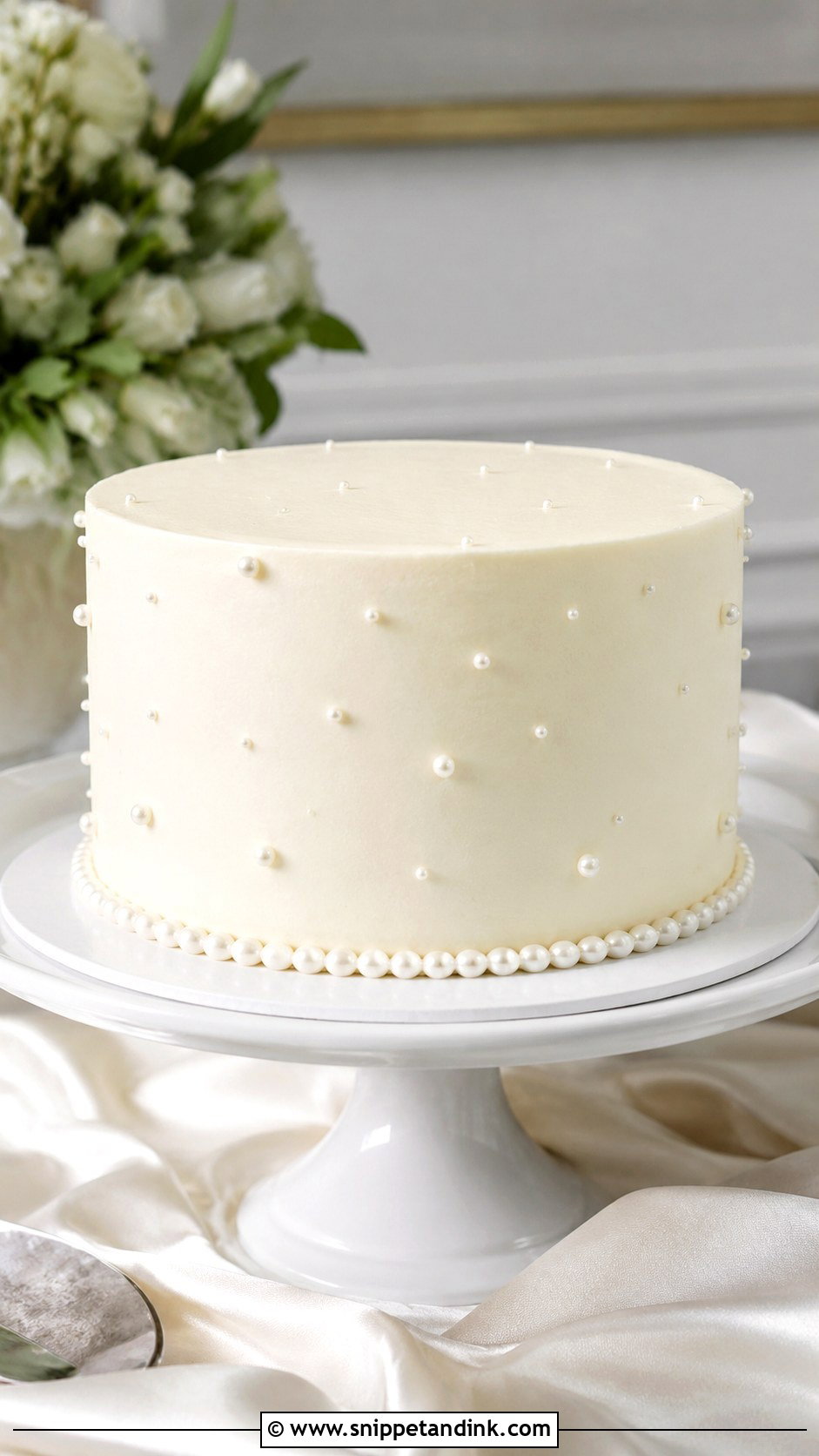
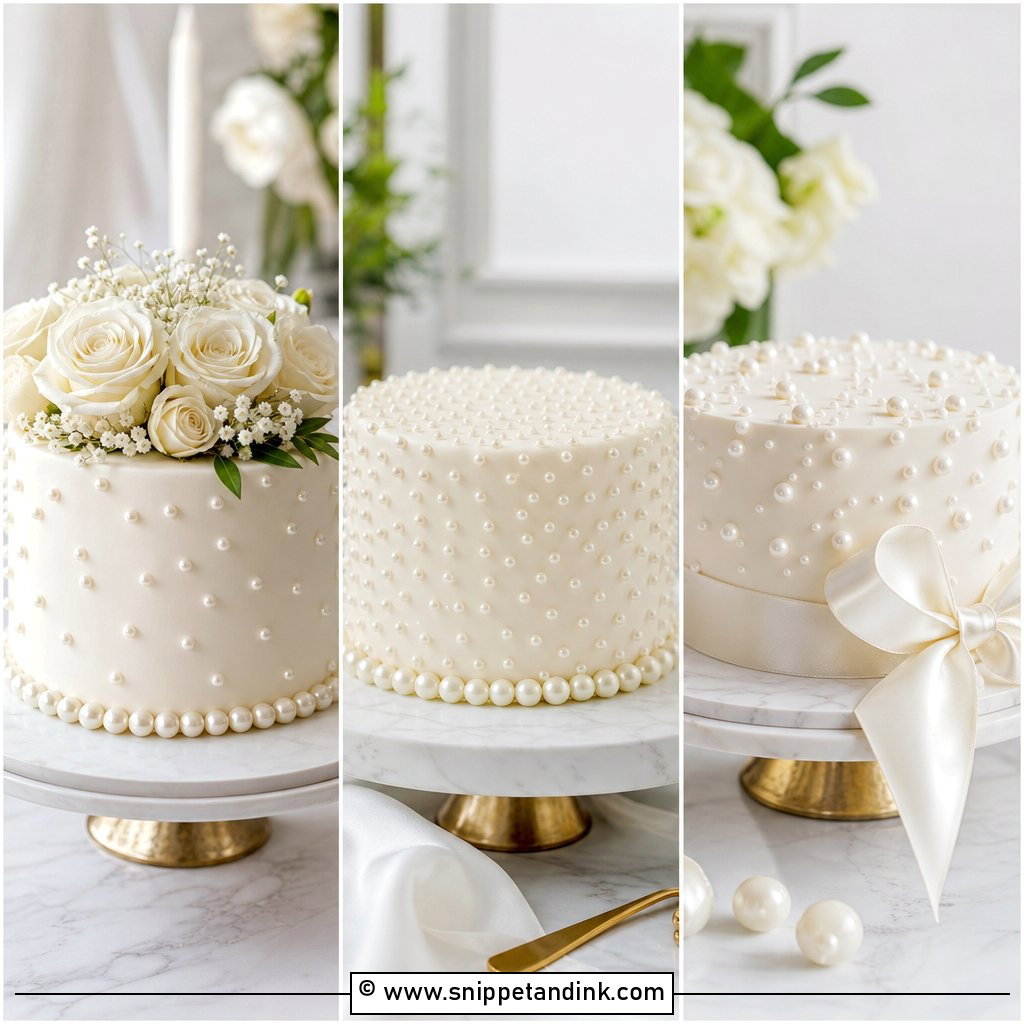
Pearls can be scattered, set in rows, or placed around the base like a necklace. If your dress, veil or shoes have pearl detail, this ties the cake to them. White or ivory keeps it classic; blush or pale blue softens it. I set each sugar pearl with tweezers while the buttercream is still slightly tacky, otherwise they roll off. Vanilla bean, coconut or almond sponge with Swiss meringue buttercream suits it.
5. Small Gold Leaf Wedding Cake
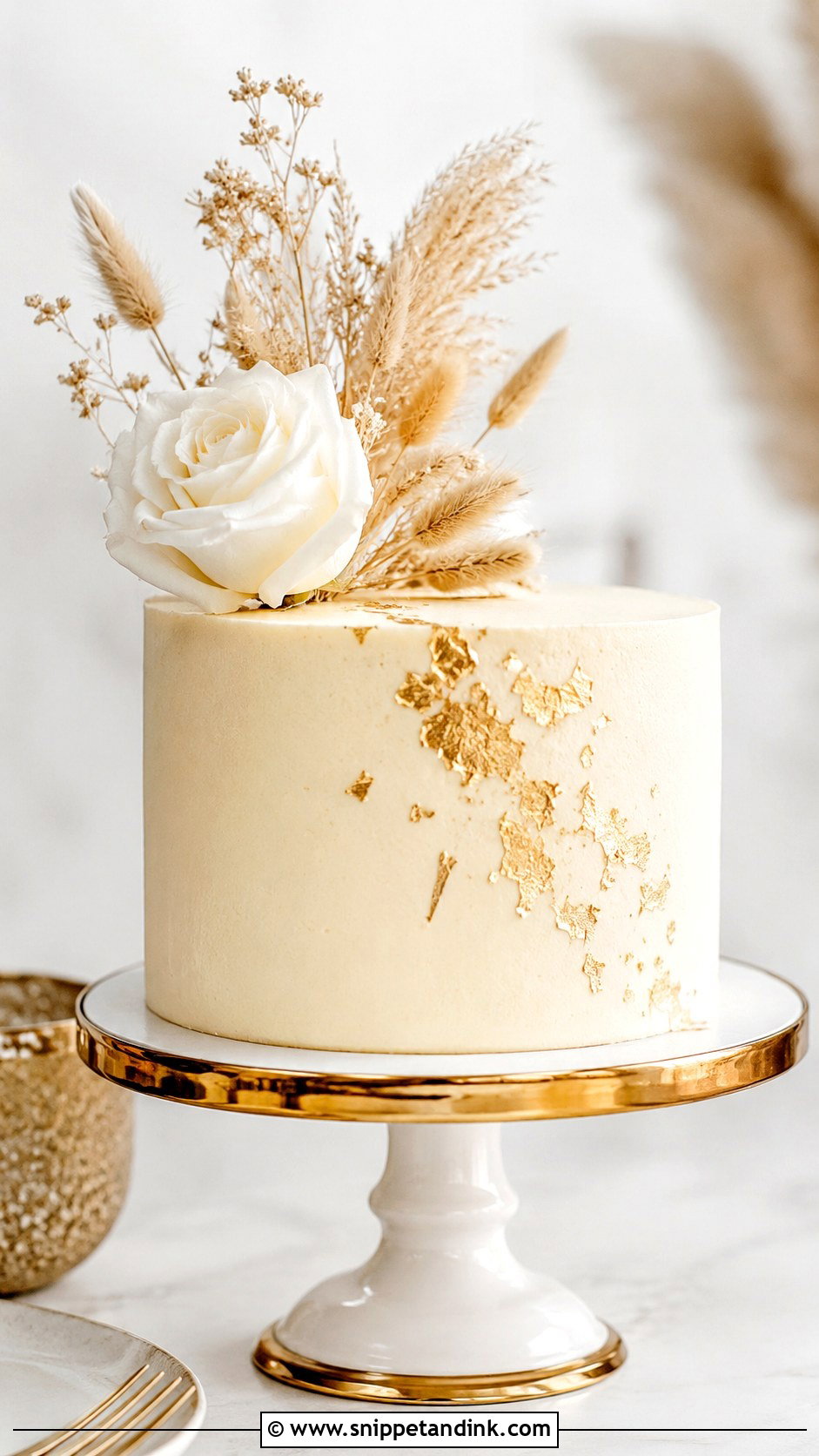
Gold leaf is real metal, beaten so thin it tears if you breathe on it. I apply it with a soft brush onto firm, chilled buttercream or fondant. A few irregular pieces on one side look artistic; a thin gold edge on top feels formal. It pairs with ivory, champagne, caramel or blush, and suits hotel weddings, autumn receptions and candlelit dinners. One white rose or a few dried grasses is enough decoration. Brown butter, vanilla caramel, honey almond or chocolate ganache are good flavors underneath.
6. Small Naked Wedding Cake
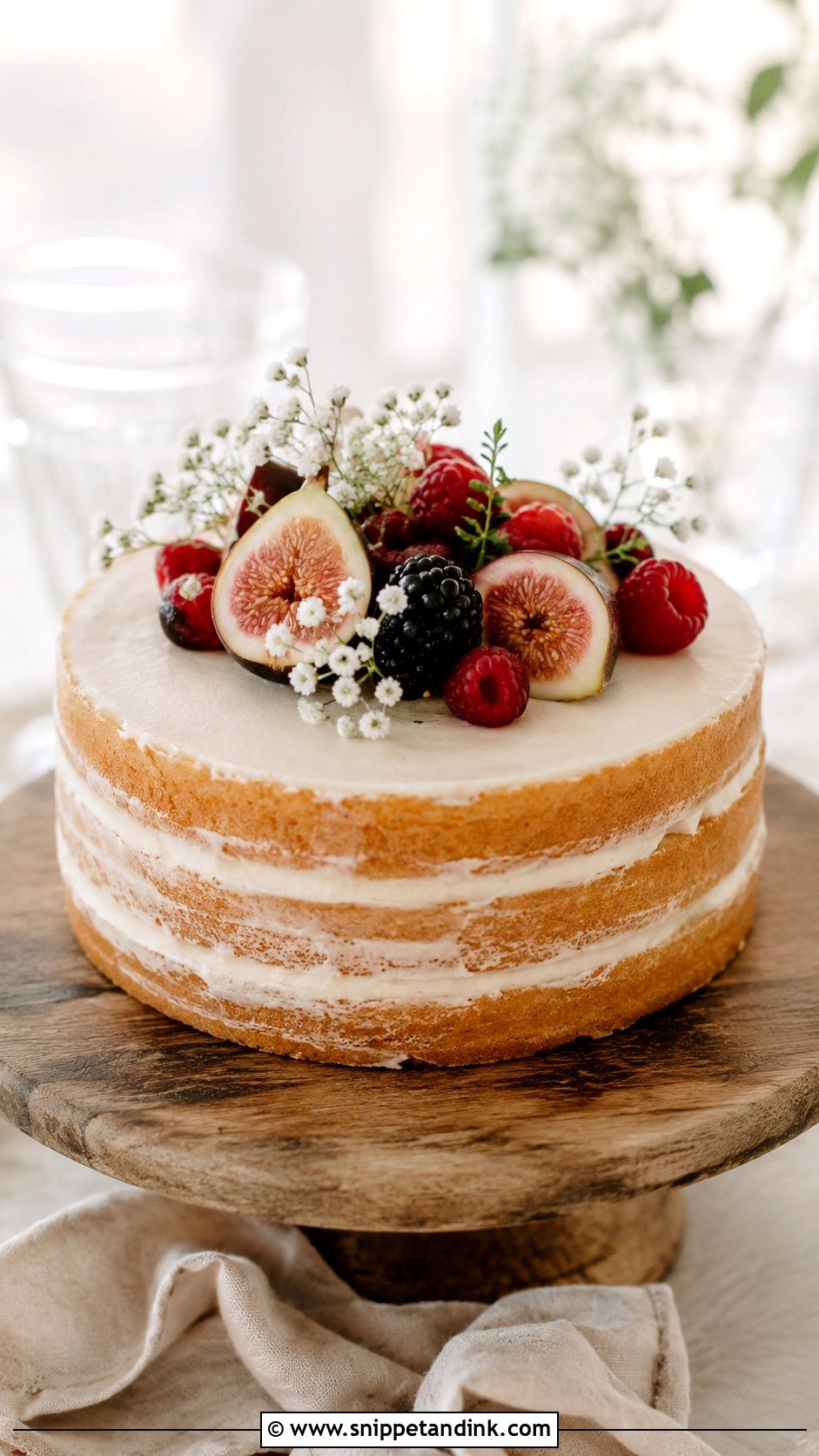
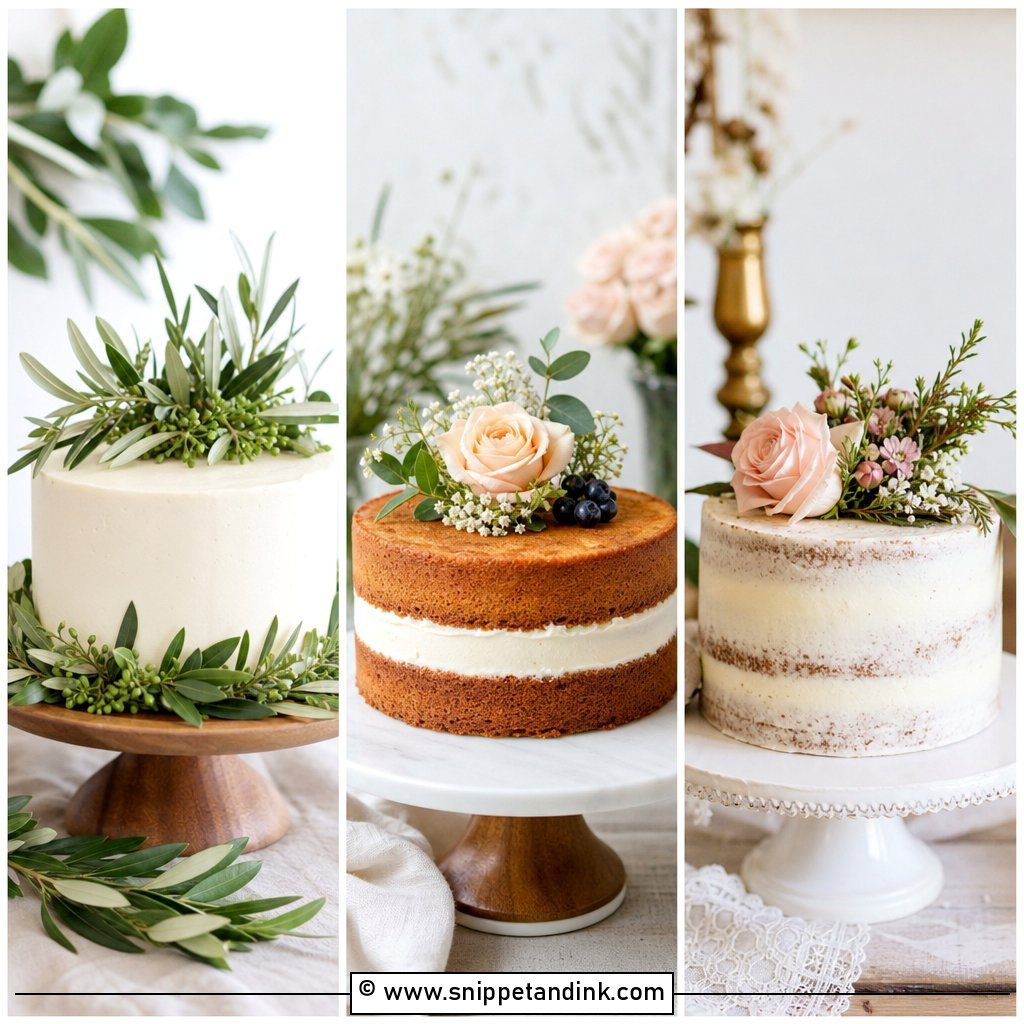
A naked cake shows its layers through a bare scrape of frosting, so the sponge has to look good. A vanilla sponge, almond, carrot or lemon cake all have attractive crumb color. Here’s the trade-off: unfrosted sides dry out faster, so I brush the layers with syrup and assemble as close to the event as possible. Top with berries, figs, herbs or small flowers. Barns, backyards and outdoor elopements suit it.
7. Small Semi Naked Wedding Cake
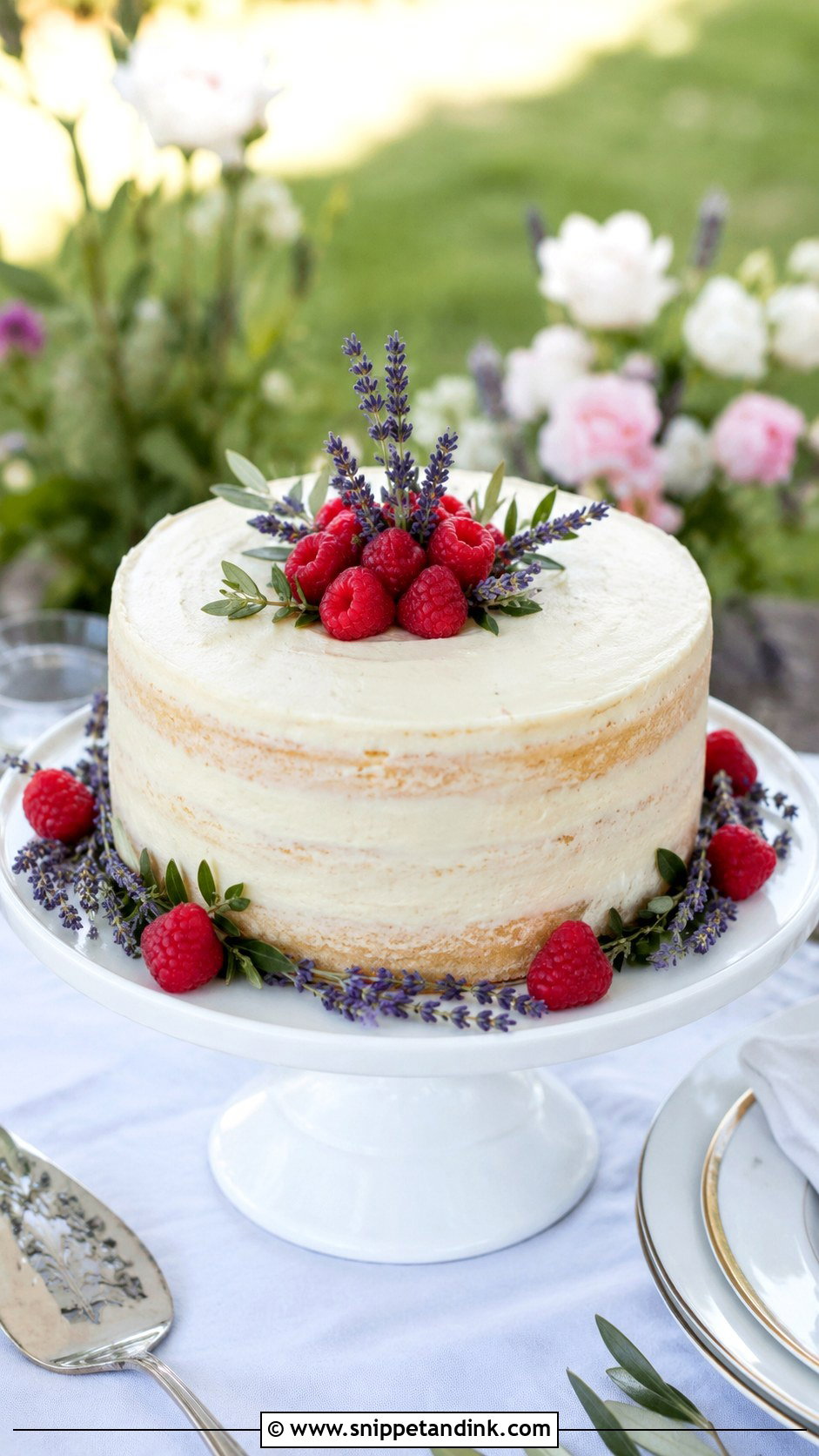
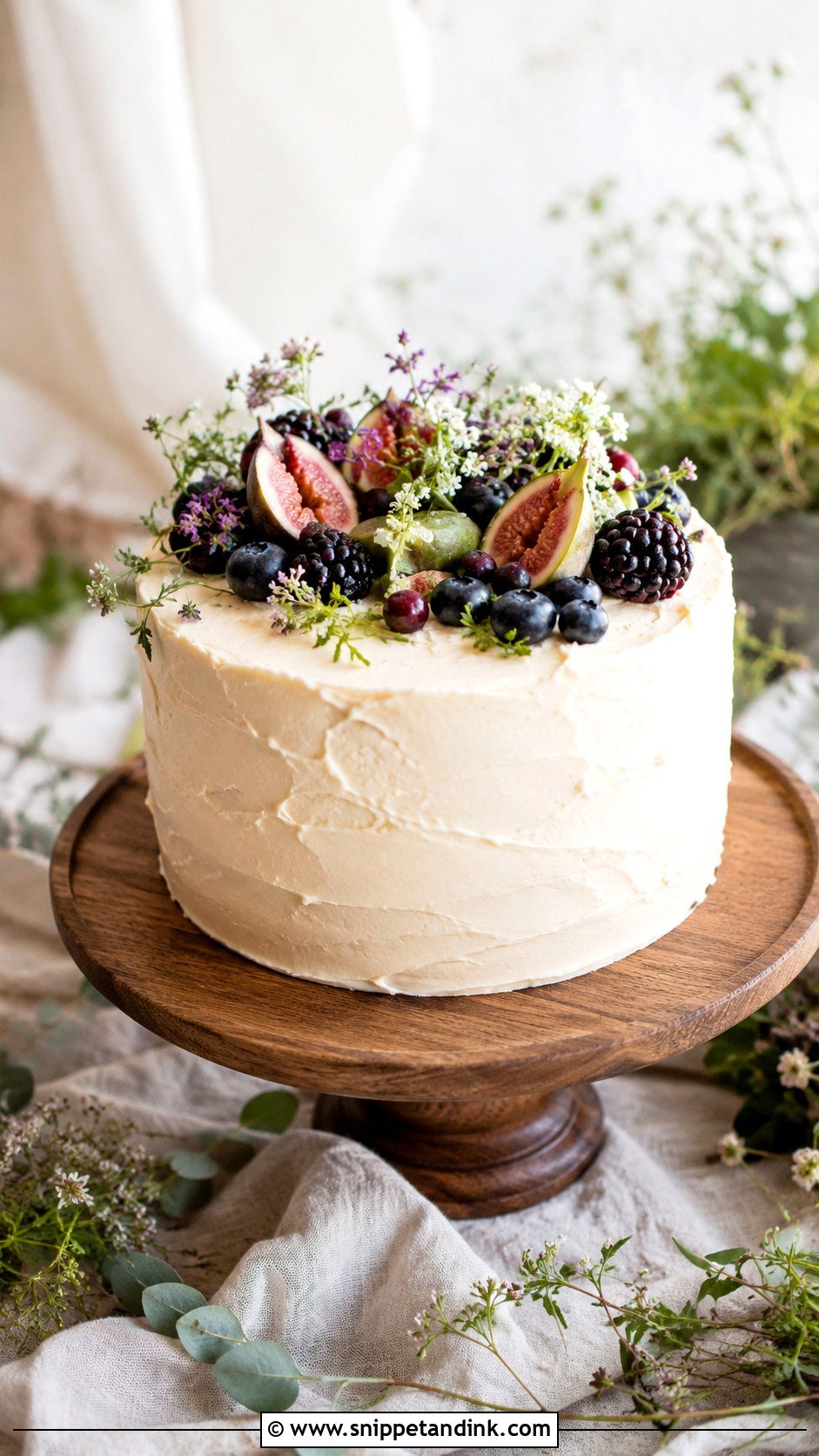
A small semi naked wedding cake has a thin coat of frosting that softens the sides while still letting the layers show. It holds moisture better than a fully naked cake and looks smoother in photos. Ivory buttercream, greenery and seasonal fruit suit it: berries and lavender in summer, figs, pears or caramel in autumn. Vanilla bean, lemon elderflower, spice and almond raspberry are popular flavors.
8. Small Textured Buttercream Wedding Cake
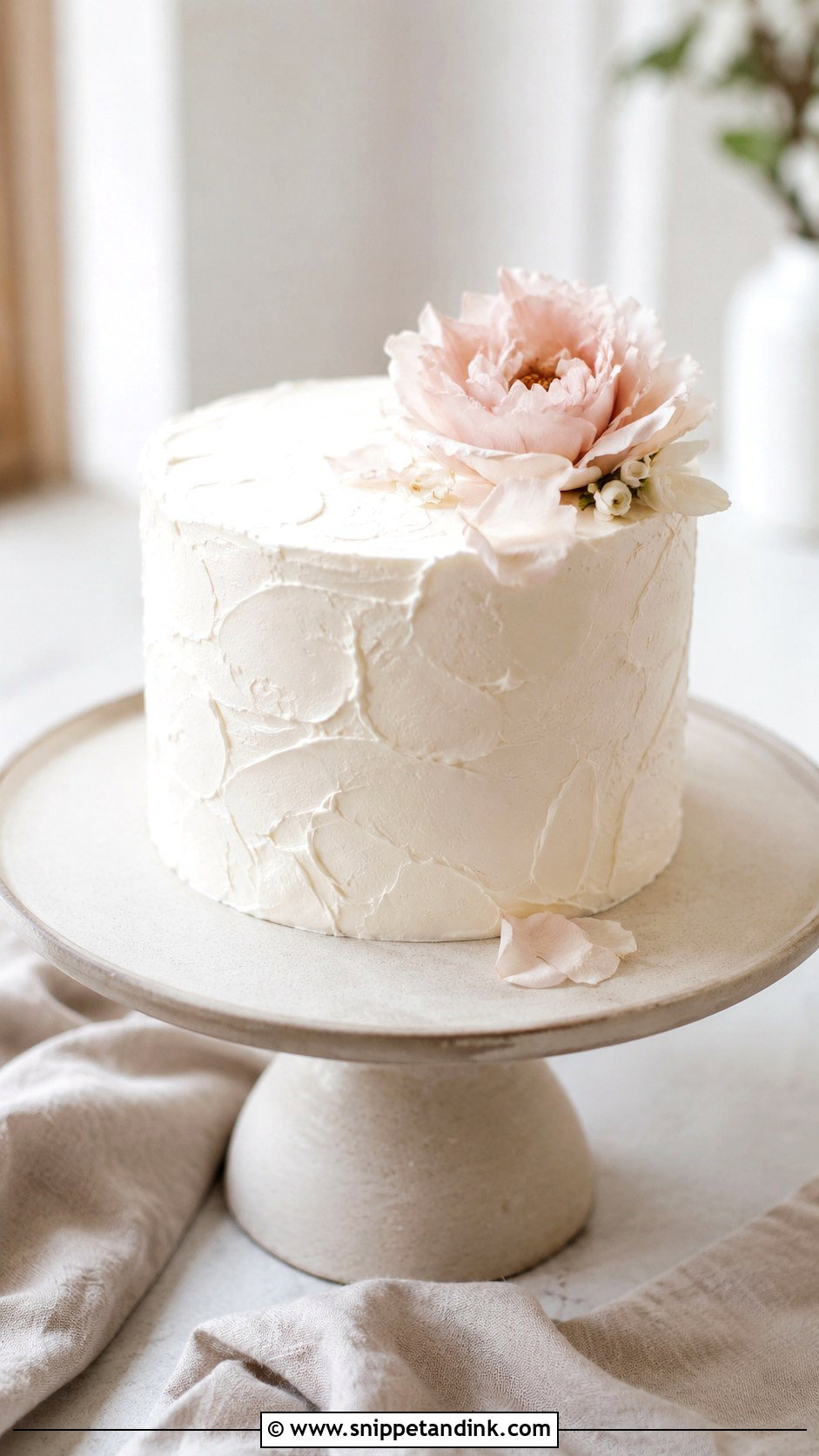
Texture makes a small cake look bigger on a dessert table. Horizontal lines, swoops, stucco or palette-knife marks all read as handmade. Texture is also more forgiving than a perfectly smooth finish, which is why I suggest it to couples making their own cake. Ivory, white, blush or pale sage keep it soft. One flower cluster, edible petals or a simple topper finish it. Lemon, vanilla, coconut and pistachio are good choices.
9. Small Lambeth Wedding Cake
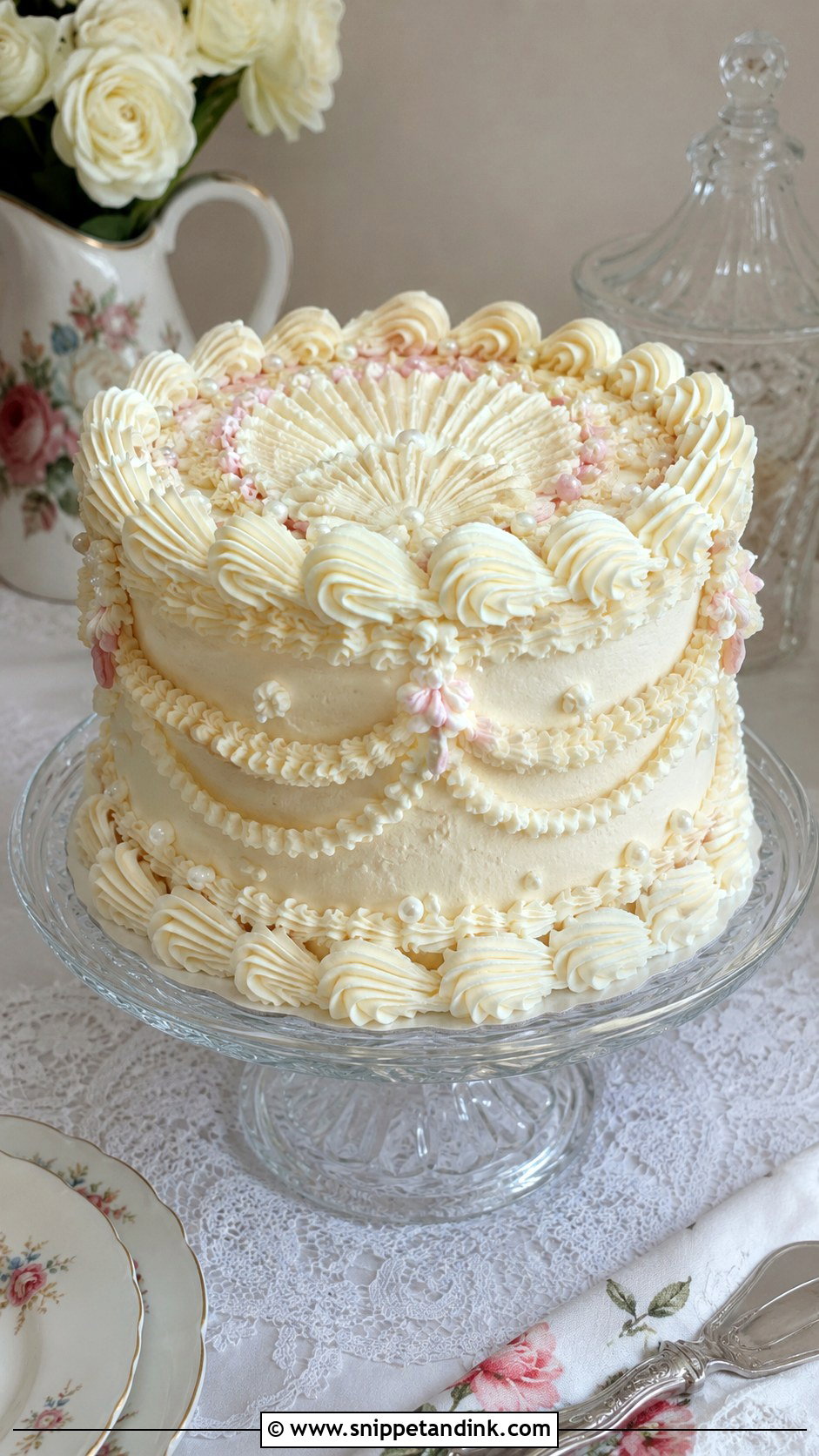
Lambeth piping is layered: shell borders, garlands, swags, dots and ruffles stacked on each other. Done well, it makes a small cake look grand. It takes a lot of buttercream and time, so it’s one of the pricier single-tier styles. White on white is classic; blush, butter yellow or pale blue are more playful. Tiny cherries, pearls, bows or a monogram topper add personality. Vanilla, strawberry and almond suit it, and lemon cuts the sweetness of all that piping.
10. Small Oval Wedding Cake
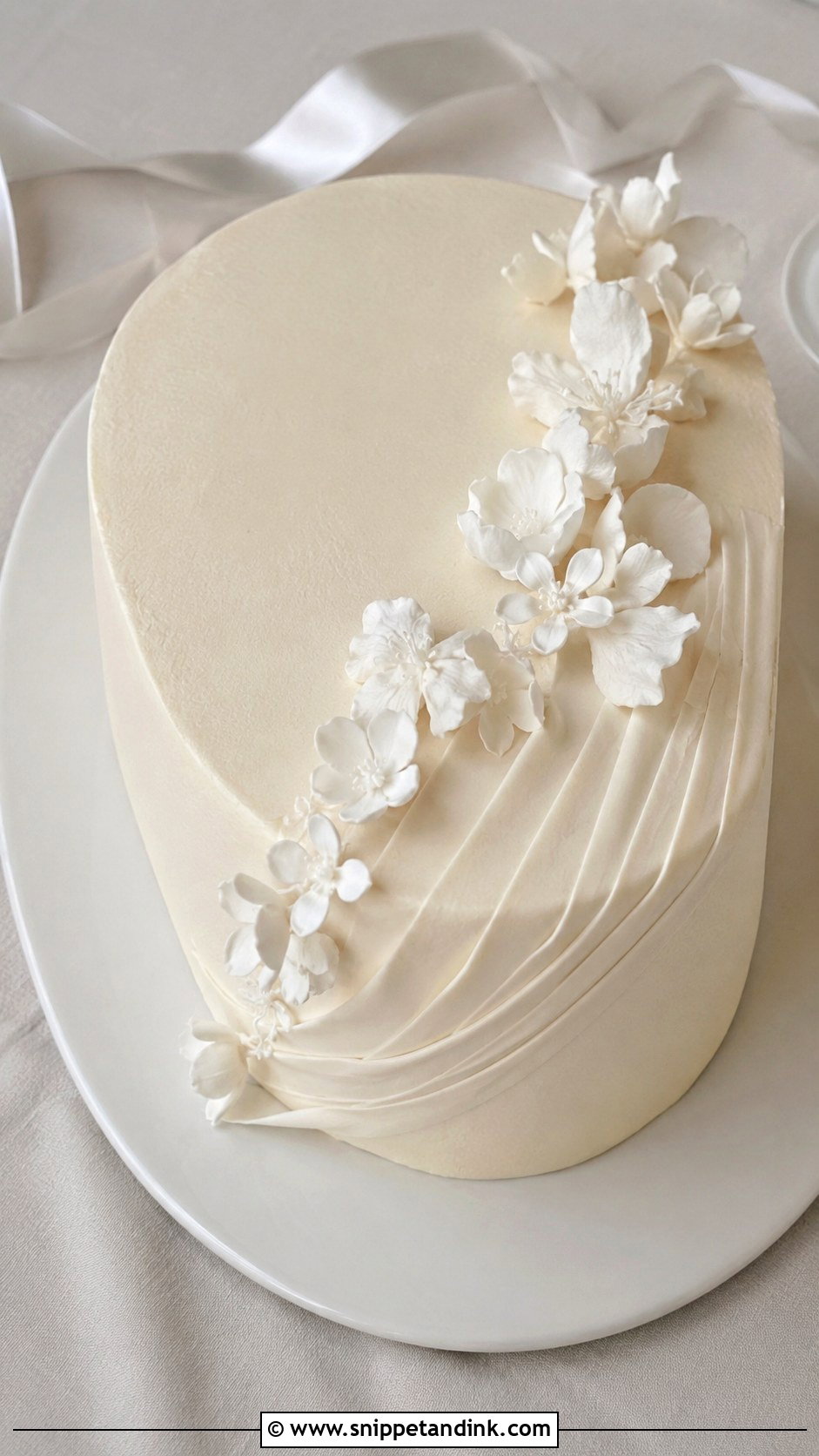
An oval gives more surface than a round of similar size, which means more room for a floral spray along one curve or a monogram on top. It looks good with smooth buttercream, fondant draping or piped edges. Oval pans are less common, so not every baker offers the shape; ask early. Ivory, buttercream white or soft champagne keep it refined. Almond, vanilla bean and lemon curd fillings fit.
11. Small Square Wedding Cake
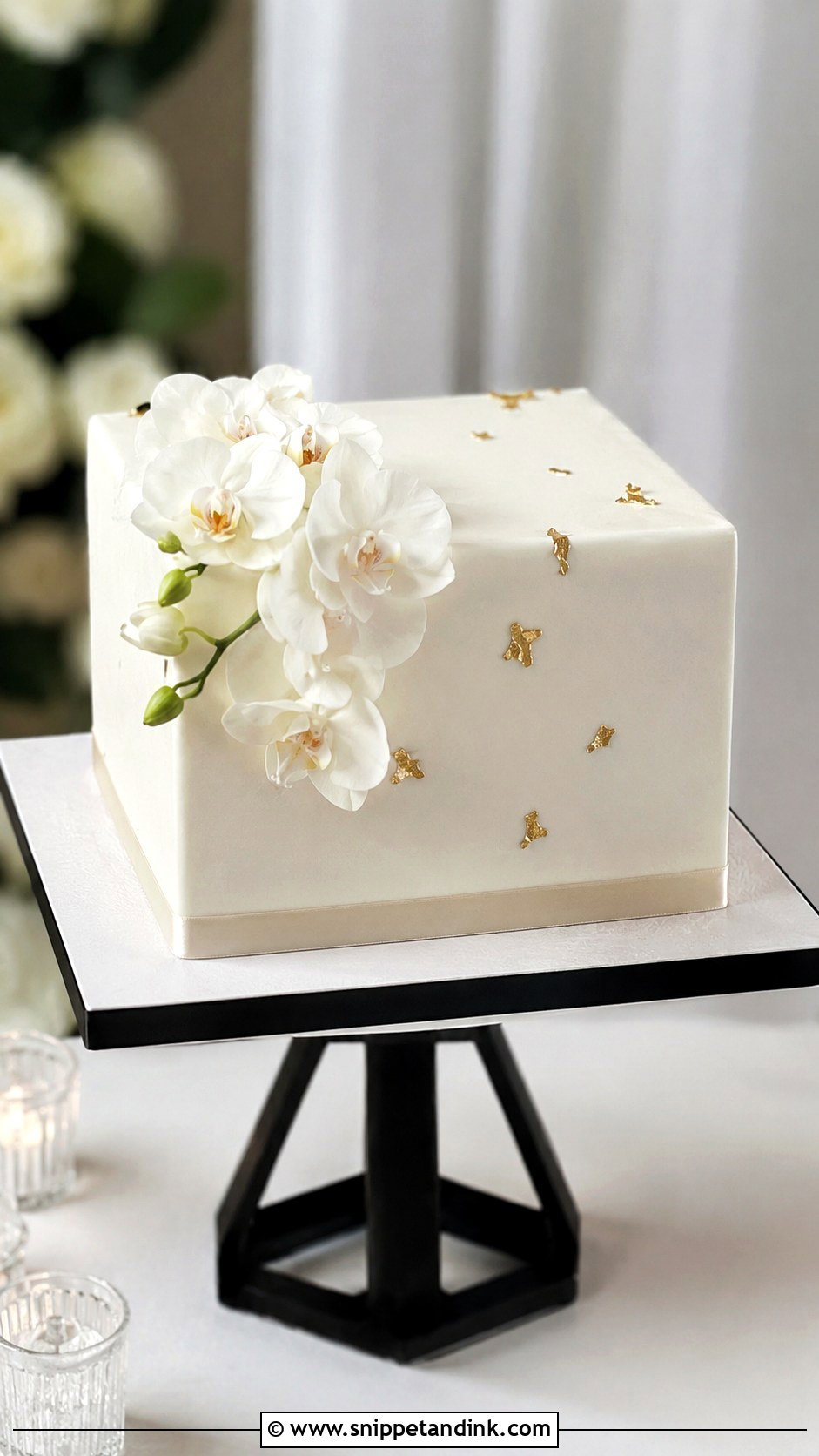
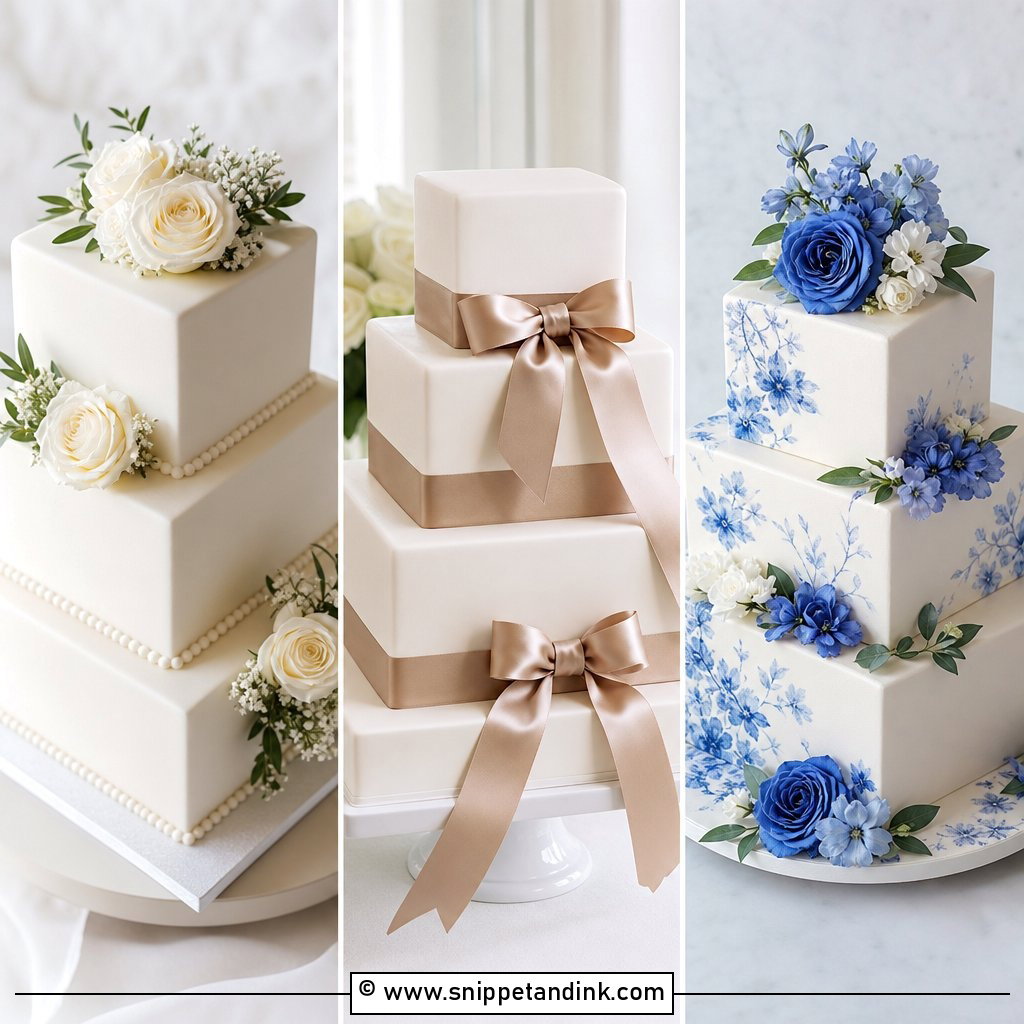
A square cake depends on its corners. Smooth buttercream or fondant with sharp edges is what makes it look modern, and that takes careful work, especially at the four corners where frosting tends to bulge. One corner flower cluster, a thin ribbon, gold leaf or small pearls are enough. Squares slice neatly into even portions, which helps with a small guest count. Vanilla bean, chocolate raspberry, almond and espresso suit it.
12. Small Heart Wedding Cake
A heart can go vintage with piped borders and cherries, or modern with smooth buttercream and a few pearls. White and blush are the most bridal; pale blue or butter yellow are sweet alternatives. Piping has to follow the curves and the point, so keep decoration neat or the shape gets lost. Courthouse weddings, elopements and brunches suit it. Strawberry, vanilla, red velvet and champagne cake flavors match the mood.
13. Small Pressed Flower Wedding Cake
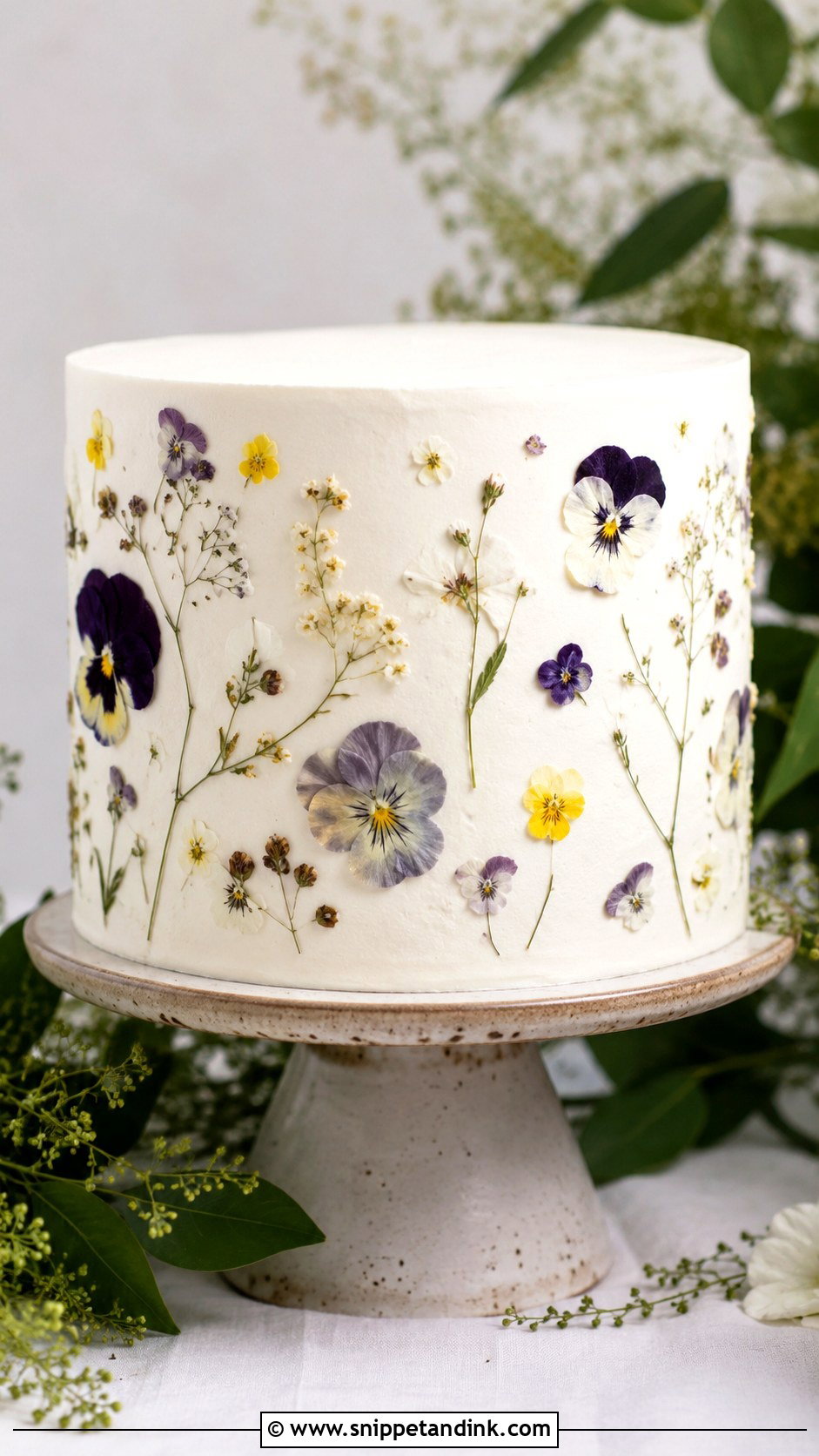
Pressed flowers lie flat against the frosting, so the cake looks detailed without extra bulk. Use edible flowers grown for eating, pressed and placed by your baker; violas, pansies and cornflowers are common. White or pale ivory buttercream shows their colors best. You can scatter them or set them in a band around the side. Petals pick up moisture from buttercream and can darken over a few hours, so I add them close to delivery. Lemon, honey, lavender and vanilla suit it.
14. Small Greenery Wedding Cake
Greenery gives a natural look without many flowers. Fresh herbs like rosemary and thyme are edible and safe; olive leaves look lovely; eucalyptus is not food-safe, so it should be kept off the cake surface or replaced with a similar-looking herb. Keep it light, on a white buttercream round, with a few white flowers if needed. Outdoor weddings, rustic venues and minimal receptions suit it. Lemon thyme, vanilla bean, almond and olive oil cake are good matches.

15. Small Rustic Wedding Cake
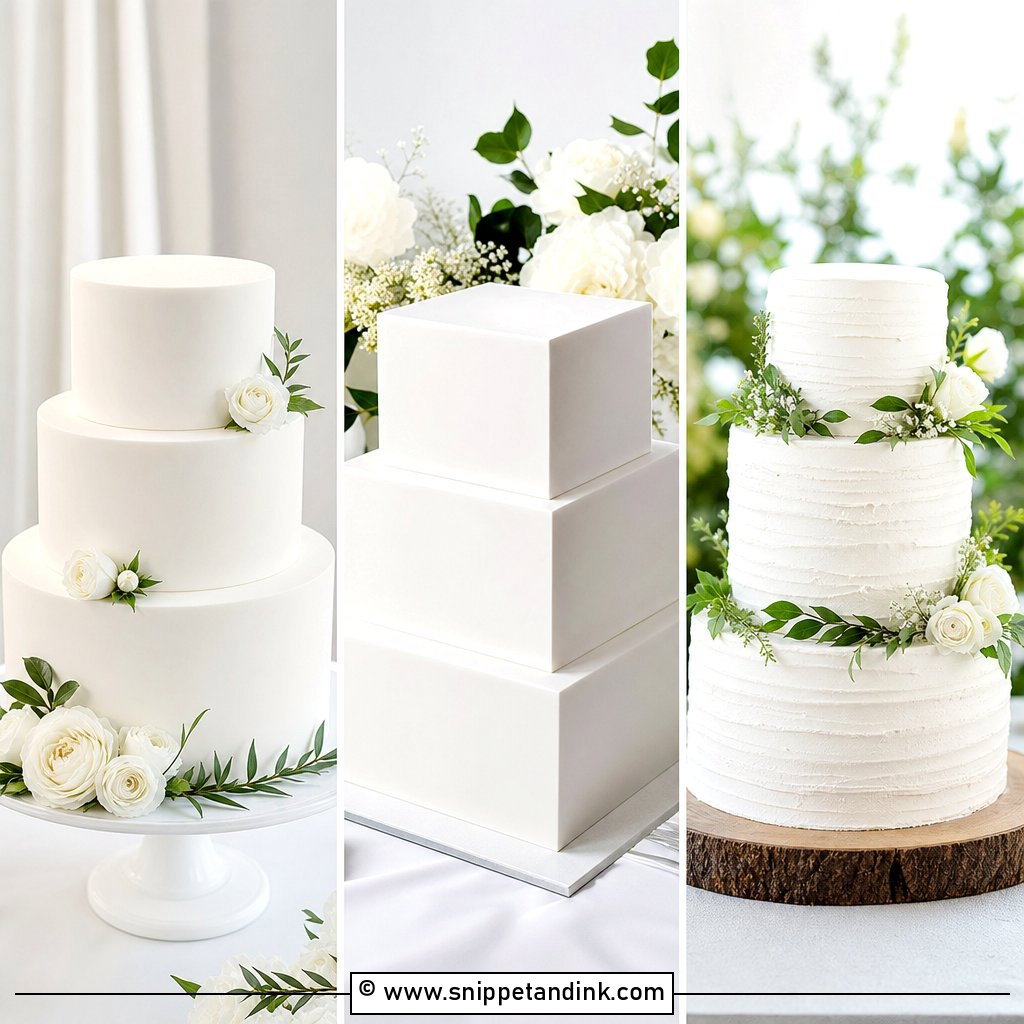
A small rustic wedding cake doesn’t need to be perfectly smooth; a little texture actually helps it match a barn, a backyard or a mountain setting. Textured buttercream, uneven edges, a wooden stand, wildflowers and seasonal fruit all suit it, as does a semi-naked finish. Berries in summer, figs in autumn, greenery any time. Carrot cake, spice cake, almond and vanilla are solid flavors.
16. Small Boho Wedding Cake
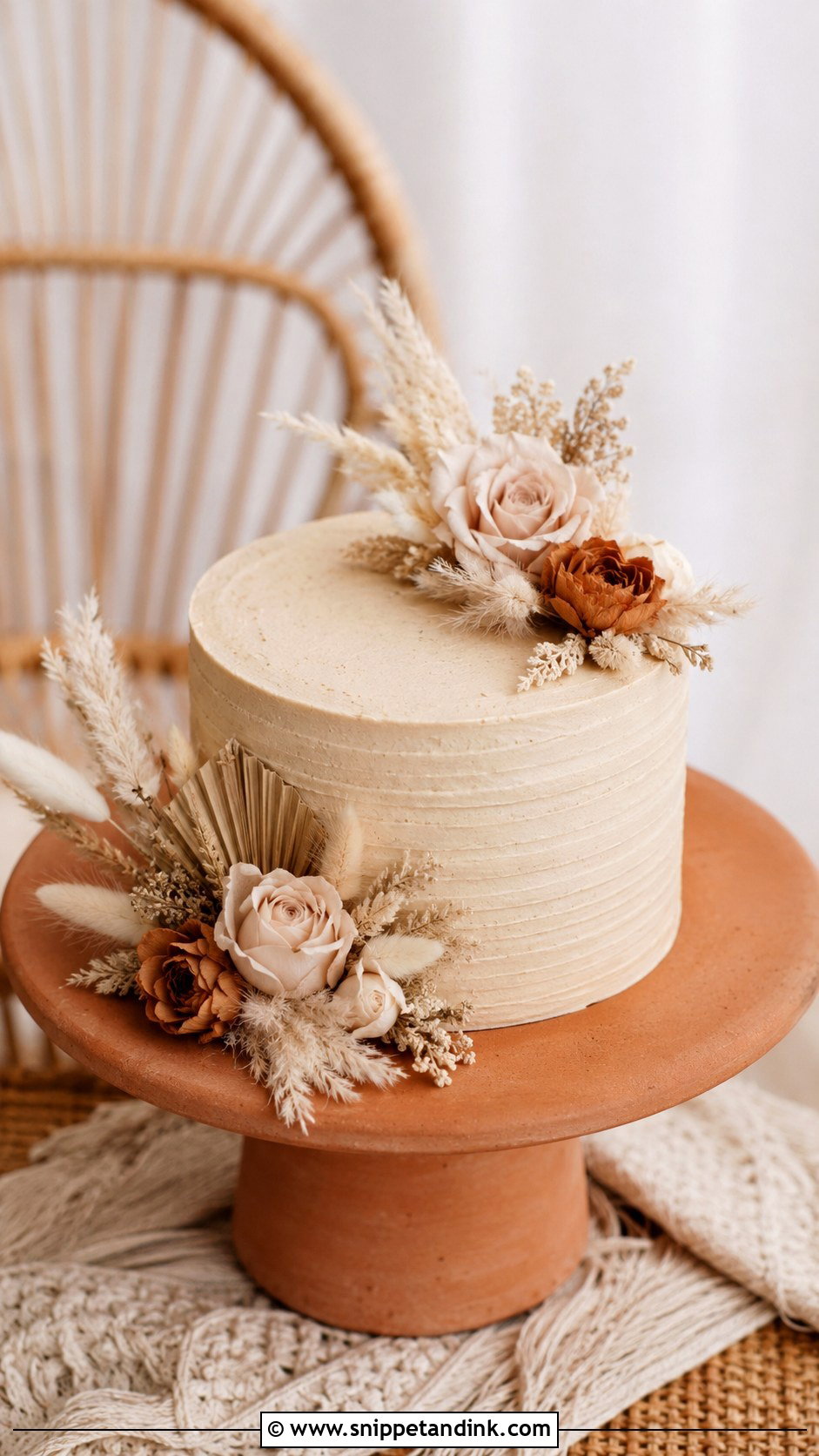
Boho cakes use warm neutrals and dried decoration instead of bright fresh flowers: dried palms, bunny tails, small pampas pieces, beige roses or terracotta blooms. Dried pieces are not edible, so I wrap stems and keep them clear of the slices. Ivory, sand, taupe or pale peach frosting matches the palette. Flavors like honey vanilla, chai spice, coconut or almond caramel fit. It suits desert settings, tents and outdoor receptions.
17. Small Beach Wedding Cake
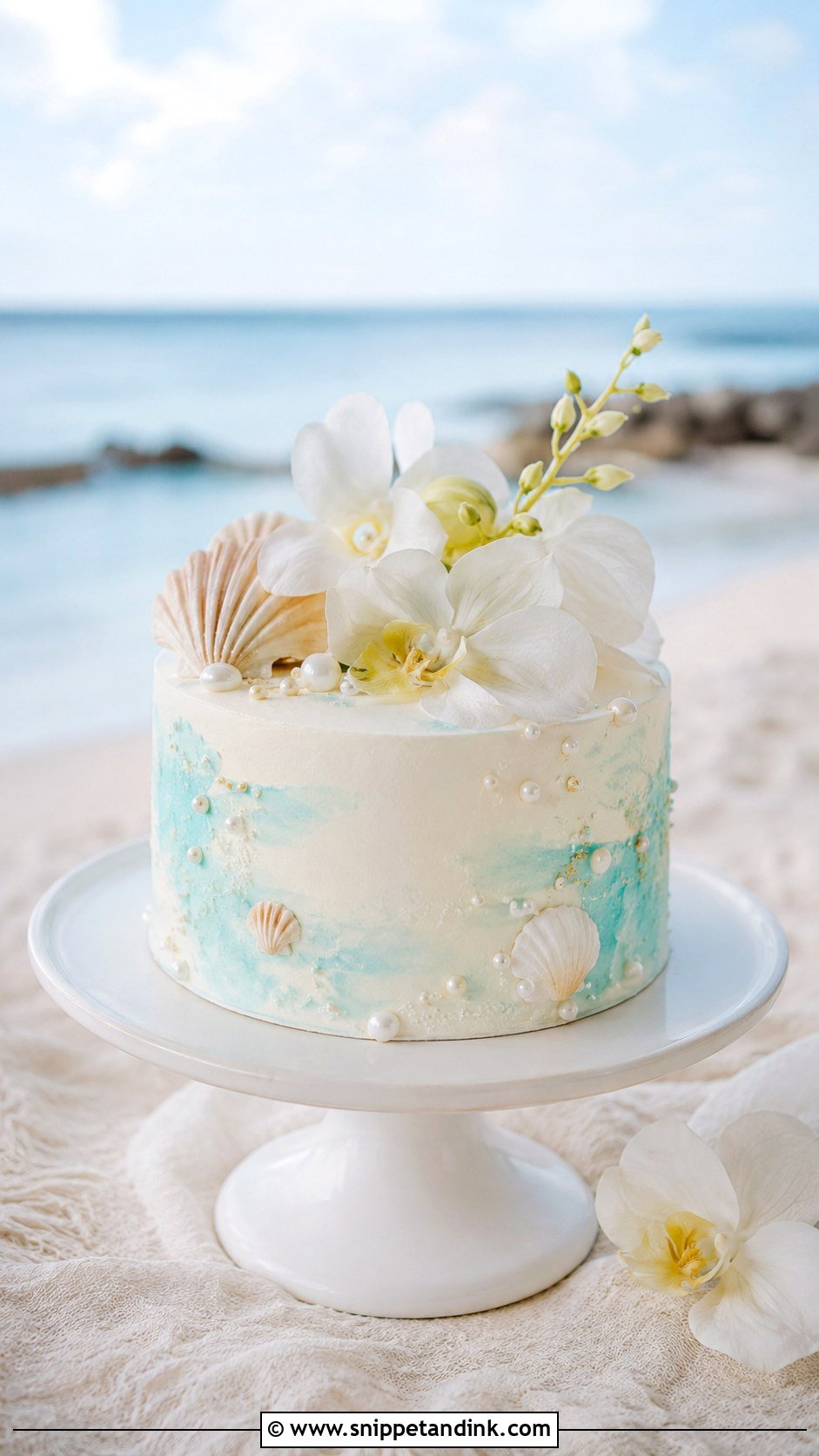
A small beach wedding cake should feel light, not like a party cake with a seaside theme. Soft white buttercream, a pale blue watercolor, sandy texture or a gentle wave pattern sets the mood. White orchids, edible pearls, chocolate shells or tropical greenery decorate it. Real shells shouldn’t touch the cake. Heat and humidity are the main risk outdoors, so I’d plan a ganache or a firm meringue buttercream and keep it shaded until the cutting. Coconut, lime, passion fruit, vanilla and pineapple suit the setting.
18. Small Garden Wedding Cake
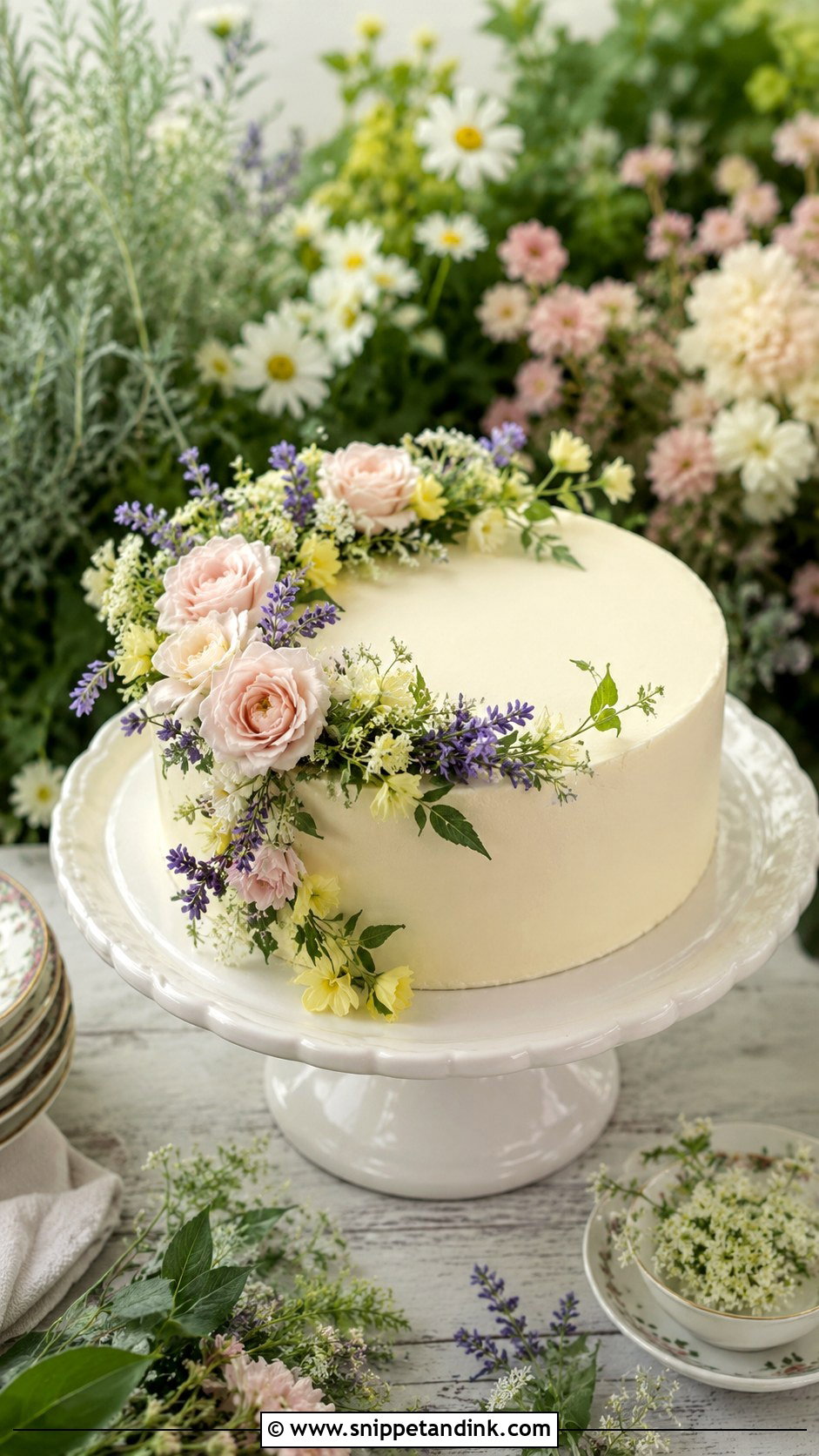
A garden cake takes its cue from the ceremony flowers: buttercream, soft blooms and greenery in blush, ivory, lavender, pale yellow or sage. I place the flowers in a loose crescent or a small cluster so the cake still looks airy. Spring and summer weddings, backyards and greenhouses suit it. Lemon elderflower, raspberry vanilla, honey lavender and strawberry match the setting. A white ceramic or clear glass stand keeps the focus on the flowers.
19. Small Minimalist Wedding Cake
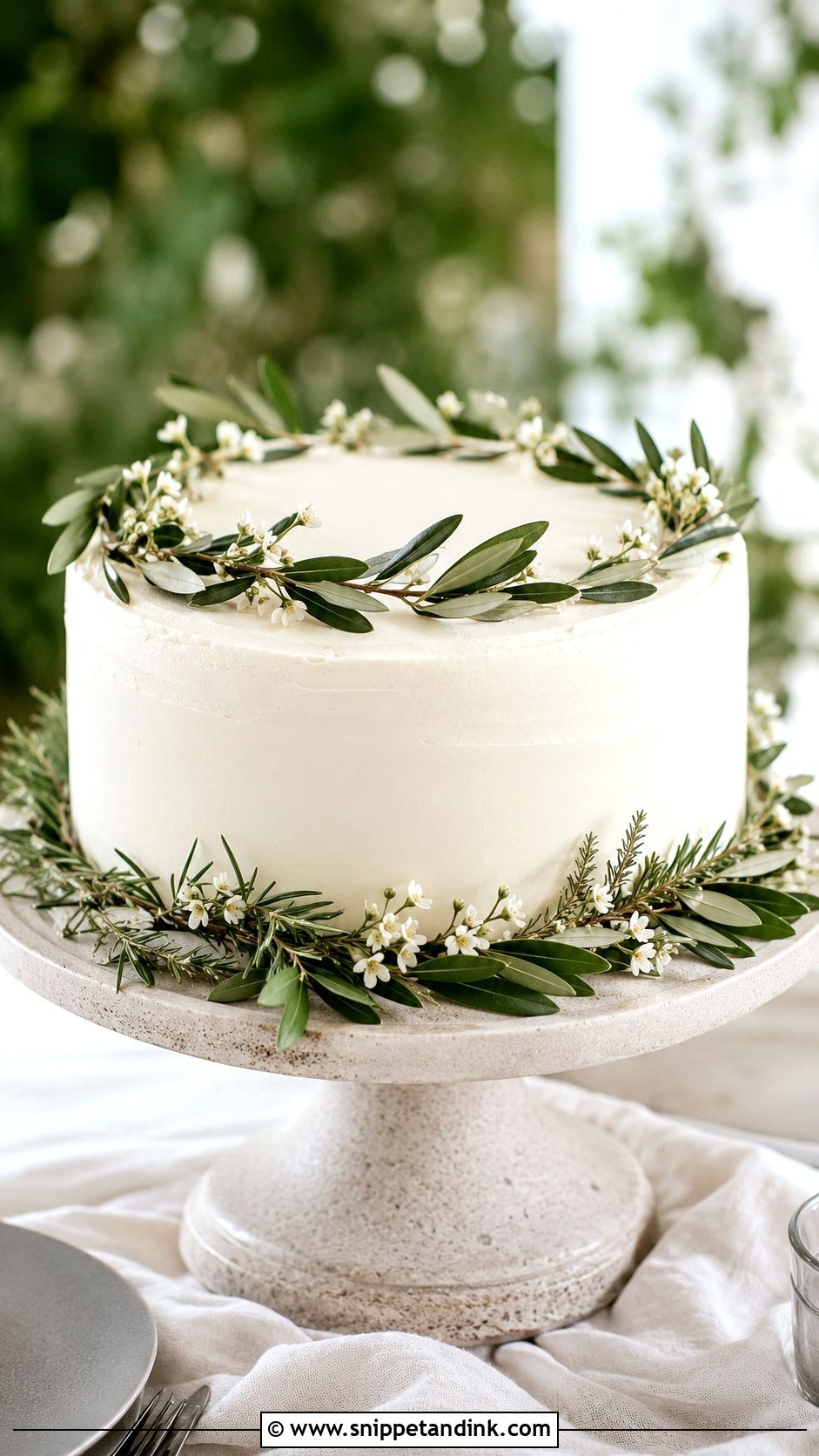
Minimalism is the hardest finish to fake. With clean lines, smooth frosting and one detail, every bump and lean shows. The detail might be a silk ribbon, one flower, a tiny pearl border or a monogram. White, ivory, cream or soft beige work best. It suits modern weddings, restaurants and courthouse ceremonies. Choose a flavor with character, such as almond, vanilla bean, lemon or dark chocolate with vanilla buttercream, and ask to see photos of your baker’s plain cakes, not just the decorated ones.



20. Small Blush Wedding Cake
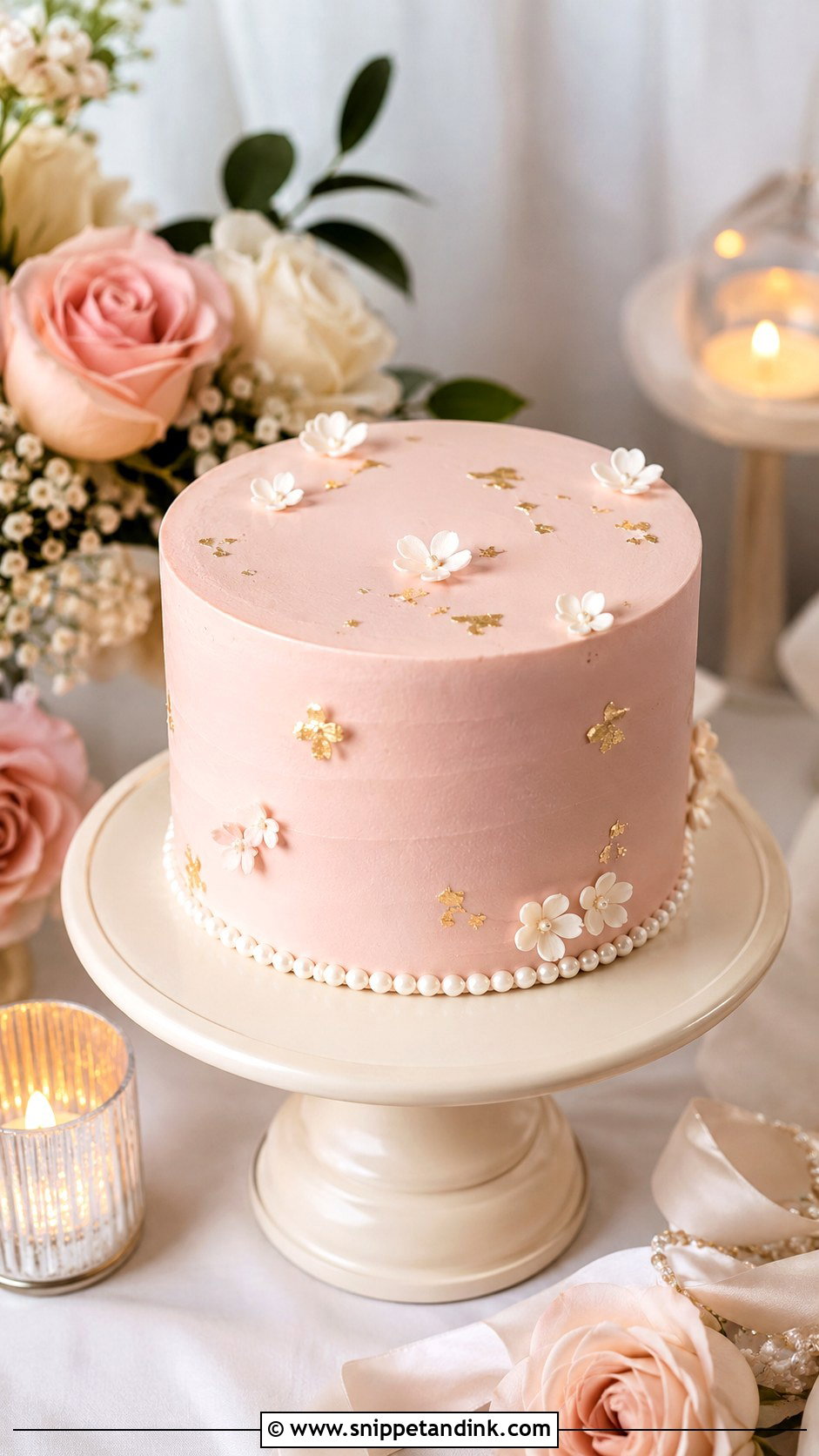
Blush adds color without losing the bridal feel. Barely pink, dusty rose, peach blush or warm mauve can follow your flowers and linens. Smooth buttercream makes it modern; piped borders make it vintage. It pairs with gold leaf, pearls, white roses and small sugar flowers. Pinks can shift in strong light, so I check the shade on a sample under the venue’s lighting if I can. Strawberry champagne, vanilla raspberry, almond and rosewater lemon fit the color.
21. Small Blue Wedding Cake
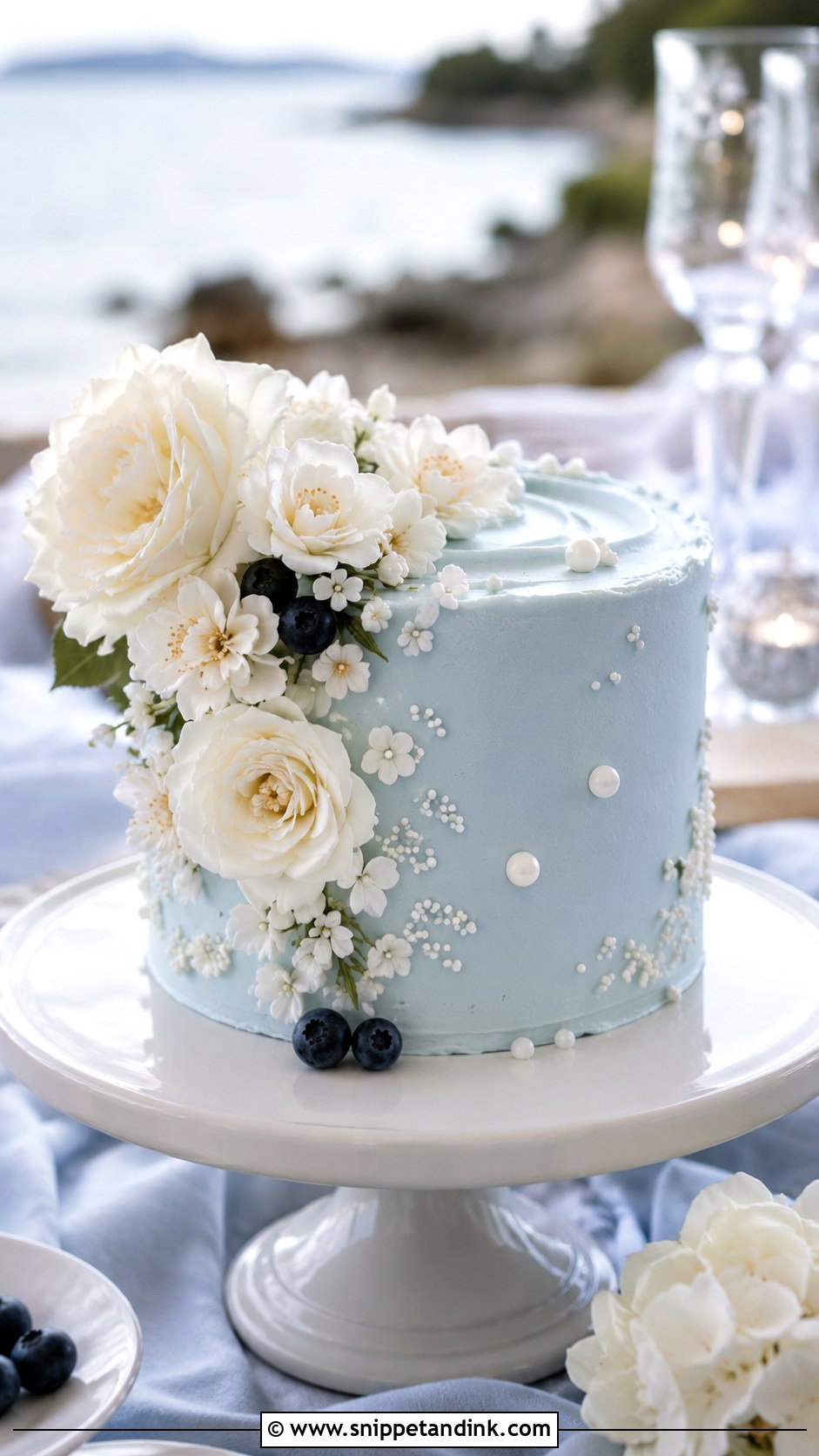
Pale, dusty and powder blue all look calm with ivory flowers or pearls. The finish can be smooth, lightly textured or piped. It works for coastal weddings, winter palettes without holiday styling, garden receptions and ballrooms. Blue coloring on butter-based buttercream can lean green because of the yellow in the butter, which is why I use a whiter base for blue cakes. White roses, sugar blossoms or a thin blue ribbon finish it. Vanilla, lemon, almond and blueberry lavender are good flavors.
22. Small Chocolate Wedding Cake
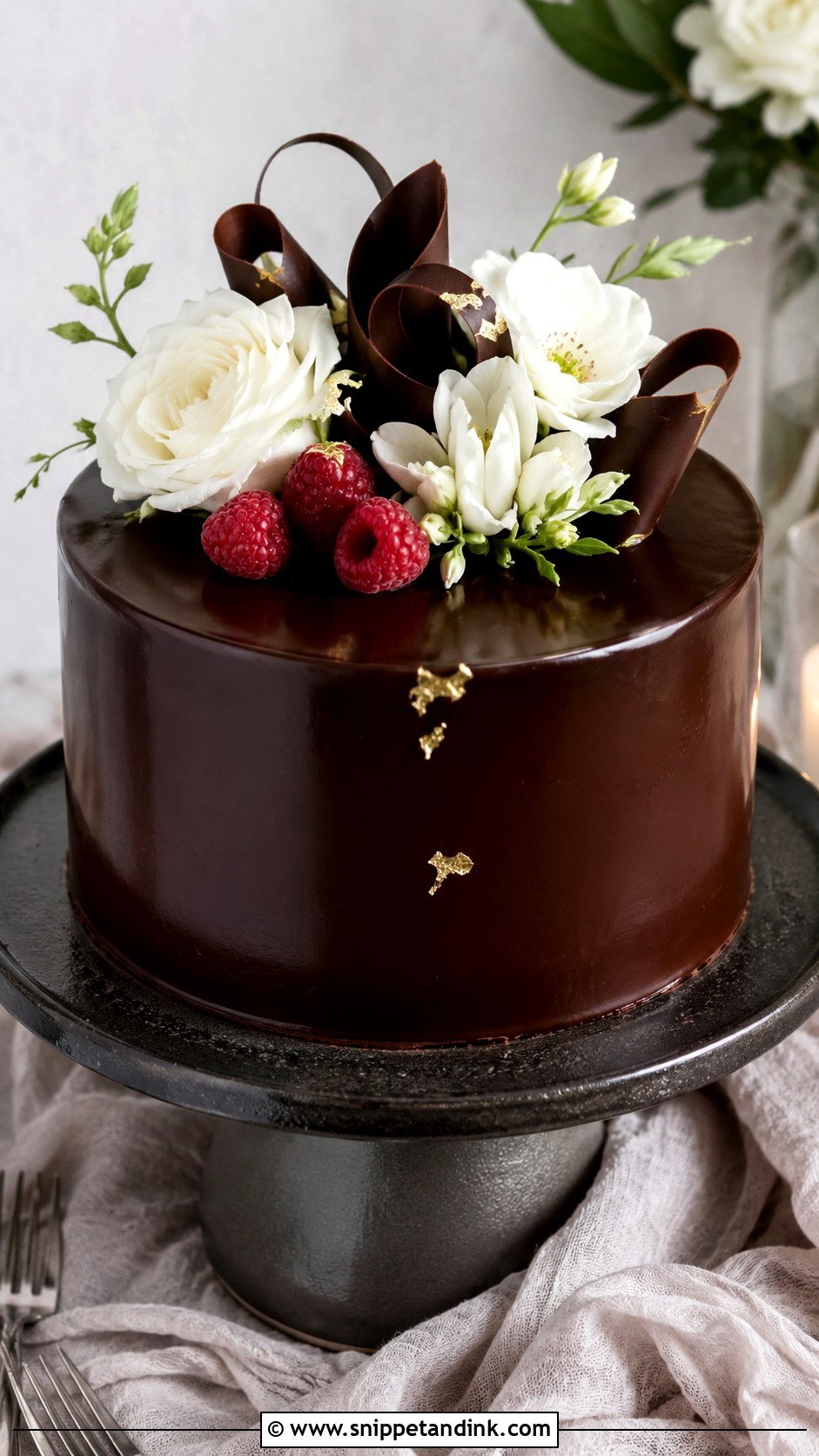
Chocolate looks just as elegant as white when it’s finished well. Dark ganache, chocolate buttercream or a smooth cocoa finish gives rich color, and white flowers, gold leaf, berries or chocolate curls brighten it. Ganache is also my first choice for warm days, since it sets firmer than most buttercreams. It suits autumn weddings and intimate dinners. Salted caramel, raspberry, mocha and vanilla cream are good fillings.
23. Small Lemon Wedding Cake
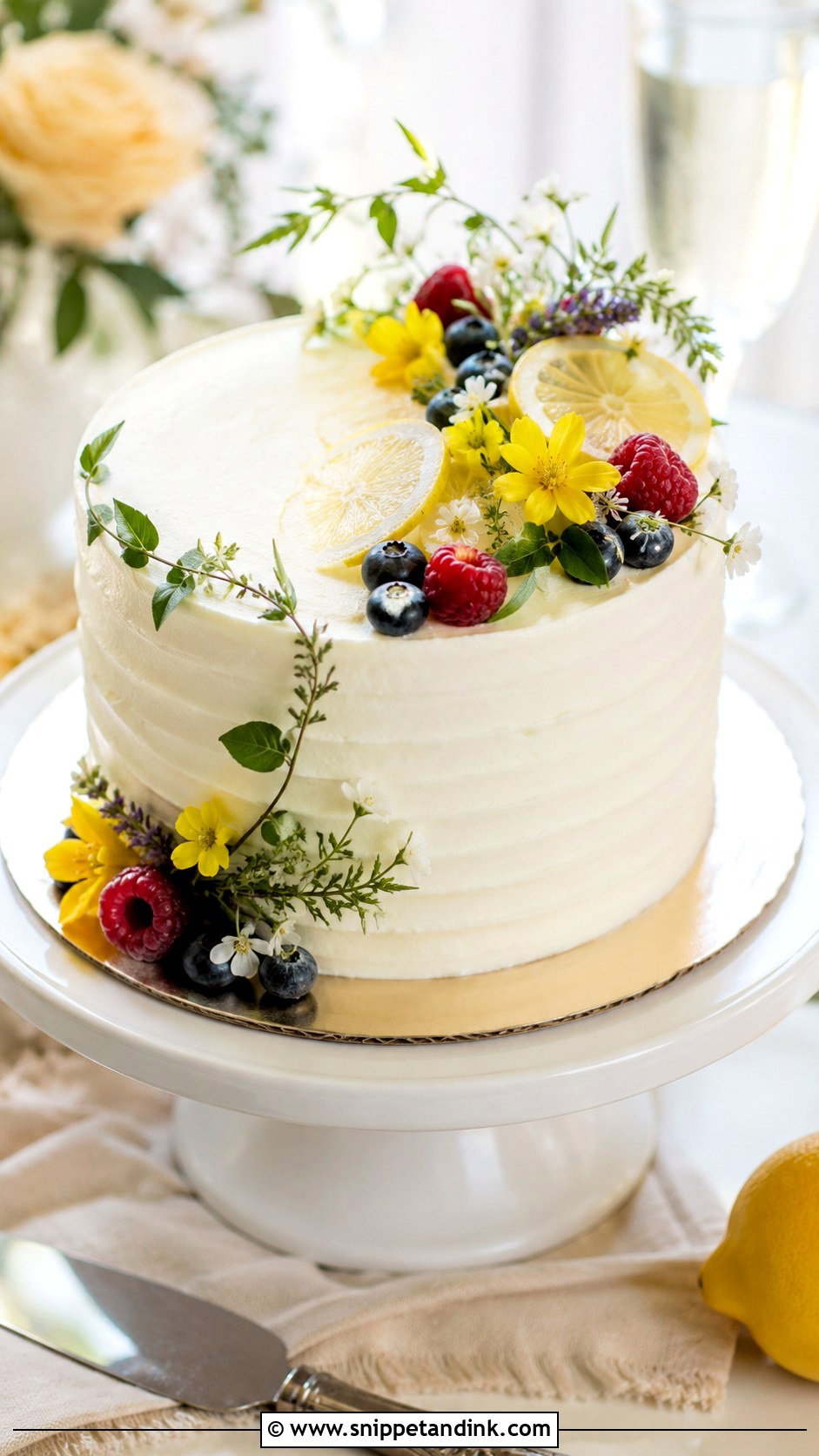
Lemon is light enough that guests still want it after a big meal. Inside, lemon sponge with curd, vanilla buttercream or whipped mascarpone; outside, white or soft yellow frosting. Mascarpone filling needs refrigeration, so if the cake will sit out for a long time, I’d choose buttercream instead. Fresh berries, thin lemon slices, edible flowers or greenery decorate it. Spring, summer, garden parties and brunches suit it best.
24. Small Red Velvet Wedding Cake
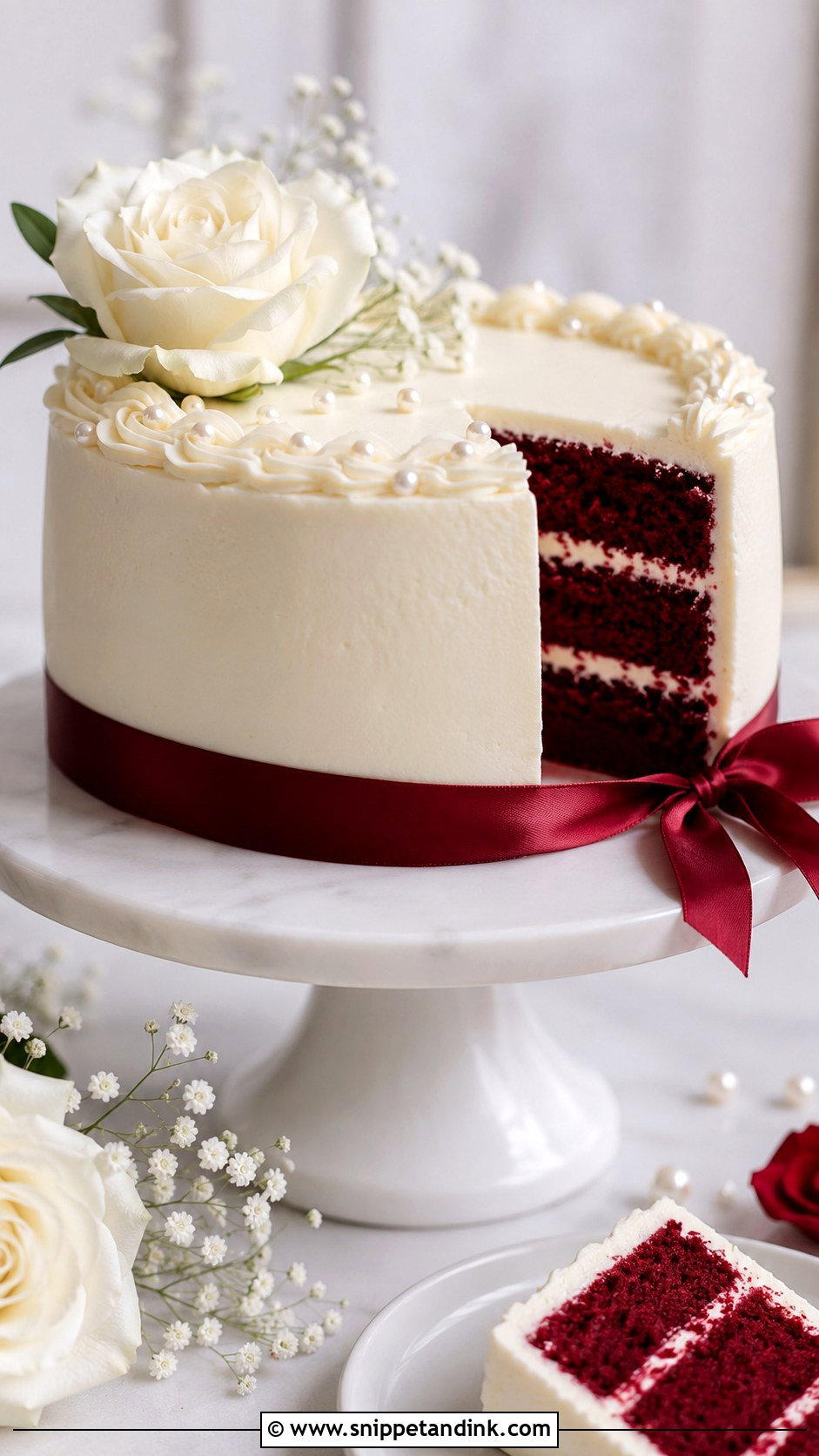
Red velvet’s surprise is in the slice: ivory outside, deep red inside, which makes the cutting photo. Cream cheese frosting is traditional, but it’s soft and doesn’t hold sharp edges, so Swiss meringue buttercream on the outside gives a smoother finish while cream cheese stays in the filling. Cream cheese also needs to stay cool. White roses, pearls, a ribbon or subtle borders keep it elegant.



25. Small Cutting Wedding Cake
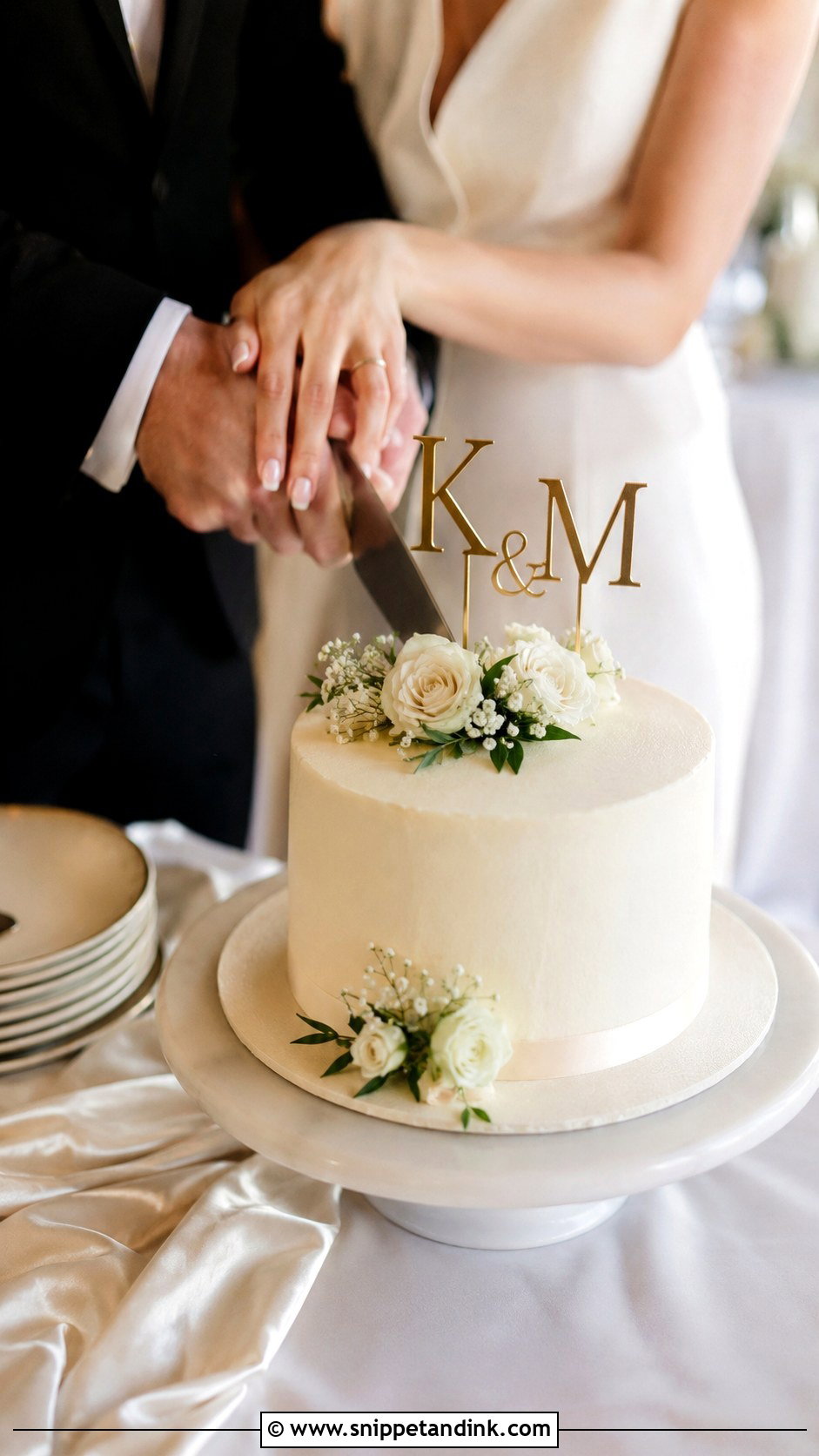
A cutting cake is for the photo, while guests eat sheet cake, cupcakes or plated dessert. Because it only serves a few, you can put more of the budget into details: polished buttercream, a small flower arrangement, a ribbon or a meaningful topper. It’s a good option for big receptions with dessert tables or elopements followed by dinner. Choose your own favorite flavor, since you won’t be feeding everyone with it. Ask your baker to make the sheet cake in the same flavor, so the slices match the photo.
Which Frosting Survives an Outdoor Reception?
Many single-tier cakes end up at backyard, beach and garden weddings, and that’s where frosting choice matters most. American buttercream forms a crust and holds up reasonably well, though it’s very sweet. Swiss meringue buttercream tastes lighter and looks smoother, but it softens faster in heat. Ganache is the sturdiest of the three. Whipped cream, mascarpone and cream cheese frostings need refrigeration, so I’d keep them for indoor, air-conditioned venues.
Wherever the cake stands, keep it in the shade and away from candles and the kitchen door, and bring it out as close to cutting as the schedule allows.
Saving the Top Tier When There’s Only One
With one tier, there’s no separate top to freeze for your first anniversary. If the tradition matters to you, order a small 4-inch cake in the same flavor to take home. Wrap it well in several layers of plastic wrap, then foil, and freeze it as soon as possible. Buttercream and ganache cakes freeze far better than those with fresh fruit or cream fillings, which turn watery when thawed. Thaw it slowly in the fridge, still wrapped, so condensation forms on the wrap and not on the cake.
Start With the Venue, Then Let the Flavor Decide
One tier is enough for a wedding cake if the shape, finish and decoration are chosen with care. Start with your venue, your flowers, your dress and the season, then pick a direction: white buttercream or pearls for a classic look, flowers, blush or vintage piping for romance, an oval, square or gold leaf for something modern. Leave room in the budget for cupcakes, cookies or a dessert table if you need more servings. Then bring your photos to a tasting and let the flavor decide the rest.
You'll Like These Ideas:






Leave a Reply