
A wedding cake spends most of the reception being looked at before anyone eats it. It sits in the room for hours, it’s in the background of half the photos, and the cutting is one of the few moments every guest watches. Some couples come to me wanting clean white tiers with a few flowers; others want Lambeth piping, pearls, bows, fruit or a long table cake nobody has seen before. The designs below are the ones I get asked about most, with notes from the decorating side on how each behaves, what it costs in time and effort, and when I’d talk a couple out of it.
How Many Tiers Does Your Guest Count Really Need?
Couples often choose a design first and then discover it feeds far too many or far too few people. I always start from the guest list. Most bakers use a wedding-size portion, a narrow finger of cake, which is smaller than the slice you’d cut at a birthday.
- A three-tier round cake in 6, 8 and 10 inch sizes gives roughly 70 to 80 wedding portions, though every baker’s cutting chart differs a little.
- If you want height but not that many slices, ask about a dummy tier: a decorated foam tier that looks identical and costs less.
- For large weddings, a smaller display cake plus a plain kitchen cake cut behind the scenes feeds everyone without a towering cake.
- If guests are also served a plated dessert, many couples order cake for fewer than the full guest count.
Order early. I’d contact bakers about six months ahead for a peak-season Saturday, and earlier still if you want handmade sugar flowers, which can take days of work before the cake is even baked.
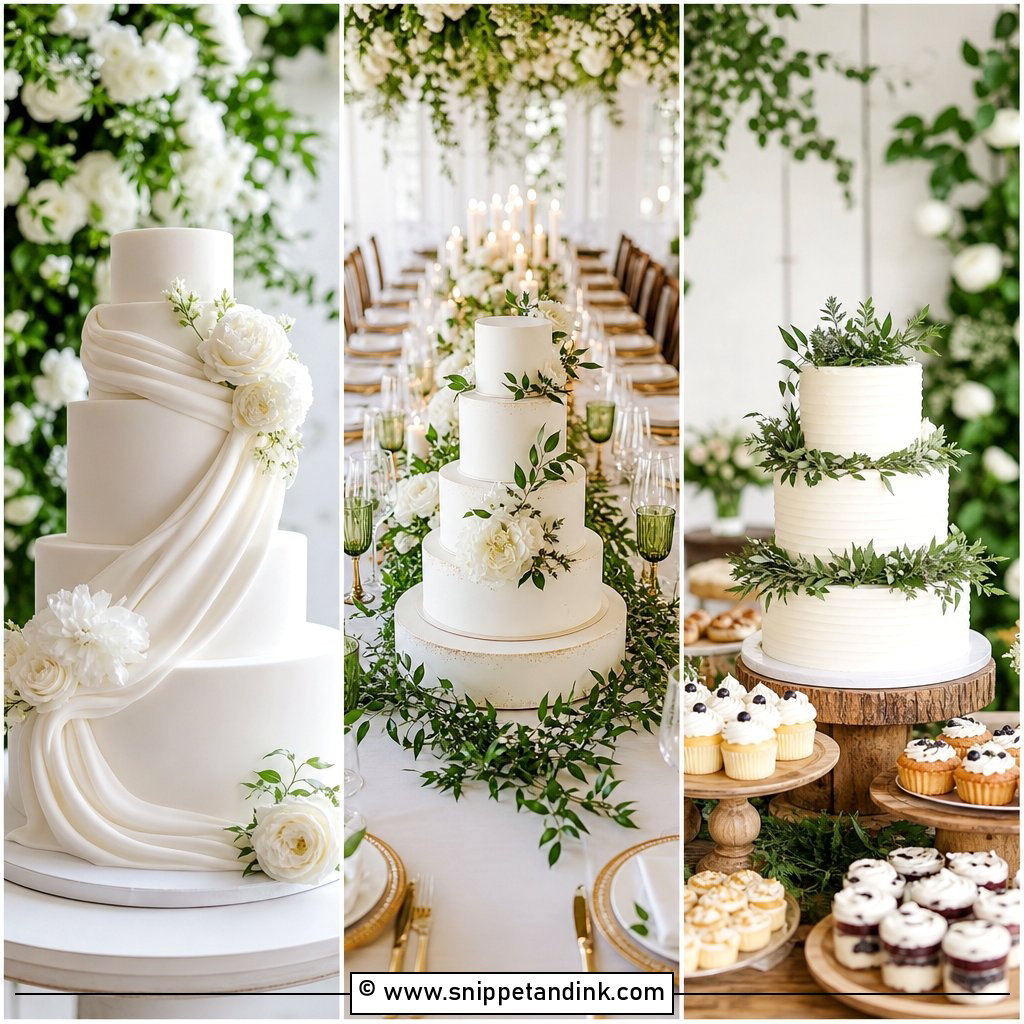
1. White Tiered Wedding Cake
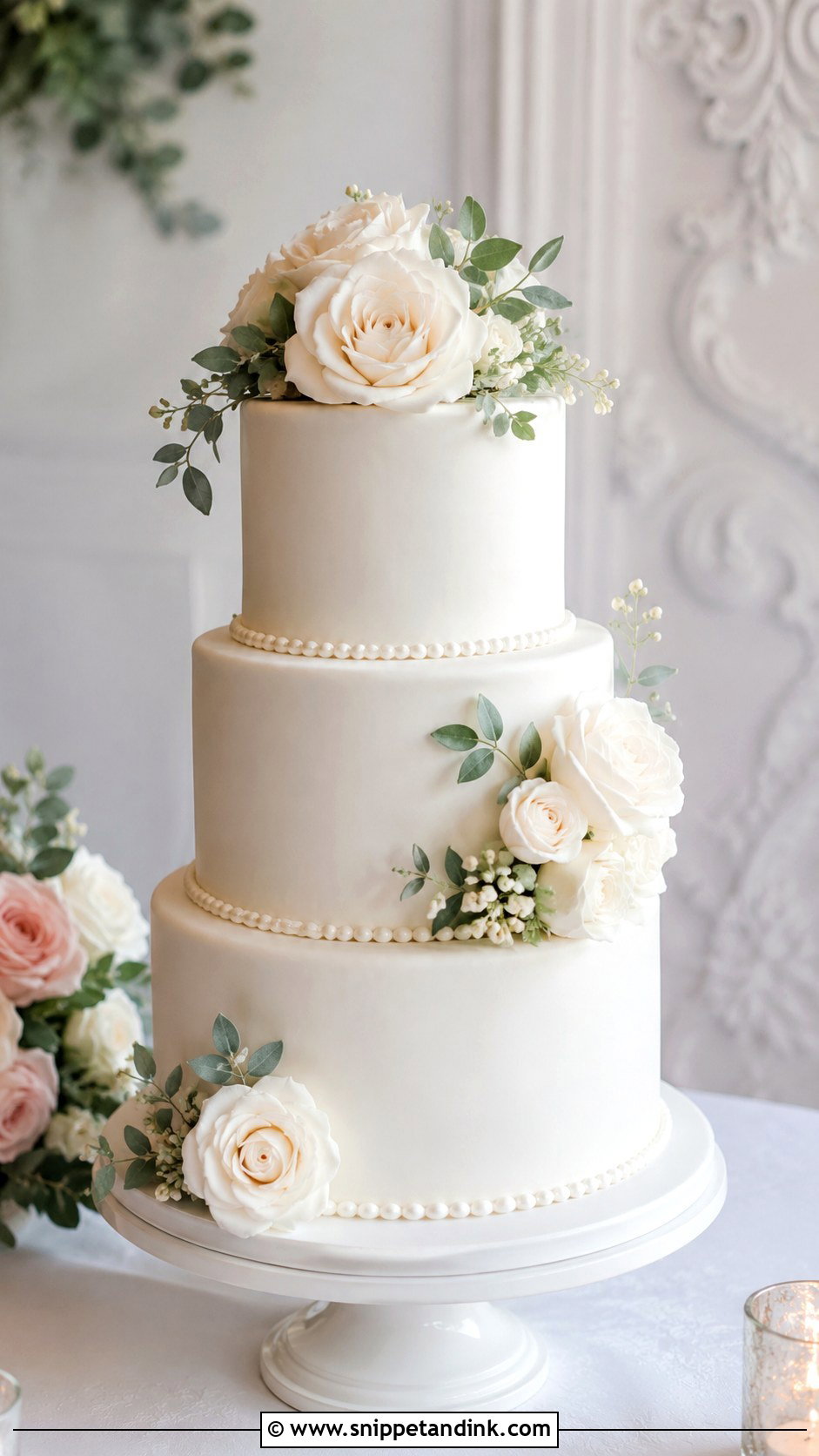
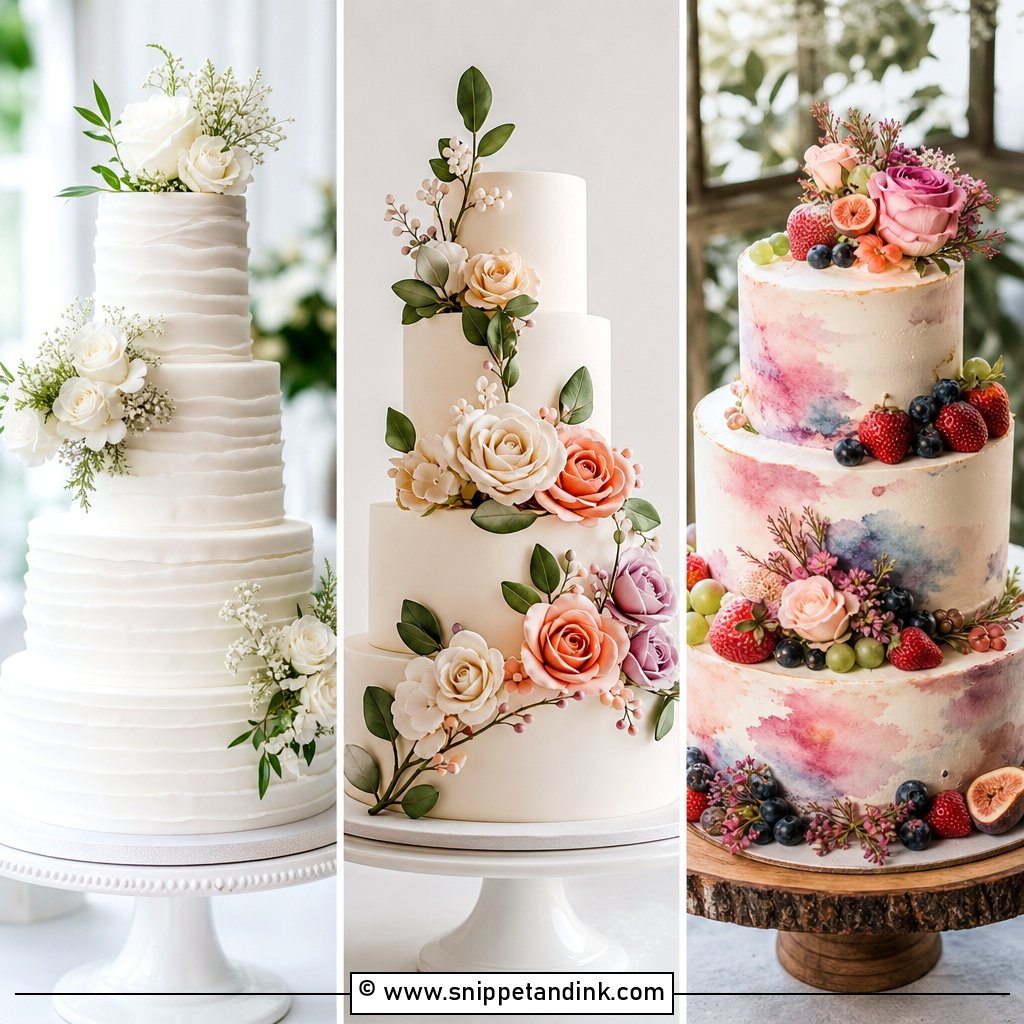
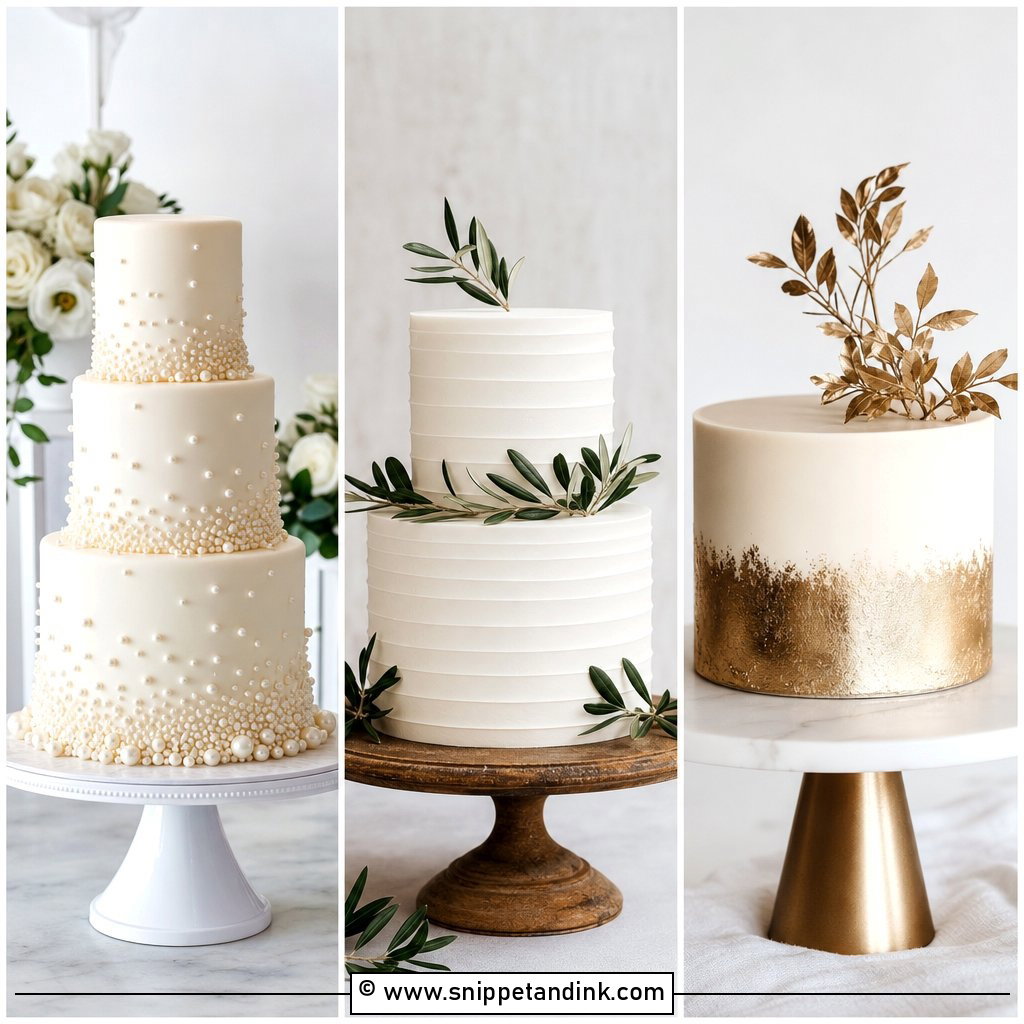
White tiers are still the cake most couples picture, and they suit almost any room because they take on the colour of everything around them. The real decision is the covering. Fondant gives a smooth, sharp surface that holds up well in warm rooms; buttercream tastes better to most guests but shows every fingerprint and softens in heat. A few sugar flowers, a piped border or a fine line of pearls is usually enough detail. White also shows flaws, so I make sure the tiers are level and perfectly smooth before anything decorative goes on.
2. Simple Buttercream Wedding Cake
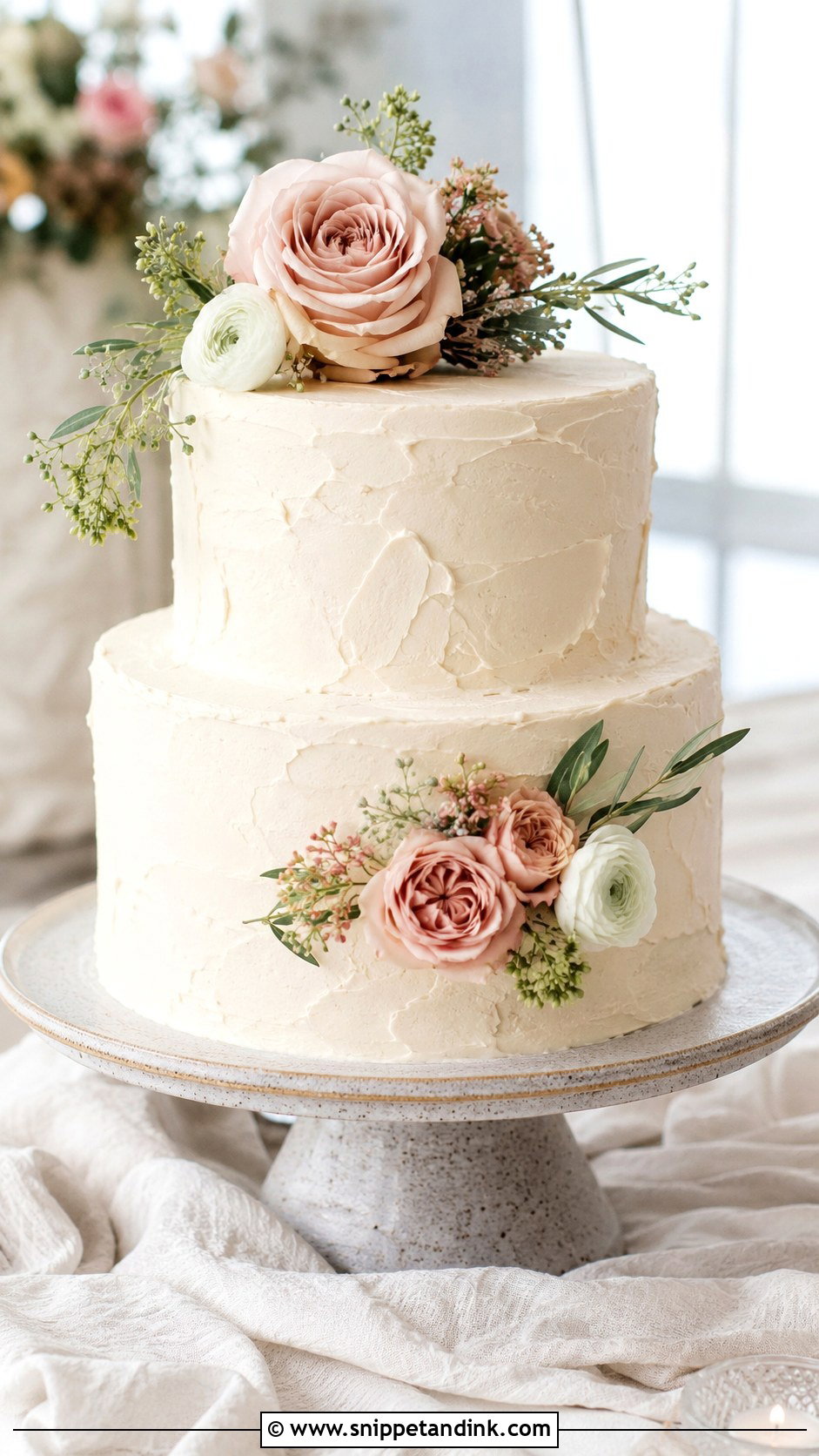
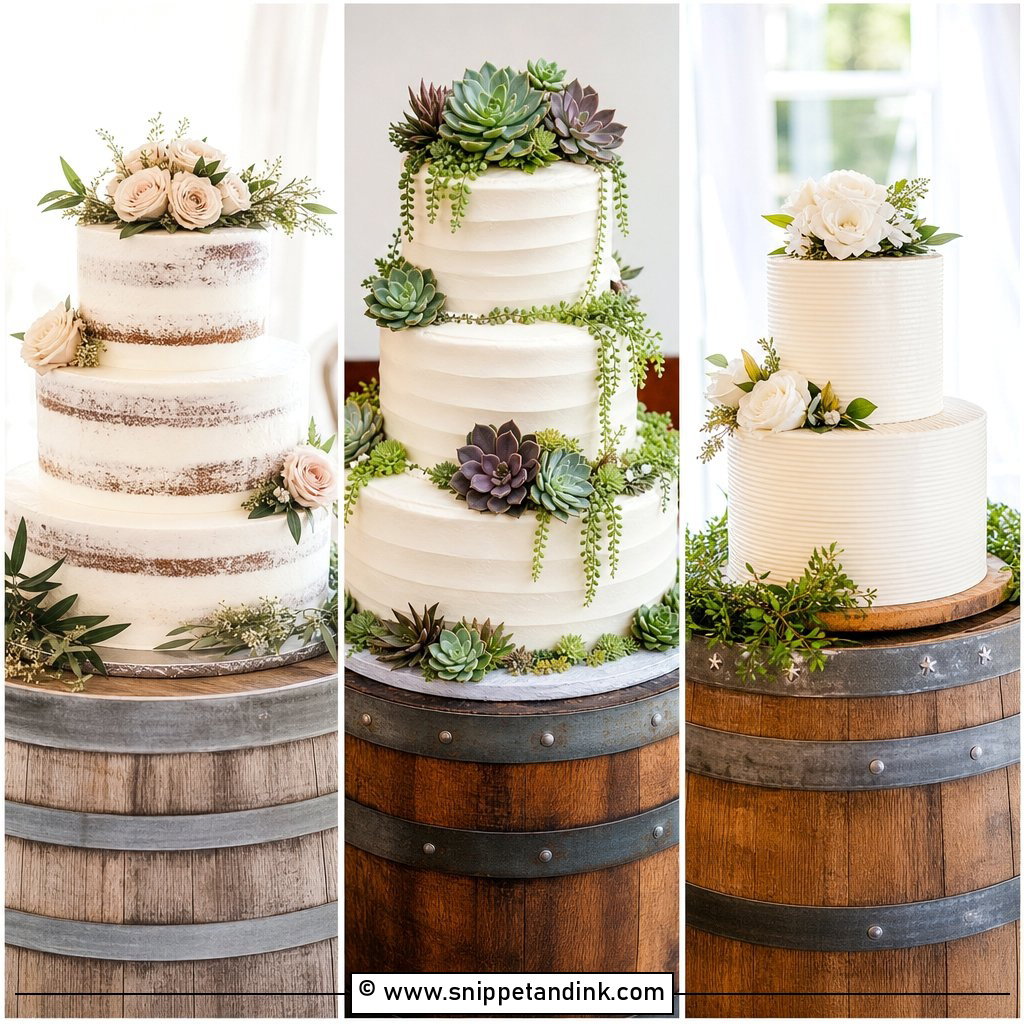
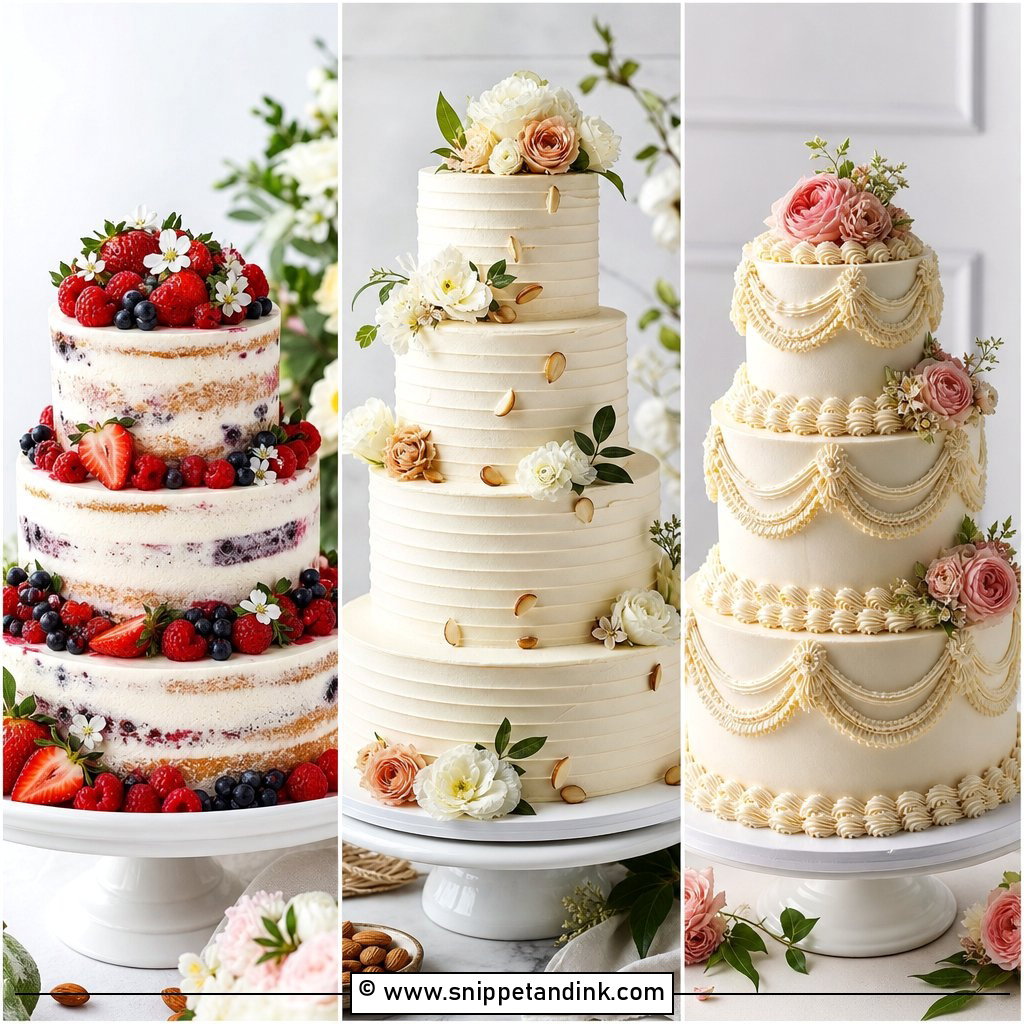
Buttercream gives a relaxed, handmade feel without looking casual. Smooth buttercream reads modern; a light palette-knife texture suits gardens and barns. I pair it with fresh roses or ranunculus, or tiny pressed sugar flowers. The trade-off is temperature: meringue-based buttercreams taste silky but soften quickly in a warm marquee, while a crusting American buttercream is sweeter but sturdier. If your reception is outdoors in summer, ask your baker which one they’d use and why.
3. Vintage Lambeth Wedding Cake
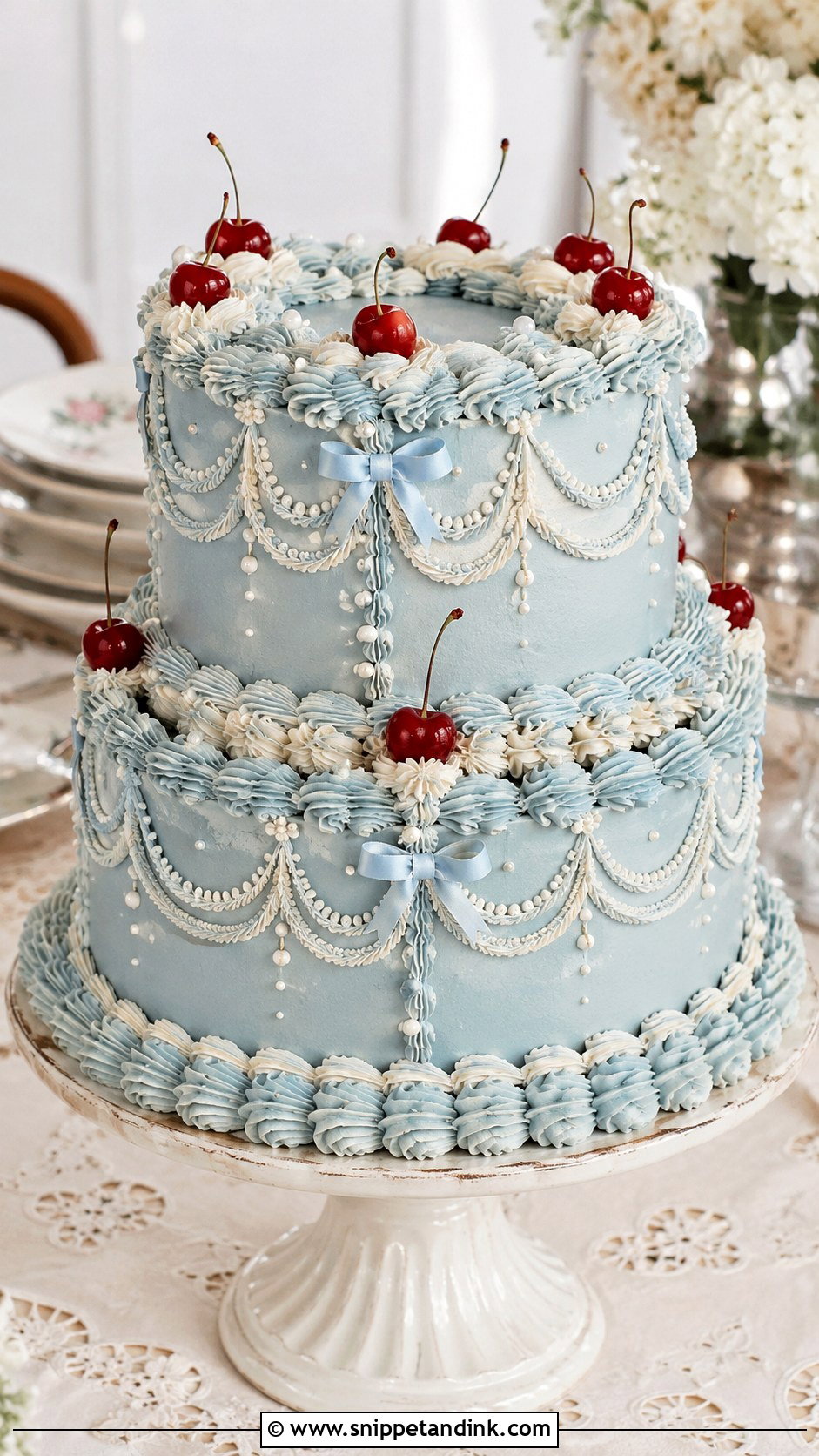
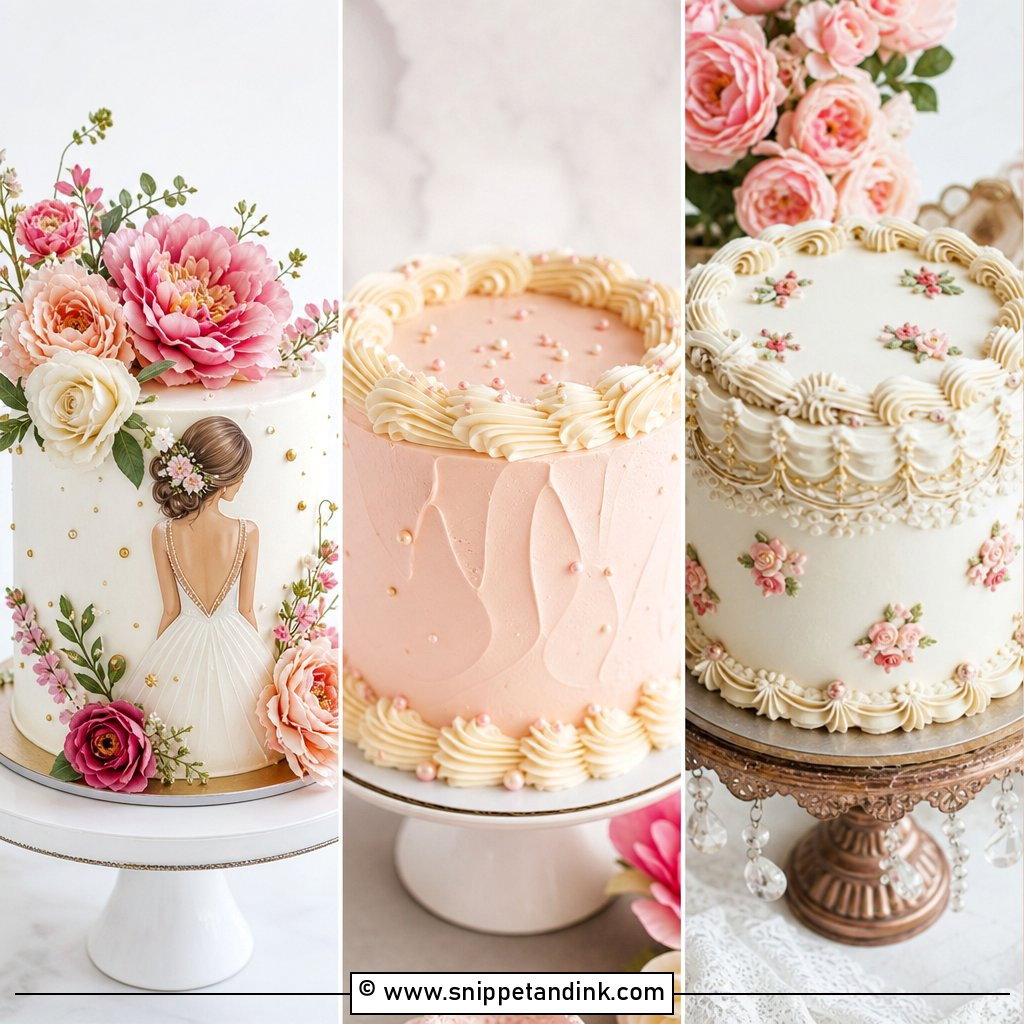
The vintage Lambeth wedding cake is all piping: stacked shells, swags, ruffles, overpiped borders, sometimes cherries or little bows. It looks nostalgic but reads modern in pale palettes like baby blue, blush or butter yellow. Lambeth is slow work, and every layer of piping needs a stiff buttercream that holds its ridges, so it tends to cost more in labour than a plain cake the same size. One or two tiers on a pedestal with candles is often all the room needs.
4. Pearl Wedding Cake
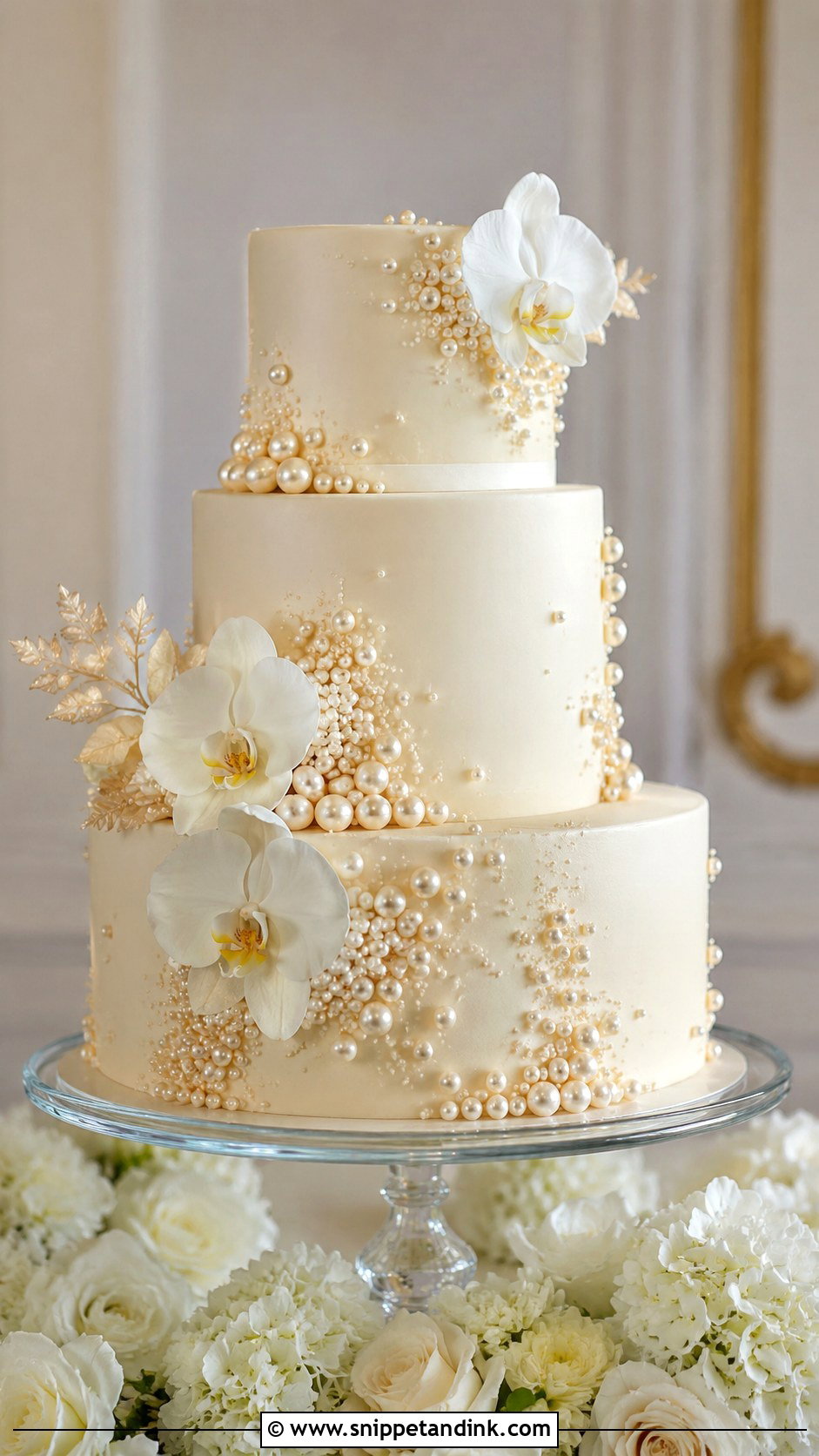
Pearls make a plain cake look dressed. Tiny edible pearls scattered over smooth white icing, larger clusters at the base of each tier, or a pearl lustre dusted over the whole surface. The thing I watch with pearls is spacing; too many and the cake looks crowded, so I usually place them in a pattern that echoes something else, like the beading on the dress. Hard sugar pearls can be tough on teeth, so I tell couples whether the ones I’m using are soft or crunchy. Ivory roses, ribbon and champagne accents suit them.
5. Floral Wedding Cake
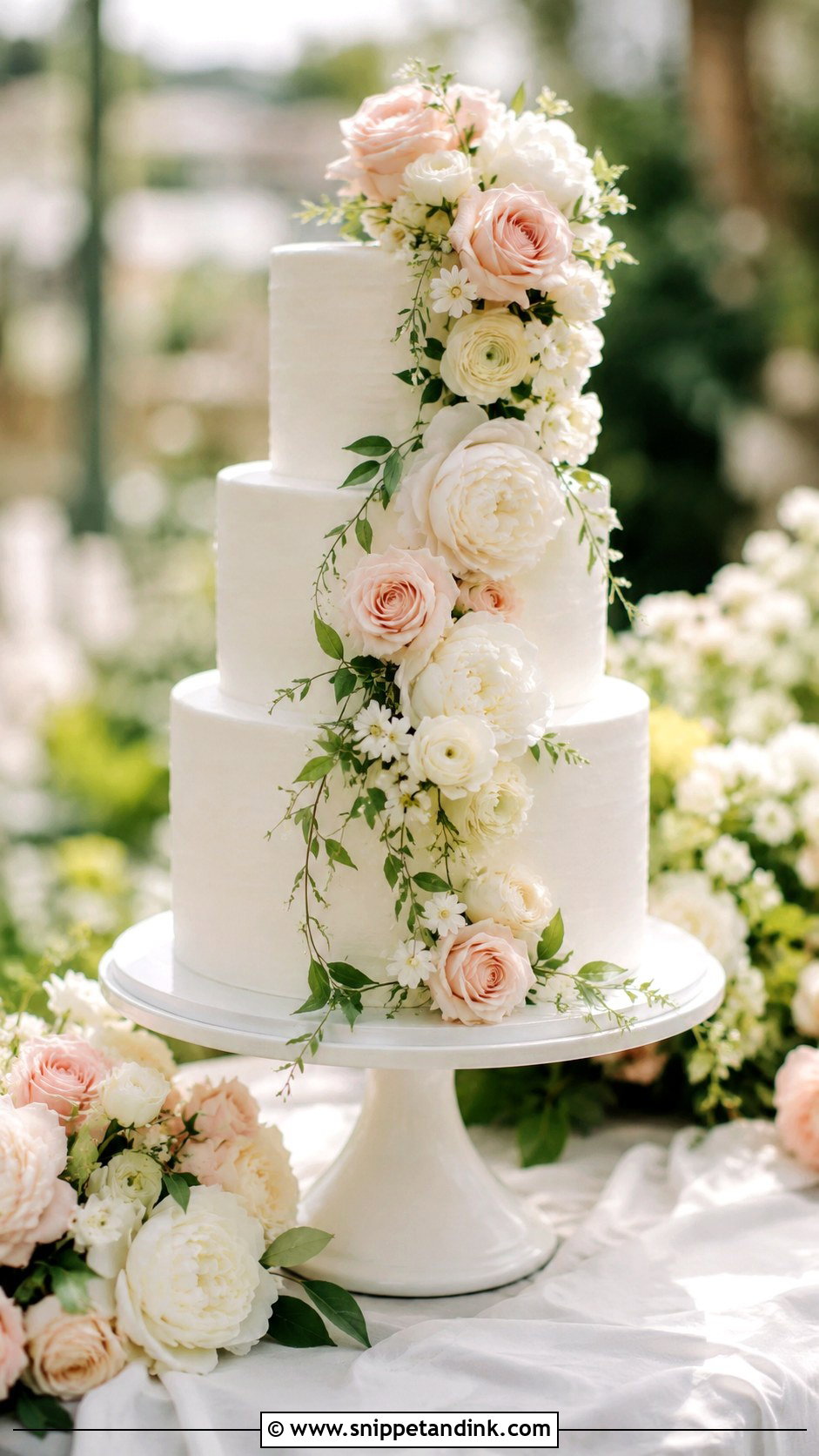
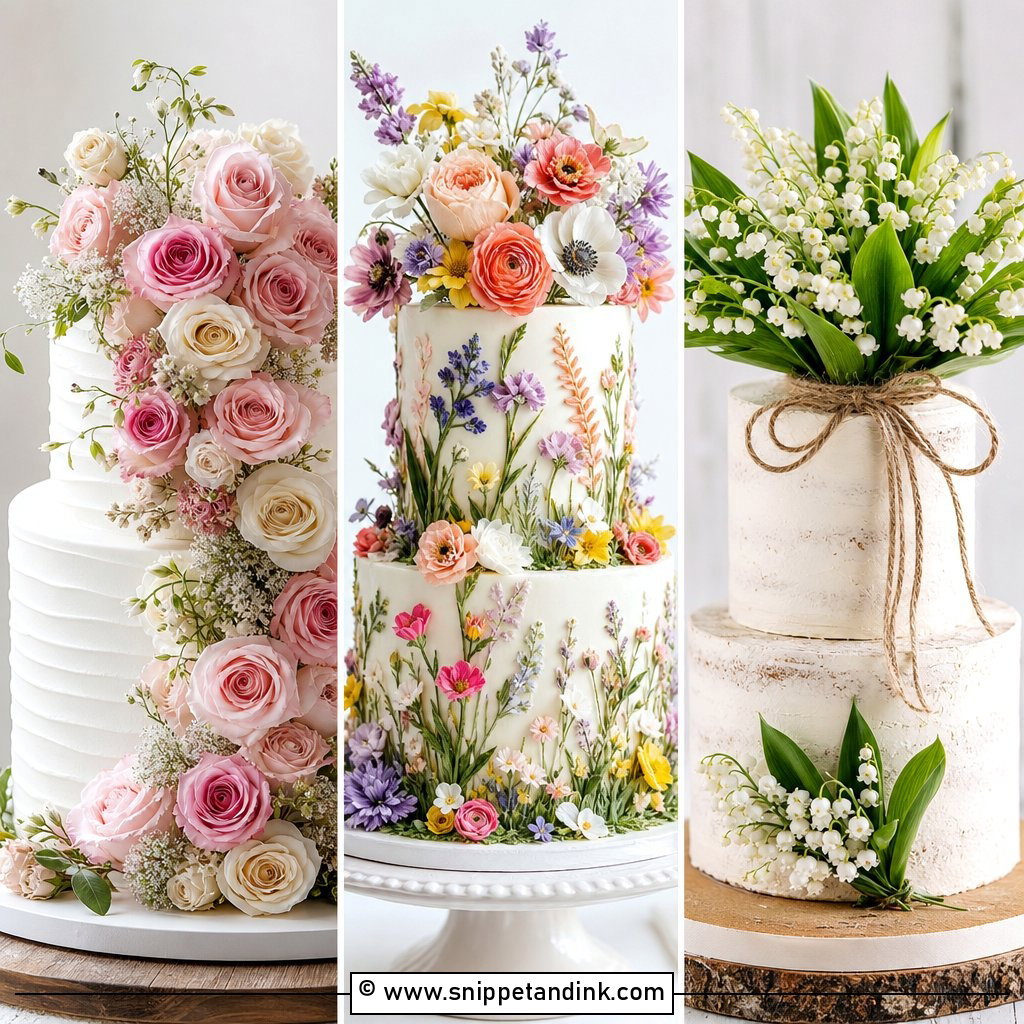
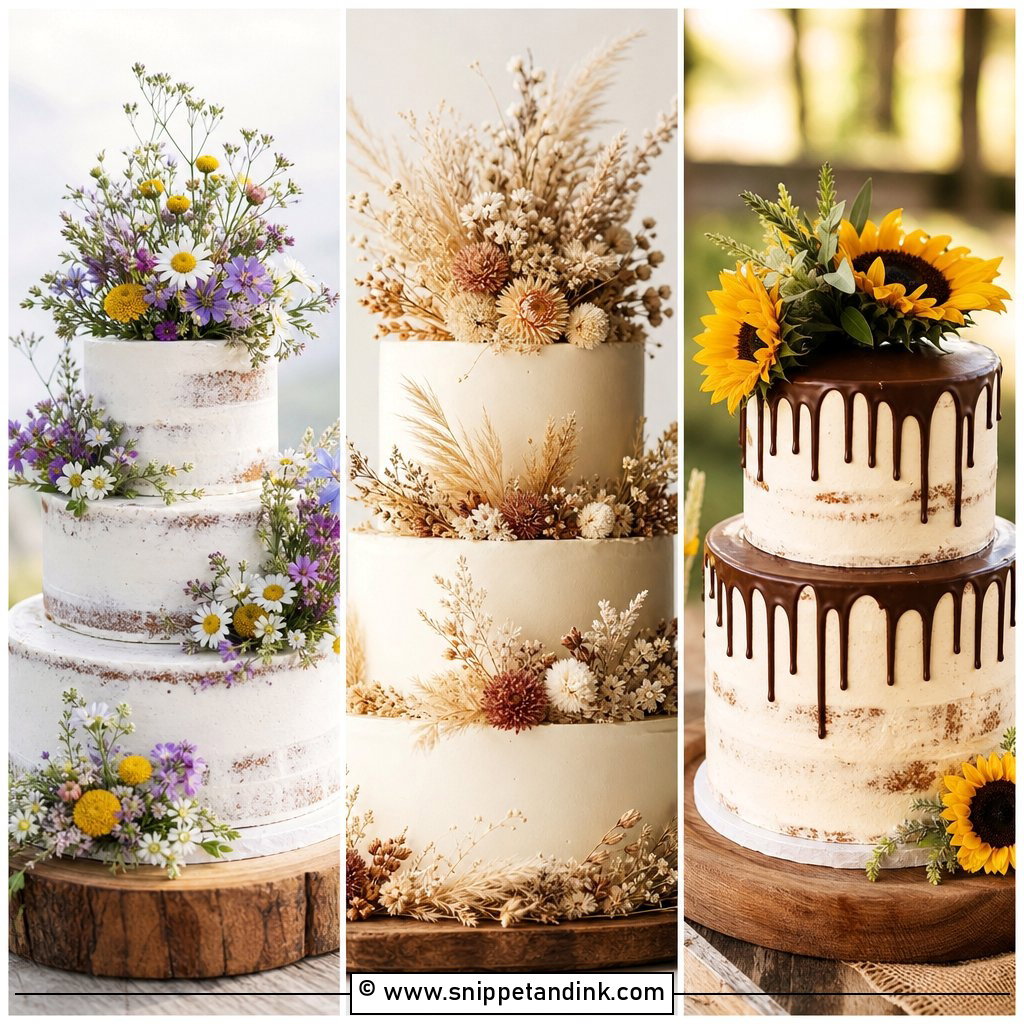
A floral wedding cake carries the ceremony flowers into the reception. White roses keep it classic, blush peonies soften it, and mixed garden blooms make it bolder. The best ones repeat the bouquet or the arch. Fresh flowers must be food-safe and grown without pesticides, and the stems need wrapping or a barrier so sap never touches the icing. I agree with the florist in advance who is placing them, because a cascade put on in a rush leaves bruised petals and gaps.
6. Sugar Flower Wedding Cake
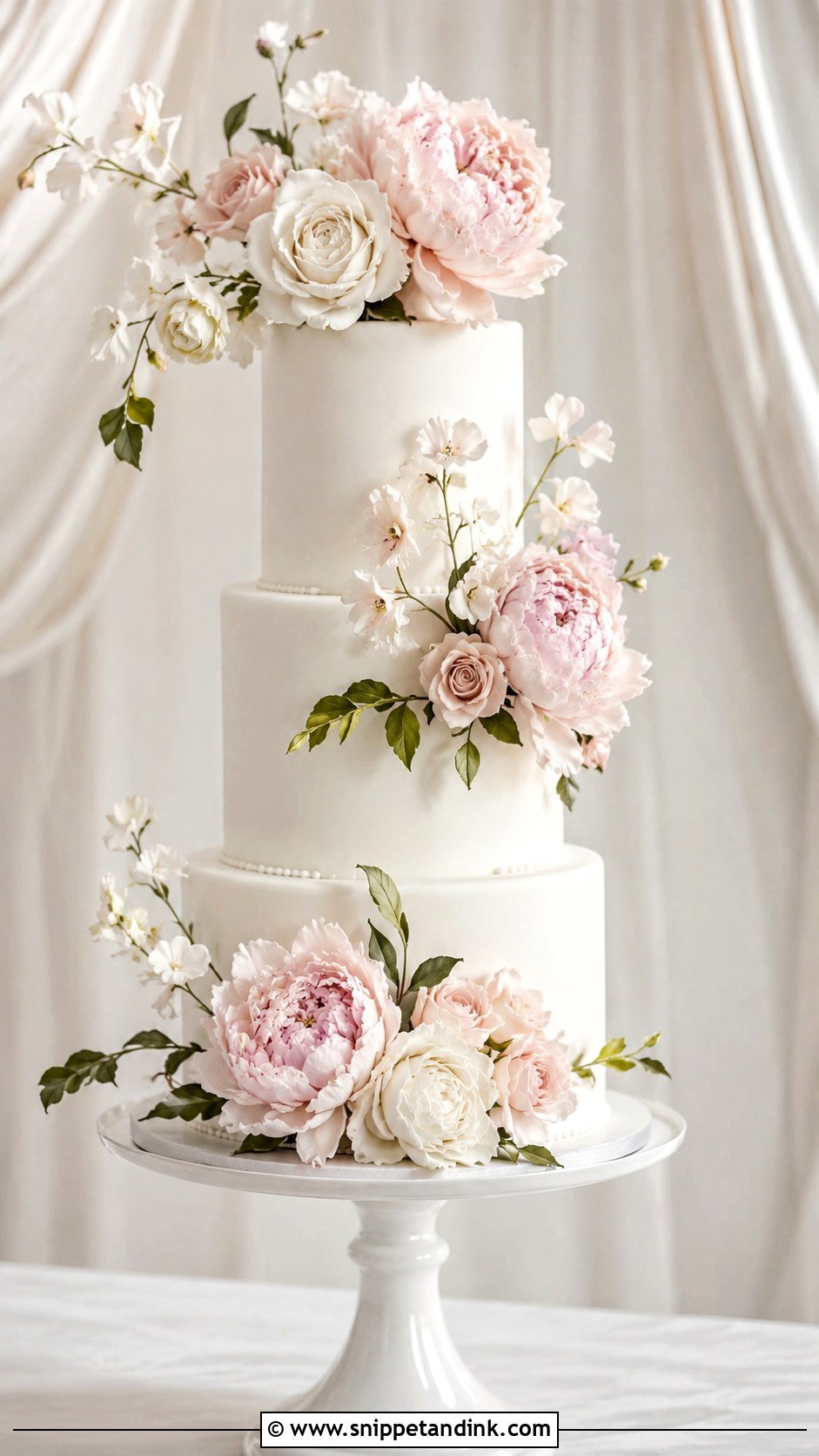
Sugar flowers are for couples who want flowers on the cake but cannot use the real thing, either because the bloom is out of season or because it’s toxic. They’re made petal by petal from sugar paste, wired and dried, which means they need to be ordered early. Roses, peonies, sweet peas and anemones all reproduce well. They hold their shape in warm rooms where real flowers wilt, and many couples keep the topper afterwards. Keep the tiers simple so the flowers carry the cake.
7. Greenery Wedding Cake
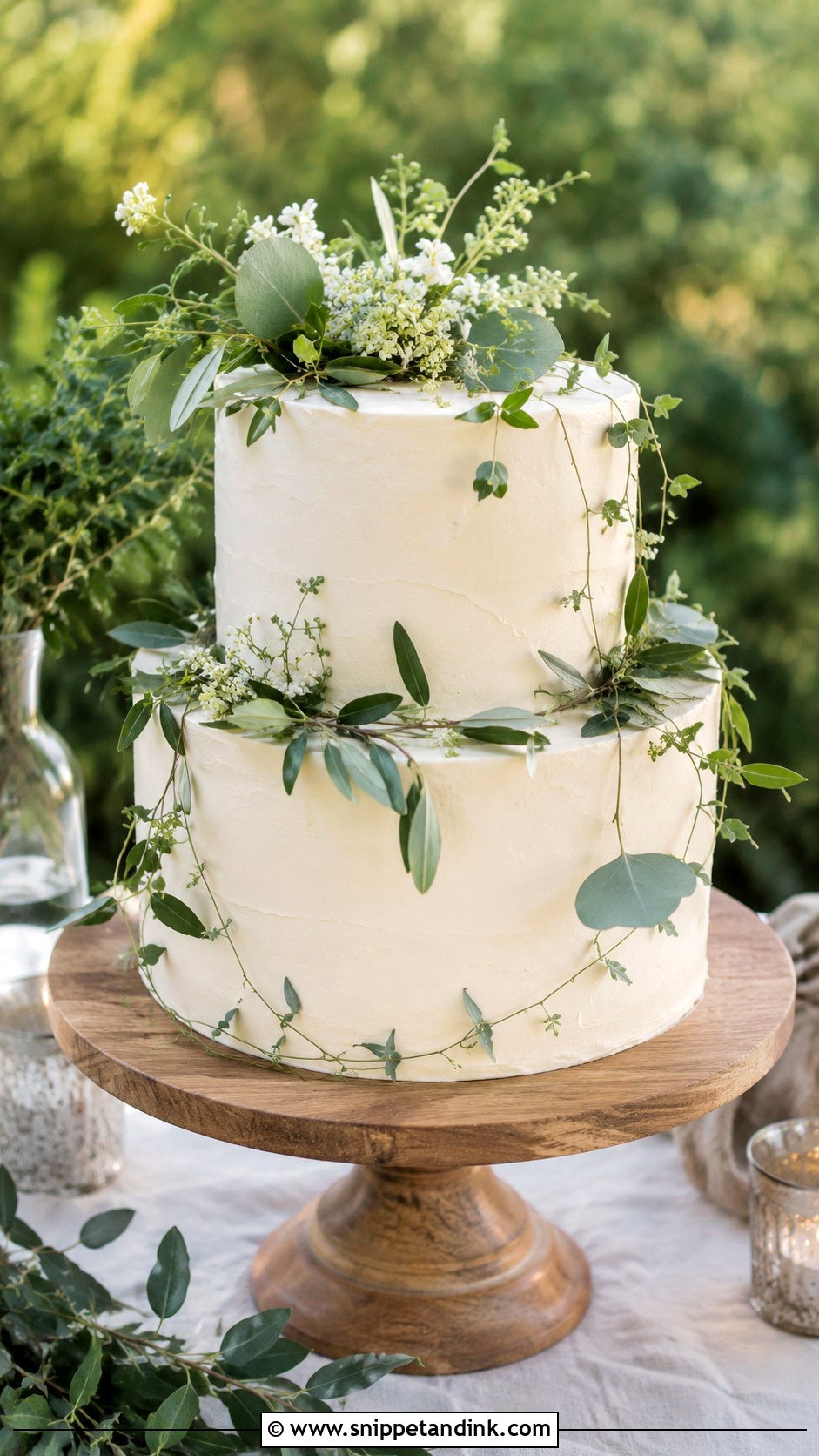
Greenery gives a fresh look with fewer flowers. Eucalyptus, olive, ferns or trailing vines can wrap around tiers or sit in small clusters with white blooms. Here’s what I tell couples: not all greenery is safe near food, and some eucalyptus varieties are treated or sprayed, so I either use stems the florist has confirmed are safe and keep them on a barrier, or I make the leaves in sugar. A clean ivory base, a wooden or ceramic stand and a linen runner finish the natural feel.
8. Gold Wedding Cake
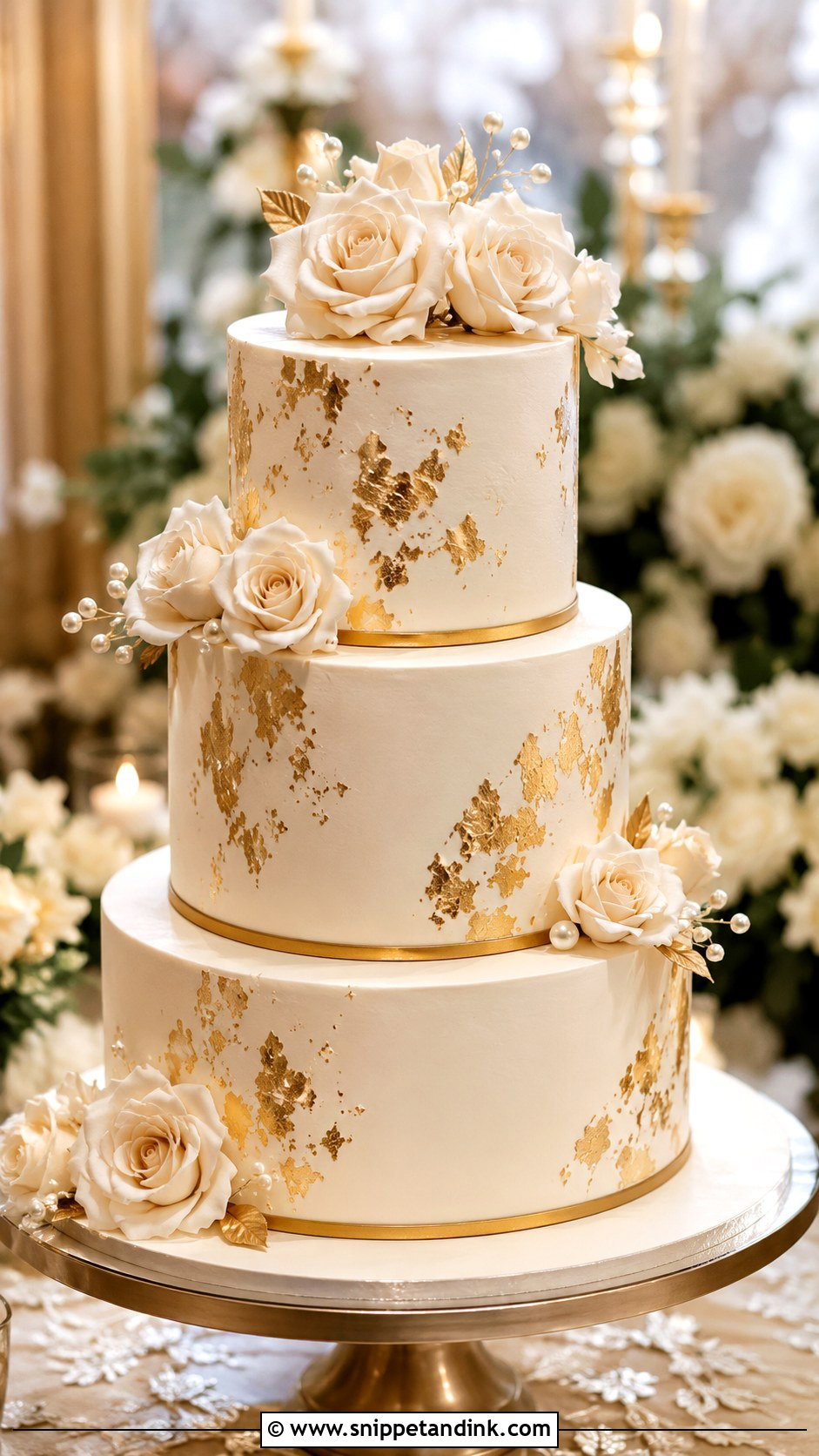
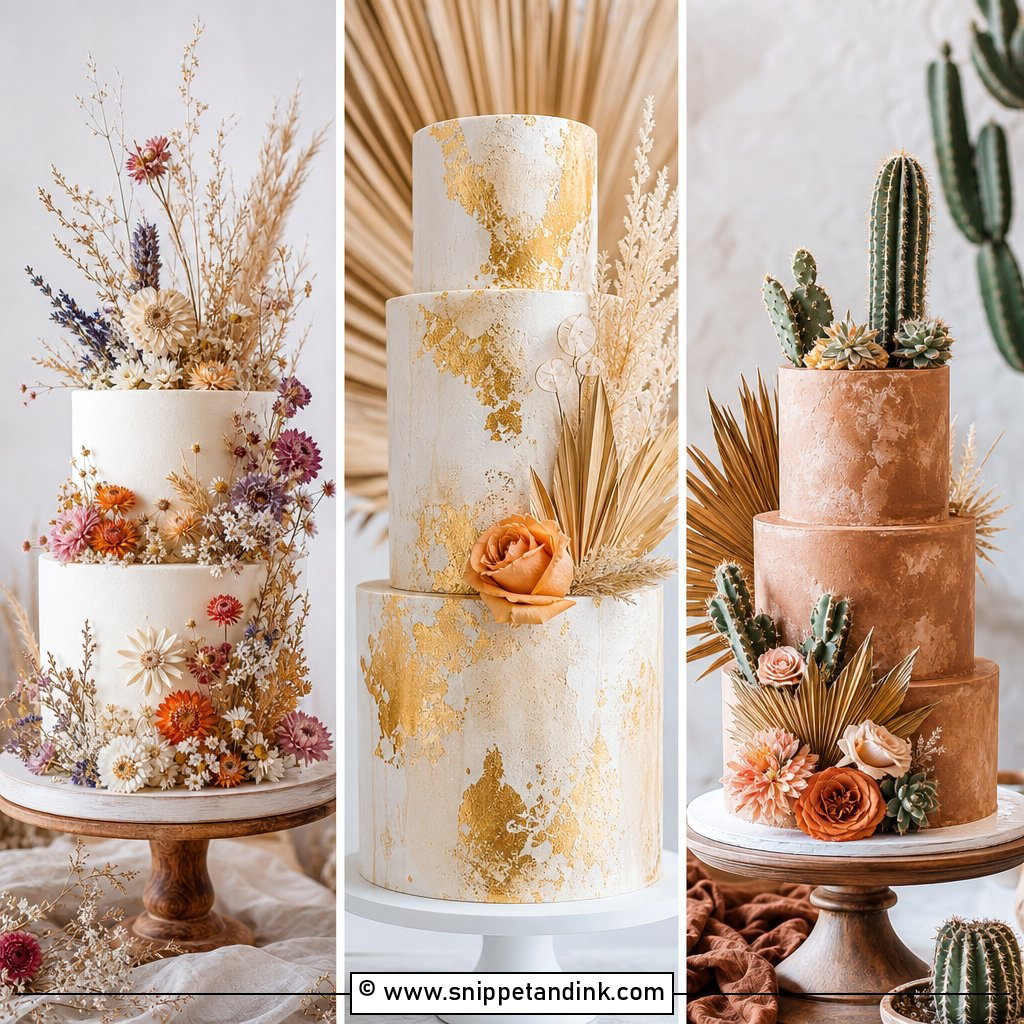
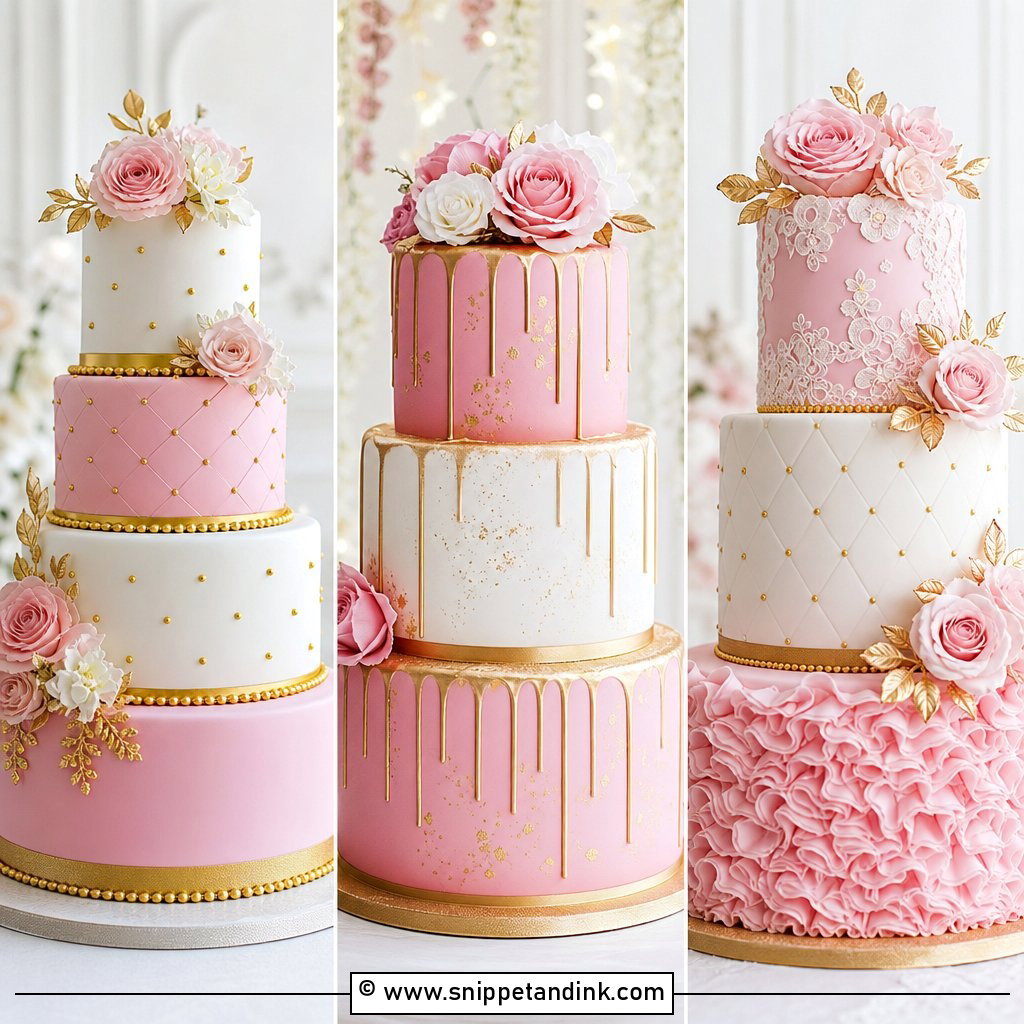
Gold adds warmth and formality. It can be a thin edge of gold leaf on each tier or one full metallic tier. Gold leaf over buttercream looks soft and broken-up; painted gold on fondant gives a sharp, polished shine. I only use edible gold leaf and edible metallic paints, and I make sure the couple knows that some shimmering decorating dusts are labelled non-toxic but not meant to be eaten. Match the tone of gold to the flatware or candle holders, and the cake ties the room together.
9. Black And White Wedding Cake
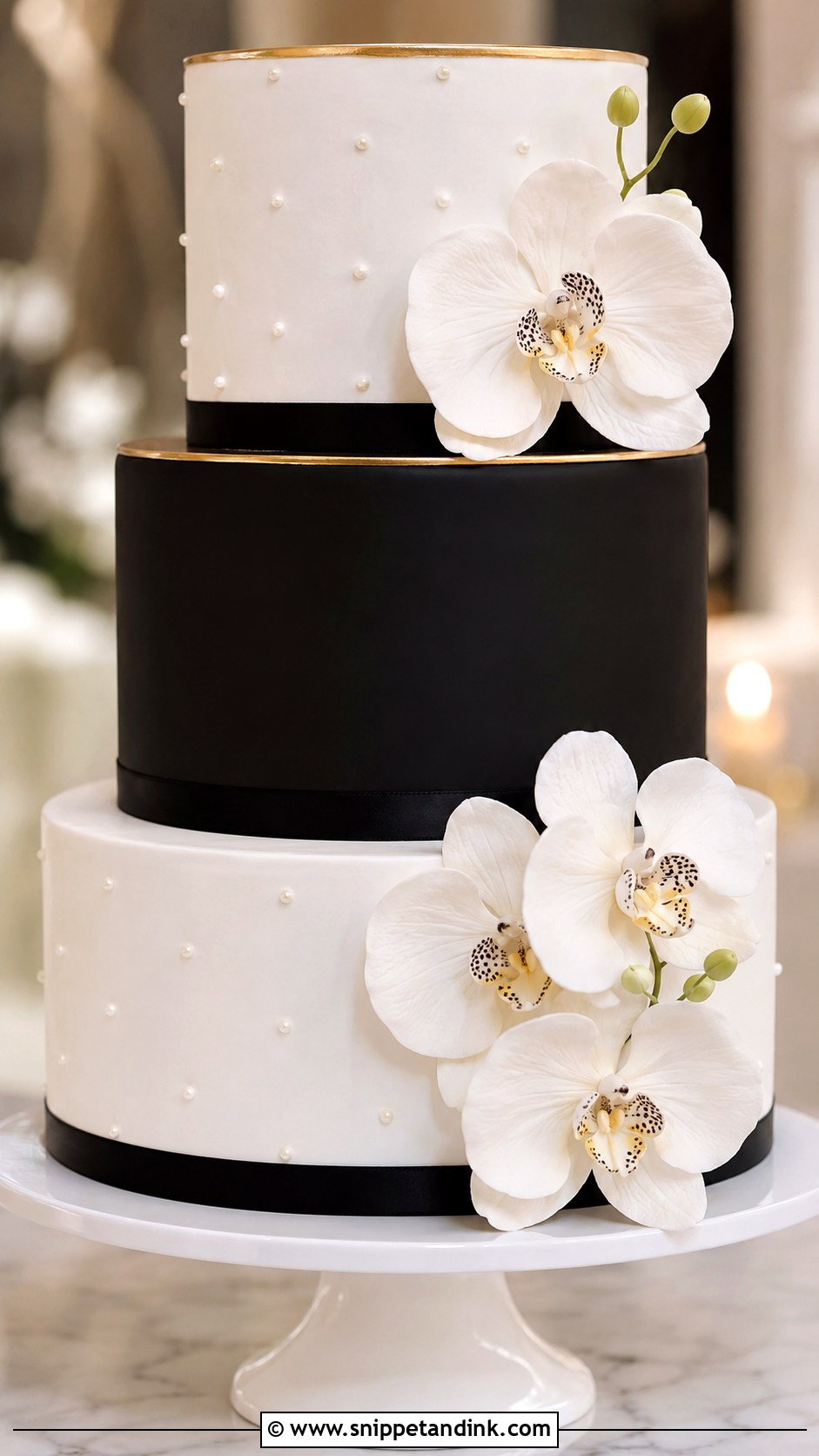
Black and white is sharp and modern, and it suits formal city receptions. White tiers with black ribbon, black piping or painted black florals, or one black tier for contrast. Black icing is the difficult part: it takes a lot of colour to get a true black, which can stain mouths and leave a bitter taste, so I often use black only on fondant panels or decorations rather than the whole cake. White flowers, pearls or gold details keep it bridal. Strong, even lighting on the table helps the contrast read in photos.
10. Blue Wedding Cake
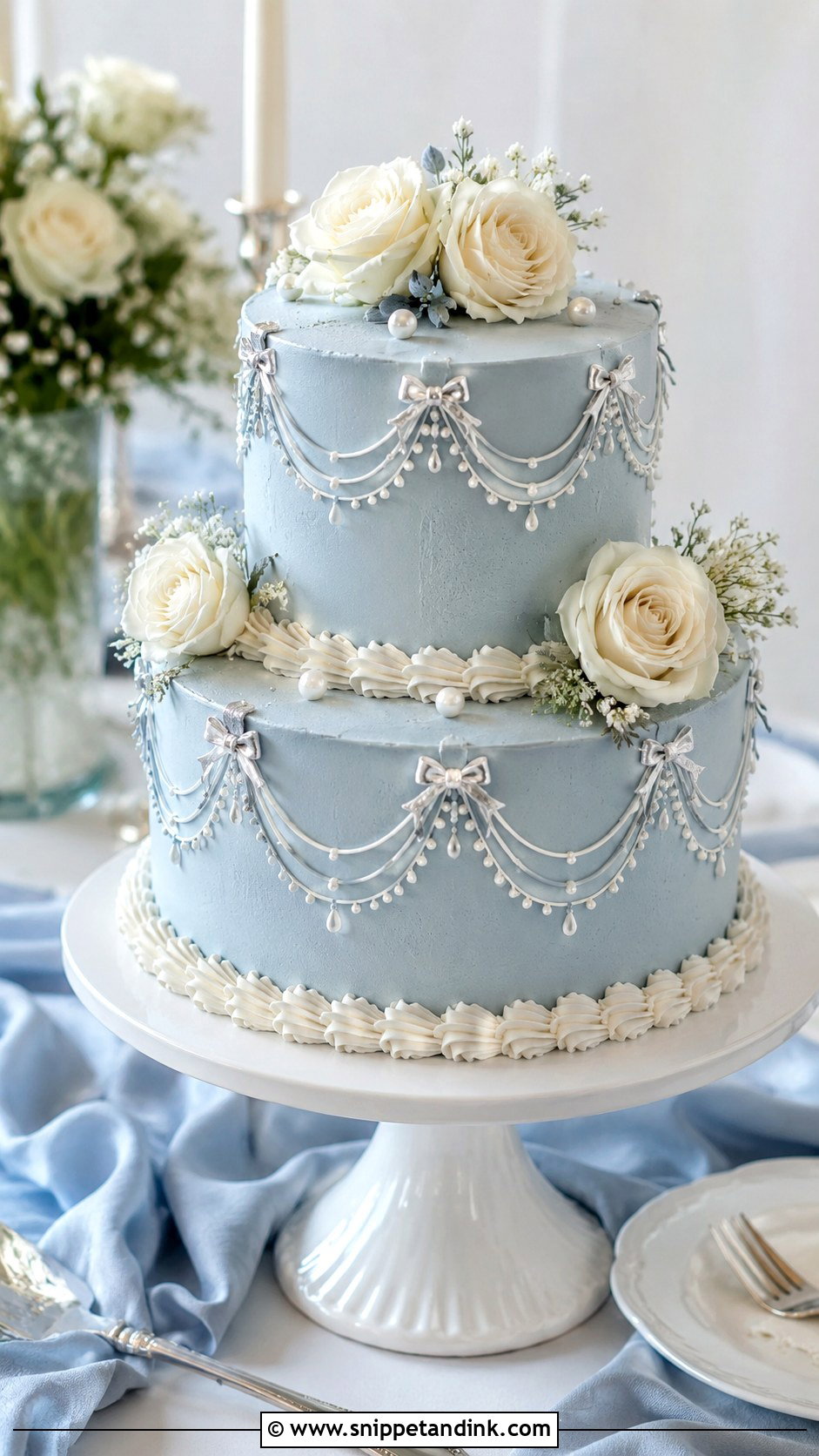
Blue changes mood with its shade: pale blue looks vintage, dusty blue calm, navy formal. It pairs with white flowers, pearl piping, silver details and small bows. A blue Lambeth cake has become a favourite for couples who want something playful. Pale blues are prone to fading under strong light and can shift slightly green next to buttery icing, so I tint white buttercream rather than ivory, and I keep the cake out of direct sunlight. Blue suits coastal and spring weddings, or anywhere the bridesmaids wear blue.
11. Blush Pink Wedding Cake
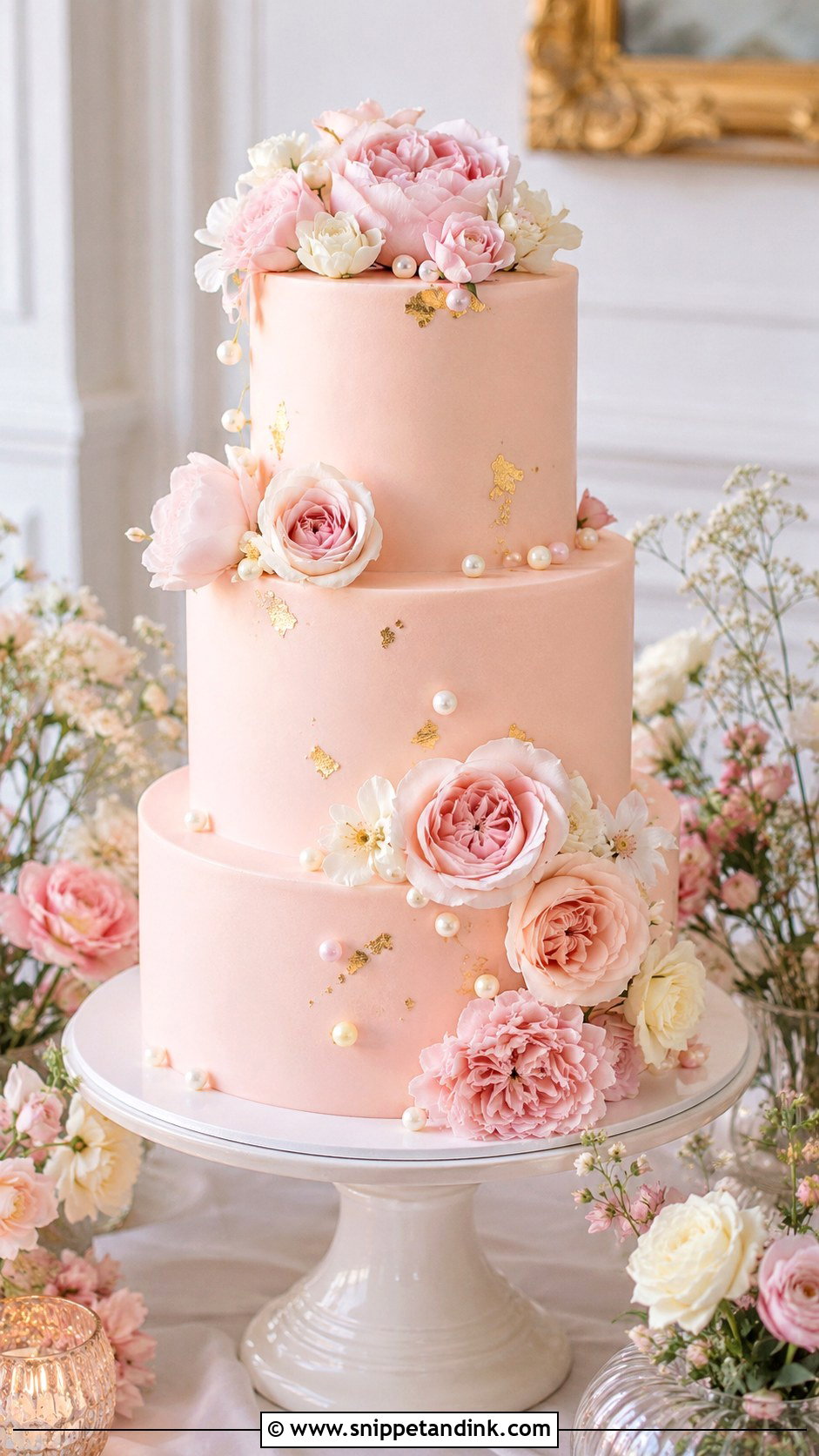
Blush pink is romantic without being loud. Blush buttercream across every tier or an ivory cake with pink flowers and ribbon both work, with roses, peonies or tiny sugar blossoms. Add pearls for a classic touch or gold leaf for warmth. I mix blush very slowly, a drop at a time, because pink deepens as buttercream sits and a shade that looks right at mixing can look like bubblegum by the next morning. Keep it muted and let the texture and flowers do the work.
12. Bow Wedding Cake
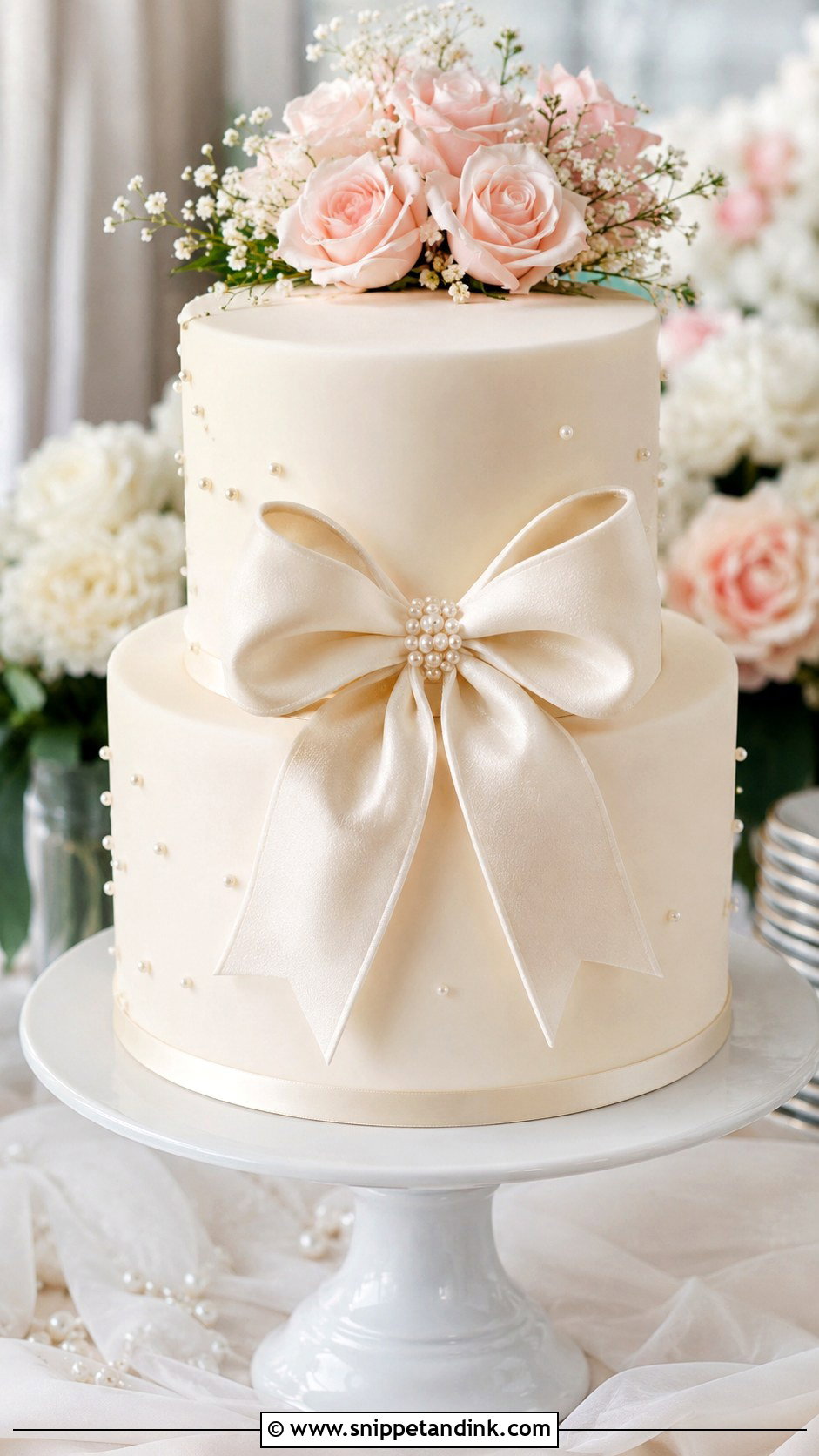
A bow makes a cake look like fashion. It can be fondant, sugar paste, edible ribbon or real ribbon with a food-safe barrier behind it. A large bow on one tier is a statement; tiny bows tucked into vintage piping feel sweet. Real satin ribbon wicks butter from buttercream and gets greasy spots, so I back it with a strip of fondant or use ribbon only on fondant tiers. Keep the rest of the cake simple. If your dress or invitations already have bows, it ties the details together neatly.
13. Draped Fabric Wedding Cake
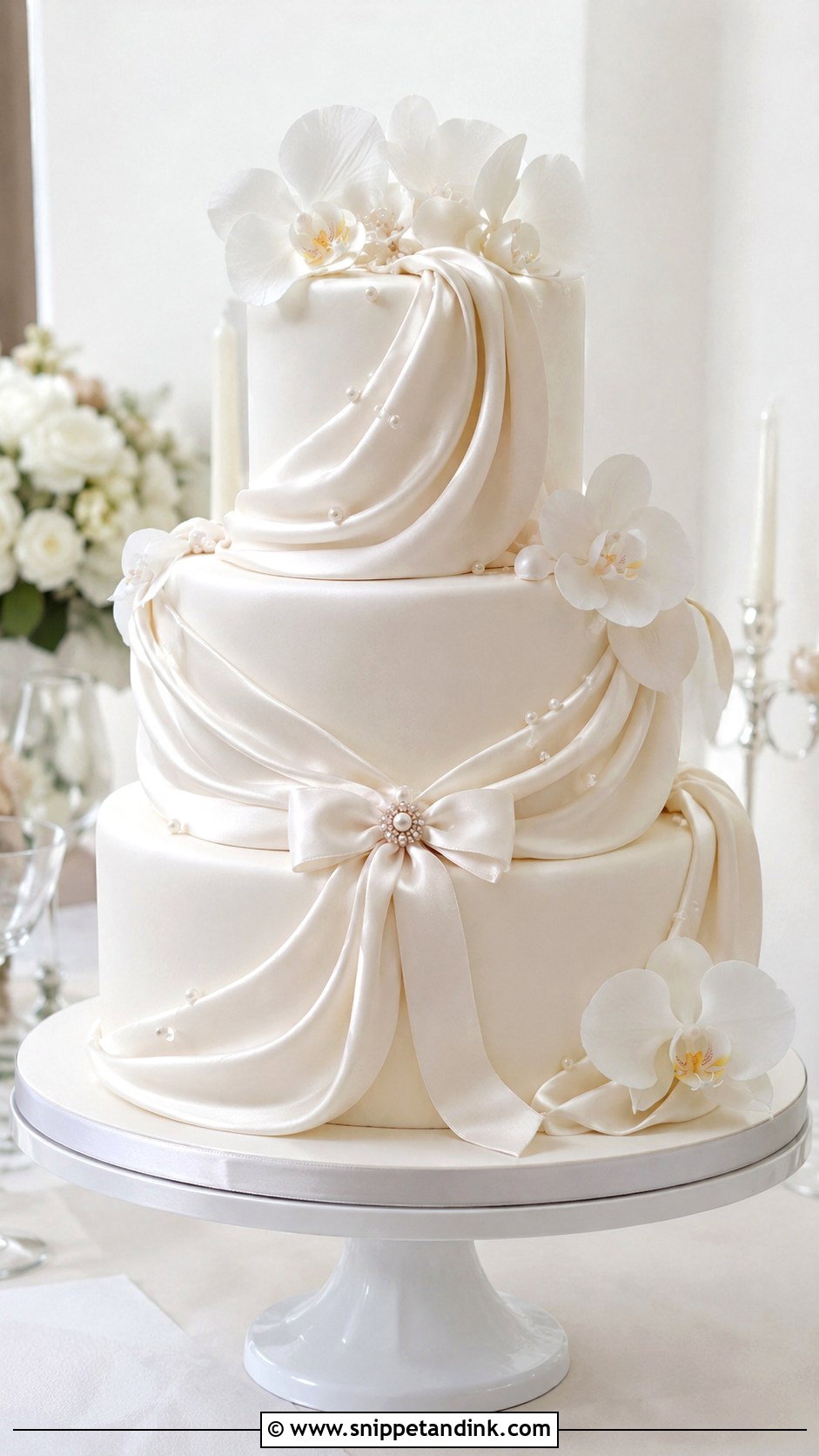
A draped fabric wedding cake borrows from gowns and veils: fondant folds, ruffled buttercream or thin sugar panels shaped like silk or chiffon. It needs very few flowers. Ivory, cream and pearl white are safest, and pale blush or champagne can look softer still. Drapes are made the day before or the morning of assembly, since fondant folds dry and crack if they’re handled late. A few sugar flowers or a soft bow finish it. The effect is sculptural and very bridal.
14. Textured Buttercream Wedding Cake
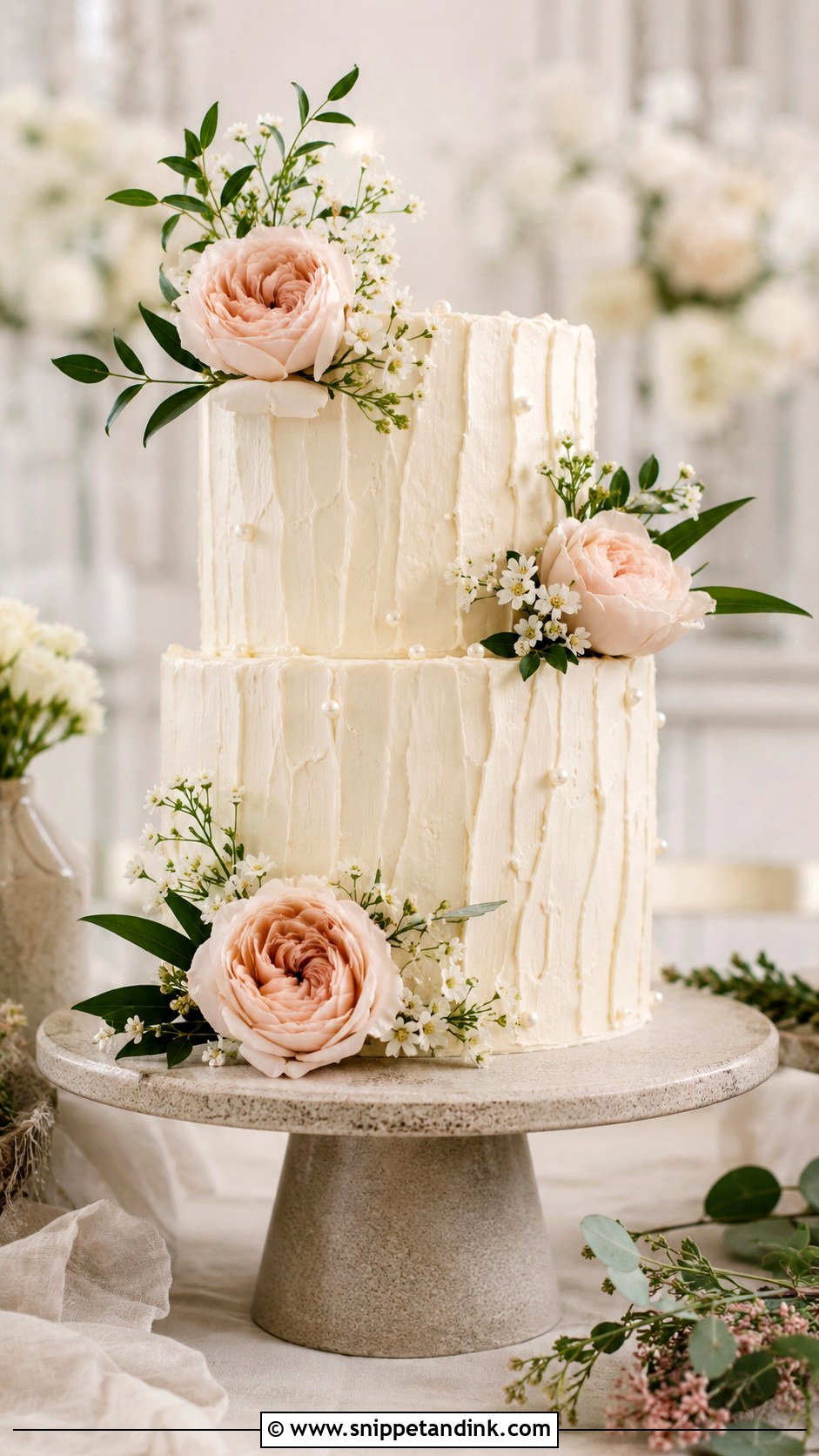
Textured buttercream is ridged, combed, waved or swept with a palette knife instead of smoothed flat. It looks handmade but deliberate. It’s also more forgiving than smooth buttercream, since small bumps disappear into the texture, which helps in a warm room where perfectly sharp edges slump. Fresh flowers, greenery, fruit or a little ribbon all suit it. Ivory, cream, blush or soft beige keep it versatile. I’d steer couples away from very deep texture on a delivery cake travelling far, since the ridges scuff in transport.

15. Square Wedding Cake
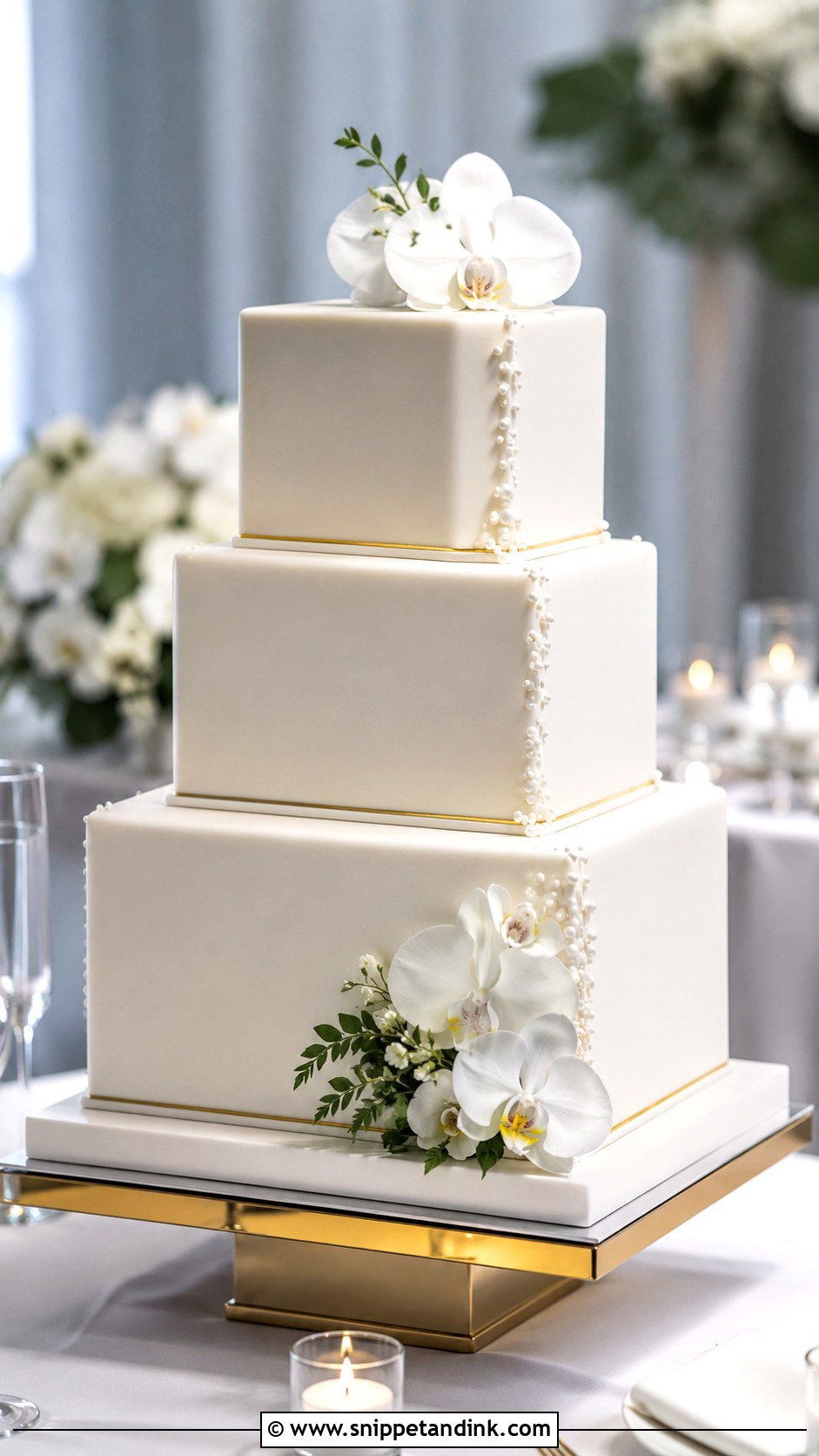
Square tiers look clean and architectural. They can be stacked evenly or rotated slightly for movement. Sharp corners are hard to achieve in buttercream and easy to dent, so most square cakes are fondant over ganache, which sets firm and holds the edges. Orchids, calla lilies, pearls or thin gold lines suit the shape. One thing couples don’t expect: square tiers serve more slices than round tiers of the same width, so the cake can be smaller. Galleries, rooftops and sleek venues suit it.
16. Floating Tier Wedding Cake
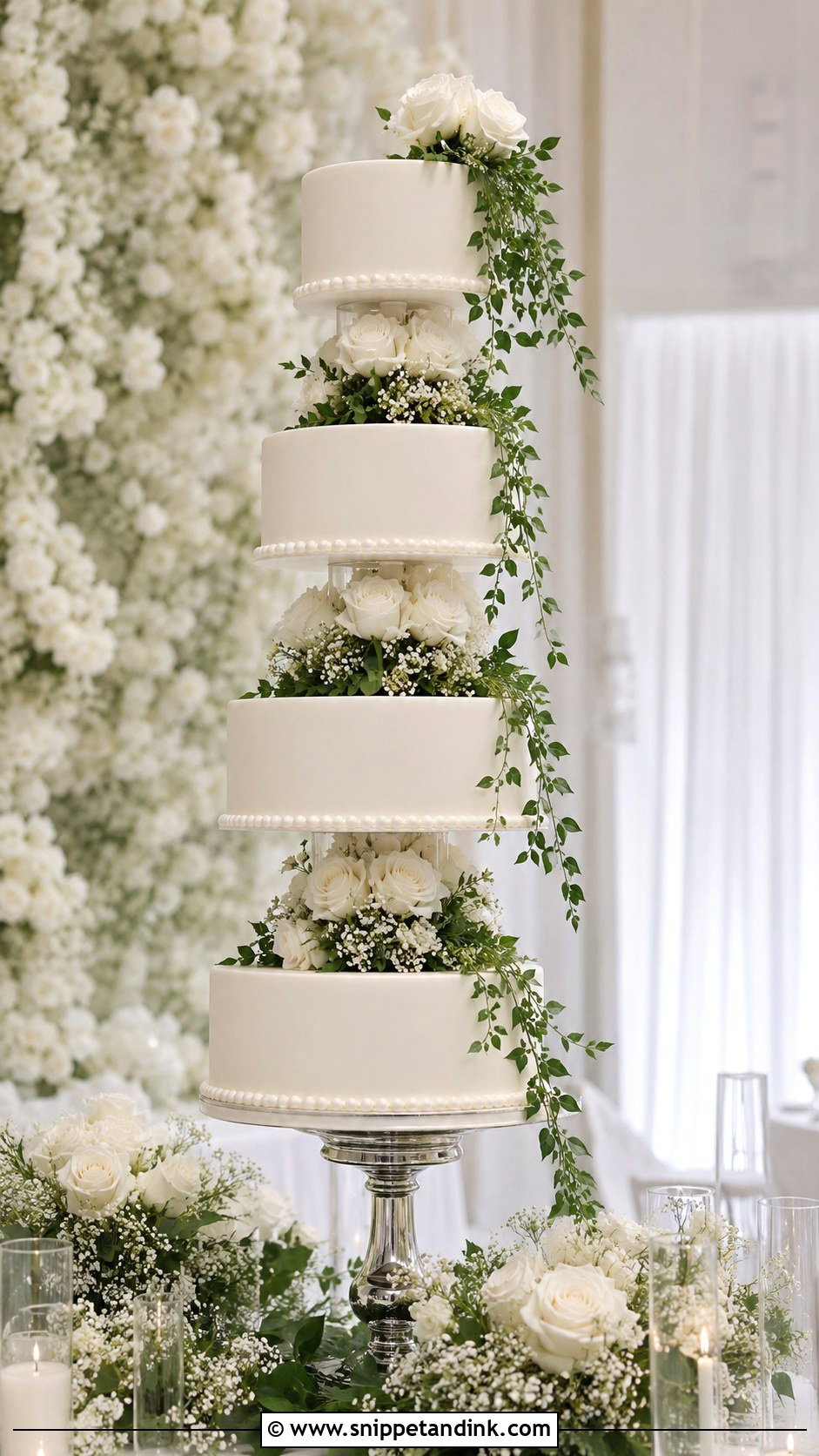
A floating tier cake separates the layers with hidden supports, clear stands, pillars or floral spacers, so it looks taller and lighter. Every separated tier sits on its own board with dowels underneath, and it must be assembled at the venue, never transported stacked. The spaces between tiers can hold flowers, pearls, greenery or draped fabric. Keep the palette consistent so the structure doesn’t look busy. It suits large ballrooms where a regular-height cake would disappear.
17. Single Tier Wedding Cake
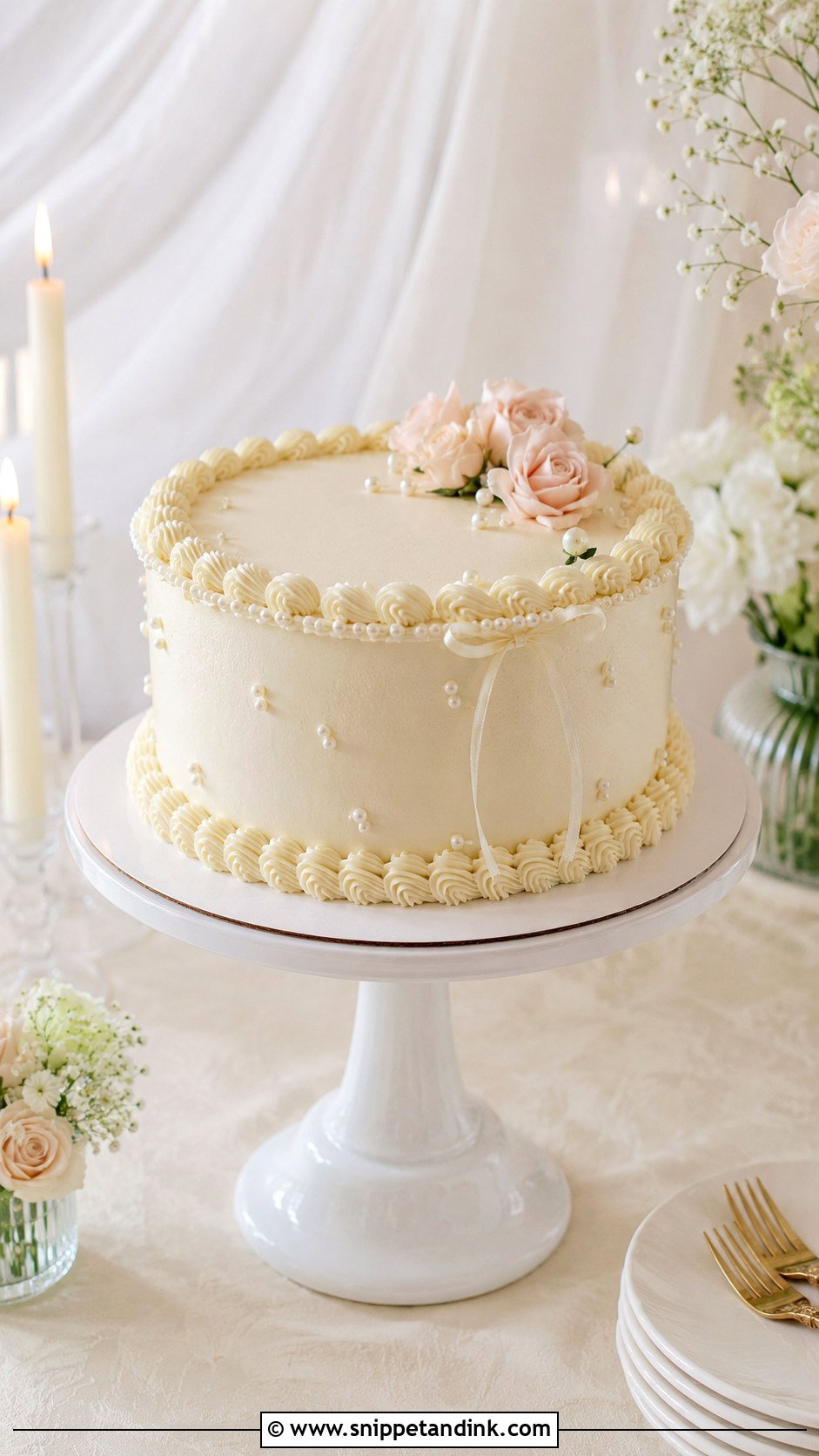
A single tier wedding cake suits elopements, courthouse weddings, intimate dinners or couples serving other desserts. Small does not mean plain: vintage piping, sugar flowers, pearls or a bow all fit on one tier. Many couples use it as a cutting cake while guests eat sheet cake cut in the kitchen, which is a sensible way to save. A tall pedestal gives it presence. With one tier, every detail is seen up close, so I take extra care with the finish.
18. Italian Wedding Cake
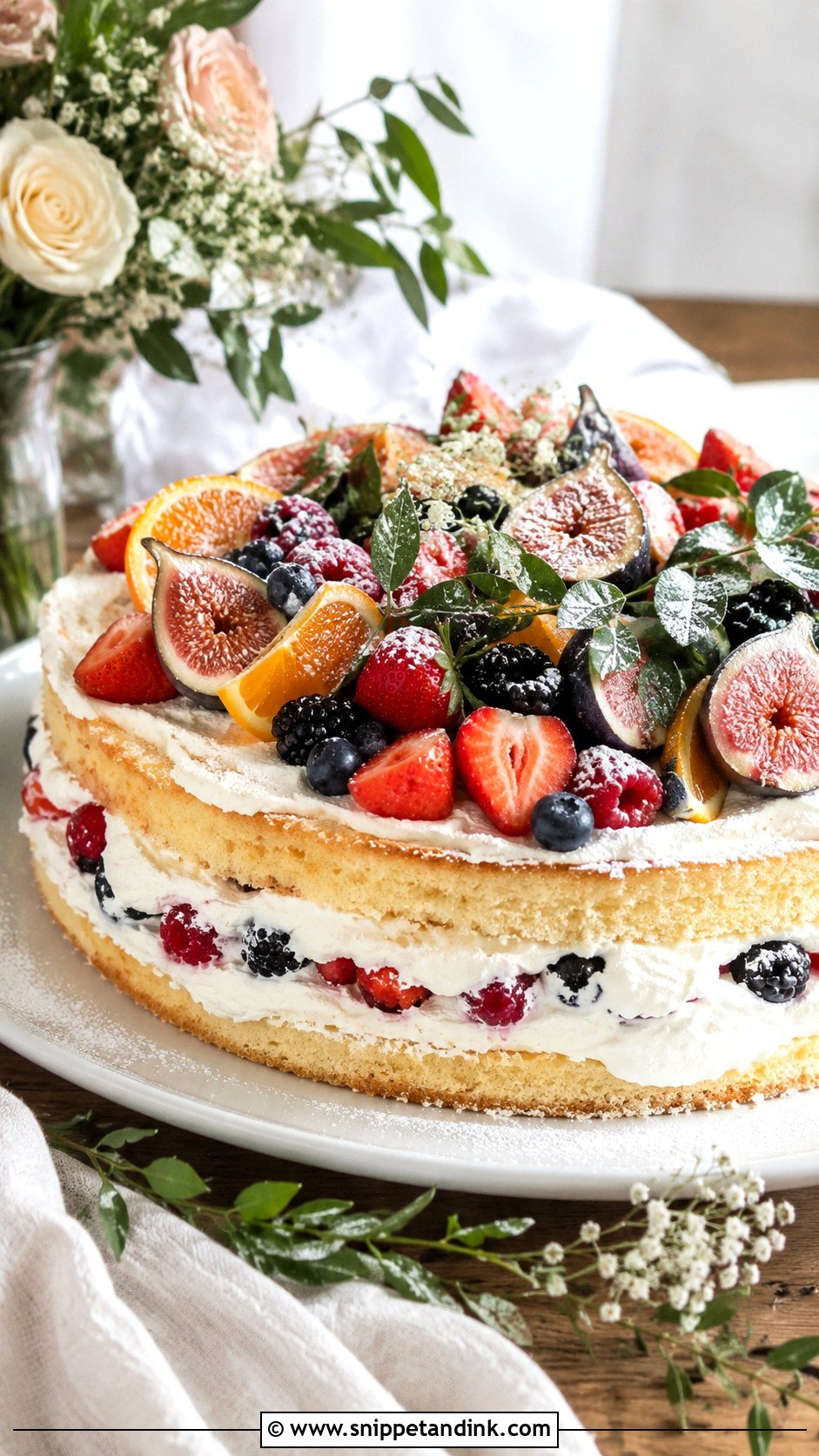
An Italian wedding cake is wide and low, layered with cream, fruit or pastry. It’s less formal than tall tiers and looks abundant. Berries, figs, citrus and soft cream decorate it without heavy frosting. The cream fillings are delicate, so it needs refrigeration until close to serving and should not sit out on a hot day. A large white platter and flowers at the base suit it, and it fits long dessert tables or family-style receptions.
19. Rectangular Wedding Cake
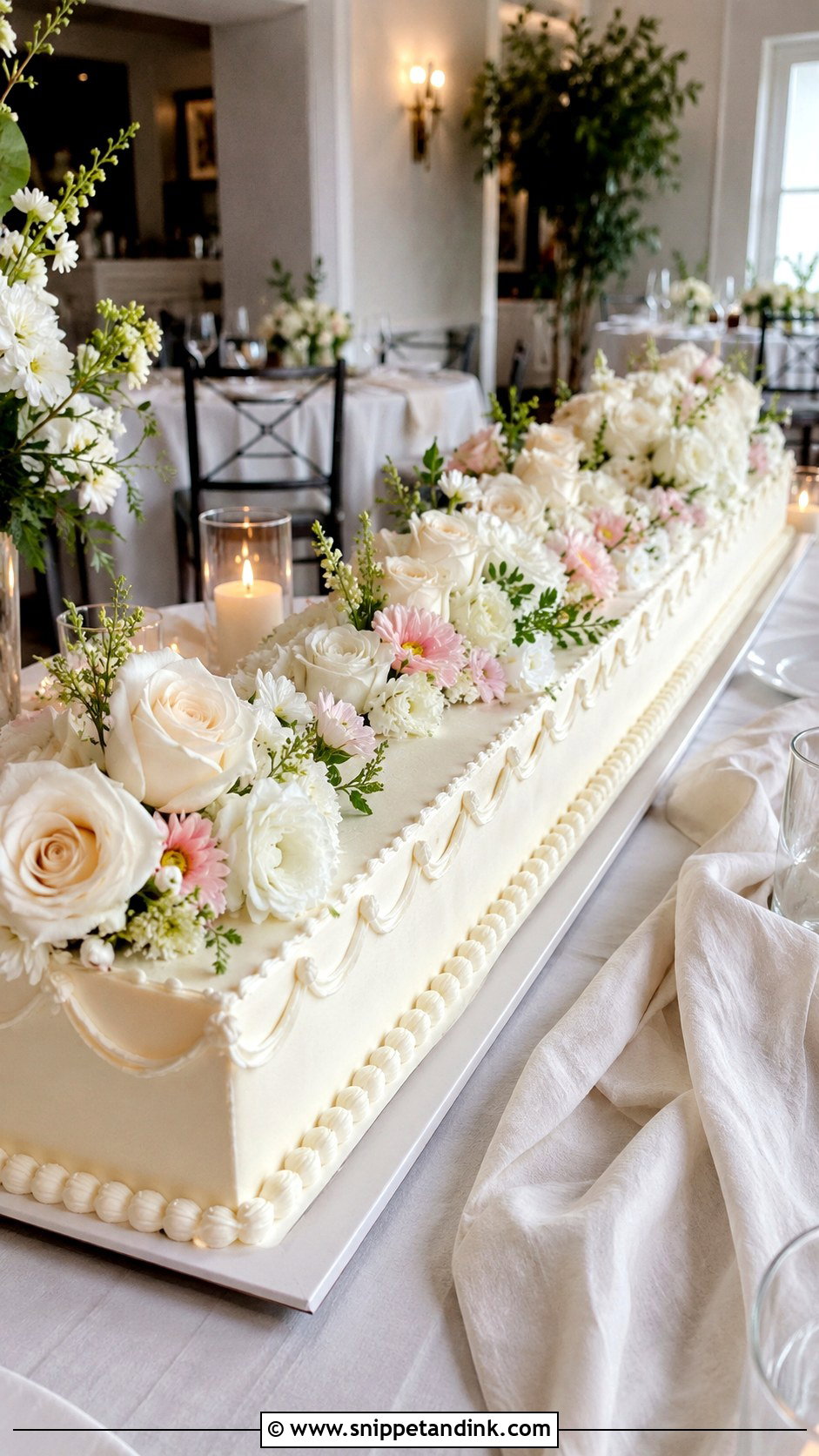
A rectangular cake stretches across the table instead of rising upward, which makes it part of the room design and great for long reception tables. Smooth buttercream, vintage piping, pearl borders or rows of fresh flowers all suit it. It is practical: a long cake is easy to cut into neat even portions, and there are no tiers to dowel. It does need a sturdy board and a team of two to carry, and a venue table that’s level. Keep the palette clean so the length looks deliberate.





20. Fruit Wedding Cake
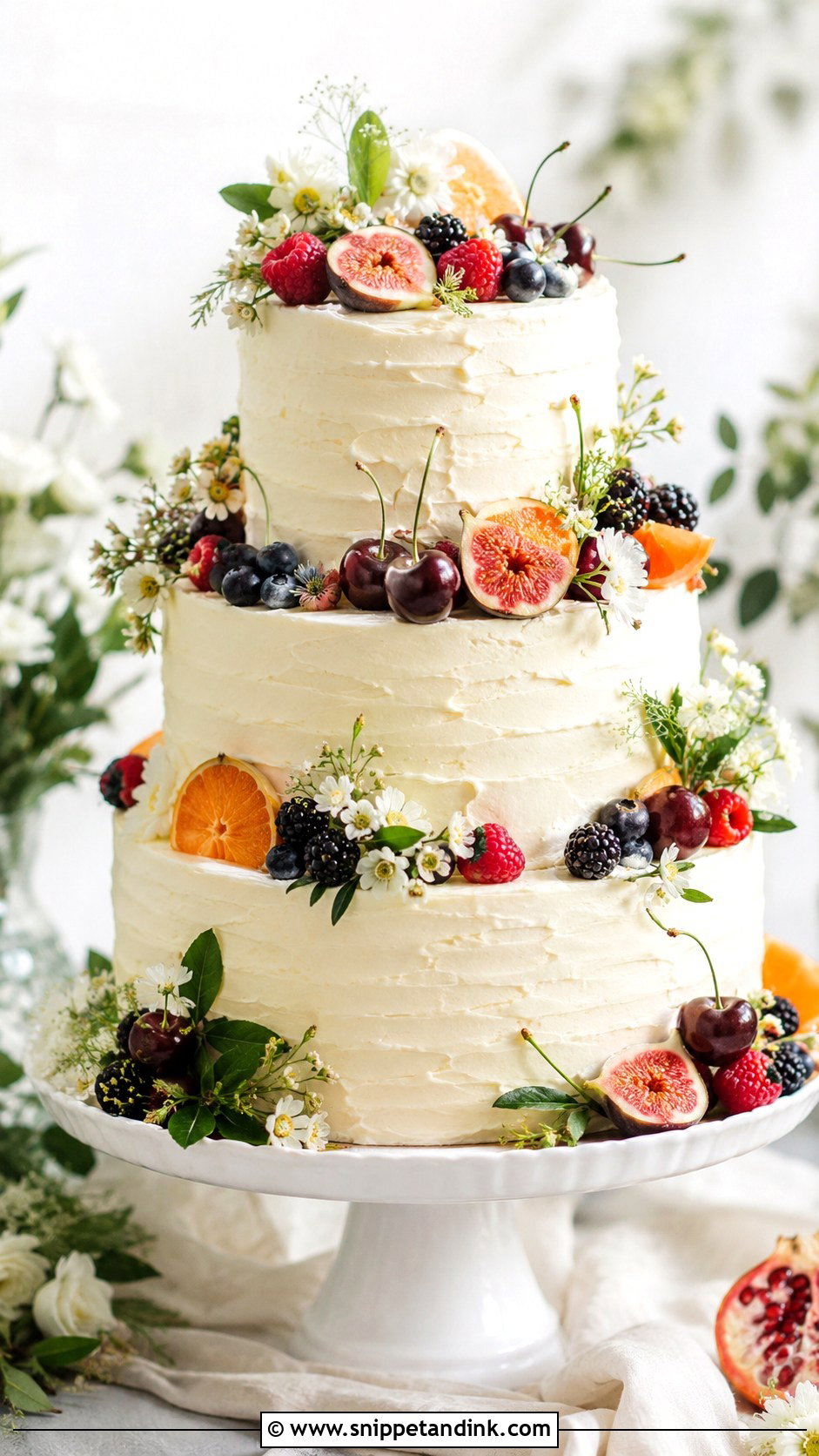
Fruit makes a cake look fresh and seasonal. Berries, figs, cherries, peaches, citrus, grapes or pomegranate seeds, depending on the month. Pair them with whipped frosting, mascarpone cream, vanilla buttercream or a light glaze. Cut fruit weeps juice onto icing within a couple of hours, so I place whole or glazed fruit, and I add it as close to the reception as possible. Arrange it neatly or in soft clusters so it still looks bridal. Garden weddings and brunch receptions suit it.
The Hours Between Delivery and the Cutting
Most cake problems happen after it leaves the bakery. A tiered cake is heavy and soft at its core, and the room it waits in matters as much as how it was made.
- Heat and sun: buttercream softens fast. Ask the venue to put the cake table away from windows, heaters, candles and the dance floor lights.
- Assembly: most tiered cakes are stacked on site, each tier on its own board with dowels. Leave your baker a clear, level table and time before guests arrive.
- Flowers: confirm in writing whether the florist or the baker places fresh flowers, and that they are food-safe.
- Cutting: one cut into the bottom tier is usual for photos. The venue or caterer then takes it to the kitchen and removes the dowels before slicing.
If you plan to keep the top tier, wrap it well, freeze it within a day, and know that it will taste best within a few months rather than a full year. Fresh fruit and cream cakes do not freeze well, so pick a different keepsake if that’s your design.
Bring Your Baker the Photos You Dislike Too
The right cake fits your celebration rather than the trend. A white tiered cake suits a classic venue; a Lambeth cake suits candlelight and lace; a fruit cake feels relaxed; a floating cake gives a ballroom drama. Think about your season, the room temperature, the flowers and how many people need a slice. Then bring your baker photos of what you like and, just as useful, what you don’t. Those details shape the cake far more than any single trend will.
You'll Like These Ideas:




Leave a Reply