
Guests notice the cake twice: once when they walk in and see it on the table, and again when they taste it. Both moments matter to me. The range couples ask for now is wide, from plain buttercream tiers and long sheet cakes to heavy vintage piping, pressed flowers, sculptural shapes and fruit-piled Italian cakes. Bigger is not automatically better. The right cake fits the room, the weather, the number of people and how you actually like to eat dessert. These twenty ideas come with the practical notes I’d give you at a consultation.
Count Slices Before You Fall for a Shape
Most bakers price and plan by the wedding portion, a slim finger slice about one inch wide, two inches across and four inches tall. That is smaller than a party slice, so the number of servings a tier gives sounds generous until you see it on a plate.
- A round 6, 8 and 10 inch stack gives roughly 70 to 80 wedding portions.
- Add a 12 inch base and you are near 130.
- Square tiers of the same width give more portions than round ones.
- A long sheet cake or a plain kitchen cake kept out of sight covers big guest lists cheaply.
If you also serve a dessert course, many couples order for about three quarters of the guests. Every bakery counts slightly differently, so ask yours for its own serving chart.
1. Classic White Wedding Cake
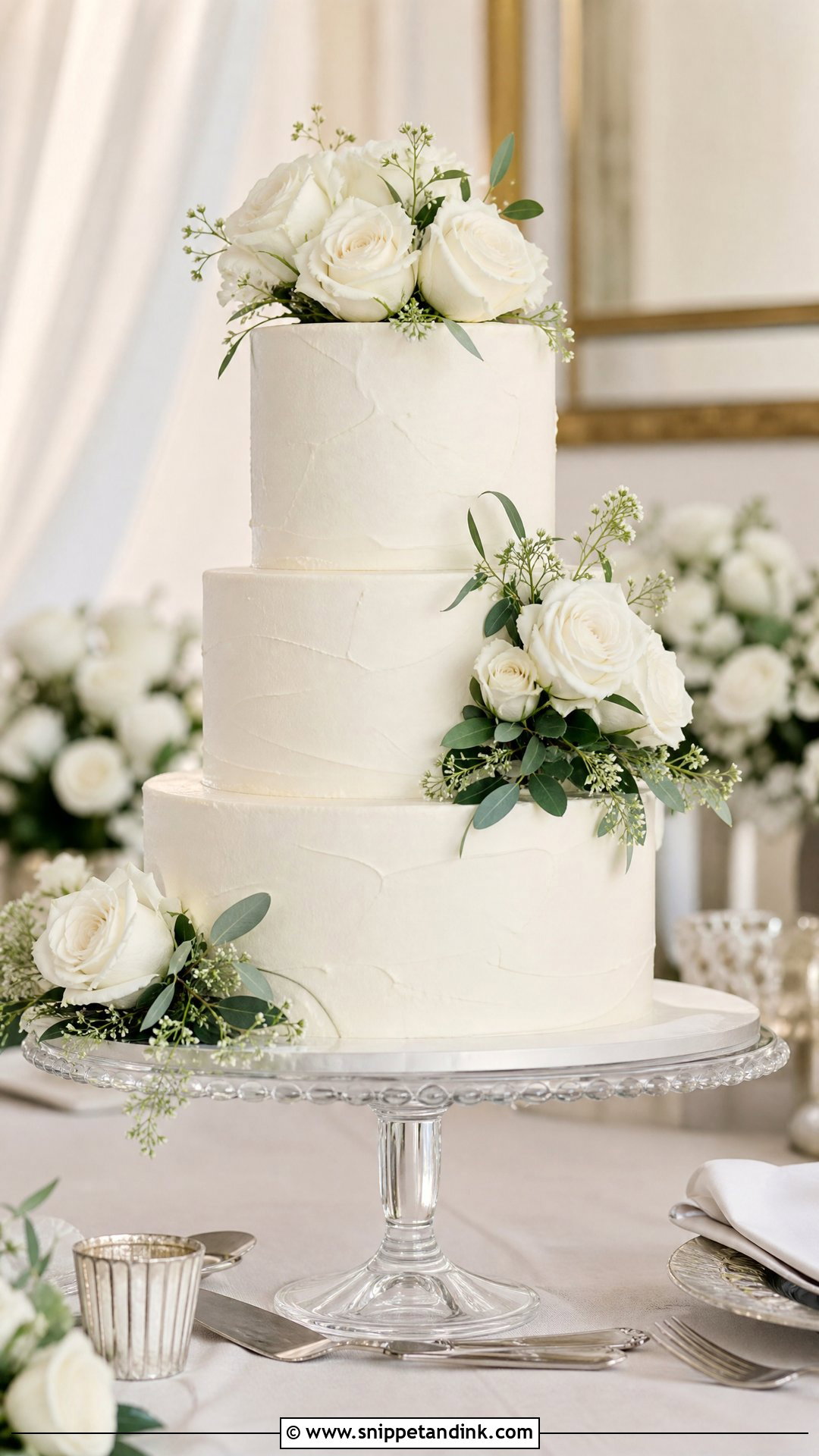
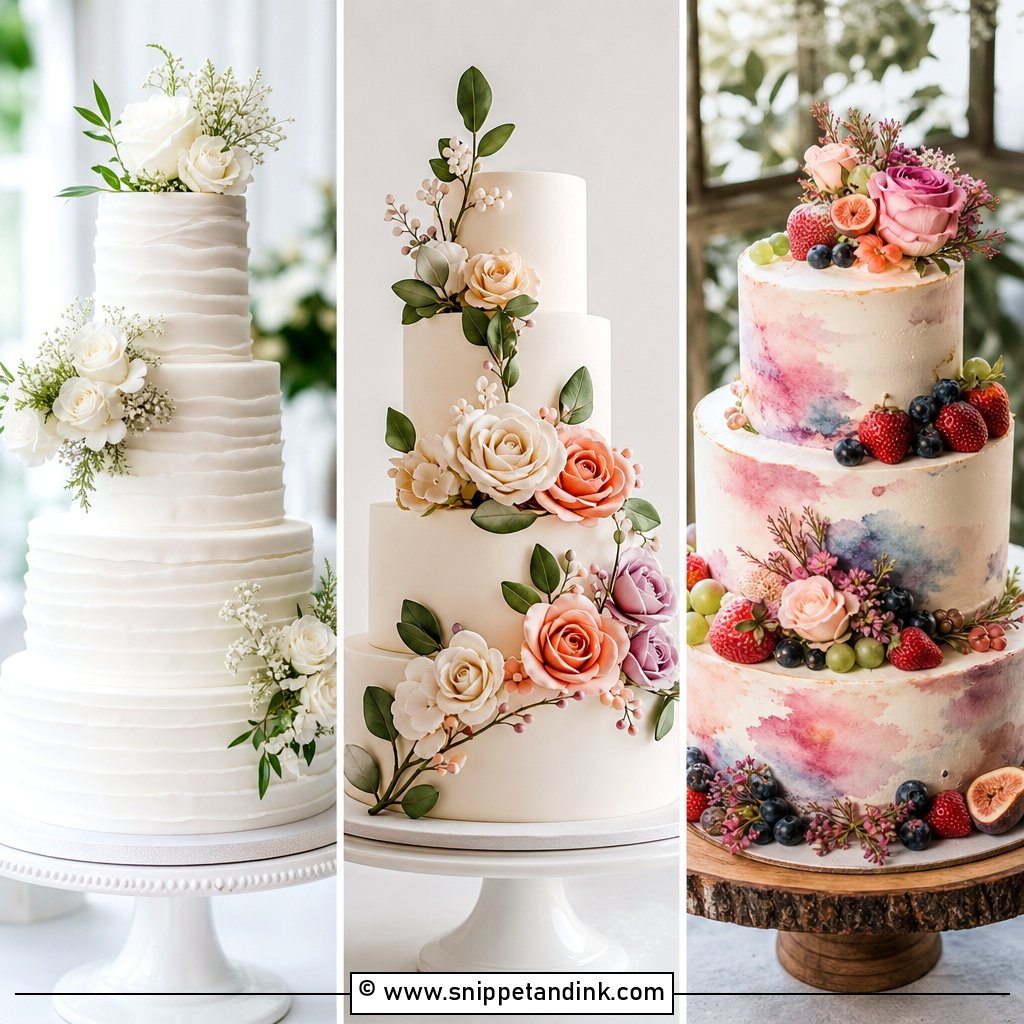
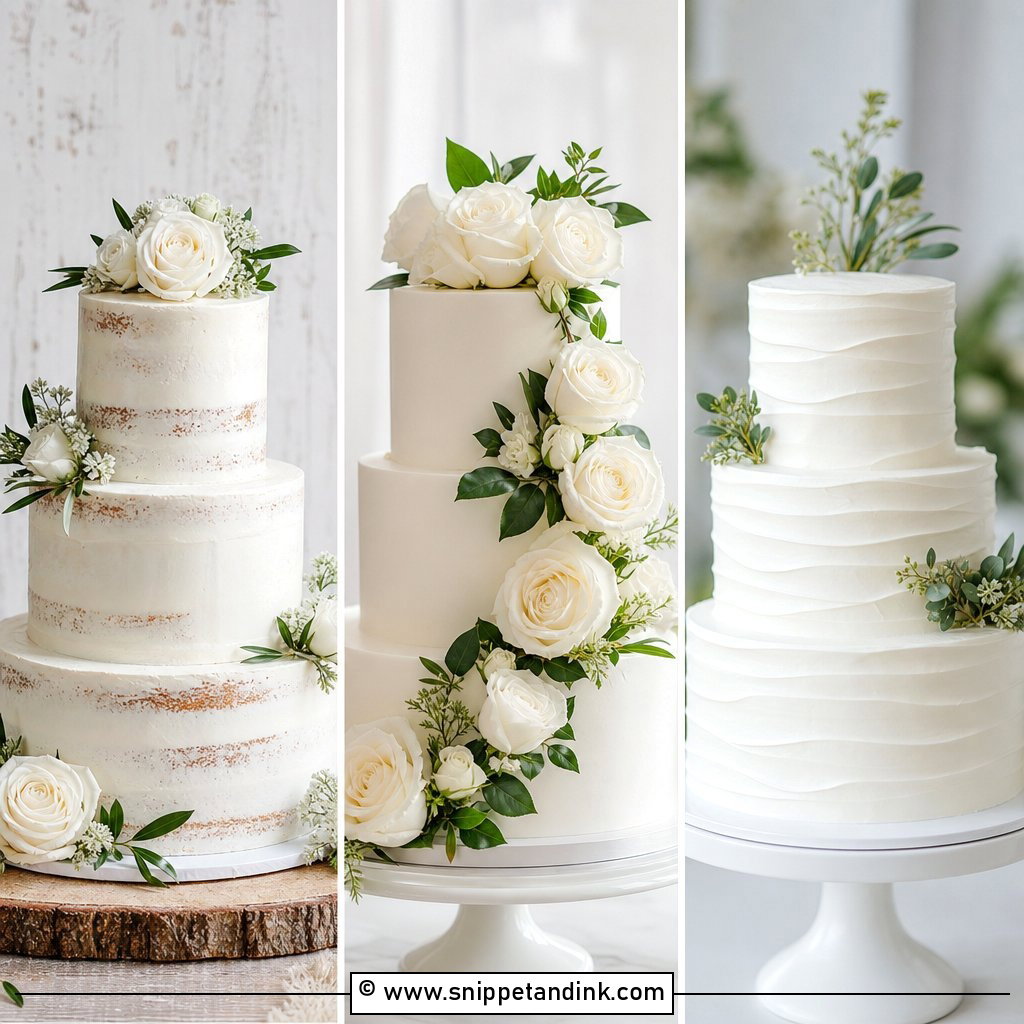
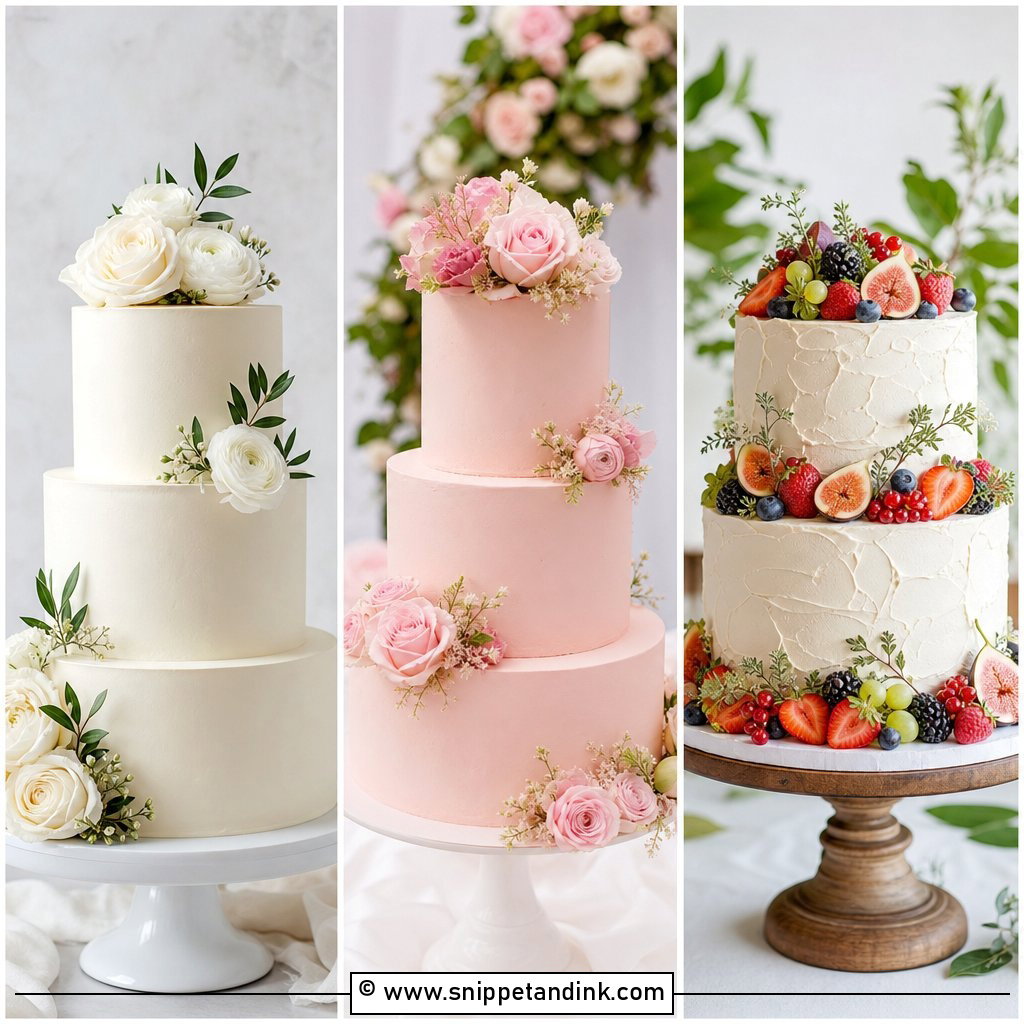
White never fights with anything, which is why I still make more of these than any other design. The finish decides the mood. Smooth fondant with pearls feels formal; buttercream with loose garden roses feels relaxed. Inside, vanilla bean or almond sponge suits it, and champagne cake works if the bakery tests the flavor properly, since sparkling wine loses most of its taste in the oven. Two tiers plus a kitchen cake behind the scenes is a smart way to keep the display small while feeding everyone.
2. Simple Buttercream Wedding Cake
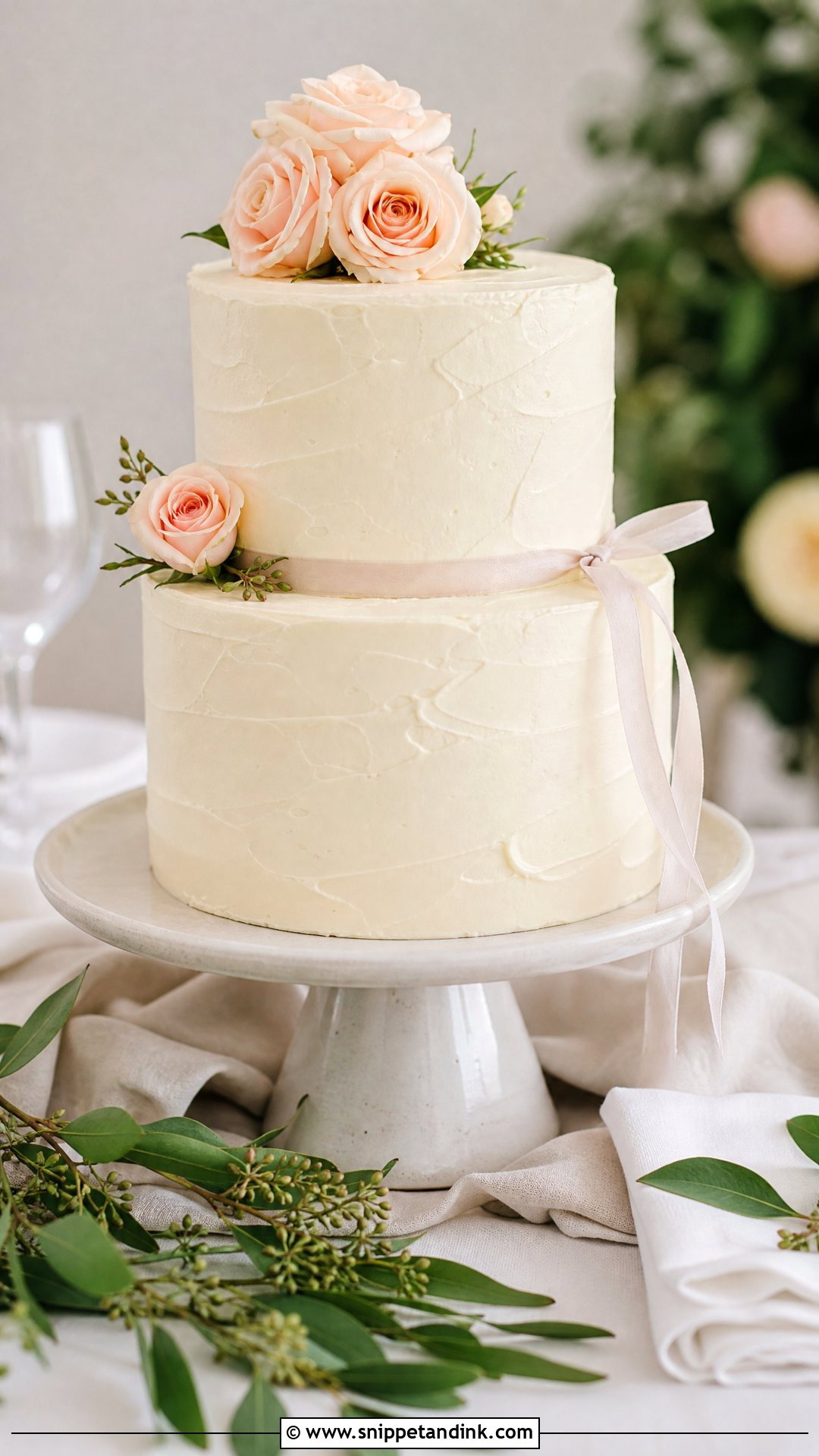
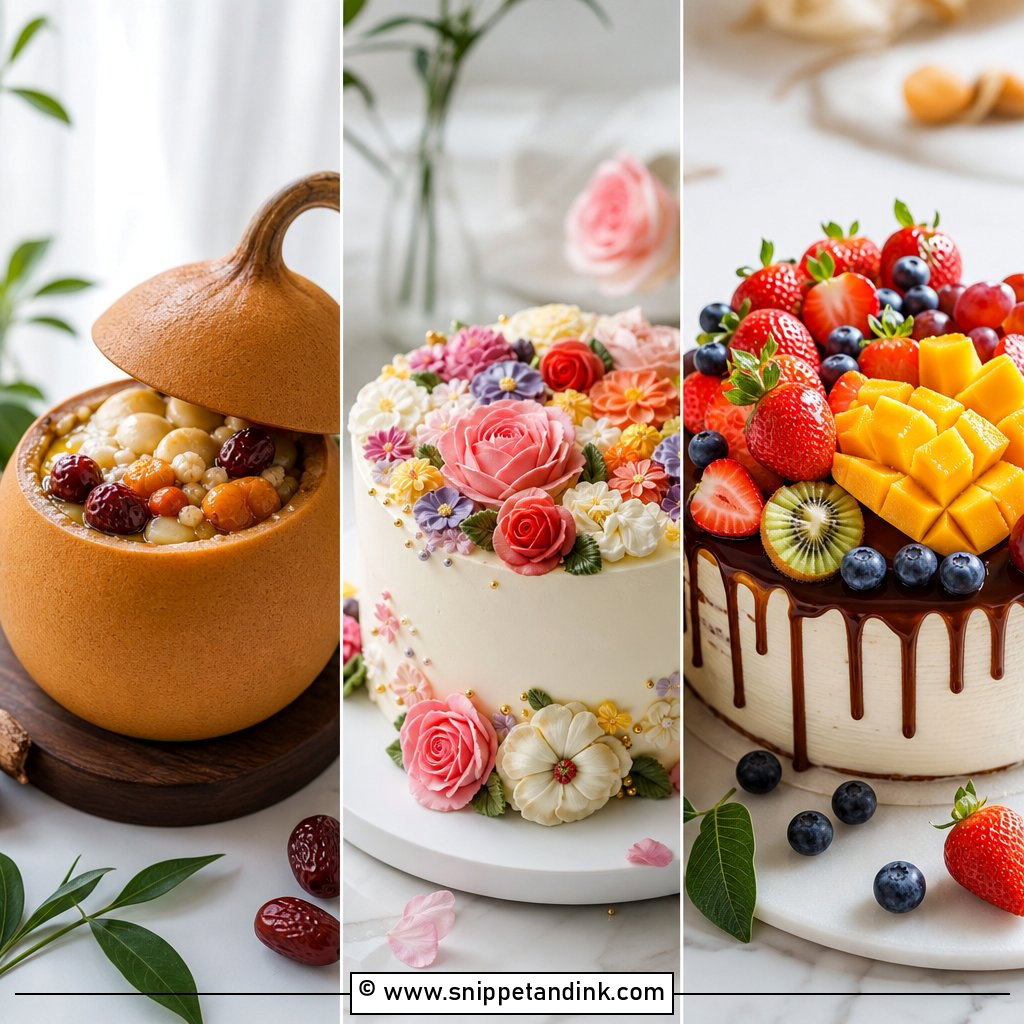
Buttercream is softer to cut and nicer to eat than fondant, and most guests prefer it. The catch is heat. A Swiss meringue buttercream tastes silky but starts to slump in a warm marquee, so for summer outdoors I either firm up the recipe or keep the cake inside until the last moment. Smooth sides, combed ridges or rough palette-knife texture all work. Lemon and coconut sponges carry well in this kind of frosting.
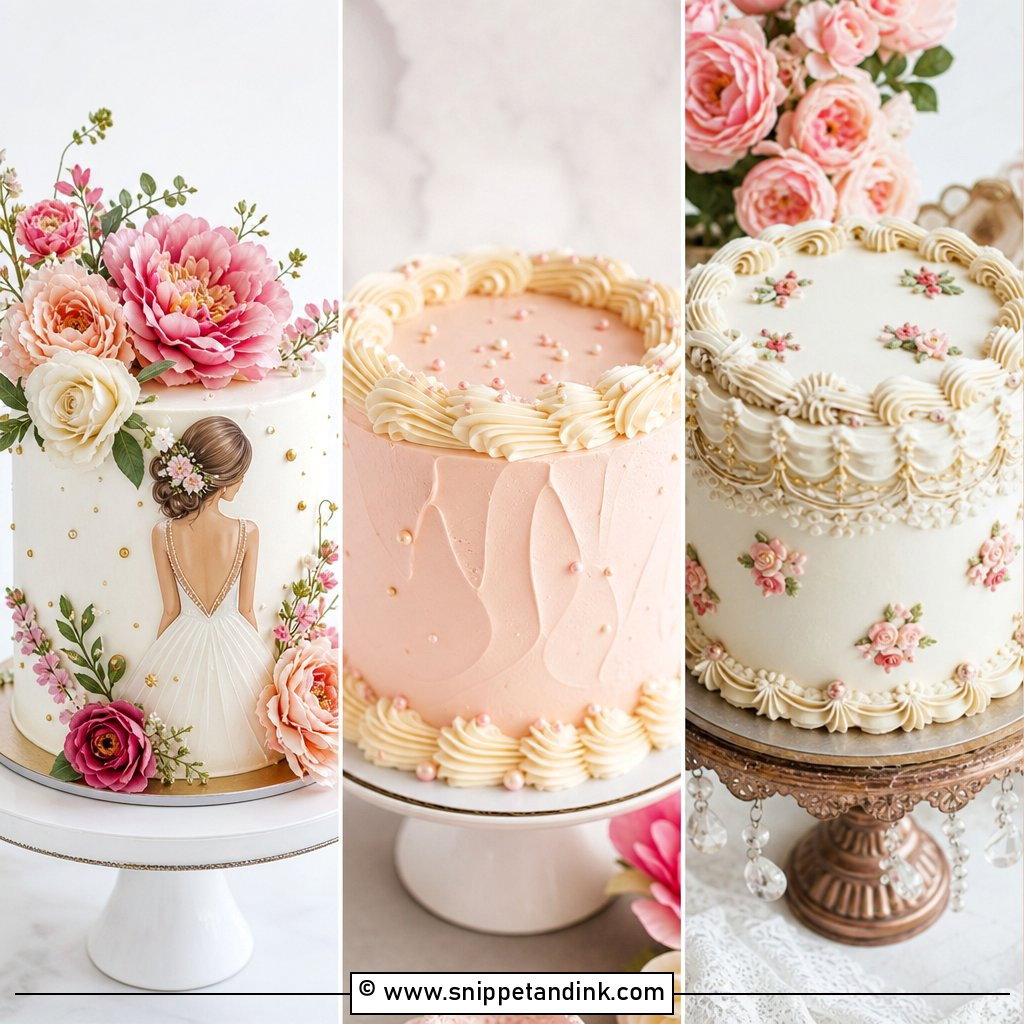
3. Vintage Lambeth Wedding Cake
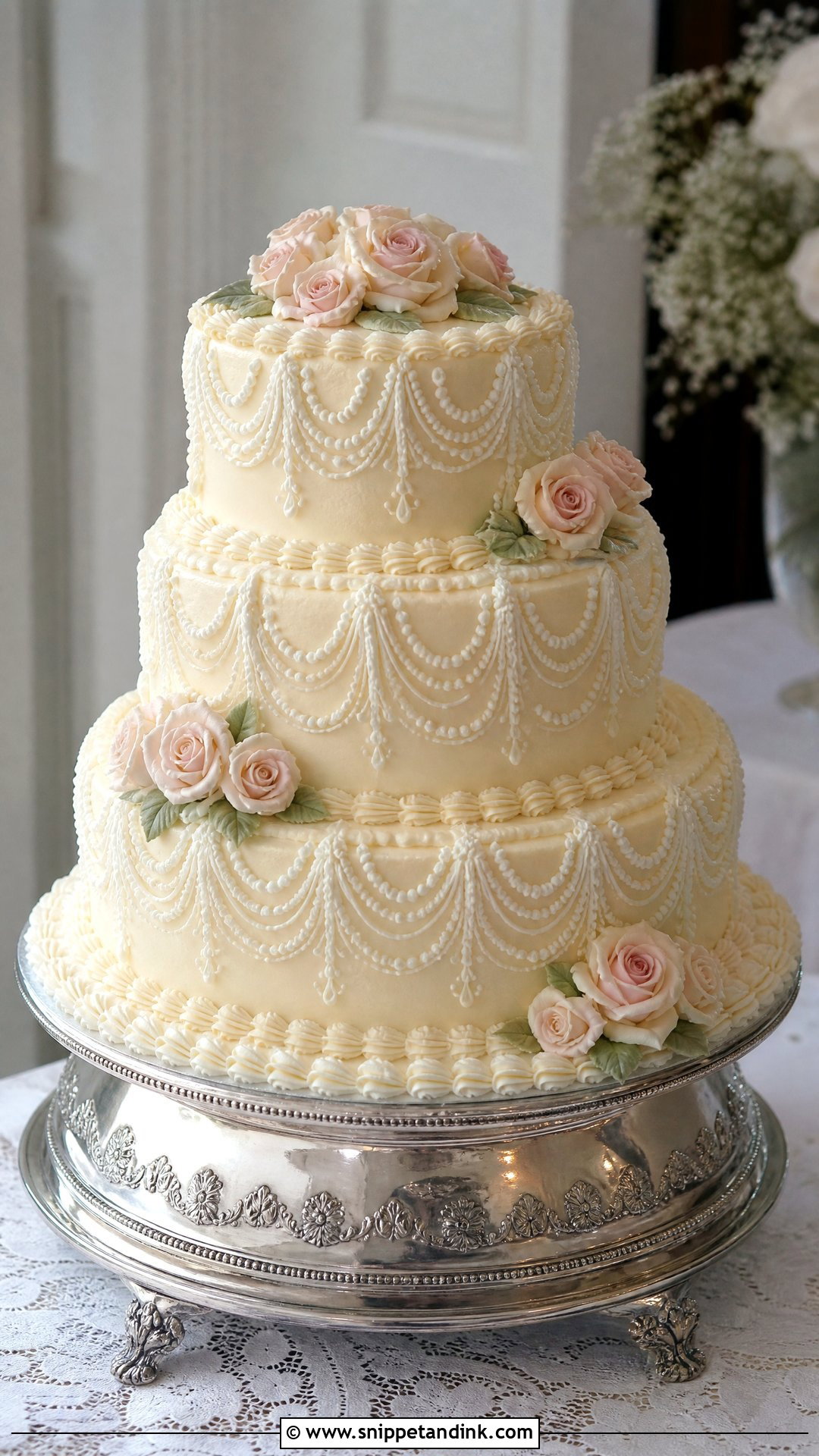
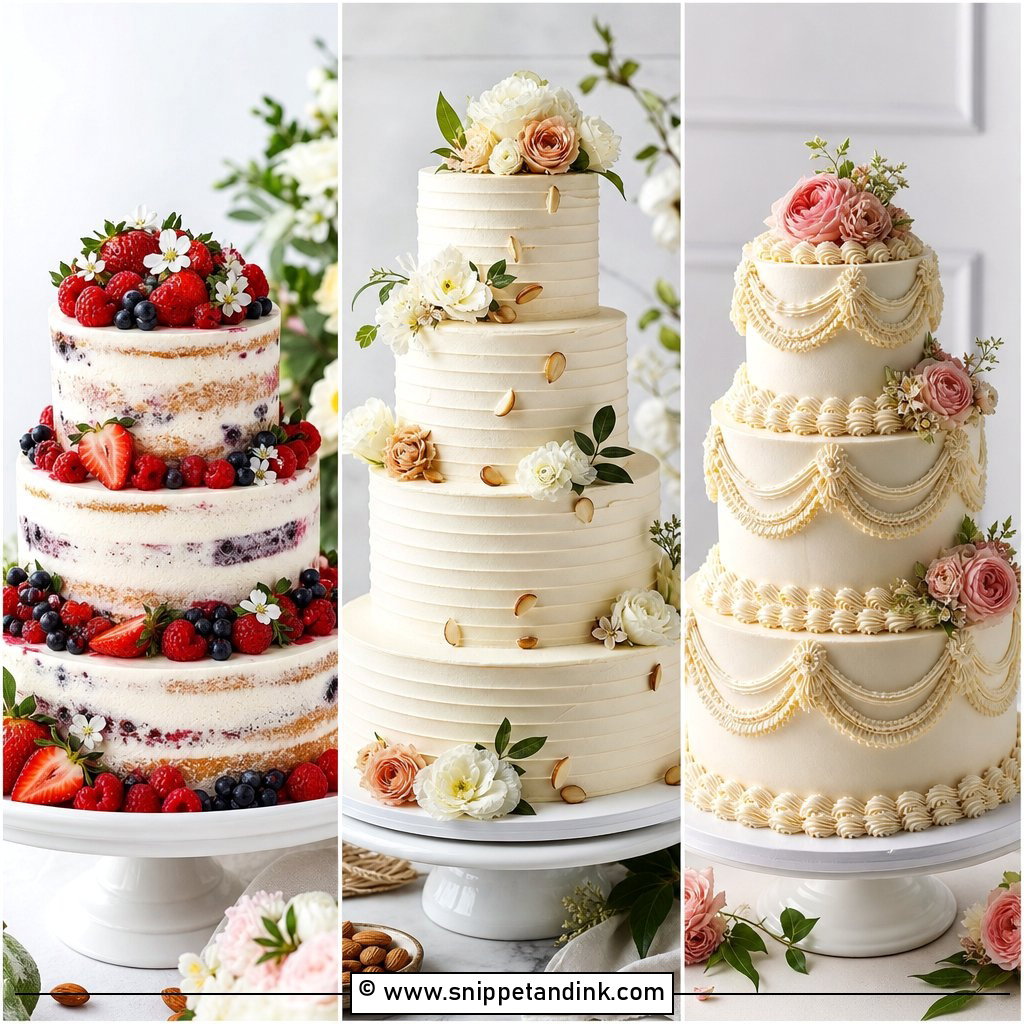
Lambeth piping is built in layers: a line, then a second line over it, then another, which is where the raised, almost sculpted look comes from. It takes hours of steady piping and a confident decorator, so ask to see real photos of Lambeth work before you commit. Royal icing holds the detail crisply; buttercream versions look softer and droop in heat. Keep the tiers plain round shapes and let the shells, swags and scrolls do everything. Raspberry with vanilla or a classic red velvet suits the nostalgic style.
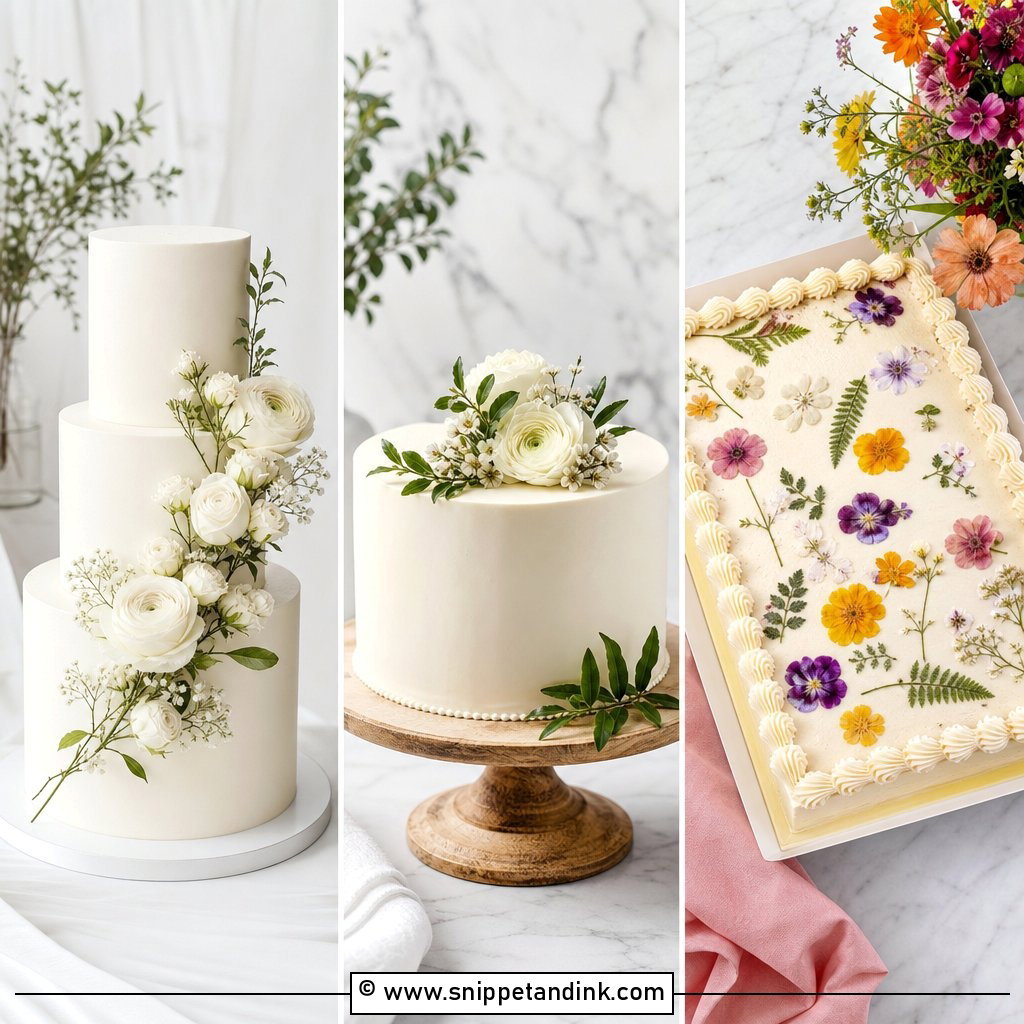
4. Pressed Flower Wedding Cake
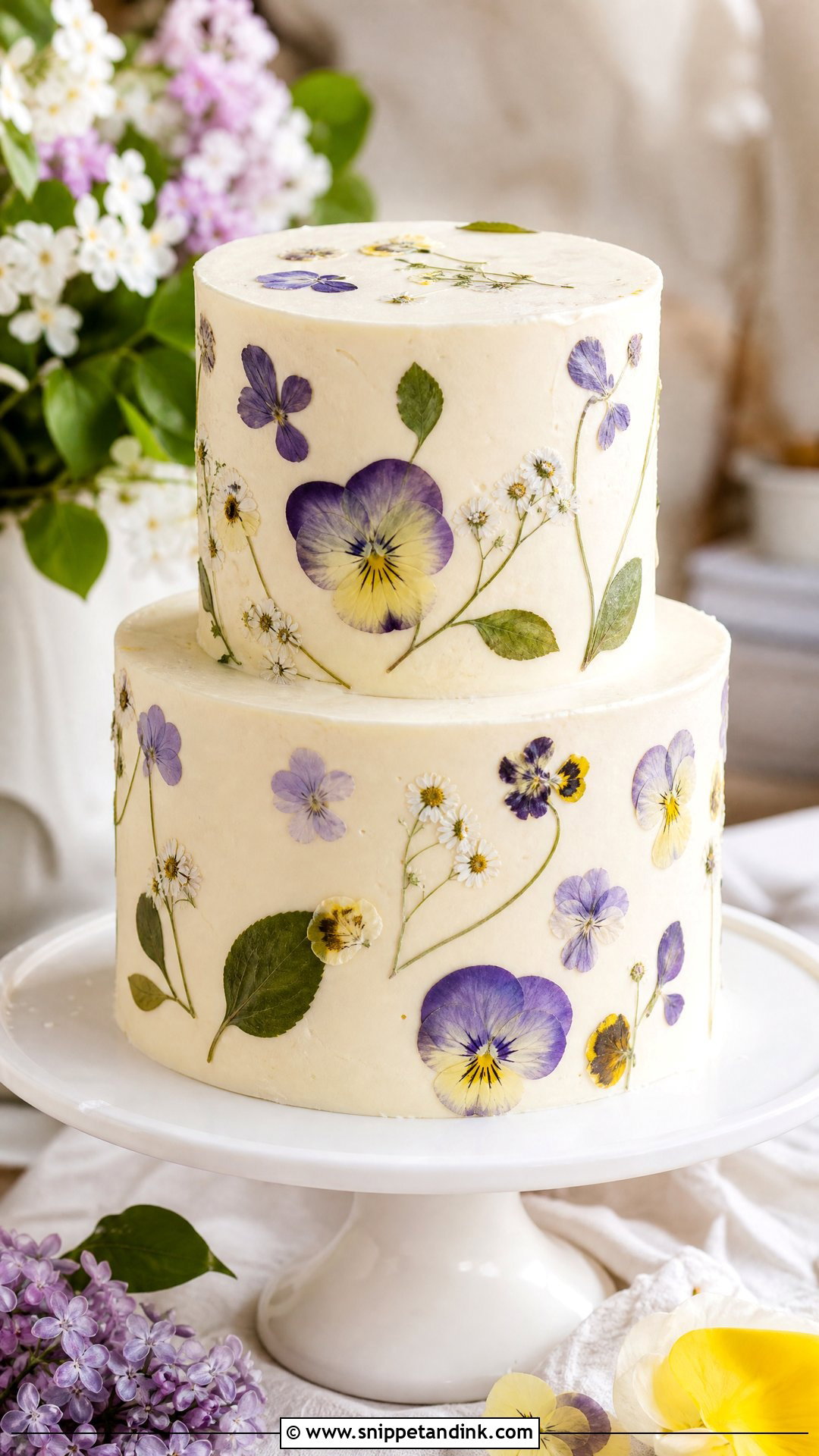
Pressed flowers are pushed flat against chilled buttercream so they look painted on. The flowers have to be edible varieties grown without pesticides, such as violas, pansies, cornflowers and small herb leaves, not the roses from your bouquet. They wilt and brown at the edges after several hours in heat, so I press them on as close to the event as I can. Space them with gaps between; a cake covered edge to edge loses the delicate look.
5. Floral Cascade Wedding Cake
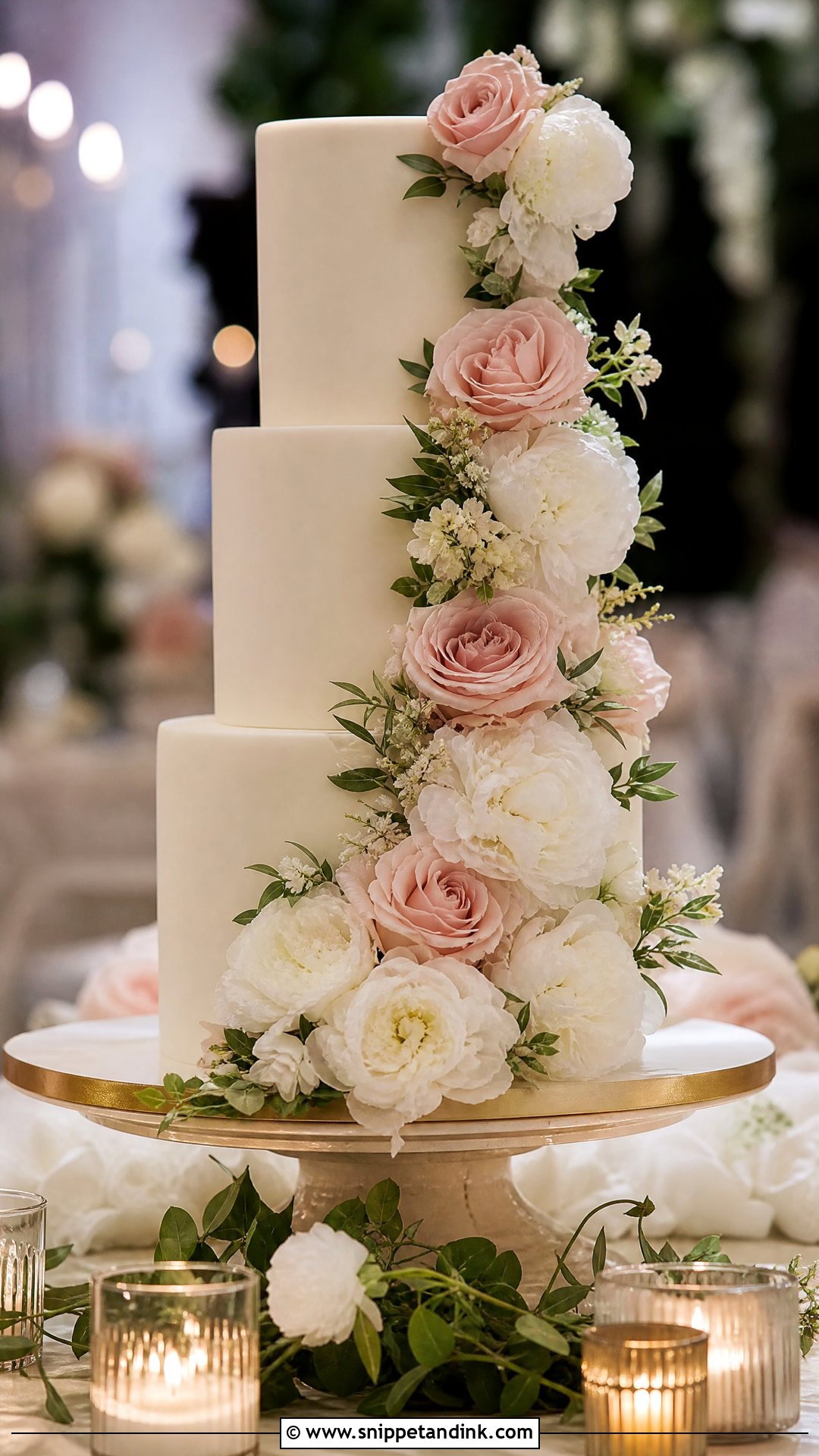
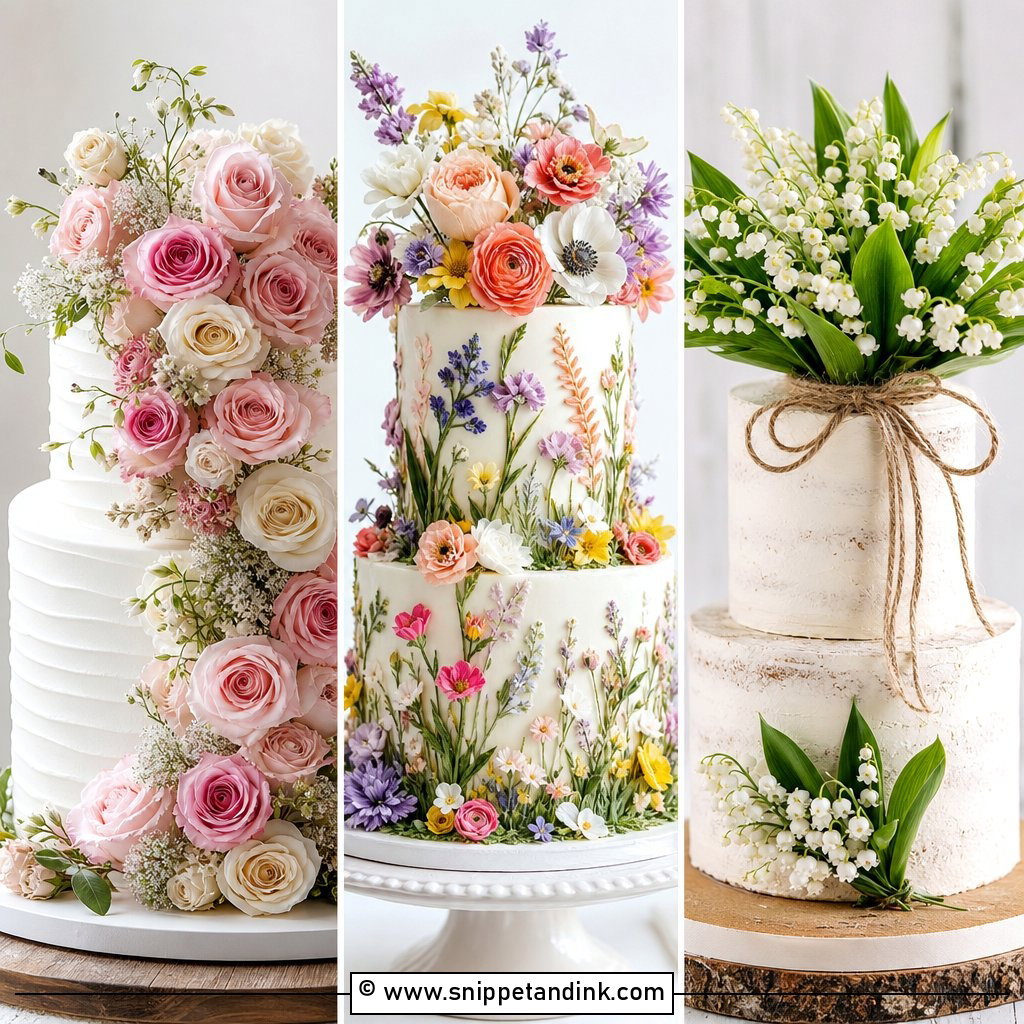
A cascade only flows if the flowers are placed in a deliberate S-curve, not scattered. I build it from the top tier down, heavier at the bottom, with stems wrapped and pushed into food-safe picks so nothing raw touches the sponge. White roses read classic, blush peonies romantic, deep seasonal blooms bolder. Because flowers do the talking, the cake underneath stays plain and the flavor familiar, vanilla or almond, so nothing competes.
6. Minimalist Wedding Cake
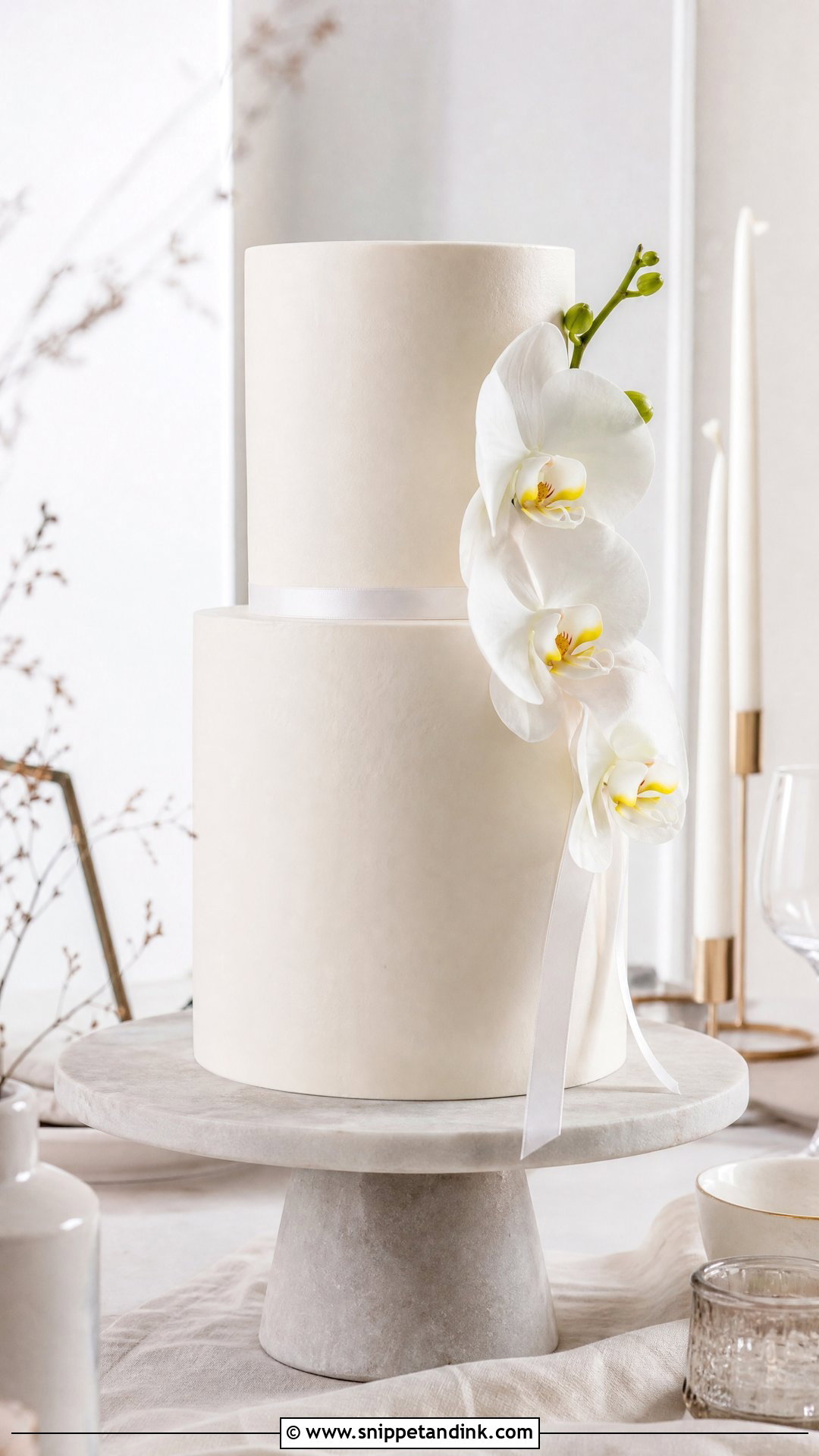
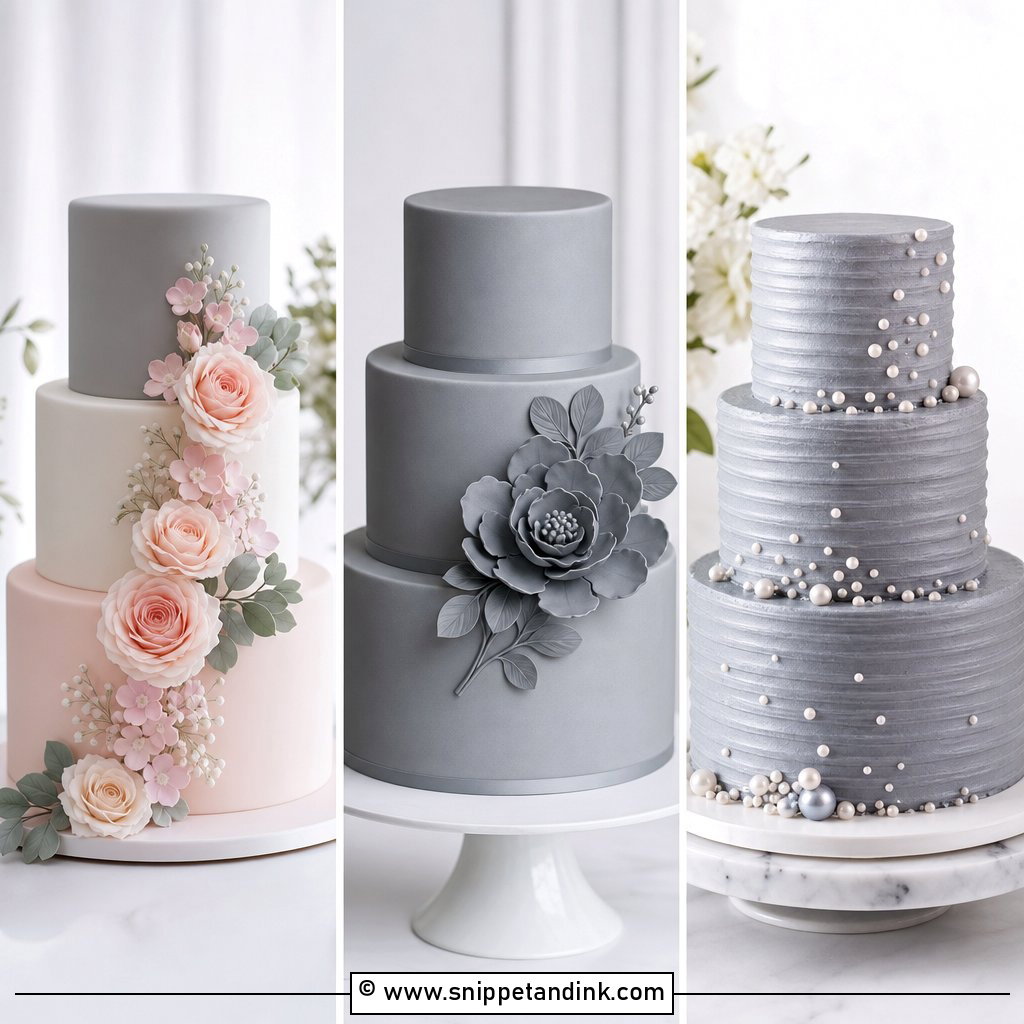
Minimal cakes are the hardest to fake. With nothing on the surface but a ribbon or a single stem, every bump in the frosting shows, so these take me longer to finish than many decorated cakes. Neutral tones like ivory, beige or soft grey suit galleries and courthouse weddings. The interior is where you can surprise people: dark chocolate or a citrus curd filling behind a quiet white outside.
7. Modern Square Wedding Cake
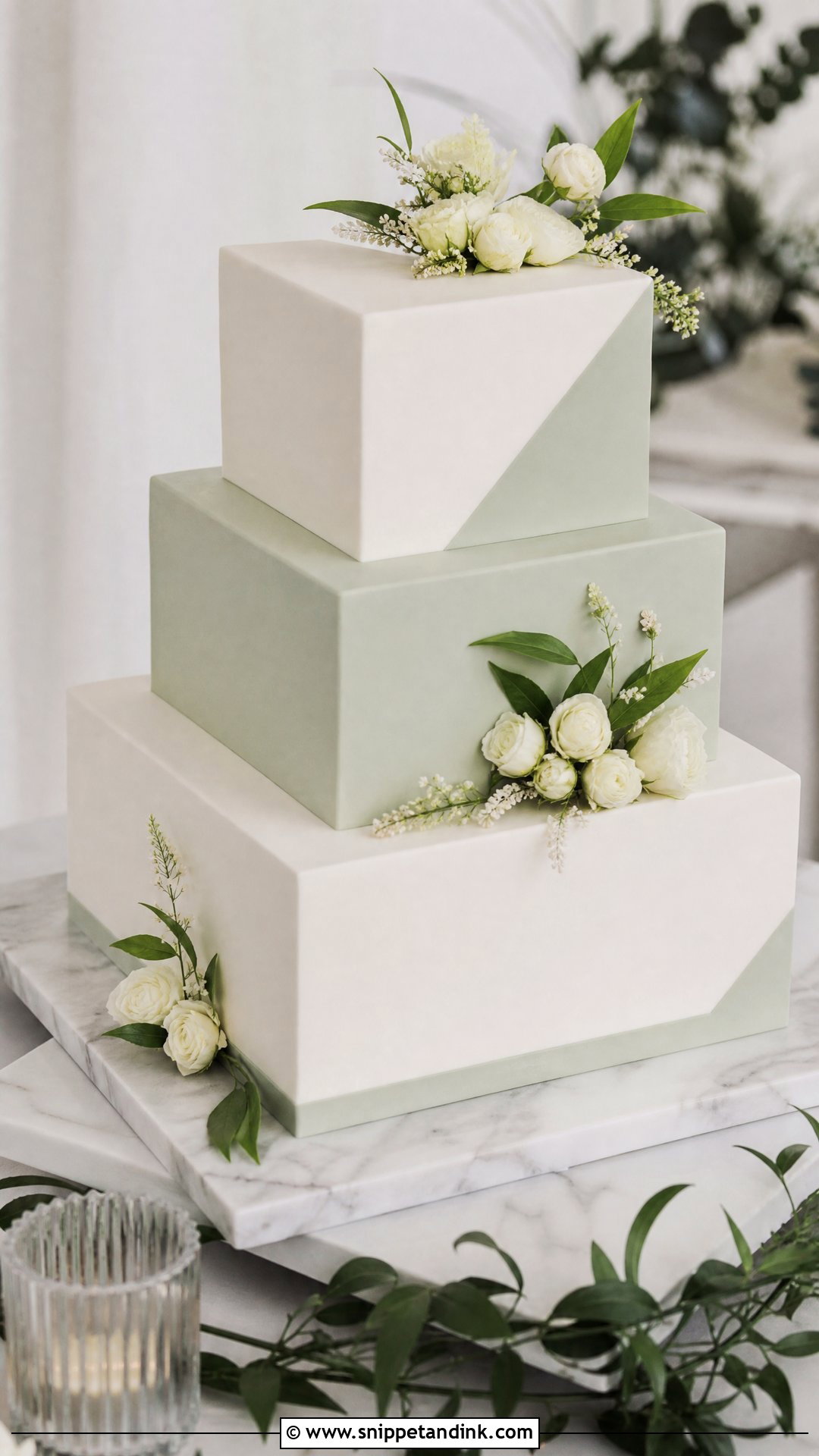
Square tiers look architectural but cut more servings per tier than round ones of the same width, which is a quiet bonus. They are also tougher to cover: sharp corners in fondant crack or bunch if the paste is rolled too thin. The flat faces give room for monograms, painted motifs or pressed flowers. Almond with raspberry or a lemon elderflower sponge fits the crisp shape.
8. Long Wedding Sheet Cake
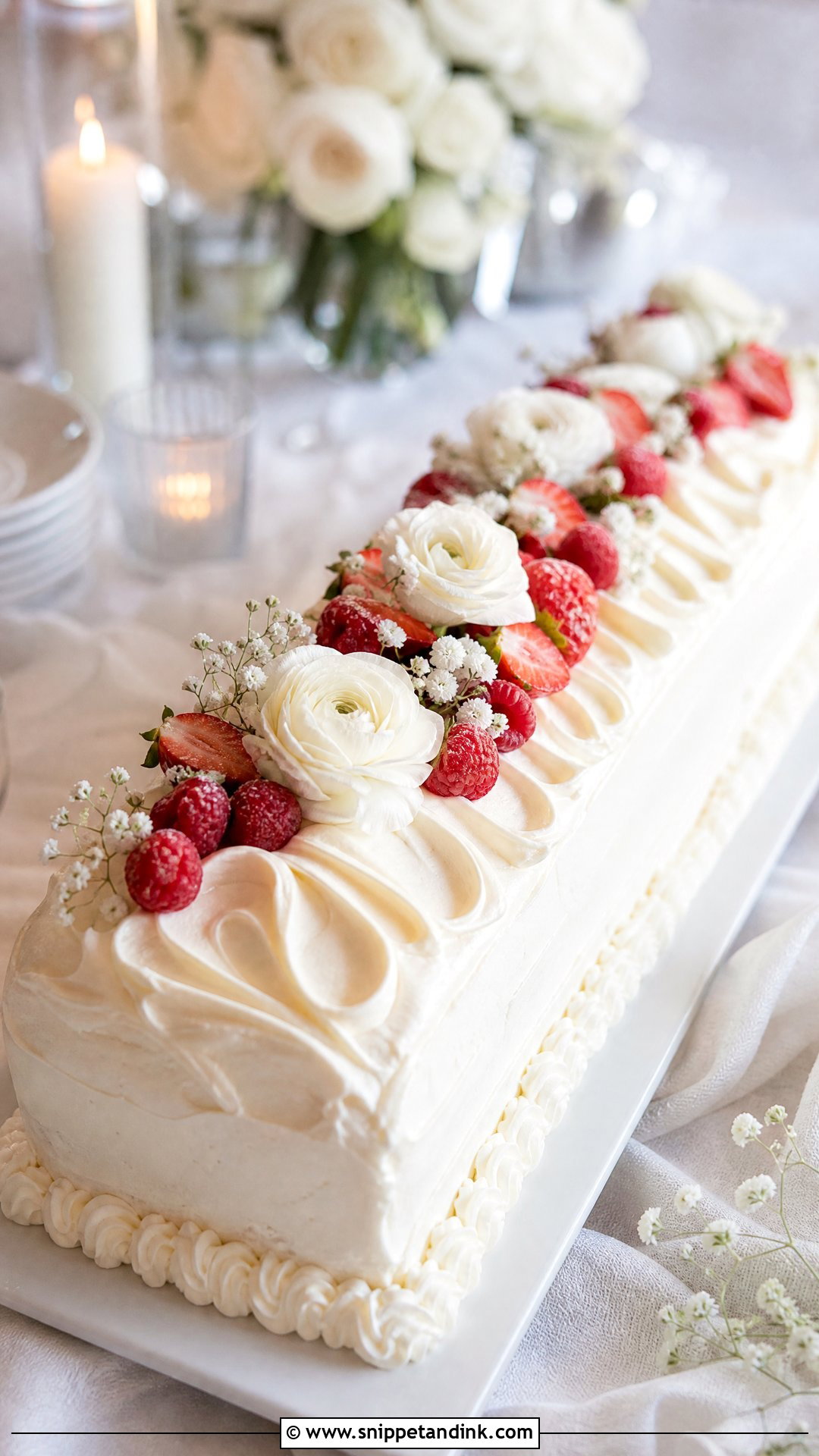
Stretching the cake across the table instead of up has a practical side. A long wedding sheet cake is easy to slice in neat rows, so service is quick, and it feeds a big guest list without tall internal supports. I decorate along the length with buttercream waves, berries or a row of sugar flowers. It does need a long, flat, sturdy board and two people to carry it, so check the route from the van to the table.
9. Italian Wedding Cake
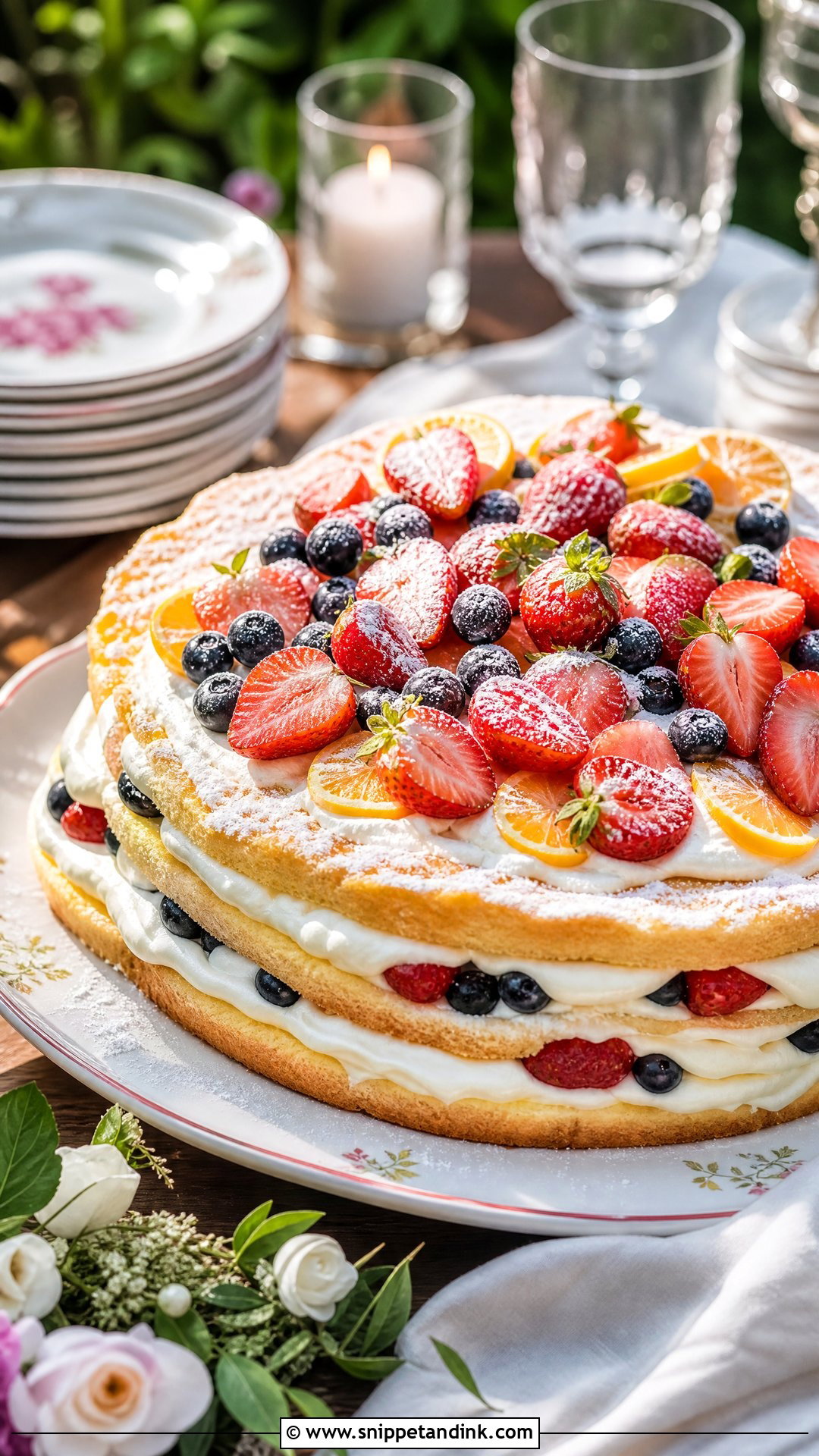
Italian wedding cakes are usually wide and low: layers of light sponge with pastry cream or whipped cream, topped with berries, citrus or a millefoglie-style crunch. They look generous on a big platter because they spread out instead of up. The cream fillings must stay chilled, so this cake suits an evening reception or a venue with a fridge near the dessert table, not three hours on a sunny terrace. Slice it at the table and serve family style.
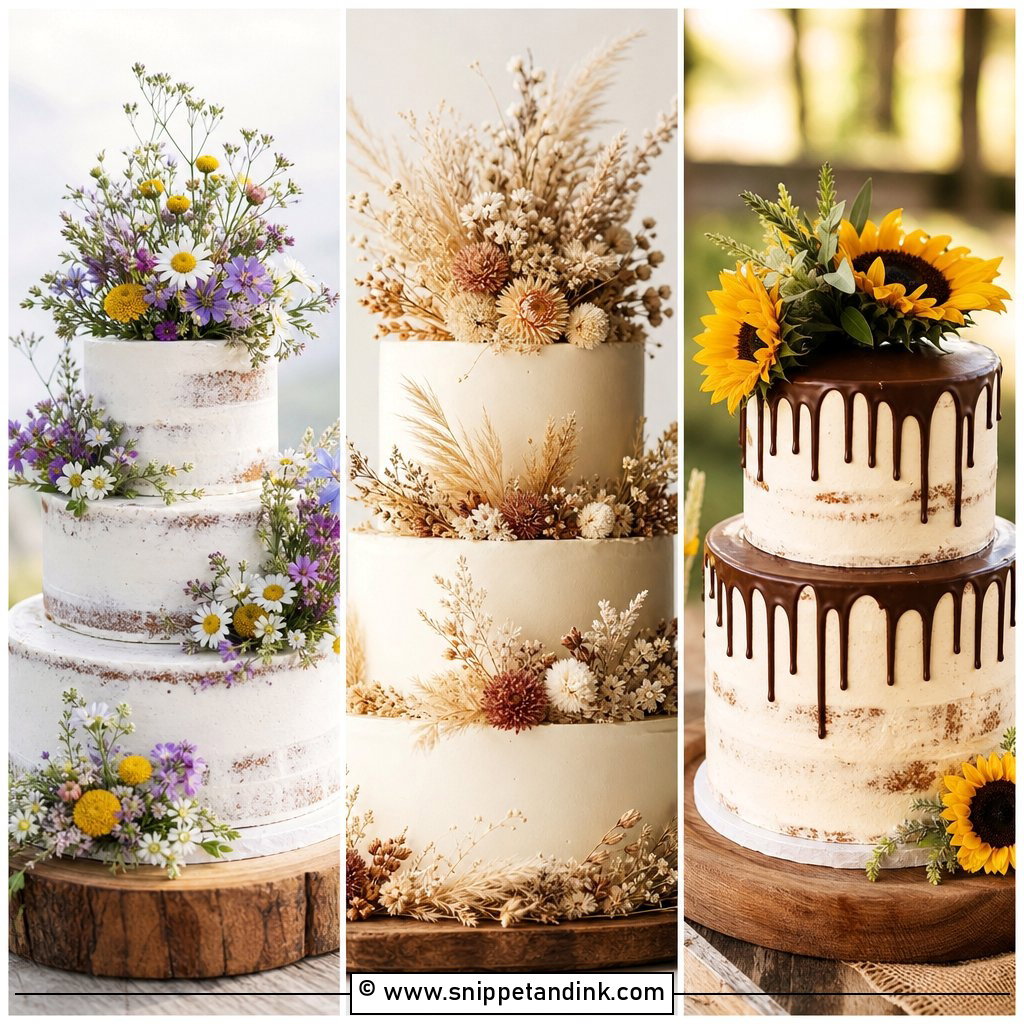
10. Semi Naked Wedding Cake
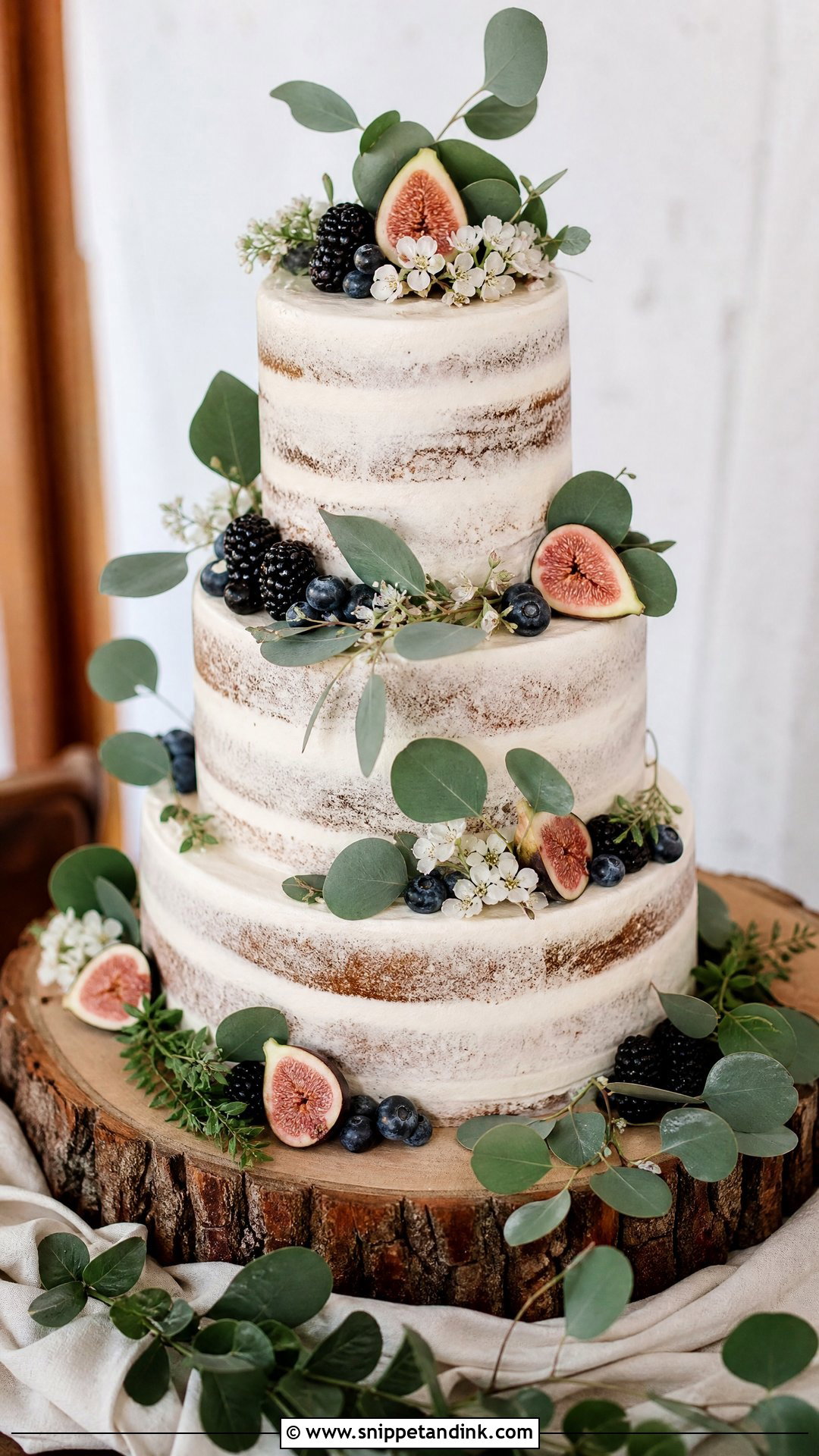
Thin frosting means the cake has less protection, and a semi naked wedding cake dries out faster than a fully covered one. I brush the sponge with syrup and assemble it close to the event. Carrot, spice and lemon sponges look lovely with the layers showing. Figs, herbs and berries fit the look, but fruit weeps onto frosting after a few hours, so it goes on last.
11. Black And White Wedding Cake
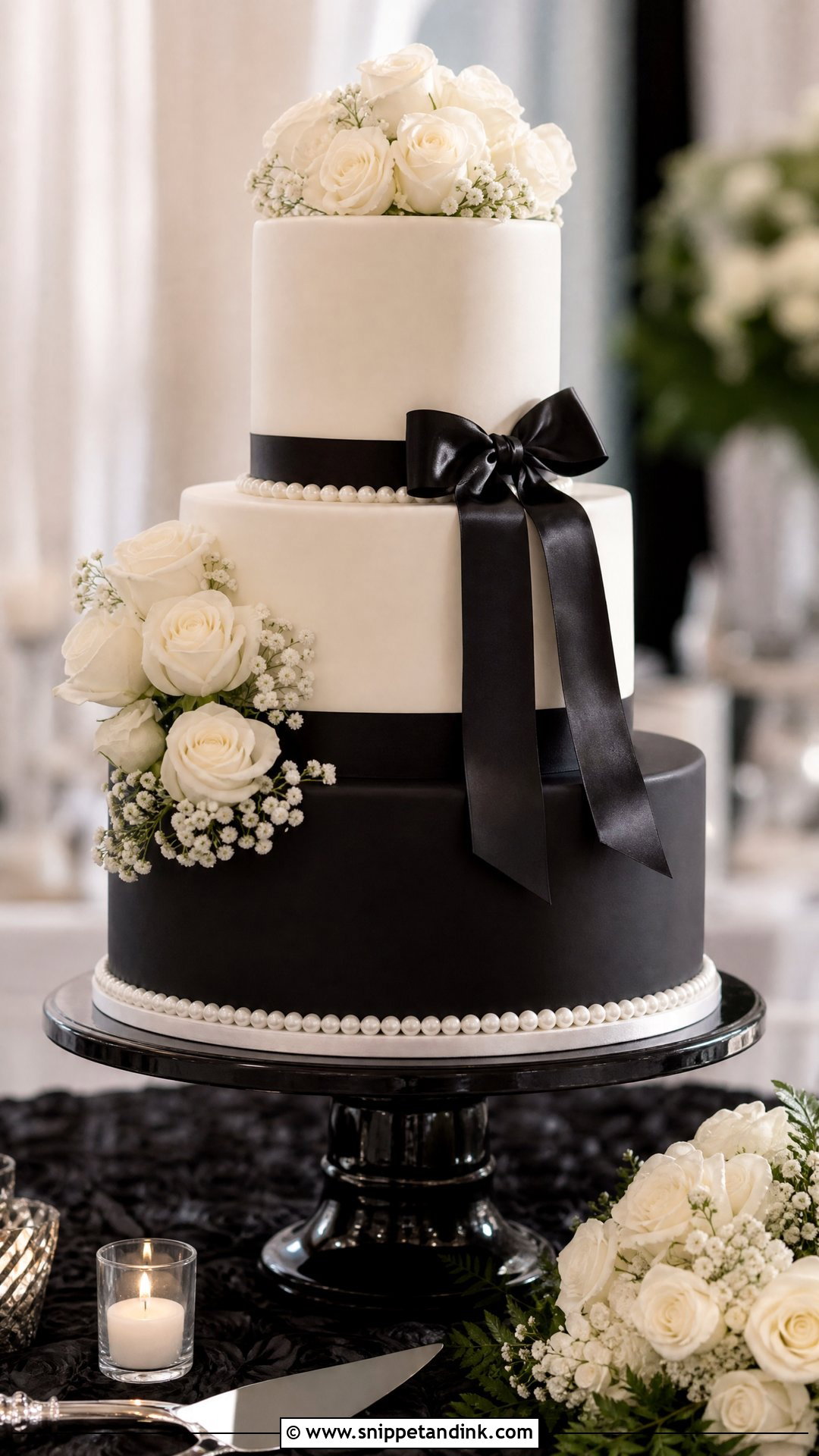
Black works on a wedding cake as an outline. A black ribbon band, painted lines or one dark bottom tier under white upper tiers gives sharp contrast. Covering whole tiers in black icing needs a lot of coloring and can leave a bitter taste and dark mouths, so I steer couples toward black cocoa sponge inside instead. Clean shapes matter; contrast exaggerates every wobble.
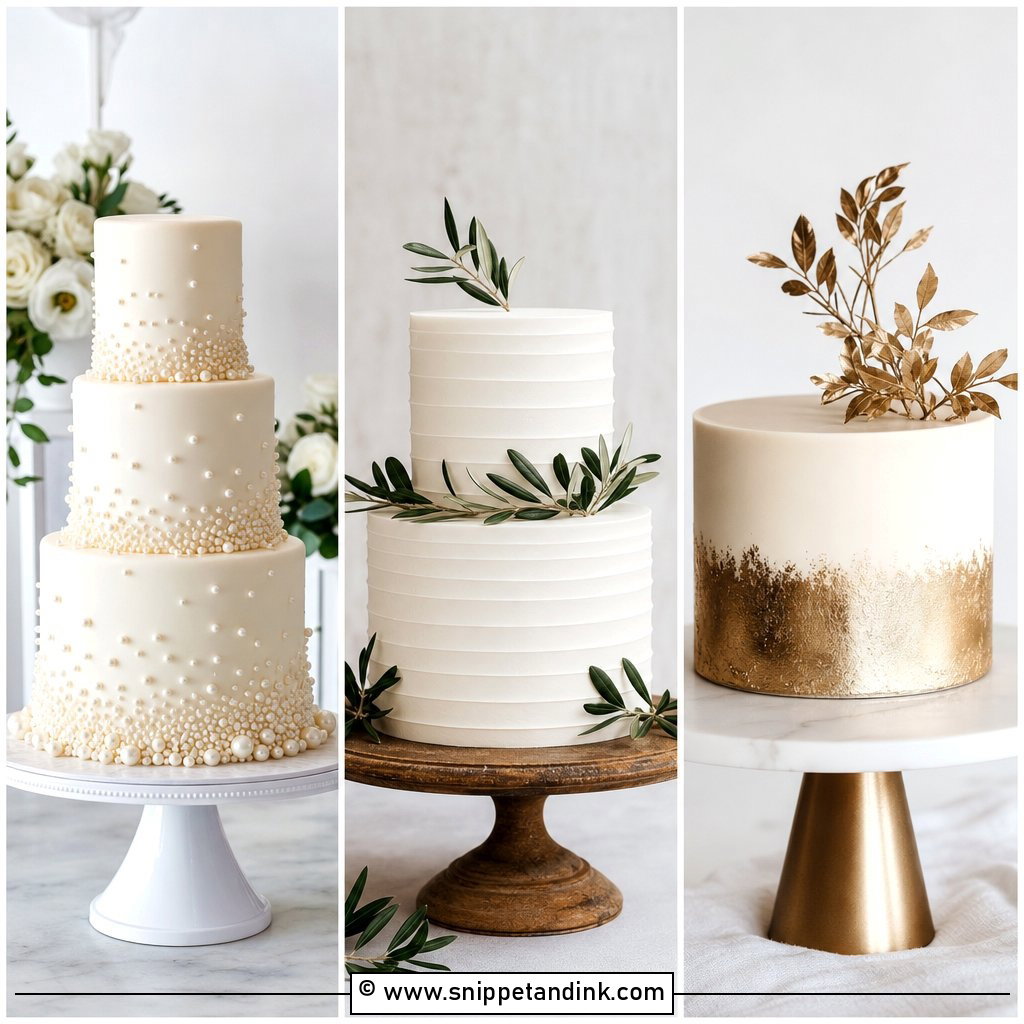
12. Pearl Wedding Cake
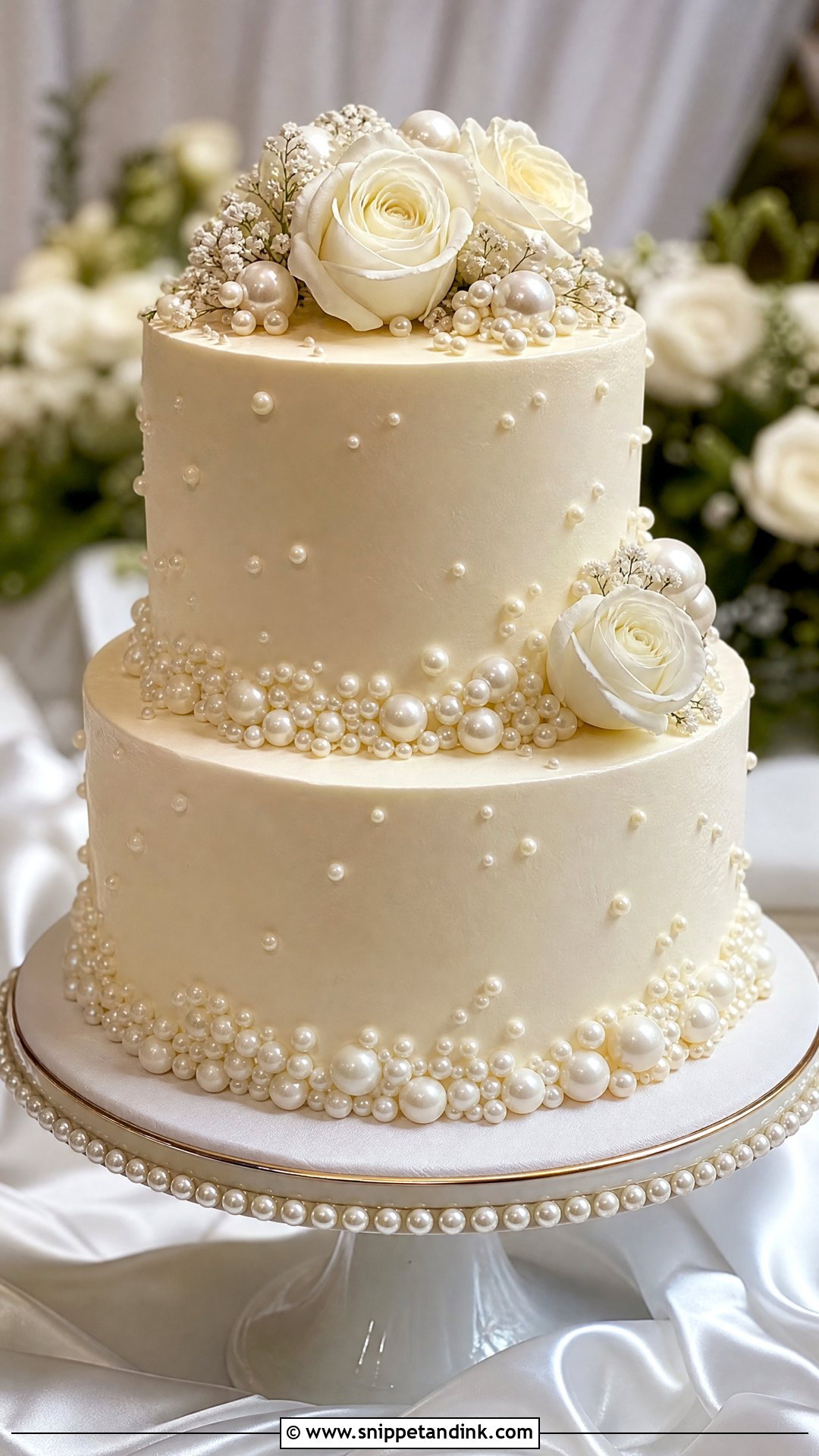
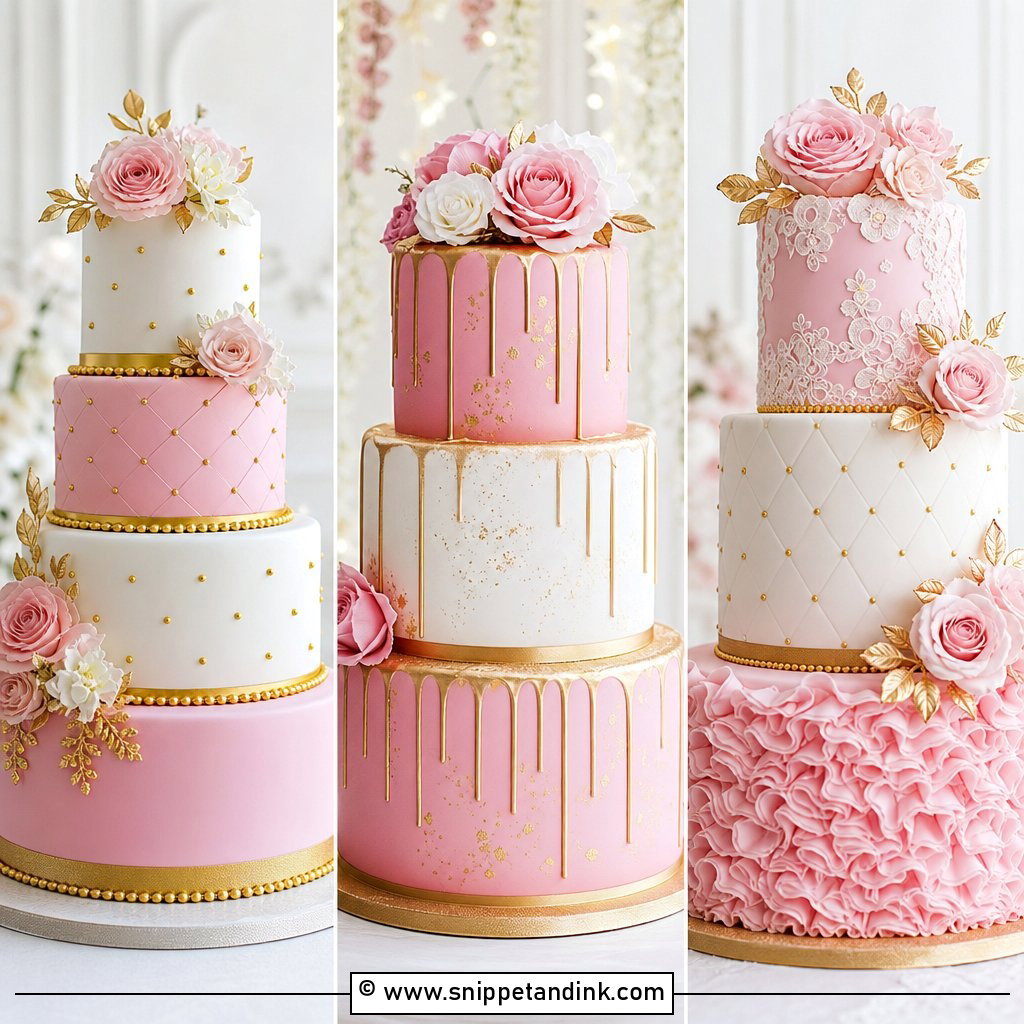
Pearls are easiest when piped directly in buttercream as tiny beads, and those hold up in most weather. Sugar dragees look shinier but some are hard enough to chip a tooth and are sold as decoration only, so I keep them sparse and away from the slices. A border at the base of each tier is usually enough. Vanilla almond or white chocolate raspberry suits the soft ivory look.
13. Watercolor Wedding Cake
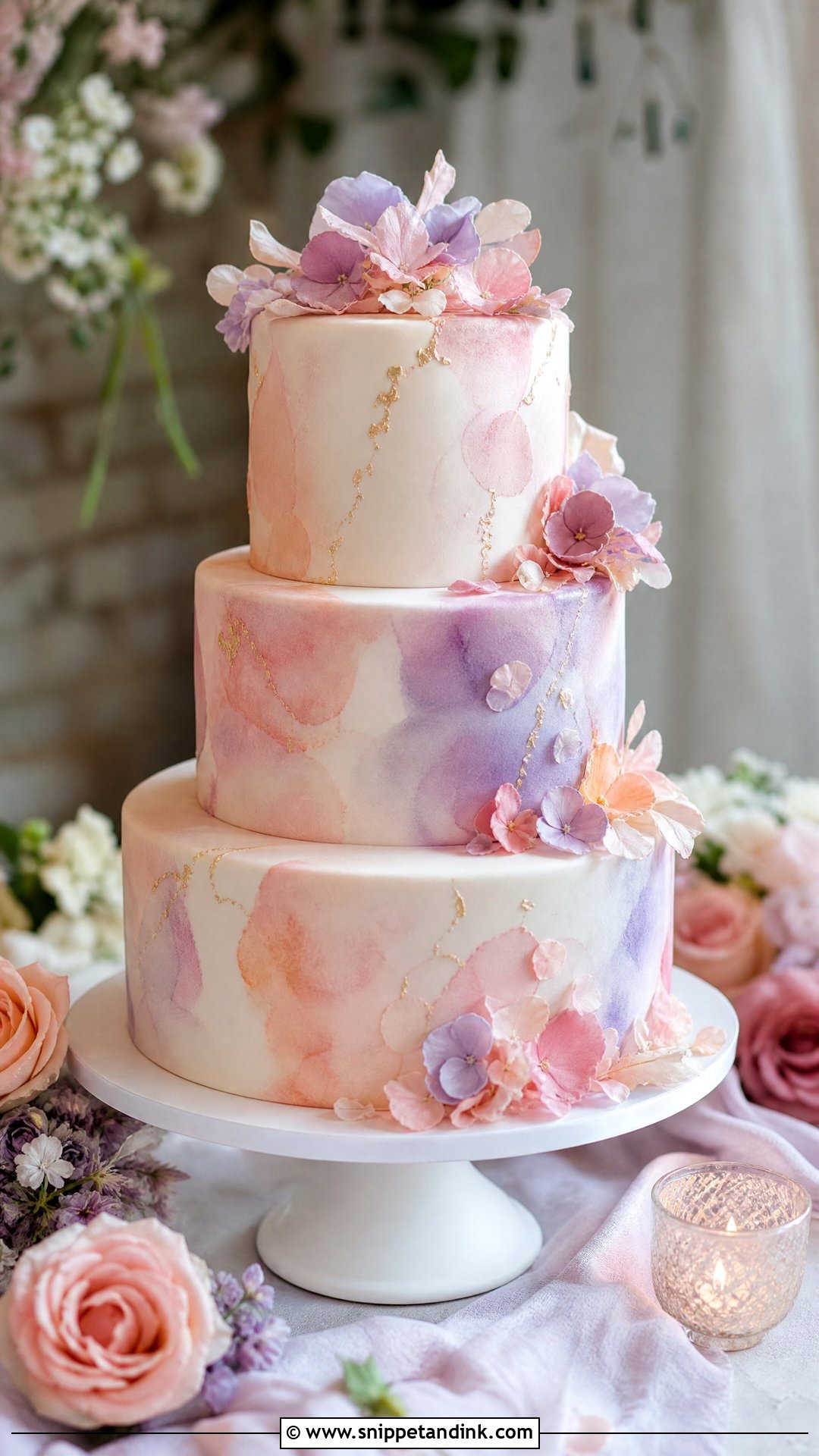
Watercolor effects are painted on with thinned gel colors over chilled buttercream or fondant, blended with a brush or palette knife. Matching your invitations is very doable if you send me the actual printed card rather than a screen photo, since screens shift color. Pastels like peach, sage and lavender suit spring and summer. A few fresh or sugar petals at one edge give the paint a finish.
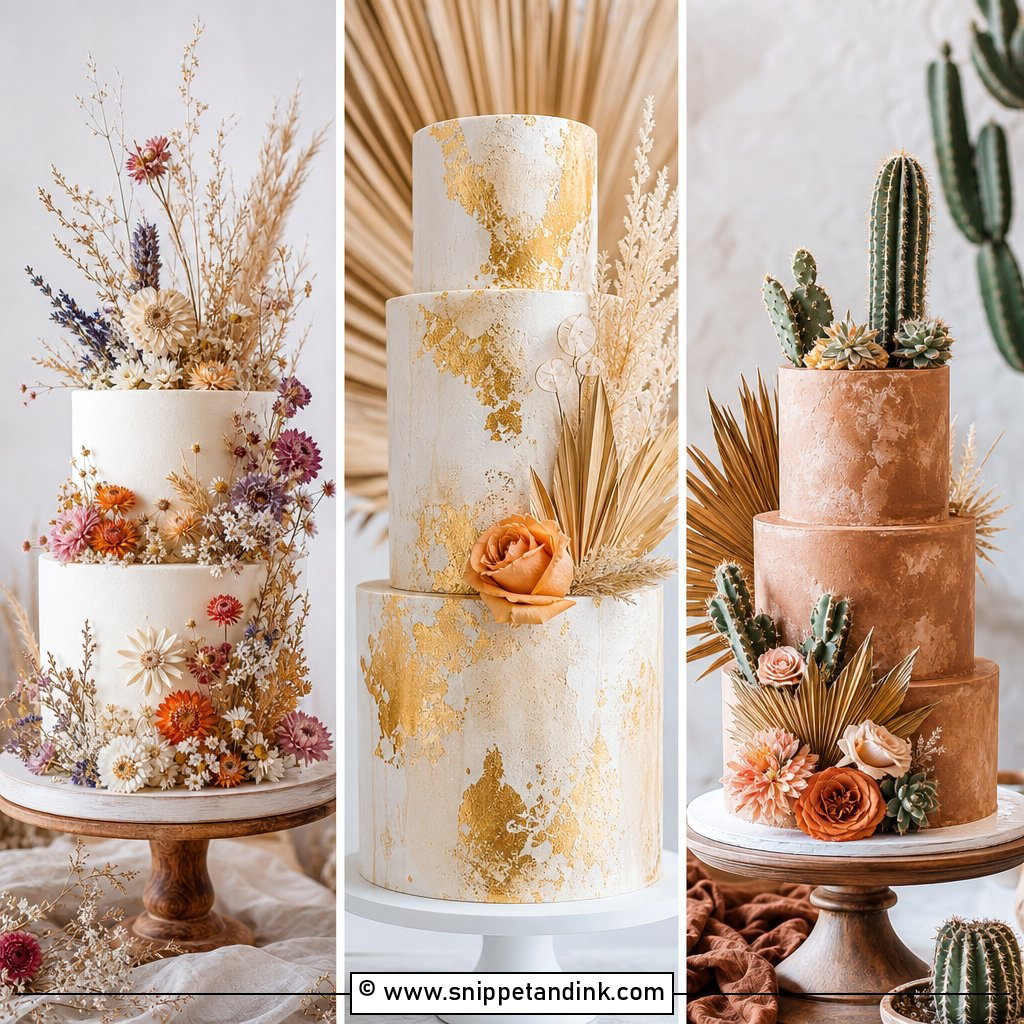
14. Gold Wedding Cake
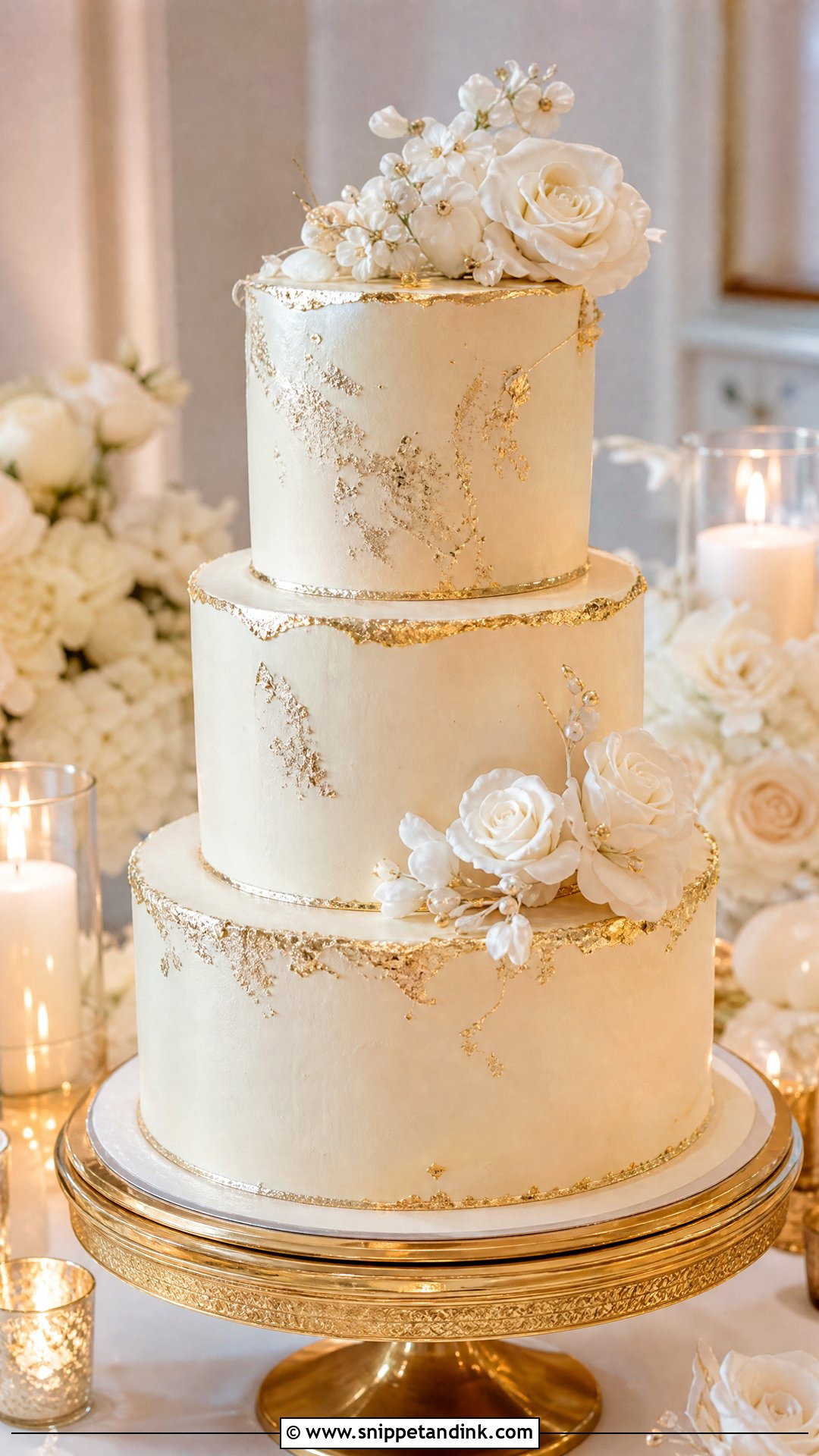
Edible gold leaf is fragile and shows every fingerprint, so I apply it last with tweezers and a soft brush. Brushed metallic paint is easier for bands and edges and survives travel better. Gold beside ivory reads classic, beside black reads art deco. Two or three gold moments are enough; past that, a cake starts to feel heavy rather than luxurious.
15. Beach Wedding Cake
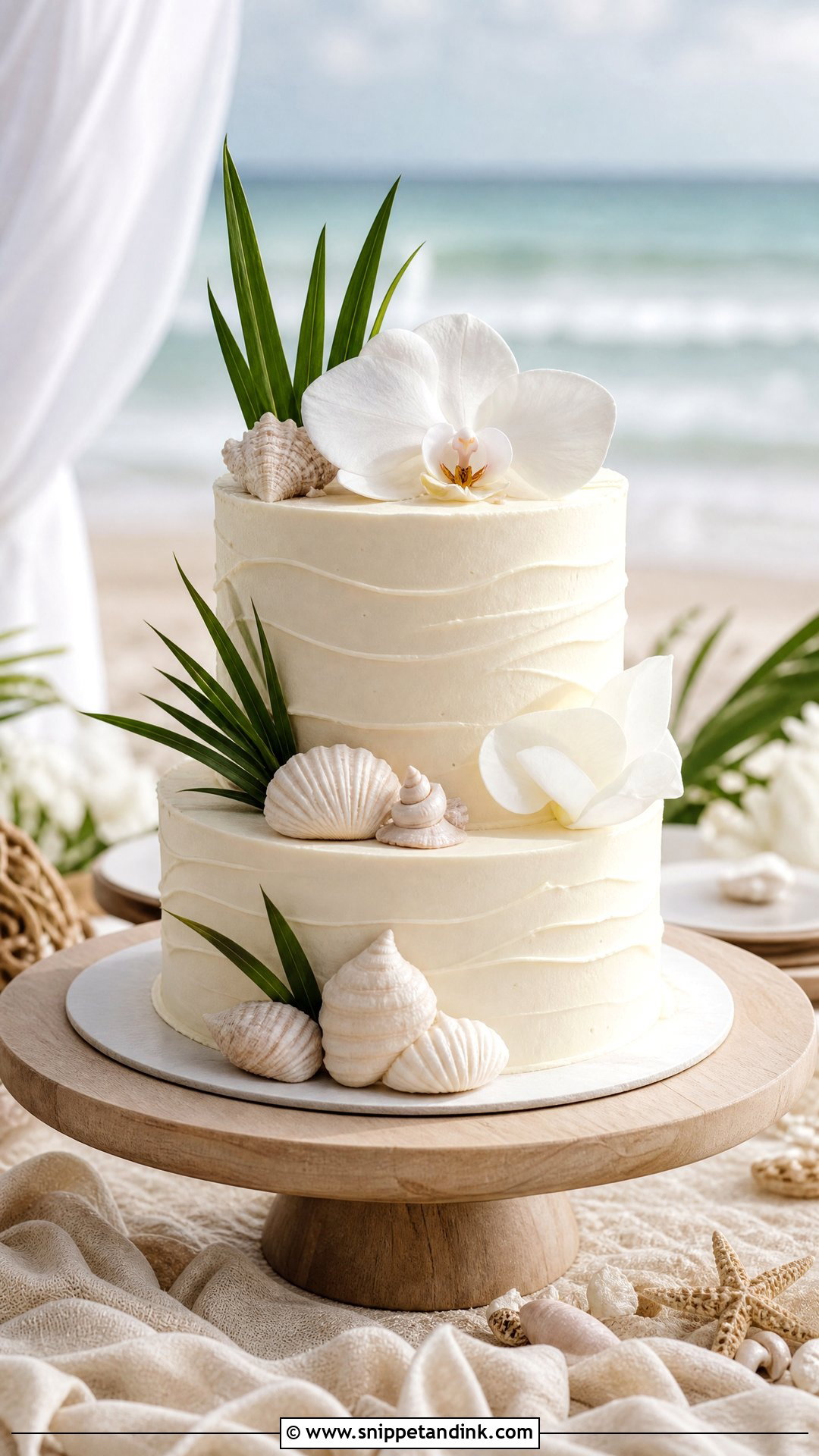
Sea air and sun are hard on cake, so a beach wedding cake needs to be planned around the weather more than the theme. Stable buttercream or fondant, kept in shade until it is cut, matters more than any shell detail. Sugar shells and textured blue waves keep the theme light. Coconut, lime or passion fruit flavors match the coast and are refreshing in heat.
16. Garden Wedding Cake
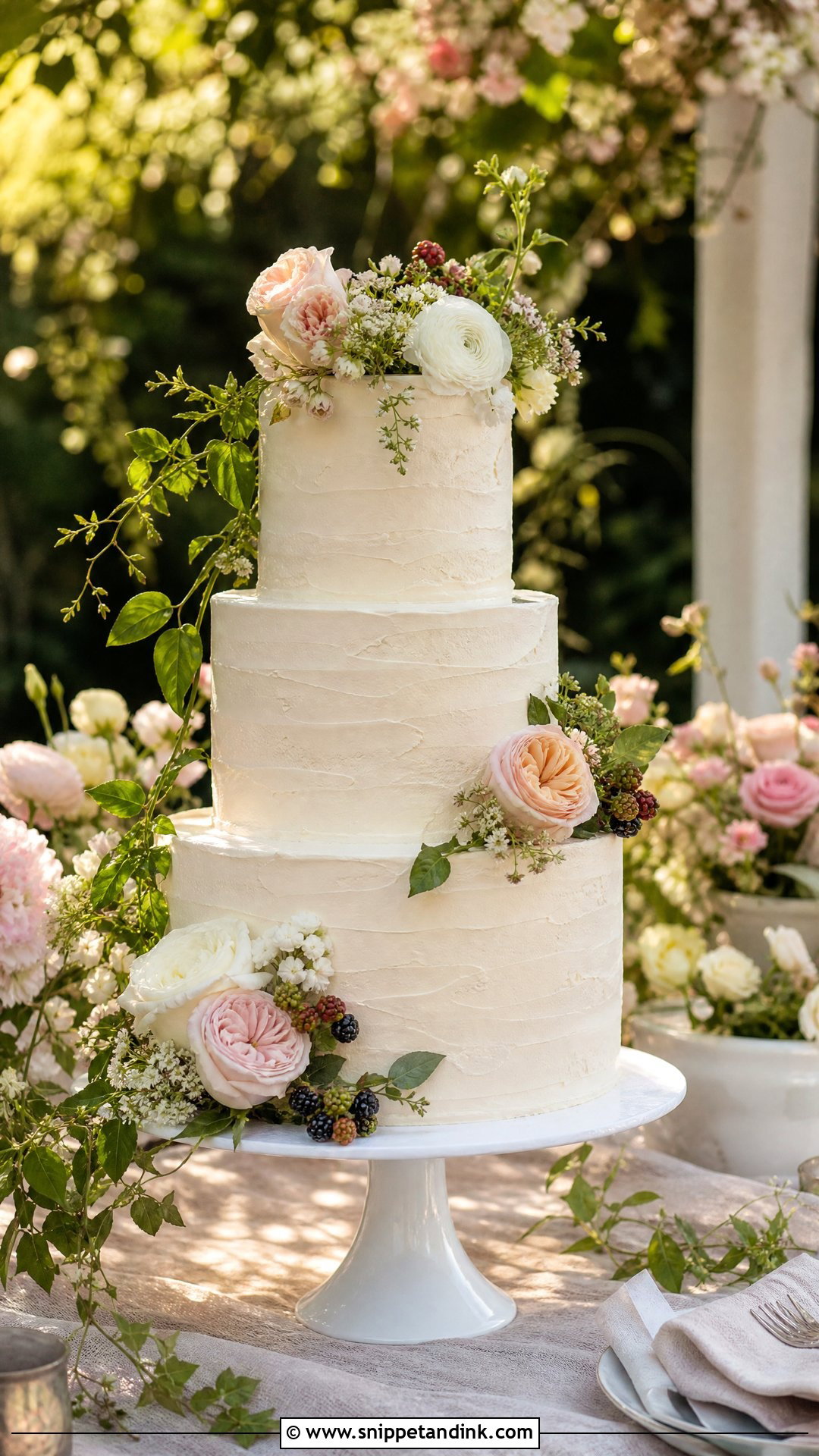
The best garden cakes look as if someone wandered the grounds and picked what was growing. A garden wedding cake usually has buttercream tiers with loose blooms tucked between them and greenery trailing down one side. I talk to the florist early so the cake flowers match the centerpieces and are grown without sprays. Lemon elderflower or honey lavender sponge suits spring. Leave gaps; a crowded cake looks like a hedge.
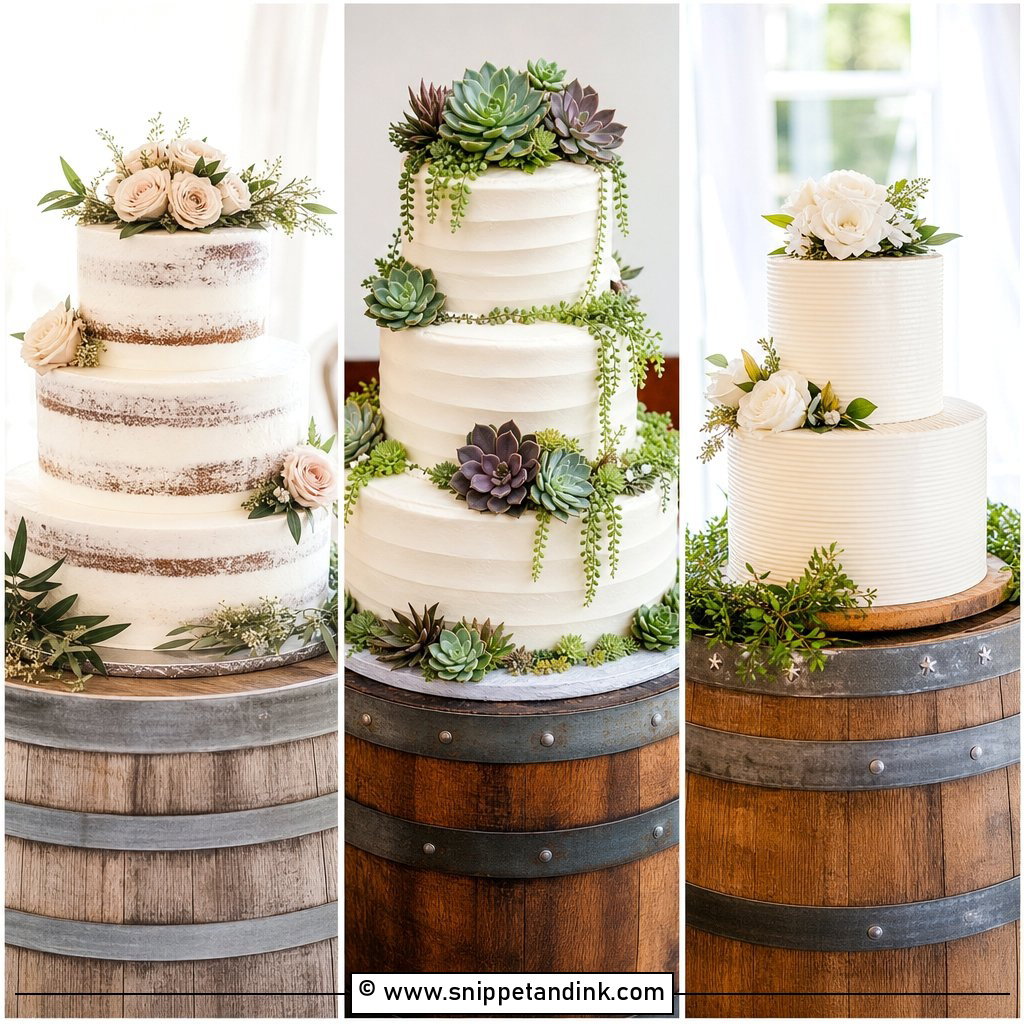
17. Rustic Wedding Cake
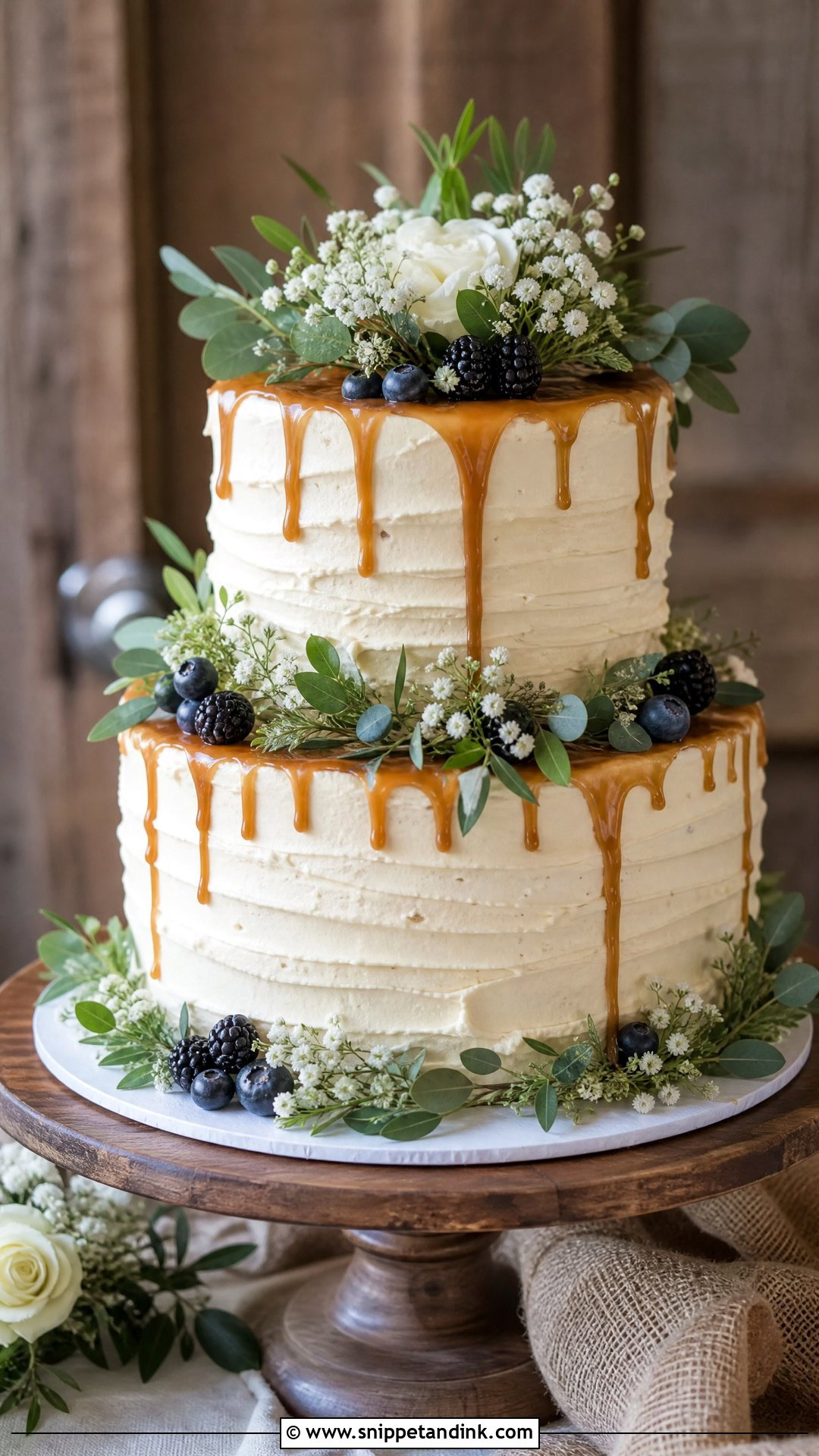
Rustic should still be level. Textured or semi-naked buttercream on a wood slice, with greenery and berries, suits barns and lodges, but the tiers need the same internal dowels as any formal cake. Wood slices must be sealed or lined with a food-safe board, or sap and dust end up on the frosting. Carrot, apple cinnamon or spice cake taste right in a cozy setting.
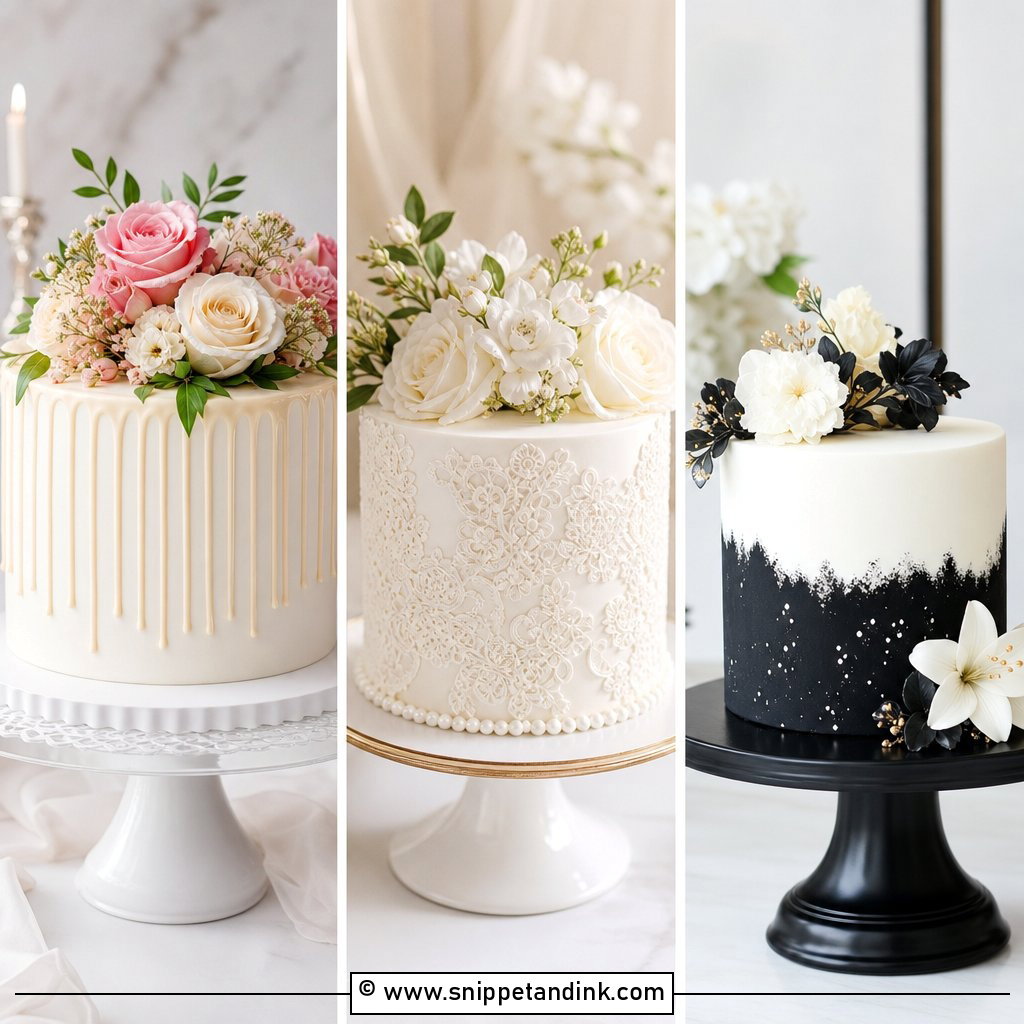
18. Luxury Sugar Flower Wedding Cake
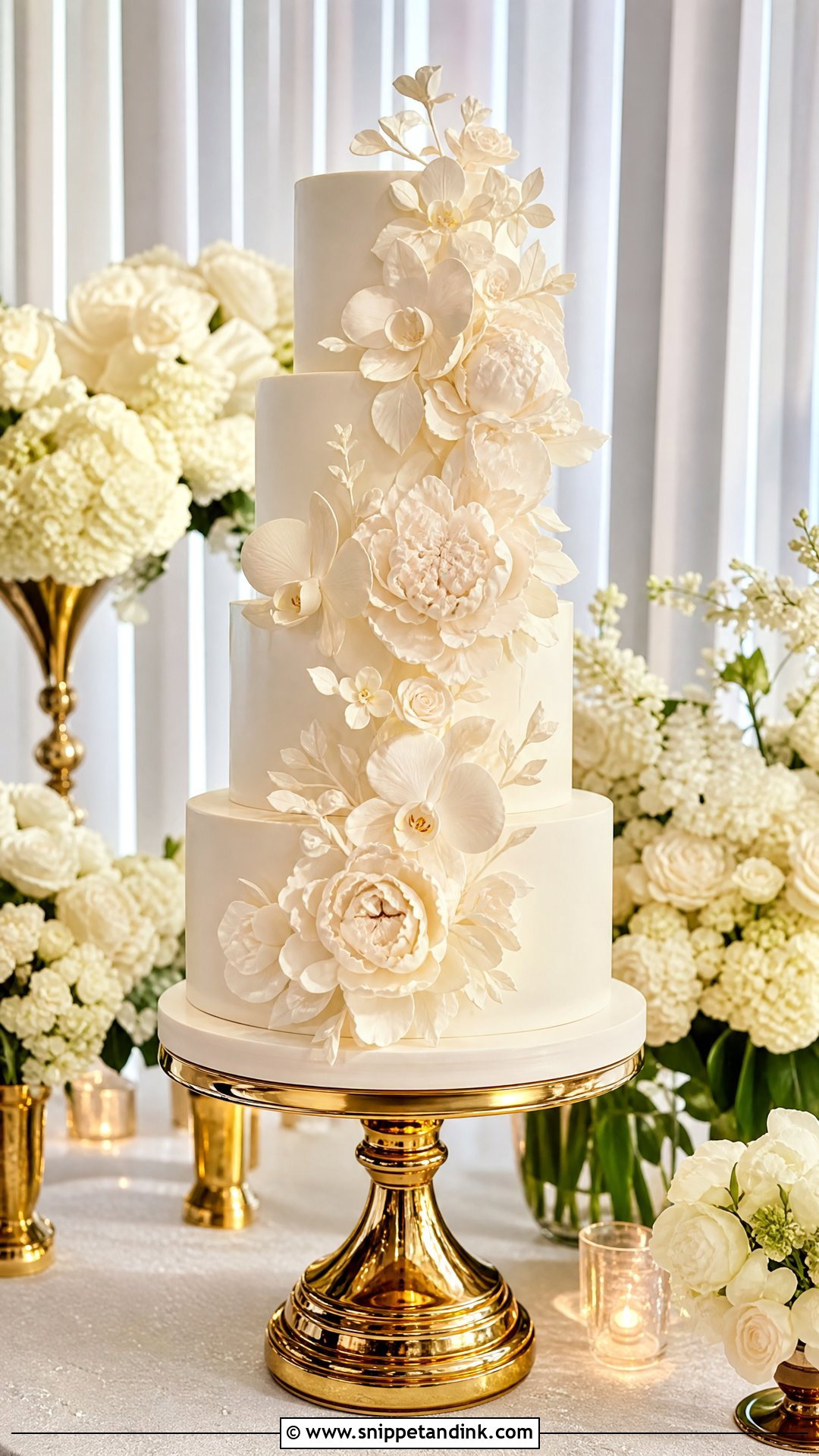
Sugar flowers are made petal by petal from gum paste, wired and dried, which is why they cost more and need ordering well ahead. The upside is control: peonies in October, an exact color match, and flowers that last for years if you keep them dry. I make them weeks before the wedding. They are not meant to be eaten, so they come off before cutting. Pair them with plain fondant or buttercream so the work is visible.
19. Heart Shaped Wedding Cake
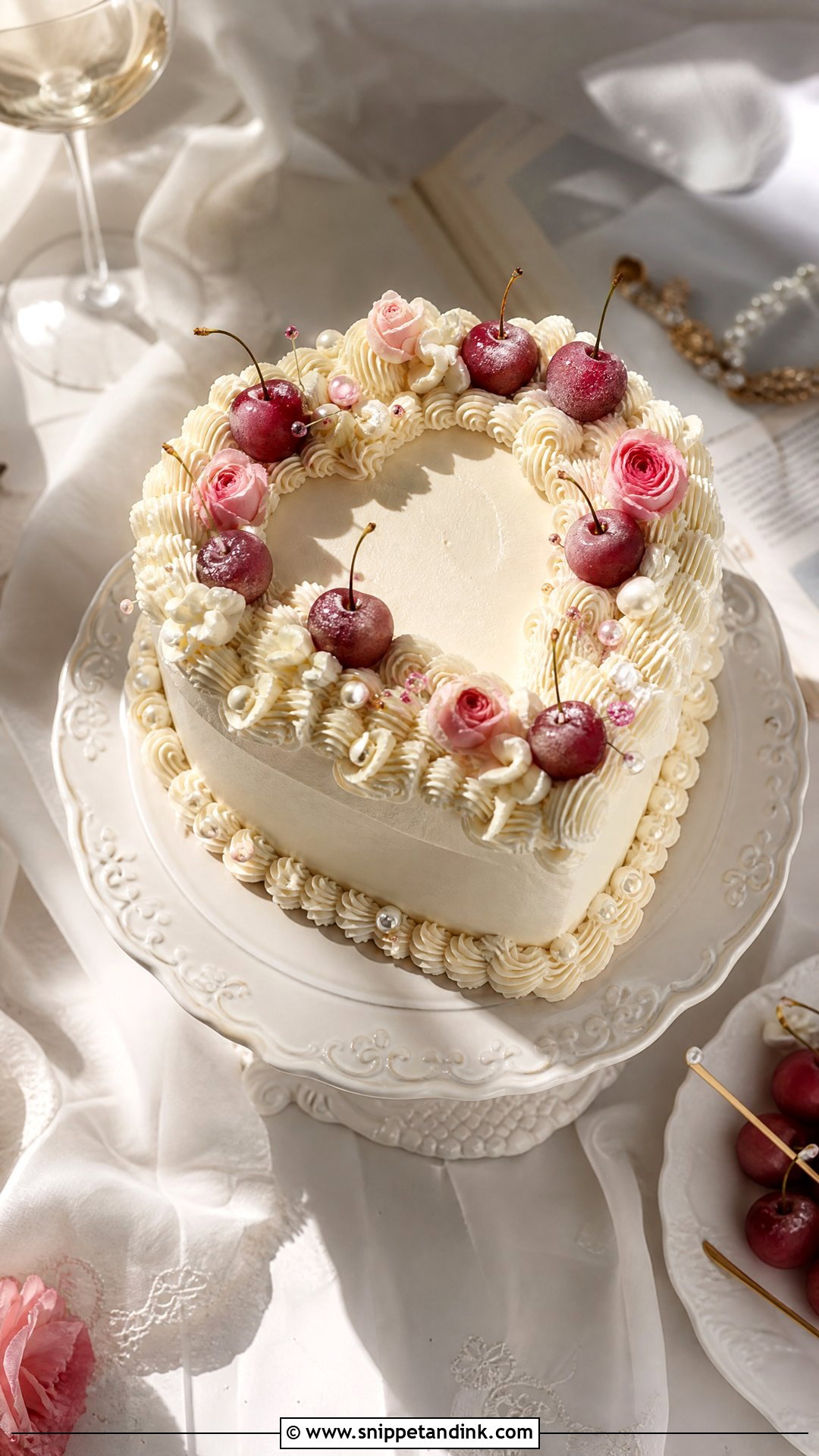
A heart shaped wedding cake is one of the few designs where shape alone carries the look. Single heart tiers are simple to make; stacked hearts take careful dowelling because the point is a weak spot. Vintage piping and cherries give a playful mood, smooth buttercream with pearls a modern one. It suits small weddings and elopements best, or a cutting cake beside a larger plain cake.
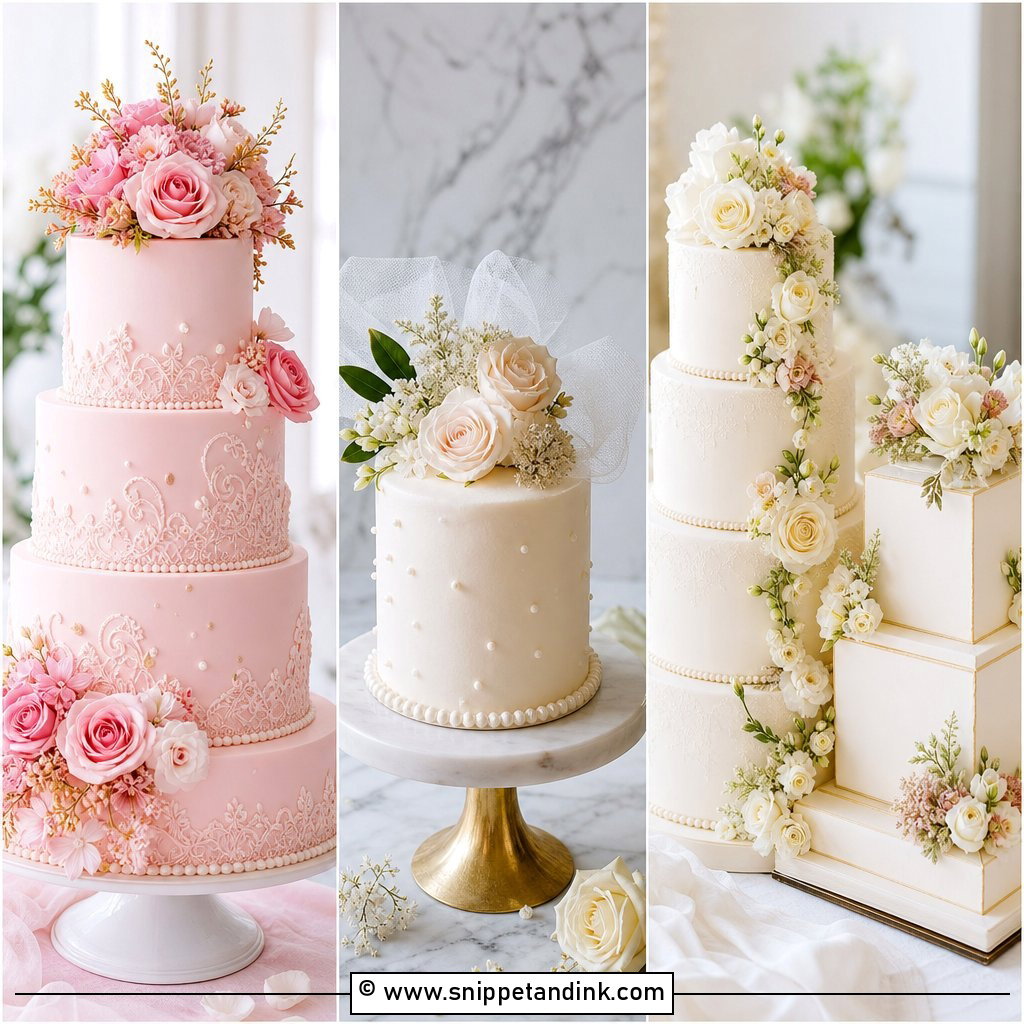


20. Tall Tiered Wedding Cake
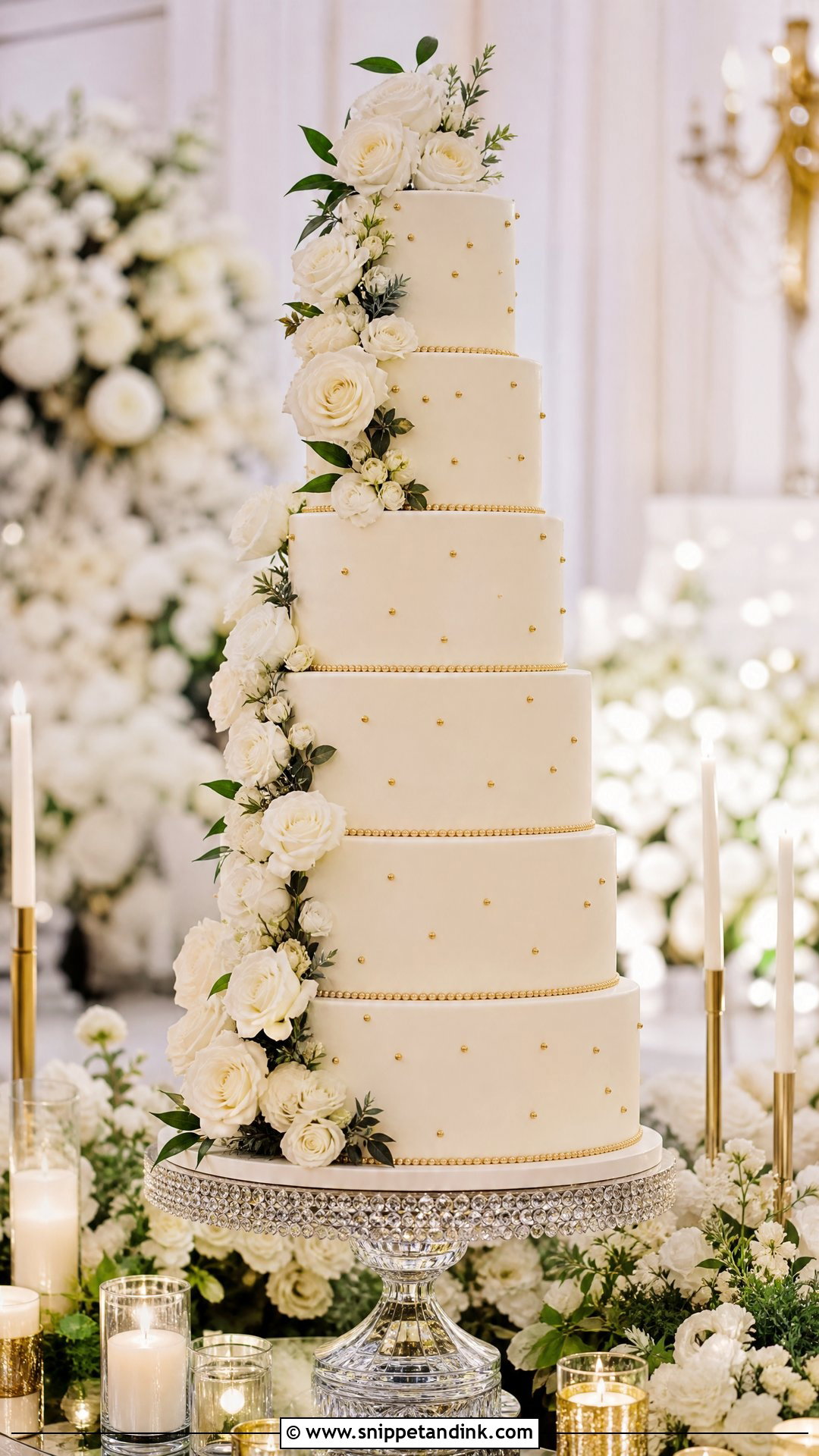
Tall cakes look right in big rooms with high ceilings and look out of place under low beams, so I ask about the venue before suggesting height. Five or six tiers need dowels in every tier and often a central rod. Different flavors per tier are easy to do and give guests some choice, but tell the caterer which tier is which. Keep the palette to one or two colors so the height reads as a single shape.
How Each Finish Copes With Heat and Humidity
Half the designs above behave differently on a cool evening in a ballroom than at an August garden party. Before you settle on a look, tell your baker where the cake will stand and for how long.
Firm in warm rooms
Fondant and royal icing hold their shape well. Fondant does sweat if it moves from a cold fridge into a humid room, so it is usually kept at cool room temperature rather than chilled.
Needs shade and a cool table
Buttercream softens as the room warms, and meringue-based recipes slump sooner than sturdier ones. Pressed flowers, fresh fruit and fine piping all suffer with it.
Needs a fridge nearby
Cream and pastry cream cakes, including most Italian-style cakes, should go out shortly before serving. If the venue has no fridge close to the dessert area, pick another style.
Lead Times for Sugar Work and Custom Pieces
Popular cake designers fill their summer weekends early, often six to twelve months out. Sugar flowers, hand-painted watercolor and detailed Lambeth piping take many hours, so a designer may only accept a few of those per week. Plain buttercream cakes are easier to fit in late. Plan your tasting a few months before the date, and confirm the final guest count with the baker a few weeks before the wedding.
So Which Cake Fits Your Reception?
Start with the place and the people, then the look. A classic white tiered cake still suits most weddings, while a long sheet cake, an Italian-style cake or a heart shape can feel more personal. Your finish, pressed flowers, pearls, Lambeth piping or watercolor, should match the weather as much as your taste. Settle the guest count, the room temperature and how the cake will be served, and the design choices get much easier.
You'll Like These Ideas:




Leave a Reply