
Boho cakes look relaxed, and that’s exactly what makes them tricky to build. Half the decorations couples love, like pampas grass, dried flowers, palm spears and bunny tails, were never meant to touch food. The colors are muted, the frosting is rough on purpose, and the cake often sits outdoors on a wooden stand. I’ll walk through twenty looks, from terracotta and sage tiers to pressed petals and rattan piping, and tell you what I’d watch for with each one, so the cake on the day matches the picture you saved.
Pampas, Dried Stems and Anything Else That Isn’t Food
Most boho decorations are craft materials. Pampas, bunny tails, dried palm spears and many dried flowers are sold for decor, and they may be bleached, dyed or sprayed with fixative. They also shed. None of that should go into a slice of cake, so every one of them needs a barrier.
- Stems go into sealed flower picks or are wrapped in floral tape, then plastic wrap, before they touch the frosting.
- Flat pieces like palm fans sit on a small disc of wax paper or acetate.
- Everything non-edible is removed before cutting. Ask who at the venue will do that.
- Pressed flowers touching the cake must be edible varieties grown for food.
Ask your baker and florist to talk to each other. Florists know which dried products are treated; bakers know where decorations can go without interfering with cutting and stacking.
When sugar is the better material
If you want a cake that looks covered in dried flowers but is entirely edible, sugar flowers and wafer paper can imitate a lot of it. Wafer paper makes convincing dried petals and palm leaves, and sugar succulents hold their shape for days. They cost more in labour than a bunch of dried stems, but nothing has to come off before cutting, and they can be kept afterward.
1. Pampas Grass Wedding Cake
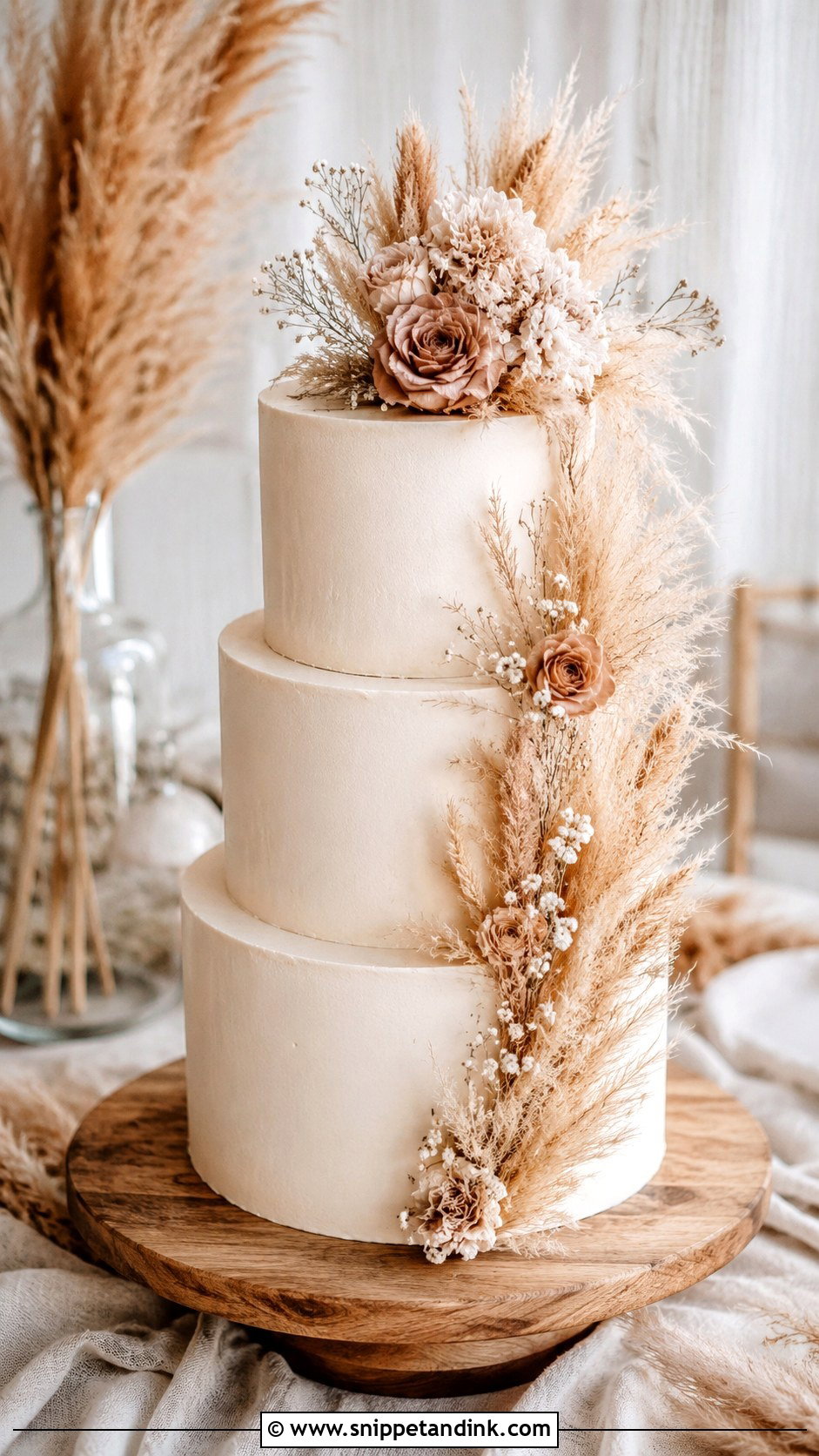
Pampas is soft-looking but it sheds, and plumes from a florist are often sprayed with a fixative or dyed. So I never push stems straight into the cake. They go into a sealed flower pick or are wrapped tightly in floral tape and plastic wrap first, and they sit on one side or between tiers where the knife won’t go. Ivory tiers with a smooth or lightly textured finish let the plumes do the work. Bunny tails and small dried roses balance the feathery shapes. A wooden stand and linen underneath finish it.
2. Dried Flower Wedding Cake
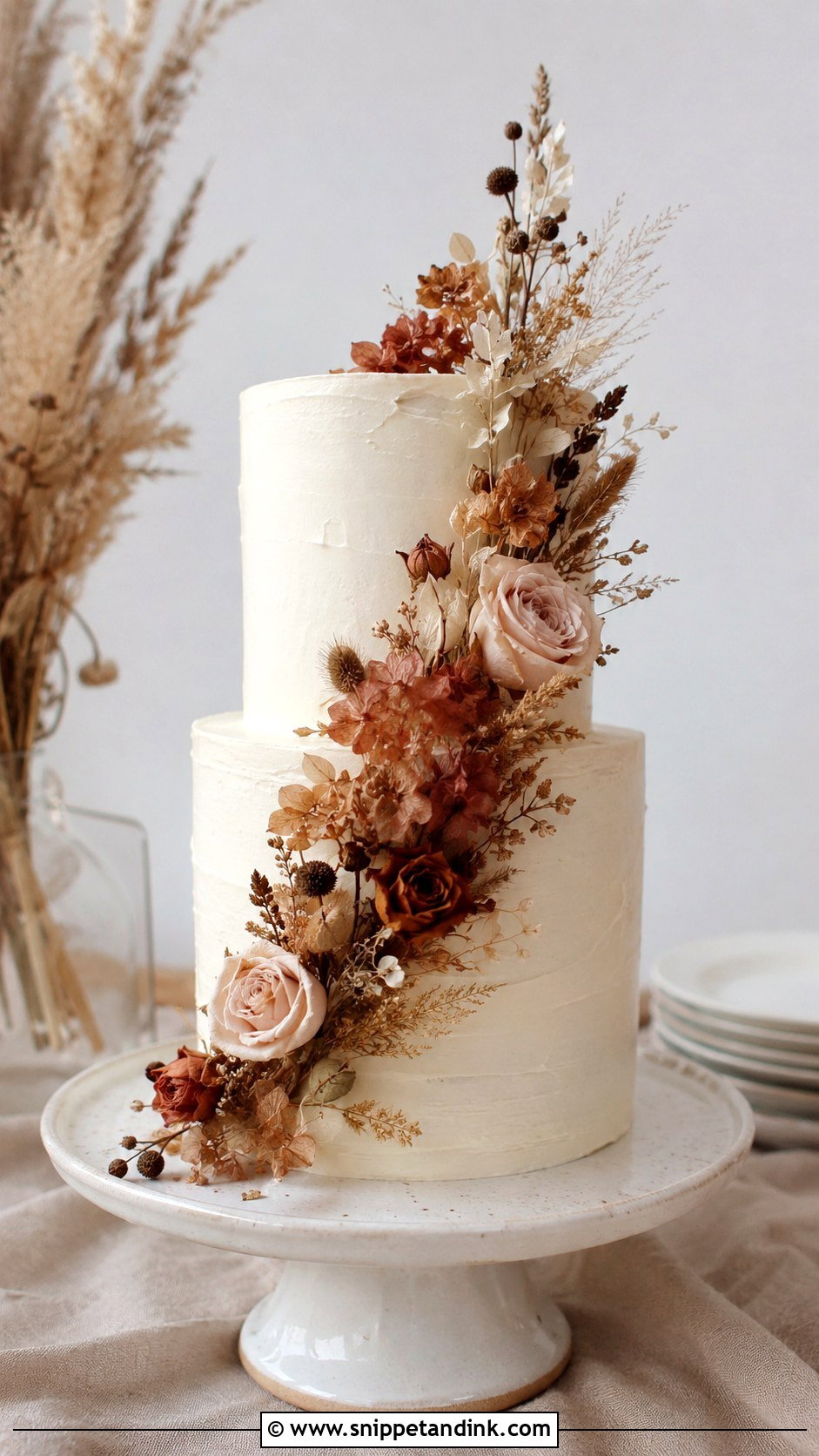
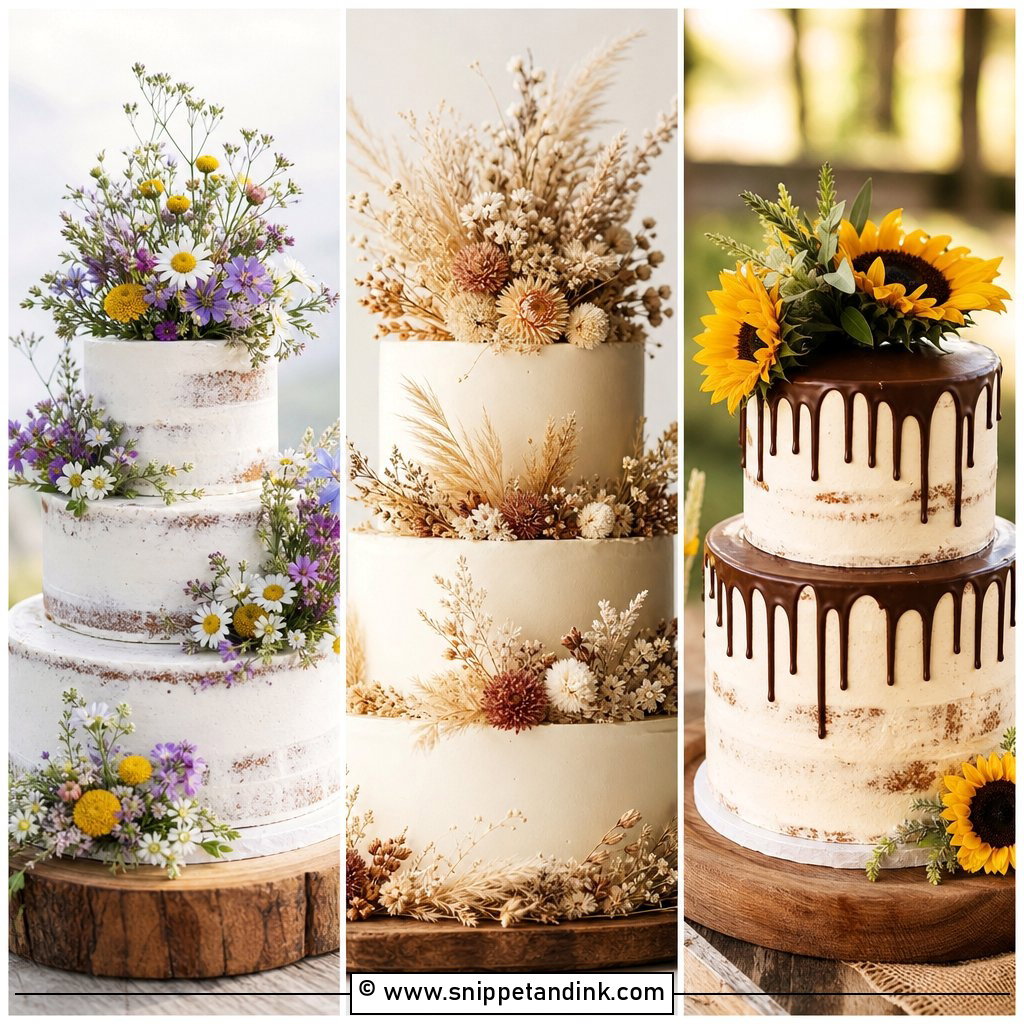
Dried flowers suit a summer wedding because they don’t wilt in the heat the way fresh blooms do, which is one less thing to worry about at an outdoor reception. They do, however, shed petals and dust, so I brush each stem gently before placing it. Muted shades like beige, blush, rust and faded peach look right on two or three tiers of buttercream. Thin, delicate stems keep it soft; palms, seed pods and grasses push it bolder. I usually arrange them in a diagonal trail down the front, which gives the cake movement without crowding it.
3. Semi Naked Boho Wedding Cake
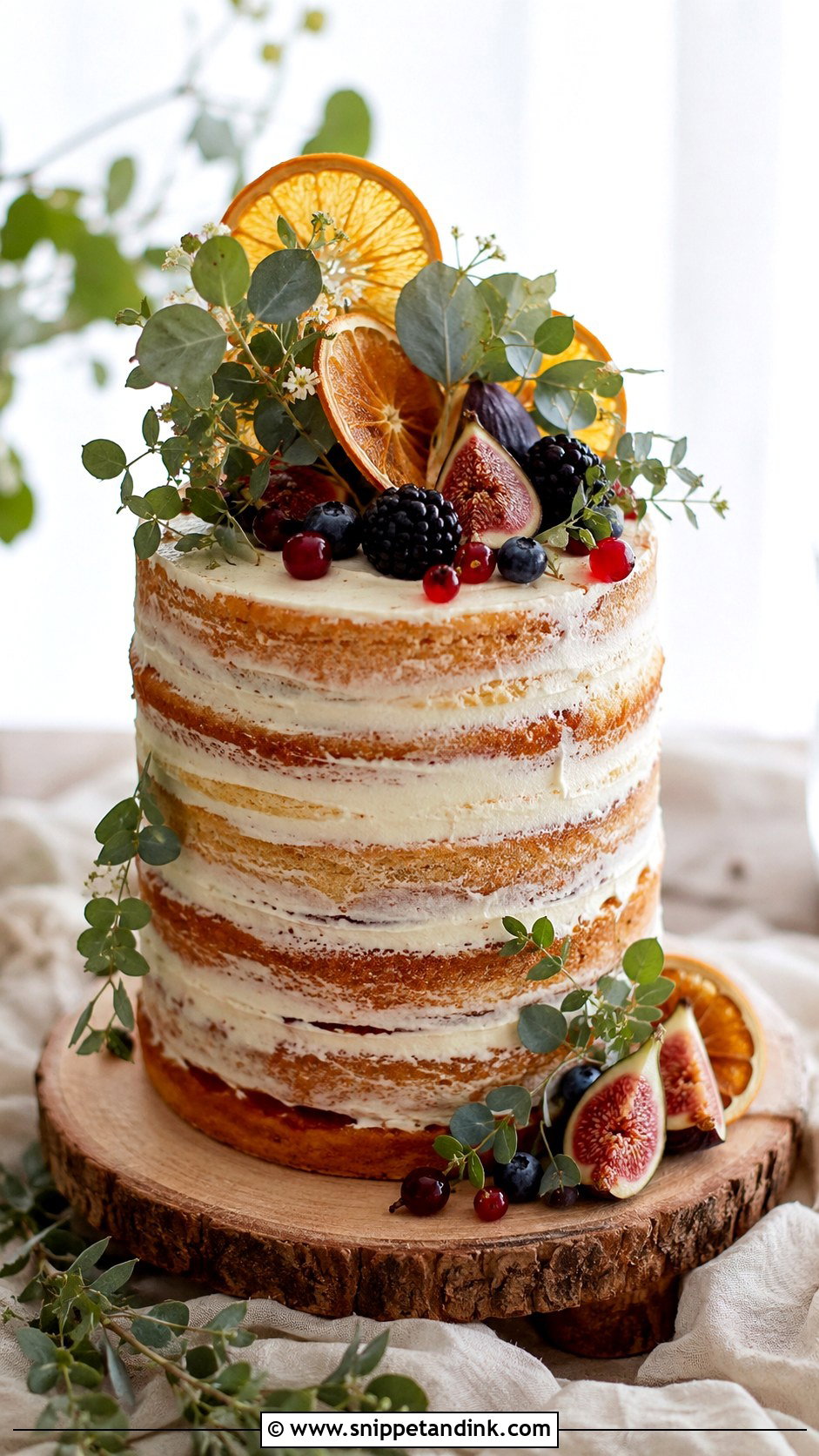
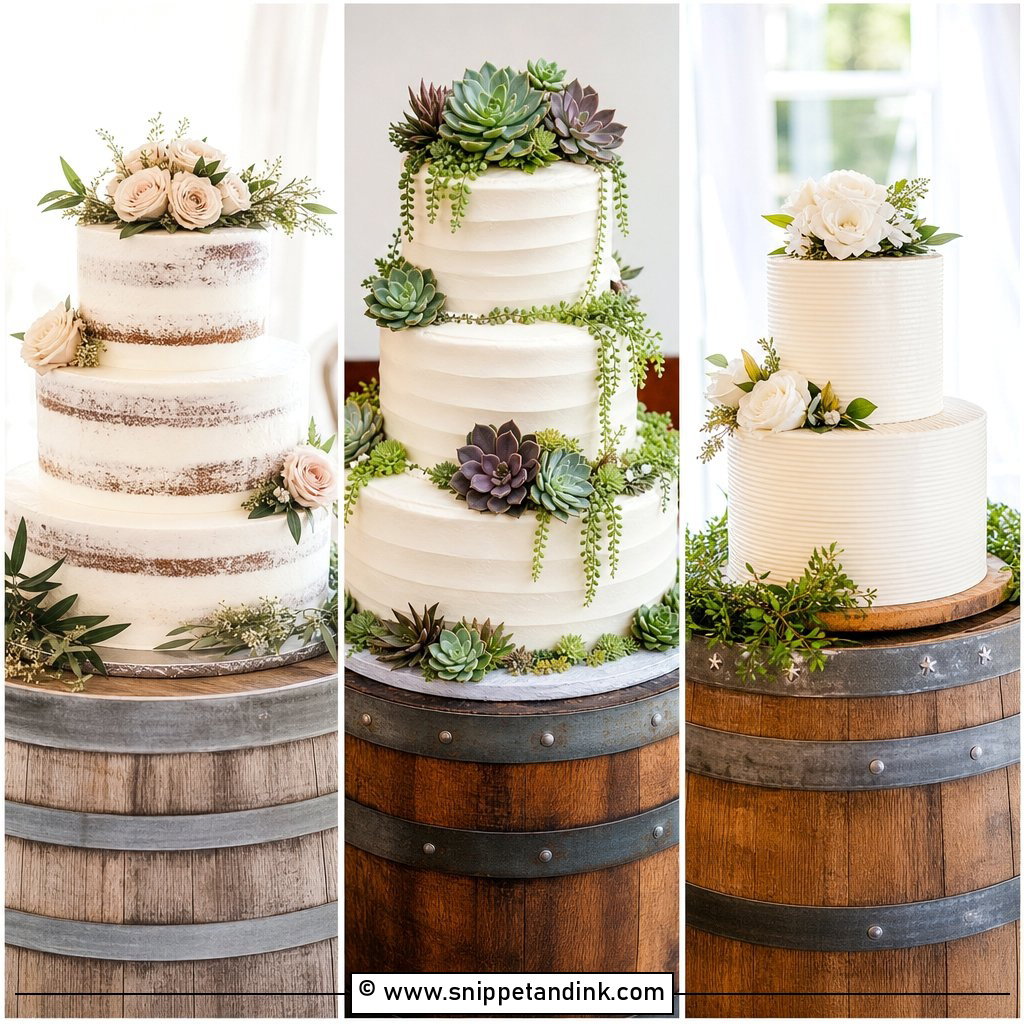
A semi naked boho wedding cake has a thin scraped coat of buttercream with sponge showing through. That thin coat matters for more than looks: it slows the sponge from drying out, which a fully naked cake can’t do. Vanilla, almond, honey, lemon or spiced sponges all work because the layers are part of the design, so I bake them level and even. Figs, berries, herbs, dried orange slices or small flowers go on top. Done well, it looks lightly finished and intentional, not messy.
4. Terracotta Wedding Cake
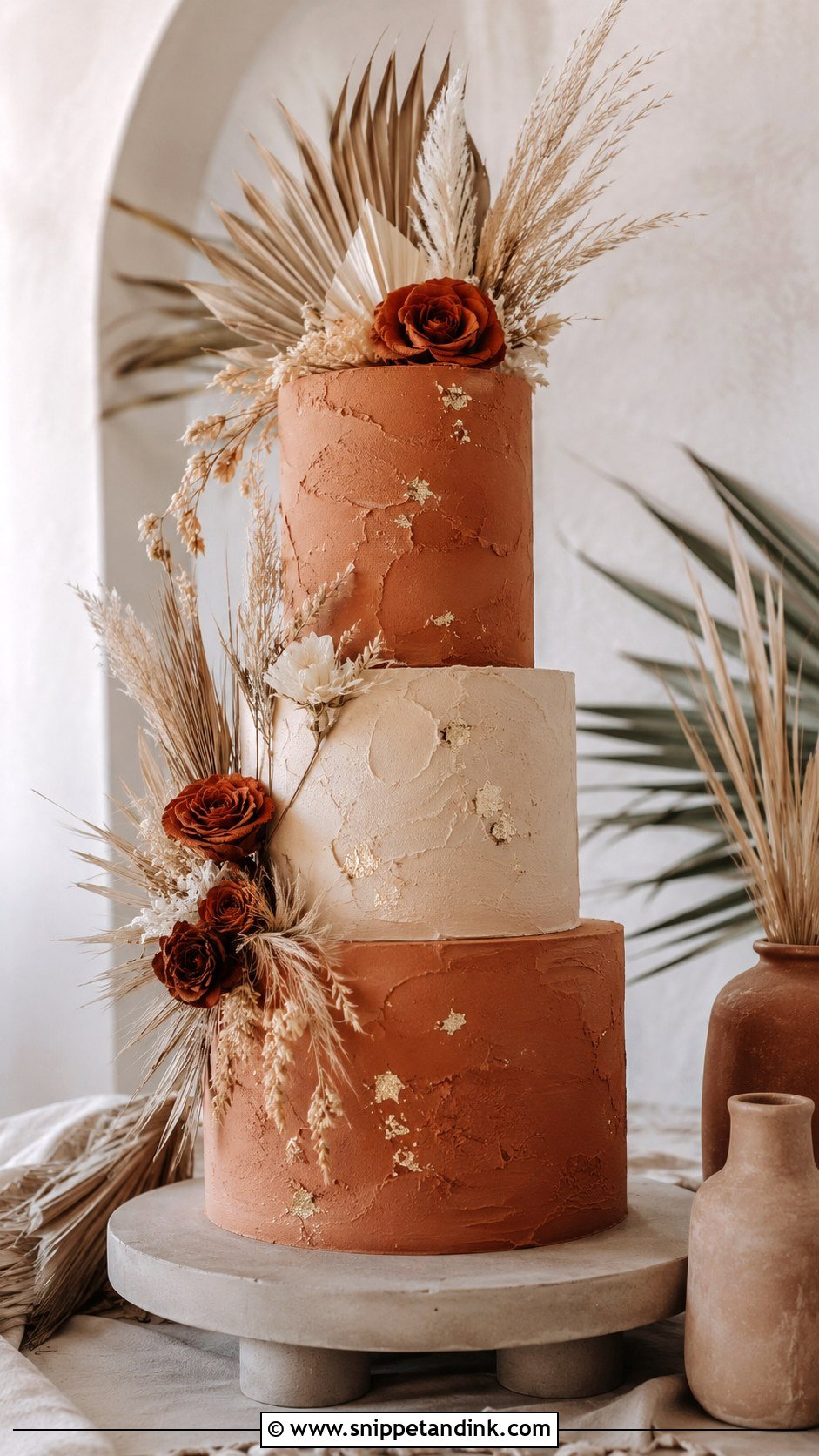
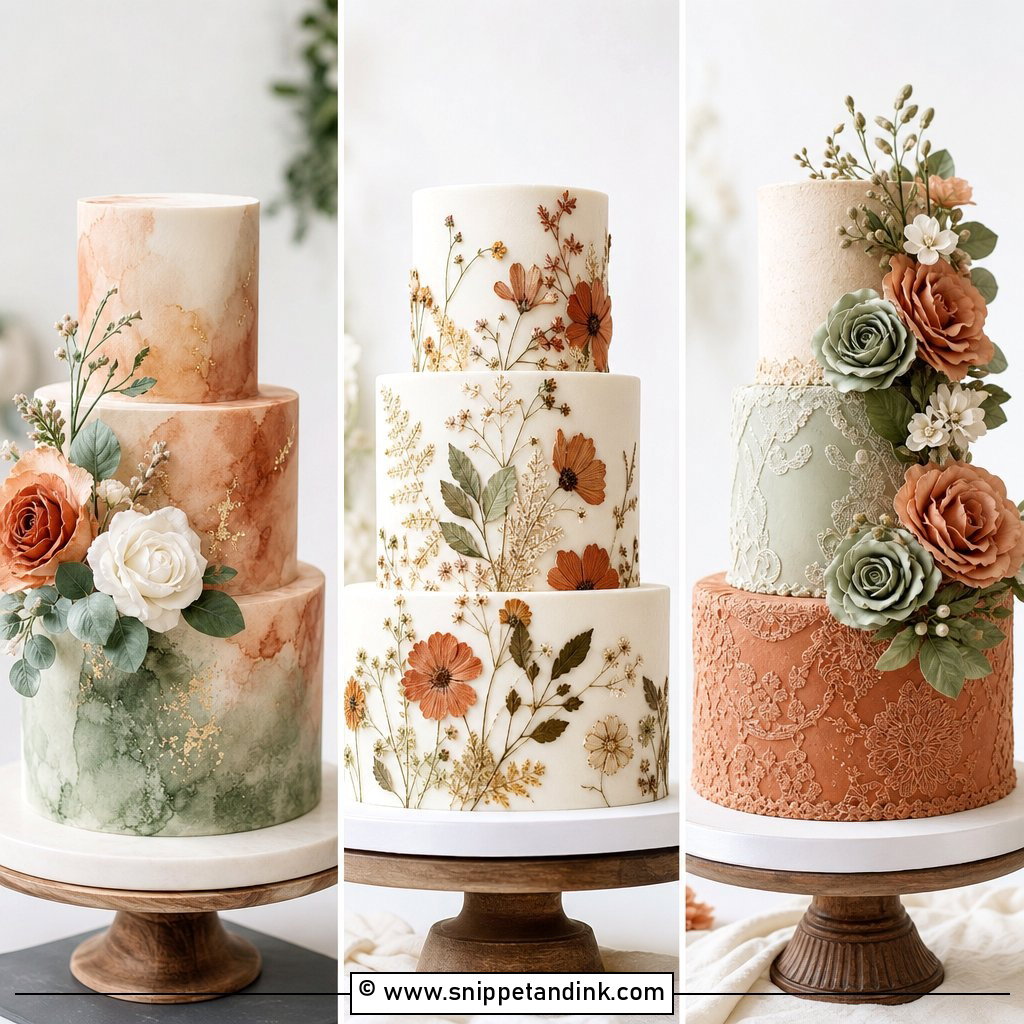
Terracotta buttercream takes a few days of planning. Warm orange-brown tones need quite a lot of gel color, and buttercream keeps darkening for hours after mixing, so I mix it a day ahead and judge it the next morning. A full terracotta cake reads strong; an accent tier between ivory ones is easier to style. A stucco texture, done with a palette knife, makes it look like sun-baked clay. Dried palm, rust flowers, beige grasses and a touch of gold complete it. For something softer, mix terracotta with blush, cream and sage. It suits fall weddings and sunset palettes.
5. Sage Green Wedding Cake
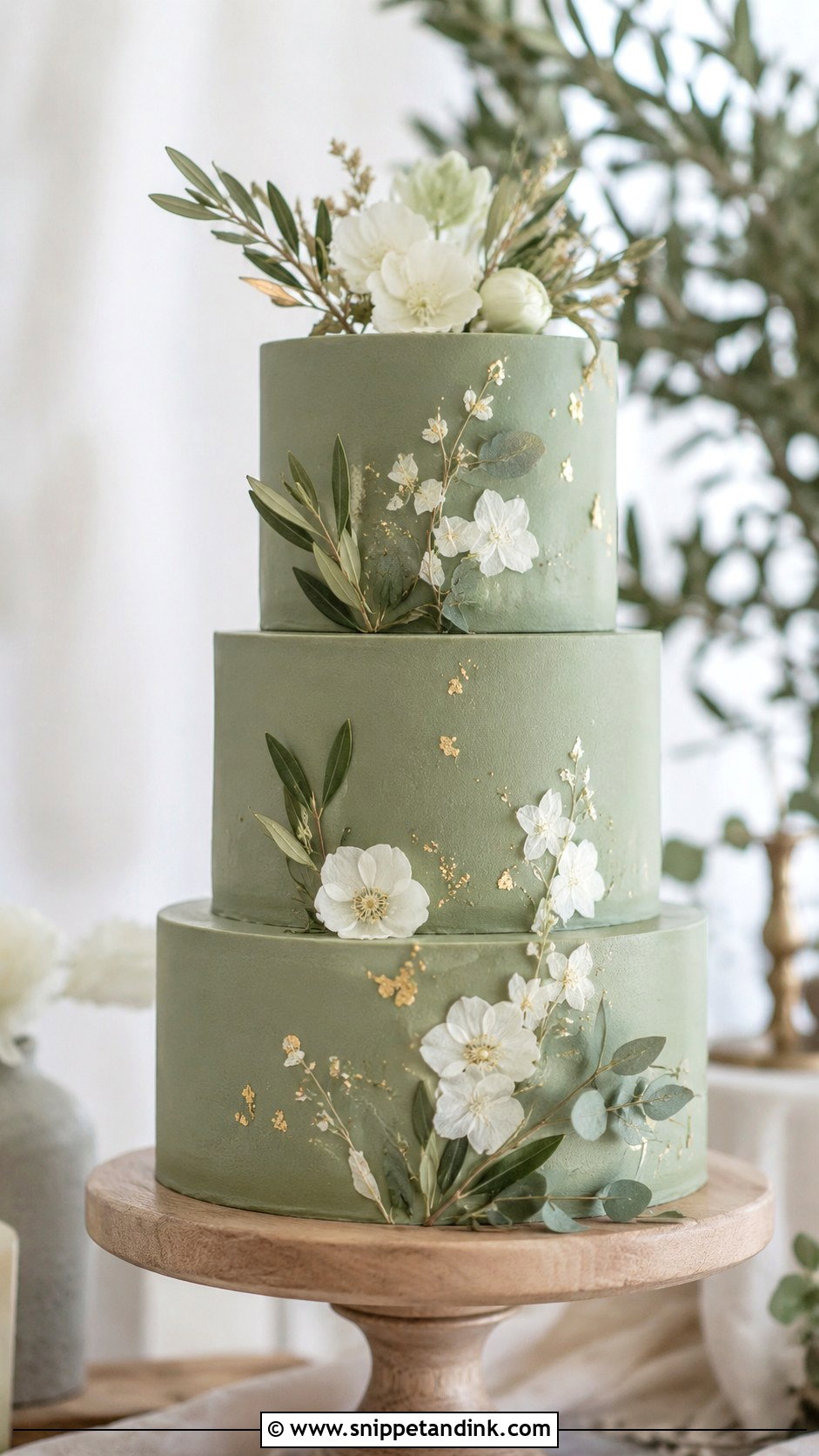
Sage is the boho color I find easiest to pair, since it sits quietly next to eucalyptus, olive branches, ivory blooms and dried grasses. Getting the shade right takes a light hand; too much green tips it toward mint. A sage green wedding cake can be smooth for a modern look or textured for a garden feel, all sage or alternated with white tiers. Gold leaf and pressed flowers add a finished edge. Keep it out of direct sun if you can, because some colors fade with long exposure. Spring and summer, with wooden chairs and linen napkins.
6. Macrame Wedding Cake
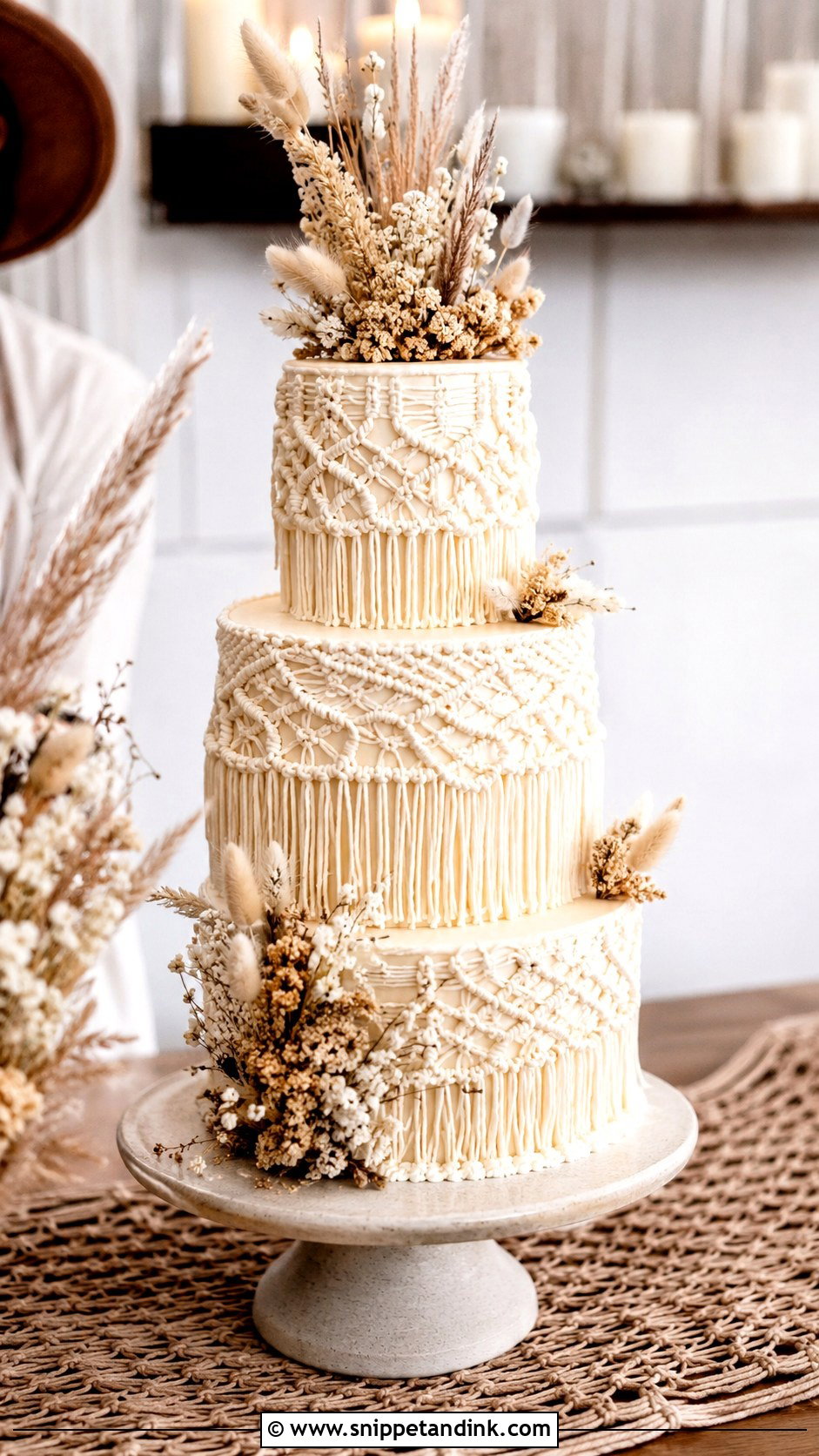
Macrame on a cake is piped or modeled, never real cord. I pipe buttercream ropes, knots and fringe with round tips, or roll fondant into twisted cords, and edible lace can stand in for finer weaving. Piping in warm weather is harder because buttercream softens, so I chill the tier between sections. Ivory keeps it bridal. A tall two or three-tier cake gives the pattern room. A few dried flowers or pampas stems (in picks) link the cake to the rest of the decor. Ivory, taupe, beige and cream: no more than that.
7. Pressed Flower Wedding Cake
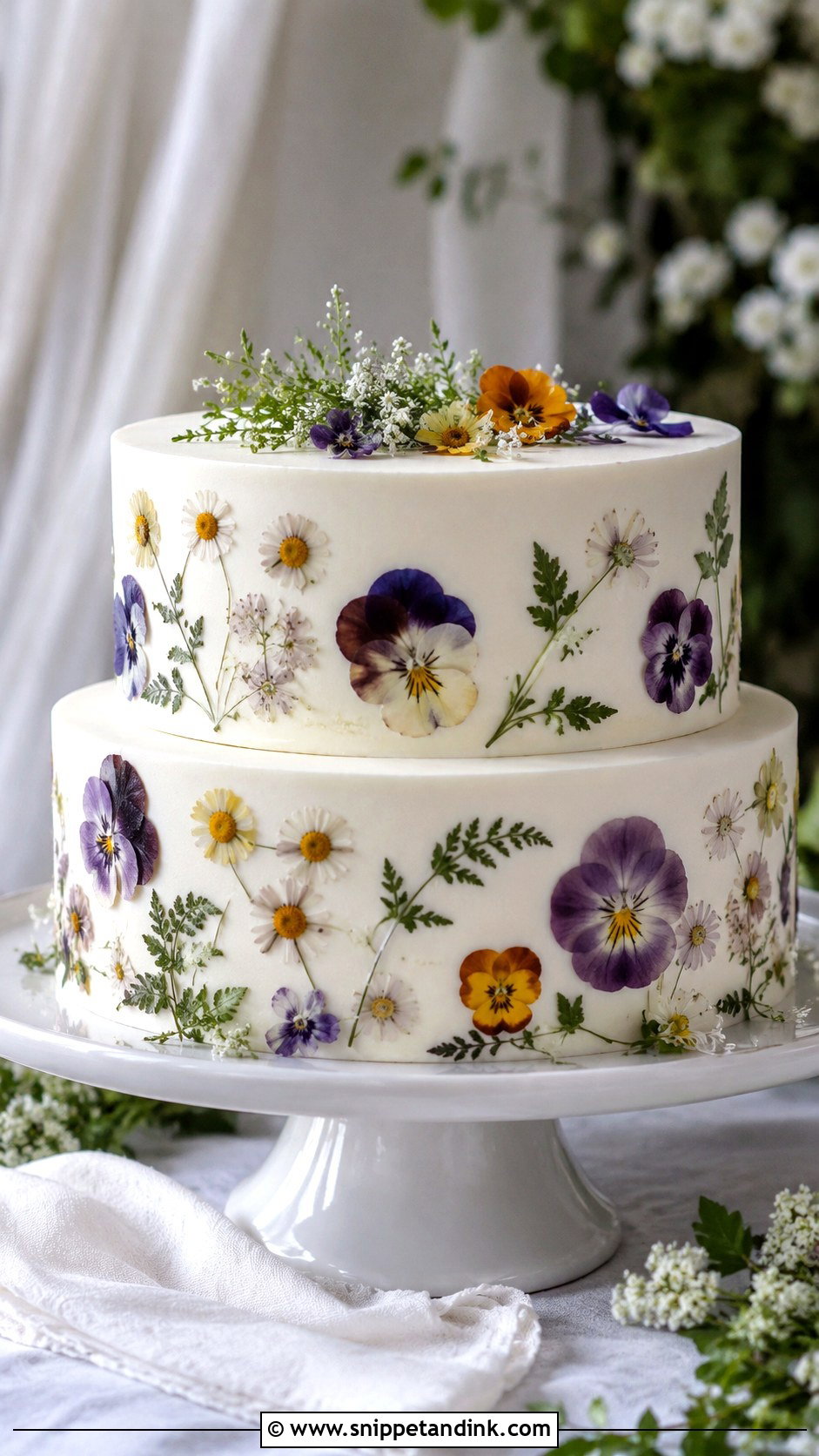
Pressed flowers sit flat against the cake, so they must be edible: pansies, violas, chamomile, cornflower and similar blooms, grown without pesticides and pressed for food use. Not florist flowers. I stick them to smooth buttercream or fondant with a thin brush of piping gel. A pale ivory base shows the colors clearly. They suit spring and summer and look lovely on a simple ceramic stand with fresh greenery nearby. Pressed petals can brown at the edges if the cake sits in heat for long, so this is better served from the shade.
8. Boho Naked Wedding Cake
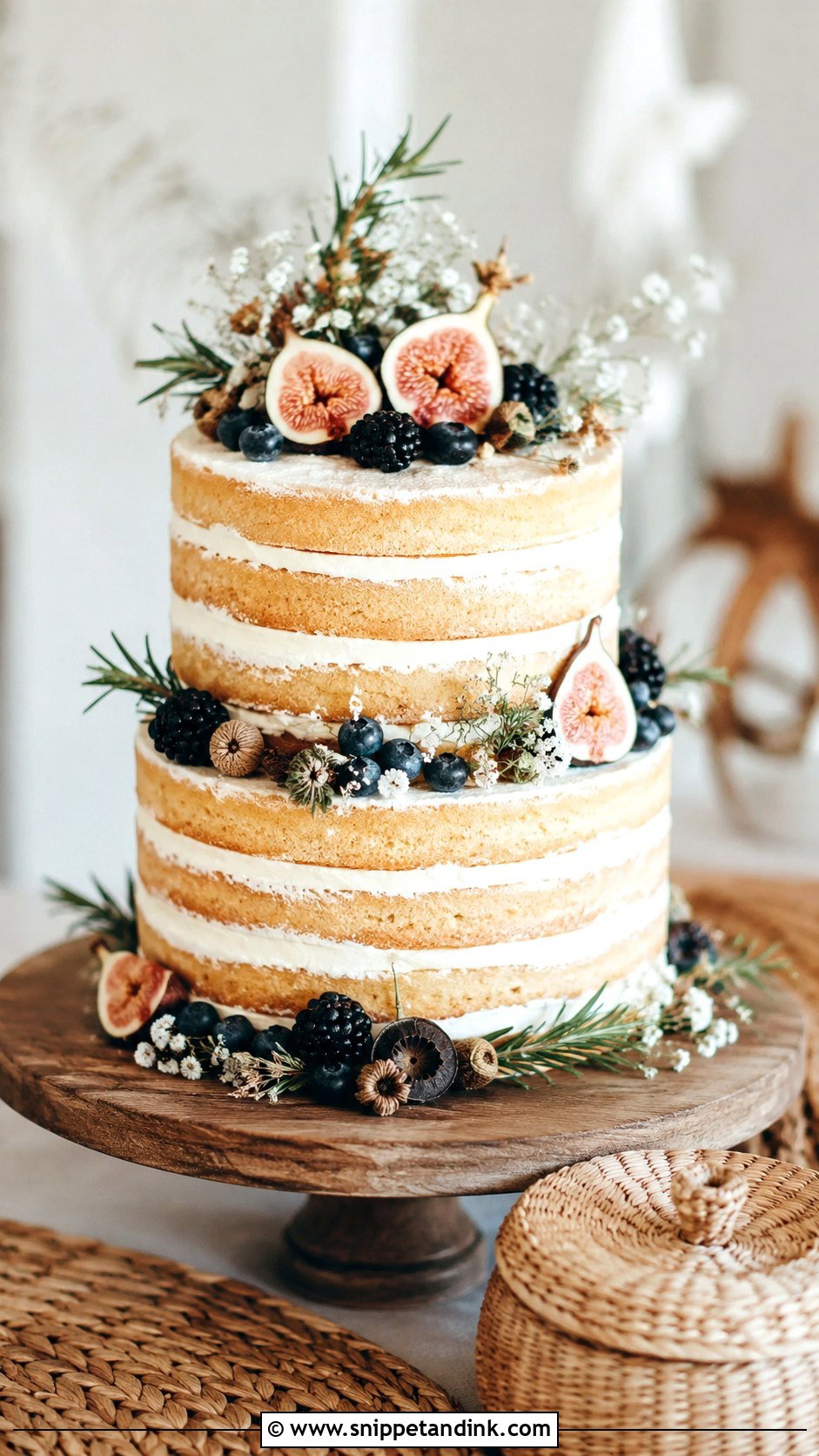
A naked cake has almost no frosting outside, which means the sponge dries quickly once it’s exposed. I brush every layer with a light syrup and assemble as close to the reception as possible. Flavours should look good in cross-section: vanilla with berry filling, carrot with cream cheese frosting, almond with honey buttercream. Fruit, herbs and small wild blooms go on top. It suits barn weddings and backyard receptions. Abundant on top, neat in the layers; otherwise it looks unfinished.
9. Boho White Wedding Cake
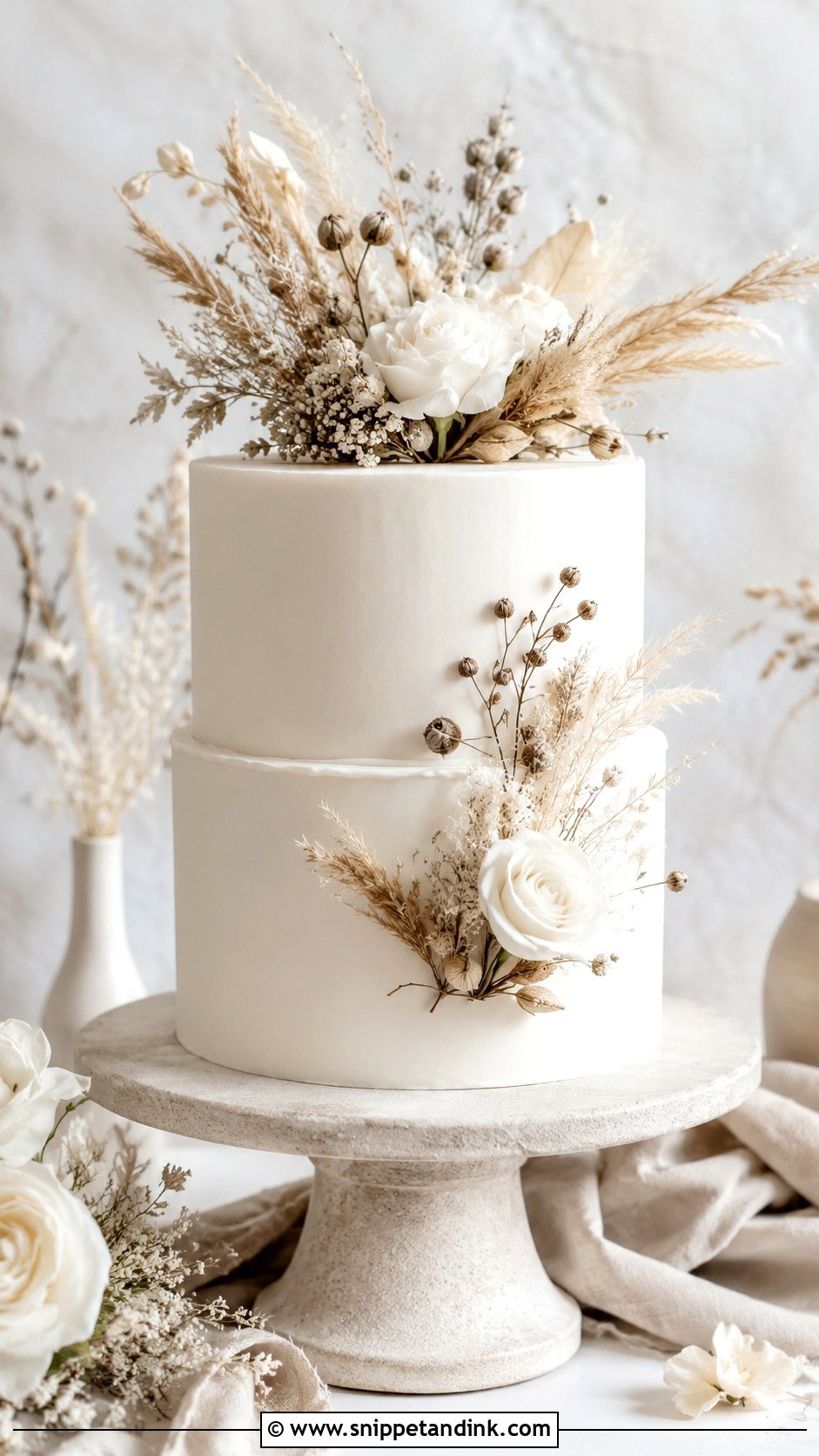
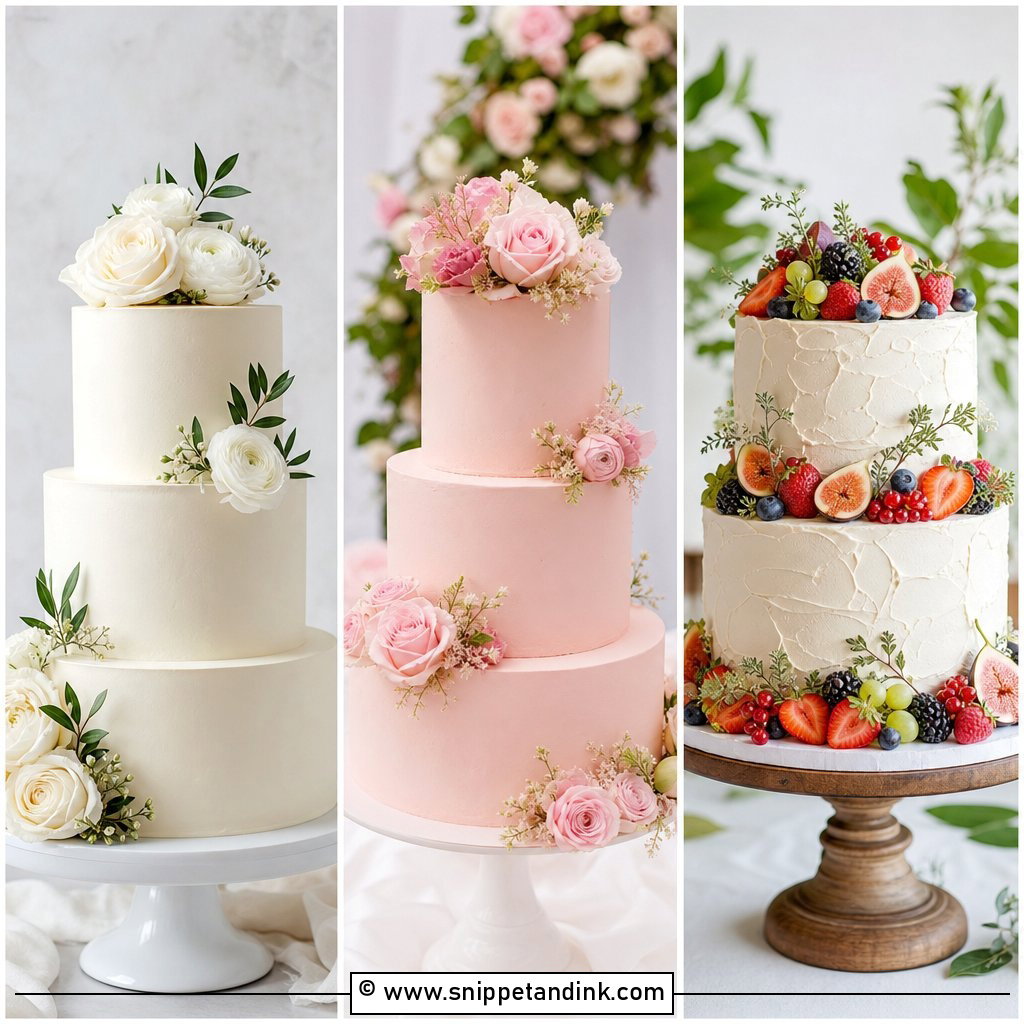
If your color palette is still changing, a white or ivory boho cake is the safe choice, because it works with everything. Texture carries it instead of color: a smooth finish feels modern, palette-knife strokes add movement. Dried grasses, beige blooms, white roses, rice flowers and seed pods dress it. Warm ivory looks softer in photos than bright white. A wooden, stone or ceramic stand adds warmth.
10. Earth Tone Ombre Wedding Cake
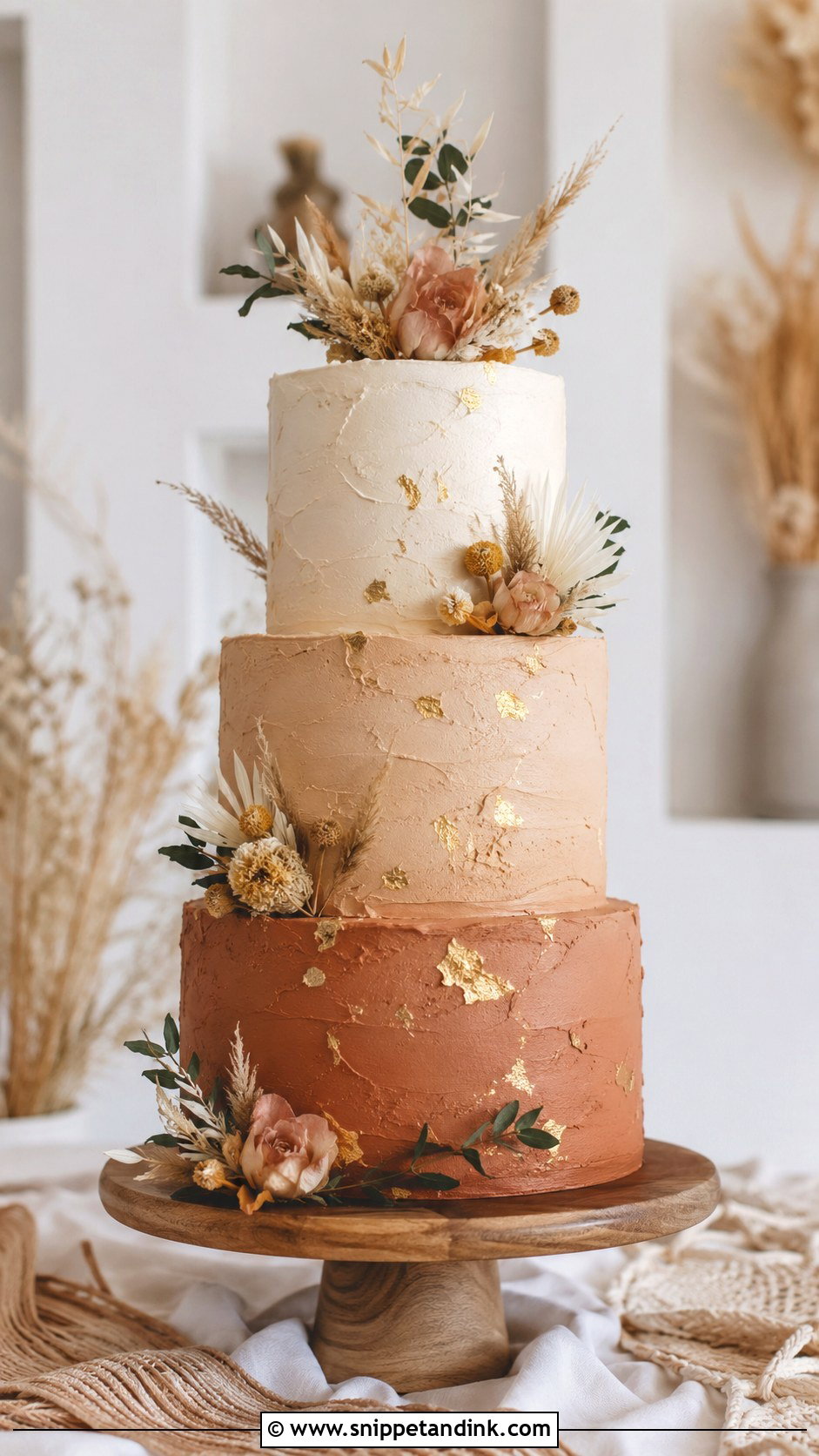
Ombre takes careful color matching from tier to tier. I mix one base buttercream and tint portions of it step by step, so the shades blend rather than jump. Ivory to beige, blush to terracotta, sage to cream: pick two ends and let the middle fill itself. Textured buttercream softens the transition further. Minimal decoration, maybe a little dried flower or gold leaf, keeps the gradient visible. Skip a busy topper.
11. Rustic Buttercream Wedding Cake
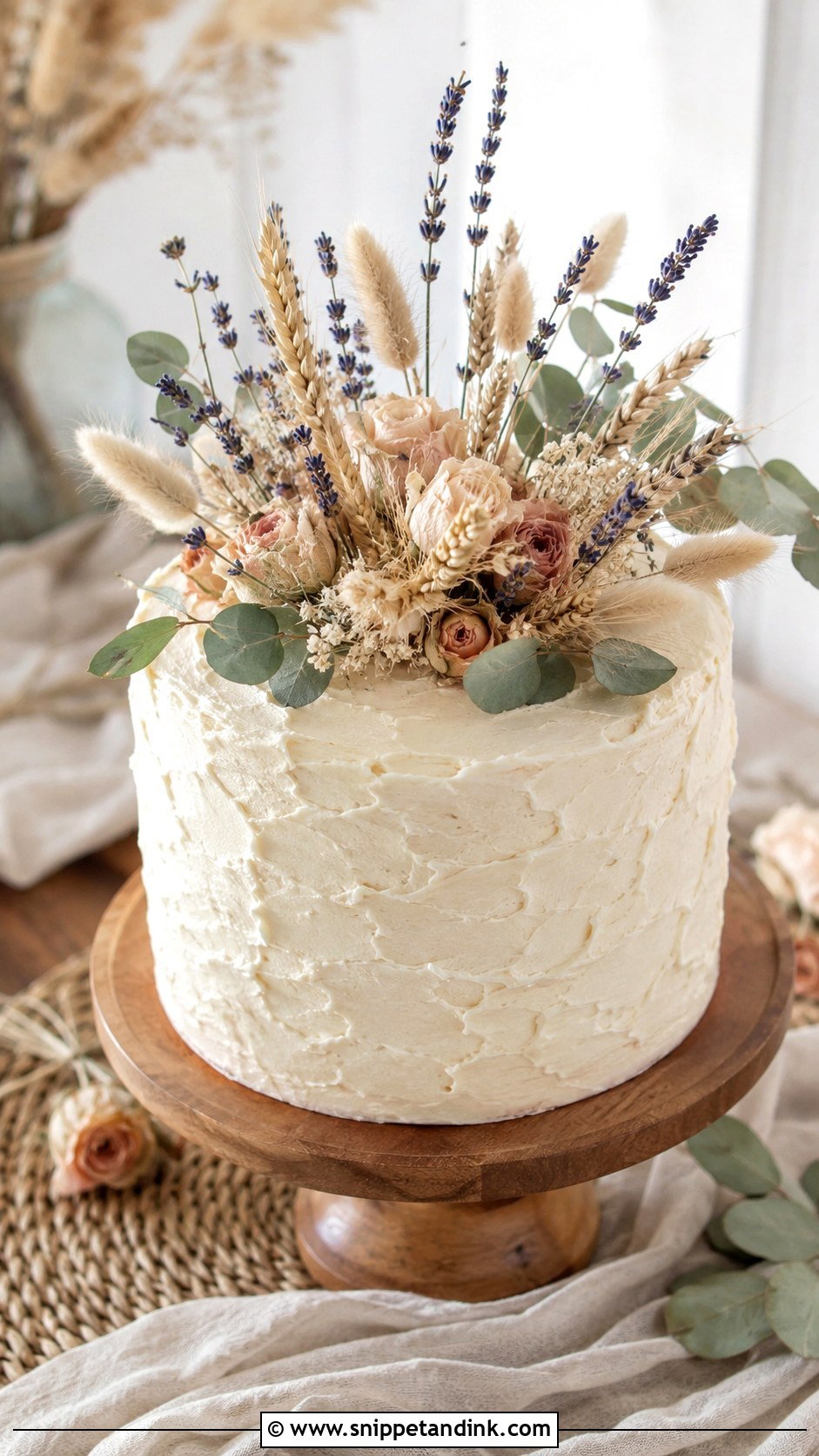
Rustic buttercream is about controlled texture. Ridges, uneven strokes, vertical lines or a lightly scraped finish, made with a spatula or comb, not left to chance. Ivory, cream, beige or pale taupe keep it bridal. I place flowers in small clusters rather than over every tier: dried roses, lavender, wheat, eucalyptus and bunny tails. It pairs naturally with wooden tables and woven chargers. A warm, approachable cake.
12. Gold Leaf Boho Wedding Cake
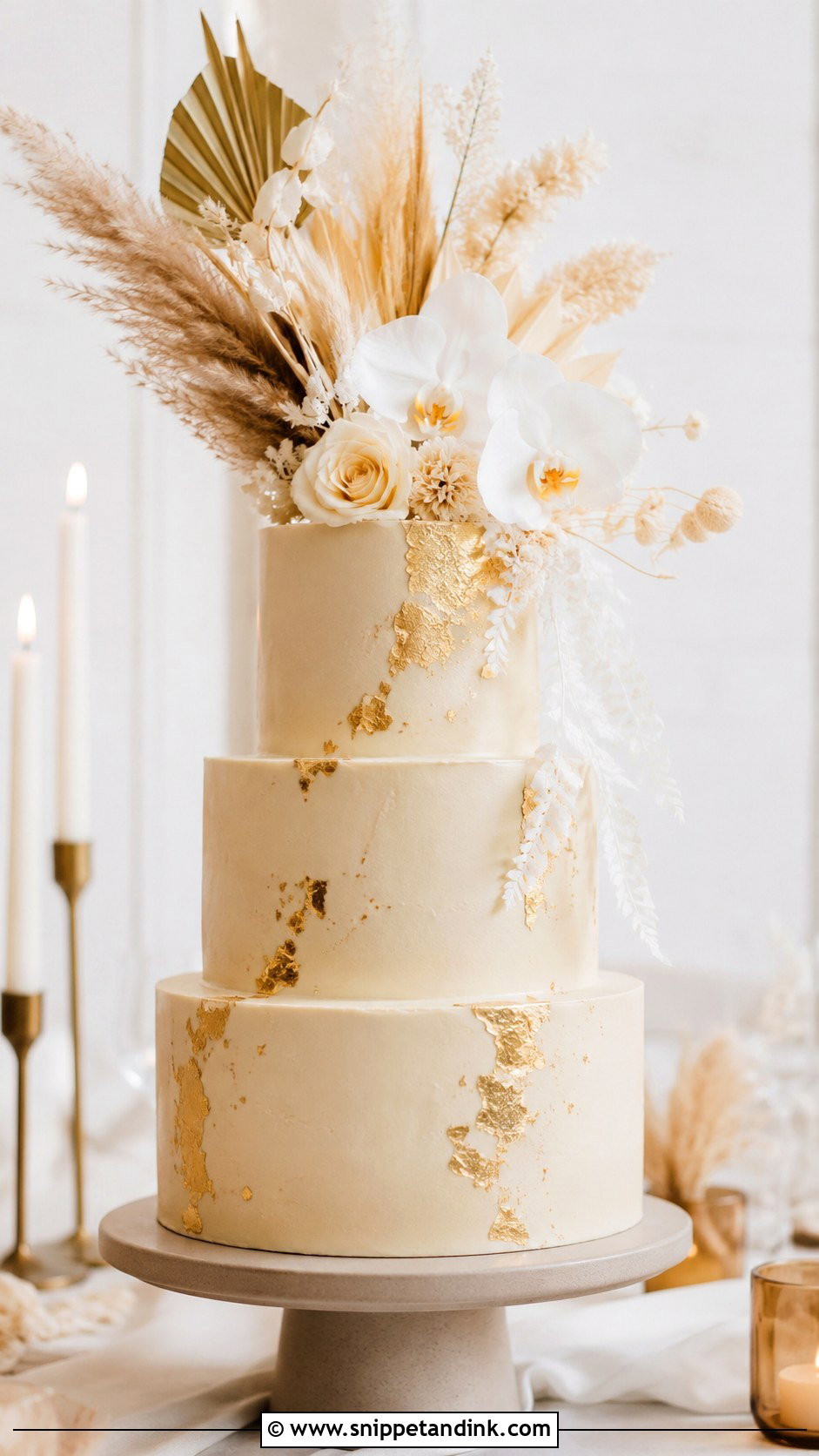
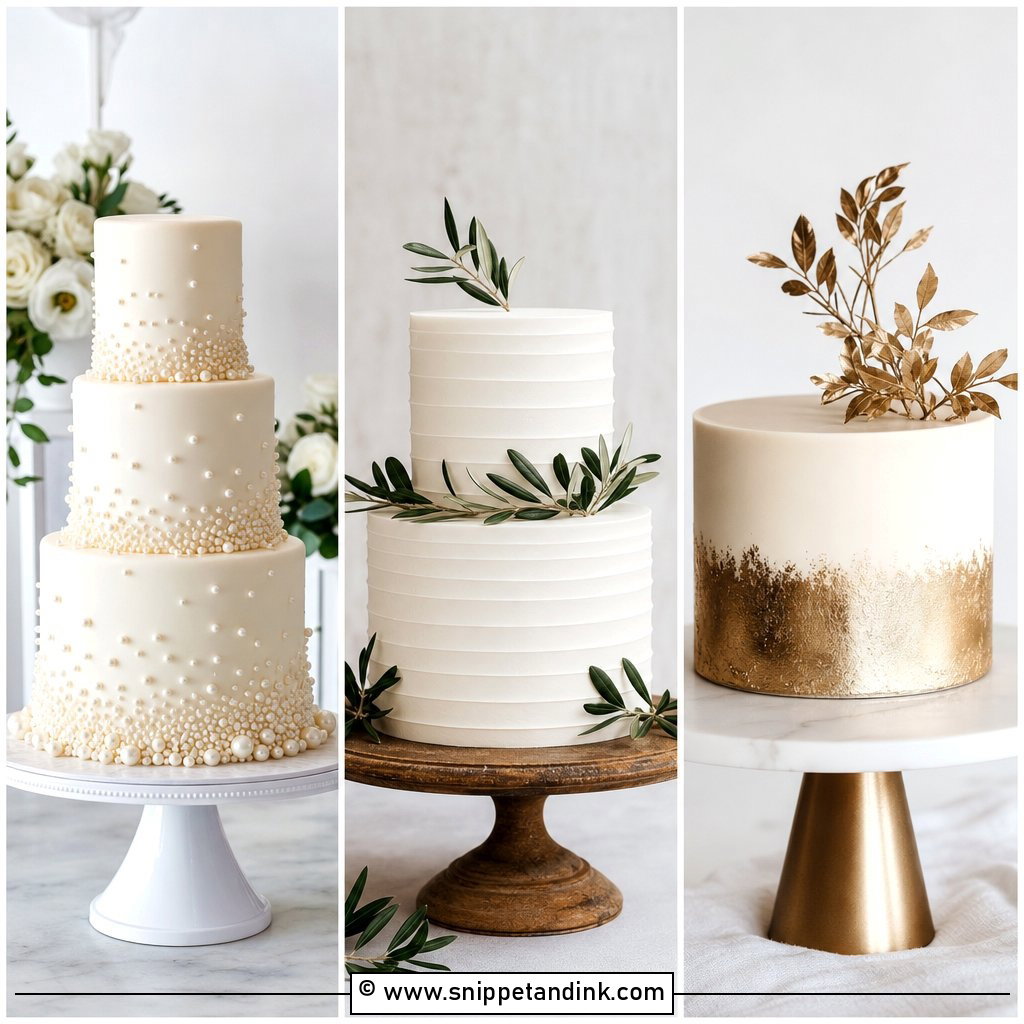
A little gold goes a long way on a boho cake. I apply edible gold leaf in small torn patches with a dry brush, not as full coverage, which would pull it toward formal. Check that your baker uses edible leaf; craft gold looks the same and is not food. Gold sits well on ivory, taupe, sage or terracotta and catches candlelight at an evening reception. Dried flowers, pampas or white orchids soften the shine.
13. Succulent Wedding Cake
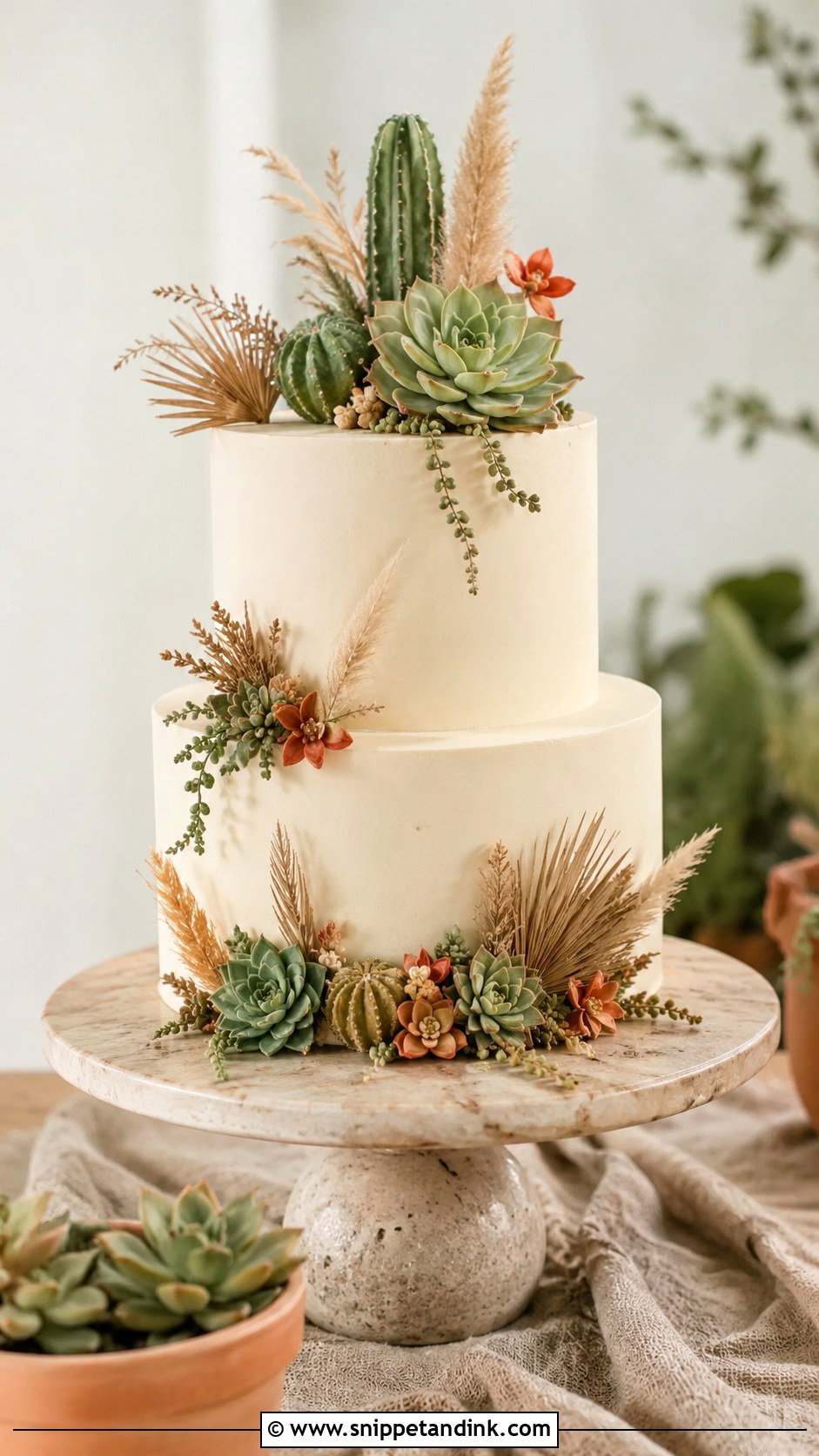
Real succulents are not food, and some are toxic, so on a cake I’d use sugar succulents or keep any live ones on barriers above the cake with their roots removed and wrapped. Sugar versions can be colored exactly to your palette. They pair with ivory buttercream, tan frosting, terracotta flowers and small cactus accents. Semi-naked or smooth buttercream works as the base. Desert and modern boho weddings with stone, clay or wood around it.
14. Boho Floral Wedding Cake
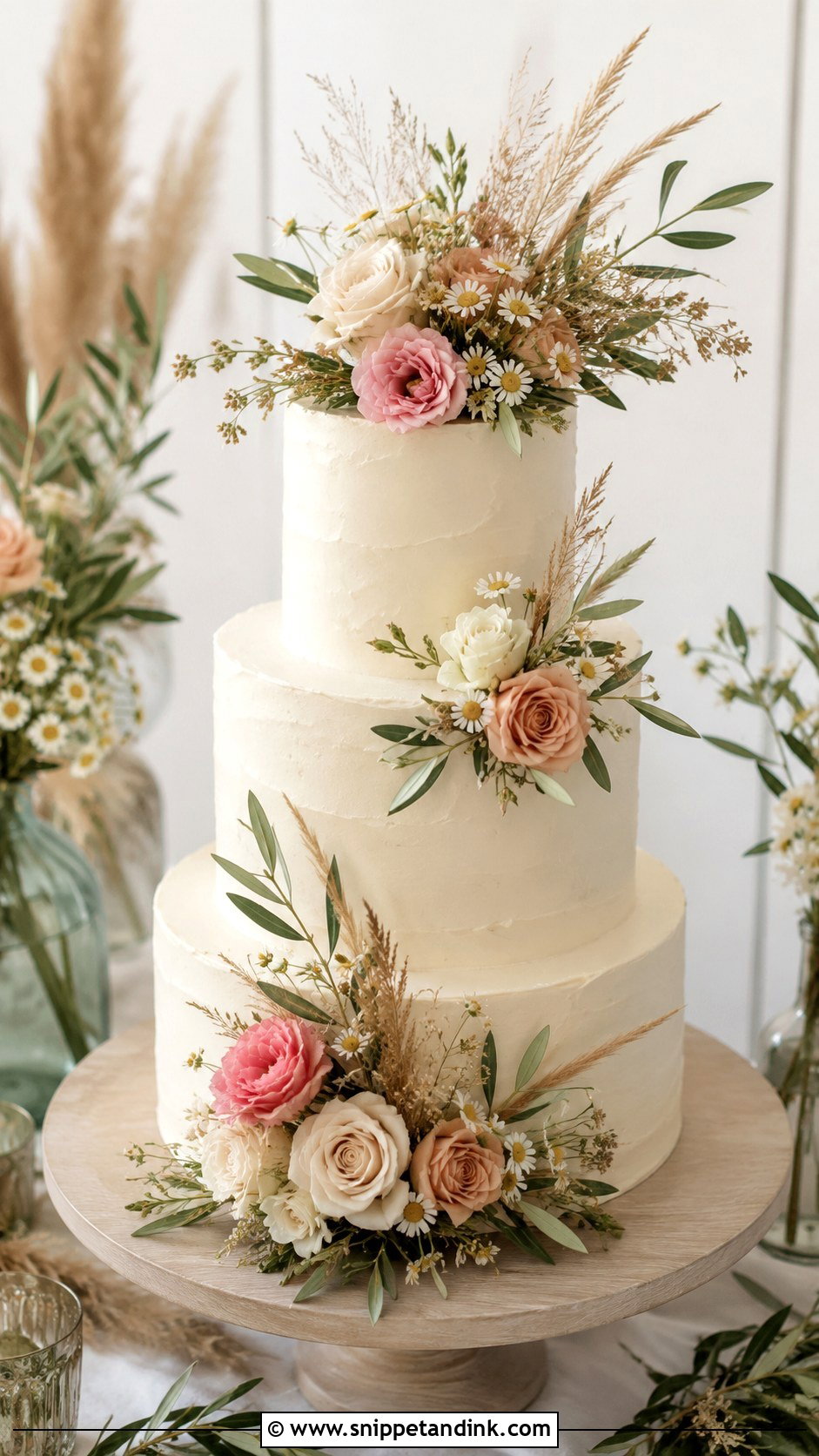
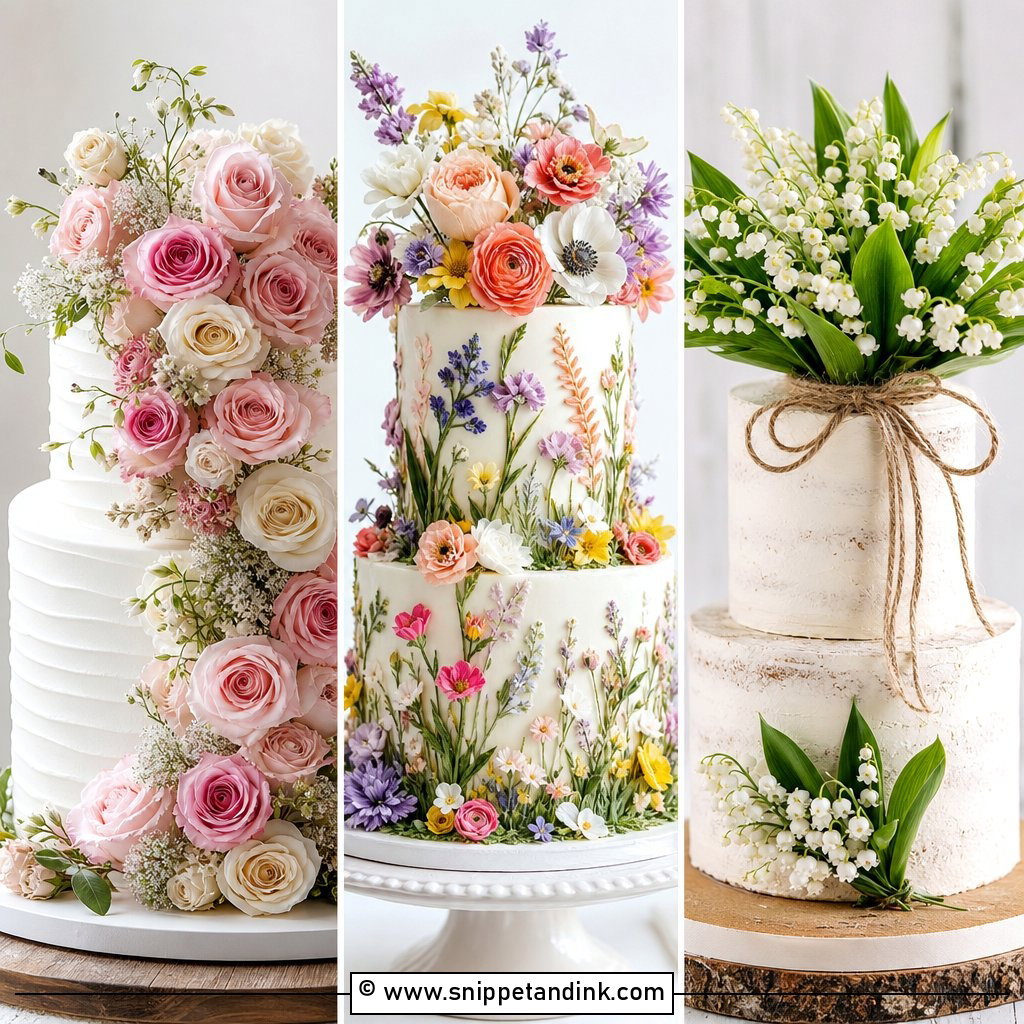
Loose, slightly wild floral arrangements are harder than tidy ones, because the asymmetry still needs balance. I place flowers in relaxed clusters around the tiers instead of a perfect cascade. Cream roses, dusty pink blooms, small daisies, olive leaves and dried grasses. A white or beige base keeps it grounded; a touch of blush, rust or sage ties into the palette. Ask your florist which fresh flowers are safe near food, and keep stems wrapped. Garden venues, tents, rustic receptions.

15. Rattan Wedding Cake
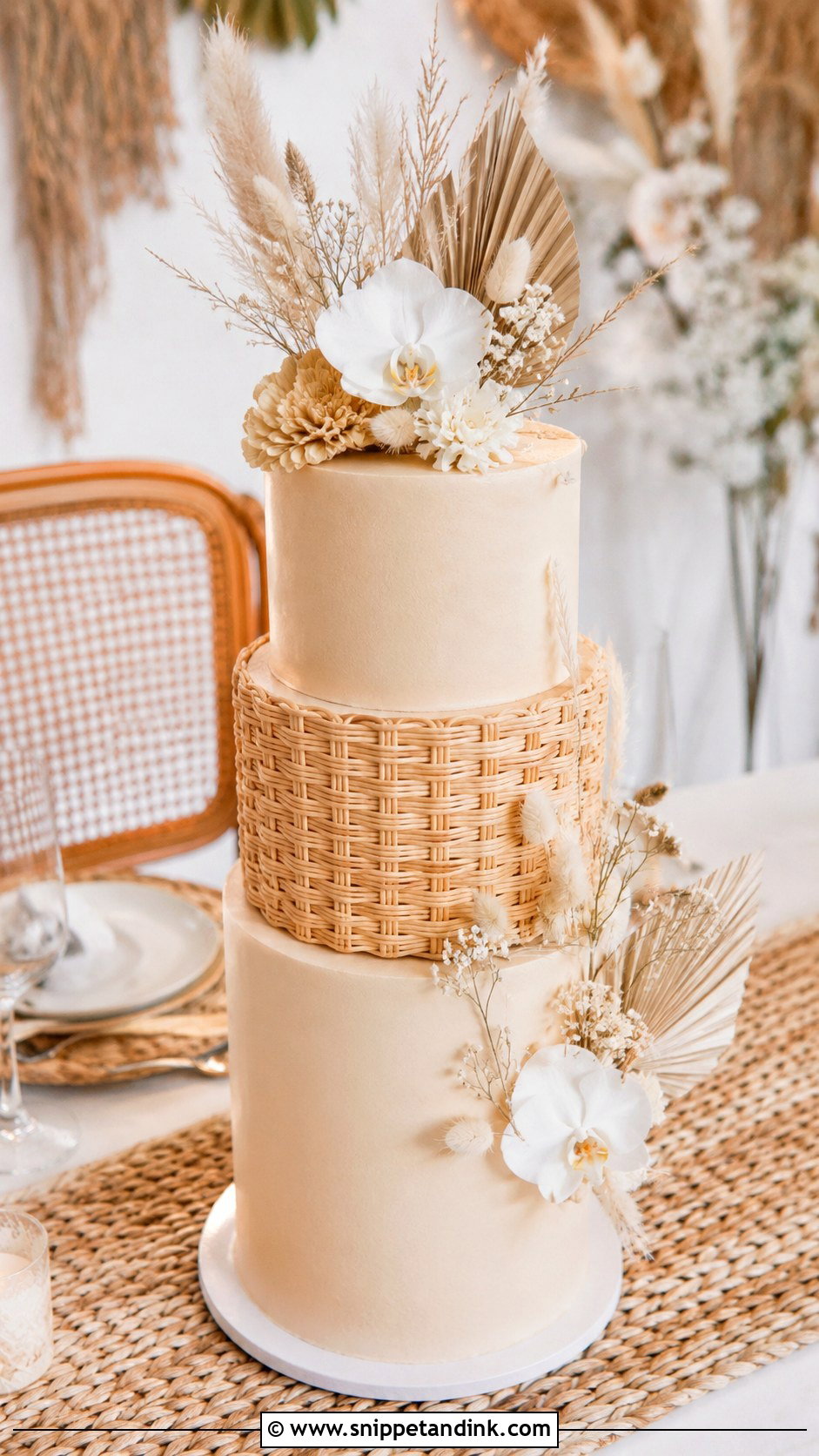
Rattan is piped with a basketweave tip, alternating vertical and horizontal strokes, or embossed into fondant with a textured mat. One woven tier between smooth ones keeps it from looking busy. Warm ivory, beige, tan or light caramel tones match real cane furniture. Dried palms, orchids, bunny tails and small cream flowers finish it. Cane chairs, wicker lanterns and neutral table settings around it.
16. Boho Beach Wedding Cake
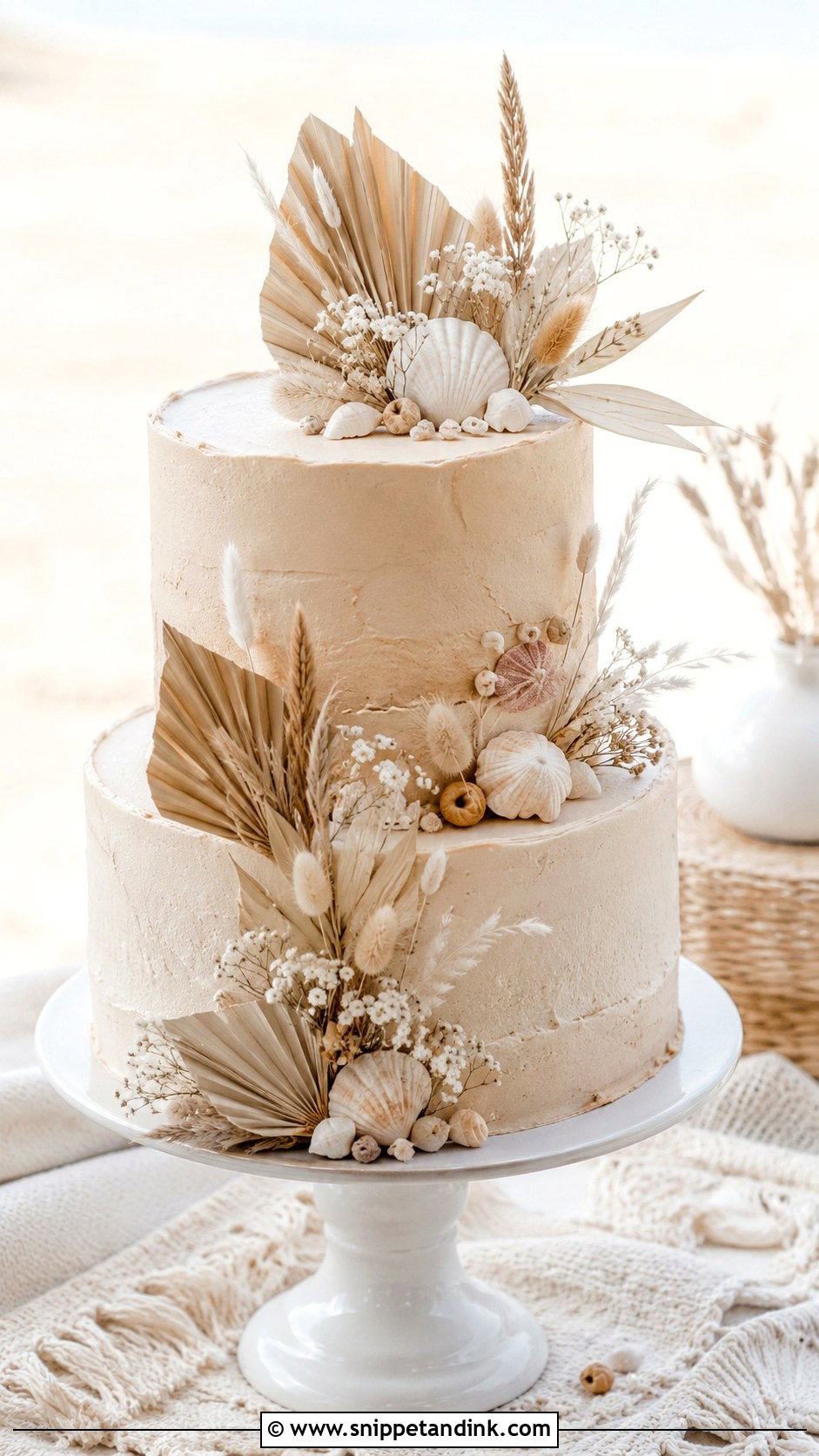
Beach weddings are the hardest environment for any cake. Heat, humidity and sun all soften buttercream, so for a beach reception I keep the cake chilled until shortly before it’s displayed and place it in shade. Ivory or sand-colored frosting with light texture, dried palms, small white flowers, beige grasses and perhaps a few edible shell-like details. Avoid novelty beach decorations. Coconut, vanilla, lemon or passion fruit flavours fit. Two tiers on a white ceramic or driftwood-style stand.
17. Desert Boho Wedding Cake
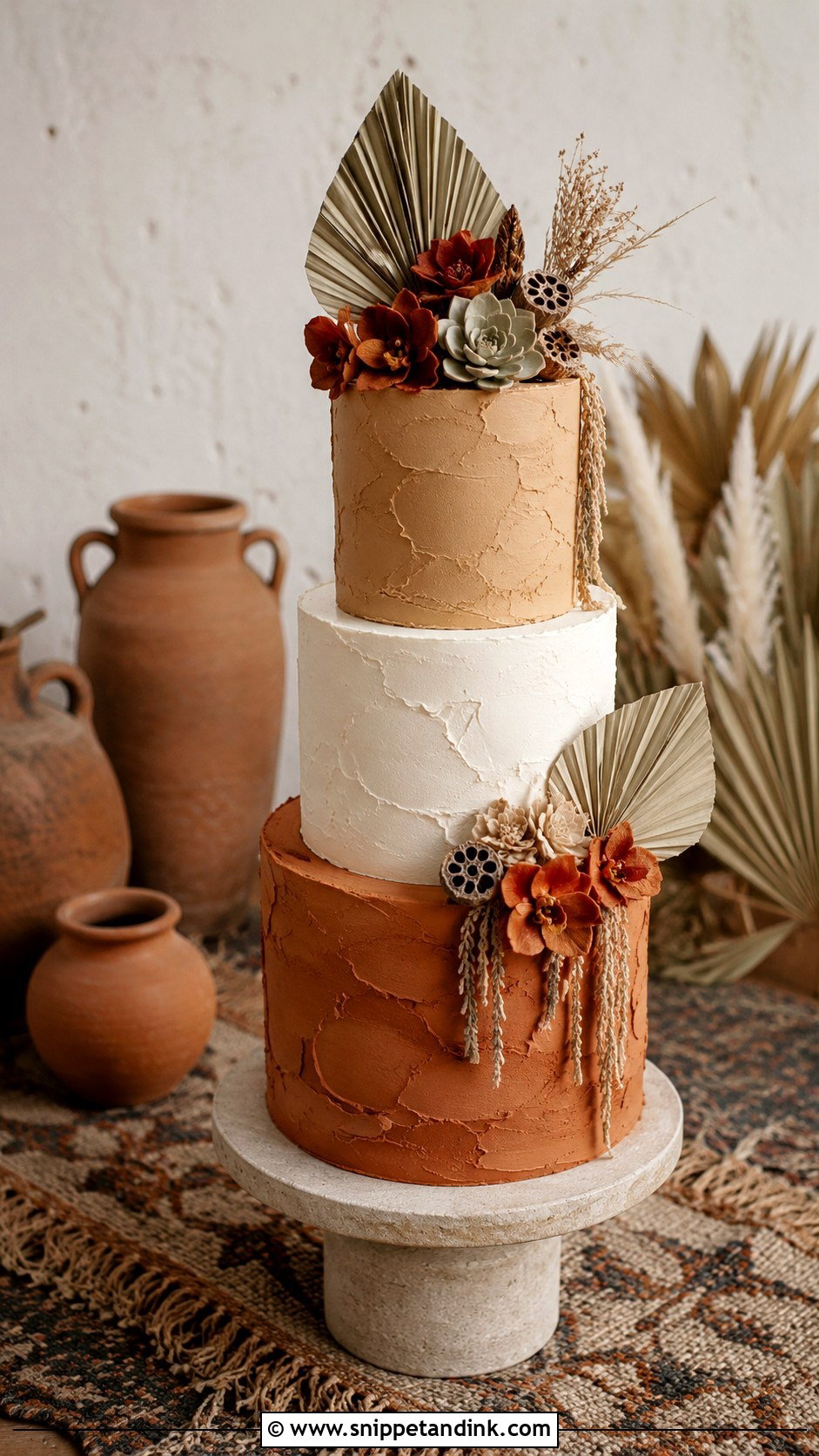
Desert boho uses terracotta, sand, ivory, clay, muted peach and sage. I texture the buttercream to look like plaster or stone. Dried palm fans, small sugar succulents, seed pods and rust flowers add dimension. Bold, not heavy. Two or three tall tiers keep it modern. Outdoor and canyon venues, warm fall palettes, clay vases and golden-hour light. If the venue is very hot, ask your baker which frosting holds best.
18. Minimal Boho Wedding Cake
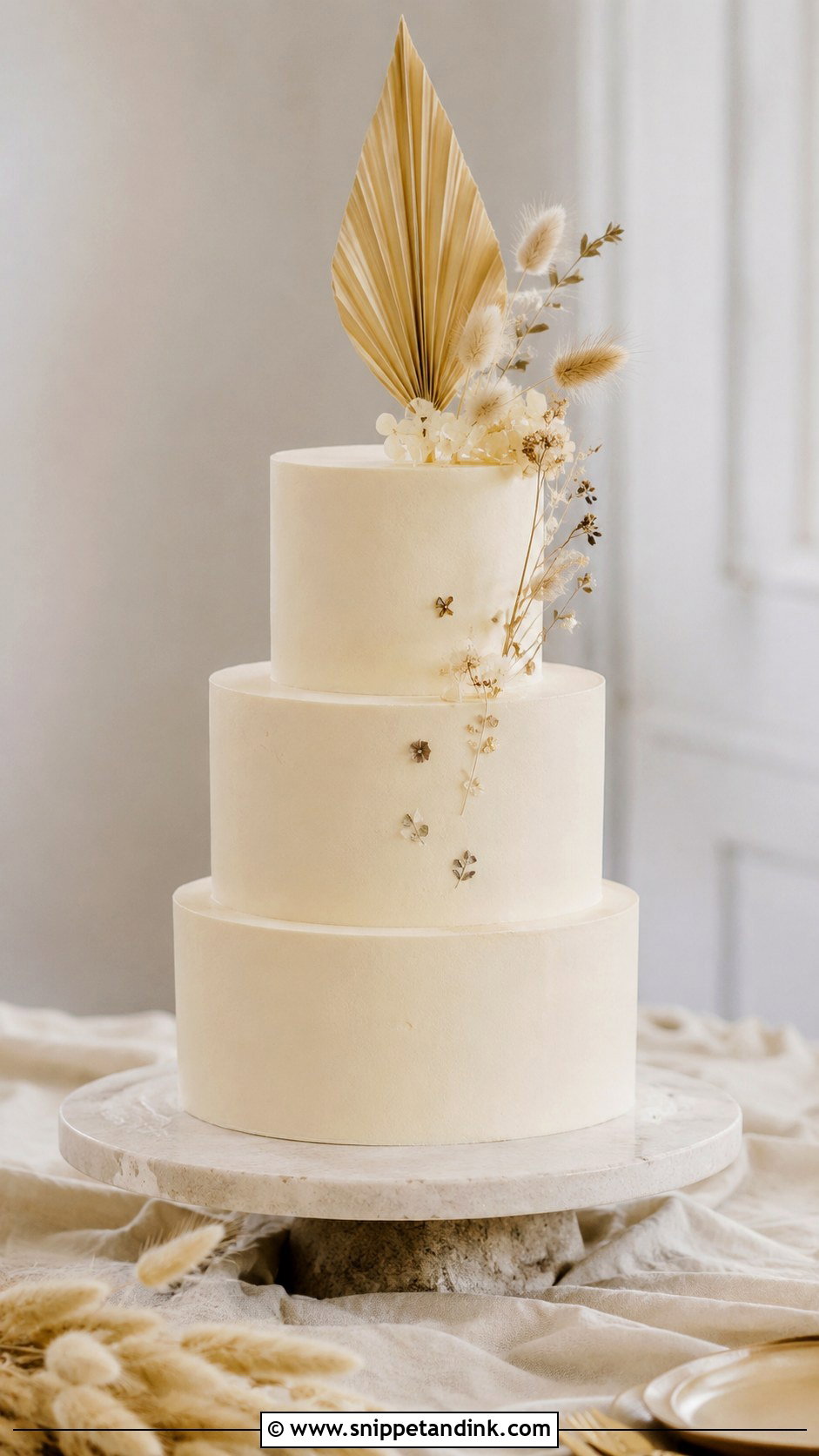
Restraint is harder than it looks: with only one arrangement of dried flowers, a single palm spear or a few pressed blooms, every edge of the frosting shows. I spend most of my time on smooth sides and sharp edges here. Tall, narrow tiers feel modern. Stone, ceramic or pale wood stand. It works in almost any venue.
19. Vintage Boho Wedding Cake
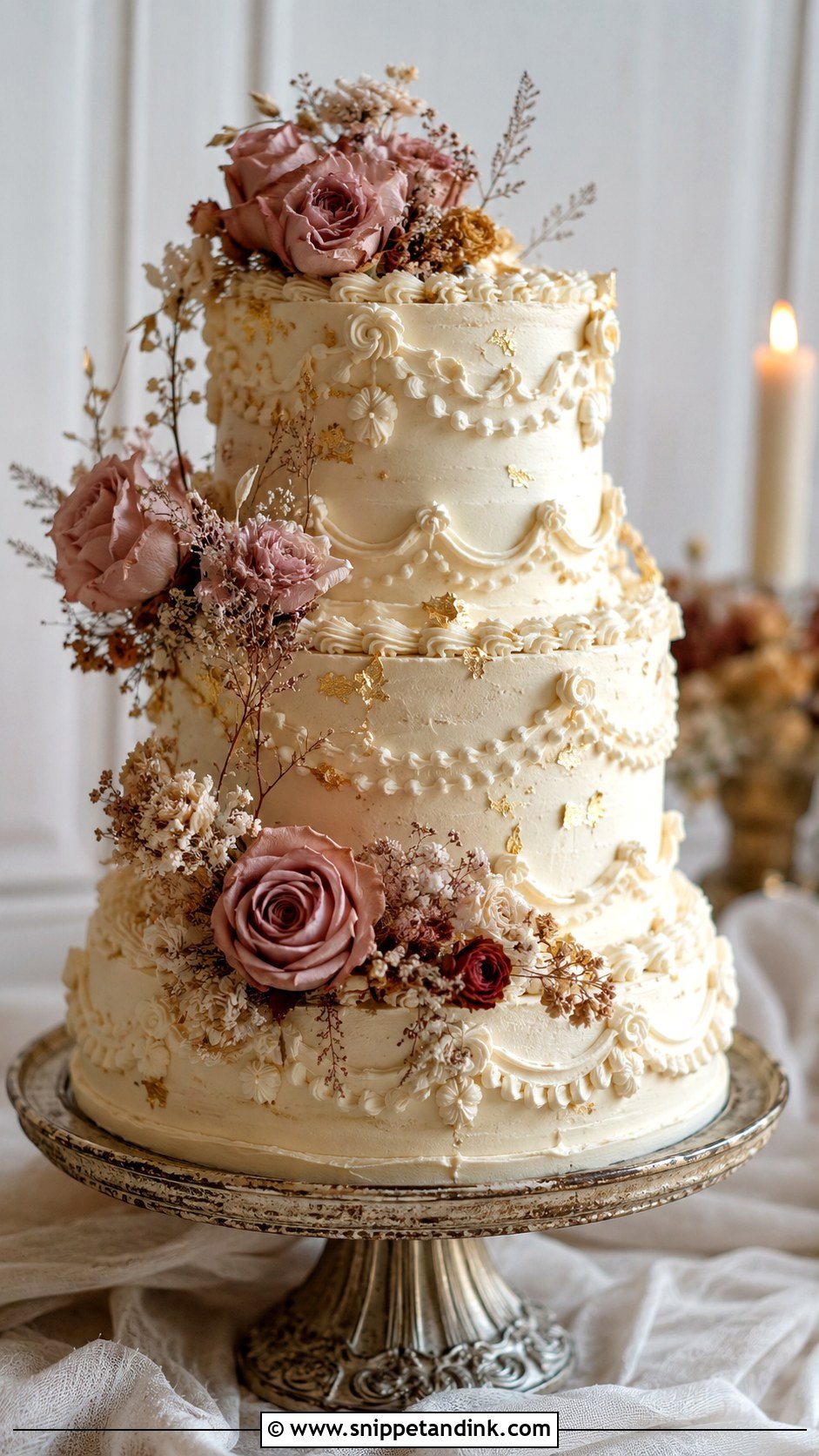
Vintage piping, like shell borders and pearl dots, is classic cake decorating, and it softens nicely with boho details. I pipe the borders in warm ivory, then add dried flowers, muted roses, small herbs or a touch of gold leaf. Dusty pink, cream, beige and sage accents. More detail than a plain modern cake, still relaxed. An antique-style stand with linen.


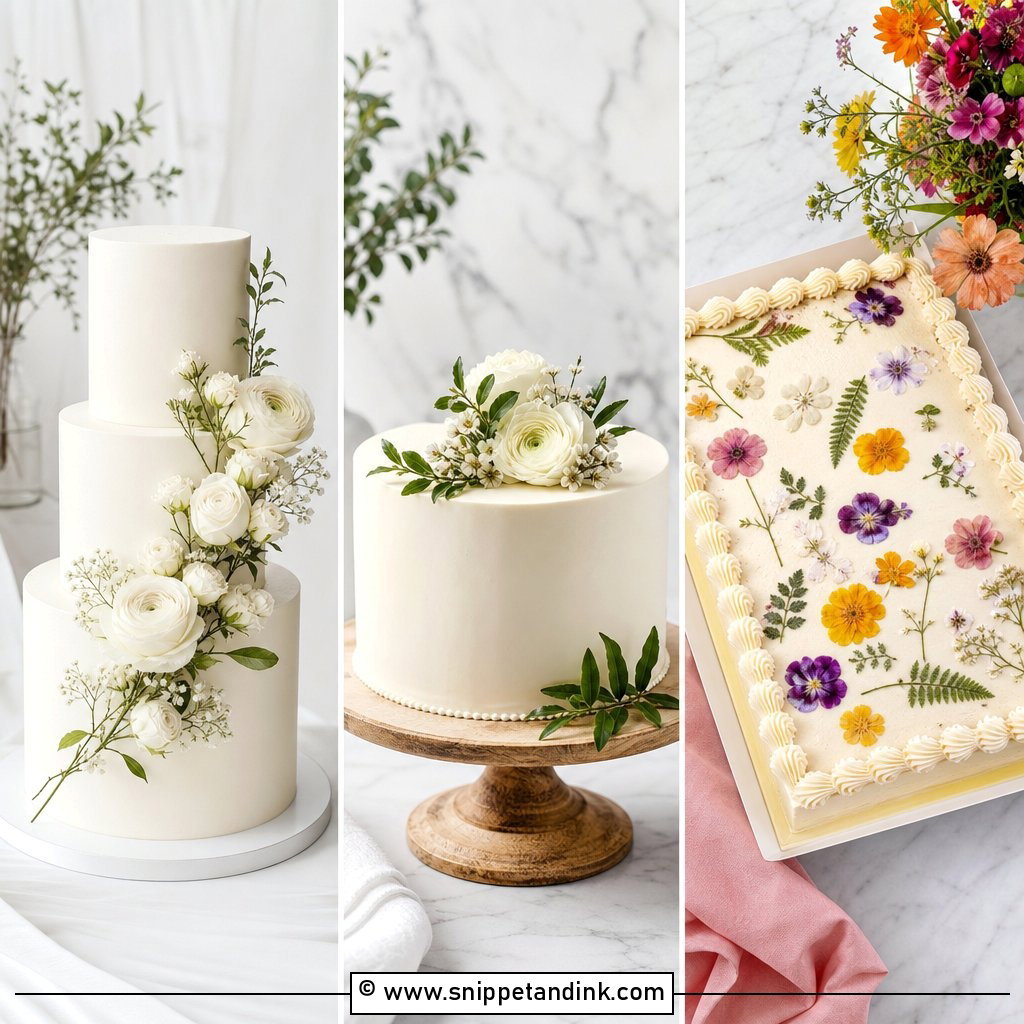
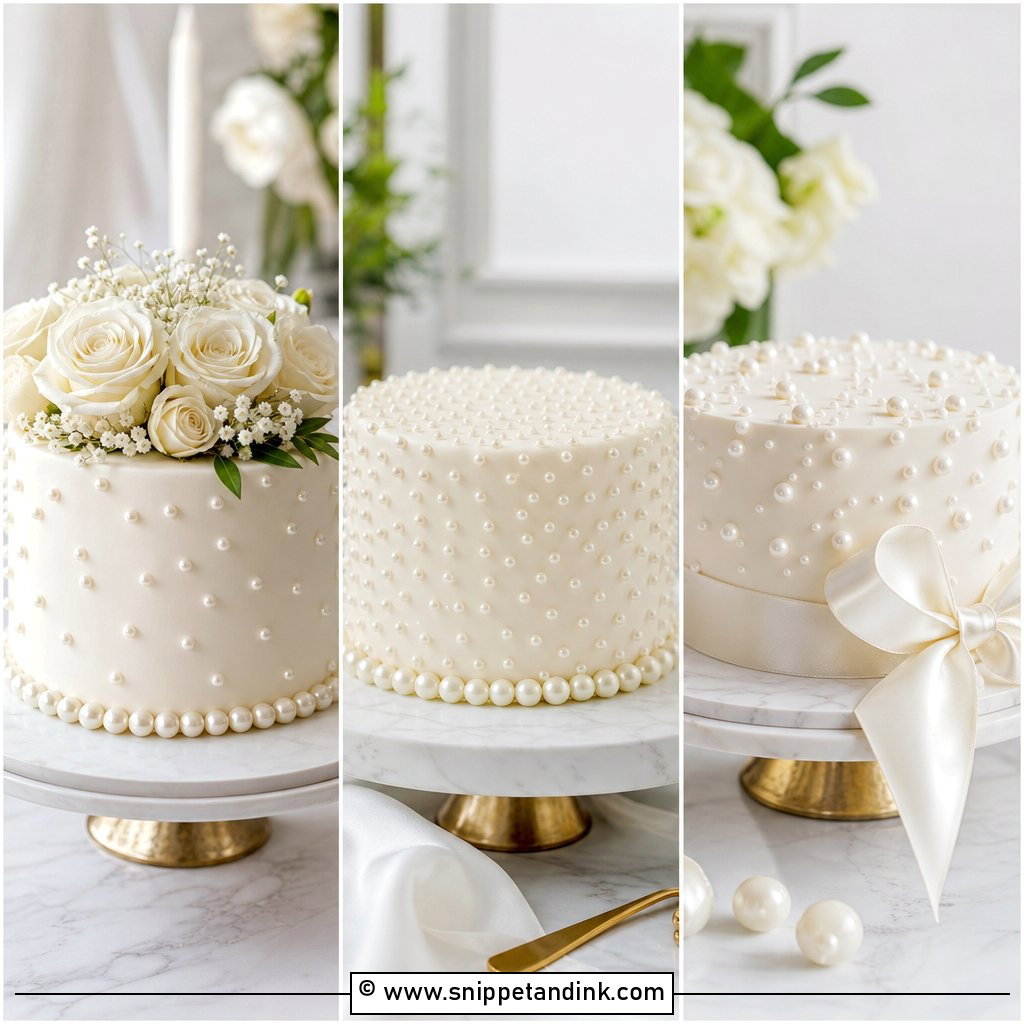

20. Two Tier Boho Wedding Cake
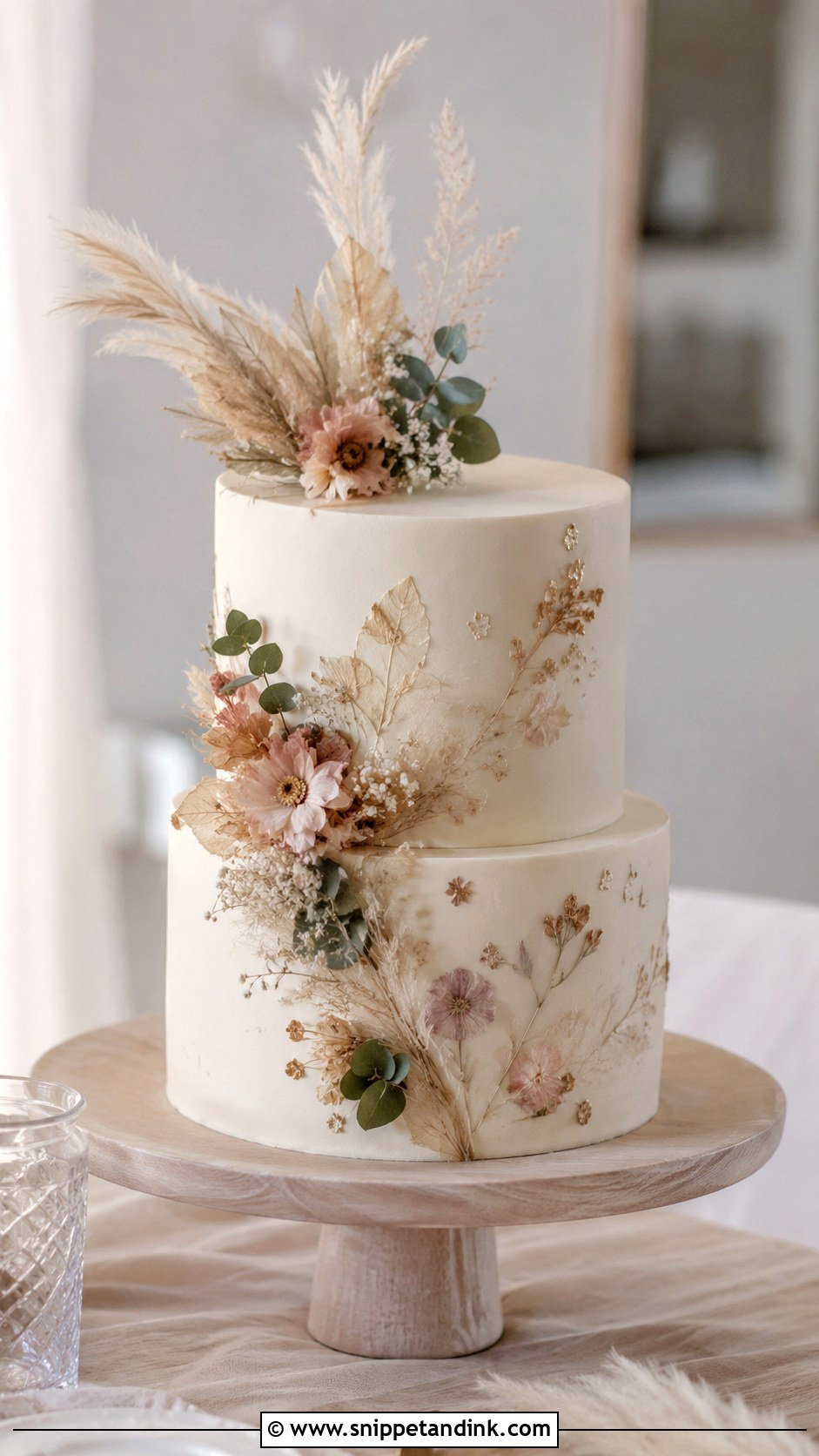
Two tiers is often all a small wedding or elopement needs, and it’s less structure, fewer flowers and fewer servings. A two tier boho wedding cake can be ivory buttercream, terracotta accents, sage details or semi-naked. One side dressed with pampas, dried flowers, pressed blooms or greenery; a diagonal arrangement makes it look taller. If the guest list is larger, a kitchen cake or sheet cake in the back can top up servings without adding tiers.
Exposed Sponge Meets an Outdoor Reception
Boho weddings tend to be outside, and that is hard on cakes. Naked and semi-naked cakes dry faster than fully frosted ones once they’re out of the fridge. Buttercream softens in warm sun, and once it starts to slump it’s very hard to rescue. A few things help:
- Ask for the cake to be delivered and set up as late as the schedule allows.
- Place the cake table in shade, away from heaters and not in a hot tent corner.
- Ask your baker about frostings for heat. Some buttercreams hold up better than others.
- Cut the cake earlier in the evening if it’s a warm day.
Questions for the tasting
How long can this cake stay out? Who removes the decorations before cutting? Which flowers will touch the frosting? What happens if it’s raining or very hot? A baker who answers those easily has done outdoor boho cakes before.
Earthy, Textured and Safe to Serve
A boho cake doesn’t need symmetry or heavy decoration. It needs color, texture and decorations that are safe to sit on food. Pampas grass, dried flowers, pressed petals, terracotta buttercream, sage tiers and macrame-style piping each give a different version of the look. Tell your baker your venue, season and palette early, and ask how every non-edible piece will be attached.
You'll Like These Ideas:




Leave a Reply