
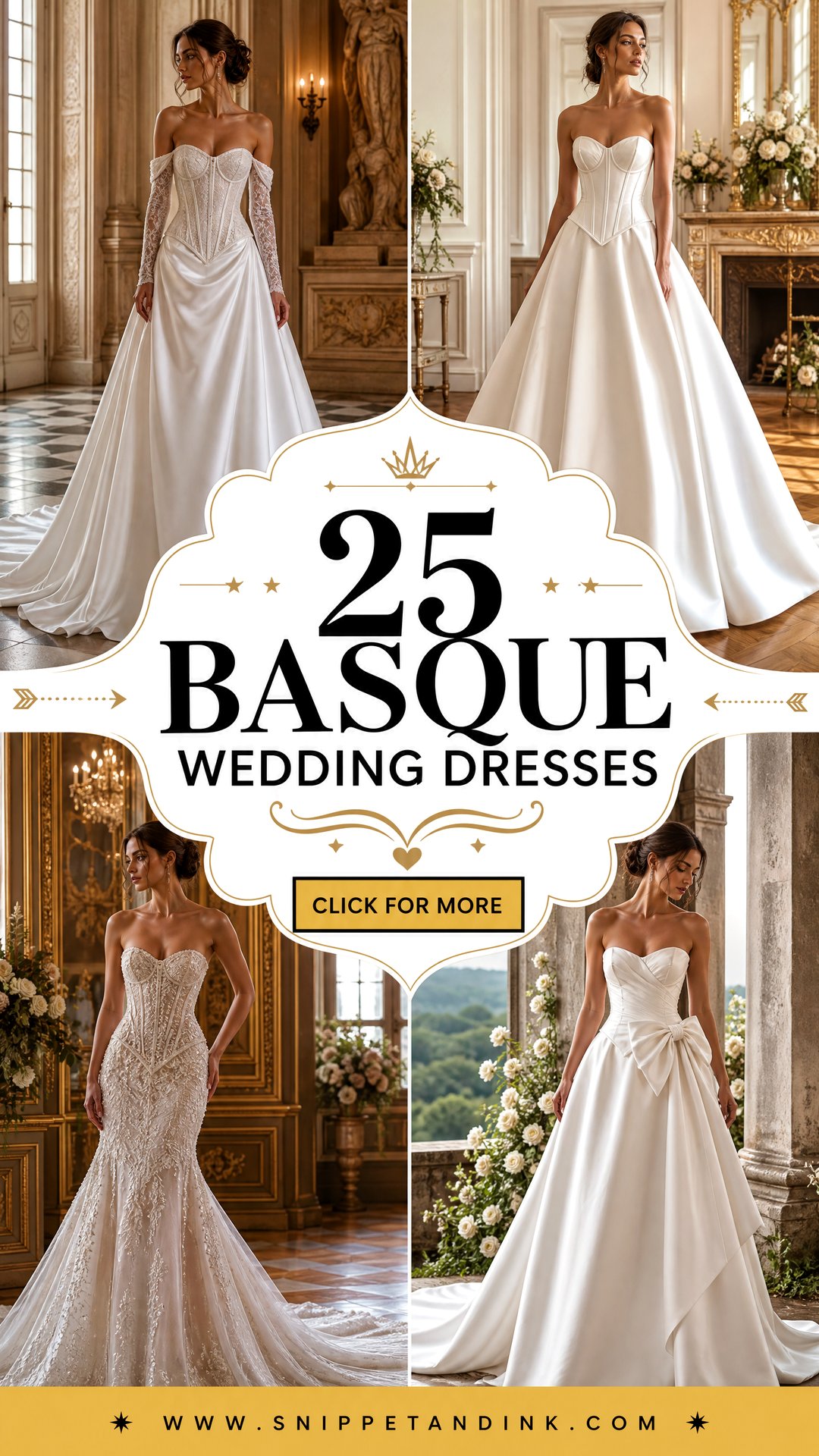
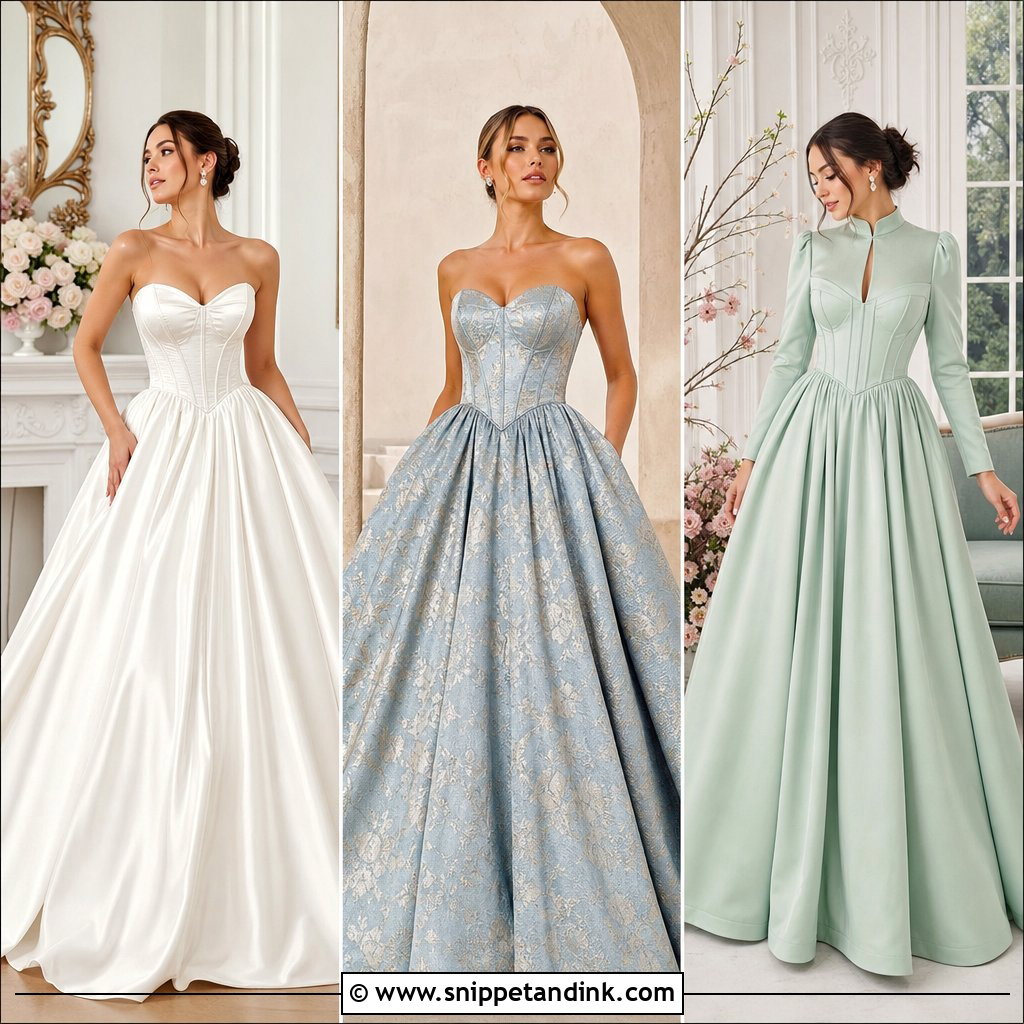
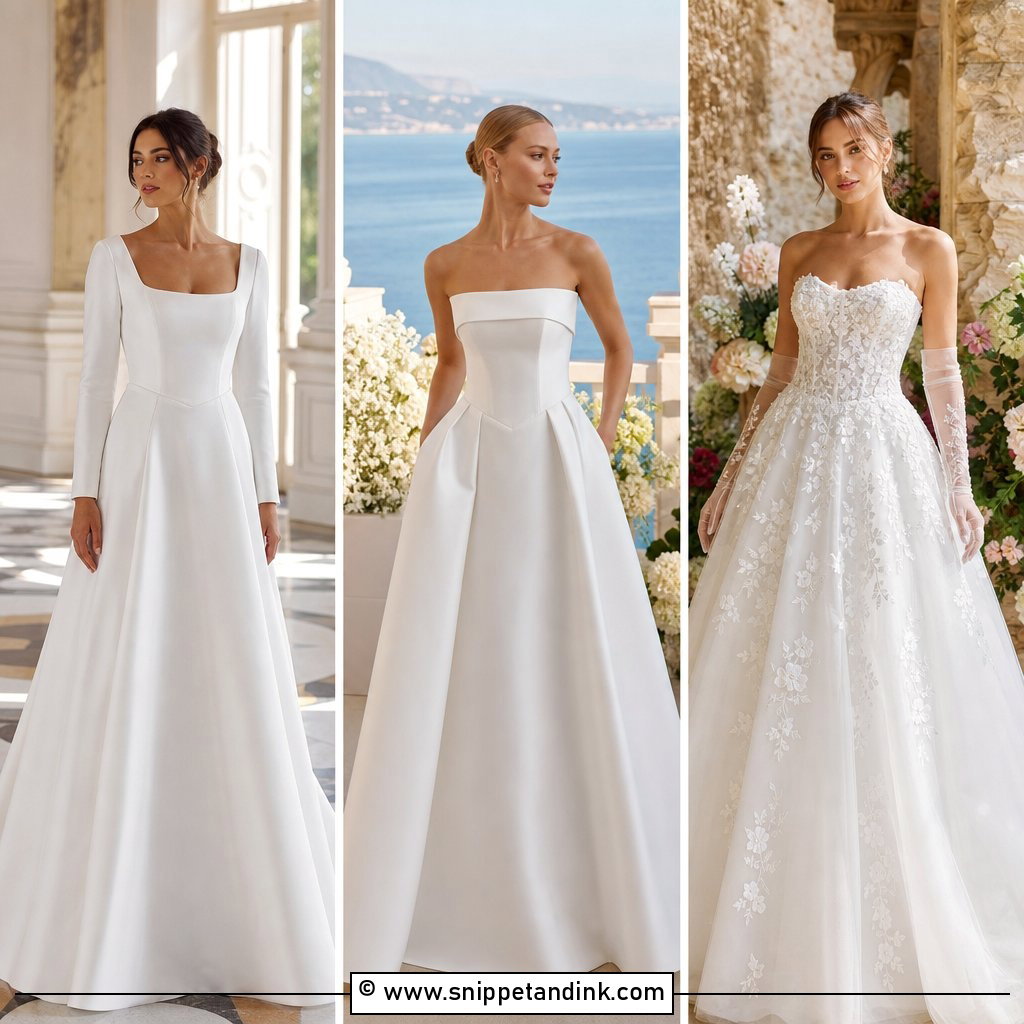
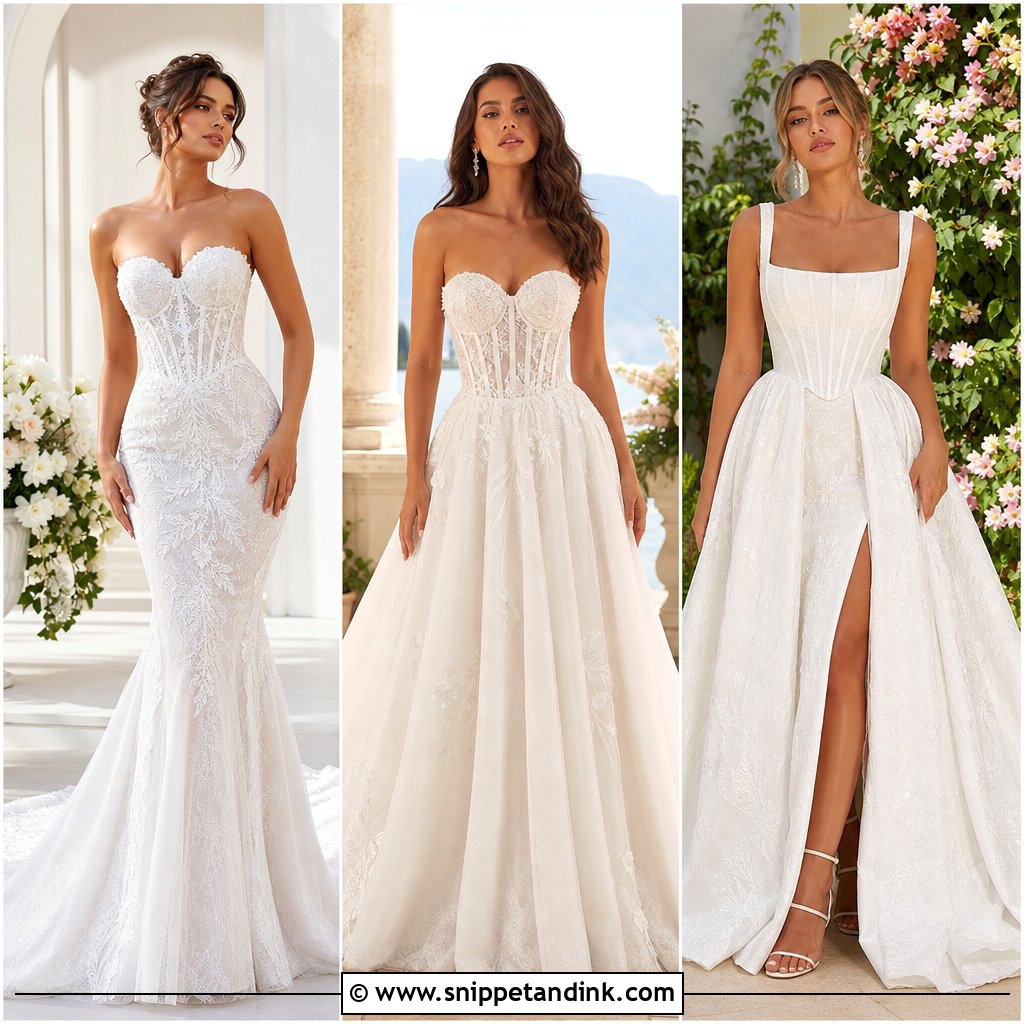
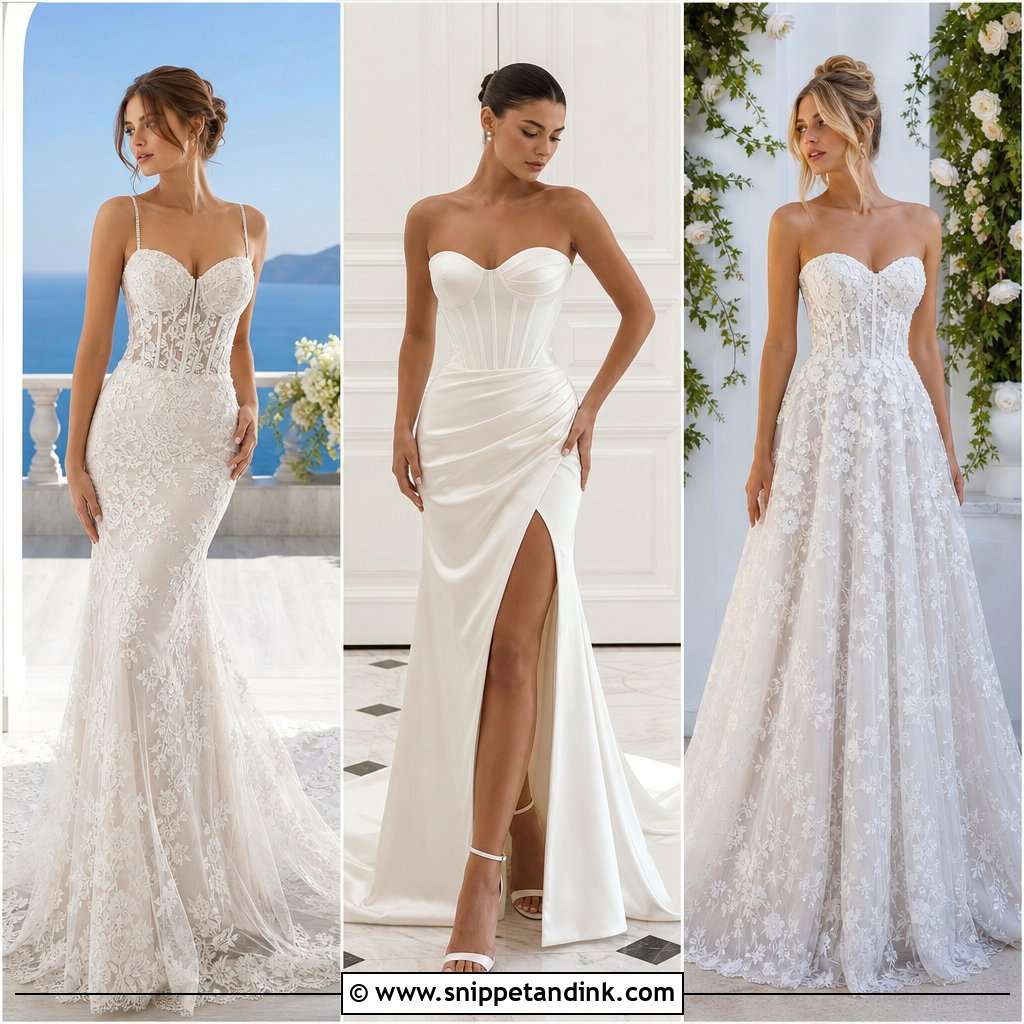
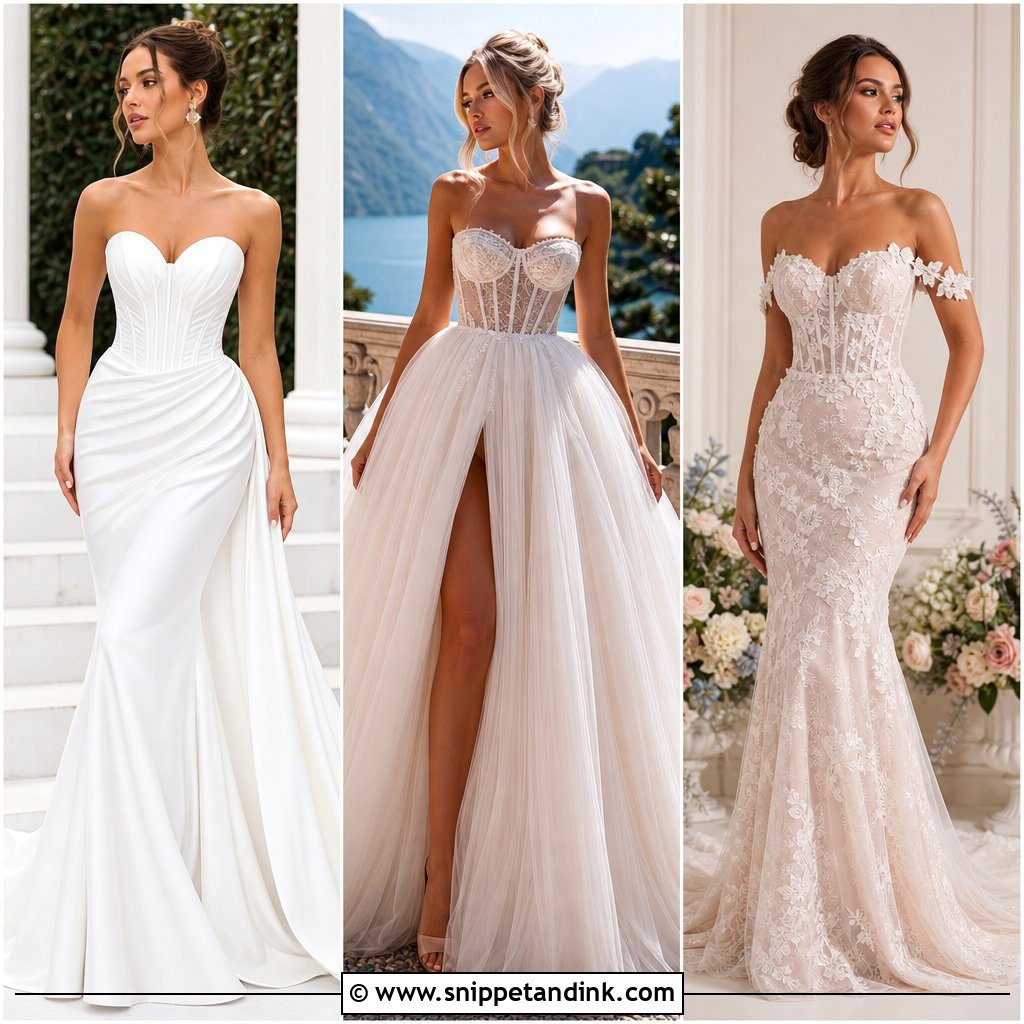
A Basque waist is the V or U point that dips below your natural waist, and it does more shaping work than almost any other bodice detail I fit. The signature V or U-shaped waistline pulls the eye down the center front, so the torso looks longer and the middle looks narrower without a single bead added. I see it on ball gowns, A-lines, corset bodices, lace, satin, tulle and plain crepe, and the mood changes completely with the neckline, sleeves and train around it. Below are 25 versions, with notes on how each one behaves once you’re actually wearing it.
Where the Tip of the Point Should Land on Your Torso
The first thing I check when a bride steps into a Basque waist is where the tip of the point falls. It should sit a little below the natural waist, roughly level with the hip bones, and exactly at center front. Too high and it looks like an ordinary waist seam. Too low and it digs into your lap every time you sit.
Short torso or long torso
A deeper point lengthens a short torso, so petite brides can often take more dip than they expect. A long torso usually looks better with a shallow U, because a deep V can make the legs read shorter. Treat these as starting points; the mirror and a sit test have the final say.
Checks I’d run on any sample before ordering:
- Sit on a hard chair for a full minute and notice where the point presses.
- Raise both arms as if hugging someone taller; the point shouldn’t lift or twist.
- Walk a few steps and watch whether the skirt drags the waist seam sideways.
- Ask whether the boning is spiral steel or plastic, and where each bone stops.
Order early. Made-to-order gowns often take several months to arrive, and a structured bodice usually needs two or three alteration fittings after that, so leave room in the calendar for both.
1. Basque Waist Ball Gown Wedding Dress
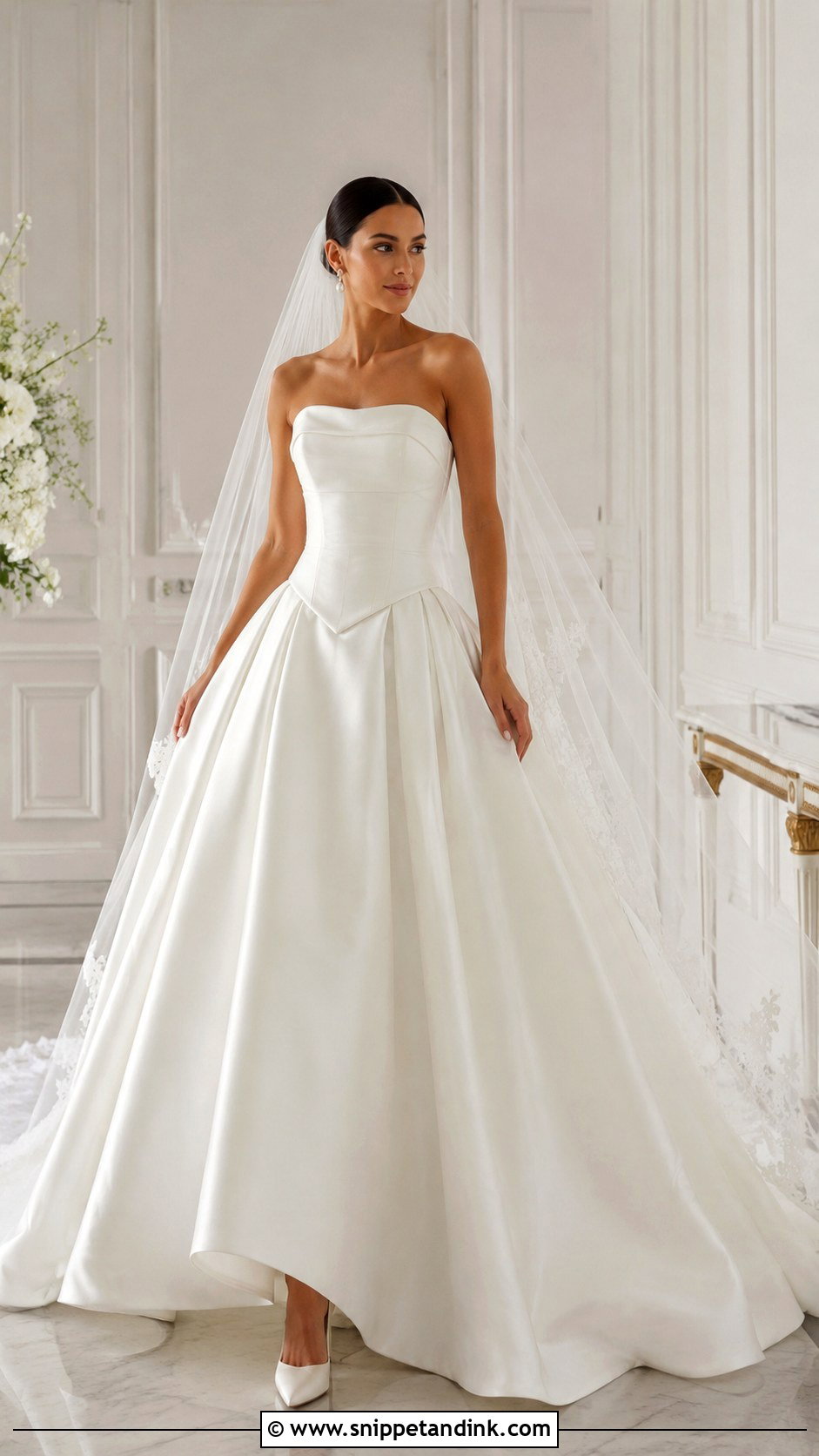
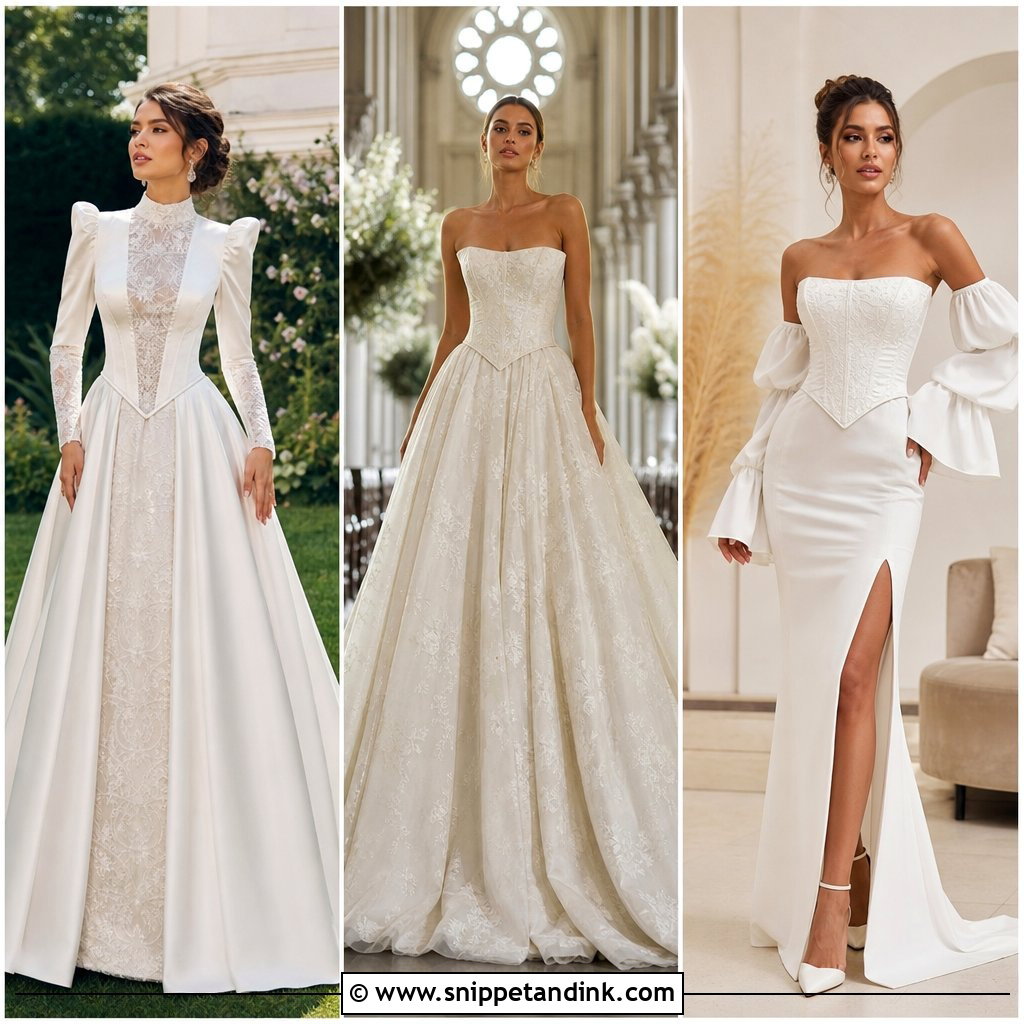
The point does the dramatic work here. It drags the eye down into a full skirt, so the waist looks smaller by contrast and the skirt swings as you walk. Satin makes it formal and royal; tulle softens it. I like it strapless, since nothing then competes with the bodice seams, finished with pearl earrings, a cathedral veil and pointed-toe heels. One practical warning: a full skirt needs a petticoat or hoop underneath, so practise climbing a step in it before you plan a grand entrance, because the front hem catches toes.
2. Basque Waist Satin Wedding Dress
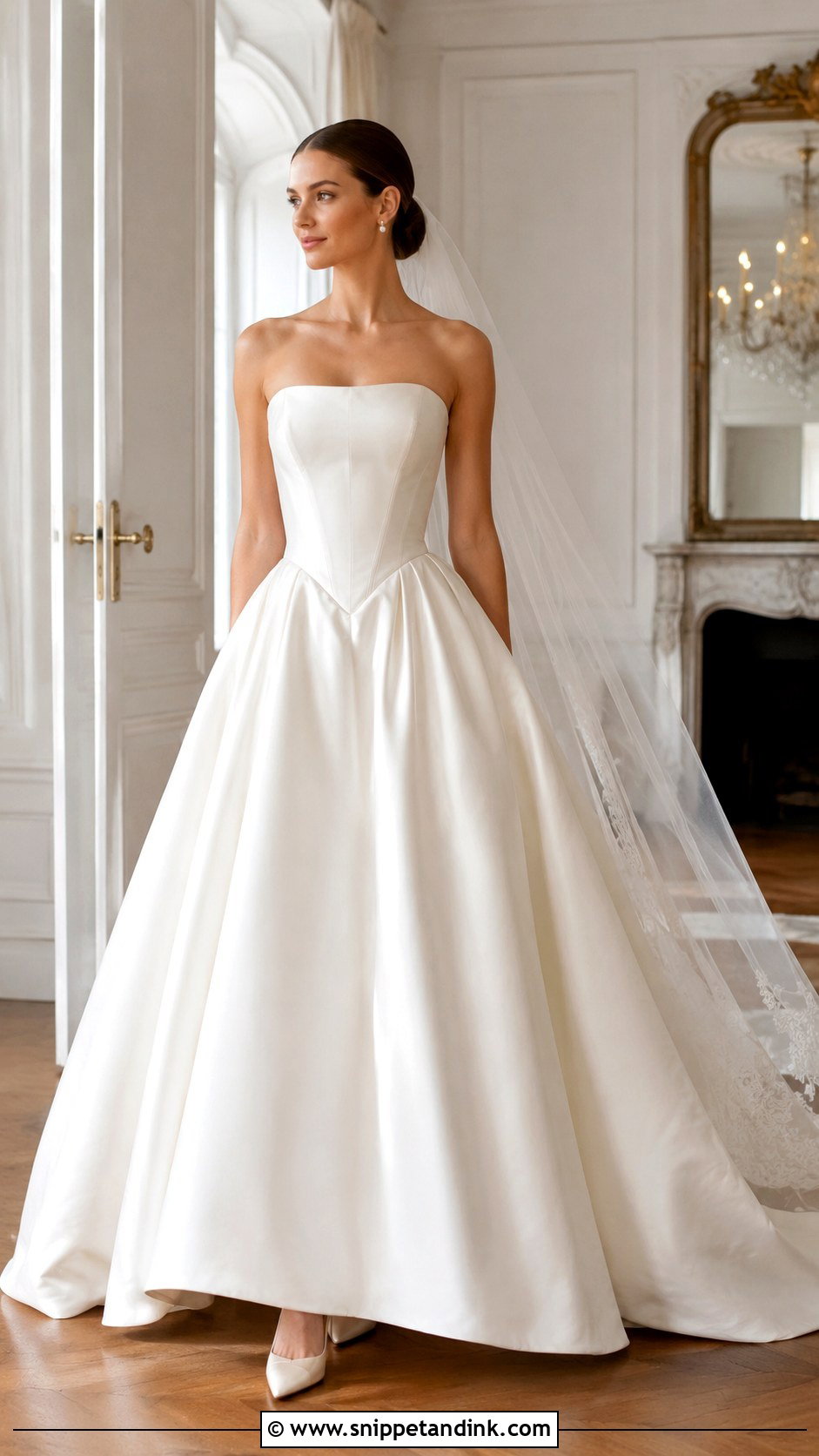
With no embellishment, satin shows every seam, so the construction has to be good. At a fitting I run a hand down the bodice; if the point ripples or the boning channels show through, the shine will pick that up in every photo. A structured corset bodice with a V waist over a full or softly gathered skirt is the classic pairing, and a straight or shallow scoop neckline keeps it modern. Crystal studs, a smooth low bun, ivory satin heels and a long veil are all it needs. Expect creasing across the lap after the ceremony; heavy duchess satin recovers far better than thin polyester satin.
3. Basque Waist Lace Wedding Dress
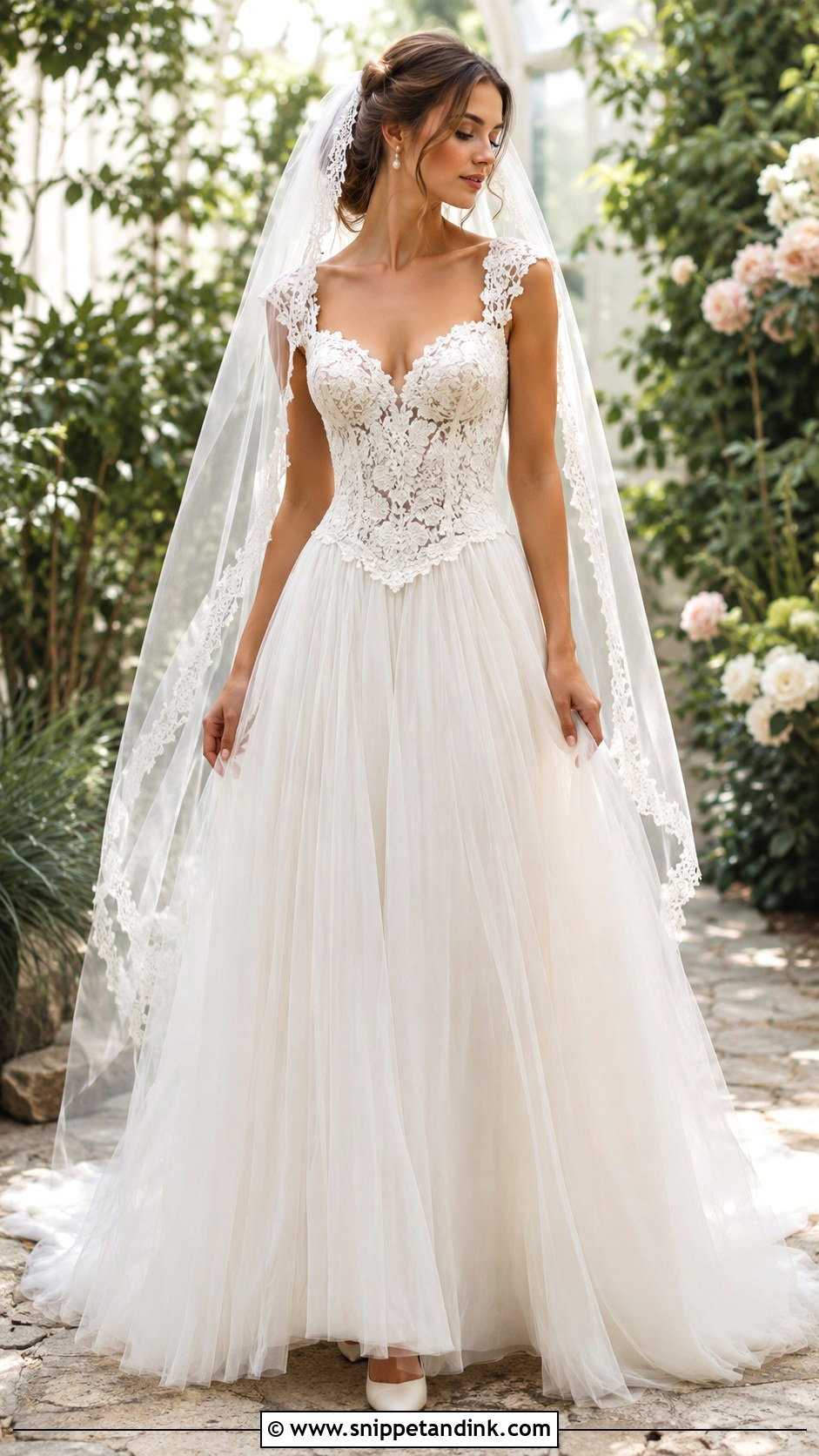
Lace gives the structured waist a softer, older surface, and the point keeps it from going shapeless. A lace bodice over tulle or organza stays airy. For the classic version I’d add lace sleeves, a sweetheart neckline and a short train, then pearl drop earrings, a lace-trimmed veil and plain ivory pumps. The weight of the lace matters more than the pattern. Fine Chantilly follows the curve of the point neatly, while thick corded lace bunches where the seams meet at center front. Garden weddings and historic venues suit it well.
4. Basque Waist Corset Wedding Dress
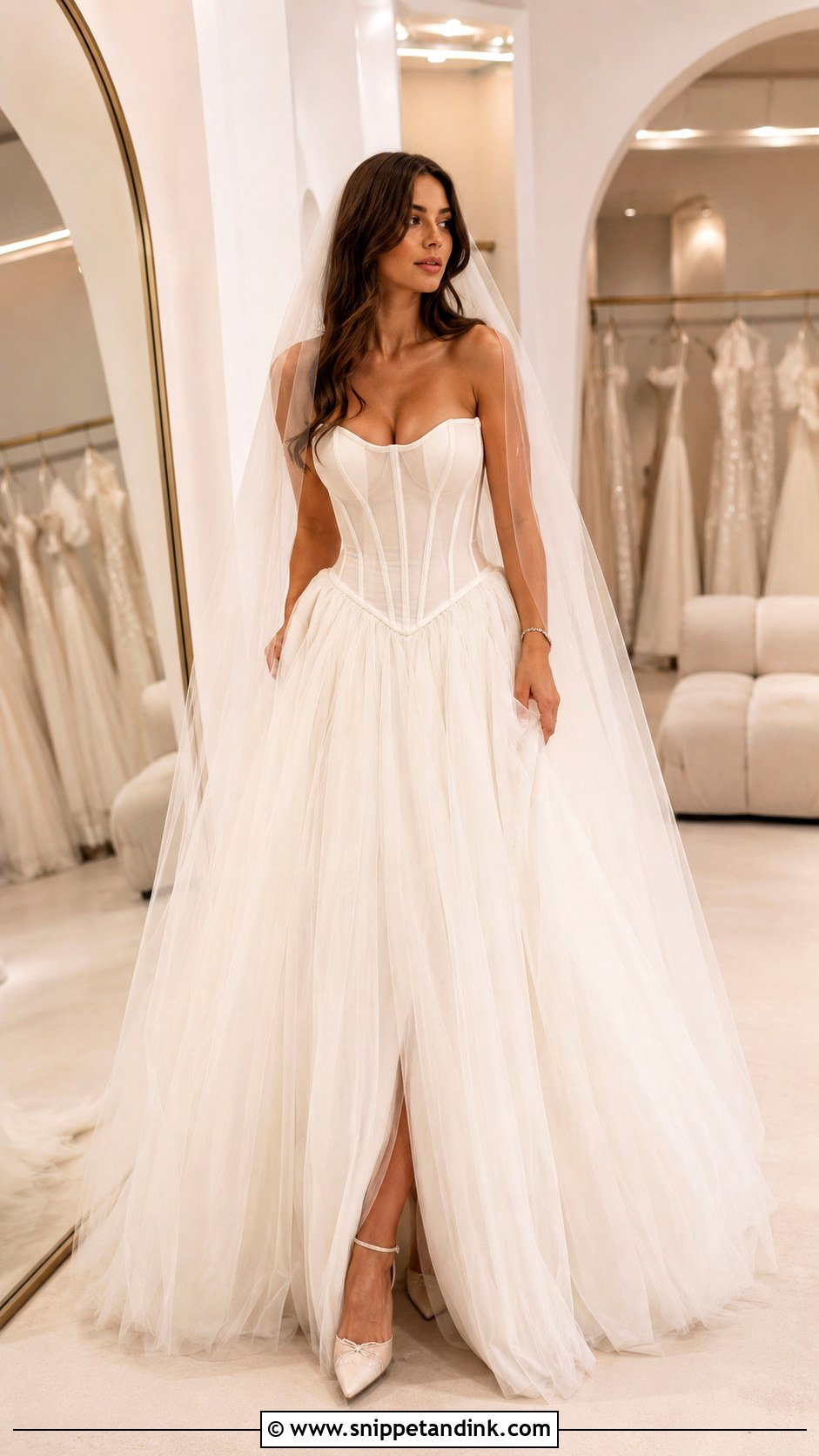
This is the version I reach for when a bride wants real support without a separate bra. The corset holds the bust and shapes the torso, and the dipped waist carries that line lower. Exposed boning looks fashion-led; covered boning feels softer and more traditional. Ask what the bones are made of: spiral steel bends with you when you sit, while cheap plastic boning can kink and leave a ridge by evening. Over a tulle, satin or fitted skirt, add a sheer veil, a slim bracelet and heels you can genuinely stand in.
5. Basque Waist Tulle Wedding Dress
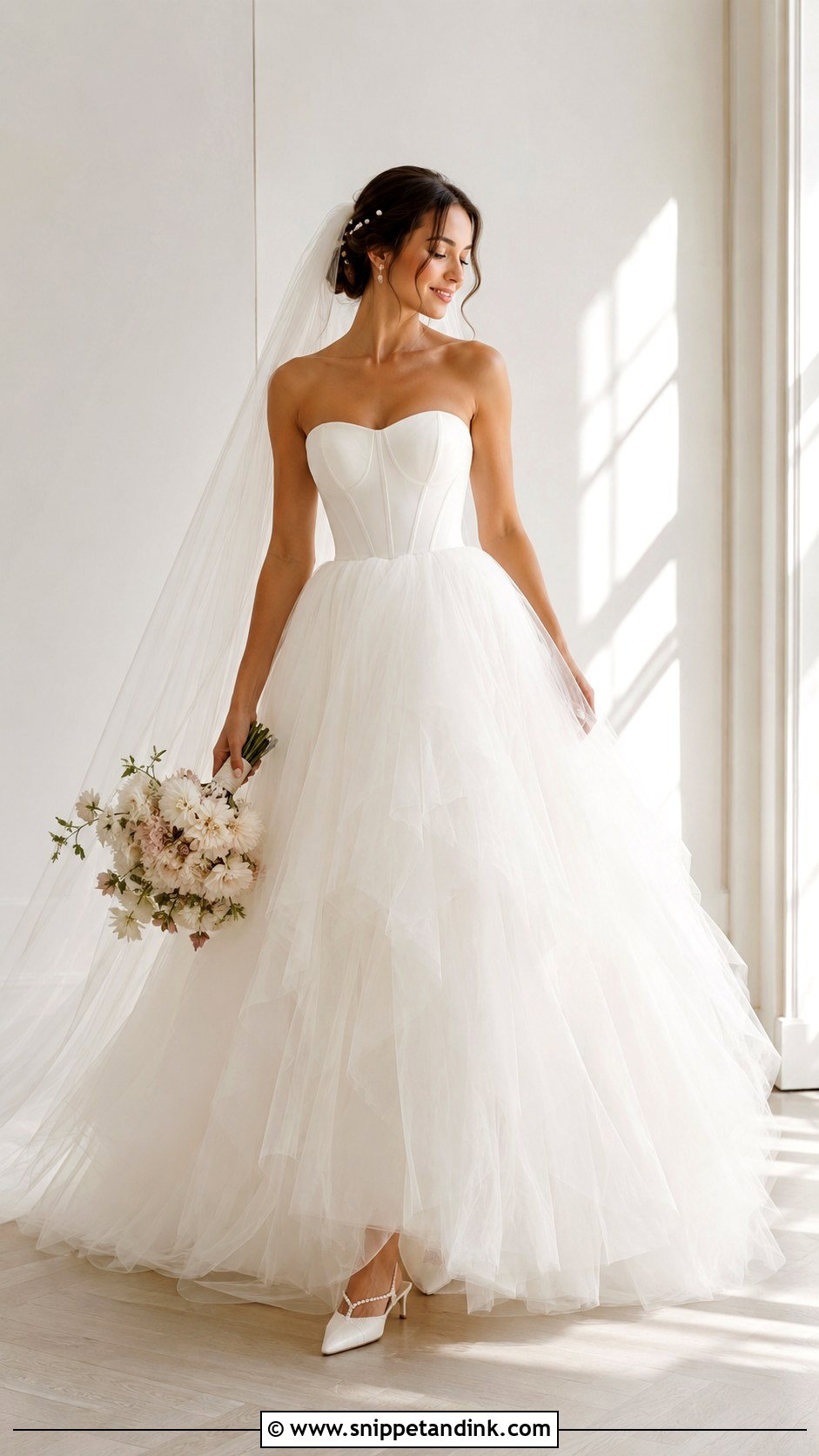
Tulle gives volume with very little weight, which makes it the princess option for a bride who doesn’t want to haul a heavy satin skirt around all day. A strapless or off-the-shoulder bodice keeps the top clean while the layers move as you walk. I’d pair it with a soft updo and pearl pins, delicate slingbacks and a fingertip or chapel veil. The catch is snagging. Tulle grabs bracelets, beaded veil edges and rough floors, so think about what you’ll brush past all day.
6. Basque Waist A Line Wedding Dress
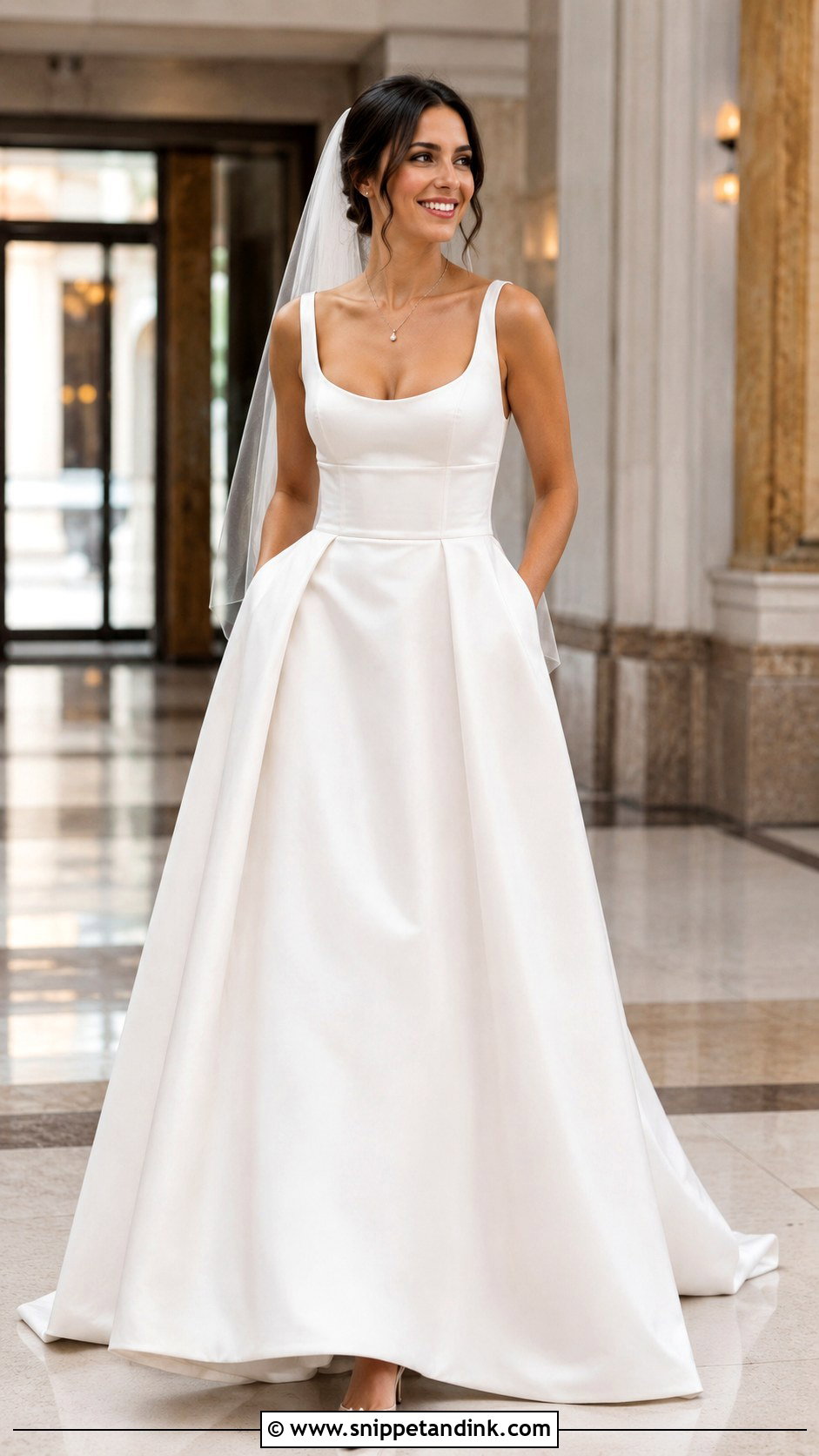
Shape without the full ball gown commitment. The skirt falls gently from the dropped waist, so you can sit, walk and dance without managing a hoop. Satin gives a clean, formal finish, and lace or organza softens it. Low pearl heels, a fine necklace and a simple veil keep it balanced. When a bride can’t decide, this is usually where I start her, because an A-line suits a wide range of bodies and venues and the point still gives the waist definition.
7. Basque Waist Off Shoulder Wedding Dress
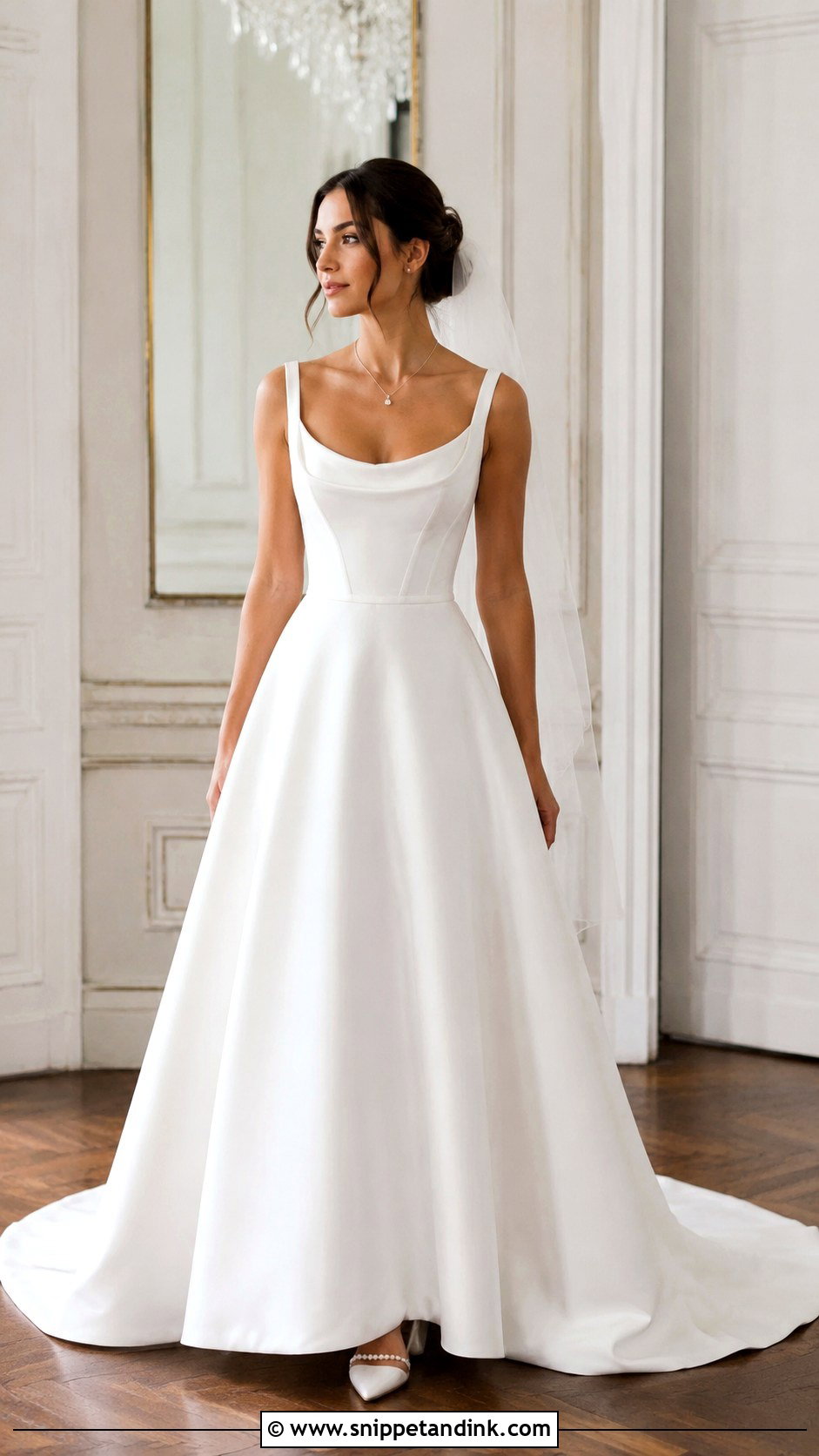
Two strong lines meet here: the off-shoulder band frames the collarbone and the point defines the middle, so the dress needs very little else. A full skirt or soft A-line both work, with satin pushing it regal and lace making it gentler. A sleek bun, pearl earrings and a veil that falls behind the shoulders; leave the heavy necklace at home so the neckline stays clean. Test your arms at the fitting. Off-shoulder bands limit how high you can reach, which matters for hugging guests and for the first dance.
8. Basque Waist Long Sleeve Wedding Dress
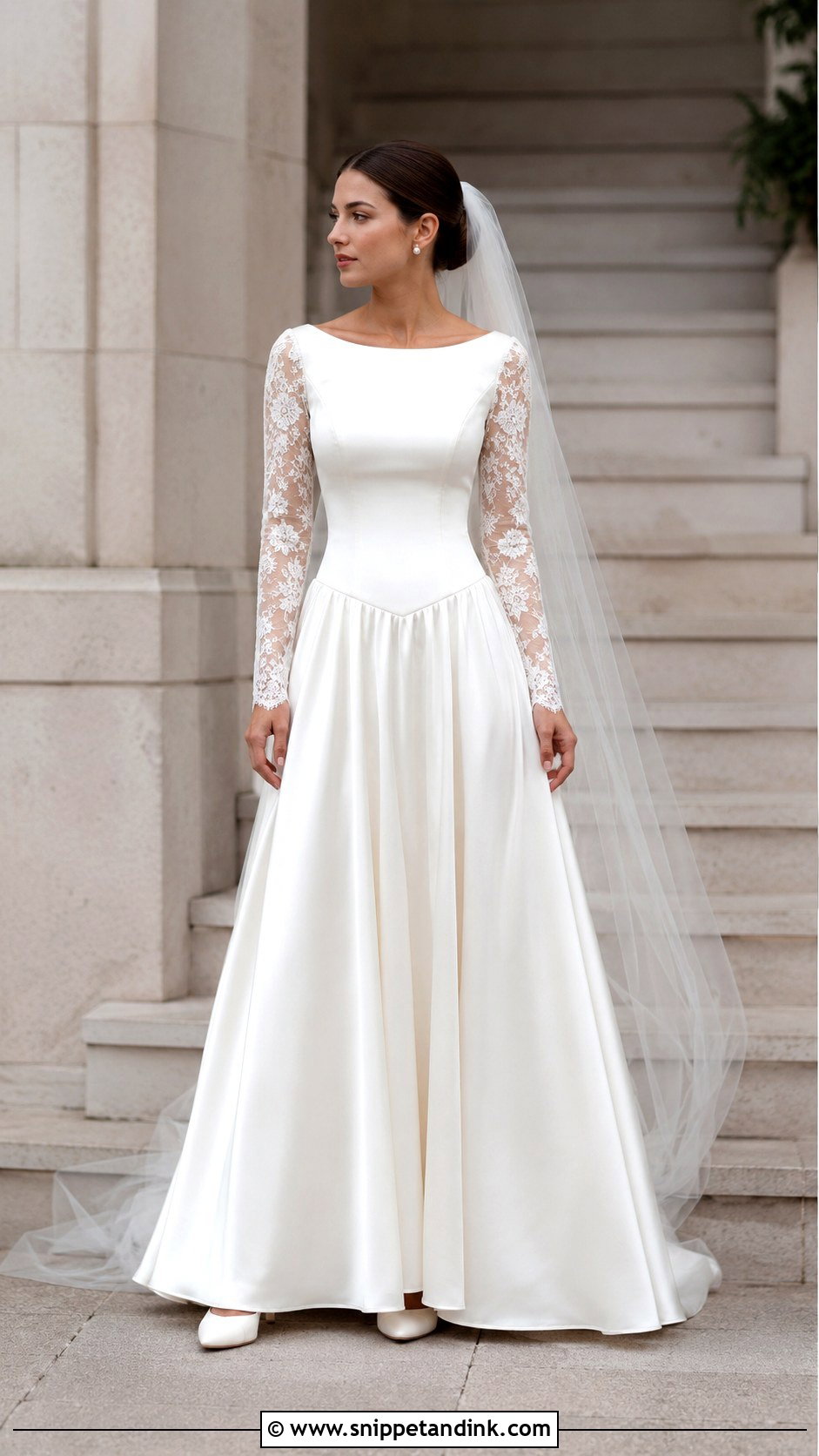
Long sleeves balance a structured bodice and give coverage for cooler months or a ceremony that asks for it. Sheer lace sleeves stay soft, while satin sleeves look more polished and dramatic. Under all that coverage, the V point keeps the silhouette defined over a full or flowing skirt. I’d style it with pearl studs, a low chignon, closed-toe heels and a long veil. Fit the sleeves with your arms raised and bent, not hanging. A sleeve cut too tight at the armhole pulls the whole bodice upward and drags the point off center.
9. Basque Waist Strapless Wedding Dress
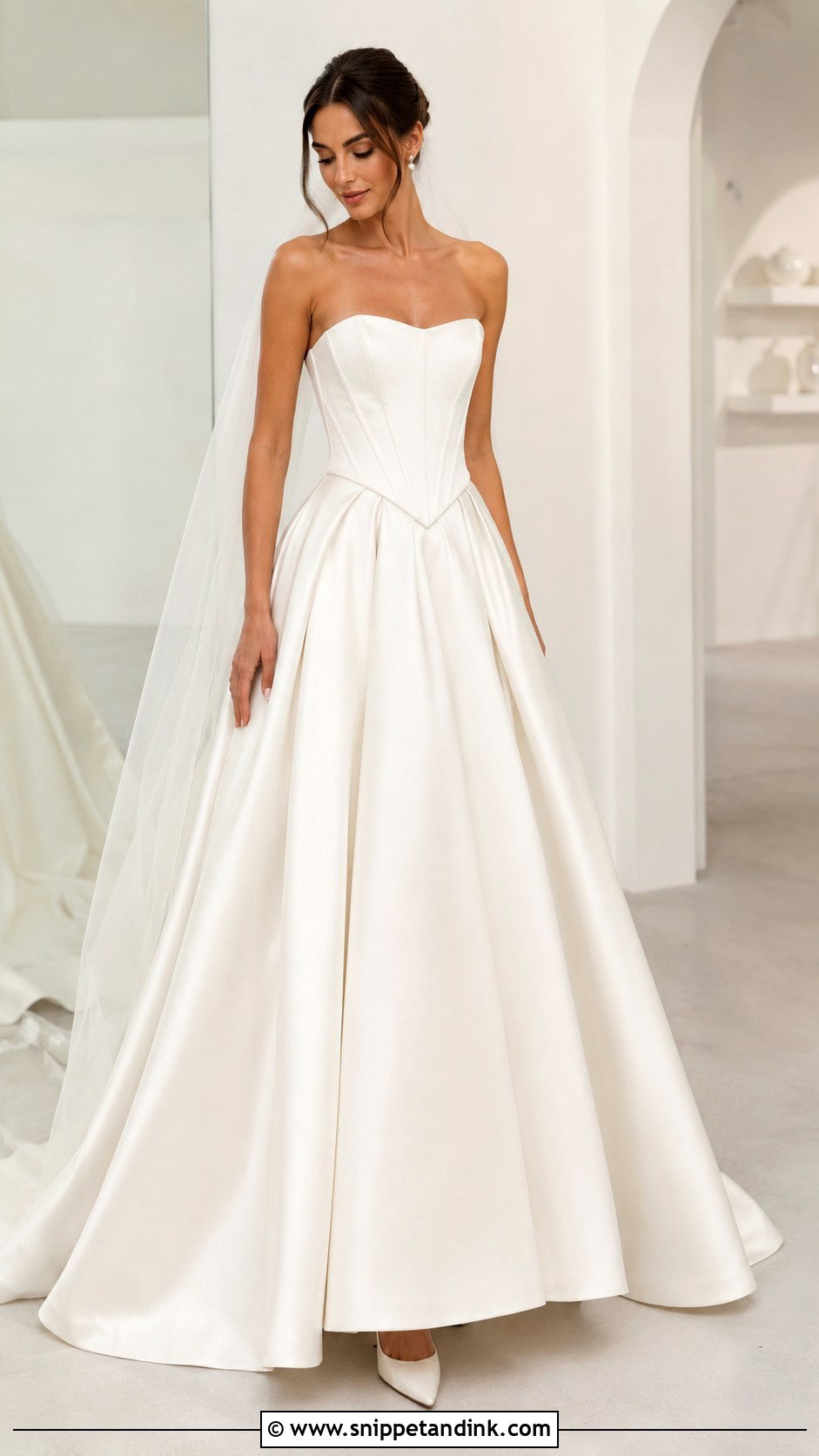
With nothing on the shoulders, the waistline and bodice carry the entire dress. It works with a structured corset bodice over a full satin skirt or layered tulle. Minimal jewelry and a smooth veil make it modern; pearl earrings and soft waves make it romantic. Fit is everything with strapless. The bodice should grip at the ribcage rather than the bust so it stays up on its own, and if you catch yourself hitching it at a fitting, it needs taking in or a waist stay added.
10. Basque Waist Sweetheart Wedding Dress
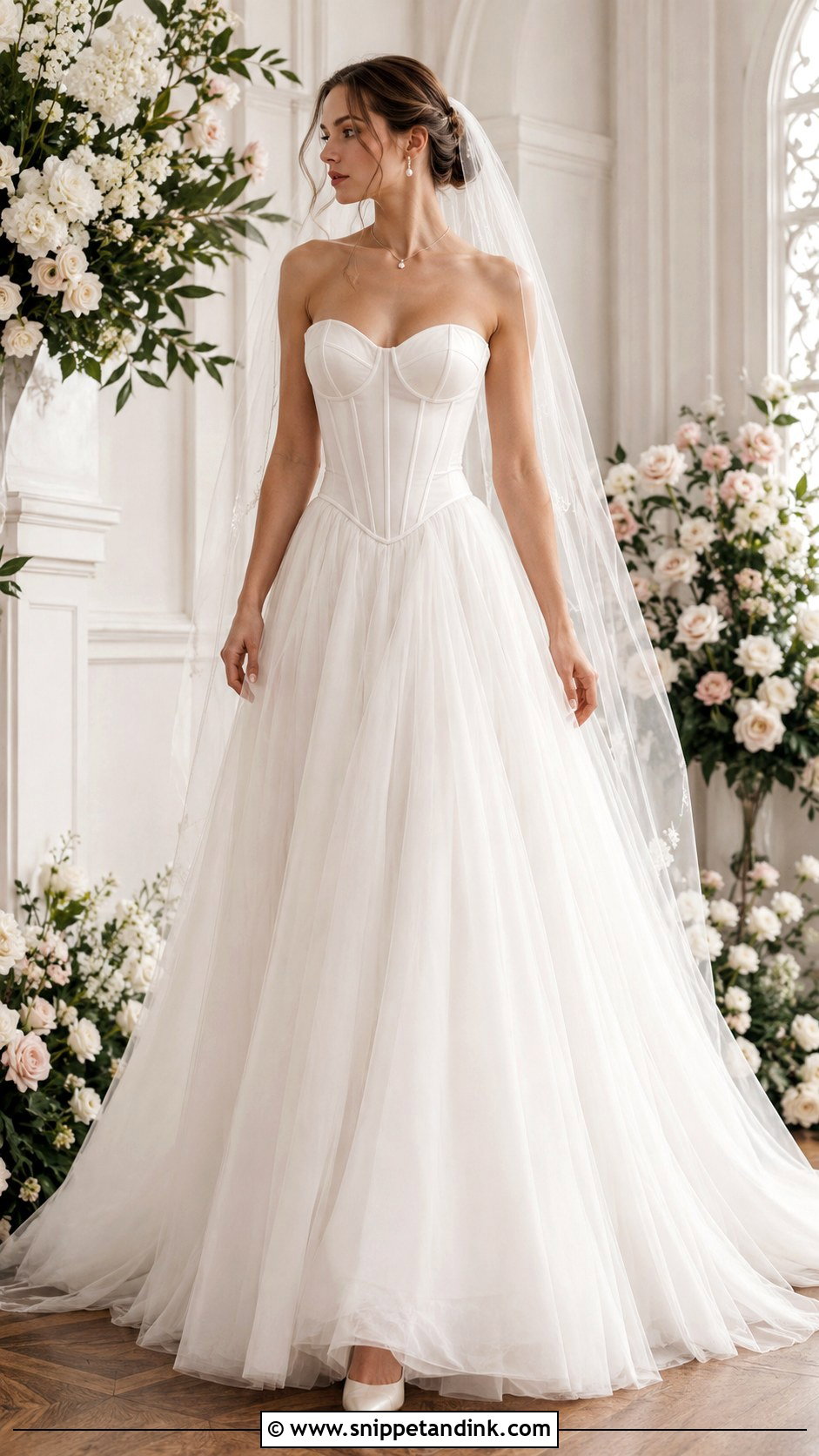
The sweetheart curve flatters the bust and echoes the point below it, which is why this pairing gives such a balanced hourglass effect. Satin, lace, tulle and mikado all suit it, and subtle corset seams on the bodice make it even prettier. Add a delicate pendant, pearl earrings, ivory heels and a soft veil that leaves the neckline visible. One fit check I always do: lean forward. The dip at the center of the sweetheart should stay flat against the sternum, and if it gapes, that gets fixed before anything else.
11. Basque Waist Square Neck Wedding Dress
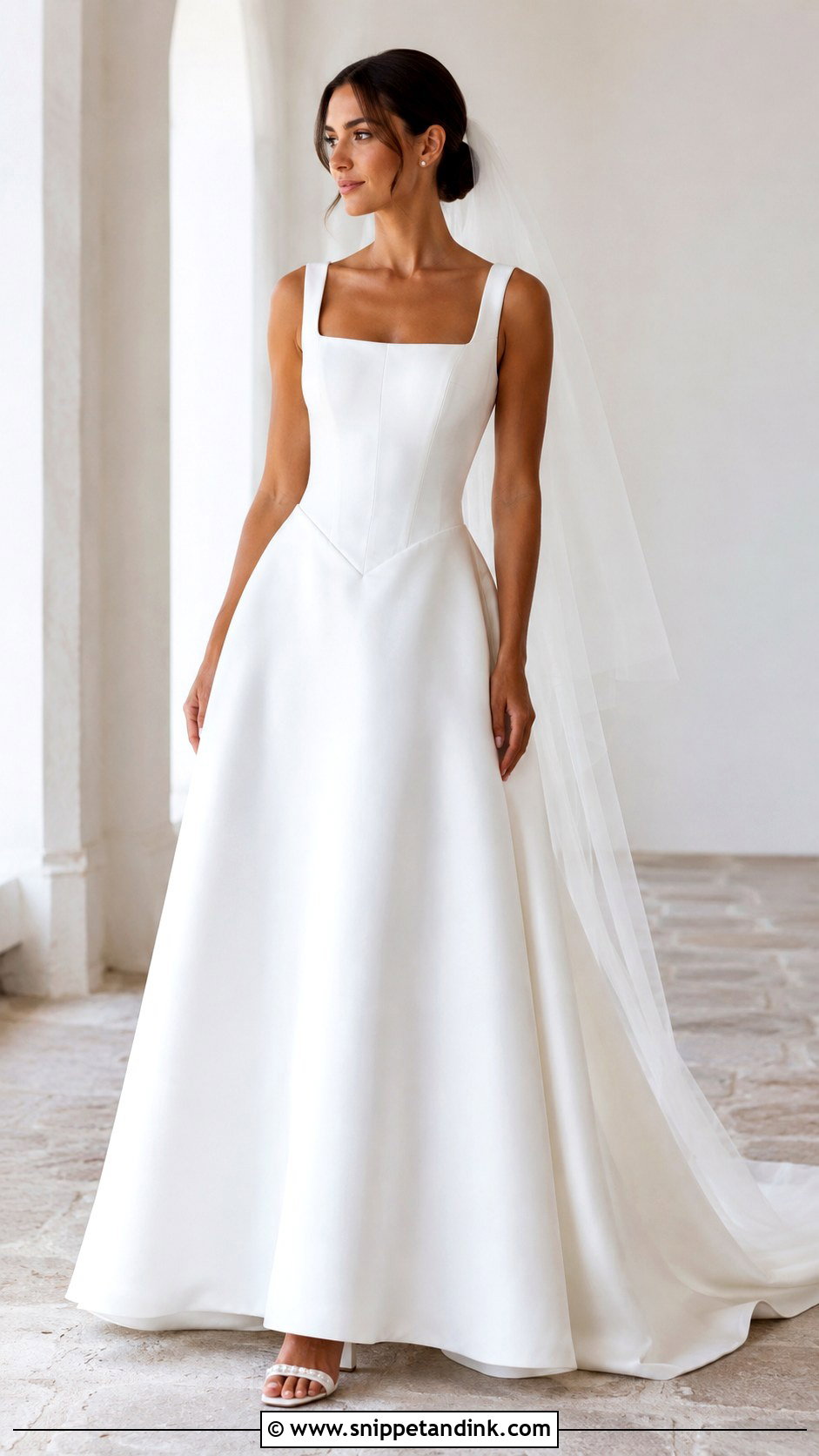
Square necks and pointed waists are both geometric, so this one reads quietly modern. The straight neckline frames the collarbone, and the point softens the lines underneath. Satin or mikado keeps it crisp and architectural, with pearl studs, a smooth bun, comfortable block-heel bridal shoes and a plain veil. Watch the neckline width on narrow shoulders. A square cut too wide lets the straps slide toward the arm, so make sure they’re placed for your frame and not the sample’s.
12. Basque Waist Halter Wedding Dress
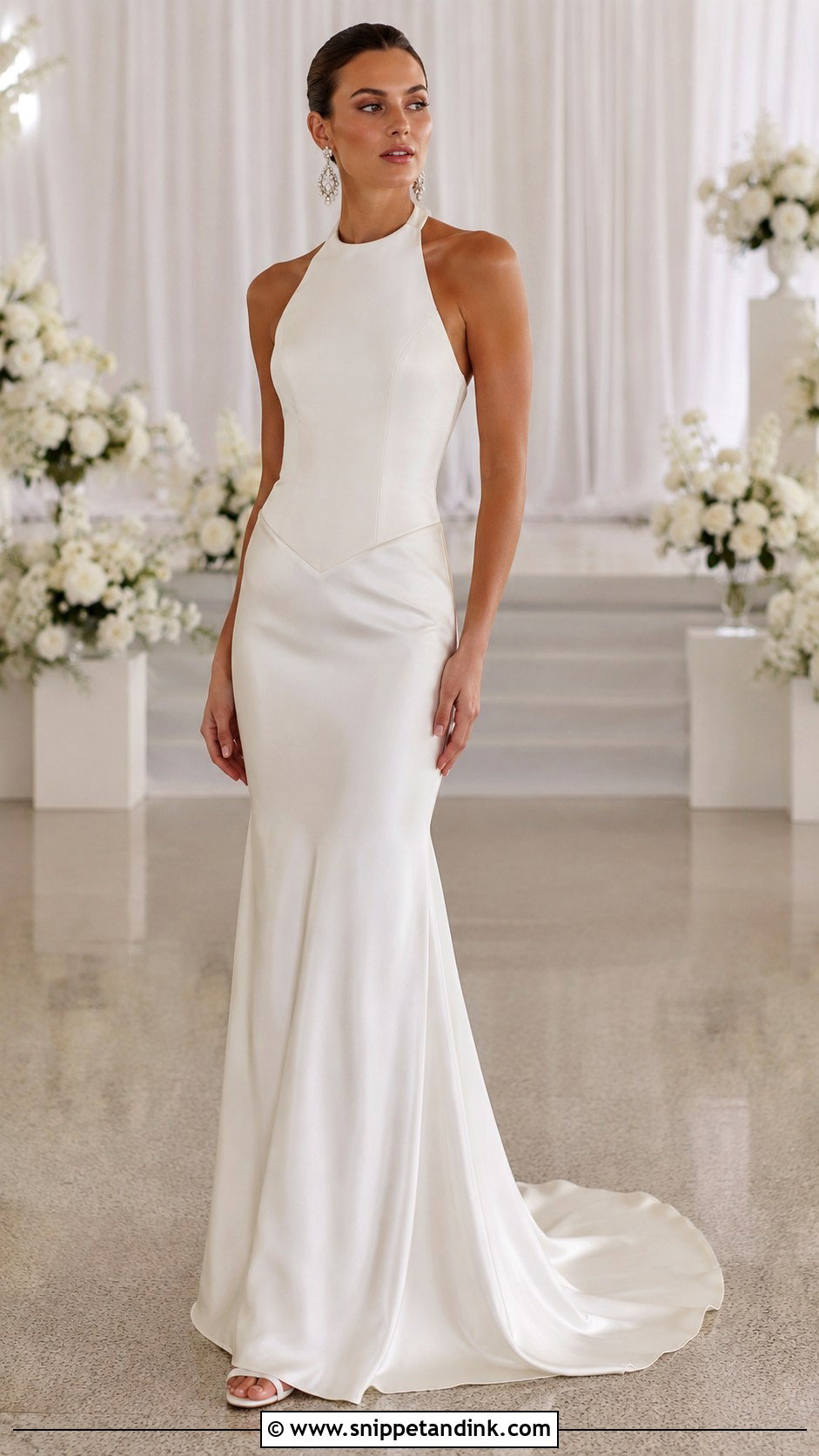
A halter pulls the eye up to the shoulders and face while the Basque point defines the torso. Keep the bodice clean and fitted so those two lines can do the work. A satin skirt makes it sleek; tulle adds drama. Statement earrings, pulled-back hair, minimal heels and no necklace at all. I’d be careful pairing a halter with a heavy skirt: if the strap ends up carrying any of the gown’s weight, the back of your neck aches by the reception, so the bodice must hold itself up without it.
13. Basque Waist Drop Sleeve Wedding Dress
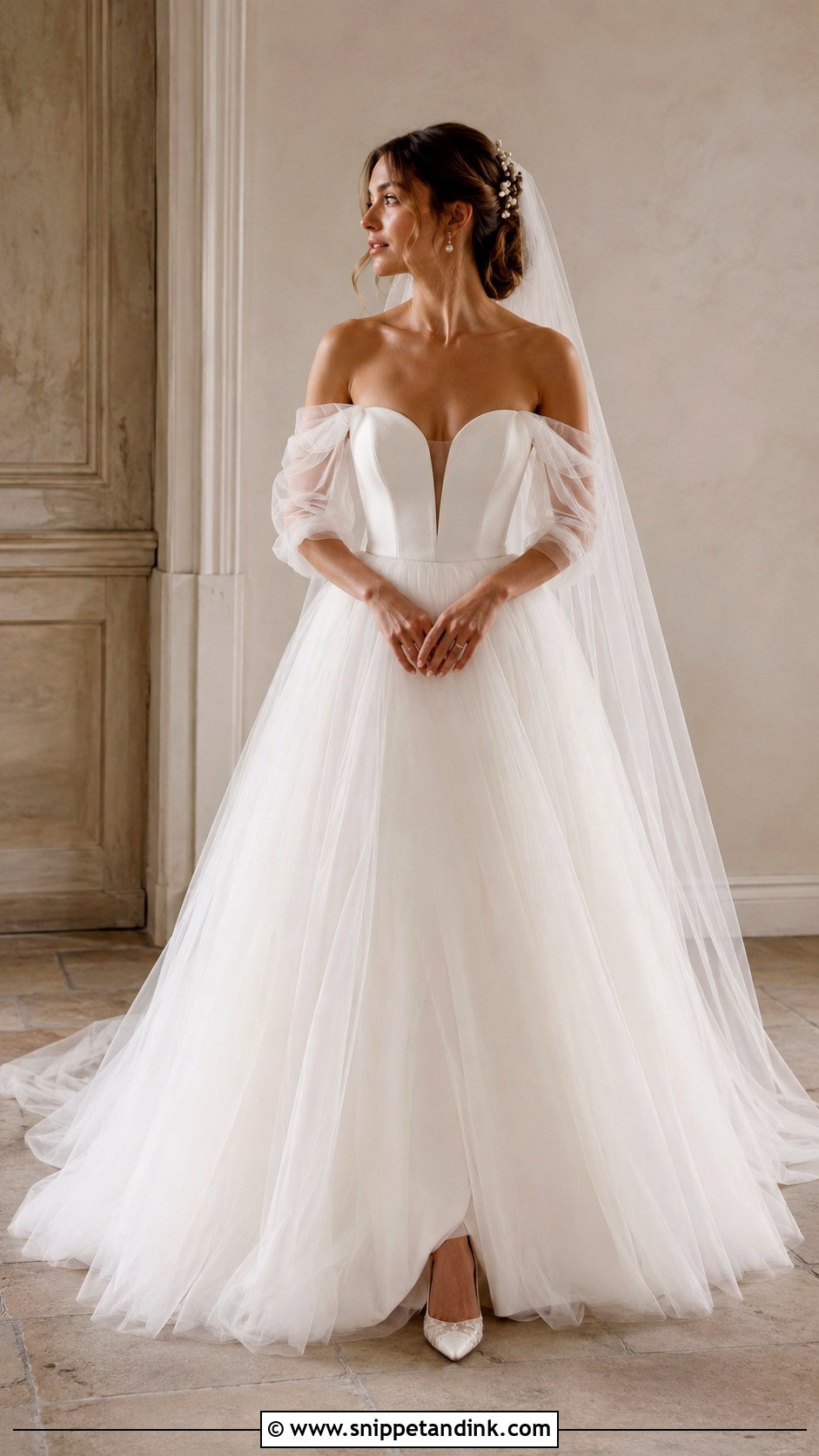
Drop sleeves rest on the upper arm and relax the neckline while the waist keeps the gown defined. Lace, tulle and satin all suit it; a full skirt turns it fairytale, an A-line keeps it lighter. Pearl hair pins, small earrings, ivory heels and a sheer veil that doesn’t fight with the sleeves. Ask how the sleeves are anchored. Ones with elastic or a hidden bone stay put, while loose ones creep down your arms every time you dance.
14. Basque Waist Beaded Wedding Dress
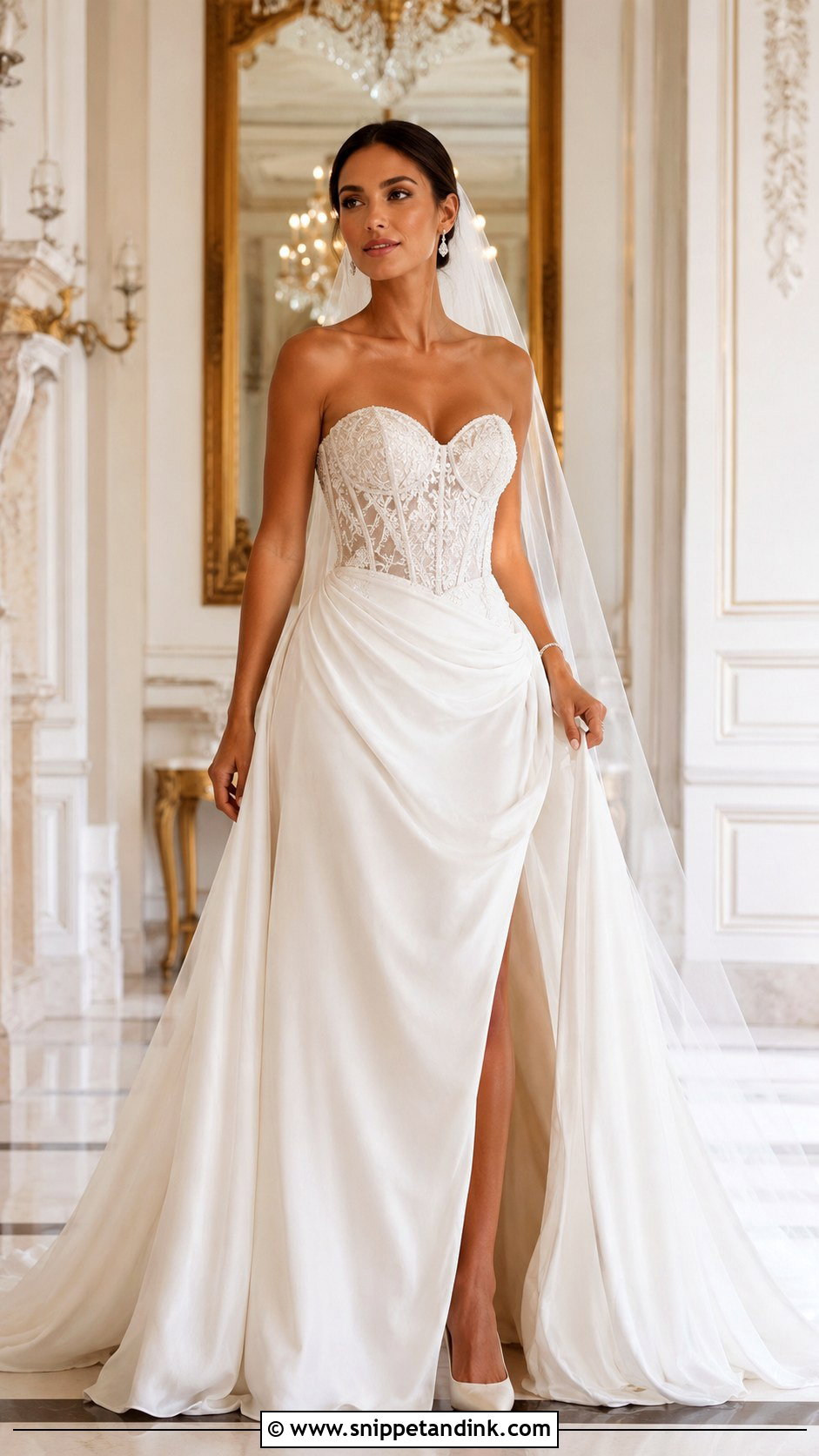
Beading can trace the corset seams, outline the point or scatter across the skirt, and the rule is balance. A heavily beaded bodice wants a quieter skirt; light beading can carry a fuller one. Crystal earrings, a simple bracelet, classic heels and a veil with little or no trim, since trim catches on beads. Beadwork adds real weight, which pulls on the waist seam. When I fit a beaded gown, I check the hem only after the bride has stood in it for several minutes, because the skirt drops slightly once that weight settles.

15. Basque Waist Floral Wedding Dress
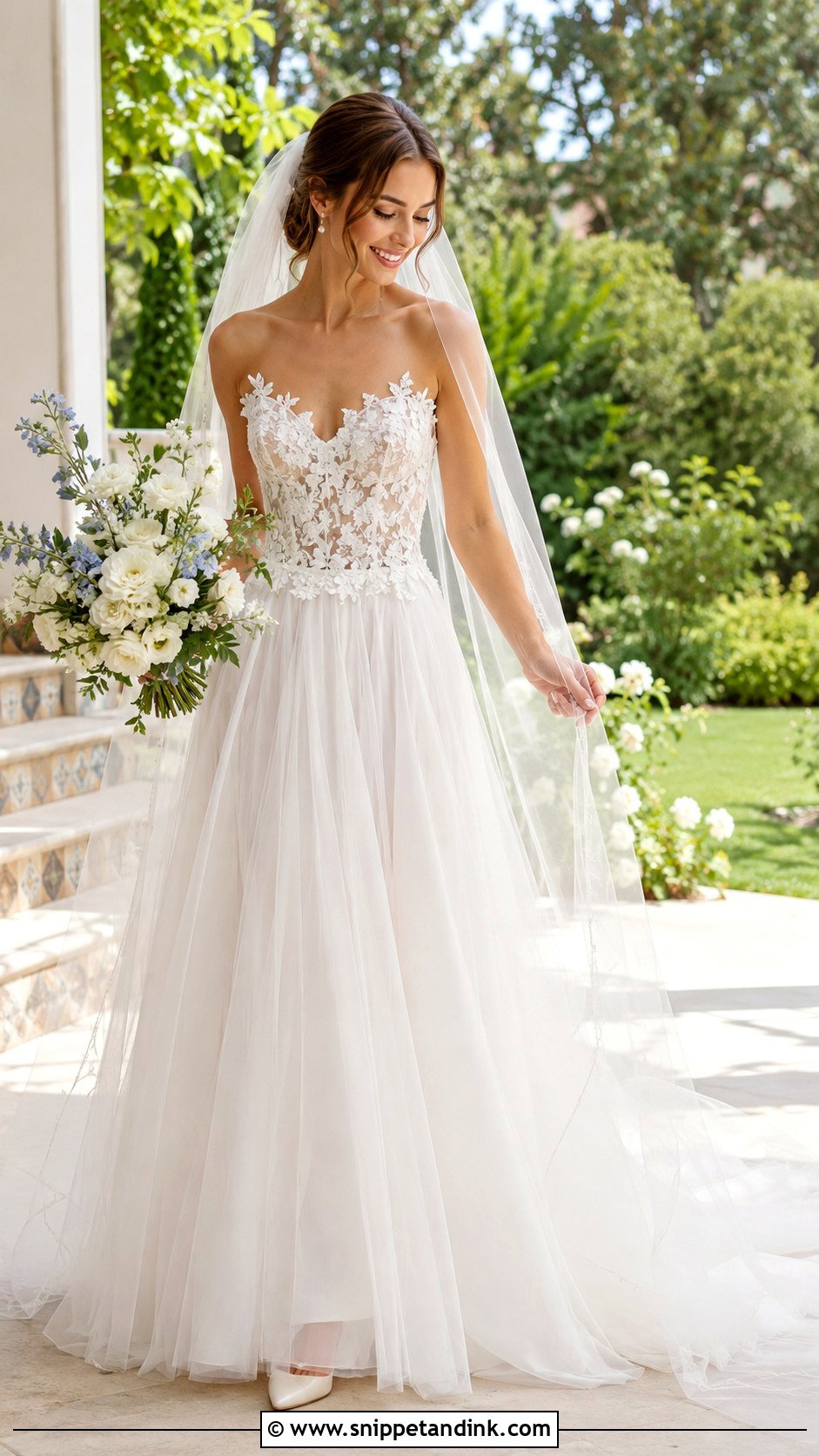
Floral lace, embroidery or raised appliqués soften the structured waist. A floral bodice over tulle reads like a garden; allover floral lace reads vintage. Keep the rest light: pearl earrings, a sheer veil, ivory shoes and a loose updo or soft waves. Spring, summer and outdoor weddings suit it best. The Basque point is what keeps all those flowers from turning sugary. With 3D petals, avoid a veil with combs or beaded edges near the bodice, because raised appliqués catch on them.
16. Basque Waist Minimalist Wedding Dress
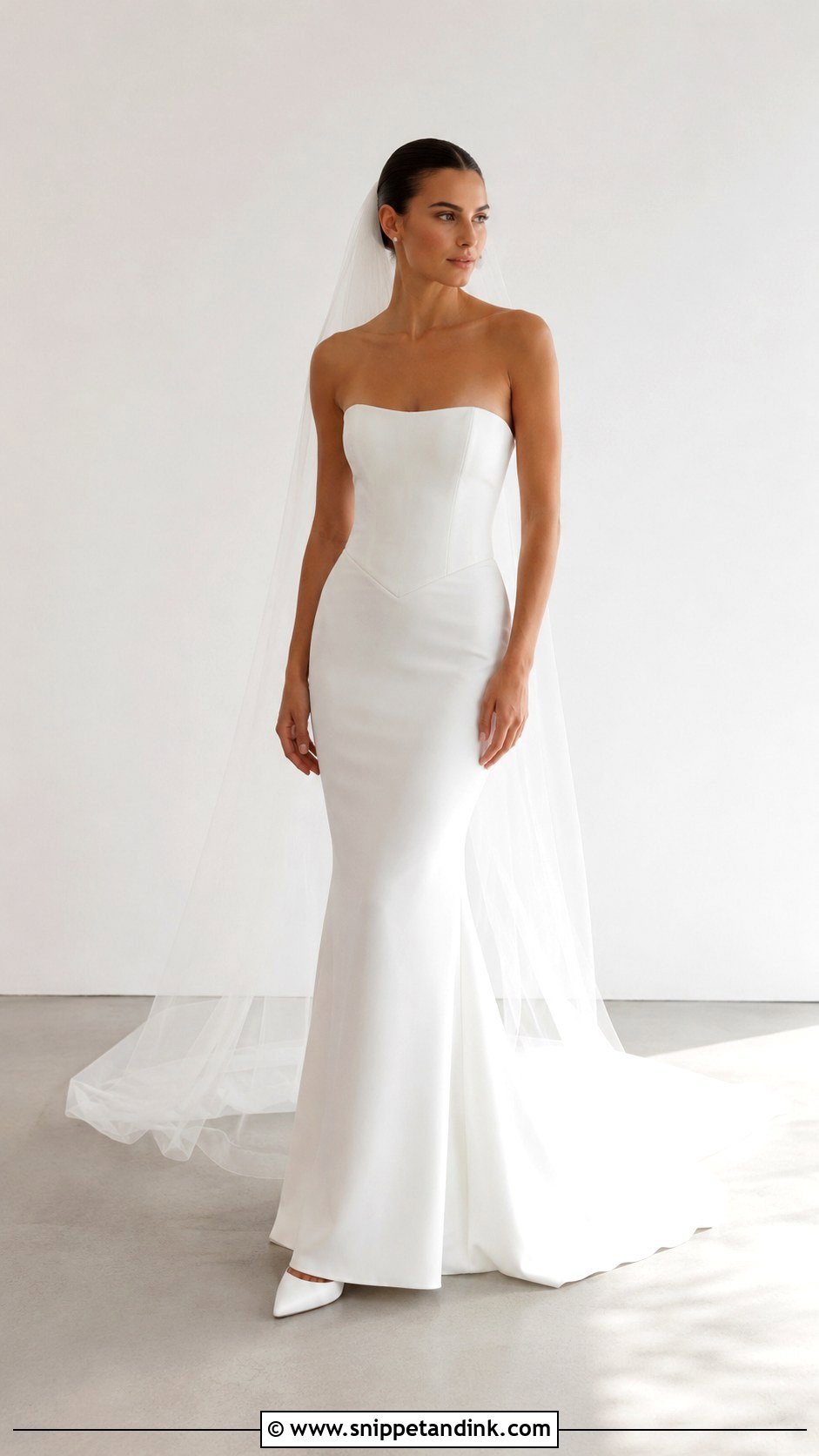
Here the cut is the decoration: clean fabric, exact seams and a sculpted point. Satin, crepe and mikado hold structure, which is why they work. A straight, square or strapless neckline keeps it sleek, with smooth hair, small pearl or diamond studs, pointed heels and an untrimmed cathedral veil for drama. Minimal gowns are the least forgiving at a fitting. With no lace or beading to hide anything, a seam a few millimetres off center shows, so I’d plan for an extra fitting with this one.
17. Basque Waist Princess Wedding Dress
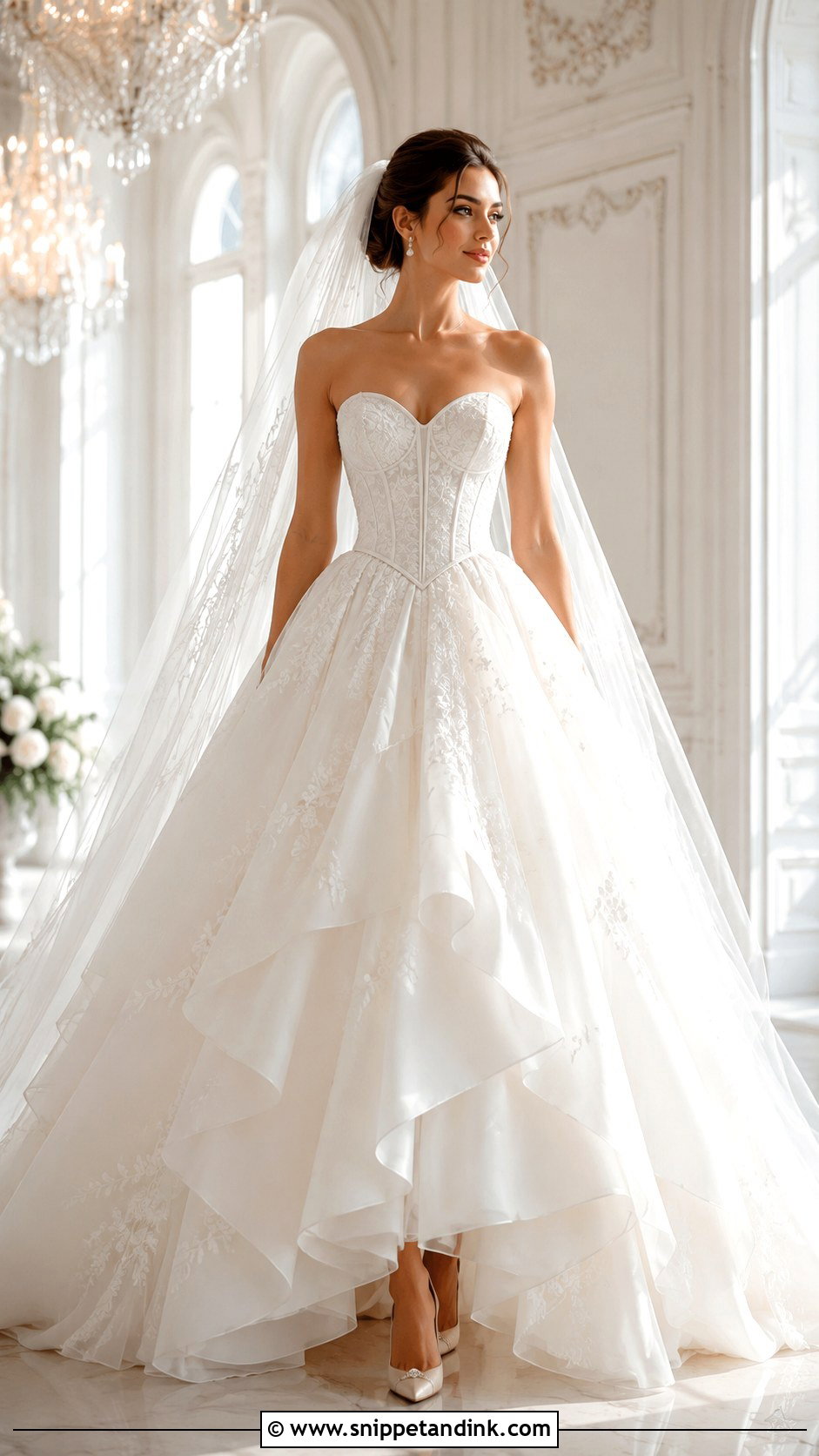
The Basque waist princess wedding dress is the grand-entrance option: a fitted bodice and dipped waist, then the skirt opens into full volume. Tulle, organza and satin all suit it, with a sweetheart or off-shoulder neckline to soften the top and a corset bodice for support. Pearl earrings, a long veil and delicate heels. Keep the bouquet modest, because a big round bouquet held at the waist hides the very point you chose the dress for. That point should sit smoothly at center front; if it pulls sideways as you walk, the skirt is too heavy for the waist seam.
18. Basque Waist Mermaid Wedding Dress
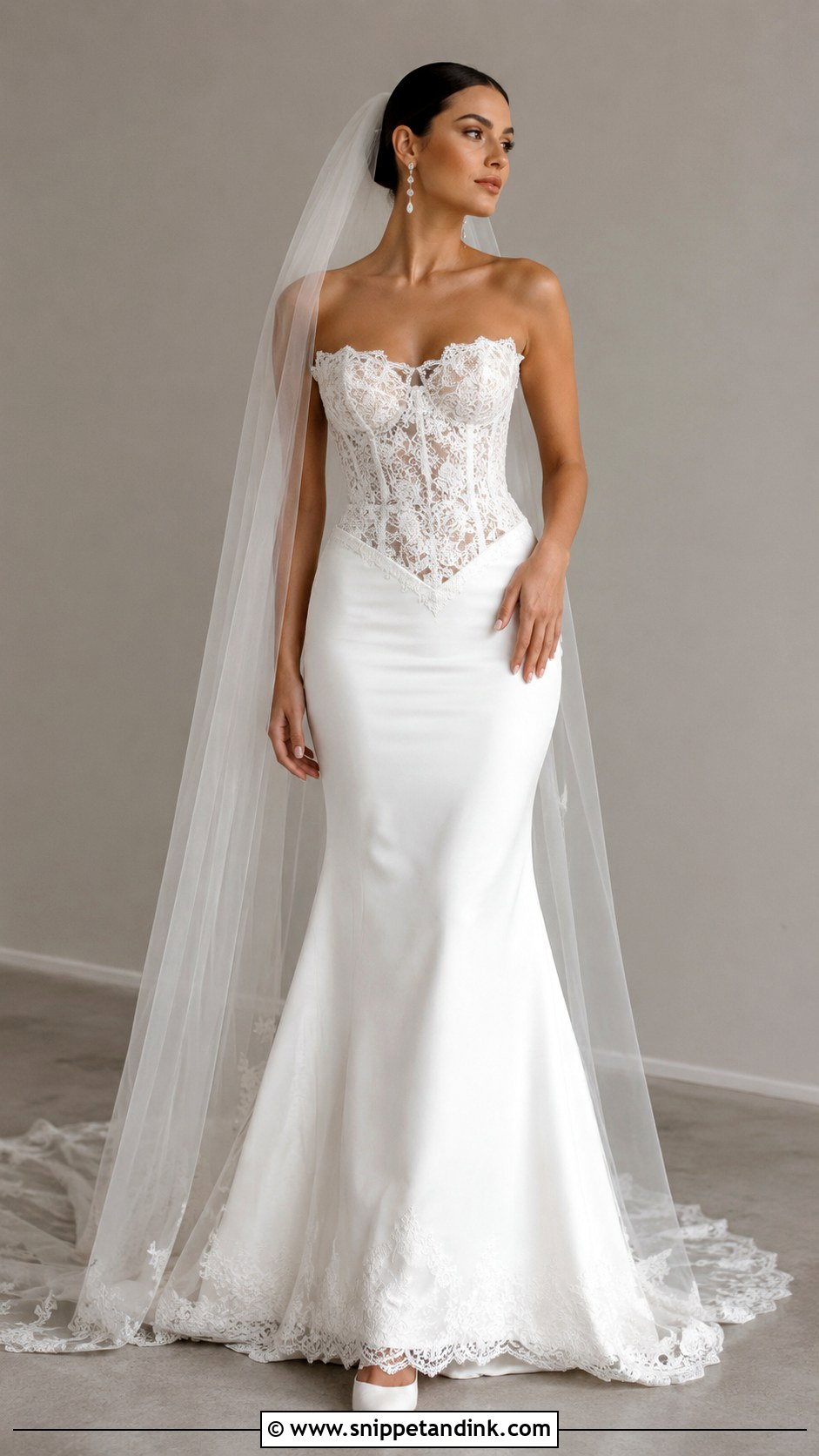
Two fitted lines stack up in this one. The point lengthens the torso, and the skirt follows the body to the knee or lower thigh before it flares. Crepe, lace or satin all work, with a corset bodice for definition and support, plus sleek heels, drop earrings and a long veil. Keep the rest restrained, since the shape is already doing plenty. Be honest about movement at the fitting: sit down and climb a step. Where the flare starts decides whether you walk normally or shuffle all day.
19. Basque Waist Sheer Bodice Wedding Dress
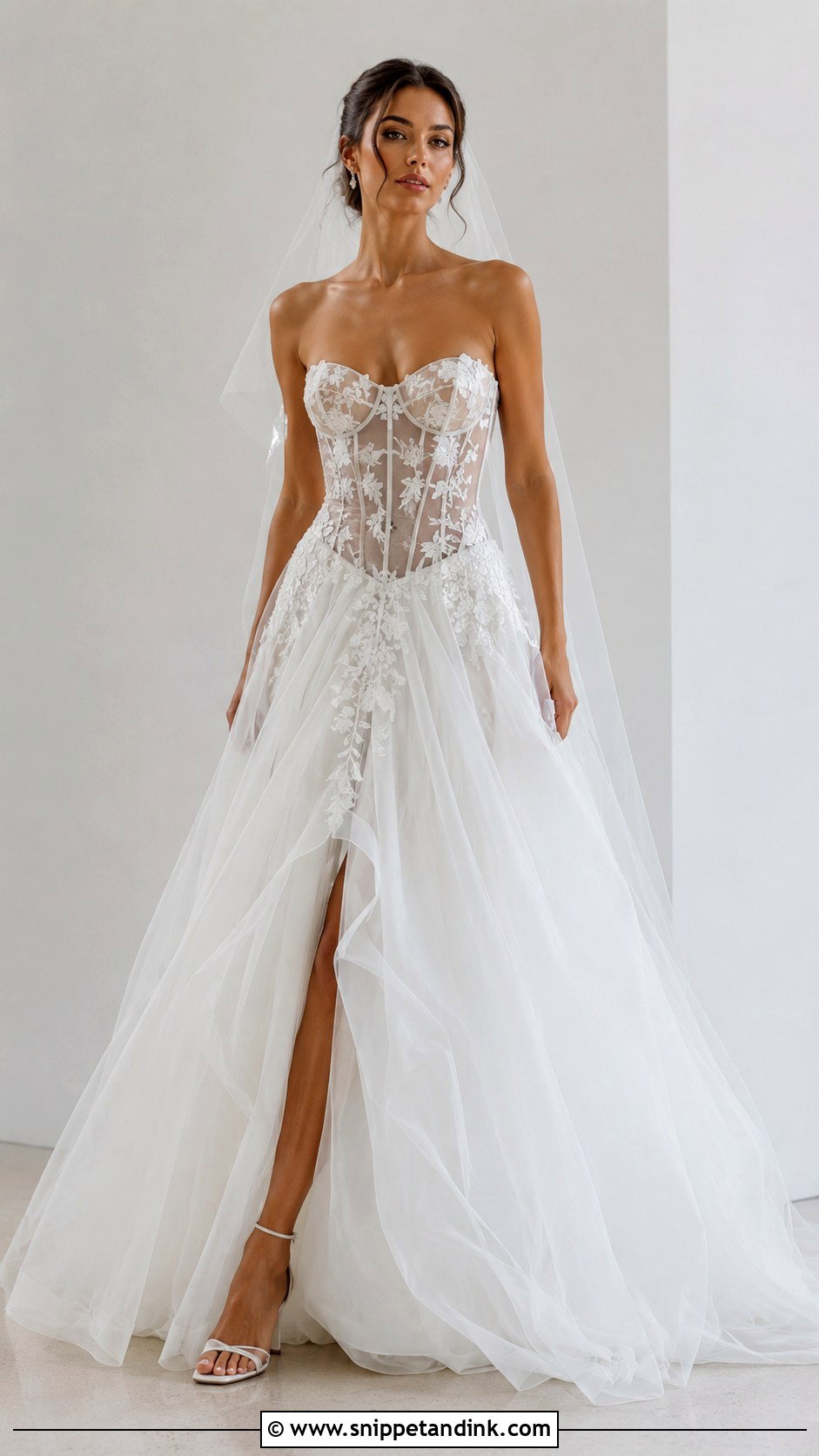
A sheer bodice can show corset construction, lace placement or fine embroidery, and the point gives that transparency a firm outline so it looks deliberate rather than bare. Ask for a lined front panel if you’d like more coverage. A soft tulle or organza skirt balances the fitted top, finished with fine earrings, a sheer veil and plain heels. Check the illusion mesh in daylight against your own skin. A nude shade that matches under warm shop lighting can turn grey or pink outdoors.

20. Basque Waist Pearl Wedding Dress
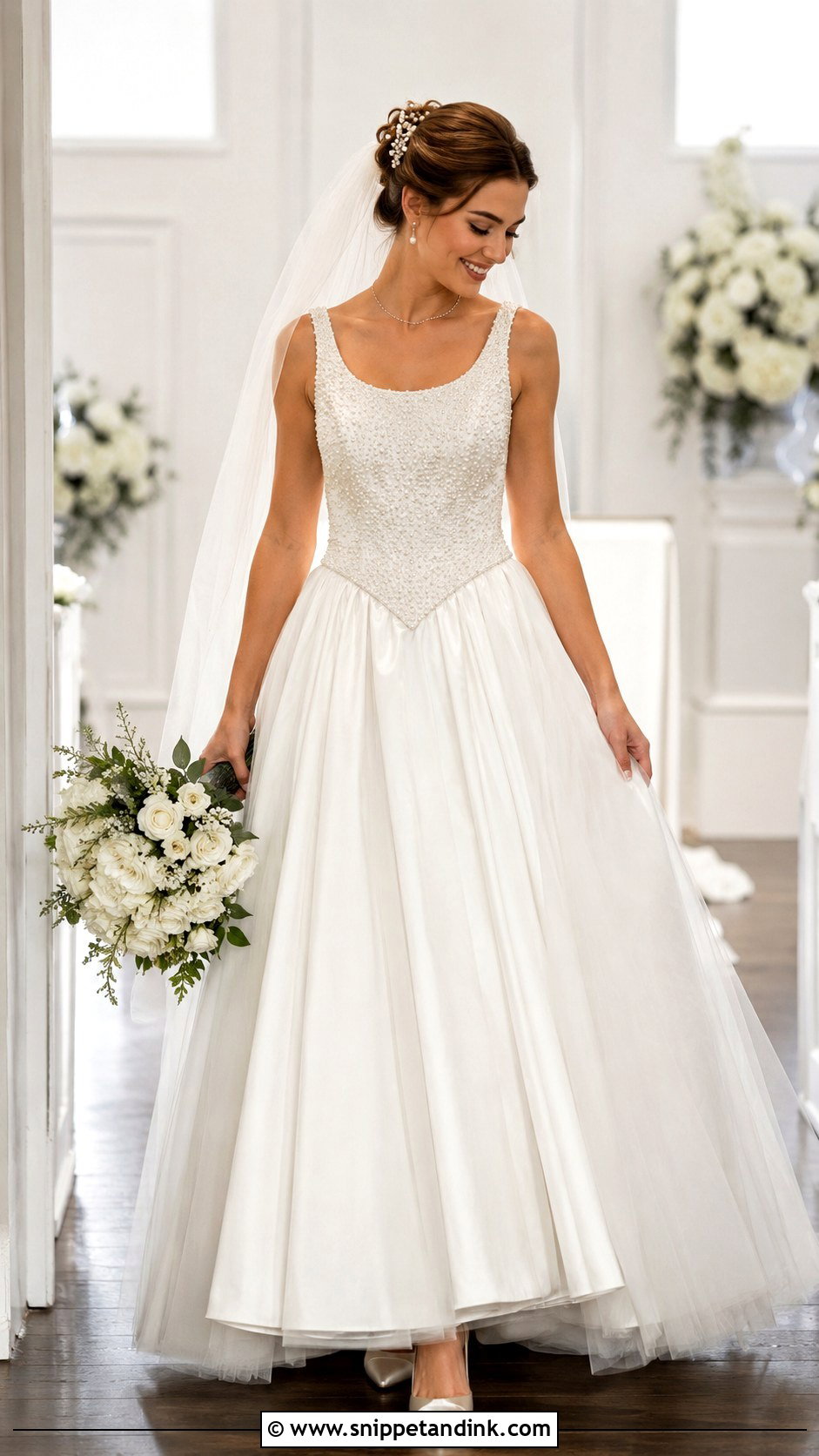
Pearls give a soft glow rather than the sharp flash of crystals. They can be scattered over the bodice, set along the neckline or used to trace the waist, and they sit well on satin, tulle or lace. Pearl earrings, a pearl comb and ivory satin heels tie it together, with a plain veil so textures don’t pile up. Most gown pearls are coated glass or plastic, and the coating scuffs where your arms rub the sides, so look closely at the side seams of a sample that’s been tried on often. They read softly and clearly in bright daylight.
21. Basque Waist Organza Wedding Dress
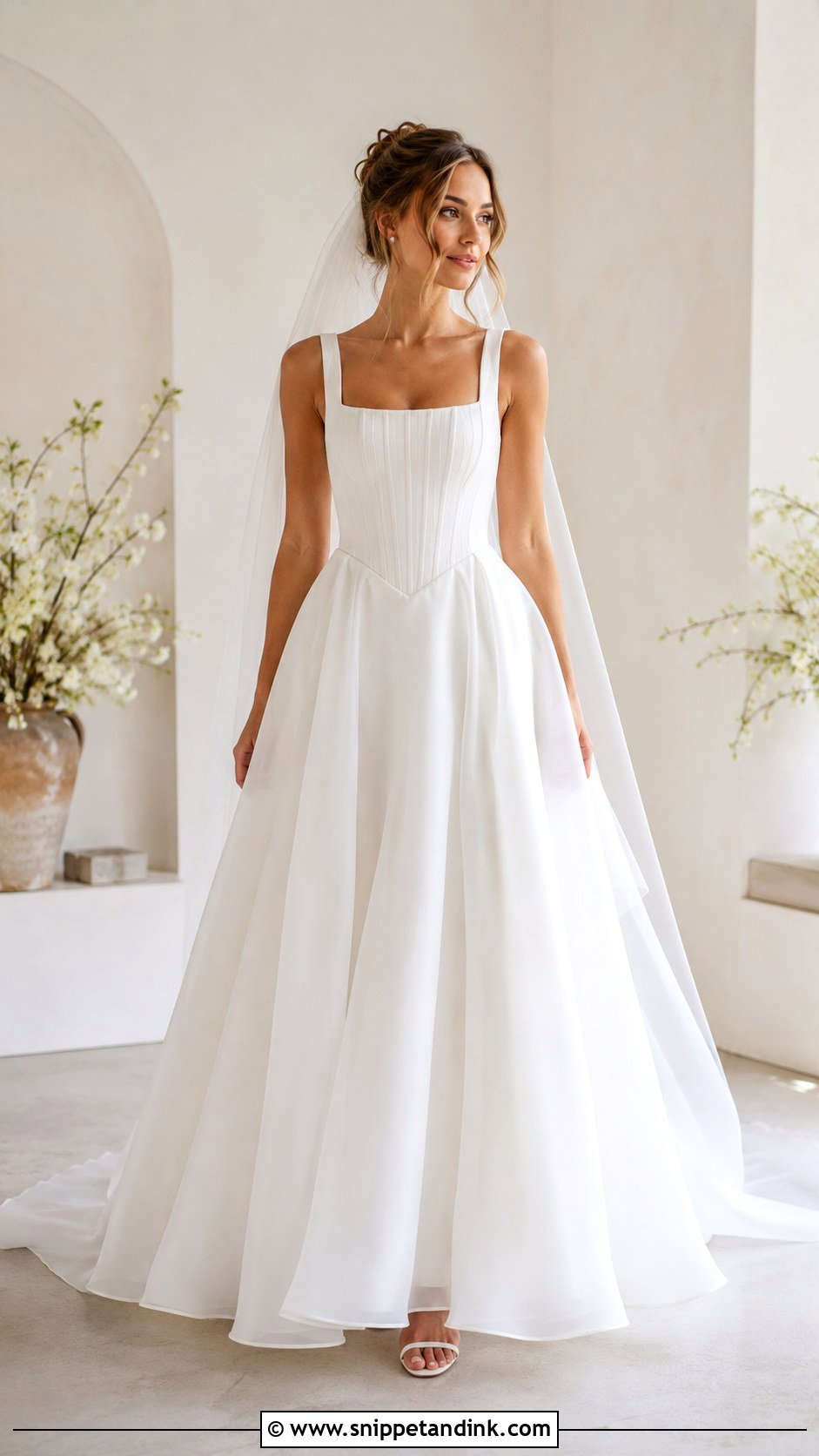
Organza is crisp and light, so the skirt holds volume without weight, and the Basque bodice keeps it shaped. Strapless or square-neck bodices work best with it, plus pearl studs, a soft veil and simple heels. It breathes well, which makes it a sensible warm-weather fabric. The downside I always mention: organza creases sharply and keeps the crease, so a car ride or a long seated dinner shows. A handheld steamer on the morning, kept moving and held back from the fabric, sorts it out.
22. Basque Waist Ruffle Wedding Dress
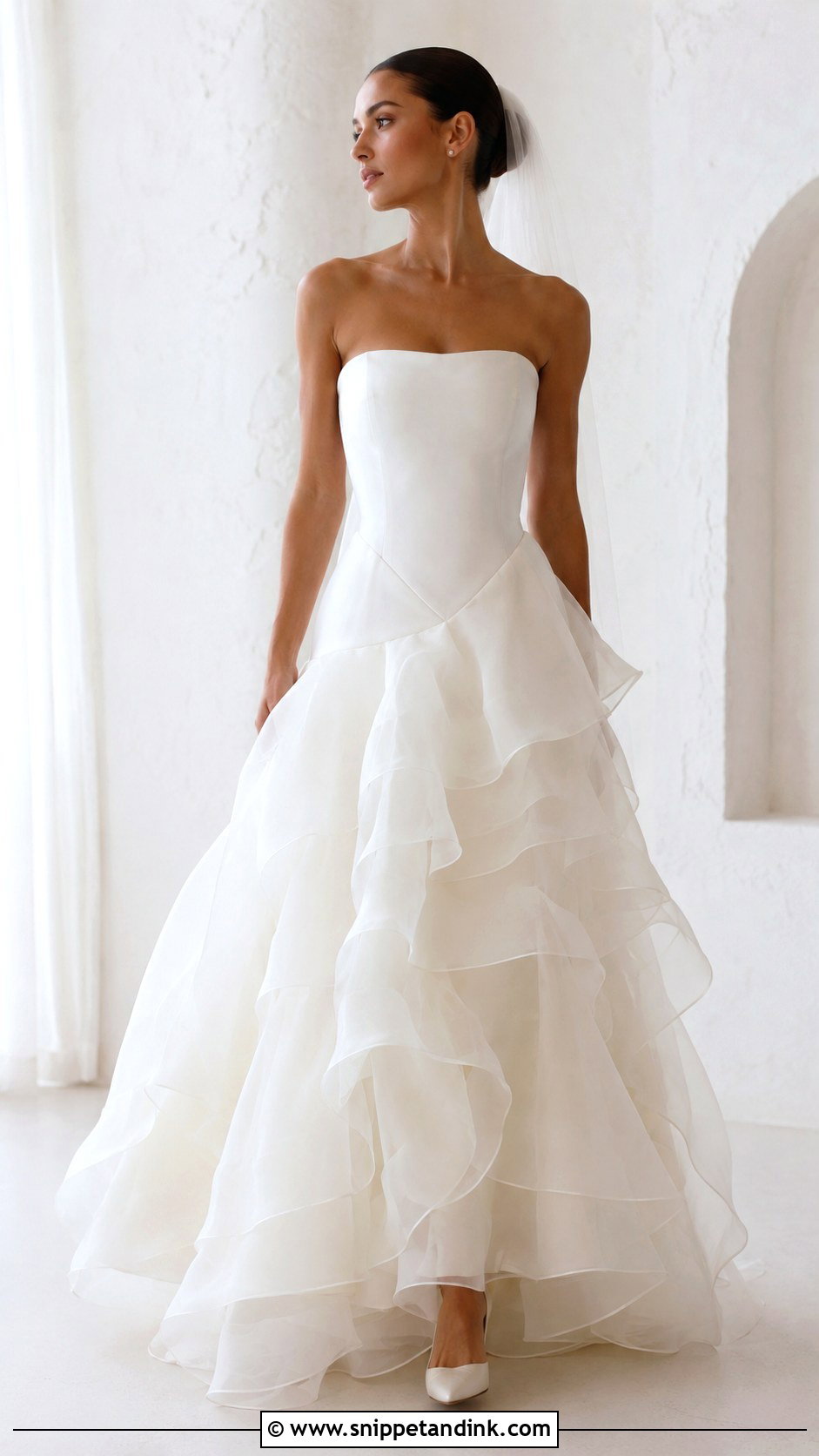
Ruffles bring texture and movement while the fitted waist holds the line. Tiered tulle ruffles feel playful; organza ruffles look more sculptural. Keep the bodice plain, the earrings small, the hair sleek, the heels understated and the veil untrimmed. Ruffles add bulk at the hip, so the point has to finish cleanly above where they begin. If the first tier starts right at the waist seam, the point simply disappears into it.
23. Basque Waist Bow Wedding Dress
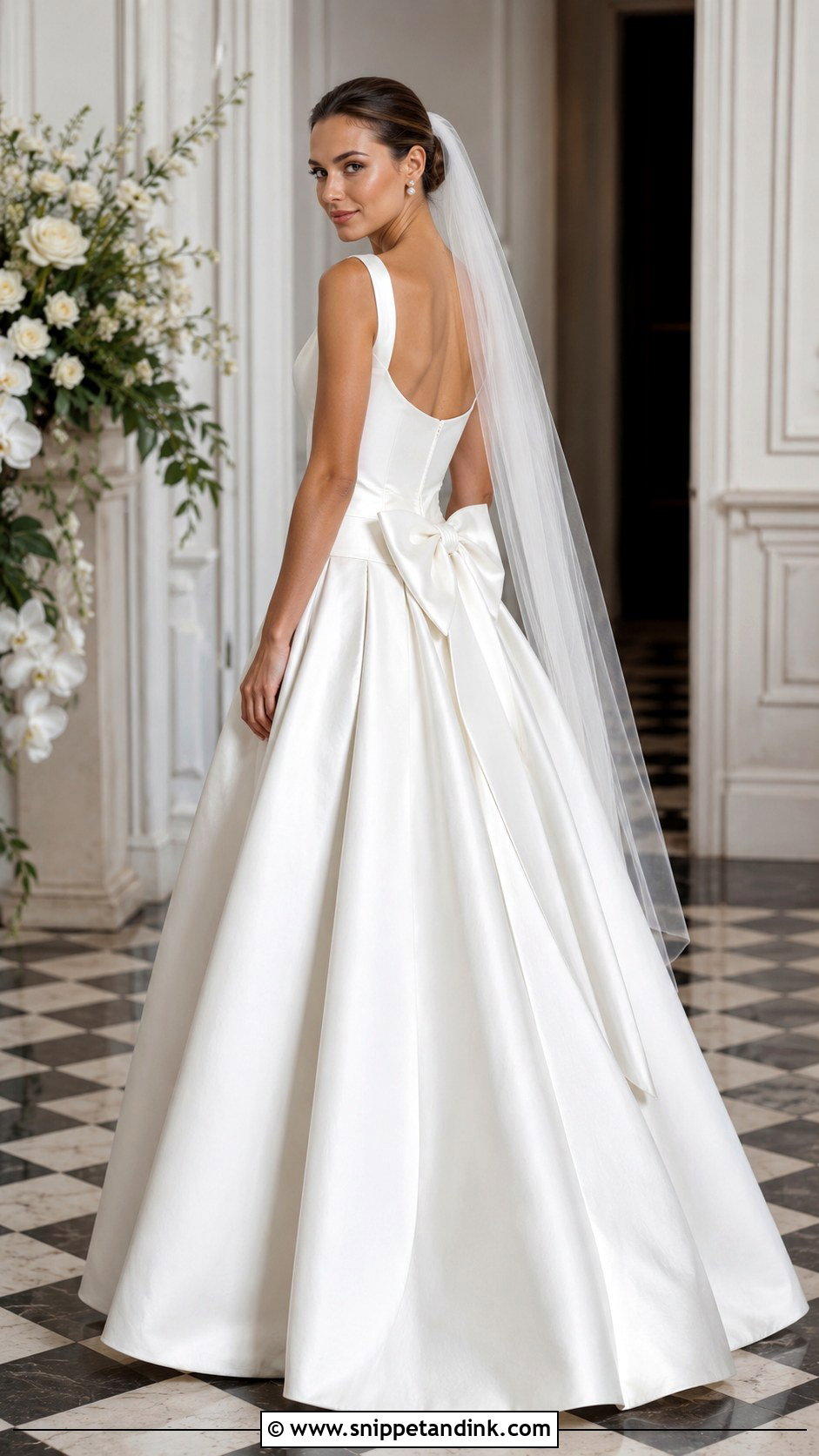
The bow can sit at the back waist, on the bodice or as a removable accent on the train. I prefer the back, where it adds interest without breaking the front point. Satin or mikado holds the loops crisply, while softer fabrics droop by evening. Pearl earrings, a clean veil, classic heels and few other accessories. If the bow sits at the back waist, raise the bustle early with your seamstress, because the hooks often have to work around or under it.
24. Basque Waist Short Sleeve Wedding Dress
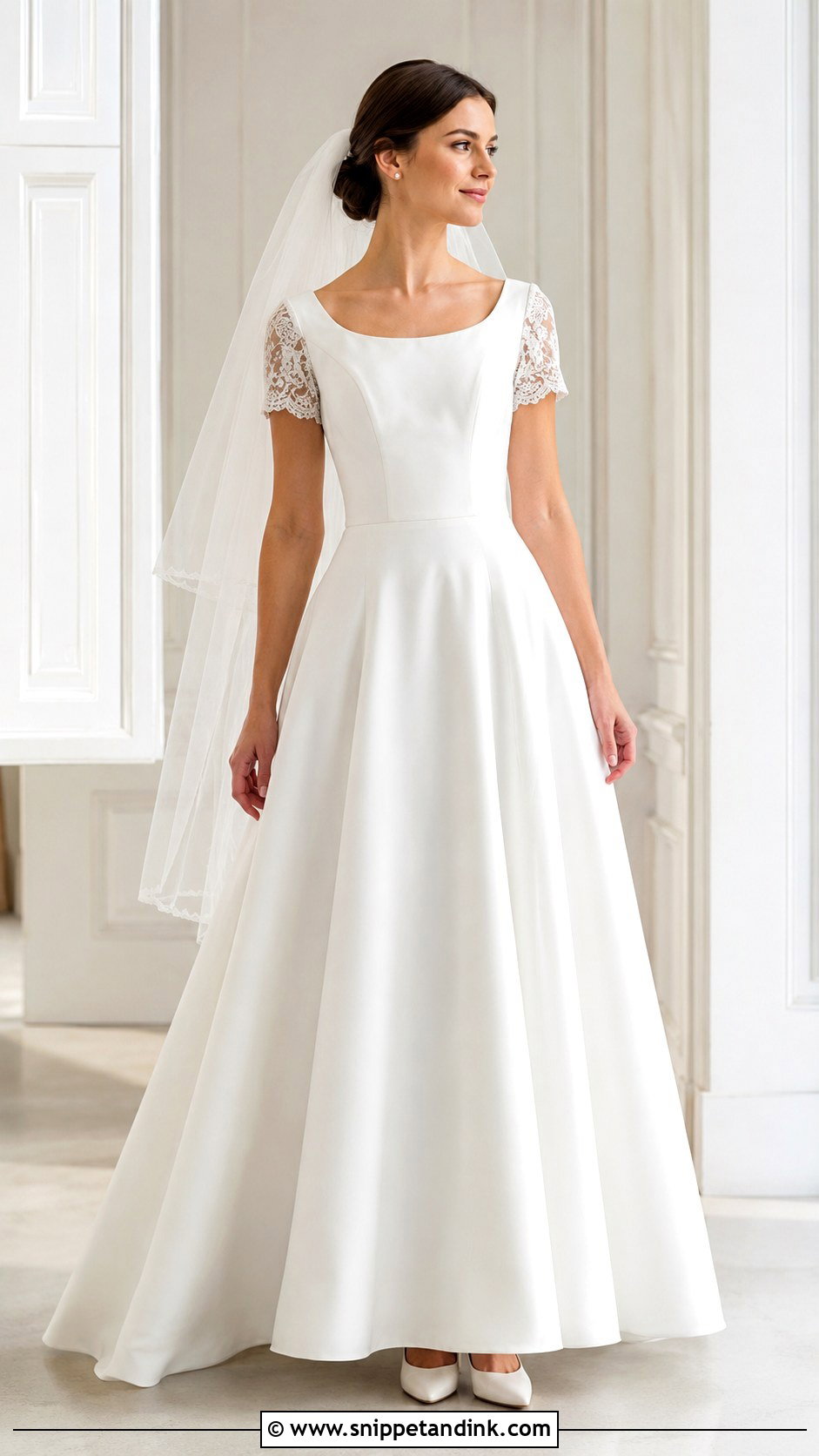
Short sleeves add comfort and some coverage while keeping the whole dress light. Lace sleeves feel romantic; satin or mikado ones look clean and slightly vintage. The point stops it from looking plain. Pearl studs, a low bun, closed-toe heels and a fingertip veil suit it, and it works especially well for a daytime or less formal wedding. Of all sleeve lengths, short sleeves need the most ease in the armhole, because they bind the moment you lift your arms to hug someone.
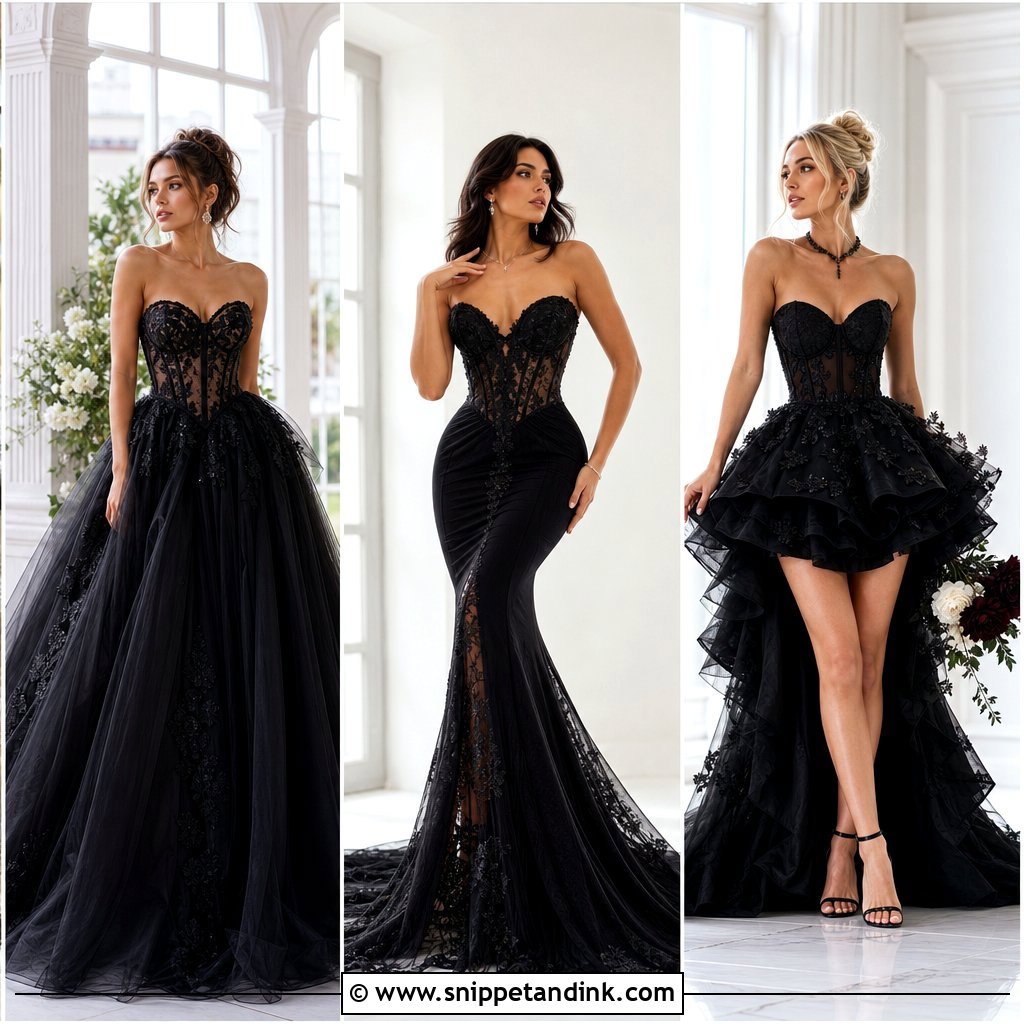
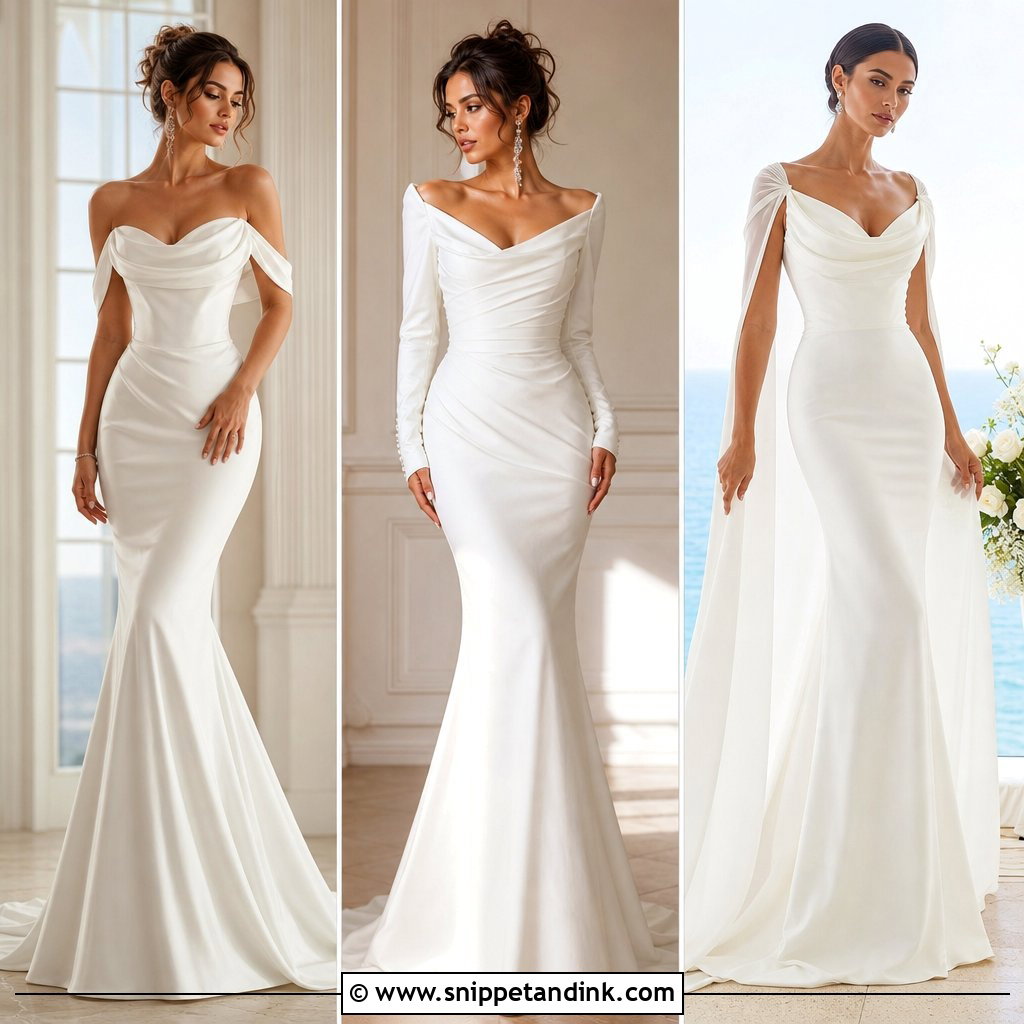
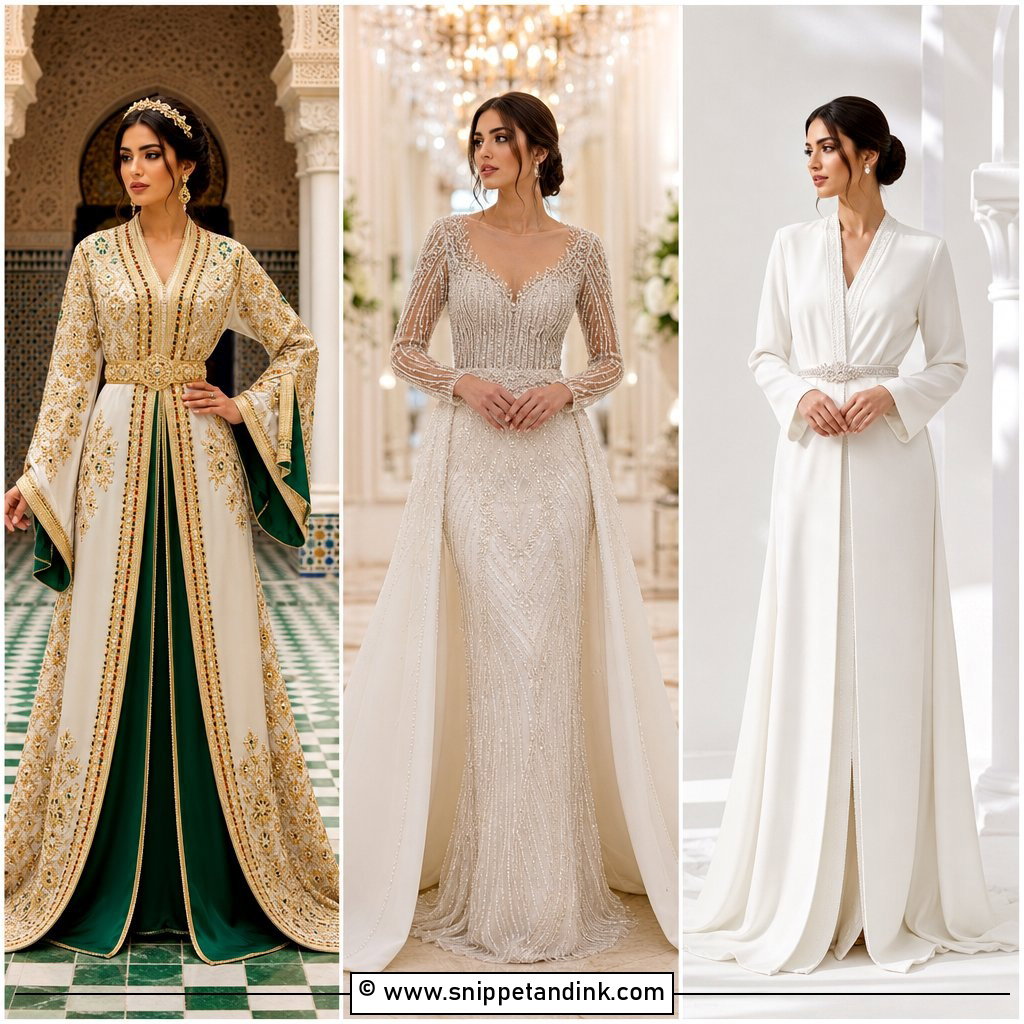

25. Basque Waist Vintage Wedding Dress
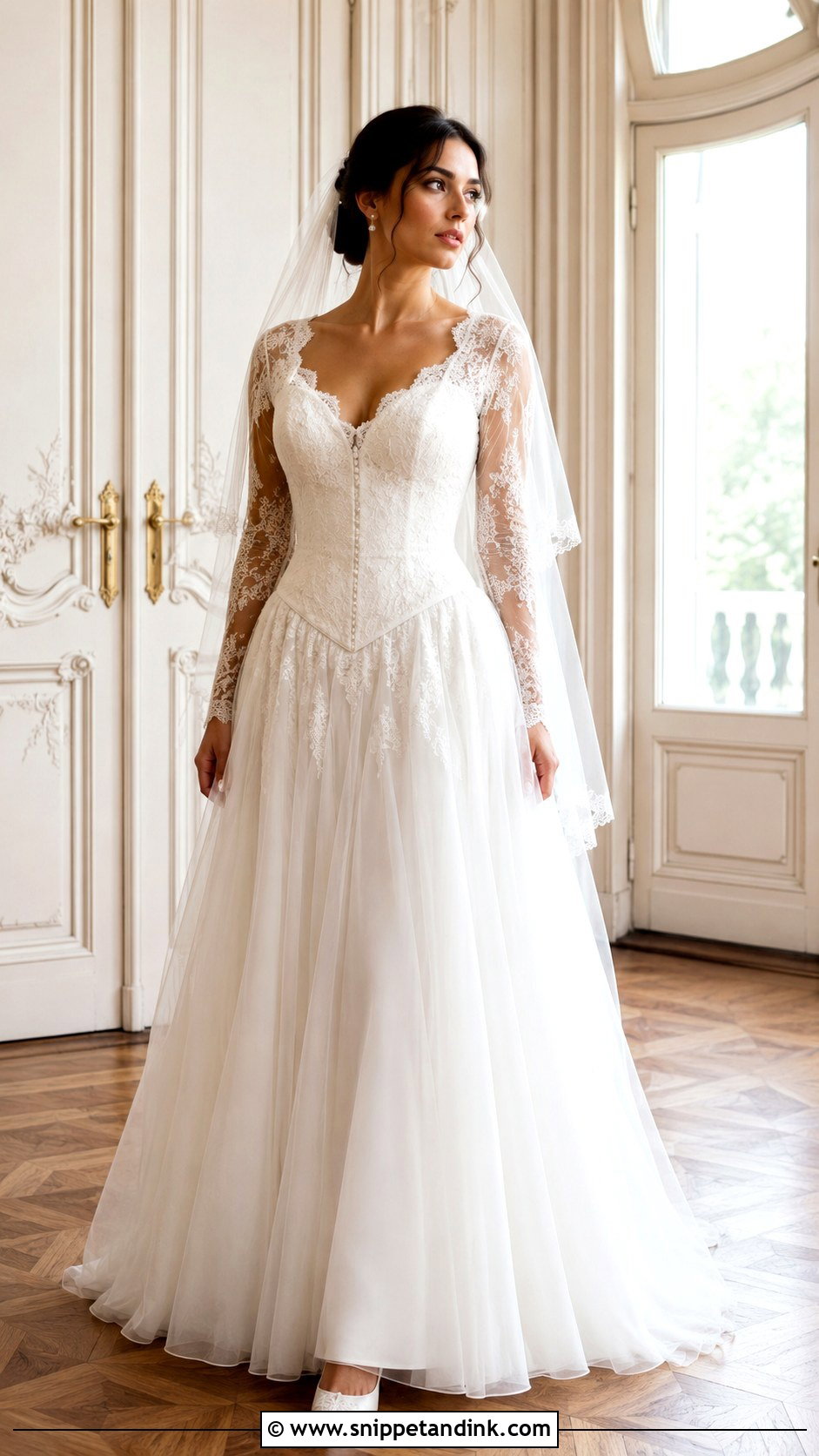
The corset-like waist and long bodice already feel historical, so this silhouette slides into vintage easily. Lace, satin, covered buttons, puff sleeves and soft tulle all support the mood, and a sweetheart or square neckline keeps it classic. Pearl earrings, a soft veil and ivory shoes with a delicate shape; skip very modern accessories so it holds together. A long row of covered buttons takes time to fasten, so allow extra minutes and a second pair of hands, or ask for a hidden zip beneath them.
How a Boned Bodice Feels by the Last Dance
Structure that feels fine for twenty minutes in a fitting room can feel very different at hour nine. Eat a normal breakfast before your final fitting and again on the morning itself, since a bodice fitted on an empty stomach turns tight after lunch. If the back laces, ask your stylist to leave a little give so someone can loosen it slightly before dinner.
Bustling around the point
Most Basque gowns with a train need a bustle, and its hooks or ribbons usually sit just under the waist seam. Have whoever will do it on the day practise at your last fitting. Bustles fail when someone is guessing which ribbon goes to which loop in a dim corridor.
Storing a Shaped Bodice Once the Party Ends
Never hang a heavy gown by its straps or shoulders. Use the inner hanging loops sewn near the waist, which take the weight where the structure is. For long-term storage I’d have it professionally cleaned, then folded loosely with acid-free tissue inside the bodice and along every fold, kept away from plastic, damp and daylight. Sugary drinks dry invisible on satin and turn yellow over the following months, so mention any spill to the cleaner even if you can’t see it.
Same Pointed Waist, Very Different Gowns
Every gown here shares one shaping trick: a pointed waist that lengthens the torso and narrows the middle. What changes is volume, coverage and surface. Satin and lace lean classic, minimalist crepe or a sheer corset bodice read modern, and tulle, organza, pearls or floral appliqués soften it. Try on at least one full skirt and one slim skirt before you decide, because the same point looks surprisingly different depending on what falls below it.
You'll Like These Ideas:









Leave a Reply